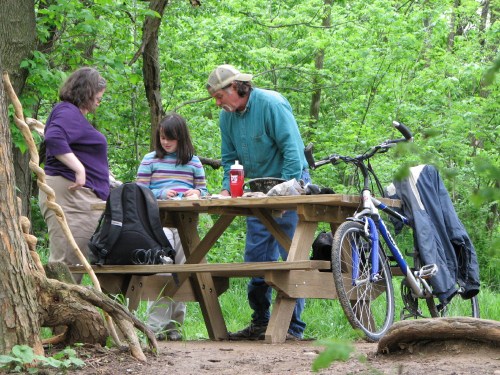
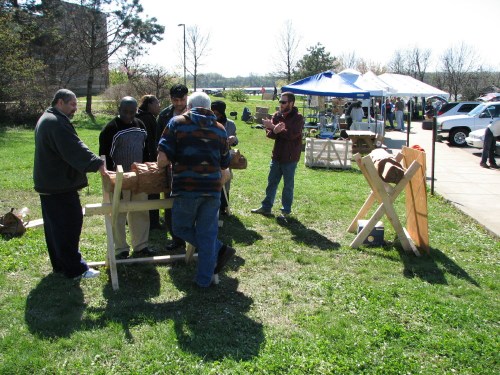
My apologies to the ladies on the left who’s names I don’t know, but the guy on the right is “Steve”. I had met “Steve” once before, last year, on the park’s western most border where fewer people go. I was scouting a location for making a sculpture and he was knapping a projectile point out of glass. On the riverbank, there is this “hail fellow well met’ attitude and so neither of us knows the other’s last name…as if that were important. Today I was looking for birds and came across “Steve” waiting for a friend near the Interpretive Center. We recognized each other and struck up a pretty good conversation. Seems we have a lot in common. We both grew up as military brats and our love for nature first developed in the woods of Europe. We also share this idea that many of the ills of the world could be reduced if people would reconnect with their own innate creativity. There is a feeling of accomplishment in being able to use your hands to make something. That’s why “Steve” knaps projectile points. Every one he makes is different. You need to know and study your material, be it flint or glass, and plan how you are going to approach making the form you imagine in the matrix. On the surface of the picnic table we were sharing he showed me some of the points he had made.
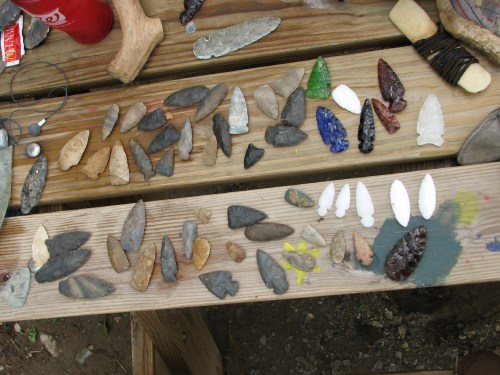
Most are made from local rock and flint found in Harrison County, Indiana. I like the ones made from plate glass and Milk of Magnesia bottles among other river-given glass. “Steve” also makes walking sticks and collects morel mushrooms for sale. He also admits that despite being “residentially challenged” he leads a pretty rich life. “Being 56 years old, nobody’s going to hire me.” We talked about stuff I do. How he has found several of my pieces in remote places. We talked about birds and how he collected bird’s eggs in England when he was a kid.
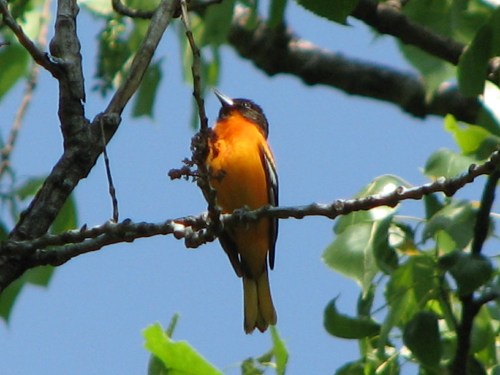
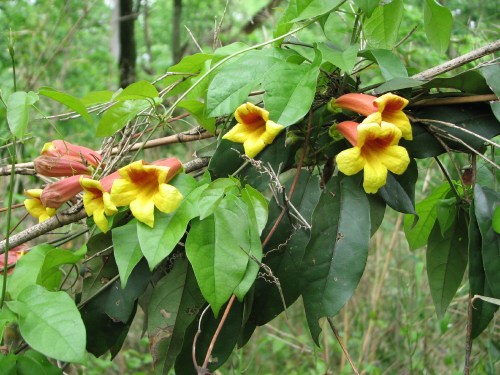
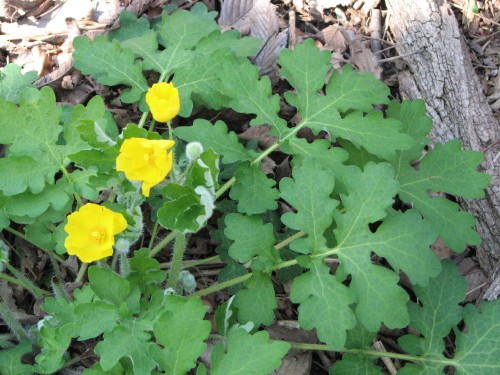
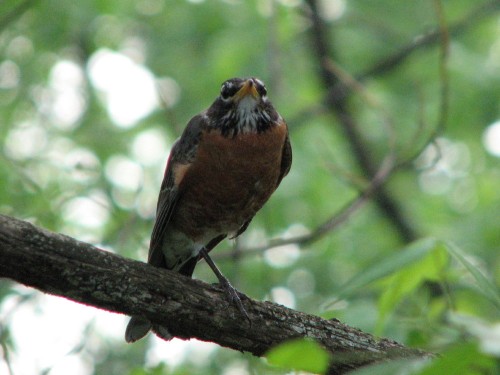
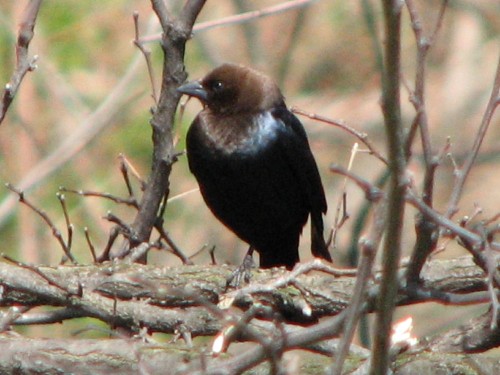
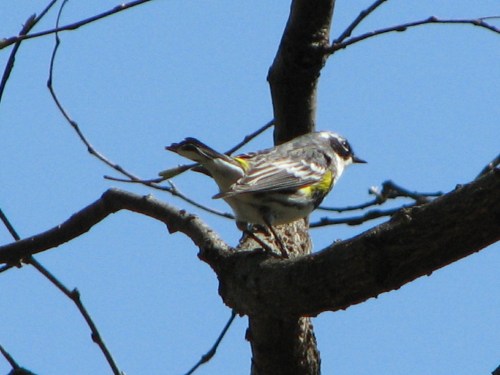
“Steve” asked me if I could identify the song an oriole makes when I hear one? And on cue, one unseen in the woods behind us called out. This picture of one of last year’s Northern Orioles (formerly Baltimore Oriole) is for “Steve” because he brought me luck. We were talking when the Summer Tanager from my last post appeared. I went off into the woods chasing beautiful birds and breathing in the perfume of blooming honey locusts. This time of year one of my favorite flowering vines is in bloom and I associate it with the orioles. It’s real name escapes me, but I call it yellow trumpet creeper…does anybody out there know what it’s called? I’m sure I will see “Steve” again…we are alike in that we are drawn to the river.



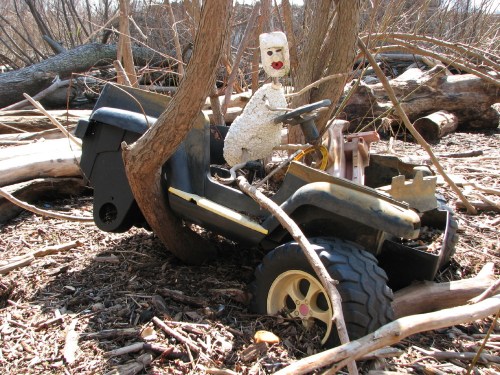
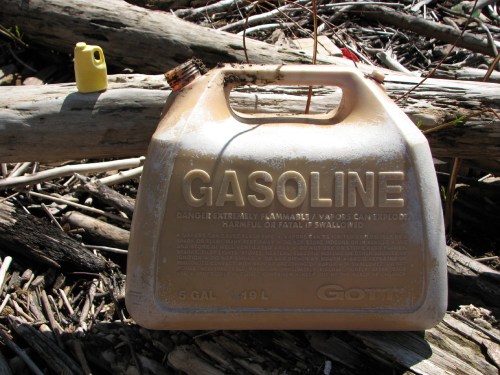 I come across and photograph enough of these gasoline containers that they form a subcategory of objects that I pay attention to. Gasoline is such a sign of the times that it seems particularly relevant. Where do these containers come from? I have never found one that still had gas in it. Because plastic is made from petroleum, as is gasoline, does putting gas into these containers become a redundant act?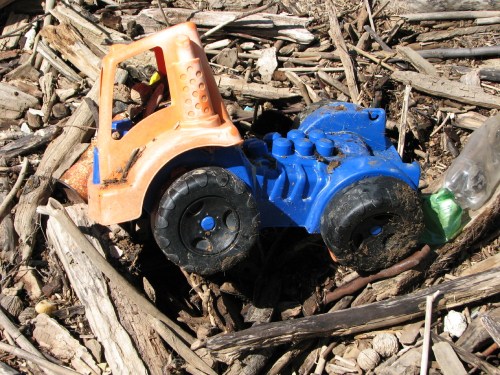


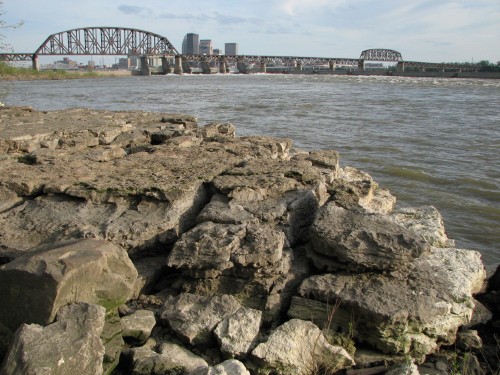
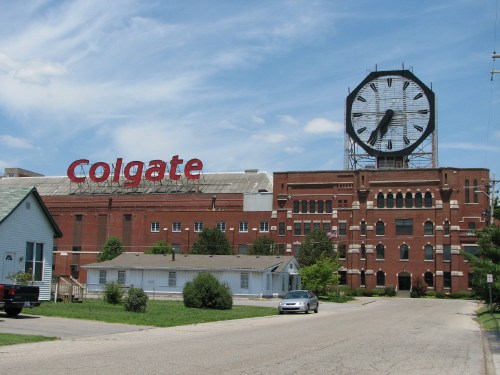 Working at the Falls of the Ohio is a reflective experience and thinking about the construct of “time” pops into my head a lot. To reinforce matters even more, less than a mile from my “studio” is this giant clock ticking away in a grand, but conventional manner. I once read that the largest clock face in the world was at another Colgate Palmolive plant in Jersey City, New Jersey, but it was demolished in 1988. Our clock, the one in Jeffersonville, IN, I believe is now the biggest. At night it glows red. The building was once a prison before the toothpaste factory relocated here. Recently, it was sold to another interest and we aren’t quite sure what’s going to happen with certainty, but it is everybody’s wish that the clock remain. From downtown Louisville, you can tell time by looking across the Ohio River.

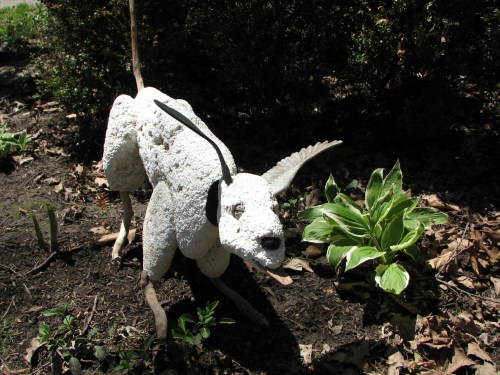
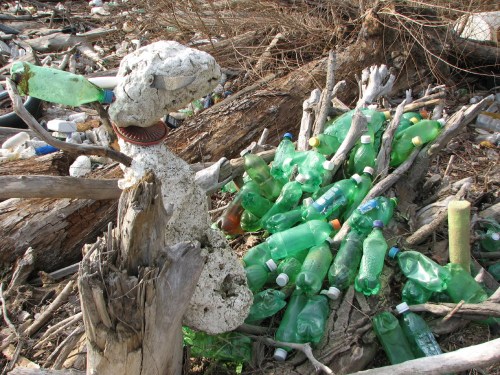
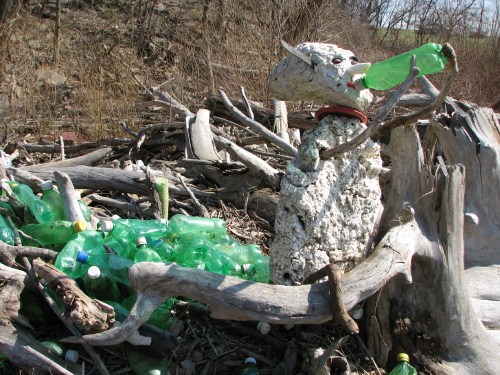
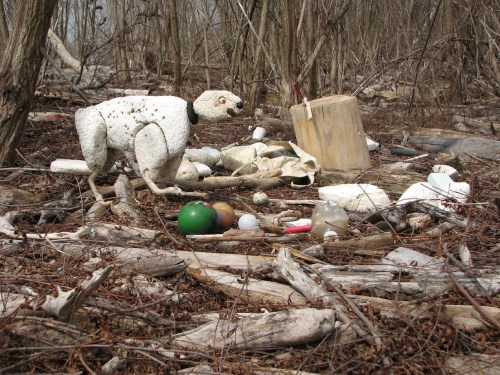 Here’s a project from this April that shows some variation from my usual working process. I started this dog sculpture, but wasn’t completely happy with it. I did cut into the dog’s styrobody to inset the foam pieces that make up part of its legs. I also started with small fishing bobber eyes, but later changed them to hickory nuts.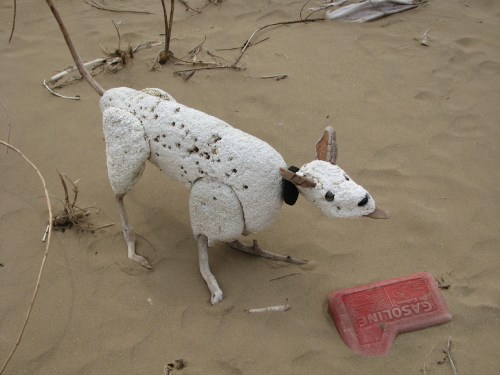






 Artist at Exit 0 Riverblog