Feeds:
Posts
Comments

Archive for the ‘animal art works’ Category

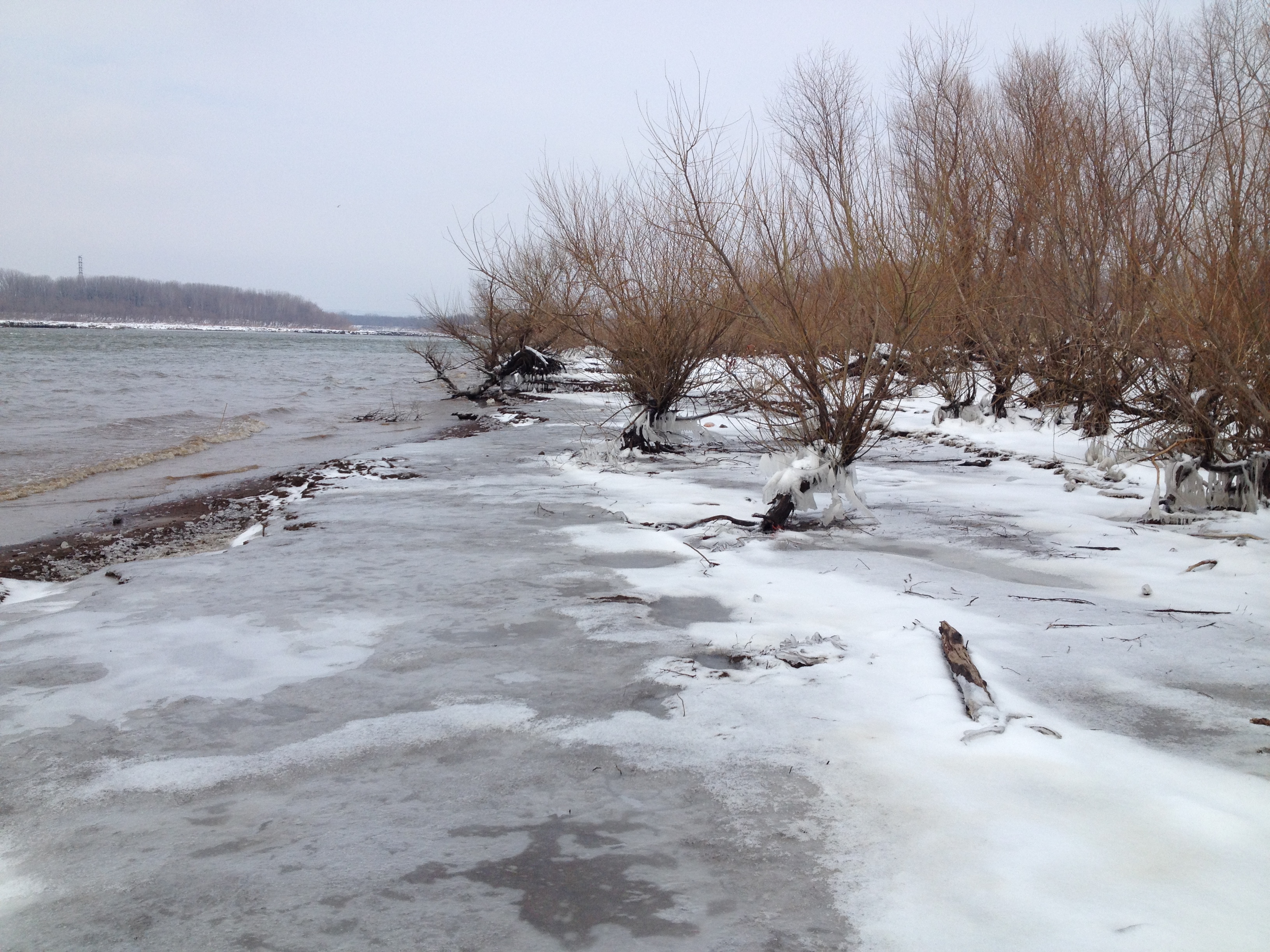
Winter view at the Falls of the Ohio State Park, Feb. 2015

And just when we thought we were winter-proof…the cold descended.  Literally, one day it was near 60 degrees and a few days later came the snow, ice, and record-breaking cold.  Although it has been a mostly mild winter in the Kentuckiana area…it has also seemed like a longer than necessary season.  Everyone I know is winter weary.  Cabin fever has me out venturing among the frozen willow trees at the Falls of the Ohio State Park.  From winter’s past, I know that when conditions are just right, I can expect to see some interesting ice formations near the river.
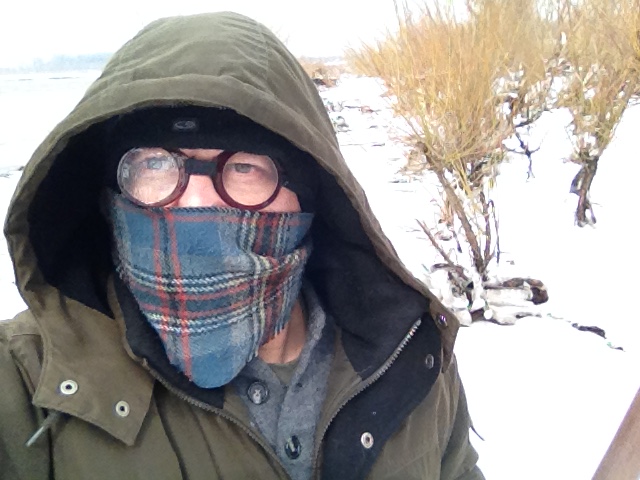
The Artist at Exit 0 in winter time, Feb. 2015

The right conditions are also cold conditions and you need to dress appropriately.  I find I’m in good shape wearing my vintage pair of Wind-Dodger goggles to keep my eyes from getting all watery.  An old treasured scarf across my face and an all wool, German, military surplus, submariner sweater add to the many layers I have on.  I bring along my trusty walking stick which I use frequently to test the thickness of the ice over frigid water-filled puddles.  Outfitted in my best polar garb I feel confident as I venture forth over a hibernating landscape covered in snow and ice.
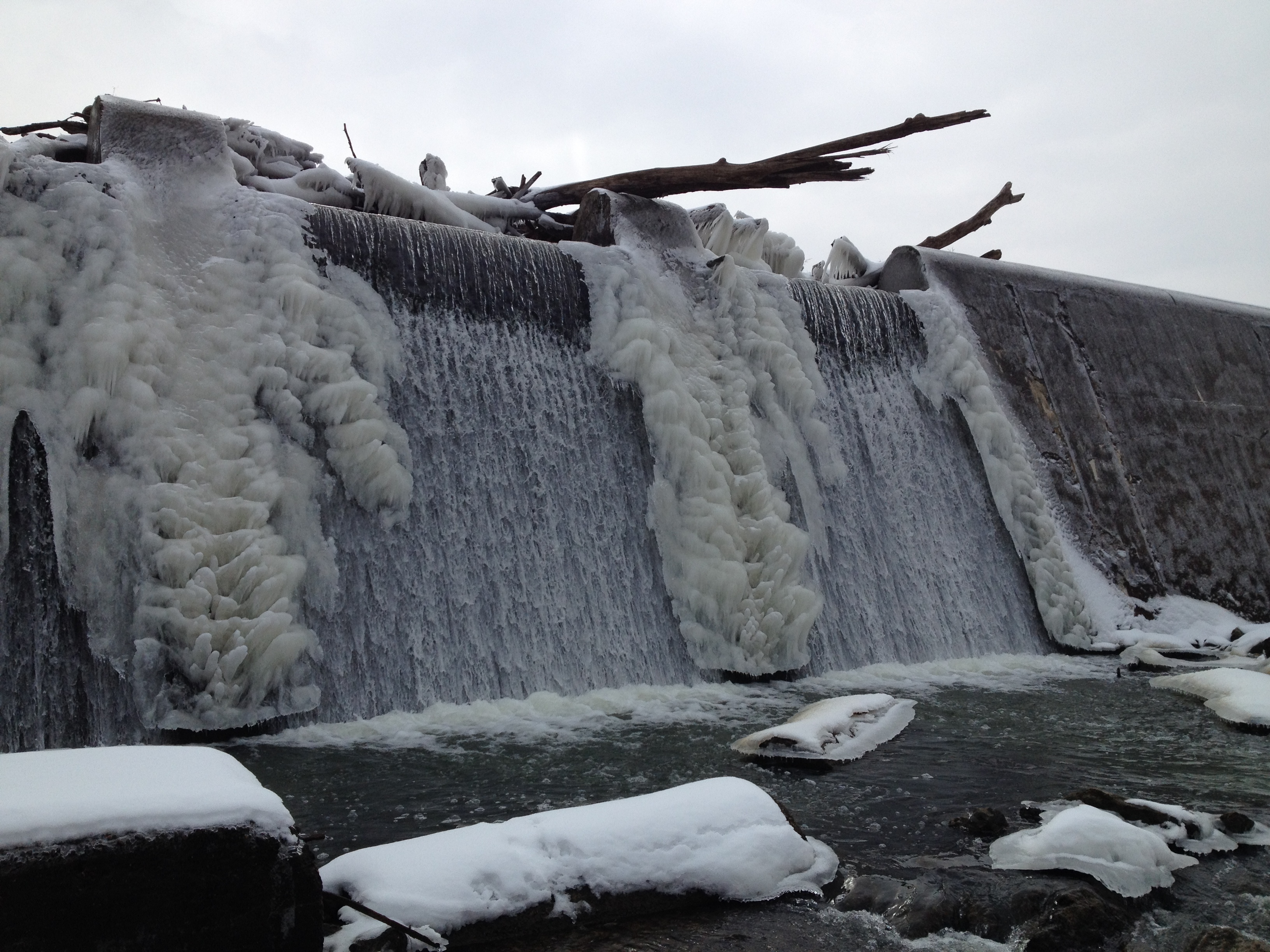
Ice formations on the dam's wall, Feb. 2015

In the eastern section of the park, ice has formed on the dam’s wall.  This wall is all that separates the full force of the Ohio River from impacting the lower levels of the park that I am familiar with.  The true height of the river is many feet above my head.  The more swiftly flowing water keeps from freezing.  Debris of all description and the trunks of washed away trees build up on the upriver side of the dam.  More than likely, all the pent-up driftwood will find release when the spring floods come and even the walls of this dam can’t keep the river from rearranging this area once more.  It is a dynamic environment ruled by the river.  If I were to contrast the scene before me with the way this spot will look like in six month’s time…you would think you were on a different planet altogether.  I try to appreciate the variety before me which also has a way of keeping out the cold.
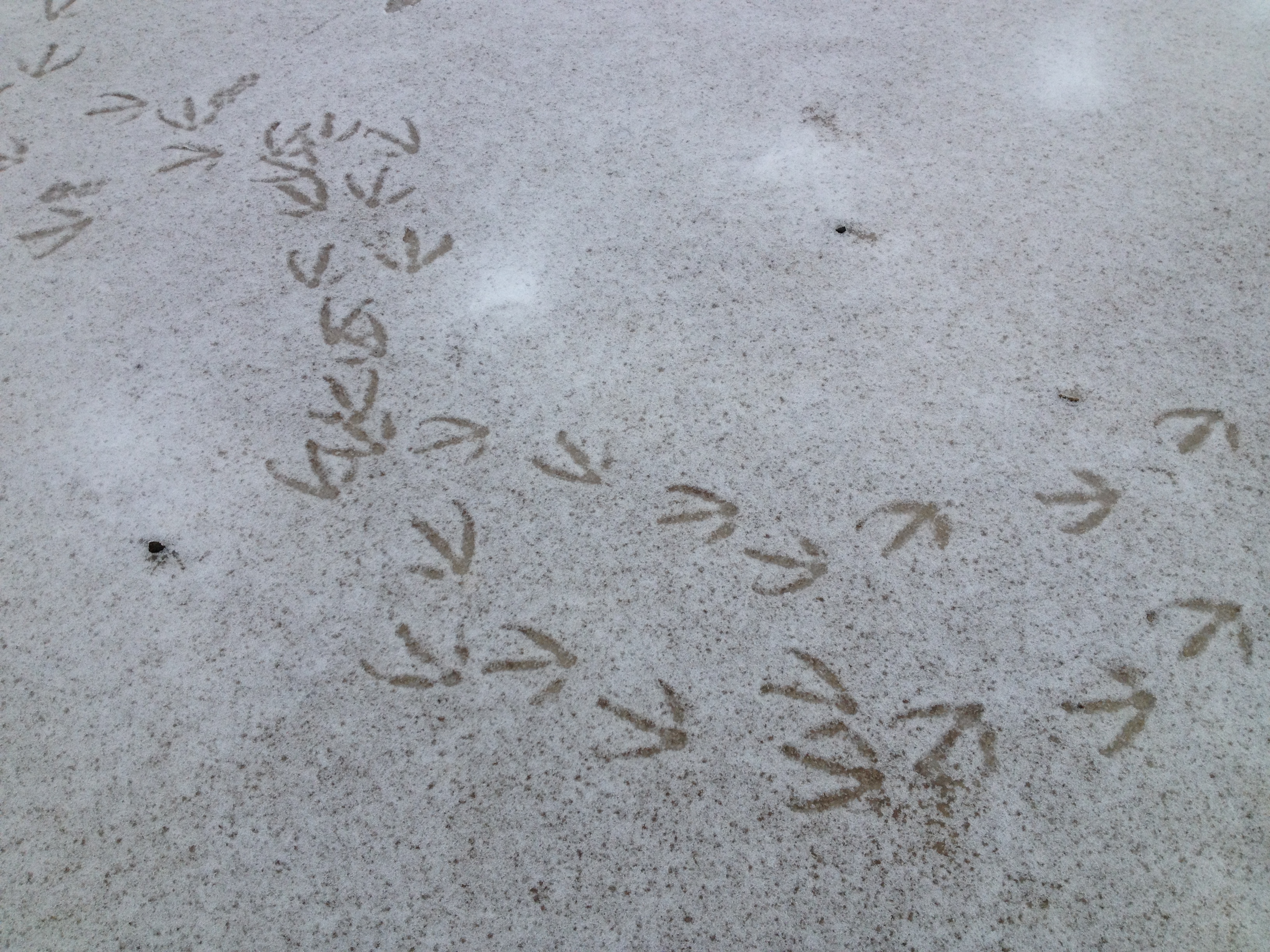
geese tracks in the snow, Feb. 2015

I find there is a surprising amount of life out here.  Although I’m the only person around, I have already spotted several species of birds that don’t seem to mind these conditions.  Geese have left there meandering tracks in the snow.  In the air, I watched both a Peregrine falcon and a nice flock of Ring-billed gulls engage in aerobatics over the river.  I come across other tracks in the cold mud that has me momentarily frozen in place.  I sort of recognize them, but there is also something not quite right here that I can’t put my finger on?
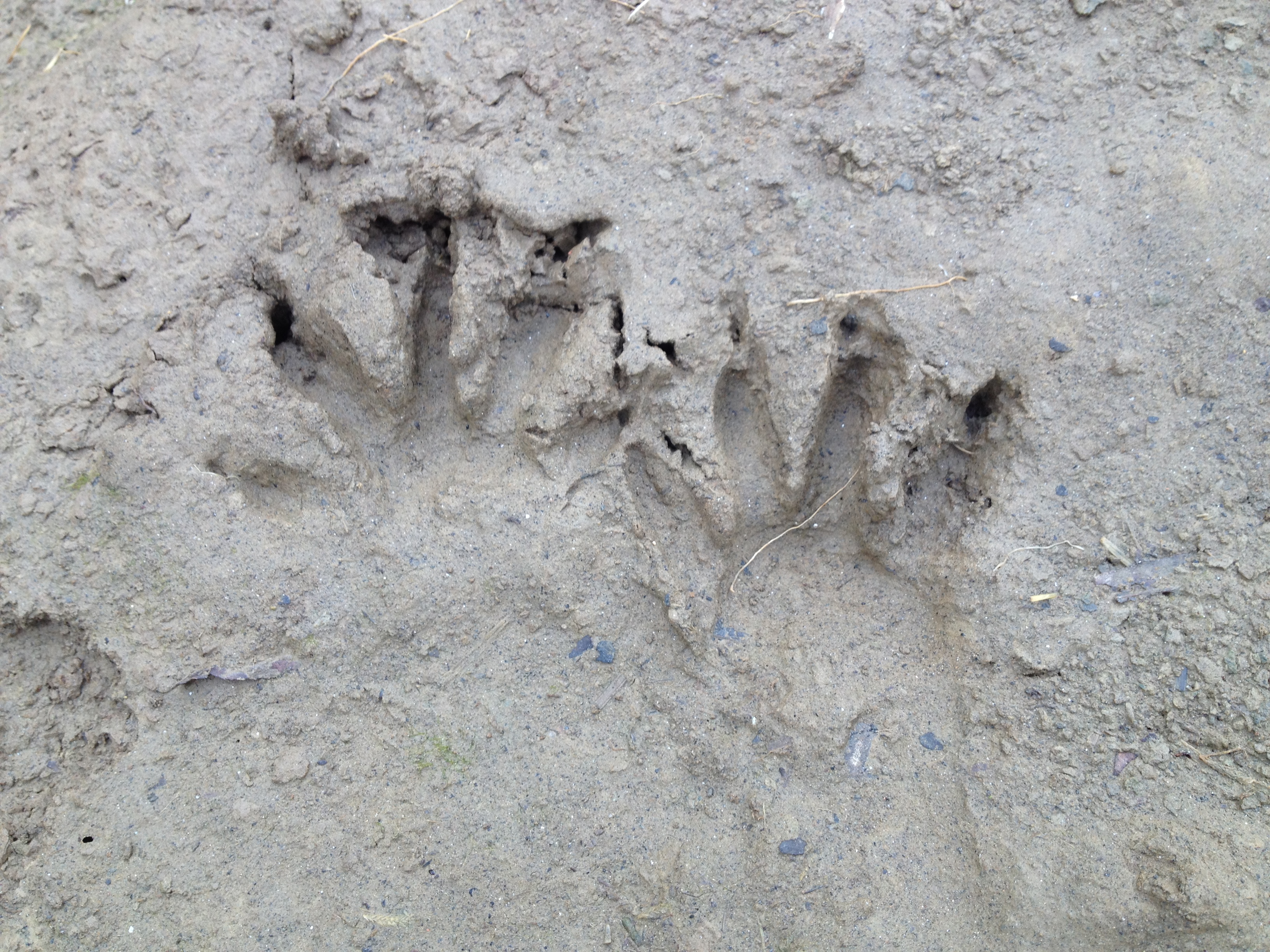
beaver tracks in the mud

To my eye, they appear to be beaver tracks, but they are too small.  I run all the possible candidates through my mind’s mammal filter, but I’m drawing a blank.  I chalk it up to my inexperience.  Try as you might, you can’t learn everything from books and there’s no substitute for doing the fieldwork.  I left the tracks and headed towards the spot on the river where I’ve seen good ice formations before.  Along the way, I find many chewed up willow branches and cuttings near a stand of willow trees.  Something has been dining fairly regularly in this area and with luck I may find other evidence identifying my mystery animal.  As you may have already guessed…luck was with me!
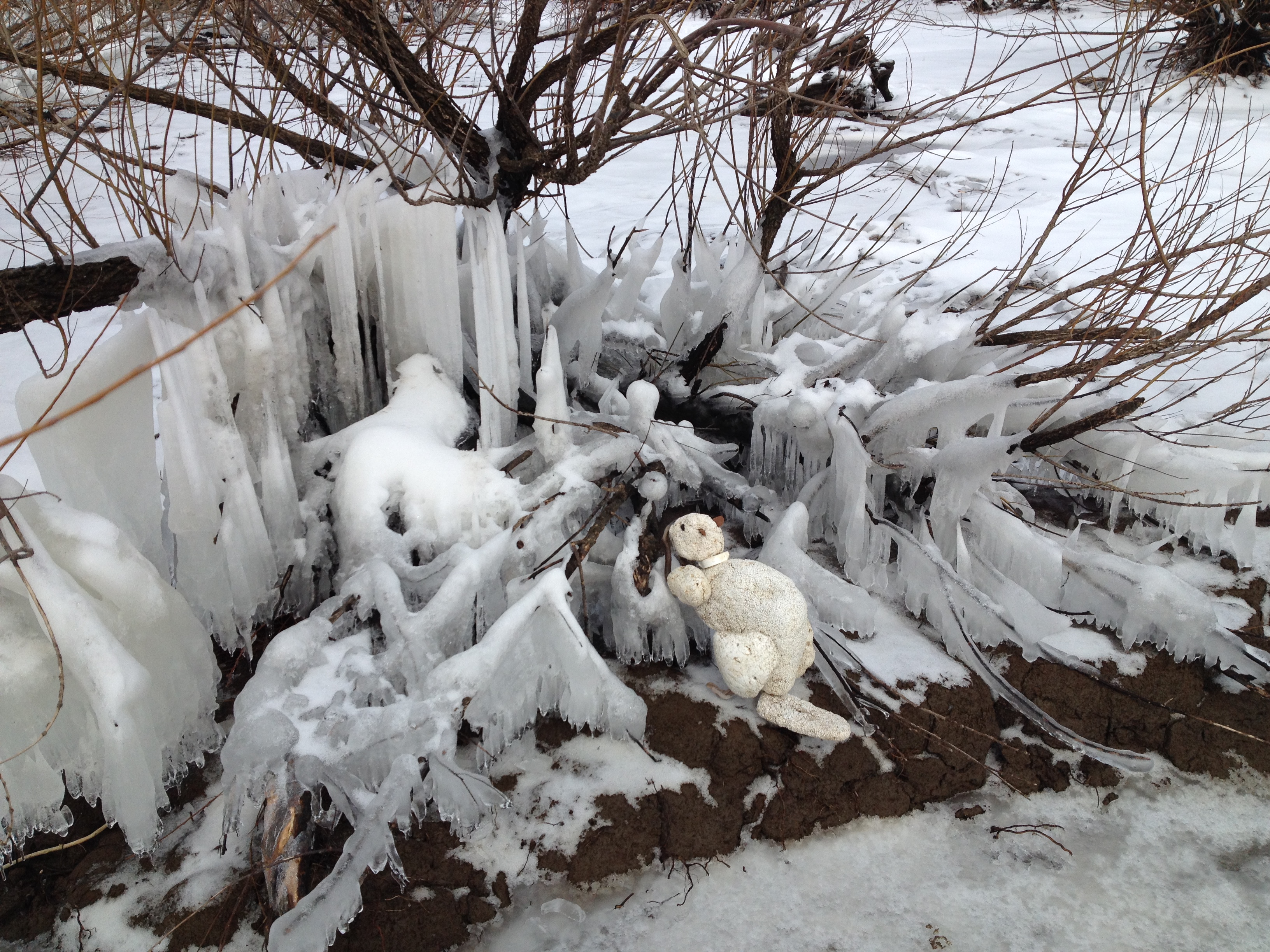
The Polar Beaver, Falls of the Ohio, Feb. 2015

If it hadn’t moved, I doubt that I would have seen it and I would have missed the first recorded occurrence of the Polar Beaver (Castor arcticus) at the Falls of the Ohio State Park!  In size, this remarkable rodent is about the size of the common house cat.  I stood transfixed as this all-white animal concentrated its intentions on the ice-covered willow trees near the river’s edge.
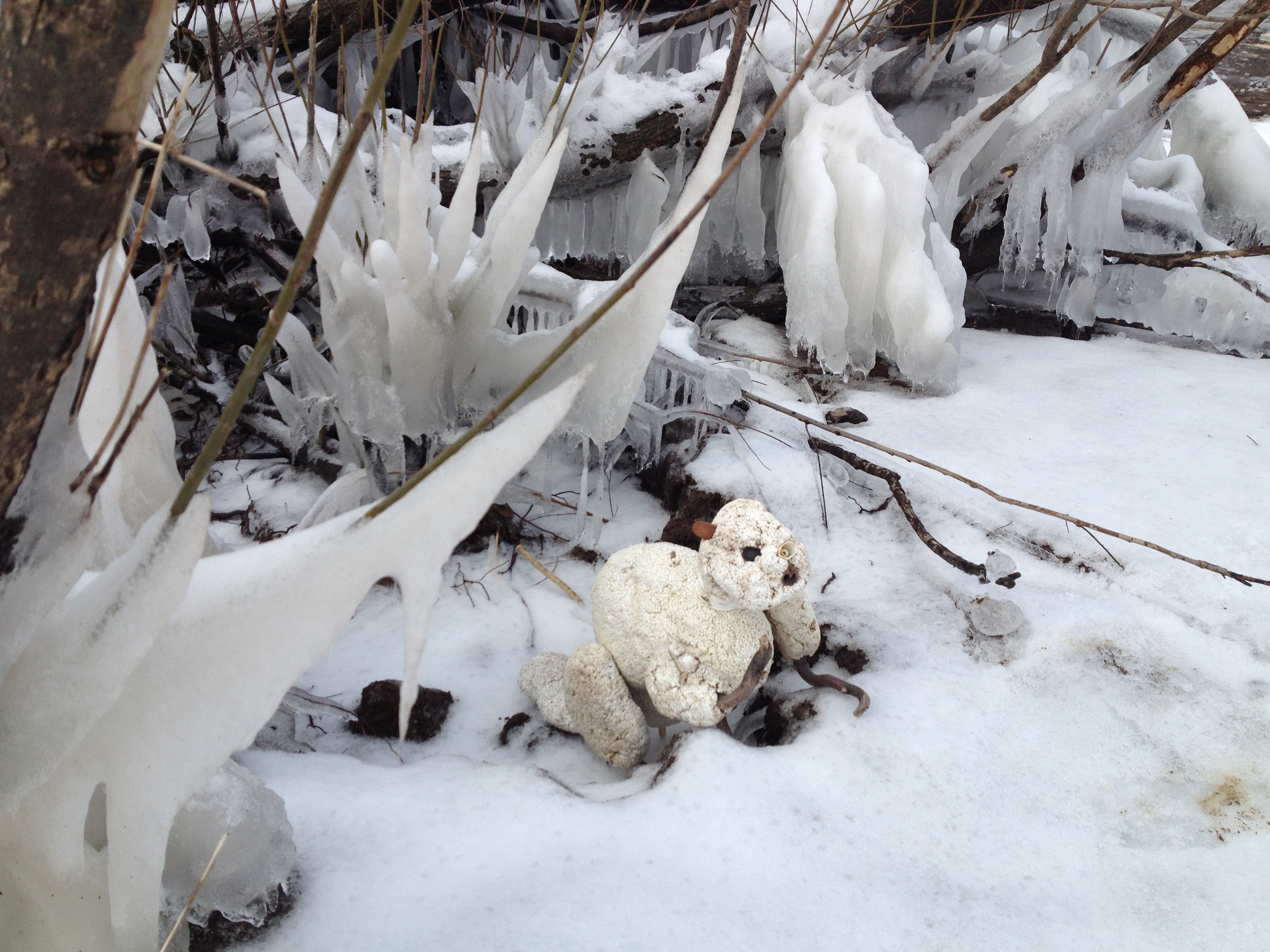
Polar Beaver, Falls of the Ohio, Feb. 2015

I wondered if the Polar Beaver could appreciate the varieties of shapes and forms that frozen water can take?  In the background, the Ohio River seemingly “smoked” as the surrounding air is much colder than the water.  This vapor or steam gradually coats the structures nearest the river.  As the condensation freezes it creates the many shapes that I like to describe as ribbons, sausages, and candles in this beautiful wonderland.  During these special moments, one can appreciate water as it exists in three different states of matter…gaseous vapor, flowing liquid, and rock solid.

The Polar Beaver, Falls of the Ohio, Feb. 2015

Historically speaking, the Polar Beaver is a fairly new animal to be described by science.  Although its beautiful snow-white pelt has been a valuable and prized trade item by the northern indigenous people…it was thought these rare white furs were taken from albino morphs of the common beaver.  Ironically, crypto-zoologists looking for the legendary Sasquatch, instead brought to light the existence of this very rare rodent.  DNA testing confirmed that the Polar Beaver is a truly unique species.  Some of the first observations about this animal documented that this beaver’s coat turns white as autumn transitions to winter.  This is a trait it shares with other polar animals like the Arctic hare and Stoat.
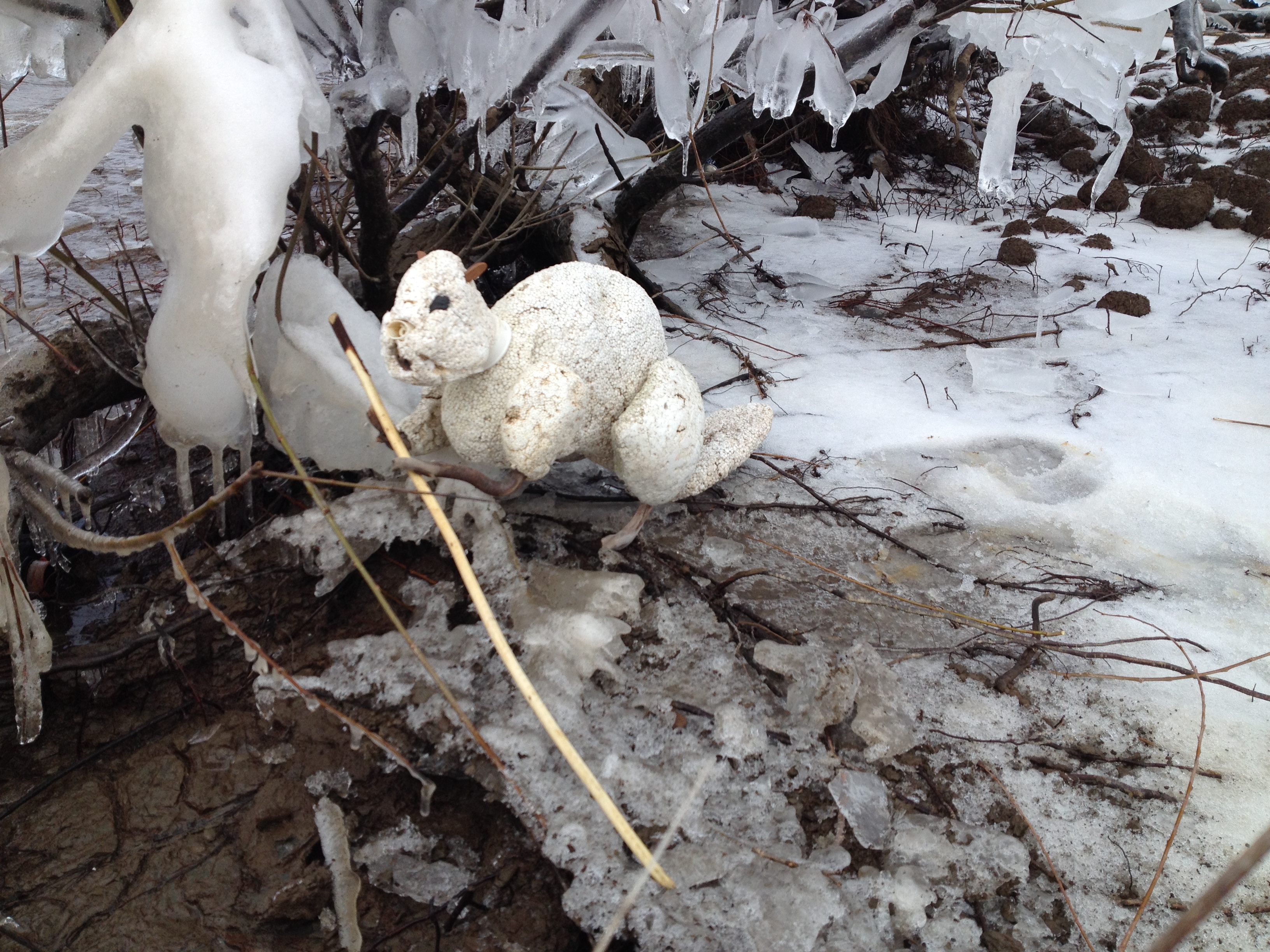
Polar Beaver with willow branch, Feb. 2015

During this time at the Falls,  I was able to observe the Polar Beaver feeding.  Deftly, the beaver chose just the right willow twig and with a quick bite, severs it from the parent tree.  Holding the stick with its front paws, the beaver than carefully chews away the surrounding bark revealing the ivory warmth of the wood.  “Tool marks” left behind by the beaver’s teeth are recorded in the wood.  Willow makes up a significant part of this animals diet, but it is now known that other tree species and plants are eaten “in season” as well.
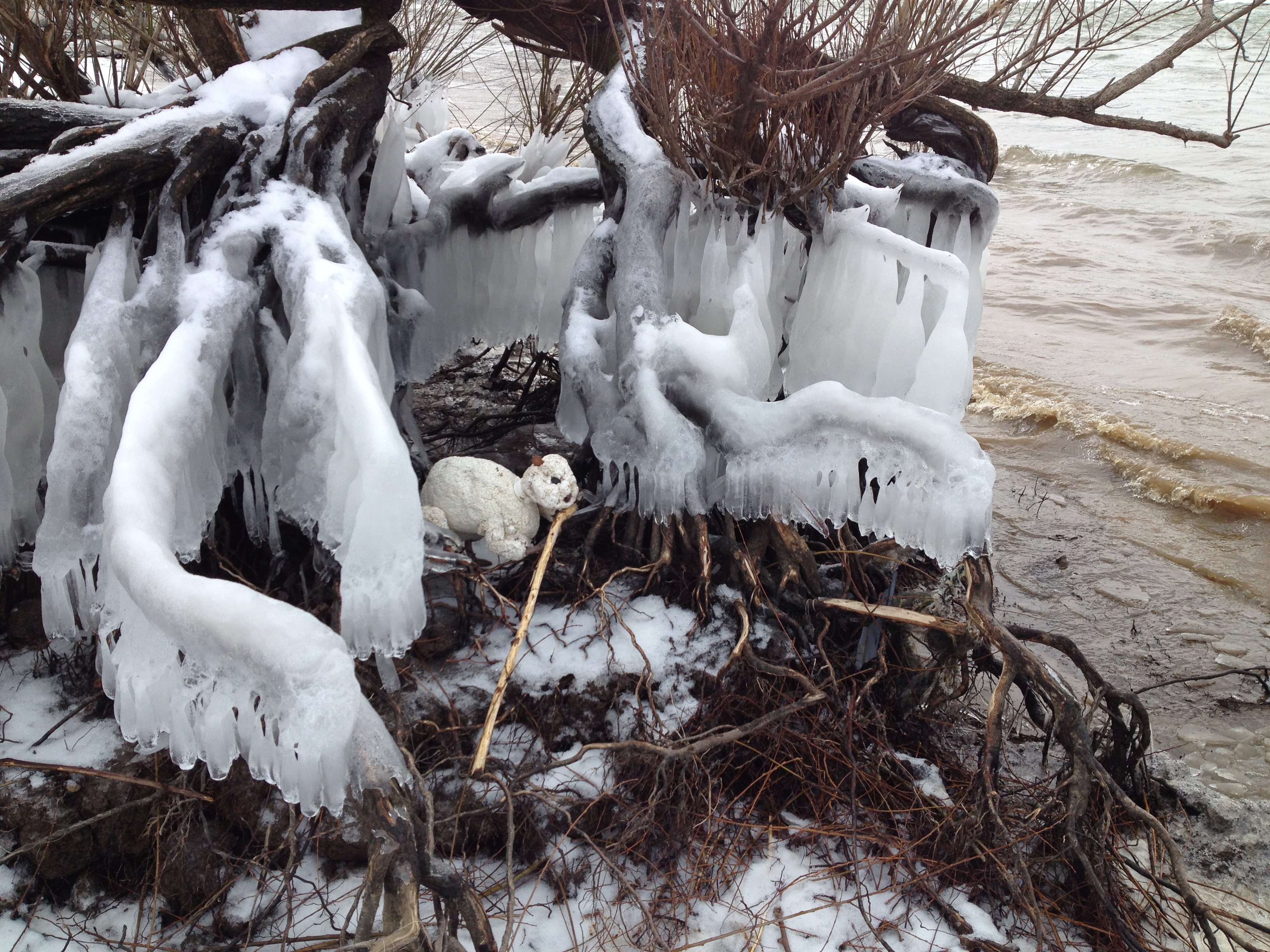
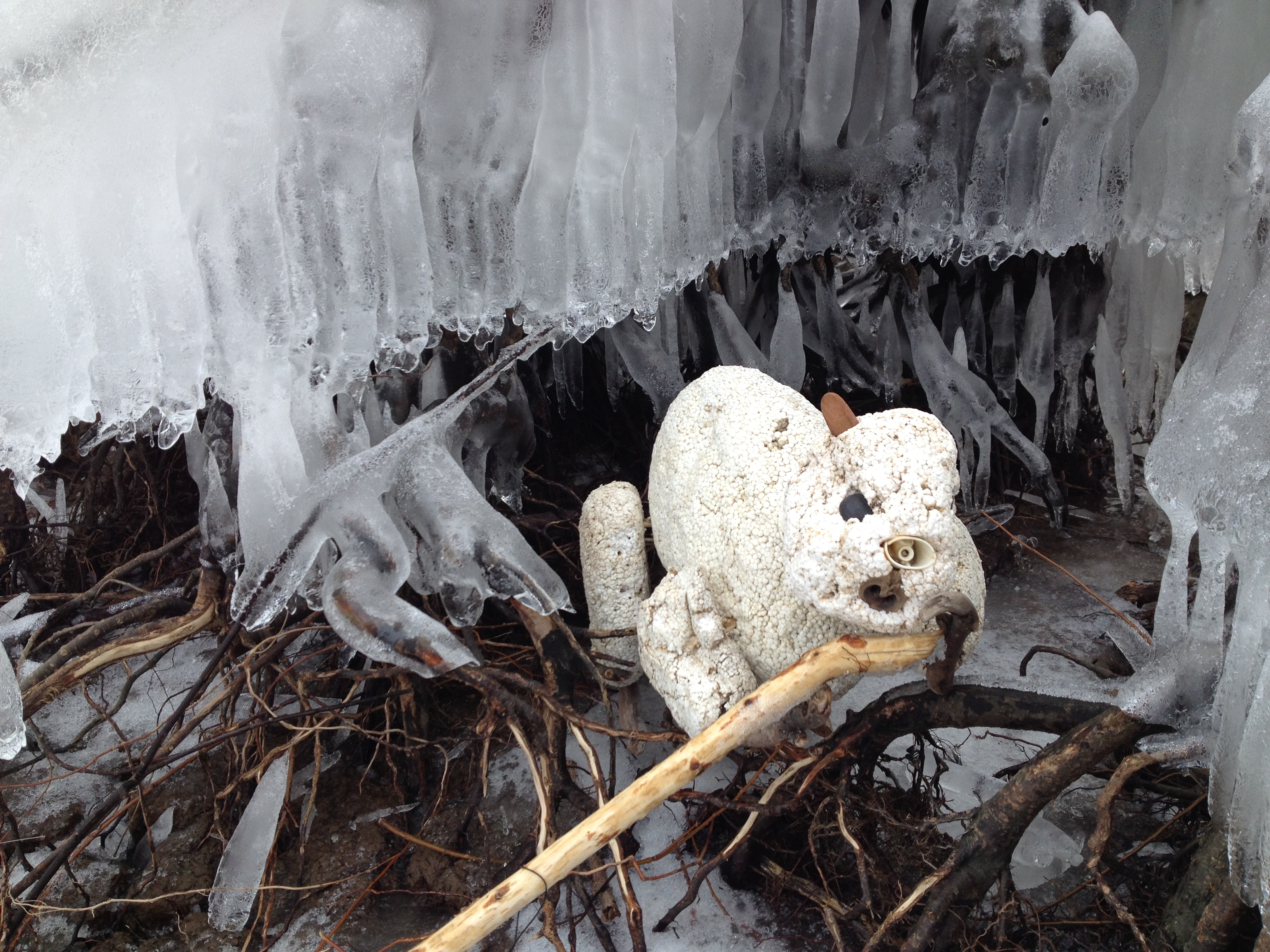
Polar Beaver feeding in its ice shelter, Falls of the Ohio, Feb. 2015

Polar Beaver feeding on willow branch, Feb. 2015

If the Polar Beaver noticed me at all…I couldn’t tell because it seemed so intent upon feeding.  I watched this animal carry a willow branch to a small “ice shelter” where it focused on the task on hand.  The muddy Ohio River gently lapped the shoreline.  When the beaver finished its meal, it continued to explore the immediate environs with its many ice formations.
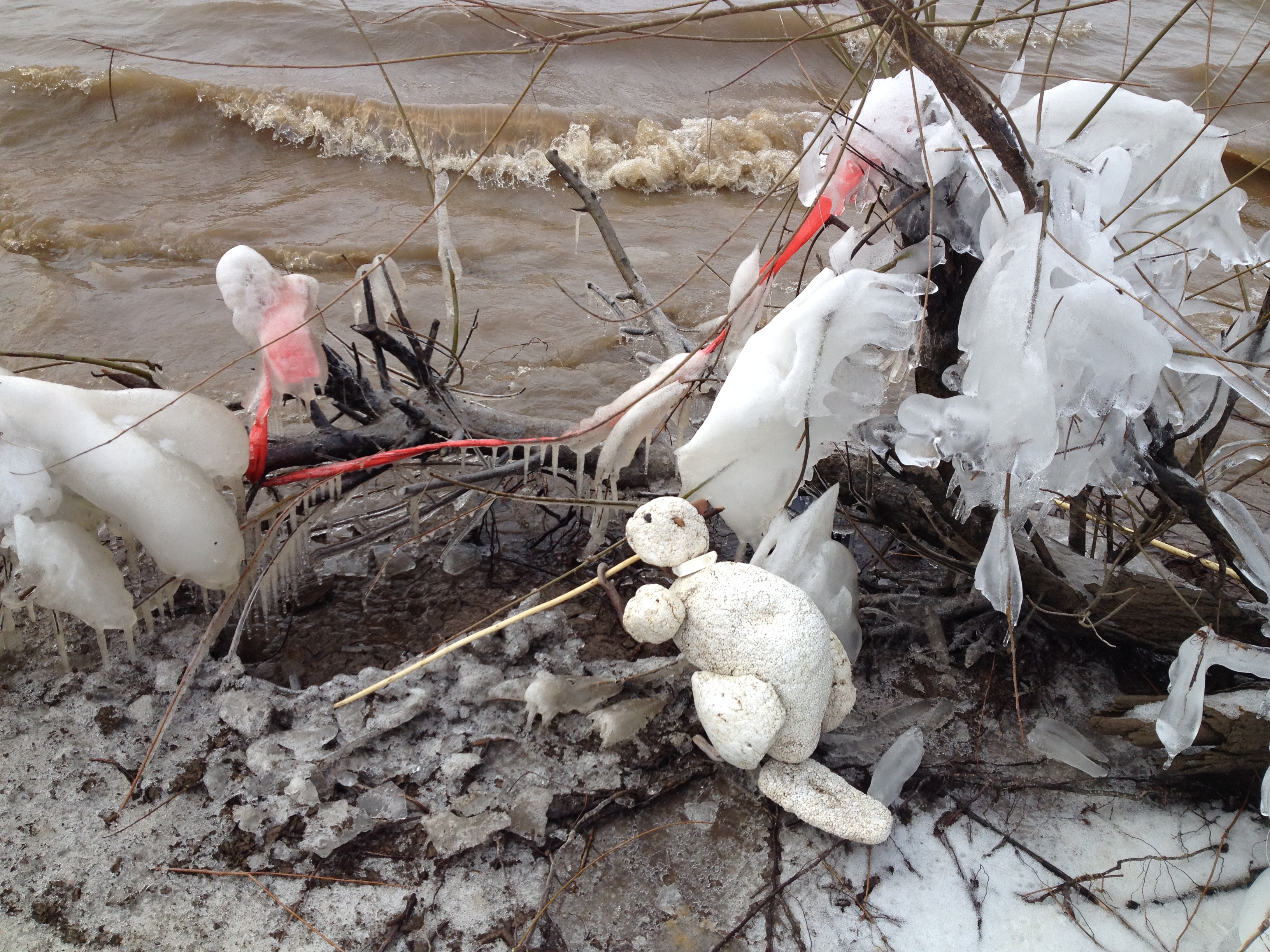
Polar Beaver at the Falls of the Ohio, Feb. 2015

I noticed the beaver sampling willow it had already chewed upon as it moved down along the river’s edge.  I stood transfixed by this nearly mythical animal.  I finally lost sight of the beaver when it went behind an ice formation and unseen by me…slipped back into the water and disappeared.  I searched around for a couple of hours hoping to have another glimpse of this Polar Beaver or any others that might have been around, but ultimately was unsuccessful.  I returned during the next two days, but this beaver apparently moved on for good.  I was lucky to have seen it, but can you blame me for being greedy and wanting more time with this magical animal?  Wouldn’t you wish for the same if you were me?  When my reverie lifted, I realized that I could no longer feel my toes and my digital camera was also feeling the cold and not operating properly.  It was time to go home and I will leave you with one final image from this trip.  Here is a view of a favorite old willow tree as it appears during the heart of winter.  Spring will soon be around the corner and I will see you again at the Falls of the Ohio.
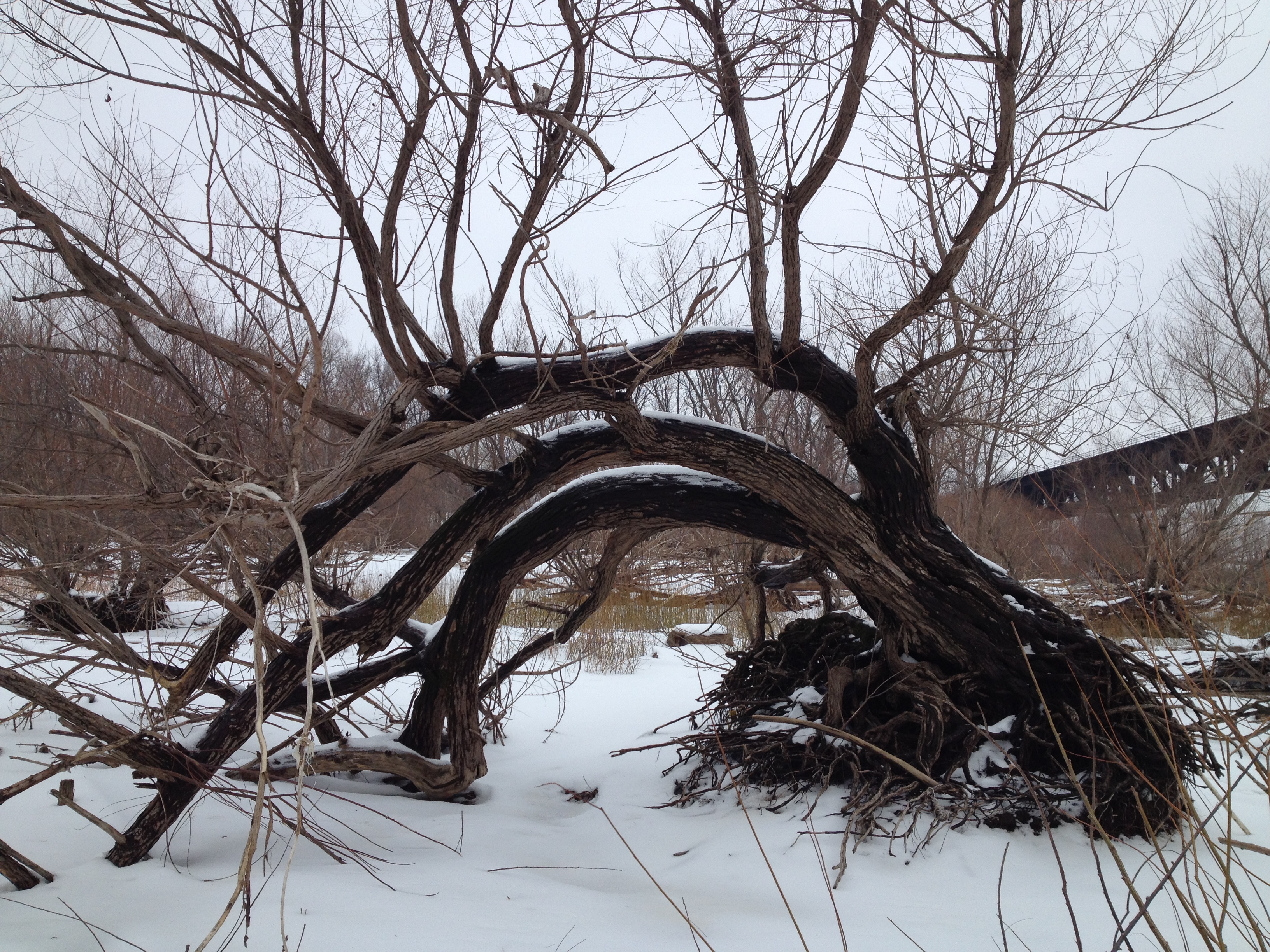
Old willow tree in winter, Falls of the Ohio, Feb. 2015

Read Full Post »

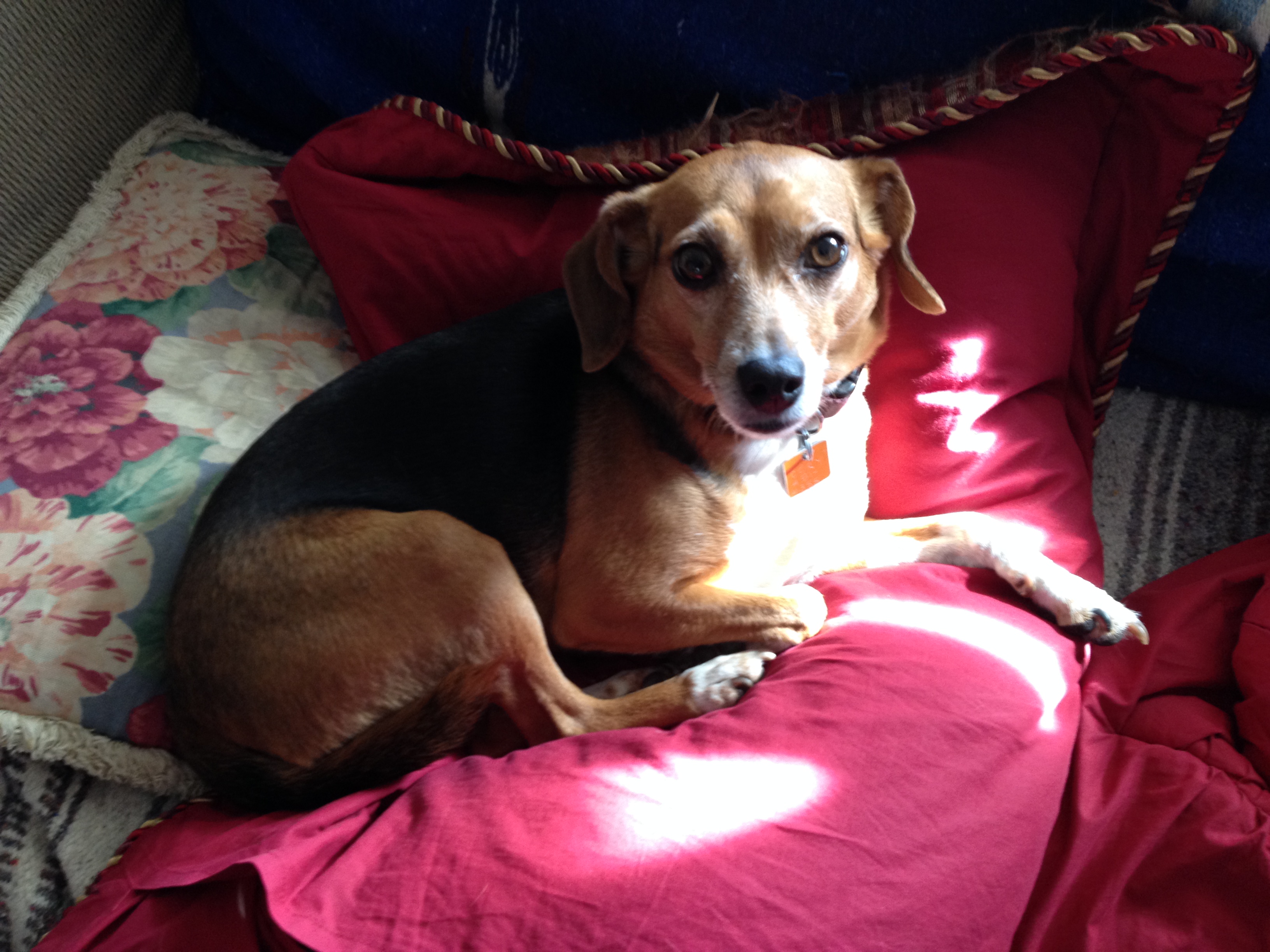
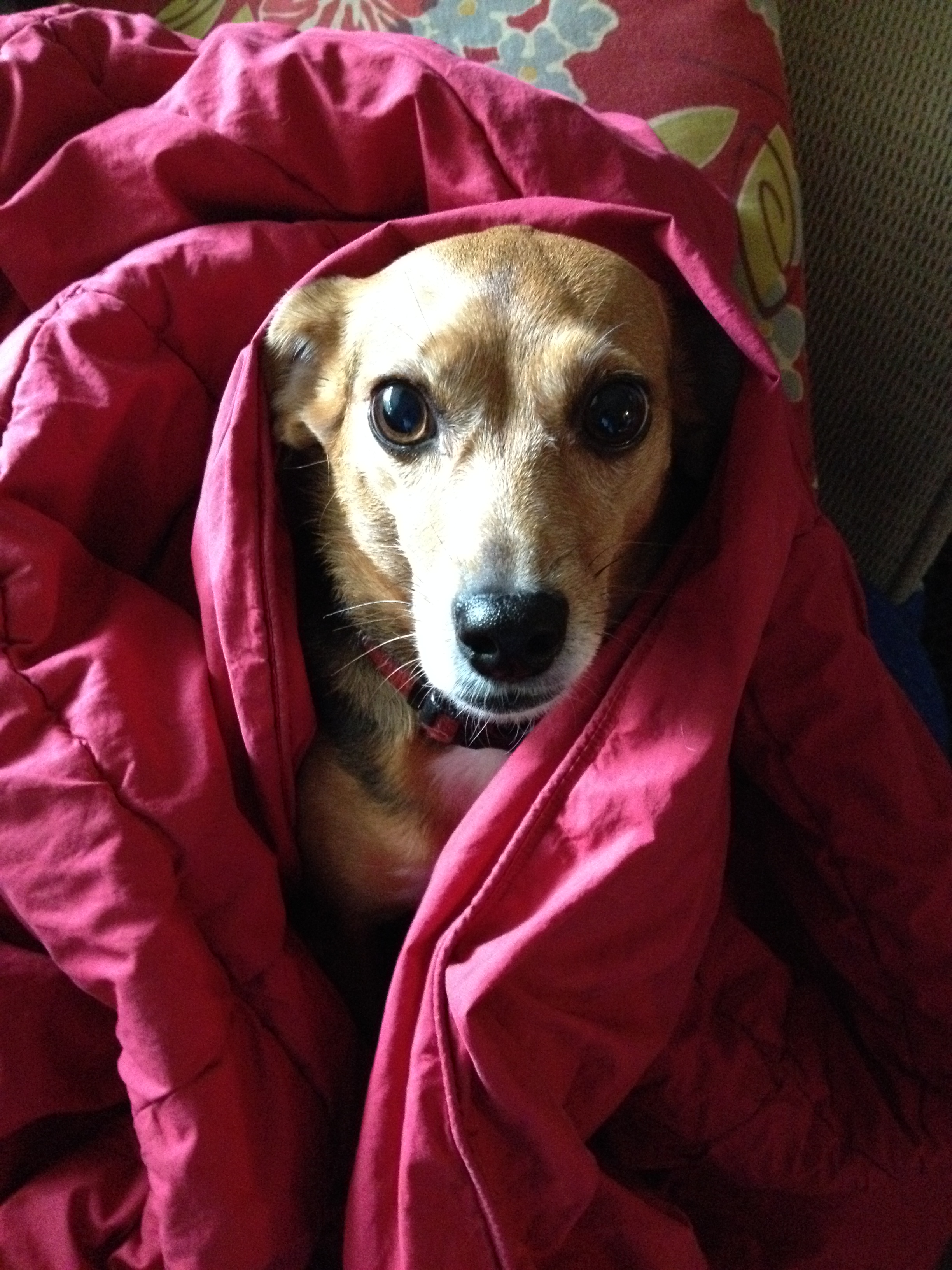
Our dog Cory, Feb. 2015

Many thanks to all who have wished me well in my new position at the Carnegie Center for Art and History.  The people I work with are wonderful and the “old dog” that is me is enjoying learning new things.  I noticed on the internet, Facebook in particular, how much people love posting about their pets.  I’ve decided to take a page from the animal lovers of the world and try to post something both dog and Falls of the Ohio related and here goes!  I start with a picture of our family’s dog.  This is Cory and she will soon be eight years old.  She is named after the town of Corydon, Indiana where she is from.  Her mom was a pedigreed beagle and her father was…a one-eyed, black and white spotted Chihuahua/farm dog who took advantage of an opportunity that presented itself.  Such is life!  Regardless, the puppies were beautiful and Cory seems to have inherited the good qualities of both breeds.  My youngest son, Adam, did the choosing and I recall she was the only female in the litter.  In appearance, she looks like a miniature beagle and I love her coloring which is black and tan with little white feet.  Cory has warm, brown eyes.  She is smart, alert, playful, and devoted to our family to the point of being rather possessive.  When I come home from work or the river, she is by far, the most excited to see me!  Over the years her greeting me at the front door continues to be something I look forward to with deep fondness.

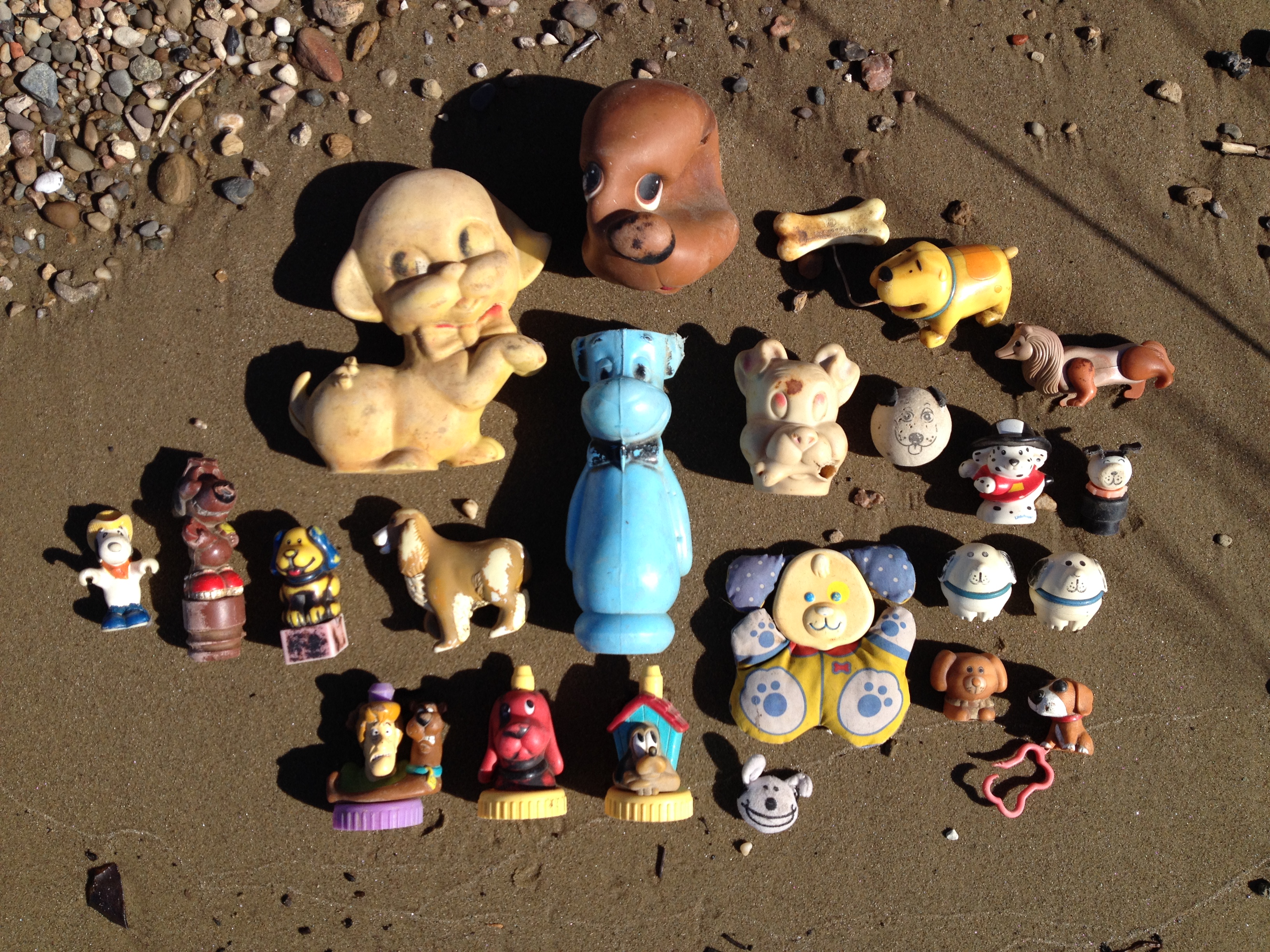
Dog-inspired, found character collection, Jan. 2015

I decided one cold winter’s day to sort through some of the items I’ve found at the Falls of the Ohio over the years and classify them into more coherent collections.  Out of my large and ever-growing toy collection, I determined that I had enough dog-related pieces to form a stand alone collection.  I gathered the items up and here they are reassembled on the riverbank for this “class photo” of dog characters.  This is just the stuff I decided to pick up and put into the collecting bag and does not count all the pet bowls, balls, and chew toys I’ve encountered.  I might have picked up all these other items as well, but there is a certain threshold of plastic fatigue that is reached that is hard to move past.  There is just so much needless stuff in the world and a lot of it seems to find its way into the Ohio River.  The sheer over-abundance of our material culture has certainly shaped my personal direction as an artist.

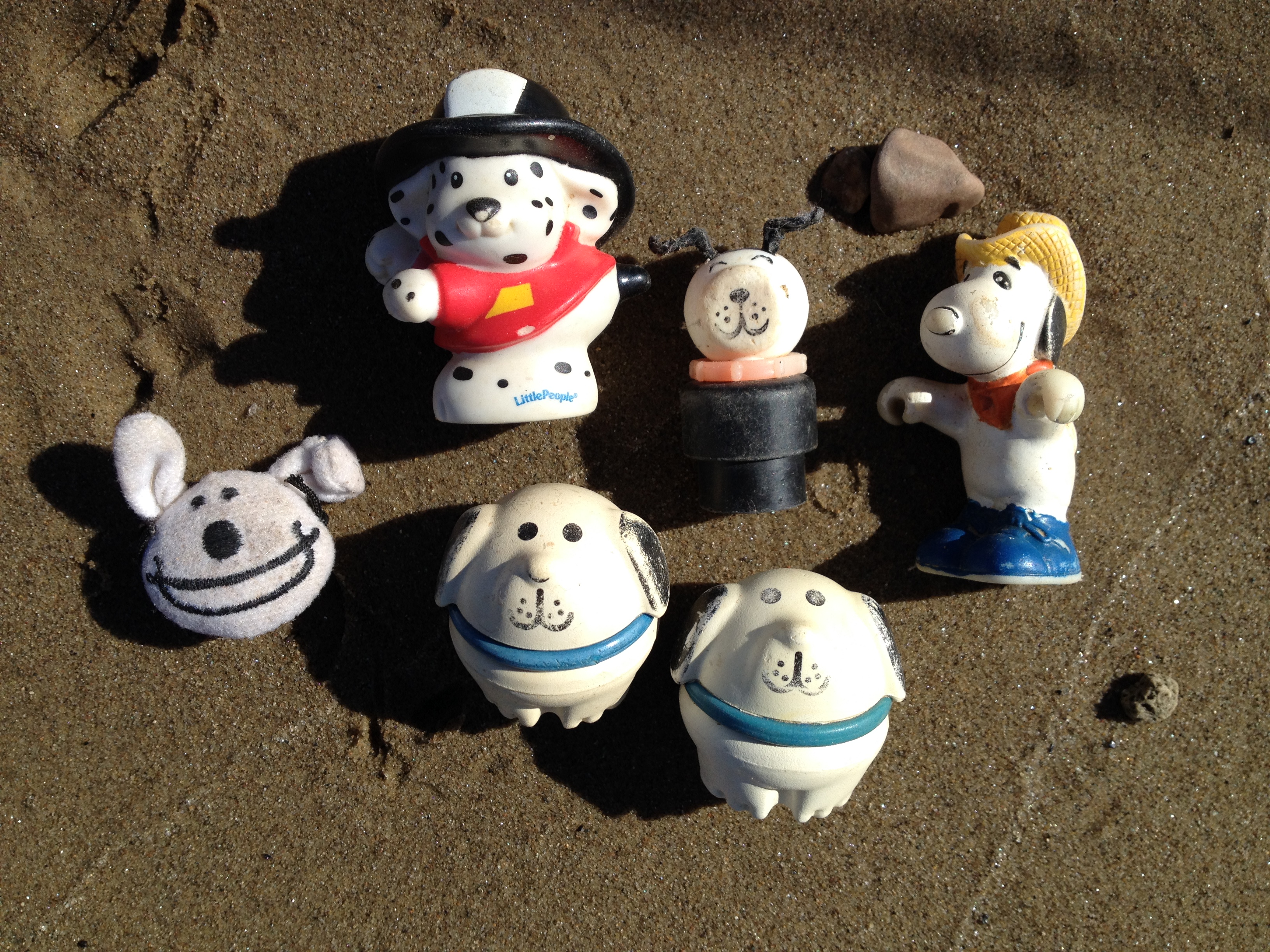
Detail of Dog Character Collection, Jan. 2015

While this is all just kitsch, some of this is fun and has endearing qualities that recall good moments from childhood.  It’s amazing how much a tiny piece of crap plastic can have these other associations attached to it.  I do recognize some of the characters portrayed, but not all.  It’s actually become part of the challenge to try to identify what some of this stuff refers to?  In this photo I recognize good old “Snoopy” from the “Peanuts” cartoon strip.  There looks to be a pair of “Weeble” dogs and a couple of others (including a Dalmatian with a fire hat) that are from children’s play sets.

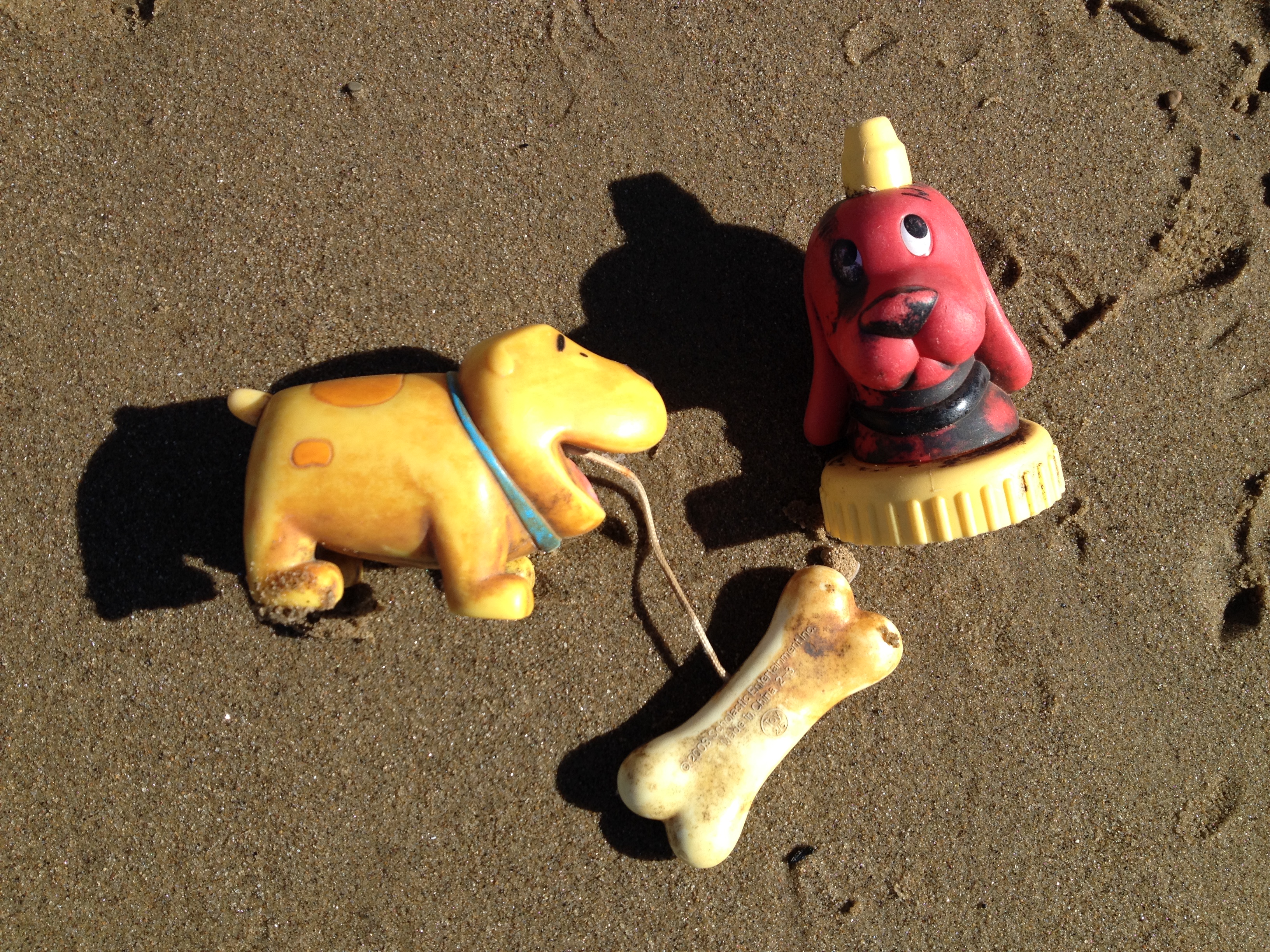
Two "Clifford the Big Red Dog" plastic items, Jan. 2015

Here are two items from the “Clifford, the Big Red Dog” series.  There is “Clifford” in the form of a juice bottle cap with a black patina from being in the river for a long period of time.  I believe the other character is “T-bone”.  Originally, when you pulled the bone on the string it would cause the dog’s body to vibrate.

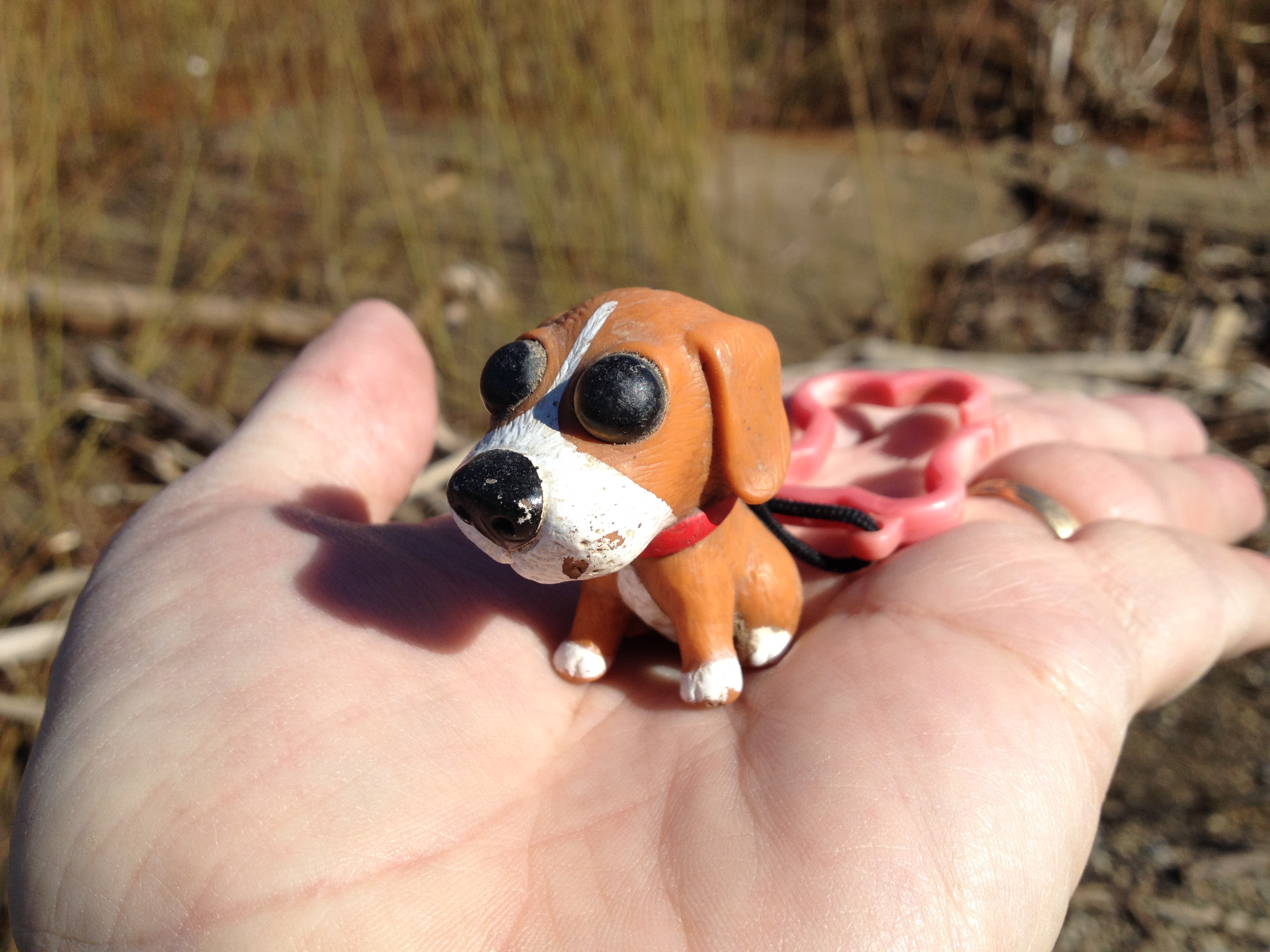
Sad-eyed puppy plastic keychain, Jan. 2015

I don’t recognize this guy?  He’s kind of cute in a bug-eyed way.  I’m sure there was a lot of time and effort that went into the myriad decisions to produce this item from beginning concept to finished product.  That also includes extracting the petroleum from the earth and other ingredients that went into this exact plastic recipe.

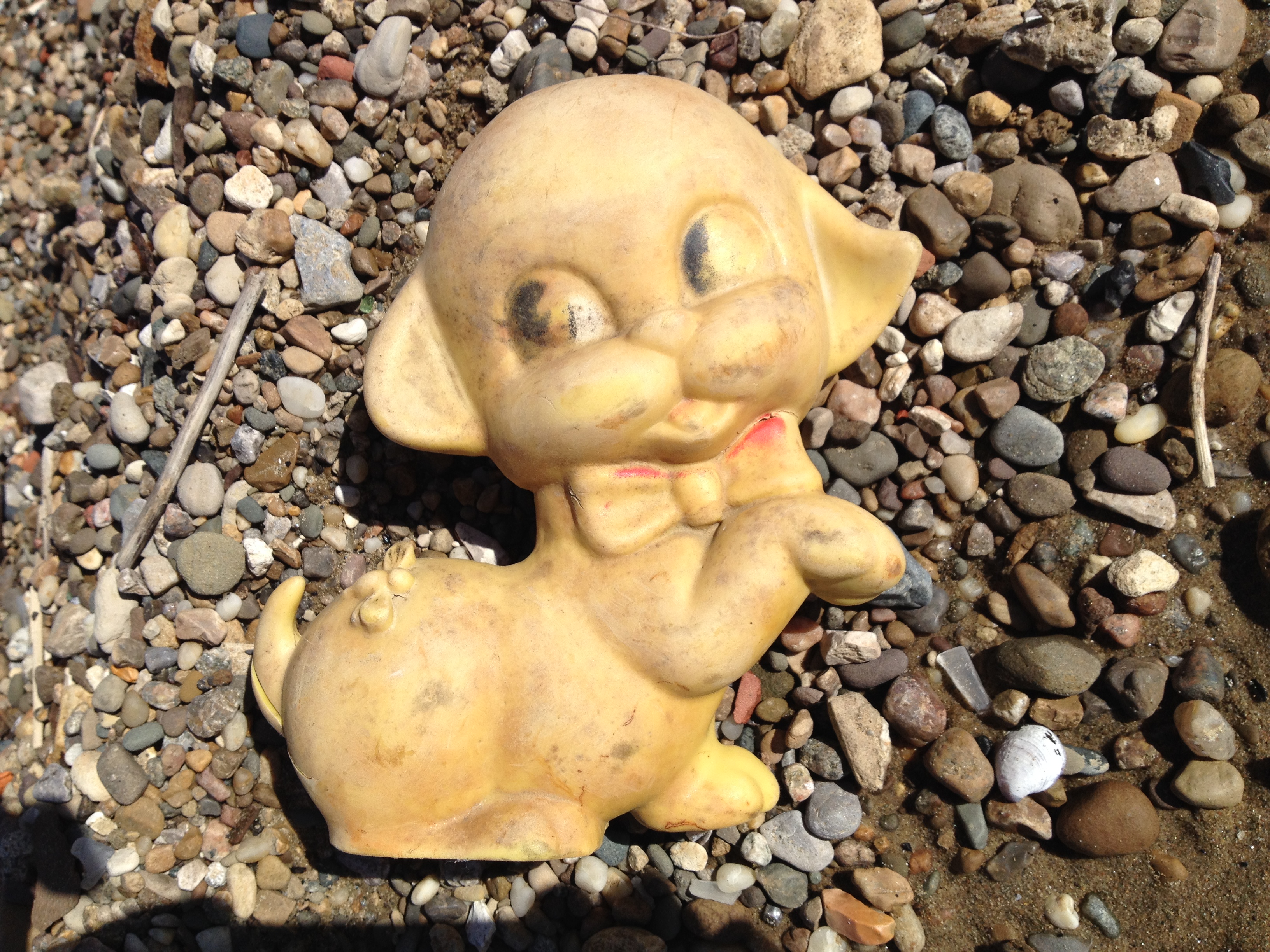
Bowtie dog with paw raised, Jan. 2015

This cutie seems old.  I tried looking on a few toy sites, but could not identify this specific piece.  I wonder if in fact it is made of rubber that has become rigid over time?

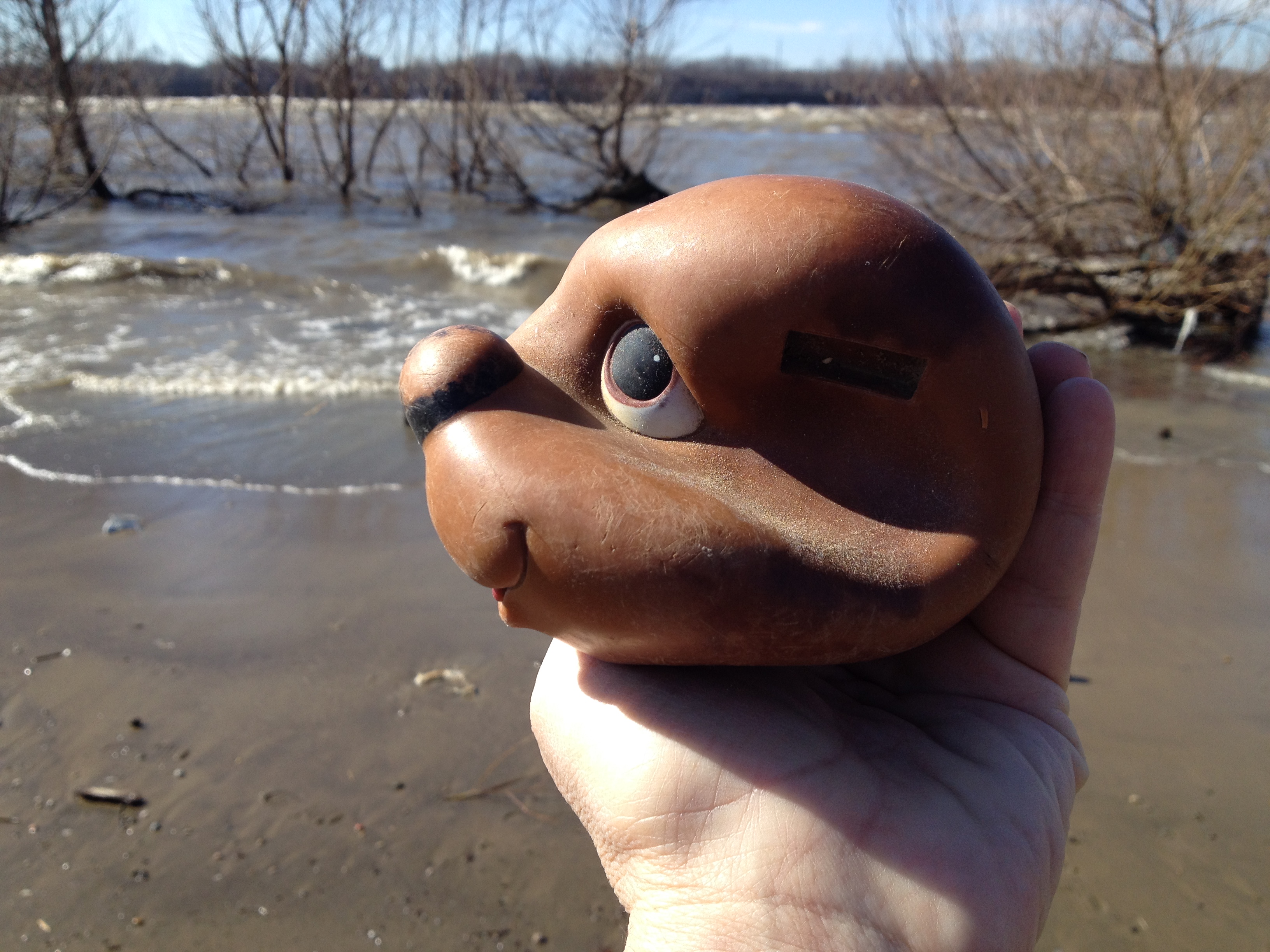
found, earless, plastic dog head, Jan. 2015

This earless, body-less, squashed, brown, plastic dog head was probably once part of a child’s pull-toy.  That’s my best guess here.

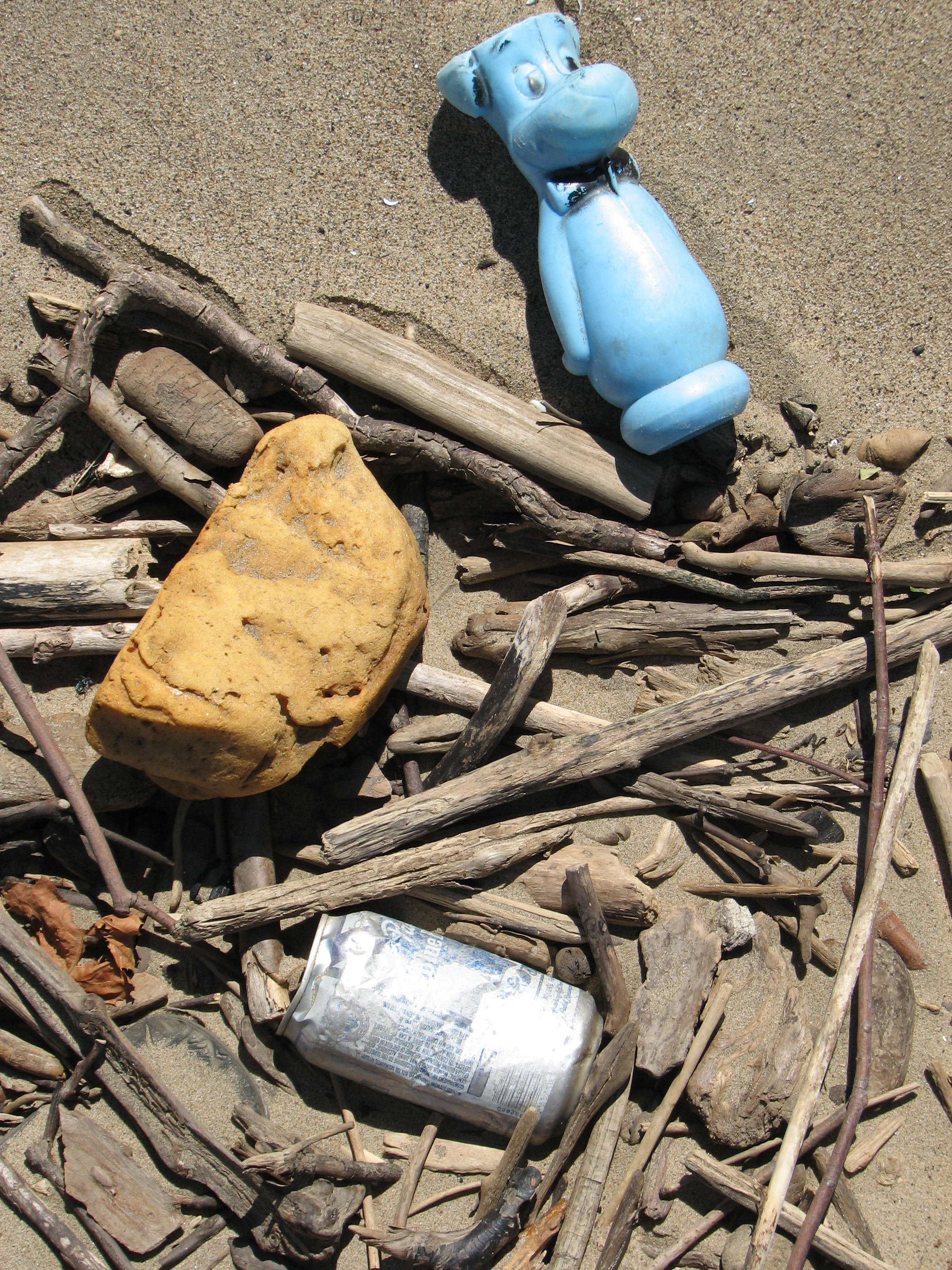
"Huckleberry Hound" as found on Goose Island

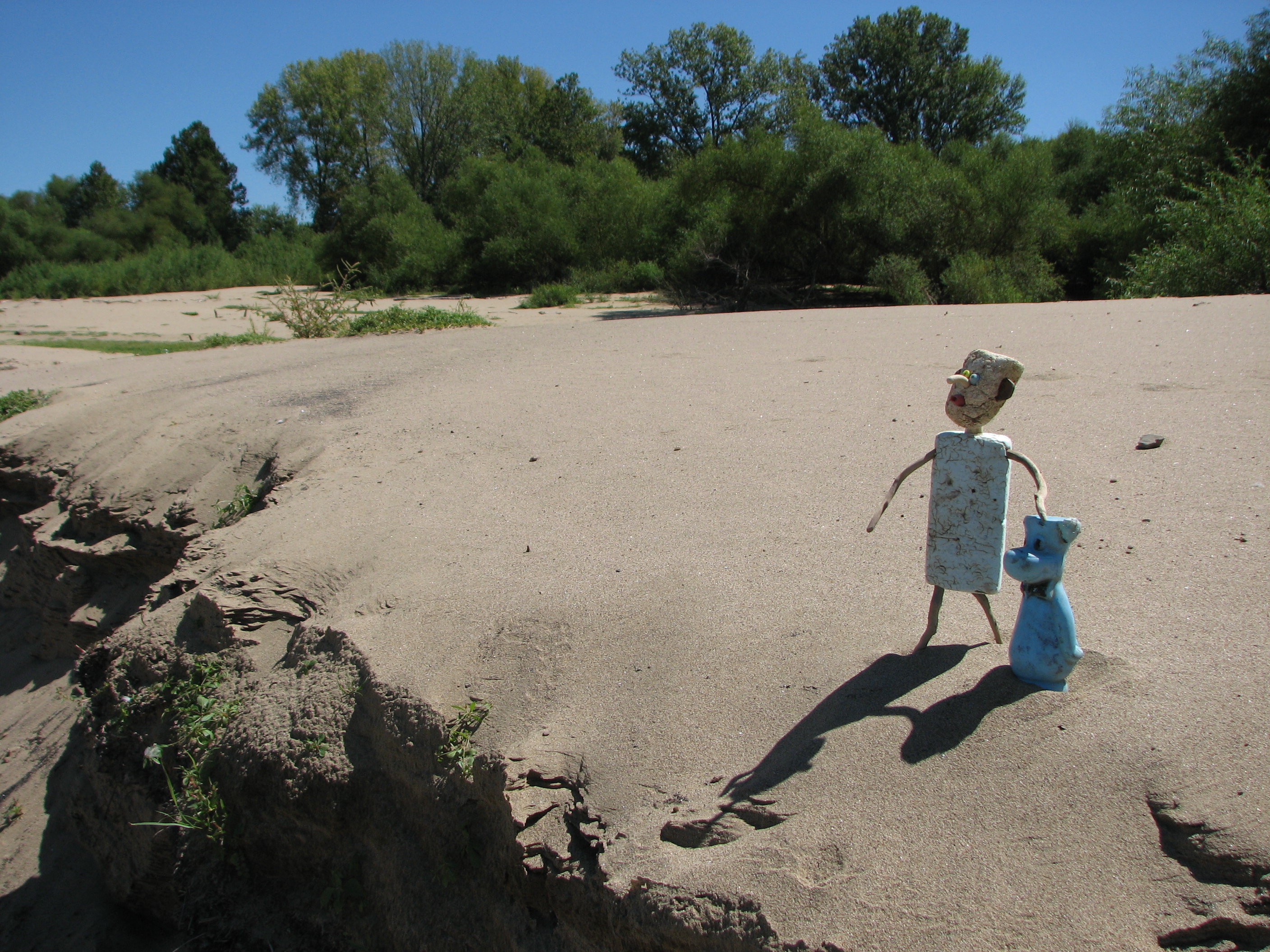
This photo is from a few years back and shows a plastic “Huckleberry Hound” toy as I found it on Goose Island.  I remember this character from my childhood and was shown along with “Quick Draw McGraw” cartoons.  I later used the blue dog for a story I posted.  Here’s an image from that story entitled “Lost and Found Hound”.

Huckleberry Hound as the lost dog.

I wrote this story in 2010 and was inspired by the lost and stray dogs I sometimes encounter in the park.  Sadly, plastic is not the only thing that gets disposed of out here.  I did have one adventure at the Falls where I was menaced by a feral dog, but usually, they are very wary and difficult to approach.  In my story, there is a happy ending and owner and dog are reunited.  I guess it was kind of touching or at least as much as putting Styrofoam, plastic, and sticks together can be.  I’ve never taken Cory to the Falls of the Ohio State Park.  For one, dogs are supposed to be on a leash…not that everyone adheres to that.  I guess I fear I would lose her if I let her run loose.  Her nose would soon be overcome with “scent joy” and that would get the best of her.  There are so many intriguing smells out here that make up a vast language that we have forgotten about that dogs still remember.  Although she usually comes to me when I call her…out here, she could be gone in a blink of an eye and it’s not worth that.  We will just stick to our neighborhood’s park.  I have a couple other “dog” related projects I’ve made over the years.

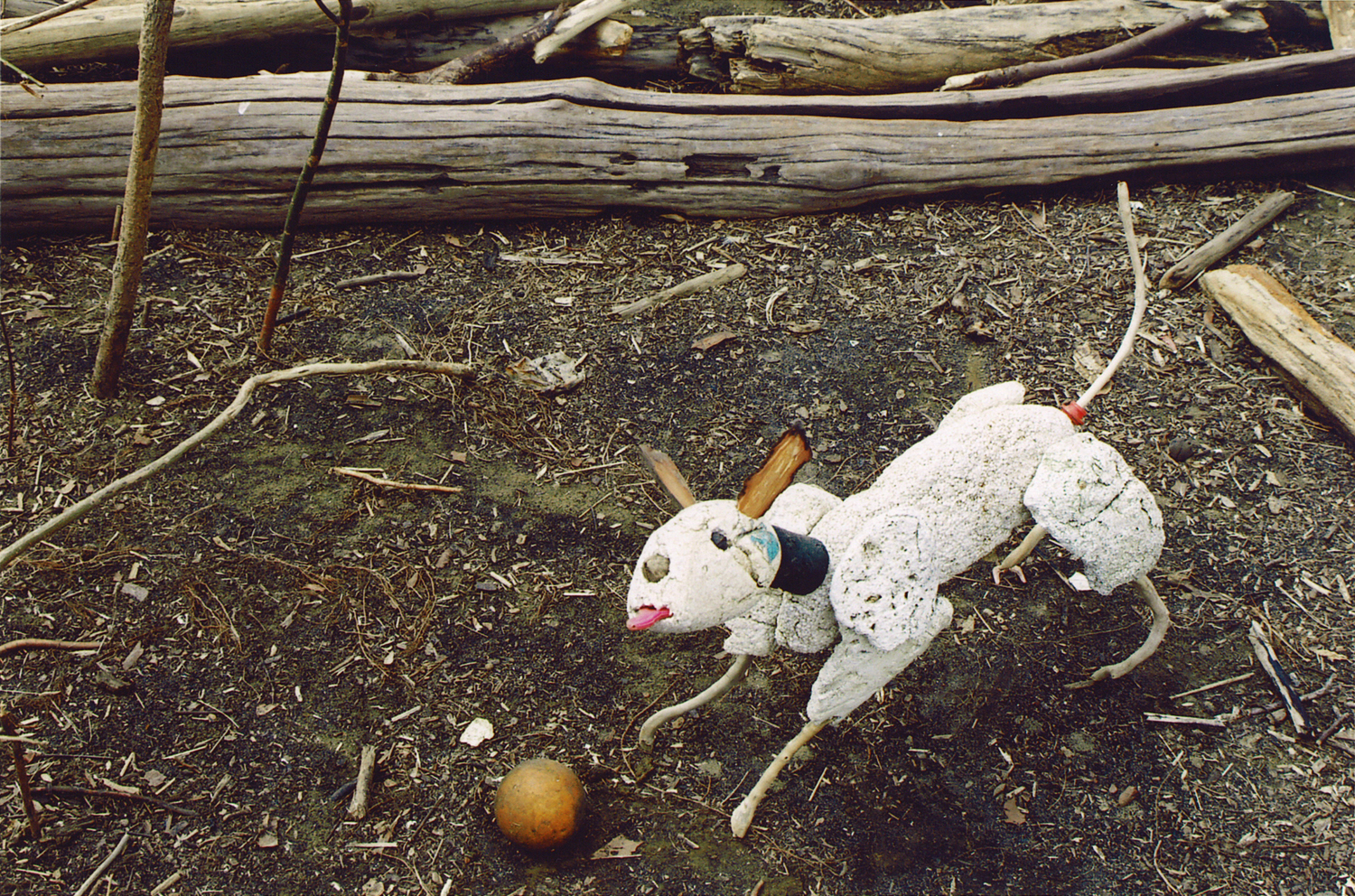
Styro-dog playing with a Ball

Here’s an early project I created when I was less interested in stories and more interested in images and objects.  You can’t tell from this picture, but I also made an “old woman” figure to accompany the dog.  This piece is made from Styrofoam pinned together with little wooden pegs.  It also incorporates plastic, driftwood, and nuts in its fabrication.  The yellow ball is the core from a contemporary softball which gives you a hint for scale.  I think the working title I had for this piece was “A Game of Fetch”.  I enjoy the challenge of creating some sense of motion using such static materials.

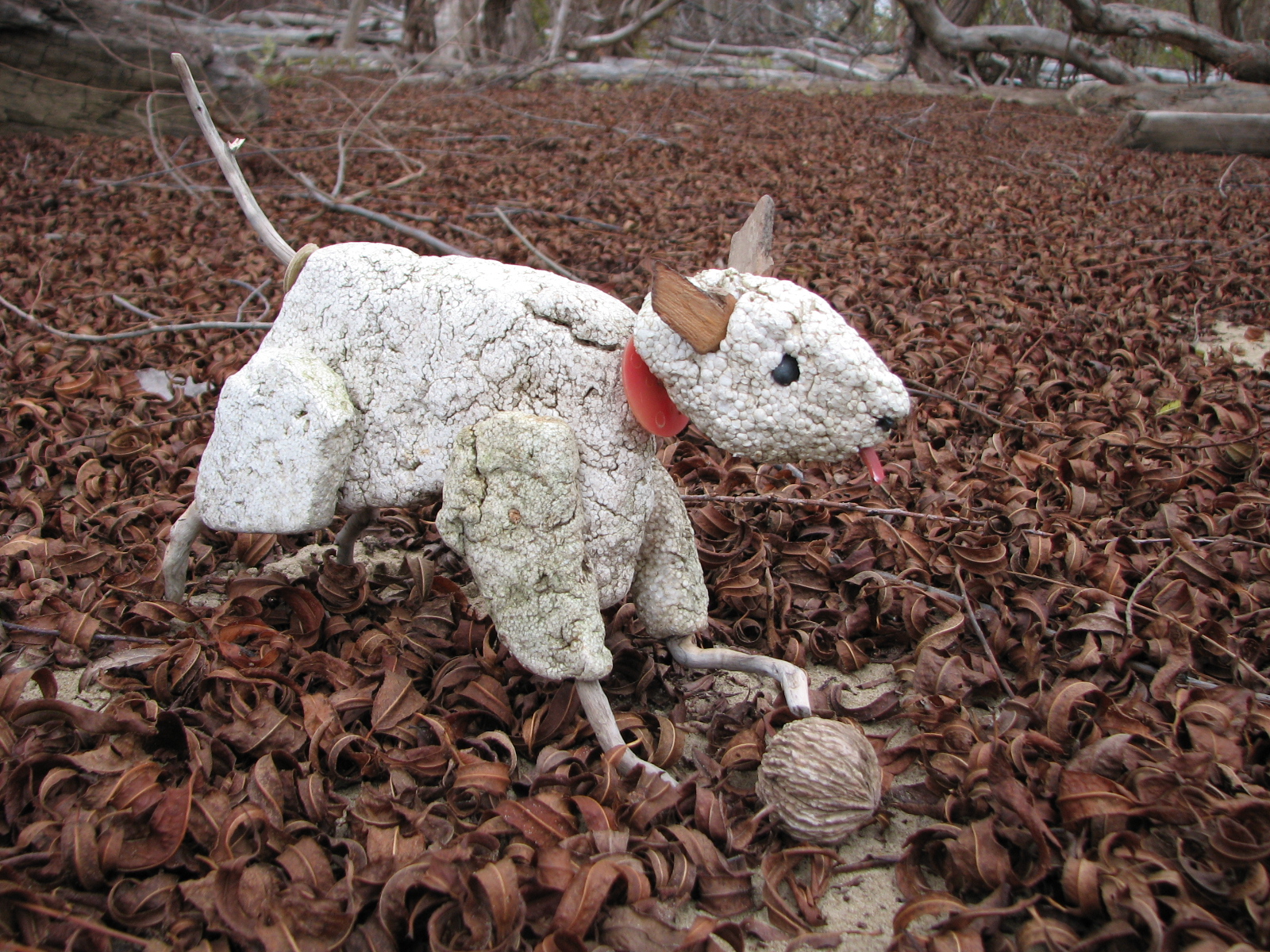
Tiny dog sculpture with walnut

Despite looking large in this image…this dog is actually very small.  You can tell by the walnut I’ve added for scale.  It’s “playing” in the shed, dried leaves of a willow tree.  I think in this one, the eyes are bits of found coal.  I used this same figure for an image that became one of my Christmas cards.

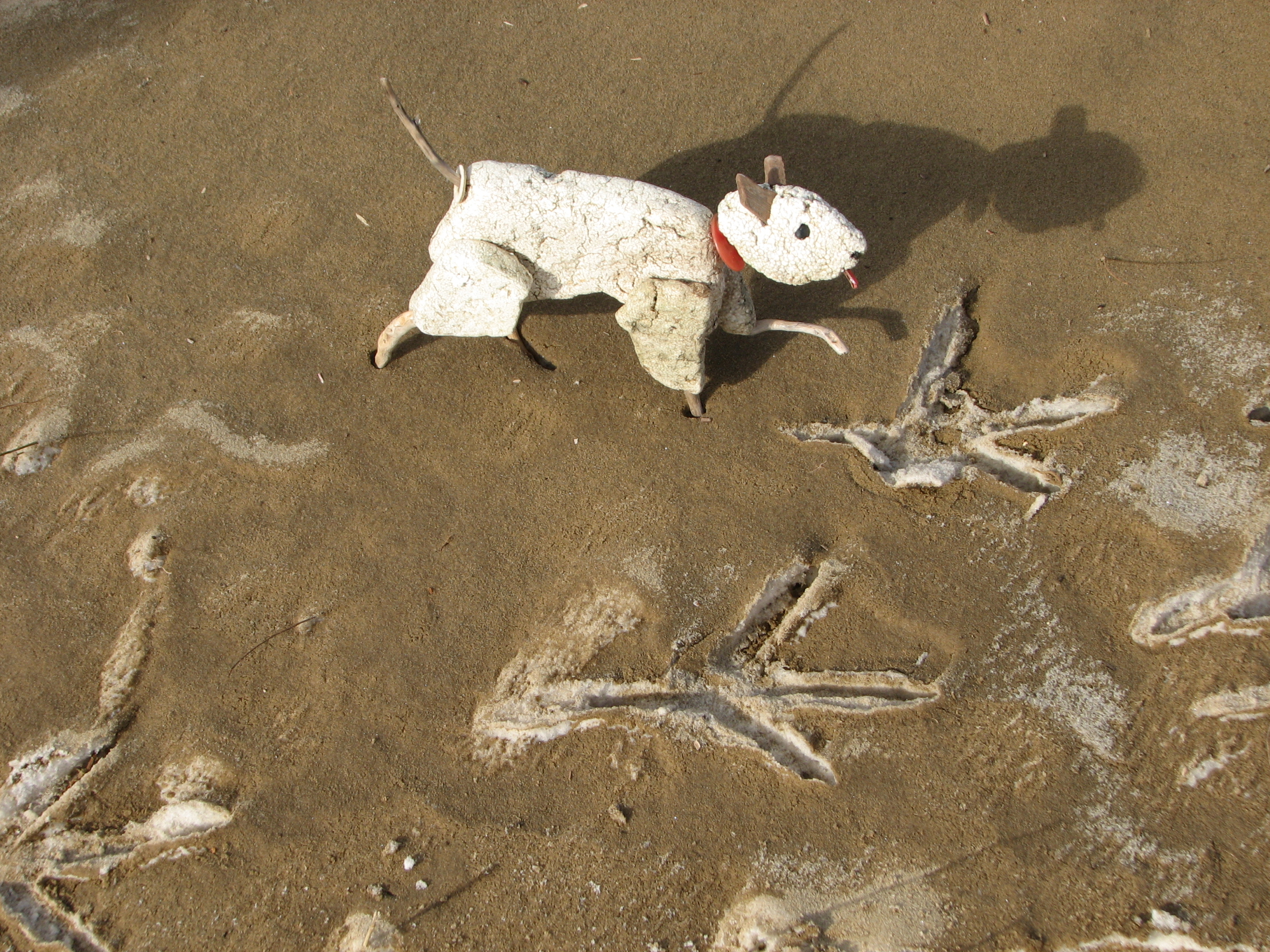
Tiny dog with tracks

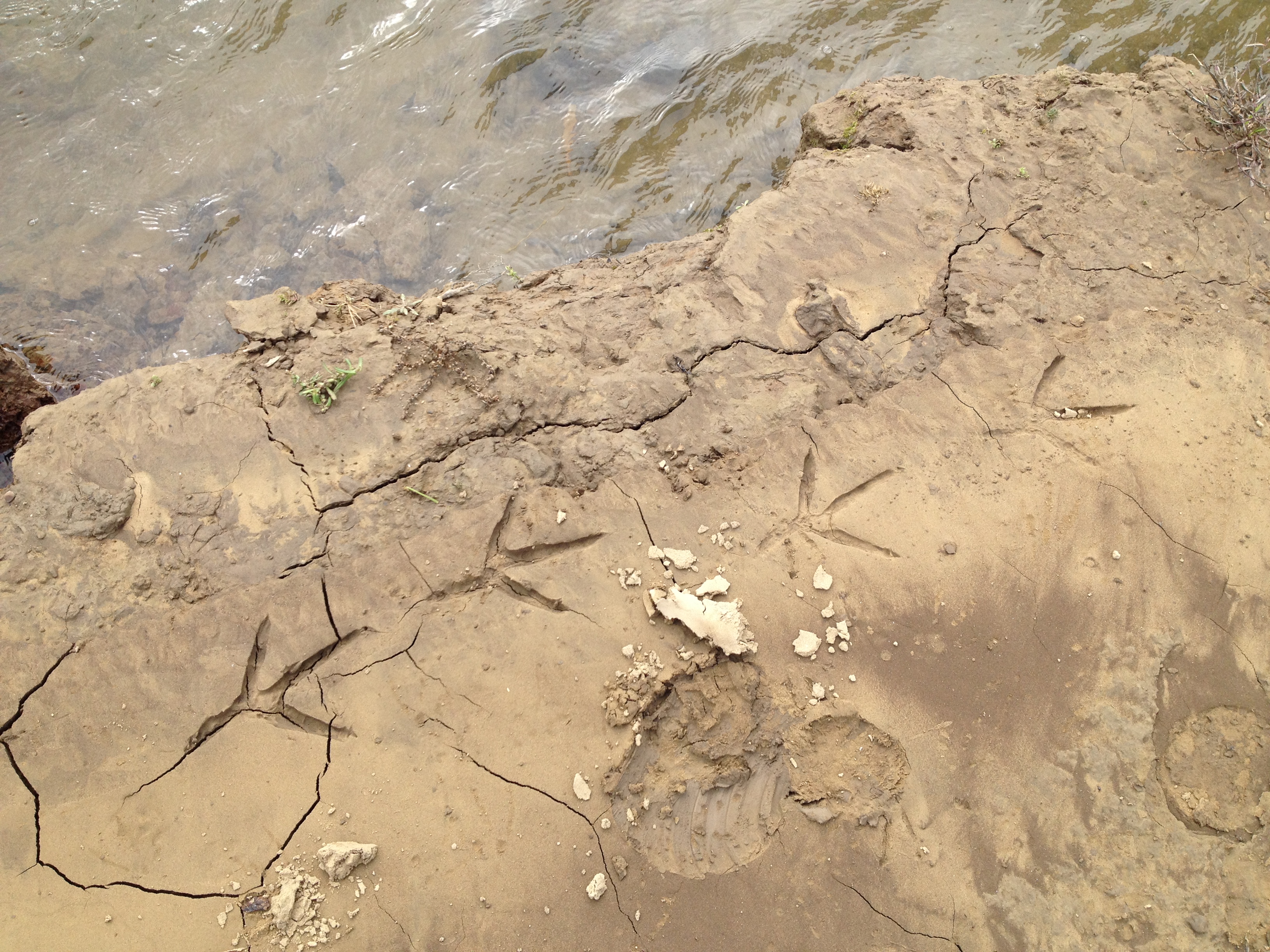
The dog is on the trail of a very large bird.  In this case, the tracks were made by a Great Blue Heron and partially frozen in the sand.  Well, there you have my tribute to dogs and the Falls of the Ohio.  I dedicate this post to our beloved dog Cory.  On a daily basis she teaches us that we are more fully human when we give our hearts to members of another species.  See you next time from the Falls of the Ohio.

Cory, the Wonder Dog, Feb. 2015


Read Full Post »

Christmas Bird at the Falls of the Ohio, Dec. 2014

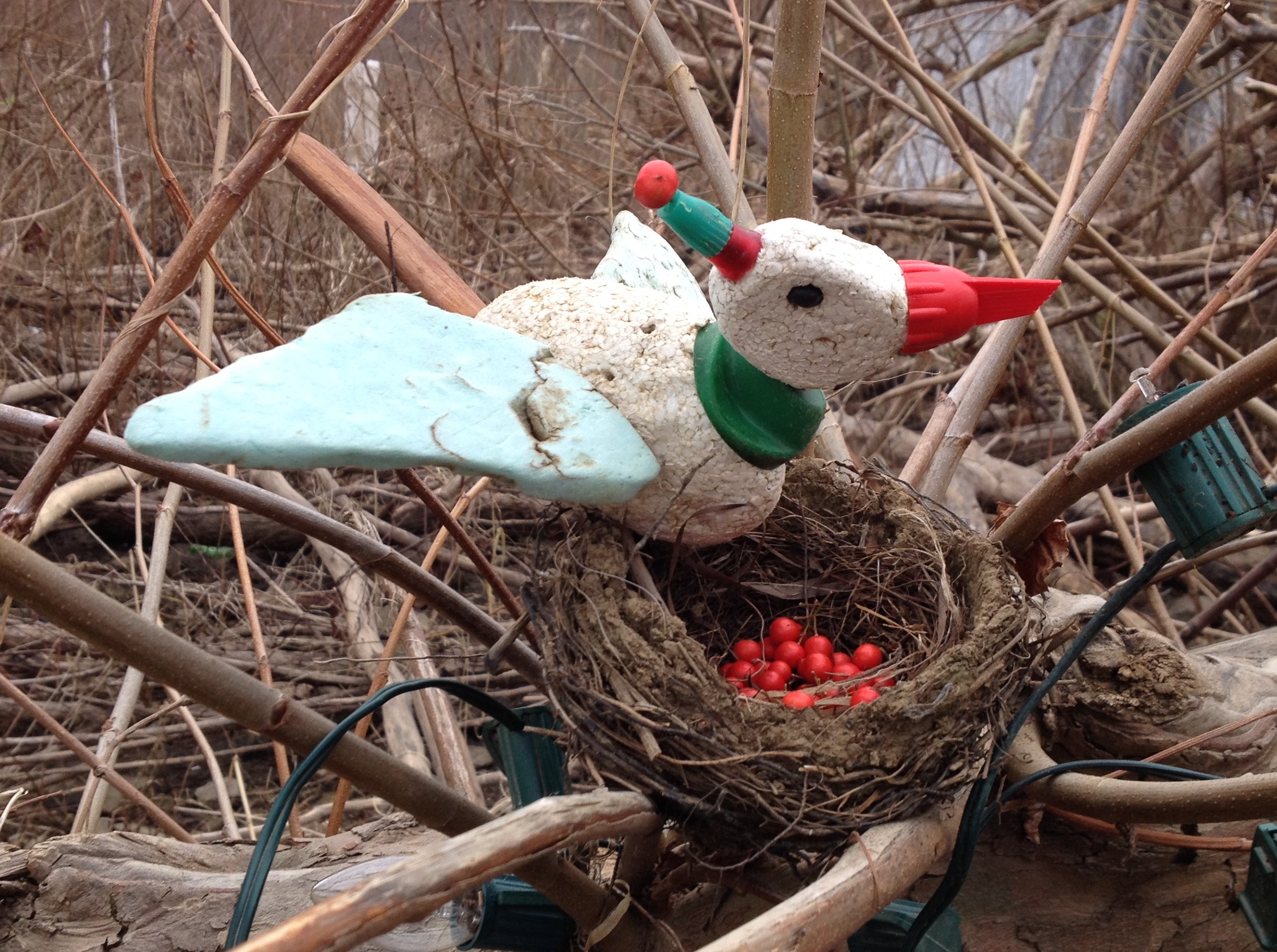
In the eastern section of the Falls of the Ohio State Park I came across a remarkable bird.  As far as I know, this is the first documented sighting of the so-called Christmas Bird (Xmasii noelensis) in our area.  The bird’s red crest, green collar, and azure-colored wings are diagnostic as is the bicolor beak.  I was down at the river on a rather foggy morning when I noticed the bird flashing its wings in mockingbird fashion which is a distant relative of this species.

The Christmas Bird, Louisville in the background, Dec. 2014

I was looking for interesting pieces of driftwood and odd items washed up by the Ohio River when I came across this bird.  This is a long distance migrant and one that hails from as far north as the Arctic Circle.  The Christmas Bird earns its name in a couple of ways.  Of course, its complimentary plumage is rather seasonably inspired and it does seem to migrate to the lower 48 states around the time of the holidays.  Where the bird will appear is rather unpredictable, however, it is a welcome sight in most any location.  Here I have photographed the bird “flashing” its wings against its body while perched upon a driftwood log.  The park is in Southern Indiana and the skyline of Louisville, Kentucky can be seen across the Ohio River.  After taking this shot, the bird flew off.

Display of the Christmas Bird, Falls of the Ohio, Dec. 2014

I said to myself…”Well, that’s that”.  I fully did not expect to see this rare bird again, but I received a “gift” of a rather unexpected nature.  Underneath the old iron railroad bridge, not too far away from my initial sighting, I came across this “decorated” nest and recognized its significance.  This is a display from the Christmas Bird.  Using an abandoned mud-lined nest of an American Robin, (Turdus migratorius), the Christmas Bird has created an assemblage involving red berries and the remains of a string of old Christmas lights that washed into the park with the other river-bourn detritus.  From this evidence, I suspected the bird had “claimed” this area.  If I in turn displayed patience…I might get another opportunity to photograph this unusual species.

Christmas Bird with its display, Falls of the Ohio, Dec. 2014

I waited about an hour and the Christmas Bird did appear to my great joy!  It arrived at the nest with a red berry in its beak which it added to its growing collection.  It is believed that this bird is attracted to the color red.  Usually, berries from the holly tree are used, but in this instance I recognized them as the fruit of the Nandina plant.  The bird probably discovered them growing in a private garden in nearby Jeffersonville, Indiana.  It is suspected by ornithologists that the southerly migration of the Christmas Bird, which brings it to warmer climates, may trigger this unusual nest-like and courting behavior.  The Christmas Bird is known for its ability to tolerate extreme cold and it takes a great drop in temperature to stimulate it to migrate.

Close up of the Christmas Bird with red berry, Falls of the Ohio, Dec. 2014

Christmas Bird with display, Falls of the Ohio, Dec. 2014

I was able to observe this bird making about ten trips back and forth between the nest and its berry source.  If the bird was aware of my presence…it did not appear to be overly alarmed.  Once in a while, the bird with crest erected, would cock its head back and forth trying to differentiate my form among the willow branches.  I held my breath and tried to remain still and as unthreatening as possible.

The Christmas Bird with its seanonable display, Falls of the Ohio, Dec. 2014

The weather grew damp and cold and the sun looked like it was not going to appear from beneath its blanket of clouds.  I made the decision that I had enough images and it was time to leave this bird in peace and go home.  On the ride home, I felt I had been given this great gift, the gift of nature which remains priceless and timeless!  For me, nothing packaged in a box and wrapped with a bow can equal this living blessing.  To all who have followed my adventures by the river this year…I offer my sincerest good wishes during this season of holidays!  I hope that at least once in your lifetimes, you will be visited by the Christmas Bird bringing red berries for your nest.

Christmas Bird with red berry, Falls of the Ohio, Dec. 2014

Read Full Post »

Great Blue Heron tracks in the mud, Falls of the Ohio, Oct. 2014

What began overcast and dreary blossomed into a gorgeous, sun-filled autumn day.  The exposed fossil beds by the Upper Tainter Gates are now covered by water rushing at break neck speed.  The Ohio River has once again reclaimed its ancient limestone bed with man’s help.  The Falls of the Ohio are like Niagara Falls which can also be regulated with the flip of a switch.  There’s a good chance that I won’t be visiting that side of the park again until next summer’s heat returns.  Today I concentrated my attention and energy along the riverbank under the Conrail Railroad Bridge.  This is an area where I have had good luck finding materials to work with and many of my best bird sightings have also occurred here.  The autumnal migration is under way.  Many of the birds that had passed this way going north in the spring are now moving south towards wintering grounds in exotic locations in Central and South America.  I ducked under the Black willow trees whose leaves are turning bright yellow and was soon rewarded by a bird species new to me.

Fan-tailed Gnatcatcher, Falls of the Ohio, Oct. 2014

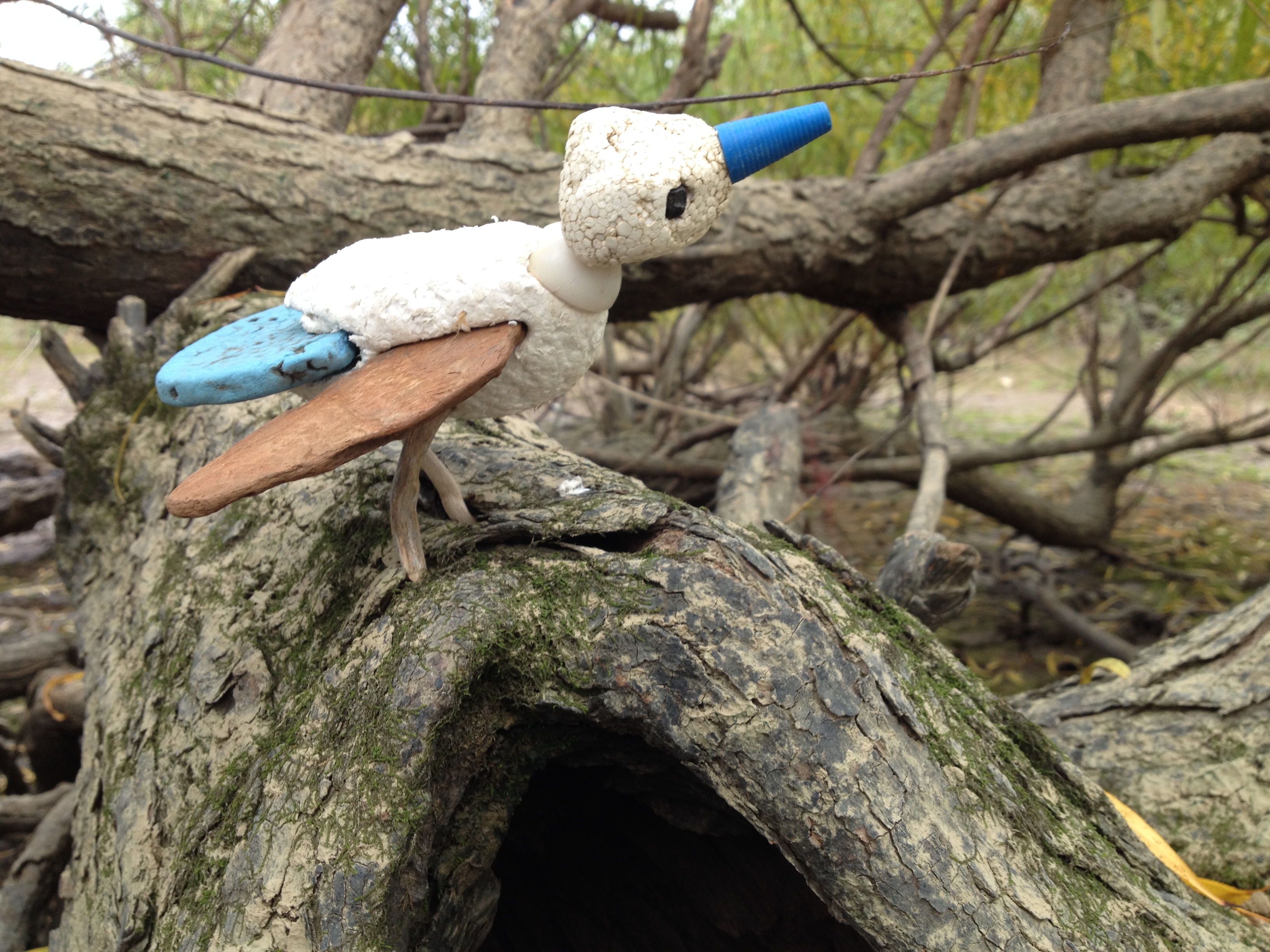
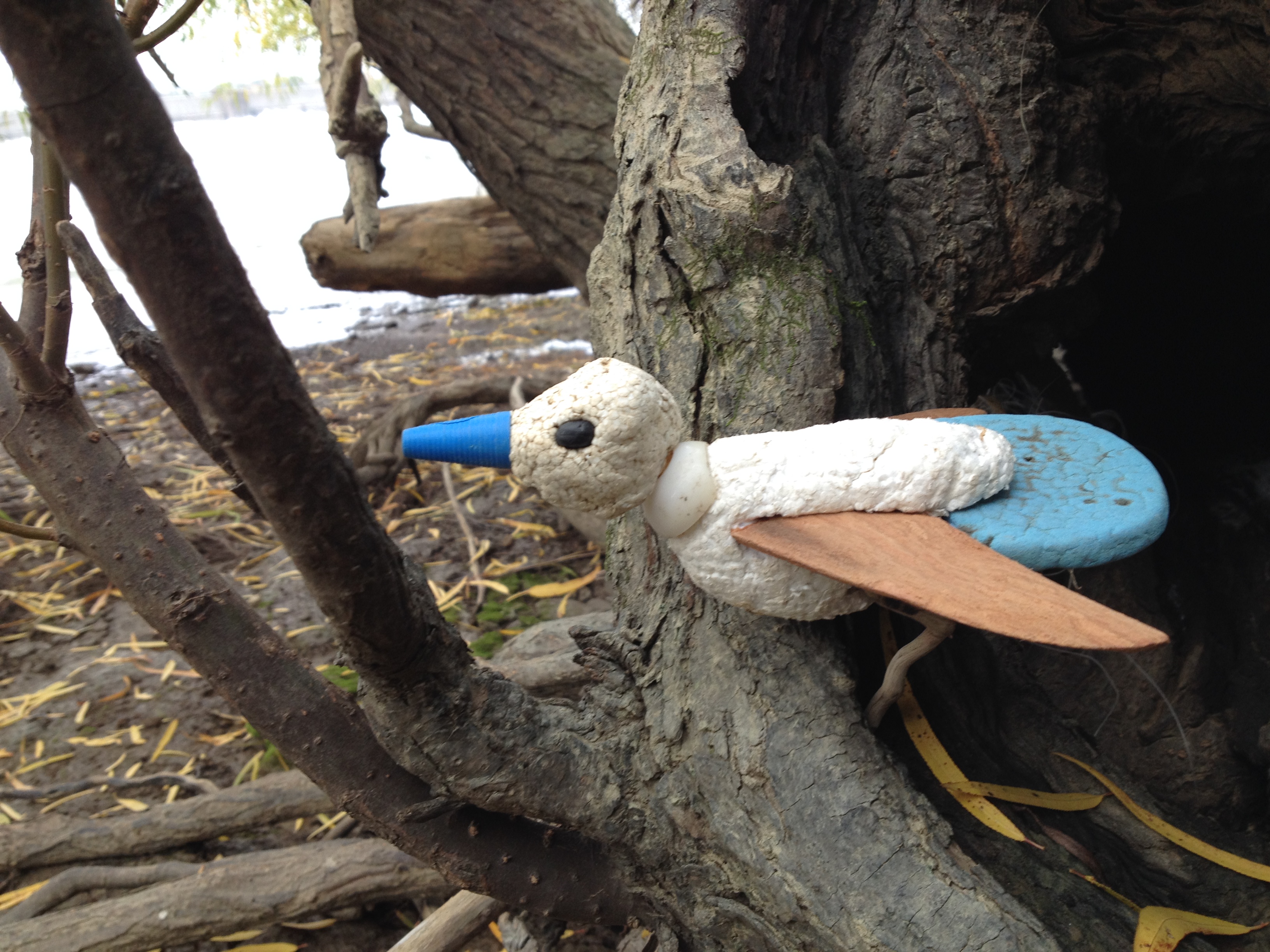
This is the Fan-tailed Gnatcatcher and this is the first time this species has been recorded in the park.  I had the greatest luck hiding behind the trunk of this willow and was able to observe this bird at extremely close range.  If it spotted me…it demonstrated no concern at all and continued its search for small insects and spiders hiding among the furrows in the tree’s bark.

Fan-tailed Gnatcatcher, Falls of the Ohio, Oct. 2014

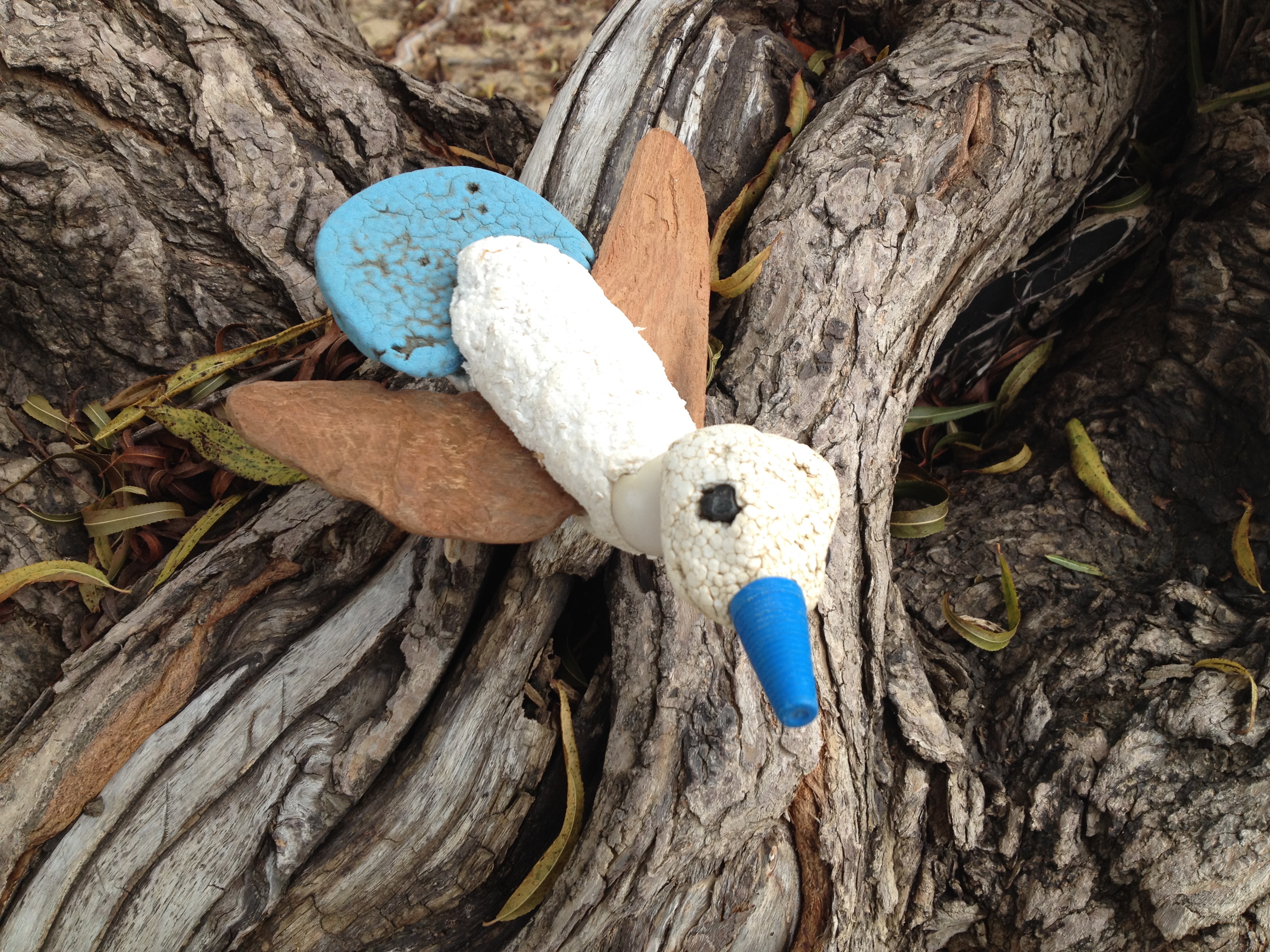
The Fan-tailed Gnatcatcher is a diminutive bird.  I watched as it dutifully searched the tree for food.  It had no problems going down the tree head-first in nuthatch fashion.  In this species, both the male and the females are similarly marked.  This young bird (identified by its lack of a feathered crest on it head) was just an egg a couple of months a go and has flown here from northern Canada.

Fan-tailed Gnatcatcher, Falls of the Ohio, Oct. 2014

I was literally at arm’s length to this bird and it was a such a treat to observe something new and at close range.  I loved the coloration on this bird.  The tail feather’s blue fan is balanced by the bird’s bright blue beak.  Rusty-colored wings are set off by the arctic-white hues along the head and body.  Like many bird encounters, I was only able to observe this bird for a minute or two at the most, but it was an experience that will last a lifetime.  As it flew off…I wished the bird well on its long journey and I hoped I could count its kind again among the park’s willow trees.

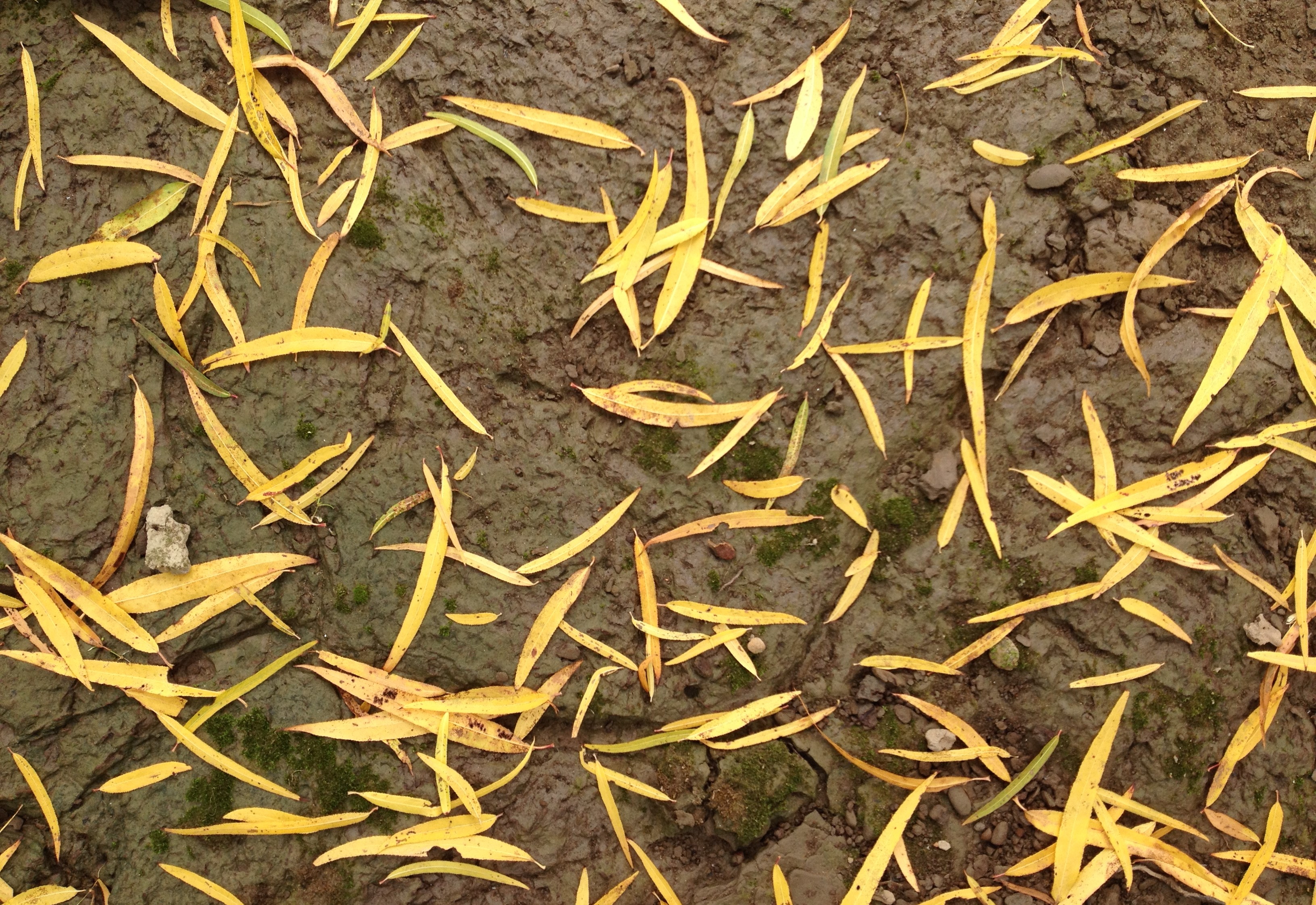
fallen willow leave on mud, Falls of the Ohio, Oct. 2014

I lingered in the moment for a while.  No sense in rushing things.  When I was confident that no other birds were in the area, I moved back to a spot where the Fixed Wier Dam joins the Lower Tainter Gates.  This would be the site for my next project.

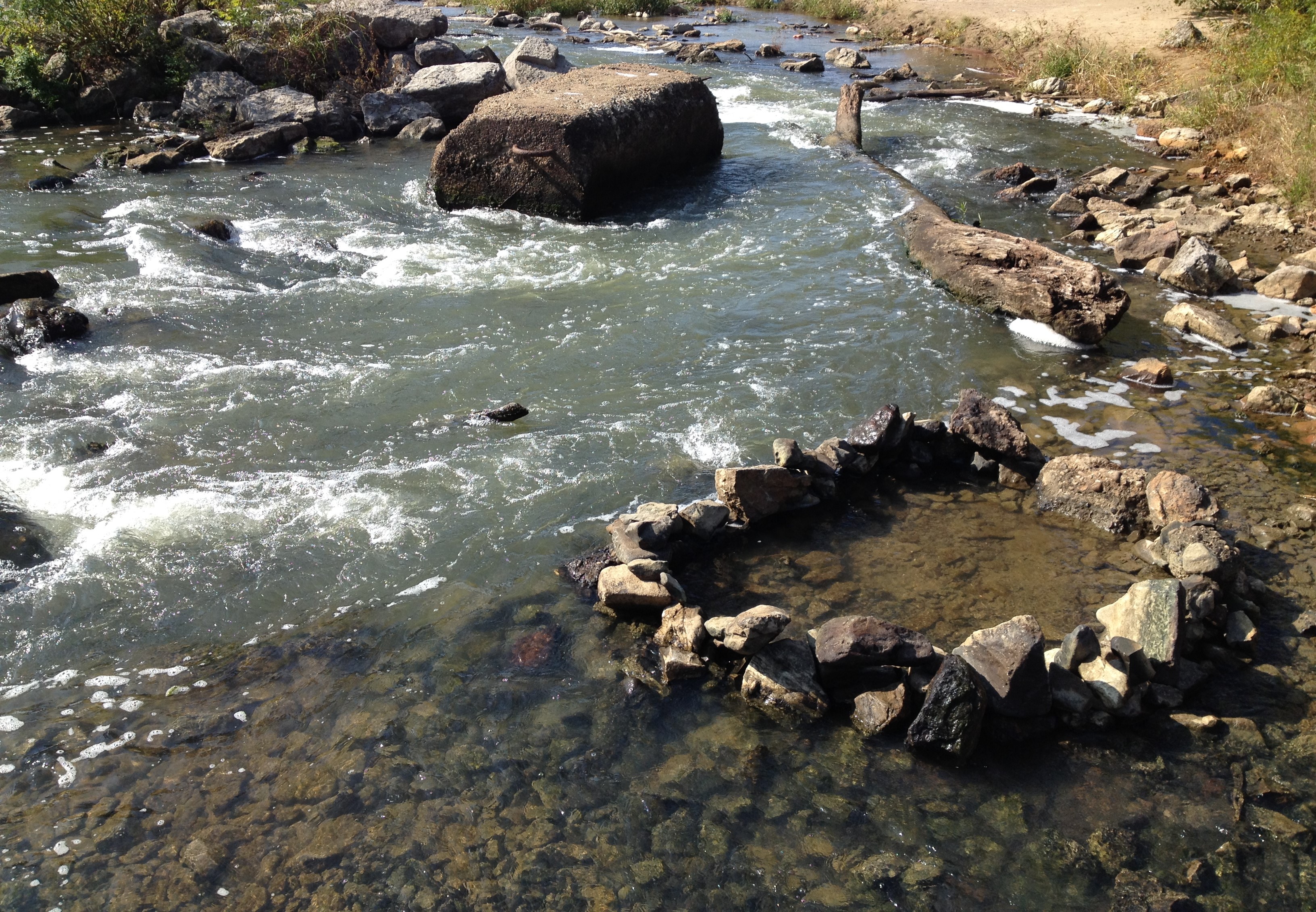
stone and concrete ring by the dam, Falls of the Ohio, Oct. 2014

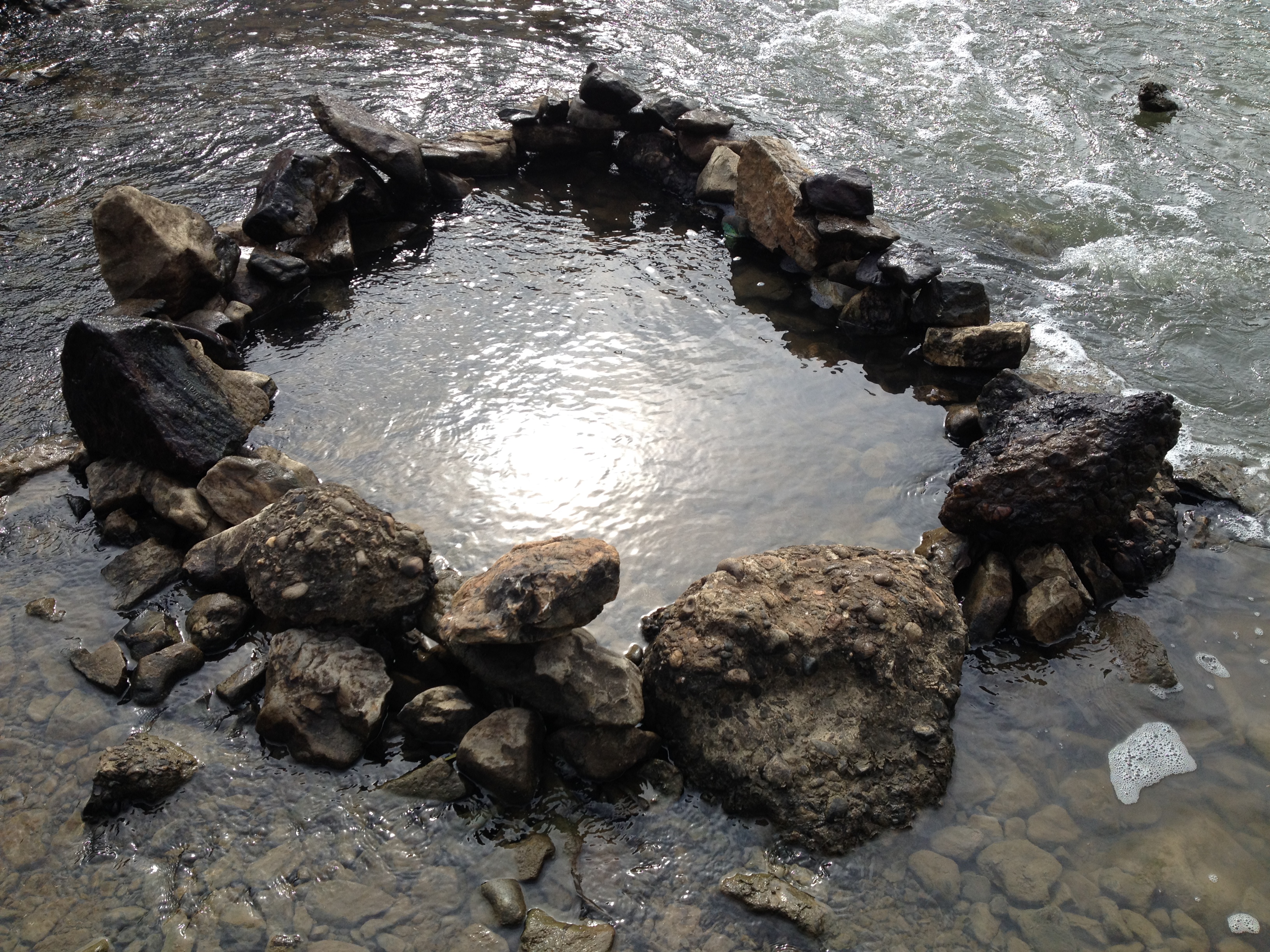
The dam at this location has curtains of water flowing through openings that are lower than the top of the wall and represents the true water level of the river.  This flow feeds a small channel that leads back to the river and is a favorite place for fishermen.  I had earlier noticed among the large broken sections of concrete and loose rock that some other creative soul(s) had started what looked like a stacked stone ring in the water.  There was the remnants of a foundation and I decided to build it back up for a look-see and to elaborate on it if possible.  I guess this in effect is a collaboration with an anonymous individual.  The image above was taken after I began reconstructing the ring.

Sun light reflecting with the stone ring, Falls of the Ohio, Oct. 2014

As I kept building up the ring, I would document my progress.  This is one of my favorite shots from the series.  Here I was able to center the sun’s reflection within the ring’s interior.  In my mind it became a portal to some other place far beyond the river.  The image of a passage way or tunnel is one that recurs in my Falls projects.

rock and concrete ring, Falls of the Ohio, Oct. 2014

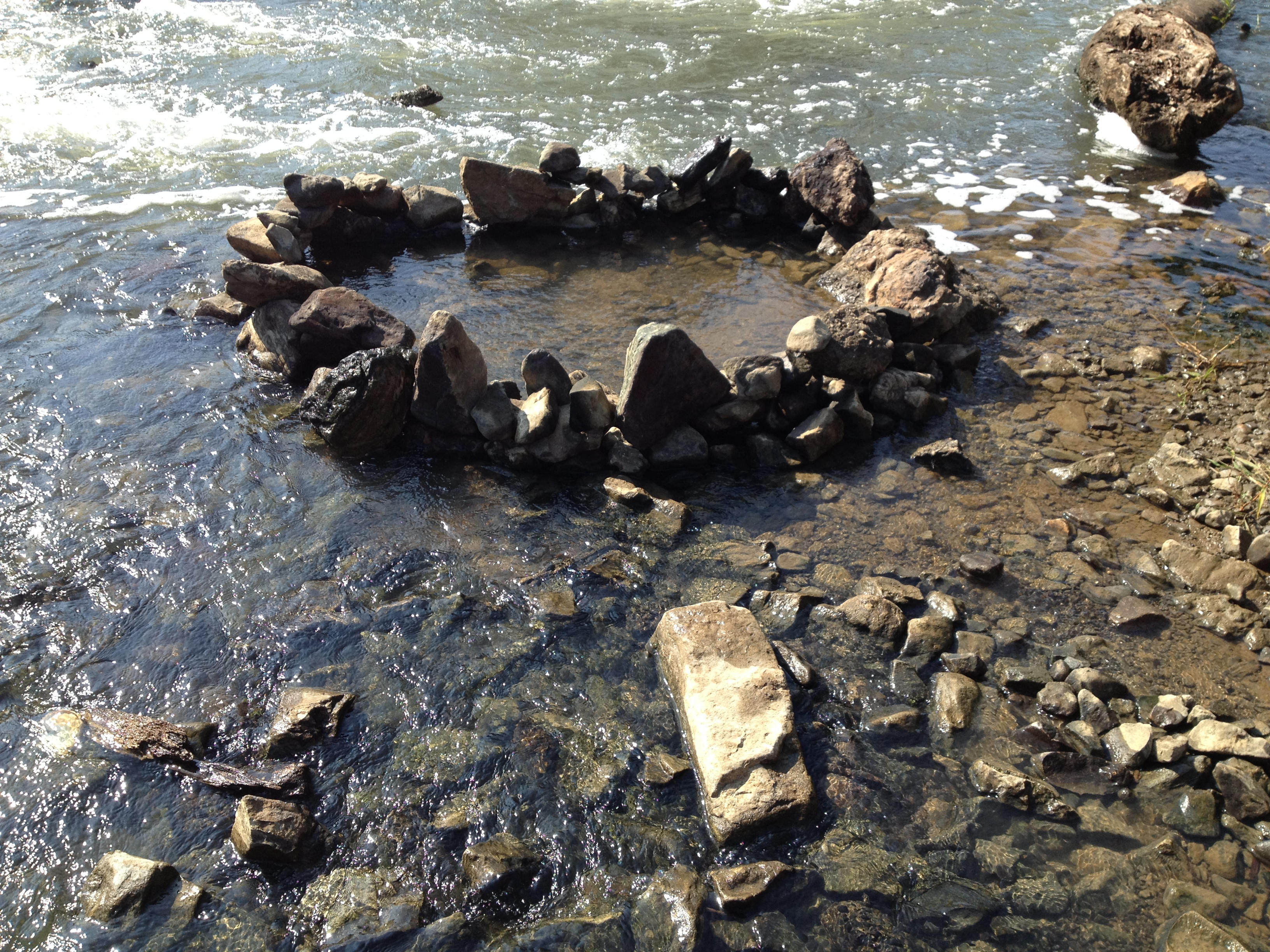
I would have added the rectangular rock in the foreground, but it proved heavy and sunk into the mud.  Interestingly, the water within the ring was much calmer and created a safe harbor which contrasted with the swiftly flowing water around it.

rock and concrete ring, Falls of the Ohio, Oct. 2014

The ring’s slightly irregular shape was determined by its placement.  The ring is situated on the edge of where the water cascading off the dam’s wall has worn a deeper channel in the shallow bottom.  Since it was such a beautiful day I decided to spend more time at the Falls.  I made one other site-specific work where the center is a point of focus.

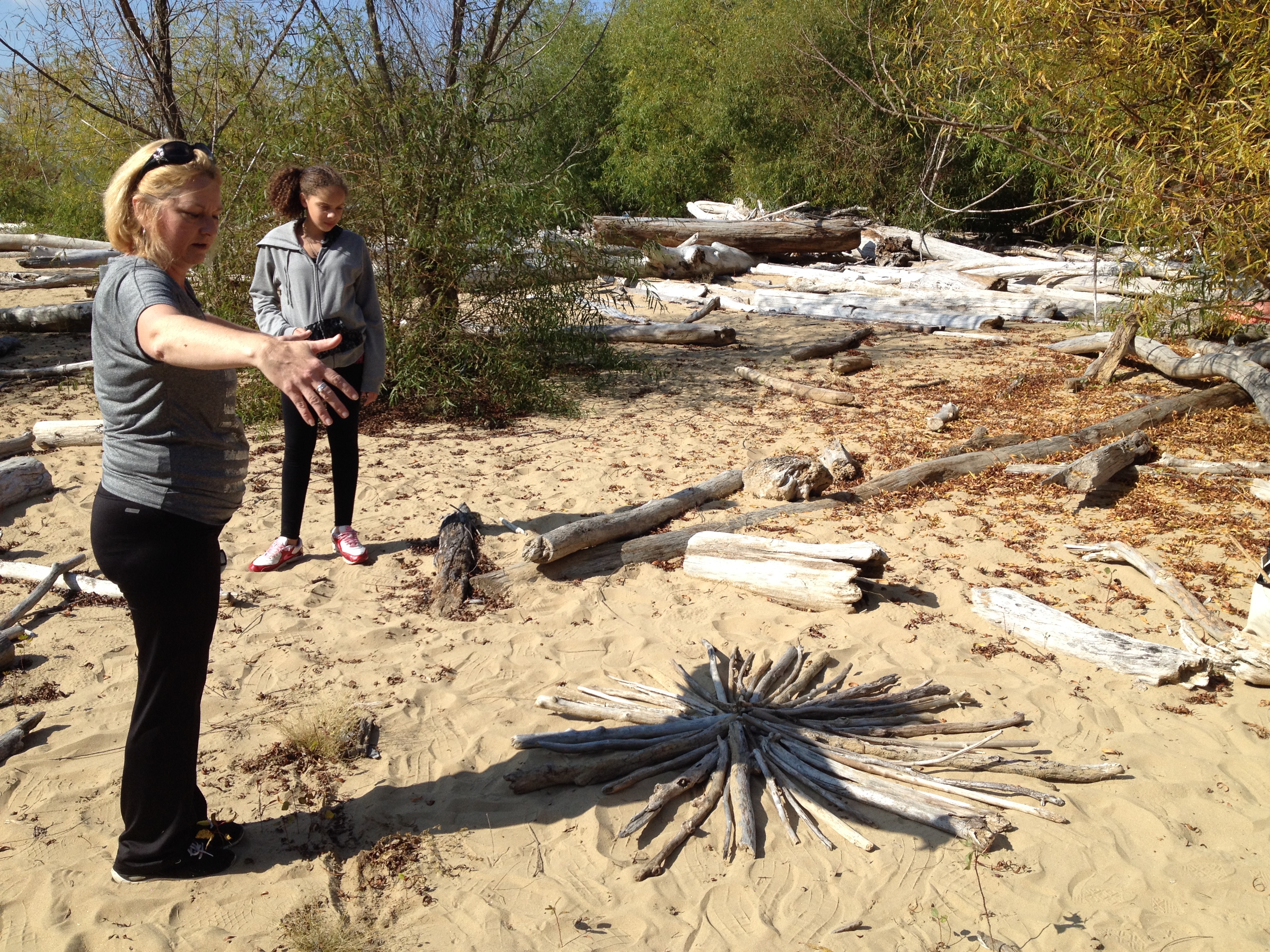
silver driftwood star, Falls of the Ohio, Oct. 2014

Detail of silver driftwood star, Falls of the Ohio, Oct. 2014


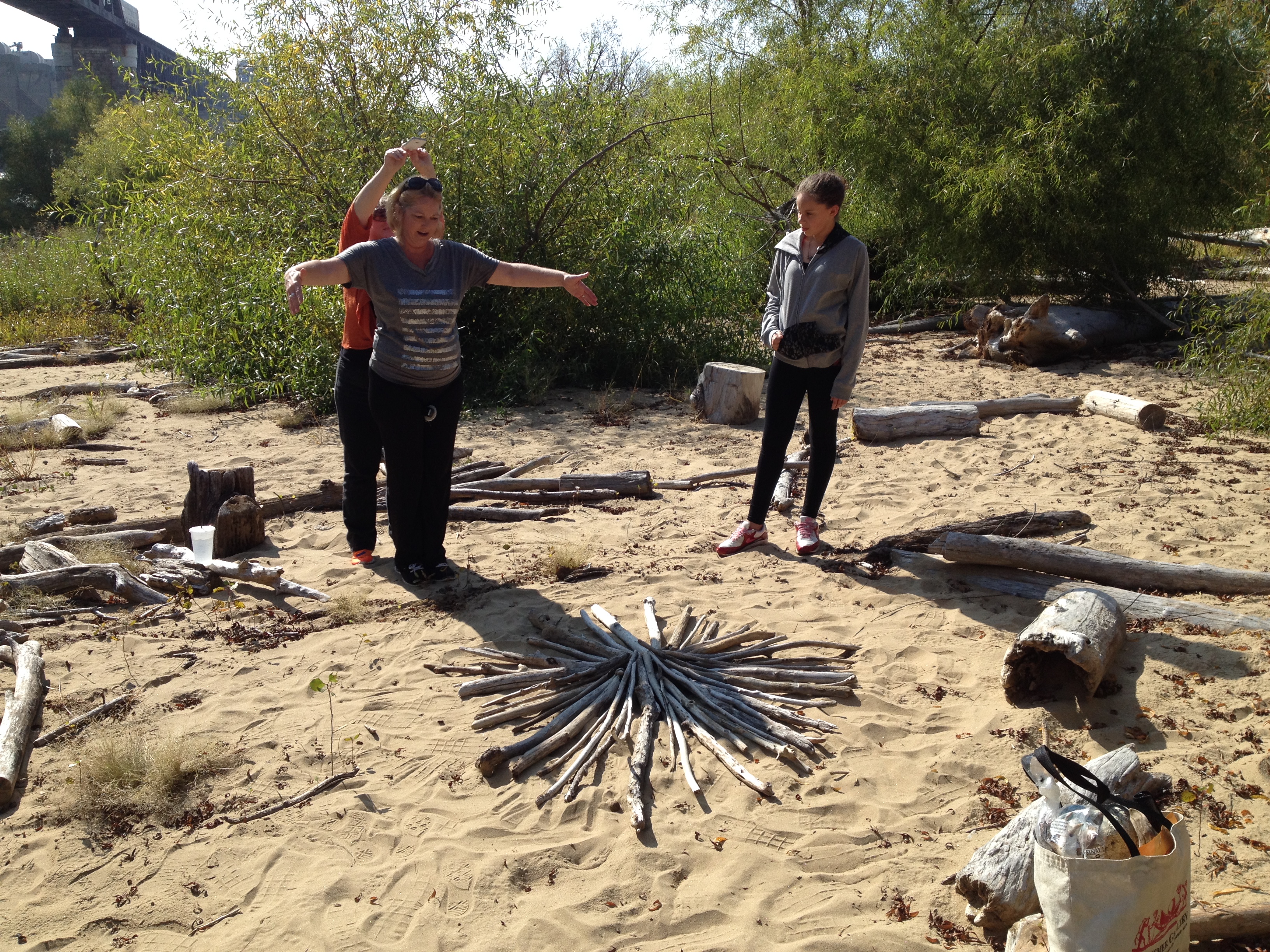
What I love about the driftwood at the Falls of the Ohio is the way it changes color as it ages.  After a summer’s worth of sunlight, the wood here takes on a silvery-gray color.  I collected lengths of wood from the immediate area and laid them in the sand.  The silver driftwood radiates away from a central point.  While I was engaged with my “Silver Star” four very nice people stopped by and asked directions to the fossil beds.  These park visitors became interested in what I was doing.  I appreciated that they wanted to participate and play along in their own way.  Here are a few additional images.  I’m assuming they are two mothers with their daughters enjoying an outing to the river?  Here one person is photographing the cast shadow on my wood piece.

Visitors interacting with my art, Falls of the Ohio, Oct. 2014

Park visitors interacting with my driftwood star, Falls of the Ohio, Oct. 2014

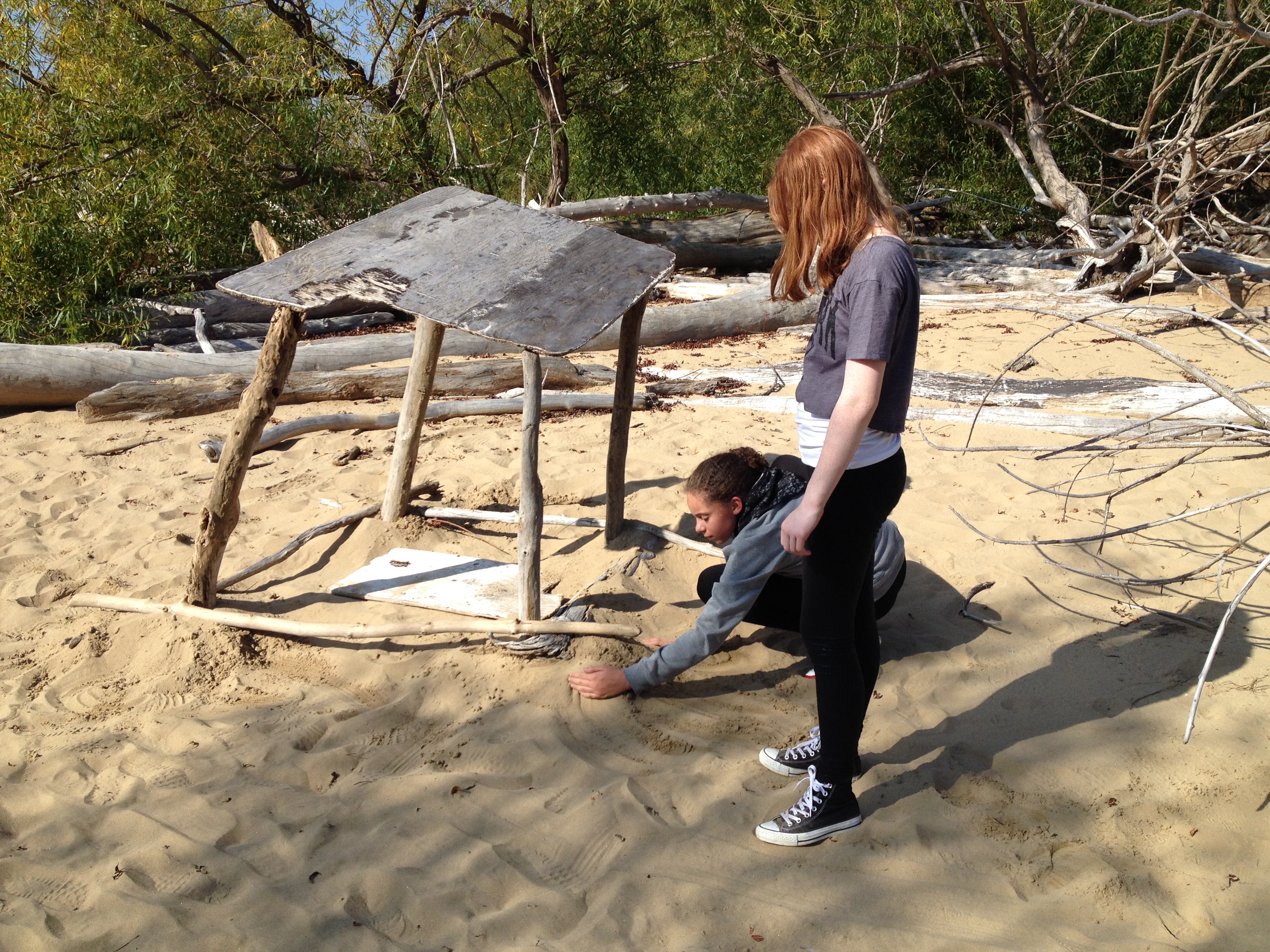
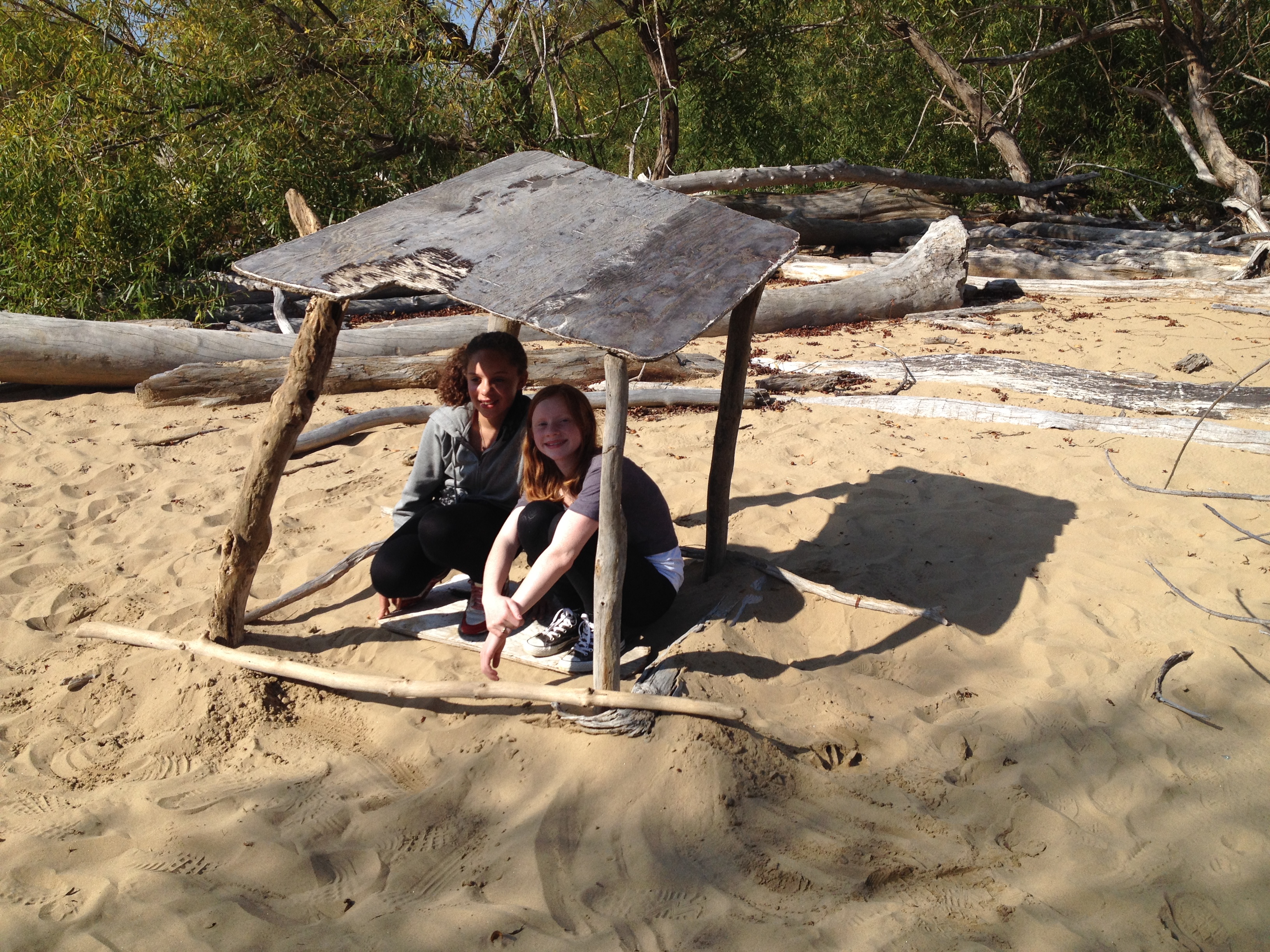
I think I may have inspired the daughters to attempt their own project?  Before too long they were picking up pieces of driftwood and making a make-shift shelter of their own design.

Girls making a driftwood shelter, Falls of the Ohio, Oct. 2014

Girls posed under their improvised shelter, Falls of the Ohio, Oct. 2014

The girls looked very happy under their driftwood shelter!  When my sons were younger, this was a favorite activity of theirs and this day brought back those good memories.  This park is such a great playground and allows one to exercise both your body and imagination.  I wonder if these ladies ever found the fossil beds?  It probably doesn’t matter since it looked like a good time was had by all.  Soon enough it was time to go home and I gathered up my collecting bag and walking stick and admired the late season flowers as I walked back to my vehicle.  Thanks for tagging along and I hope to see you next time from the Falls of the Ohio State Park.

tiny composite flowers with bee, Falls of the Ohio, Oct. 2014

Read Full Post »

On the dry Indiana bank, Falls of the Ohio, Oct 2014

After my all day excursion to the Kentucky side of the fossil beds…my next visit to the park was a relatively short one.  I had a few hours to work with and decided to check out the riverbank on the Indiana side.  It has been very dry of late and I heard on the radio that farmers have begun revising their optimism about this year’s corn crop.  Once again, we have had a season that seems atypical in a few respects.  Most notably, our summer has been a cool one.  No temperatures in the high 90 or 100 degree range…that would be about 35 to 38 degrees on the Celsius scale.  Climatologists point to the cold Arctic air that came sweeping down from Canada during July as the reason our summer was not as hot.  People around here aren’t complaining about that, but after last year’s polar vortex winter… folks are wondering if that bodes well for this year’s fall and winter?

Cracked, drying mud, Falls of the Ohio, Oct. 2014

In addition to the coolness, it’s also been dry of late.  Seems that we haven’t had a significant rain storm to speak of in weeks and the river continues to recede.  New pools are formed stranding fish in them and many creatures take advantage of this bounty.  Walking along the cracked riverbank I find evidence of this.

Dead Longnose gar and decaying Bull gill, Falls of the Ohio, Oct. 2014

I soon came across dead fish left behind in the wake of weekend fishermen.  In this picture, an armored and toothy Longnose Gar (Lepisosteus osseus) lies side by side with an equally interesting fish that is rarely found here.  With its thick body, white caudil fins, and unique pectoral fins…I identify this smaller fish.  It’s more commonly called a Bull Gill, but science also recognizes it as (Taurus opercula).  I wonder if there are any other specimens hiding in the deeper pools around here?  To find out, I gather waste monofilament line found all along the riverbank along with a found lead-headed jig and before too long I have improvised a hand line for fishing.

Bull Gill on a hand line, Falls of the Ohio, Oct. 2014

Bull Gill on the line, Falls of the Ohio, Oct. 2014

After some trial and error, I succeeded in catching a Bull Gill by bumping my jig along the bottom of a wide, but shallow pool.  The fish was well hooked and after a short struggle I was able to bring him up for a better look.

Bull Gill in hand, Falls of the Ohio, October 2014

Captured Bull Gill facing left, Falls of the Ohio, Oct. 2014

I hurriedly take as many photographs as I can.  My intention is to release this fish back into the water after I document its presence here at the Falls of the Ohio.  As you can see, this fish contrasts greatly with the dead gar we saw earlier.  The gar is in fact a more ancient and primitive fish that relies on its hard armor for protection.  The gar is mostly a surface fish mimicking a floating piece of wood while it stealthily seeks out smaller fish to ambush.  The gar’s strategy has been so successful that it has changed little after millions of years.  The Bull Gill evolved much later and lacks prominent scales on its more compact body.  It too, however has evolved a unique method of feeding.
Bull Gill seen head on, Falls of the Ohio, Oct. 2014

Bull Gill supporting itself on its pectoral fins, Falls of the Ohio, Oct. 2014

The Bull Gill gets its name from its powerfully muscled head.  Just below and behind its gill covers, the unique pectoral fins have evolved so that this fish can support itself on the bottom of a swiftly moving stream or river.  I was able to demonstrate this with my specimen.  I placed my fish upon the rocks by the riverbank and it was able to support its body off the rocky surface using its strong and rigid fins.  In the water, the Bull Gill secures itself on the rocky bottom with its stiff pectoral fins and with its head facing upriver.  The Bull Gill is a predatory bottom feeder.  As prey fish swim by, the Bull Gill with a quick burst is able to capture its food and swallows them head first before returning to its spot on the river bottom.  I had this fish out of water for just a couple of minutes before releasing it safely back into the Ohio River.  I had to say that I enjoyed encountering a creature you don’t see every day.  It’s presence here is a good sign since the Bull Gill needs good quality water to thrive.   I gathered up my collecting bag and walking stick and decided to check out my stash of Styrofoam under the willows.

Up the riverbank and under the willows, Falls of the Ohio, Oct. 2014

The willow trees are up the riverbank and the leaves are beginning to yellow more noticeably.  Along the way you pass by a couple of courses of deposited driftwood.  I love the silvery color of this wood which is due to exposure to the sun and elements.  I had a great surprise in store for me once I ducked under the cover of the trees.  For many years I have known that White-tail Deer are present in the park because their tracks are all over the place.  These ghost deer are fairly close to a populated area and extremely wary of people.  They must move around the park in the middle of the night or really early in the morning to avoid detection.

The deers' resting place, Falls of the Ohio, Oct. 2014

deer tracks in the sand, Falls of the Ohio, Oct. 2014

As I moved near my spot, I spooked a doe and her late season fawn.  I could still make out the spotted pattern on the fawn.  They were bedded down near a large log that floated into the park last year.  I first saw the doe which rose and ran off upon sighting me.  The fawn then stood up and followed after its mom.  I was unable to take a photograph because this sequence happened in just seconds.  I then followed to see if a second glimpse was possible and I even doubled back to this spot should the deer attempt the same maneuver.  Unfortunately, I didn’t get another look at them, but since they are near my outdoor studio, I will be sure to check for them next time.

My stash of Styrofoam, Falls of the Ohio, Oct. 2014

It had been many weeks since I last visited my larder of river-gleaned materials.  I could tell that people had been through here, but there is obviously nothing of value.  I mean what could one do with water-tumbled polystyrene and sticks?  If the river doesn’t rise anytime soon, I will come back and make something from this odd deposit.  My next post, however, will come from the Kentucky side of the fossil beds.  After this adventure, I returned with my river-polished coal and explored a few more areas around Goose Island and the hydroelectric plant.  I think I made some compelling images that speak of a sense for place and I look forward to sharing them with you.

Fall color at the Falls of the Ohio, Oct. 2014


Read Full Post »

Map detail of the Falls of the Ohio State Park

Most of the work that I have created at the Falls of the Ohio State Park was made between the two “P’s” on the above map detail.  I lifted this image from a recent brochure about the Ohio River Greenway.  I’m just noticing that the word “park” has an “e” at the end…what’s with that?  Is this a variation of Ye Old Park(e) or a simple misspelling?  Anyway, the green line that separates the dark blue river from the blonde fossil beds is the area I walk.  Most of my river finds and the pieces I make from them occur in this area.  The thicker black line is the old iron railroad bridge that I have  featured so often throughout this blog.  It’s been a while since I posted anything new here.  In fact, since I started the old riverblog, this is the longest I have gone without posting something.  I have had a series of misfortunes that have dented my mojo with the biggest being losing my day job.  I’m not one that easily compartmentalizes my life and occasionally things spill over and affect other areas.  Among the other changes included having to purchase a new computer.  It’s taken a while to get used to doing things in a different way.  I’m still in the process of transferring images and data from the old machine to the new one.  I have too many images that need parking in a “cloud” somewhere.  I debate with myself whether or not I absolutely need all of these pictures?  I do harbor the ambition to produce a book or two about my stories and collections, but I’m sure I have enough material already.  This blog after all, has over 3,ooo images that I have already published.  What it doesn’t have are the first five years or so of this project that are recorded on 4″ x 6″ color prints that were developed at the local drugstore.

At the water's edge, Falls of the Ohio, 2014

Although I haven’t posted much recently, I am still going to the river.  It’s been an unusual year out here and for much of this spring the river has been high.  Summer is now upon us and with that comes the high heat and humidity.  This adventure happened in early June after the willow trees had fully leafed out.  I believe this is also my first post using just images recorded with my cell phone.  I now have a new Nikon my brother gave me as a birthday present.  He is an avid nature photographer living in Florida and had a spare digital SLR he could part with.  I can’t wait to try out the new camera at the river and I hope to do this soon.

Old willow tree at the Falls of the Ohio, 2014

willow tree detail, 2014

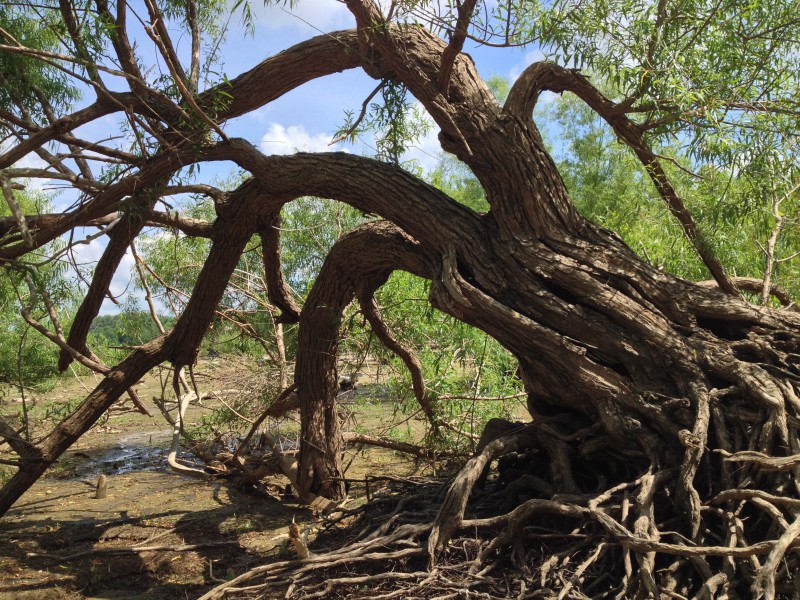
I have really fallen in love with this old willow tree.  Last year, I photographed my “La Belle Riviere” piece using this tree as my model.  This tree is a survivor.  It’s managed to go through many floods and while it is severely bent over and its roots are exposed…it keeps on living and adding character to this landscape.  I have noticed that the center of its trunk is starting to hollow out a bit.  I wonder how long this willow has held this ground?  I was musing about these things when I noticed movement in a nearby stand of mixed maple and willow trees.  I picked up my collecting bag and walking stick and quietly moved over to investigate.  I was quite unprepared for what I was about to discover!  Here are a few of the first images I made of my new find.

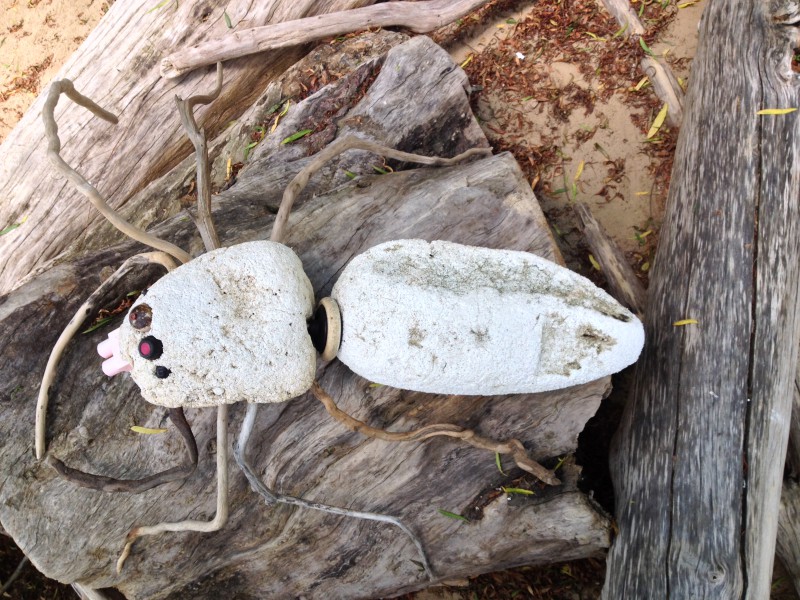
Great Wolf Spider, Falls of the Ohio, June 2014

Great Wolf Spider, Falls of the Ohio, June 2014

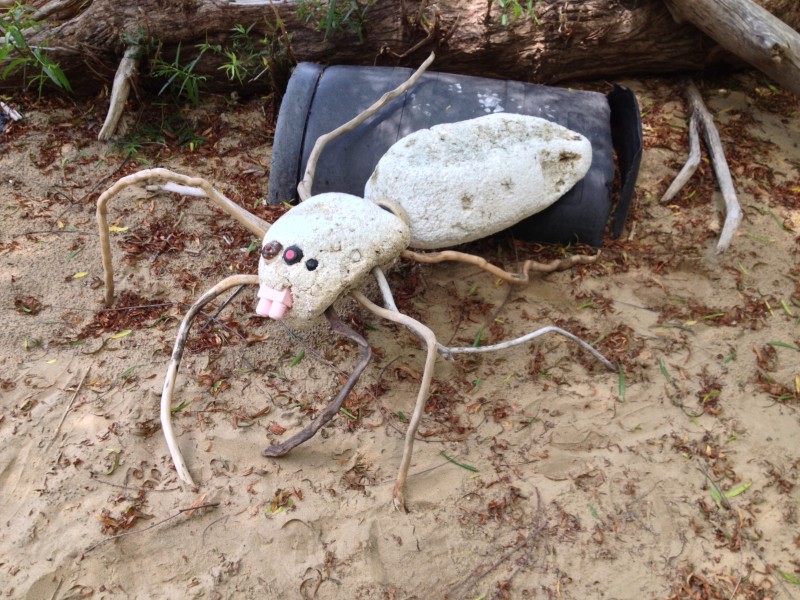
It was another giant spider!  I recalled that it was about this time last year that I encountered the Giant Driftwood Spider which is a completely different animal from the spider I was looking at now.  It’s body was a bit over two feet long and a mottled white in color.  This seems to be another example of what I have come to coin as the “Falls of the Ohio Godzilla Effect”.  Over the years, this particular park has regularly produced freaks of nature.  The most striking of which are the giant insects (and now spiders) that pop up on occasion.  My theory as to why this happens here has everything to do with contemporary pollution and a degraded environment.  For some reason, arthropods in particular are sensitive to these ecological changes which can result in gigantism in these organisms.

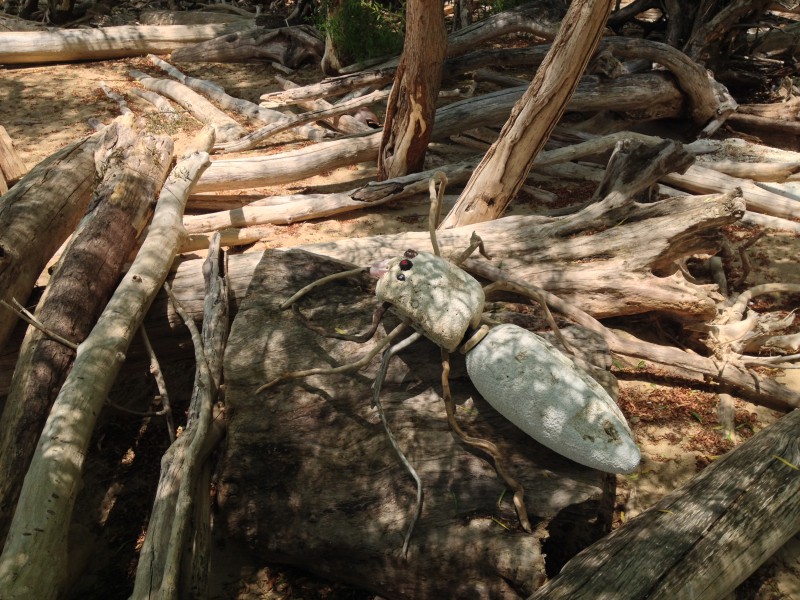
Great Wolf Spider, Falls of the Ohio, June 2014

Great Wolf Spider on a stump, Falls of the Ohio, June 2014

I decided to call this the Great Wolf Spider, (Lycosa styreni).  Looking around, I could find no trace of a web and decided that this was a ground hunting species like other members of the family of wolf spiders, Lycosidae.  I imagined that this impressive spider subsisted upon the small mammals that it could capture within the confines of this park.  That would include many rodents including squirrels, rats, groundhogs, and perhaps the occasional beaver.  I also imagine that stray cats and dogs would be on the menu too.  This spider has large pink-colored fangs that gave it a somewhat bucktoothed appearance.  As long I kept my distance and did not make any threatening moves…the spider tolerated me.  I also noticed that this amazing creature also has unusual eyes.

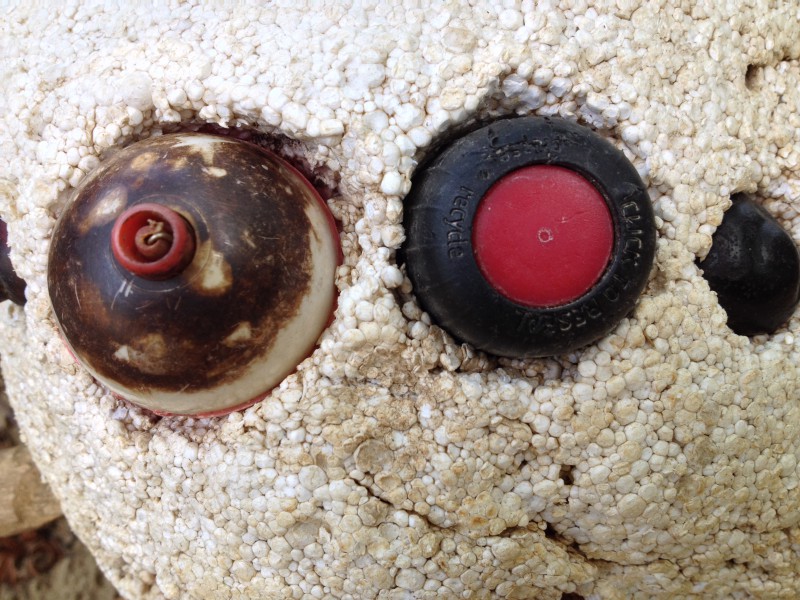
Detail of Great Wolf Spider eyes, June 2014

From what I could discern…this spider sported four eyes total and all in a row.  It had two large and rather mismatched eyes.  One eye possessed a large red iris that leant a diabolical aspect to it.  On either side of these “great eyes” were two smaller, black vestigial eyes.  I wonder if the smaller eyes are used to detect peripheral motion?  It was disconcerting in the least to be the object of attention from these unblinking eyes.  I approached this spider with caution.  Although I was fearful once the spider moved…I, however, was never in any actual danger since the spider never took any aggressive actions toward me.  I was of course satisfied to keep my distance just in case!

Great Wolf Spider waiting in ambush, Falls of the Ohio, June 2014

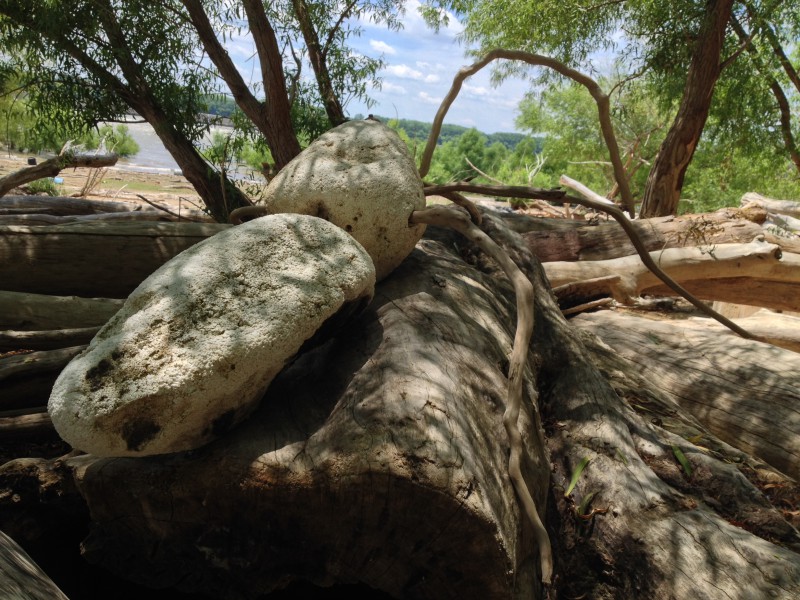
The Great Wolf Spider seen from behind, June 2014

My last images of this impressive arachnid show it blending into its surrounding environment.  The sun light filtering through the tree canopy produced a dappled light and dark pattern that helped camouflage the spider as it lay in wait of its next meal.  The only bit of movement that could betray it was the slight, subtle twitching produced by its driftwood-like legs.  It was at this moment that I decided to back off and head home.  I don’t know if this spider is a one of a kind creature or whether there are other examples of this species that could populate this park?  I’m inclined to believe that I was observing a single individual.  The question is…how long will it be before our continued abuse of the environment produces monsters we may regret?  Until the next adventure…

At the river's edge, Falls of the Ohio, June 2014


Read Full Post »

Canada Geese, Falls of the Ohio, April 2014

It’s springtime at the Falls of the Ohio and life is less shy about revealing itself.  Wasn’t too long ago that finding even the most common bird could be a challenge due to the harshness and length of our winter.  Now the spring migrants are winging their way northward and even the indigenous species are easier to locate.  This is the time of year when the pair bonds are strongest.  The resident Canada Goose population appears to have overwintered in fine fashion and it won’t be too long before the first goslings are in the water.  As you may have ascertained, this post will be about one of my favorite Falls subjects…birds.

osprey, Falls of the Ohio, April 2014osprey, Falls of the Ohio, April 2014osprey, Falls of the Ohio, April 2014osprey, Falls of the Ohio, 2014

This is a composite image of three different Osprey that were simultaneously circling my position at the river recently.  The trio were flying in ever-widening circles and taking advantage of the wind currents and thermals.  It’s a thrilling site to observe these fish hawks diving into the water and being rewarded for their efforts with a freshly caught fish in their talons.  I’ve heard about, but not yet seen, the Bald Eagle nest that is just west of the Falls area.  On occasion, I have seen eagles, but considering how near they are to this area I would have thought that sightings would be more common.  I’ve recently seen other birds of prey including Peregrine Falcons, Cooper’s Hawks, and our next featured bird, the Black Vulture is beginning to return to the Falls of the Ohio in numbers.

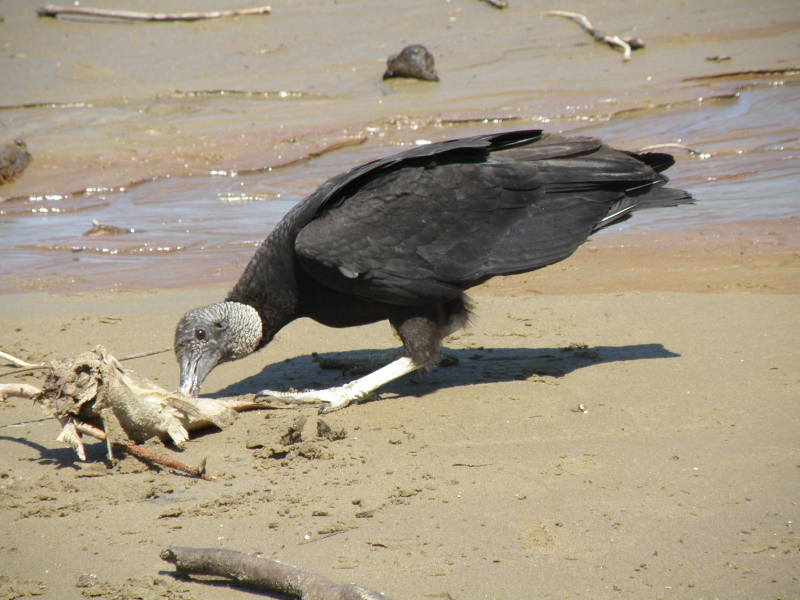
Black Vulture and dead fish, Falls of the Ohio, April 2014

Black Vulture, Falls of the Ohio, April 2014

Black Vulture feeding on a dead fish, Falls of the Ohio, April 2014

To my eye, it appears that the Black Vulture population has been increasing while our other vulture…the Turkey Vulture presents itself less frequently.  The Black Vultures are more gregarious and aggressive which probably keeps the Turkey Vulture from showing its featherless, naked, red-head more?  Recently, I came across this individual Black Vulture feeding upon a dead fish.  It let me get quite close, but there was also a minimum distance that it would tolerate me.  Whenever I would get closer to its comfort zone, the vulture would grab the fish with its sharp beak and drag it to where that minimum distance was re-established before it resumed feeding.  We did this dance for a few minutes before the vulture decided it had enough and flew away.  My next bird is one that I have never observed in the park before.  Some of my most memorable sightings have come from species seen just once and maybe for a few seconds at that.  Hardcore birders (they wear black leather jackets with chains hanging off them) are familiar with this phenomenon.  Friends have asked me why I don’t indulge my avian passion in a more organized fashion, but frankly I don’t like the sense of competition that can exist in some of these groups and clubs.  I appreciate that birds are fellow life forms that are inhabiting the same time and space with me and are more than feathered abstractions to cross off on some list.  If you pay attention, birds can tell you much about the state of nature and this planet.

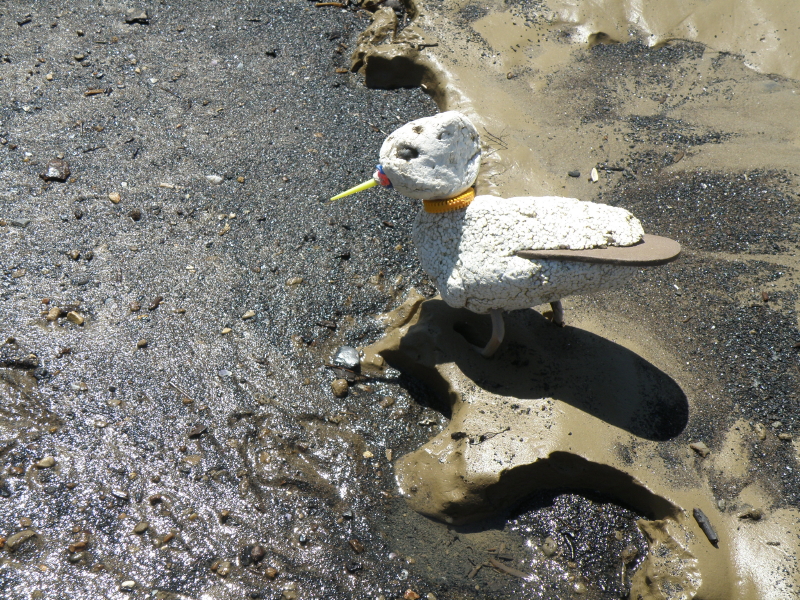
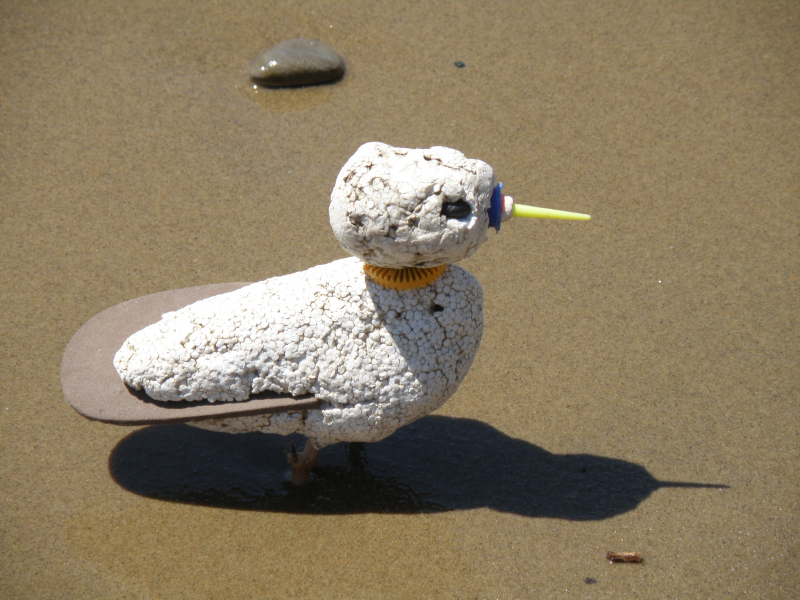
Orange-collared Piper, Falls of the Ohio, April 2014

Orange-collared Piper, Falls of the Ohio, April 2014


The new bird I recently came across is the Orange-collared Piper.  It’s a shorebird that undertakes  a tremendous journey starting at the tip of South America and it won’t stop moving northwards until it reaches its breeding grounds in the Arctic Circle.  Landing at the Falls, it is a little more than half way to where it needs to be.  This piper is a rather small bird and easily overlooked in this particular environment.  Its white body and head look remarkably like the polystyrene that litters these shores.

Orange-collared Piper at the Falls of the Ohio, April 2014

Orange-collared Piper, April 2014

The bird is so named because it sports an orange ring around its neck.  Other field marks include diminutive size, brown wings, and a sharp yellow bill it uses to probe sand and mud for the tiny invertebrates it eats.  Also true to its name, this bird makes a high-pitched “piping” call it uses while it feeds.  To he honest, I did not hear this call with this particular individual.

Orange-collared Piper at the Falls of the Ohio, April 2014

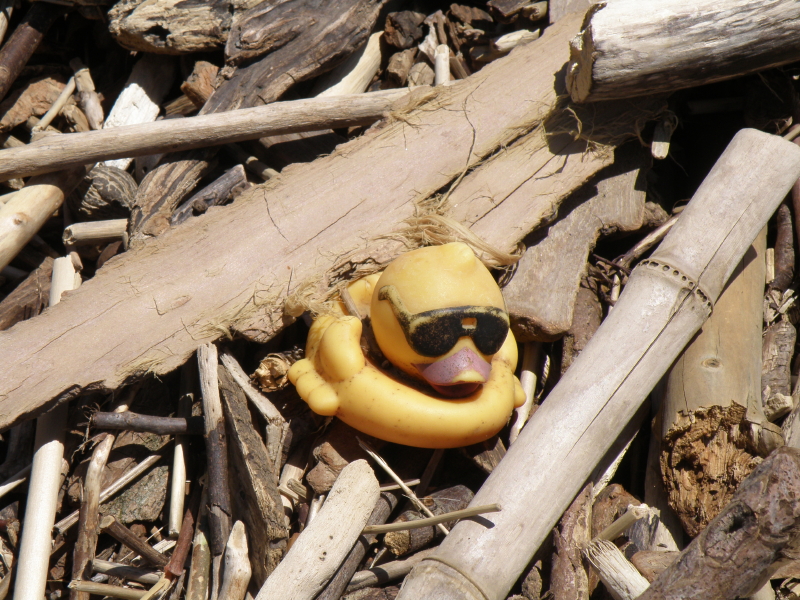
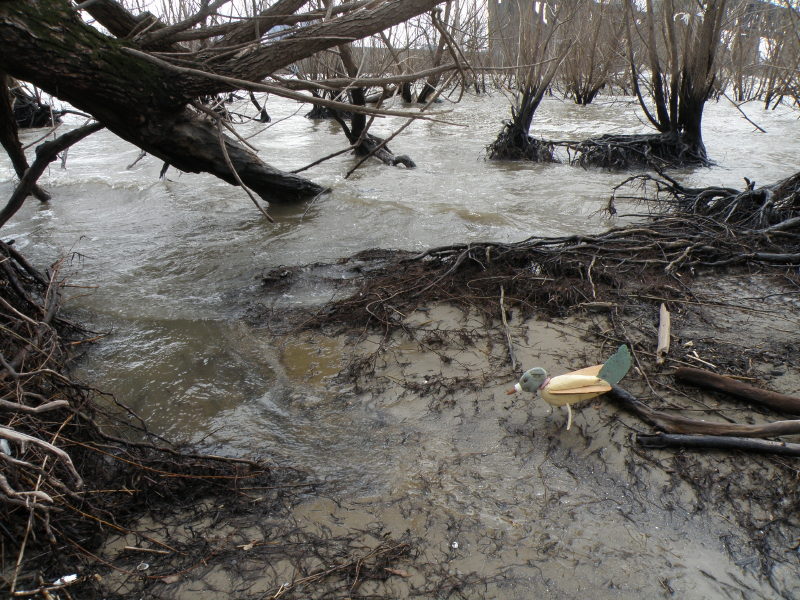
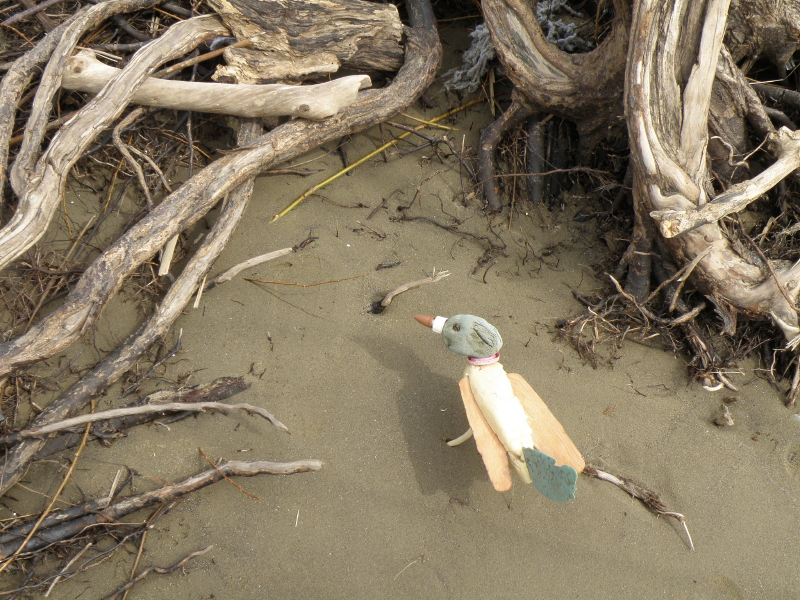
Both the male and female Orange-collared Piper look about the same.  At its breeding grounds, the pair incubates about five or six tiny, black speckled eggs in a rather shallow gravel depression.  No fancy nest for this bird…it lays its eggs directly on the ground where  cryptic coloration helps protect them from the numerous Arctic predators.  This bird is considered threatened due in large measure to habitat loss and other environmental degradation.  Its amazingly long migration probably also puts this bird at risk since so many things can go wrong on such a long trip.  I watched this particular individual for about forty minutes or so.  It moved among the driftwood in very careful fashion stopping here and there to probe the sand with its sharp yellow bill.  When the bird decided to move on…there was a flash of wings too quick to see and it was gone.  I hope that it reaches its destination and resurfaces at this park again.  I have one final “bird” that I recorded the same day I saw the Orange-collared Piper.  Perhaps you will recognize this one?  It’s most distinctive field mark is the sunglasses it wears while floating on the river.  Happy birding!!rubber duck with sunglasses, April 2014
Read Full Post »

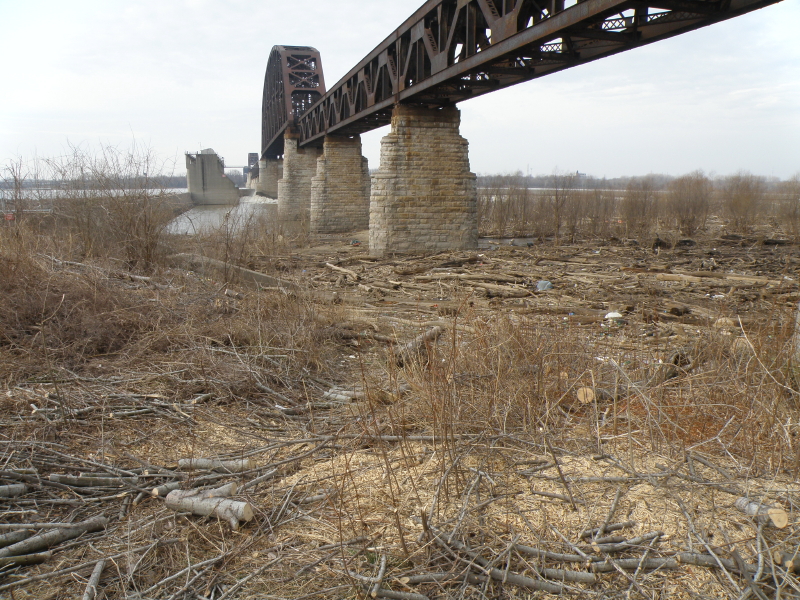
The Falls of the Ohio beneath the railroad bridge, March 5, 2014

The Ohio River water level has been bouncing up and down these last few weeks.  On this excursion, I caught up with it while the river was receding.  The shoreline that I am accustomed to seeing is still underwater, however, if you walk carefully between the wet and the dry, there are areas you can explore.  I brought a fairly empty canvas collecting bag along in anticipation of river treasure.  After a couple of hours, I took a break and dumped the bag out and here is what caught my eye.

Collecting bag contents, early March 2014

Literally, a mixed bag of junk including many familiar items that I have long-standing collections formed.  The Styrofoam is for a small sculpture I have in mind.  The flip-flop sandals, well…I have been collecting them for a while and I have a vague notion of an artwork that I want to make with them.  I have ideas, but I’m waiting for the river muse to send me more signals.  The same holds true for the small, plastic wheels.  I have about two hundred of them stacked in a pile on my basement floor.  I thought I could finish the wheel piece for the exhibition at the Carnegie, but it remains unresolved.  I have also gathered several found combs and the variety of forms a simple object can take always interests me.  Recently, I gave my comb collection to my friend Jeff for his birthday.  He is probably one of the few people I know who would like receiving such a gift.  Jeff was once a middle school art teacher and he keeps a cigar box filled with the smallest pencils in the world.  Each pencil had been sharpened to within an inch of its existence by his former students.  Here’s an example of an interesting comb followed by other images of objects found on this day.

comb from a vacuum cleaner, March 2014

Later, it was determined that this combination comb and brush is from some kind of vacuum cleaner.  Now whenever I go out the river, my friend asks me if I have any other combs for his collection.

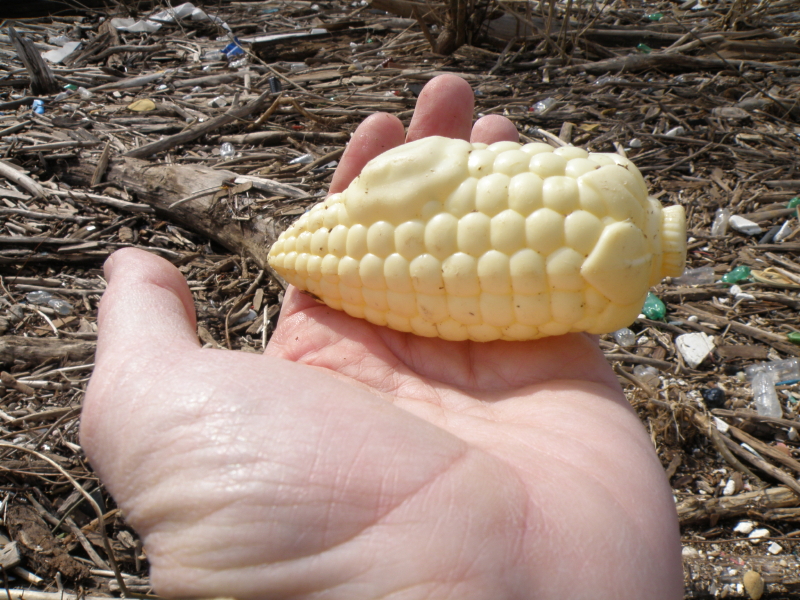
plastic corn on the cob, March 2014

My Fake Food Collection keeps expanding.  I found several new pieces on this excursion with this one being the most memorable.  Plastic corn on the cob with a little pat of butter melting into the kernels.  In the background, you can see how much junk is intermixed with the wood debris.

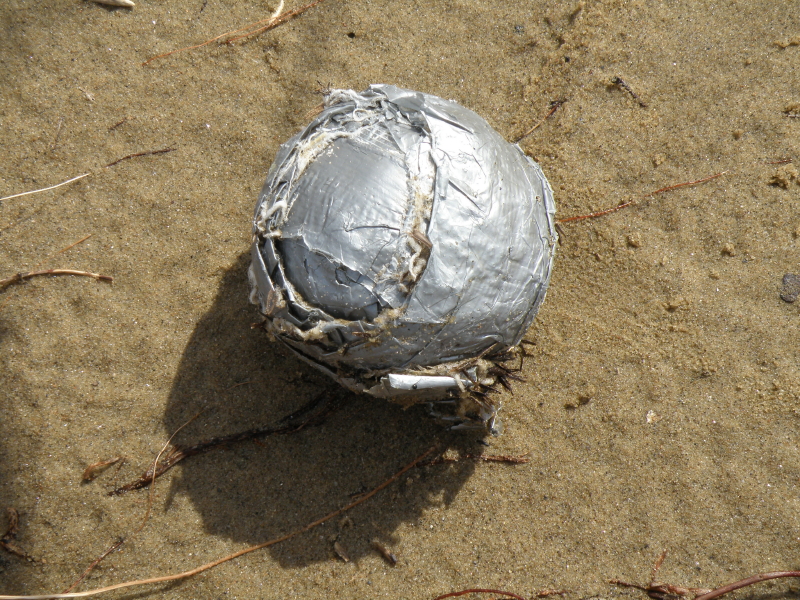
hand-formed duct tape ball, March 2014

Here’s the latest addition to my hand-formed ball collection.  This one is made from duct tape.

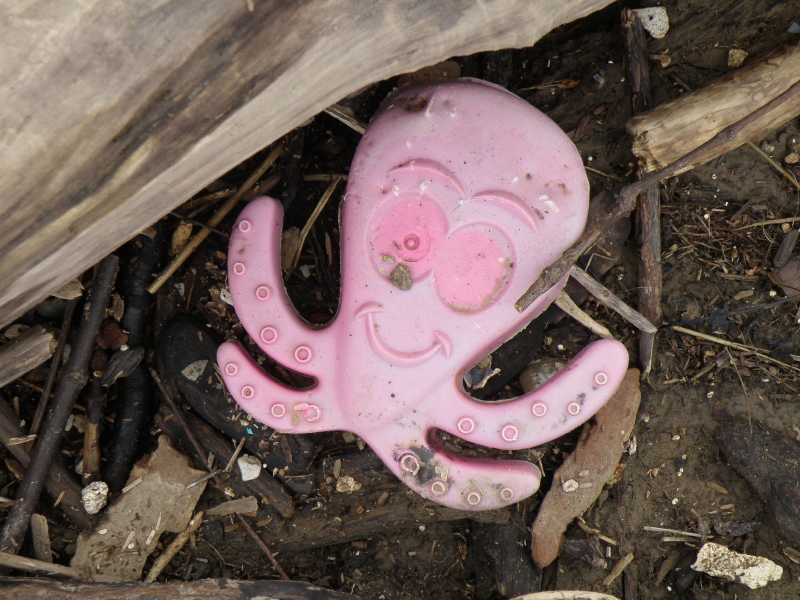
pink plastic octopus sand mold, March 2014

I’m starting to develop a large collection of sand toys of all kinds.  Here’s a pink plastic octopus sand mold.  I think I will photograph this collection soon.

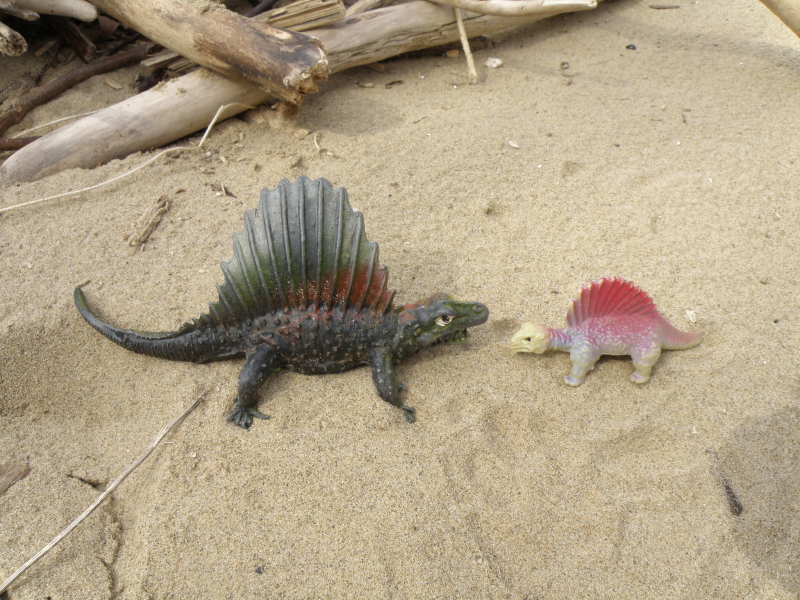
two found plastic dinosaur toys, March 2014

I found two plastic dinosaur toys on this trip.  I believe these are intended to be the same species…Dimetrodon which was an early reptile with mammal-like characteristics.  Dimetrodon hails from North America and the early Permian period.  When the Falls of the Ohio was an active marine ecosystem (about 370 million years a go)…Dimetrodon would still be about another 200 million years into the future.  The vast stretches of time and the ebb and flow of life forms is mind-boggling.  I am in the here and now and what I have noticed on this trip to the river is how few other life forms I’ve seen.  The spring migration of neotropical birds is not too far off and I always have my eyes open for early arrivals.  Today…I get lucky.

detail, head of the River Roller, March 15, 2014

The River Roller, March 2014

I was poking around the shifting shoreline when I spotted this heavy bodied bird in a willow tree.  With its blue head, yellow ocher body, and light green tail…I knew I was looking at my first River Roller.  Rollers are a family of old world birds and this is the only representative on this continent.  This species has a rather large and heavy bill that serves it well when it feeds on the nuts of hardwood trees.  At the Falls of the Ohio, you can always find walnuts, hickory nuts, and acorns.  I believe that this was what this bird was doing…looking for food.

River Roller at the Falls of the Ohio, March 2014

I think this is a female roller because the colors are not as bright as the pictures I’ve seen of the males.  In size, this bird is comparable to the American Robin.  I observed this bird checking out the holes and hollows in the willow trees which is pre-nesting behavior.  The females are the ones that choose which sites are suitable to raise their chicks.  This bird will eventually move on to the northern portions of the Ohio River Valley.  The River Roller has never been documented nesting in this park.

River Roller among the willow rootlets, March 2014

River Roller investigating willow roots, March 2014

The River Roller hung around for about five minutes before flying off for parts unknown.  During the time I watched it, the roller demonstrated a strong curiosity for the environment at the river’s edge.  It seemed especially interested in the willow trees themselves.

The River Roller at the Falls of the Ohio, March 2014

I wish this bird well and hope it reaches its intended destination.  I feel this way about every bird that migrates through this area.  After seeing this once in a life-time rarity I felt that my day like my collecting bag was full and it was time to go home.  That wraps it up for another river adventure.  See you next time.

View at the Falls of the Ohio, March 2014


Read Full Post »

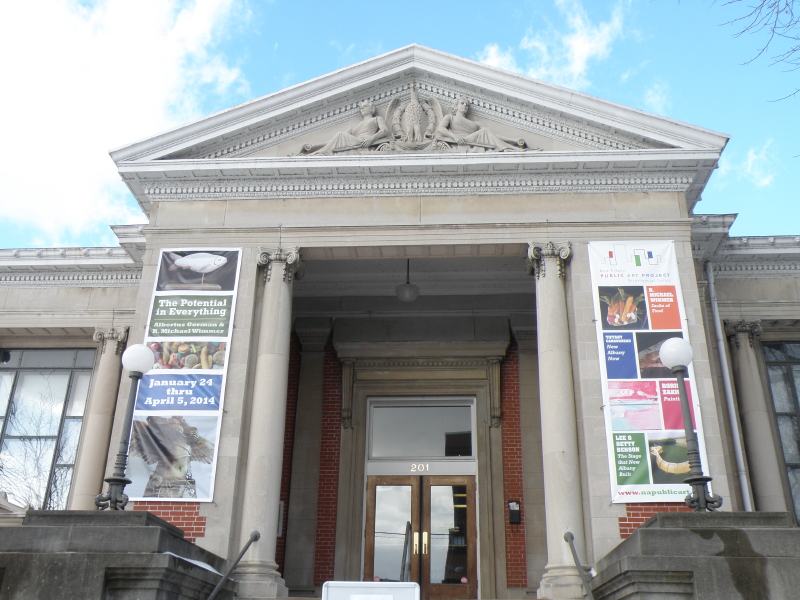
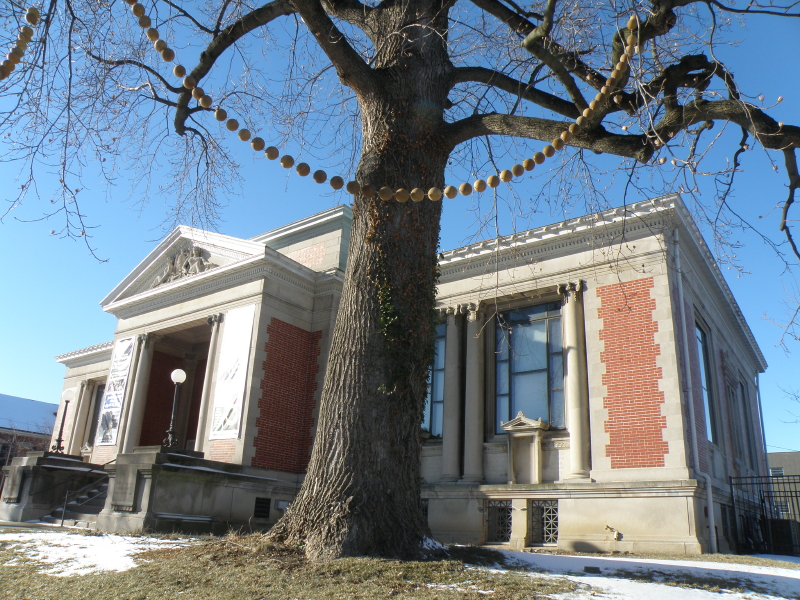
Carnegie Center for Art and History facade, New Albany, IN, Jan. 2014

On January 24 our long-awaited exhibition at the Carnegie Center for Art and History in New Albany, Indiana opened with a big reception.  I say “our” because this is a two person show featuring work by R. Michael Wimmer and yours truly.  The exhibition in entitled “The Potential in Everything” because both Michael and I utilize a diversity of materials to make our art.  While I depend on what I find at the river, Michael goes much further afield to locate objects that project a certain “aura” and associative power for him.  Following are some images from the exhibition which will be up until April 5.

My sculptures just delivered, Jan. 2014

I brought about 25 pieces that I had saved from the river and park visitors.  I have gotten into the habit of keeping some of my better creations for events like this.  It’s such a big leap first seeing the work at the river and then in a more formal art space where everything is displayed, labelled, and illuminated with care.

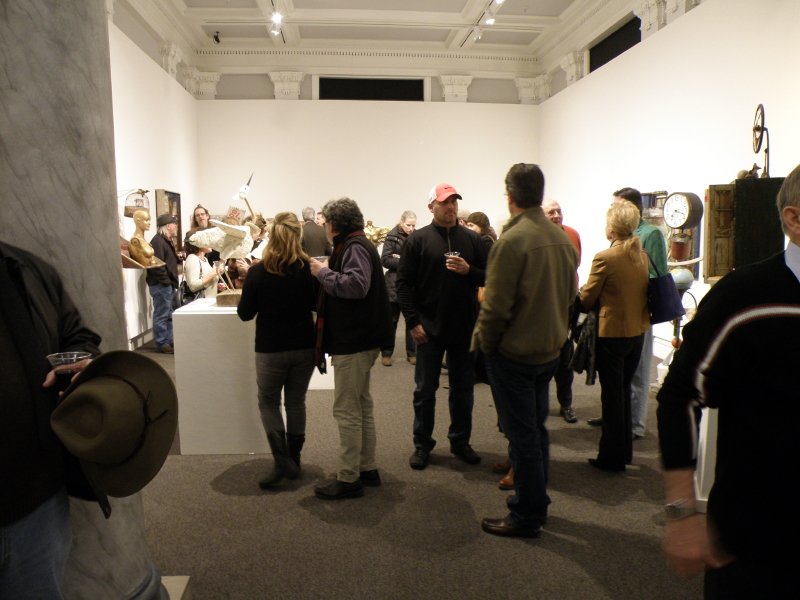
opening reception for the Potential in Everything, Jan. 2014

The other extreme is having several rooms full of friends, family, and assorted art lovers coming out on a very cold night to take in this exhibition.  A wonderful jazz band provided music. At times, it was hard to see the art because of the people…which is a great situation to be in and I felt very lucky.  I know I did a lot of talking and meeting people who said that they knew my work through this blog.  This happened more than once and it made me feel good that local people were checking out my river adventures online every now and then.  I returned to the center the following day so I could get a better look at the show and to take a few more pictures.  Overnight, it snowed two to three inches while we slept.

Potential in Everything installation view, Jan. 2014

Installation view at the Carnegie Center for Art and History, Jan. 2014

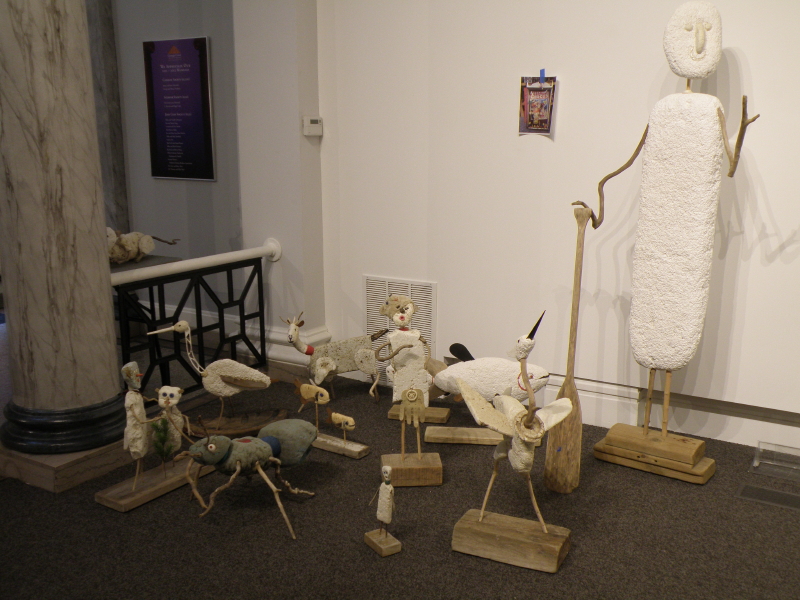
Installation view with "Cycladic Oarsman", Jan. 2014

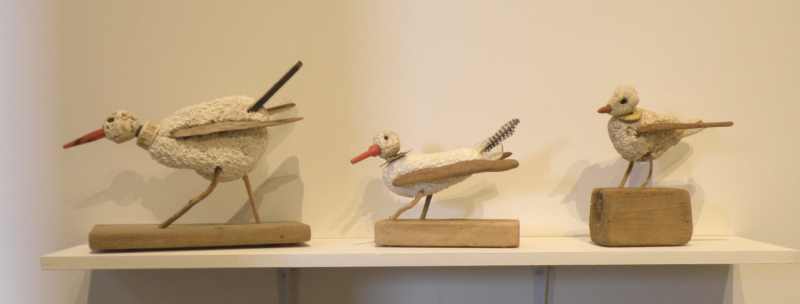
Both Michael and my sculptures are assembled.  He favors a wider variety of materials and I have over time evolved a vocabulary of forms and found materials that I prefer.  The pieces I’ve saved function for me as mostly a means to an end.  The story telling aspect of my work has been the biggest shift in what I do over the years and it has caused me to reassess my priorities when I go on location.  I was pleased that people thought the stories added something extra to the artworks.  Wall labels had excerpts from my river tales and I supplied a binder with printed stories that accompany many of the objects on display.  It takes the pieces away from being strictly artworks as usual.  I do, however, try to make compelling sculptures to help activate the spaces I work in and to assist in creating interesting images.  The tall figure in the foreground is entitled “Cycladic Oarsman” and was made specifically for this show.  I gave it this title because the face has some similarities with very early Greek marble statuary.

Three Styro-birds on a shelf, Jan. 2014

"Audubon's Habitat", R. Michael Wimmer,  at the Carnegie Center, Jan. 2014

Karen Gillenwater, the Carnegie Center’s curator did a fine job of pairing artworks together and finding what Michael and I have in common artistically.  Both of us have channeled John James Audubon and bird imagery.  The naturalist’s earliest attempts at drawing birds happened in the Kentuckiana area during the early nineteenth century.  Over the years I have made several Audubon figures and most of the birds I’ve created are creatures he never encountered in America’s pristine wildernesses.

Installation view in The Potential in Everything, Jan. 2014

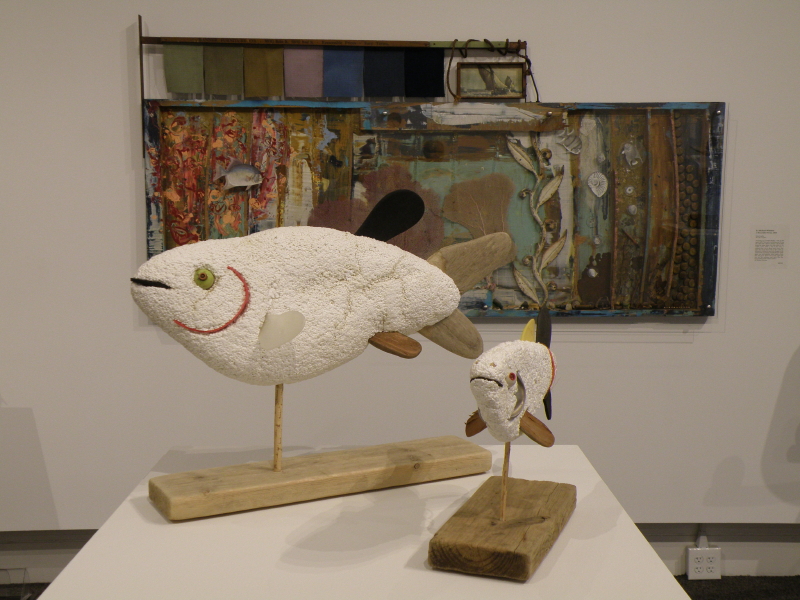
"More than Skin Deep" by Michael Wimmer and my "Time Traveler" tableau, Jan. 2014

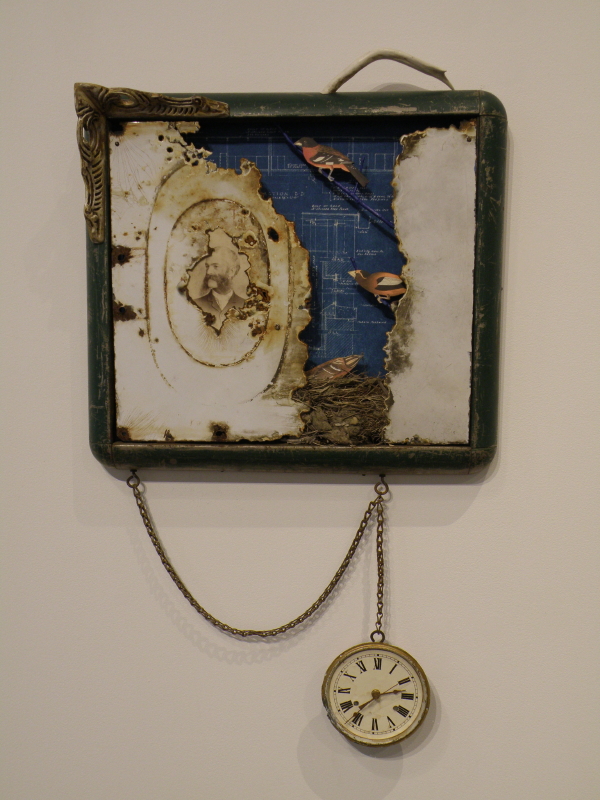
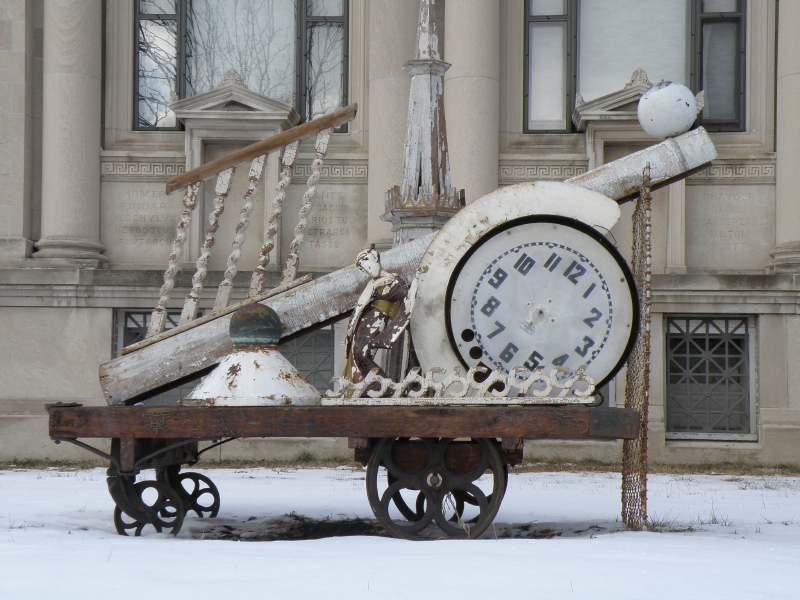
The Styro-fish I’ve made stand near a wall piece that Michael did about the deteriorating marine environment where he lived for a while in Florida.  My fish are made with some of the junk I’ve removed from the Ohio River.  Michael now makes his home and studio in New Albany.  Both of us are also fond of time references.  My stuff flirts with time on a number of levels including quantum mechanics.  Clock faces and dials appear in many of Michael’s Carnegie pieces and some of his sculptures are also working clocks.  A good friend of mine once told me that much of life is what we decide to spend time on and that seems true for both artists in this exhibition.  I appreciate that the Carnegie Center for Art and History believes it is important to generate good quality materials to help supplement an exhibition.  The staff at the center produced a wonderful gallery guide, show announcement, a banner that hangs from the building’s facade, a poster, and both Michael and I have the opportunity to give gallery talks and lead workshops.  I may never have a chance like this again where the hosting institution helps the artists out as much as the Carnegie Center for Art and History does.  I know of many regional and local artists who feel that this is what makes showing at the Carnegie such a treat.  The exhibition continues outside and both Michael and I have works positioned in front of the building.  Here is Michael’s piece and all the work’s components find similarities with details and materials on the building.

R. Michael Wimmer sculpture outdoors at the Carnegie Center for Art and History, Jan. 2014

My piece is my long, beaded necklace made from softball cores and is entitled “La Belle Riviere” which I originally displayed at the Falls of the Ohio in October of last year.  It was quite a production and required a bucket truck and a worker supplied by the city to hang the piece in the tulip poplar tree outside the center.  For now, I will close with this image and look forward to my next post as the Artist at Exit 0.  Stay warm everybody.

"La Belle Riviere" hanging from tree at the Carnegie Center for Art and History, Jan. 2014

Read Full Post »

Stacked wood, Falls of the Ohio State Park, Nov. 2013

Moving past the Woodland Trail Loop, I’m in the western section of the Falls of the Ohio State Park.  It’s been more than a month since I last visited this area.  One of my favorite trees is here and although I’ve already missed the prime leaf color moment…I’m hoping some autumn splendor remains.  Along my walk I come across a driftwood structure that has been stacked teepee-style by other park visitors.  I see this kind of expression regularly and there must be a kinship between this activity and piling and stacking rock upon rock.  It’s satisfying to do and when you step back from your work…it’s obvious you left an impermanent mark in the landscape that says you were there.  The tree I seek is just a short walk away and in no time at all I arrive on the scene.

Cottonwood tree, late autumn, Nov. 2013

Under the Cottonwood tree, Nov. 2013

This old Cottonwood tree with its raised roots looms large in my imagination and is my personal favorite tree out here.  I’m sure I’m not the only one who feels this way because there is usually plenty of evidence laying around in the form of empty beer bottles, spent camp fires, and yes…the odd bits of furniture people drag to furnish the room that exists underneath the tree.  I’ll wager for some…this is known as the party tree.  I was elated to see that most of the junk (old tarps and a red couch) have been removed by some other purists.  The Cottonwood tree had already dropped most of its leaves, but there were still a few hanging on.  After resting a moment under the tree and admiring the distant view of Louisville across the Ohio River…I decide to turn for home.  I was in the process of walking away when I noticed something moving along the fossil rocks.  I froze to see if I could get a better look at the creature that was walking towards me.  Naturally, my camera is at the ready!

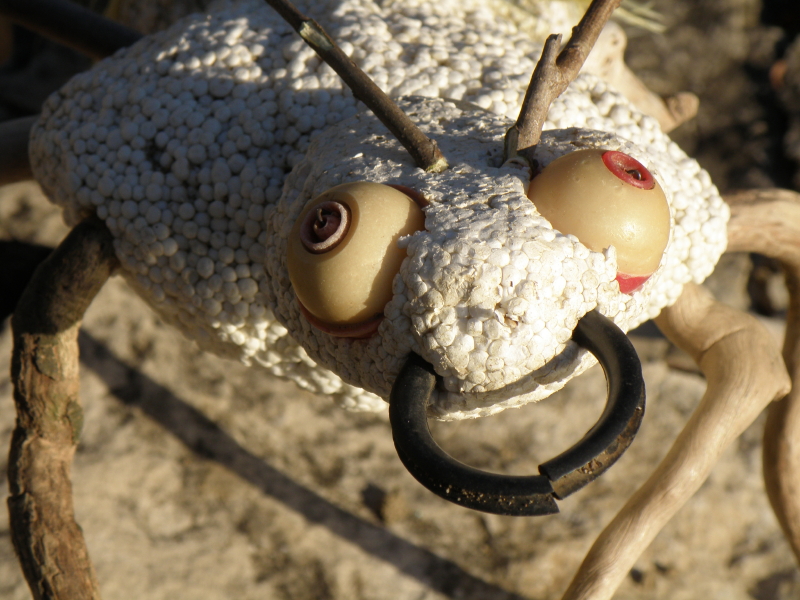
Golden Hour Ground Beetle, detail of head, Nov. 2013

detail of head from Golden Hour Ground Beetle, Falls of the Ohio, Nov. 2013

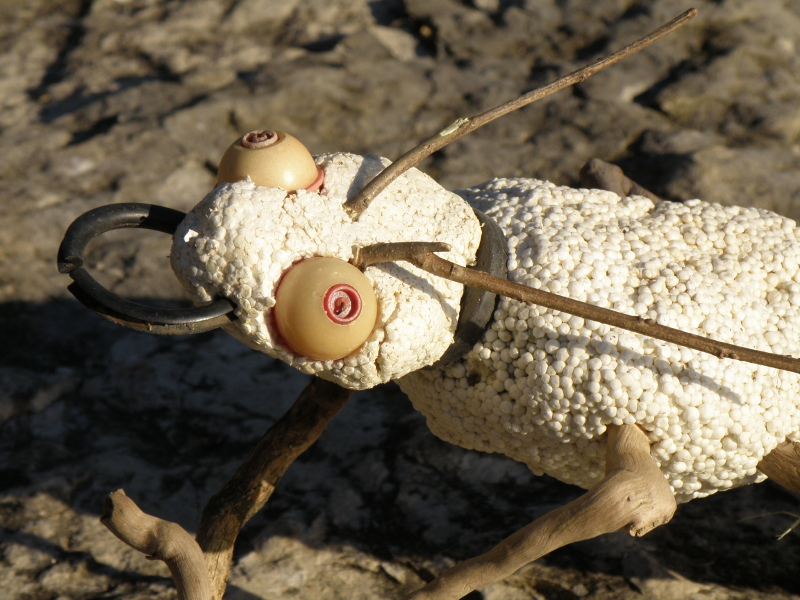
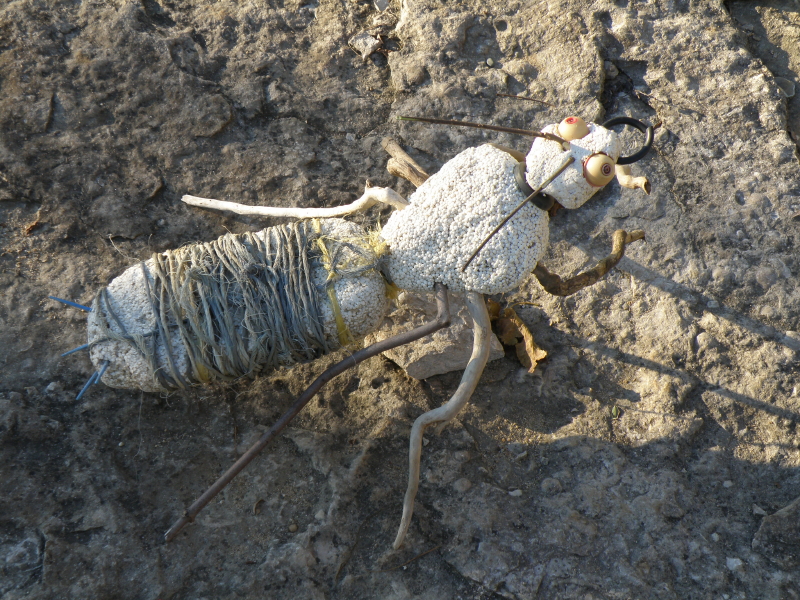
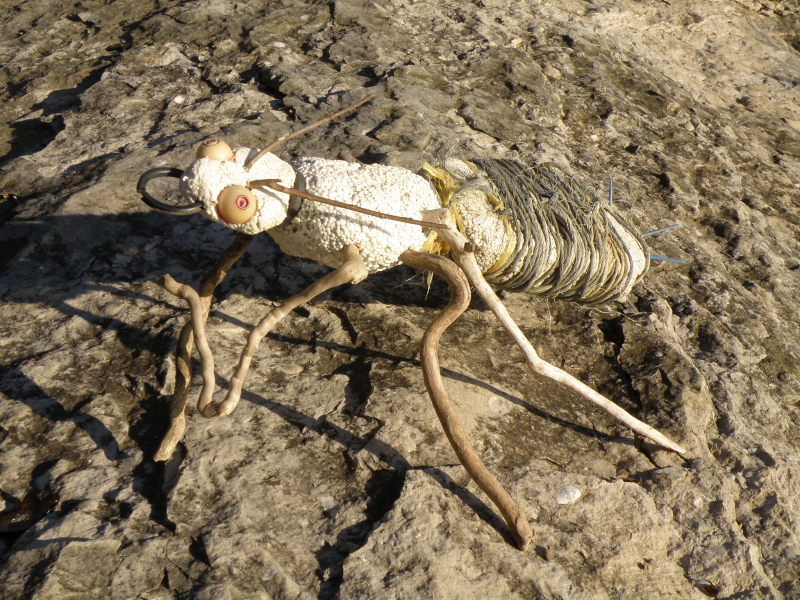
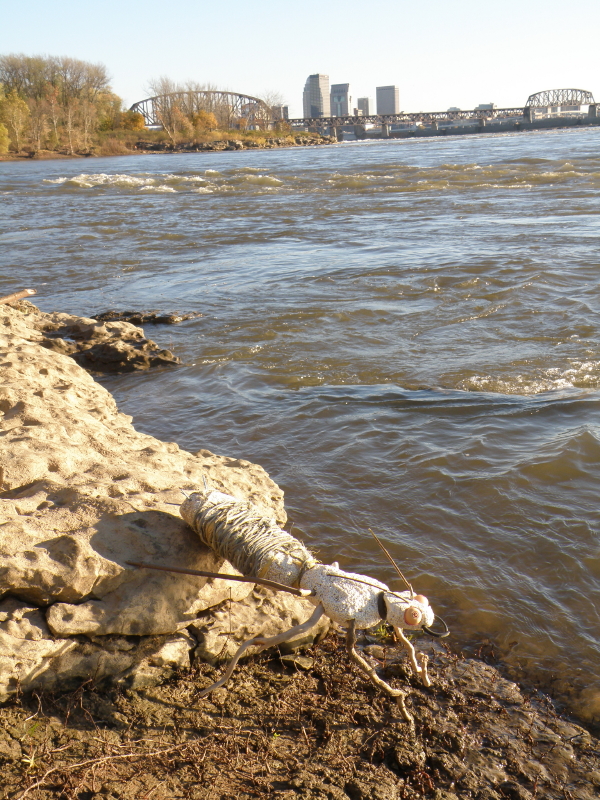
Regular visitors to the Riverblog know that the Falls of the Ohio State Park is home to several out-sized insect species that have uniquely evolved here.  All the different species are critically endangered and not to be harmed in any way.  I was quick to identify this as the Golden Hour Ground Beetle.  It was so named because it usually makes it first appearance of the day when the sun is about to set.  Otherwise, it is nocturnal in its habits.

Golden Hour Ground Beetle, Falls of the Ohio, Nov. 2013

Golden Hour Ground Beetle, Falls of the Ohio, Nov. 2013

The Golden Hour Ground Beetle does not fly.  It relies upon stealth and six strong legs to scramble across any surface.  In form, it is not unlike the much smaller tiger beetles that also make the park their home.  Unlike the smaller beetles, the Golden Hour Ground Beetle is a scavenger and not a hunter.  I suspect this specimen was at the Cottonwood tree because it has learned to find scraps of discarded camping food here.  This beetle has fairly large eyes that can gather the most meager light in the darkest of settings.  It’s abdomen is banded with a coarse hair that insulates this insect during cold nights.  As long as I didn’t make any rash movements, this giant bug was tolerating my presence.

Golden Hour Ground Beetle drinking water?, Nov. 2013

I observed my new “friend” moving to the water’s edge to obtain a drink.  I wondered if it had the ability to swim in its survival tool kit?  I watched the insect as it searched all around the fossil rock shelves that were created by the river dissolving the old limestone away.

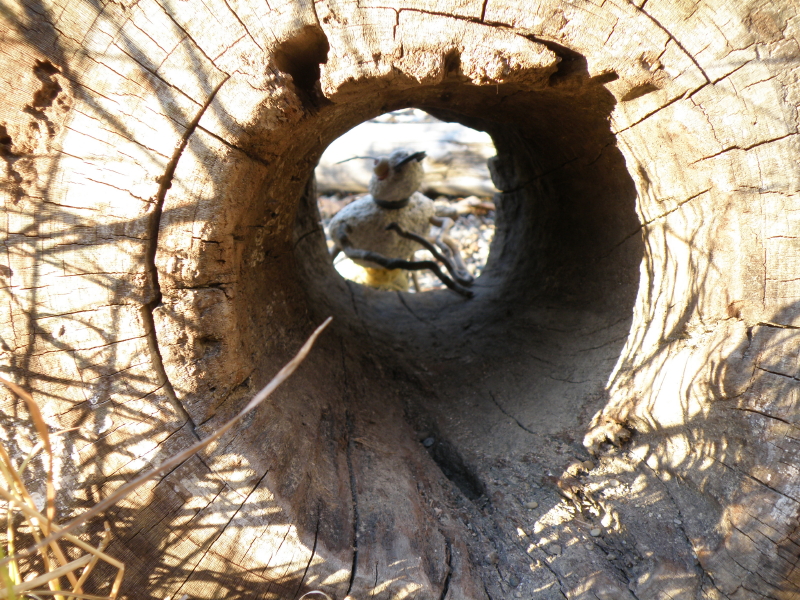
Golden Hour Ground Beetle exploring a hollow log, Nov. 2013

View of the beetle through the hollow log, Nov. 2013

I came across a second giant beetle almost immediately after crossing the small creek that separates the western and eastern sections of the park.  Male and females are virtually identical.  There are gaps in our knowledge about their life cycle.  This specimen was in the process of checking out a short, hollow log.  I’m presuming that it was either seeking food or shelter?  I think poking my camera through the end of the log spooked this one a little.  It ran away, but didn’t go far.  I kept my movements to a minimum and after a while it seemed to relax again.

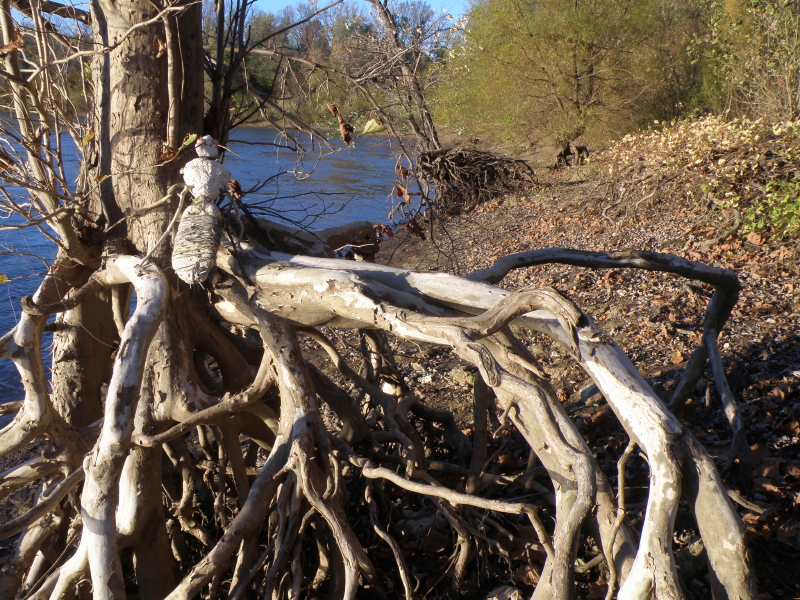
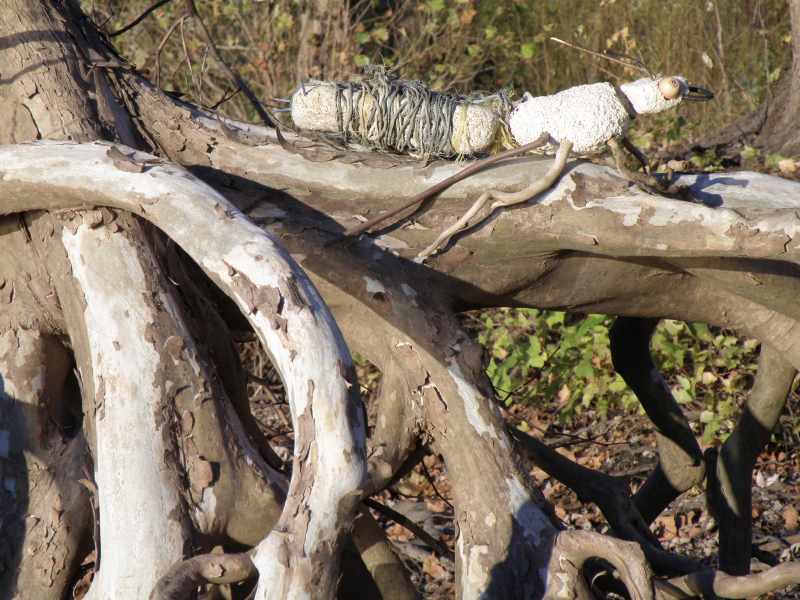
Golden Hour Ground Beetle relaxing on Sycamore tree roots, Nov. 2013

Beetle laying flat on a sycamore root, Nov. 2013

I observed this 14 inch or 35.5 centimeter beetle relaxing on the exposed roots of a Sycamore tree.  As the golden hour approached, the beetle stopped seemingly acknowledging this magic moment when everything is bathed in a warm golden light.  I did the same watching the sun set before finding my vehicle in the parking lot of the Interpretive Center.  To everybody in the wider world…have a great week.

The Golden Hour at the Falls of the Ohio State Park, Nov. 2013

Read Full Post »

« Newer Posts - Older Posts »