Feeds:
Posts
Comments

Posts Tagged ‘Falls of the Ohio State Park’

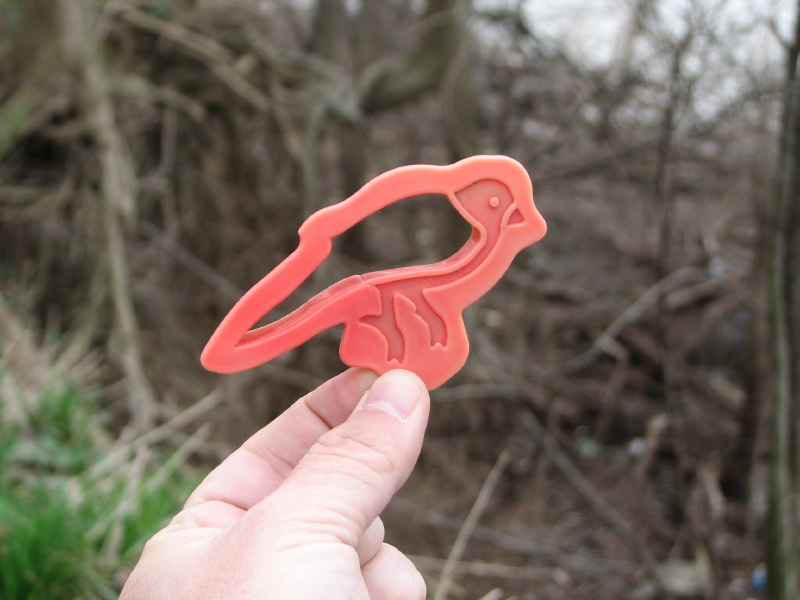
The little red bird perched easily between my forefinger and thumb.  I was walking along the river bank and spotted it among the recently deposited debris…another small gift.  If I had to guess, I would say that the red bird was intended to be child’s clay tool.  It’s like a cookie cutter stencil only smaller.  I was on the look out for birds and my subconscious was on alert.  I think this is partially why the plastic bird appeared to me when it did.  The axiom about chance favoring the prepared mind touches upon this phenomenon.
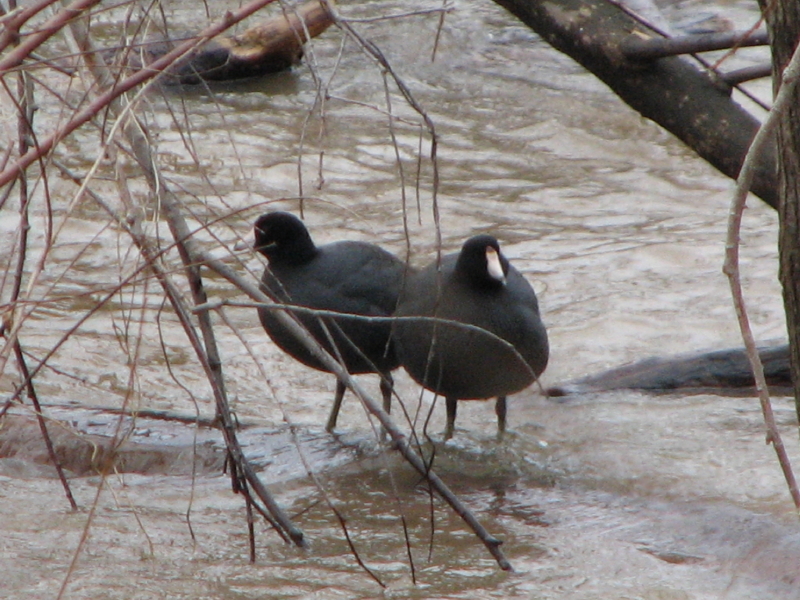
While the river level was still high, I came across this pair of American Coots near the shore.  Logs and chunks of wood were bobbing in the water.  Their dark feathers took on the look of wet wood.  The odd appearance of these coots had to do with them standing on a log that is mostly submerged.  Among the other birds I found near the water were Canada Geese, Mallard Ducks, and high overhead…kingfishers.

Like little twittering machines, a male and two female Belted Kingfishers were chasing each other across the sky.  I watched them for over half an hour and hoped that one of them would perch in a tree near me.  Alas, this was the best image from that moment.  With its low profile, out-sized bill, and crested head, the Belted Kingfisher’s silhouette is distinctive.  Someday, I hope to stumble upon their nest built into the side of the riverbank.  I’ll prepare my mind for that moment and let’s see if chance intervenes!  I did spot an Eastern Phoebe which is an early migrant.  As the warmth and light speeds up the production of tree leaves, we can expect the arrival of the birds we share with Central and South America.  Their timing is exquisite and seems to coincide with the many small cut-worm caterpillars that will chew their way through the foliage of the canopy.
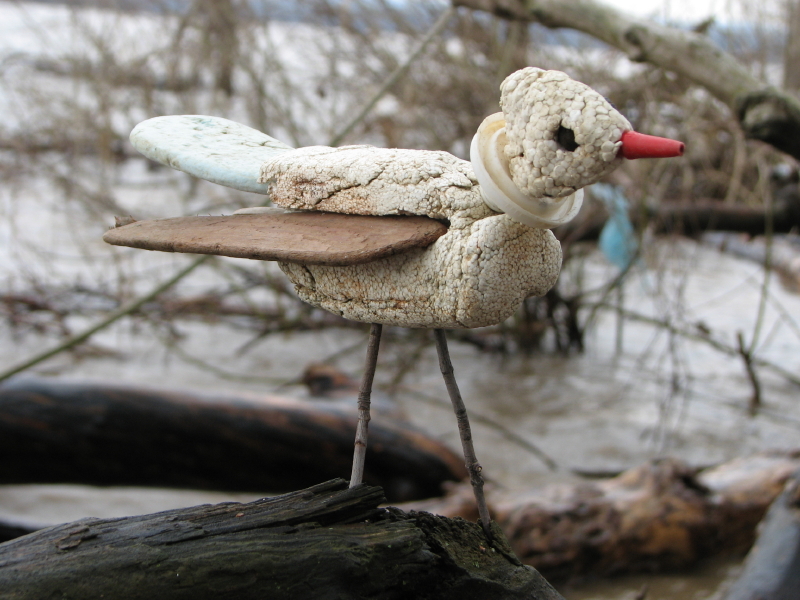
During migration, the Falls becomes home for several different thrush species.  Some of them can be notoriously hard to identify, but not the bird above.  It’s the White Thrush and it utilizes all the available habitats here to put on a little weight before moving northward.  I have seen them patrolling the water line and investigating the densest vegetation in search of food which can include insects, seeds, and berries.
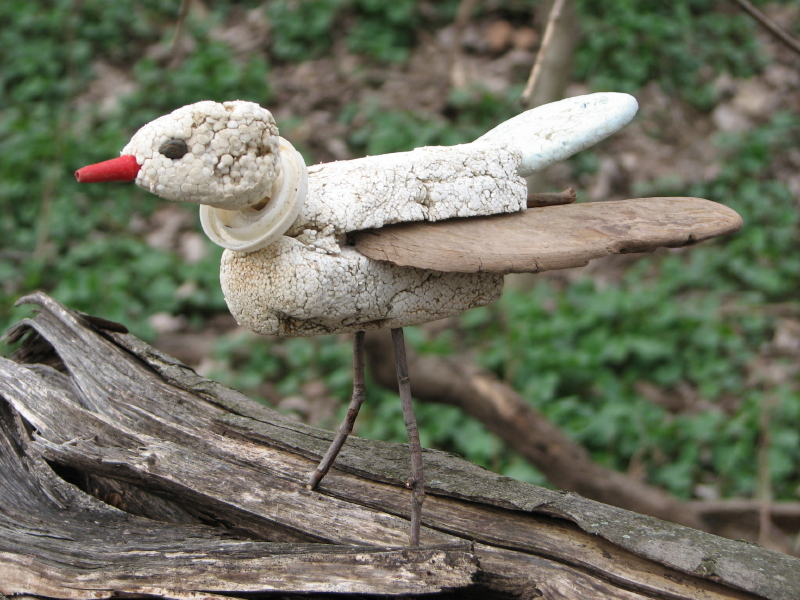
This bird was investigating decaying logs in search of a meal.  Every once in a while, the thrush would “scratch” the rotten wood with a backwards jump that would reveal small grubs and insects just below the wood’s surface.  These morsels were quickly seized by this agile bird.
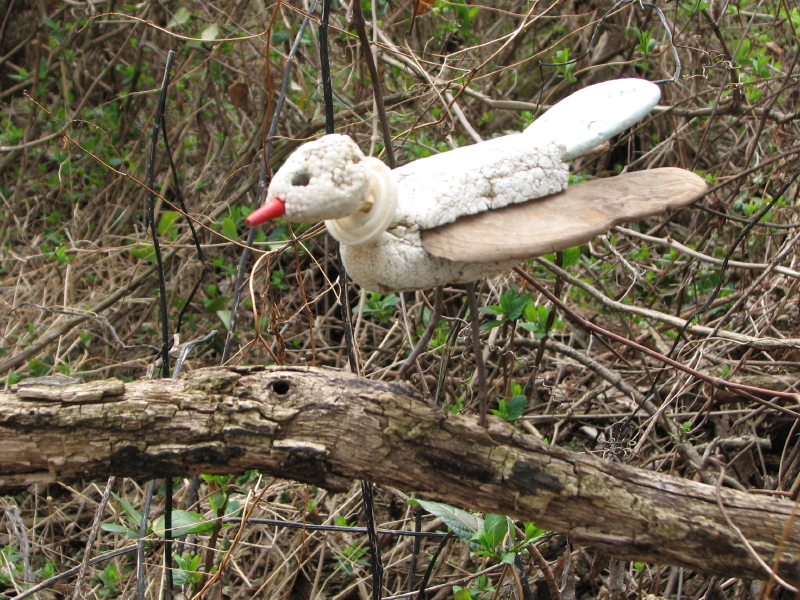
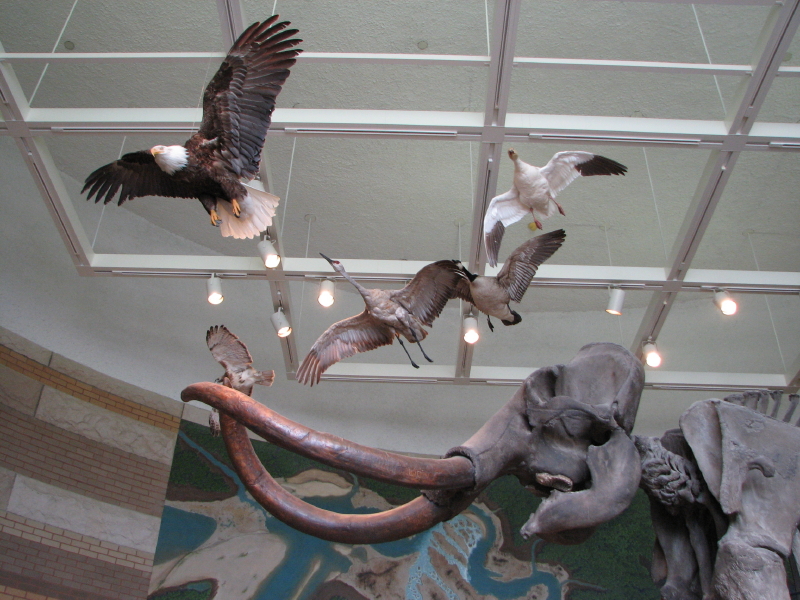
Here’s a third thrush perched upon a vine near the Woodland Trail.  I observed this bird picking off very small midge-like flies and returning to this position.  On my way back home, I stopped at the Interpretive Center to pick up another bird list for the park.  My list is getting a bit tattered from use and I still have about half of the 268 bird species recorded here left to go!  I did spot one bird last year in the park that I’m surprised is omitted from the checklist and it’s the American Turkey.  It would fit easily in the Game and Marsh Birds category.  There are also birds “flying” inside the Interpretive Center and above the mammoth’s head and I’ll end this post with that image.
Read Full Post »

Great Egret, 5/07

Where did our Great Egrets go?  I’m asking that question this year because they are a familiar summer time bird at the Falls of the Ohio.  Visitors are usually treated to their presence from May to October or for however the warm weather lasts.  Usually, you can see them along the water’s edge fishing along with Great Blue Herons, Black-crowned Night-Herons, and the occasional Green Heron and Snowy Egrets.  As I have mentioned in previous posts, this hasn’t been the  most typical of years.

Great Egret, 10/08

Although 2009 still has a few months left to go, this year has been among our wettest and our summer was the coolest I can ever recall.  I have lived most of my life in Kentucky and we hit the 90 degree mark only a few times early in the season.  Usually, summers here are hot, humid, and long.  Just about everybody I know has acknowledged that this has been another climatically unusual year, but nobody has been complaining about the cooler than average summer. 

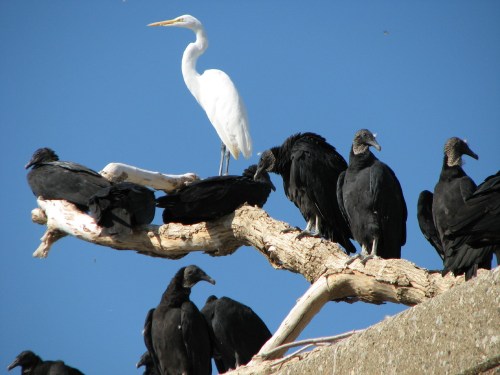
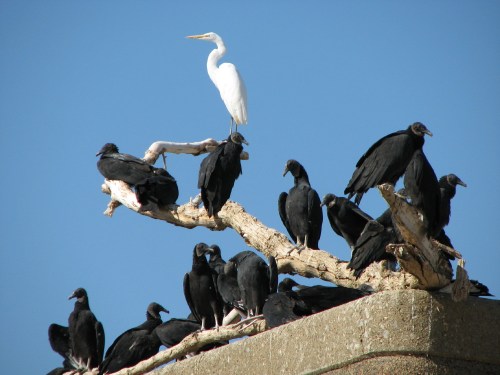
Great Egret with Black Vultures, 10/08

A possible exception could be our Great Egrets.  I have been out at the Falls most of this year and have been trying to pay attention to when birds  arrive and leave our area.  As far as I can tell, the Great Egrets were only around for a week in July.  I recorded seeing them on July 19 and then they were gone.  More rain and cool weather followed their appearance and obviously they went somewhere else, but where? 

Great Egret with roosting Black Vultures, 10/08

The images of the Great Egret and roosting Black Vultures were made at the Falls during October of 2008.  They are among my personal favorite bird pictures that I have taken in the park.  I was walking  near the dam that separates the Ohio River from the fossil beds and came across this scene.  A previous flood had stranded a dead tree on the wall and made a nice resting spot.  I liked the contrast between the stately white egret rising above the fidgety and squabbling vultures.  I had to be extra stealthy in my approach since my camera isn’t equipped with the best telephoto lens.  The Black Vultures seem to be getting more ubiquitous and this year I counted one flock of over fifty birds.  Soon, they too will be migrating to warmer parts down south, perhaps they will be catching up with our Great Egrets?

Read Full Post »

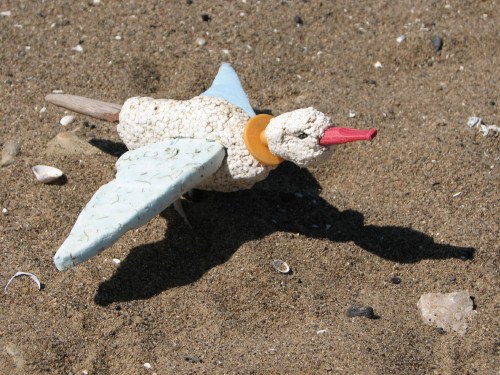
Styro-sandpiper, 9/09

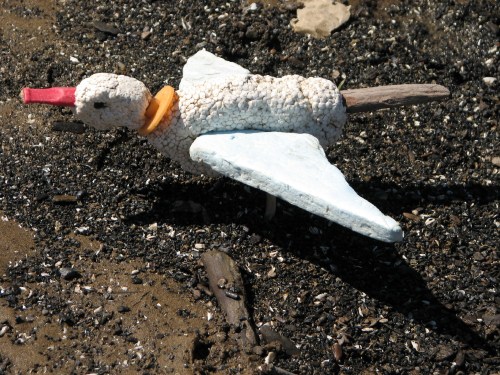
September is the month that the smaller shorebirds begin their migrations through our area towards warmer southern climates.  We see a variety of different species at the Falls of the Ohio.  Here is one impromptu tribute to them made from polystyrene foam.  This one is a Styro-Sandpiper dragging its wing in mock injury.  Among the materials I used to fashion him include:  Styrofoam, blue- insulating foam, river wood, plastic (around the collar and the bill is the tip from a cheap little cigar).  Oh, the eyes are tiny bits of coal.  You are not allowed to collect fossils in the park and I sometimes wonder if this applies to the coal as well?  Anyway, here are some images of genuine shorebirds photographed in the park.

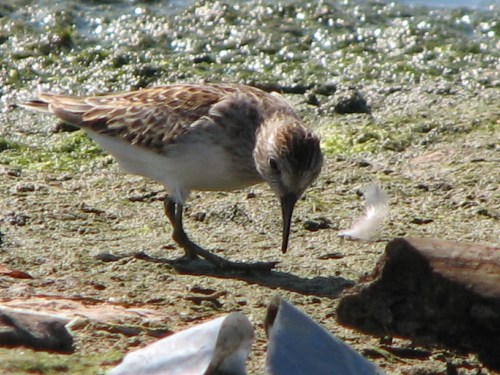
Least Sandpiper, 9/07

Small bands of Least Sandpipers explore the margins along shallow pools of water covering the fossil beds during this time of year.  Their bills probe the algae for the small invertebrates that live in the green mats.  These are our most common sandpipers followed in number by Spotted Sandpipers.  This time of year the Spotted Sandpipers actually have barred flanks and bright white bellies. We will have to wait for spring to see them with their characteristic spots and dots.

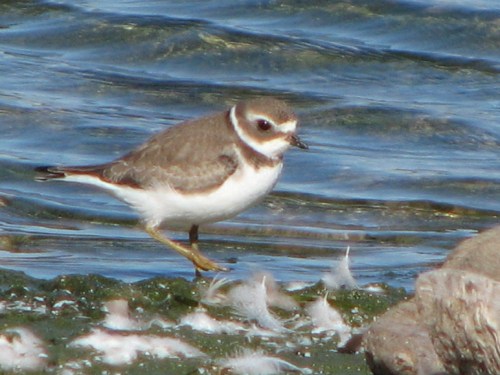
Semipalmated Plover, juvenile, 9/09

Tiny Semipalmated Plovers have traveled from the Arctic tundra and some make a stopover at the Falls.  The autumn birds seem to be mostly juveniles.  Piping Plovers, an endangered species, have been recorded in the park, but I haven’t had the pleasure of seeing one here.  By far, our most common plover is the Killdeer.  It’s hard to walk across the fossil beds this time of year without setting off their alarm calls.

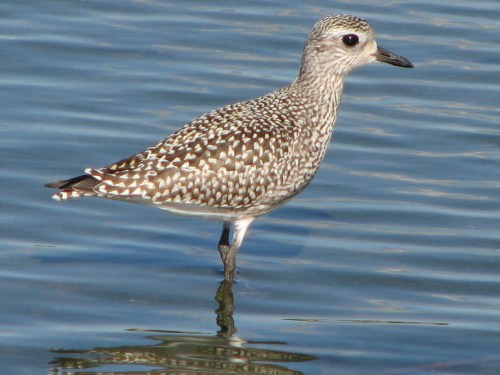
American Golden Plover, juvenile, 9/07

For two years in a row I have come across American Golden-Plover juveniles.  Although they are a bit larger than the smaller “peeps”,  I decided to throw them in too because I like them and they show up this time of year!  I’m amazed that this bird started life on the Arctic tundra and is now traveling to South America. 

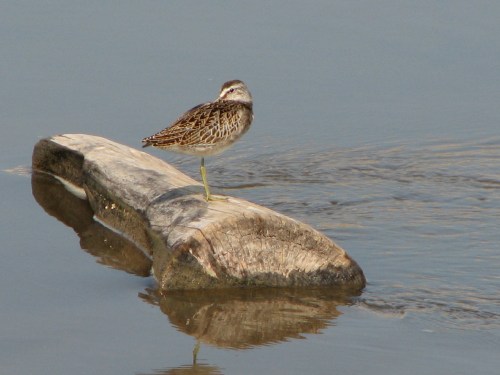
Short-billed Dowitcher, 9/08

Last year I came across this bird dozing on a well placed log and wondered what it was?  Its bill was tucked under the feathers on its back.  As I got closer, you can imagine my surprise when the bill was exposed!  I believe this is a juvenile Short-billed Dowitcher.  Here is another image of this bird.

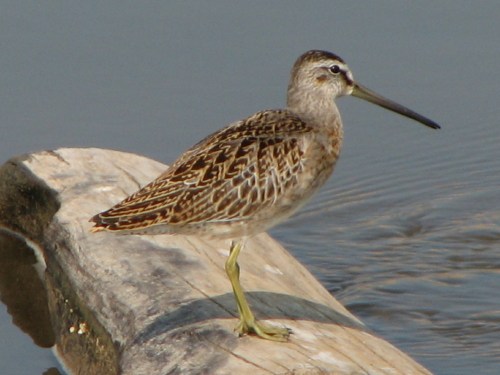
Short-billed Dowitcher, juvenile?, 9/08

I watched this bird for a while and never heard it utter a sound.  Referencing my bird guides, the literature says that the best way to differentiate it from the Long-billed Dowitcher is by its call. The length of its bill is of little help.  Both bird species have been recorded in the park.  The Short-billed is listed as rare and more than likely encountered in the summer.  This bird was photographed last year on the first of September.  The Long-billed is seen occasionally in the fall.  After checking out several bird guides, there was something in its coloration and markings that said Short-billed Dowitcher for me.  Perhaps some one out there with more experience can hazard a guess?  Either way, it was a tremendous treat to come across it!  I’ll end this post with another view of my Styro-Sandpiper posed in the sand and coal.

Styro-sandpiper, 9/09

Read Full Post »

Fruit Seller

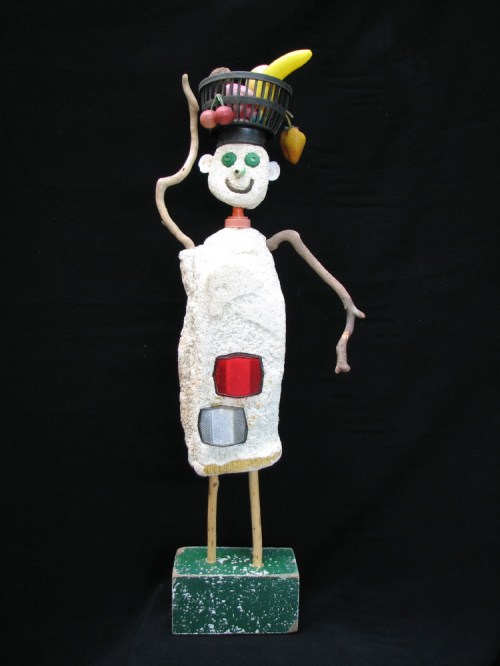
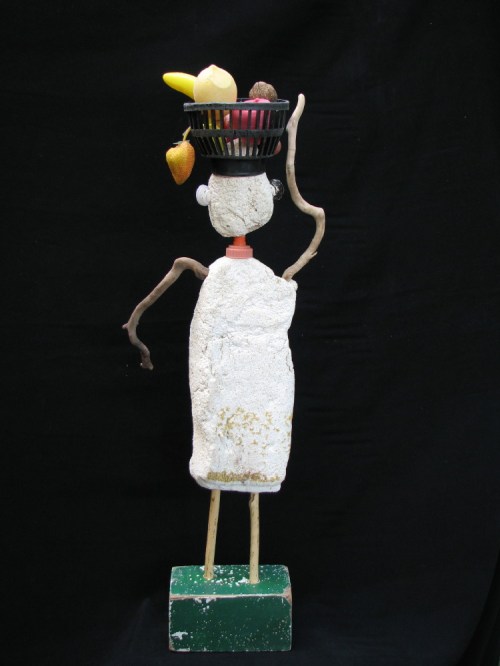
So far, everything I’ve featured on this blog was made on site at the Falls of the Ohio State Park.  I do, however, make independent art works from the same materials collected in the park.  Over the years, I have removed more than may fair share of junk off the riverbank and to my wife’s chagrin, brought it home.  I do prefer working on site, but making more conventional art objects from the same found materials comes in handy for other purposes.  I have made, exhibited, and yes, sold work through various shows and galleries.  I have also given as gifts many of these sculptures to family and friends.  And I wonder if this is true in other places as well, but I do get many requests from not for profit groups to donate items to fund raising auctions.  Among Louisville artists there is ongoing conversation as to whether this is a good practice if you are seriously interested in establishing a market value for your work.  For the most part, I don’t worry about this and feel it’s up to the individual artist to do what works best for them.  When I can, and when I have a personal connection to the organization and or believe in their mission…I’ll give them an artwork.  The above piece is such a case in point.  I call this work the “The Fruit Seller” and it’s made from 100% found materials from the Falls of the Ohio State Park.  It’s the second piece I have donated to the park to support their “Rock the Rocks” fundraiser. The sculpture from last year did pretty well in the auction.  Materials gathered and incorporated include Styrofoam, driftwood, mussel shells (the ears), various plastics, fishing bobber (nose), and walnut shell (mouth).  Of course, all the plastic fruit is from the river as is the reflectors and beaver-chewed sticks used for the legs and even the painted base was found.  If anyone is interested in learning more about the park, here is their website’s link:  www.fallsoftheohio.org  The event is scheduled to occur on August 22, at the park’s Interpretive Center.

Fruit Seller, back view

Read Full Post »

This blog is about a special place where time and space are compressed to form a unique window into the history of life.  Since 2003 I have designated myself as the unofficial artist in residence at the Falls of the Ohio State Park in Clarksville, Indiana.  My home is just across the Ohio River in Louisville, Kentucky.  For many years now, I have used this park as my source for art materials, as a studio, and as my primary exhibition space.  I work with found objects that all have been carried along by the river and have been deposited by high water and flooding in the park.  I arrive on the scene with a collecting bag, pocket knife, and a camera and I record what I make and experience here.  What I do I think as being a species of public art and I hope I capture a bit of the spirit of this place.  As an artist, I do think there is an ecological imperative that art can help address.  Through images, objects, and words I look forward to sharing my project with you.

Read Full Post »

« Newer Posts