Feeds:
Posts
Comments

Archive for the ‘sculpture’ Category

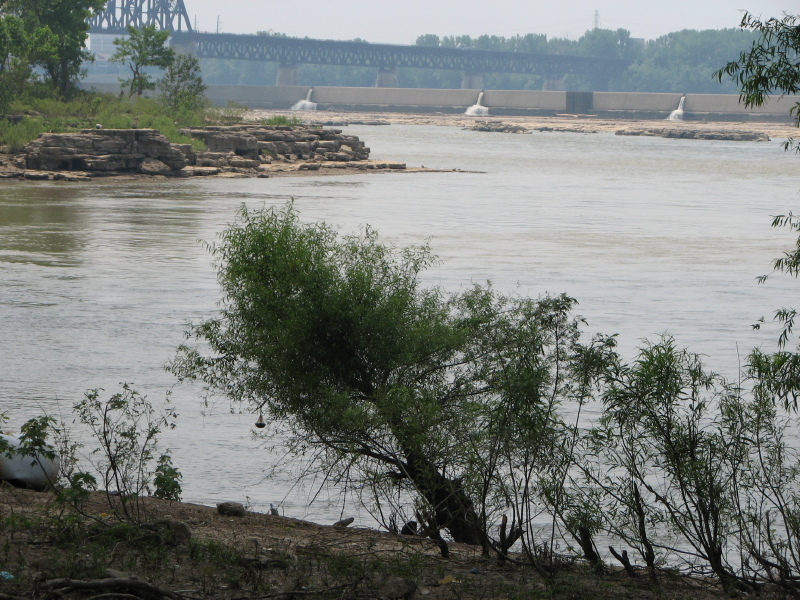
I was standing by the river’s edge when the dam’s siren went off.  At first it scares the pee out of you!  It’s a loud wail, but you get use to it.  The Army Corps of Engineers gives the warning whenever they plan to release more water under the dam.  Throughout the region there have been heavy thunder showers and the river has risen quickly.  I worked at the Falls both on Saturday and Sunday and so I have a number of things I can share over the course of the week.  Technically, it’s not yet summer, but my clothes are stuck to me with sweat and I’m glad for the nice bottle of cold water to drink.  So often, I’m guilty of not bringing something with me to keep hydrated.  I make a pact with myself to do better this summer.
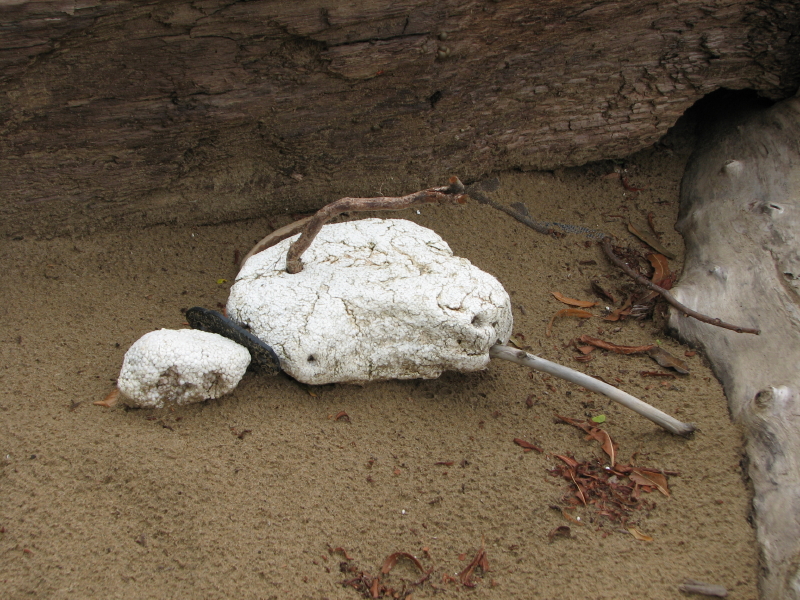
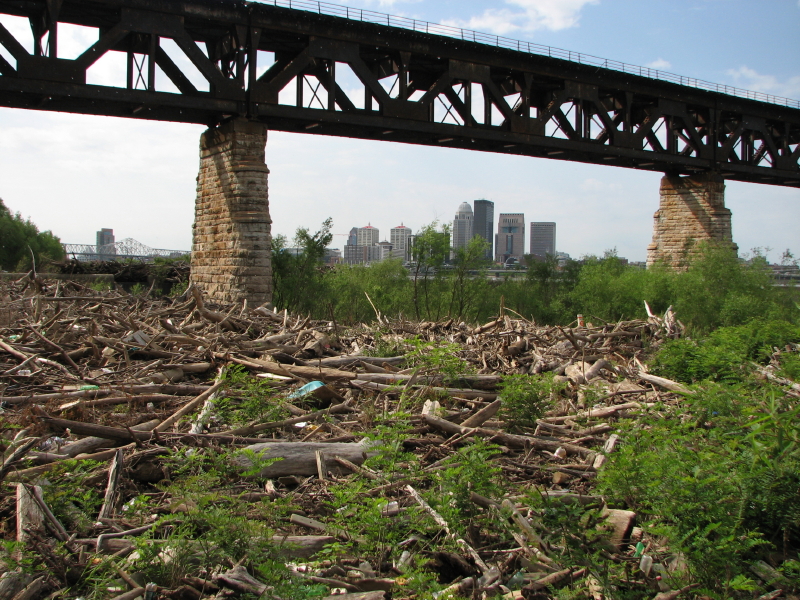
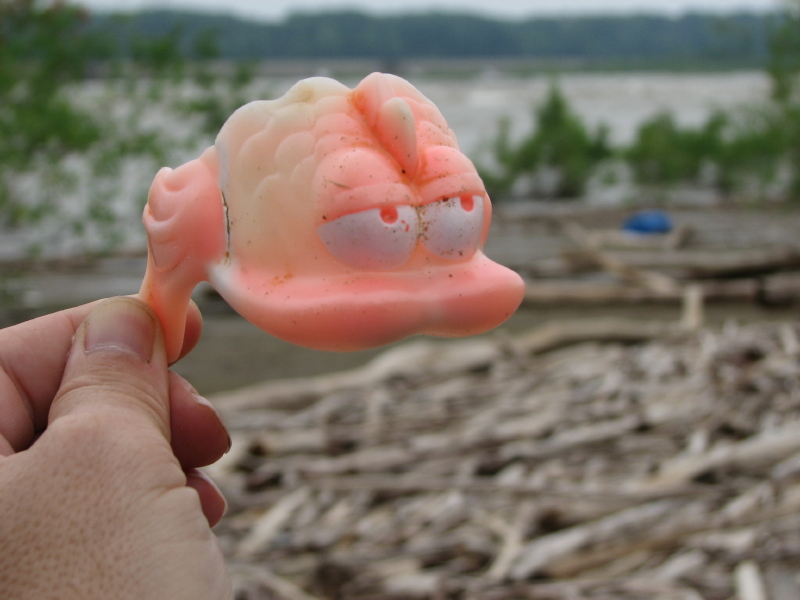
The weekend’s weather report calls for rain on both days, but I managed to dodge that.  I spent a lot of time exploring a mammoth deposit of driftwood near the dam.  If the past is an indicator of the future, then the river will probably not change very much for now and I look for a site higher on the riverbank to set up another temporary studio.  I did come across a project I did a few weeks back that was featured in the post “Tug of War”.  His buddy must be around here too.  I find the plastic broken toy-part I used for his friend’s crazy hairdo…they are cartoonish fisheyes.
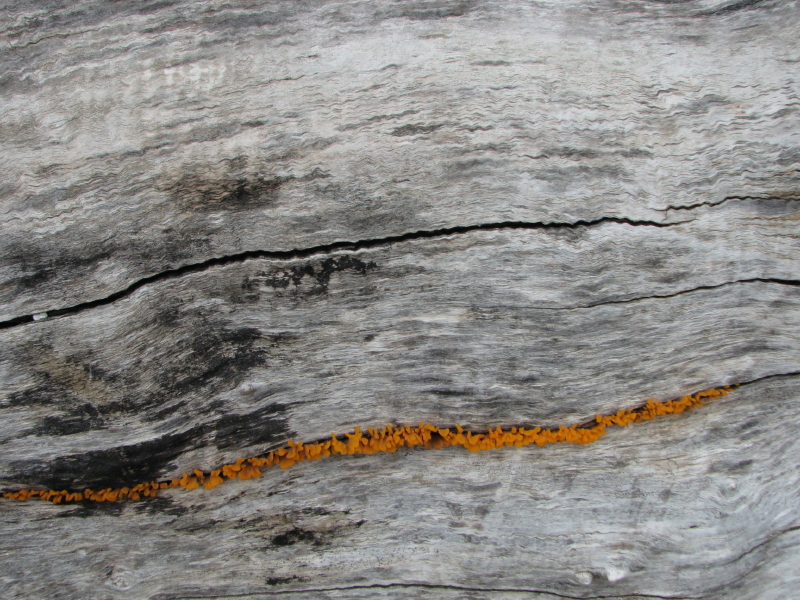
With such humidity, this is a perfect time for mushrooms and fungi to get their hyphi through the soft tissues of decaying matter.  The process of reclaiming old life kicks into gear.  It’s really the small stuff like bacteria, viruses, and fungi that do the dirty work of releasing nutrients back into the system.  The planet is ruled from those kingdoms while we posture around self-importantly.  This fungus was tiny, but so colorful that I thought I would try to magnify it and reveal how fleshy it is in its crack.
 

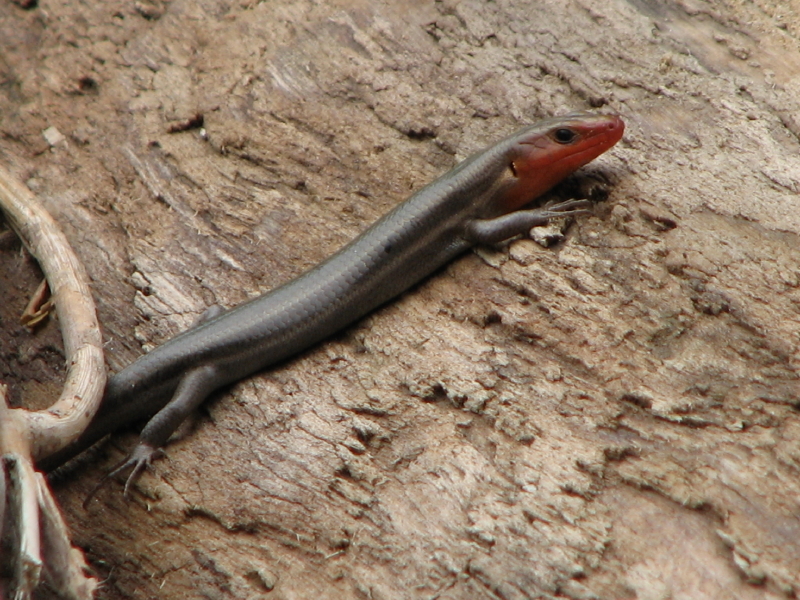
On a nearby log, a male Five-lined Skink is taking a break from his hunt to bask in the sun.  For him, it’s breeding season and you can tell that by the reddish blush he has around his head.  This guy’s lines are indistinct and he’s  bronze in color.  The young lizards have very pronounced black and white stripes and their tails are bright blue.
One of the sites I considered for my informal studio is this place with a chair set in front of this large upturned tree.  Sitting in the chair you can perfectly study all the intricate roots as easily if it were situated in your home library.  I decided it’s just a little too public and I look higher up the bank, under the willows and their welcomed shade.

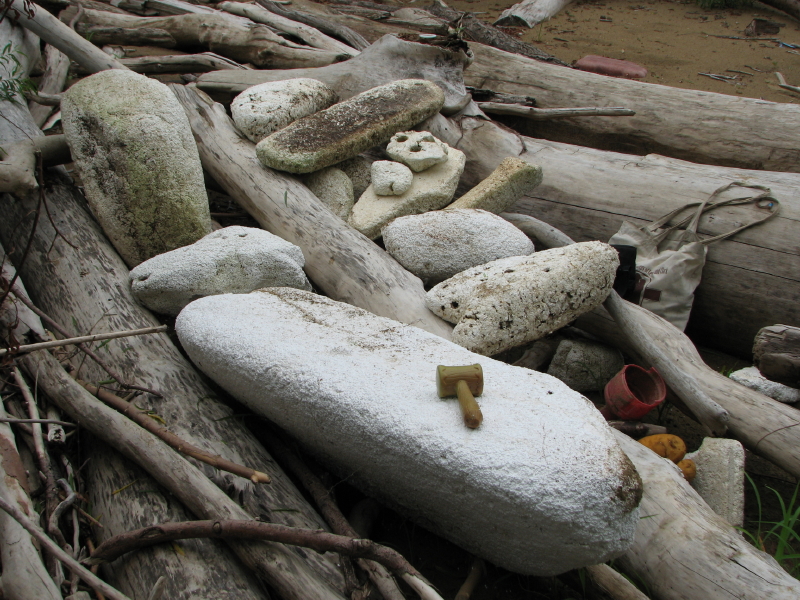
I’ve scouted out the area pretty well and on my mental map of this place, I’ve noted where the nicer Styrofoam pieces are.  It took almost two hours to move things into place.  The larger pieces I hoist onto my shoulder and carefully walking on top of the logs and driftwood reach the new cache I’ve created.  Here’s a piece nearly as tall as I am from the Styrofoam mine that I set upright and photographed.  I don’t have an idea for this one yet!

Here’s an in process shot of the gathering of the polystyrene.  There are several nice sitting logs in the area to work from and it’s under the willows enough to avoid the direct sunshine and there are usually birds around here as well.  My favorite Lewis and Clark canvas bag is nearby for scale.

Here’s the same site about an hour later.  There is still one really large piece I haven’t secured at this location yet.  I can’t wait to start making something from all this stuff!  I also have started gathering driftwood to serve as the arms and legs and I’ve stashed that away here as well.  The mallet in the foreground is made of plastic with simulated wood grain.
By the time I got around to making a sculpture, it was fairly late in the day.  The resulting piece I dubbed the “Petro-totem” and it takes its initial cue from the skull-like piece of Styrofoam that makes up part of the head.  This piece also features a plastic heart, genitalia (made from walnuts and a plastic toy fire hydrant I found).  The hat is some kind of funnel.  The finished work is far from one of my happier creations.  I just started working on it and making decisions as I went along and this was the result.

I posed this sculpture in several places and photographed it as I moved it around.  There are many tires on the beach and someone has cut many of them so they can’t retain water.  Mosquitoes love to breed in the dank water that collects inside these tires.  An old paint can with its red pigment is used to “sign” the tires…somehow I doubt these are the same people who altered the tires.  It seemed a provoking enough spot to set up a my Styrofoam figure.  I snap of a couple of shots and moved on.

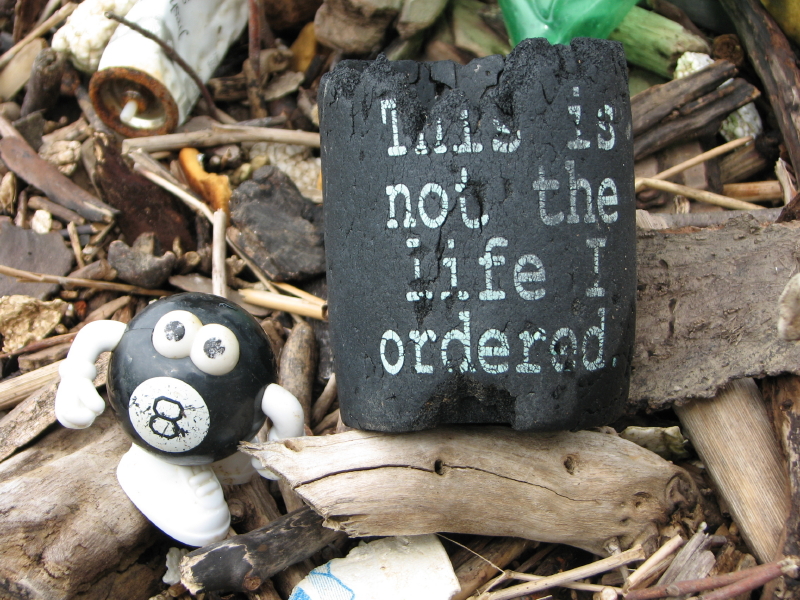
In a future post, I will show you where I eventually left this work.  In closing, I found this little commentary on the big driftwood pile and recorded that with my camera.  The “behind the eight ball” figure was found near by and I added that to the image.
Read Full Post »

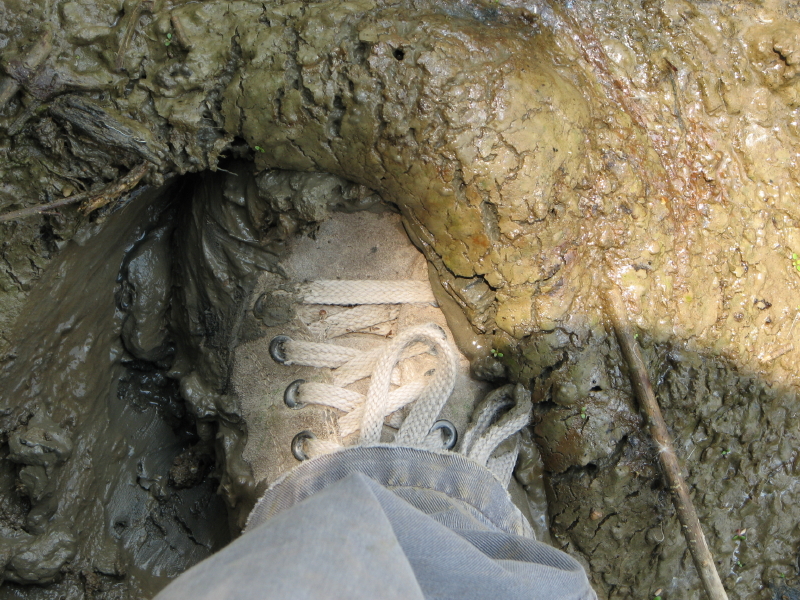
Before the month of May slid into history, I did a little sliding of my own.  The day after Julia and I visited Nerinx, I did a solo expedition to the western section of the Falls of the Ohio State Park.  Now the sliding part has to do with mud!  In places the earth was high and dry, but in key areas  the mud remained slippery and sticky.  Here’s a picture of what I mean.

It’s creamy and in places you could sink in over your ankles.  To get things over with so I don’t have to obsess about this, well I just find some mud and step into it.  After that there are no worries about remaining clean!  The deed is done.  I have a similar philosophy about the rain.  Once I’m as wet as I can get…I can relax and do my thing as long as I don’t get too cold.  The mud is more treacherous closer to the river’s edge and I decide not to flirt with it too much.  There is afterall, much to see around here.

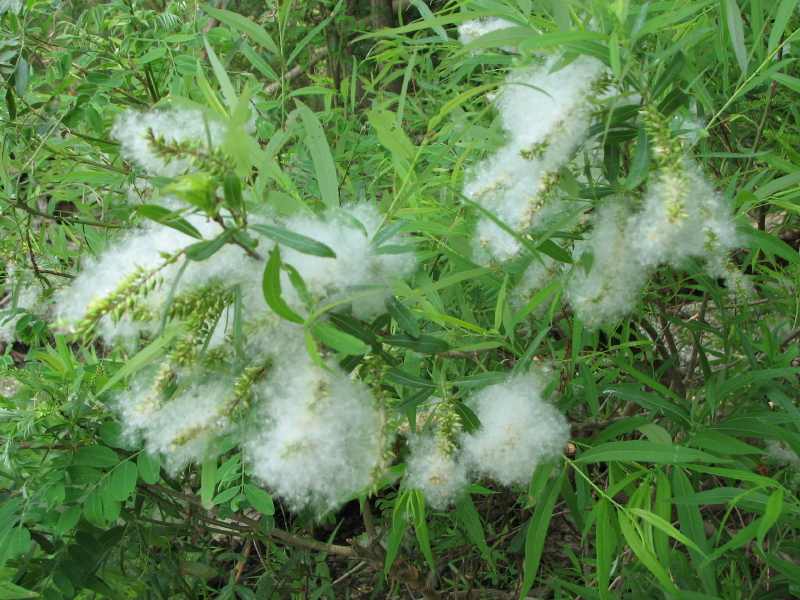
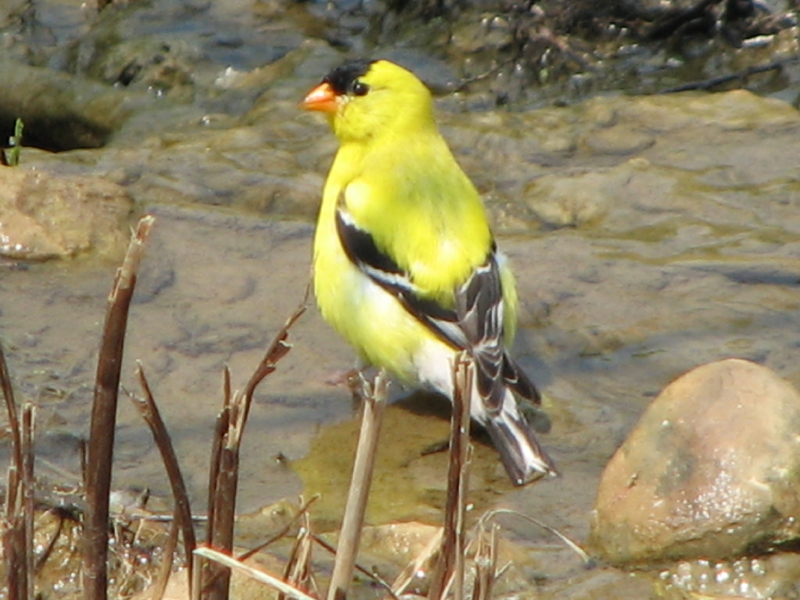
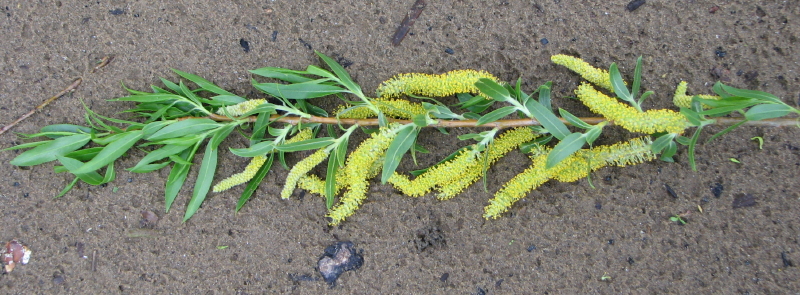
The willows are in maximum fluff production and there are drifts of the stuff on the ground.  When the wind stirs then the willow seeds become air born and are carried away.  With so much fluff, you would think willows would be even more common than they are.  I have to say that so far, I haven’t seen any birds that have made my year.  Last year’s signature bird was the Summer Tanager.  This year hasn’t been the warbler fest that I experienced just two years a go.  Still, I take what I can get and I always love American Goldfinches.  Here’s a male taking a dip in some water.  Small flocks cruise along the trees nearest the river.

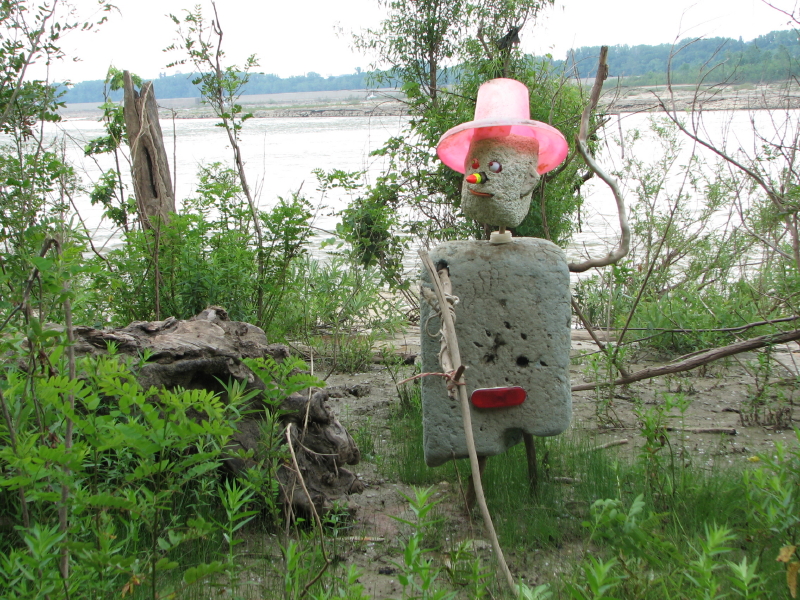
I’m walking west along the river and I came across the only persona that I saw all day.  We eye-balled each other, decided that neither was a threat and so we had a short conversation.  Mostly, it was an opportunity to compare nature notes.  I guess the feature that most stood out about my acquaintance is the bright pink hat she? is wearing.  I said I was looking for birds and junk and “she” said that she was a Lepidopterist.  Oddly, we didn’t introduce ourselves, but she let me take her picture for my blog.  I guess she’s about five feet tall or so and walked with a cane.

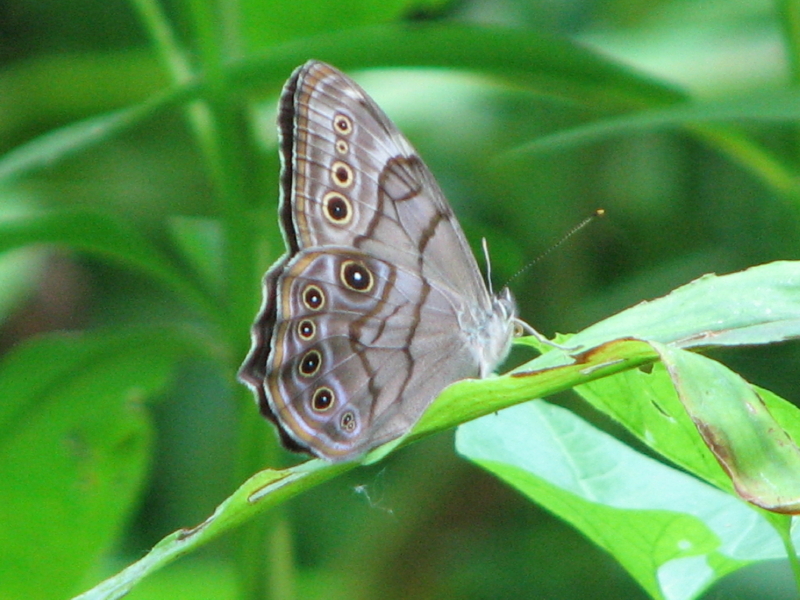
After I asked if she had seen any interesting birds…she hadn’t.  I was asked about what butterflies I had come across.  Fortunately, I also like butterflies and try to take their pictures when both insect and camera cooperate.  I really don’t like these autofocus cameras.  Anyway, I noticed many species out on this day including Commas, Mourning Cloaks, Cabbage Whites and then I showed her images of the two butterflies that I did get decent pictures of and she seemed happy to identify them for me.  Here is the more unusual of the two that I came across at the forest’s edge.

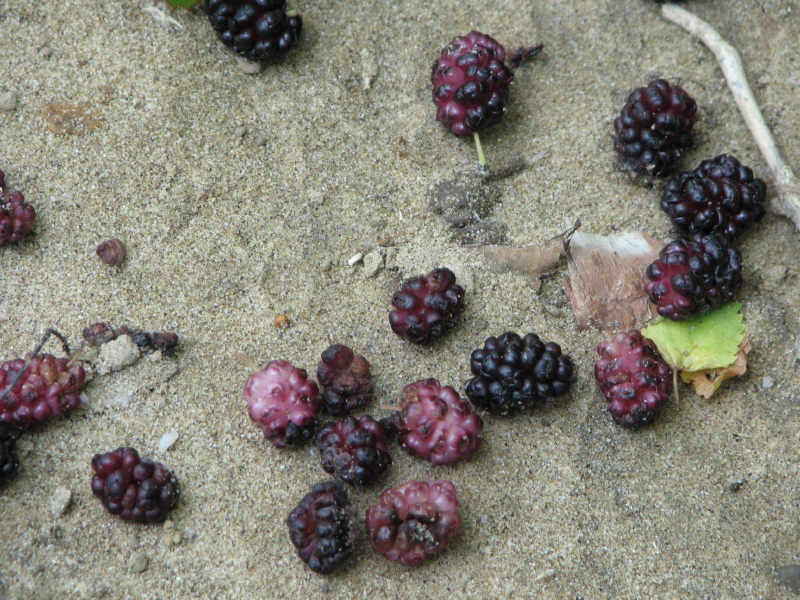
Quickly my new friend identified this as being Enodia anthedon or more commonly, the Northern Pearly Eye.  It is a forest butterfly that does not come to flowers preferring instead the fermenting juices of fruits and tree saps.  I reply that I had noticed that there were many butterflies around the fallen mulberries and on the sides of the willow trees. 

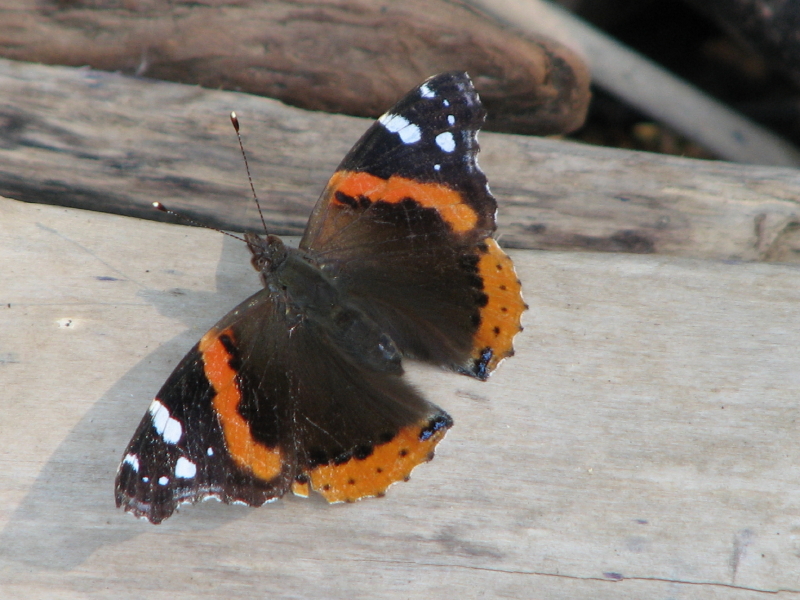
I wonder if science has determined if a butterfly can get drunk off the fermented juice and if this is possible…do they experience hangovers?  I know this does happen with birds like Cedar Waxwings that literally get tipsy.  The second butterfly is one that many people know and it’s the pretty Red Admiral or Vanessa atalanta . Even its scientific name is charming.  This is a people friendly butterfly and will often alight upon a person.  I came across dozens of these today.

With the rising heat the promised threat of a late afternoon thunderstorm began to materialize.  First there was the distant sound of thunder and since I had a hike to still make to reach my car…I said farewell to my butterfly friend whom I hope to see again.  I asked before parting if she collected butterflies and she answered that once she had, but was now over that part of her interest in them.  She no longer needed to possess them and instead grew flowers and plants to attract them.

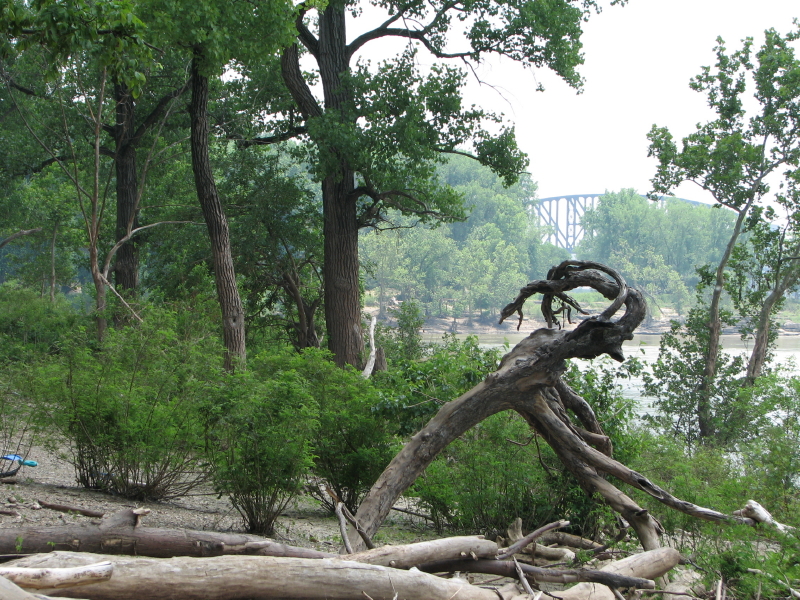
I hope I run into the lady with the pink hat again.  She seemed to share a reverence for the life that is out here in the park.  I would welcome learning more about the butterflies that call this place their home.  One last shot showing willows, the riverbank, fossil cliffs, and the dam in the far distance that keeps the river at bay…most of the time.

Read Full Post »

About sixty miles away from Louisville and the Ohio River is the small central Kentucky village of Nerinx.  It’s smack dab in the middle of an area renowned for its bourbon distilleries, but it also has an older, interesting history.  I brought my friend and video artist Julia Oldham with me on one final adventure before her stint as artist in residence at Bernheim Arboretum and Research Forest comes to an end.  On Memorial Day, Julia will be back in her familiar Brooklyn and far from bucolic Kentucky.  We started the day by listening to National Public Radio’s story about SETI and the search for intelligent life in the universe.  After fifty years of scanning the heavens for “intelligent” radio signals, only once was a signal received that had promise and that was back in 1977.  That search for promising signals became a theme for the day and dovetailed nicely into Julia’s latest videos from the Possumhaw Plant Electrics series.   I was honored to see her latest artworks which walk the fine line between art and science.   It should be fun to see how the rest of the world receives them post Bernheim.  After that, it was breakfast at Mammy’s Kitchen in nearby Bardstown, of my Old Kentucky Home fame.

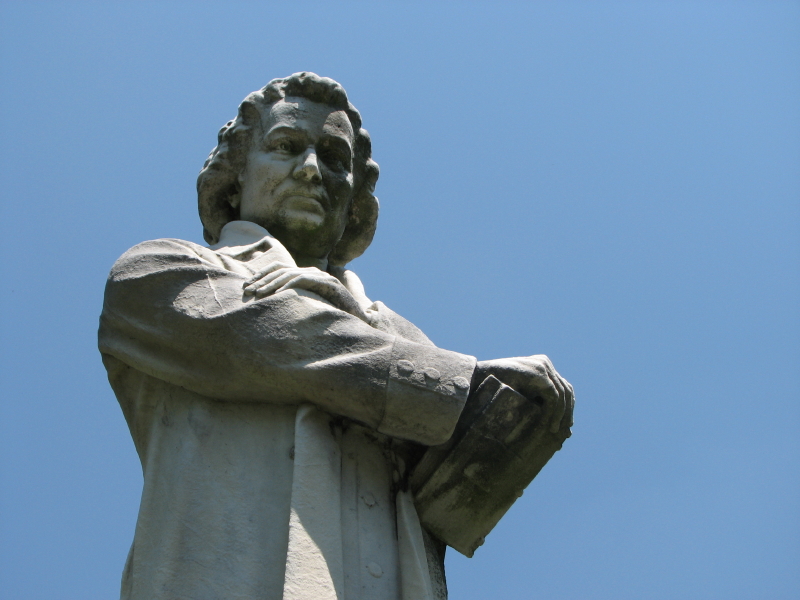
Although Nerinx and The Loretto Motherhouse (which we were seeking) isn’t that far from Bardstown, I managed to get the vehicle turned around on a few occasions.  Julia discovered that her global positioning application didn’t really work very well out in the country.  Still searching for intelligent signals!  Eventually, we just stopped and asked someone and we were set upon the right road.  Some of America’s oldest Catholic roots are found in Nerinx.  The name is actually a variation on Nerinckx which is the name of the priest who helped found the Motherhouse.  We thought his image on his statue looked somewhat like the young Beethoven.  Nerinckx was joined by Theodore Badin who would become the first ordained priest in America (1793) and it was they who helped found the Sisters of Loretto in 1812.  There is a statue of him too! With the help of sisters Ann and Mary Rhodes, the order set up a school for girls since education in the frontier was often neglected.  No statues for them, but there needs to be!

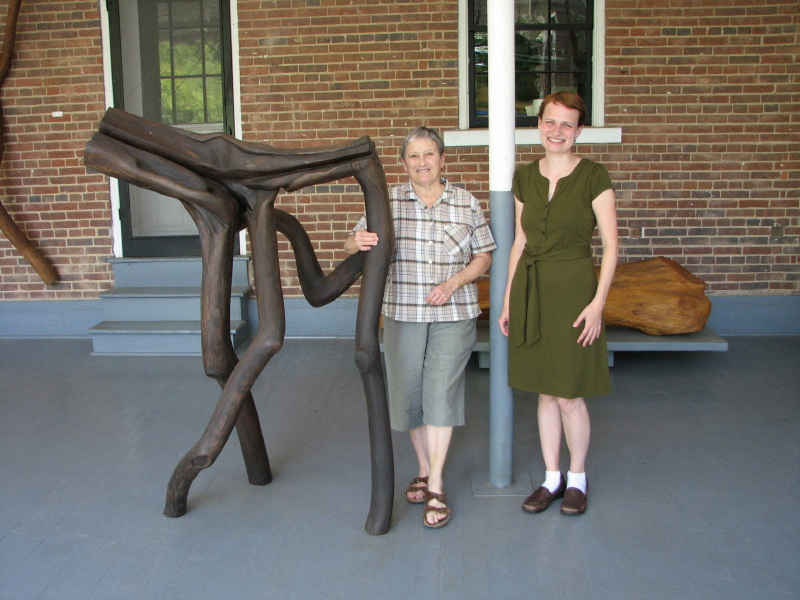
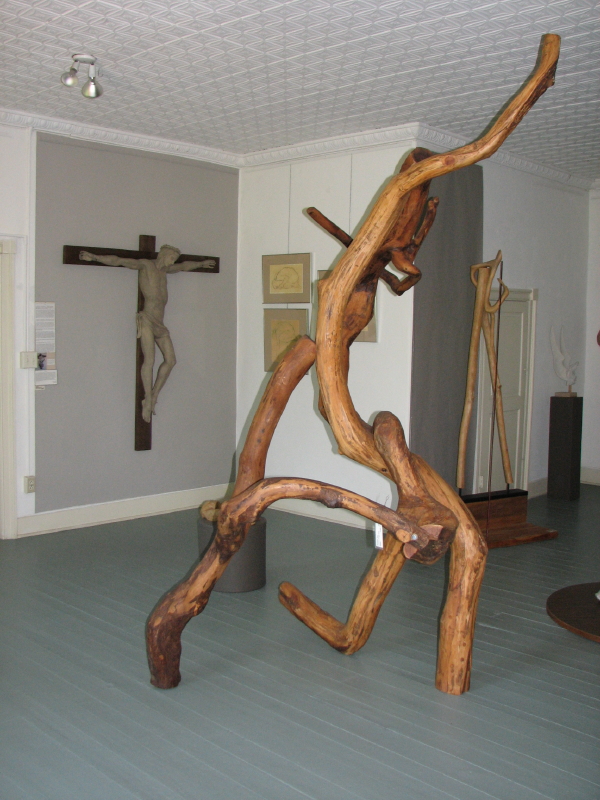
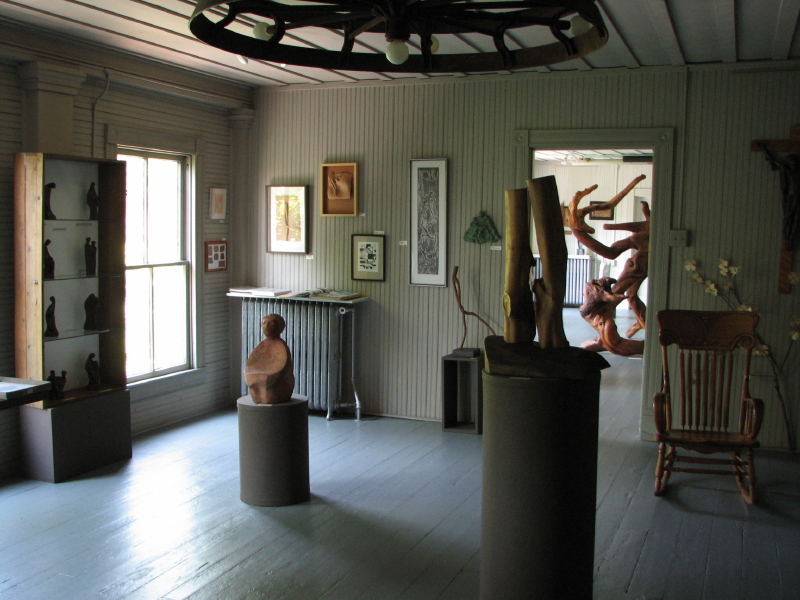
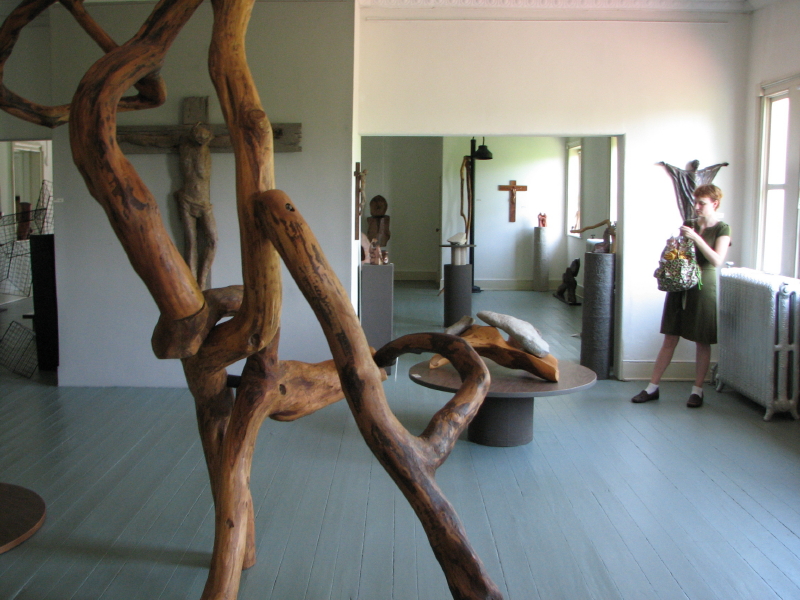
Two hundred years later, the Loretto Motherhouse operates a farm and infirmary.  Julia and I were also in Nerinx seeking out an artist friend of mine that is also one of the Sisters of Loretto.  Her name is Jeanne Dueber and she is an accomplished sculptor with a wonderful studio and gallery.

Jeanne and Julia share a common friend and so it was nice that we were able to connect.  Jeanne’s studio and gallery is called Rhodes Hall and it is a wonderful old structure filled with the artist’s work.  It’s practically a retrospective of Jeanne’s life work as an artist.  There are more traditional ecclesiastical figurative works, but what I really enjoy are her abstract wood sculptures that just reach for space in all directions.  Here are a few views of the installed artworks.  Jeanne is not a big person, so it’s all the more amazing she has the energy to wrangle these larger works.

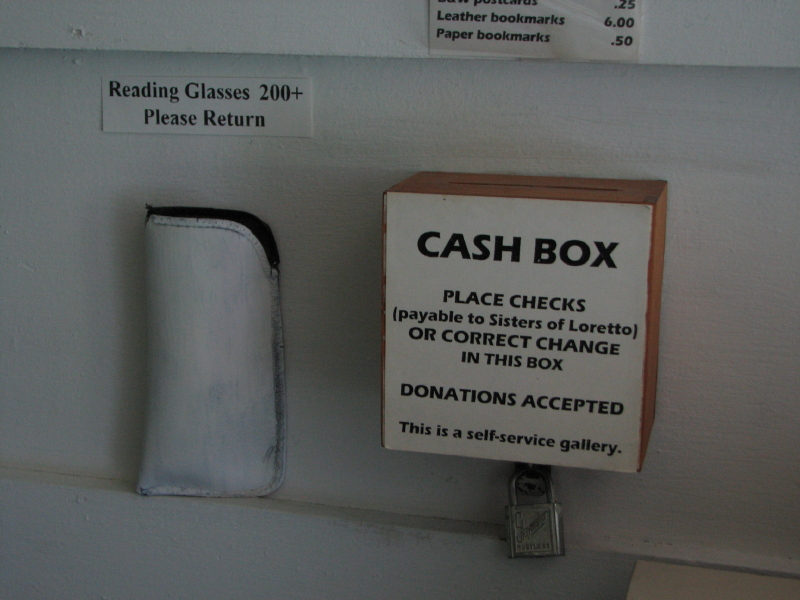
There is literature relating to the Loretto Motherhouse for sale and Julia and I found the donation box to be really charming.  The reading glasses are a nice touch.  We found little hand-painted signs all around the art works and must be Jeanne’s handiwork as well.

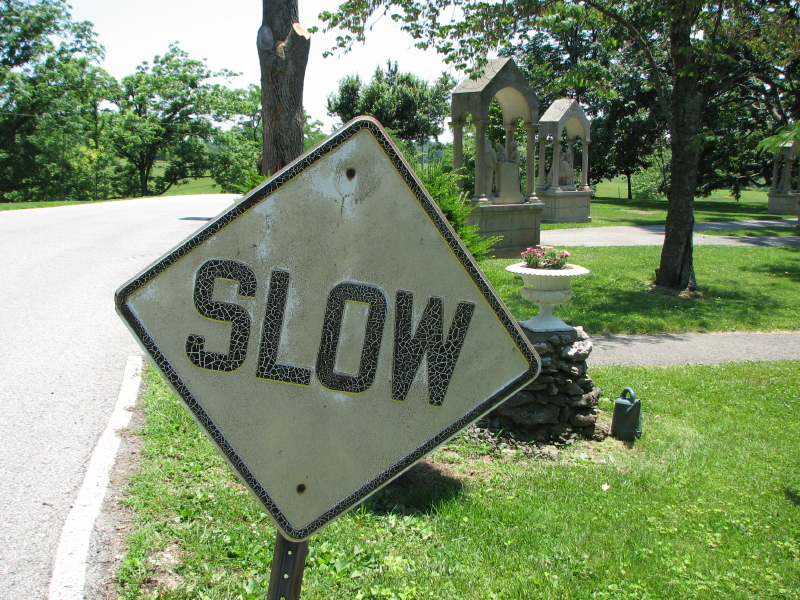
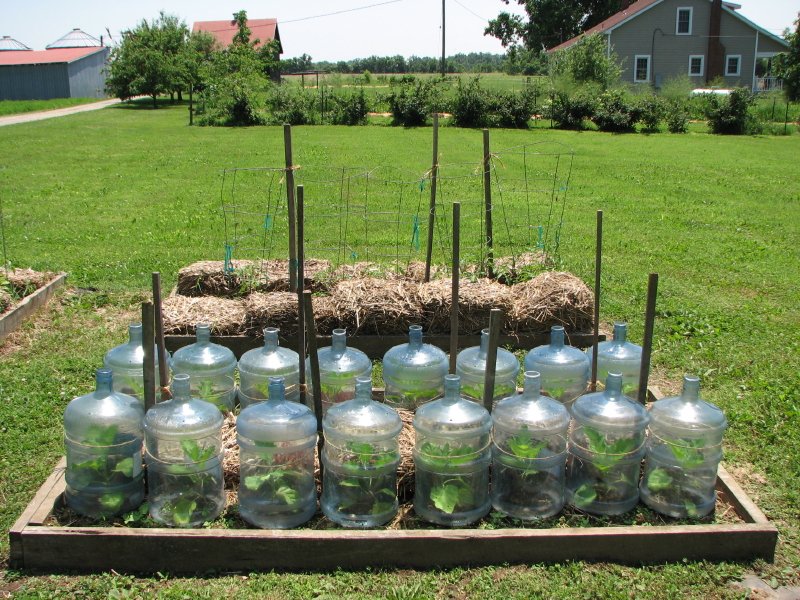
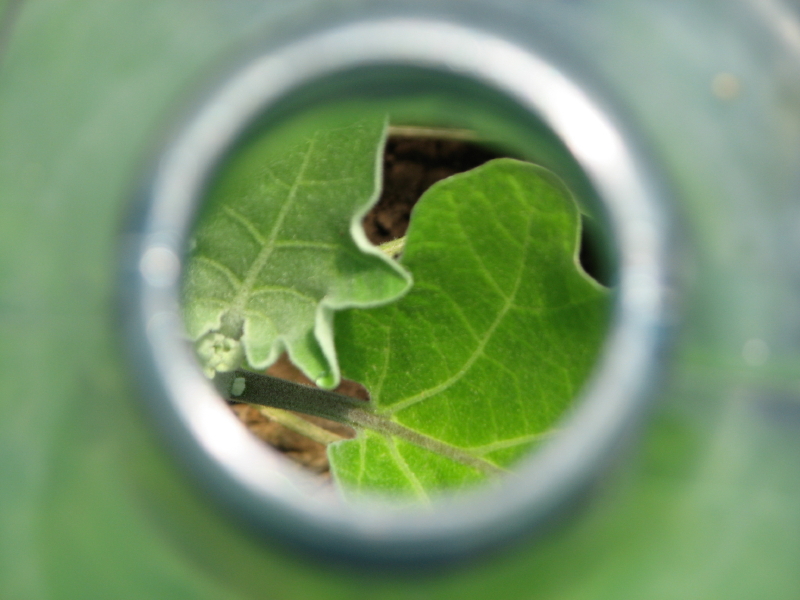
After parting company with Jeanne, Julia and I took a stroll around the grounds.  There were beautiful birds singing all around us.  It was a beautiful, warm, Kentucky late spring day that made you feel as if you were far away from the concerns of the rest of the world.  And we were!  Plastic bottles in a small garden caught my eye and I went in for a closer look.  Perhaps they were frost protection no longer needed?

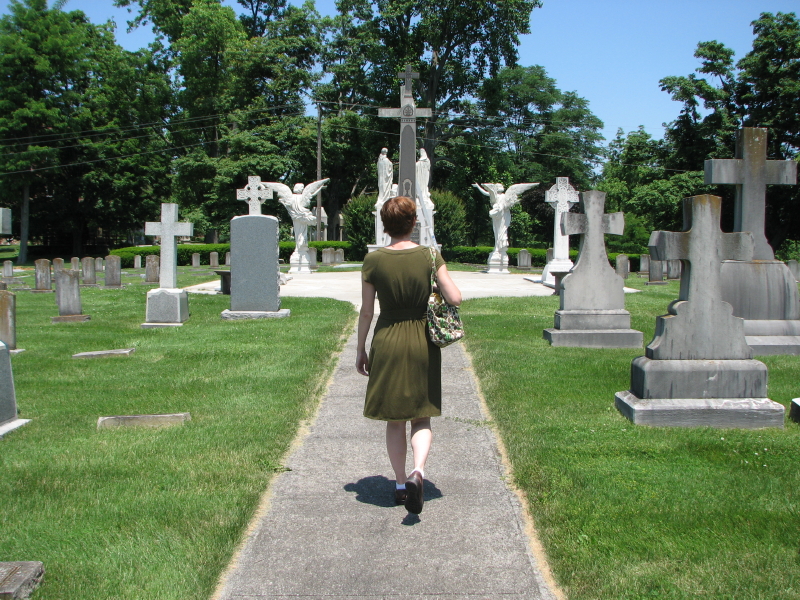
The cemetary on the grounds was really interesting!  The first few rows of stones remember some of the contemporary, longer lived sisters.  It seemed that was quite a string going of people who lived into their 80’s, 90’s, and there were a few 100’s too!  This contrasted sharply with the early years where many of the women only lived to be in their 20’s and 30’s.  Tuberculosis and various fatal influenza outbreaks during some particularly bad years spoke of the difficulty of life during the Commonwealth of Kentucky’s formative years.  Interestingly, there were two large stone slabs set upon the ground that recorded the names of perhaps 30 or so (?) sisters who donated their bodies to science!  After the walk through the grounds it was time to return to Bernheim.  I said my farewells to Julia and wished her a good trip home.  She will be returning to our area in August for a solo show scheduled in New Albany, IN and it will be great to see her again!  Julia also wrote up a Loretto Motherhouse story which can be read at her blog, “Bee Sting Brose”.  It’s on my blogroll for your convenience!

Read Full Post »

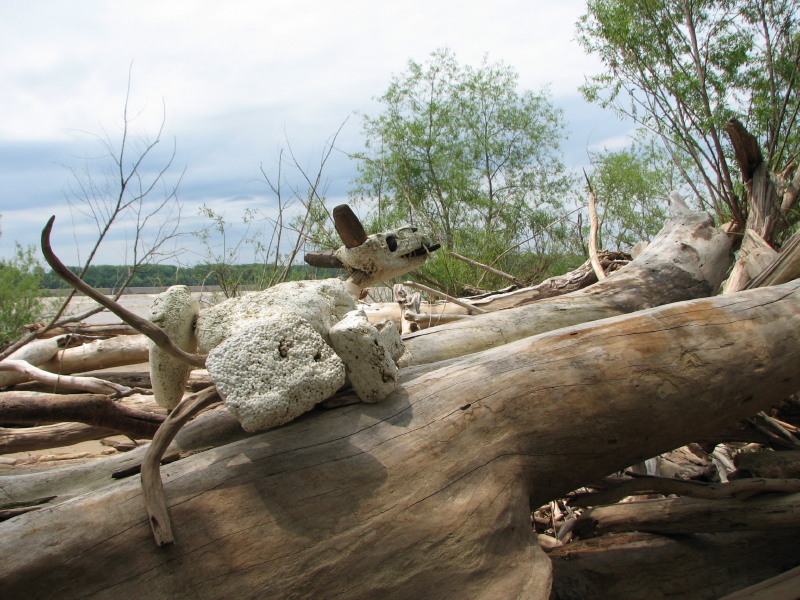
Extraordinary images from a remotely placed camera-trap yield glimpses of a rare mammal.  Long thought to be gone from the Falls of the Ohio, it appears the Feralocitor is recovering parts of its former range.  The Feralocitor is a carnivorous animal about the size of a very large house cat.  Genetically, a Feralocitor’s closest living relative is the Fossa from Madagascar which is that island’s largest and rarest native predator.  Both share a relentless drive to pursue prey and are especially adept at catching birds and small mammals in trees.  Like the Fossa, the Feralocitor has a long tail which it uses to balance itself as it runs and jumps from branch to branch in its arboreal home.  Pictures of the Feralocitor at the Falls of the Ohio came as a shock to the park’s naturalists who remain mute about its existence here although there have been long-standing rumors.

The image above shows what the Feralocitor is especially good at which is stalking its prey.  Noiselessly, this predator can get low to the ground (or log in this case) and approach within striking distance of its formidable claws and teeth.  Once a Feralocitor has a hold of its intended victim, there is no escape.  In addition to stalking, some Feralocitors (especially older or injured individuals) are excellent at hunting by ambush.  The original inhabitants of this land have an almost supernatural reverence for this animal and their name for it roughly translates to “…ghost-spirit of the trees”.  This reverence, however, wasn’t shared by the farmers who settled this area and saw the Feralocitor as another predator who killed and ate their smaller livestock.  It was shot on sight, poisoned, and trapped until it became so scarce that it was rarely seen and believed gone from these parts.  Today, the role of random predator is played by domestic dogs that have gone feral and occasionally run in packs causing fear and damage.  Such dogs exist at the Falls of the Ohio and here are a few images of them.

The feral dogs in this area are a motley crew of mixed breed dogs.  I recently came across two of them while bird watching and I was so intent on looking up, that I didn’t notice that these dogs had walked quite close to me.  In far western Kentucky, I recall an experience of being out in the woods and being surrounded by five wild dogs!  It was a tense moment because dogs in this situation can be dangerous.  I remember yelling at them and throwing rocks in their direction to chase them away.  Once there was a thriving sheep industry in the western part of the state that was decimated by feral dogs.  An old biology professor at Murray State University told me that one.  The dog in this second picture doesn’t seem particularly glad to have run into me and I’m probably interrupting his attempt at a meal from a nearby dumpster.  They seem always hungry and will take nearly anything that crosses their path.  There is a shortage of ground nesting birds in the park because there are just too many predators on the prowl and not enough cover.  World-wide, feral dogs are a resilient and growing problem and rabies is also on the rise.

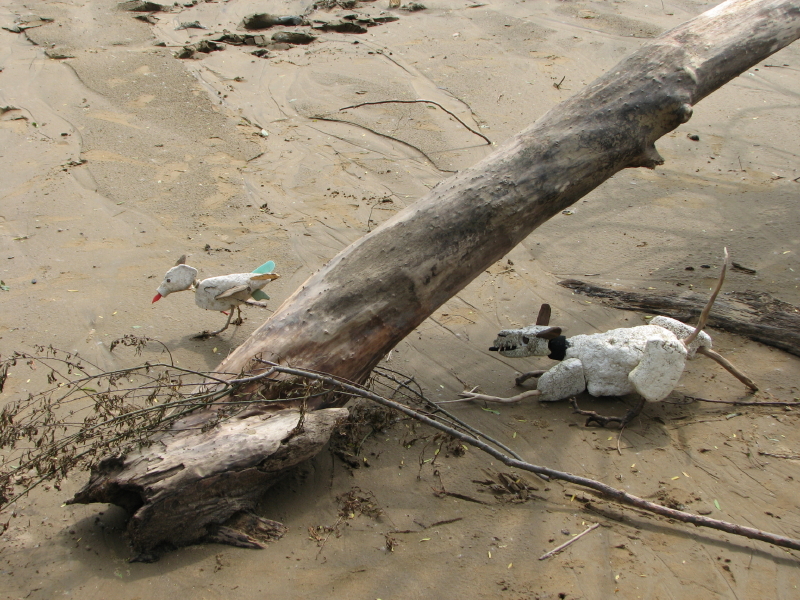
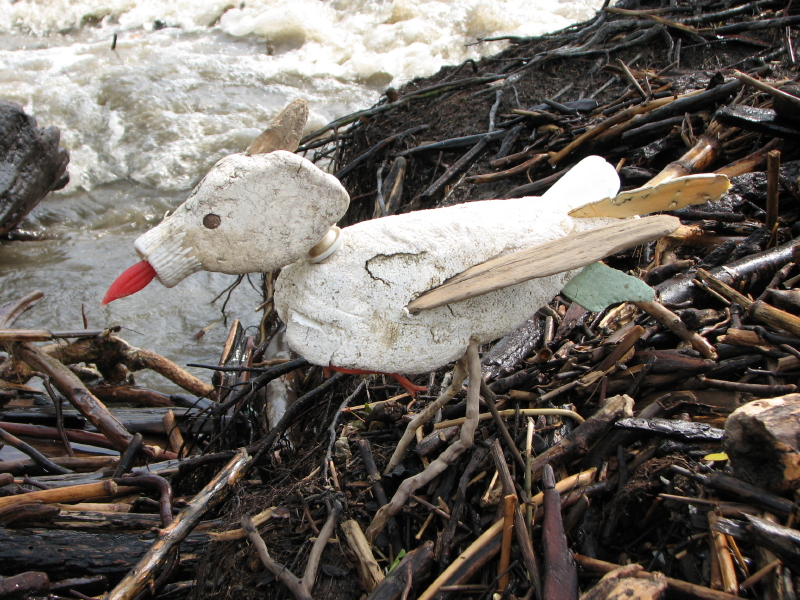
I decided to camp out in an area where a Feralocitor was last seen.  After several days of nothing, I was rewarded with two separate  images of a hunting Feralocitor.  In this case, the prey animal (the Ohio Valley Rail) is also rare and endangered.  The first hunt I observed was successful, however, the Feralocitor was so efficient and quick at the kill that it was over and gone before I could get obtain another picture.  It waited until the bird’s head was down before launching its fatal attack.

In this second photo, the Feralocitor was unsuccessful when the bird sensed something was wrong and flew away.  By listening to its instincts, this rail lived to experience another day.  It is great seeing an animal that once existed in this area recovering some of its former range.  Similar stories exist from the recent past.  Once black bears were rumored in the eastern section of  Kentucky.  This was proven, they became studied, protected,  and  now there is a limited hunting season on them.  The same could be true of the mountain lion.  Persistent claims that they too are re-entering  their former territories will probably pan out as young lions move eastward pursuing the ever burgeoning deer population.  As for the Feralocitor, time will tell.  It isn’t an animal likely to be prized by hunters.

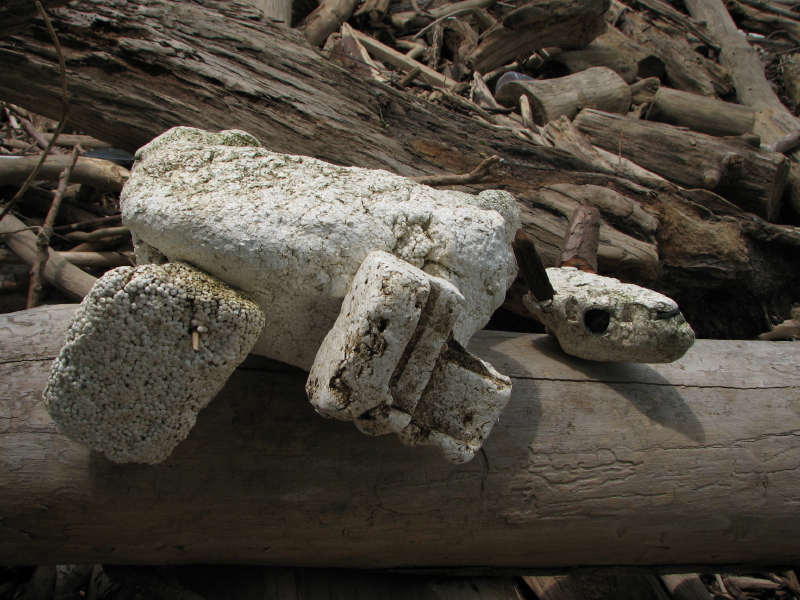
The last image is of the Feralocitor in progress.  It’s made of found Styrofoam, wood, nuts (for eyes), rubber, and plastic and was constructed on location during a light rain.  The sculpture was held together with sharpened wooden stakes and pins.  With the exception of the Feralocitor and the Ohio Valley Rail, other mentions in this post are factual.

Read Full Post »

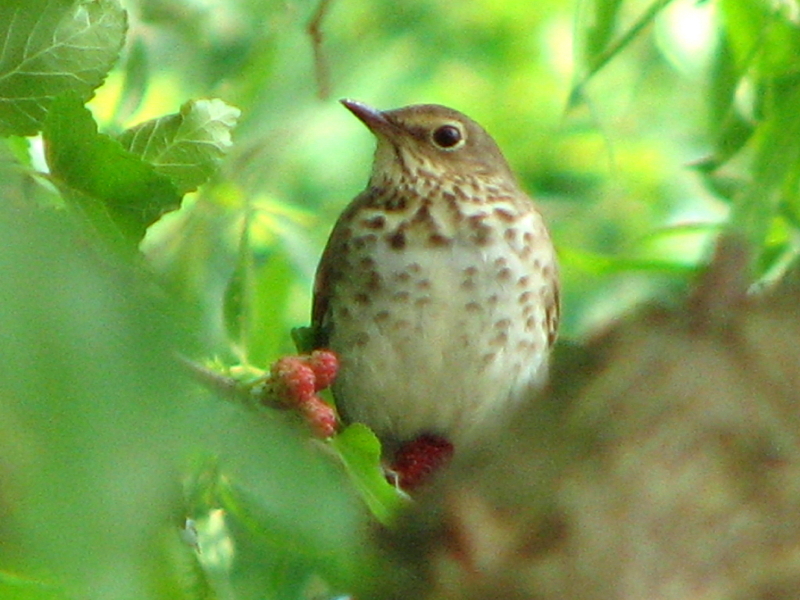
I love this photo!  This Swainson’s Thrush seems so happy sitting on its berries.  At the Falls the migrant birds are around and our trees are flowering or fruiting.  I have been doing my best to come up with some nice bird photos in between other river activities like making art.  Most of the warblers are proving to be tough subjects.  The difference between getting a nice image and nothing is a thousandth of a second.  Warblers are very small and constantly moving.  There is a lot of thrush and catbird activity around the sweet mulberries and squabbles are frequent.

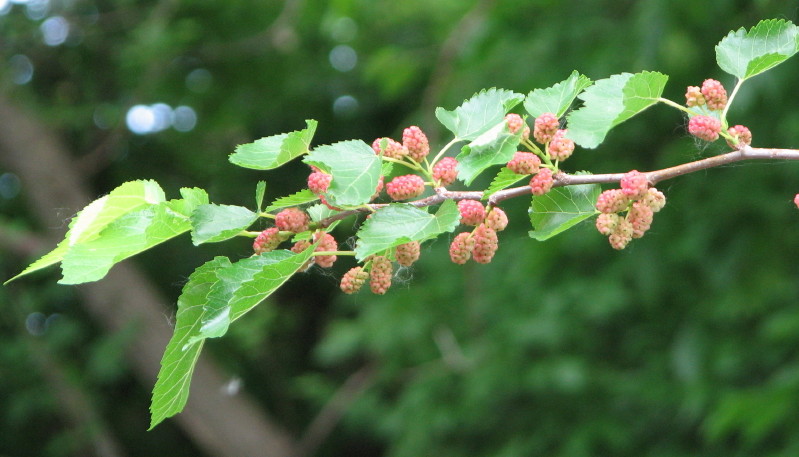
These pink and red mulberries will be ripe when they turn dark and black.  That’s when the wildlife particularly go for them.  This is a prolific tree and seems to be on the rise.

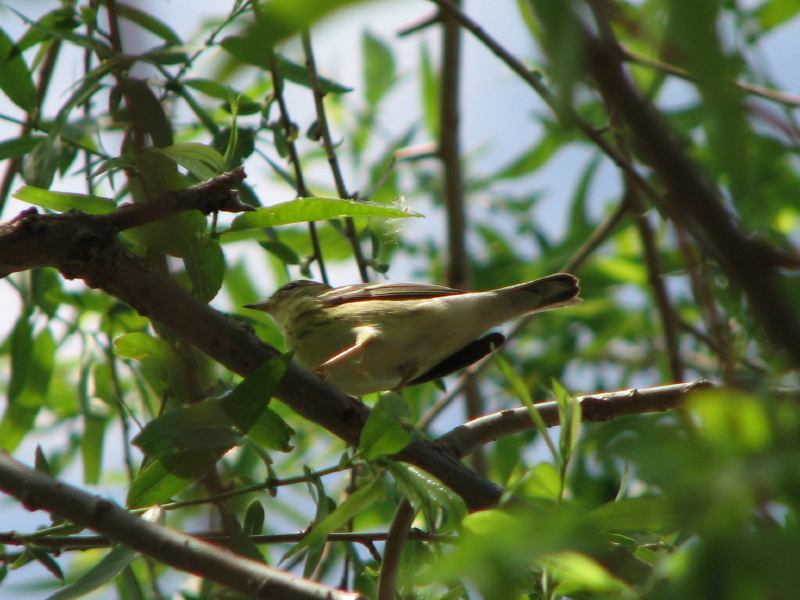
This bird atop a willow tree is a bit of a head scratcher for me.  I like that I was able to get such a relatively clear shot among the foliage, but what species of bird is this?  When I first took the photo, I thought I was photographing one of the seasonal vireos.  However, there is a suggestion of light-colored wing bars and perhaps a slightly streaked breast too which is an unusual combination.  That’s what I like about bird watching…it can be challenging even when you think you have a good image.
Wafting through the air were the tiny, cottony seeds of these black willow trees.  Many of these will land upon the sand and germinate.  Only the fittest can thrive in this tortured soil and manage the periodic flooding that helps define this place.

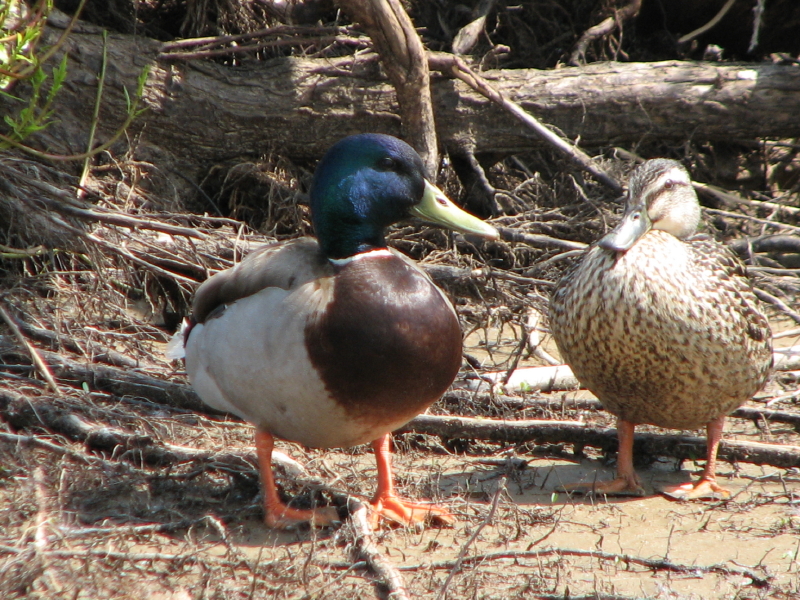
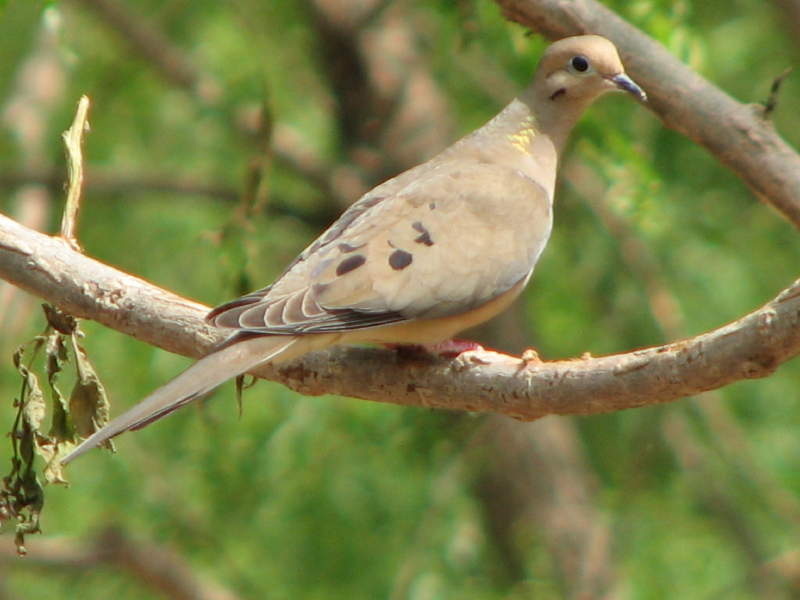
There were birds that I was able to photograph and identify like this pair of Mallard Ducks.  They were away from the river and more than likely have a nest nearby.  This Mourning Dove is showing a little of the iridescence on its neck that comes with the breeding season.  It’s hard to believe now that Audubon’s first drawing of the extinct Passenger Pigeon was made at the Falls of the Ohio.  That is certainly a bird I would have loved to add to my list of living species in the park.

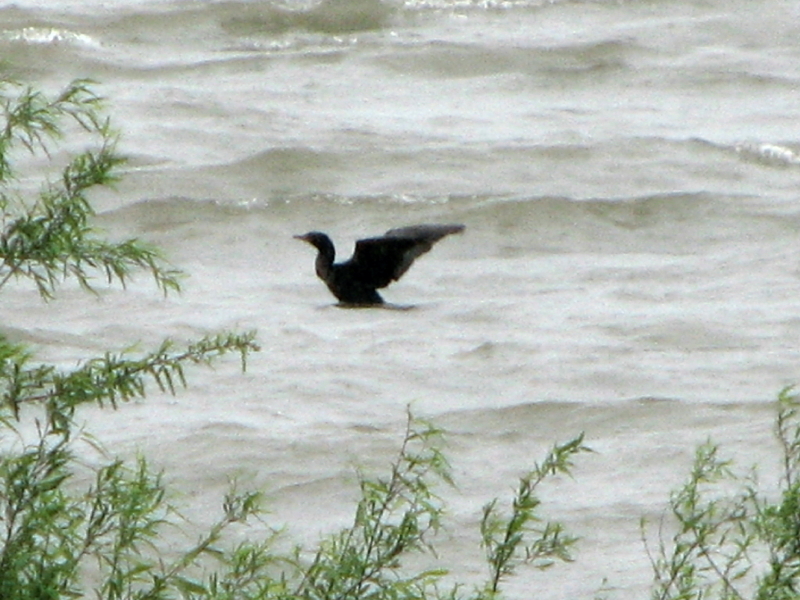
I was able to add a new bird to my list on this trip and it’s an unusual one!  It’s called the Ohio Valley Rail and is usually heard more than it is seen.  It is not typical to run into one during the daylight hours.  So, when I came across this female near the river…I got real excited!

This bird is in transit to the marsh habitats that exist around the lakes in the Upper Peninsula of Michigan.  Since the Ohio Valley Rail is believed to travel at night…it is a mystery why this one isn’t sleeping in a secluded spot.  Originally discovered and named within the river valley by early 19th Century naturalists, it would be many years before it’s true northern haunts would be known to science.  The males are slightly smaller but have more developed plumage which they use to their fullest glory when they leap and dance into the air trying to win the favors of a female.  Successful dancers will pair up producing a clutch of two eggs usually in a nest located on the ground and made from cane leaves.  One last image of this rarely seen oddity with the big head and bright red bill.  Bon voyage!

Read Full Post »

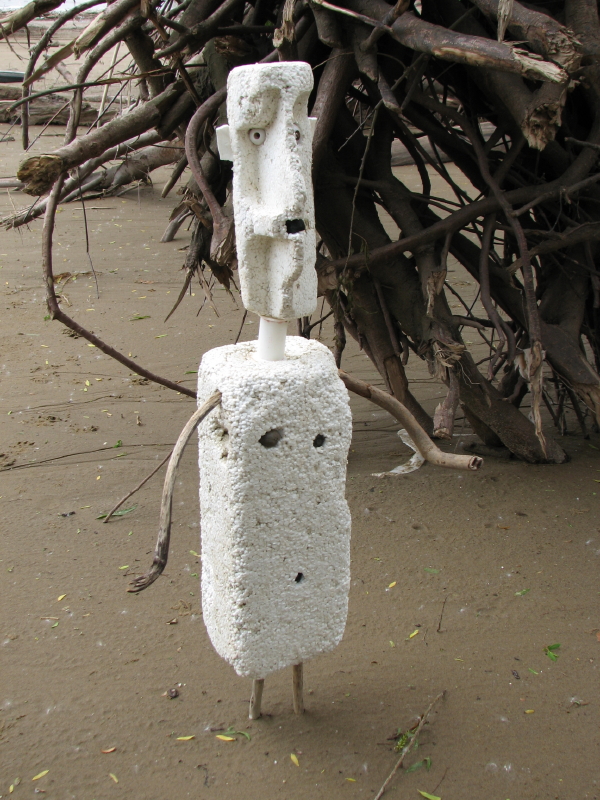
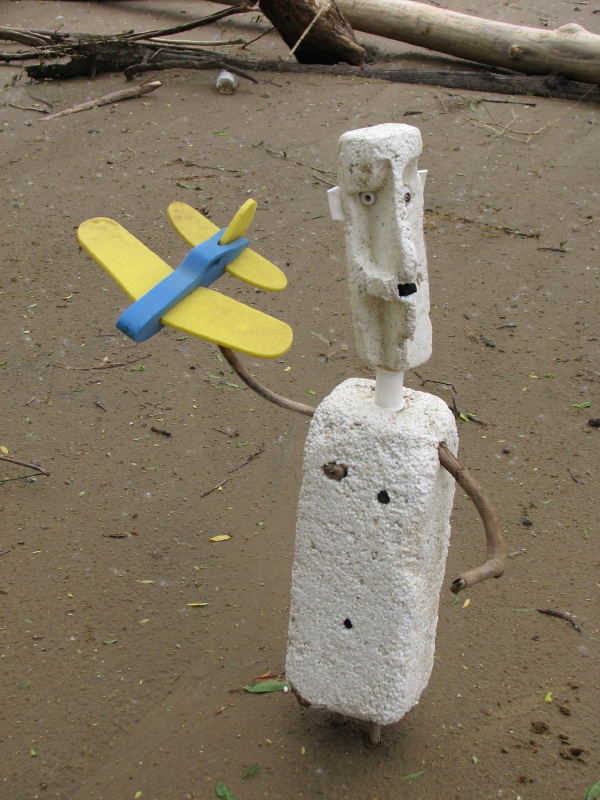
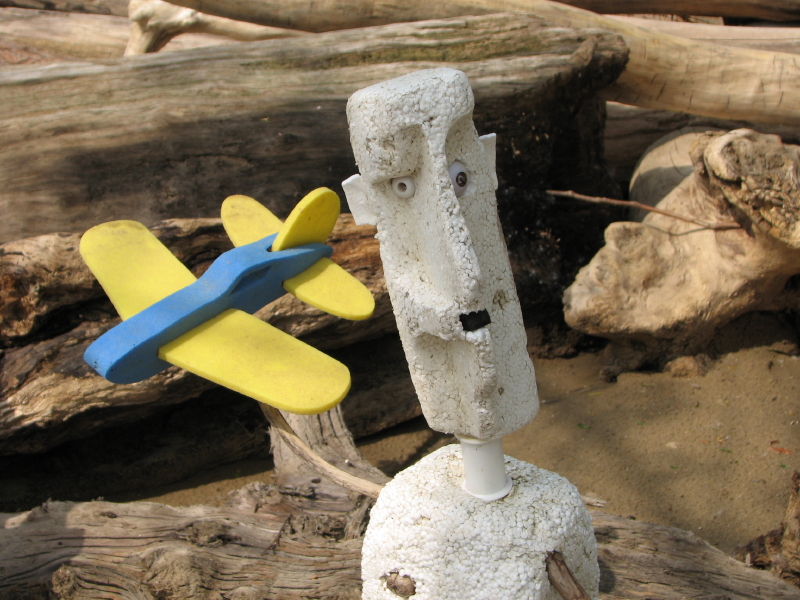
Wow, what an incredible day yesterday was!  The weather was just perfect and I had the park to myself and I took full advantage of it.  The river is still a little higher than usual, but not as high as when Julia and I visited here last trip.  I made four Styrofoam figures and took a ton of pictures that I will show you over the course of the week.  Let’s start by me introducing Mr. Easter Island Man who has graciously agreed to share his day with us.  He was in town taking a break from being a tourist attraction and was himself on vacation in the river city.  Here’s something to help set the context.

Two recent events have shaped the environment at the park.  The first is all the rain we had that led to flooding and depositing massive amounts of driftwood and junk at the Falls.  The other is that Spring has more than taken a hold and you can feel Summer coming around the corner.  Everything is green, growing, and starting to feel jungle-like in places.

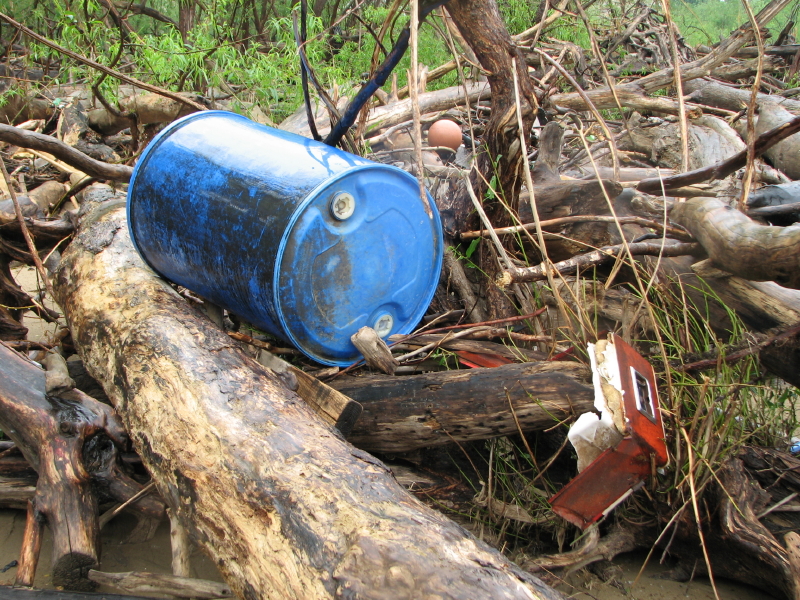
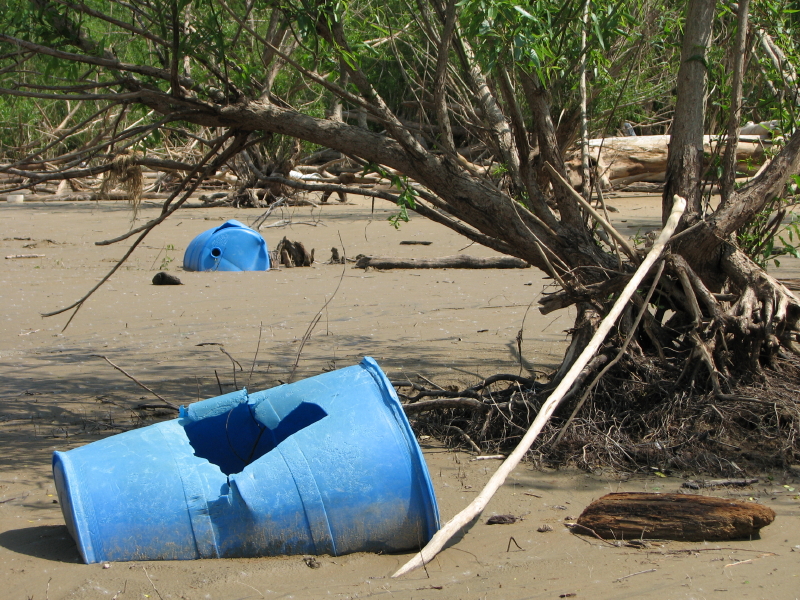
Skirting the driftwood mounds, I moved down to the river by the willow habitat.   Wisps of willow fuzz gently wafted on the air currents and small drifts were forming in the nooks and crannies of the driftwood.  Butterflies were on the wing. The trees were home to several warbler species and I was challenged to create a few good photos of them.  Punctuating the landscape were the occasional blue plastic barrels.  It seemed  a particularly strong color note in amongst the natural organic hues and tones.

We also see barrels and drums that are all white or all black every once in a while.  Ran into a guy not too long a go that collected a few of these plastic drums and he said he was going to make a raft from them.  I wonder if he was successful?  Hopefully, he didn’t try to take a float trip with the river as high as it was.  It’s dangerous to get caught in the wake from a massive coal barge cruising down river in a craft you can’t manuever very well.

Every wonder what those Easter Island sculptures look like below their giant heads?  Buried beneath the sand is an equally blocky body.  We walked around some more to see what had changed since our last visit?


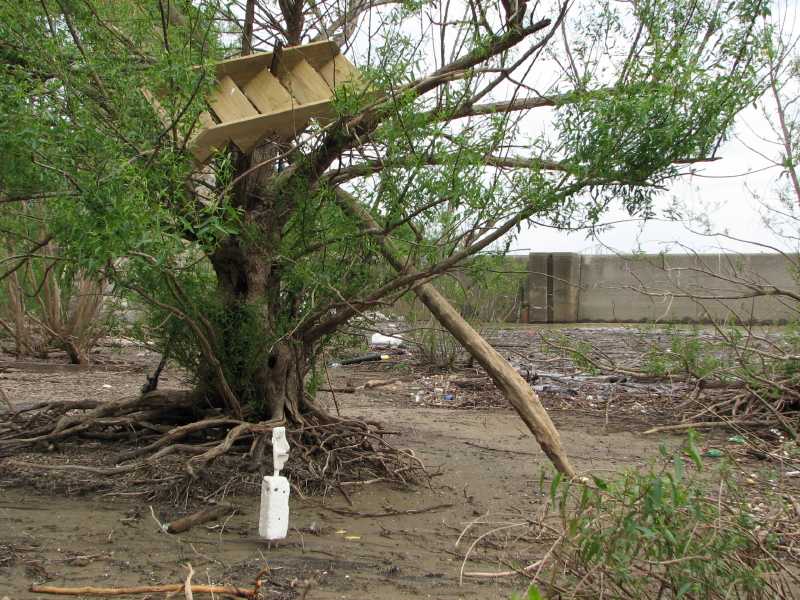
Near the dam, you could find examples of how high the river got this time around.  Mr. Easter Island Man came across this staircase that became lodged in a willow.  In surrounding trees, plastic trash bags, and loose tree limbs were stranded in other branches.  The mud in this area was very soft and it was easy to sink down to your ankles in it.  You needed to plot your course in advance and take advantage of walking on the tops of the beached  logs.  This way, you also left fewer tracks behind.

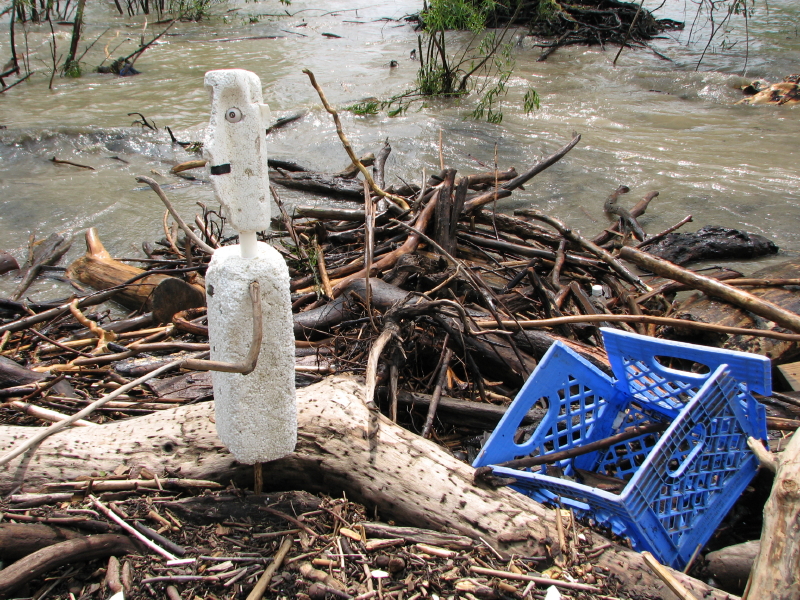
Small waves were still slapping the shoreline and fresh junk was arriving by the second.  In a few days, the Ohio River will go down some more and another layer will have been deposited.  Mr. Easter Island Man was collecting beat-up fishing lures and bobbers.  He spotted a blue plastic crate in the surf zone, but when he checked it out, it was already broken. 

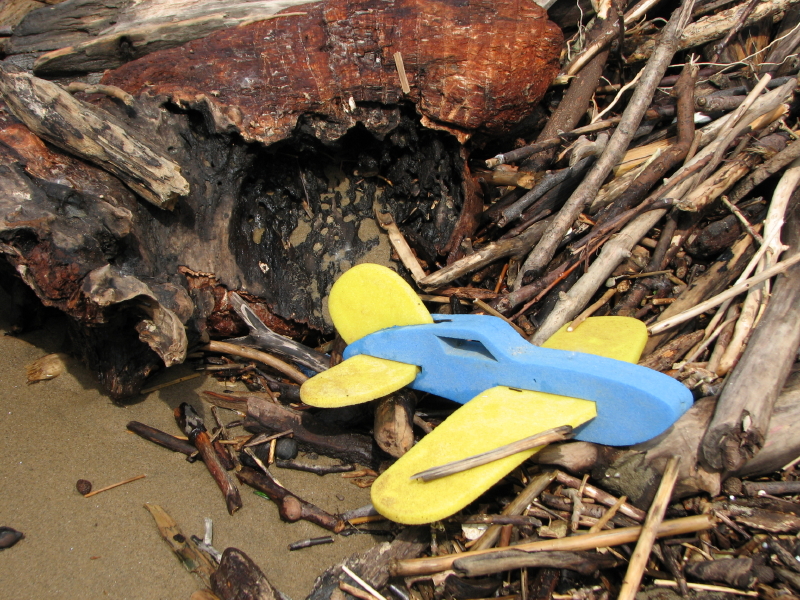
Not to far ahead, something else colorful had caught his eye.  It was a yellow and blue foam glider that rode in on the waves and was now drying out with the driftwood.  Something like this is too cool to just leave lying around and Mr. Easter Island Man collected it and made it his own.

Examining the soft airplane, it appeared to be undamaged.  Lifting the toy he cocked his arm and said before he threw it…now let’s see what this baby can do!  More from the Falls later this week including a rare sighting of the enigmatic riverine predator…the Feralocitor.

Read Full Post »

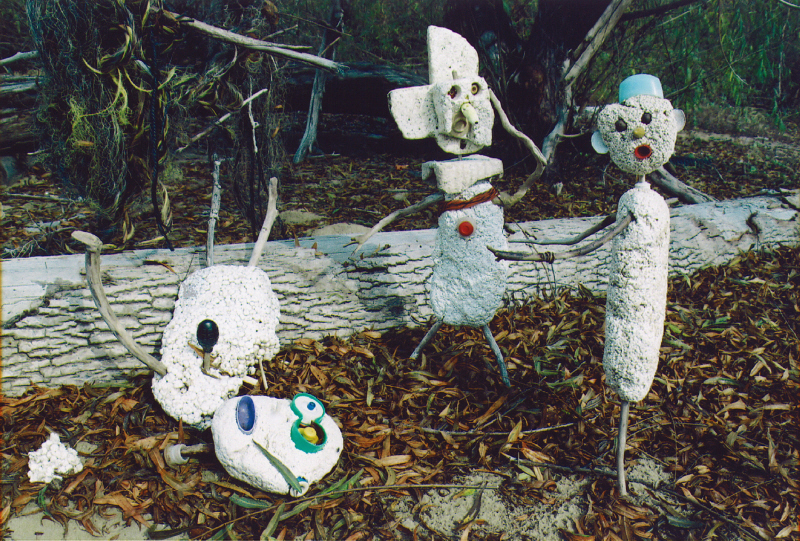
Just four quick photographs this time plucked from various adventures years ago.  These images are all featured in the exhibit I have at the Oldham County History Center and augment my display of sculptures and the fake food I’ve collected from the banks of the Ohio River.  When I make a figure from Styrofoam and other found materials…I’m actually more interested in the resulting photograph than I am the sculptural model itself.  It’s the context of where this stuff is made that I find important.  This piece was entitled “Moon Maid at Sun Set” and was as large as a person and eventually washed away by the river.

In most cases, the photographs are the only document I have that these things existed in the first place.  The sculptures have a way of eventually disappearing.  The image above records three different figures made at different times that have come together for just this shot.  The figure that has fallen over…I can recall the title I had for that one, it was…”My Hand Grenade of a Heart” and did feature a plastic hand grenade I found and embedded in this figure’s chest.  I guess it eventually exploded.

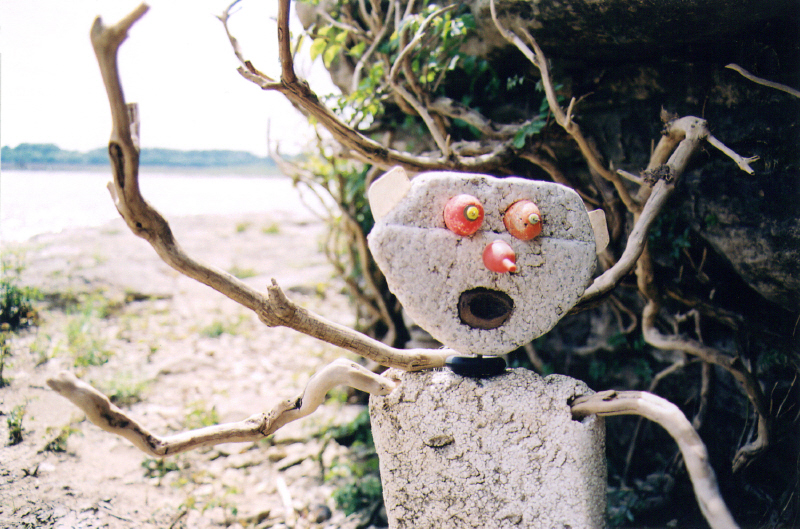
Ah…”Orange-Eyes” made during a blistering hot summer day on the exposed fossil beds at the Falls of the Ohio.  Funny how you remember certain things!  The eyes are foam fishing bobbers and the mouth was made from the outer hull of a walnut.  I recall liking how the root from the stump this figure is posed against created the sensation of an extra upturned arm.  All these images in this post were made during my analog days.  There’s nothing tricky about the photography.  Just snapshot photos taken to the drug store and printed on a 4″ x 6″  inch format.  The photos were an extension of the idea that this was something anybody could do that didn’t require great technical knowledge or mastery.  In the current exhibition, these drug store prints were scanned by a friend of mine, digitized and blown up to approximately 30″ x 40″ inches.  My friend was in the business of creating courtroom displays that were used as supporting evidence.  Seemed appropriate to what I was doing and I had a small grant through the Kentucky Arts Council to do this.

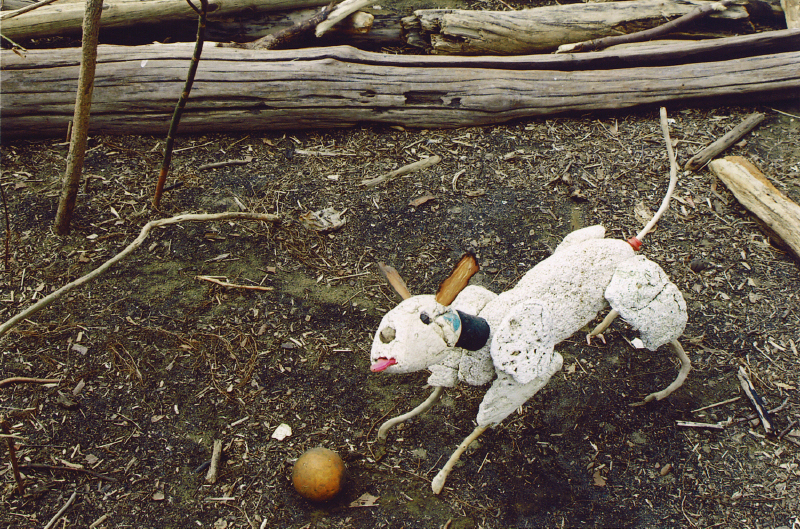
The “Dog Playing with a Ball” was originally accompanied by an old woman figure I made.  She was wearing a fancy hat made from a Styrofoam bait bucket I found.  Both the woman and her dog were playing near the banks of the river.  Eventually, my 35mm SLR camera gave up the ghost and I was thrust into the digital age.  The bulk of the Falls projects I have made are still from the analog world and in their own way document a transition that occurred with technology.  Of late, I have also become intrigued by the correspondence I think exists between a bead of polystyrene and a pixel.  The internet has become a substitute river where images become tumbled and changed as they bump along electronically from place to place.  You just never know where this stuff might surface on the web and what might happen to it in the interim.
Read Full Post »

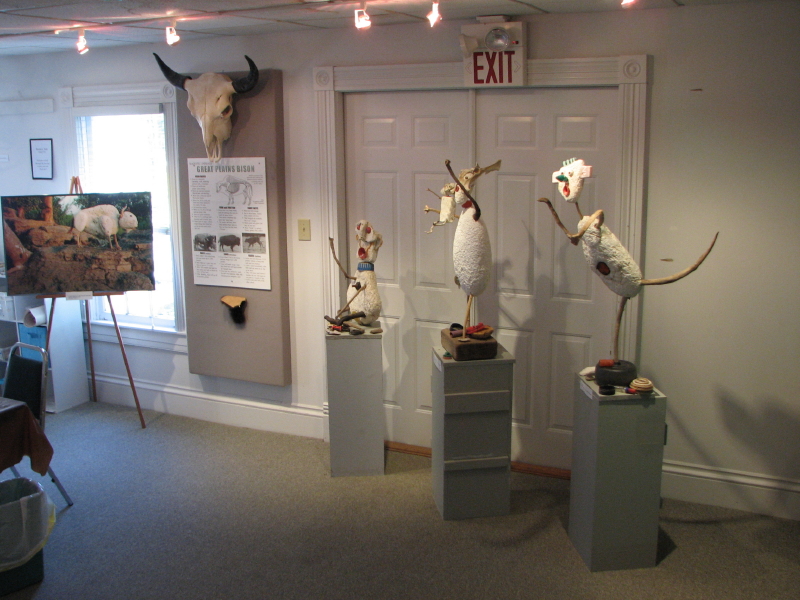
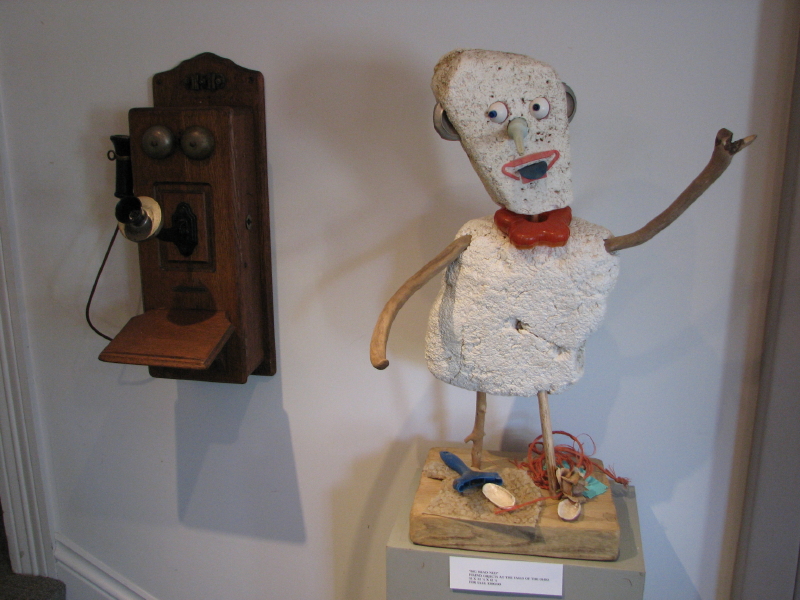
On May 6, the Oldham County History Center had a members’ opening for their Oldham County:  Life at the River’s Edge exhibit…which was actually several exhibits in one.  My sculptures played a part in the overall display and were integrated among the other exhibits.  I really liked the idea that my work (which included objects and images) would find a home among other examples of our material heritage.  Here are a few images from the event.  Once I got home and looked at the pictures, I realized I didn’t have any with people in them!  Yes, there were indeed people present and I enjoyed meeting and talking to them all!  Thanks for the beer and bar-be-que too!
Nancy Stearns Theiss, the center’s director, lives on by the Ohio River and so she recognizes the materials I use and where they come from.  She gathered up her own debris and put it in context with my work.  Nancy has a strong background in environmental education and recognizes what my project is attempting to do in a way that I must say gets overlooked in the usual art gallery context.

This was also the first time I have been able to show my Falls images, sculptures, and collected objects in the same exhibit.  I have always imagined that this would create the most interesting display.  The photo above is an example of this and includes my “Fake Food Collection” that I have gathered on the riverbank over the years.

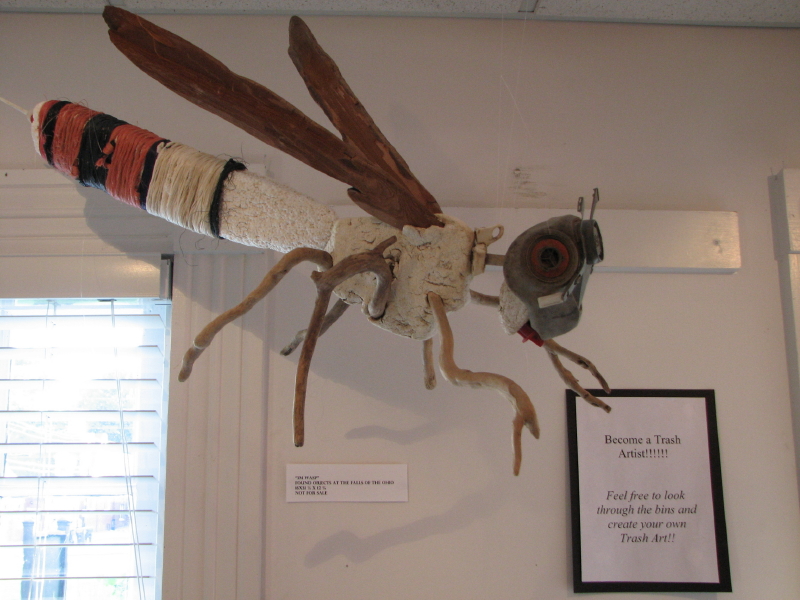
Become a Trash Artist!  I guess there’s no denying that I’m one.  As an activity, materials were on hand if anyone felt the urge to make something that was encouraged.  My “3M Wasp” is hanging from the ceiling with fishing line.  This piece gets its name from the protective mask I found that looks to me just like an insect’s face.  Later during the summer, I will participate in a workshop making art from found materials.
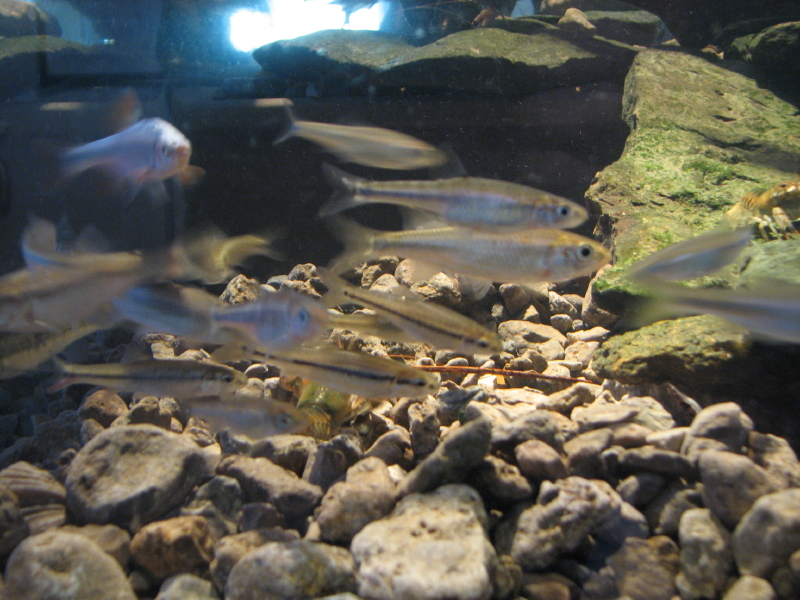
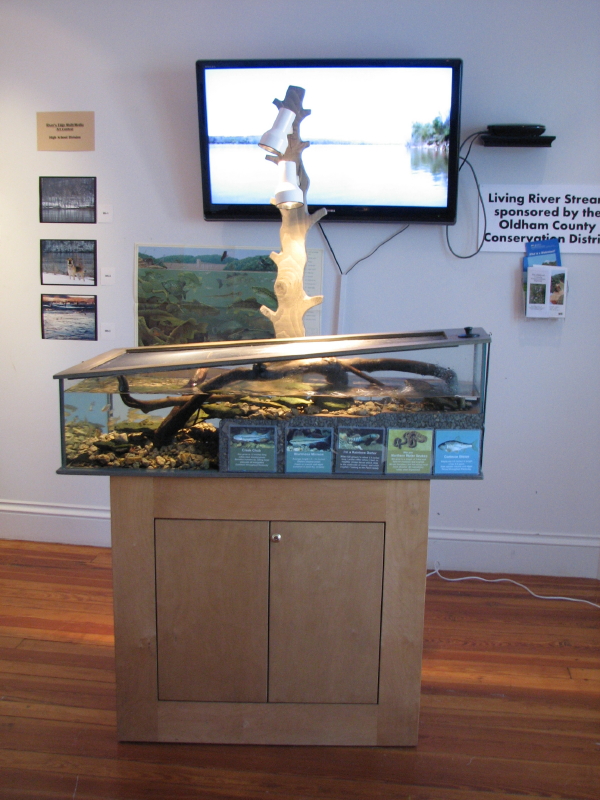
Also on display was a Living Stream Touch Table, essentially an aquarium with native creatures that one might encounter in the local fresh water environment.  Among the animals in the tank include several species of native fishes, crayfish, frogs, and a small water snake.

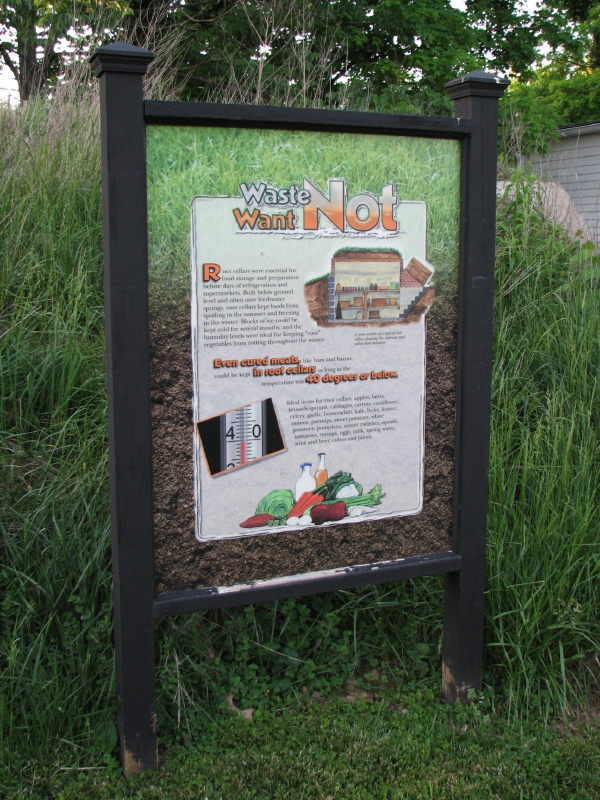
The exhibit will be up until August and I look forward to returning and participating with the center again.  This final image is located on the center’s grounds and right next to an example of a root cellar.

Read Full Post »

The Kentucky Derby happened 24 hours a go, but the bigger regional story was all the rain we received.  I’ve said this before in this blog, the gentle spring rains of yesteryear seem like a thing from the past.  Now every storm is charged with energy and abundant water.  In the Louisville area totals for the last two days are 5 to 7 inches ( 12 to 17.75 cms).  In Nashville, TN there is wide spread flooding.  There was one period of a few hours on Saturday that things were just misty.  That was as good as our luck ran this weekend.  I took that opportunity to get my river fix and it was good for my peace of mind!

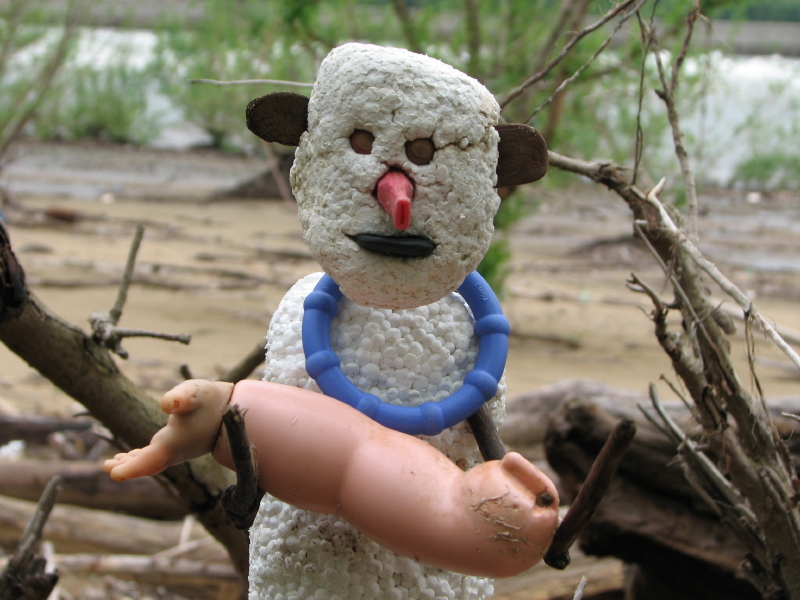
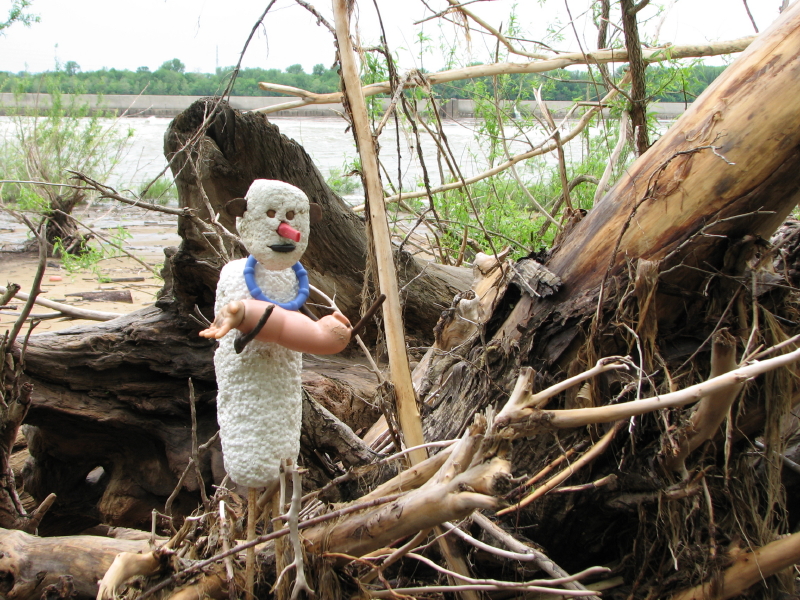
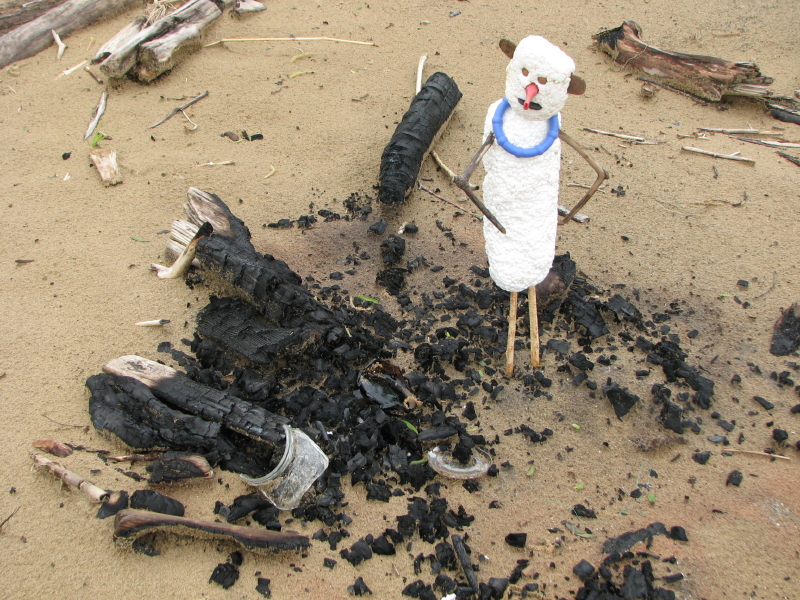
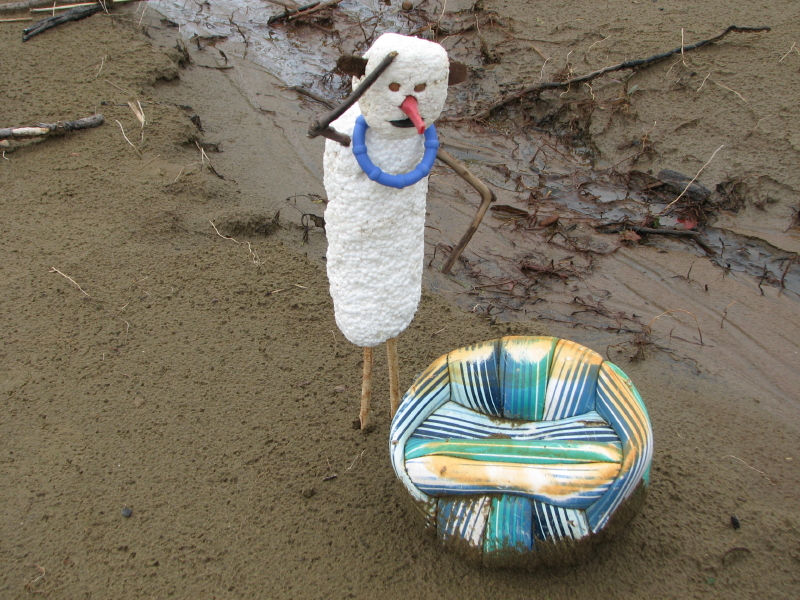
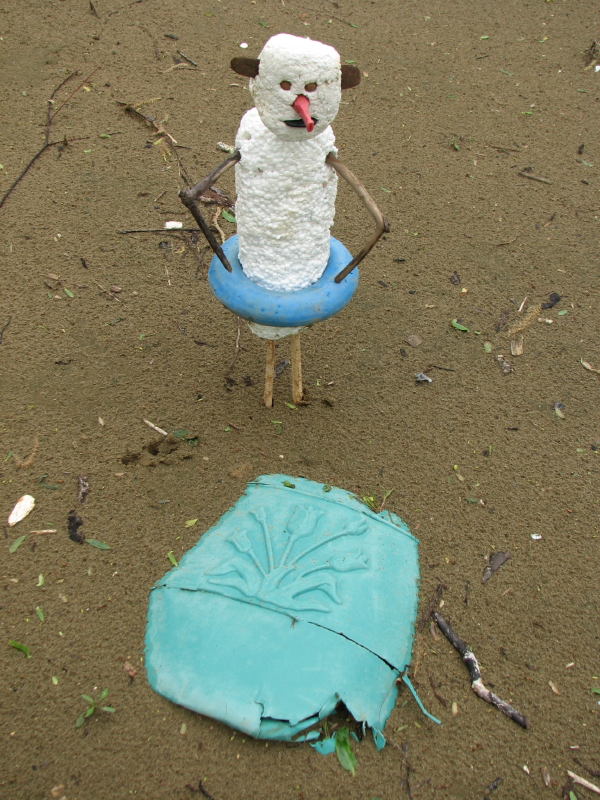
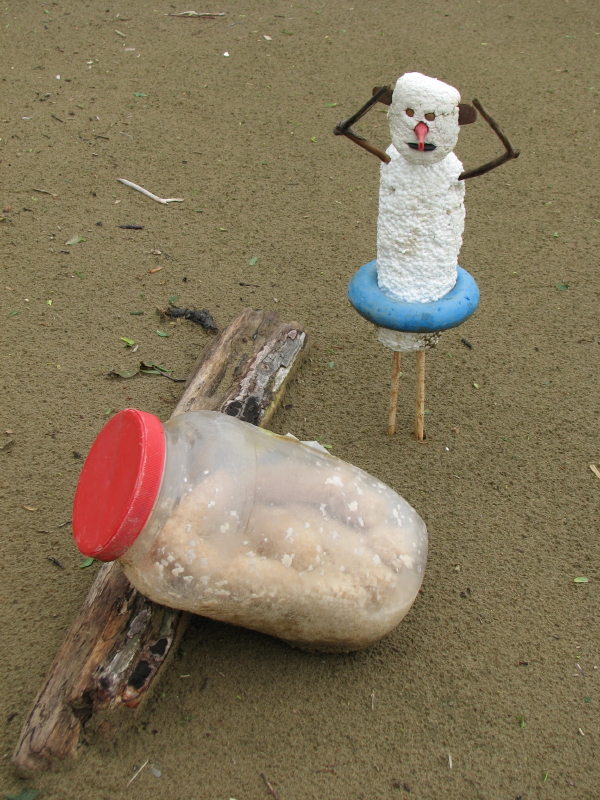
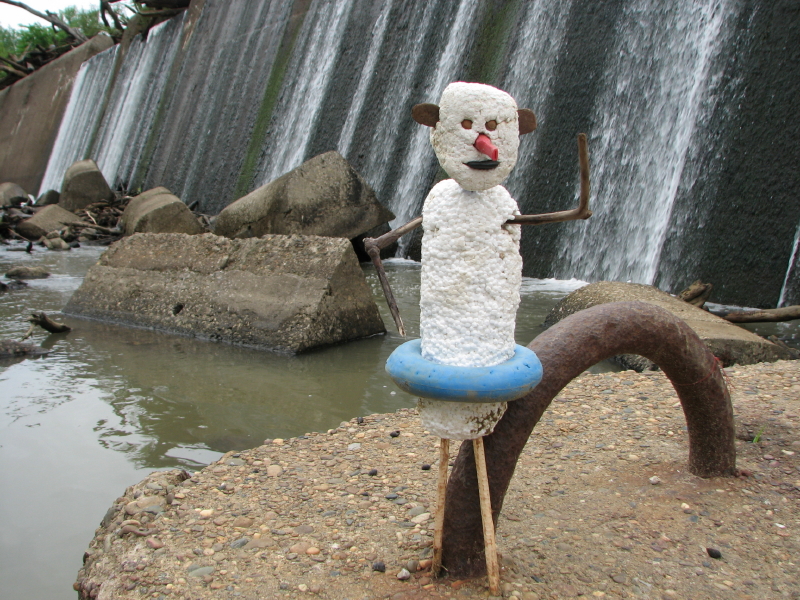
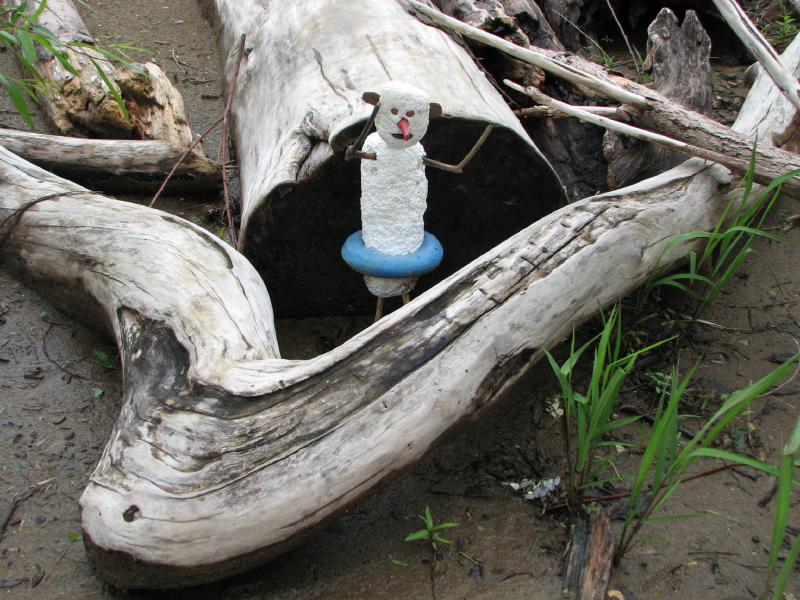
Since I fully expected the rain to just pound me at any moment, I kept my eyes open as I moved along the river.  I had the place nearly to myself which helped make the Falls seem larger.  The willow trees were in bloom and there were even a few nice birds around.  I quickly made a figure from available Styrofoam and sticks and I will now turn the narrative over to him.

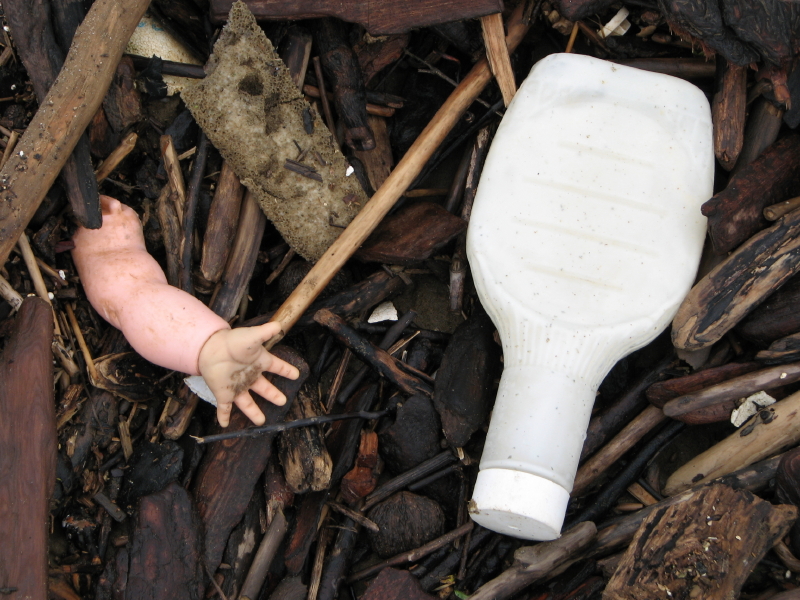
Yeah…we moved as fast as my beaver-chewed willow legs would carry me over the wet and packed sand.  We checked out the various debris fields near the river and took pictures of the things that caught our attention.  We came across a lost arm lying next to a plastic bottle and I wondered who would lose an arm and not miss it?  I picked it up and examined it.

It’s a perfectly good arm, but I don’t want to carry it around and so I left it where it was found.  If I find out later that I have a need for it…I think I can remember where this spot is provided the river doesn’t rise and rearrange things again.  Certainly looks a lot greener now than the last time I dropped by.

Of late, I’ve taken an interest in the remains of old fires and camp sites.  It’s a test of observation and I like to learn what I can from the charcoal and ashes, but this one has been hit hard by the rain and we learn little.

A colorful, but ruined soccer ball lay before us. The leading edge of the river usually has a few balls of one kind or another in the mix.  We stopped for a few snapshots than went our merry way.  There were more things we could see laying on the sand a head of us that looked worth checking out.

I traded the blue ring around my neck for a larger one I could wear around my waist.  It could be used as a flotation device if necessary!  Walking the shoreline we came across this vignette…a still life of tulips.  It’s a partially buried plastic watering can and the river has revealed this picture for us!

Oh man!  We found that awful jar of baloney again.  Even the river doesn’t want this thing and keeps casting it back upon the shore.  The thought crosses my mind that this might make good catfish bait if I could stomach running a hook through this mystery meat.  I wonder if that giant bug-thing is around?

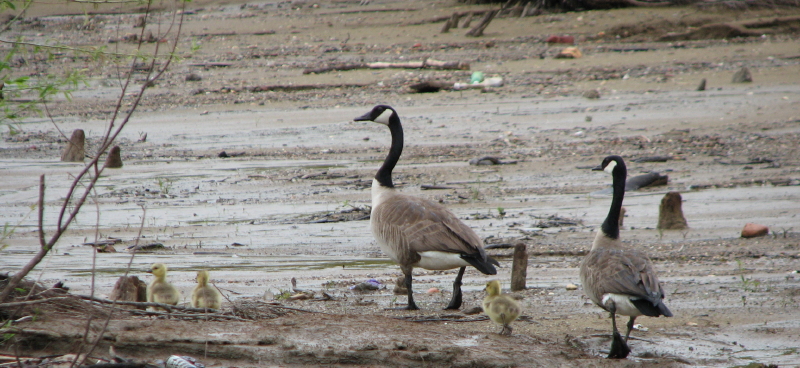
Like I mentioned earlier…we saw a few birds too!  Some of our warmer weather birds have returned.  I thought we had some better pictures, but I guess there was just too much water in the air.  We did come across a pair of Canada Geese with three goslings doing the same thing we were…namely investigating the riverbank.  Their young are very cute!

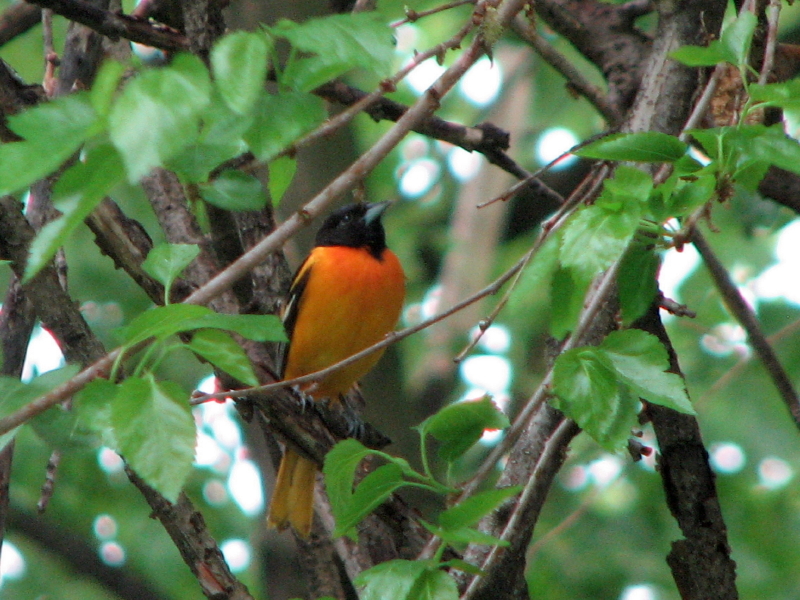
And, we saw three of our favorite bird species!  The Yellow Warblers have returned and we tried like crazy to get a decent shot of this bird singing away, but the images were kind of gray.  Also saw a Spotted Sandpiper (but missing its spots) heading north.  We will see those spots upon its return migration from near the Arctic circle.  Indigo Buntings seem plentiful and we were fortunate to watch Baltimore Orioles chasing one another through the trees.  Here’s a picture of a male oriole who was watching a female among the branches and not intent on us. 

With hope, the Scarlet Tanagers and Rose-breasted Grosbeaks will be passing through soon.  I decided to hang out longer while that artist-guy went home.  I’ll be right here, unless someone else finds me first.

Well, that’s how our Derby Day went.  The rain stayed away long enough for the race to be run and by all reports the festival was an overall success.  I’m glad people had a good time, but I’m getting a little event weary and feeling the need to be more contemplative…and dry!

Read Full Post »

Dodging snakes and collecting washed up cigarette lighters with my friend Jeff was not the only action we had on this excursion to the Falls of the Ohio.  By now, I should not be surprised by what turns up at this remarkable location…because it happens with such regularity.  For me, the thrill of discovery has become addictive and interwoven into my creative process.  Recalling events, I believe it was my friend Jeff who stumbled upon this revolting artifact and so I will begin this story here.

It’s a very large jar of bologna.  The contents have more than settled, in fact they have decayed to the point of becoming cream of bologna.  I know, this is completely disgusting, but bear with me for the real point of the story follows this discovery.  It was a short distance from this jar that we encountered another remarkable member of the Genus Polystyrenus.

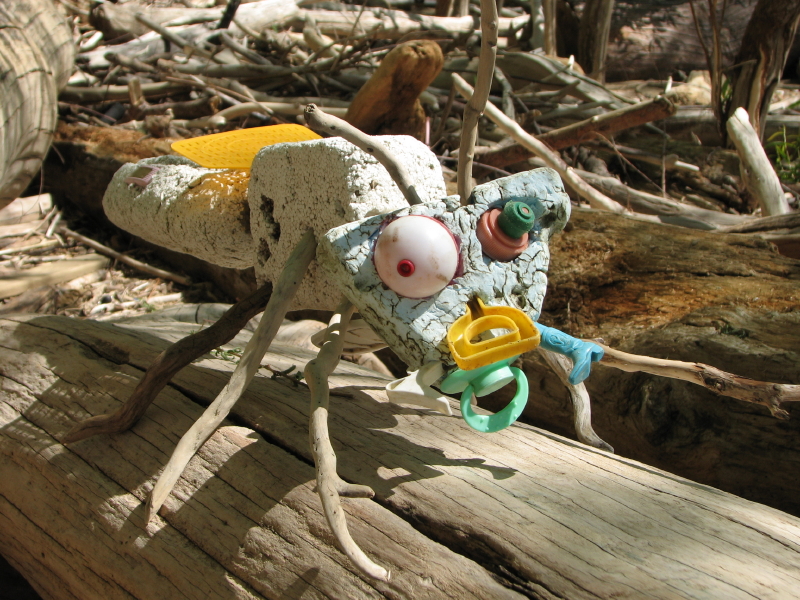
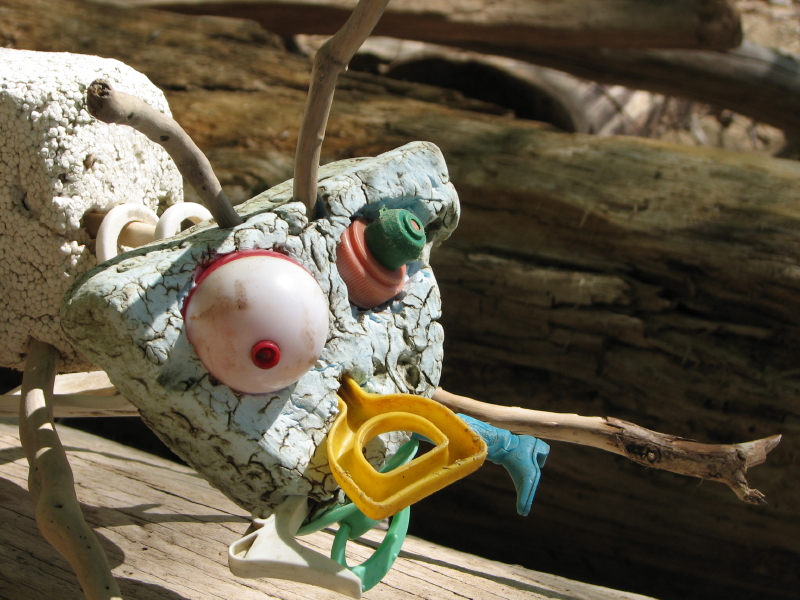
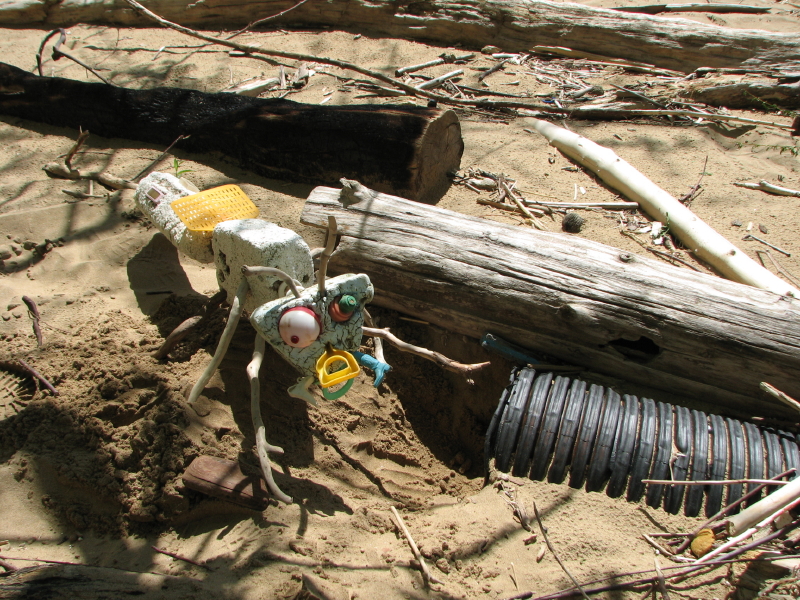
Hidden just out of sight among the debris line was this very large and aggressive looking insect.  I estimate that this impressive creature was about two feet long.  It would be an under estimation to say that both Jeff and I were taken aback (how we both avoided voiding our bladders upon our persons, I will never know).  After what seemed a very long length of time, the amateur naturalist in me took over and I began taking photographs and making observations.  Here’s a detail of its head and impressive jaws.  It’s small antennae were wiggling back and forth.

Looking at the mandibles, I’m guessing that this creature had adapted to eating meat or carrion, both of which are found at the Falls.  It emitted a sickly sweet odor.  I think our large bug friend had discovered the bologna jar before we did and we may have interrupted its meal?  Because this ant-wasp, (seems to have characteristics of both) did not defend its bologna bode well for Jeff and I.  In fact, we did learn that despite its fearsome appearance our bug friend was retiring and unaggressive.  I decided to tag along and learn what I could about this amazing one of a kind animal.

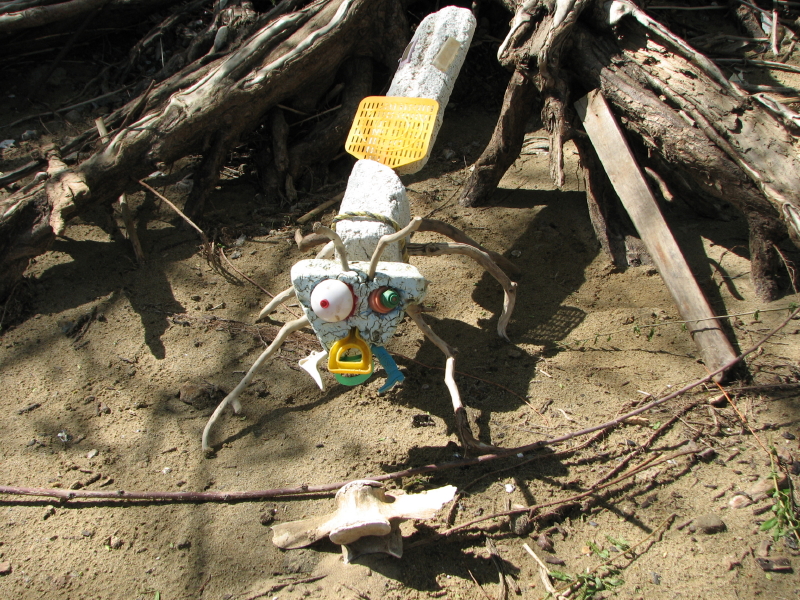
From a short distance away, I was able to observe some behaviors that I recorded with my camera.  I believe that my assumption about it’s being a scavenger is on target.  I watched our insect “friend” actively investigating an old bone it had come across.  The bone was rolled around in its jaws as though our bug was tasting it?  Finding no meat, it simply dropped the bone.  I also noted that this creature has vestigial wings that have atrophied to a yellow flap found attached to the rear of its thorax and ironically has the appearance of a fly swatter.  Perhaps its large size makes flight an impossibility and the wings have shrunk to the present size?

Near the tree line, and keeping a respectful distance away, I observed Polystyrenus investigating a large plastic pipe mostly buried in the sand.  It did attempt to dig away the sand blocking the entrance to the pipe, but soon abandoned this effort.  I don’t want to assume too much, but I was intuiting at the time that it was looking for a burrow in which to hide, etc…  I did make a discreet effort to determine its gender, but was unsuccessful.  Here’s my last picture of it.

Amazingly, our bug was making short work from what was once a large barge cable that was originally as thick as a stout man’s forearm.  It’s jaws easily shredded the nylon strands.  Why it was doing this…will require more research.  Shortly after this image was taken, the sound of loud, boorish people coming down the riverbank spooked our insect and it took off with surprising speed over the sandy surface of the Falls.  Perhaps it understood that Jeff and I posed no threat, but it couldn’t be certain of the strangers?  During the short amount of time I was studying this creature I also noted that it didn’t have claws to speak of and didn’t possess a stinger.  Perhaps I will encounter this insect or other large insect species again because this is not the only time I have come across similar giants.  Take a look at these specimens for which the genus Polystyrenus was originally named. 

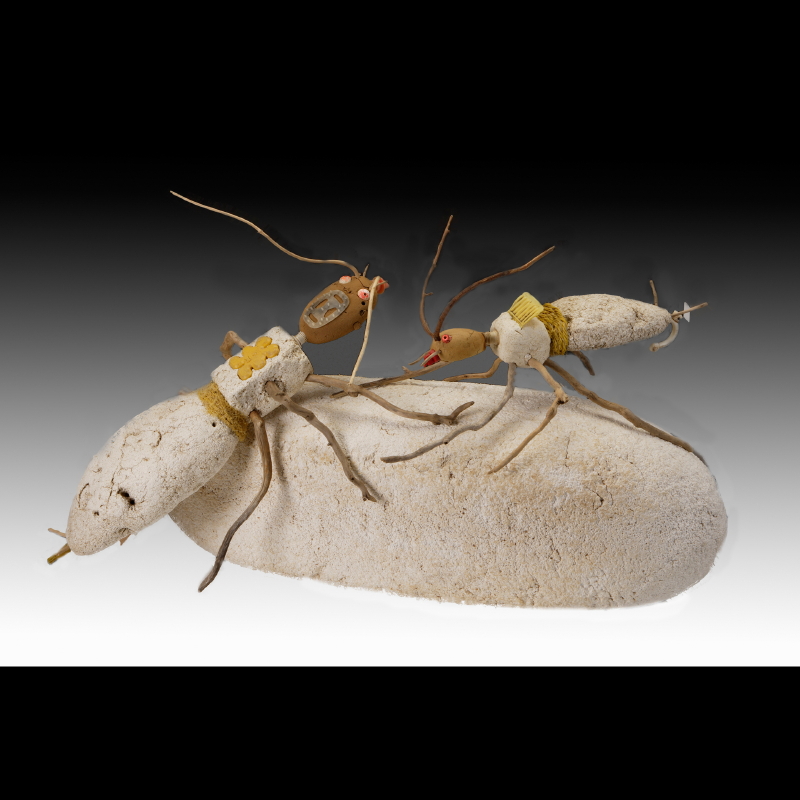
This has been classified as Polystyrenus ichthyphagia, based in part on this remarkable photograph of it feeding on a non-native, dead fish.  I made this discovery several years a go…in fact, it is with some regret that I collected (euphemism for killed) this specimen and one other that turned out to be a male and female.  This was done of course in the name of science.  The one feeding on the fish is the female.  Note the flute-like ovipositor and vestigial wings which made a raspy sound.  The mouth parts on P. icthyphagia have adapted for sucking.  Why these large insects have appeared at the Falls is inconclusive.  But I believe this is evolution at work.  The more we change our environment, the more we affect not only ourselves but all the other creatures that call this place home.  It can’t help to release tons of fireworks chemicals into the atmosphere and what we do with the water in general is a crime.  I will leave my soap box for the moment.  I suppose the reason that these giant insects have evaded previous detection is that they so strongly imitate garbage and detritus that they can elude most people’s notice.  Here’s a photograph of the dried and preserved male and female P. ichthyphagia with its egg case.  There is some sexual dimorphism with the male being considerably smaller than the female.  These specimens are in separate collections now.  The name Polystyrenus was chosen because the exoskeletons of these amazing insects so strongly resembles polystyrene, also generically known as Styrofoam.  The largest bug here is over three feet long.

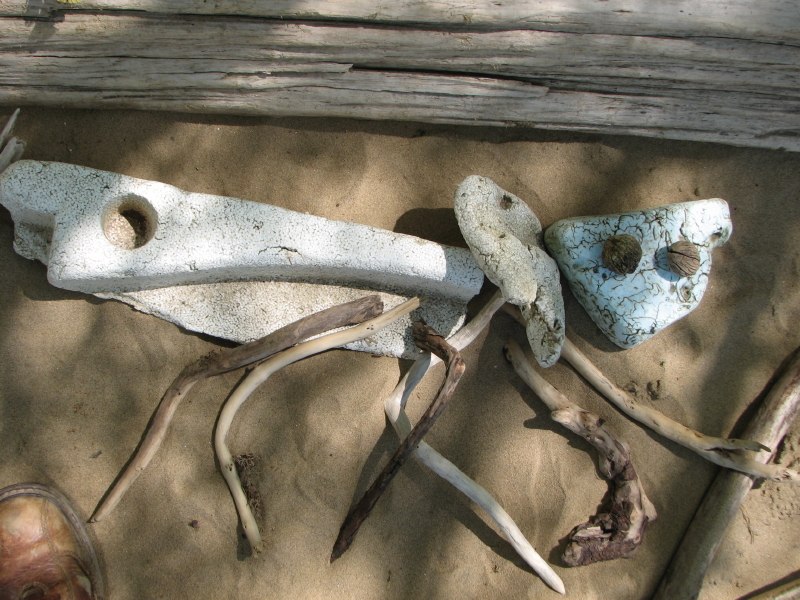
As a kid, I fell in love with one particular story that appeared in an old Natural Geographic entitled “Giant Insects of the Amazon”.  Its author, Paul Zahl must have had the best job in the world to be able to travel to exotic places to study rare and unusual animals.  I suppose, I’m doing something similar, but I’m not traveling far from home and making my own giants.  Here’s the last picture of how I began the latest Polystyrenus receiving inspiration from the materials I find on location.  Although I didn’t use all the stuff here…it provided a template of sorts. 

I dedicate this post to Julia Oldham, bug lover and current artist in residence at Bernheim Arboretum and Research Forest in nearby Clermont, Kentucky.

Read Full Post »

« Newer Posts - Older Posts »