Feeds:
Posts
Comments

Archive for the ‘creativity’ Category

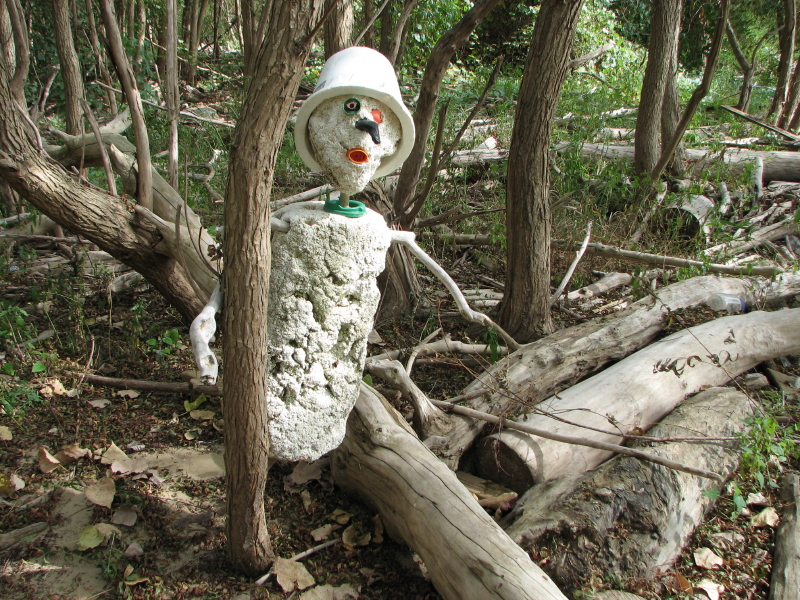
Oh woe is me!  It was starting out to be such a beautiful day.  There was a spicyness to the air that was intoxicating and the willows were alive with birds.  I saw several different warblers and managed a good photo or two!  As I approached what has been my outdoor studio spot for months,  I could tell something was different this time.  A feeling of foreboding began to fill me and my heart sank as I looked around my site.
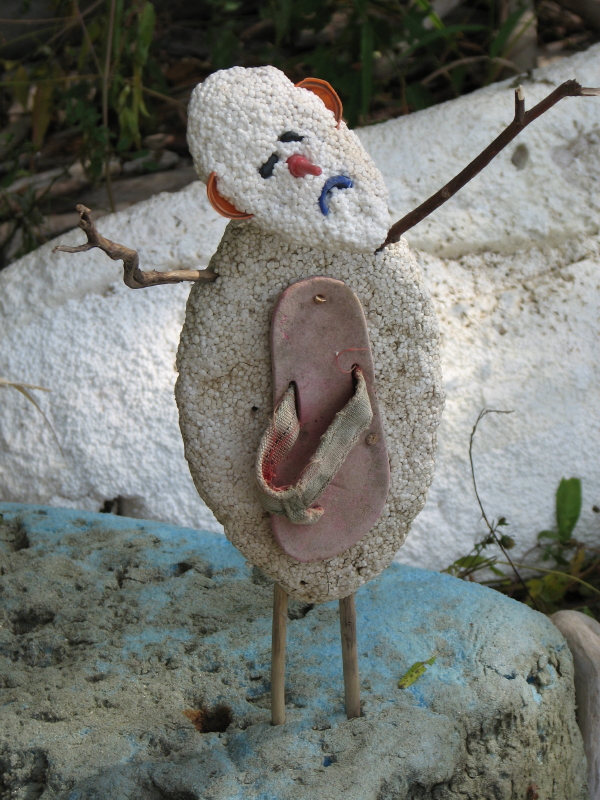
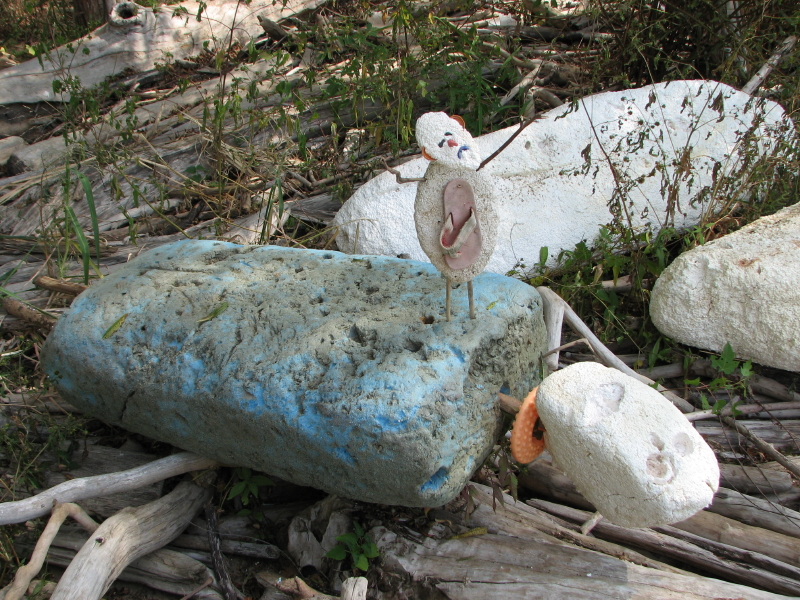
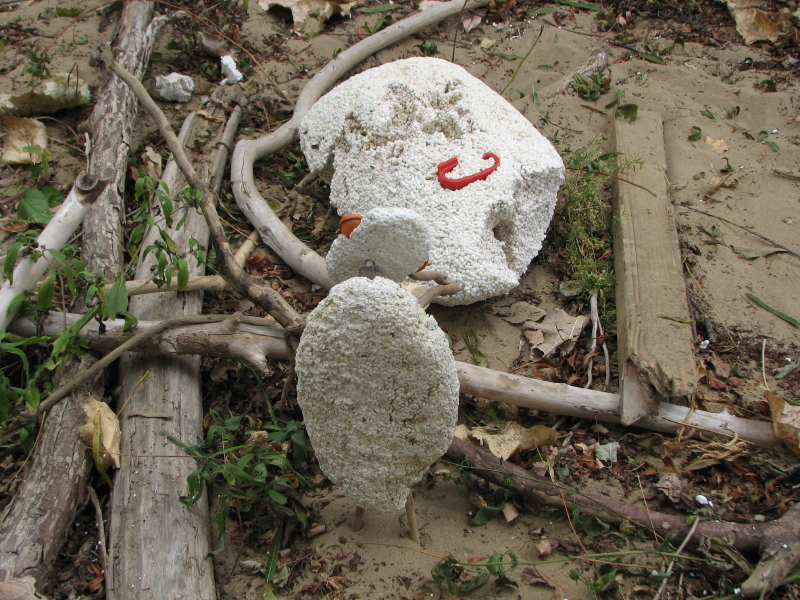
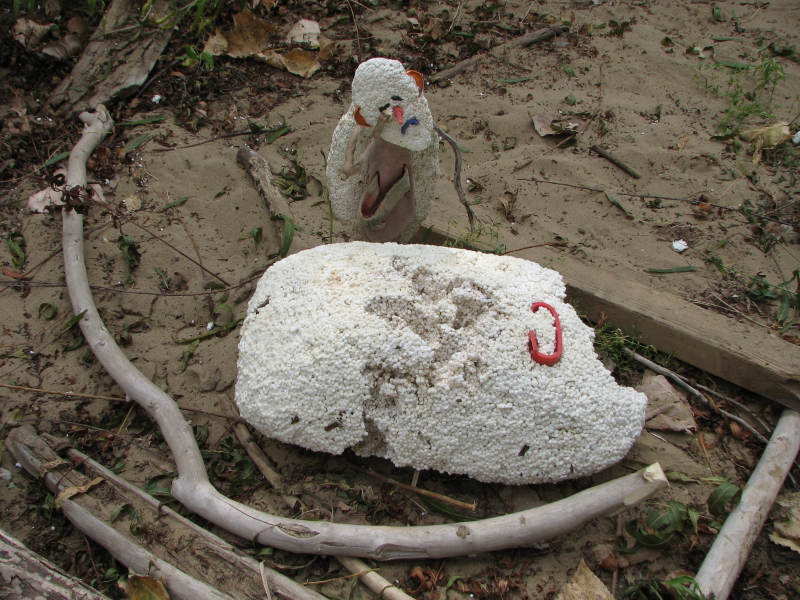
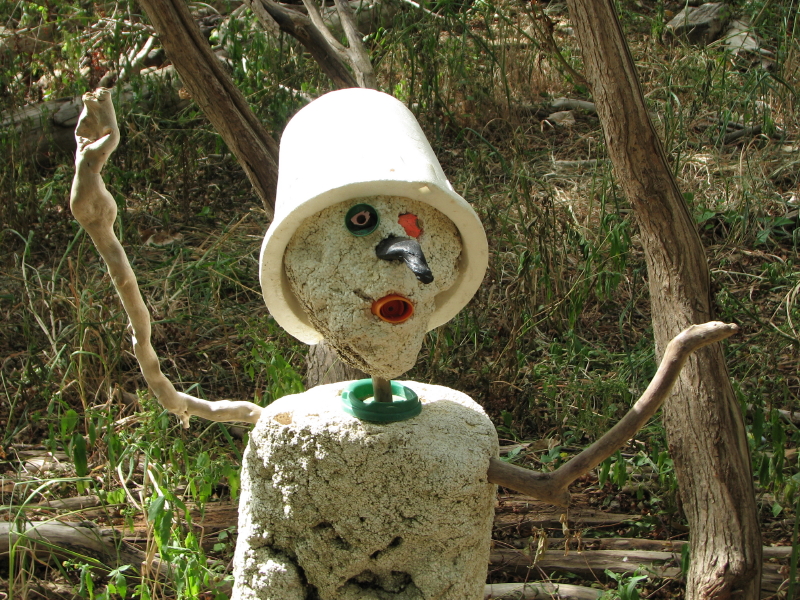
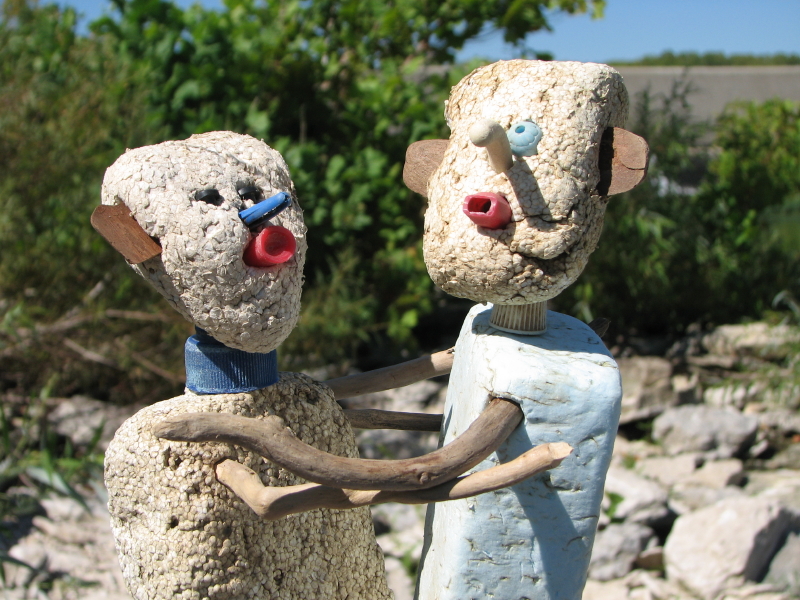
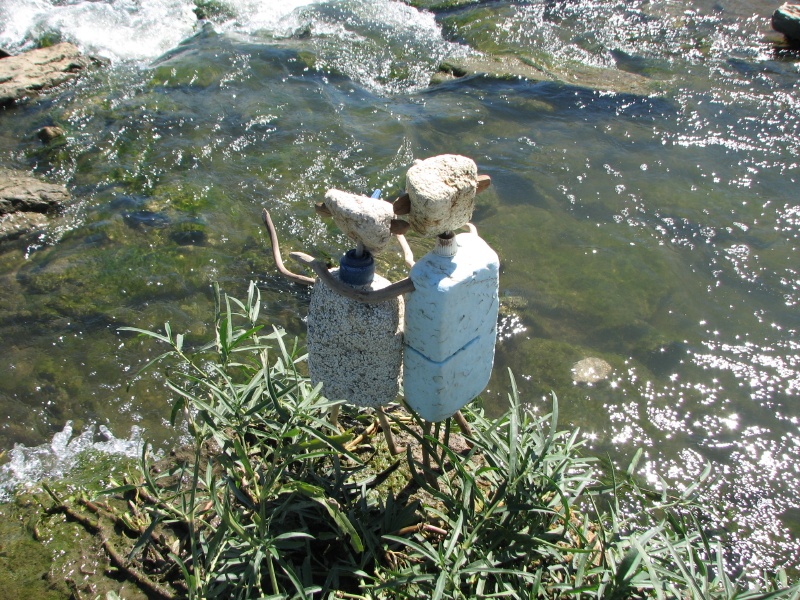
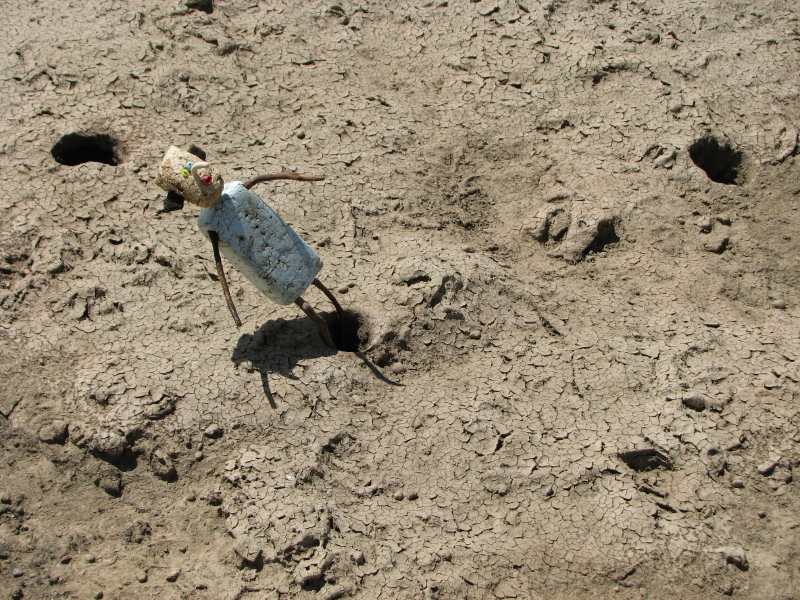
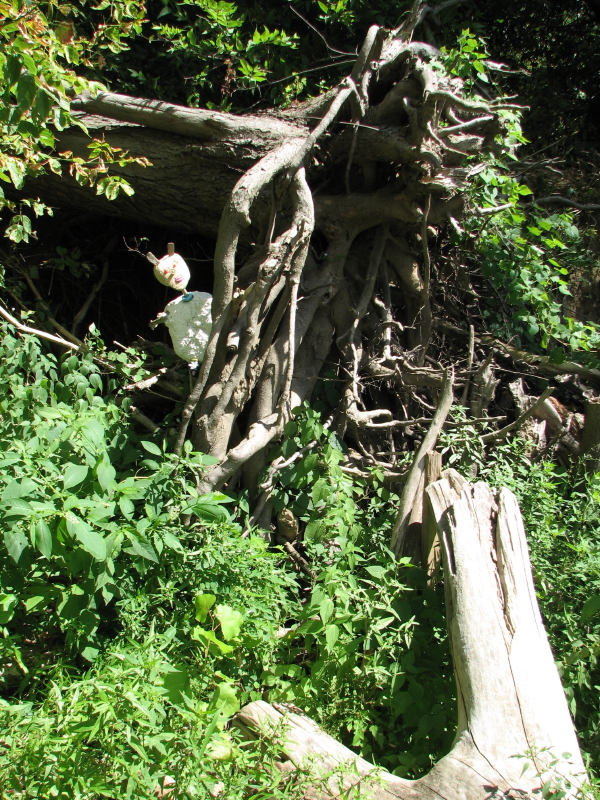
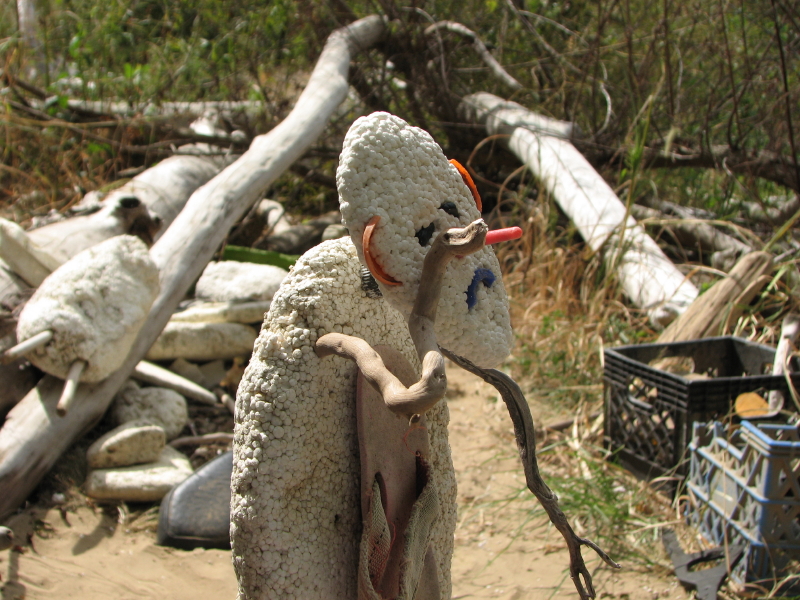
They were all down and destroyed!  Figures that had been my friends since early summer were lying around my studio smashed and savaged to bits!  The figure I made with Ariana that wore the lacrosse helmet we found together was staring up at me like some ancient Egyptian mummy.  The eye sockets were hollow and I could not find either the helmet or the eyes.  Even the small bird piece that had alighted on this figure’s shoulder was just random bits of broken polystyrene.
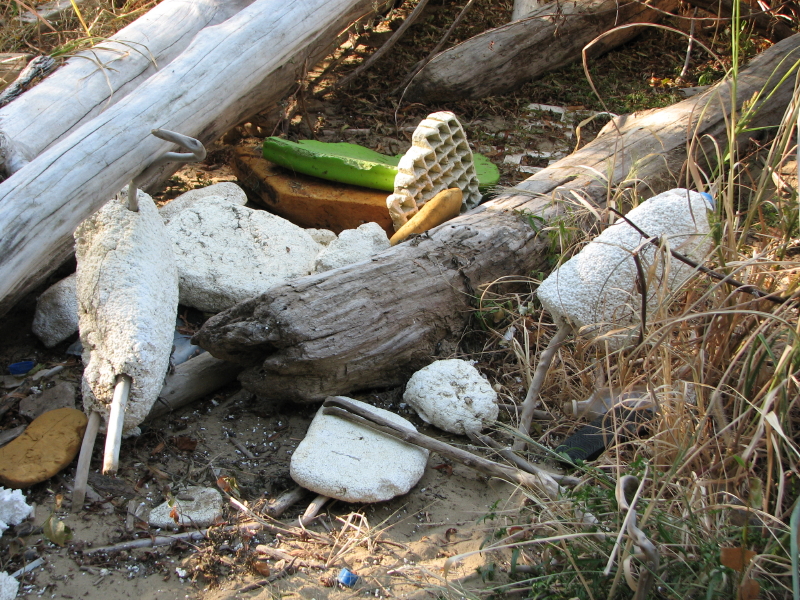
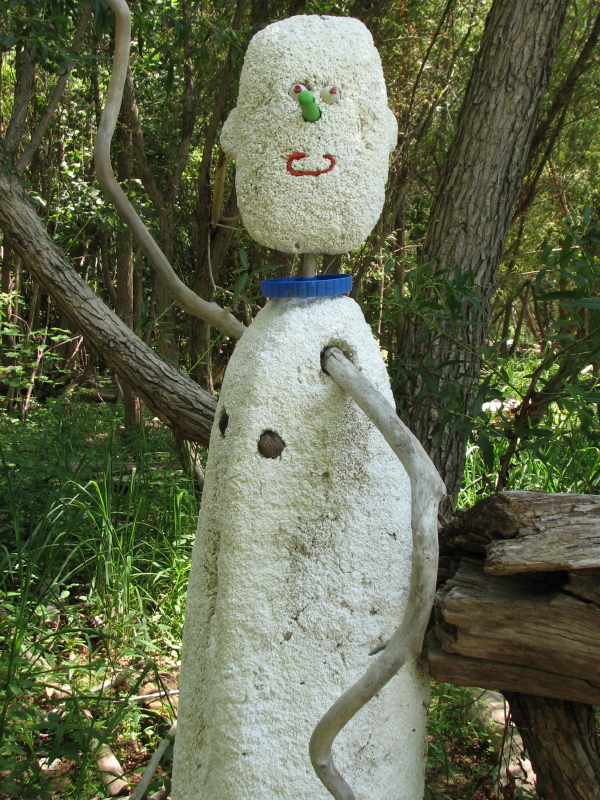
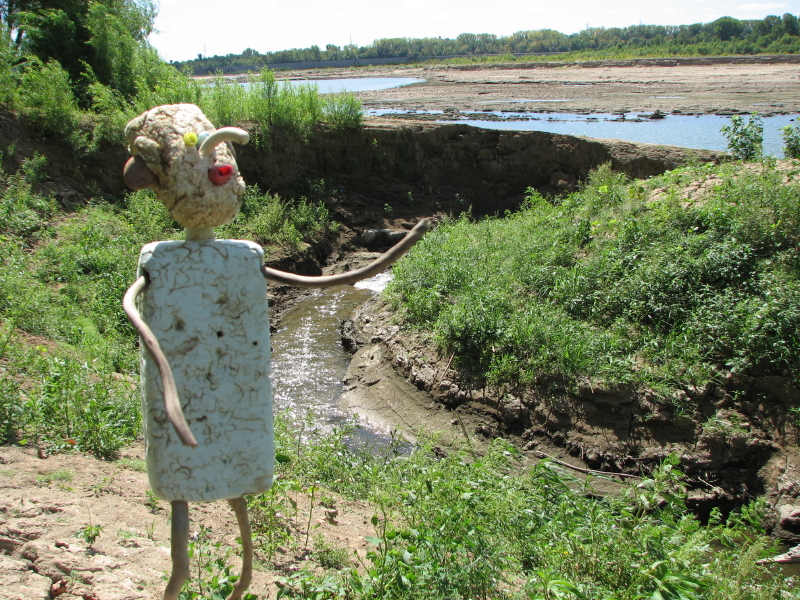
Both the Styro-Odysseus figure and the dancing figure that greeted him back from the war were goners now.  It seemed that a particular kind of viciousness was reserved for the heads as they appeared to take the brunt of the attacks.  The violence was not restricted to the “art” and I saw that even the old milk crates I stored found objects in were also now cracked and battered.  There were two other works out here and how did they fare?  What about that Figure with the Long Arm?  Look for yourself.
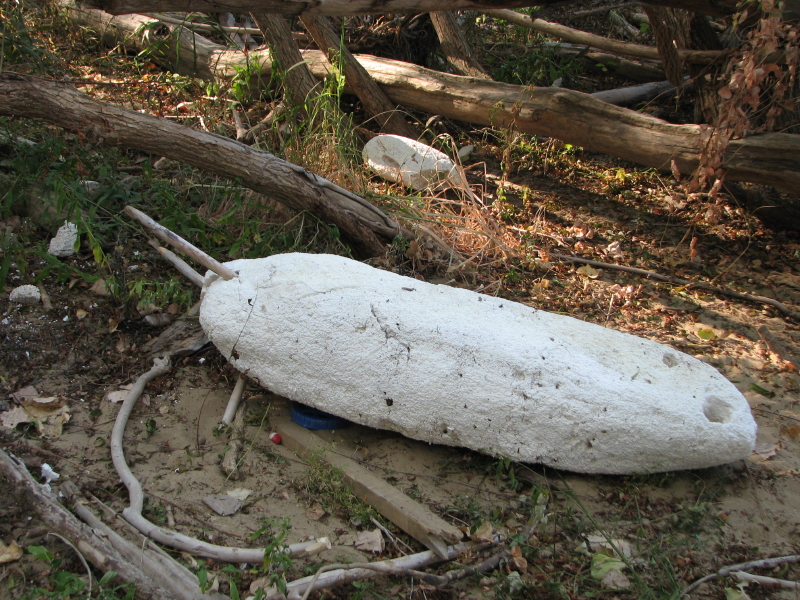
It’s not an encouraging sight.  All these sculptures had been up here for weeks and many people have had the opportunity to see them and interact with them in positive ways.  Among the other options included taking them home, moving them to another location at the Falls, adding to them in some other creative way, leaving them be until the river eventually found them, etc…  Unhappily, the option exercised was just to smash them with sticks.  One other figure was also out here and unfortunately, she lasted only long enough for one good post until she too was discovered by the vandals.

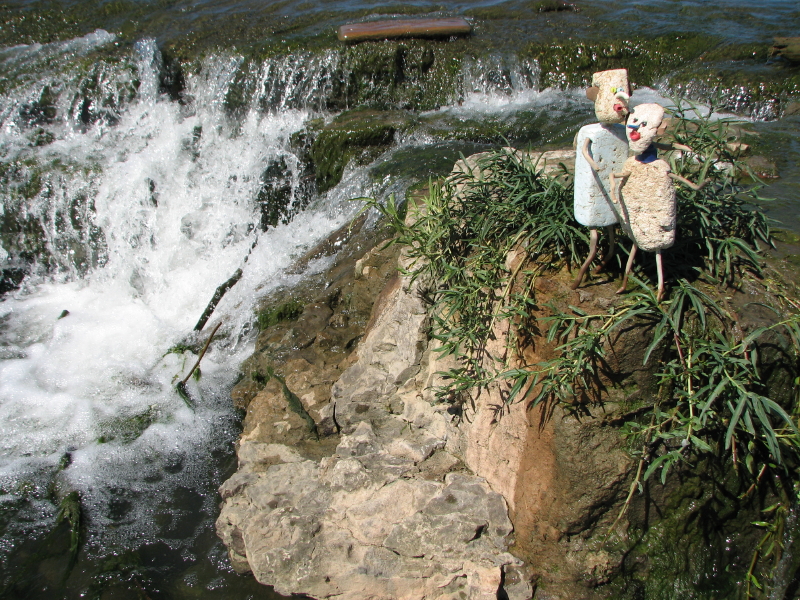
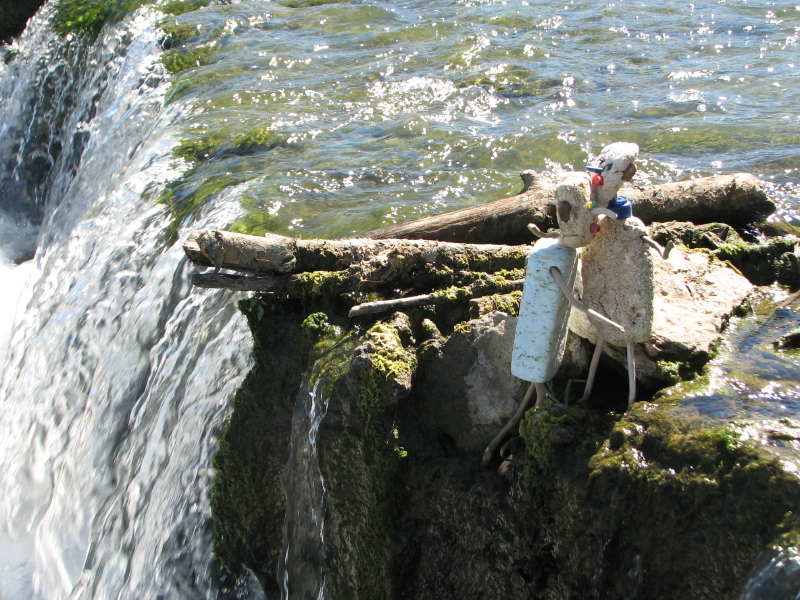
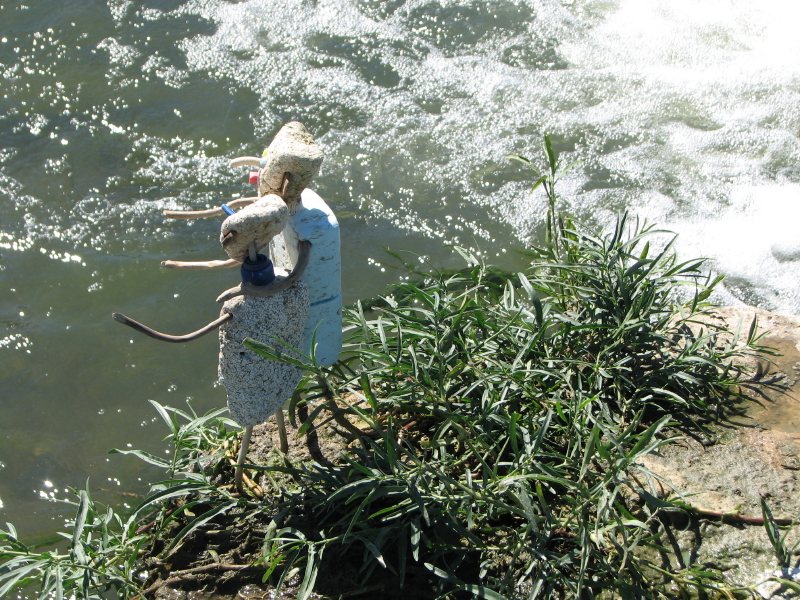
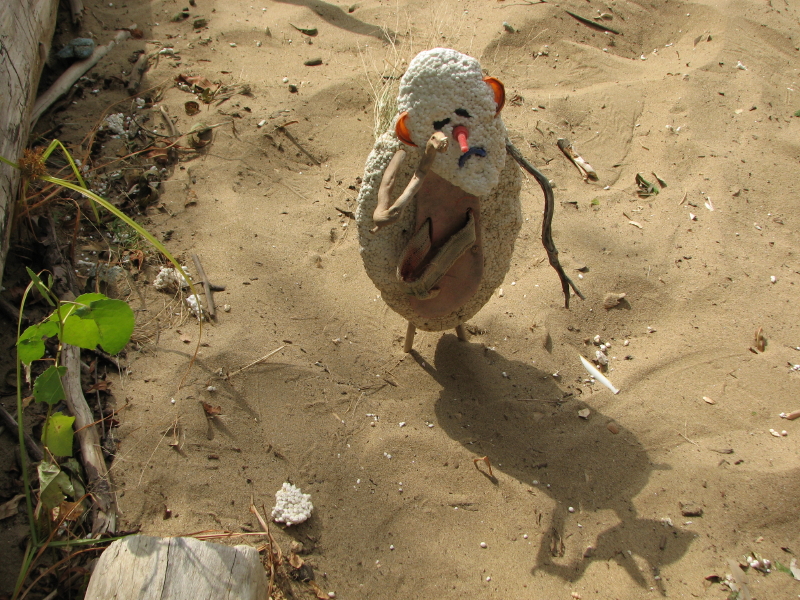
This is all that remains of Minnie now…fragments of broken Styrofoam.  Minnie was an interesting character and people seemed to relate to her.  More than likely all this carnage is the handiwork of adolescent boys.  I have seen this before…many times over the years.  What is it in the human spirit that finds some strange satisfaction at tearing down what has been built by others?  I don’t understand the pleasure derived from this kind of destruction?  I will admit to feeling down after I encountered all this trauma and I haven’t been back to this site since then.  I did gather up what I could and I intend to make new works if I can lift my spirits up enough to do it.  For now, all that remains are photographs of these sculptures when they existed intact and in the contexts that helped to define them.  Here are a few previously unpublished images.

I know I shouldn’t be too upset since all this stuff is just river-born trash anyway.  I think I keep saying this to myself in part because it’s true and to insulate my feelings for when these black days occur.  These materials had already been abandoned. I can’t take it all home with me and I should just enjoy the ephemeral nature of it all.  Still…
Read Full Post »

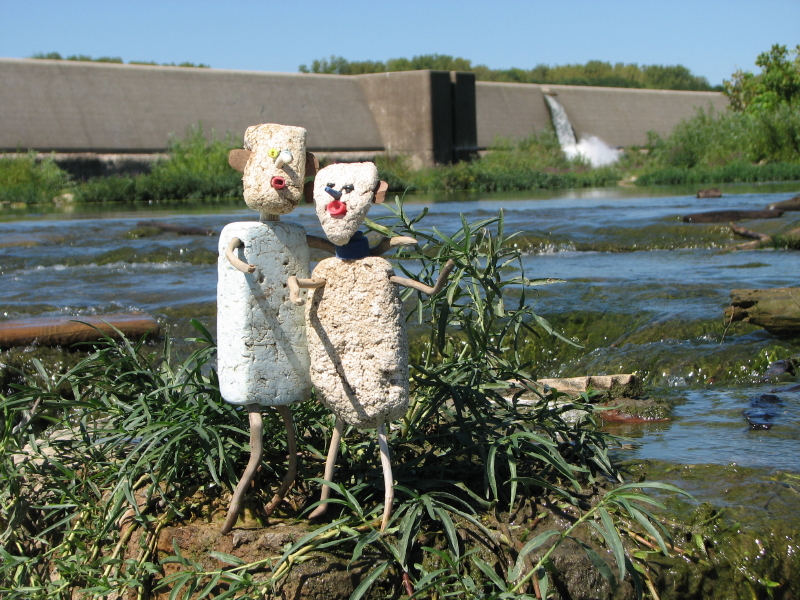
When last we visited our couple they were checking out the cascades out on the fossil beds at the Falls of the Ohio State Park.  In the presence of fresh running water they made their commitment to one another. 

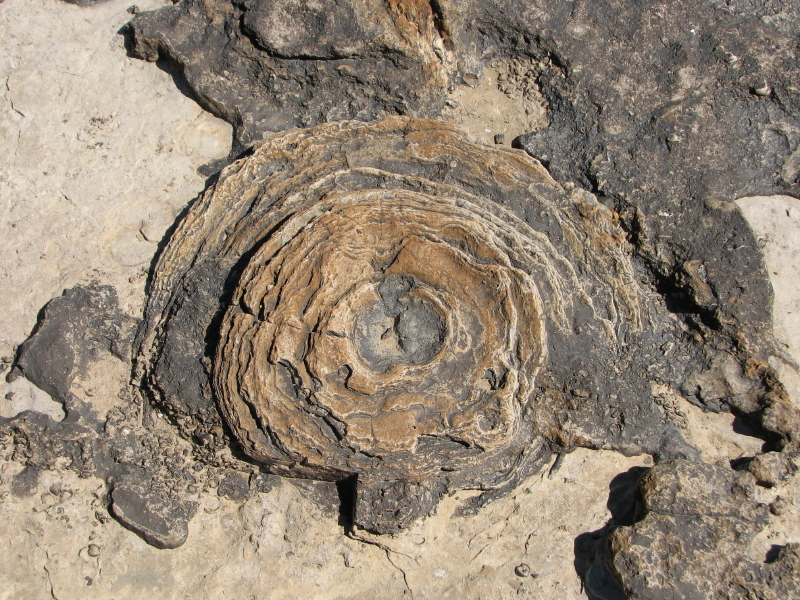
There was still more to see and so they set out over the fossil beds by Goose Island.  With the river level low, the island was looking more like a forested hill.  The couple walked nearer the island taking advantage of every little bit of shade they could find.  It was still late summer and the sun was very hot.  The limestone beneath their feet contained the remains of ancient marine creatures that lived millions of years a go.  Every once in a while, the couple stopped and took pictures of the odd formations preserved in the rocks.  Their friends back home would want to see this.

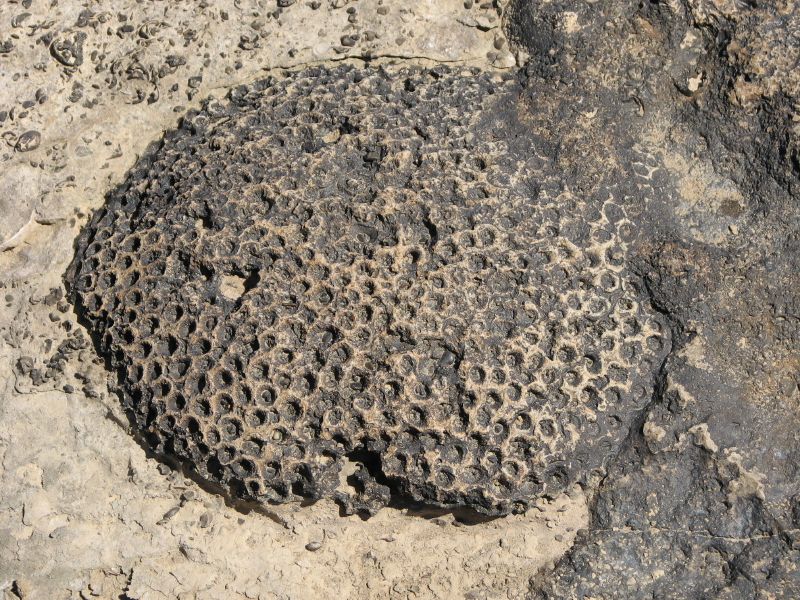
One of the brochures picked up back at the Interpretive Center said that more than 250 species of ancient corals have been identified in the stone out here.  Their mineral homes were perfect for fossilization while the small jelly polyps that were the actual animals disappeared completely.

The brochure continued that more that 600 fossilized marine organisms have been identified out here and that about 2/3rds of them were type specimens.  This means that although some of these fossils have been found in other places in the world…they were first described by science from specimens collected at the Falls of the Ohio.  This is indeed a unique window into the history of life!  The couple felt privileged as though they were visiting some important shrine.

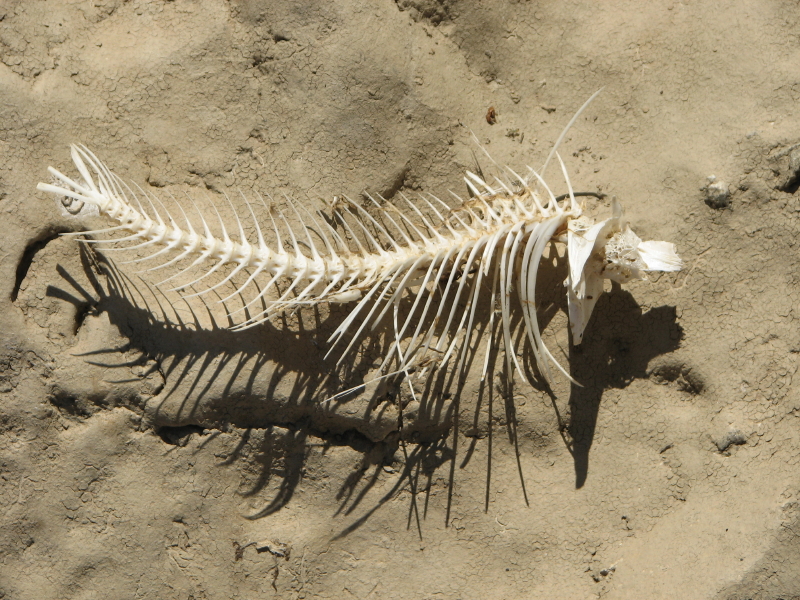
These coral fossils were from the Devonian Age and were more than 370 million years old!  This time is also known as the Age of Fishes because this is when their remains first entered the fossil record.  Although fish fossils are rarely found out here…there are many skeletons and bones of contemporary fish present because of fishermen and the retreating river.  Fish were the first animals to develop backbones and are still with us to this day.  Walking along the couple discovered something more familiar and recent not too far away from them.

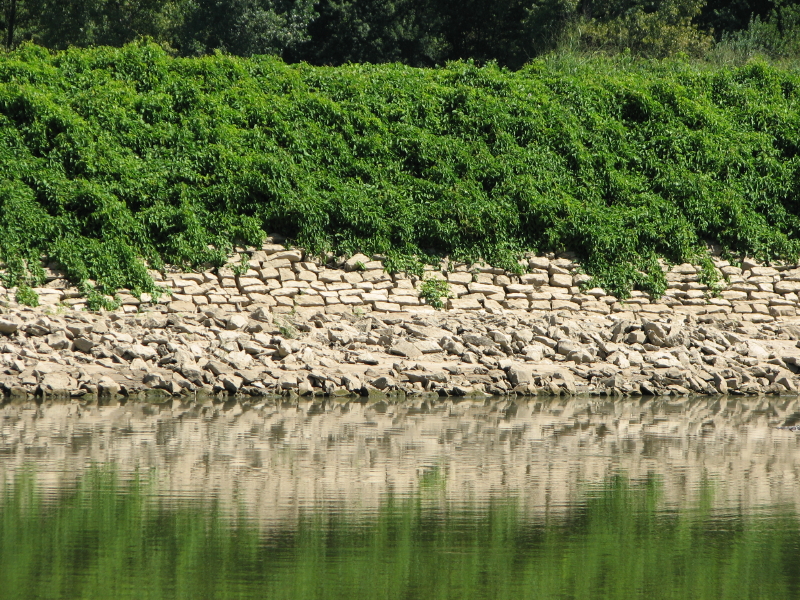
It looked to be the remains of a stone wall set out in the now shallow river.  On the park map, the couple could see that this was the remains of the Goose Island Dike.  This was a 19th century attempt to manage and shape the course of the river.  Although it wasn’t a fossil, the uniformity of the stones and the ivy growing atop was pleasing to their eyes.  After a long walk, the couple neared their ultimate destination and the terrain switched from being rocky to sandy.  Around the bend, the couple could see the Lower Tainter Gates and they knew they could walk no farther.

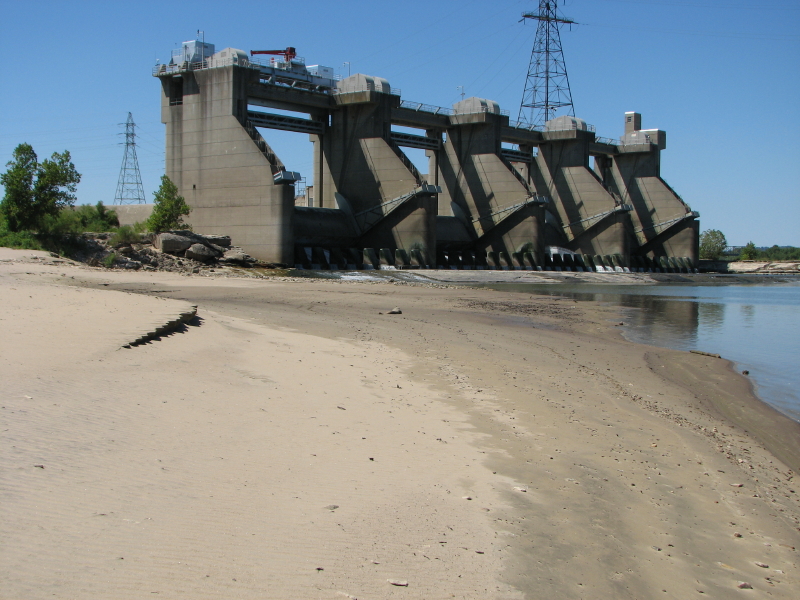
The Lower Tainter Gates are on the western end of the park over the fossil beds on the Kentucky side.  Like many such gates along our nation’s rivers, they were designed to regulate the flow of the water to help commerce and to relieve flooding.  Fishermen both human and not use this area because the water is deeper and better oxygenated.  This is a good place to see the Osprey and Cormorant.  Usually the roar of the water passing through the gate can get loud, but today the river was low and quiet.

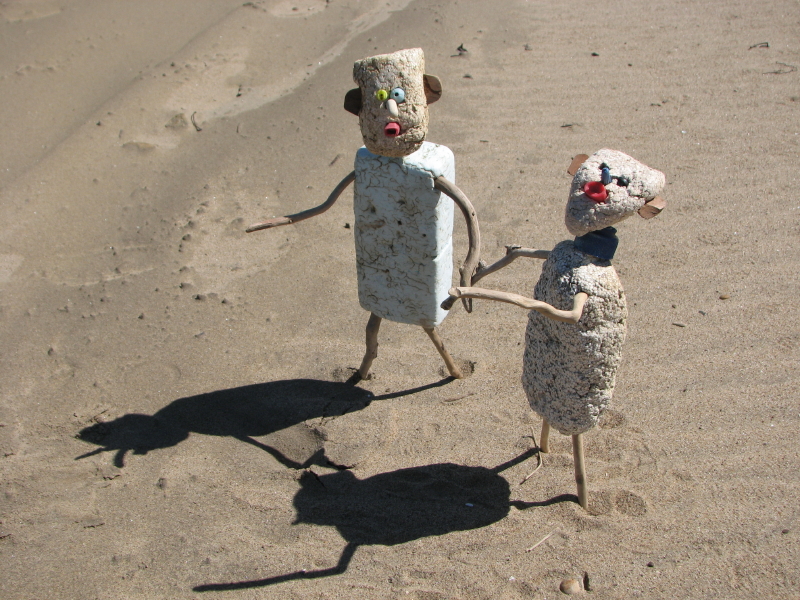
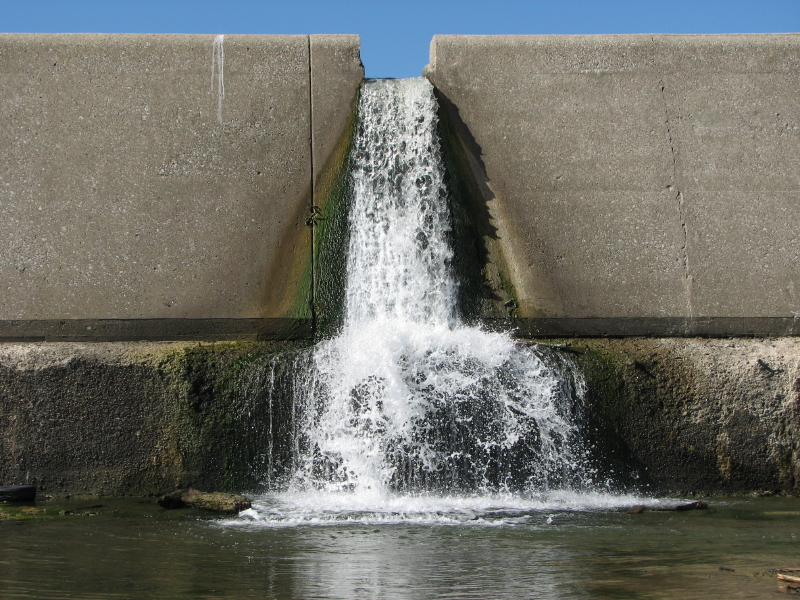
Walking up to the immense concrete structure, the couple thought of ancient Egyptian buildings and temples.  The scale and ambition of trying to control the river was all so overwhelming and emotional.  Their reaction to this engineering marvel was impulsive and surprising!

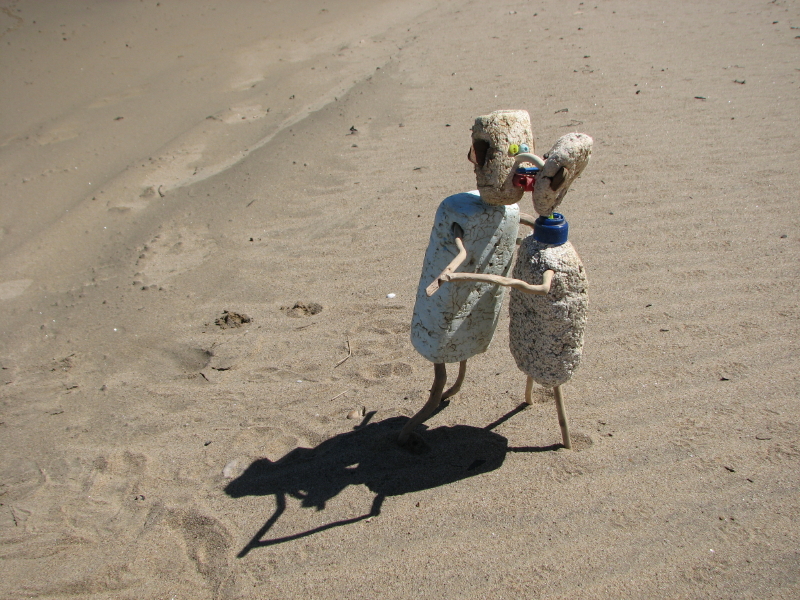
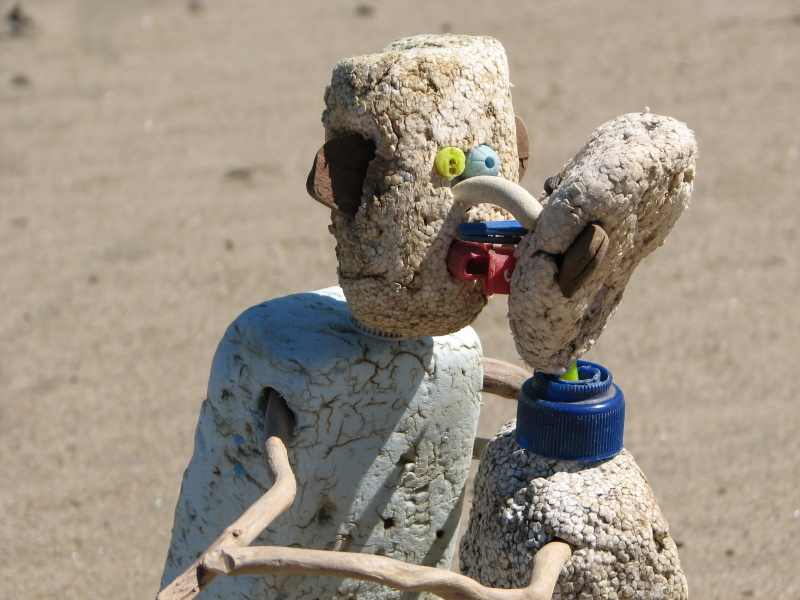
The couple embraced and shared a long kiss.  Later they would remark on how wrapping their minds around deep time and the beauty and continuity of life caused them to appreciate their moment together even more.  Having reached the destination of this day’s hike, the couple turned around and retraced their steps.  They had the rest of their lives ahead of them and in the bigger scheme of things…would just be a kiss or the blink of an eye.

Read Full Post »

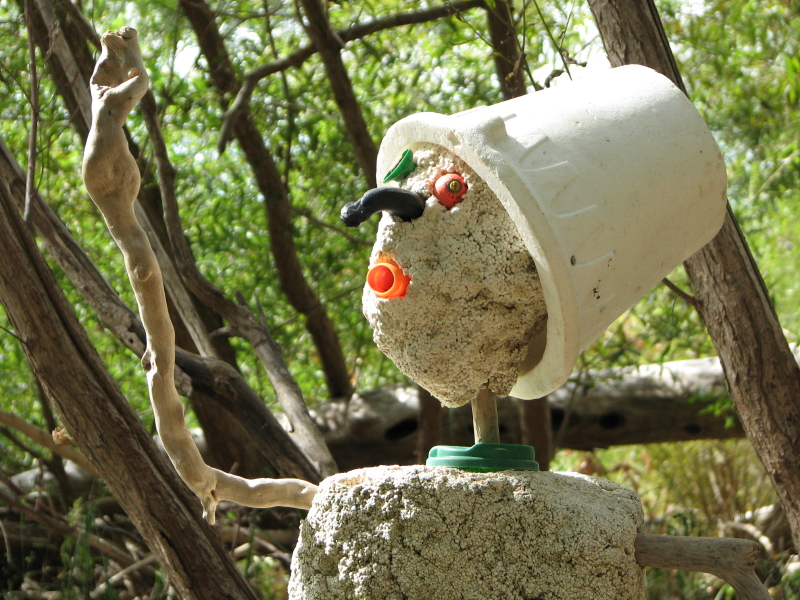
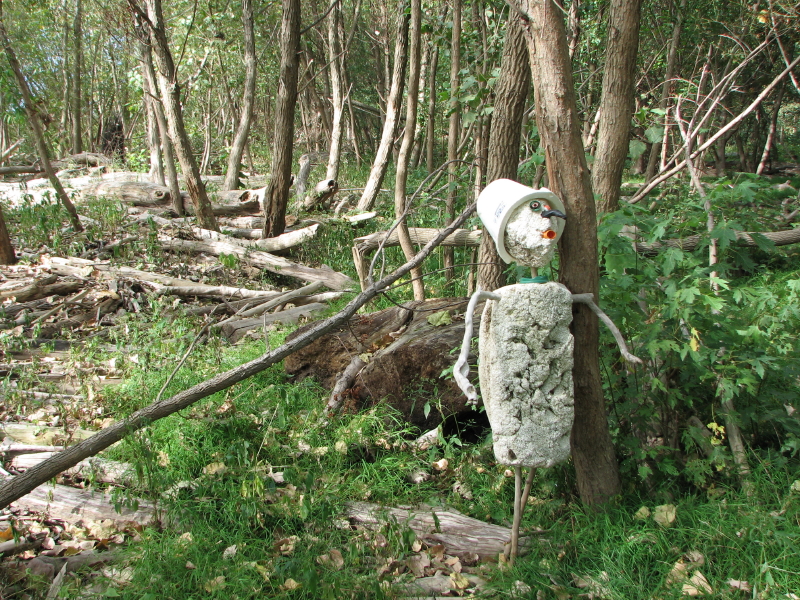
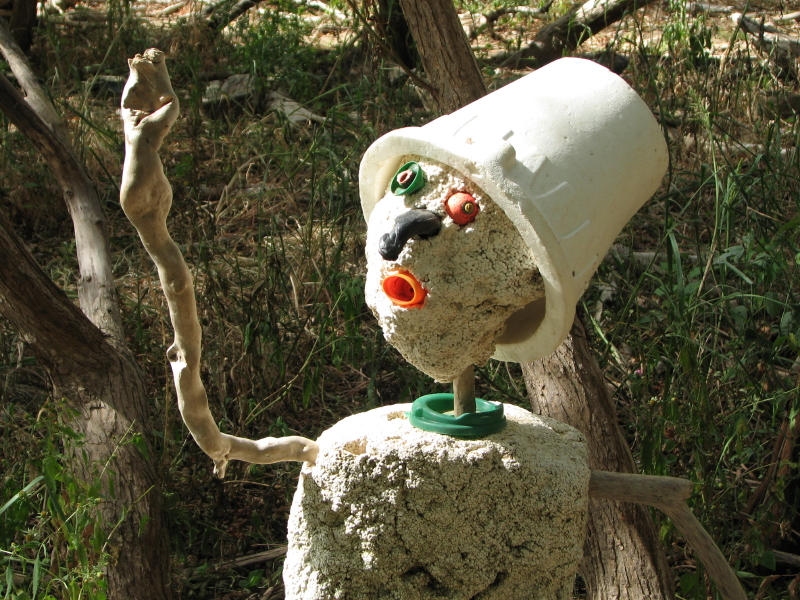
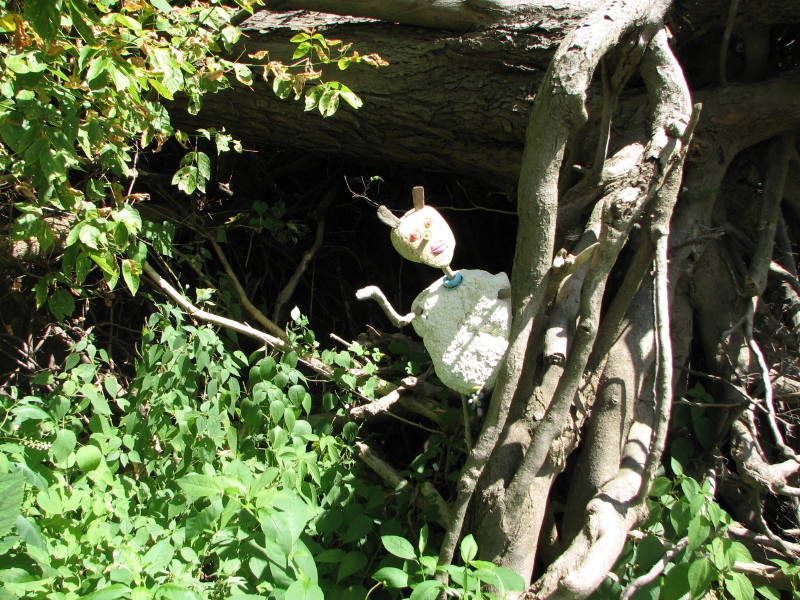
I was walking through the woods on a sun-dappled day looking for migratory birds when I came across a new friend.  We talked for a little while before introducing ourselves.  Both of us remarked on the dry weather we have been having and I said that it’s official now.  September was the driest ever in the commonwealth of Kentucky since records have been kept dating back to 1871.  We have had a spits-worth of rain… that’s it.  Overall, this has been our third driest month ever, beaten only by two Octobers over the course of the past century.  We both wondered if this was an omen for this October?  We certainly hope not.  Having created some common ground, I introduced myself and she said to call her Minnie, Minnie Buckethead.
As it turned out, Minnie is an interesting old lady with a fascination for everything in the woods.  I asked if she had seen any migrating warblers and she had.  American Redstarts, Black and White Warblers, were moving with small groups of other birds including Carolina Chickadees and Tufted Titmice.  I had seen nothing.  I definitely need to get up earlier in the day to catch the bird show.  Perhaps Minnie was taking pity on me and she said that there were a few other things happening in the woods and would I like to see them?  How could I turn down such a nice offer from an old lady?

We walked over to a large willow tree and I saw Minnie crane her neck and squint her eyes from the sun and she scanned the willow bark.  “Here” she said and I checked out what she was pointing at.

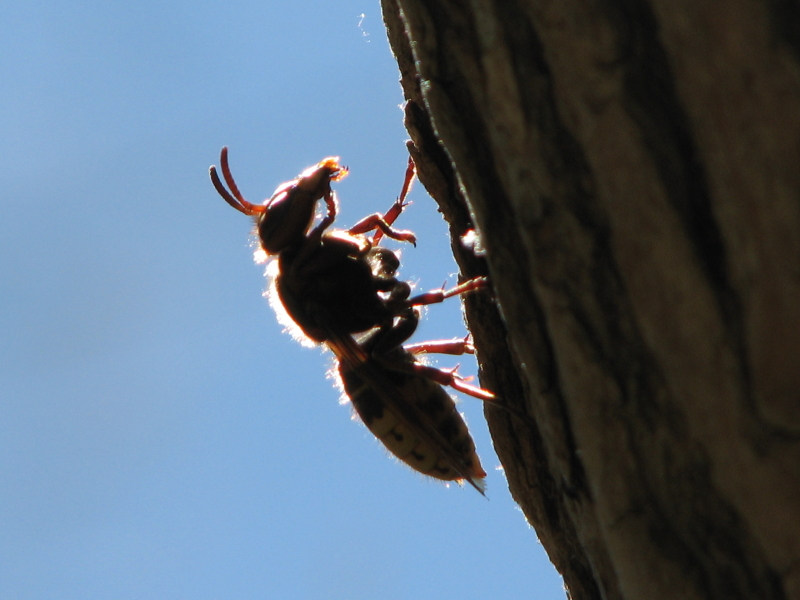
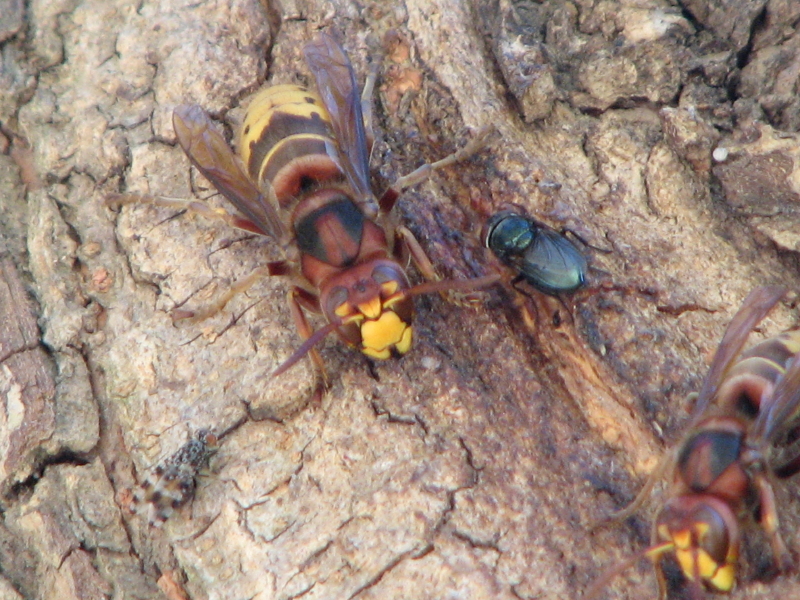
At first I thought it was a bee, but it was larger and more robust and not as big as a bumble bee.  There were others.  Walking around to the shady side I could determine that they are hornets of some kind.  The hornets and other insects were licking whatever was exuding from the willow tree.

“Don’t worry, they won’t get you”, she said.  The hornets were so preoccupied with the sap that they were quite tame.  Walking around the tree gave us this sight.  Three different species of butterflies also taking advantage of the willow bark.  The one in the foreground is the Red Admiral.  Although I hadn’t seen the hornets doing this before, I did say to Minnie that I had observed many butterflies on these willows and wasn’t it nice that so many living creatures could set aside their differences to take advantage of this common resource.  She just smiled.

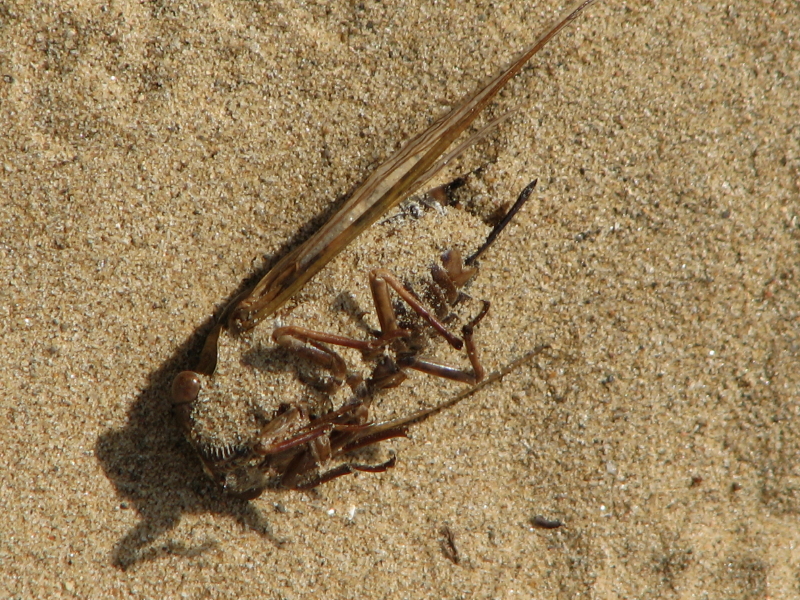
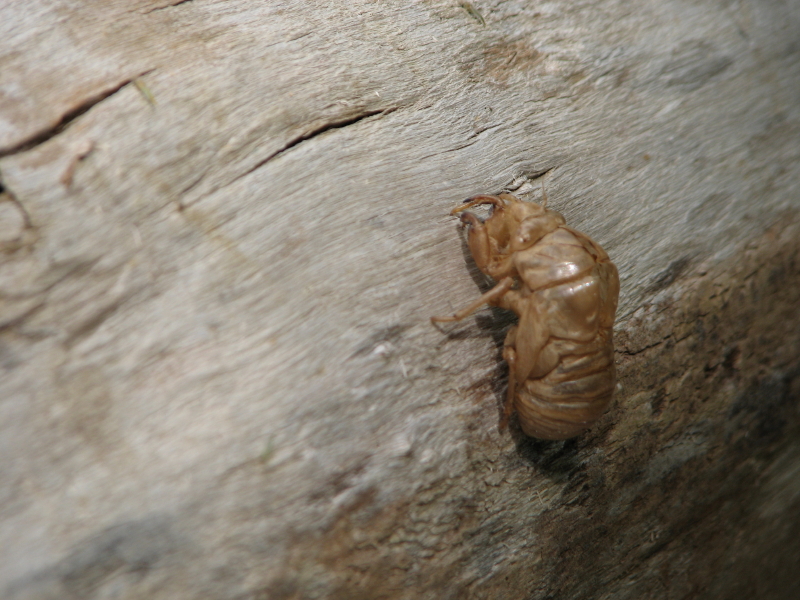
I was appreciative of Minnie showing me the tree and so I tried to impart a little knowledge to her about the local cicadas.  I had come across a dead female in the sand,(identified by the hypodermic needle of an ovipositor she uses to lay her eggs under the thin bark of a tree).  I asked Minnie if she knew anything else about their life cycle and she said she didn’t and so I went on.  I told her that after the egg hatches under the bark, the nymphs drop down and burrow under the ground and attach themselves to the tree’s roots.  With this species, after a couple of years of sucking tree juices, they emerge from the ground and become adults which for cicadas, is a brief moment in time.  They mate, lay eggs, and then die after a glorious two weeks or so.  You find their split skins where they transform as juveniles into adults near where they emerged from the ground.  Here’s a pictures of the dead cicada, the split cicada skin, and a fresh adult.

With any life cycle it’s hard to know exactly where to begin and I suppose that’s the classic which came first question… the egg or the cicada? I’ll leave that to brighter minds than my own for now. 

Minnie listened attentively and then asked me to follow her.  She had something else to show me before we parted company.  We walked away from the willow tree to an area where several large logs were decomposing.  She pointed a thin finger at a yellow patch on one log’s side and I could see it was some type of fungus.  It seemed to be spreading outward as it broke down the tissues inside the tree. 

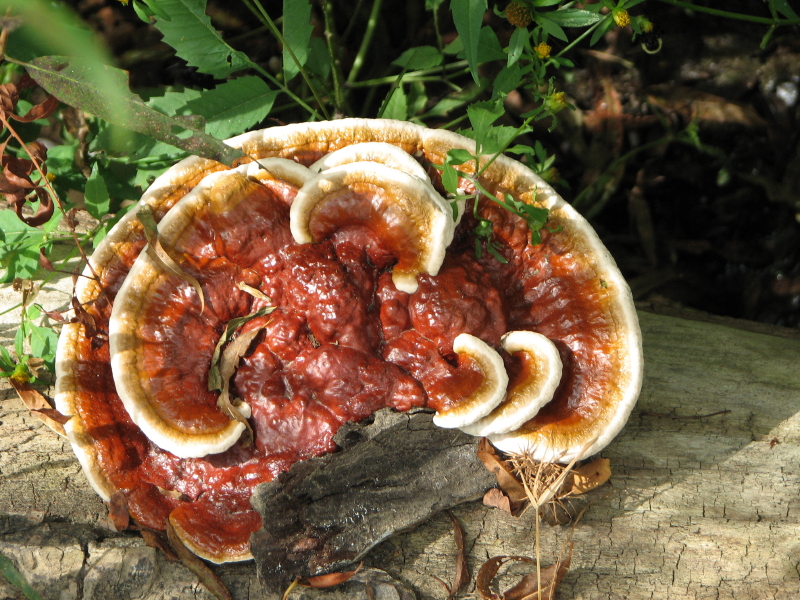
It was both fascinating and oddly repellent. On another nearby log was yet another fungi which I could identify as a fresh bracket or shelf  fungus.  The bright colors also seemed on the lurid side to me.

Minnie talked to me about what a wonderful system that nature has created to break things down after death.  Like these fungi were doing to what were once living trees.  She talked about how life depended on materials being able to decompose in order to release the nutrients that are needed for life to move forward.  This is what it means to live naturally and that we should look at the systems that the planet has in place and to learn from them.  With that, I took my leave and waved good-by to the old lady in the woods.

Read Full Post »

With the river receding all the Adventurer could do was wait and bide his time.  He came by the river and he was determined to leave the same way.  It hasn’t been all bad though…this has proven to be an interesting place and he has enjoyed many of the hikes he has made in the park.  It is a curious place though full of nature and history, but also marked by sights that seem inexplicable considering the importance of the setting.

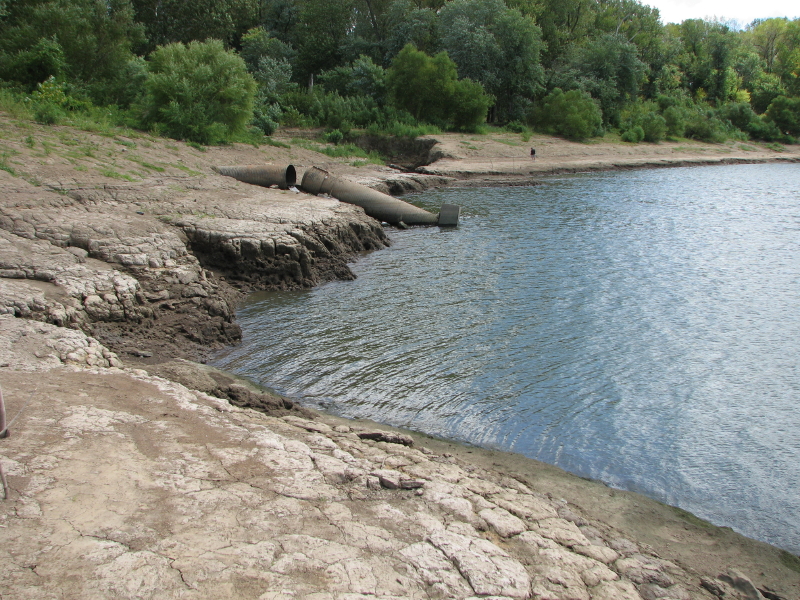
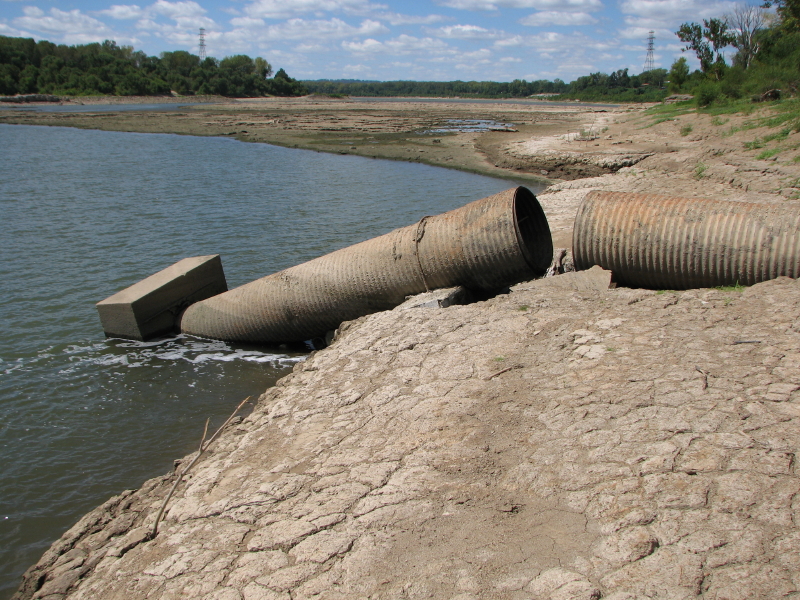
Take for instance this experience he had walking along the river’s edge in the western section of the park.  Passing herons stalking fish in the shallows, the Adventurer could see something obviously man-made jutting out of the riverbank and into the water and he moved closer to see what it was.  It kept getting bigger and bigger the nearer he came to it.

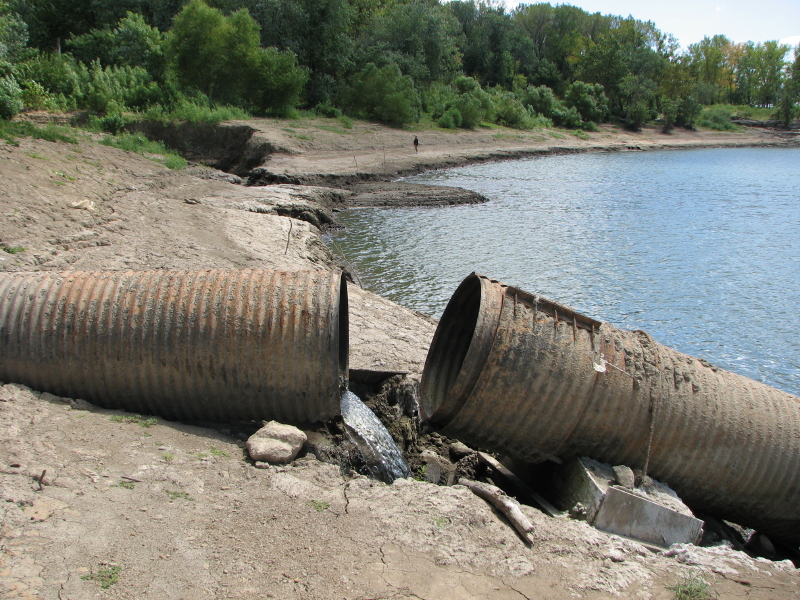
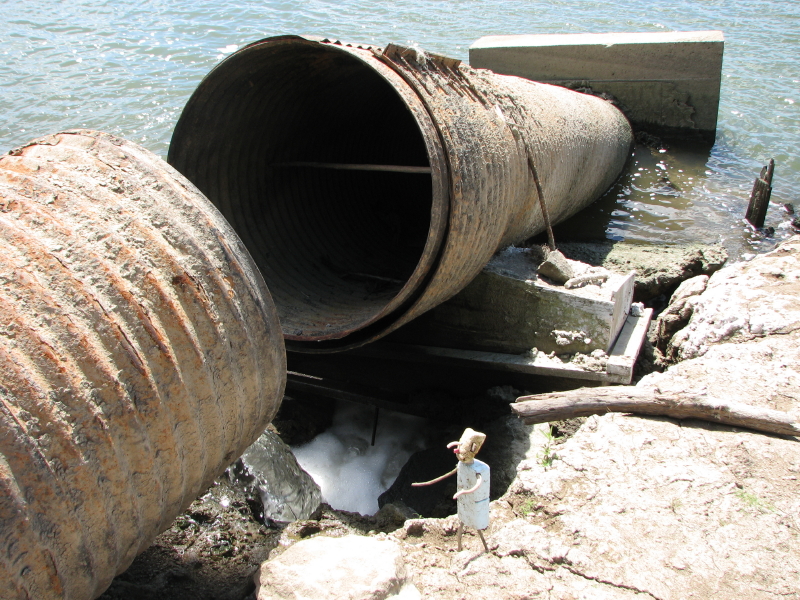
The closer the Adventurer approached the more he could make out the large, rusting metal pipe that had become exposed from the river’s retreating water level.  What had happened to the raft to strand it had also exposed this pipe for all to see.  It also appeared to have separated in the process.  The Adventurer’s heart began to sink.

Wow thought the Adventurer!  This is normally hidden from view when the river is higher up the bank.  What in the world could this be and what is it doing in this fine park?  The Adventurer’s head began to fill with questions.

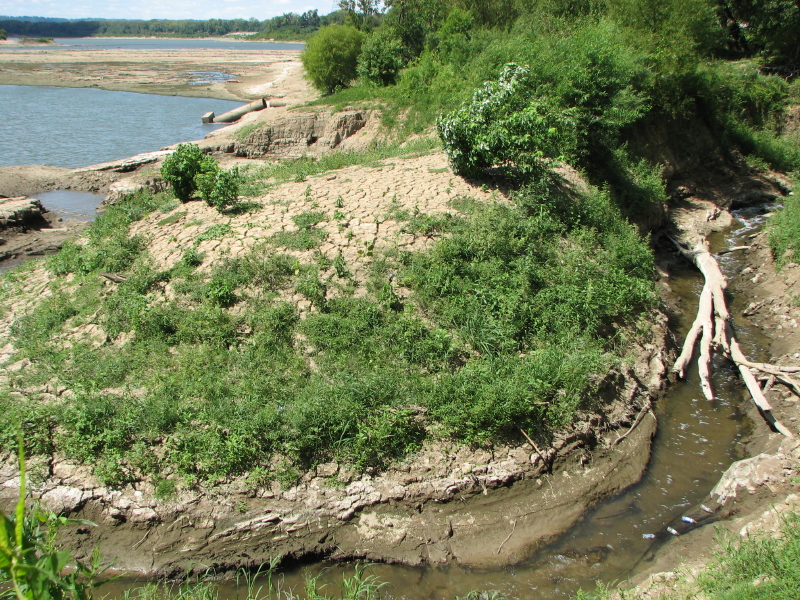
This was another man-made waterfall, but one our friend did not expect to find.  The water flowing from the pipe appeared clear, but foam and suds were produced from where it splashed into the river.  The Adventurer’s fine sense of smell thought he detected the odor of laundry detergent?  He had noticed something similar emanating from an adjacent creek that was fed by a storm sewer from the nearby town.  It had been a long time since the last storm…where was this water originating from and what was it doing emptying into the river?  Was this treated water and could it be harmful in any way?  How long had this pipe been hidden here and was it even necessary?  The Adventurer thought all these things and more.

He walked by the pipe and turned to look back at it.  The Adventurer was struck by its hardness and rigidity of form and thought how many of man’s solutions to problems could be described in the same way.  What an eye sore.  Once upon a time this could be thought of as a solution to something, but was it appropriate now?  You could tell that nature had intervened and was eroding it away from its supports.  The Adventurer just shook his head.  Water is life and fresh water is the fastest disappearing resource.  Can we afford to keep dumping everything into the river as though it didn’t matter? The Adventurer thought of all the other little towns and cities along the river’s route and his chest tightened and he felt even more trapped than before.  Surely in this place that is so important to the record of life and the history of this country…we can do better right?

Read Full Post »

The autumnal equinox has come and gone and with it the this long, hot summer has given way to temperatures twenty degrees cooler.  We are thankful for this and without trying to sound ungrateful…could use a little rain as well.  Artist at Exit 0, the unofficial artist at the Falls of the Ohio, was looking through some older images of his and was reminded of a former project that was offered as a physical prayer and remembrance of times gone by. 

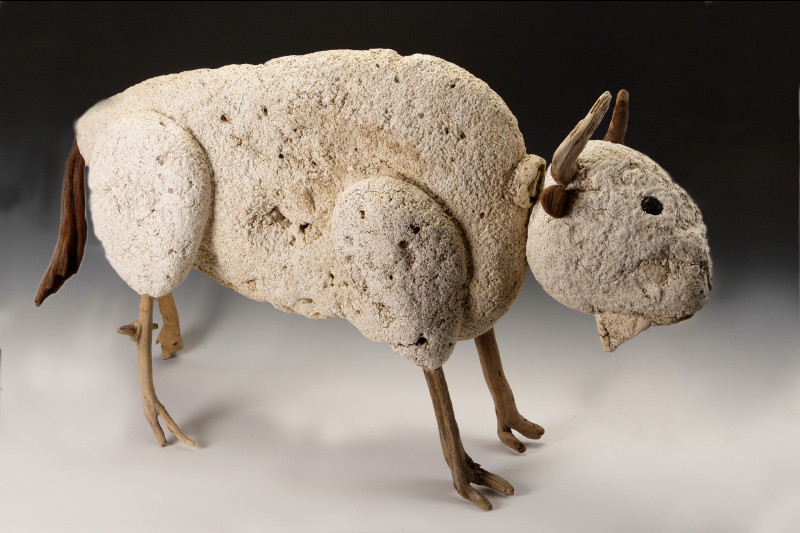
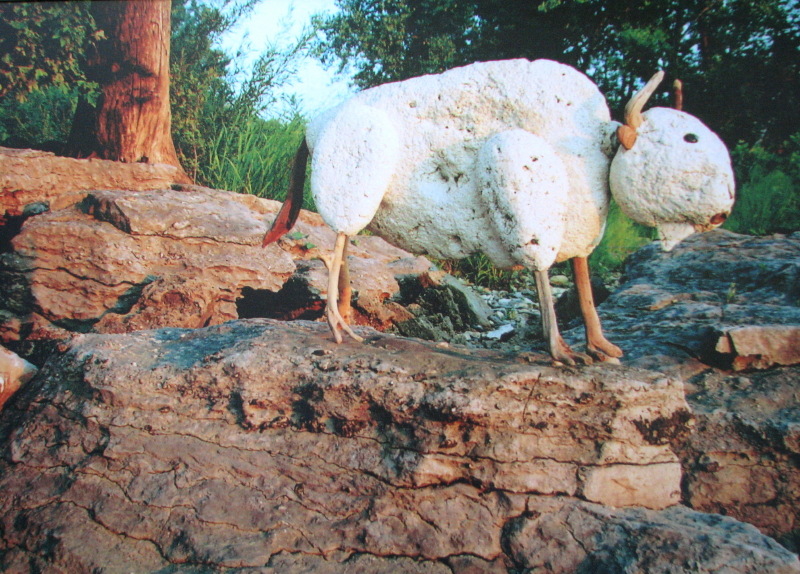
On occasion, references have been made in the riverblog that one of the historic features about the Falls of the Ohio is that it once was an active bison trace.  Animals forded the river at this location and in fact many of the major roads in Kentucky are old buffalo trails that have been paved over.  For millennia, bison were a resource that people could count on until they were slaughtered on an industrial scale in the 19th century for a variety of reasons…none of them good.  To the indigenous people, bison were more than their supermarkets and great spiritual significance was associated with them.  It’s probably a miracle of some kind that these animals continue to exist to the present day.  Artist at Exit 0 has made several bison pieces over the years…but this was his favorite one.

Here it is presented as a simple art object.  Constructed from river-polished polystyrene, driftwood branches, and nuts this piece was about as large as a good-sized dog.  What the artist especially likes, however, are some of the images showing the Styro-Buffalo in the context of the Falls.

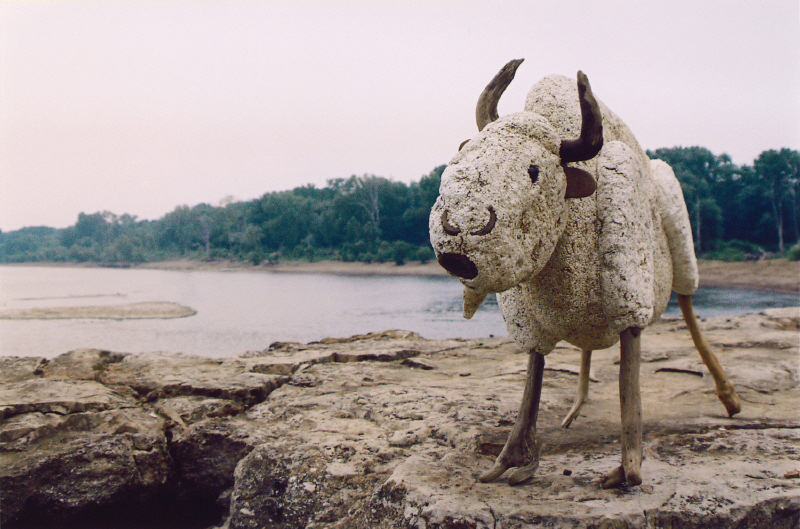
The Styro-Buffalo was photographed on the fossil cliffs near the western section of the park.  The images were recorded with a 35mm camera and conventional print film that was developed at the local drugstore.  I recently read in a Wikipedia search, that the white buffalo is an extremely rare animal and their births occur in approximately one out of every ten million births.  Whether this takes into account leucistic (white fur, blue eyes), albinos (white fur, pink eyes) or other genetic anomalies is not certain.  We had a female, white bison calf born in Shelbyville, KY in 2005 at a buffalo ranch and tourist attraction called Buffalo Crossing.  The animal was named “Cantje Pejute” from the Lakota language which translates to “Medicine Heart”.  A recent search on Buffalo Crossing was inconclusive as to whether the ranch is still open to the public and with it the fate of this particular animal?

Here is the Styro-Buffalo photographed at sunset on the fossil rocks.  One critic who commented on this image considered it overly romantic.  It was meant to be a pejorative statement since apparently there is little room in contemporary art for work that includes nature as part of the work’s context.  The quest for the sublime and awe for nature are not generally in fashion in the high contemporary art world.  Artist at Exit 0 was okay with that comment only because it underscored and confirmed personal observations about the contemporary art world that Artist at Exit 0 feels mirrors the general disconnect he perceives from our kind for the environment.  If we persist in this attitude…we too may go the way of the buffalo and again it will be our choice. 

 This post is offered in friendship to 47 Whitebuffalo who’s fine blog is full of social conconciousness and art.  Her link is included in my blogroll on my home page.

Read Full Post »

When we last left the Adventurer he was marooned on the riverbank waiting for the Ohio River to return.  Until the water reappears his crudely constructed log raft is stuck.  Taking advantage of the downtime, our hero is exploring and seeing what there is to see.  At this place called the Falls of the Ohio there appears to be a good variety of butterflies present.  Following are a few images that were relayed to me by the Adventurer along with a small lesson he gave me about Lepidoptera.  Here’s a sequence of images that our friend wanted me to share with you not only because he found this to be beautiful but interesting too!

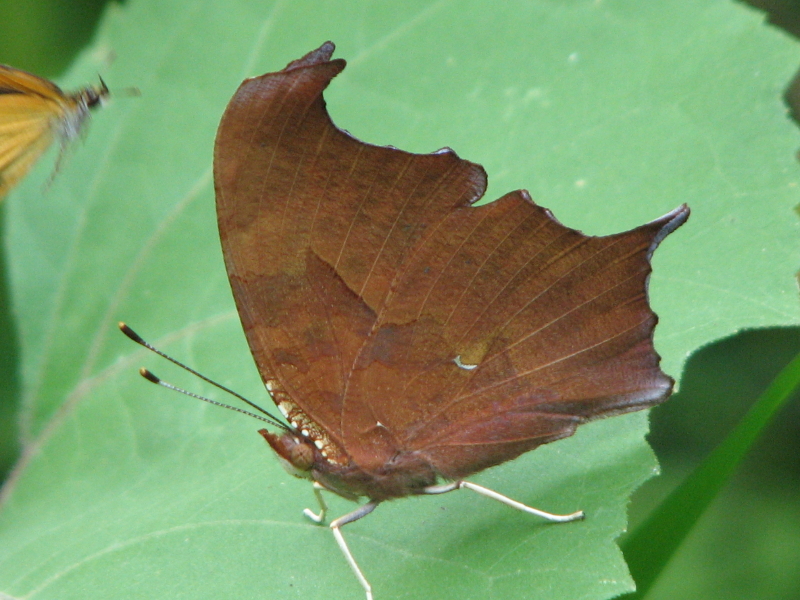
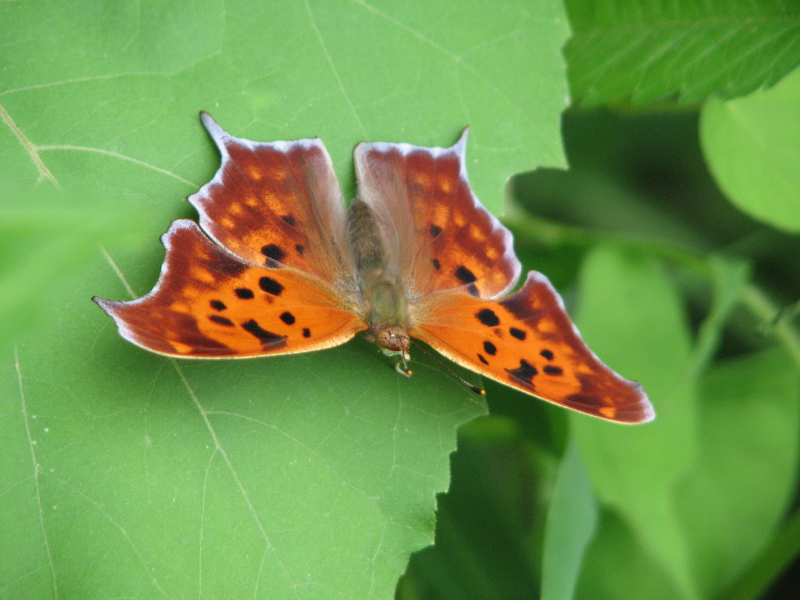
How lovely!  This is the first of our “Question Marks”.  In fact, this is the common name of this butterfly that is known in the scientific community as Polygonia interrogationis.  This is a fresh specimen in its fall form with its powder-blue wing edges.  The spring and summer forms sport much darker hindwings on their topsides.  The wingspan is about 3 inches across.

Here is the same butterfly with its wings folded and as you can see it looks very much like a dried leaf.  The Question Mark derives its name from the small, silvery “?” question mark-like design on the ventral side of its hindwing.  This specimen in this image doesn’t show this to its best advantage, however, what the Adventurer wanted to share is that other smaller butterfly entering the picture on the top left corner.  This is something not noticed until the pictures were downloaded from the camera.

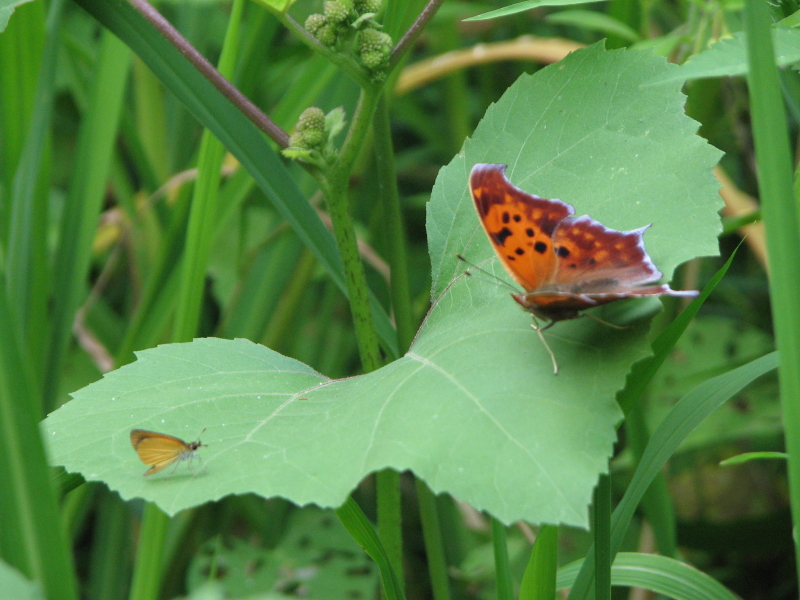
Here are the two butterflies sharing a leaf.  The plant is a cocklebur and you can see its ripening seeds in the background.  Soon these burrs will develop their Velcro-like hooks and attach to the clothing of autumn hikers.  I have had dozens attach themselves to my shoe laces!  Now for a close-up of that little butterfly.

This is the second “Question Mark” because neither the Adventurer nor I know what to formally call this one!  I enjoy collecting field guides of all kinds and I like to cross reference material as a way of learning more about the subject on hand.  I know this is a member of the skipper family which are primitive butterflies that share characteristics with moths.  In fact, some scientists don’t consider skippers to be true butterflies at all!  In my guides there seems to be many of these small, golden-colored skippers and identifying them is tricky and best done by experts.  This butterfly was so tiny and perfect and almost…unnoticeable.  In the enlargement it appears to have a forked proboscis for feeding.  I wonder how this design will help it eat and does it go for the usual butterfly fare?  Okay, moving on… let’s look at the Commas.

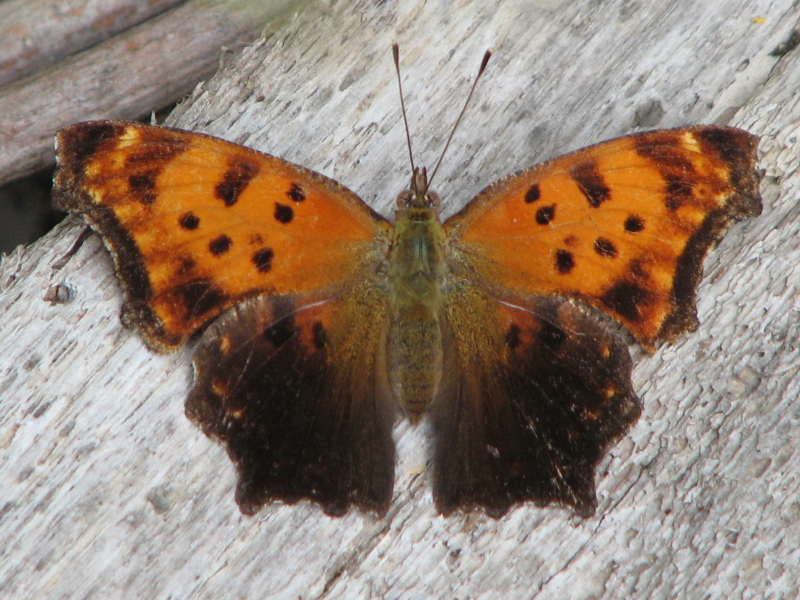
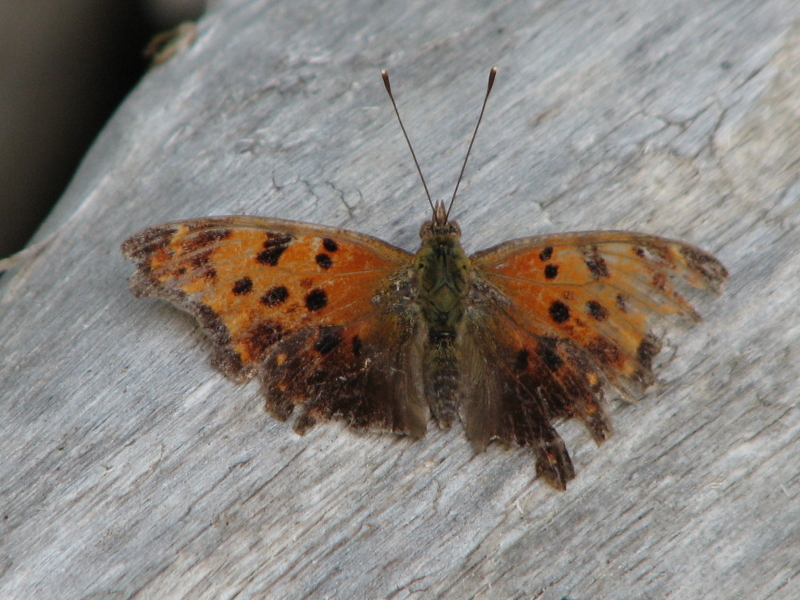
The Eastern Comma or Polygonia comma is a common butterfly in this environment.  As you can tell it is closely related to the Question Mark butterfly.  It derives its name from the small comma (,) like mark on the underside of its hindwing.  Both of these species are angle-winged butterflies and when their wings are folded up, appear like dried leaves.  These guys can be fairly aggressive as butterflies go and as proof…the Adventurer wanted you to see this specimen photographed against the silvery driftwood of the Falls.

He said this was the most ragged specimen he ever saw that was still alive!  This butterfly seemed to have no issues with flying despite its hindwings being mostly gone.  You can see how alert this one is by the attitude of its antennae.  This Comma is near the end of its seasonal run and its wing condition may be due to aerial combats with other butterflies and insects.  I imagine as Comma butterflies go, this one may have revelled in being a Comma!  This one may have been among the fittest of its kind?  The Adventurer hope you enjoyed this little side track and in closing offers another view of that nice Question Mark butterfly.  Thanks for visiting!

Read Full Post »

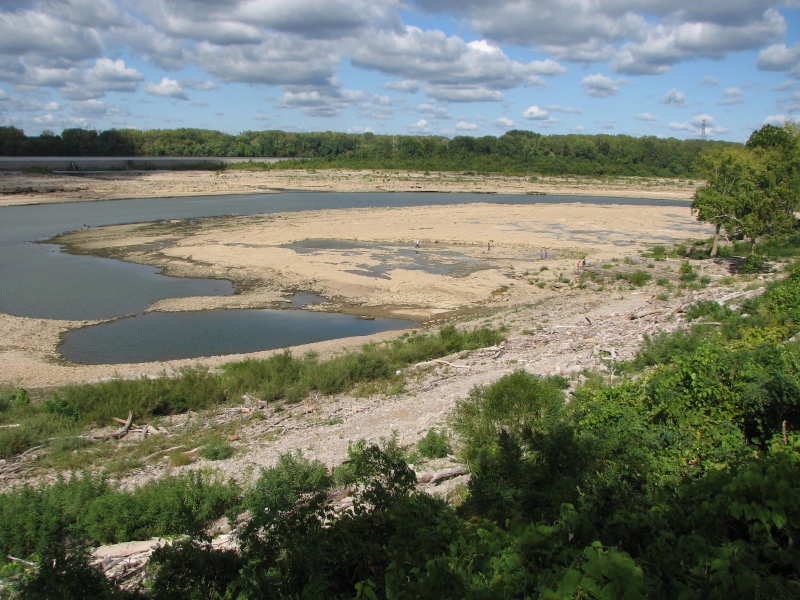
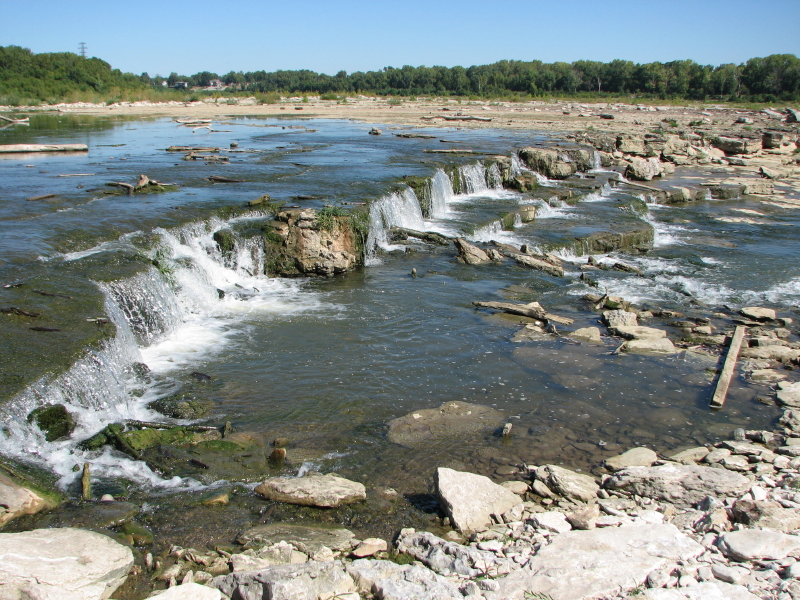
The Falls of the Ohio was never a classic waterfall such as Niagara Falls or even Cumberland Falls in Kentucky.  It’s been described as a series of rapids that drop the river level about 26 feet over a length of about a two and a half miles.  This is the only place in the nearly thousand mile length of the river that posed a major navigation obstacle. Traditionally, the Ohio River hasn’t been a deep river, in fact in historic times the water level could get so low in the summer that you could literally wade your livestock over from one side to another with ease.  That’s why this area was also a bison trace and indigenous people crossed the river here for thousands of years.

Of course, having a river that can be this shallow poses an impediment to river traffic.  Louisville is where it is because when the river was low you had to either portage your boat, hire a special pilot to guide you around the rocks and waves, or wait until the river level rose again to move on.  When the river was high, the Falls could be heard.  John James Audubon once wrote, ” The rumbling sound of the Falls as they tumble over the rock-paved bed of the rapids is at all times soothing to the ear.”  All that changed when the Army Corps of Engineers constructed a dam in the 1920’s.  The purpose of the dam is to provide a stable pool of water for the barge traffic going through the locks of this important intercoastal waterway.  It has meant billions of dollars in river goods can travel easily with coal being the most lucrative cargo.  That dam also defines what the Falls of the Ohio are now and in the heart of summer, the famous fossil beds are exposed for all to see.  Well, except for the majority of the fossil beds that are now regularly underwater on the opposite side of the dam! To say that this area is far from its original state is an understatement.  Most people don’t have knowledge of this and so this place is just as marvelous as ever!

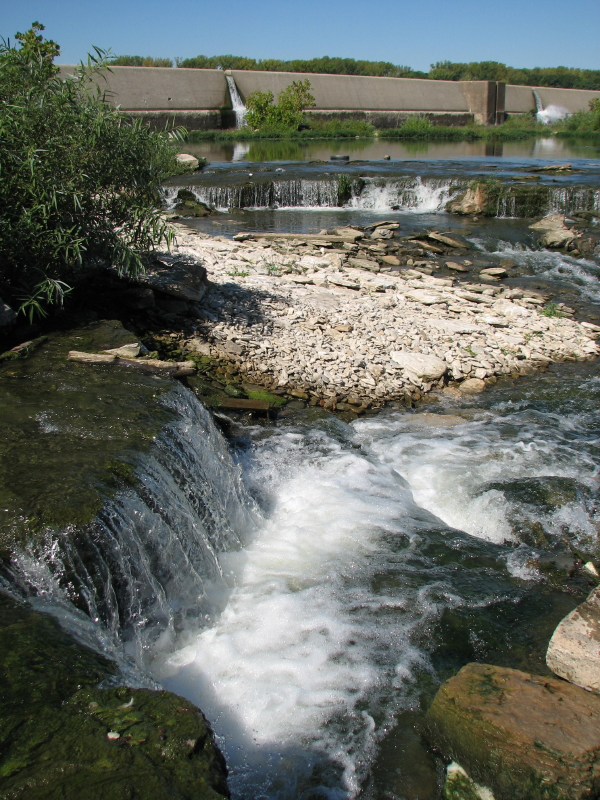
“Oh honey, we made it!”  “The waterfall looks beautiful and I’m so glad we are here together to share this.”  The new couple on their own personal journey of discovery have decided to check out an American landmark.

“This is such a famous place and I will always remember this day because we spent it together!”  “I feel completely refreshed in the presence of you and nature.”  “The water spray is so cooling.”

Care is needed because you don’t want to get swept away.  The sound of running water can be hypnotic and you can lose yourself in it. ” I’m happy that you are here for me and I will be there for you too.”  Such is the promise that they made to each other standing by the waterfall.

“We have our entire futures ahead of us, but for now, let’s remember being happy in this moment.”  “The two of us are like this water in that we are on a long  journey and who knows if we will ever cross this spot again?”

“This has all been so beautiful, but I’m getting hungry.”  “Are you ready to go?”  “I’ve heard that there is another waterfall not too far away from here…wanna check it out later?”  Behind them, water was pouring through a special slot in the dam that allowed water to pass over these rocks and to provide a little more water for this bit of wetland that remains. When you are hiking out here and you think of it… it can be a little disconcerting knowing that the top of the river is now that high over your head!

Read Full Post »

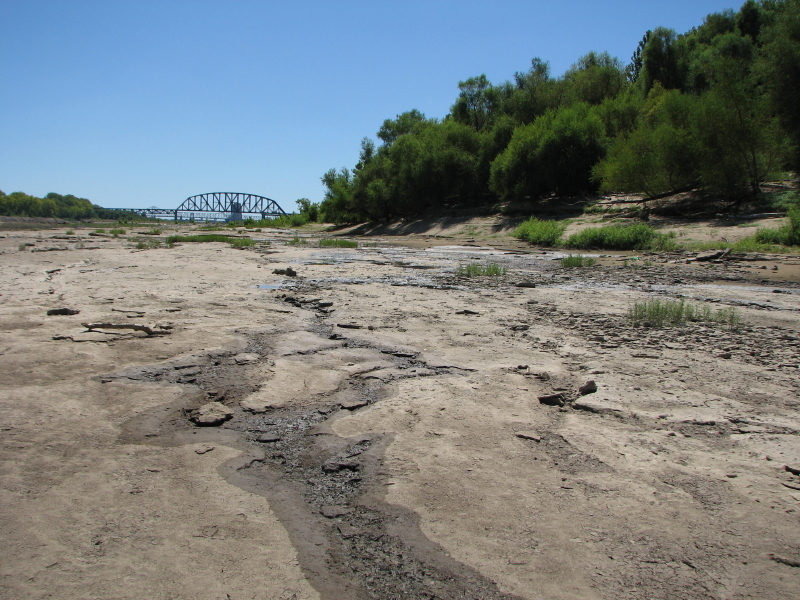
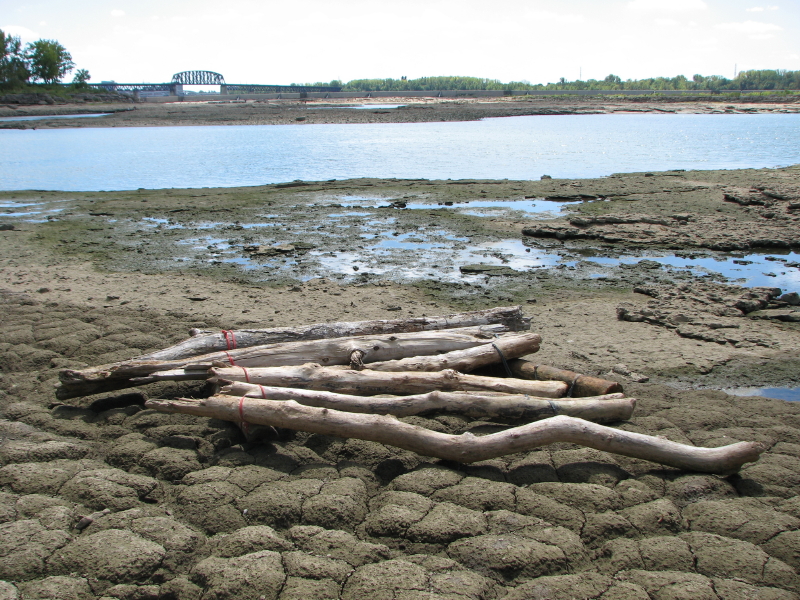
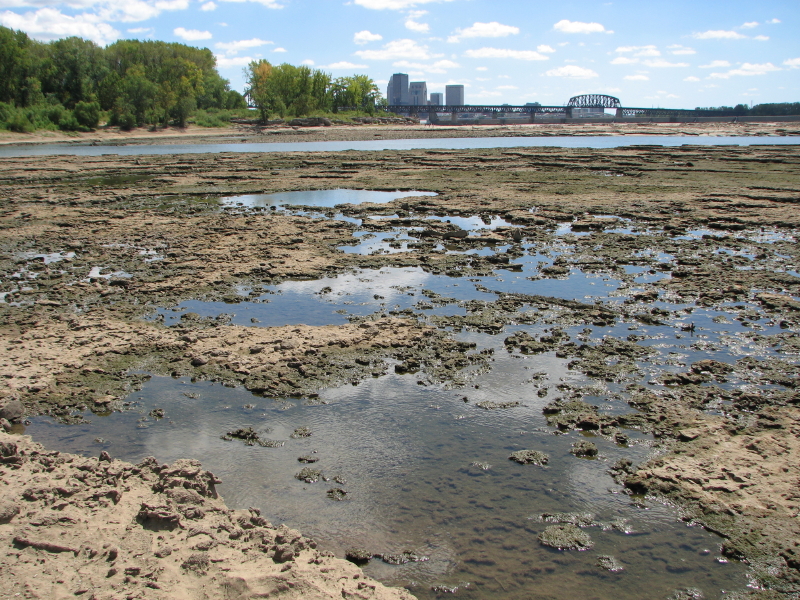
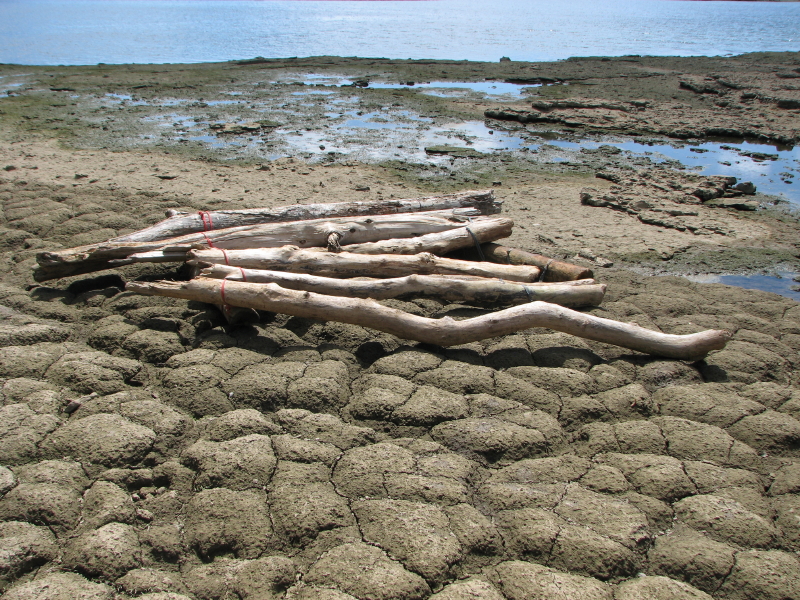
One day I had this wild idea to build a raft and drift down the Ohio River and so I did it.  Sort of.  Here’s my trusty vessel where it sits today.  I’m amazed that it held together long enough to get me here. I thought I might just go with the current for a couple of miles or so, but I was swept into the main channel and I rode it out as far as it would go and here I am.  Stranded.

Don’t worry about me…I’m alright.  I just hung out here so long and the summer was so hot…that the river dried up around me.  I found this spot on the riverbank that I like that always seems cool even during the most scorching days.  I also liked looking at all these shades of green in the algae.

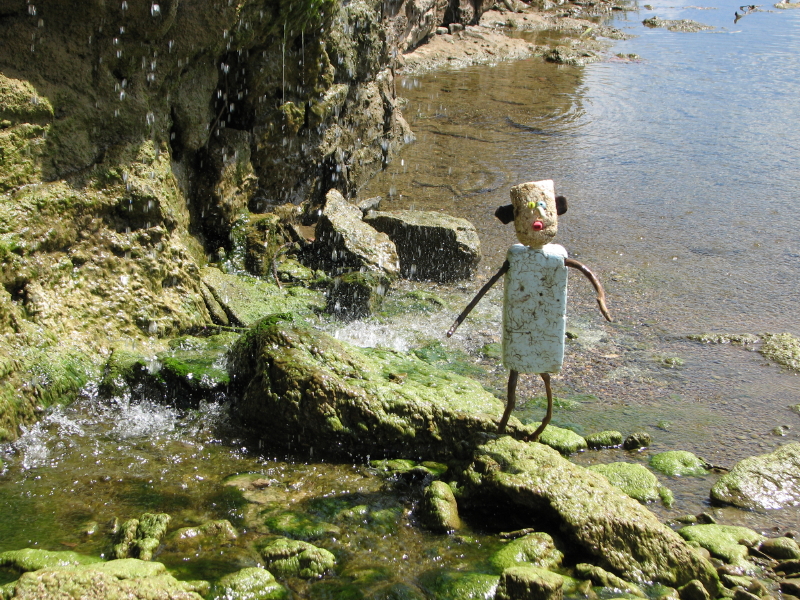
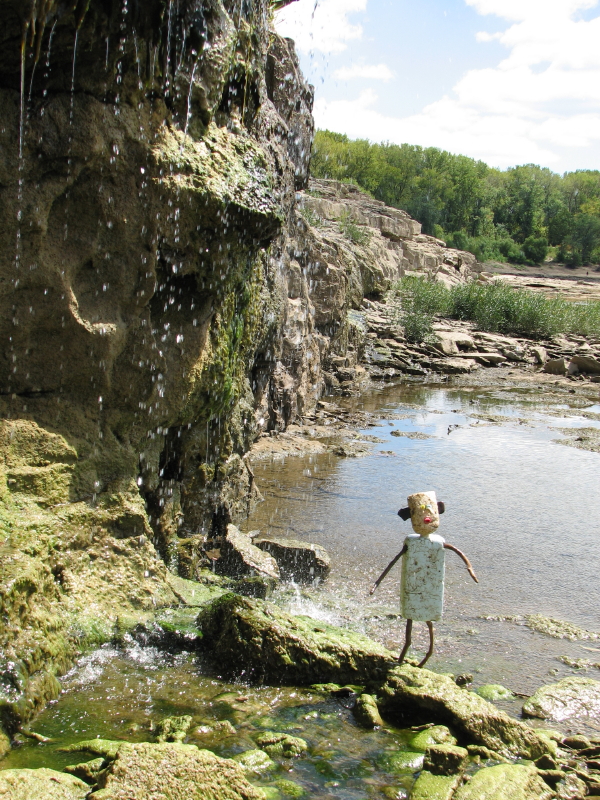
It’s refreshing standing under this shower and on the warmest days it would only take minutes to completely dry off while walking under the sun.  I’ve always been a sucker for waterfalls and I have struck up a relationship with this one.  Something about water going over the edge of a precipice from some height helps people attain a feeling of the sublime and awe as felt in nature.

I’m going to miss this place if ever I can get out of here.  The local landscape has some charm and the change of the seasons.

Soon it will be the Autumnal Equinox and the days will continue to grow shorter as the leaves change color and drop from their branches.  It is a time for shifting gears and making plans.

Alas, for most of this summer the rain has been in short supply.  Each day without a significant down pour, the river keeps receding away from me and delaying my departure even more.  We need, I need it to rain again.

For the moment, I’m at a standstill and will need to be open to what nature has in mind.  I know a new adventure is just around the corner from here and it will be worth the wait.  In the meantime, maybe it would be a good idea to work on my raft?  From this angle it looks rickety.  I’ll search the riverbank, maybe I’ll find a life vest too.  I have found them before!  When the river comes back I’ll be ready.

Read Full Post »

At last we have some respite from the dreaded heat of this summer.  Today is gorgeous!  The air feels fresh, and there is a nice quality to the light.  I decide to spend my time in the western section of the park on the Indiana side.  I heard that the butterflies were plentiful on the loosestrife flowers and that this could be a good time to take pictures.  First, I needed to find an officially sanctioned butterfly guide to show me the way.  He’s supposed to be somewhere over here…yes, there he is right on time.

The strange-looking character said “Hello, are you the one who wants to see the butterflies?”  I replied that I was and we met face to face.

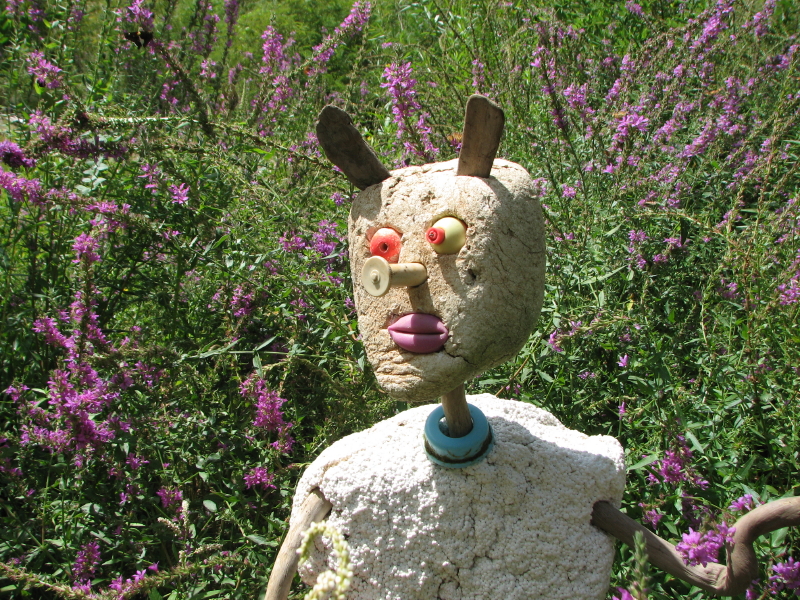
And what a memorable face he has with his mismatched eyes and lavender lips!  He told me to call him the Butterfly Man and that I had picked a good time to come to the river because it was now agreed that 2010 was a good year for butterflies in our area.  He also said that the place we wanted to go was a short walk ahead to where the purple flowers were growing.  Many different kinds of butterflies would be there.

Along the way, the Butterfly Man told me tidbits about the environment we were experiencing and what we might expect to see.  He explained that the loosestrife flowers are an invasive species and quickly take over these shallow wetlands.  Around here small springs trickle water down the bank towards the river and keep this area moist. These are perfect conditions for the loosestrife which has spread from last year.  Butterflies and other insects love the nectar from these flowers and if we encountered bees and wasps…not to be afraid because if you left them alone, they would do likewise.  Soon we were among the flowers and it didn’t take the Butterfly Man long to spot a terrific butterfly!

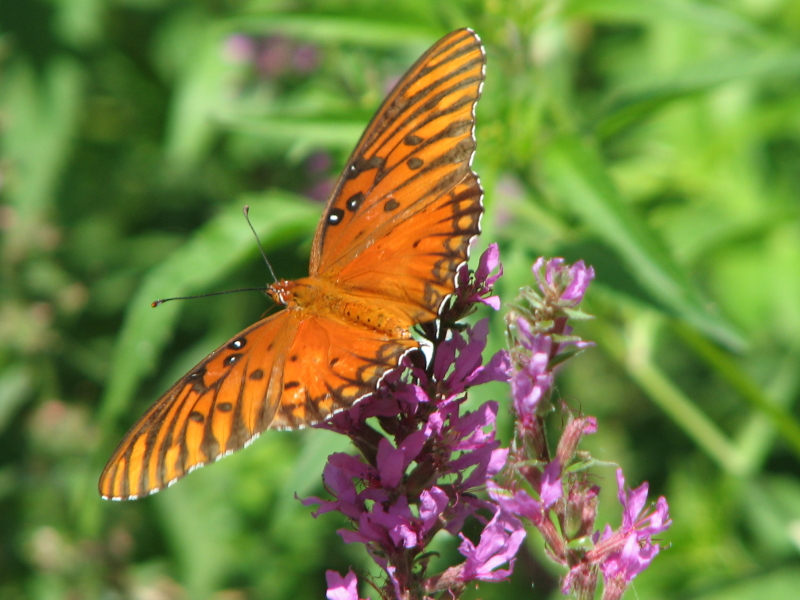
With its slightly elongated forewings and intense orange color the Gulf Fritillary ( Dione vanillae ) stands out among the loosestrife.  As the name suggests, this is a mostly southern species, but does venture north.  The ventral coloring sports mother of pearl and orange spots.  Not to far away on a different flower, Butterfly Man spotted a nice swallowtail.

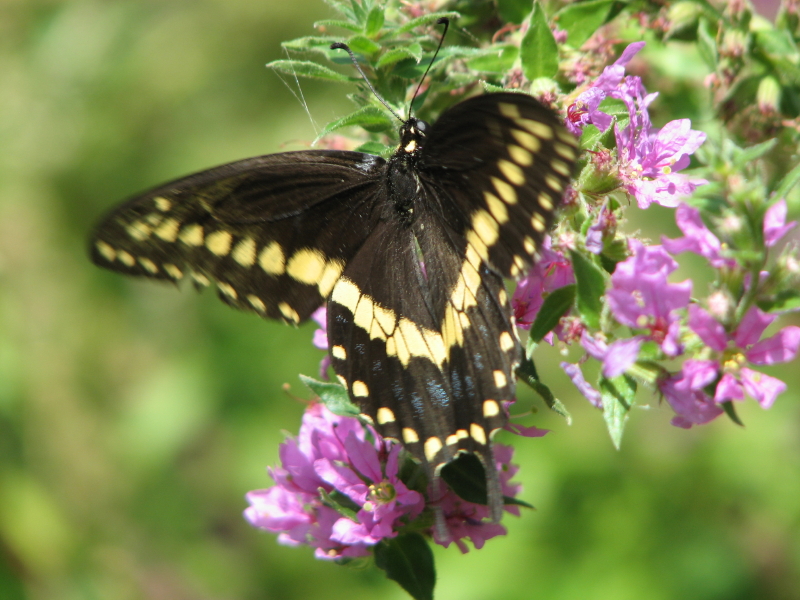
This is the Eastern Black Swallowtail, ( Papilio polyxenes ) and I have come across a few of these and other swallowtails as well.  I have seen, but unable to get a photo of some of them because they never slowed down!  I saw a Giant Swallowtail, our largest butterfly, fly over my head and towards the river.  The Zebra Swallowtail, same thing, it was flying too fast and never alighted.  The Pipevine Swallowtail I saw was so ragged that I decided not to take a picture of it.  I’m sure over time I will get other chances.  Here’s an image I like of a very common butterfly.

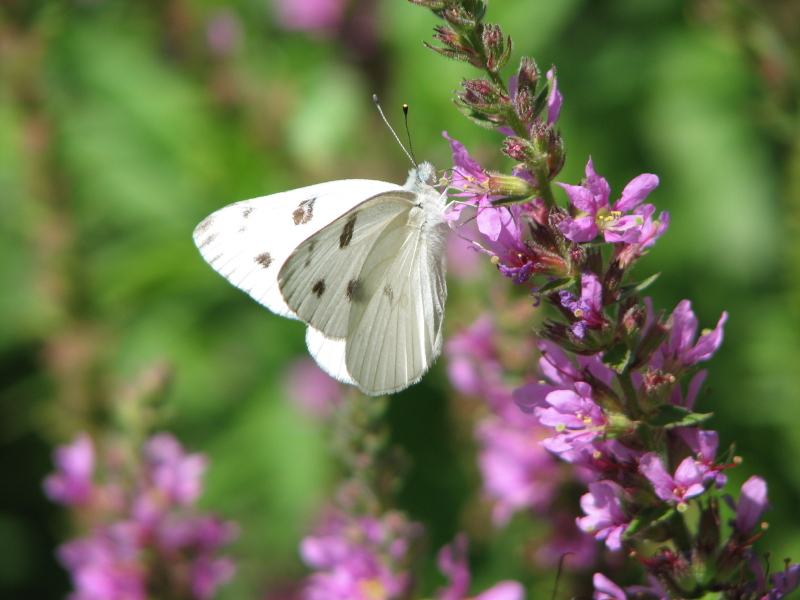
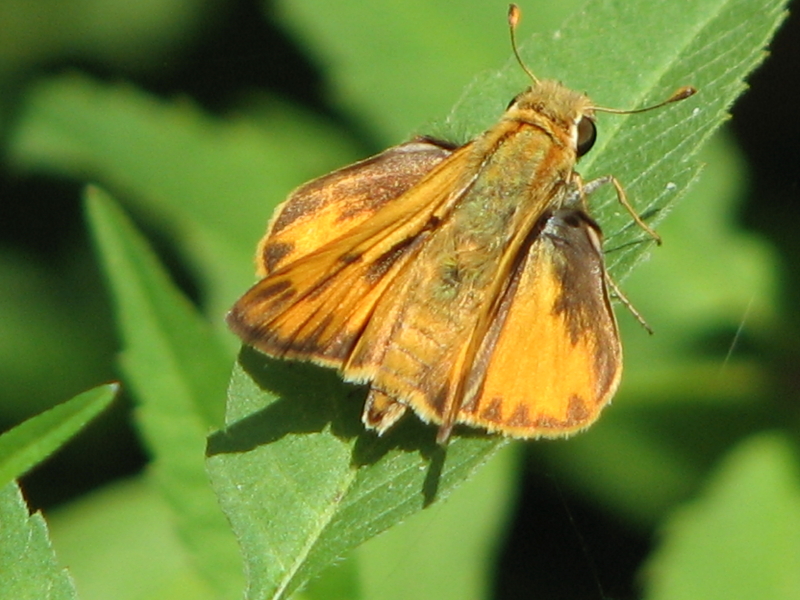
This butterfly was introduced into North America in the 1860’s and has now spread over the continent.  The Cabbage White, ( Pieris rapae ) is the most common white butterfly that most people are likely to encounter.  At the Falls, we also find another immigrant, the European Skipper, ( Thymelicus lineola ) which was accidentally introduced in Ontario about 1910 and has since spread across the country.  These tiny gold skippers can be very hard to identify and probably depends on having one in hand.  I like the idea of capturing a photographic image because no harm is intended.  With their folded wings, many skippers don’t look like butterflies at all. 

After a while, the Butterfly Man said we should take a break.

He said he found something special earlier in the morning and it was somewhere in this vicinity.  There is another creature here taking advantage of the butterflies.  Sure enough a couple of bushes away we found her enjoying a snack.

We found such a beautiful and large spider sitting on her web!  The proof she selected the right location was entombed in silk.  I have seen other Black-and-yellow Argiope ( Argiope aurantia ) spiders at the Falls before.  This is the first for this year.  She’s a big spider and soon she will produce her egg case and die.  The baby spiders will overwinter in the case and emerge in the spring.  These orb weavers have a characteristic zig-zag silk pattern on the interior of their webs.  This spider has had luck catching Orange Sulphur and Viceroy butterflies.  I noticed many loose wings below the web.  There is an element of risk out here among the flowers after all.

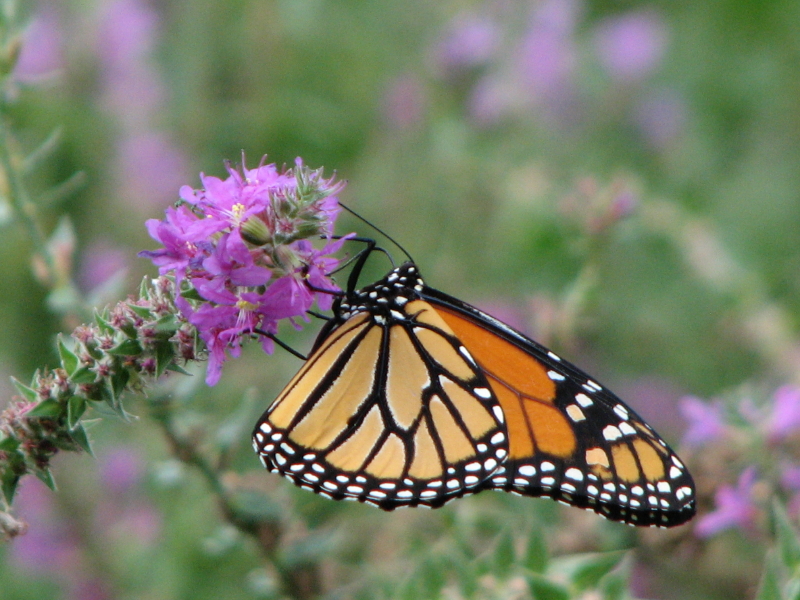
 The Butterfly Man spotted a nice pair of Viceroys ( Limenitis archippus ) basking side by side on the same leaf.  There are many of these species currently out among the willow trees.  With their smaller size and black line crossing the veins of the dorsal hind wing they can be told apart from the Monarch butterflies ( Danaus plexippus ) which are also in the area flying down on their long migration to Mexico.

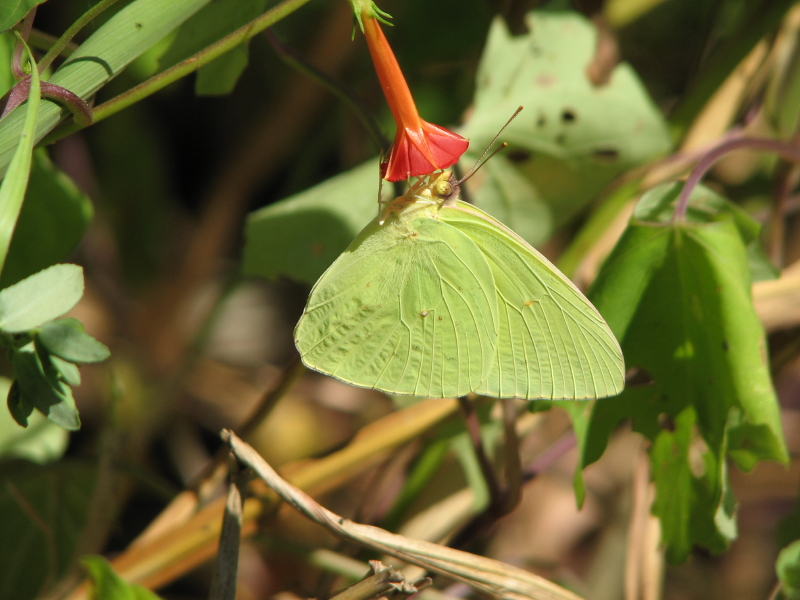
There was time for one last butterfly before turning for home.  Earlier I had spotted a few large yellow butterflies nectaring on the small Jewelweed vines .  I came across this Cloudless Giant Sulphur in a characteristic position with its wings folded together like a yellow leaf and created this composition.

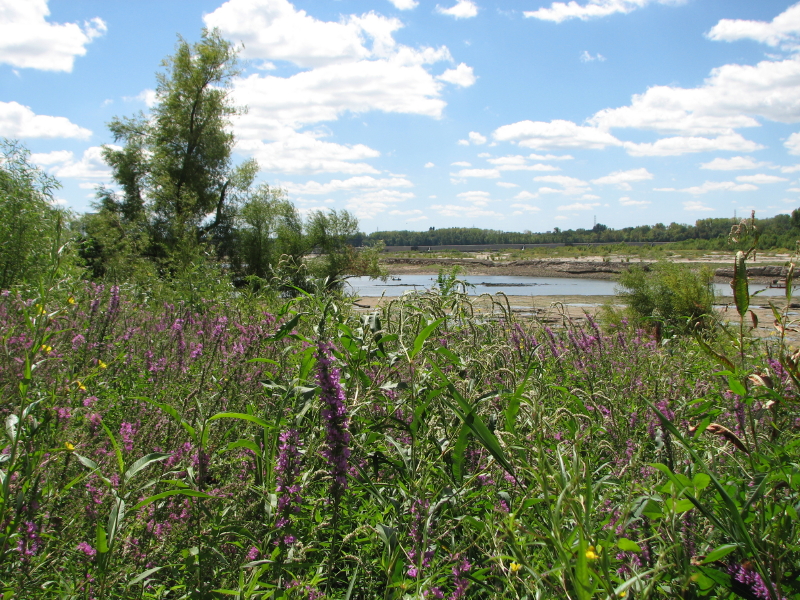
After one final look at the loosestrife fields, I was reminded of French Impressionistic painting and thought this landscape worthy of a canvas or two for the purple colors and nice cloud formations.  You can also glimpse the fossil beds beyond the trees.

I left the Butterfly Man standing where I first met him by his home next to a downed tree.  I thanked him for taking the time to show me around and hoped to run into him again in another adventure at the Falls of the Ohio.

Read Full Post »

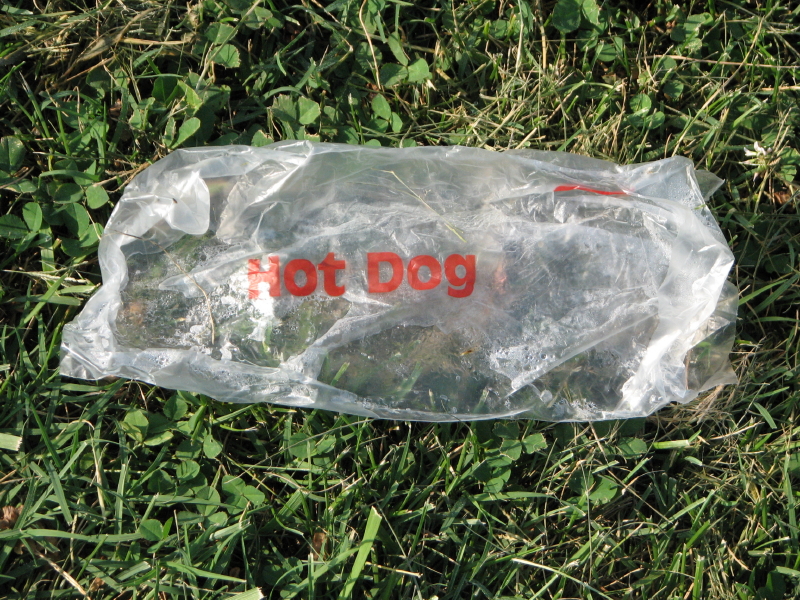
It’s not everyday that you come across a conceptual hot dog and so I couldn’t resist recording this image.  What follows next are some recent river treasures I’ve discovered on my wanderings throughout the Falls of the Ohio State Park.  We haven’t had any flooding recently which is the easiest and quickest way to find stuff.  I still subscribe to the theory that the objects you are meant to find call you on a subliminal level.  I will happen by some spot and for some unvoluntary reason  will look down and there “it” is!  Here are a few more lucky finds courtesy of the cosmos. 

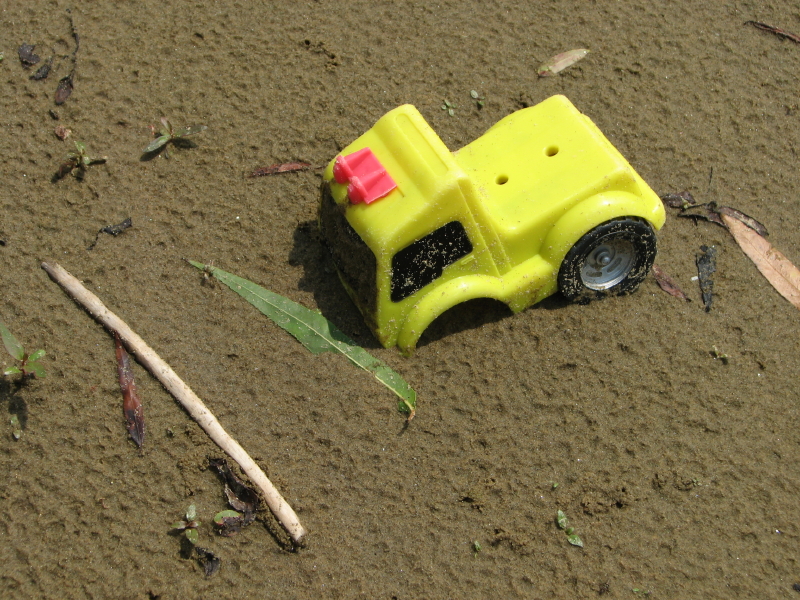
The majority of what I’m going to present in this post are toys.  Take for instance this bright yellow toy truck that rode in with the river’s waves and nearly buried itself in the sand.  The yellow color practically screams!

For those of you who occasionally follow this blog might recognize that I have photographed many of the petrol containers that I have come across.  Those images can be found in my special collections area under the About section. To me, gasoline is one of those substances that define the times we live in.  By far, this is the smallest such container I’ve come across and has a treasured place on my windowsill with other favorite finds.

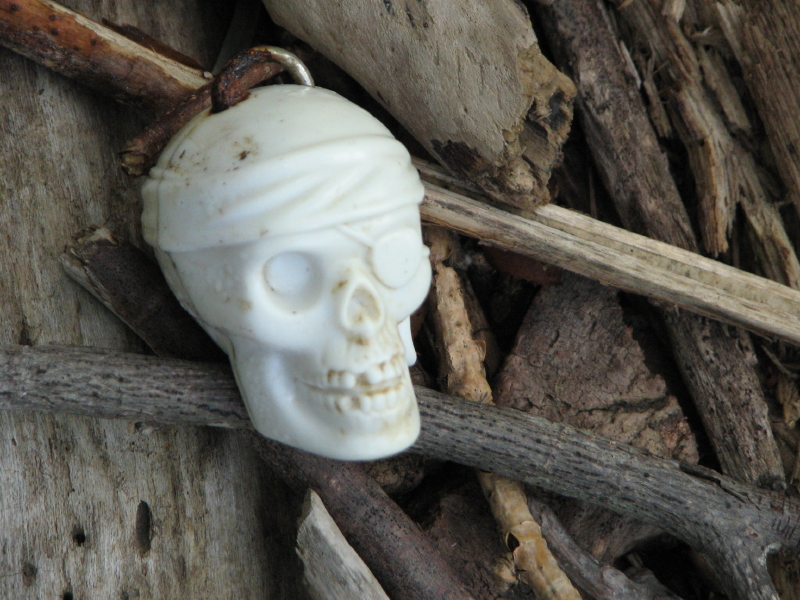
For awhile there was this pirate craze inspired by the Johnny Depp movies and I can recall my sons and nephews being enamored by the Jolly Roger.  I came across this plastic skull mixed among the driftwood and after taking its picture…picked it up and dropped it into my collecting bag.

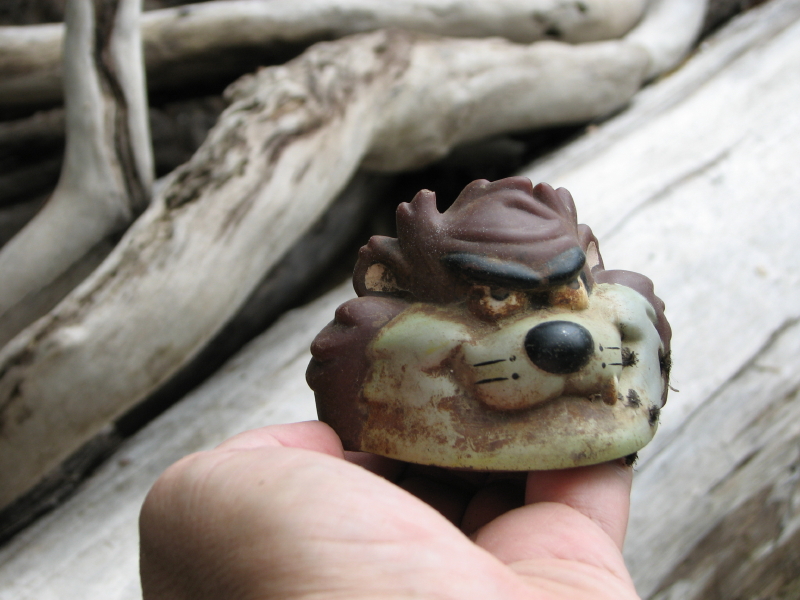
There’s a nice patina forming on this Tasmanian Devil character head.  The use of popular cartoon characters to sell stuff is a tried and true marketing strategy.  I will guess that this is the screw on cap to a bottle of children’s shampoo?  I’m surprised that I found this mingled with the neutrally colored driftwood since it doesn’t possess a color that screams at you.

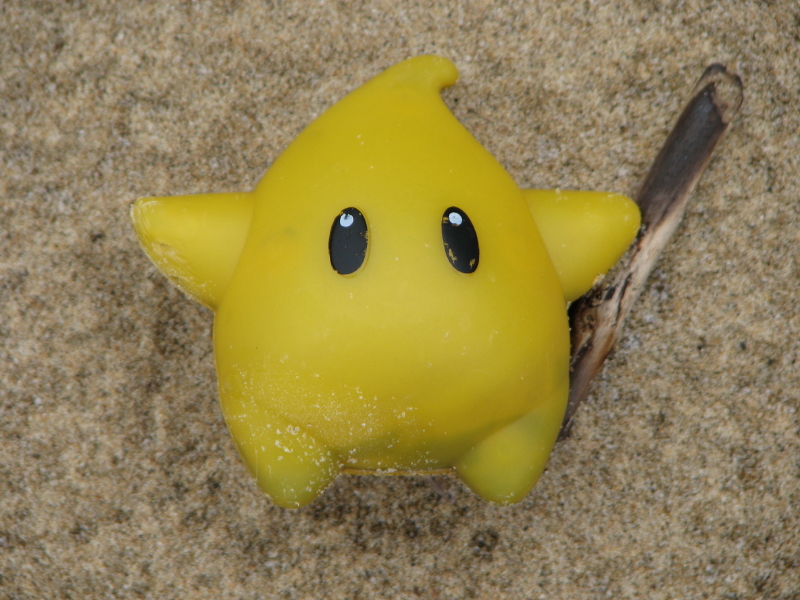
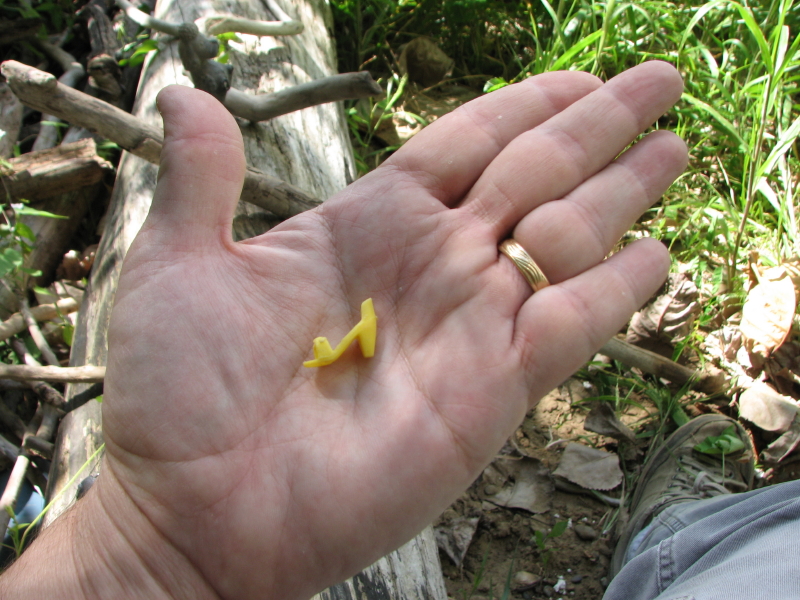
Honestly, I’m not sure what this is?  Yes it’s a toy, but from what cartoon series?  For now, I’m just calling it a yellow plastic “star” toy.  It’s quite small and the grains of sand speak to that.  Anyone have a guess?

I have a collection going of these small plastic figures meant for the smallest among us.  After so many years, it still disarms me somewhat to find toys meant for toddlers and babies mixed with the driftwood.  It makes me feel as though there are unsupervised kids playing by the river which in our hyper fearful times seems inexplicable.  Here’s something else…

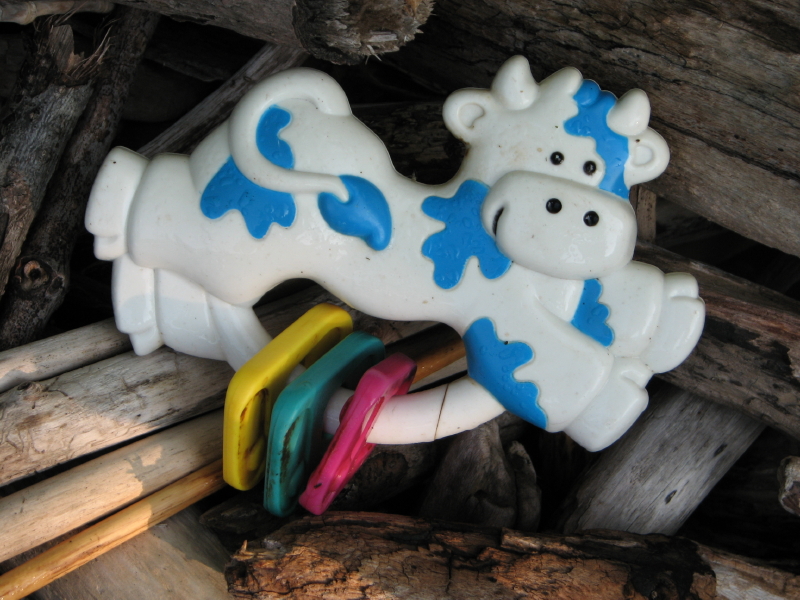
I find many toys meant for infants such as teething rings.  This one features a leaping happy cow with colorful plastic keys.  Now all this stuff is what can be found on the surface of the driftwood.  In places the deposited wood can be several feet thick and you just know that scattered in between those layers are more potential discoveries.

I also have a penchant for photographing lost footwear.  I believe this is one of the two smallest shoes I’ve come across thus far.  I nearly saved this one for “The Shoes You Lose” collection, but couldn’t wait to post it!

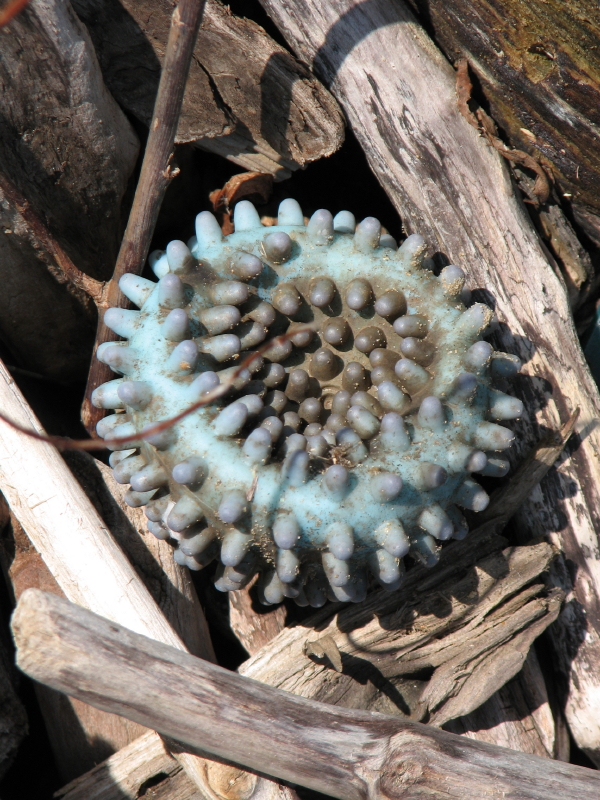
This could be either some exotic blue fruit or seed pod…or potentially a prickly chew toy for your dog?  I’m leaning towards the dog toy idea.

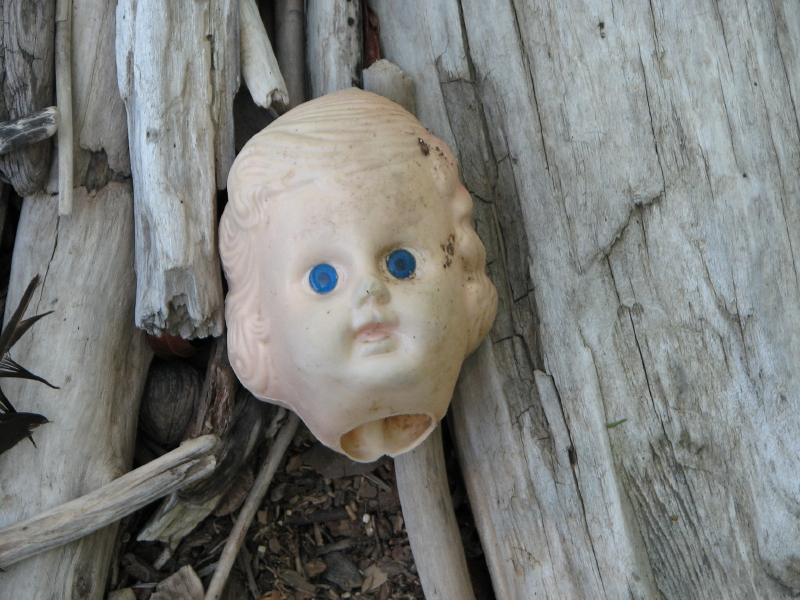
As doll heads go…this one isn’t as frightening to me.  It’s very cheaply made and the painted blue eyes aren’t very convincing.  Over the years, I have found many, many dolls and doll parts.  Practically every time I visit the river I find a doll arm or leg.  The frequency never ceases to amaze me.  To end this post, here’s the latest image.  I found this plastic hubcap for an expensive and real truck and liked the play of light over its surface.  Seems like it should be made of metal?  Well, dear readers…where ever you go…happy finds to you!  I’ll bet you have found a few interesting items in your corner of the world?

Read Full Post »

« Newer Posts - Older Posts »