Feeds:
Posts
Comments

Archive for the ‘art and environment’ Category

At last we have some respite from the dreaded heat of this summer.  Today is gorgeous!  The air feels fresh, and there is a nice quality to the light.  I decide to spend my time in the western section of the park on the Indiana side.  I heard that the butterflies were plentiful on the loosestrife flowers and that this could be a good time to take pictures.  First, I needed to find an officially sanctioned butterfly guide to show me the way.  He’s supposed to be somewhere over here…yes, there he is right on time.
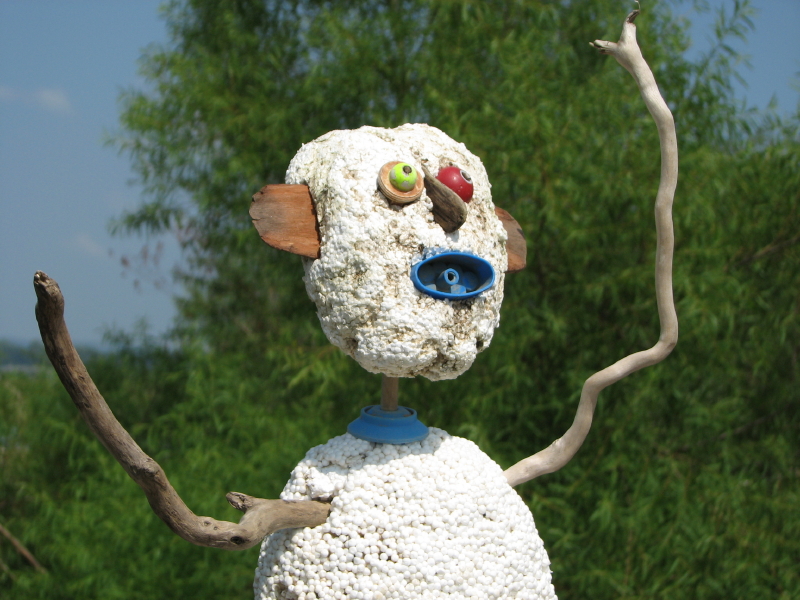
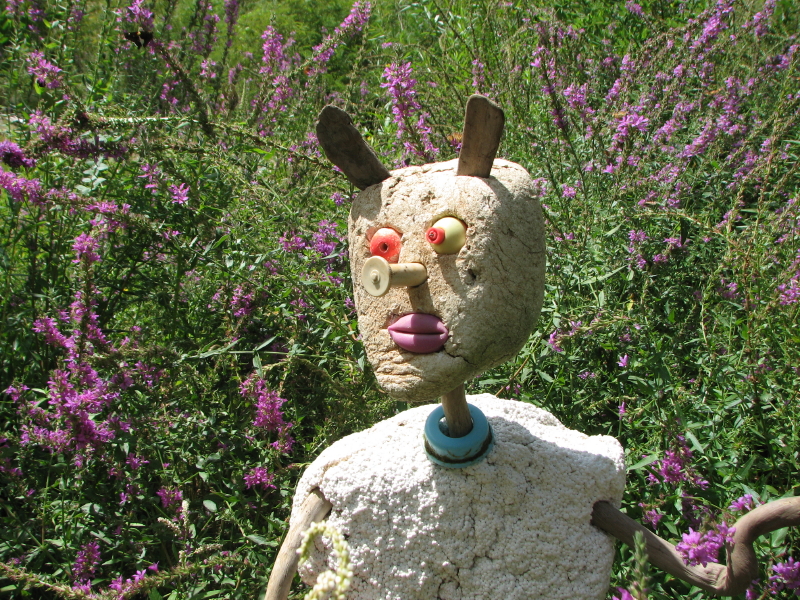
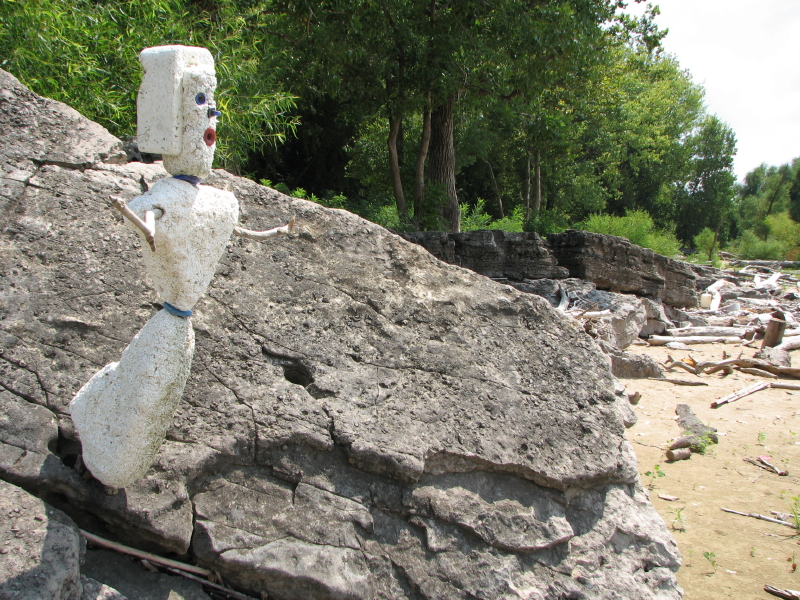
The strange-looking character said “Hello, are you the one who wants to see the butterflies?”  I replied that I was and we met face to face.

And what a memorable face he has with his mismatched eyes and lavender lips!  He told me to call him the Butterfly Man and that I had picked a good time to come to the river because it was now agreed that 2010 was a good year for butterflies in our area.  He also said that the place we wanted to go was a short walk ahead to where the purple flowers were growing.  Many different kinds of butterflies would be there.

Along the way, the Butterfly Man told me tidbits about the environment we were experiencing and what we might expect to see.  He explained that the loosestrife flowers are an invasive species and quickly take over these shallow wetlands.  Around here small springs trickle water down the bank towards the river and keep this area moist. These are perfect conditions for the loosestrife which has spread from last year.  Butterflies and other insects love the nectar from these flowers and if we encountered bees and wasps…not to be afraid because if you left them alone, they would do likewise.  Soon we were among the flowers and it didn’t take the Butterfly Man long to spot a terrific butterfly!
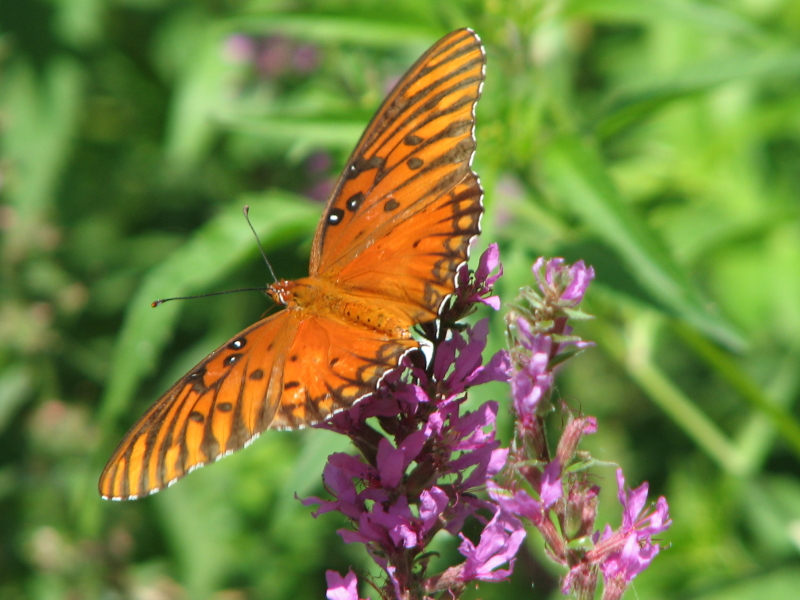
With its slightly elongated forewings and intense orange color the Gulf Fritillary ( Dione vanillae ) stands out among the loosestrife.  As the name suggests, this is a mostly southern species, but does venture north.  The ventral coloring sports mother of pearl and orange spots.  Not to far away on a different flower, Butterfly Man spotted a nice swallowtail.
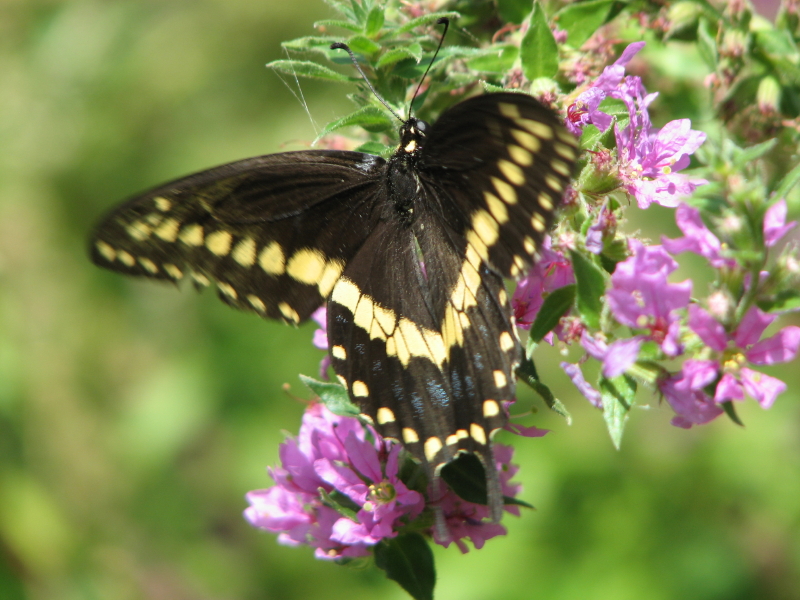
This is the Eastern Black Swallowtail, ( Papilio polyxenes ) and I have come across a few of these and other swallowtails as well.  I have seen, but unable to get a photo of some of them because they never slowed down!  I saw a Giant Swallowtail, our largest butterfly, fly over my head and towards the river.  The Zebra Swallowtail, same thing, it was flying too fast and never alighted.  The Pipevine Swallowtail I saw was so ragged that I decided not to take a picture of it.  I’m sure over time I will get other chances.  Here’s an image I like of a very common butterfly.
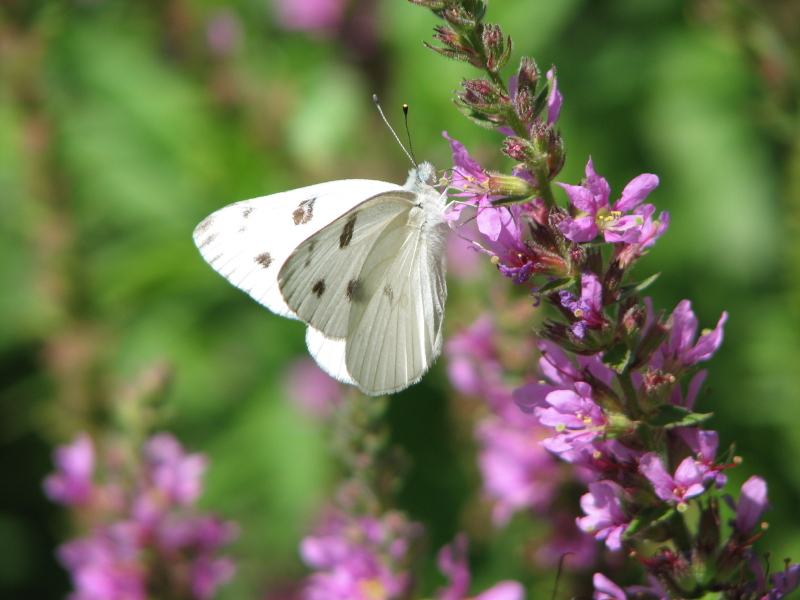
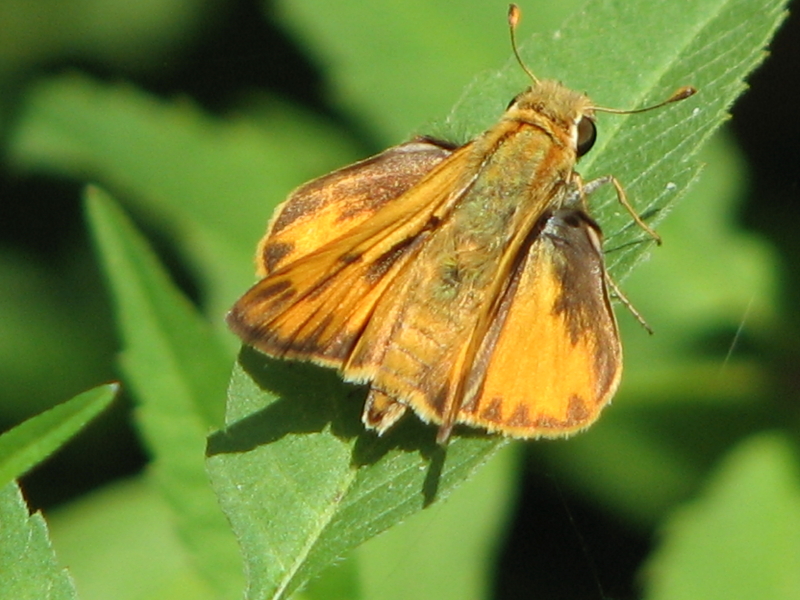
This butterfly was introduced into North America in the 1860’s and has now spread over the continent.  The Cabbage White, ( Pieris rapae ) is the most common white butterfly that most people are likely to encounter.  At the Falls, we also find another immigrant, the European Skipper, ( Thymelicus lineola ) which was accidentally introduced in Ontario about 1910 and has since spread across the country.  These tiny gold skippers can be very hard to identify and probably depends on having one in hand.  I like the idea of capturing a photographic image because no harm is intended.  With their folded wings, many skippers don’t look like butterflies at all. 
After a while, the Butterfly Man said we should take a break.
He said he found something special earlier in the morning and it was somewhere in this vicinity.  There is another creature here taking advantage of the butterflies.  Sure enough a couple of bushes away we found her enjoying a snack.

We found such a beautiful and large spider sitting on her web!  The proof she selected the right location was entombed in silk.  I have seen other Black-and-yellow Argiope ( Argiope aurantia ) spiders at the Falls before.  This is the first for this year.  She’s a big spider and soon she will produce her egg case and die.  The baby spiders will overwinter in the case and emerge in the spring.  These orb weavers have a characteristic zig-zag silk pattern on the interior of their webs.  This spider has had luck catching Orange Sulphur and Viceroy butterflies.  I noticed many loose wings below the web.  There is an element of risk out here among the flowers after all.

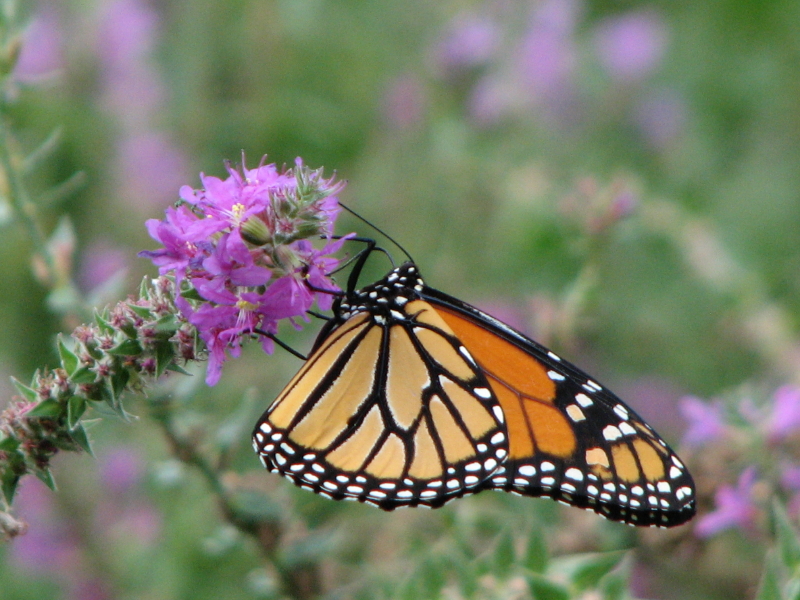
 The Butterfly Man spotted a nice pair of Viceroys ( Limenitis archippus ) basking side by side on the same leaf.  There are many of these species currently out among the willow trees.  With their smaller size and black line crossing the veins of the dorsal hind wing they can be told apart from the Monarch butterflies ( Danaus plexippus ) which are also in the area flying down on their long migration to Mexico.
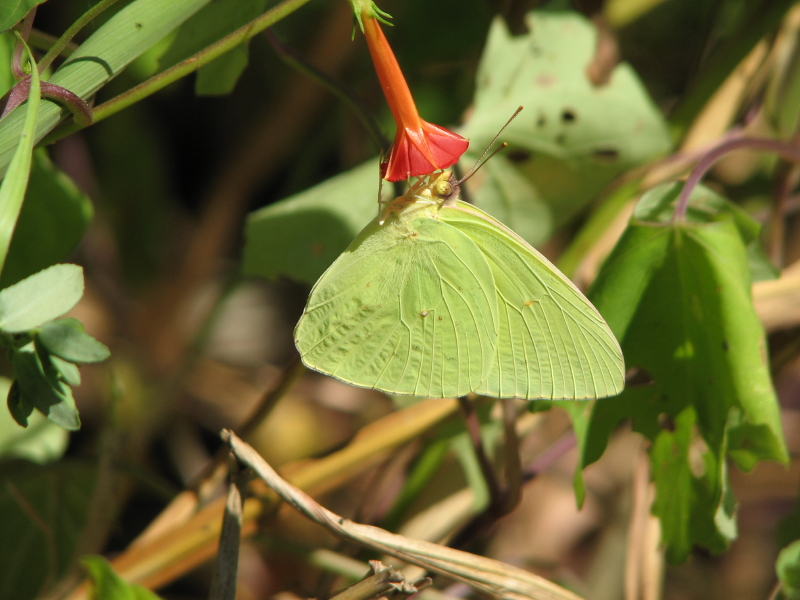
There was time for one last butterfly before turning for home.  Earlier I had spotted a few large yellow butterflies nectaring on the small Jewelweed vines .  I came across this Cloudless Giant Sulphur in a characteristic position with its wings folded together like a yellow leaf and created this composition.
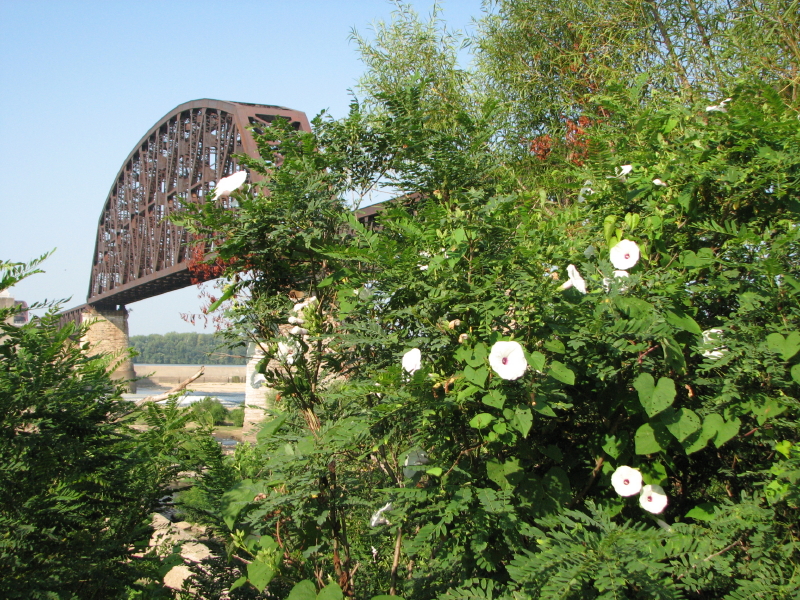
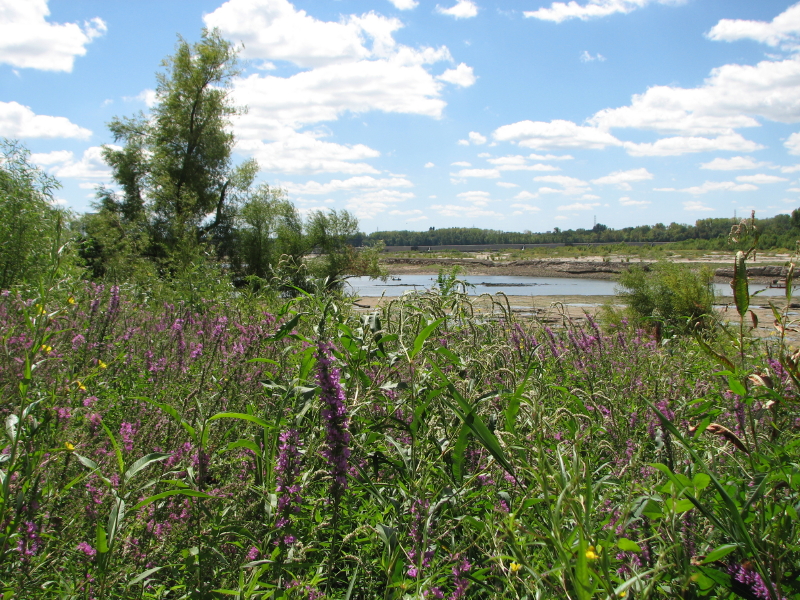
After one final look at the loosestrife fields, I was reminded of French Impressionistic painting and thought this landscape worthy of a canvas or two for the purple colors and nice cloud formations.  You can also glimpse the fossil beds beyond the trees.
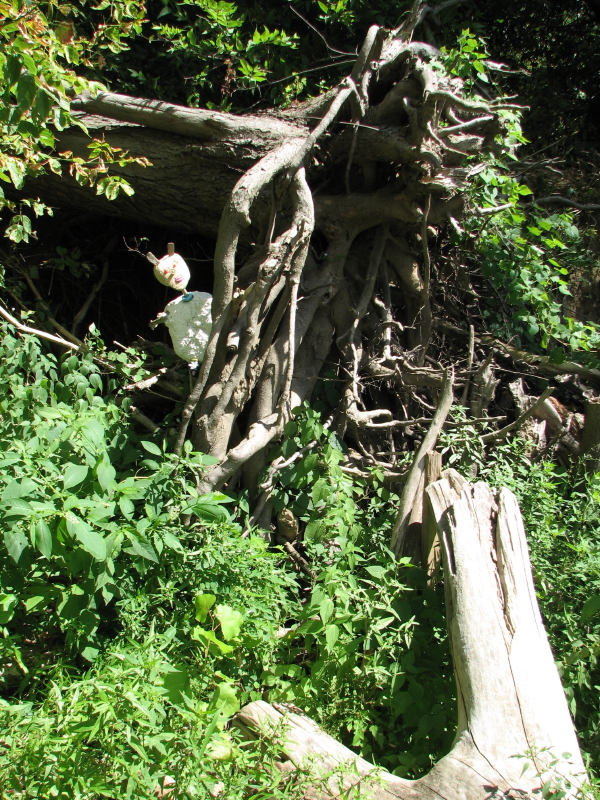
I left the Butterfly Man standing where I first met him by his home next to a downed tree.  I thanked him for taking the time to show me around and hoped to run into him again in another adventure at the Falls of the Ohio.
Read Full Post »

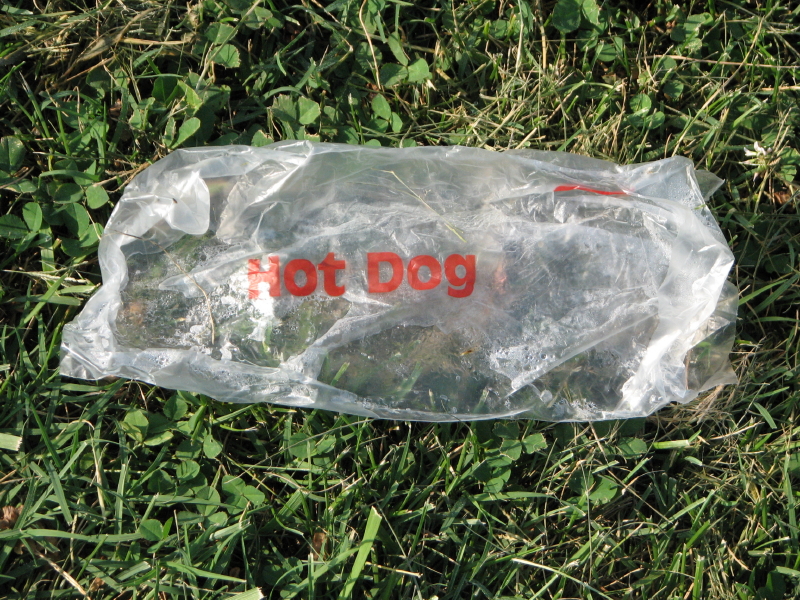
It’s not everyday that you come across a conceptual hot dog and so I couldn’t resist recording this image.  What follows next are some recent river treasures I’ve discovered on my wanderings throughout the Falls of the Ohio State Park.  We haven’t had any flooding recently which is the easiest and quickest way to find stuff.  I still subscribe to the theory that the objects you are meant to find call you on a subliminal level.  I will happen by some spot and for some unvoluntary reason  will look down and there “it” is!  Here are a few more lucky finds courtesy of the cosmos. 

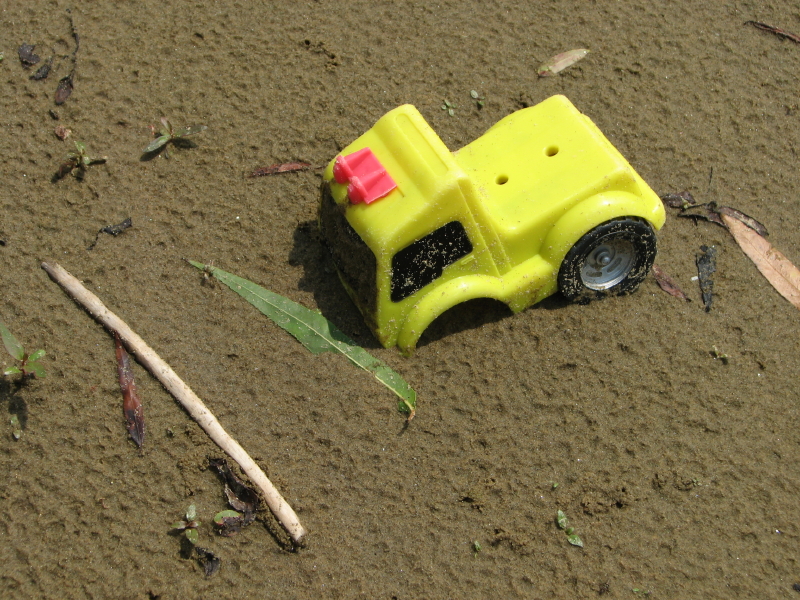
The majority of what I’m going to present in this post are toys.  Take for instance this bright yellow toy truck that rode in with the river’s waves and nearly buried itself in the sand.  The yellow color practically screams!

For those of you who occasionally follow this blog might recognize that I have photographed many of the petrol containers that I have come across.  Those images can be found in my special collections area under the About section. To me, gasoline is one of those substances that define the times we live in.  By far, this is the smallest such container I’ve come across and has a treasured place on my windowsill with other favorite finds.

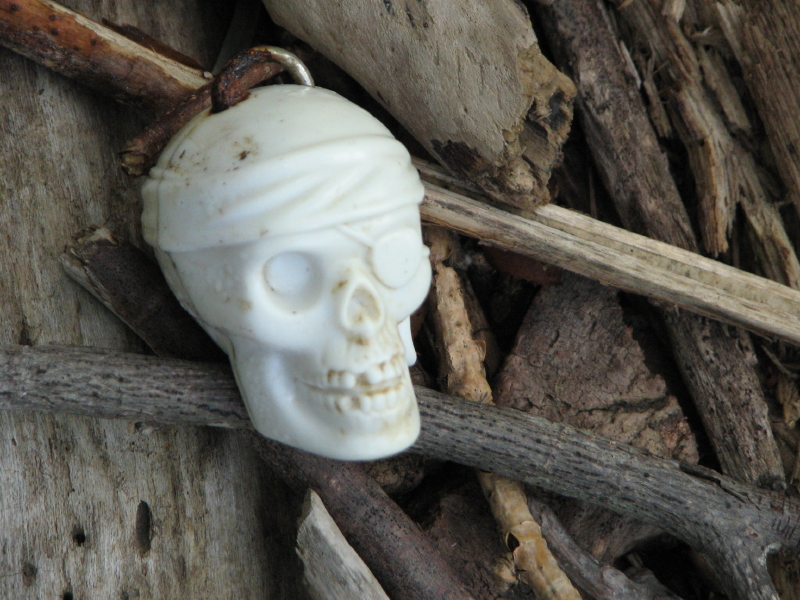
For awhile there was this pirate craze inspired by the Johnny Depp movies and I can recall my sons and nephews being enamored by the Jolly Roger.  I came across this plastic skull mixed among the driftwood and after taking its picture…picked it up and dropped it into my collecting bag.

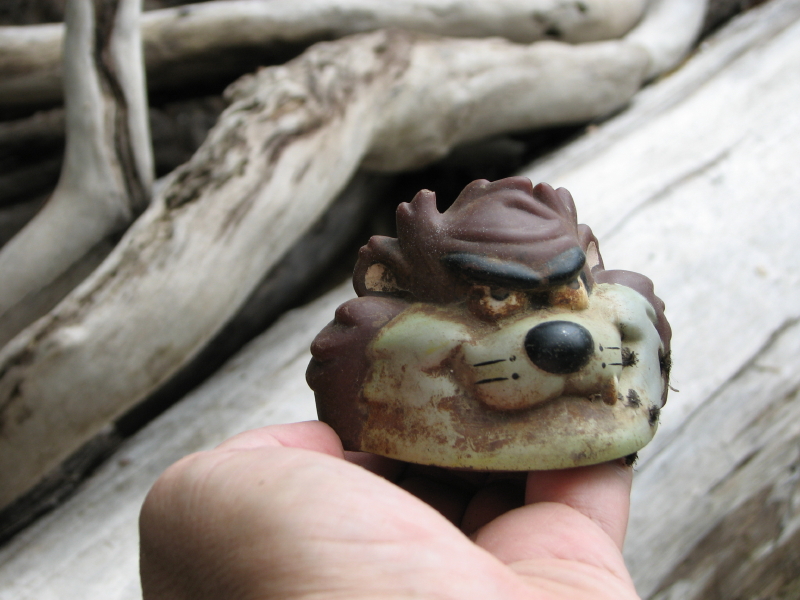
There’s a nice patina forming on this Tasmanian Devil character head.  The use of popular cartoon characters to sell stuff is a tried and true marketing strategy.  I will guess that this is the screw on cap to a bottle of children’s shampoo?  I’m surprised that I found this mingled with the neutrally colored driftwood since it doesn’t possess a color that screams at you.

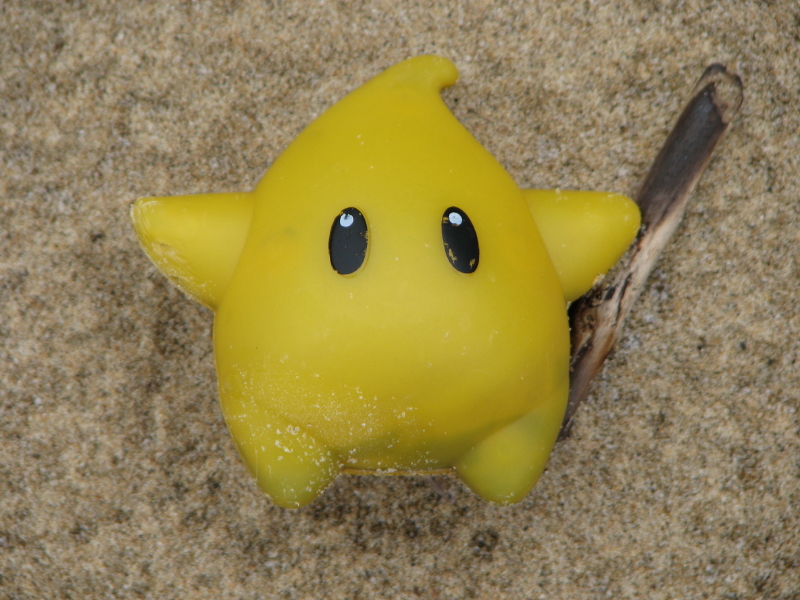
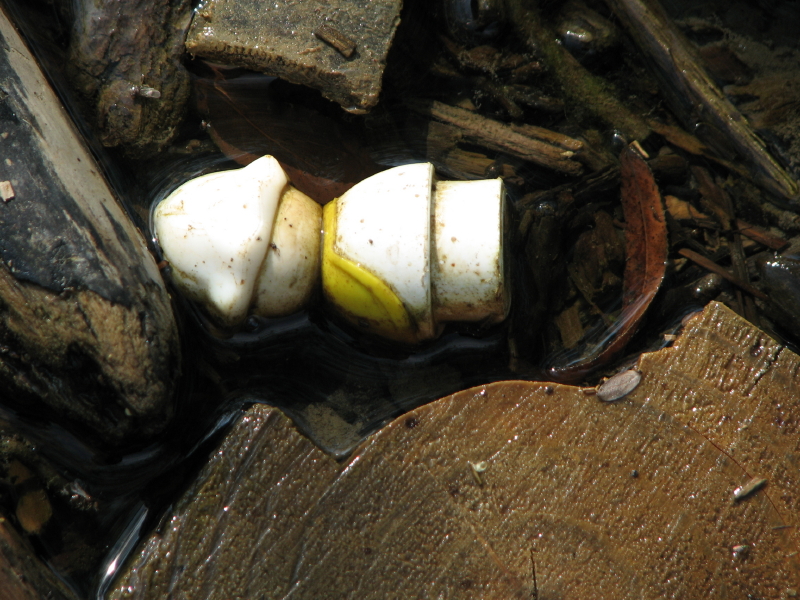
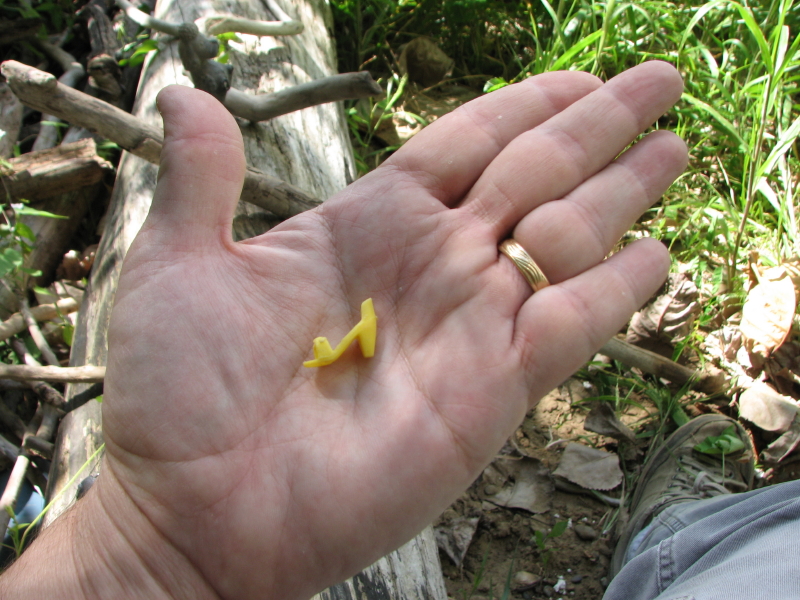
Honestly, I’m not sure what this is?  Yes it’s a toy, but from what cartoon series?  For now, I’m just calling it a yellow plastic “star” toy.  It’s quite small and the grains of sand speak to that.  Anyone have a guess?

I have a collection going of these small plastic figures meant for the smallest among us.  After so many years, it still disarms me somewhat to find toys meant for toddlers and babies mixed with the driftwood.  It makes me feel as though there are unsupervised kids playing by the river which in our hyper fearful times seems inexplicable.  Here’s something else…

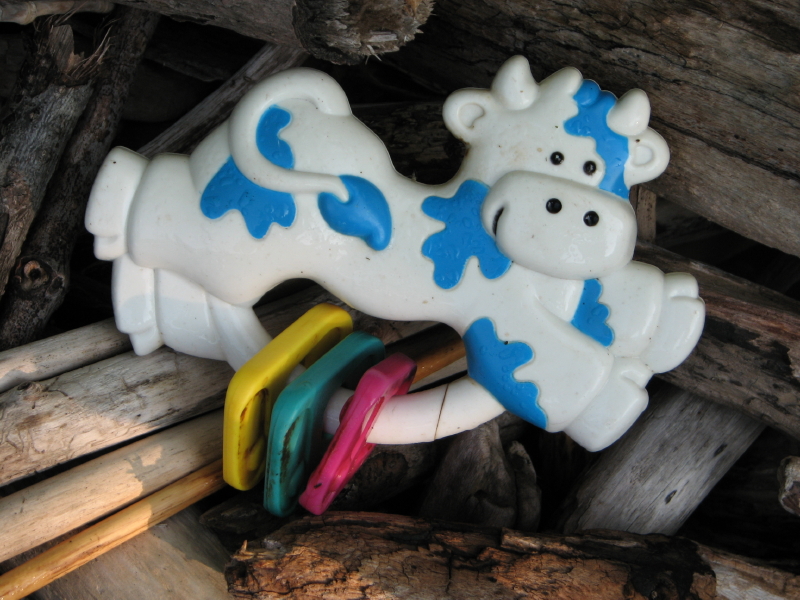
I find many toys meant for infants such as teething rings.  This one features a leaping happy cow with colorful plastic keys.  Now all this stuff is what can be found on the surface of the driftwood.  In places the deposited wood can be several feet thick and you just know that scattered in between those layers are more potential discoveries.

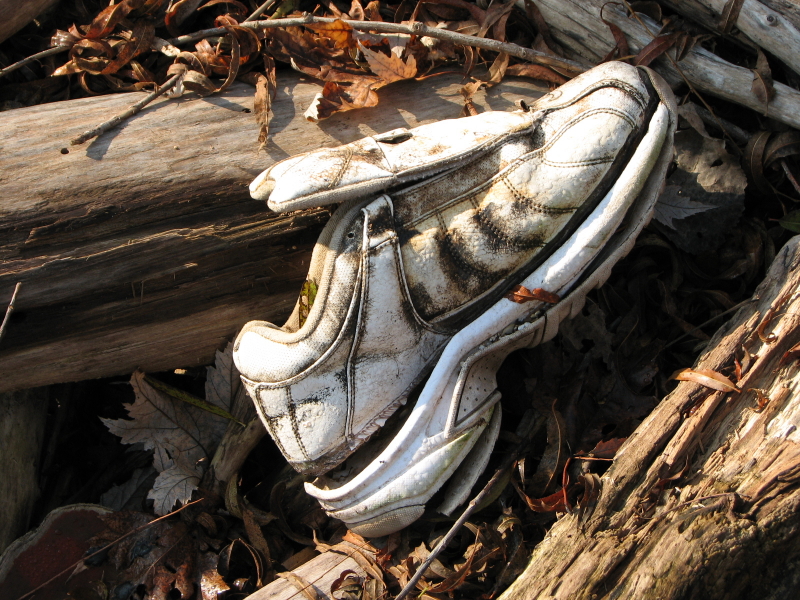
I also have a penchant for photographing lost footwear.  I believe this is one of the two smallest shoes I’ve come across thus far.  I nearly saved this one for “The Shoes You Lose” collection, but couldn’t wait to post it!

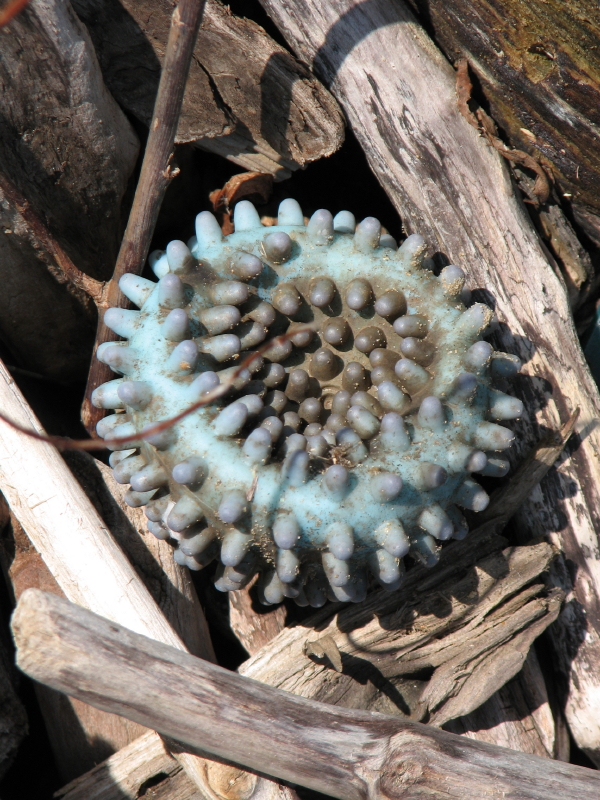
This could be either some exotic blue fruit or seed pod…or potentially a prickly chew toy for your dog?  I’m leaning towards the dog toy idea.

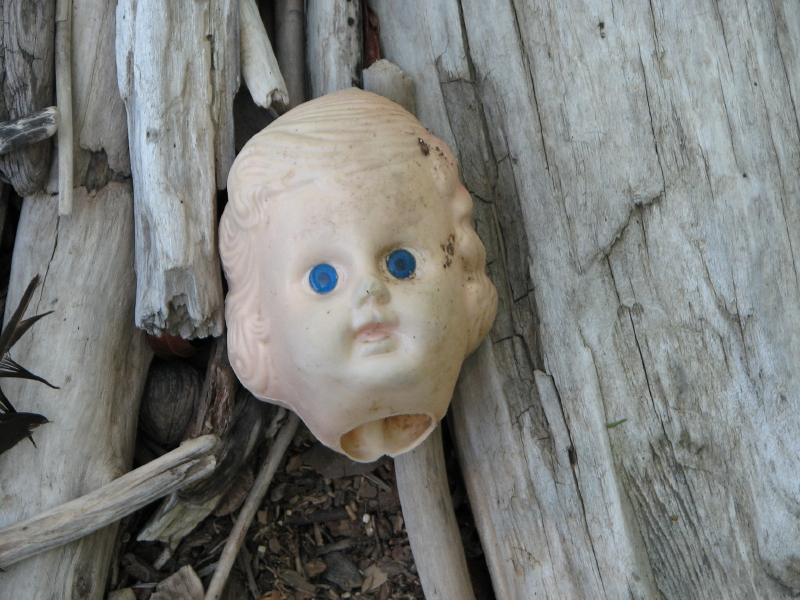
As doll heads go…this one isn’t as frightening to me.  It’s very cheaply made and the painted blue eyes aren’t very convincing.  Over the years, I have found many, many dolls and doll parts.  Practically every time I visit the river I find a doll arm or leg.  The frequency never ceases to amaze me.  To end this post, here’s the latest image.  I found this plastic hubcap for an expensive and real truck and liked the play of light over its surface.  Seems like it should be made of metal?  Well, dear readers…where ever you go…happy finds to you!  I’ll bet you have found a few interesting items in your corner of the world?

Read Full Post »

Ah, how nice it is to be in the great outdoors and filling my lungs with fresh air!  The passing weather front has made life bearable again and the fleecy white clouds are a reminder that Autumn is near.

Visitors are down on the fossil beds trying to imagine what life must have been like all those supposed millions of years a go.  I can see a few fishermen too, but I think the water is too warm and the fish won’t be in the mood.  I wonder if when our kind passes into the next geological age…what presences will we leave behind?  Will our very bones turn to stone too and leave a layer here for “others” to discover?  I doubt it.

It’s all so mind-boggling to me that life could have evolved out of some stagnant pool of algae ooze.  I’m not sure I believe that because here I am in my white dress floating over this landscape.  That would have been too unrefined a beginning for someone who is closer to the angels than to the amoebas!

Surely, all this exists for our benefit?  I mean what other use could it have?  Do we think that the animals or plants have the means to develop this site or have the wherewithal to see a bigger picture?  If it’s all going to become history anyway shouldn’t we use our resources as we see fit?  Isn’t that what Darwin meant by survival of the fittest?

Nature is okay, but a little untidy for my tastes.  What the natural world needs are beings like us to organize this place and turn it into a garden.  When I visit the Interpretive Center I think I will plant that idea in the suggestion box.  There are so many more useful ways to experience this landscape  if only the people in charge would clean things up a little.

Read Full Post »

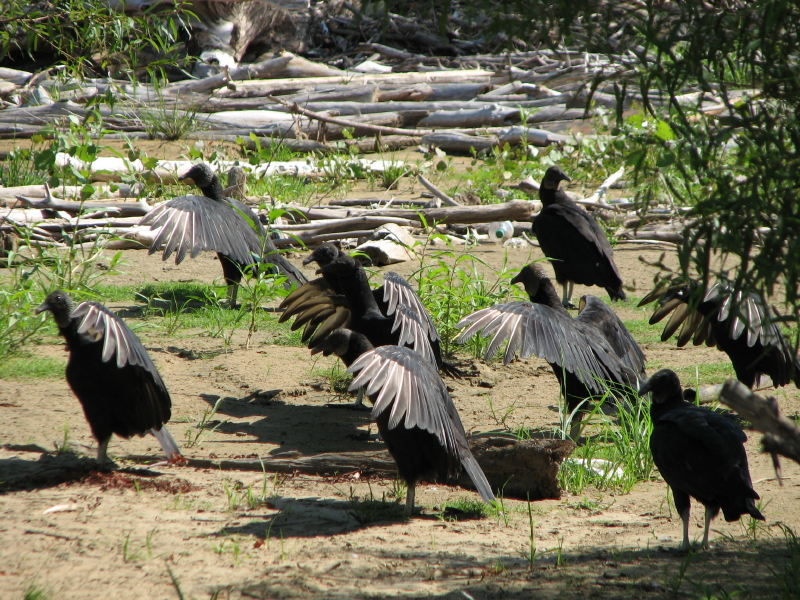
It’s official, this summer was our toastiest.  I looked at the lead article in the local newspaper and words like historic and unprecedented are being used.  We beat the old record that stood since 1936 by a degree and a half!  In meteorological terms that’s a lot.  This was determined by factoring the daily highs and lows and taking the average temp for the day. Louisville had more than 80 above average temperature days this summer which was more than any other city in the country.  No wonder working at the Falls felt so harsh.  We had a number of high pressure systems that just hung around the Ohio Valley making life difficult for everything including these vultures.  Of late, every year has had something climatically anomalous about it.  Too dry, too hot, too wet, too cool…missing are words like usual, normal, ordinary, and uneventful.

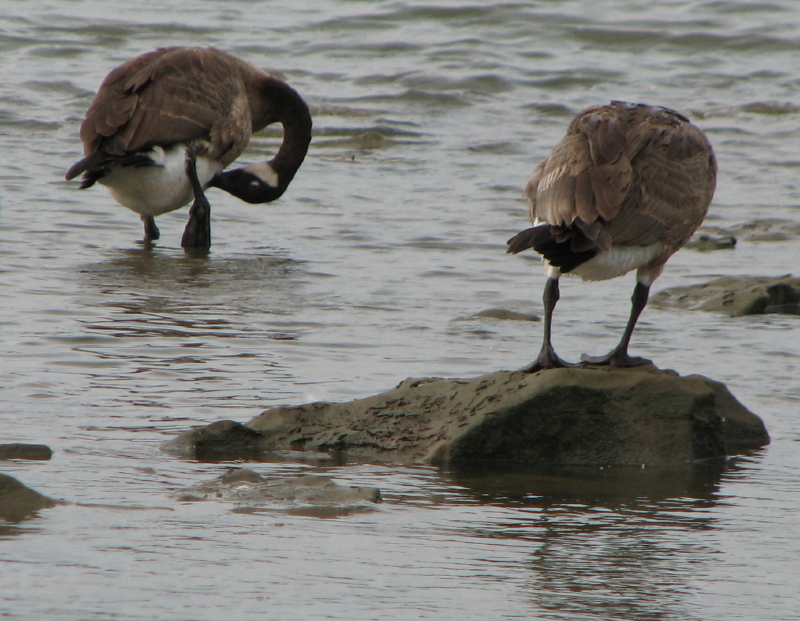
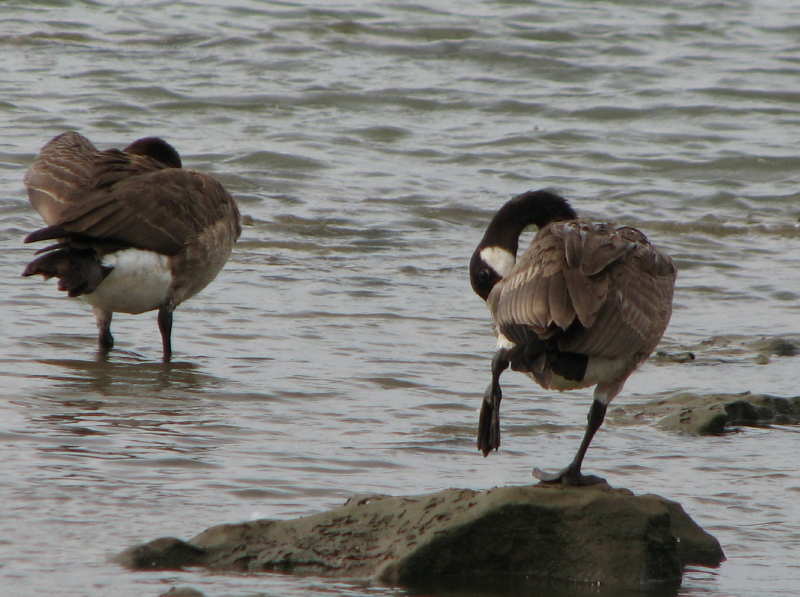
The variety of bird life at the Falls has been down this year too.  When you are a creature that is sensitive to the environment and have the advantage of great mobility…your instincts can tell you to go elsewhere.  I think this is what happened this year.  I will be really curious to see what comes by on the Fall leg of migration.  This year the Black vultures did well as did the Canada geese.  I could count on seeing those two species in good numbers most anytime I came out to the river.

From what I can see “anecdotally” the Canada Geese are on the rise here.  We have few predators to challenge them.  I have seen some very large flocks out on the water and they are keeping the grass clipped short along the riverbank too.  Friends told me that in the “old days”, you could find large stands of native river cane on the margins.  That’s something I don’t ever recall seeing out here.  One of the values I place upon this blog is to act as a record of the environment as I find it.  We have journals and first hand accounts of what this place looked like two hundred years a go and I believe that two hundred years from now…people will still be interested in the Falls of the Ohio and how it has been changed by civilization.

One of my favorite summer birds are American Goldfinches.  There is something cheerful and friendly about them.  The male with his bright yellow and black plumage is an unmistakable bird.  Many times I have watched the dipping and rolling courtship flight and listened for their call notes.  In the past, I have seen this species in mass, but not this year.

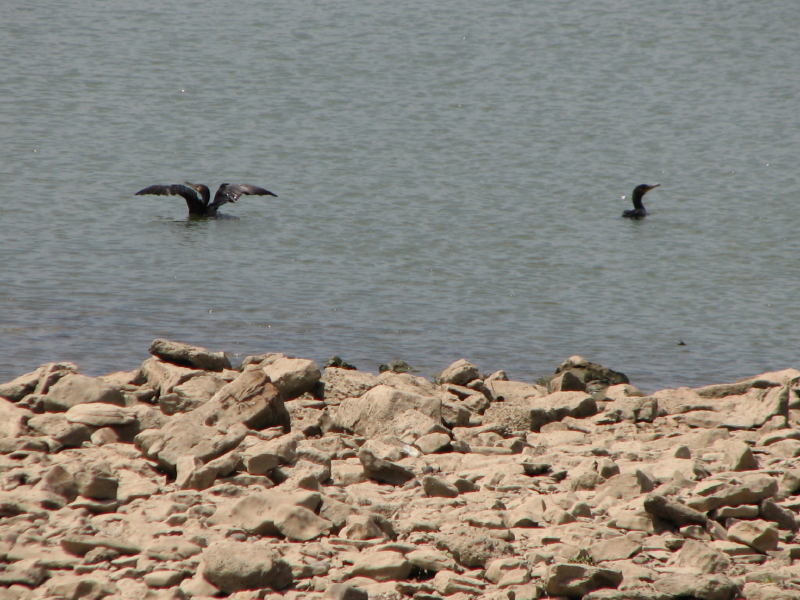
I’ve had conversations with people bragging about their fishing luck or skill, but none of them can hold a candle to a cormorant.  The Double-crested Cormorants in this picture are able to find and catch fish when nothing else can.  Of course, it helps to be able to swim and pursue prey underwater!  These birds are wary and very hard to approach.  In other places of the country, fishermen have persecuted this species because they compete very successfully against the rod and reel.

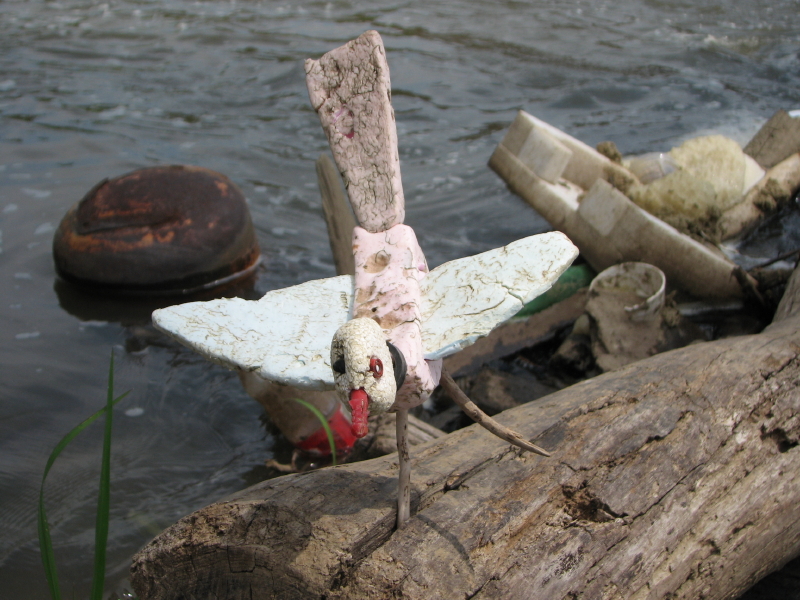
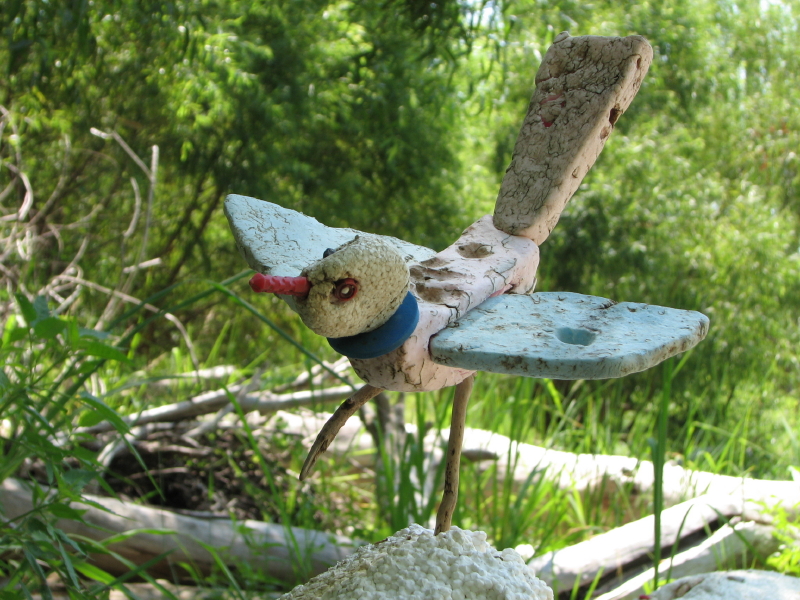
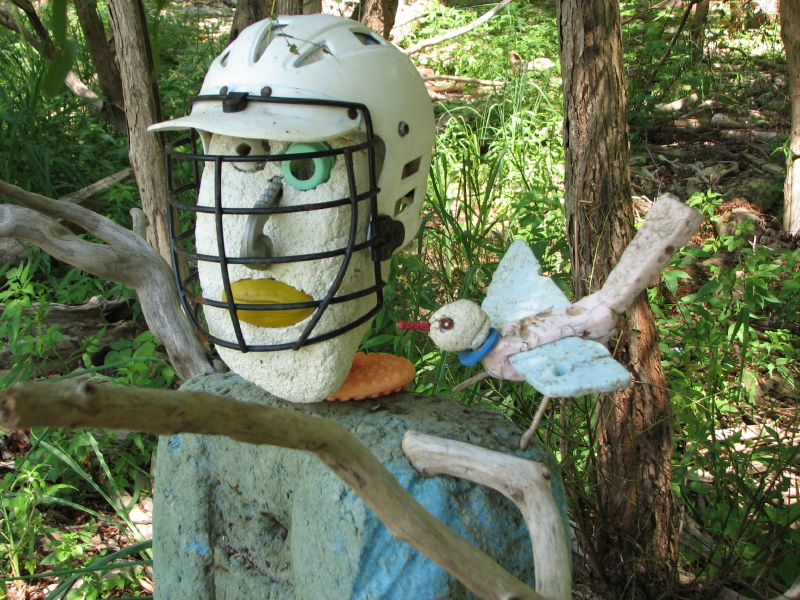
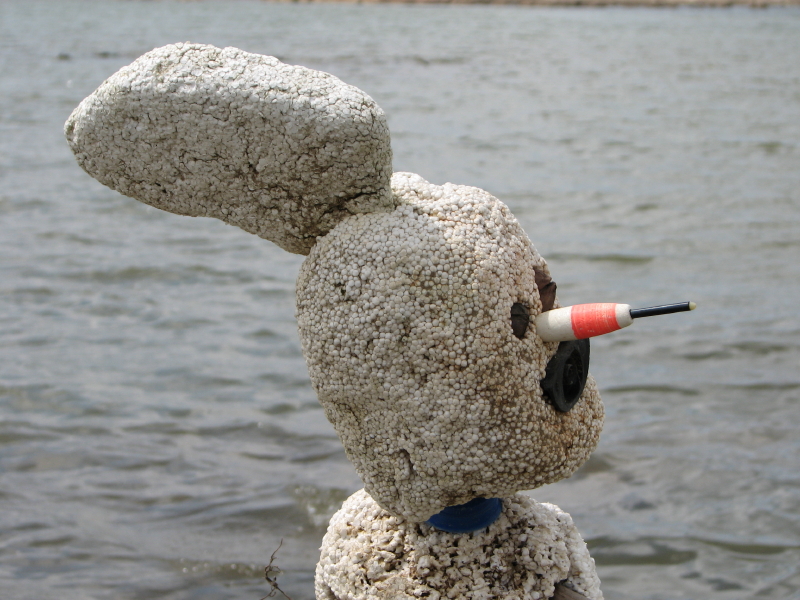
One of the few interesting and new birds to write about is the Azure-winged Mockingbird.  I have encountered them by my studio under the willow trees.  They are fearless and will drive away larger birds.  Among their notable features is the way they flash their wings against their bodies which makes them look more aggressive.  I have wondered as I make my Styrofoam sculptures, if these birds are drawn to the mosquitos and gnats that find me!  This is not a common bird and has been rarely recorded here.  I expect that in a few weeks, it will be winging its way to Central America.  I wonder if this year’s events in the Gulf of Mexico will compromise it and other birds in some way?  The forecast for this holiday weekend looks great and I’m anxious to spend a bit more time out here on my projects.  I’ll close with one more image of my mockingbird friend and a sculpture still around from several weeks past.

Read Full Post »

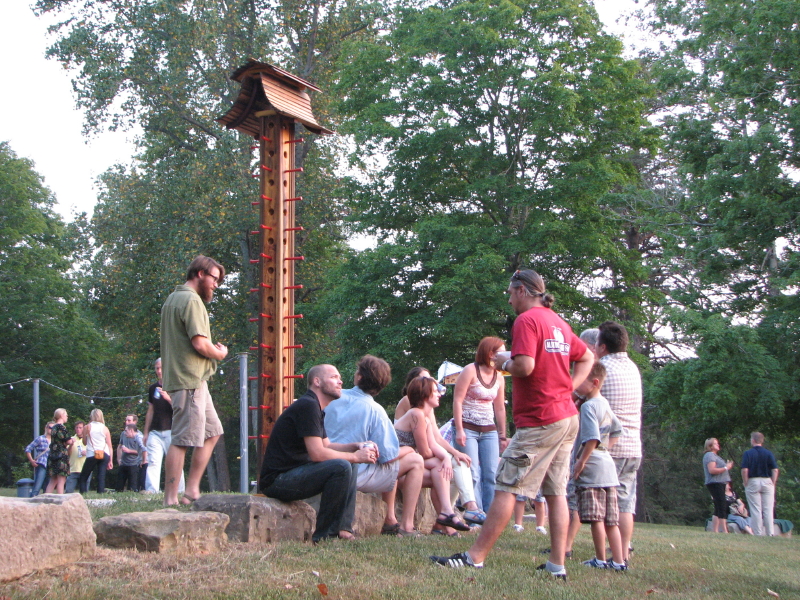
I hustled out to Bernheim Arboretum and Research Forest after supper.  The evening promised a twin bill of fun and I wanted to reach Clermont while the sun was still out.  I was able to take in the “Model Homes and Habitats” exhibition of bird houses and bird inspired art.  The show had a strong Murray State University flavor to it with many past alumni and one current professor showing work.  Murray grad, Brad White assembled the exhibition for Bernheim.  I even saw my old drawing professor Dale Leys there as well which was a nice surprise.  Twenty five years goes by fast!

The designs of the bird houses ranged from the traditional to the conceptual.  Because the light level was getting low, I’m surprised I had images to work with.  Unfortunately, I can’t credit many of the artists because I didn’t see an exhibit guide and some labels were hide to find.  This house with the scary back has a more traditional hole in front.  I liked this picture once I downloaded it from my camera…the house seems to be suspended in mid air.

My friend Raymond Graf had a nice piece in this show.  Inspired by dovecotes and Japanese architecture, this piece looked like a bird skyscraper.  The piece is primarily made of wood and incorporates many Louisville Slugger souvenir baseball bats in its construction. 

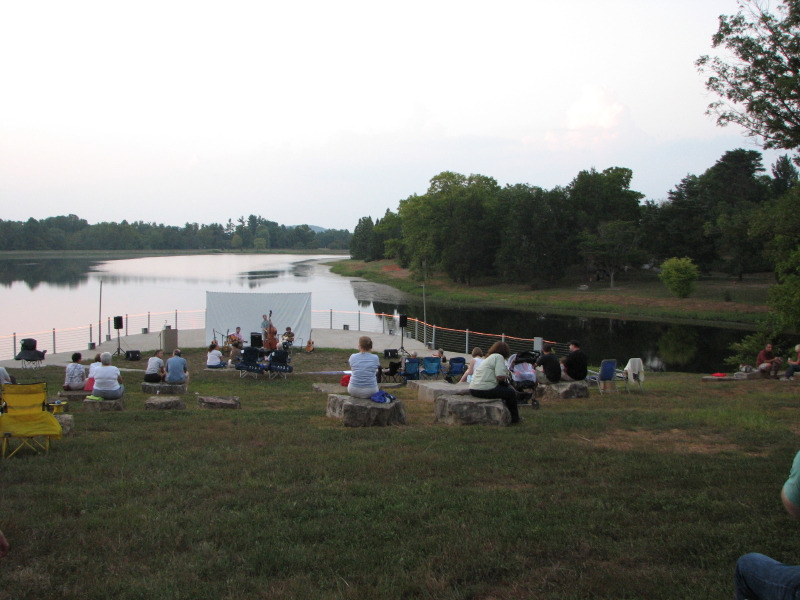
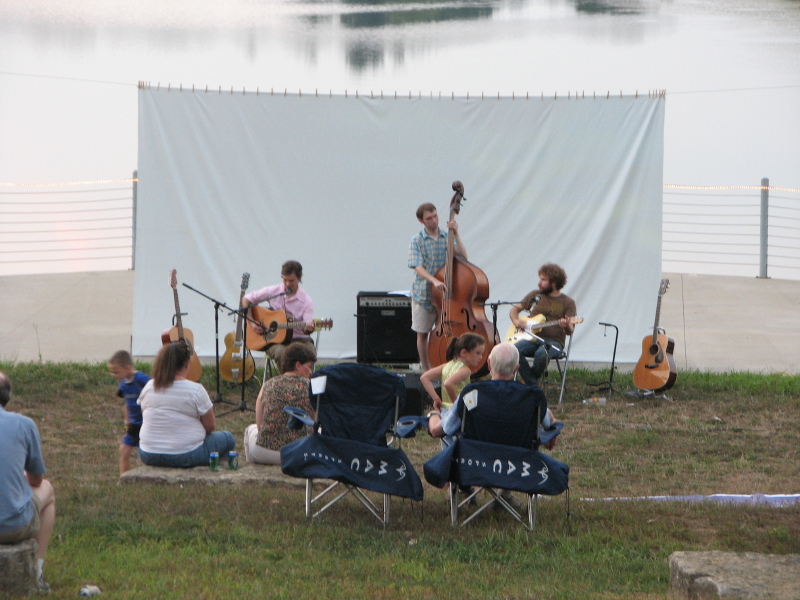
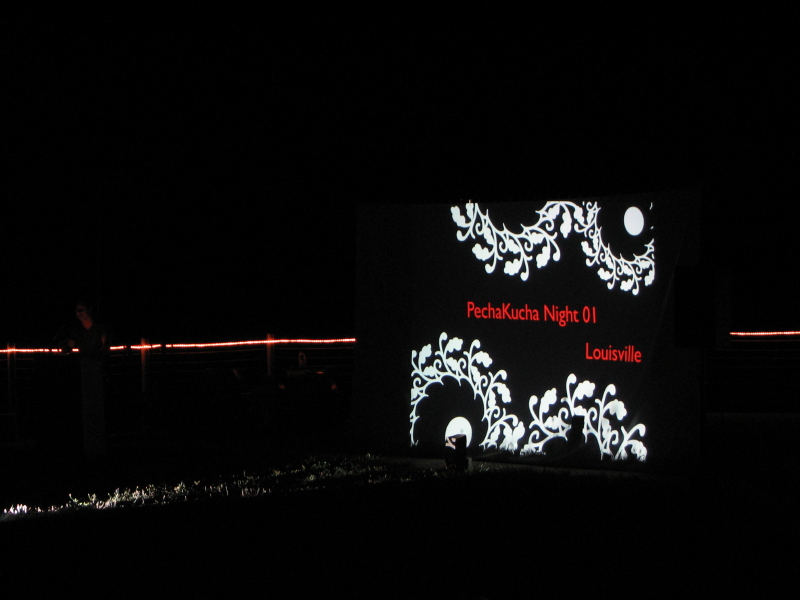
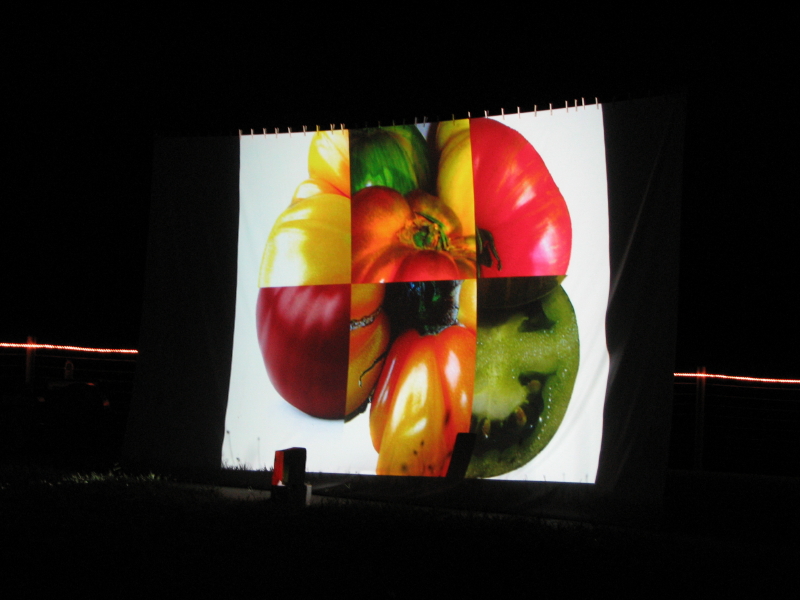
At Bernheim it can be hard to tell how many people are attending an event because the park can accommodate them all.  I know I saw several hundred people enjoying the music, food, and art. The bird houses were scattered along a walking trail.  Once the darkness fell, the white screen behind the band would become center stage.  Folks would concentrate in the informal amphitheater sitting on old limestone blocks from the renovation and expansion of Louisville’s McAlpin Locks and Dam.  Kentucky’s first sanctioned “Pecha Kucha” event was about to start.

Now I will confess that I have never heard of Pecha Kuchas before in fact I kept calling it Machu Picchu all week-long!  Apparently, two American architects decided that the traditional slide show was too boring and could be shortened and made livelier.  The idea is the presenter is limited to 20 projected images and 20 seconds a piece for a total talk of 400 seconds.  That’s it.  Pecha Kucha  is said to be Japanese slang for “chit-chat”.  To me, it sounded like it could have some pace to it like a poetry slam.

Fourteen presenters interpreted the idea that “Mother Nature wants me to tell you something…” in very personal ways.  Many of the speakers were artists who are aligning what they make and do with the needs of the planet.  A concern for where society is going and what should we place value in were common threads in many of the talks.  Not all the presenters were smooth during their 400 seconds and you could tell a few less experienced speakers were nervous, but the crowd supported everyone with applause regardless of the performance!

This evening and the one before it were successful because of the collaboration and partnership between Bernheim and the Carnegie Center for Art and History in New Albany, Indiana.  The weekend began with the opening of Julia Oldham’s “Possumhaw Plant Electrics” exhibit at the Carnegie Center which consisted of four videos and a gallery of wonderful line drawings.  Julia is the 2010 Artist in Residence for Bernheim Forest and the videos were created during her ten week stay.  For those who have followed this blog, Julia is a new friend that I shared a couple of outings with that we posted on our respective blogs.  It was great seeing her in Kentucky again!  Sometimes it’s a big world and sometimes it’s not…perhaps we will meet again?  I hope so.  The next Pecha Kucha will be held in December at the 21C Hotel in Louisville.  That’s another fine venue to take in an event.

Read Full Post »

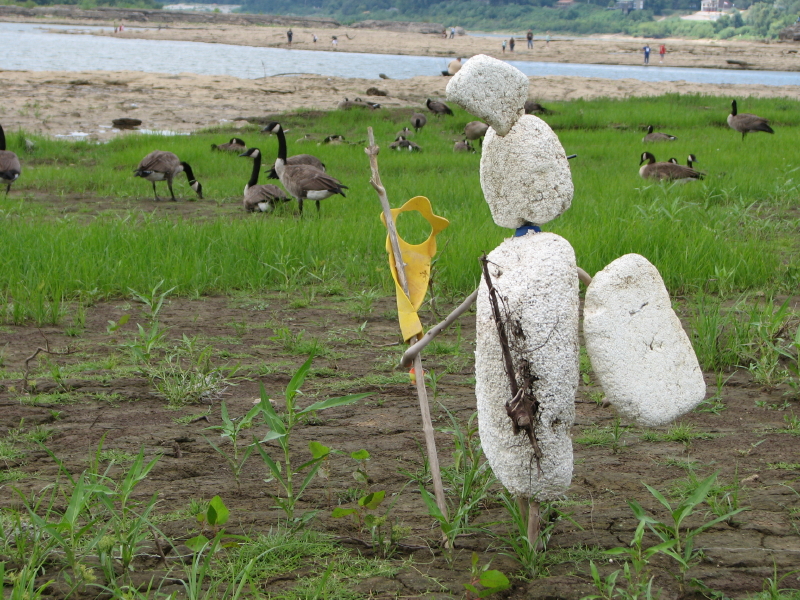
Battered and tired the old soldier looked wistfully to the west.  They said it would be an easy war as wars go.  And sure enough the enemy that wore a uniform was quickly overwhelmed.  Much, however, had changed since Styro-Odysseus began his career as a common soldier. 

Victories were no longer clear-cut and the peace was hard to recognize. Nobody could remember what they were fighting for?  After many years of trying to win the hearts and minds of the occupied people it was time for Styro-Odysseus to return to the muddy shores of his origin.

He had his country’s thanks, but all the old soldier wanted now was the comfort of his family and familiar surroundings.  His valor was now a thing of the past.  It would take all of Styro-Odysseus’ remaining energy to walk the distance towards the life he most desired.  His armor, shield, and standard that he once wore with pride grew heavier with each passing step.  He thought often of the innocence of childhood and green fields.

Along the way, Styro-Odysseus could not help noticing that the country he had risked his life for had fallen into neglect and ruin.  In places it looked as though the war had happened here.  He could not understand his countrymen’s apathy?  He wondered if people still cared?

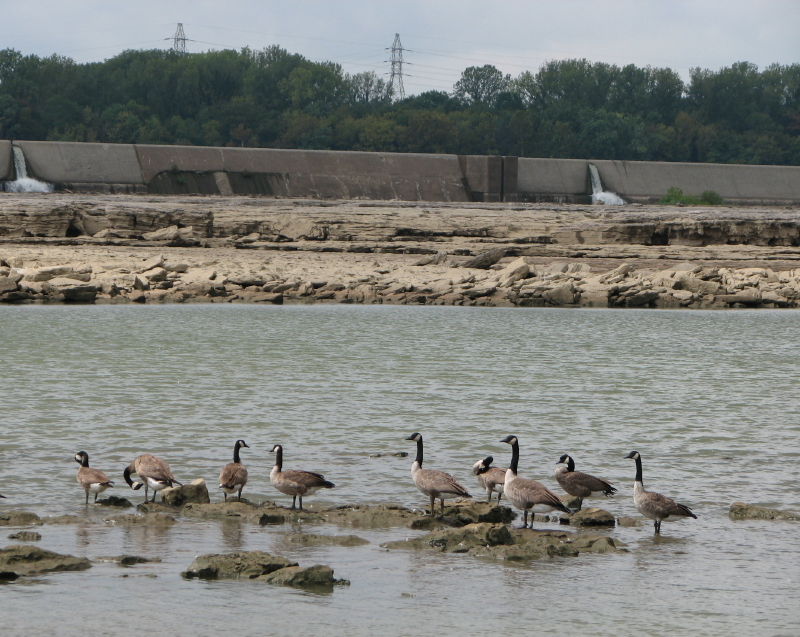
Rounding a bend by a river, the returning veteran had the oddest sensation that the people had in fact been bewitched and turned into geese.  That would explain the poor condition of so much he observed around him.

Meeting fellow travelers along the way Styro-Odysseus learned that much of his beloved land was in a similar condition.  The ordinary man had become disillusioned by evil pundits who were masters of instilling fear and preyed upon the best intentions of the good.

Styro-Odysseus had much to think about.  It seemed to him that righting the course of his own country might prove to be a greater challenge than fighting a foreign enemy.  What force of arms could be used to fight the new enemy that resides within? What could inspire the people and renew the idea of a shared common purpose?  While Styro-Odysseus’ mind grew cloudy…his feet kept on walking and soon he reached a familiar path.

Styro-Odysseus was home and he forgot the great weight he carried upon seeing his family.  For now, he would set aside his armor and forget the duties of being a soldier for at least a little while.  He would try to allow what sweetness that remained in the world to begin the healing process.  The old soldier would rest and renew his energy for the next task at hand.

Read Full Post »

The heat and humidity remain unabated.  I think this is the hottest summer I have spent at the Falls of the Ohio.  Yes, there were always super hot days in the past, but this year we have had many more of them.  I was excited about this weekend because I have three days off, few family obligations, and I planned to go out to the river to see and make what I could.  I have collected some large pieces of Styrofoam and it’s time to use it before the river eventually rises and carries it all away again.
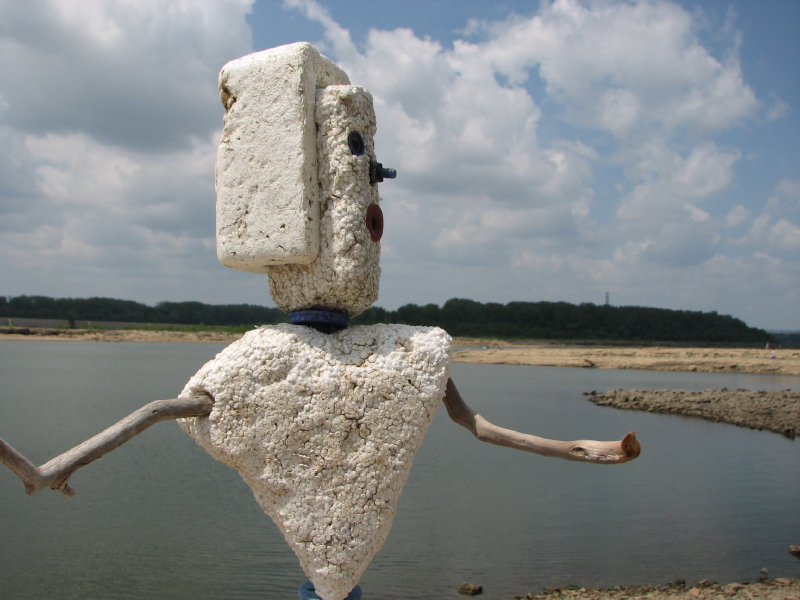
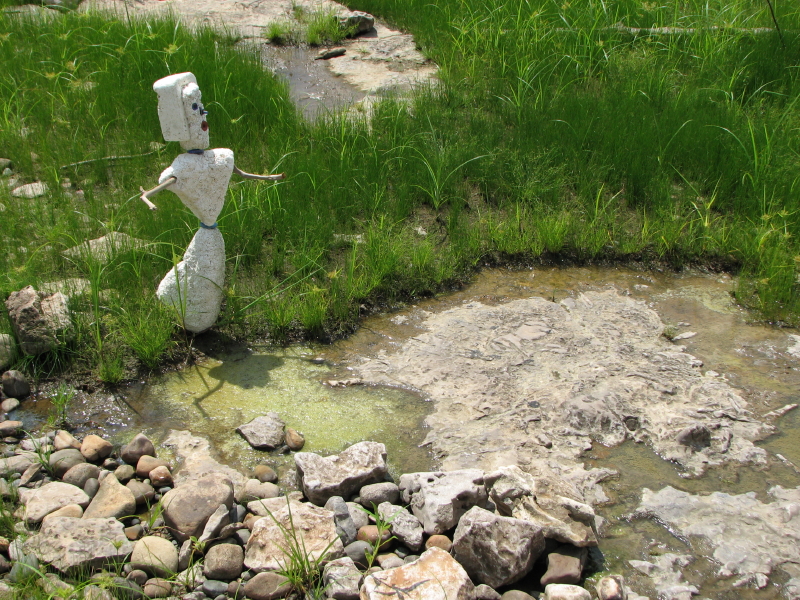
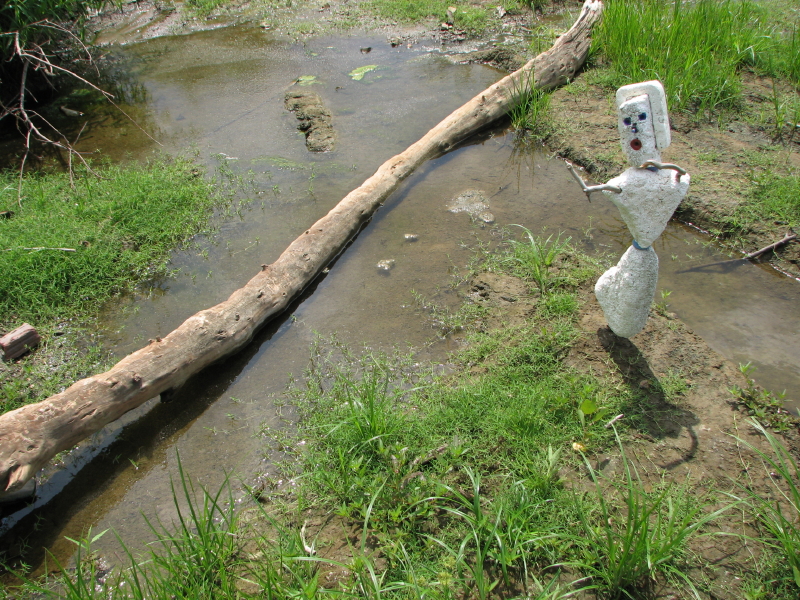
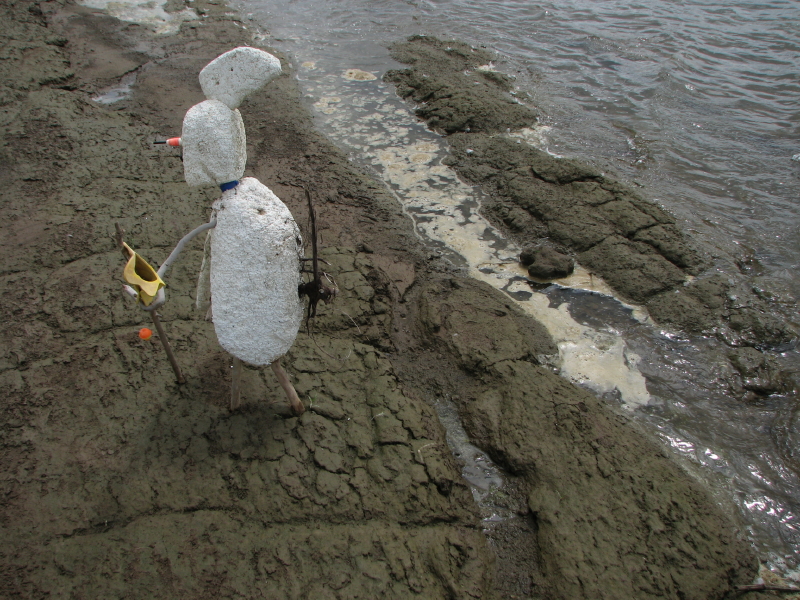
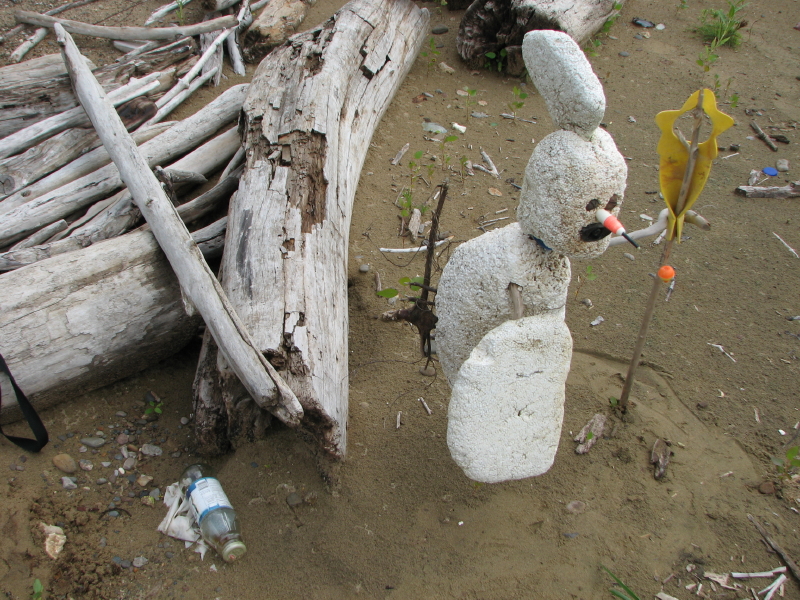
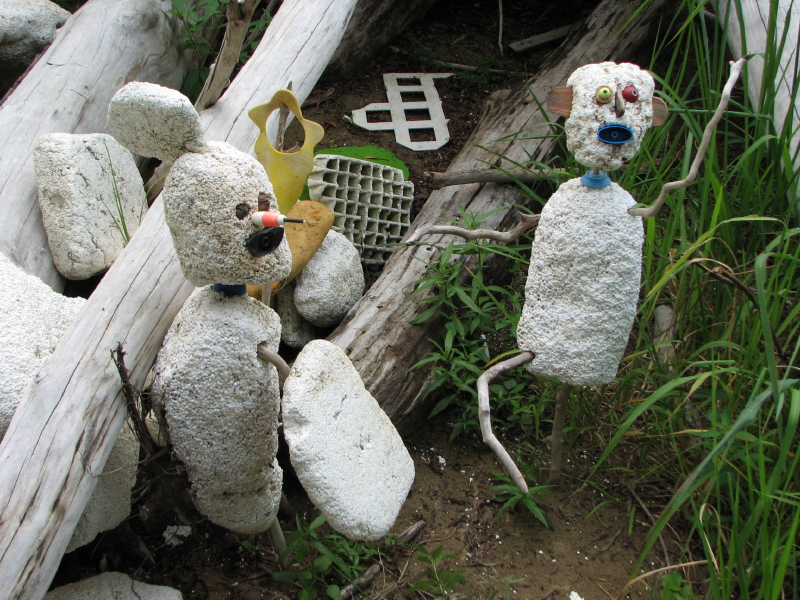
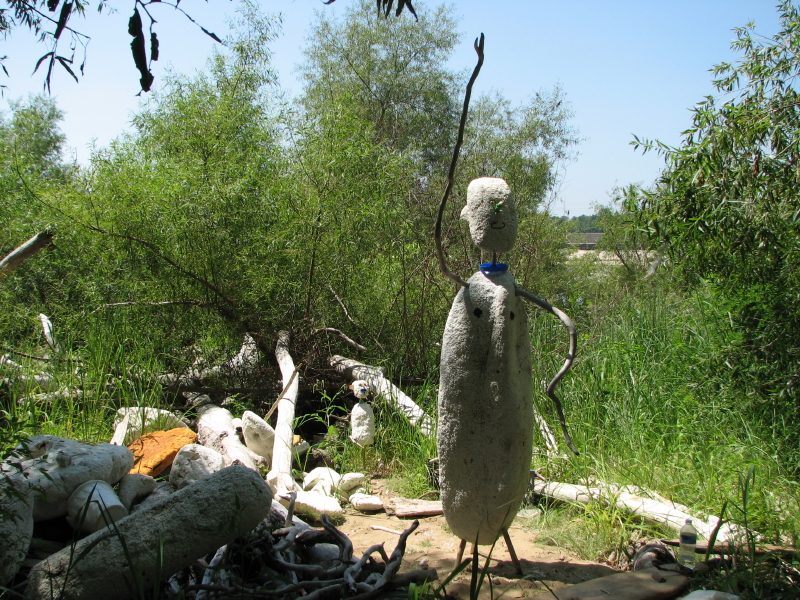
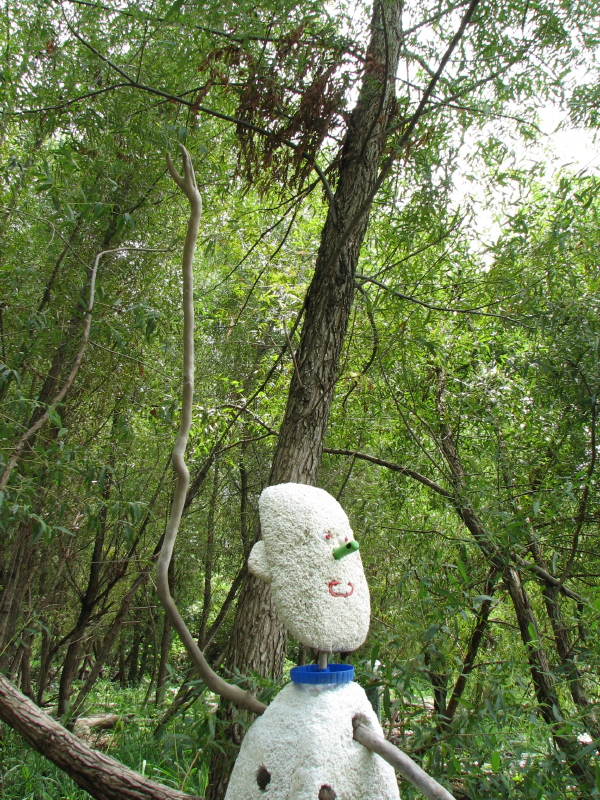
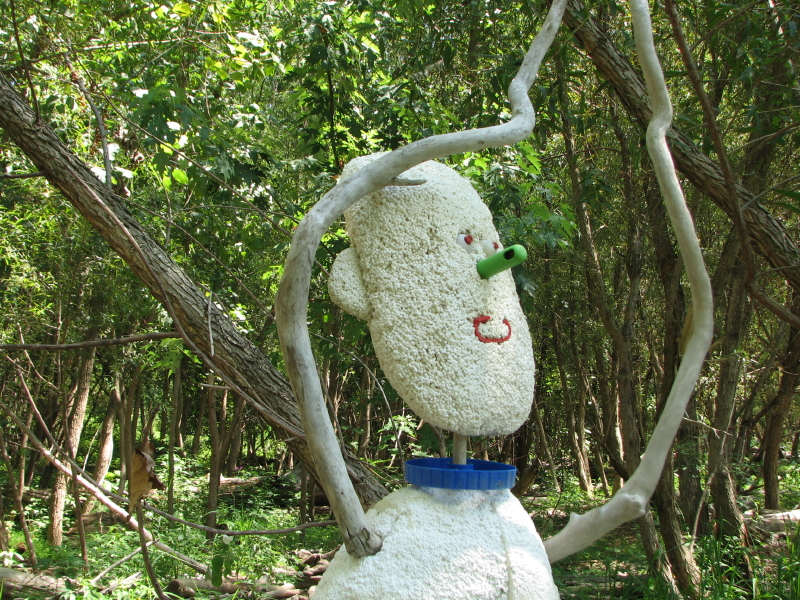
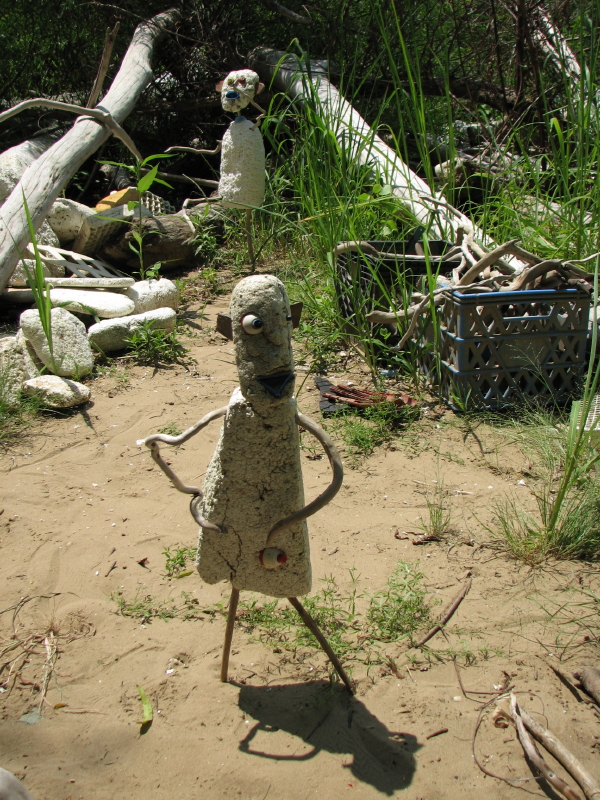
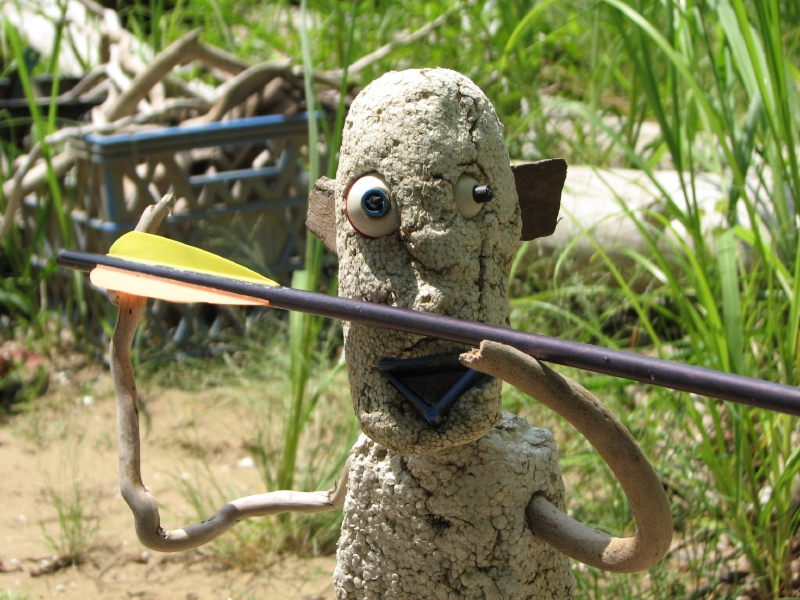
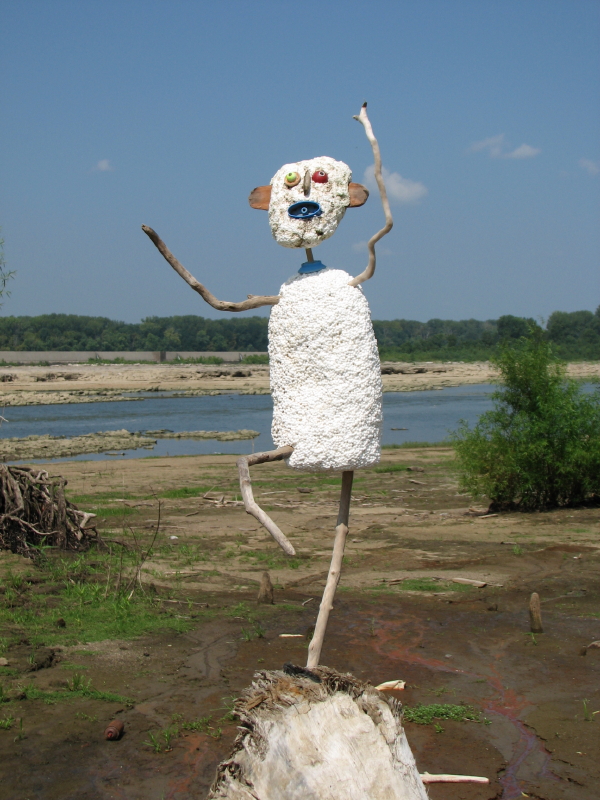
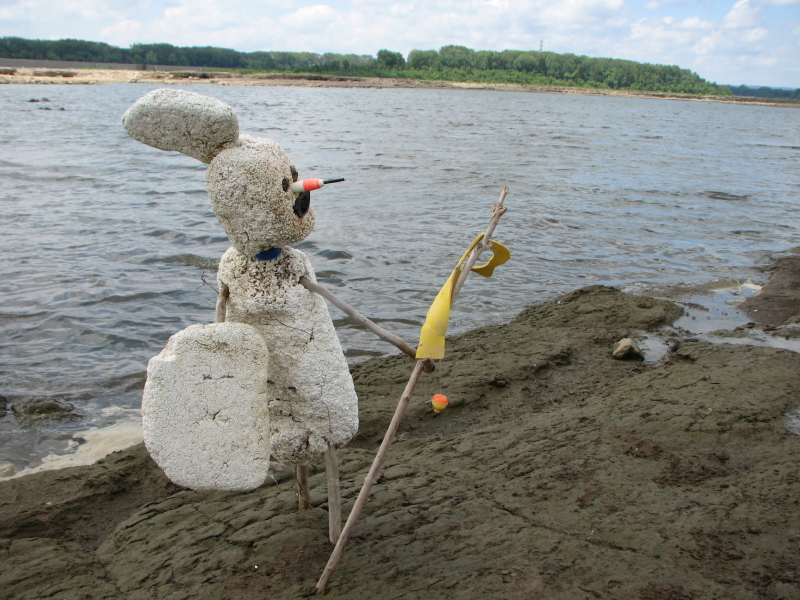
On this day, I have made one of my tallest figures ever.  This one is a head taller than I am and when you add the extra long arm…it is even more so.  I can’t say that I worked up a story to go with this one…yet.  If, however, he hangs out long enough, I’m sure I will think of a narrative.  For now, this is what I made and in the process I drank all the water I brought with me and soaked through my shirt.  A mixture of sweat and sun block kept running into my eyes which led to a few choice words said by me.  Fortunately, there wasn’t anybody around to hear them!

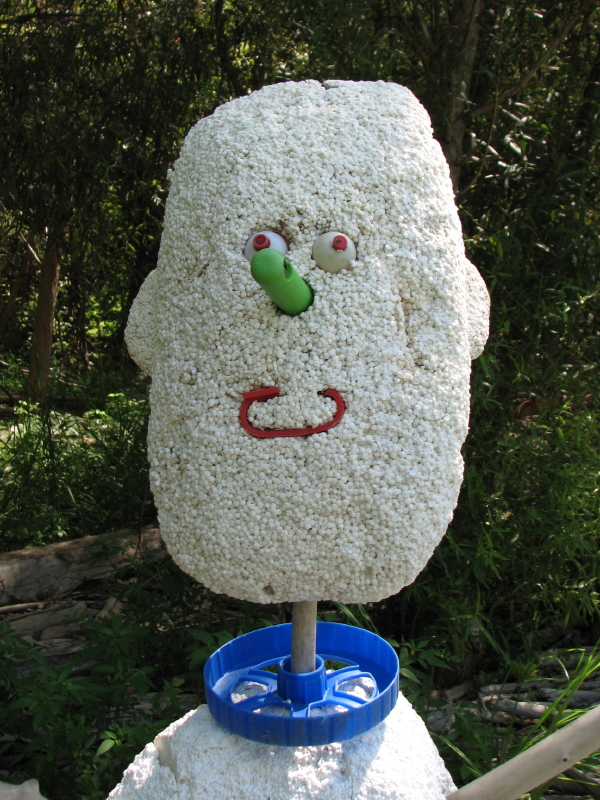
After I made this figure, it seemed to me that it had some affinities with the Wallace and Gromit characters.  I think it’s because of the close-set eyes and large nose?  I like that this guy has a sense of humor which can’t be said about some of the figures I have made before.  He’s probably amused that anyone would choose to spend their day off engaged in this activity!

What prompted this sculpture was the long stick I eventually used for one of his arms.  The body is somewhat elongated and the extra long arm brings this out even more.  Perhaps the arm is an evolutionary adaptation for picking fruit from the higher branches of the tree?  In this way, it works similarly to a giraffe’s neck with its ability to reach the topmost leaves.

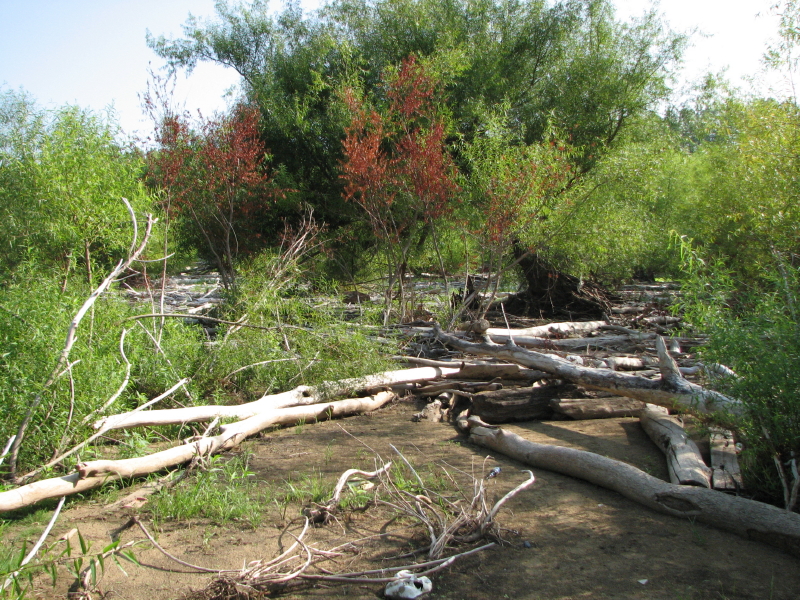
The brutal sun kept me close to the shade of the willows, but even this had its issues.  There are mosquitos in the shadows and the humidity is trapped by the vegetation and foliage.  Being uncomfortable made me less patient with myself.  Every once in a while I would get distracted by the song of a wren or the myriad insect life around me.  There are still many butterflies and wasps visiting the flowers and willow trees.

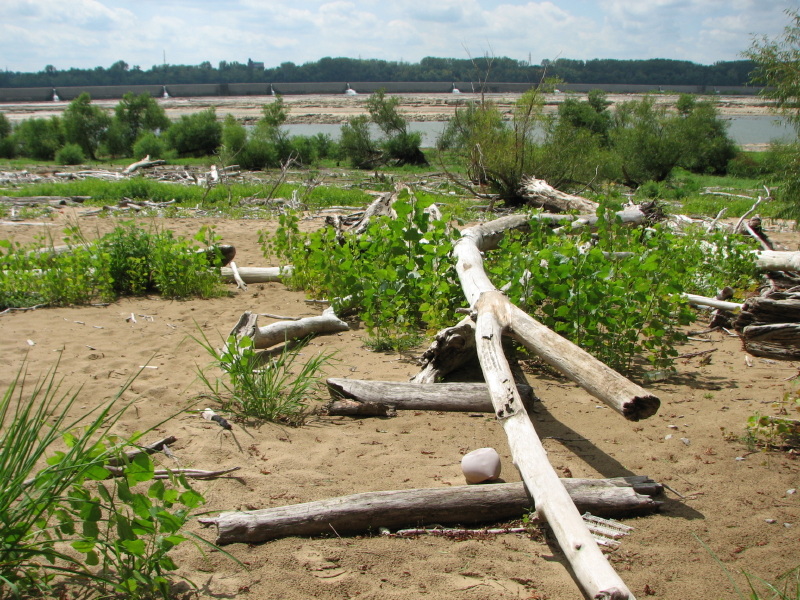
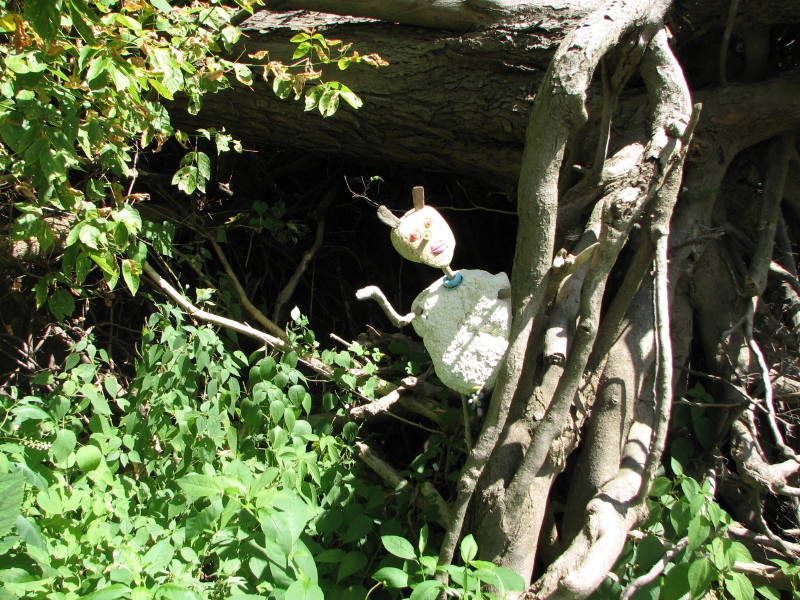
I had a few technical problems to work out. The main one being how will this sculpture stand upright?  Even though the sand and mud are soft, this figure is clumsy and comes down to a point.  My solution was to rest the figure on a tripod of sticks.  Two of them can be seen, the third “leg” lends support from behind the figure.  Once it cools down, I would like to move this sculpture around the different vignettes that the Falls offers and see if I can improve upon the photographs.  For the moment, I consider these evidence that I made something on a fairly uncompromising day cut short by the heat.  I decided to leave early and left this figure resting against the trunk of a tree.  I can’t wait for it to cool down a little.  I can tell Autumn is around the corner.  I detect a hint of yellow in the leaves around me that were a bright green not too long a go.

Read Full Post »

I have made a recent addition to my Pages section that continues a theme.  The Shoes You Lose 2 builds upon a previous photo collection.  All the images of lost footwear were found in situ at the Falls of the Ohio State Park.  Shoes are objects I frequently come across as the Ohio River carries them far away from the feet they were intended to protect.  I have seen many more shoes than I have photographed and I can’t always tell you why I select the ones I do?  When I download my pictures from that day’s river adventure, often there will be an image of a shoe or two in the mix.  They belong in the context of that day’s experience, but it is also fun to revisit and group them together later. 

 There is that saying about spending time in some one else’s shoes that is meant to be an expression of empathy that I feel has an element of truth to it.  Shoes are partly intended to shield us from the rough aspects of the environment that could hurt our feet…and so it is interesting to me to see how the environment will treat these objects when they are no longer in our care.  Shoes are just expressive objects and prone to pathetic fallacy which is probably another reason I enjoy snapping their likenesses.  To view this latest collection, just find and click on The Shoes You Lose 2 under my Pages header and it will take you there.

Read Full Post »

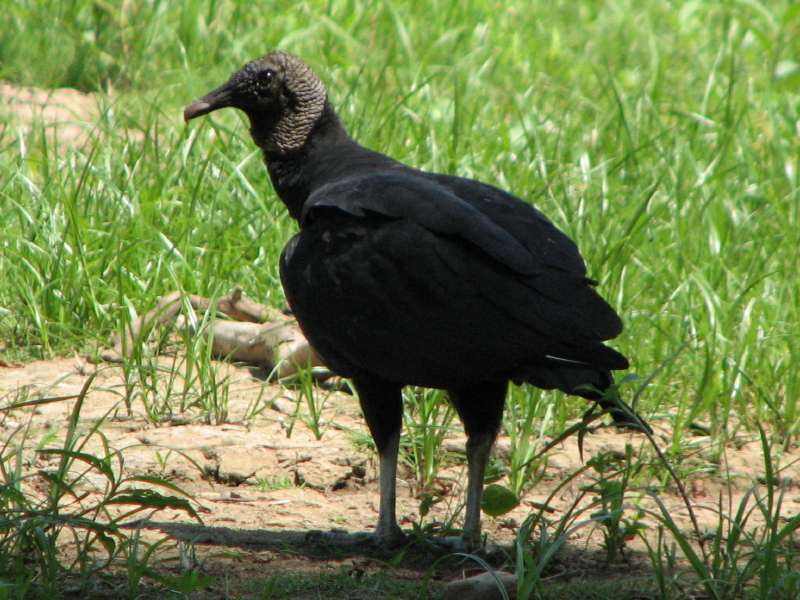
Vulture Boy hung out with me today at the Falls of the Ohio.  He’s a bit of an odd character and I don’t see him often.  He spends most of the summer observing the resident vultures of both species that live here.  He’s studying them. Vulture Boy also thinks of himself as being a bit of a survivalist and when civilization collapses…he will be able to fend for himself by mastering primitive weapons. 
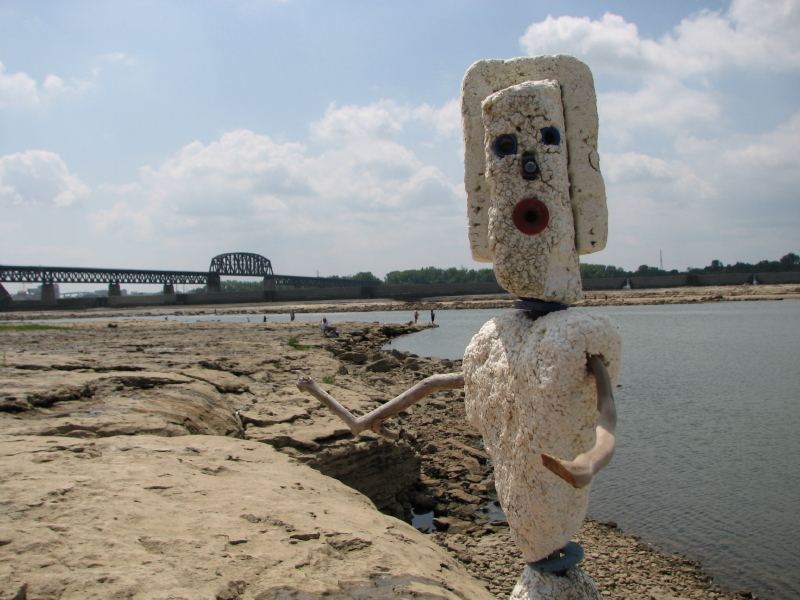
He’s still a boy after all and seems to gravitate towards sticks and stones.  There must be some primeval aesthetic operating here that’s hard-wired?  Regardless, what I enjoy are Vulture Boy’s stories and encounters with the wildlife he sees in the park.  He tells me that he saw some Black Vultures feeding nearby and would I like to watch them?  I pick up my camera and follow him to the river.

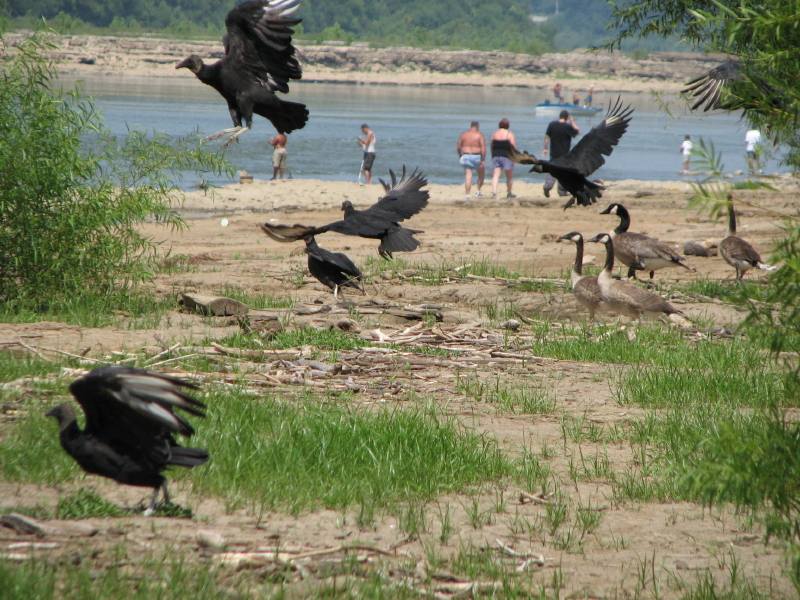
Along the way we surprise two flocks of large birds!  It’s another very hot day and both the vultures and Canada geese are taking advantage of the shade under the biggest trees.  It’s cooler, but they are also vulnerable standing on the ground.  Some passing fisherman got too close and both flocks spooked and went airborne.  I could practically feel the whoosh of air pass my face as the vultures struggled to lift skyward.

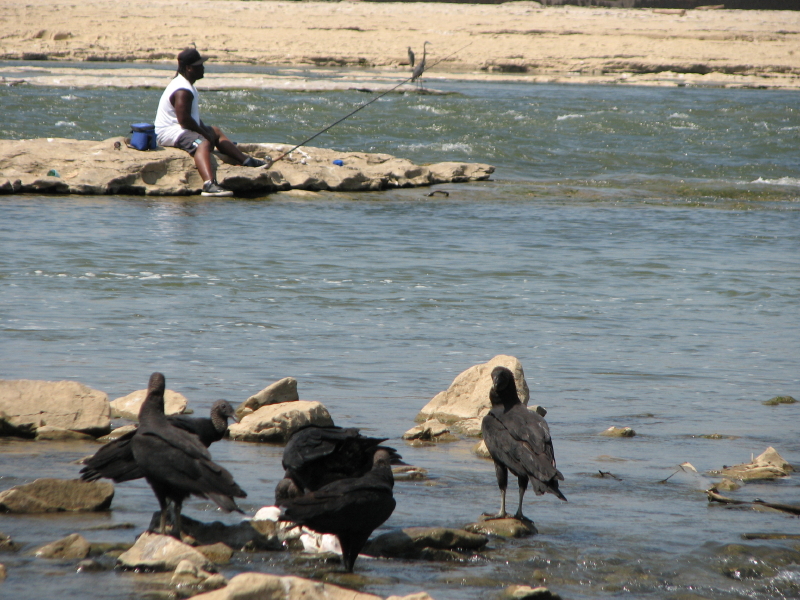
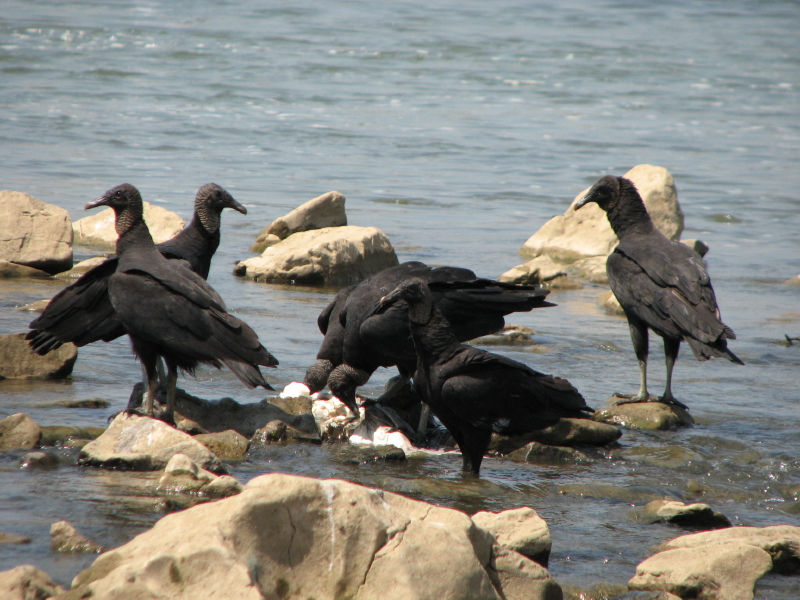
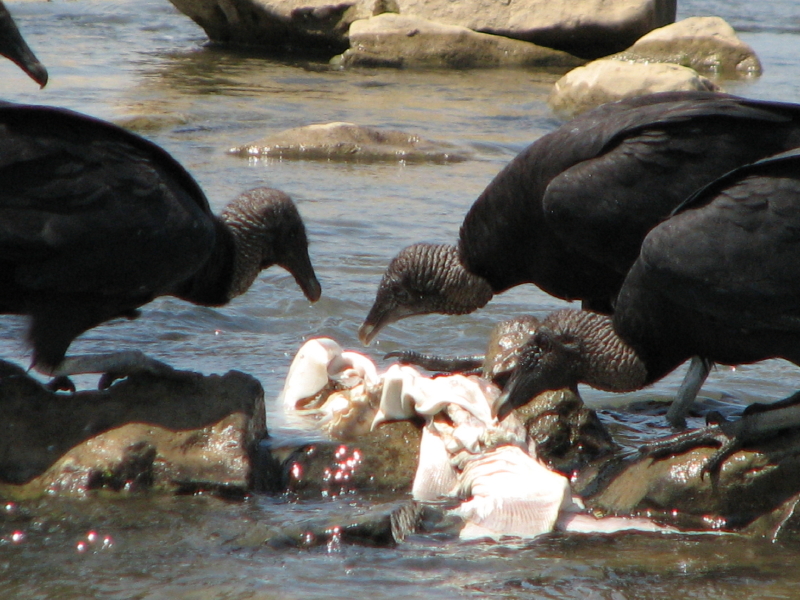
Reaching the river, we find a few Black Vultures feeding on a fish carcass.  They were completely unconcerned about the people around them.  I wonder in some way if the vultures recognize the relationship between the people and the availability of fish?  Vulture Boy says that they are smarter than you think and adapt to situations that benefit them.

Slowly I move a little closer doing my best not to scare the birds away.  It’s tricky though because the rocks are very uneven and slippery in places.  With their all black bodies, I wonder if they feel hotter on a day like today?  That’s when Vulture Boy lays this factoid on me!  He says that Black Vultures (and other vultures as well) can excrete their waste onto their legs to cool them.  The process is called “urohydrosis”.  Charming! 

I asked Vulture Boy what else he liked or thought interesting about these birds and this is what I remember.  He said that they form strong pair bonds that are usually only broken upon the death of one of the partners.  Additionally, they do not build nests preferring shallow caves or protected rock ledges to raise their young.  Although Black Vultures may roost together, they do not like being near each other’s nurseries.  There is still that competition for food and a pecking order exists not only within the Black Vulture group, but with other species as well.  The shy Turkey Vulture usually surrenders his find to the more aggressive Black Vulture.

With their naked heads and necks…these vultures look more like the dinosaurs they are descended from.  The lack of feathers around the head helps keep things a little cleaner.  Still, I’m amazed that these birds are able to stomach most anything!  I’ve seen Black Vultures using their feet to help leverage a food morsel from the toughest meal.

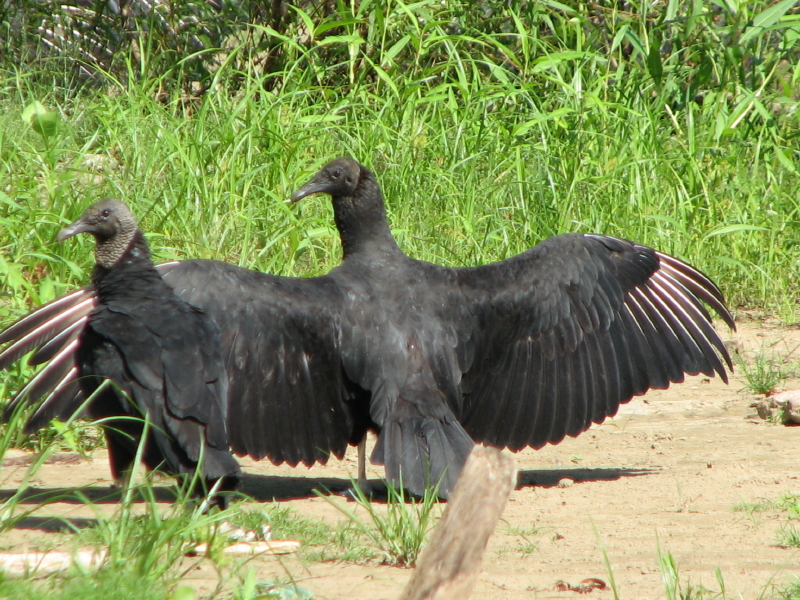
After watching the river vultures for a few minutes, it was time to go home.  Walking back the way we came Vulture Boy and I could see that some of the vultures had returned to the shade under the trees.  A few individuals were nervously posted along the outskirts acting as look outs.  We walked around them and left them be.  Nearby, we came across roosting vultures  high in a tree.  Occasionally, one of these birds would sun itself by spreading its wings and it seemed almost a reverential act.  Or, at least…that’s what I like to think! 

Read Full Post »


Every summer is different at the Falls and this one is starting to feel  overgrown with vines.  Walking through the vegetation, it doesn’t take long for one’s clothes to stick to your skin.  It’s been very hot here this summer and the high humidity raises the issue to another level.  Although I have never been to the tropics, I begin to feel like I know what it might be like.  The air is filled with cicada song and there are many insects of all types to be found. 

Overall, this has been a good year for butterflies.  I have enjoyed watching, learning, and photographing them as part of my Falls project.  At some point, I will probably post all my better images in my Pages section.  For now, I will release a few at a time as I come across different species.  Here are three new images that I made on this day .

I have seen more Buckeye butterflies this year than I have any other previous year.  Last week they were positively everywhere around the Falls of the Ohio.  This is a common species, but very pretty with its eyespots.  Apparently among professional lepidopterists, there is some disagreement about how to classify this butterfly because there are variations in its scientific name.  Some books list the Buckeye as Junonia coenia while other guides favor Precis coenia.  I haven’t read a good argument why one name is preferred over another!  I’ll wager the butterfly doesn’t care what we call it.
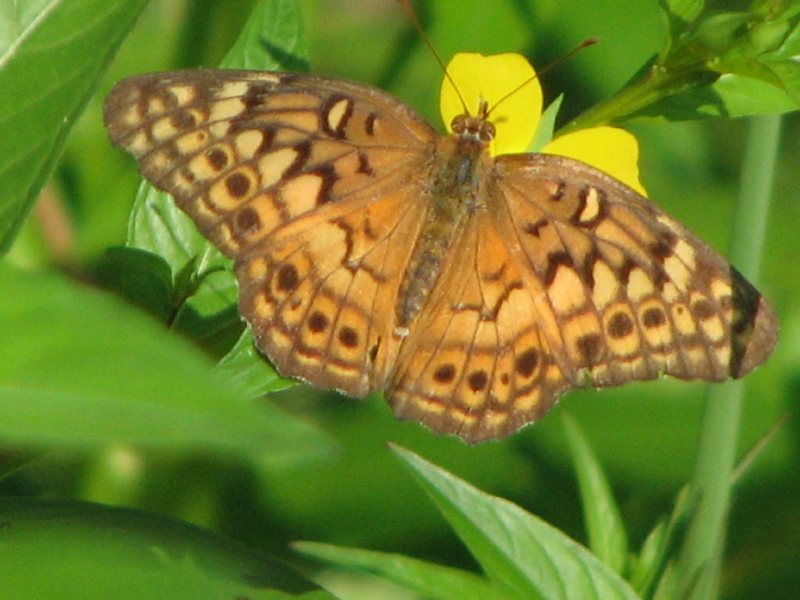
On this outing, I came across just one of these butterflies.  As they go it is rather nondescript and small.  Often the best way to identify a species is to check the markings on the underside.  With this butterfly I had just this single image.  After cross referencing a couple of butterfly guides, I’m fairly confident that this is the Variegated Fritillary, Euptoieta claudia.  With the Fritillaria, you need to look closely because there are many related butterflies.  Now the next species was even harder to identify!

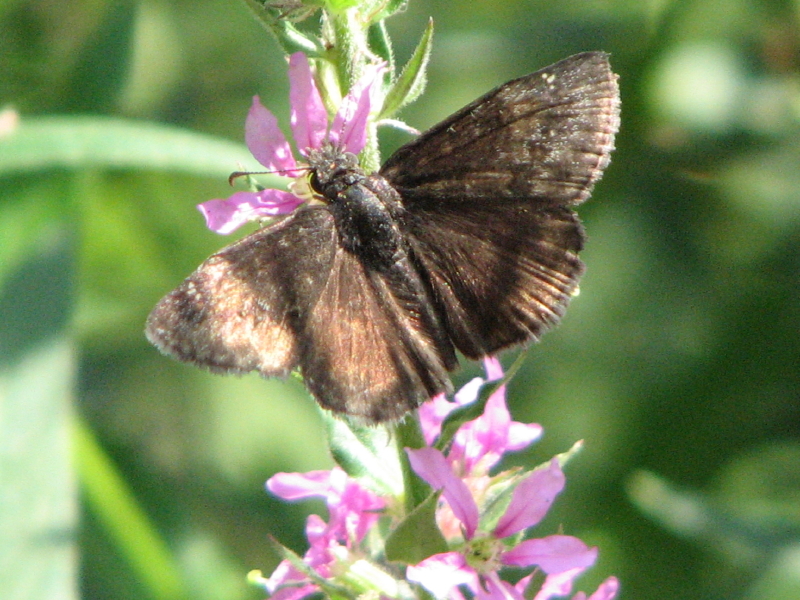
I am not at all certain on this one, but my educated guess is this is the Scalloped Sootywing, Staphylus hayhurstii.  It’s fairly small and nondescript.  The very tiny white dots on its fore wing are a clue along with its fringy wing margins.  The geographic range looks good because this sootywing is found this far north.  I also note that one guide said this species prefers moist areas near willow and cottonwood groves and that certainly is here.  The sootywing is a member of the skipper clan which are a group of interesting butterflies that share characteristics with moths. 

For me, learning what other organisms share this space is a celebration of life.  Even the rather dull looking sootywing is spectacular by virtue of its existence which took millions of years of development to reach this point in time we could share.  On this trip, I enjoyed  just watching what types of insects were feeding off the loosestrife flowers.  It was easy to forget oneself in the collective buzzing and busy activity around this plant.

Read Full Post »

« Newer Posts - Older Posts »