Feeds:
Posts
Comments

Archive for the ‘animal art works’ Category

Dear readers…I have so much to post and have fallen a couple of weeks behind.  The work a day world has been extra busy (and rewarding) of late.  Still, I have made time to go to the river and “do my thing” to maintain my peace of mind.  It’s time now to post my images and tell a story.  The following post occurred two weeks a go when the river was high and I decided to spend the day in the western section of the Falls of the Ohio State Park.  At this point, I was fairly certain that the materials I found and cached at my outdoor studio in the eastern section were either gone or the river was about to take them.  I ventured forward-looking for “fresh” materials and opportunities.

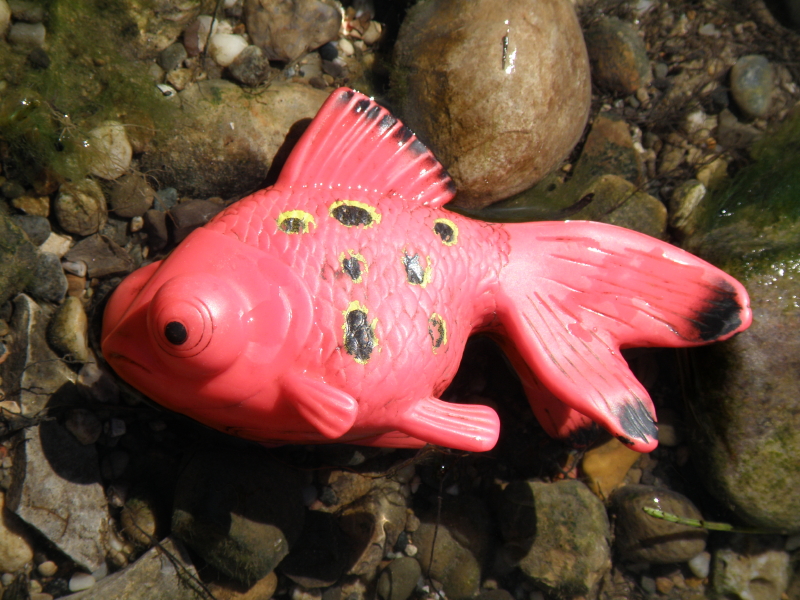
My walk took me past the marvelous tree that the local kids (among others) like to use as a hang out.  I can imagine many potential childhood memories centered around this tree for the folks who grew up with it.  On this day everything was quiet and in fact I didn’t see anybody out here at all.  That bodes really well if you want to see wildlife.  It has been so unseasonably warm…that I wonder how that will affect how spring unfolds this year?  Later we would set several records for high temps in the lower 80’s for early March!!! Technically, it’s still winter here…very odd indeed.  I had heard that a pair of bald eagles were attempting to set up a nest in the far western section of the park and I was hoping to see at least signs of the birds.  I wasn’t lucky on this day with the eagles, but I did come across a few other interesting wildlife objects courtesy of the Ohio River.  For example, here’s the first goldfish I’ve found out here.
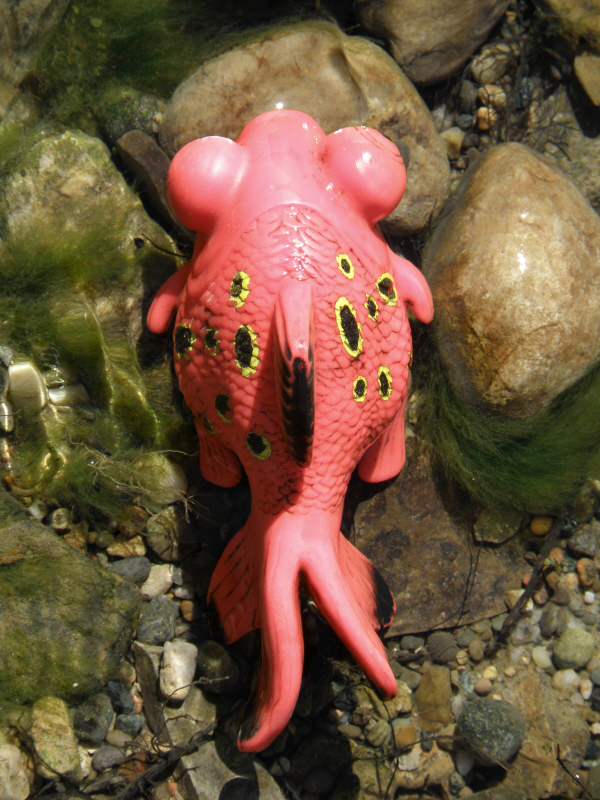
This fish stood out against the river pebbles like a red beacon.  I could have found it with one eye closed! We have other invasive carp species out in the river now, but this was a new one.  An actual goldfish probably wouldn’t stand much of a chance against the river’s natural predators.  The non-native carp that have entered the river system eat constantly and grow really fast and large.  It will be a great challenge to rid the river of them. I picked up the neon goldfish and dropped it into my collecting bag.  Here’s what I came across next in the way of wildlife.
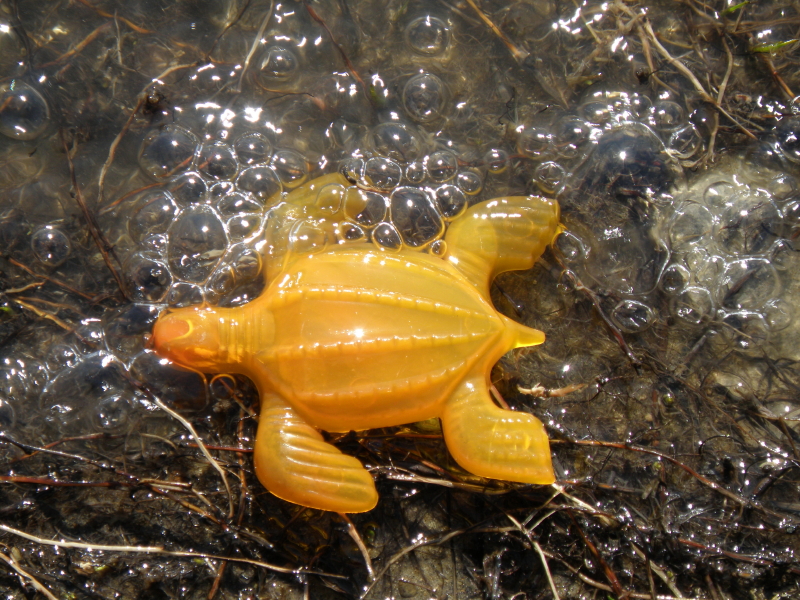
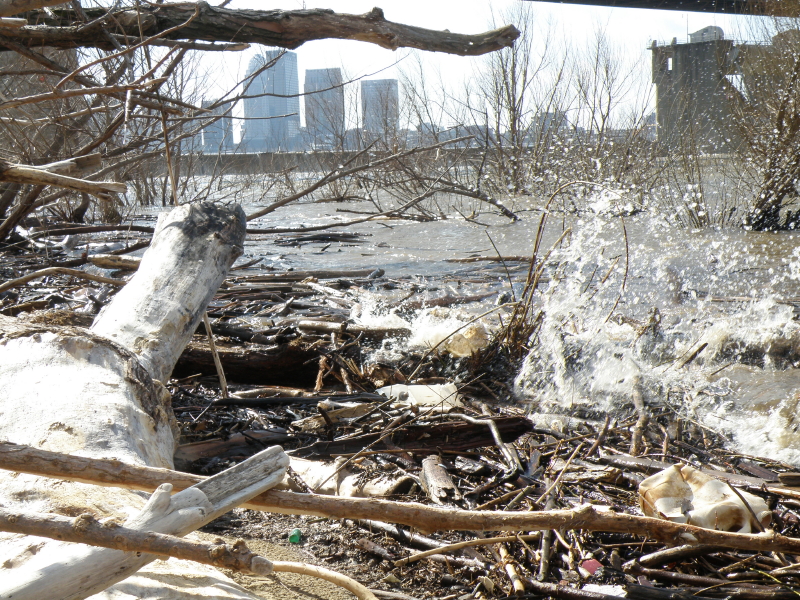
Swimming at the river’s edge I stumbled upon this golden sea turtle.  It was playing among the bubbles and rootlets.  Again, here was an image that was unnaturally beautiful…like the current weather.  The pattern we have been experiencing is that the river will rise and then fall in quick succession as the Army Corps of Engineers regulates the water level for commerce and flood control.  Walking even further west I came across this “elephant’s graveyard” of plastic and my heart sank.  You can pick this stuff up all day long and it seems the next day gives you a fresh supply. Sometimes it feels like you are rolling that proverbial rock uphill only to have it roll back down.  What’s happening up river from us?

As you can see…it’s not a pretty picture.  Mostly plastic containers like old milk jugs and laundry detergent packaging.  As this plastic weathers and breaks down from UV light, the pieces keep getting smaller and smaller without ever completely disappearing.  The next stop could be the Gulf of Mexico. I found one other notable object and set it up among the still bare branches awaiting the new leaves of the year.  This is also the first time I have come across one of these things.
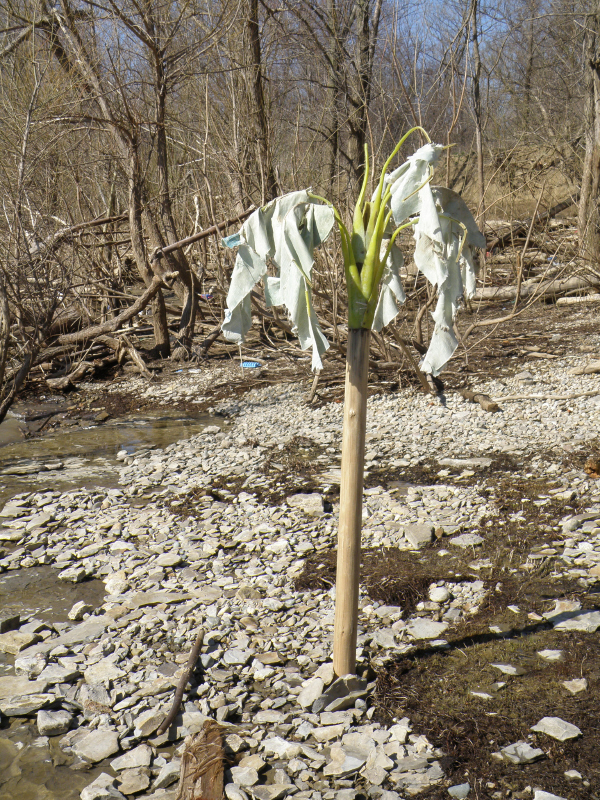
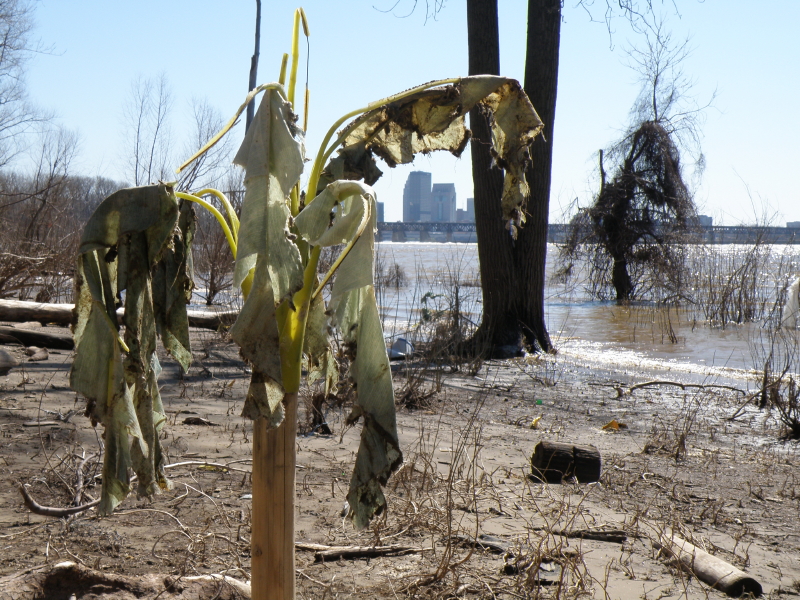
It’s either an artificial palm or banana tree?  As the day continued to warm I wondered to myself about how plants might be reacting to climate change?  Are the warmer weather plants moving northwards and what else will this change? While I was musing on this I received an answer in a most unlikely form.  My “banana palm” was visited by an unusual bird.

Here’s another first! Leave it to the only Banana Palm Mockingbird to find the only banana tree around here.  I watched transfixed as the bird explored the tree and the surrounding area.  A bird of this species is more likely to be seen in Central America than mid America.  I don’t know much more about it.  I saw it investigate the river’s edge for food and here are a couple more images to prove it was here.

Here’s the mockingbird with Louisville’s skyline visible on the opposite shore.

The mockingbird didn’t hang out for very long and soon it was time for me to head back.  I’m going to be off for the next couple of days and will attempt to post more of my adventures…if the call of the river doesn’t get me first!  Have a great weekend everybody!


Read Full Post »

Twenty four hours later, people in the Kentuckiana area are still trying to absorb what happened yesterday.  A monstrous tornado completely wiped out several small communities including the town of Henryville which is about twenty miles from my home in Louisville.  It’s a scene of complete destruction and there was loss of life all along the course of this twister.  Believe it or not, we were anticipating that this could happen.  Meteorologists were telling us that the conditions were right for violent storms. I was sent home hours early from work as were many other people in town to take shelter in our basements and safe places.  I wonder how much worse it would have been without the advance warning?  Thus far, we are more than double the usual tornadoes normally seen in the early spring.  Throw away your Farmer’s Almanac…I’m not sure it describes the physical environment we now live in.  It seems we are living in extreme and unstable times.  Pick your poison, too hot, too dry, too wet, too many powerful storms, too many natural disasters.  I hope this won’t be a dangerous spring…but it is already off to a bad start.  My heart goes out to all the people affected by this tragedy.

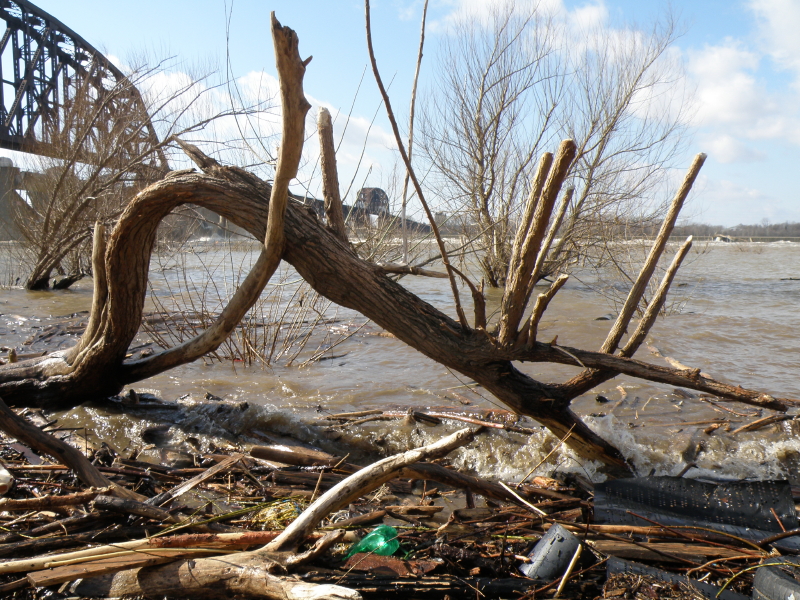
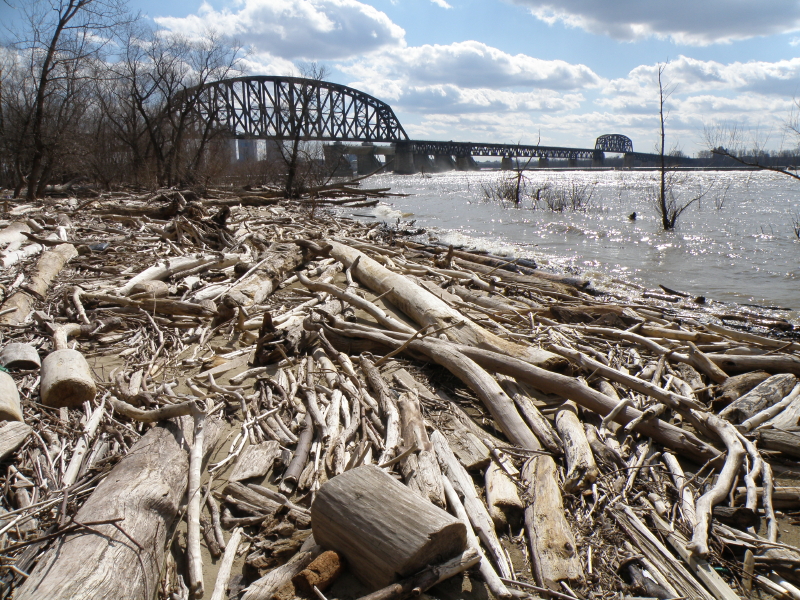
I’ve watched the local news on television and read the morning newspaper.  I feel like escaping and so I go to the Falls of the Ohio.  I see just one other person all day, otherwise, it’s sunny, windy, and the river is rising.  The tall figure I made last weekend is gone!  Not a trace…nothing.  I guess it got up and walked away.  To haul something that big out of here takes some effort and commitment.  I head down to the water’s edge which is creeping up the bank.  As the waves crash against the shoreline, I’m scouting for the flotsam and jetsam the river gives me as gifts.  Here are a few of today’s finds.

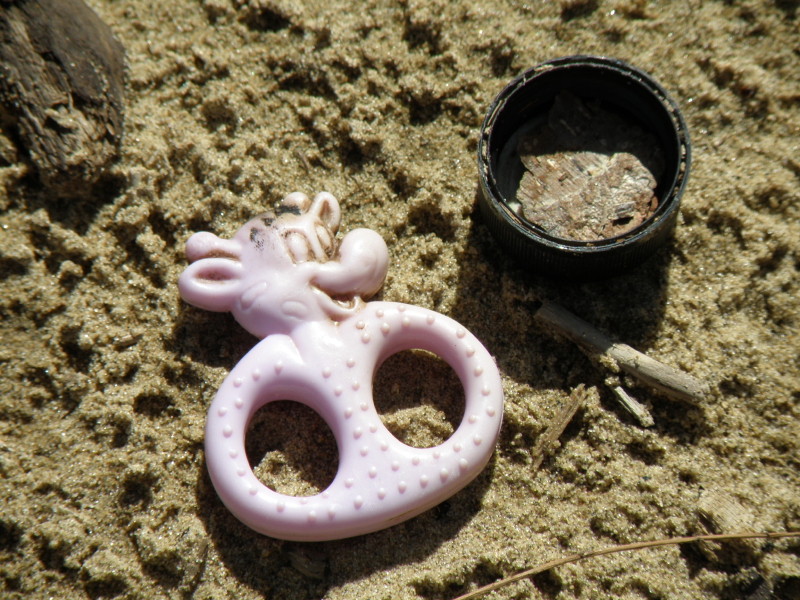
I believe this might be a teething ring for a doll?  It’s tiny and the black object next to it is an ordinary plastic bottle cap which is a good gauge of scale.

And now for another object whose identity I’m not sure of!  My guess is this is some plastic toy vegetable?  Anyway, I dropped it into my B. Deemer Gallery collecting bag and moved on.  My fake produce collection keeps getting bigger!

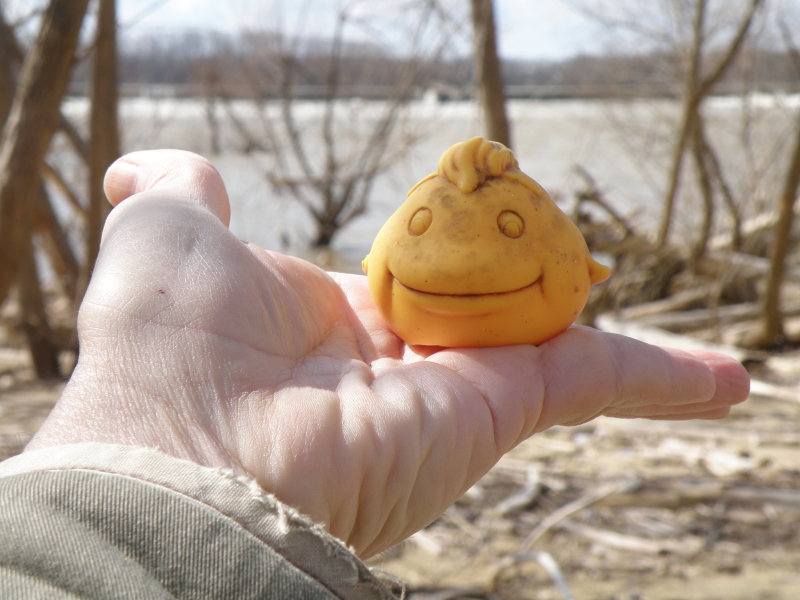
In my hand, I’m holding a plastic smiley fish!  Probably a child’s bath tub toy. And now, for my favorite find of the day!
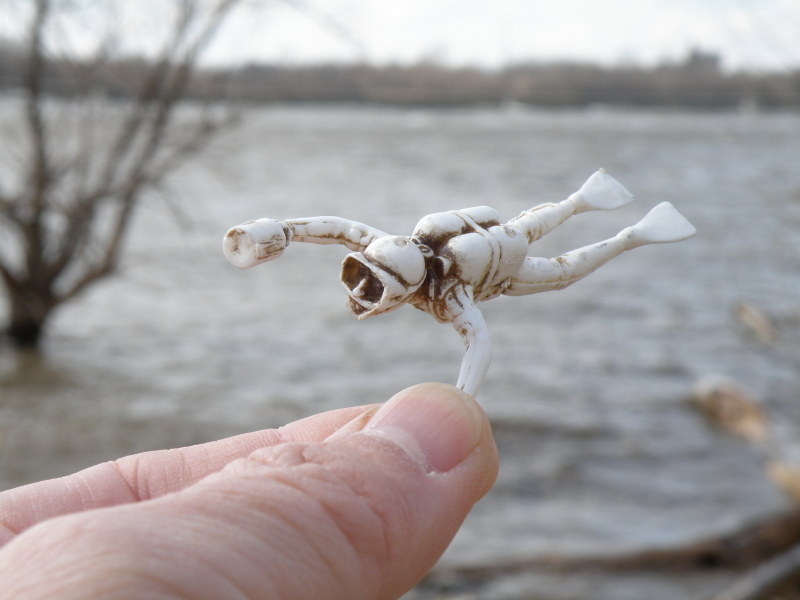
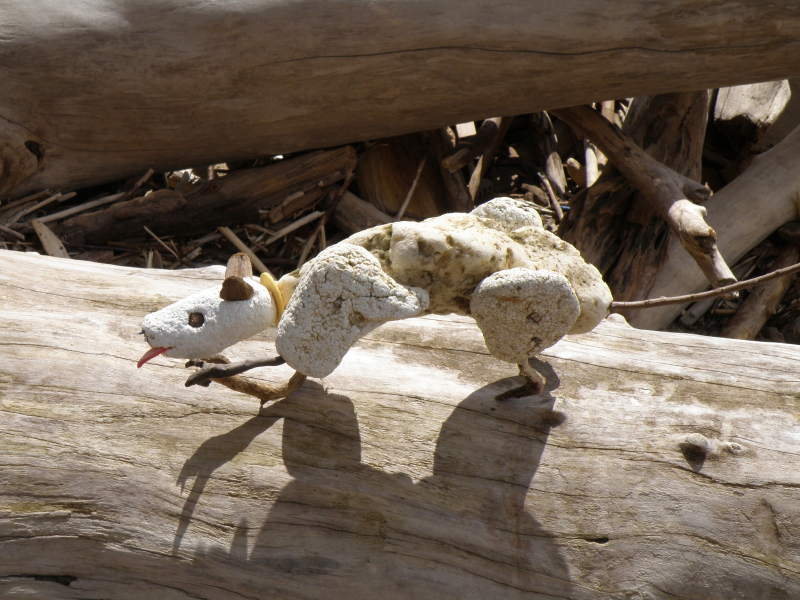
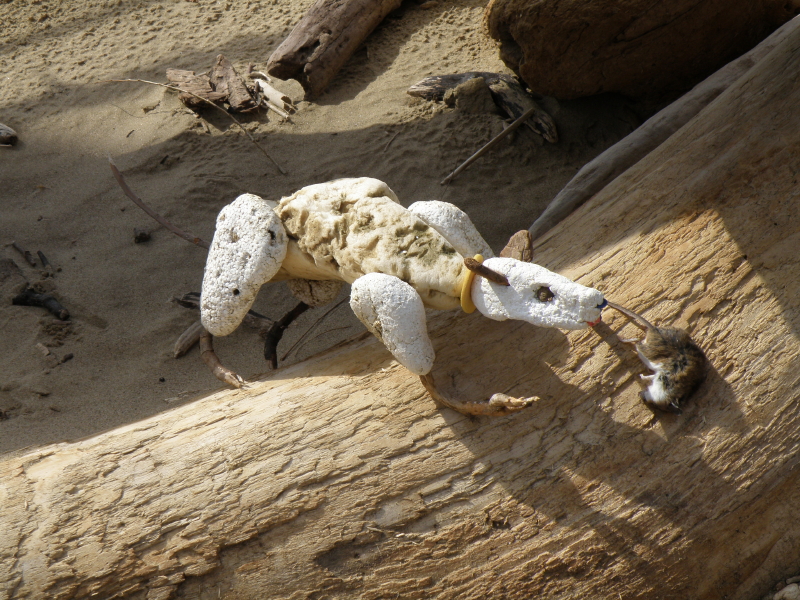
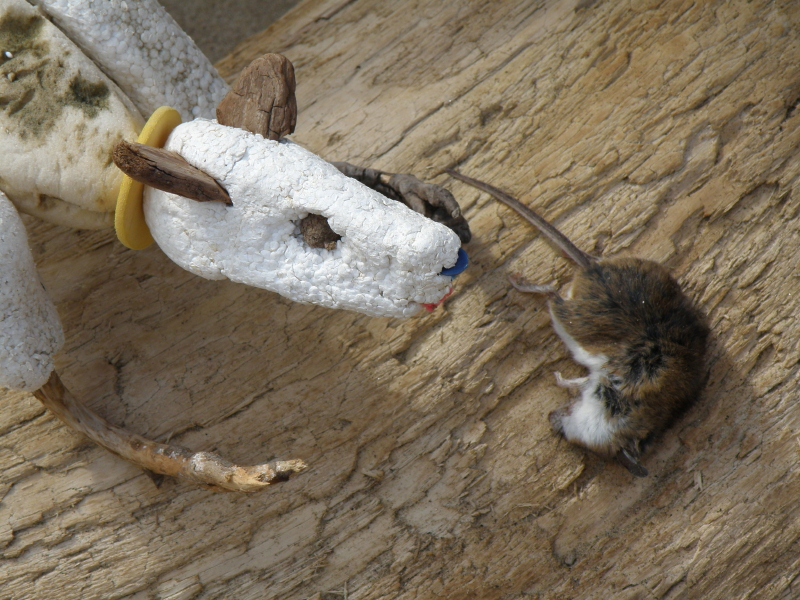
When I find something like this I wonder how long it’s been in the river?  It could be years based on the patina it has acquired.  I was admiring the frogman when I saw something else moving along the driftwood.  I froze so I would not scare it away.  From memory I quickly recognized it as a Water Weasel which is a seldom seen animal in these parts.  Carefully, I eased my camera up to my eye and recorded these images in quick succession.

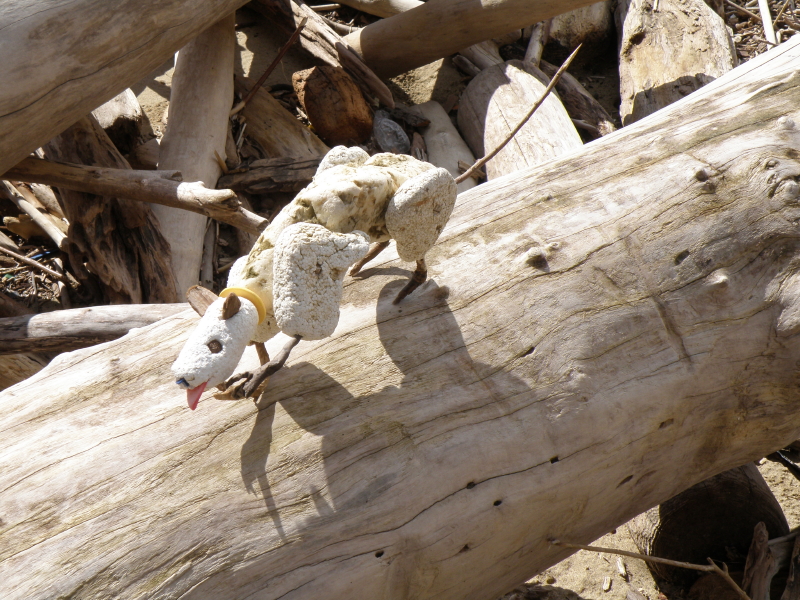
The Water Weasel is an unusual mammal.  It’s always on the move and it’s always hungry.  Rarely do you see more than one of these critters at a time.  It can probably only stand its own specie’s company during the mating season. The Water Weasel is also extremely secretive and so it’s exceptional to spot this guy.  As it comes closer to my position…I realize why it hasn’t seen me.  The weasel is chasing something and is focused on its quarry.

The Water Weasel has relentlessly pursued its prey across wood and sand and made its kill.  This time the victim is a small White-footed Mouse that had the misfortune of crossing paths with this predator.

The mouse disappears with a few bites and with a quick lick of the lips the weasel vanishes into the nearby driftwood mound.  The whole predator/prey relationship crosses my mind.  It’s not about picking winners and losers…nature is indifferent and has no stake in the outcome.  I notice it is getting colder and the wind has picked up again.  I can hear the logs crashing into one another in the river and making that sound which I associate with the grinding of teeth.  A drop of water falls from my runny nose.  It’s time to go home and cross the bridge back into Louisville.  I wonder how high the river will rise?

Postscript:  The Water Weasel is similar to another small mammalian predator known in folklore as the River Ghost.  Here is a preserved specimen from the collections of the Museum of Unnatural History.

Read Full Post »

On a warm Saturday morning in mid February, I was exploring the eastern section of the Falls of the Ohio State Park.  At first glance, I had the place to myself and I began my systematic sweep of the shoreline looking for whatever the river had temporarily marooned here.  Usually, I will walk down to the water’s edge first and then I comb the bank walking back and forth until I hit the treeline.  This typically takes an hour or so and my collecting bag quickly fills up with all kinds of river treasures both natural and artificial.  This morning was to prove to be a memorable one when I came across a creature new to me and I believe science as well?

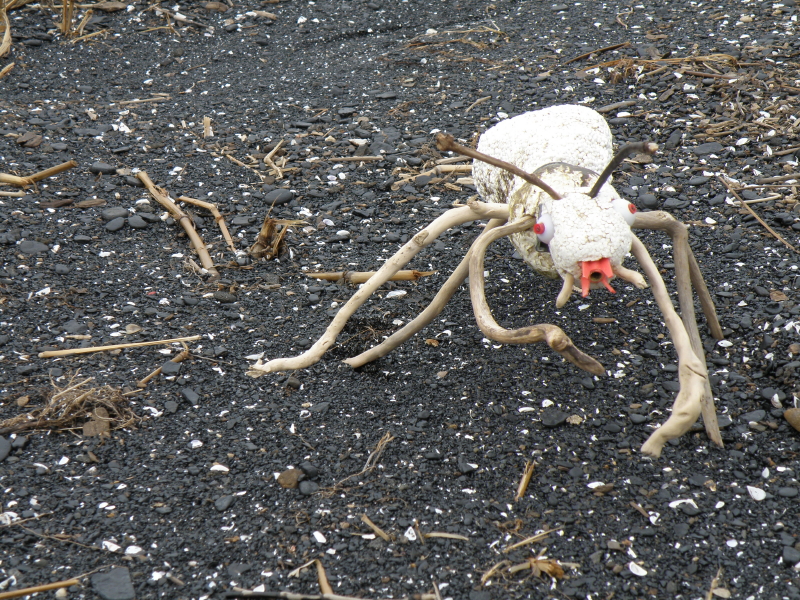
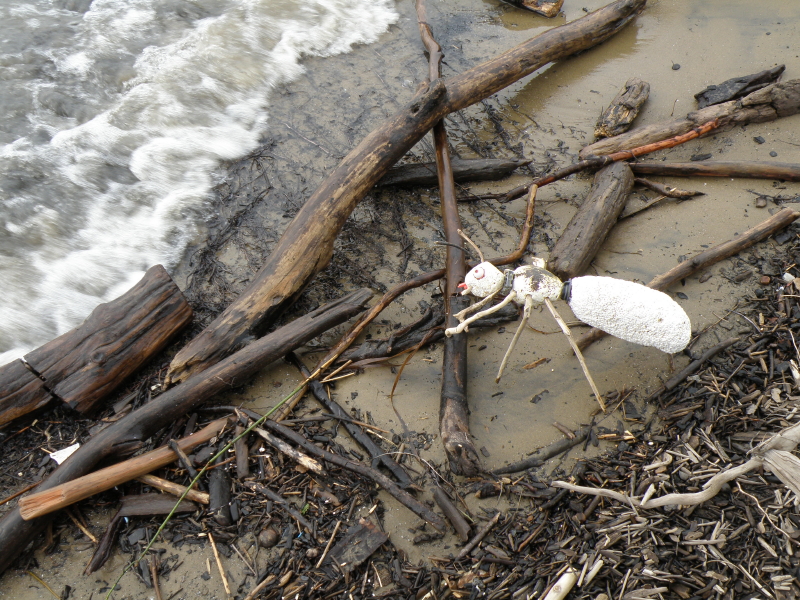
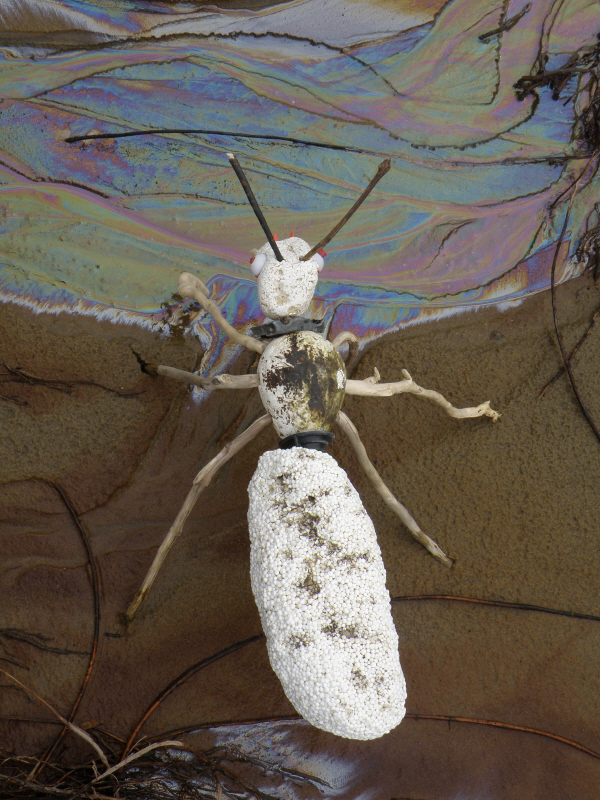
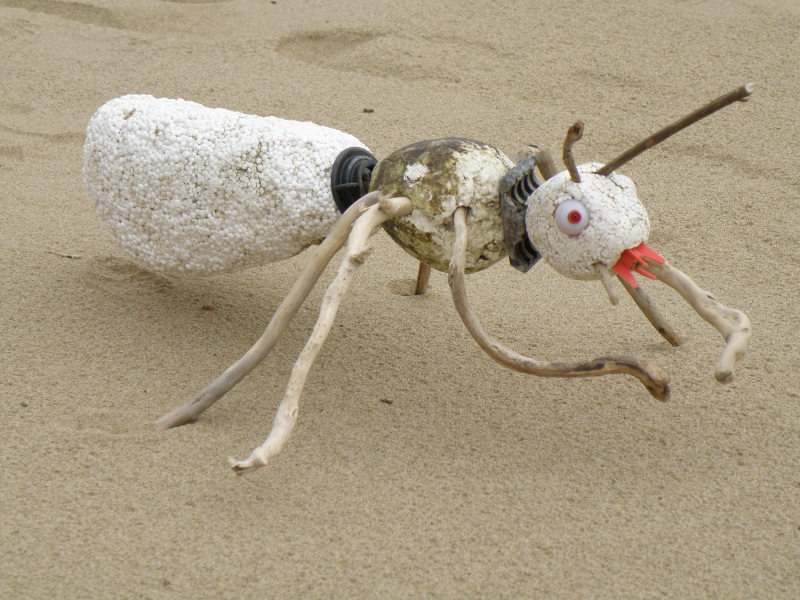
Years of bird watching had trained me to key on the slightest movement that might betray a creature’s location.  Such was the case when I came across this extraordinary insect that was exploring the same territory as me!  I saw a little motion from the corner of my eye while scanning the riverbank that proved to be this very large ant’s wiggling legs.  This is not my first encounter with a large insect at the Falls of the Ohio.  Previously, I had discovered five other giants of different species all belonging to a genus I had dubbed “Polystyrenus”… because their exoskeletons look like they are made from weathered Styrofoam.  The following is my report complete with photographs and observations made in the field.

I would estimate that this insect’s body, (which looks to be an  “ant”), to be about a foot in length.  Of course, the articulated legs make it seem bigger.  Its eyes appeared to be simple and its mouth parts seemed feeble.  I surmised that whatever it fed upon didn’t require the shearing power of larger mandibles.  I could be more certain of this, but I refused to “collect” or kill this creature in the name of science just to complete a more thorough morphological examination . The thought crossed my mind that this could be the young of the Giant Blue Ant I had seen here a couple of years a go?  I also noticed that many of its legs were different from one another and each appendage might be a different tool like blades in a Swiss Army knife?

While the ant explored its world I discreetly followed along.  My camera is equipped with a telephoto lens nearly as big as the bug.  Still, I found this particular specimen to be amazingly tolerant of my presence.  I watched it while it moved to the river’s edge, but I could not gauge its purpose here.

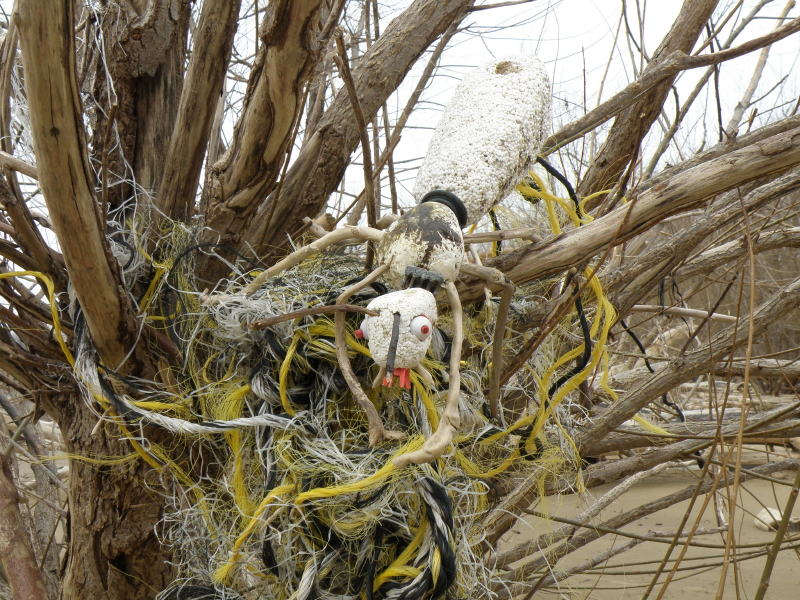
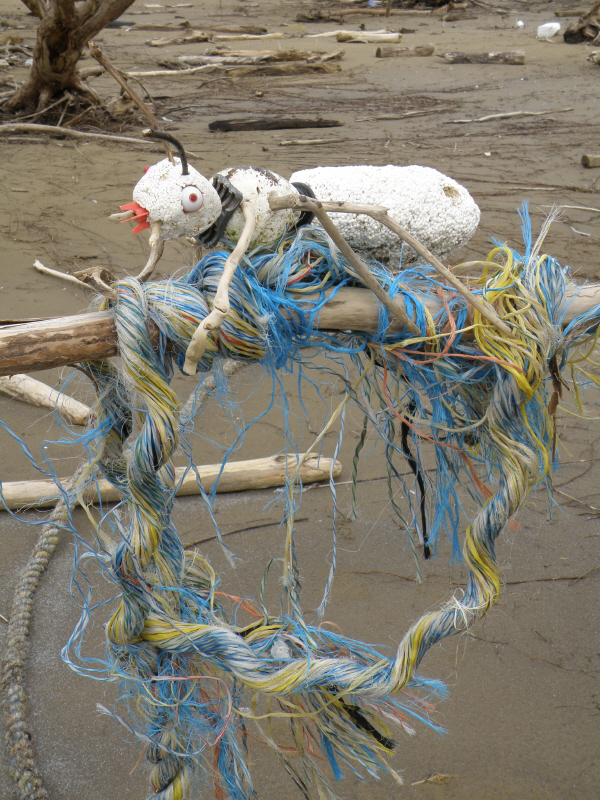
Interestingly, I did observe it checking out a couple of frayed barge cables that were snagged and unraveling among the willow branches.  It seemed very intent with the fiber strands and used its six legs to gather up the strings into a ball.

Here’s the ant on a different branch.  I wonder if it is responsible for the cuts on this cable?  You can see an intact length of this heavy rope on the sand below.  Could this be some form of play?  This is a question to be answered later.  I never saw the ant do anything else with these two cables .  Does anyone out there have a hypothesis?  Moving on, I did get some very interesting images of the ant either feeding or drinking that show how unusual this ant is from its smaller kin.

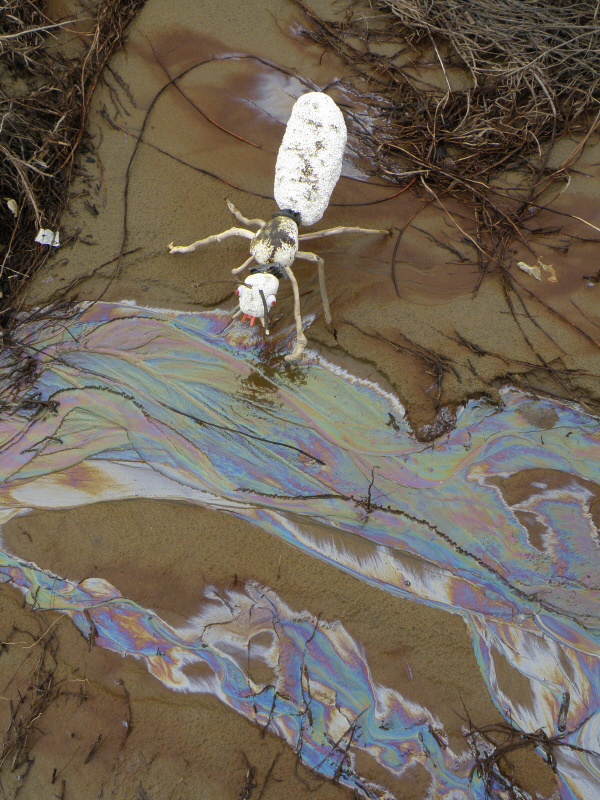
On several occasions I was able to observe our remarkable ant taking “sustenance” from iridescent water which flowed in rivulets from the sand below.  What is this stuff?  Is it petroleum pollution or the oils and minerals leaching from other biodegradable materials breaking down below the sand?  As it fed, the ant was at its least cautious.  Perhaps it was drunk?  I walked up to it and was able to take this aerial view.  The rainbow-effect on the sand contrasted nicely against the whiteness of the insect. You can easily see the basic insect body plan with its head, thorax, and abdomen.  Of course, all true insects have six legs.

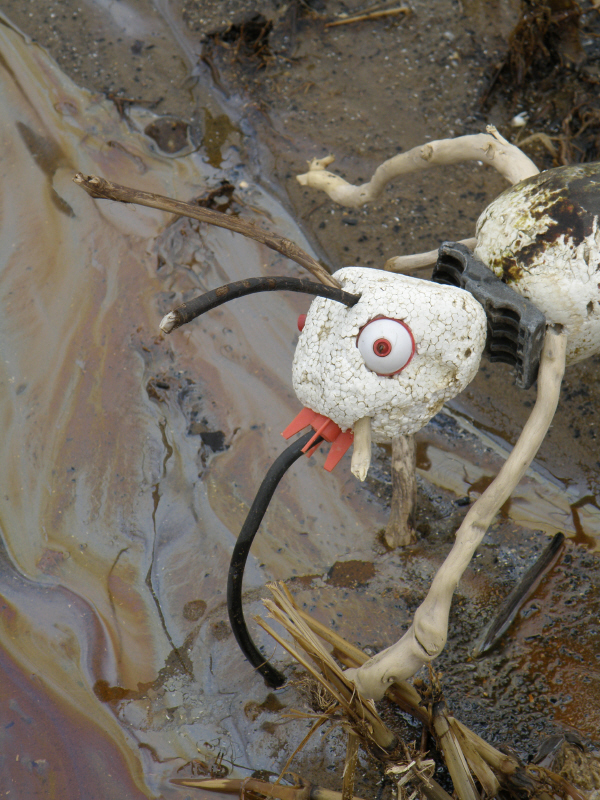
Here’s another image that comes as a revelation and shows clearly how it feeds.

Like a butterfly, the ant unveiled a long proboscis or feeding tube and lowered into the sheen.  Its abdomen pulsed while it sucked.  I kept thinking about what this stuff is that bubbles to the surface and could it be responsible for the appearance here of these large insects?  Is this some local version of the “Godzilla-effect” where pollution mutates the endemic creatures into giants?  Well, at least I think Clarksville, Indiana will be safe from this ant for the time being.  Now if millions of these ants were to show up at the same time…then this story could change.

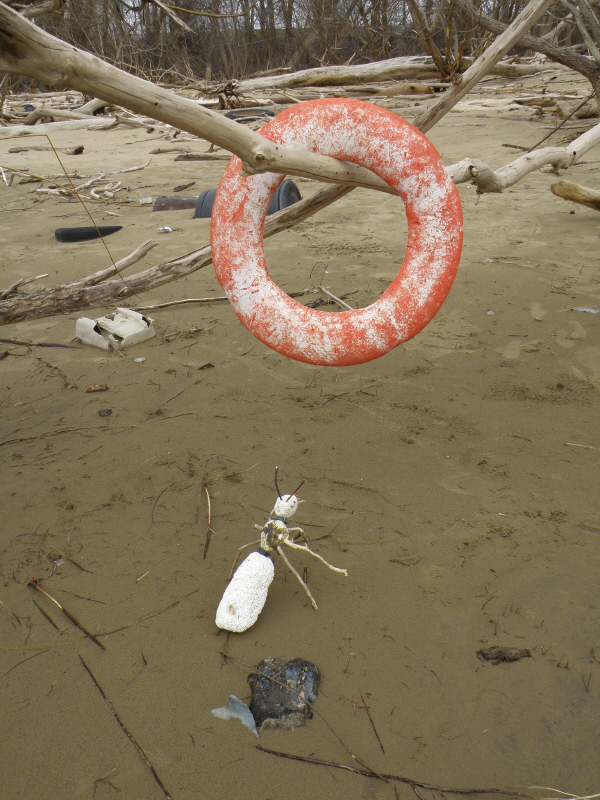
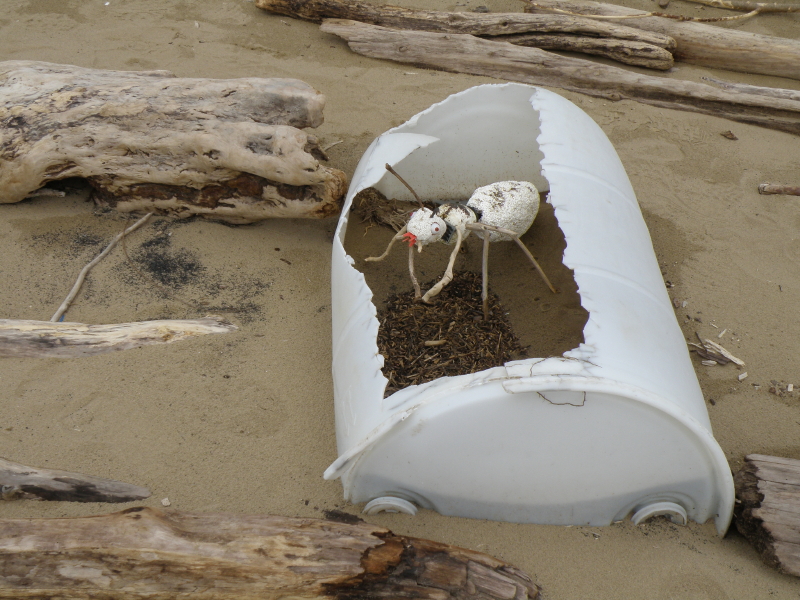
After imbibing this strange brew, I observed the Giant White Ant exploring the park.  A previous visitor had found an orange life-preserver and placed it over the branch of a tree.  Here the ant gets on its “hind” legs to investigate the ring.  This ant displays a lot of curiosity about its world.  For a short-time, I lost track of the ant which is able to walk across the driftwood more quickly than I, but I was able to relocate it when I came across this shattered plastic barrel.  It kind of looked at home here and so I left it be and moved on.

That’s it…I have more pictures, but they don’t reveal anymore about the Giant White Ant’s behavior.  Of course, I hope to see it again provided it manages to evade its enemies and stay alive.  What will the “Godzilla-effect”  produce here next?  I wonder if E.O. Wilson has encountered anything like this before in all his researches?  I’ll close now with a final image of my ant.

Read Full Post »

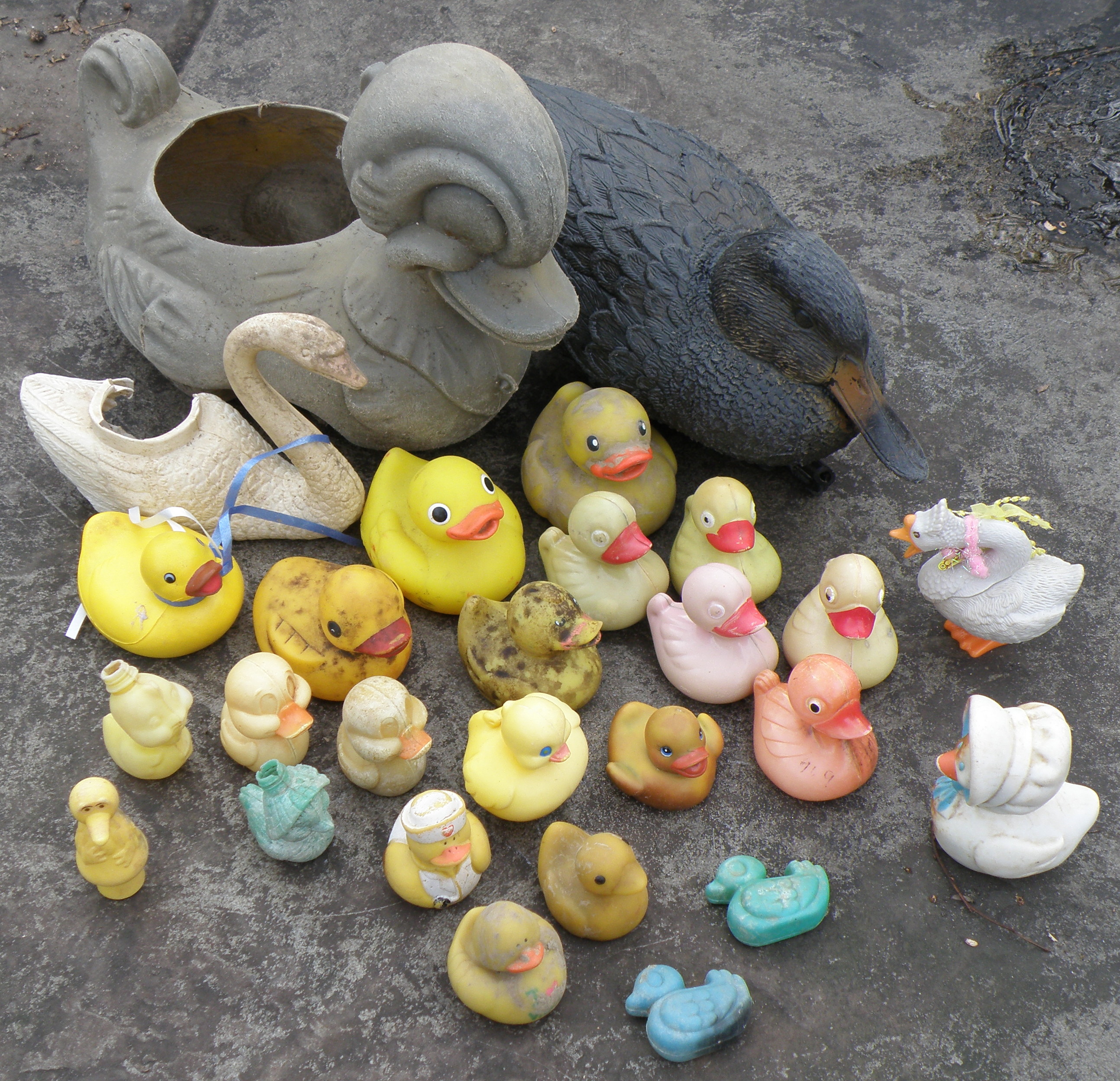
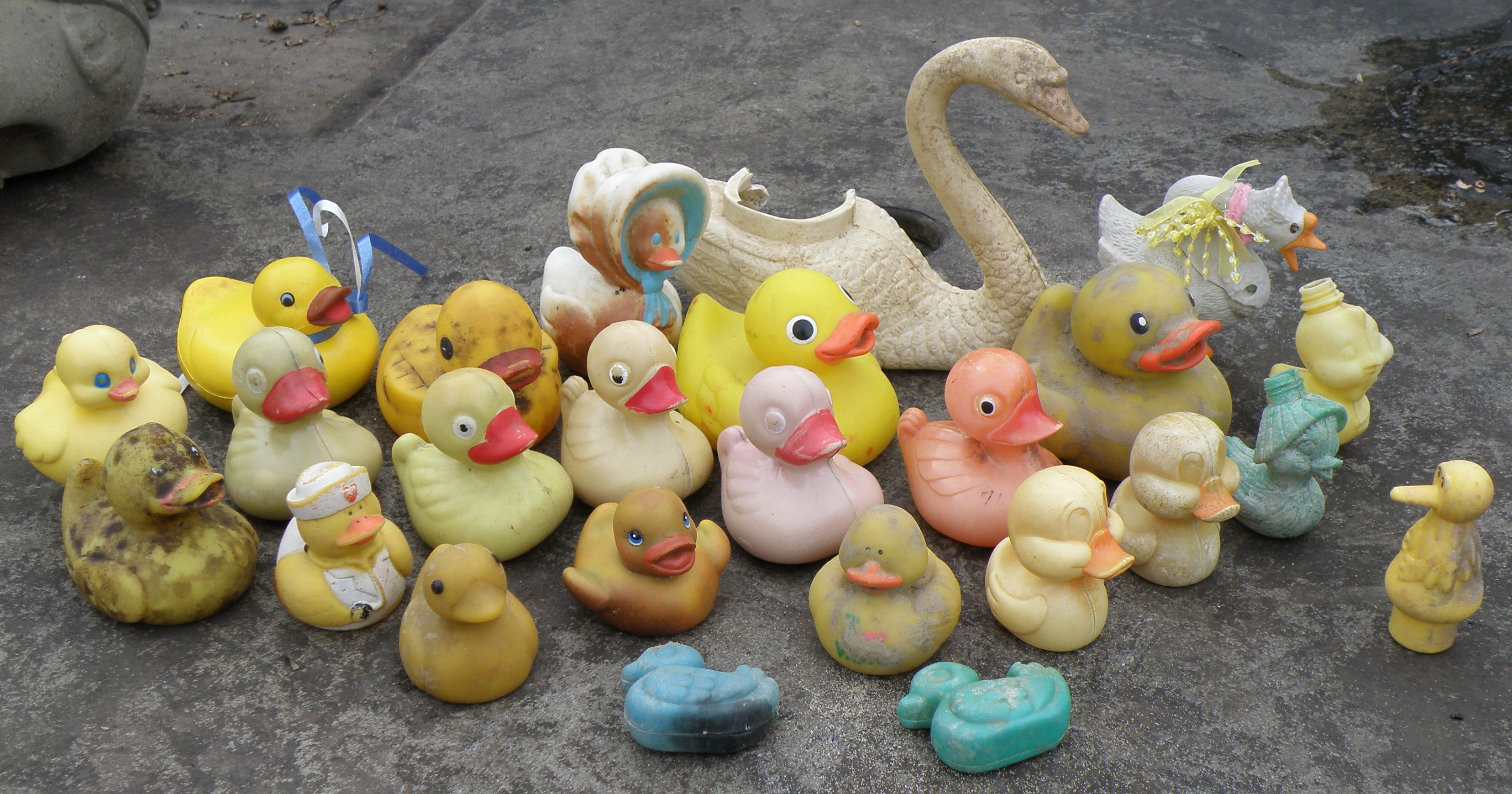
One last post before all of 2011’s sand runs through the hour-glass!  Here are a few of the many rubber duckies that I have come across at the Falls of the Ohio over the years.  I thought it would be a fun way to end the year. If you would like to see more ducky images…I’ve posted a new collection, “Kentucky Lucky Ducky Collection” which can be found in my Pages section.  Have a Happy New Year and may 2012 be kind to all!

Read Full Post »

After a brief cold and wet spell I made it out to the Falls of the Ohio last Saturday.  The Ohio River was rising as were the temperatures which had dipped into the 30 degree mark  for a few days.  One look around here and there is no doubt that it is autumn in Kentuckiana.  The willow leaves were noticeably yellower and many of the trees were in the process of losing their foliage.  I was scouting around for what else was different in this environment and spotted this tiny butterfly moving about.

This small whitish butterfly was sipping on something on the sand.  I was practically nose to nose with it and recognized that it was a member of the skipper family.  Last year was such a banner year for butterflies at the Falls and to my eye…this year was a noticeable drop off.  After following this skipper for a few yards I was able to take this image of it.  At home I identified it as the Common Checkered Skipper (Pyrgus communis) which is considered a very common species.  It seemed rather late in the season for a butterfly, but I was able to observe a few rag-tag Buckeye butterflies and a few tattered Viceroys too.  Funny how I had never noticed this skipper before.  Nevertheless, I felt a sense of personal discovery as though I was the first person ever to see this tiny revelation. It was about this time I heard a distinctive tapping coming from a stand of willow trees.  Somewhere a woodpecker was plying its trade.

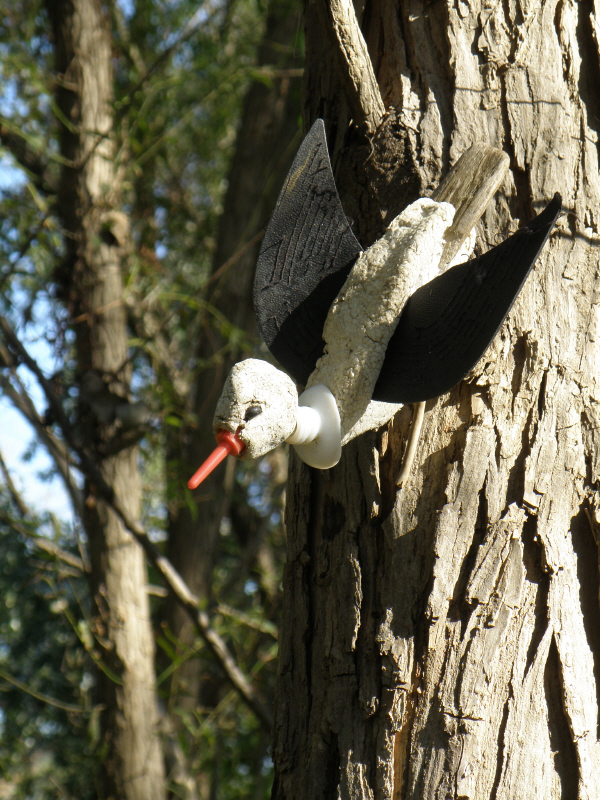
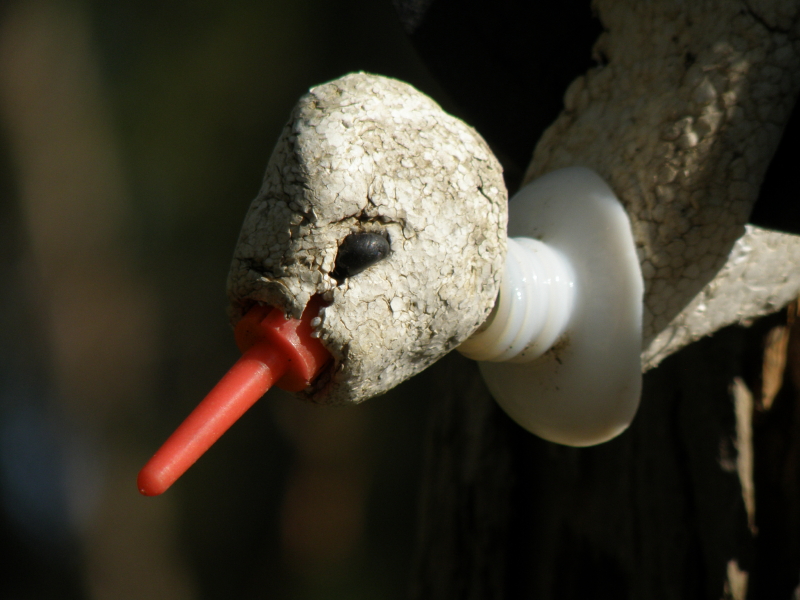
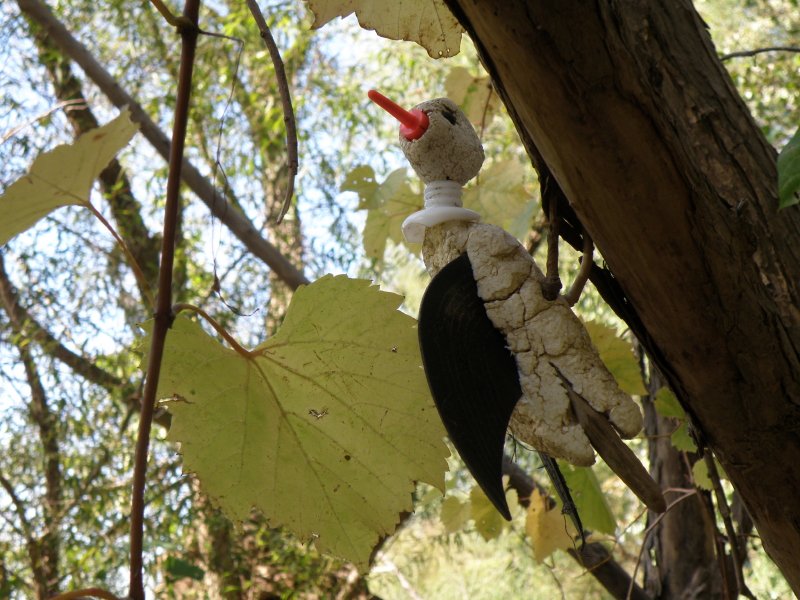
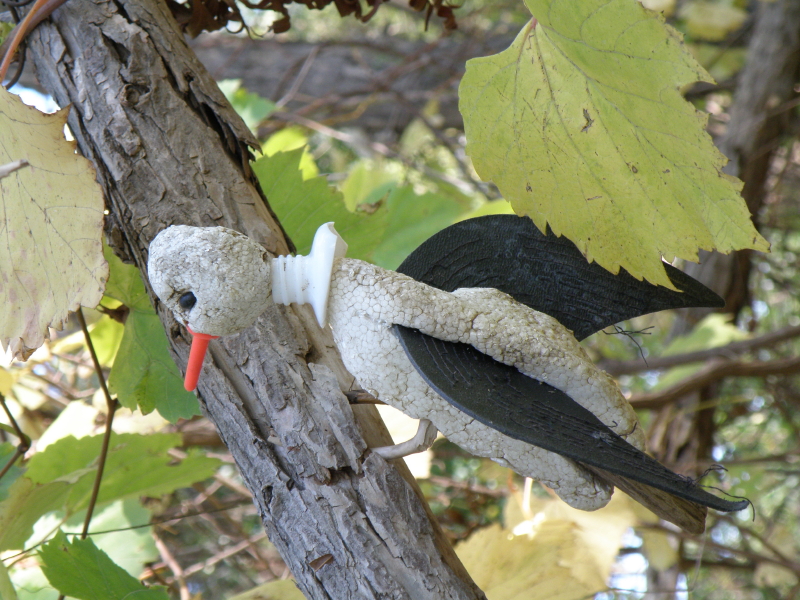
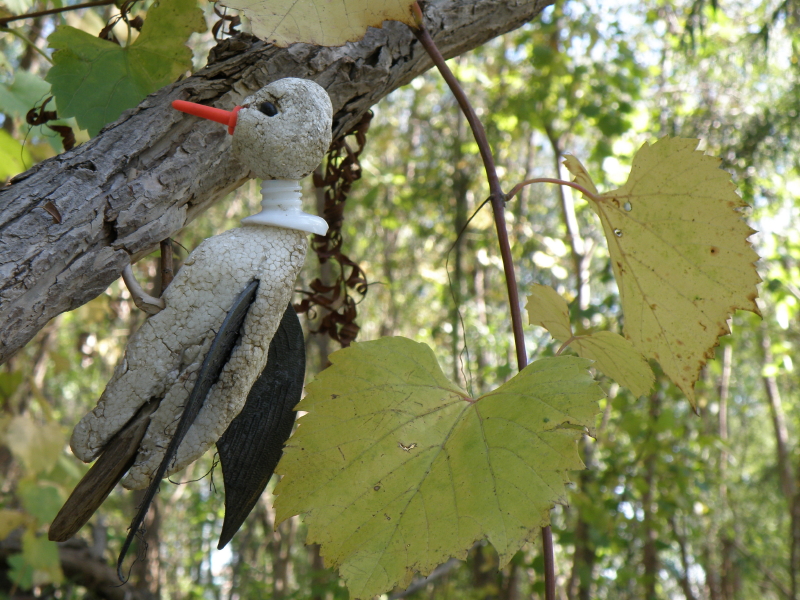
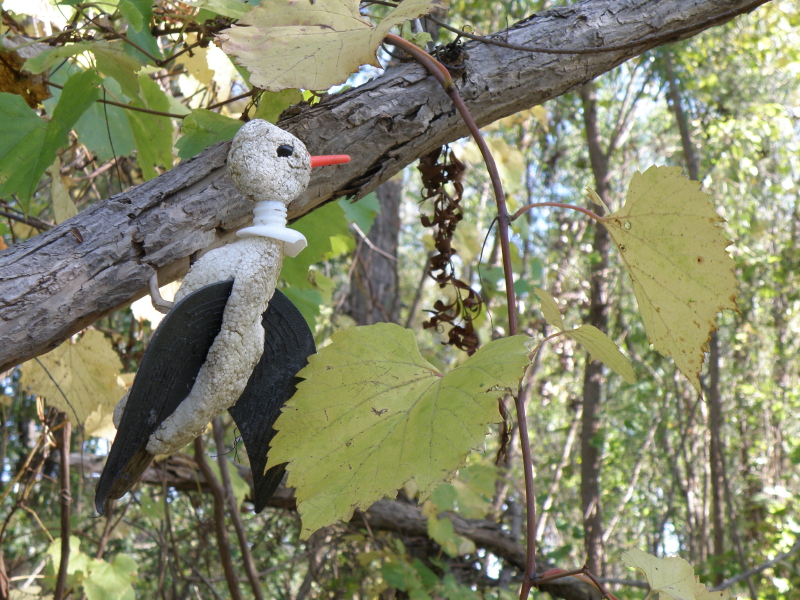
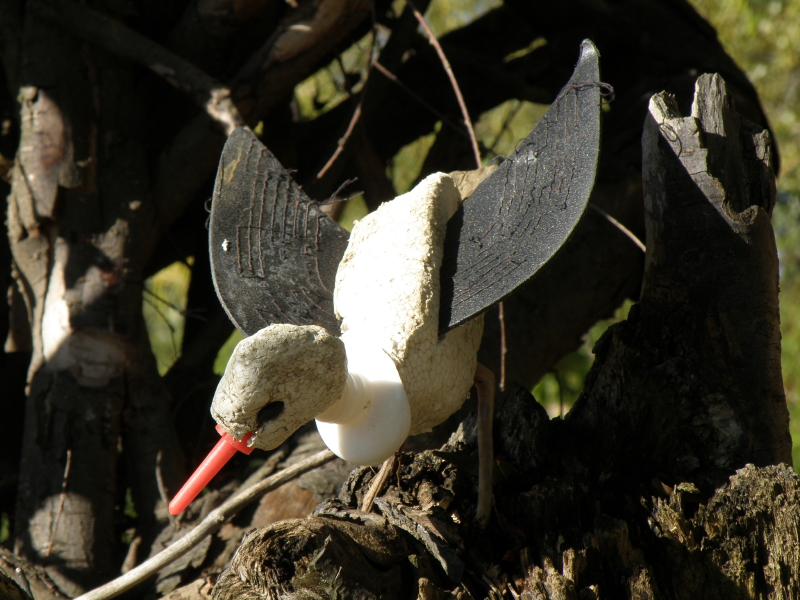
With its jet-black wings, white body, and bright red bill this bird is easy to identify…it’s the Pied Woodpecker.  About this time of year the northern population of this interesting woodpecker begins its southerly migration to the warmer climes of Central America.  Although I had added this bird to my “Life List” while on a family trip to Wisconsin…this was the first Pied Woodpecker I have seen at the Falls of the Ohio.  I observed it moving up and down the trunks of the willow trees exploring the crevasses in the bark for small insects.  It likes to move head down in its search for food like nuthatches are known to do.  Every now and then it would use its bill to chip away the wood to uncover the bugs it sought and it seemed quite unconcerned about me taking pictures of it.  I snapped as many as I could as I followed it on its path through the woods.

Soon it came to a grove of trees that were covered in wild grape vines.  The Pied Woodpecker explored the bark here too, but I saw it augmenting its diet with the tiny fruits this vine was producing.  Every once in a while it would make this nasally sound that I tried imitating.  Fortunately, this bird didn’t take offense and fly away.  Perhaps it “cut me some slack” for at least trying to talk to it in its own language…or at least that was my thought at that moment.

From the vine-covered trees, the woodpecker next flew to a large log with a large exposed root mass.  When this tree was living it must have been huge. The Pied Woodpecker didn’t linger here long and I watched its rising and dipping flight pattern as it crossed over the Ohio River into Kentucky.  I wonder if I will ever see another of its kind here again?  That’s the funny thing. There are birds that are considered common and regularly recorded here that I have yet to see.  I’ve seen them elsewhere, but not here at the Falls of the Ohio.  That’s the thing about birds…their extreme mobility can make them unpredictable!

Read Full Post »

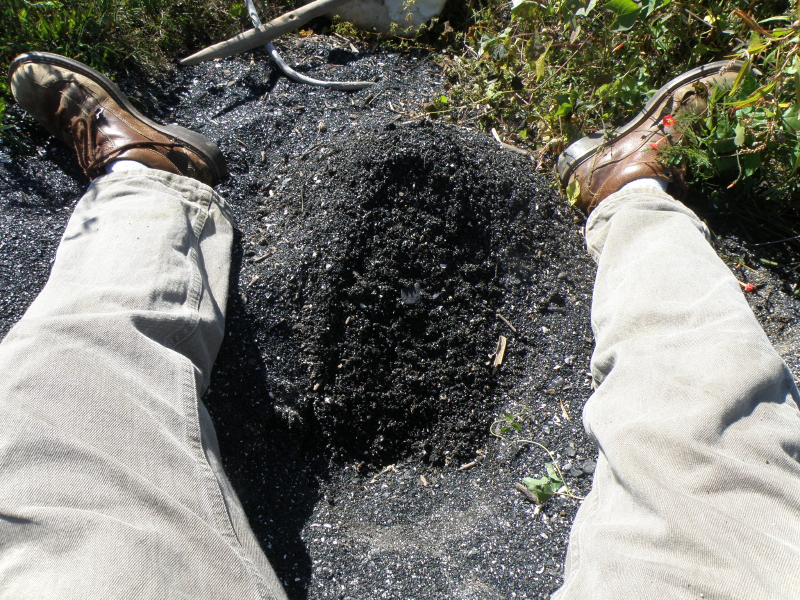
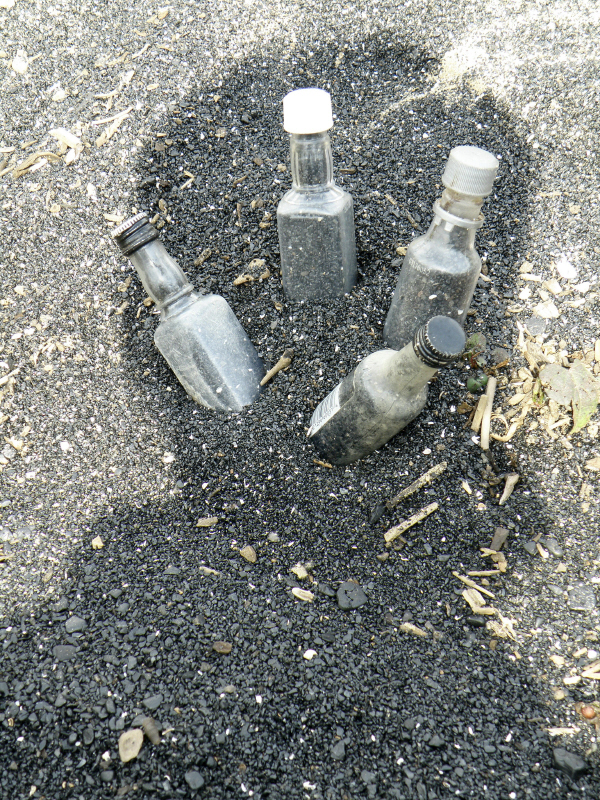
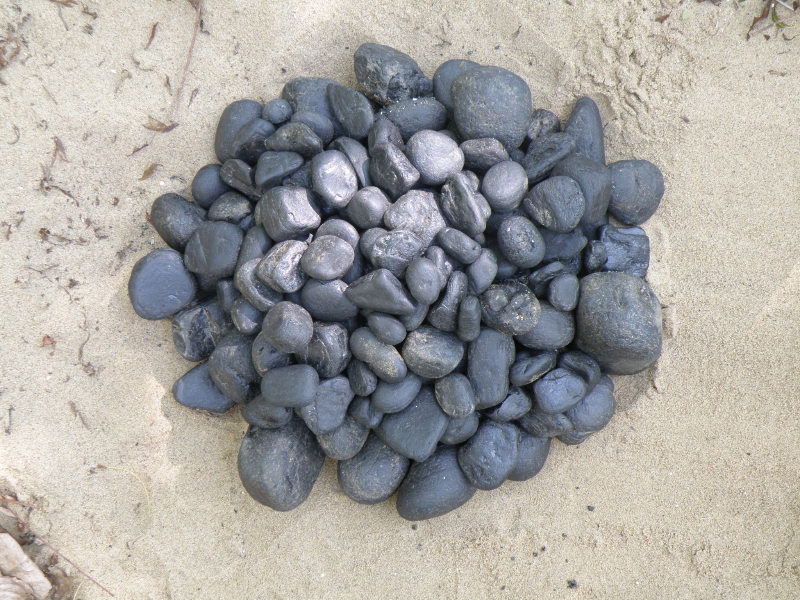
I’m at the Falls of the Ohio again because the Ohio River has been priming my subconscious all week with the sound of running water.  I am also very close to finishing the piece I’m making for an invitational art exhibit I’m participating in which revolves around the issue of coal and mountain top removal.  This is a topic of some importance in Kentucky.  We have a love/hate relationship with coal.  On the one hand it is an energy resource we have in some abundance and it does provide much-needed jobs and revenue, however, the toll it takes on everything it touches is also well documented. Over the last few posts you have seen some of the process I’ve been involved with the coal the Ohio River has deposited at the Falls.  Today I’m gathering the last of the coal I need for my art.

The spring floods of 2011 washed a lot of coal into the park.  My “usual” Falls of the Ohio project touches upon another important issue which is the quality of our number one vanishing resource… fresh, clean water.  As is the case with most aspects of the environment, few issues stand in isolation from all the other problems out there.  Considerable overlapping is the norm which makes all these problems that much more complex and challenging.

The piece I’m making for this invitational exhibit isn’t intended to be a didactic one.  I’m not sure that screaming at people ultimately does much good when it comes to something as complicated as the coal issue.  I also don’t pretend to have the answers.  I’m hoping that the artwork I’m making with this coal will operate effectively just under the surface of people’s imaginations where it might linger long enough to resonate.  We will see.  In the meantime, I’ve “enjoyed” working with this material.  I have decided that it does have an odd beauty of its own especially when the river tumbles away its rough edges.  I have found simply creating small mounds of coal whether in old car tires or just by itself to be a reflective act.

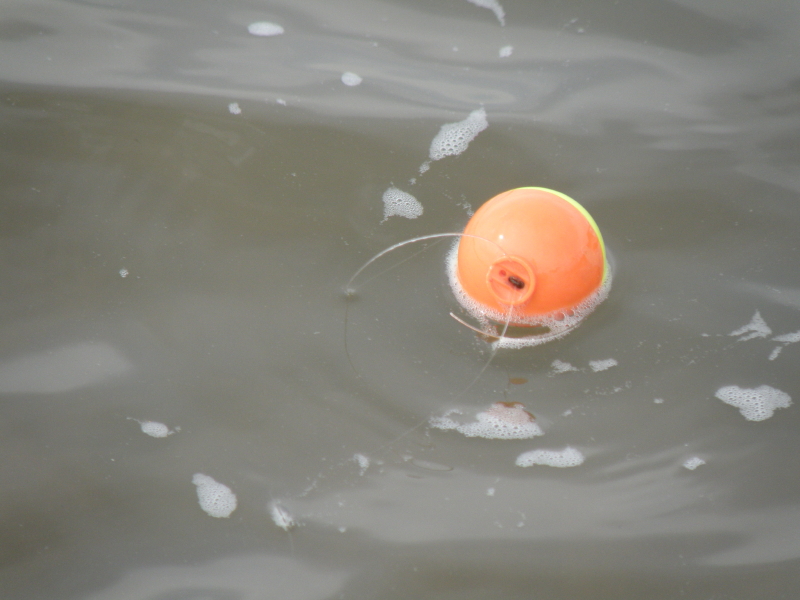
After playing with the coal for a few hours, I decided it was time to do something else.  It has been a while since I last baited a hook and went fishing.  I got the idea when I came across a long willow branch that a beaver had gnawed all the bark off for food.  Looking around the riverbank, I also found a hook, lead sinkers, and enough waste fishing line to outfit my found pole.  Fishing floats are something I find in abundance and always have a few in my collecting bag. I also pick up the lead weights that other fishermen lose because this metal doesn’t need to be out here either.  Looking under rocks, I scrounged up enough insect larvae to use for bait.  Now I was ready to throw my line in the water…and wait.

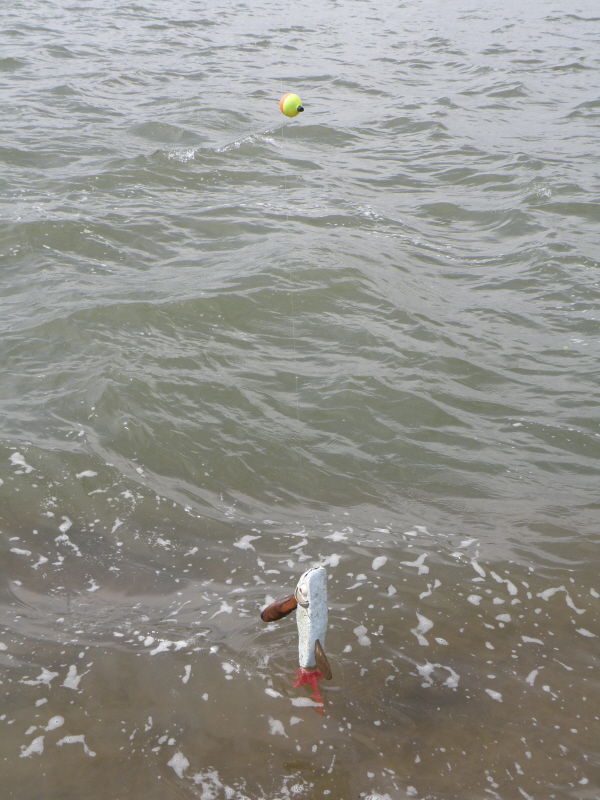
I guess about twenty minutes passed before I got my first nibble.  I lost my bait several times before I was successful in hooking a fish.  The sight of my float going completely under the water was a thrilling one!

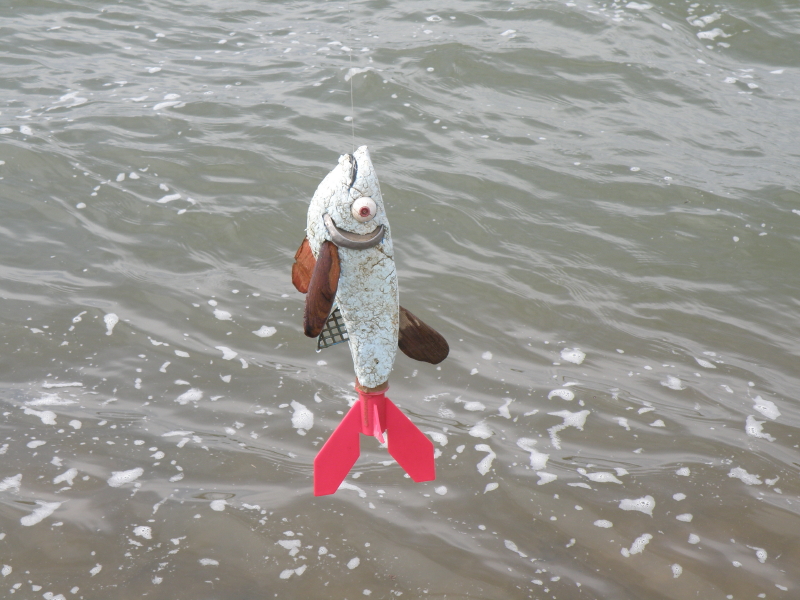
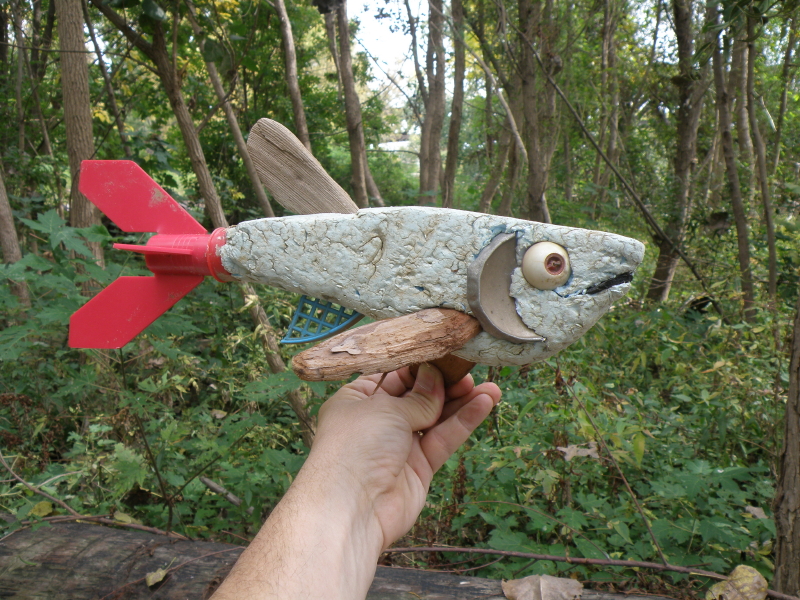
This fish didn’t give me much of a fight.  After a few runs in different directions I could feel it tire and lifted it out of the water. To be honest, I didn’t have the slightest idea of what species this was, but I know that I have never seen anything quite like it here before.  It’s coloration was unusual with its light blue body and bright red tail.

It’s eyes are large and I surmised that it usually lives in the depths of the river where light rarely reaches it.  I thought it had some similarities to the sauger which is a walleye relative and also found here, but it lacked the sharp teeth that the sauger has.  It’s gill covers or operculums were metallic and reminded me of the bottoms of aluminum cans that the river washes into the park.

I quickly took a few more photographs and then released this fish safely back into the river.  When I got home I tried to look up some information about my catch, but couldn’t find much about it.  Apparently, Rafinesque and LeSueur, two early naturalists who described many of the fish found in the Ohio River and Falls of the Ohio, were mum on this subject which was disappointing.  Until I can locate better reference material I decided to just call it something descriptive like the Red-tailed Goggle-eye.  Of course, any information that any of you out there might have would be welcomed! Seeing this fish I also had another more disturbing thought.  What if this is evolution in action and the continued degradation of the environment is shaping new species from older ones that can deal with the new reality?  Evolve or die. This brought the question of man as an agent of evolutionary change to mind since we are culpable for many of the changes going on in the larger world.  Well for now, I’ll just sleep on it and see what turns up tomorrow.  See you by the water!

Read Full Post »

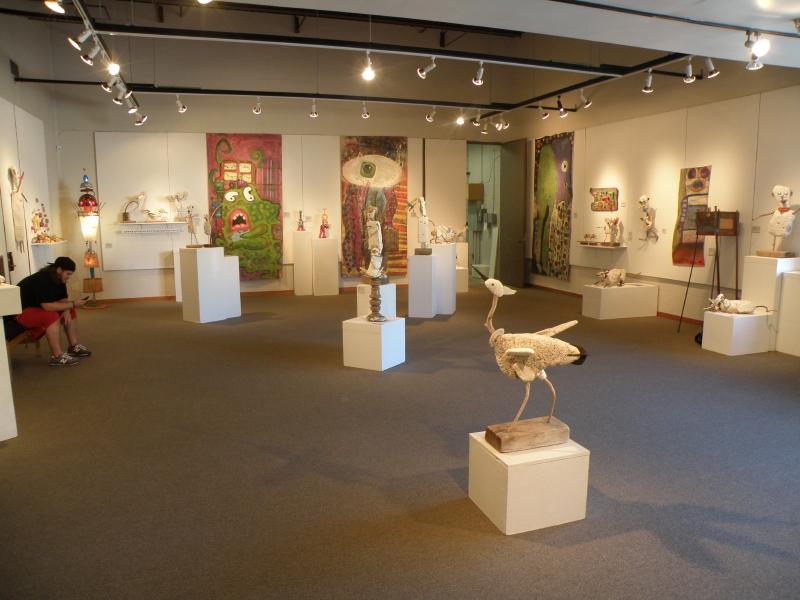
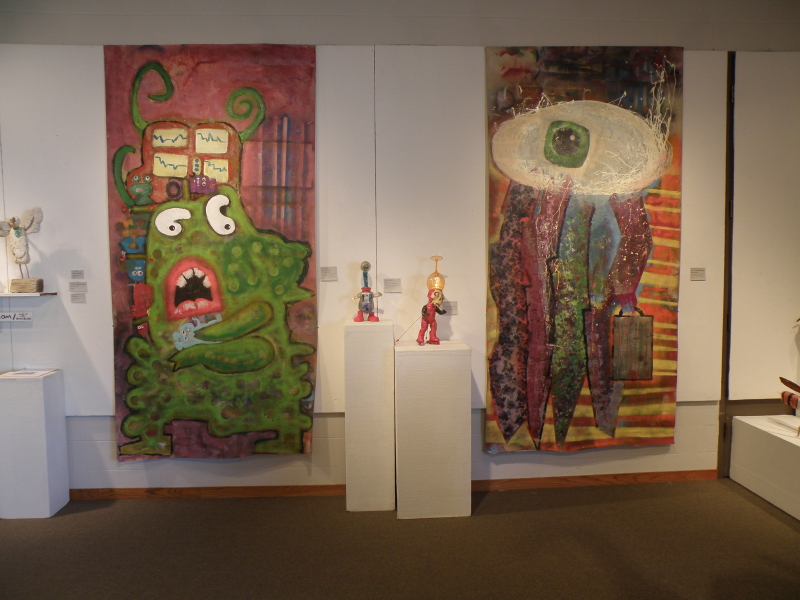
Hard to believe a week has passed since this exhibition opened and summer has made room for autumn as well.  Such is the passing of time.  As promised here are a few views of the show my work is in which opened at Bellarmine University’s McGrath Gallery on September 16.  The exhibit is entitled “Outcasts and Artifacts, artwork from a disposable world”, “Al Gorman and Scott Scarboro”.  I snapped a few installation views before people arrived for the opening.  Thanks to friends and family as well as a well-timed snippet in the local paper… a good mix of folks came out to see our work.

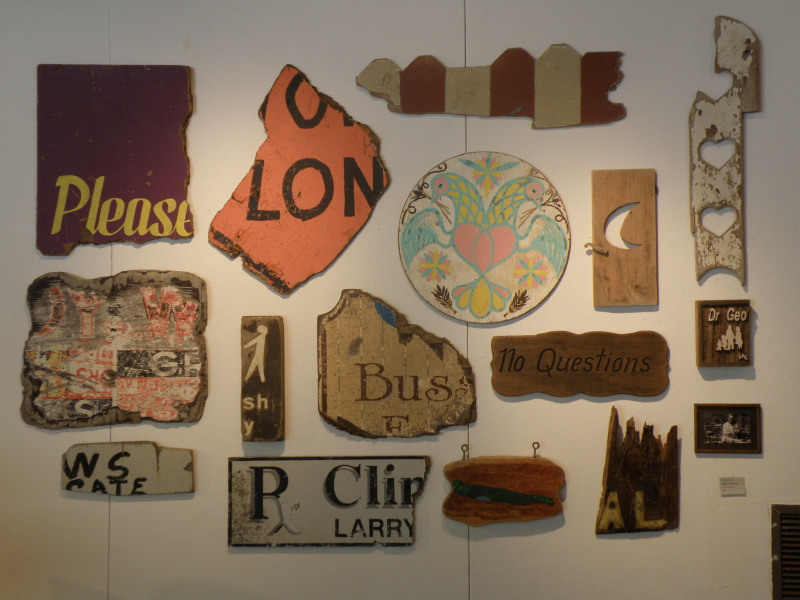
I have a lot of stuff I’ve gathered and made to select from over the years and I decided now was a good time to see my sign collection hanging on a wall.  I found that I still enjoy looking at these artifacts.  I like hand painted signs and one of my very first jobs was working in a sign shop.  I have this idea about history being interpreted from examining the existing fragments and this collection fits.  I also like finding the occasional sign where the universe is seemingly “speaking” to you by providing enigmatic clues.

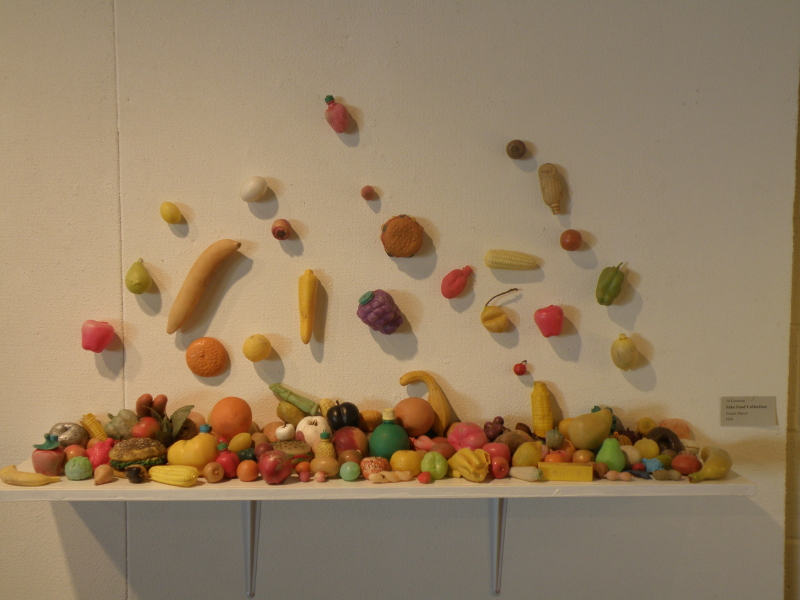
My “Fake Food Collection” was another one of my various collections I put on display.  I have shown this before, however, it seems each time I go to the river I find another piece or two for it.  As a result, this collection keeps getting bigger and bigger and no longer  fits in the Styrofoam box I use to store it.  I found every piece at the Falls of the Ohio courtesy of the Ohio River beginning eight years a go.  These are the pieces I did find and I often wonder about the ones that got away!  To me, all the predominantly plastic representations of food are another signal of our disconnect from nature.  The smell of the plastic is really noticeable.  I think this collection presents initially as something humorous until the reality of it sets in.  This seems to be a part of my art’s modus operandi.

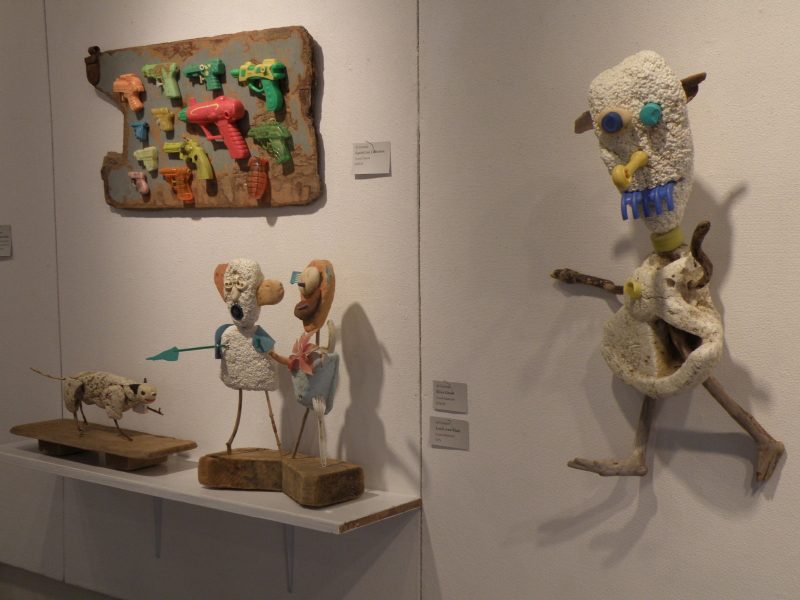
Among the sculptures I displayed are a couple of early pieces that I have never exhibited before.  Such is the case with “Fang” on the right and my version of the meeting of the explorers “Lewis and Clark”.  “Fang” still has its original dirt on it.  Also in this shot are my “Squirt Gun Collection” and a small predatory animal I called the “River Ghost” which I featured in a blog post last year.  Most of these Styrofoam sculptures I consider to be “relics” of a larger process I engage in and weren’t originally intended to be stand alone objects.  Although I have saved many works over time, the vast majority of them were left behind to await their fates in the park.

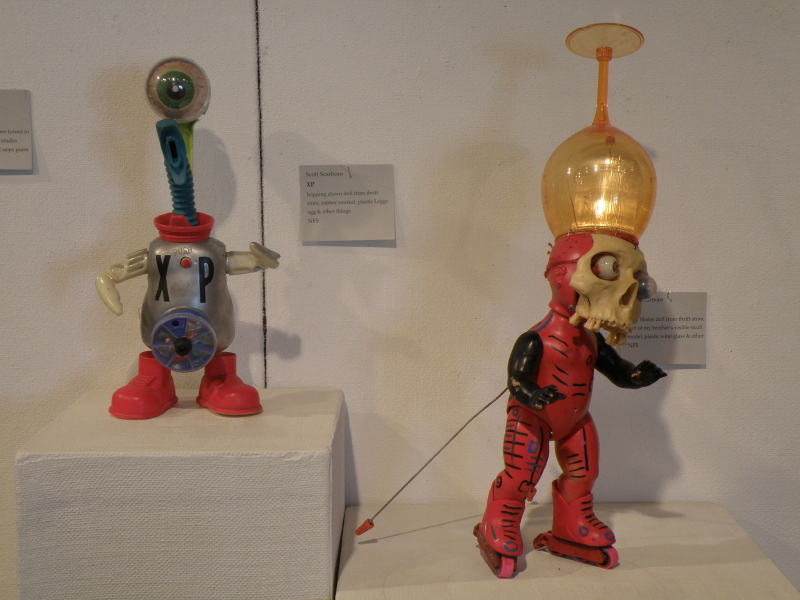
Scott Scarboro is an interesting artist who lives in New Albany, Indiana that also works with found objects and materials.  His stuff is more “urban” than mine and he makes use of old toys and yard sale and flea market finds.  He likes to tinker with the mechanical and electrical workings in these toys so they neither move nor sound as originally intended.  Of late, Scott has been exploring the uses of sound in sculpture in public art settings.  The paintings began life as wall paper remnants that then became drop cloths that Scott worked back into. Scott and I have been friends for many years and our artistic paths seem to intersect frequently.

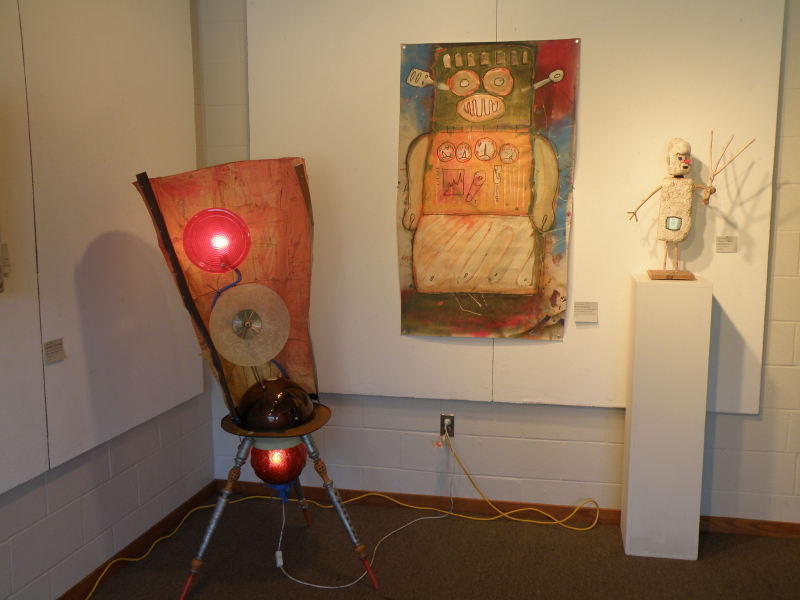
Another view from the gallery.  Scott made the robot painting as well as the lamp.  The two of us spoke to an evening art appreciation class at the university that went really well.  We were able to engage the class with our art and ideas and I believe most of the students were not art majors? As a result of our talk many of these students came out for the opening reception.

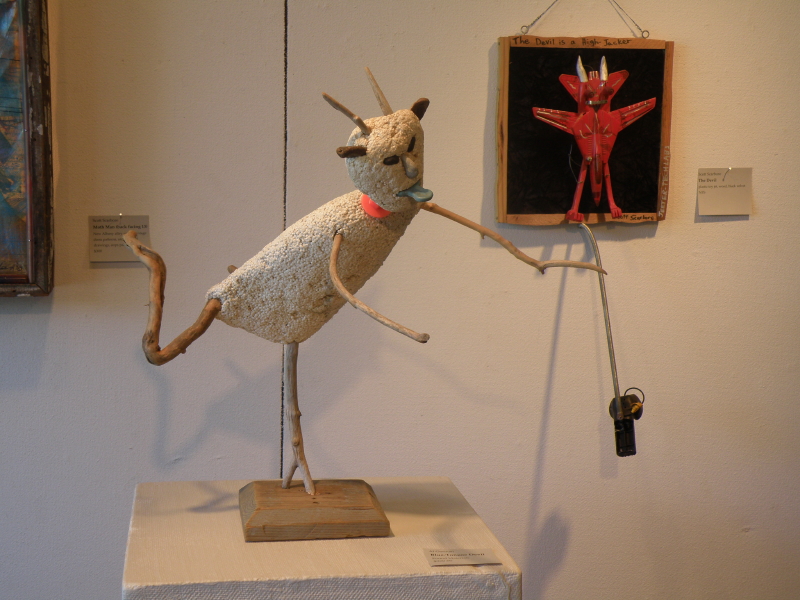
Two “devilish” works by me and Scott.  The Styrofoam sculpture I entitled “Faun or Blue-tongued Devil” and the wall piece  Scott made using a toy jet fighter plane.  One idea that both of us like working with is “repurposing”  existing objects and making new statements from them.  The world is after all already filled with a multitude of objects that can be reinterpreted without using freshly extracted resources from nature.

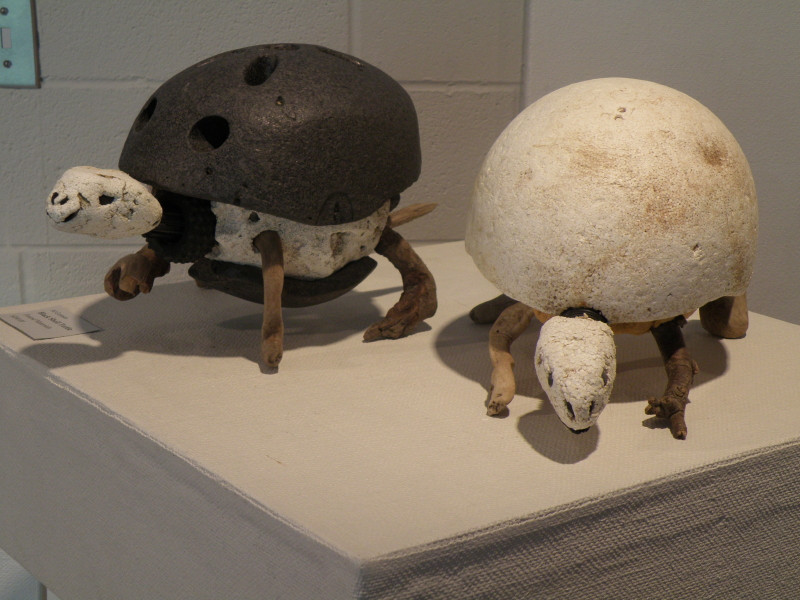
Also in the show were two Styro-turtles I’ve made.  The white one was featured in one of my recent posts as the “Cottonwood Turtle”.  I was pleased by how that story and images turned out.  Both turtles include old bicycle helmets in their making.  The black one’s body under the helmet is actually a foam wig stand in the shape of a human head.  For many of the works I presented, I also included laminated hard copies from my blog posts that showcase the sculpture on exhibit.  I have to say that I still prefer seeing my works in the contexts of where they were created and as a result I probably don’t pursue the exhibition opportunities available to me.  In closing, here is one final shot featuring three of my pieces and a shameless sign I painted to get gallery visitors to also visit my riverblog!  I still feel that this is the best place to get a fuller sense of what I’m doing at the Falls of the Ohio.  All the rest is fragmentary and tells a smaller part of the story.  My thanks go out to Bellarmine University and Caren Cunningham for the invitation to exhibit and Laura Hartford for all her hard work in preparing for this show.

Read Full Post »

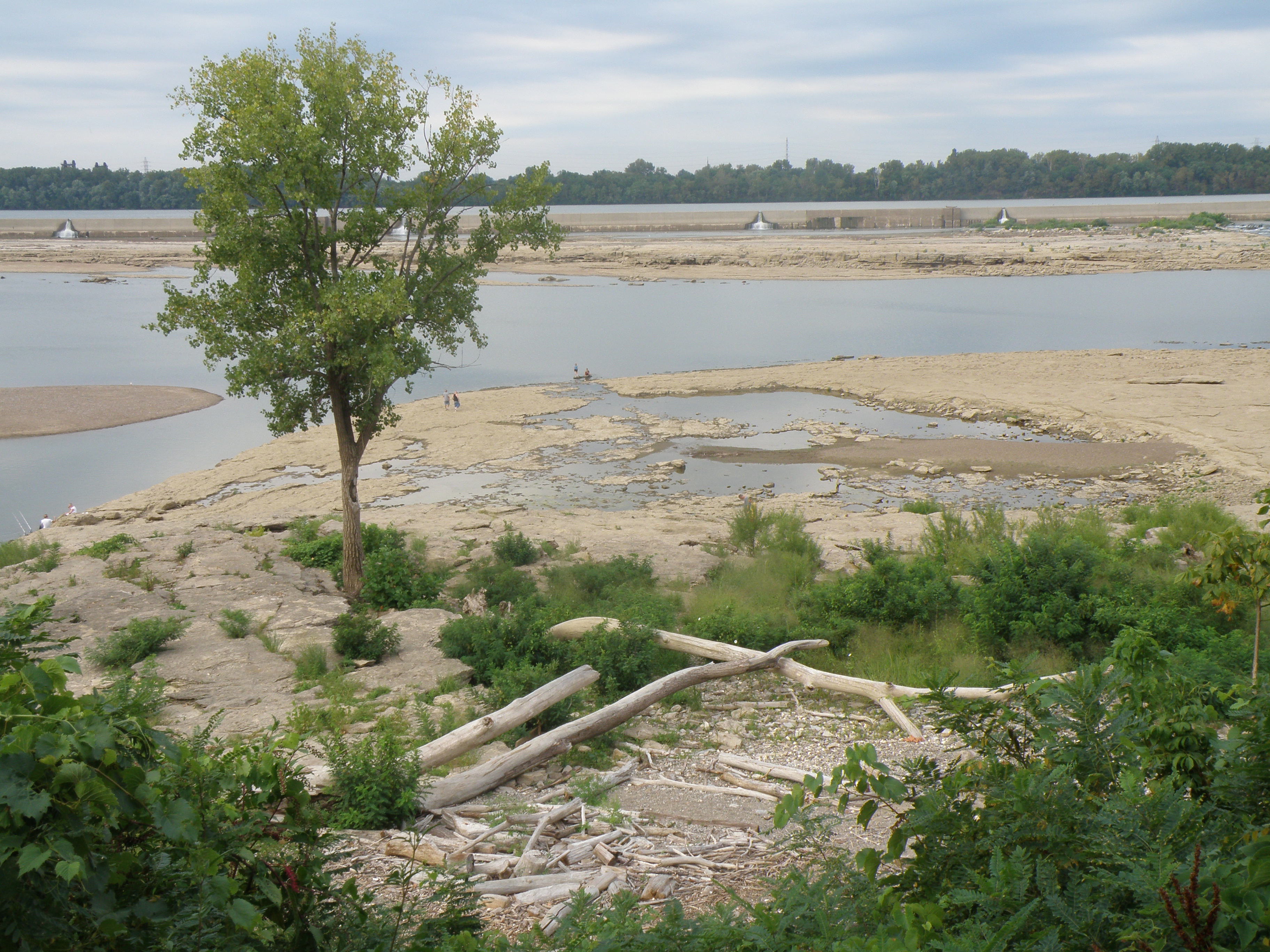
It’s the Falls of the Ohio State Park in late summer.  We haven’t had any significant rain in a few weeks and the fossil beds are exposed as the river has retreated away.  This isn’t a permanent condition…just the way it is during this season. Visitors are walking over the rocks and admiring the many ancient fossil corals that during the rest of the year are under water.

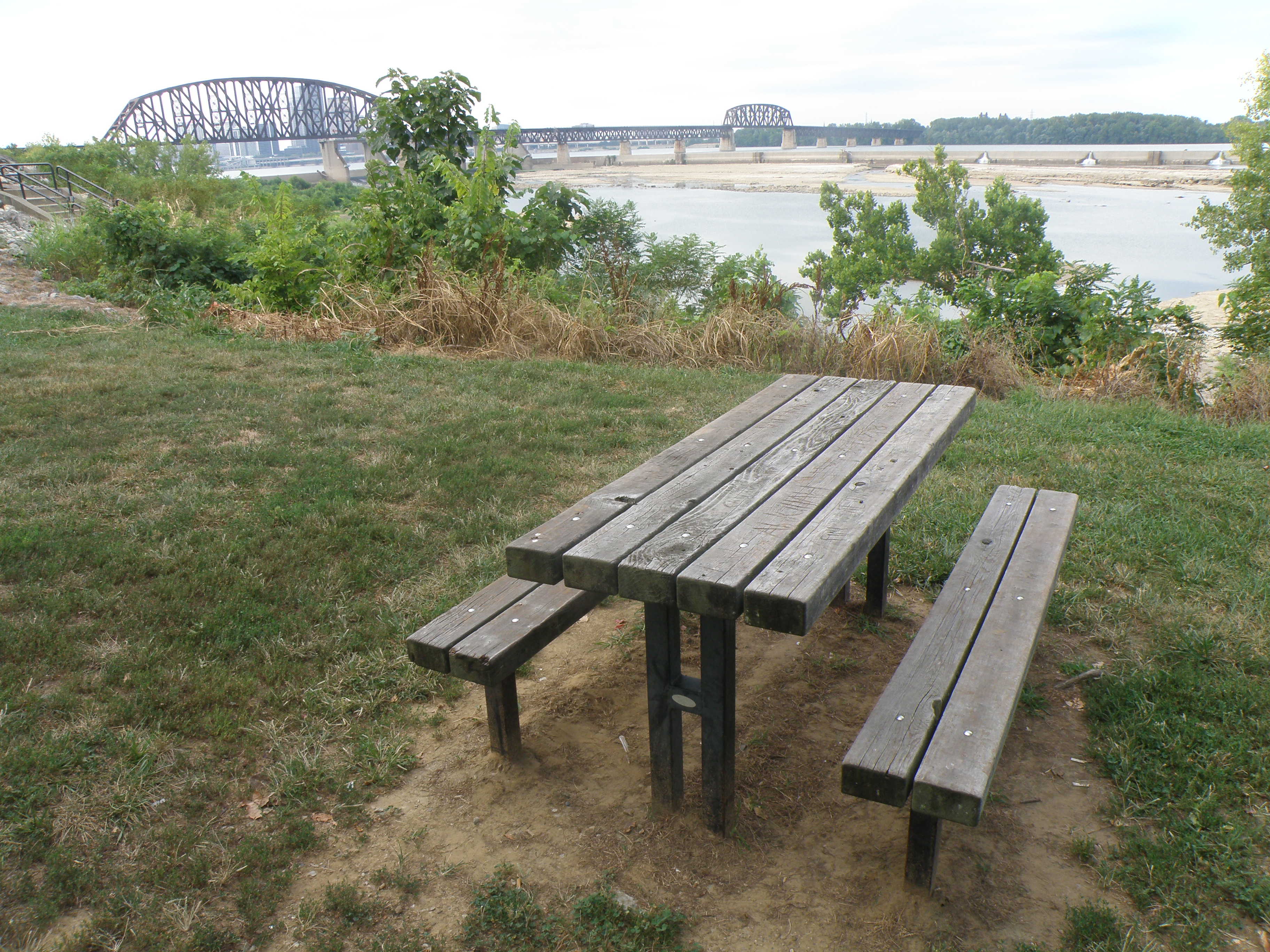
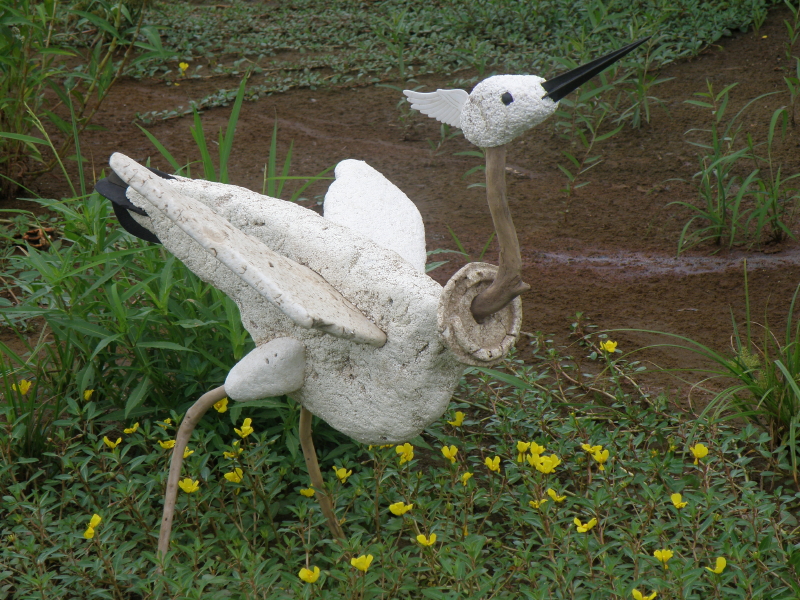
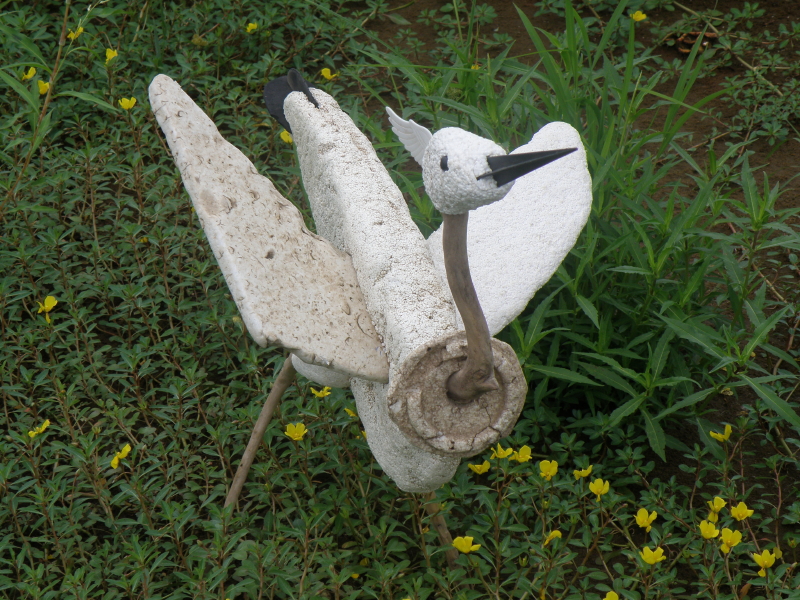
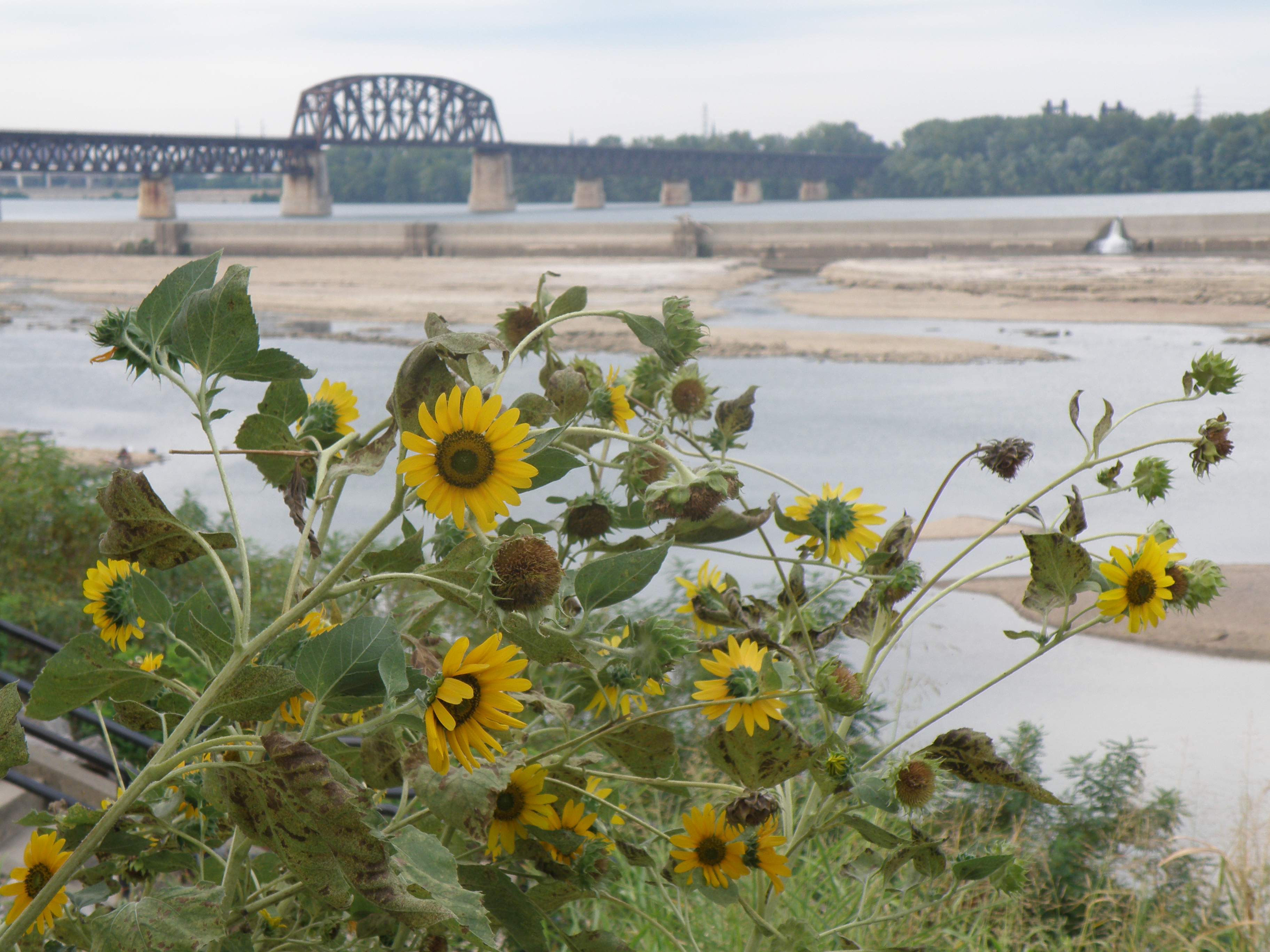
The best time to get a sense of the extent of the fossil beds is during summer.  From the top of the riverbank you can get a good overview of the area.  You can see across the fossil beds to the high wall that keeps the Ohio River at bay. Bird watchers are scoping the rocks and the top of that wall on the look out for seasonal birds or that once in a lifetime rarity.  Well today was their and my lucky day!  I was sitting by the picnic table when in the far distance I noticed something large and white winging its way across the ancient limestone terrain.  At first I thought it was a pelican, but it clearly wasn’t big enough.  That’s when I heard one of the bird watching flock who also spotted it say that he thought it was a heron or egret of some kind.  I grabbed my camera and hustled down to the river.

I watched the white bird circle the area by the lower tainter gates and I anticipated its possible landing spot.  As I approached the area my mental field guide was going through all the possible species.  Great Egrets are seasonally common here and while they are white…they do not possess a black bill.  One white wader that does have a black bill is the Snowy Egret, however, it is smaller and has black legs with yellow feet.  Snowy Egrets come to the Falls but they are less common.  It couldn’t be a Whooping Crane because I couldn’t see any black tips on the wings.  For a moment, I even thought this bird might even be an albino.  Nevertheless, it was shaping up to be a mystery which are among the most fun birds of all.

I saw the bird alight in the sedges and grasses near the river which is where I took these photographs.  This beautiful bird was distinctive with its black bill and white head crest.  It’s tail feathers were also tipped in black.  I watched it catch and eat grasshoppers that were numerous in the weeds.  For the moment, I would concentrate on taking pictures and being discreet.  I could always identify it later in the comfort of my home, but already I knew it wasn’t a bird normally found here or in our country.  This bird’s beauty was enough and knowing its name wouldn’t make it more beautiful.  Time stood still until the bird spooked or just decided to fly off.  Later that day I saw the heron return to the river and I hung around hoping for just this opportunity.

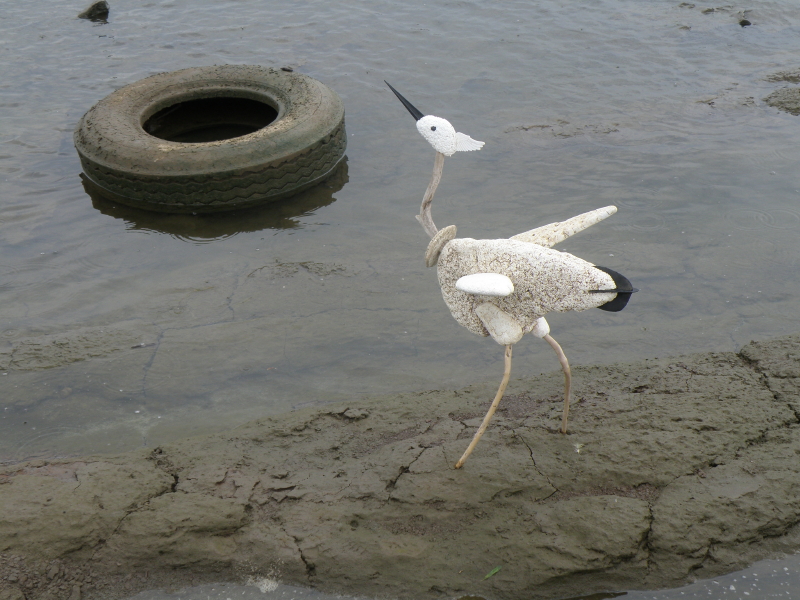
I was struck by the great contrast between the snow whiteness of the bird and the dingy black of the tire resting in the water.  I thought the heron was exhibiting signs of distress or anxiety, but I was surely projecting my own feelings onto this animal…or maybe not!

In one of the most curious bird behavior moments I have ever observed, the heron walked over to a group of discarded plastic bottles and started hitting them with its bill.  I guess it was just checking them out?  A passing fisherman came too close and the bird was gone for good.  I took a deep breath and hoped that I had a few good images and turned for home.  The bird turned out to be the Black-billed Heron which is more accustomed to being found around the heat of the equator.  Few confirmed records exist of this species being seen this far north. But since it’s been hot just about everywhere this year, the right conditions were present for it to make this appearance.  This same individual would create quite a bird watching stir wherever it was sighted in the United States and even made the cover of several bird watching magazines.  The Falls of the Ohio was as far north as this bird was seen and for me it was a happy privilege to see a bird that even John James Audubon never saw.

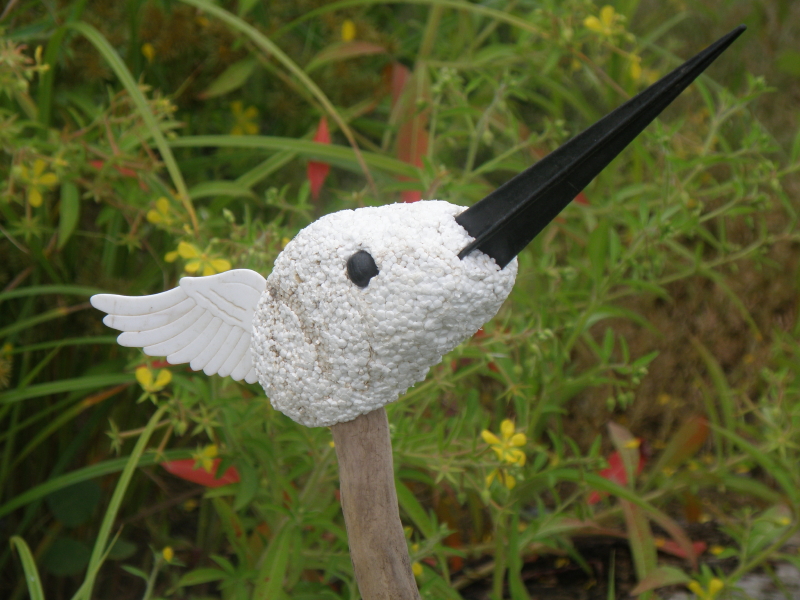
Postscript:  Readers familiar with the riverblog know that the Black-billed Heron was made with materials deposited at the Falls of the Ohio.  These found materials include:  River polished Styrofoam, plastic, sticks, river tumbled coal, the black tail feathers were cut from the soles of cast off shoes.  Thanks for tagging along on this avian adventure!

Read Full Post »

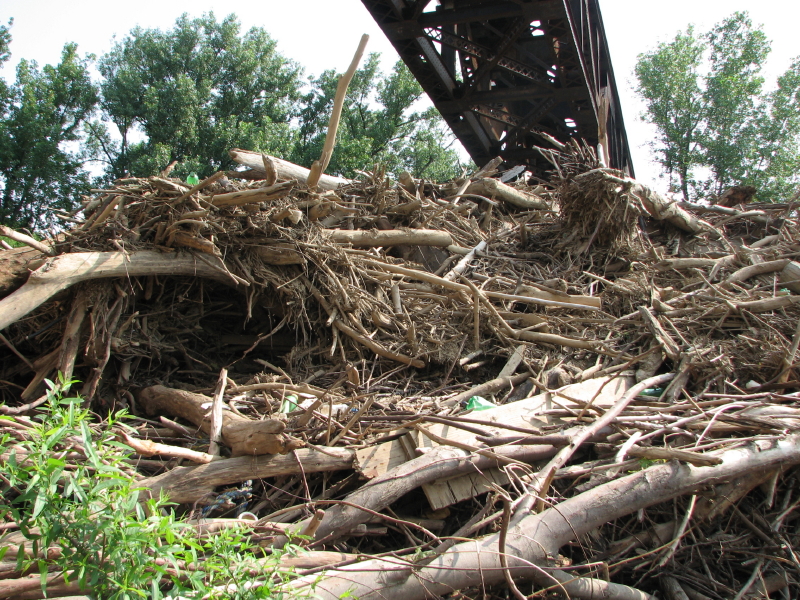
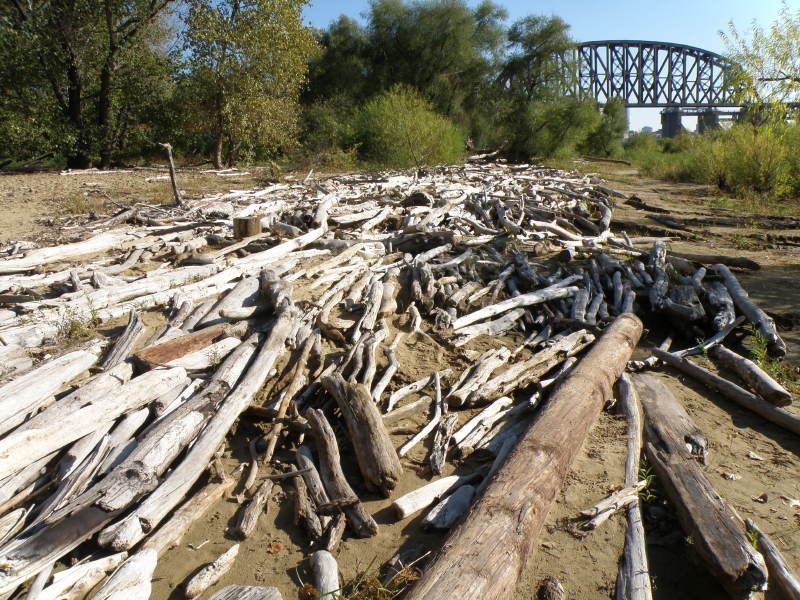
The huge mound of recently deposited driftwood under the railroad bridge is both an obstacle and a magnet.  It’s not easy to walk over and it helps to have a good walking stick to help maintain your balance.  The rewards for persevering are a nice elevated view of the Louisville skyline and the potential for finding interesting junk intermingled with the wood.

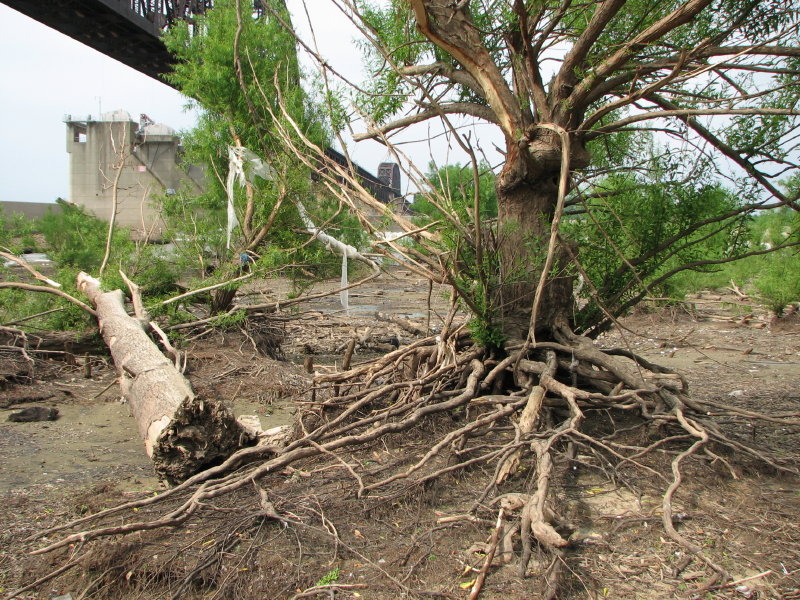
Once you move over or around this mound you enter the margins of the willow forest and you can see what the full force of the river can do to a landscape.  These black willows are tenacious and their roots hold on.  Here’s another image of a remarkable willow tree and its root mass.  This one wears a trophy from the flood like a victory pennant.

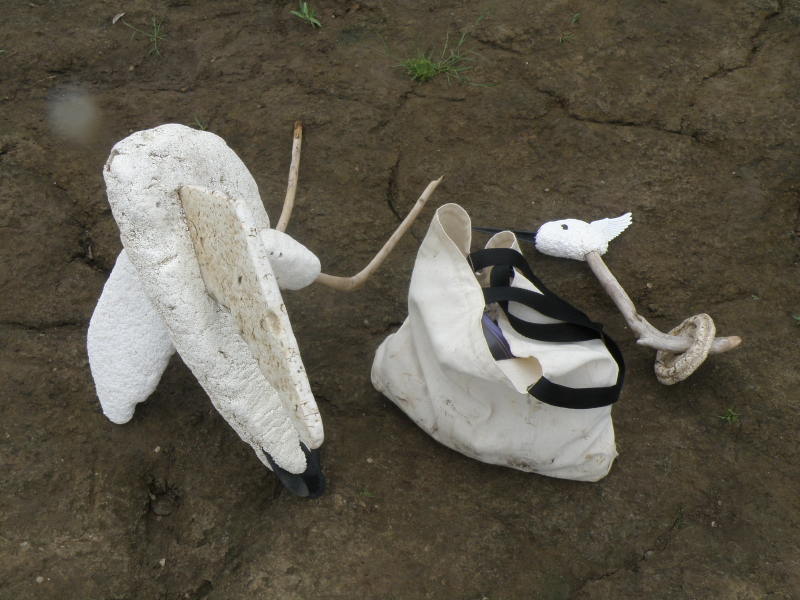
From all the cars in the parking lot, I’m guessing the fishing must be pretty good today.  I stepped by some earlier evidence in the form of this longnose gar skull.  I think this one was caught by rod and reel.  But, I have seen the remains of hundreds of these fish before stranded and killed by a retreating river.  Longnose gars are routinely in the 3 to 4 feet range in length.  The jaws are lined with small needle-like teeth for catching and holding on to smaller fish.  The gar is a surface fish and floats in on its quarry like a piece of driftwood very stealthily before surprising it with a quick flash of the jaws.

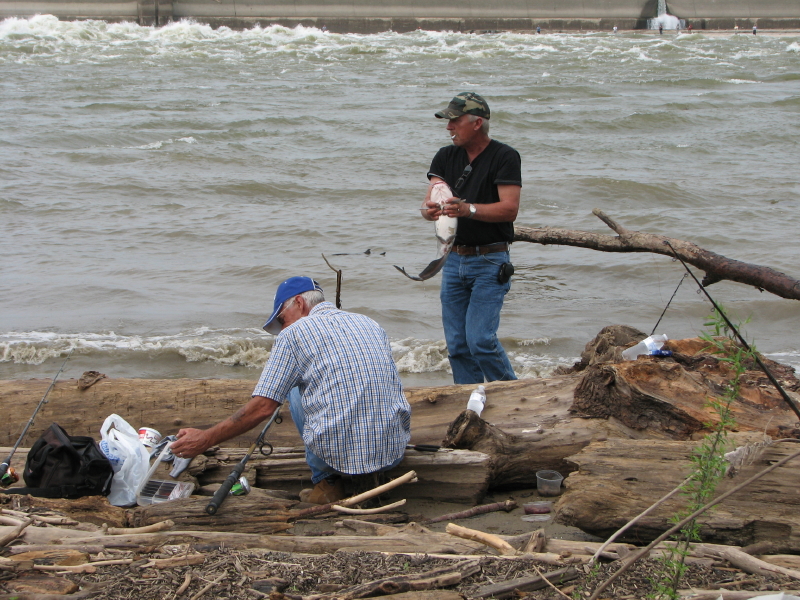
Moving to the river, I decided to watch what the fishermen were doing and catching.  In about twenty minutes, I watched two large catfish being landed.  Here are two guys that have this down.  Using multiple poles, they cast both worms and cut shad into the swiftly moving waters.  Snags and lost tackle are common since this part of the river is also full of rocks and boulders.

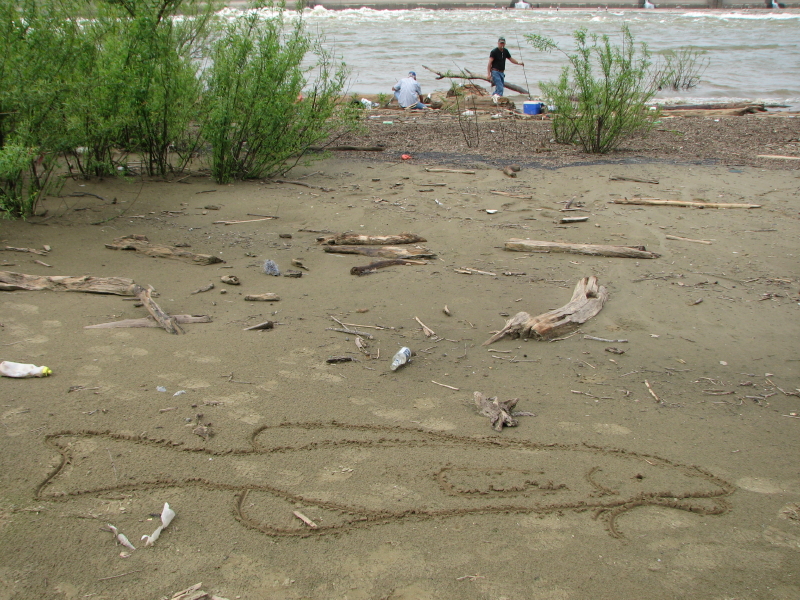
I was inspired by the scene and left them this contour drawing in the sand before moving on.

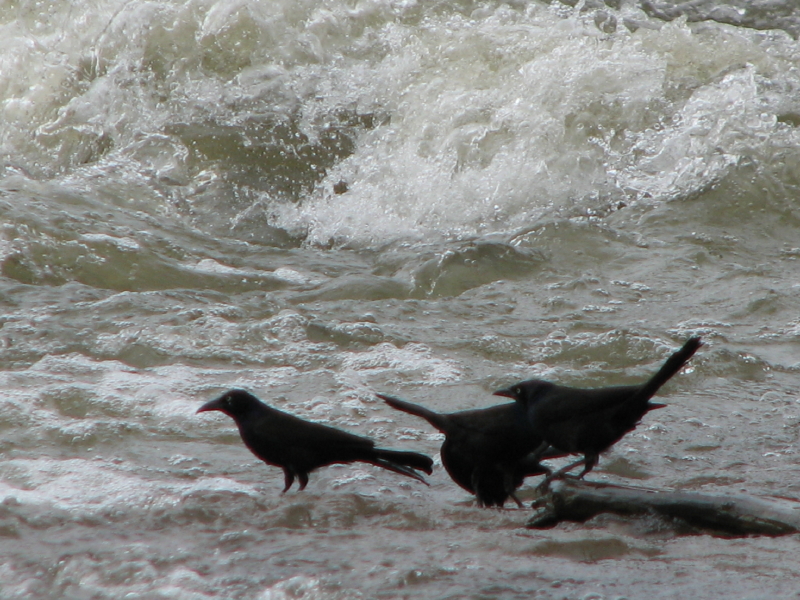
Earlier I had seen a flock of grackles by the water flowing under the bridge.  They were catching some food item here that I wasn’t able to figure out what it was…perhaps dead minnows?

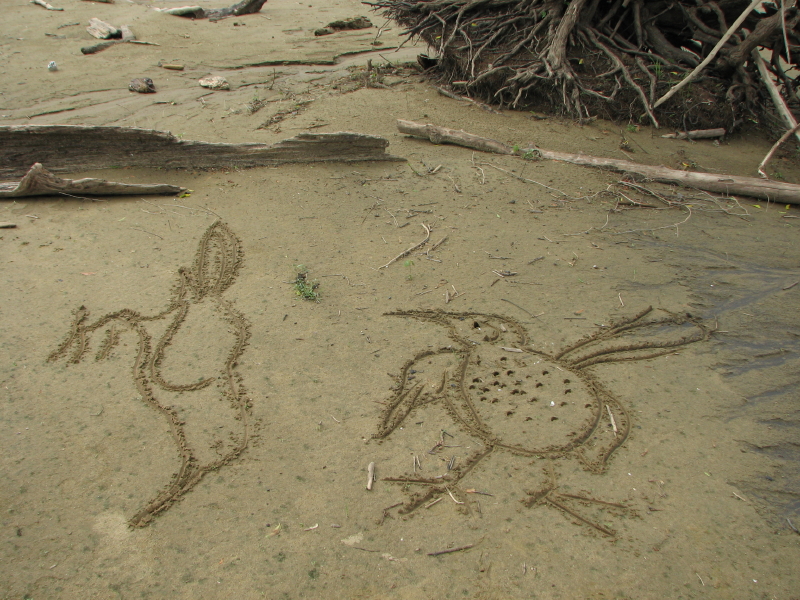
The grackles were working the river just like the fishermen were.  I left them a drawing in the sand as well made with the tip of my walking stick.  The sand today is moist and firm which holds a fine line better than usual.

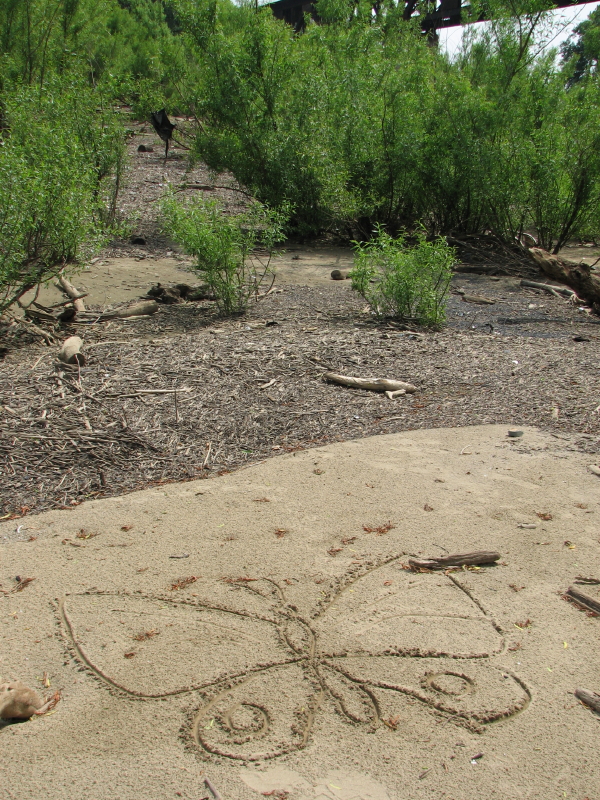
Of course, while I’m walking along I’m filling my collecting bag with the odds and ends that make up the rest of this riverblog.  Some of it is just stuff that I will attempt to make art with and the rest are souvenirs of our material culture.  Once the bag was full, I turned and headed up the bank to get under some trees and out of the sun.  I then made this sand butterfly to mark the spot where I turned for the willows.

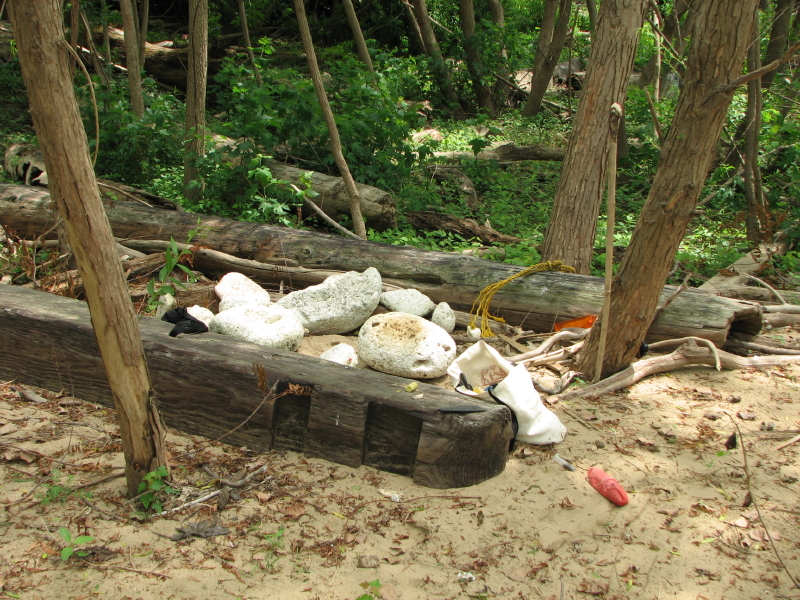
I have set up a new outdoor studio near the margins of the driftwood mound.  Instead of a plank to sit on, I’m using this large wooden bridge or railroad tie.  I haven’t found the large sections of Styrofoam that mark last season, but what I can find I’ve gathered at this spot.  I did make a figure on this day which extended this adventure, but I will wait until next time before unveiling it to you.  Thanks for tagging along…you have been good company!

Read Full Post »

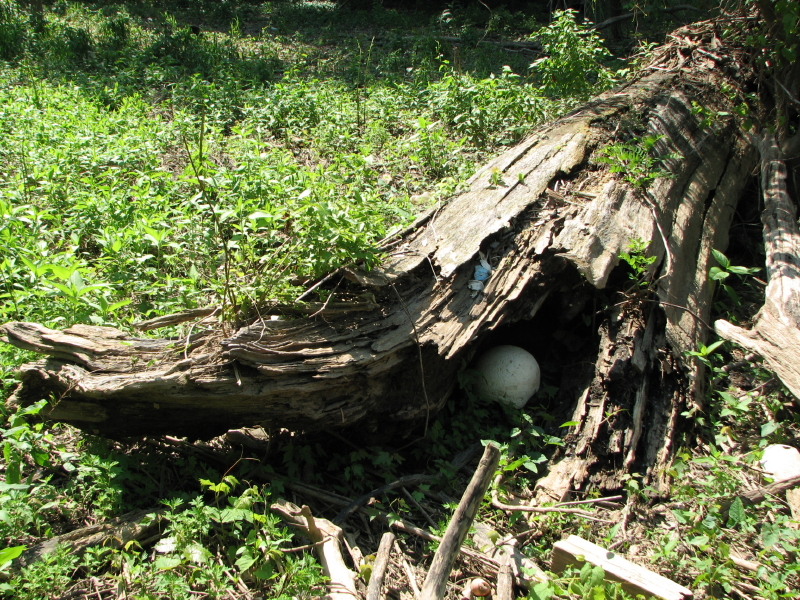
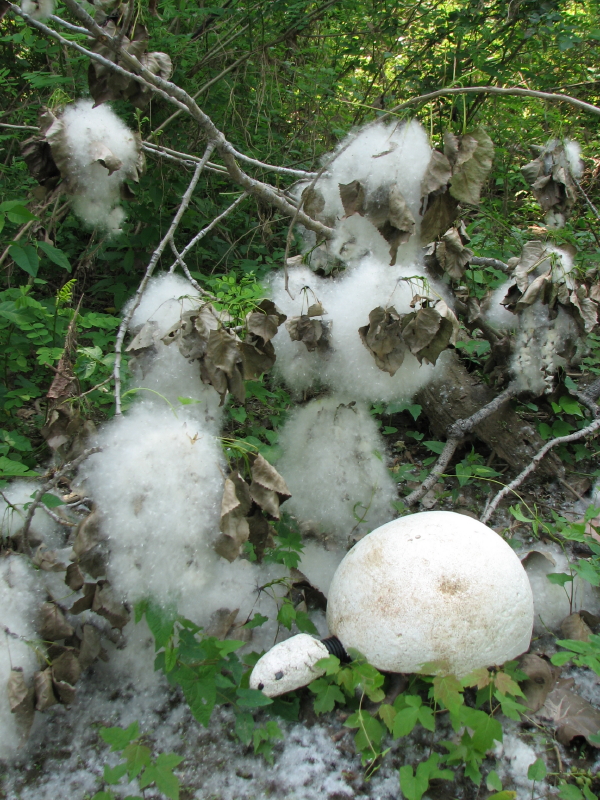
First, I would like to thank all the people who checked out my last post on the box turtles.  The response has been pretty overwhelming and I’ve enjoyed everybody’s comments.  The Eastern Box Turtle isn’t the only turtle to be found at the Falls of the Ohio State Park and this post is about that other mysterious and rare reptile. It’s called the Cottonwood Turtle (Terrapene populus) and its habitat overlaps that of the box turtle.  On a warm and humid morning I was exploring the eastern section of the park around the debris line formed by a retreating Ohio River.  Plastic bottles and containers and the ever-present polystyrene chunks helped define the high-water mark.  We have had so much rain here and it’s officially Kentuckiana’s wettest spring on record!  I was mesmerized watching and listening to the Cedar Waxwings pursuing each other from mulberry tree to mulberry tree and whose fruits are just now beginning to ripen to a glossy black.  The air was filled with the fine downy fluff produced by the catkins of our giant cottonwood trees and seemed like so much snow falling in ultra slow motion.  The chances of inhaling this fluff are real and white airy drifts were forming on the ground where the air currents pushed this gossamer material with its tiny secret of seeds within.  With so much going on, I was surprised to catch a slight bit of movement inside a nearby hollow log.  I remained still and this is what I saw.

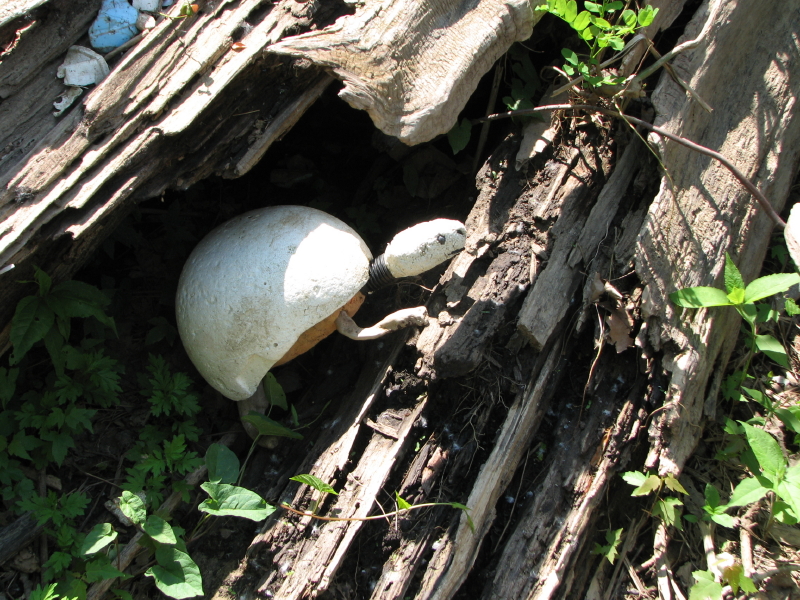
Emerging into the light of a new day was this very ancient looking turtle.  Of course I recognized what it is and determined to follow it and make a record of my observations.  I kept a discreet distance away and tried not to make any sudden movements or loud noises so the turtle would act as naturally as possible.  I kept up with it for a several hours and then I had to pull myself away for home.

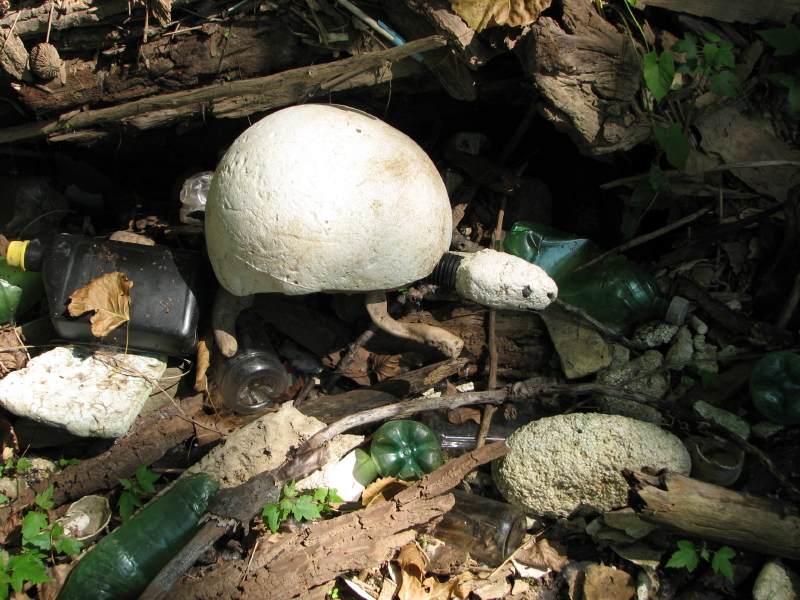
The Cottonwood Turtle is characterized by a high-domed carapace that the original inhabitants of the Ohio Valley used for war and ceremonial helmets.  Unlike the box turtles which it shares some affinities with…the Cottonwood Turtle cannot retract its head and limbs fully into its shell.  This makes it vulnerable to predators.  I watched my turtle crawling over the plastic and Styrofoam debris left by the last flood.  It seemed to be going somewhere with a purpose and I followed discreetly behind it.

The previous night we had another tremendous rain storm with high winds.  Mud, broken branches and leaf litter evidence can be found everywhere.  I followed my turtle to a large cottonwood branch and saw it engaging in the activity that gives this remarkable reptile its name.

Over the course of about an hour, I watched the turtle carrying mouthfuls of the Cottonwood fluff to a hole that it had previously prepared.  It made about a half a dozen trips back and forth from the downed branch to what looked to my eye to be an abandoned groundhog hole that the turtle retrofitted for its own purpose.  The fluff was carried  into the hole where a special chamber was being prepared for this turtle’s eggs!

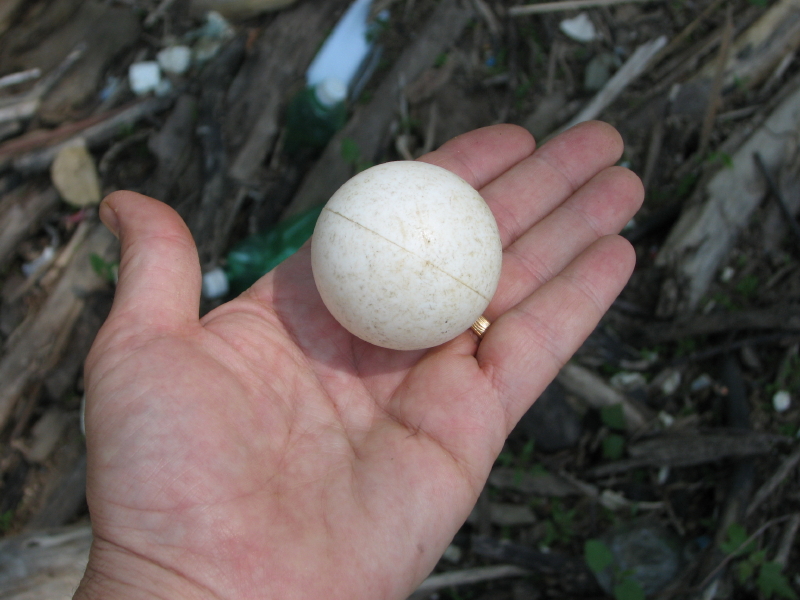
Here is the Cottonwood Turtle about to finish laying her eggs.  I observed about five ping pong ball-sized eggs being deposited upon their bed of cottonwood fiber.  I suppose the fluff cushions the eggs and perhaps as this material decays provides some modicum of warmth to assist in the incubation?  From what I have read, new turtles should be emerging from their subterranean nursery after sixty days.  After the turtle covered her nest with her back legs she moved on.  From this moment, the eggs and baby turtles to be are on their own.  I gently uncovered some of the soil and photographed this single egg.  Afterwards, I placed the egg back into the nest, re-covered it and went on my way happy to have witnessed this ancient rite of life.

It occurred to me on my walk back through the tangle of bottomland, that this turtle might be benefitting the tree as well?  I haven’t heard or read anything concerning a link, but what if?  The fluff contains minute seeds and the act of burying them might aid in propagating this tree.  The turtle places these seeds a little deeper than usual which might encourage stronger and deeper root growth.  Since this area is frequently altered by the river, it would make sense for the tree to have a deeper hold on the soil?  I came across another downed cottonwood branch and admired all the fluff it was producing.  It all looked so beautiful and magical in broad daylight.

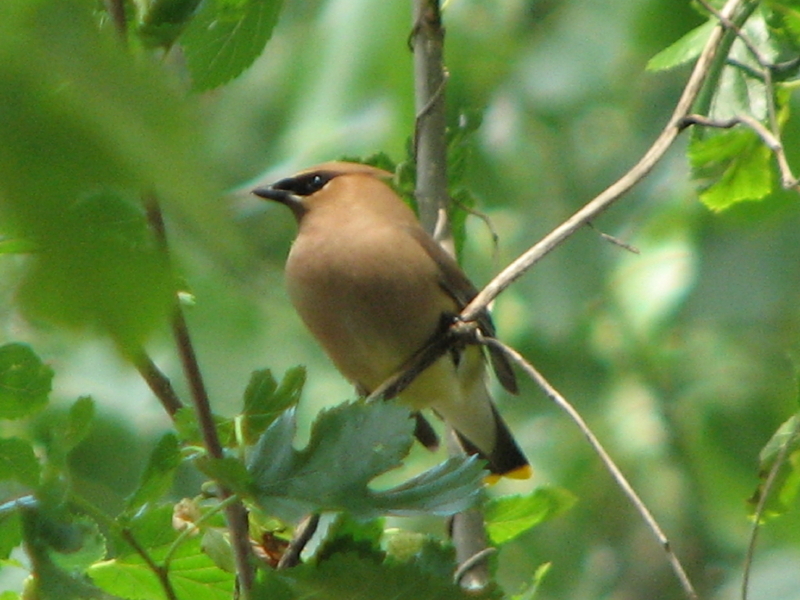
Overhead the orioles were collecting their own materials to build their amazing hanging basket nests.  And the Cedar Waxwings were fueling up on the mulberries in preparation for their long migration up into the north country.  One last image of one of these waxwings.  Such an interesting and beautiful bird so uniquely marked.

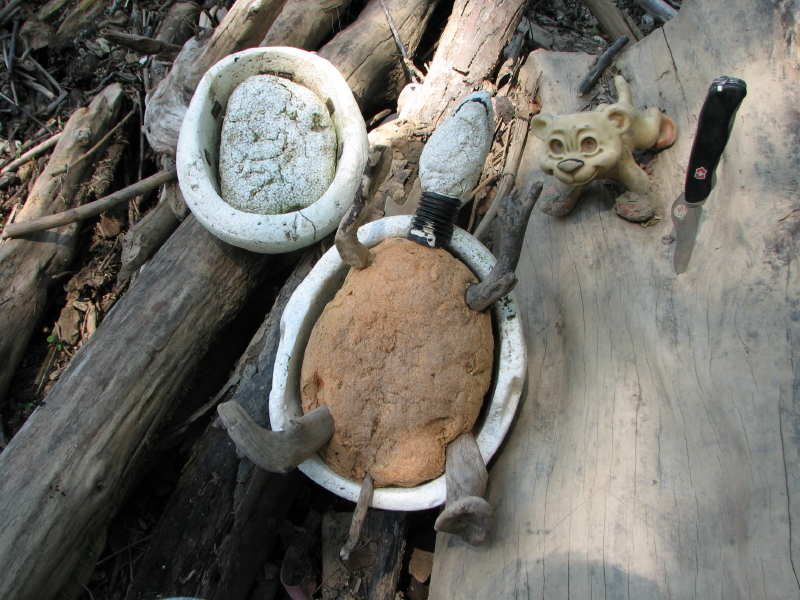
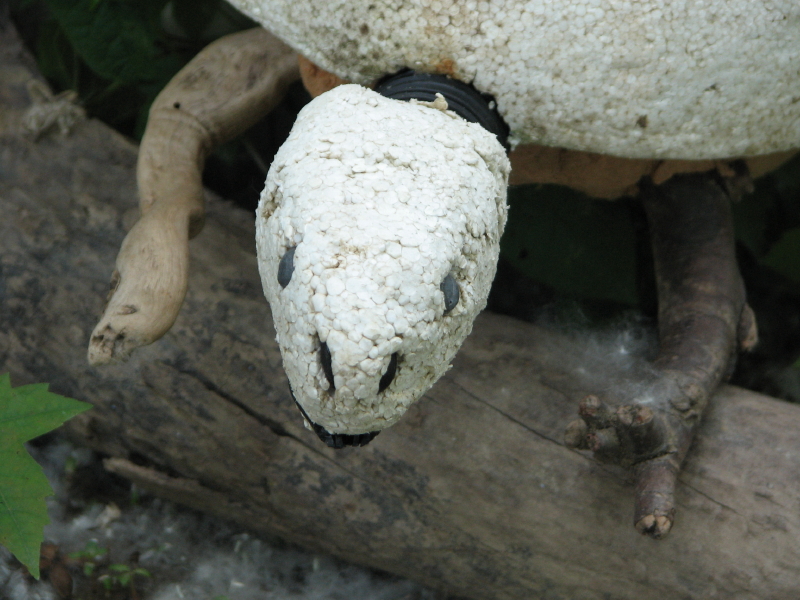
Although I may have fooled some people out there (wink, wink)…the Cottonwood Turtle doesn’t actually exist!  I made it from junk I found here in this very real environment at the Falls of the Ohio.  The shell or carapace is the cushioning from inside an old bicycle or motorcycle helmet and I have found several of these helmets after the last flood.

I used three pieces of Styrofoam…the shell, head, and one piece under a chunk of fiberglass-like material to fill the space inside the helmet.  Limbs are pieces of found wood attached to the lightweight fiberglass.  Everything is joined and pegged together with wood skewers.  I did use some found plastic for the actual neck and mouth of the turtle.  The eyes are round lead fishing weights and the nostrils are pieces of coal.  Thanks for tagging along!

Read Full Post »

« Newer Posts - Older Posts »