Feeds:
Posts
Comments

Posts Tagged ‘site specific art’

Dear readers…I have so much to post and have fallen a couple of weeks behind.  The work a day world has been extra busy (and rewarding) of late.  Still, I have made time to go to the river and “do my thing” to maintain my peace of mind.  It’s time now to post my images and tell a story.  The following post occurred two weeks a go when the river was high and I decided to spend the day in the western section of the Falls of the Ohio State Park.  At this point, I was fairly certain that the materials I found and cached at my outdoor studio in the eastern section were either gone or the river was about to take them.  I ventured forward-looking for “fresh” materials and opportunities.

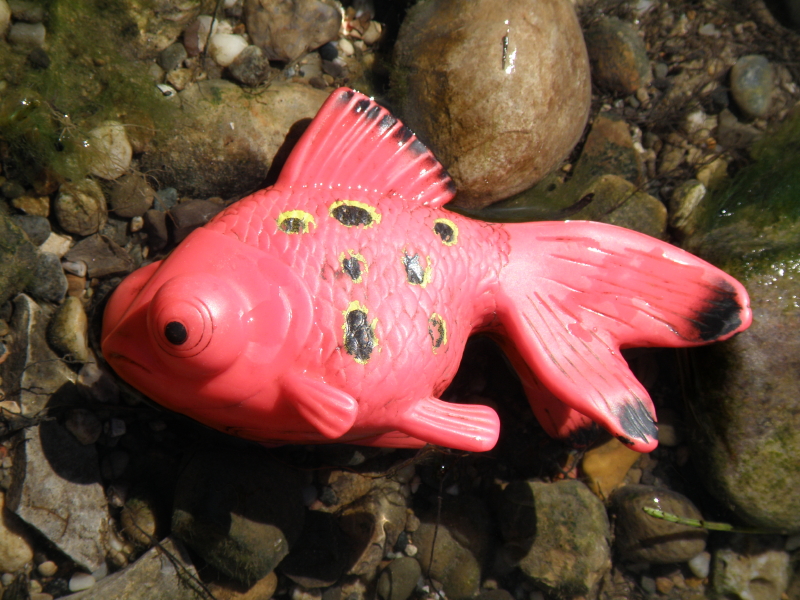
My walk took me past the marvelous tree that the local kids (among others) like to use as a hang out.  I can imagine many potential childhood memories centered around this tree for the folks who grew up with it.  On this day everything was quiet and in fact I didn’t see anybody out here at all.  That bodes really well if you want to see wildlife.  It has been so unseasonably warm…that I wonder how that will affect how spring unfolds this year?  Later we would set several records for high temps in the lower 80’s for early March!!! Technically, it’s still winter here…very odd indeed.  I had heard that a pair of bald eagles were attempting to set up a nest in the far western section of the park and I was hoping to see at least signs of the birds.  I wasn’t lucky on this day with the eagles, but I did come across a few other interesting wildlife objects courtesy of the Ohio River.  For example, here’s the first goldfish I’ve found out here.
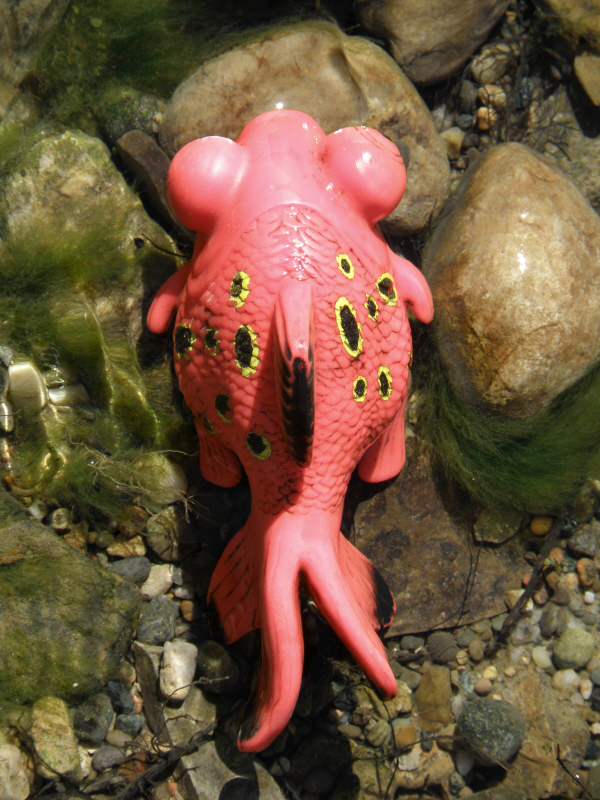
This fish stood out against the river pebbles like a red beacon.  I could have found it with one eye closed! We have other invasive carp species out in the river now, but this was a new one.  An actual goldfish probably wouldn’t stand much of a chance against the river’s natural predators.  The non-native carp that have entered the river system eat constantly and grow really fast and large.  It will be a great challenge to rid the river of them. I picked up the neon goldfish and dropped it into my collecting bag.  Here’s what I came across next in the way of wildlife.
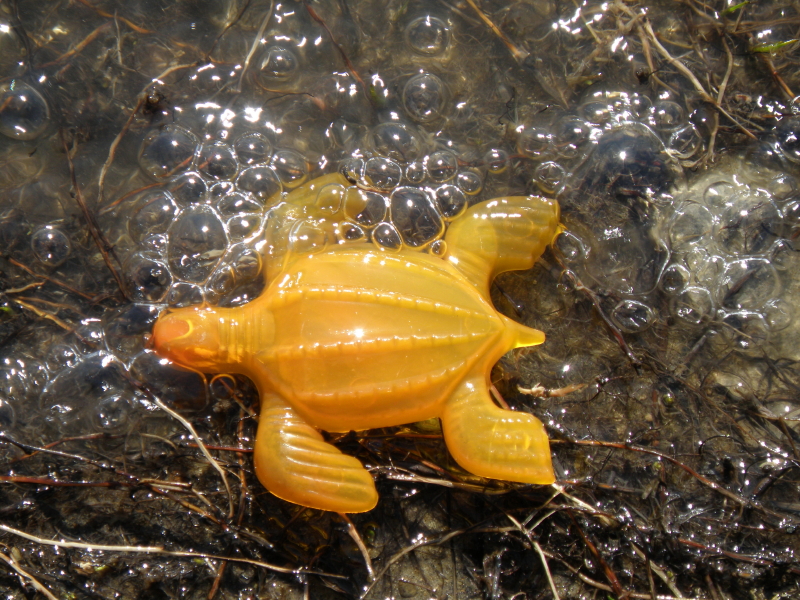
Swimming at the river’s edge I stumbled upon this golden sea turtle.  It was playing among the bubbles and rootlets.  Again, here was an image that was unnaturally beautiful…like the current weather.  The pattern we have been experiencing is that the river will rise and then fall in quick succession as the Army Corps of Engineers regulates the water level for commerce and flood control.  Walking even further west I came across this “elephant’s graveyard” of plastic and my heart sank.  You can pick this stuff up all day long and it seems the next day gives you a fresh supply. Sometimes it feels like you are rolling that proverbial rock uphill only to have it roll back down.  What’s happening up river from us?

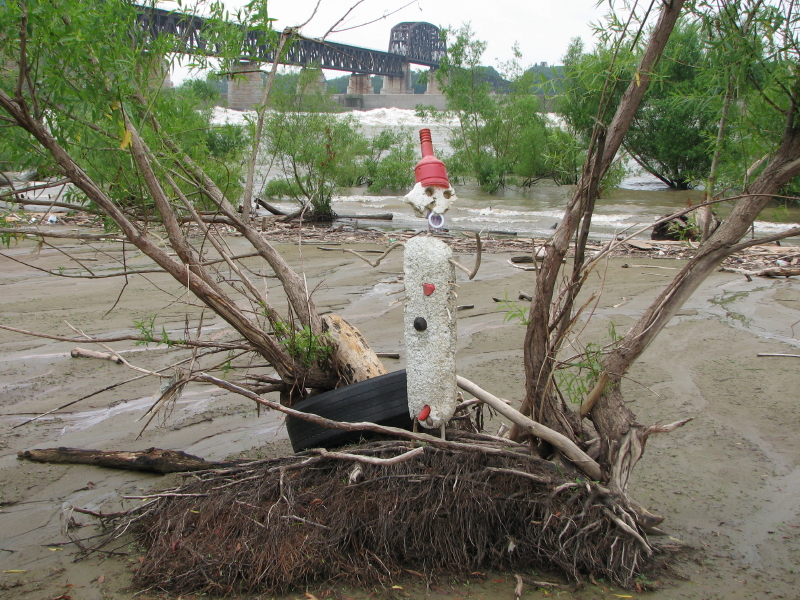
As you can see…it’s not a pretty picture.  Mostly plastic containers like old milk jugs and laundry detergent packaging.  As this plastic weathers and breaks down from UV light, the pieces keep getting smaller and smaller without ever completely disappearing.  The next stop could be the Gulf of Mexico. I found one other notable object and set it up among the still bare branches awaiting the new leaves of the year.  This is also the first time I have come across one of these things.
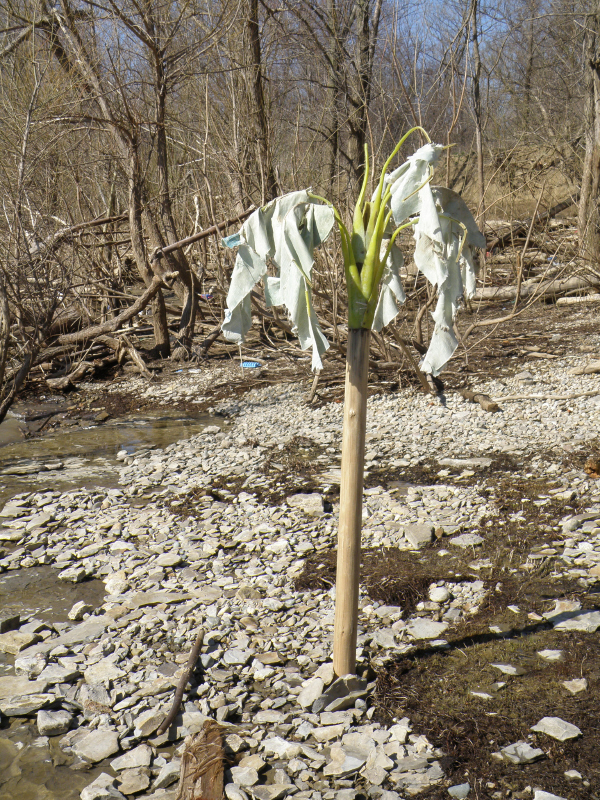
It’s either an artificial palm or banana tree?  As the day continued to warm I wondered to myself about how plants might be reacting to climate change?  Are the warmer weather plants moving northwards and what else will this change? While I was musing on this I received an answer in a most unlikely form.  My “banana palm” was visited by an unusual bird.

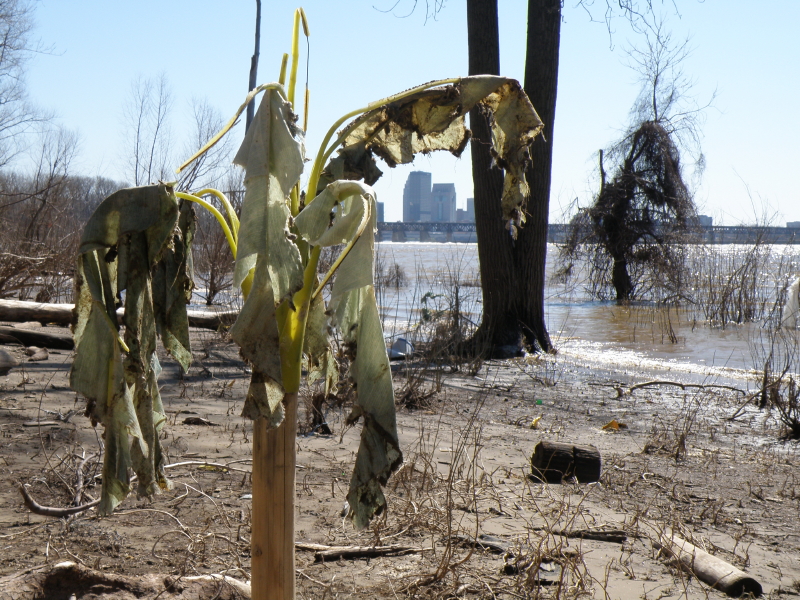
Here’s another first! Leave it to the only Banana Palm Mockingbird to find the only banana tree around here.  I watched transfixed as the bird explored the tree and the surrounding area.  A bird of this species is more likely to be seen in Central America than mid America.  I don’t know much more about it.  I saw it investigate the river’s edge for food and here are a couple more images to prove it was here.

Here’s the mockingbird with Louisville’s skyline visible on the opposite shore.

The mockingbird didn’t hang out for very long and soon it was time for me to head back.  I’m going to be off for the next couple of days and will attempt to post more of my adventures…if the call of the river doesn’t get me first!  Have a great weekend everybody!


Read Full Post »

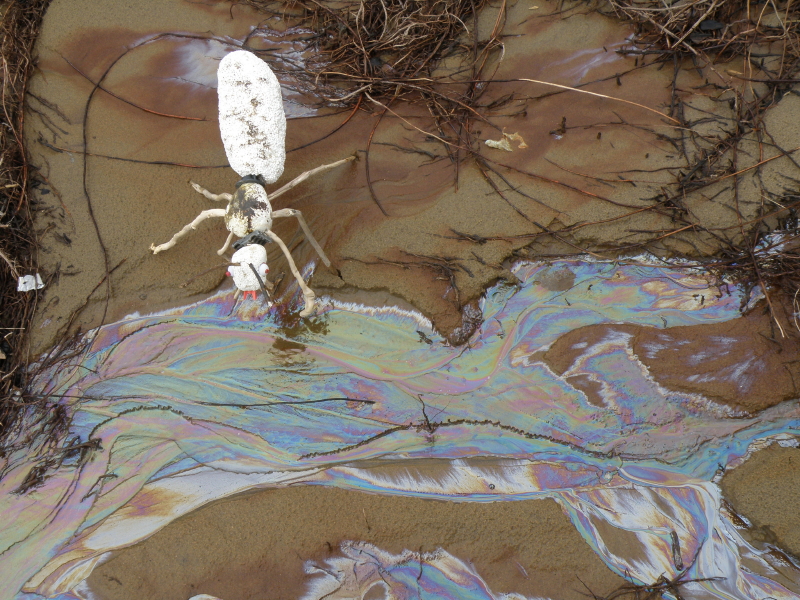
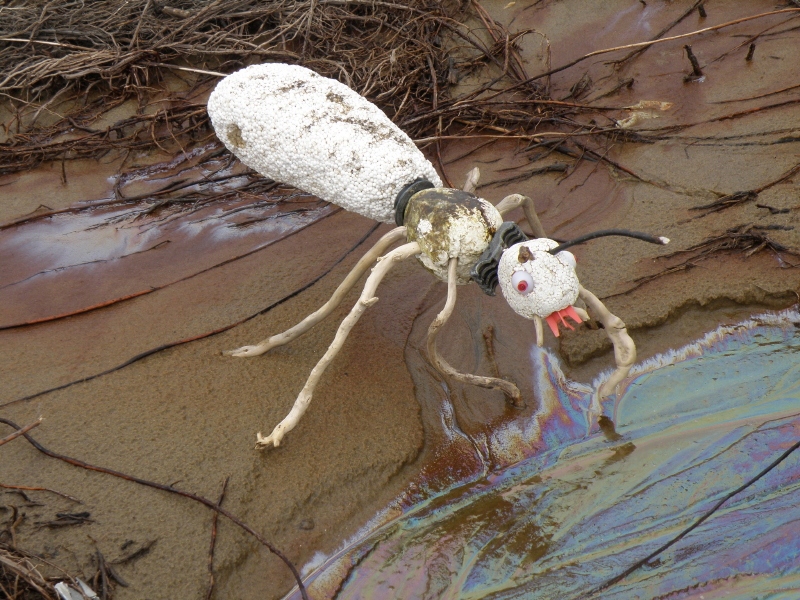
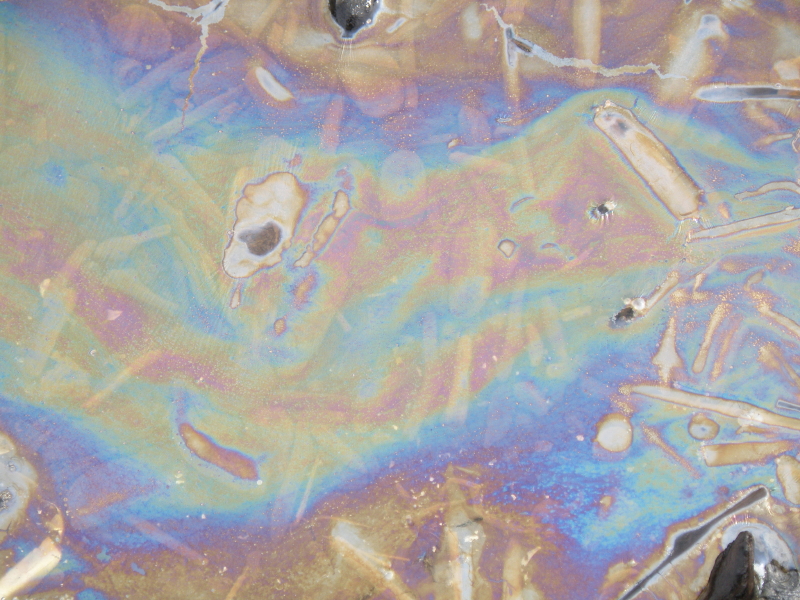
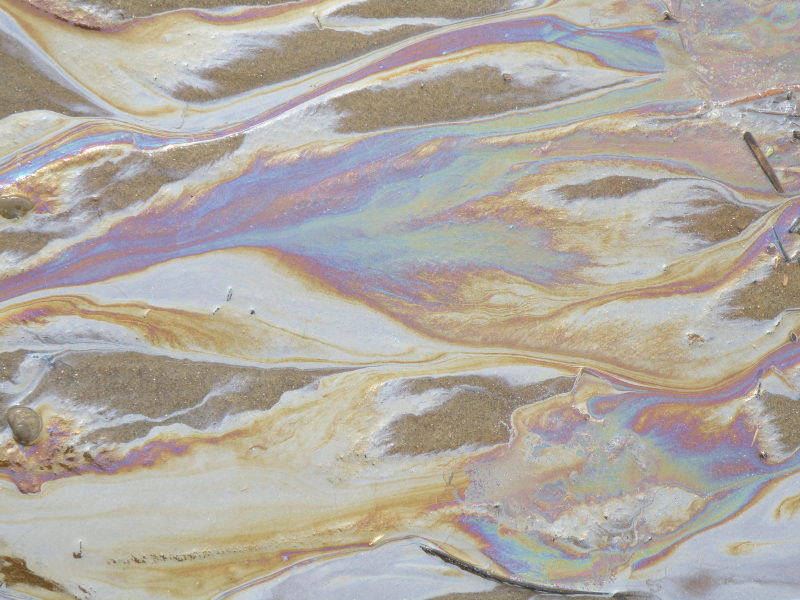
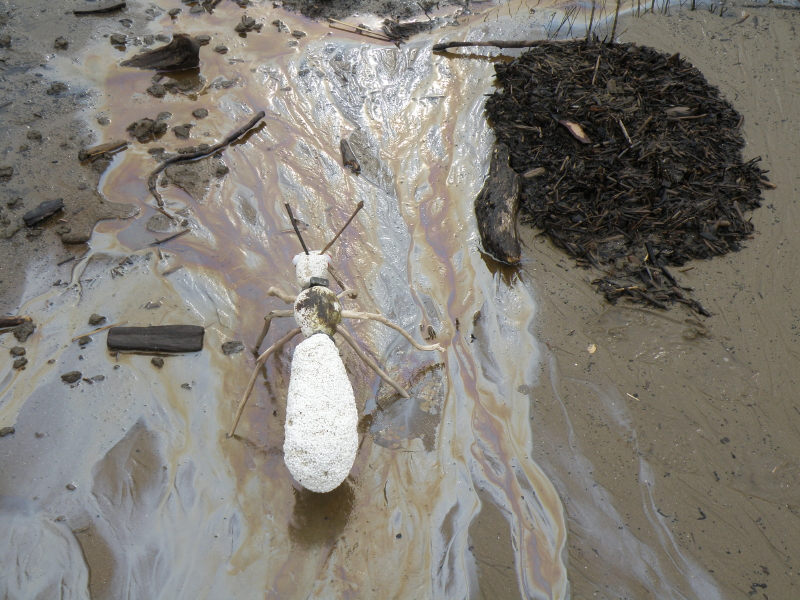
Okay so I’m bowing to a little peer pressure and presenting additional images from a project I did the last month.  The day I made my Styrofoam ant project I also kept crossing areas on the riverbank where iridescent flows from something oily was percolating up through the sand and mixing with slow flowing water.  In my original story…imbibing this stuff is what mutates the ant into a giant!

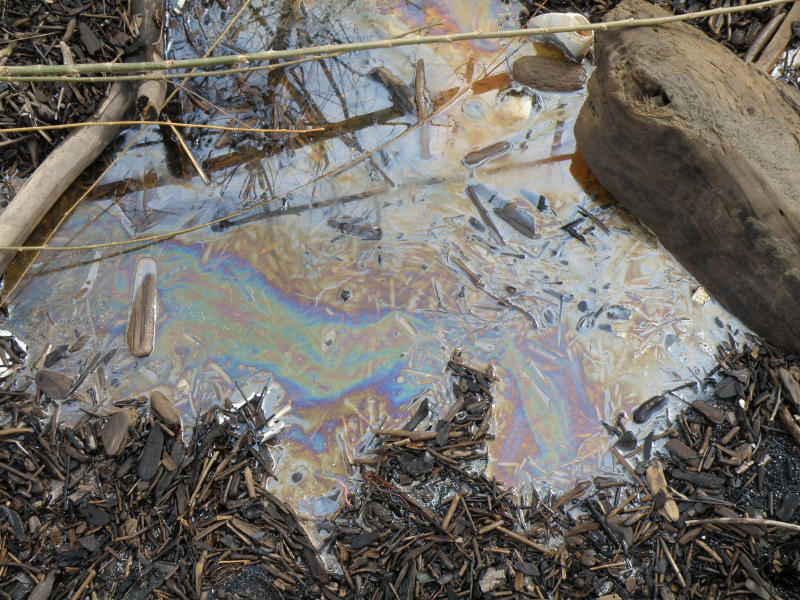
I still don’t know what this prismatic film is that is seeping to the surface?  It could be old long-buried petroleum or some oily residue from decaying vegetation?

These rainbow flows are a fact of life at the Falls and gives me another setting my sculptures can help interpret.  The colors and patterns on the water and sand can be very striking.  Here in quick succession are several more abstract images created the same day as the ant project, but minus the Styro-insect.

In the above image, you can see a few recognizable objects including nuts, sand, and coal.  I’ll close with a final image of why the ants are so large here…they are drinking the sheen and it’s the Godzilla effect all over again!

Read Full Post »

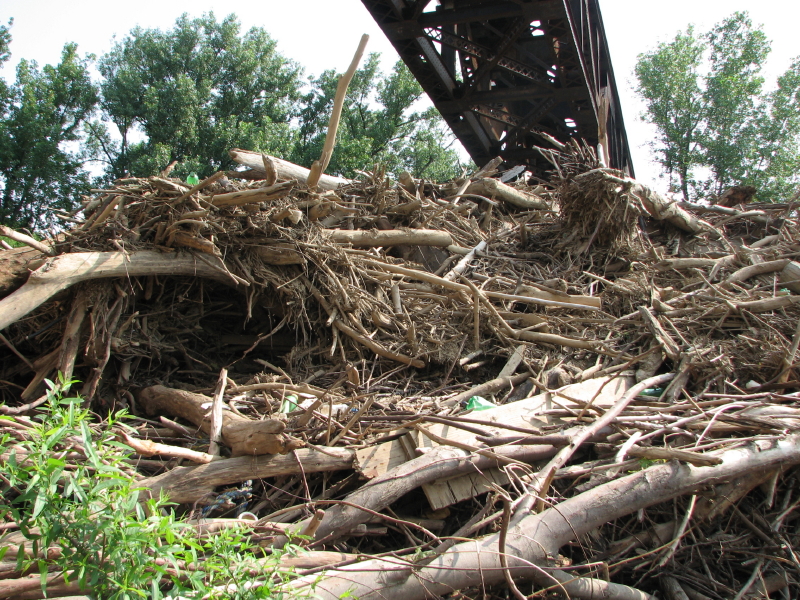
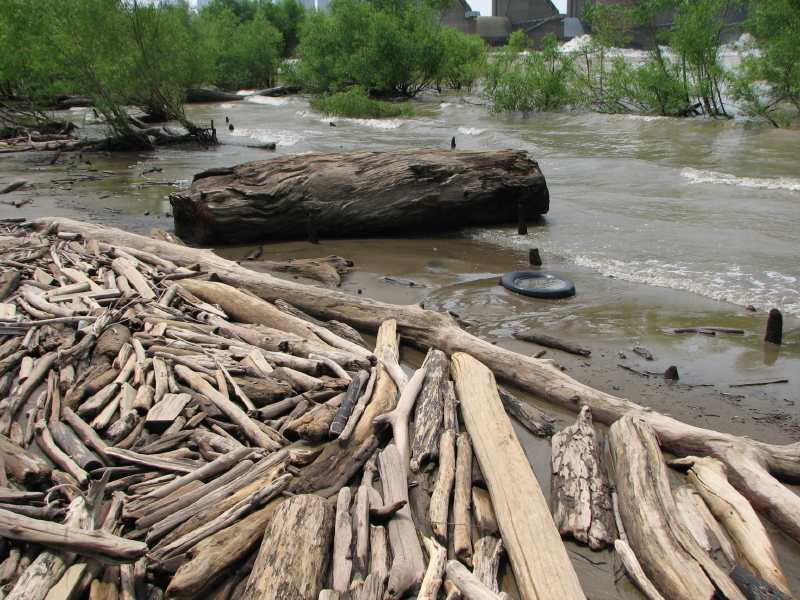
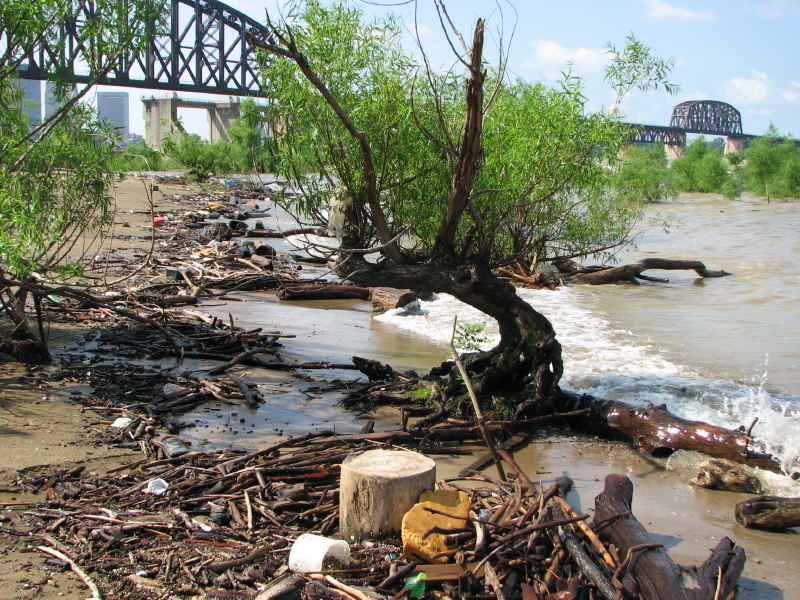
The huge mound of recently deposited driftwood under the railroad bridge is both an obstacle and a magnet.  It’s not easy to walk over and it helps to have a good walking stick to help maintain your balance.  The rewards for persevering are a nice elevated view of the Louisville skyline and the potential for finding interesting junk intermingled with the wood.

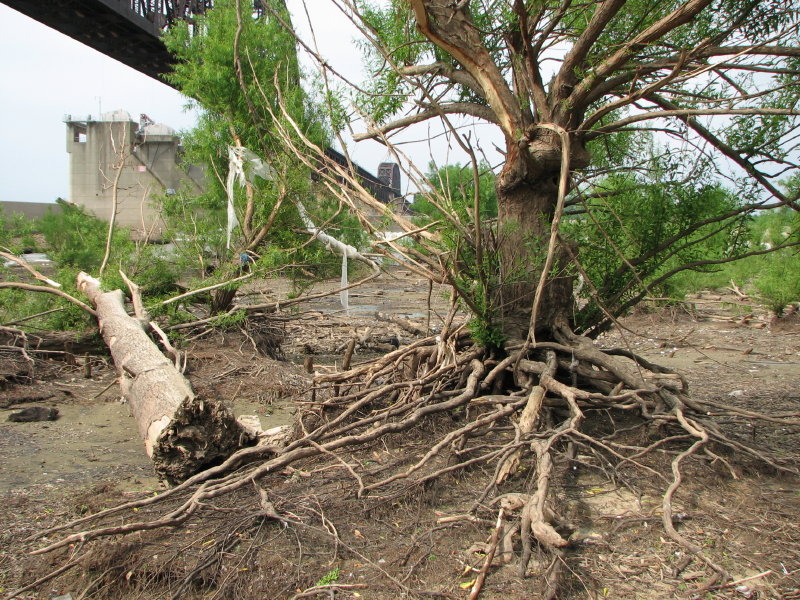
Once you move over or around this mound you enter the margins of the willow forest and you can see what the full force of the river can do to a landscape.  These black willows are tenacious and their roots hold on.  Here’s another image of a remarkable willow tree and its root mass.  This one wears a trophy from the flood like a victory pennant.

From all the cars in the parking lot, I’m guessing the fishing must be pretty good today.  I stepped by some earlier evidence in the form of this longnose gar skull.  I think this one was caught by rod and reel.  But, I have seen the remains of hundreds of these fish before stranded and killed by a retreating river.  Longnose gars are routinely in the 3 to 4 feet range in length.  The jaws are lined with small needle-like teeth for catching and holding on to smaller fish.  The gar is a surface fish and floats in on its quarry like a piece of driftwood very stealthily before surprising it with a quick flash of the jaws.

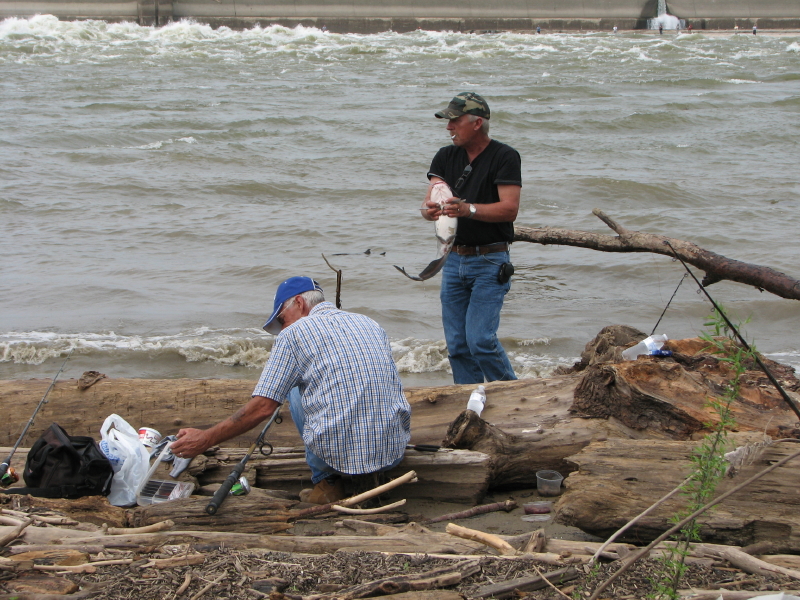
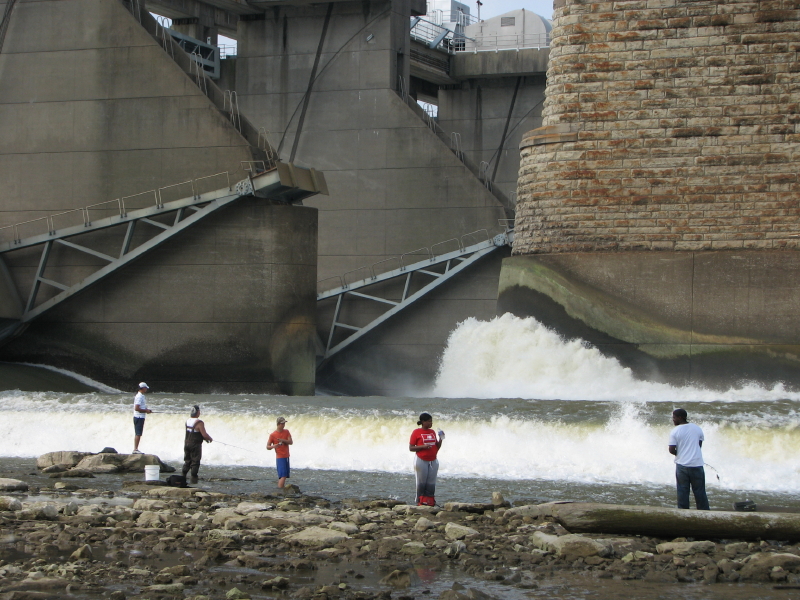
Moving to the river, I decided to watch what the fishermen were doing and catching.  In about twenty minutes, I watched two large catfish being landed.  Here are two guys that have this down.  Using multiple poles, they cast both worms and cut shad into the swiftly moving waters.  Snags and lost tackle are common since this part of the river is also full of rocks and boulders.

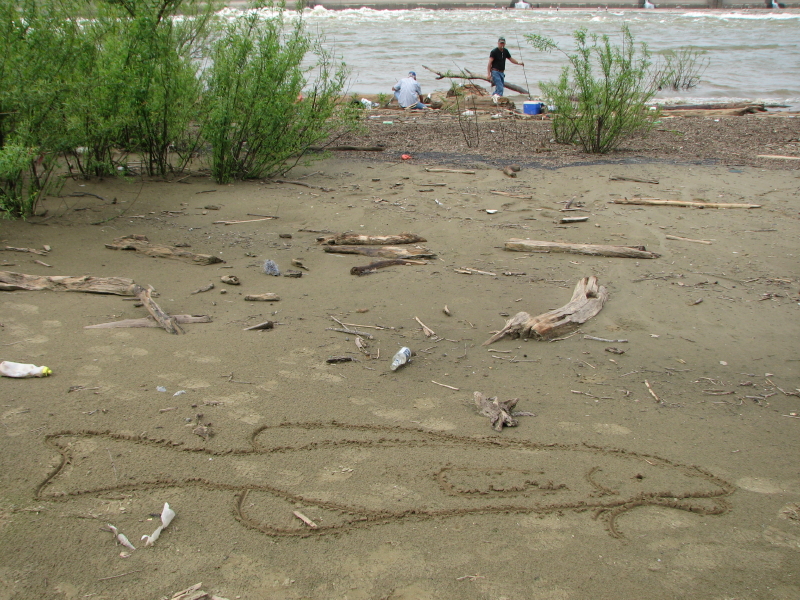
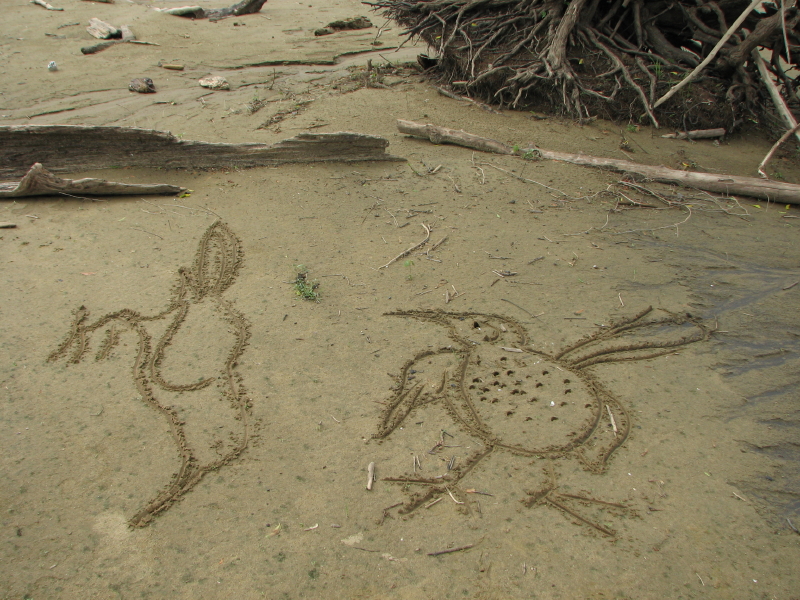
I was inspired by the scene and left them this contour drawing in the sand before moving on.

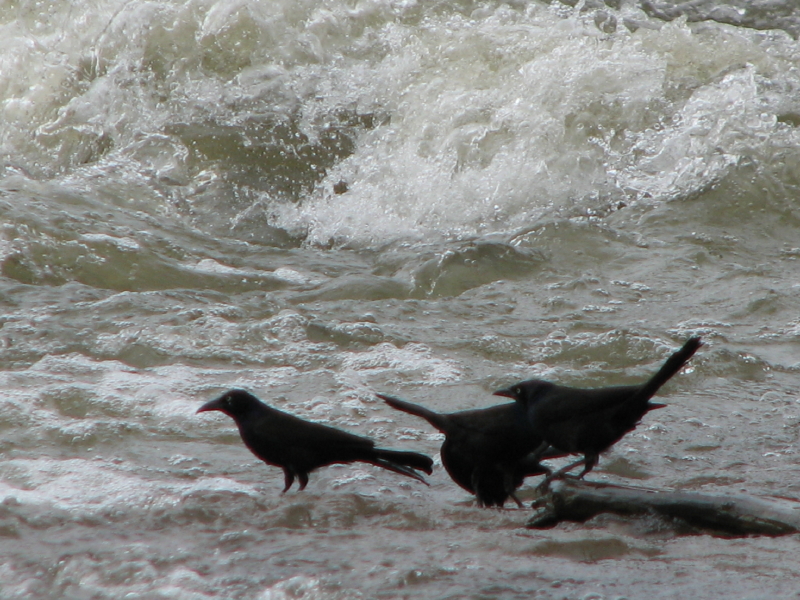
Earlier I had seen a flock of grackles by the water flowing under the bridge.  They were catching some food item here that I wasn’t able to figure out what it was…perhaps dead minnows?

The grackles were working the river just like the fishermen were.  I left them a drawing in the sand as well made with the tip of my walking stick.  The sand today is moist and firm which holds a fine line better than usual.

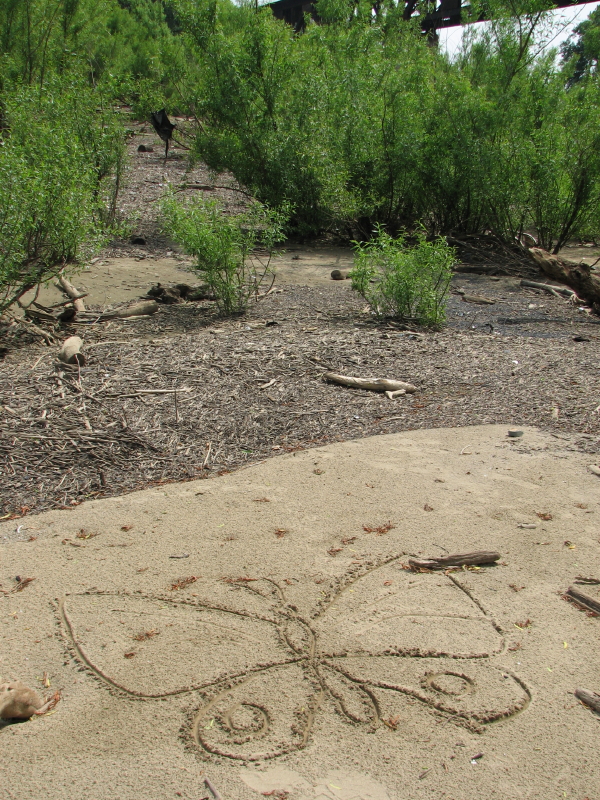
Of course, while I’m walking along I’m filling my collecting bag with the odds and ends that make up the rest of this riverblog.  Some of it is just stuff that I will attempt to make art with and the rest are souvenirs of our material culture.  Once the bag was full, I turned and headed up the bank to get under some trees and out of the sun.  I then made this sand butterfly to mark the spot where I turned for the willows.

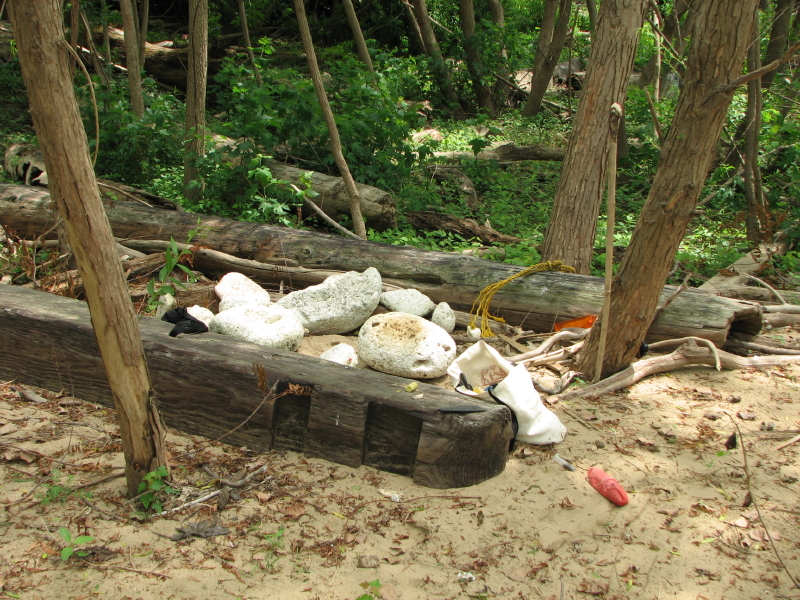
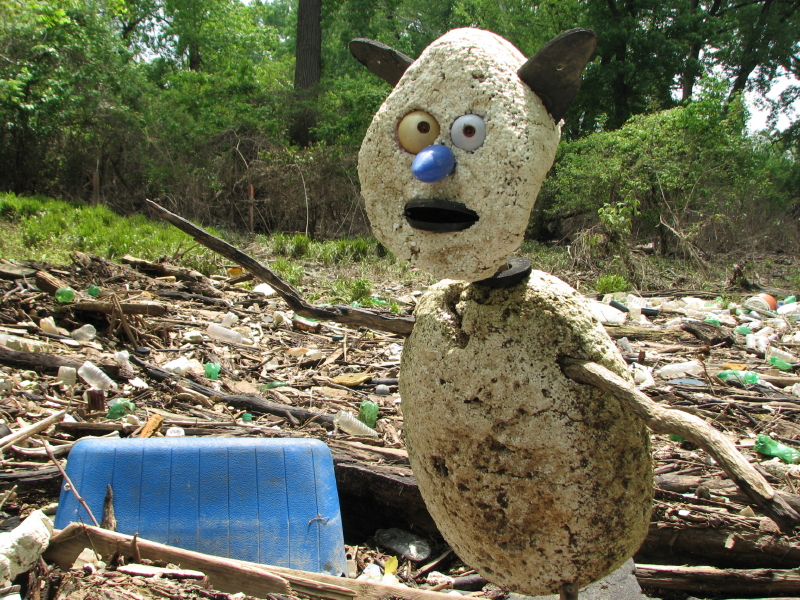
I have set up a new outdoor studio near the margins of the driftwood mound.  Instead of a plank to sit on, I’m using this large wooden bridge or railroad tie.  I haven’t found the large sections of Styrofoam that mark last season, but what I can find I’ve gathered at this spot.  I did make a figure on this day which extended this adventure, but I will wait until next time before unveiling it to you.  Thanks for tagging along…you have been good company!
Read Full Post »

The Ohio River has receded by the Falls of the Ohio.  For many weeks the river was loath to relinquish the territory it had recently flooded.  I ventured down the river bank and explored the more eastern section of the park.  The following post is some thoughts and images made during this expedition into a very moist and muddy area filled with debris and wildlife.

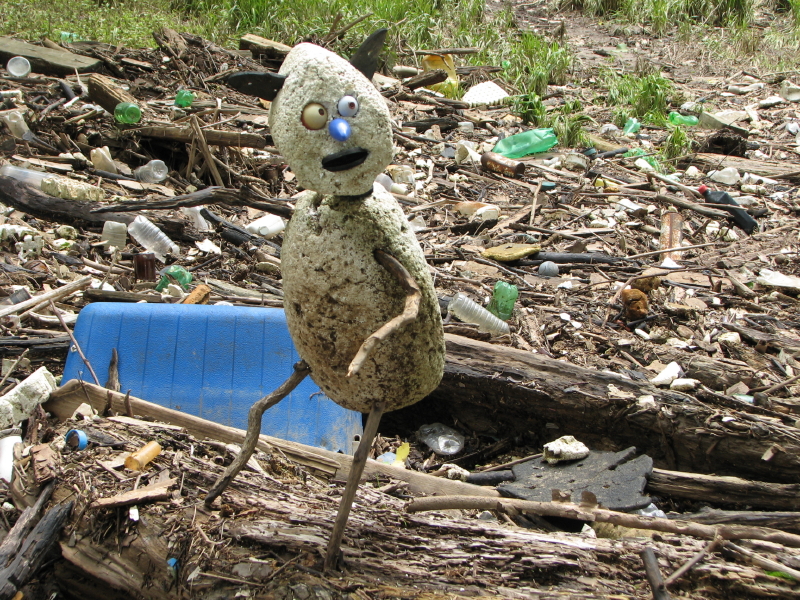
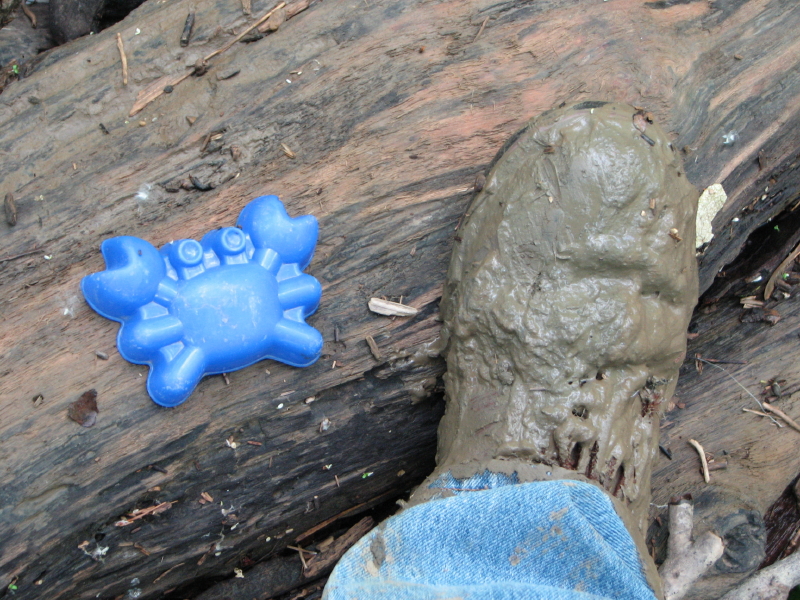
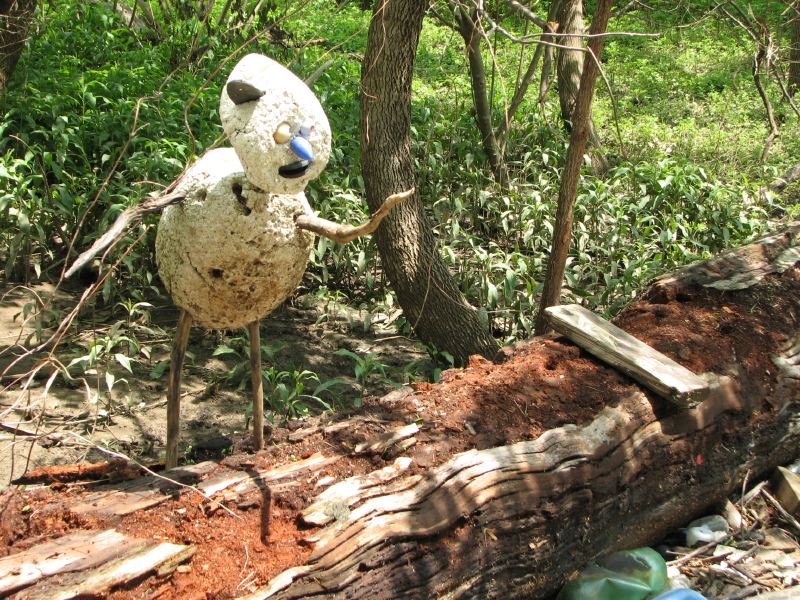
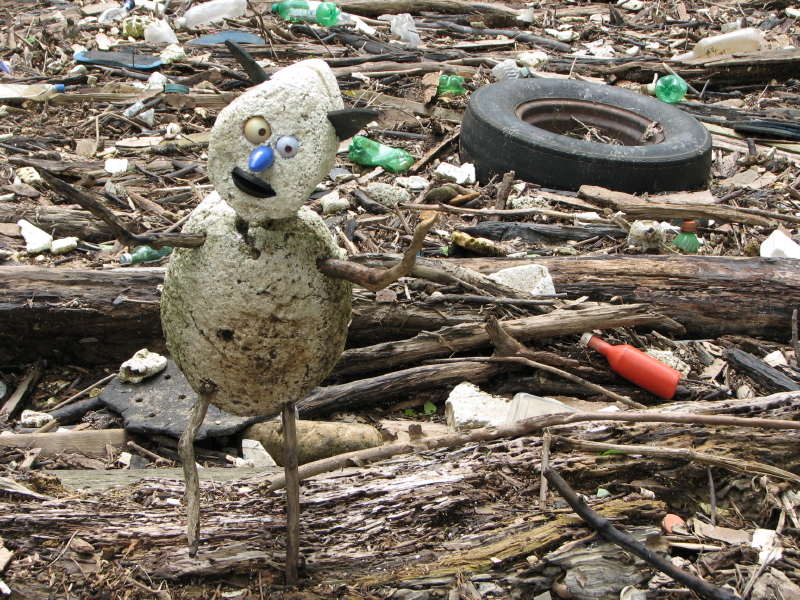
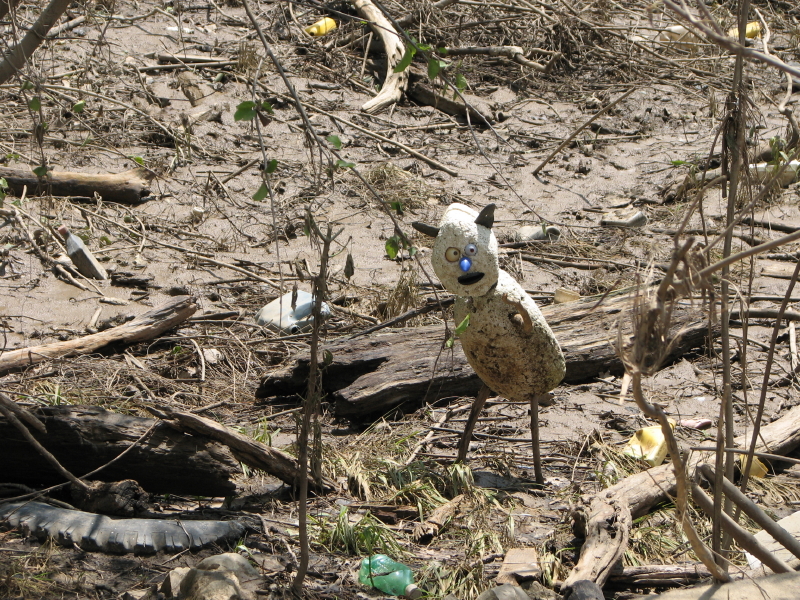
While exploring the park it is not unusual to run into others who are curious to see what the river has left behind.  Sometimes just a nod of recognition and some small gesture to reassure that one poses no threat is made and each party then attends to their own business.  And then sometimes a more sustained conversation occurs where information of mutual interest is exchanged.  Such was the case on this trip where I ran into this fellow of short stature with a bulbous blue nose who had been investigating the same stretch of river as me.  We tagged along with one another for a short time before family duties called me home.  I believe our initial conversation had something to do with the muddiness of the area.  In places, things looked safe and dry enough to stand on…and then the mud below would reach up and grab you by the ankles.  Sometimes small, blue crabs would pop out of their holes to check out whether the trapped parties would be good to eat.

In my case, I am simply too big for them and once the crabs realized this they scuttled away.  Getting back to “Mr. Blue Nose”,  (funny how we didn’t think to ask each other’s name?), we were both astonished by the debris left behind by the retreating river.  After witnessing several other high water incidents over time…this is fairly representative of the stuff we found.

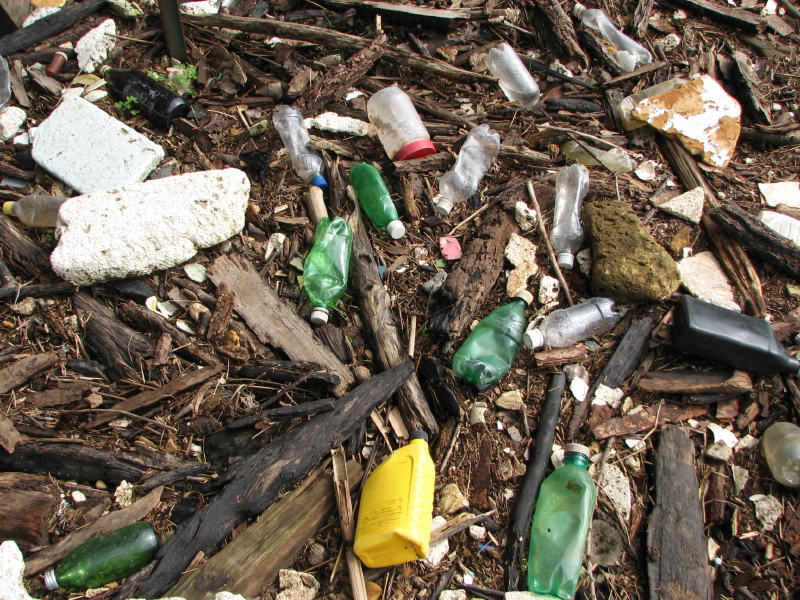
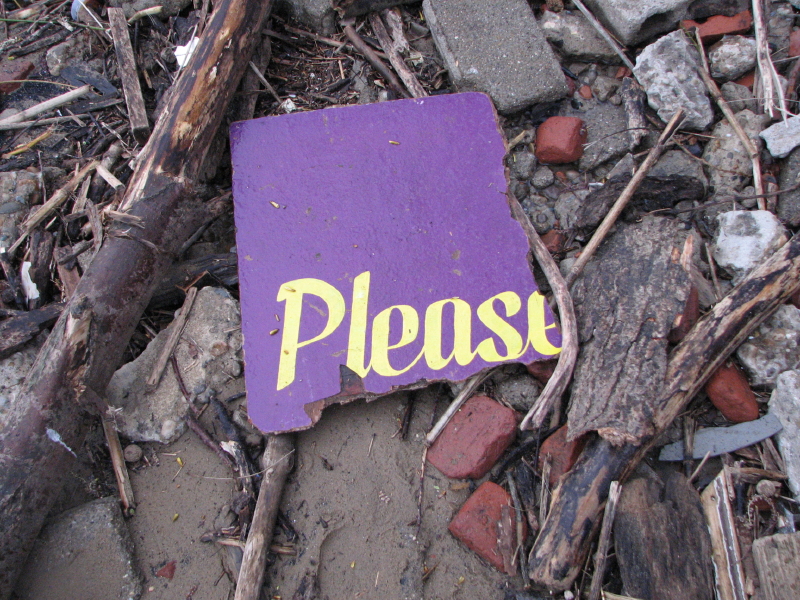
As you can see it’s mostly plastic containers, polystyrene (aka Styrofoam), and lots of shredded bark and wood chips.  Every once in a while, something more interesting would turn up.  While exploring, Mr. Blue Nose and I found two sign fragments and I kept these for my Found Painting and Sign Collection.  Here are the two precious finds.  The first one is kind of self-explanatory.  I like to muse that this is one way the universe communicates to me by leaving these things in my path for me to ponder.

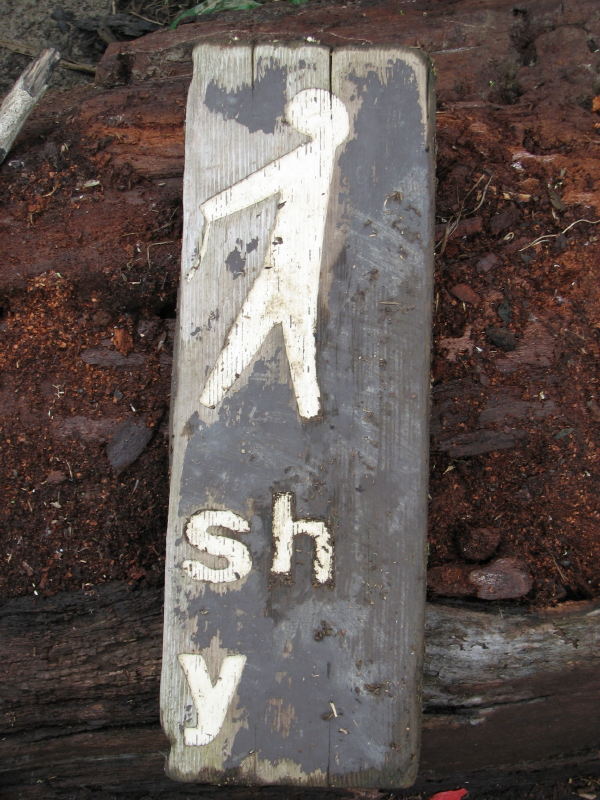
I’m not sure what it is asking…Please don’t litter or Please, only you can prevent forest fires, whatever its actual message, this is at least a polite sign.  The other one is more reclusive, in fact it is “shy”.  Here’s a picture of this enigmatic sign.

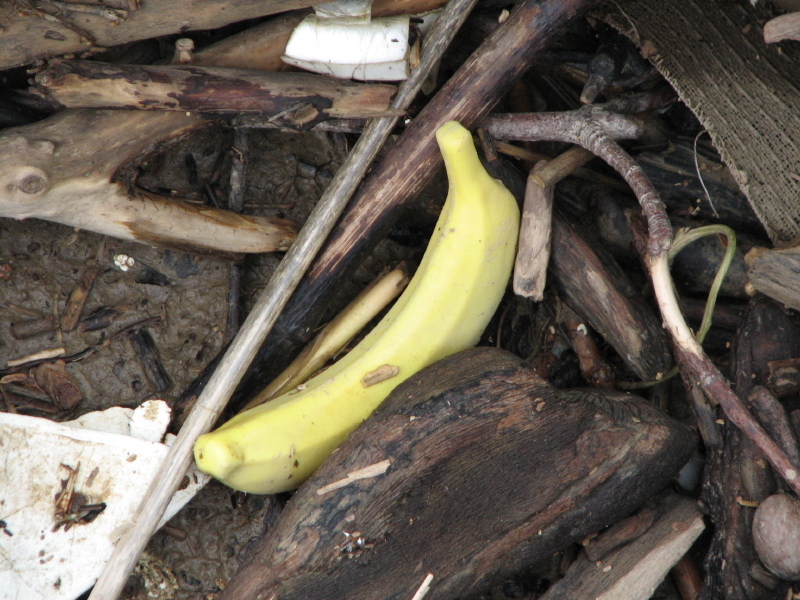
I like the hand-routed and painted “sign” for a person.  I think this fragment may originally have asked dog owners to leash their pets…but its shy and won’t tell me for certain.  Other found treasures included my second banana of the season…naturally it went into the old collecting bag to later join the other artificial produce I have found out here over time.

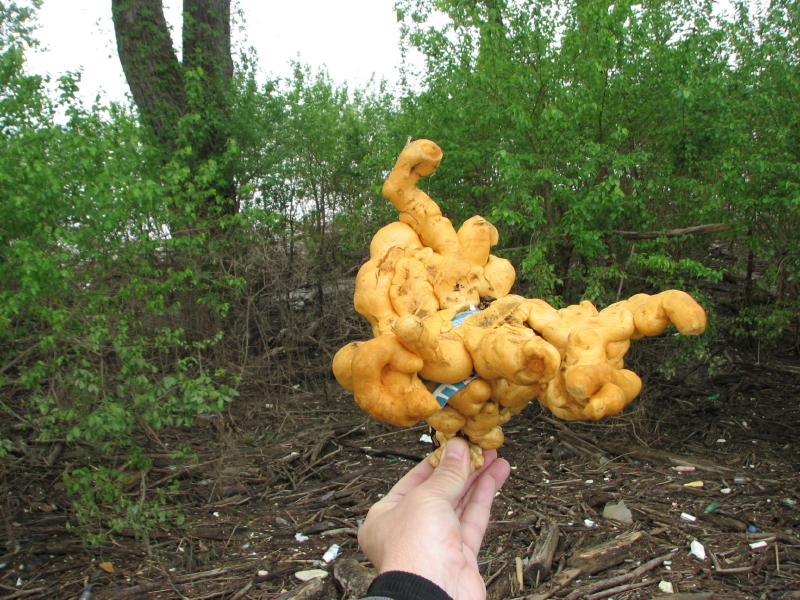
I also find other kinds of foam out here.  Here’s an interesting found sculpture made from polyurethane.  I have come across busted aerosol cans of this stuff where the foam has expanded out resembling entrails.

Mr. Blue Nose called my attention to a log that something had torn into and he wondered what could do this kind of damage.  Chunks of bark and soft decayed wood were scattered all around. 

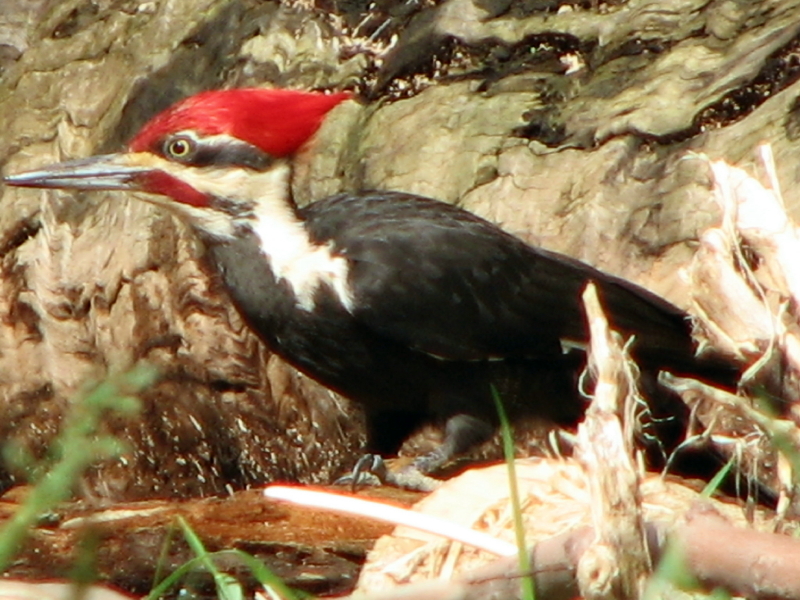
I was happy to inform my new friend that this looked like the work made by a Pileated Woodpecker and I showed him images of this great bird I had taken just a few hours earlier.

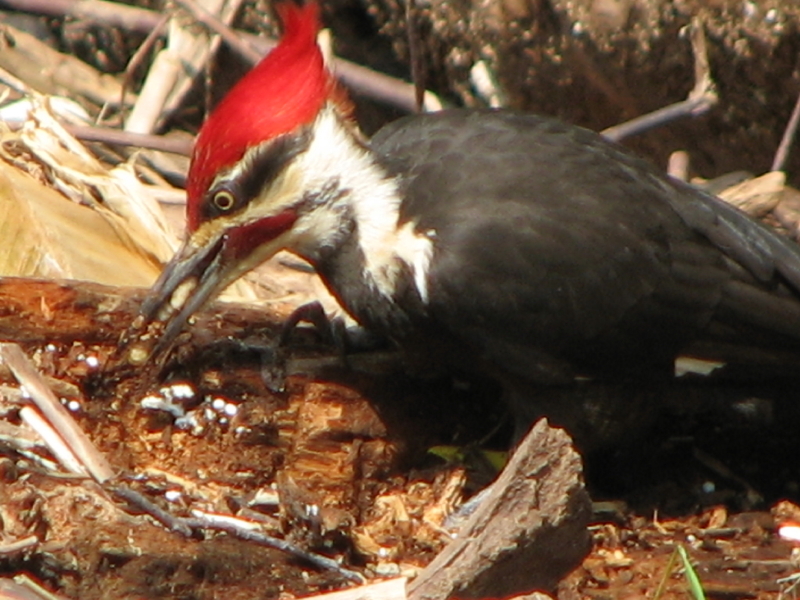
Since no one can verify that the Ivory-billed Woodpecker is still alive along some wild river in Arkansas…the Pileated Woodpecker has the distinction of being our biggest living woodpecker.  For years, I have observed a pair of these crow-sized birds in the park.  This one is the male and can be identified by his red mustache.  The female lacks this and has more black on its head.

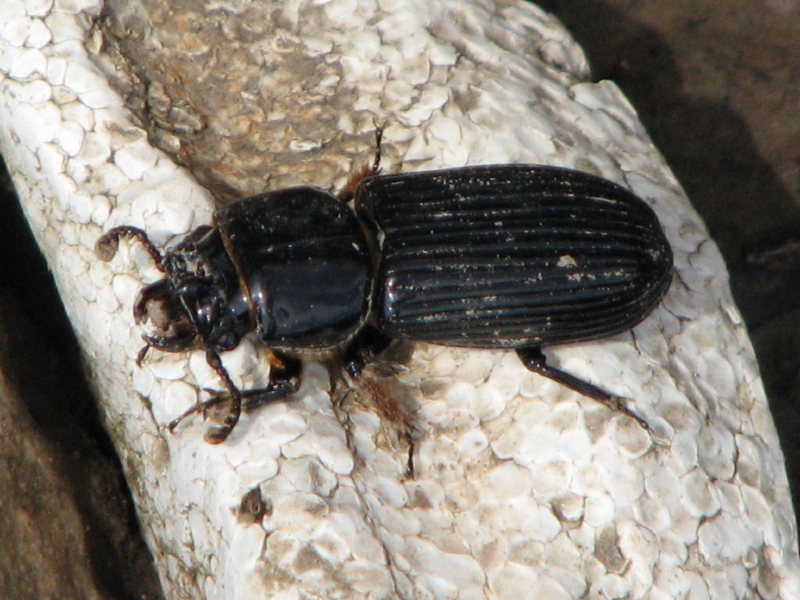
The Pileated Woodpecker has a large bill that goes through wood in a hurry.  Carpenter ants and beetle larvae can be found in these decaying logs and make up the main diet of this magnificent bird.  If you look closely at the photo above you can see a nice grub about to be swallowed.  This bird was so intent on looking for food that I was able to get closer than usual to it.  A couple of weeks a go, I found a Bessbug beetle which is a nice sized insect that uses decaying wood in its life-cycle.  This beetle is also known as the Patent-leather Beetle.  Here’s an adult I found sunning itself on a piece of Styrofoam.  These beetles can get nearly two inches long or about  five centimeters.  I wonder if our country will ever adopt the metric system?  Anyway, these beetle grubs make nice woodpecker snacks.

Thanks to my new companion we were able to make one other nice bird sighting on this day.  Mr. Blue Nose alerted me to some commotion happening in a nearby stand of trees. 

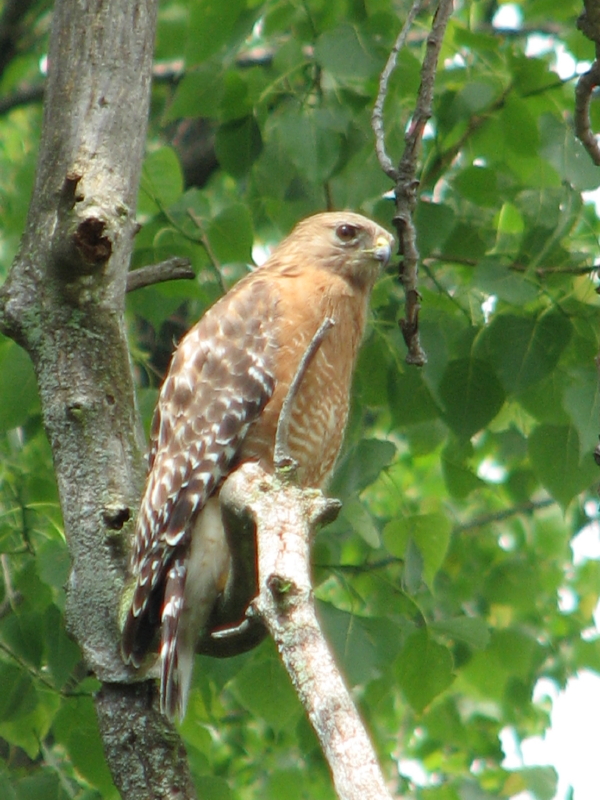
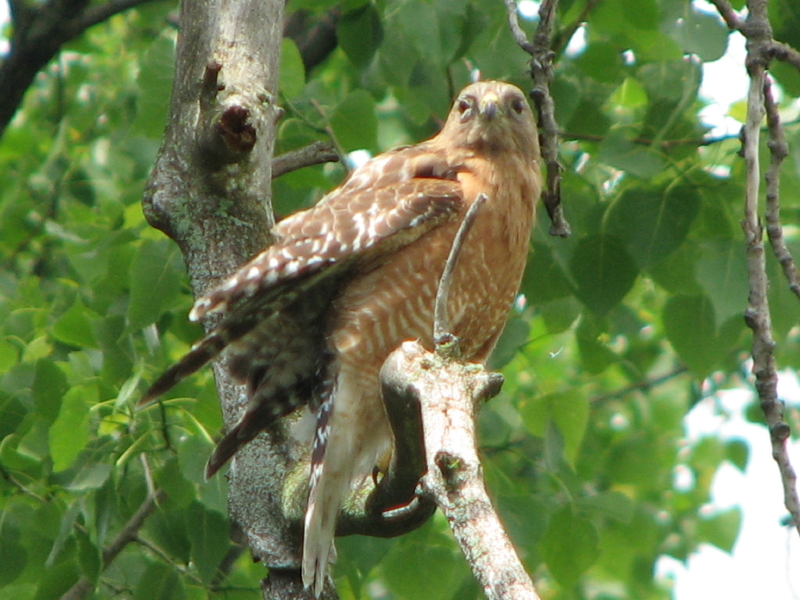
My friend said that he saw several blackbirds (grackles) chasing a larger bird from tree to tree.  I have observed this behavior before when birds of prey are present.  I gathered my camera up and went to see if I could find out what was the object of all this attention.  It turned out to be this beautiful Red-shouldered Hawk.  Here are a couple of pictures of it before the smaller birds drove it out of the area.

I always feel lucky when I see such beautiful birds in the park.  Before flying away, I saw this bird’s mate arriving and the two flew away together.  Soon it was time for me to fly away too and I left my companion on the river bank.

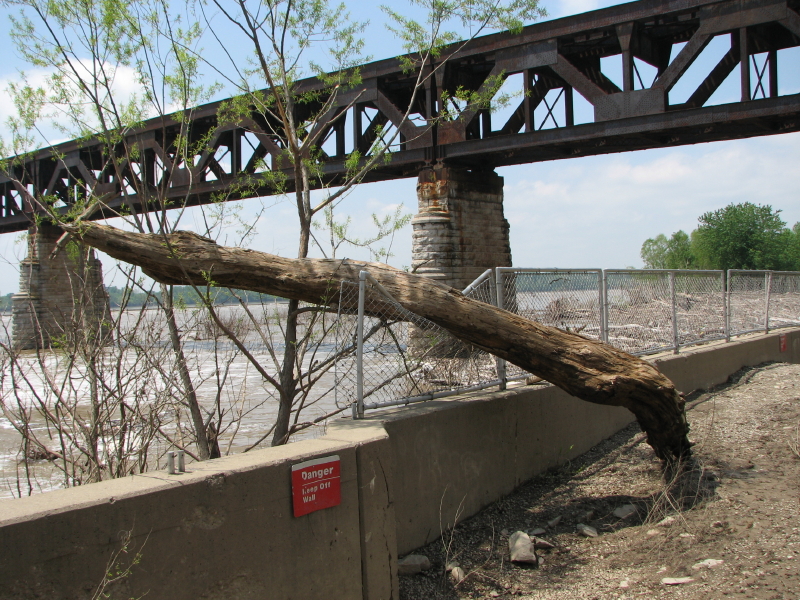
We parted near the railroad bridge and perhaps we will see one another again?  My last image is from an overlook area popular with visitors who want a better view of the tainter gates.  I have taken many pictures here over the years, but this one is different.  To give you an idea of how high the river was…this log was deposited on the fence by the retreating river!  Or, I hope so…I would hate to think it jumped up here!  So long for now!!
Read Full Post »

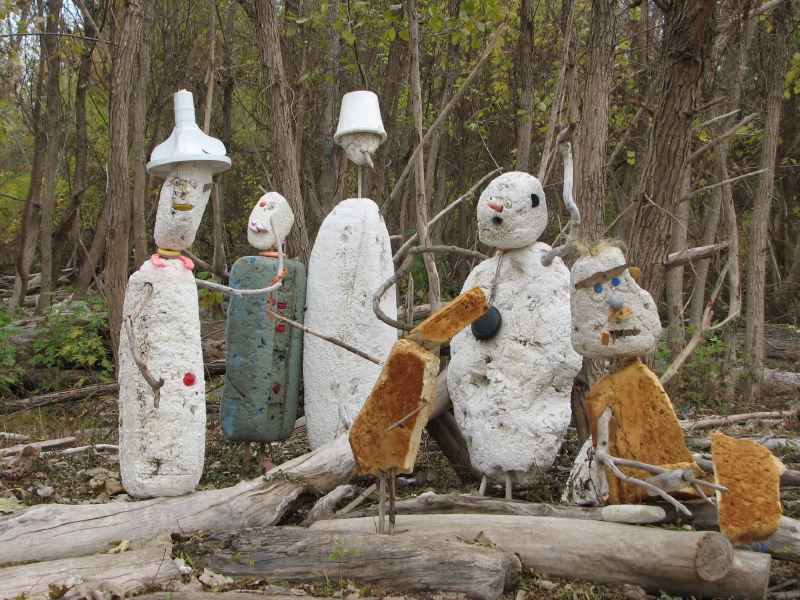
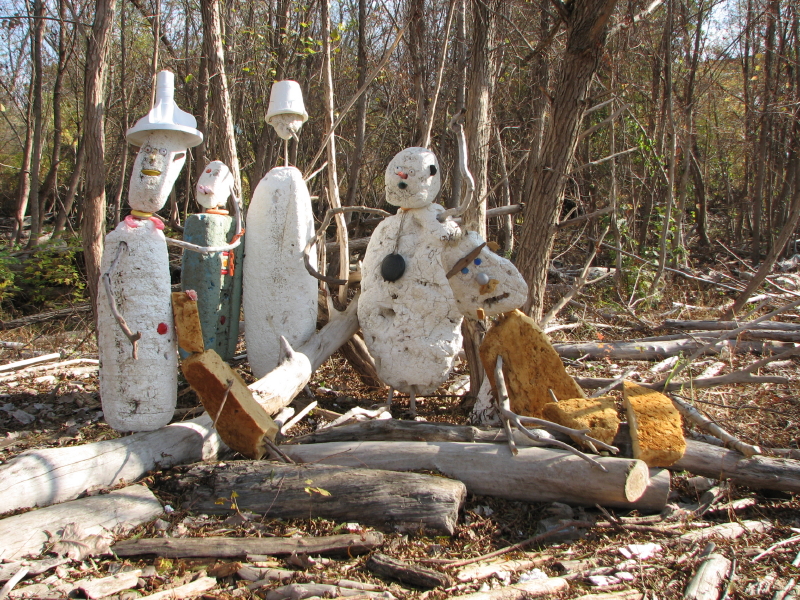
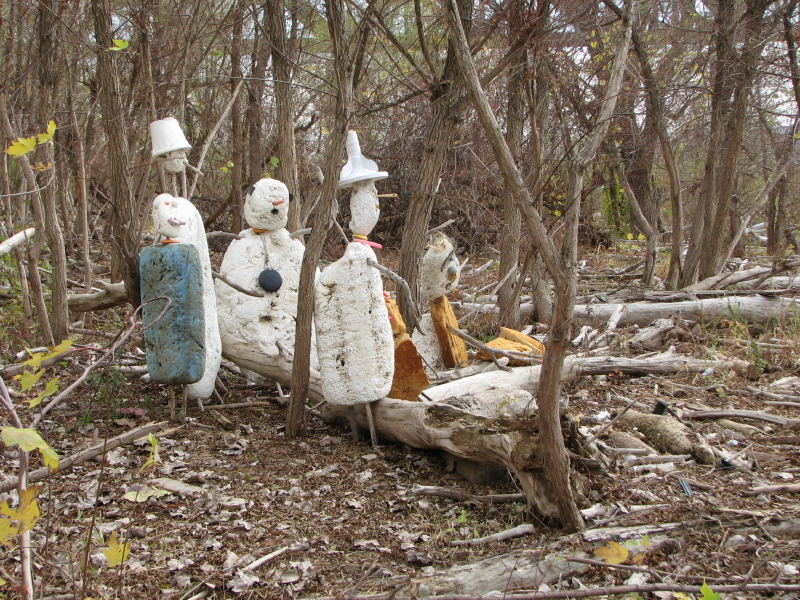
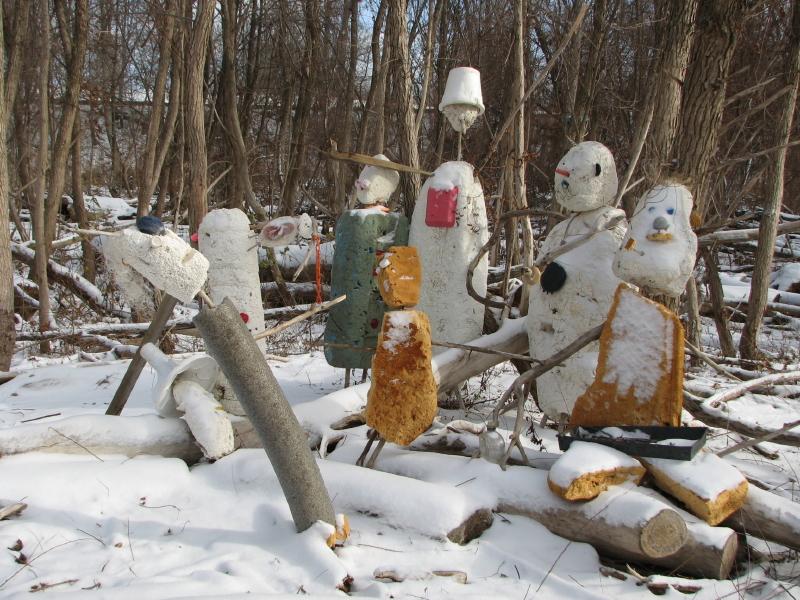
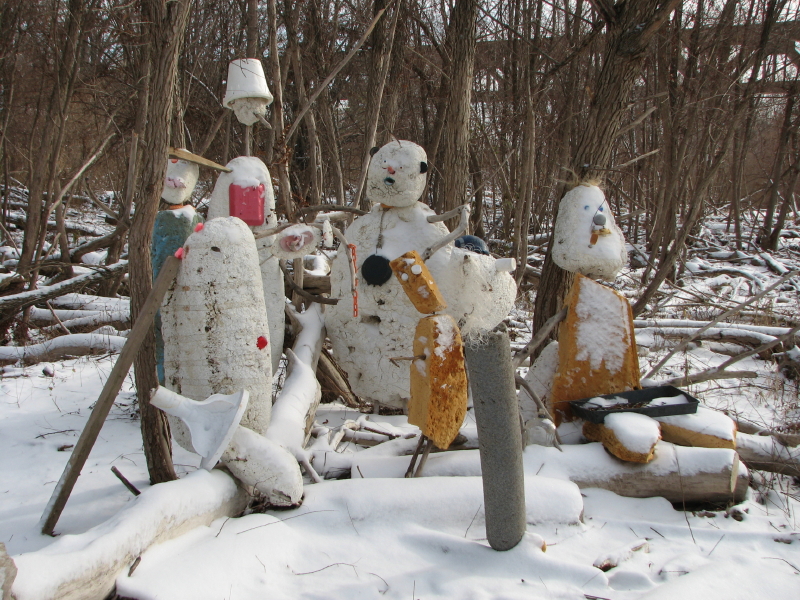
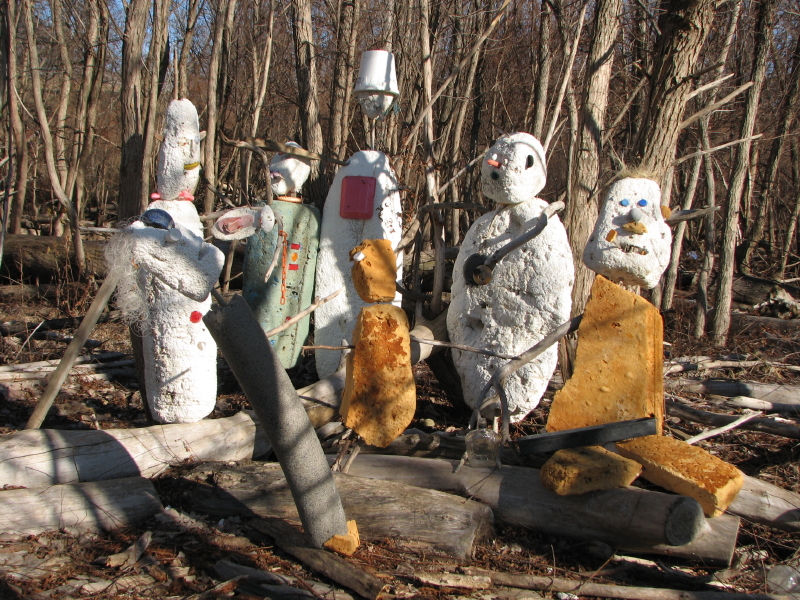
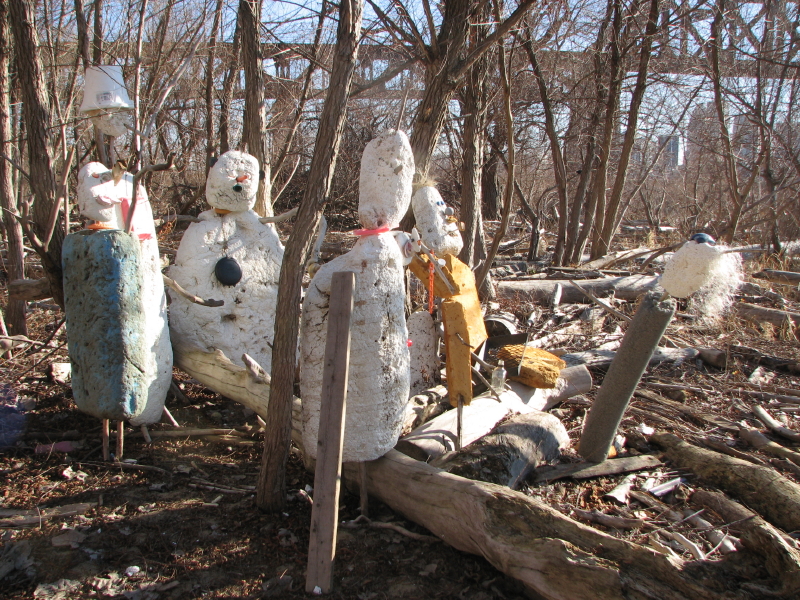
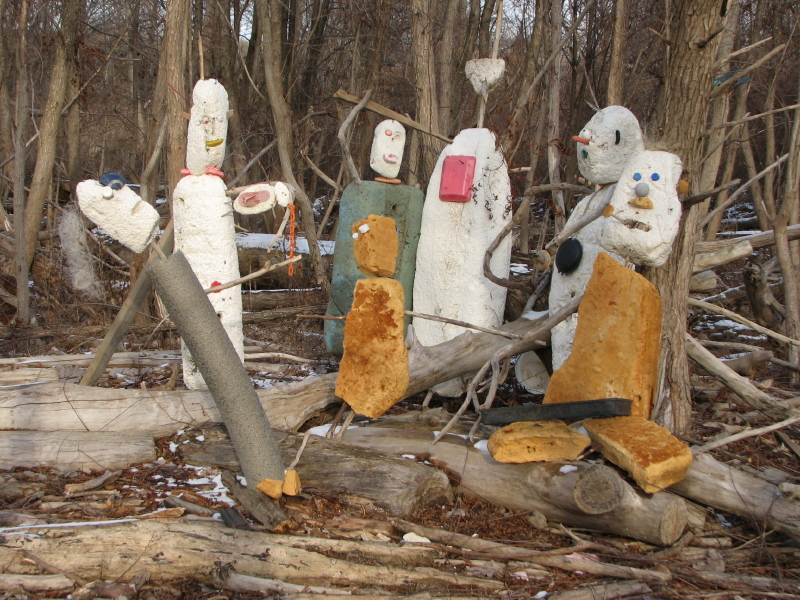
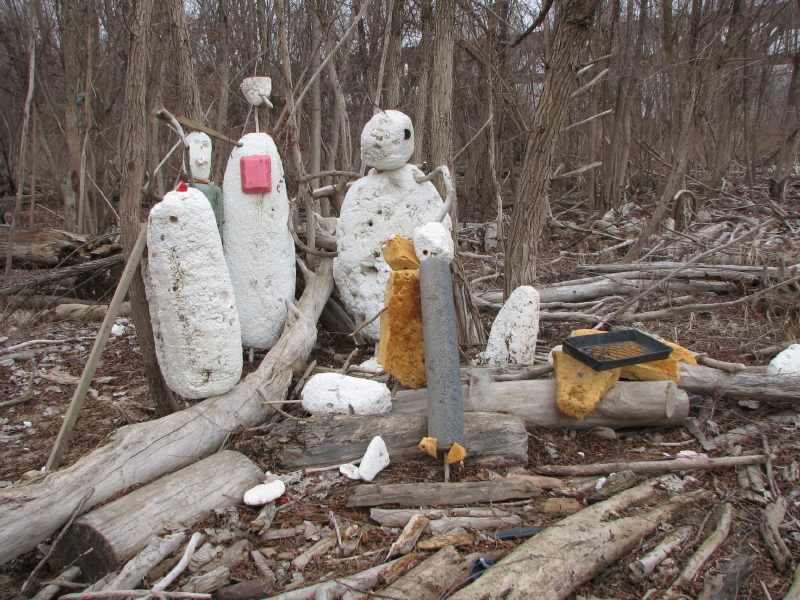
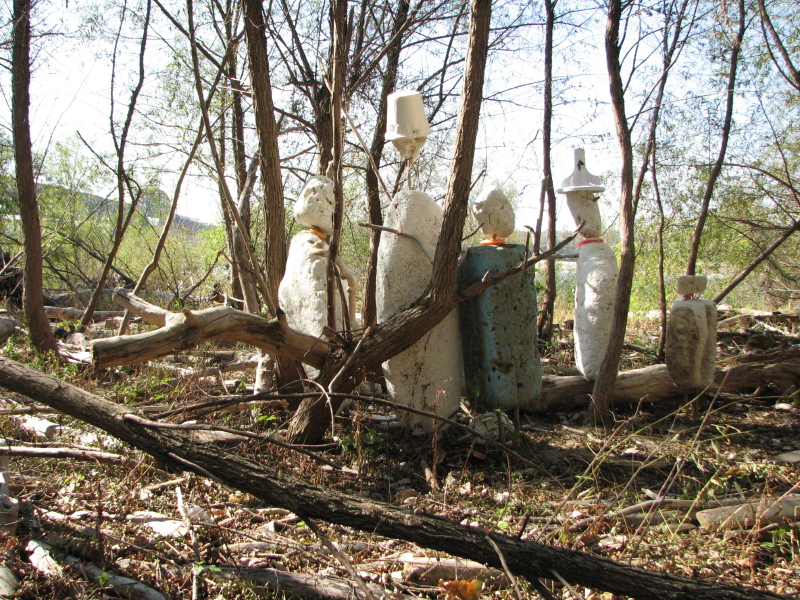
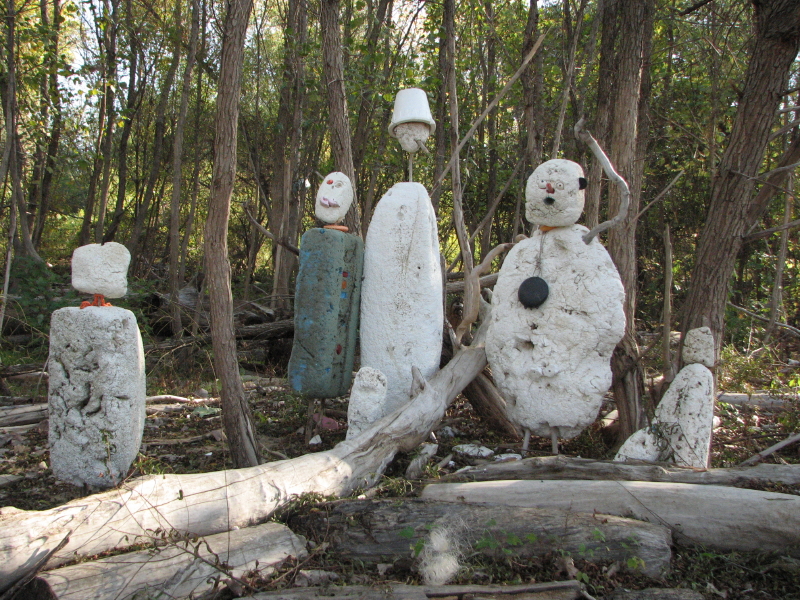
As I write this post the Ohio River is still high and lingering due to unexpected heavy rains.  I’m anxious to see what the new standard will be along the riverbanks.  Until my old haunts are once again accessible, I’m forced to dip into the old archives.  Here’s a selection of images made between October 2010 and February 2011 of a sculptural grouping I came to call “The Choir”.  Some of the members of this group made appearances in my last post and were in fact made from Styrofoam and other found objects I collected along the river and kept at the plein air studio.  Each began as a unique piece that was constructed and photographed on site at the Falls of the Ohio.  After each piece fell apart or was destroyed by other park visitors, I retrieved the parts and moved them back to the studio.  I didn’t try to repair them but instead chose to stand them back up to see what would happen.  Happily, people interacted with them by changing, rearranging, and adding new figures to the grouping.  On the down side, they were also attacked several times, smashed and eventually knocked down.  Now, who knows where they are, but it’s possible I may find parts of them in other places of the park.  In my imagination I see “The Choir” being lifted by the water and floating away piece by piece.  Here are the images which are in chronological order except for the very last picture.

Read Full Post »

Ah, how nice it is to be in the great outdoors and filling my lungs with fresh air!  The passing weather front has made life bearable again and the fleecy white clouds are a reminder that Autumn is near.

Visitors are down on the fossil beds trying to imagine what life must have been like all those supposed millions of years a go.  I can see a few fishermen too, but I think the water is too warm and the fish won’t be in the mood.  I wonder if when our kind passes into the next geological age…what presences will we leave behind?  Will our very bones turn to stone too and leave a layer here for “others” to discover?  I doubt it.

It’s all so mind-boggling to me that life could have evolved out of some stagnant pool of algae ooze.  I’m not sure I believe that because here I am in my white dress floating over this landscape.  That would have been too unrefined a beginning for someone who is closer to the angels than to the amoebas!

Surely, all this exists for our benefit?  I mean what other use could it have?  Do we think that the animals or plants have the means to develop this site or have the wherewithal to see a bigger picture?  If it’s all going to become history anyway shouldn’t we use our resources as we see fit?  Isn’t that what Darwin meant by survival of the fittest?

Nature is okay, but a little untidy for my tastes.  What the natural world needs are beings like us to organize this place and turn it into a garden.  When I visit the Interpretive Center I think I will plant that idea in the suggestion box.  There are so many more useful ways to experience this landscape  if only the people in charge would clean things up a little.

Read Full Post »

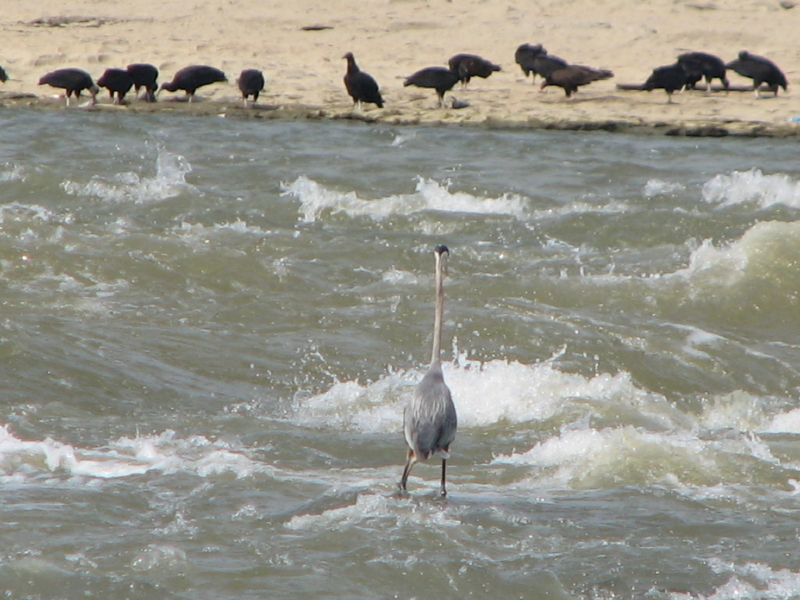
Fishing is an important year round activity at the Falls of the Ohio.  When the right conditions are present (and this is best known by the fish) the fishing can be excellent.  Such was the situation this past weekend.  It was unbelievably hot and humid, but the fish were in the shallows and everything that fishes was out here.  Lining the more accessible banks and from boats, anglers were throwing both natural and artificial lures into the riffles and coming up with some nice stringers of fish.  On the less accessible fossil banks on the Kentucky side of the river and from strategically placed rocks in the flowing water, herons and vultures were waiting.

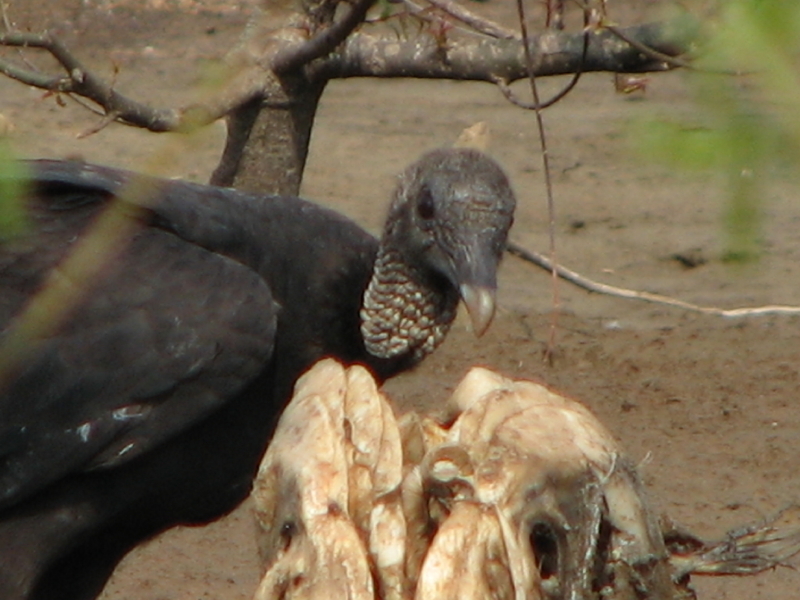
While the herons were actively fishing, the resident colony of Black vultures were doing their part by scavenging on dead fish.  I came across this one bird dining on this fish head from a large carp.  Their sharp beaks have no problem picking out the best morsels.

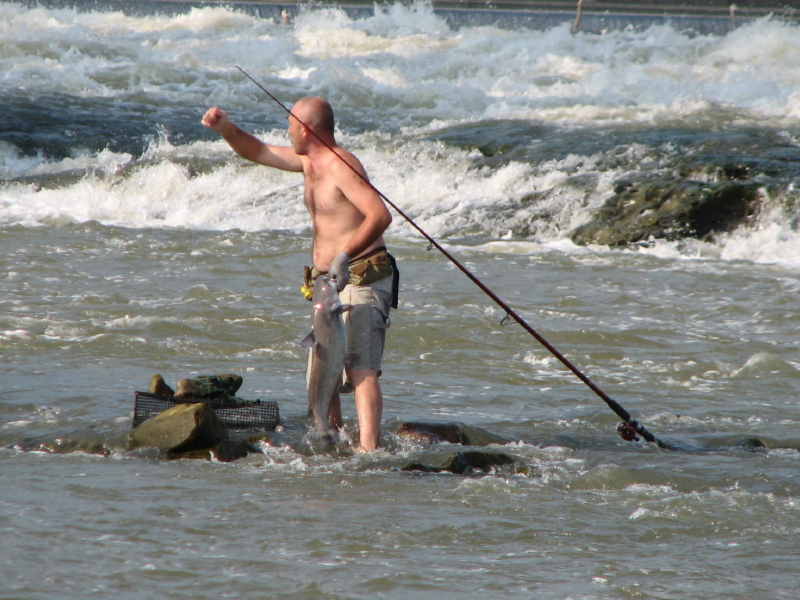
The human fishermen were catching a variety of big river fishes.  I watched one angler land a large Blue catfish that gave him quite a fight.  He placed the big catfish in a wire mesh cage which kept it fresh in the swiftly moving water.  Large rocks stacked on top of the box anchors it in place.

Among the other fish being caught included striped bass hybrids, channel cats, drum and more.  It is still not recommended to eat the larger bottom dwelling fish for fear of toxins in their tissues.  The smaller fish supposedly are alright if you don’t eat too many too frequently.  With the economic conditions as they are, I know there are many people out here augmenting their diets with these fish.  It’s not just about sport anymore.  The top two bass in this photo are about 3 or 4 pounds each.

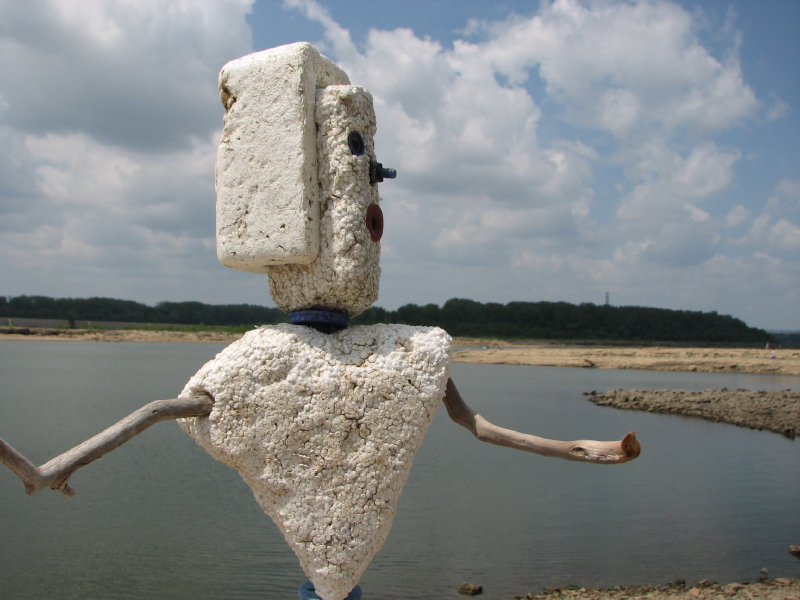
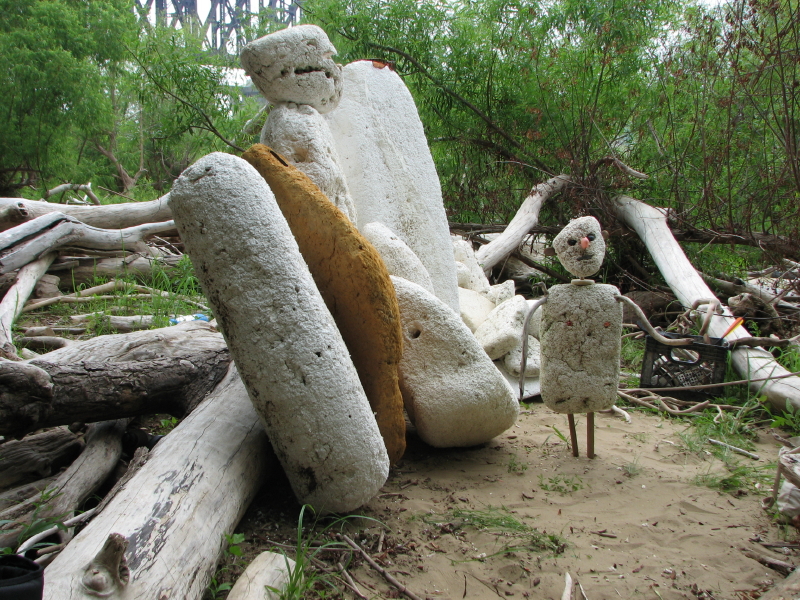
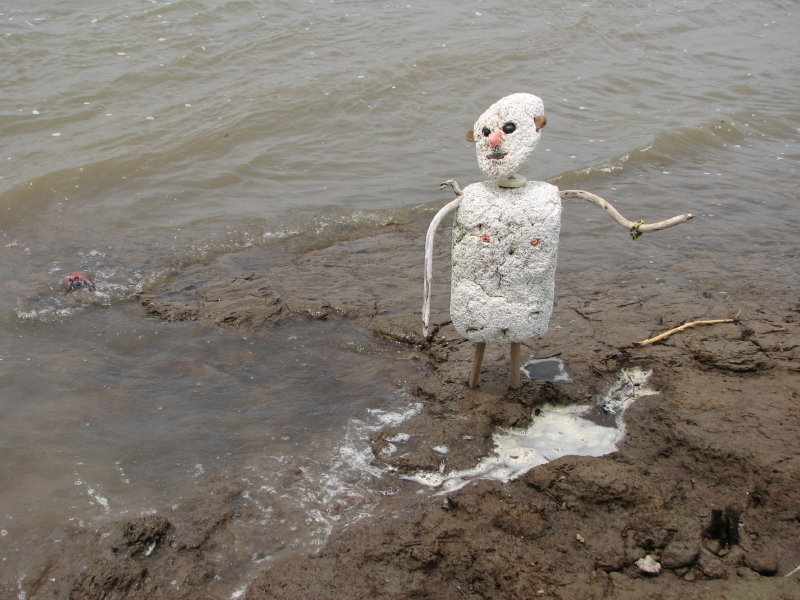
I was doing my own brand of angling but not for fish!  I walked the riverbank and collected as much Styrofoam as I could find and carried it  to my studio spot under the willow trees.  This is what it looked like when I posed it all for a photograph.  Until the next bout of high water, I’m going to try to use as much of this material as I can for my sculptures.

I have some large chunks in here, but the heat prevented me from getting too ambitious with it.  After drinking much of the water I brought with me, I did make one modest figure and moved it around the different contexts presented by the Falls of the Ohio on this very hot and sticky day.

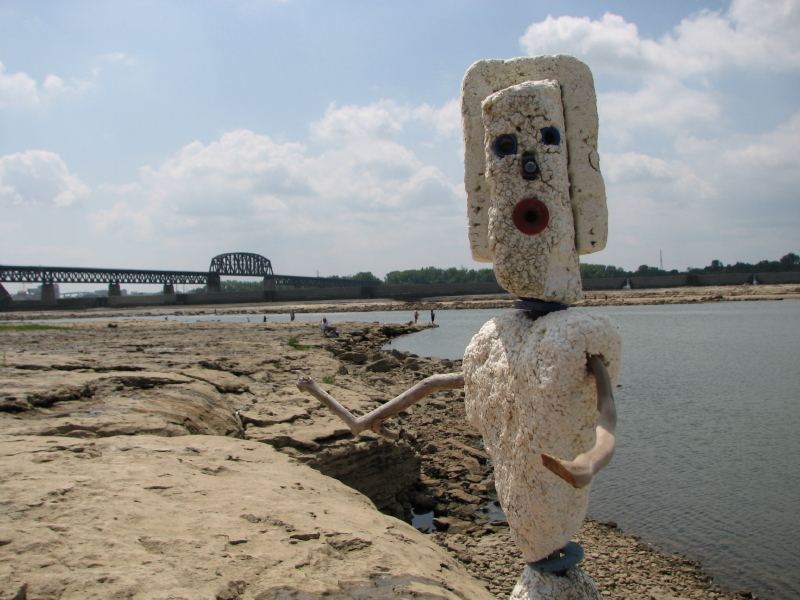
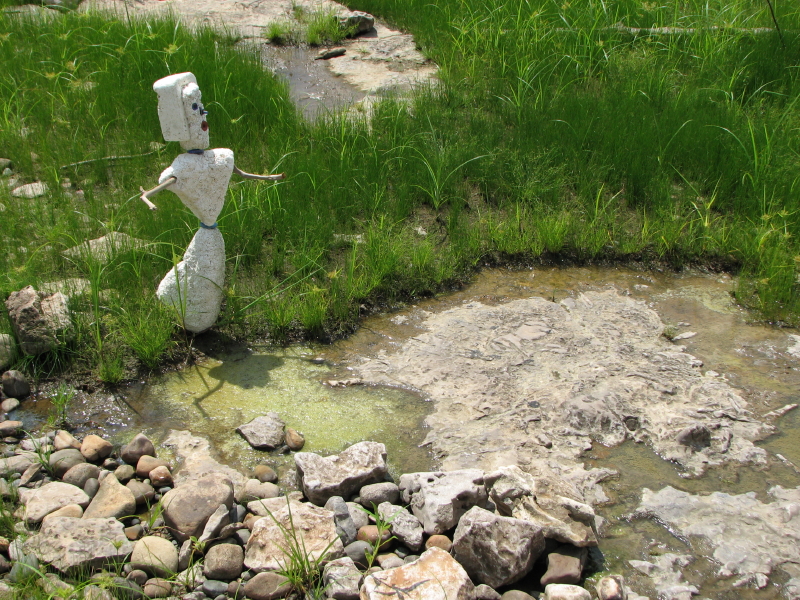
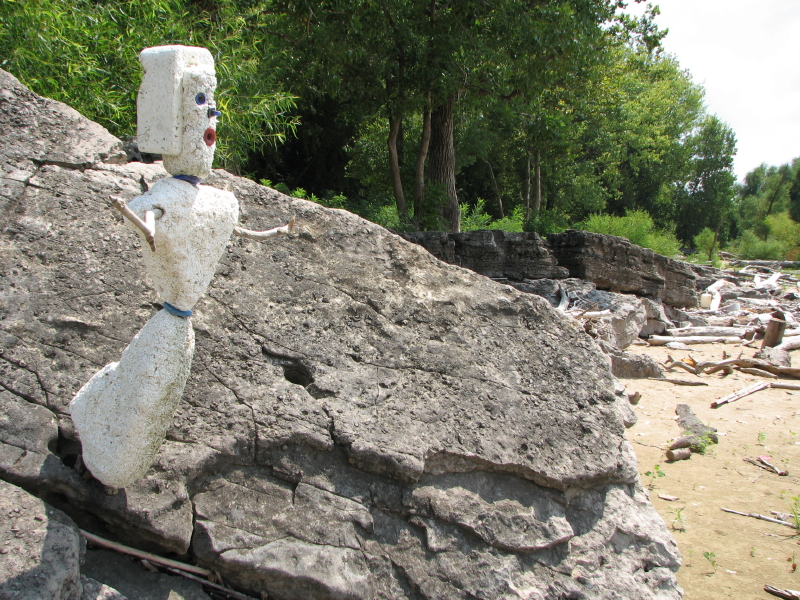
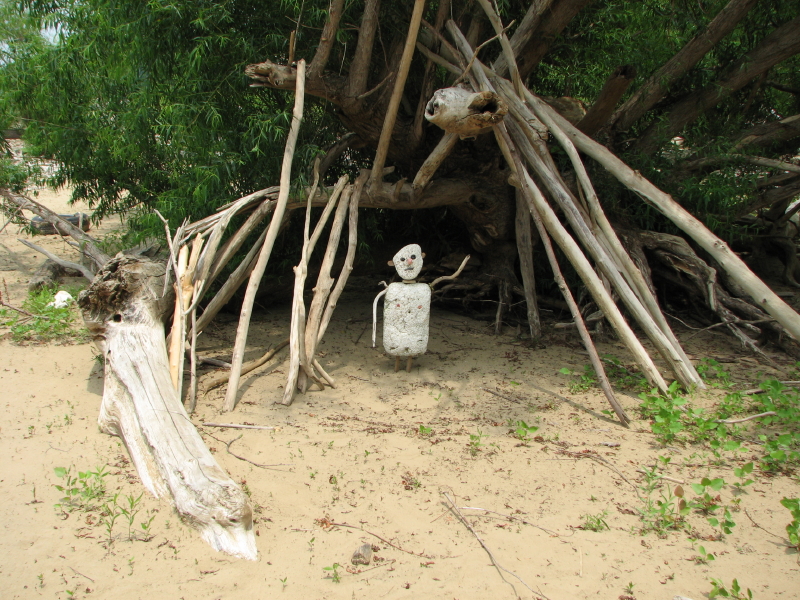
Here’s the nameless figure with the dark eyes standing in what was its nursery.  This guy has walnut eyes and his nose is a plastic strawberry.  I’m guessing that this figure is about 3 1/2 feet tall, but truthfully, I don’t pay much attention to scale out here where everything is as big as life to me.  Most of the time, I prefer you gauge scale by comparing it to what else is  present in the context that you may be able to recognize.  Not knowing also lends some mystery that I find appealing.

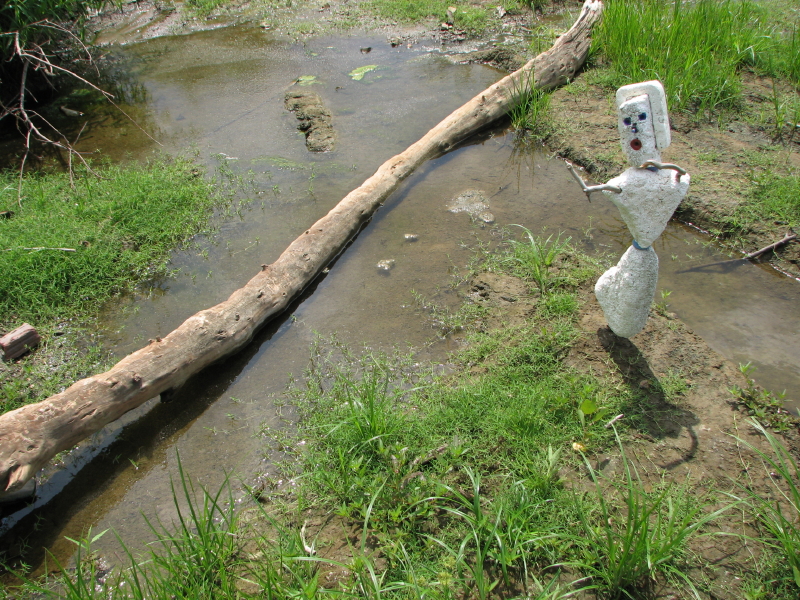
First, I posed this figure near the spot where I made it.  I found a plastic flower and placed it in his hand.  This area is cool and shady, but the mosquitoes are also waiting for any passer-by pumping blood through their veins!  I quickly picked this piece up and ventured to the riverbank where the insects aren’t as bad.  The soft mud makes it easier to stand this figure up, but traction out here can be a slippery affair.

So far, it’s looking like this June will either be the hottest on record or second hottest.  The difference between the two is about a degree.  The final place I photographed my newest figure is by this improvised child’s fort.  This is the kind of activity my two sons enjoy doing out here.  My sculpture looks at home and is enjoying a respite from the oppressive heat.  The shade does look inviting!  I returned “dark eyes” to my outdoor studio, collected my belongings and trudged back to my car.

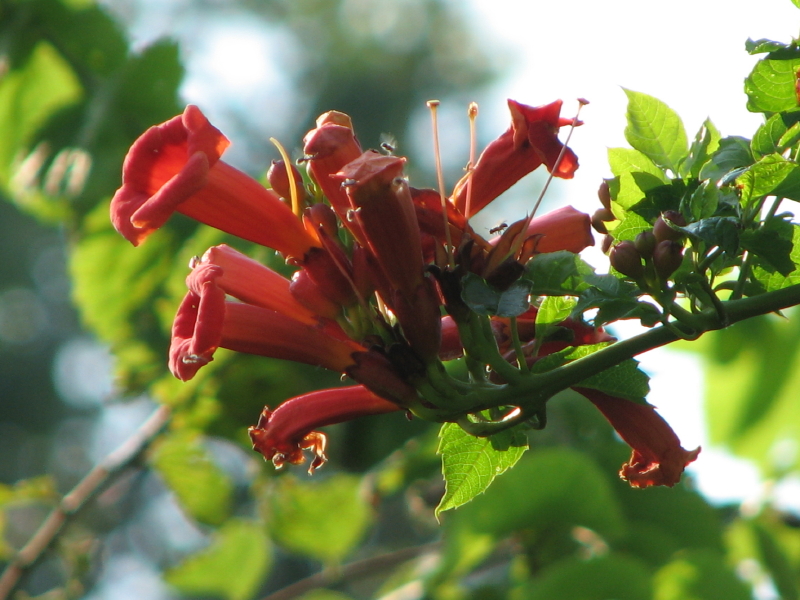
Today’s final image came from this morning’s adventure.  I saw this trumpet creeper vine growing on a tall tree and thought it attractive.  When I got home and downloaded my pictures I could see that many small bees were swarming around the blooms pollinating the plant.  This is what I like about the Falls of the Ohio.  In a relatively small area, you can see so much life going about its business.

Read Full Post »

Reading the old journals from the exploration period…you can hear the authors’ amazement in trying to describe the overwhelming abundance that once existed here.  If you came across a flock of passenger pigeons numbering in the billions and as you watched them cross the sky like rolling smoke until they collectively blotted out the sun’s light how would you record the event?  But it wasn’t just flocks, there were also forests of trees, immense herds of bison and schools of cod and salmon.  In some cases, this was here less than two hundred years a go.  Now this seems remote and out of our living memories.  You don’t miss what you never knew.  Forgetfulness is another type of erosion.

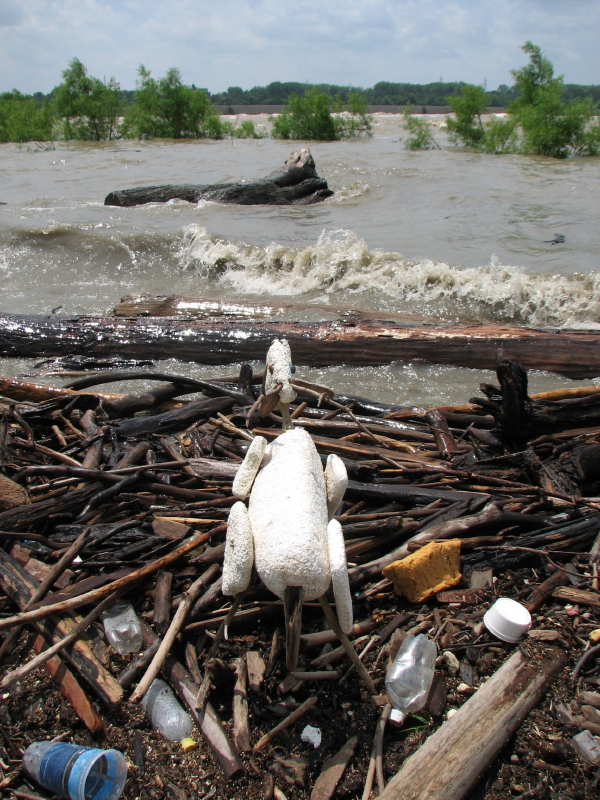
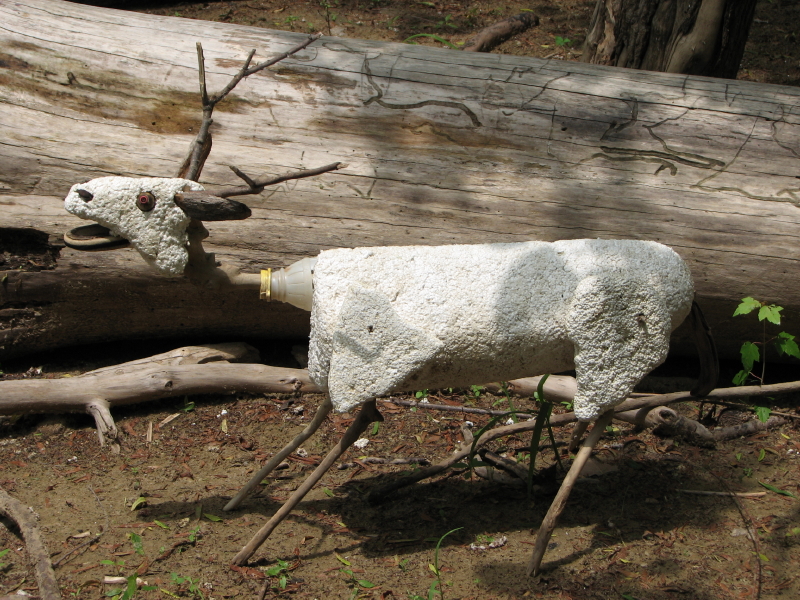
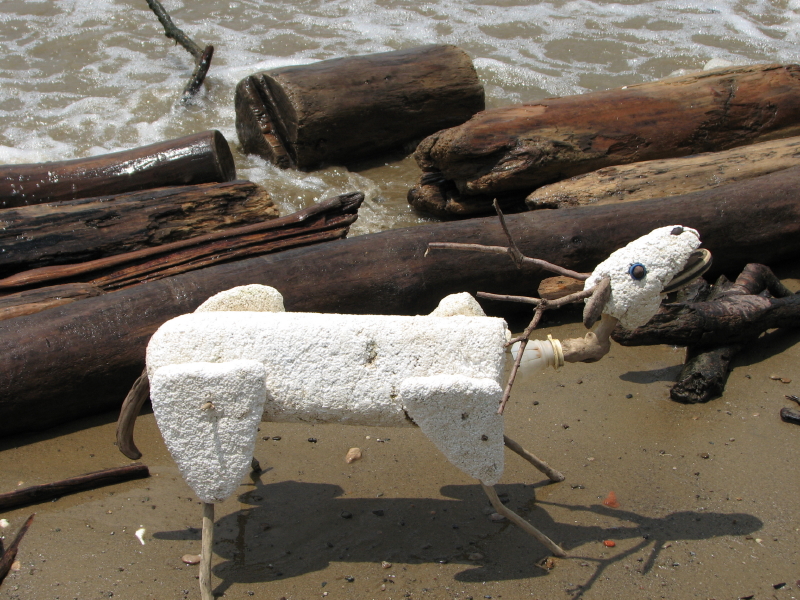
Over the sounds of the river smacking the shoreline, I could discern a few grunts among a high almost “metallic” bugling/whistling in the air.  Or so I imagined as I introduce my latest Styrofoam creation.  In the old days, (which according to my youngest son is anything over nine years a go) the American elk or Wapiti was plentiful in Kentucky and through out the United States.  Several sub-species existed and were classified by geographic region and habitat.  The bulls of this large deer with their immense antlered racks are an impressive sight and are symbolic of nature’s majesty.  Well, mine is not nearly as good…but for the purposes of this post…will do fine!

We are lucky they are still with us today!  As loss of habitat occurred as well as hunting pressures…our elk were driven westward until they were gone east of the Mississippi River.  Eventually, the elk were allowed some federal protections and our herds are rebounding.  Kentucky has led the way in elk conservation by experimentally transplanting a herd to the eastern section of the state where they have thrived!  Their reintroduction has been so successful that a limited hunting season on them has been established.

During the Lewis and Clark trek across the country, elk meat made up a large percentage of the meat consumed.  It remained the meat of choice until the native Americans introduced the explorers to dogs and then that was preferred!  As the country was “settled”, elk continued to disappear from all kinds of pressures.  There was even a brief fad where elk teeth were used for watch fobs!

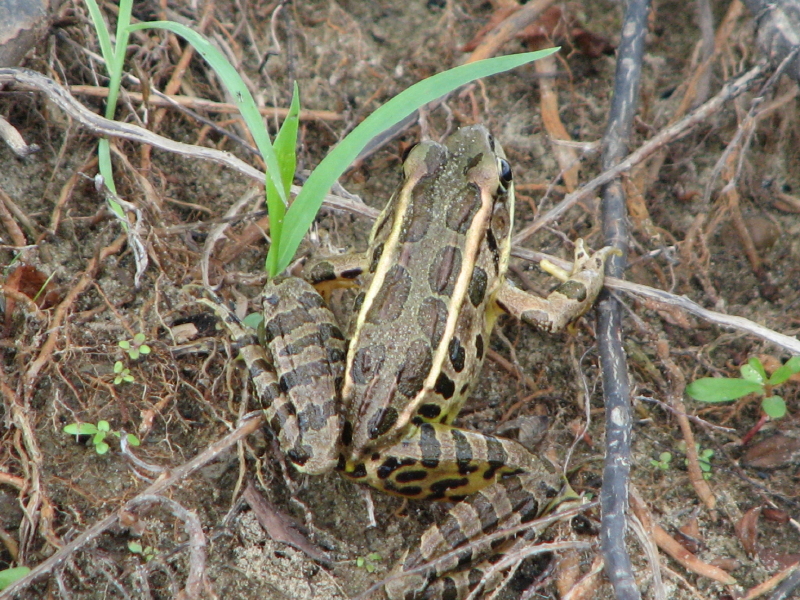
The elk is a member of the megafauna that was once was a large part of the North American ecosystem.  While I’m taking pictures of my sculpture, a smaller member of this ecosystem came hopping by.  To be honest, I don’t see many frogs out here and I’m surprised this Leopard frog isn’t in a more boggy area.  I think many people by now are aware that amphibians aren’t doing as well as they use to for a variety of reasons that range from climate change to exotic fungi.  If a Great Blue Heron spots this guy, then our frog friend will become bird food.  It’s as if life weren’t already difficult enough without adding to it.

The frog is a reminder that even the most humble of species plays its part in the bigger scheme of things.  So often it seems that the smallest players have the out-sized roles that make the biggest differences to the smooth operation of life at large.  My stag is bellowing and issuing a protest and challenge to protect the environment that sustains us all!  There is far too much in the river that doesn’t belong there especially items dependent on crude oil.

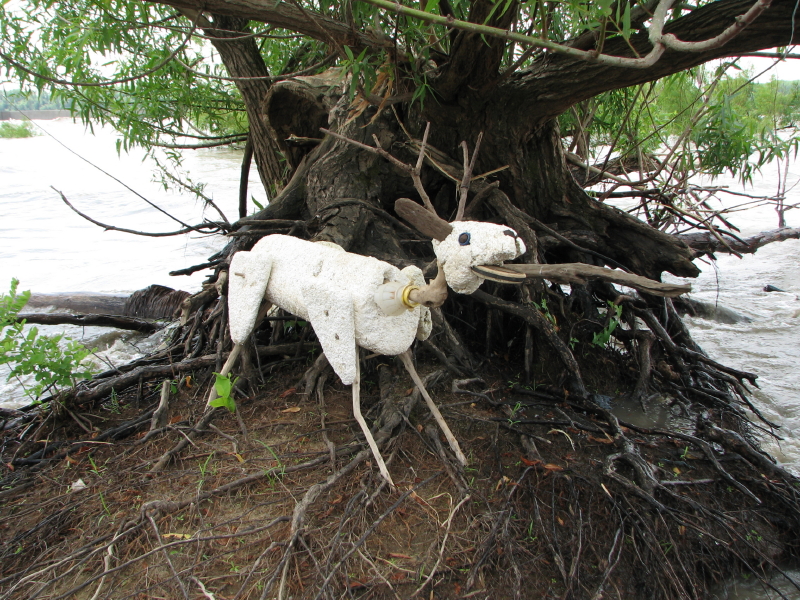
Take this stag for instance, it is dependent on crude oil for its existence.  The body, head, and parts of the leg are made from polystyrene.  In this case it is all river-polished Styrofoam.  The lower jaw is the sole of a shoe and also made from petrochemicals.  The eyes and plastic collar are plastic and derived from petroleum extracts.  Only parts of the nose, legs, antlers, and tail are biodegradable.  The Styro-stag is an animal we can afford to lose and it will be interesting watching the river for signs that the exotic materials that comprise it are on the wane.

Read Full Post »

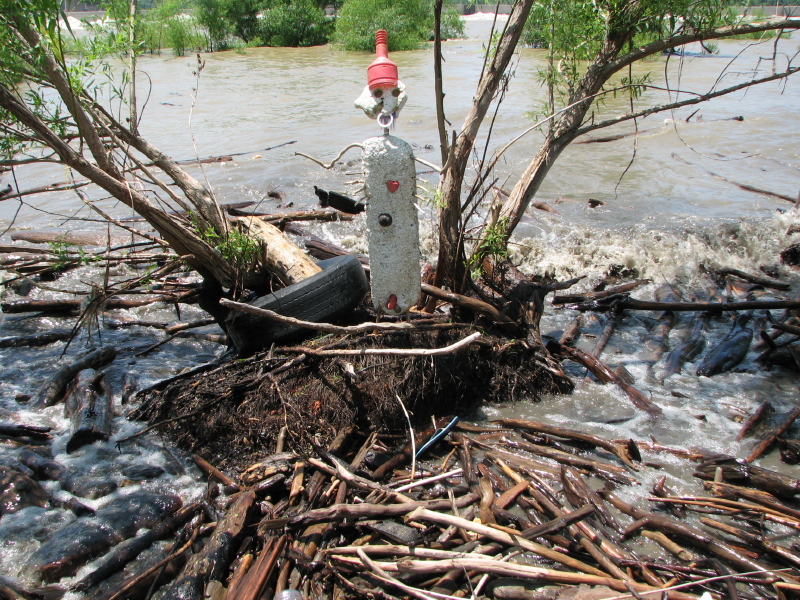
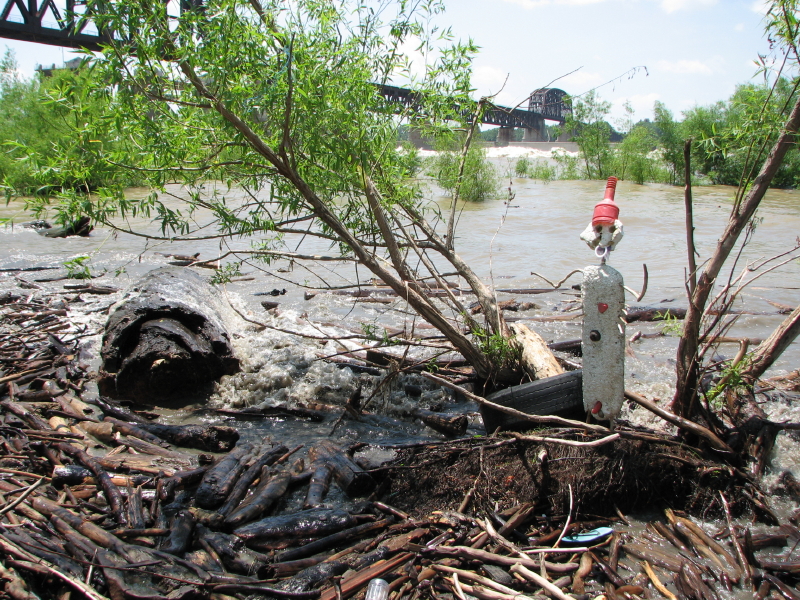
I left the “Petro-totem” sculpture on a small island created by the tenacity of a willow’s roots.  Living this close to the river is an invitation to disaster.  Sooner or later the river will wash away this little refuge, but for now we are okay.  Or are we?

The first two images in this post were taken on a Saturday when everything seemed relatively well.  When I returned the following morning, severe thunderstorms had drenched our region.  The river level was noticeably higher.  The sounds of normal life were rudely interrupted by the sound of the dam’s siren letting more water under the gate.  A tremendously powerful torrent is created when so much water is let loose.  While I went about my scavenging, I made a mental note as the river crept closer and closer to my sculpture.  Here are pictures of what I mean.

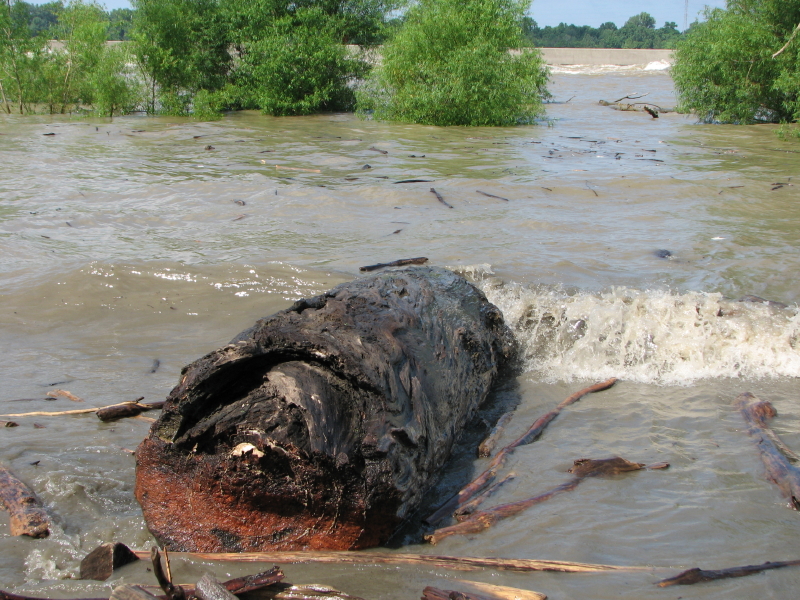
The large decaying log was lifted off the shore and began to drift away.

Meanwhile, the surging river was getting my sculpture’s feet wet.

It didn’t take long before the large log started moving in rhythm with the waves and entered the periphery of the camera’s lens.  Although I didn’t hang out to witness the ceremonial washing away of the sculpture, I’m fairly sure it’s gone now.  It wasn’t an especially glad looking creation.

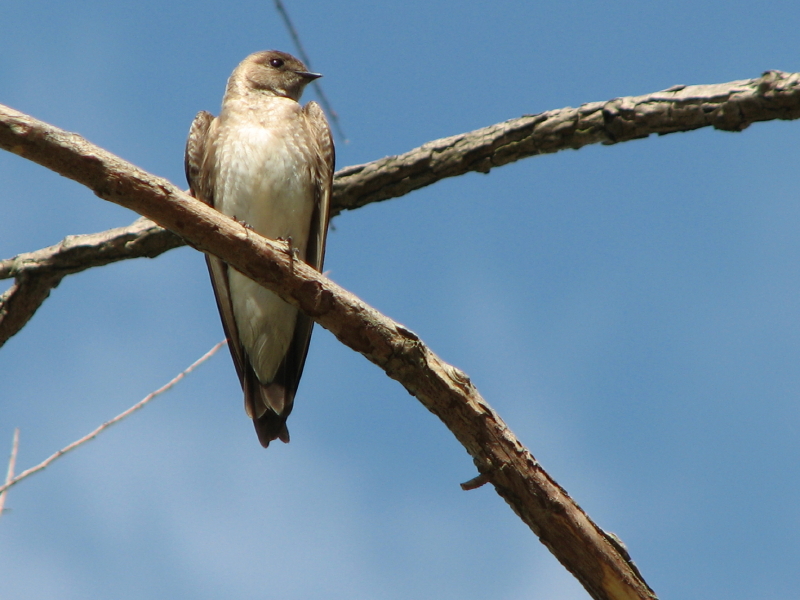
Before the river reclaimed this section of the shoreline, I did come across this pair of toy binoculars.  All around me, Rough-winged swallows were picking off small insects including the left-overs of the latest may fly hatch.

I was frustrated by trying to look through the faux field glasses.  When I peeked through the eyepieces, all I could see was the river water that had seeped through the plastic seams.  More river discoveries and Styrofoam sculptures in the next Falls of the Ohio adventure!

Read Full Post »

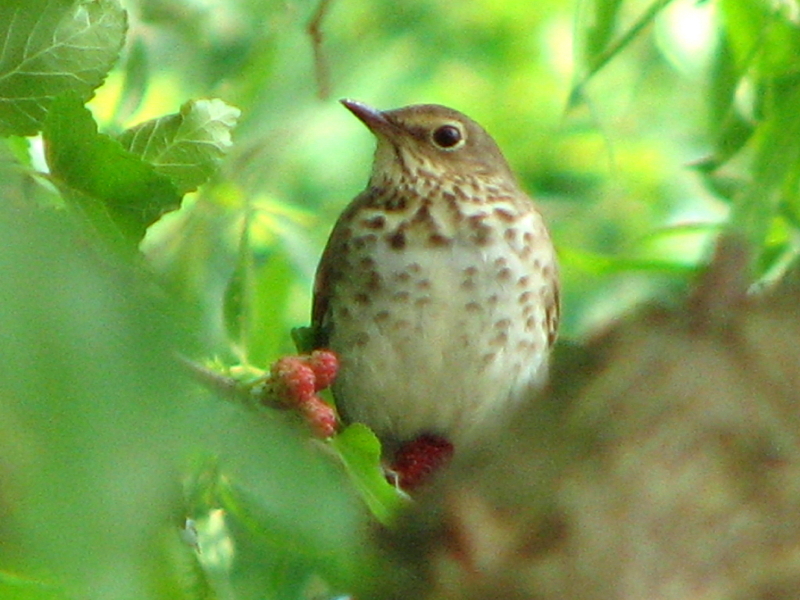
I love this photo!  This Swainson’s Thrush seems so happy sitting on its berries.  At the Falls the migrant birds are around and our trees are flowering or fruiting.  I have been doing my best to come up with some nice bird photos in between other river activities like making art.  Most of the warblers are proving to be tough subjects.  The difference between getting a nice image and nothing is a thousandth of a second.  Warblers are very small and constantly moving.  There is a lot of thrush and catbird activity around the sweet mulberries and squabbles are frequent.

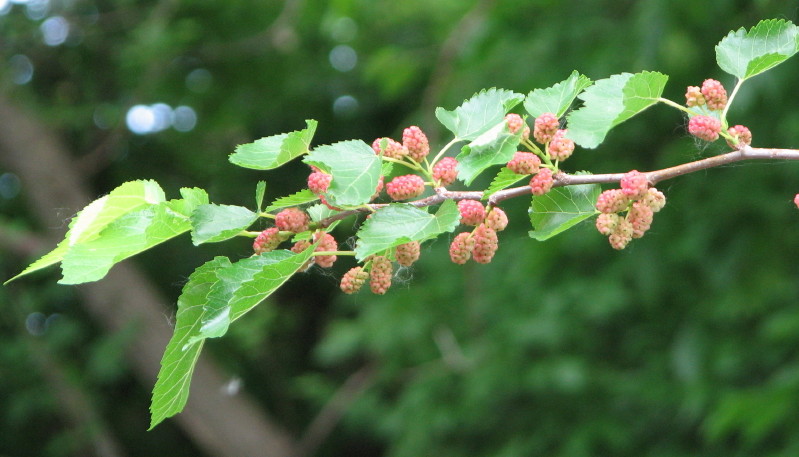
These pink and red mulberries will be ripe when they turn dark and black.  That’s when the wildlife particularly go for them.  This is a prolific tree and seems to be on the rise.

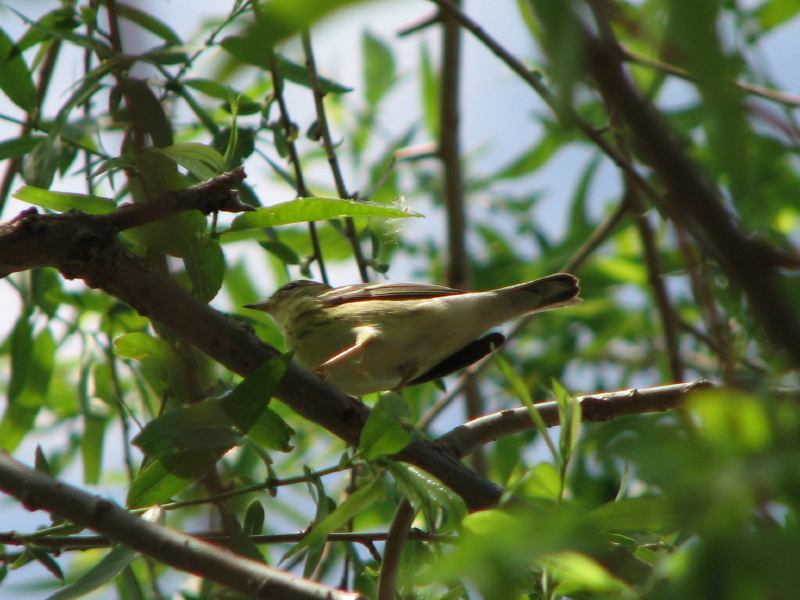
This bird atop a willow tree is a bit of a head scratcher for me.  I like that I was able to get such a relatively clear shot among the foliage, but what species of bird is this?  When I first took the photo, I thought I was photographing one of the seasonal vireos.  However, there is a suggestion of light-colored wing bars and perhaps a slightly streaked breast too which is an unusual combination.  That’s what I like about bird watching…it can be challenging even when you think you have a good image.

Wafting through the air were the tiny, cottony seeds of these black willow trees.  Many of these will land upon the sand and germinate.  Only the fittest can thrive in this tortured soil and manage the periodic flooding that helps define this place.

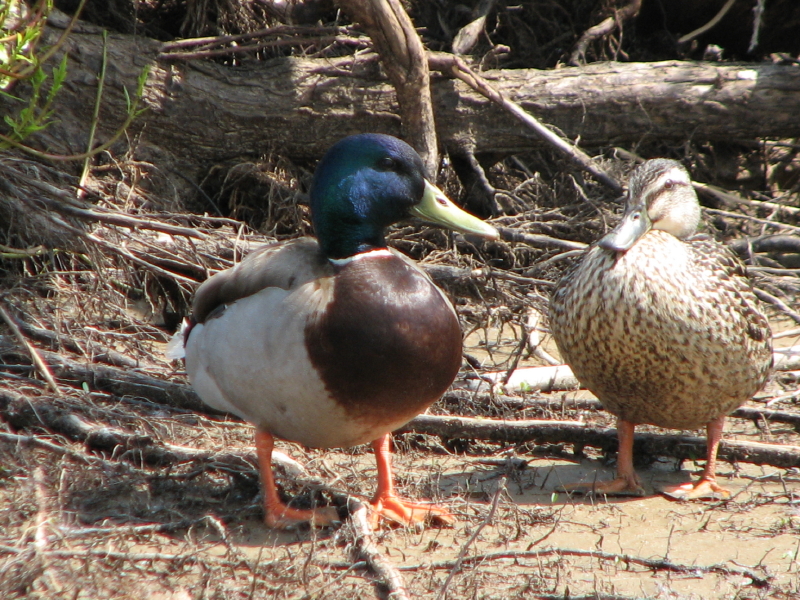
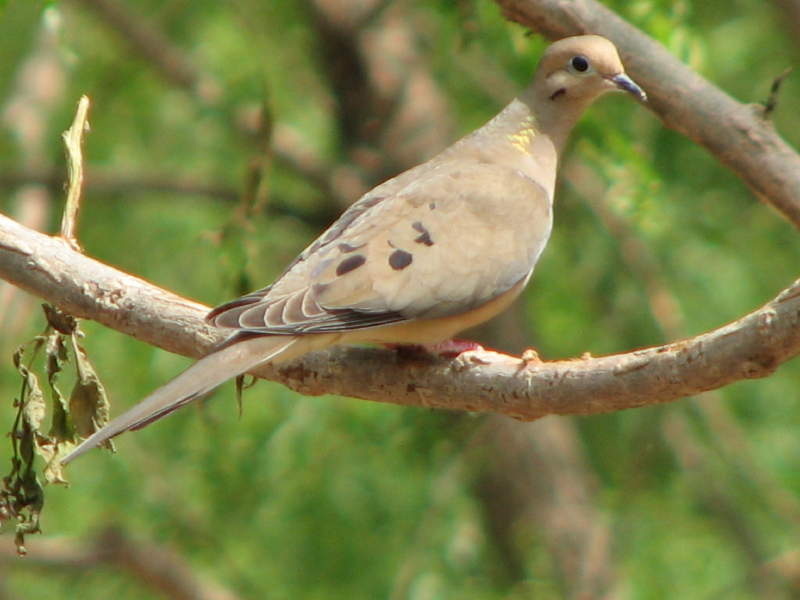
There were birds that I was able to photograph and identify like this pair of Mallard Ducks.  They were away from the river and more than likely have a nest nearby.  This Mourning Dove is showing a little of the iridescence on its neck that comes with the breeding season.  It’s hard to believe now that Audubon’s first drawing of the extinct Passenger Pigeon was made at the Falls of the Ohio.  That is certainly a bird I would have loved to add to my list of living species in the park.

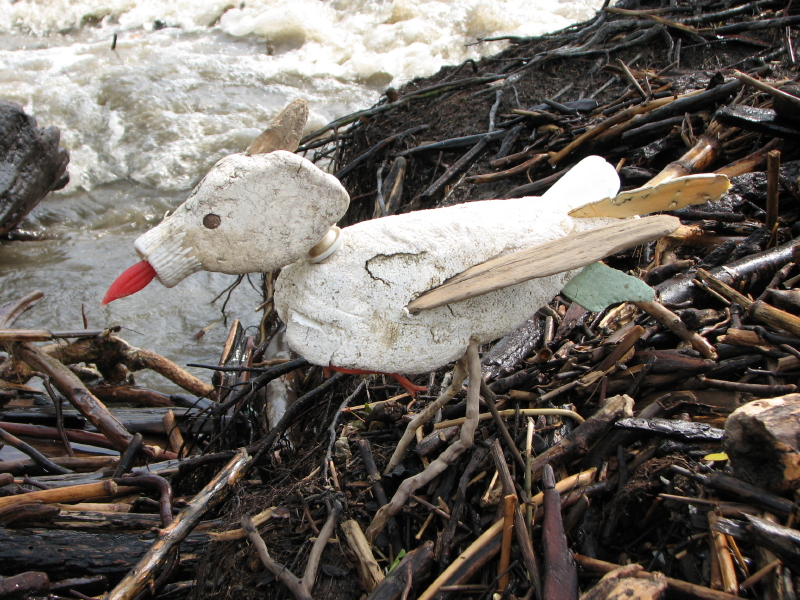
I was able to add a new bird to my list on this trip and it’s an unusual one!  It’s called the Ohio Valley Rail and is usually heard more than it is seen.  It is not typical to run into one during the daylight hours.  So, when I came across this female near the river…I got real excited!

This bird is in transit to the marsh habitats that exist around the lakes in the Upper Peninsula of Michigan.  Since the Ohio Valley Rail is believed to travel at night…it is a mystery why this one isn’t sleeping in a secluded spot.  Originally discovered and named within the river valley by early 19th Century naturalists, it would be many years before it’s true northern haunts would be known to science.  The males are slightly smaller but have more developed plumage which they use to their fullest glory when they leap and dance into the air trying to win the favors of a female.  Successful dancers will pair up producing a clutch of two eggs usually in a nest located on the ground and made from cane leaves.  One last image of this rarely seen oddity with the big head and bright red bill.  Bon voyage!

Read Full Post »

« Newer Posts - Older Posts »