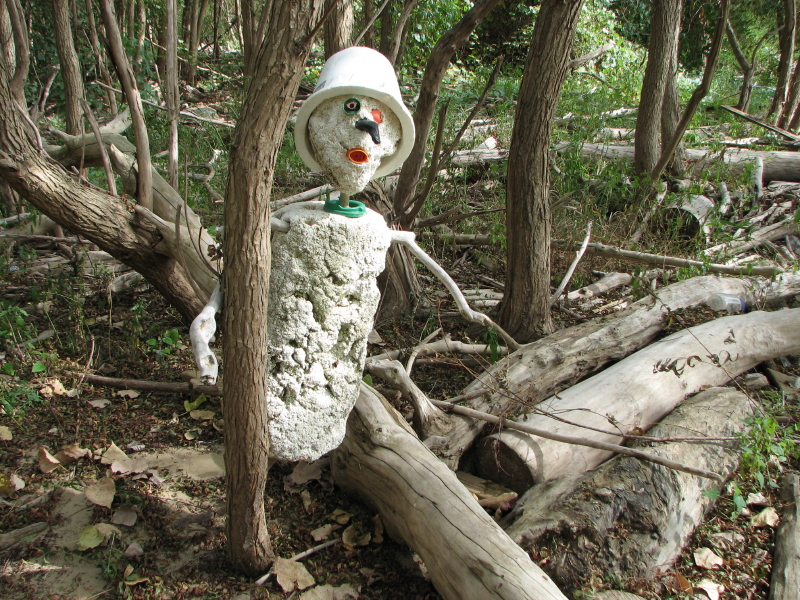
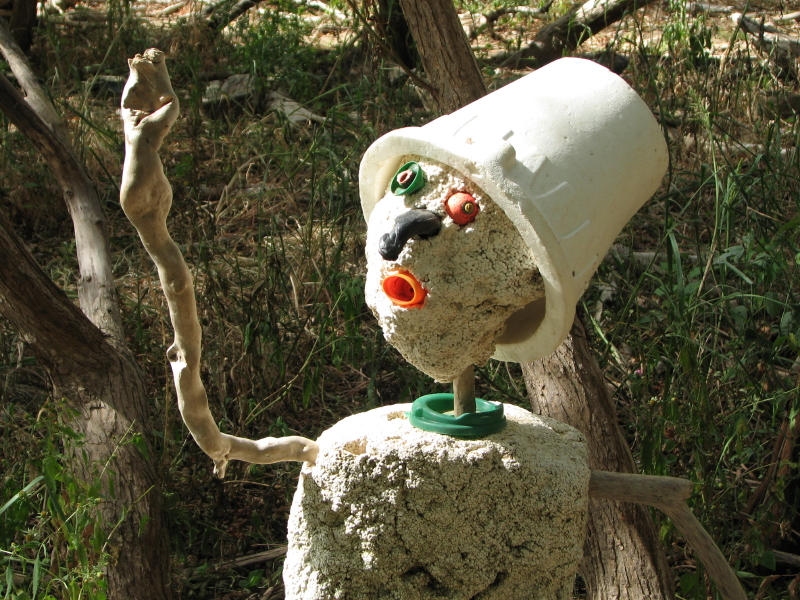
I was walking through the woods on a sun-dappled day looking for migratory birds when I came across a new friend. We talked for a little while before introducing ourselves. Both of us remarked on the dry weather we have been having and I said that it’s official now. September was the driest ever in the commonwealth of Kentucky since records have been kept dating back to 1871. We have had a spits-worth of rain… that’s it. Overall, this has been our third driest month ever, beaten only by two Octobers over the course of the past century. We both wondered if this was an omen for this October? We certainly hope not. Having created some common ground, I introduced myself and she said to call her Minnie, Minnie Buckethead.
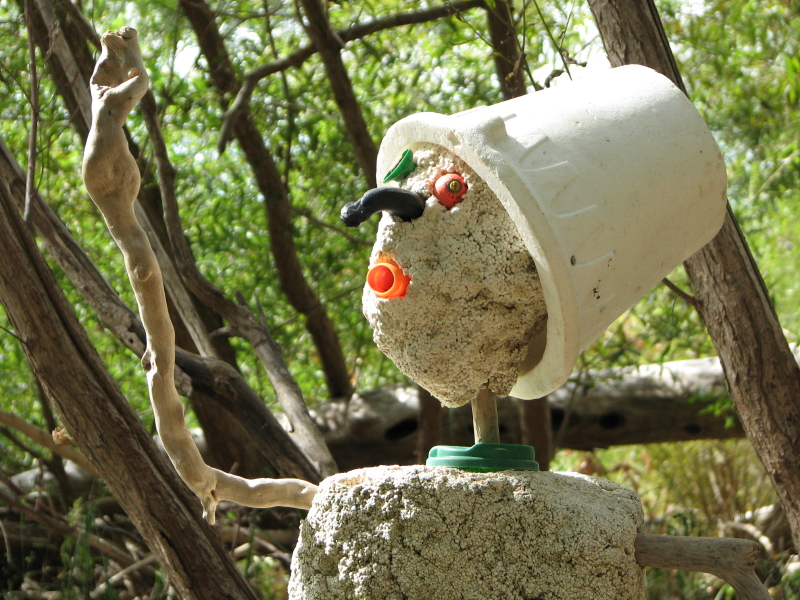
As it turned out, Minnie is an interesting old lady with a fascination for everything in the woods. I asked if she had seen any migrating warblers and she had. American Redstarts, Black and White Warblers, were moving with small groups of other birds including Carolina Chickadees and Tufted Titmice. I had seen nothing. I definitely need to get up earlier in the day to catch the bird show. Perhaps Minnie was taking pity on me and she said that there were a few other things happening in the woods and would I like to see them? How could I turn down such a nice offer from an old lady?

We walked over to a large willow tree and I saw Minnie crane her neck and squint her eyes from the sun and she scanned the willow bark. “Here” she said and I checked out what she was pointing at.
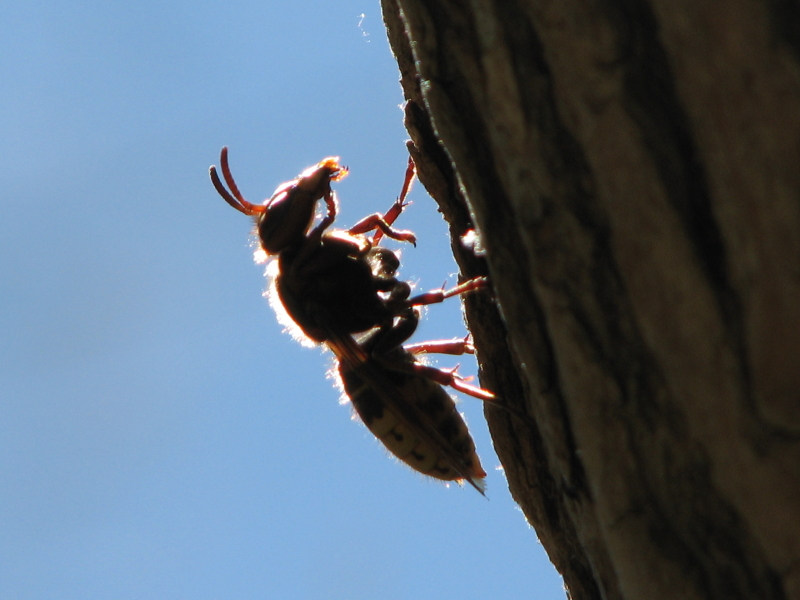
At first I thought it was a bee, but it was larger and more robust and not as big as a bumble bee. There were others. Walking around to the shady side I could determine that they are hornets of some kind. The hornets and other insects were licking whatever was exuding from the willow tree.
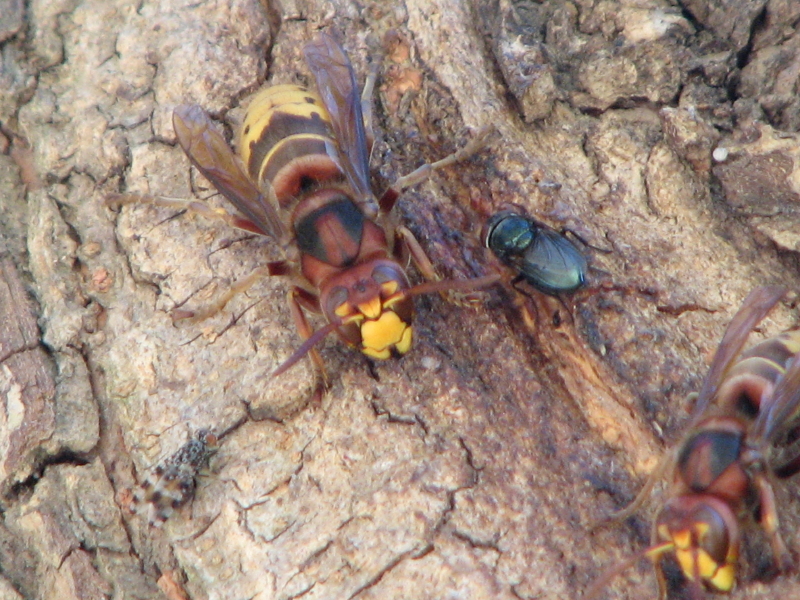
“Don’t worry, they won’t get you”, she said. The hornets were so preoccupied with the sap that they were quite tame. Walking around the tree gave us this sight. Three different species of butterflies also taking advantage of the willow bark. The one in the foreground is the Red Admiral. Although I hadn’t seen the hornets doing this before, I did say to Minnie that I had observed many butterflies on these willows and wasn’t it nice that so many living creatures could set aside their differences to take advantage of this common resource. She just smiled.

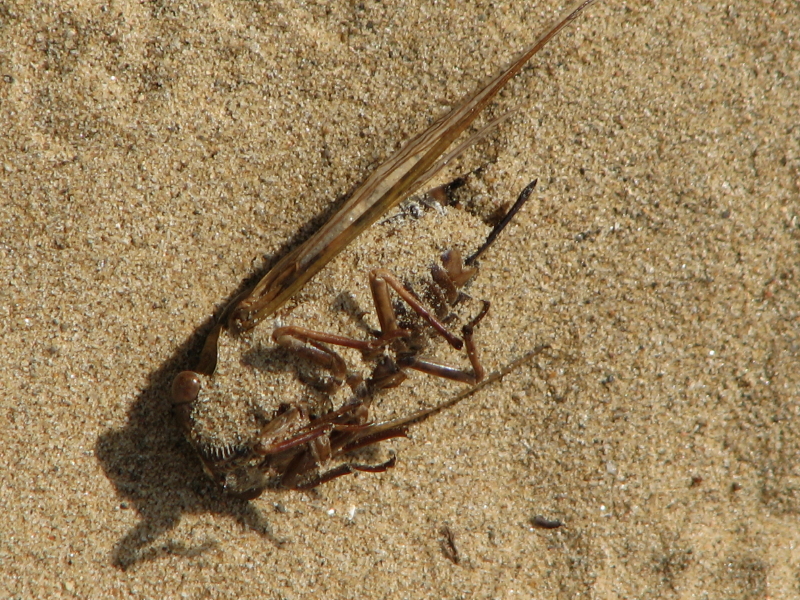
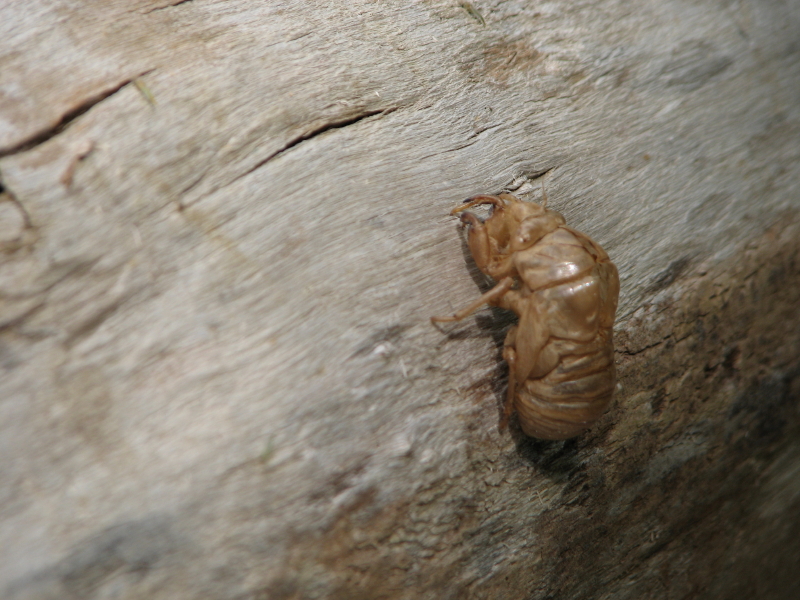
I was appreciative of Minnie showing me the tree and so I tried to impart a little knowledge to her about the local cicadas. I had come across a dead female in the sand,(identified by the hypodermic needle of an ovipositor she uses to lay her eggs under the thin bark of a tree). I asked Minnie if she knew anything else about their life cycle and she said she didn’t and so I went on. I told her that after the egg hatches under the bark, the nymphs drop down and burrow under the ground and attach themselves to the tree’s roots. With this species, after a couple of years of sucking tree juices, they emerge from the ground and become adults which for cicadas, is a brief moment in time. They mate, lay eggs, and then die after a glorious two weeks or so. You find their split skins where they transform as juveniles into adults near where they emerged from the ground. Here’s a pictures of the dead cicada, the split cicada skin, and a fresh adult.

With any life cycle it’s hard to know exactly where to begin and I suppose that’s the classic which came first question… the egg or the cicada? I’ll leave that to brighter minds than my own for now.
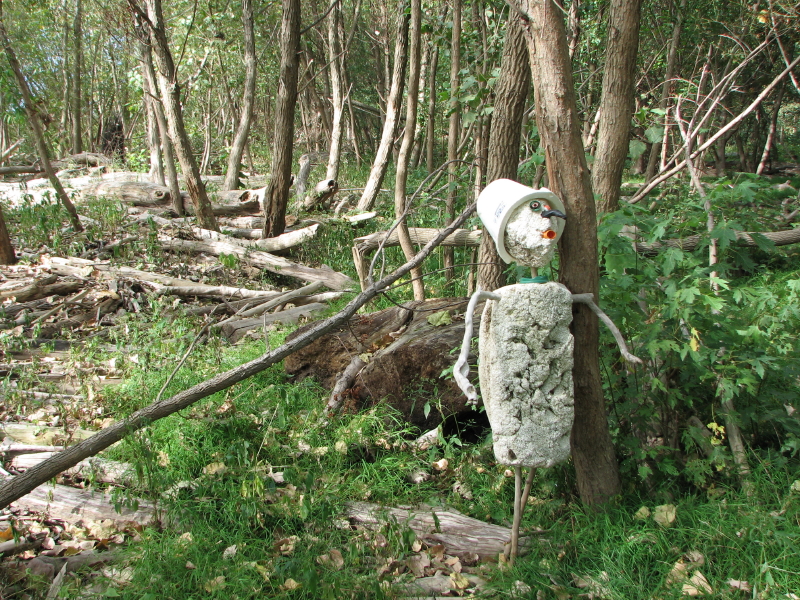
Minnie listened attentively and then asked me to follow her. She had something else to show me before we parted company. We walked away from the willow tree to an area where several large logs were decomposing. She pointed a thin finger at a yellow patch on one log’s side and I could see it was some type of fungus. It seemed to be spreading outward as it broke down the tissues inside the tree.

It was both fascinating and oddly repellent. On another nearby log was yet another fungi which I could identify as a fresh bracket or shelf fungus. The bright colors also seemed on the lurid side to me.
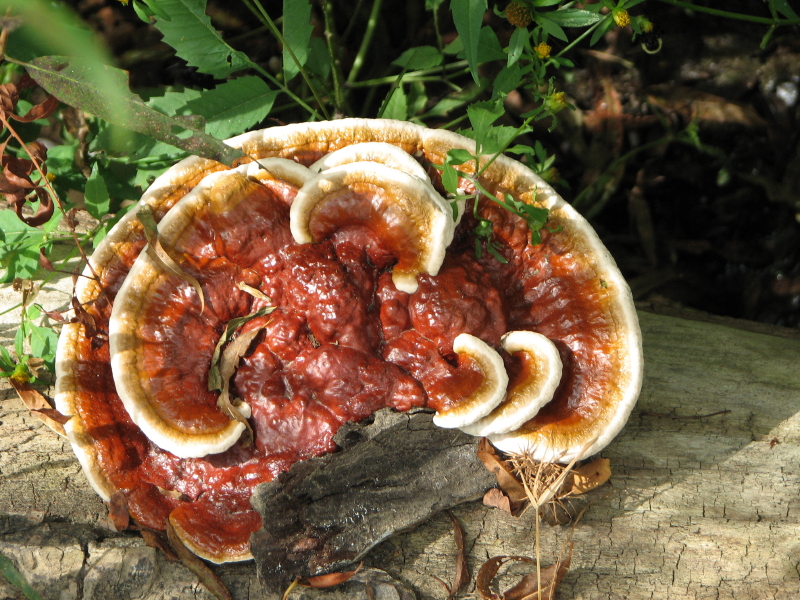
Minnie talked to me about what a wonderful system that nature has created to break things down after death. Like these fungi were doing to what were once living trees. She talked about how life depended on materials being able to decompose in order to release the nutrients that are needed for life to move forward. This is what it means to live naturally and that we should look at the systems that the planet has in place and to learn from them. With that, I took my leave and waved good-by to the old lady in the woods.
 Artist at Exit 0 Riverblog