Feeds:
Posts
Comments

Posts Tagged ‘recycled materials’

The heat and the relentless light of the sun makes it official.  It’s summer at the Falls of the Ohio.  Now I need to plan my forays a bit more carefully if I want to get the most from each trip out here.  Earlier in the day is better.  You miss most of the heat, there are fewer people (except for the die-hard fishermen) and the chances are better you might see some wildlife…especially birds.  Luckily, if you don’t make it out here early enough…the trees are all in full leaf and the shade provides needed relief.  I wonder what kind of summer is boding for this year?  So far we have had the warmest spring ever being nearly a full seven degrees above normal temperatures.  Yikes!!  No doubt, summer will find a way to be memorable.  Anyway, when I’m out here I try to take some precautions in the form of drinking water and sun block.  Once my mind engages on something…I tend to forget my body.  This post is about another “personality” that I ran into on this day and the following is his story.
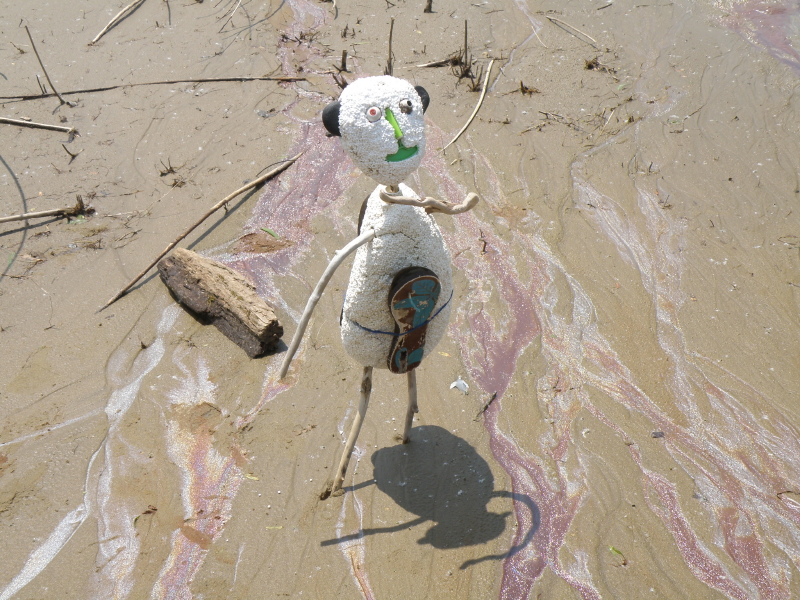
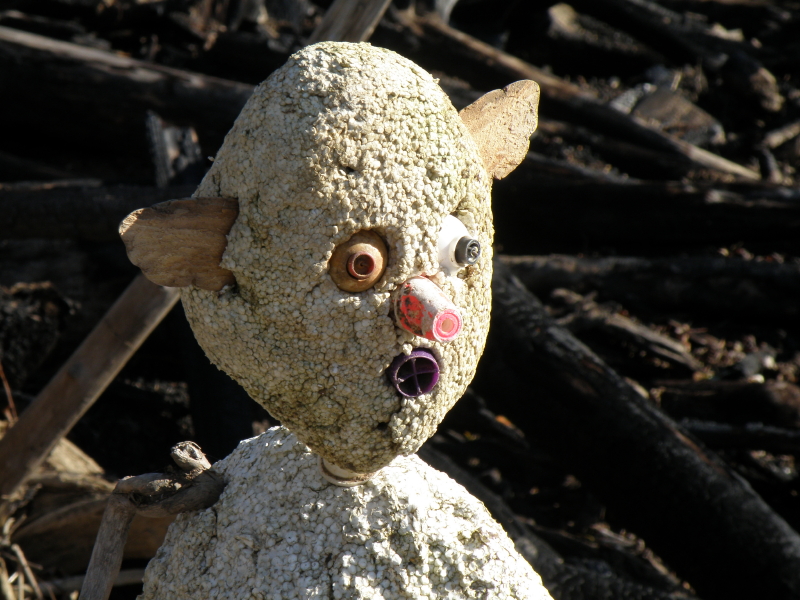
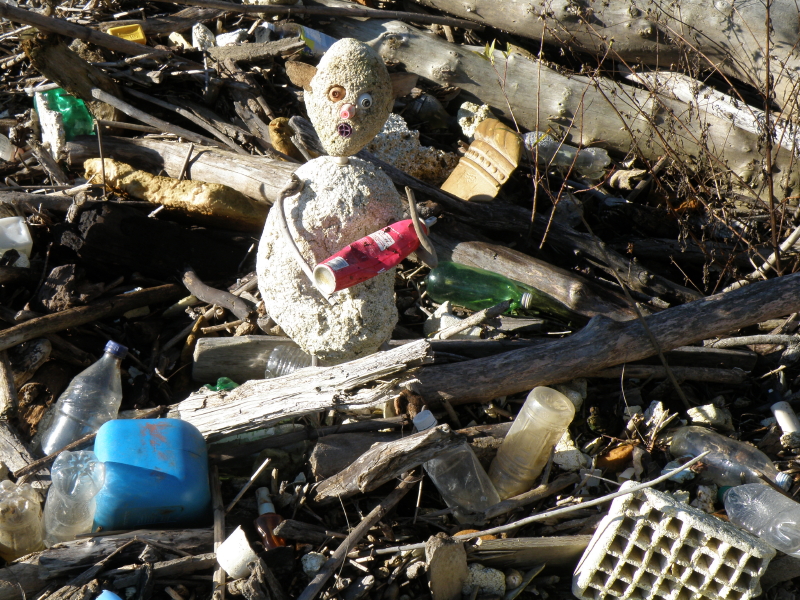
I came across this fellow several times during this day.  The usual protocol when encountering a stranger is maybe a quick nod of the head and each party then goes their own way.  I would have been happy to stick with this, but I kept bumping into this guy seemingly everywhere I walked.  One very curious thing about him (or her and how do you tell?) was that “he” was picking up old shoe soles and sticking them under his belt.  Here’s another view showing this.
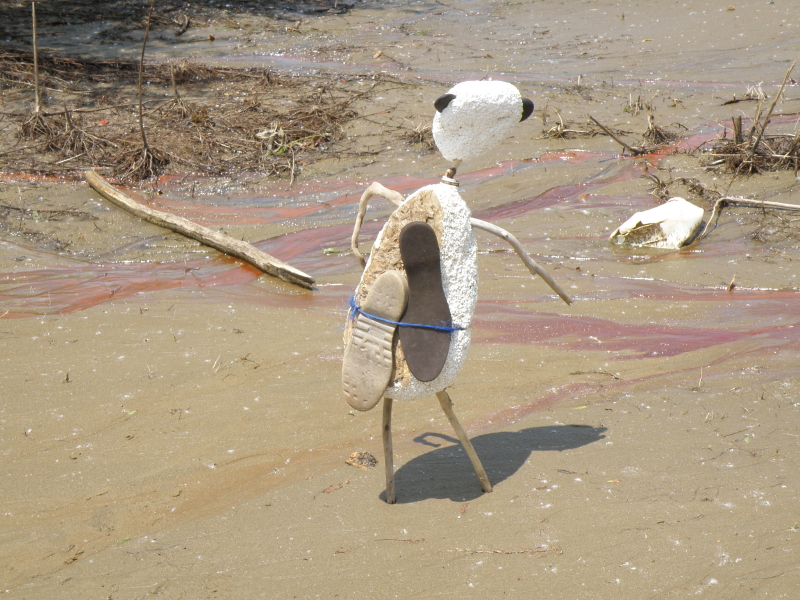
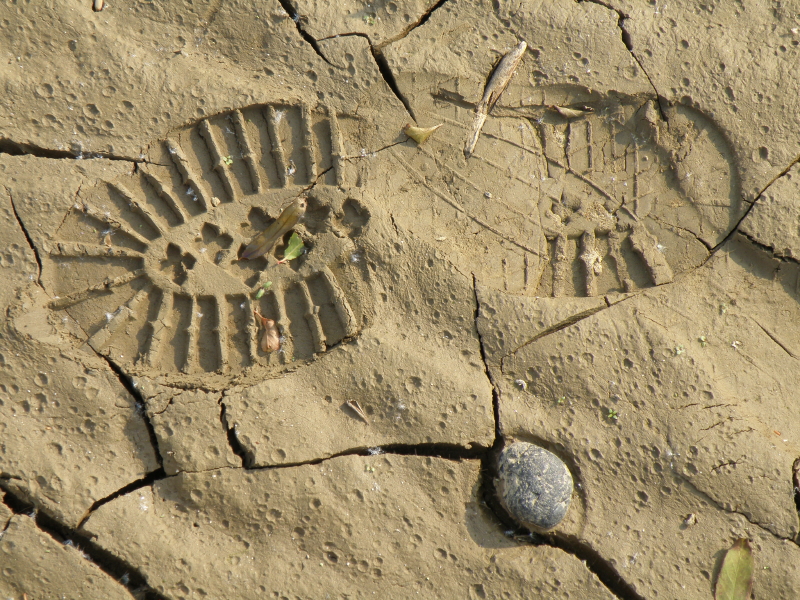
Truthfully, I was at a loss to explain this to myself and the best I could come up with for this strange behavior was that this guy forgot his collecting bag and had some type of project that required shoe soles?  I’ve already noticed that a lot of wayward shoes wind up here courtesy of the Ohio River.  If you don’t believe me, check out my special collections area under “The Shoes You Lose” and you will doubt no more!  I haven’t added images to either collection in a while, nevertheless the lost shoes keep on coming.  Just for kicks, here are a couple additional shoes I saw on this trip that piqued my camera’s interest.
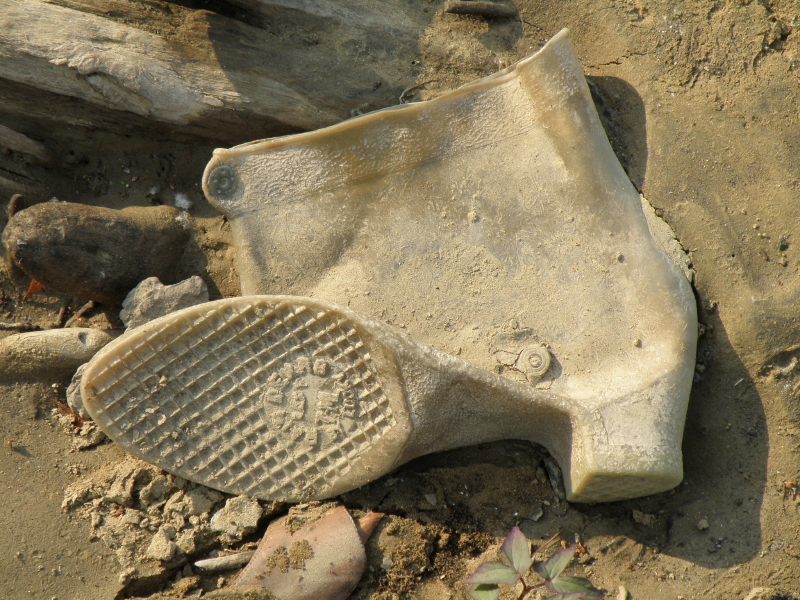
Here’s another shoe found near the previous one.  See what I mean?  I could go on and on about the shoes alone.
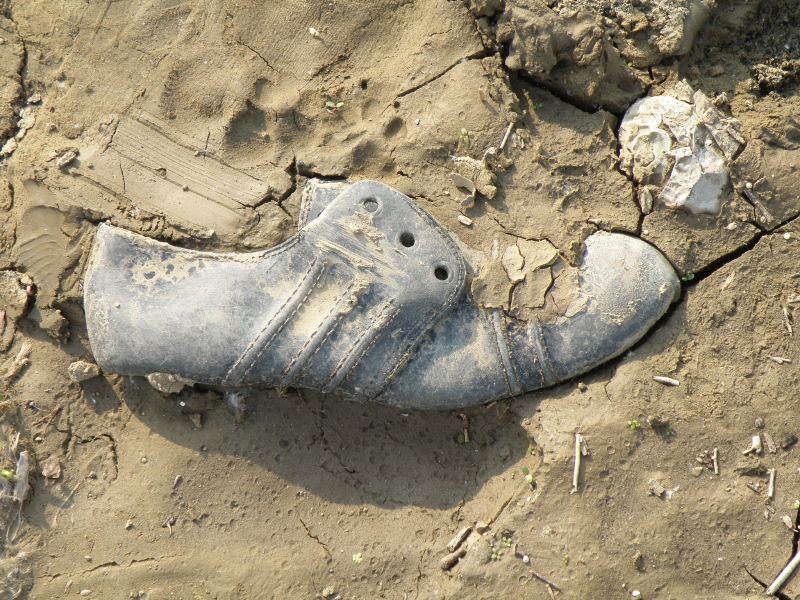
After my first encounter with this odd character I ran into him near a willow tree by the river’s edge and he was doing the same activity as before.

This time I abandoned my typical reserve and engaged the guy in conversation.  I think I said something like,…”Hey mister, I can’t help noticing that you are collecting shoes and shoe soles and although I know it is none of my business…what are you going to do with the footwear?”  I further added, ” I see you have tucked a few more soles into your belt since I saw you earlier.”   The Sole Man (my mental designation for him) smiled easily from his green mouth and put me at ease.  I had nothing to fear from him.  We walked together for a while and he told me what his angle is and why he does what he does.  Spotting another lost sole in the sand, my new friend bent over and lifted it up.

Upon picking the sole up, the “Sole Man” flung it over his shoulder and said follow me.
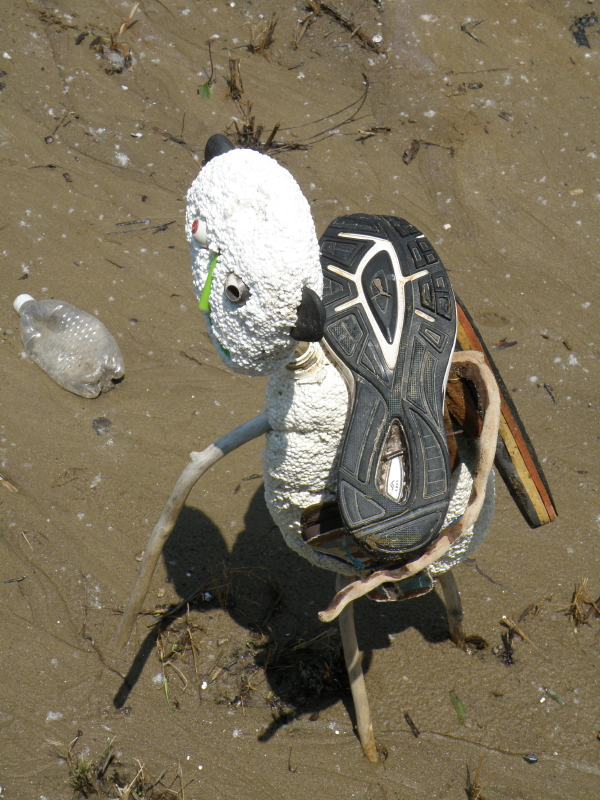
We didn’t need to walk far.  The Sole Man had a spot in mind where he told me he was going to deposit his shoes.  In the full light of the sun he selected an area marked by two shattered plastic drums, driftwood, plastic junk, and the tell-tale white beads from Styrofoam that had been deposited here by the Ohio River.

One by one my new acquaintance dropped his shoe soles in his selected spot.
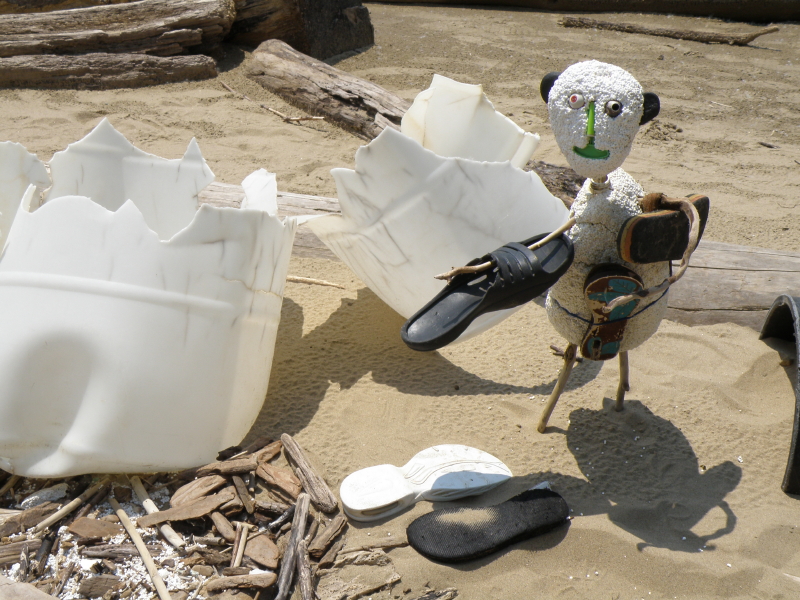
He told me that he does this as a form of meditation.  Seeing all the junk from our material culture wash up here at the Falls of the Ohio has bothered him for years.  He couldn’t understand why anybody would do this to the Earth?  Fixating on all the debris was just making him madder and angrier which has  its own consequences.  He carried these shoe soles here because he wanted it to be visible so that others might see and reflect as he had.
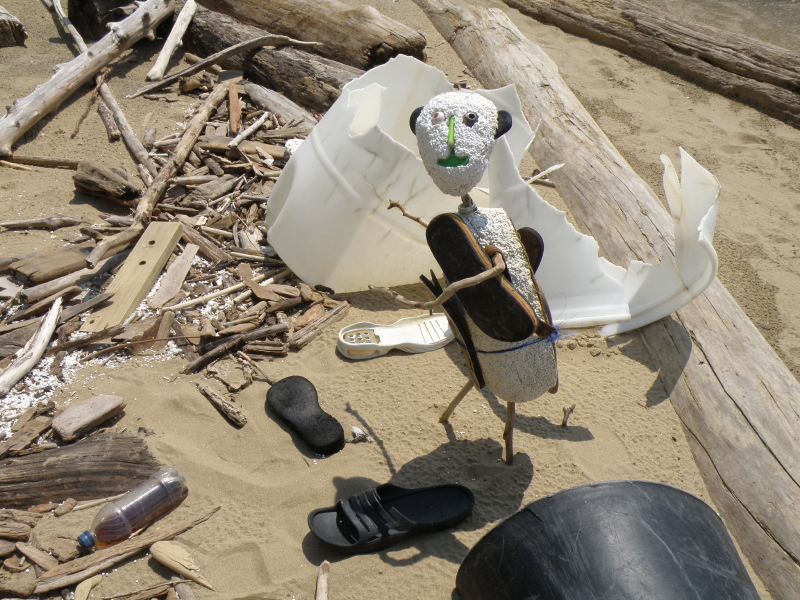
He hit upon the idea that collecting and carrying these soles might provide him some peace of mind or insight into his fellow beings?  Each sole was a record of a lived life with their scuff marks and pressure points compressed into the very sole itself.  The sole was a record of an individual’s life experience and no two souls were bound to be alike. The old adage about not knowing a person until you walked in their shoes hit home like never before.  I asked him was it working…making him less angry?  He said that it did.  His negative feelings were replaced with something akin to empathy for he understood that he was not much different from the former owners of these shoes.  It made him feel less “high and mighty” and more of an equal stakeholder for the many conversations to come.  After a few more photographs, I bid my new friend good luck.  Leaving him, I placed one foot in front of the other and headed for home on this hot day.
Read Full Post »

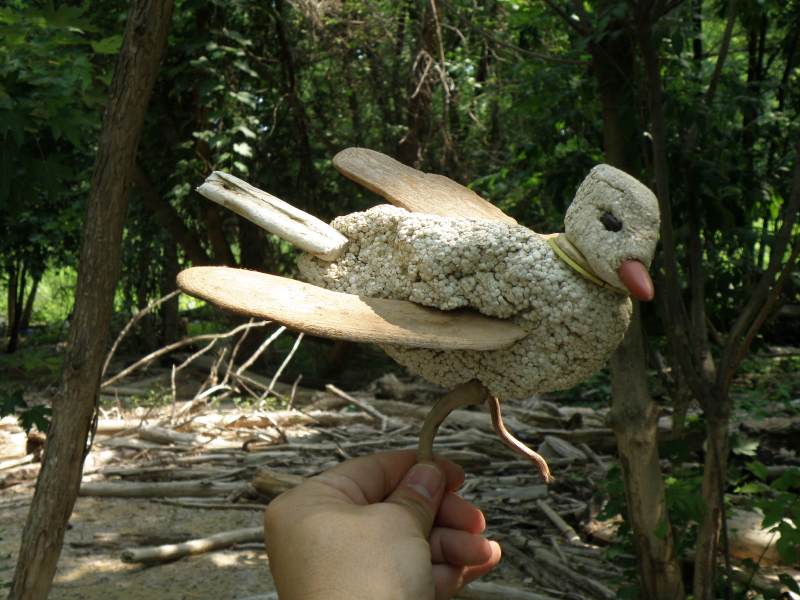
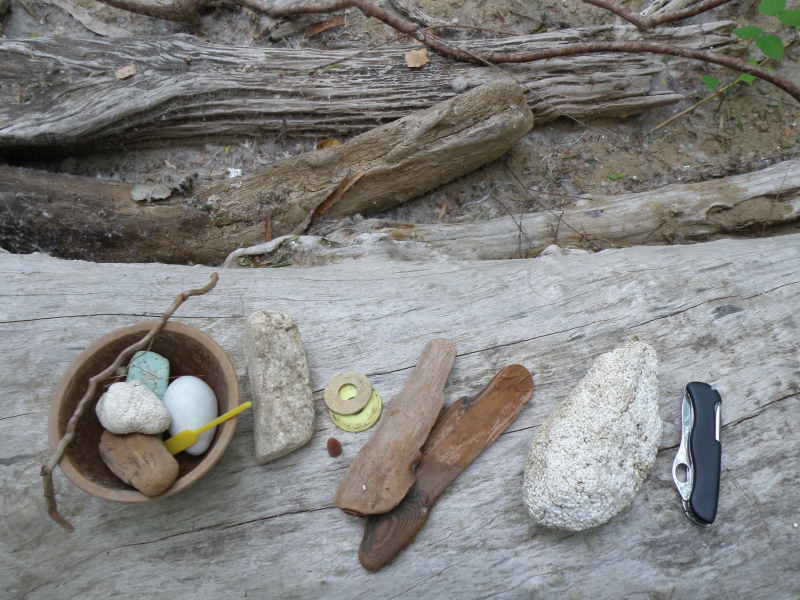
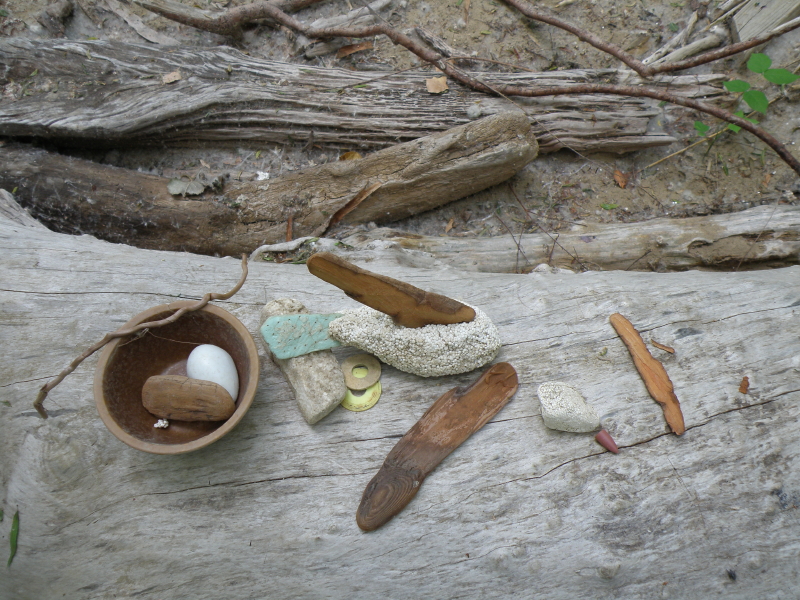
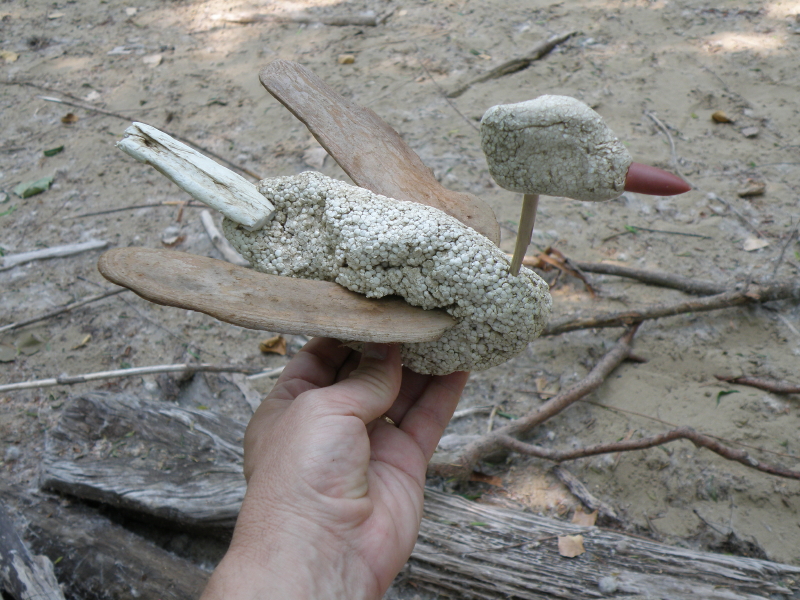
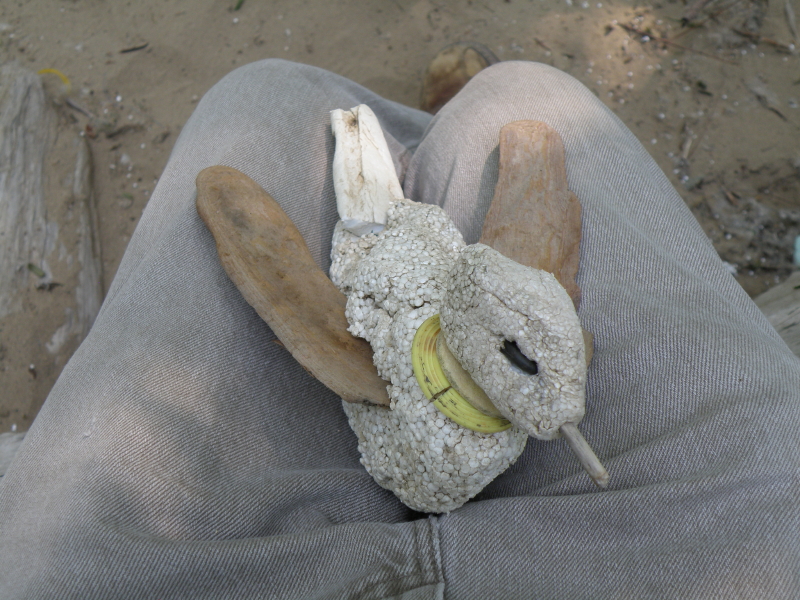
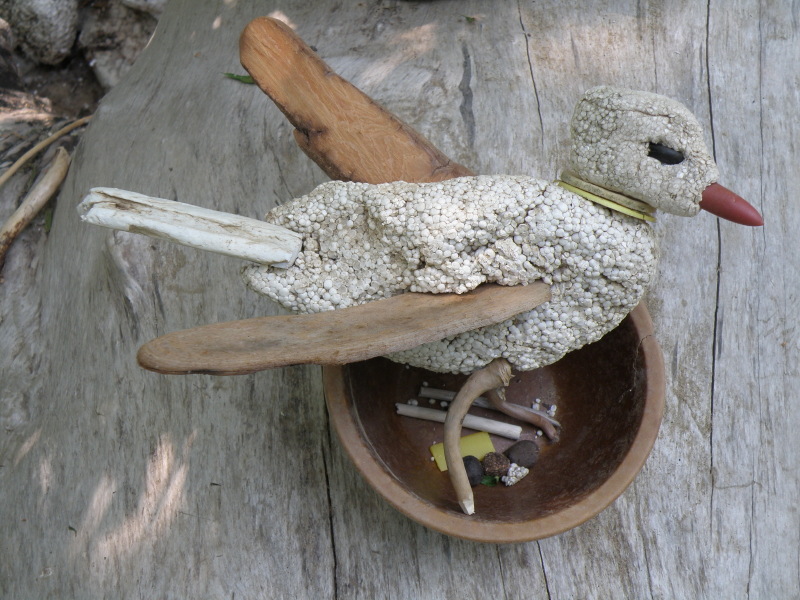
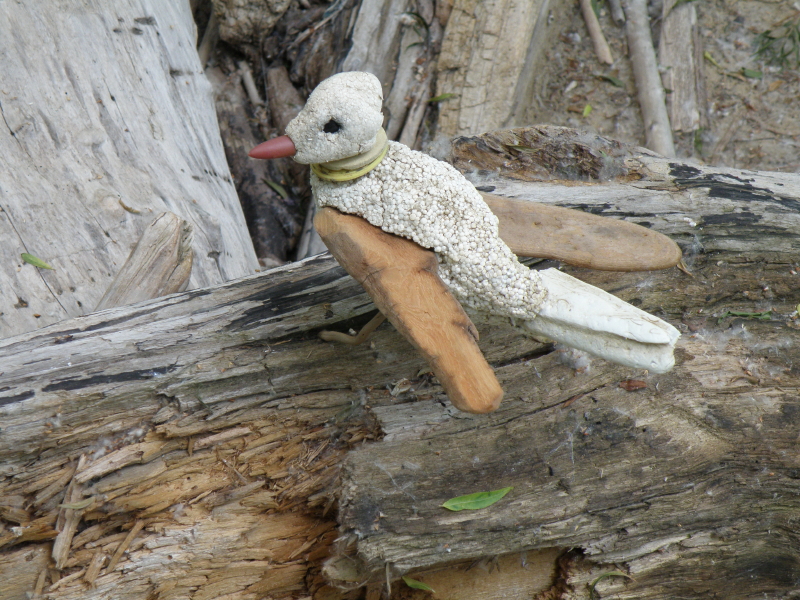
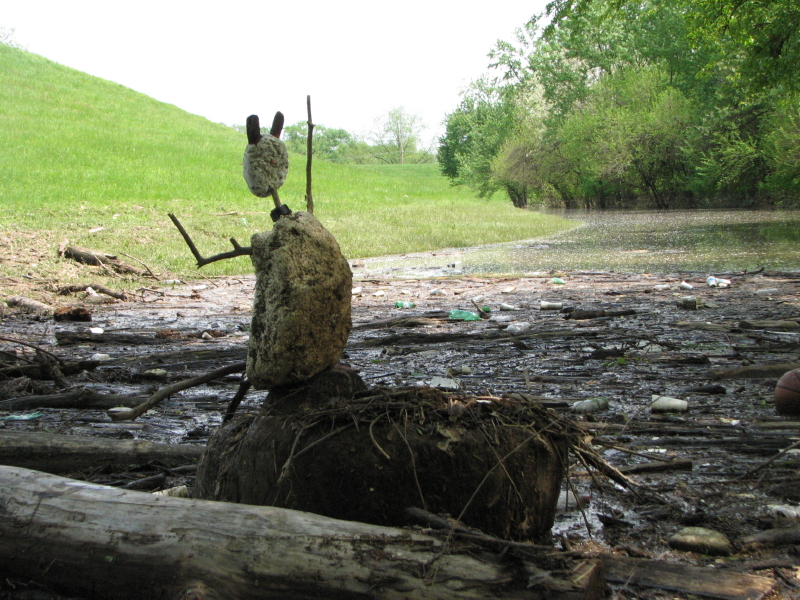
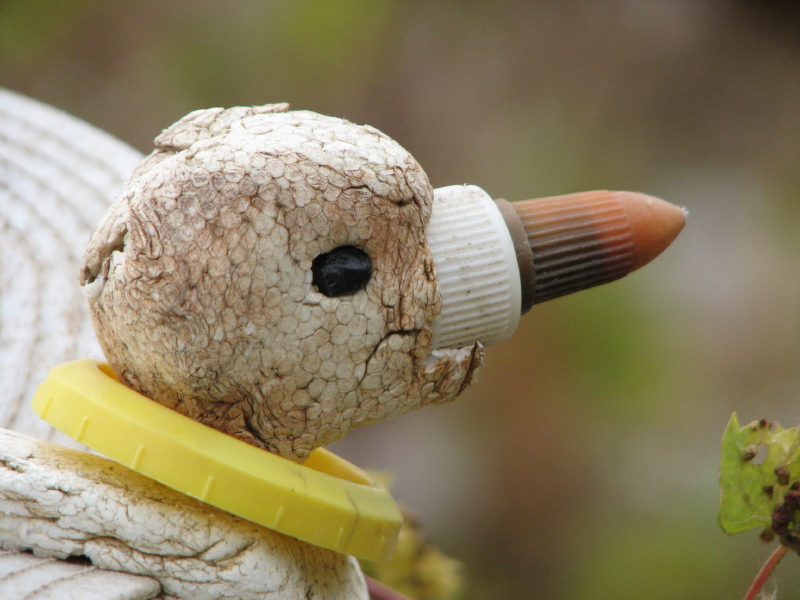
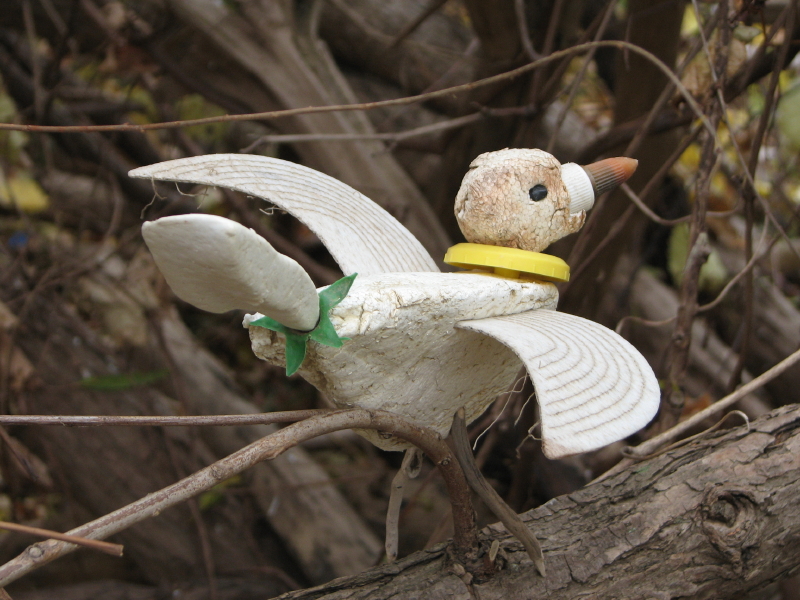
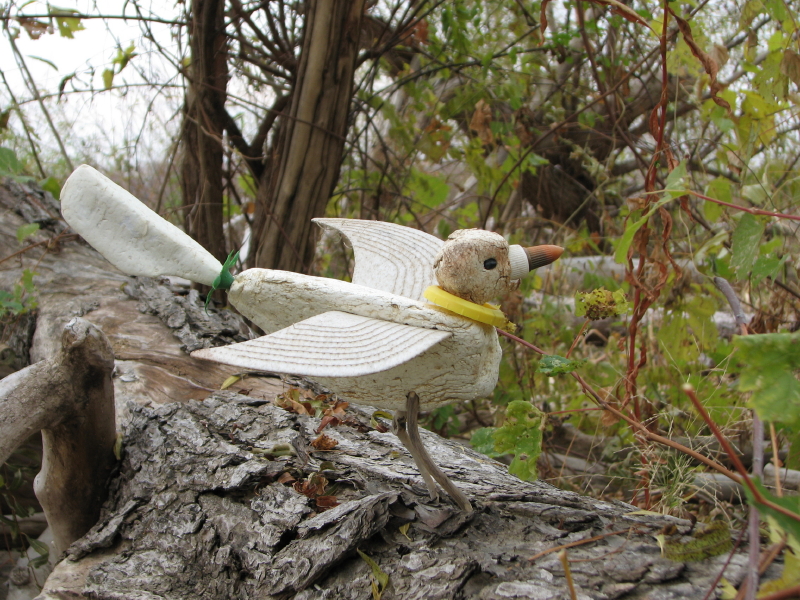
I enjoy processes and since I had additional images relating to my last post…I thought I would throw them in for fun.  I also harbor this very idealistic idea that everyone is born creative…it’s just that most people don’t view themselves in this way which I believe is at the heart of our environmental dysfunction and a great shame.  Somehow we have replaced creating with consuming. The following images hopefully show that you can create magic out of nothing.  There isn’t anything technical happening here.  If you can do Mr. Potato Head than you have the basic idea behind creating this bird.  The materials are not manipulated greatly.  I like nature to form the shapes I use. The only carving involved is in cutting slots into the body to hold the wings.  I did shave away one wing to make it thinner. I did poke holes in the head for the eyes.  I shortened the willow roots for the legs and the beak is held in place with a wooden peg just as the head attaches with its own little stick which also helps the head to swivel. Now I know this sounds a bit flip, but the hard part is seeing the possibility behind something that’s intrinsically worthless and imagining what else this could be?  Looking at the following series of images at home, I’m struck by the altar quality of the log I have spread out my materials on at my temporary outdoor studio.  I do feel that being an artist is a reverential activity.  I like to think my “art” is somehow in the service of life.  I believe you will recognize most of the components of this bird, but they include Styrofoam, wood bark, dried willow rootlets, the plastic nose cone of a small bottle rocket, plastic and foam “gaskets”, and charcoal for the eyes.  All materials were found on site at the river.  I found the little bowl that morning and it’s great to hold the little pieces I use.  I’m not a great photographer in the classic sense in that I don’t concern myself greatly with exposures and settings.  My camera is set on automatic.  I do, however, try to create an interesting image or composition that “says” something to me about that day and this place.  Give it a try…it’s fun to do!

Read Full Post »

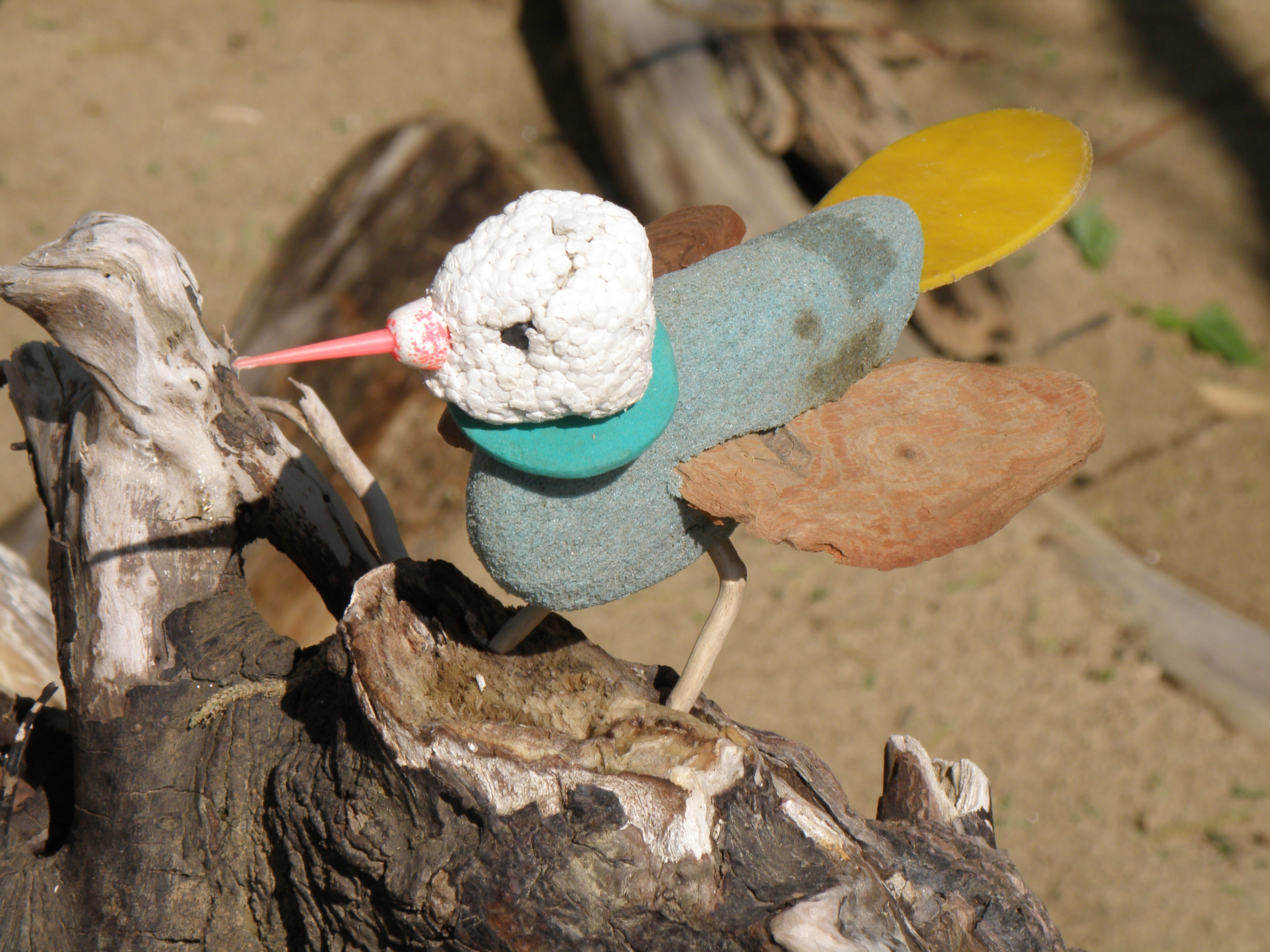
It’s Spring and I’m walking the eastern section of the Falls of the Ohio State Park looking for birds.  I have done this religiously for years and have seen most of the species that have been recorded in this park.  I love birds because they are such beautiful expressions of life.  I envy their extreme mobility with so many species able to call greater parts of the globe home than I will ever experience.  This is the time of year when many different types of birds that have been wintering in South and Central America undergo remarkable journeys.  Some will pass through this area on their way to locations as far north as the Arctic Circle. This is my chance to see them… if I’m lucky. The Falls of the Ohio also has another significant bird connection through the life and work of John James Audubon.  He essentially started his life’s work that would eventually become The Birds of America, one of the great achievements in publishing and the most expensive book in the world, by first drawing many of the birds he encountered at the Falls of the Ohio.  Audubon’s example and his journal descriptions of the world he inhabited are frequent touchstones for me and this project.  Two hundred years later…very little remains of the original landscape he was familiar with.  That process and transformation of the landscape is continuing and unfortunately not always in a positive direction.  Birds are such great indicators of the quality of the environment because they are sensitive to changes…the canary in the coal mine was a real thing.  To enjoy birds and birding is an activity that takes you out of yourself for a little while and causes you to engage life on its own terms.  On this day (which also happened to be April Fool’s Day)  I did experience many of the usual year round resident bird species, but did not see any of the neotropical migrants that make the Spring migration so special.  So, when this happens, I’m not above creating my own bird species.  This post is devoted to a new bird I discovered out here and I’ve named it the Variegated Oriole.

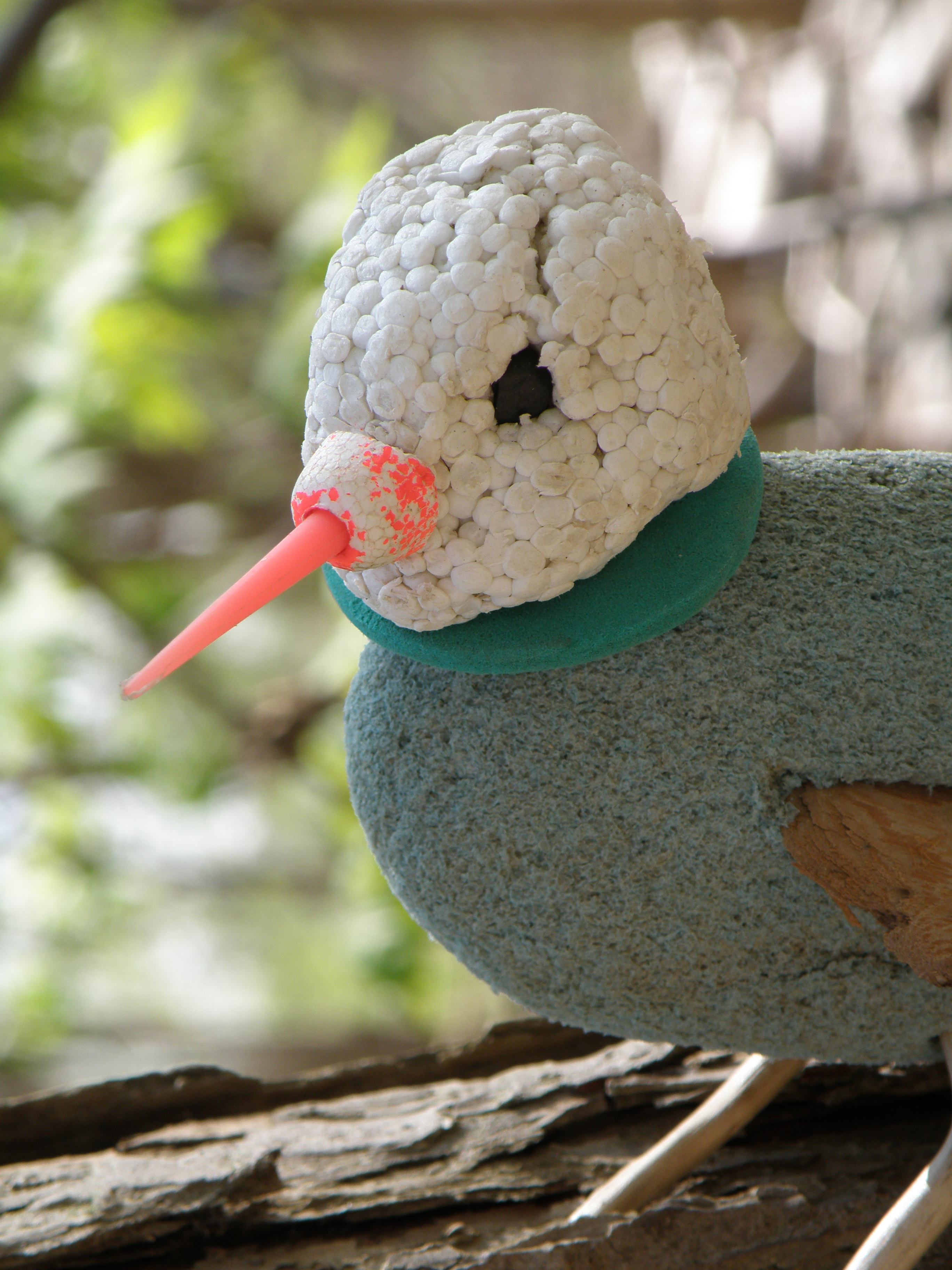
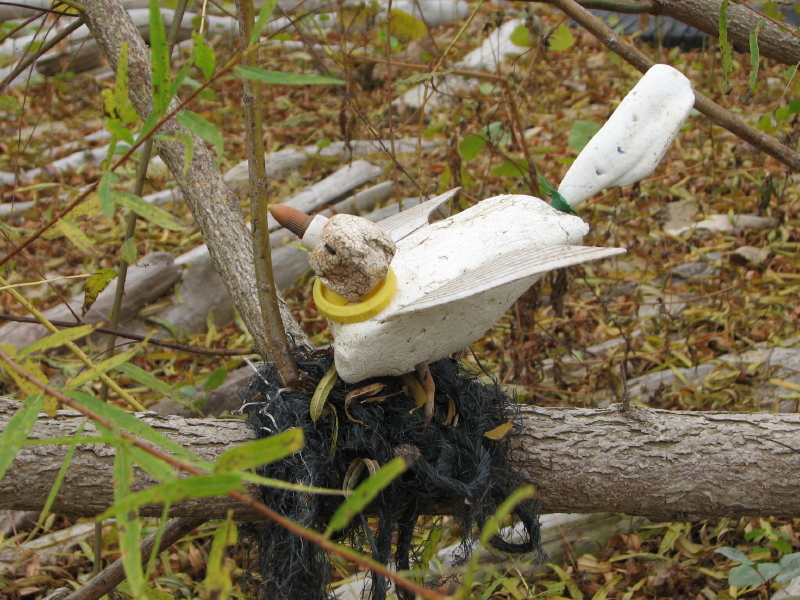
The Variegated Oriole receives its name for being multicolored. I first encountered this bird as various bits of detritus that I came across walking the shoreline of the Ohio River.  For the head, I used a small piece of river-polished Styrofoam.  Its brightly colored beak is part of a plastic and polystyrene fishing float that I cut with my pocket knife.  The eyes are small bits of coal.  I used a green foam gasket or washer to act as a transitional element between the head and the body.  It’s a trademark of mine that I seem to do with almost every piece I make out here. For the body, I found a blue piece of river-polished high density foam? that I cut a few slits into the sides to hold the wings which are made from pine bark.  I took one piece of bark that the river peeled off of a tree and I split that in half to form matching wings.  The tail is a piece of yellow plastic I found that reminded me of a bird tail!  I cut another groove into the blue body to insert and hold the tail in place.  The feet, are just rootlets that I sharpened and pegged into the body.  That’s it in terms of materials which I tried to alter as little as possible as not to trump what nature and the river had already shaped.  It’s important to me that this be a true collaboration.  If “we” are successful, then something of the spirit of a bird will take hold and inhabit this small sculpture.

After finishing the bird…I seek out environments that will help put this avian creation into some kind of context.  Everything matters and I hope my pictures convey something of the time of day, the season, the quality of light, the condition of the environment, etc…all those elements help create a sense of place.  I move through the willow trees posing the bird on various stumps and branches.  I usually take a lot of pictures.

Sometimes, I will imagine what kind of habits my new birds might possess.  In the case of the Variegated Oriole…it is not too different from the Northern or Baltimore Orioles that live and nest in the park.  They are among the migrants I look for. I heard one the other day calling, but didn’t see it.  The real orioles that live here are adapting to local conditions by using artificial materials (fishing line and barge cable fibers) in the construction of their hanging basket nests.  I’ve posted on this before in this blog a few years a go.  I think Audubon would have been interested in this.  Anyway, I left my bird sitting on a branch for anyone to discover.  It might still be there and I will find out today when I once again venture out to the Falls of the Ohio State Park.  Perhaps new birds will present themselves to me? I will let you know what I find…next time.

One week later…I returned to the spot where I left my faux-feathered friend and he was no longer perched upon the branch where I left him.  I was able to locate most of him scattered on the sand except for one wing.  My guess was that he was felled by a well-aimed and thrown rock.  The head was shattered and will need to be replaced provided  I recyle these pieces back into a bird again.

Read Full Post »

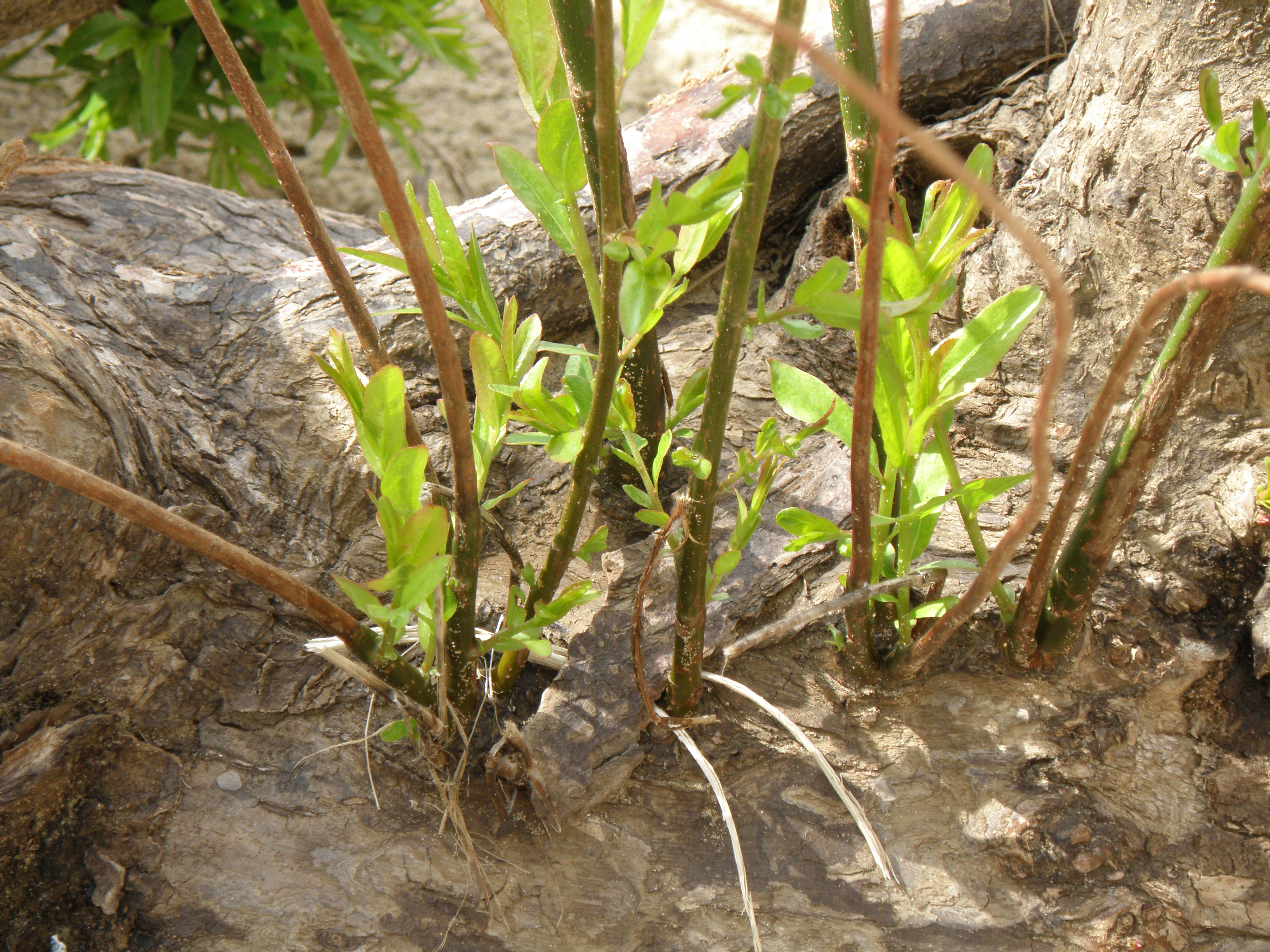
The ritual must have worked because when I returned to the Falls of the Ohio a week later the greening of the world was underway.  Small leaves were sprouting from the willow branches and many of the area’s trees were flowering.  There was a palpable sense of pollen being everywhere and my airways felt irritated as if coated by dry inhaled dust.  This is a dreaded time of year for people who suffer seasonal allergies.  I was glad not to count myself as a member of that unfortunate club.  As I walked along there were other marvels to behold.  I came across a rare Sand Lotus blooming along the shoreline and wondered how long its seed had remained dormant until the absolute right conditions presented itself?  Seeing this flower was worth the trip alone!

I returned to my outdoor studio and saw that the bottle tree had indeed dropped its leaves.

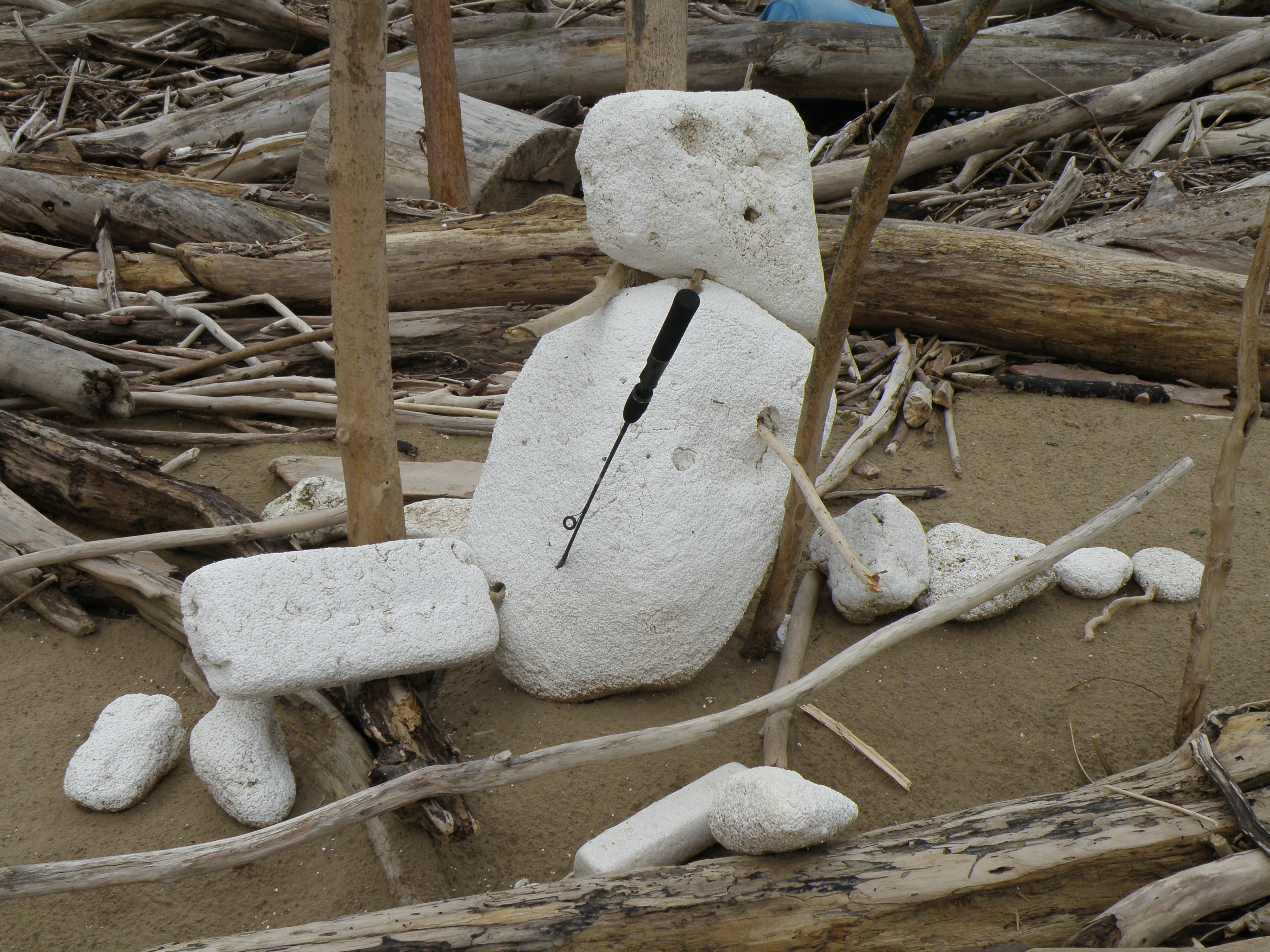
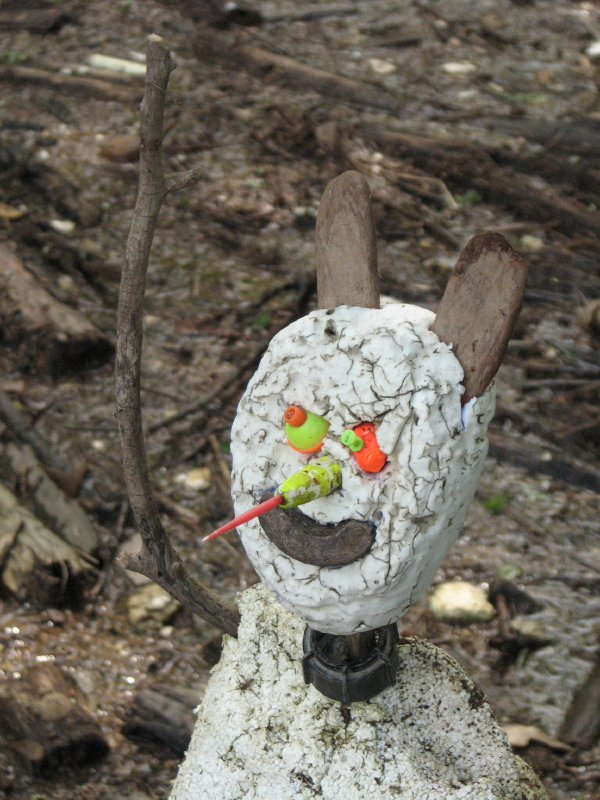
This, however, was not the only change that had occurred since my last visit.  My outdoor studio had been discovered and some person or persons had constructed a crude figure from the Styrofoam I had collected here.  A broken fishing rod stuck out from their creation’s body.

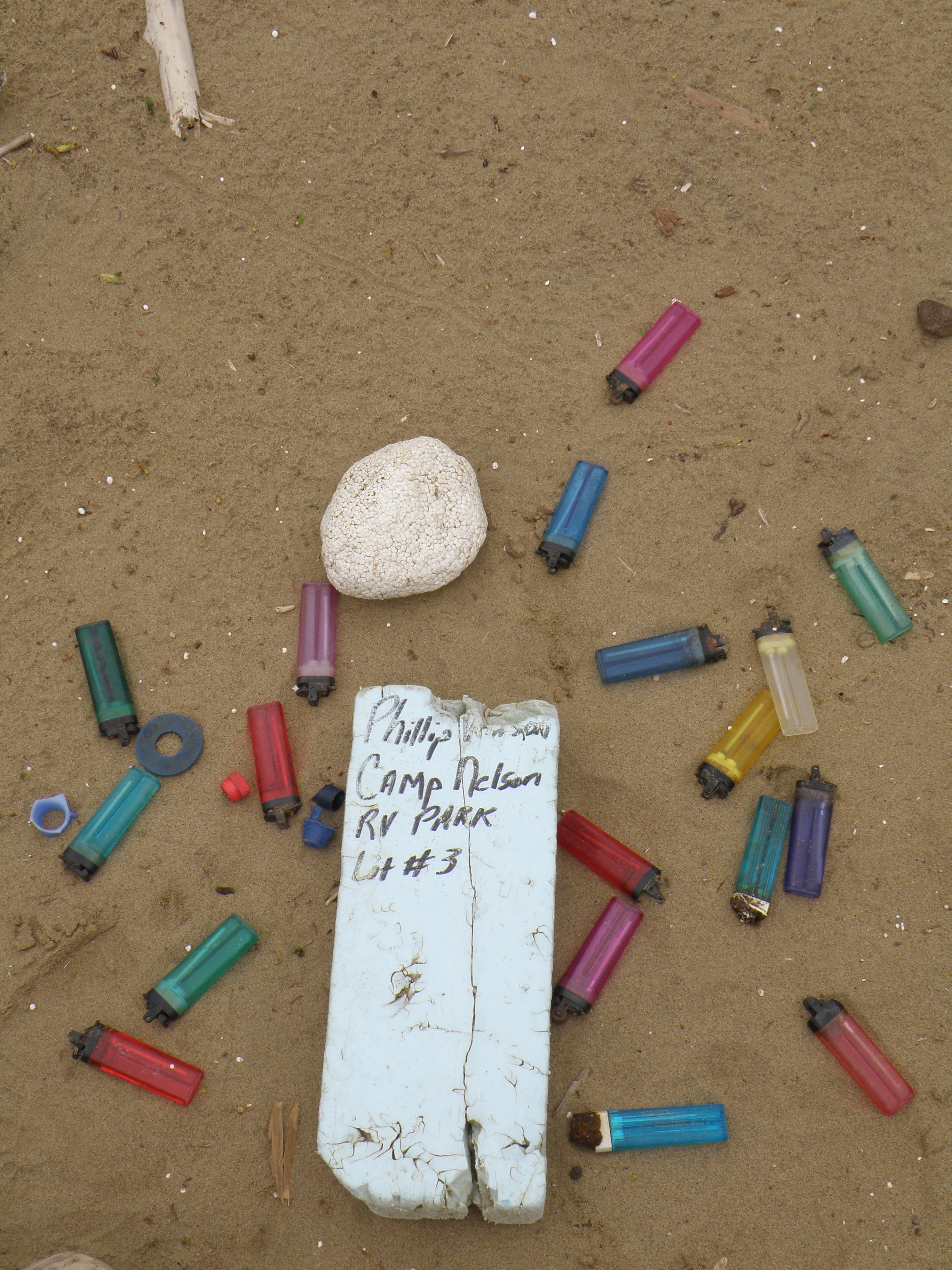
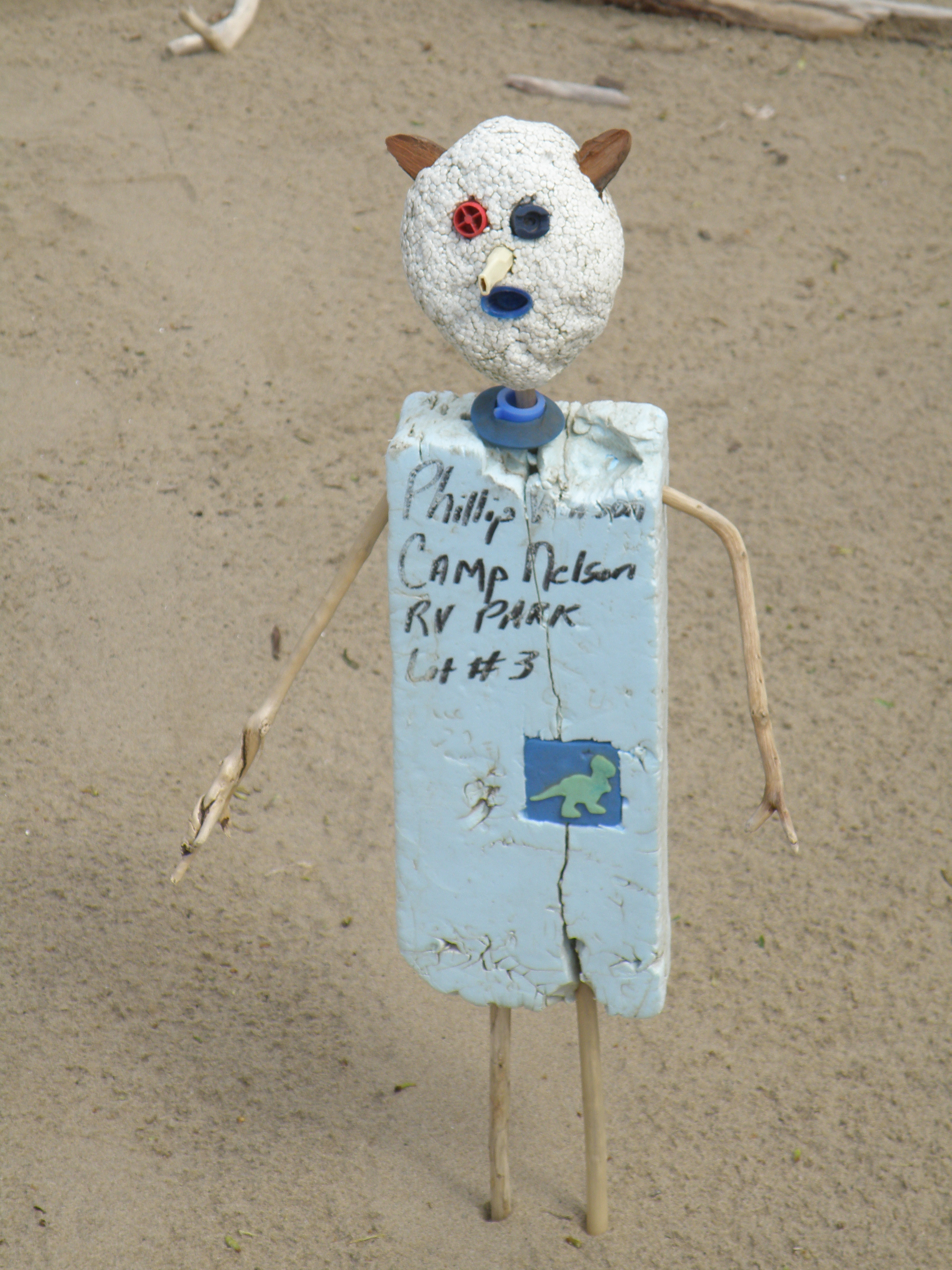
As is my habit, I began the day beach combing along the river’s edge and dumped some of my finds onto the sand.  I would try to make something from the objects I had come across.  Here is an earlier image of what would later become the figure I named “Phillip C. Nelson” after the words written upon a piece of blue insulating foam I found.

Before showing you how this figure turned out…I want to meander a bit like the Ohio River does. During the month of March, I’ve found three objects that at least have some references to where they may have originated.  Because the river is so powerful…glued on labels usually fall off by the time they reach the Falls of the Ohio.  Knowing where something came from can give you a sense of the journey it took to reach “here”.  Well, let’s just see where this takes us and I’ll begin with the object I discovered that traveled the furthest down river.

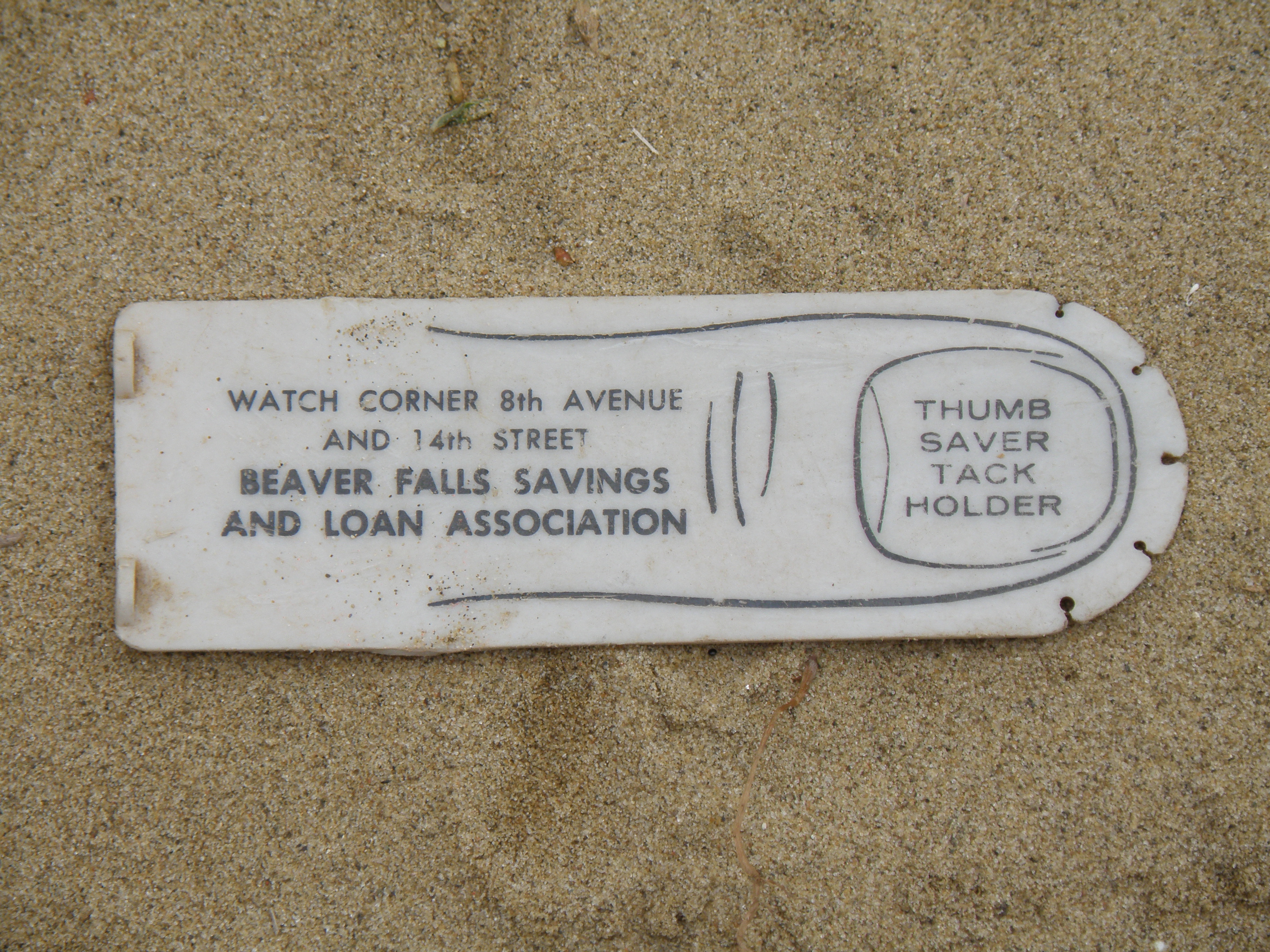
First, I was amused to find this piece of plastic with a stylized finger image on it!  It says its a thumb saver and I guess it functions something like a crowbar for stubborn thumb tacks so you don’t need to risk breaking a fingernail?  I have heard of Beaver Falls before because it’s the Pennsylvania hometown of one of my boyhood heroes…Joe Willie Namath who is an American football Hall of Fame quarterback for the New York Jets.  He brashly and correctly predicted that the Jets would win it all in 1969.  Beaver Falls is in the so-called “Rust Belt” because this was once steel making country before economic hard times caught up with it.  Beaver Falls has a population of approximately 8,900 people and is 31 miles Northwest of Pittsburgh, Pennsylvania placing it near the origins of the Ohio River.  Beaver Falls is actually located on the Beaver River which flows for six miles in a southerly direction before its confluence with the Ohio River.  As for the savings and loan association…I’m not sure exist anymore because I couldn’t find more contemporary references to it.  The fact it is giving away a customer premium that involves thumb tacks seems somewhat old-fashioned to me!  Potentially, this object has traveled a great distance (approximately 560 miles) through time and space to reach me.  And now for found object number two.

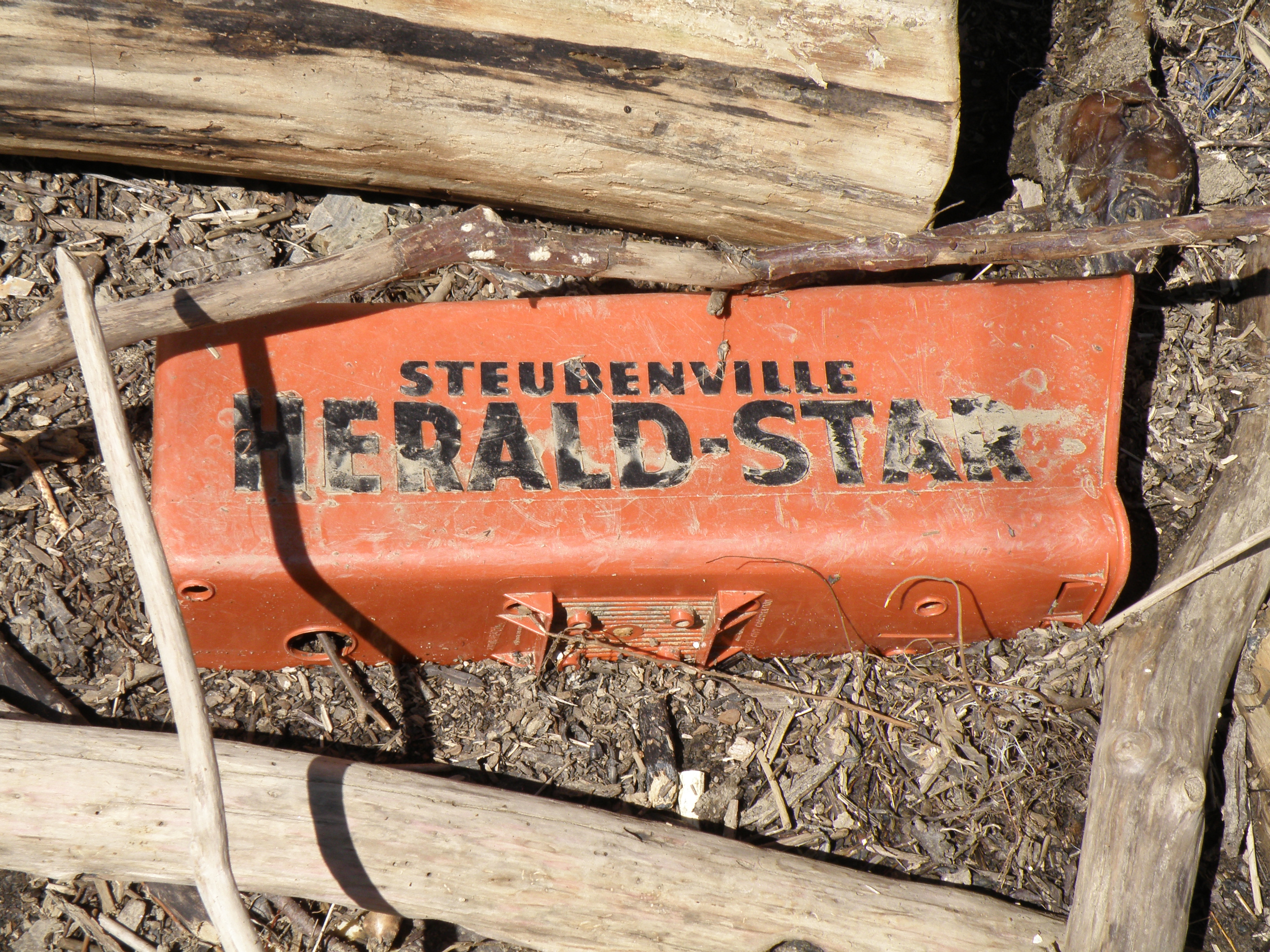
Buried in the wood chips, I recognized this as the delivery box for a newspaper.  In this case, the paper is the Steubenville Herald Star which is still in business today.  Steubenville is also in the Upper Ohio Valley and downriver from Beaver Falls.  This town of approximately 19,000 souls is situated on the Ohio River which forms a border with the state of West Virginia.  Steubenville’s claims to fame include being called the City of Murals for the 25 murals it boasts in its downtown area.  It is also called Ohio’s Cookie Capital…I’m sure there is more of a story there.  And it is the hometown of crooner Dean Martin who was also Jerry Lewis’ comedy partner.  I estimated that this newspaper box traveled a bit more than 500 miles to reach here.  Interestingly, Steubenville like Louisville is situated within a Jefferson County. Okay, on to the next item which hails from Camp Nelson RV Park and forms the body of my figure.

The blue insulating foam that forms the body of my figure came from Camp Nelson RV Park located in Lancaster, Kentucky.  I have heard of Camp Nelson before because of its Civil War history.  Back in the mid 1860’s it was a recruiting and training camp for African-American soldiers.  Later it served as a refugee camp for freed slaves with some tragic consequences.  Earlier in Kentucky’s history it was known as Boone’s Landing because it was a favorable river fording spot for Daniel Boone.  It has been a recreational vehicle park since 1966.  This piece of foam with its black marker info has traveled the most interesting and surprising route to reach the Falls of the Ohio.  Camp Nelson RV Park is located on the Kentucky River.  It has floated down the most torturous and convoluted stretch of water that makes estimating distance traveled nearly impossible.  Eventually, it did float past our state capital in Frankfort and joined with the Ohio River somewhere between Prestonville and Carrollton, Kentucky.  That’s a bit more than fifty miles upriver from us.   Kentucky is rich in waterways and outside  the state of Alaska…has more miles of flowing water than any other state.  The little foam dinosaur is a child’s ink pad stamp and in my mind is a good symbol for the whole recreational vehicle industry especially since gasoline is over four dollars a gallon.  Well, other than show you a few images of Phillip C. Nelson exploring his new home…it’s been instructive for me to learn where some of the junk I find may have originated.  Every place and object has a story to tell.

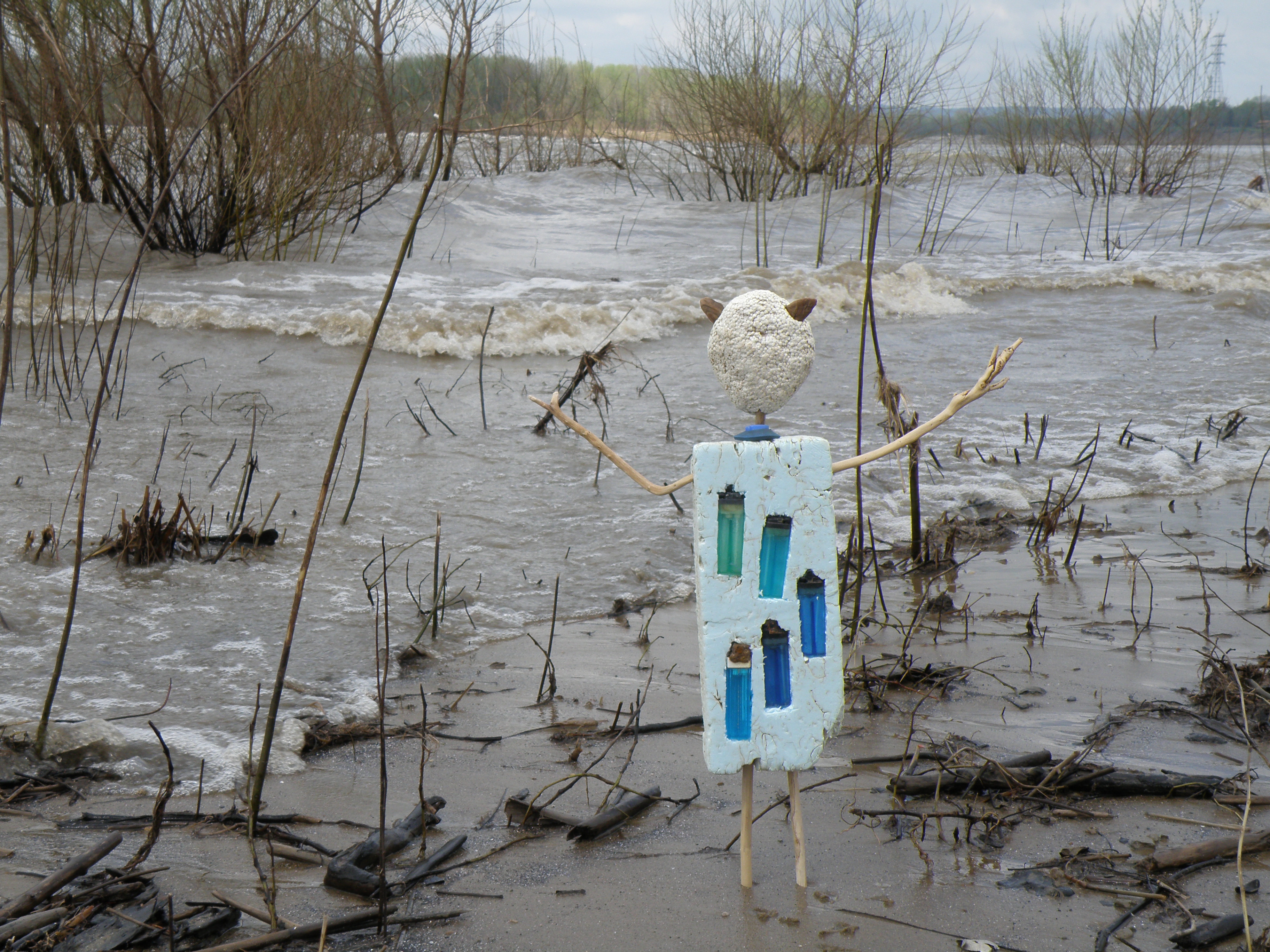
Phillip C. Nelson seemed to enjoy exploring the driftwood field.  And in case you were wondering what I did with some of those old cigarette lighters…this last view will show you.  Thanks for tagging along on this extended journey with me!  Until next time from the Falls of the Ohio.

Read Full Post »

On a recent expedition to the Falls of the Ohio I came across a small section of the Ohio River within the park that surprised me because of all the coal I found.    Over this warmer than usual January, the Ohio River has fluctuated due to the rain and snow that have fallen upriver from us.  While it made for interesting photographs, the contrast between the muddy waters and the blackness of the shoreline was also disturbing.  It made me wonder if this would become part of the new normal conditions that I would keep encountering upon each visit to the park?  As I walked along with my camera and collecting bag in hand I kept wondering why all this coal was showing up here? I kept looking for witnesses that might provide clues and insights into this alarming situation at the river.

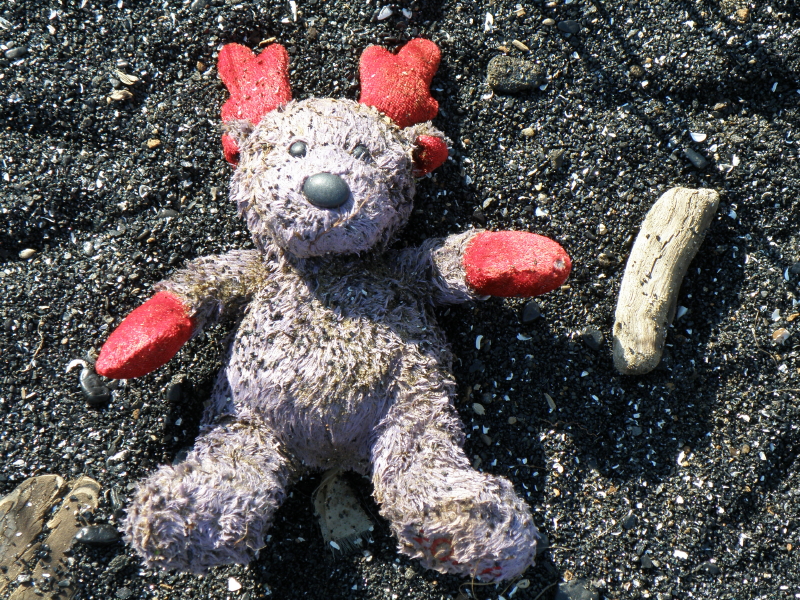
The first potential witness I came across was this toy reindeer who was staring up at the sky with eyes as black as coal.  I asked it if it knew what had happened…but the plush toy with matted fur said nothing and just looked at me.  I shrugged it off and continued down the riverbank looking for answers.  Soon I came to another toy and posed the same question to it.

I asked, “Do you know what happened here?”  The small plastic monkey just laughed and told me to keep walking.  What I was seeking was just ahead.  He then nonchalantly rolled over on his side with this bemused look on his face.  At least that was something to go on and I continued walking not knowing what to look for but trusted I would recognize it when I saw it.  Before long I came to another toy and thought it might know what had happened, but first I had to do a little bit of work.

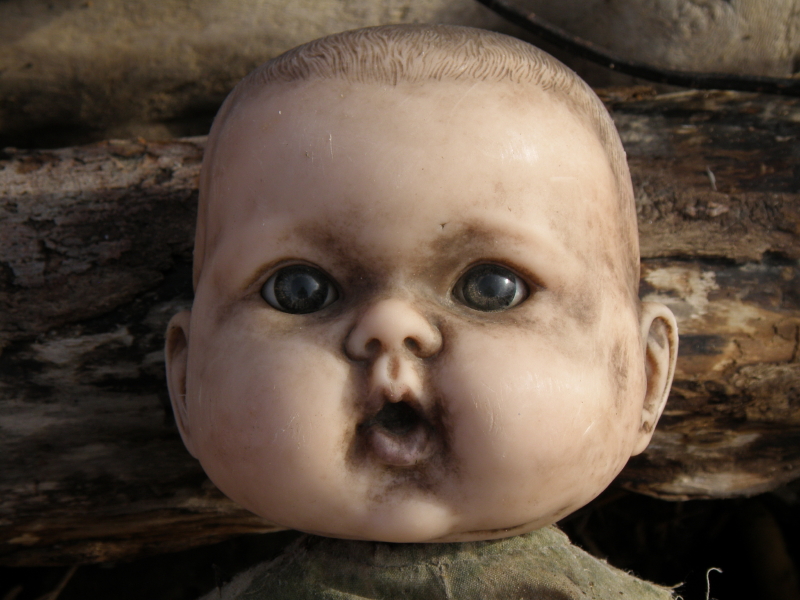
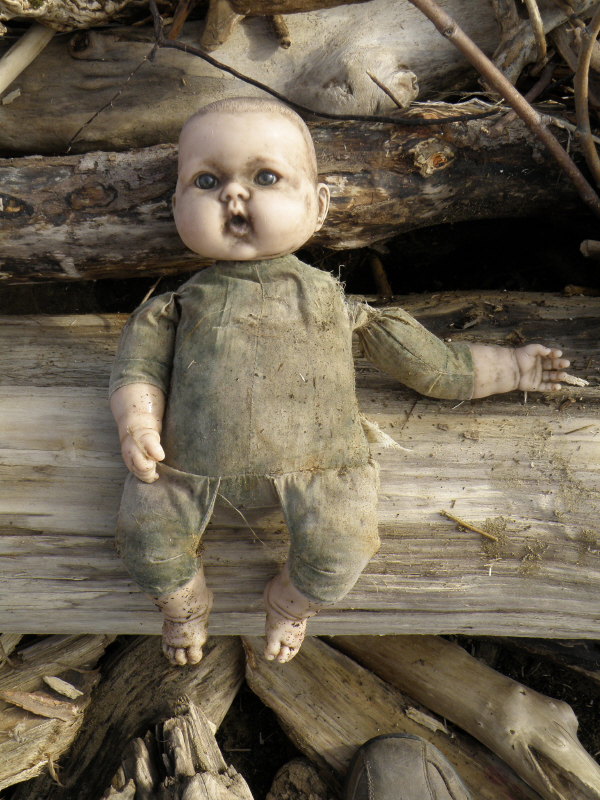
Poking out of the driftwood was this doll head and at first I thought that this was all that was left of this unfortunate toy.  I began to walk away when the head spoke to me and said that if I would help it out…in thanks it would help me too.  It took a bit of doing, but I was able to move the branches and small logs that were covering it and soon the complete doll saw the light of day again.

The doll was water-logged and dirty and I noticed that one of its arms was broken.  After recovering for a moment, the doll said the reason the beach was black had to do with the hand of man.  If I kept walking east that this would become clearer.  I thanked the doll and left it where I found it and moved on.  Soon I would find other evidence that would support what the doll told me.

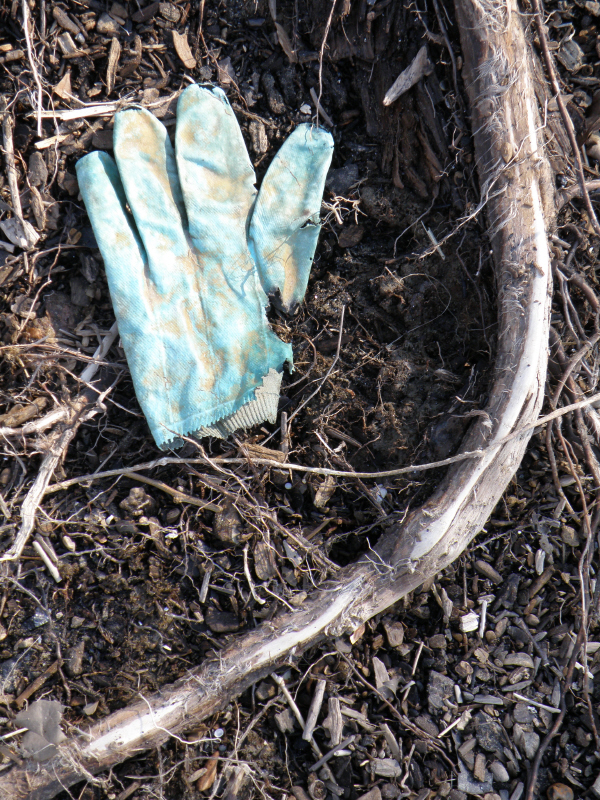
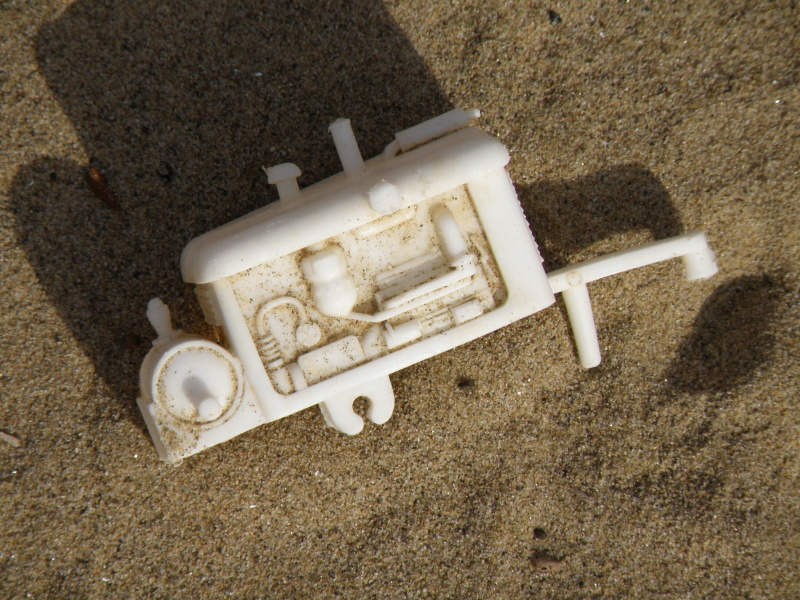
About ten minutes later I came upon this old rubber glove and figured I was getting nearer to the “hand of man”.  As I continued down the river’s edge  I began to find bits and pieces of discarded machinery along the way.  The first find was an old generator and this is how I found it in the sand.

Near it was another buried machine that was being washed over by the waves of the Ohio River.  I took this photograph and kept walking.

I figured I was getting nearer my quest when I saw this monstrous truck with immense tires  parked in the coal dust, wood chips, and mud.   Was this vehicle somehow involved with the coal?

The truck was still functional and I surmised that its operator was probably near by.  It didn’t take me long to locate him.  He was taking a break and having a meal in a section of the park that had experienced a fire a few months a go.  I decided to approach him to ask about the coal.

With one jaundiced eye, the truck driver looked me over and took another bite from whatever he was eating.  He asked me what I wanted and I posed my coal question to him.  The driver admitted that he indeed had played a hand in this environmental destruction, but wasn’t willing to take full responsibility.  He said it was part of the cost of keeping warm in the winter and cool in the summer and that it provided much-needed jobs during these economic hard times.  He further added that if I truly was looking for someone to blame I didn’t need to go any farther than the person I saw staring back at me in a nearby pool of still water.  Of course, what I saw was my own reflection and I understood the truck driver’s point of view.  I left the driver to his meal and started for home.  I resolved then and there that I could at least do the little things to reduce my own demands for energy.  I would start by looking around my house for ways to save electricity.  Now where are those funny shaped light bulbs?

Read Full Post »

The Ohio River continues to rise and as this year draws to a close…it will go down as either our wettest ever or close to the top.  At the time of this writing,  we are more than twenty inches above normal rainfall.  During a usual year, we can expect a bit more than forty inches of precipitation and we are past the sixty inches mark with a forecast calling for even more heavy downpours.  I believe we set the old mark in 2004 for most rain in our Kentuckiana area.  Okay, so all this is a bit boring I admit, however, it sets the stage for the day and this adventure at the Falls of the Ohio.

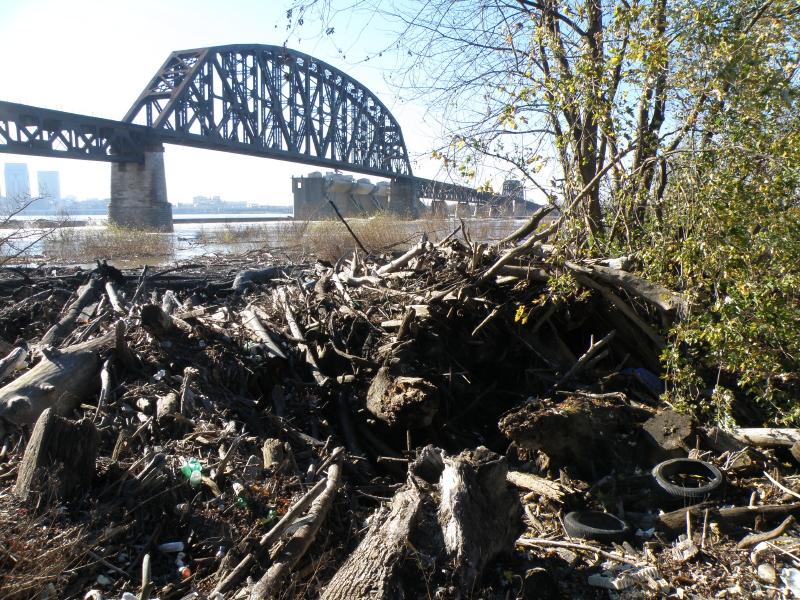
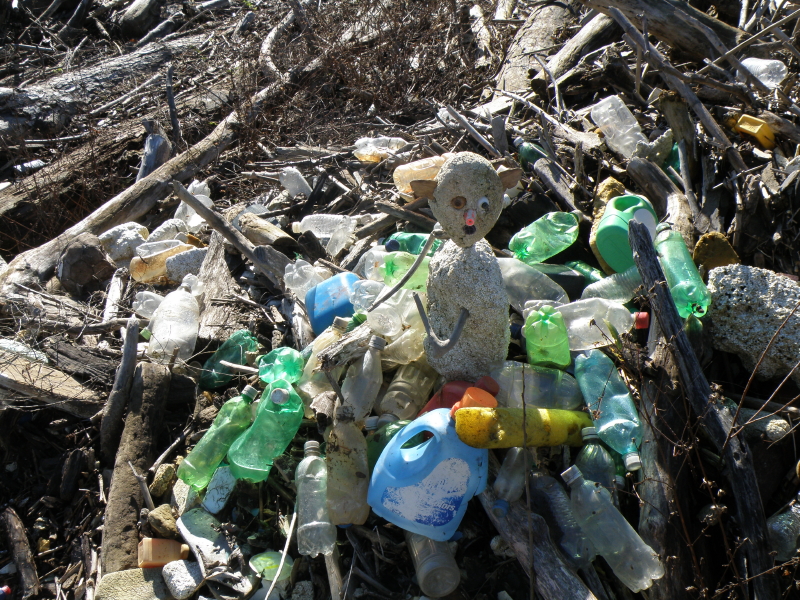
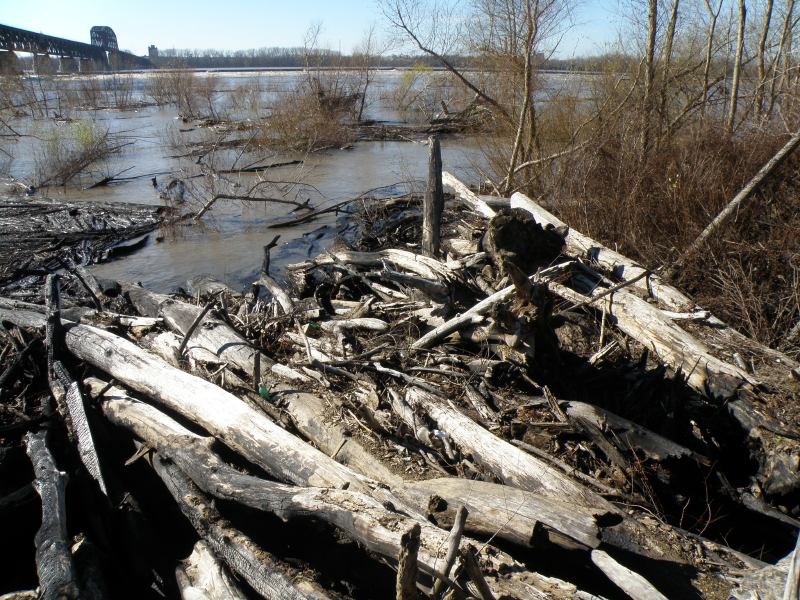
Because the river was rising, the normal shoreline at the Falls was underwater which in turn forced me to higher ground.  That means today’s adventure took place on the large pile of driftwood that formed during last spring’s flooding.  The large wooden mound is interlaced with all kinds of debris that floated in with the bloated river which acts as an attraction for scavengers such as myself and an acquaintance I came across today who goes by the nickname “Pig Boy”.  Yes, he bears some resemblance to a pig, but as he told me…he came by this unflattering handle because he enjoys getting dirty especially by the river.  “Piggie” and I have this in common and so we get along famously.  It had been a while since I saw him last and I asked if anything was new?  That’s when he related to me a recent nightmare he experienced and as he spoke the following images came to my mind and through the miracle of digital means I present to it to you for your perusal. I began to hear bits of the old “Twilight Zone” theme in my brain.

As the dream begins, Pig Boy found himself on the very driftwood mountain we were standing upon.  He was there because over the months this mound shifts and falls under its own weight and decomposition revealing new “treasures” originally captured by the river.  As Pig Boy explained it…he was just in his own head space checking out the variety of packaging that was intermixed with all the wood.  That’s when the most curious thing happened when he looked up.

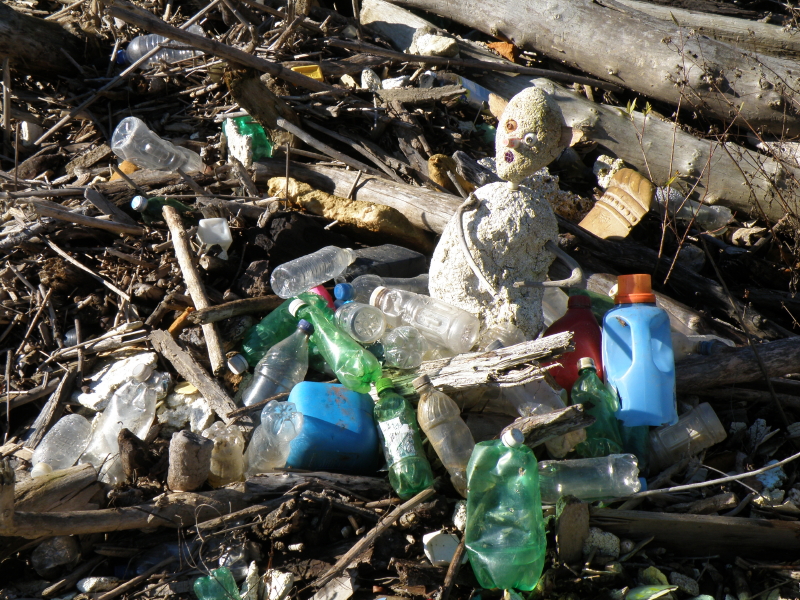
All kinds of plastic bottles and containers were emerging from the driftwood pile and moving towards him as if he were a plastic magnet.  Pig Boy was transfixed and unable to move as this plastic wave began to close in on him.

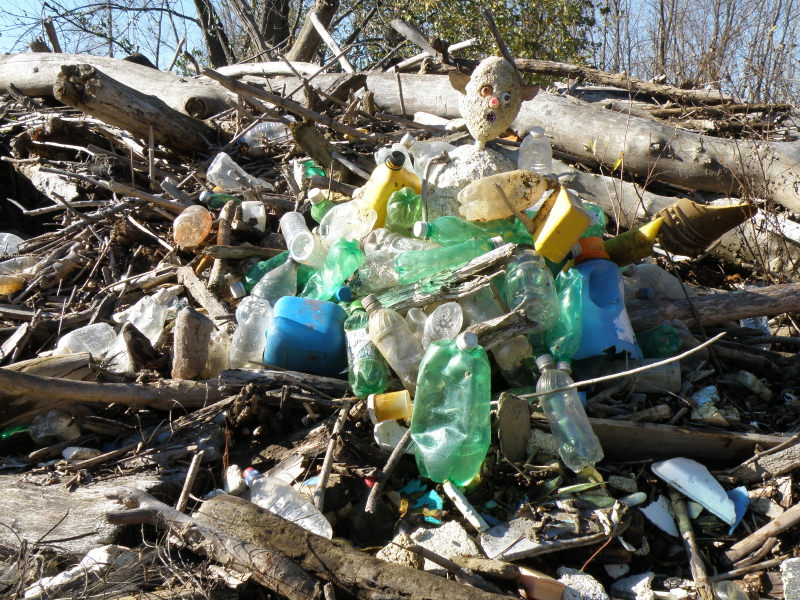
More and more plastic kept coming towards him and before long it started to build up around his body which made moving or running away even harder.

Soon the bottles reached his waist and were piling up even more!  Not all of these bottles were empty and some of them contained river water and the backwash of old soft drinks and who knows what else? By this time in Piggie’s dream he was truly getting alarmed and he remembers this voice telling him that he needed to get out of there!

Before all these plastic bottles could completely overwhelm him… Pig Boy remembers letting out a scream because he was just so frightened.  The feeling  of helplessness was upon him and he forced himself to wake up which he did in a cold sweat.  He recalls the immense feeling of relief when he realized that this had all been a bad dream.  I could feel the claustrophobic sense of being engulfed by all this plastic as my friend relayed his story to me and I became scared as well.

And so I asked my friend after such a bad dream…what was he doing back here?  He replied that he didn’t have a good answer and that he is compelled to come out here for the thrill of discovery or something like that.  Pig Boy can’t help himself.  Every once in a while, you can actually find something useful out here that can be recycled in some way and besides it’s nice to be out in nature.  After a few more minutes and various pleasantries…we parted wishing the other well and happy hunting.  I stood there on the driftwood by myself and looked up at the river which to my imagination seemed higher in the short amount of time I had been out there.  My mind then turned to something I had read about how our oceans are now becoming increasingly filled with plastic garbage that coagulates into large masses and probably will never go away.  That thought was in turn interrupted by a drop of rain that fell on my cheek and I decided it was time to go home too.  I’ll bet we establish that new rainfall record before the end of the year.  Stay dry everybody.

Read Full Post »

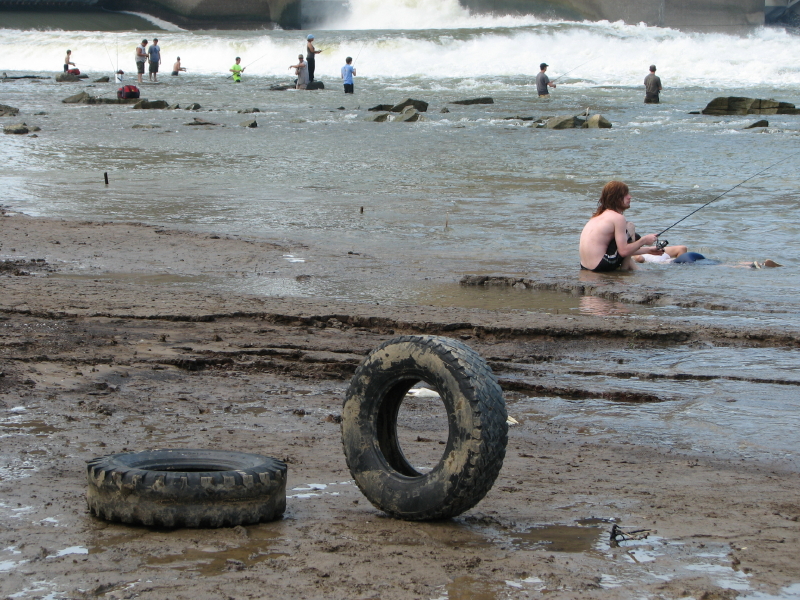
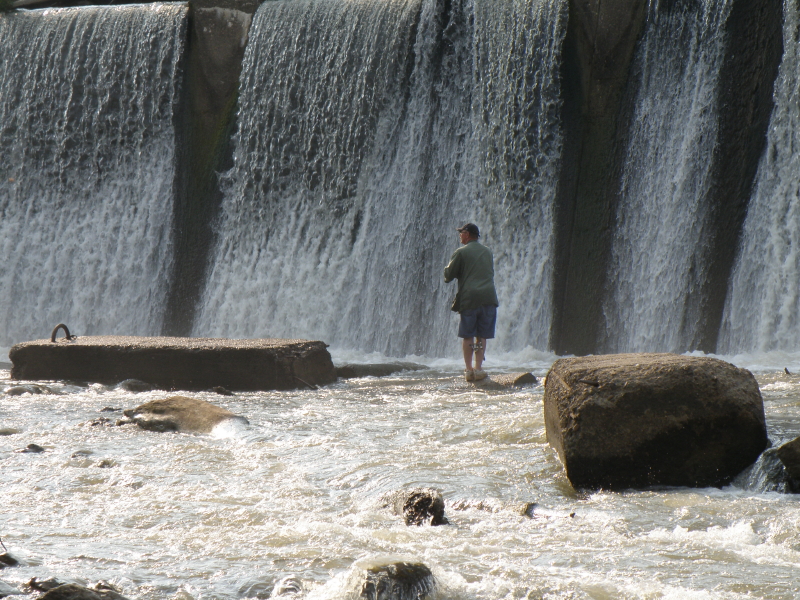
The fishing had been good and attracted both experienced and novice fisherman.  People were catching some of the smaller striped bass and the occasional catfish.  Summer has descended full-bore with its twins…heat and humidity and so a visit to the river is a welcome diversion for many.  The parking lots around the park are full.  To me, this is a mixed blessing.  You want those who can appreciate nature and the surrounding area to enjoy themselves, however, there is always that element present that can’t resist despoiling for their own selfish reasons.  Sometimes it seems that visitors leave as much trash here as the river does in its wildest moods.  Please pack your garbage out.  After checking out the fishermen, I head up the bank to locate my last project with its polystyrene figure.

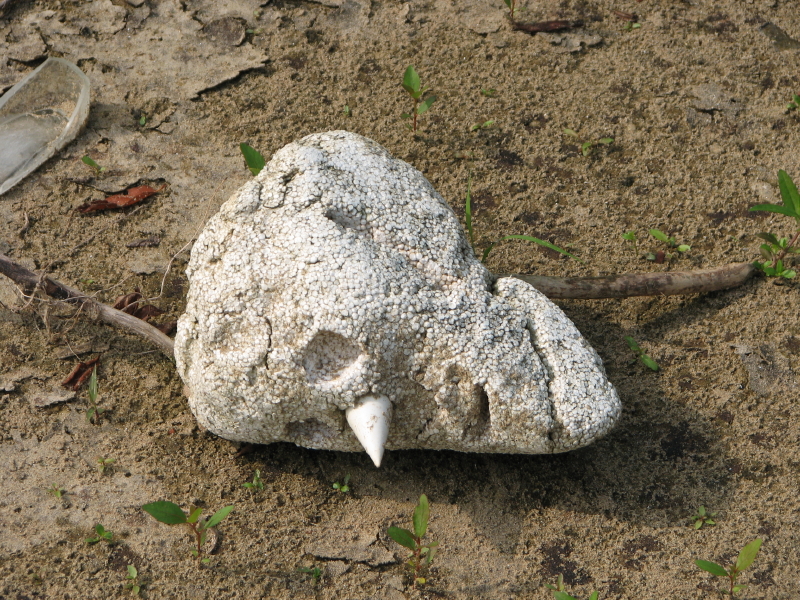
I’m not shocked at all to come across Joe Coalman’s eyeless skull resting in the hot sand.  To be honest, I would be more amazed to find him still intact.  My postmortem revealed that he had the stuffing knocked out of him.  I found his body about thirty yards from his head.  I take some photographs and gather the remains.  I’ll probably recycle him into another project in the future.  As for the tire with the coal in it…

…well, it too has been altered.  I can see how a standing Styrofoam figure would make a tempting target, but what about a tire filled with coal?  It must have provoked someone because the coal had been knocked out.  The black rocks were scattered all around.  I regathered them, but I could not find all the coal that was originally in the tire.  Curiously, if you look at the rim of the tire you will see something I had not originally placed there.  It’s a tiny white clam shell left perhaps by another visitor?  I appreciated this simple gesture and moved on.  Soon I reached my outdoor atelier with its latest cache of Styrofoam.  I laid Joe Coalman, skull and all back into the pile and wondered what to do next?

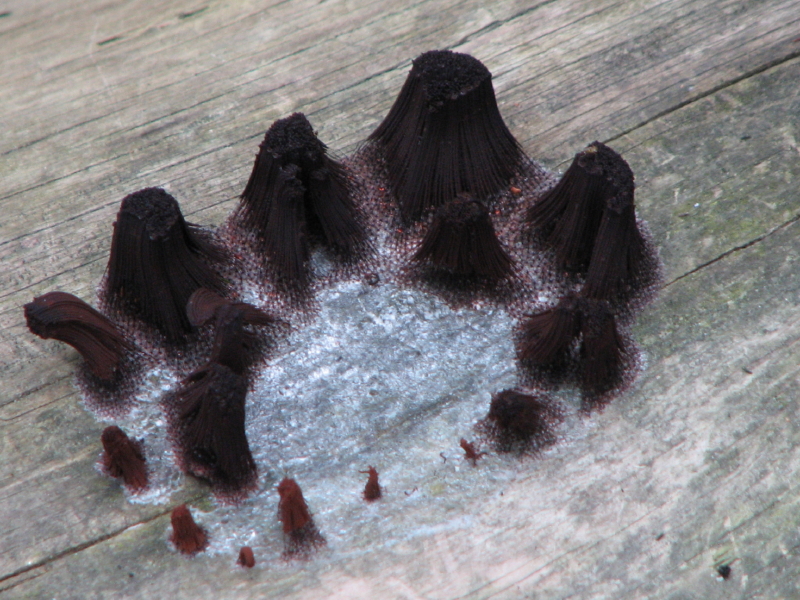
While sitting on the enormous wooden beam that defines one side of my outdoor studio, I spied something interesting on an equally impressive log.  Growing along the margins of an old bird dropping was this wonderful fungus.  At the Falls of the Ohio, there are many different types of fungi that help break down the organic bonanza that washes into here.  I wish I knew more about them, but realize that this is another entire field of study.  Nevertheless, fungi are of immense importance and help recycle nutrients among the many other useful services they perform.  With this particular fungus, it looked like it was on the downward cycle having already released its spores from the fruiting bodies that were now arranged like some organic version of Stonehenge.  After studying this curiosity for a few minutes, I settled into the familiar activity of creating a figure that would be the benchmark for the day.  Before revealing it to you…here are a couple of other things that I want to show you that I happened across during my walk.
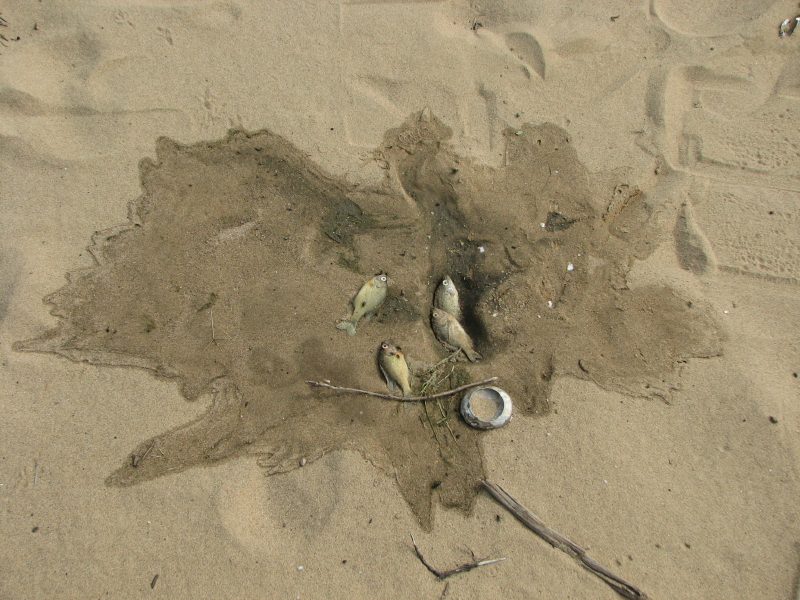
I’m always looking at the evidence and trying to figure out what occurred at a particular place?  Here a fisherman on his way back to the rest of his life has dumped out his bait bucket and left the four tiny bluegills in the sand.  Perhaps they were dead already since fish in a bucket die of oxygen loss without an aerator to cycle air back into the water?  I wondered if the use of these bluegills broke any laws since using other sport fish for bait is generally frowned upon?  I could imagine the size of the bucket from the wet area in the sand.  The silver circular object is the bottom of an aluminum can.  Near this scene, I also came across this discovery.

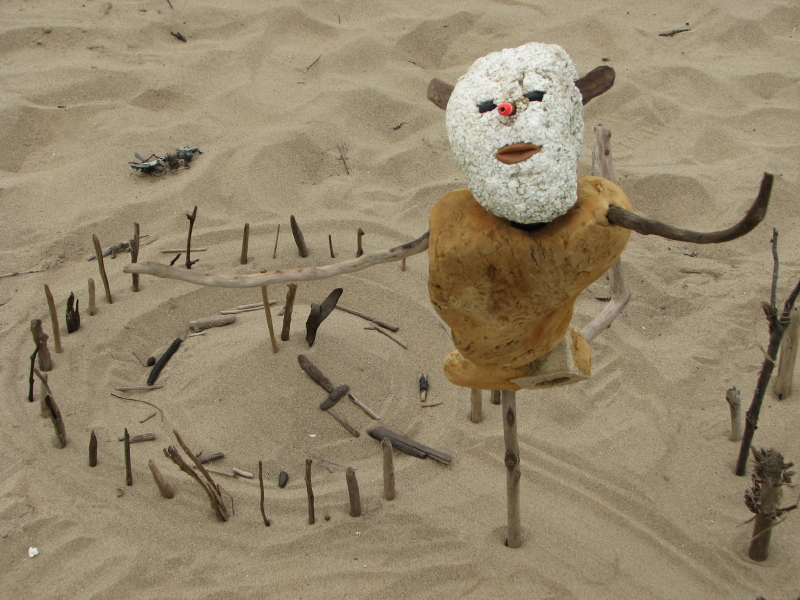
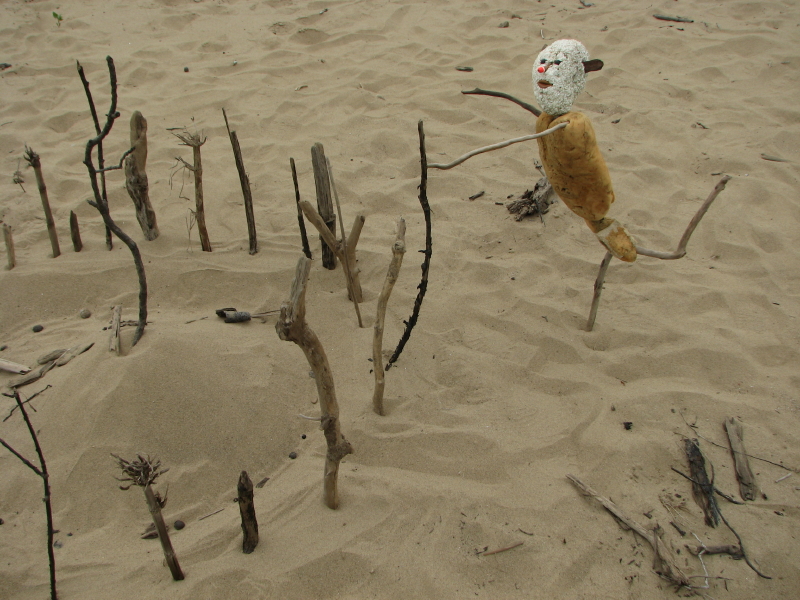
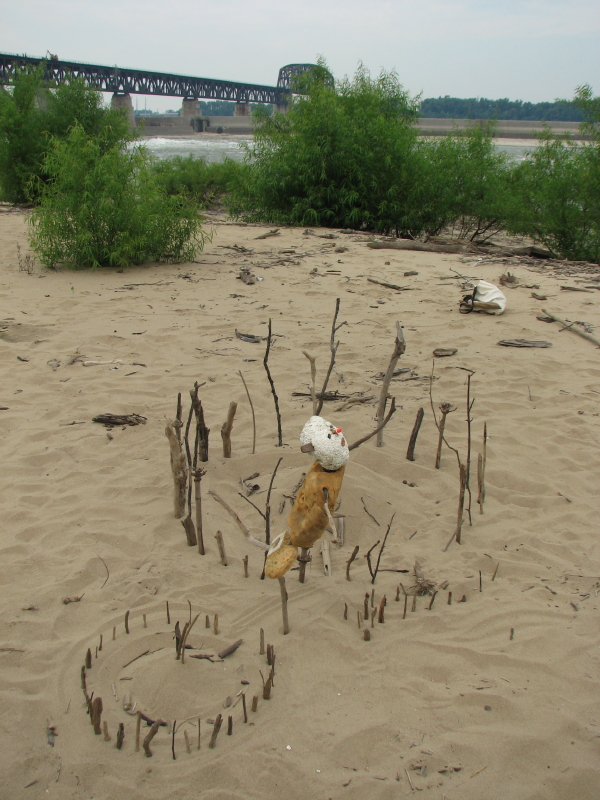
Less than a stone’s throw from the dead fish I found this arrangement in the sand.  I love it when people opt to leave their mark on the land in this fashion.  Present were two complete circles in the sand defined by upright sticks with mounded sand in their centers.  In my mind, I imagined two gears or cogs moving in response to each other.  The movement of the sun provided some of the energy needed to activate this metaphorical machine.  I decided that this place was a good site to unveil my latest figure which implies movement too.  I let it dance throughout this arrangement in the sand.

Maybe this was originally made by a child while his family fished?  It doesn’t matter because it gave me something positive to react with and made my day.  Feeling satisfied, I started back to my own vehicle, but there would be one more surprise on this day.  Perhaps this was also made by the same folks who did the circles in the sand?  Again, sticks were employed albeit much longer in length.  See for yourselves.
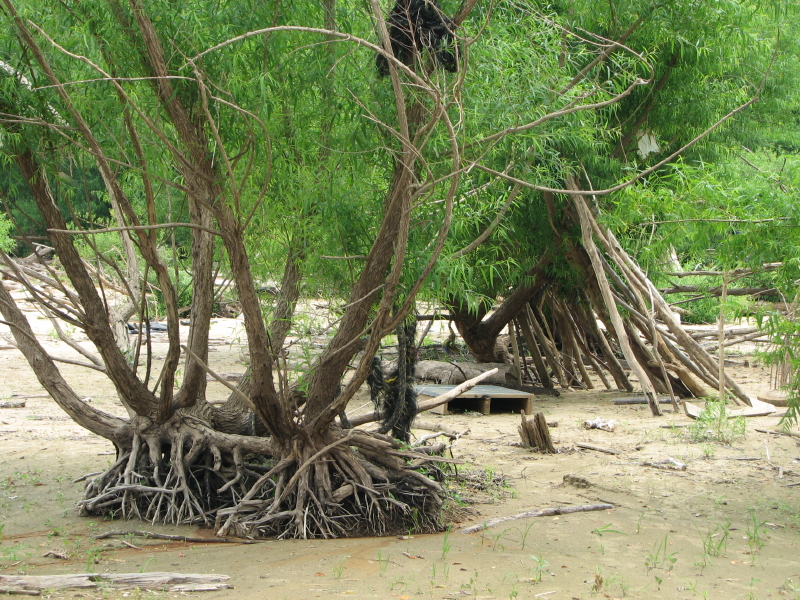
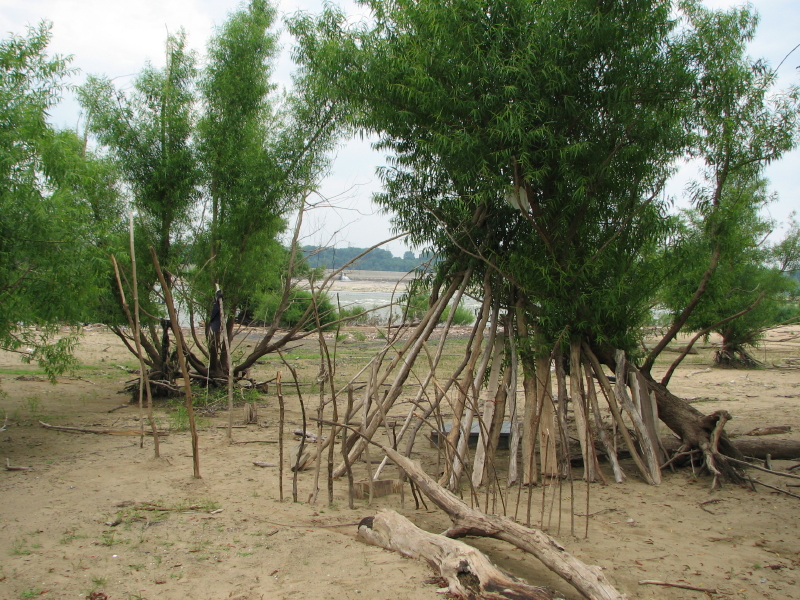
Logs and long branches were leaned against a willow tree and the effect implied shelter to me.  Other long sticks were placed upright into the sand and helped define the area.  A wooden palette was dragged to this location and left to provide seating.  Because the materials used are all local, it would be very easy to walk by this if you weren’t paying attention.  That’s one of the things my Styrofoam figures have working against them…their stark whiteness usually gives them away even at some distance.  But then again, for me that’s part of what I do which is to call attention to the stuff that doesn’t belong out here and through a little creativity, show what can be done.  I appreciate the stick pieces because they only use the natural materials that are out here.  I wish I could do this more often myself, but this isn’t the reality I usually discover out here.  Leaving the area, I came by this wonderful flower and in its center…was this tiny bee carrying on as her kind has for as long as there have been flowers in need of pollination.  Until next time.

Read Full Post »

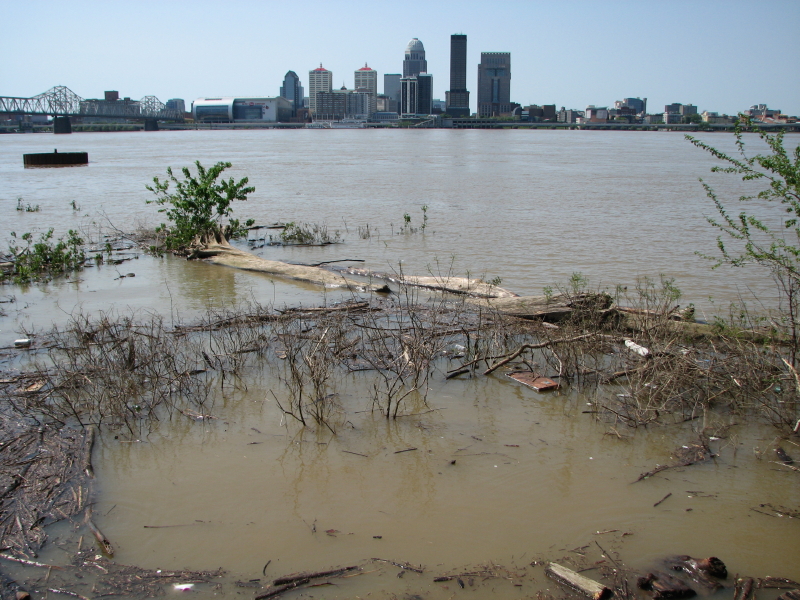
As usual I’m a bit behind in my river reports.  I calculate I could write at least several more posts about the flooding we have experienced with the Ohio River at the Falls of the Ohio.  As I write, the river is still high, but all the attention has shifted to the Mississippi River which is experiencing an epic flood.  I’m sure some of the same water molecules that flowed past our location are contributing to the woes down along the Mississippi.  For those unfamiliar with our geography, the Ohio River flows directly into the Mississippi River in far western Kentucky.  The confluence of these two great rivers is an awesome sight.

Here at Louisville, the water has been receding and the amount of water-borne junk this flood has brought hasn’t fully hit home yet.  There are signs, however, everywhere I look that this will be a great challenge for any river loving clean-up crew.  I will try to do my part, but even if I were to try to be out here every waking hour…I wouldn’t  begin to scratch the surface.

Gas is over $4.15 cents a gallon for regular unleaded here.  I listened to the great oil company executives trying to explain to Congress today why they need a sweetheart deal from the American taxpayers when they already receive every tax break in the books and are suffering with their record, obscene profits.  When discussion turns to what can be done to reduce the amount of crude oil used the usual answer has something to do with increased engine efficiency resulting in more miles to the gallon.  Looking at the high water line I see another solution that doesn’t get as much play.  Why don’t we try to cut as much plastic out of our way of life as possible?  There would be more oil available for fuel and you wouldn’t have all these various compounds despoiling our water ways from the smallest streams to the largest ocean.  You can throw Styrofoam in this mix too since it is has petroleum pedigree as well.  We could just change the packaging we use and I bet that would make a huge difference.

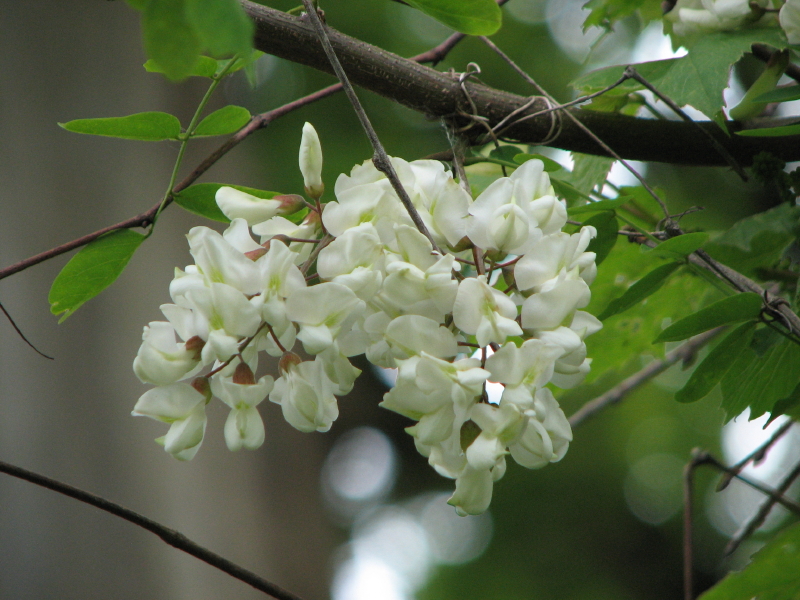
You can look at the whole Riverblog as one long rant against pollution, but there is also more out here that is sweet and worth noting and enjoying.  I decided to walk along the Woodland Loop Trail and the air was fragrant with the perfume from what we call Honey Locust trees.  Some of these trees also sport large spines growing on the bark.  Their pea-like white flowers have the most wonderful scent.  Here is what a flower cluster looks like.

Along the trail, you can hear a variety of bird species singing.  Vireos, woodland warblers, orioles, chickadees, indigo buntings, various thrushes fill the air with their acoustic signatures.  The birds are here to feast on the many cutworms that plague the forest canopy.  There are also other larvae present…here is a small nest of tent caterpillars that will soon become moths.  Very few birds like these hairy caterpillars, but two that do ( the Yellow-billed cuckoo and the Blue and gray gnatcatcher) can be found in the forest now.

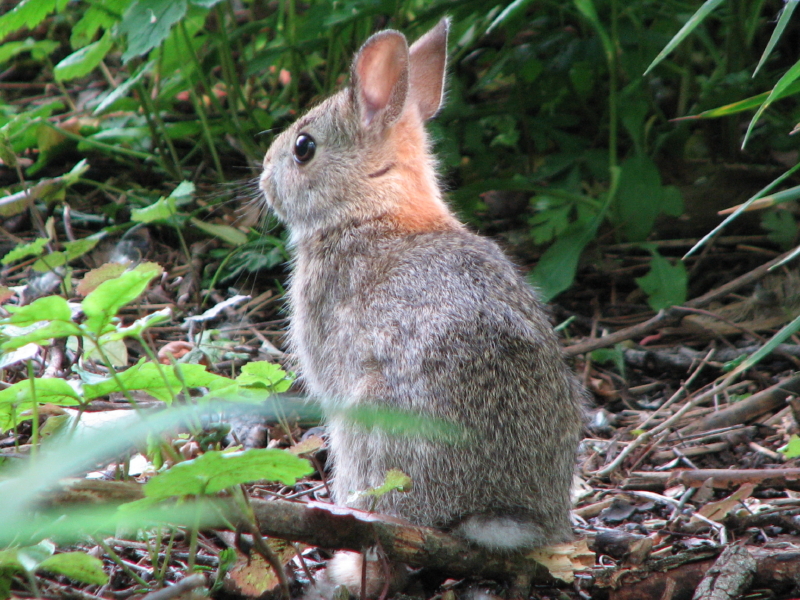
Ah, I also spot my namesake hopping along the trail!  This is a young Cottontail and he better be careful out here because there are so many predators both native and domesticated that would love to catch him!

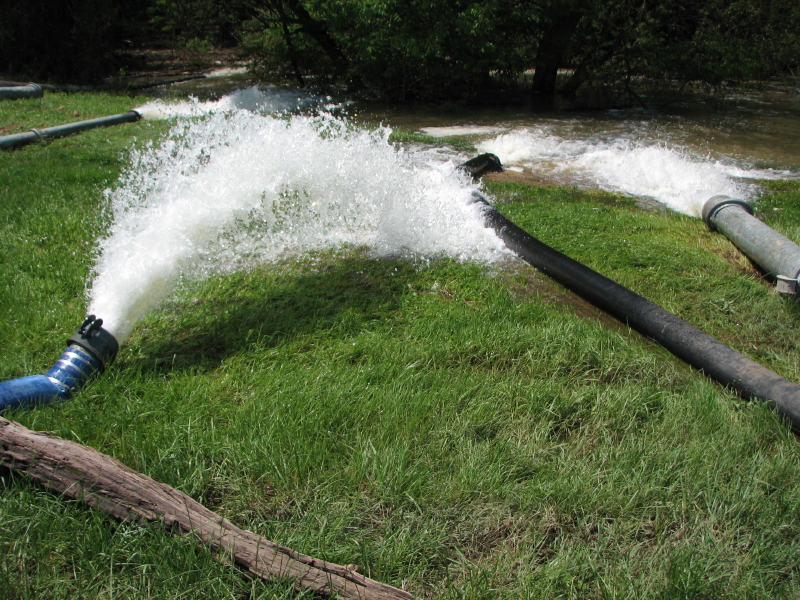
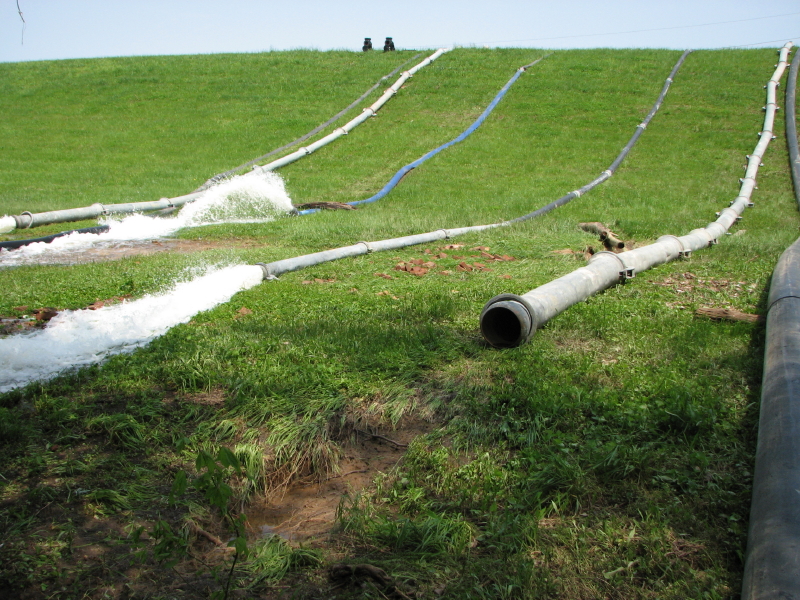
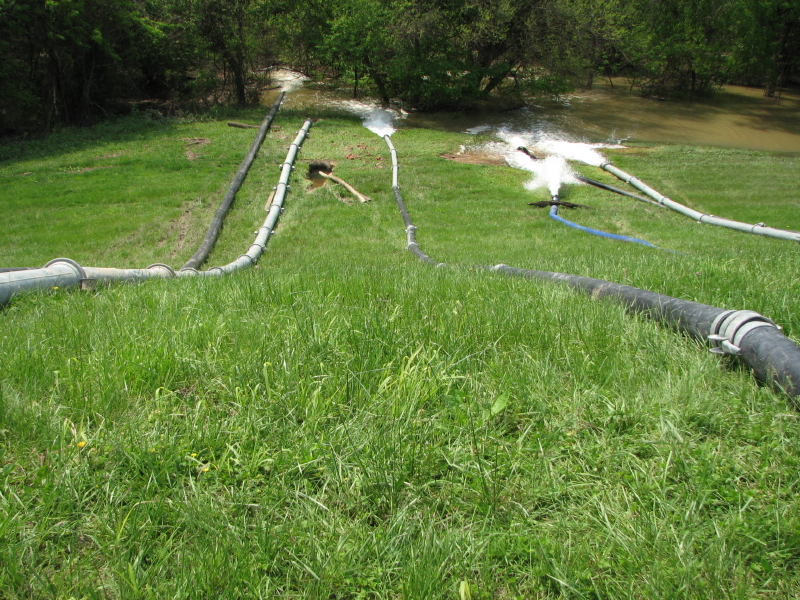
Walking westward along the trail, you can’t help but notice the large grassy berm that flanks your right side.  It is additional flood control put in place after the disastrous 1937 flood which was our high water event on the Ohio River.  Up a head, I can see a network of large hoses with water gushing out and I decided to investigate.

I can see these large hoses coming down the berm and I wanted to see what’s on the other side of this earthen flood wall.  Here are a series of pictures of what I saw.  First looking up hill…

…now the view looking down towards the river.  What are these hoses for?

I came across a sign at the crest of this large hill that explains it.

On the other side of the berm is the small town of Clarksville, Indiana.  Rain water has pooled up in the lower lying sections of the city and are being pumped out and over the top where the water then flows into the park eventually finding release into the river.

It’s strange how I rarely think about the town that occupies the other side of this large grass and earthen mound.  The Ohio River is really at its front door all the time.  The little bit of woods I like spending time in is just a narrow sliver of ecosystem that exists between Clarksville and the river.

Well, that’s the story for now.  I have much more to present about the dominant environmental event of our Spring.  Already the temperatures are rising and I can feel the transition to Summer won’t be long in coming.  Thanks for hanging with me…until next time…the Rabbit Man.

Read Full Post »

There’s drama walking through the autumn landscape.  The colors and forms are beautiful and so much change is occurring so suddenly that it holds your interest and makes even the unobservant aware of the fleeting nature of life.  The season is also a reminder of unrealized ambitions and unmet goals.  Whatever urgent dreams you may harbor, better happen sooner than later because time waits for no one.  Recently, I caught up with a friend at the Falls of the Ohio who I don’t see often enough and he told me this interesting story he witnessed about a buddy of his.  The following images are as they impressed themselves upon my imagination as the tale was told.

Here’s the short version of the story.  One day this guy is visiting the Falls of the Ohio and he finds a feather in the sand.

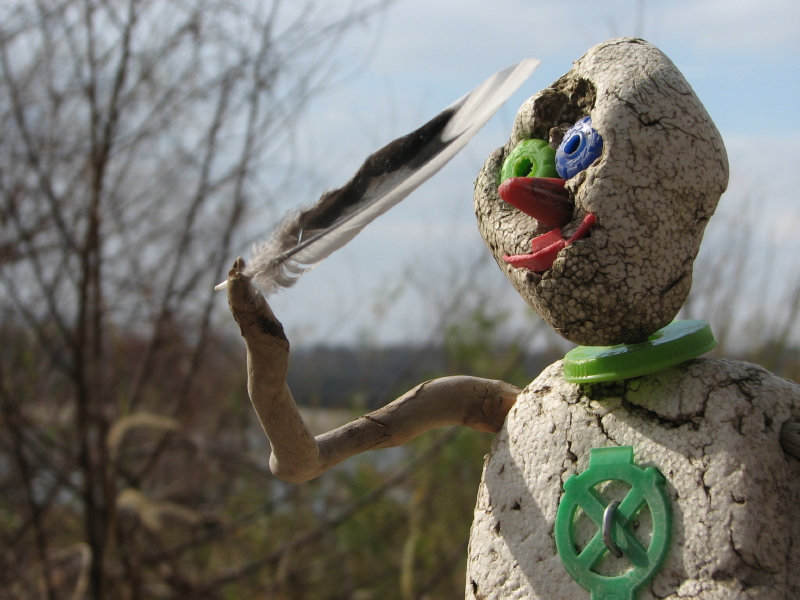
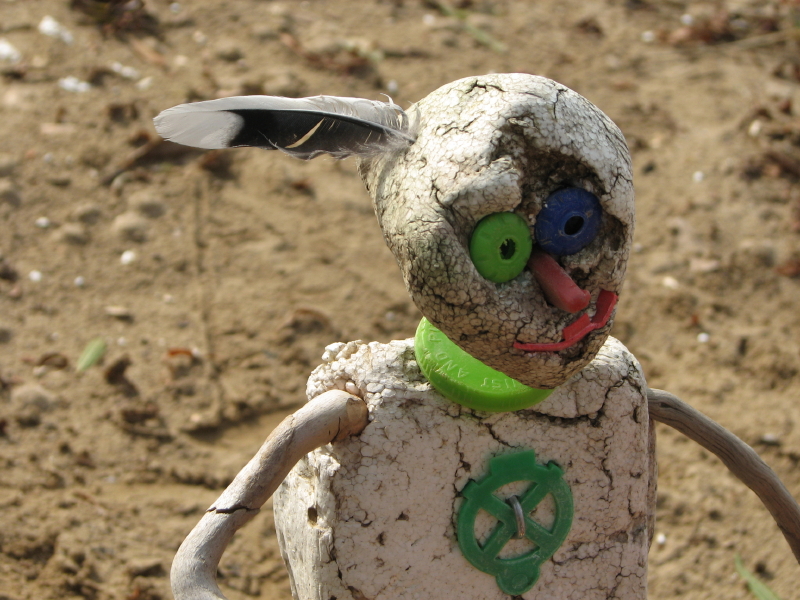
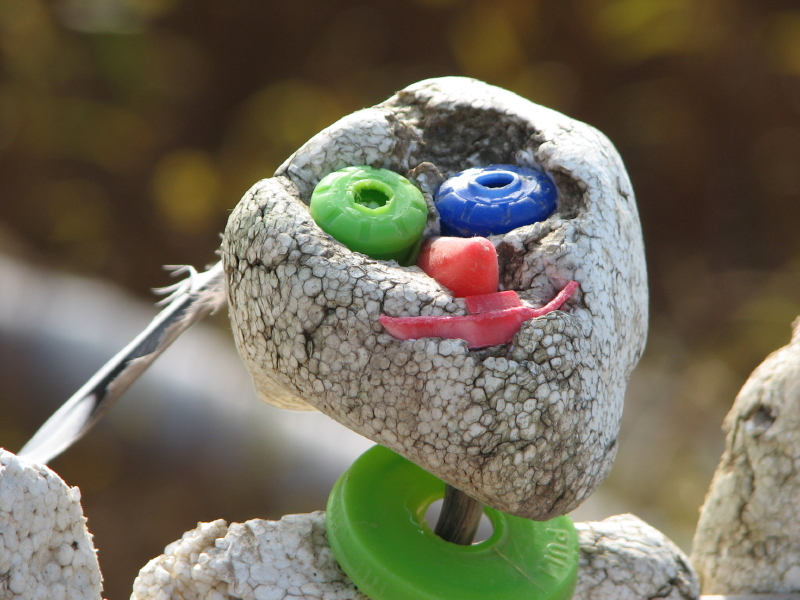
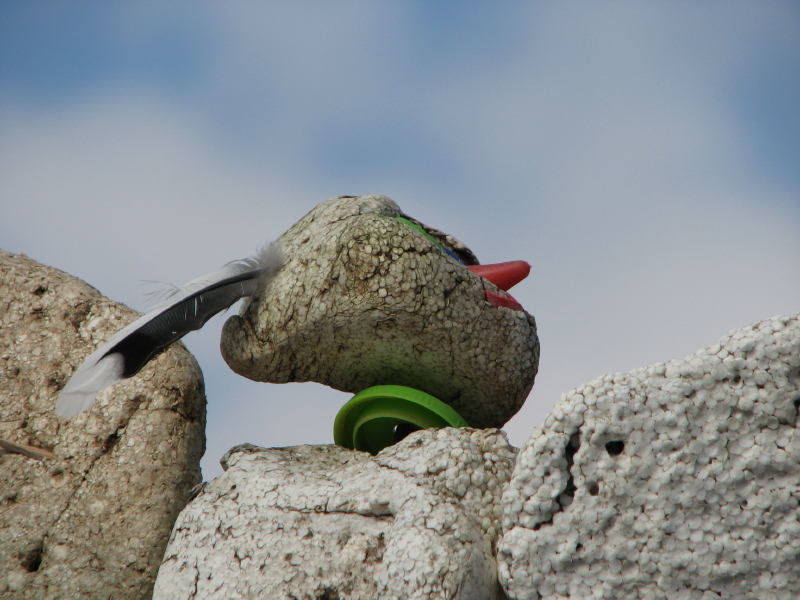
As feathers go, it wasn’t anything special in its own right.  However, it did trigger this notion in the brain of this fellow who found it and it served as a catalyst for this story.

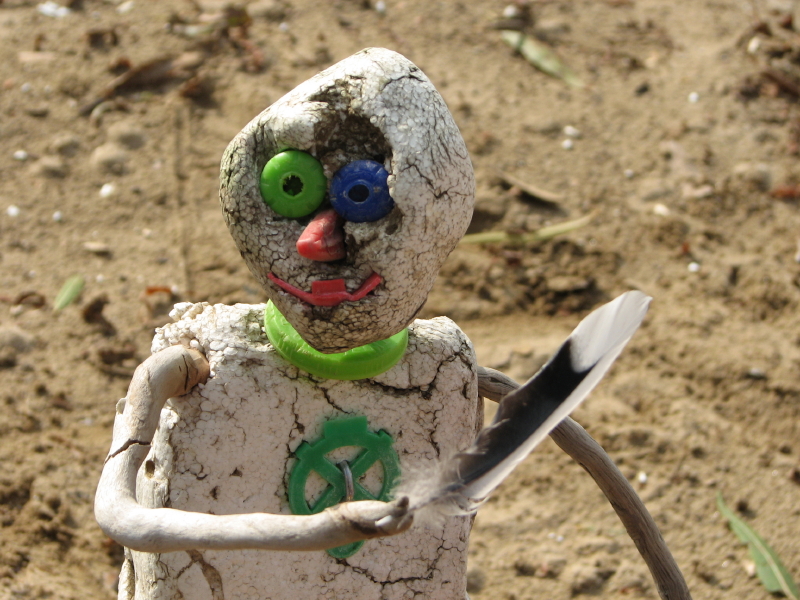
Apparently, this man (let’s call him the Aviator) had a secret desire to learn how to fly, but heard through others that this was an impossibility.  He decided not to take the conventional wisdom at face value and determined to find out for himself.  He tied the feather into his hair and began the process of learning how he might accomplish his goal.

Having watched birds all his life, the Aviator knew that he needed wings, but what could he use to fabricate them?  On his travels around the river he frequently came across this odd material that was light and surprisingly strong.  Could it be used to make wings?  The Aviator began to gather this material from the woods around him.

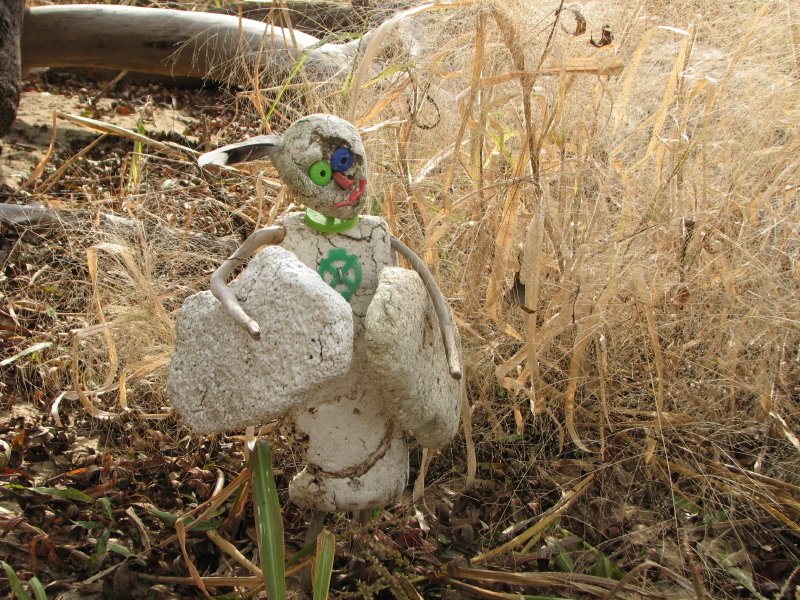
Soon he had what he thought would make a nice matched pair of wings.  He created straps and sleeves that would allow him to attach the wings to his arms and this gave him a sense of having a power that he never had before.  Through practice, and trial and error, the Aviator taught himself the fundamentals of gliding and how to remain safe when things didn’t quite work out.  He sustained many bumps and bruises, but also gained mastery.  After running up and down the riverbank and letting the wind lift him just off the sand…the Aviator felt confident enough to try his first sustained flight. 

The Aviator needed a place where the winds were a little stronger than he found at the riverbank.

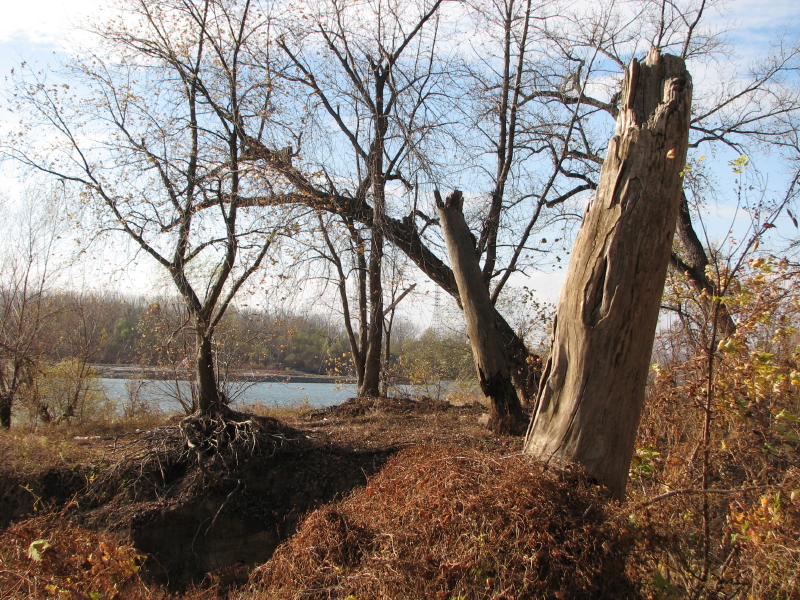
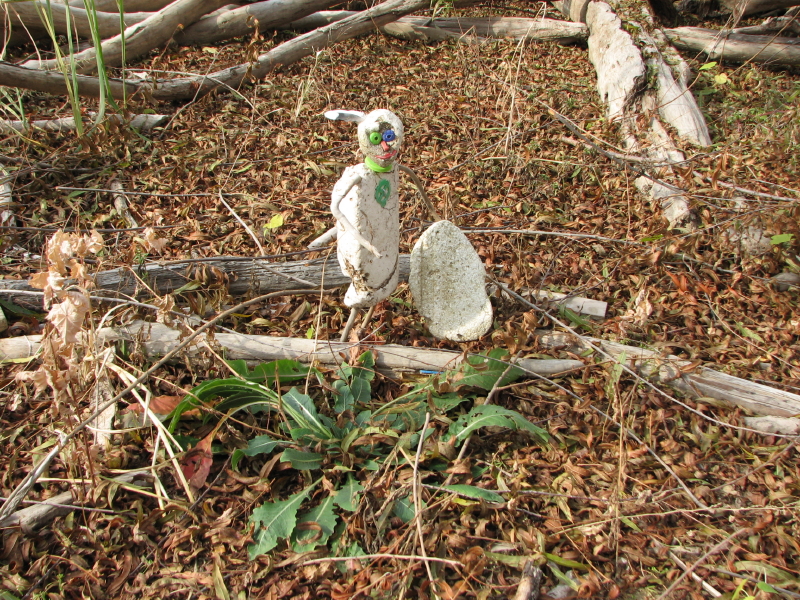
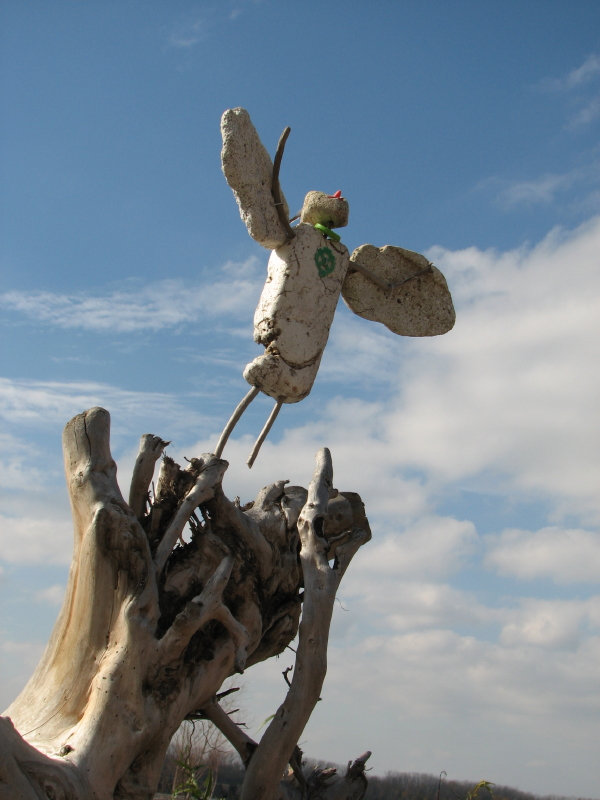
In the distance, the Aviator spotted the remains of a great tree.  It was from this spot that he would try his first flight.  He folded up his wings, adjusted his feather, and climbed up the enormous tree stump.

Reaching the top, the Aviator spread his wings and could feel the force of the wind upon them.  He grew more than a little fearful.  In his mind, he heard all the people who told him it was impossible to fly.  Breathing deeply, he pushed those voices into the wind where they dissipated.

For a moment, he closed his eyes and said a little prayer.  He let the memory in his muscles take over.

When a particularly strong gust of wind came up…the Aviator allowed it to fill his wings and he could feel himself lifting off the stump!  For the briefest of moments, the Aviator became aware that his decision-making process was too slow.  He would need to trust his instincts to fully learn how to fly and he let go.

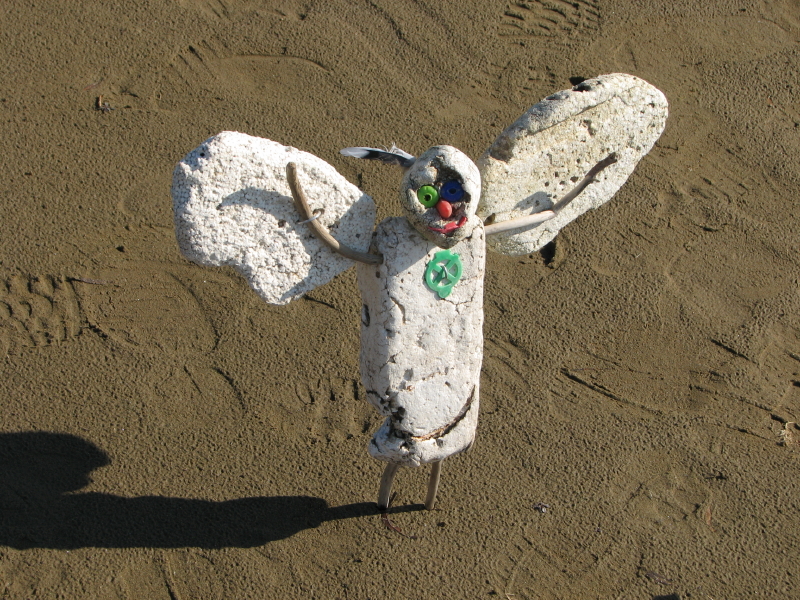
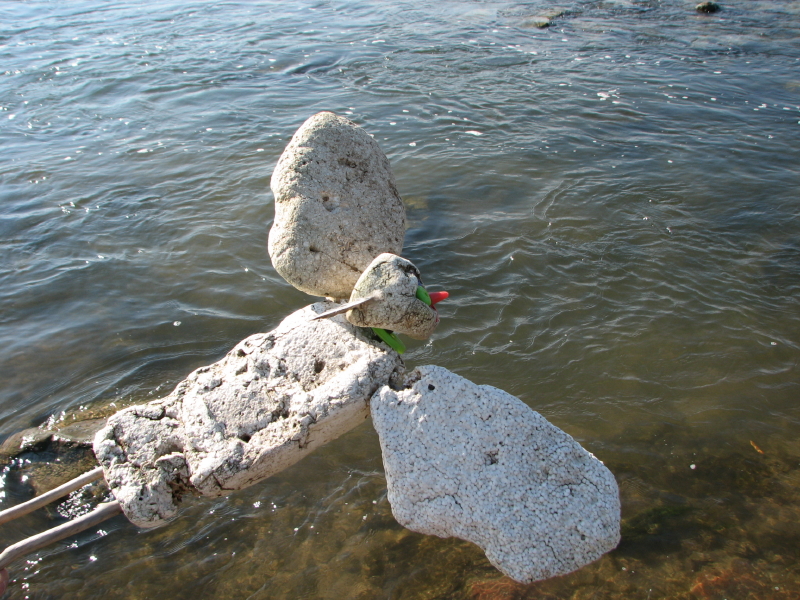
The wind carried the Aviator up and over the river and he levelled out his flight.  He tested his maneuverability by banking from right to left.  He also practiced rising and descending.  When he felt confident that he had the right amount of control, he glided further and further away from his starting point.

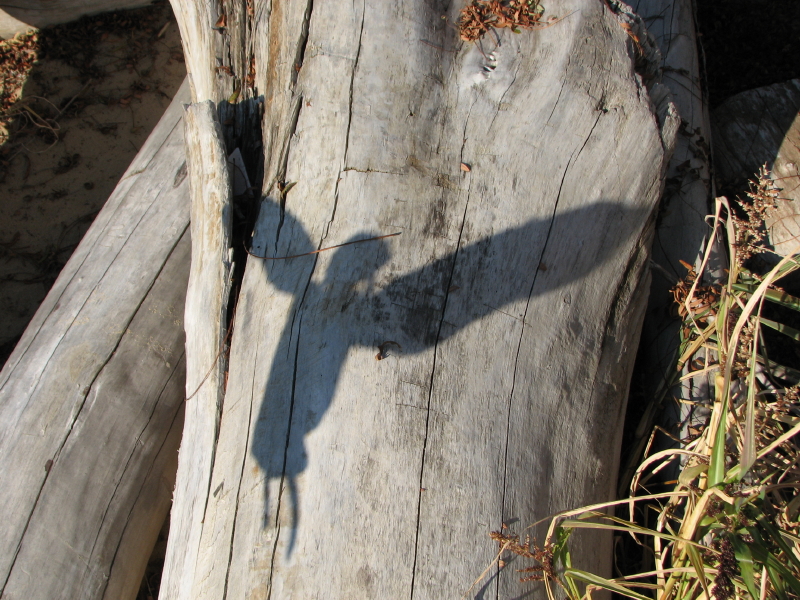
It must have been a great thrill to be able to move around in a completely new way!  What surprises and delights to see your shadow projected upon the world below you.  To move with the freedom of a bird…hasn’t this been one of man’s most cherished dreams?  What a feeling of accomplishment the Aviator must have felt. 

I asked my friends whatever became of the Aviator?  He said he wasn’t sure since it had been awhile since anyone had talked with him.  His memory was already becoming the stuff of legends.  There are those who believe he fell into the river.  Others in town think that he is on an around the world trip.  And, there are folks who feel that it isn’t out of the realm of possibility that he was transformed by his experiences into a bird. If I have to choose…I like the last option best and every once in a while, I spot a bird that reminds me of the Aviator’s story.

POSTSCRIPT:  In 2003, among the anniversaries that form part of the backdrop for my Falls projects included the 200th anniversary of the Lewis and Clark Expedition and the 100th anniversary of the Wright Brothers first sustained flight at Kitty Hawk.  At the time, I remember wondering why we weren’t making a bigger deal about this flying achievement than we were?  Yes, there was a commemorative stamp and a few other smaller observances, but nothing of international attention that I recall.  Being able to fly has been on our collective imaginations since before the story of Icarus and Daedalus and is repeated throughout the world’s cultures. We even have flying dreams in our sleep.  And so, when we finally achieved flight, and eventually went to the moon and back…it struck me that we weren’t making a big enough deal about this?  It isn’t everyday that we achieve what was first conceived in our grandest imaginations.  I thought it deserved more recognition than it got.  What do you think?

Read Full Post »

Today there is a leafy smell in the air at the Falls of the Ohio.  Already, most of the leaves are on the ground and every gust of wind takes a few more away from the branches.  I often think about John James Audubon walking these grounds two hundred years a go looking for birds to draw.  Many of his earliest avian subjects were captured on paper here.  Audubon’s time at the Falls gave him training as both an artist and naturalist that would serve him well later in his career.  In my own eccentric way, I’m creating an alternative ornithology that parallels the genuine one.  Here is the day’s birding adventure.

I usually hear the Carolina Chickadees before I see them.  They are to my mind comical birds because they seem to get into every position possible in their quest for food.  They will examine from every angle whatever it is that is the object of their attention.  Most of the time I see this bird in pairs which makes me wonder if the males and females stay together year round?  I will have to read up on that.  As far as I can tell, there isn’t a good way to tell the sexes apart in this species.  You can walk in the woods and not see or hear anything …and then suddenly it seems the birds find you!  I’ve noticed that different species will flock together as they travel through the woods.  Here’s a sampling of what I saw along with the Chickadees today.
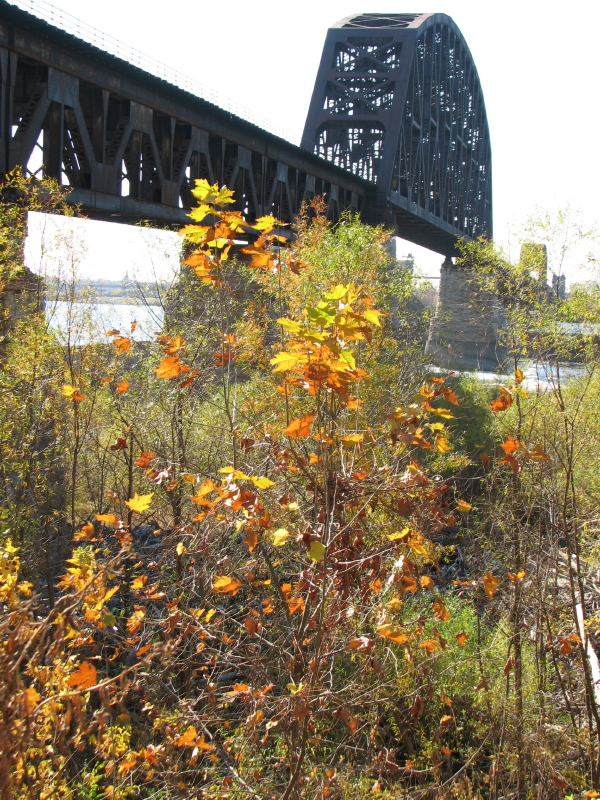
Migrating southward from their boreal homes in the north, Golden-crowned Kinglets mix freely with other species.  They are tiny, ever on the go birds, and it is difficult to photograph them.  The kinglet in the above picture is a male identified by his orangey crest.  The female’s crest is pale yellow.  This is another bird I hear before seeing with their “dee, dee, deee” call notes.  It’s common to see woodpeckers and their allies joining into this group.  Here’s a female Downy Woodpecker plying its trade among the tree bark.  The male has a red dash on the back of his head.

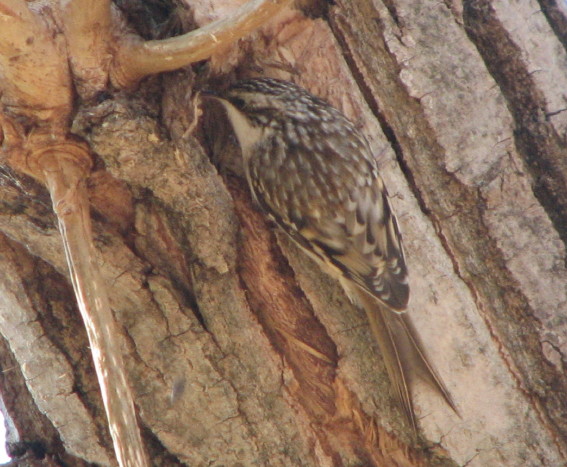
 Woodpeckers have adapted very stiff tail feathers that they use to brace themselves as they hammer away on the wood.  You can see the same thing on a bird that is so cryptically colored that it is easy to miss.  I saw several Brown Creepers flying with the Chickadees and Tufted Titmice today.  This was the better of the Brown Creeper images and you can see how easily it would be to overlook this bird.  Notice its stiff, v-shaped tail feathers that it uses to brace itself as it probes the wood.
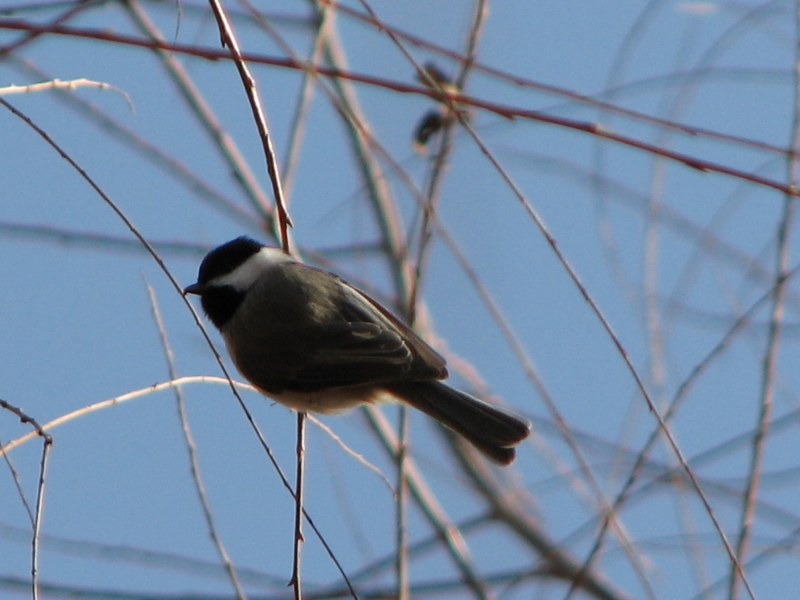
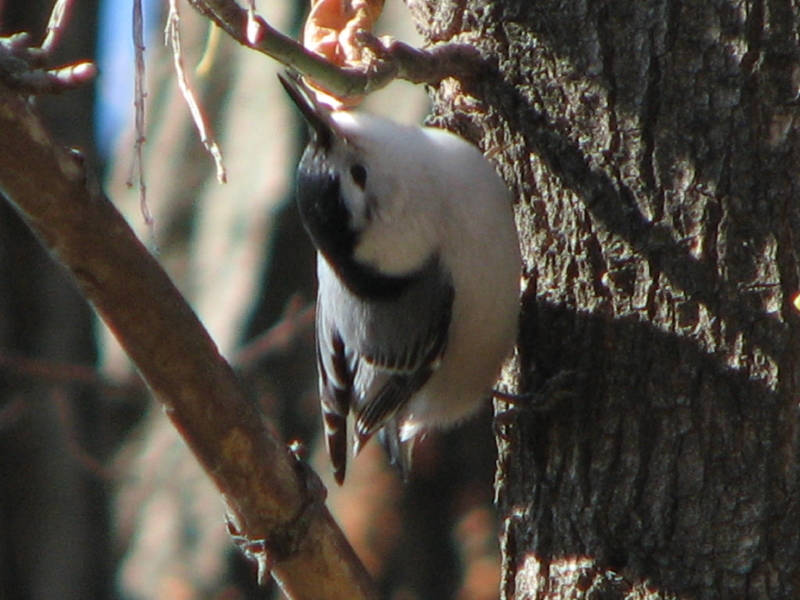
Looking just like wood bark, the Brown Creeper will fly to the base of a tree and work its way up.  It is looking for small insects that are hiding in the crevices of the bark.  These bird are also very small.  It’s also common to see this bird also traveling in the company of migrating nuthatches.  Such was the case on this day, here is a White-breasted Nuthatch that was on an adjacent tree to the creeper.

Aptly named, this nuthatch has a snowy-white breast feathers.  It likes to explore the tree’s surface in a head down position and has this nasal sounding call note that it frequently gives as it hunts for food.  Of course, I have saved one specialty for you that is very rarely glimpsed at any time of the year.  Patient birding rewarded me with this sighting of the Thick-billed Thrasher that was also traveling with these other birds.

From this detail, it is easy to see why this bird is called the Thick-billed Thrasher.  It is a seed eater and specializes in pine nuts.

Males and females of this species are also difficult to tell apart.  I spotted this bird resting among the willow branches in the eastern section of the park.  I noticed others of its kind exploring the leaf litter for whatever food supplements its main diet.

A final look at the this thrasher doing something a bit unusual.  This bird has discovered some barge cable wound around a branch and it seems to have stimulated a nesting response.  It sat on this rope for a few minutes before moving off with the rest of the traveling birds.  The Thick-billed Thrasher’s ultimate destination are the pine forests of the southern United States.

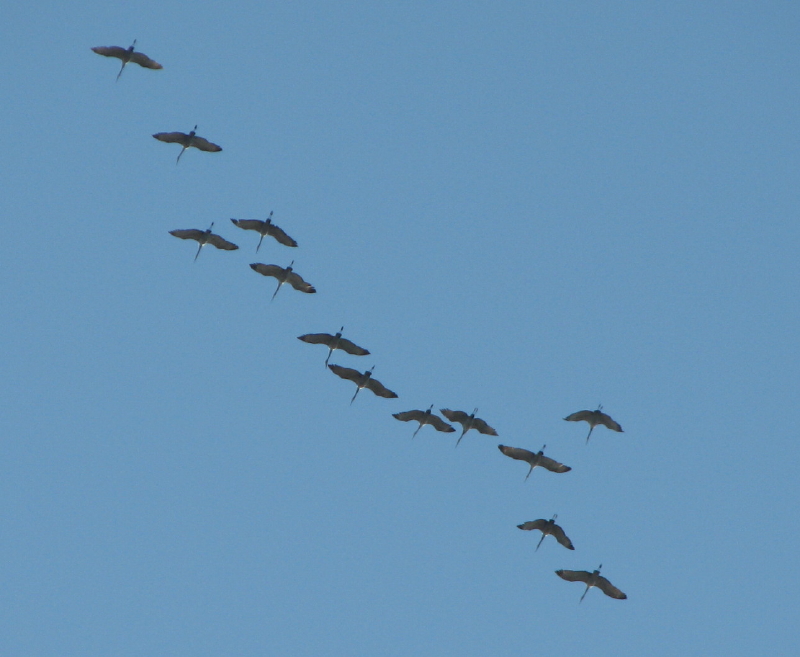
On my way back to my car, I made one other special bird sighting.  I also heard these birds before I saw them and immediately looked up into the sky.  Flying high above me in wavy, v-shaped formations, flocks of Sandhill Cranes were winging their way south.  For me, this is another sign of the season and I always associate the coming of very cold weather with seeing these cranes.  I wonder if Audubon felt similarly?

Read Full Post »

« Newer Posts - Older Posts »