Feeds:
Posts
Comments

Posts Tagged ‘public art’

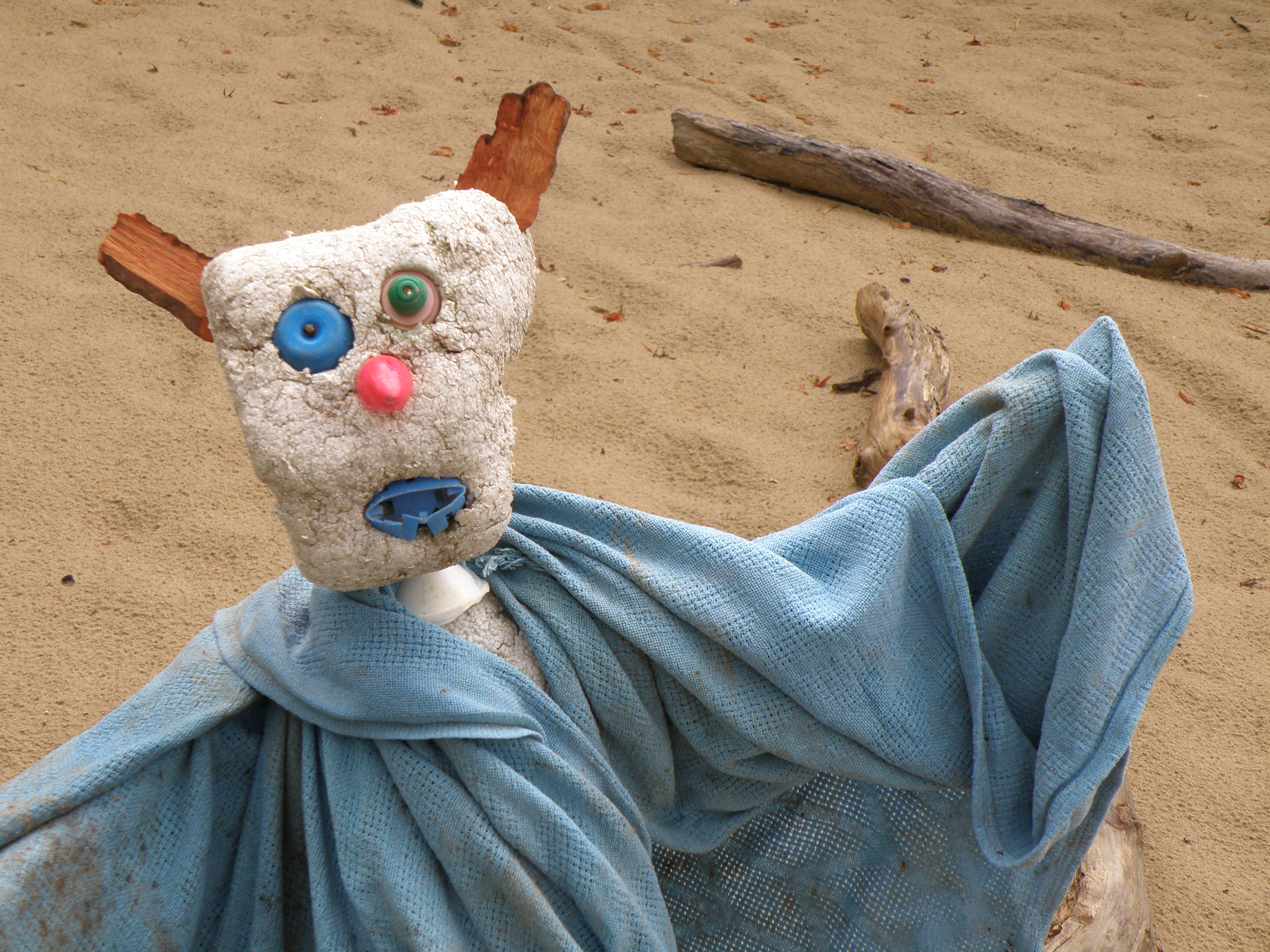
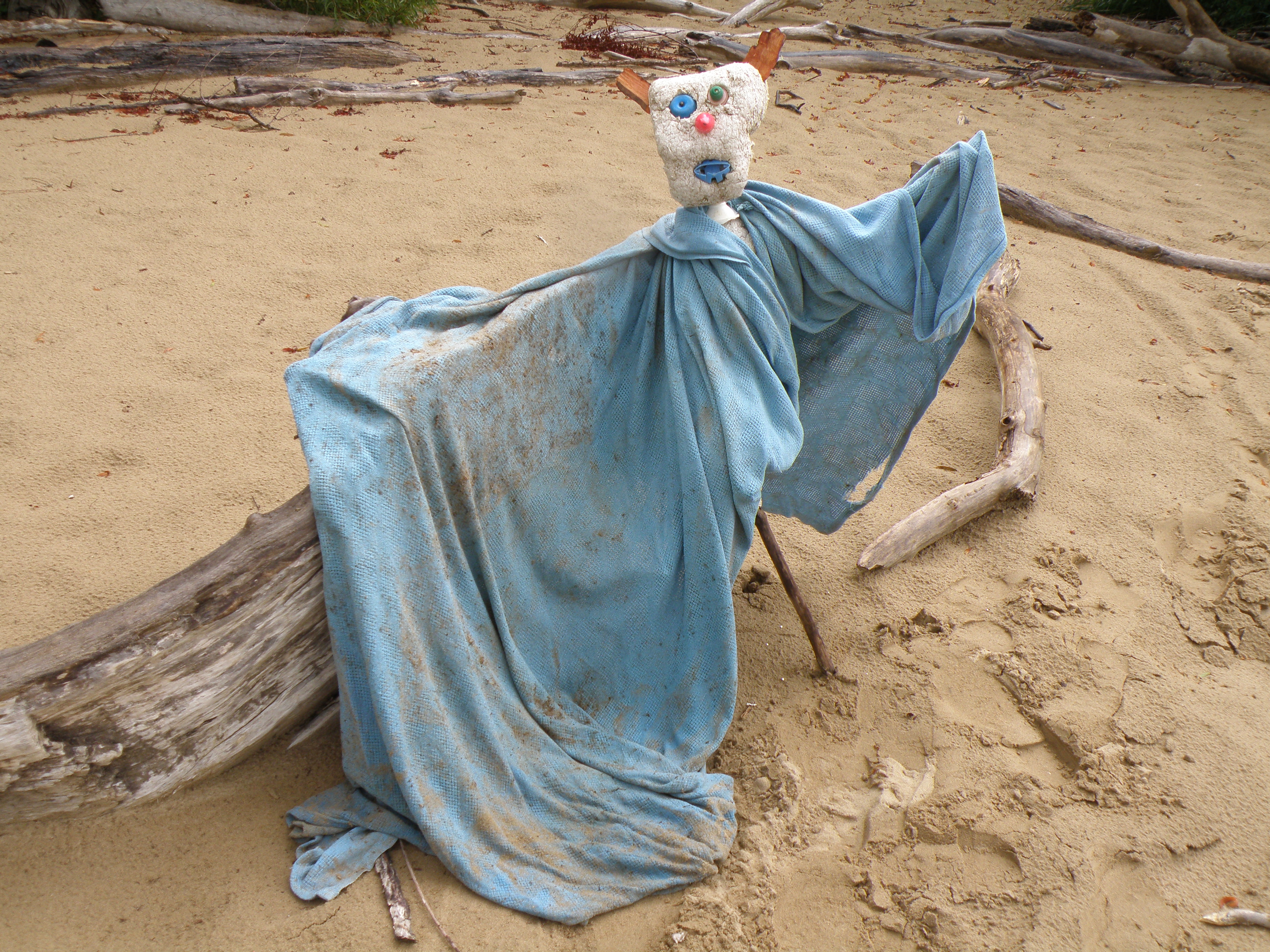
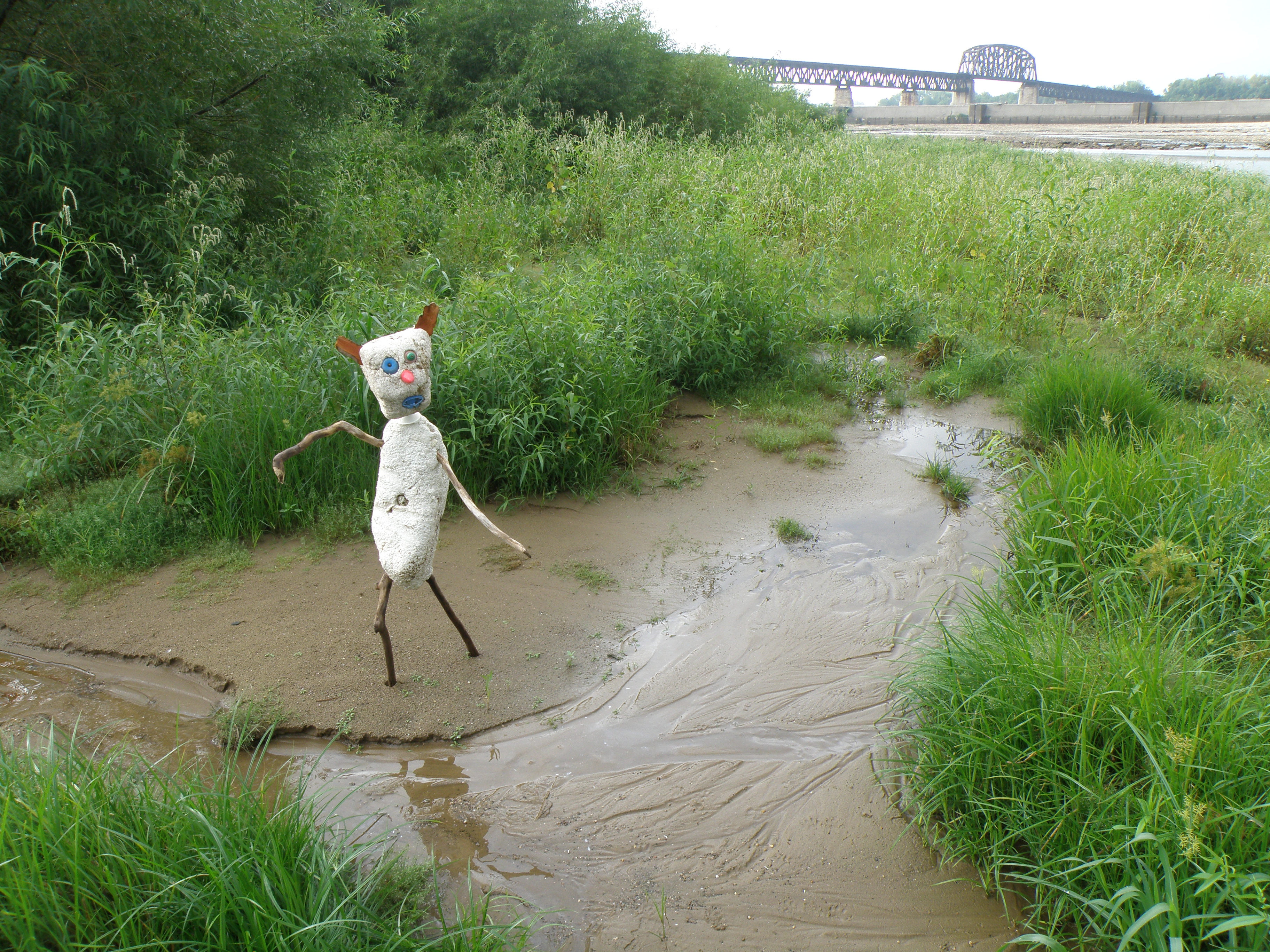
Joe Arbor at the river's edge, Falls of the Ohio, July 2013

Everybody has a different tipping point where enough is finally enough and action is called for.  This was the case with Joe Arbor.  For many years, Joe Arbor walked the river’s edge paying attention to what the Earth was telling him from the signals that washed ashore.  Yes, this is a nonverbal language, but the Earth is eloquent in this way.  On this particular day, Joe Arbor noticed that there was a lot of wood everywhere and while it was picturesque…it was also disturbing.  Joe Arbor realized that all the wood he was seeing represented trees in the past tense.

driftwood at the Falls, June 2013

Joe Arbor knew of other places where the Earth via the river had left a record of lost trees particularly at the Falls of the Ohio.  In the hot bleaching sun the various logs and limbs piled on top of one another reminded him of bones.  Joe Arbor would walk among these elephant’s graveyards of trees and felt ill at ease.  These trees represented a huge loss in terms of the free services they provided.  Here was food and shelter for a multitude of other life forms.  Here was the air we breathe and the cooling shade of summer and potential warmth in winter.  Here was lost inspiration!  Since Joe Arbor also made his home next to the river, he also knew that tree roots also held the riverbank in place.  Over the past several years it had not escaped Joe Arbor’s notice that at this location,  it rained more and harder and trees were being swept away.  Joe Arbor was no scientist or genius, but could recognize that life seemed out of balance and it worried him.  What could be done?  Joe Arbor went home and decided to sleep on the question.

Joe Arbor and Pip hatch up a plan, Falls of the Ohio, July 2013

Joe Arbor makes his home at the base of an old willow tree.  It took several nights of sleeping on the question before the beginnings of an answer started to form in his mind.  When the solution came to him, Joe Arbor decided that he needed some help or company and he called his good friend Pip.  Pip is short for Pipistrel which is a name given to several species of bats.  One fine morning, the pair got up early and gathered some tools and provisions together and ventured forth to the river’s edge.  If the Earth was losing her balance due to tree loss…it made sense to Joe Arbor that getting involved with planting and saving more trees could be a good thing to do.

eastern cottonwood tree leaves and capsules, June 2013

eastern cottonwood leaves and seeds, July 2013

Joe Arbor decided he wanted to try to do something to help the Eastern Cottonwoods that grew along the Falls of the Ohio.  These cottonwoods are magnificent, fast growing trees and reach great heights.  They produce unusual capsule-shaped fruits and when conditions are right, these capsules burst open releasing tiny, fluffy seeds that drift through the air like dry snow and move with the slightest breeze.  Joe Arbor also knew from experience that many more of these seeds germinate than reach maturity.  At the Falls, those seeds that sprout nearest the river eventually are destroyed by the river during flooding.  They simply get washed away or crushed by logs rolling in the waves.  Joe Arbor decided to perform an experiment to see if he could successfully transplant a cottonwood tree to a safer location?
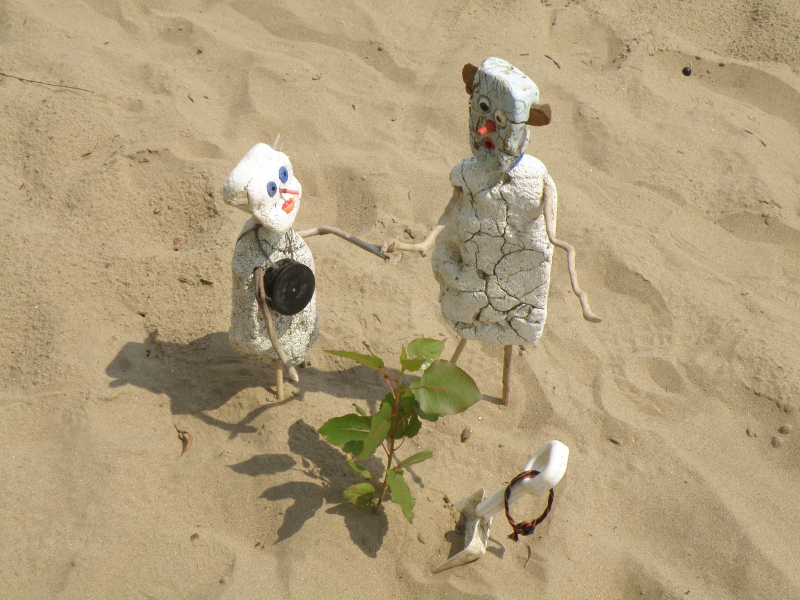
selecting a cottonwood seedling, July 2013

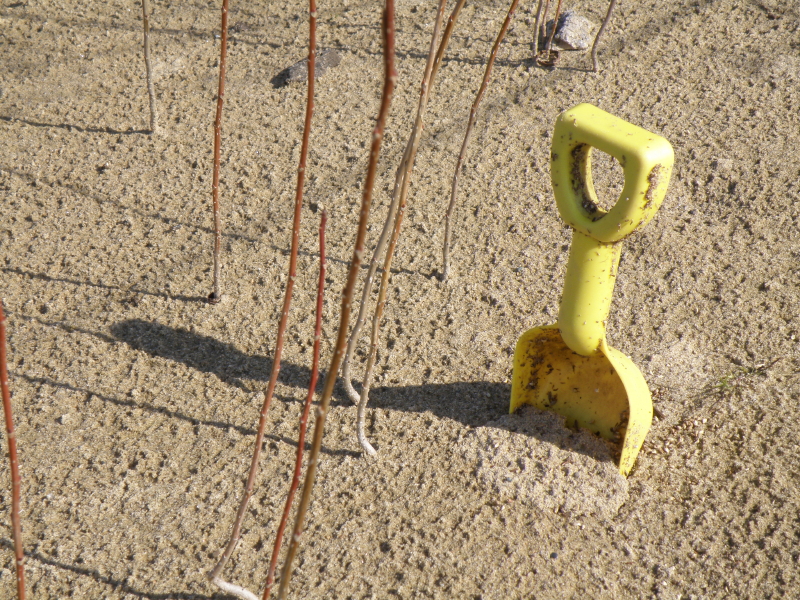
First Joe Arbor and Pip selected a little cottonwood growing in the sand.  They next held hands and said a few kind words and explained to the tree what they were about to do and why.  In this way, they hoped to obtain the tree’s blessing.  Together, they carefully dug around the sand to uncover as much of the tree’s roots as they could.  Bagging up the little tree roots and all the paired moved on to a different location.

Canada geese at the Falls, July 2013

All the while Joe Arbor and Pip were working, a small flock of Canada Geese were standing nearby and acted as guards and witnesses.  Because the geese also live near the river they are also privy to the Earth’s nonverbal language and understood what was at stake here.  Their presence added a bit of solemnity to the event.

Joe Arbor and Pip with cottonwood tree, July 2013

Joe Arbor and Pip with cottonwood tree and tools, July 2013

With their valuable charge in a bag, the pair moved on to a pre-selected location they hoped would be favorable to the cottonwood tree.  Cottonwood trees do best when they are close (but not too close) to the water.  As they walked, Joe Arbor whistled an improvised melody partly out of nervousness and the excitement of the moment.  As is his norm…Pip remained quiet.
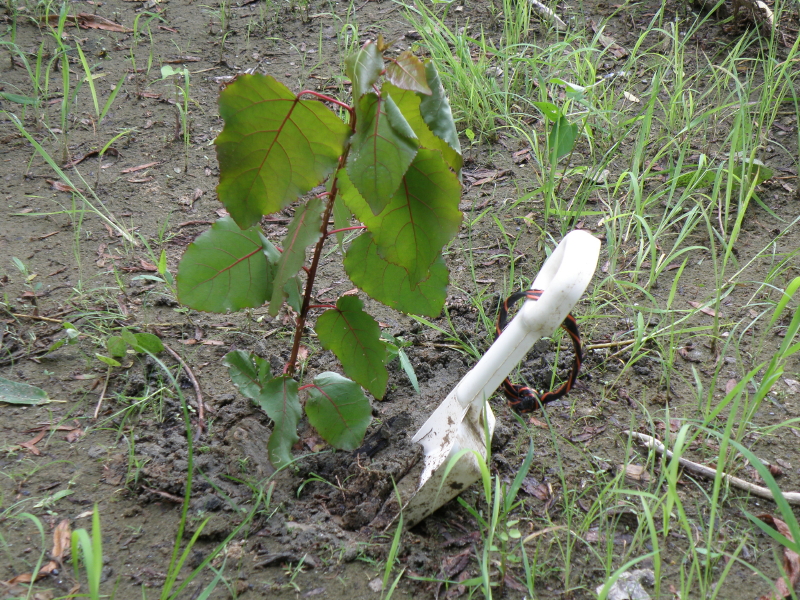
Young cottonwood in the ground, July 2013

A large enough hole was dug in the new location to accommodate all the young cottonwood’s roots.  Sand and soil were shoveled lovingly around the tree.

Joe Arbor and Pip plant the tree, July 2013

After the tree was safely in the hole, Joe Arbor said a few words while Pip watered the transplant.  It was hoped that the chosen location was the right distance from the river and that the young tree would grab a toe-hold here and prosper.  Time will tell.  The day still had one more nice surprise and it came from Pip.  Joe Arbor didn’t know why he didn’t pay attention to this before, but Pip was wearing a circular, black, plastic box on a cord hung around his neck.  This circular box was the container that smokeless tobacco is sold in.  Many of these boxes routinely wash up at the Falls of the Ohio.  Anyway, Pip opened up the container revealing its contents and this is what Joe Arbor saw.

snuff box with mulberries, July 2013

Wrapped in mulberry leaves were four ripening mulberries.  This is another tree that grows at the Falls of the Ohio and provides food for many birds and animals.  The berries are sweet and juicy when ripe and some people find them tasty too.  The leaves are interesting and come in different shapes with serrated edges.

Pip holding a mulberry, July 2013

Pip (who says very little) had his own tree planting experiment in mind and Joe Arbor got the idea.  Moving to a different location, a new hole was dug in the rich soil and a berry was placed in that hole.

Pip and Joe Arbor plant mulberries, Falls of the Ohio, July 2013

The process was repeated until all the berries were planted.  Pip was curious to see if he could start a mulberry tree in this way or whether the seeds needed to travel through the gut of a bird or some other animal first?  Again, time will tell.  Satisfied that at least for today, the duo had done some good for the Earth, the pair picked up their gear and headed home together.

Pip and Joe Arbor go home, July 2013

This little story is dedicated to an artist friend of mine I have never met.  She has a vision of creating a tree art project around the world and if you are interested in learning more about it and perhaps participating…here is a link  to a post she wrote about it:  http://rooszwart.wordpress.com/2013/05/29/the-bridge-land-art-forest/
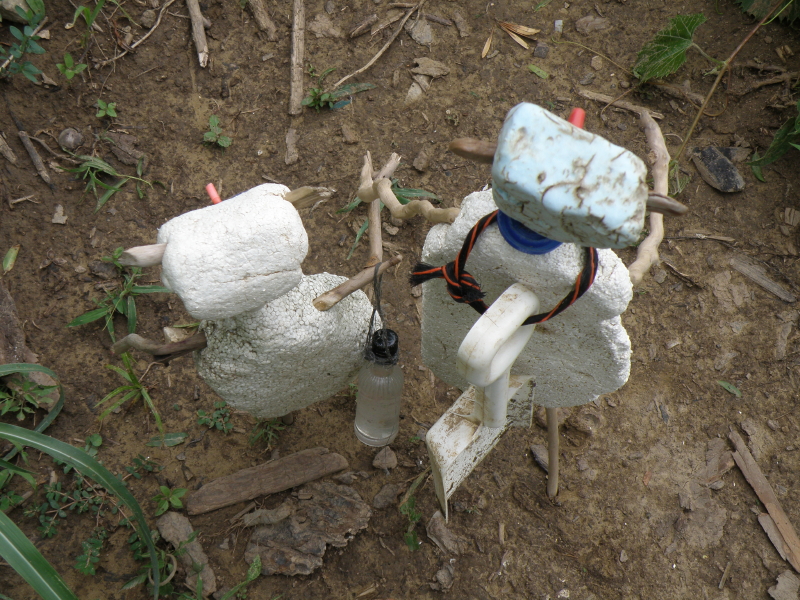
Pip and Joe Arbor after planting trees together, July 2013

Read Full Post »

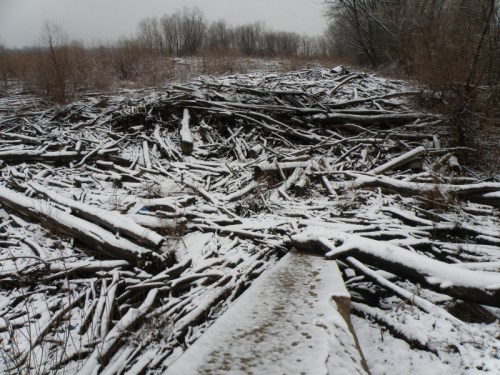
snow covered driftwood, Dec.29, 2012

The last month of the year which began so warmly has finally delivered some cold and snow to the Falls of the Ohio.  The newspaper says that somewhere between two to four inches fell overnight.  I’m sitting in the comfort and security of my home and all is well except for that small voice in my head telling me I need to go check out the river.  The voice is persistent and annoying and makes little sense on such a bitterly cold day.  Naturally, I caved in simply because snow events are uncommon here of late and as a chronicler of the Falls, I have a self-appointed mission to document what happens.  I also know from past experiences that these snow and ice events can be beautiful and have a way of revealing a different side of this environment.  Who knows, maybe I will come across something I’ve not seen before?

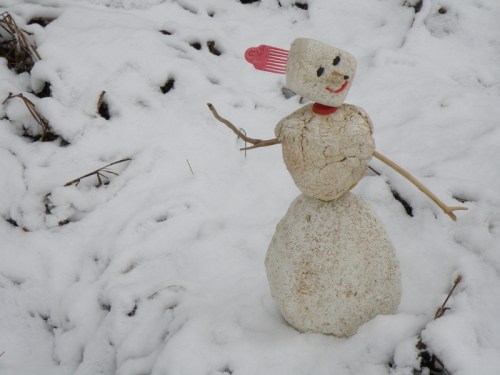
Blanche in the snow, Dec. 2012

Upon arriving I discovered that my way of accessing the riverbank was gone!  The trusty wooden staircase that led from the parking lot to the river is completely missing and I think that some of the maintainance issues it had finally caught up with it?  To compound events further I discovered that my right boot has a hole in the sole and the cold water I just stepped in has made my sock and foot a soggy, frozen distraction.  I’m about ready to get back in my car when I hear that familiar voice again.

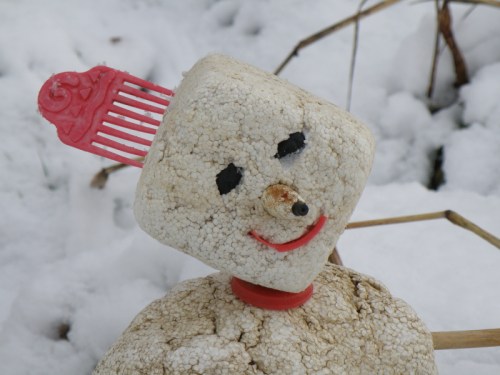
Blanche's face, detail, Dec. 2012

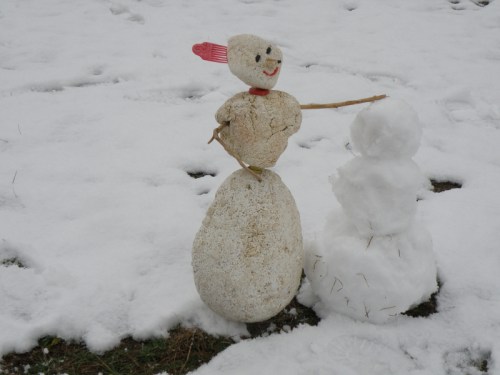
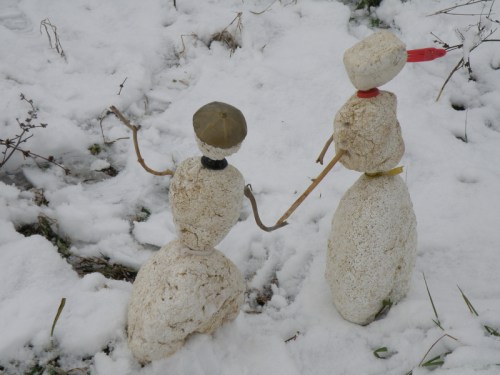
This time that voice wasn’t coming from within me, but rather just a short distance a head of me.  The voice reassured me I wasn’t suffering a relapse of the flu I recently overcame!  Seemingly materializing in thin air was this small, but classic version of a snowman who asked to be called “Blanche”.  I suppose that makes her a snowwoman or snowperson and it’s weird the things you think about in certain moments.  I would guess that the figure was about two feet tall or so.  She had a fishing float for a nose, coal eyes, and bits of red plastic around her neck and mouth.  Attached to her head was a rather interesting hair comb.  Blanche thanked me for showing up and apologized for “getting into my head”.  It was she who had called me to the river to tell me something important.  As she spoke, I forgot all about the hole in my boot.

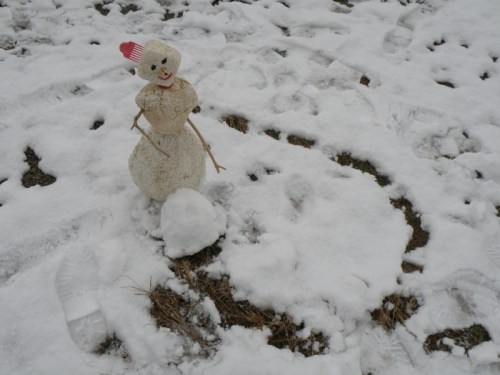
Blanche rolls a snowball, Dec. 2012

Blanche rolls several snow balls, Dec. 2013

I hope I’m getting all this right because several things were happening at once.  While Blanche spoke to me she was also rolling snow into three balls of graduating sizes.  What she in essence told me was that while life did originate in the water…the relationship was deeper and richer than that.  Water was in fact “life” and the medium where its collective unconscious resides.  It is water existing from the North Pole to South Pole in all its forms like snow, rain, ice, salty, fresh, steamy, cubed, etc…that holds the memory, wisdom, and promise of life.  As it turns out water also unifies life.

As I was trying to absorb what was being told to me…I snapped a few photos and hoped that the cold wouldn’t affect my digital camera.  Blanche took the three balls she created and stacked them one on top of the other.

Blanche creates a friend, Dec. 2012

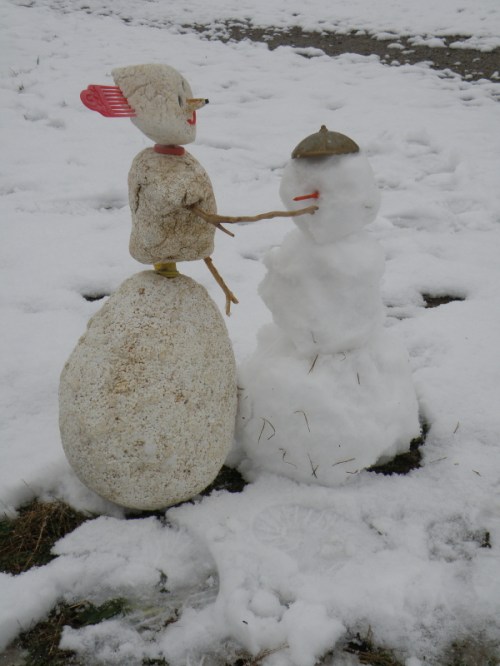
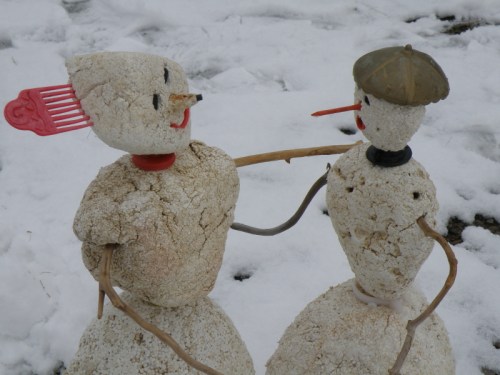
As I watched, Blanche added a gold plastic hat she found as well as an orange golf tee for a nose.  As she worked Blanche hummed a song and I watched in astonishment as a second snowperson appeared before me!  Blanche said his name is “Frio”.

Blanche and Frio, Dec. 2012

Frio and Blanche, alternate view, Dec. 2012

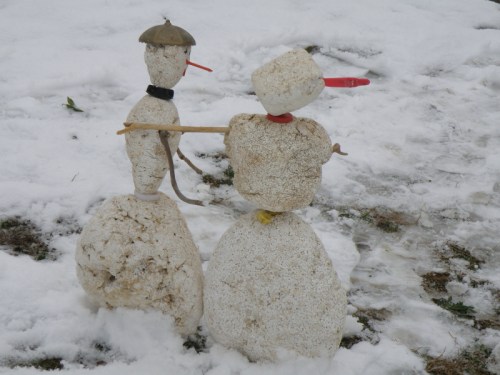
It was the most incredible display I had ever seen!  Right before my eyes the seemingly inert snow took on another form that came to life and reinforced some of Blanche’s message to me.  There would be more.  Frio then asked me to continue to tell the water’s story through my blog because the fate of water and life was more important than ever.  It was vital that water remained as pure and clean as possible or the normal rhythm of the planet would be disturbed. He told me that the internet was something similar to the collective unconscious and the best way to send out a message to the billions of people now living on the planet.  Water and life need all the friends that can be mustered to act on its behalf.

Blanche and Frio singing, Dec. 2012

My encounter with the Snow Folk ended in song.  Before Blanche and Frio headed out they sang a song to the Falls celebrating how this is a unique place on the planet where time and space intersect in interesting ways.  There was a verse dedicated to me and the continued success of my project now entering its tenth year.

Blanche and Frio depart, Dec. 2012

I was completely charmed and captivated and thanked the Snow Folk for the song.  I watched them turn and walk into the river where they completely disappeared.  I’m still trying to digest this experience.  It’s not everyday that water speaks to you in your own language.  Thankfully, I have these photographs to show you and to add weight to Blanche and Frio’s message to us.  After a while, I felt the cold again and decided this time that a mug of hot chocolate or coffee would help me feel my fingers and toes again.  Happy New Year to you all from the Falls of the Ohio.  See you in 2013.

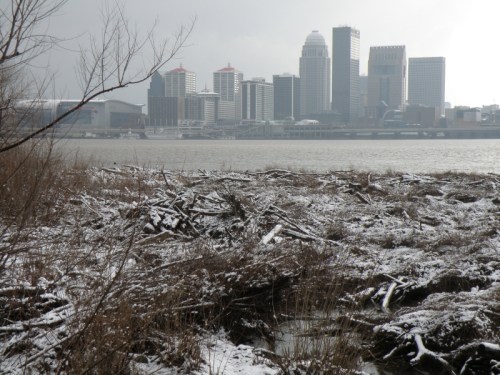
skyline of Louisville, KY at year's end, Dec. 2012

Read Full Post »

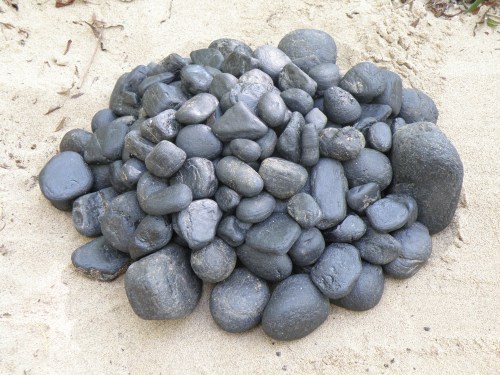
river-polished coal, Falls of the Ohio

The coal that I find at the Falls of the Ohio looks like the image above.  What I mostly come across in the park are pebble-sized stones and coarse gravel that have been polished smooth by the Ohio River.  The same river processes that shapes Styrofoam and wood also alters coal.  Over the last two years I have been collecting this coal off of the riverbank and creating site specific art installations and images using this fossil material.  Although coal is organic and natural, what I’m finding does not belong in the Ohio River.  I believe this coal comes from the commercial barge traffic delivering fuel to hydroelectric plants throughout the Ohio River Valley.  During times when the river is running high, materials carried into the water seem to eventually find their way to the Falls of the Ohio.

coal flake in situ, 2012

Before getting to the heart of this post, I would like to share a few other associations I have with coal and Christmas.  My Dutch mother told me stories of her childhood and St. Nicholas Eve which is celebrated earlier in the month than our Christmas.  Good children might expect small toys, fruit, or candy to be placed in their shoes as gifts from the white bearded saint.  If, however, you were badly behaved over the year…you ran the risk of getting coal in your shoe as punishment.  St. Nicholas has a chimney sweep friend named Black Pete and he usually does the dirty work. Fortunately, my mom doesn’t recall anyone she knew who this happened to!  There are times, however, when getting coal in your shoe isn’t a completely bad outcome.

radiating coal flake at the Falls of the Ohio, 2012

My mother also recalls how important and scarce coal was one particularly bitter winter and Christmas.  It also happened to be during World War II and the city of Amsterdam was occupied by foreign soldiers.  I believe she said the particular year in question was 1942?  When resources  became scarce, people would walk the railroad tracks at night looking for chunks of coal that fell off the railroad cars.  People risked their lives doing this.  Found coal would be burned in home stoves to keep everyone warm.  When coal wasn’t available wood was burned next.  My mom remembers that by war’s end, every wooden piece of furniture in the entire apartment was cut up and burned for heating and cooking purposes.  Back then, a bag of coal would have been as fine a gift as receiving an orange or piece of chocolate.  The times have really changed since then.

coal flake in water, 2012

It’s becoming more difficult for me to believe that the events of 1942 occurred seventy years a go!  Since then, the peace was won (for a short time) and the western economies thrived and grew on cheap and abundant fossil fuels.  If populations had stayed relatively the same size, perhaps we wouldn’t be noticing the effects burning those fossil fuels have had on the environment?  But the world’s population grew and then grew a lot more which puts pressure on all our resources.  Today we live on a planet where billions of people want to live at the same standard of living that the west has squandered away.  With China and India experiencing their own industrial growth moments being fueled by coal…the environment at large will surely see further damages.

found coal and aluminum can bottoms in red mud, Falls of the Ohio, 2912

Since beginning this Falls of the Ohio Project nearly ten years a go…I have created my own unique holiday cards.  Every year I send something different out into the world.  This helps me get into some kind of holiday spirit. Friends and family tell me that they enjoy receiving these admittedly odd cards.  The last several years I have waited for the weather to get more seasonal perhaps with snow or ice present before rushing out to document the moment.  As it so happens, it’s been getting warmer and warmer over the past several winters.  As a whole, 2012 was our warmest year ever and the calendar page hasn’t yet turned to the new year!  Our December began with temperatures in the low 70 degrees mark.  Finally, the day after Christmas it has become cold enough and we may see a dusting of snow over the ground.

coal and clam shell designs, Falls of the Ohio, 2012

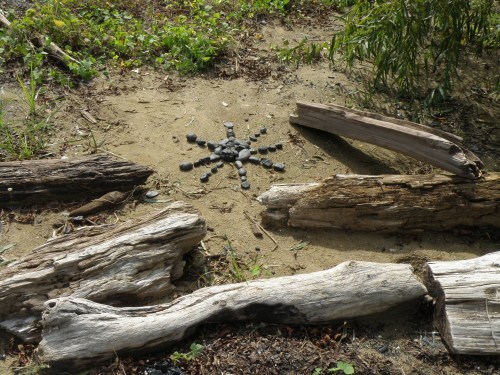
Currently, I have artworks (a sculpture and photo series) on display in a coal-themed exhibit at the Carnegie Center for Art and History in New Albany, Indiana.  While working on my projects, I had a conversation with a sculptor friend of mine who grew up in a steel making town in Pennsylvania.  He recalled from his childhood that it snowed a lot during their winters, however, it didn’t take the snow long to turn from white to dull black because of all the coal soot in the air.  This inspired me to envision black “snowflakes” or “coal flakes” and I began to create small site specific designs on the ground based on this idea.  No two coal flakes I’ve made has been exactly the same as another.

three coal flakes at the Falls of the Ohio, 2012

I have located these coal flake designs in fairly public places along side walking trails mostly used by fishermen.  A photograph documents each one I have made.  To me, this is a form of public art and it’s interesting to see how people will react to these modest designs.  Some coal flakes don’t make it because there is something else in the human spirit that needs to disturb or destroy what it doesn’t understand.  Many of these designs were rubbed out nearly as quickly as I made them!  By now, I’ve created enough coal flakes that it occurred to me that I had my newest holiday card theme already completed in sixteen different designs!  The images in this post are just a few of the ones I sent out this year.

coal flake on red mud, 2012

And so I ask myself, what am I hoping might occur by sending out these unfamiliar images?  Hopefully, people will register that there is a connection between burning fossil fuels and the changing climate we are currently experiencing.  The environment isn’t just something that’s out there, but is a big part of the context of our lives that we contribute something to.  I also continue to hope, that people will see personal creativity as an advantage our species has over others and that we honor and use this creativity to figure out how to live harmoniously with ourselves and the planet.  I feel a lot of our hyper consumption is based on low self-esteem where creativity is replaced with consumption.  Here’s hoping in the new year that more people learn how to tap into their own internal resources to help aid the earth!  Happy Holidays to all from the Falls of the Ohio!

coal flake made from coal and small clam shells, Falls of the Ohio, 2012

Read Full Post »

Under the Big Tree, Nov. 2012

I have heard stories about this land and river that are supposed to be very old and have been handed down for generations.  Folks back then told each other stories and that’s how things became remembered.  Back then, it also wasn’t unusual to find a young one that knew their family’s history by heart and able to recite the names of all the known ancestors going back as far as people could  remember.  People in the old days must have been very smart and had better senses of memory than we do today.  Before writing and such, I wonder if people back in the old days held jobs as living books and sources of information? But I digress… which brings me to yesterday when I encountered the most unexpected sight at the Falls of the Ohio!  I first learned about this mystery as a little guy while listening to stories over a camp fire with my recent ancestors.  It’s about these special trees that are rumored to live around here that have the ability to uproot themselves and move around.  I didn’t believe it either and chalked it up as being another fun story like the Prince Madoc legend, but then I saw these rare trees with my own eyes!  And, because these days we have cameras…I took a few snapshots of them so that you can see them too.  Check this out.

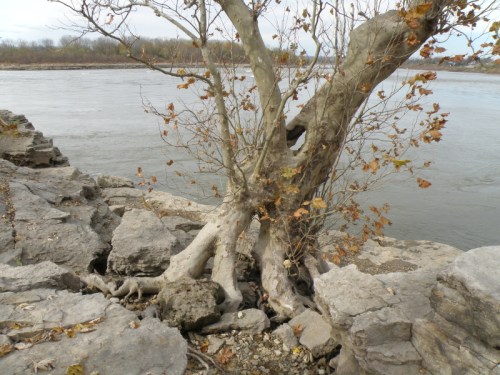
Sycamore tree, roots and rocks, Nov. 2012

The old stories mention that the boundary between the earth and the water has always been a difficult place to live.  It’s an extreme back and forth existence living at the margins of too much or too little.  There’s not much nutrition coming out of these fabled rocks, but then again the limestone at least gives you something to hold on to.  Water has a way of insinuating itself around every nook and cranny and is always testing allegiances.  Around here, some of the trees have learned that they can improve their lot in life by pulling up roots and going elsewhere.  You see, some trees have long memories and they know when it’s time for that great once in a thousand years flood or some other cyclical disaster to come back around.  Or epic memories are shocked and encoded into the rock and soil and trees are just better at reading and interpreting what it could mean?I’m guessing that some of the trees around the Falls of the Ohio like to be prepared or are skittish or both and have begun the very gradual process of being somewhere else.

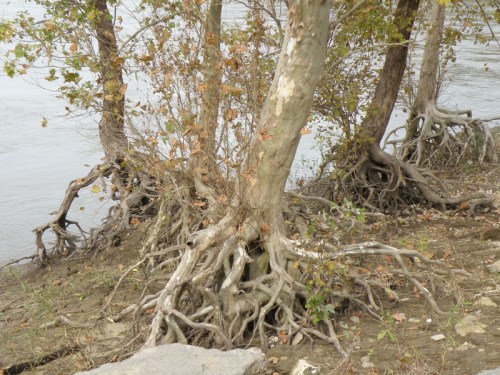
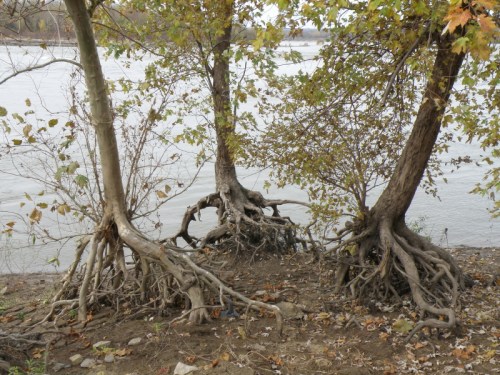
uprooting trees at the Falls of the Ohio, Nov. 2012

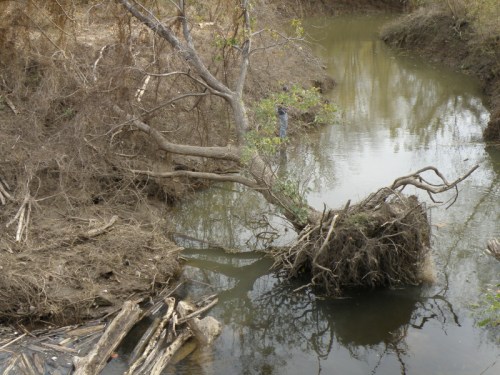
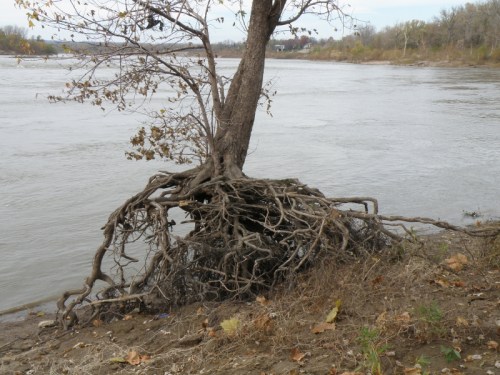
I came across this small mobile grove not far away from the first tree I showed you.  This is an incredible response by these trees to the rise and fall of the river.    The river dissolves  the silt, sand, and mud away from the riverbank and exposes the tree’s rootlet toes which are always growing. Water currents and the rocking back and forth of the wind further helps loosen roots from soil.  These trees are vibrating and creeping along with most of their roots on the surface with just enough tendrils into the earth to hold on to dear life.  Good thing too or else one day you could find yourself swept away.  I have seen it happen before as in this recent example by the creek.  This tree fell into the water and will never right itself or hold the riverbank up as it formerly did and one day it will be swept away by the river to somewhere unintended.

Tree that recently fell off of the riverbank, Falls of the Ohio, Nov. 2012

So much water is a mixed blessing.  Just enough and the trees can move a little more than usual.  Too much water and they run the risk of losing control. This mixed lot of trees seems to be moving westward.  Park officials have reported that there seems to be more of a sense of urgency on the trees’ part and they have picked up the pace over the last few years.  I wonder how they know when and where to stop and should I be worried?  Do the walking trees signify a bad omen for the future and is some environmental disaster looming ahead of us?

uprooted tree trio at the Falls of the Ohio, Nov. 2012

Of course life travels at its own speed.  Our tree friends here cannot out run this year’s spent leaves gathering around their feet, but they have patience.  They don’t have the same concept of time as we do. An inch or centimeter or two here and there and progress will be made even if it takes many seasons.  Moving in ultra slow motion, they will either get to their intended destinations or not.  Come to think about it…trees don’t have the same concept of speed either!

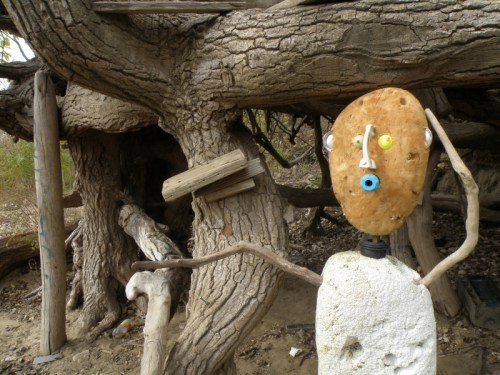
Tall figure under the Great Tree, Nov. 2012

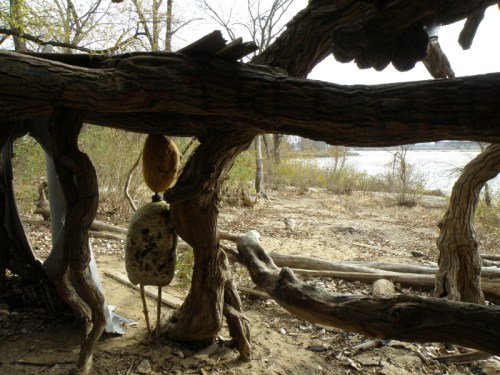
Trees have their own internal logic and physics that they respond to.  My tall friend here is a case in point.  He’s an old cottonwood tree and long a go he too was a walking tree.  You can tell from looking at these fantastic roots that buttress the tree from the river and elements.  For some reason known only to the tree…he decided to stay here and put down his roots.

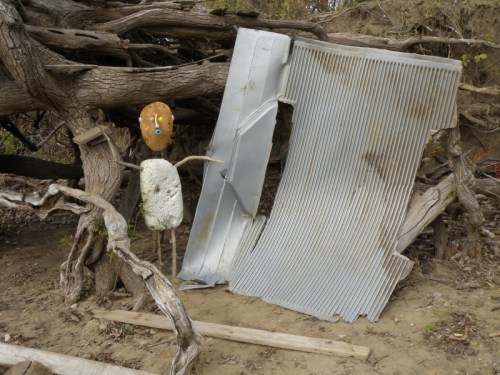
Figure with big sheet of plastic, Nov. 2012

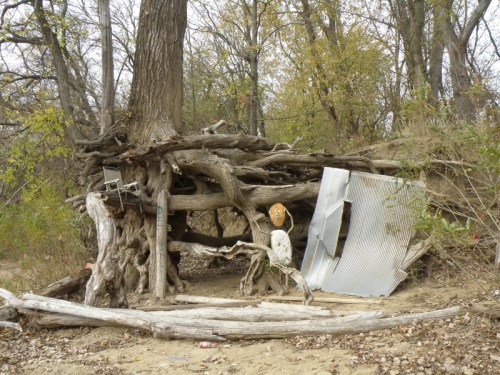
Over time the cottonwood thrived.  Its roots held the riverbank in place and kept it from sliding into the river.  With this particular tree, a small, sheltering space grew directly under the tree’s tall trunk.  Visitors would bring discarded boards and other river finds ( like this large sheet of corrugated and molded plastic) to make forts and tree houses.  This one site has seen plenty of play and fantasy over the many years and has always been recognized as a special tree.

Figure by large cottonwood tree, Nov. 2012

This just occurred to me.  What if the moving trees are just a matter of perception and they really are trying to stay in one place?  What if it’s the rest of the world that is moving so quickly and constantly like one big blur and the trees are holding life in place?  The walking trees have remained where they have germinated and everything else around them has quickly shifted. Because we are so near to it we don’t recognize the movement.  Could time also be as fluid as water seeking out the nooks and crannies and testing allegiances too?  All this head-scratching stuff is making me dizzy on such a fine day by the river.

Great Cottonwood tree at the Falls of the Ohio, Nov. 2012

Unbeknownst to the brown-headed philosopher under the cottonwood, but changes to our area are forthcoming.  This year was the warmest year ever recorded.  The environmental chess board has been set and the game is on.  Pieces are moving and strategies are evolving and somewhere on the Ohio River another pawn is moving into place a little nearer to the cottonwood tree.

Tree with exposed roots, Falls of the Ohio, Nov. 2012

Read Full Post »

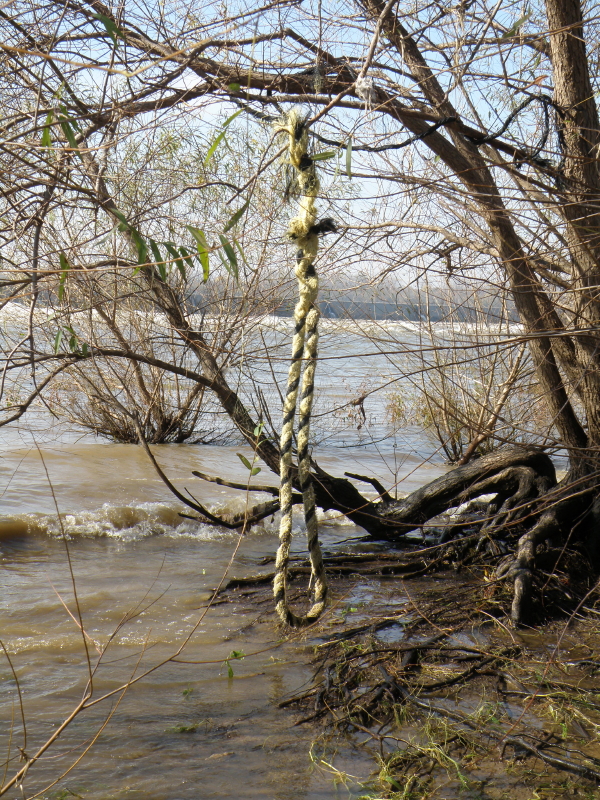
Hello all and welcome to another adventure set at the Falls of the Ohio.  Since my last visit, the Ohio River has risen in response to all the rain that fell in the northern portion of the Ohio Valley and has flowed down river in a southwestern direction.  The fossil beds normally exposed during the summer and early autumn months are now submerged by swiftly flowing water.  Walking this ever shifting shoreline I’m open for whatever presents itself as novel and different.  Turning the corner around a  stand of willow trees I was caught by this unusual sight.

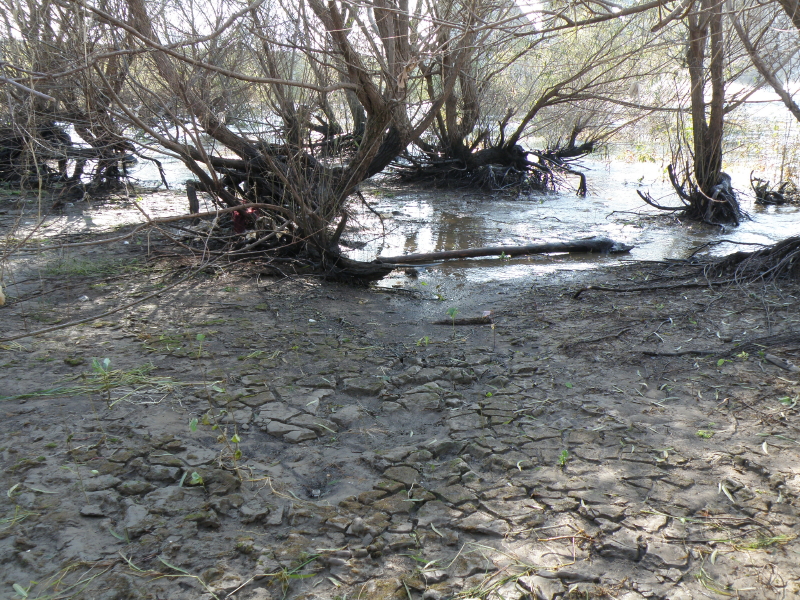
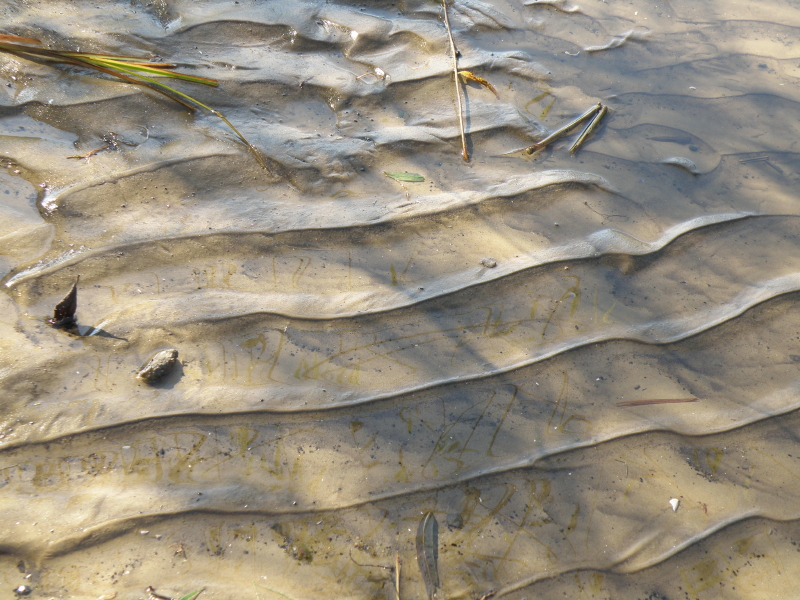
A tree captured barge cable or rope was in a different position from the last time I had noticed it (see this year’s Halloween post).  It is possible that the river rose high enough to dislodge it from its previous resting spot.  I was struck by the way it seemingly is suspended in mid-air with its regular yellow and black intervals contrasting with the unruly roots and branches around it.  Around here, water can both rise and fall quickly.  In the fine silt and mud you can often find interesting patterns that were created by the movement of wind and water.  Here is such an example.

The back and forth rhythm of the river caressing the land are recorded as peaks and valleys in this very fine mud.  I can be “hypnotized” at times by concentrating on this movement which I find soothing.  I’m always interested in the various subtle patterns that water can create on the mud of the riverbank.  It’s akin to trying to “track” water and recognize its footprint as it moves onto the land. I also noticed about a two foot tall, low “wall” of material (mostly wood and dried grasses) along the shoreline that marks this latest high water moment.  And of course, there is always the ever-present mostly plastic junk that also gets swept away and mixes with the natural debris.  I found lots of plastic detergent bottles, bits and pieces from toys including another doll’s head.  Here are images of other finds including an interesting toy ball.

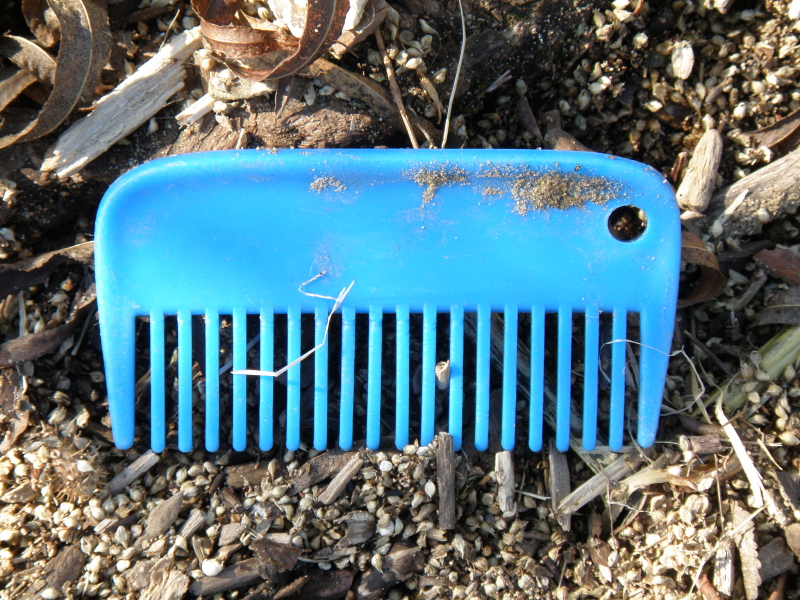
I’m assuming this is a dog toy based on the image of the dog on the ball?  The small knobs are different from the usual balls I find out here.  Now, for a bright blue comb in a design that’s also new to me.  The tiny grains around the comb are seeds from various river grasses.

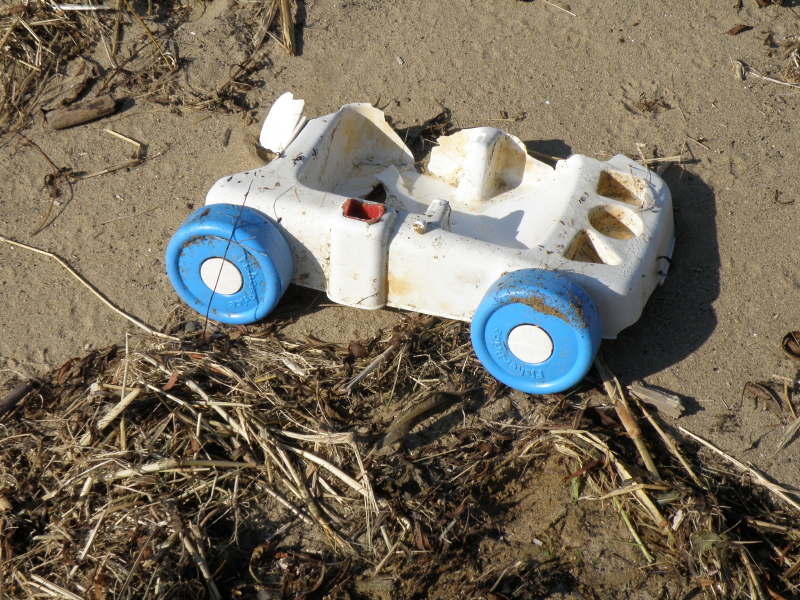
More ” blueness”  in the form of plastic wheels on a wrecked pull toy.

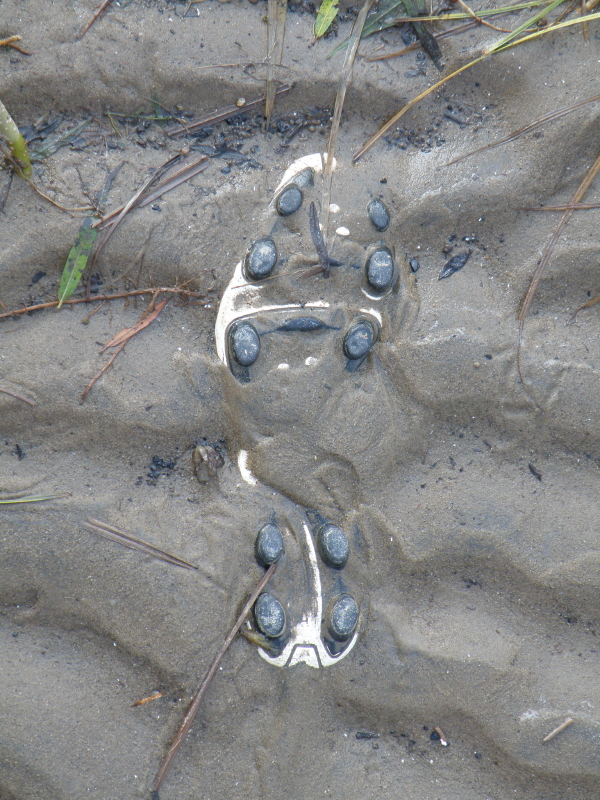
In the mud, I came across this other type of footprint that I thought was a bit unusual from the norm.  Of course, it’s a sports shoe with cleats on the bottom sticking up from the mud.

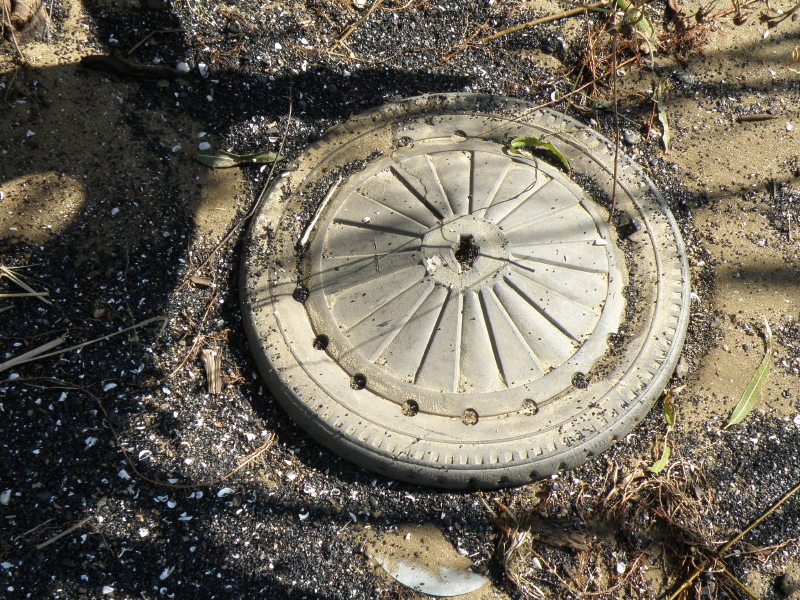
And one last found wheel whose radial pattern inspired another image in my ever-growing “Coal Flake” series.

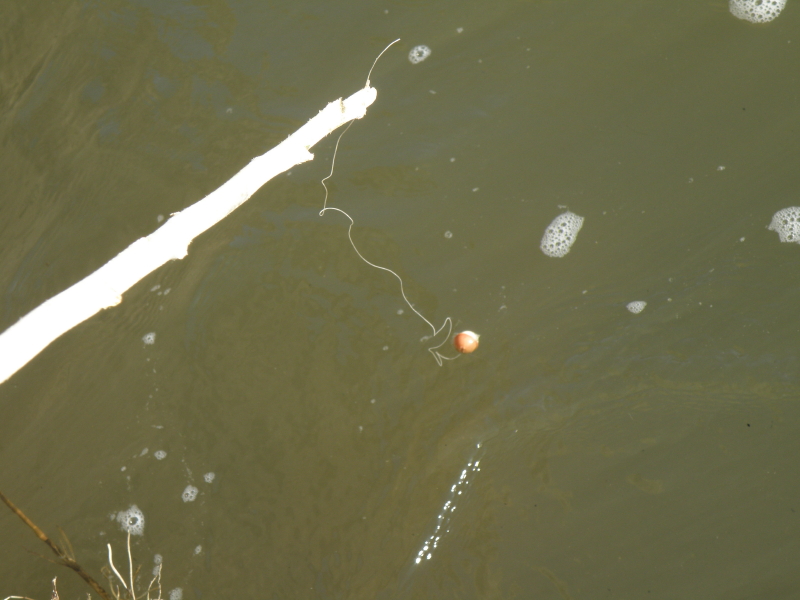
I’ve come to really like making these designs from river-altered coal that I find at the Falls.  I’m under the impression that this coal has fallen or been swept off the immense barges that transport this fuel up and down the river.  I suppose it’s possible that somewhere along the river’s journey the water has cut down through the rock to expose a coal seam somewhere, but I haven’t ever heard of this happening.  The barges seem the likeliest answer.  This particular example has more Asiatic Clam shells used in the design.  These clams are the most common of their kind that I find at the Falls.  Once upon a very recent time a go, the Ohio and Tennessee Valleys were the world’s epicenter for fresh water clams.  By altering the rivers and the water quality in them, many of these amazing creatures have either gone extinct or have become so very rare.  The Asiatic Clam is a non-native animal imported here in the 19th century as a good luck charm and has thrived as has the Zebra Mussel that you may have heard about?  The day was moving on and except for a few Mallard ducks and Canada geese I hadn’t seen much in the way of wildlife.  I decided to end my day by doing a little fishing.  I found a short, recently beaver-chewed willow branch and attached some waste fishing line I found.  I attached a hook and found bobber and into the water it went.

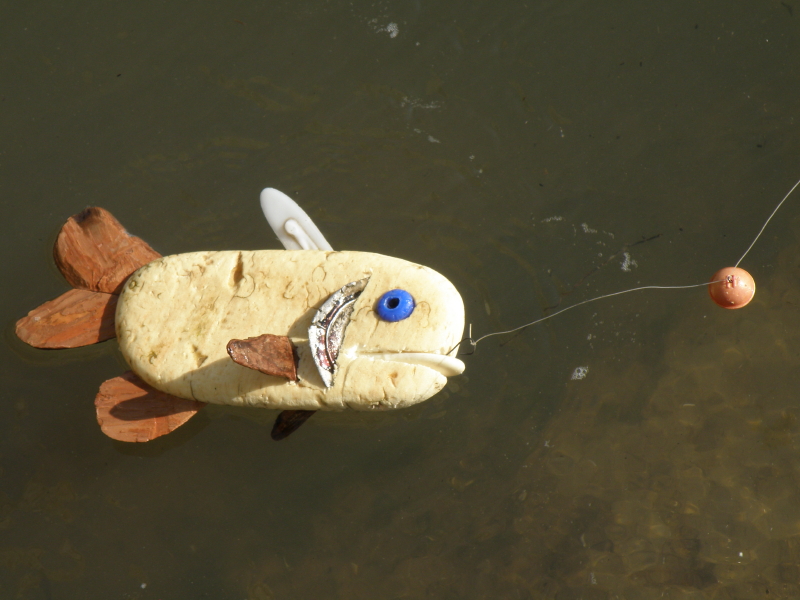
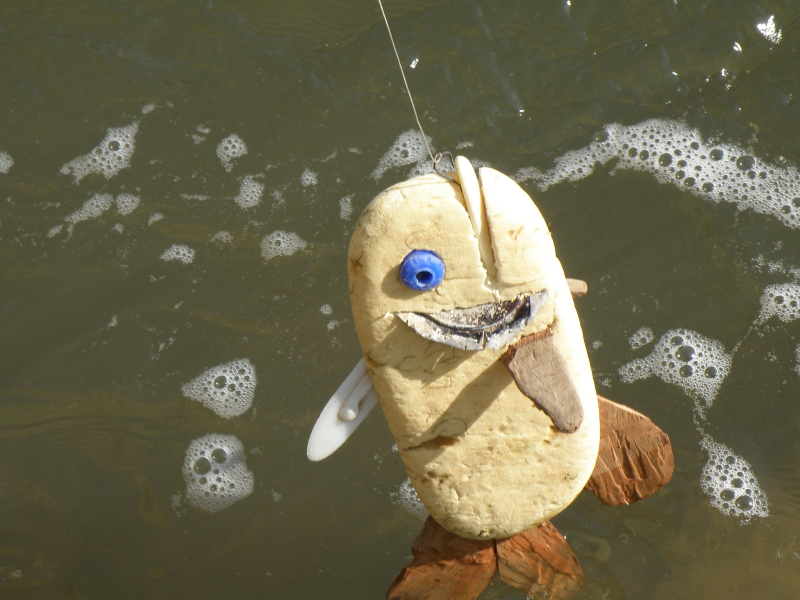
Oh, for bait I caught a small grasshopper and attached it to the hook.  A small found lead weight kept the bait below the water.  Every once in a while I would raise my short pole up and down in a “jigging” motion.  To my immense surprise I caught this very unusual fish!

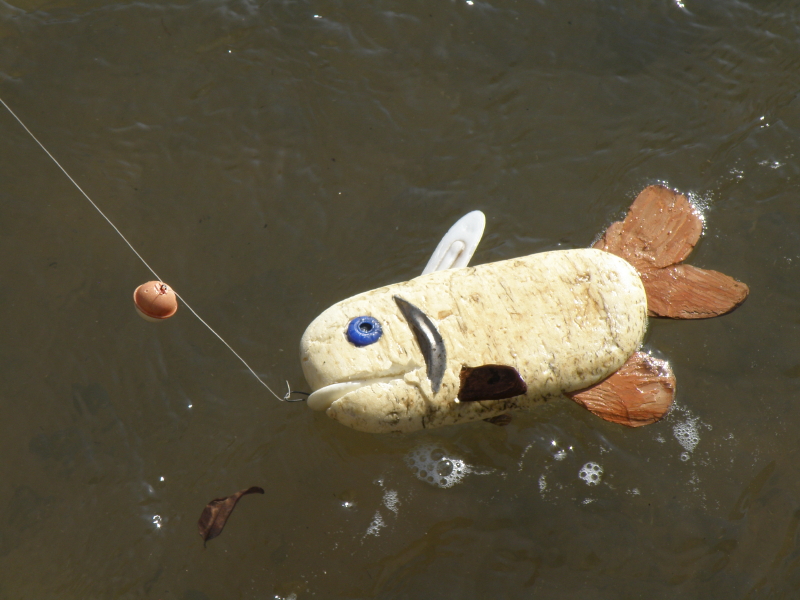
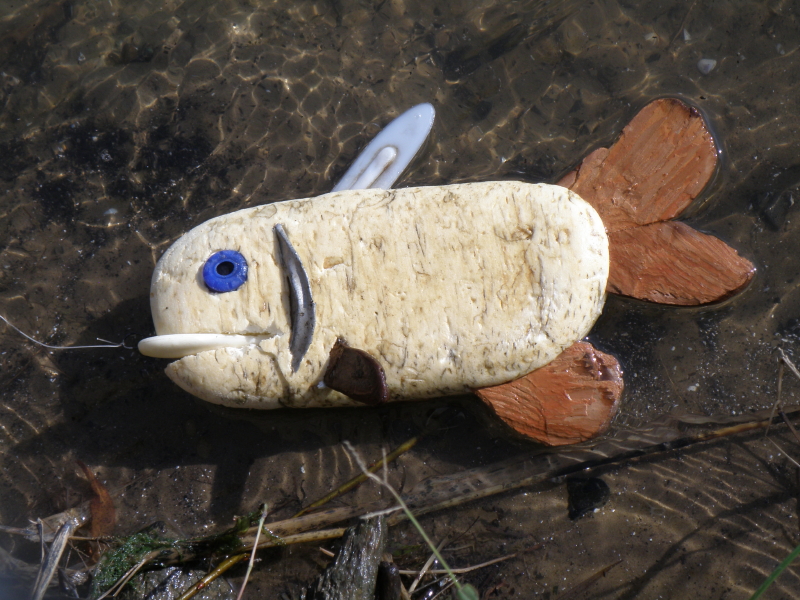
This fish is called the Iron Gill based on the metallic covers it sports around its gills.  Other distinctive features include bright blue eyes and a small white dorsal fin.  It’s body shape is unique and lends itself to easy filleting…although I wouldn’t normally recommend eating the fish from this part of the river.  Catching this fish here was a surprise because normally this is a deep water fish found in large flowing rivers.

This species was first described to science by Constantine Rafinesque back in 1811.  Rafinesque was a controversial figure and brilliant naturalist.  He had a gift for collecting and recognizing new species, however, in his zest to publish and receive credit for his discoveries he was very sloppy in his methods.  As a result, many of the animals and plants he introduced to science are poorly described and classified which led to much confusion and consternation among the other “scientifics” of the time.  In the end, Rafinesque usually won out because science gives priority to the person who first (no matter how poorly) brings the new creature to the world’s attention.

After this last image, I released the Iron Gill back into the water and rebaited my hook.  Alas, this was the only fish I caught on this day, but it reassured me that my skills in this area were still intact.  For my next post, I want to show you images of a coal-themed exhibition I’m participating in the nearby town of  New Albany, Indiana.  It’s a good show and worth a post.  For now, I would like to close with another image of a found toy I came across on this day.  Have a great weekend out there in the wider world!


Read Full Post »

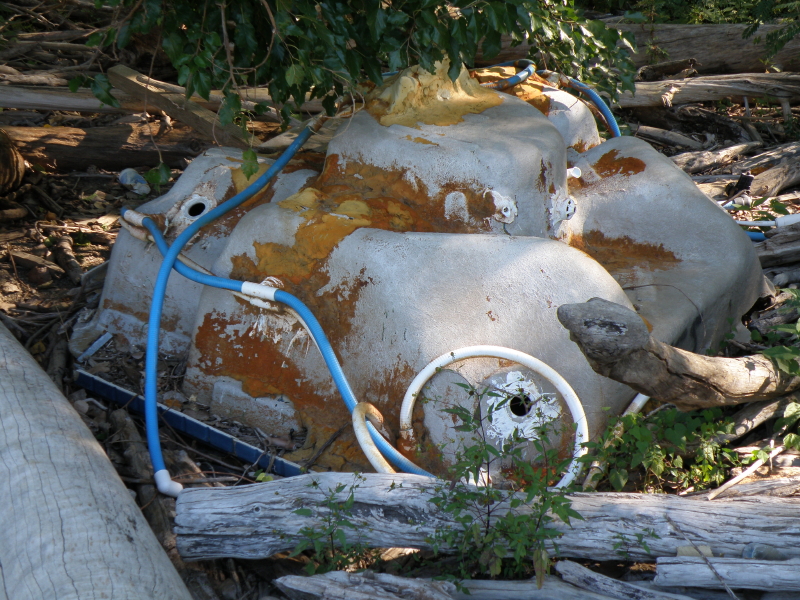
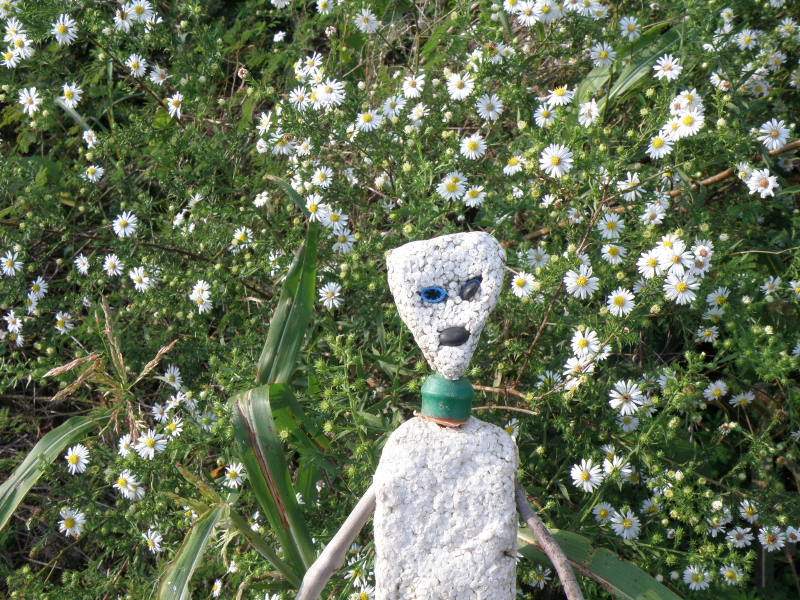
My beloved…I still live!  I hope my repair to my communication transmitter has been successful and that you and our fellow Styrosians so far away across the universe will receive this message and know that I still exist.  While exploring a little known solar system my ship was damaged in a collision with undetected fragments of space debris in orbit surrounding a smallish, blue-green planet.  This planet is the third nearest to its star. This solar system is comprised of eight other planets of varying dimensions and densities.  Damage to my guidance system made controlling my craft difficult and I entered the atmosphere of this planet like a meteor across the sky.  Fortunately, I arrived without attracting attention and I was able to affect a safe landing.  My craft, however, will need much maintenance. Hopefully, the coordinates of my position reached you before I entered this planet’s dense gaseous atmosphere? Here is an image of my vehicle which I call home and its contents are a dear reminder of the world from which I originated.  So often I have thought of you and wondered if we will ever see each other again?

I have so much to tell my fellow Styrosians that I hardly know where to begin.  Duty compels me to start with a report concerning my original mission.  I have crashed on a beautiful planet where the majority of its surface is covered by that most precious combination of hydrogen and oxygen.  I am so excited to have found water in abundance!  I have detected water in all three of its known states including gas, liquid, and yes…I have even seen ice!  It was the chemical signature for water that compelled me to take a closer look when the accident occurred.

Most of the water I have been able to analyze locally is of the fresh variety which contains many other chemical additions some of which are naturally occurring.  I have, however, been able to learn that the vast majority of the water on this planet is heavily influenced by the compounded interactions of sodium and chlorine.  I have not only discovered water…but water in different flavors!  After surviving the shock of my sudden and unexpected arrival, I couldn’t wait to explore this new environment which offers such a stark contrast to our own dry home world.  There is so much water here that it actually falls from the sky!  Please excuse me while I transmit additional self images made while engaging in water joy!  They at least offer further visual evidence of the importance of my unexpected discovery.

How I wish you were here so we could experience this together.  I have been able to further confirm that our hypothesis about the connection between water and life is correct!  The abundance of water is equaled by the sheer amount and variety of life forms that inhabit this world.  Where there is water I have found life even in the precious fluid itself! There are sessile, terrestrial life forms that process sunlight through green, cellular solar panels.  They anchor themselves and obtain moisture through a system of filaments interwoven into its supporting substrate. And there are also many animate life forms that move through space and have evolved into hierarchies where every environmental niche is occupied by a specialized life form.  Interestingly, there are even species that dominate and consume other life forms. Our scientists will have much to study in this new world! I would like to expand on one of those species which seems to occupy a very prominent position on this planet.  It is an interesting life form and is bilaterally symmetrical like us and appears to be sentient to a degree.  Monitoring their communication patterns I have been able to translate and understand something of its language and culture.  I have heard self references to being a” bipedal humanoid”, but I’m not certain if I fully understand what is meant by that.  This animal while claiming intelligence and rationality is actually characterized by numerous contradictions.  The most observable of these traits is a predisposition towards delusion and self-deception.  It does much harm under the guise of doing good. This animal (which I believe as some members of its own kind acknowledge have evolved from what are known as “primates”) is constantly engaging in selfish behaviors that are having a deleterious effect on this planet.  Ironically, they are harming not only the other life forms here, but ultimately themselves as well.

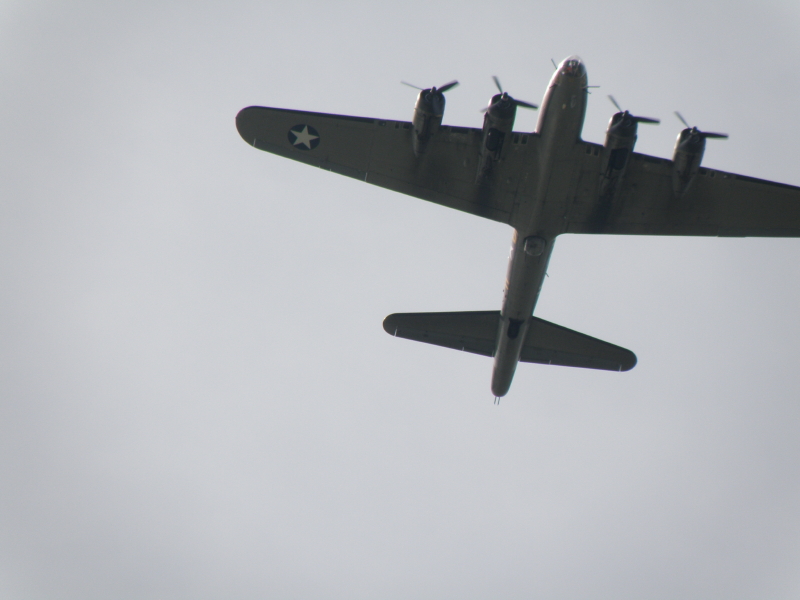
Recently, I was exploring a water channel when I saw a shape flying towards me from some distance away.  It appears to be an antique flying craft bristling with armaments.  The dominant species here is addicted to using hydrocarbons extracted from the ground which are then  further refined to produce fuel and energy.  I quickly captured this image over my head and placed it in the catalog I am compiling for future reference.  I have observed other technologically superior war-like aircraft in the vicinity before, but this one was unusual.  These so-called “bipedal humanoids” are constantly engaged in warfare somewhere on their planet.  This is one of their most primitive characteristics.  Monitoring their telecommunications I have ascertained that violence is an integral part of their conflict resolution process.  The “bipedal humanoids” are capable of rationalizing and justifying any act they commit. When they are not fighting among themselves…they are consuming or damaging resources often with other primitive machines that require hydrocarbons to function.  For instance, observe this case that I recently experienced and documented.

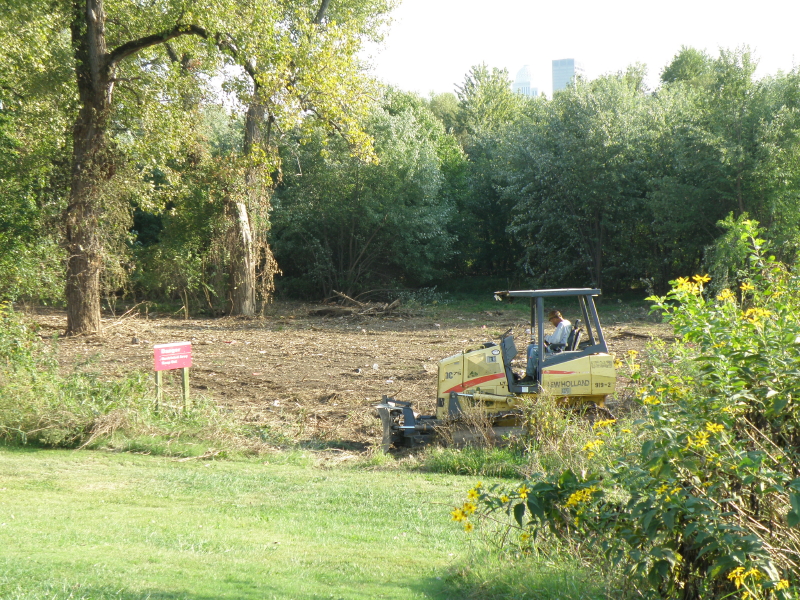
In a nearby field that was once occupied by photosensitive sessile life forms, I observed a humanoid operating a large machine.  This machine did violence to all that was alive in this area.  The remains of many different kinds of sessile life forms were stacked into random piles, but what is the purpose of this activity?

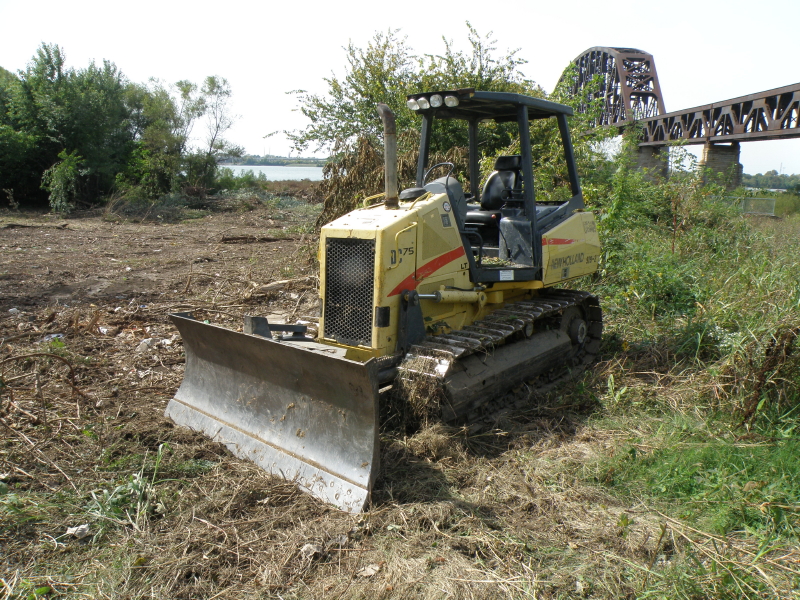
This area was once home to a large variety of life forms and now they have been displaced.  I have observed this before and very recently.  The “bipedal humanoids” created an area that they call the Ohio River Greenway and ironically they removed many of the larger photosensitive life forms to accommodate easy access to the river for their other hydrocarbon burning vehicles.  This seemed strange for many reasons, but perhaps our biopsychologists can figure that one out!  I was able to get a closer picture of the large machine that was utilized to sterilize this particular area and it is frightening to stand next to.  I waited for its operator to leave the area before doing my reconnaissance.

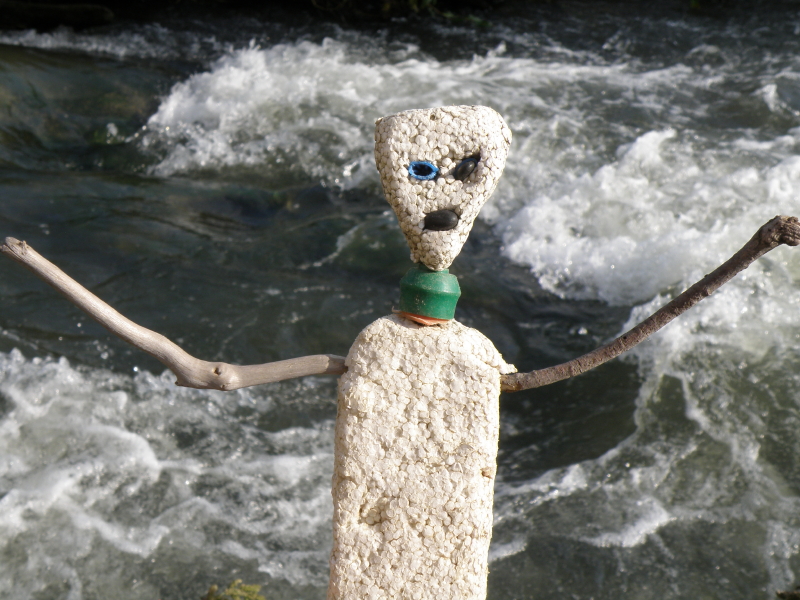
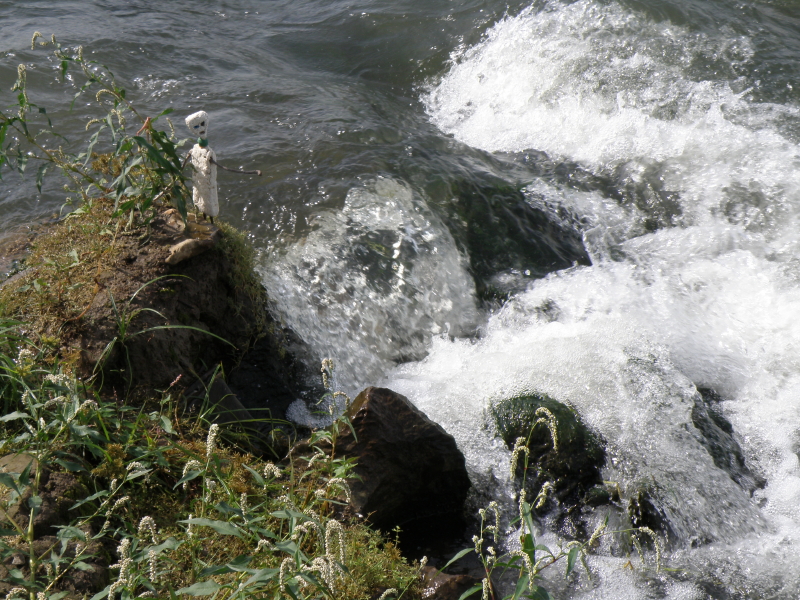
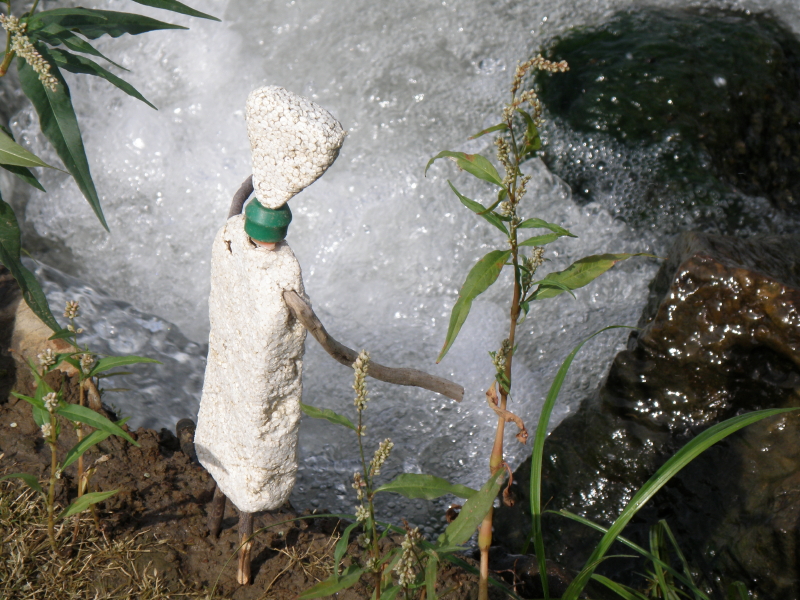
Alas my beloved, it is time for me to regenerate back at my space craft.  I will leave you for now, but I promise more from this fascinating planet.  In my next transmission I will show you more images of the life forms I have observed and maybe something of the history of life on this planet.  For now, accept this self-image made next to the many sessile life forms that lend this land beauty and interest.

Read Full Post »

Summer has transitioned to fall.  Everyone has noticed that the days don’t seem to be as long as they were a mere month ago.  This is all the more reason to get out into nature.  Perhaps you have felt that subconscious pull tugging you out the door? The sun is not as insanely hot and the light is intense and clean.  There is just the barest yellowing along the margins of the river’s cottonwood leaves.  More colors will follow.  Right now there is an urgent purposefulness to the world as life prepares to overwinter.  The flowering grasses are alive with flying insects gathering pollen and nectar.  Spider predators are behind every leaf.  After absorbing some of this energy…I headed up to my spot under the willow trees and wondered about making something interesting from my river cache.  I was so happy and absorbed to be back at my outdoor studio that for a moment I lost track of the fact that something was now moving on the left side of my peripheral vision.  Thinking it might be an animal, I carefully brought my camera up to take some quick pictures and this was what I captured.

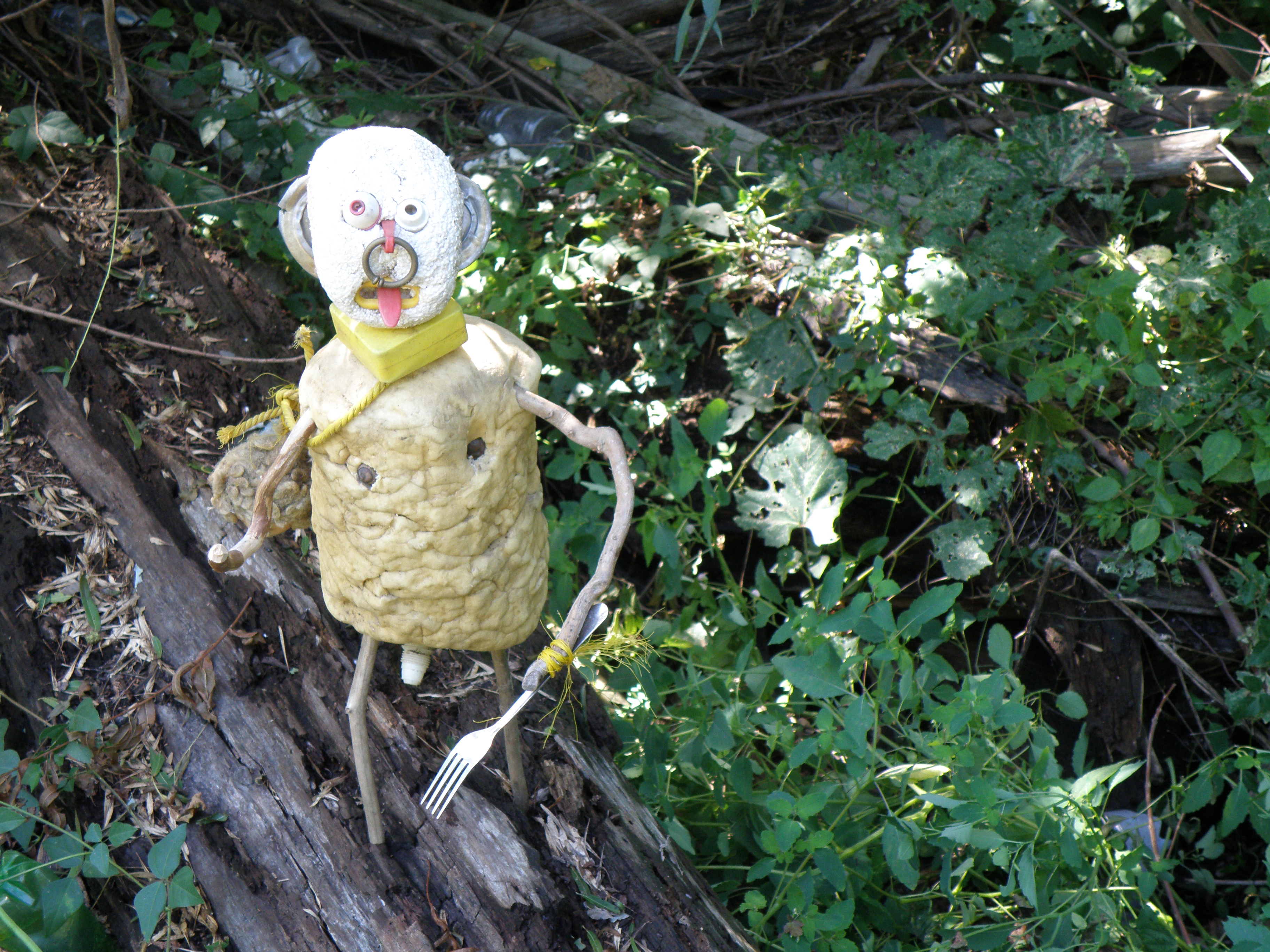
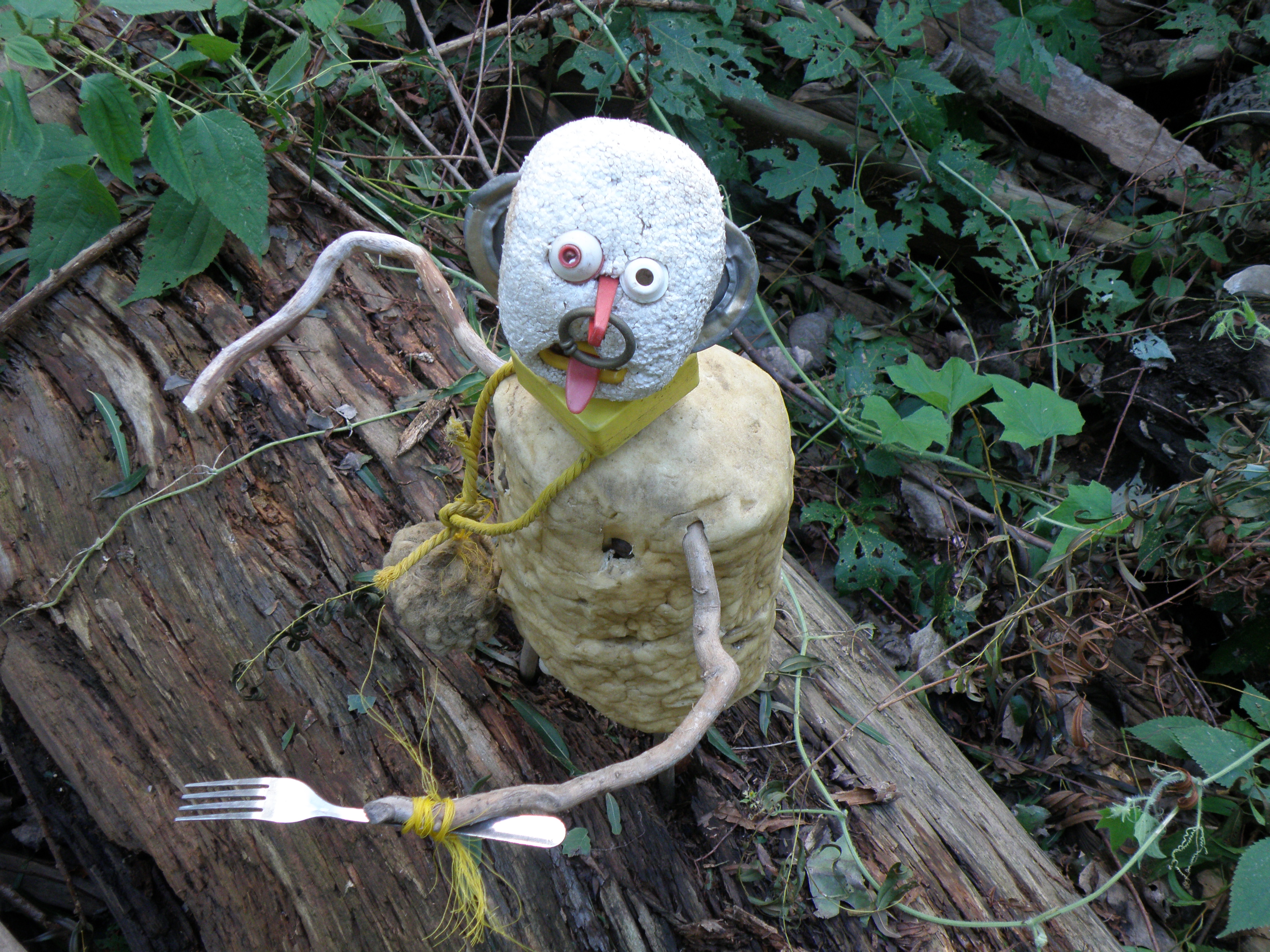
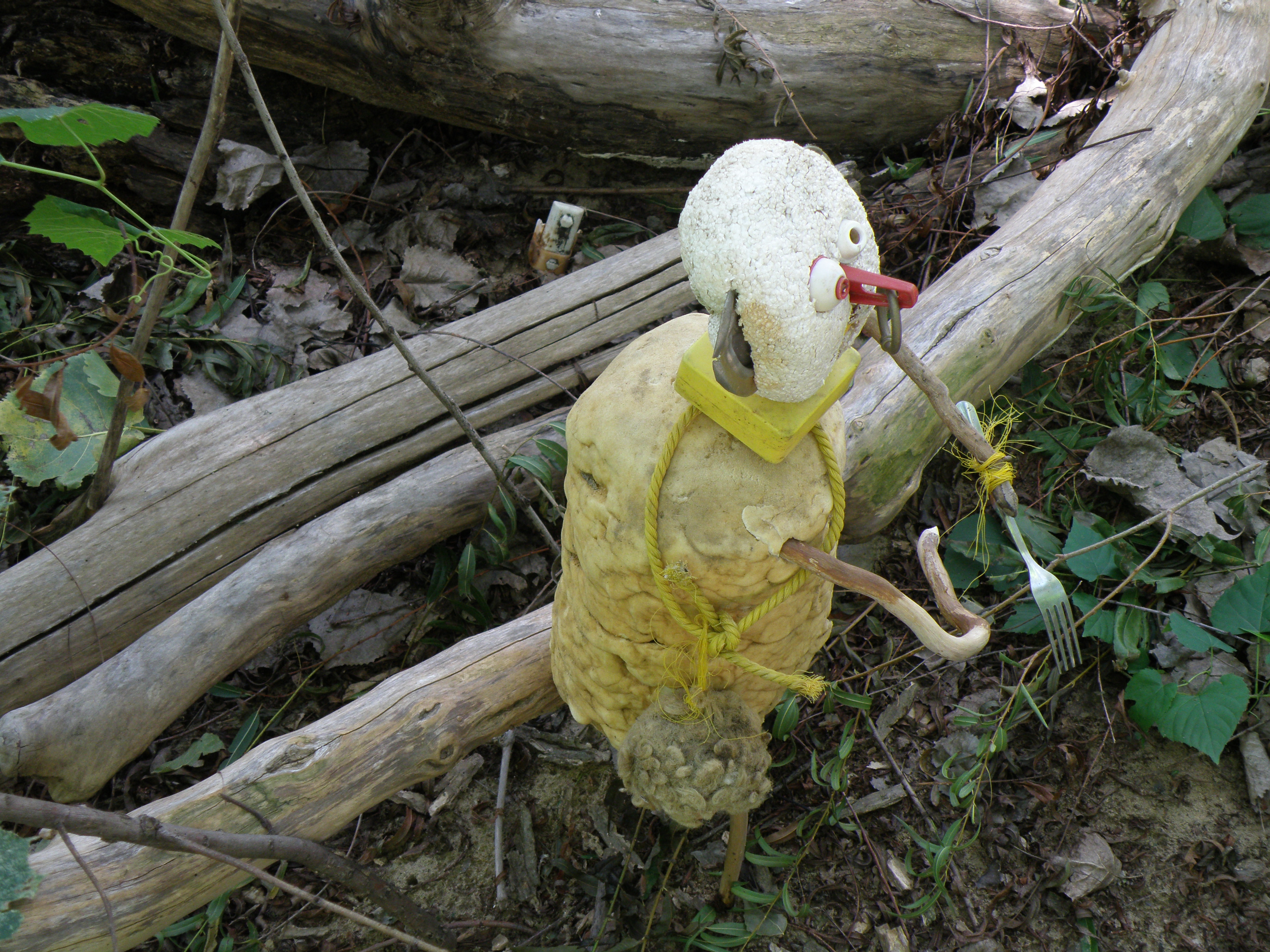
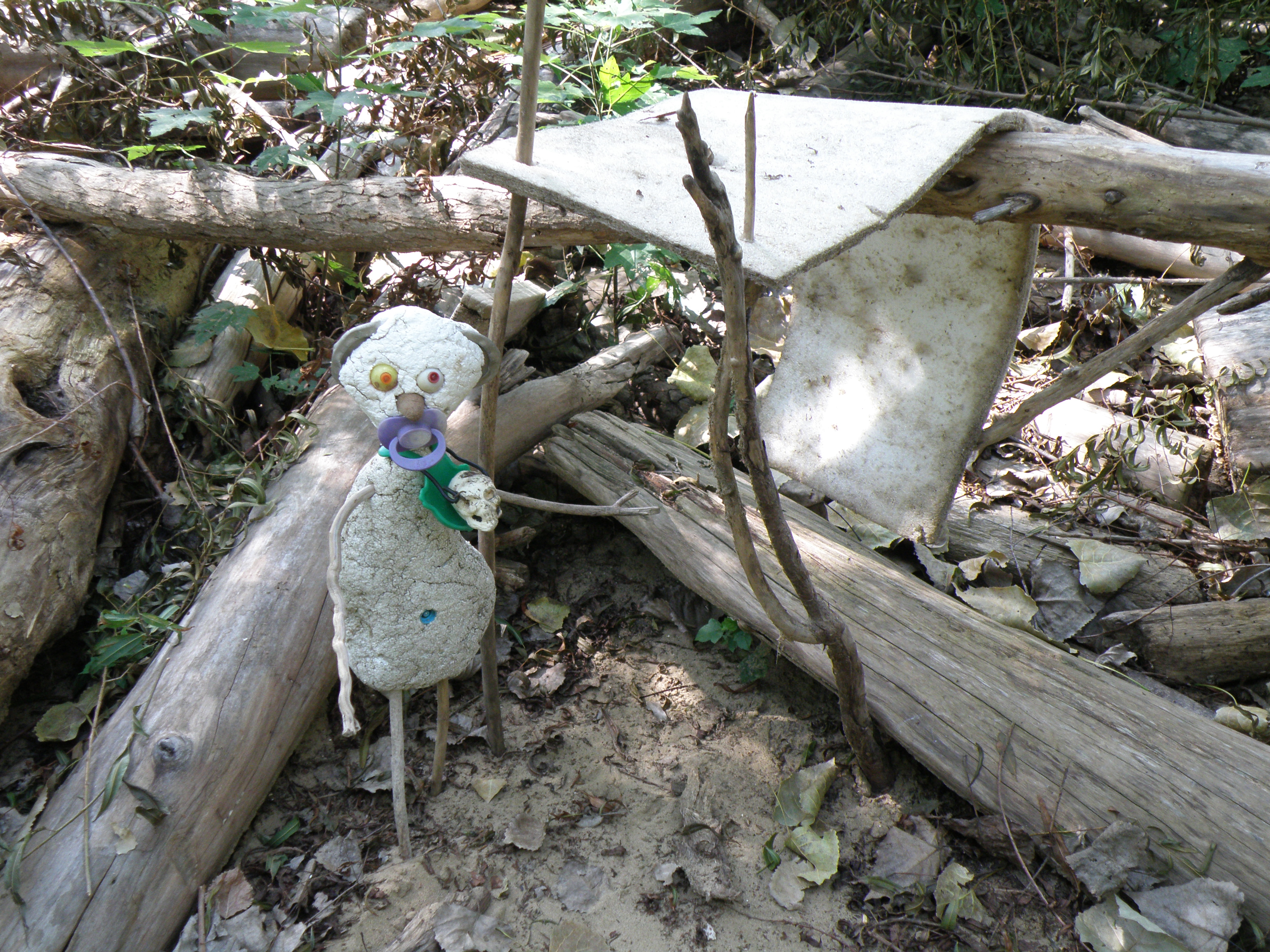
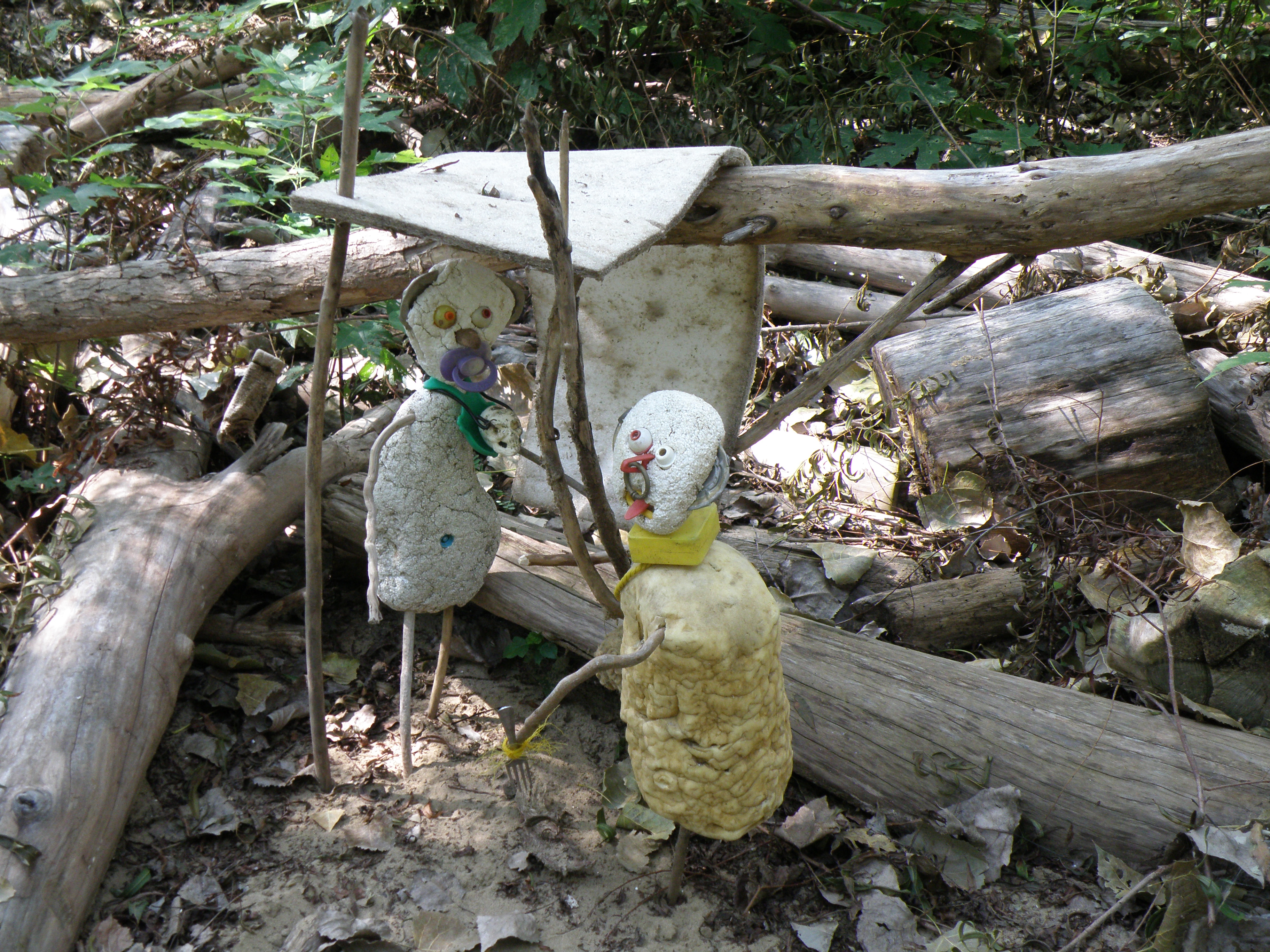
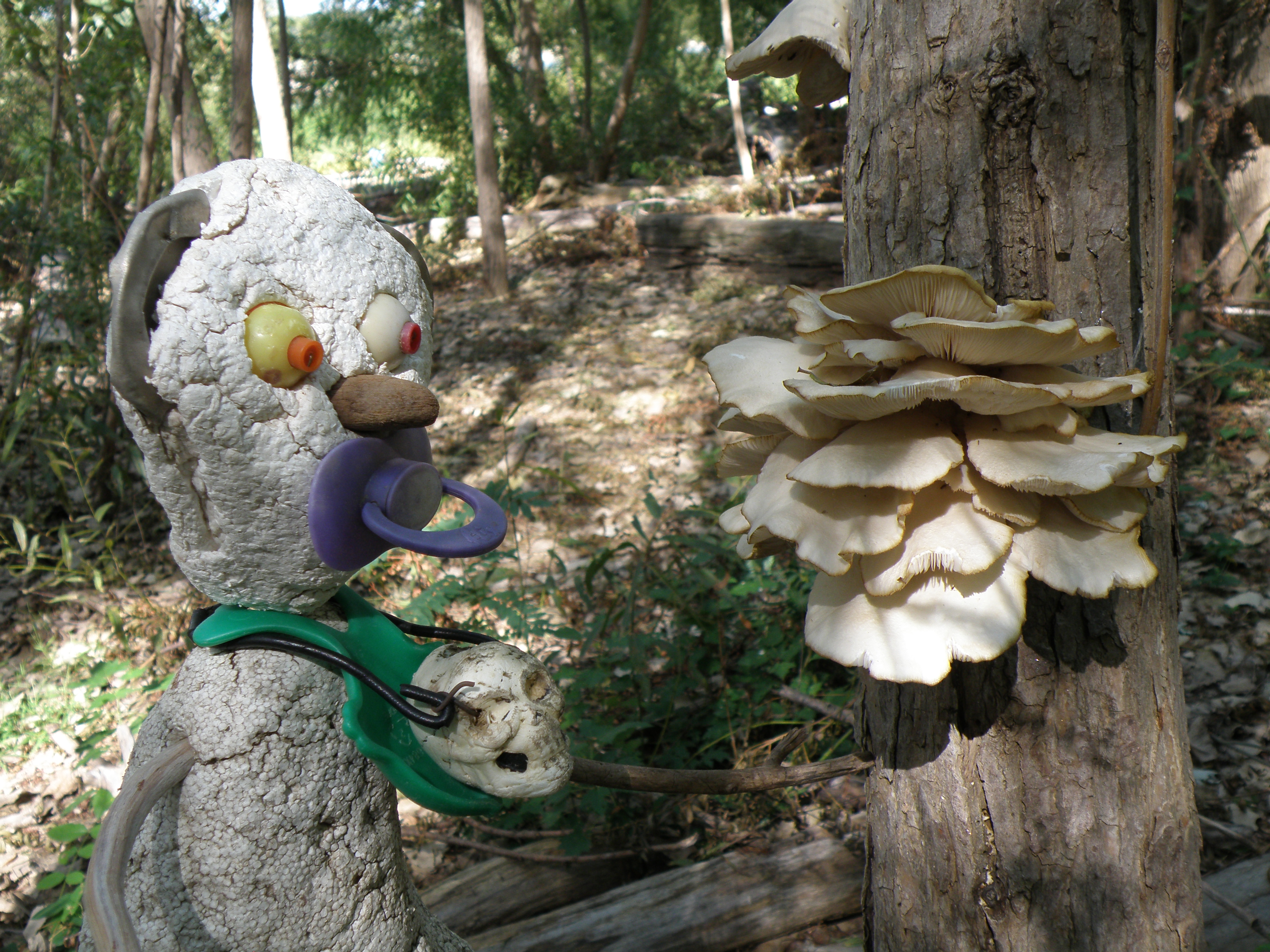
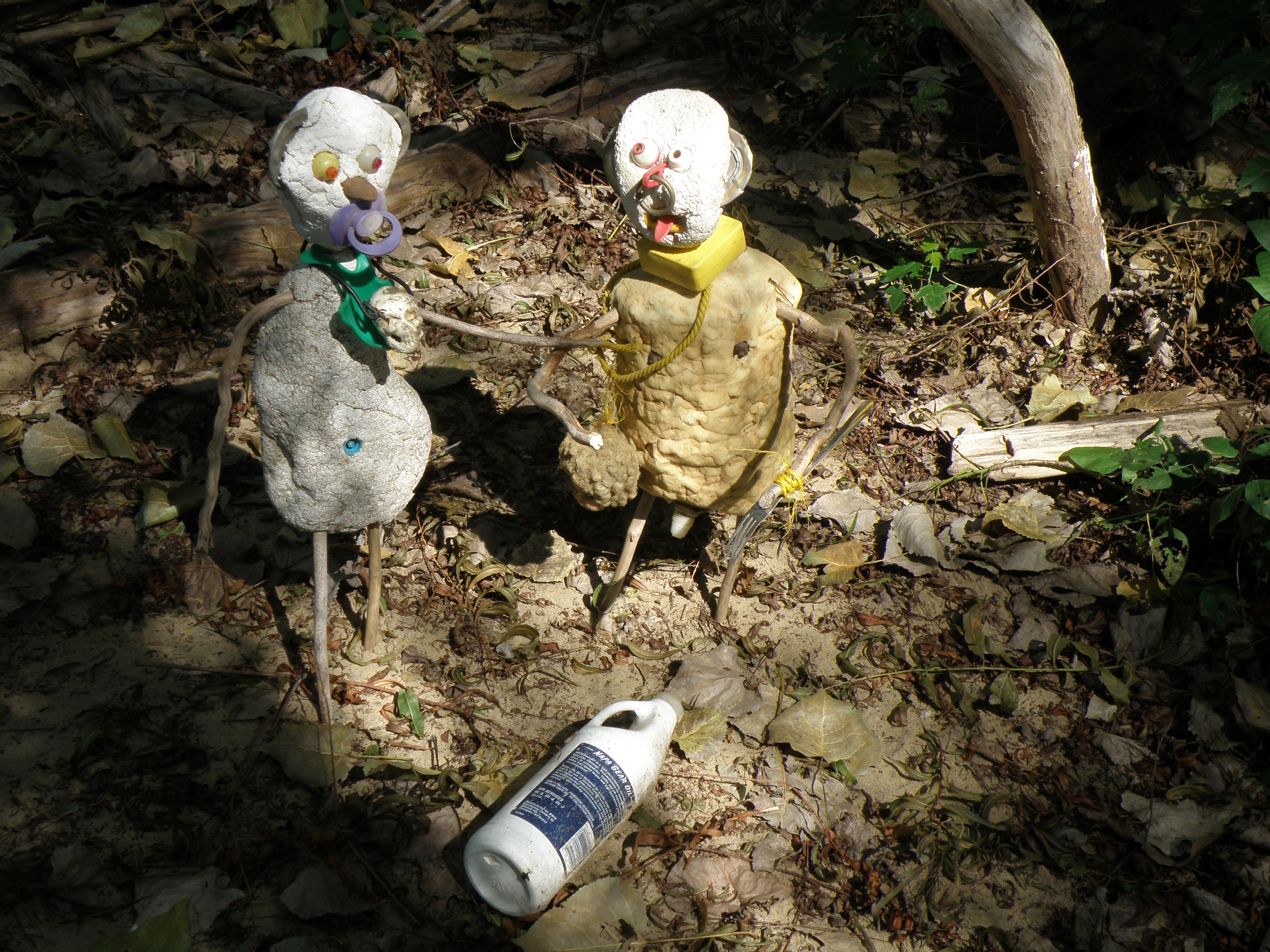
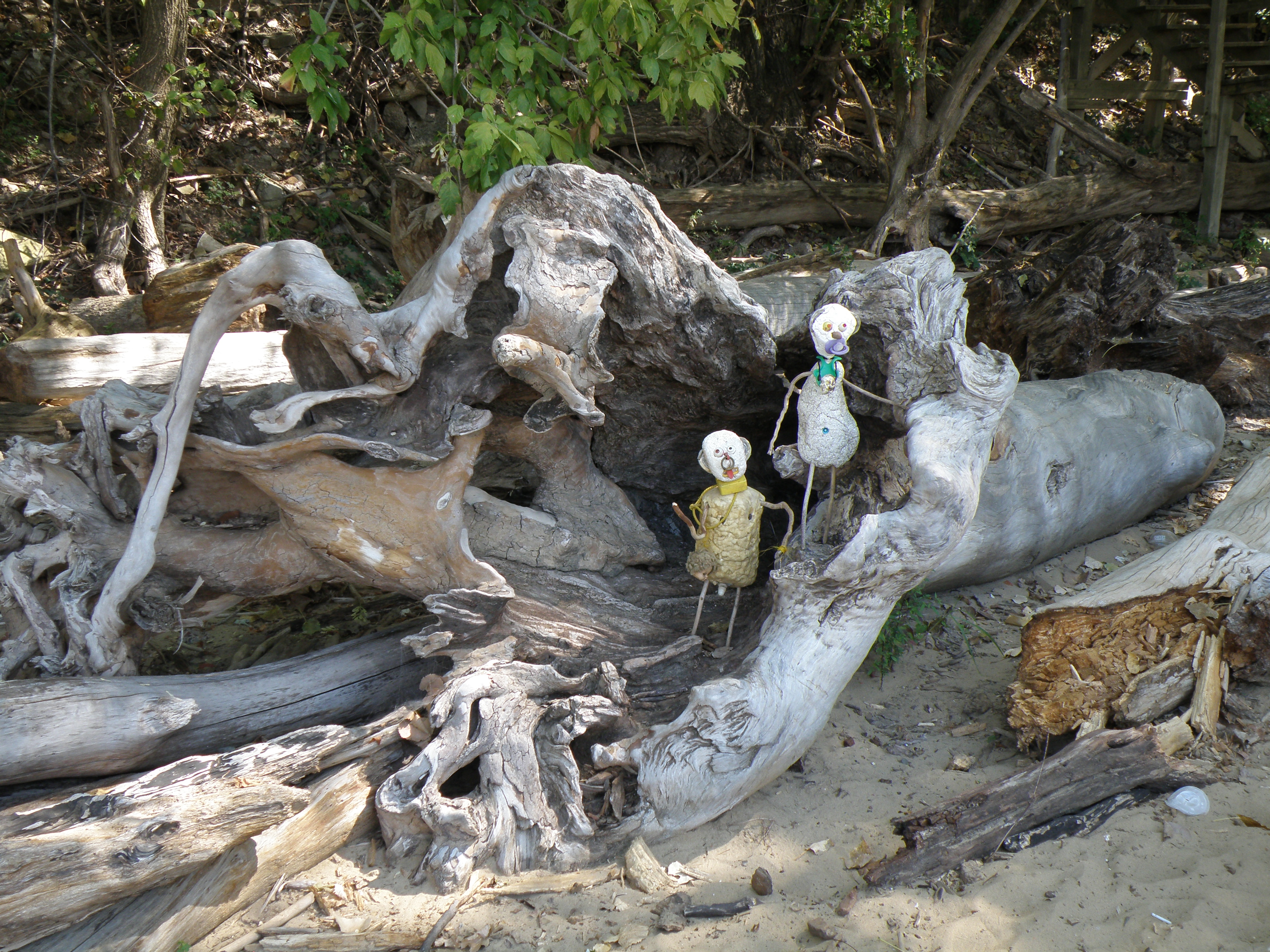
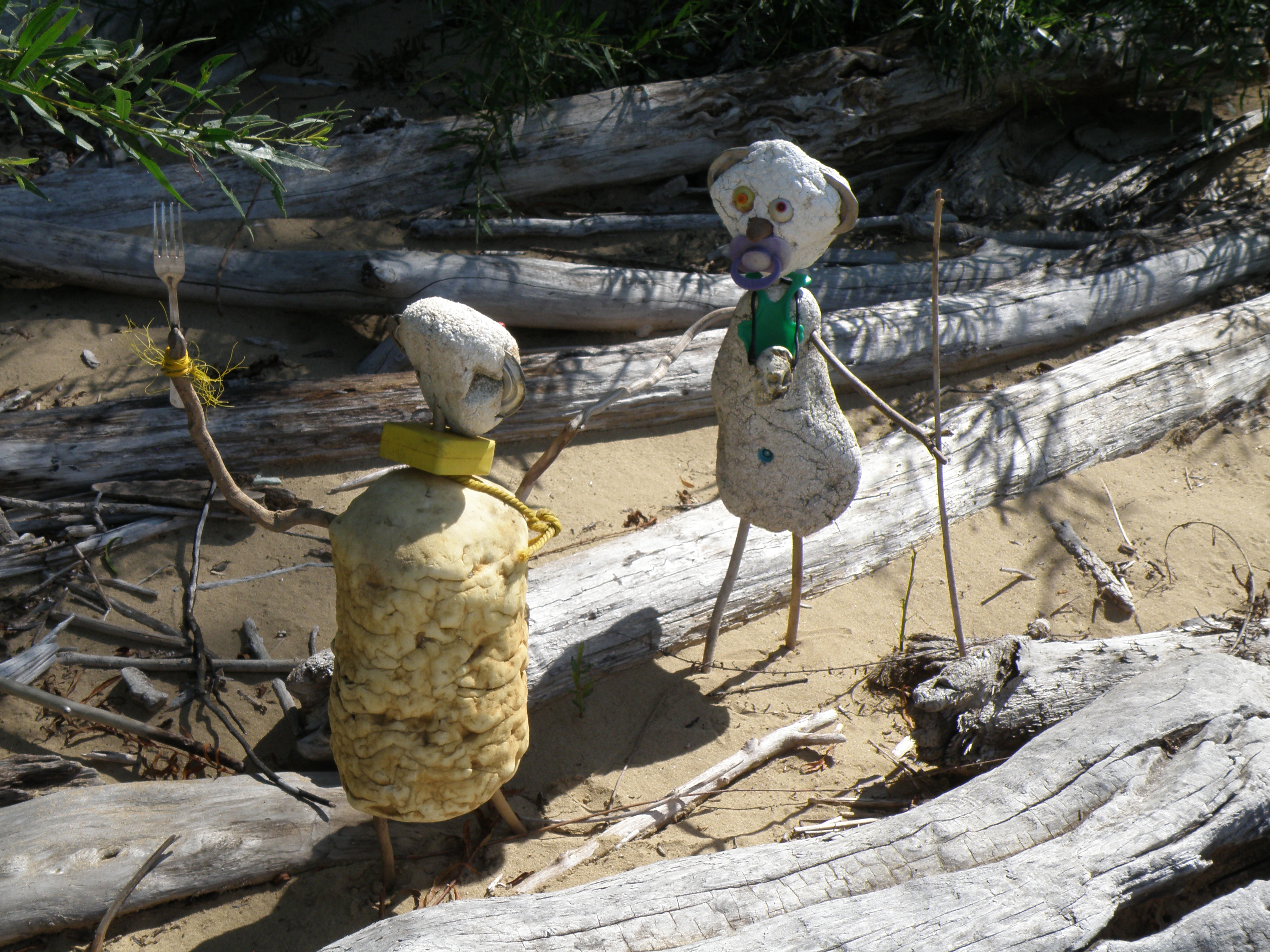
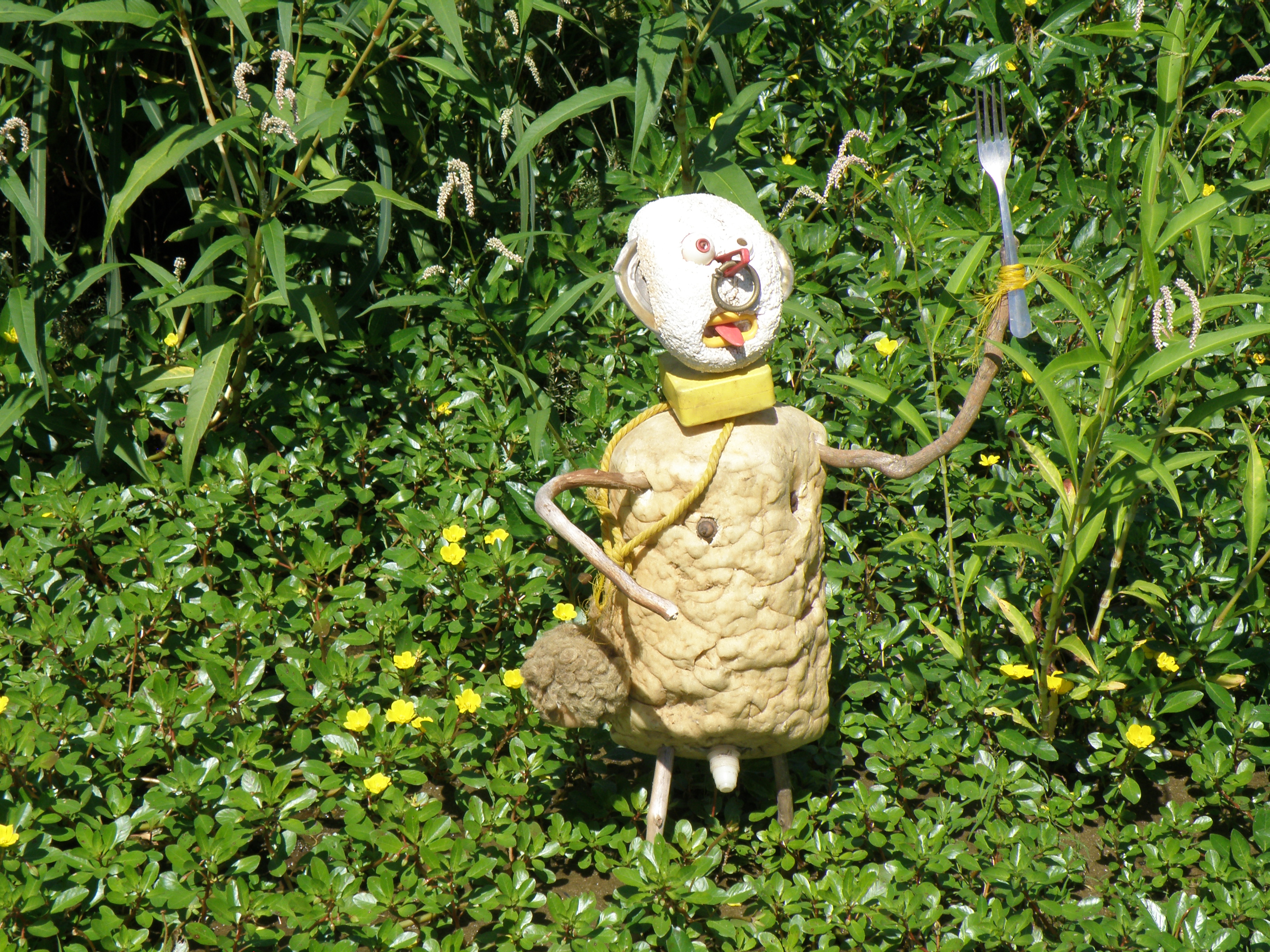
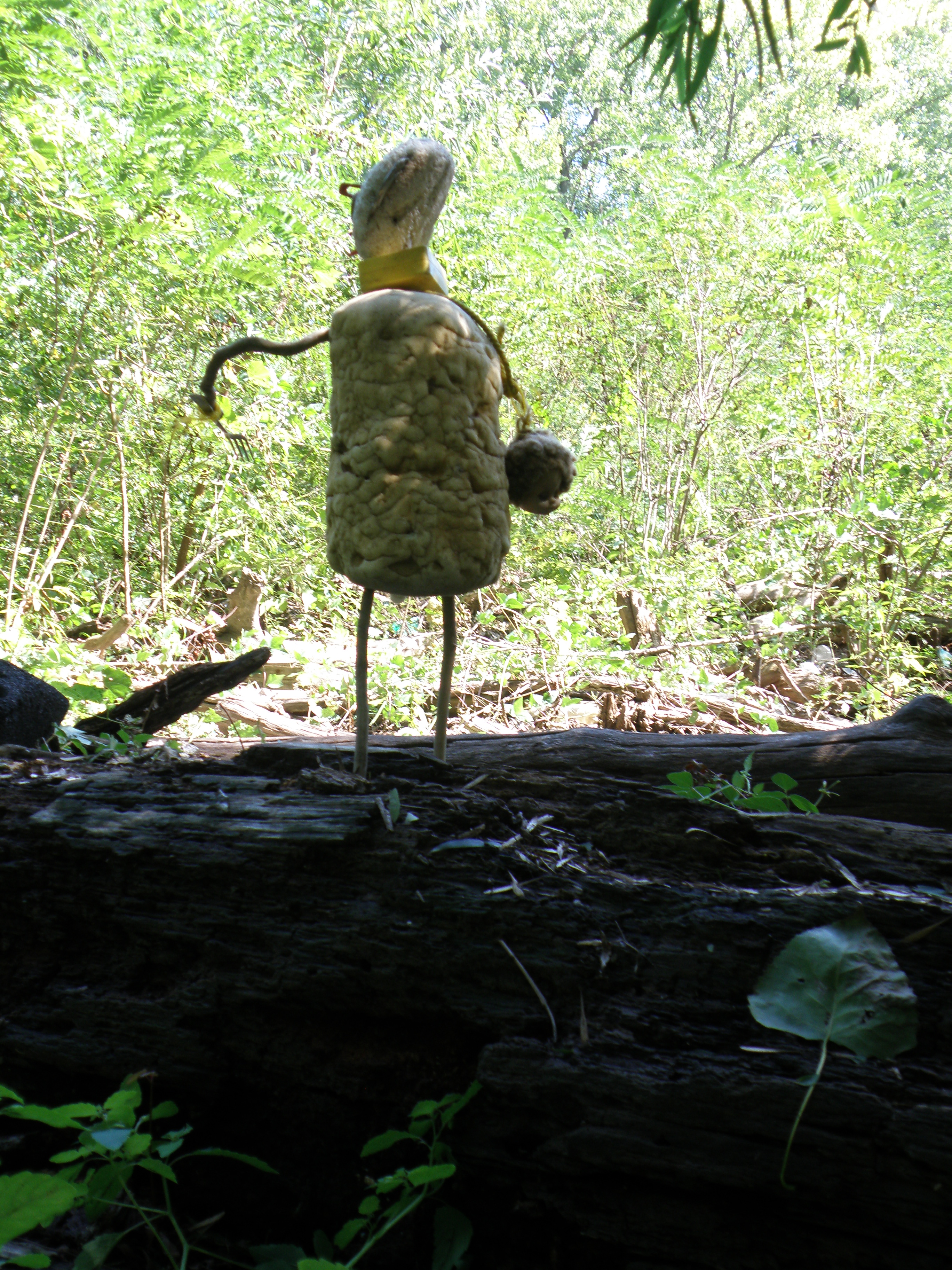
In quick succession, I had two images in my camera before I realized what I was photographing!  Appearing out of a myth was a member of the Pang tribe!  The Pang live in the most remote places in the world’s woods and consider themselves the first people.  It’s not advisable to try to find them because they don’t want to be found and it may in fact be dangerous to do so.  They only appear when they want to be seen.  The land they call home is full of poisonous serpents, insects, and diseases plus the rainy season is relentless.  There are no overland roads and very few trails.  Getting around means braving an unpredictable river.  Oh, and then there is the reputation the Pang have for being headhunters.  The little guy in front of me was reminding me of that by showing me the trophy he carries on a belt everywhere he goes.  I think my camera’s flash startled him!  By holding the captured head aloft, this tribesman was telling me he was experienced in this field!  His nose ring meant that he feared no pain.

The stainless steel fork he brandishes likely means he has had contact with our culture before.  The Pang, otherwise do not work metals.  What is known is that they are a hunting and gathering culture and nature supplies everything they need. The posturing and elaborate facial gestures on display before me continued until he seemed satisfied that I was harmless and perhaps even a bit slow on the uptake?  The Pang have developed a language where one can gauge how a person feels by looking and reading their facial expressions.  Most of the time, an open mouth with prominent tongue exposed is a sign for disgust or disapproval although there are exceptions for most rules.  Using the time-honored hand signal for follow me my new friend beckoned and I walked behind him anticipating adventure and mystery.

Along our walk the tribesman would point out where my culture had  dumped garbage into the Pang’s territory.  From the look on his face,  I could again register disapproval.  I tried to learn his name and give him mine, but we had trouble communicating by words. Aside from the occasional bit of plastic and paper, the forest walk was also full of beautiful birds and butterflies and late season wildflowers.  Eventually, we entered a small clearing and there set up for our relaxation and respite was an intimate canopy tended by another member of the first people.

A sheet of recycled plastic foam packaging and a couple of wooden posts made up this shelter.  I saw that the Pang were trying to reuse some of the trash they found. Sitting down, food and water is shared and I’m amazed at my new friends ability to live off the land.  A kicked over decaying log full of large, succulent beetle larvae provides the main course.  I, however, developed a taste for bracket fungi and my new hostess showed me what to look for.  I can’t help noticing that she is wearing a small skull object around her neck.  Later I learned that the Pang don’t remove heads from just anybody or without cause.  Head collection is the highest form of respect accorded to friend and foe alike.  I, however, was never in any danger simply because I hadn’t earned any respectability yet in the estimation of the Pang.  Or so another friend told me later.

After a short rest, my hosts were in a mood for a walk and I tagged along.  I could tell that there were things they wanted me to see.  Of course, they showed me just about every piece of litter we came across on the trail.  It seemed important to them that I not miss this.

Fortunately, I was shown a lot more that was good than not.  I could see why the Pang were so attached to their land.  It provides them everything including much of what makes up their identity.  We visited an immense hollow log that the river dropped off during some old flood and I took this portrait of the odd couple.

We walked back out into the bright sunlight and hiked near the river.  After having been in a mostly leafy environment, it felt nice to have fresh air against my face.  You could tell by the expressions on the Pang people’s faces how much they enjoyed being free and in a natural state.

Before long we came to a place where driftwood had collected on the beach.  It was nearer to the forest and another trail.  After a protracted goodbye, my friends went their separate ways.  I could tell that our adventure together was coming to an end.

I got the sense that something else needed to happen to make the day complete.  I turned with the man with a fork back down to the riverbank.  As we walked he slowly started chanting and stopped every once in a while by some landmark for added emphasis.  He did this when we came to a bright, marshy area.  My friend’s arms rose into the air along with his song.

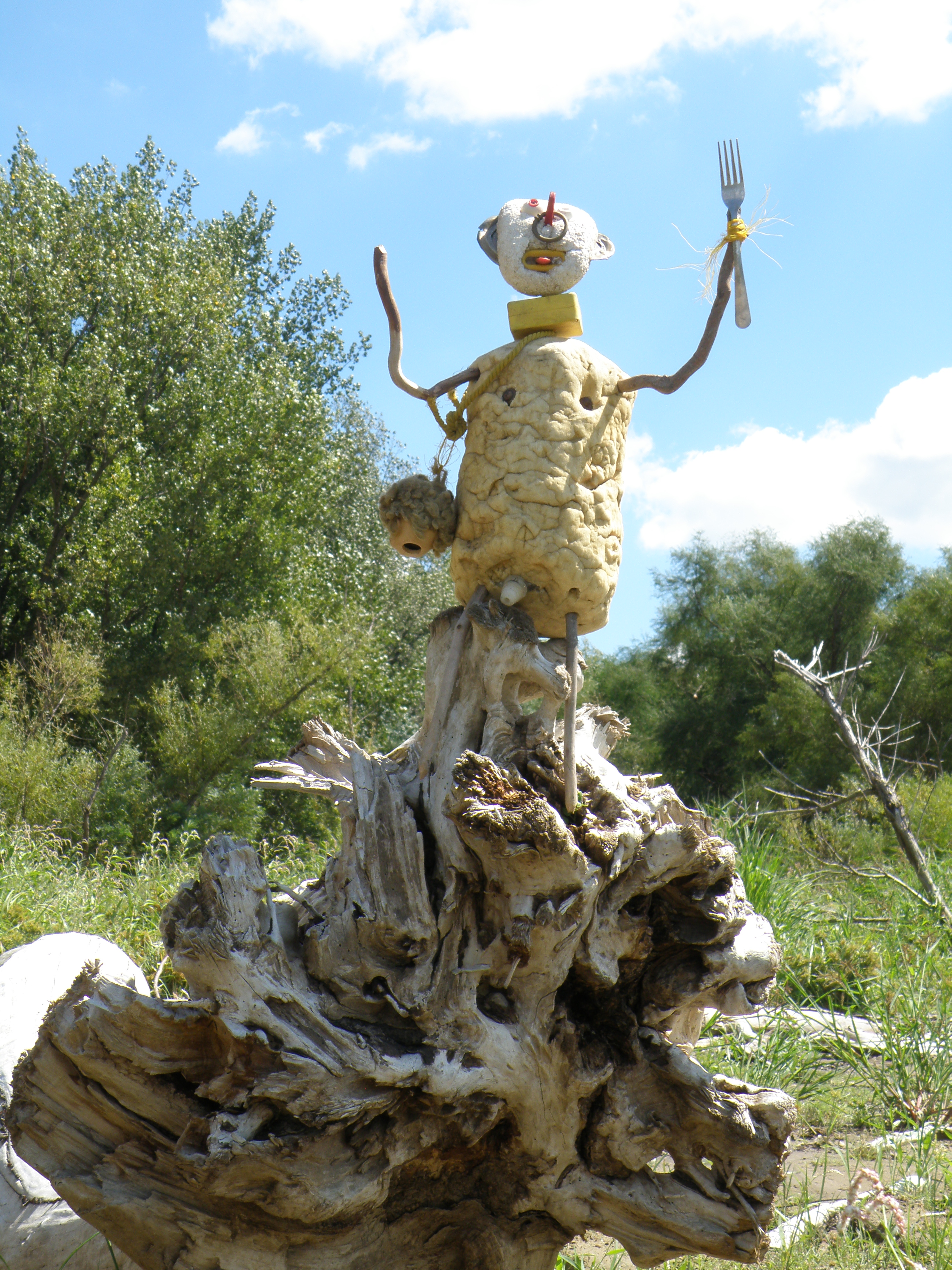
After the marsh, my companion climbed a long log that had washed up on the shore during a flood many years before.  He climbed as far up the root mass as he could and lifted his voice and fork to the heavens.  I wish I knew what he was saying…but whatever comprised his song I could tell it was reverential.

Since this culture doesn’t show itself without some purpose in mind.  I hoped that  I hadn’t missed it.  Looking back upon the day, I enjoyed the camaraderie of my new friends, we relaxed together and shared a meal.  Later we went for a walk where I was showed both what the Pang liked and disliked in the landscape.  Now the day was ending in a prayerful song.  Seemingly to underscore another point, my headhunting friend drew a line in the mud.  In essence, he communicated that my side of the line was mine and if I couldn’t respect his side of the line…we would be unwelcome.  He quickly grimaced with his tongue sticking out on that last point.  Staying on my side of the line, I wished him well in my tongue and with a short wave  watched him melt into the forest where he belonged.

Read Full Post »

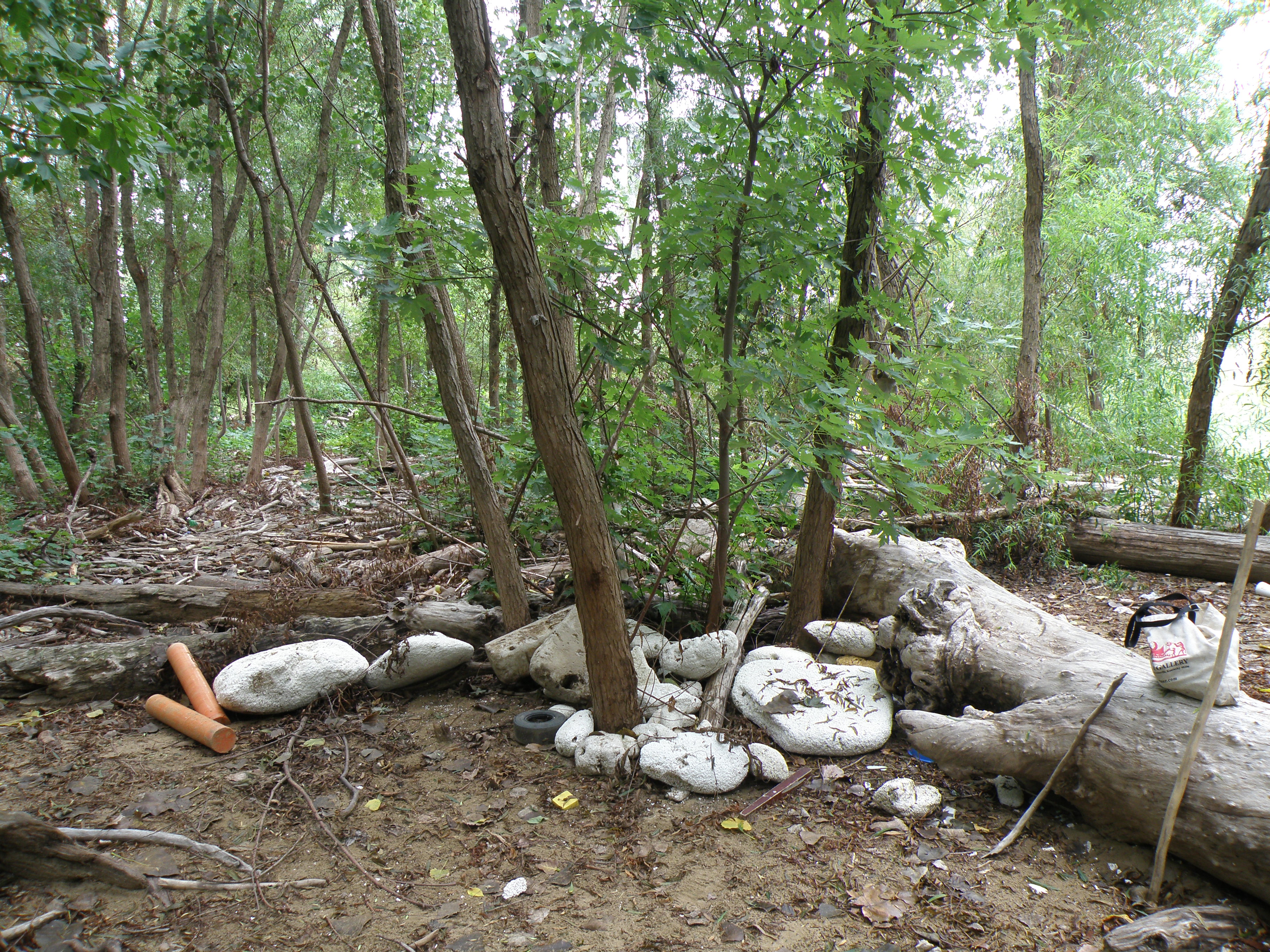
This was my Labor Day adventure which spanned two days of hanging out by the Ohio River.  The remnants of Hurricane Isaac came through and gave us some much-needed rain.  I was excited to return to my old studio spot and didn’t mind exploring and working through the drizzle.  My clothes got soaked and muddy, but as long as I was able to keep my camera dry…I felt okay and had fun.  It has been two months since I last laid eyes on my Styro-cache.  Most of these polystyrene chucks were collected in the spring.  I had heard that there were a few scheduled river clean-ups, but they obviously didn’t find my spot.  It wouldn’t have hurt my feelings in the least if all this white trash had disappeared.  The more public areas did look better, but I have a feeling that as long as people are around…there will be litter at the Falls of the Ohio.

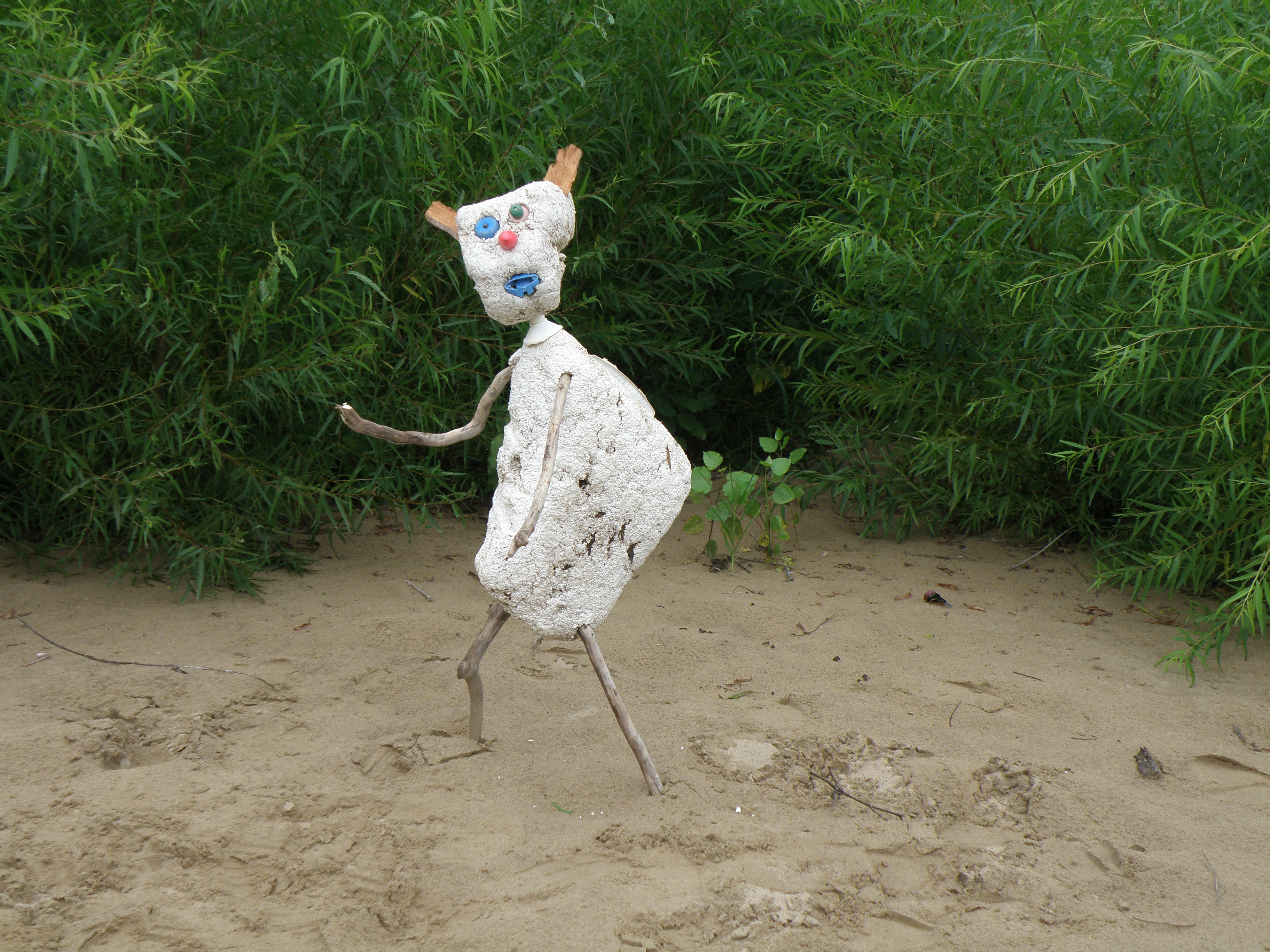
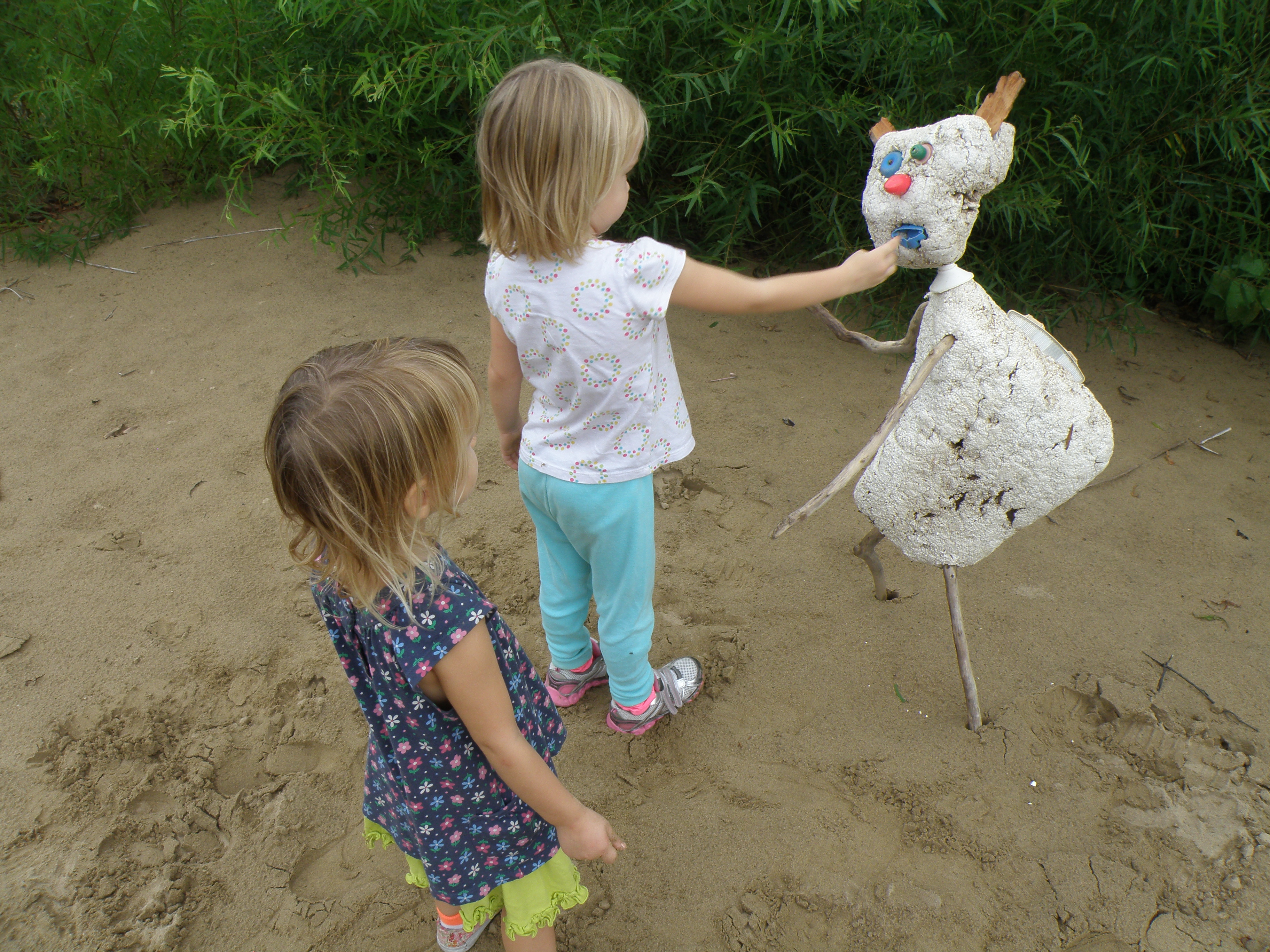
Because I was dodging little rain showers, I quickly created a figure and moved him out into the river landscape.  A nice family who said they were familiar with some of my other Falls projects happened upon me.  Their daughters India and Esmay were interested in “Mr. Rednose”, so named because his nose is a burnt out light bulb from a string of Christmas lights.  I asked permission from the parents to take the girls’ picture before posting something.  Esmay seemed the most interested and kept sticking her finger into “Mr. Rednose’s” mouth.  It’s cool when people I meet out here get what I do and appreciate my small call for creativity.  I have a real concern for what kind of world our children will inherit.  My own sons are now 11 and 16 years old and I remember when they were much smaller and followed me to the river to make a few memories of our own.

“To exist or not to exist…that is a choice.”  Perhaps meeting little kids inspired me to play dress up with this figure.  But I also kept finding props I could do this with.  This blue blanket was just draped over a log and I wondered why someone would leave this here?  Over the years, I have come across small camps that homeless people would just leave their stuff behind as though they planned to return.  It was eerie when they didn’t.  By the river, I came across yet another potential prop.

A fisherman had left behind as trash this polystyrene minnow bucket and “Mr. Rednose”picked it up.  Since it was beginning to rain more regularly it seemed appropriate to try to use this bucket for a hat and here is what that looked like.

It was about this time that I decided to call it a day.  The rain was coming down more heavily and consistently.  I hid the figure in high, wet  grass where it was waiting for me the following morning.

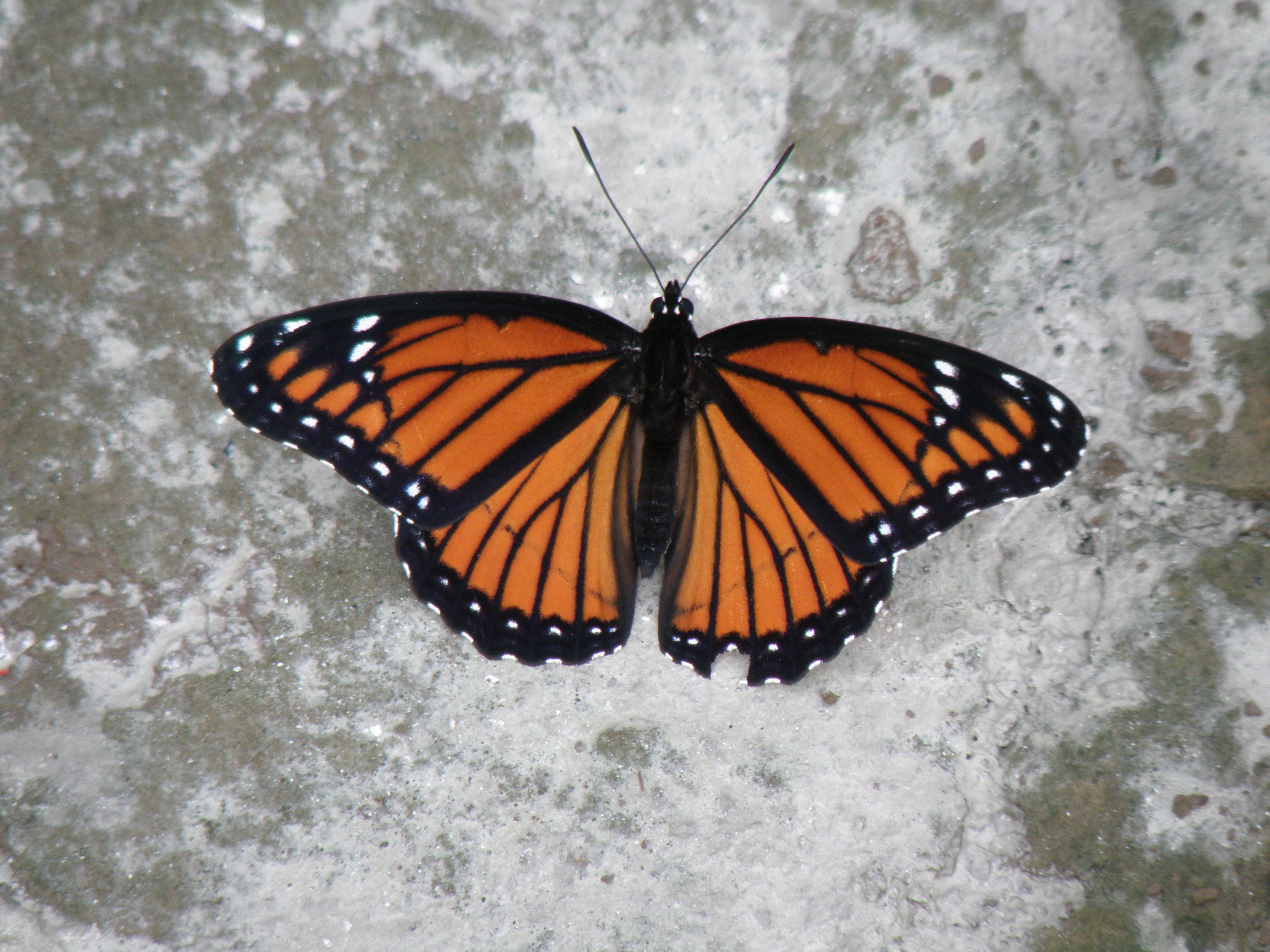
My second day out here was more about discovering nature.  No sooner had I rescued my figure than I had one of my most thrilling bird sightings.  This time it was an actual bird and not something I created myself!  Walking through the wet grasses I unintentionally flushed a bird into flight that I recognized immediately.  It was a Black Rail (Laterallus jamaicensis).  It’s a small blackish bird with a short bill.  It has white speckles on its flanks and a very diagnostic rusty-colored nape.  Rails are the smallest member of a group of wading birds that include herons and egrets.  The literature says that they are very secretive and seldom encountered.  You are more likely to hear one at night along the eastern salt marshes, but there are a few that live in the Midwest.  There are over 260 bird species listed in the official Falls of the Ohio checklist, but the Black Rail is not one of them.  This is a second time I have spotted a bird not officially recorded in the park.  I tried to let the park and our local bird club know about my sighting and I hope somebody else was able to see it?   The flushed rail flew to a nearby willow tree and with camera in hand I tried to get a picture.  Unfortunately, I was not successful.  I will, however, look for it again in the same place the next time I come out here.  The Black Rail was not the only interesting creature out in the park today.  Newly minted butterflies were flitting about and I counted several species including the Viceroy which mimics the Monarch butterfly.

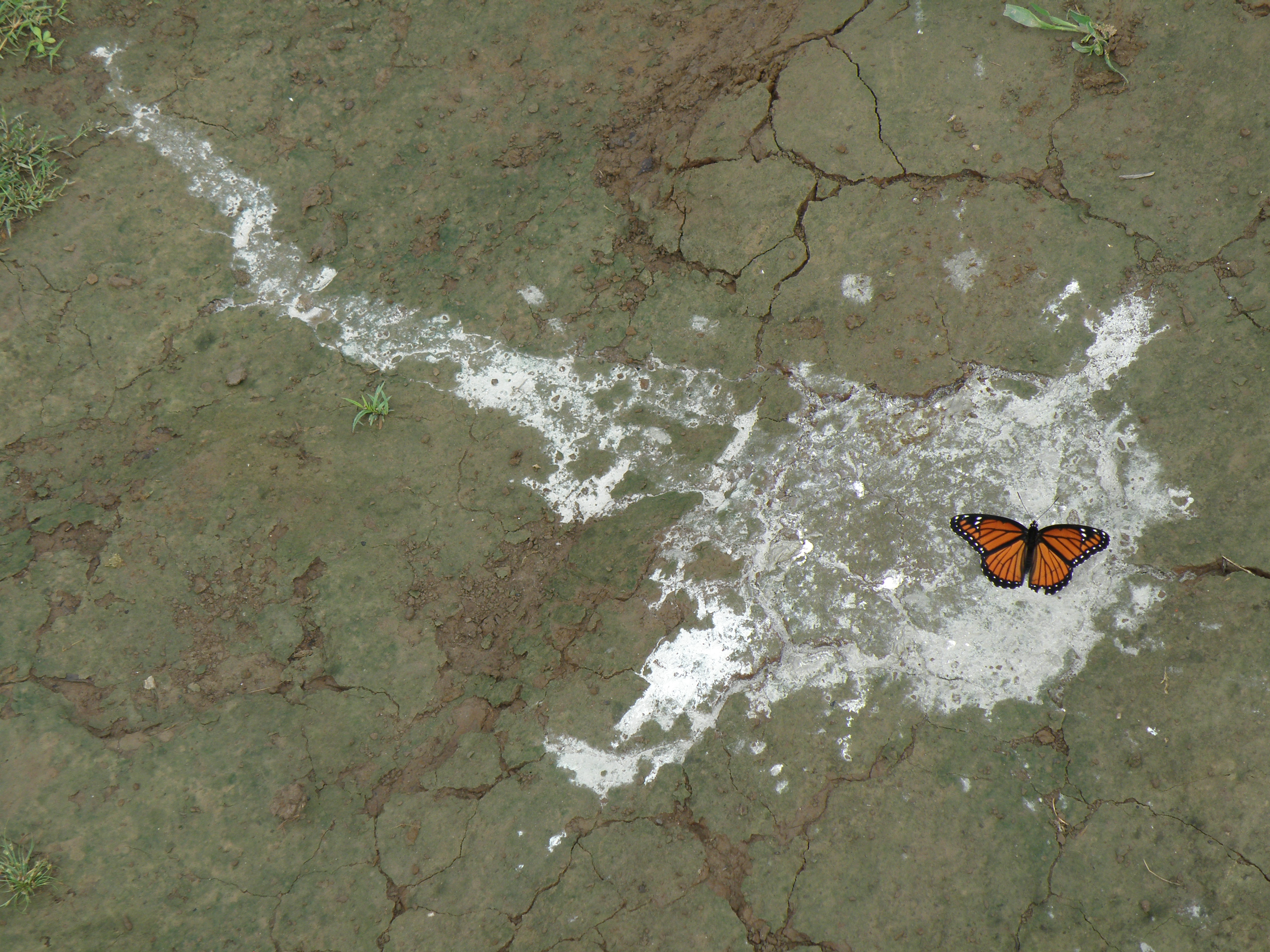
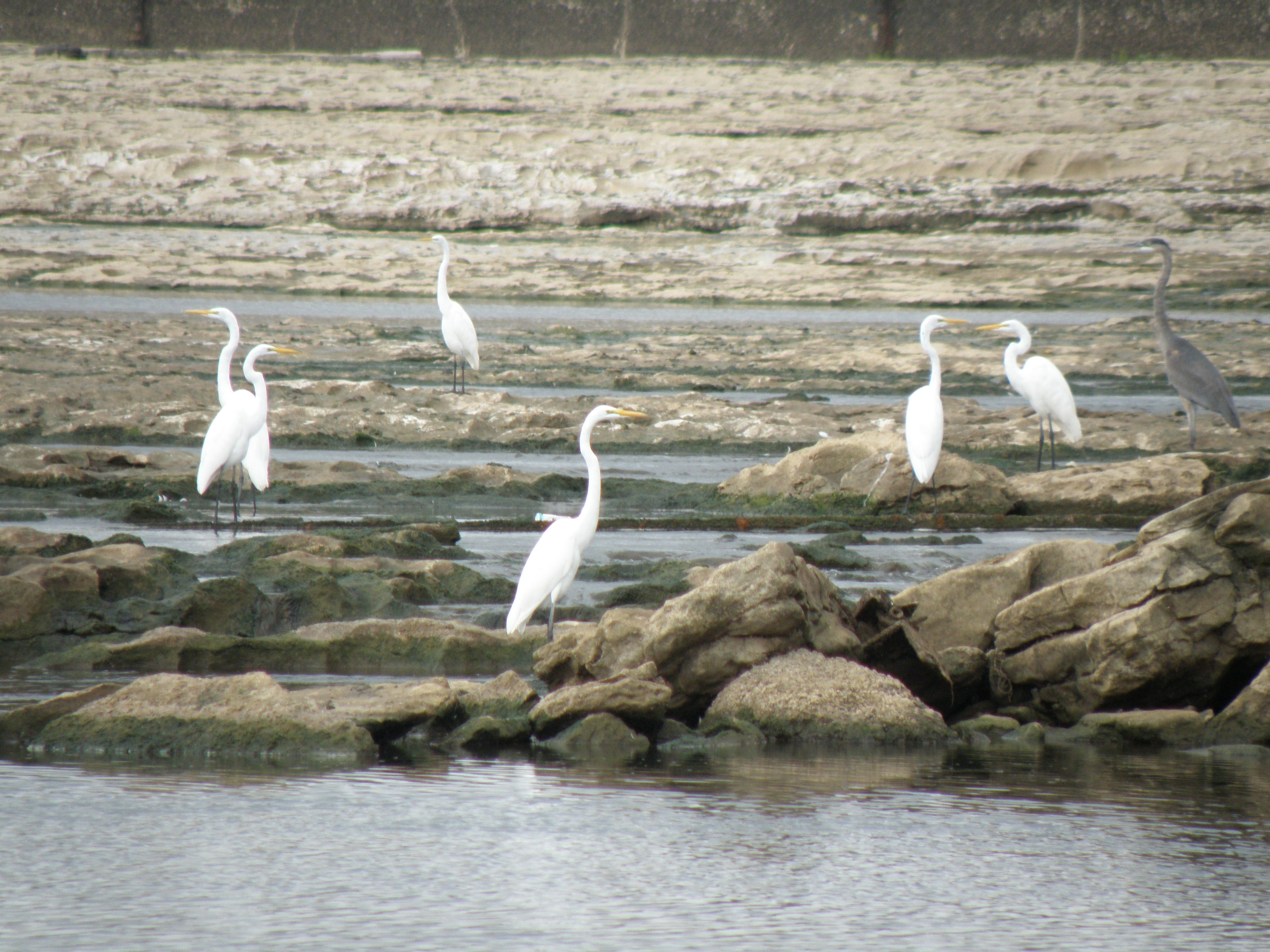
This Viceroy was taking advantage of the minerals present in a fairly large bird dropping!  Out of the fossil beds, Great Blue Herons were outnumbered by the slightly smaller and all-white Great Egrets.  Soon the egrets will be moving off to warmer climes, but the Great Blue Herons are year round residents.


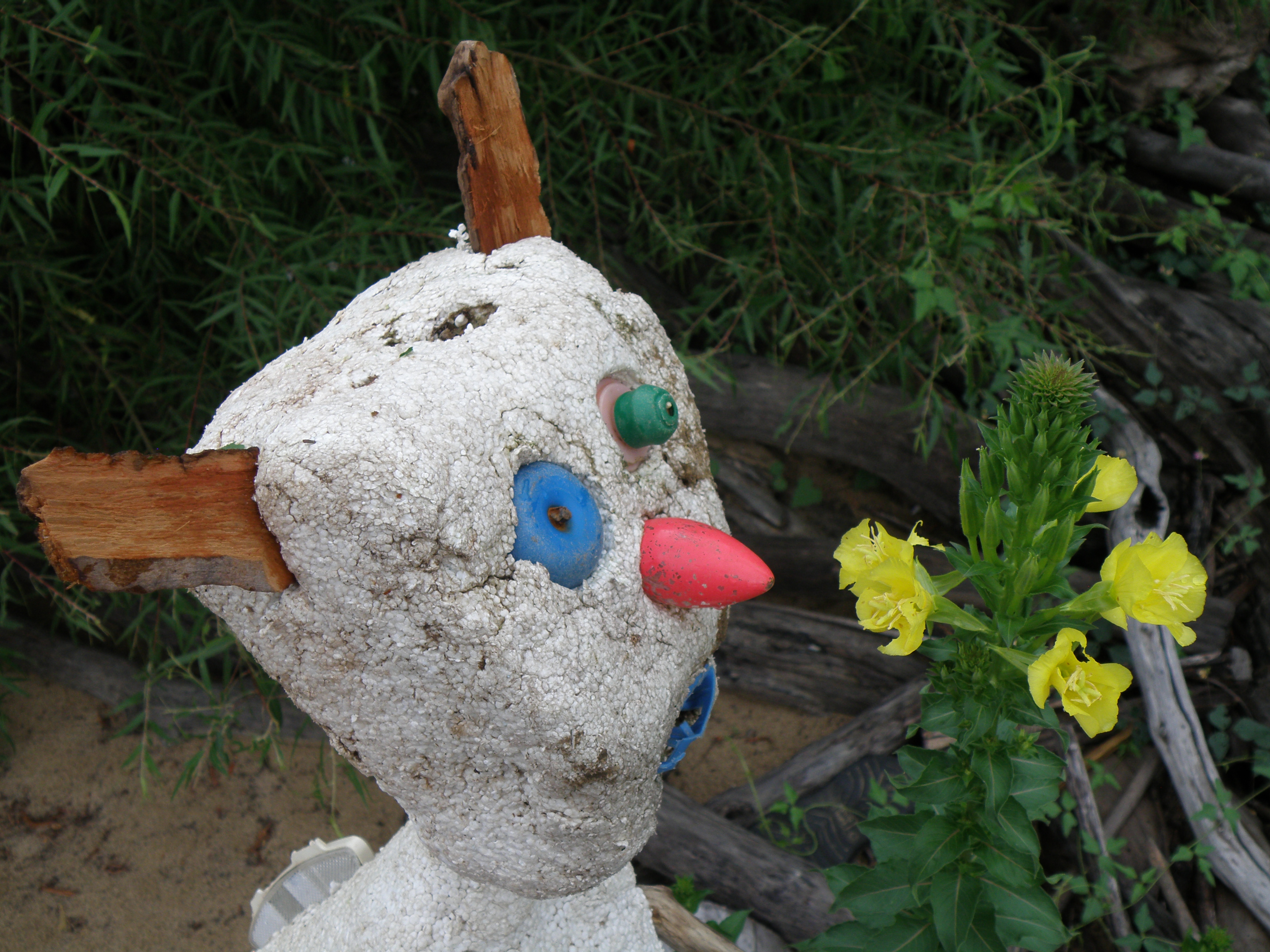
Moving away from the river and back towards the willows, I stopped to admire several flowers including members of the Evening Primrose family.  “Mr. Rednose” enjoyed the slight fragrance emanating from this tall flower.


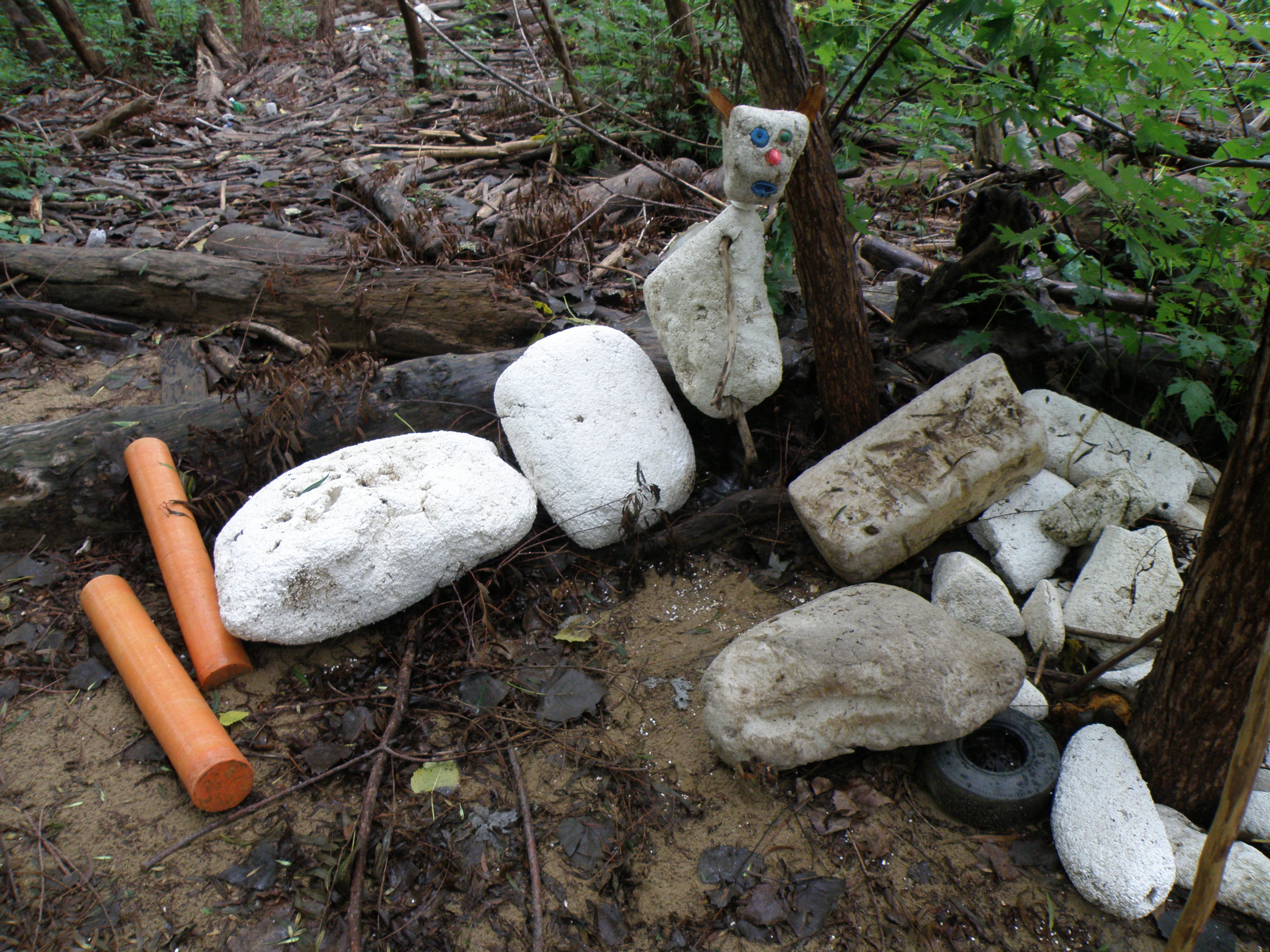
I finished this adventure where it began.  I moved my figure to the place he first took form and where he now stands guard over my Styro-larder.  He might still be there welcoming visitors…or not.  I look forward to returning the following weekend to experience all the surprises both great and small that this environment presents to me.


Read Full Post »

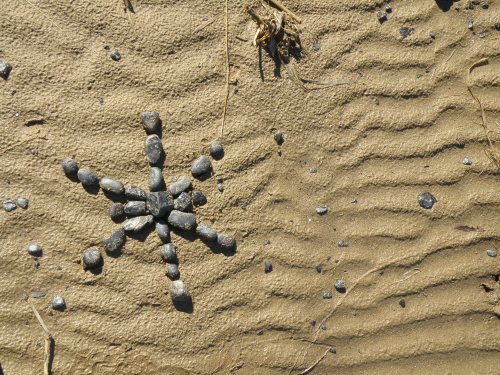
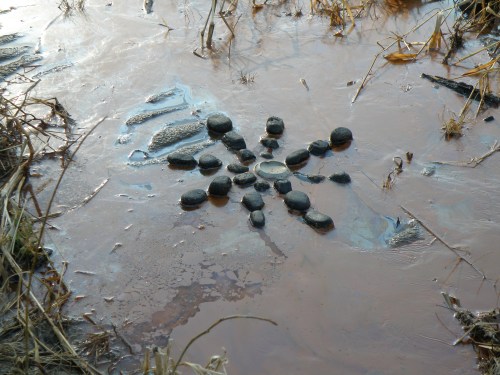
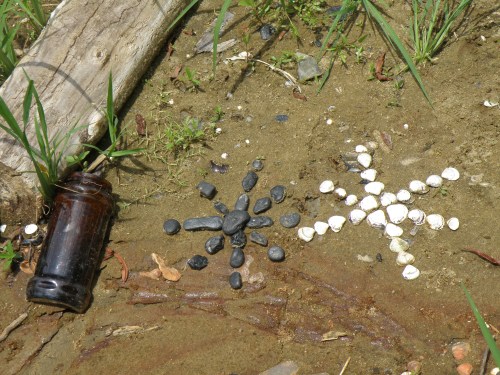
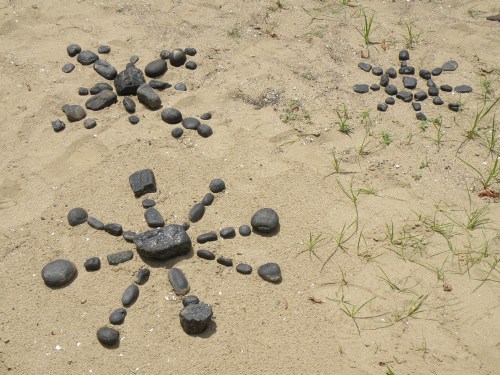
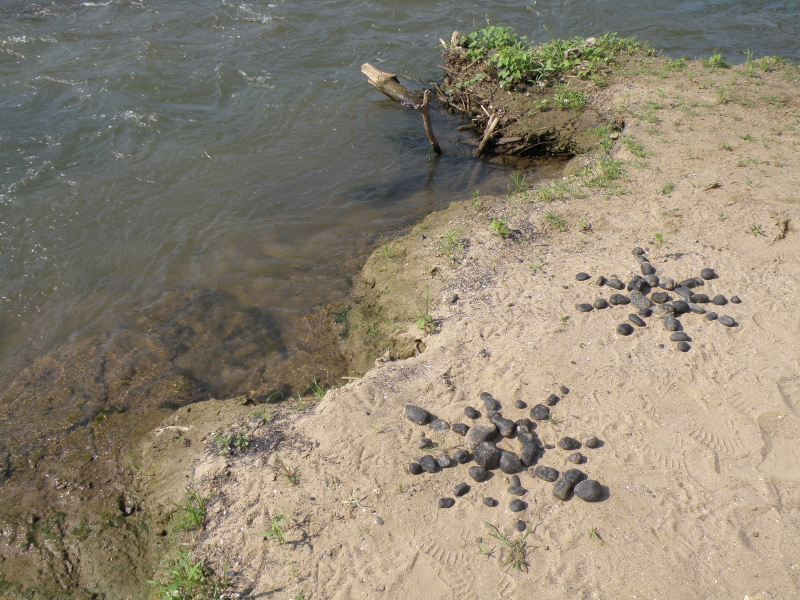
The record warm spring we experienced in the Kentuckiana area is being followed by the extreme record heat of this summer.  Twice I have ventured out to the Falls when the thermometer had passed 100 degrees Fahrenheit or 40 on the Celsius scale.  My youngest son told me (without prompting) that he  thought this heat was evidence of global warming.  The idea that we could alter the climate in some way has reached our children’s consciousness and changed their awareness of what kind of world they will inherit.  Kids get it…why don’t politicians and business leaders do the same?  This should be a global priority because the quality of our environment makes everything else possible.  I’m at the river today to continue this role I’ve created for myself as witness/participant in this historic place.  Here’s a brief record of what I found and made on a particularly brutal day.  I’ll start with more coal flakes that I made at the water’s edge.

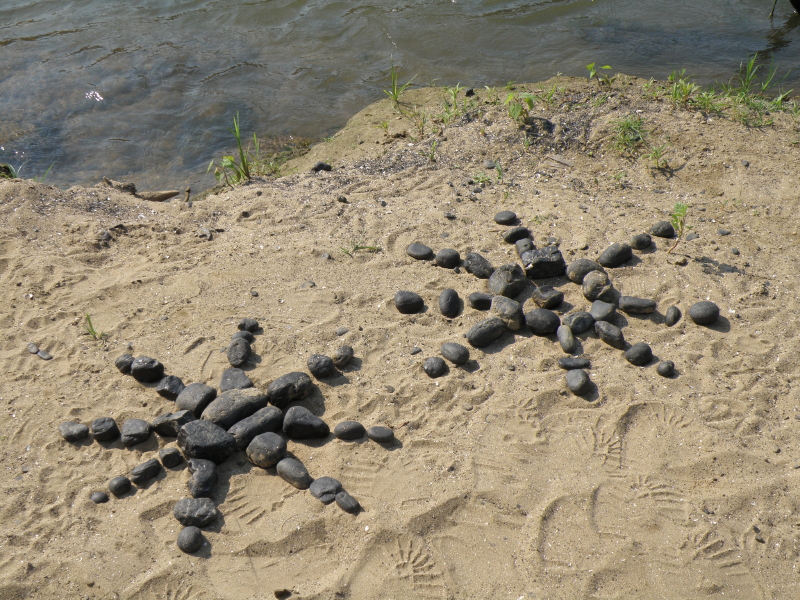
Walking around the park at its eastern edge, I collected the river-polished coal I came across and with these black rocks created two designs.  Because of the heat, it doesn’t take long for my clothes to start sticking to my skin.  For relief, I splash water over my face and arms. At first, I left the interior of one of the flakes open, but later decided to change it.  I did scout around for the other coal projects I had left here previously, but they were either missing or deliberately destroyed.

Here is the second design with the interior filled on the first coal flake. Why some people find my “art” to be more offensive than the trash that is ordinarily found here is puzzling to me?  Why more people don’t find all the random trash to be an eyesore and do something about that is another mystery.  My best answer is that “art” has a way of focusing and concentrating energy that stands above the ordinary.  To be noticed is not always a good survival strategy.  My work gets hammered because it sticks out and there is something in the human condition that would rather break things than fix them.

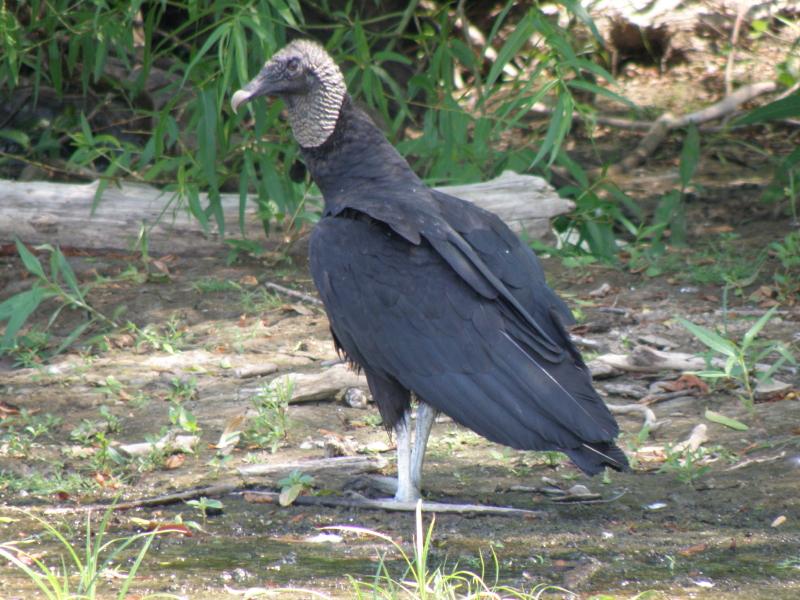
It’s still morning and I see the resident Black vulture colony is also at the river’s edge looking for dead fish or fishing bait.  There’s nothing like coming across a partially opened pack of chicken livers that some fisherman brought for catfish bait.  The flies and the vultures say thank you.  I’ve come to think of these vultures as familiars and part of me likes to believe that they even recognize me and allow me to approach a little closer than usual.

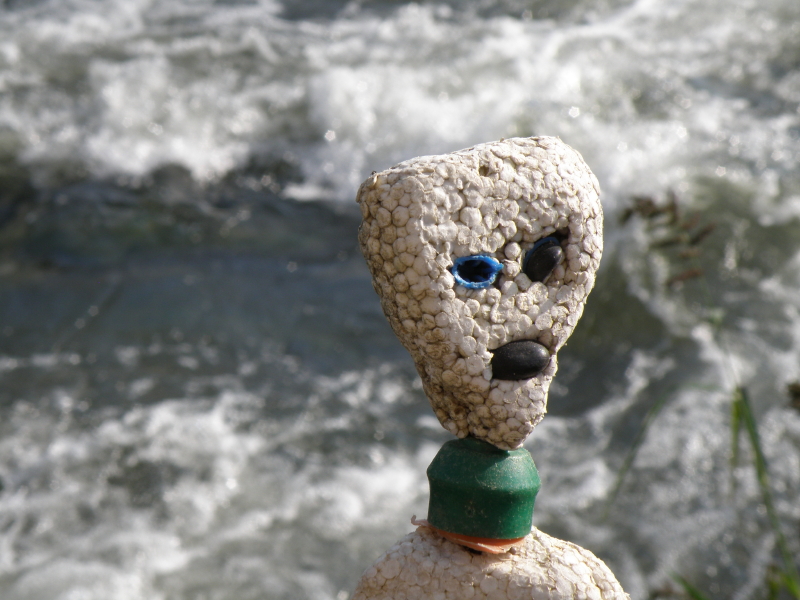
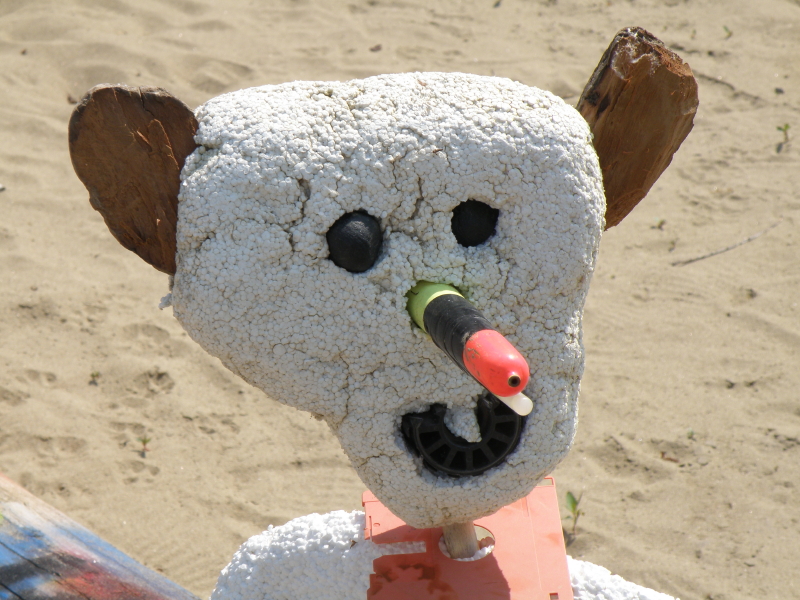
A couple of hours later and the vultures have done what I’m about to do…namely seeking shade and relief under the willow trees.  I find a few vultures standing on the ground with their wings outspread trying to catch the slimmest of breezes, but there is none today.  Reaching my stash of Styrofoam I look around and everything appears as I left it.  It’s just been too hot for most folks to want to be out here.  Rummaging around the polystyrene, I chose a few pieces and construct a new figure.  This piece has remained nameless, but if you out there in the wide world want to name it…that’s fine with me.  It’s also been too hot to think of titles and names.  He is another in a long line of absurd figures I’ve created with the collaboration of nature.  Here’s the head made from Styrofoam, coal eyes, fishing float nose, some kind of plastic piece for the mouth, and wooden ears.

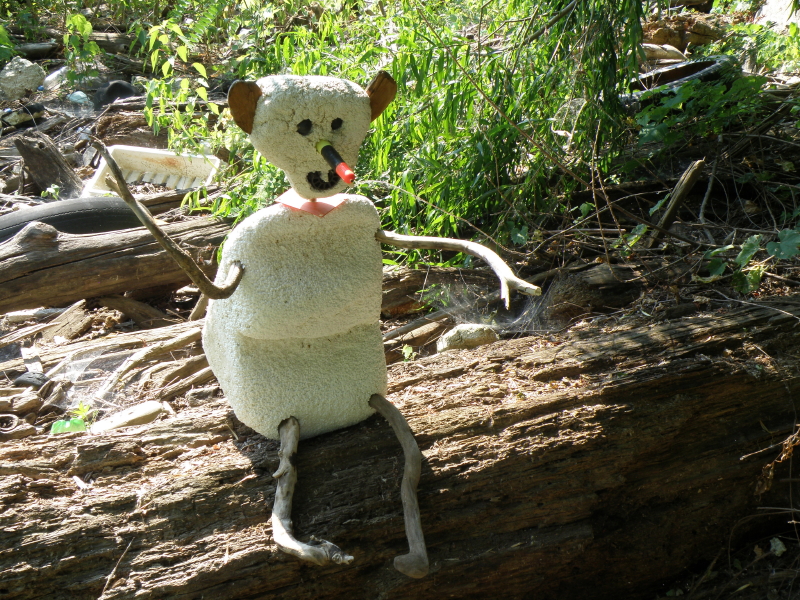
As you can see from the last image…I have lots more Styrofoam to use up before our next big flood.  I began my latest figure with the body.  I came across a piece that suggested a sitting pose and so that is what I made.  Upon completion, I moved my new “friend” to various locations and tried him out in various contexts.

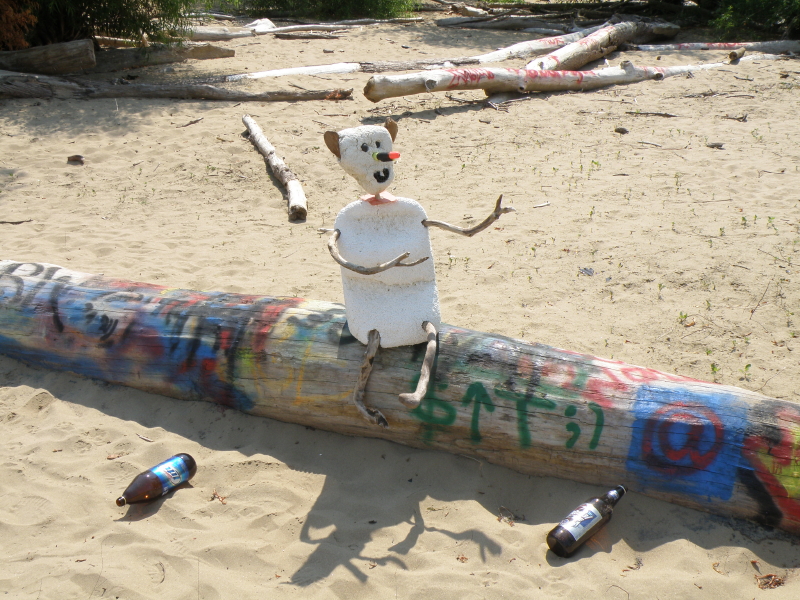
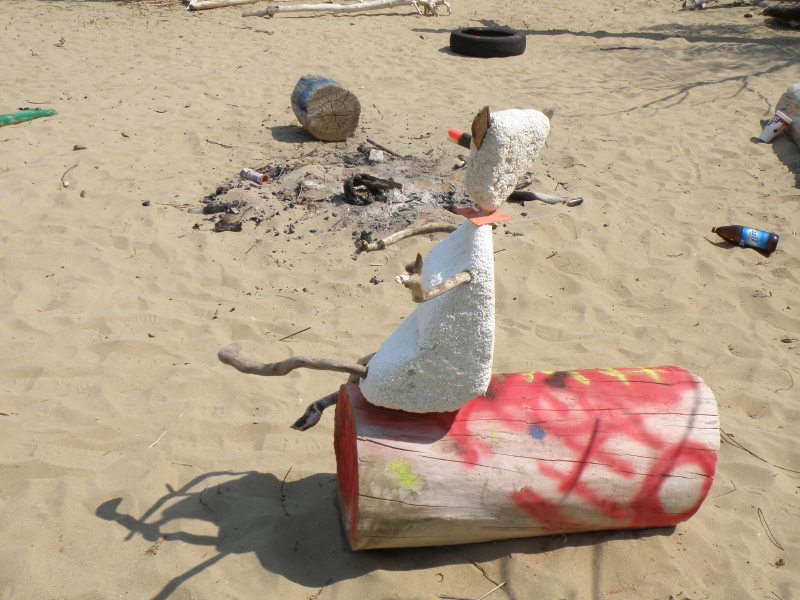
In the end, I decided to pose my figure in the remains of a private  outdoor party that was held out here since my last visit.  This must have been no ordinary “celebration” based on all the spray painted graffiti now on the logs and stumps surrounding their camp fire.  Take a look.

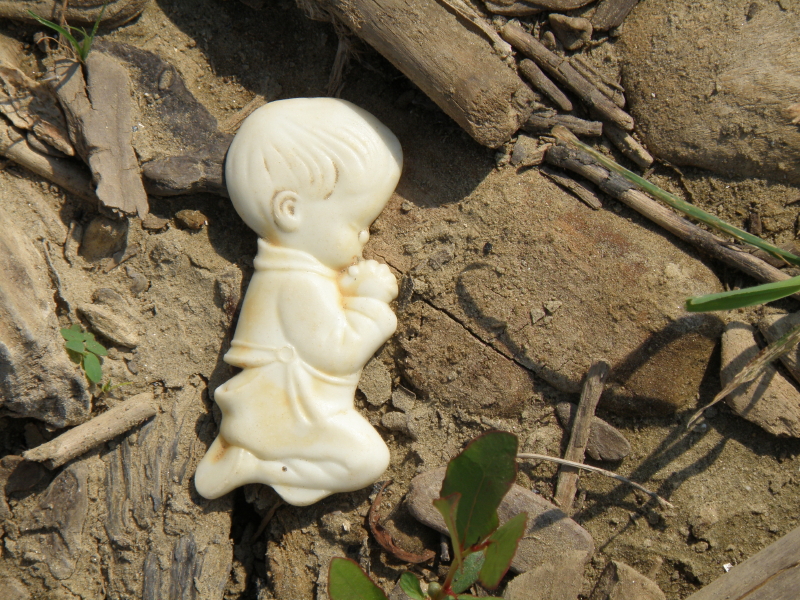
I’m more accustomed to seeing graffiti in an urban setting where tagging trash dumpsters and buildings is common place.  I’m still sorting out how I feel about coming across a scene like this?  Has anything actually been harmed…it doesn’t appear so.  When lovers cut their initials into the bark of a living tree, those cuts are there for the life of the tree.  All this spray painted wood is dead.  Still, this hardly seems like a nature loving act especially since the “artists” left their large beer bottles behind.  I think they did it because they could.  Their handiwork to my eye also lacks an aesthetic dimension, but now I’m sounding like an old-fashioned art critic.  I guess here is as good a place to say that I’m taking a hiatus from visiting the park to recover from my impending knee surgery.  I’ve been stomping about out here with a bad left knee for over a year and it hasn’t gotten better on its own.  An MRI showed two tears in my lateral and medial meniscus.  With hope, I won’t be down long and I will continue the riverblog with other stuff probably from my various collections. I’ll end this post with a small piece of plastic I found on this hot, hot day.  Since I started this post with some perceptions from a child about the environment…perhaps it is even appropriate?  It may take something akin to divine intervention to improve the condition of the world.

Read Full Post »

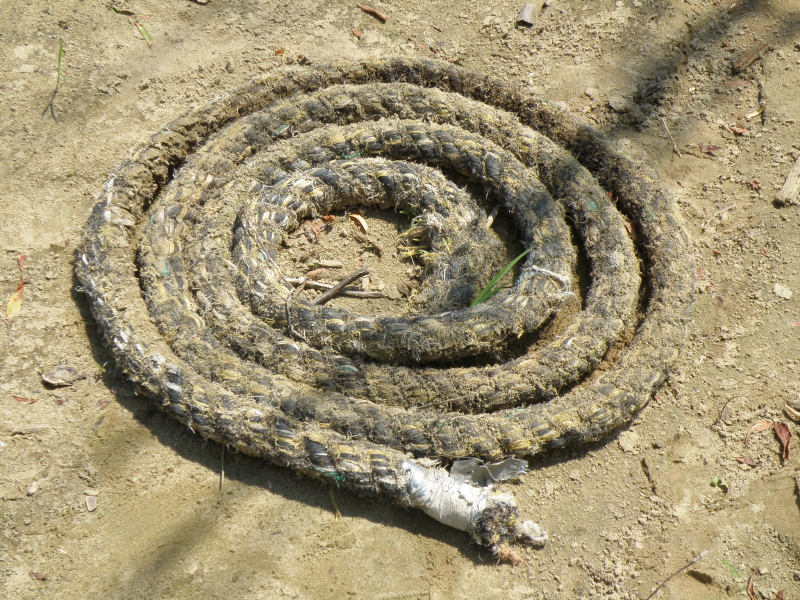
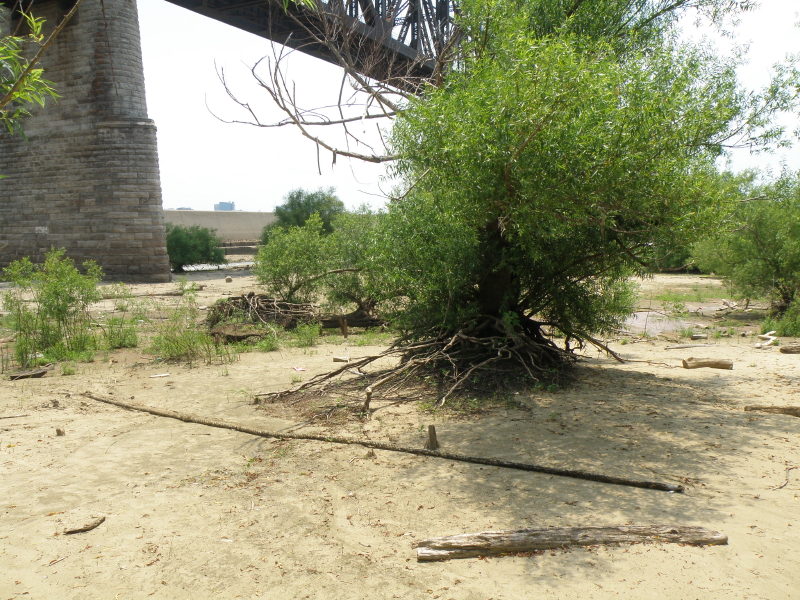
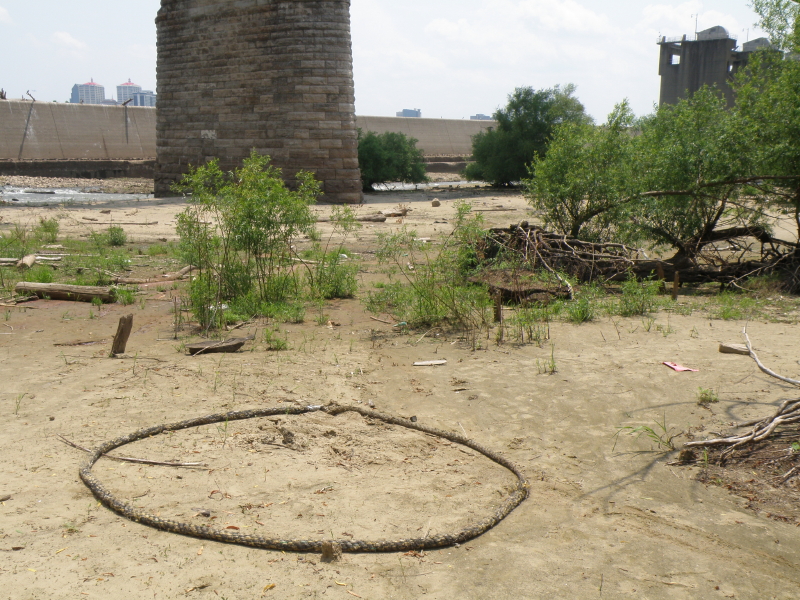
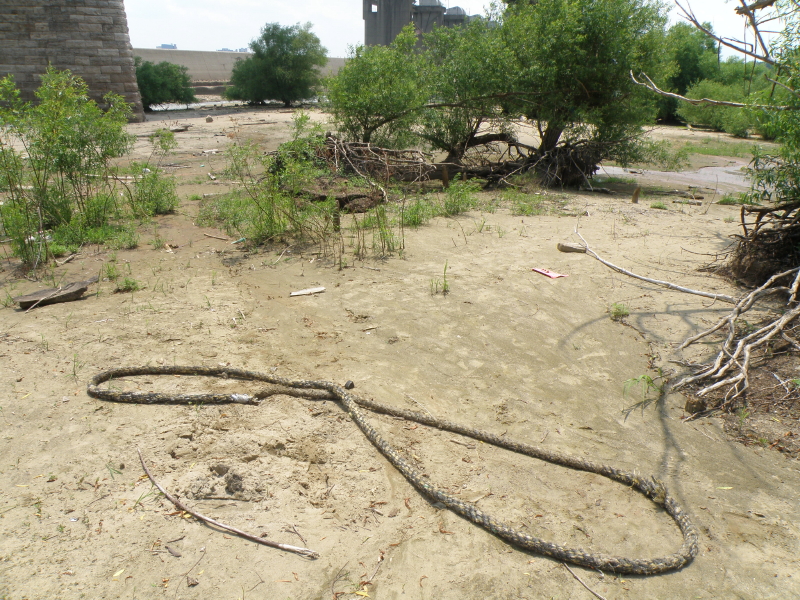
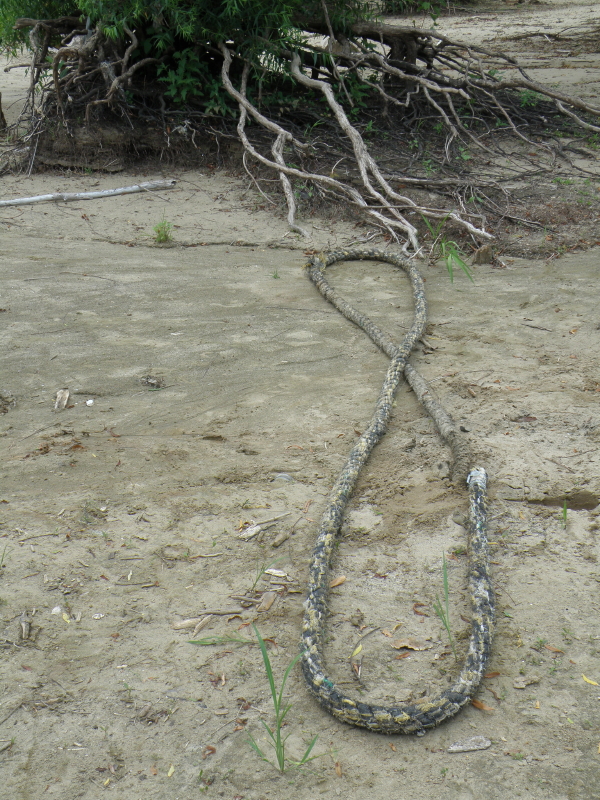
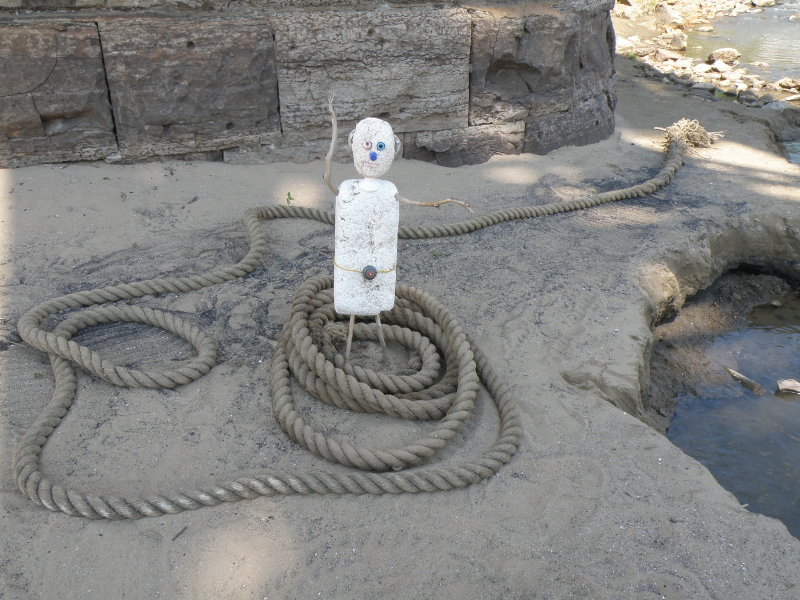
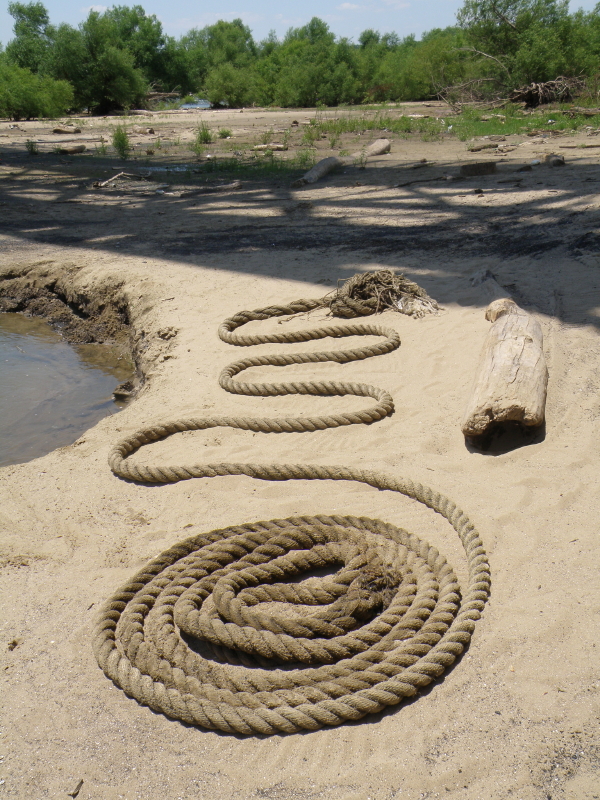
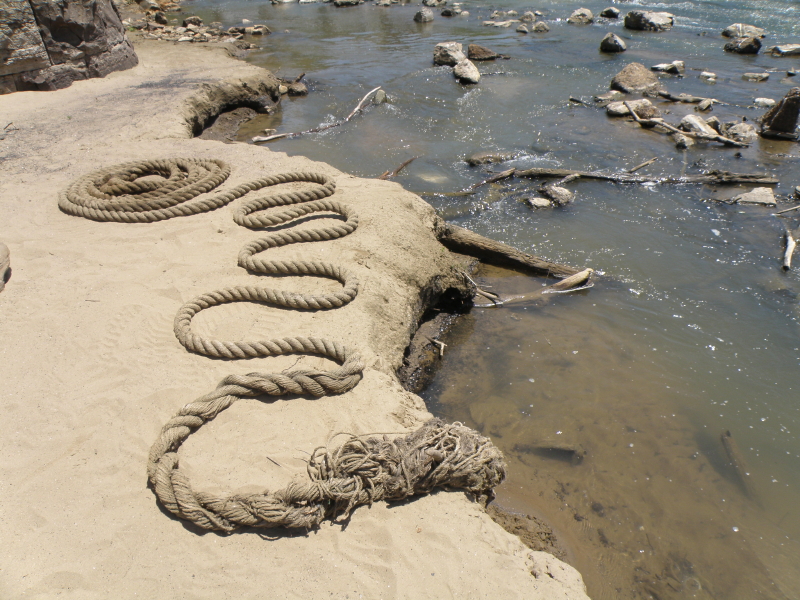
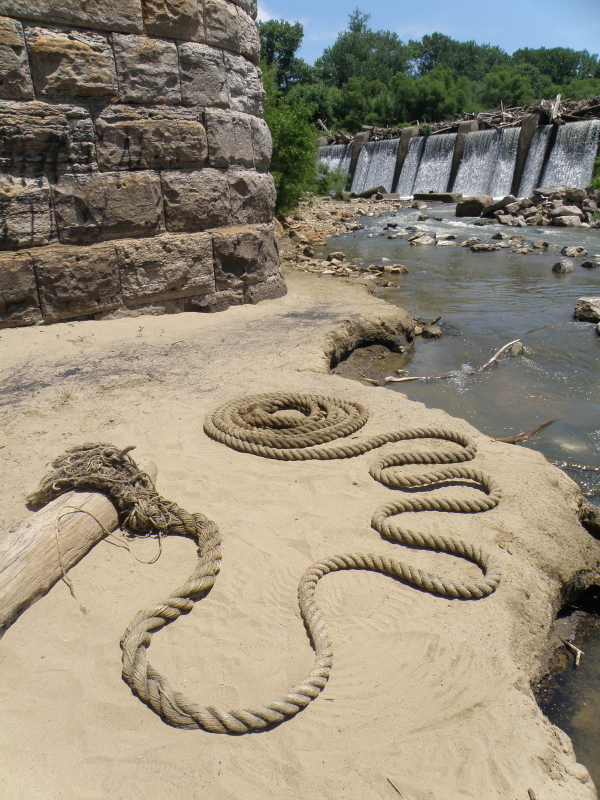
Greetings from a very hot and humid Falls of the Ohio State Park.  The Ohio River is receding into its summer pool and more of the riverbank has been exposed.  Of late, I’ve been running into more rope fragments from commercial barge traffic (or it seems this way).  I don’t  rule out the possibility that my desire to work with these objects in this setting has brought them into my universe and attention.  See the recent post I did about “Play on Earth Day” which also features a rope project.  I’m enjoying what can be done with them to create images.  Here’s two rope investigations I did the other day.

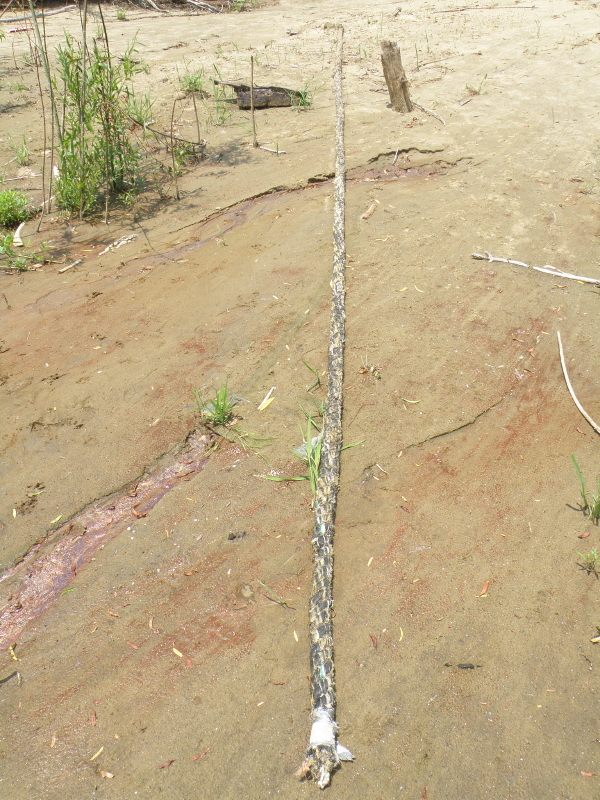
As ropes go…this isn’t the thickest or heaviest rope I’ve found out here.  What is interesting is that most of this rope is still buried under the sand.  There is a point where it enters the ground and remains hidden and fixed to this position.  I started out just coiling the rope…I love working with spirals.  The exposed end of this cable is covered with duct tape.  Next, I pulled the rope straight to see how long it was and to see how it activated the area it was found in.

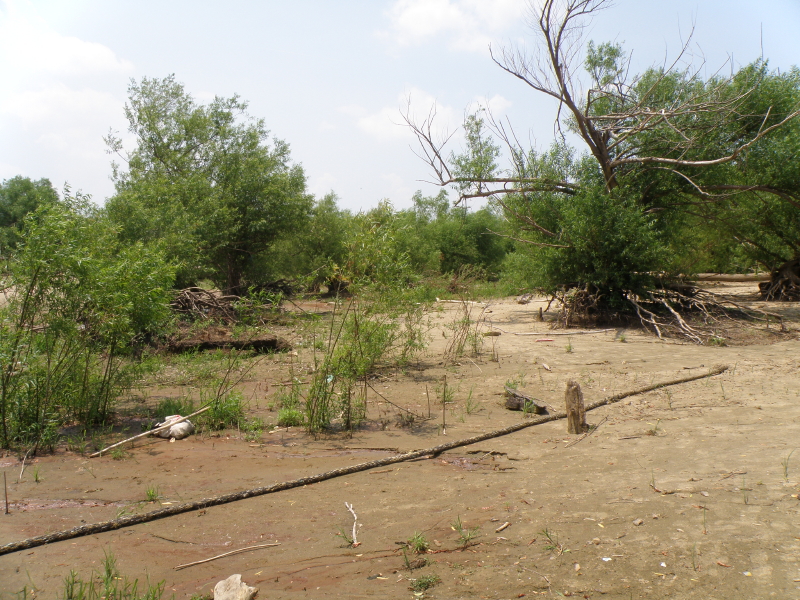
The terminal end of this rope is buried under the sand.  I used that point to move and pivot the rope to create these other images.  Here are two side views of the straight rope and the scene it underscores.

Next I tried creating a circle by joining the ends together.  The rope was stiff and not easy to shape.

This image makes it appear to be more of an ellipse, but I did my best to try to form as neat a circle as I could.  The area I’m working in is in the eastern section of the park right under the railroad bridge.  The last photo I made using this rope is more of a figure eight and loosely reminds me of a chromosome.

Now for the same rope shape involving the roots of a nearby willow tree.

I came across a second rope on this sweltering day.  My clothes were literally sticking to me.  It occurred to me that I left my water bottle in my car which on this day was not a good move.  I needed to take frequent breaks under the shade of the willow trees to keep from overheating.

This second rope fragment is much thicker than the previous example.  It also appears to be made of a natural material.  Someone else found this rope in some other part of the park and carried it to this location under the bridge where it was abandoned.  I returned a couple of days later and this rope was gone.  I wonder what other project it was destined for? Anyway, here are a few of the images I made with this interesting object.

Next I placed the unraveling end into the river to link it with the riverbank.

Last view with the unraveling end draped over a log.  This is the position I left the rope in before departing for home.  I very nearly took this rope home with me, but it was too big and heavy and the heat of the day took its toll on me.  At the time, I told myself that if this rope was still here the next time I returned that I would collect this object for later use.  Nebulously, I had this idea in my head for another installation project.  Just what I need…more junk!

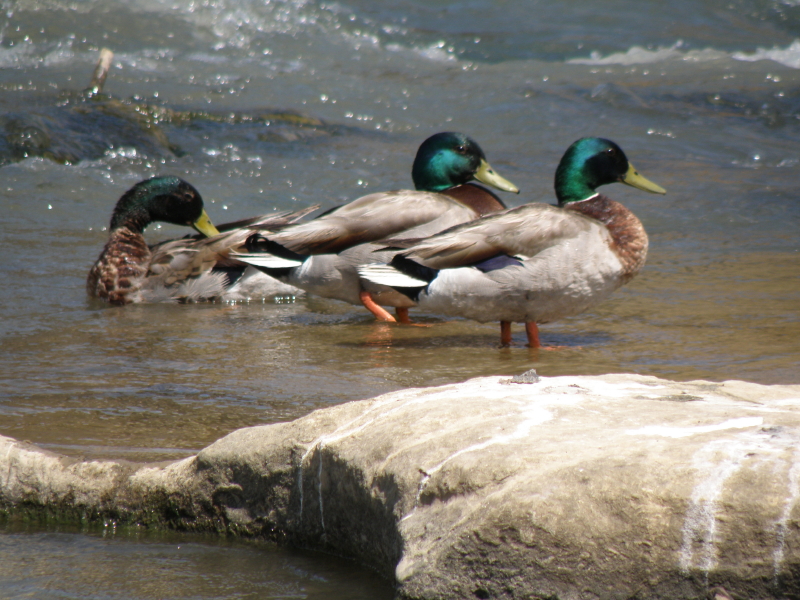
After playing with this rope, my curiosity was satisfied for the day.  I’m sure I will find other ropes and cables out here as time goes by. I found myself being very envious of this trio of male Mallard ducks!  They seem to have the right idea and so I will end this post with them.  Stay cool everybody!

Read Full Post »

« Newer Posts - Older Posts »