Feeds:
Posts
Comments

Posts Tagged ‘Ohio River’

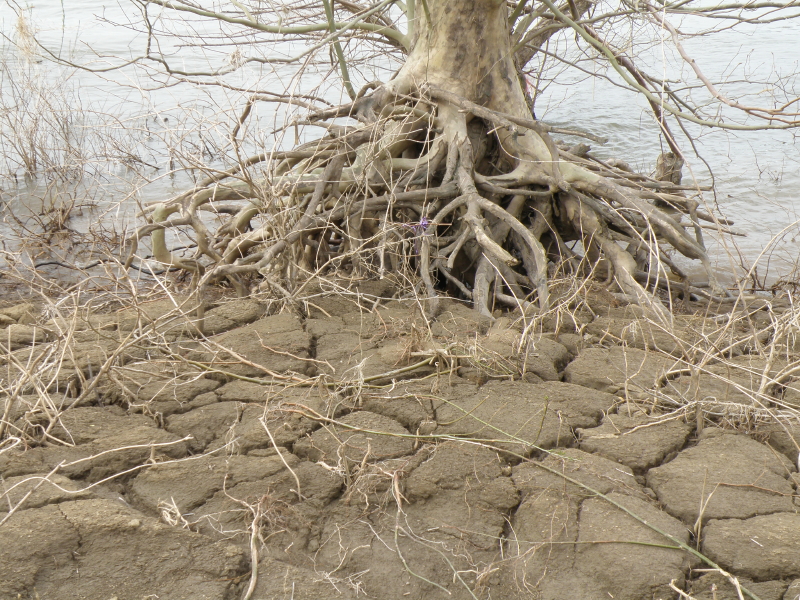
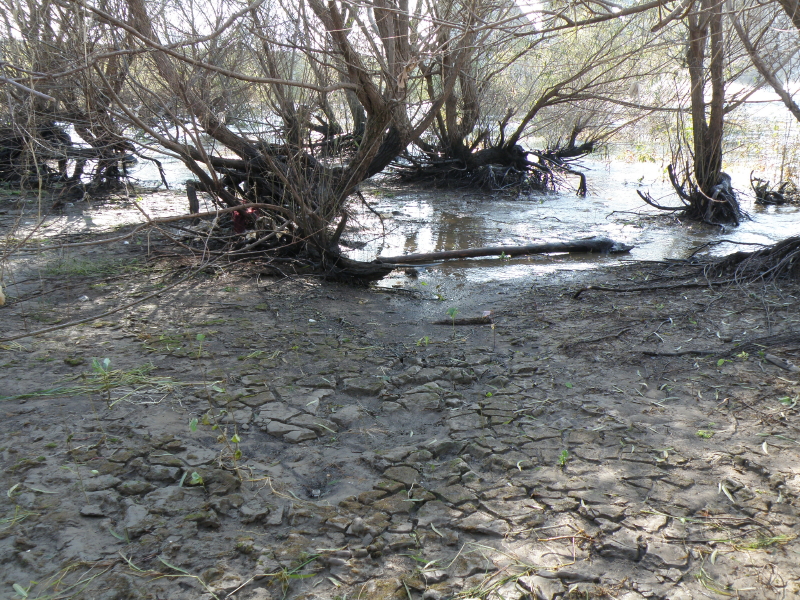
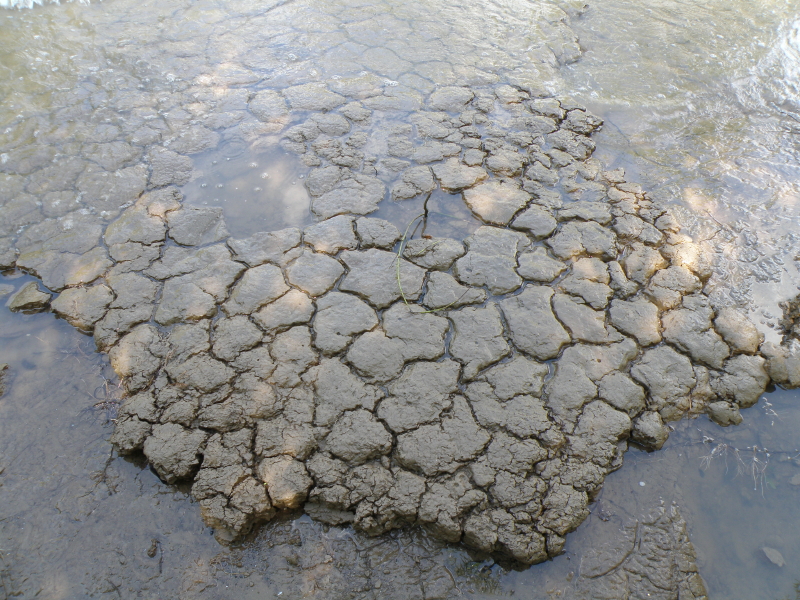
the riverbank, cracks in clay, July 2013

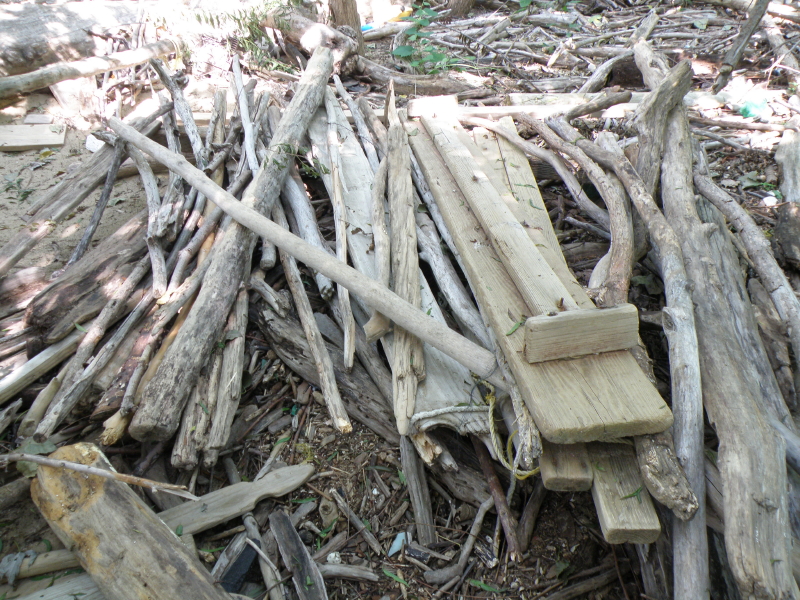
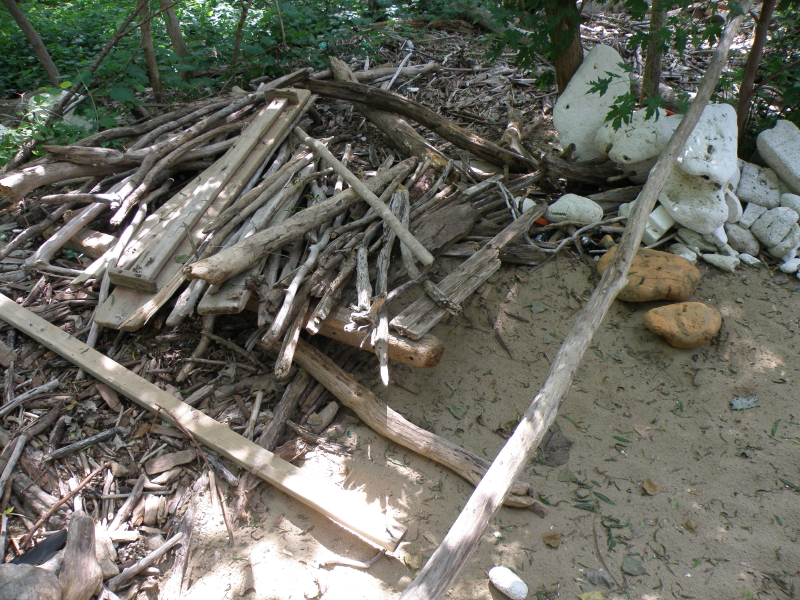
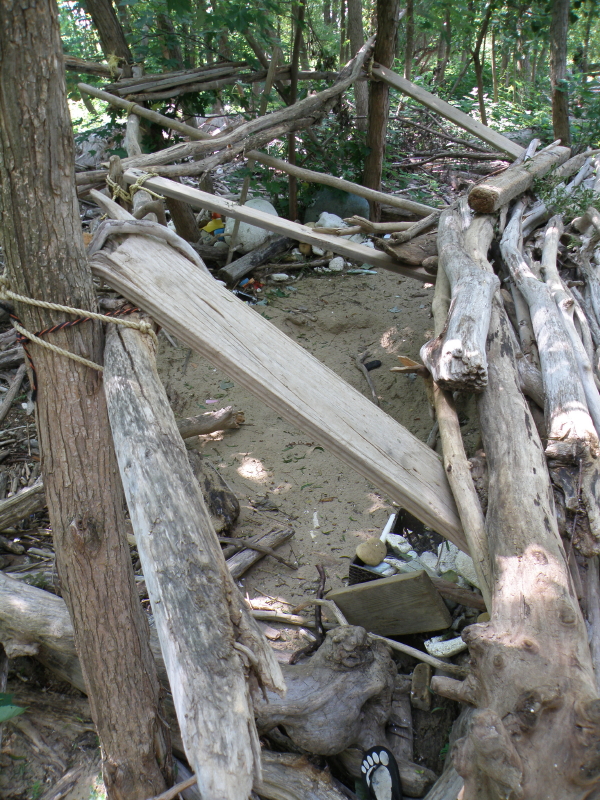
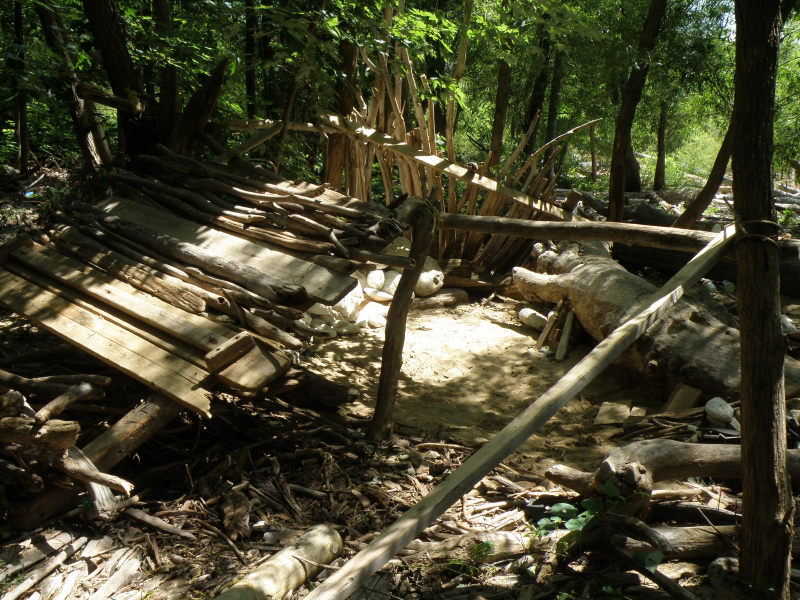
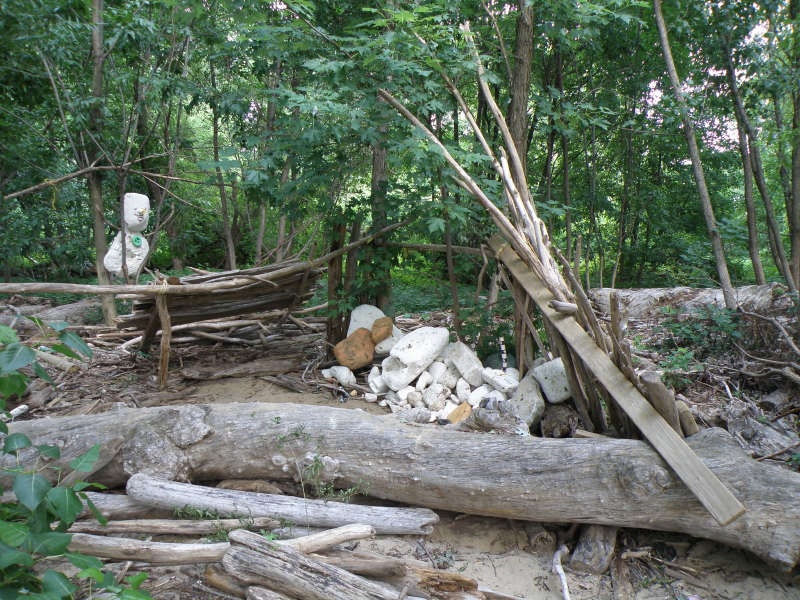
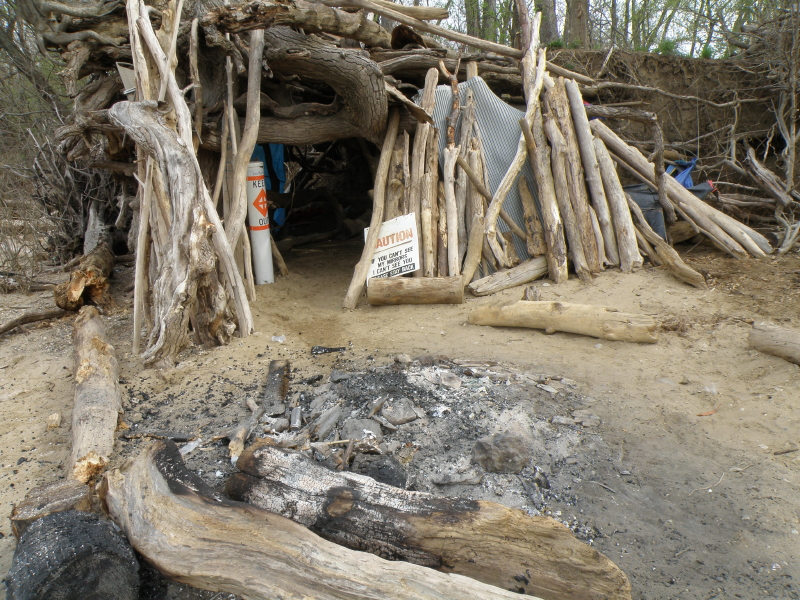
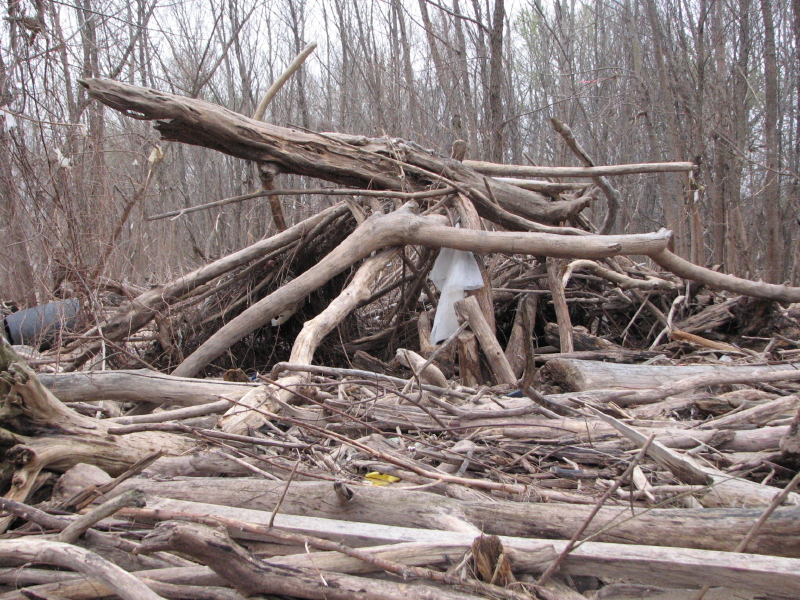
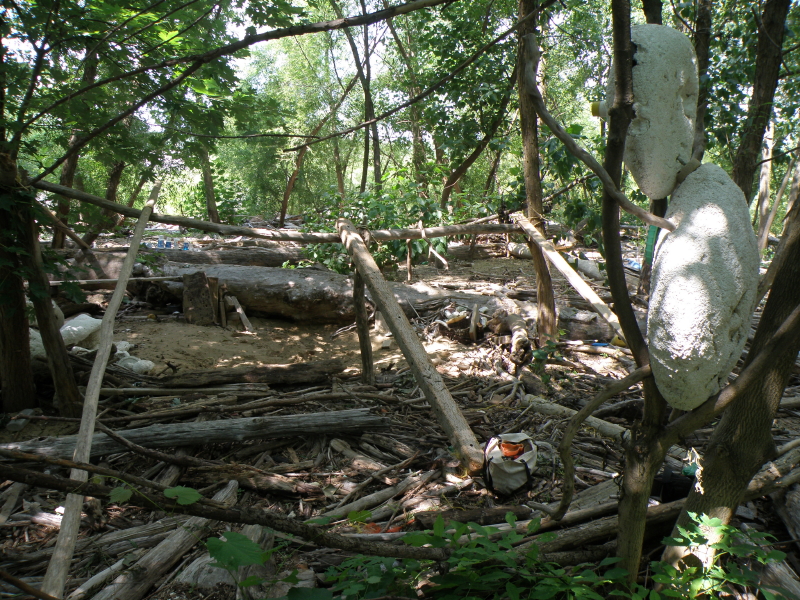
I never told you how this story played out and so now is as good a time as any.  A few weeks back, I had posted on how some unknown visitor(s?) had been altering my outdoor studio at the Falls of the Ohio State Park.  For a least two years previously, I had been storing my river found art materials at this site.  People who stumbled upon this spot often mark their presence by changing how I left it in some way.  Folks might rifle through the junk or take or destroy the Styrofoam figures I might leave behind.  I don’t mind this…in fact, I encourage the interaction.  On site, it’s easy to make the connection that all these poor materials I use came from the river.  I still think of my outdoor studio as a shared laboratory for this exercise in creativity.  It’s an acknowledgement that all this junk is out there and that something else positive might come from it.  For several weekends, my latest visitor has been building a wooden driftwood structure over my spot to the point where it usurps my ability to continue working there.  So, I made a few changes that I thought would benefit both of us.  I modified the structure so that I could stand within my site.  I also opened up the space more which I thought also encouraged additions.  I was curious to see how my visitor would react and here are the pictures.
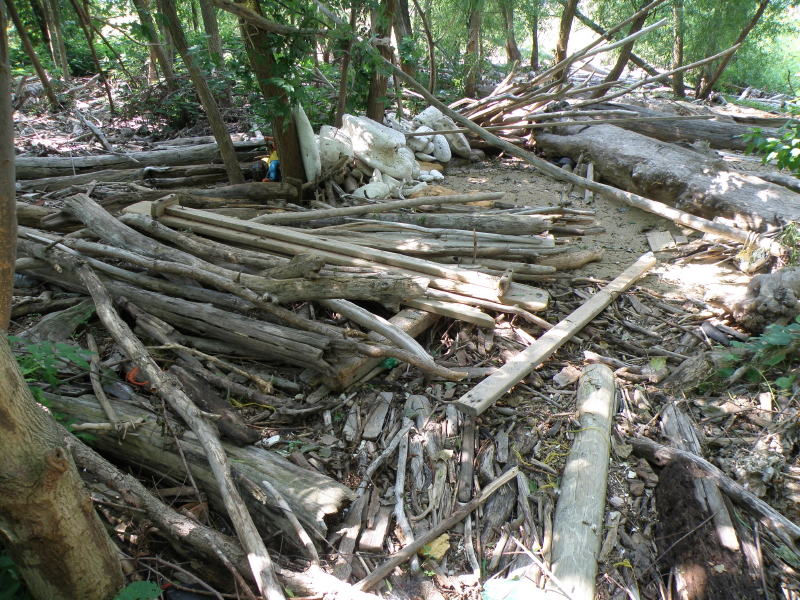
destroyed driftwood structure, July 2013

destroyed driftwood structure, July 2013

destroyed driftwood structure, July 2013

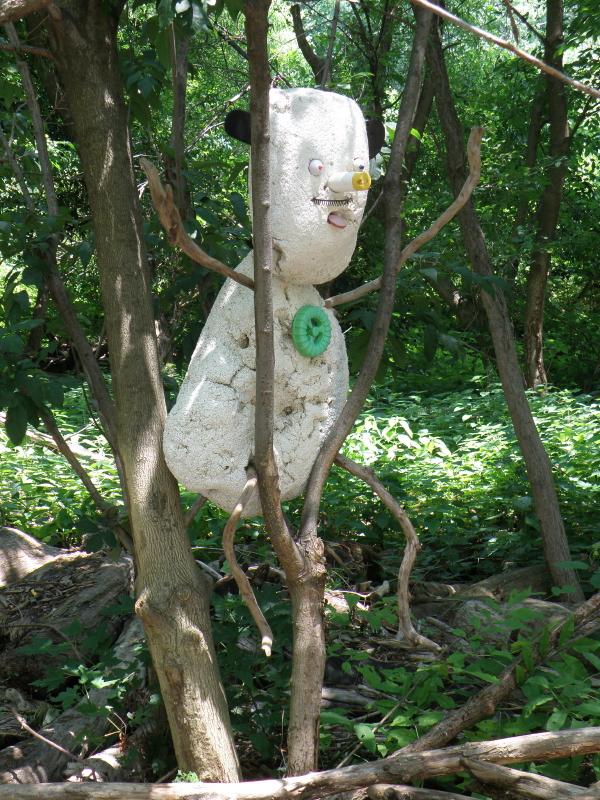
It appears that my “improvements” weren’t appreciated because I arrived one day to find it all laying on the ground.  All the nylon line and strong knots that were holding things together were cut with a knife.  Stuff was scattered and the big polystyrene figure I had left there was destroyed again.  Here’s how I discovered my Styrofoam man.

fallen figure, July 2013

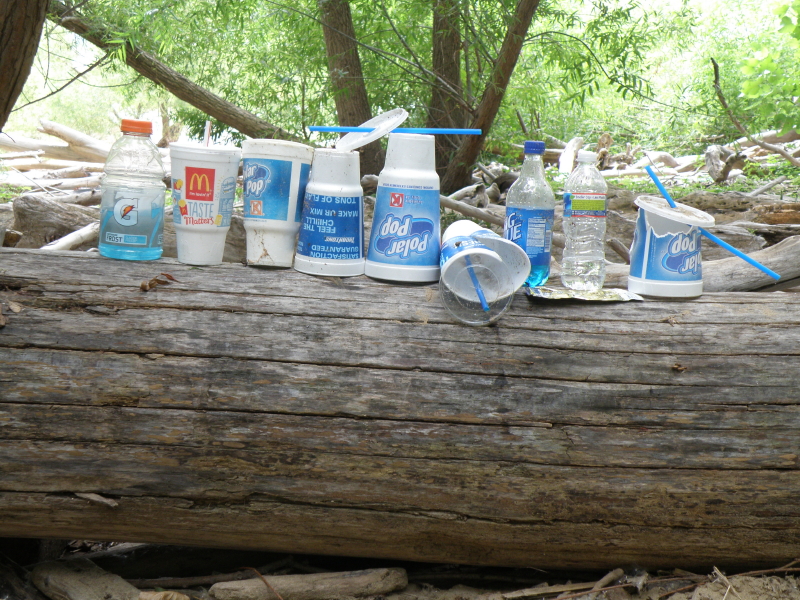
He had been sitting in a fork of a nearby tree.  I think my visitor picked him up and threw him across the site…again!  At this point, I’m feeling pretty bummed out.  I left this figure as I found it.  My visitor also left me some additional trash behind as is his custom and I gathered it together again to create this “portrait”.
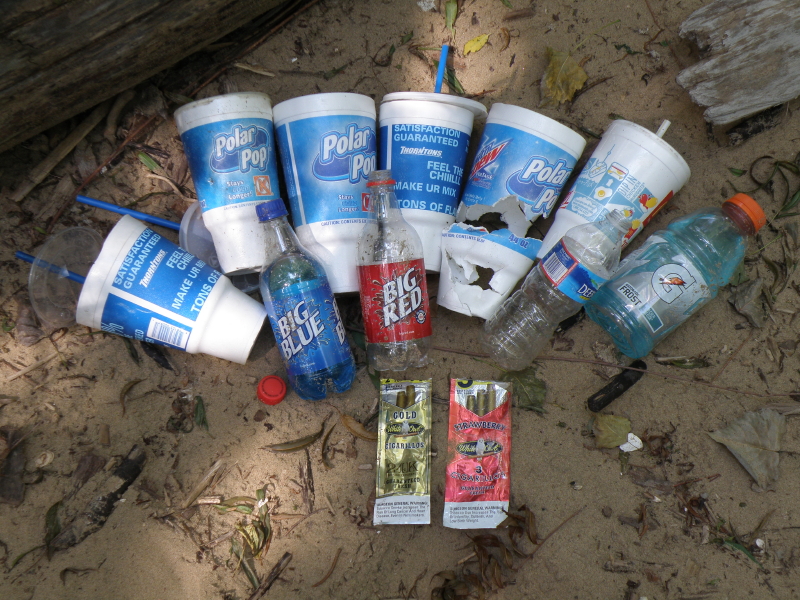
trash at my site, July 2013

I thought the “Big Red” with the “Big Blue” was an interesting touch.  In our area, those are the home colors of rival universities.  Another giant Styrofoam cup joined the group and I have my suspicions that the cigar packaging is from the same individual as well?  I think this is what saddens me the most that all this convenient store trash would be walked to this site and simply thrown on the ground.  As much trash that appears here from upriver, I’m shocked by how much park garbage originates from the nearby towns.  And yes, there are trash cans available everywhere.  I sat by my site for a while and pondered the situation.  I wondered why with all the space and driftwood available in the park that this spot became so important to my visitor?  Feeling like this individual more than likely doesn’t play well with others…I decided to walk away from this site for a few weeks or months before returning.  So far, I haven’t been back to my old spot under the willows.
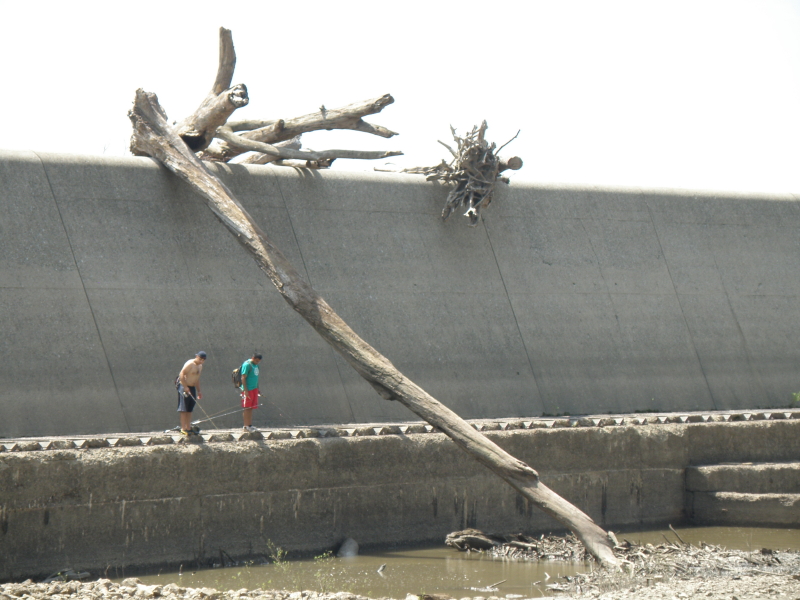
two fishermen, July 2013

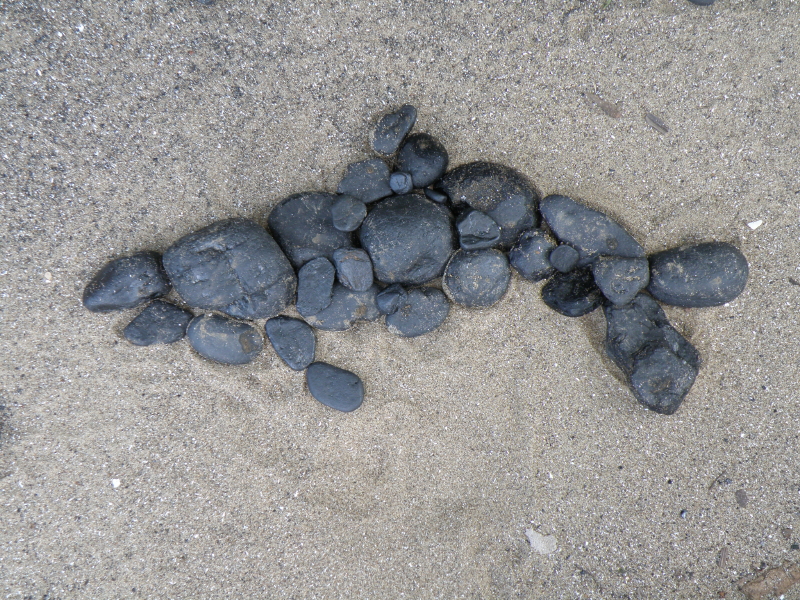
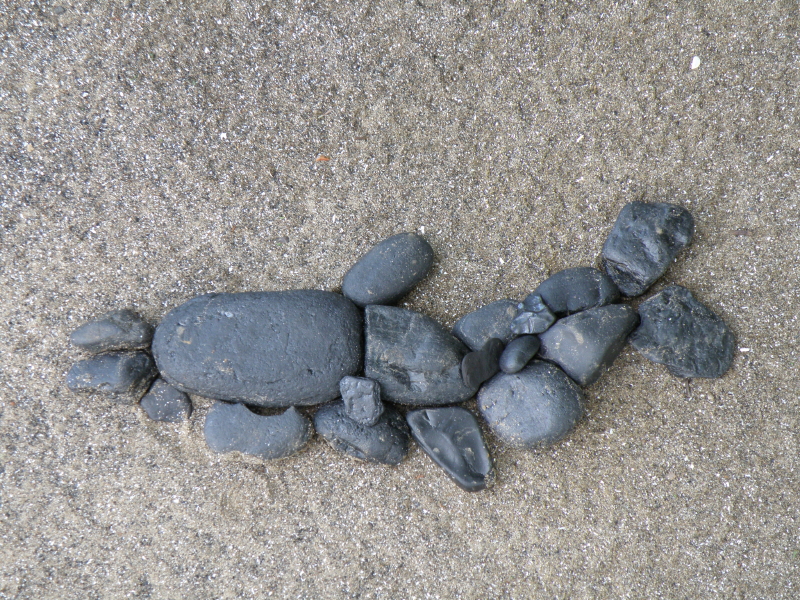
The day felt shot, but I didn’t want to leave things that way and so I went for an extra long walk.  After all, I have the rest of the park to potentially explore.! Along the way, I spotted these two guys attempting to fish by the wall of the dam.  They didn’t appear to be having any luck and so I left them with these fishy images by the side of a trail they would pass by.
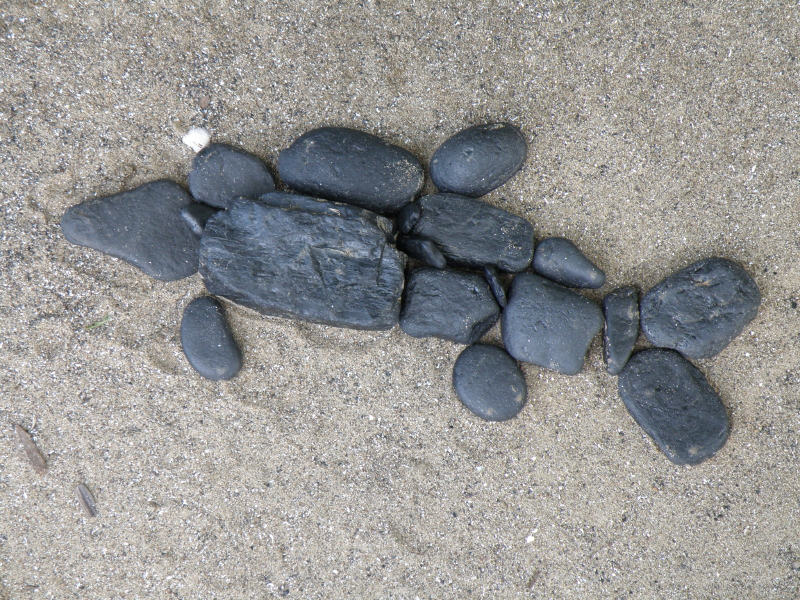
coal fish, July 2013

coal fish, July 2013

coal fish, July 2013

I used river smoothed coal I gathered on site and improvised these three fish on the sand.  Peppering the silica granules black is coal dust.  The white dots are pulverized mussel shells.

three coal fish on the sand, Falls of the Ohio, July 2013

Thus far, it has been an atypical and sometimes unsettling summer at the Falls of the Ohio.  All the early season rains and subsequent high water have disrupted the usually hot, humid, and lazy routine found here during this time of year.  In an odd way, it doesn’t feel like summer has truly arrived for us yet.  We have a few more months for this to happen before the leaves start turning colors.  To close, here is one more coal-fish image in a slightly larger context.  Have a great weekend!
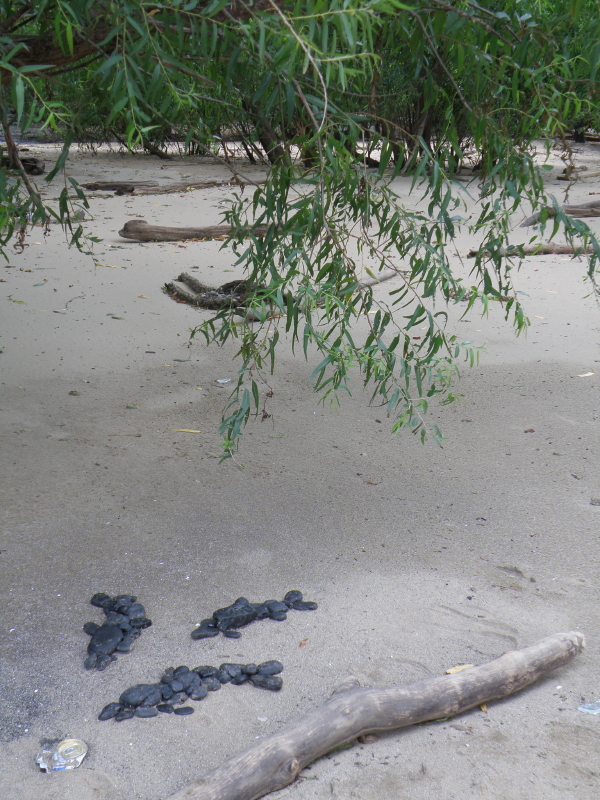
coal fish in context at the Falls of the Ohio, July 2013

Read Full Post »

Falls black styrofigure, July 2013

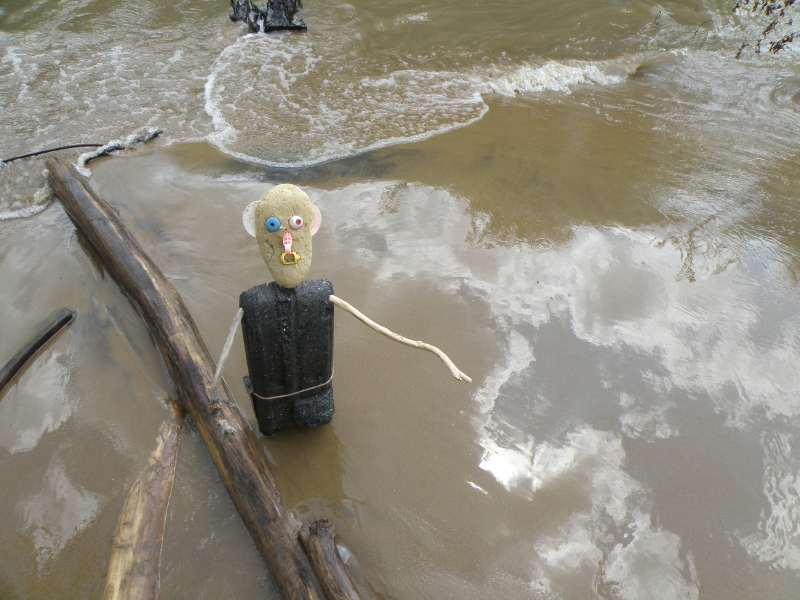
With the sun spotlighting this little patch of sand…my newest Styro-figure proudly stood upright.  He’s the first persona created in the reconfigured studio.  I found a rare piece of “black Styrofoam” on today’s walk.  It’s part of what passes for car bumpers these days.  This material has a rubberized compound mixed throughout the foam which makes it harder to cut or pierce.

Leaving home, July 2013

After making new friends it’s time to venture out into the world.  The leafy green complete with bird song is complimented by the creaky willows that sway with the occasional breeze.  There is another sound, however, that your feet are hearing and you walk in the direction of its source.

Black Styro-figure by the river, July 2013

The mighty Ohio River has been running muddy for more that a week now.  Although it’s hot and humid today, thus far, this summer has been wetter and cooler than average.  As a result of all the rain, the river has been higher than usual.  What I like about the Falls of the Ohio is that in such a relatively intimate space the park can take on all kinds of different looks depending on the weather and season.  Small waves break upon the heightened shoreline and there is a family nearby fishing and playing by the river.

Family fishing for catfish, Falls of the Ohio, July 2013

Seeing that they were having some luck catching fish, I gestured if it was all right to take their pictures.  The family didn’t speak English and I’m guessing that they are recent immigrants from Southeast Asia?  Regardless, both adults and children were having a ball in the river.  I wondered if they came from someplace like this since they seemed so comfortable and natural by the water? After receiving the okay signal I recorded these images of people interacting with the river.

little boy, Falls of the Ohio, July 2013

This little guy was cute and really determined that I should take his picture in what I’m assuming is a martial arts pose?  I obliged him several times and this was my personal favorite snapshot of the group.  Looking through my riverblog…I’m struck by how often children appear and interact with my artistic process.  First, my own two sons would accompany me and now it’s the kids in the park on any given day.

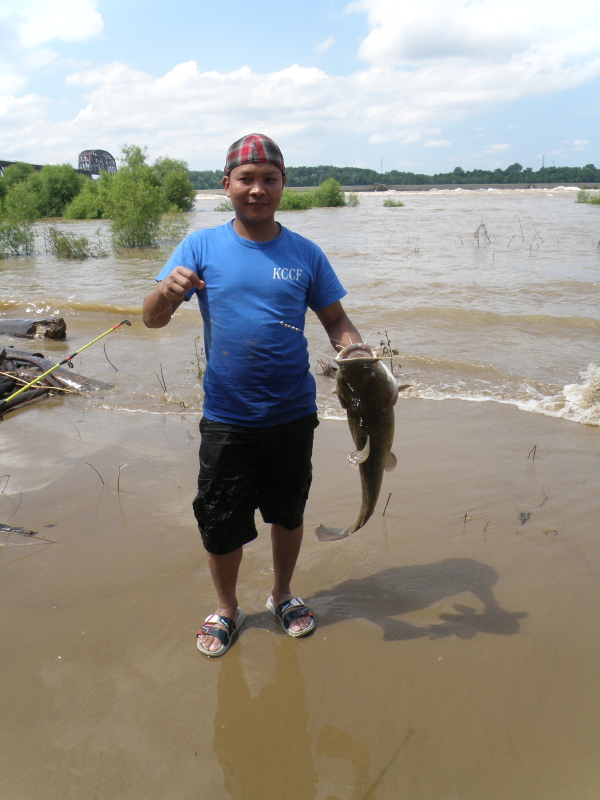
Man with Flathead Catfish, Falls of the Ohio, July 2013

Flathead catfish, Falls of the Ohio, July 2013

I watched this fish being landed and it’s a decent sized Flathead catfish, (Pylodictus olivaris).  This fish probably weighed in the ten to twelve pound range, but this catfish can get as large as a hundred pounds.  It is a fish of big rivers.  A very simple rig was used to catch this fish.  Four slipshot lead weights were clamped onto the line about eight inches away from the hook.  A single nightcrawler worm was used for bait which was cast about 25 yards from the riverbank.  The fishermen would wade in about knee-high to waist deep to increase casting length.  I was amazed that with the current and all the potential underwater obstructions that their lines didn’t get snagged more often than they did.

Catfish stringer, Falls of the Ohio, July 2013

This was the stringer of catfish they were working on.  In addition to the Flatheads…another big river fish the Blue catfish (Ictalurus furcatus) was also being caught.

catfish stringer, Falls of the Ohio, July 2013

The Blue catfish is a slatey-gray color and has a forked tail.  The two fish on the lower right in the above image are blues.  The flatheads are more of a mottled olive color and have very different fins.  Both are omnivorous and will eat most anything that they can catch.

Man and catfish, Falls of the Ohio, July 2013

All the fish on the stringer will be used to feed this family.  It is still not recommended that people eat the larger fish (especially bottom dwelling species) from the Ohio River. The river is much cleaner than it used to be, however, toxins do build up in the fat tissues of the fish that live the longest and grow to be big.  Every once in a while, making a meal of some of the smaller fish should be okay.  Because I was needed elsewhere today…I let my day at the river draw to an end.  Good thing too…because if you stand too long in the same spot at the water’s edge…you chance sinking down too far!  See you soon.

Styro-figure in black, waist deep in wet sand, July 2013

Read Full Post »

soft drink waste, Falls of the Ohio, July 2013

When last we visited the Falls of the Ohio the river was rising.  Several days of intense rainfall throughout the Ohio Valley are now flowing by and coloring the water a muddy ocher. My outdoor site where I make my polystyrene figures and store materials is being usurped by twin forces.  It’s difficult gauging the intentions of this visitor or visitors, however, I also continue finding their waste soft drink cups and bottles.  What’s with the blue drinks?  I guess the color blue is also your symbol for cool refreshment.  If I am to continuing working here, I will need to change the driftwood structure erected over my site.  I was  secretly hoping that the river would solve this dilemma for me.  If the water rose high enough, it would move the largest beached logs which would effect everything near them.  That didn’t happen.  The river fell short of my spot and a visible line demarcating brown wet wood from bleached, silver-gray wood marks the high waterline.

My site with evolving structure, Falls of the Ohio, July 2013

The structure the visitors are building is enclosing the space.  As it is, it’s difficult now to stand on the center sand, especially since a growing pit is developing.  My collected river materials continue to be strewn about.  I initially liked that someone else was seeing the potential of this site and adding their distinctiveness to the mix.  Now I’m seeing less intent here and and I’m going to make the next move and see what happens?  First, I will need to find and repair the large Styro-figure I left here sitting on the roof.  He’s a participant/witness to all the proceeding events.

My mustachioed Styro-friend, Falls of the Ohio, July 2013

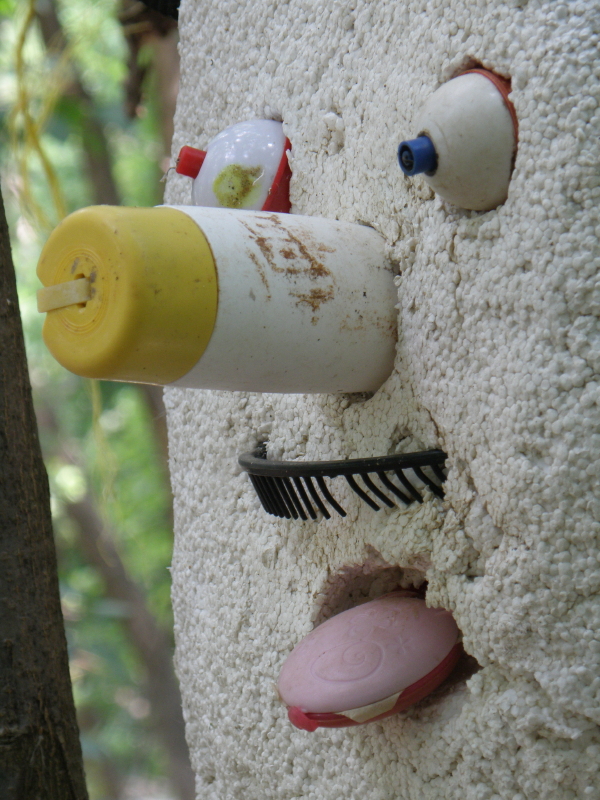
Again he looks like he was cast aside.  I find everything except his mouth and replace it with some other river plastic I picked up.  I reattach his arms and legs and he’s as good as new again.  Well almost, the excitement with the visitors and the unpredictable nature of the river have dinged his persona.  He never said much before and he says even less now.  How unfortunate.  I park him in a nearby try to keep him safe.

Figure in a tree, July 2013

I’ve seen this before and call it “Styro-shock” or “polystyrene demensia”.  Imagine willing your body into a stasis where you have no awareness at all and you will begin to know what it means to be Styrofoam.  He might come out of it on his own…who knows?  I turned my attention back to the wooden structure to see what I could do to affect the space in a positive way.  I’m not interested in getting into some escalating contest of wills with someone.  While I figured out what to do…my silent friend continued to sit tight.

Changing the wooden structure, July 2013

I stripped off the wood to expose the frame.  Next, I flipped a few of the cross braces over which opened the center of the space back up.  I created a small doorway by cutting away some excess wood with my saw on my Swiss Army knife.  That has come in handy more than once.

remodeled driftwood structure on site, July 2013

Using the wood already collected, I made a small lean-to for a shelter and a wall of upright sticks to enclose the space on one end and create more visual interest.  The maple tree on site separates one area from another.  There’s plenty more that can be done, but I decide to stop here and see if anything happens while I’m away.  The site now does a better job of corralling any wayward Styrofoam and has further called attention to the studio site as a performance space.  As the day progressed which was sunny and cooler than usual…the sun shone just right to highlight the interior of my studio under the willows and filled it with energy.

remodeled studio with sun shining in. July 2013

It was a long and busy day by the muddy river.  I have lots of other interesting pictures to show you, but they are worthy of separate posts which will happen soon.  For now, I’ll end with a backward glance of my studio under the willows as I walked towards home.

View departing the willow studio, July 2013

Read Full Post »

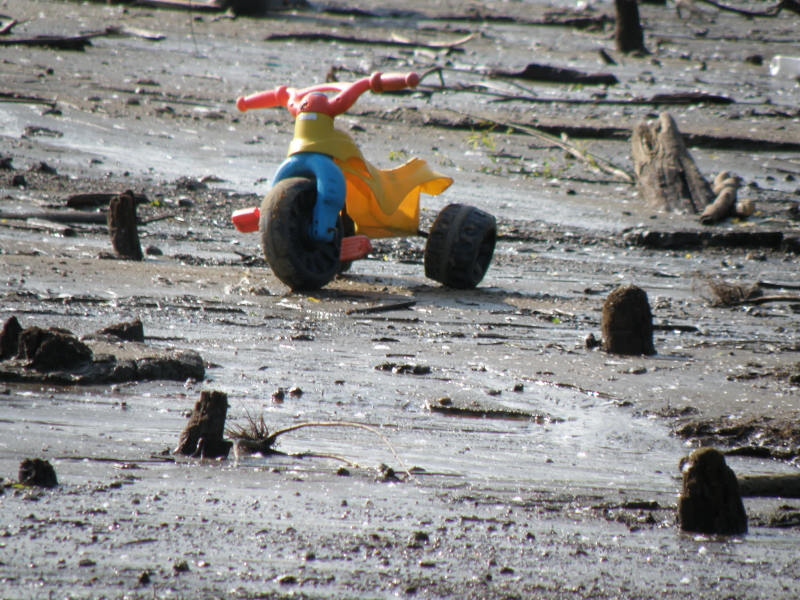
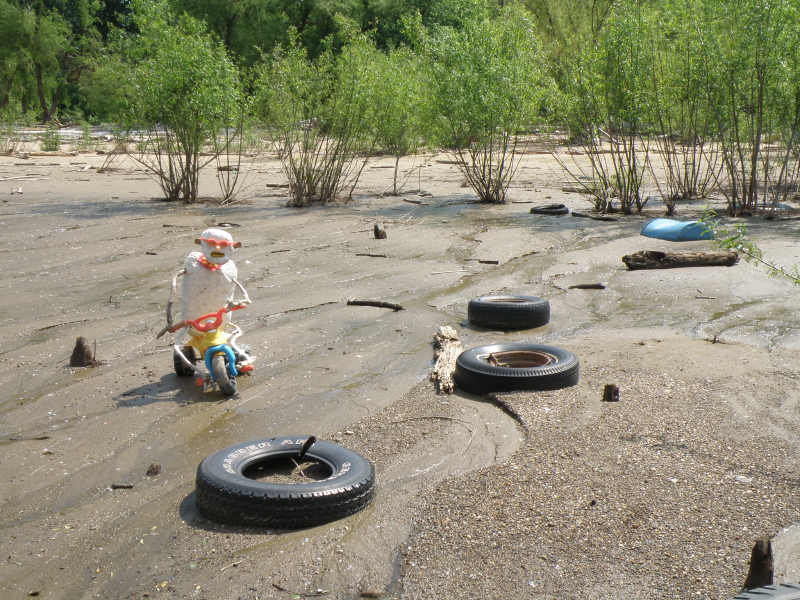
washed up plastic tricycle, Falls of the Ohio, May 2013

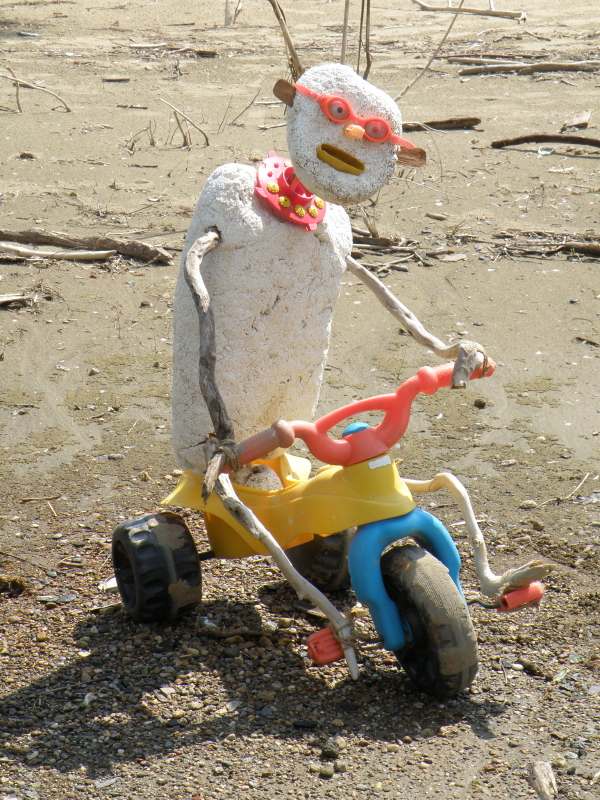
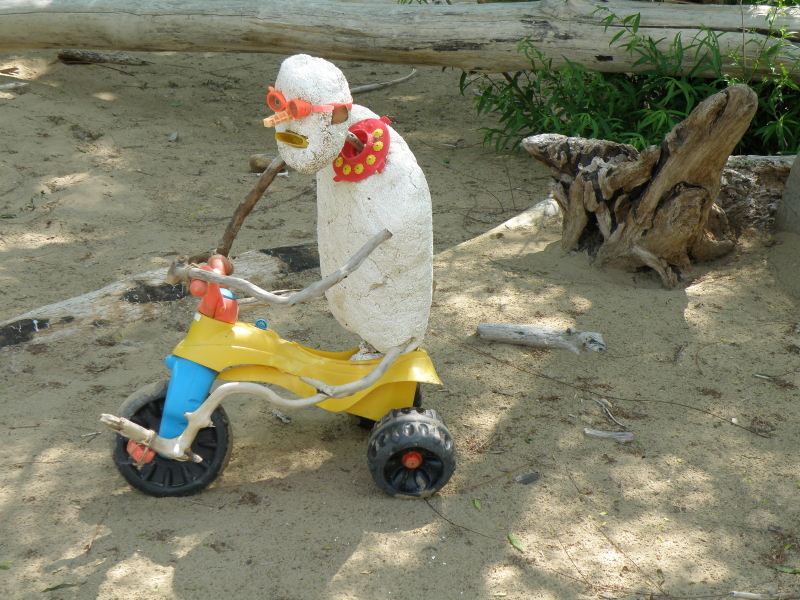
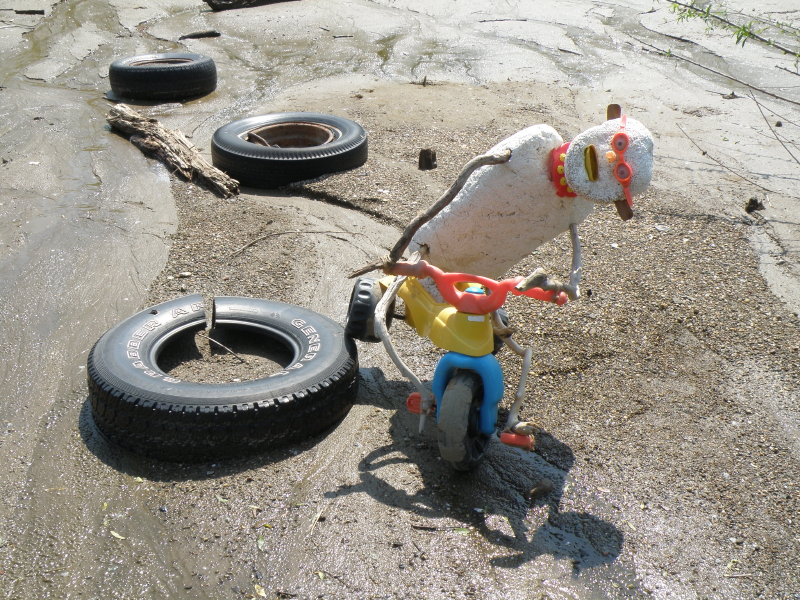
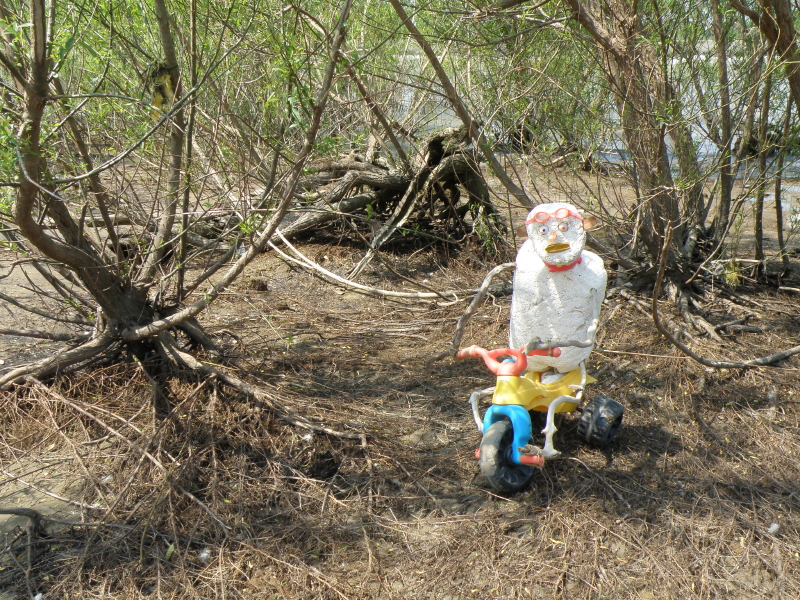
I was at the Falls of the Ohio last week when I spotted this plastic toy tricycle just sitting by itself near the river’s edge.  Although I didn’t see anyone around, I just assumed its owner must be nearby.  I took this picture and walked away.  After a time spent looking for driftwood and anything else, I was heading back to my studio under the trees when I was approached by this character I’ve come to know as the ” Off Road Triker”.  He was quickly peddling that tricycle I had seen earlier.

Off Road Triker, May 2013

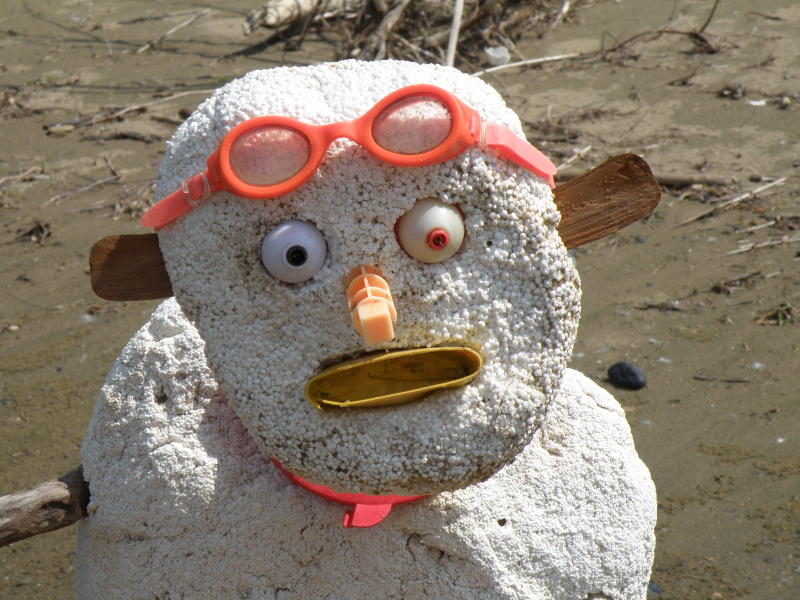
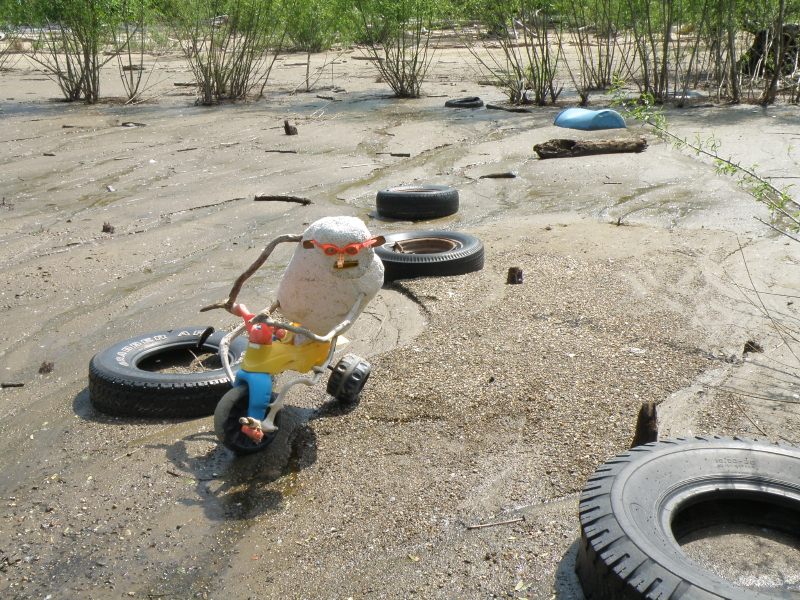
With his trademark orange goggles, the Triker likes to explore the world from the seat of his three-wheeler.  I recognized him as the  subject of a few human interest stories in the newspaper, but this was a first spotting him on the shores of the Ohio River.  I have heard that he used to own a car, but now he just peddles everywhere he wants to go.  As a side benefit, he’s in the best shape of his life.  His legs alone must be as hard as wood.  The Triker’s ride came to a smooth stop in the sand in front of where I was standing.

the head of the Triker, goggles off, May 2013

Removing his goggles from his eyes the Triker greeted me pleasantly on a picture perfect day.  We introduced ourselves and talked about our observations and connections to this landscape.  The Triker remarked that he had seen a lot of rubbish along the water’s edge and I nodded in agreement.  He wondered why nobody did anything about this, but I had to tell him that the Falls does see several clean-up attempts a year, but with each new flood or high water the new “largess” in the river just washes up again.  It’s like rolling that proverbial rock up the hill only to have it roll back again and again.

Off Road Triker in motion, May 2013

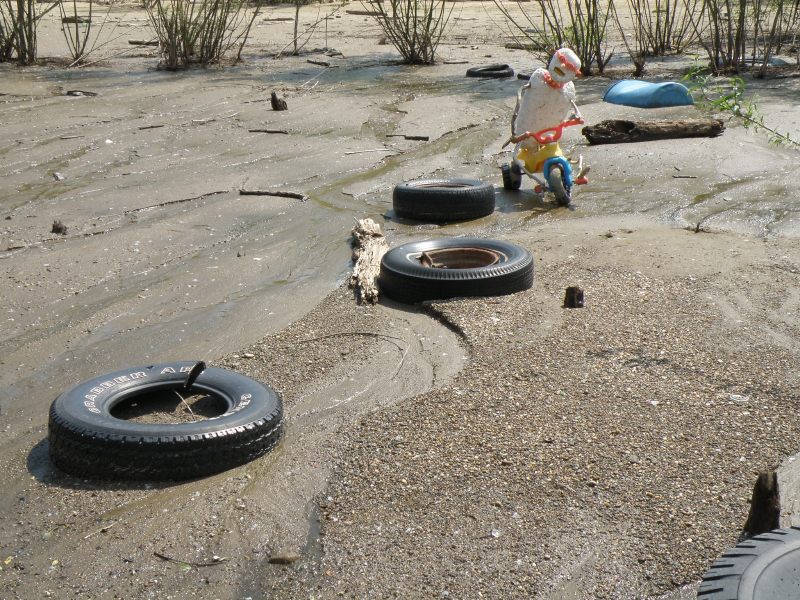
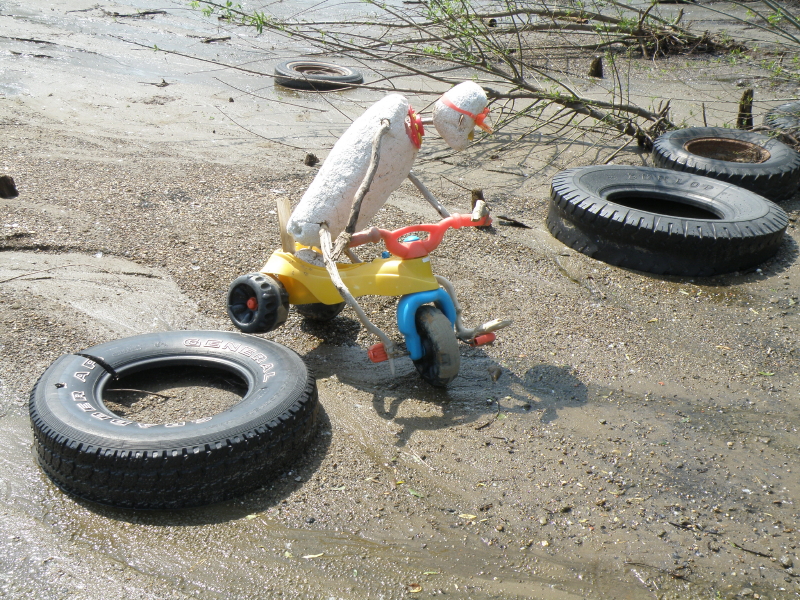
The Triker said that there was a place where several old automotive tires were laying half buried in the sand and that I should check it out.  He put his goggles back on and I walked beside him as he peddled to the spot.  I didn’t tell him this, but I was already familiar with these tires and have photographed this feature many times.  I found the Triker to be amusing and so I just played along to get a sense of who he is and what he might do next.  The reason all these tires are in this particular location is that once upon a time a river clean-up had occurred and these loose tires were gathered here for future disposal.  Ironically, the future never came which left these tires mired in the present.  Now these tires are so full of mud, sand, and water that it would take a herculean effort to dig some of them out of the riverbank.

The Triker begins his run, May 2013

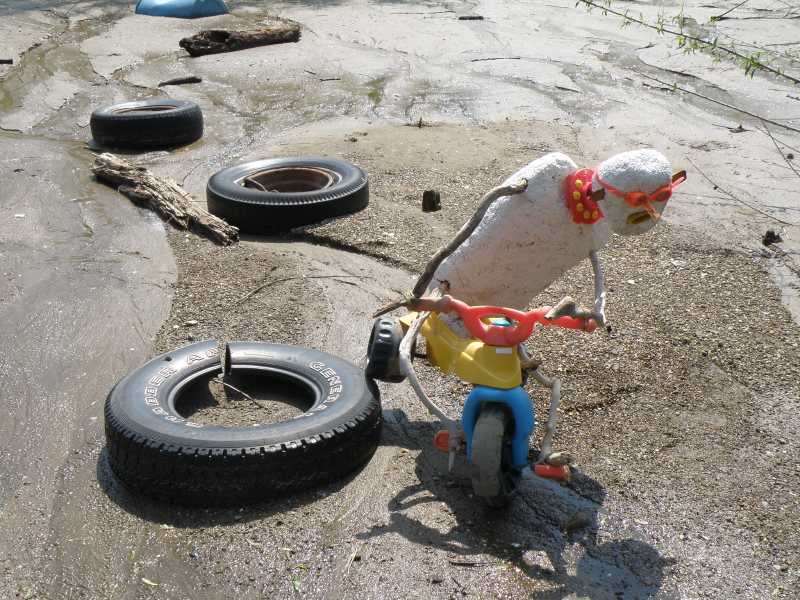
The Triker thought these tires would make an appropriate obstacle course to maneuver through and he asked me to photograph him while he made his run.    Everything started off well enough, but that was not to last.

The Triker runs the obstacle course, May 2013

The Triker swings wide, May 2013

The Trike over corrects, May 2013

The Triker clips the tire, May 2013

It’s at this point that the Triker hits a snag or rather a tire.  The slalom at the course’s start went fine, but midway through the Triker swung wide and he had to over correct to get around the next obstacle.  Here are some different close up views of the action.

View of Triker hitting the tire, May 2013

The Triker up on two wheels, May 2013

The Triker nearly falls off, May 2013

As you can see…hitting the tire caused the tricycle to go up on two wheels.  The speed and forward momentum nearly caused the Triker to completely lose his balance!

The Triker recovers his balance, May 2013

Fortunately as an experienced rider…the Triker held it together and was able to regain his composure and balance to complete this impromptu course.  He pulled off to the side near some willow trees and exhaled deeply.

The Triker recovers his breath, May 2013

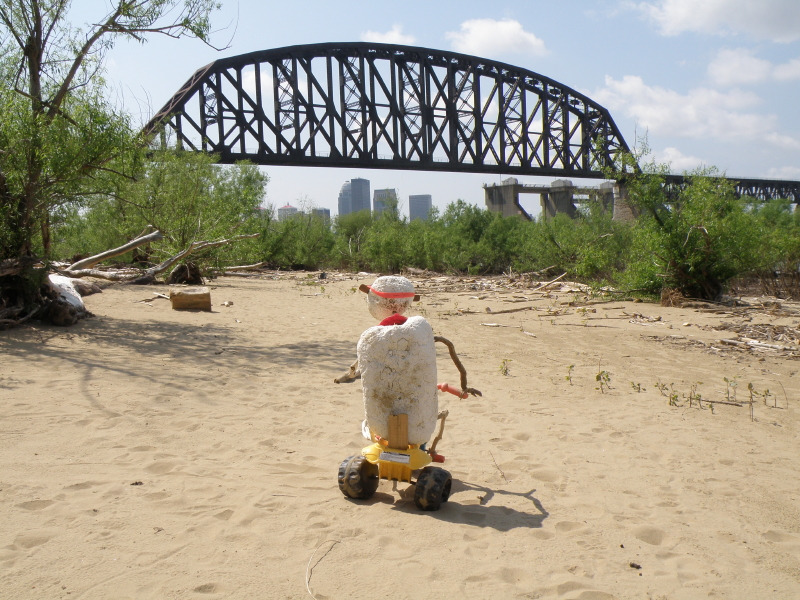
“That was a close one my friend.  I thought for a micro second I was going to eat sand and rubber in a hard way!”  I praised him for his skill on the tricycle and told him I would post the images on the internet which seemed to please the Triker.  Recovering his breath, the Triker said he enjoyed his visit to the Falls of the Ohio, but it was now time to return to the city.  With his goggles back on, my last view of the Triker was of his back as he peddled his wobbly ride with a newly bent axle towards the skyline of the nearby city.

The Off Road Triker departs, May 2013

Read Full Post »

pollinating tree, April 2013

It’s Thunder Over Louisville weekend which means the largest fireworks extravaganza in North America will happen tonight.  This is the kickoff event for the Kentucky Derby Festival which culminates in the horse race itself on the first Saturday in May.  The festival is a two-week event and while fun for residents and visitors…can also be an obstacle course if you are trying to get around town.  I like using the bridge on 2nd Street to get to the Falls of the Ohio State Park, but it is shut down and being used for the fireworks display.  At its height, Thunder Over Louisville (which also includes an air show) has drawn 800,000 people to the banks of the Ohio River on a single day.  I’m hoping to access the river and the park tomorrow.  For the moment, I have images to post from my last visit.  Looking through the pictures, it occurred to me that I had captured moments in the lives of individual trees that I would like to share.  The area continues to green up and many trees are producing their pollen.  For allergy sufferers, this is an especially difficult time.  If I was affected by seasonal allergies…I doubt I could do this project.  There is something about being in the bottom of the Ohio Valley that seems to bring out the worst for those allergic to various molds and pollen.

driftwood at the creek, April 2013

driftwood at the creek, April 2013

driftwood lining the banks of the creek, April 2013

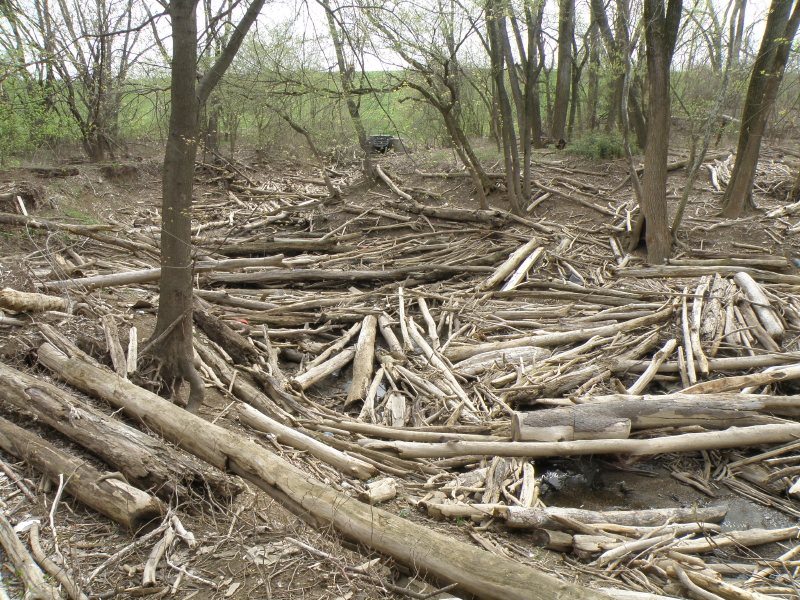
I started this adventure on the Woodland Loop Trial near the Interpretive Center.  The path eventually leads to a small creek that at the moment has a tremendous amount of driftwood lining the contours of its banks.  All this wood was deposited here by the Ohio River swollen from winter rain and snow melt all along the length and breath of the river valley.  More high water could eventually carry all this wood back out into the river for parts unknown.  Still, this represents a lot of trees.  I have this idea in my head that as a result of climate change, we have all this extra water and energy in our weather systems?  Where does the water from retreating glaciers and Arctic melting go?  I’m guessing that some of it is evaporated out of the oceans and into a warming atmosphere where it influences the global weather patterns?  This excess water eventually precipitates out causing more severe weather events including flooding.  This increases riverbank erosion and tree loss.  Is there a limit on how much water the atmosphere can absorb?    Of course development along the rivers takes its share of trees too.  The cumulative effect of many actions continues to shape the environment.

tree too close to the river, April 2013

tree roots and river mud, April 2013

These exposed tree roots are something that I’m noticing more of at the Falls of the Ohio.  I’m assuming that frequent high water causes this?  This isn’t necessarily fatal and these trees can survive as long as the riverbank stays in place.  In addition to more water…an increase in storm related wind velocity has also been noticeable over the years.  We have had a lot of trees simply blow over and be lost in this manner.  Continuing to walk westward in the park, I can see that my favorite cottonwood tree continues to be developed as a party hang-out.

cottonwood tree party hangout, Falls of the Ohio, April 2013

fire pit outside the tree fort, April 2013

distant view of downtown Louisville from inside tree fort, April 2013

I posted on this wonderful cottonwood tree not too long a go and remarked on how it was once again becoming a focal point for parties.  The fire pits are larger and there are more beer bottles and cans around this tree than before.  I’ll bet this place is especially magical illuminated by camp fires.  Plus, more found wood has been used to hide a large silvery sheet of corrugated plastic to impart a more naturalistic appearance.  From inside and under the tree, you can see in the distance part of the downtown skyline of Louisville which will be filled with fireworks tonight.  Over the years, this tree has been discovered by different generations of folks and continues to hang in there.  I hope this will always be the case.  The next big flood will eventually wash all the additions away as it has done before.

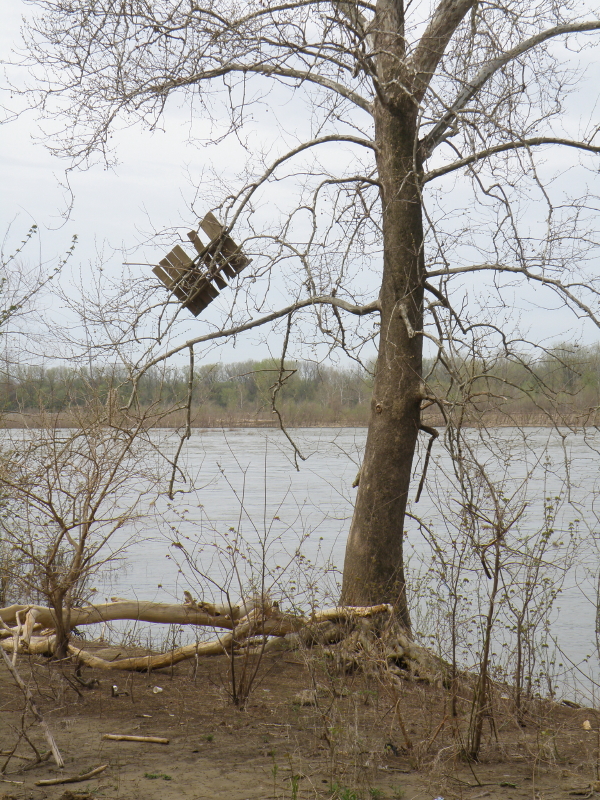
tree with snagged wooden pallet, April 2013

Here’s an image that demonstrates how high the river can rise.  This snagged pallet has been hanging out on this tree branch for a couple of years now.  Trees can demonstrate some resilience in the face of adversity.  I know of a couple of trees at the Falls that have made use of improvised “planters”.

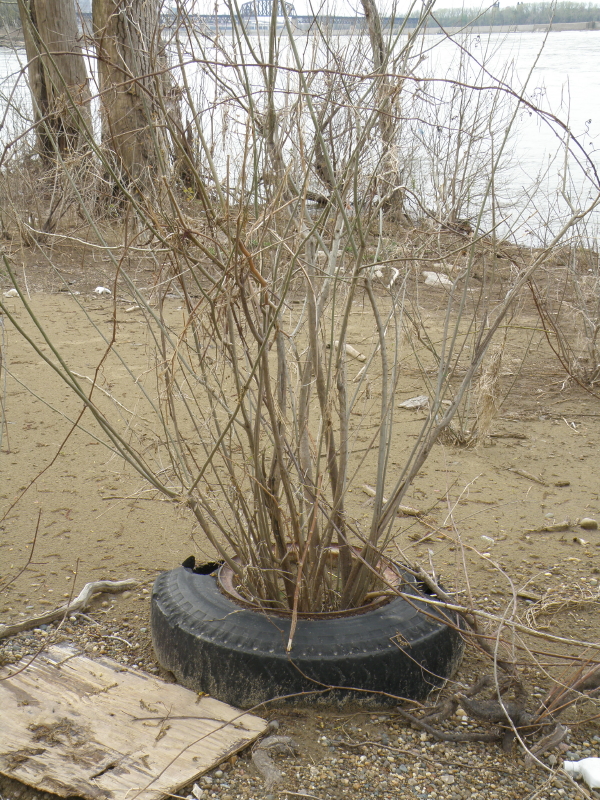
Willow growing within a tire, April 2013

Cast off tires are a ubiquitous element of river-born trash.  Somehow this willow tree has found a sheltering toehold in this wheel.  I’m curious to learn whether this tree can continue to grow and survive in what is ultimately a restrictive space?  On this walk, I also came across this unusual juxtaposition and thought it might fit in this post too.

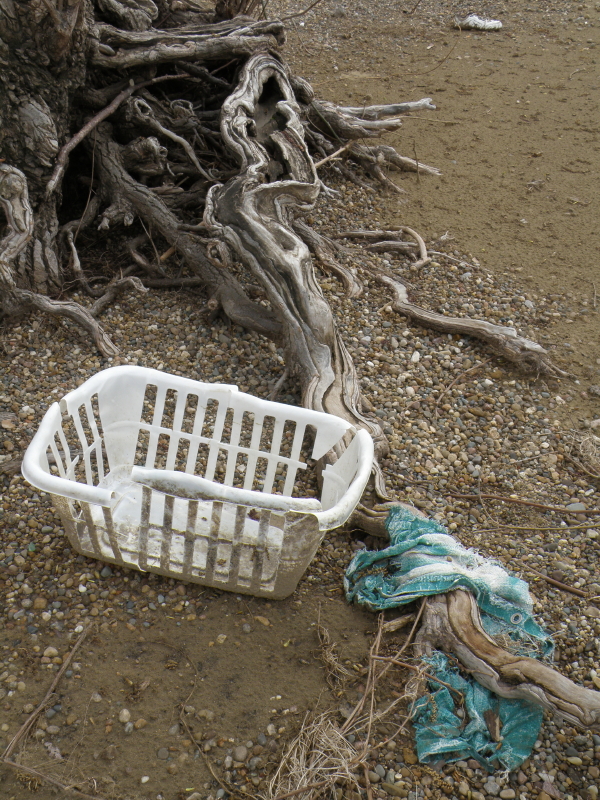
willow roots, plastic laundry basket, and clothing item, April 2013

This may be as near as I come to having a tree suggest that it could do laundry too!  The surface root of an old willow tree has caught this old jacket.  The last high water floated this plastic laundry basket into this area and it settled next to the root.  This is not your average still life.  The gravel in the photo was deposited here by the last of the retreating ice age glaciers.

Sauger Man, April 2013


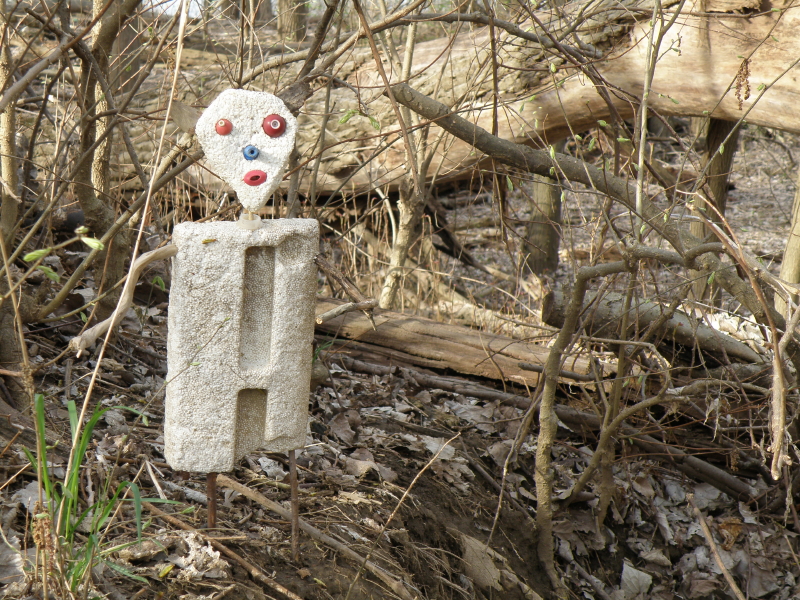
To conclude this post…as I was walking along the loop side of the trail, I spotted  a piece of Styrofoam in a ditch.  Retrieving it I discovered one of my previous sculptures from several months a go.  I originally included him in a story that featured sauger fishermen.  Except for a missing nose, the sculpture was complete.  I was surprised that it survived intact going on several months now.  Looking through my collecting bag…I replaced the lost nose with another piece of found plastic and set him up to greet visitors along the trail.  Here’s a final picture showing him next to a tree that the wind blew down last year.  Thanks for hanging out with me for the past thousand words.  Have a great weekend!
Sauger Man, under a tree trunk, Falls of the Ohio, April 2013

Read Full Post »

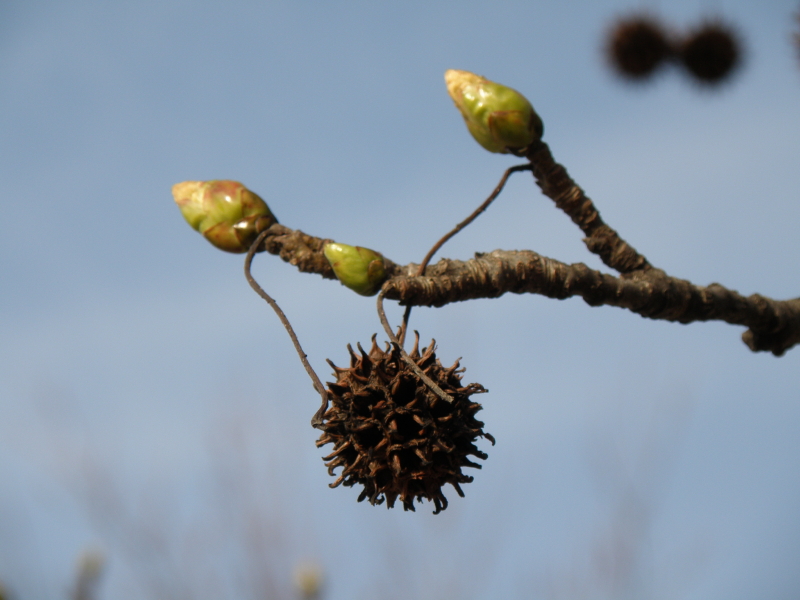
Sweet Gum in early Spring, March 2013

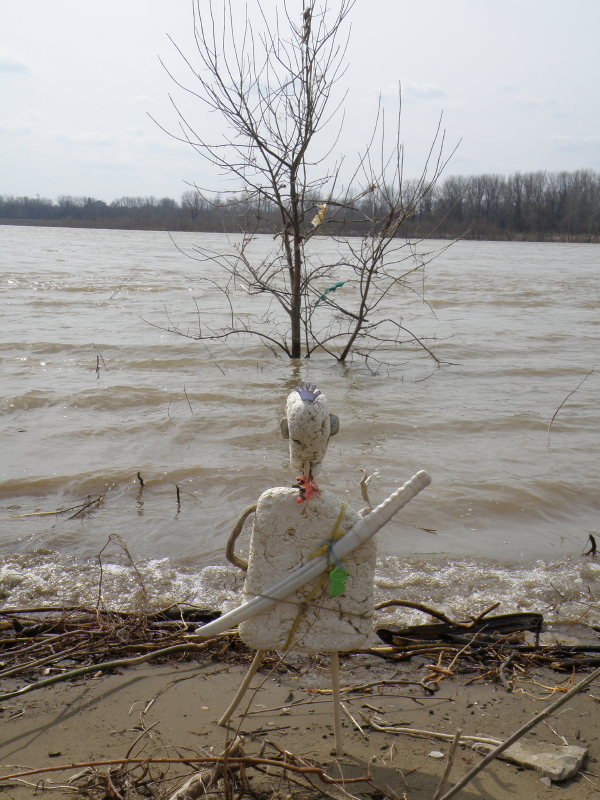
Perhaps it was the fine quality of this pre-Spring day that caused renewed stirrings within the old Styro-Samurai Warrior?  It had been many years worth of seasons since the Emperor had granted him this land to protect and bequeath to his descendants  in gratitude for the loyalty of his service.  He came to the realization that his advancing age was rendering him mortal and that if he wanted to walk his vast estate one last time…he had better do it sooner than later.  The Styro-Samurai attached his heirloom katana to his back and ventured alone away from his home.  The journey could take him many weeks to complete.  This sunny day began with much promise.  The trees were starting to produce buds and yes, there were early season wildflowers too.  The birds were returning.  A favorite Yellow-bellied Sapsucker the Warrior had seen for the past five years was once again in his favorite Sweet Gum tree.  Geese were everywhere and an Osprey flew overhead with a fish in its talons.  Life seemed to be moving in the timeless rhythm that it always had.  The Warrior decided to venture closer to the river for a better look.

Styro-Samurai by the river, March 2013

The first thing the Warrior observed were trees submerged by the river that normally stood high and dry.  In all his years, he had not seen this happen very often and he stood transfixed by the sight.  Rousing himself, the Warrior continued his walk to a favorite creek.  In his mind he recalled the agitated call of the Belted Kingfisher on the wing and its wildness made him smile.  Upon reaching the creek…this is what the Warrior saw.

driftwood lining the creek banks, March 2013

Hundreds of logs representing hundreds of once living trees lined both sides of the creek.  What is happening here!?  These were trees from the pure land and their wood is a treasure, their roots hold the soil together, and their leaves provide cooling shade in Summer among all the other blessings they bestow.  These trees represent so many potential fulfilled wishes.  So much wasted wood and where did it come from?  The Warrior surmised that this was further evidence of flooding.  These trees probably washed away from their respective banks from distant fiefdoms and were carried here by the spirit of the river?

Styro-Warrior and exposed tree roots, March 2013

Walking the shoreline he came upon more evidence that the river was claiming the trees that dared to grow nearest to it.  For the Styro-Samurai, it was an alarming sight, but nothing had yet suggested that this way anything other than Nature being moody.  His view was about to change as he rounded the bend of the river.

Styro-Samurai and plastic trash, March 2013

The Warrior entered a field that was strewn with discarded plastic and Styrofoam.  This was an outrage and the Samurai drew his katana! Who dares to be this disrespectful to the land!

Styro-Samurai with drawn katana, March 2013

At last, someone to blame for this clearly was the by-product of men. The Warrior was seeing red and looked for someone or something to strike back at…but there was no one else present except for the gulls flying over the river and they were making no sounds.

Styro-Samurai with drawn katana, March 2013

Marching with his sword drawn, the Warrior advanced down the riverbank.  There was a quality in his rage that was tempered by battle and had made him a legendary and feared adversary in the prime of his youth.  But that was then and this is now and as he neared one of his favorite trees…he sheathed his katana again.  Up ahead was a treasured spot where a large and special Cottonwood tree grew.  The Styro-Samurai’s pace quickened in anticipation.

Cottonwood tree hangout at the Falls of the Ohio, March 2013

Styro-Samurai approaching Cottonwood hangout, March 2013

This great and revered Cottonwood tree that in the Warrior’s time was the setting for many tea ceremonies was now covered in plastic tarps and a sign warning to “keep out” was posted.  Again, here is the hand of man at work!  Who has the impudence do this in the Styro-Samurai’s land?  By what right would these interlopers claim this tree as their own and defile it with their junk?  Full of righteous indignation, the Warrior entered the space under the trunk of the tree.

camp under the Cottonwood tree, Falls of the Ohio, March 2013

It was empty…no one was there at all.  Although the smell of wood smoke was present…the ashes were cold.  Improvised seating was arranged around the fire pit.  Growing depressed, the Styro-Samurai sought the warmth of the sunshine and sat down to ponder what he had observed thus far.  Indeed, the world had changed much since he last walked it far from the comforts and isolation of his fortified castle.  The old soldier had a revelation that mindfulness had been usurped by consumption based upon all the trash he saw everywhere.  The world was moving away from him.

Steve, the Arrowhead Man, March 2013

While the Styro-Samurai was engaged by his thoughts…he was approached by a common man who gestured that he wished to speak and so began a conversation.  The man also remembered a different time and place where respect was accorded to both man and beast alike.  There was an understanding that nature worked in certain ways and that it was wise to stay within the sustainable limits.  The man confirmed to the Warrior that the changes he was seeing in his own land were in fact simultaneously occurring everywhere else too.  The common man then asked for forgiveness for what he was about to say which the Warrior granted.  He reminded the old soldier that in their day…there was a common and accepted code that shaped the behavior of all.  It began with the Emperor and then passed through the Samurai down to everybody else.  It seemed to the man, that the flow of wisdom had been interrupted by a changing and challenging time and needed something like a new code to help bring it all back into balance.  With those words the common man took his leave.

plastic sand rake, March 2013

The Styro-Samurai had seen enough and walked back to his castle.  He mulled over the words the mysterious common man had left him with and acknowledged to himself that they seemed to ring true.  A different day was indeed at hand and perhaps the time of the warlords was ending.  The idea that a different code was needed, but what can one do to achieve enlightenment in an impure land? When the Warrior reached his home he cleansed himself and before the assembled public, removed his sacred katana from its scabbard and replaced it with an ordinary garden rake.

Styro-Samurai working his rock garden, March 2013

For several weeks the old Warrior meditated by creating a rock and sand garden.  Working the earth helped create a different connection to the land that he didn’t have before and was now cultivating.  The Styro-Samurai invited his courtesans and the other people in the castle to assist him.  To his surprise, most everyone found this activity relaxing and beneficial.  It no longer became his garden and became our garden which brought with it a sense of shared responsibility and value.   He wondered if this idea would work for a land the size of a country ?  Soon he would try talking to the Emperor about this and hope for the best.

water-rolled wood, sand, gravel, and rock, Falls of the Ohio, March 2013

Read Full Post »

Hello all and welcome to another adventure set at the Falls of the Ohio.  Since my last visit, the Ohio River has risen in response to all the rain that fell in the northern portion of the Ohio Valley and has flowed down river in a southwestern direction.  The fossil beds normally exposed during the summer and early autumn months are now submerged by swiftly flowing water.  Walking this ever shifting shoreline I’m open for whatever presents itself as novel and different.  Turning the corner around a  stand of willow trees I was caught by this unusual sight.

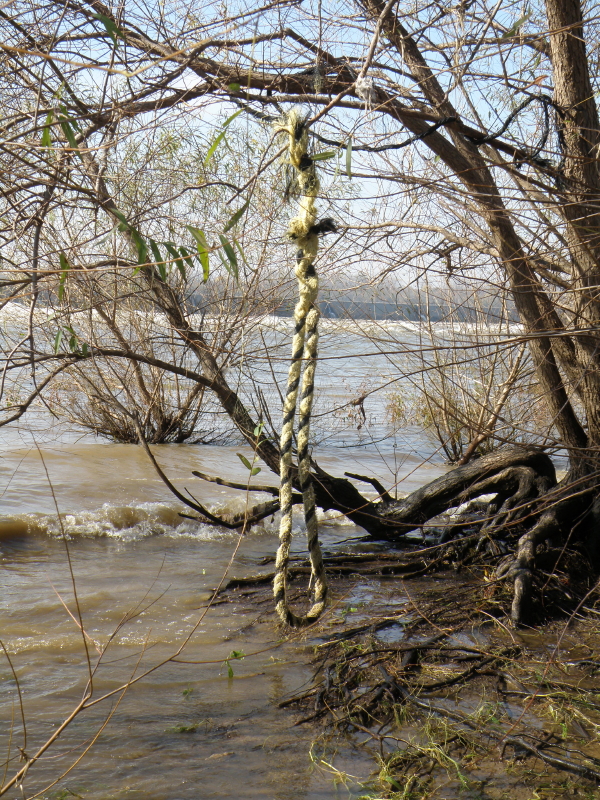
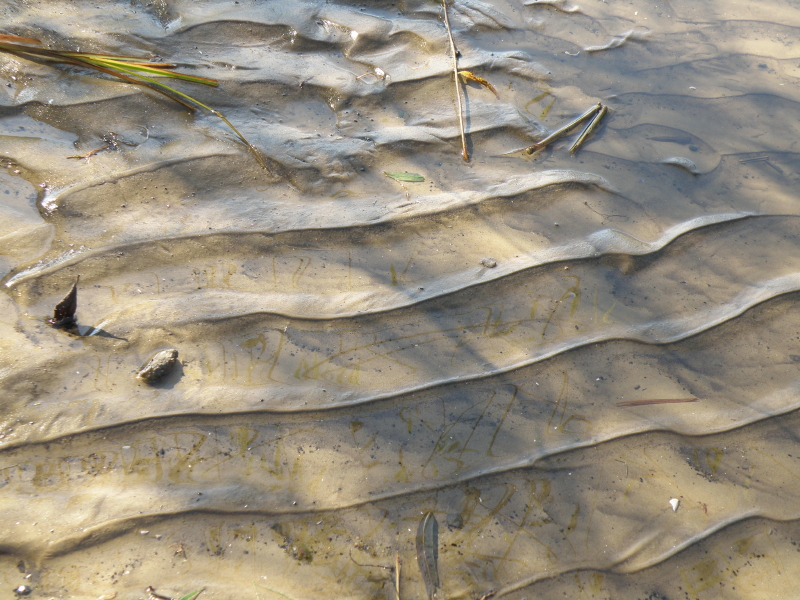
A tree captured barge cable or rope was in a different position from the last time I had noticed it (see this year’s Halloween post).  It is possible that the river rose high enough to dislodge it from its previous resting spot.  I was struck by the way it seemingly is suspended in mid-air with its regular yellow and black intervals contrasting with the unruly roots and branches around it.  Around here, water can both rise and fall quickly.  In the fine silt and mud you can often find interesting patterns that were created by the movement of wind and water.  Here is such an example.

The back and forth rhythm of the river caressing the land are recorded as peaks and valleys in this very fine mud.  I can be “hypnotized” at times by concentrating on this movement which I find soothing.  I’m always interested in the various subtle patterns that water can create on the mud of the riverbank.  It’s akin to trying to “track” water and recognize its footprint as it moves onto the land. I also noticed about a two foot tall, low “wall” of material (mostly wood and dried grasses) along the shoreline that marks this latest high water moment.  And of course, there is always the ever-present mostly plastic junk that also gets swept away and mixes with the natural debris.  I found lots of plastic detergent bottles, bits and pieces from toys including another doll’s head.  Here are images of other finds including an interesting toy ball.

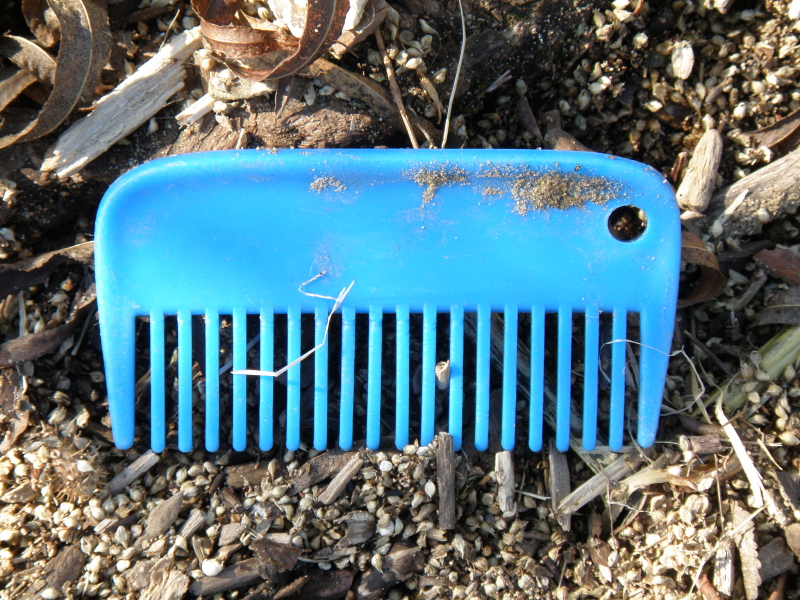
I’m assuming this is a dog toy based on the image of the dog on the ball?  The small knobs are different from the usual balls I find out here.  Now, for a bright blue comb in a design that’s also new to me.  The tiny grains around the comb are seeds from various river grasses.

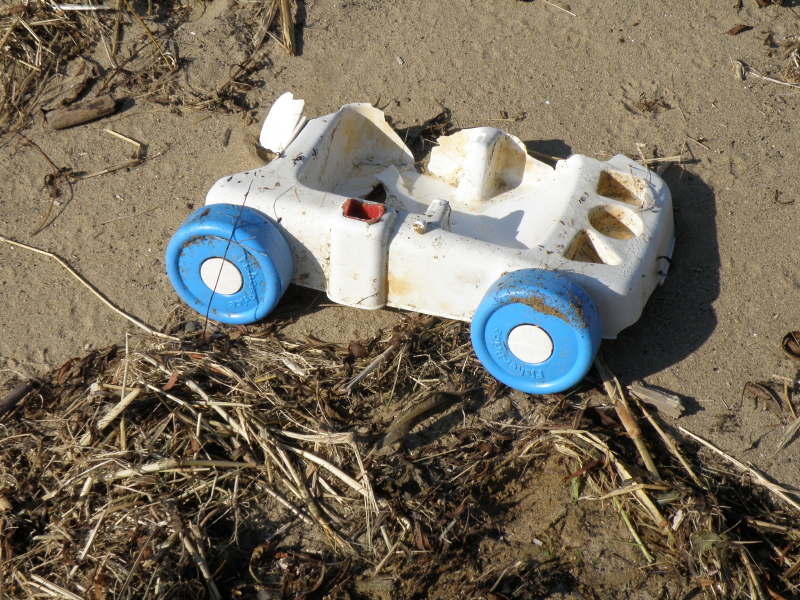
More ” blueness”  in the form of plastic wheels on a wrecked pull toy.

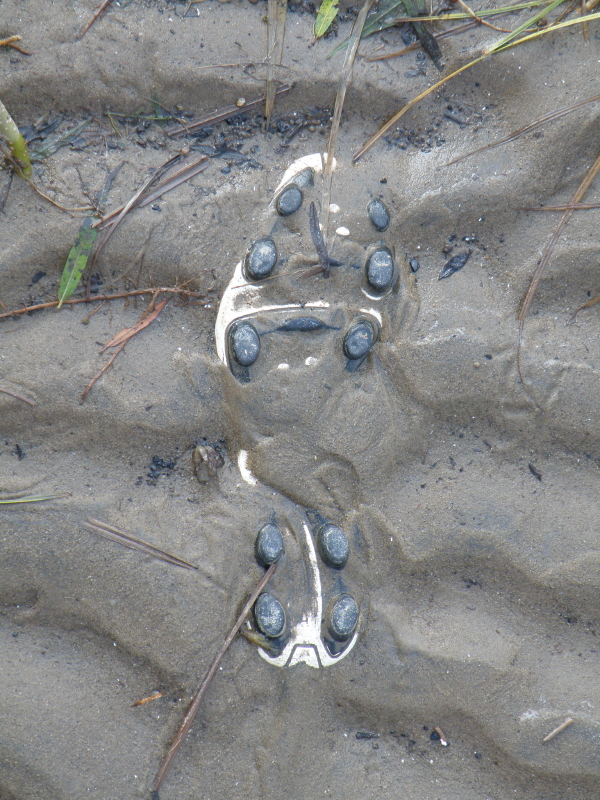
In the mud, I came across this other type of footprint that I thought was a bit unusual from the norm.  Of course, it’s a sports shoe with cleats on the bottom sticking up from the mud.

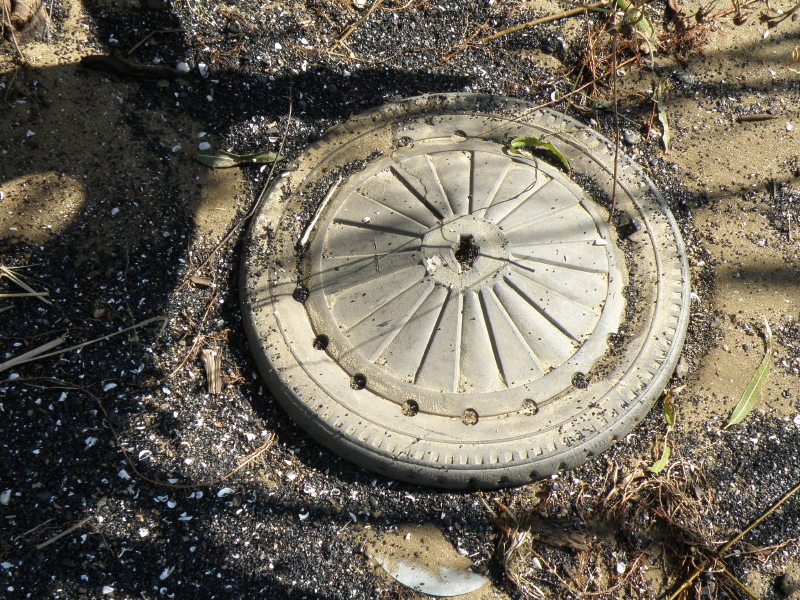
And one last found wheel whose radial pattern inspired another image in my ever-growing “Coal Flake” series.

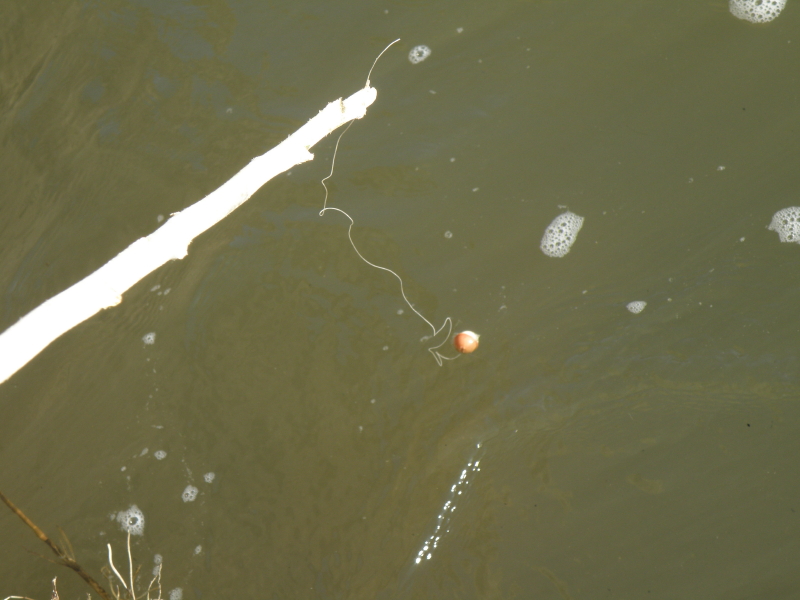
I’ve come to really like making these designs from river-altered coal that I find at the Falls.  I’m under the impression that this coal has fallen or been swept off the immense barges that transport this fuel up and down the river.  I suppose it’s possible that somewhere along the river’s journey the water has cut down through the rock to expose a coal seam somewhere, but I haven’t ever heard of this happening.  The barges seem the likeliest answer.  This particular example has more Asiatic Clam shells used in the design.  These clams are the most common of their kind that I find at the Falls.  Once upon a very recent time a go, the Ohio and Tennessee Valleys were the world’s epicenter for fresh water clams.  By altering the rivers and the water quality in them, many of these amazing creatures have either gone extinct or have become so very rare.  The Asiatic Clam is a non-native animal imported here in the 19th century as a good luck charm and has thrived as has the Zebra Mussel that you may have heard about?  The day was moving on and except for a few Mallard ducks and Canada geese I hadn’t seen much in the way of wildlife.  I decided to end my day by doing a little fishing.  I found a short, recently beaver-chewed willow branch and attached some waste fishing line I found.  I attached a hook and found bobber and into the water it went.

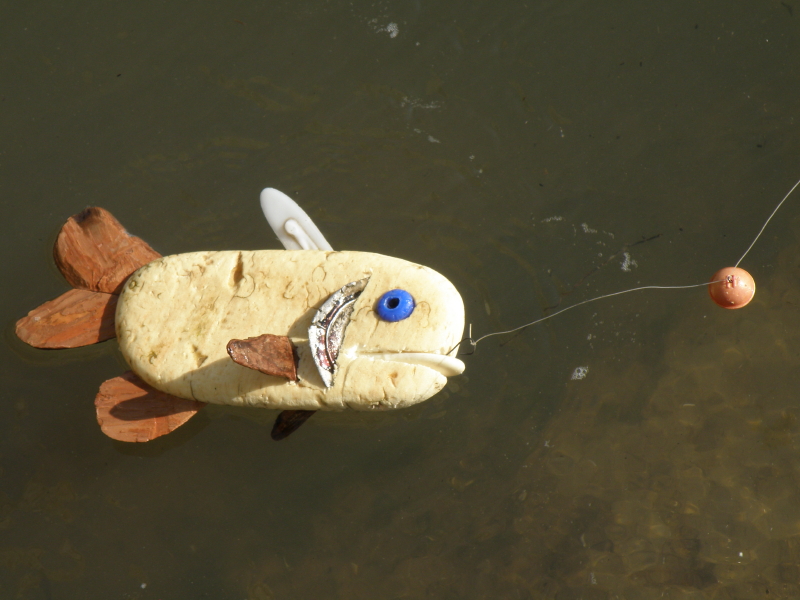
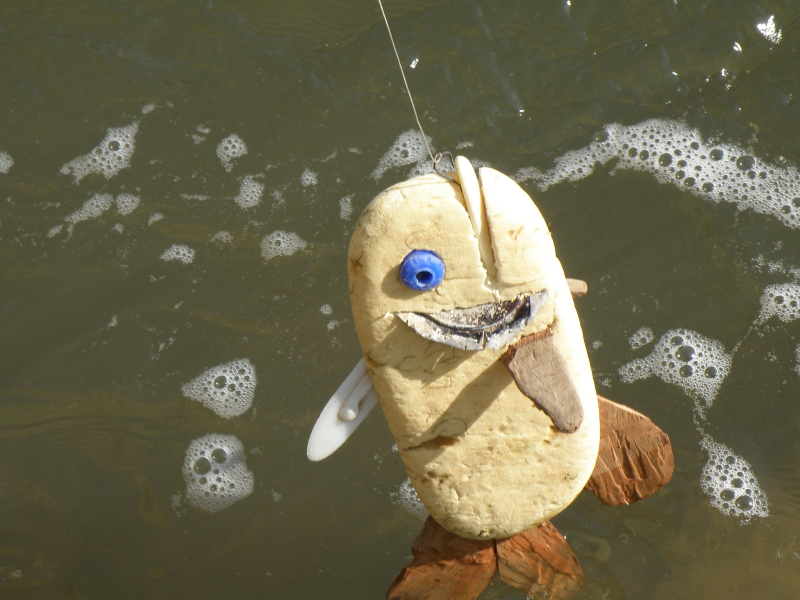
Oh, for bait I caught a small grasshopper and attached it to the hook.  A small found lead weight kept the bait below the water.  Every once in a while I would raise my short pole up and down in a “jigging” motion.  To my immense surprise I caught this very unusual fish!

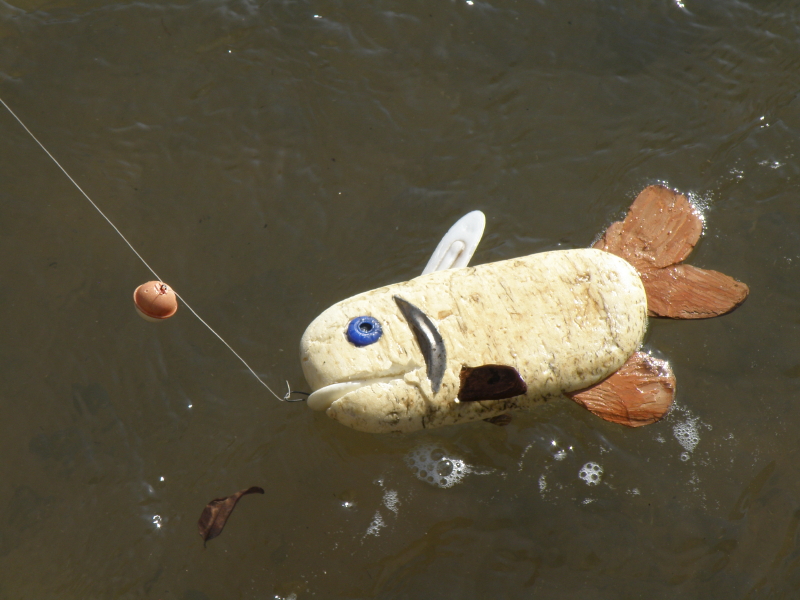
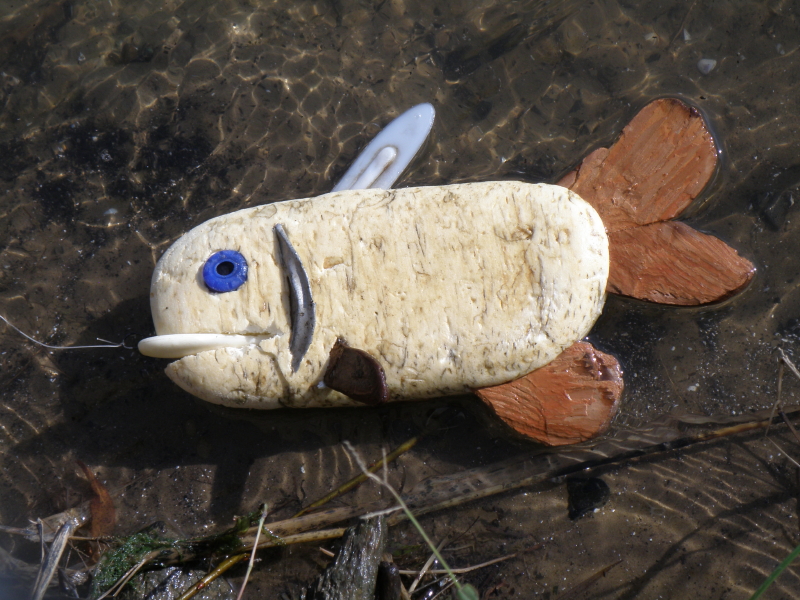
This fish is called the Iron Gill based on the metallic covers it sports around its gills.  Other distinctive features include bright blue eyes and a small white dorsal fin.  It’s body shape is unique and lends itself to easy filleting…although I wouldn’t normally recommend eating the fish from this part of the river.  Catching this fish here was a surprise because normally this is a deep water fish found in large flowing rivers.

This species was first described to science by Constantine Rafinesque back in 1811.  Rafinesque was a controversial figure and brilliant naturalist.  He had a gift for collecting and recognizing new species, however, in his zest to publish and receive credit for his discoveries he was very sloppy in his methods.  As a result, many of the animals and plants he introduced to science are poorly described and classified which led to much confusion and consternation among the other “scientifics” of the time.  In the end, Rafinesque usually won out because science gives priority to the person who first (no matter how poorly) brings the new creature to the world’s attention.

After this last image, I released the Iron Gill back into the water and rebaited my hook.  Alas, this was the only fish I caught on this day, but it reassured me that my skills in this area were still intact.  For my next post, I want to show you images of a coal-themed exhibition I’m participating in the nearby town of  New Albany, Indiana.  It’s a good show and worth a post.  For now, I would like to close with another image of a found toy I came across on this day.  Have a great weekend out there in the wider world!


Read Full Post »

Summer has transitioned to fall.  Everyone has noticed that the days don’t seem to be as long as they were a mere month ago.  This is all the more reason to get out into nature.  Perhaps you have felt that subconscious pull tugging you out the door? The sun is not as insanely hot and the light is intense and clean.  There is just the barest yellowing along the margins of the river’s cottonwood leaves.  More colors will follow.  Right now there is an urgent purposefulness to the world as life prepares to overwinter.  The flowering grasses are alive with flying insects gathering pollen and nectar.  Spider predators are behind every leaf.  After absorbing some of this energy…I headed up to my spot under the willow trees and wondered about making something interesting from my river cache.  I was so happy and absorbed to be back at my outdoor studio that for a moment I lost track of the fact that something was now moving on the left side of my peripheral vision.  Thinking it might be an animal, I carefully brought my camera up to take some quick pictures and this was what I captured.

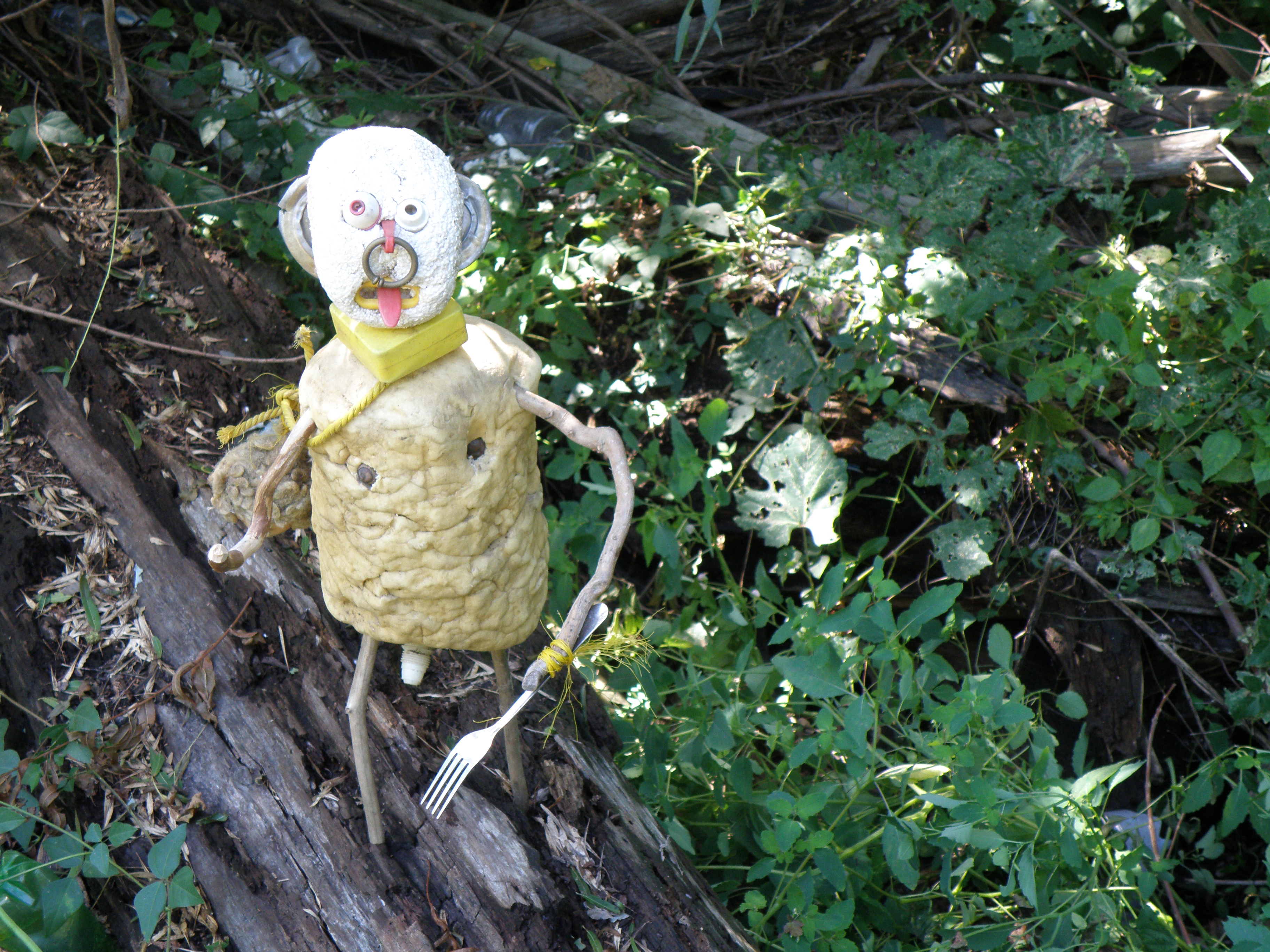
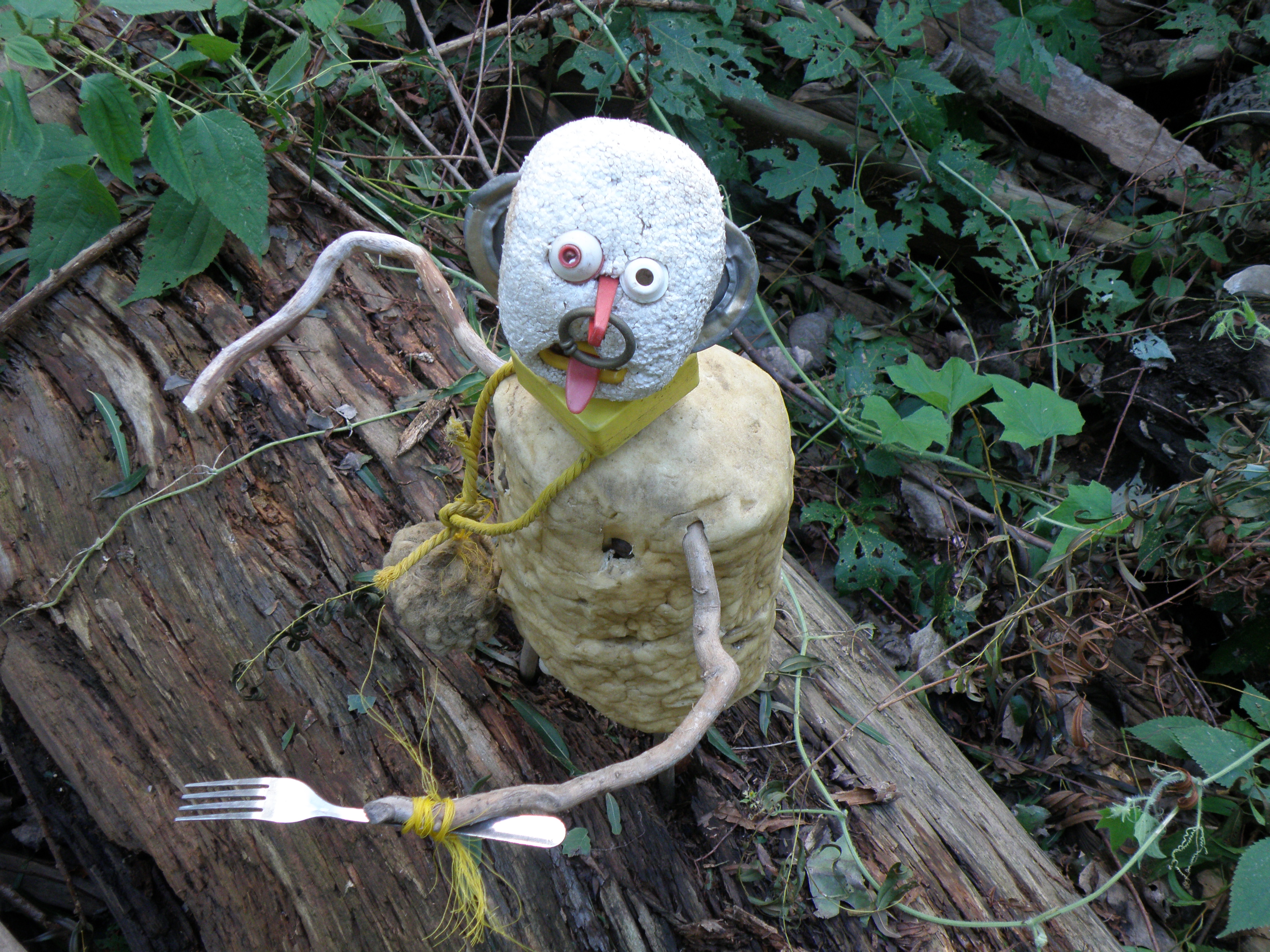
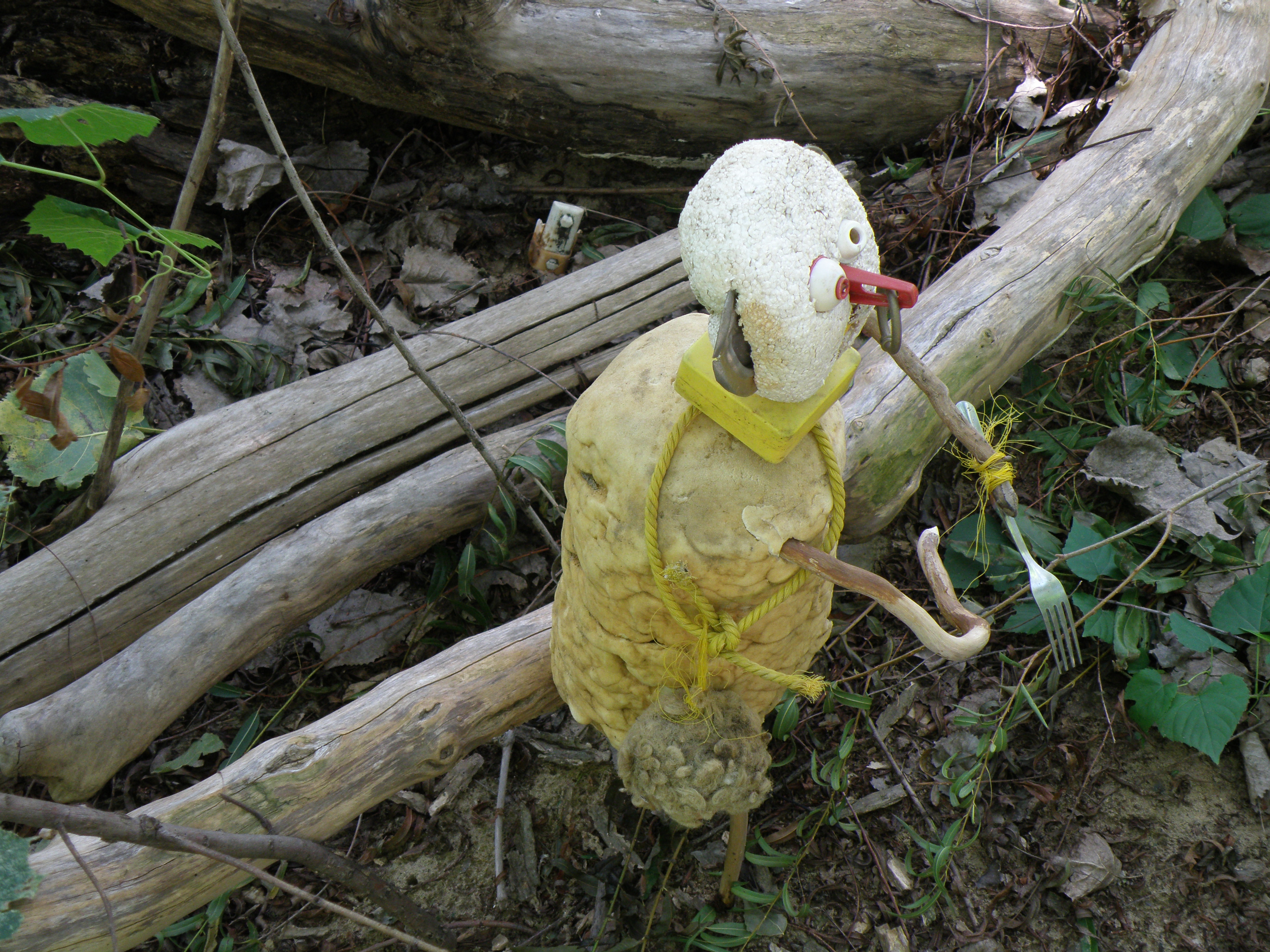
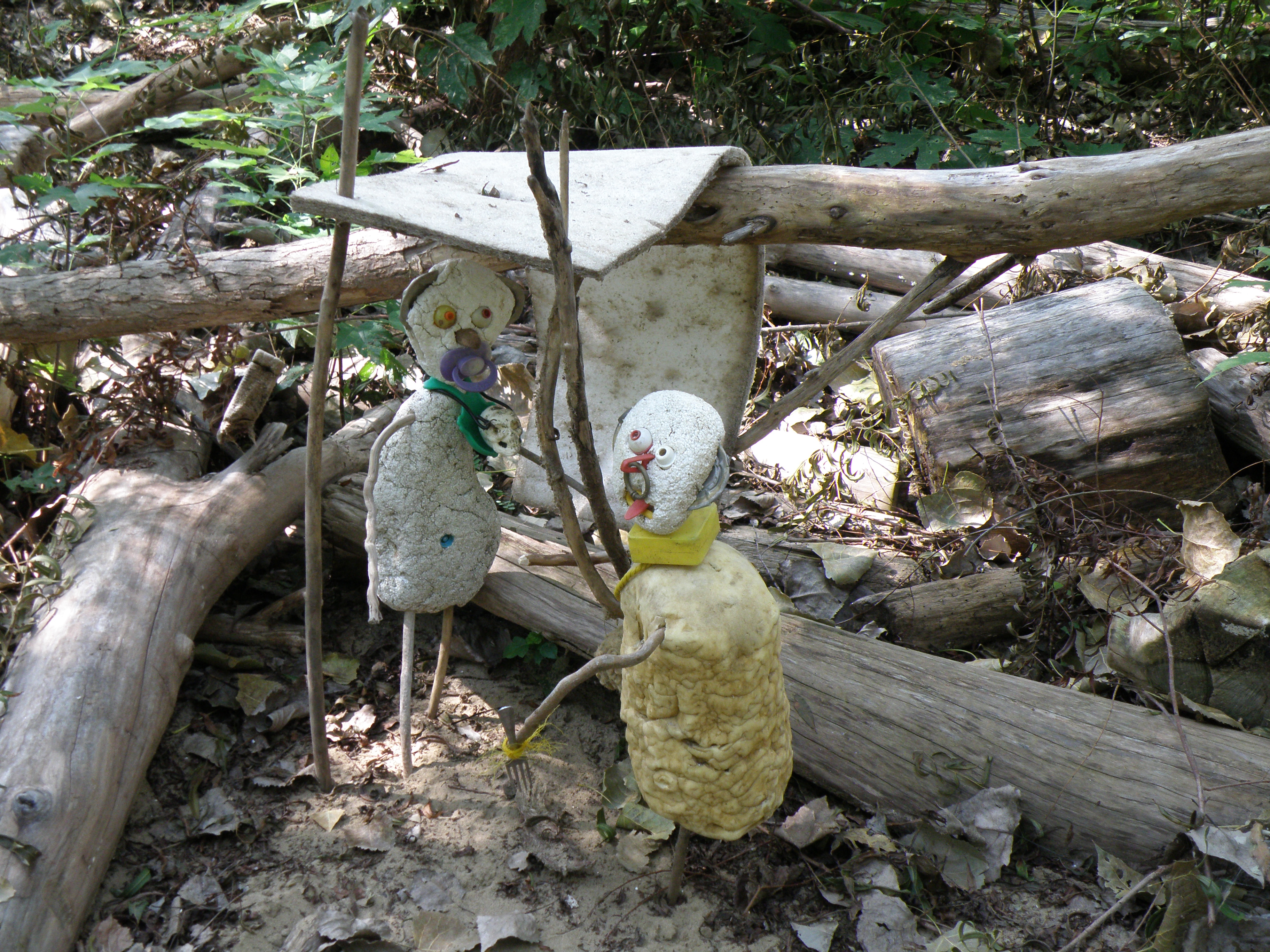
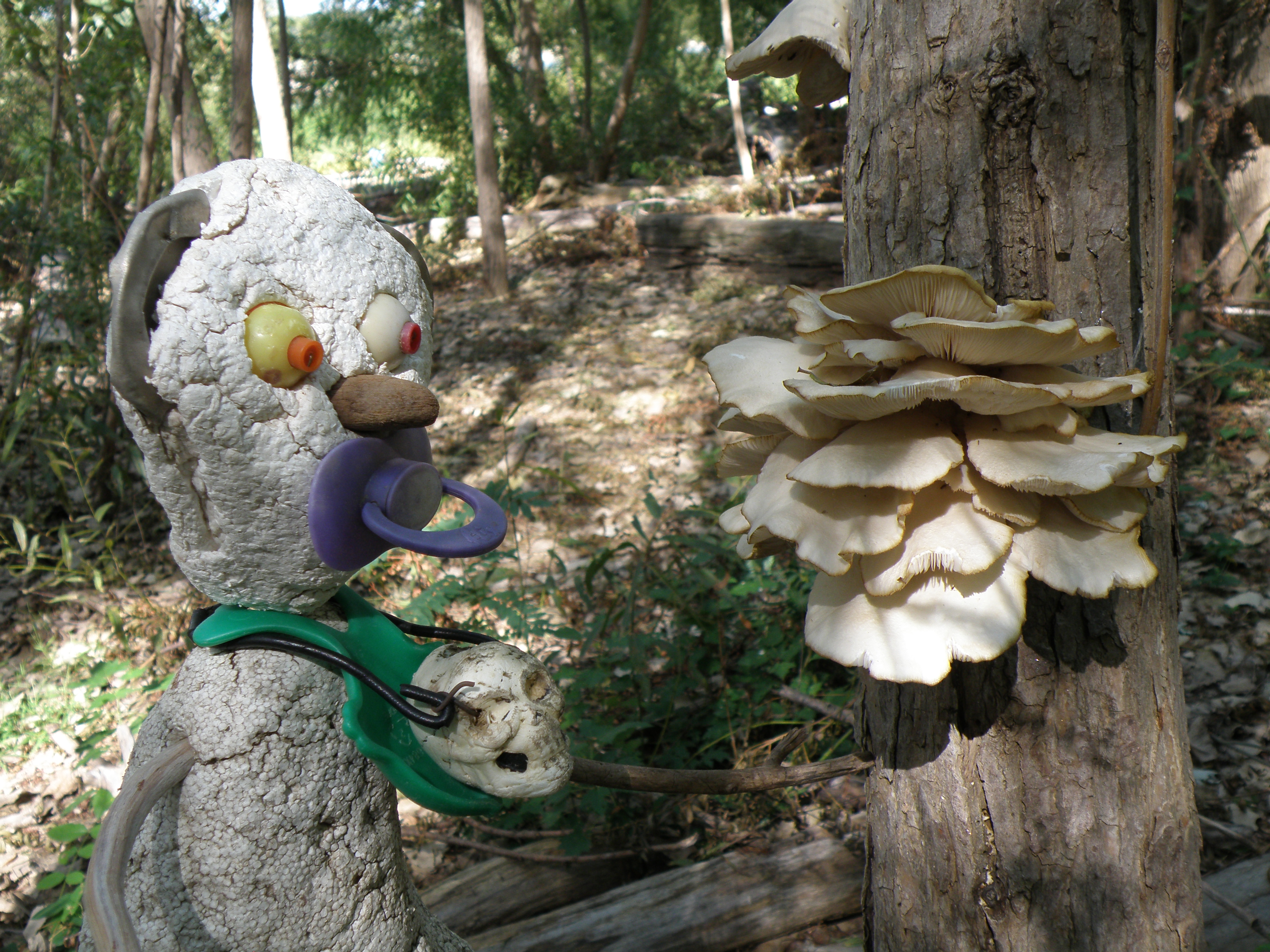
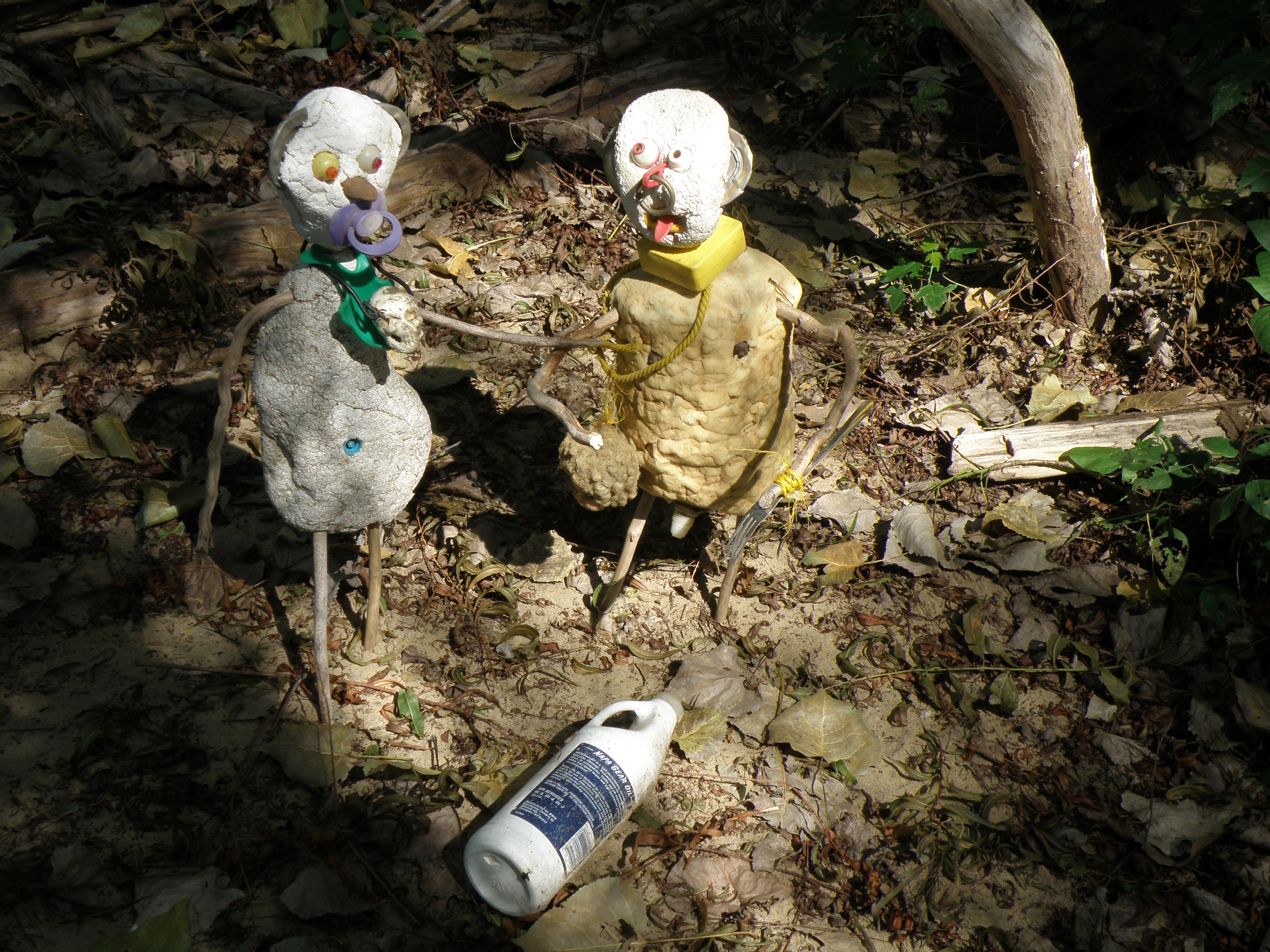
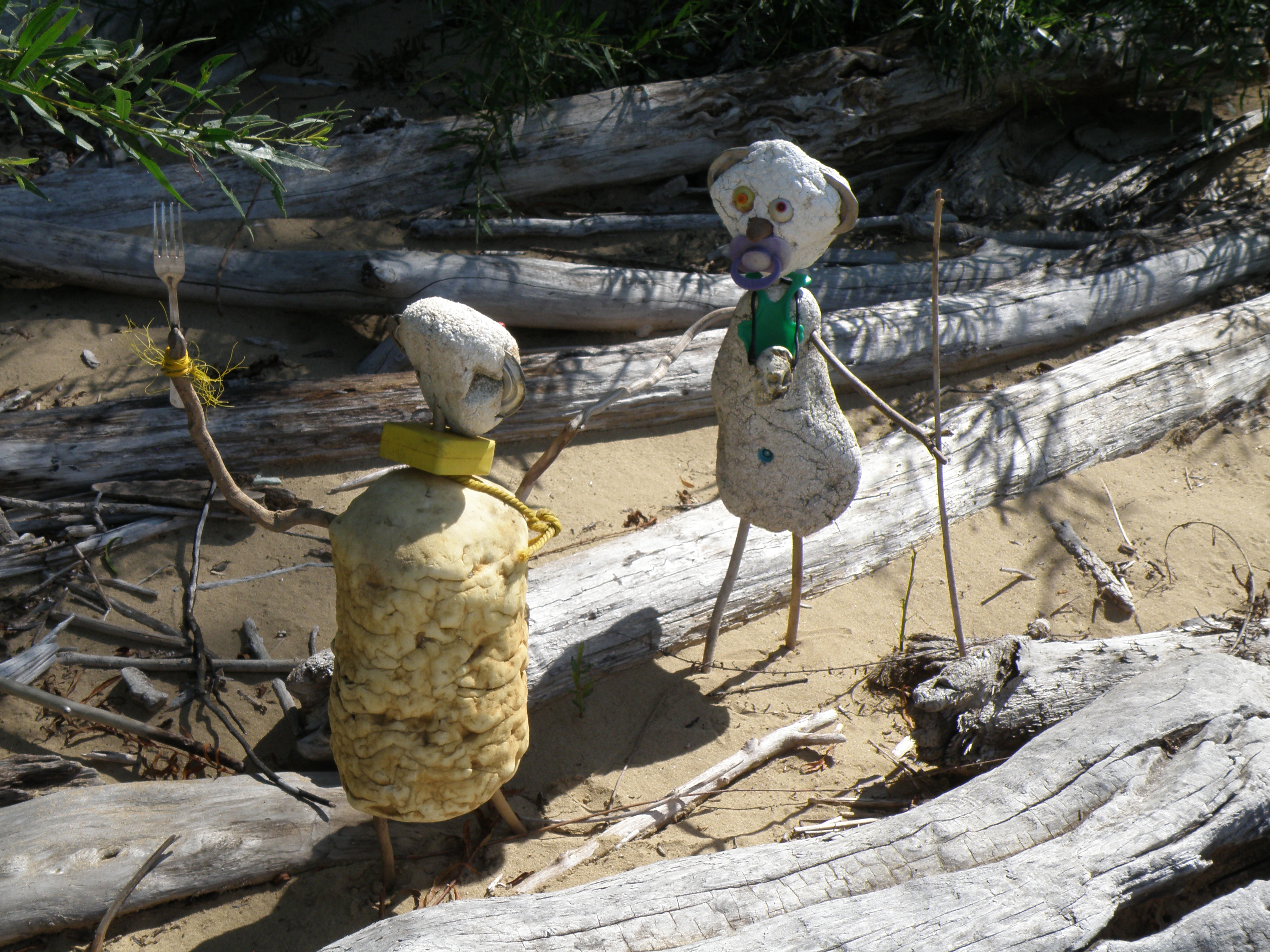
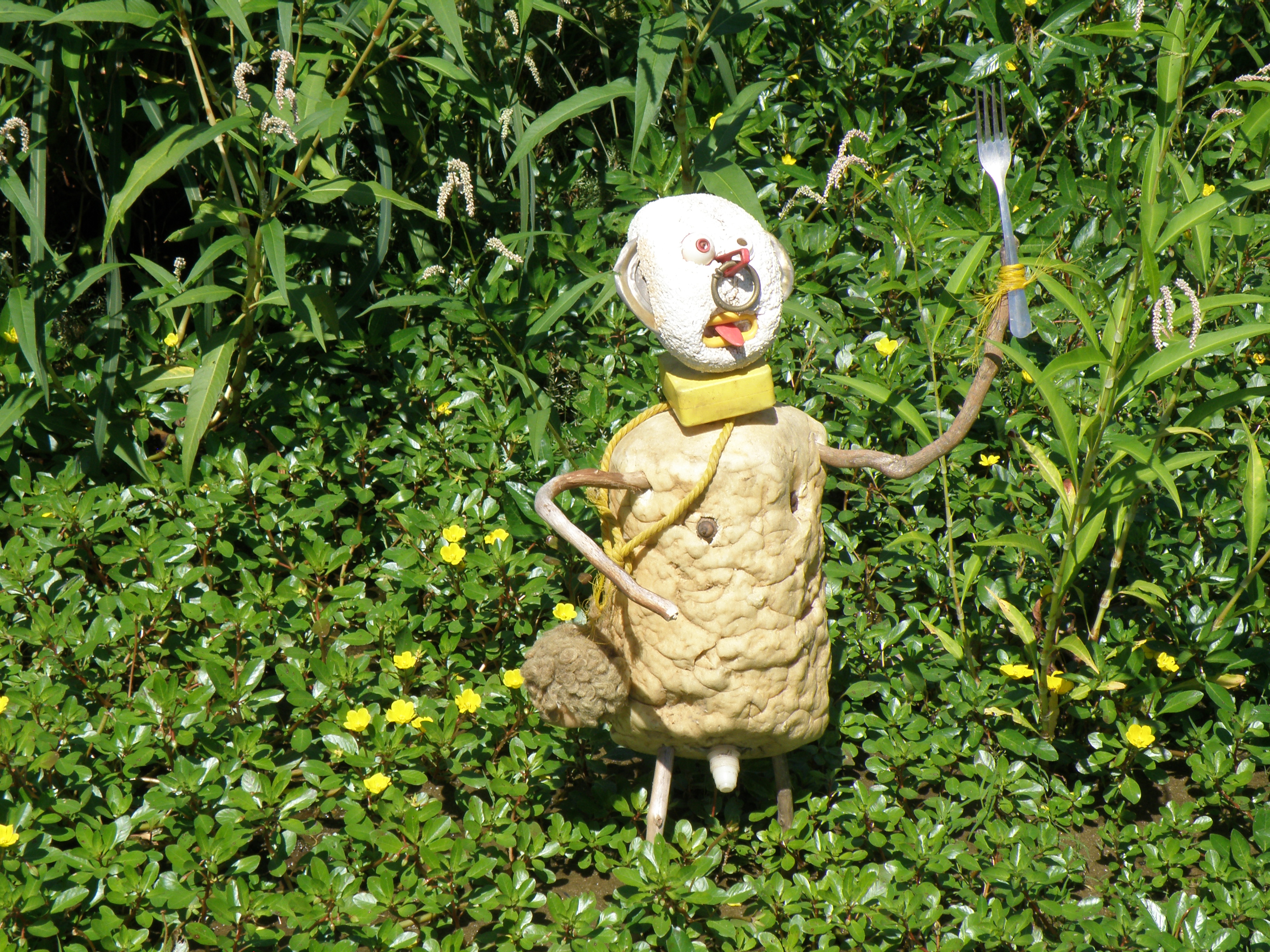
In quick succession, I had two images in my camera before I realized what I was photographing!  Appearing out of a myth was a member of the Pang tribe!  The Pang live in the most remote places in the world’s woods and consider themselves the first people.  It’s not advisable to try to find them because they don’t want to be found and it may in fact be dangerous to do so.  They only appear when they want to be seen.  The land they call home is full of poisonous serpents, insects, and diseases plus the rainy season is relentless.  There are no overland roads and very few trails.  Getting around means braving an unpredictable river.  Oh, and then there is the reputation the Pang have for being headhunters.  The little guy in front of me was reminding me of that by showing me the trophy he carries on a belt everywhere he goes.  I think my camera’s flash startled him!  By holding the captured head aloft, this tribesman was telling me he was experienced in this field!  His nose ring meant that he feared no pain.
The stainless steel fork he brandishes likely means he has had contact with our culture before.  The Pang, otherwise do not work metals.  What is known is that they are a hunting and gathering culture and nature supplies everything they need. The posturing and elaborate facial gestures on display before me continued until he seemed satisfied that I was harmless and perhaps even a bit slow on the uptake?  The Pang have developed a language where one can gauge how a person feels by looking and reading their facial expressions.  Most of the time, an open mouth with prominent tongue exposed is a sign for disgust or disapproval although there are exceptions for most rules.  Using the time-honored hand signal for follow me my new friend beckoned and I walked behind him anticipating adventure and mystery.

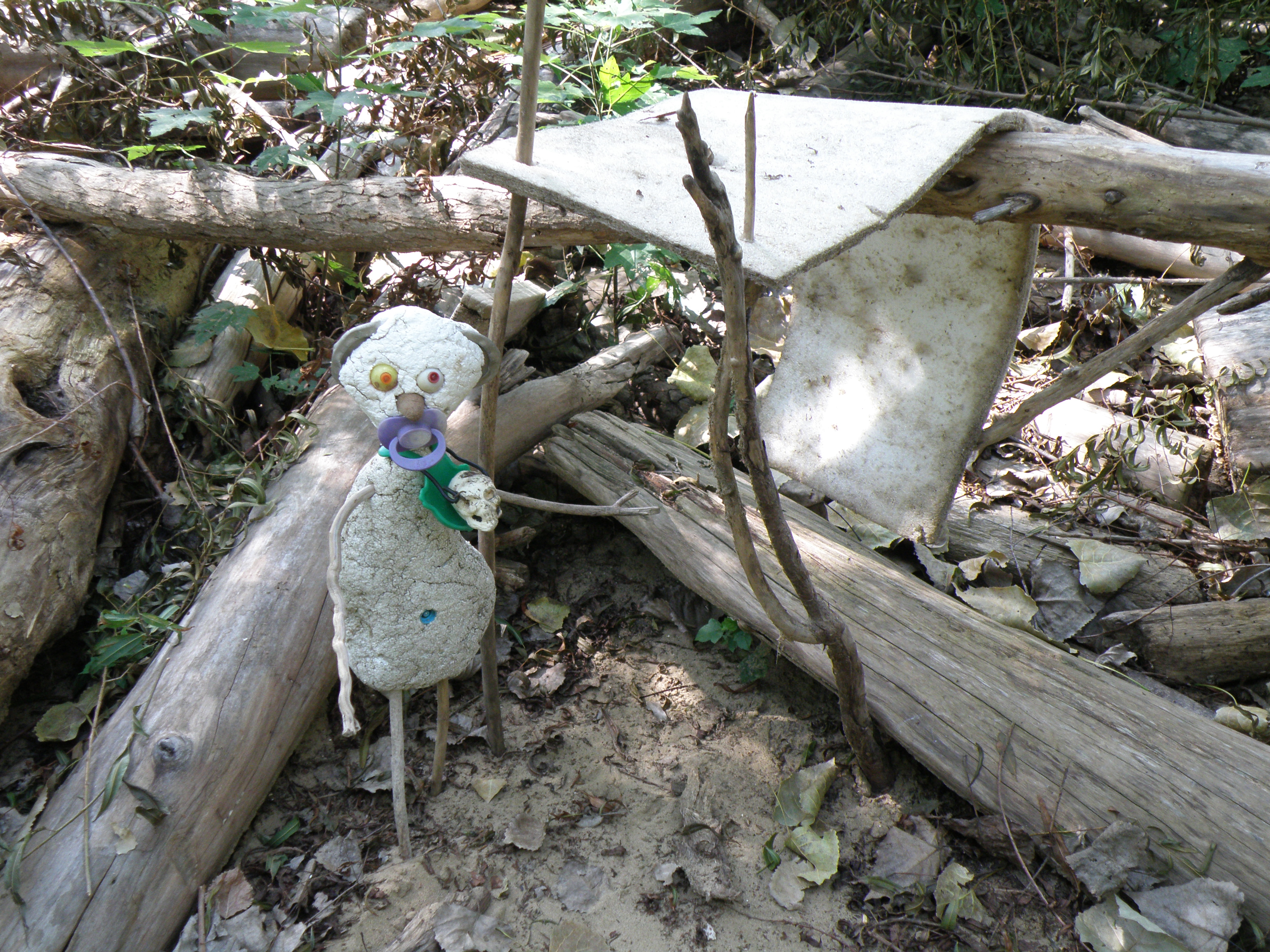
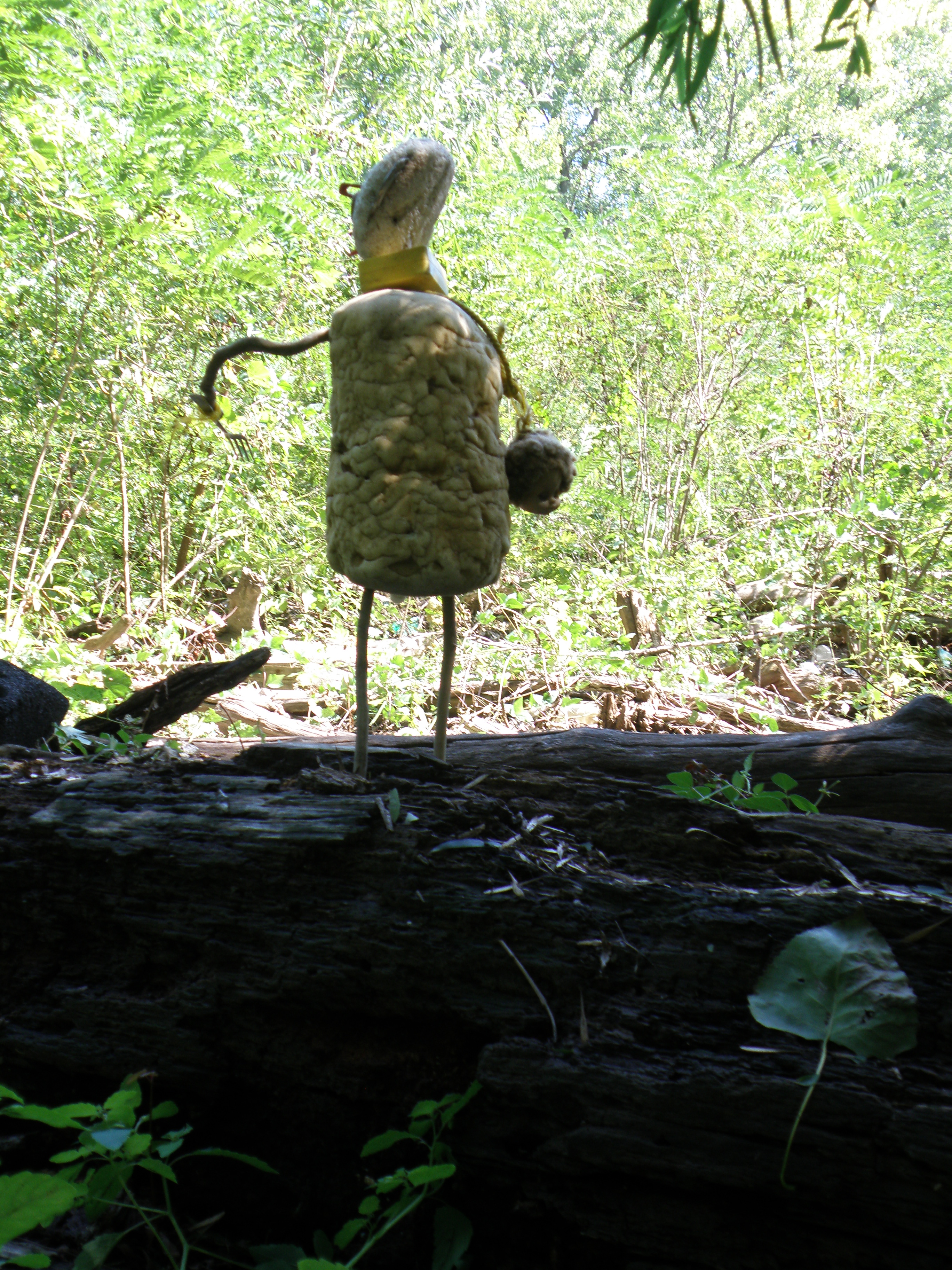
Along our walk the tribesman would point out where my culture had  dumped garbage into the Pang’s territory.  From the look on his face,  I could again register disapproval.  I tried to learn his name and give him mine, but we had trouble communicating by words. Aside from the occasional bit of plastic and paper, the forest walk was also full of beautiful birds and butterflies and late season wildflowers.  Eventually, we entered a small clearing and there set up for our relaxation and respite was an intimate canopy tended by another member of the first people.

A sheet of recycled plastic foam packaging and a couple of wooden posts made up this shelter.  I saw that the Pang were trying to reuse some of the trash they found. Sitting down, food and water is shared and I’m amazed at my new friends ability to live off the land.  A kicked over decaying log full of large, succulent beetle larvae provides the main course.  I, however, developed a taste for bracket fungi and my new hostess showed me what to look for.  I can’t help noticing that she is wearing a small skull object around her neck.  Later I learned that the Pang don’t remove heads from just anybody or without cause.  Head collection is the highest form of respect accorded to friend and foe alike.  I, however, was never in any danger simply because I hadn’t earned any respectability yet in the estimation of the Pang.  Or so another friend told me later.

After a short rest, my hosts were in a mood for a walk and I tagged along.  I could tell that there were things they wanted me to see.  Of course, they showed me just about every piece of litter we came across on the trail.  It seemed important to them that I not miss this.

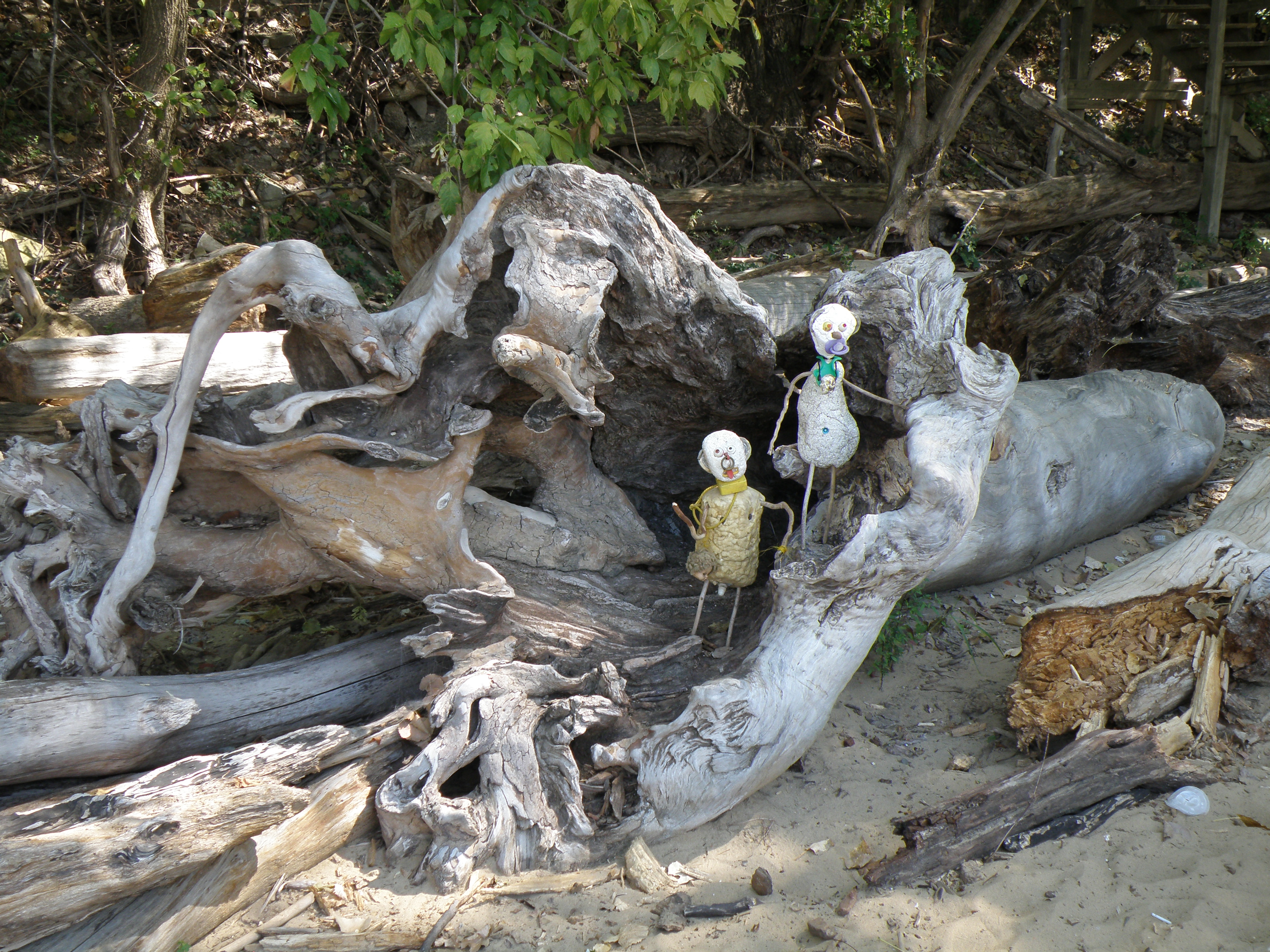
Fortunately, I was shown a lot more that was good than not.  I could see why the Pang were so attached to their land.  It provides them everything including much of what makes up their identity.  We visited an immense hollow log that the river dropped off during some old flood and I took this portrait of the odd couple.

We walked back out into the bright sunlight and hiked near the river.  After having been in a mostly leafy environment, it felt nice to have fresh air against my face.  You could tell by the expressions on the Pang people’s faces how much they enjoyed being free and in a natural state.

Before long we came to a place where driftwood had collected on the beach.  It was nearer to the forest and another trail.  After a protracted goodbye, my friends went their separate ways.  I could tell that our adventure together was coming to an end.

I got the sense that something else needed to happen to make the day complete.  I turned with the man with a fork back down to the riverbank.  As we walked he slowly started chanting and stopped every once in a while by some landmark for added emphasis.  He did this when we came to a bright, marshy area.  My friend’s arms rose into the air along with his song.

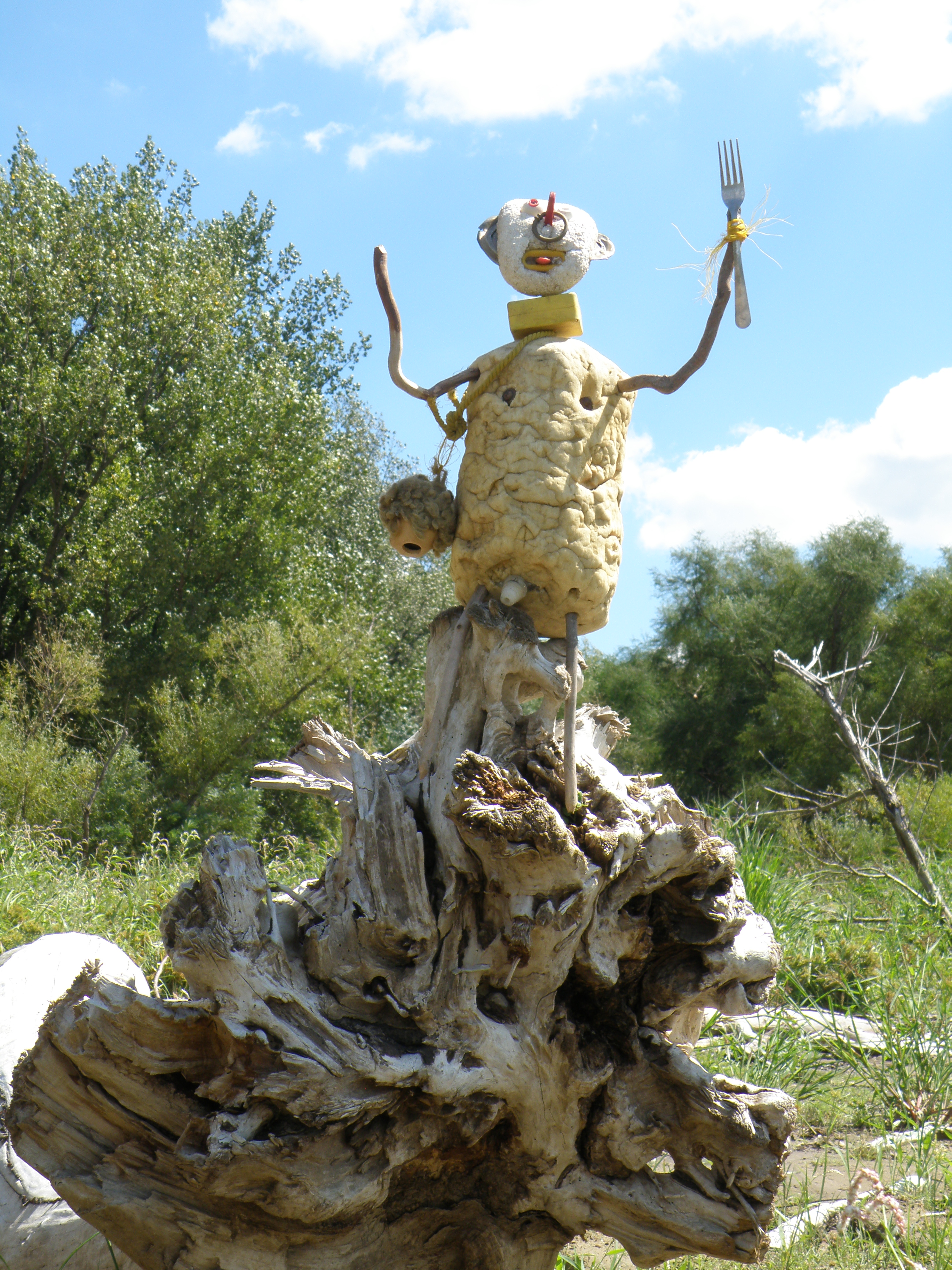
After the marsh, my companion climbed a long log that had washed up on the shore during a flood many years before.  He climbed as far up the root mass as he could and lifted his voice and fork to the heavens.  I wish I knew what he was saying…but whatever comprised his song I could tell it was reverential.

Since this culture doesn’t show itself without some purpose in mind.  I hoped that  I hadn’t missed it.  Looking back upon the day, I enjoyed the camaraderie of my new friends, we relaxed together and shared a meal.  Later we went for a walk where I was showed both what the Pang liked and disliked in the landscape.  Now the day was ending in a prayerful song.  Seemingly to underscore another point, my headhunting friend drew a line in the mud.  In essence, he communicated that my side of the line was mine and if I couldn’t respect his side of the line…we would be unwelcome.  He quickly grimaced with his tongue sticking out on that last point.  Staying on my side of the line, I wished him well in my tongue and with a short wave  watched him melt into the forest where he belonged.

Read Full Post »

Welcome to my second look at wood as expressed at the Falls of the Ohio.  The first post concentrated more on the river and water as an agent of change moving material through the landscape.  This post looks more closely at the driftwood that gets stranded in this southern Indiana park.  I once curated an exhibition at the Louisville Visual Art Association entitled “River Sticks” where all the artworks were made from locally procured driftwood.  The majority of these works of art utilized raw, natural sources, but there is also wood in the mix of a slightly different character.

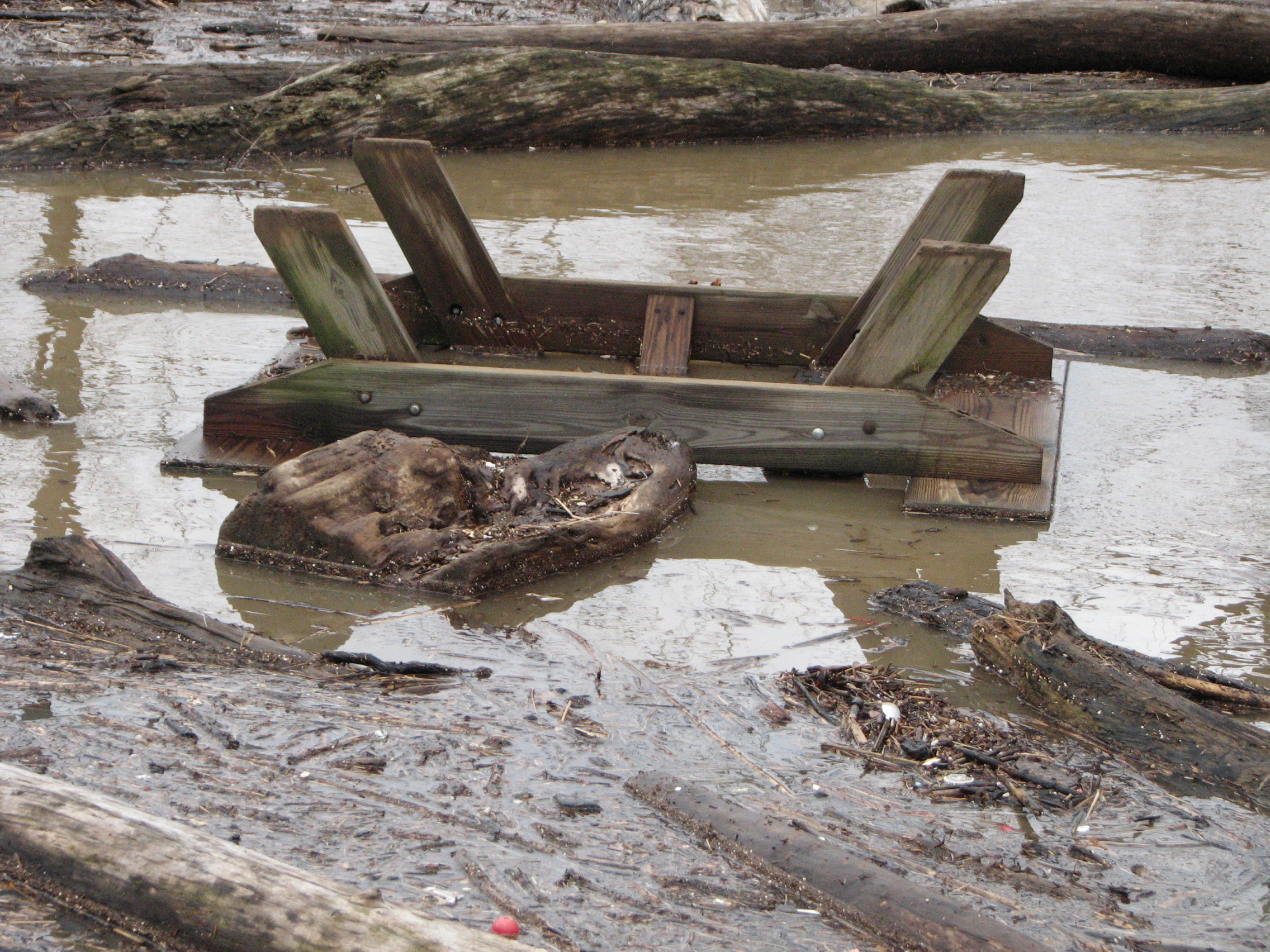
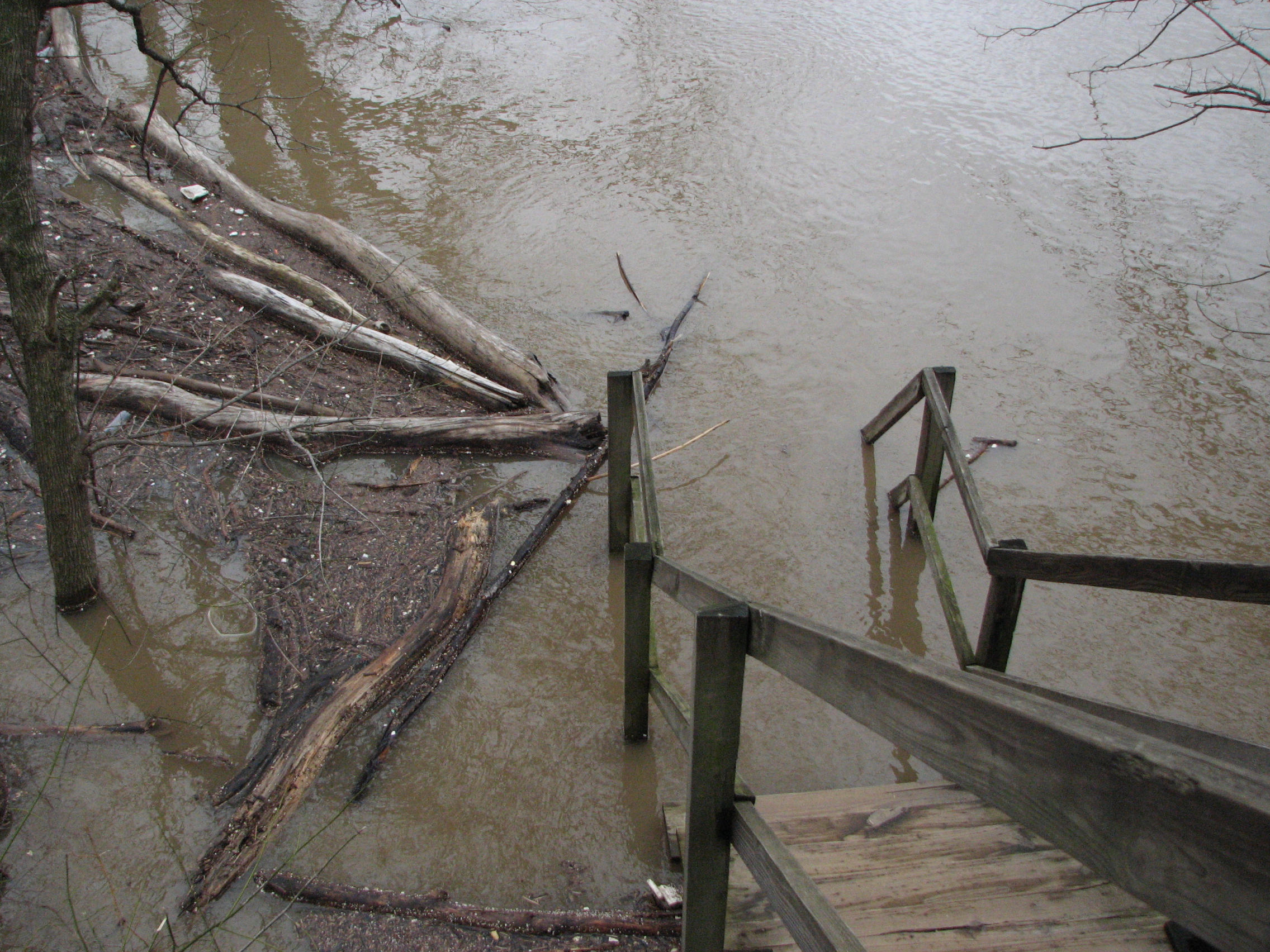
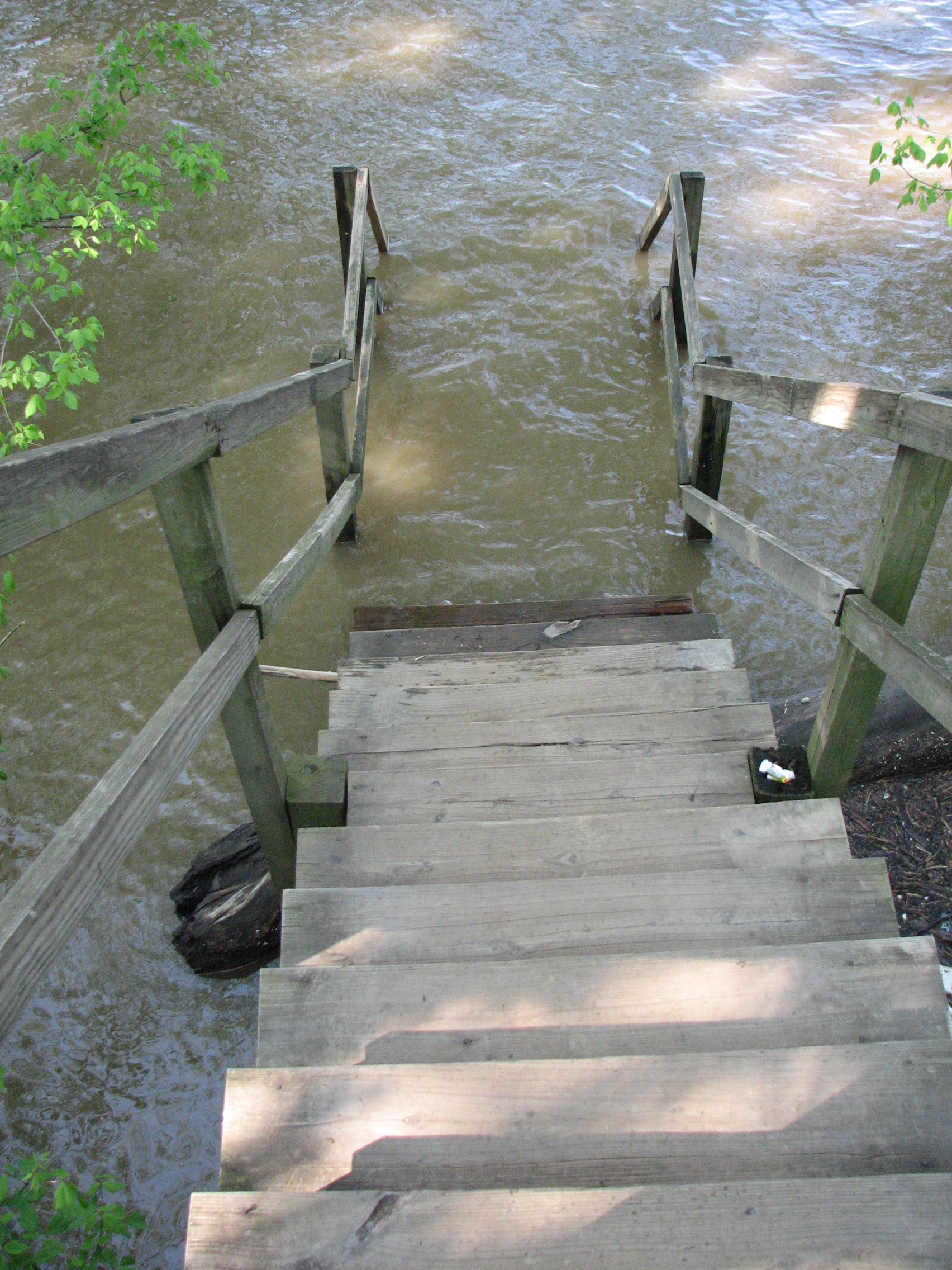
There is a wooden staircase placed here by the Department of Natural Resources (which maintains this state park) that is a popular access way onto the riverbank and fossil rocks.  It is not unusual during bouts of flooding to see part of this staircase submerged by the Ohio River.  During those moments, all you can do is look from a distance or visit the Interpretive Center.

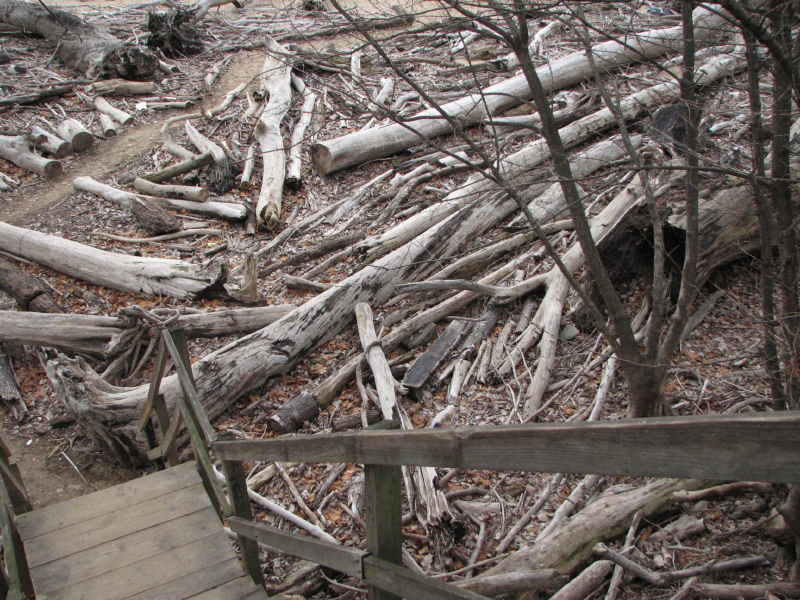
Over time this staircase has needed frequent repairs as it gets battered by floating logs and tree trunks.  Only after the water has drained away can you walk among the driftwood and see what else made from wood has been left high and dry.

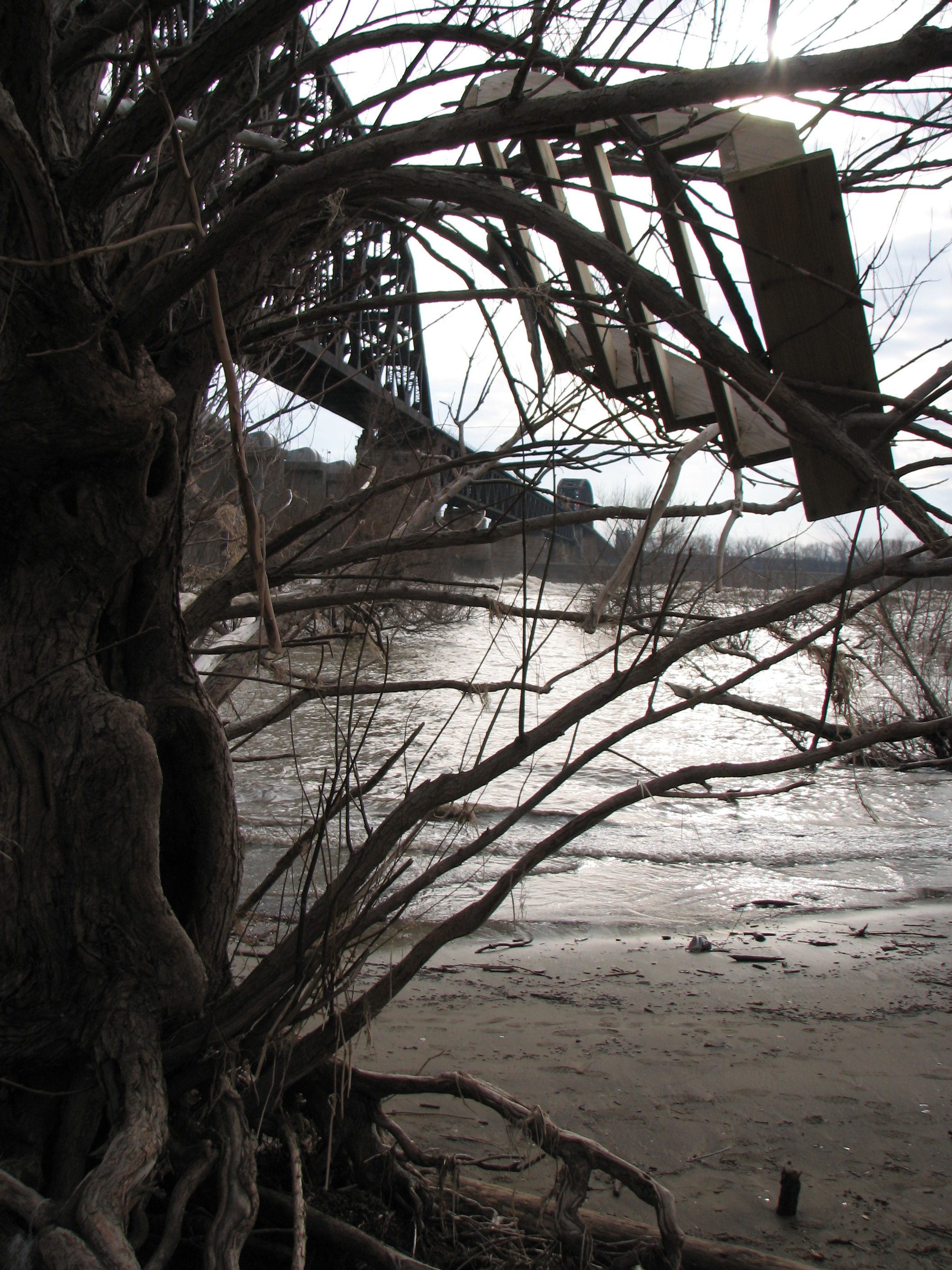
Here’s a dramatic shot of a different staircase that has floated down the river and has been snagged by a willow tree.  Objects stranded in trees bear witness to how high the river rose.

I frequently find wooden pallets and they get snagged in the trees too.  This one is a little different in that it appears the tree is growing through and around this artificial form. Over time, the pallet will fall apart. Perhaps wood is wood, but one can’t help noticing how much milled and processed wood is a part of the mix.  Here are a few other images showing this contrast between natural and man-shaped wood.

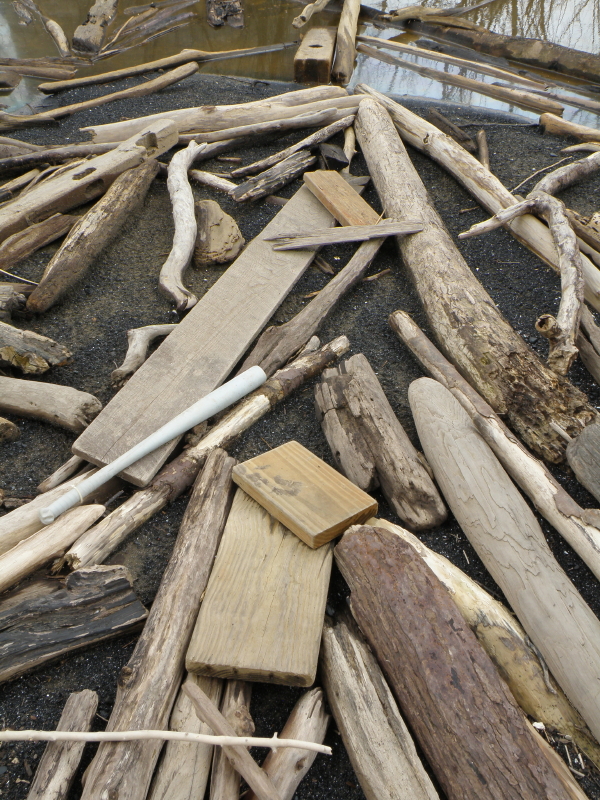
Sometimes it seems like there are enough planed boards at the Falls to build a small house. Fishermen and visitors use these planks to span muddy areas and puddles to keep their shoes clean and dry.  All this wood is a disposable resource?  I’ve seen visitors taking lumber out and I’ve done the same.  I like using river-worn cut boards as bases for the Styrofoam sculptures I choose to keep.  To me, even the smallest board tells a story of our relationship to trees and nature.  I tell myself that someday I’ll make some rustic piece of furniture from this wood.  The same processes that break a tree down in the river…do a similar “service” to disposed of wooden furniture.

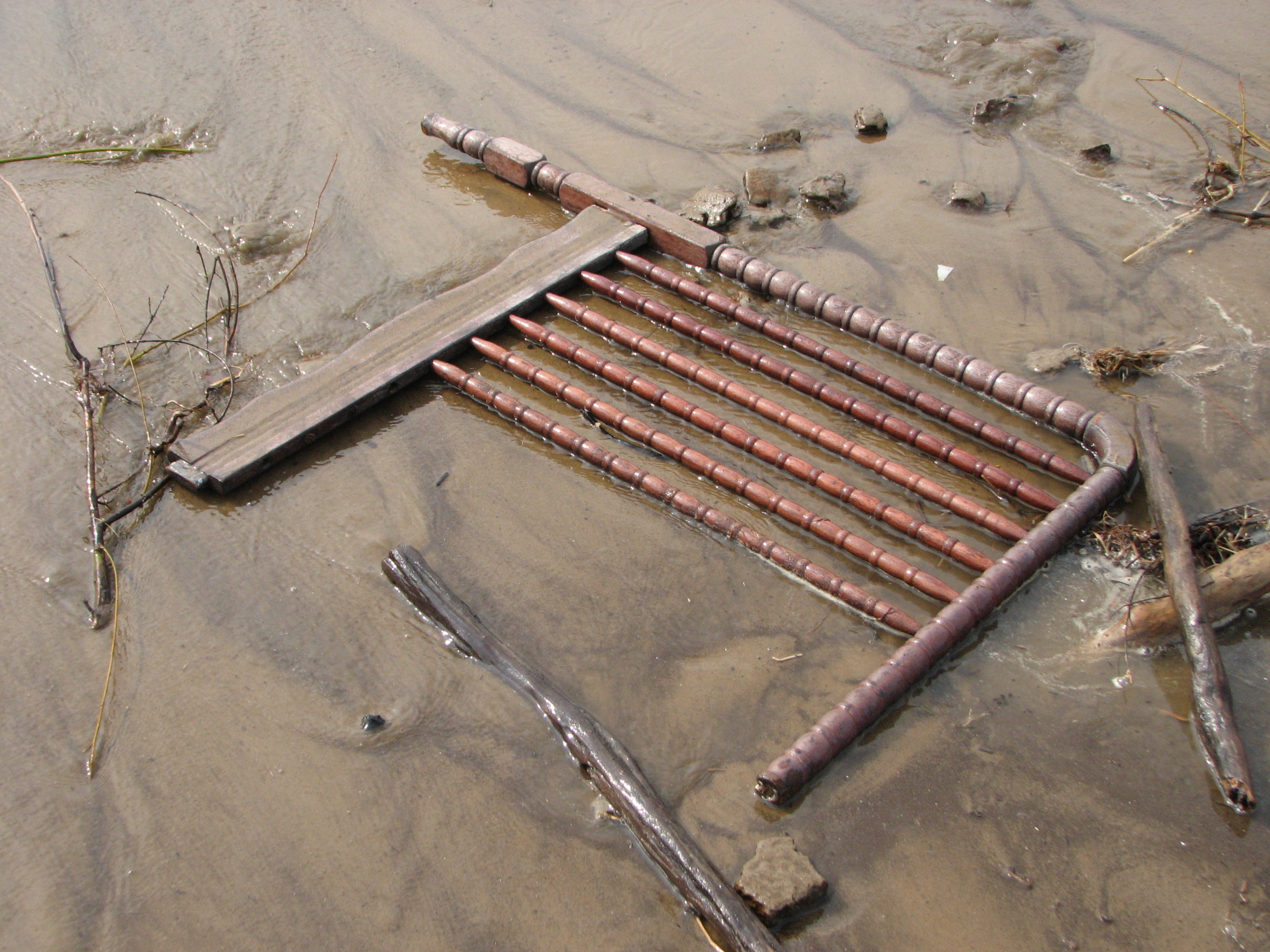
Here’s a piece of a child’s crib or bed that I found at the river’s edge.

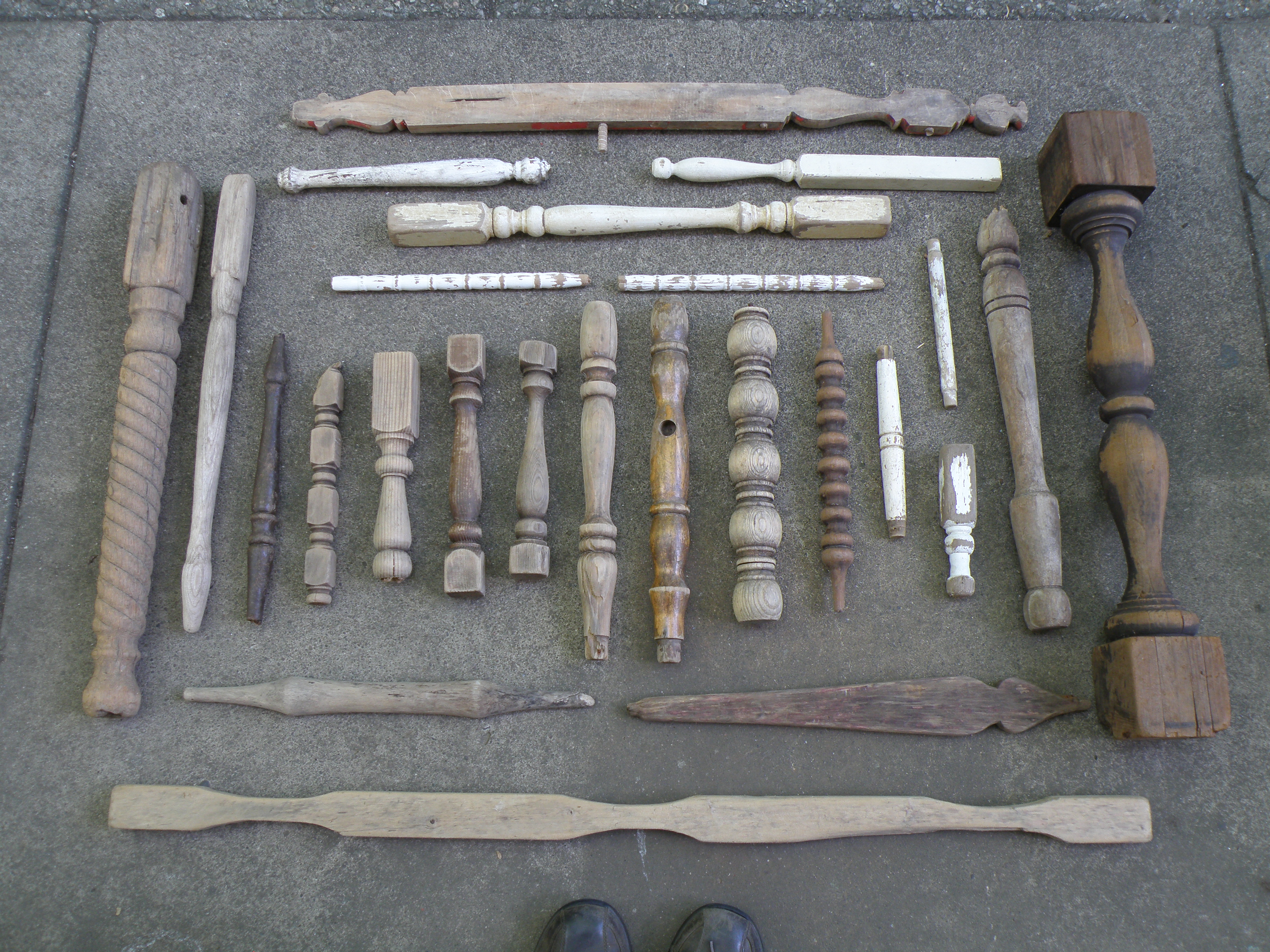
This is one of many table legs and turned pieces I’ve come across.  Sometimes I pick them up and take them home.  I’ve used them on rare occasions in my art, but I have also given many pieces to artist friends to see what they could make of them.  I suppose I could make an homage to  Louise Nevelson’s sculptures, but would prefer to create something more personal.  Nevertheless, I have picked up a few wooden artifacts from the river and here’s how they look collectively.

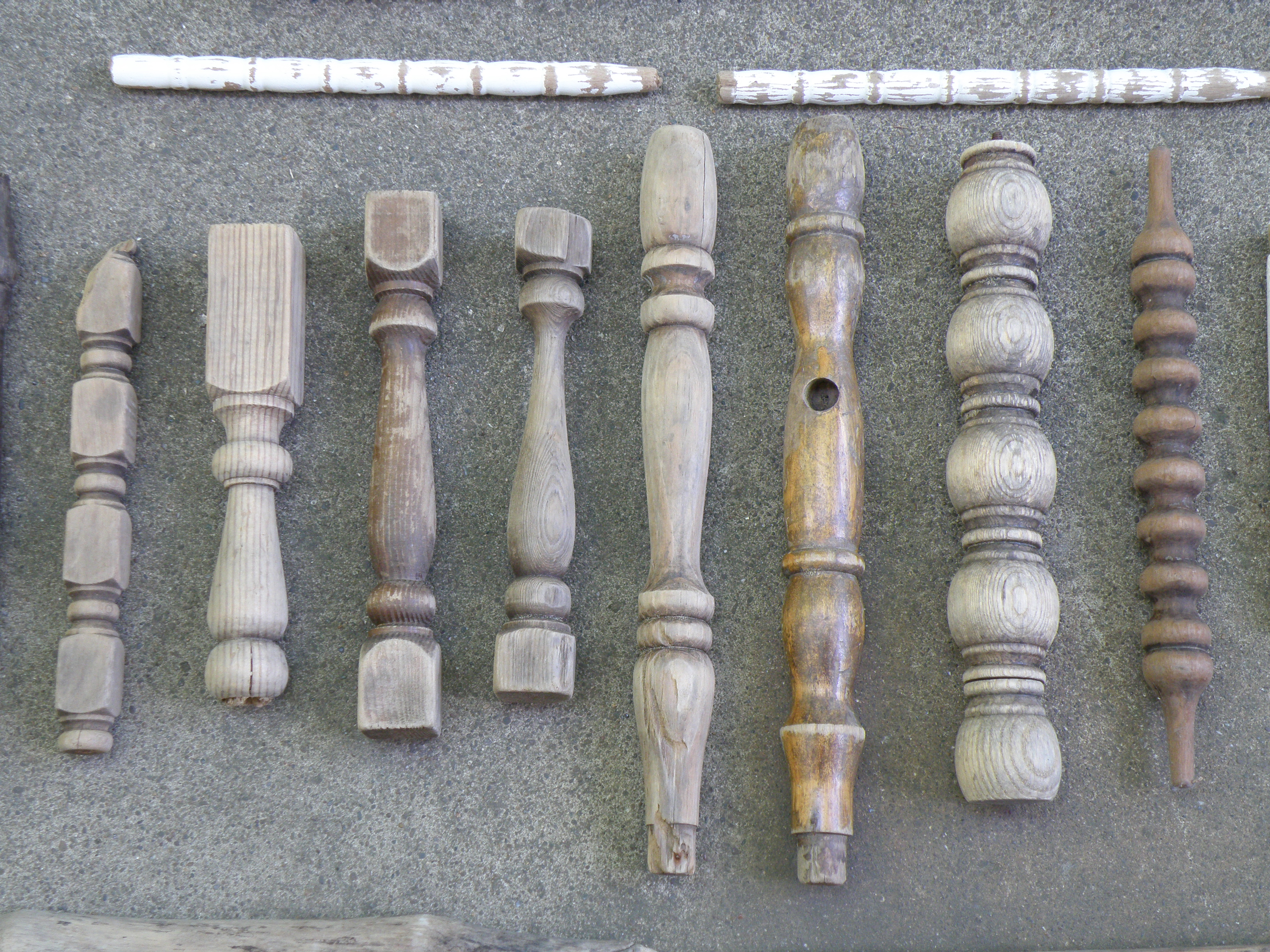
I left the toes of my shoes sneaking a peak for scale!  Here’s some of the hand-turned and machine-made table legs, chair staves, and spindles I’ve saved.  These artifacts do break down over time and eventually revert back to nature.  Now for a detail.
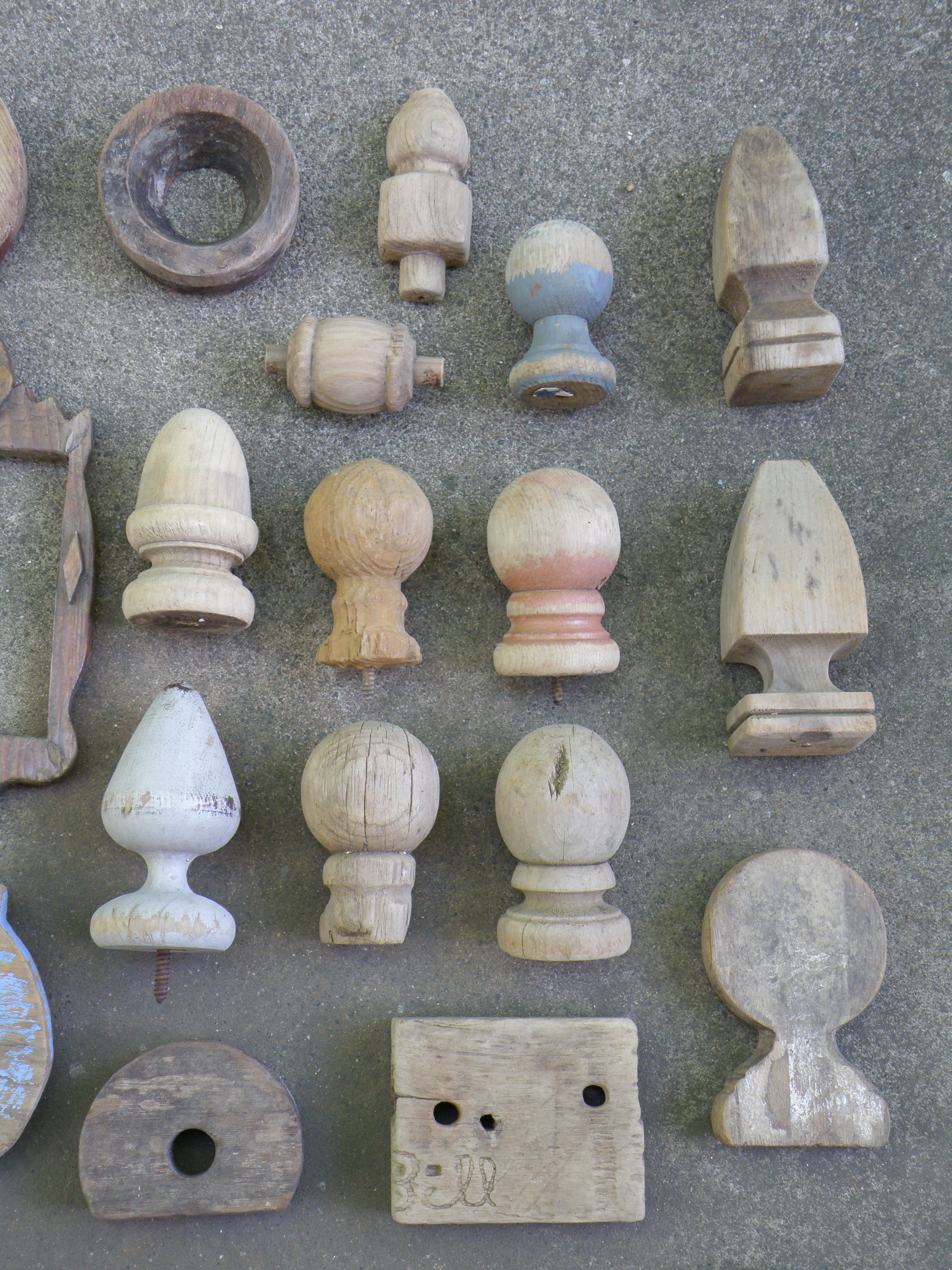
Here’s a slightly different collection of wooden artifacts I’ve saved over the years.  Some things I recognize and others require pondering to figure them out.

The objects on the right are mostly finials from fence posts.  The circular objects with the holes in them…I’m not sure how those were originally used?  Could they be part of a float system for barge ropes or are they wooden wheels for toys…could they be lids for some kinds of containers?  In this grouping I have also included a small rustic picture frame I found as well as a whittled stick I could tell someone cut and scored and is perhaps the most minimal artifact in my altered wood collection.  I find many board fragments, but I kept one small piece because someone named “Bill” tried routing his name in the wood and drilled a few holes that became bigger as the wood softened and aged from exposure to water.  This piece of wood exhibits several ways we leave our mark on nature.

I also have a sign collection that can be seen in my Pages section.  Most all of them are also made from wood and were once part of this unusual driftwood mix that came from the Ohio River.  I’m thinking of putting my found “Bill” board in that collection because it too is a sign of the times as we lose our ability and desire to write in cursive.  Very few schools in my area even bother to teach this skill anymore.

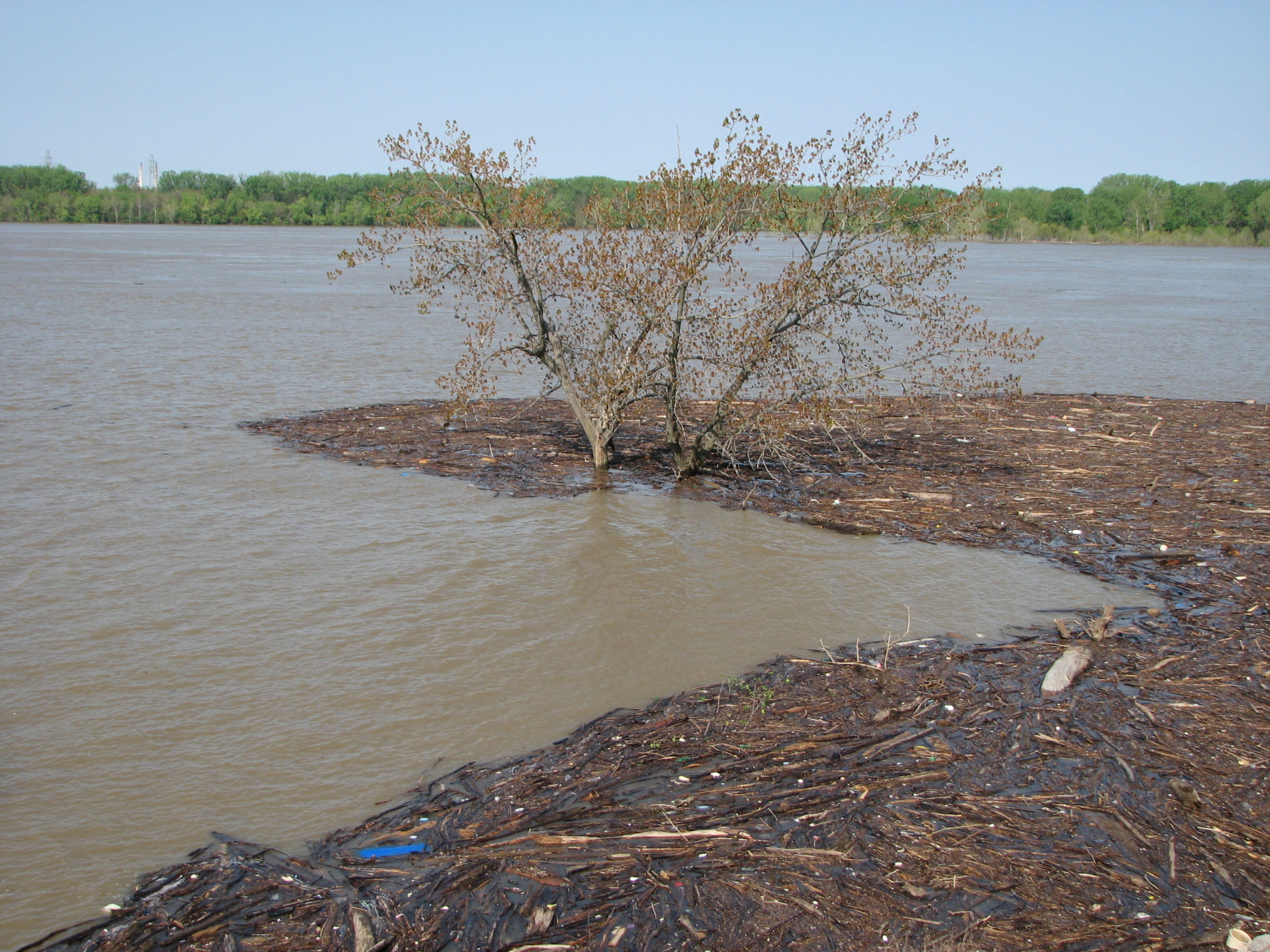
Not all the driftwood in the river consists of logs, branches, and roots.  Much of my riverblog bears witness to the extent our handiwork pervades the larger environment.  What I see happening in my part of the world I assume is transitioning  simultaneously across the surface of the planet.  We have added our own distinctiveness to the overall material aggregate which challenges our now quaint notions of what is “purely natural”.  I was right when I mentioned in an earlier post that the month of July would find a way to be memorable.  It’s official now, July was our hottest month ever in what is shaping up to be our hottest year ever.  Much of our country is experiencing an intense drought and so I end with a picture of what it looks like when there is too much water.

Read Full Post »

I have been doing some armchair beach combing while my knee recovers and I have selected images to help tell the story of wood at the Falls of the Ohio.  Since this wood was also once alive, it is also the story of trees along the Ohio Valley. When I went through my last three year’s worth of images…I found enough material for a few “wooden posts”.  Hence, this is Part I of what may prove to be a couple of stories.  The Falls of the Ohio is well-known for its driftwood deposits and many people (and some animals when I come to think about it) like to take advantage of this resource.  I have met many a person in pursuit of a select piece of wood.  What folks do with this wood is as variable as the person.  Some people like to use driftwood to enhance garden displays, some are inspired to make art from the found wood, and others may choose to burn this wood during cold winter nights.  I’ve seen Pileated Woodpeckers make short work of decayed tree trunks in their pursuit of carpenter ants and beetle larvae.   And once I found a Mallard duck’s nest inside a hollow log.  I’ve seen many beautiful fungi helping to convert this wood to humus. Driftwood is plentiful in the park and what usually happens is the Ohio River during its high water moods moves the old wood out and lays down a fresh layer that originates up-stream from us.  Sometimes I wonder if the wood I’m seeing is also part of the riverbank eroding in the northeast? These days, riverine ecosystems are under so many pressures. Since the Falls environment is continually being rearranged by nature, no two years are exactly the same and the riverbank is ever-changing.  It is interesting to me to think about these very images as digital driftwood that flows from the rivulet of data coming from my computer and tumbled into the ocean of info that is the internet.

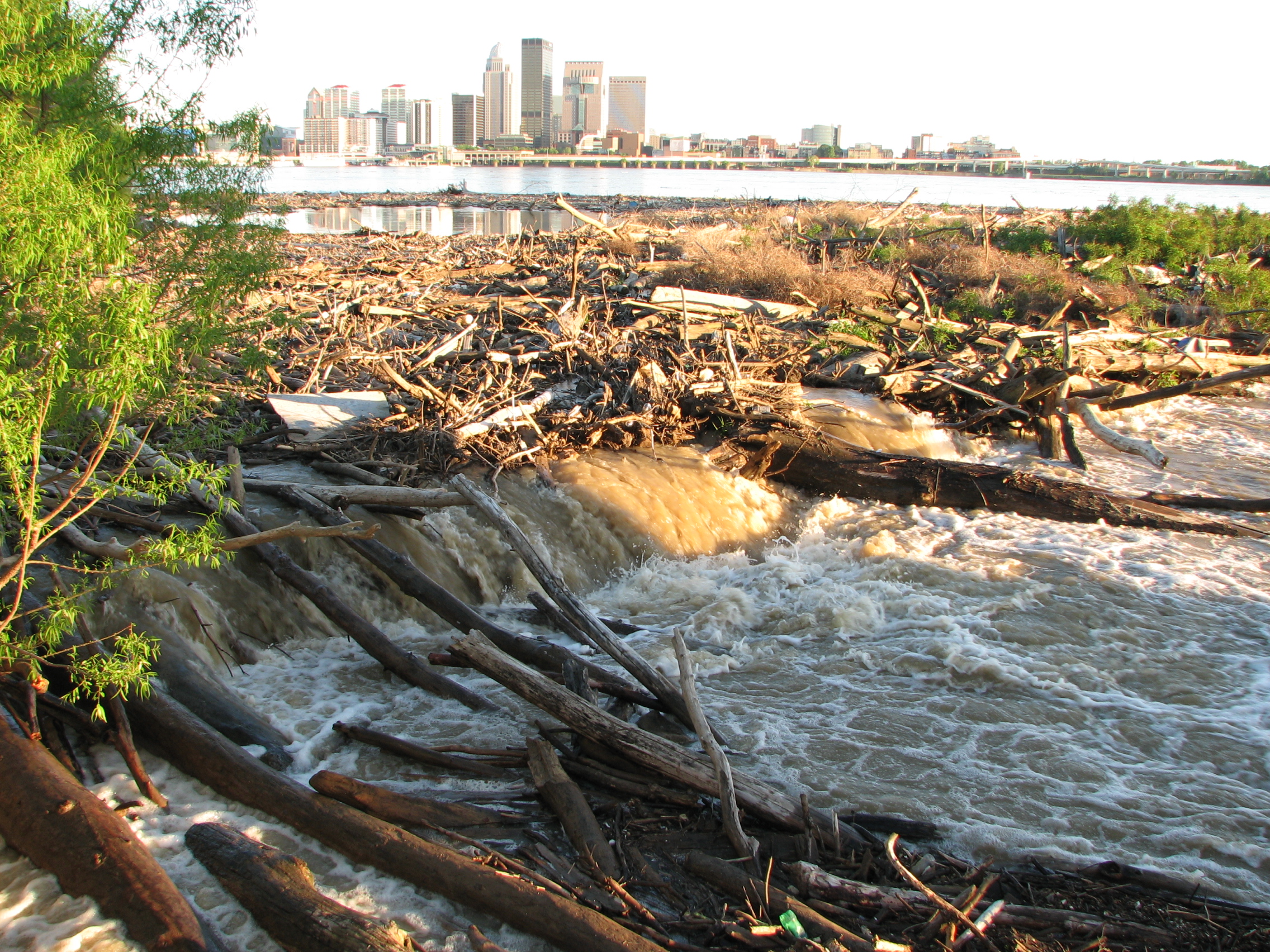
A prolonged rainy system upriver from us or a sudden flash flood caused by short, but intense rain storms causes the Ohio River to rise quickly.  “New” wood flows over the top of the dam and soon mixes with wood already in the park.

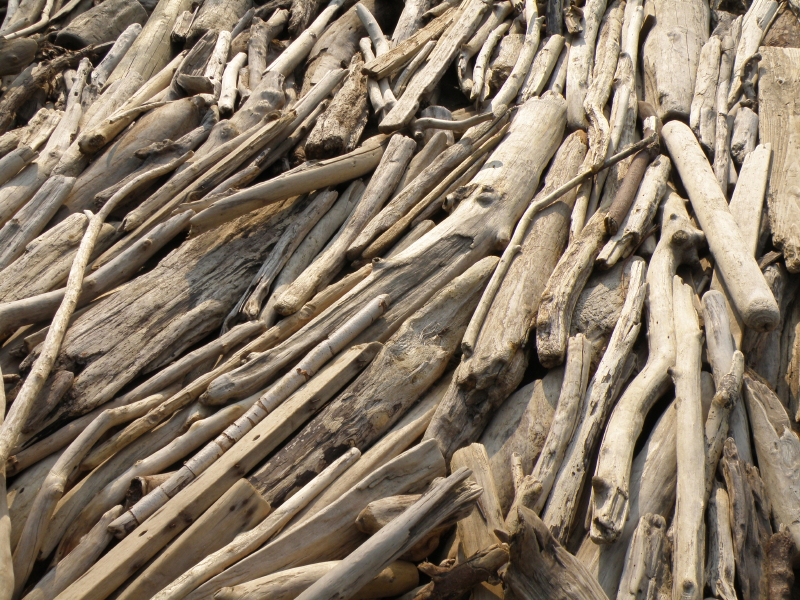
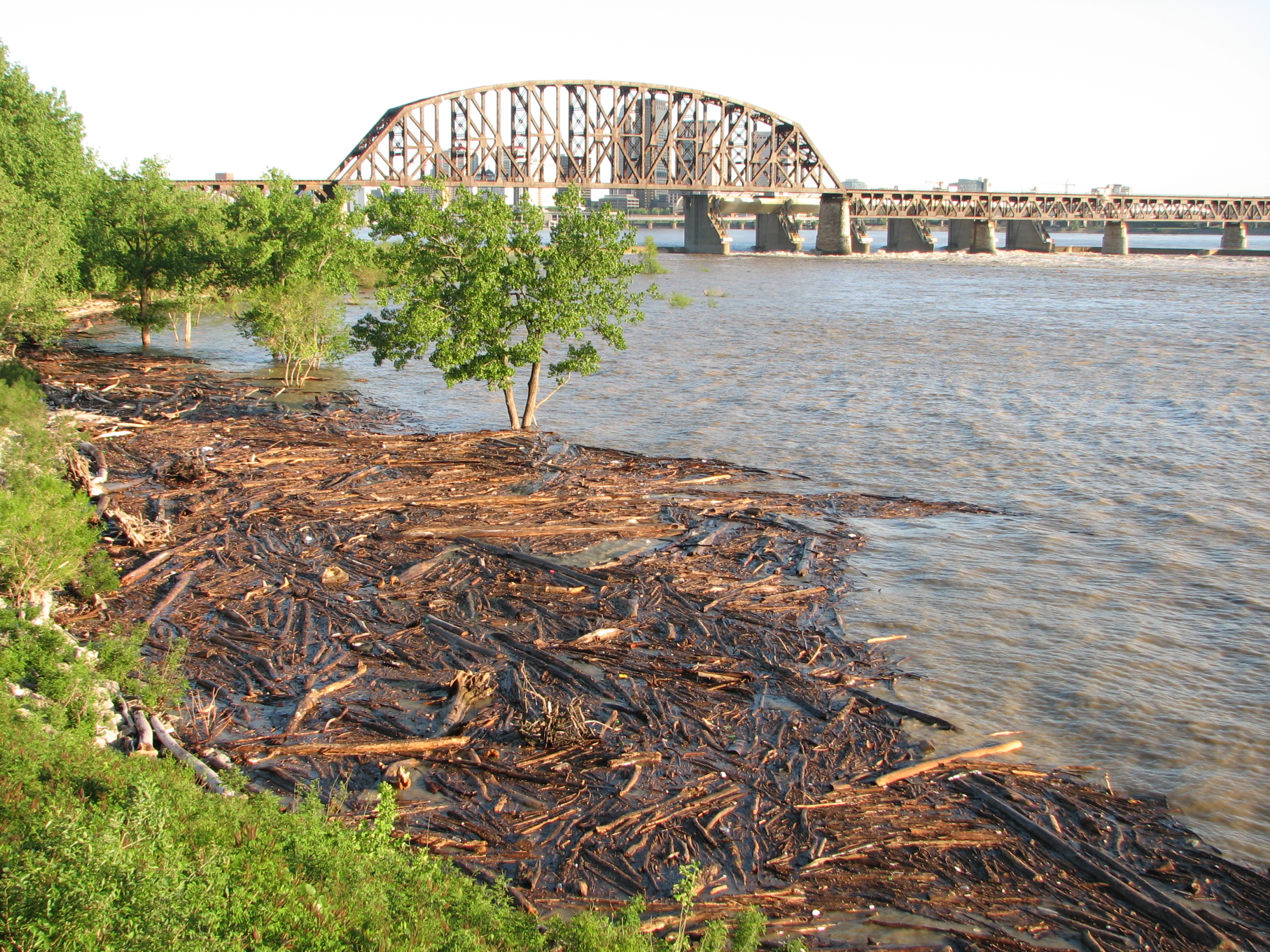
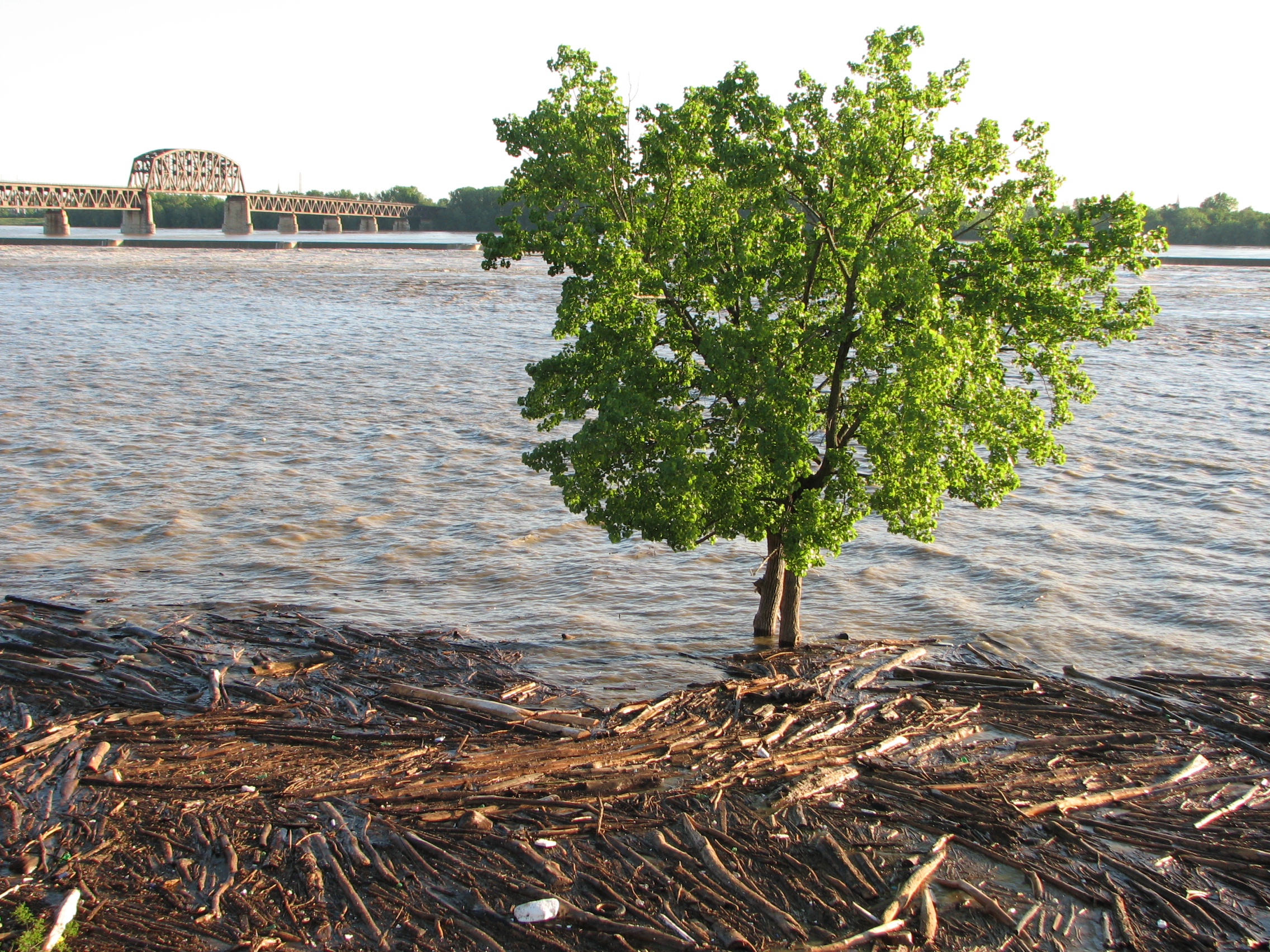
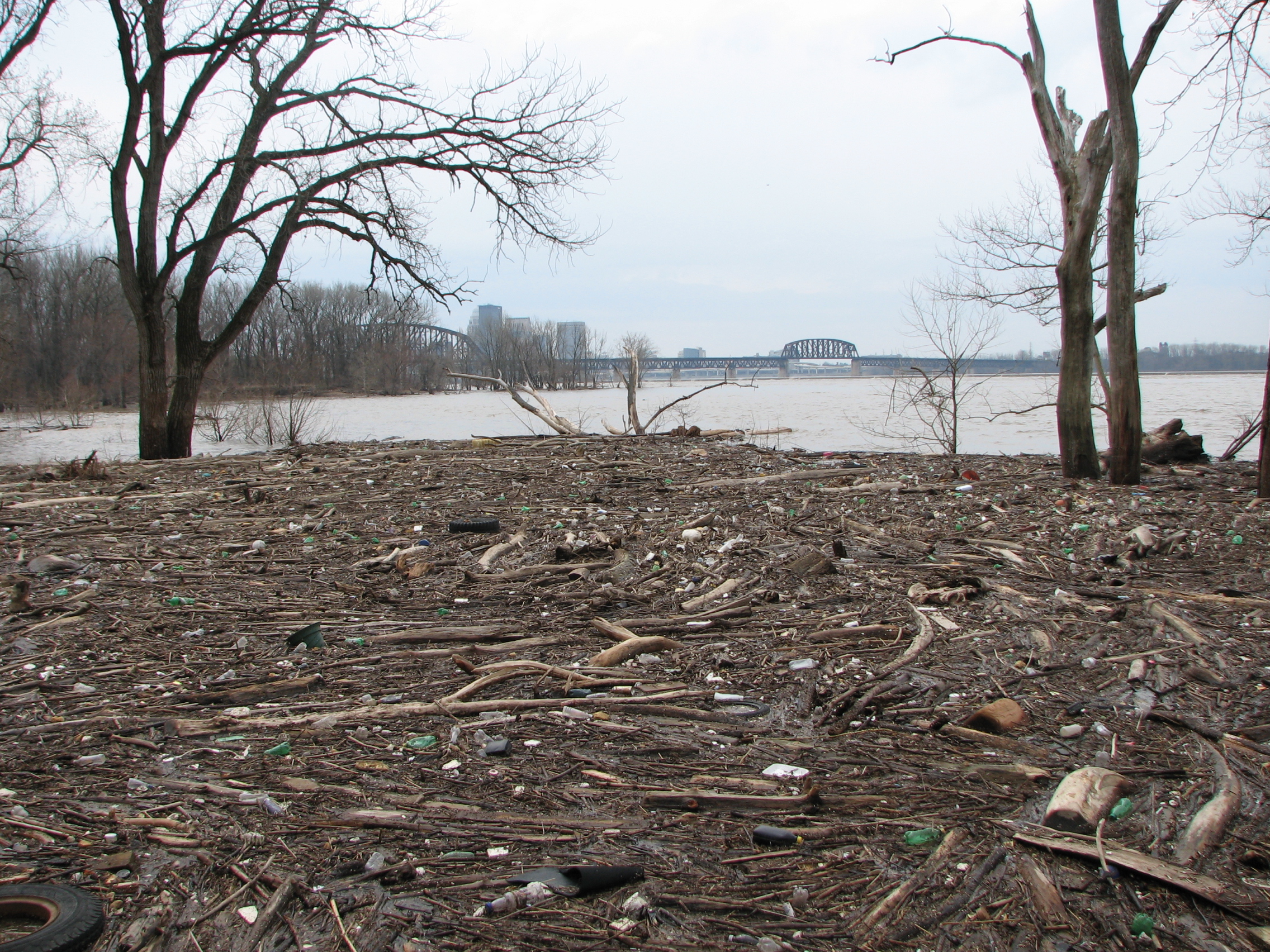
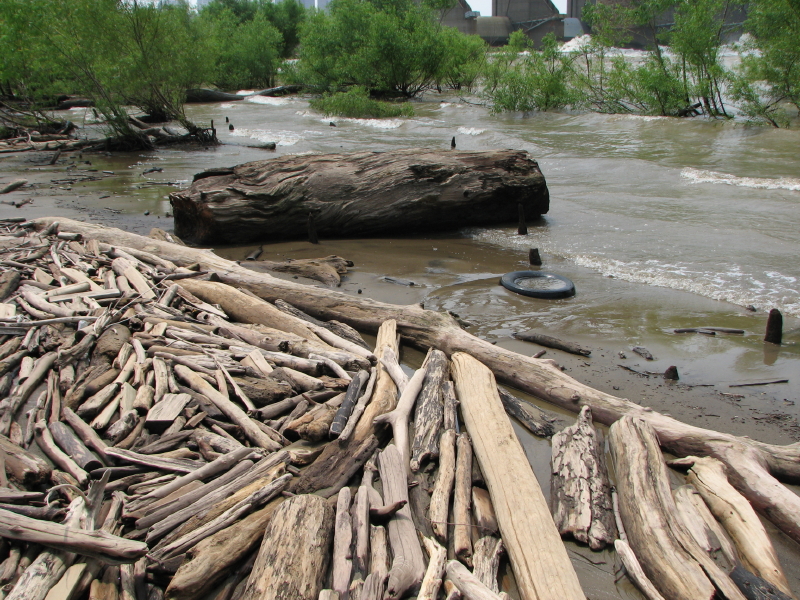
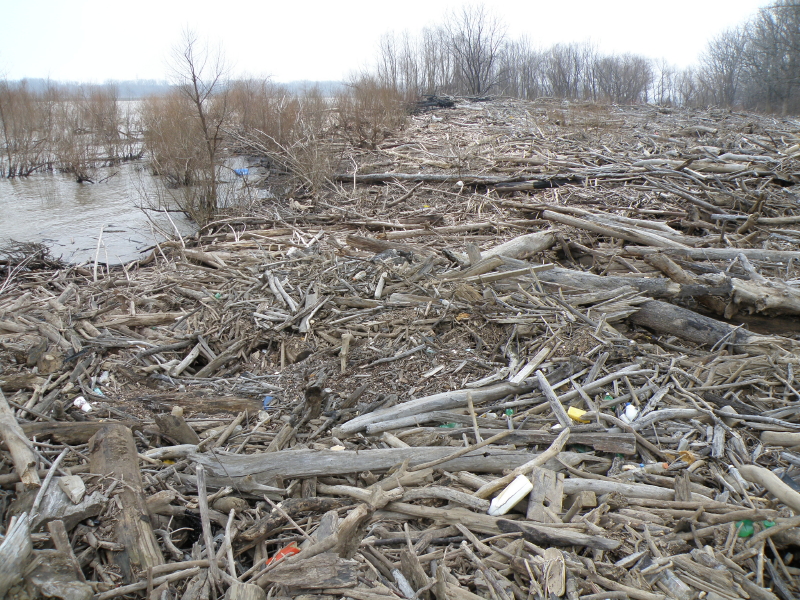
Prevailing winds and river currents push the driftwood which can form large rafts and mats against the Indiana side of the Ohio River.  If you notice, there aren’t many trees here with intact branches.  The river breaks each tree down and keeps subdividing it into ever smaller and straighter pieces.  The wood chips in the water are the remains of tree bark that have been ground off by continually rolling against the other tree trunks in the waves.  Of course, there is other detritus much of it man-made also in the water. Eventually the water recedes and strands the wood in interesting formations that are a part of a new and rearranged environment.  Here are a few images made while the river retreats.

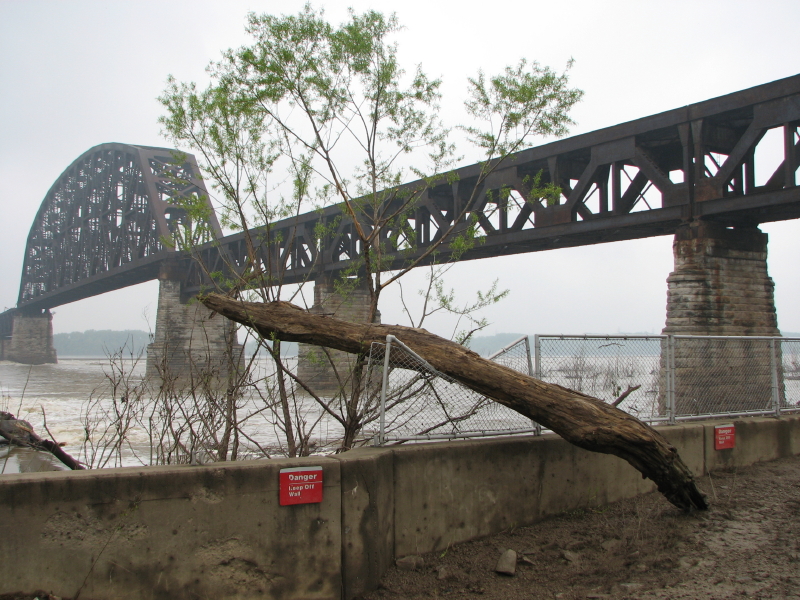
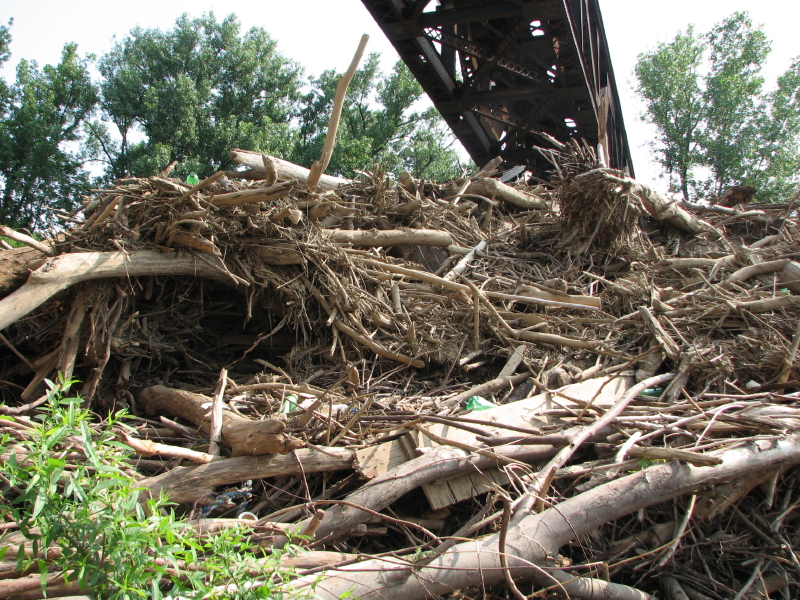
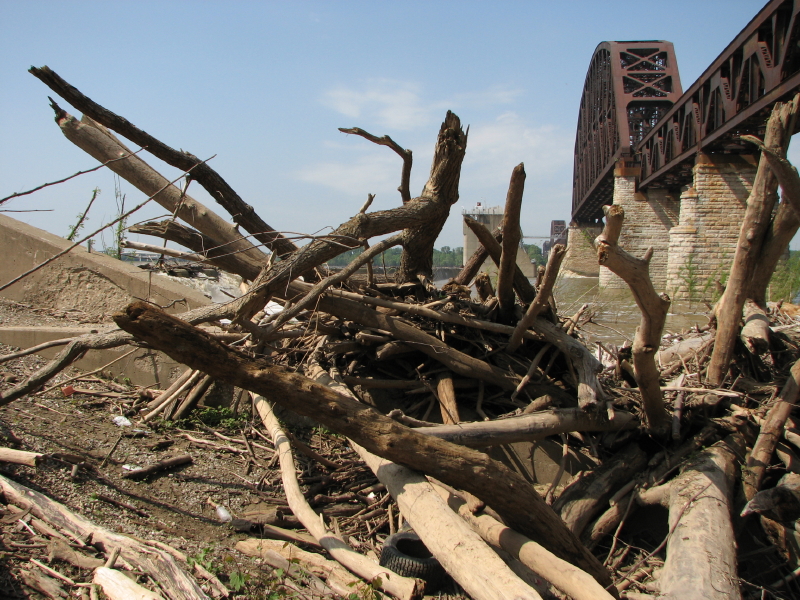
Not all the driftwood gets corralled by long logs that organize the smaller ones into neat parallel rows that fill in beach space like pieces to a puzzle.  It’s fascinating to get a sense of the water by how the wood was laid down.  Sometimes there is just so much material that immense mounds are formed by the interlocking wood.  Exploring these mounds can be tricky because the wood is still settling and caution is recommended.  At the moment, there is a sizable amount of driftwood under the railroad bridge which is also closest to the dam.  Here are a few images of all these logs after the water has drained away.

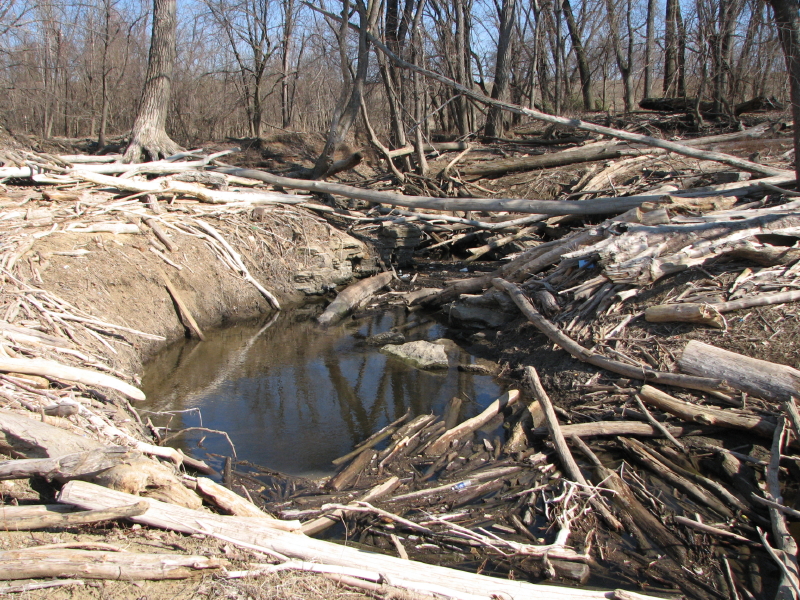
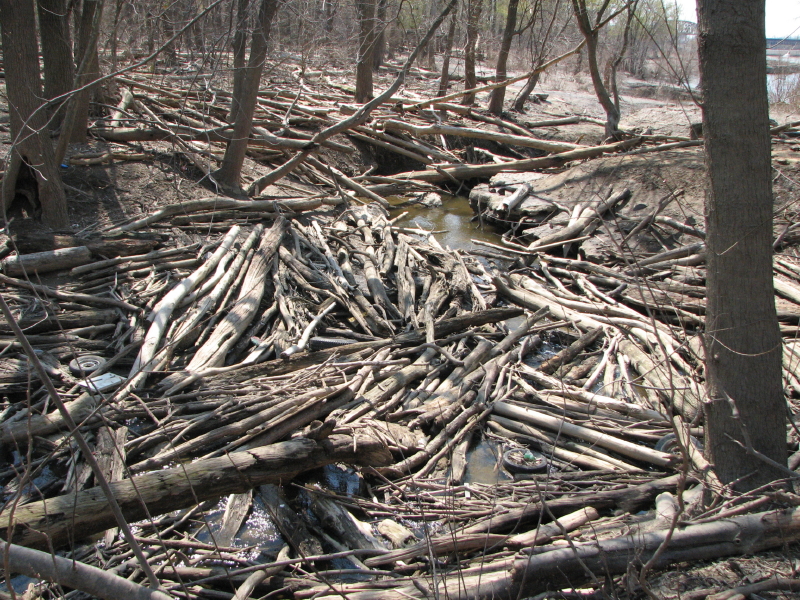
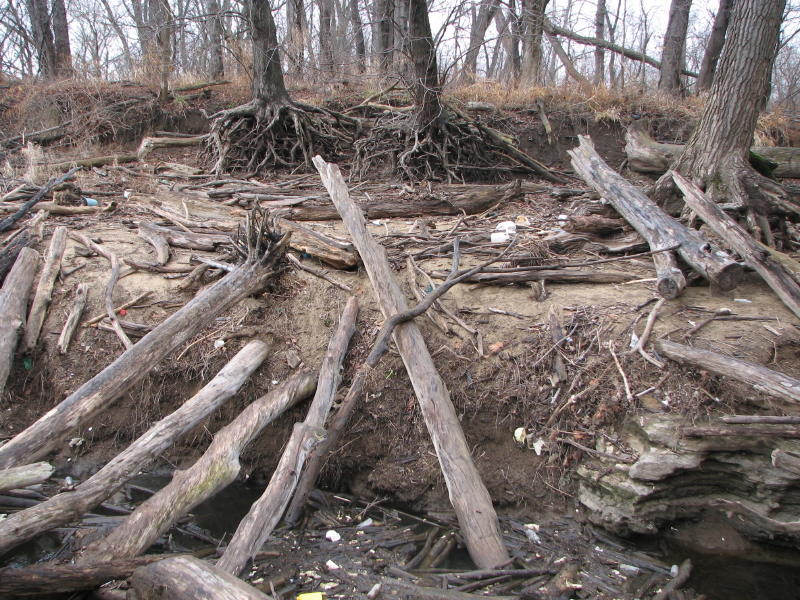
The small creek that flows into the Ohio River gets backed up with logs during high water.  When the water recedes and deposits the wood, it covers the contours of the creek’s banks.  Here are a few more recent images.

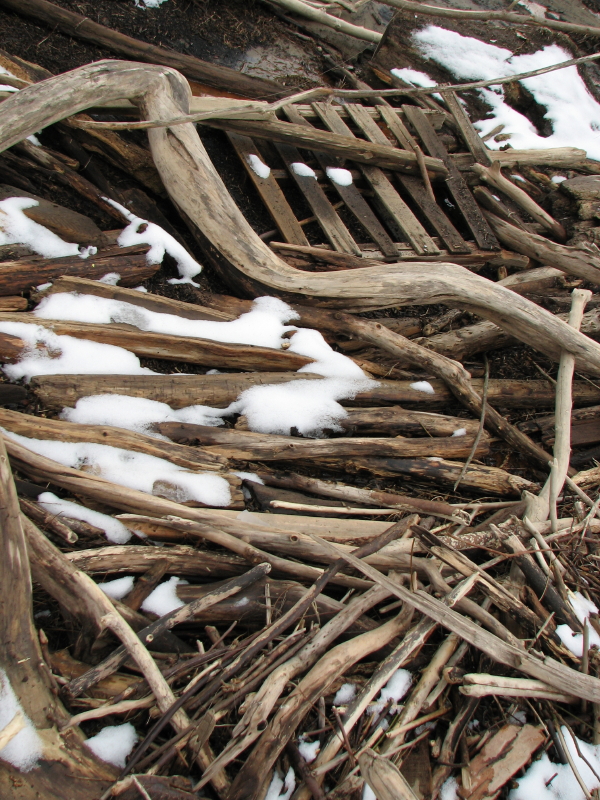
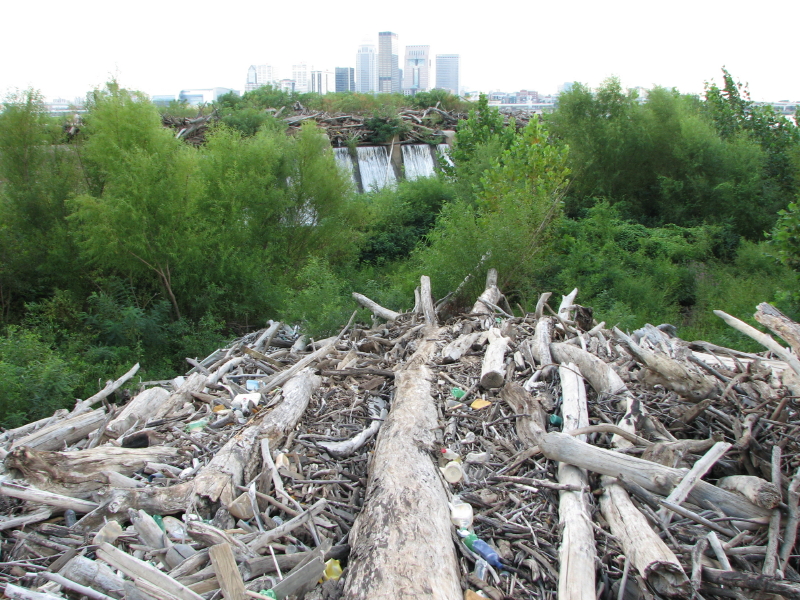
In the above image you can see how the trees that line this bank are beginning to be exposed by the river.  I believe there is just so much additional water and energy in play now because of climate change that the days of gentle rains will be fewer and farther between one another.  In our area, many residents have noticed that our storms seem to be fiercer and becoming more event worthy.  The main beneficiary of this are the television weather forecasters who love to hype the weather anyway.  I believe I will end here for now, but will continue later because there is more to say about this driftwood.  To close, I will end with another large and sculptural mound of driftwood.  Have a great week and month everybody!!

Read Full Post »

« Newer Posts - Older Posts »