Feeds:
Posts
Comments

Posts Tagged ‘Falls of the Ohio’

western park scene, Falls of the Ohio, 8/09

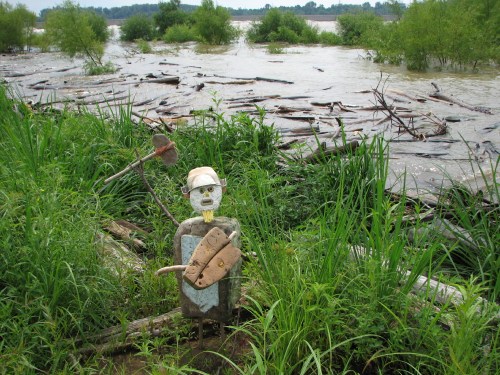
For a change of pace, I decided to explore the park’s western section.  It’s a little more of a walk, but you will see more wildlife and less people.  I was priviledged to observe a pair of ospreys gliding in high circles on very long wings.  Usually, there is less Styrofoam to be found in the western end, but I was able to locate a couple pieces along with assorted sticks and plastic bits to make a figure.  This is what I came up with today.
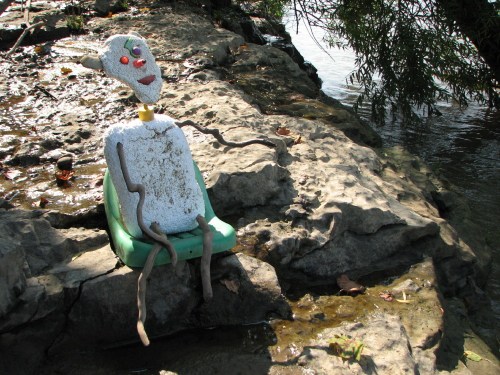
Figure on Green Seat, 8/09

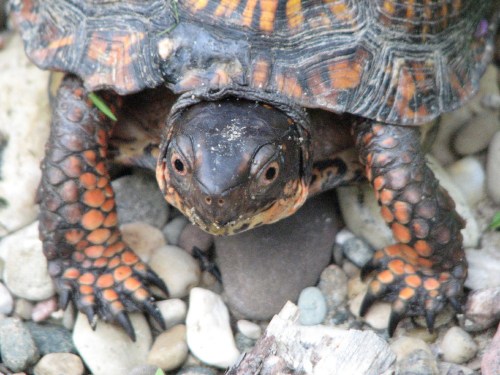
The green plastic seat more than likely came off a child’s riding toy and was the right size for the figure I constructed.  As I was working on this piece, I was treated to the sight of a beautifully marked Eastern box turtle that came walking out of the tall grass.  I couldn’t resist taking a few pictures!
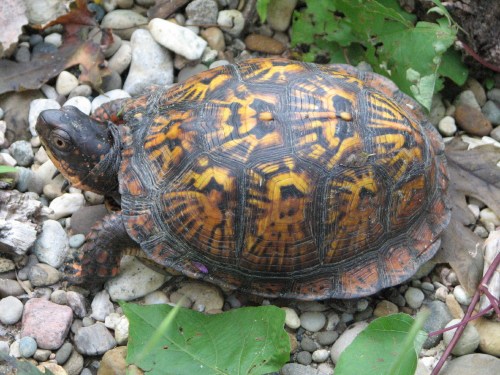
Eastern box turtle, 8/09

head of box turtle, 8/09

I love the golden- yellow markings on its bony- shell and how it shows signs of wear and polish by moving through its environment over many years.  I carefully picked it up and the turtle’s head and front legs pulled within the shell while it’s trap door closed shut.  I set the turtle down and made my art work and slowly the turtle revealed its head, legs, and tail and sneaked back into the grass from where it came.  I heard that box turtles aren’t as common as they used to be.  And, that they prefer to stay in relatively small territories and don’t transplant to new areas very successfully.
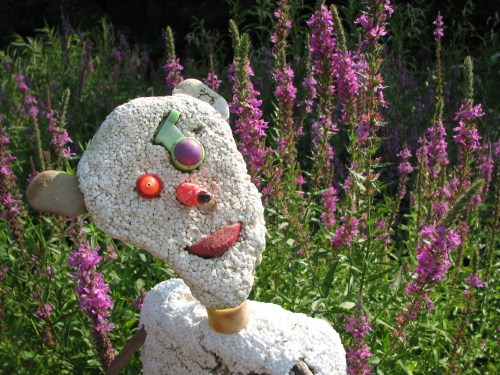
Head of figure on green seat, 8/09

This sculpture is made from Styrofoam (polystyrene), driftwood sticks and roots, with various bits of found plastic.  There are several areas in the park that have gravel deposited from the last glacier of the Ice Age.  That’s the kind of rock that this figure’s ears are made from.  At this front row seat were several varieties of blooming plants that were animated with insect life.  Bumble bees and many species of butterflies were taking advantage of the nectar.  All along I have been photographing (when possible ) the different types of butterflies I come across.  Here is an image of the Comma with its well worn angle-wings.  This species is quite common here.
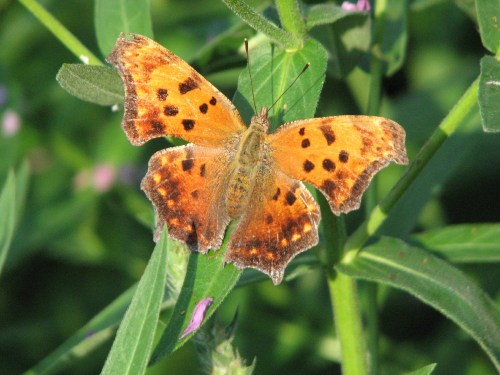
Comma, 8/09

Usually, the lower, hind wings are darker, but this individual has managed to lose a lot of it’s scales.  The edges of its wings are a little more raggedy than normal.  This species has a pugnacious quality to it and I have seen it chase its own kind, other butterflies, and once in awhile…birds!  It has a strong survival instinct…as do these two Monarch butterflies.  This is the image I will leave you with to end this post.  I watched this joined-pair still flying (rather poorly) feeding from flower to flower while mating.  Now that’s multi-tasking for you!
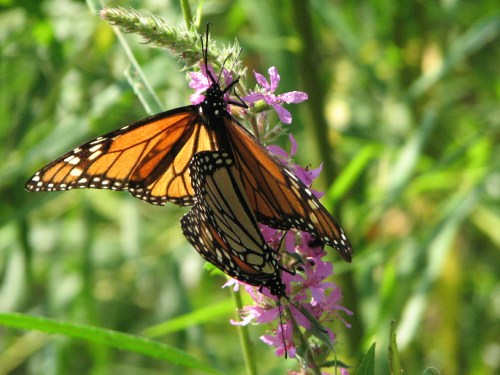
mating Monarch butterflies, 8/09

Read Full Post »

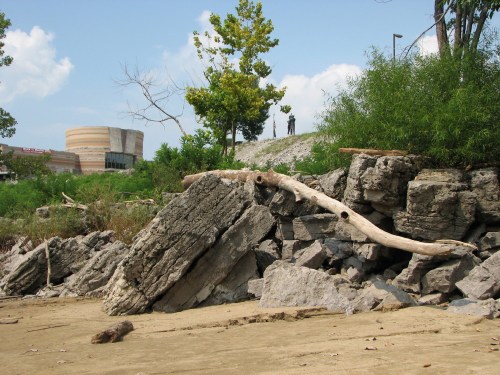
View with Interpretive Center, 8/09

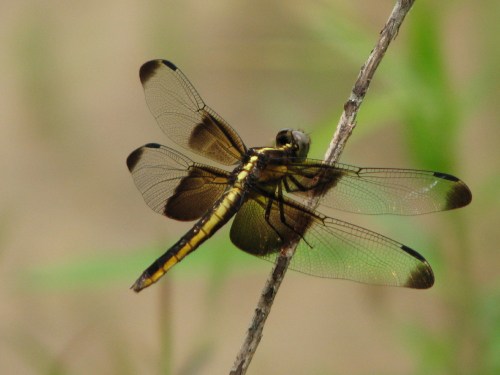
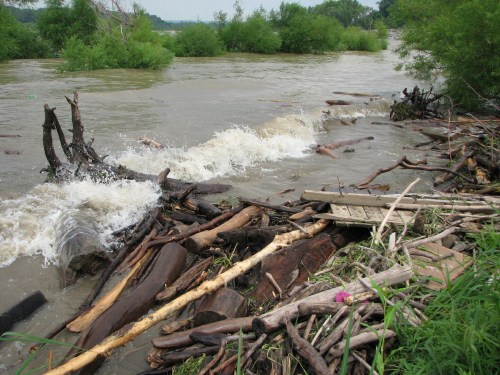
Now this feels more like summer.  The Ohio Valley heat and humidity just grabs your breath and makes it heavy.  After the flash flooding and torrential rains, I thought the park would look a lot different than it does.  You can see that the river did get high because piles of driftwood form a meandering line where the water stopped and receded.  I checked out the new arrangements, but the object that stands out as the find of the day was a plastic, crinkled, French fry!  Something new for the “Fake Food Collection”. dragonfly, 8/09
 

All manner of insect life is present today.  Various dragonfly species patrol the air space just above my head.  I watched a small thread-waisted wasp carry a caterpillar across the sand.  Ants follow their chemical trails through the driftwood.  Some of the willow trees are exuding a sap that’s attractive to dark-bodied flies and an occasional monarch butterfly floats by.  With all this buggy activity, I can feel the energy of life all around me.

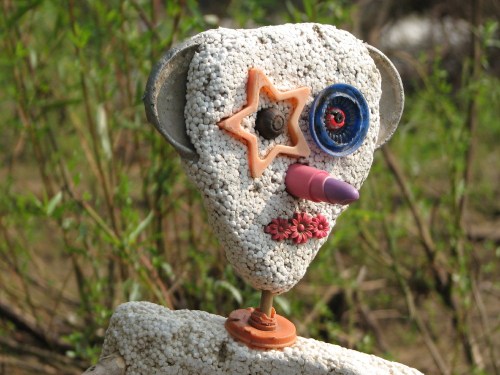
Head of Starry-eyed figure, 8/09

The river stopped just short of my studio site.  As I was walking towards it with today’s finds I could hear the voices of children coming from that direction.  For the first time, I actually came across people standing in my spot.  I know I surprised “Grandma” and her two grand children, a boy and a girl.  She explained very quickly that she lives in Clarksville and wanted to take the kids to the river and get exposure to nature.  The girl was holding a small doll I had found months ago and her brother was carrying the wooden ax I had fashioned for my Prince Madoc figure.  Grandma said that they just came across my site and thought some old drunk had hauled all this trash to this spot!  No I explained, it’s just me…some other kind of eccentric with artistic inclinations.  Grandma, however, wasn’t interested in continuing the conversation and the boy laid down the faux weapon.  I said he could have it and his eyes lit up in the way boy’s eyes shine when they get to hold sticks and guns and there is a suggestion of danger.  I told him that if he struck anything with the ax that it would just fall apart.  Grandma said that if they ran into trouble that she wasn’t too worried.  She dug her hand into one of her short’s pockets and pulled out a wicked looking black folding knife!

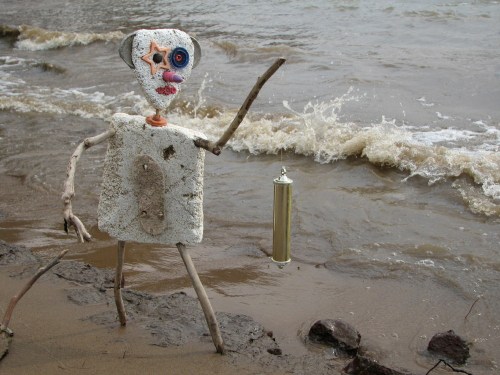
Starry-eyed figure w/ Gold Ornament, 8/09

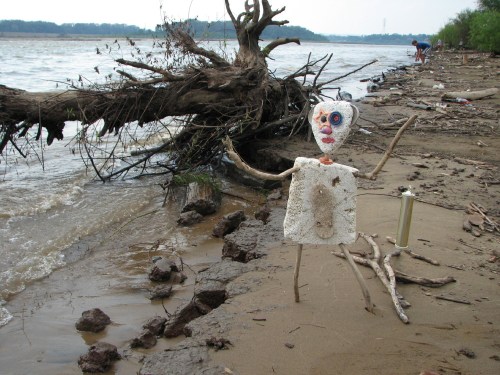
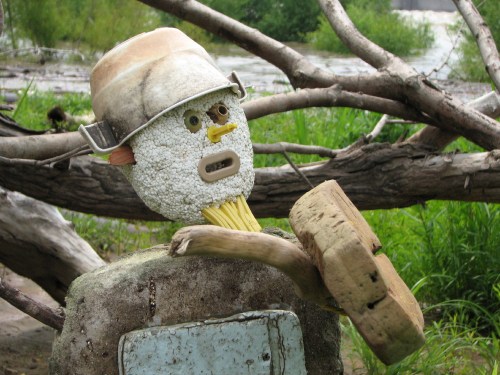
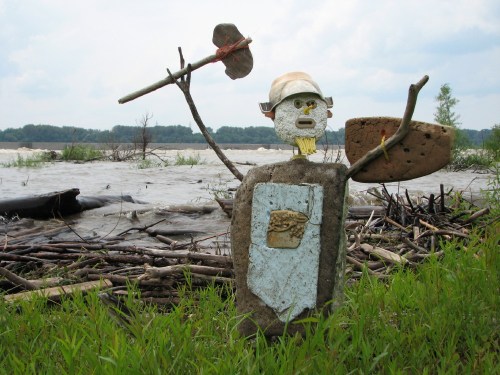
Standing proudly by the river is today’s figure!  It’s all stuff I came across between the parking lot and my studio spot.  The plastic star is either a child’s cookie cutter or a clay tool of some sort.  In the center of the star is an acorn.  The other eye combines an orange foam fishing bobber with the cap from a milk jug.  The nose is a fake, plastic tube of lipstick.  The ears are made from the bottom of an aluminum can.  Can you guess what the mouth is?  It’s a hair barrette.  On the end of some old fishing line, the figure holds a plastic, gold ornament of some kind.  I like the way it shines in the light.  I attached the sole of a child’s sandal to the body to create another area of interest.  The rest is Styrofoam and driftwood sticks.

Starry-eyed figure by river, 8/09

I had forgotten how uncomfortable the heat can make things.  My t-shirt and jeans were sticking to my skin.  On such a warm day, why don’t I wear shorts…surely that would be cooler?  Yes, but over the years I have torn my legs up on sharp-bladed grasses, endured insect bites and poison ivy, scratched myself climbing over driftwood and bruised my knees slipping on wet fossil rocks.  You get tired continually healing from something.  I can live with a little perspiration every now and then.

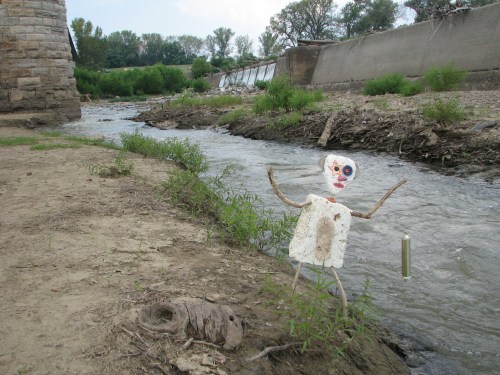
By the wier dam, 8/09

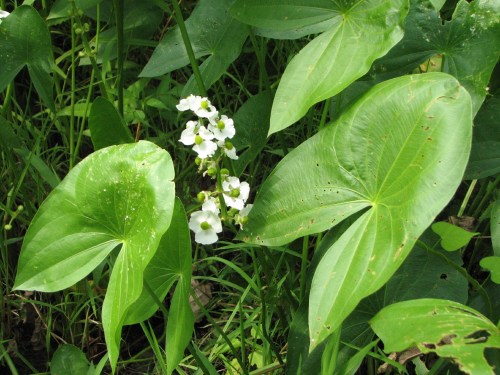
This image was taken under the railroad bridge and next to the eastern tainter gates.  The parking lot is just beyond and up on the hill.  It’s hard to imagine that the level of the river is just about to the top of the wall on the right.  You can’t get any lower in the valley than being at the bottom of the Ohio River, but here at the Falls you can get a feeling for that.  I noticed that the leaves are starting to turn yellow and so summer’s days are numbered.  I did pass a stand of broad-leaved arrowhead plants with their white flowers and thought this a good way to end this post.

Broad-leaved Arrowhead in bloom, 8/09

Read Full Post »

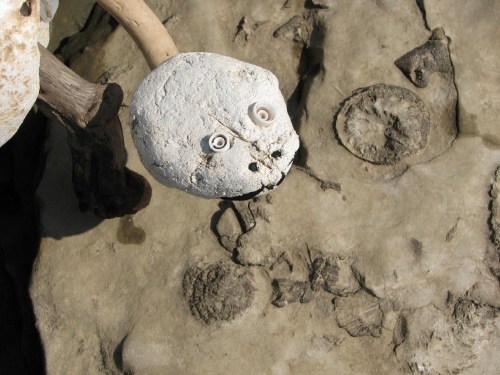
Styro-turtle head with fossils

I just read that the most primitive reptiles still around are the turtles.  The oldest turtle fossils extend back nearly 230 million years.  It wouldn’t come as a shock to see that pushed further back in time as new discoveries are made.  The fossils at the Falls of the Ohio predate the turtles and represent life during the Devonian Period about 370 million years ago.

Styro-turtle in shallow pool

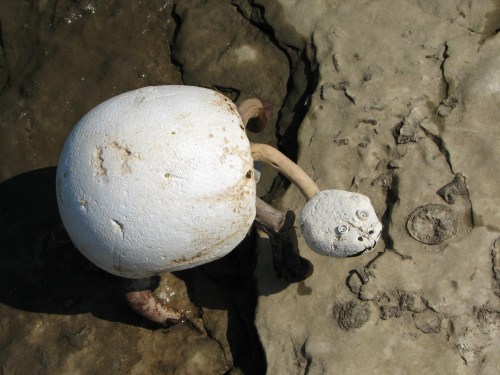
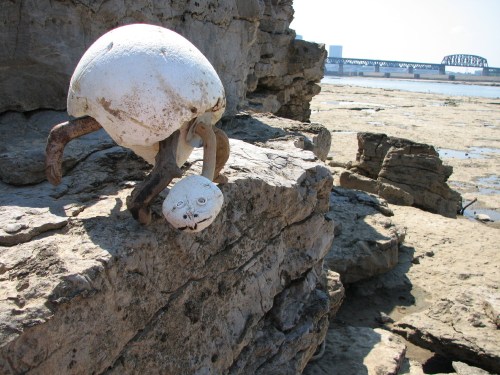
Normally during this time of year the fossil beds would be exposed and you can walk very far out upon them.  This, however, hasn’t been a normal year!  I’ve dipped into the archives to show you a turtle sculpture I made a couple years ago that remains a favorite creation.  In this image, the Styro-turtle is crawling out of a shallow pool of water that it was using to stay cool.  It can get very hot out on these rocks during the summer.  The remains of ancient corals can be clearly seen in the limestone.

Styro-turtle on fossil rocks

When I make this work I’m really more interested in the images that result.  For me, it’s about seeing the trash I rearrange and reconfigure in the context where these objects were found.  This turtle needs to be seen in this particular environment which has played a large role in shaping the materials I use.  This is meant to be “a collaboration with nature”.  Andy Goldsworthy has used this phrase to describe his work and friends have  compared my work to his.  There are similarities in that we both like working out in the elements, using what is on hand, and taking a photographic image that is the visual record of that day and place in time.  There are also differences.  My work here is figurative while Goldsworthy’s is more abstract.  He prefers working strictly with natural materials while I use artificial ones too.  The state of moving from the natural to the artificial I feel describes our current condition well.  Goldsworthy travels to some of the beautiful places on the planet to make his art, while I decided to interpret this one place near where I live.  I feel we are collectively like the turtle in the above image…on the brink.  Will we turn back or go over the edge?  By using the garbage I find here I believe I’m not only illustrating part of the problem, but also suggesting an alternative.  It’s by encouraging and using our universal creativity that we have the best chance to reconnect with the environment that sustains us.

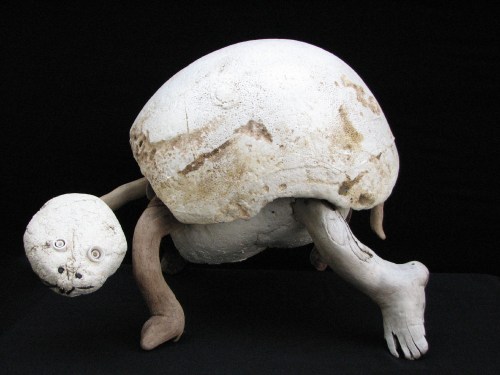
Styro-turtle, out of context

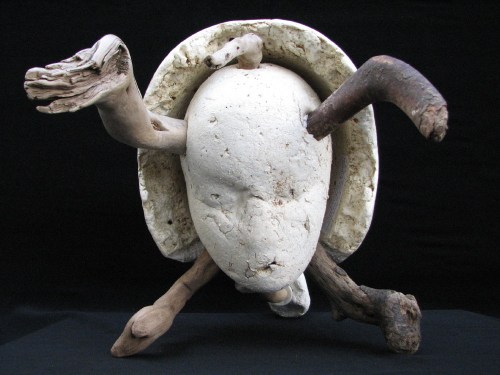
This piece turned out nicely and so I kept it.  Later it found a good home with my gallery representative…who prefers the sculptural models over the images!  To each his own.  With real turtles, one of the distinctions that shows up even in the earliest animals is the presence of the shell or carapace.  In my polystyrene version, the shell is special too.  It is the remains of an old bicycle helmet.  Other materials used include:  coal for the nostrils and mouth, plastic aerosol nozzle tips for the eyes, a plastic bleach bottle mouth forms the collar where the turtle’s neck joins the body, driftwood legs, tail, and neck, the rest is Styrofoam.  All found on site.Underside of Styro-turtle


The head pivots around where it meets the body and there is one other special feature of this piece.  It can only be seen by turning the turtle over.  The body is a Styrofoam human head used by wig stylists!  For me, it adds another layer of meaning.  This is one of two such Styrofoam heads I have found at the Falls of the years and worked well with the foam helmet.  A pocket knife was the only tool I used to make this found object sculpture.

Read Full Post »

high Ohio River, 8/09

As a child, I can remember the moment when it occurred to me that recorded history doesn’t always measure up to the truth.  It happened in the third grade when we were reading about the discovery of North America by Christopher Columbus.  The teacher brought up the subject of Leif Ericson and his documented voyage to Vineland.  I remember thinking that if the Vikings were first…why were we making such a big deal out of Columbus?  Unfortunately at the time, the proprietary rights of the indigenous Americans didn’t figure into the discussion.  Later I learned that history is indeed fickle and subjective and usually supports the point of view of the victor or whomever was doing the recording.  That turned out to be a valuable lesson in life, although I didn’t know it at the time.

Prince Madoc, detail, 8/09

Among the many things I love about the Falls of the Ohio is the story of Prince Madoc and the Blond-haired, Blue-eyed Indians.  When Lewis and Clark began their exploration of the continent, President Jefferson asked Lewis to confirm their existence.  These people would be the descendants of a colony of Welsh travelers  that accompanied a Prince Madoc back around the year 1170 A.D.!  An even earlier date, five hundred years earlier, has been suggested as the time of the actual voyage and is connected with the descendants of King Arthur!  The most persistent stories, however, go back to the 12th century.

Prince Madoc, 8/09

After arriving in what is believed to be Alabama’s Gulf Coast…Madoc and his people eventually filtered into the heartland by traveling along the rivers.  In their wake, they left little evidence, however, a series of stone fortifications built by unknown hands is attributed to them.  According to a native American oral tradition, these blond-haired, fair-skinned people existed and were routed in battle near the Falls of the Ohio.  The survivors kept moving where they may have merged with the Mandans in the Dakotas.  Lewis and Clark did encounter the Mandans and found them different from the other Indians.  The artist George Catlin did the most extensive study of this tribe before they were all but destroyed by smallpox.  Those survivors later integrated with other native American groups. 

Prince Madoc at the Falls, 8/09

The physical evidence isn’t great.  There are the stone works… walls, fortifications, altered caves, a limestone slab from Kentucky with what appears to be runic writing in ancient Welsh on it.  A few unusual burials have been documented in our area, but nothing definitive has made the case.  Strangely though, there have been documented discoveries of Roman coins. One cache was turned up in the 1960’s during the construction of a bridge crossing the Ohio River at Louisville.  The coins’ discoverer gave two of them to a friend and kept the rest for himself and these were lost again?  The two surviving coins were eventually given to the Interpretive Center at the Falls where they were put on display with facsimiles to simulate the discovered horde.  Other coins have been found in other locations.  Usually, these finds are poo-pooed away as outright forgeries or instances where modern people just happened to lose Roman era coins!

Prince Madoc, in progress, 8/09

I’m sure that history must be full of forgotten stories and the discovery of this continent is among them.  This place has probably been “discovered” and “lost”  on a number of occasions.  With Madoc, whether his story proves to be fact is not as important as the tale itself.  What we remember frequently trumps the truth anyway and seems all the more compelling because there is a persistent mystery surrounding it.  In my own way, I enjoy working in this gray area between fact and fiction as I interpret life at the Falls of the Ohio.  If anyone is interested in the Prince Madoc legend…the links provided for the Falls of the Ohio State Park and the Falls archaeological society can be found in my web log to the right.

Read Full Post »

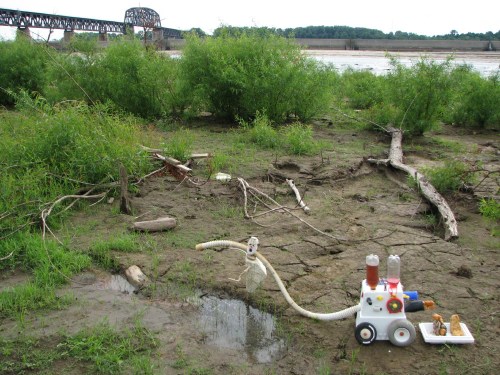
Soul-sucking Machine parts, 7/09

Two hundred years later, I’m walking the very ground that Lewis and Clark walked in their exploration of this great land.  Our intrepid explorers and their men began and ended their voyage at the Falls of the Ohio.  Although my journey isn’t as grand, nevertheless it has been a process of discovery.  For six years now, I have been walking the length and breath of this park recording what I see, feel, find, and make.  If places have spirits (and I believe they do) I hope this project has been a worthy conduit.  The planet is speaking to us…it’s in our own interests to listen now.

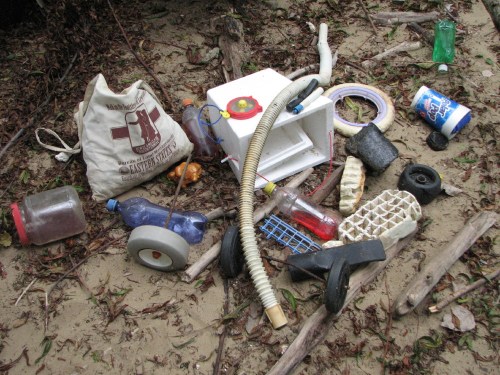
The first image in this story, are some of the “raw materials” I found on my latest outing to the river.  Among the many parts are a Styrofoam cooler, a discarded vacuum cleaner hose, various plastic toy wheels, soda bottles, and well…just plain crap.  This is the stuff that I make my art from.

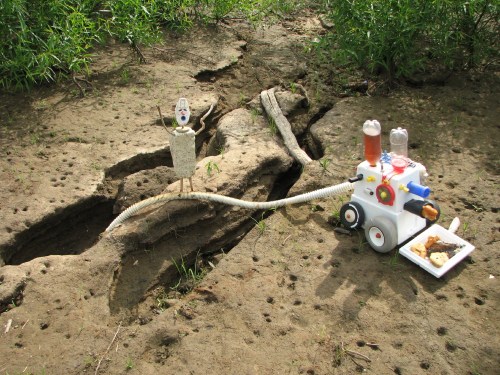
Motor-head operator, 7/09

You can pick up at any point in this blog and see that I use these poor materials to create my own brand of figurative art.  The basic idea is to create a compelling image that speaks to that sense of place as I interpreted that day from means found entirely within the park.  This project involves figuration because I want “people” (our species that includes and is not necessarily limited to the art-interested public) to relate to the work in a basic way.

The second image I’ve identified as being the “Operator” of a device that I’ve constructed from the other found objects.  With a bit of fishing line, I’ve tied a plastic toy engine part to the figure’s head.  Primarily, the figure is Styrofoam, bits of driftwood, plastic, and the eyes are coal.  It’s tough work dragging that hose across the sand, but what is it connected to?

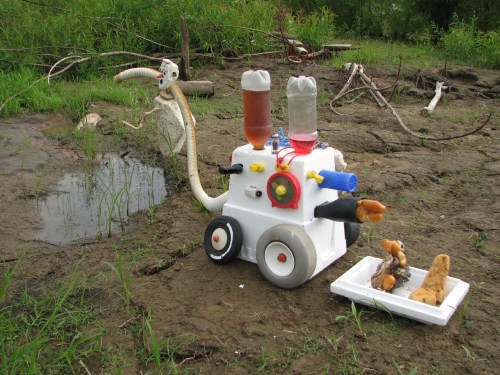
Soul-sucking machine in landscape, 7/09

Soul-sucking Machine, 7/09

The hose is attached to a machine that extracts more from the planet than it gives back in return.  The Operator is always on the move looking for more resources to turn ultimately back into waste.  This is the second such machine I’ve constructed from debris.  The first was made at the tail-end of my analog days and exits only on print film and color negatives.  I called the first piece the “Nature Extracting Crap Making Machine” and it too had an operator.  In that device, the operator filled a funnel with fresh flowers which were converted into a polystyrene-like substance within the machine’s inner workings.  This is an improved version.

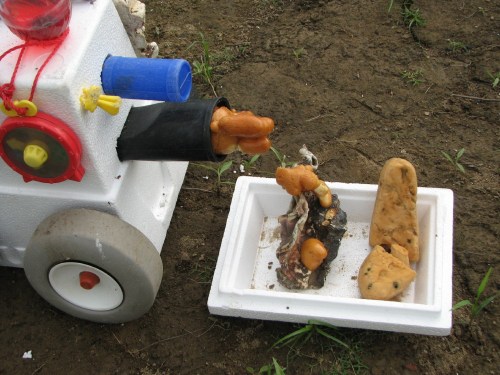
Soul-sucking Machine Product, 7/09

Reverse image of machine, 7/09

Here are two details.  One shows “product” being created and collected for… who knows what?  No doubt, it will be something we can’t live without.  The lower image is a look at the machine from the opposite side.  It sports some type of radiator to dissipate heat and unseen greenhouse emissions.  This is also the 40Th anniversary of the first moon landing and the machine has a little plastic astronaut on top of it as a tribute.  There were stories in the newspaper this week on how we are now able to see the junk more clearly that we discarded on the moon.  We can send a man to the moon and back, but we can’t….you complete the sentence with the challenge of your choice.

s.s.machine with landfill, 7/09

Every once in awhile, you produce too much product or need to clean the machine out.  Fortunately, there are enough holes around that need filling.  It’s a 24/7 job, but somebody has got to do it!

Soul-sucking Machine, 7/09

Read Full Post »

Face of Abstract man, 7/09

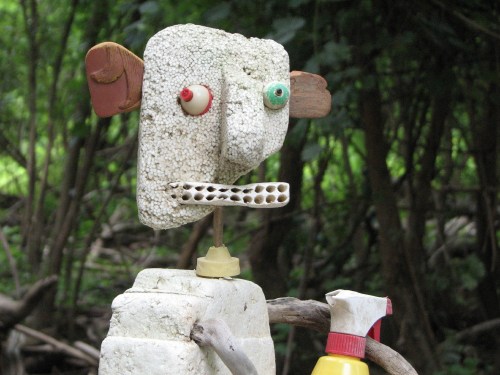
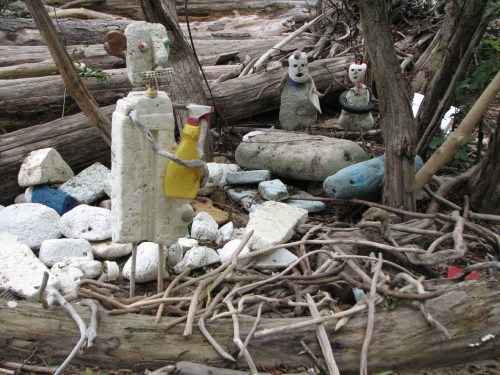
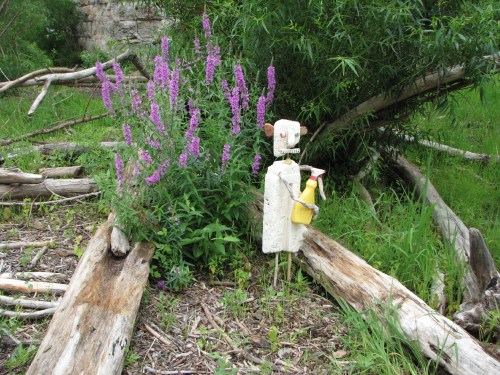
There’s a spicy, herbal scent coming from the plants and a small garter snake crosses in front of me on the sandy path.  You can hear both the river and several songs from a variety of birds in the willow habitat.  It’s a cool day for July and relatively overcast.  Despite my little treasury of Styrofoam and sticks under the trees, I still walk my route collecting what I missed before and now find compelling and useful.  The “Abstract Man” I made just a couple days ago was started in this manner.  First, I found the little piece of foam with holes in it that was probably used to hold bullets in a box.  That goes into the collecting bag.  Later I find what would become the head.  Part of it is missing, but the bump that looks like a nose, more than makes up for what is lacking.  A bright yellow spray bottle without its label catches my eye and using what I already have on hand…is enough for a figure. 

Abstract man in studio, 7/09

This is the Styrofoam nursery where this sculpture came together.  I have been using this spot for weeks now and I’m really surprised that no one has messed with this site yet.  It’s shady here and there is the occasional mosquito to deal with, but overall, it’s a fairly private area.  There are, however, signs in the nearby driftwood that homeless people may have rested here before moving on.  I found an old towel and the remains of food packaging next to the ashes of their fire.

abstract man, 7/09

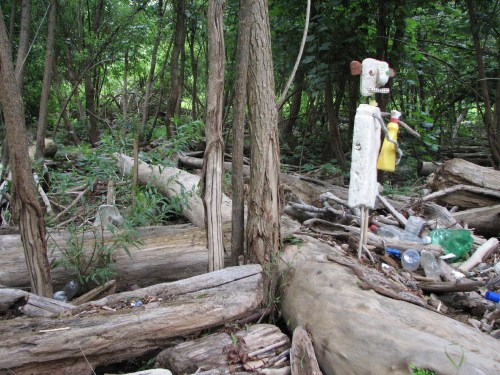
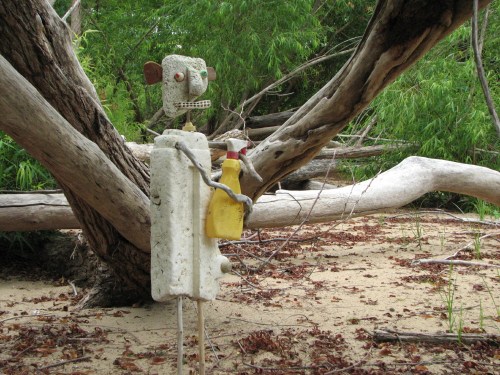
I found the quizical expression on this figure provoking and the bright yellow spray bottle lent a formal note.  I decided to photograph this piece in different contexts.  This image was taken not thirty feet away from where the figure was assembled.  Each image takes advantage of the attribute in the immediate area.Abstract man posed in the willows, 7/09


Abstract Man strikes me as being more formal and so I find myself looking for places that have a graphic appeal as seen through the camera.  In this image, it’s the diagonals of the trees leading to the spray bottle that are the key elements in this composition. 

Abstract Man by log, 7/09

Here, I like the way the curving wood of the willow tree behind the figure seems to frame and call attention to the head.  The yellow of the spray bottle holds its position in space and adds that extra artificial note.

Abstract Man with Liatris, 7/09

This image has the diagonal structure of the logs resting on the ground to lead your eye back to the figure.  The purple liatris plant lends yet another color note.  This plant only grows where it is wet and butterflies do seem to like it.  It’s not until I download my images onto my computer that I get to see the full effect of what I shot at the Falls.  With this figure, I can’t say which image and environment I prefer.  Do you have a favorite?

Read Full Post »

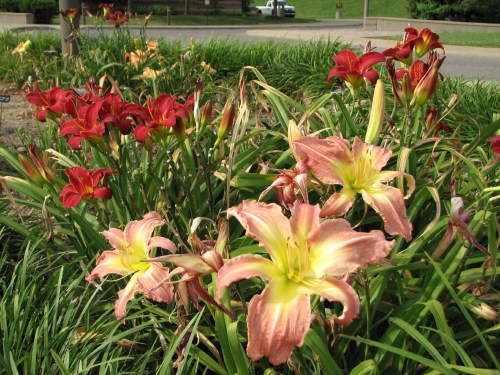
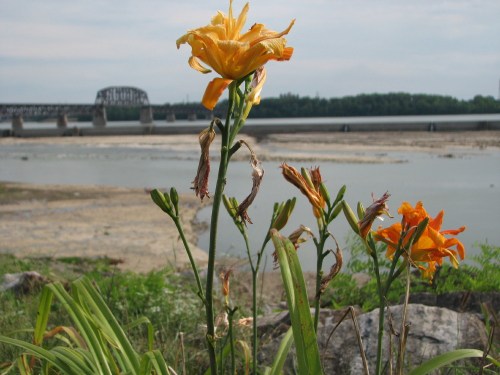
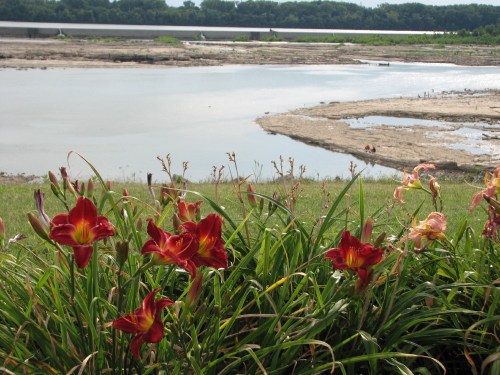
Day Lilies blooming,7/09

For many years I have admired the gardening efforts by the staff and park volunteers to beautify the area around the Interpretive Center.  I don’t know if these fine folks get the credit they deserve, but I thought I could devote a post to sing their praises and say thank you.  I would be remiss if I didn’t also notice the man-made loveliness to go with all the man-made rubbish deposited by the river and frequently cited by me in my art.

Day lilies, 7/09

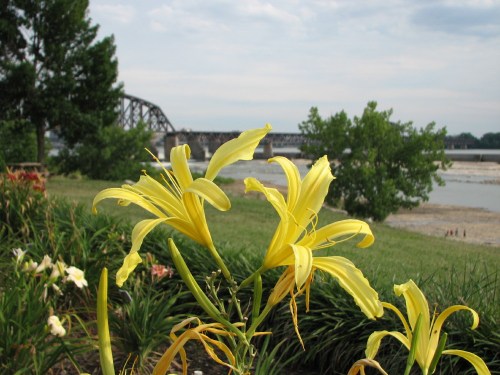
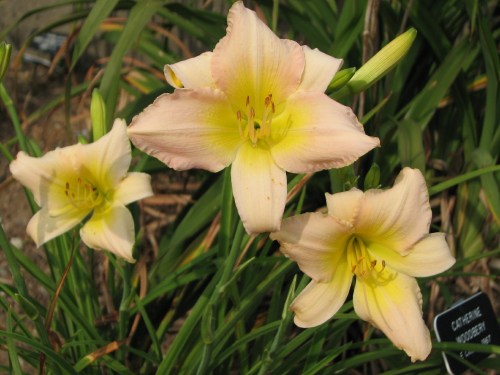
The Day Lily Collection at the Interpretive Center is particularly nice and I have been enjoying the blooms for the past couple of weeks.  Dozens of varieties are represented and each is labelled.  Our area has a very active day lily society and their plant sales are avidly attended.  I have heard people refer to gardening as an “art”, but what about the flowers themselves.  Can a real flower be a work of art?

Yellow spider-lilies, 7/09

Many years ago, (the early 1990’s) I organized an art exhibition entitled “Green” for the Louisville Visual Art Association.  I chose the show’s title before the whole “green” consciousness became so prevalent.  In that show, I had a selective representation of artists  that expressed a concern for the environment.  By far, the artist whose work and ideas I found the most interesting belonged to George Gessert of Eugene, Oregon. 

Day lily, 7/09

red and yellow daylilies, 7/09

pink and yellow, daylilies, 7/09

Gessert considers himself to be a “genetic artist” and his medium are the wild iris varieties he finds in the Pacific northwest.  His basic idea is that the plants and animals we surround ourselves with would not exist in nature without our selectively choosing which characteristics of a given species we find attractive or useful.  He believes what we find attractive in flower blooms is a kind of cultural preference and conditioning and in his own iris works, likes to show what other forms are possible.

deep red daylilies, 7/09

Gessert’s ideas and work raises many possibilities which he has made clear in several articles in the Science/Art journal “Leonardo”.  If we think artists are people who create beauty by manipulating inert materials what do you call it when living materials are used?  Could a dog or horse be considered a living sculpture because they wouldn’t exist in their present forms without our intervention?  Just as interesting is the observation that we are surrounding ourselves with plants and animals that are hybrids or cultivars.  Look around you, how many of the plants do you see in your yard that are wild and native?  It’s fewer than you think.

Falls view with daylilies, 7/09

With genetics, the intersection of art and life is about to get really blurry.  As we learn more about the molecular codes that program life, the more tempted we are to experiment.  There is always the specter of eugenics as well and the quest to make people not just better, but superior.  Another possibility is that we may make new varieties of food plants that could feed an overcrowded and starving planet.  As for the question about the flower being a work of art in itself…I’m going to say yes.  I like that art can push the boundaries of what is considered the norm and in the process alert us to  and prepare us for the future.  After Gessert, I can’t look at a typical garden in the same way as I once did without thinking about the issues he raises.

daylilies at the Falls, 7/09

Read Full Post »

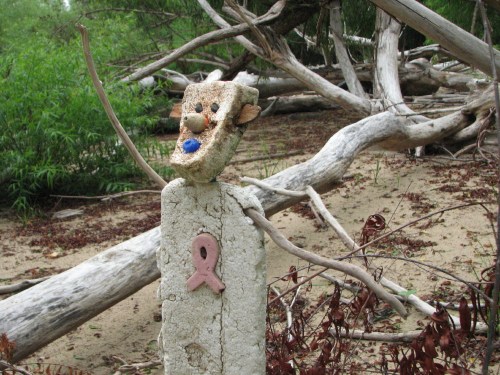
Figure with Pink Ribbon, 7/09

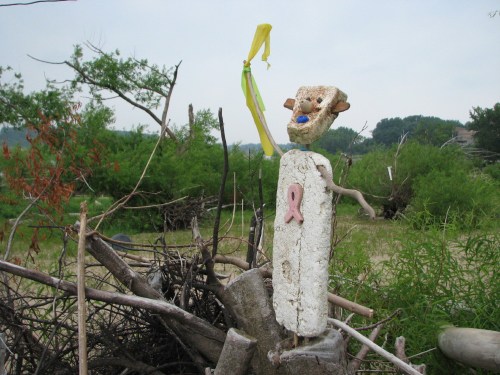
After my adventure with the Giant Blue Ant (previous post), I went back to my studio spot and created this figure.  I recently found this thick pink ribbon form and attached it to the piece.  It looks like something intended to create awareness of breast cancer and so I wanted to place him where he was sure to be seen.  In the end I decided to place this figure along the trail marked by yellow and green  plastic streamers and it was a short leap to merge the trail markers with the piece.  This is where I left it and the next day it was gone.  I hope it went to a new home that appreciates it.

Pink ribbon trail marker, 7/09

Pink ribbon trail marker, 7/09

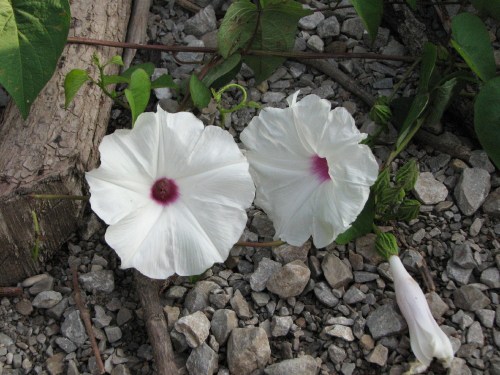
At the moment, there are large morning glory flowers blooming at the Falls and I thought this would be a nice way to end this post.  Until next time.Morning Glories, 7/09

Read Full Post »

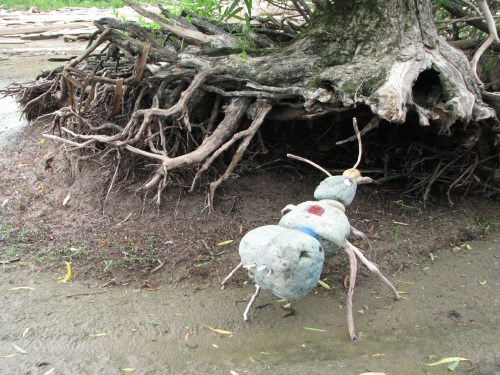
Giant Blue Ant surveying river, 7/09

Investing time intensively exploring one little patch of the earth can on occasion lead to some big discoveries.  Such has been my experience following life at the Falls of the Ohio State Park.  Today’s post is about a recent discovery that has so far been kept very quiet.  How renowned myrmecologists E.O. Wilson and Bert Holldobler missed this species for their book “Journey to the Ants:  A Story of Scientific Exploration” will have to be answered by the authors.  The news is all the more compelling in light of a passage in Wilson’s autobiography entitled “Naturalist” where on page 128 he says that each September from his early teens until he graduated from college that he spent time with his mother first in Louisville  and then across the Ohio River in Jeffersonville.  It would be interesting to know what if any formative influence the Falls of the Ohio played on the early Wilson?  Wilson does recount a visit to Mammoth Cave in Kentucky, but doesn’t mention the Falls which are right in his mother’s former backyard.  But I digress…this story is about the Giant Blue Ant.

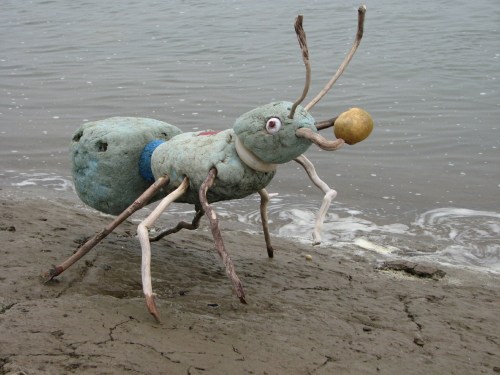
Giant Blue Ant, 7/09

I came across this remarkable insect in a section of the park that receives few visitors.  In my efforts to leave no stone unturned I braved many mosquito bites and brushes with poison ivy in an effort to learn what I could about the world’s largest ant.  In words and images here is the story thus far.  I was gathering art making materials deposited by the river after a recent flood when I observed a single individual moving through the plastic, Styrofoam, and driftwood.  So well adapted is the Giant Blue Ant to this environment, that to evade detection, all it has to do is remain motionless.  It’s an effective strategy since our kind are loath to notice the debris in the first place.  Over the course of several days I was able observe aspects of its behavior and I think, gain it’s partial trust.

Head of Giant Blue Ant w/egg?, 7/09

Ants are social animals, but I was only able to confirm this lone specimen.  From what I understand about ant morphology it appears to be primitive and may account for why it isn’t more socially evolved.  The most remarkable aspect of its behavior that I was able to watch centered around this honey-brown orb it carried around in its mandibles on the last day I saw it.  My first reaction was that this was some aspect of its food.  Like leaf-cutter ants, I thought this was some kind of fungus that it cultivated from organic matter scavenged at the Falls…but I now think I was in error.

blue ant and willow roots, 7/09

I now believe the orb was in fact an “egg”.  I observed the Giant Blue Ant wandering around the park looking for a place to deposit its treasure.  Above is an image of the ant “considering” this willow tree with exposed roots, but in fact I don’t know where “she” eventually hid it.  I’m sure I don’t want to know because it’s too important a secret.  What if this is the last of its kind?  The responsibility would be too much for me to bear.  I’m not sure of this specimen’s gender and since I haven’t seen others of its kind…now wonder if in fact it reproduces parthenogenetically like aphids do?

Giant Blue Ant w/egg, 7/09

Two images of the Giant Blue Ant walking along the river’s shoreline and showing both sides of its body.  I did observe that one of the two holes on the right side of its abdomen held an active spider web.  Is this an example of some unknown symbiotic relationship between the ant and spider?

Blue ant facing left, 7/09

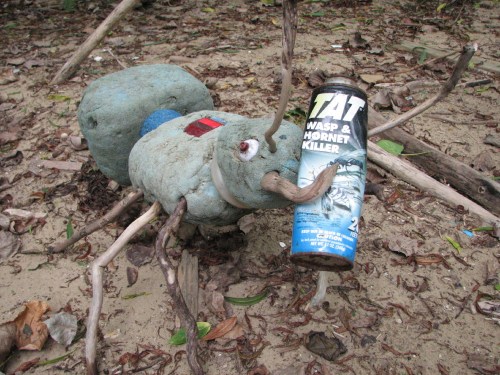
Blue Ant with bug spray can, 7/09

The very last time I saw the Giant Blue Ant I took the above image.  I don’t really know what to make of it?  Why is it carrying this old discarded can of insecticide?  Did I get too close and it was warning me to back off?  Was it asking me to put it out of it misery?  Was it trying to communicate the eternal question of Why?  Perhaps if that egg hatches and the new ant thrives I can eventually learn the answer to these and other questions.

Read Full Post »

River Neptune, 6/08

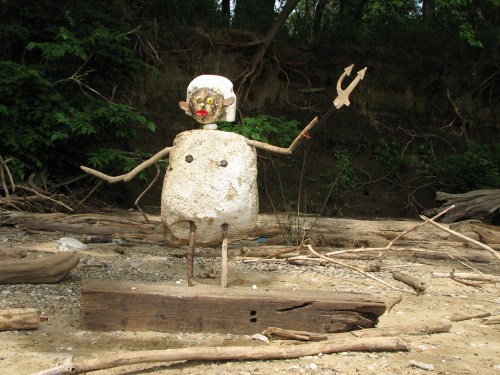
Recently, I started a new job and so my trips to the river are extra special.  I do, however, have  years of digital images to draw from and so these works can live again.  Many of these were originally seen by few if any people.  This is the Ohio River Neptune from this time last year.  He’s holding what’s left of a toy trident…probably from a Halloween devil costume.  The head is Styrofoam with some waxy residue coating it.

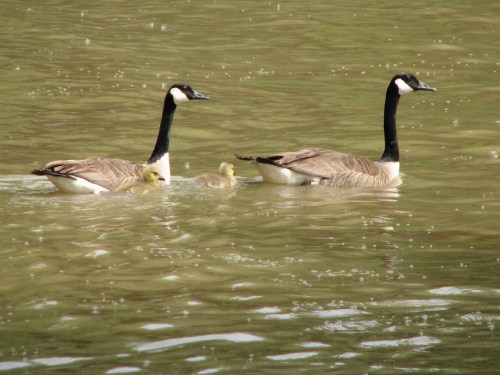
Canada Geese with young

While making the Neptune figure I recall seeing Canada Geese parading their goslings around the creek mouth that feeds into the Ohio River.

Ohio River Neptune

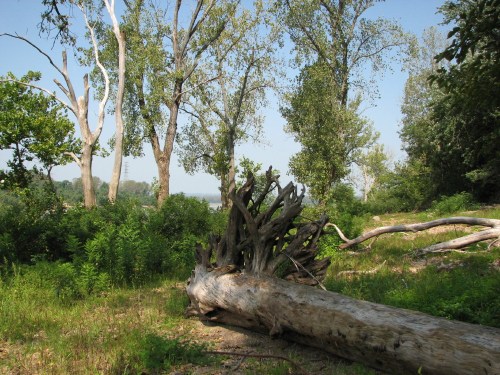
Here’s where I left Neptune standing on an old railroad tie.  His body was a nice portly chunk of Styrofoam.  This was sited in the park’s western side near a favorite stand of cottonwood trees.  This little grove has amazing exposed roots that support these trees and form overhanging canopies that you can sit under.  Fewer people venture out this far from the parking lot.

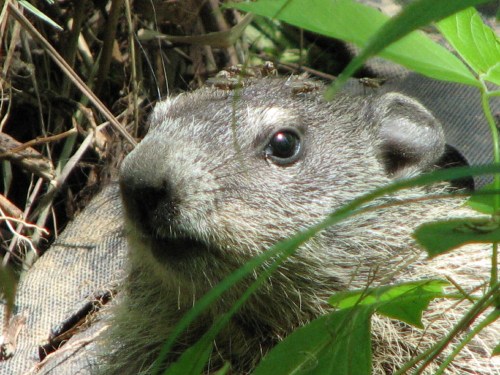
Groundhog Head

This post promised a groundhog’s head…and here it is.  I snapped this image of a young whistle pig poking its anterior out of its burrow.  Around here, you do need to pay attention to where you walk because it’s very easy to twist an ankle or break a foot stepping into one of their holes.

Read Full Post »

« Newer Posts