Feeds:
Posts
Comments

Posts Tagged ‘Falls of the Ohio State Park’

Exposed fossil beds at the Falls of the Ohio, mid August 2015

Once a year, usually in mid to late summer, the dam is closed and the water retreats off of and exposes the ancient Devonian fossil beds.  It is an other worldly landscape of blonde-colored rocks that preserves in limestone the proof that life existed over 400 million years ago.  This exact place during that time too ancient to imagine was in the latitude of the present day Bahama Islands.  Then it is was a marine reef supporting early salt water animals, most especially a large variety of corals. Today, this is a fresh water environment defined by the Ohio River. My goal is to cross over to the Kentucky side (where the majority of the fossil beds are located) by wading through the shallower areas near the tainter gates.  Unfortunately, and unforseen by me, all the recent high water has made the riverbank a slippery muddy mess and the current that is allowed to flow through a channel by the dam is still too strong to wade through.  I got almost half way across and found the footing treacherous.  I didn’t fear for my personal safety, but I didn’t want to risk dunking my camera and phone in the water.  Thwarted today, I will need to make better provisions for that the next time I attempt this.
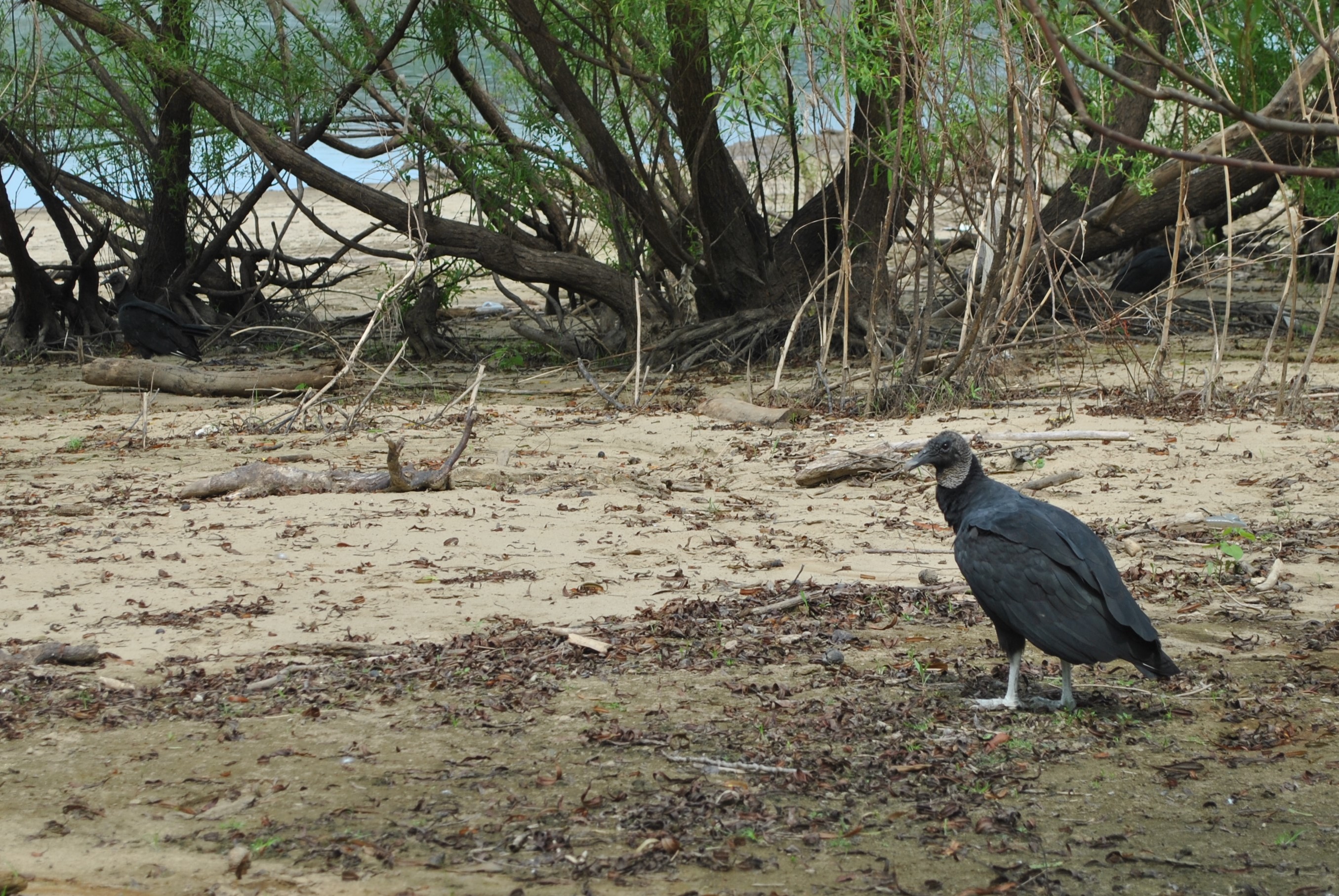
Black vulture on the riverbank, Falls of the Ohio, mid August 2015

So, I did the next best thing which was to explore the riverbank and nearby Willow Habitat.  The resident colony of Black Vultures was hanging out under what shade some of these willow trees could provide.  The bird in the above image is a sentry maintaining its post outside of where the main group of birds were resting under the nearby trees.  The vulture flock doesn’t seem as large as it has been in the recent past.  Perhaps the prolonged conditions of having a high river forced some of these large birds of prey to seek greener pastures?  The vultures would allow me to only get so close before jumping into the air in search of thermals to lift them even higher.  I continued my modified trip by walking towards the fossil cliffs below the Interpretive Center.
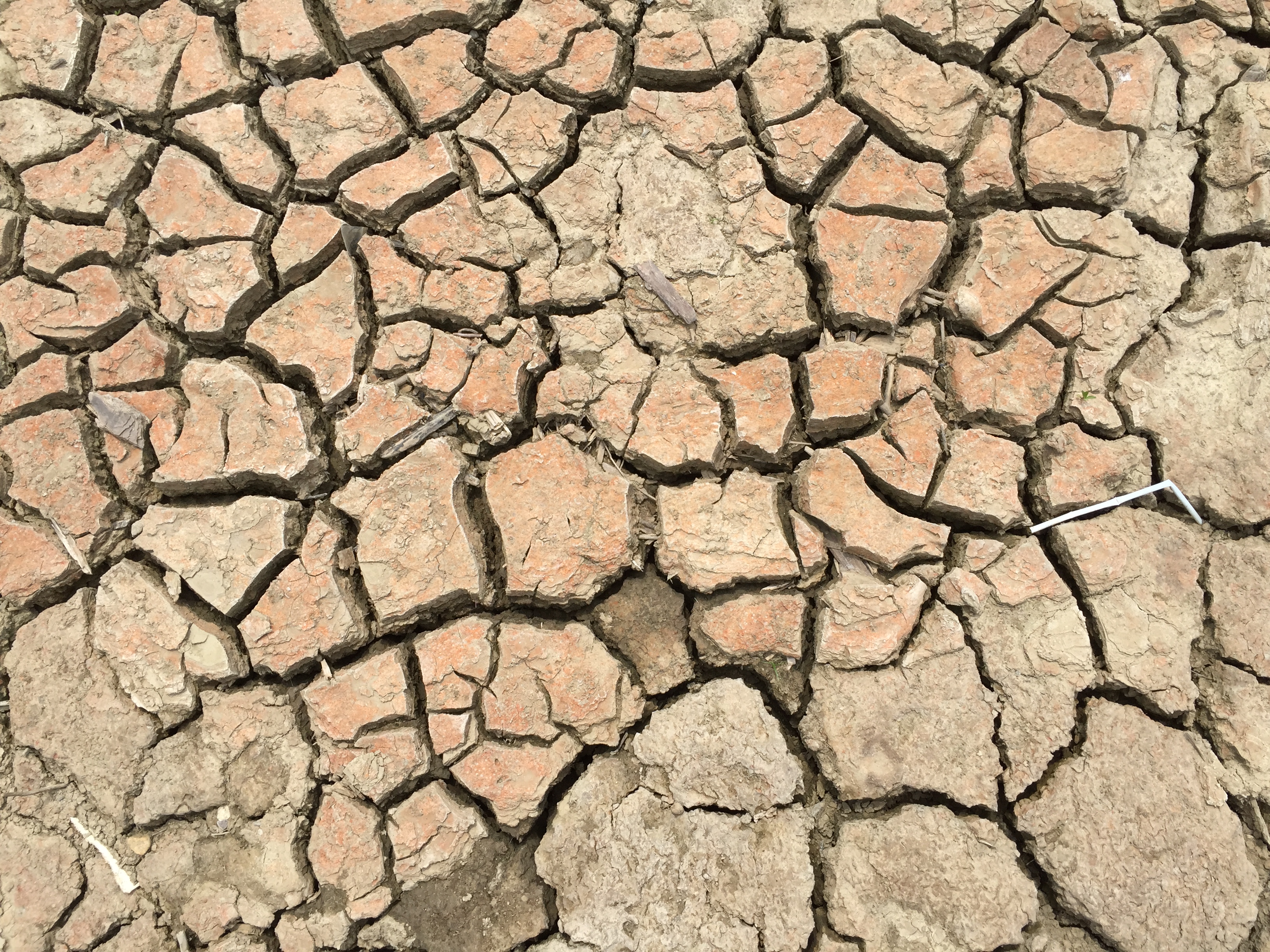
cracked, drying mud at the Falls of the Ohio, mid August 2015

It was a very hot day and in places you would come across areas that were once very wet and had dried revealing a wonderful network of cracks.

Artist at Exit 0 re-hydrating, Falls of the Ohio, mid Aug. 2015

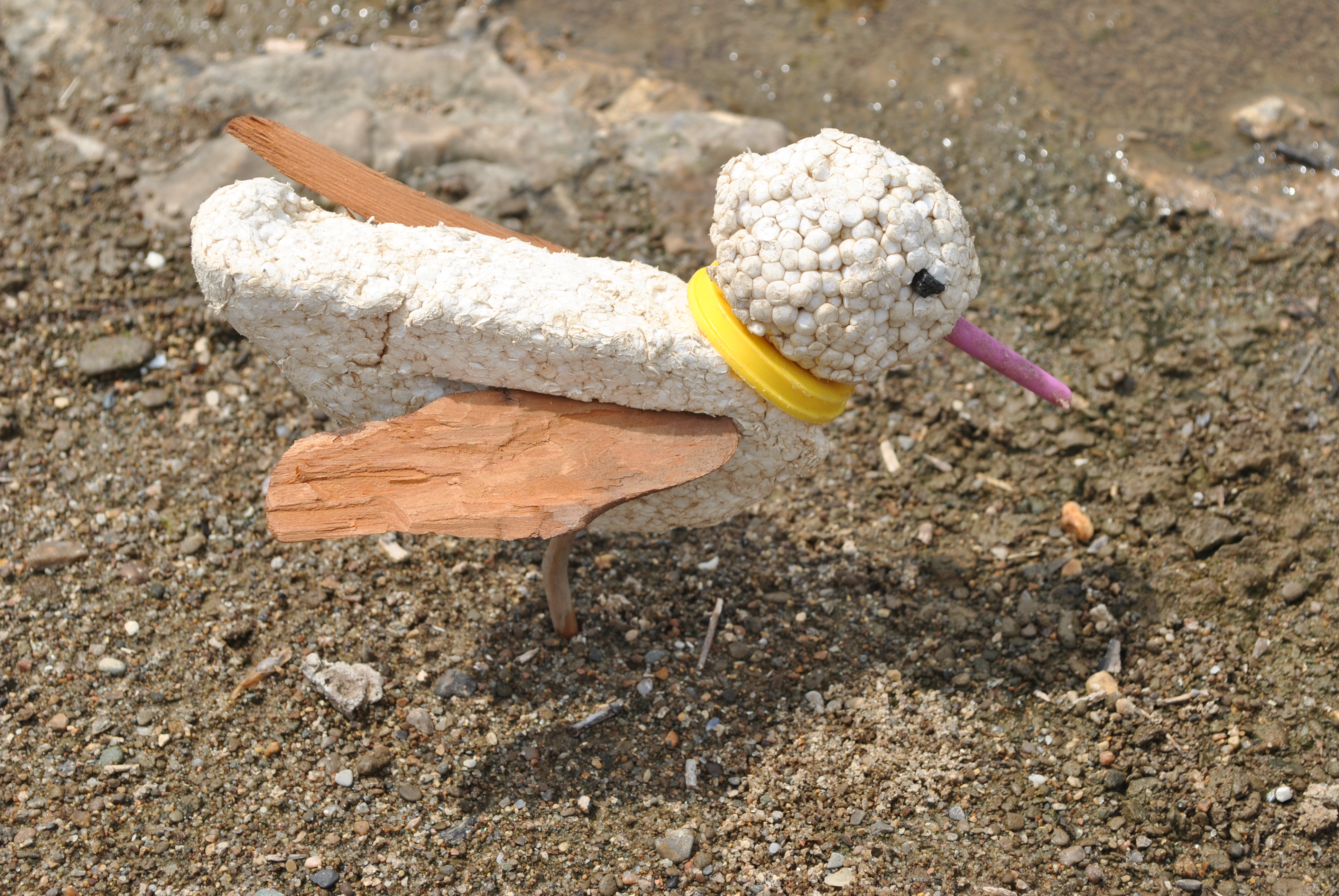
I’m proud of myself.  In addition to wearing a cap…I made sure to bring along plenty of drinking water on this very hot and humid day.  Here my bottle is wrapped in a heavy mil plastic bagel bag.  I used this to keep the other items in my pack dry just in case this bottle leaked.  I continued my hike to the fossil cliffs when I could see something snow-white in color moving along the ground.  At first I thought this was a piece of paper disturbed by the breeze, but soon noticed it was moving in bird-like fashion.  I continued approaching very carefully yet deliberately and had my cameras at the ready.  Here is my first image of what would soon be many.
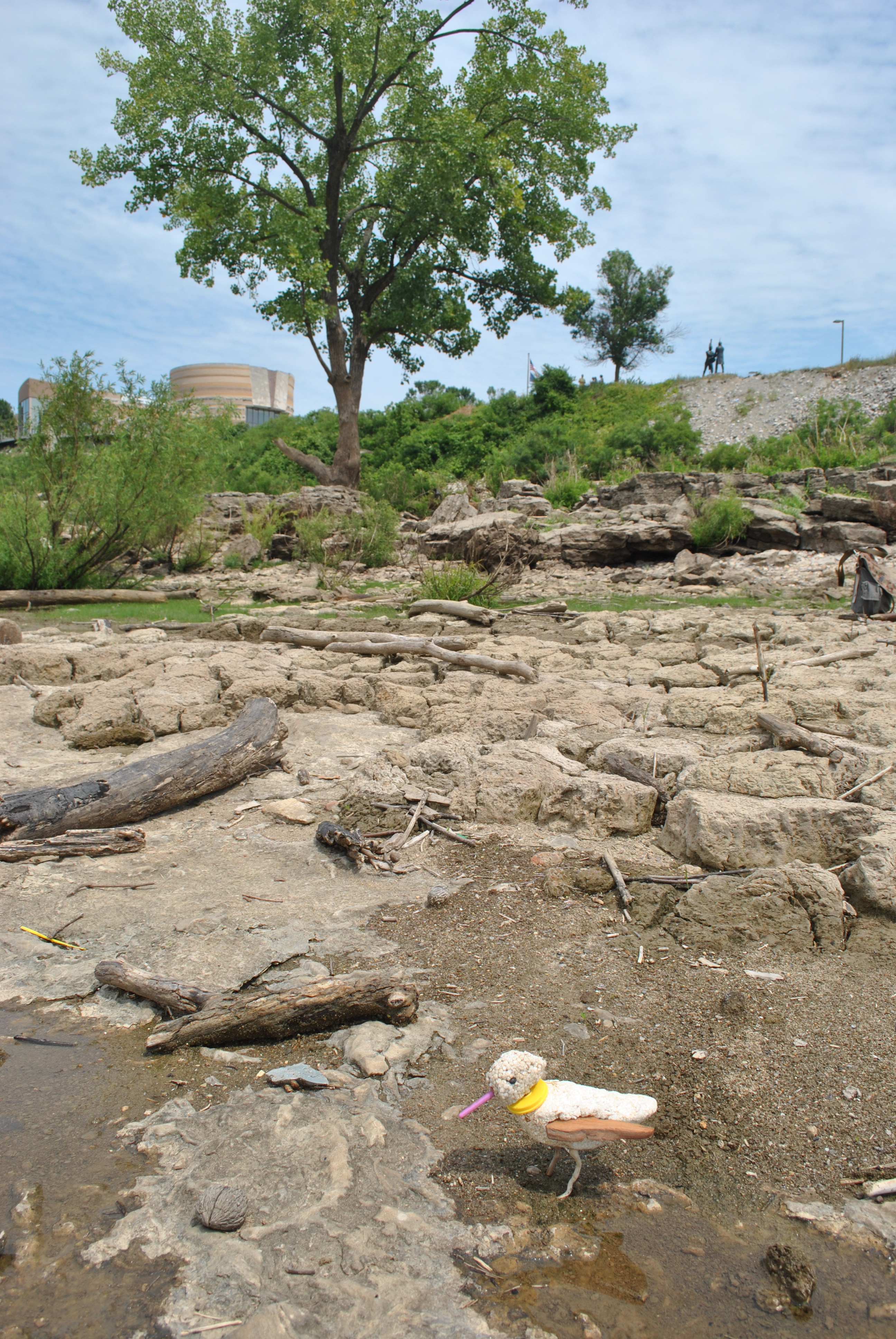
The Yellow-collared Sandpiper at the Falls of the Ohio, mid August 2015

Switching over to higher magnification, I could see my new bird was a species I had never encountered out here before.  In the comfort of my own home I was able to identify this little guy as the Yellow-collared Sandpiper (Caladris fascinati).  This is a tiny shorebird more at home in the Pacific Northwest and has rarely been recorded east of the Mississippi River.  This is the first recorded instance of this bird at the Falls of the Ohio State Park.  So, what was it doing here so far away from home?
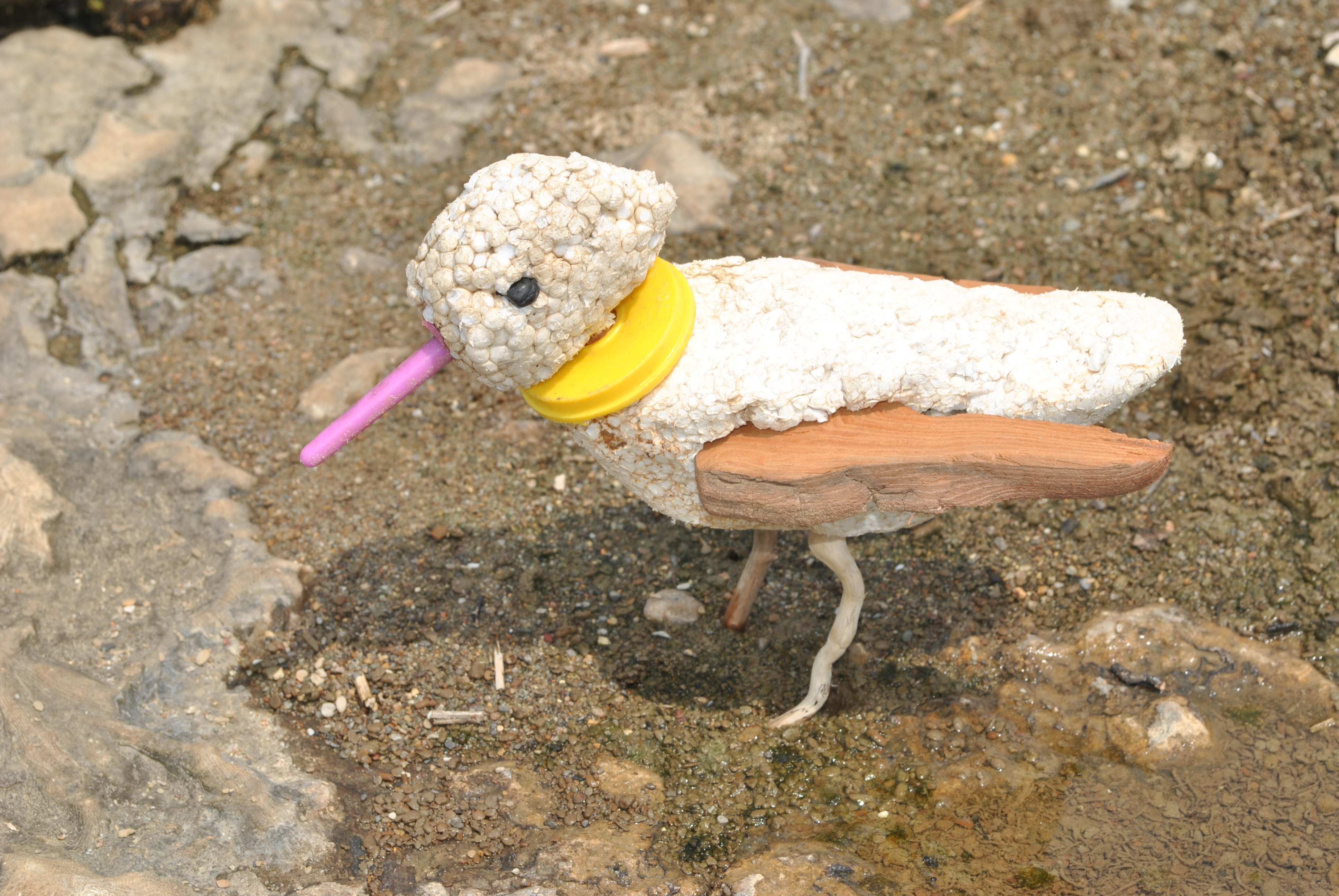
Yellow-collared Sandpiper, Falls of the Ohio, mid August 2015

Yellow-collared Sandpiper, Falls of the Ohio, mid August 2015

It is not unusual for this park to record rarities during the migration seasons in early spring and autumn.  To see this bird here outside the normal times shorebirds would be migrating through our area makes me think this bird is here by accident.  Perhaps one of the monster storms we have experienced this year blew this little one way off course?  Looking at my reference guides, I identified this as being a juvenile of the species.  You can tell that by the pink bill.  Once fully mature, the bill turns dark, nearly black in color.  I have recorded other juvenile shorebirds migrating through the park on other Falls of the Ohio adventures.  In particular, I remember seeing juvenile Golden Plovers and once…even saw a juvenile Short-billed Dowitcher.  What makes these sightings all the more incredible for me is knowing that a few short weeks ago…these birds were beginning life as eggs in shallow nests located in the high Arctic tundra.  Normally, the Yellow-collared Sandpiper migrates down the Pacific coastline of the United States, crosses into Mexico, and winters in Central America.  This is a journey of several thousand miles.
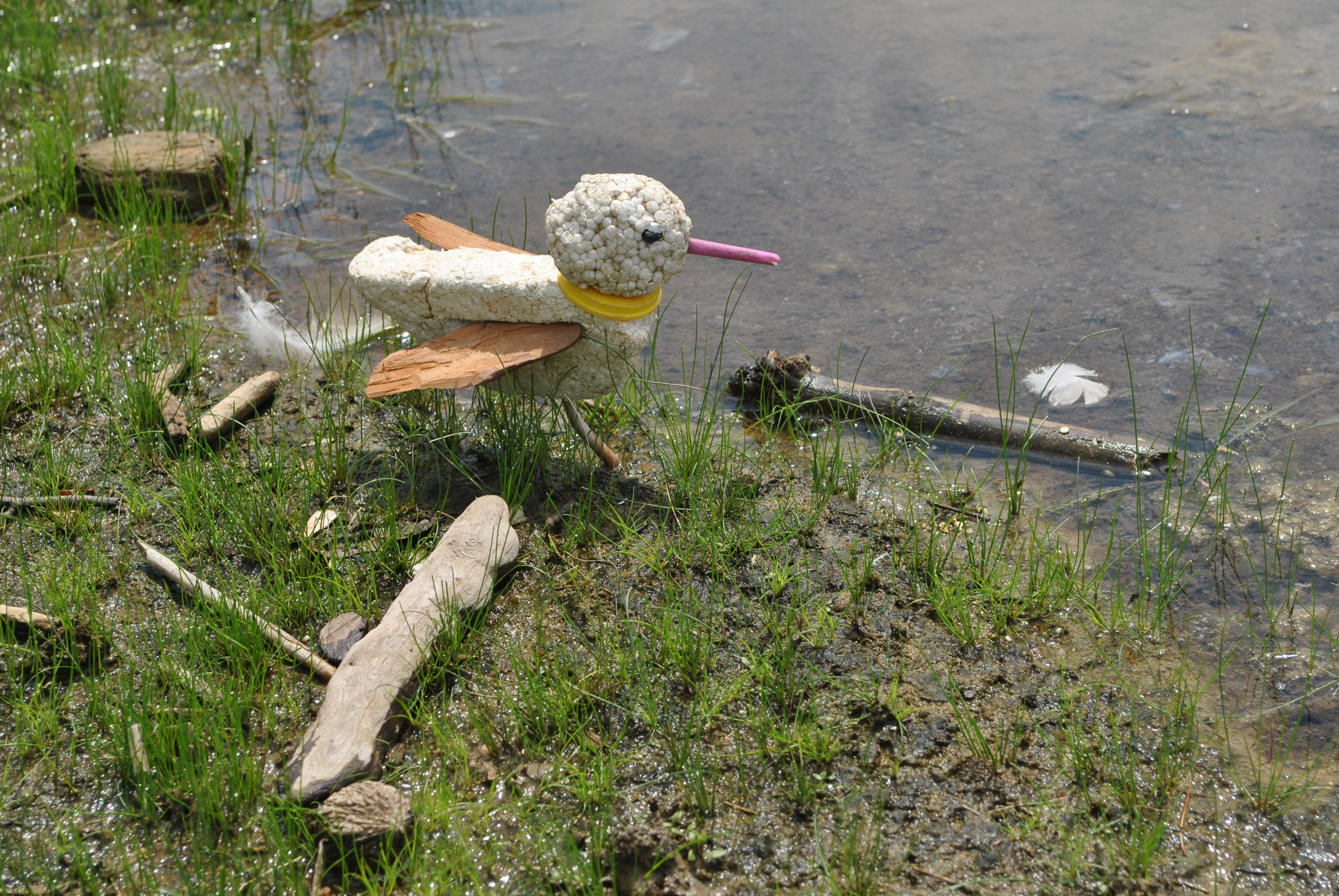
Yellow-collared Sandpiper at the Falls of the Ohio State Park, mid August 2015

I observed this bird for about a half hour or so.  I watched it feeding around the margins of small pools of water that had puddled on the fossil beds.  It used its pink bill to probe the soft mud in search of the tiny invertebrates that make up the bulk of its diet.  The bird seemed not to be concerned about me and I took many photographs to document its presence in the park.
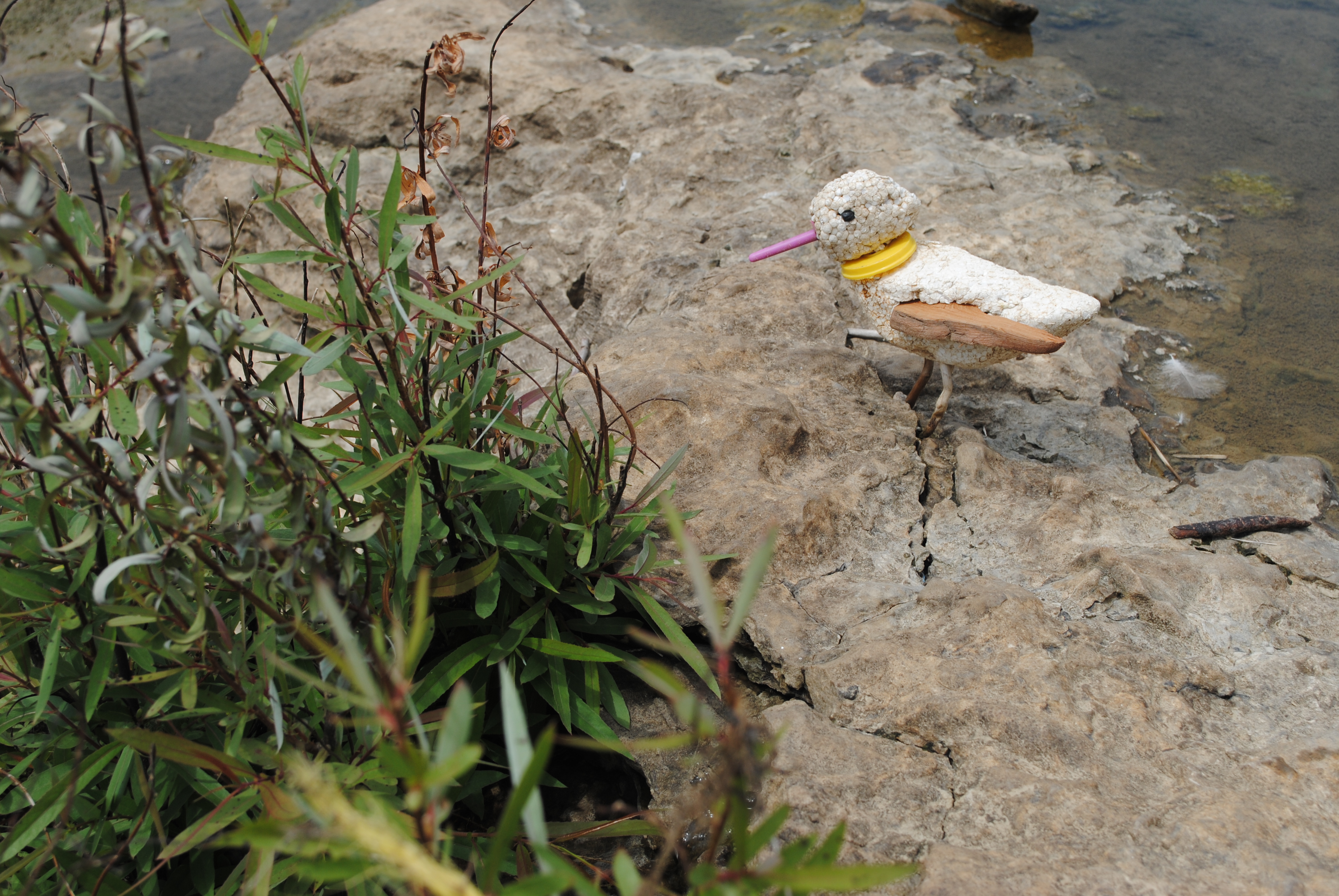
Yellow-billed Sandpiper on the fossil beds, Falls of the Ohio, mid August 2015

The mouse-like bird moved like a wind-up toy on the fossil rocks.  When it moved, its tiny legs seemed to be going as quickly as they could.  The sandpiper had a curiosity for the world and checked out every clump of vegetation and crack upon the limestone surface as potential sources for food.  Perhaps it was the hawk that flew high over our heads casting a fast shadow upon these ancient reefs that scared it away or perhaps it just grew tired of my company…regardless, the Yellow-collared Sandpiper flew away in a blur of brown wings.  I thought I could detect a high “peep” call note as it went skyward.  Heading back to my vehicle, I had one more pleasant surprise in store for me.  While this is not on par for rarity, seeing the beginning of the Monarch butterfly migration going through our small piece of the planet is still an awesome occasion.  Like the Yellow-collared Sandpiper, the Monarch butterfly has a very impressive migration of its own as it moves from Canada to Mexico and back again.  On my way home, I said a little prayer asking for the continued safety of all the small things moving through the world.  I guess that’s it for this time at the Falls of the Ohio.

Monarch butterfly feeding at the Falls of the Ohio, mid August 2015

Read Full Post »

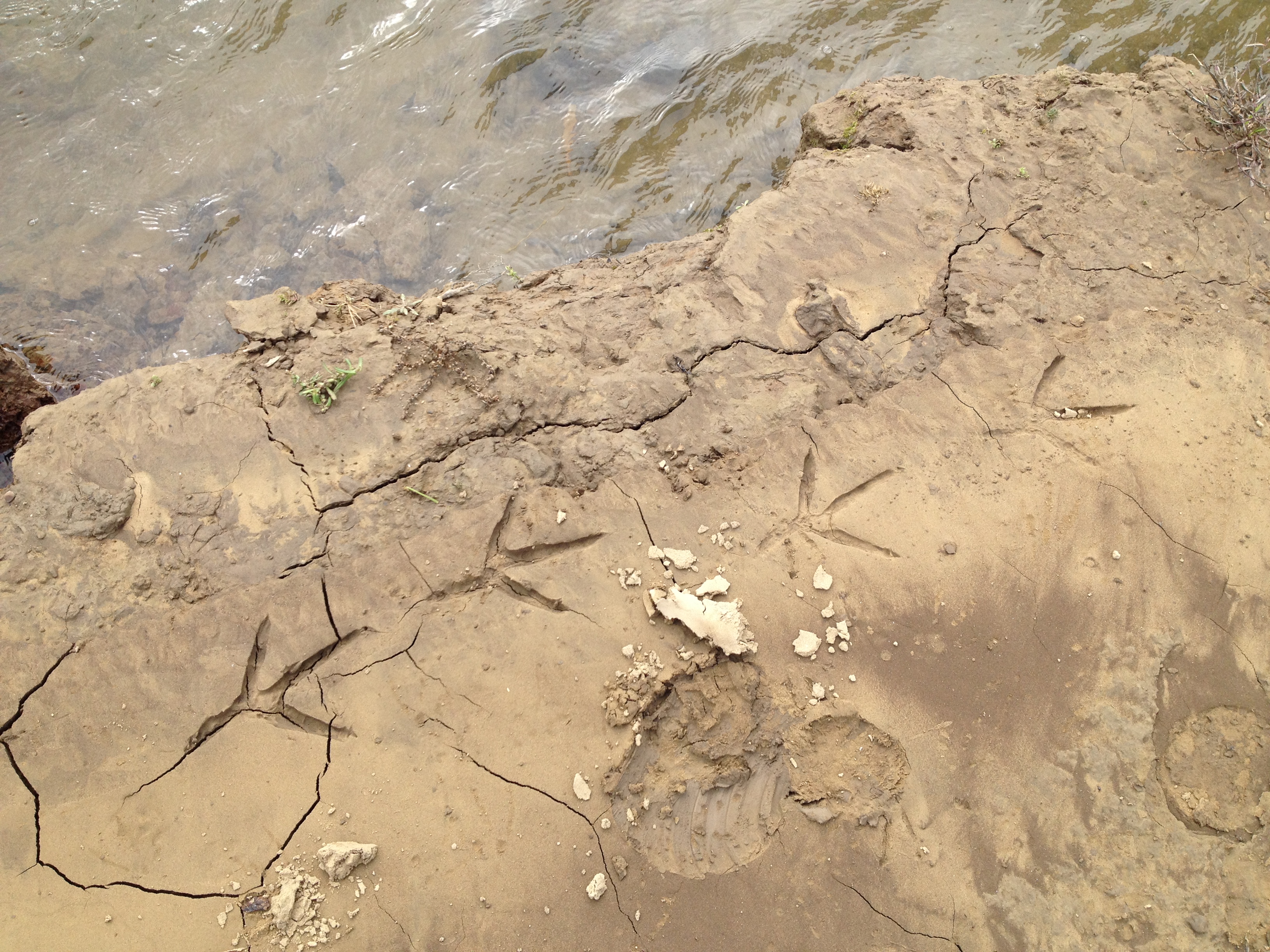
Great Blue Heron tracks in the mud, Falls of the Ohio, Oct. 2014

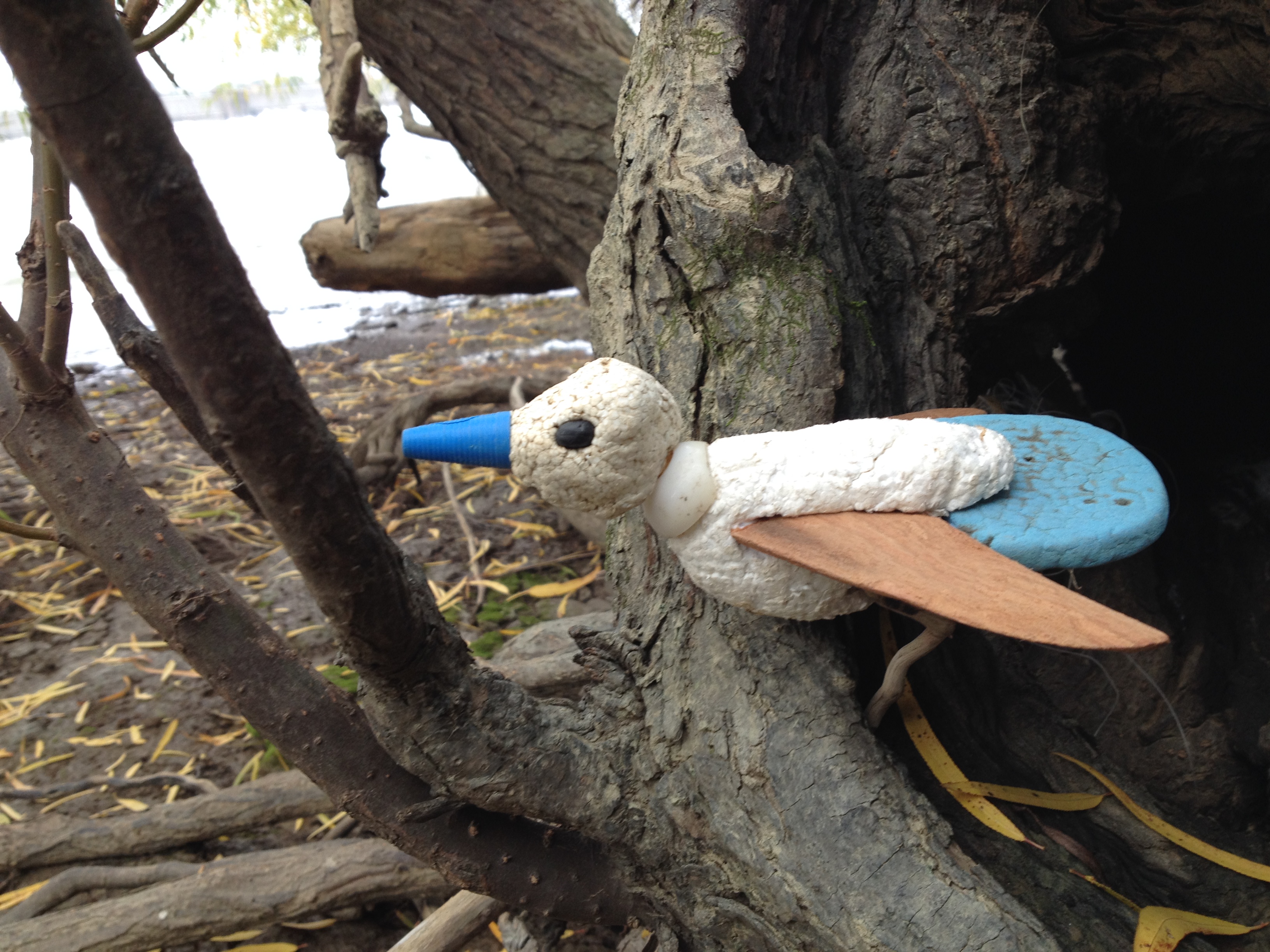
What began overcast and dreary blossomed into a gorgeous, sun-filled autumn day.  The exposed fossil beds by the Upper Tainter Gates are now covered by water rushing at break neck speed.  The Ohio River has once again reclaimed its ancient limestone bed with man’s help.  The Falls of the Ohio are like Niagara Falls which can also be regulated with the flip of a switch.  There’s a good chance that I won’t be visiting that side of the park again until next summer’s heat returns.  Today I concentrated my attention and energy along the riverbank under the Conrail Railroad Bridge.  This is an area where I have had good luck finding materials to work with and many of my best bird sightings have also occurred here.  The autumnal migration is under way.  Many of the birds that had passed this way going north in the spring are now moving south towards wintering grounds in exotic locations in Central and South America.  I ducked under the Black willow trees whose leaves are turning bright yellow and was soon rewarded by a bird species new to me.

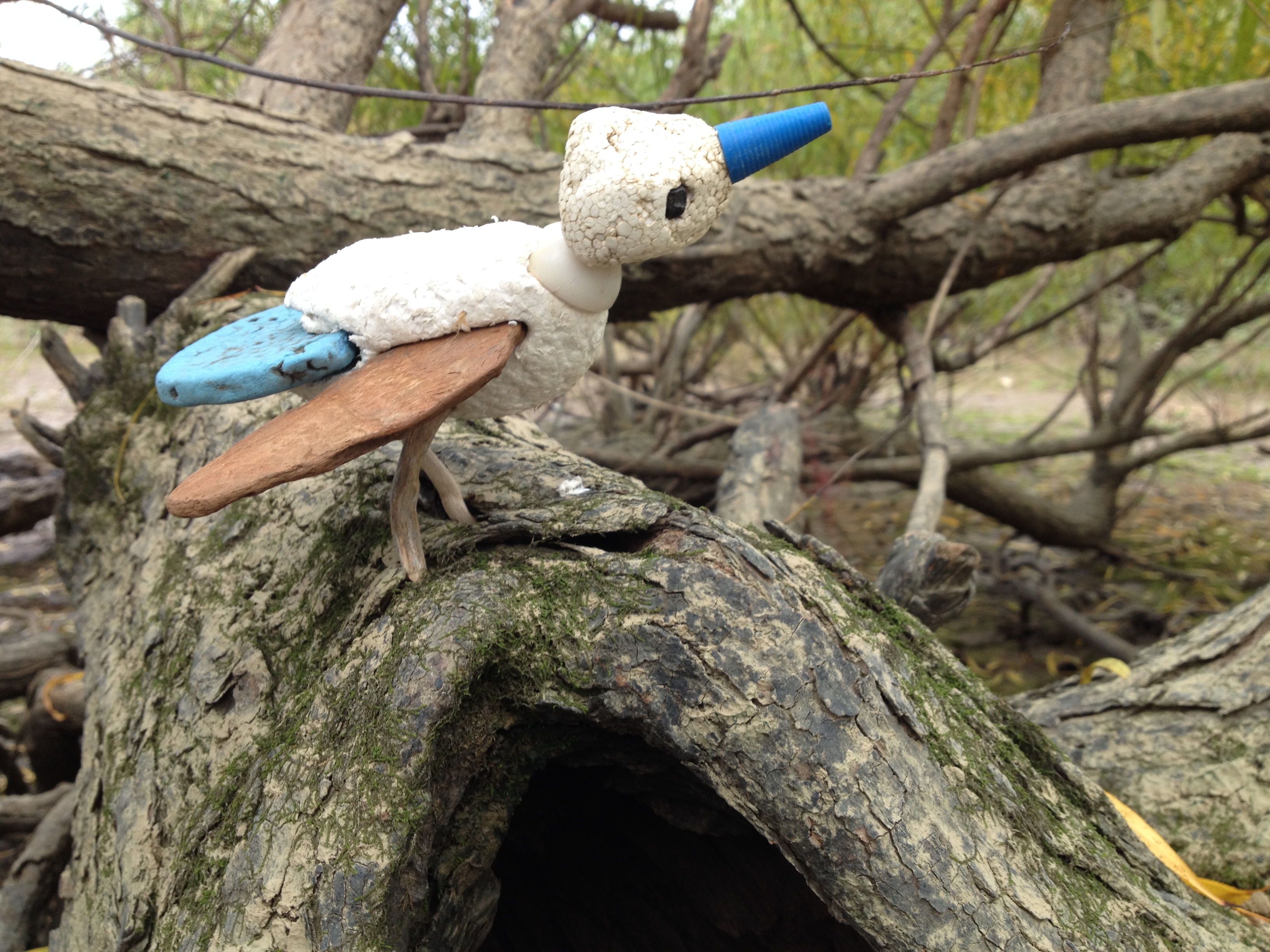
Fan-tailed Gnatcatcher, Falls of the Ohio, Oct. 2014

This is the Fan-tailed Gnatcatcher and this is the first time this species has been recorded in the park.  I had the greatest luck hiding behind the trunk of this willow and was able to observe this bird at extremely close range.  If it spotted me…it demonstrated no concern at all and continued its search for small insects and spiders hiding among the furrows in the tree’s bark.

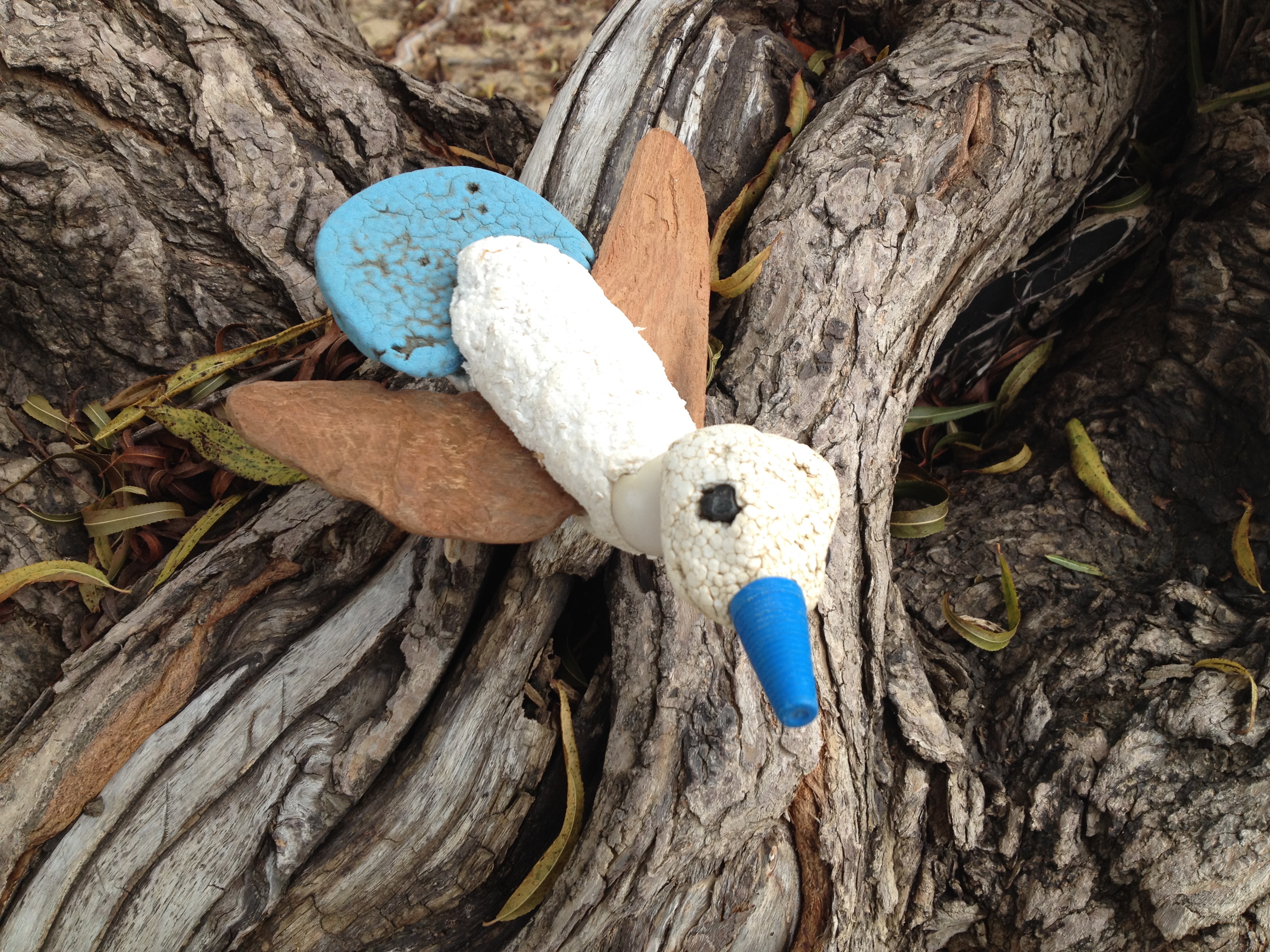
Fan-tailed Gnatcatcher, Falls of the Ohio, Oct. 2014

The Fan-tailed Gnatcatcher is a diminutive bird.  I watched as it dutifully searched the tree for food.  It had no problems going down the tree head-first in nuthatch fashion.  In this species, both the male and the females are similarly marked.  This young bird (identified by its lack of a feathered crest on it head) was just an egg a couple of months a go and has flown here from northern Canada.

Fan-tailed Gnatcatcher, Falls of the Ohio, Oct. 2014

I was literally at arm’s length to this bird and it was a such a treat to observe something new and at close range.  I loved the coloration on this bird.  The tail feather’s blue fan is balanced by the bird’s bright blue beak.  Rusty-colored wings are set off by the arctic-white hues along the head and body.  Like many bird encounters, I was only able to observe this bird for a minute or two at the most, but it was an experience that will last a lifetime.  As it flew off…I wished the bird well on its long journey and I hoped I could count its kind again among the park’s willow trees.

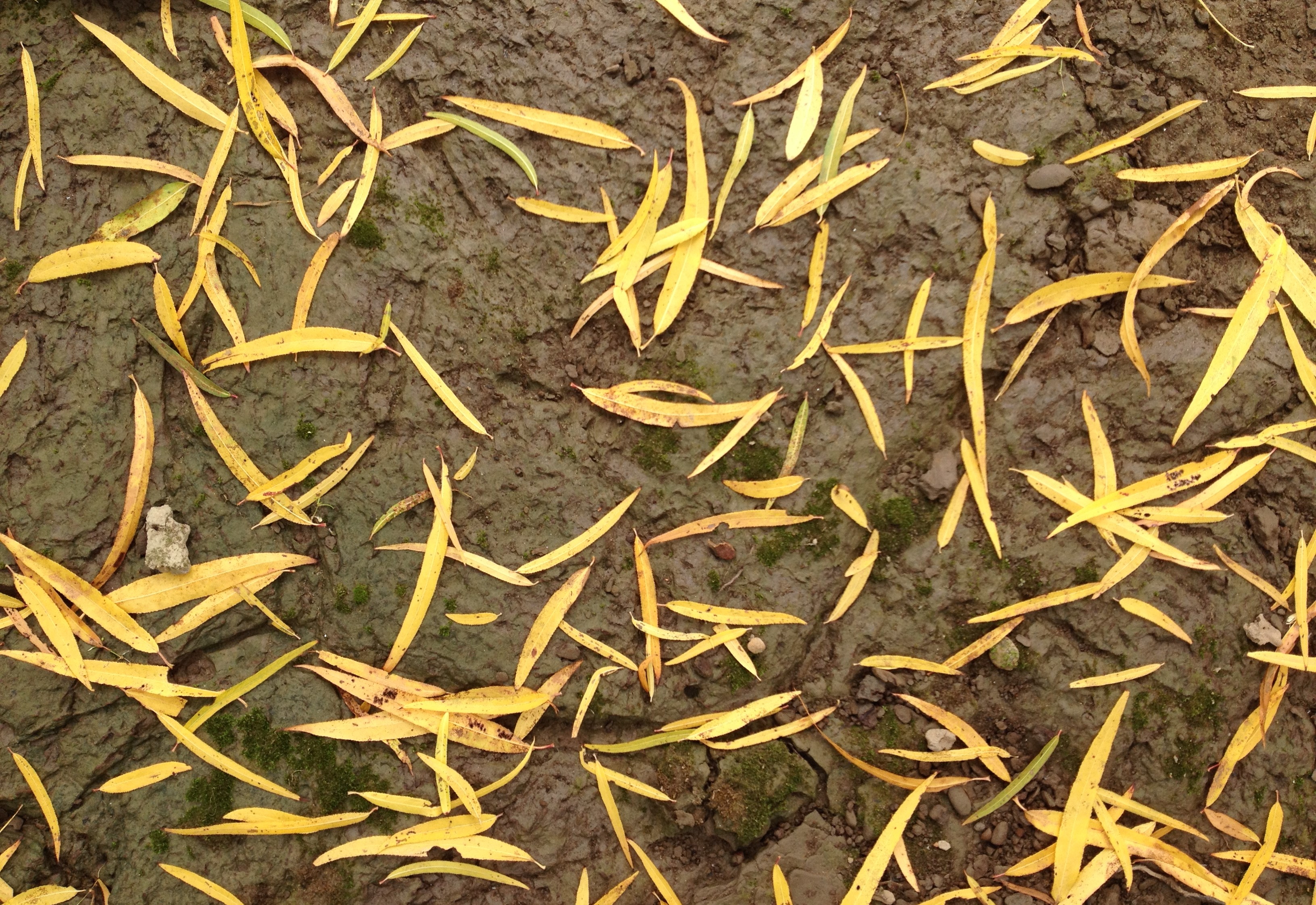
fallen willow leave on mud, Falls of the Ohio, Oct. 2014

I lingered in the moment for a while.  No sense in rushing things.  When I was confident that no other birds were in the area, I moved back to a spot where the Fixed Wier Dam joins the Lower Tainter Gates.  This would be the site for my next project.

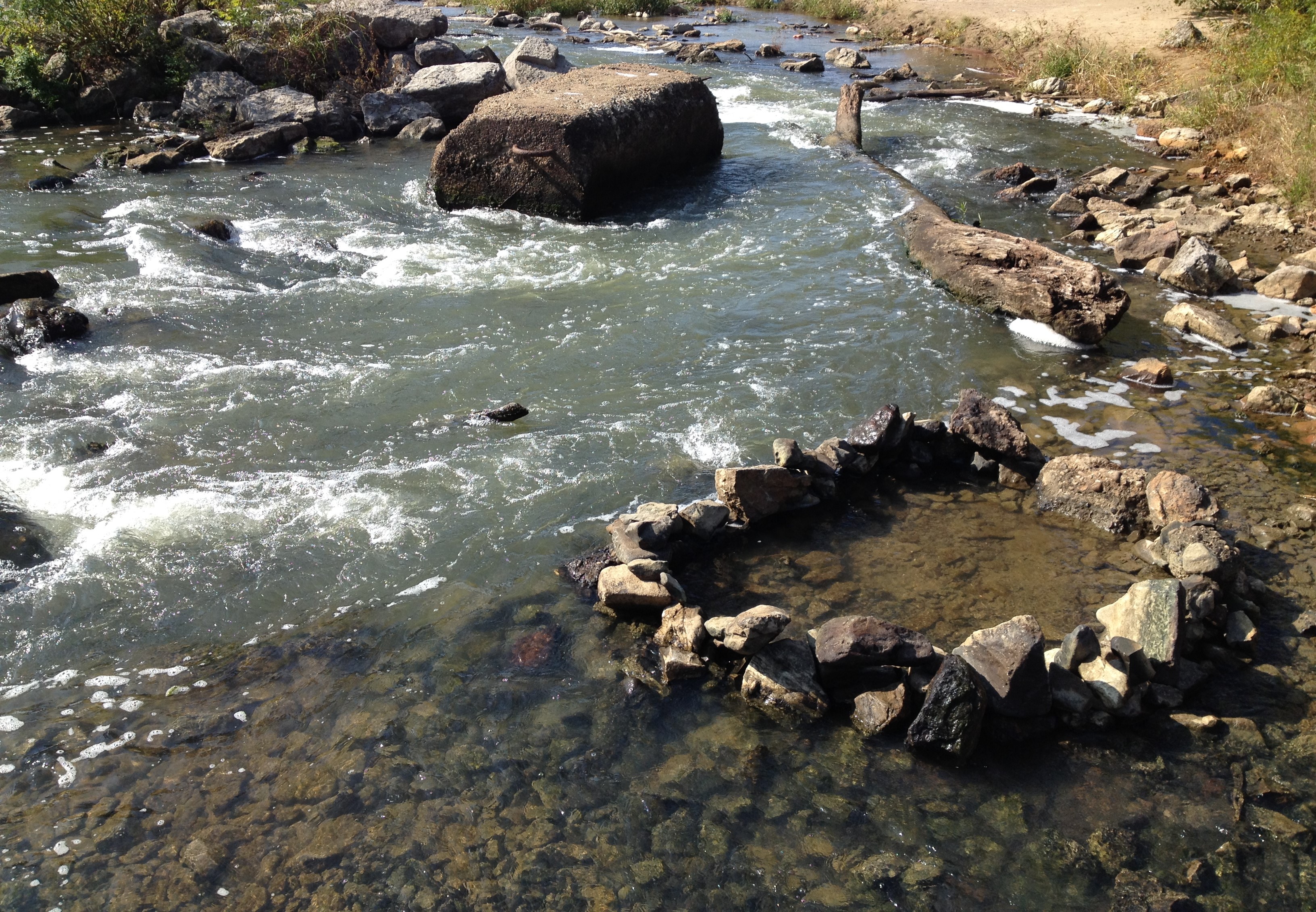
stone and concrete ring by the dam, Falls of the Ohio, Oct. 2014

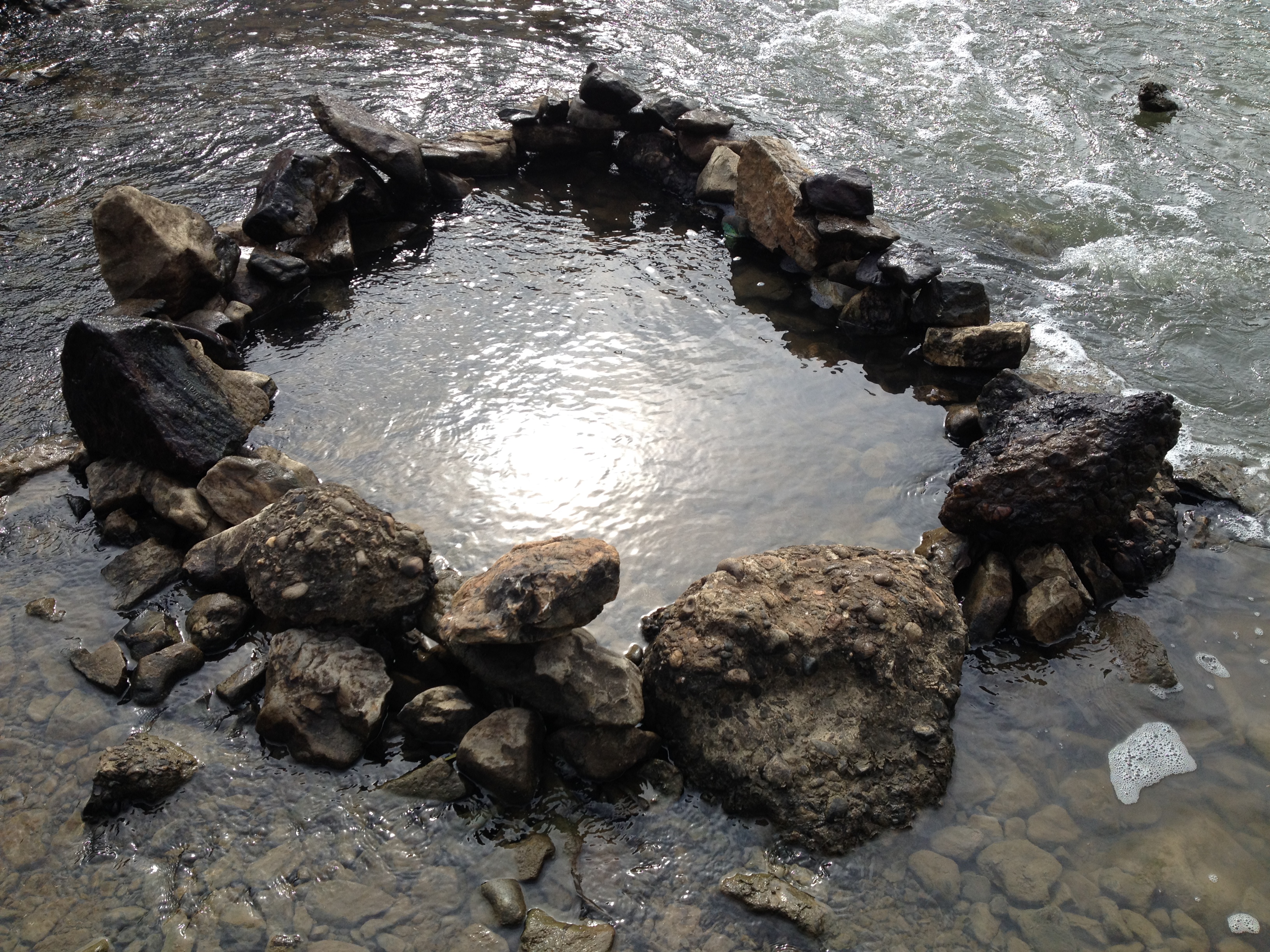
The dam at this location has curtains of water flowing through openings that are lower than the top of the wall and represents the true water level of the river.  This flow feeds a small channel that leads back to the river and is a favorite place for fishermen.  I had earlier noticed among the large broken sections of concrete and loose rock that some other creative soul(s) had started what looked like a stacked stone ring in the water.  There was the remnants of a foundation and I decided to build it back up for a look-see and to elaborate on it if possible.  I guess this in effect is a collaboration with an anonymous individual.  The image above was taken after I began reconstructing the ring.

Sun light reflecting with the stone ring, Falls of the Ohio, Oct. 2014

As I kept building up the ring, I would document my progress.  This is one of my favorite shots from the series.  Here I was able to center the sun’s reflection within the ring’s interior.  In my mind it became a portal to some other place far beyond the river.  The image of a passage way or tunnel is one that recurs in my Falls projects.

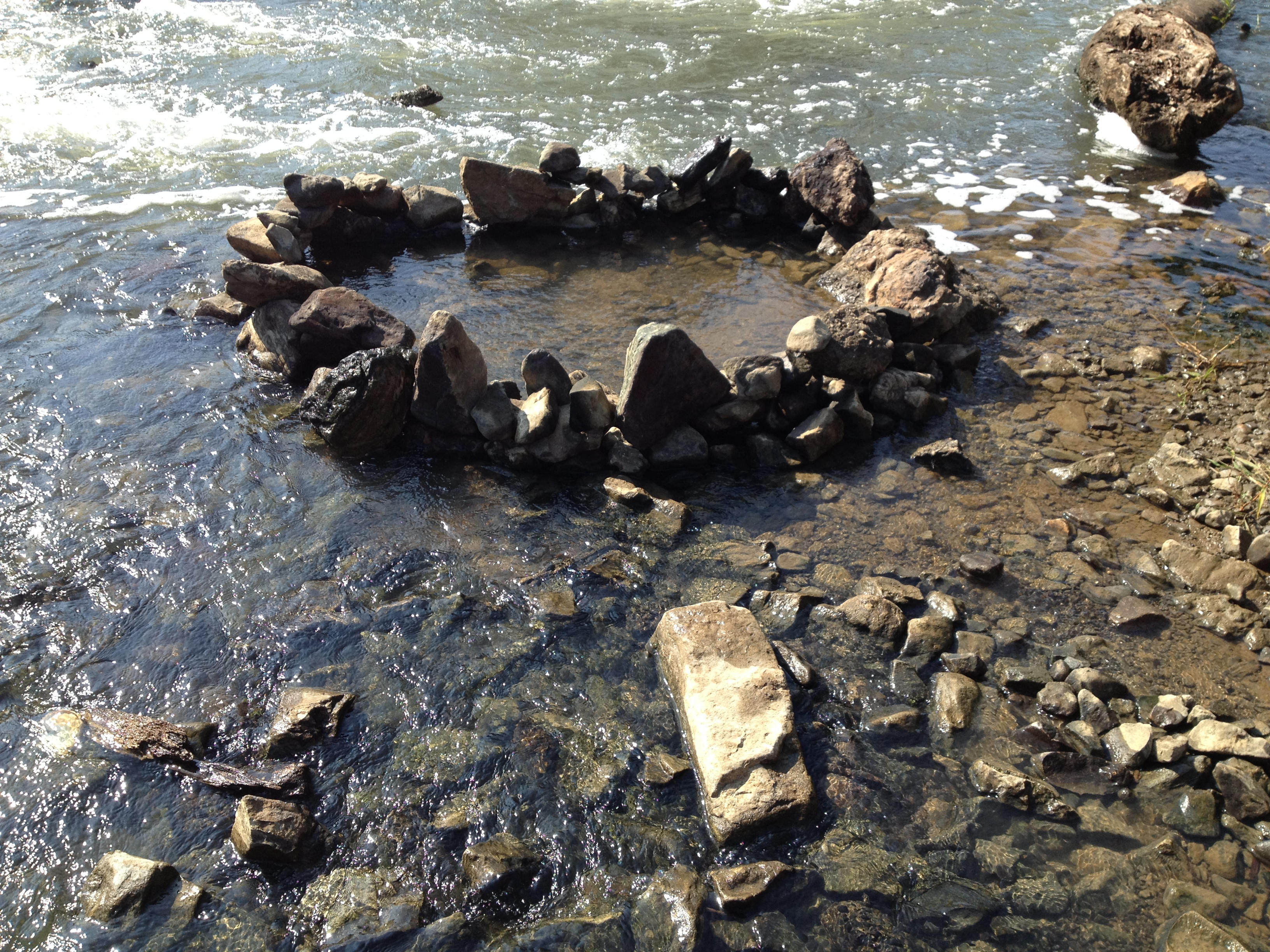
rock and concrete ring, Falls of the Ohio, Oct. 2014

I would have added the rectangular rock in the foreground, but it proved heavy and sunk into the mud.  Interestingly, the water within the ring was much calmer and created a safe harbor which contrasted with the swiftly flowing water around it.

rock and concrete ring, Falls of the Ohio, Oct. 2014

The ring’s slightly irregular shape was determined by its placement.  The ring is situated on the edge of where the water cascading off the dam’s wall has worn a deeper channel in the shallow bottom.  Since it was such a beautiful day I decided to spend more time at the Falls.  I made one other site-specific work where the center is a point of focus.

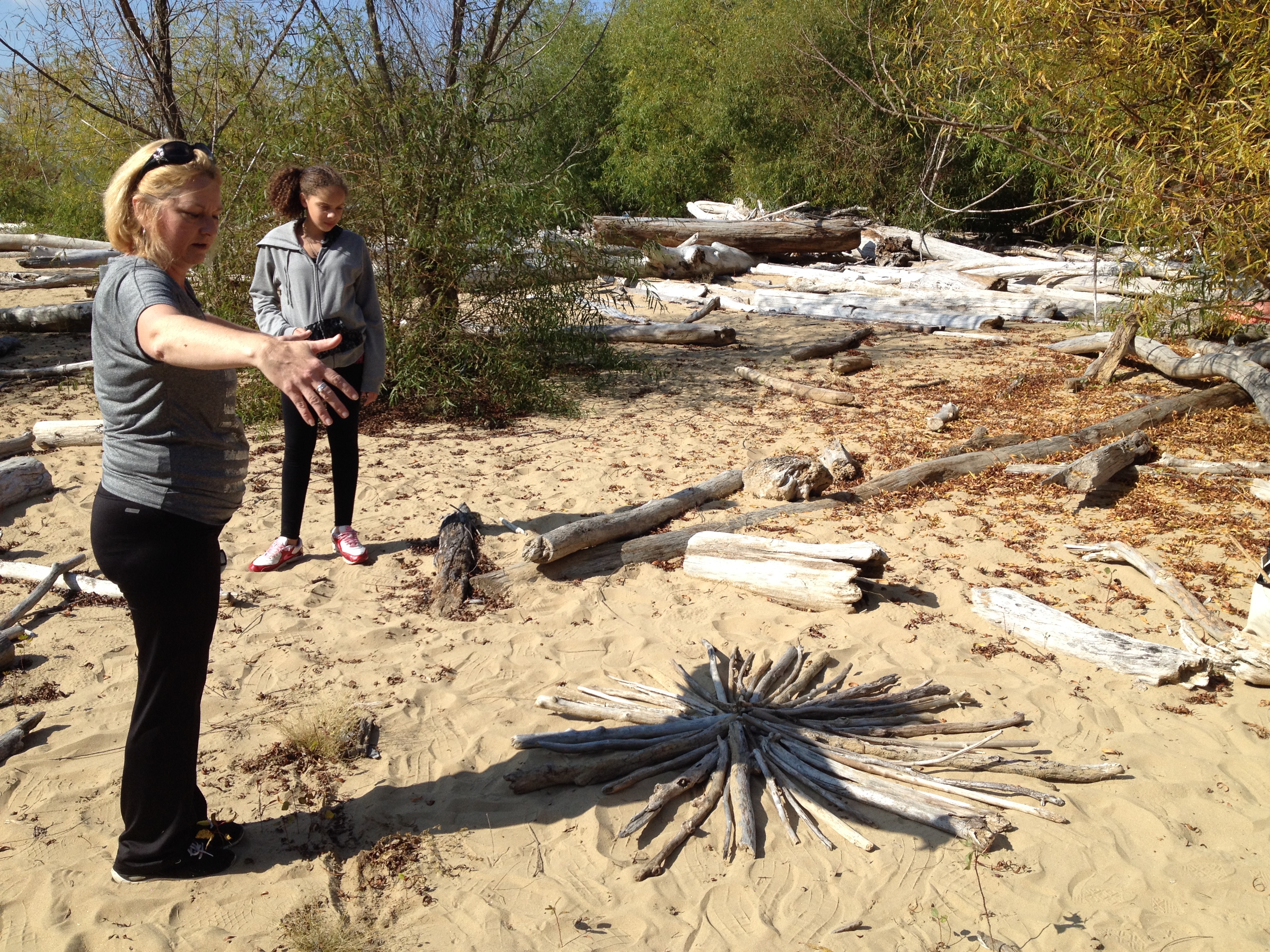
silver driftwood star, Falls of the Ohio, Oct. 2014

Detail of silver driftwood star, Falls of the Ohio, Oct. 2014


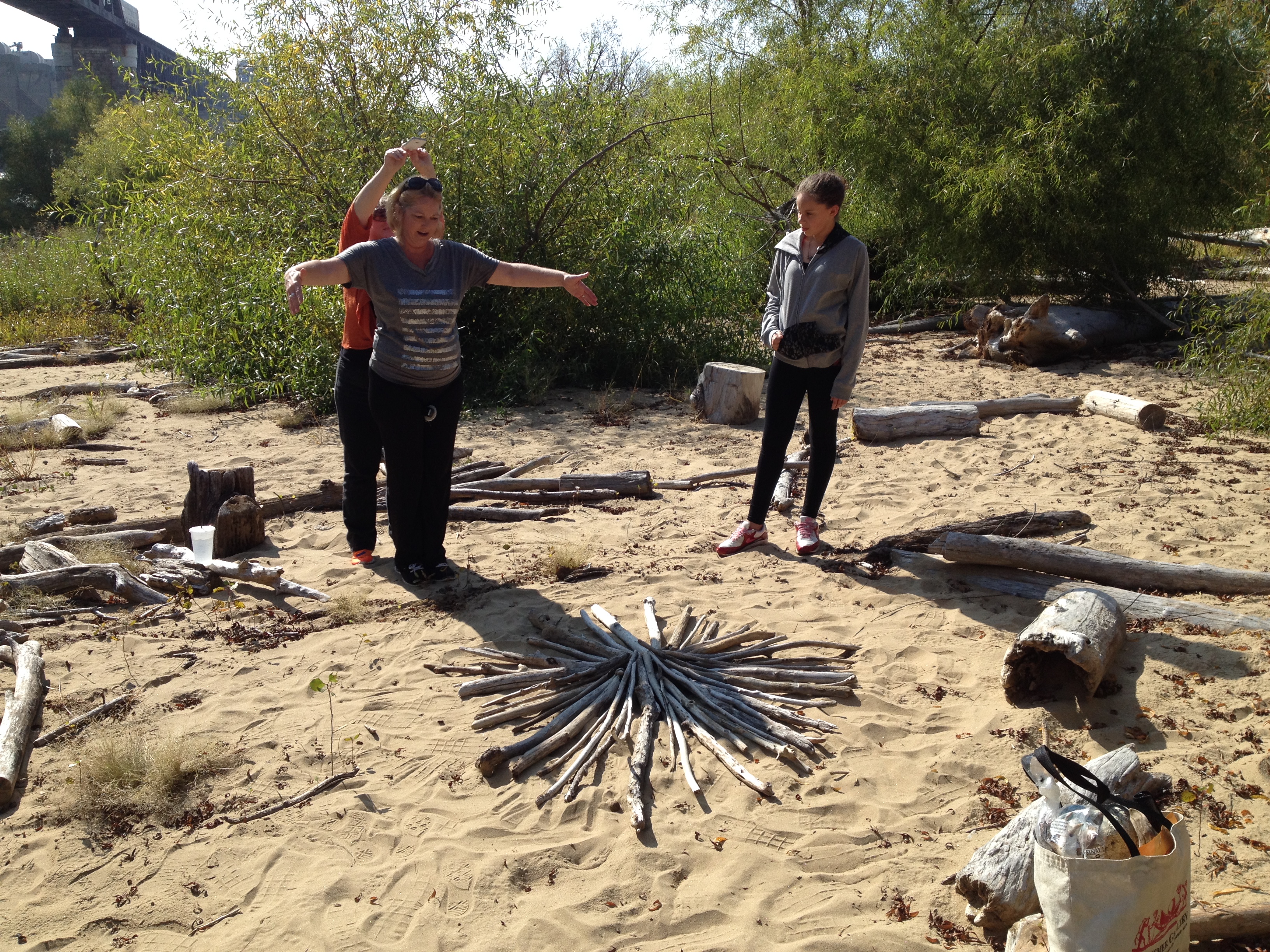
What I love about the driftwood at the Falls of the Ohio is the way it changes color as it ages.  After a summer’s worth of sunlight, the wood here takes on a silvery-gray color.  I collected lengths of wood from the immediate area and laid them in the sand.  The silver driftwood radiates away from a central point.  While I was engaged with my “Silver Star” four very nice people stopped by and asked directions to the fossil beds.  These park visitors became interested in what I was doing.  I appreciated that they wanted to participate and play along in their own way.  Here are a few additional images.  I’m assuming they are two mothers with their daughters enjoying an outing to the river?  Here one person is photographing the cast shadow on my wood piece.

Visitors interacting with my art, Falls of the Ohio, Oct. 2014

Park visitors interacting with my driftwood star, Falls of the Ohio, Oct. 2014

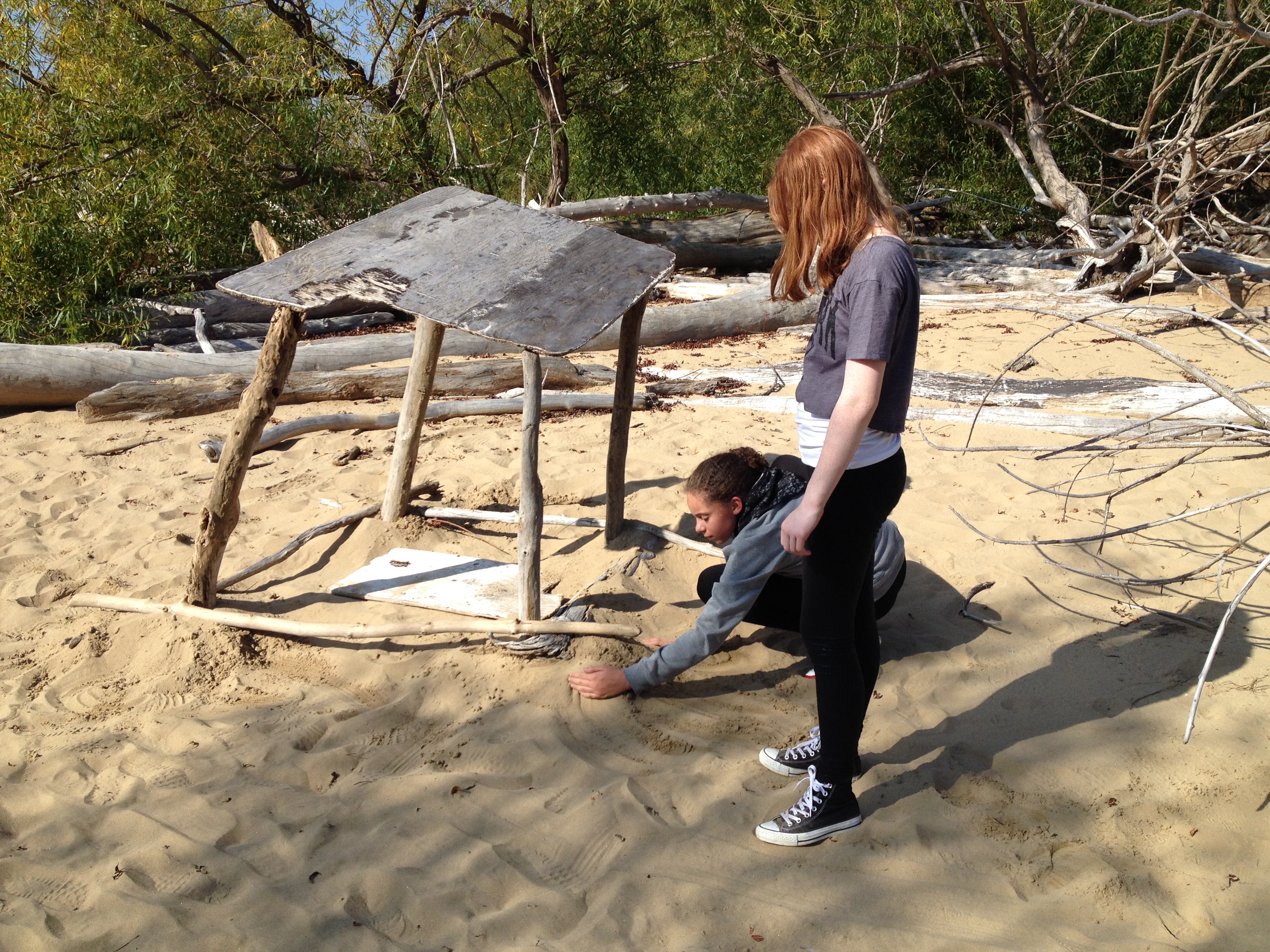
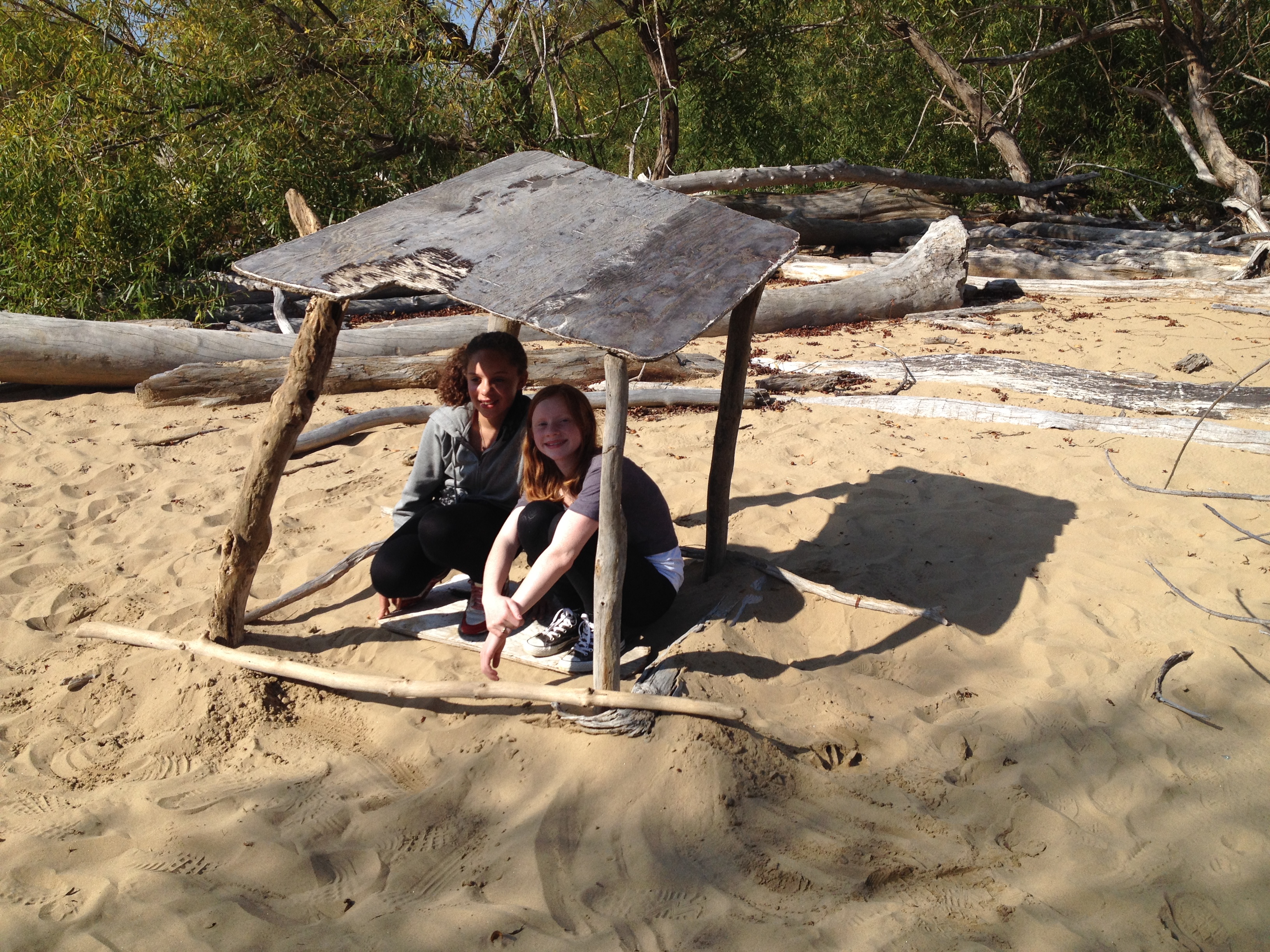
I think I may have inspired the daughters to attempt their own project?  Before too long they were picking up pieces of driftwood and making a make-shift shelter of their own design.

Girls making a driftwood shelter, Falls of the Ohio, Oct. 2014

Girls posed under their improvised shelter, Falls of the Ohio, Oct. 2014

The girls looked very happy under their driftwood shelter!  When my sons were younger, this was a favorite activity of theirs and this day brought back those good memories.  This park is such a great playground and allows one to exercise both your body and imagination.  I wonder if these ladies ever found the fossil beds?  It probably doesn’t matter since it looked like a good time was had by all.  Soon enough it was time to go home and I gathered up my collecting bag and walking stick and admired the late season flowers as I walked back to my vehicle.  Thanks for tagging along and I hope to see you next time from the Falls of the Ohio State Park.

tiny composite flowers with bee, Falls of the Ohio, Oct. 2014

Read Full Post »

Under the railroad bridge, Tainter Gates, Sept. 2014

Two years have passed since I last set foot on the fossil beds on the Kentucky side of the river.  I had to wait until I fully trusted a bum knee to be well enough to walk upon the hard, irregular limestone surface that for most of the year is underwater.

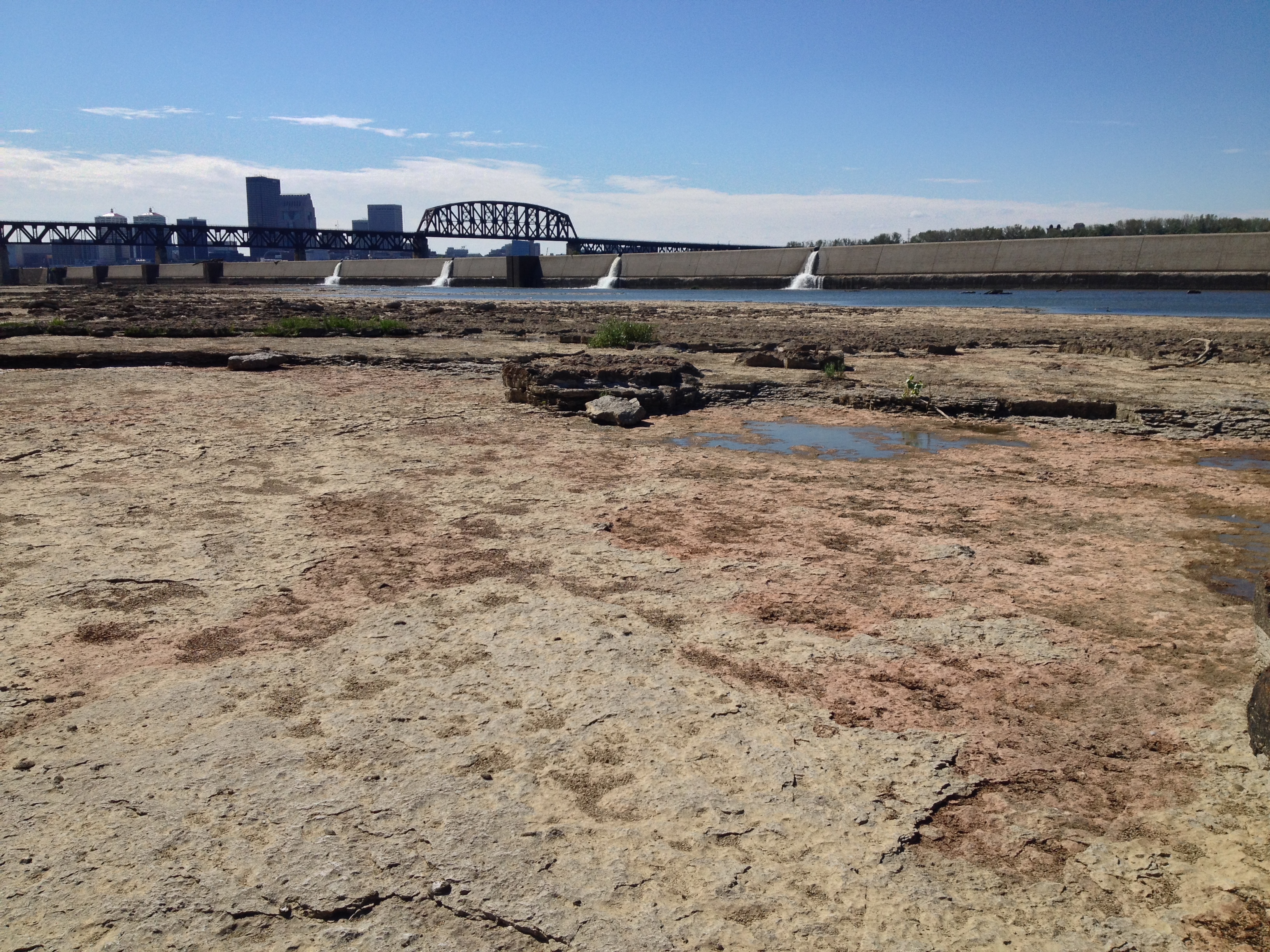
This is after all, the bottom of the Ohio River and accessible most summers when water is diverted to fill water levels at the McAlpin Locks and Dams.  The Ohio River is a managed river for much of its length.  Closing the snow plow shaped tainter gates helps regulate water levels for commercial navigation and flood control, but it also exposes the majority of the fossil beds to inspection at the Falls of the Ohio State Park.

I have rolled my ragged jeans up and I’m wearing a pair of shoes for sloshing through knee-high deep water at best.  As I move under the old iron railroad bridge, I walk past the gigantic concrete and metal gates holding the river back.  Something in their hieratic designs reminds me of ancient Egyptian art.  Here on a massive, civic-project scale, abstracted silhouettes of seated pharaohs serve the gods of engineering.  My goal today is to reacquaint myself with this unique environment and mark the day in some way.

The railroad bridge looking back to the Indiana side.  Sept. 2014

From experience, I know that there are far fewer materials to access on this side of the fossil beds.  Most of the Styrofoam, plastic, and driftwood I frequently use is driven by wind and river currents to the Indiana bank where I’ve preformed  most of my projects.

Being out in this environment with its varied materials often inspires me to want to make something, but what will I do today?  I take advantage of the river polished coal I found around the railroad bridge and envision an image I can work with site specifically.

I have come to like working with coal as a material because it is timely and is also invested with so much meaning.  In Kentucky, coal is currently a big political issue and many good people truly believe there is a war on coal and climate change is a not supported by the facts.

Anthracite is a deeply, shiny-black crystalline material out of the mine… but the river can tumble it into dull, but smooth feeling, egg-like forms.  I prefer the more river polished pieces of coal.

I’m guessing I’ve picked up about 10 or 12 pounds of coal which I carry in a canvas collecting bag.  Okay, I have my material and my feet are already wet.  With walking stick in hand, I walk along side the high walls that separate the Ohio River from the now exposed Devonian Age fossil beds.

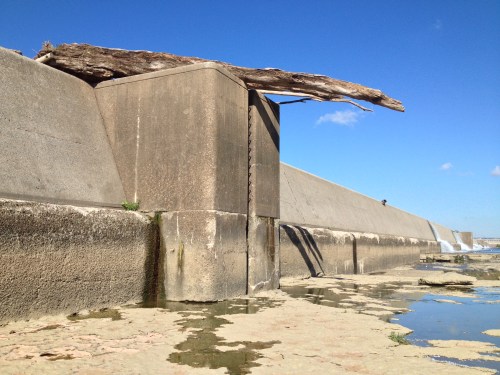
Wall seperating Ohio River from fossil beds, Falls of the Ohio, Sept. 2014


The dam’s concrete wall that separates the river from where you are standing on the fossil beds is maybe 18 to 20 feet tall?  It’s up there and sobering as well because the Ohio River’s waterline is just below the top of the wall which is just on the other side!  A series of pre-formed notches along the top of the wall allows water to flow over a section of the fossil beds.

A small wetlands area has been encouraged here that draws many water-loving birds.  Among the species I observed on this day included:  the Belted Kingfisher, Caspian Terns, Great Egrets, Osprey, Great Blue Heron, Double-crested Cormorants, Canada Geese, Killdeer plovers, Blue-winged Teal, Mallard Ducks, Black Vultures, and an American Coot.

Although it’s not hot today, there is little to shade you from the intense light out on the open fossil beds.  Most of these beds are high and dry, but the surface is pockmarked in places with potholes that hold water.  Most of the shallow pools that caught fish when the river level dropped have been cleaned out by the water birds.

In the above photo, a large log has become stranded on the top of the wall placed there when the Ohio River was receding from flood stage.  It was in this area that I set down my heavy collecting bag and laid out my first Coal Man design on the fossil surface.

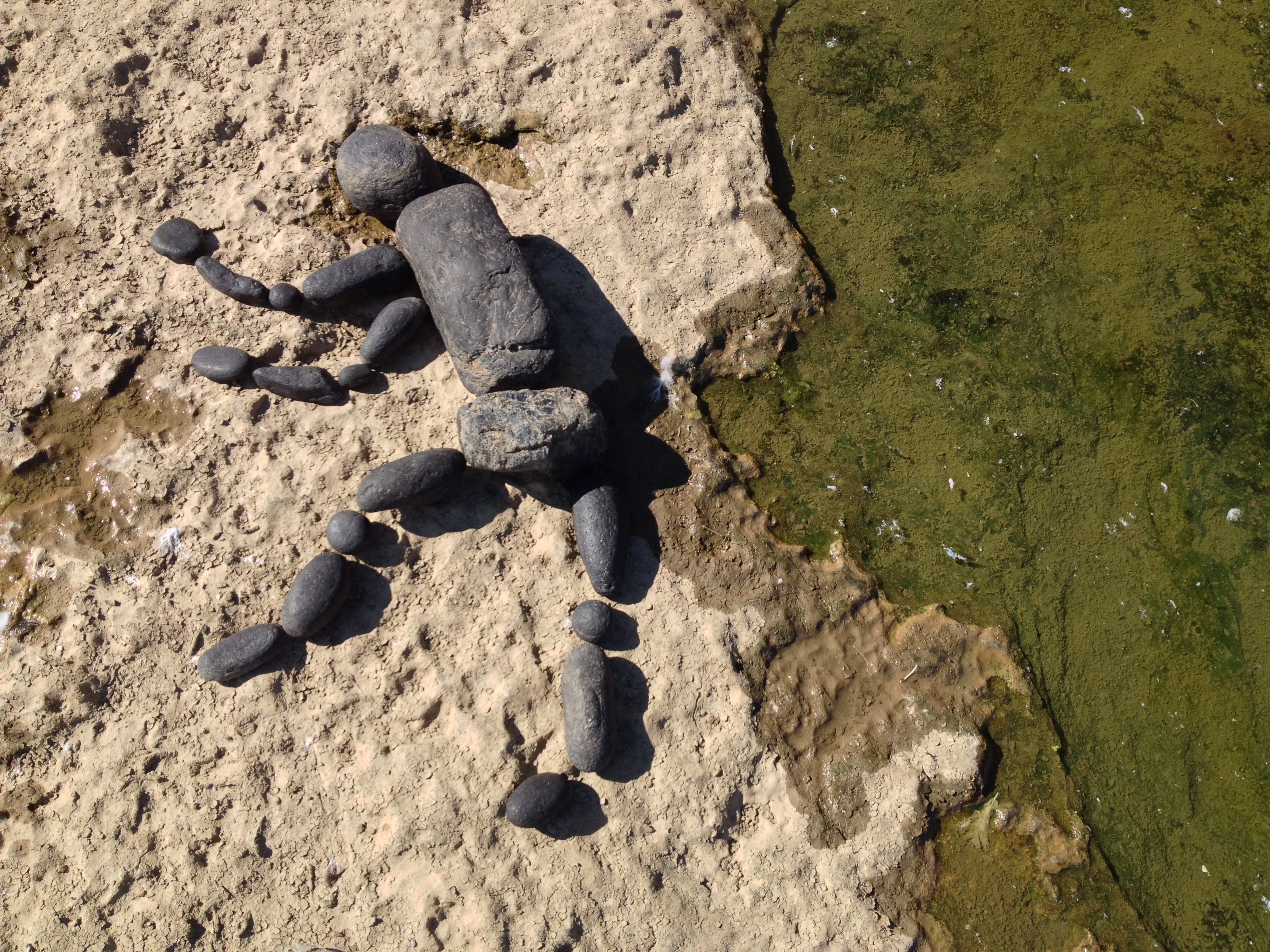
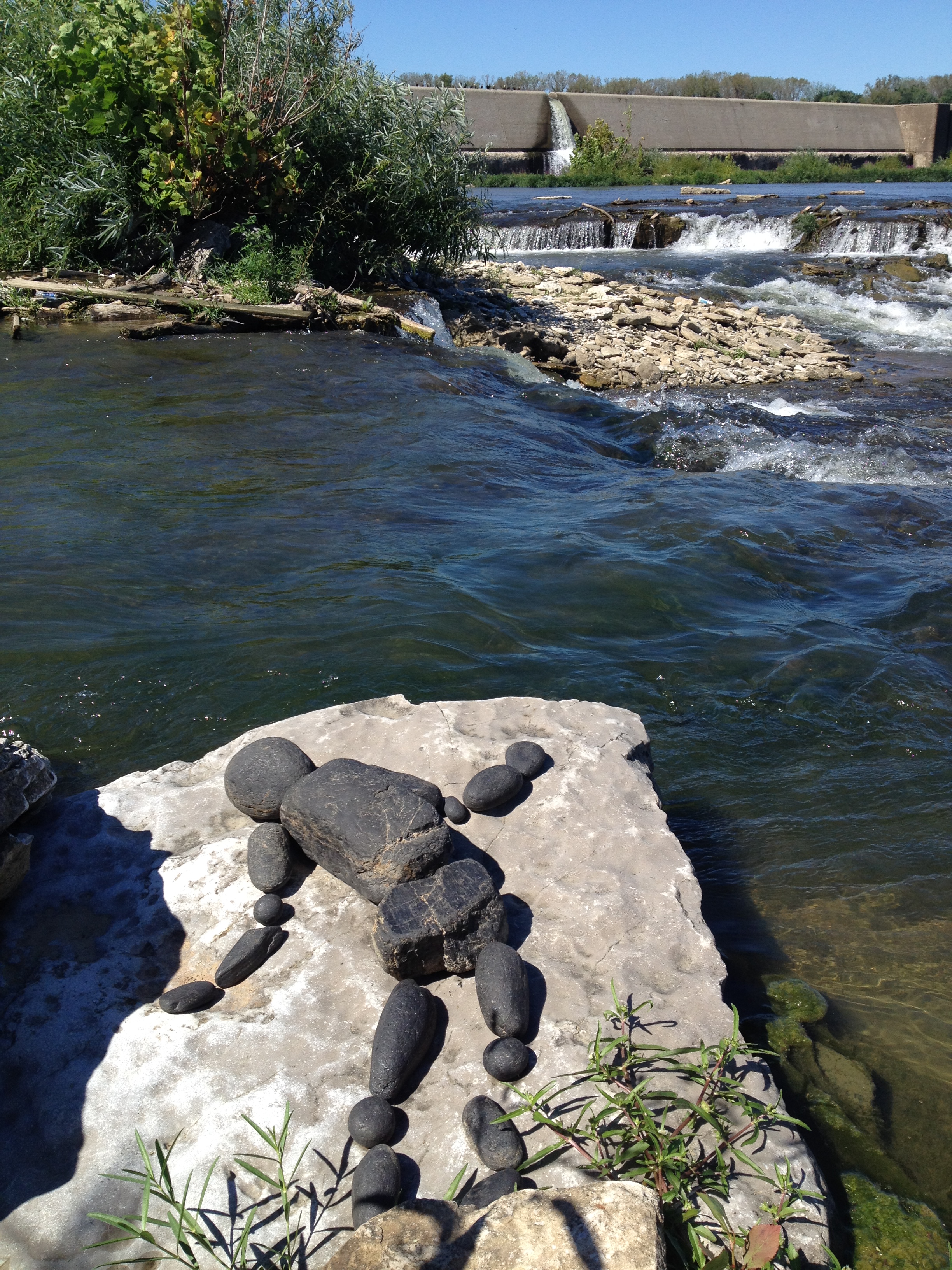
Coal Man variation, Falls of the Ohio, Sept. 2014

The figure has a marionette-like presence, but I relate more to it as a simple sign for figure.  In my head I’m seeing an ancient landscape marked here and there with this contemporary pictographic/petroglyph.  The Falls of the Ohio have been occupied by man for thousands of years and I like relating to this history.  The water is shallow and green from algae.  Molted bird feathers define the circumferences of many of these water holes.  Annoying small flies and gnats fly around the potholes and around your head seeking salt or other moisture.

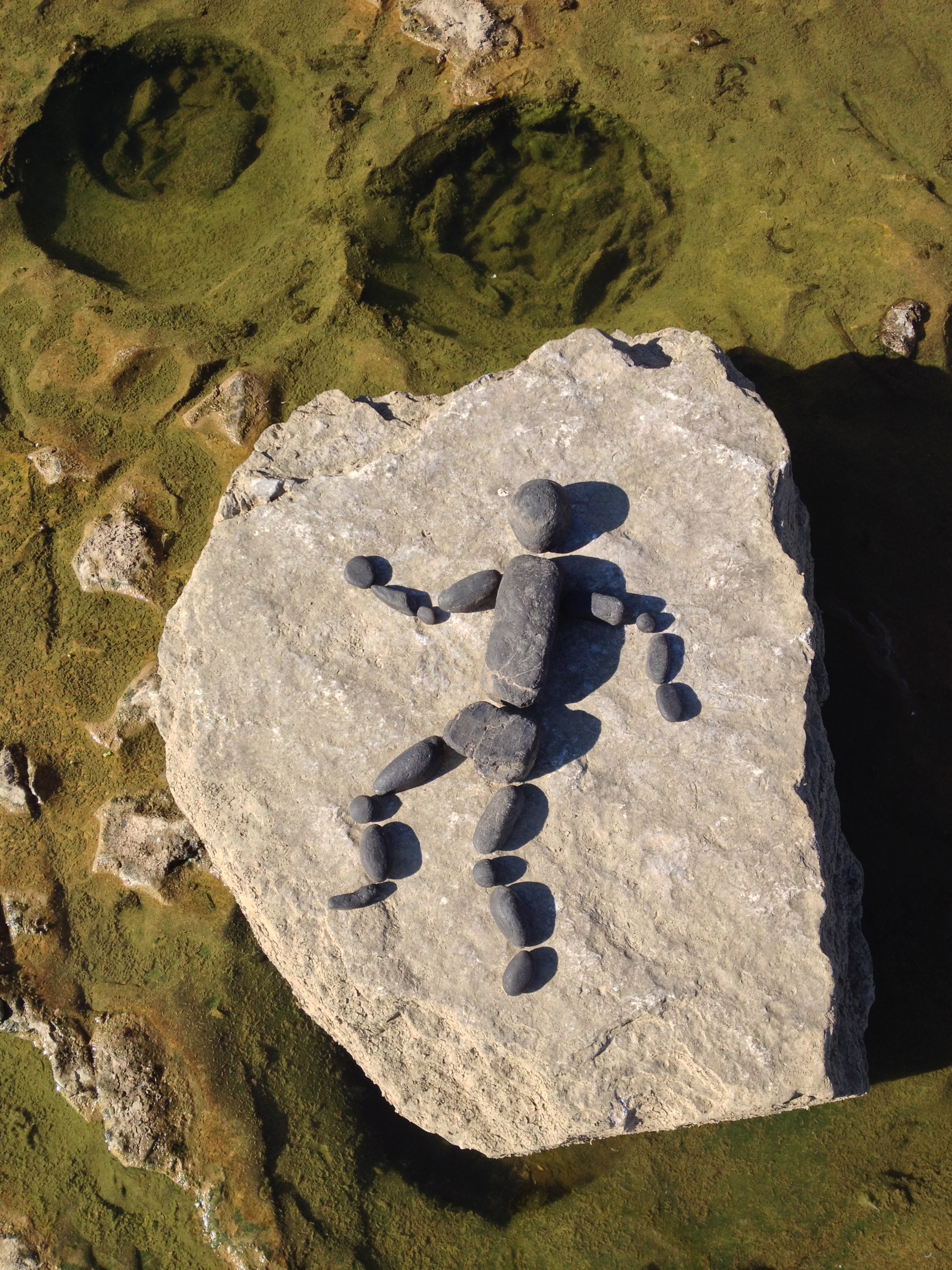
Coal Man Series, Falls of the Ohio, Sept. 2014

This figure has been laid out on a table-like boulder surrounded by very shallow water.  It’s a very temporary site-specific expression on a very tiny island.  I have heard people describe the exposed fossil beds as being a “moonscape” and it does feel like this landscape could be from another planet.

Seated Coal Man on Fossil Beds, Falls of the Ohio, Sept. 2014

Many of the fossil beds are in layers or courses and here I am trying out some of the pictorial possibilities using my now seated Coal Man.  The Interpretive Center is the structure in the far distance.  After a while,  it’s time to cool off a little and have a good sit.  There’s a series of small cascades up ahead that are the nearest to imagining what the Falls may have originally looked like and I head that way.

Coal Man by the Cascades, Falls of the Ohio, Sept. 2014

I see in my mind’s eye, each different Coal Man design introducing a different feature on this side of the park.  I have been wading in shin-high to knee-high water to reach this place.  It’s like an oasis on the exposed and fossilized ancient coral reef.  I like resting here and having a water and snack break.  If you remain inconspicuous you can often spot many different bird species here.  The shallow but swiftly flowing water has small schools of baby fish seeking places of safe harbor.  I’ll bet the oxygen levels in this water is very high?

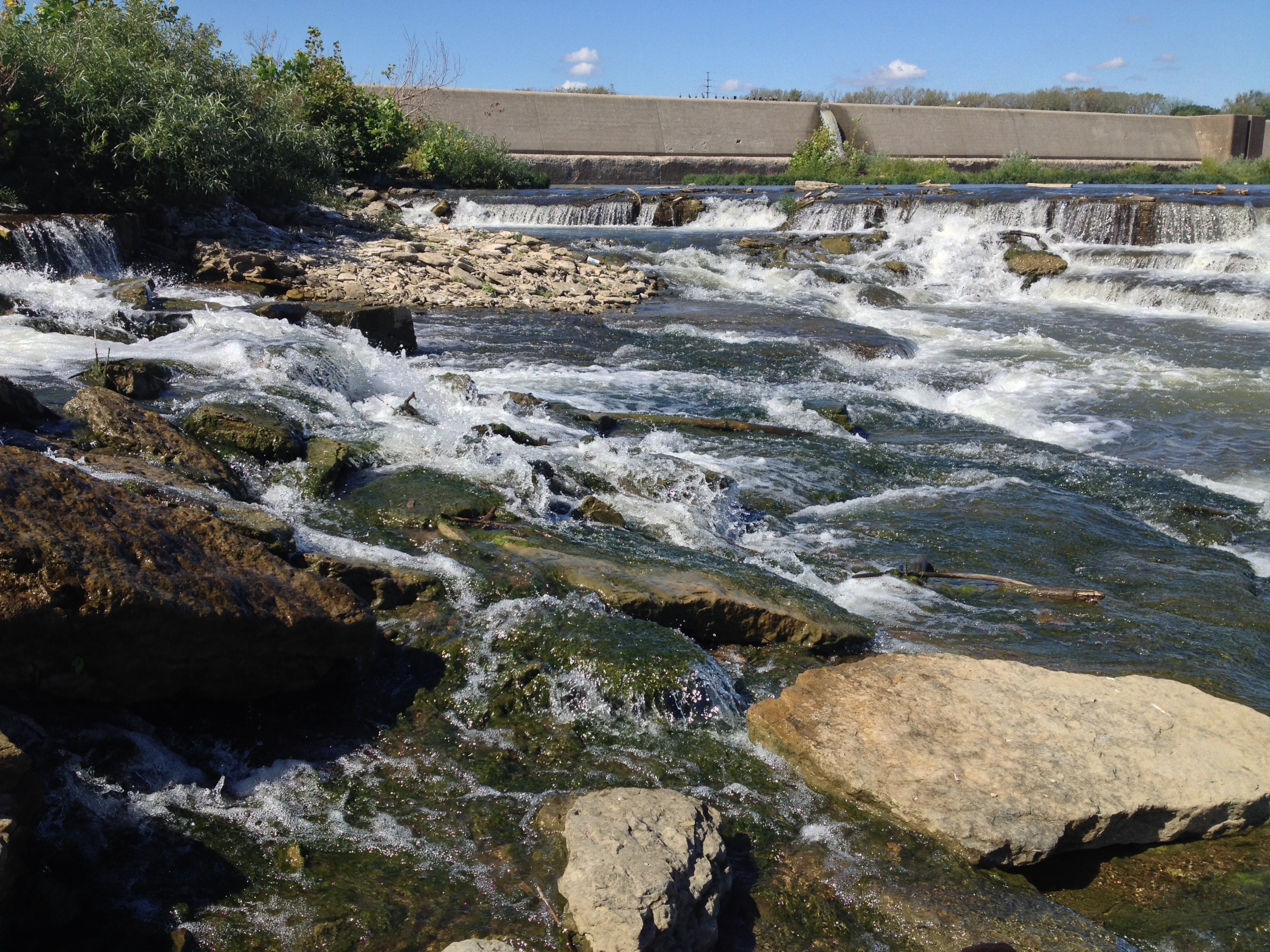
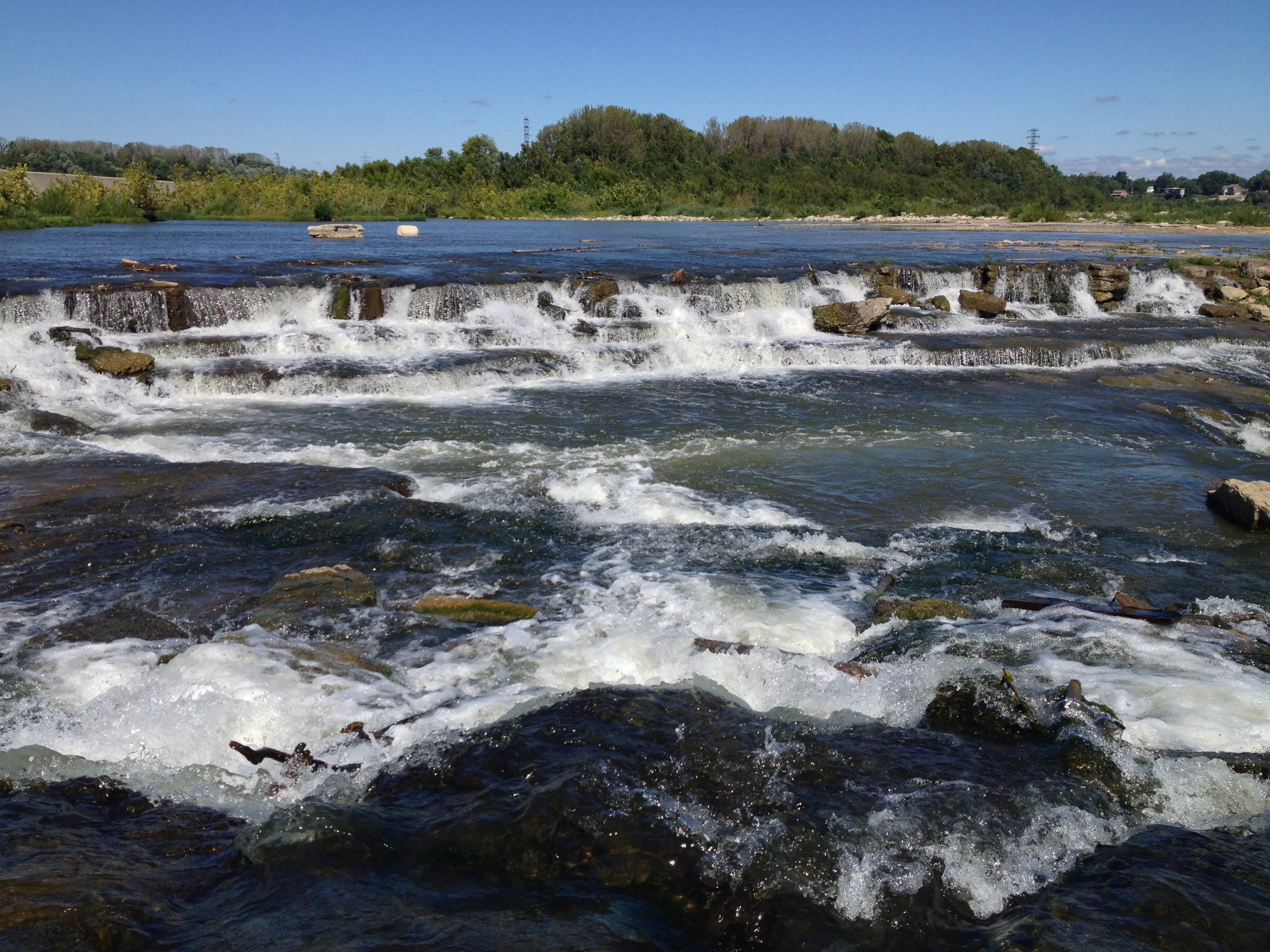
Cascades, Falls of the Ohio, Sept. 2014

Cascades, Falls of the Ohio, Sept. 2014

I cool off wading and exploring this area before moving on.  This space has a bit of the amphitheater feeling about it.  The cascades take on a larger horseshoe formation connected by many small waterfalls.  In the recent past, much larger cascades existed and put on a water show that I wish I could have seen.

Cascade at the Falls of the Ohio, Sept. 2014

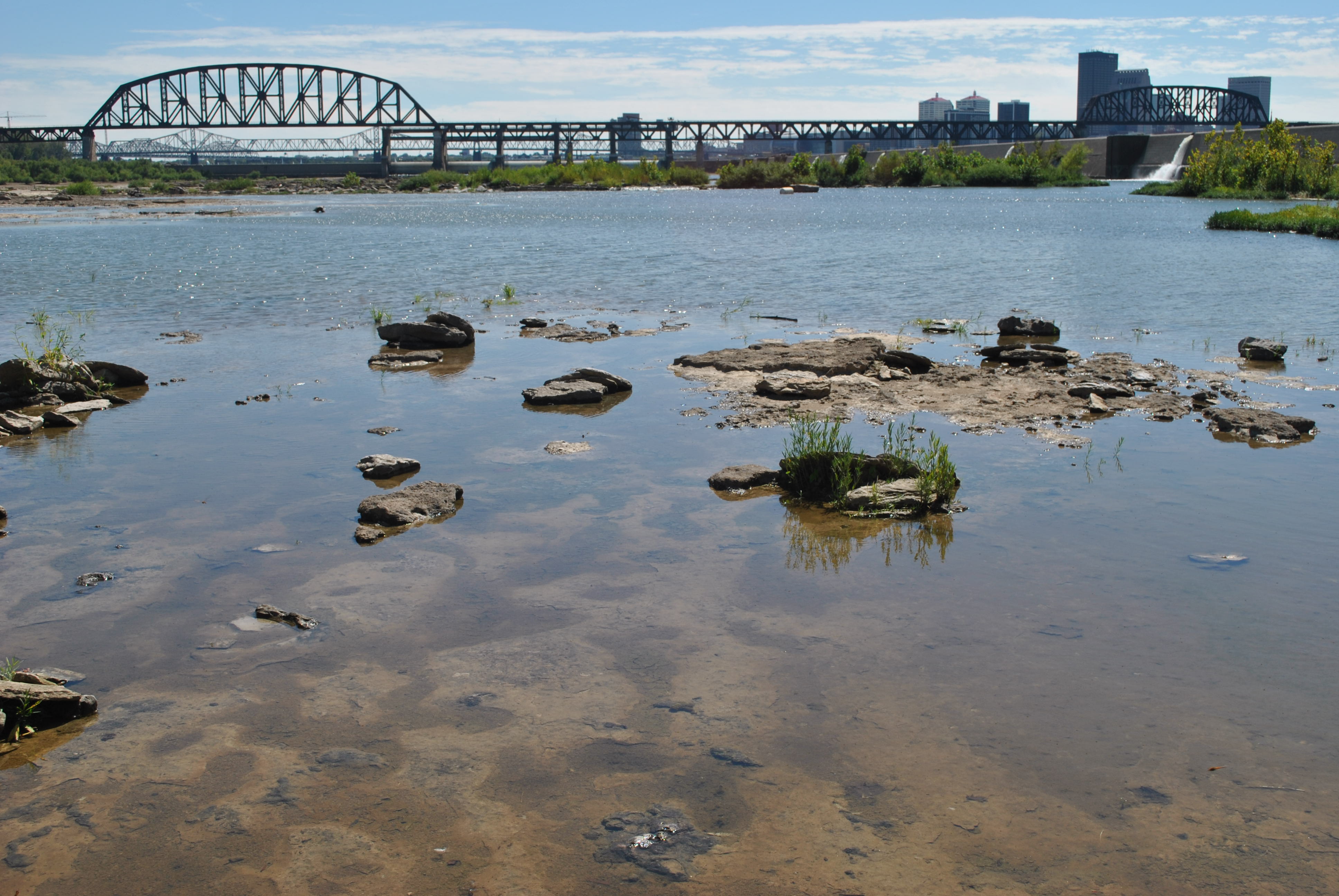
Time to move on and dry off.  Today, I’m only planning on walking to the beginnings of Goose Island where I will make my final images with this Coal Man.  I definitely see returning out here again soon while the river level remains low.  It won’t be too much longer before autumn rains and winter snows replenish the Ohio River and re-submerges these fossil beds until next year.

Skyline of Louisville as seen from the Falls of the Ohio, Sept. 2014

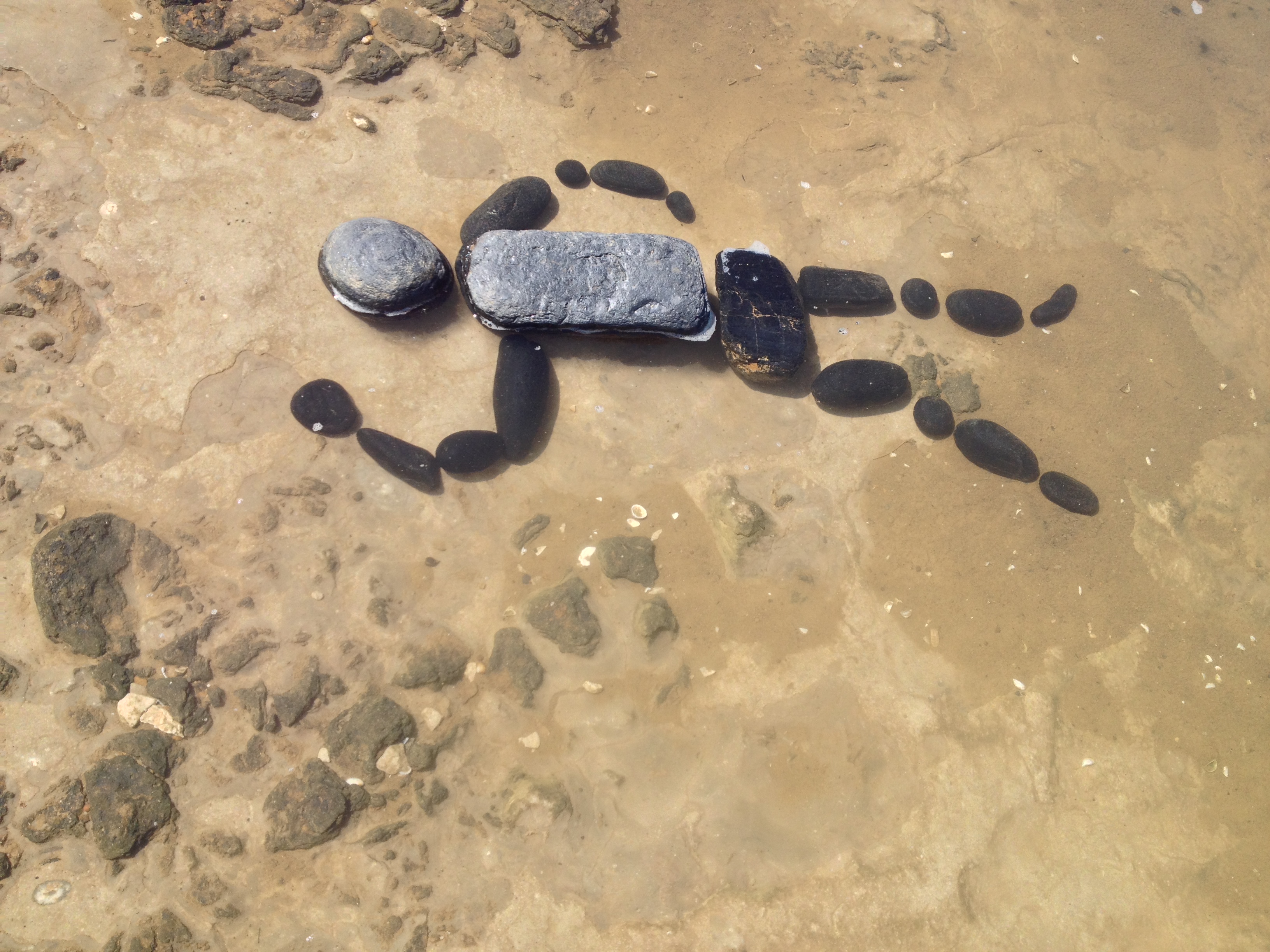
So far, I had kept the Coal Man dry.  At this location which was the extent of today’s visit…I took advantage of clear, shallow water to create these pictures.

Coal Man Series, Falls of the Ohio, Sept. 2014

Coal Man Swimming, Falls of the Ohio, Sept. 2014

The wet coal turned deep black and I liked how many of the images graphically benefited from that.  I guess this is Carboniferous Man swimming above the Devonian Age?  From here I bagged the coal and started the walk home over the fossil beds.

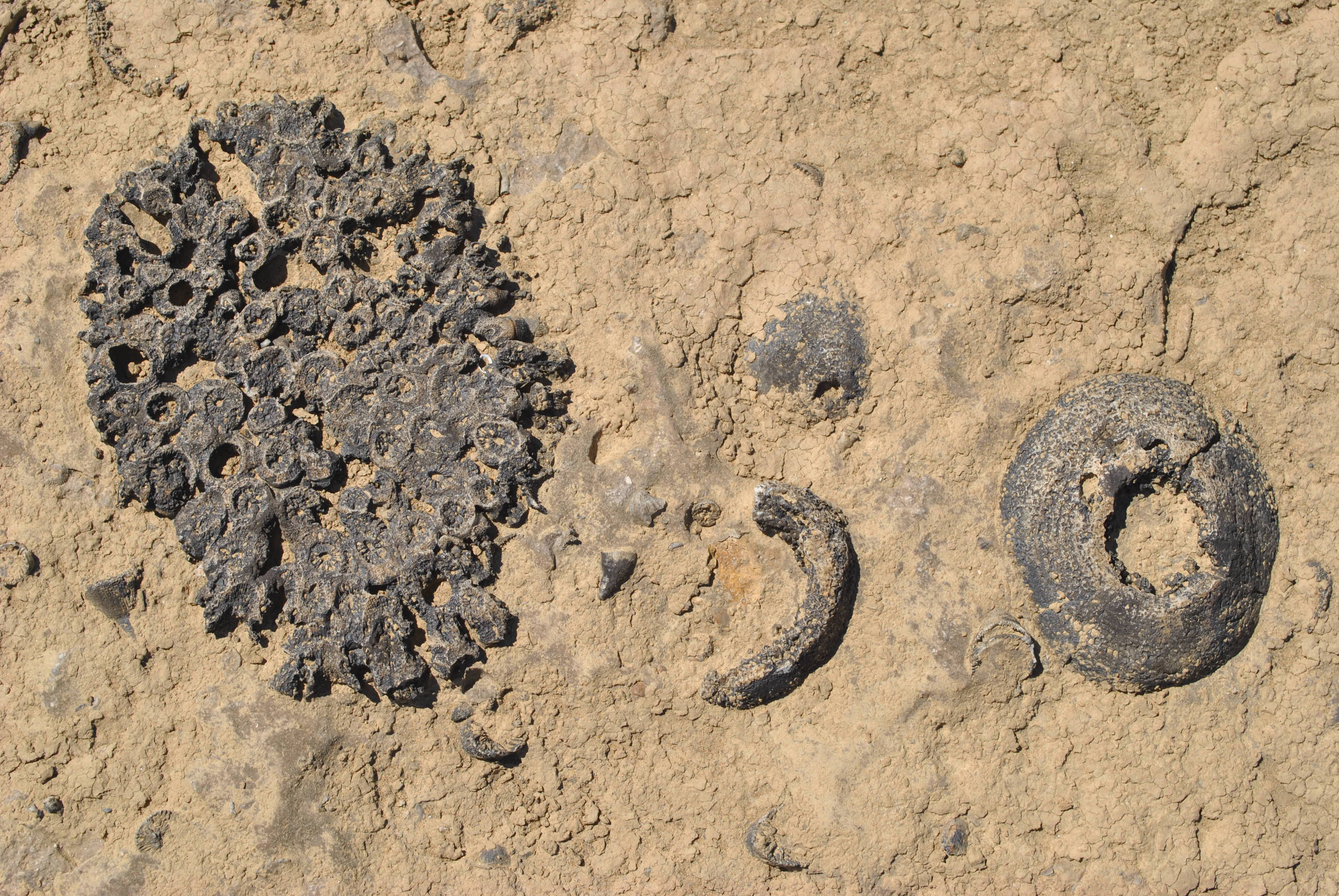
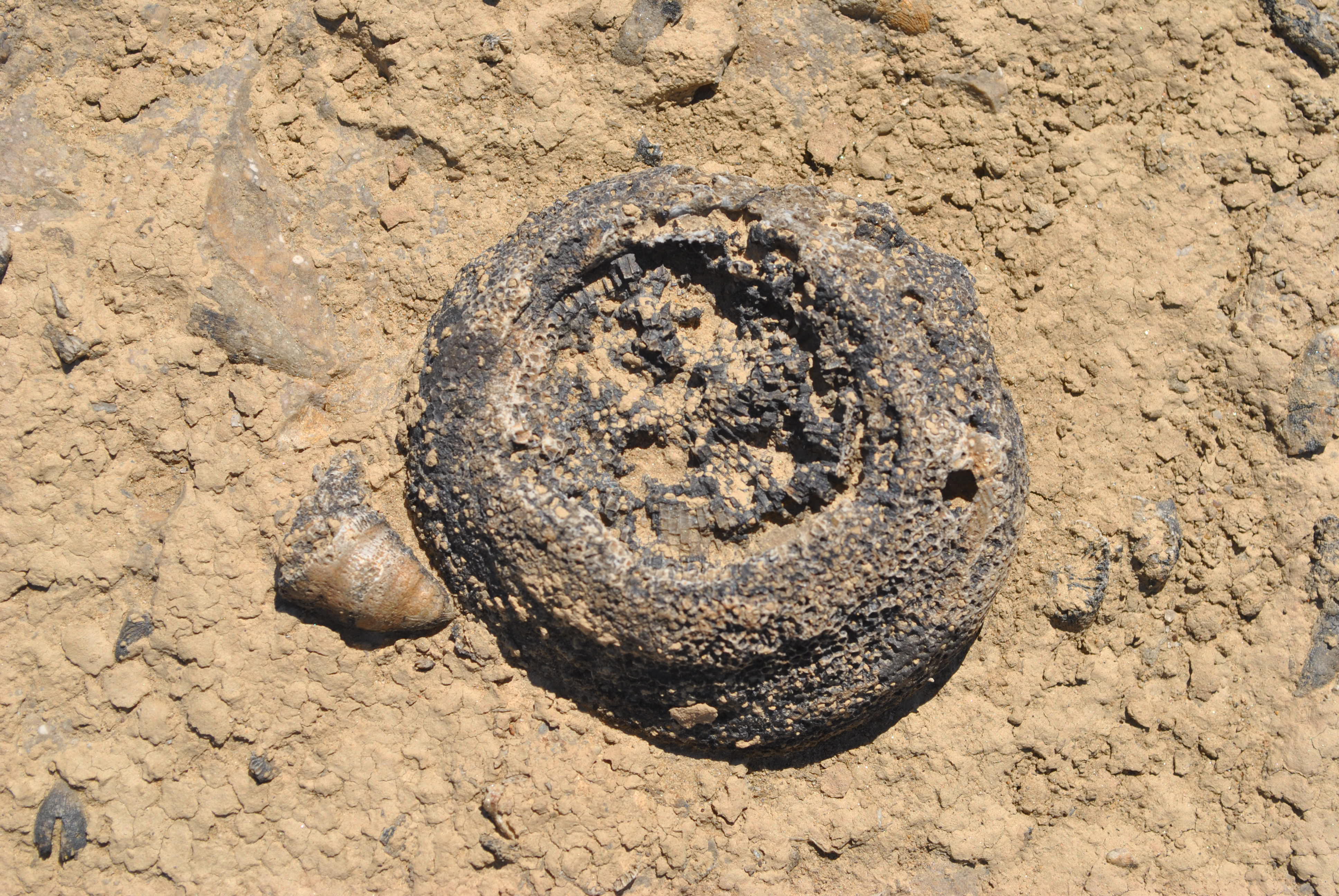
Before closing, here are a few actual fossils I photographed along the way.  This was once an active coral reef over 300 million years a go.  Life was in the oceans.  The species first discovered here have greatly expanded our knowledge of life at this time.  This was the high point for corals and sponges and also gave rise to the first fishes.

Fossils from the Falls of the Ohio State Park, Sept. 2014

Fossils from the Falls of the Ohio State Park, Sept. 2014

This was my last river excursion of the summer.  It is amazing how quickly this year is flying by!  I was really happy that my left knee did not give me any problems.  I am feeling encouraged and I still have this bag of coal I can keep playing with on a future visit.  Thanks again for coming along…from the fossil beds at the Falls of the Ohio State Park…so long for now.

Fossil Beds at the Falls of the Ohio State Park, Sept. 2014

Read Full Post »

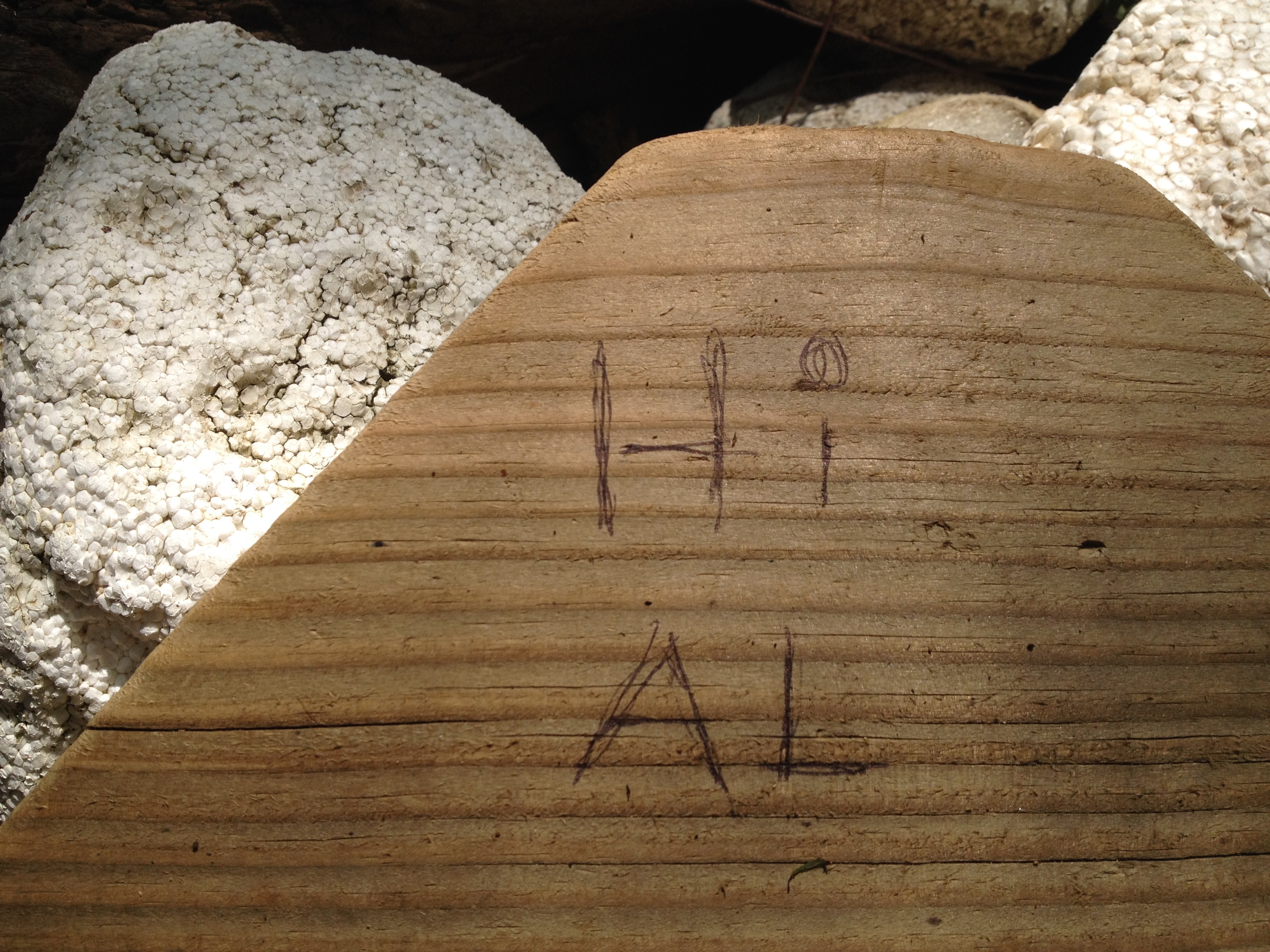
Note on wood piece, Aug. 2014

A hot and sunny August morning and over Louisville’s rooftops I could hear the river’s siren song calling my name.  “Al”…Al…where have you been?”  The call was getting louder and more irresistible by the moment.  What’s a fella to do but heed the call?  I slurped down the last of my cold coffee, gathered my collecting bag and walking stick and twenty minutes later I transported myself to the Falls of the Ohio.  The river was receding into its summer pool and most of the riverbank was now exposed.  Here and there fishermen were trying both their luck and patience.  If birds could laugh, the numerous herons were enjoying themselves for it looked to my eye like they were having more success than the other bipedal hunters holding long rods and bait buckets.  I did a quick look around the old railroad bridge, filled a found, empty, glass liquor bottle with coal pebbles and headed for my spot under the willows.  Among my stash of Styrofoam and driftwood I came across a piece of wood I had previously picked up…and found this simple message written in ink… ” Hi Al”.

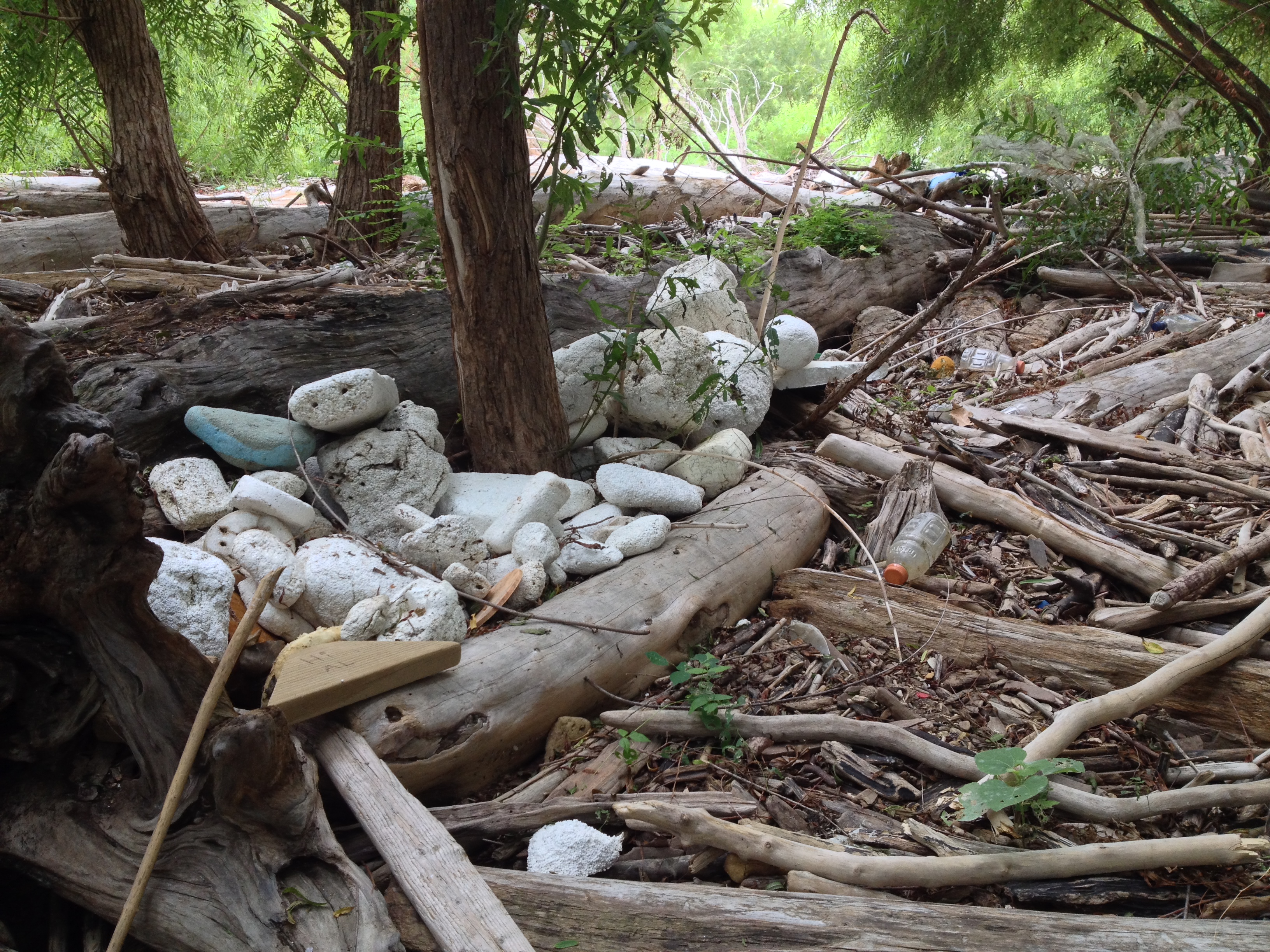
My stash of found art materials, Aug. 2014

Whoever penned this simple note at my discovered spot remains a mystery.  In my mind, I associated it with any of my many artist friends who also find inspiration among the driftwood…but it could have been the river too.  This place has been utilized by artists for many years.  Each new generation seems to discover this place for themselves and I hope it always remains this way.  I lingered under the shade for a bit and watched a mix flock of chickadees, warblers, and gnatcatchers move through the tree canopy.  With the show over and satisfied that my haul of river junk with all of its latent potential remained in place…I headed back into the bright sunlight.  Other mysteries and visual delights would await me.

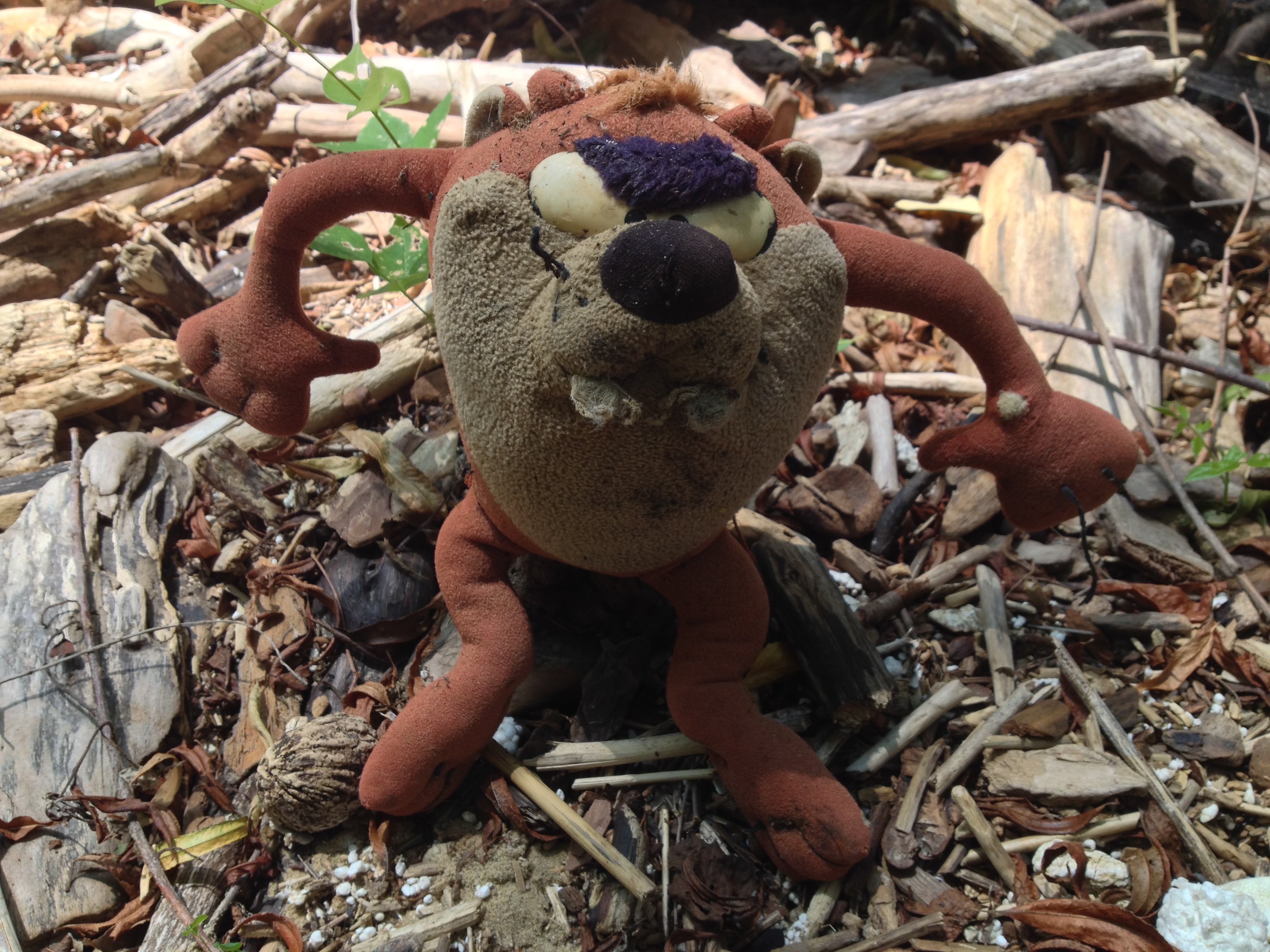
plush Tasmanian Devil toy, Falls of the Ohio, 2014

Imagine coming face to face with the Tasmanian Devil!  Well, I did and lived to tell the tale.  Actually, this plush toy (which I found face down) was quite small and easy to overlook upon the driftwood.  Seems I’m always finding cartoon characters out in this landscape.  I suspended him by his arms upon the exposed roots of an overturned tree stump.  Someone may find him and give him a new home…or he might just fall apart over time eventually finding his way back into the river?  Walking through the sunlit clearings between willow stands, I came across this interesting found composition.

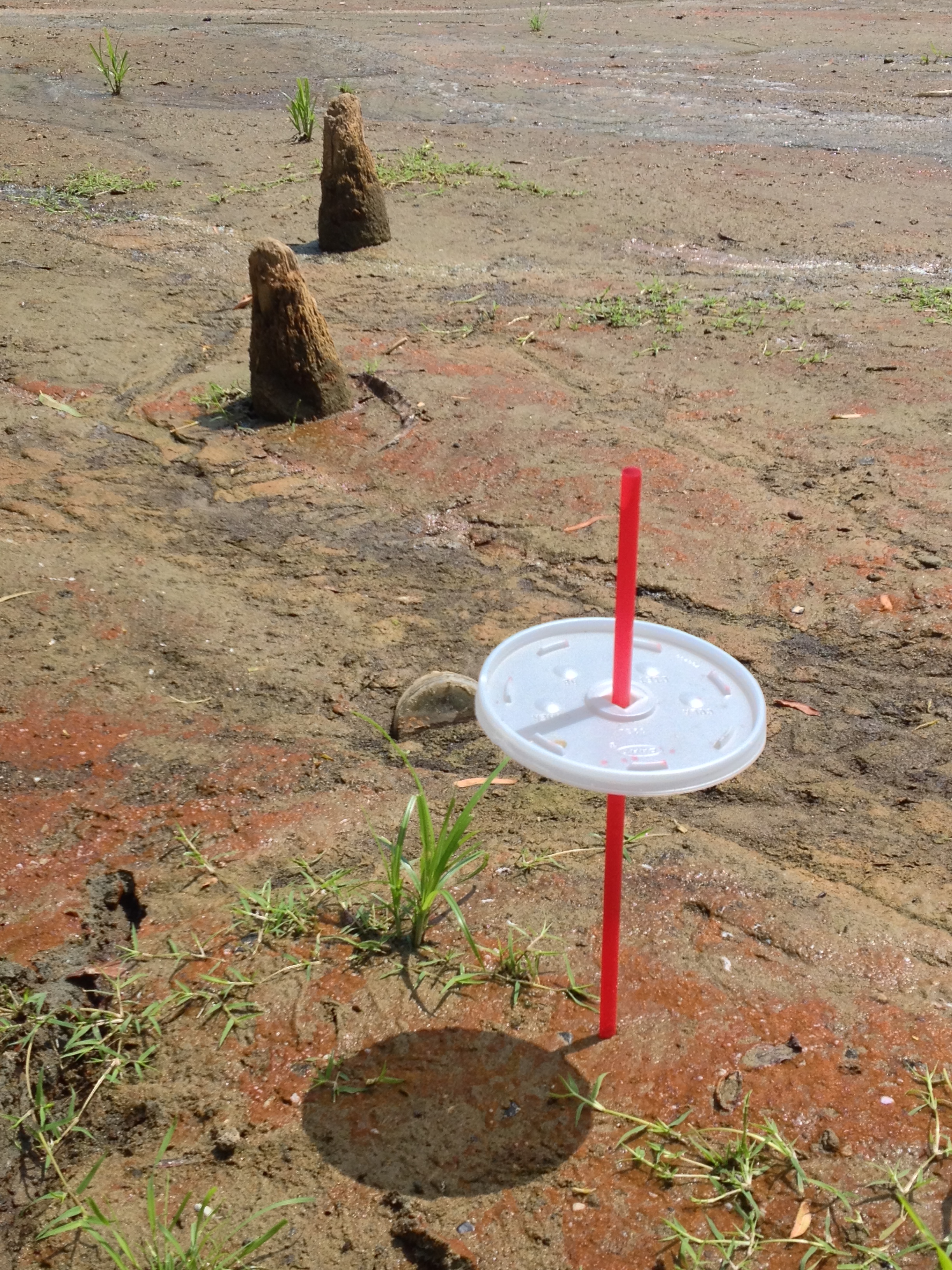
Upright red straw and cup lid with willow stumps, Falls of the Ohio, Aug. 2014

I must have stared at this for an indeterminate amount of time?  Perhaps it was the upright and very bright red plastic straw that caught my notice?  Or, it could have been the very careful placement and arrangement I was discerning?  I felt I was looking at a rather intimate and odd bit of public art.  I found myself thinking…why didn’t I think of this!?  In my heart and mind I saluted the anonymous person who created this scene and walked away appreciatively.  A little further down the riverbank I came across a similar example.

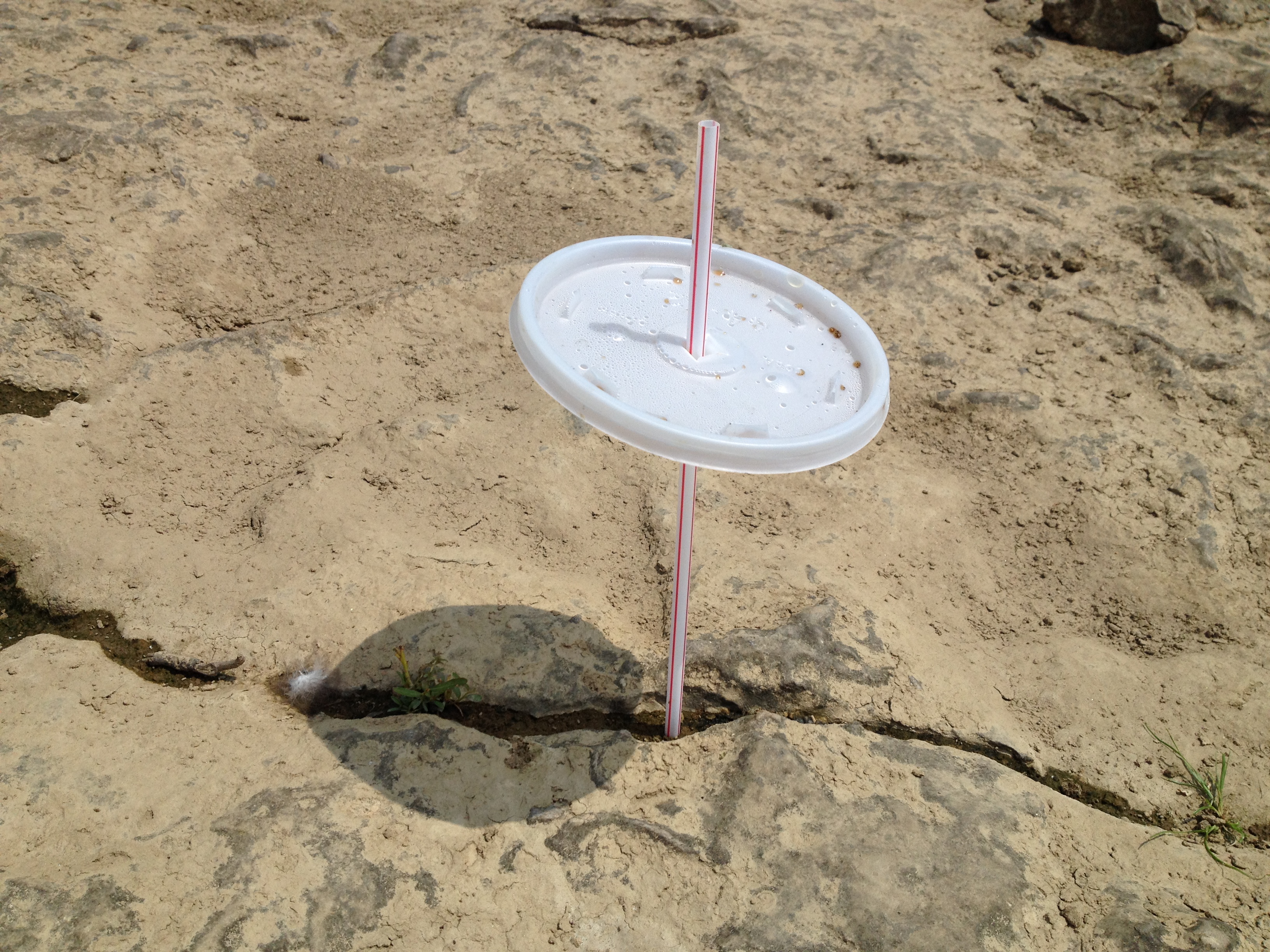
Plastic straw and cup lid wedged in rock crack, Falls of the Ohio, Aug. 2014

Wedged in a limestone crack was another plastic straw and disposable cup lid “sculpture”.  This time the straw was white with red stripes running down its length and the lid was an opaque white color.  Like the previous straw sculpture, this one seemed to activate the space it occupied and caused me to notice what else was happening in this micro-location.  The remains of ancient horn corals that lived in a shallow sea millions of years ago were preserved on the surface of the stone.  The straw was strategically placed in a deep silt-filled fissure which was the only place that would allow it to stand upright on this hard rock.  Finding a second upright straw and lid piece confirmed that the first one was not just a happy accident.  There was someone moving through the area with a purpose.

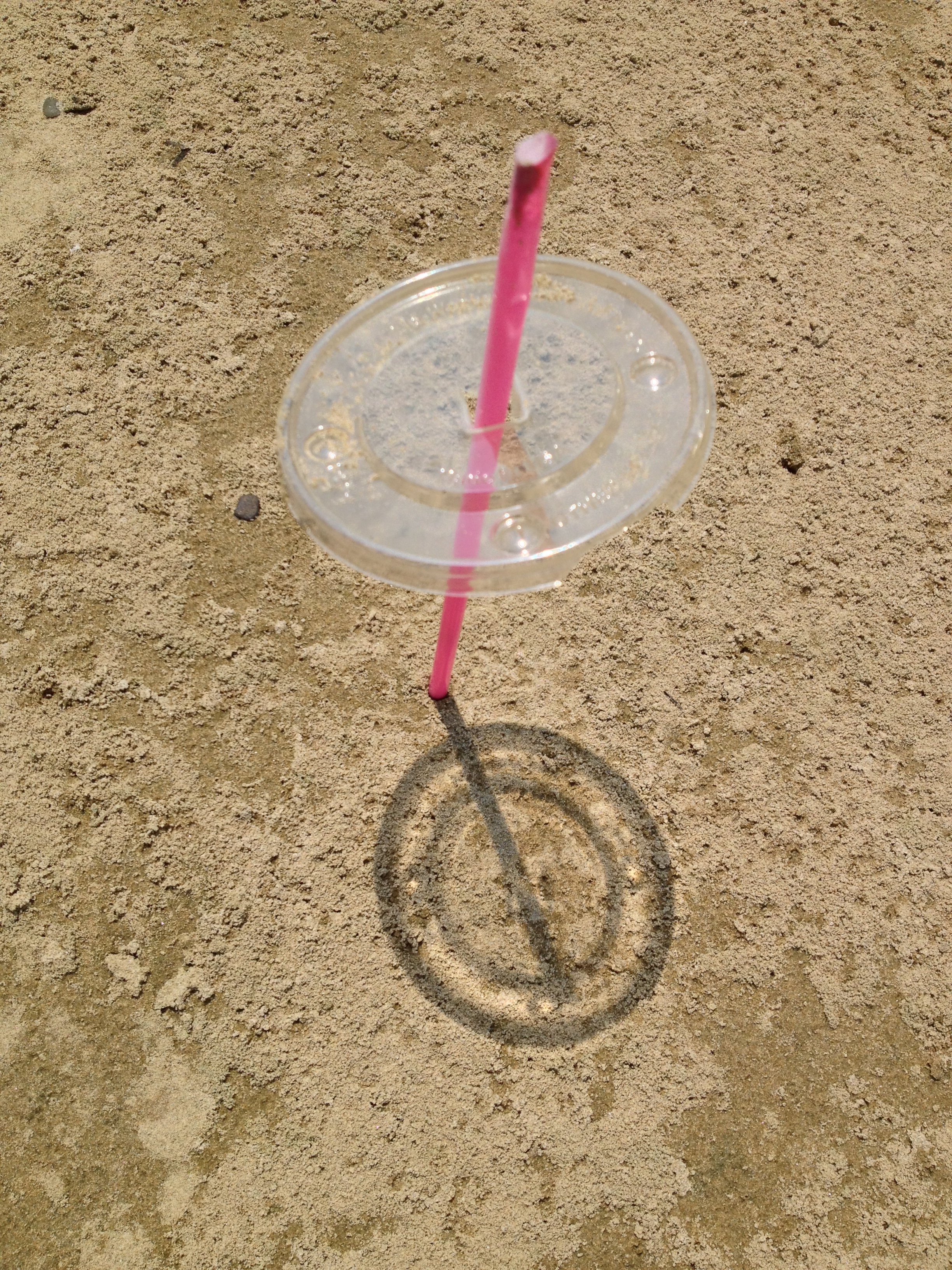
Upright red plastic straw with clear cup lid, Falls of the Ohio, Aug. 2014

I soon came upon a third straw and lid site specific piece and it was different from the others.  While it was also made from plastic, the lid was clear and in the strong sunlight cast the most wonderful shadow upon the sand.  It occurred to me that I was following a fresh trail because the slightest bit of wind could easily knock these ephemeral works over.  I kept walking and as luck would have it, I came upon the artist responsible for these creations.

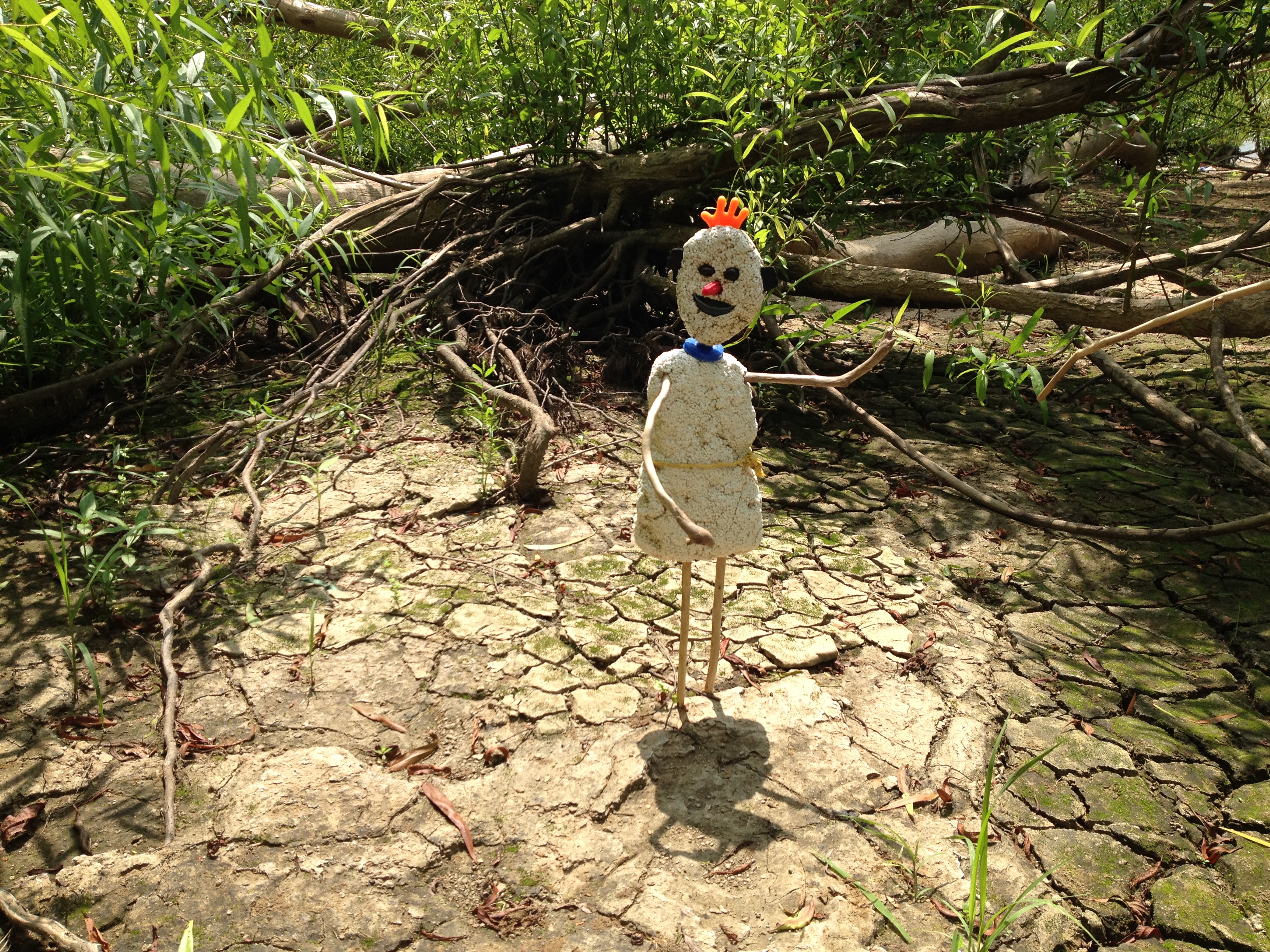
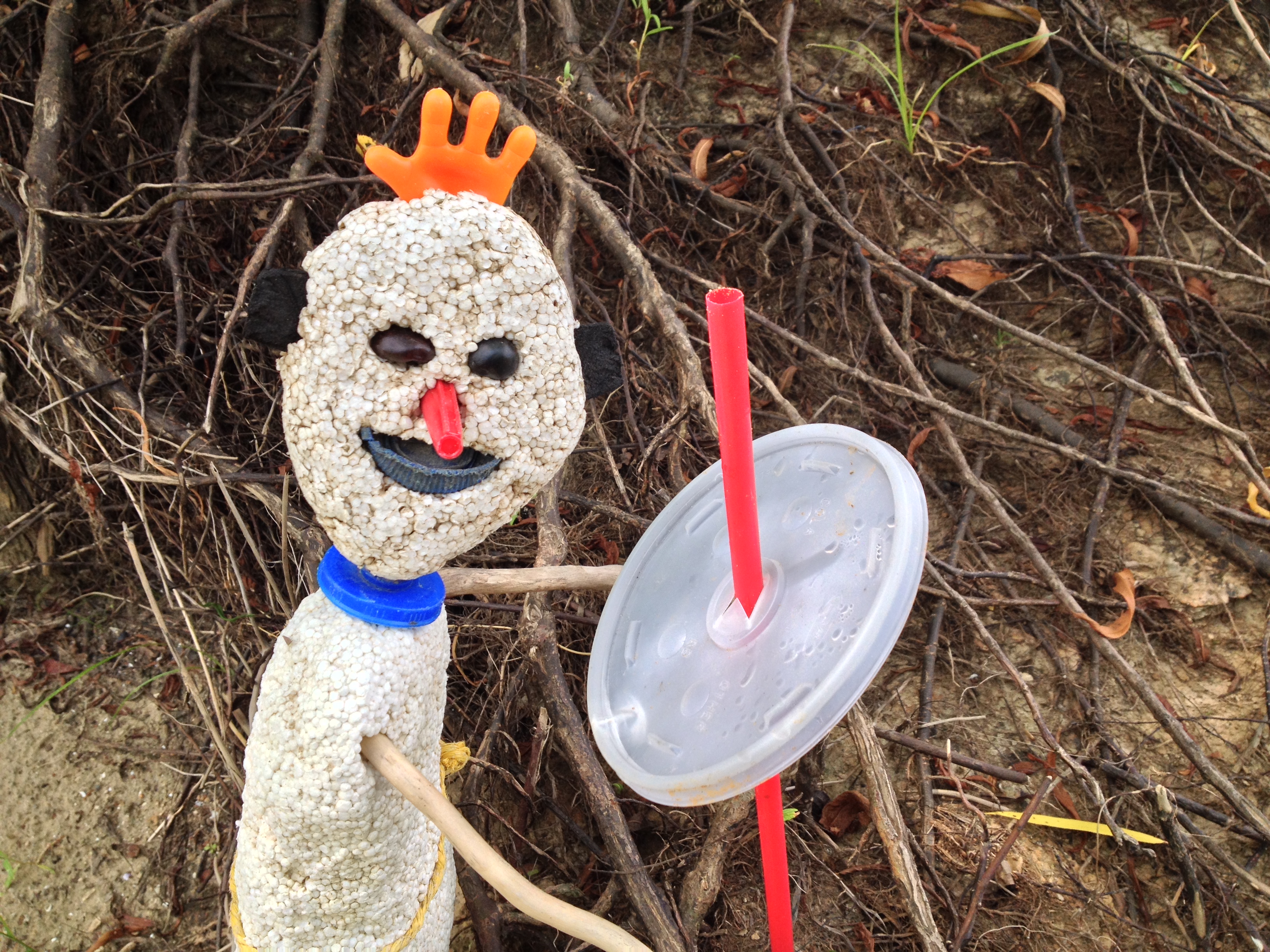
artist with orange hand on his head, Falls of the Ohio, Aug. 2014

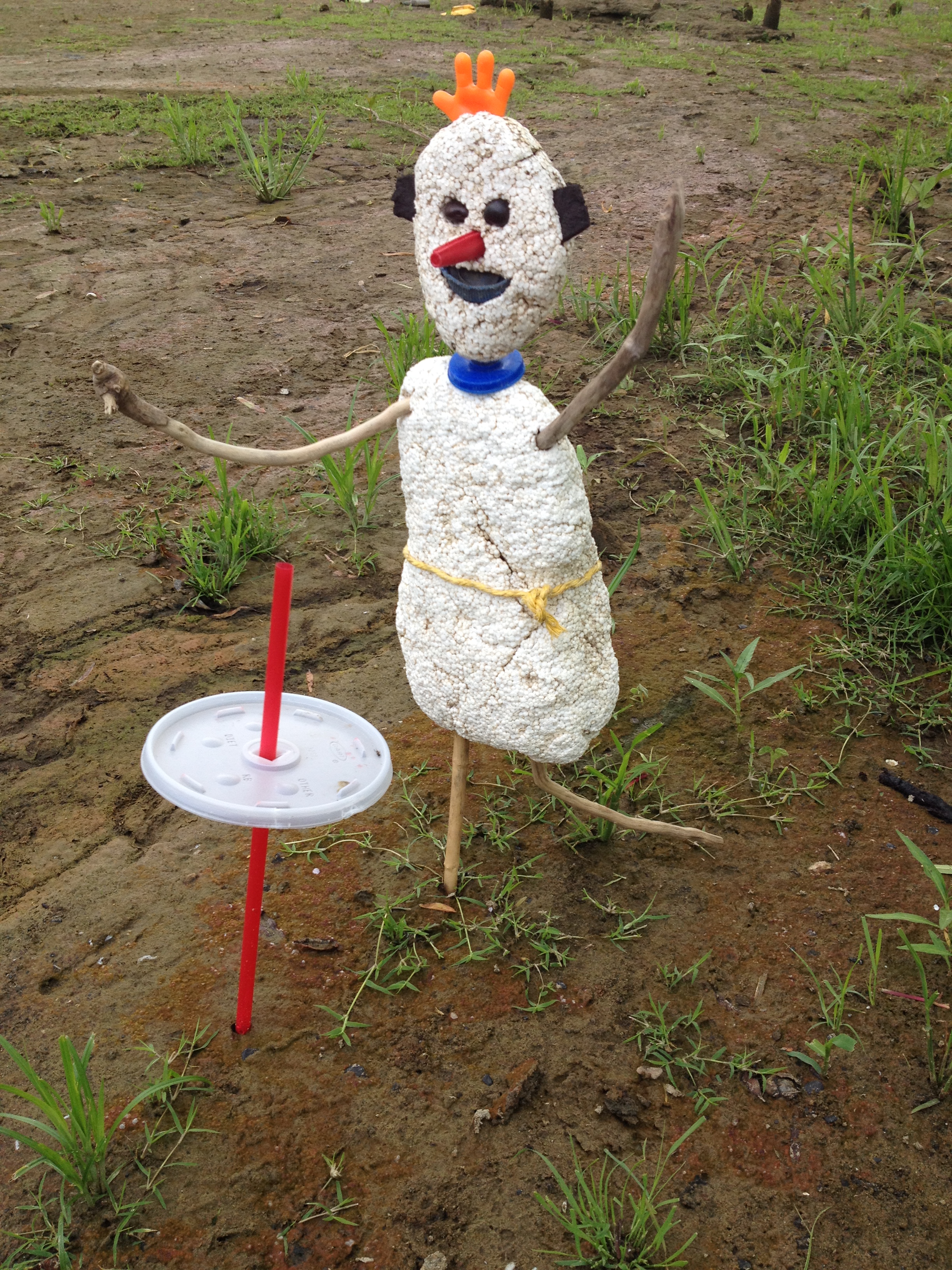
With a big blue smile a diminutive persona standing at the edge of a stand of willow trees greeted me with a friendly wave of his thin stick arm.  He sported an orange hand symbol on his head and had very dark eyes as I recall.  He had a blue-collar around his neck and a yellow belt around his waist.  Otherwise, he was wearing nothing at all!  I heard him say that he had watched me from a distance checking out his last piece and what did I think of it?  I told him that I loved the simplicity of his works and admired how his careful placement made me more aware of the locations where they were sited.  They were such simple gestures made with the most economical of means.  I went on to gush about how surprisingly sophisticated I thought they all were, but he just stood there smiling.  It was then my turn and I asked him how he came upon the idea?  He said it happened quite by accident.  Reflexively, he set the first one up without any thought and liked the result.  On a hot, sunny day…it reminded him of an umbrella set up on a beach which further reminded him of a family vacation he made as child the first time he saw the ocean.  The other straw and lid pieces became tops spinning in his mind and on and on, but most of all…he was doing this to have fun.

artist with straw and lid sculpture, Falls of the Ohio, Aug. 2014

I asked if it would be all right to tag along for a short while with him and he said that it would be fine.  We passed by one of his earlier projects and I snapped this quick picture. He was looking to make another piece or two and there (unfortunately) didn’t seem to be any shortages of straws and lids to work with.  The artist recognized that these elements were not supposed to end up here.  Setting them upright was also a good way to get other people to notice these things and perhaps give a thought or two about the state of the environment.  We eventually worked our way back to the water.  Sure enough, my little friend found another straw and lid along a trail frequented by fishermen.

The artist and his materials, Falls of the Ohio, Aug. 2014

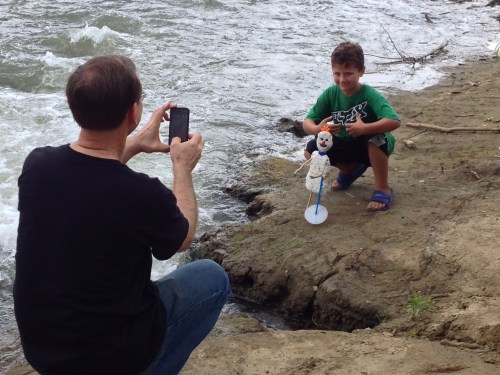
Just as the artist was about to plant his new-found straw and lid into the moist ground…a nice group of people came over and greeted us.  There were two brothers and a sister and a family friend who was taking them to the river to hang out and enjoy themselves.  They had also been collecting river junk and specifically looking for small, intact, glass bottles.  They were curious about the little artist and we talked for a while about being creative.  The group expressed an appreciation for recycling and reusing the cast off stuff of the world.  They asked if it was all right if they could pose with the artist to take their own pictures.  Here are a couple of those images.

Posing for pictures with the artist, Aug. 2014

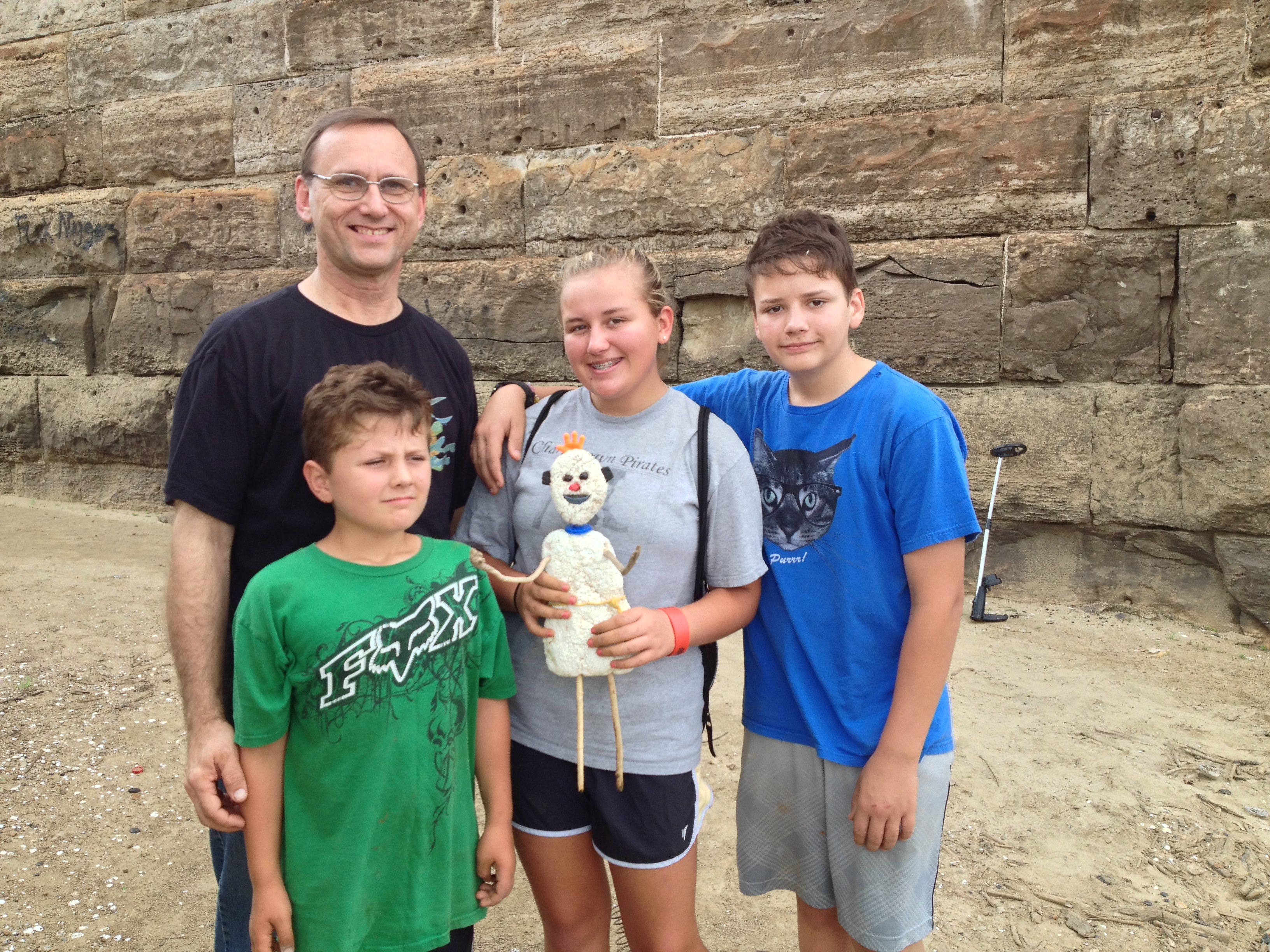
The artist posed with his new family, Falls of the Ohio, Aug. 2014


The youngest of the group then asked if it was okay if the little Styrofoam artist went home with them?  There seemed to be no objections.  The little man with the orange hand on his head was open to anything.   I, however, did ask for a few things in return.  The first was that a nice piece of wood be found out here that would make a good base so that the figure could stand upright.   The second request was that a little bit of craft glue be used to hold all the loose parts together.  Doing these things would make the figure last a bit longer and remind the family for years to come of this time they spent together at the river.  I thought this was the perfect ending to a most entertaining day.  So long for now from the Falls of the Ohio.

Portrait of the straw and cup lid artist, Falls of the Ohio, Aug. 2014


Read Full Post »

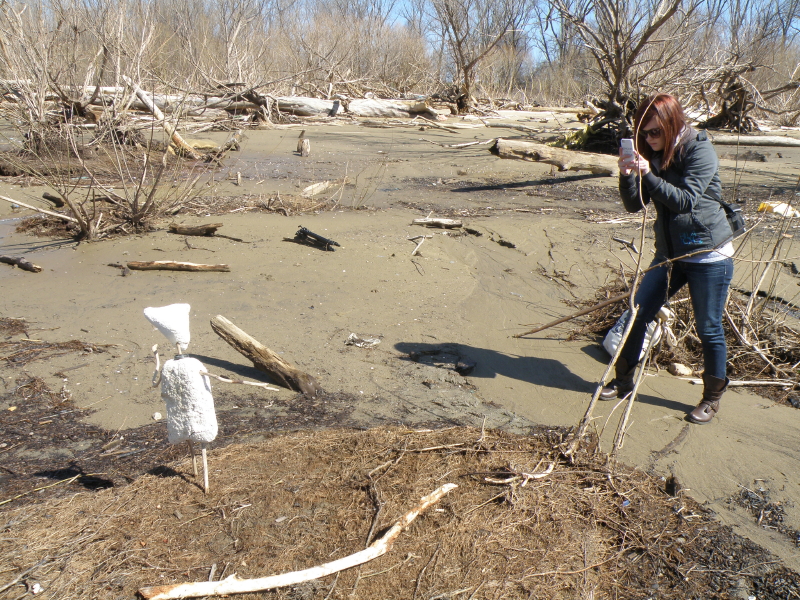
Taylor with Styro-sculpture, late March 2014

Taylor’s Artist at Exit 0 Video Link

Here’s a short video interview conducted by Taylor Ferguson on my Artist at Exit 0 project at the Falls of the Ohio State Park.  Taylor is a journalism student at the Indiana University Southeast in New Albany, Indiana and was nice enough to be interested in filming my process.  Our late March day at the river was a bit windy which the microphone picked up beautifully, however, it washed out the rest of the audio.  What you hear me saying is a bit of stream of conscious narrative which was edited into the video at a later date.  I previously published a post entitled “Touring with Taylor” that has some of my images and words made about the experience.

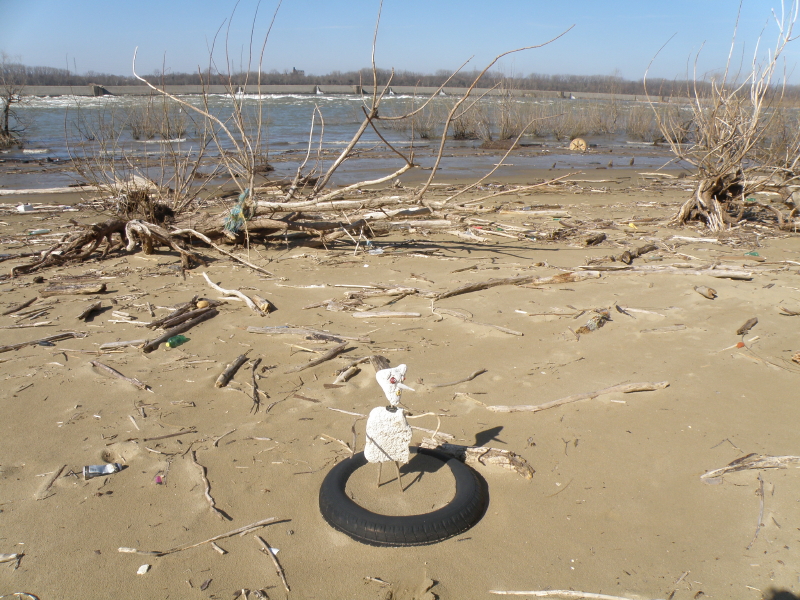
Mr. Mosquito Nose standing in a tire, late March 2014, Falls of the Ohio

Read Full Post »

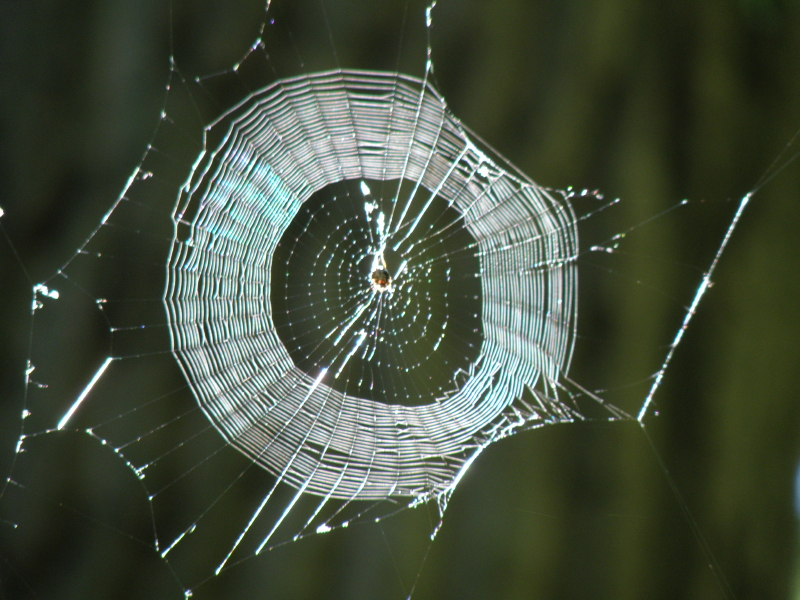
spider's web in the morning light, Falls of the Ohio, Aug. 2013The Falls of the Ohio is a special place in the history of life.  From the ancient marine creatures whose remains are preserved in limestone dating back more than 370 million years a go to the contemporary creatures that inhabit the park today…it is my goal to celebrate life here in all its diversity.  I’m going to use this post to present images of recent finds.  I was exploring the western side of this state park recently and saw this spider’s web high off the ground catching the early morning light.  I’m sure its architect would prefer a buggy meal over the photons it has snared instead!  Looking at this web image, I’m struck by how similar this  looks to the cross-section of a tree.  Can you see that too with the outermost silk rings resembling a tree’s growth rings?  In the Purple Loosestrife stands, butterflies were having a nectar feast and I presented many images of them in a previous post.  Here’s one more to add to that portfolio.  I have seen this butterfly species wind up on the spider’s menu before.

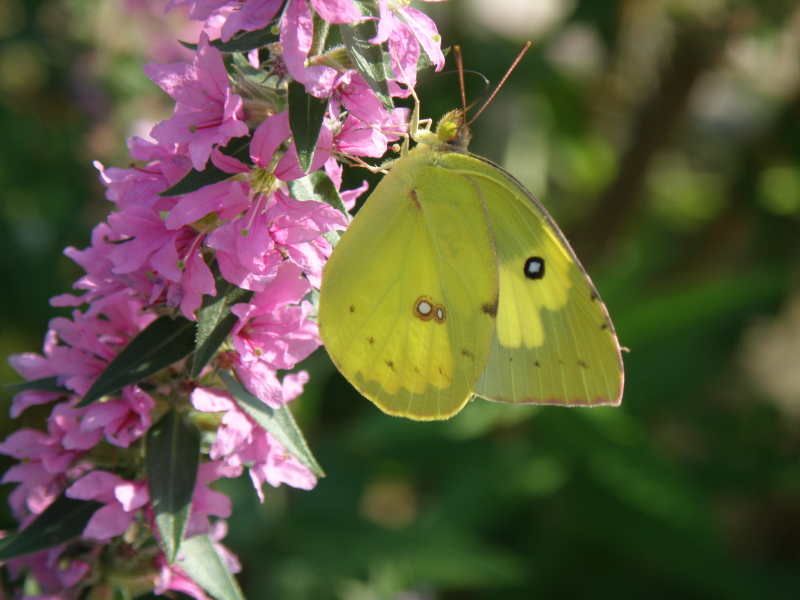
Dog Face Butterfly on Purple Loosestrife, Falls of the Ohio, late Aug. 2013

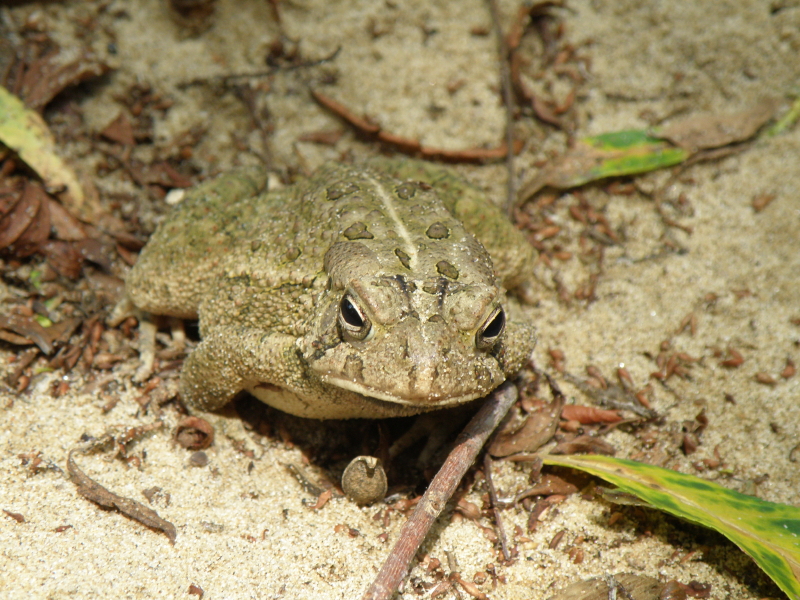
This is the Dog Face Butterfly (Colias cestonia ).  It is often difficult to photograph this butterfly in the wild with its wings open because this species prefers to feed with its wings held together.  Through the strong light passing through the forewings, you can get the suggestion of a dog’s head in profile.  Imagine the black rimmed spot as the “dog’s eye” with its muzzle pointing down.  When open, the dark interior margins of the wings are a warm black color.  I was exploring the interstitial sandy zone between the river and the willow woods…when I came across this interesting amphibian.

The American Toad at the Falls of the Ohio, August 2013

American Toad, dorsal view, Falls of the Ohio, Aug. 2013

If this American Toad ( Bufo americanus ) had not moved…I doubt I would have seen it.  It’s coloration is wonderfully cryptic easily blending into the sand.  The toad was busy hunting among the debris and driftwood for any insects and invertebrates it could find.  I don’t encounter many amphibians out here…so finding a common toad is a noteworthy event.  Let’s move up the evolutionary ladder a bit.  I was busy working on one of my Styrofoam sculptures at my outdoor studio when I felt I was being watched.  When I lifted my eyes up from my artwork…I found myself looking eye to eye with this critter.

Woodchuck or groundhog at the Falls of the Ohio, Aug. 2013

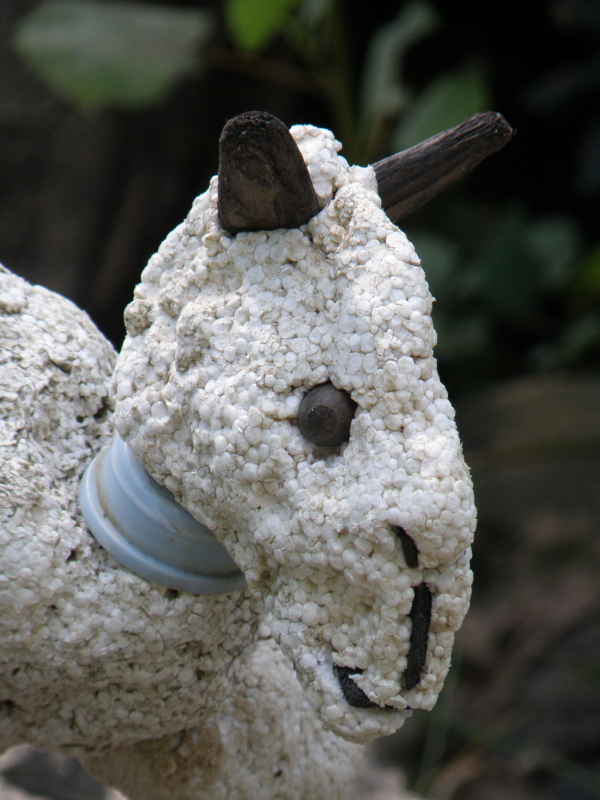
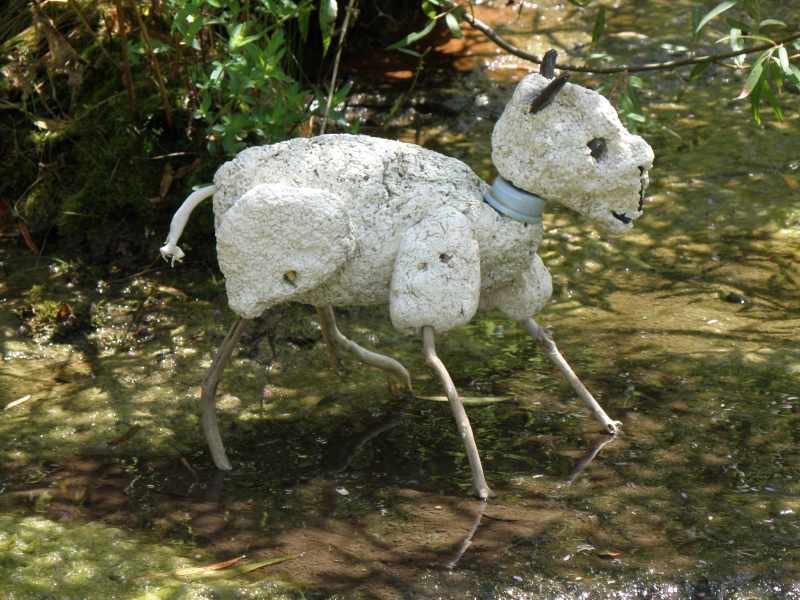
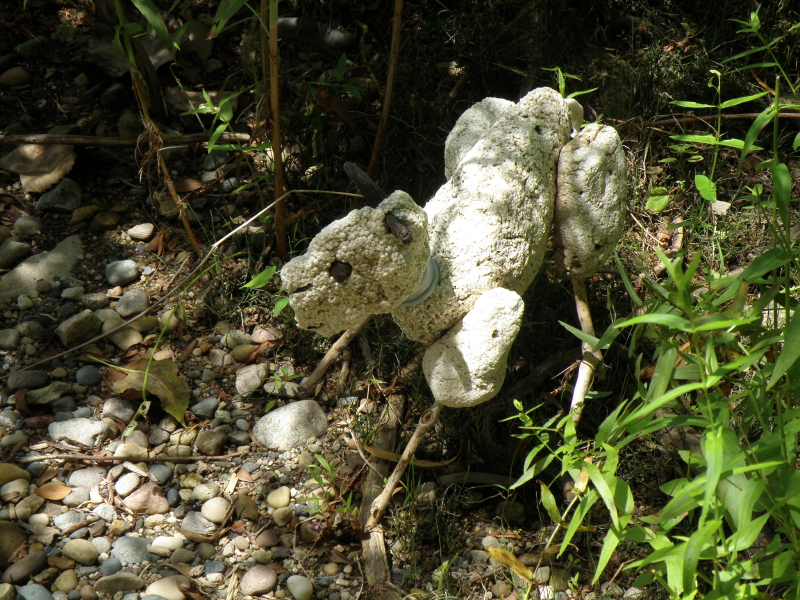
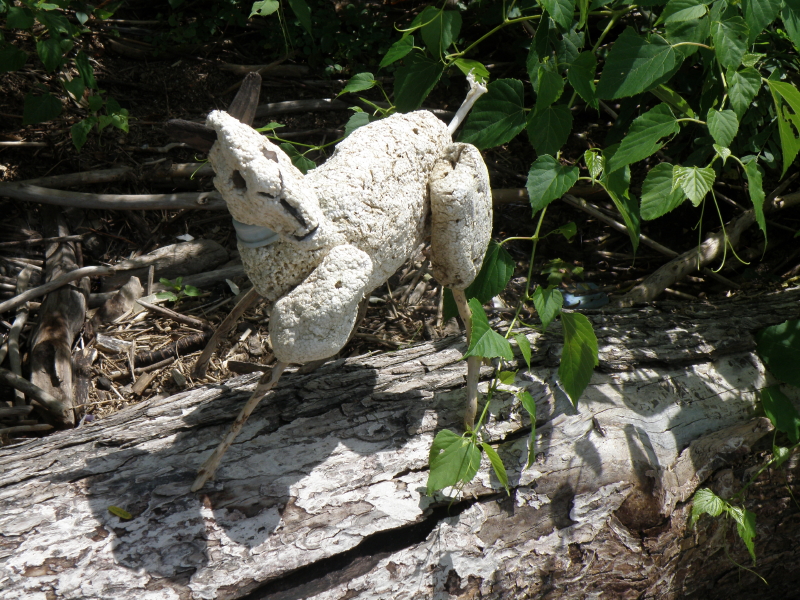
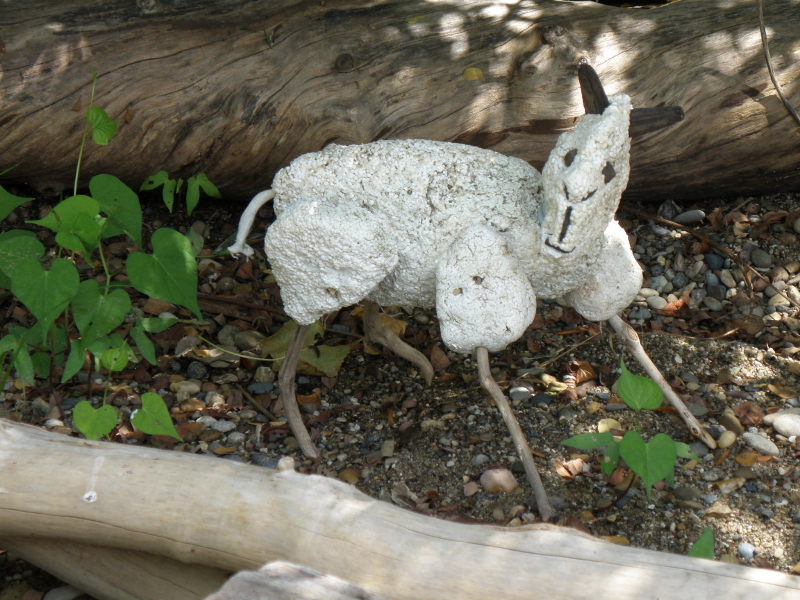
This is the common Groundhog or Woodchuck ( Marmota monax ).  As its scientific name suggests, this large rodent is a member of the marmot family.  Woodchucks are successfully established at the Falls and I encounter them often.  They are fast diggers and live in an extensive system of burrows.  Woodchucks usually don’t stray too far away from the entrances to their burrows.  Succulent greens are the preferred foods.  This particular woodchuck regarding me is a young individual and may be seeking territory of its own?  Usually, I don’t see them this close to the river.  I did have an interesting recent encounter with a very different animal in the western section of the Falls of the Ohio State Park.  Have you ever heard of an animal called the Camelope, (Antilocapra fallsei )?  It is very rarely seen.  The flora and fauna at the Falls can be roughly divided between forms that are “natural” and “unnatural”.  The spider, butterfly, toad, and woodchuck fit in the natural fauna category, while the Camelope is definitely on the unnatural fauna side of life and may represent evolution at an accelerated pace?  The many stresses to the environment and its myriad ecosystems have required a dramatic response and creatures like the Camelope may be nature’s way of responding to these changes?  I’m not a trained scientist, but that is my educated guess.  Discovering and documenting these recent life forms has become a passion of mine.  Anyway, let’s look at a Camelope.  Let’s start with an image of its head.

Camelope, detail of head, August 2013

It’s called a Camelope because its head generally resembles that of a camel’s.  This is a browsing animal and accepts a wide range of vegetation growing along the river.  It has dark eyes that are always nervously looking around for potential predators.  This park is also home to Feralocitors that prey upon Camelopes.  This particular species also has an acute sense of smell.

Camelope at the Falls of the Ohio, Aug. 2013

Camelope at the Falls of the Ohio, Aug. 2013

I came across this Camelope in a more isolated section of the park.  It was hiding among the stands of loosestrife and drinking water from the springs that flow downhill and into the river.  It is ever alert and very nimble with quick feet and seemingly at home climbing on rocks or navigating through dense vegetation.  Their bodies resemble that of deer or antelopes…hence Camelope.

Camelope reacting to an unfamiliar sound, Aug. 2013

Camelope at the Falls of the Ohio, Aug. 2013

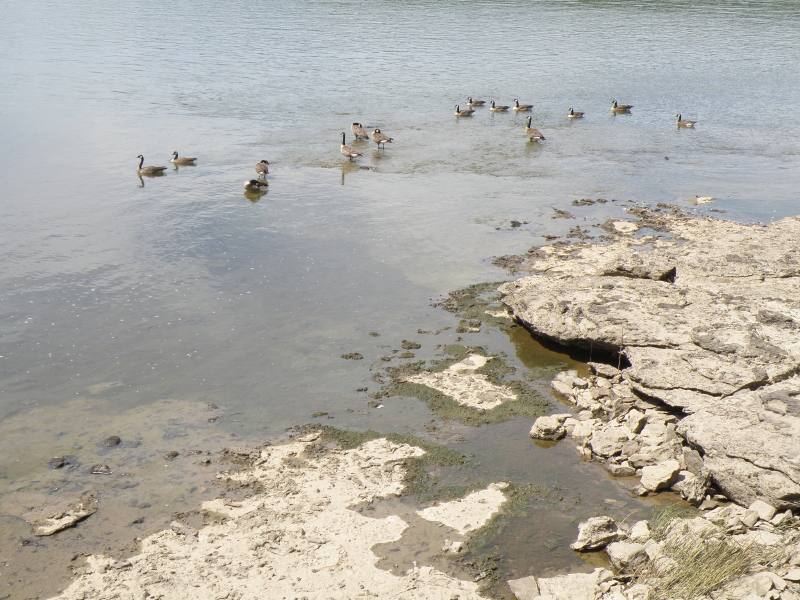
Since it is a relatively new animal…not very much is known about it.  I was able to conceal my presence long enough to manage these images.  I either moved or the wind shifted, but anyway my presence was detected and with a quick bound, the Camelope disappeared into the brush.  I hope I may come across it again and learn more about its secretive life.  Regardless, I will keep my eyes open and my camera at the ready for any new “unnatural” life forms I discover.  It occurred to me on my way home that my Falls of the Ohio Project is now officially ten years old!  I started exploring this fascinating park as the Artist at Exit 0 in August 2003 when the bicentennial of the Lewis and Clark Expedition was being celebrated.  Reading early 19th century accounts of the natural abundance of our country and this place in particular made me wistful for a world that no longer exists.  Two hundred years later…that process continues and no doubt will two hundred years from now.  I have often thought of this riverblog as a historical document as relevant today as Lewis and Clark’s notebooks and journals were back when this country was first being described.  I hope this park and its remarkable history will continue to inspire people for a very long time.  In closing, I would like to present an image of Canada Geese on the water near the fossil beds.  Their coloration gives them in my mind’s eye a formal quality and lends dignity to the landscape.  Until next time…from the Falls of the Ohio.
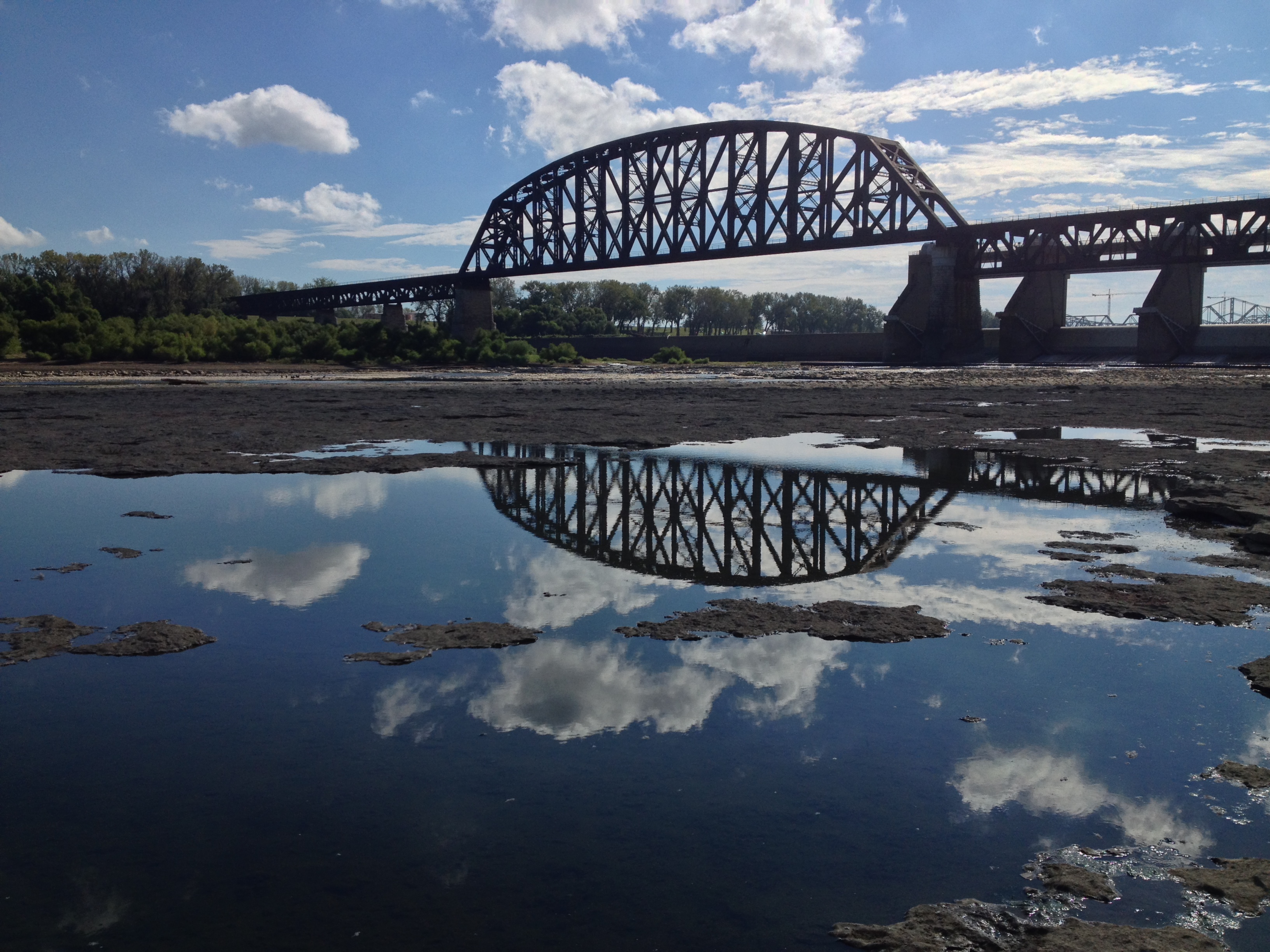
Canada Geese and fossil rock at the Falls of the Ohio, Aug. 2013

Read Full Post »

willow, early May, Falls, 2013

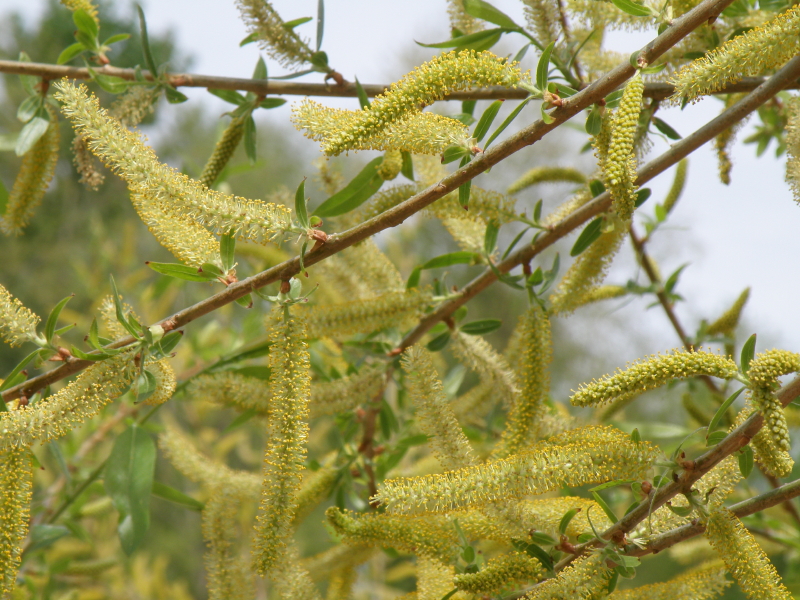
Falls of the Ohio State Park…early May.  Many of the willows along the river whose fibrous roots are holding fast are also in bloom.

black willow catkins, Falls of the Ohio, May 2013

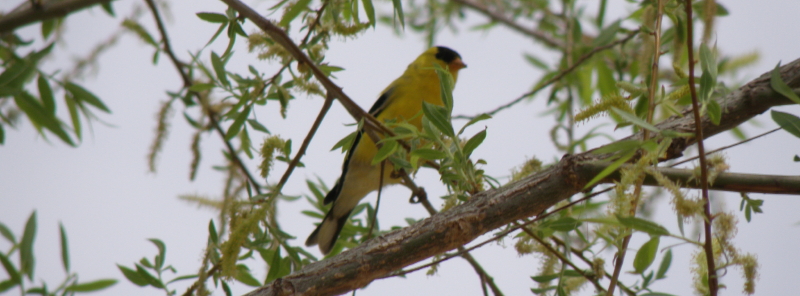
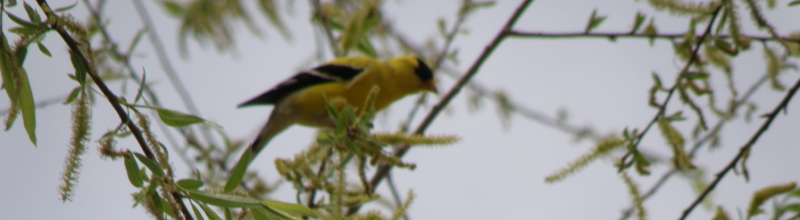
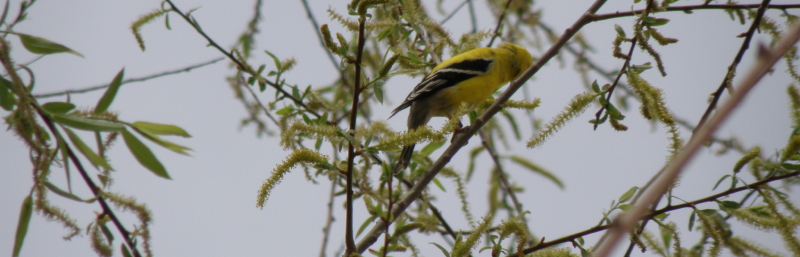
The yellow flowers are  catkins and open before the long, thin leaves appear.  It’s warm and windy along the river.  Tomorrow it will be different.  American goldfinches are feeding on the willow blooms.

male American goldfinch and willow, May 2013

American goldfinch, male, May 2013

goldfinch on willow, May 2013

goldfinch willow 4.5_1_1

American goldfinch on willow, May 2013

The sound of rolling river waves against Indiana are interrupted every now and then with goldfinch song.  The males are becoming more and more yellow.  Does the pollen of the black willow also help this bird?

black willow catkins, May 2013

For me, it’s blooming willow on Oak’s Day.  The derby is tomorrow.  I’ve a lot of river to explore for a few hours more.  Who knows what else I might find?

wet willows at the Falls of the Ohio, May 2, 2013

Read Full Post »

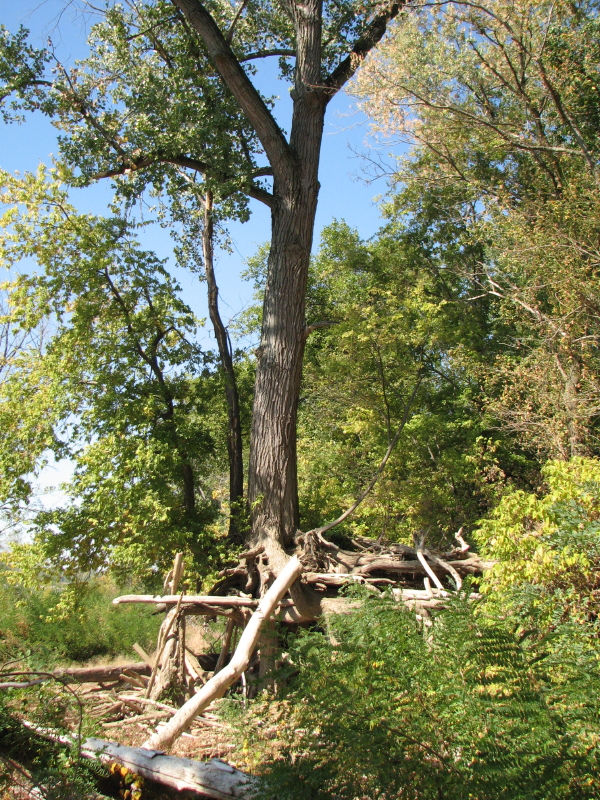
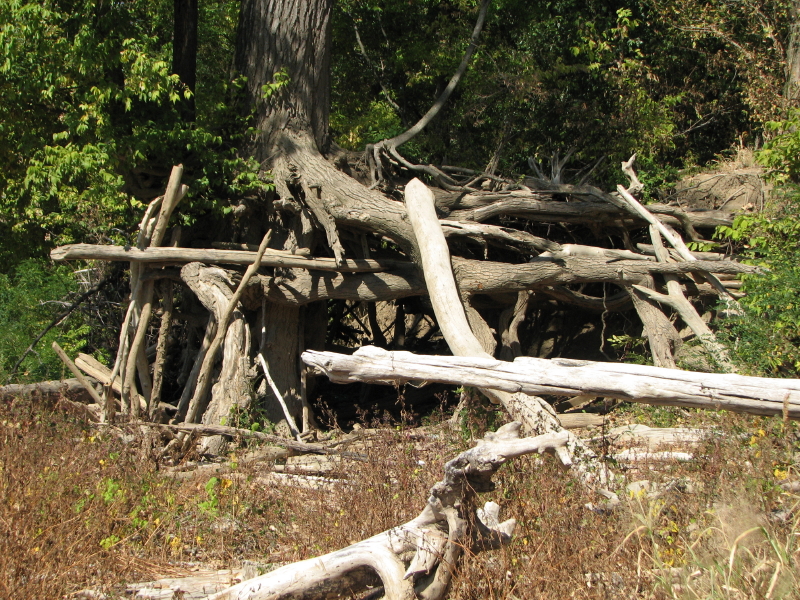
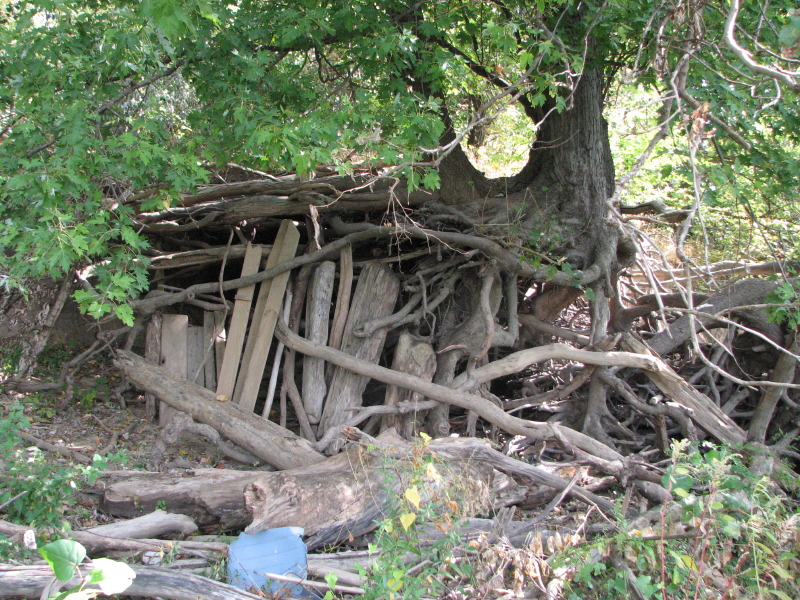
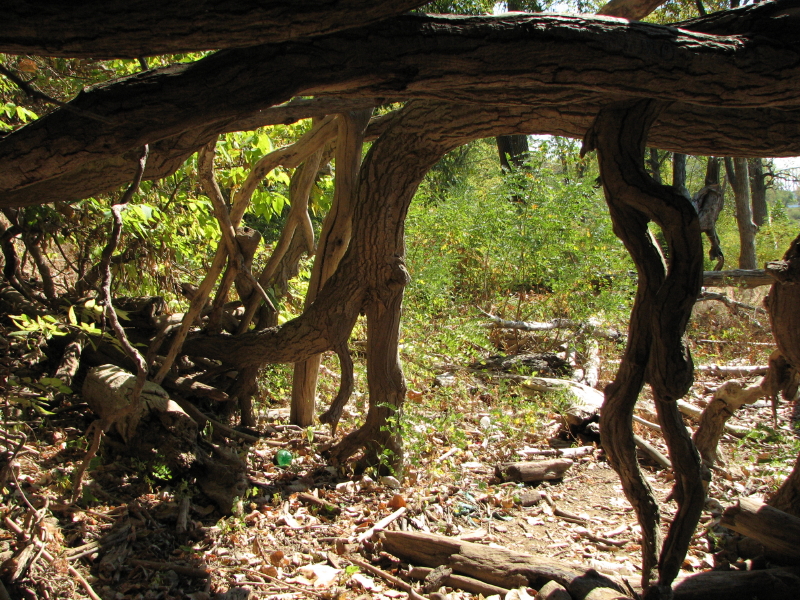
Along the western section of the Falls of the Ohio State Park is one of my favorite trees.  It’s a large cottonwood tree that you can sit under its roots!  Many years a go the river must have eroded the bank surrounding this tree and enough of its root system was left and continued to grow that a nice sized space was formed.  It’s a favorite place for young lovers and people taking shelter from thunderstorms.  I’ve taking advantage of this “room” while waiting out rain showers and it’s also a handy place to escape the summer heat.

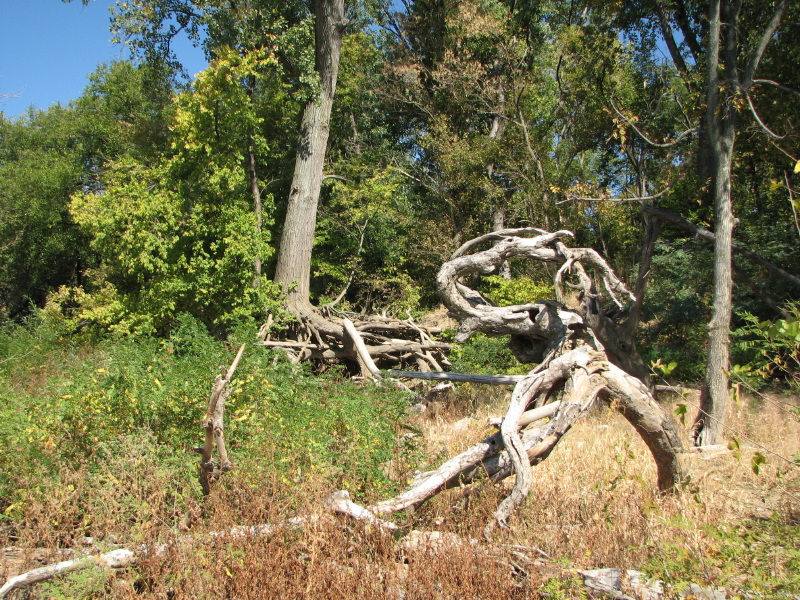
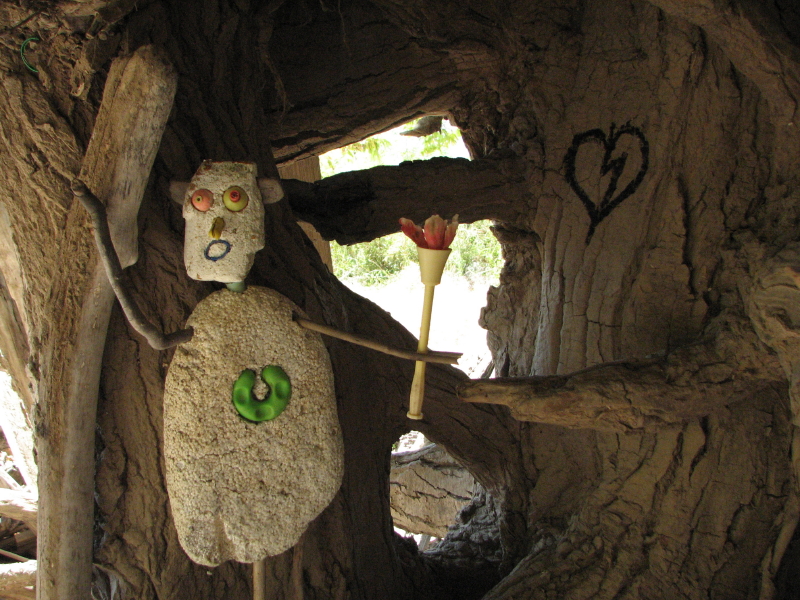
There are other tree formations in the area and many of them are quite sculptural and picturesque.  I find myself taking many pictures in this area.  One day while I was engaged in this activity, I accepted an invitation to hang out and take a break with a new friend of mine.  Although he is shy and doesn’t like cameras, he did allow me to take his portrait and a few images of him in his home.

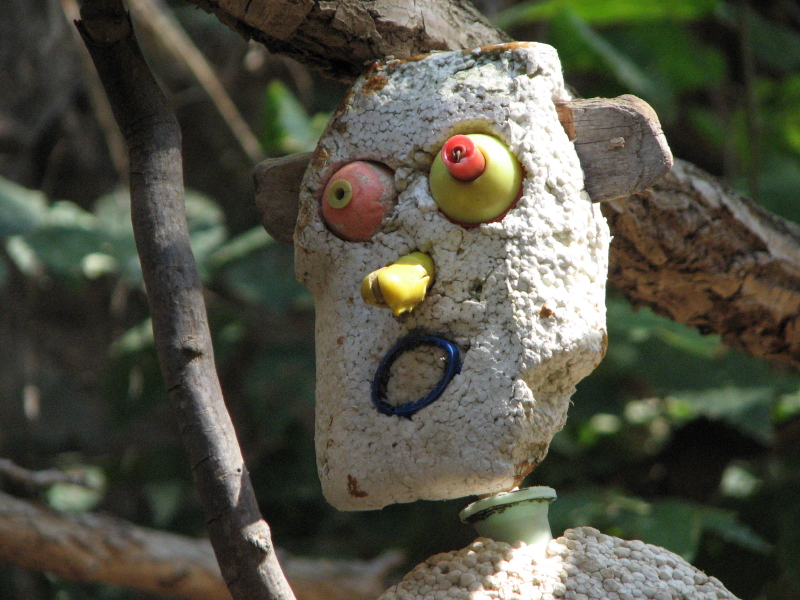
He doesn’t have a name in the conventional way we have names.  He simply describes himself as the Spirit of the Tree and he has adopted this special cottonwood tree as his charge.  As far as I can tell…what he does for the tree to look after it is “pray”  for its continued good health. 

This is a picture of the “front door” of this tree house.  It does break with traditional idea of a tree house by being ground level instead of elevated.  The “back door” is covered by river scavenged planks .

The Spirit of the Tree invited me in and I took a look around.  Yes, there were beer cans and the remnants of fire pits.  I imagined that this tree was used by homeless people on more than one occasion.  There was even graffiti that some careless person thought was needed in this already special place.  All this causes the Spirit of the Tree much concern and he tells me that it takes a lot of incense and sweet grass to purify the tree.

This is not the Spirit’s first tree, but he did say it was his favorite one so far.  Because it is so accessible by man and the river…it’s just a matter of time before nature reclaims it.  You can see the evidence of this process all around the cottonwood tree.  Once upon a time, there were several other trees keeping this special tree company, but wind and water have taken their toll.  Unfortunately, there aren’t enough “Spirits” around for every tree and so they must be choosy by necessity.

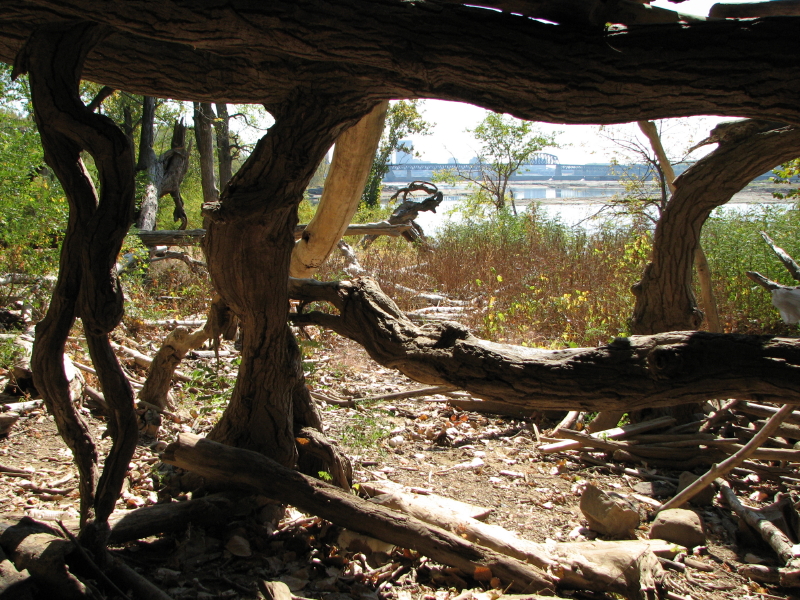
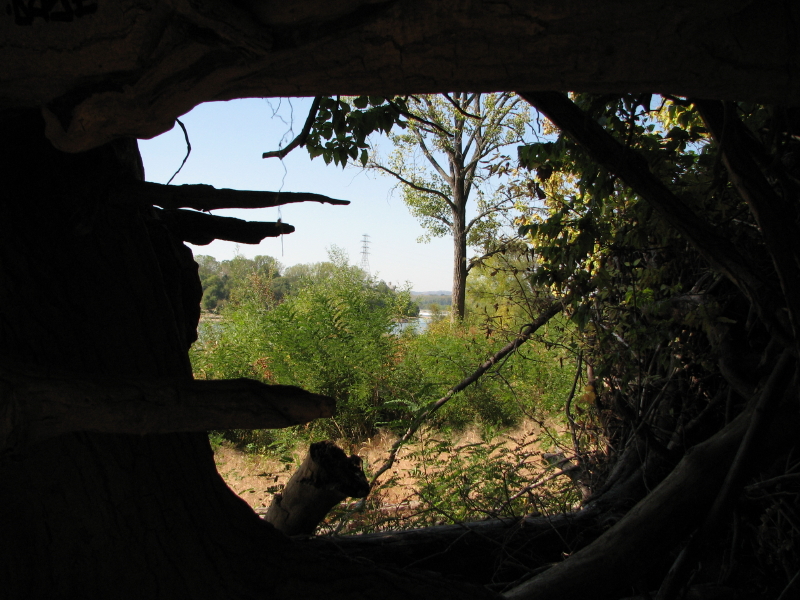
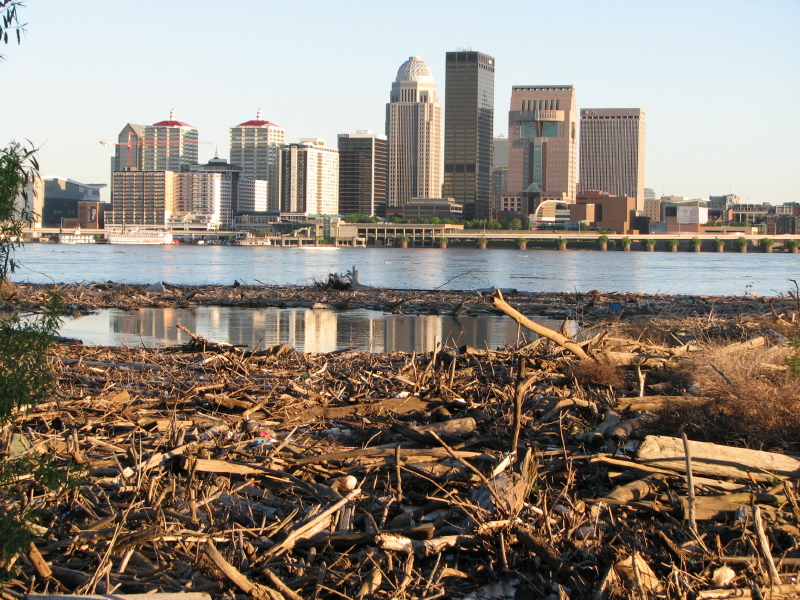
I have included several images of the views out from under this cottonwood tree.  You can just make out the skyline of the Louisville and the fossil beds in the background.  Sitting under this tree…you might think is potentially scary, but I have always found it comforting.

You can see how the roots just drop down into the ground.  They are large and numerous enough to buttress this tree.  There is even a window providing a view of the western side of the park and here it is.

I talked with the Spirit of the Tree for about an hour before heading home.  He told me he chose to reveal himself to me because he had seen me before and felt I was respectful in my dealings with his tree house.  In those instances when indifferent people show up…he climbs the trees roots and branches and hangs out in the woods until they leave and then he purifies the tree again to keep it going strong for a little while longer.  My parting image of the Spirit of the Tree is of him standing on this tree’s amazing roots and looking up at the riverbank.

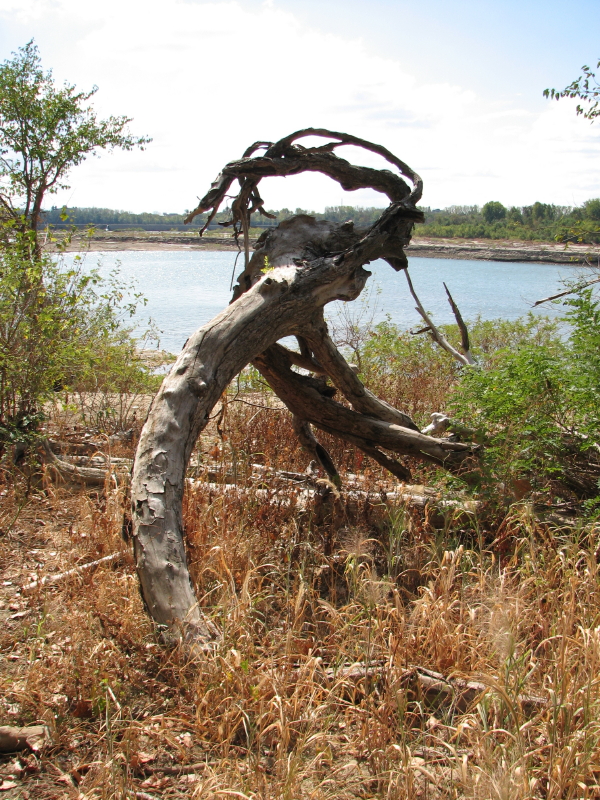
Because there aren’t enough Spirits to go around to take care of all the trees we need in this world…I think it would be a good idea of everybody who cared about such things would adopt a tree or two for themselves.  Doing so would be good for our spirits too!  To end this post, here is another angle on that really sculptural tree that fell down years a go.
Read Full Post »

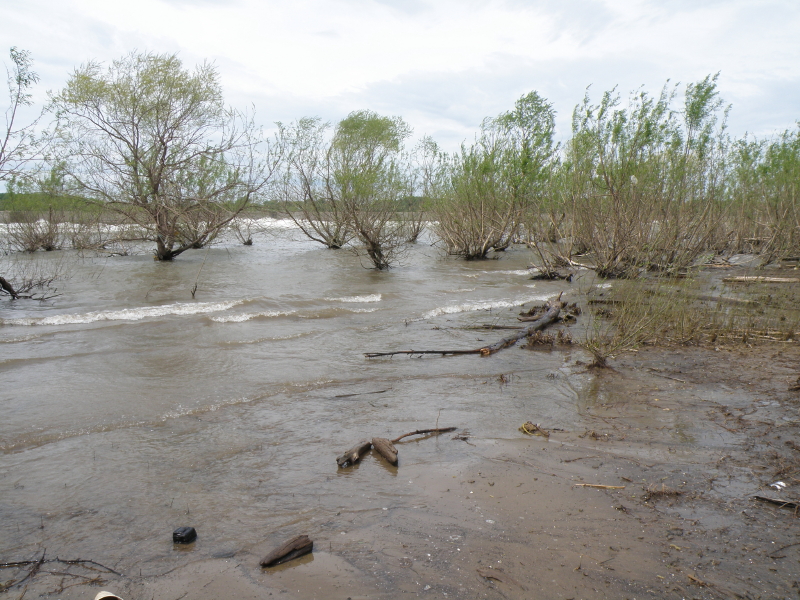
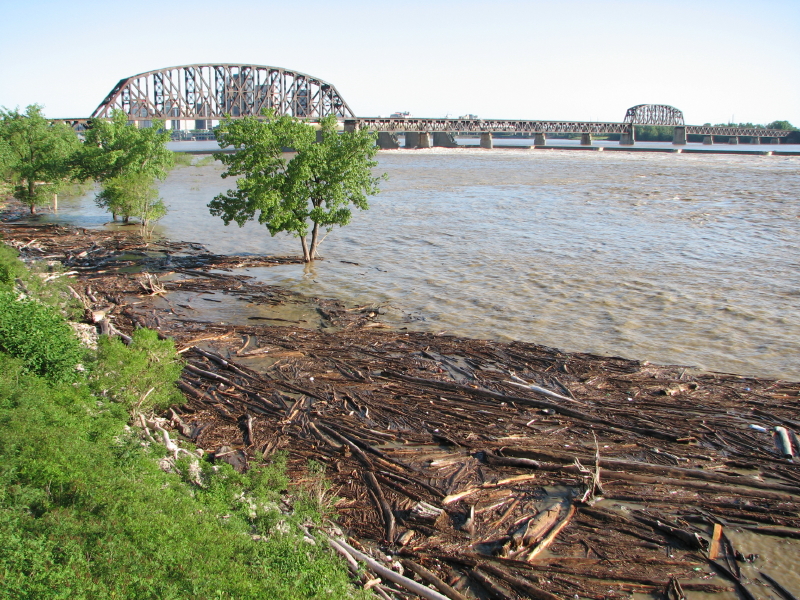
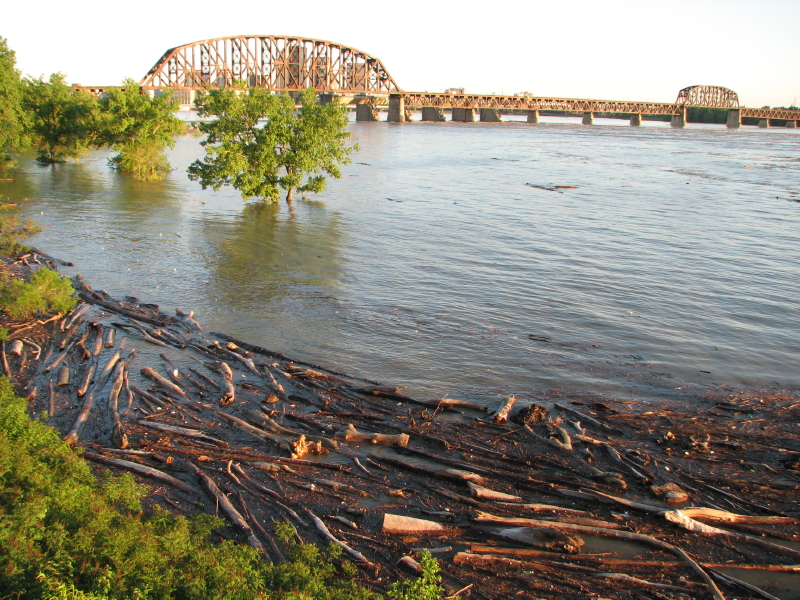
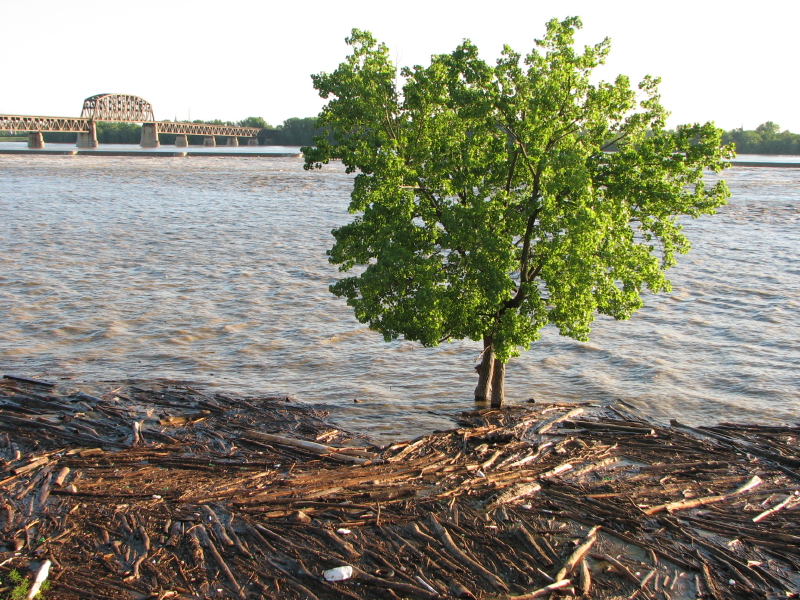
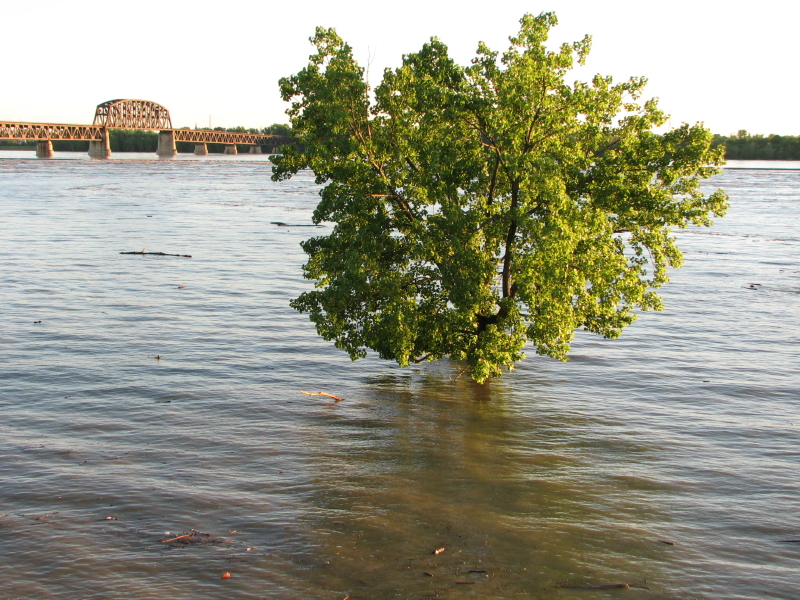
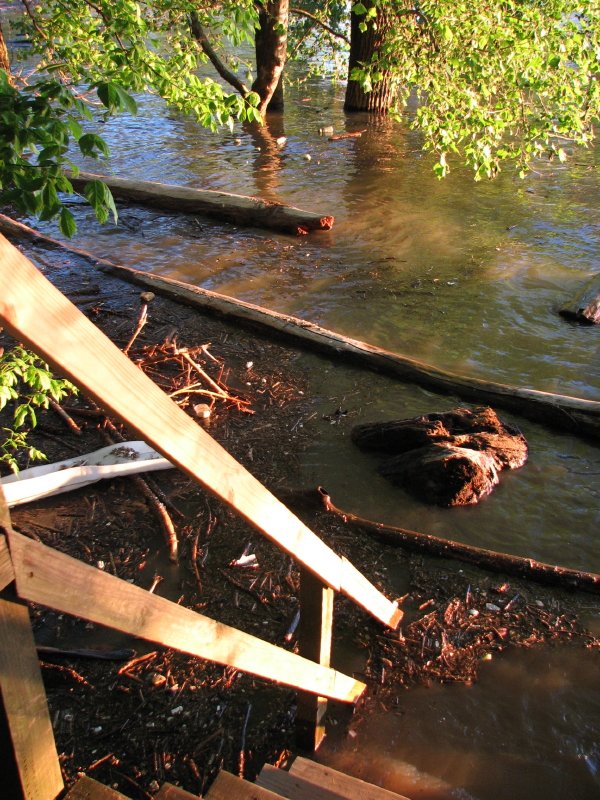
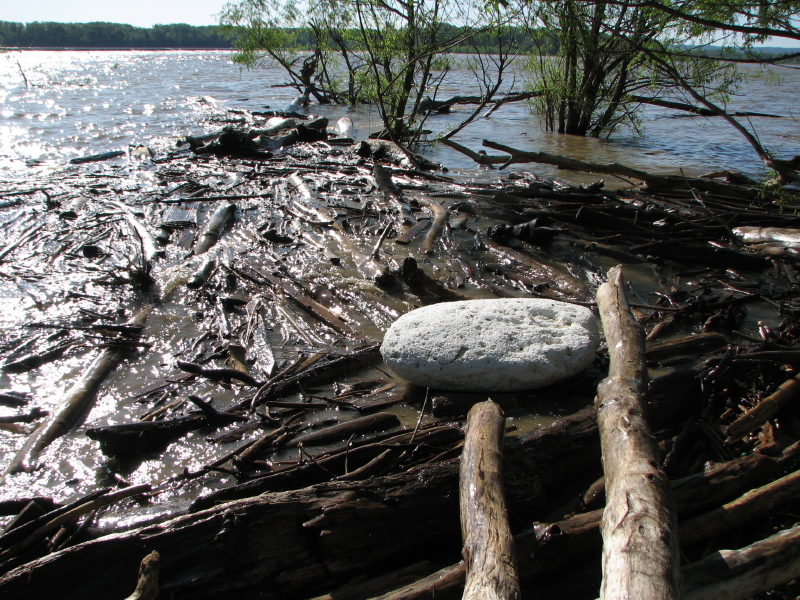
I knew we received a lot of rain…I can tell by how much makes it into the basement of our home.  I once thought it was the river’s way of trying to claim its own since I store many of my river finds there.  I have this mental image of Styrofoam and driftwood floating into my back yard from the bowels of my basement.  As much precipitation as we experienced, there must have been a heck of a lot more just northeast of us.  The river has been rising for days and will continue to do so for a few more.  Since yesterday, the river has essentially gone over the dam and large masses of driftwood and debris are flowing over.  Once the water recedes, I expect to find a completely different park.  I’ve put together a few images to give you a sense of the river rising over the last two days.  Let’s start with some larger views.
The rise can be seen from the height of the water on this Cottonwood tree.  Usually this tree is not touching the river.

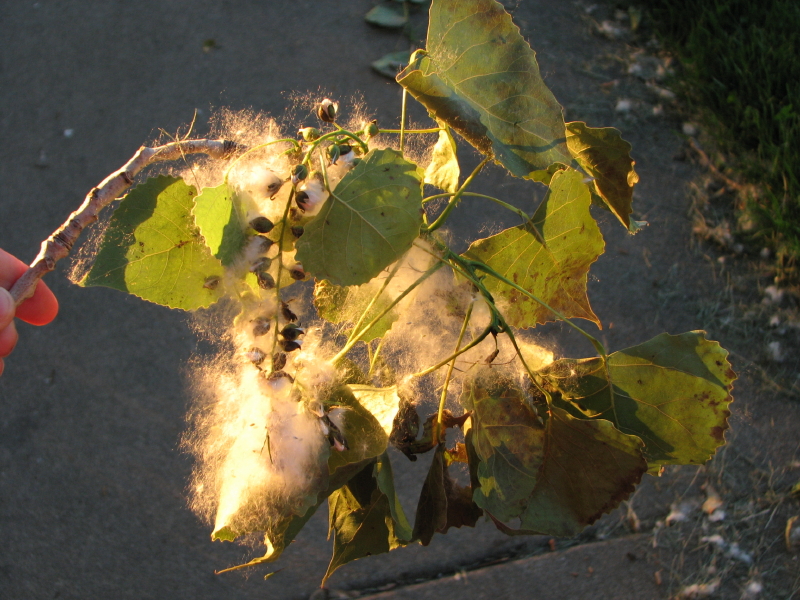
This is the time of year when the Cottonwood trees release their fluff.  Wind catches this fuzz which harbors tiny seeds and disperses it everywhere.  In places cottony drifts are created.  Here is the broken tip of a branch showing how the Cottonwood tree earned its name. 

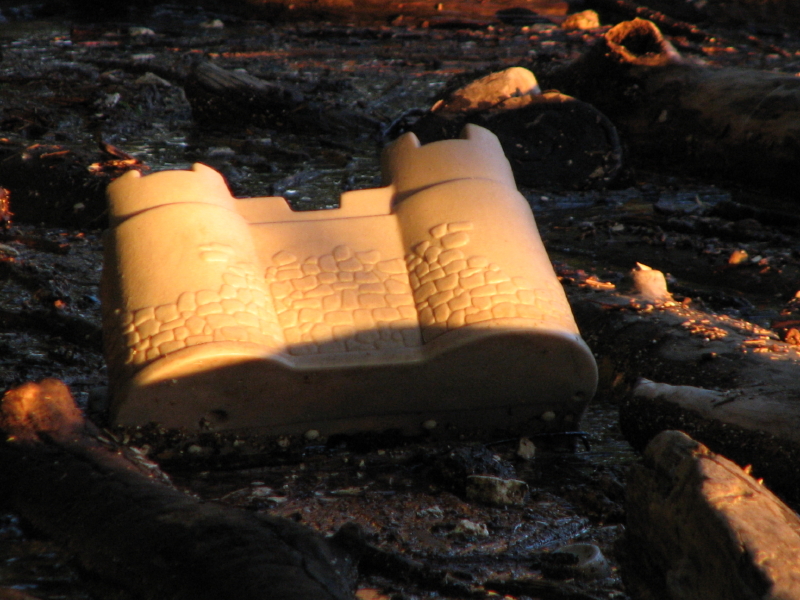
There are several places to access the riverbank at the park and one popular way is to use this set of wooden stairs.  The river, however, has covered the bottom two boards.  While I was there, I watched the surreal sight of a plastic castle go floating by!

Okay, here is the castle I mentioned…

…maybe I’ll find this thing later on as well as this huge Styrofoam chunk I saw yesterday!  Most of the pieces I find have been shaped by rubbing against driftwood in the water.  The abrasion creates these interesting biomorphic shapes I like to use in my sculpture.

Once the river crests, it will be a few days before I can get back down to the riverbank.  I heard it’s supposed to rain again this weekend.  In the meantime, I’m looking forward to the exhibit at the Oldham County Historical Center in LaGrange.  There’s a small reception Thursday night and I heard my pieces have been dispersed among the regular collection.  I’ll post from there next and try to give you a few views of the display.  Finally, here’s one more high water image I came across late today.

Read Full Post »

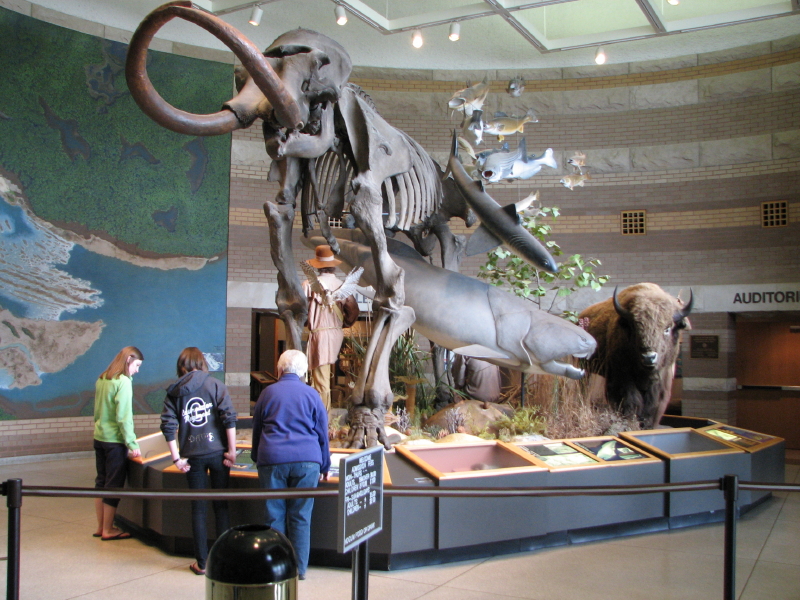
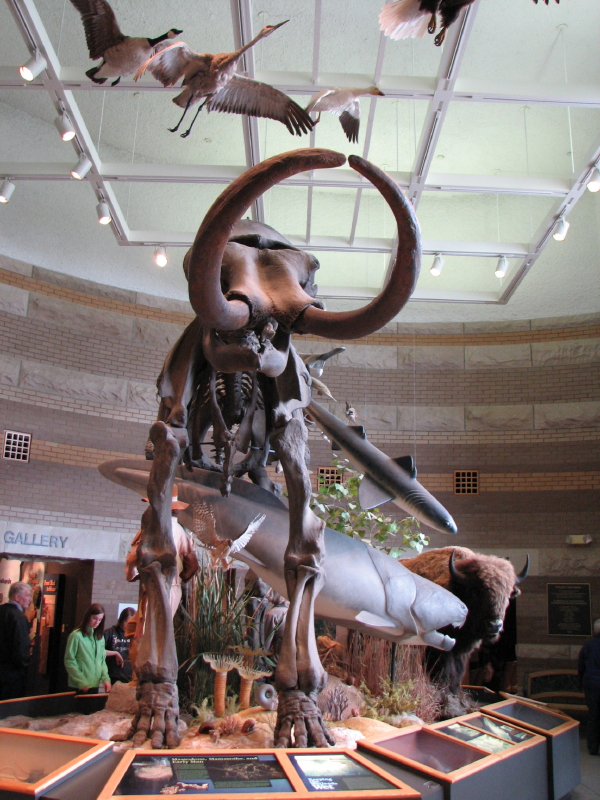
Since I will be away from my computer for a short while, I wanted to squeeze in one more post.  Recently, I went inside the Falls of the Ohio Interpretive Center and recorded these images of the display in their main hall.  The center is in the process of upgrading their exhibits, but I hope they choose to keep this centerpiece.  It is a three-dimensional collage of the history of life as it has presented itself at this location.  Here the ancient meets the contemporary, fact confronts legend, the terrestrial meets the aquatic, and fresh water mingles with the marine.

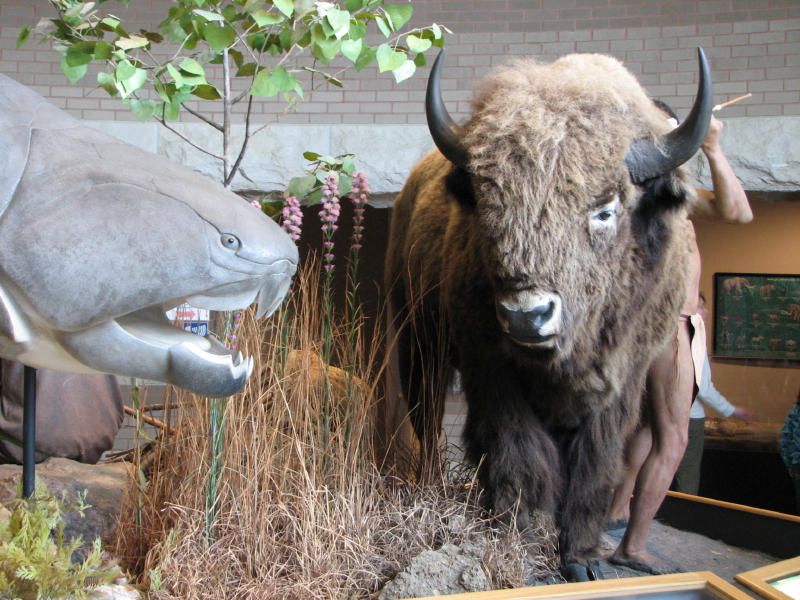
I have picked out a few details to present to you.  This display incorporates both traditional taxidermy and state of the art model making.  I love it because it retains this cabinet of curiosities feel to it and it has these unusual juxtapositions.  In the image above, a bison comes face to face with an ancient Devonian carnivorous fish!

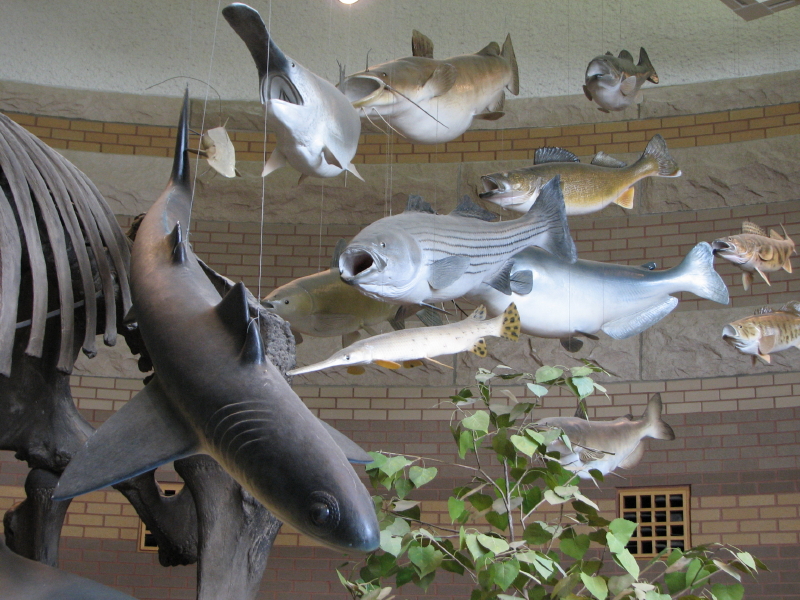
And speaking of fish…here are a few representations of  fish that currently can be found in the Ohio River swimming along side this interpretation of an ancient shark.  Among the living species found here include the Paddlefish, Striped Bass, Walleye, and several large species of catfish.  The rocks in the park are loaded with marine fossils from the Devonian period (roughly 375 million years ago) which saw the first fish appear on life’s stage.  Interestingly, fish fossils are very rarely found here, but we have lots of evidence of different corals and brachiopods.

It’s the large view which includes this Mammoth skeleton replica that makes the biggest impression on visitors.  The center has done a good job of telling the story of the importance of the Falls of the Ohio and I look forward to seeing how their refreshed exhibits carry this mission forward. I’ll show you other display images later, but for now… see you next week.

Read Full Post »

« Newer Posts - Older Posts »