Feeds:
Posts
Comments

Posts Tagged ‘environmental art’

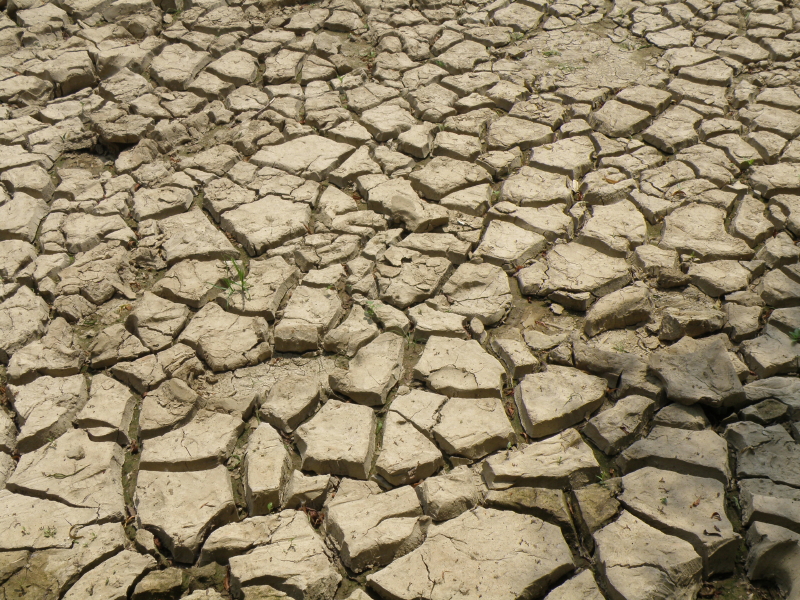
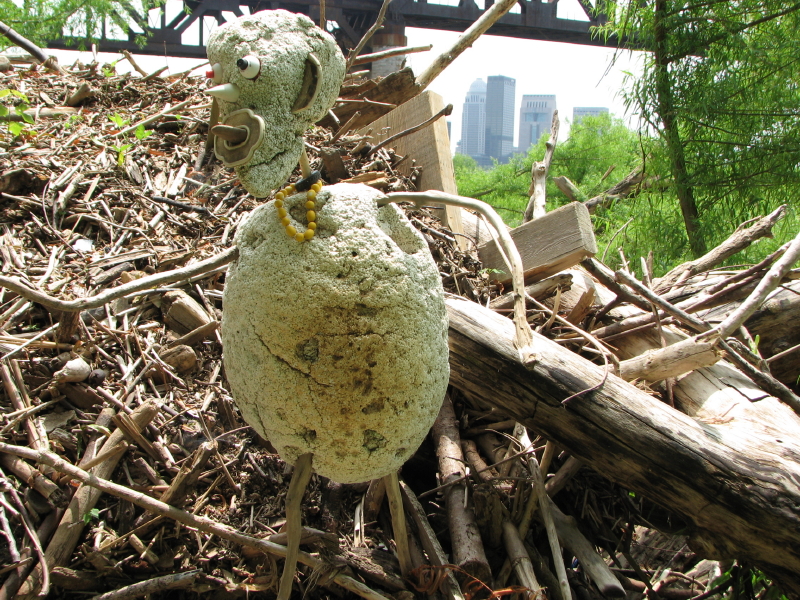
At long last I’ve made it back out to the river!  It’s been about eight weeks now since my last visit.  Today I have a double purpose…the first is to drop off one of my Styrofoam and recycled material sculptures for an annual fund-raiser that the Falls of the Ohio State Park Foundation hosts every year.  I’m glad to do this and hope my donation does well in their auction.  Despite the years I’ve been making stuff out here it still strikes me that most of my materials are literally trash.  I suppose I will never get over that. It seems to me that it takes a certain kind of person who would want to own one of these creations!  The other more fun purpose is to check out what’s different along the river and maybe make something new.  Immediately, I can see that the hot summer continues to take its toll.  At first, it was the relentless heat, but now that is coupled with a serious lack of rain.  The river is low and everything looks dry.
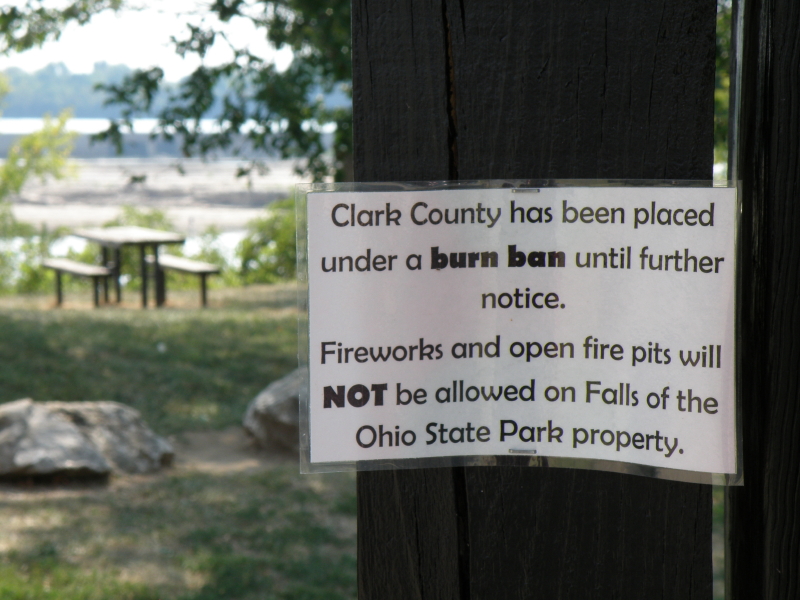
Over the course of this summer we have had just enough rain not to be considered a disaster area.  This is hardly a ringing endorsement and I find a small laminated notice tacked on to a bulletin board that reinforces how dry it is.  I think to myself that some of the people I’ve encountered out here over the years who do shoot off fireworks or build fire pits are not likely to read or heed this warning.  When I’m in the park, my preference is to move away from the most public areas and so with my walking stick in hand I head down the Woodland Loop Trail.  I’m still not confident enough to want to test my repaired knee too vigorously, but this trail is fairly easy.
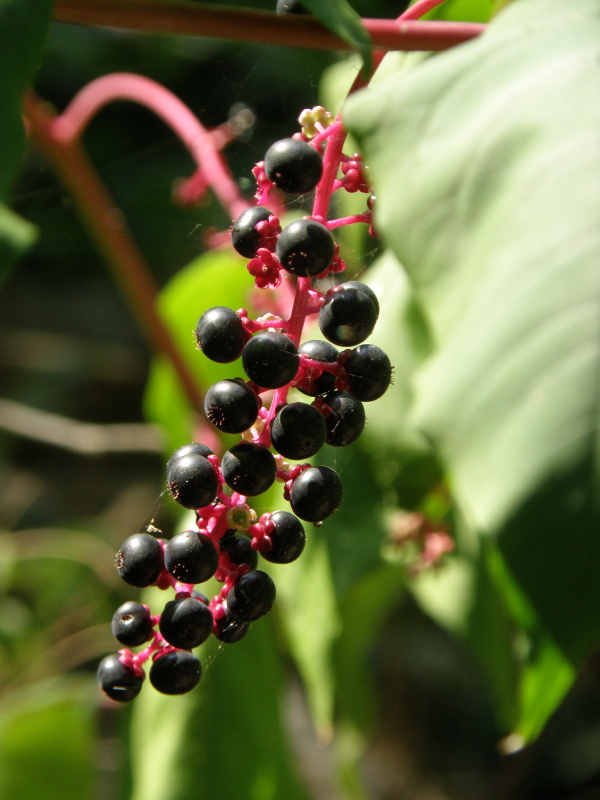
The trail is shaded which I welcome since it’s still over 90 degrees out here.  I pass many what I would consider late summer blooming plants that have flowered earlier than usual.  I did see several stands of tall Pokeweed plants with their black berries, but even these weeds have wilted leaves.  I guess what moisture these plants could muster up went into the production of their fruit?  These berries are a favorite food of several bird species.  In the past, I have used the intensely dark purple juice from Pokeweed berries as a pigment in some drawings I have made.  This color, however, is fugitive and ultimately fades in the light.  As I walk, one distinctive sound I keep hearing is the tell-tale sound of gray squirrels gnawing on the rock-hard walnuts that are  clustered around the few walnut trees along the trail.  There’s not much meat inside one of these nuts and it seems like a lot of work for little reward.

Out on the exposed fossil beds the sun is baking, but under the shade of the trees it is still fairly green.  Since my last visit,  however, I noticed a lot of dropped tree limbs and a few whole trees that have keeled over and appear to be the result of wind damage.  I have seen a few birds including two Hairy Woodpeckers and as I walk along the trail I keep getting scolded by Carolina Wrens who resent my intrusion.  In the distance I recognize the calls from the Killdeer plovers that are looking for food along the water’s edge.  The rarest and most unusual bird, however, is  just up ahead.
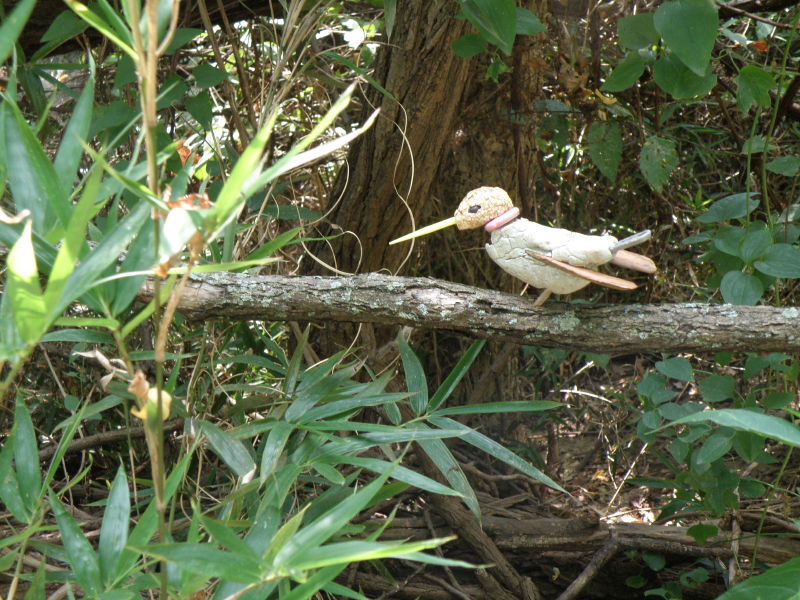
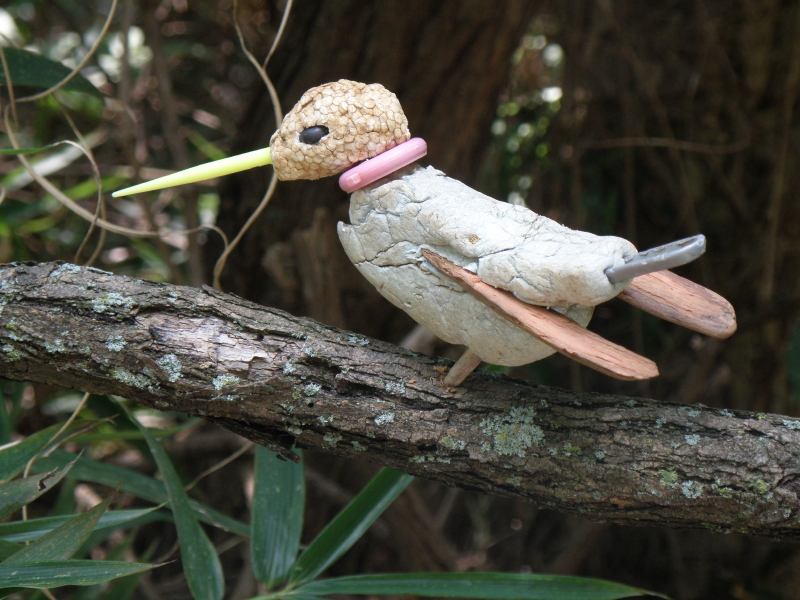
I’ve only seen a couple of the more common and native Ruby-Throated Hummingbirds this year…and so I was taken aback and delighted to come across what I later identified as Isaac’s Hummingbird (Archilochus isaaci ).  To my knowledge, this is the only recorded instance of this Cuban species reaching this park.  I’m guessing that Tropical Storm Isaac (purely coincidental, but also appropriate) which is threatening the GOP conference in Tampa Bay at this moment may have blown this rarity our way?  Hummingbirds of which there are over 300 hundred recorded species have been known to wander thousands of miles away from their more familiar haunts.

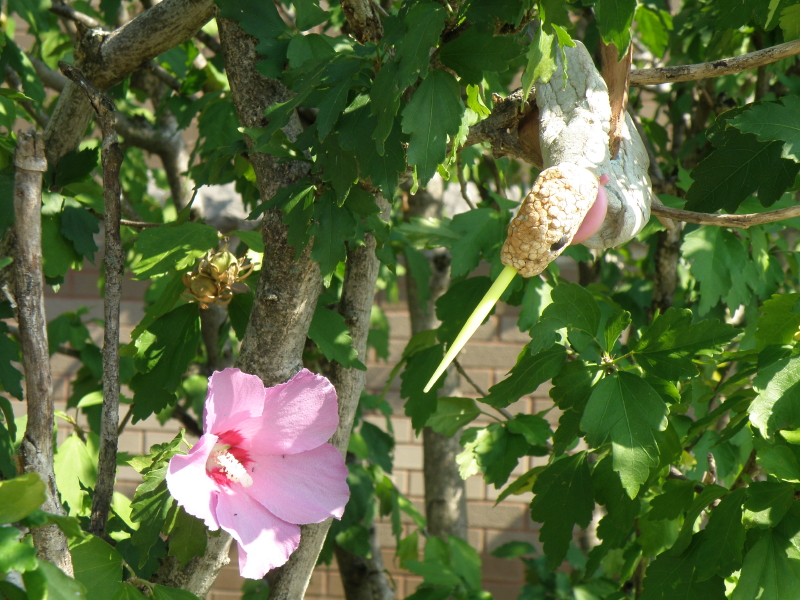
I came across this hummingbird dozing on a fallen branch.  It would open its eyes every once in a while and regard me.  I kept my movements to a minimum and completely forgot about my aching knee in the process of creating a few images of it.  I was able to snap off six pictures before it took off.  As you can see, this bird (also known as the Yellow Saberbill) has a bright yellow bill it uses to extract nectar from flowers.  Its light blue body, brown wings, silver tail, and whitish-head are diagnostic of this species.  I don’t know what it is about the Falls of the Ohio, but I have seen other unique hummers out here before.  Digging through the archives…I present two of them again.

This is the ultra rare Arctic Hummingbird appearing at the Falls of the Ohio to sip nectar from the equally scarce Ice Blossoms.

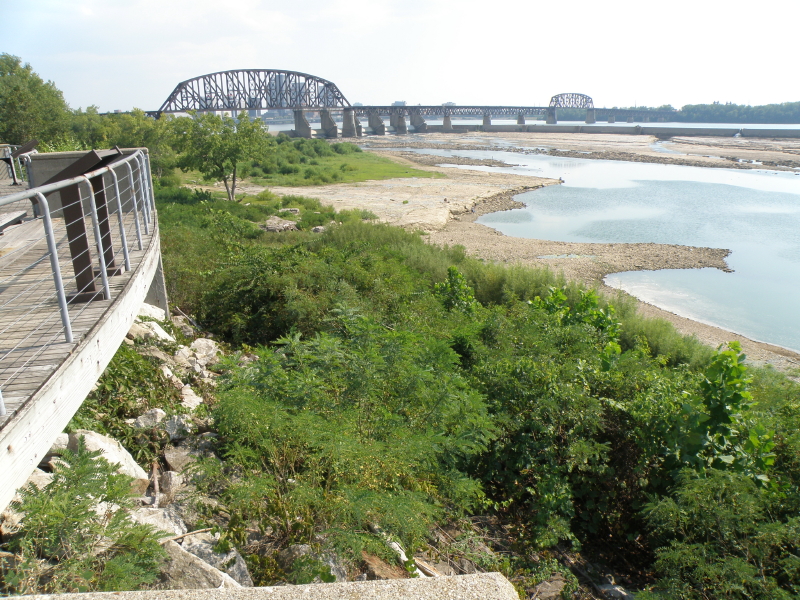
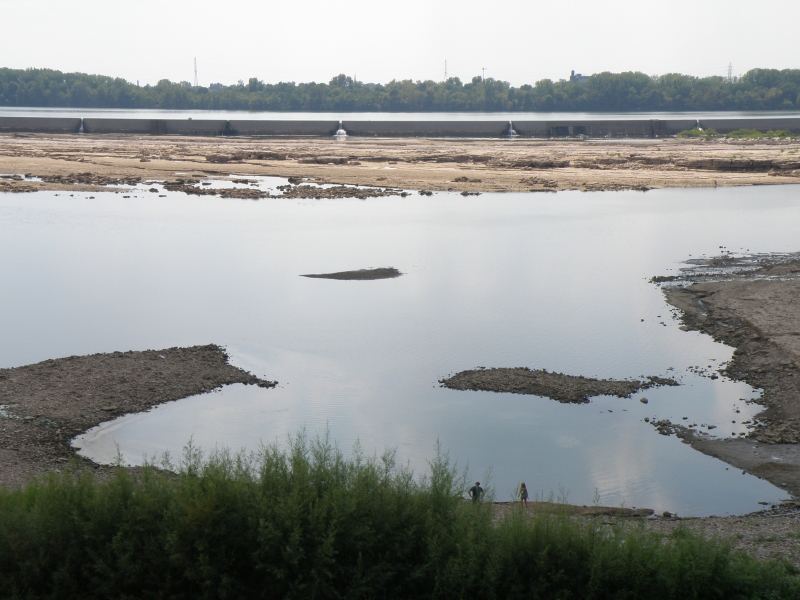
I encountered this Cumberland Greencrest back in 2010 not far from the place that I saw the Isaac’s Hummingbird.  Both of these rare hummingbirds stayed in our area for a couple of days before moving on.  This is what keeps me coming out here…I just never know what I’ll find or discover! This was a short, but eventful trip and I thank you for tagging along.  Here’s another view of the river with the exposed Devonian fossil beds.
POSTSCRIPT:  The inspiration for this particular post comes from another WordPress blog I enjoy entitled “Ekostories”.  Isaac Yuen is its creator and he’s an aspiring environmental writer.  Issac has a talent for weaving stories and making connections about responsible stewardship of our planet.  At the time of this writing, Isaac has a wonderful post about a book entitled the “Flight of the Hummingbird” that I think you may enjoy…so please check it out.  Here is his link:  http://ekostories.com/ Finally, one last peek at this elusive hummingbird checking out a flower blossom.
Read Full Post »

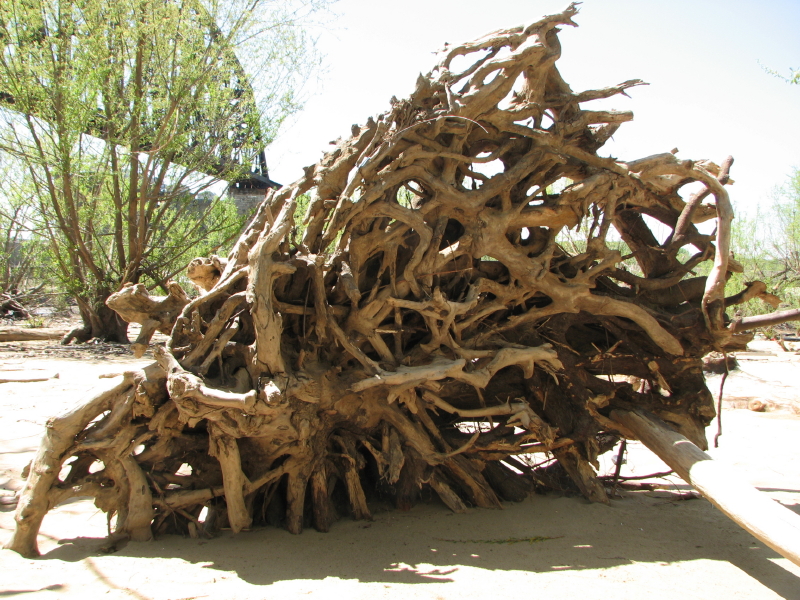
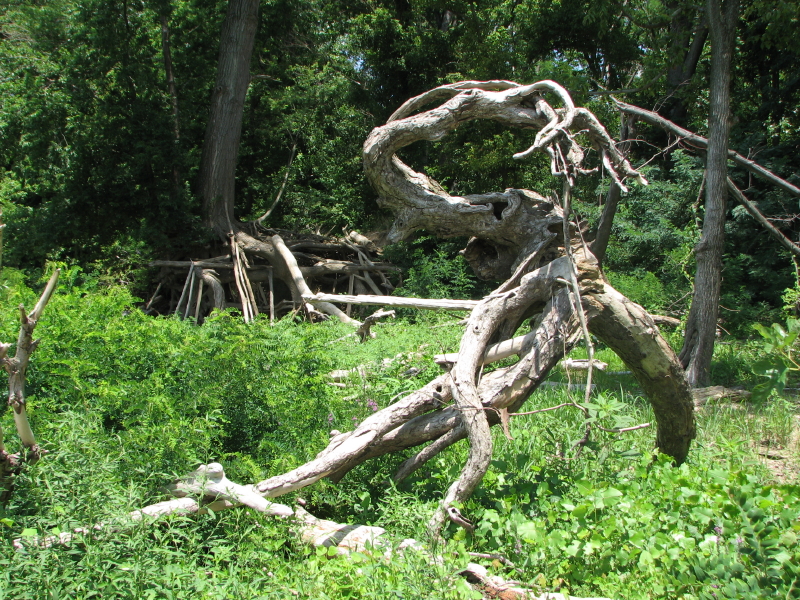
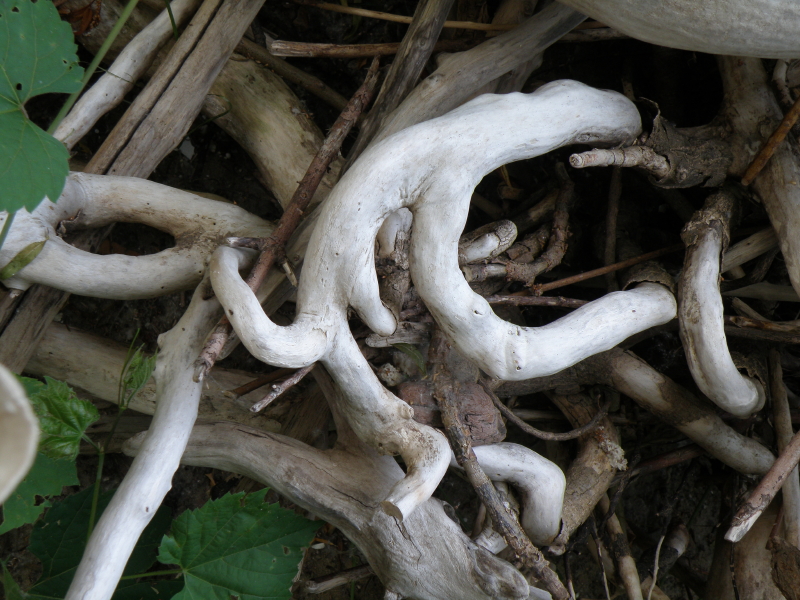
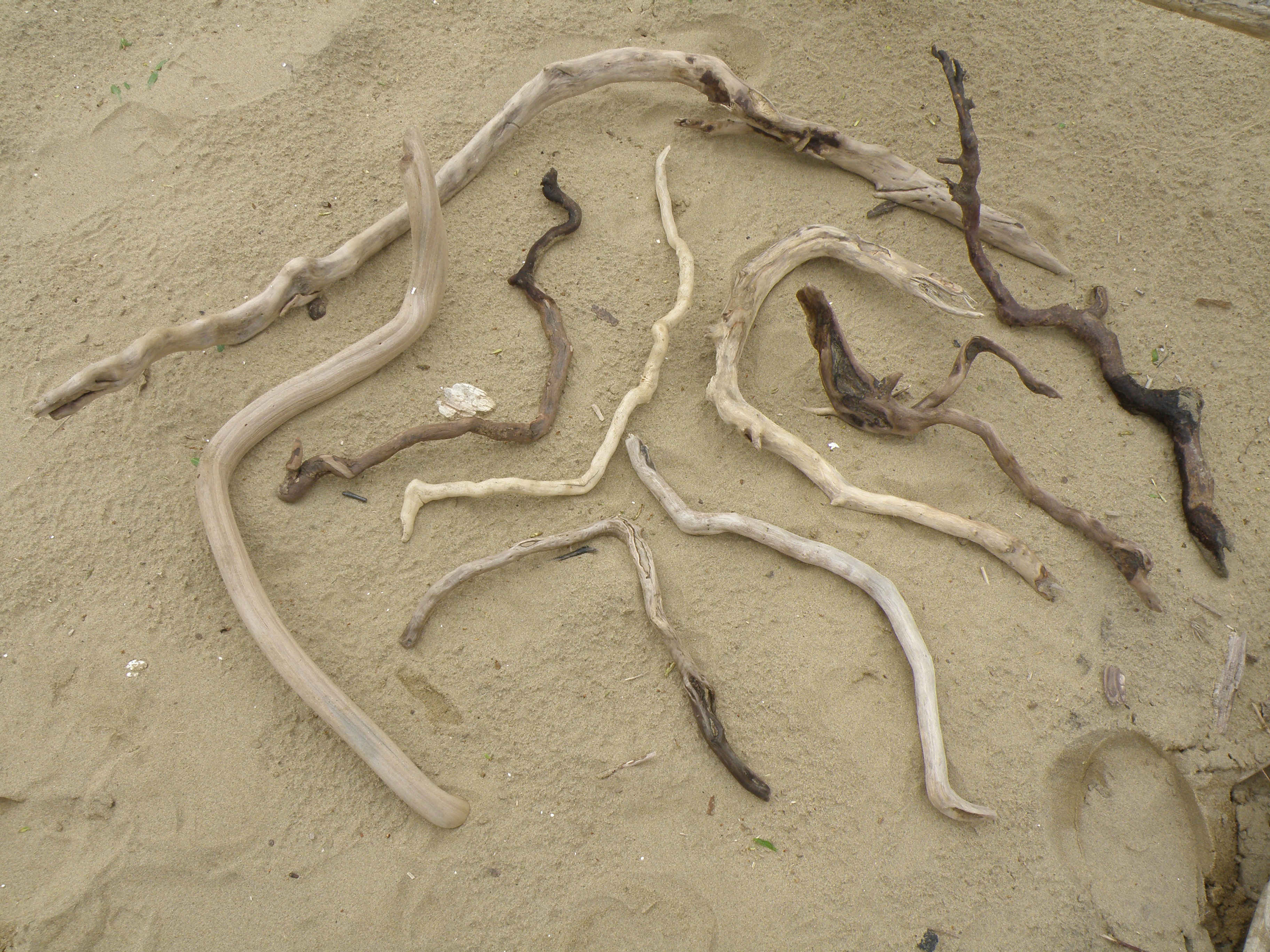
One last driftwood post before hopefully moving on to the current conditions at the Falls of the Ohio.  As my knee heals, I have been sifting through my own digital photographs.  Sitting at home, I have been spared the relentless heat that has defined our summer.  Artist at Exit 0, however, does miss bearing witness to life along the river and can’t wait to get back!  I thought I would end this driftwood series by looking at wood that is more organically expressive.  As mentioned in a previous post, the river processes a tree by removing its branches into increasingly smaller segments.  With all the broken down wood present at the Falls of the Ohio State Park, it can be a challenge to find a piece that implies movement.  Here are a few larger examples that I find to be especially sculptural.

I come across many unique pieces of wood in the park that feel as satisfying to me as many abstract sculptures made by man.  Walking around a  particularly nice piece of driftwood, I am rewarded with different viewpoints that remind me that the object I am regarding share a common space.  Here’s a different image of the same dramatic driftwood log and the experience in perception changes as you move around the wood.  I notice not only the arc of branches and roots, but the spaces between forms as well.

Here’s another nice piece that I came across this year and it also has many nice sculptural qualities.  I love the “S” curve snake-like motion implied in this driftwood.

When I see a piece of wood this twisted and convoluted I’m reminded that nature is the true sculptor here.  Doing the shaping are water, wind, and the life force of the tree itself whose innate “intention” is to live.

It’s hard for me to imagine that works of art were considered ” superior” to the “corruptness” of nature.  Fortunately, the philosophy of aesthetics is ever-changing, but still could use additional tweaking from what strictly enhances the experiences of our lives to embracing a better appreciation of life in all its forms.  Even when we use ourselves as the egotistical measure of all things we should be starting to understand by now that the quality of our very lives and that of our descendants depends upon the overall quality of the natural environment.

When I’m at the river I try to be as present in the moment as much as I can, however, my mind does day-dream a lot about the relationships between art, man, and nature.  I believe as my friend Ellen Dissanayake has eloquently expressed through her well-researched books that art has survival value otherwise our species would not have spent thousands of years involved in this activity.  My reaction is to try to use my creativity in this special place using the materials I find on hand to try to further this conversation along.  The sculptures I make to tell my little stories are combinations of natural and artificial materials.  The river-eroded Styrofoam I use for my figurative work is usually so static in form that to enliven it requires finding rootlets and branches that the river hasn’t fully removed all sense of gesture and movement.  These pieces become the arms and legs of my characters that help imply animation.  The picture above shows roots I collected while walking over the driftwood that the river did not completely break apart.

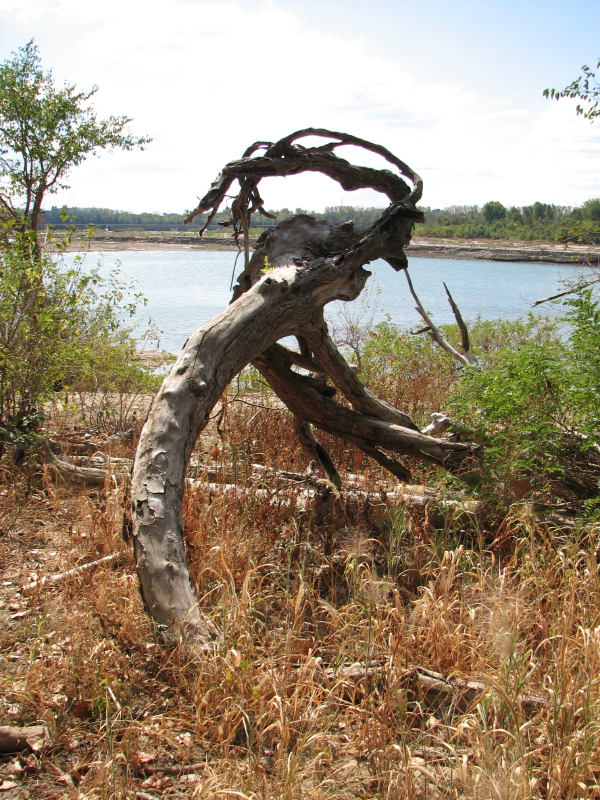
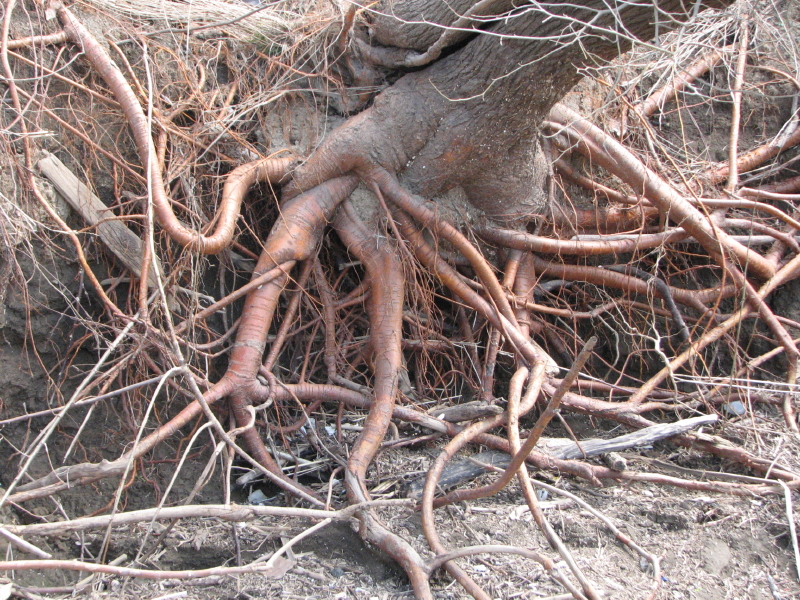
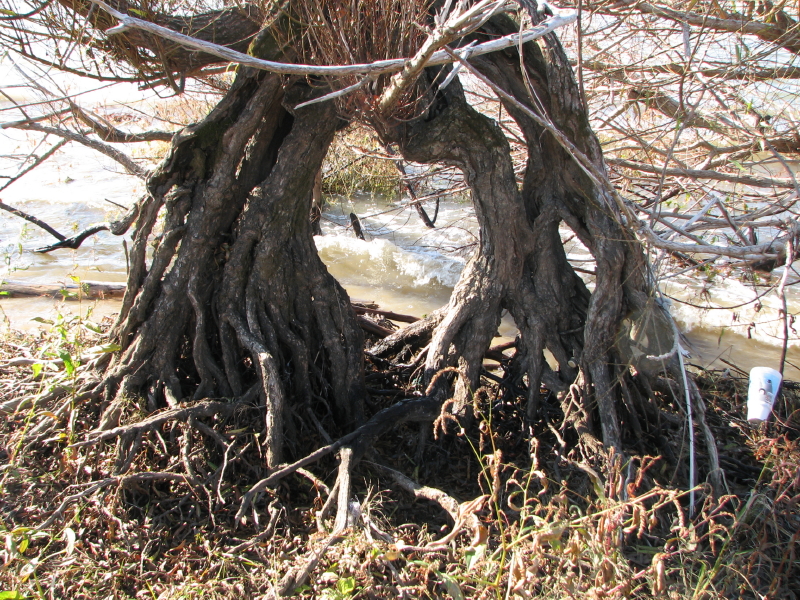
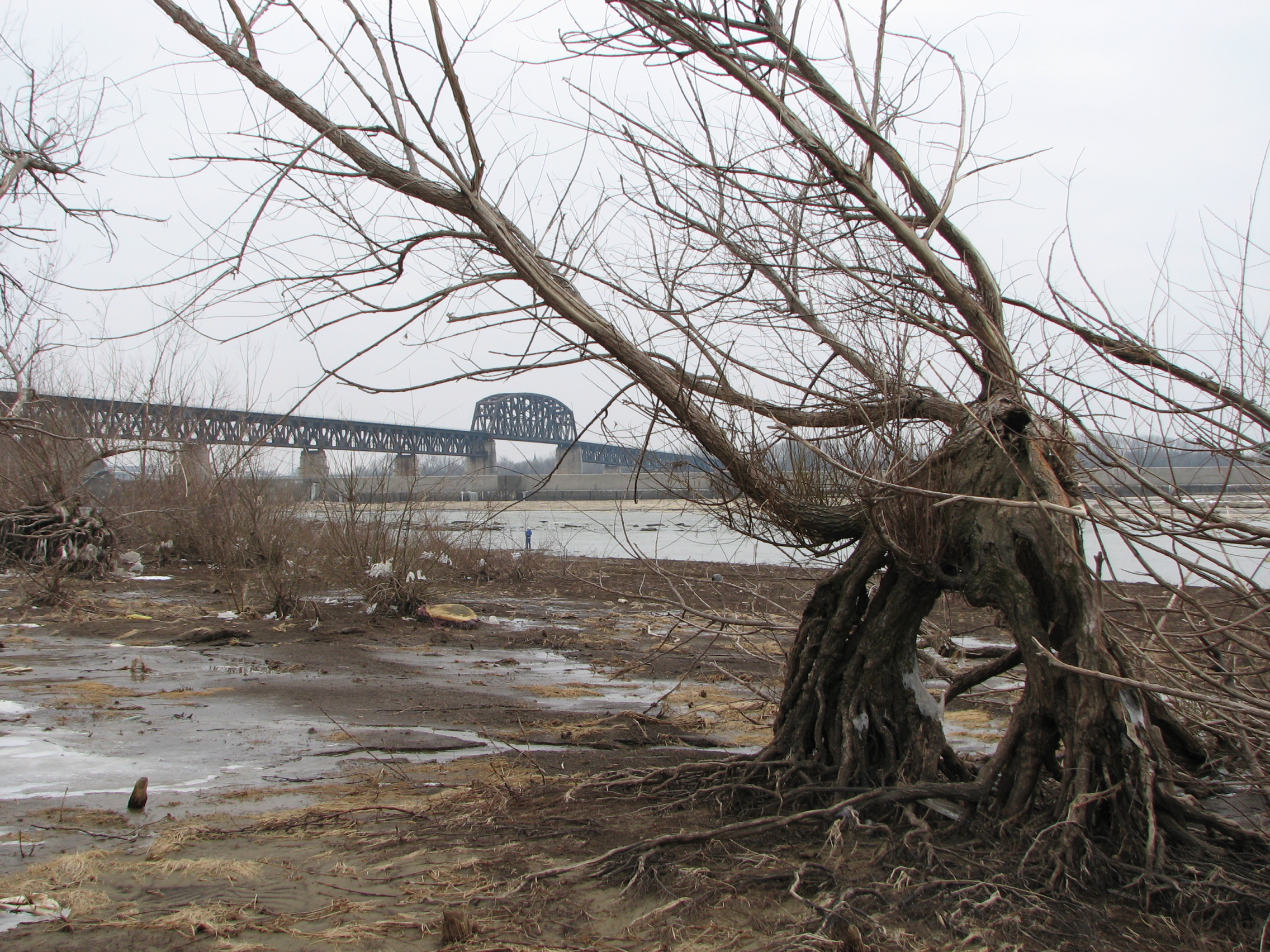
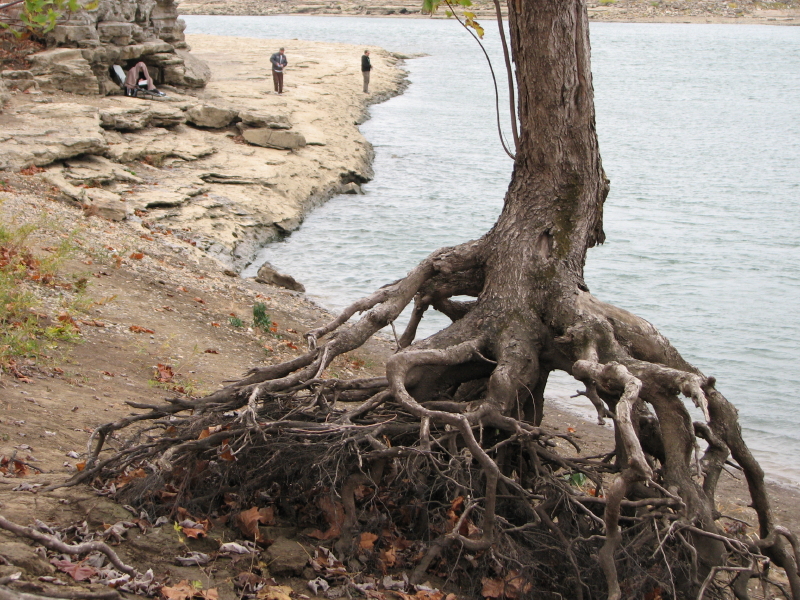
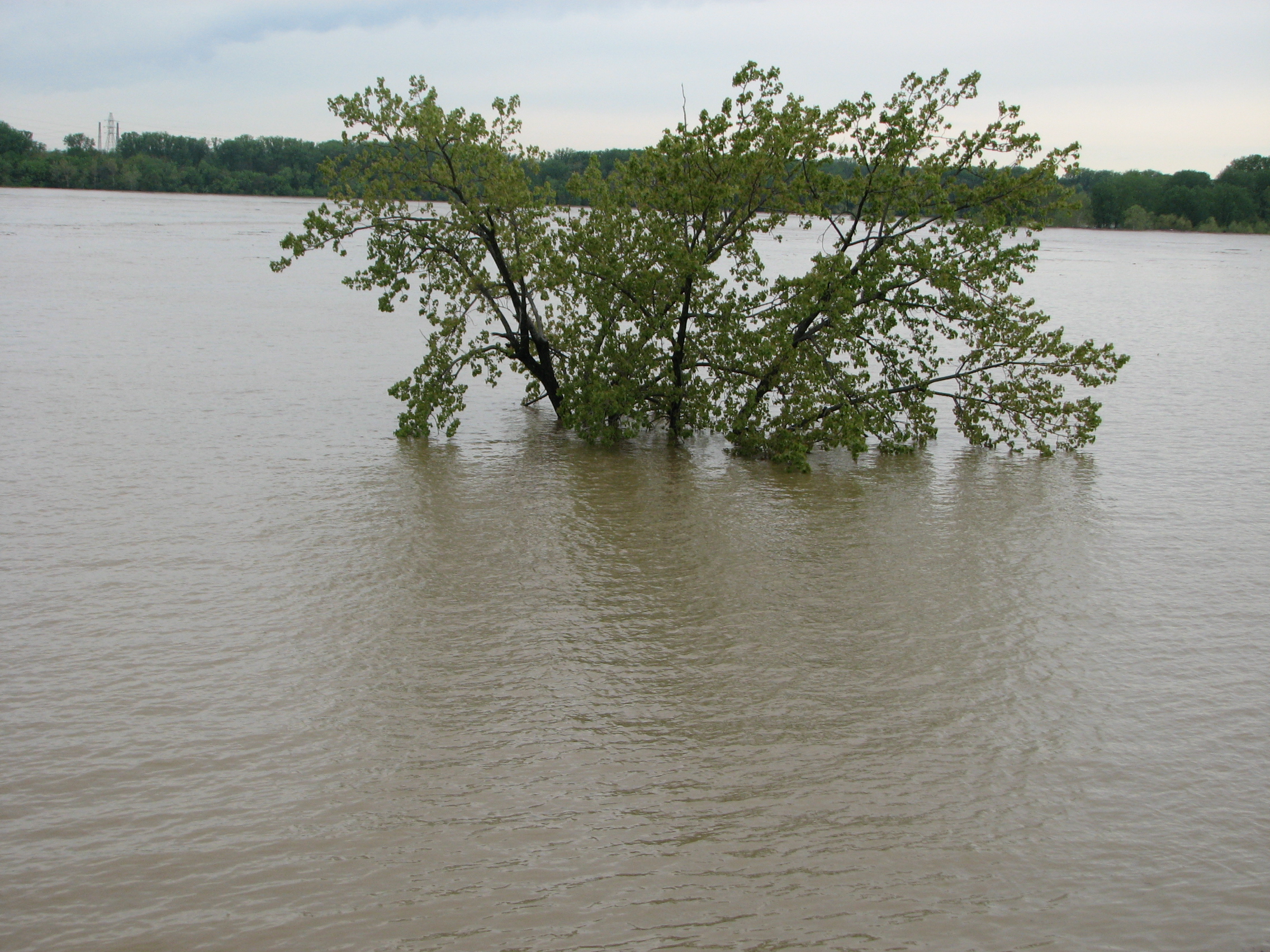
It’s interesting how often trees enter the picture.  One nice touch in the opening ceremony of the recently completed London Olympics was the large tree image that brought nature into the festivities.  Key to the life of a tree are the roots that help bring water and nutrients to its tissues.  By growing and burrowing through the soil the root system helps buttress the tree and holds the soil together.  This is especially important on a riverbank.  Since driftwood is essentially deadwood…I didn’t want to wrap up this post on such a dismal note.  At the Falls of the Ohio live many tenacious trees and here are images of a few of them that have weathered many a storm, flood, and the activities of man.

Before the idea of climate change and global warming there was already enough change occurring through the busyness of our species.  I remember looking at satellite imagery of the Amazon region a few years a go and being able to see the tell-tale grid system of logging roads and farms supplanting the jungle.  Deforestation is continuing at an even greater rate now.  Our trees need our love and we need the free services they provide.  Now for one last look at another resilient tree at the Falls of the Ohio.

Read Full Post »

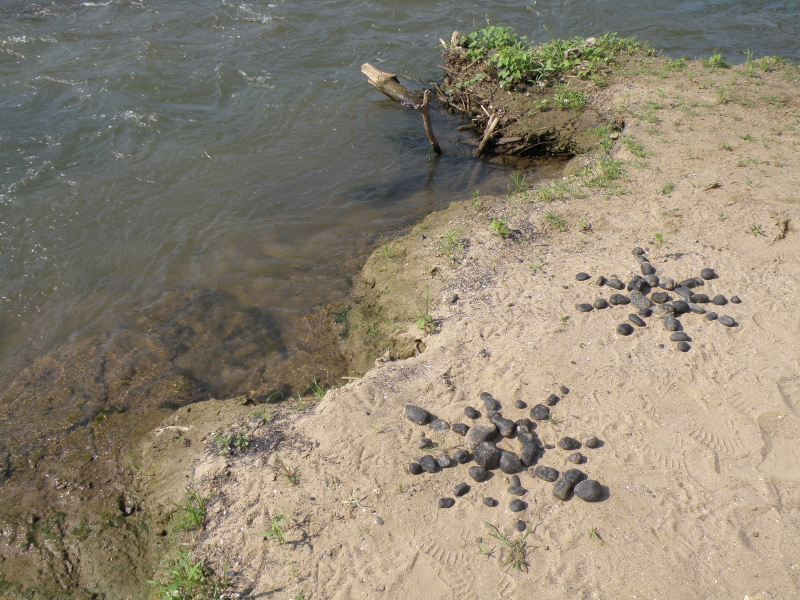
The record warm spring we experienced in the Kentuckiana area is being followed by the extreme record heat of this summer.  Twice I have ventured out to the Falls when the thermometer had passed 100 degrees Fahrenheit or 40 on the Celsius scale.  My youngest son told me (without prompting) that he  thought this heat was evidence of global warming.  The idea that we could alter the climate in some way has reached our children’s consciousness and changed their awareness of what kind of world they will inherit.  Kids get it…why don’t politicians and business leaders do the same?  This should be a global priority because the quality of our environment makes everything else possible.  I’m at the river today to continue this role I’ve created for myself as witness/participant in this historic place.  Here’s a brief record of what I found and made on a particularly brutal day.  I’ll start with more coal flakes that I made at the water’s edge.

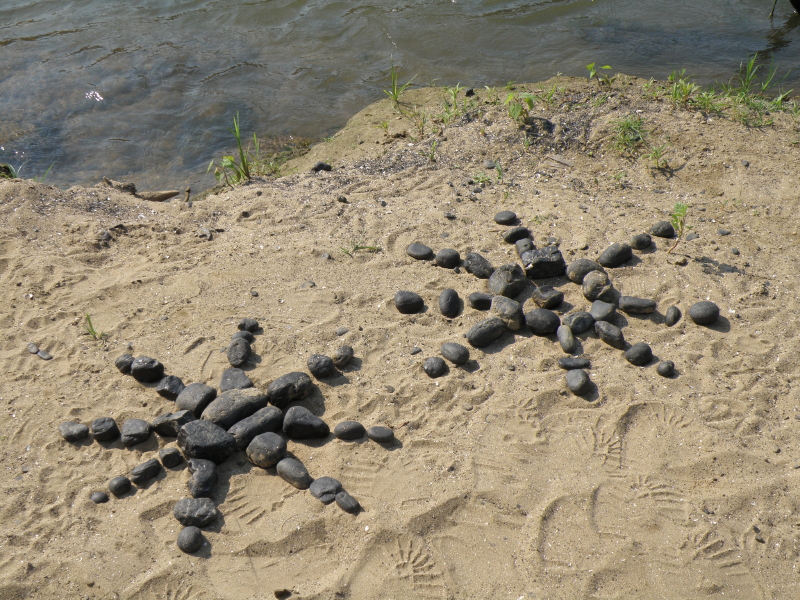
Walking around the park at its eastern edge, I collected the river-polished coal I came across and with these black rocks created two designs.  Because of the heat, it doesn’t take long for my clothes to start sticking to my skin.  For relief, I splash water over my face and arms. At first, I left the interior of one of the flakes open, but later decided to change it.  I did scout around for the other coal projects I had left here previously, but they were either missing or deliberately destroyed.

Here is the second design with the interior filled on the first coal flake. Why some people find my “art” to be more offensive than the trash that is ordinarily found here is puzzling to me?  Why more people don’t find all the random trash to be an eyesore and do something about that is another mystery.  My best answer is that “art” has a way of focusing and concentrating energy that stands above the ordinary.  To be noticed is not always a good survival strategy.  My work gets hammered because it sticks out and there is something in the human condition that would rather break things than fix them.

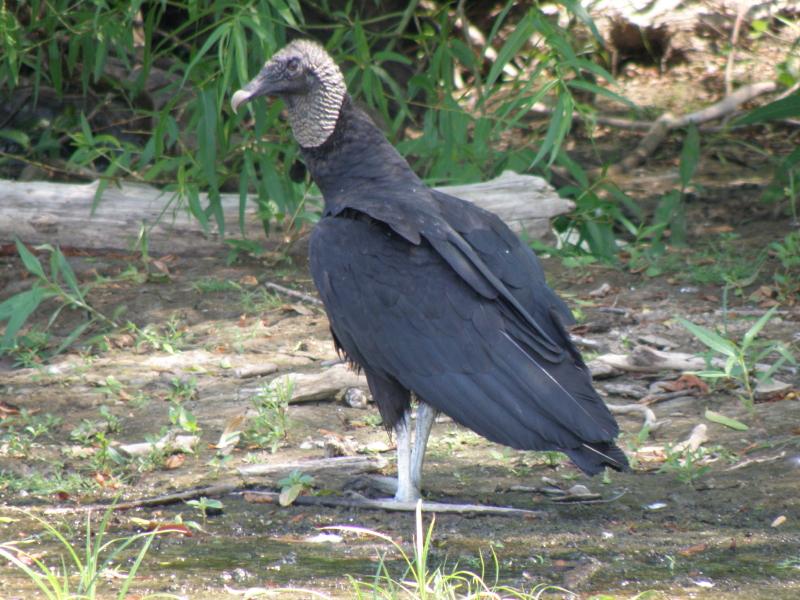
It’s still morning and I see the resident Black vulture colony is also at the river’s edge looking for dead fish or fishing bait.  There’s nothing like coming across a partially opened pack of chicken livers that some fisherman brought for catfish bait.  The flies and the vultures say thank you.  I’ve come to think of these vultures as familiars and part of me likes to believe that they even recognize me and allow me to approach a little closer than usual.

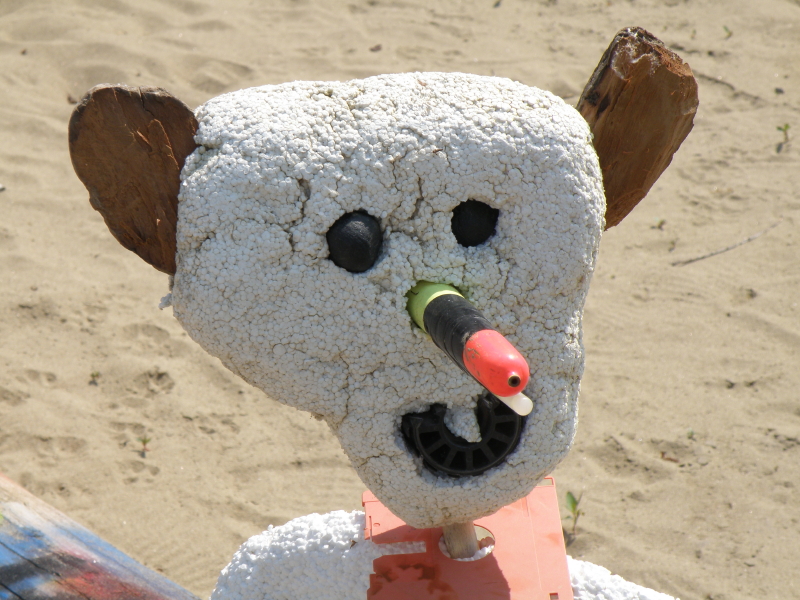
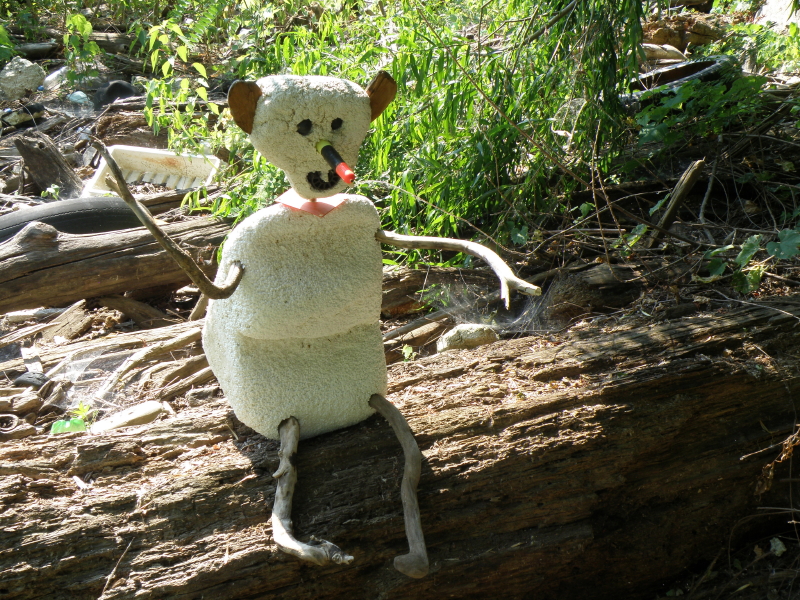
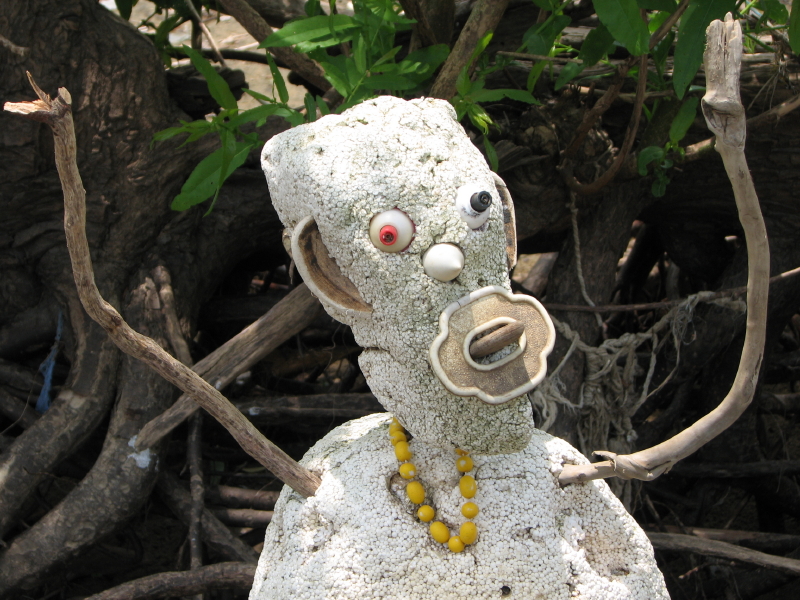
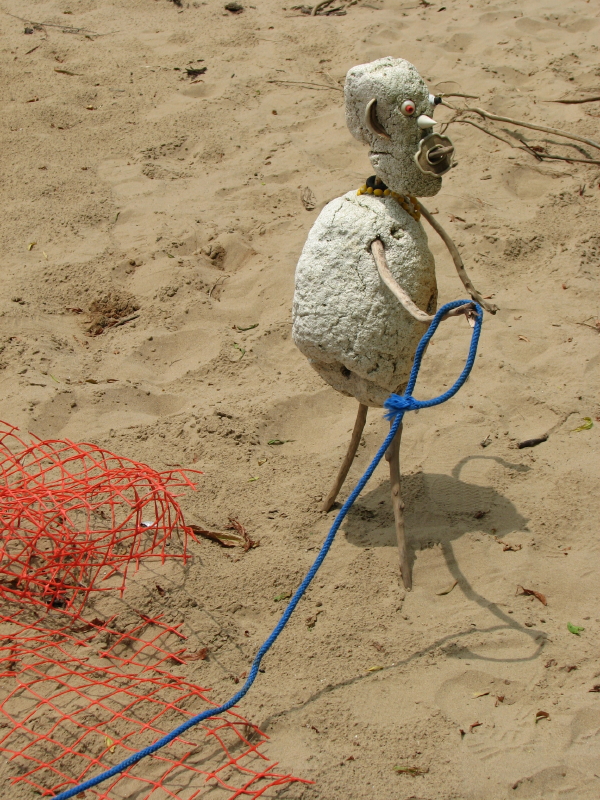
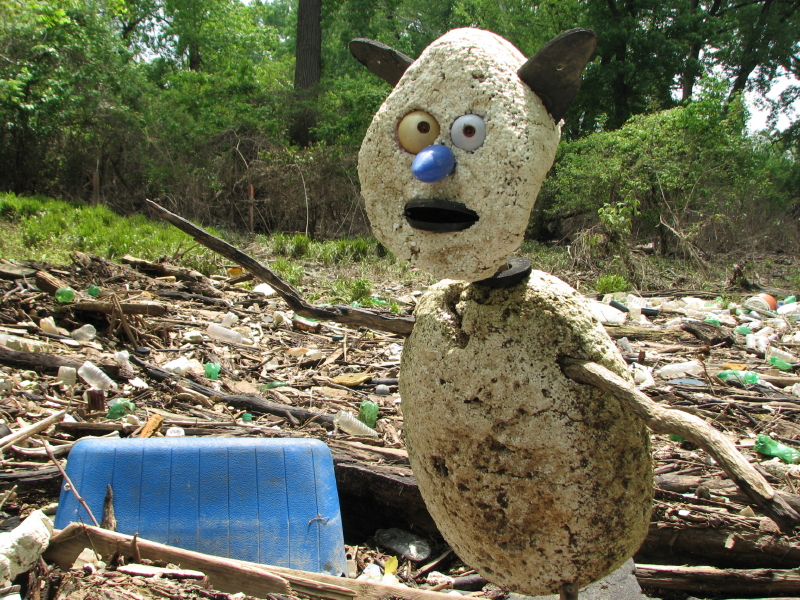
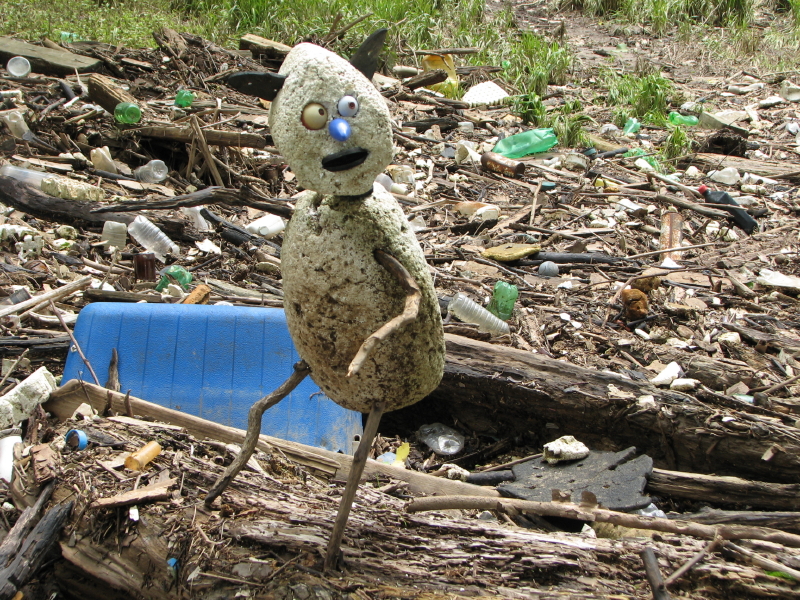
A couple of hours later and the vultures have done what I’m about to do…namely seeking shade and relief under the willow trees.  I find a few vultures standing on the ground with their wings outspread trying to catch the slimmest of breezes, but there is none today.  Reaching my stash of Styrofoam I look around and everything appears as I left it.  It’s just been too hot for most folks to want to be out here.  Rummaging around the polystyrene, I chose a few pieces and construct a new figure.  This piece has remained nameless, but if you out there in the wide world want to name it…that’s fine with me.  It’s also been too hot to think of titles and names.  He is another in a long line of absurd figures I’ve created with the collaboration of nature.  Here’s the head made from Styrofoam, coal eyes, fishing float nose, some kind of plastic piece for the mouth, and wooden ears.

As you can see from the last image…I have lots more Styrofoam to use up before our next big flood.  I began my latest figure with the body.  I came across a piece that suggested a sitting pose and so that is what I made.  Upon completion, I moved my new “friend” to various locations and tried him out in various contexts.

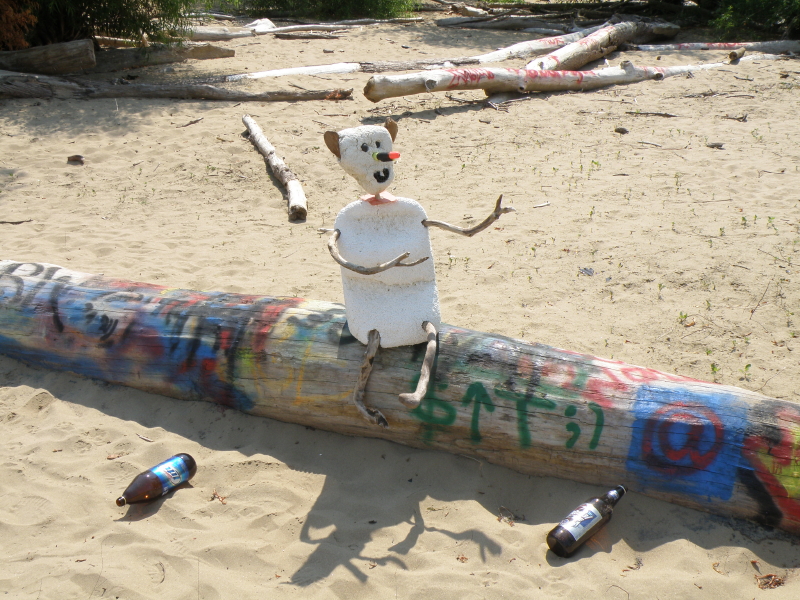
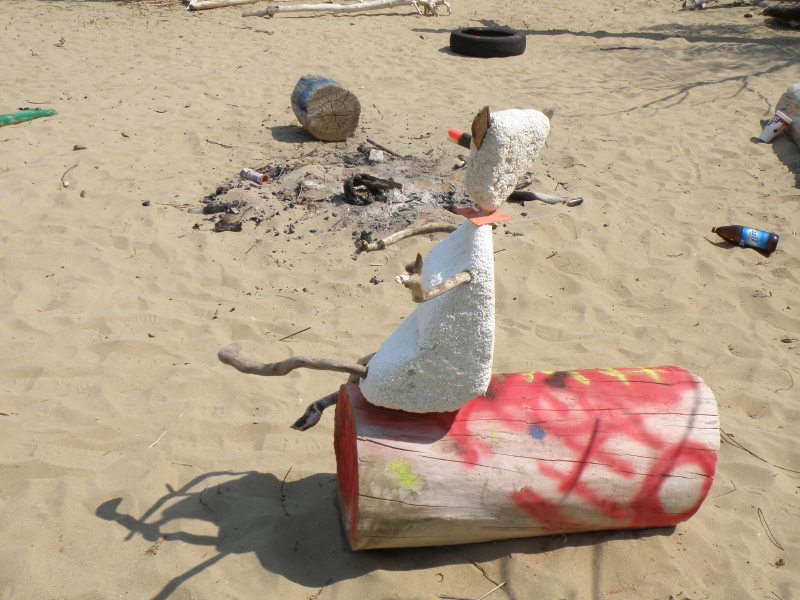
In the end, I decided to pose my figure in the remains of a private  outdoor party that was held out here since my last visit.  This must have been no ordinary “celebration” based on all the spray painted graffiti now on the logs and stumps surrounding their camp fire.  Take a look.

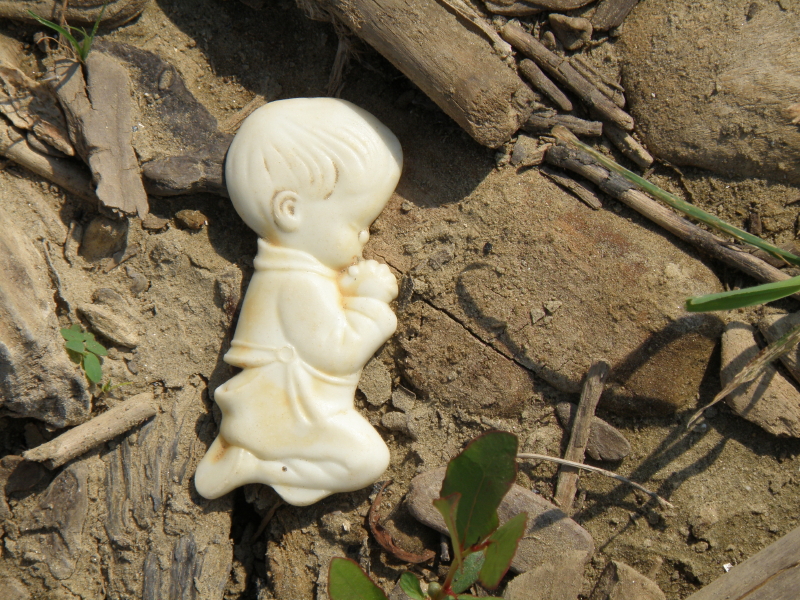
I’m more accustomed to seeing graffiti in an urban setting where tagging trash dumpsters and buildings is common place.  I’m still sorting out how I feel about coming across a scene like this?  Has anything actually been harmed…it doesn’t appear so.  When lovers cut their initials into the bark of a living tree, those cuts are there for the life of the tree.  All this spray painted wood is dead.  Still, this hardly seems like a nature loving act especially since the “artists” left their large beer bottles behind.  I think they did it because they could.  Their handiwork to my eye also lacks an aesthetic dimension, but now I’m sounding like an old-fashioned art critic.  I guess here is as good a place to say that I’m taking a hiatus from visiting the park to recover from my impending knee surgery.  I’ve been stomping about out here with a bad left knee for over a year and it hasn’t gotten better on its own.  An MRI showed two tears in my lateral and medial meniscus.  With hope, I won’t be down long and I will continue the riverblog with other stuff probably from my various collections. I’ll end this post with a small piece of plastic I found on this hot, hot day.  Since I started this post with some perceptions from a child about the environment…perhaps it is even appropriate?  It may take something akin to divine intervention to improve the condition of the world.

Read Full Post »

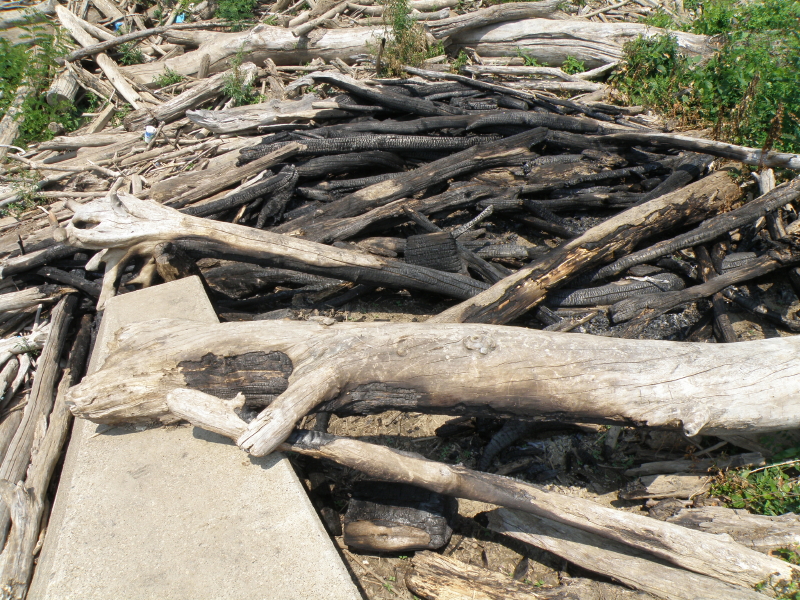
I’m getting out here a little later than I was aiming for and now the summer heat is awake too.  I’ll take my precautions and take it easy under the shade of the willow trees.  There’s been another fire on the margins of this immense driftwood pile.  My guess is a hot cigarette butt flicked casually away landed on tinder and poof!  The wind probably did not encourage the flames this time.  It looks like it either went out on its own or firefighters were successful in quickly containing it.  This area under the railroad bridge still smells a little smokey.

In many ways this post is an extension of the last one…minus the ropes.  I guess I’m guilty of multitasking out here.  I often have more than one project going on at a time.  For example, I have a series of coal related investigations I have been doing that provide some relief from the Styrofoam.  Some of these  projects might make it into a coal-themed art show I’m participating in at the end of the year.  It will be interesting to see what the other artists come up with.  Last year we traveled together to see and talk with people whose lives were touched by their contact with coal.  Of course the issue of mountaintop removal was in the fore front.  Although I’m interested in the many controversies that cling to coal…I’ve also enjoyed working with it as a potential art material.  The coal that washes up at the Falls of the Ohio comes from the commercial barge traffic floating small mountains of crushed coal to the various hydroelectric plants along a channelized Ohio River.  Apparently, the river’s  current is strong enough to move these stones along and shape them.  And like Styrofoam, coal can be tumbled smooth and round in the process before it reaches me at the Falls of the Ohio.  I have found pieces as round as a chickens’ eggs and as flat as coins.

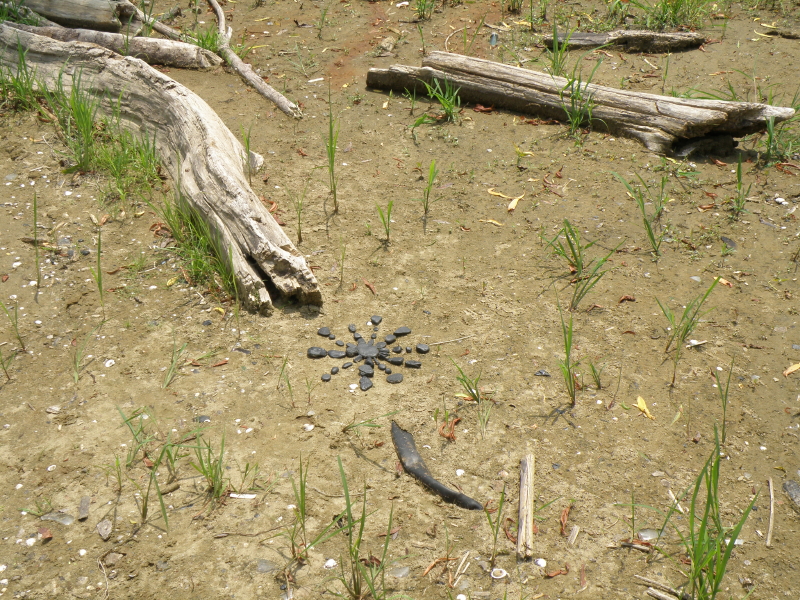
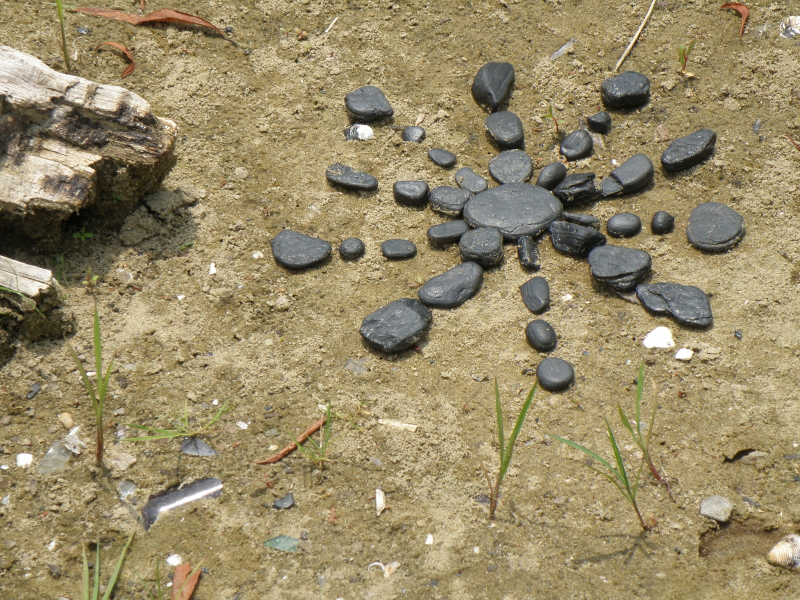
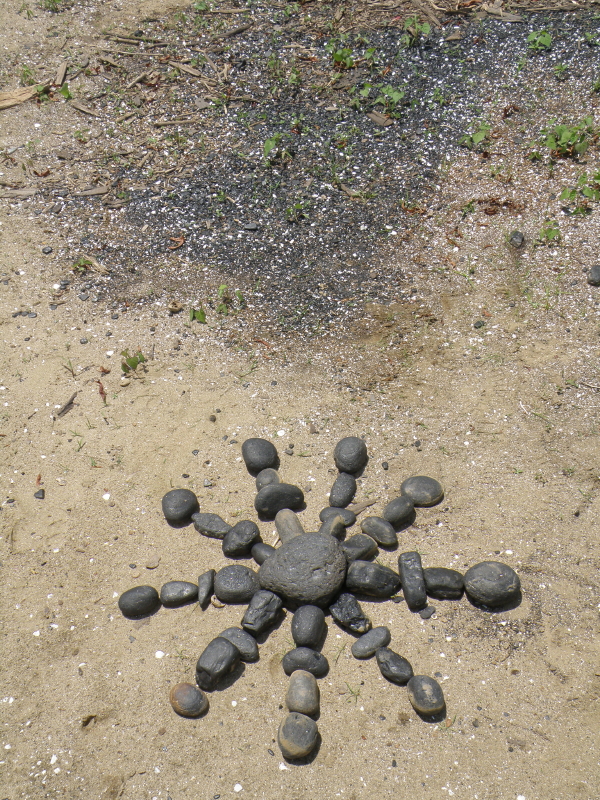
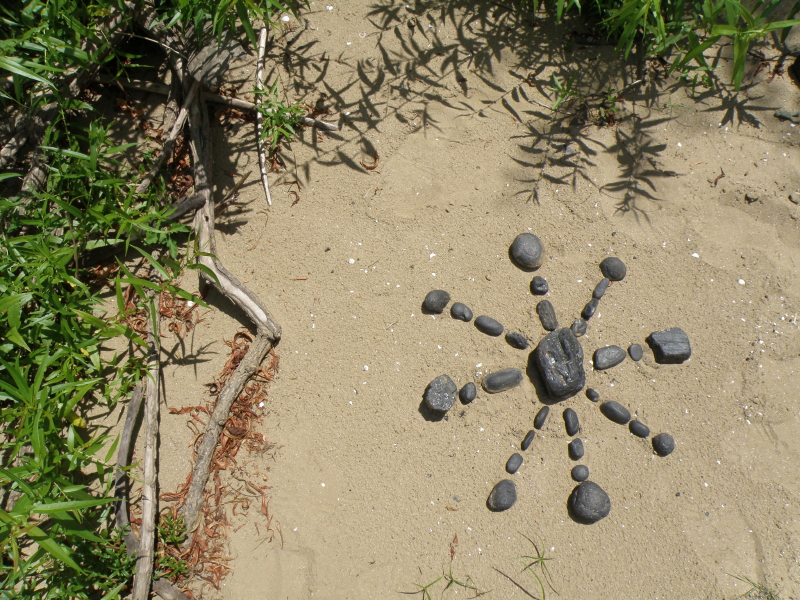
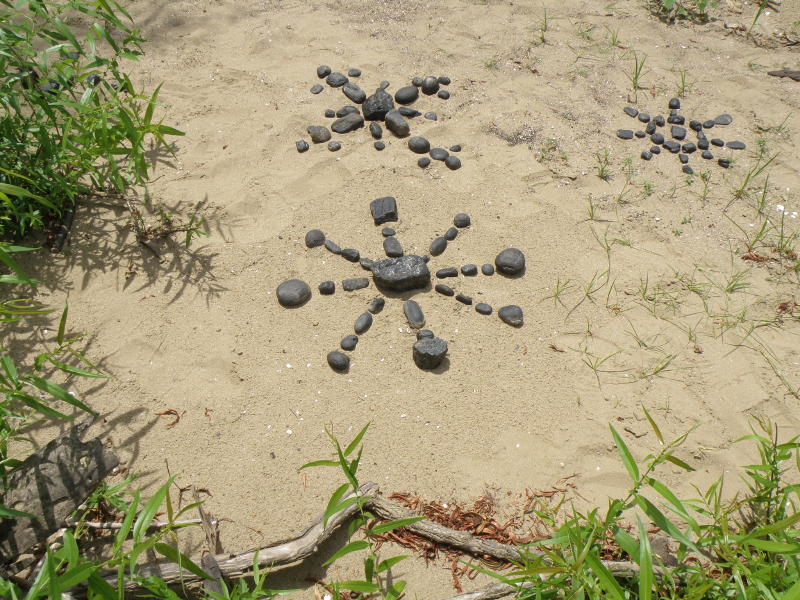
I’ve been collecting the coal I come across and looking for areas by the river that have more deposited on the sand.  First, I started with a few star shapes, but a remembered conversation I had with a friend created a different connection that I drew inspiration from.  My friend lived as a child in a small town in Pennsylvania associated with the steel industry.  He recalled that in winter, the whiteness of fresh snow would soon become gray and black due to air borne coal ash and particulates.  It was everywhere and got into everything.  That’s when I hit upon the idea of making snow flake-like designs from coal and photographing them.  Here are a few more from this series.
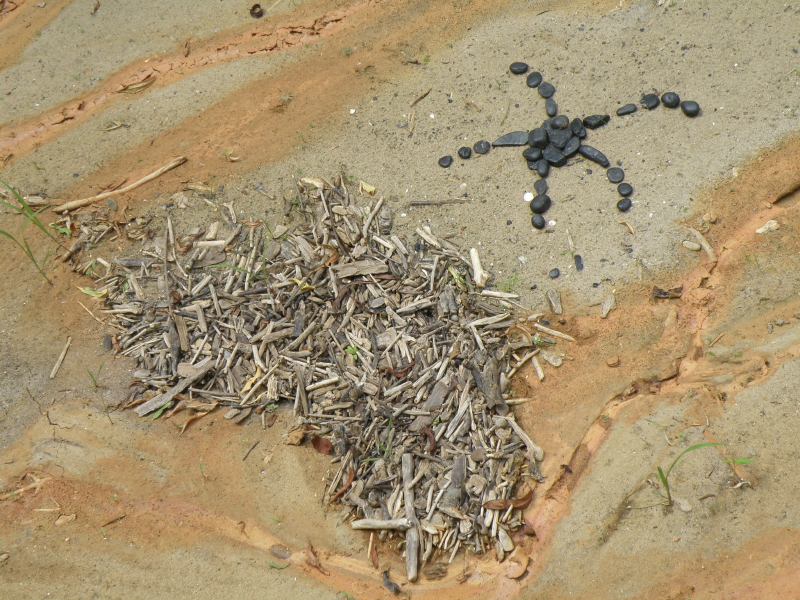
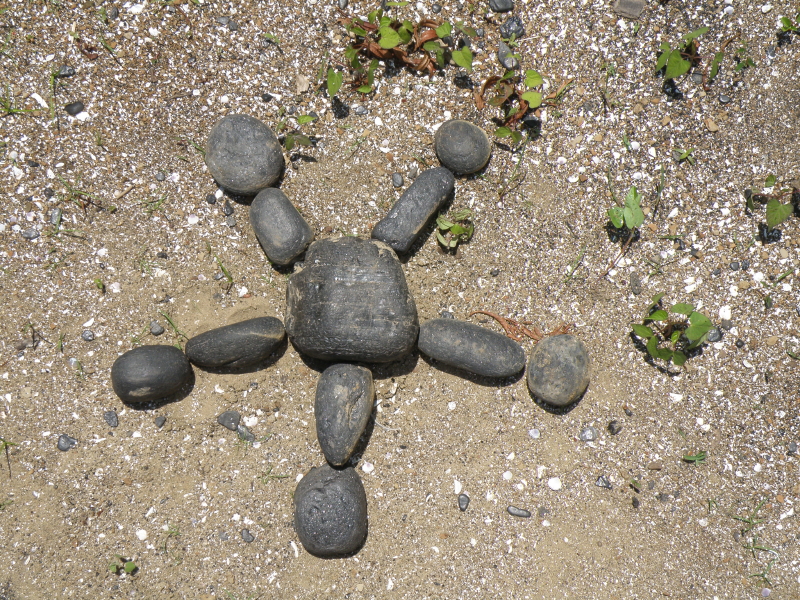
I’ve been placing these near well-worn paths that fishermen take to the water’s edge.  They call into attention and work with the small areas they occupy and provide visual interest.  I like that they have this public participatory aspect to them. Here are a few more sample images of the coal flakes before they “melted” back into the sand.
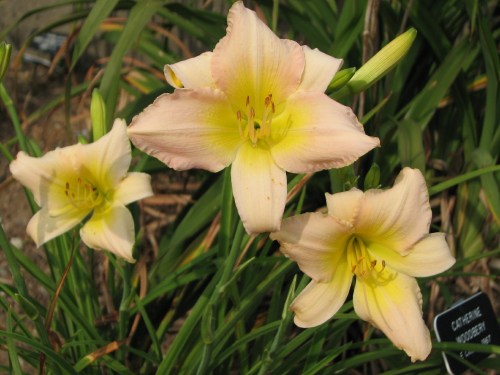
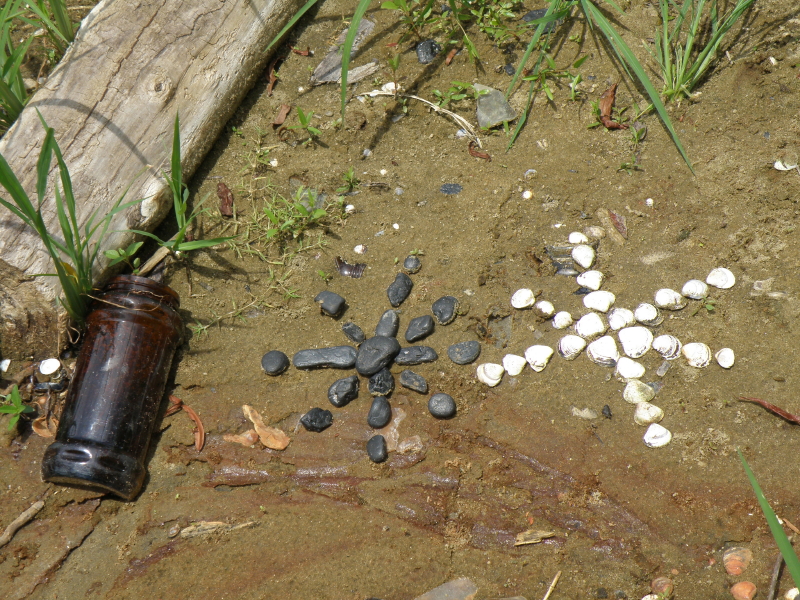
The white flecks in the sand are bits and pieces of ground-up mussel shells.  They mostly come from one foreign species that can out compete the local clams and deal with the present conditions.  Also mixed into this sandy matrix are pieces of river polished glass and small bits of plastic.  Here’s another project involving coal and Asiatic clam shells and a found coffee creamer jar.

I’ll conclude with two star images that were made along with the coal flakes.  The first one looks a bit like a starfish fossil…

…and this last is just simply a star!  It’s getting too hot to hang out and so I pack up and leave after a few hours fun.  That shower is going to feel good today. Have a great week everybody!

Read Full Post »

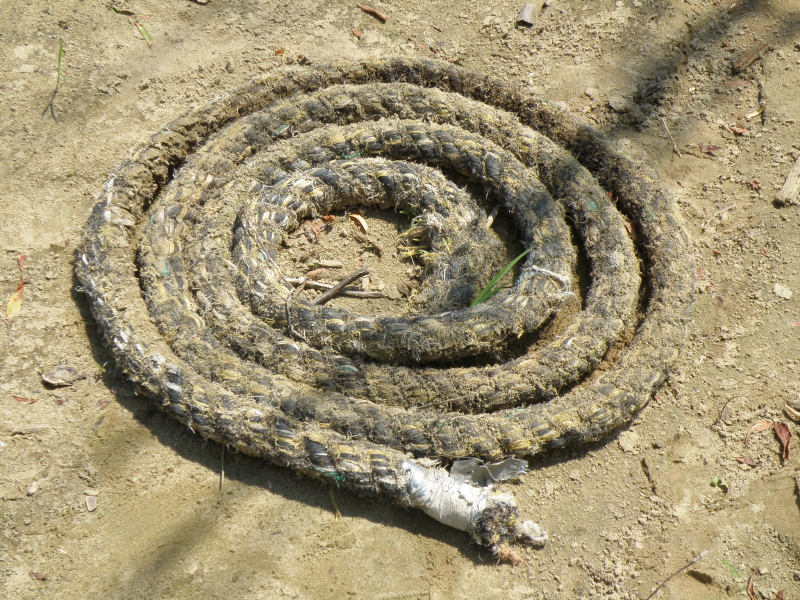
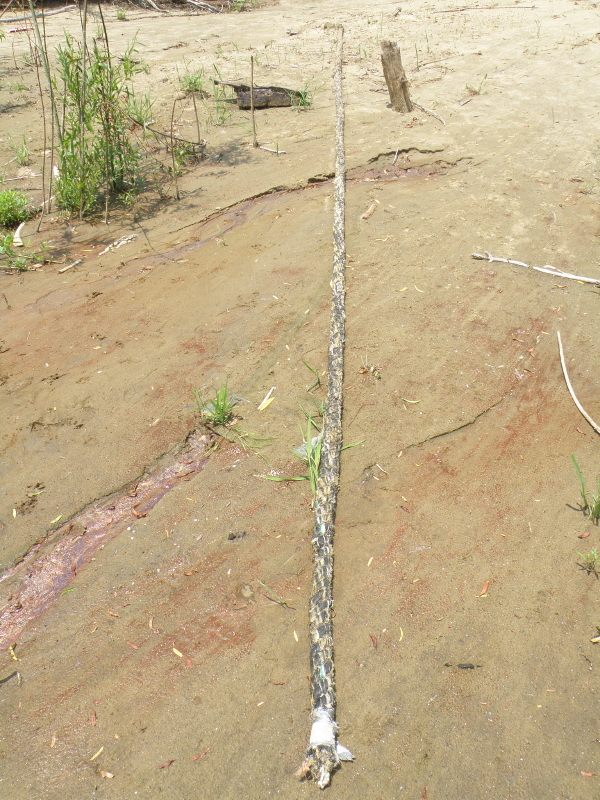
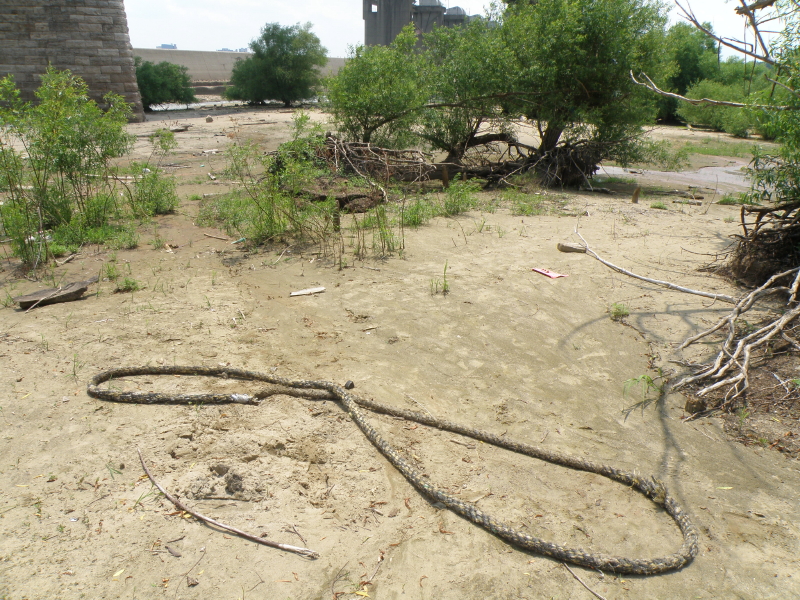
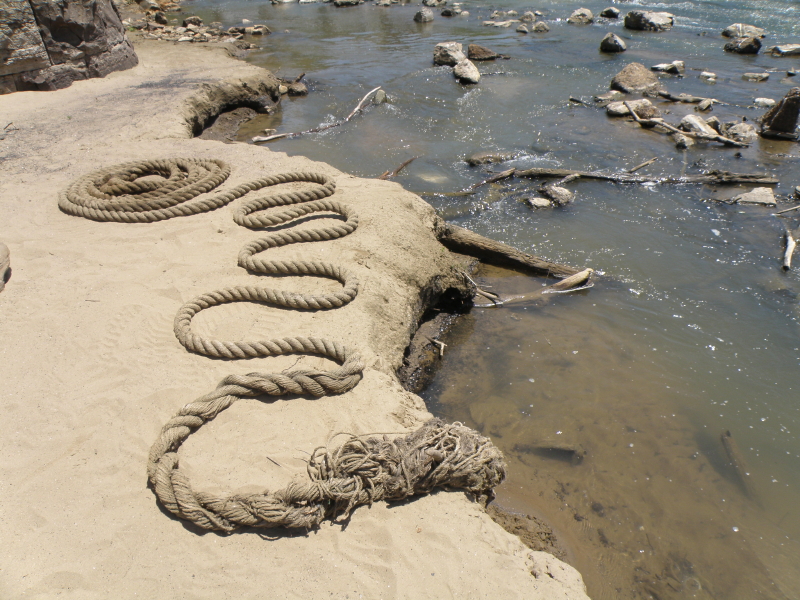
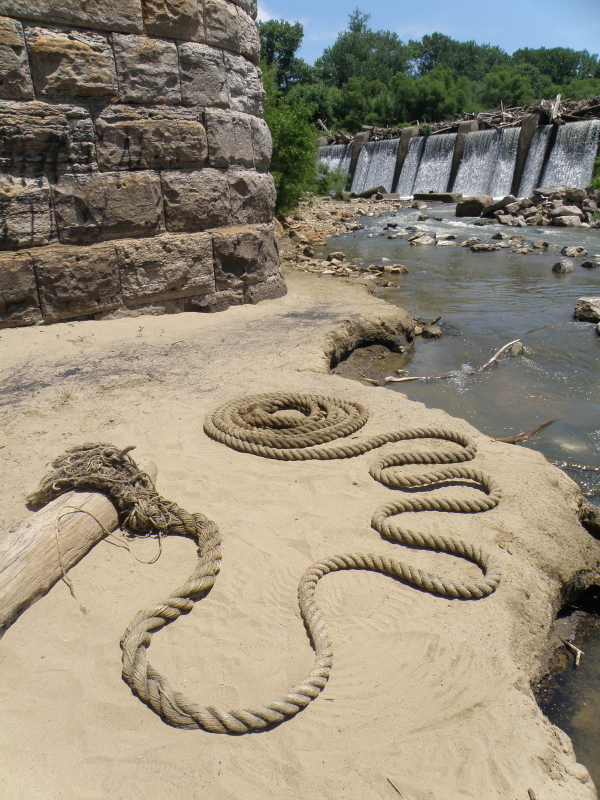
Greetings from a very hot and humid Falls of the Ohio State Park.  The Ohio River is receding into its summer pool and more of the riverbank has been exposed.  Of late, I’ve been running into more rope fragments from commercial barge traffic (or it seems this way).  I don’t  rule out the possibility that my desire to work with these objects in this setting has brought them into my universe and attention.  See the recent post I did about “Play on Earth Day” which also features a rope project.  I’m enjoying what can be done with them to create images.  Here’s two rope investigations I did the other day.

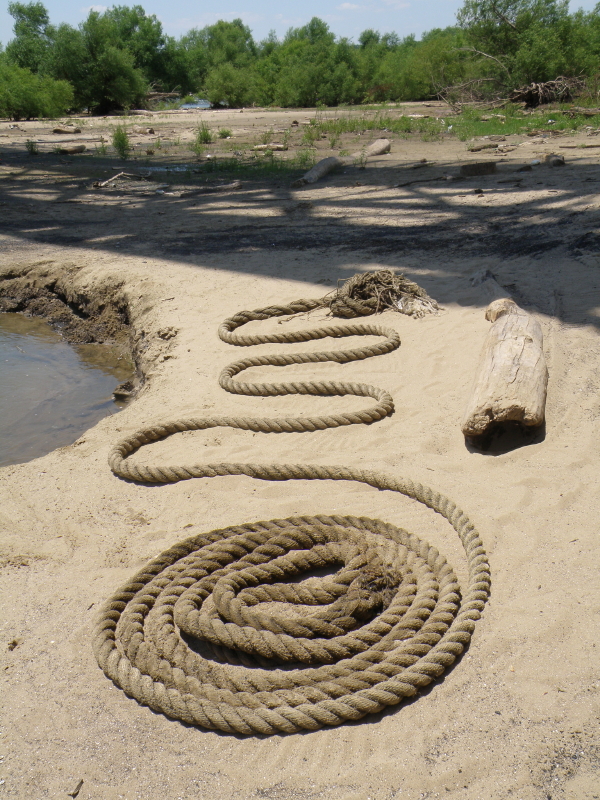
As ropes go…this isn’t the thickest or heaviest rope I’ve found out here.  What is interesting is that most of this rope is still buried under the sand.  There is a point where it enters the ground and remains hidden and fixed to this position.  I started out just coiling the rope…I love working with spirals.  The exposed end of this cable is covered with duct tape.  Next, I pulled the rope straight to see how long it was and to see how it activated the area it was found in.

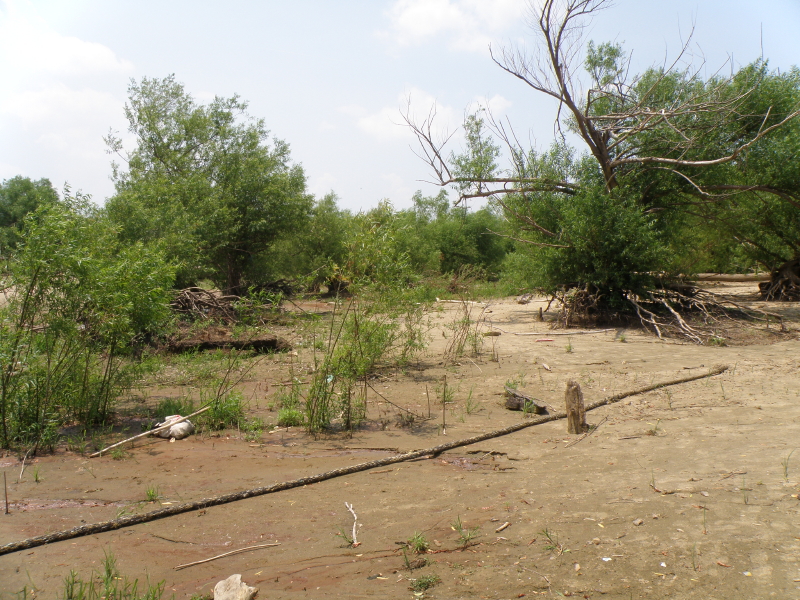
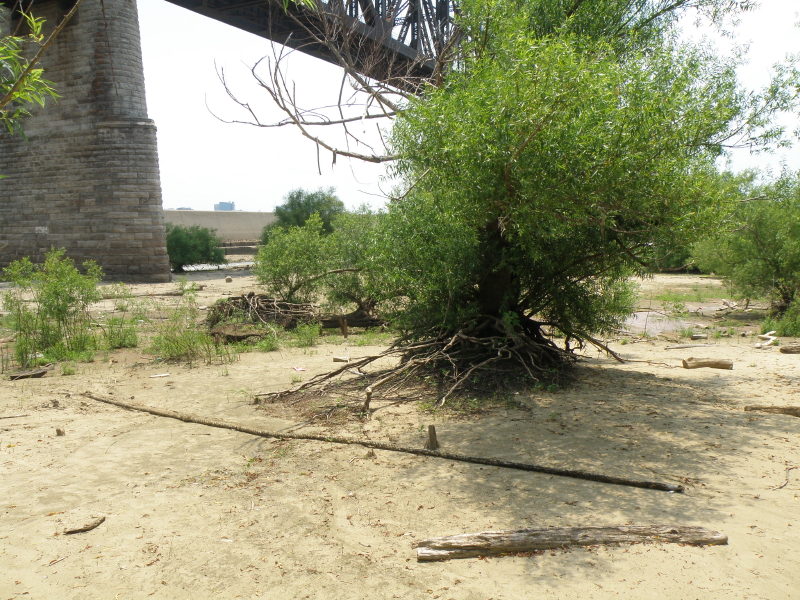
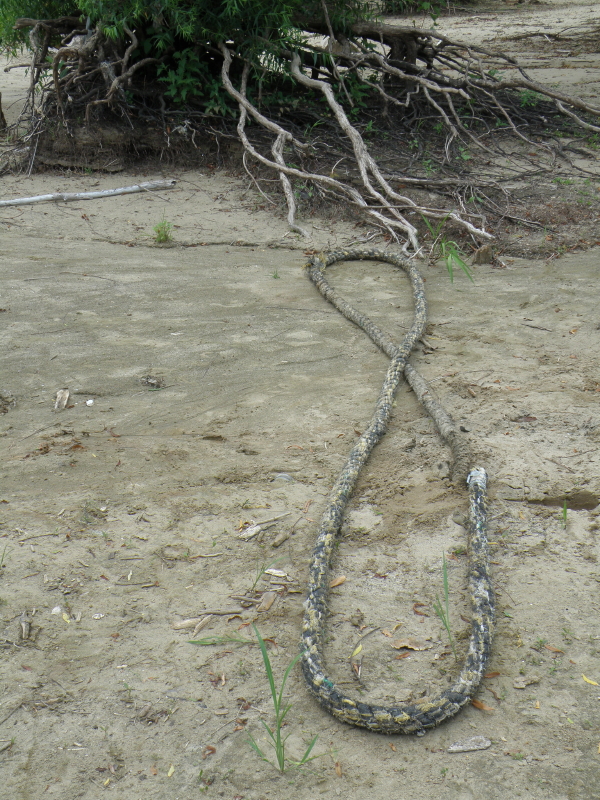
The terminal end of this rope is buried under the sand.  I used that point to move and pivot the rope to create these other images.  Here are two side views of the straight rope and the scene it underscores.

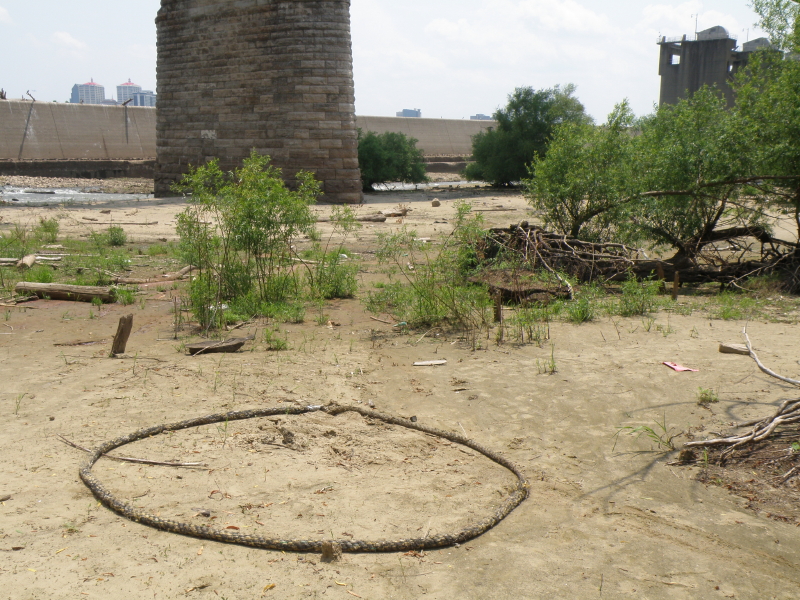
Next I tried creating a circle by joining the ends together.  The rope was stiff and not easy to shape.

This image makes it appear to be more of an ellipse, but I did my best to try to form as neat a circle as I could.  The area I’m working in is in the eastern section of the park right under the railroad bridge.  The last photo I made using this rope is more of a figure eight and loosely reminds me of a chromosome.

Now for the same rope shape involving the roots of a nearby willow tree.

I came across a second rope on this sweltering day.  My clothes were literally sticking to me.  It occurred to me that I left my water bottle in my car which on this day was not a good move.  I needed to take frequent breaks under the shade of the willow trees to keep from overheating.

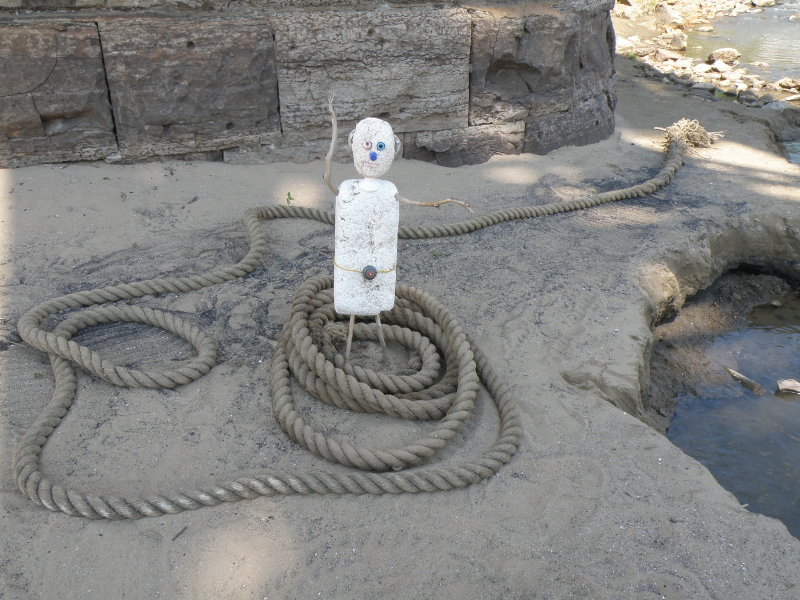
This second rope fragment is much thicker than the previous example.  It also appears to be made of a natural material.  Someone else found this rope in some other part of the park and carried it to this location under the bridge where it was abandoned.  I returned a couple of days later and this rope was gone.  I wonder what other project it was destined for? Anyway, here are a few of the images I made with this interesting object.

Next I placed the unraveling end into the river to link it with the riverbank.

Last view with the unraveling end draped over a log.  This is the position I left the rope in before departing for home.  I very nearly took this rope home with me, but it was too big and heavy and the heat of the day took its toll on me.  At the time, I told myself that if this rope was still here the next time I returned that I would collect this object for later use.  Nebulously, I had this idea in my head for another installation project.  Just what I need…more junk!

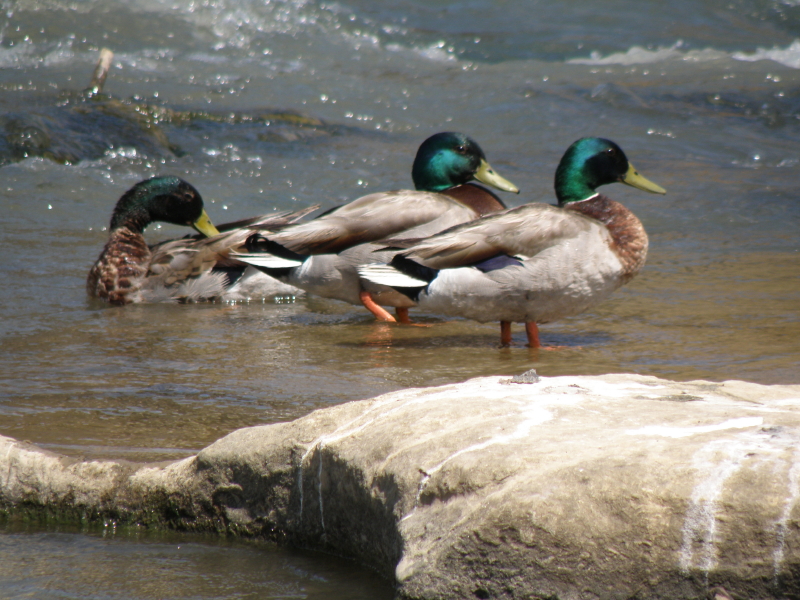
After playing with this rope, my curiosity was satisfied for the day.  I’m sure I will find other ropes and cables out here as time goes by. I found myself being very envious of this trio of male Mallard ducks!  They seem to have the right idea and so I will end this post with them.  Stay cool everybody!

Read Full Post »

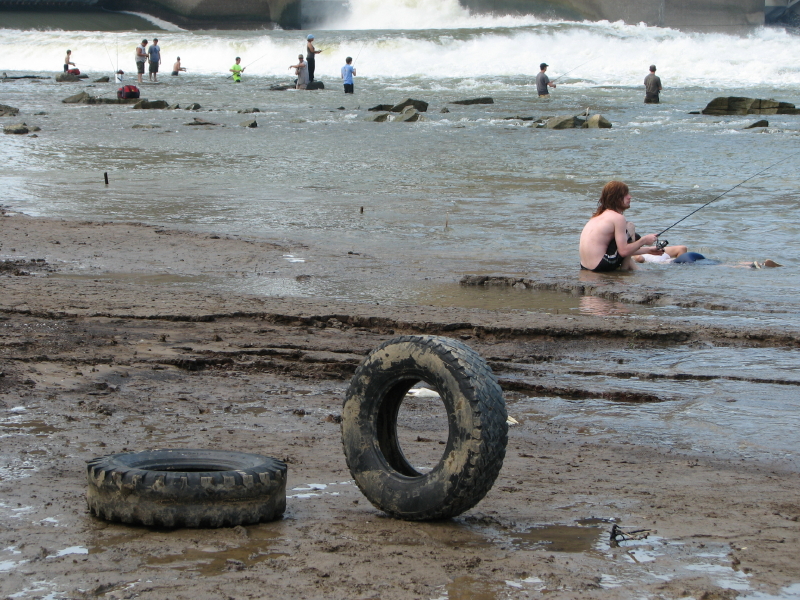
The fishing had been good and attracted both experienced and novice fisherman.  People were catching some of the smaller striped bass and the occasional catfish.  Summer has descended full-bore with its twins…heat and humidity and so a visit to the river is a welcome diversion for many.  The parking lots around the park are full.  To me, this is a mixed blessing.  You want those who can appreciate nature and the surrounding area to enjoy themselves, however, there is always that element present that can’t resist despoiling for their own selfish reasons.  Sometimes it seems that visitors leave as much trash here as the river does in its wildest moods.  Please pack your garbage out.  After checking out the fishermen, I head up the bank to locate my last project with its polystyrene figure.

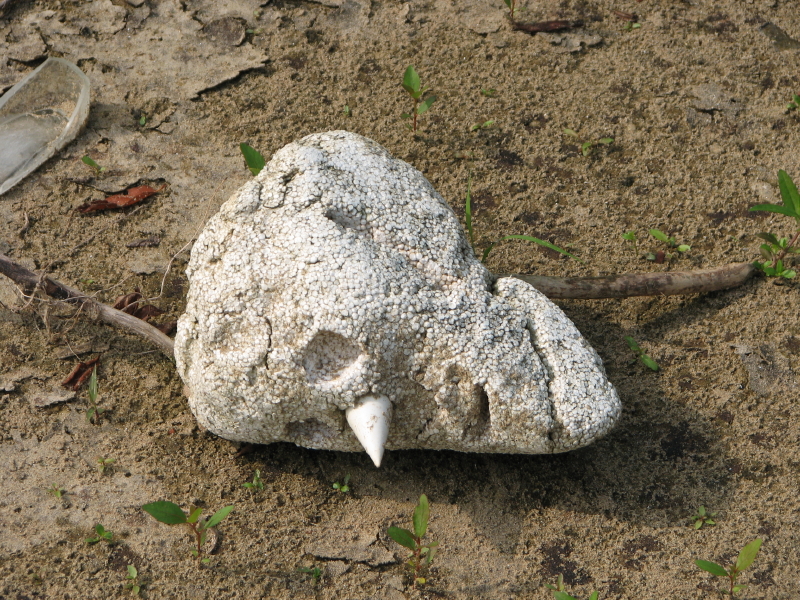
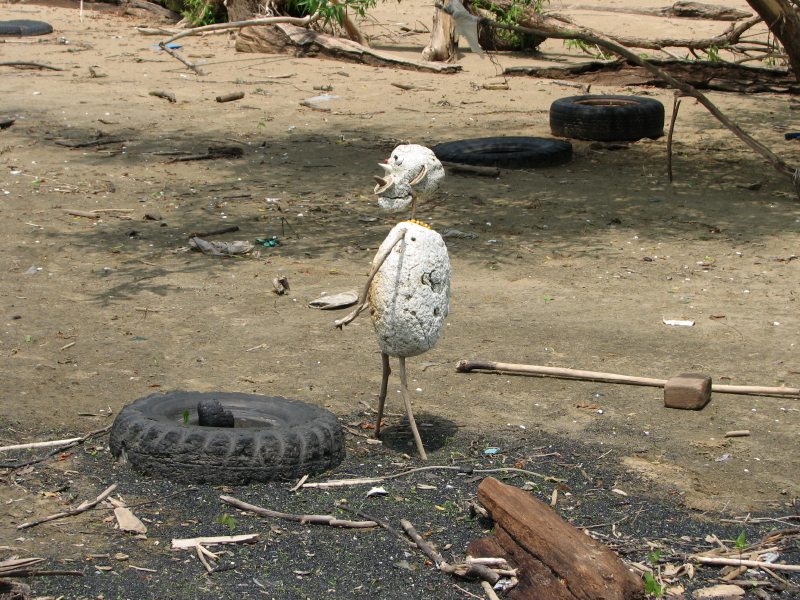
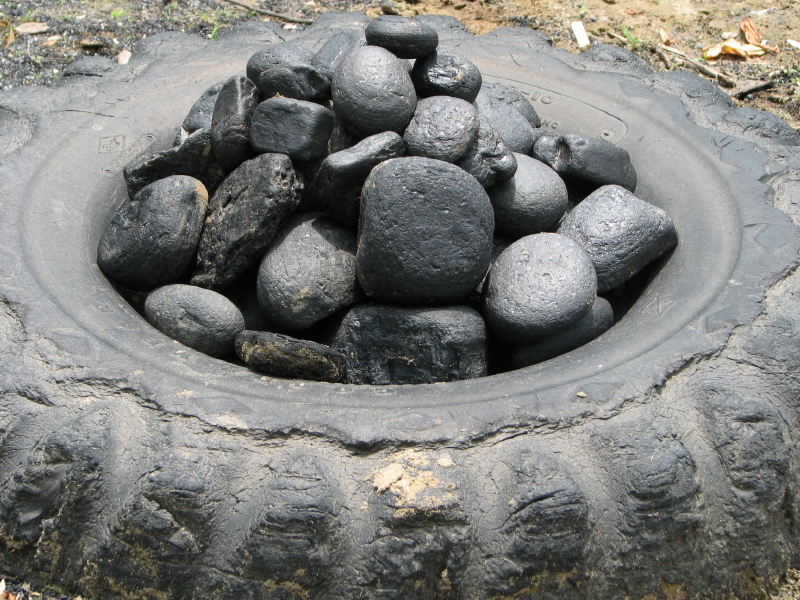
I’m not shocked at all to come across Joe Coalman’s eyeless skull resting in the hot sand.  To be honest, I would be more amazed to find him still intact.  My postmortem revealed that he had the stuffing knocked out of him.  I found his body about thirty yards from his head.  I take some photographs and gather the remains.  I’ll probably recycle him into another project in the future.  As for the tire with the coal in it…

…well, it too has been altered.  I can see how a standing Styrofoam figure would make a tempting target, but what about a tire filled with coal?  It must have provoked someone because the coal had been knocked out.  The black rocks were scattered all around.  I regathered them, but I could not find all the coal that was originally in the tire.  Curiously, if you look at the rim of the tire you will see something I had not originally placed there.  It’s a tiny white clam shell left perhaps by another visitor?  I appreciated this simple gesture and moved on.  Soon I reached my outdoor atelier with its latest cache of Styrofoam.  I laid Joe Coalman, skull and all back into the pile and wondered what to do next?

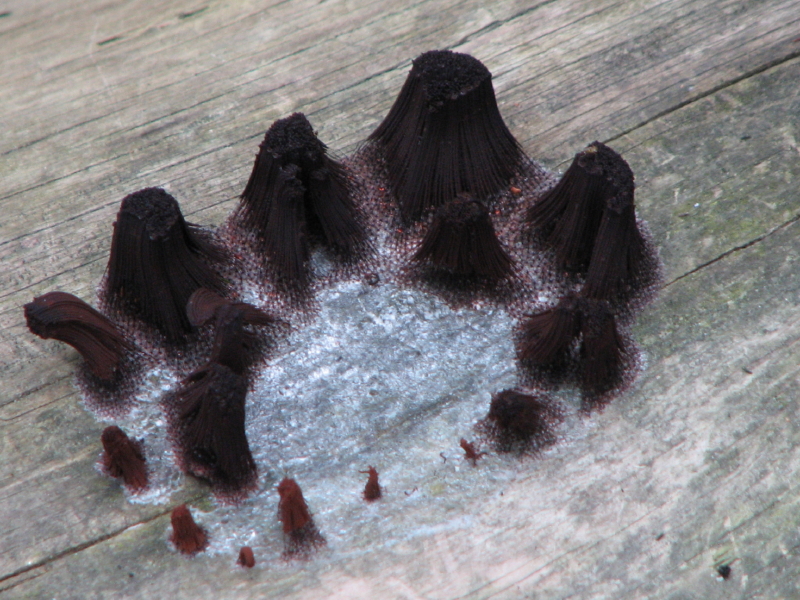
While sitting on the enormous wooden beam that defines one side of my outdoor studio, I spied something interesting on an equally impressive log.  Growing along the margins of an old bird dropping was this wonderful fungus.  At the Falls of the Ohio, there are many different types of fungi that help break down the organic bonanza that washes into here.  I wish I knew more about them, but realize that this is another entire field of study.  Nevertheless, fungi are of immense importance and help recycle nutrients among the many other useful services they perform.  With this particular fungus, it looked like it was on the downward cycle having already released its spores from the fruiting bodies that were now arranged like some organic version of Stonehenge.  After studying this curiosity for a few minutes, I settled into the familiar activity of creating a figure that would be the benchmark for the day.  Before revealing it to you…here are a couple of other things that I want to show you that I happened across during my walk.

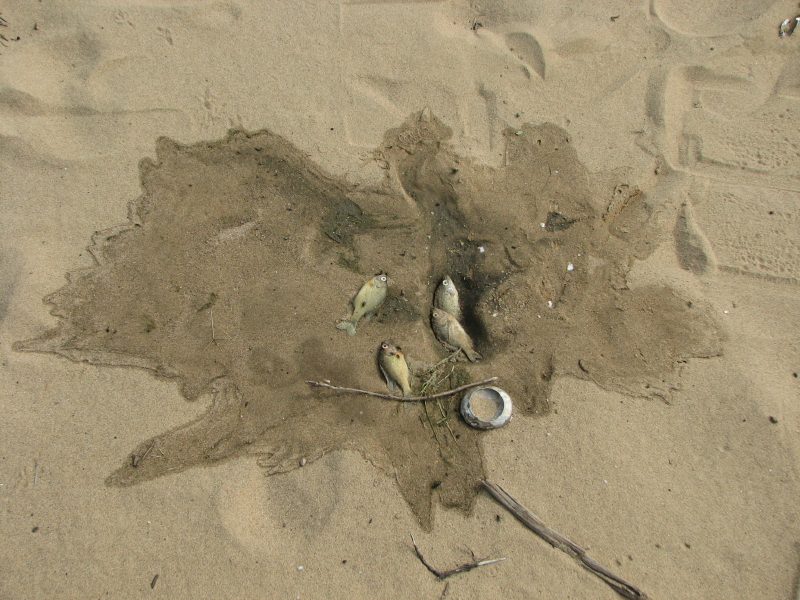
I’m always looking at the evidence and trying to figure out what occurred at a particular place?  Here a fisherman on his way back to the rest of his life has dumped out his bait bucket and left the four tiny bluegills in the sand.  Perhaps they were dead already since fish in a bucket die of oxygen loss without an aerator to cycle air back into the water?  I wondered if the use of these bluegills broke any laws since using other sport fish for bait is generally frowned upon?  I could imagine the size of the bucket from the wet area in the sand.  The silver circular object is the bottom of an aluminum can.  Near this scene, I also came across this discovery.

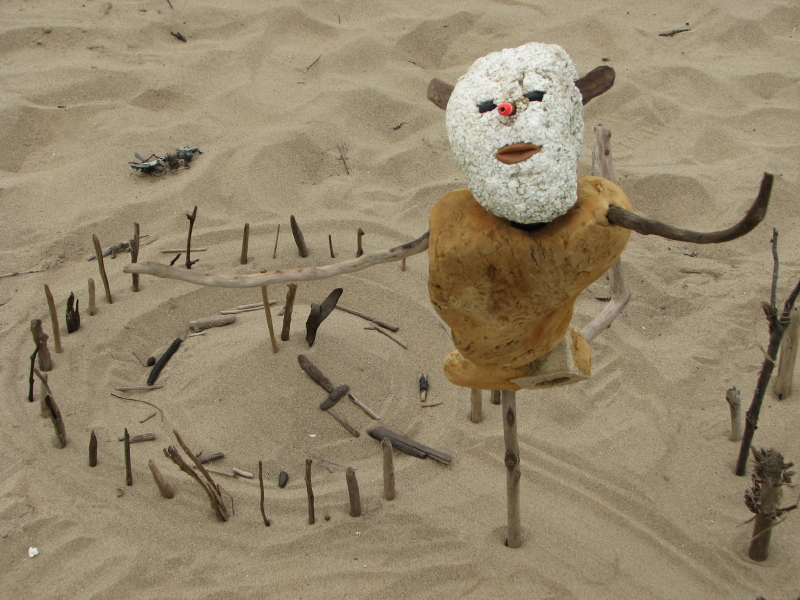
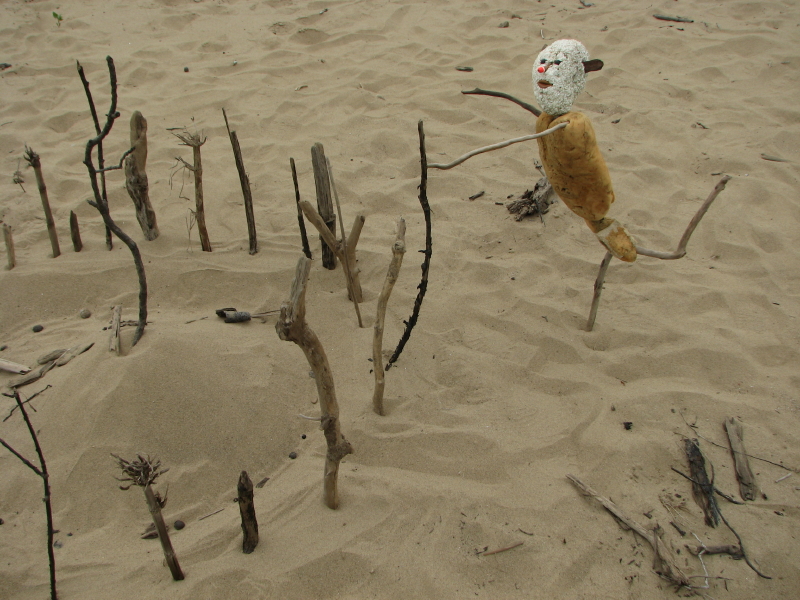
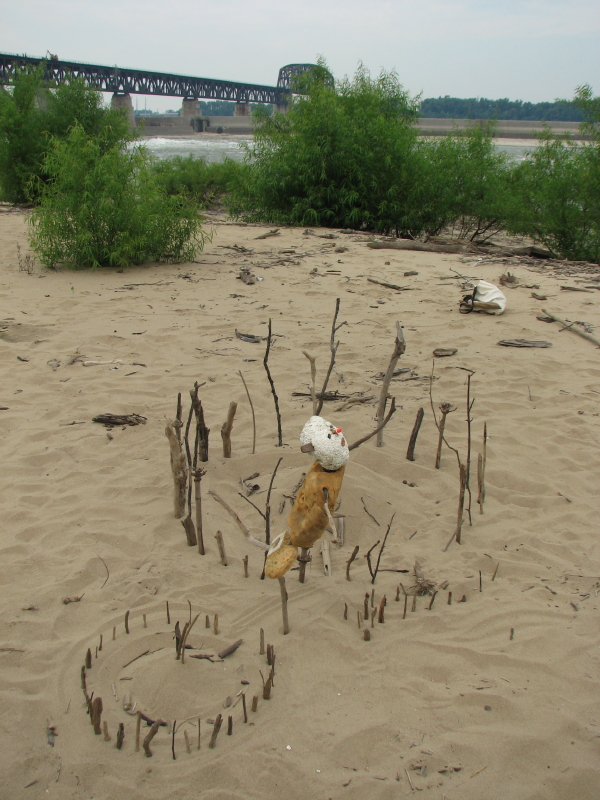
Less than a stone’s throw from the dead fish I found this arrangement in the sand.  I love it when people opt to leave their mark on the land in this fashion.  Present were two complete circles in the sand defined by upright sticks with mounded sand in their centers.  In my mind, I imagined two gears or cogs moving in response to each other.  The movement of the sun provided some of the energy needed to activate this metaphorical machine.  I decided that this place was a good site to unveil my latest figure which implies movement too.  I let it dance throughout this arrangement in the sand.

Maybe this was originally made by a child while his family fished?  It doesn’t matter because it gave me something positive to react with and made my day.  Feeling satisfied, I started back to my own vehicle, but there would be one more surprise on this day.  Perhaps this was also made by the same folks who did the circles in the sand?  Again, sticks were employed albeit much longer in length.  See for yourselves.

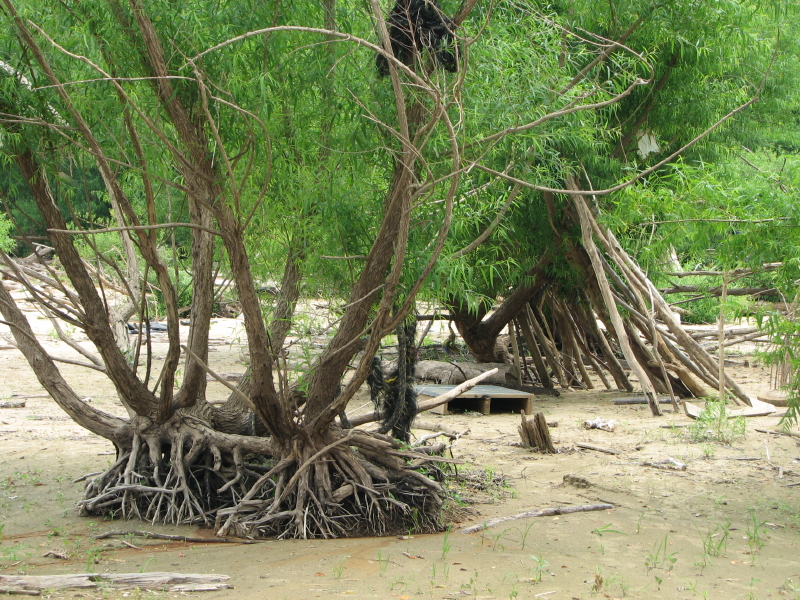
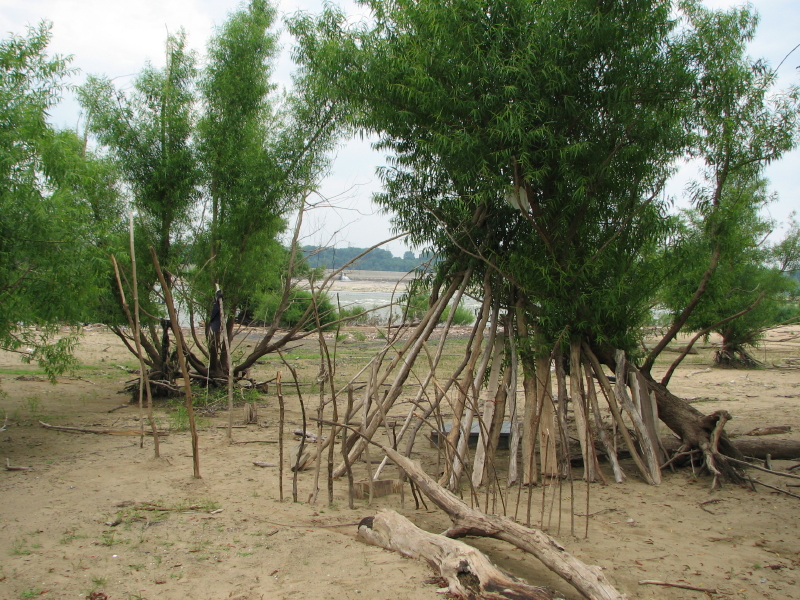
Logs and long branches were leaned against a willow tree and the effect implied shelter to me.  Other long sticks were placed upright into the sand and helped define the area.  A wooden palette was dragged to this location and left to provide seating.  Because the materials used are all local, it would be very easy to walk by this if you weren’t paying attention.  That’s one of the things my Styrofoam figures have working against them…their stark whiteness usually gives them away even at some distance.  But then again, for me that’s part of what I do which is to call attention to the stuff that doesn’t belong out here and through a little creativity, show what can be done.  I appreciate the stick pieces because they only use the natural materials that are out here.  I wish I could do this more often myself, but this isn’t the reality I usually discover out here.  Leaving the area, I came by this wonderful flower and in its center…was this tiny bee carrying on as her kind has for as long as there have been flowers in need of pollination.  Until next time.

Read Full Post »

I threw my arms up into the air and said “WHAAAAA”!  I had been resting in the shade after a couple of hours of junk scavenging when I heard this low vibrating sound and the bump of something landing on my head.  Reflexively, I knocked off whatever was on my noggin and it fell to the ground…and this is what I saw.

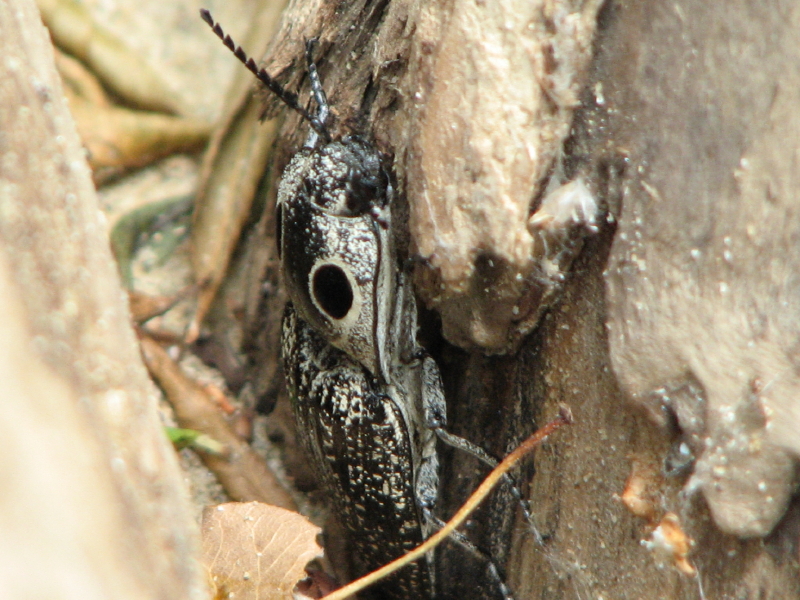
This is the Eastern Eyed Click Beetle or Big Eyed Click Beetle, (Alaus oculatus).  It’s one of my favorite indigenous beetles and one I’ve seen at the Falls of the Ohio on numerous occasions.  As beetles go, this one is on the large side approaching two inches or about five centimeters in length.  Getting smacked in the head by one certainly surprised me, but it turned out to be a good one.  I love the cryptic bird dropping coloring and those two large eye spots get your attention!  After the beetle recovered its senses, it flew and landed on a dead tree trunk right behind where I was sitting.  It turned and started walking down the tree towards the ground.

I watched as the beetle lowered the tip of its abdomen at the base of this dead tree.  I’m hoping it might be laying an egg or two.  When it was done, it walked back up the tree trunk before flying off for the next tree or head that catches its fancy.

I was rummaging around one of the driftwood mounds for whatever secrets it was carrying and to separate out materials for the river sweep clean up.  Nearby, was the beginnings of another garbage pile that someone else had started.  I decided to throw my junk into this lot to consolidate it and make the removal just a bit easier.

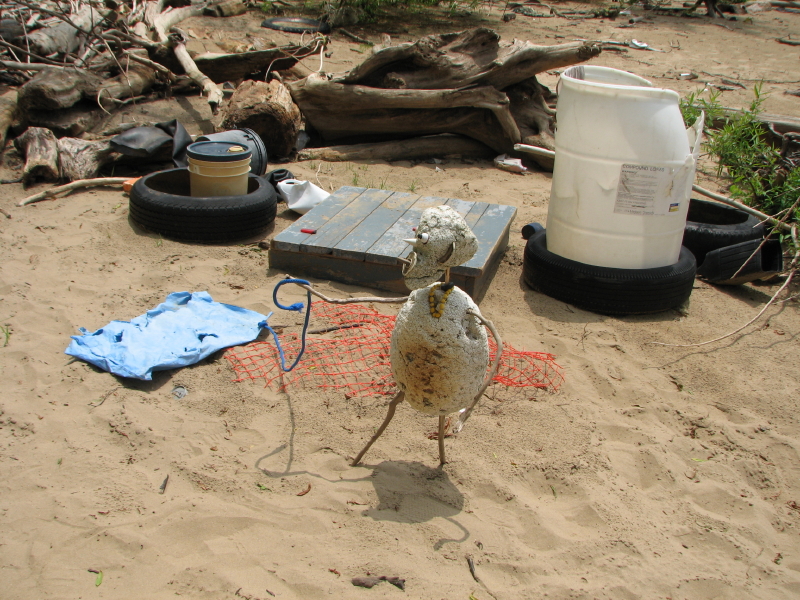
It was the usual lot.  A few plastic 55 gallon drums, a bit of hurricane fencing, tires, and a palette or two were among the larger items that were deposited here by the last flood.

Of course how these things came to be in the river is another story.  It’s amazing what our kind can tolerate and consider acceptable.  I suppose this represents the collateral damage we are willing to endure to support our ultra consumptive way of life.  It makes me want to retch! I think this partly explains why so much of this trash is colorful.  If we have to look at it…it might as well be pretty.  When I finished up in this area I moved on like the click beetle did to new surroundings.  There is no shortage of trash out here.  After this Spring’s floods there is also an abundance of coal gravel and coal chunks in the eastern section of the park.  Here’s an example.

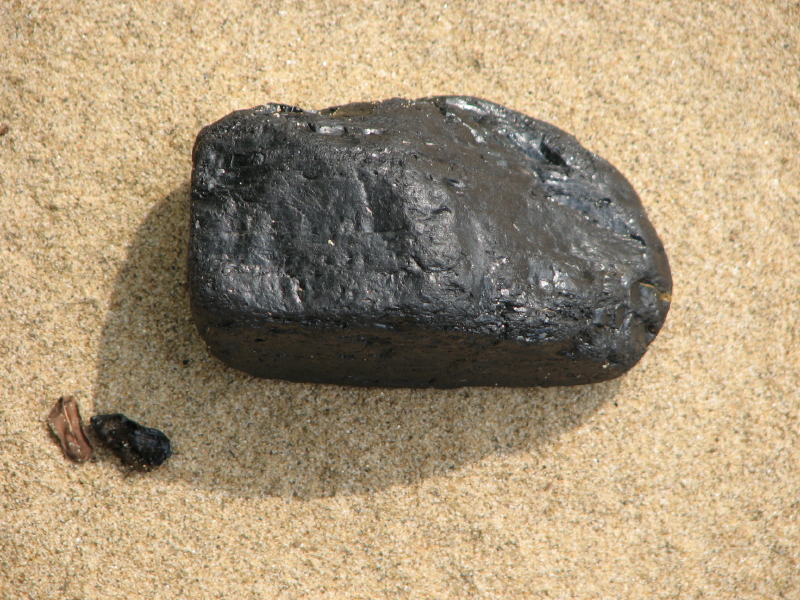
The Falls of the Ohio is famous for its fossils, but this black rock wasn’t originally a part of the geologic scene here.  More than likely, this piece of coal was removed from the top of a mountain in Eastern Kentucky and shipped by barge to this area to be burned in a plant to produce electricity.  For some reason, this and many other pieces of coal got into the river where they were tumbled and ground to bits.  In case you were wondering…coal does not float.

In places the coal gravel was several inches thick and reminded me of the black beaches made of volcanic sand.  Also interspersed on this river bank were many automotive tires.  I couldn’t help but associate the coal with the tires and I began to combine both of these elements in this landscape.  Here’s a picture of me in action.

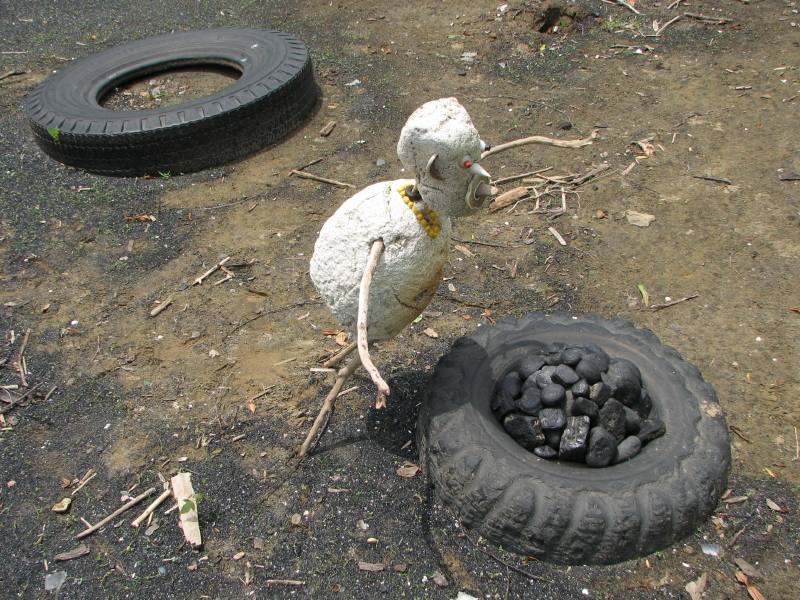
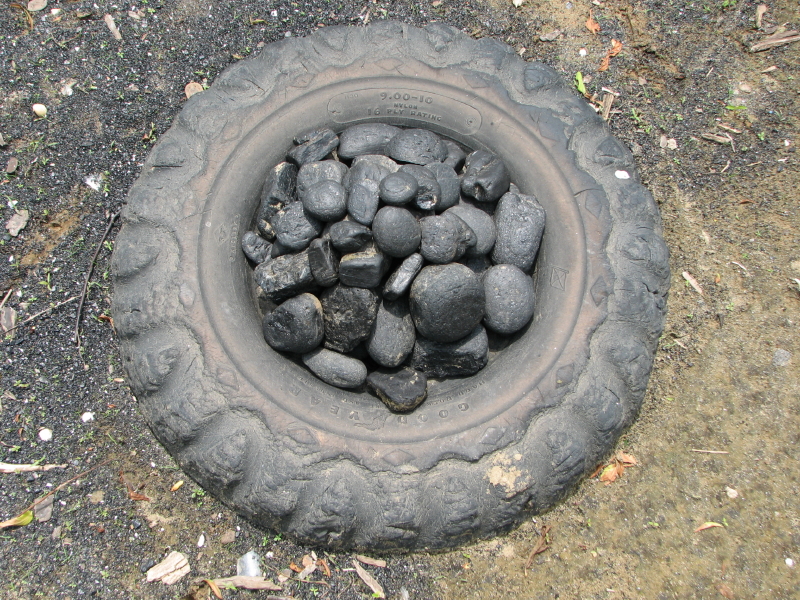
Walking around in this area, I found enough large coal pieces to fill a tire.  Doing this was highly addictive for me.  Here I was picking up real chunks of fossil fuel to place inside a circle that itself is made from fossil fuels in an area that’s well-known for its Devonian Age fossils.  How all these things affect or reference life made my head swim more than the actual heat and humidity.  When I finished filling one tire…this is how it looked.

And now, for an aerial view.

To me, this looks like some kind of unusual and bizarre fire pit ready to go.  Scientists have already established that “burning rubber” and coal are contributing to the excess amounts of heat, energy, and toxins now found throughout many of the Earth’s systems.  In Kentucky, the coal debate is a complex one.  We have an abundance of coal, but it comes at a dear price to the land and the people who call the coal fields home.  The sun is getting hot and I have already had a busy day watching fishermen and making sand drawings!  For now, I will have to leave the coal debate where it is, but I’m sure to return to it since there is so much coal here at the Falls.  It will remain here until the forces that shape this planet decide otherwise.

Read Full Post »

The Ohio River has receded by the Falls of the Ohio.  For many weeks the river was loath to relinquish the territory it had recently flooded.  I ventured down the river bank and explored the more eastern section of the park.  The following post is some thoughts and images made during this expedition into a very moist and muddy area filled with debris and wildlife.

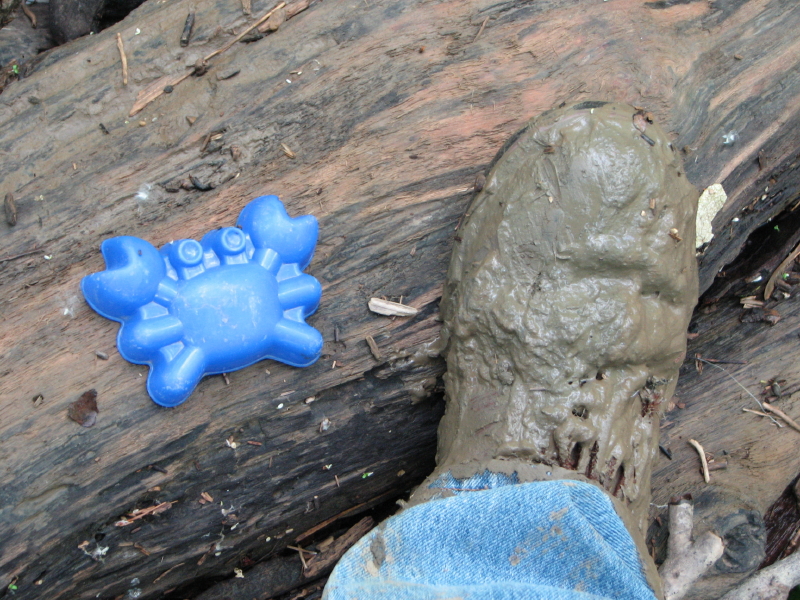
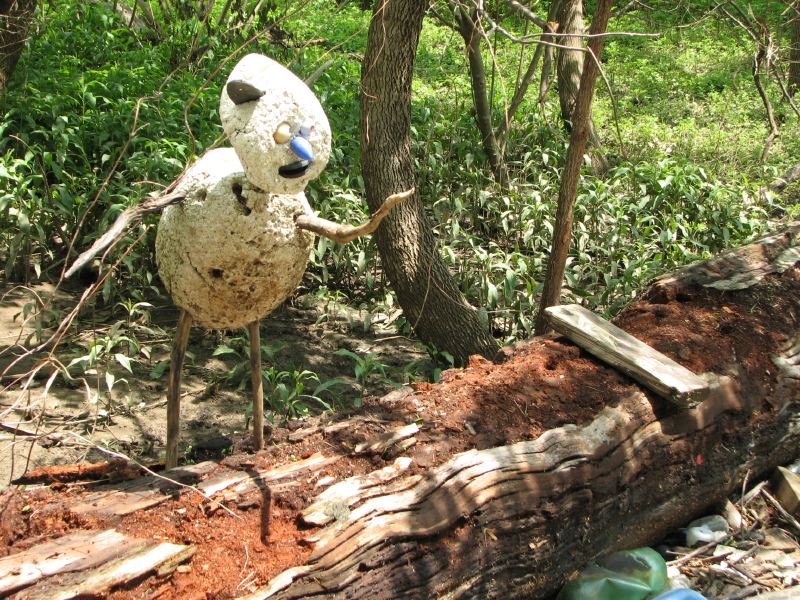
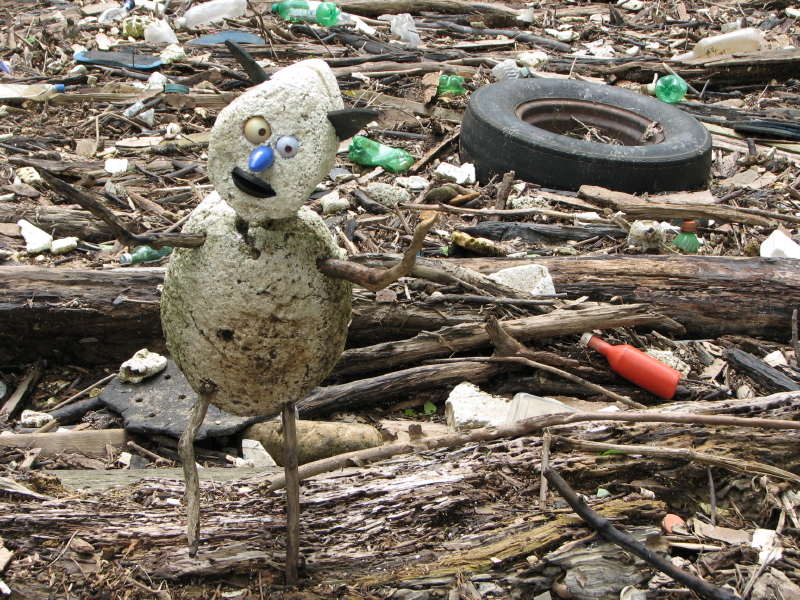
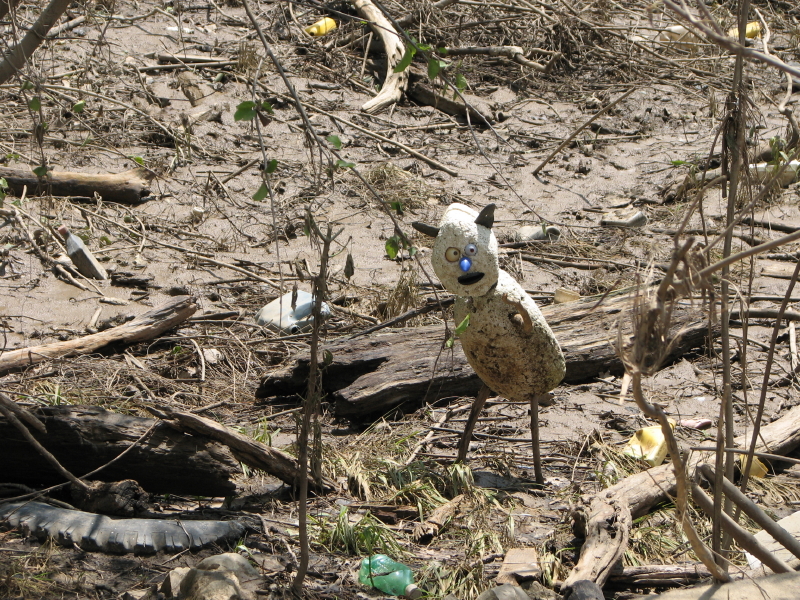
While exploring the park it is not unusual to run into others who are curious to see what the river has left behind.  Sometimes just a nod of recognition and some small gesture to reassure that one poses no threat is made and each party then attends to their own business.  And then sometimes a more sustained conversation occurs where information of mutual interest is exchanged.  Such was the case on this trip where I ran into this fellow of short stature with a bulbous blue nose who had been investigating the same stretch of river as me.  We tagged along with one another for a short time before family duties called me home.  I believe our initial conversation had something to do with the muddiness of the area.  In places, things looked safe and dry enough to stand on…and then the mud below would reach up and grab you by the ankles.  Sometimes small, blue crabs would pop out of their holes to check out whether the trapped parties would be good to eat.

In my case, I am simply too big for them and once the crabs realized this they scuttled away.  Getting back to “Mr. Blue Nose”,  (funny how we didn’t think to ask each other’s name?), we were both astonished by the debris left behind by the retreating river.  After witnessing several other high water incidents over time…this is fairly representative of the stuff we found.

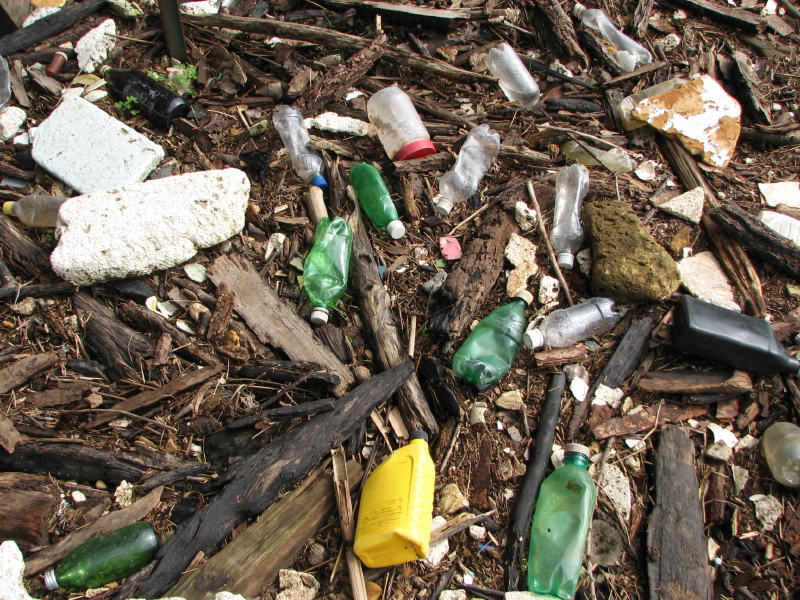
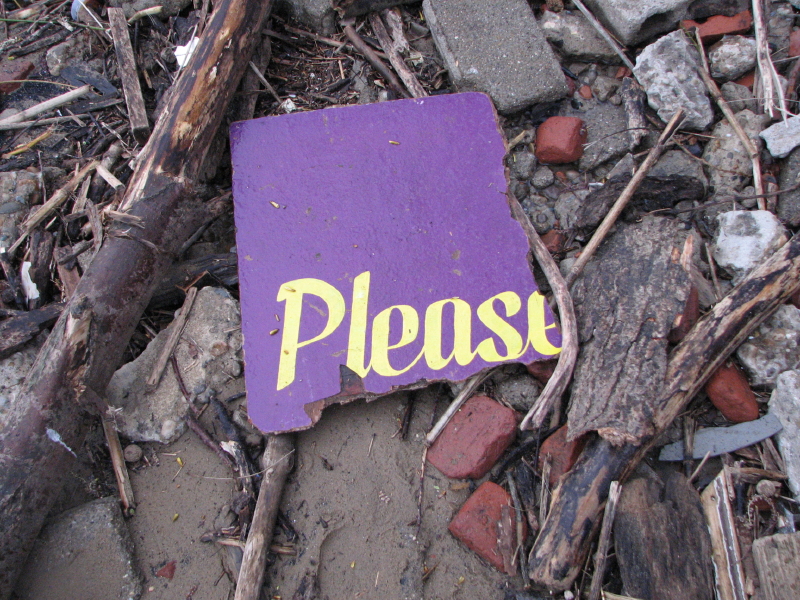
As you can see it’s mostly plastic containers, polystyrene (aka Styrofoam), and lots of shredded bark and wood chips.  Every once in a while, something more interesting would turn up.  While exploring, Mr. Blue Nose and I found two sign fragments and I kept these for my Found Painting and Sign Collection.  Here are the two precious finds.  The first one is kind of self-explanatory.  I like to muse that this is one way the universe communicates to me by leaving these things in my path for me to ponder.

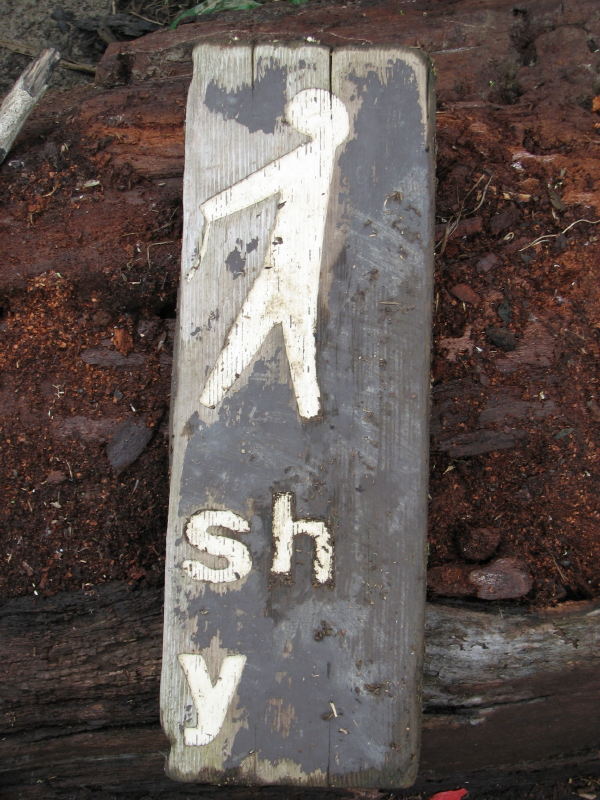
I’m not sure what it is asking…Please don’t litter or Please, only you can prevent forest fires, whatever its actual message, this is at least a polite sign.  The other one is more reclusive, in fact it is “shy”.  Here’s a picture of this enigmatic sign.

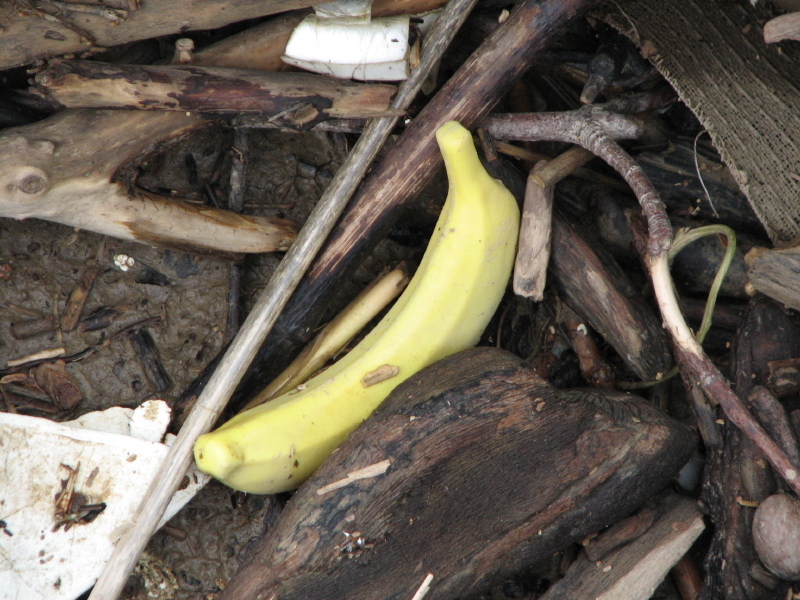
I like the hand-routed and painted “sign” for a person.  I think this fragment may originally have asked dog owners to leash their pets…but its shy and won’t tell me for certain.  Other found treasures included my second banana of the season…naturally it went into the old collecting bag to later join the other artificial produce I have found out here over time.

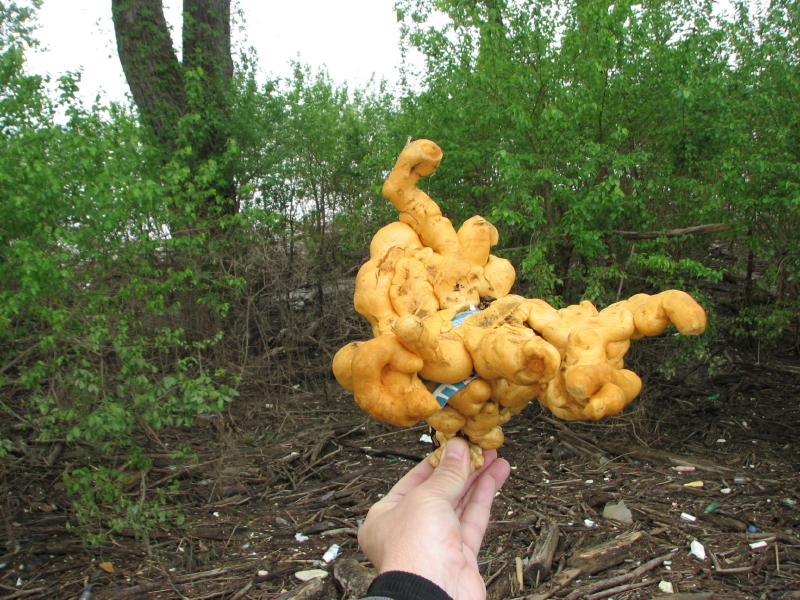
I also find other kinds of foam out here.  Here’s an interesting found sculpture made from polyurethane.  I have come across busted aerosol cans of this stuff where the foam has expanded out resembling entrails.

Mr. Blue Nose called my attention to a log that something had torn into and he wondered what could do this kind of damage.  Chunks of bark and soft decayed wood were scattered all around. 

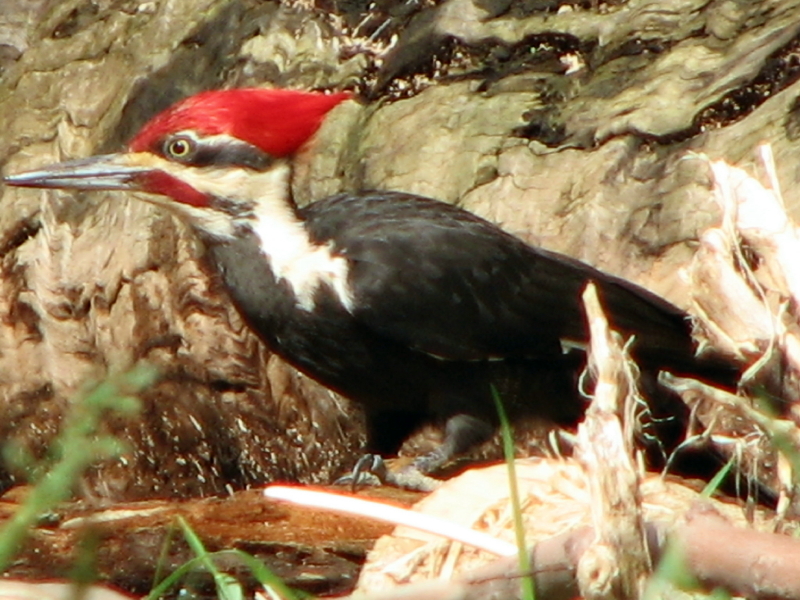
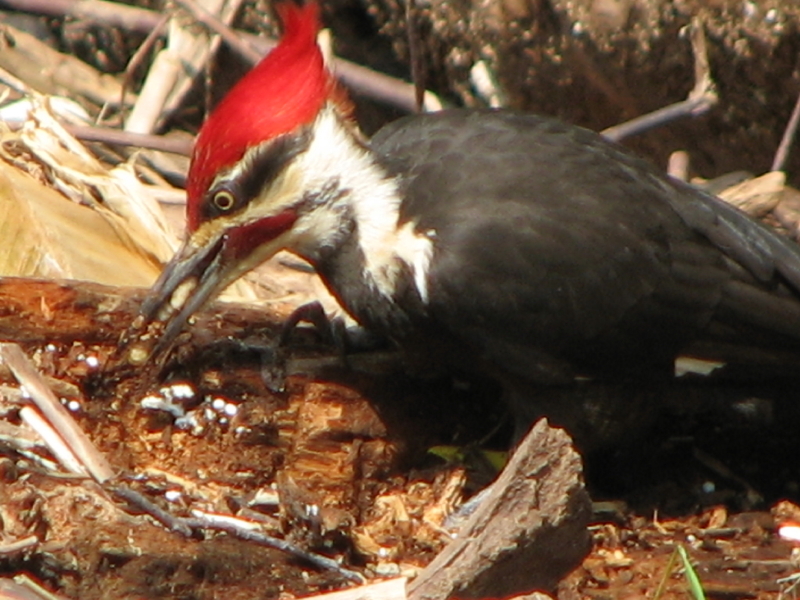
I was happy to inform my new friend that this looked like the work made by a Pileated Woodpecker and I showed him images of this great bird I had taken just a few hours earlier.

Since no one can verify that the Ivory-billed Woodpecker is still alive along some wild river in Arkansas…the Pileated Woodpecker has the distinction of being our biggest living woodpecker.  For years, I have observed a pair of these crow-sized birds in the park.  This one is the male and can be identified by his red mustache.  The female lacks this and has more black on its head.

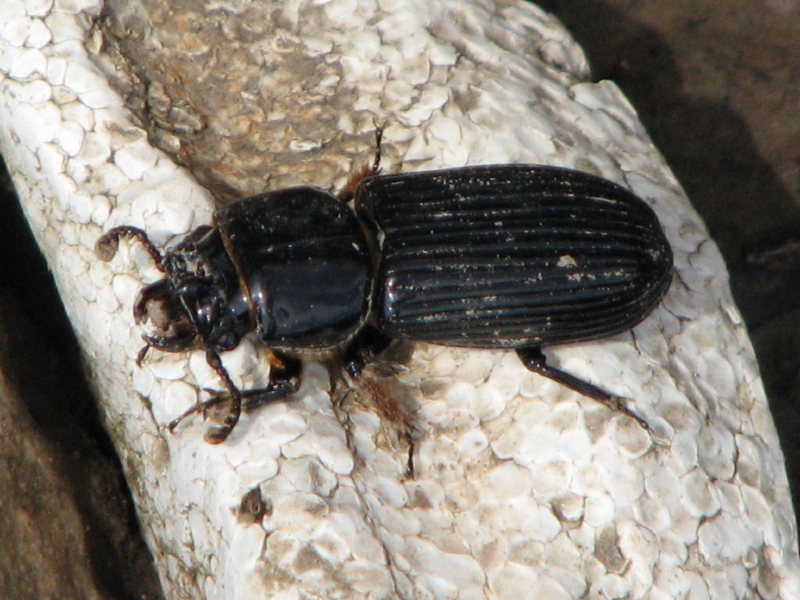
The Pileated Woodpecker has a large bill that goes through wood in a hurry.  Carpenter ants and beetle larvae can be found in these decaying logs and make up the main diet of this magnificent bird.  If you look closely at the photo above you can see a nice grub about to be swallowed.  This bird was so intent on looking for food that I was able to get closer than usual to it.  A couple of weeks a go, I found a Bessbug beetle which is a nice sized insect that uses decaying wood in its life-cycle.  This beetle is also known as the Patent-leather Beetle.  Here’s an adult I found sunning itself on a piece of Styrofoam.  These beetles can get nearly two inches long or about  five centimeters.  I wonder if our country will ever adopt the metric system?  Anyway, these beetle grubs make nice woodpecker snacks.

Thanks to my new companion we were able to make one other nice bird sighting on this day.  Mr. Blue Nose alerted me to some commotion happening in a nearby stand of trees. 

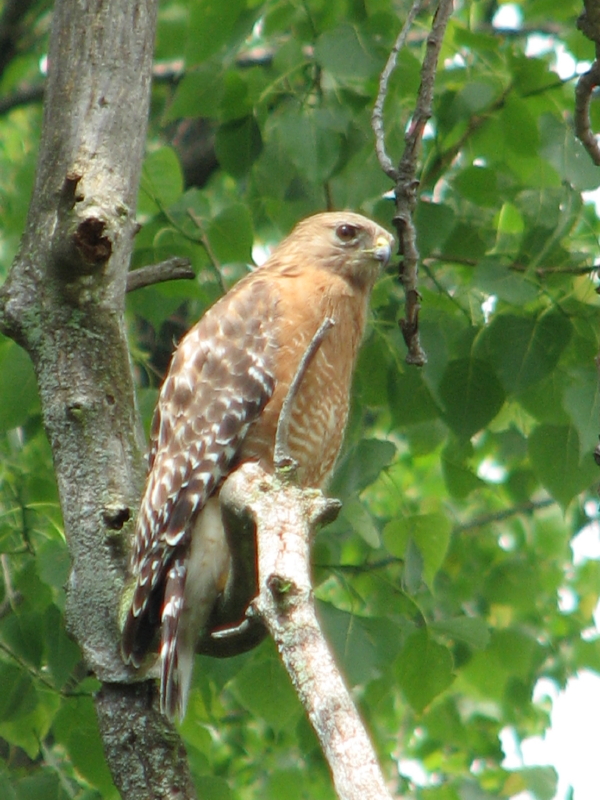
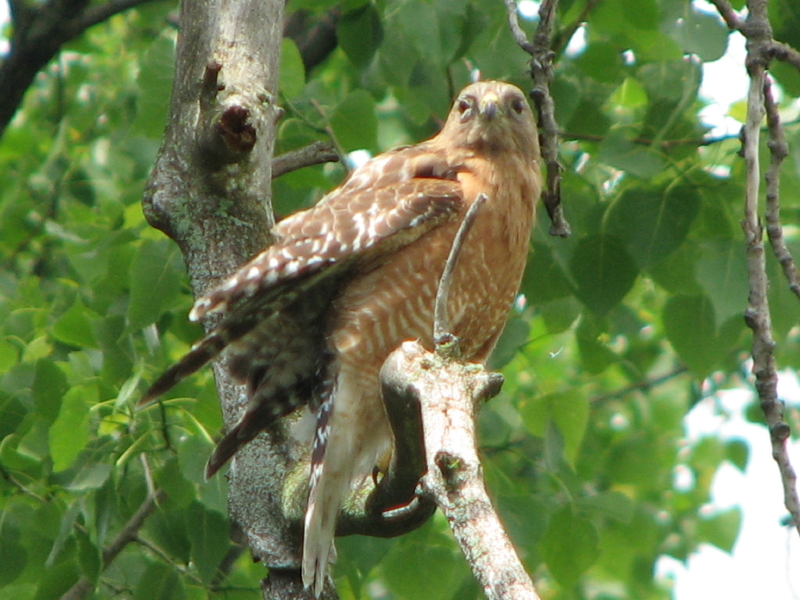
My friend said that he saw several blackbirds (grackles) chasing a larger bird from tree to tree.  I have observed this behavior before when birds of prey are present.  I gathered my camera up and went to see if I could find out what was the object of all this attention.  It turned out to be this beautiful Red-shouldered Hawk.  Here are a couple of pictures of it before the smaller birds drove it out of the area.

I always feel lucky when I see such beautiful birds in the park.  Before flying away, I saw this bird’s mate arriving and the two flew away together.  Soon it was time for me to fly away too and I left my companion on the river bank.

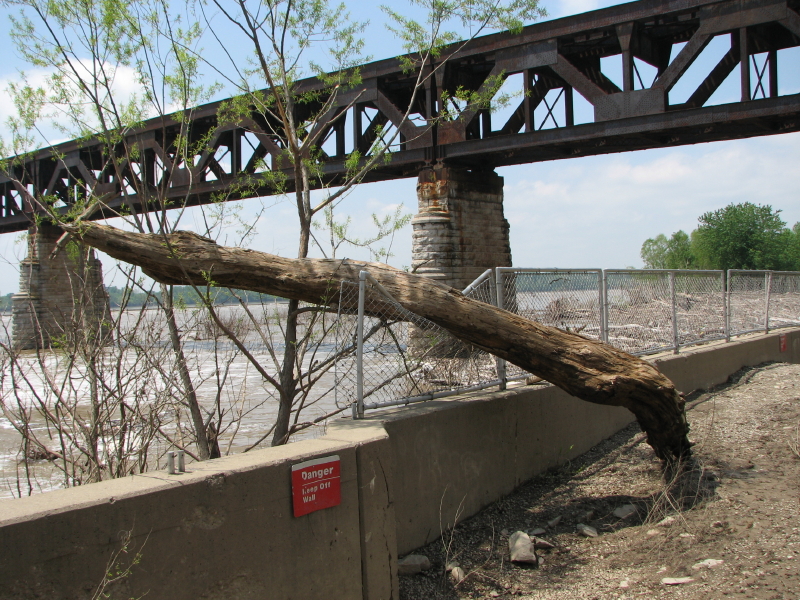
We parted near the railroad bridge and perhaps we will see one another again?  My last image is from an overlook area popular with visitors who want a better view of the tainter gates.  I have taken many pictures here over the years, but this one is different.  To give you an idea of how high the river was…this log was deposited on the fence by the retreating river!  Or, I hope so…I would hate to think it jumped up here!  So long for now!!

Read Full Post »

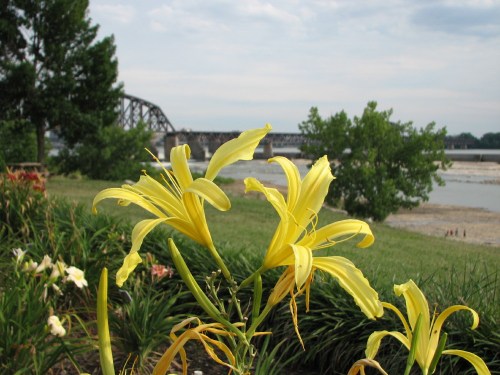
Day Lilies blooming,7/09

For many years I have admired the gardening efforts by the staff and park volunteers to beautify the area around the Interpretive Center.  I don’t know if these fine folks get the credit they deserve, but I thought I could devote a post to sing their praises and say thank you.  I would be remiss if I didn’t also notice the man-made loveliness to go with all the man-made rubbish deposited by the river and frequently cited by me in my art.

Day lilies, 7/09

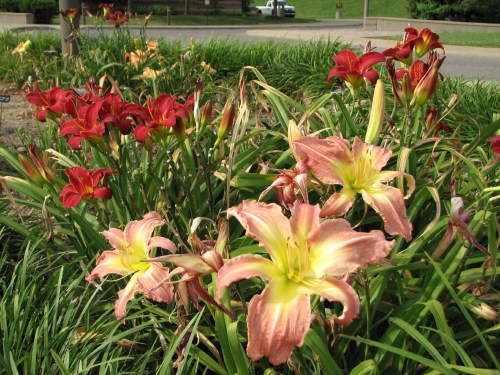
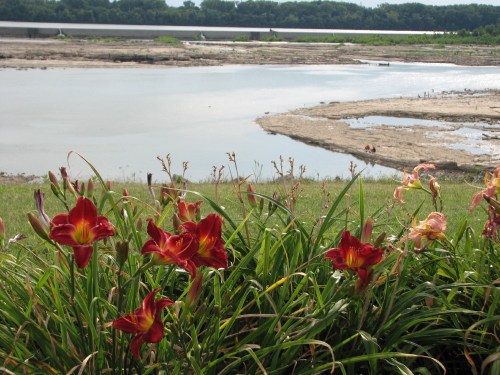
The Day Lily Collection at the Interpretive Center is particularly nice and I have been enjoying the blooms for the past couple of weeks.  Dozens of varieties are represented and each is labelled.  Our area has a very active day lily society and their plant sales are avidly attended.  I have heard people refer to gardening as an “art”, but what about the flowers themselves.  Can a real flower be a work of art?

Yellow spider-lilies, 7/09

Many years ago, (the early 1990’s) I organized an art exhibition entitled “Green” for the Louisville Visual Art Association.  I chose the show’s title before the whole “green” consciousness became so prevalent.  In that show, I had a selective representation of artists  that expressed a concern for the environment.  By far, the artist whose work and ideas I found the most interesting belonged to George Gessert of Eugene, Oregon. 

Day lily, 7/09

red and yellow daylilies, 7/09

pink and yellow, daylilies, 7/09

Gessert considers himself to be a “genetic artist” and his medium are the wild iris varieties he finds in the Pacific northwest.  His basic idea is that the plants and animals we surround ourselves with would not exist in nature without our selectively choosing which characteristics of a given species we find attractive or useful.  He believes what we find attractive in flower blooms is a kind of cultural preference and conditioning and in his own iris works, likes to show what other forms are possible.

deep red daylilies, 7/09

Gessert’s ideas and work raises many possibilities which he has made clear in several articles in the Science/Art journal “Leonardo”.  If we think artists are people who create beauty by manipulating inert materials what do you call it when living materials are used?  Could a dog or horse be considered a living sculpture because they wouldn’t exist in their present forms without our intervention?  Just as interesting is the observation that we are surrounding ourselves with plants and animals that are hybrids or cultivars.  Look around you, how many of the plants do you see in your yard that are wild and native?  It’s fewer than you think.

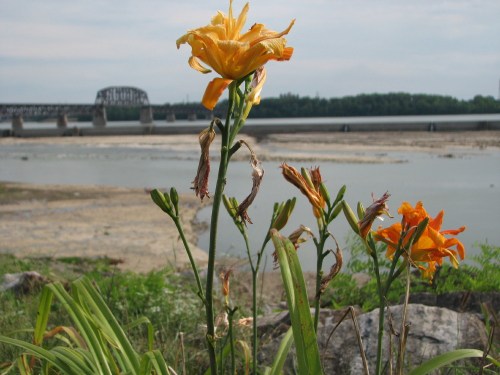
Falls view with daylilies, 7/09

With genetics, the intersection of art and life is about to get really blurry.  As we learn more about the molecular codes that program life, the more tempted we are to experiment.  There is always the specter of eugenics as well and the quest to make people not just better, but superior.  Another possibility is that we may make new varieties of food plants that could feed an overcrowded and starving planet.  As for the question about the flower being a work of art in itself…I’m going to say yes.  I like that art can push the boundaries of what is considered the norm and in the process alert us to  and prepare us for the future.  After Gessert, I can’t look at a typical garden in the same way as I once did without thinking about the issues he raises.

daylilies at the Falls, 7/09

Read Full Post »

« Newer Posts