Feeds:
Posts
Comments

Posts Tagged ‘creativity’

Today there is a leafy smell in the air at the Falls of the Ohio.  Already, most of the leaves are on the ground and every gust of wind takes a few more away from the branches.  I often think about John James Audubon walking these grounds two hundred years a go looking for birds to draw.  Many of his earliest avian subjects were captured on paper here.  Audubon’s time at the Falls gave him training as both an artist and naturalist that would serve him well later in his career.  In my own eccentric way, I’m creating an alternative ornithology that parallels the genuine one.  Here is the day’s birding adventure.
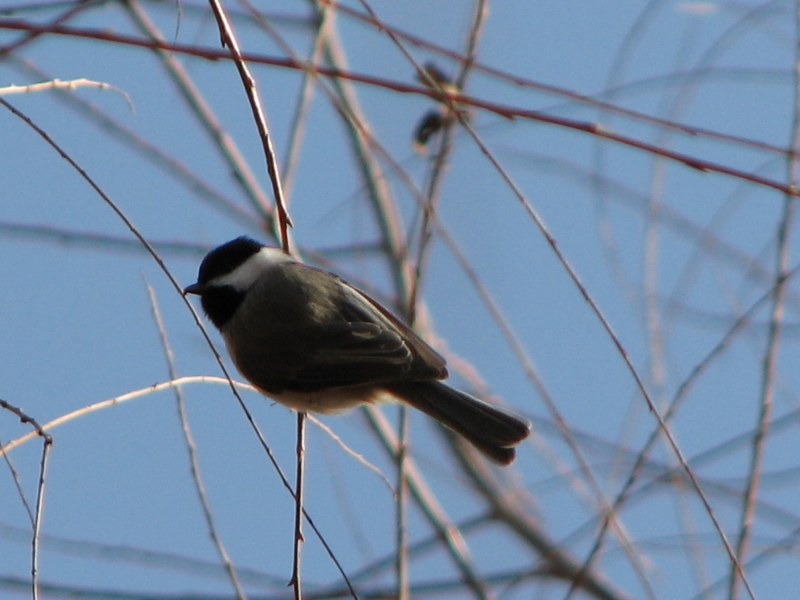
I usually hear the Carolina Chickadees before I see them.  They are to my mind comical birds because they seem to get into every position possible in their quest for food.  They will examine from every angle whatever it is that is the object of their attention.  Most of the time I see this bird in pairs which makes me wonder if the males and females stay together year round?  I will have to read up on that.  As far as I can tell, there isn’t a good way to tell the sexes apart in this species.  You can walk in the woods and not see or hear anything …and then suddenly it seems the birds find you!  I’ve noticed that different species will flock together as they travel through the woods.  Here’s a sampling of what I saw along with the Chickadees today.

Migrating southward from their boreal homes in the north, Golden-crowned Kinglets mix freely with other species.  They are tiny, ever on the go birds, and it is difficult to photograph them.  The kinglet in the above picture is a male identified by his orangey crest.  The female’s crest is pale yellow.  This is another bird I hear before seeing with their “dee, dee, deee” call notes.  It’s common to see woodpeckers and their allies joining into this group.  Here’s a female Downy Woodpecker plying its trade among the tree bark.  The male has a red dash on the back of his head.

 Woodpeckers have adapted very stiff tail feathers that they use to brace themselves as they hammer away on the wood.  You can see the same thing on a bird that is so cryptically colored that it is easy to miss.  I saw several Brown Creepers flying with the Chickadees and Tufted Titmice today.  This was the better of the Brown Creeper images and you can see how easily it would be to overlook this bird.  Notice its stiff, v-shaped tail feathers that it uses to brace itself as it probes the wood.
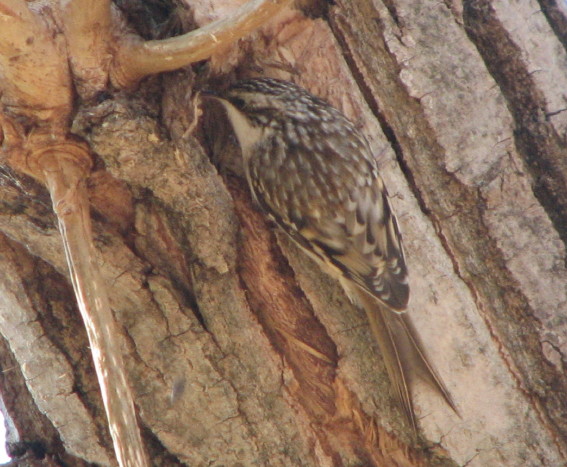
Looking just like wood bark, the Brown Creeper will fly to the base of a tree and work its way up.  It is looking for small insects that are hiding in the crevices of the bark.  These bird are also very small.  It’s also common to see this bird also traveling in the company of migrating nuthatches.  Such was the case on this day, here is a White-breasted Nuthatch that was on an adjacent tree to the creeper.
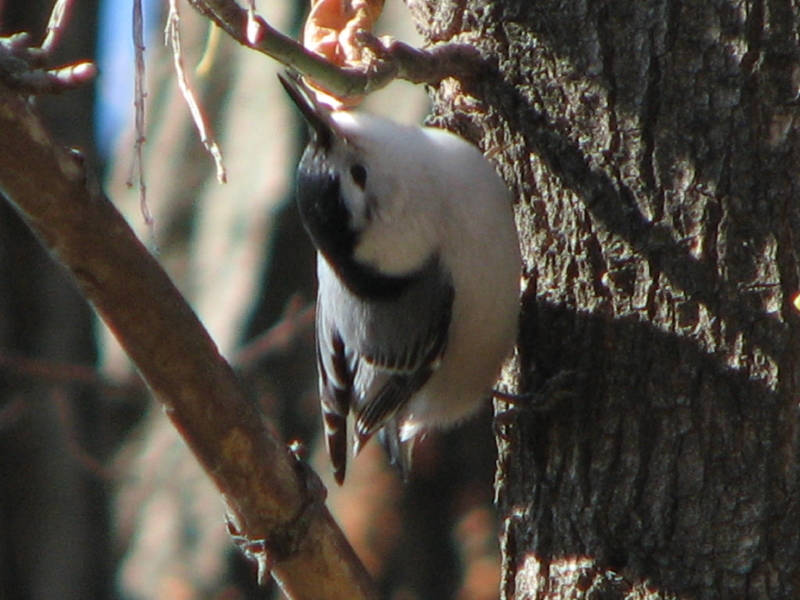
Aptly named, this nuthatch has a snowy-white breast feathers.  It likes to explore the tree’s surface in a head down position and has this nasal sounding call note that it frequently gives as it hunts for food.  Of course, I have saved one specialty for you that is very rarely glimpsed at any time of the year.  Patient birding rewarded me with this sighting of the Thick-billed Thrasher that was also traveling with these other birds.
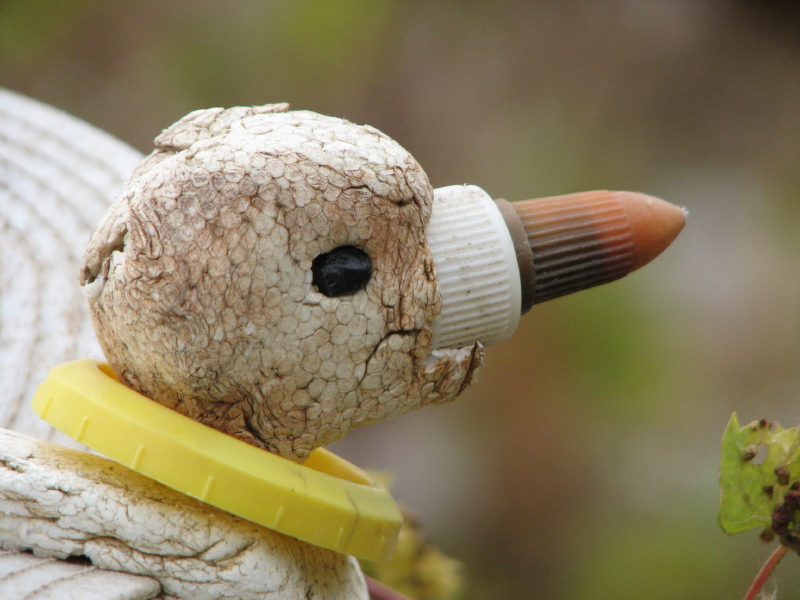
From this detail, it is easy to see why this bird is called the Thick-billed Thrasher.  It is a seed eater and specializes in pine nuts.
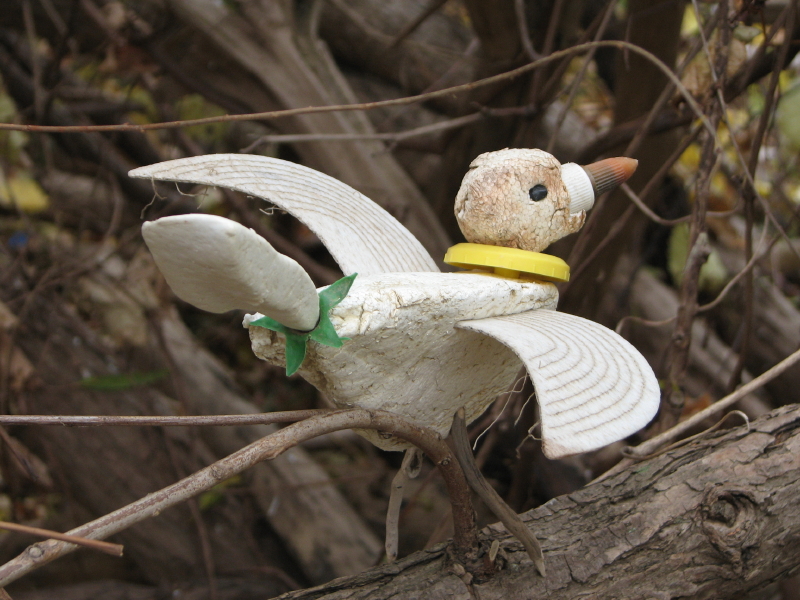
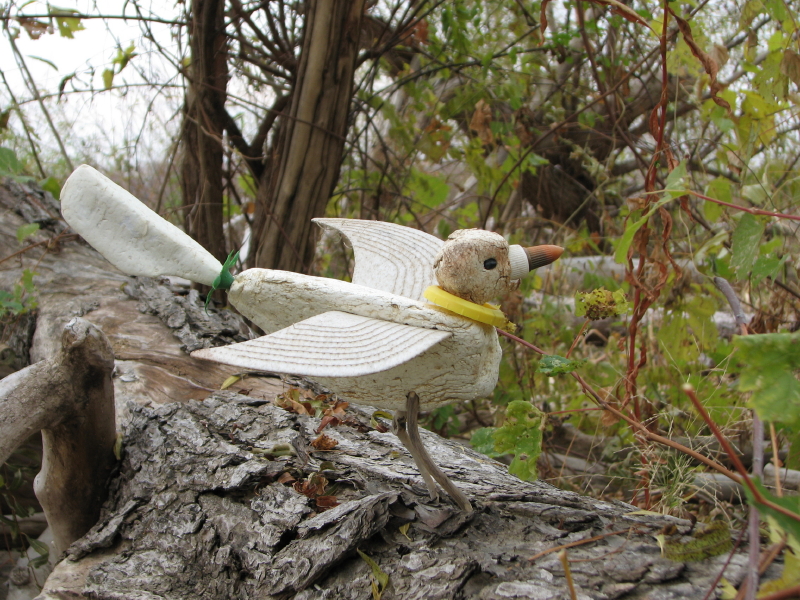
Males and females of this species are also difficult to tell apart.  I spotted this bird resting among the willow branches in the eastern section of the park.  I noticed others of its kind exploring the leaf litter for whatever food supplements its main diet.
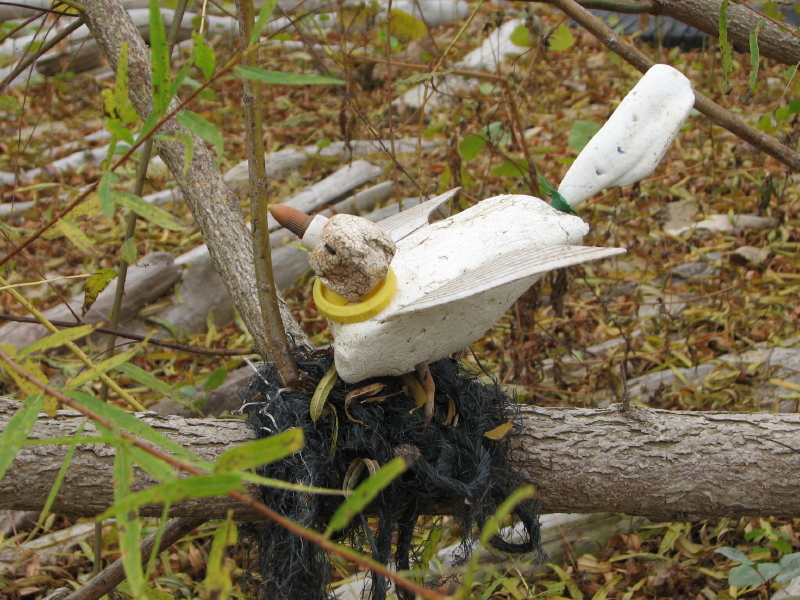
A final look at the this thrasher doing something a bit unusual.  This bird has discovered some barge cable wound around a branch and it seems to have stimulated a nesting response.  It sat on this rope for a few minutes before moving off with the rest of the traveling birds.  The Thick-billed Thrasher’s ultimate destination are the pine forests of the southern United States.
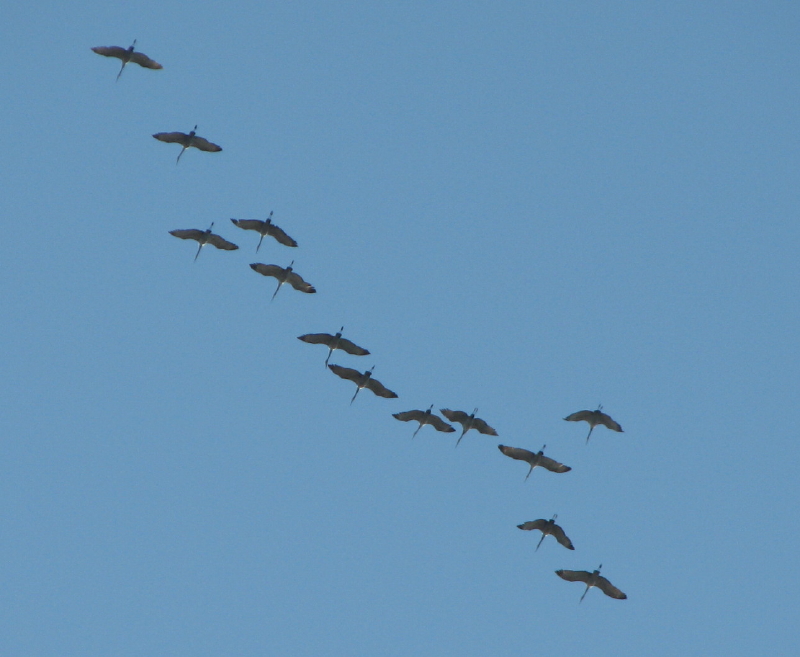
On my way back to my car, I made one other special bird sighting.  I also heard these birds before I saw them and immediately looked up into the sky.  Flying high above me in wavy, v-shaped formations, flocks of Sandhill Cranes were winging their way south.  For me, this is another sign of the season and I always associate the coming of very cold weather with seeing these cranes.  I wonder if Audubon felt similarly?
Read Full Post »

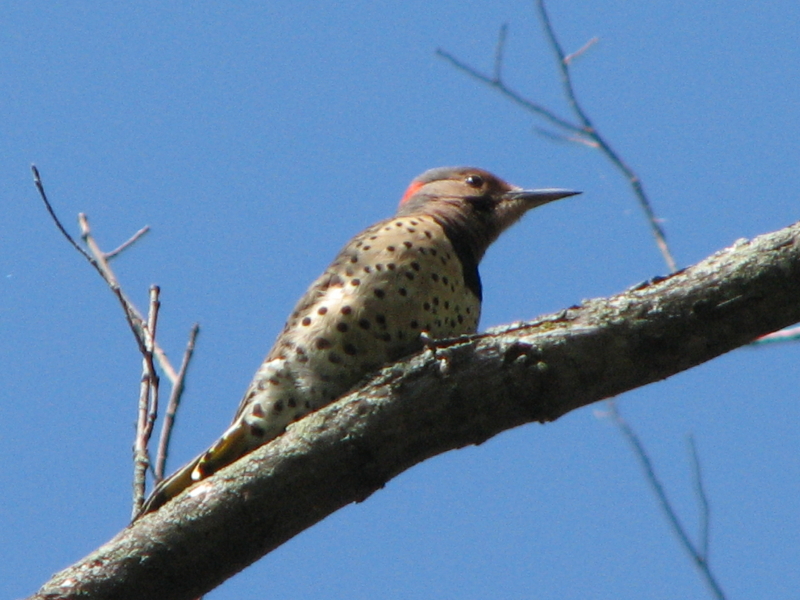
After finding all my sculptures smashed, I decided to give that section of the park a rest.  I will eventually return there and make new pieces from the remains.  Today’s walk is along the western section of the park.  It is an area I have come to appreciate more.  In part, because fewer people venture this way and there are different points of interest.  It’s fall migration time and I’m always on the look out for birds.  The birds that are just passing through are of particular interest, but I also like the species that can be found here year around.  I came across this really noisy Northern Flicker on a branch and snapped its picture.

This is a fairly large woodpecker.  In the old guides, this would have been identified as the “Yellow-shafted” form.  The feathers under the wings and tail are a bright yellow which can be seen as the bird flies.  The black “mustache” extending away from its bill identifies this as being a male.

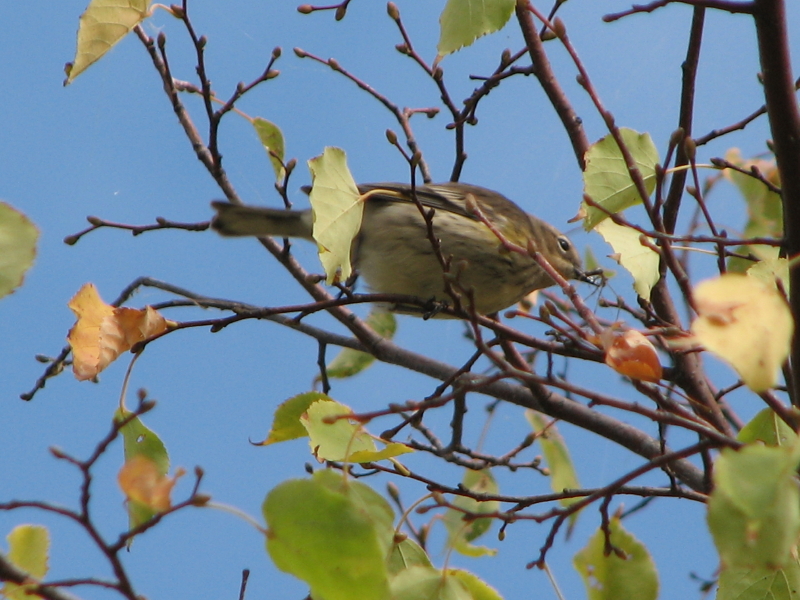
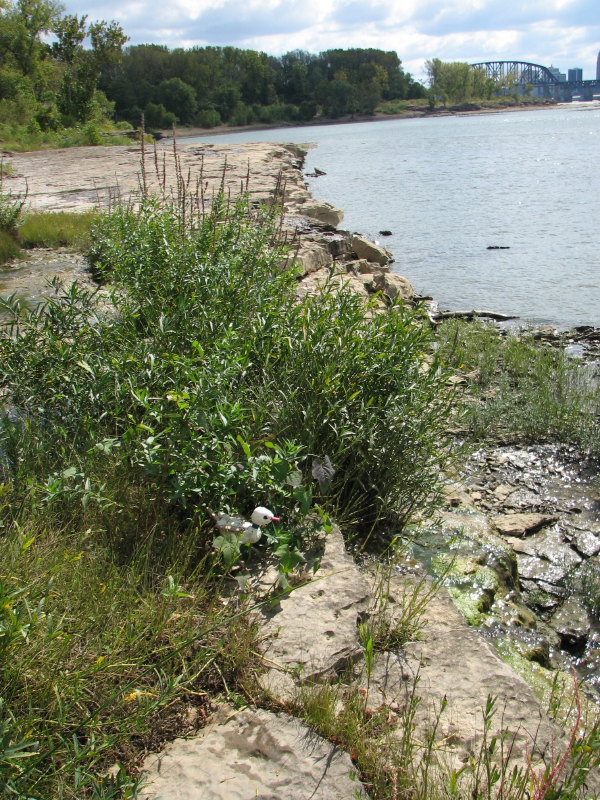
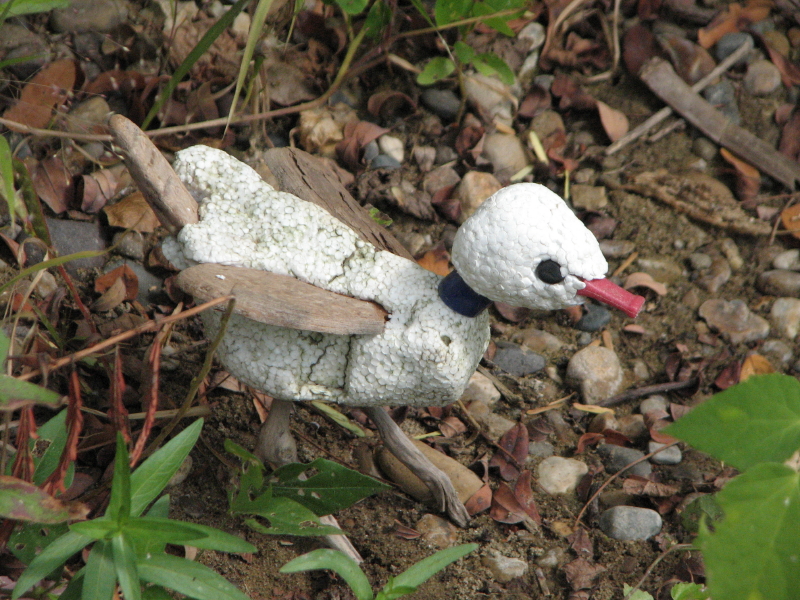
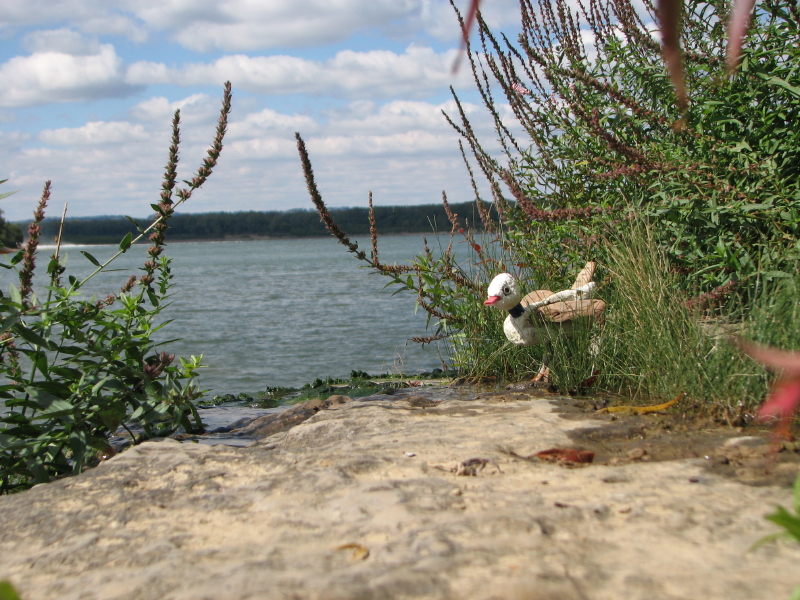
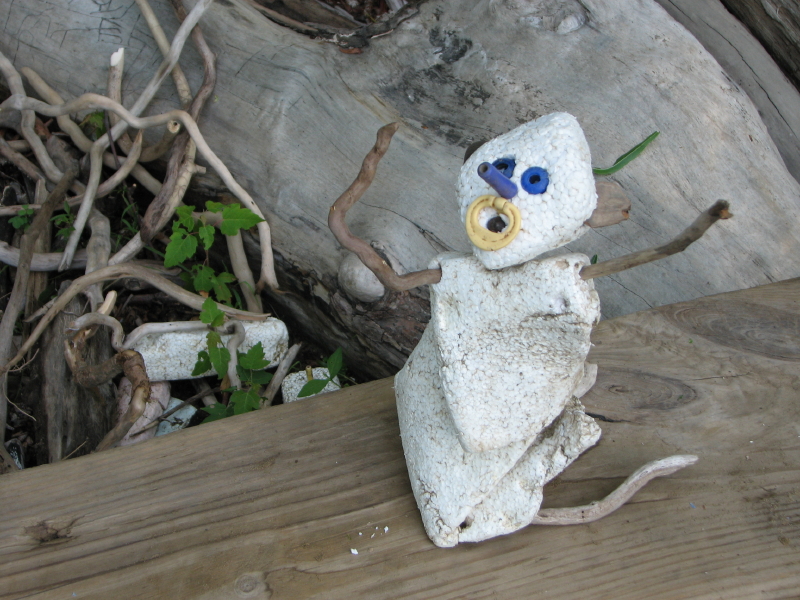
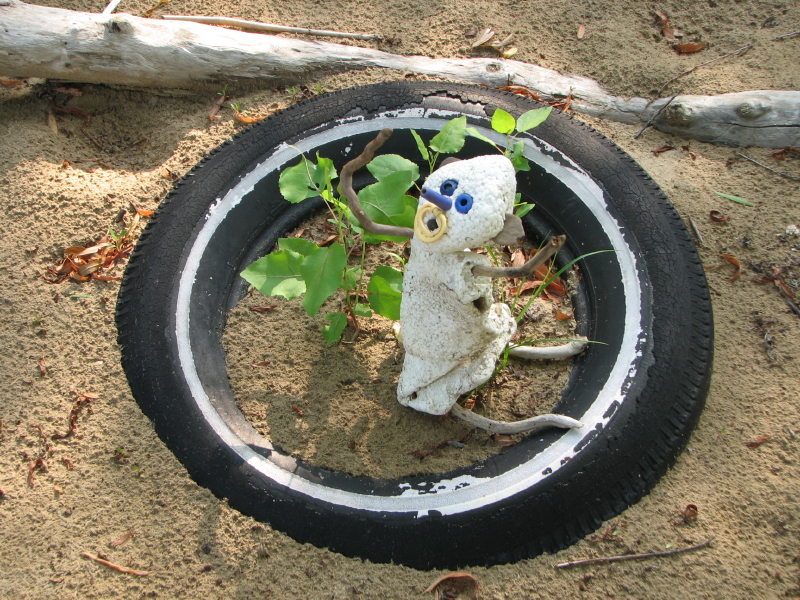
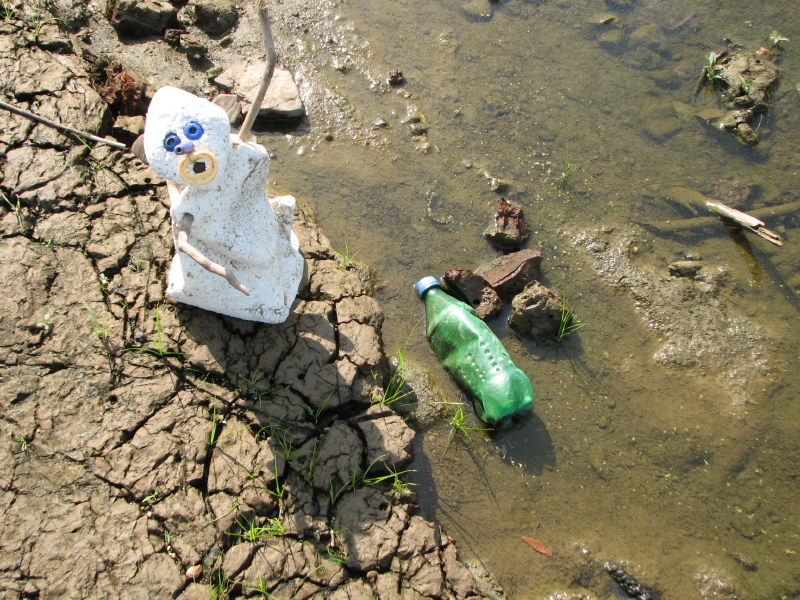
Chasing small insects among the fall leaves is this Yellow-rumped Warbler.  This is the park’s most common warbler and one that hangs around longer than any other of the park’s 35 sighted warbler species.  I have seen most of them, but they are easier to identify in the spring when their plumage is more colorful.  Fall warblers can be a challenge and I’m still learning all their nuances.  I have seen more different warbler species this year because I have tried a little harder to look for them.  Still, when you are out on the land, you just never know what you will cross paths with and that is the subject of this post.  I saw my first Water Chick on this expedition and managed a few decent images that I can share with you.  First, can you spot the Water Chick in this photo?

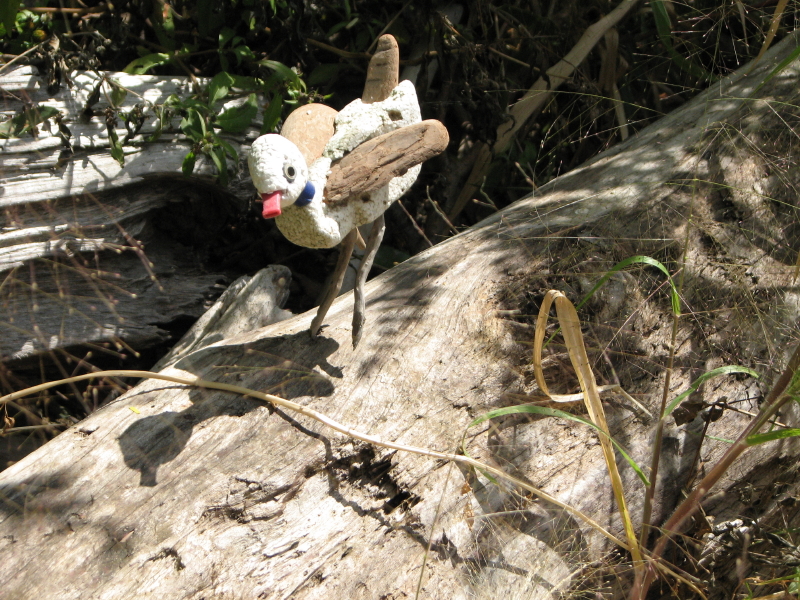
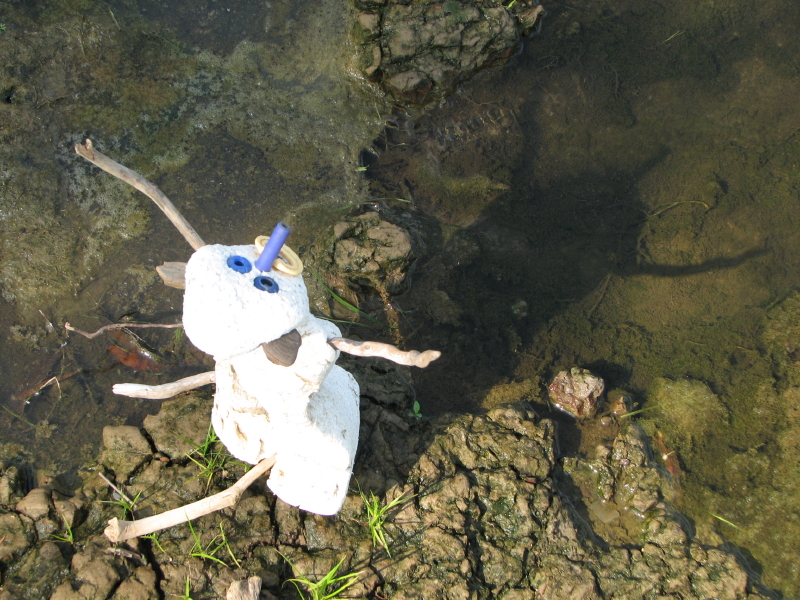
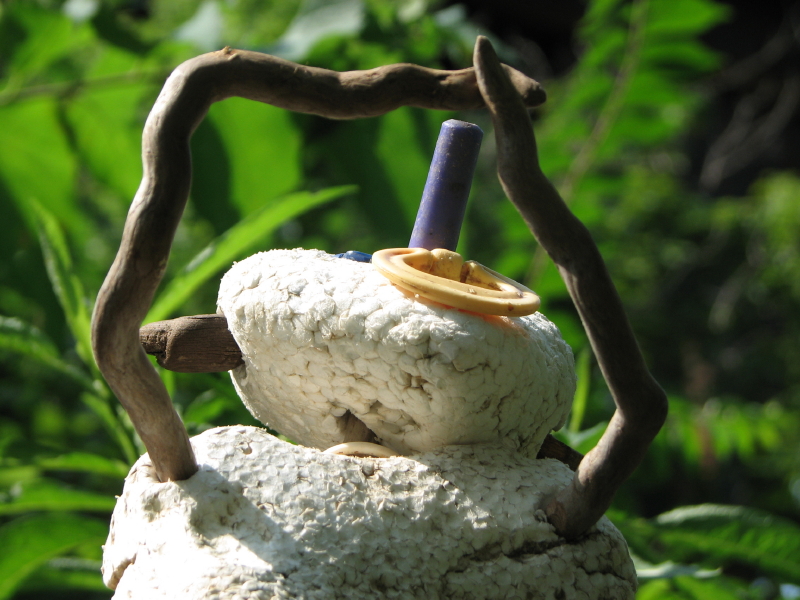
I bet you found this interesting bird?  It’s snow-white in color and has a bright red bill.  It’s only occasionally found in this park and the habitat it prefers matches exactly the kind of landscape you see here.  The Water Chick is usually found near water and also needs dense vegetation to hide and raise its young.  Over the course of a couple of hours I ran into this bird several times and here are a few “portraits” I was able to manage.

The Water Chick is usually found on the ground, but reportedly, is a decent swimmer as well.  Although it can fly it is reluctant to do so.  It much prefers hiding and taking advantage of the local cover where it seeks out small insects and spiders that make up its diet.  I surprised this one investigating a decaying log.  Here’s another image of this bird.

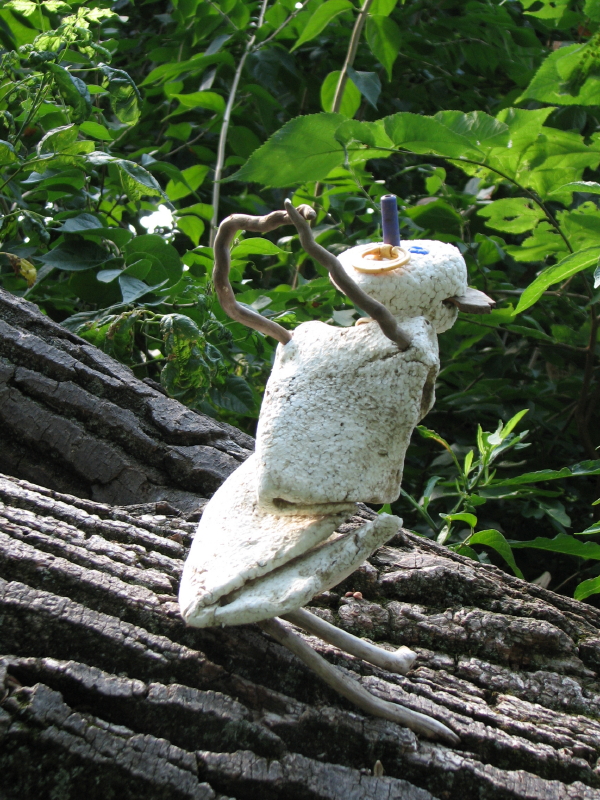
As you might be able to discern…the Water Chick is a small bird and relies on its diminuitive size and secretive habits to go unnoticed.  I believe I heard (not entirely sure though) a low piping sound when this bird noticed me and became alarmed.  It high-tailed it into the loosestrife clumps as quick as can be.  This is precisely the type of ground bird that I worry about being preyed upon by feral cats and in fact, ornithologists report that this species is on the decline for multiple reasons.  While I was birdwatching, I did come across another bird predator.  However, this one is so large that I doubt that it would bother taking a Water Chick.

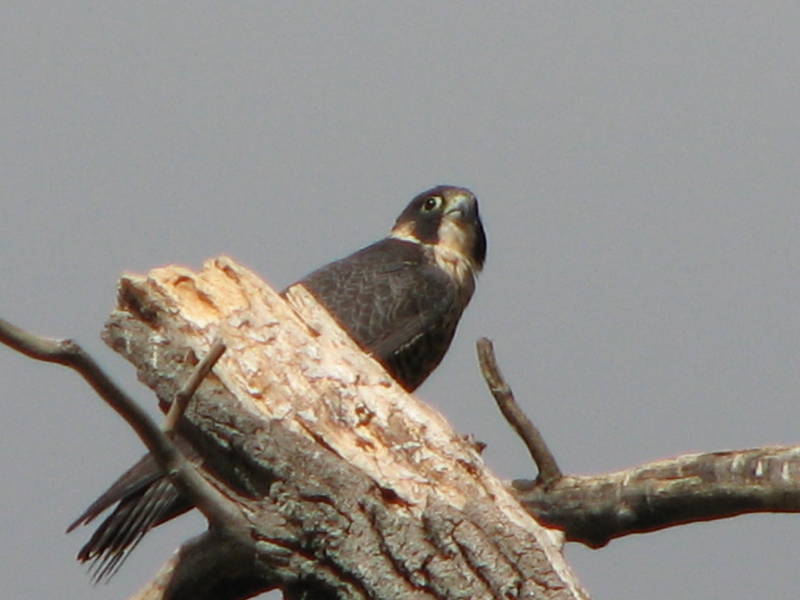
I see Peregrine Falcons on occasion out at the Falls, but this is the first one I could get a picture of…unfortunately part of the tree obscures the bird, but it’s still distinctive enough to identify this large bird of prey.  I have actually seen these falcons more in the city where they nest on the taller buildings in Louisville.  Like other parts of the country, we nearly lost this magnificent bird to DDT poisoning.  Since banning this pesticide they have made a comeback, but we could use more to help keep the pigeon population in check.  I located the Water Chick one more time before heading home.  It was along the fossil beds that rise above the river level which is still down from an acute lack of rain.

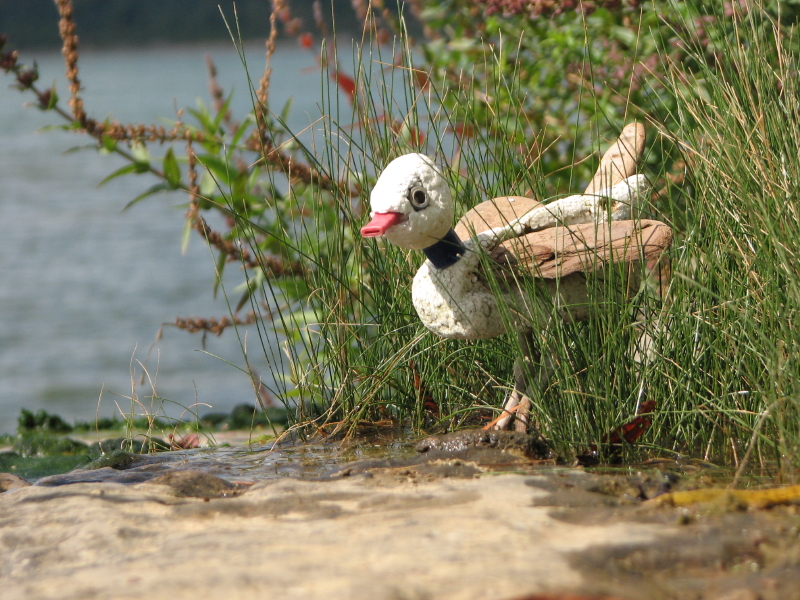
I was on my belly laying on the limestone rocks when these photos were taken.  I think it helps give an idea of what it must be like from this bird’s perspective?  After taking these images, I decided that I disturbed this bird enough and backed off.  I hope it forgives my intrusion, but I had never seen one of its kind before…and maybe never will again?  This bird is bound for our Gulf Coast where it spends the winter in the swamps.  Turning for home, I also came across small stands of this rather large flower and thought this a nice way to end this post.

I’m not sure on the identification of this plant? Many in this stand were over six feet tall.  I need to bring a guide with me into the field to help with this.  In the moment, I’m happy for the color this large flower brings which contributes to the beauty of the season.  Thanks for tagging along on another of my walks at the Falls of the Ohio.  See you later!

Read Full Post »

Early morning at the Falls of the Ohio is often the best time to visit the river in the summertime.  Of course, you beat the hard-core heat of the day and there is a clean quality to the light that makes this landscape seem new.  The other animals seem to understand this and birds in particular are more active and expending energy in search of food.  I watched a pair of ospreys diving on fish under the beaks of the herons and struggle to carry away their prizes to a nest that is no doubt nearby.  Along the riverbank, red-winged blackbirds stop chasing each other long enough to pursue and eat the latest batch of mayflies to crawl out of this water.

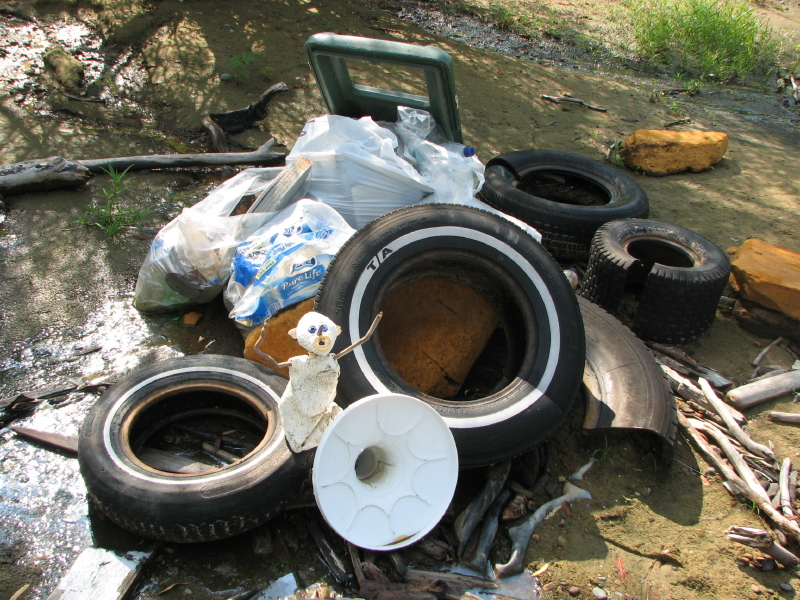
Following a meandering path I reach the latest version of my temporary studio site under the willow trees.  The big figure with the lacrosse helmet is still here, but we have had visitors.  A saw blade I sometimes use to trim larger pieces of wood is jutting out of the figure’s abdomen, but otherwise there is no damage.  I remove the saw blade and stand the figure back up and turn my attention to making something new.  I found an unusual piece of Styrofoam that looks like folded drapery and I create this small figure that makes his debut in this post.  I remember thinking while I made him that he represented some kind of kneeling holy figure in his sacred robes.  Among the earliest written descriptions of the Ohio River come from French missionaries who called it ” La Belle Riviere”…the Beautiful River.

I wouldn’t describe myself as being religious in the common use of the term.  I would, however, say that what mysticism or spirituality I have been able to perceive in the world has come from contemplating nature and by making art.  Something in the power of creating something from nothing conjures up the divine for me.  I guess that’s what I like about using these river found materials…it’s all rubbish, but what I select and how I put things together has the ability to elicit a positive reaction in others.  It’s more than recycling at that point and becomes transformative.

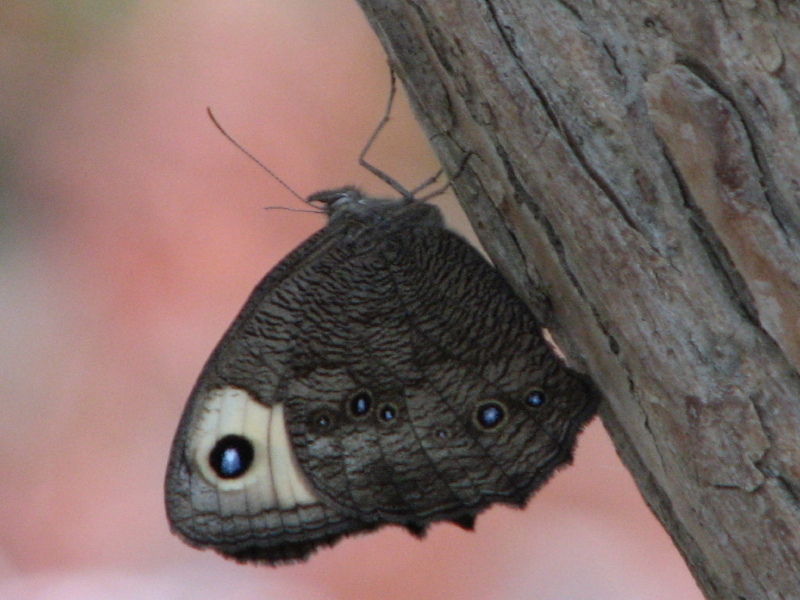
Walking along the wood’s edge I come across this Large Wood Nymph (Cercyonis pegala) and I snap its picture.  My collection of butterfly images from the Falls is growing and I follow the same rule I have for the bird photos.  Everything I include in this project has to have been seen within the environs of the park.  I have seen lots of everything everywhere else, but if it wasn’t seen in the park than it doesn’t count for this project.  I want to get to know this place as well as I can and that includes learning the names of the life forms that inhabit or visit this space from time to time.  I’m also building up a nice field guide collection along the way!

Moving my Styrofoam holy man around, I come across the results of the river sweep that occurred several weeks a go.  It’s one thing to collect this stuff, but in order for it to mean anything…some follow through needs to happen.  It won’t be long before these plastic bags rip apart and we are right back where we started from.  It might even be harder to recruit volunteers the next time around because what’s the point right?

I recall from my art school days discussions of early modernism and spiritualism.  Each seems to have informed the other.  Kandinsky in particular stands out for me because of his theoretical writings.  I confess liking his words a little more than I cared for his later paintings.  What resonated with me is the idea that there is an inner necessity for both time and space that finds expression out of the inner necessity of the artist. 

The world was in a little better physical condition a century a go when Kandinsky and the early modernists were active.  People, other artists, ask me why I’m still doing what I’m doing at the Falls because surely by now I’ve made what points I can make?  My reply is that I’m still compelled to come out here, still feel the tug of inner necessity and with each passing day feel that what I’m doing is more important than before.  What is now necessary is that we need to acknowledge and care for the physical world and the other forms of life that also call this place home. 

Artists are important in that they possess the ability to help generate the visions that will help get us through this point in our development.  This is something which seems lacking to me at the moment.  Where is the optimism we should have at this point in the new century?  Is the blatant materialism all we can connect with anymore?  Fortunately, I’m meeting more and more young people who want to become artists that are actively questioning things again and I will offer my help to them however I can.
Read Full Post »

Dodging snakes and collecting washed up cigarette lighters with my friend Jeff was not the only action we had on this excursion to the Falls of the Ohio.  By now, I should not be surprised by what turns up at this remarkable location…because it happens with such regularity.  For me, the thrill of discovery has become addictive and interwoven into my creative process.  Recalling events, I believe it was my friend Jeff who stumbled upon this revolting artifact and so I will begin this story here.

It’s a very large jar of bologna.  The contents have more than settled, in fact they have decayed to the point of becoming cream of bologna.  I know, this is completely disgusting, but bear with me for the real point of the story follows this discovery.  It was a short distance from this jar that we encountered another remarkable member of the Genus Polystyrenus.

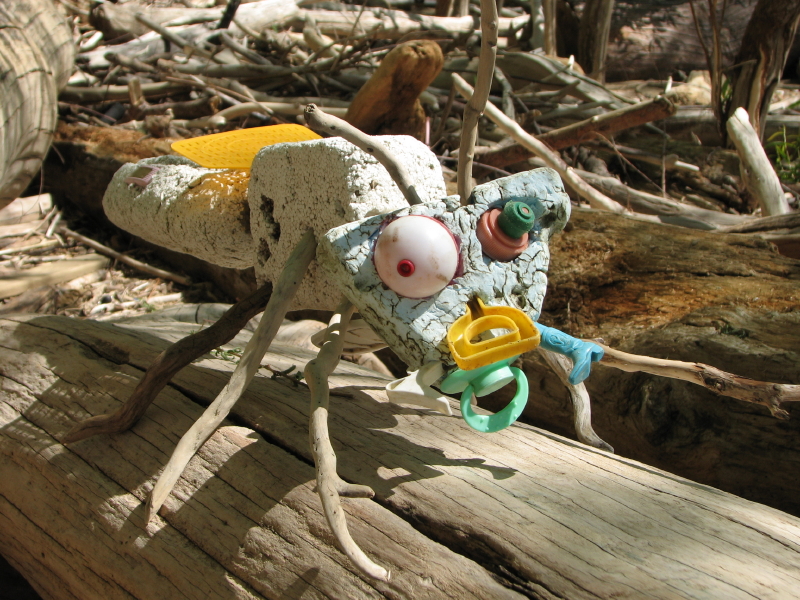
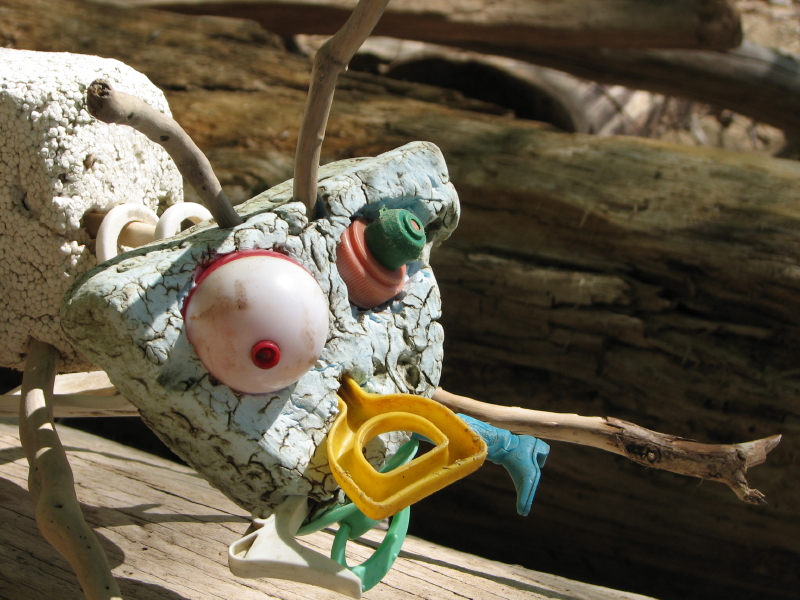
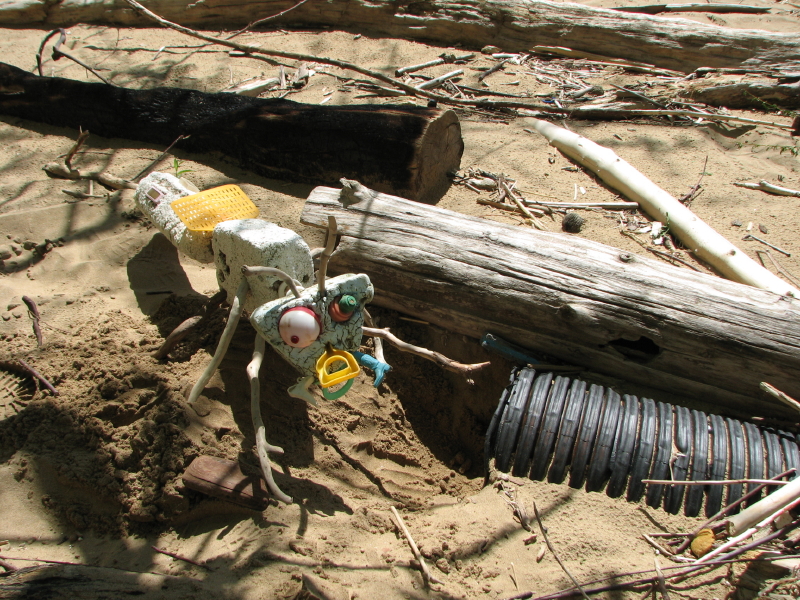
Hidden just out of sight among the debris line was this very large and aggressive looking insect.  I estimate that this impressive creature was about two feet long.  It would be an under estimation to say that both Jeff and I were taken aback (how we both avoided voiding our bladders upon our persons, I will never know).  After what seemed a very long length of time, the amateur naturalist in me took over and I began taking photographs and making observations.  Here’s a detail of its head and impressive jaws.  It’s small antennae were wiggling back and forth.

Looking at the mandibles, I’m guessing that this creature had adapted to eating meat or carrion, both of which are found at the Falls.  It emitted a sickly sweet odor.  I think our large bug friend had discovered the bologna jar before we did and we may have interrupted its meal?  Because this ant-wasp, (seems to have characteristics of both) did not defend its bologna bode well for Jeff and I.  In fact, we did learn that despite its fearsome appearance our bug friend was retiring and unaggressive.  I decided to tag along and learn what I could about this amazing one of a kind animal.

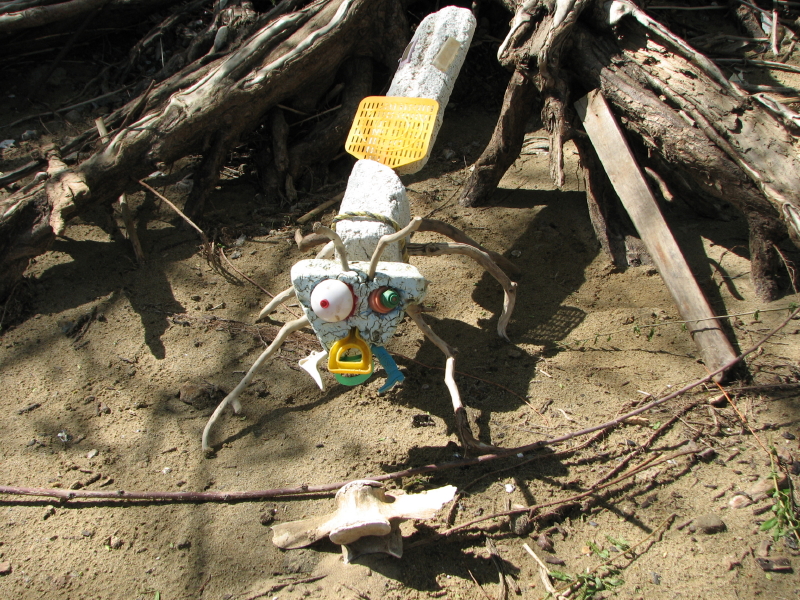
From a short distance away, I was able to observe some behaviors that I recorded with my camera.  I believe that my assumption about it’s being a scavenger is on target.  I watched our insect “friend” actively investigating an old bone it had come across.  The bone was rolled around in its jaws as though our bug was tasting it?  Finding no meat, it simply dropped the bone.  I also noted that this creature has vestigial wings that have atrophied to a yellow flap found attached to the rear of its thorax and ironically has the appearance of a fly swatter.  Perhaps its large size makes flight an impossibility and the wings have shrunk to the present size?

Near the tree line, and keeping a respectful distance away, I observed Polystyrenus investigating a large plastic pipe mostly buried in the sand.  It did attempt to dig away the sand blocking the entrance to the pipe, but soon abandoned this effort.  I don’t want to assume too much, but I was intuiting at the time that it was looking for a burrow in which to hide, etc…  I did make a discreet effort to determine its gender, but was unsuccessful.  Here’s my last picture of it.

Amazingly, our bug was making short work from what was once a large barge cable that was originally as thick as a stout man’s forearm.  It’s jaws easily shredded the nylon strands.  Why it was doing this…will require more research.  Shortly after this image was taken, the sound of loud, boorish people coming down the riverbank spooked our insect and it took off with surprising speed over the sandy surface of the Falls.  Perhaps it understood that Jeff and I posed no threat, but it couldn’t be certain of the strangers?  During the short amount of time I was studying this creature I also noted that it didn’t have claws to speak of and didn’t possess a stinger.  Perhaps I will encounter this insect or other large insect species again because this is not the only time I have come across similar giants.  Take a look at these specimens for which the genus Polystyrenus was originally named. 

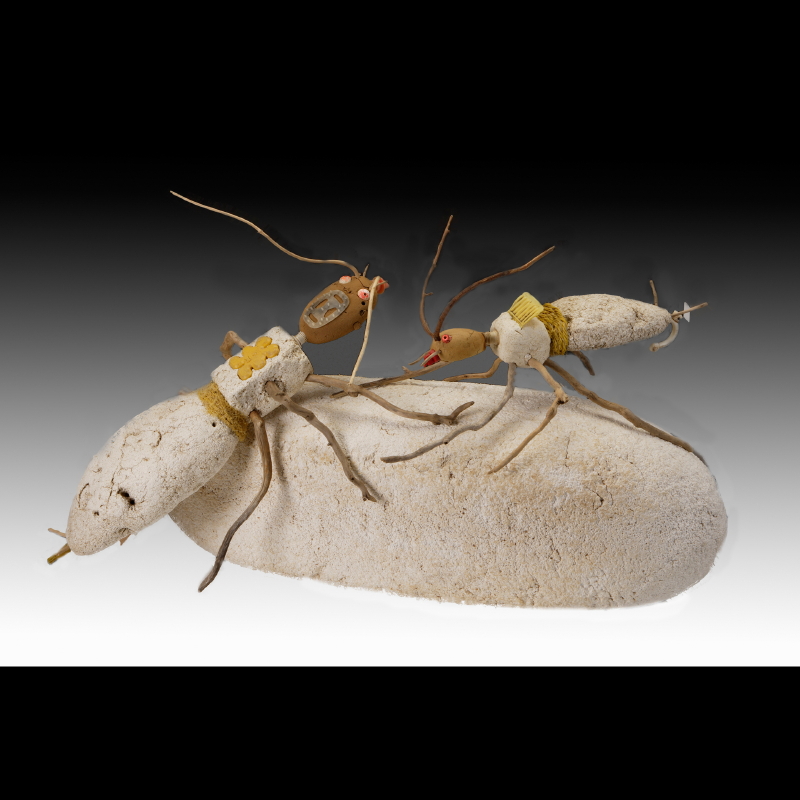
This has been classified as Polystyrenus ichthyphagia, based in part on this remarkable photograph of it feeding on a non-native, dead fish.  I made this discovery several years a go…in fact, it is with some regret that I collected (euphemism for killed) this specimen and one other that turned out to be a male and female.  This was done of course in the name of science.  The one feeding on the fish is the female.  Note the flute-like ovipositor and vestigial wings which made a raspy sound.  The mouth parts on P. icthyphagia have adapted for sucking.  Why these large insects have appeared at the Falls is inconclusive.  But I believe this is evolution at work.  The more we change our environment, the more we affect not only ourselves but all the other creatures that call this place home.  It can’t help to release tons of fireworks chemicals into the atmosphere and what we do with the water in general is a crime.  I will leave my soap box for the moment.  I suppose the reason that these giant insects have evaded previous detection is that they so strongly imitate garbage and detritus that they can elude most people’s notice.  Here’s a photograph of the dried and preserved male and female P. ichthyphagia with its egg case.  There is some sexual dimorphism with the male being considerably smaller than the female.  These specimens are in separate collections now.  The name Polystyrenus was chosen because the exoskeletons of these amazing insects so strongly resembles polystyrene, also generically known as Styrofoam.  The largest bug here is over three feet long.

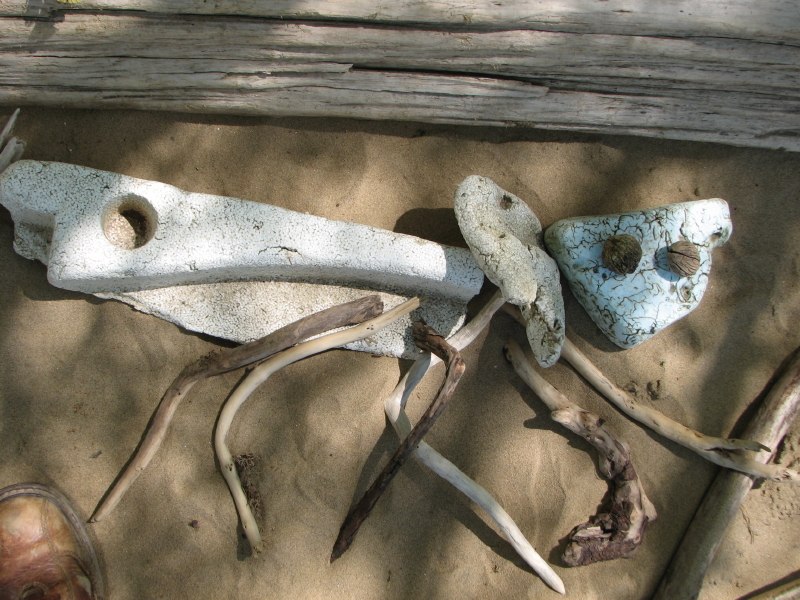
As a kid, I fell in love with one particular story that appeared in an old Natural Geographic entitled “Giant Insects of the Amazon”.  Its author, Paul Zahl must have had the best job in the world to be able to travel to exotic places to study rare and unusual animals.  I suppose, I’m doing something similar, but I’m not traveling far from home and making my own giants.  Here’s the last picture of how I began the latest Polystyrenus receiving inspiration from the materials I find on location.  Although I didn’t use all the stuff here…it provided a template of sorts. 

I dedicate this post to Julia Oldham, bug lover and current artist in residence at Bernheim Arboretum and Research Forest in nearby Clermont, Kentucky.

Read Full Post »

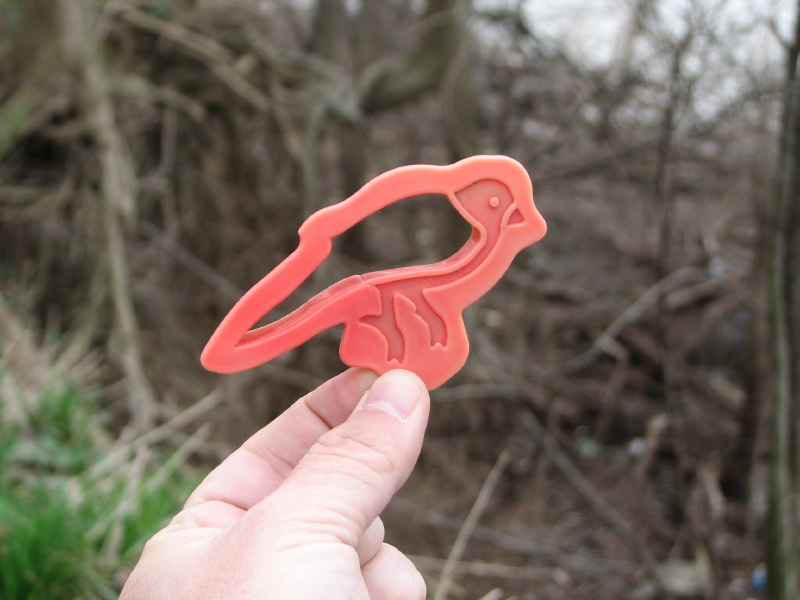
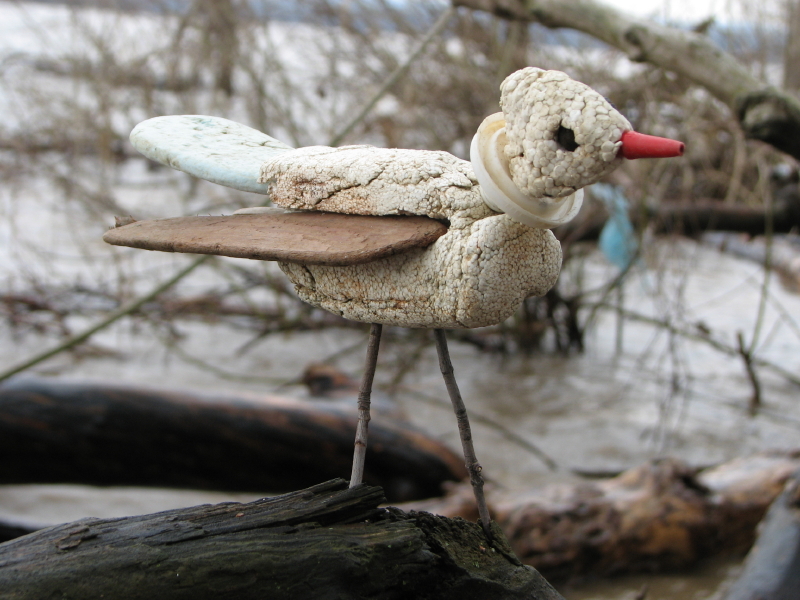
The little red bird perched easily between my forefinger and thumb.  I was walking along the river bank and spotted it among the recently deposited debris…another small gift.  If I had to guess, I would say that the red bird was intended to be child’s clay tool.  It’s like a cookie cutter stencil only smaller.  I was on the look out for birds and my subconscious was on alert.  I think this is partially why the plastic bird appeared to me when it did.  The axiom about chance favoring the prepared mind touches upon this phenomenon.

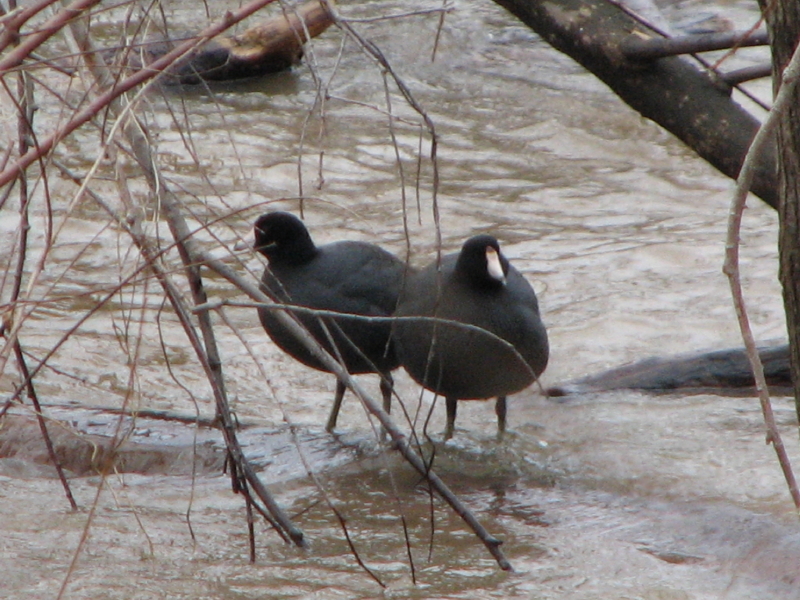
While the river level was still high, I came across this pair of American Coots near the shore.  Logs and chunks of wood were bobbing in the water.  Their dark feathers took on the look of wet wood.  The odd appearance of these coots had to do with them standing on a log that is mostly submerged.  Among the other birds I found near the water were Canada Geese, Mallard Ducks, and high overhead…kingfishers.

Like little twittering machines, a male and two female Belted Kingfishers were chasing each other across the sky.  I watched them for over half an hour and hoped that one of them would perch in a tree near me.  Alas, this was the best image from that moment.  With its low profile, out-sized bill, and crested head, the Belted Kingfisher’s silhouette is distinctive.  Someday, I hope to stumble upon their nest built into the side of the riverbank.  I’ll prepare my mind for that moment and let’s see if chance intervenes!  I did spot an Eastern Phoebe which is an early migrant.  As the warmth and light speeds up the production of tree leaves, we can expect the arrival of the birds we share with Central and South America.  Their timing is exquisite and seems to coincide with the many small cut-worm caterpillars that will chew their way through the foliage of the canopy.

During migration, the Falls becomes home for several different thrush species.  Some of them can be notoriously hard to identify, but not the bird above.  It’s the White Thrush and it utilizes all the available habitats here to put on a little weight before moving northward.  I have seen them patrolling the water line and investigating the densest vegetation in search of food which can include insects, seeds, and berries.

This bird was investigating decaying logs in search of a meal.  Every once in a while, the thrush would “scratch” the rotten wood with a backwards jump that would reveal small grubs and insects just below the wood’s surface.  These morsels were quickly seized by this agile bird.

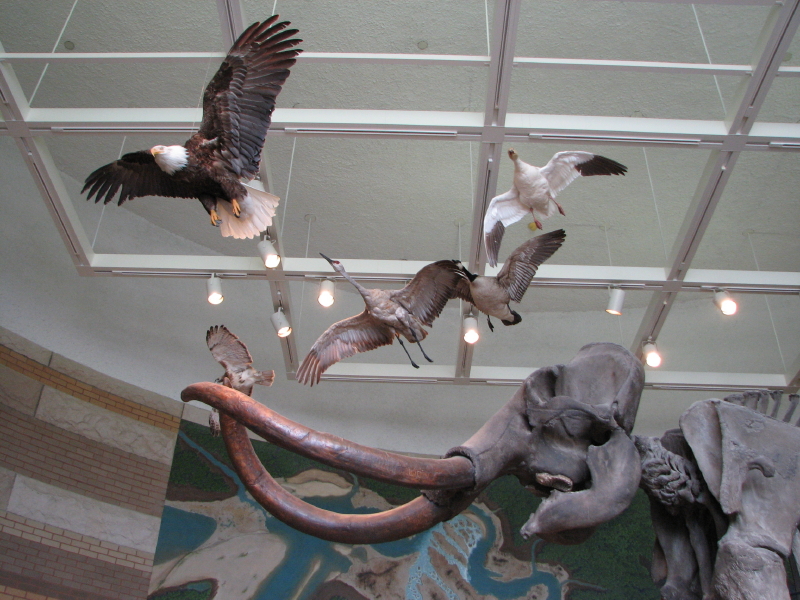
Here’s a third thrush perched upon a vine near the Woodland Trail.  I observed this bird picking off very small midge-like flies and returning to this position.  On my way back home, I stopped at the Interpretive Center to pick up another bird list for the park.  My list is getting a bit tattered from use and I still have about half of the 268 bird species recorded here left to go!  I did spot one bird last year in the park that I’m surprised is omitted from the checklist and it’s the American Turkey.  It would fit easily in the Game and Marsh Birds category.  There are also birds “flying” inside the Interpretive Center and above the mammoth’s head and I’ll end this post with that image.

Read Full Post »

My son Adam surprised me the other day by wanting to accompany me to the Falls.  It turned out to be gorgeous and sunny and we shared this moment together.  In his mind, we each had a distinct role to play.  I was to be the “artist” and he would be the “explorer”.  In reality, those roles frequently overlapped and I think it’s fun and interesting when those distinctions blur anyway. 

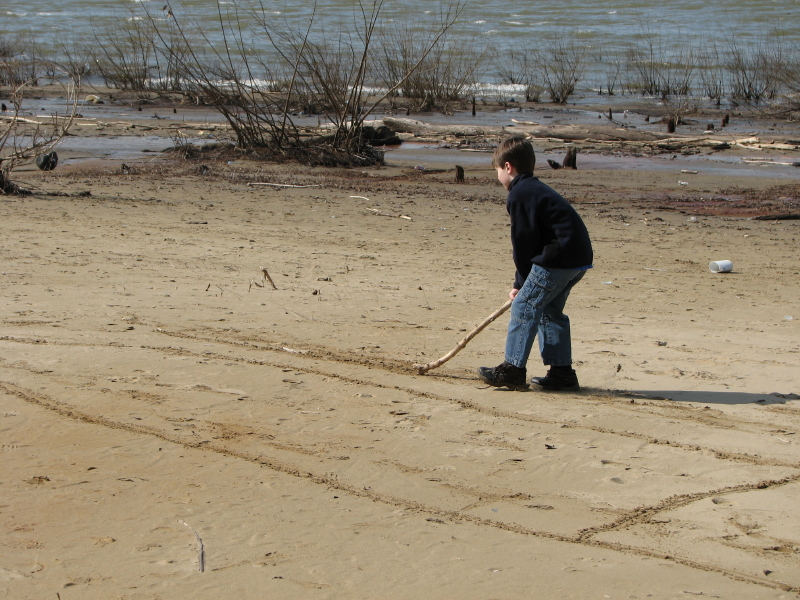
We walked down to the water’s edge to see if anything cool had washed ashore.  Adam got sidetracked when he came up with the idea of writing his name in the sand.  He found a stick that felt good in his hands and set about the business of making his mark on the world.  Judging from how large the final result was, I’m guessing Adam has big ambitions for his life.  Or, as his father, it might just be me projecting my own hopes into gestural lines drawn in the sand.

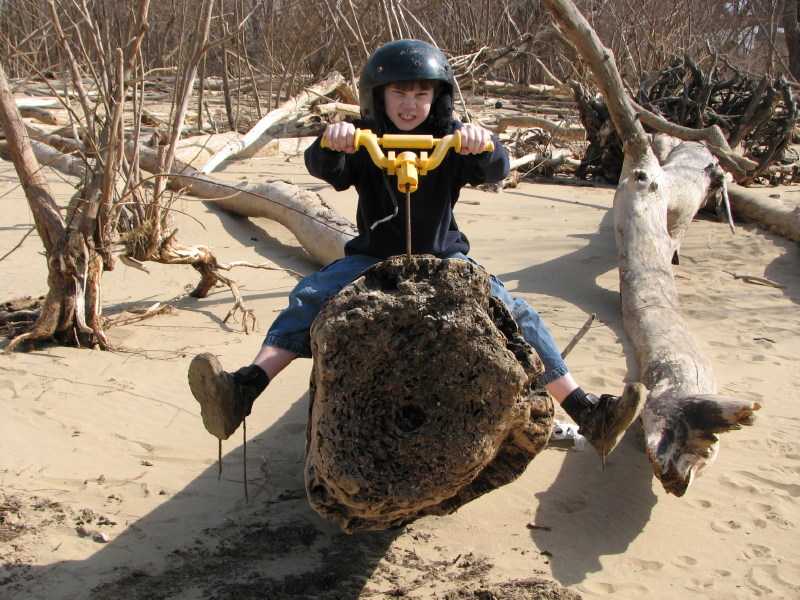
We found an old motorcycle helmet which Adam immediately claimed.  He did, however, remove the Styrofoam lining and he gave that to me.  I once made a nice turtle using a similar foam lining from a discarded bicycle helmet and he remembered that.  Wearing old jeans (aptly named high waters), Adam allowed the river to wash over his feet and he was surprised by the still frigid water and the stickiness of the mud.

Here’s a picture of Adam the “Log Rider”!  The yellow handlebars are from some riding toy we found in the sand.  This is Adam’s favorite picture from this day and he wanted me to be sure to include this one.

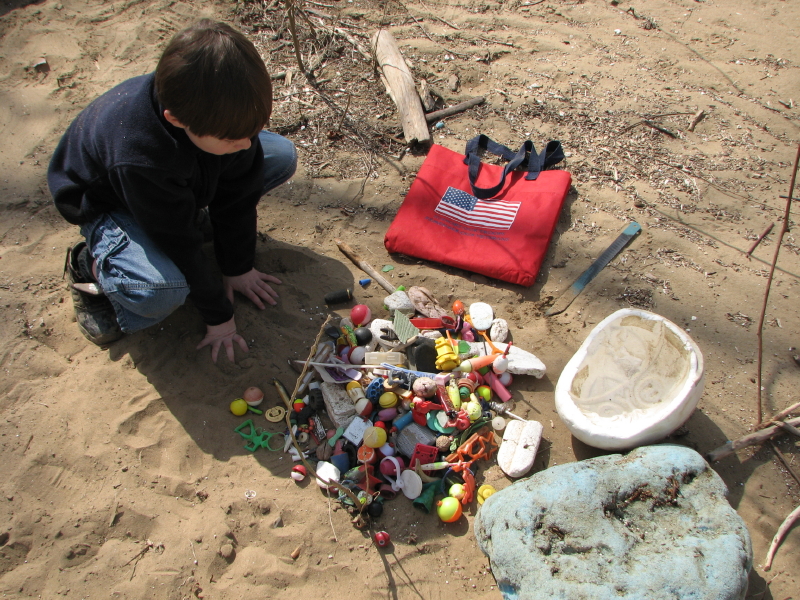
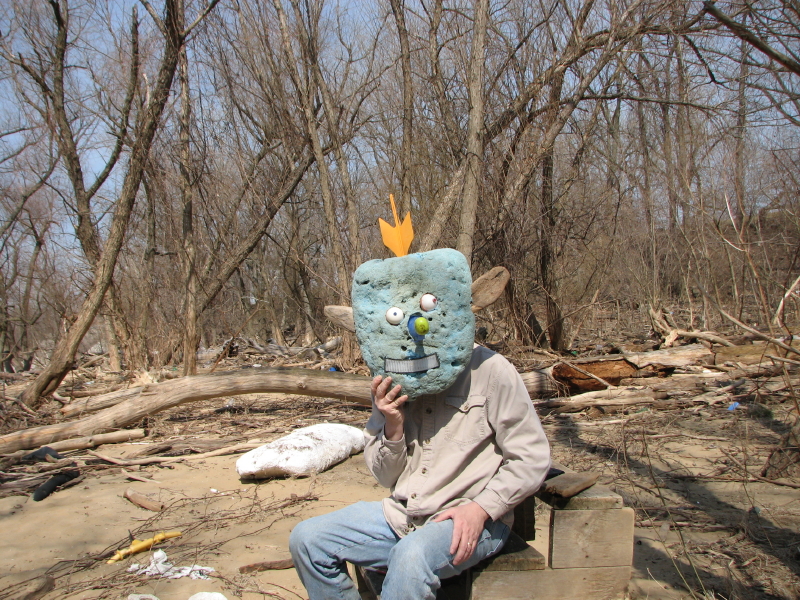
Once we found a good place to rest and eat our chocolate chip cookies, I dumped the contents of this collecting bag onto the sand.  From a previous foray, I had pre-stashed some foam chunks near this spot.  While Adam played, I worked on a large figure to help us mark this day.  I had relocated an especially large piece of Styrofoam that I had previously used to make two other figures.  This would be the first time I have re-re-recycled something.  I asked Adam to take my picture while I worked, and here I am in action.  The wooden stairs I’m sitting on washed up here last year.

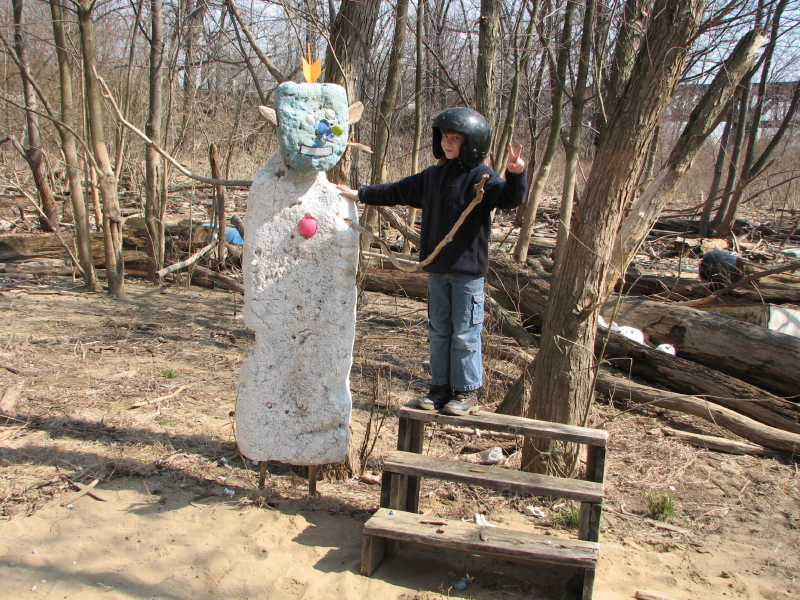
Who knew that this artist has such a big head!  The mouth on this one is a reflector from a bicycle wheel.  The nose is the horn from another bicycle I had found months earlier.  The eyes are large fishing floats.  The ears are made from found wood and that yellowish object on top is the plastic part of a lawn dart.  When Adam and I finished assembling the entire figure, I took his picture next to it so it can help you judge scale.  All in all, it was a wonderful day for father and son and we need to do this again soon.  Maybe next time, we can convince older brother to come along too?   Peace!

Read Full Post »

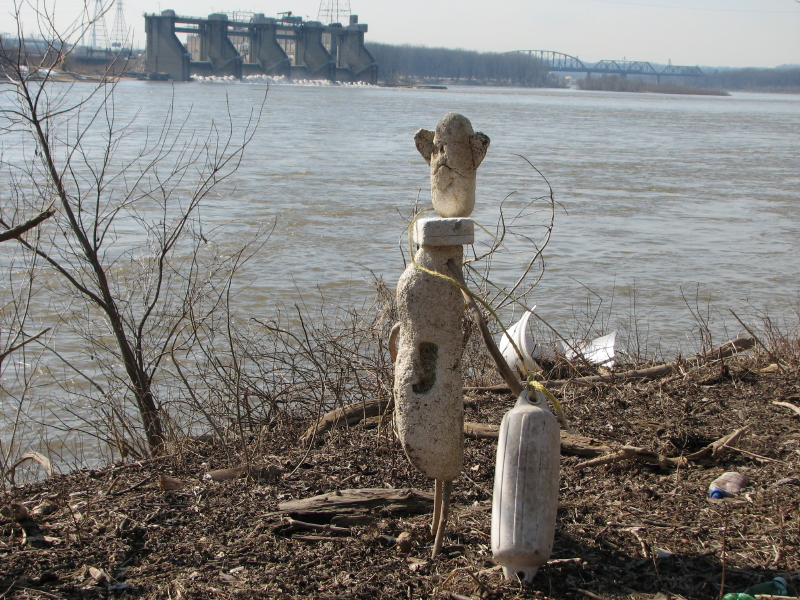
He stands vigilantly at the park’s westernmost limits looking towards the hydroelectric dam and the bridge that leads to New Albany, Indiana.  The tailwaters below the dam are a favorite spot for fisherman who have boats.  This is a good spot if one is hoping to hook into a big catfish.  Under the spillway,  however, can be rough.  If due precautions aren’t taken,  it can be a dangerous place for boaters.  That’s why the lifeguard remains on duty.

The lifeguard is a unique individual and his commitment is total.  His very body can be used as a flotation device!  In a more conventional emergency, he is expert at throwing his buoy near the distressed person in the water and pulling them to safety.  On this stretch of the Ohio River, the currents can be especially unpredictable.  There are many warning signs around the park and Interpretive Center to call attention to this danger.  Heed them.

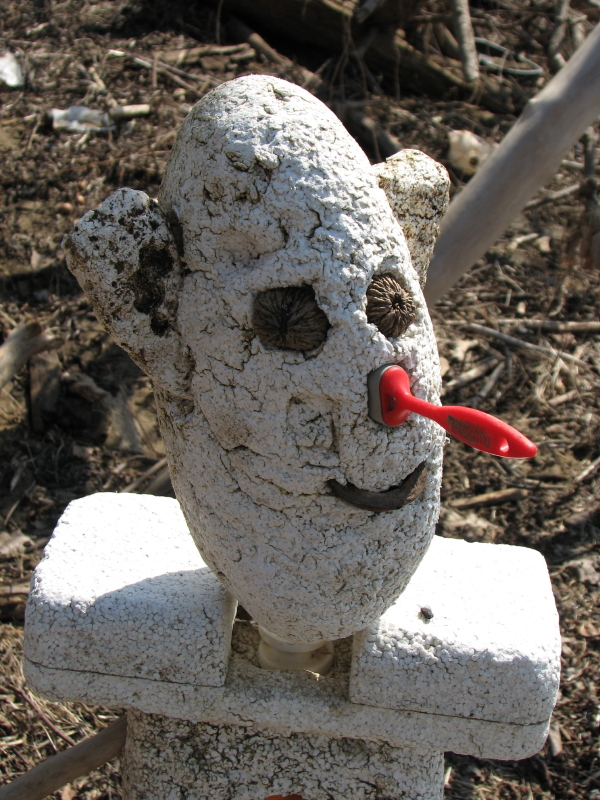
His weather-beaten visage is in contrast to his heart of gold.  Over the years his walnut-colored eyes have seen much.  Despite the sometimes foolhardy antics of his fellow creatures, he still believes everyone is worth saving.  That’s the broad brush he paints with.  It’s nice knowing that if you needed to…you could put your life into his hands.

Read Full Post »

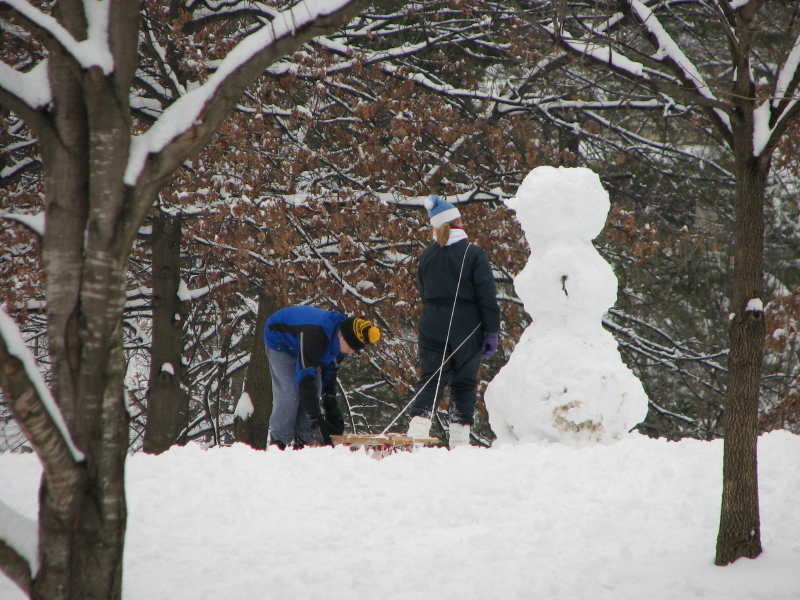
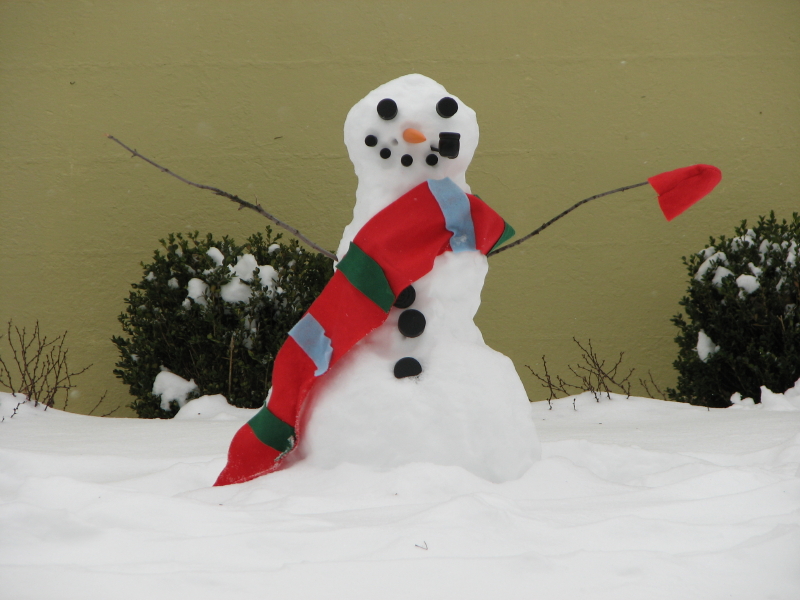
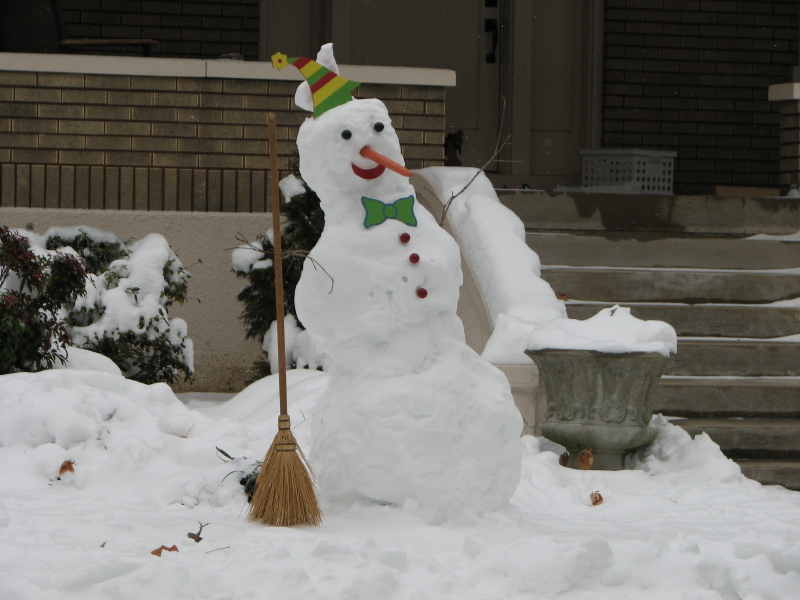
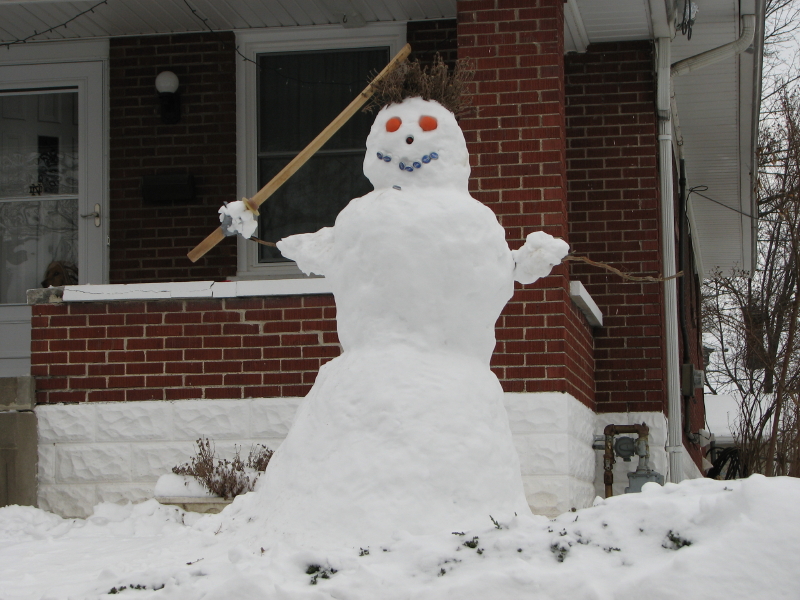
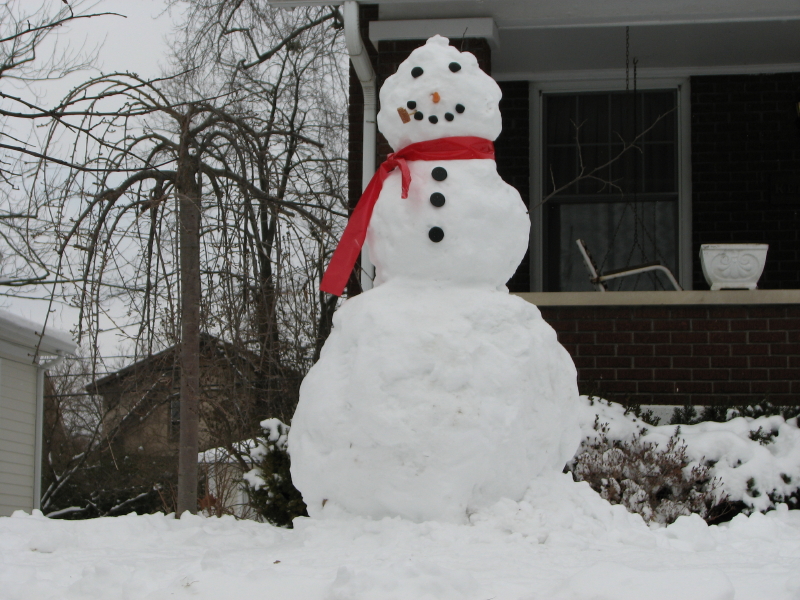
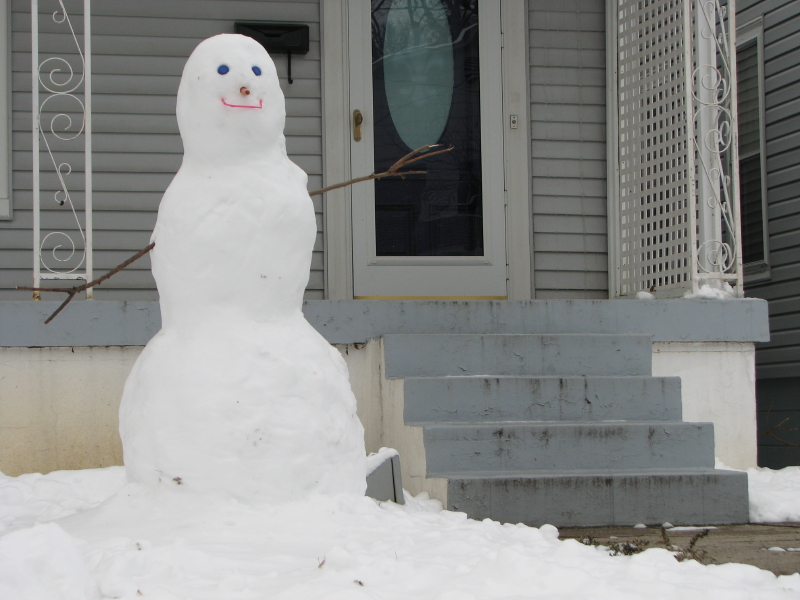
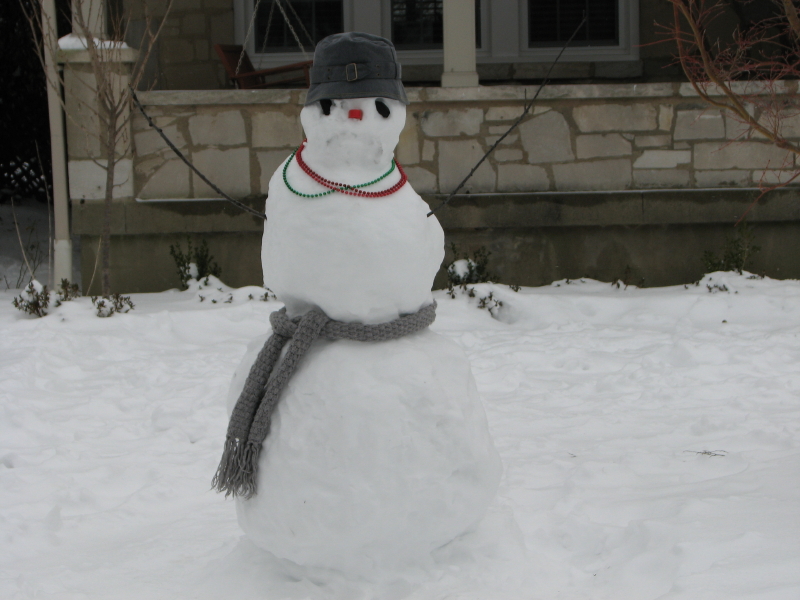
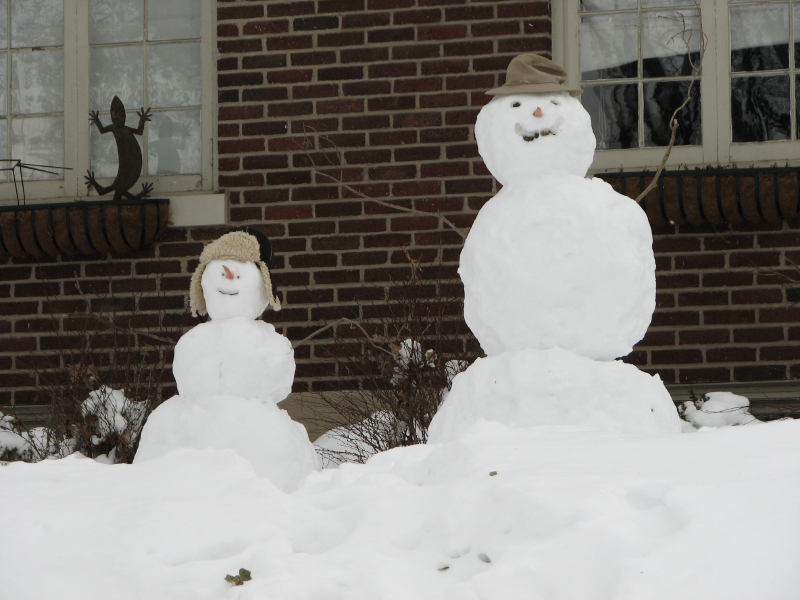
The six or so inches of snow that quieted Louisville over the past two days inspired a spontaneous celebration of a traditional form.  The conditions were just right for an impromptu snowman festival!  Nearly everywhere I travelled through the city I found these ephemeral sculptures gracing both public and private spaces.  Before it became too late in the game, I grabbed my camera and recorded a few images which I’m presenting here.  I went through Tyler Park, the Douglas Loop neighborhood, the Highlands, and the Shelby Park area and in a matter of a couple hours and found some interesting creations.  I had so much success in a relatively short amount of time and distance, that the possibility of hundreds of snowmen existing scattered throughout the city gave me an extra reason to smile!

For those of you who have followed my riverblog, this may seem like a departure, but it really isn’t.  I count the making of snowmen, scarecrows, and other seasonal folk art figures among the influences for my polystyrene art.  I’m working with that same impulse towards figurative expression that people acknowledge when they make a snowman.  Can this be art?  I certainly believe so.  A friend of mine once wrote that art was turning the ordinary into the extraordinary.  When you mix intention with a user-friendly material like snow, than the creation of art is within most people’s grasp.  Eventually, when these things melt, the water that comprises them will at some point reach the river.  Considering how much snow has fallen over the Ohio River Valley, I would expect to see high water around here.

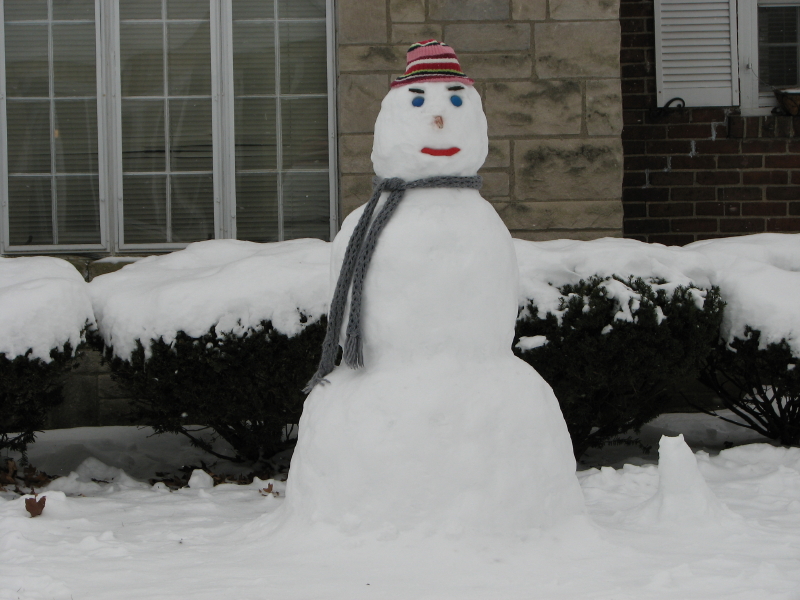
The basic idea for a snowman hasn’t changed much.  Take three snowballs and stack them in graduated size from largest to smallest and use whatever is on hand to form features and accessorize.  The use of a carrot for a nose has become a beloved standard.  It’s been interesting to see how closely people have adhered to the snowman ideal and where variation or invention has occurred.  Most of what I’ve seen over the last couple of days has been fairly traditional, but there were a few nice surprises to keep things lively.  I came across a few snow creations that demonstrated both imagination, teamwork, and skill.  Here are a few more single figures.

I imagine children and family at work on these beloved sculptures.  It’s no accident that so many of these snowmen are close to the front door of the house.  In this way, they are very site specific. They are meant to be seen and commented upon.  Most of these snowmen, if they have arms, are rather feeble.  For practical reasons, it is just too difficult to make an arm out of snow unless it is a part of the main body.  I had to laugh at the one sporting what appears to be a wooden samurai sword!  When you pair two or more snowmen together then you create another dynamic.  Take a look.

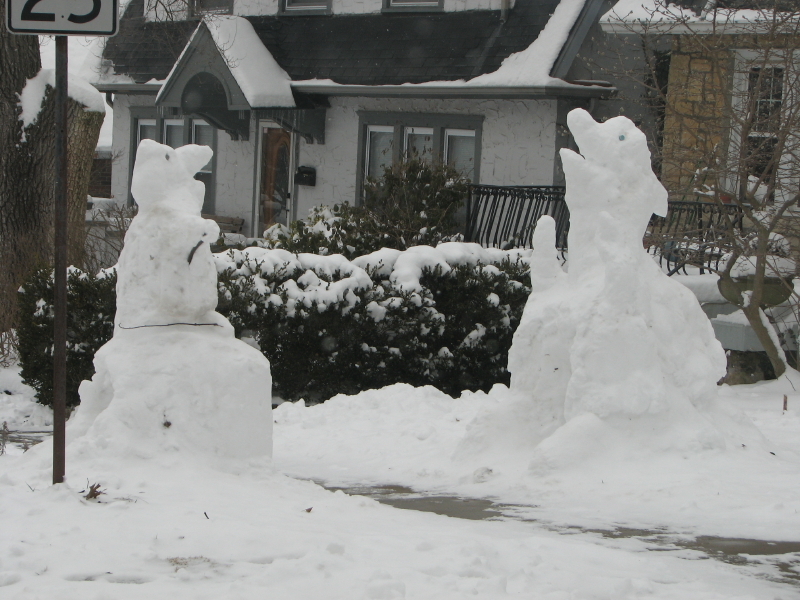
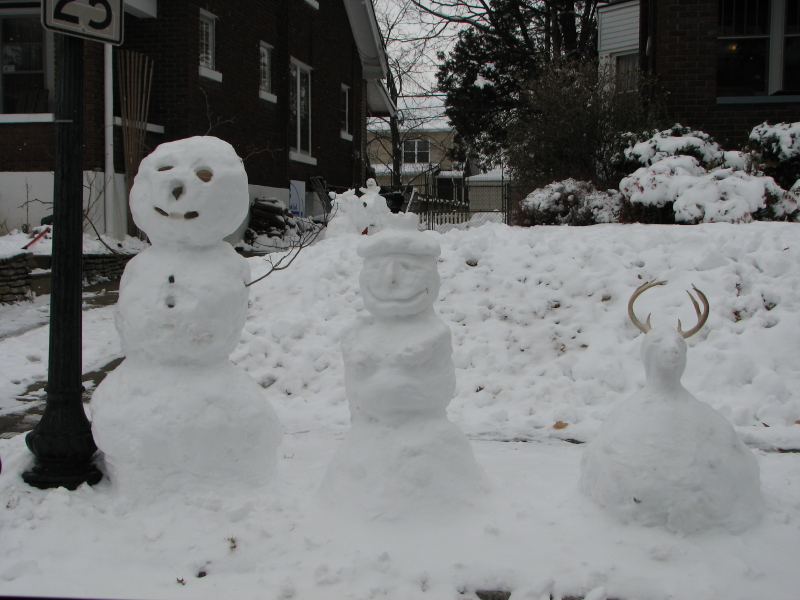
The snow figures above I thought were very successful in a “Miro-esque” sort of way.  The work on the right looks like a dog sitting up and begging.  These are fairly large works and whoever made them must be an old-hand at snow sculpture because both works also have holes in them as expressive elements.  Check out this trio of works.  The use of deer antlers on the smallest sculpture is an unusual touch.

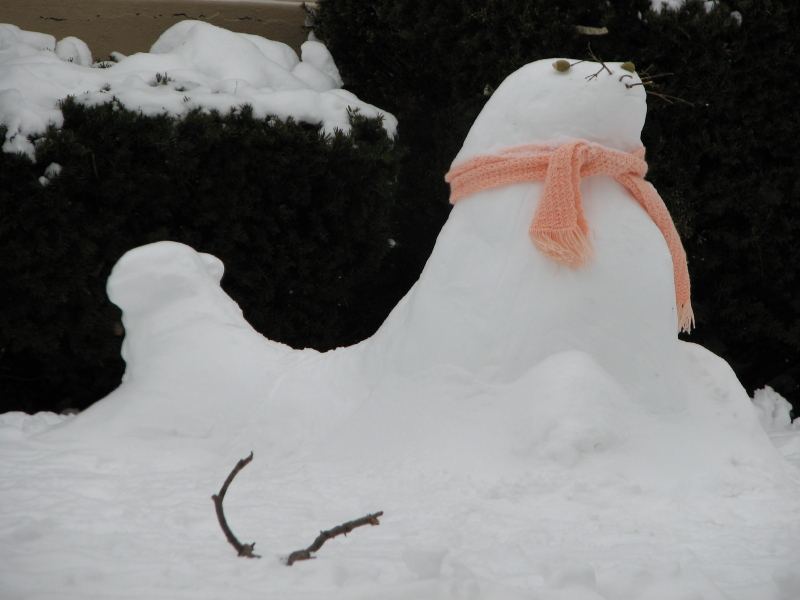
And now for a few more animal snow sculptures…how about this seal! It’s very effective and simple.  The colorful scarf leads the eye right to the details that form the face.  I like the way twigs are used to suggest whiskers.

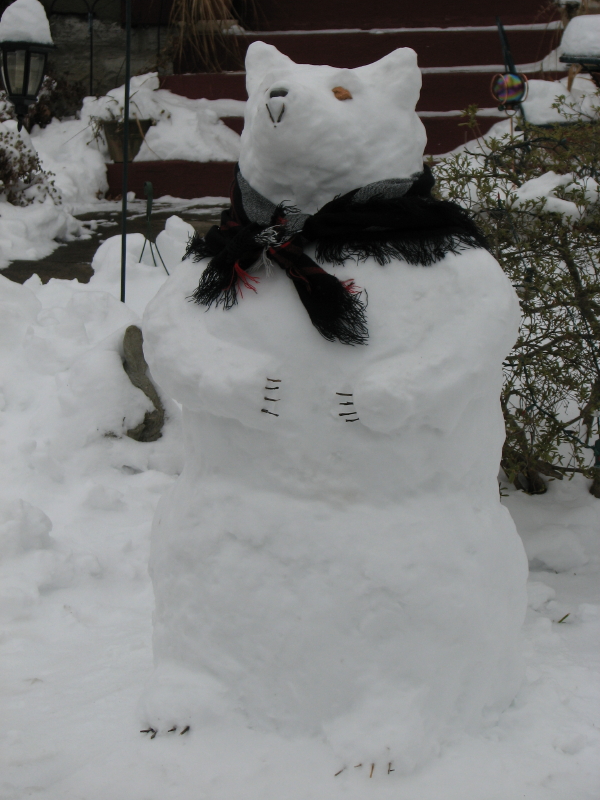
This bear sculpture by Tyler Park is one of my favorites.  I walked by it at night and there were also Christmas lights behind it!  Again, the use of twigs provides just the right amount of detail in the form of claws on the paws.  I think the eyes might be walnuts?  In this piece, the snow arms work.

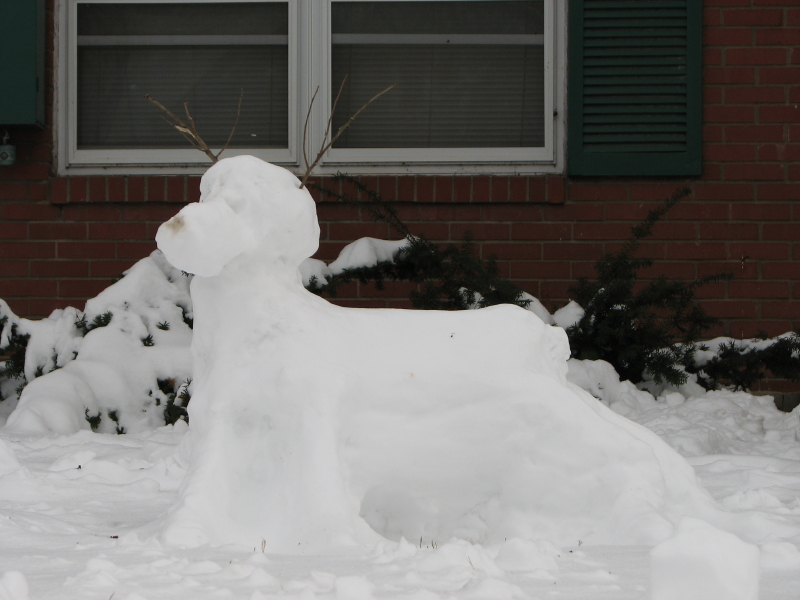
Resting sphinx-like in front of an apartment building is what I presume is a reindeer or stag.  If it weren’t for the small branches suggesting antlers, I would have guessed this is a dog.  The lack of any other materials makes me believe this is the unplanned work of a child.  It has a smudge for a nose.

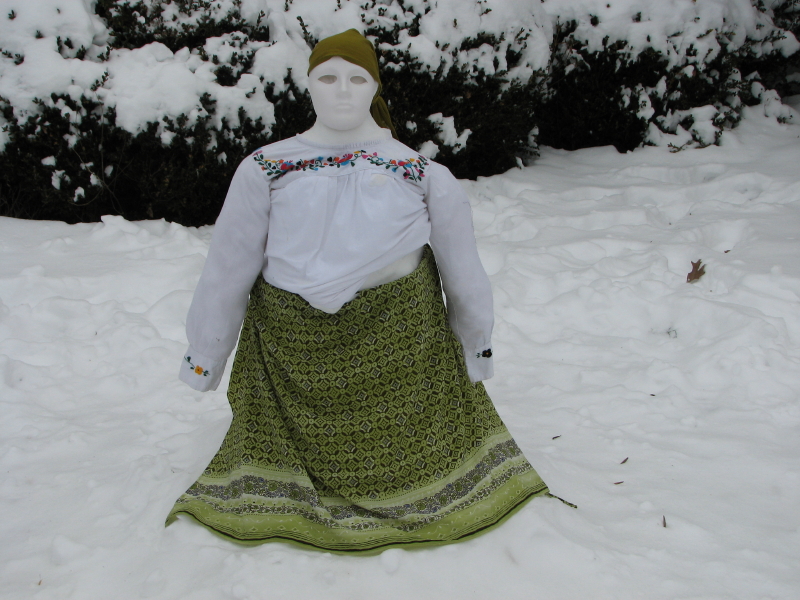
Perhaps the oddest piece I encountered was this modest sized figure.  What set it apart aside from the more extensive use of clothing, is the mask covering the face.  I did a double take on this one because the white mask didn’t fully register until I was right next to it.

I like that there is a time limit to a snowman’s existence.  For as long as the weather remains cold, and people leave it alone, then the work will be around to bring a little joy to all who see it.  For many adults, it is a pleasant reminder of childhood winters with its promise of missed school days.  Around here, the temperatures are dropping into the single digits overnight and there is more snow on the way.  For the time being, the city’s snowmen are safe and in good company.

Read Full Post »

It’s a sad but true fact that people abandon their pets at the Falls of the Ohio.  I have come across many stray dogs and cats in my wanderings around the park.  Of course, it’s hard to excuse this behavior when there are organizations that will care for and find new homes for unwanted animals. 

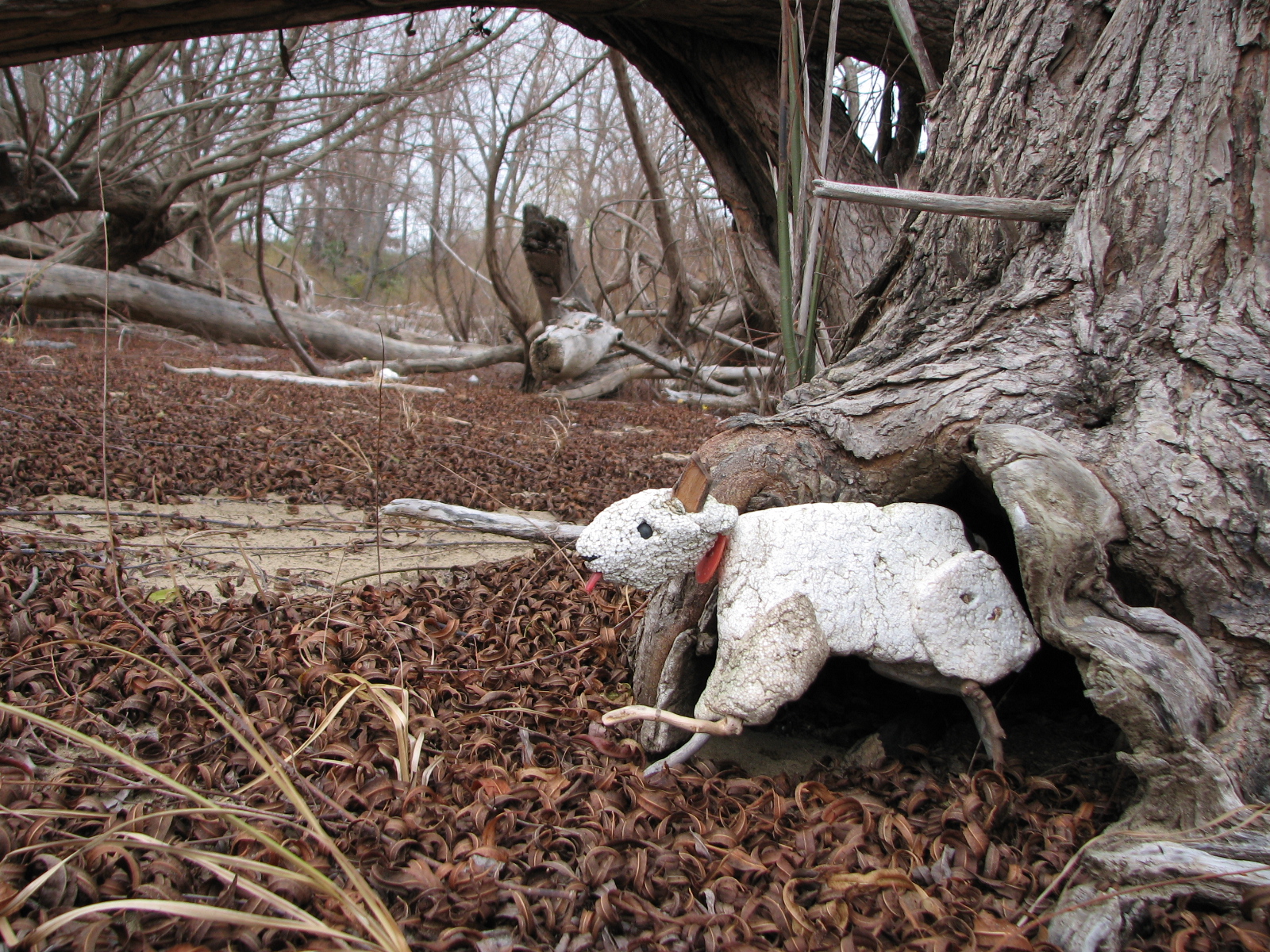
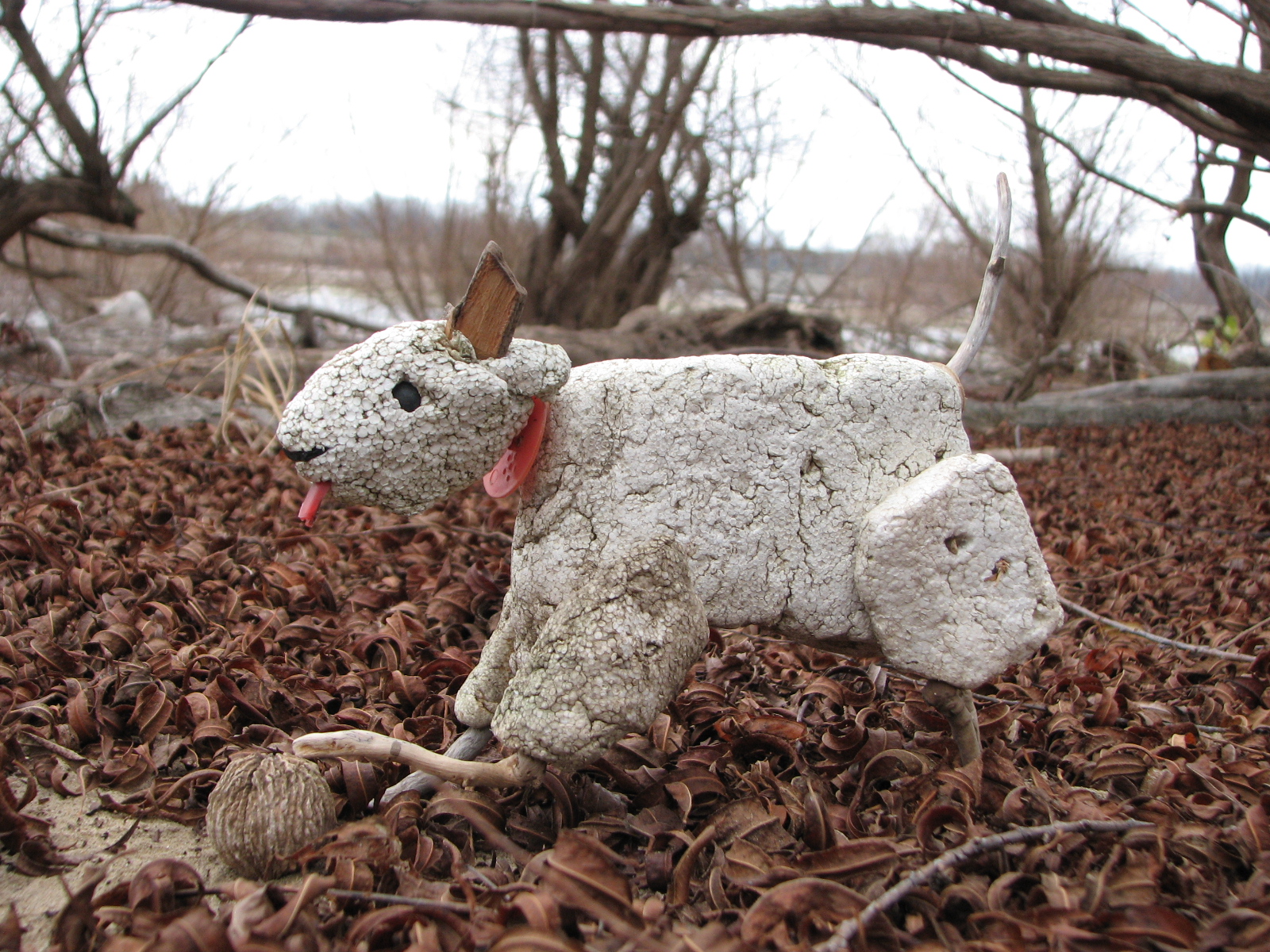
This is a story about a recent encounter I had with a most peculiar “dog”.  I came to call him “Rat-Dog” because of its diminutive size.  I was walking among the willows on a day that felt so much like winter.  I even heard the calls of Sandhill Cranes migrating, but the clouds were low and I couldn’t spot them.  As I was walking past a certain willow with a cavity at its base…this little white animal came running towards me.  For about an hour the little dog tagged along with me and I photographed it in various places of interest.  Rat-Dog would not let me touch it, but it was nevertheless playful.  Following are several images of this remarkable animal.

He seemed to like to play fetch.  I gathered a few walnuts and pitched them into the brown, curling leaves and Rat-Dog was very good at finding them.  I wondered how long he had been out here and what was it eating?  I surmised that like other strays, it probably ate garbage and handouts from fishermen.  I regretted that I had nothing to feed it.  Usually, I have something to snack on, but on this day, I hadn’t planned to stay long.

Along the sandy trail, we came to a patch of yellow Horse Nettle fruits.  I photographed these plants months a go when they sported lovely purple and yellow flowers.  I have since learned that these fruits are very poisonous.  They look like little tomatoes.  Rat-Dog fortunately did not eat any.  He seemed content to just run between the clumps of plants.

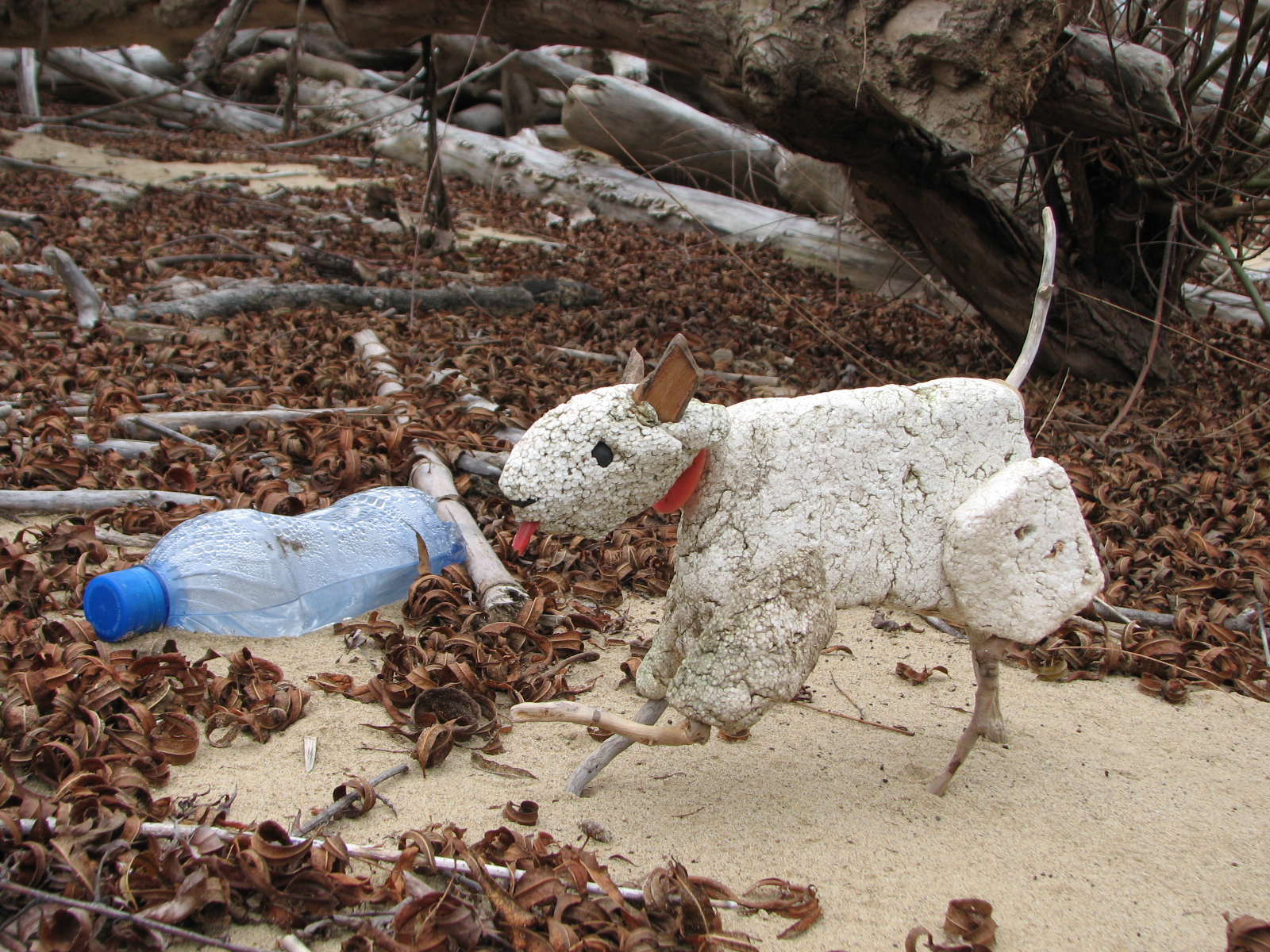
As another good indicator of scale, I shot this image of Rat-Dog by a plastic bottle.  It was at this moment that the little animal heard some distant sound and ran as fast as it could towards it.  I thought to myself that perhaps this was the dog’s owner who feeling twinges of guilt, came back for it.  Maybe he wasn’t abandoned to begin with and had become lost during an earlier visit?  Either way, I hope he finds his way home.

Rat-Dog was made from bits of found Styrofoam, coal, sticks, and pieces of plastic.  The collar around his neck is the top from a disposable salt shaker.  The dog is held together with little sharpened pegs.  He was created and photographed at the Falls of the Ohio State Park.  The part about pets being abandoned here…is sadly true.

Read Full Post »

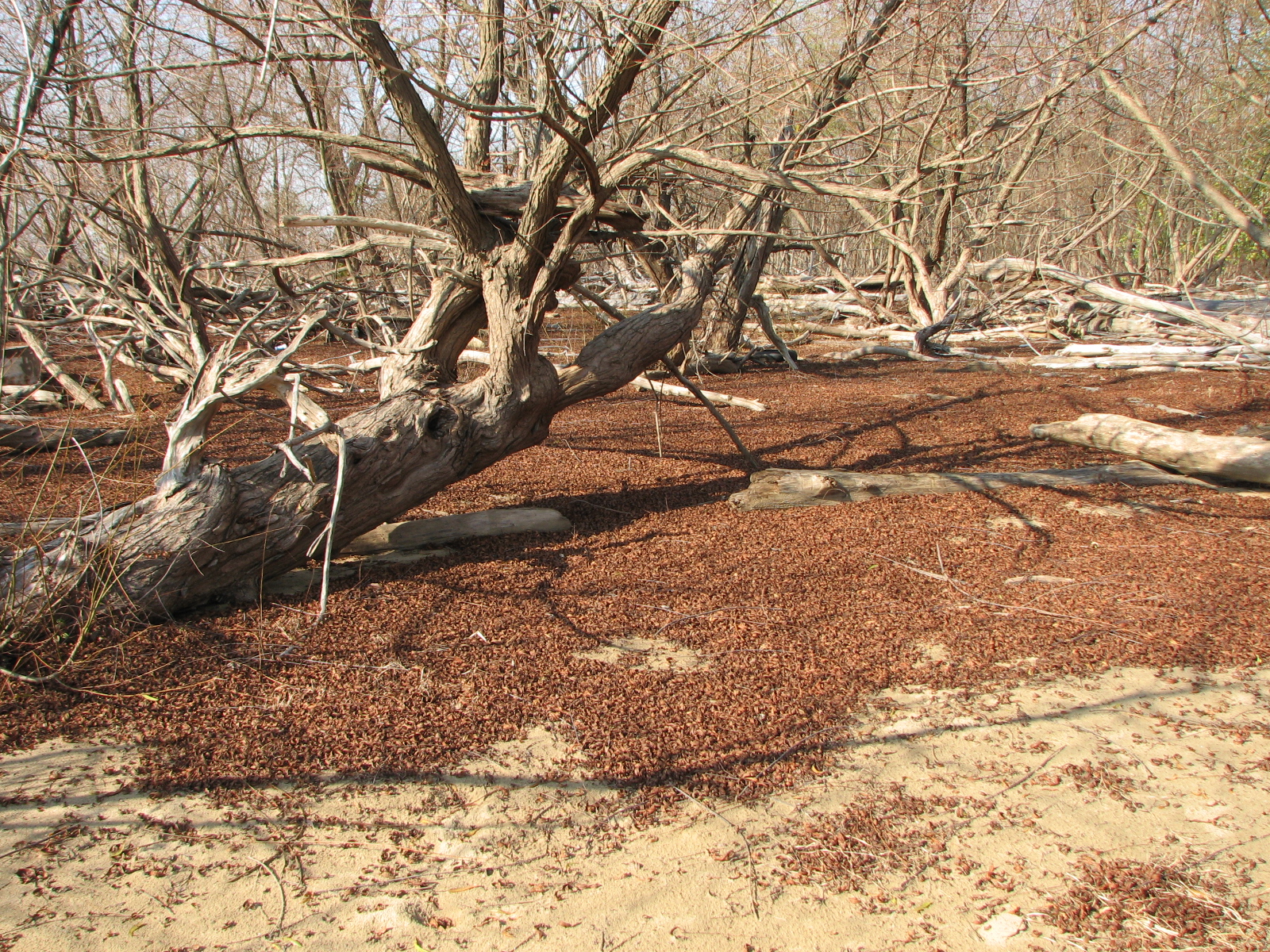
This is my 1ooth post!  I was really looking forward to writing this about two weeks a go when my computer crashed!  The real horror was that many of my Falls of the Ohio project images weren’t backed up.  I do have stuff on flash drives, CDs, memory cards, and yes, this blog, but the hard drive of my computer has the majority of my pictures.  That’s about three years worth of this project.  I still have another three years that’s completely analog-based that I could scan at a future date.  I’m not certain I have saved all my digital work, but I think it may still be there.  I’ll find out tomorrow, because it was a bit of an ordeal to get the family computer going again.  In the meantime, I was visiting the river and making sculptures and images from them.  Here is one story that takes place after the willow leaves have fallen and turned brown on the sand.  Winter’s chill isn’t far behind.

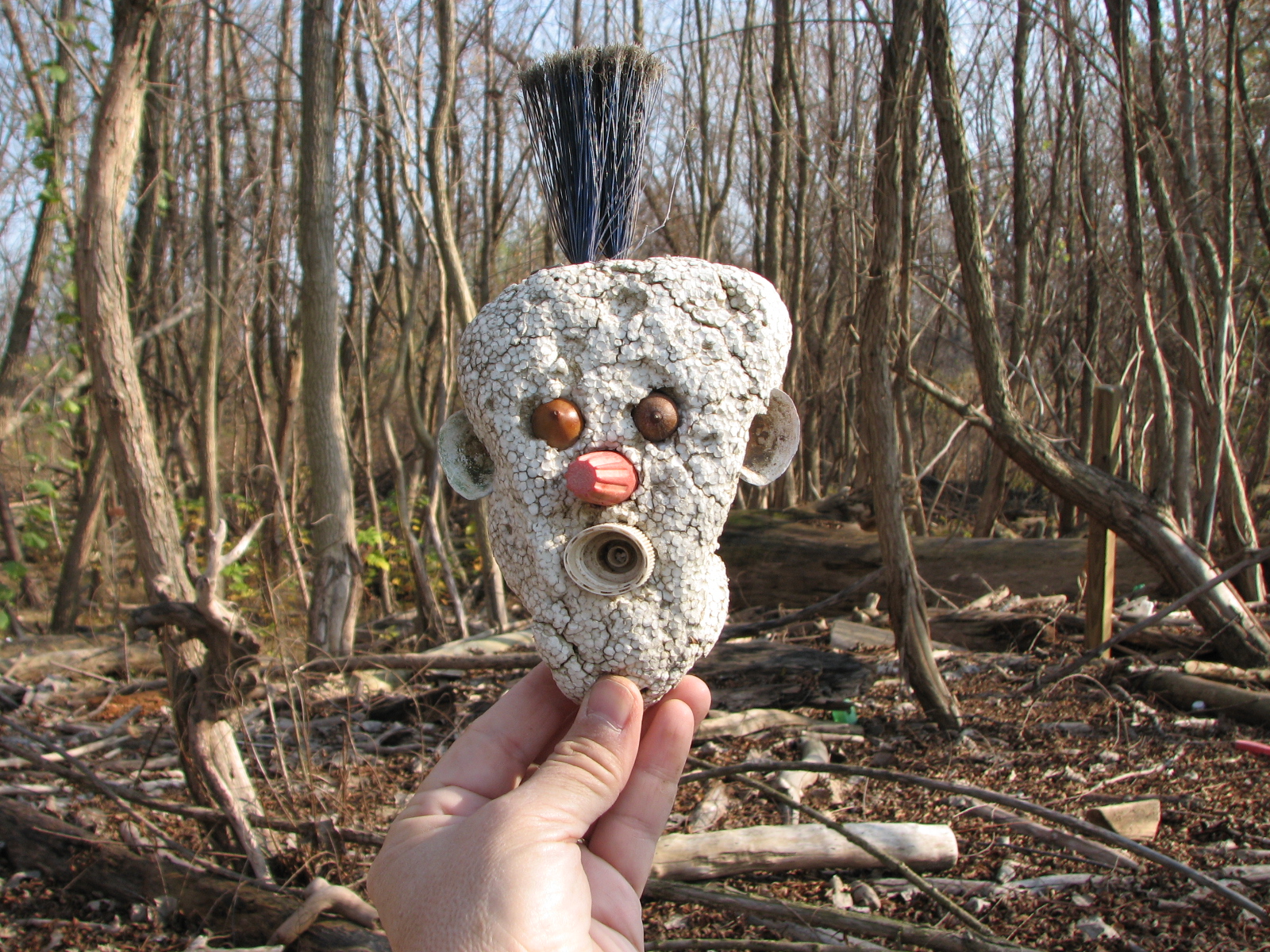
In my collecting bag were several small bottles the size used to serve alcohol aboard airline flights.  I decided to use them together on a single figure.  I found a piece of Styrofoam that could serve as a head and a few elements to create features.  Acorns become eyes, a plastic bottle cap serves as a mouth, the nose is some plastic electric insulating cap, the ears are Asiatic clam shells, and that tuft of hair is part of an old broom.  Those bottles mentioned earlier…I decided to string together like charms on a bracelet and I wrapped them around my polystyrene figure.

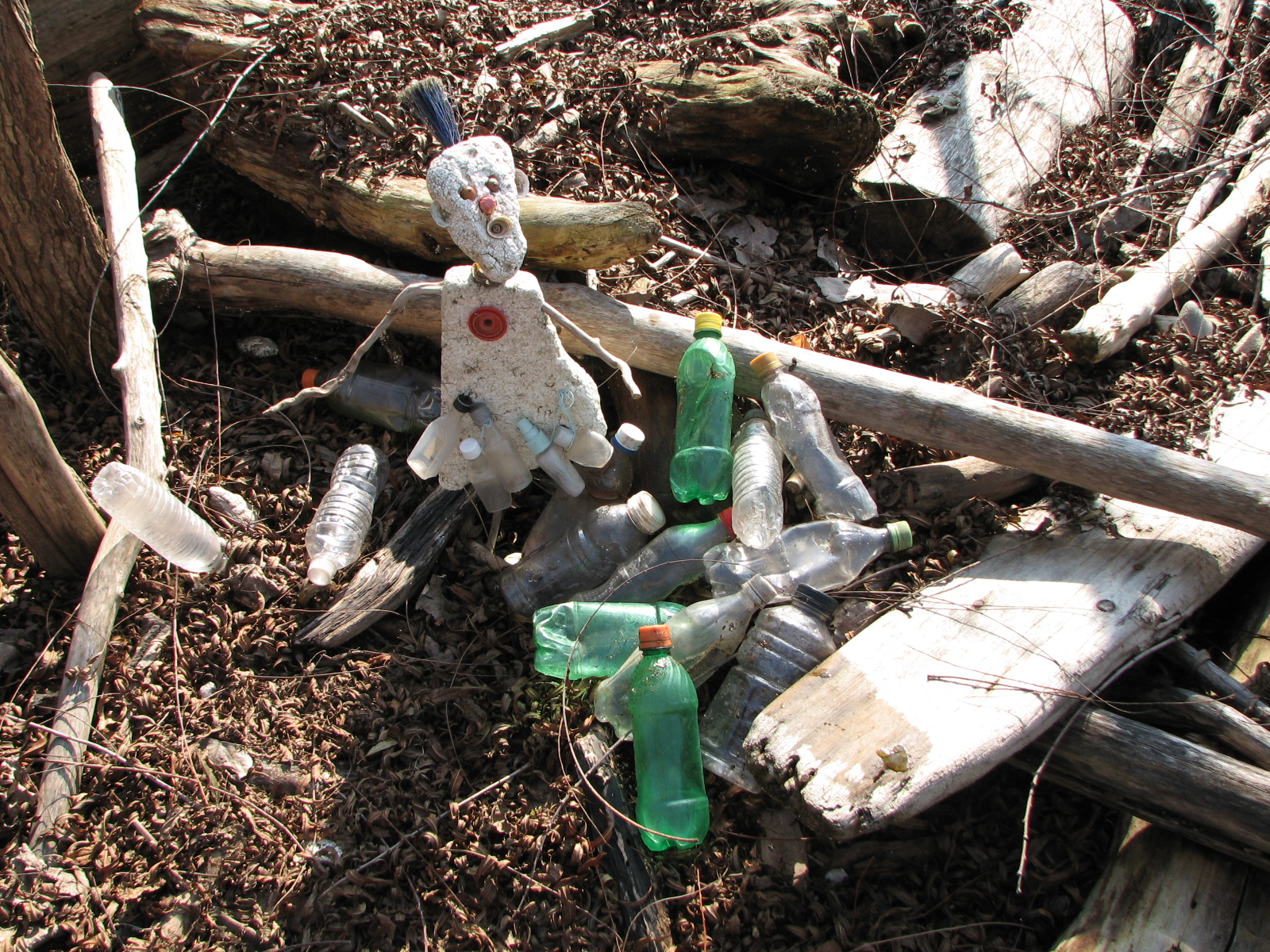
I conjured up this figure and imagined that he was a magic person with the power to intercede between worlds.  He wears the small bottles as amulets and as symbols of his office.  Bottles are important vessels because they mediate between exterior and interior realities.  The JuJu Bottleman comes to the Falls of the Ohio because he knows this is a really good place to find bottles of all kinds.

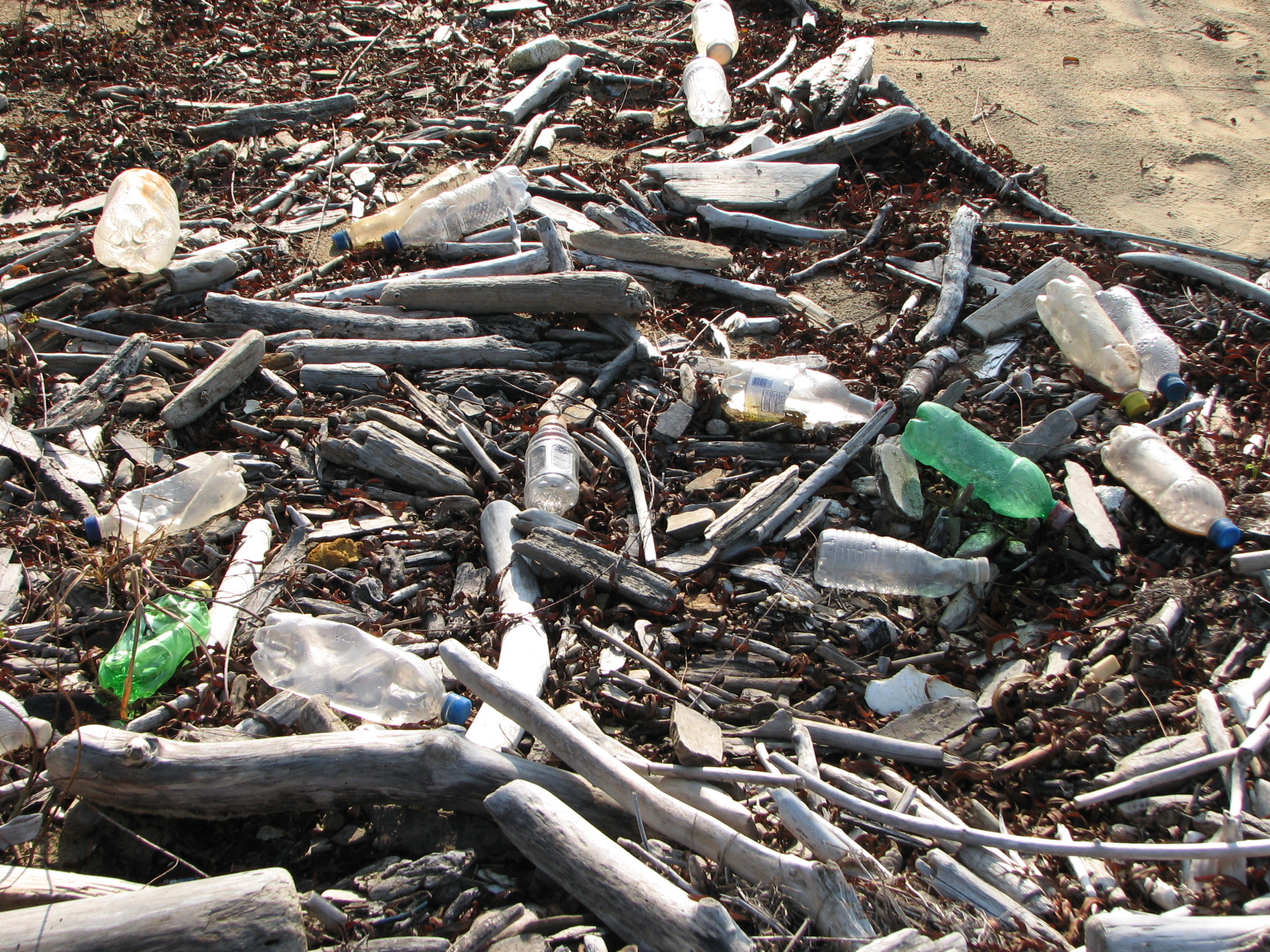
Strewn among the driftwood are plastic bottles that rode the last high water to this spot.  To the JuJu Bottleman, this is exactly what he is looking for.  It is uncertain what he intends to do with these bottles, but they serve some kind of important purpose that we may never know.  You can, however, feel a certain kind of power emanating from the collective energy of similar objects being grouped together.  Perhaps they serve as a battery for the imagination?  If one is good then more might be better.

Yes, I’m going to ask Santa for an external hard drive this year.  I have always intellectually known how fragile this data is, but my recent computer problem has accentuated that.  Pixels are like tiny beads of Styrofoam that are subject to fragmentation.  The notion that what happens to images in the electronic world finds a correspondence with the objects I’m manipulating and photographing in the physical world is an idea of interest to me.  The internet is a river that abrades and changes images as they appear in different contexts.  If I’m unable to retrieve my images from the old hard drive…I will accept that and think of it as a lesson learned.  I have other new discoveries and images from the Falls that I will post soon.

Read Full Post »

« Newer Posts - Older Posts »