Feeds:
Posts
Comments

Posts Tagged ‘coal’

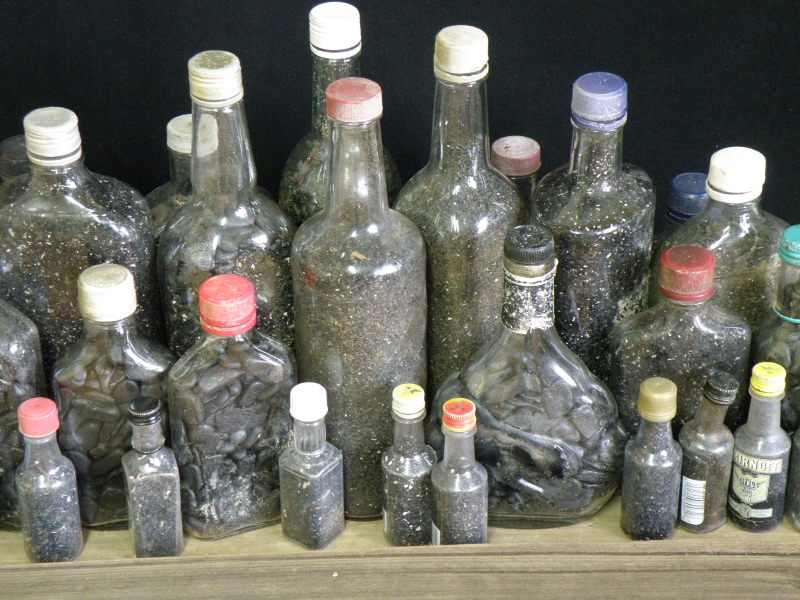
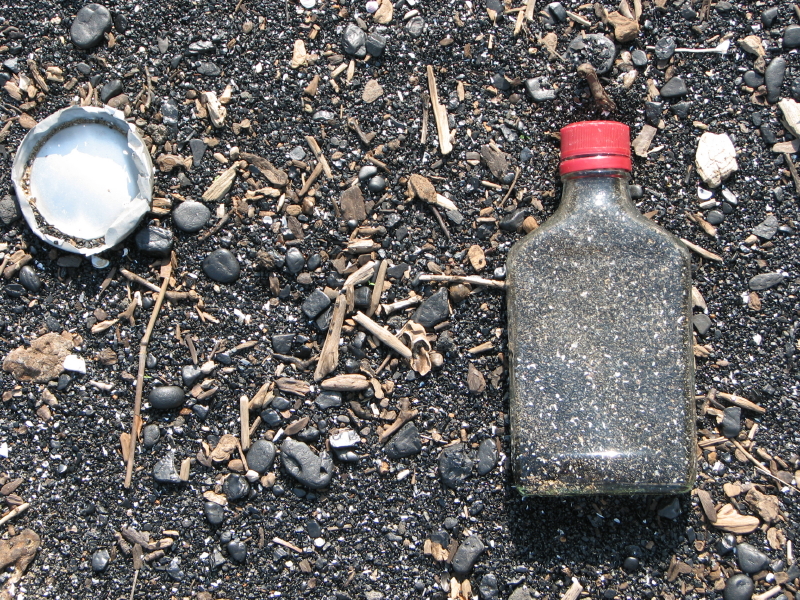
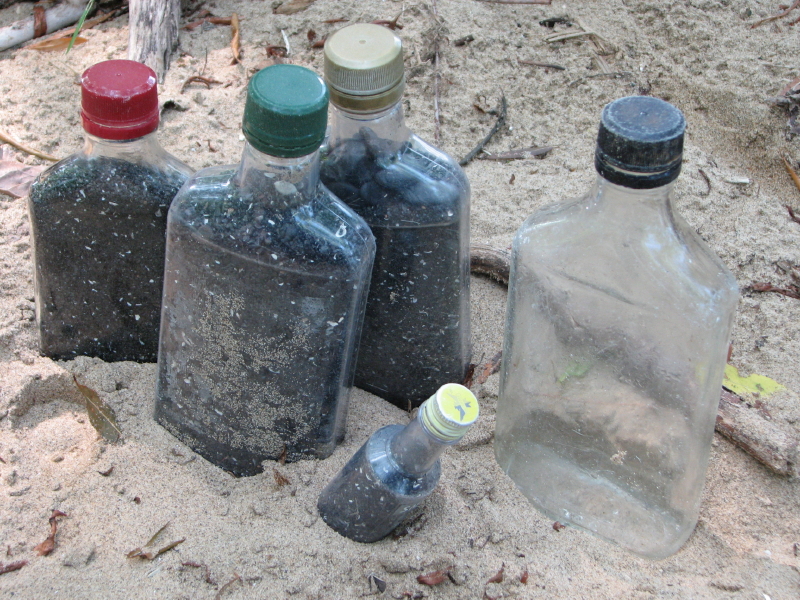
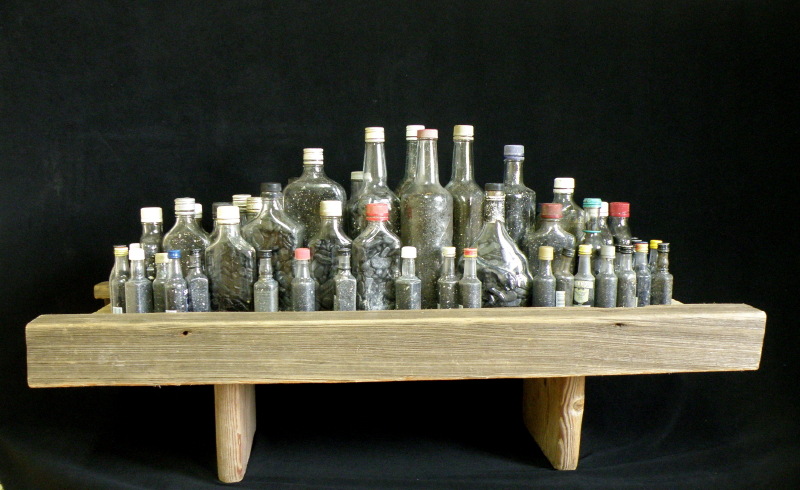
As promised, here are a few images from my completed bottle project.  For the last several months I have been finding empty liquor bottles and filling them with the coal that washed into the park after last spring’s flood.  A recent invitation to participate in a coal-themed art exhibition gave me a new reason to work with familiar materials.

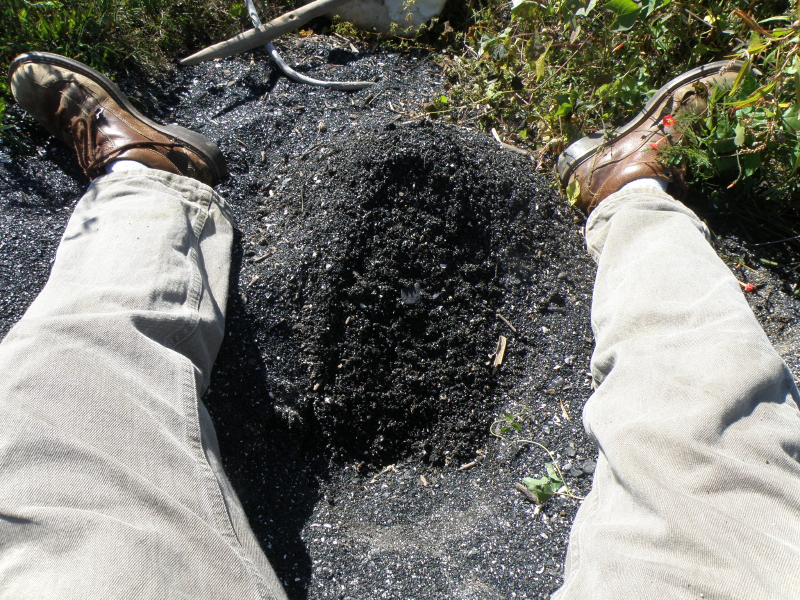
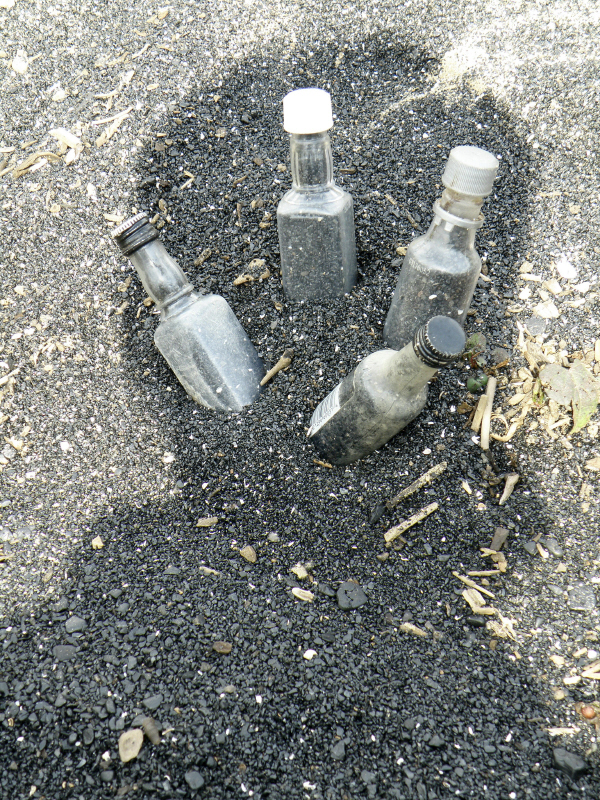
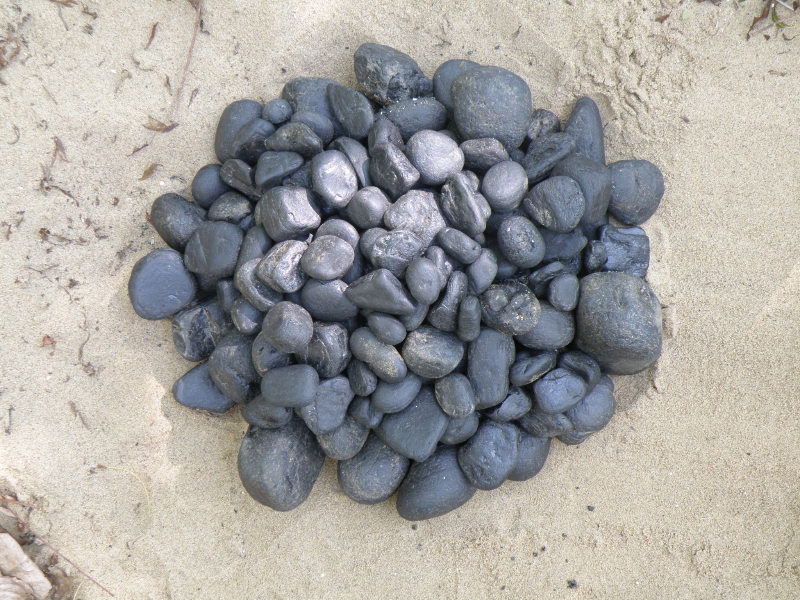
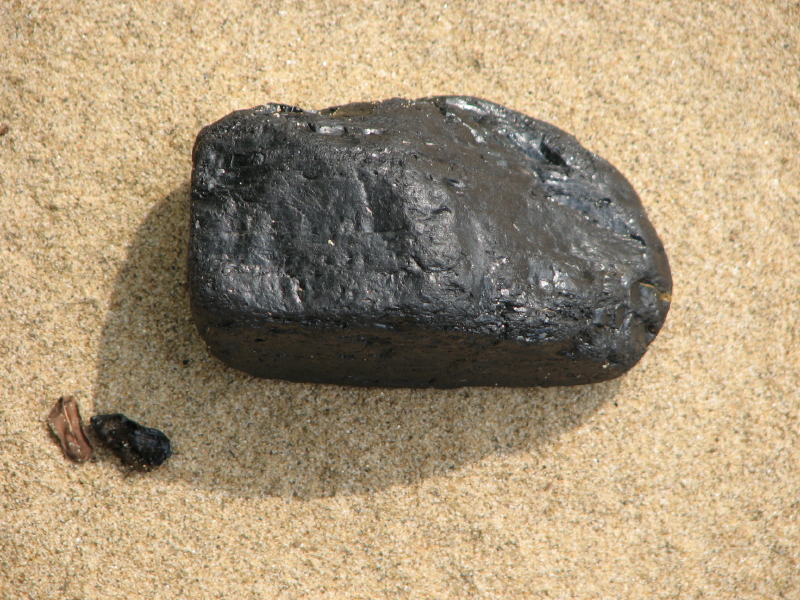
It’s my assumption that the coal is in the Ohio River because it washed or fell off barges destined for power plants in the valley?  In places under the railroad bridge there were deposits several inches thick on the beach.  Not all of it was coal gravel, but included pebbles and larger pieces as well.  My “favorite” rocks were the ones that the river tumbled smooth into egg-shapes.  The white flecks in the black gravel are fragments of mussel shells.
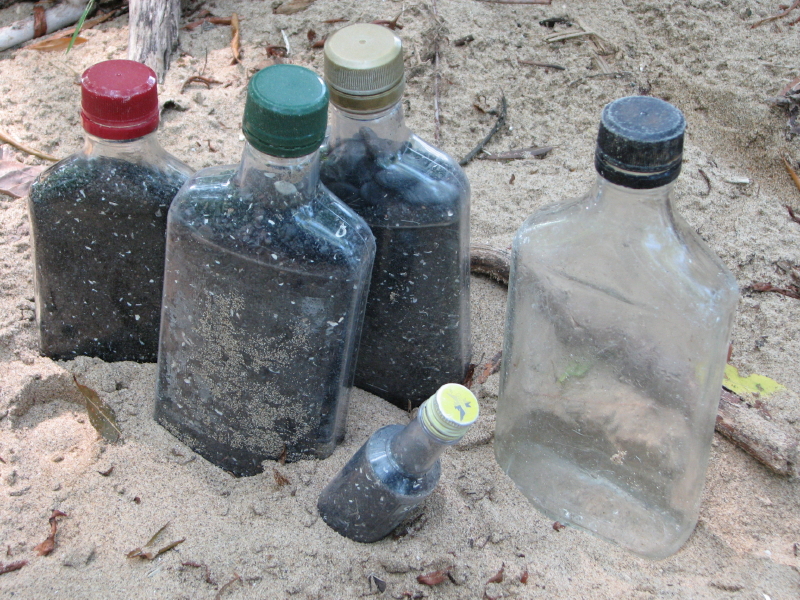
In my mind I made a link between the empty booze bottles and the coal.  Both are products that require extraction to bring into being before being consumed in ever addictive quantities.  Putting the coal back into the bottles was a way to put random carbon back into storage and also feel some sense of doing something positive and purposeful by at least removing these materials from the Falls of the Ohio.  In Kentucky, we are consuming our mountains for their coal a sip here and shot there and the social and environmental challenges are adding up to a bigger headache in the wider world.

Since I started this piece here I also wanted a photo of it in the environment in which it was created one found and filled bottle at a time.  Between trips to the Falls I would store the bottles in my basement until I got enough of them to make something with.  When I finally decided I had more than enough I dragged it all back down to the river and set it up on a pretty autumn day.  I also recalled the badly twisted ankle I had over the summer that took weeks to heal.  I was doing this very activity when I rolled my ankle over in the sand.  I think the finished piece has about sixty bottles on it. Most of them are made of glass, but the smallest ones are plastic. All the wood table/altar pieces were also originally found at the Falls of the Ohio.  I used a small folding hand saw and cut the wood to length before bringing it home.  Here’s a few views of the completed sculpture set up by the river.
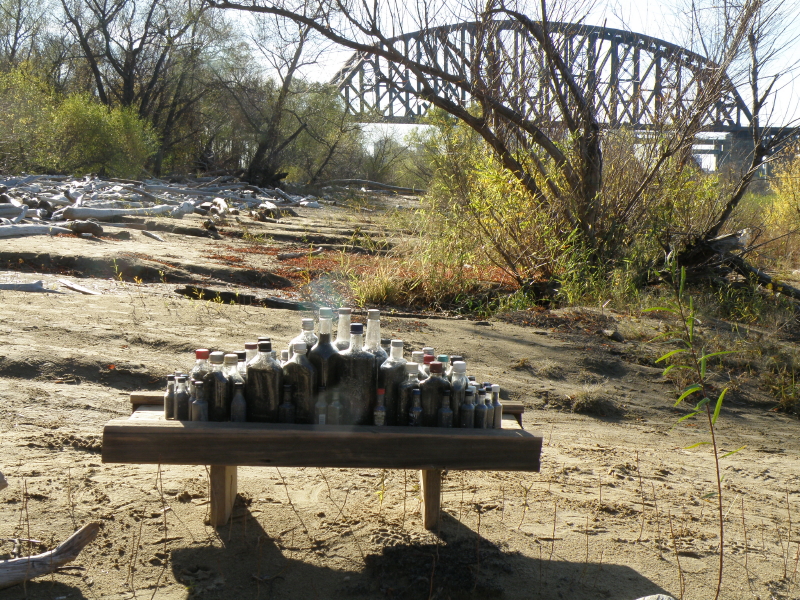
I had trouble coming up with a title for this work, but finally thought “Mountaintop Minibar” was working for me as much as anything else.  Who knows…I may think of something else in time.
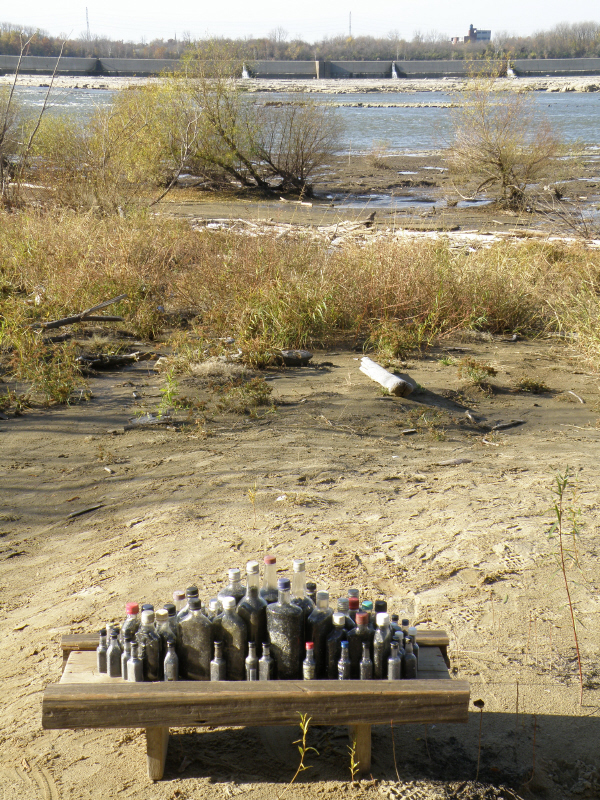
I prefer seeing my work out here by the river.  All the other information in the  pictures just adds to the moment.  I did take a few images of my minibar against a black cloth at the church studio.  Here’s what it looks like by itself and with a detail of the bottles.  So far, it looks like this work will be exhibited in an exhibition in October 2012 and perhaps other opportunities will come up before then.  And now, for the last two images.  Thanks for checking in!
Read Full Post »

I’m at the Falls of the Ohio again because the Ohio River has been priming my subconscious all week with the sound of running water.  I am also very close to finishing the piece I’m making for an invitational art exhibit I’m participating in which revolves around the issue of coal and mountain top removal.  This is a topic of some importance in Kentucky.  We have a love/hate relationship with coal.  On the one hand it is an energy resource we have in some abundance and it does provide much-needed jobs and revenue, however, the toll it takes on everything it touches is also well documented. Over the last few posts you have seen some of the process I’ve been involved with the coal the Ohio River has deposited at the Falls.  Today I’m gathering the last of the coal I need for my art.

The spring floods of 2011 washed a lot of coal into the park.  My “usual” Falls of the Ohio project touches upon another important issue which is the quality of our number one vanishing resource… fresh, clean water.  As is the case with most aspects of the environment, few issues stand in isolation from all the other problems out there.  Considerable overlapping is the norm which makes all these problems that much more complex and challenging.

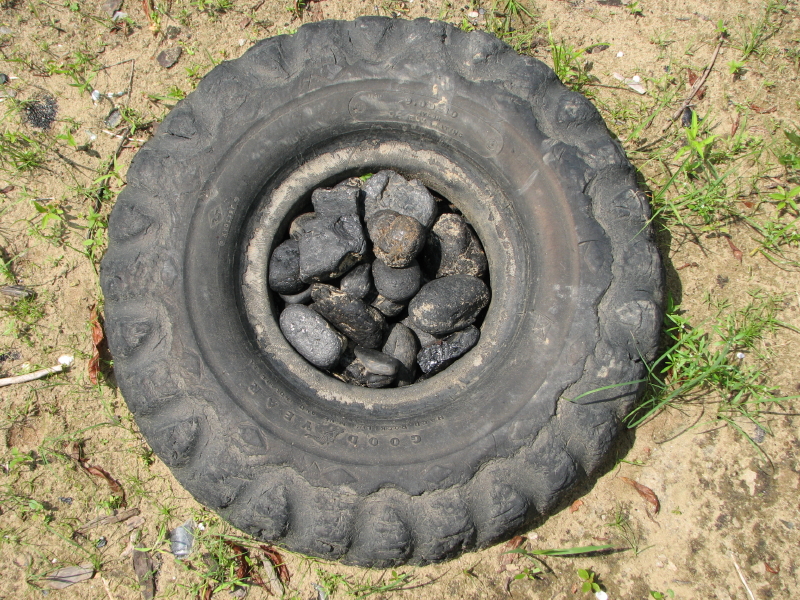
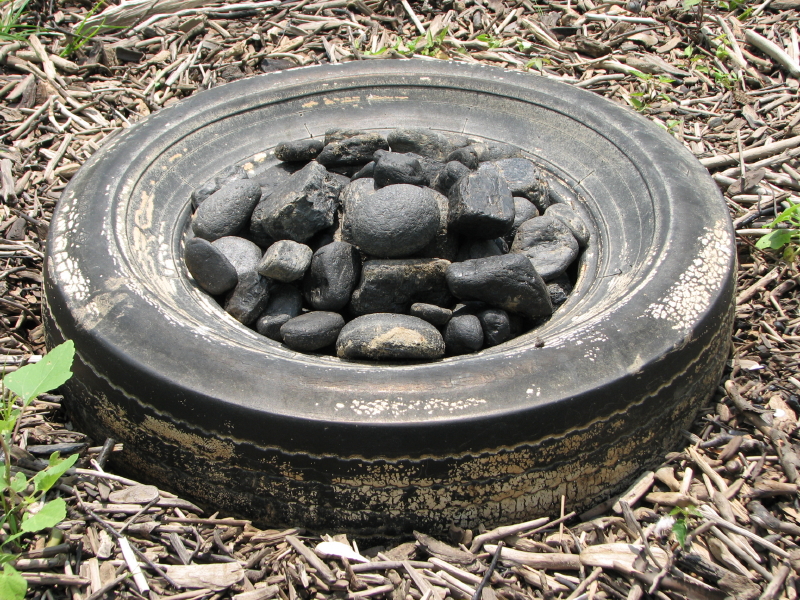
The piece I’m making for this invitational exhibit isn’t intended to be a didactic one.  I’m not sure that screaming at people ultimately does much good when it comes to something as complicated as the coal issue.  I also don’t pretend to have the answers.  I’m hoping that the artwork I’m making with this coal will operate effectively just under the surface of people’s imaginations where it might linger long enough to resonate.  We will see.  In the meantime, I’ve “enjoyed” working with this material.  I have decided that it does have an odd beauty of its own especially when the river tumbles away its rough edges.  I have found simply creating small mounds of coal whether in old car tires or just by itself to be a reflective act.

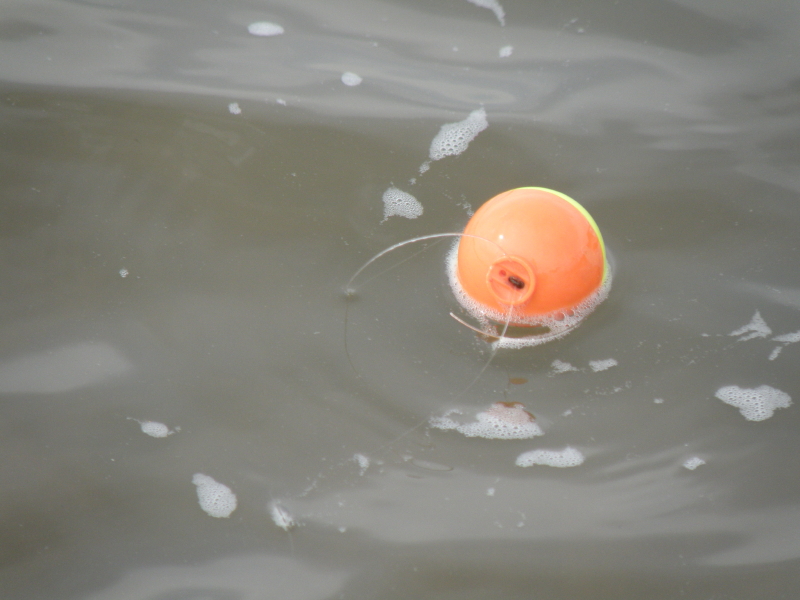
After playing with the coal for a few hours, I decided it was time to do something else.  It has been a while since I last baited a hook and went fishing.  I got the idea when I came across a long willow branch that a beaver had gnawed all the bark off for food.  Looking around the riverbank, I also found a hook, lead sinkers, and enough waste fishing line to outfit my found pole.  Fishing floats are something I find in abundance and always have a few in my collecting bag. I also pick up the lead weights that other fishermen lose because this metal doesn’t need to be out here either.  Looking under rocks, I scrounged up enough insect larvae to use for bait.  Now I was ready to throw my line in the water…and wait.

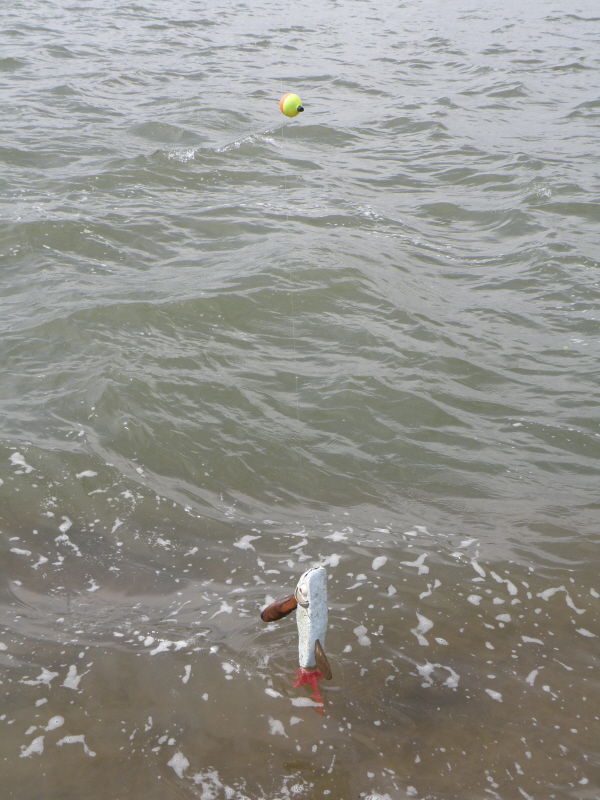
I guess about twenty minutes passed before I got my first nibble.  I lost my bait several times before I was successful in hooking a fish.  The sight of my float going completely under the water was a thrilling one!

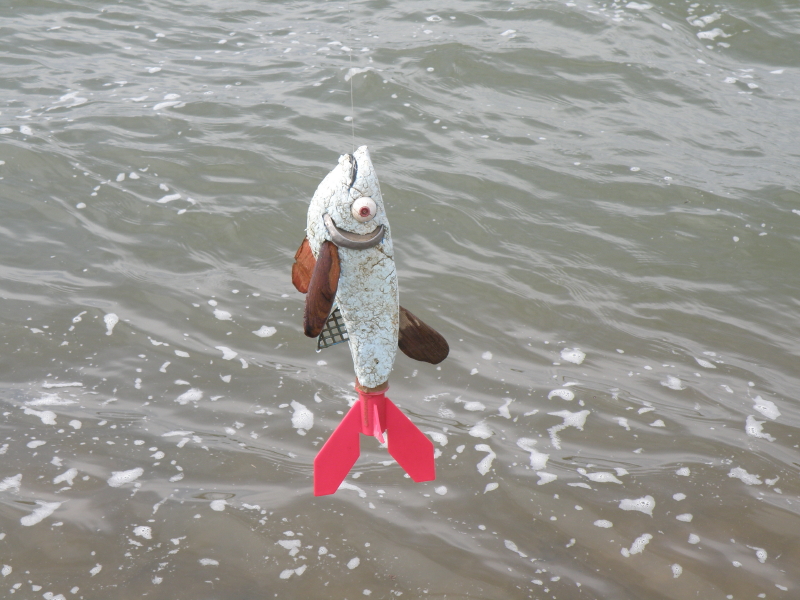
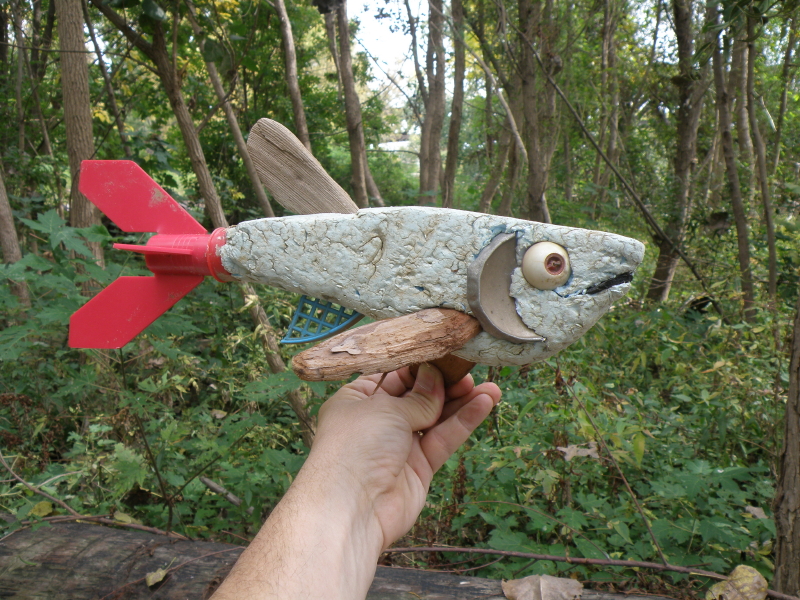
This fish didn’t give me much of a fight.  After a few runs in different directions I could feel it tire and lifted it out of the water. To be honest, I didn’t have the slightest idea of what species this was, but I know that I have never seen anything quite like it here before.  It’s coloration was unusual with its light blue body and bright red tail.

It’s eyes are large and I surmised that it usually lives in the depths of the river where light rarely reaches it.  I thought it had some similarities to the sauger which is a walleye relative and also found here, but it lacked the sharp teeth that the sauger has.  It’s gill covers or operculums were metallic and reminded me of the bottoms of aluminum cans that the river washes into the park.

I quickly took a few more photographs and then released this fish safely back into the river.  When I got home I tried to look up some information about my catch, but couldn’t find much about it.  Apparently, Rafinesque and LeSueur, two early naturalists who described many of the fish found in the Ohio River and Falls of the Ohio, were mum on this subject which was disappointing.  Until I can locate better reference material I decided to just call it something descriptive like the Red-tailed Goggle-eye.  Of course, any information that any of you out there might have would be welcomed! Seeing this fish I also had another more disturbing thought.  What if this is evolution in action and the continued degradation of the environment is shaping new species from older ones that can deal with the new reality?  Evolve or die. This brought the question of man as an agent of evolutionary change to mind since we are culpable for many of the changes going on in the larger world.  Well for now, I’ll just sleep on it and see what turns up tomorrow.  See you by the water!

Read Full Post »

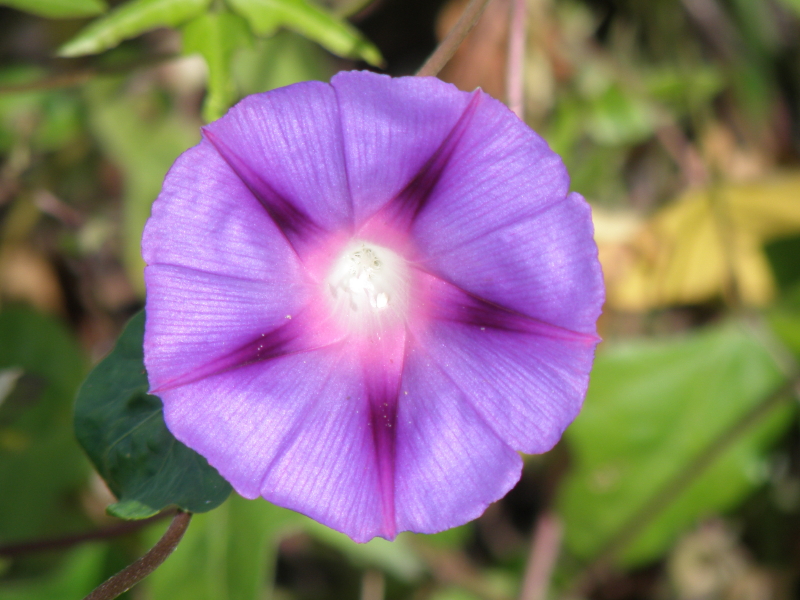
After the briefest cold period, we have had a glorious week of perfect weather.  It’s been good to get back to the river after having the focus of the project shift away from the park and into a gallery.  Looking around, you can begin to detect those subtle shifts in color beginning to happen in the tree leaves.  Actually, there is quite a bit of color all around when you begin paying attention to it.  For instance, check out this morning-glory vine.

This purple flower is practically glowing.  And the Viceroy butterfly is all in burnt orange as it mimics the Monarchs that currently are migrating on their way south.  That large black vein crossing this butterfly’s hind wing is found only on the Viceroy.

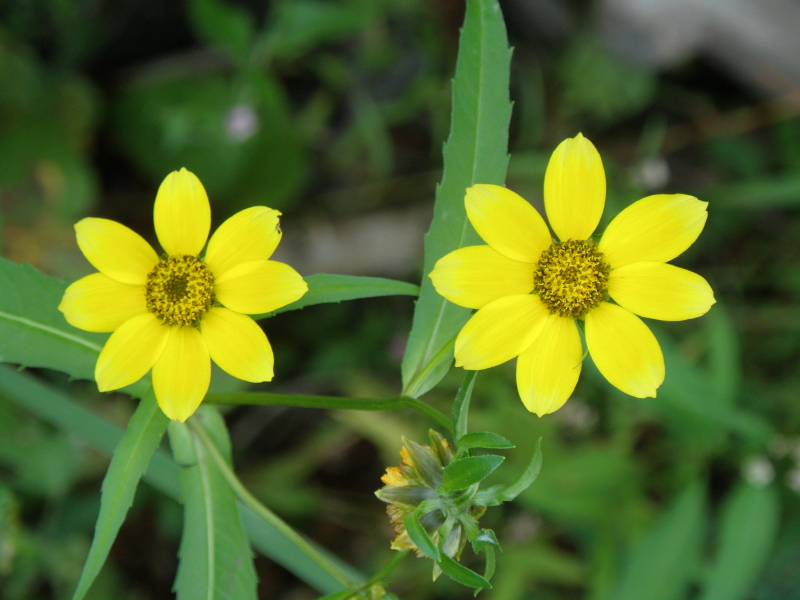
Now blooming at the Falls are several species of the Composite flower family that look so close to one another that you need to have a few on hand for direct comparisons.   Many are yellow in color like these twin blossoms.

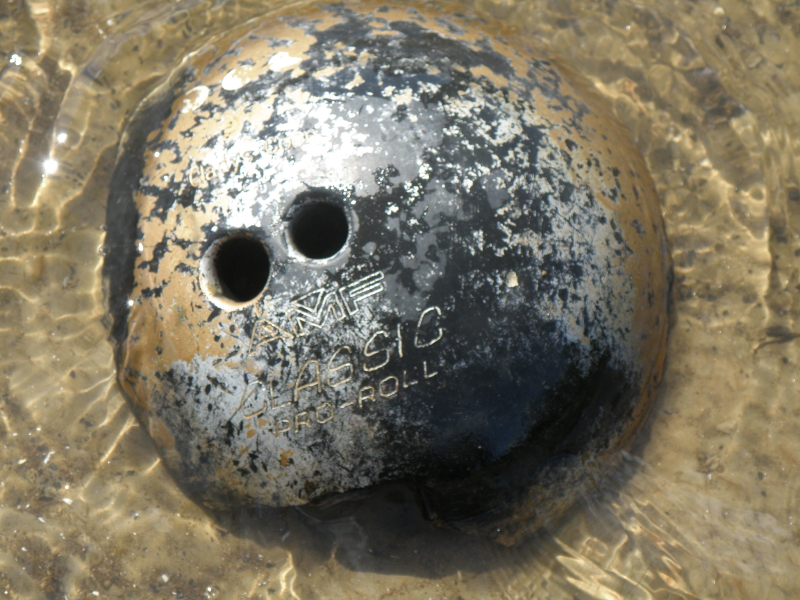
When I wasn’t noticing the local color, I was poking around for old booze bottles.  I found a few more to add to another piece I’m making at home.  I also came across the remains of another bowling ball and I added this one to my collection.  This is how I found it.

At first I thought I was going to dig this ball out of the dirt, but I didn’t need to.  What you see is essentially all there is!  It’s just a chip of the ball that happens to include a couple of finger holes, the ball’s brand name, and the name of its former owner…Gladys Coons inscribed on the surface.  I dropped the fragment into the water to clean it off and the metallic colors begin to shine.

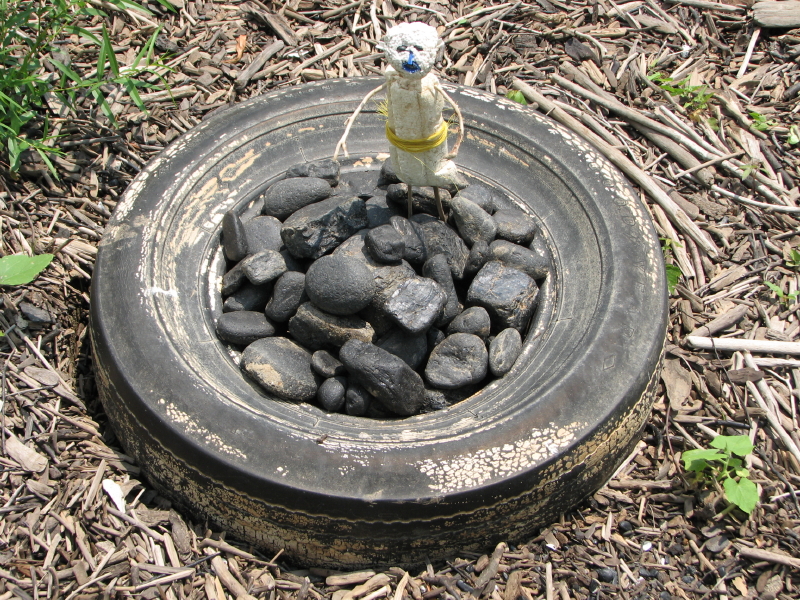
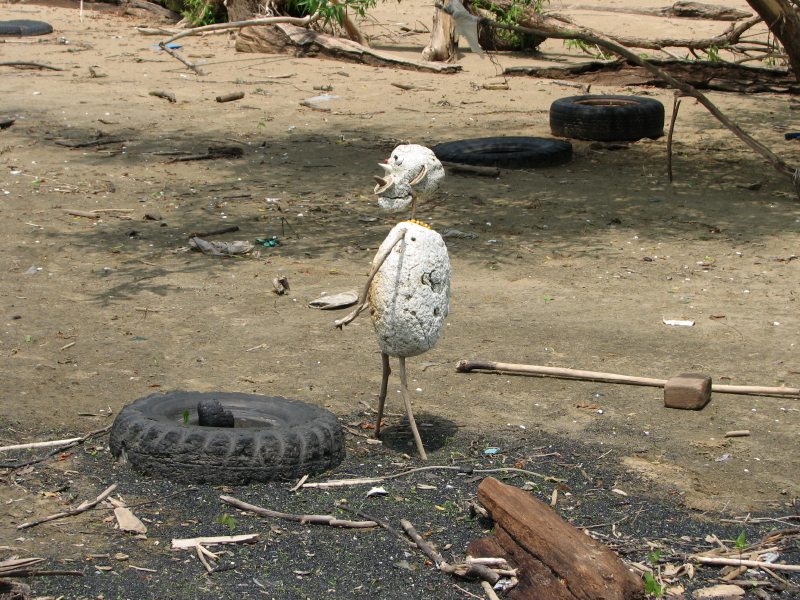
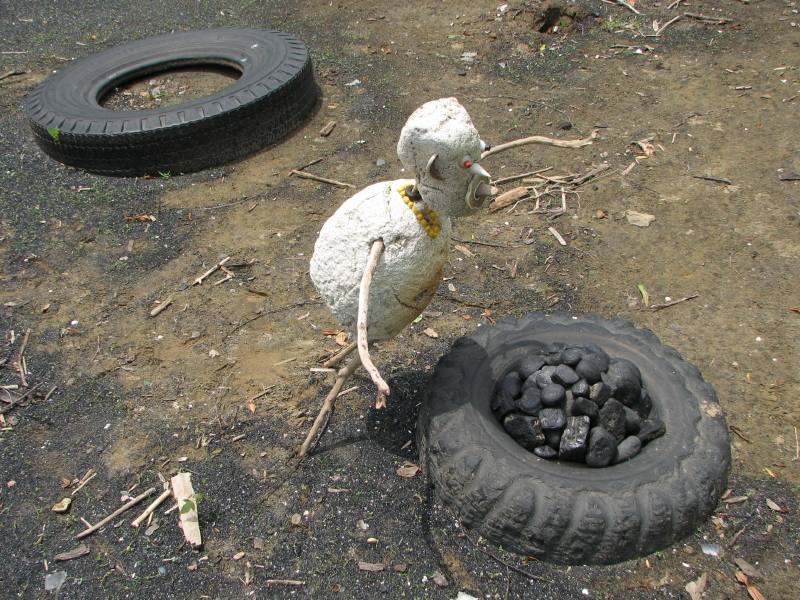
With the Styrofoam I also found out here I fashioned yet another figure and posed it next to an old tire that I had placed river found coal into.  First here’s the tire nearly overgrown with plants since my last visit.

Now for a more eccentric view with my Styro-figure posed above it followed by a shot that places things in better perspective.

It’s been a few years since I worked with coal as intensively as I have this year.  Our spring floods did a lot to redeposit this mineral in the form of rounded coal pebbles and gravel.

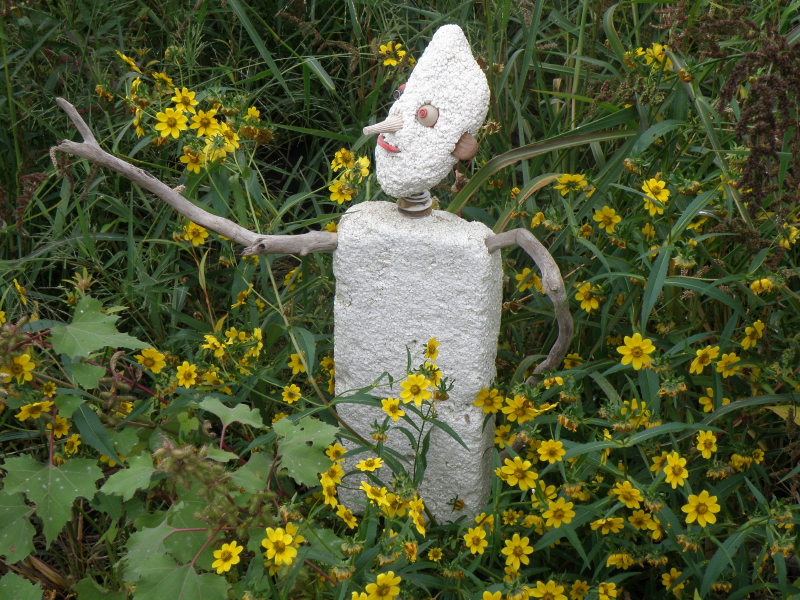
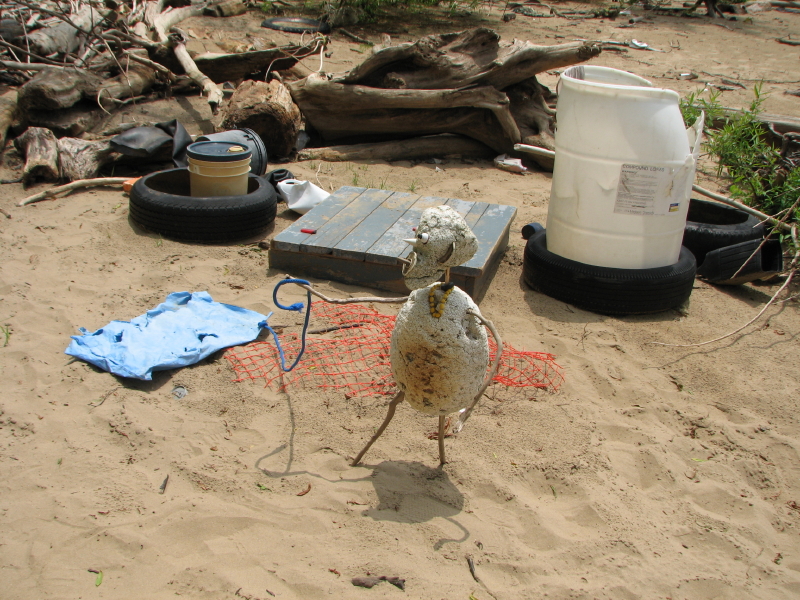
I reposed this simple figure several times mostly in the area that had the most coal deposits.  Much of the time I was filling empty bottles with coal for that other project I mentioned.  In places you can find “beaches” of coal gravel several inches deep.  Intermixed with the coal are white mussel shell fragments and a bit of brown tree bark.  I will post images of my bottle sculpture once it is finished.  For now, I will leave with a picture of where I left this particular figure in the park.  I found a different arm and placed this piece in the context of these beautiful flowers.

Read Full Post »

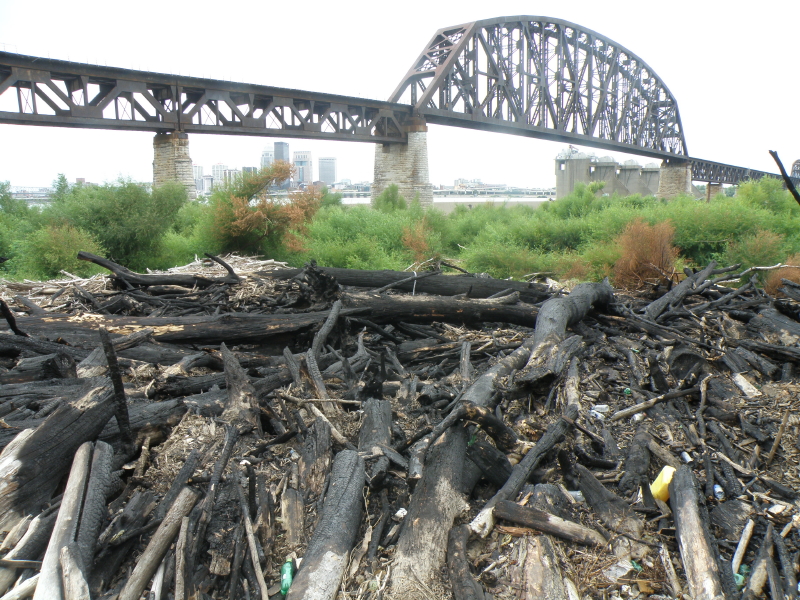
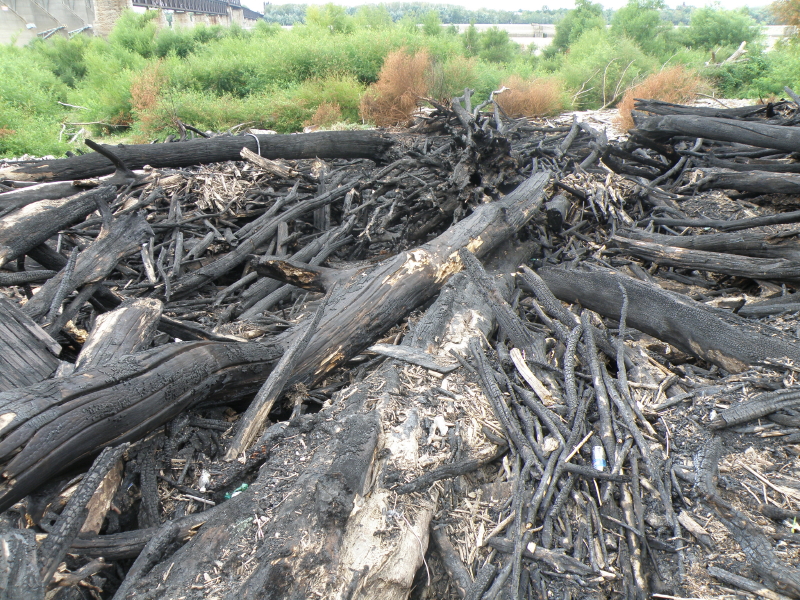
I was looking for materials for a new project I’m working on and came upon this event on the driftwood pile at the Falls of the Ohio.  There is so much wood massed and interlocked with itself that I wondered if fire could be a possibility here?  The answer to that question is obviously yes.

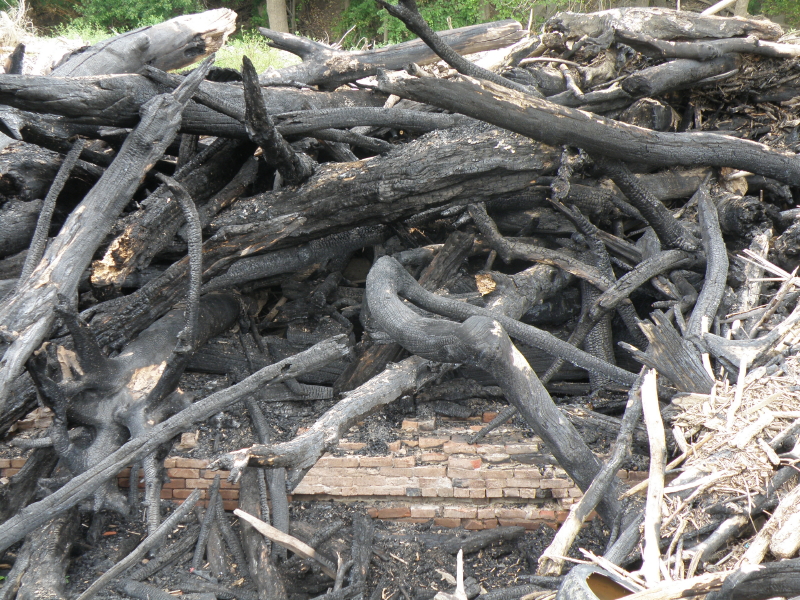
I don’t know what started the fire…it could have been set by man or it could have been a lightning strike.  The latter part of our summer has been dry. The fire was quick and essentially burned the surface of most of the larger logs out here as black as coal. I noticed that part of this raft of wood snagged next to this brick foundation of a building that has been a wreck as long as I have been coming out here which is over twenty years now.  I don’t know what this building was originally used for and I wonder if this could have been some person’s house once upon a time?  That might not be right since this area is prone to flooding nearly every year.

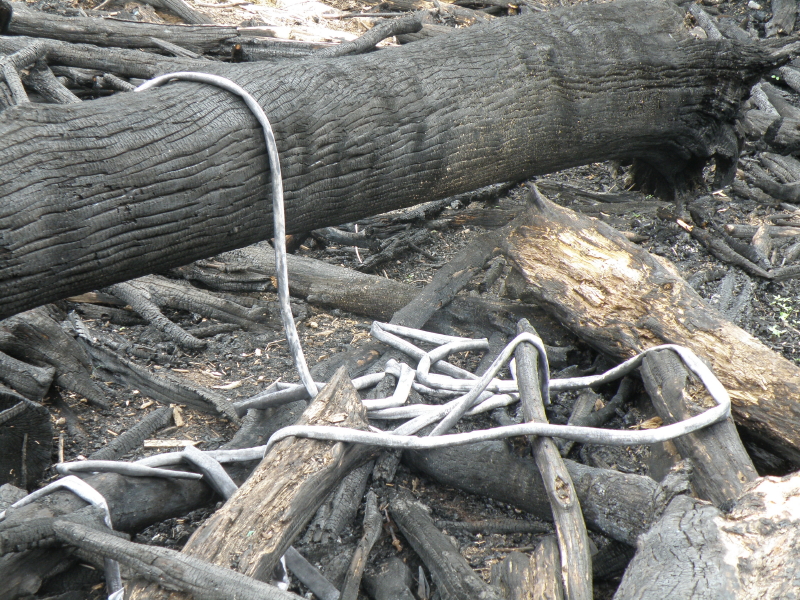
One thing I know was that someone tried to put this fire out.  I came across quite a length of fire hose that had been cut.  The canvas and rubber hose bore a stamp that said it was made in Canada.  Perhaps the hose was severed because the fire swirled quickly becoming unpredictable and all this wood presented many opportunities for hang ups and snags. It would be hard to maneuver over it.  Seems there was a cut and run moment and the hose was left behind.  A sculptor friend of mine, Don Lawler, said that cut lengths of fire hose are perfect for protecting the edges of his limestone sculptures when he hoists them into to position with his ropes and crane.  I think I will salvage some of this hose for my sculptor friends.

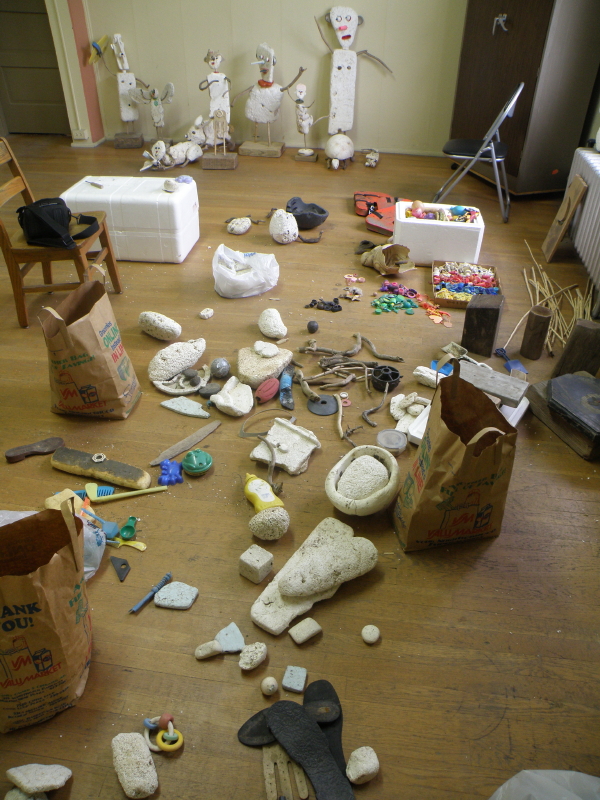
One reason I was on the driftwood pile was to look for empty booze bottles.  I collected a variety of them in different sizes and made from both glass and plastic.  They had to have their caps still on them and I preferred that their labels were soaked off by the river.  A found quite a few today to go with the ones I have been collecting over the summer.  I’m participating in a group exhibit where the artists address in some way the issues of mountain top removal and our need for coal.  I have been filling up both bottles and discarded tires with the coal chunks and  gravel that washed into here during the last flooding which also brought in all the driftwood that recently carbonized.  Searching under the vines I did find pockets of coal gravel that were several inches deep in places.  When I open up each empty bottle there is this heavy malted alcohol aroma that get neutralized by the coal.  I’m still working on my coal piece and in the meantime…my exhibit at Bellarmine University with Scott Scarboro opened a couple of nights a go.  I’ll post a few shots of the installation in my next post, but in closing here is one view of materials in my church studio room on Barrett Avenue.  See you soon.

Read Full Post »

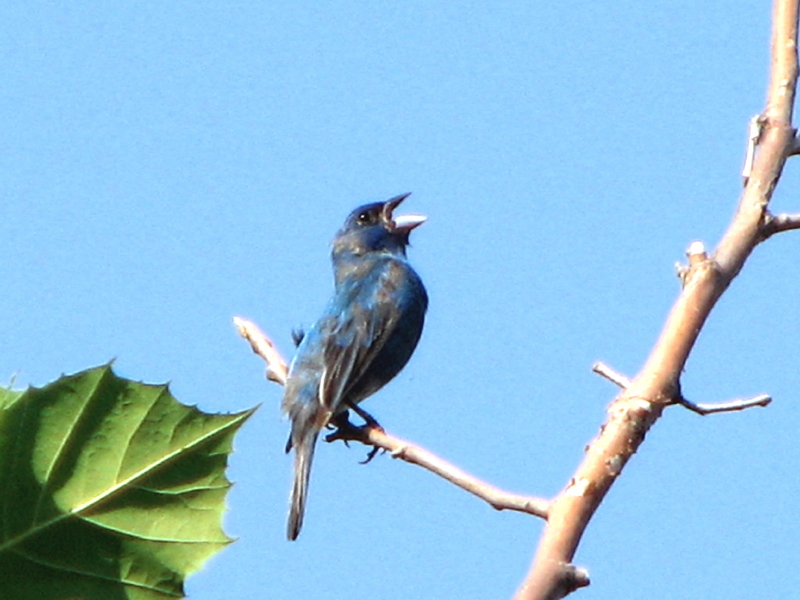
It’s been a hot, hot summer at the Falls of the Ohio.  For me, the best time to be out here is as early in the morning as possible.  One advantage in doing this is you are more likely to see birds and other wildlife.  I found this Indigo Bunting singing away from the topmost branch of this tree.  For as open and publicly trampled as this park is…witnessing such small and intimate moments where man and nature freely mix keeps me coming back for more.

This adventure occurred during my last visit to the park and early in the month.  As it turned out, it was a memorable visit.  I’ll go ahead and tell you that I twisted my right ankle which isn’t big news or a particularly rare occurrence.  But this time, I was sure it was broken and I limped out of the park with the aid of my trusty walking stick.  I was walking along in the sand and my ankle just collapsed.  That’s all it took.  All my early sports injuries have left me with a weak ankle.  The x-rays didn’t reveal a fracture, but I was surprised by the bone spurs and bone deterioration.  As I write this three weeks later, I’m still limping along but without the aid of crutches so I guess I’m on the mend.  Returning to that day and before the sprain,  I revisited the sand sunken tire from previous posts and replaced the coal that was removed from it and then moved on.

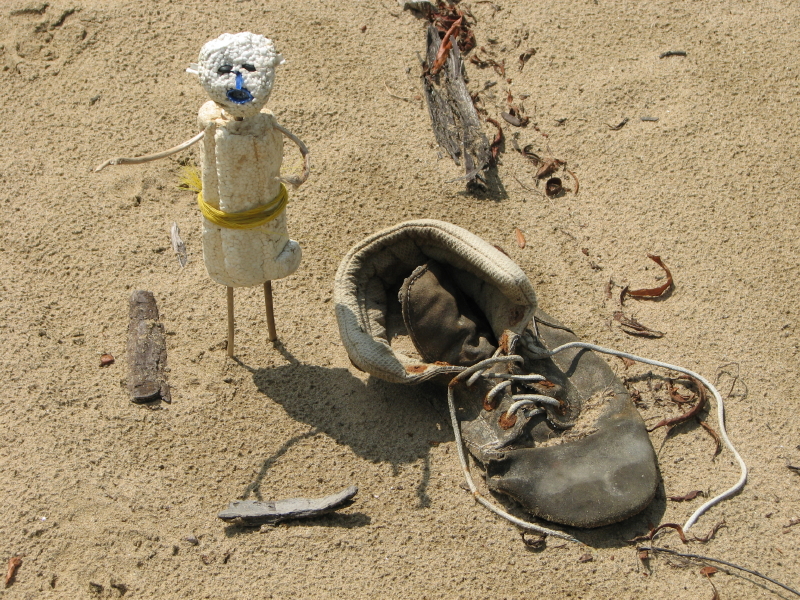
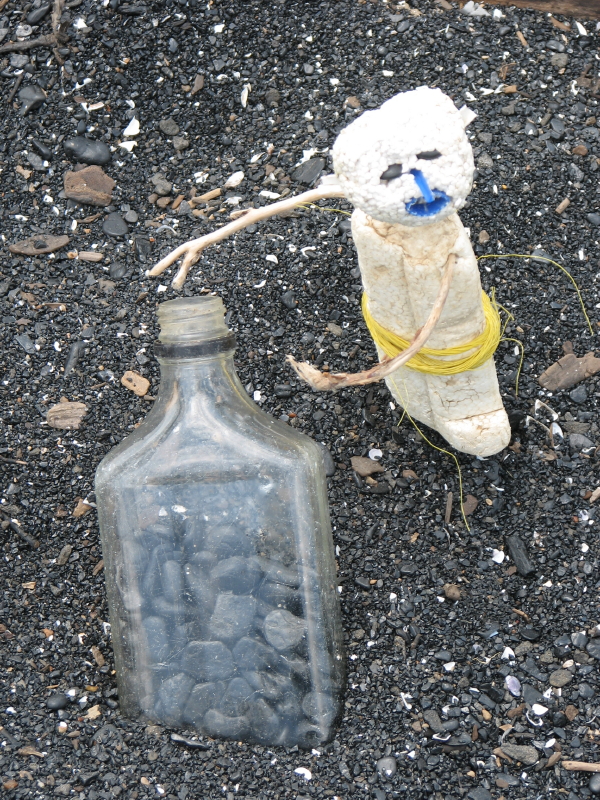
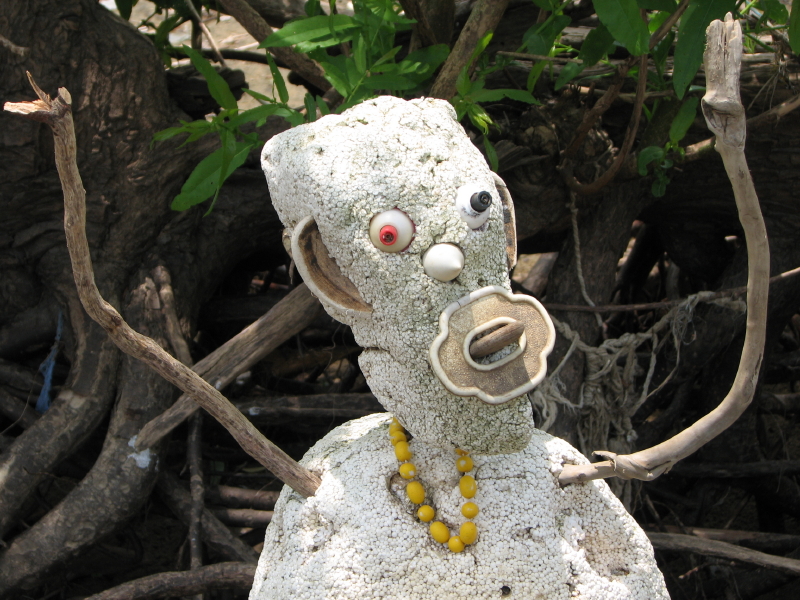
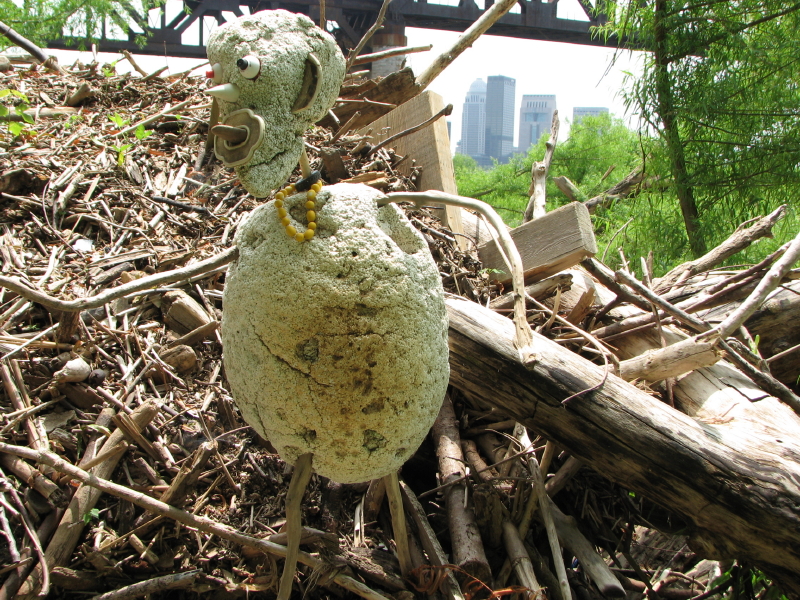
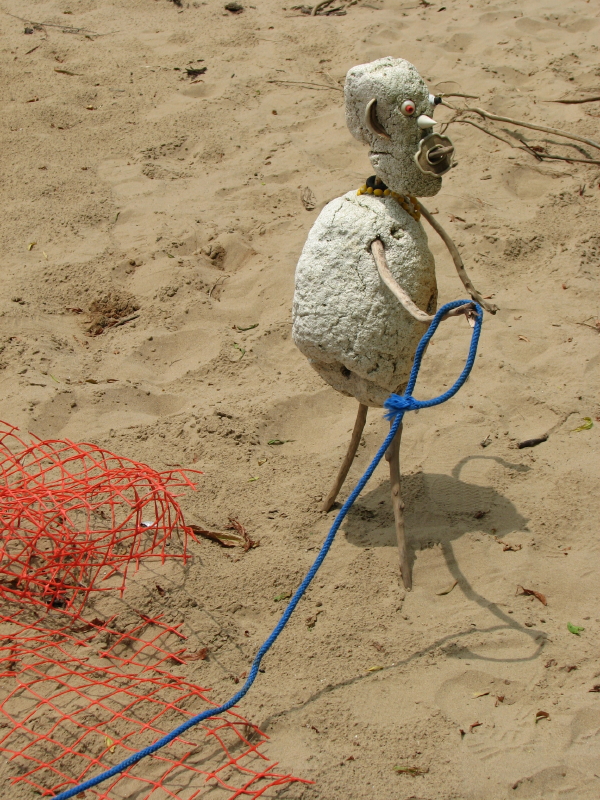
I created a little friend to keep me company and to help me with the day’s projects.  He’s made with Styrofoam, sticks, plastic, and a little bit of coal for his eyes.  I have used the coal that washes up here for as long as I have been doing this particular body of work which is approaching eight years now.  As a material, its relevance has always been appreciated by me.  Like the corals and brachiopods that have left their traces in the limestone at the Falls…these black rocks also speak of ancient life, but coal has a different and contemporary purpose that is won at great cost.  Walking along the eastern section of the park, I explored and gathered the coal I found interspersed among the sand and driftwood.  My little helper tagged along and soon we filled the hole in a second found tire.

I noticed after I selected this tire that it had once been painted white.  I have seen this before where people of thrift have used cast off tires for garden planters.  On this one, most of the paint has worn off and the river has given this tire a unique patina.  For the Little Man and myself, this would just be the beginning of our play with the found coal out here.

Among the other found objects I scavenge along the beach are empty pint bottles made from glass and plastic.  I like them when I find them with their labels soaked off by the river and their bottle caps in place.  A little more than a year a go I shared a river adventure with video artist Julia Oldham and we marked the day by putting notes and colorful fishing floats in other empty bottles.  I sometimes think of those bottles and wonder if anyone has ever found one of our notes?  In all my years here, I have never found a note in a bottle and by now I have looked at thousands of bottles.  Some of my friends at Living Lands and Waters report finding notes in bottles all the time and I’m guessing that this happens more along the Mississippi River than it does the Ohio River?  For me, finding a note in a bottle will happen when it’s supposed to…I just hope that it’s written content will be interesting!

You have just seen a few of the bottles I have filled with coal.  The white flecks you see mixed into the coal are bits and pieces of mostly zebra mussel shells which is another unwanted element in this river.  Filling these bottles with coal is meditative for me.  Usually, there is still a little bit of whiskey or alcohol in the bottom of these bottles that scents the coal inside its container.  Coal is such a complex subject in our region that it is enough to drive one to drink.  On one side it is a common and available form of energy, but the costs to the land, people, and larger environment are extreme.  Having visited the coal fields in eastern Kentucky, it is certainly plain that the people whose land and mountains have been mined out from under them haven’t benefited to the extent that you would think since poverty and despair are far too common.

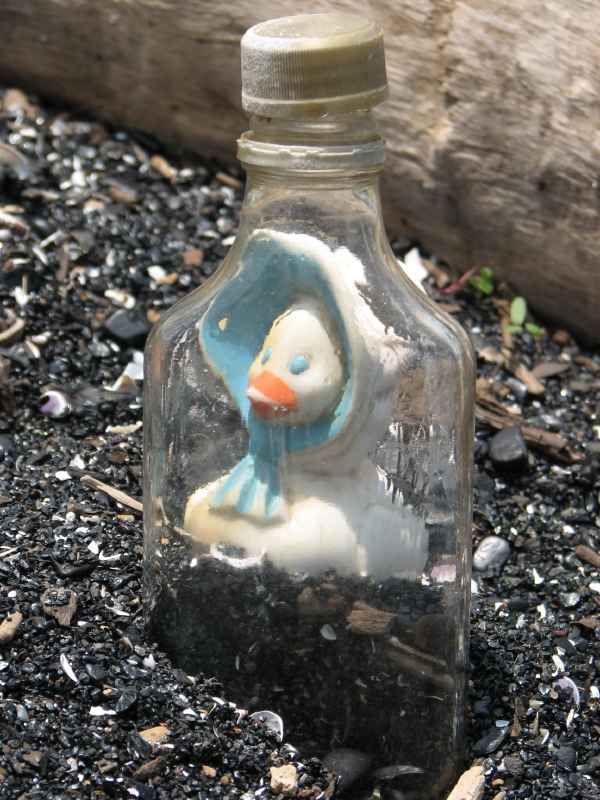
I’m going to continue to explore coal as a material and social issue with the help of some new friends.  I have been invited by a group of mostly younger Kentucky artists to participate in an exhibition to be held sometime in the near future.  A blog has been set up called Project Reclamation and if you would like to follow along…just click on the link on my Blog Roll on the right column. I will keep you posted.  To close, here is one other bottle or carbon storage image I photographed with a found rubber duck behind the transparent bottle.  I look forward to going back out to the Falls of the Ohio as soon as my ankle fully heals.

Read Full Post »

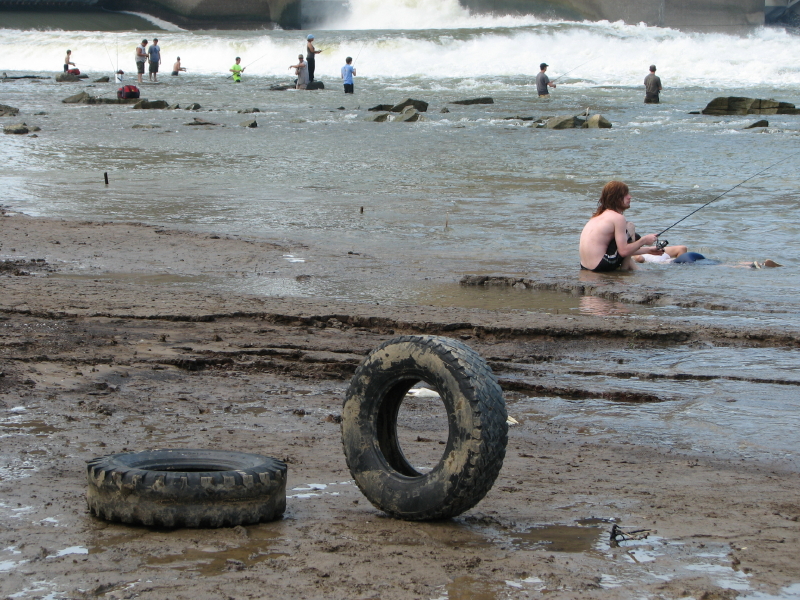
The fishing had been good and attracted both experienced and novice fisherman.  People were catching some of the smaller striped bass and the occasional catfish.  Summer has descended full-bore with its twins…heat and humidity and so a visit to the river is a welcome diversion for many.  The parking lots around the park are full.  To me, this is a mixed blessing.  You want those who can appreciate nature and the surrounding area to enjoy themselves, however, there is always that element present that can’t resist despoiling for their own selfish reasons.  Sometimes it seems that visitors leave as much trash here as the river does in its wildest moods.  Please pack your garbage out.  After checking out the fishermen, I head up the bank to locate my last project with its polystyrene figure.

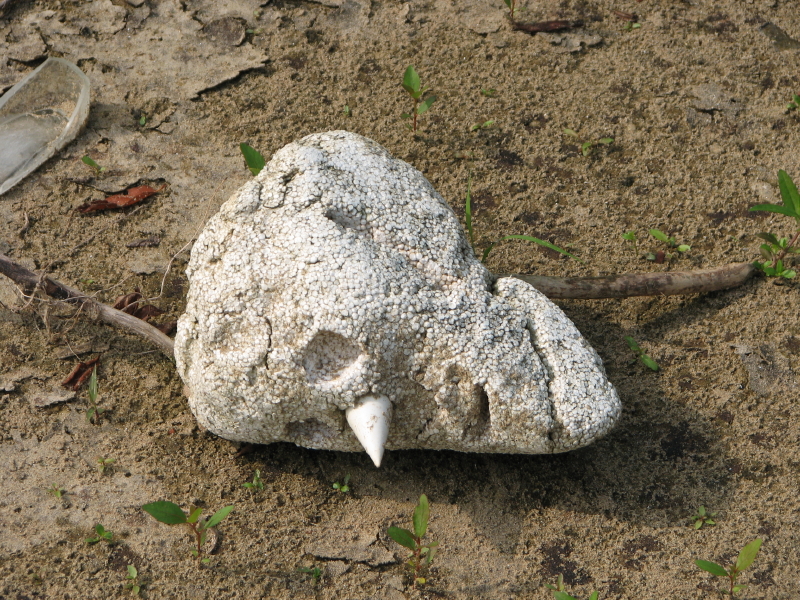
I’m not shocked at all to come across Joe Coalman’s eyeless skull resting in the hot sand.  To be honest, I would be more amazed to find him still intact.  My postmortem revealed that he had the stuffing knocked out of him.  I found his body about thirty yards from his head.  I take some photographs and gather the remains.  I’ll probably recycle him into another project in the future.  As for the tire with the coal in it…

…well, it too has been altered.  I can see how a standing Styrofoam figure would make a tempting target, but what about a tire filled with coal?  It must have provoked someone because the coal had been knocked out.  The black rocks were scattered all around.  I regathered them, but I could not find all the coal that was originally in the tire.  Curiously, if you look at the rim of the tire you will see something I had not originally placed there.  It’s a tiny white clam shell left perhaps by another visitor?  I appreciated this simple gesture and moved on.  Soon I reached my outdoor atelier with its latest cache of Styrofoam.  I laid Joe Coalman, skull and all back into the pile and wondered what to do next?

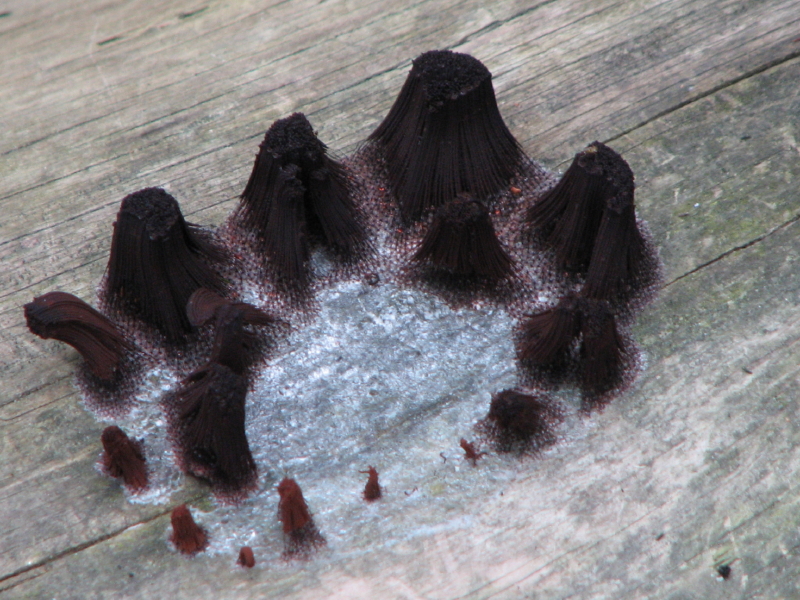
While sitting on the enormous wooden beam that defines one side of my outdoor studio, I spied something interesting on an equally impressive log.  Growing along the margins of an old bird dropping was this wonderful fungus.  At the Falls of the Ohio, there are many different types of fungi that help break down the organic bonanza that washes into here.  I wish I knew more about them, but realize that this is another entire field of study.  Nevertheless, fungi are of immense importance and help recycle nutrients among the many other useful services they perform.  With this particular fungus, it looked like it was on the downward cycle having already released its spores from the fruiting bodies that were now arranged like some organic version of Stonehenge.  After studying this curiosity for a few minutes, I settled into the familiar activity of creating a figure that would be the benchmark for the day.  Before revealing it to you…here are a couple of other things that I want to show you that I happened across during my walk.

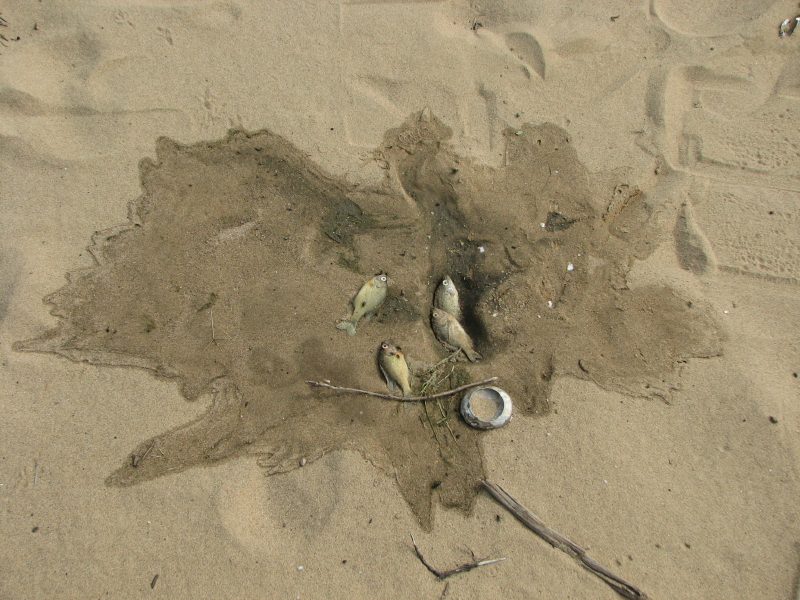
I’m always looking at the evidence and trying to figure out what occurred at a particular place?  Here a fisherman on his way back to the rest of his life has dumped out his bait bucket and left the four tiny bluegills in the sand.  Perhaps they were dead already since fish in a bucket die of oxygen loss without an aerator to cycle air back into the water?  I wondered if the use of these bluegills broke any laws since using other sport fish for bait is generally frowned upon?  I could imagine the size of the bucket from the wet area in the sand.  The silver circular object is the bottom of an aluminum can.  Near this scene, I also came across this discovery.

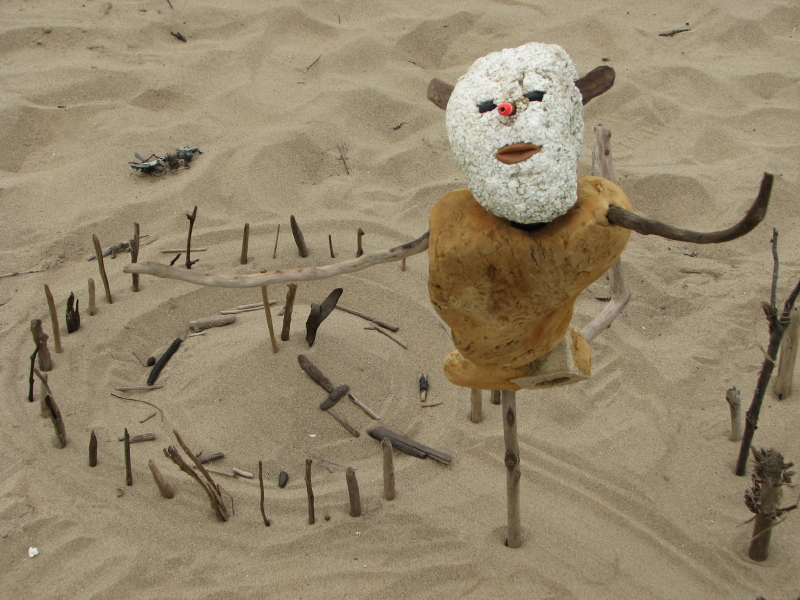
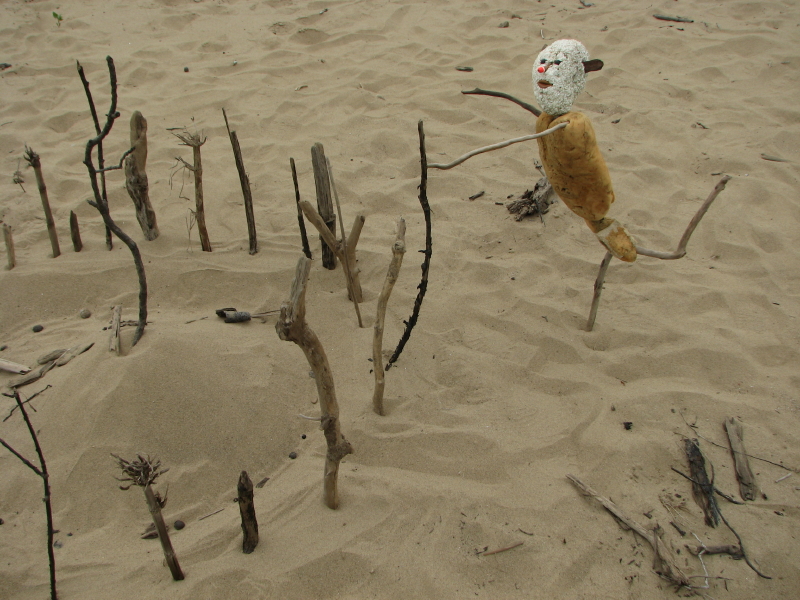
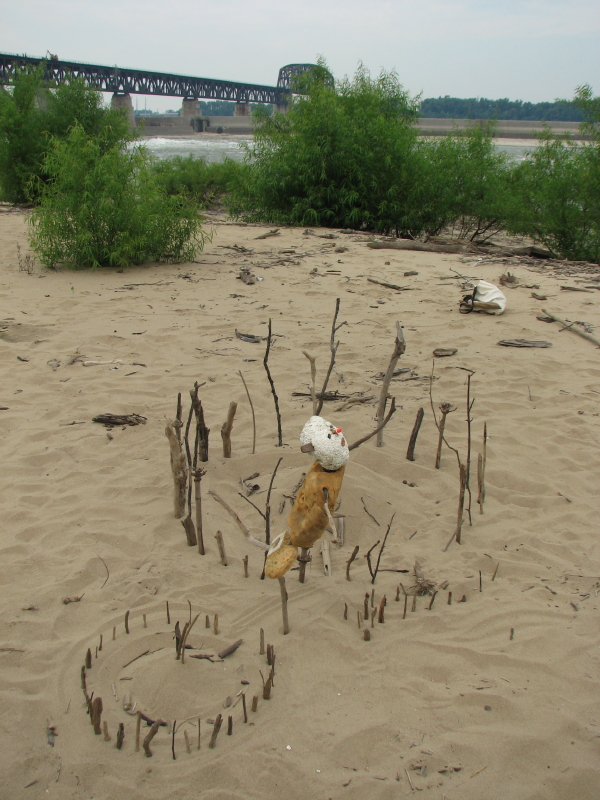
Less than a stone’s throw from the dead fish I found this arrangement in the sand.  I love it when people opt to leave their mark on the land in this fashion.  Present were two complete circles in the sand defined by upright sticks with mounded sand in their centers.  In my mind, I imagined two gears or cogs moving in response to each other.  The movement of the sun provided some of the energy needed to activate this metaphorical machine.  I decided that this place was a good site to unveil my latest figure which implies movement too.  I let it dance throughout this arrangement in the sand.

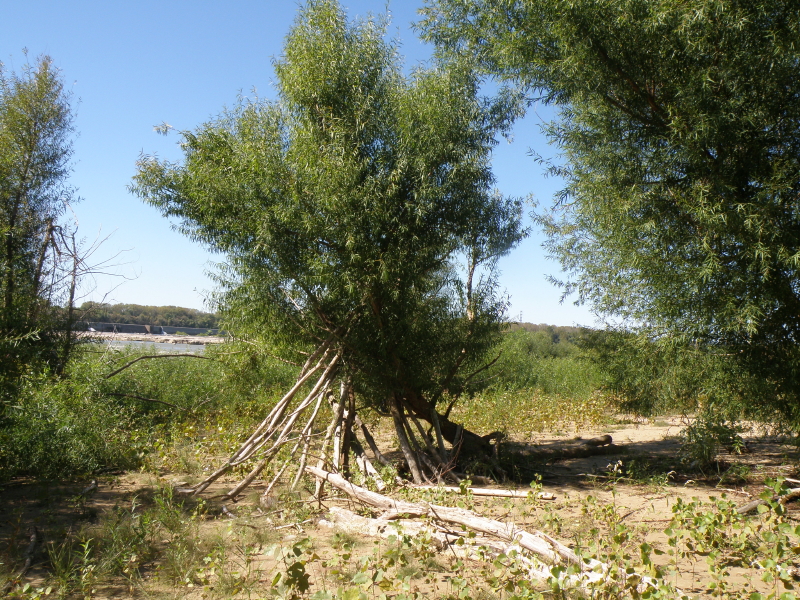
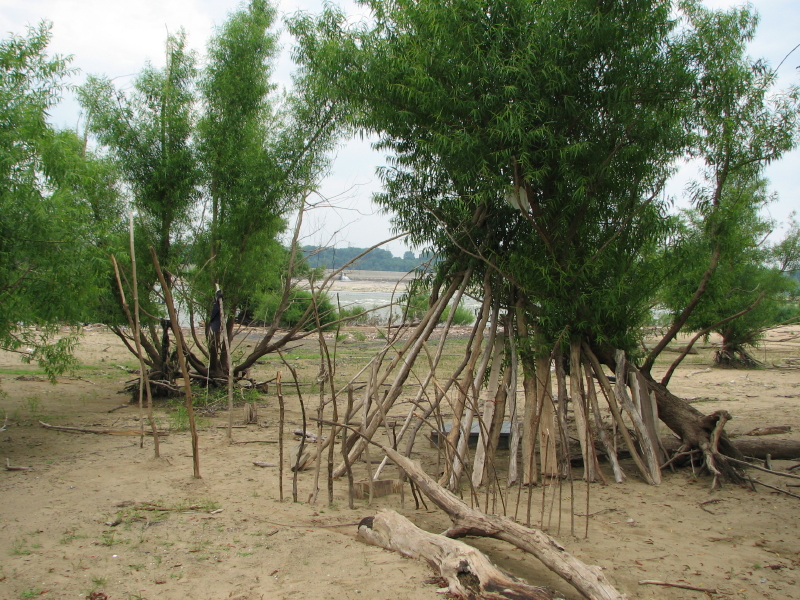
Maybe this was originally made by a child while his family fished?  It doesn’t matter because it gave me something positive to react with and made my day.  Feeling satisfied, I started back to my own vehicle, but there would be one more surprise on this day.  Perhaps this was also made by the same folks who did the circles in the sand?  Again, sticks were employed albeit much longer in length.  See for yourselves.

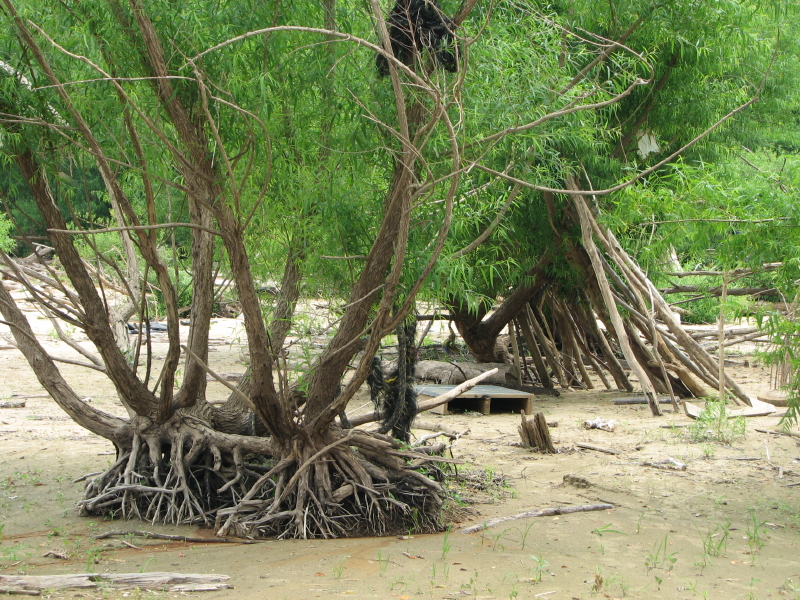
Logs and long branches were leaned against a willow tree and the effect implied shelter to me.  Other long sticks were placed upright into the sand and helped define the area.  A wooden palette was dragged to this location and left to provide seating.  Because the materials used are all local, it would be very easy to walk by this if you weren’t paying attention.  That’s one of the things my Styrofoam figures have working against them…their stark whiteness usually gives them away even at some distance.  But then again, for me that’s part of what I do which is to call attention to the stuff that doesn’t belong out here and through a little creativity, show what can be done.  I appreciate the stick pieces because they only use the natural materials that are out here.  I wish I could do this more often myself, but this isn’t the reality I usually discover out here.  Leaving the area, I came by this wonderful flower and in its center…was this tiny bee carrying on as her kind has for as long as there have been flowers in need of pollination.  Until next time.

Read Full Post »

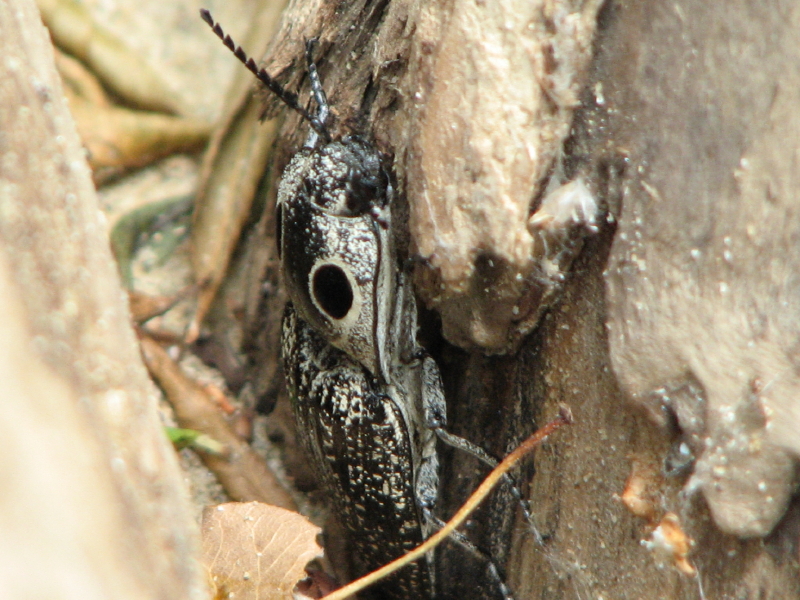
I threw my arms up into the air and said “WHAAAAA”!  I had been resting in the shade after a couple of hours of junk scavenging when I heard this low vibrating sound and the bump of something landing on my head.  Reflexively, I knocked off whatever was on my noggin and it fell to the ground…and this is what I saw.

This is the Eastern Eyed Click Beetle or Big Eyed Click Beetle, (Alaus oculatus).  It’s one of my favorite indigenous beetles and one I’ve seen at the Falls of the Ohio on numerous occasions.  As beetles go, this one is on the large side approaching two inches or about five centimeters in length.  Getting smacked in the head by one certainly surprised me, but it turned out to be a good one.  I love the cryptic bird dropping coloring and those two large eye spots get your attention!  After the beetle recovered its senses, it flew and landed on a dead tree trunk right behind where I was sitting.  It turned and started walking down the tree towards the ground.
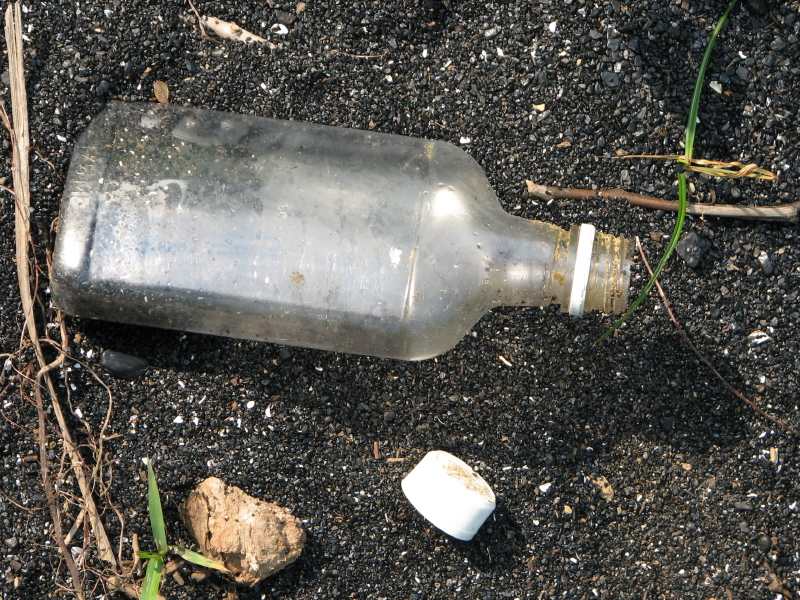
I watched as the beetle lowered the tip of its abdomen at the base of this dead tree.  I’m hoping it might be laying an egg or two.  When it was done, it walked back up the tree trunk before flying off for the next tree or head that catches its fancy.

I was rummaging around one of the driftwood mounds for whatever secrets it was carrying and to separate out materials for the river sweep clean up.  Nearby, was the beginnings of another garbage pile that someone else had started.  I decided to throw my junk into this lot to consolidate it and make the removal just a bit easier.

It was the usual lot.  A few plastic 55 gallon drums, a bit of hurricane fencing, tires, and a palette or two were among the larger items that were deposited here by the last flood.

Of course how these things came to be in the river is another story.  It’s amazing what our kind can tolerate and consider acceptable.  I suppose this represents the collateral damage we are willing to endure to support our ultra consumptive way of life.  It makes me want to retch! I think this partly explains why so much of this trash is colorful.  If we have to look at it…it might as well be pretty.  When I finished up in this area I moved on like the click beetle did to new surroundings.  There is no shortage of trash out here.  After this Spring’s floods there is also an abundance of coal gravel and coal chunks in the eastern section of the park.  Here’s an example.
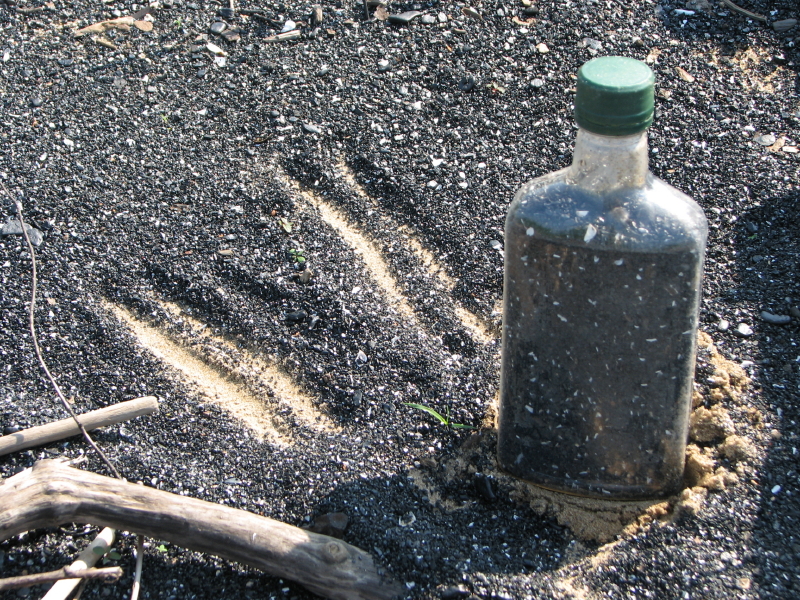
The Falls of the Ohio is famous for its fossils, but this black rock wasn’t originally a part of the geologic scene here.  More than likely, this piece of coal was removed from the top of a mountain in Eastern Kentucky and shipped by barge to this area to be burned in a plant to produce electricity.  For some reason, this and many other pieces of coal got into the river where they were tumbled and ground to bits.  In case you were wondering…coal does not float.

In places the coal gravel was several inches thick and reminded me of the black beaches made of volcanic sand.  Also interspersed on this river bank were many automotive tires.  I couldn’t help but associate the coal with the tires and I began to combine both of these elements in this landscape.  Here’s a picture of me in action.

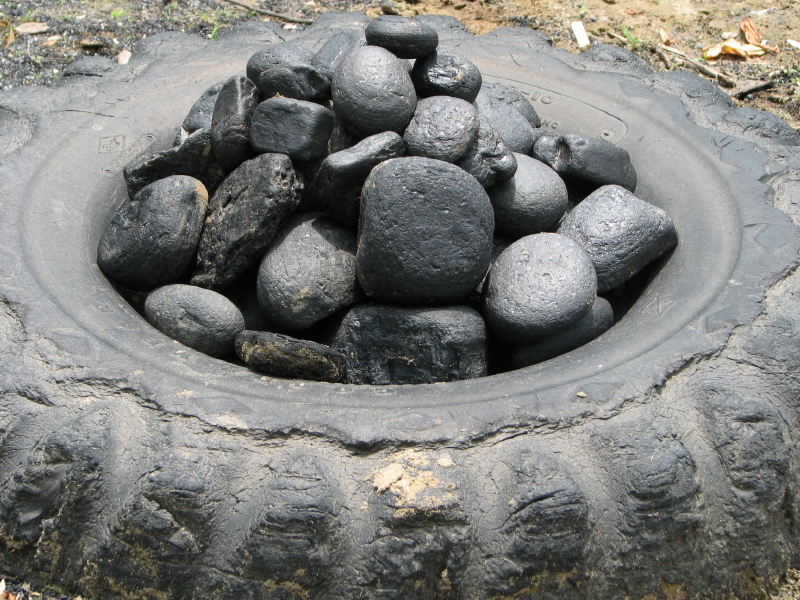
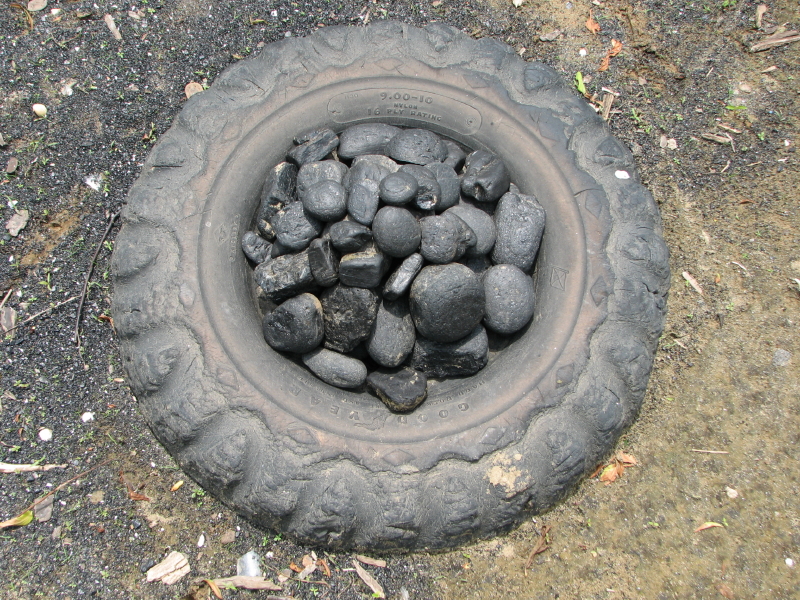
Walking around in this area, I found enough large coal pieces to fill a tire.  Doing this was highly addictive for me.  Here I was picking up real chunks of fossil fuel to place inside a circle that itself is made from fossil fuels in an area that’s well-known for its Devonian Age fossils.  How all these things affect or reference life made my head swim more than the actual heat and humidity.  When I finished filling one tire…this is how it looked.

And now, for an aerial view.

To me, this looks like some kind of unusual and bizarre fire pit ready to go.  Scientists have already established that “burning rubber” and coal are contributing to the excess amounts of heat, energy, and toxins now found throughout many of the Earth’s systems.  In Kentucky, the coal debate is a complex one.  We have an abundance of coal, but it comes at a dear price to the land and the people who call the coal fields home.  The sun is getting hot and I have already had a busy day watching fishermen and making sand drawings!  For now, I will have to leave the coal debate where it is, but I’m sure to return to it since there is so much coal here at the Falls.  It will remain here until the forces that shape this planet decide otherwise.

Read Full Post »

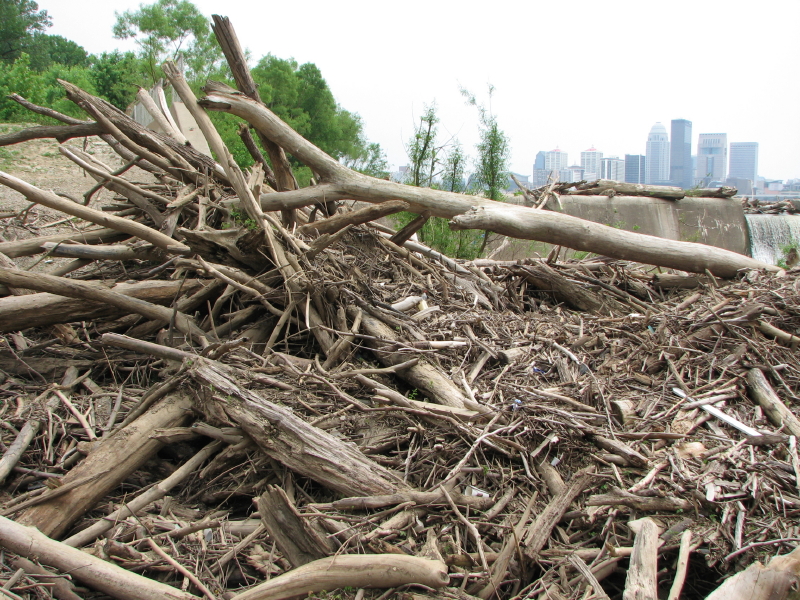
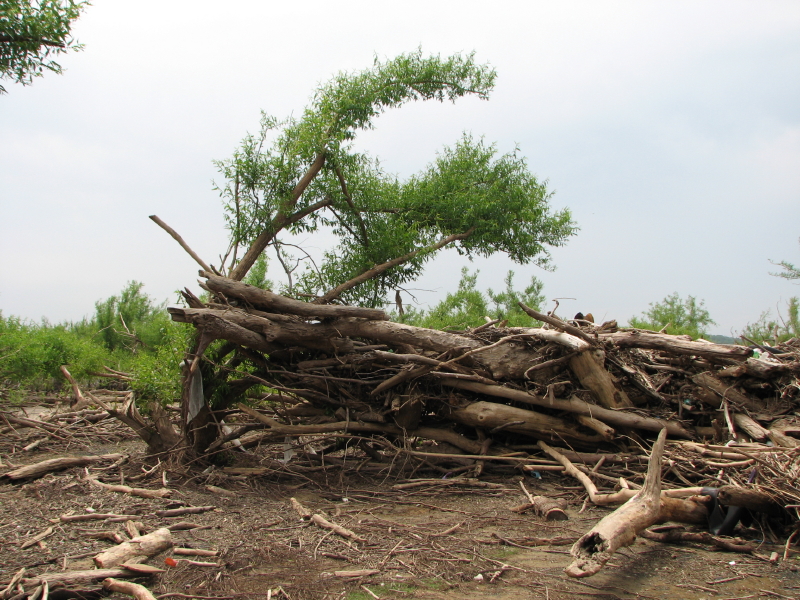
June began all bare bones in the aftermath of our minor flooding and now at month’s end it passes overgrown with vines.  Near the tainter gates, a massive raft of driftwood lies intertwined with the landscape.  We haven’t seen such a wooden mound in many years.  June had some odd and compelling images and here are a few more before we turn the page.

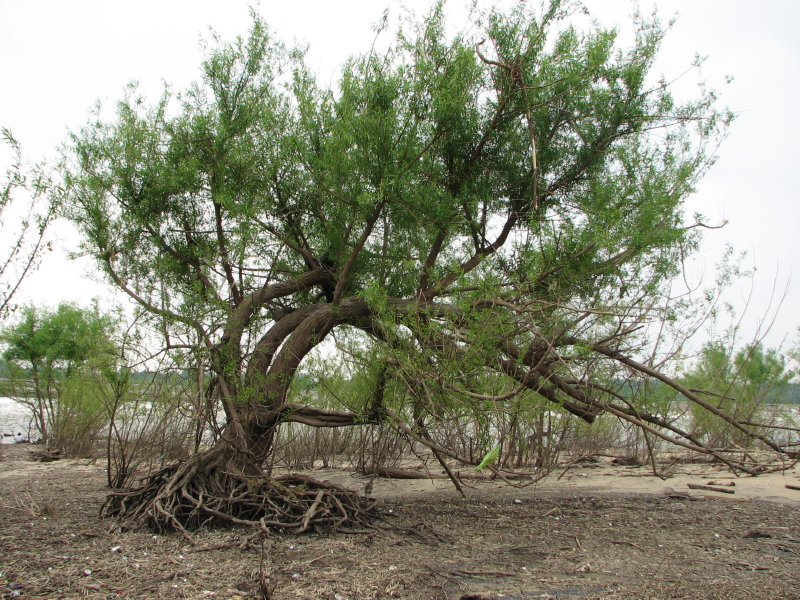
The willow trees are the heroes here tenaciously clinging to the sand and clay.  This taunts the Ohio River which sends high water and a battering ram of floating logs their way every once in a while.

Willow wood is flexible and the sustained high water’s flow is echoed in the shape of these trees.  I imagine the river as an artist shaping its garden at the Falls of the Ohio.  There’s a bit of that bonsai- look if you can get past the larger scale.

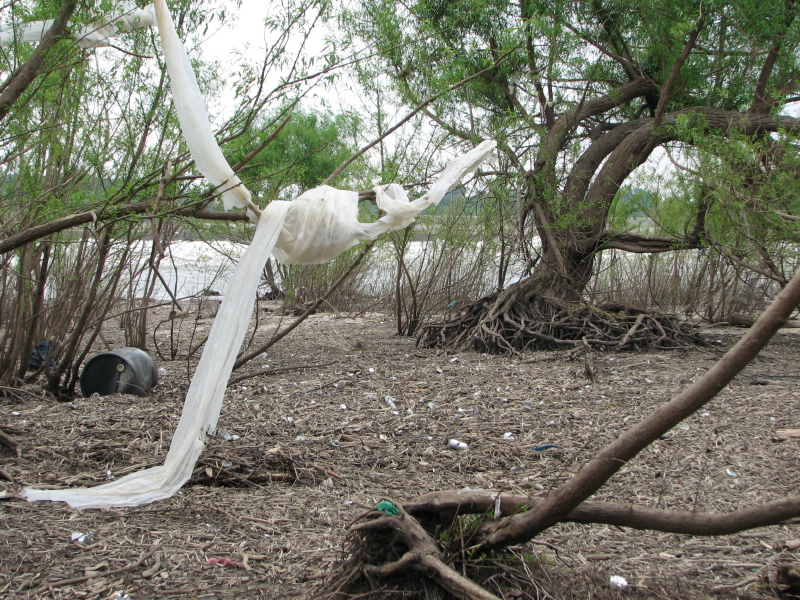
The willows’ branches do their part in snagging some of the flotsam and jetsam floating loosely in the retreating waters.  Branches become decorated with plastic bags, fraying barge cables, driftwood, the occasional dead deer, refrigerators, fishing line, and whatever is present in the Ohio River.

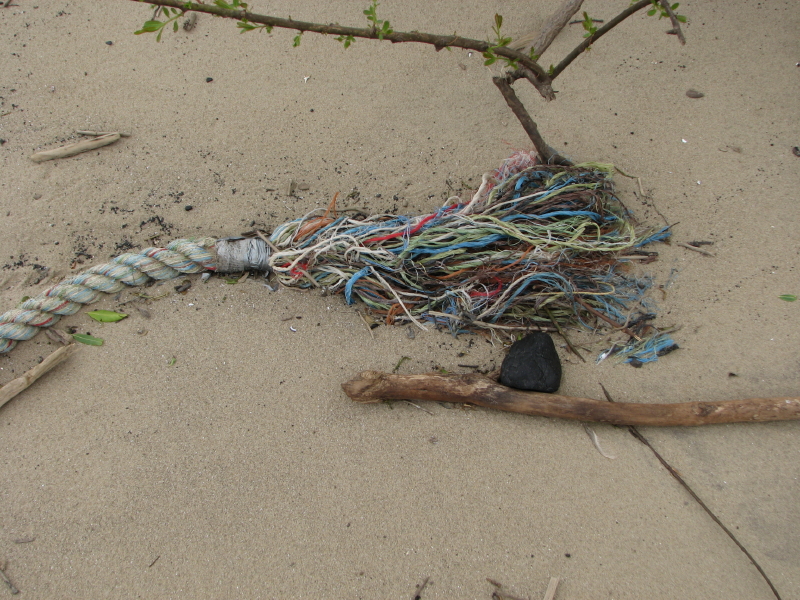
Here plastic sheeting has been caught and stretched some length across these trees.  It looked like something some installation artist might attempt.  I also came across a “nylon crinoid”…in actuality, an unraveling barge cable that made me think of the extinct sea lilies of ancient oceans and in fossils which are pages in the book of life.

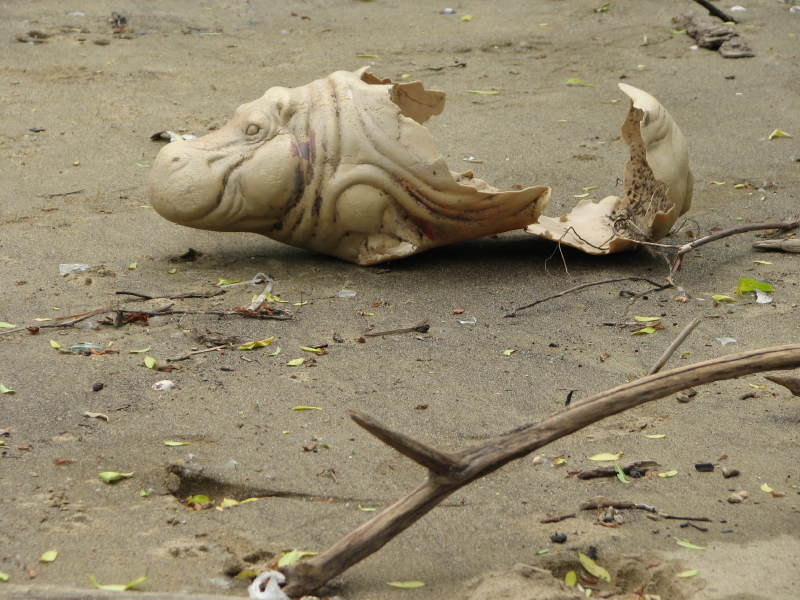
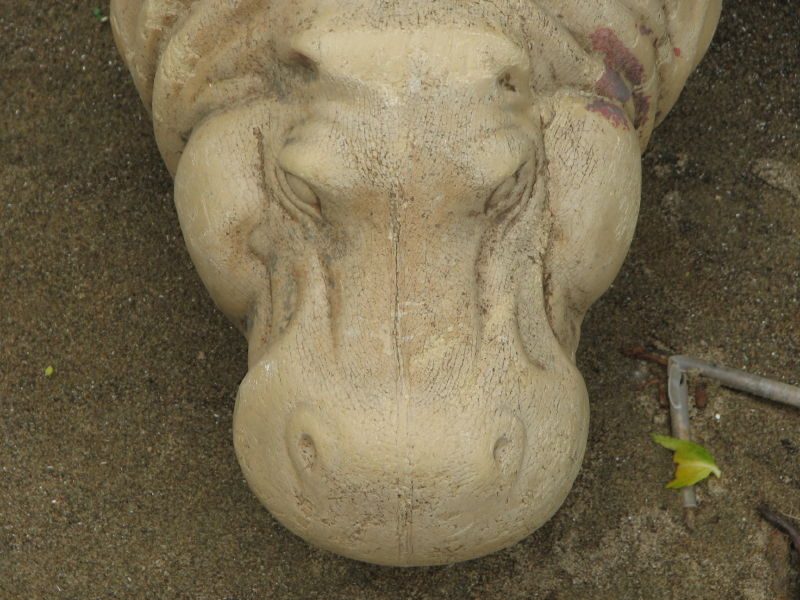
Walking across the sand I came across this unusual view which gave me the idea for the title of this post.  Very nonchalantly, this mostly destroyed hippopotamus was standing its ground.  I’ve read somewhere in a book that the name “hippopotamus” means “river horse” in some African language?

Another view, but this one from the top.

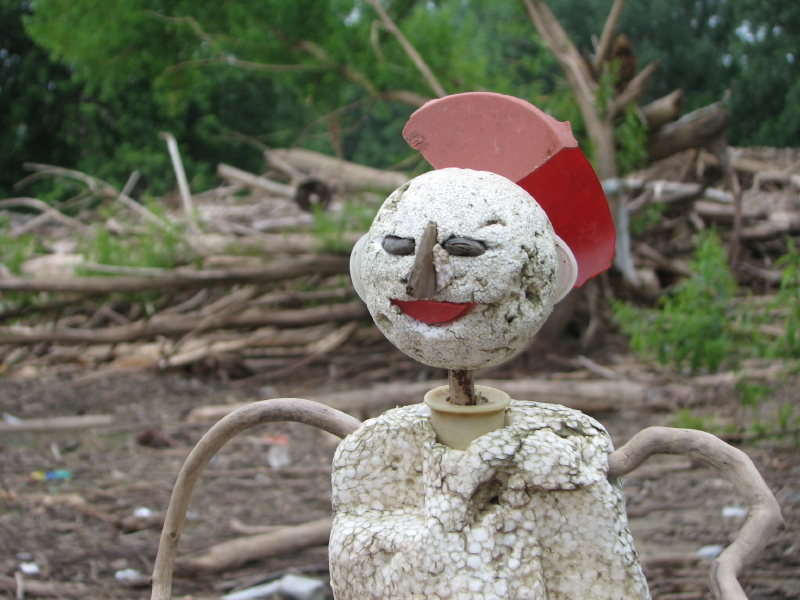
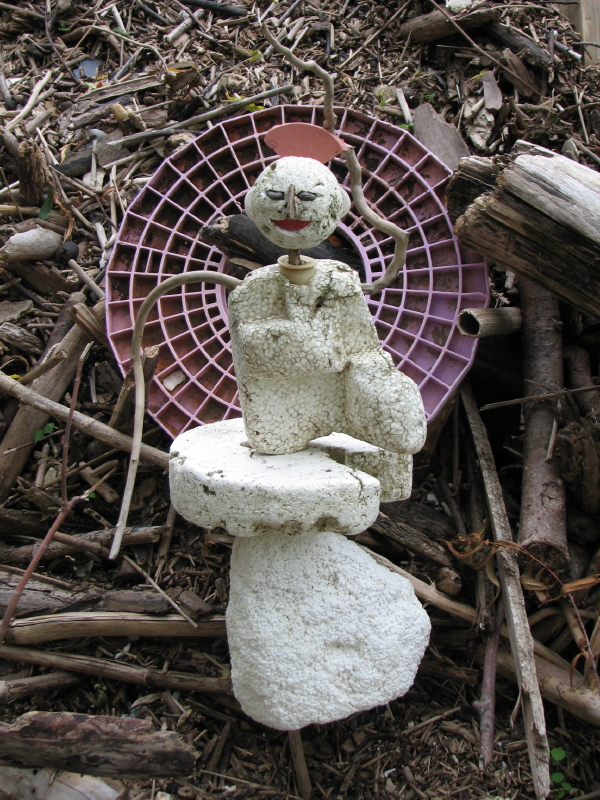
I made another Styrofoam figure on this day.  I imagine this as being a figure of some exotic Spanish dancer with fancy combs in her hair.  I won’t say this is the best figure I’ve ever made, but it’s also not the worst.  It just happens to be how things turned out when I picked this group of materials and objects to make something with at that particular moment.

Now for a full length view.  That pink radiating thing is made of plastic and helps to add other visual interest.

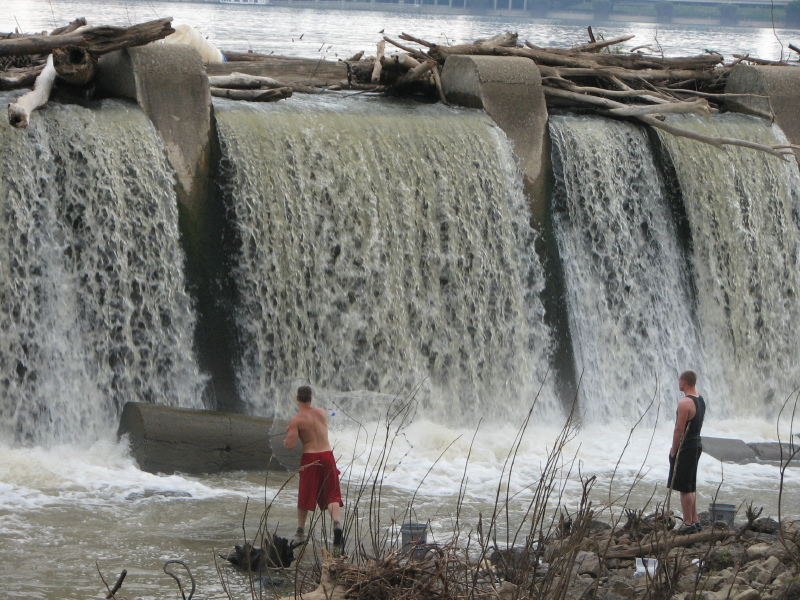
Before leaving for home on this day.  I watched a couple of guys using a throw net to catch shad to use for fishing bait.  I couldn’t help but see them in the context of the Ohio River which was so many more feet above their heads.  Here we are at the bottom of the valley.

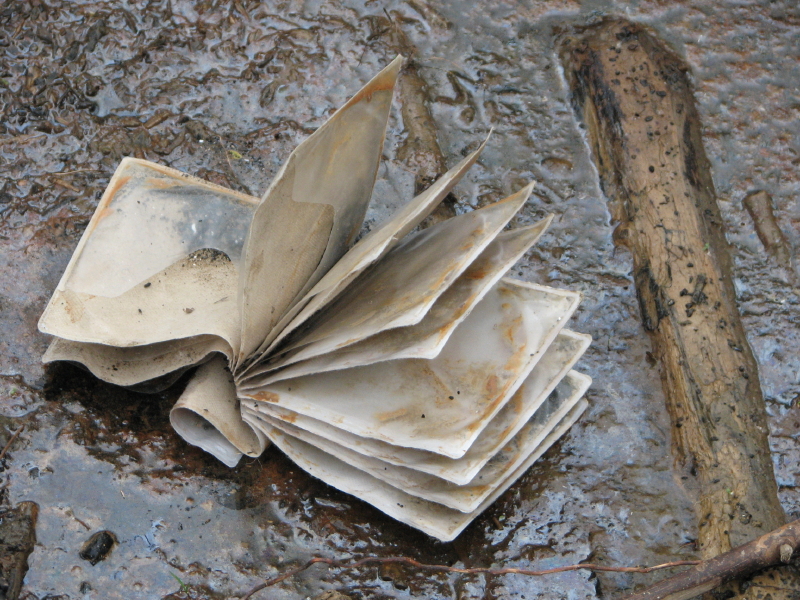
Since I’ve used the book metaphor a few times in this post…it’s fitting that I end with this picture taken on this day.  It’s really a small plastic photo album whose transparent sleeves were full of coal gravel and water.  Until next time…


Read Full Post »

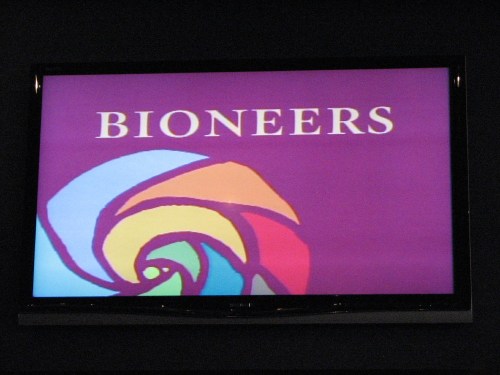
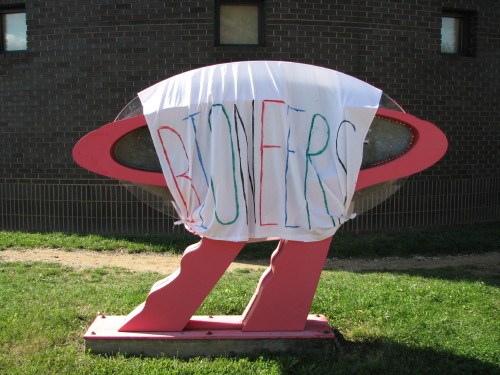
Bioneer sign, 10/09

The live satellite feed from California of the national Bioneers conference was projected onto the domed ceiling of the University of Louisville’s Rauch Planetarium.  A nice cheer and applause followed the mention of the City of Louisville as being one of the participating cities in the 20th anniversary of this event.  Bioneers are people who are social and scientific innovators engaged in the tough challenges that affect us as a result of our rough treatment of the very Earth that sustains us.  I was honored to be asked to participate in the Bluegrass Bioneers which was a three day connection to the national event.

Rauch Planetarium, 10/09

The Bluegrass Bioneers are people who are truly trying to make a difference globally by acting locally.  Several of the Kentucky sessions revolved around the issues of coal and the consequences that result to people and planet from relying on this fossil fuel.  Sustainability and wise land use were frequent themes among the dozens of presentations that were given by experts in their fields.  There was a creative mix of round table discussions, films and documentaries, lectures, music and more that kept things lively and interesting.  Despite the daunting environmental challenges that face all of us, there was an upbeat and optimistic attitude around this event as people networked and strategize on what to do next.

My art at Bioneers event, 10/09

Partly as a result of this blog, I was asked to show a few of my artworks and give a talk about my Falls of the Ohio Project.  Here’s an image of my absurd works in the planetarium that were temporarily relieved of their duty of insulating my basement.  I gave a PowerPoint presentation showing my art in its river context and was really surprised when 25 people showed up on a beautiful Sunday morning to check it out. According to my son Michael,  I probably had a few slides I could have done without, but each time I give this show it will get a little better as a presentation.  With hope, maybe a few people sitting in the audience might think to engage the world using their own innate creativity.  Of the sessions I watched, the plenary talk given by artist Lily Yeh was the most inspiring.  Her projects in Philadelphia and Rwanda demonstrate in the most positive way the transformative power of art.

Bioneer sign, 10/09

I would like to thank Ben Evans for inviting me, “Crow Holister” for the recommendation, and the University of Louisville, Rauch Planetarium, and the University of Louisville Center for Environmental Education for helping to organize and host this event.  I enjoyed the opportunity to share what I do and to make new friends!

Read Full Post »

« Newer Posts