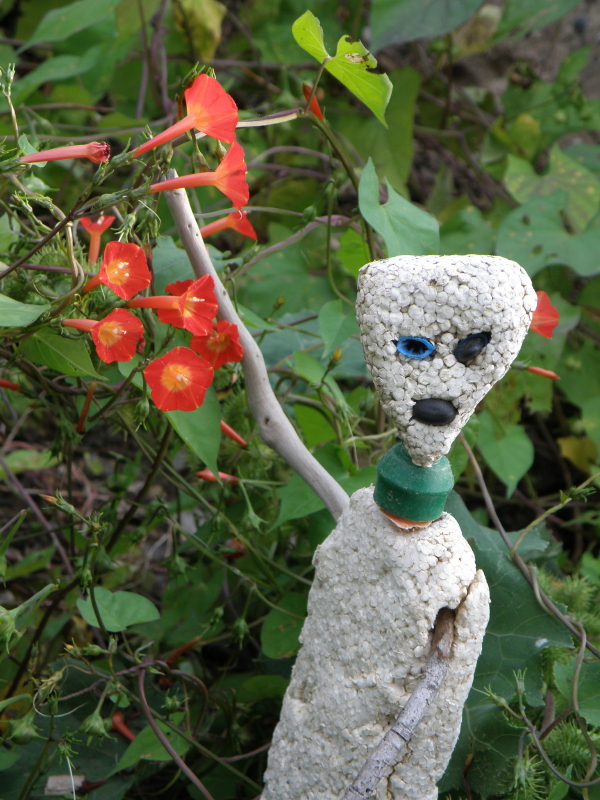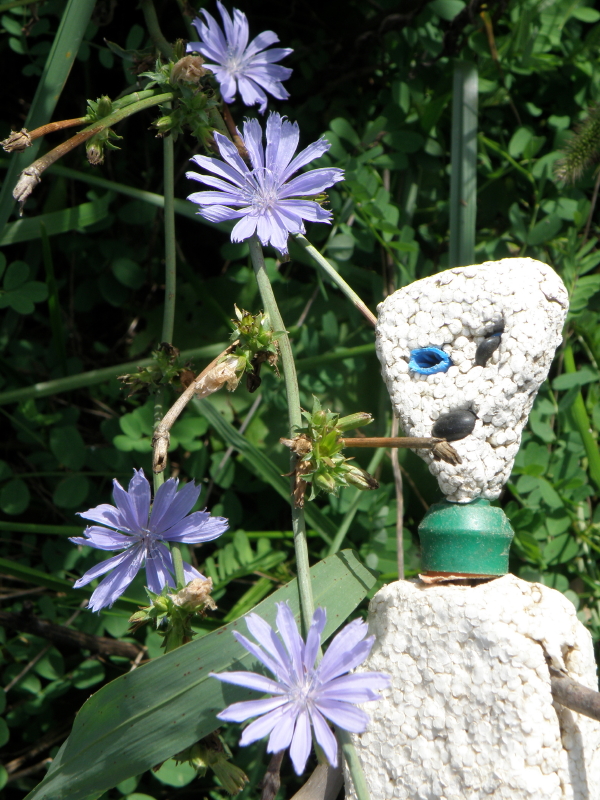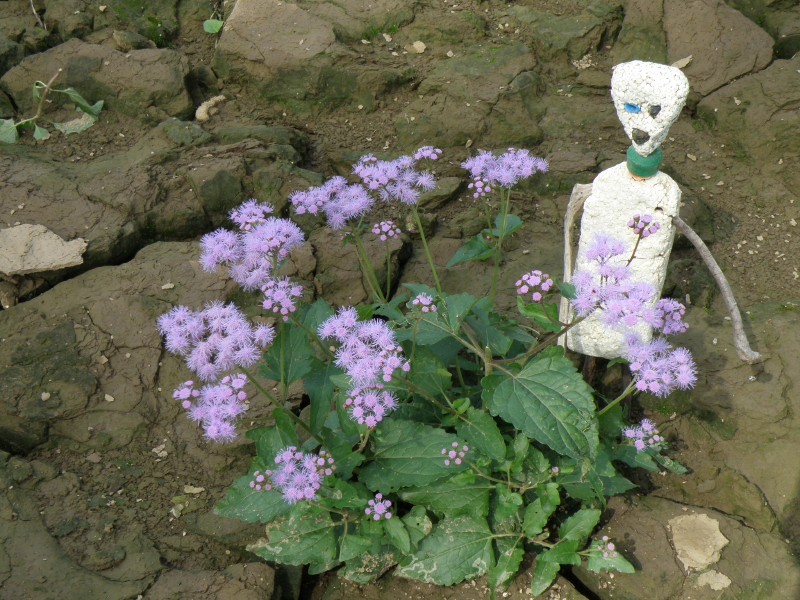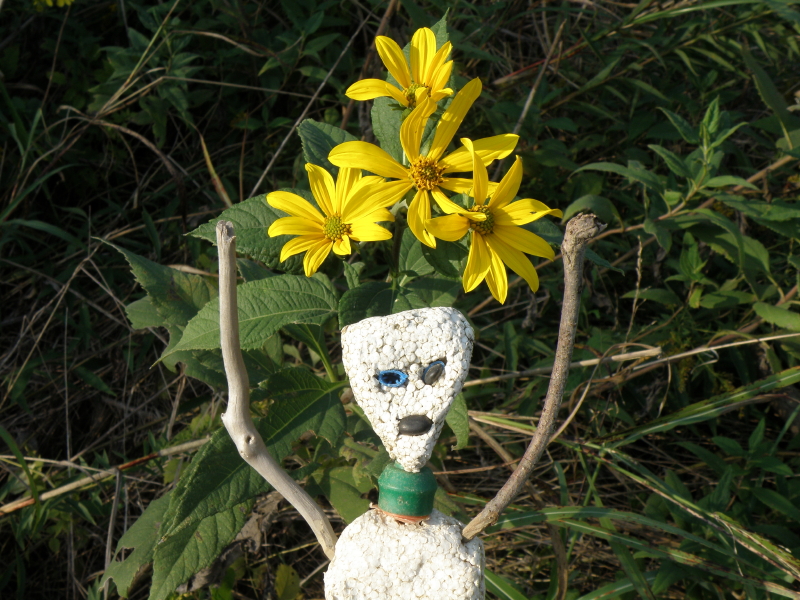
Feeds:
Posts
Comments

Posts Tagged ‘Art’

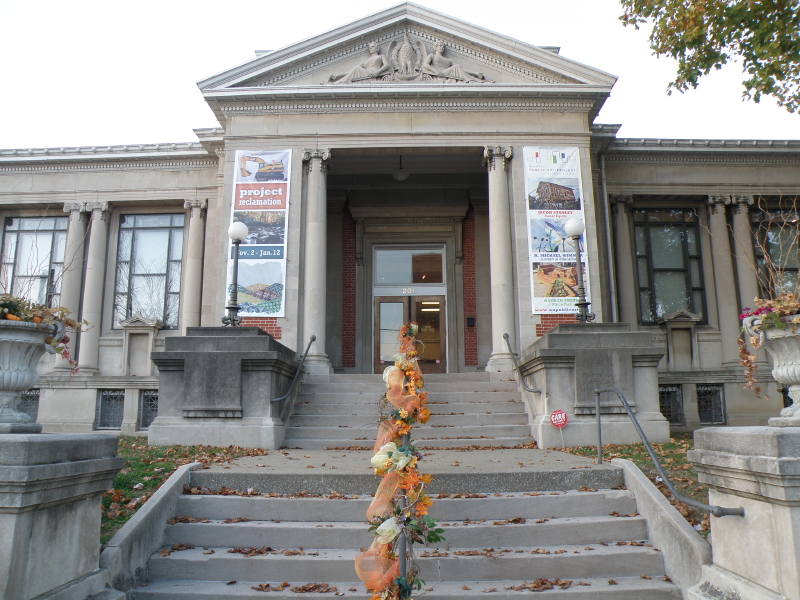
I have had a few folks ask about the Project Reclamation exhibit I’m participating in and I thought this post would be a good place to feature this.  The exhibit opened a couple of weeks a go on November 2, 2012 and will run through January 12, 2013.  About a year and a half have passed since curator and artist Mary Margaret Sparks asked me to participate in this invitational exhibit.  There are thirteen artists represented in this group show with a nice cross-section of projects in various media addressing the complex topic of coal its use and extraction.  The Carnegie Center for Art and History located across the Ohio River from Louisville in nearby New Albany, Indiana has done a fine job of installing and interpreting the works and has planned many activities that the public can engage in to learn more about the controversial topic of coal mining through the practice of Mountaintop Removal or MTR.  This is a highly destructive way to extract coal from southern Appalachia’s mountains which also endangers  some of the greatest biodiversity in our part of the world in pursuit of cheap and reliable energy.  To further spur the artists along, the not for profit organization Kentuckians For the Commonwealth invited the participants to Whitesburg in Letcher County, Kentucky to tour Appalshop and watch a few coal-themed documentaries.  A guided tour into coal country provided additional impressions of the mountains and the folks who call this place home.
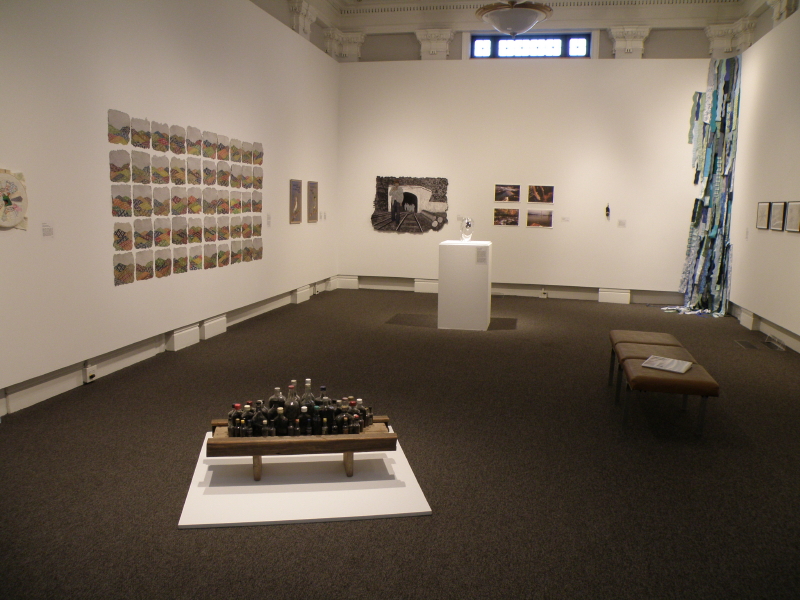
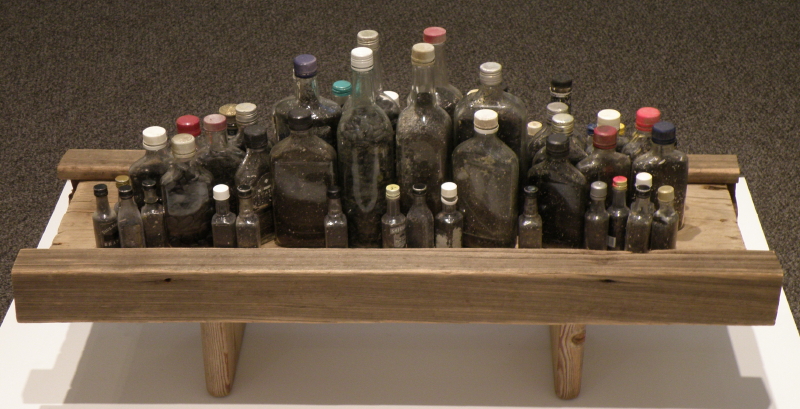
All of the participating artists had some prior interest either working with coal as a social issue or material substance before accepting the invitation to show.  There is a unity in the belief that the more we degrade the environment, the more we change ourselves and not for the best. For me, my entry came through the related issue of clean fresh water  which is also our number one vanishing resource.  I frequently find river-altered coal at the Falls of the Ohio State Park.  Combining this coal gravel with discarded and river found booze bottles gave me an opportunity to work with ideas about consumption and addiction.  The result was my “Mountaintop Mini-bar” sculpture, but I also have six photographs from my “Coal Flake Series” on view as well. My impression of our guided trip to coal country reinforced what I’ve previously seen and experienced.  It seems to me that the people who were sacrificing their land and culture were not receiving much in the way of compensation for our quest for coal.  Regrettably, this is an old tale seen time after time across the globe.  People might think that this is something that only happens in distant poor countries, but we have our own share of material poverty in our own backyard.
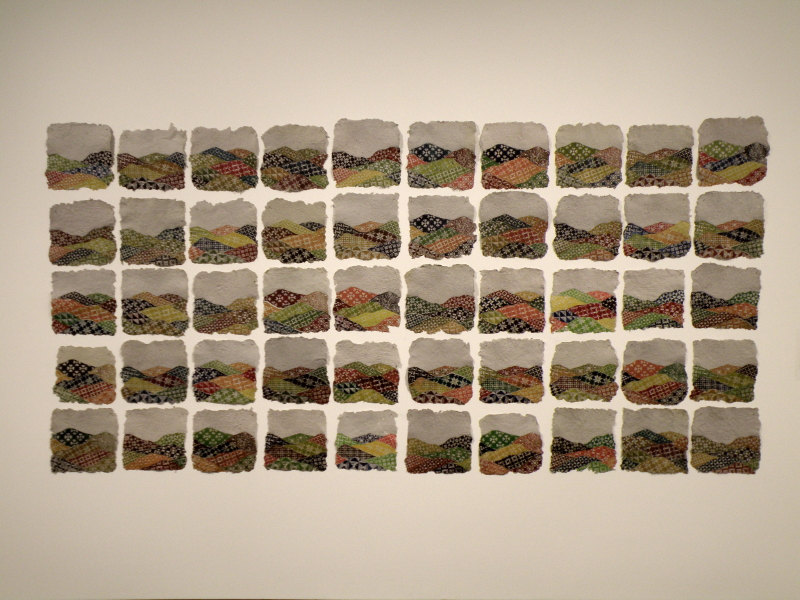
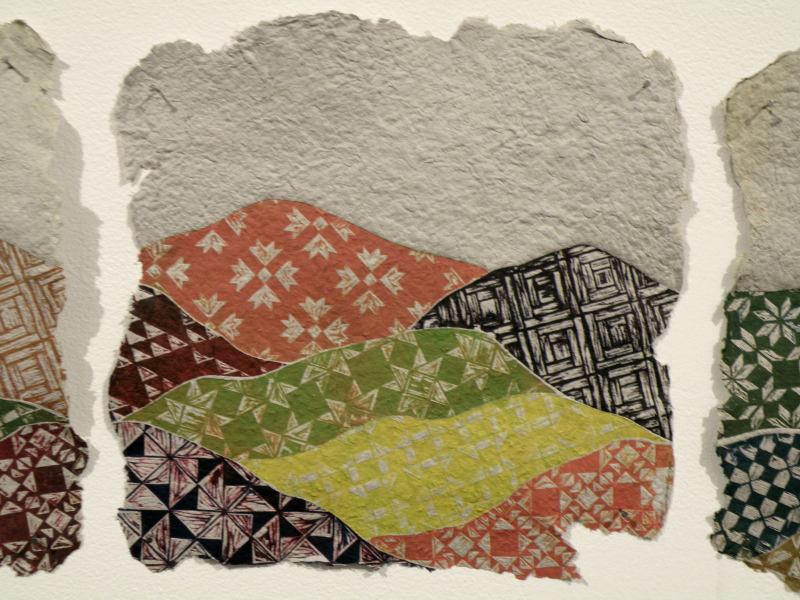
Most of the participating artists took considered approaches that referenced and respected the uniquely rich culture of coal country.  Several artists worked with traditional fiber and or needle and thread to produce their statements.  Julie Yoder created a large wall installation, “Appalachian Patchwork”,  assembled with woodcuts on handmade paper.  Patchwork quilting is an important Appalachian art form and Yoder’s piece represents the landscape and local culture as being a composite of unique designs that have come together over time to form a whole.  Mountaintop removal has a way of fragmenting this landscape and disrupting the continuity that life here depends upon for survival.
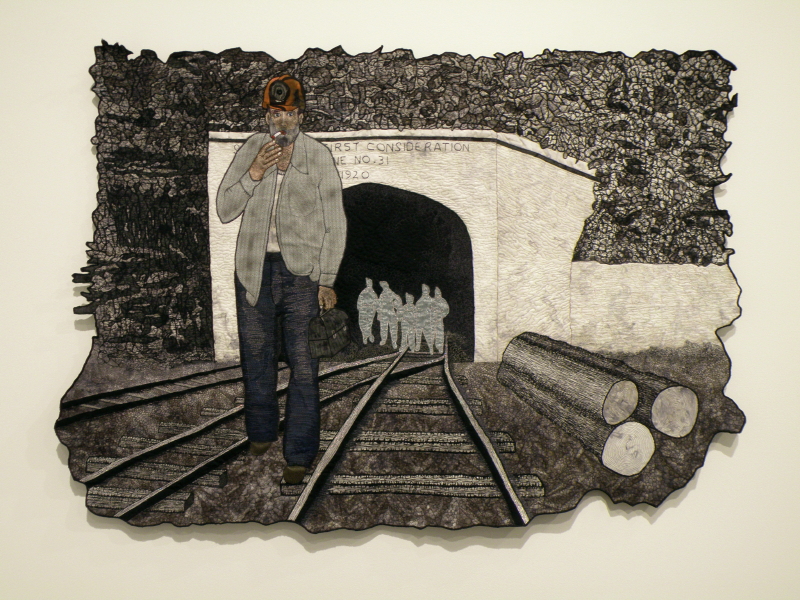
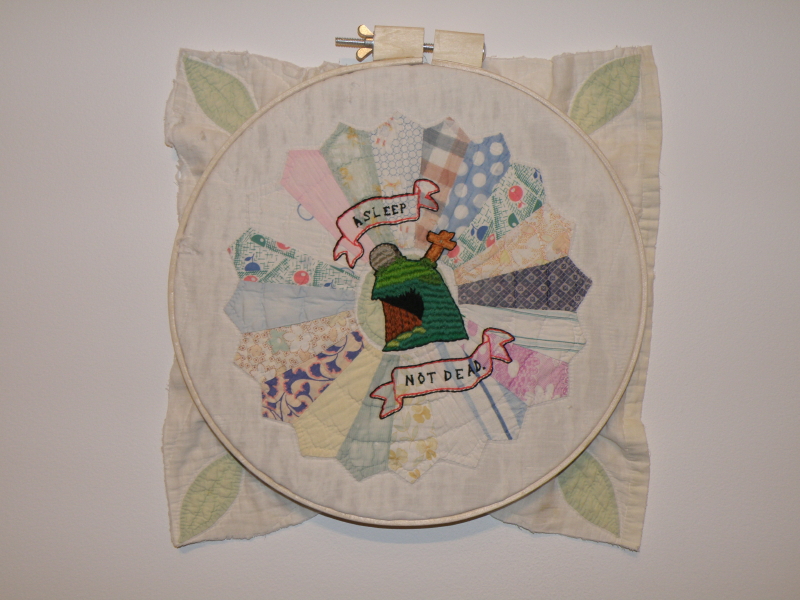
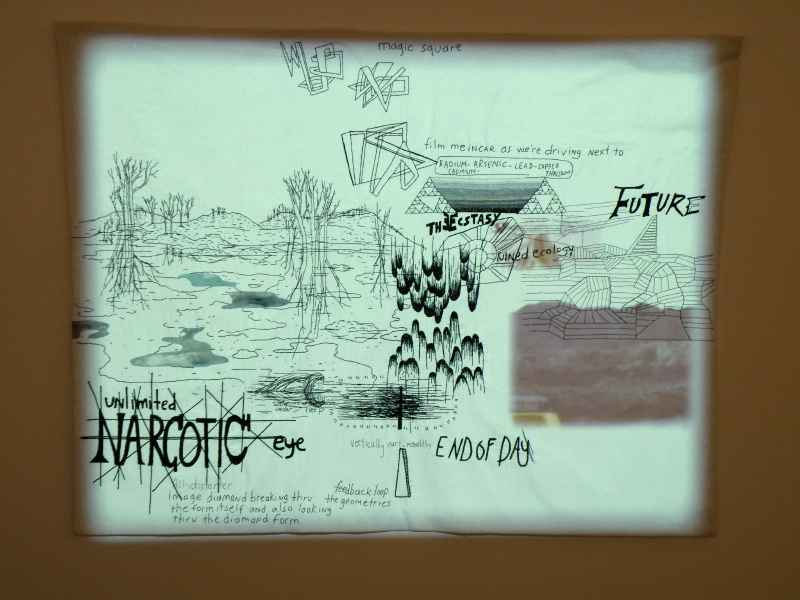
Other artists utilizing fabric, needle, and thread include Jo Ann Grimes with her sympathetic portrayals of miners.  Joel Darland and his marvelous hand-embroidered quilt squares.  Rachel Brewer’s two embroideries of song birds on dirty furnace filters.  Mary Margaret Sparks’ imposing “Lest We Forget” hand-embroidered and sewn re-purposed fabric waterfall that is a memorial to lost mountain streams and creeks that were damaged by coal mining.  Also in this group is a fascinating video entitled “Harriman” which is the work of Denise Burge and incorporates video, fabric, and thread.  Burge’s video is a statement made in the aftermath of a disaster.  A broken coal slurry dam in Tennessee had poisoned the surrounding watershed and imperiled the health of a community living in the area.  Burge’s video documents some of the clean-up involved and how protective the coal industry is in guarding its own image.
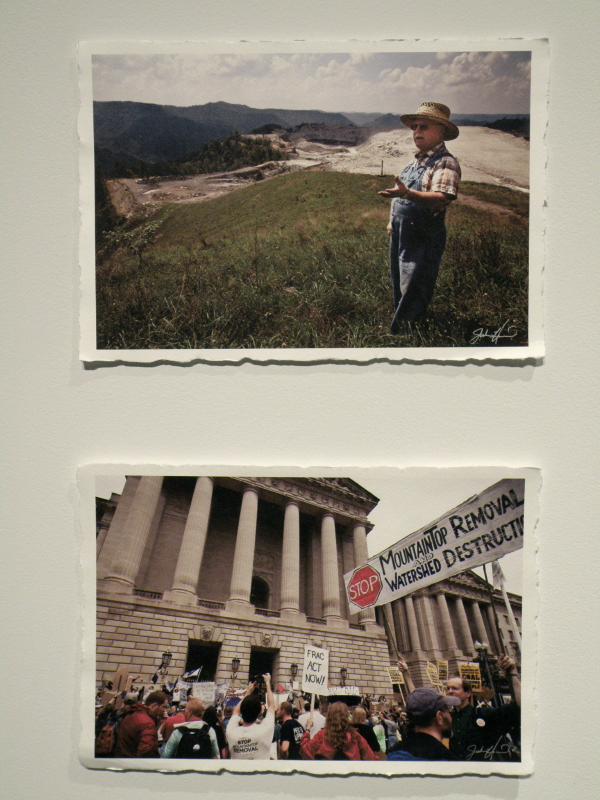
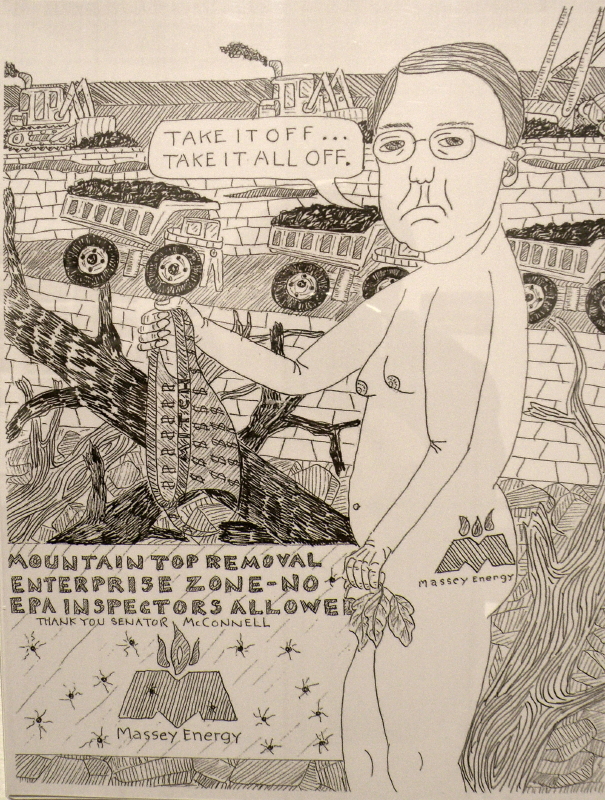
Photographs by Joshua Howard contrast the natural beauty of coal country with the grim realities of the industry.  A more overt political statement comes from Wayne Ferguson who sees Kentucky’s senior senator as being in cahoots with the industry that helps bankroll his re-election campaigns.  Ferguson’s drawings chart the corrupting influences of money and power at the expense of the land and the best interests of the people.
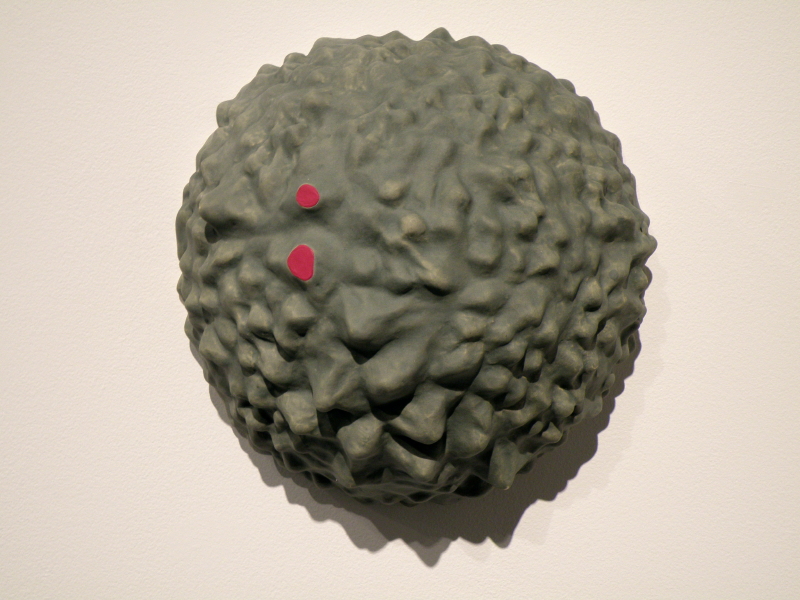
The sense that mountaintop removal is a great calamity for nature at large comes through the works of two artists.  Ceramic sculptor Alex Adams’ piece entitled “Wounded” suggests that MTR mining disrupts the very living tissue of the mountain range. He does this by representing two mountains that have had their peaks literally removed revealing  raw, open wounds.
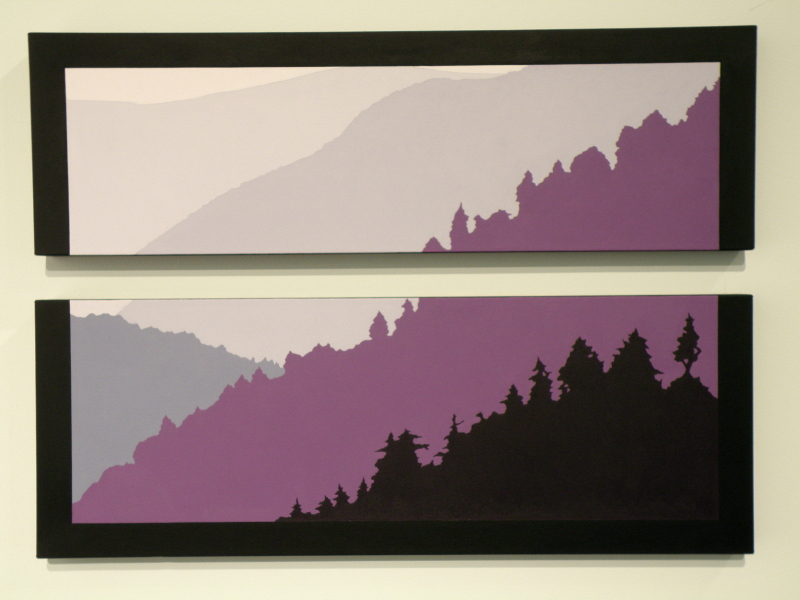
Painter Michael Koerner’s approach is equally reductive and he comes to a similar conclusion about the fate of the mountains.  His diptych entitled “After the Canaries Left the Coal Mines, the Mountains Began to Leave Appalachia” is an argument reduced to its essential points.  For example, in Koerner’s landscape, the painting is physically divided into two parts suggesting man’s indifference towards nature.  The bare slopes past the forested mountains are a warning of what could occur with unchecked mountain top removal.
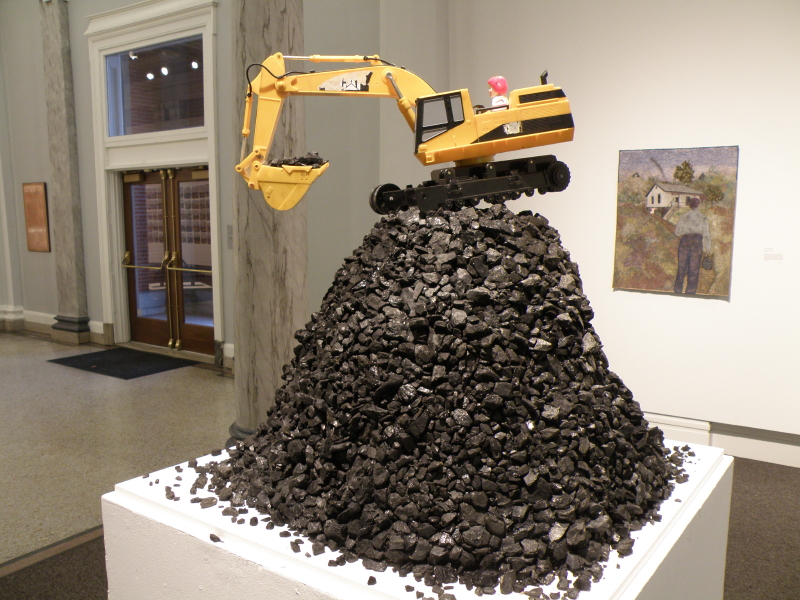
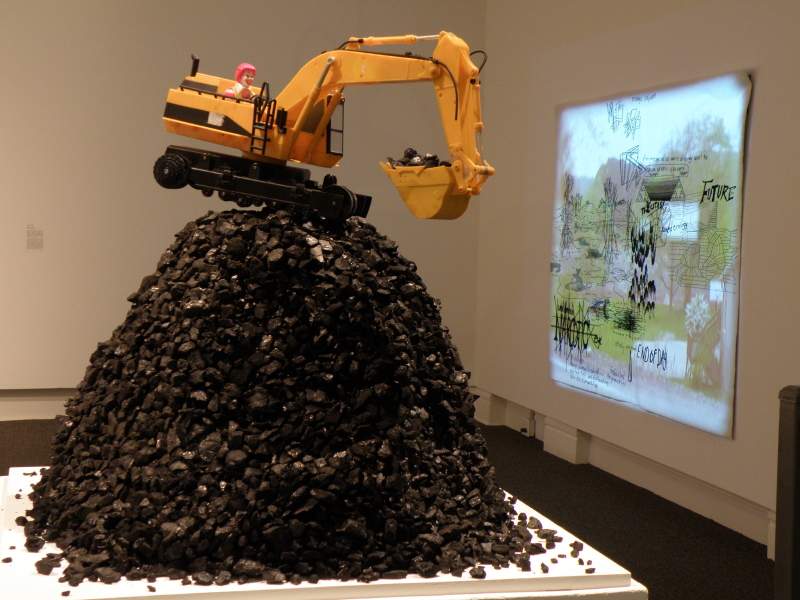
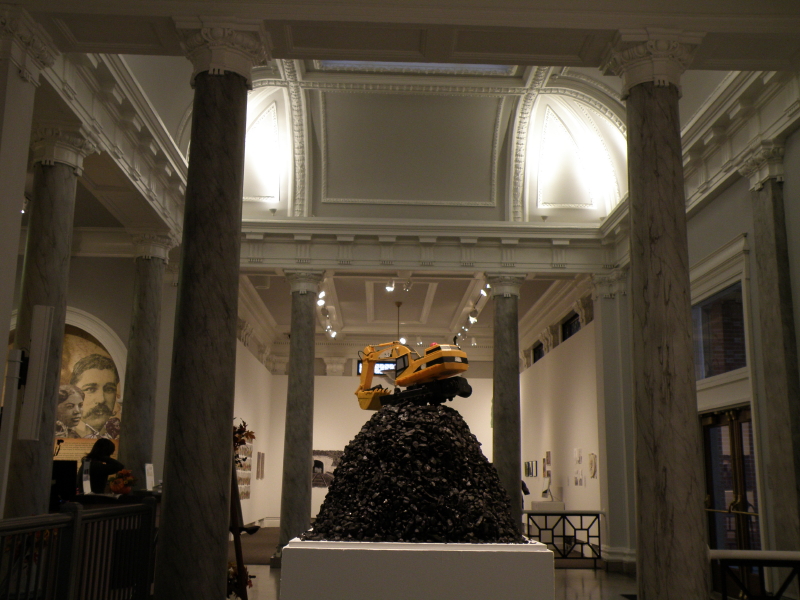
One last artist before closing.  Aron Conaway’s work lies at the heart of our culture of consumption.  His work entitled “Billions and Billions Served” features a Ronald McDonald clown driving a toy front loader on top of a large pile of coal.  In his work, Conaway makes it obvious that we are all implicated in the big issues of our day.  The demand for coal exists because we demand the energy to stay warm in the winter and cool in the summer time heat.  If we don’t like the side effects of coal mining, perhaps we should speed up our search for alternative energy sources, find ways to curtail our addiction to electricity or both?  The demand for cheap coal and energy is what drives the supply.
The Carnegie Center for Art and History has a nice program of upcoming events that expands the breath of this exhibition.  I have already participated in one gallery talk that drew an interested crowd.  Film screenings, art making opportunities, and a panel discussion on mountaintop removal and renewable energy sources will also be held during Project Reclamation’s run.  There is the hope that this show will travel which will be an added bonus.  Thanks to Mary Margaret Sparks, Karen Gillenwater, and the staff at the Carnegie Center for their hard work.  I hope you have enjoyed this glimpse into an exhibition from our area.  My next post will be from the Falls of the Ohio!
Read Full Post »

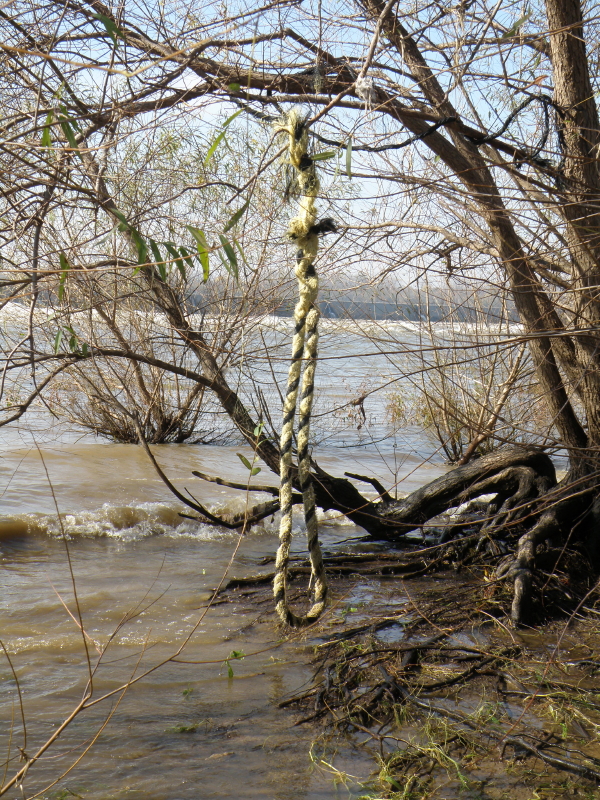
Hello all and welcome to another adventure set at the Falls of the Ohio.  Since my last visit, the Ohio River has risen in response to all the rain that fell in the northern portion of the Ohio Valley and has flowed down river in a southwestern direction.  The fossil beds normally exposed during the summer and early autumn months are now submerged by swiftly flowing water.  Walking this ever shifting shoreline I’m open for whatever presents itself as novel and different.  Turning the corner around a  stand of willow trees I was caught by this unusual sight.

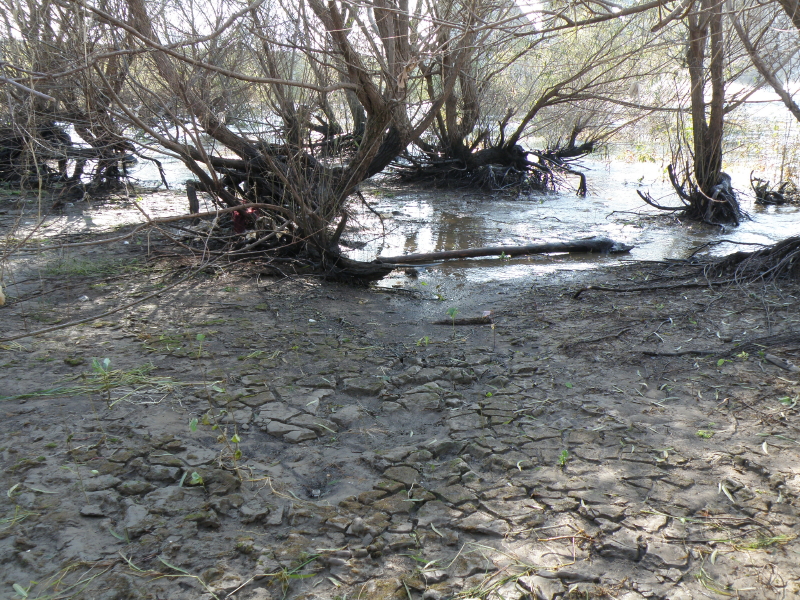
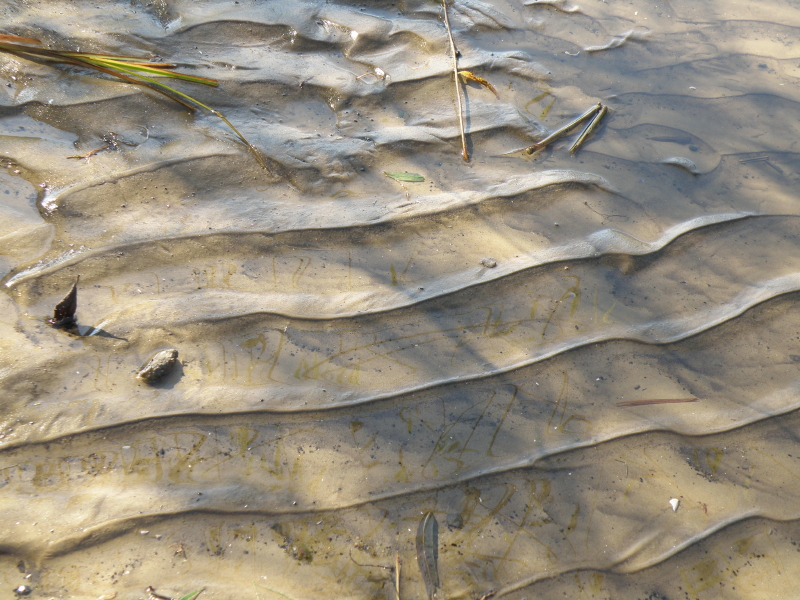
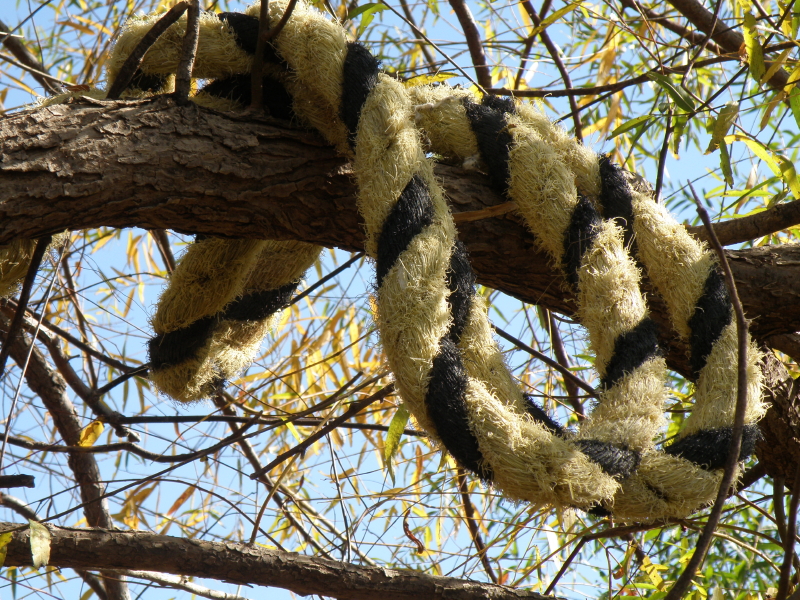
A tree captured barge cable or rope was in a different position from the last time I had noticed it (see this year’s Halloween post).  It is possible that the river rose high enough to dislodge it from its previous resting spot.  I was struck by the way it seemingly is suspended in mid-air with its regular yellow and black intervals contrasting with the unruly roots and branches around it.  Around here, water can both rise and fall quickly.  In the fine silt and mud you can often find interesting patterns that were created by the movement of wind and water.  Here is such an example.

The back and forth rhythm of the river caressing the land are recorded as peaks and valleys in this very fine mud.  I can be “hypnotized” at times by concentrating on this movement which I find soothing.  I’m always interested in the various subtle patterns that water can create on the mud of the riverbank.  It’s akin to trying to “track” water and recognize its footprint as it moves onto the land. I also noticed about a two foot tall, low “wall” of material (mostly wood and dried grasses) along the shoreline that marks this latest high water moment.  And of course, there is always the ever-present mostly plastic junk that also gets swept away and mixes with the natural debris.  I found lots of plastic detergent bottles, bits and pieces from toys including another doll’s head.  Here are images of other finds including an interesting toy ball.

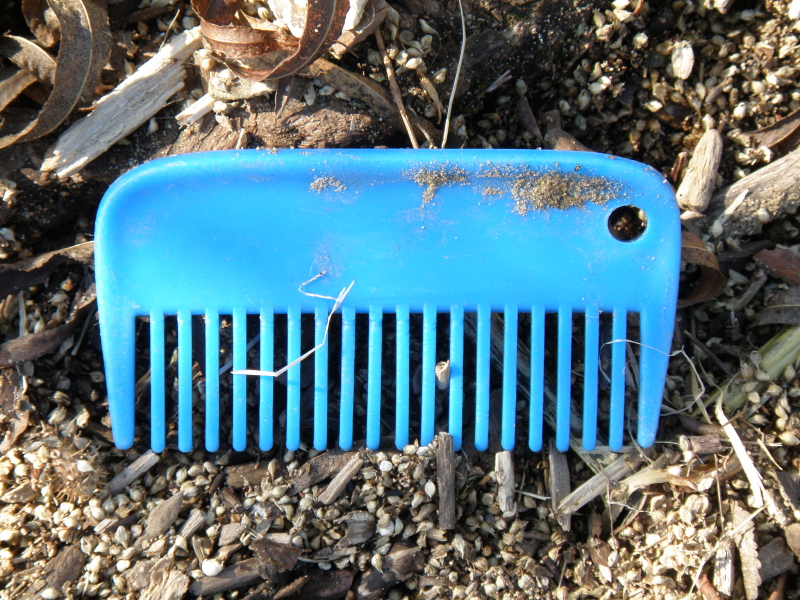
I’m assuming this is a dog toy based on the image of the dog on the ball?  The small knobs are different from the usual balls I find out here.  Now, for a bright blue comb in a design that’s also new to me.  The tiny grains around the comb are seeds from various river grasses.

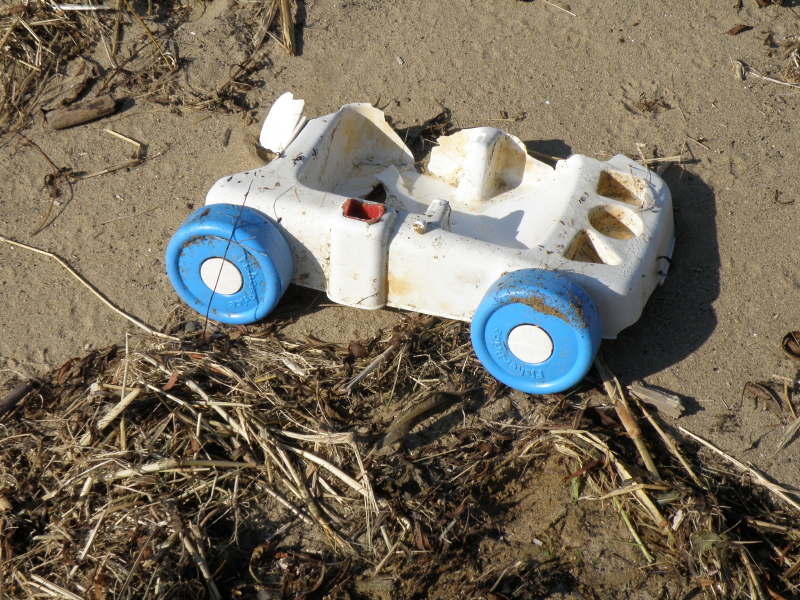
More ” blueness”  in the form of plastic wheels on a wrecked pull toy.

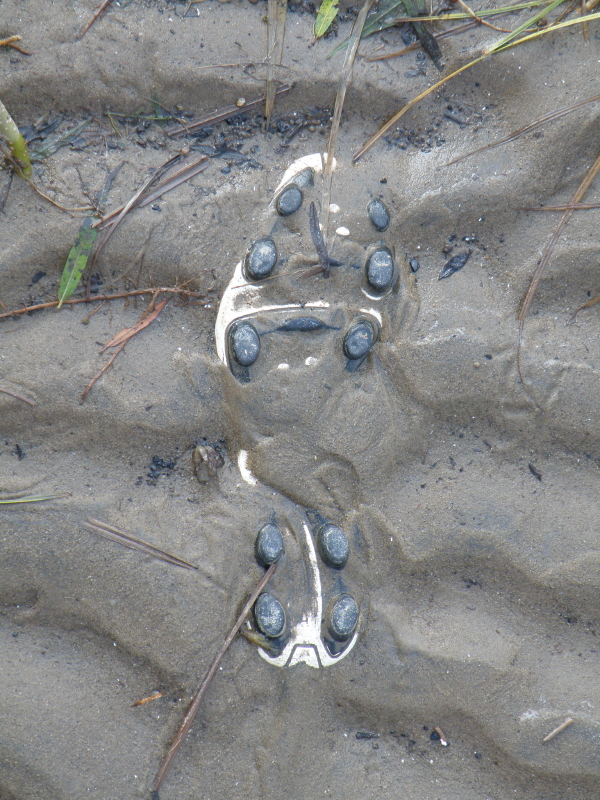
In the mud, I came across this other type of footprint that I thought was a bit unusual from the norm.  Of course, it’s a sports shoe with cleats on the bottom sticking up from the mud.

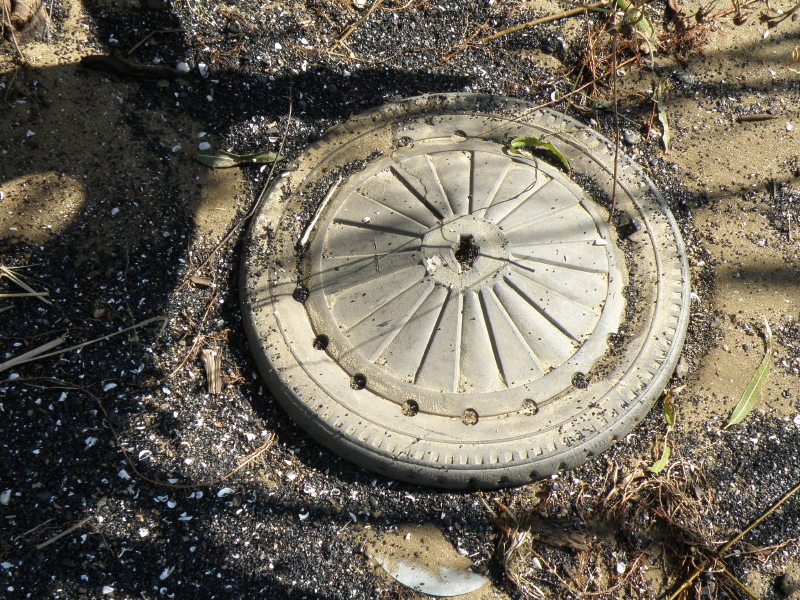
And one last found wheel whose radial pattern inspired another image in my ever-growing “Coal Flake” series.

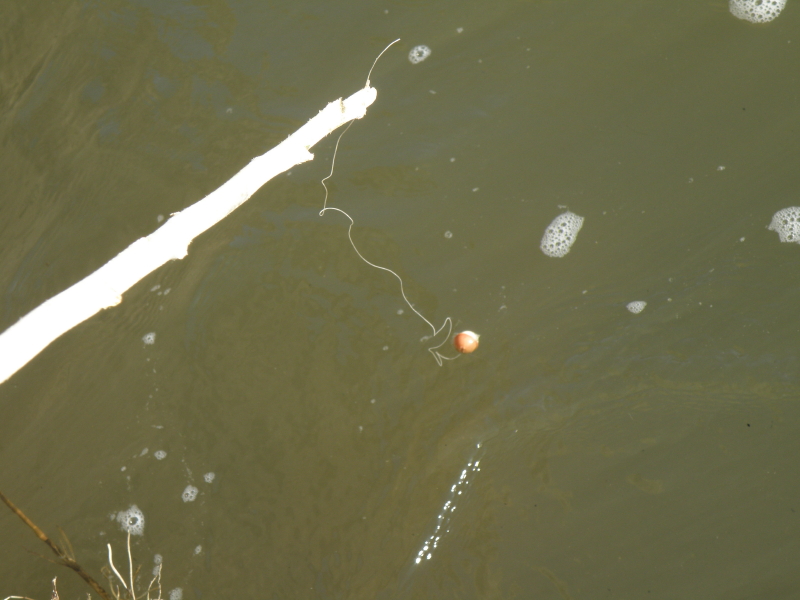
I’ve come to really like making these designs from river-altered coal that I find at the Falls.  I’m under the impression that this coal has fallen or been swept off the immense barges that transport this fuel up and down the river.  I suppose it’s possible that somewhere along the river’s journey the water has cut down through the rock to expose a coal seam somewhere, but I haven’t ever heard of this happening.  The barges seem the likeliest answer.  This particular example has more Asiatic Clam shells used in the design.  These clams are the most common of their kind that I find at the Falls.  Once upon a very recent time a go, the Ohio and Tennessee Valleys were the world’s epicenter for fresh water clams.  By altering the rivers and the water quality in them, many of these amazing creatures have either gone extinct or have become so very rare.  The Asiatic Clam is a non-native animal imported here in the 19th century as a good luck charm and has thrived as has the Zebra Mussel that you may have heard about?  The day was moving on and except for a few Mallard ducks and Canada geese I hadn’t seen much in the way of wildlife.  I decided to end my day by doing a little fishing.  I found a short, recently beaver-chewed willow branch and attached some waste fishing line I found.  I attached a hook and found bobber and into the water it went.

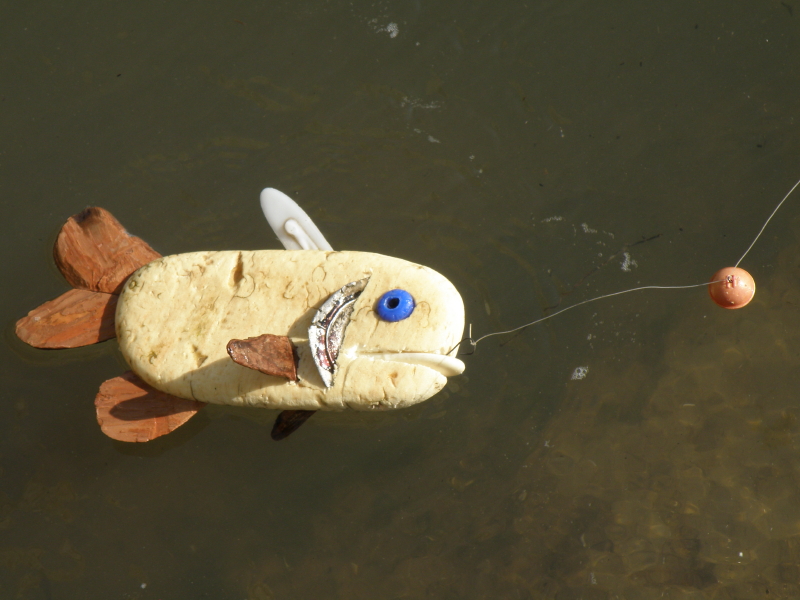
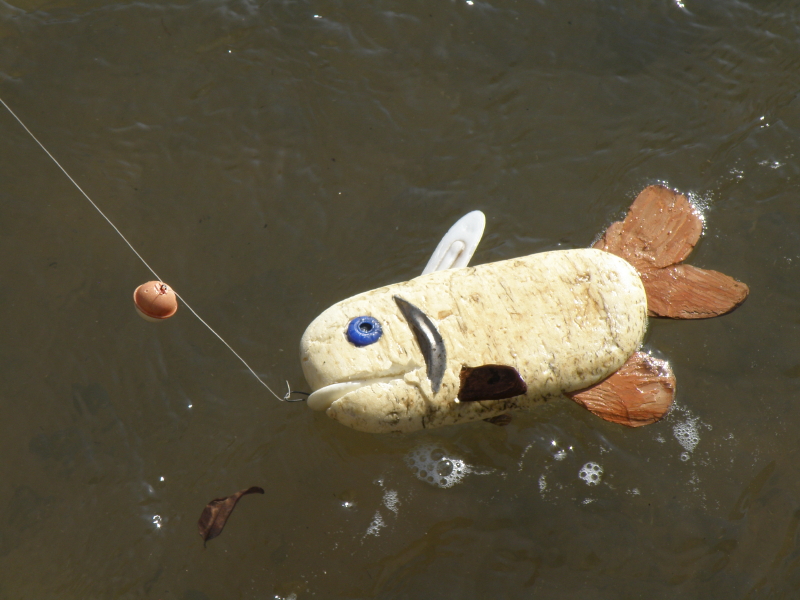
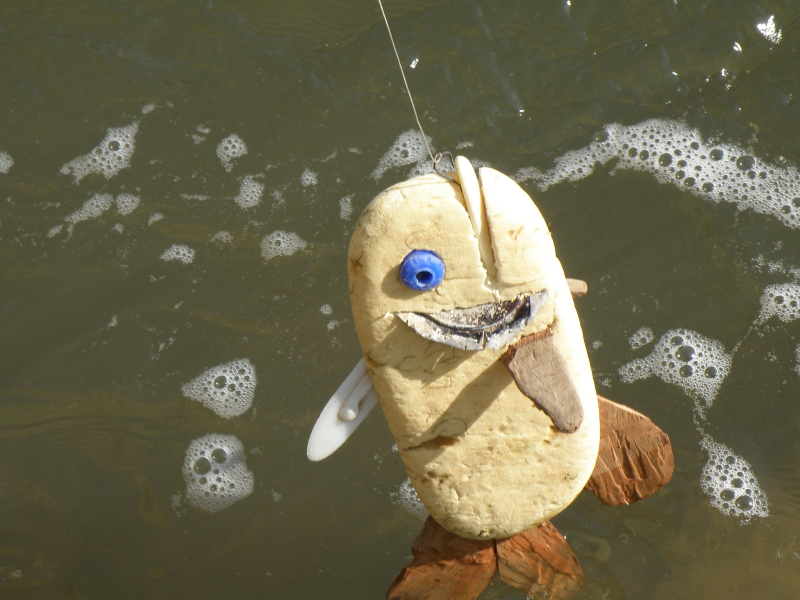
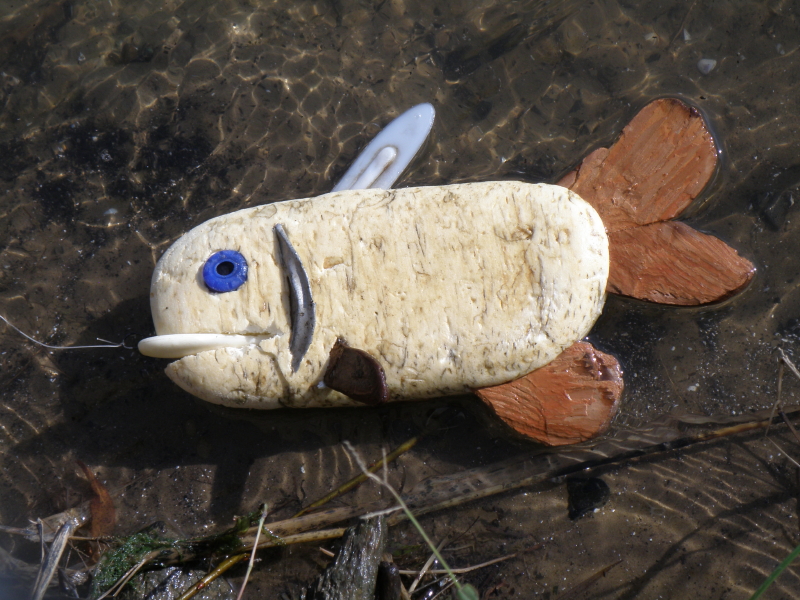
Oh, for bait I caught a small grasshopper and attached it to the hook.  A small found lead weight kept the bait below the water.  Every once in a while I would raise my short pole up and down in a “jigging” motion.  To my immense surprise I caught this very unusual fish!

This fish is called the Iron Gill based on the metallic covers it sports around its gills.  Other distinctive features include bright blue eyes and a small white dorsal fin.  It’s body shape is unique and lends itself to easy filleting…although I wouldn’t normally recommend eating the fish from this part of the river.  Catching this fish here was a surprise because normally this is a deep water fish found in large flowing rivers.

This species was first described to science by Constantine Rafinesque back in 1811.  Rafinesque was a controversial figure and brilliant naturalist.  He had a gift for collecting and recognizing new species, however, in his zest to publish and receive credit for his discoveries he was very sloppy in his methods.  As a result, many of the animals and plants he introduced to science are poorly described and classified which led to much confusion and consternation among the other “scientifics” of the time.  In the end, Rafinesque usually won out because science gives priority to the person who first (no matter how poorly) brings the new creature to the world’s attention.

After this last image, I released the Iron Gill back into the water and rebaited my hook.  Alas, this was the only fish I caught on this day, but it reassured me that my skills in this area were still intact.  For my next post, I want to show you images of a coal-themed exhibition I’m participating in the nearby town of  New Albany, Indiana.  It’s a good show and worth a post.  For now, I would like to close with another image of a found toy I came across on this day.  Have a great weekend out there in the wider world!


Read Full Post »

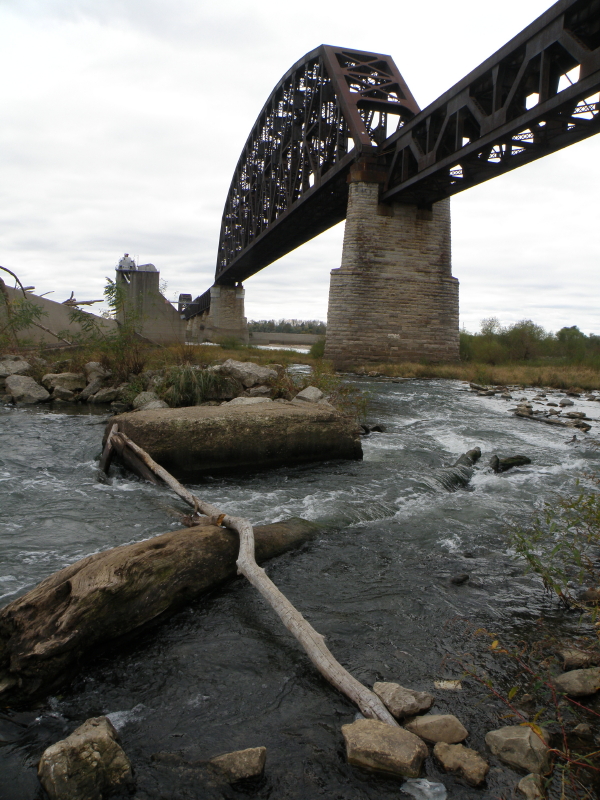
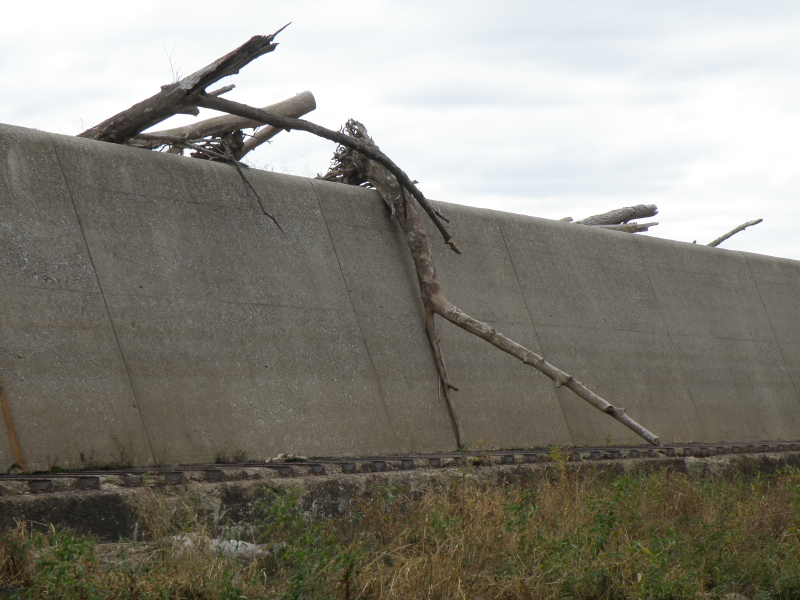
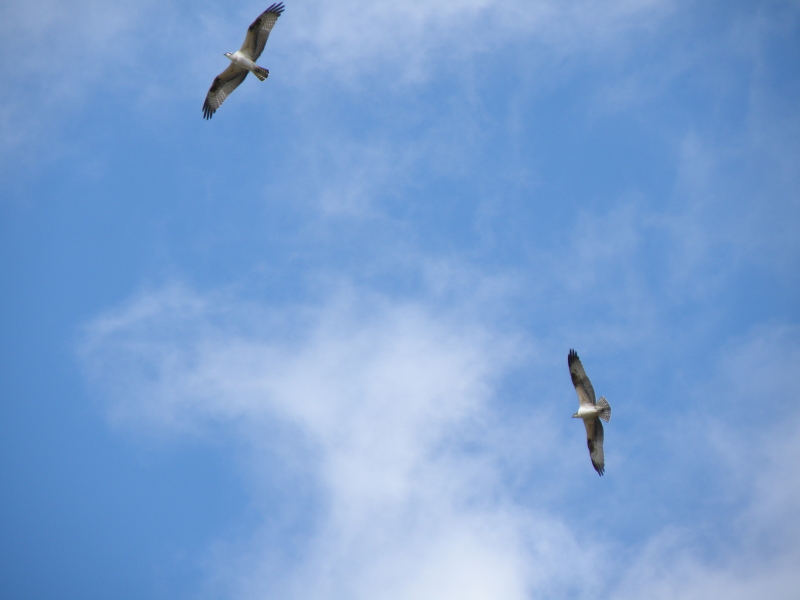
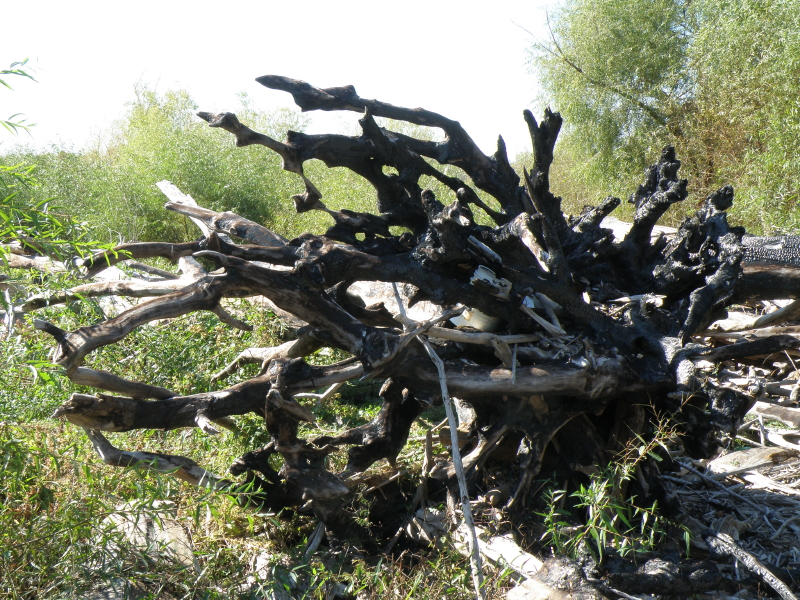
It’s hard for me to believe that October has come and gone.  There isn’t much sand left in 2012’s hourglass.  I’m virtually alone (if you are only counting people) at the Falls of the Ohio today and it’s understandable.  The weather is cool, gray, and an occasional spit of rain falls against my face.  I like it out here when it feels a bit lonelier because my chances of seeing wildlife increases.  Such was the case today when I explored the area next to the tainter gates and under the old railroad bridge.  This area is sheltered a bit from the wind and many times I have found birds in the high grass and low trees near the sloping riverbank.  Today I observed Song Sparrows, White-crowned Sparrows, Mourning Doves, and Hairy Woodpeckers in immediate proximity to each other.  In the sky, the first of the Ring-billed Gulls has arrived and a pair of Osprey with their broad wings searches for unwary fish too close to the surface of the water.  Many of the tree leaves have dropped and it looks like we will have a bumper crop of cockle burrs as I pull dozens of them off my shoe laces and socks.  Their prickly hooks irritate my skin as they work through the fabric of my clothing.  On days like this I’m just trying to attune myself to the subtleties of this landscape and I’m amazed at how often my patience gets rewarded here.  As I was walking to photograph uprooted trees against the flood wall…

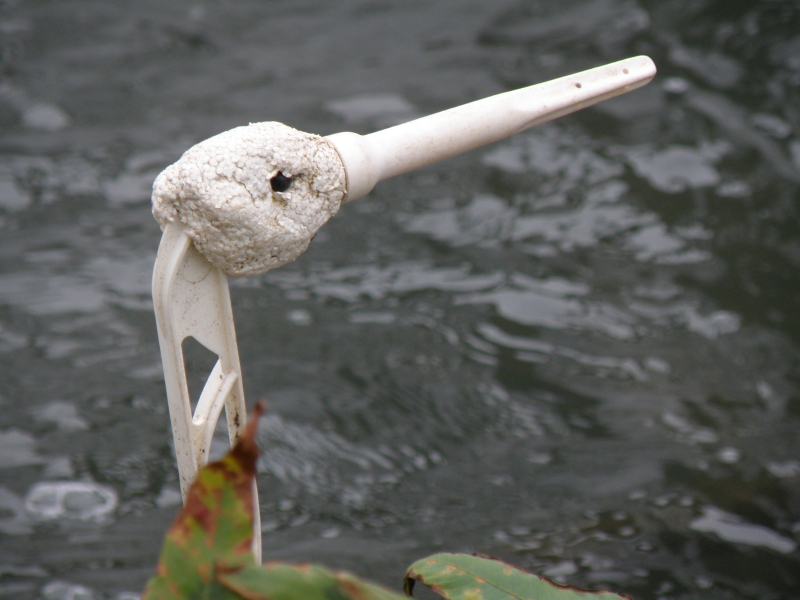
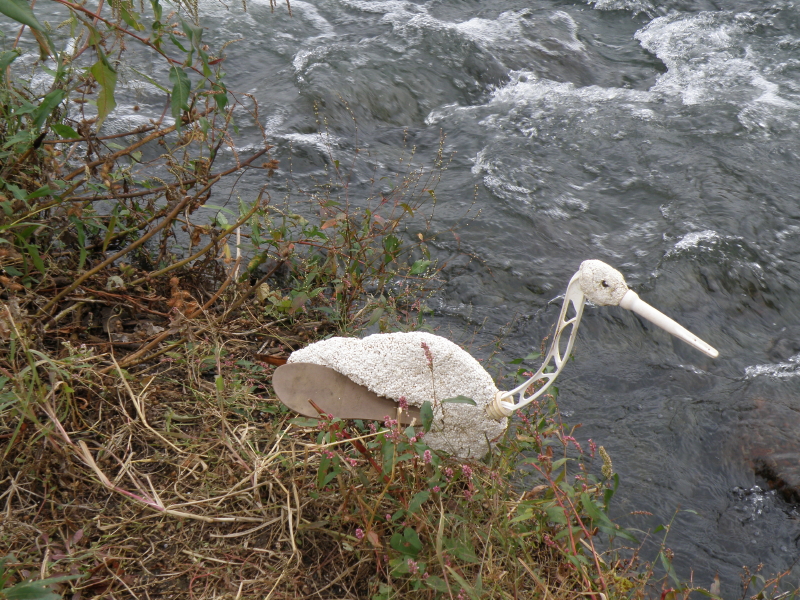
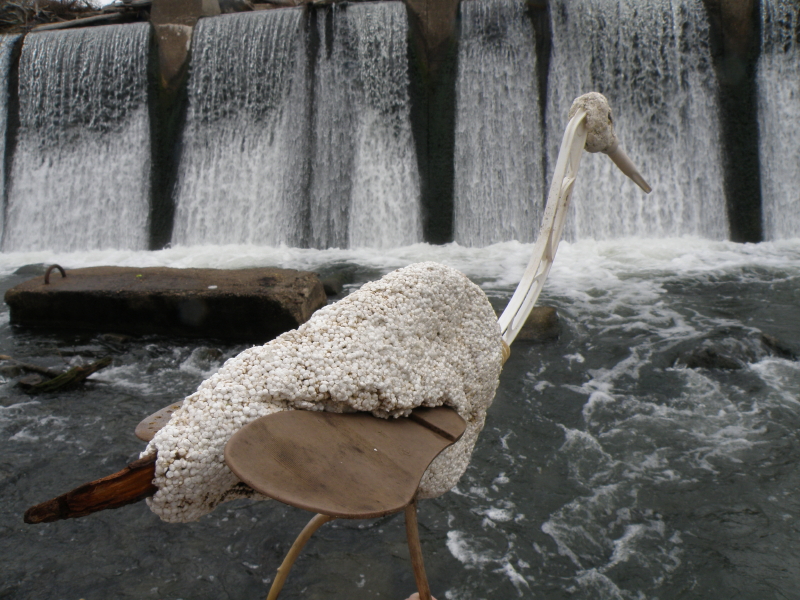
…I spotted something shockingly white moving near the water’s edge.  Carefully moving as close as I could…I recorded this image of another rare bird seldom seen at the Falls of the Ohio.

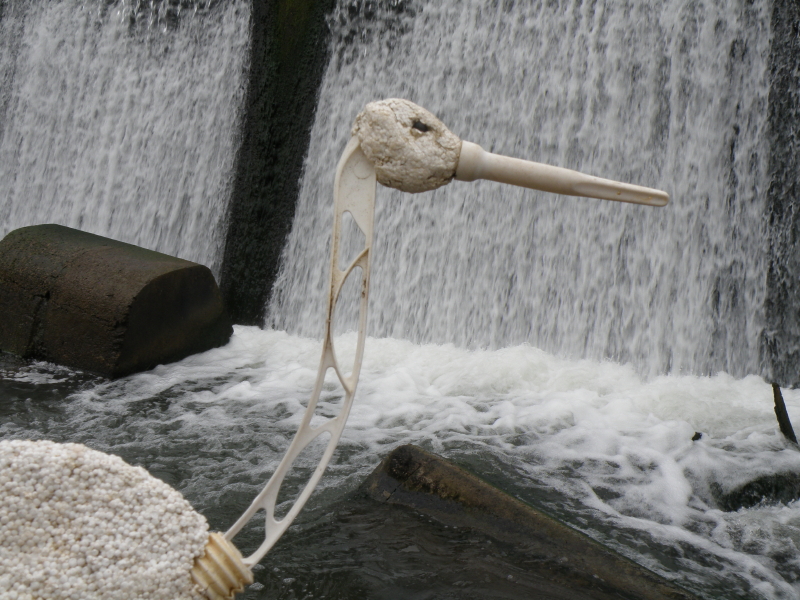
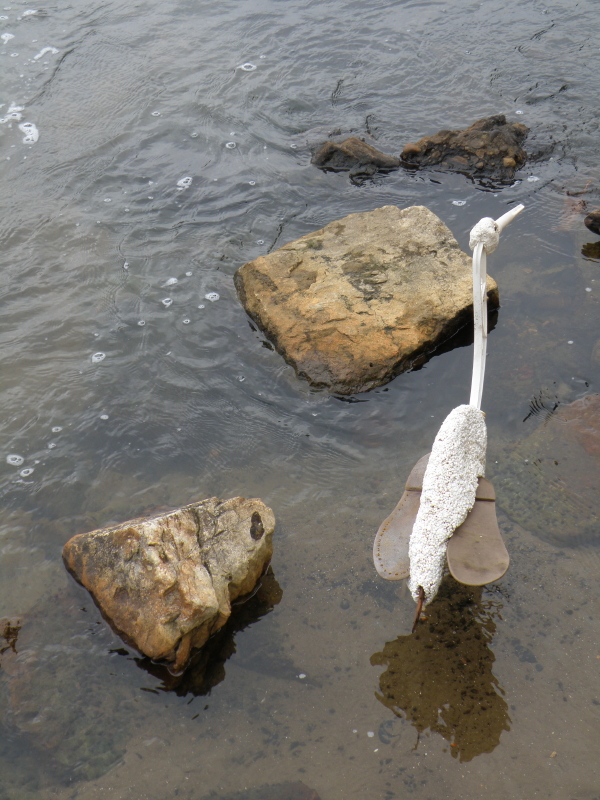
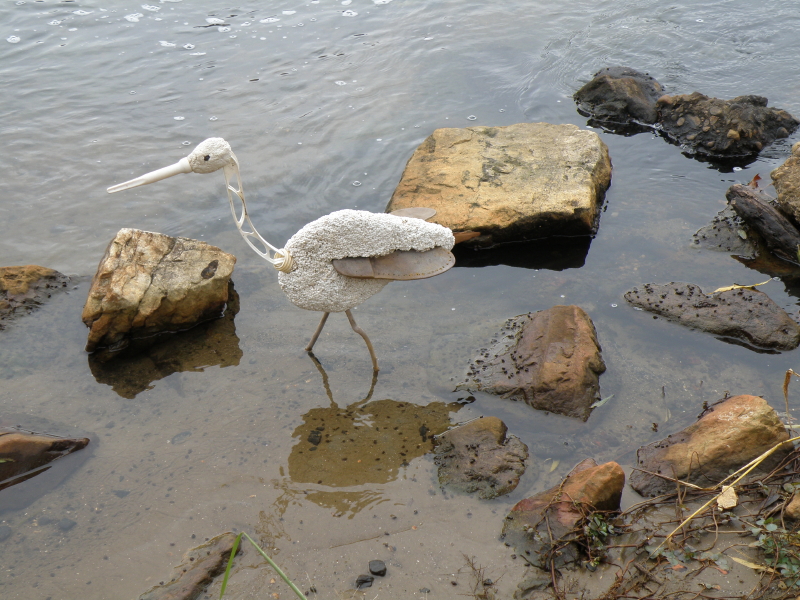
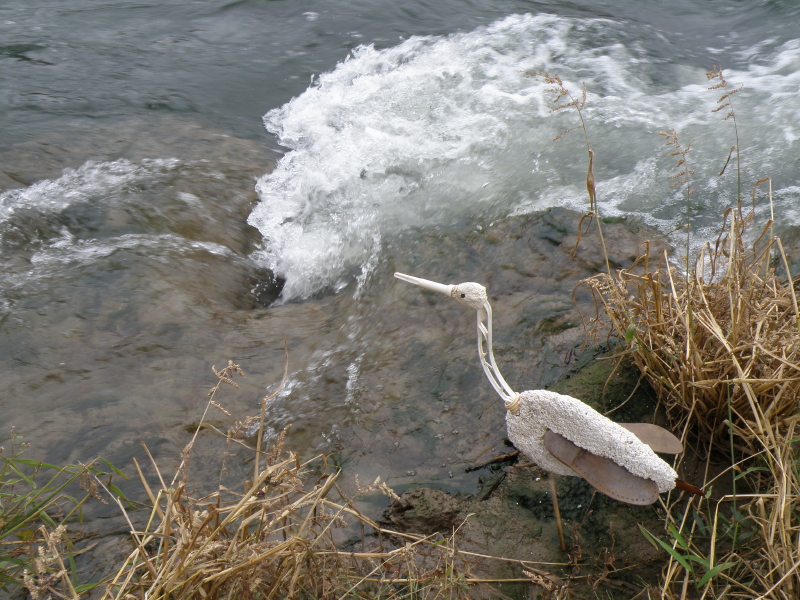
A few more pictures in relatively close succession and I was able to identify this beauty as the Lattice-necked or Brown-winged Ibis.  I prefer using the Lattice-necked moniker because the long neck with its unusual patterning is distinctive to this bird alone.  I happened across an individual that was hunting for food and stalking the margins of the water.  I did observe it feeding on black snails that were common on the rocks. I recall from my old art history days that the ibis was a sacred bird to the ancient Egyptians and often was mummified to accompany dignitaries on their journeys to the afterlife.  In my mind I made the association that this ibis species in front of me was sacred to the life of this river.  Enough gabbing, here are a few more pictures.

This ibis species is more commonly seen around the Gulf coast and points south of here.  Every once in a while, a storm or hurricane will blow a few individuals into the heartland where they are a welcome treat to the hardcore birders.  The Lattice-necked Ibis has always been less common than the other larger shorebirds.  It is less aggressive than the herons and egrets which out-compete the ibis for prime nesting and feeding sites.  This bird did spy me and flew away, but only a short distance away.  I was able to catch back up with it and captured these final images of this graceful and dignified bird.

Here is the same ibis that found a nice fishing spot next to a small whirlpool. Every now and then a little fish would get caught by the rotating water only to find itself food for the lightning quick ibis.

I felt refreshed and energized by my encounter with the ibis.  I left the river  with a song in my heart which I whistled all the way back home.  Above me, two osprey I had seen earlier were circling in the clear, cool blue sky…another blessing of this day.

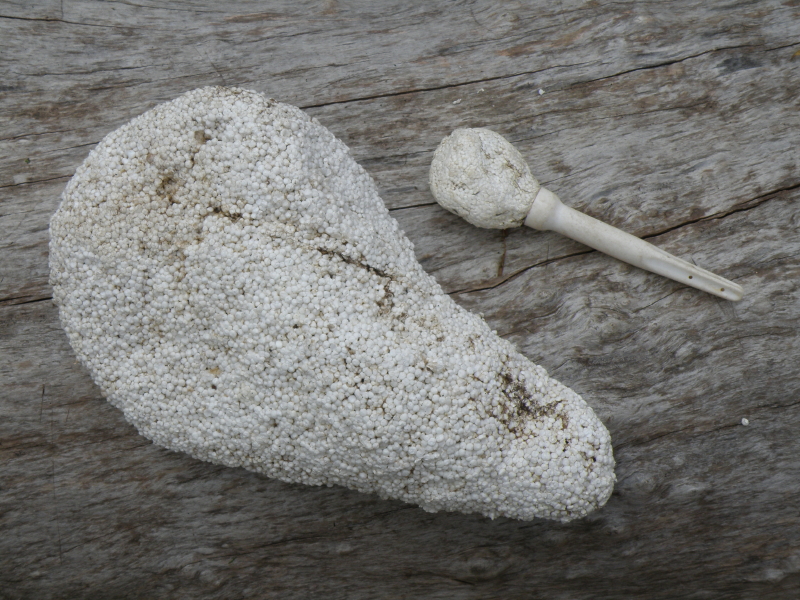
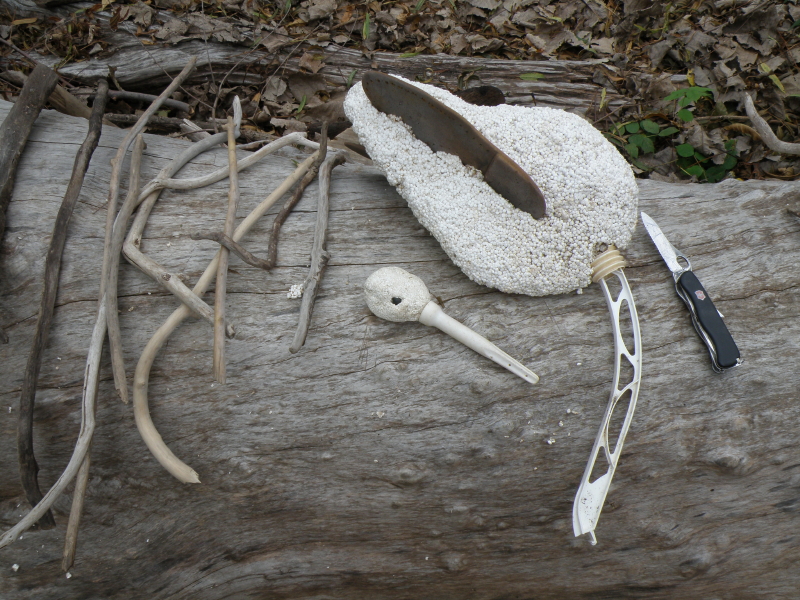
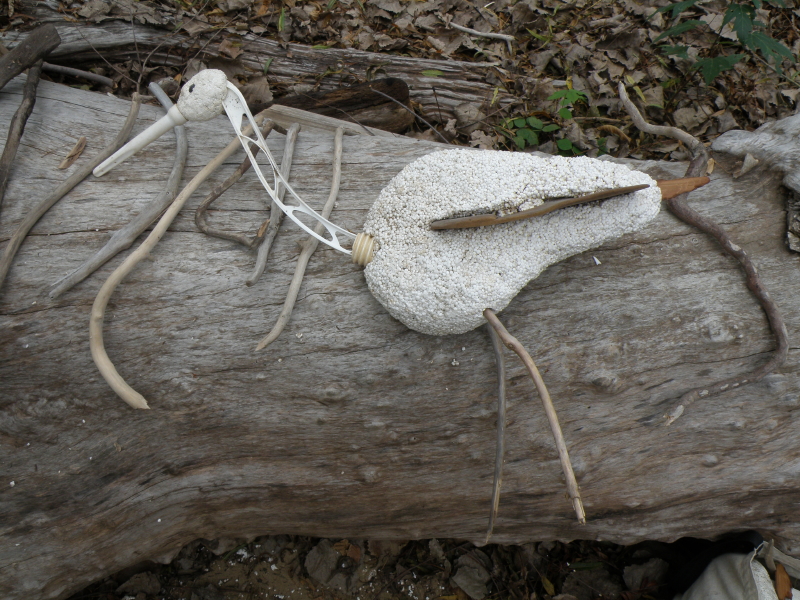
BONUS FEATURE…in process shots of how the ibis was made.  The head and body are pieces of Styrofoam I found out at the Falls of the Ohio.  The bill of the bird is a plastic handle from something…perhaps a feather duster?  The bird’s eyes are two small pieces of coal.  The neck I’m guessing is the plastic arm of a hanging flower planter?  At the base of the neck, I attached a small bit of white plastic hose I came across. The brown wings are the soles of two mismatched shoes I found.  The tiny tail and legs are found wood.  These are all the materials that make up this sculpture which owes something to the tradition of decoy making.  Thanks for tagging along with me on another adventure by the Ohio River.

Read Full Post »

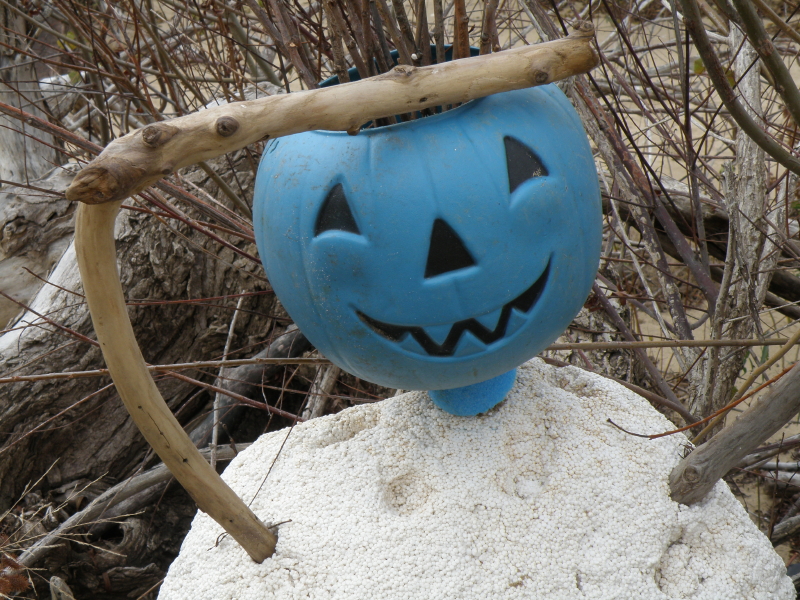
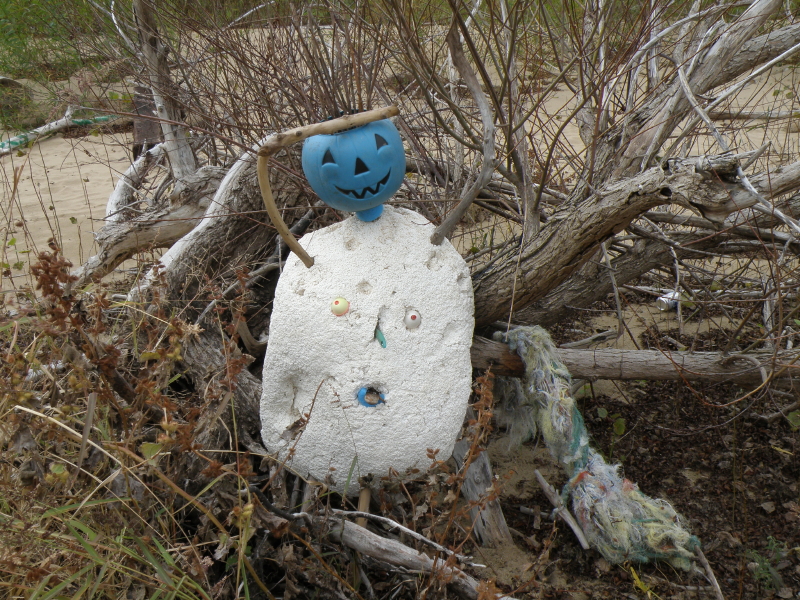
BLAHHHHH!!!!…did I scare you?  Welcome to another Halloween adventure from the Falls of the Ohio.  Today, I have a special treat in mind for you.  My name is Jack Blue and I will be your guide for the next five minutes.

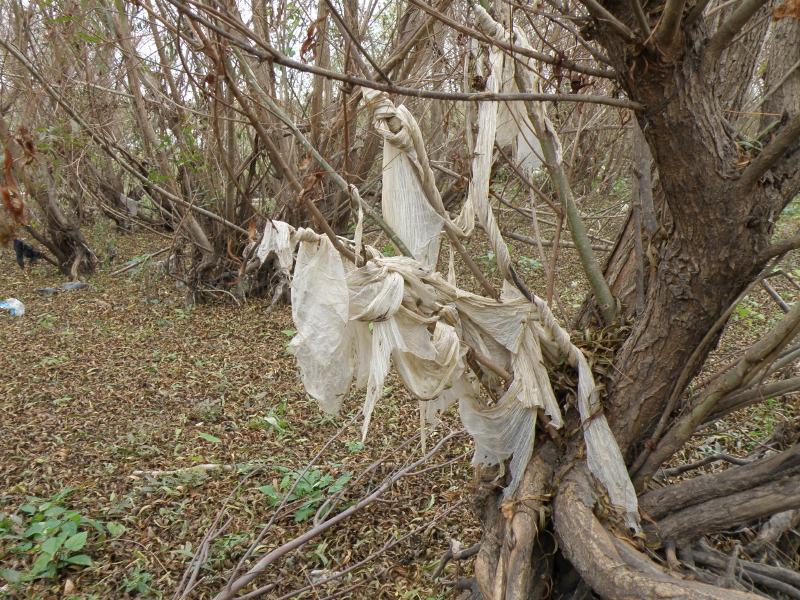
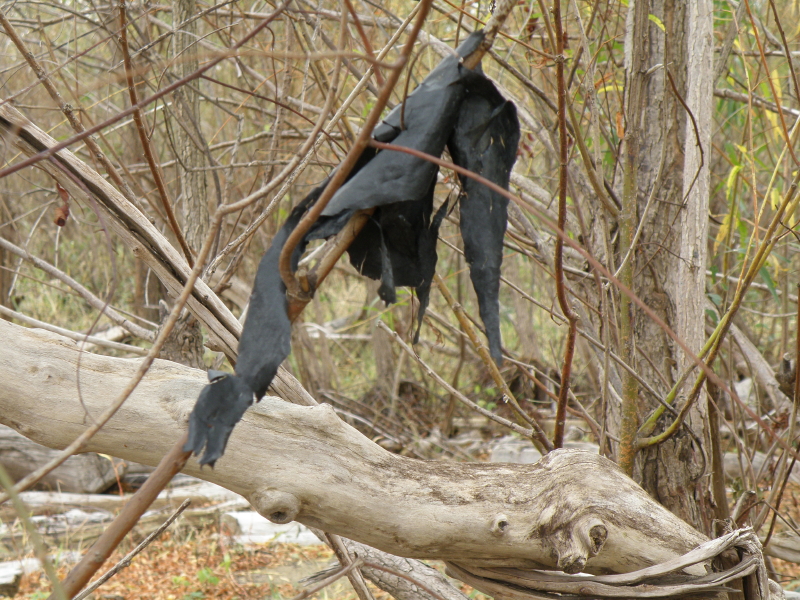
If I didn’t scare you perhaps I fooled you?  No need to be alarmed, my Belly Face has eaten recently.  You should be safe while I show you around the local Halloween sights.  Foremost in mind is the special Shrouded Forest that magically appears at exactly this time every year.  It is weirdly beautiful especially if there is a slight breeze present to animate the spirits that occupy the branches.  Most of them are plastic ghosts that have either floated here via a swollen Ohio River or drifted in with the wind.  Here’s what I mean.

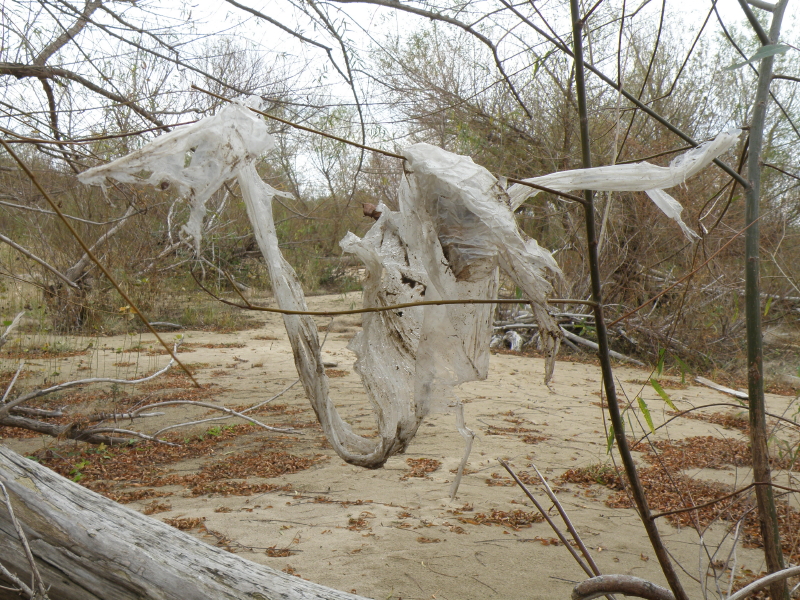
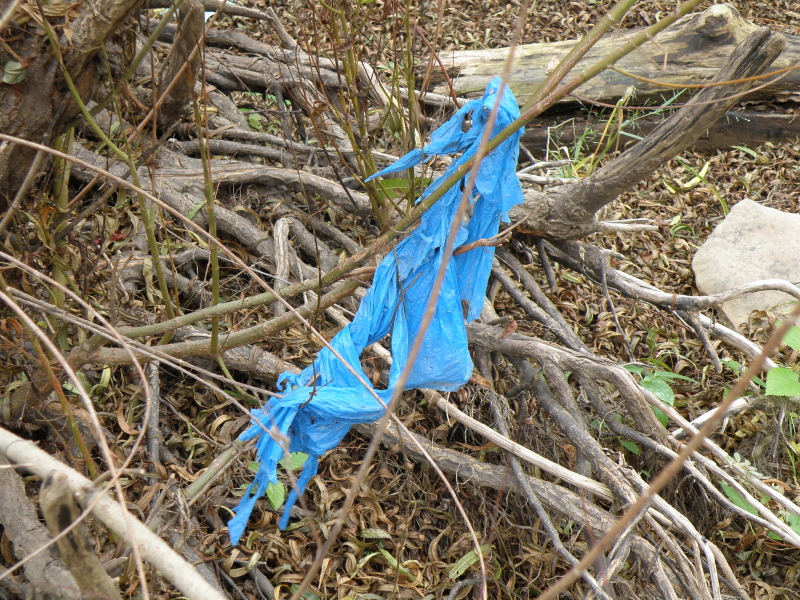
The degrading plastic lends such a festive touch to this area.  As the polymer bonds separate and the plastic starts to disintegrate it hangs in decorative shrouds from the willow branches it graces.  You can walk from tree to tree and admire these spectral creations of man and nature.

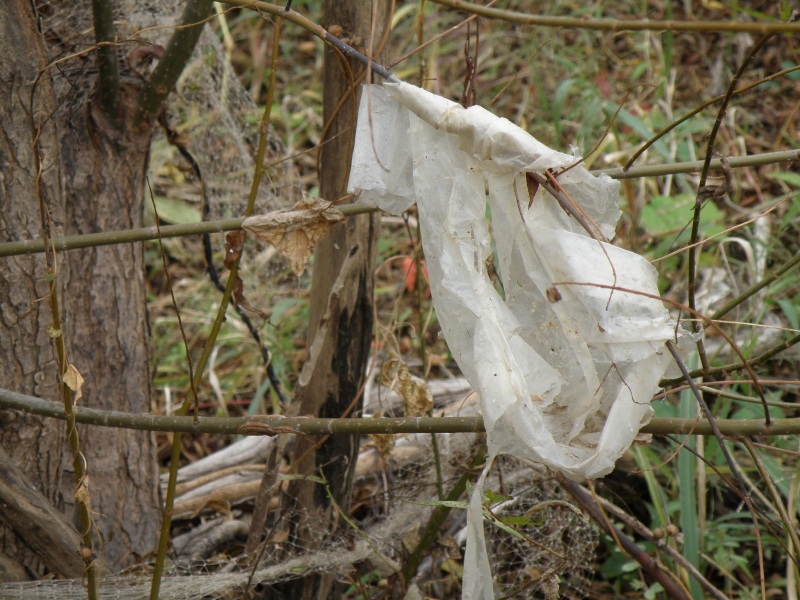
All this “magic” is the result of benign neglect.  Whoever discarded this waste plastic sheeting probably wasn’t thinking it would wind up here draped in the trees like artificial Spanish moss.  In case you were wondering…it also comes in different colors.  Here are two other popular hues for your viewing pleasure and a special “snaky” surprise that might have you needing a doctor!

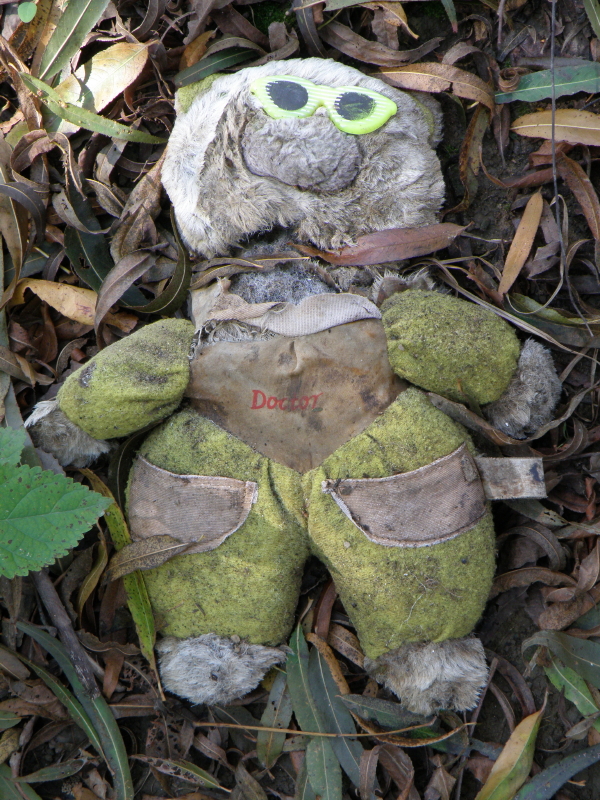
Okay, maybe this isn’t much of a snake, but if you were walking among the trees and looked up at some point…you probably wouldn’t anticipate seeing this?  And now for the “Doctor”…hmm, I don’t think he will be doing anyone any good any time soon!  Kind of looks like he could use a doctor himself.

Somehow I missed this bear when I did my earlier post on plush toys.  He’s been laying under this willow tree for months now and I just happened upon him! Just in time for Halloween!

The truth is one doesn’t need to travel far these days to find a patch of ground not “haunted” by something that doesn’t belong in the environment.  I hope all of you out there have a fun and safe Halloween and please discard all your trash in a responsible way.  Otherwise, my Face Belly may develop an appetite for you…trick or treat?

Read Full Post »

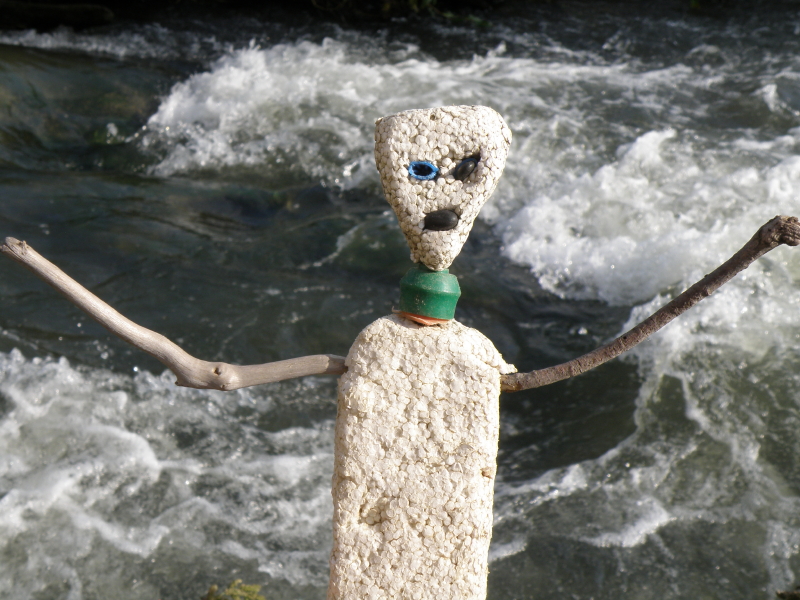
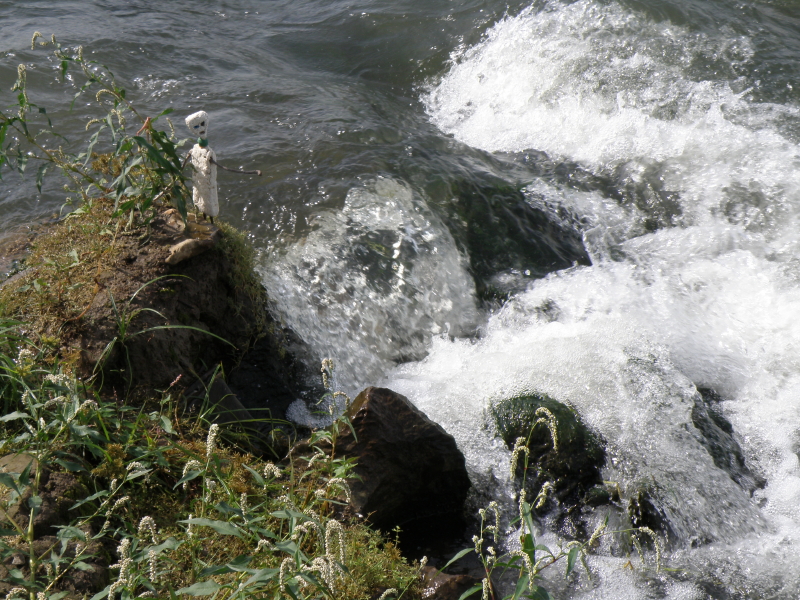
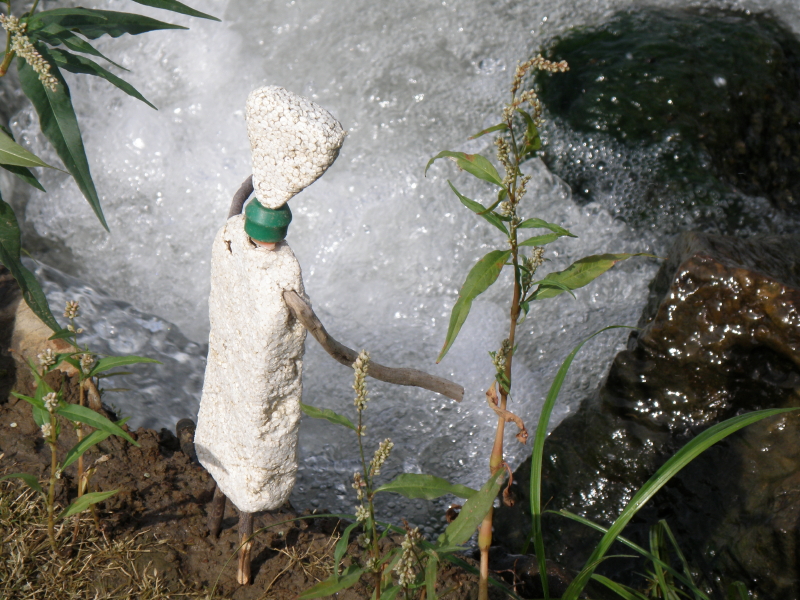
Beloved, once again I evoke you from this beautiful water world I have discovered.  Repairs to my ship go slowly, but progress is being made.  Because of the uniqueness of this world and its potential importance to Styrosia, I continue to venture forth from my hiding places to discover what other life forms call this planet their home.  I continue to monitor the “bipedal humanoids” learning what I can from translating aspects of their culture using our technology.  The humanoids are unpredictable and possess enough data to be dangerous.  They are best seen and experienced from a distance. What I have also observed is that the humanoids have a great curiosity about their own world.  They are constantly engaging in explorations of discovery and seem to exhibit a need to know how the universe functions.  The irony here is that while they express concern for life at large, they are also systematically working to undermine the very conditions necessary to preserve and promote as much diversity of life as possible.  Every day life forms become extinct before they are even formally acknowledged as existing by their sciences.  This is a great topic, perhaps one for a future communication?  Today, however, I want to transmit a few images of interest to amuse and delight you from this alien world.  I would like to begin with an unusual characteristic that is exhibited in the local rocks and has been revealed through water’s ability to dissolve and shape the chemistry around it.

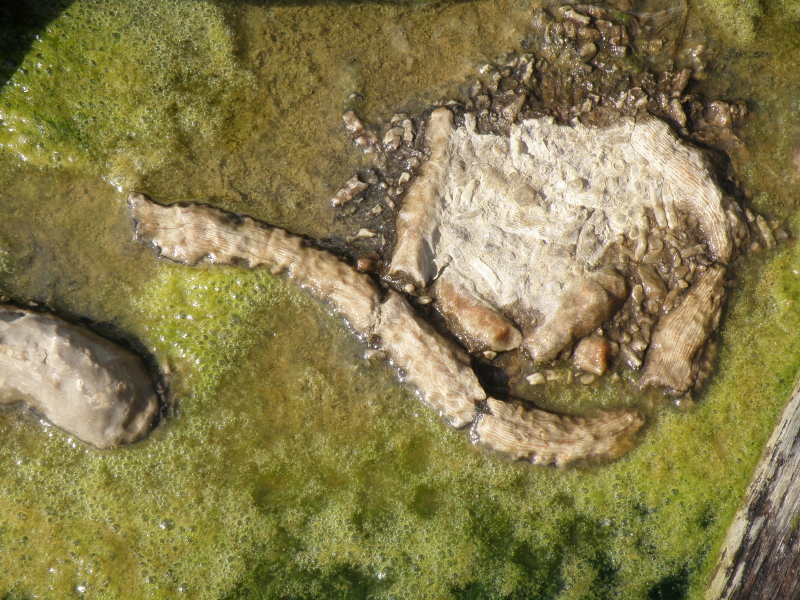
The appearance and proliferation of life on this planet is its most outstanding feature.  No where else in the explored universe can rival this world for the sheer variety and numbers of life forms that have uniquely evolved here.  At my current location are the preserved remains of life forms in calcium carbonate rocks of marine organisms that originated more than 350 million years a go.  Ancient as this is, the history of life is traceable to more than 2 billion years a go.  The humanoid scientists measure one year as being the amount of time it takes their planet to make one complete revolution around its star.  I believe it is correct to assume that life began in the ancient waters or “primordial soup” as the humanoids envision it.  Life and this planet have grown up together and each has influenced the other.  This planet is far from static and its oceans and land masses have shifted across the globe over deep time.  Today, humanoids travel great distances to peer at these local rocks.  What are they ultimately looking for in this ancient coral reef?  My hypothesis is that the humanoids are drawn to seeking a feeling of connection to the history of life on their own home world.  There is something in their behaviors that also suggests that they are mystified by the phenomena of their own existence.

While the humanoids look for the proof of their connectivity to the history of life on their planet, many other interesting forms don’t question this and simply “be”. I have especially grown fond of the sessile life forms that have decided to flourish in the spots most favorable to them.  Once a year, these stationary forms decide to  climax in an electromagnetic spectrum display that is pleasing to the eye.  I have decided to take as many self images in the company of these “flowers and plants” during this “flowering” using my self as a measure of scale.

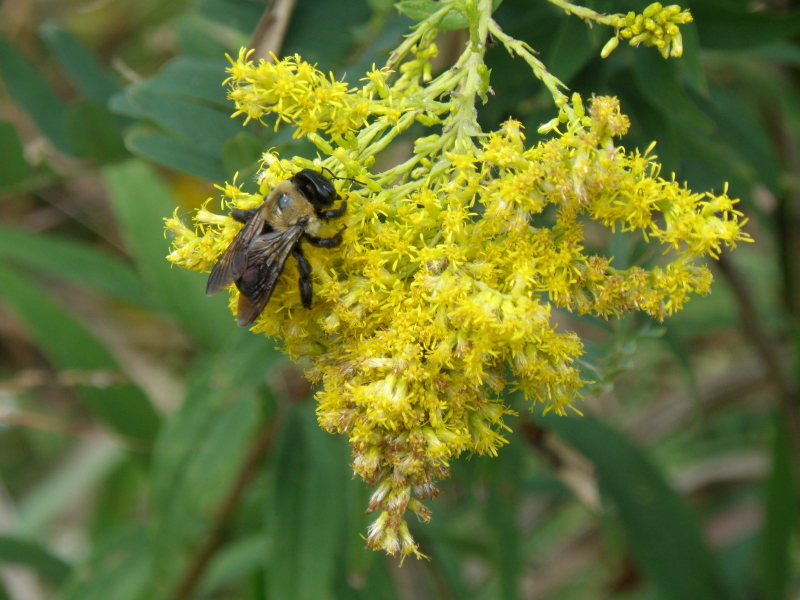
Many of these “flowers” participate in symbiotic relationships often with very diverse and contrasting species.  This particular sessile life form attracts flying animals that feature exoskeletons.  The flowers provide nourishment for these animals and the plant finds an agent to move its genetic material from itself to others of its own kind.  I have observed more of these smaller, exoskeleton-bearing creatures than all the other animals combined and they would make a rich field of enquiry that could occupy the careers of many Styrosian scientists.  Here is a different example of such an animal.

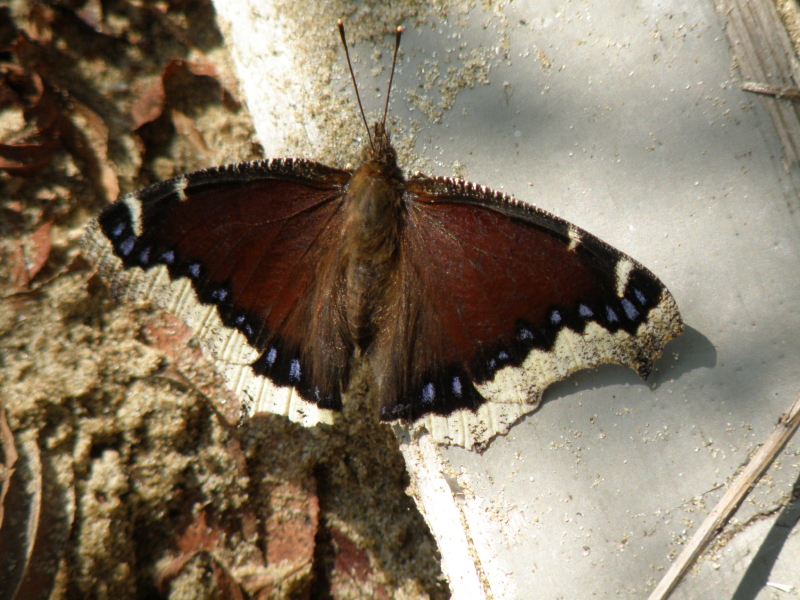
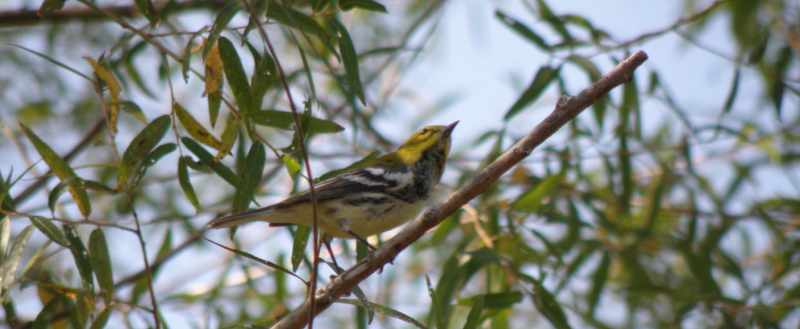
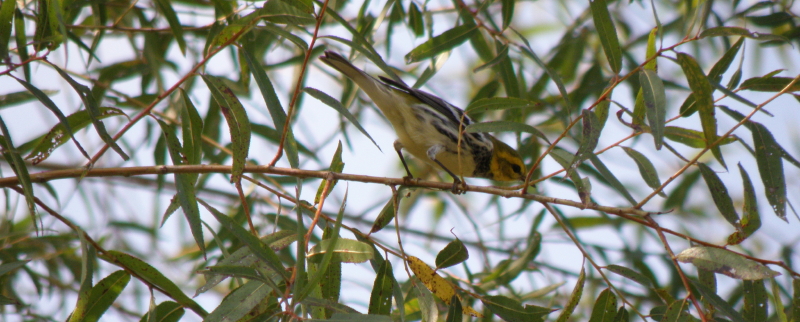
This is what the humanoids call a Mourning Cloak butterfly and I observed it warming itself in the star light.  It’s reverse coloring is cryptic and resembles a dried plant bio-solar panel.  Its mouth parts have been adapted over time to make a tube that can easily extract sugary liquids produced by the plants that these butterflies favor.  There is an exchange of services that benefits both life forms involved in this process.  Other flying animals with a very different morphology also inhabit this space.  Here is a sequence of images from what the humanoid data base refers to as a Black-throated Green Warbler looking for “insects” among the “willow trees”.  Their movements are quick and this species is just traveling through on its way to a warmer environment in the southern latitudes of this world.

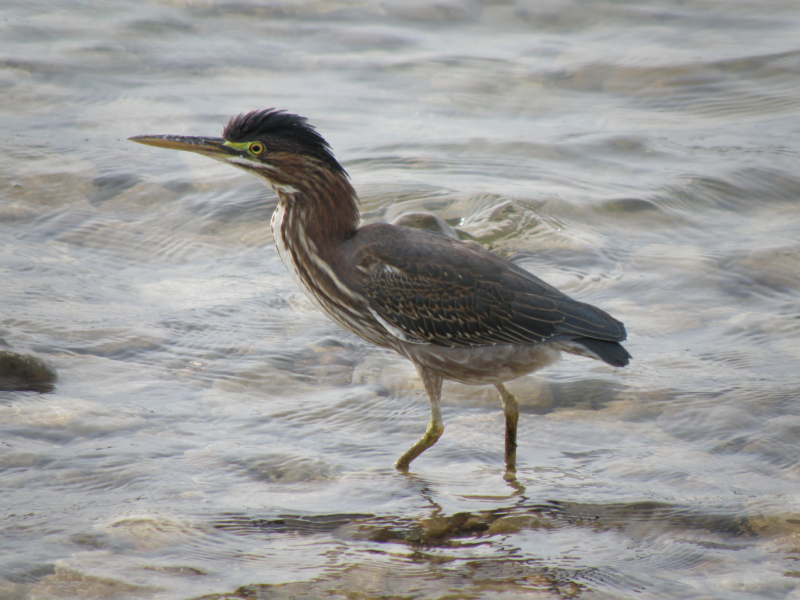
These animate life forms are called “birds” and have internal skeletons made of a lightweight material.  They also have an unusual outer covering that gets shed once a year and helps these animals to fly.  Here is a different and much larger bird I came across feeding at the water’s edge.

From the streaked markings and lighter coloring I identified that this is a juvenile Green-backed Heron.  I disturbed its hunting and feeding along the water’s edge.  Observe that it has a crest on its head which it uses to register increased alarm.  In the next moment, the heron jumped into the sky and with a few quick wing beats was gone from view.  My love, I think you will enjoy the sessile life forms as much as I do!  The humanoids refer to them as either “flowers” or “weeds” and they don’t try to escape if you express interest in examining one like the animate life forms do.  Following is a small portfolio of self-images and some of the variety in these self-sufficient life forms I have experienced on a single solar day.

I have noticed that the humanoids have reserved some animosity towards the sessile life forms that they refer to as “weeds”.  To my sense organs, I can not tell the difference between preferred species and the ones considered to be undesirable?  If one quality of a “weed” is its ability to thrive in a variety of conditions…one would think that the humanoids would admire this since this is a quality they share with “weeds”!  This is certainly a planet of mysteries and contradictions and how I wish you were here to experience it with me.  I have observed that the photons emitting from the local star are traveling farther to reach me with each day.  The temperatures have also been getting cooler and the sessile life forms are undergoing changes to the cellular solar panels which are turning color themselves and in some cases falling off the main body of the life form.  There is a frenzy among the smaller exoskeleton animals to gather as much  energy from each plant as possible.  I’m predicting that this world will go into a dormant period before re-emerging in the warmth of a new solar year.  It is also now time for me to end transmissions for the moment.  How I hope you and my fellow Styrosians are receiving them? Finally, I will conclude with two images.  One is a self-image of me in front of small white and yellow “weeds”.  The last image features some of the flying exoskeleton animals attracted to this plant.  Until its time for my next communication…good by from the water world.

Read Full Post »

My beloved…I still live!  I hope my repair to my communication transmitter has been successful and that you and our fellow Styrosians so far away across the universe will receive this message and know that I still exist.  While exploring a little known solar system my ship was damaged in a collision with undetected fragments of space debris in orbit surrounding a smallish, blue-green planet.  This planet is the third nearest to its star. This solar system is comprised of eight other planets of varying dimensions and densities.  Damage to my guidance system made controlling my craft difficult and I entered the atmosphere of this planet like a meteor across the sky.  Fortunately, I arrived without attracting attention and I was able to affect a safe landing.  My craft, however, will need much maintenance. Hopefully, the coordinates of my position reached you before I entered this planet’s dense gaseous atmosphere? Here is an image of my vehicle which I call home and its contents are a dear reminder of the world from which I originated.  So often I have thought of you and wondered if we will ever see each other again?

I have so much to tell my fellow Styrosians that I hardly know where to begin.  Duty compels me to start with a report concerning my original mission.  I have crashed on a beautiful planet where the majority of its surface is covered by that most precious combination of hydrogen and oxygen.  I am so excited to have found water in abundance!  I have detected water in all three of its known states including gas, liquid, and yes…I have even seen ice!  It was the chemical signature for water that compelled me to take a closer look when the accident occurred.

Most of the water I have been able to analyze locally is of the fresh variety which contains many other chemical additions some of which are naturally occurring.  I have, however, been able to learn that the vast majority of the water on this planet is heavily influenced by the compounded interactions of sodium and chlorine.  I have not only discovered water…but water in different flavors!  After surviving the shock of my sudden and unexpected arrival, I couldn’t wait to explore this new environment which offers such a stark contrast to our own dry home world.  There is so much water here that it actually falls from the sky!  Please excuse me while I transmit additional self images made while engaging in water joy!  They at least offer further visual evidence of the importance of my unexpected discovery.

How I wish you were here so we could experience this together.  I have been able to further confirm that our hypothesis about the connection between water and life is correct!  The abundance of water is equaled by the sheer amount and variety of life forms that inhabit this world.  Where there is water I have found life even in the precious fluid itself! There are sessile, terrestrial life forms that process sunlight through green, cellular solar panels.  They anchor themselves and obtain moisture through a system of filaments interwoven into its supporting substrate. And there are also many animate life forms that move through space and have evolved into hierarchies where every environmental niche is occupied by a specialized life form.  Interestingly, there are even species that dominate and consume other life forms. Our scientists will have much to study in this new world! I would like to expand on one of those species which seems to occupy a very prominent position on this planet.  It is an interesting life form and is bilaterally symmetrical like us and appears to be sentient to a degree.  Monitoring their communication patterns I have been able to translate and understand something of its language and culture.  I have heard self references to being a” bipedal humanoid”, but I’m not certain if I fully understand what is meant by that.  This animal while claiming intelligence and rationality is actually characterized by numerous contradictions.  The most observable of these traits is a predisposition towards delusion and self-deception.  It does much harm under the guise of doing good. This animal (which I believe as some members of its own kind acknowledge have evolved from what are known as “primates”) is constantly engaging in selfish behaviors that are having a deleterious effect on this planet.  Ironically, they are harming not only the other life forms here, but ultimately themselves as well.

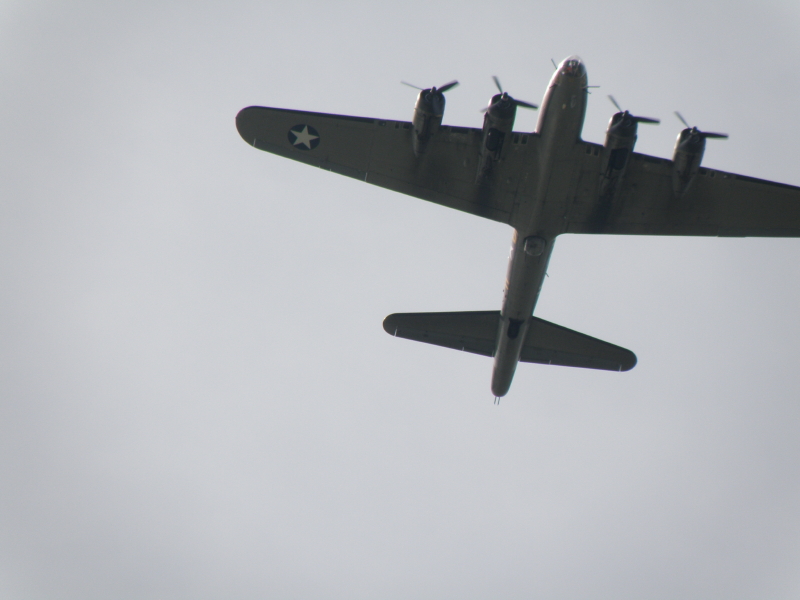
Recently, I was exploring a water channel when I saw a shape flying towards me from some distance away.  It appears to be an antique flying craft bristling with armaments.  The dominant species here is addicted to using hydrocarbons extracted from the ground which are then  further refined to produce fuel and energy.  I quickly captured this image over my head and placed it in the catalog I am compiling for future reference.  I have observed other technologically superior war-like aircraft in the vicinity before, but this one was unusual.  These so-called “bipedal humanoids” are constantly engaged in warfare somewhere on their planet.  This is one of their most primitive characteristics.  Monitoring their telecommunications I have ascertained that violence is an integral part of their conflict resolution process.  The “bipedal humanoids” are capable of rationalizing and justifying any act they commit. When they are not fighting among themselves…they are consuming or damaging resources often with other primitive machines that require hydrocarbons to function.  For instance, observe this case that I recently experienced and documented.

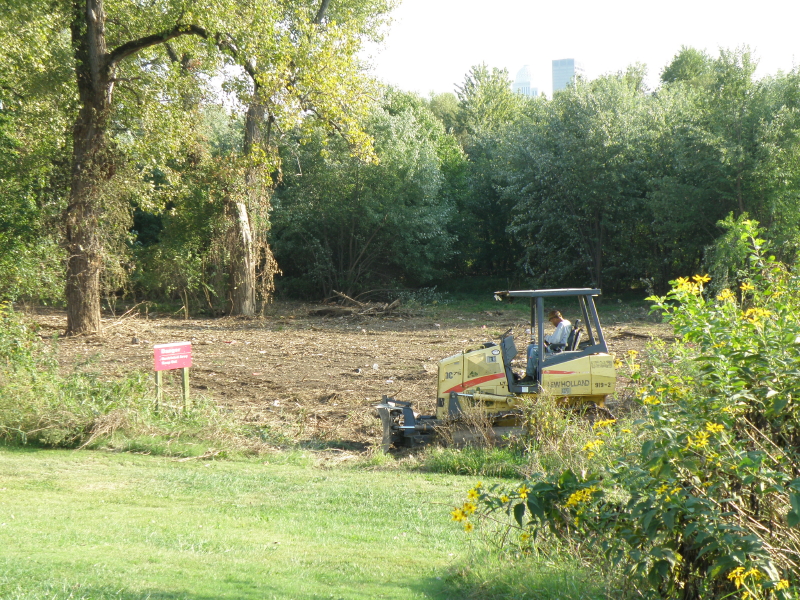
In a nearby field that was once occupied by photosensitive sessile life forms, I observed a humanoid operating a large machine.  This machine did violence to all that was alive in this area.  The remains of many different kinds of sessile life forms were stacked into random piles, but what is the purpose of this activity?

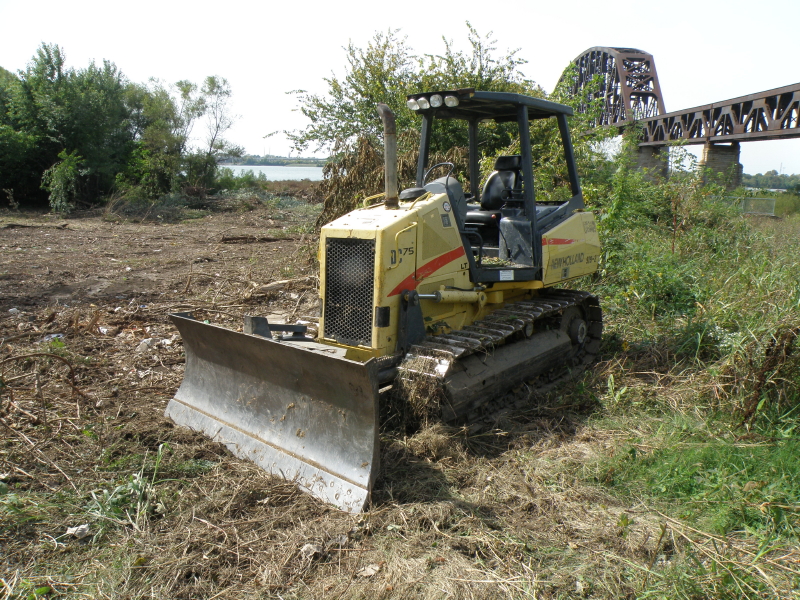
This area was once home to a large variety of life forms and now they have been displaced.  I have observed this before and very recently.  The “bipedal humanoids” created an area that they call the Ohio River Greenway and ironically they removed many of the larger photosensitive life forms to accommodate easy access to the river for their other hydrocarbon burning vehicles.  This seemed strange for many reasons, but perhaps our biopsychologists can figure that one out!  I was able to get a closer picture of the large machine that was utilized to sterilize this particular area and it is frightening to stand next to.  I waited for its operator to leave the area before doing my reconnaissance.

Alas my beloved, it is time for me to regenerate back at my space craft.  I will leave you for now, but I promise more from this fascinating planet.  In my next transmission I will show you more images of the life forms I have observed and maybe something of the history of life on this planet.  For now, accept this self-image made next to the many sessile life forms that lend this land beauty and interest.

Read Full Post »

Jeff and I have been great friends for over thirty years now.  It’s a strange feeling when you realize that much time has flown by.  We met at Murray State University in far western Kentucky and attended art school together and have kept in touch ever since.  Now we both live with our families in Louisville.  I’m proud to say that we still self identify as being artists.  This has not been an easy thing to do.  I’ve read that most people who attend art school eventually stop thinking of themselves as artists once the work-a-day world takes its toll after graduation.  Jeff and I have been lucky and can say that most of our professional lives have not strayed too far from art making or being in the art world.  We have never shaken our need to make ideas and materials connect.  These days, Jeff enjoys making some very involved and often witty ceramic sculptures and through this blog you know something about me.  This is not the first time Jeff has accompanied me on one of my “epic adventures” to the Falls of the Ohio and I always enjoy his company and conversation.  Today is a beautiful late September day and we are hiking in the western section of the park and enjoying the sunshine.

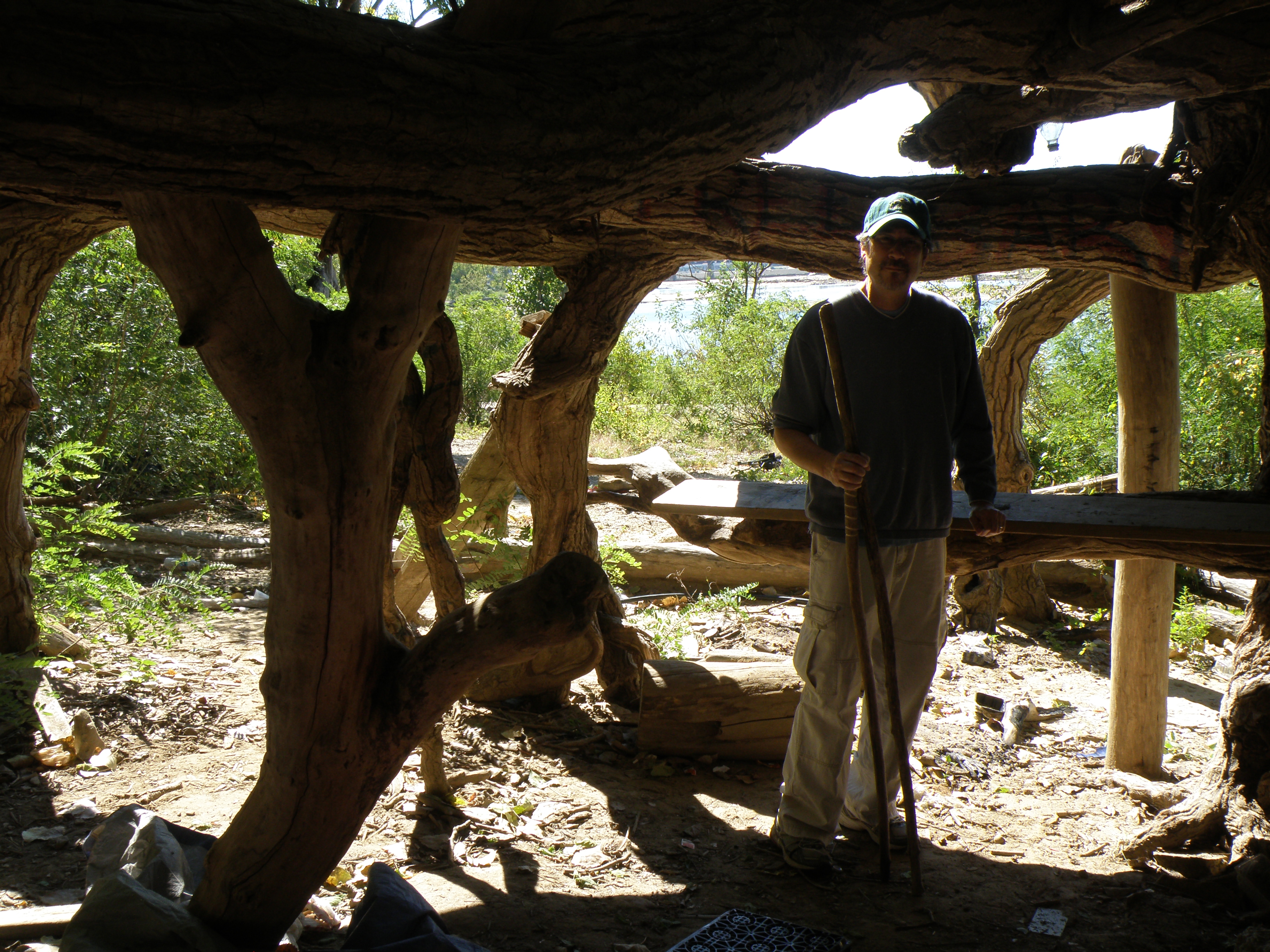
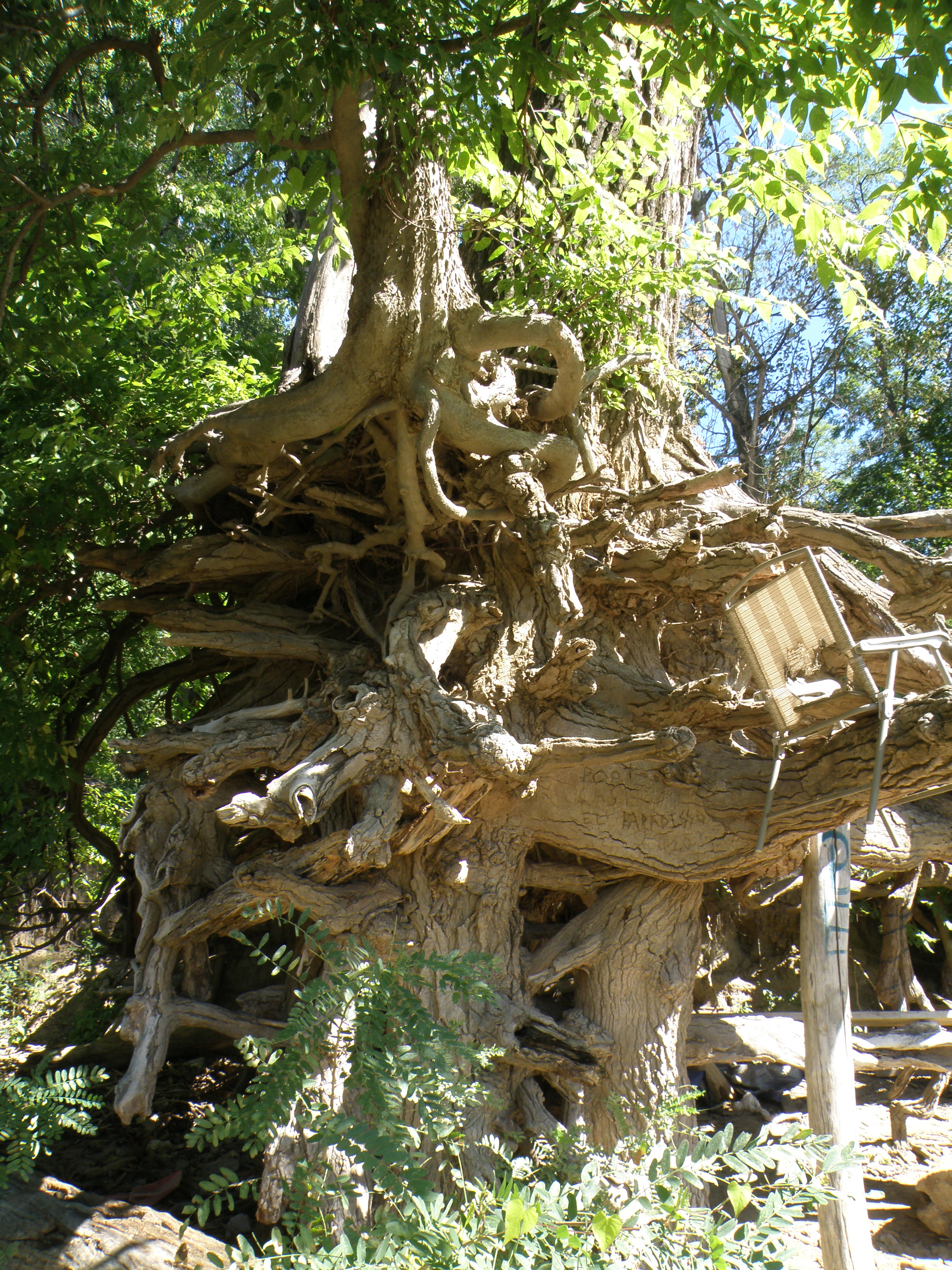
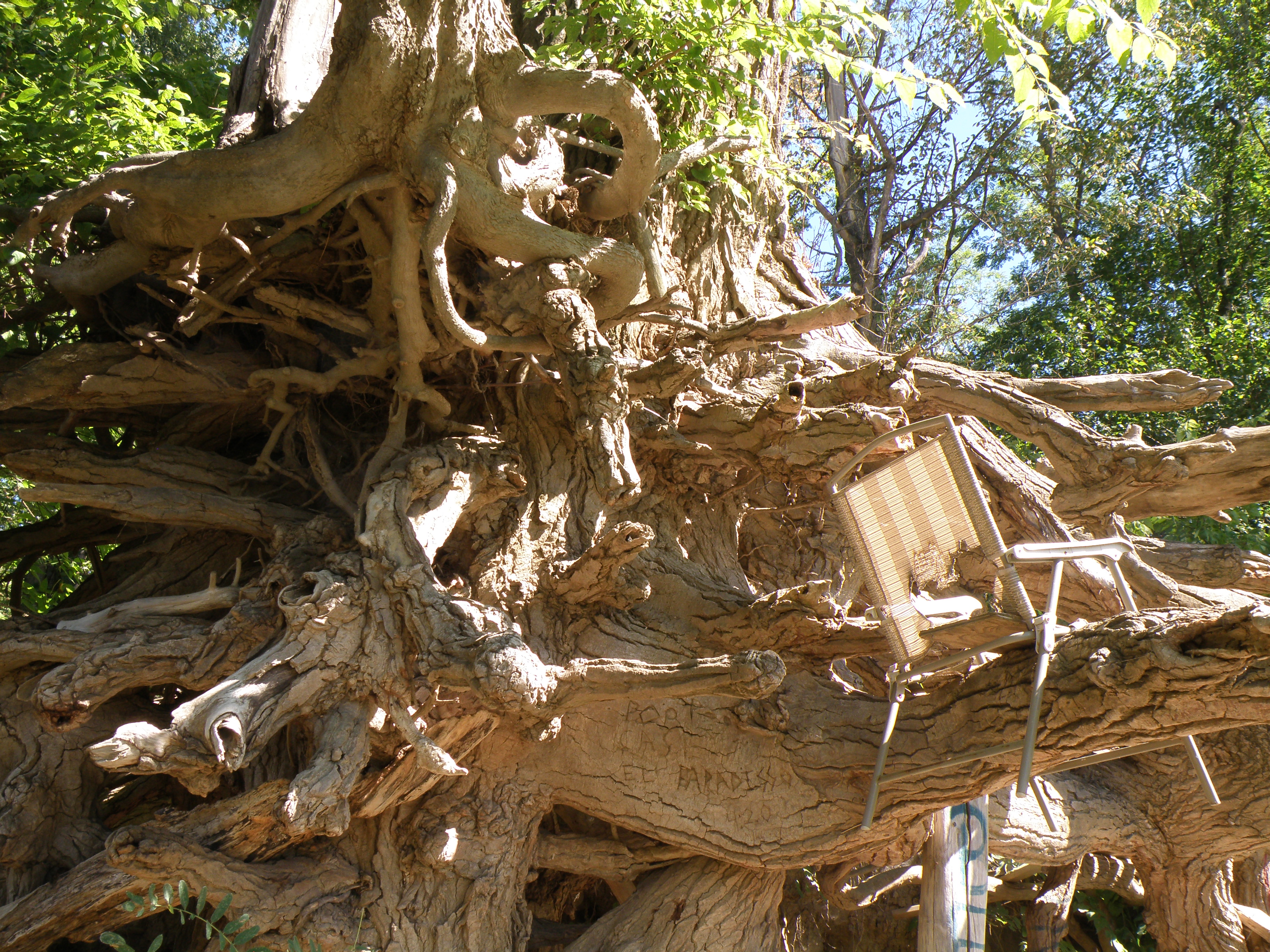
This is a less traveled path, but often worthwhile.  Today there are many late summer/early fall wildflowers to see.  We stopped by one of my favorite trees in the park.  It’s an old cottonwood tree whose roots have continued to grow with the tree even while the riverbank has eroded and exposed these roots to the elements.  This has not kept this tree from thriving.  Over time, a space beneath the tree large enough for a person to stand has been created.  This image of Jeff under the tree will give you a better idea of what I mean.  I have used this space on many occasions to wait out rain showers or take a break from my walks.

Over the past two years this tree has attracted a lot of attention and unfortunately for any other visitors…you can see evidence of their “footprints” all around this cottonwood. There is more litter around and several fire pits contain partially burned trash.  The tree trunk itself has become a target for graffiti as people with pen knives and spray cans have left their marks.

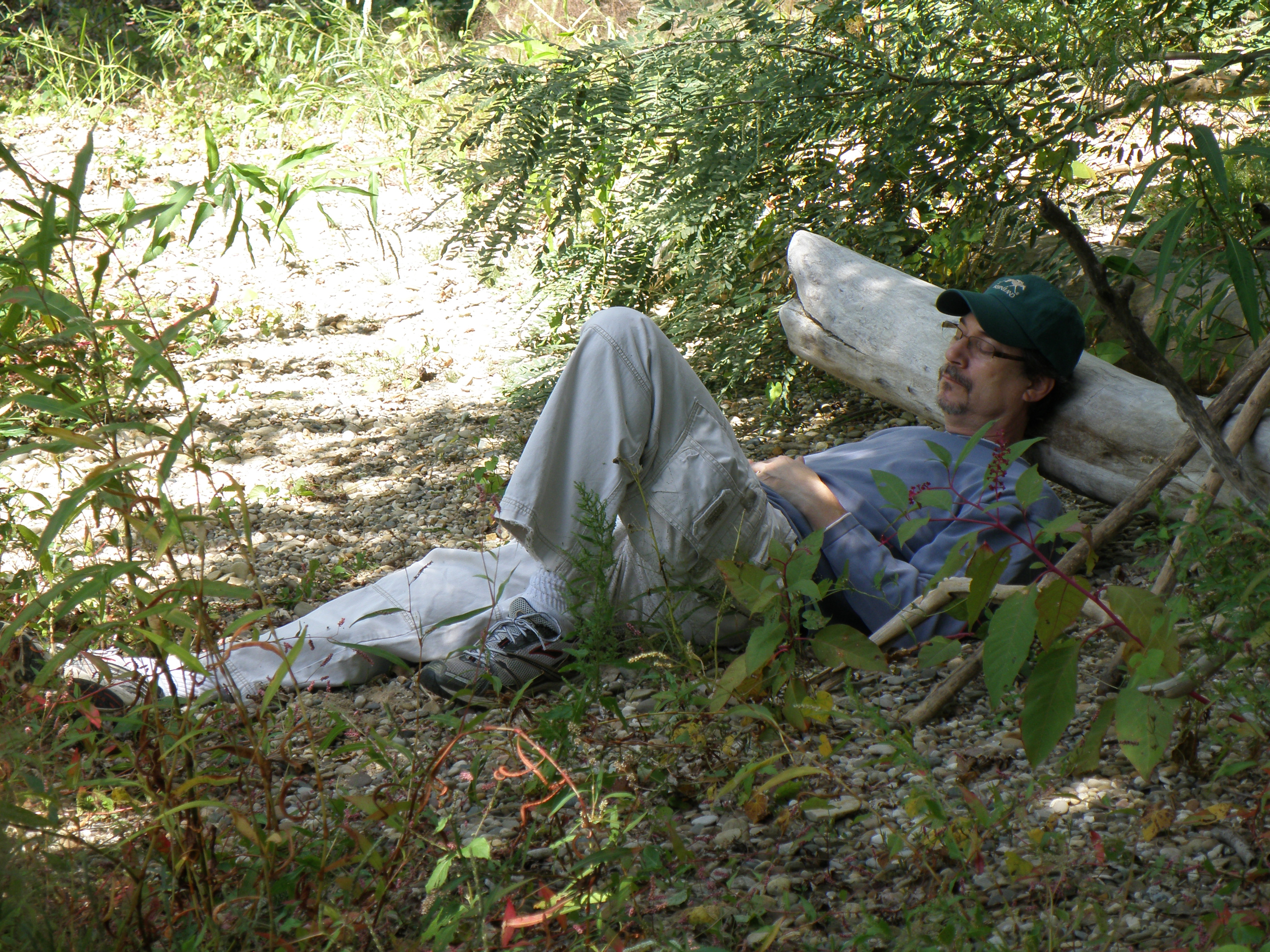
The sun was shining full-bore and warmed the day up nicely.  While I spotted some birds I wanted to check out…Jeff decided to hang out by the tree and take a nap.

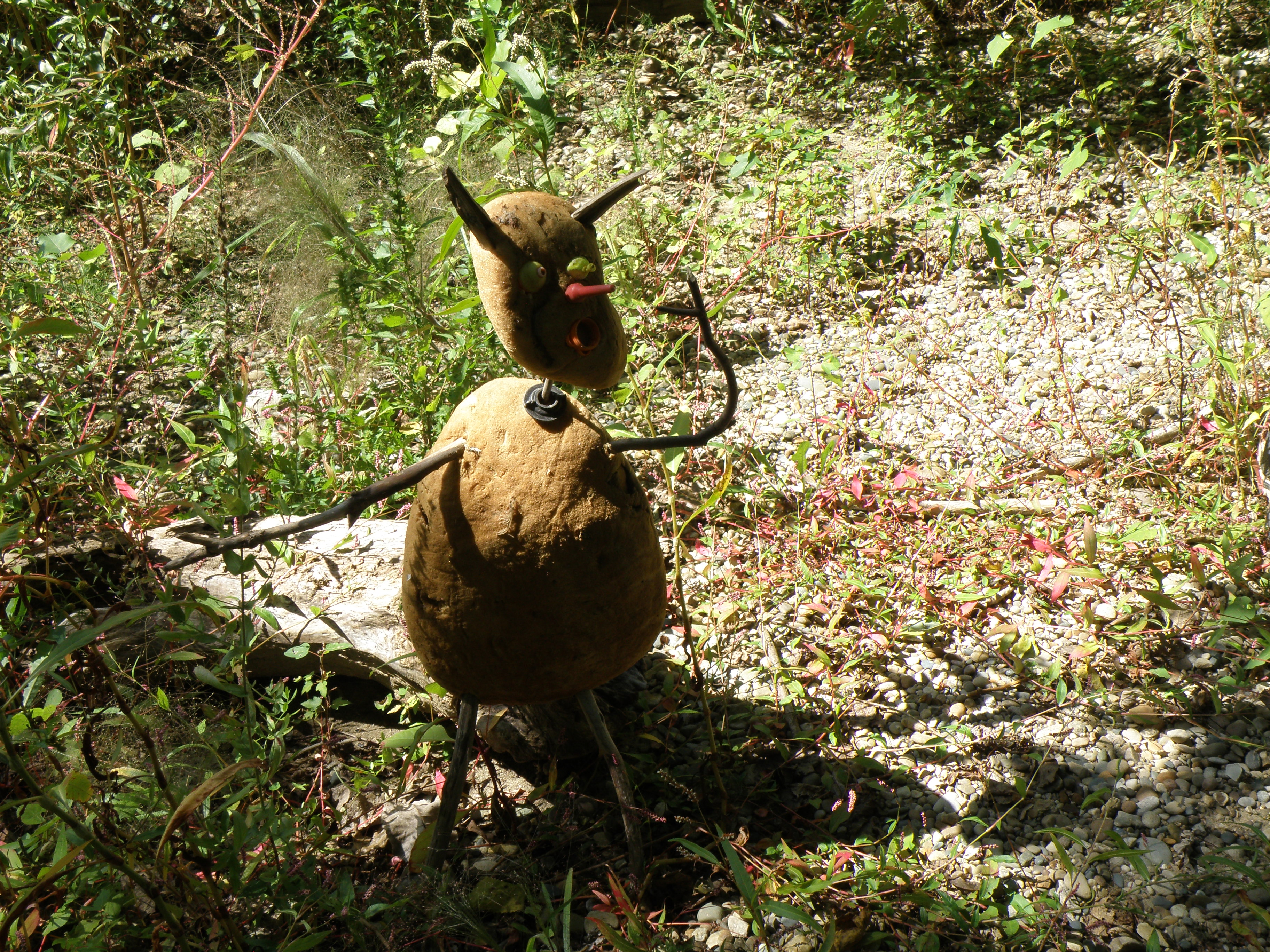
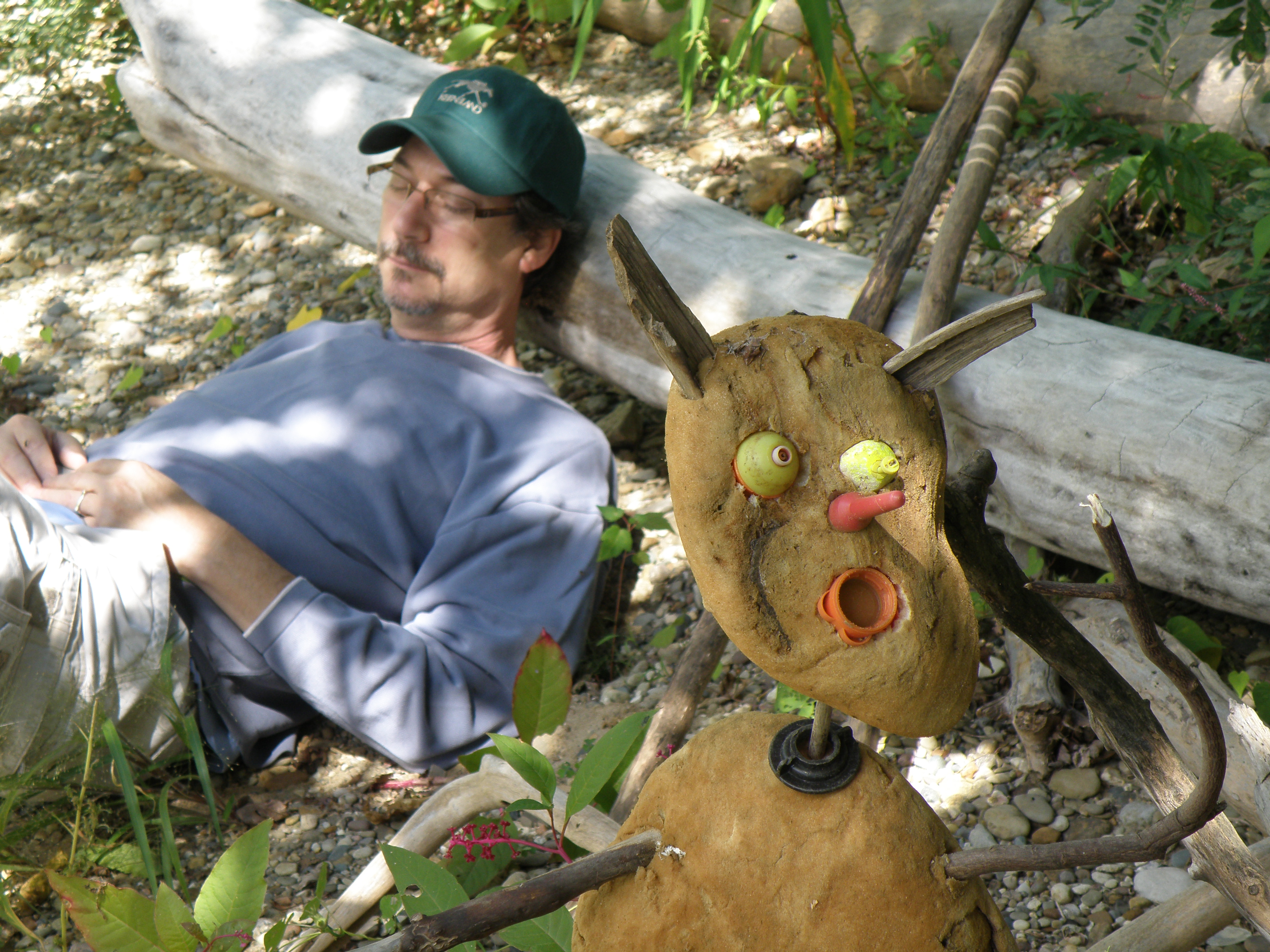
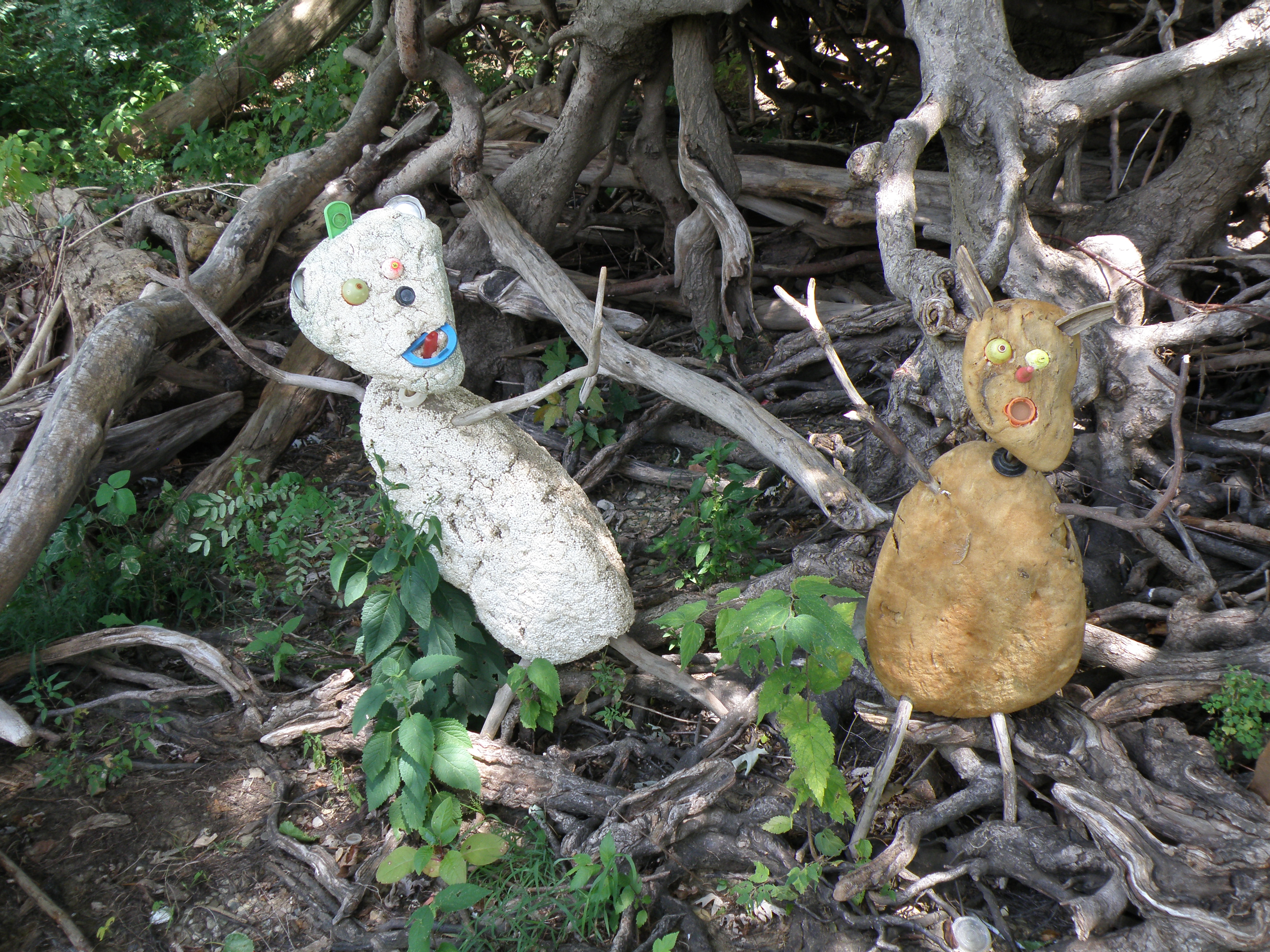
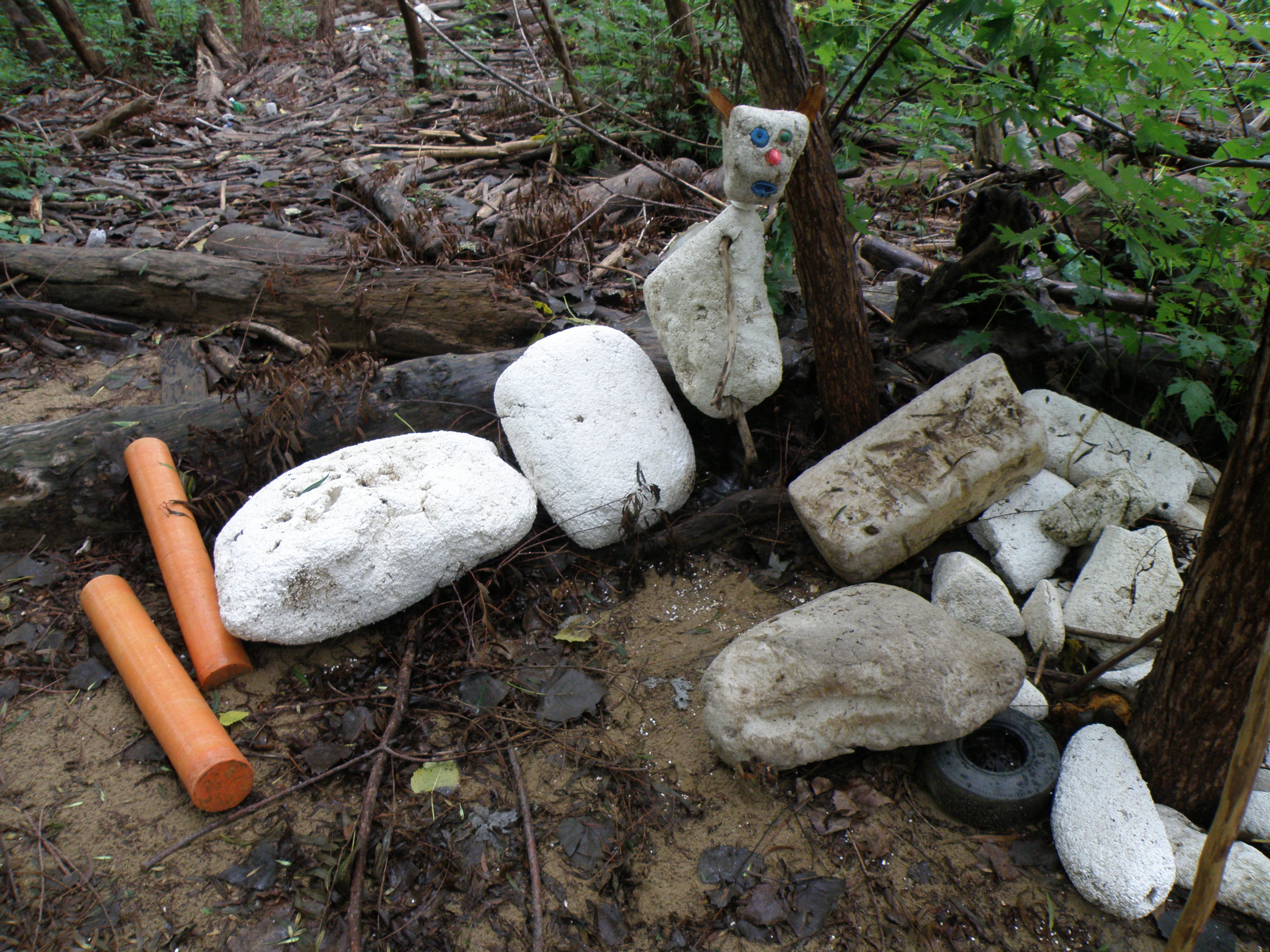
When I returned from bird watching, Jeff was waiting for me and recalled an odd fragment from a dream he just had.  Even in his resting state he felt as though something was checking him out.  First he heard the sound of movement in the dried leaves and then caught sight of an odd small figure in brown with long ears skulking about the shadows.

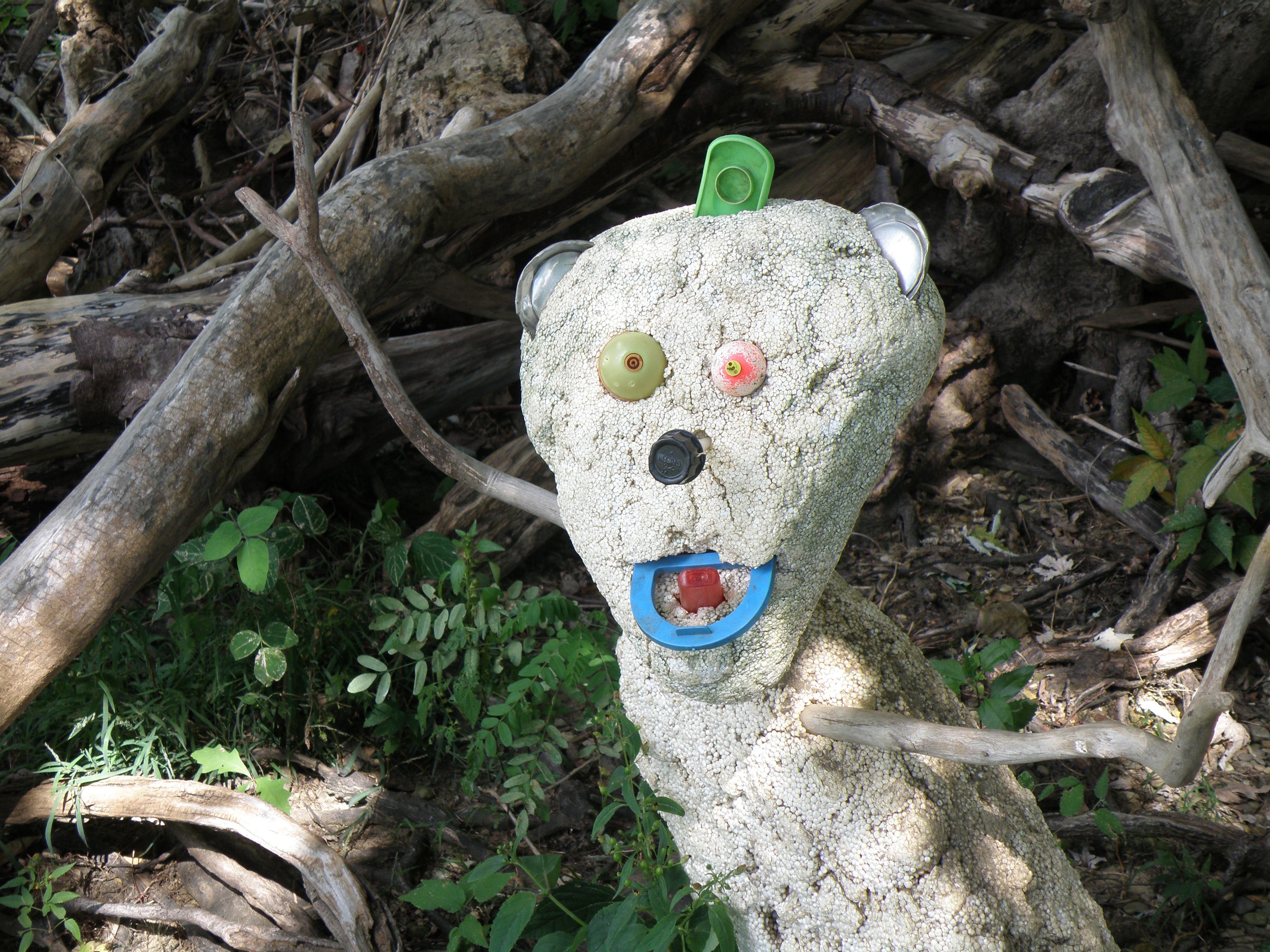
Jeff remembers trying to wake himself up, but the dream continued.  The small brown figure then called out and was soon joined by a second figure that was larger and all in white.

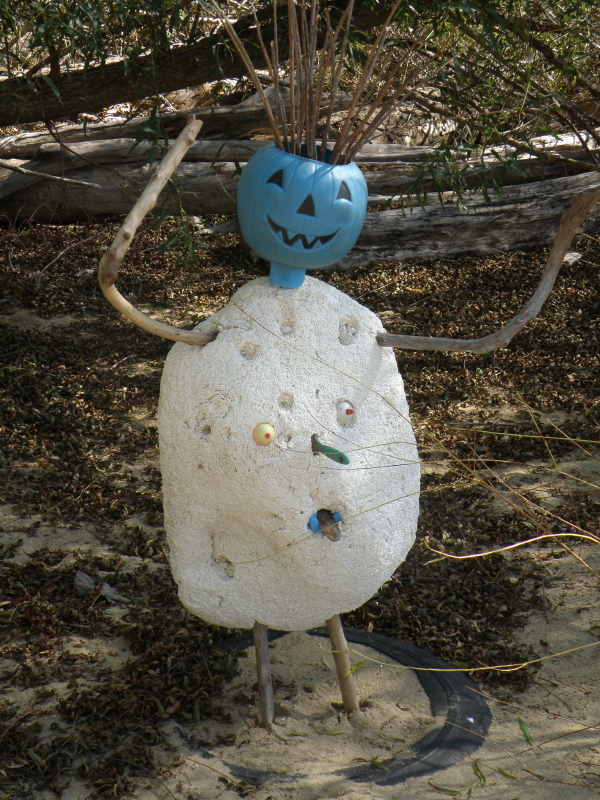
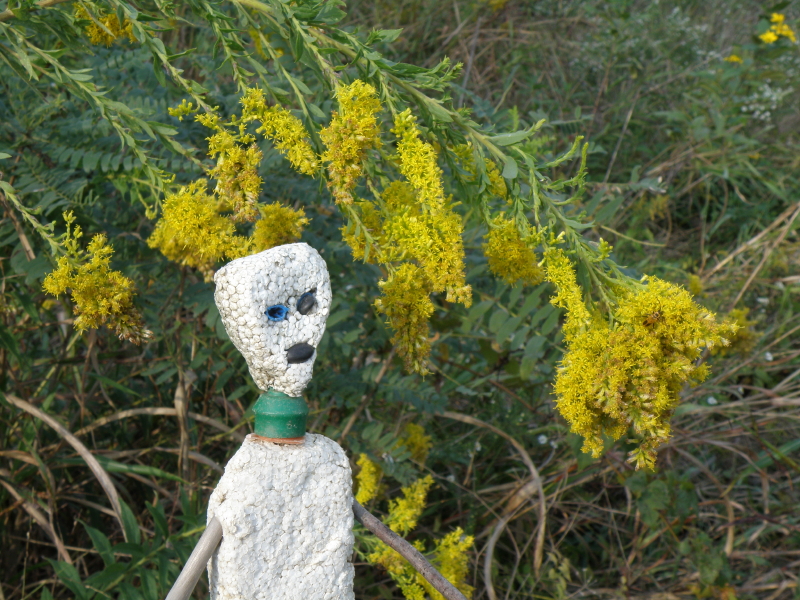
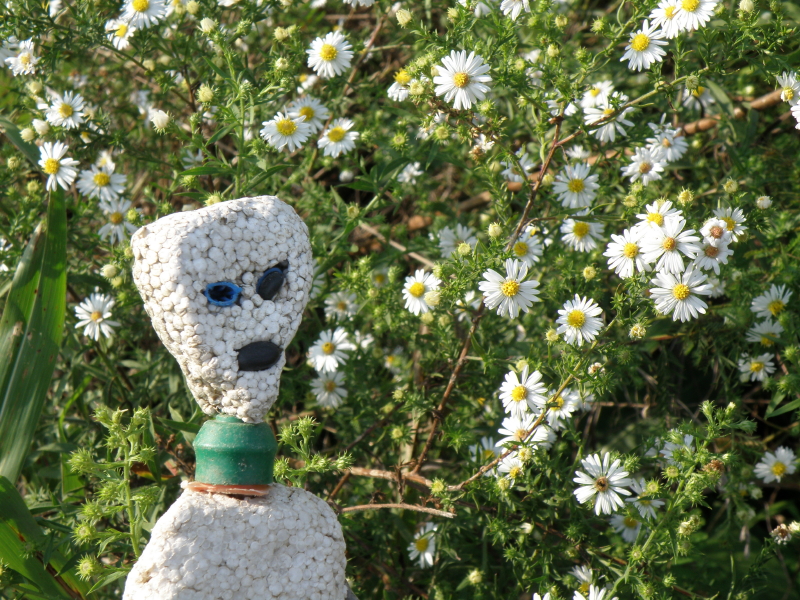
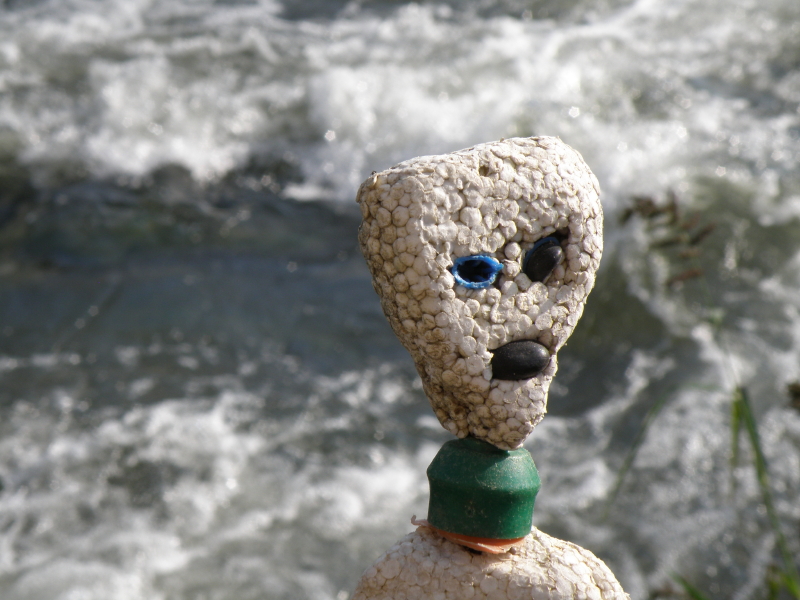
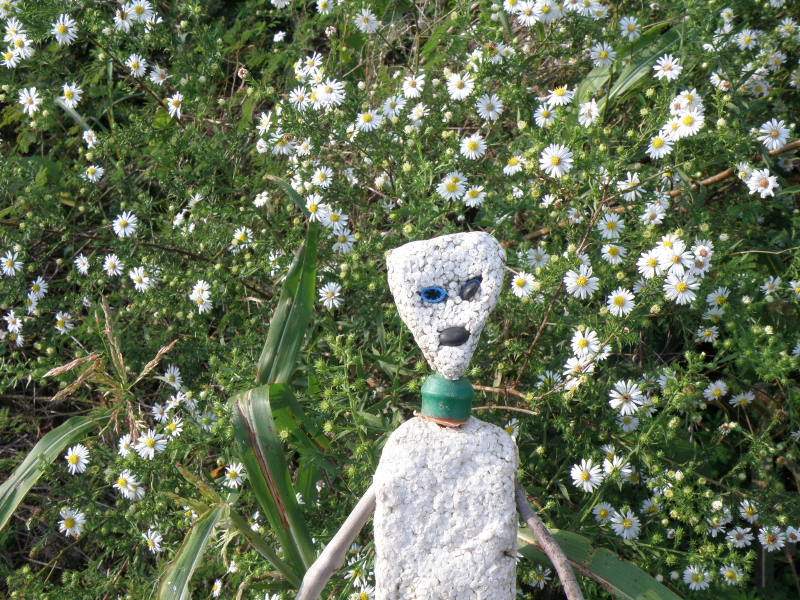
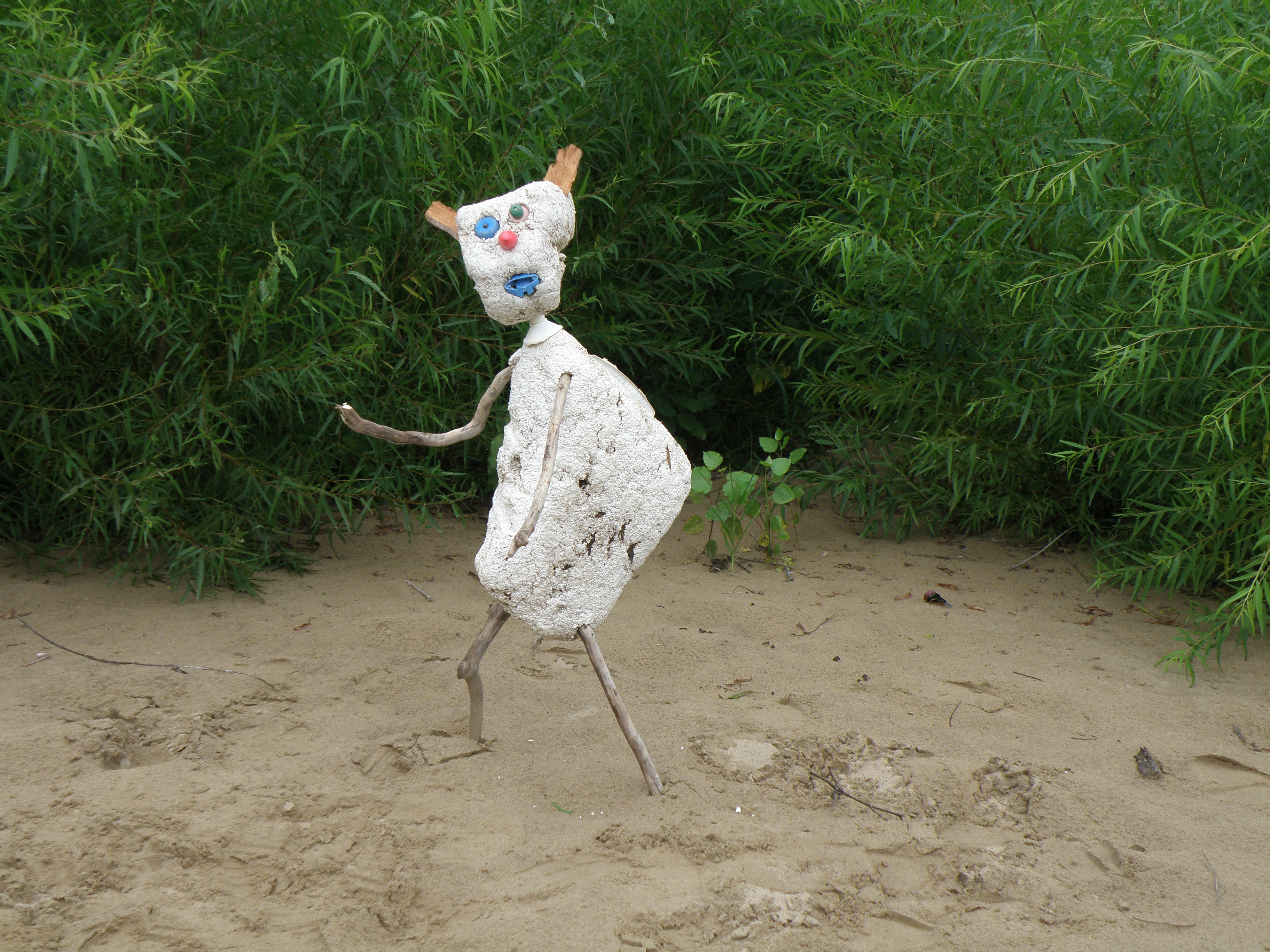
This newest figure was even more bizarre than the first and more frightening for sure.  It sported a large misshapen head, wild eyes, and a mouth trimmed in blue.  Within his dream, Jeff heard a narrator saying that these figures were called “tree spirits” and all trees have them.  These characters may have been up to no good.  It’s hard to say, but fortunately they are easily frightened away.  Jeff thinks they may have belonged to the cottonwood tree and were paying a visit in case we were thinking of doing some damage to this beloved tree.  There were two spirits because there were two of us.  Anyway, Jeff doesn’t know how or if it all played out because he woke up.

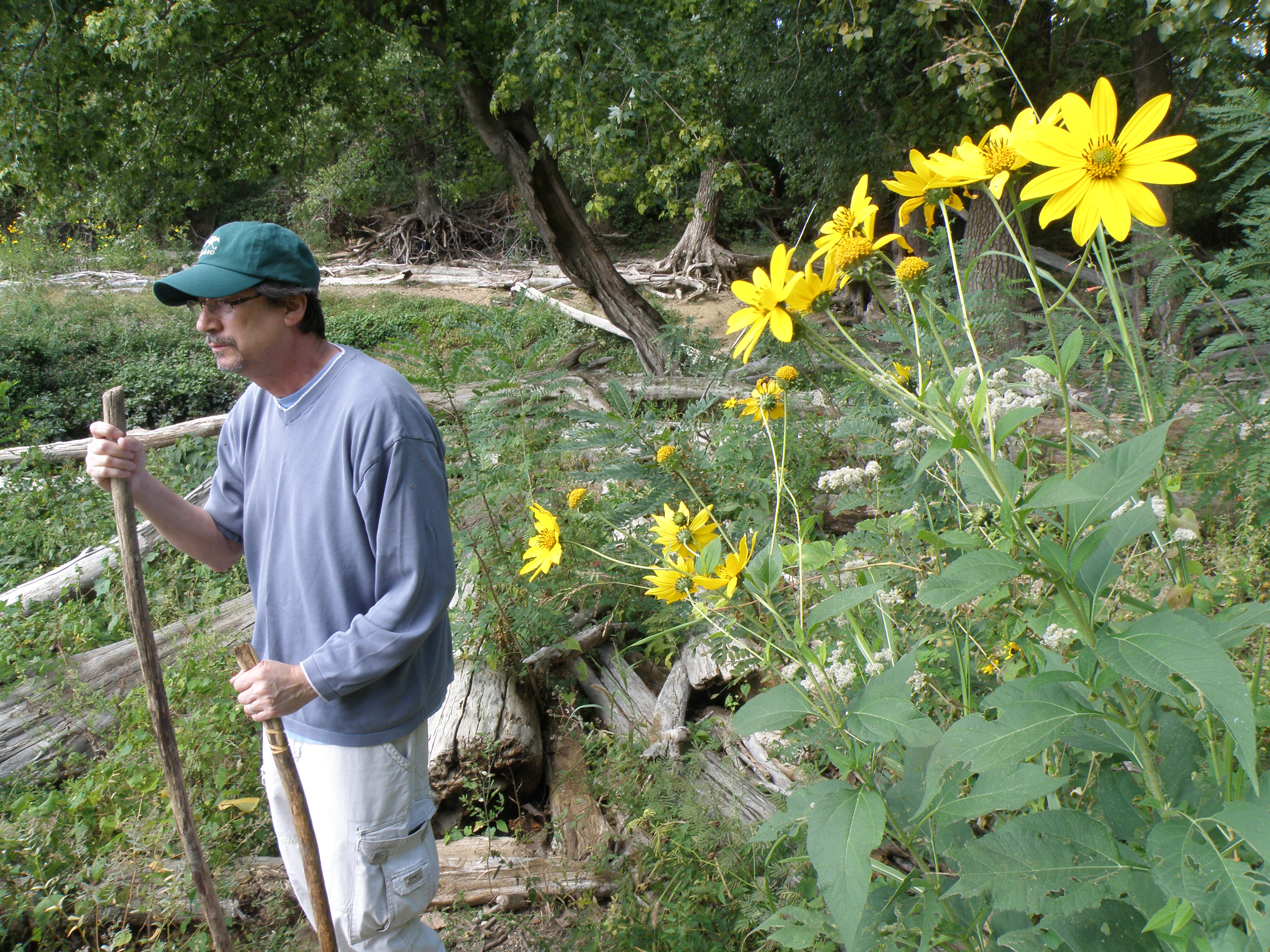
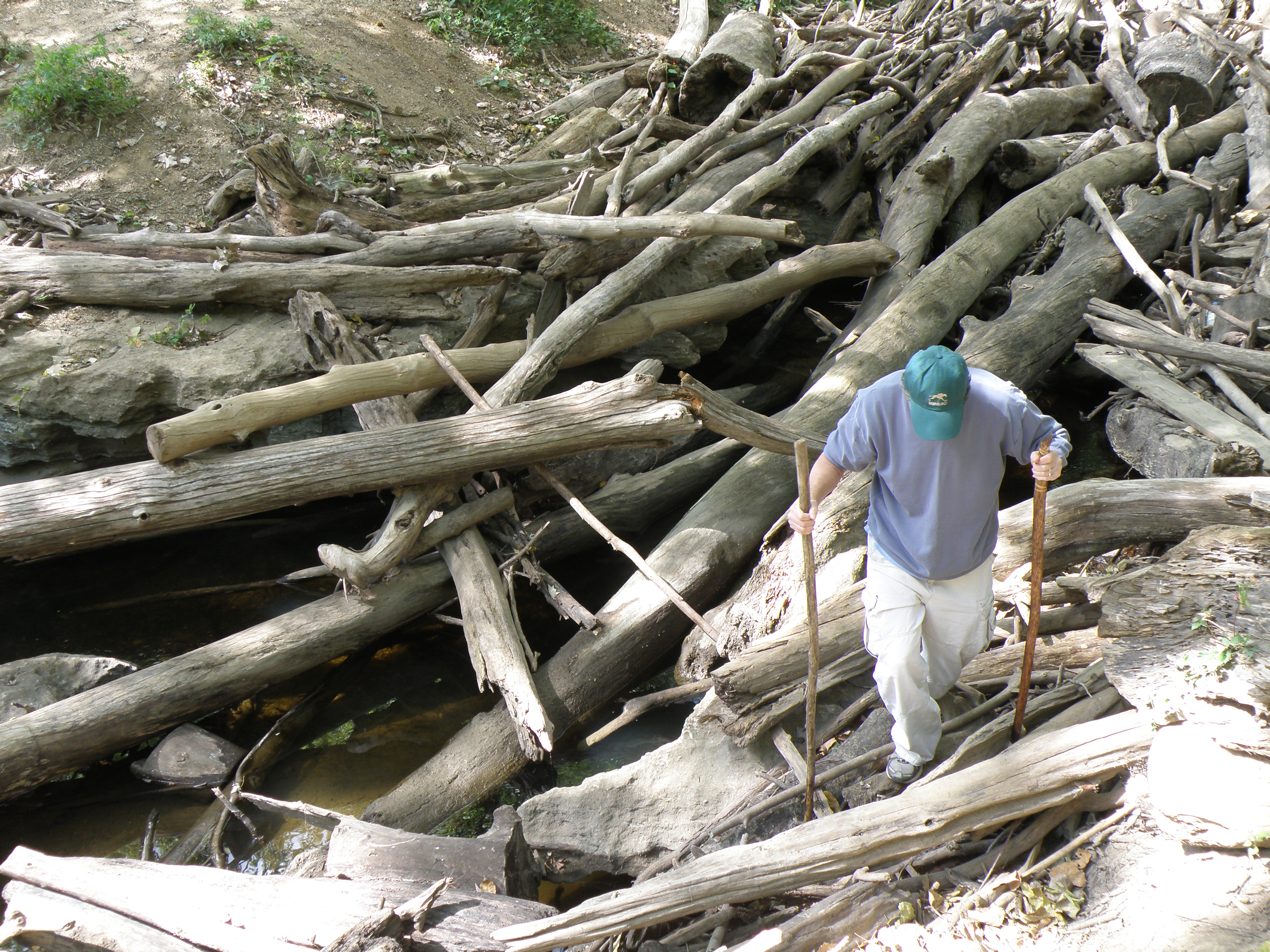
It had already been a full day and we decided to head for home.  Although Jeff was partially refreshed from his nap, I was beginning to feel tired.  The car was about an hour’s walk away and we still needed to cross over the small creek that divides the western section of the park from the Woodland Loop Trail.  We gingerly walked over the logs left over from the last flood balancing ourselves with our walking sticks.  We were in no hurry here.

It was great having another adventure with an old friend!  I’m sure that we will do this again. Jeff found an extra walking stick to take home and that became his souvenir of the day.  For me, I walked out of the park with my images and this story I’m about to post.  Thanks for stopping by…until next time from the Falls of the Ohio!
Read Full Post »

Summer has transitioned to fall.  Everyone has noticed that the days don’t seem to be as long as they were a mere month ago.  This is all the more reason to get out into nature.  Perhaps you have felt that subconscious pull tugging you out the door? The sun is not as insanely hot and the light is intense and clean.  There is just the barest yellowing along the margins of the river’s cottonwood leaves.  More colors will follow.  Right now there is an urgent purposefulness to the world as life prepares to overwinter.  The flowering grasses are alive with flying insects gathering pollen and nectar.  Spider predators are behind every leaf.  After absorbing some of this energy…I headed up to my spot under the willow trees and wondered about making something interesting from my river cache.  I was so happy and absorbed to be back at my outdoor studio that for a moment I lost track of the fact that something was now moving on the left side of my peripheral vision.  Thinking it might be an animal, I carefully brought my camera up to take some quick pictures and this was what I captured.

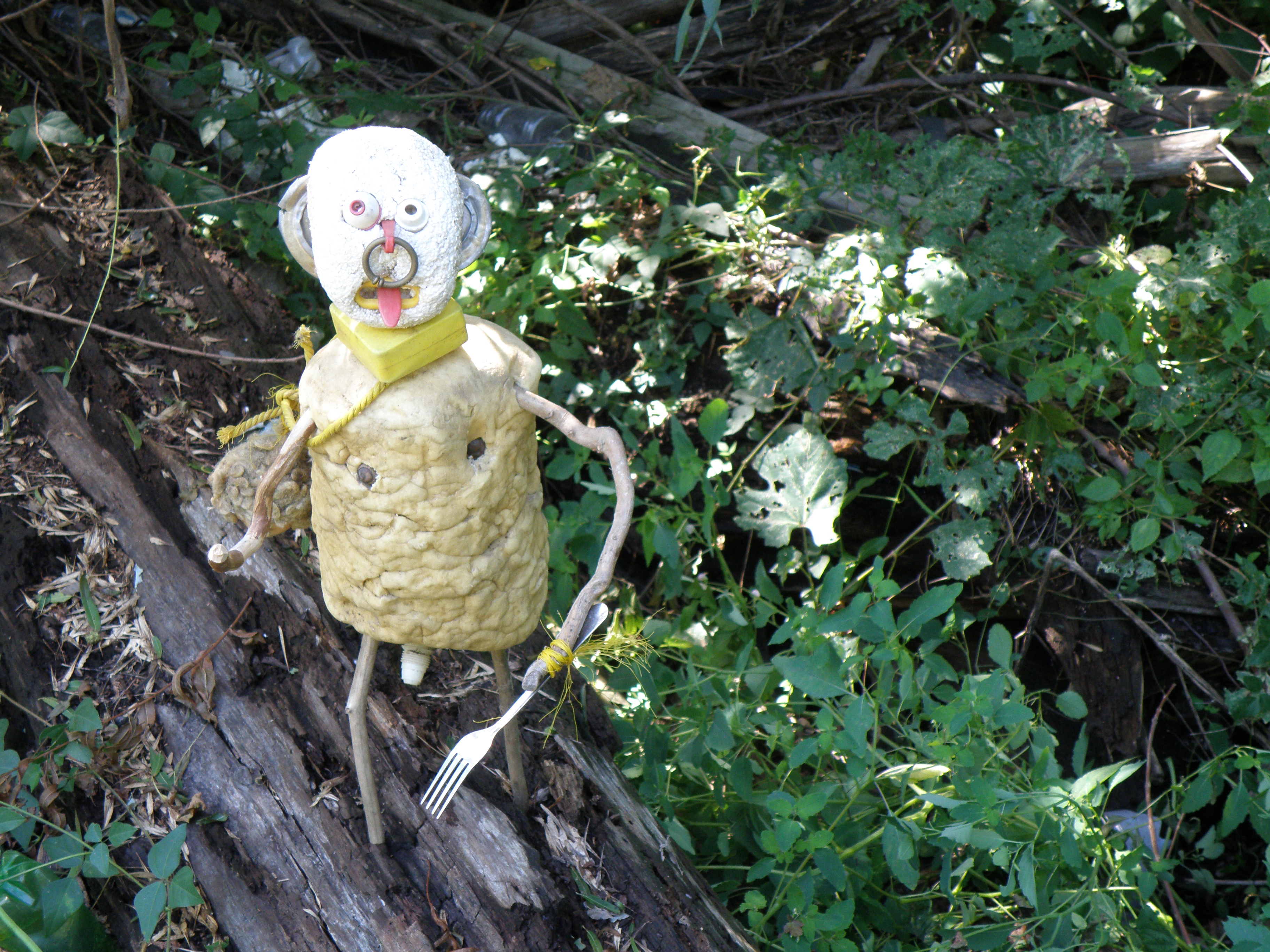
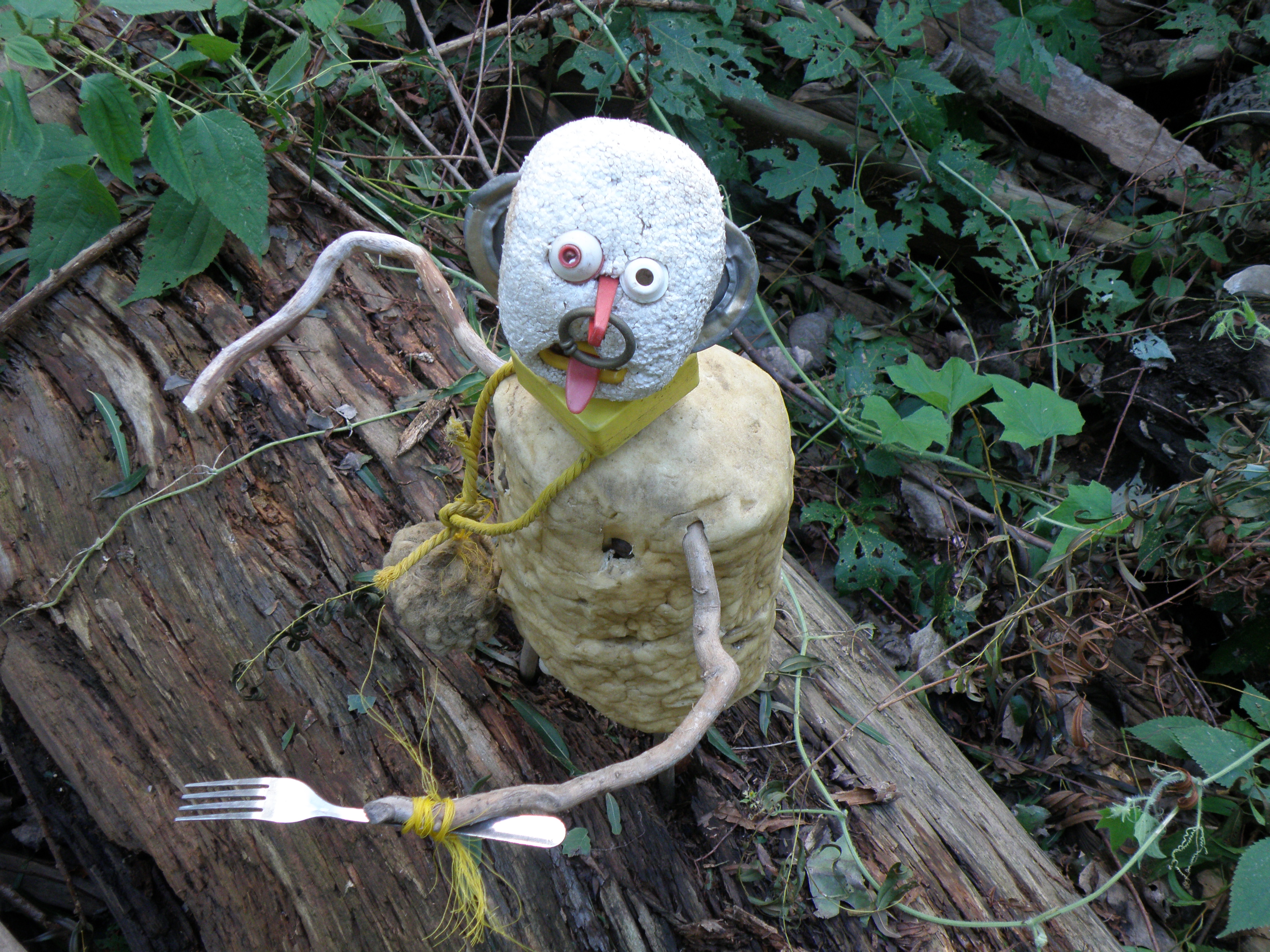
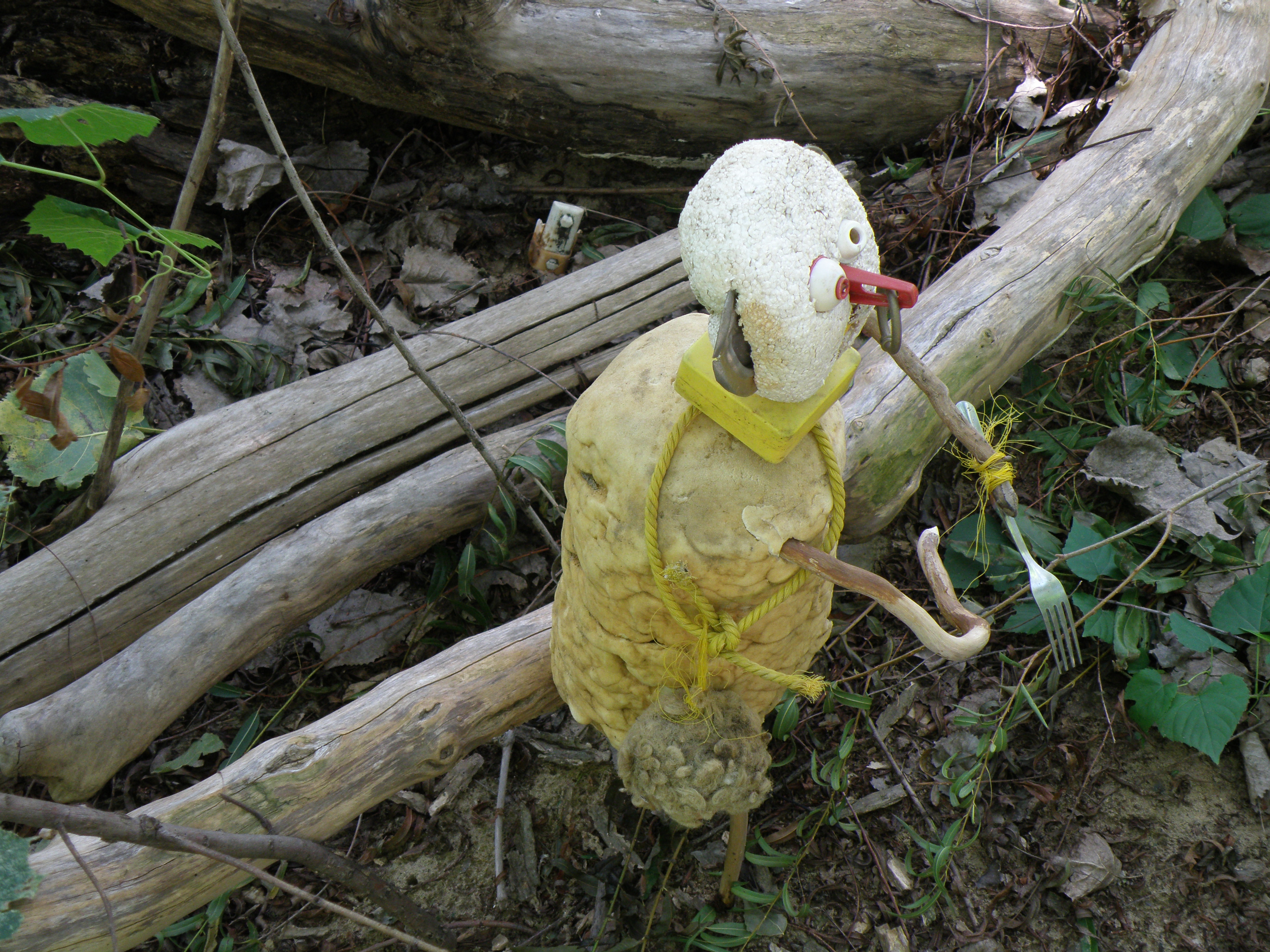
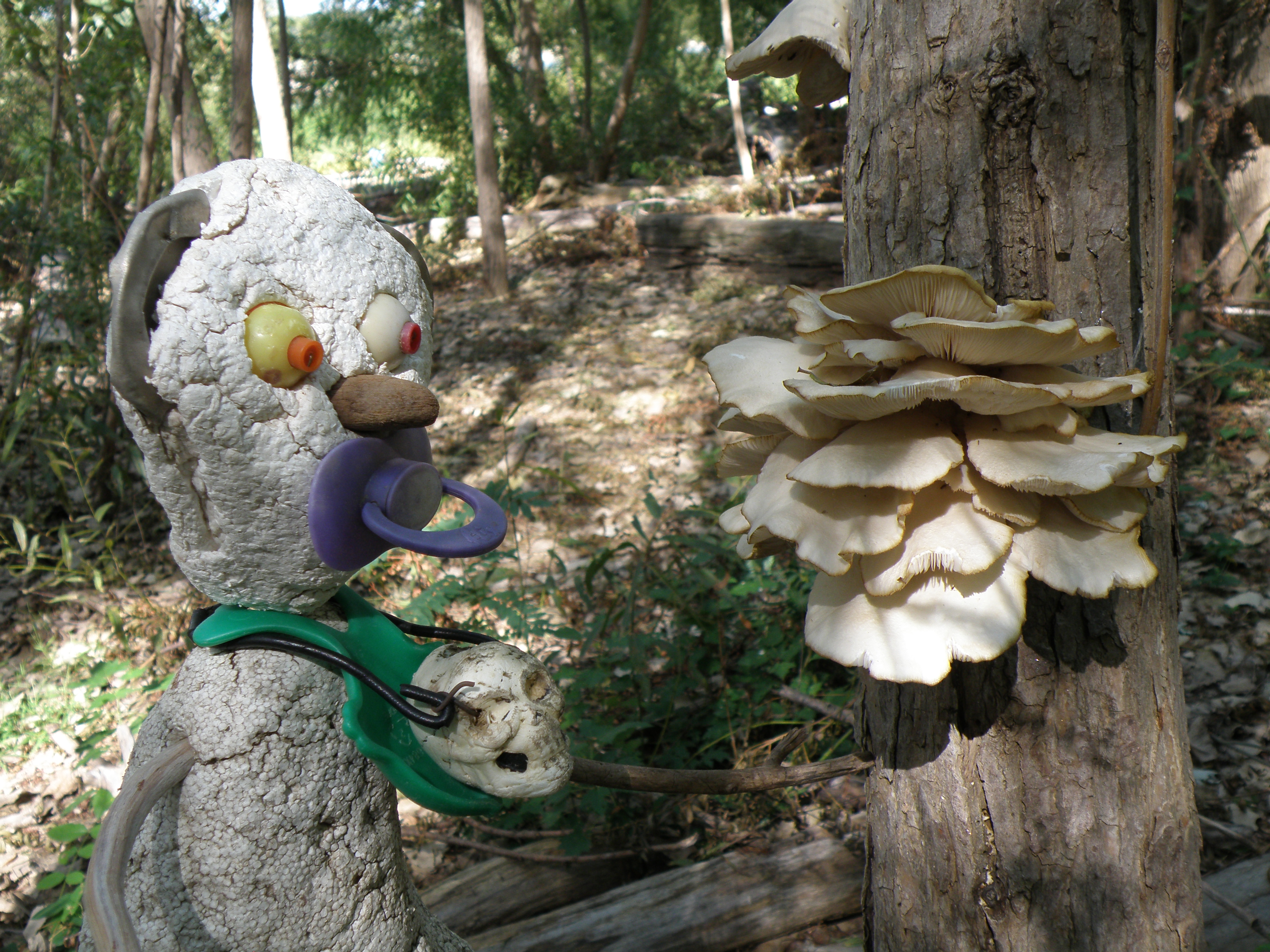
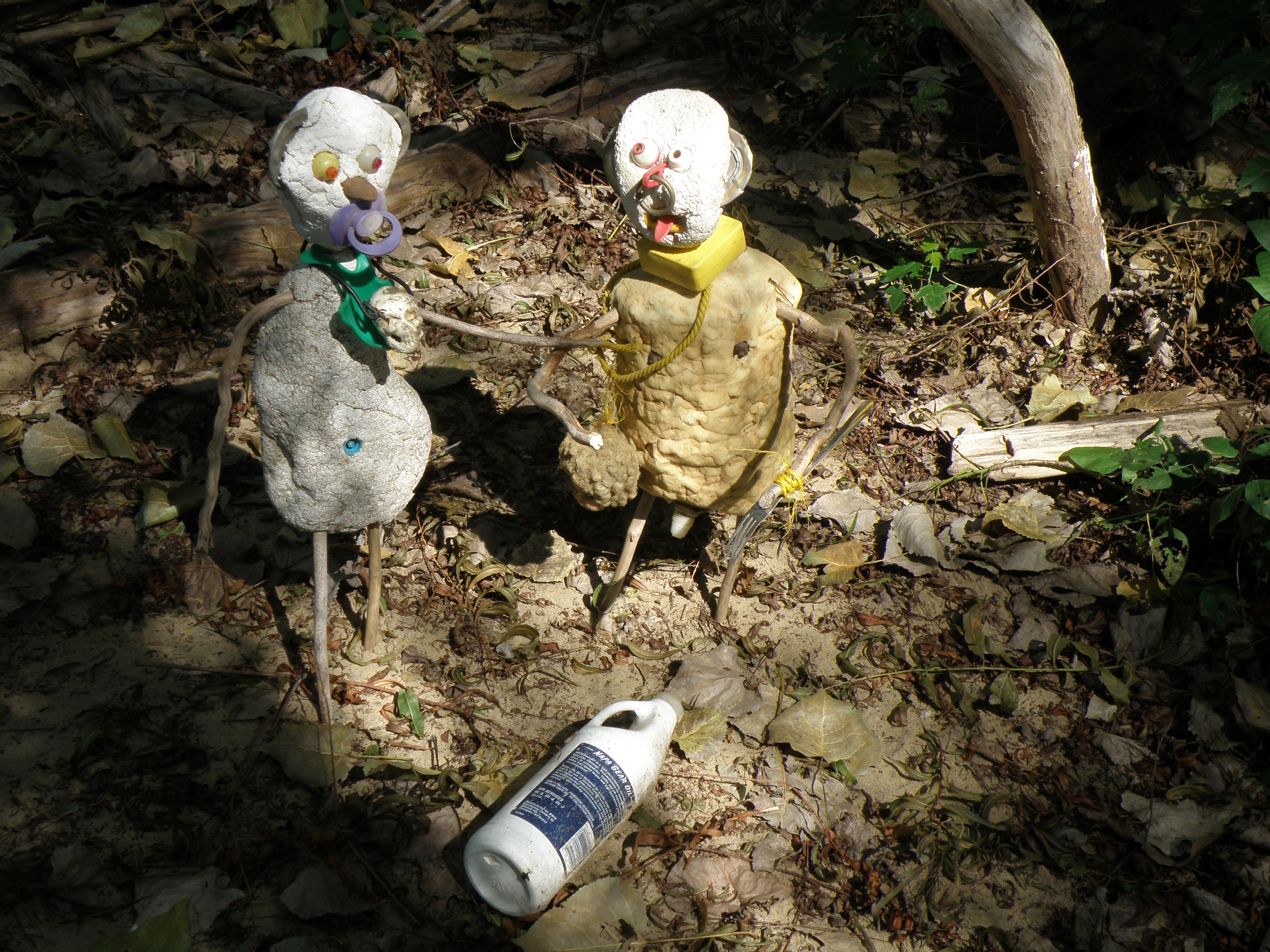
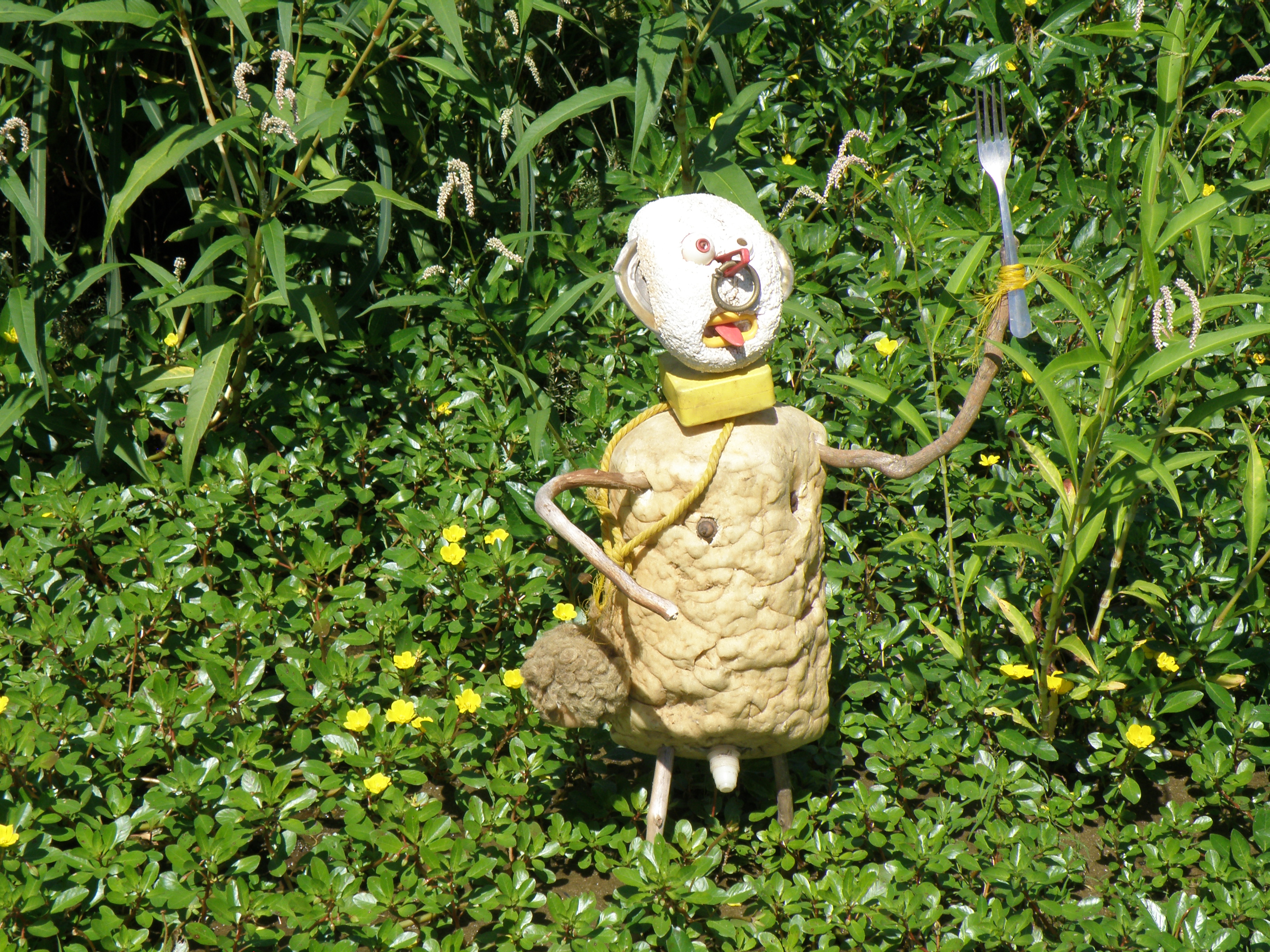
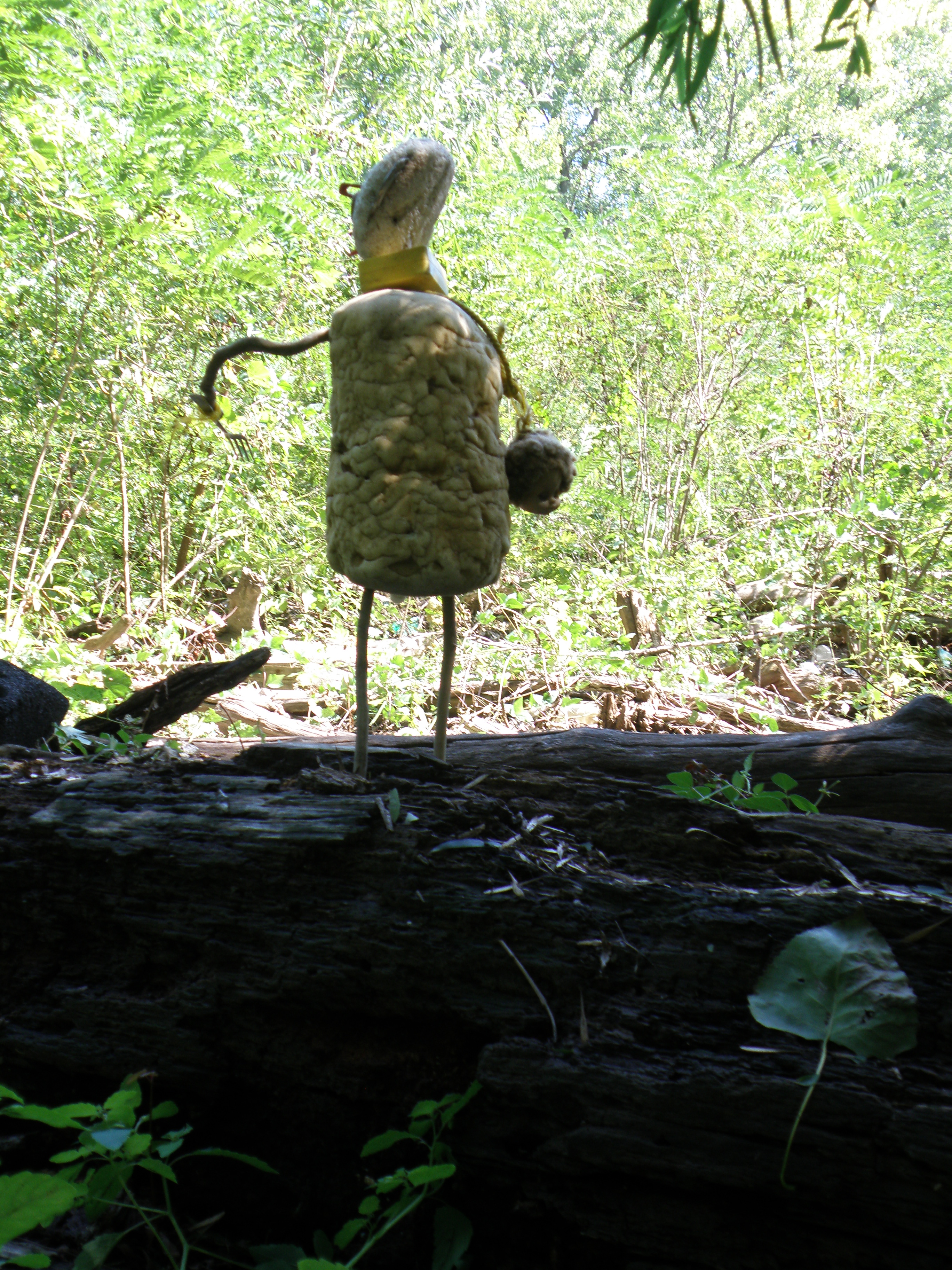
In quick succession, I had two images in my camera before I realized what I was photographing!  Appearing out of a myth was a member of the Pang tribe!  The Pang live in the most remote places in the world’s woods and consider themselves the first people.  It’s not advisable to try to find them because they don’t want to be found and it may in fact be dangerous to do so.  They only appear when they want to be seen.  The land they call home is full of poisonous serpents, insects, and diseases plus the rainy season is relentless.  There are no overland roads and very few trails.  Getting around means braving an unpredictable river.  Oh, and then there is the reputation the Pang have for being headhunters.  The little guy in front of me was reminding me of that by showing me the trophy he carries on a belt everywhere he goes.  I think my camera’s flash startled him!  By holding the captured head aloft, this tribesman was telling me he was experienced in this field!  His nose ring meant that he feared no pain.
The stainless steel fork he brandishes likely means he has had contact with our culture before.  The Pang, otherwise do not work metals.  What is known is that they are a hunting and gathering culture and nature supplies everything they need. The posturing and elaborate facial gestures on display before me continued until he seemed satisfied that I was harmless and perhaps even a bit slow on the uptake?  The Pang have developed a language where one can gauge how a person feels by looking and reading their facial expressions.  Most of the time, an open mouth with prominent tongue exposed is a sign for disgust or disapproval although there are exceptions for most rules.  Using the time-honored hand signal for follow me my new friend beckoned and I walked behind him anticipating adventure and mystery.

Along our walk the tribesman would point out where my culture had  dumped garbage into the Pang’s territory.  From the look on his face,  I could again register disapproval.  I tried to learn his name and give him mine, but we had trouble communicating by words. Aside from the occasional bit of plastic and paper, the forest walk was also full of beautiful birds and butterflies and late season wildflowers.  Eventually, we entered a small clearing and there set up for our relaxation and respite was an intimate canopy tended by another member of the first people.

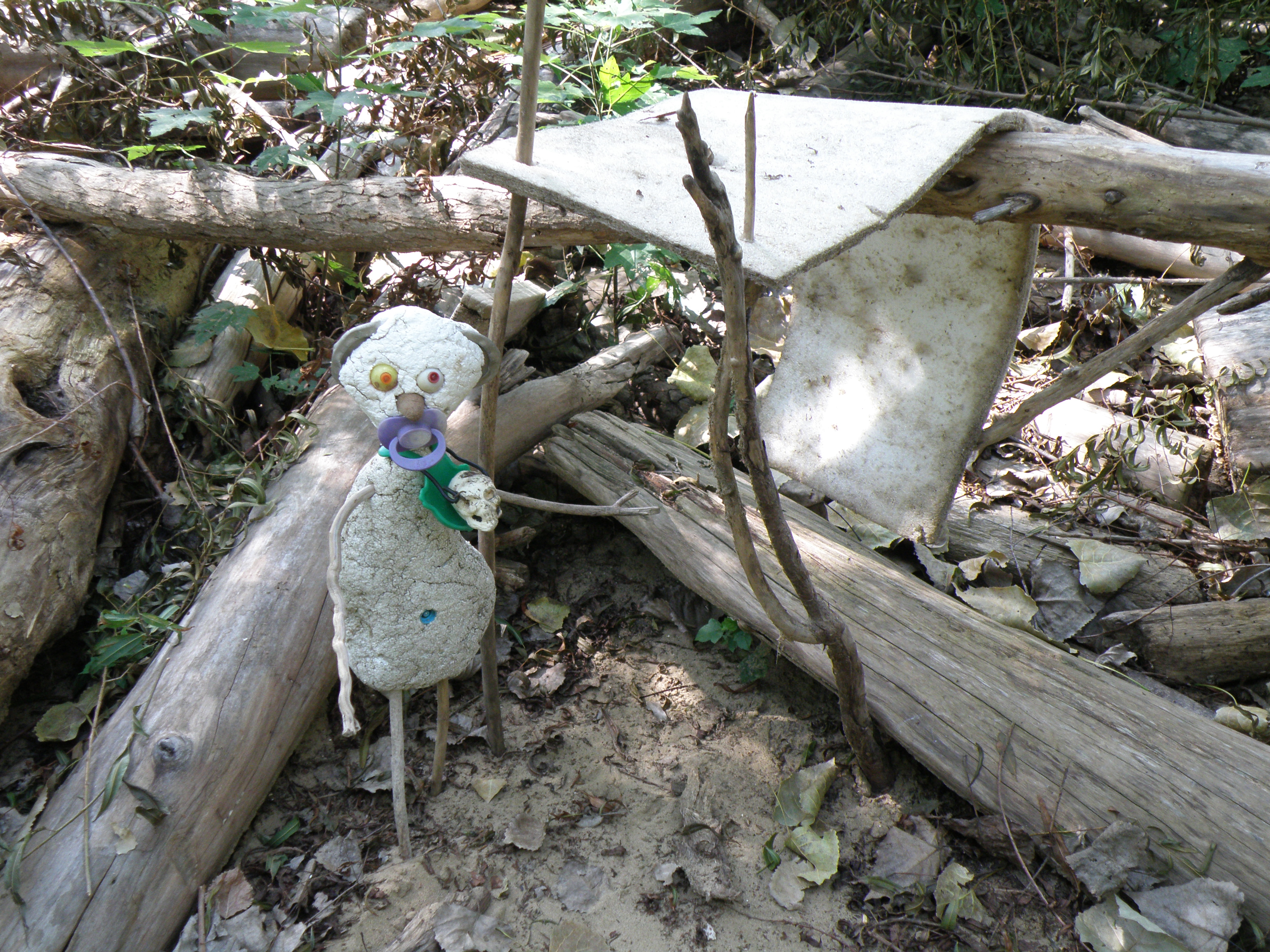
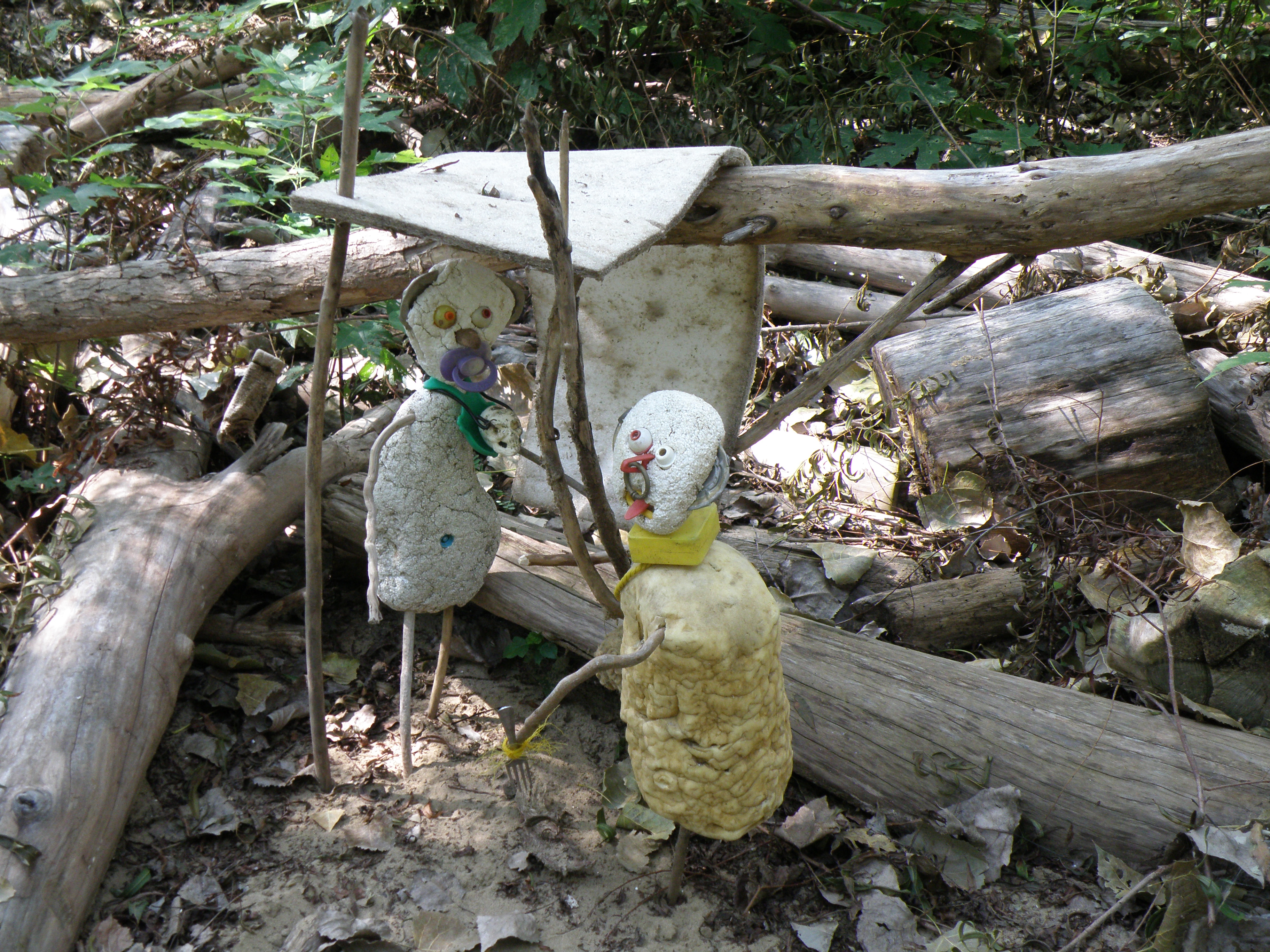
A sheet of recycled plastic foam packaging and a couple of wooden posts made up this shelter.  I saw that the Pang were trying to reuse some of the trash they found. Sitting down, food and water is shared and I’m amazed at my new friends ability to live off the land.  A kicked over decaying log full of large, succulent beetle larvae provides the main course.  I, however, developed a taste for bracket fungi and my new hostess showed me what to look for.  I can’t help noticing that she is wearing a small skull object around her neck.  Later I learned that the Pang don’t remove heads from just anybody or without cause.  Head collection is the highest form of respect accorded to friend and foe alike.  I, however, was never in any danger simply because I hadn’t earned any respectability yet in the estimation of the Pang.  Or so another friend told me later.

After a short rest, my hosts were in a mood for a walk and I tagged along.  I could tell that there were things they wanted me to see.  Of course, they showed me just about every piece of litter we came across on the trail.  It seemed important to them that I not miss this.

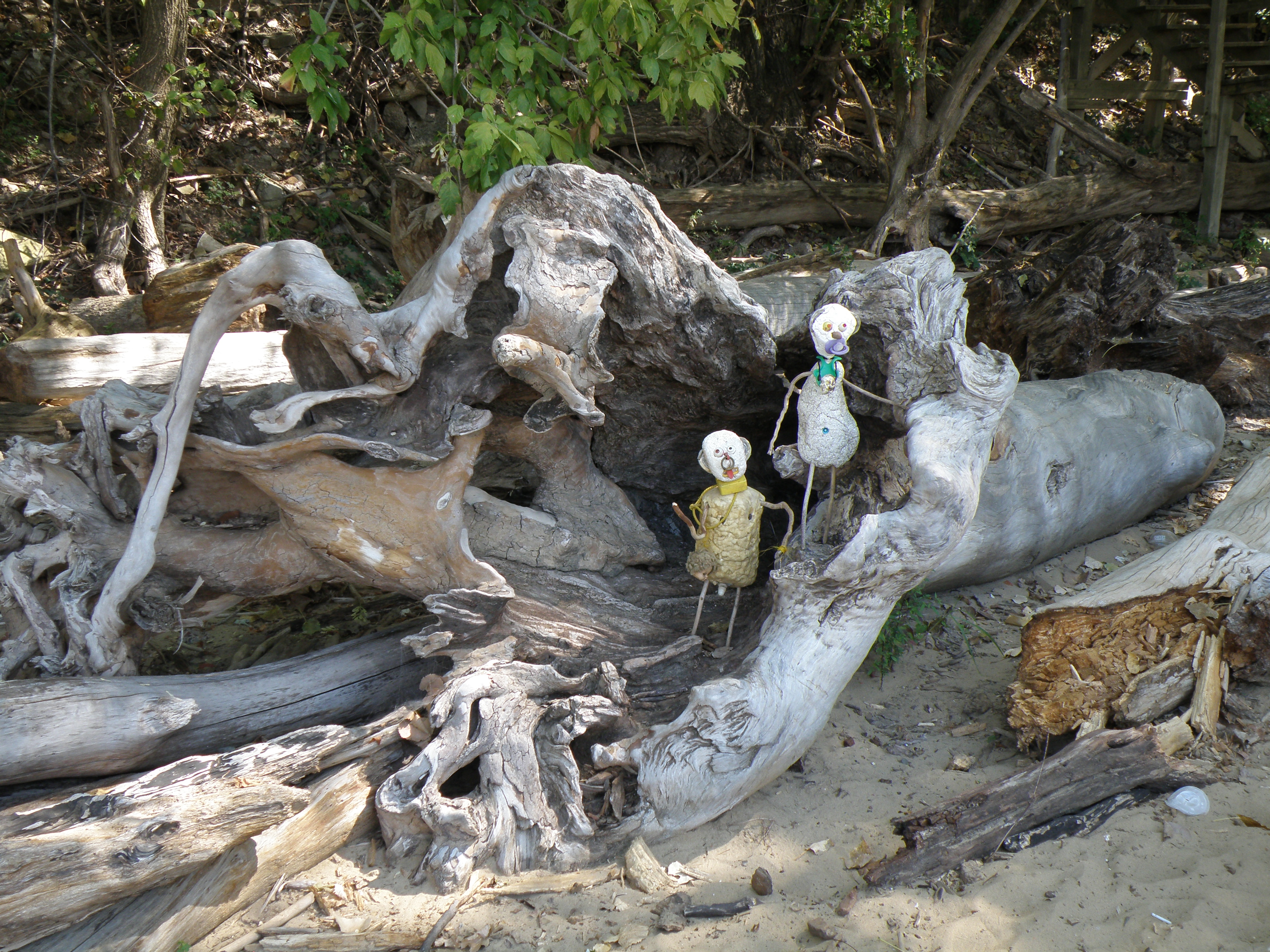
Fortunately, I was shown a lot more that was good than not.  I could see why the Pang were so attached to their land.  It provides them everything including much of what makes up their identity.  We visited an immense hollow log that the river dropped off during some old flood and I took this portrait of the odd couple.

We walked back out into the bright sunlight and hiked near the river.  After having been in a mostly leafy environment, it felt nice to have fresh air against my face.  You could tell by the expressions on the Pang people’s faces how much they enjoyed being free and in a natural state.

Before long we came to a place where driftwood had collected on the beach.  It was nearer to the forest and another trail.  After a protracted goodbye, my friends went their separate ways.  I could tell that our adventure together was coming to an end.

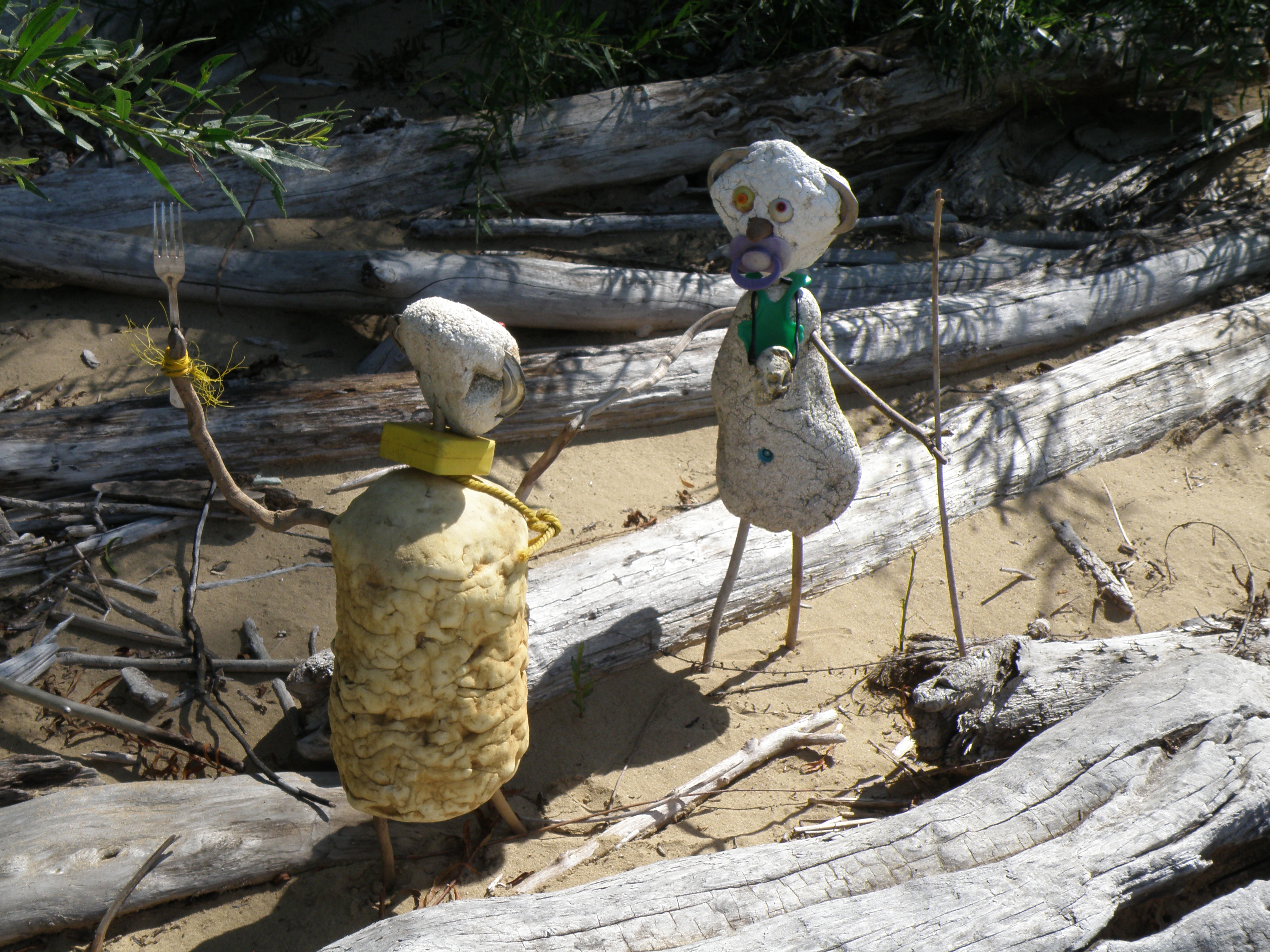
I got the sense that something else needed to happen to make the day complete.  I turned with the man with a fork back down to the riverbank.  As we walked he slowly started chanting and stopped every once in a while by some landmark for added emphasis.  He did this when we came to a bright, marshy area.  My friend’s arms rose into the air along with his song.

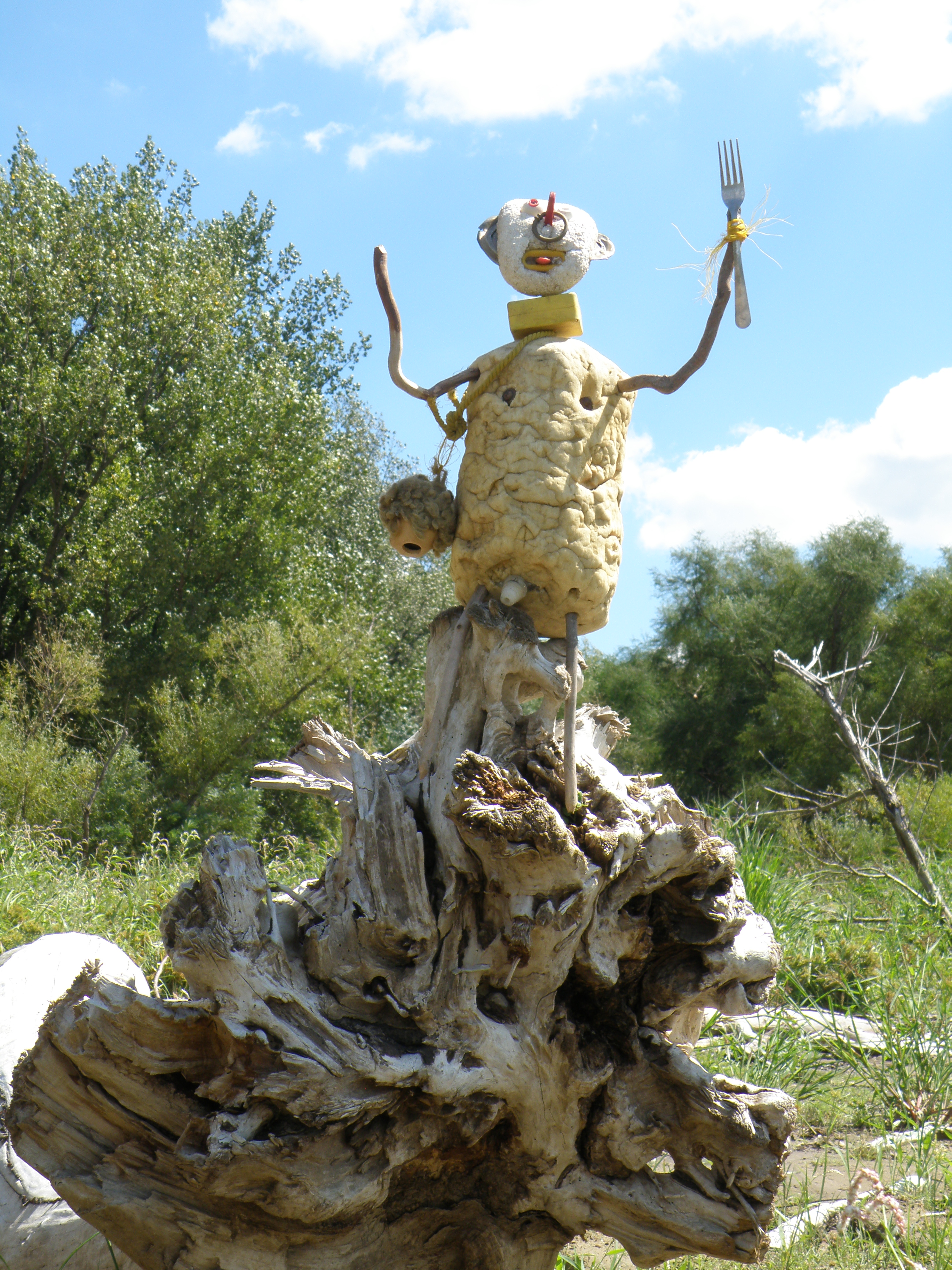
After the marsh, my companion climbed a long log that had washed up on the shore during a flood many years before.  He climbed as far up the root mass as he could and lifted his voice and fork to the heavens.  I wish I knew what he was saying…but whatever comprised his song I could tell it was reverential.

Since this culture doesn’t show itself without some purpose in mind.  I hoped that  I hadn’t missed it.  Looking back upon the day, I enjoyed the camaraderie of my new friends, we relaxed together and shared a meal.  Later we went for a walk where I was showed both what the Pang liked and disliked in the landscape.  Now the day was ending in a prayerful song.  Seemingly to underscore another point, my headhunting friend drew a line in the mud.  In essence, he communicated that my side of the line was mine and if I couldn’t respect his side of the line…we would be unwelcome.  He quickly grimaced with his tongue sticking out on that last point.  Staying on my side of the line, I wished him well in my tongue and with a short wave  watched him melt into the forest where he belonged.

Read Full Post »

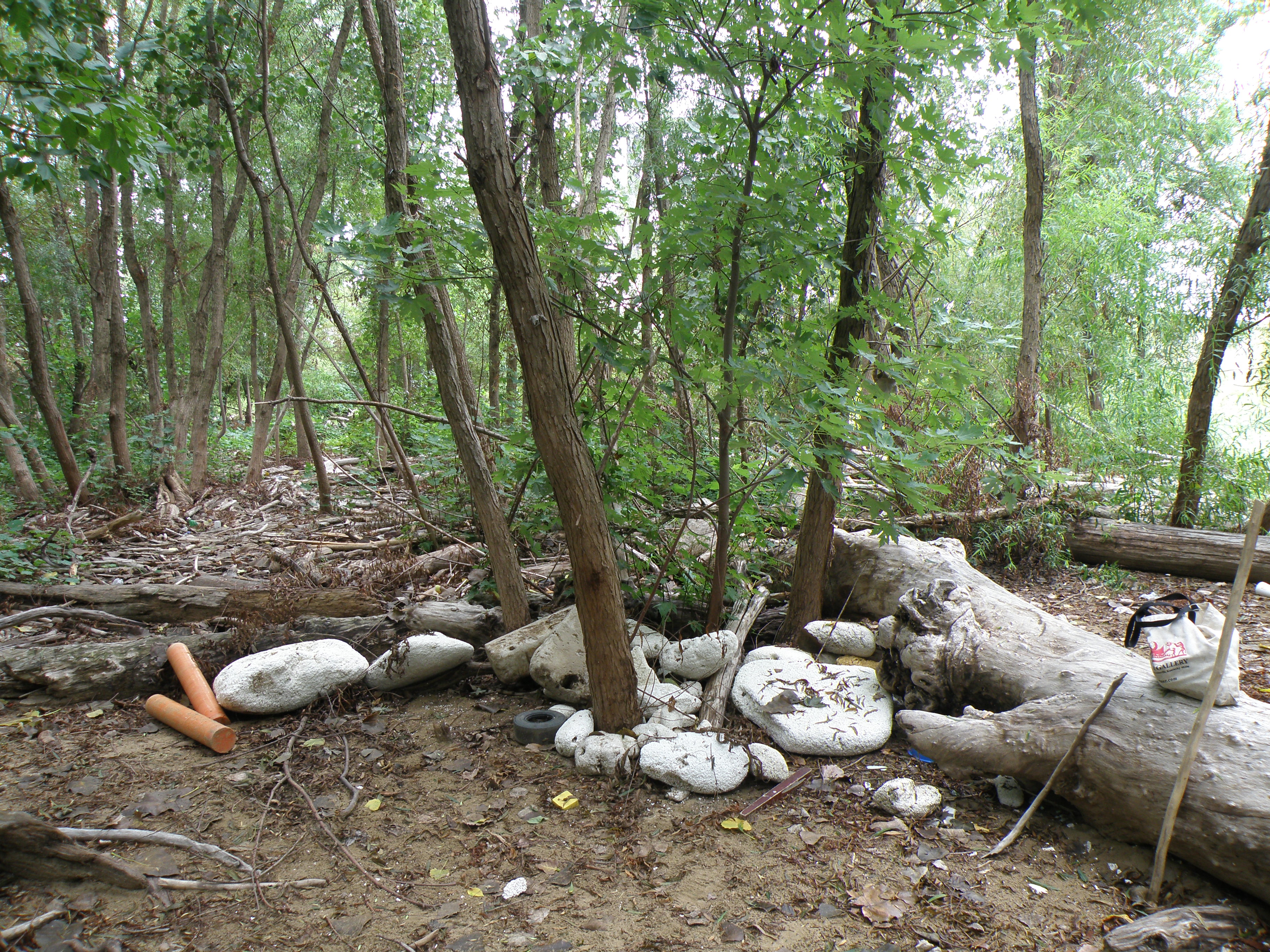
This was my Labor Day adventure which spanned two days of hanging out by the Ohio River.  The remnants of Hurricane Isaac came through and gave us some much-needed rain.  I was excited to return to my old studio spot and didn’t mind exploring and working through the drizzle.  My clothes got soaked and muddy, but as long as I was able to keep my camera dry…I felt okay and had fun.  It has been two months since I last laid eyes on my Styro-cache.  Most of these polystyrene chucks were collected in the spring.  I had heard that there were a few scheduled river clean-ups, but they obviously didn’t find my spot.  It wouldn’t have hurt my feelings in the least if all this white trash had disappeared.  The more public areas did look better, but I have a feeling that as long as people are around…there will be litter at the Falls of the Ohio.

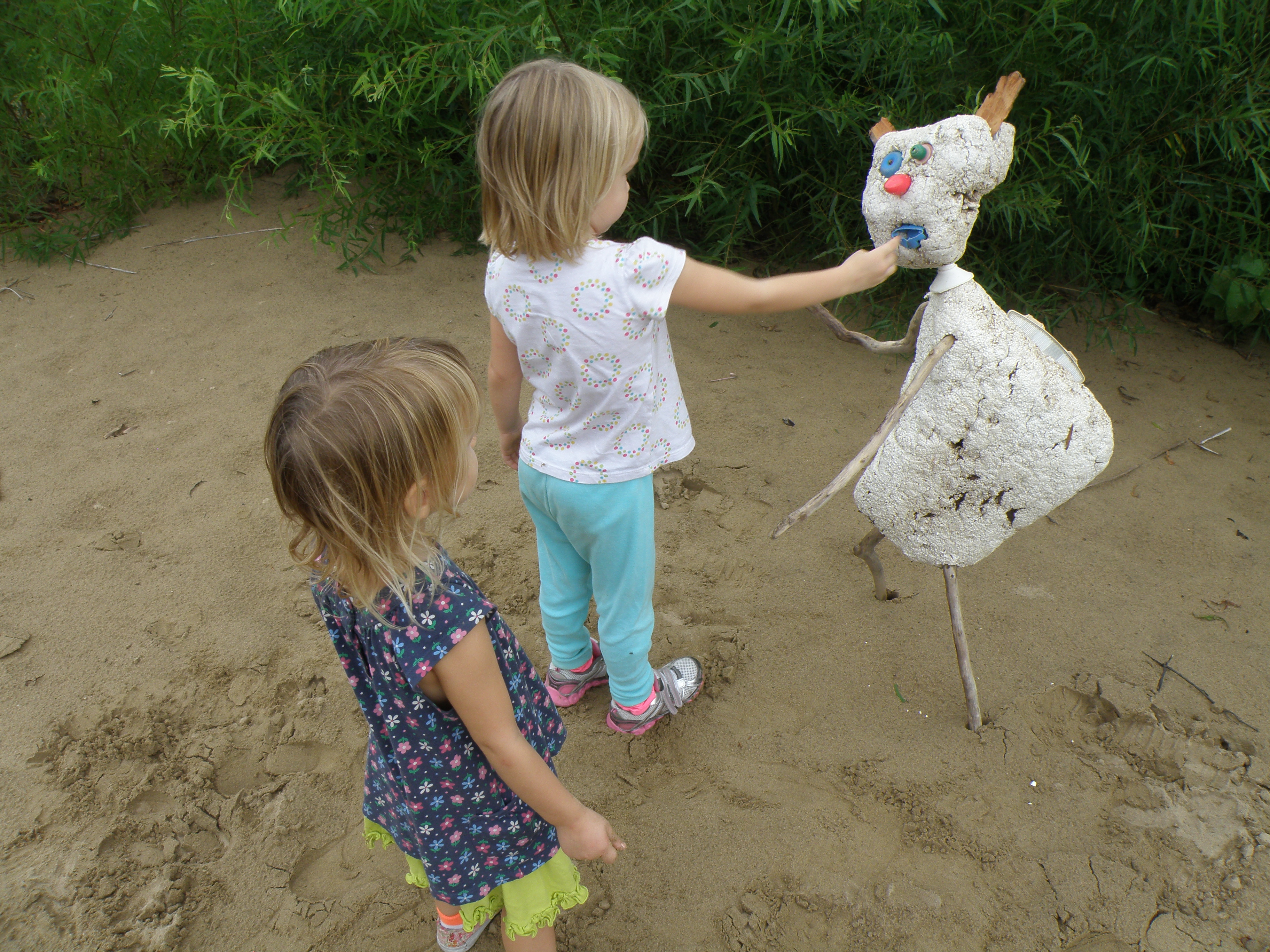
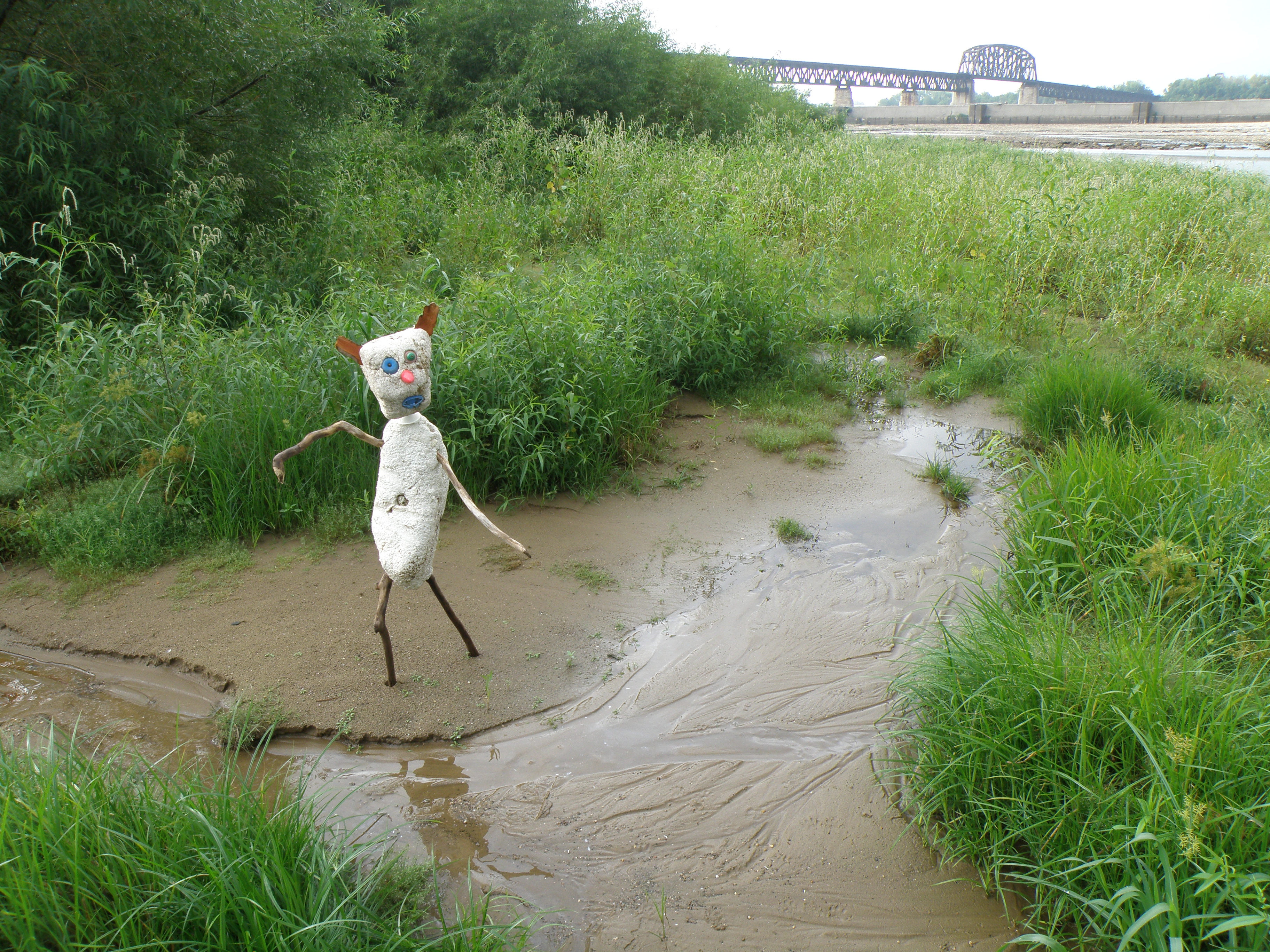
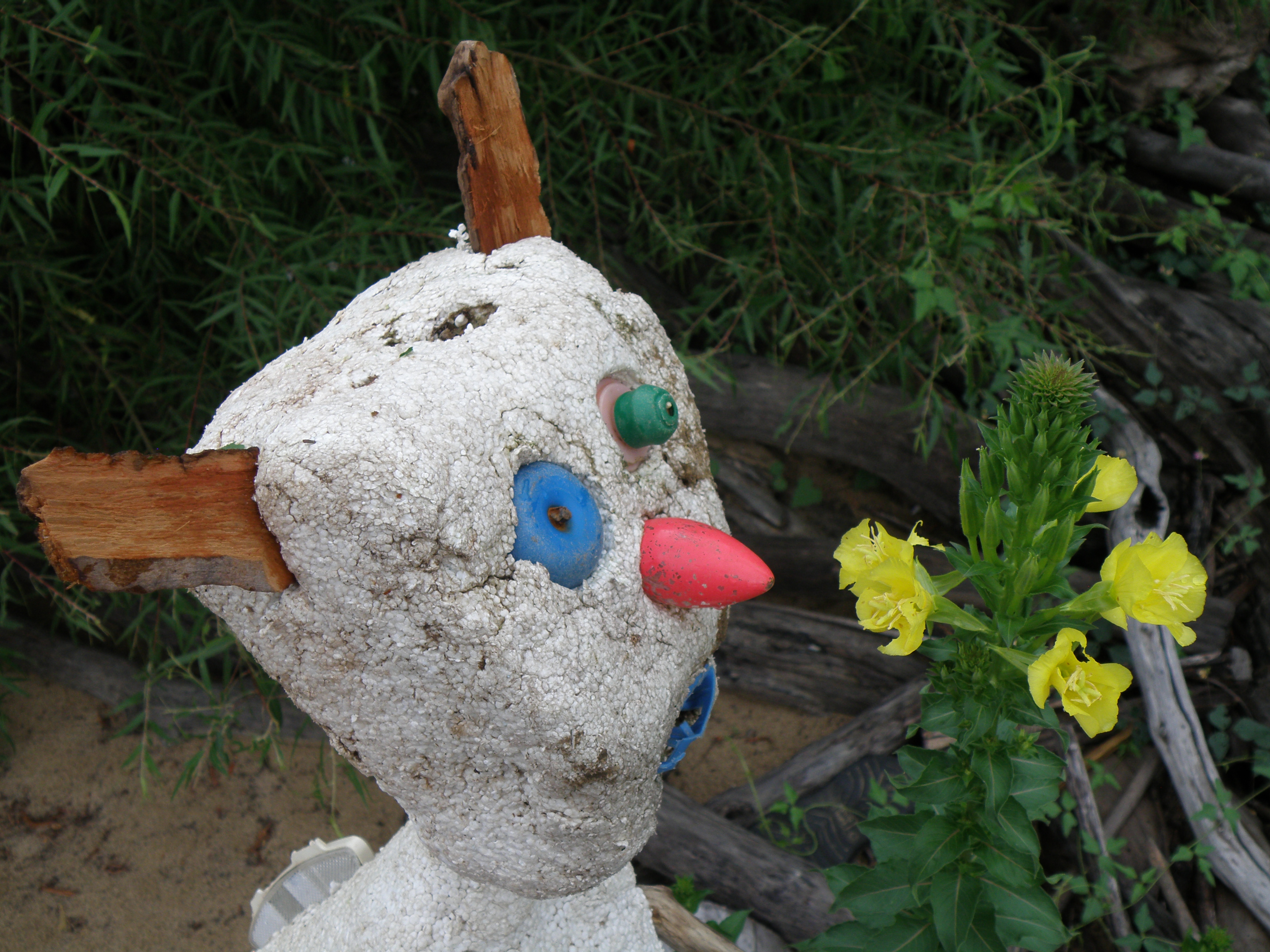
Because I was dodging little rain showers, I quickly created a figure and moved him out into the river landscape.  A nice family who said they were familiar with some of my other Falls projects happened upon me.  Their daughters India and Esmay were interested in “Mr. Rednose”, so named because his nose is a burnt out light bulb from a string of Christmas lights.  I asked permission from the parents to take the girls’ picture before posting something.  Esmay seemed the most interested and kept sticking her finger into “Mr. Rednose’s” mouth.  It’s cool when people I meet out here get what I do and appreciate my small call for creativity.  I have a real concern for what kind of world our children will inherit.  My own sons are now 11 and 16 years old and I remember when they were much smaller and followed me to the river to make a few memories of our own.

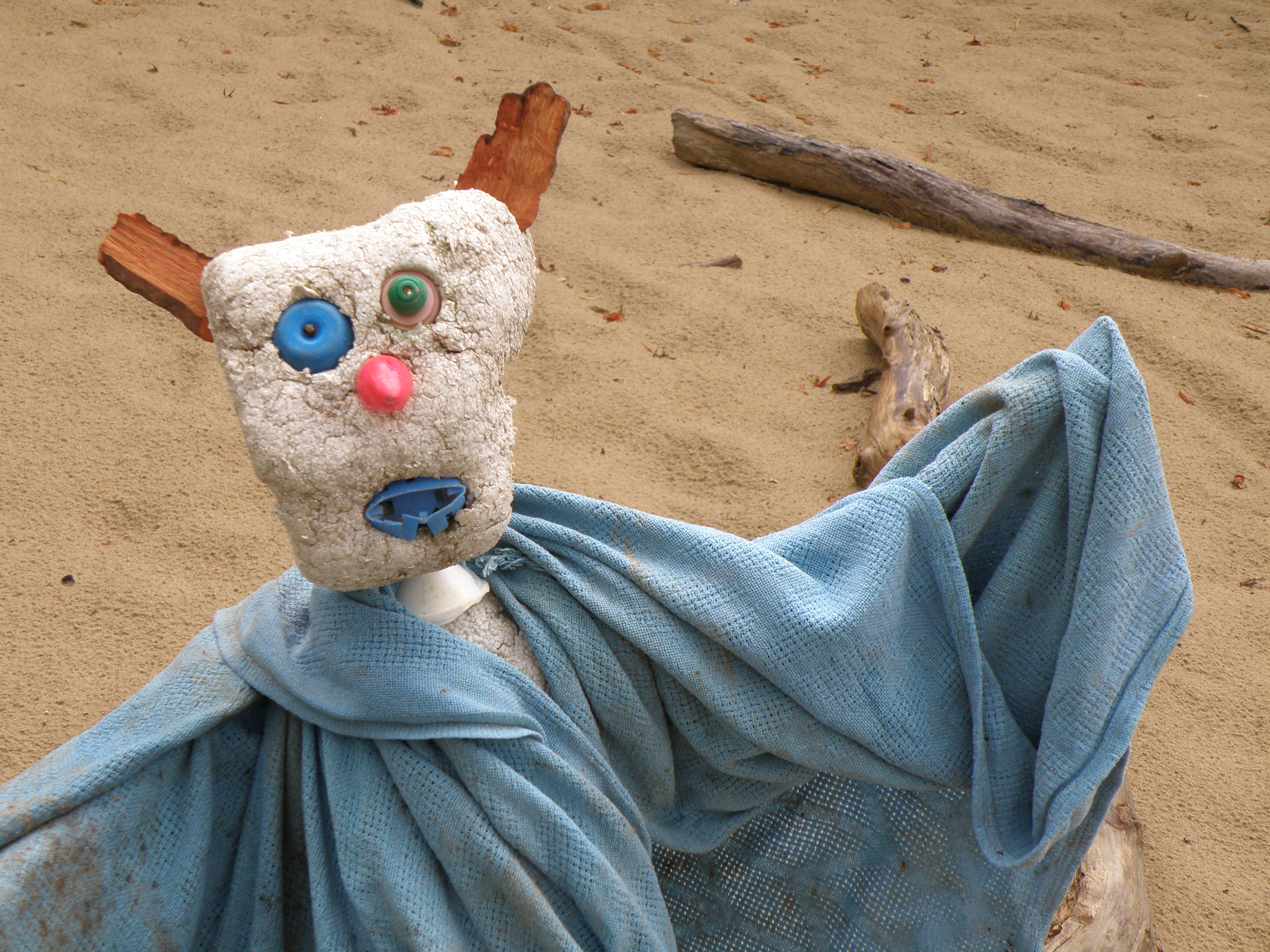
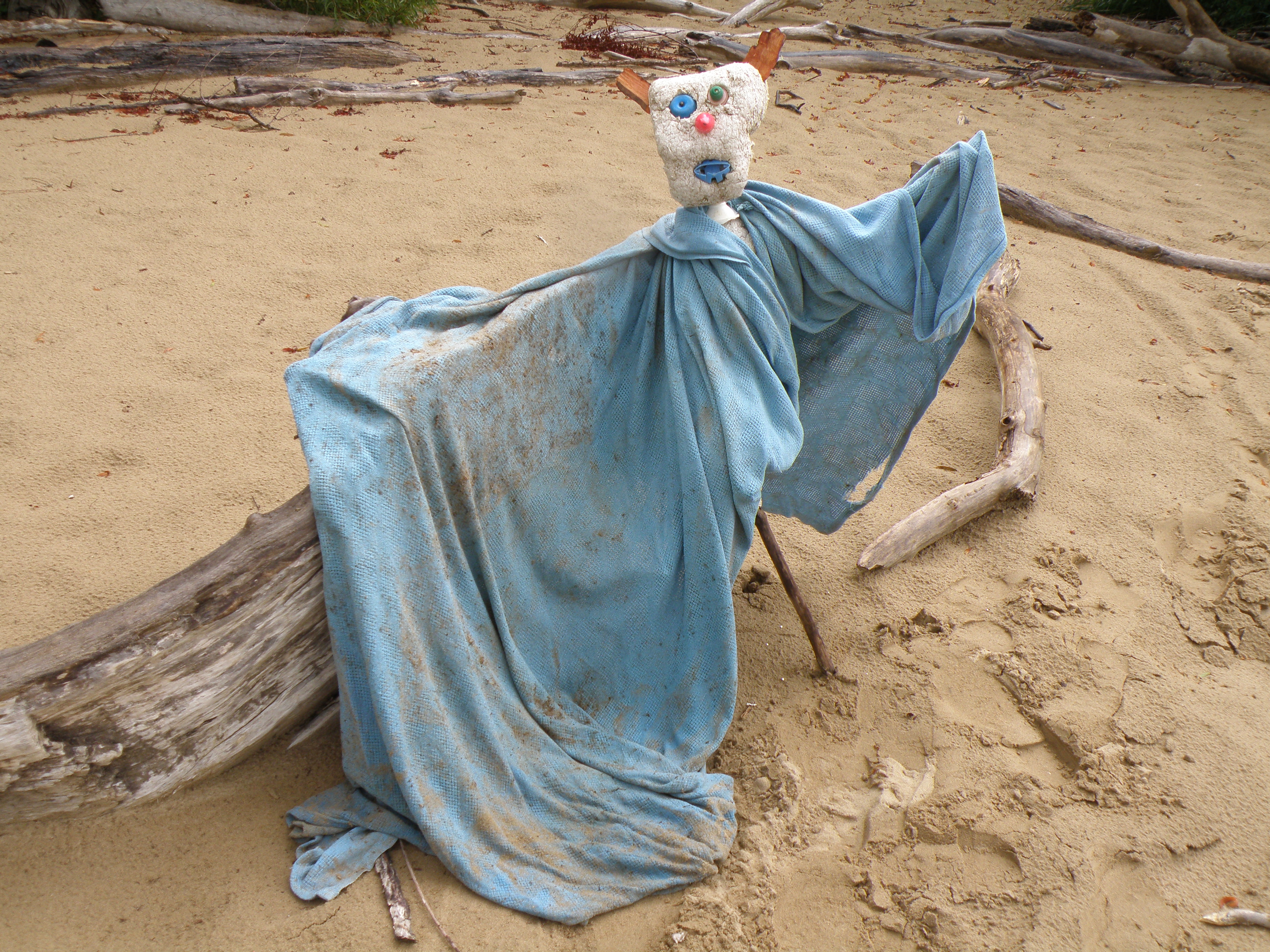
“To exist or not to exist…that is a choice.”  Perhaps meeting little kids inspired me to play dress up with this figure.  But I also kept finding props I could do this with.  This blue blanket was just draped over a log and I wondered why someone would leave this here?  Over the years, I have come across small camps that homeless people would just leave their stuff behind as though they planned to return.  It was eerie when they didn’t.  By the river, I came across yet another potential prop.

A fisherman had left behind as trash this polystyrene minnow bucket and “Mr. Rednose”picked it up.  Since it was beginning to rain more regularly it seemed appropriate to try to use this bucket for a hat and here is what that looked like.

It was about this time that I decided to call it a day.  The rain was coming down more heavily and consistently.  I hid the figure in high, wet  grass where it was waiting for me the following morning.

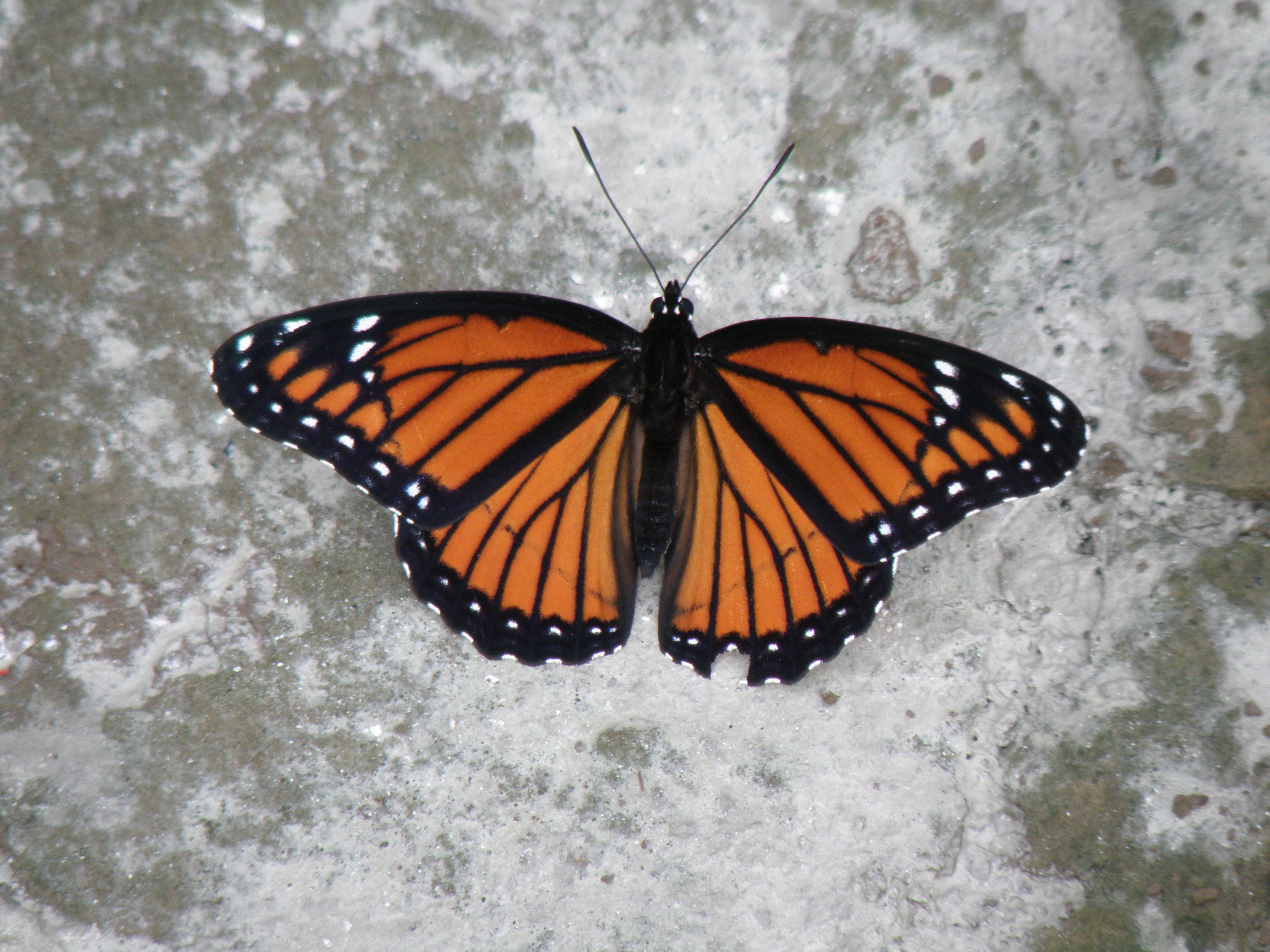
My second day out here was more about discovering nature.  No sooner had I rescued my figure than I had one of my most thrilling bird sightings.  This time it was an actual bird and not something I created myself!  Walking through the wet grasses I unintentionally flushed a bird into flight that I recognized immediately.  It was a Black Rail (Laterallus jamaicensis).  It’s a small blackish bird with a short bill.  It has white speckles on its flanks and a very diagnostic rusty-colored nape.  Rails are the smallest member of a group of wading birds that include herons and egrets.  The literature says that they are very secretive and seldom encountered.  You are more likely to hear one at night along the eastern salt marshes, but there are a few that live in the Midwest.  There are over 260 bird species listed in the official Falls of the Ohio checklist, but the Black Rail is not one of them.  This is a second time I have spotted a bird not officially recorded in the park.  I tried to let the park and our local bird club know about my sighting and I hope somebody else was able to see it?   The flushed rail flew to a nearby willow tree and with camera in hand I tried to get a picture.  Unfortunately, I was not successful.  I will, however, look for it again in the same place the next time I come out here.  The Black Rail was not the only interesting creature out in the park today.  Newly minted butterflies were flitting about and I counted several species including the Viceroy which mimics the Monarch butterfly.

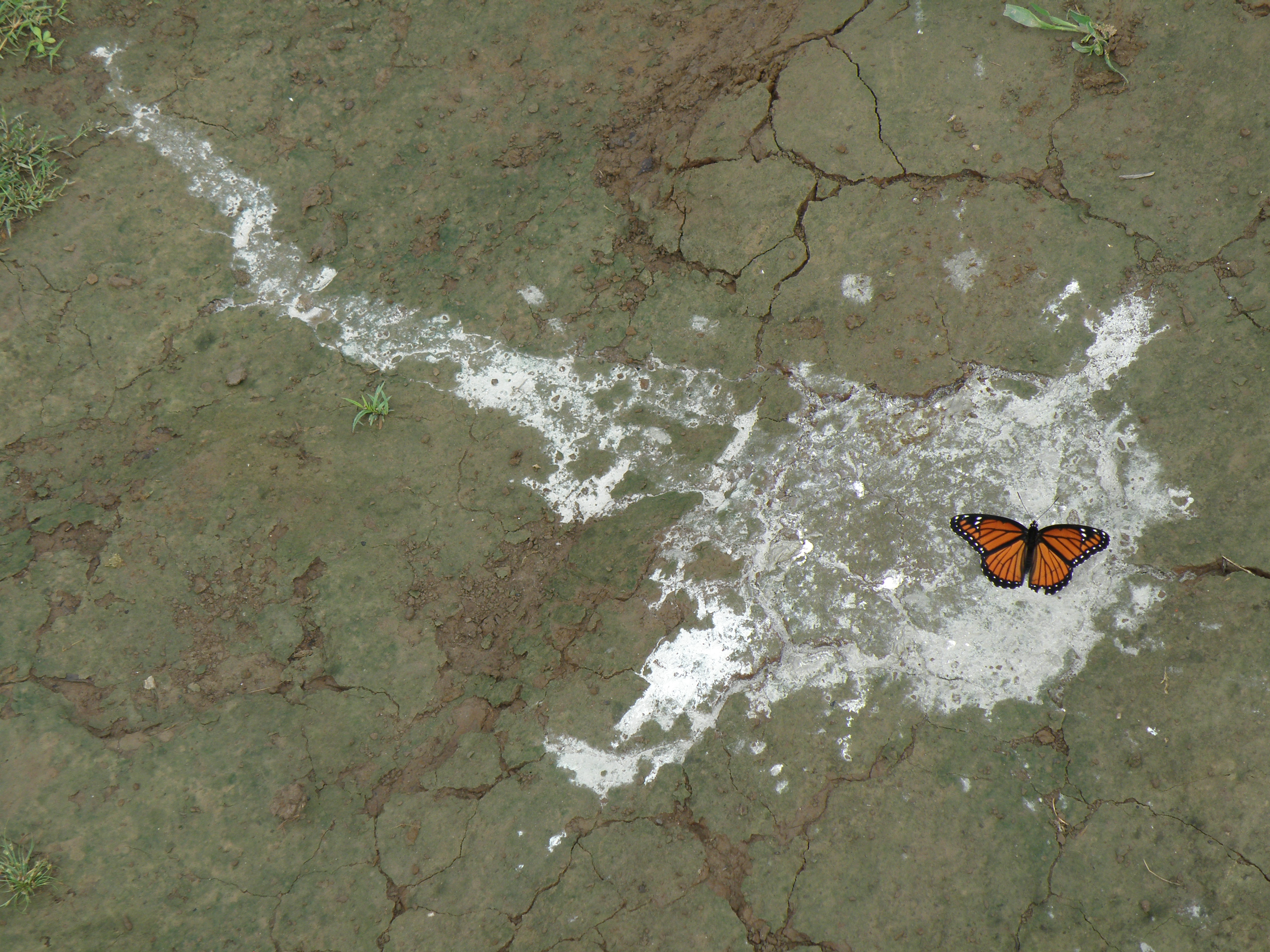
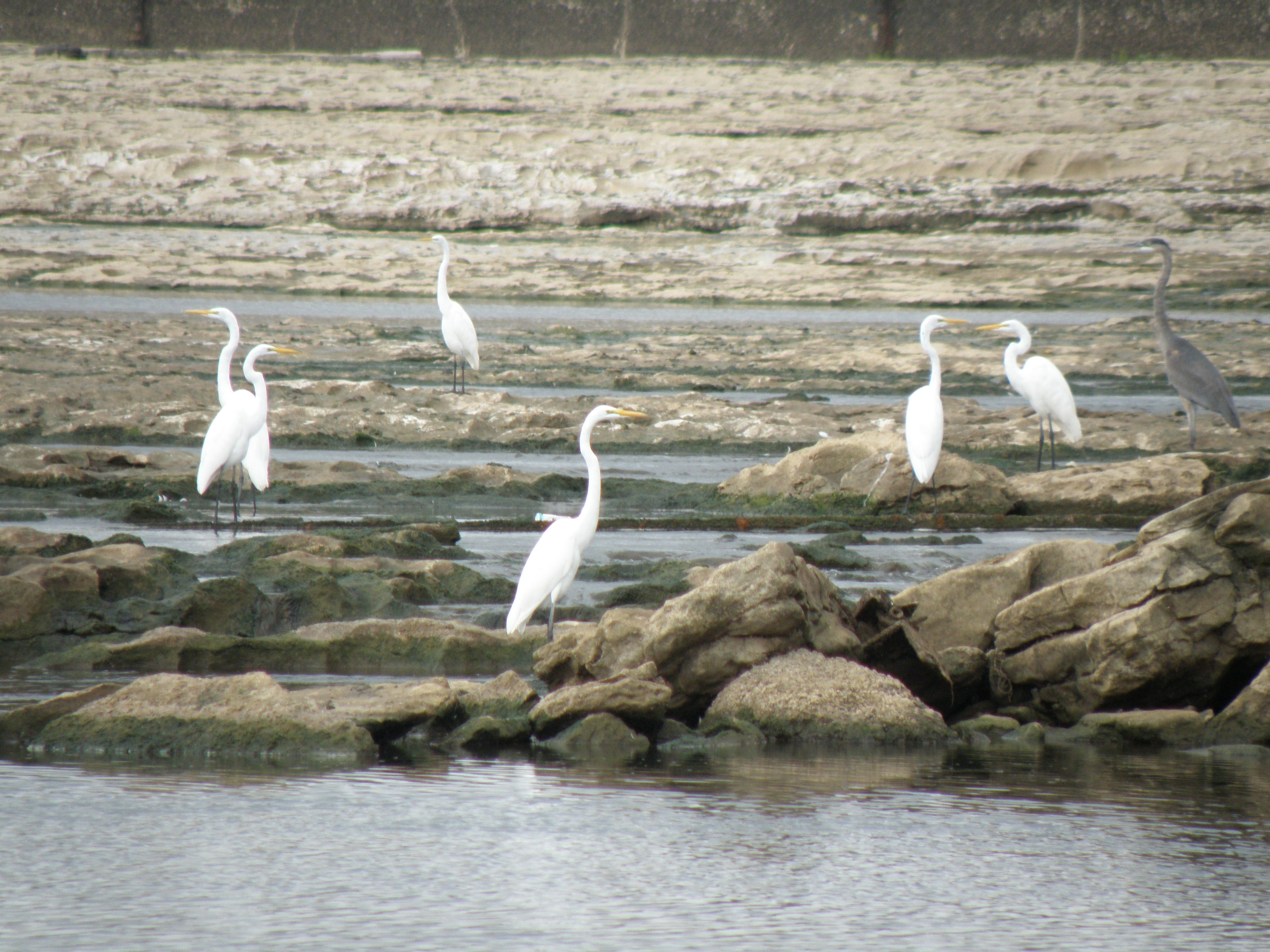
This Viceroy was taking advantage of the minerals present in a fairly large bird dropping!  Out of the fossil beds, Great Blue Herons were outnumbered by the slightly smaller and all-white Great Egrets.  Soon the egrets will be moving off to warmer climes, but the Great Blue Herons are year round residents.


Moving away from the river and back towards the willows, I stopped to admire several flowers including members of the Evening Primrose family.  “Mr. Rednose” enjoyed the slight fragrance emanating from this tall flower.


I finished this adventure where it began.  I moved my figure to the place he first took form and where he now stands guard over my Styro-larder.  He might still be there welcoming visitors…or not.  I look forward to returning the following weekend to experience all the surprises both great and small that this environment presents to me.


Read Full Post »

At long last I’ve made it back out to the river!  It’s been about eight weeks now since my last visit.  Today I have a double purpose…the first is to drop off one of my Styrofoam and recycled material sculptures for an annual fund-raiser that the Falls of the Ohio State Park Foundation hosts every year.  I’m glad to do this and hope my donation does well in their auction.  Despite the years I’ve been making stuff out here it still strikes me that most of my materials are literally trash.  I suppose I will never get over that. It seems to me that it takes a certain kind of person who would want to own one of these creations!  The other more fun purpose is to check out what’s different along the river and maybe make something new.  Immediately, I can see that the hot summer continues to take its toll.  At first, it was the relentless heat, but now that is coupled with a serious lack of rain.  The river is low and everything looks dry.

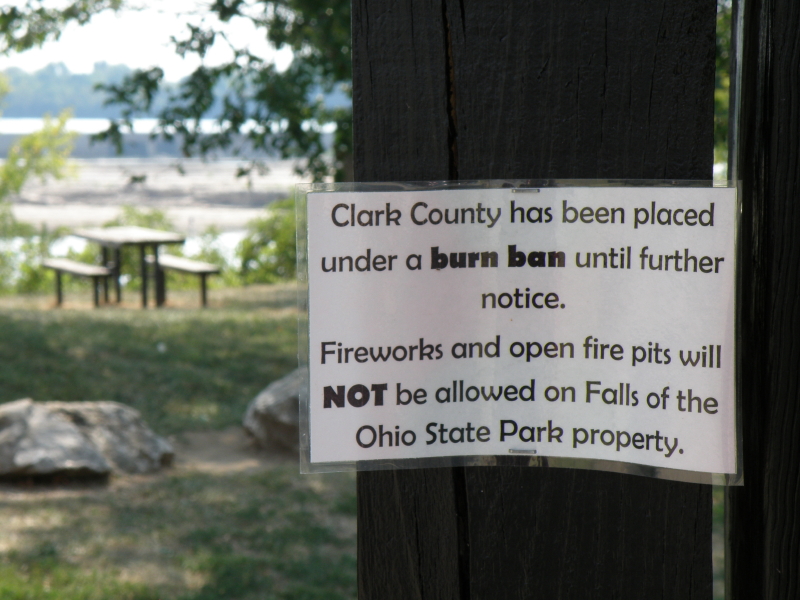
Over the course of this summer we have had just enough rain not to be considered a disaster area.  This is hardly a ringing endorsement and I find a small laminated notice tacked on to a bulletin board that reinforces how dry it is.  I think to myself that some of the people I’ve encountered out here over the years who do shoot off fireworks or build fire pits are not likely to read or heed this warning.  When I’m in the park, my preference is to move away from the most public areas and so with my walking stick in hand I head down the Woodland Loop Trail.  I’m still not confident enough to want to test my repaired knee too vigorously, but this trail is fairly easy.

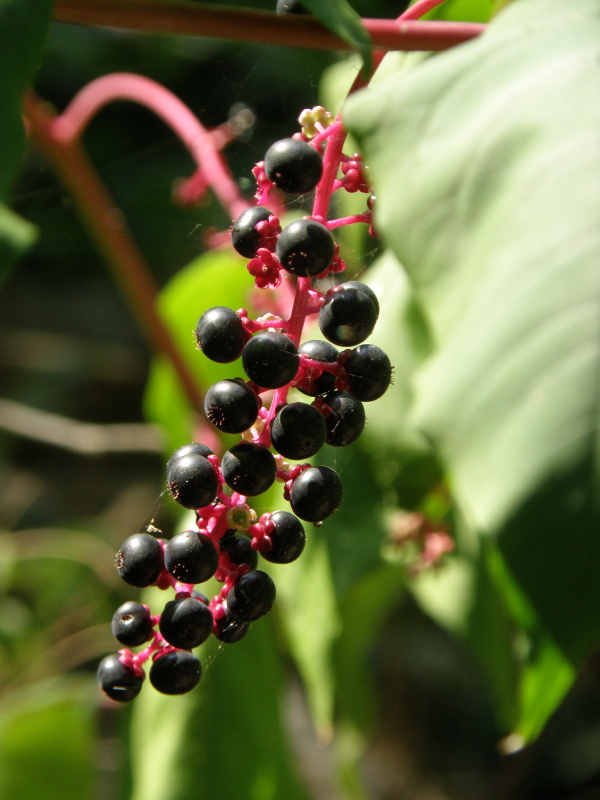
The trail is shaded which I welcome since it’s still over 90 degrees out here.  I pass many what I would consider late summer blooming plants that have flowered earlier than usual.  I did see several stands of tall Pokeweed plants with their black berries, but even these weeds have wilted leaves.  I guess what moisture these plants could muster up went into the production of their fruit?  These berries are a favorite food of several bird species.  In the past, I have used the intensely dark purple juice from Pokeweed berries as a pigment in some drawings I have made.  This color, however, is fugitive and ultimately fades in the light.  As I walk, one distinctive sound I keep hearing is the tell-tale sound of gray squirrels gnawing on the rock-hard walnuts that are  clustered around the few walnut trees along the trail.  There’s not much meat inside one of these nuts and it seems like a lot of work for little reward.

Out on the exposed fossil beds the sun is baking, but under the shade of the trees it is still fairly green.  Since my last visit,  however, I noticed a lot of dropped tree limbs and a few whole trees that have keeled over and appear to be the result of wind damage.  I have seen a few birds including two Hairy Woodpeckers and as I walk along the trail I keep getting scolded by Carolina Wrens who resent my intrusion.  In the distance I recognize the calls from the Killdeer plovers that are looking for food along the water’s edge.  The rarest and most unusual bird, however, is  just up ahead.

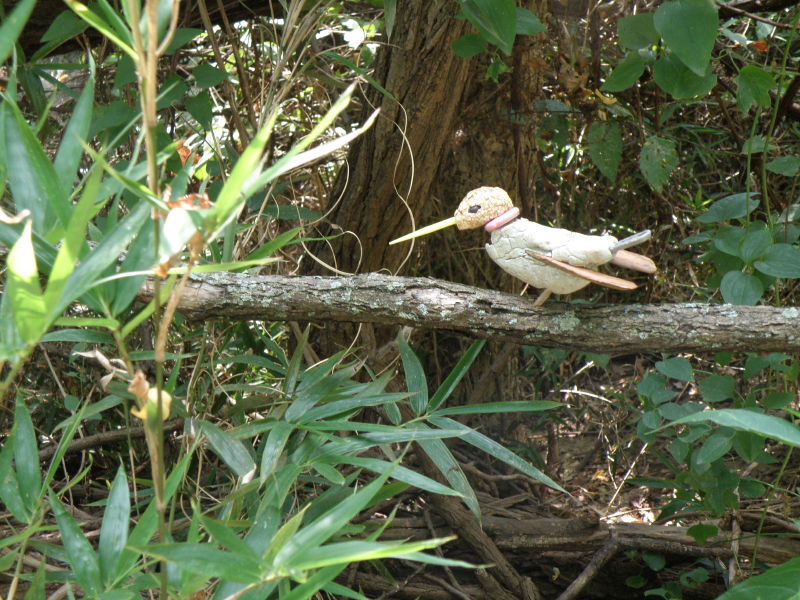
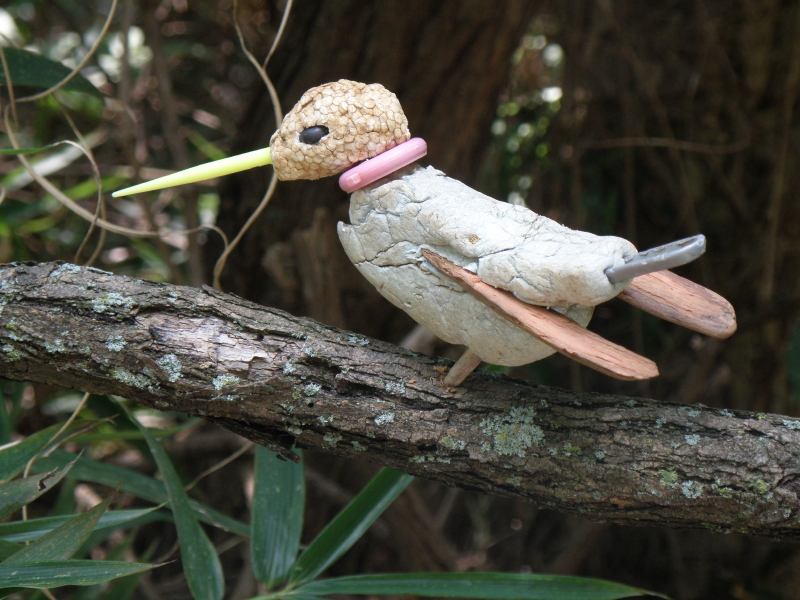
I’ve only seen a couple of the more common and native Ruby-Throated Hummingbirds this year…and so I was taken aback and delighted to come across what I later identified as Isaac’s Hummingbird (Archilochus isaaci ).  To my knowledge, this is the only recorded instance of this Cuban species reaching this park.  I’m guessing that Tropical Storm Isaac (purely coincidental, but also appropriate) which is threatening the GOP conference in Tampa Bay at this moment may have blown this rarity our way?  Hummingbirds of which there are over 300 hundred recorded species have been known to wander thousands of miles away from their more familiar haunts.

I came across this hummingbird dozing on a fallen branch.  It would open its eyes every once in a while and regard me.  I kept my movements to a minimum and completely forgot about my aching knee in the process of creating a few images of it.  I was able to snap off six pictures before it took off.  As you can see, this bird (also known as the Yellow Saberbill) has a bright yellow bill it uses to extract nectar from flowers.  Its light blue body, brown wings, silver tail, and whitish-head are diagnostic of this species.  I don’t know what it is about the Falls of the Ohio, but I have seen other unique hummers out here before.  Digging through the archives…I present two of them again.

This is the ultra rare Arctic Hummingbird appearing at the Falls of the Ohio to sip nectar from the equally scarce Ice Blossoms.

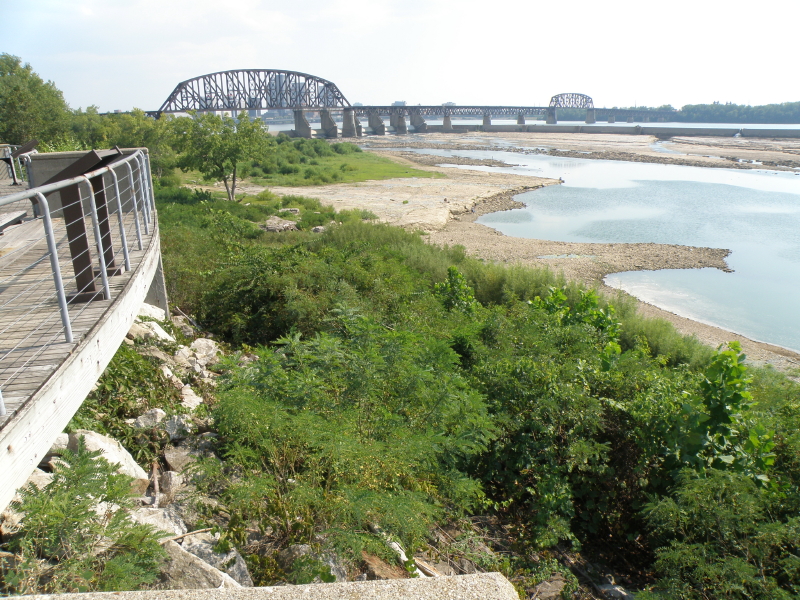
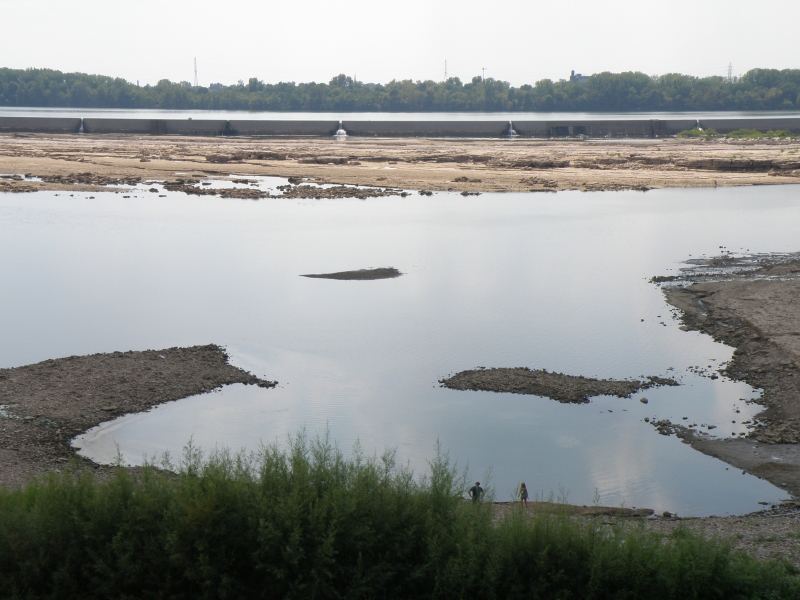
I encountered this Cumberland Greencrest back in 2010 not far from the place that I saw the Isaac’s Hummingbird.  Both of these rare hummingbirds stayed in our area for a couple of days before moving on.  This is what keeps me coming out here…I just never know what I’ll find or discover! This was a short, but eventful trip and I thank you for tagging along.  Here’s another view of the river with the exposed Devonian fossil beds.

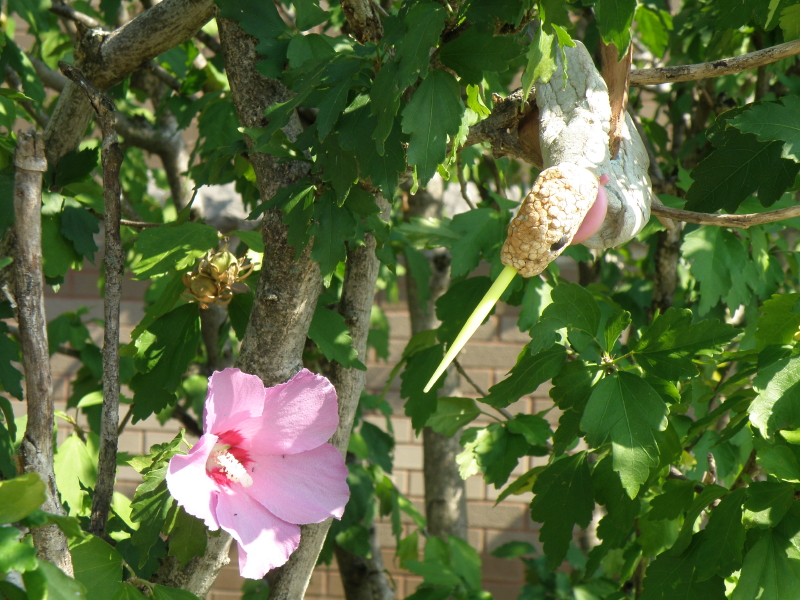
POSTSCRIPT:  The inspiration for this particular post comes from another WordPress blog I enjoy entitled “Ekostories”.  Isaac Yuen is its creator and he’s an aspiring environmental writer.  Issac has a talent for weaving stories and making connections about responsible stewardship of our planet.  At the time of this writing, Isaac has a wonderful post about a book entitled the “Flight of the Hummingbird” that I think you may enjoy…so please check it out.  Here is his link:  http://ekostories.com/ Finally, one last peek at this elusive hummingbird checking out a flower blossom.

Read Full Post »

« Newer Posts - Older Posts »