Feeds:
Posts
Comments

Posts Tagged ‘art and the environment’

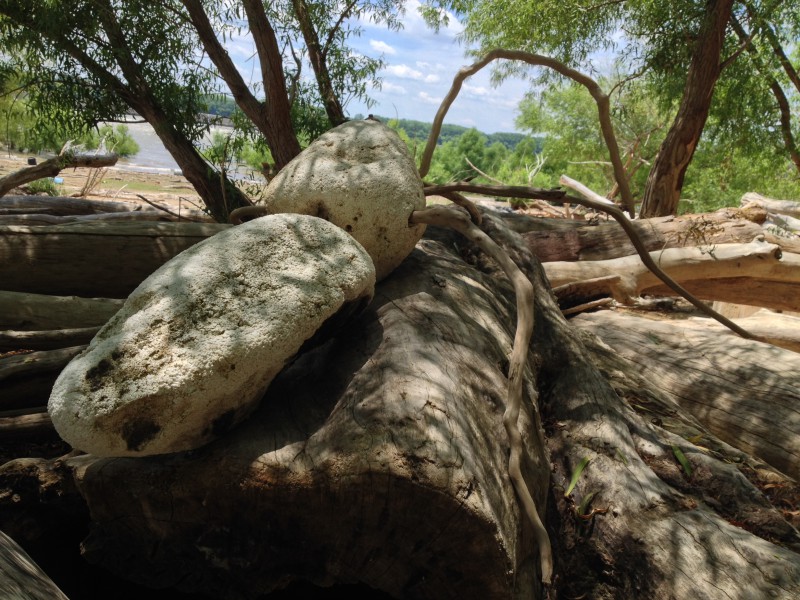
Driftwood and debris in flood aftermath, Falls of the Ohio, March 2015

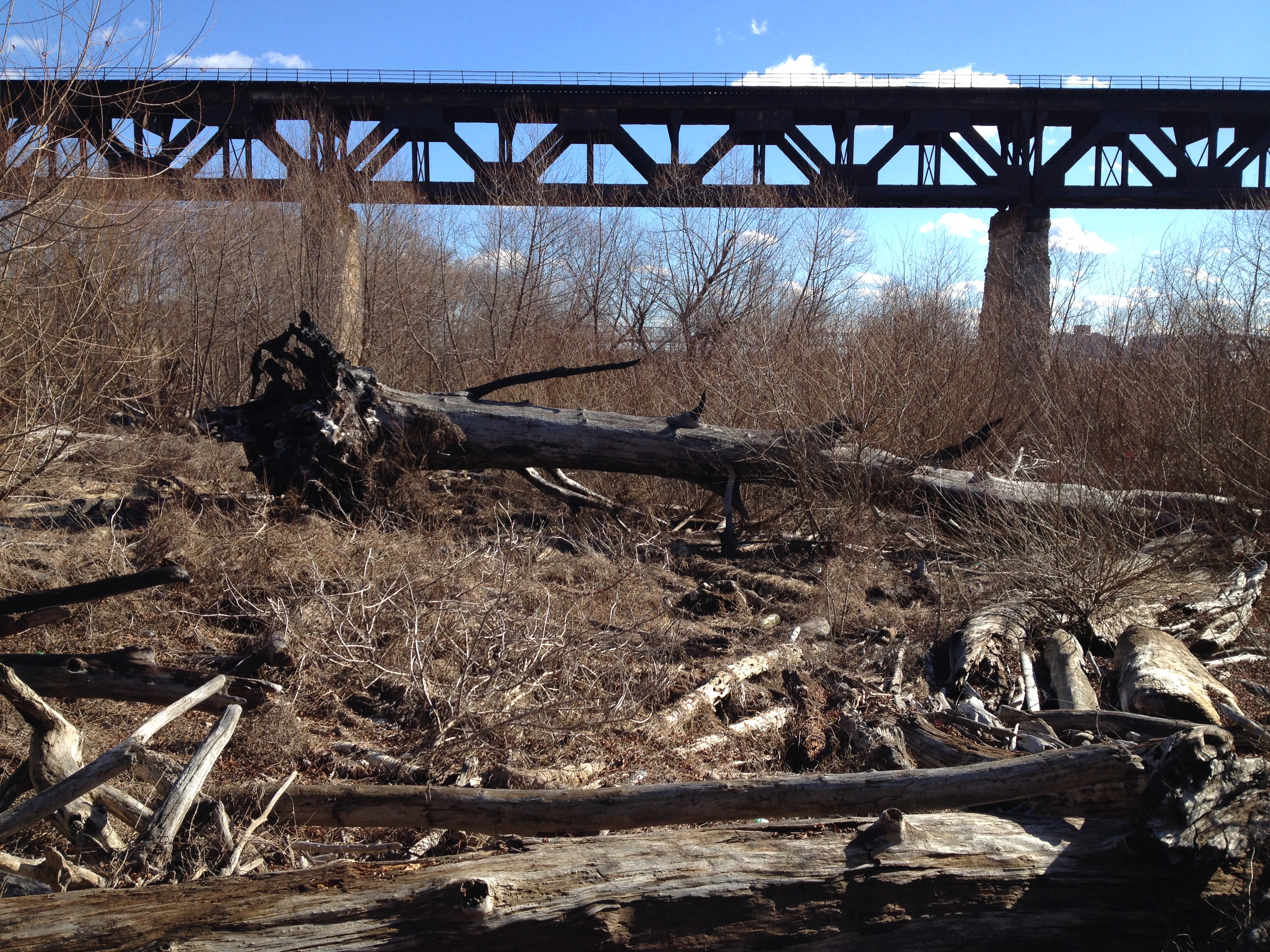
A view from last weekend when the water level was dropping and the sun was shining and welcoming.  Curiosity overwhelmed me and I ventured forth over the driftwood piles and muddy riverbanks.  Looks like most of the driftwood at the Interpretive Center has been washed away, however, under the railroad bridge, a sizeable mound of twisted matter has accumulated.  To avoid sinking ankle-deep in mud…I gingerly walk on the backs of huge logs and pick my way through the debris field.

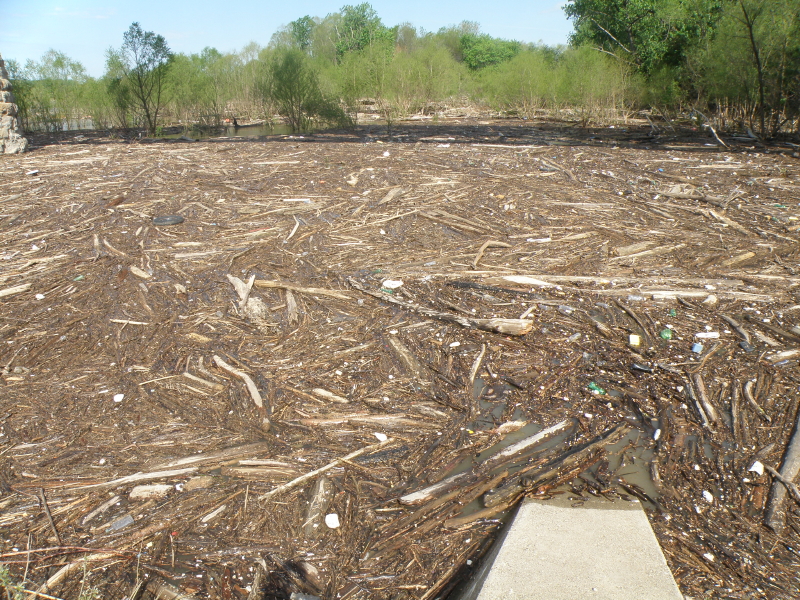
Junk under the bridge at the Falls of the Ohio, March 2015

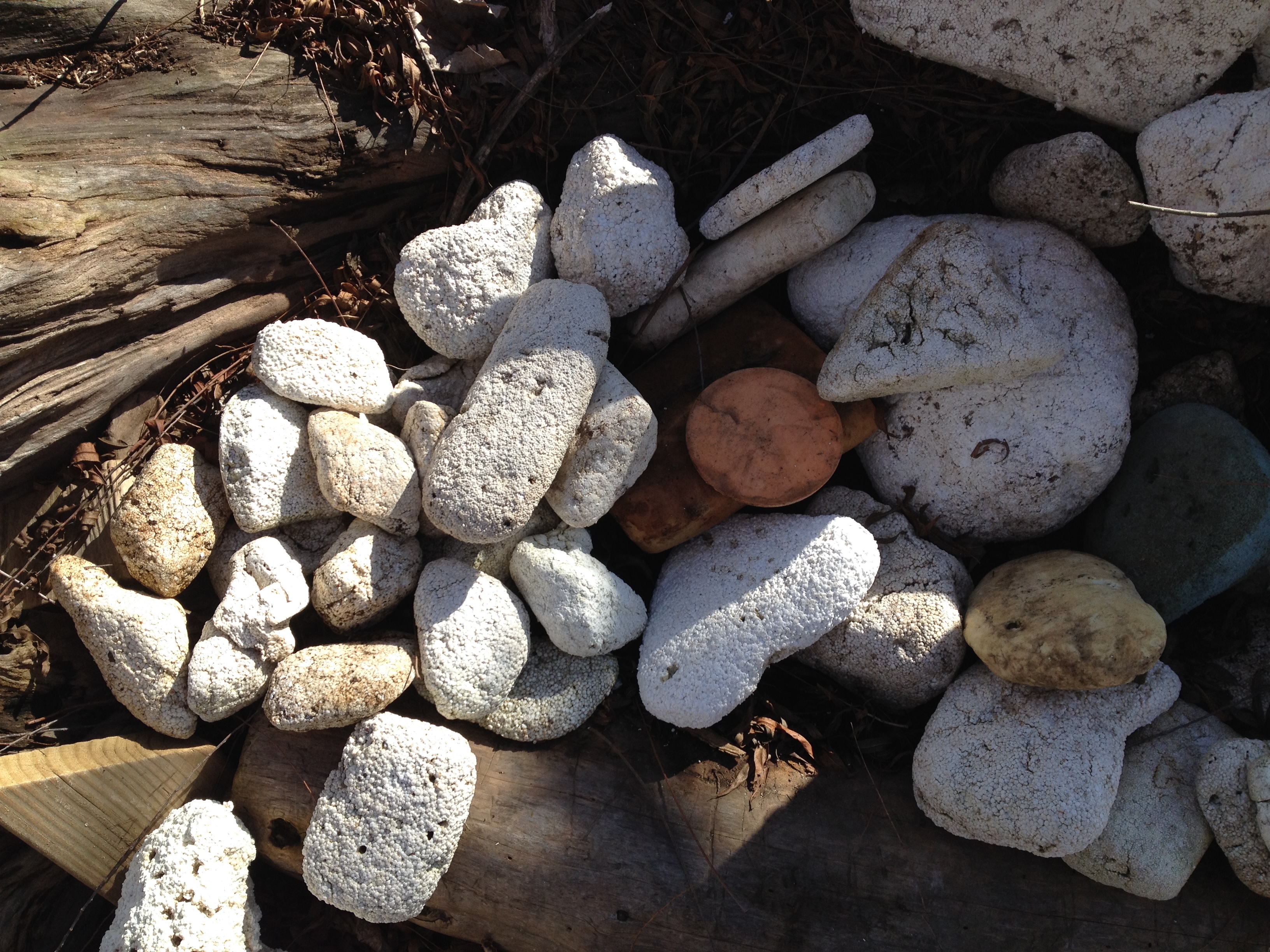
Plastic and polystyrene debris, Falls of the Ohio, March 2015

This most recent bit of flooding has deposited a large number of plastic drinking bottles onto this landscape.  I am assuming that the river isn’t through rising for the moment because two days ago…we received about six inches of new rain overnight.  Statistically, that was the most rain ever recorded on an April day in Kentucky’s history and the fourth biggest rainfall total for a day during any month in our state’s experience. We had a lot of localized flooding from that storm and coupled with the immense fire at the General Electric Appliance Park, put the national spotlight on Louisville…twice in one day.  The GE fire and subsequent thick, nasty smoke with its fumes and particulate matter from incinerated plastic rose into the clouds and was a nearly apocalyptic vision.  Many people mistook the immense column of smoke for a tornado and the weather services were peppered with false alarms.  All this goes into saying that environmentally, it’s been a rough few weeks around here.  Spring while lovely with the returning sunshine and greenery, also has this dark side which it is not afraid to show from time to time.

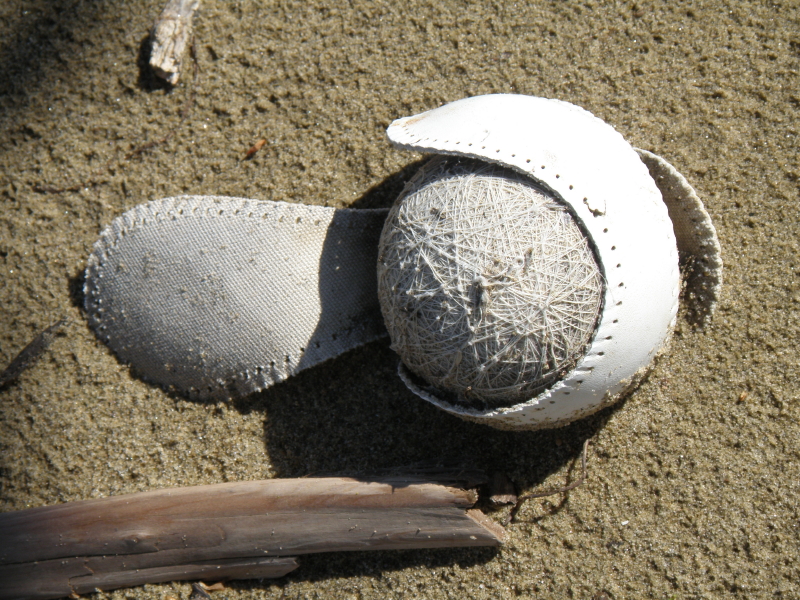
Three Stooges ball found at the Falls of the Ohio, March 2015

I can be sure to find novelties among all this brown materiality.  Can’t say I have ever come across a Three Stooges ball before and there they were, Larry, Curley, and Moe looking up at me!  There were other treasures as well.  Here’s a snapshot of a toy I found that I dropped into the old collecting bag.

old plastic toy, Falls of the Ohio, March 2015

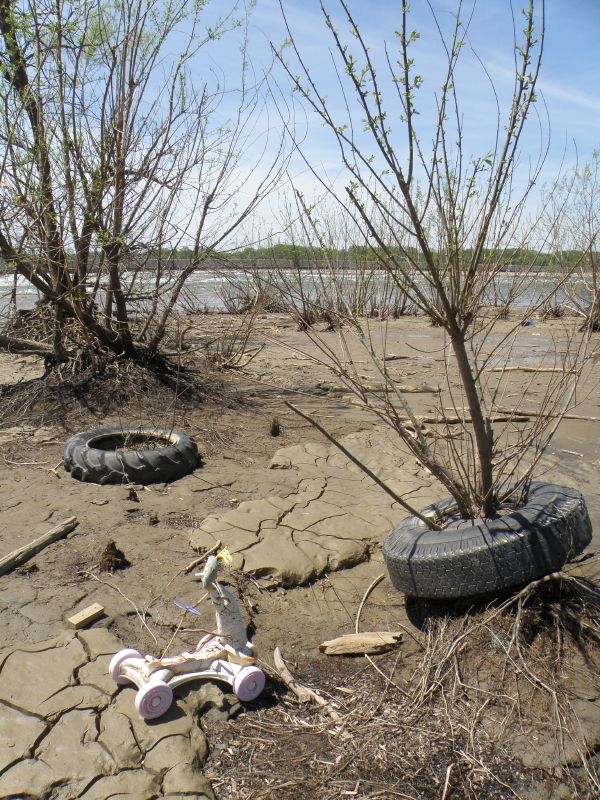
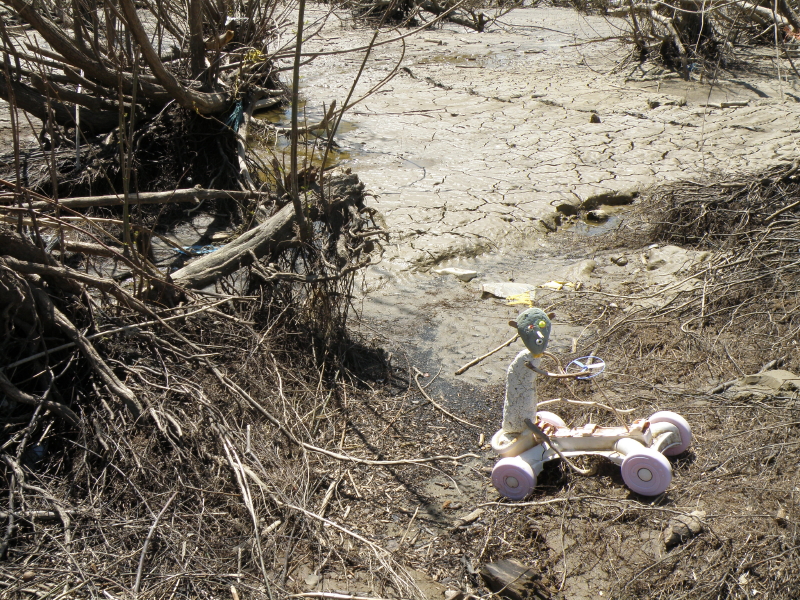
Discovered resting upon the wood and bark chips was this plastic fragment from a vintage toy.  It is missing it’s backside.  I have found similar old toys before and now suspect the river has cut into a landfill and liberated these older toys from the ground.

dead Asian carp, Falls of the Ohio, March 2015

Came across this large carp which was one of three dead animals I found.  Also located the remains of a Black Vulture and a Canvasback Duck that looked to be what was left from a bird of prey’s meal.  Every now and then, you discern a sickly sweet smell emanating from the driftwood and you know some other unfortunate life form is buried under the debris.

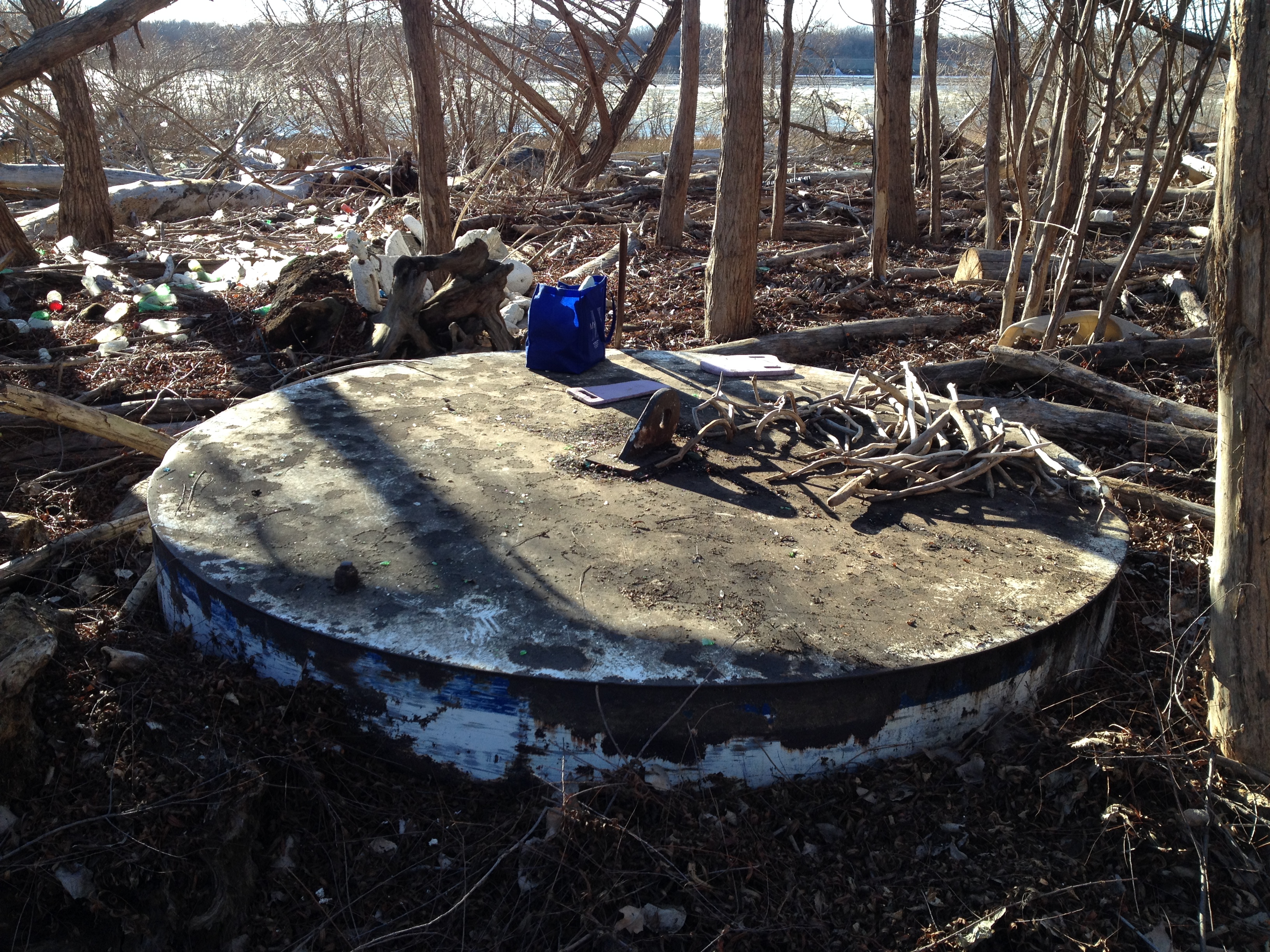
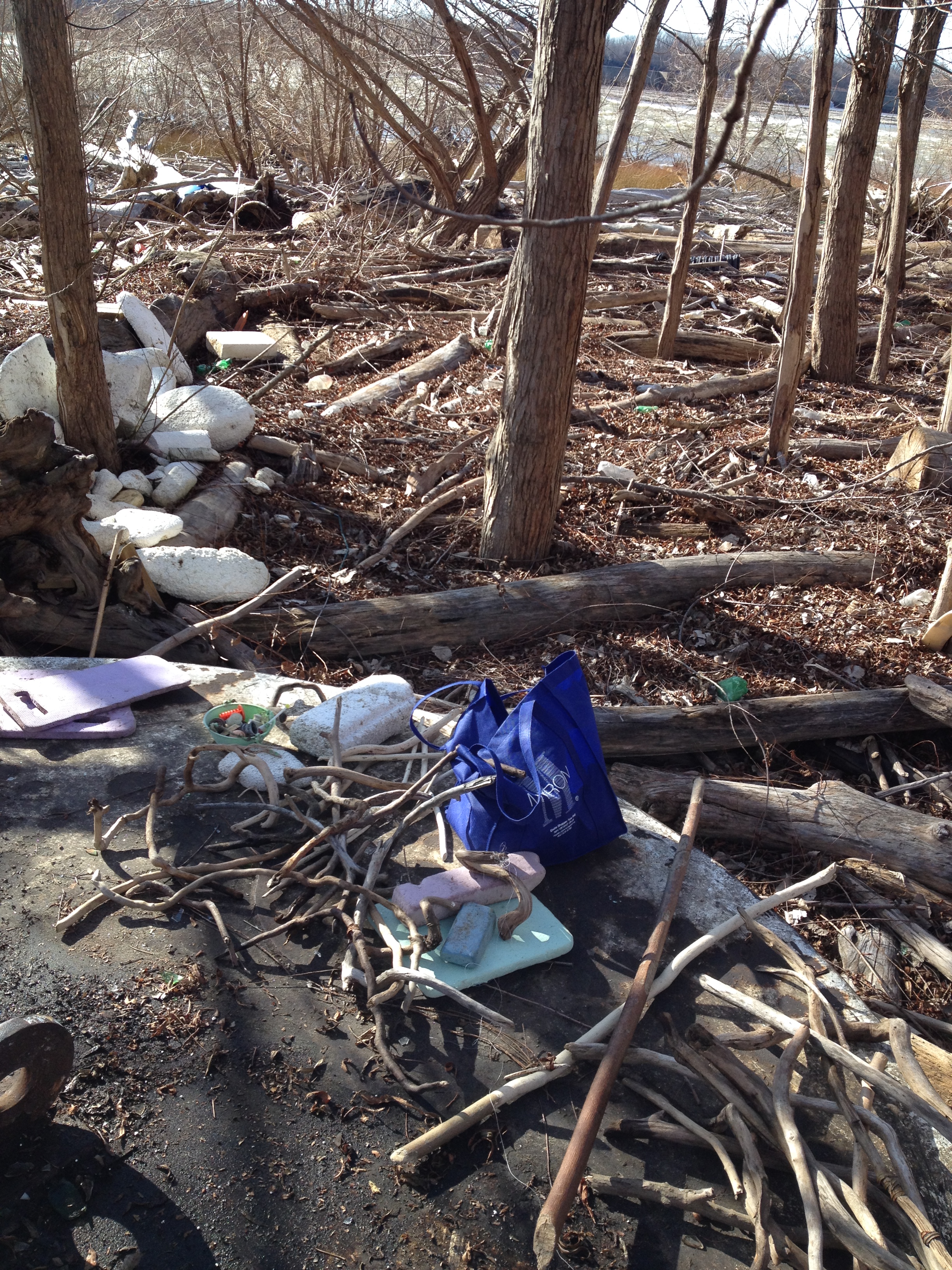
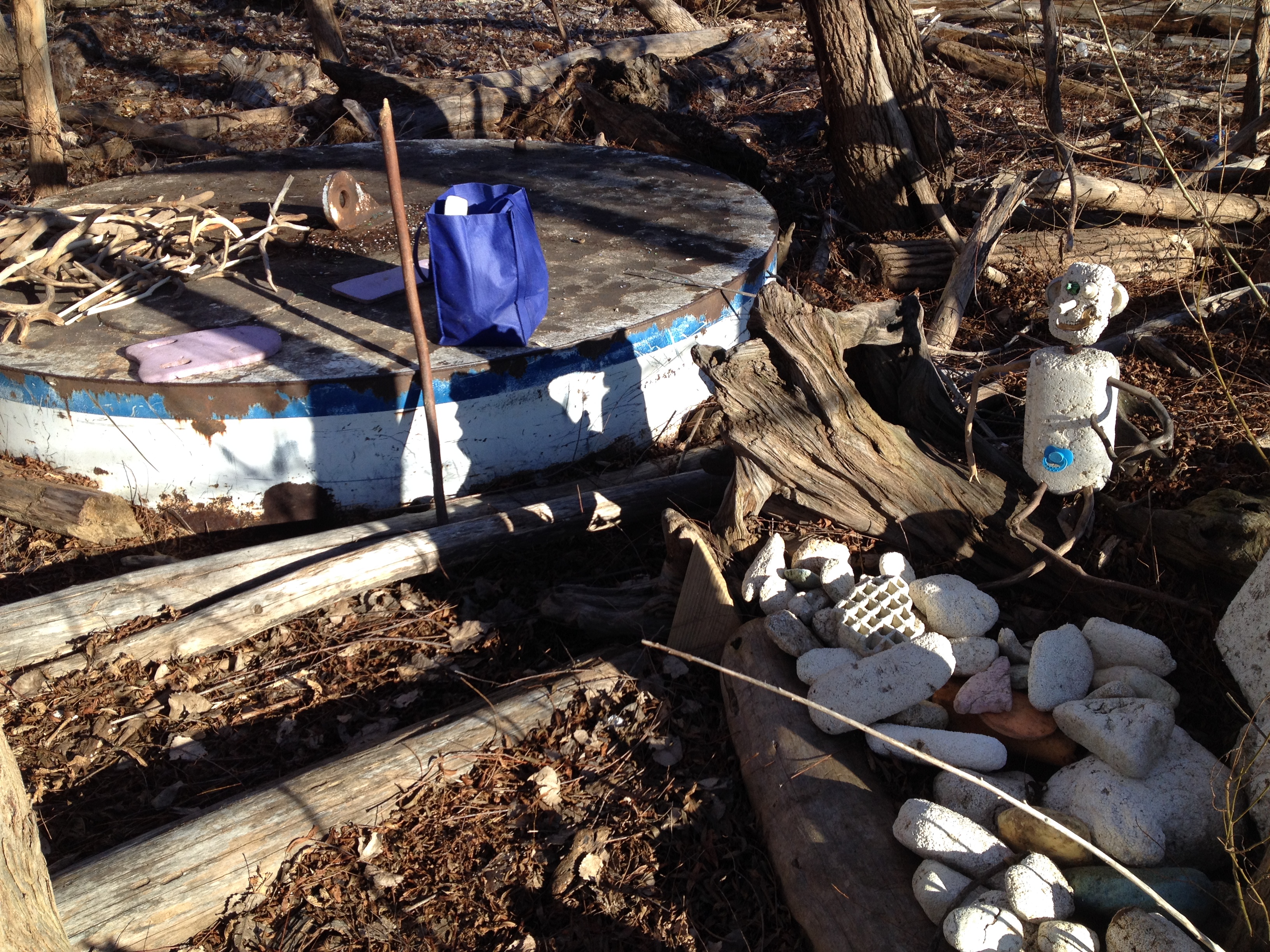
My "Unidentified Floating Platform" and former studio area, March 2015

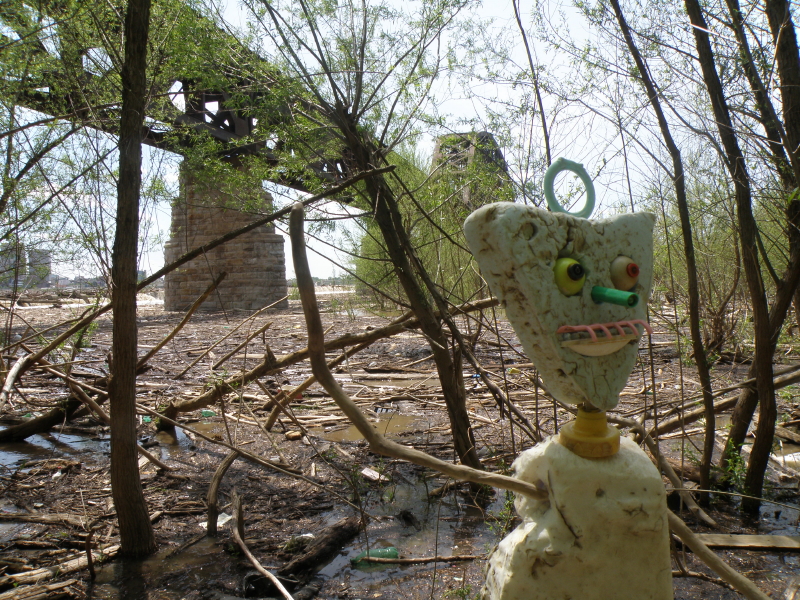
This is the centerpiece of my former outdoor studio area where I had cached many of the materials I found in the park.  All the Styrofoam pieces I had salvaged for artworks have washed away, but there is a fresh batch for the picking.  This large, painted, metal disc is what I’ve been calling the “UFO” which is short for Unknown Floating Object.  It washed into the park several years a go and subsequent floods have yet to move it out.  It is now tilted and has all this driftwood around it.  Formerly, it was laying flat on the ground and made a nice surface to work on.  My time is limited today and I want to make something from all this “abundance” out here.  I select a few large chunks of Styrofoam and begin constructing a figure.

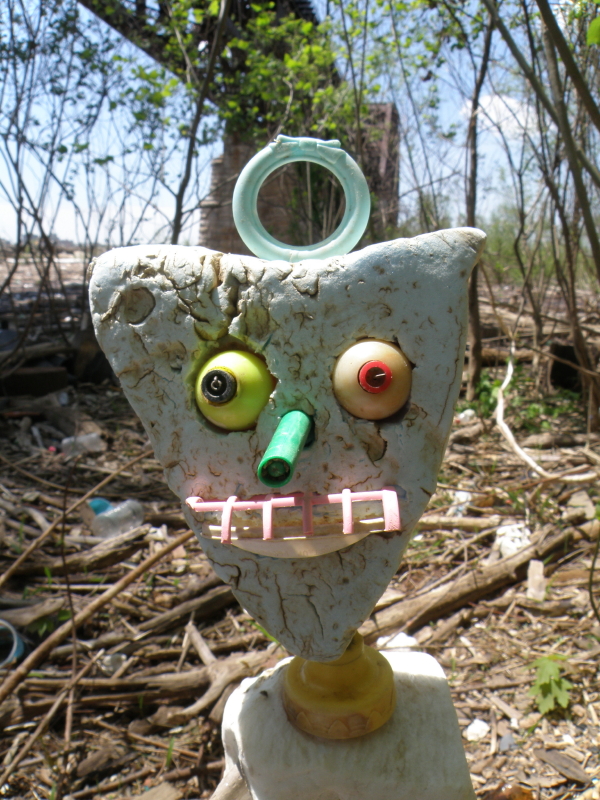
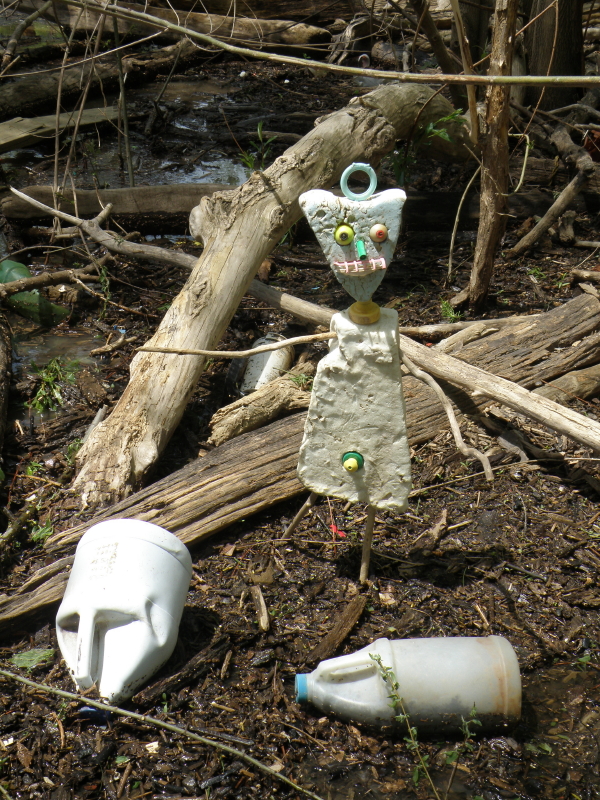
Large, Styrofoam head in progress, March 2015

Some of the large pieces of Styrofoam I want to work with are water-logged and too heavy to move.  I will wait a few weeks and see if the sun dries them out more?  I select two pieces for what will be a large, absurd figure and get to work.  I pick up junk around my feet and created this large head.  I move a really large polystyrene block into place atop the driftwood pile next to a river buoy that says “Idle Zone” on it.  For the next couple of hours, I will be anything but idle.

March Madness at the Falls of the Ohio, March 2015

Head of "March Madness", Falls of the Ohio, March 2015

While I was constructing this figure, I decided to call it “March Madness”.  According to the Walls Street Journal and ESPN, the Louisville area is the epicenter of interest in the college basketball game and its season ending national championship tournament.  Our region usually has several teams competing for top honors.  On the day I made this figure, the University of Louisville Cardinals were knocked out of contention.  I attached an old basketball to the end of a very long arm.  The slight breeze blowing at the time caused the figure’s arms and head to sway and vibrate in place.

"March Madness", Falls of the Ohio, March 2015

Back of "March Madness" facing the City of Louisville, March 2015

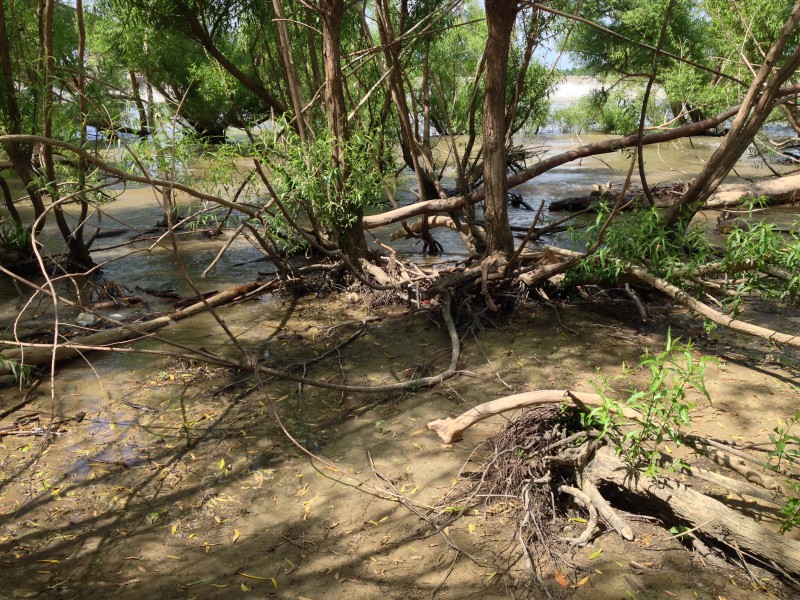
I look forward to spending a bit more time out here…weather permitting.  If everything remains in place, there is a chance to make several large figures this season.  I will be curious to see if this figure is still standing or whether park visitors or the elements have toppled it?  I just received a notification from WordPress that I have just reached my sixth anniversary of blogging with them!  For today, I will end with a picture of a tree that recently was completely underwater.  You can tell how high the water rose from the junk caught among the branches.  Happy Easter everybody!

Willow tree, formerly underwater, with debris stuck in its branches, Falls of the Ohio, March 2015


Read Full Post »

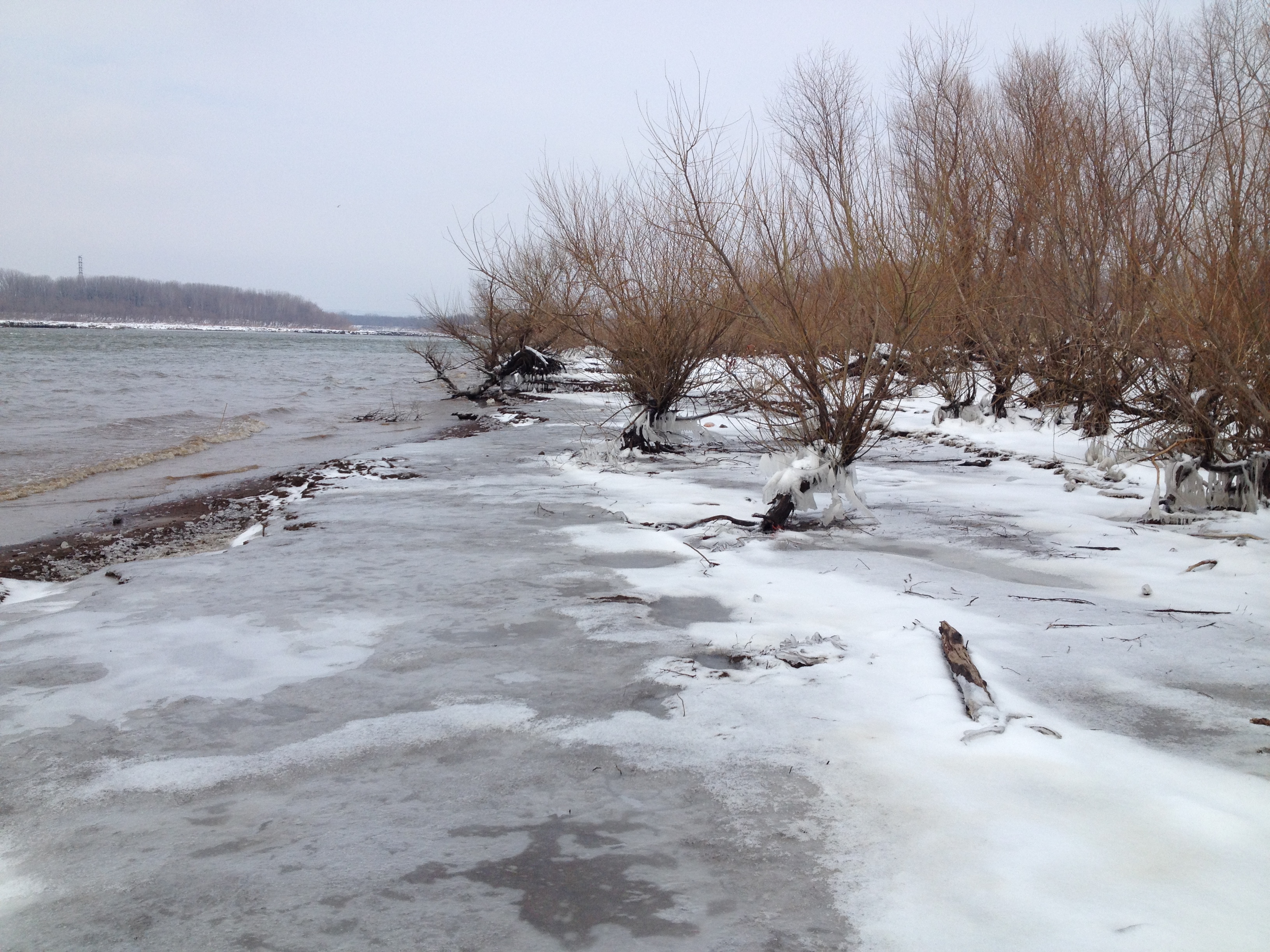
Winter view at the Falls of the Ohio State Park, Feb. 2015

And just when we thought we were winter-proof…the cold descended.  Literally, one day it was near 60 degrees and a few days later came the snow, ice, and record-breaking cold.  Although it has been a mostly mild winter in the Kentuckiana area…it has also seemed like a longer than necessary season.  Everyone I know is winter weary.  Cabin fever has me out venturing among the frozen willow trees at the Falls of the Ohio State Park.  From winter’s past, I know that when conditions are just right, I can expect to see some interesting ice formations near the river.

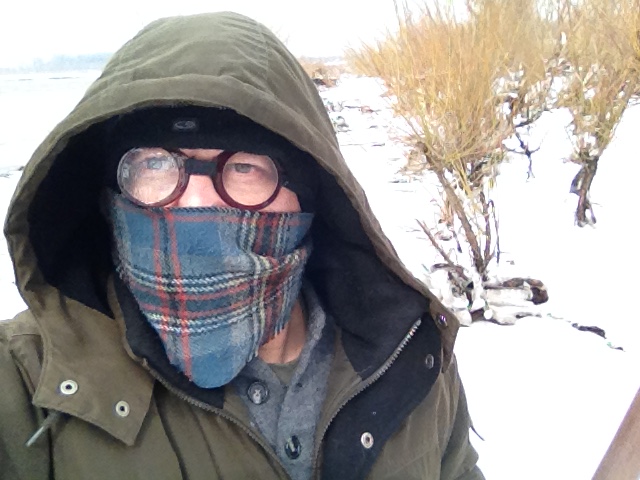
The Artist at Exit 0 in winter time, Feb. 2015

The right conditions are also cold conditions and you need to dress appropriately.  I find I’m in good shape wearing my vintage pair of Wind-Dodger goggles to keep my eyes from getting all watery.  An old treasured scarf across my face and an all wool, German, military surplus, submariner sweater add to the many layers I have on.  I bring along my trusty walking stick which I use frequently to test the thickness of the ice over frigid water-filled puddles.  Outfitted in my best polar garb I feel confident as I venture forth over a hibernating landscape covered in snow and ice.

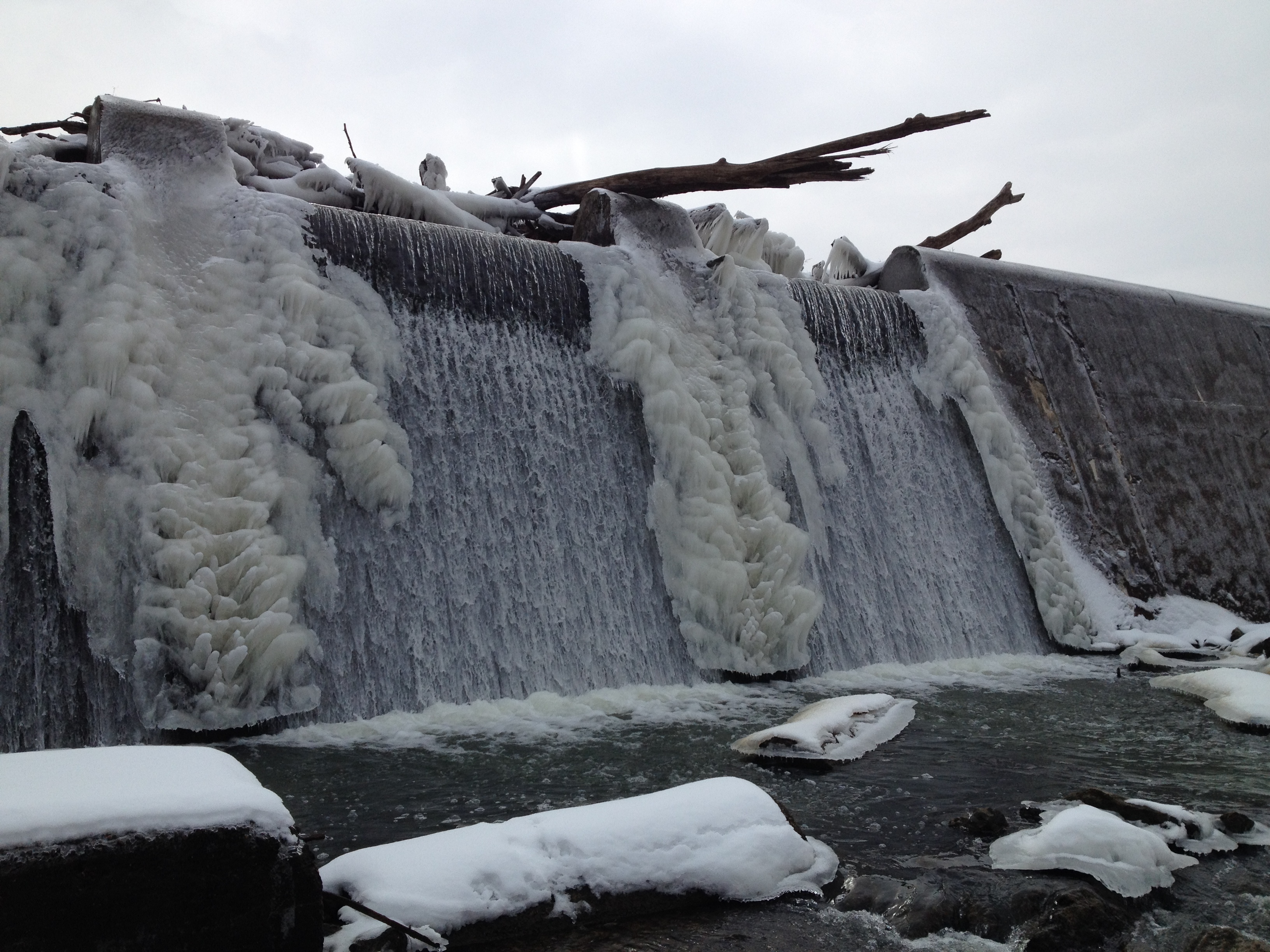
Ice formations on the dam's wall, Feb. 2015

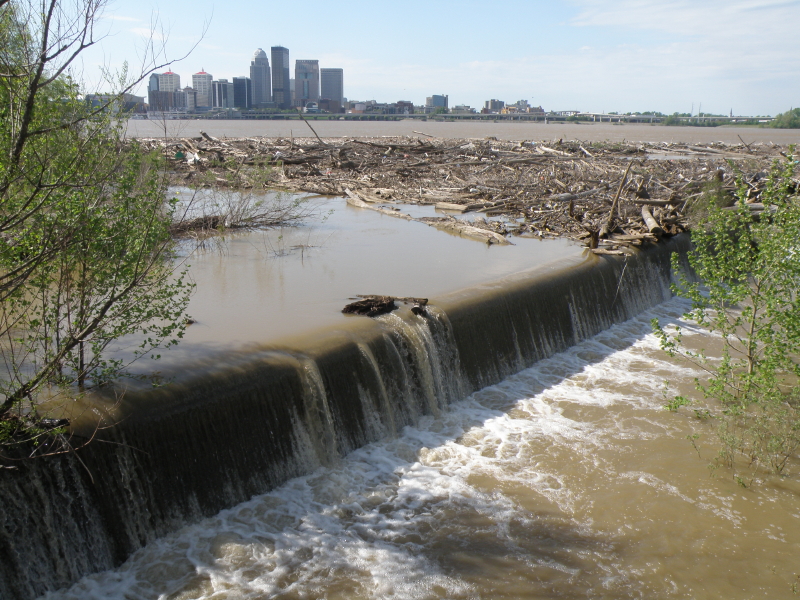
In the eastern section of the park, ice has formed on the dam’s wall.  This wall is all that separates the full force of the Ohio River from impacting the lower levels of the park that I am familiar with.  The true height of the river is many feet above my head.  The more swiftly flowing water keeps from freezing.  Debris of all description and the trunks of washed away trees build up on the upriver side of the dam.  More than likely, all the pent-up driftwood will find release when the spring floods come and even the walls of this dam can’t keep the river from rearranging this area once more.  It is a dynamic environment ruled by the river.  If I were to contrast the scene before me with the way this spot will look like in six month’s time…you would think you were on a different planet altogether.  I try to appreciate the variety before me which also has a way of keeping out the cold.

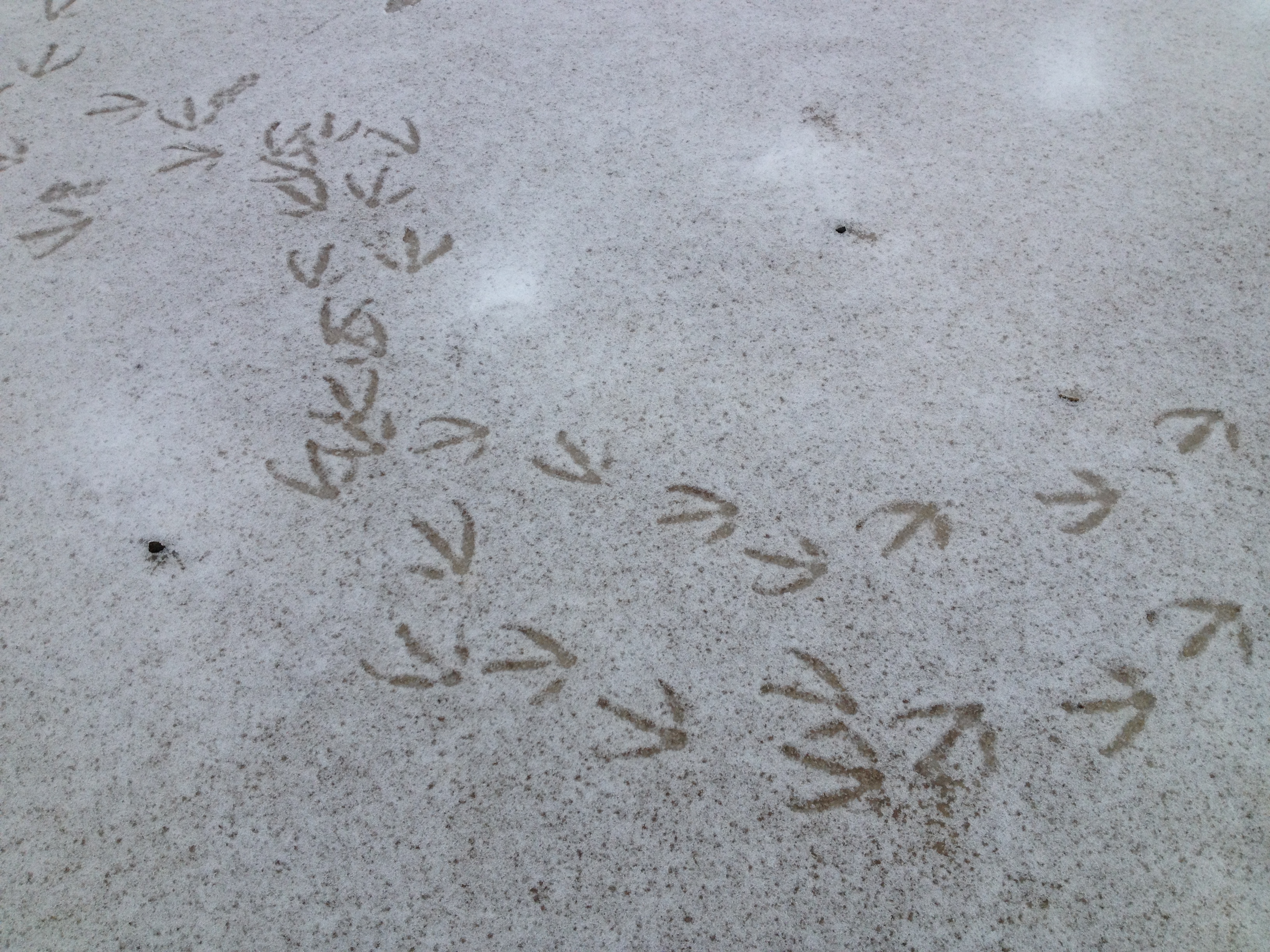
geese tracks in the snow, Feb. 2015

I find there is a surprising amount of life out here.  Although I’m the only person around, I have already spotted several species of birds that don’t seem to mind these conditions.  Geese have left there meandering tracks in the snow.  In the air, I watched both a Peregrine falcon and a nice flock of Ring-billed gulls engage in aerobatics over the river.  I come across other tracks in the cold mud that has me momentarily frozen in place.  I sort of recognize them, but there is also something not quite right here that I can’t put my finger on?

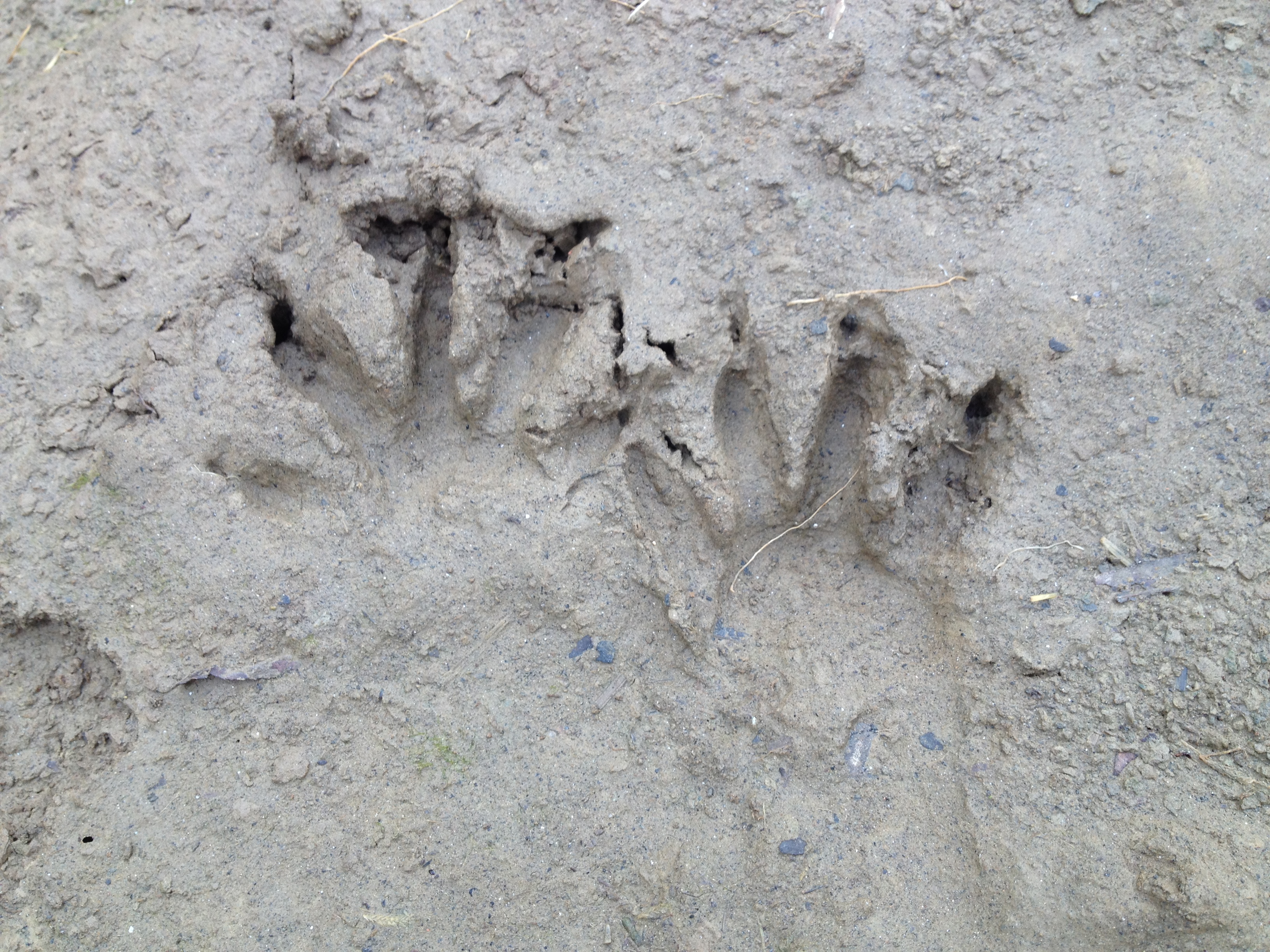
beaver tracks in the mud

To my eye, they appear to be beaver tracks, but they are too small.  I run all the possible candidates through my mind’s mammal filter, but I’m drawing a blank.  I chalk it up to my inexperience.  Try as you might, you can’t learn everything from books and there’s no substitute for doing the fieldwork.  I left the tracks and headed towards the spot on the river where I’ve seen good ice formations before.  Along the way, I find many chewed up willow branches and cuttings near a stand of willow trees.  Something has been dining fairly regularly in this area and with luck I may find other evidence identifying my mystery animal.  As you may have already guessed…luck was with me!

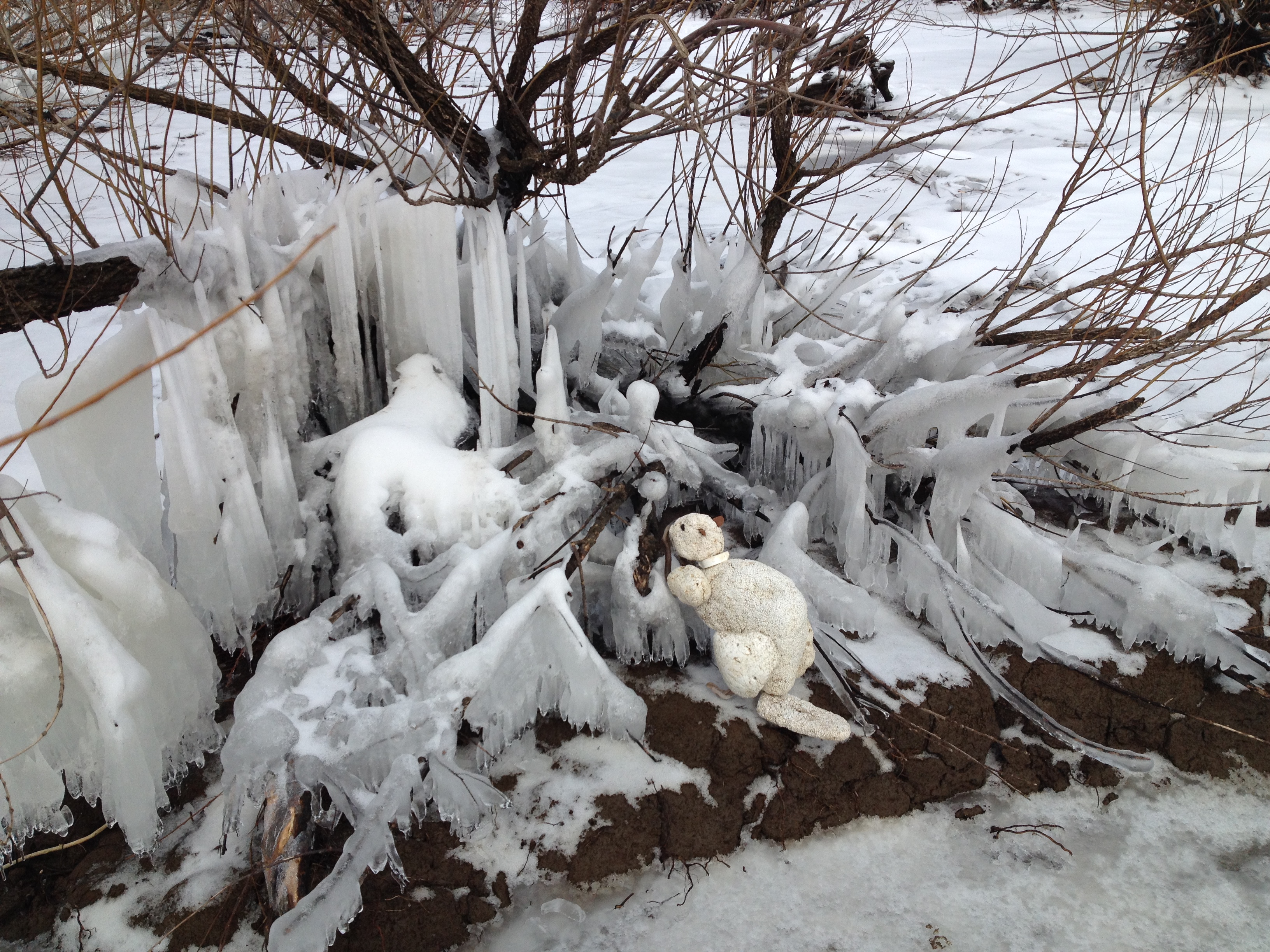
The Polar Beaver, Falls of the Ohio, Feb. 2015

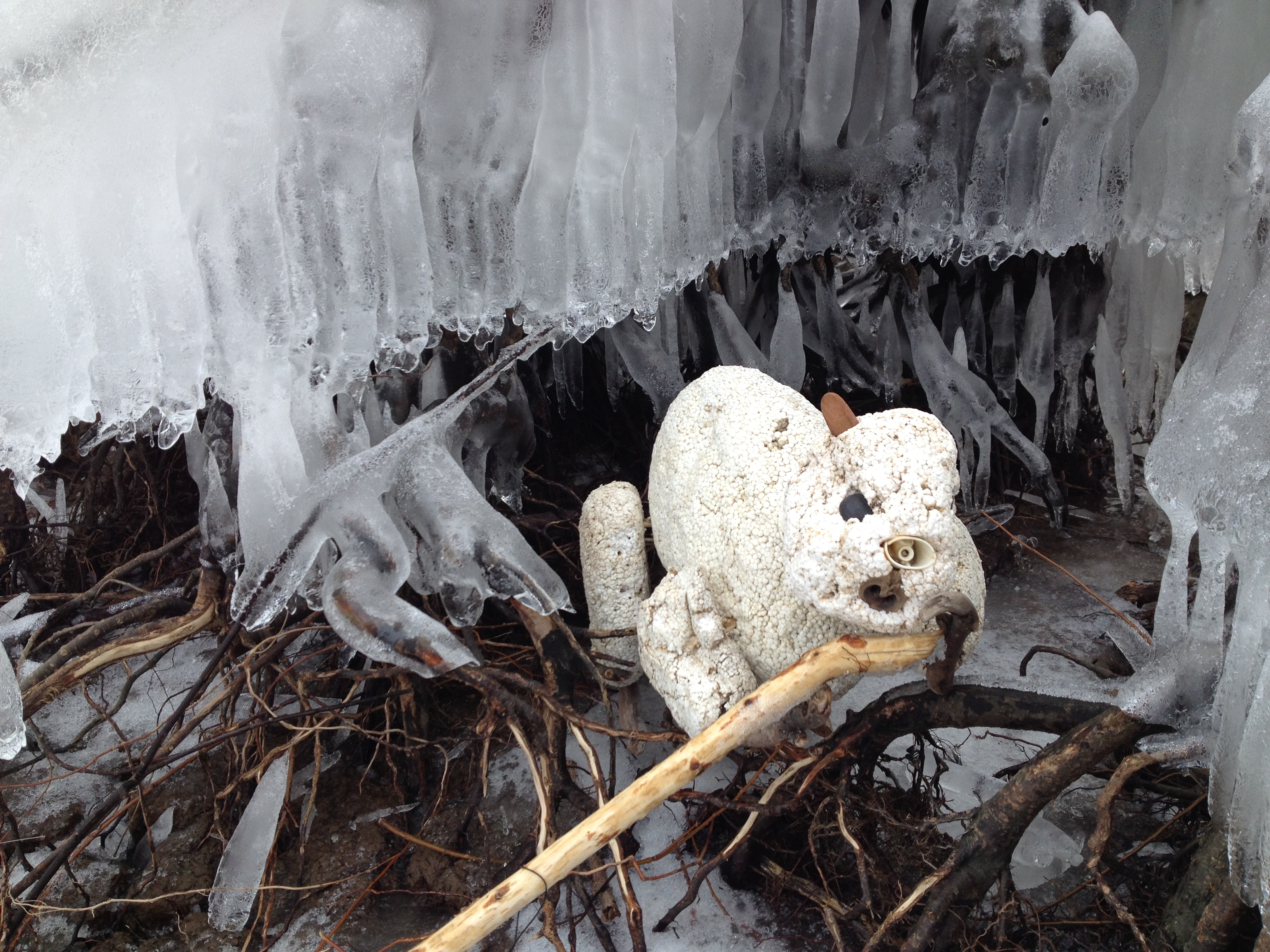
If it hadn’t moved, I doubt that I would have seen it and I would have missed the first recorded occurrence of the Polar Beaver (Castor arcticus) at the Falls of the Ohio State Park!  In size, this remarkable rodent is about the size of the common house cat.  I stood transfixed as this all-white animal concentrated its intentions on the ice-covered willow trees near the river’s edge.

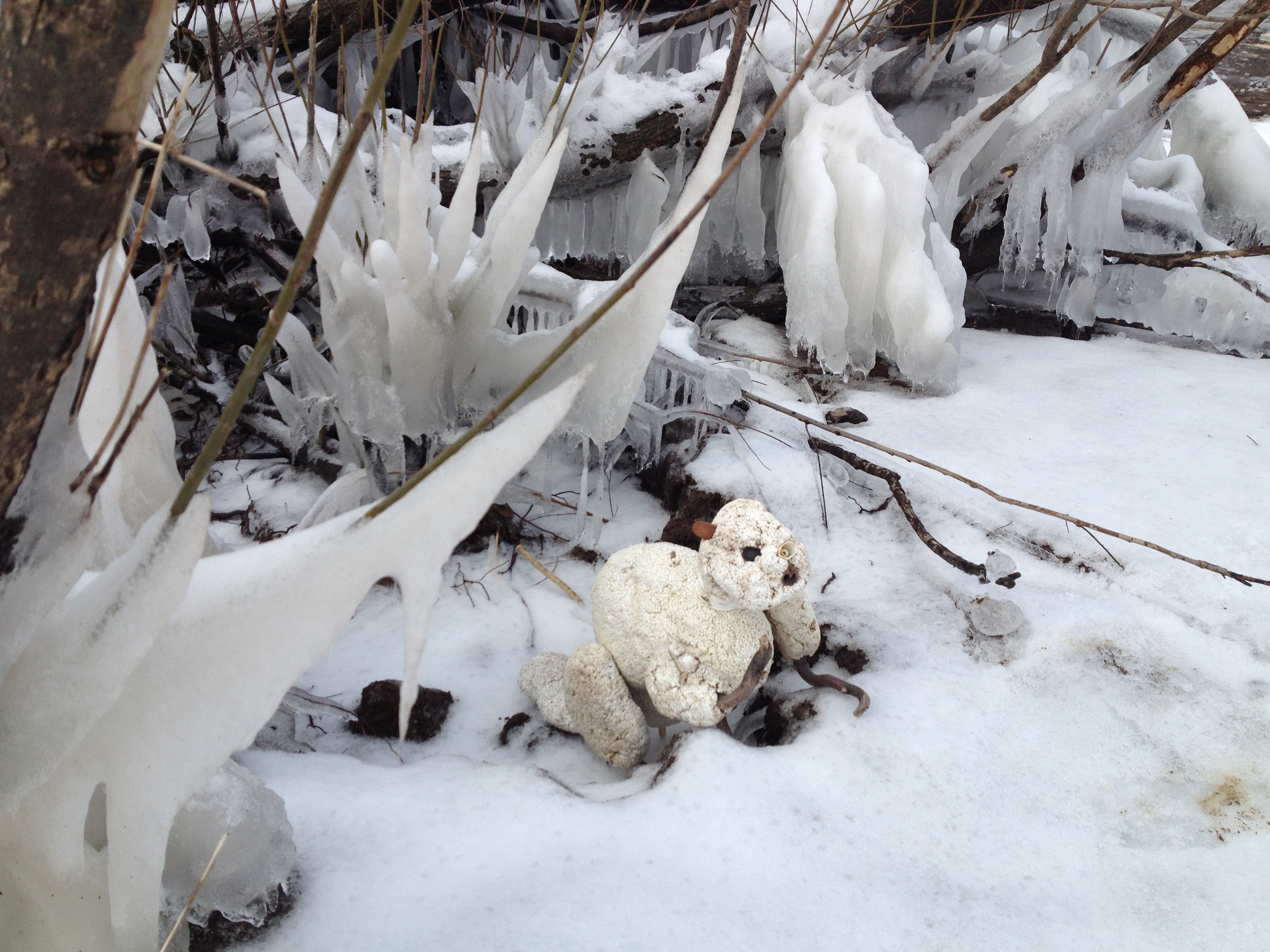
Polar Beaver, Falls of the Ohio, Feb. 2015

I wondered if the Polar Beaver could appreciate the varieties of shapes and forms that frozen water can take?  In the background, the Ohio River seemingly “smoked” as the surrounding air is much colder than the water.  This vapor or steam gradually coats the structures nearest the river.  As the condensation freezes it creates the many shapes that I like to describe as ribbons, sausages, and candles in this beautiful wonderland.  During these special moments, one can appreciate water as it exists in three different states of matter…gaseous vapor, flowing liquid, and rock solid.

The Polar Beaver, Falls of the Ohio, Feb. 2015

Historically speaking, the Polar Beaver is a fairly new animal to be described by science.  Although its beautiful snow-white pelt has been a valuable and prized trade item by the northern indigenous people…it was thought these rare white furs were taken from albino morphs of the common beaver.  Ironically, crypto-zoologists looking for the legendary Sasquatch, instead brought to light the existence of this very rare rodent.  DNA testing confirmed that the Polar Beaver is a truly unique species.  Some of the first observations about this animal documented that this beaver’s coat turns white as autumn transitions to winter.  This is a trait it shares with other polar animals like the Arctic hare and Stoat.

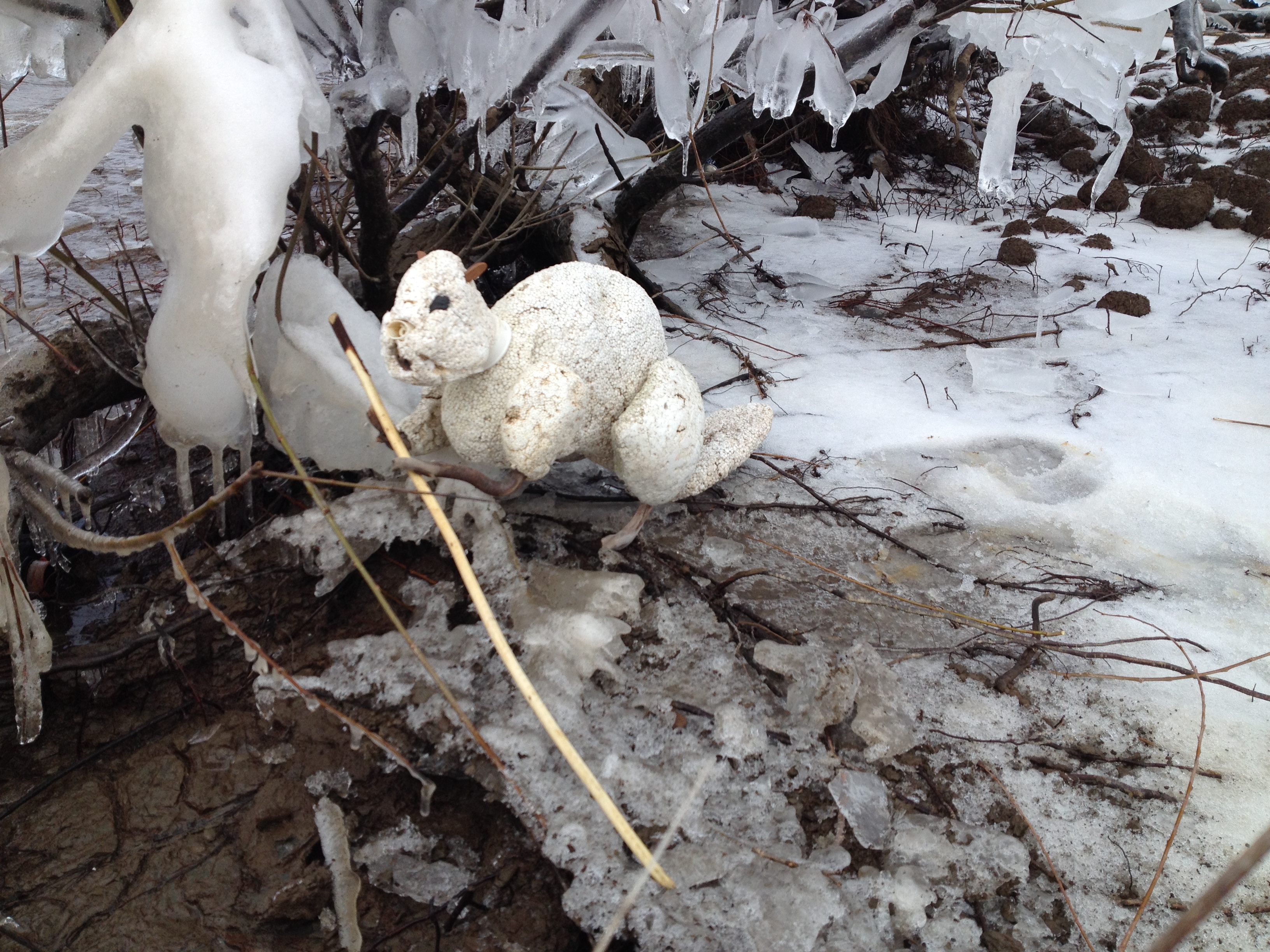
Polar Beaver with willow branch, Feb. 2015

During this time at the Falls,  I was able to observe the Polar Beaver feeding.  Deftly, the beaver chose just the right willow twig and with a quick bite, severs it from the parent tree.  Holding the stick with its front paws, the beaver than carefully chews away the surrounding bark revealing the ivory warmth of the wood.  “Tool marks” left behind by the beaver’s teeth are recorded in the wood.  Willow makes up a significant part of this animals diet, but it is now known that other tree species and plants are eaten “in season” as well.

Polar Beaver feeding in its ice shelter, Falls of the Ohio, Feb. 2015

Polar Beaver feeding on willow branch, Feb. 2015

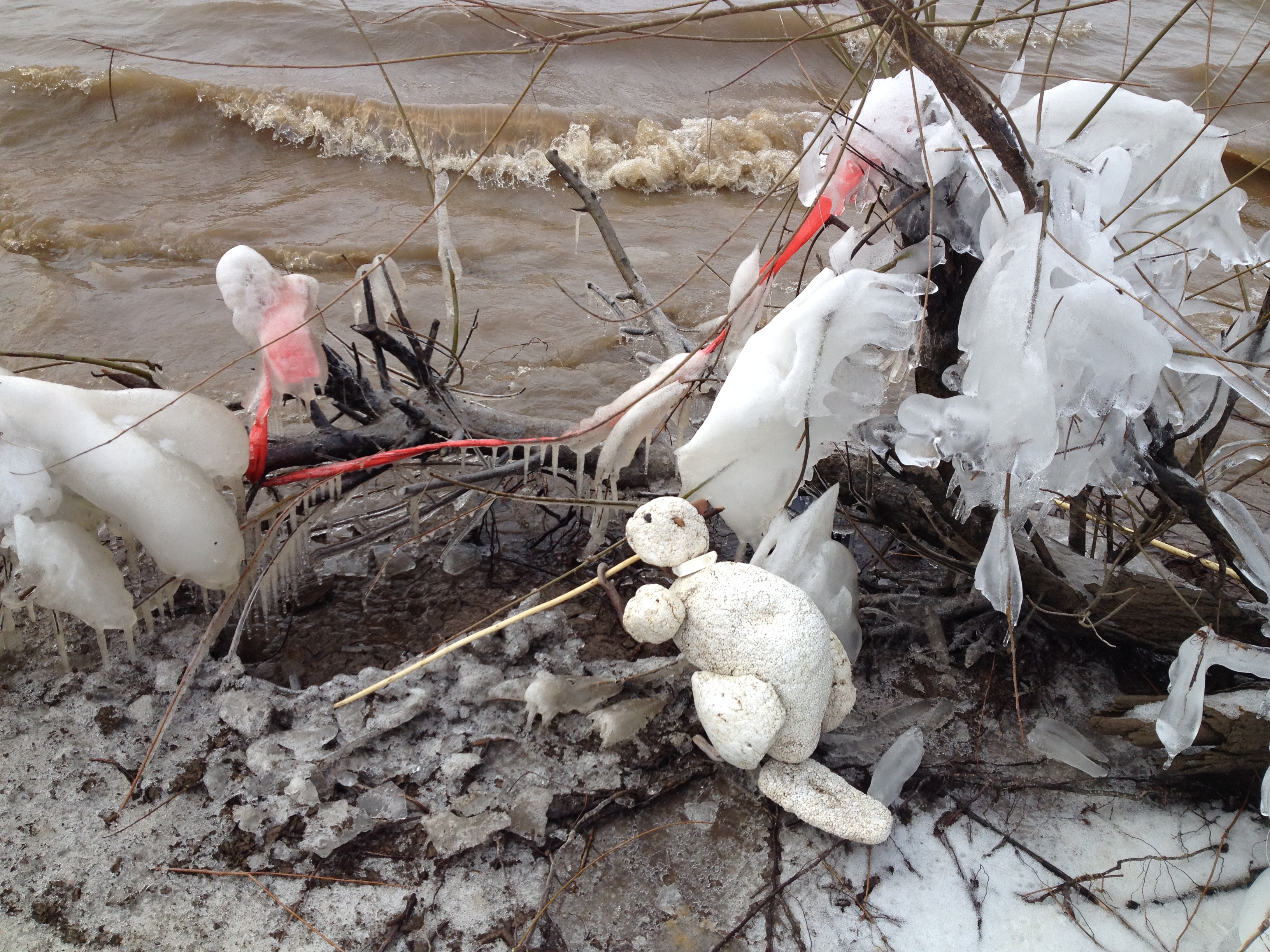
If the Polar Beaver noticed me at all…I couldn’t tell because it seemed so intent upon feeding.  I watched this animal carry a willow branch to a small “ice shelter” where it focused on the task on hand.  The muddy Ohio River gently lapped the shoreline.  When the beaver finished its meal, it continued to explore the immediate environs with its many ice formations.

Polar Beaver at the Falls of the Ohio, Feb. 2015

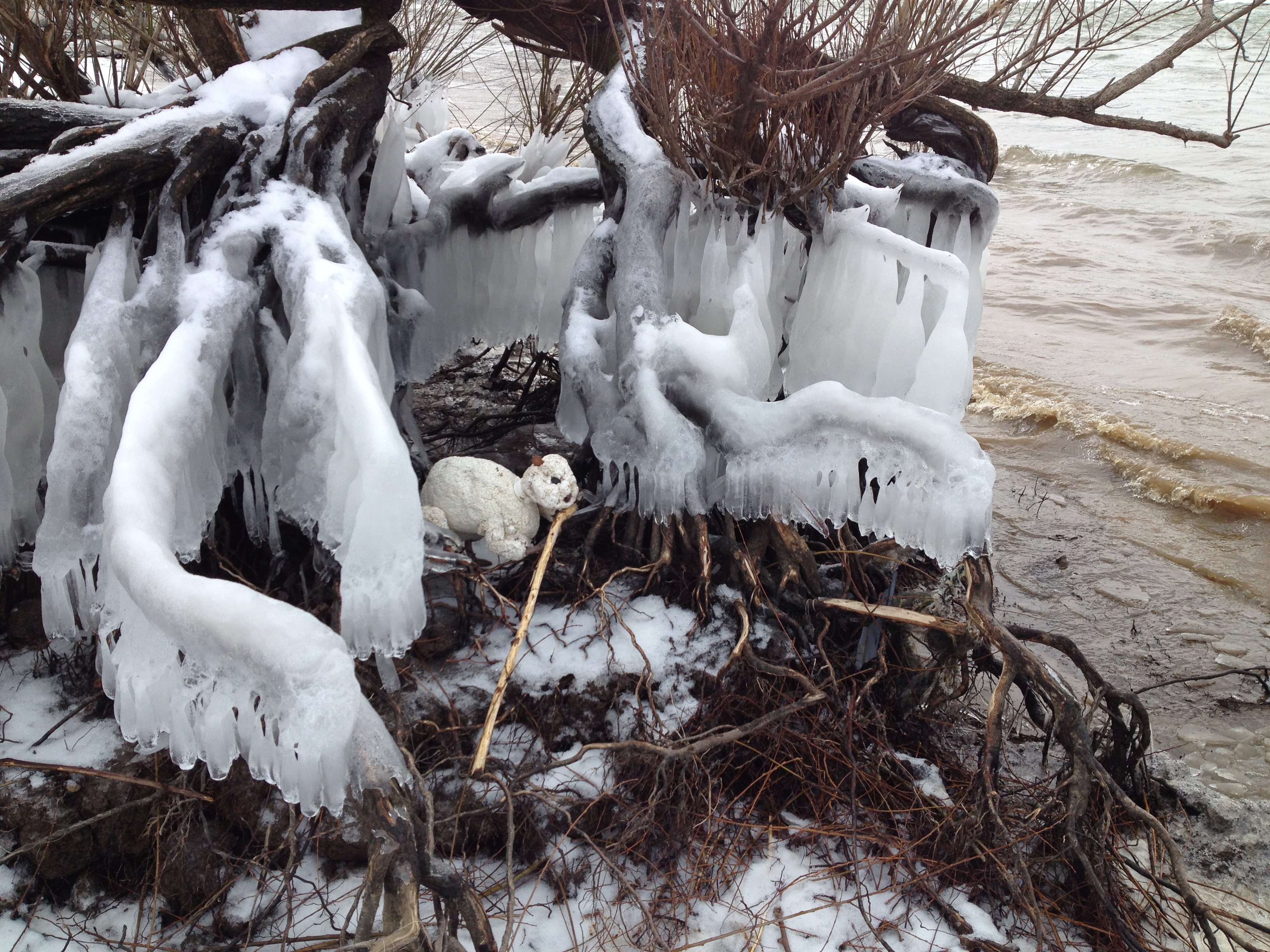
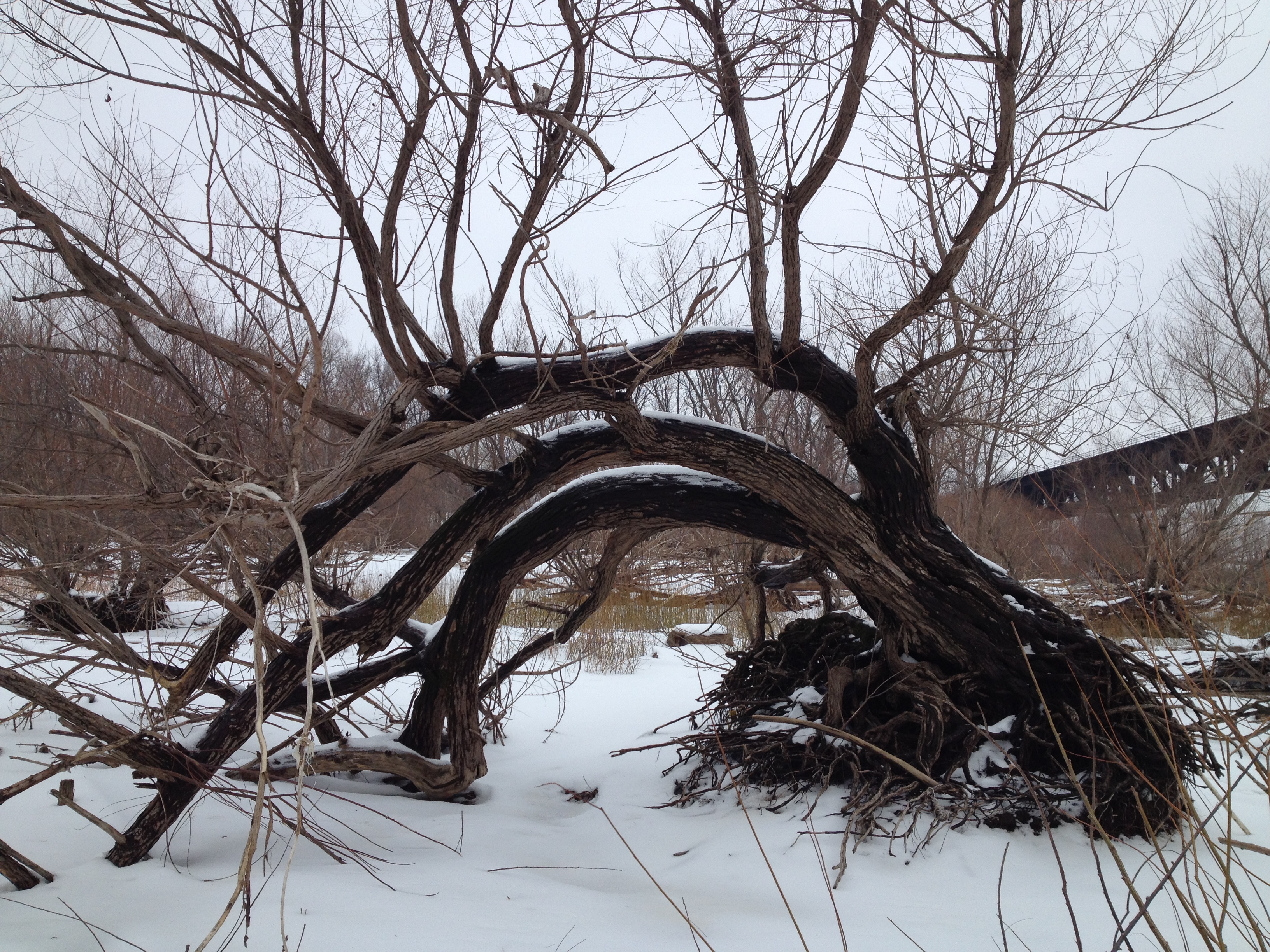
I noticed the beaver sampling willow it had already chewed upon as it moved down along the river’s edge.  I stood transfixed by this nearly mythical animal.  I finally lost sight of the beaver when it went behind an ice formation and unseen by me…slipped back into the water and disappeared.  I searched around for a couple of hours hoping to have another glimpse of this Polar Beaver or any others that might have been around, but ultimately was unsuccessful.  I returned during the next two days, but this beaver apparently moved on for good.  I was lucky to have seen it, but can you blame me for being greedy and wanting more time with this magical animal?  Wouldn’t you wish for the same if you were me?  When my reverie lifted, I realized that I could no longer feel my toes and my digital camera was also feeling the cold and not operating properly.  It was time to go home and I will leave you with one final image from this trip.  Here is a view of a favorite old willow tree as it appears during the heart of winter.  Spring will soon be around the corner and I will see you again at the Falls of the Ohio.

Old willow tree in winter, Falls of the Ohio, Feb. 2015

Read Full Post »

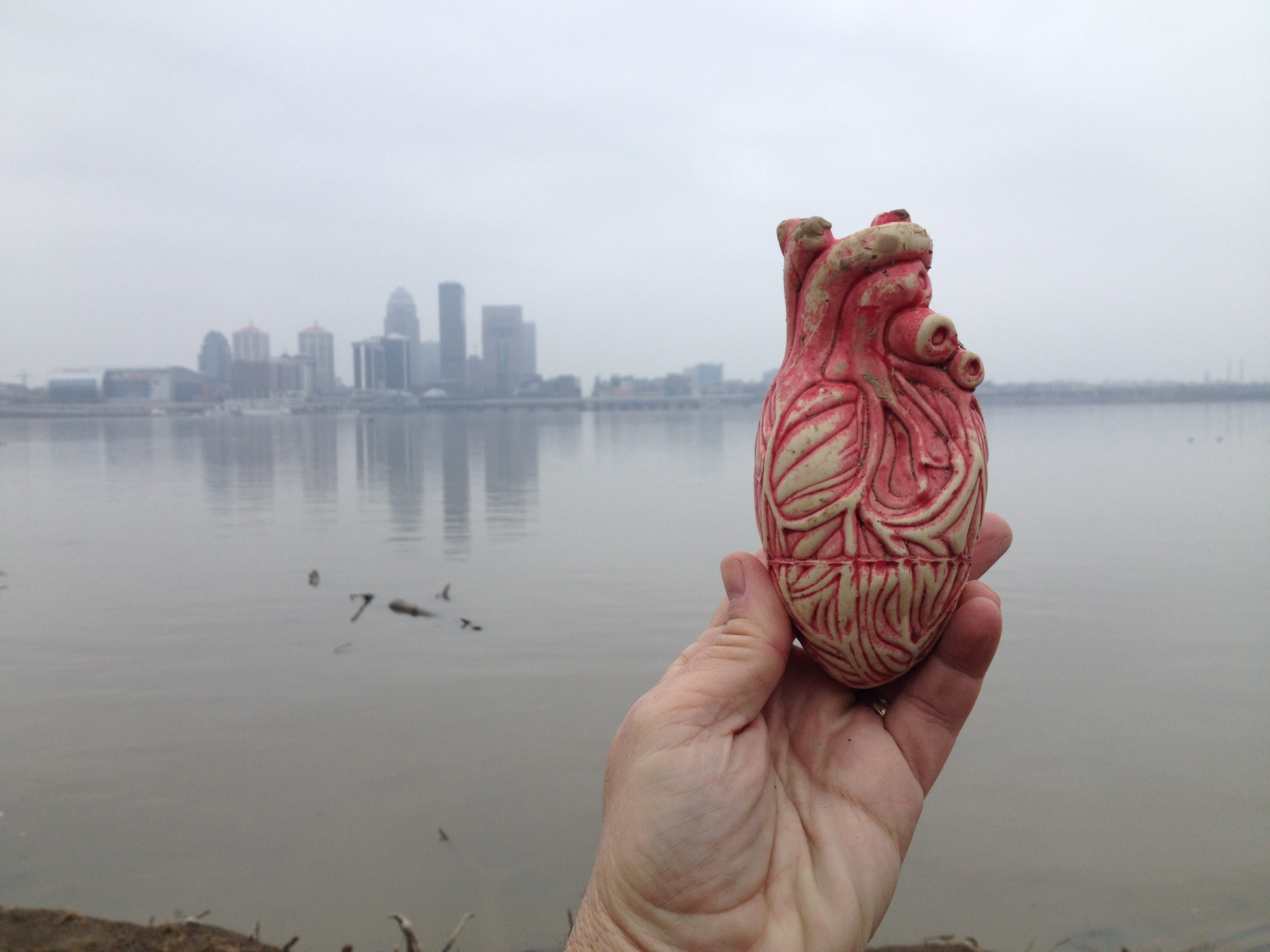
Found Plastic Heart, Falls of the Ohio across from Louisville, Jan. 2015

Happy 2015 to all from the Falls of the Ohio State Park!  This is my first post of the new year which has started auspiciously for me.  I am happy to report that I found a new day job!  I am the new Coordinator of Public Programs and Engagement at the Carnegie Center for Art and History in New Albany, Indiana.  About this time last year I was showing my own river art at this organization.  It’s funny how things worked out…I had a feeling that my opportunities were leading me to the north bank of the Ohio River and that’s what happened.  I found this plastic heart in the mud of the Indiana riverbank about a week before I was offered the job.  I wonder if it has significance?

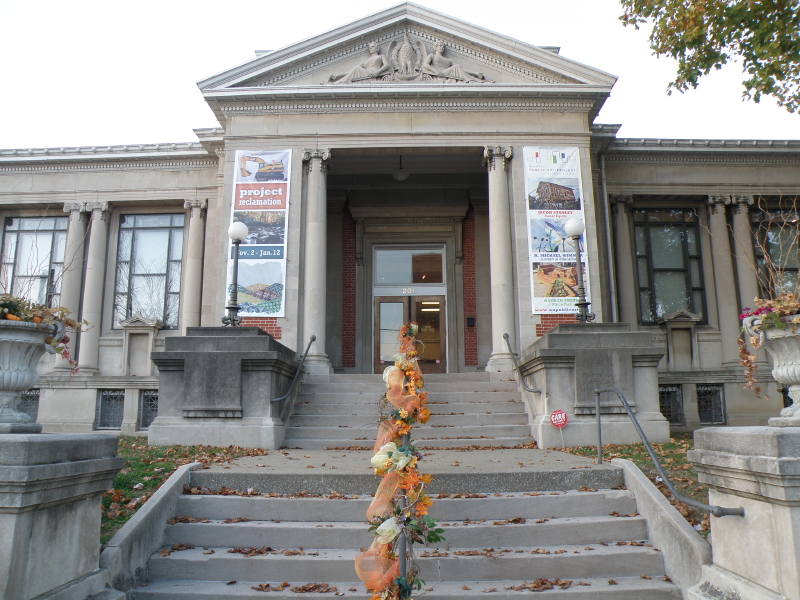
Carnegie Center for Art and History, New Albany, IN, Nov. 2012

My relationship with the Carnegie Center for Art and History goes back to the early 1990’s when as a staff member at the Louisville Visual Art Association I helped to install the Indiana version of the Children’s Free Art Classes on the Carnegie Center’s gallery walls.  Over the years, I’ve been fortunate enough to have exhibited my own work here with the latest being the Potential in Everything show with Michael Wimmer that was up this time last year! There has to be a lot of serendipity in play here for all the stars to line up as they did and so I am feeling it was meant to be.  I will be creating new workshop opportunities and other programming to help the center with its community-minded mission.  It’s a new challenge for a new year!

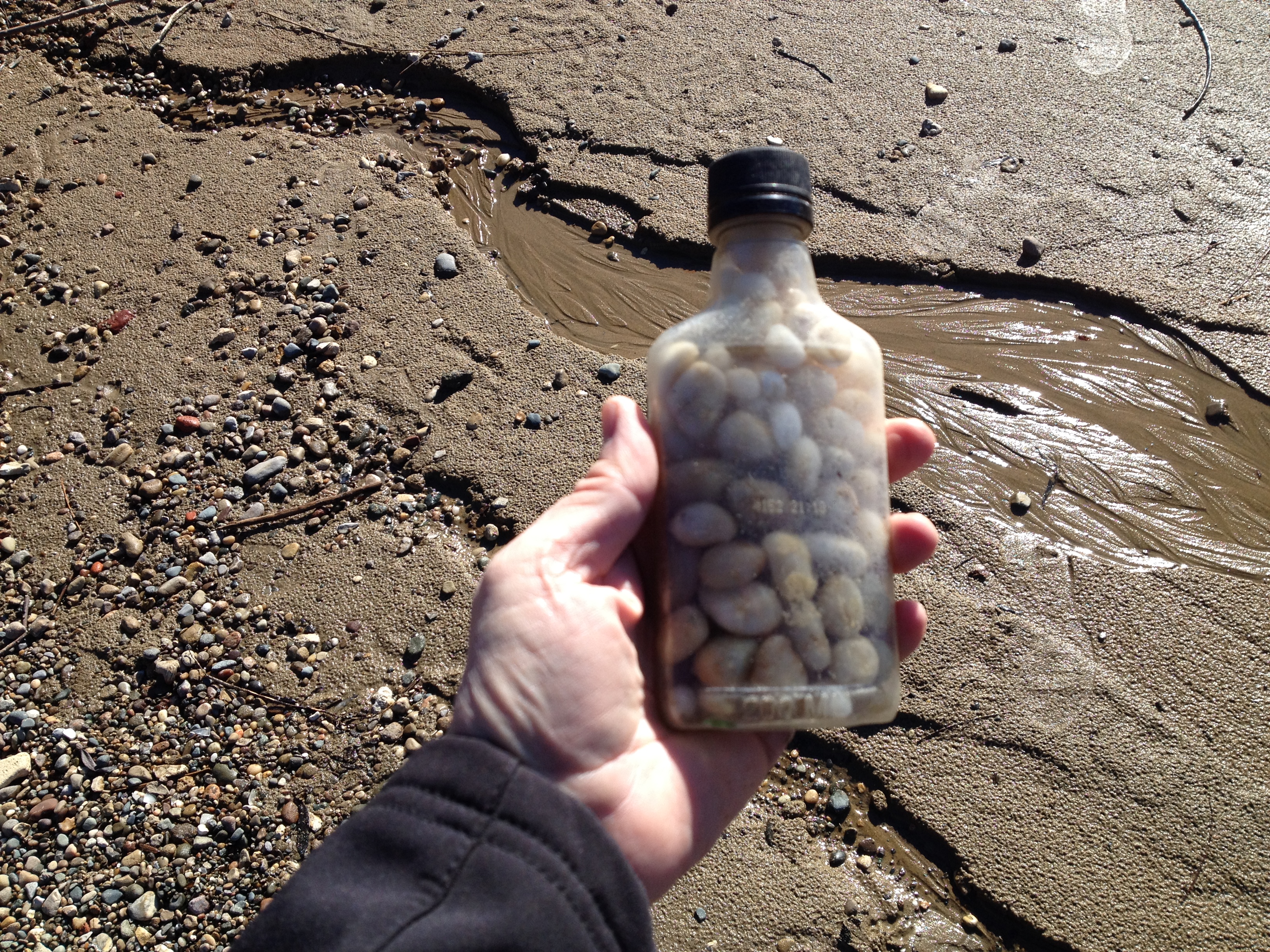
plastic liquor bottle filled with quartz pebbles, Falls of the Ohio, Jan. 2015

With the new job and a recent cold spell I haven’t had the opportunity to visit the river until this three-day weekend.  I heard that 2014 was the warmest year ever recorded across the globe.  Today our temps are in the low 50’s which is quite a change from the teens we just experienced.  I grabbed my walking stick and collecting bag and made a day at the river.  I have been doing various bottle projects and here is a new one.  I found a plastic liquor bottle that still had its cap on it.  It’s interesting to note that most bottles I find with screw-top bottle caps are discarded with their caps on.  By a deposit of Ice Age gravel, I was able to fill the bottle with river-tumbled white and pale yellow quartz pebbles.  Not sure how I will use this, but will probably factor into a new artwork soon.  Being outside on such a fine day is something else I wish I could bottle for future use when the cold, damp, and gray returns.  For now I place the bottle in my collecting bag and move on.  There are other things to find and discover.

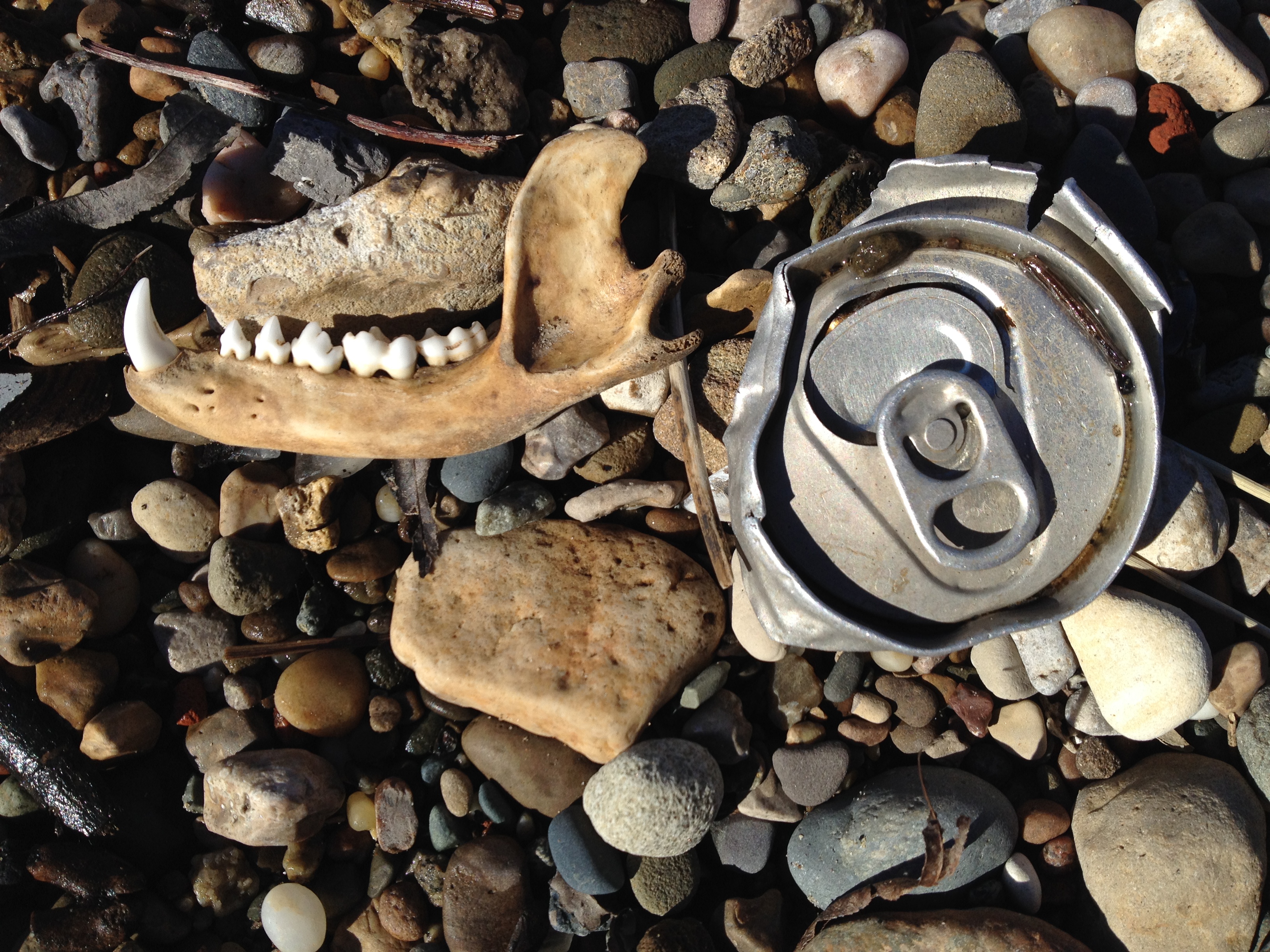
jaw bone and aluminum can top, Falls of the Ohio, Jan. 2015

Next to the flattened top of an aluminum can I found this small, partial jaw bone.  I think it’s from a skunk or some other small carnivore, but will need to check the dentition more carefully.  After taking this picture, I picked the mandible up and placed it into my bag.  This find will factor into something else I put together before day’s end.

Circular platform at my outdoor studio, Falls of the Ohio, Jan. 2015

The mud and melting ice made checking out the river’s edge problematical and so I headed up the riverbank and into the willow trees.  I visited my outdoor atelier and decided to do a little “house cleaning”.  I swept the leaves and dirt off of the circular metal platform that has been here for several years.  If I could have figured out how to get this object home, I probably would have done so by now.  As it is, I like using it as a work surface and place to sit.  My other stashed materials are nearby.  To me, the platform is still a “U.F.O.”…which stands for “Unknown Floating Object”.  I think it has something to do with mooring barges, but could be wrong about that.  I also like that it adds a stage-like presence and helps define one small area at the Falls.

Louisville and Indiana railroad cars, Falls of the Ohio, Jan. 2015

Huge downed log near the railroad bridge, Falls of the Ohio, Jan. 2015

Standing on the platform and facing the river, if I look to my left I see the old railroad bridge.  There were several trains that went back and forth while I was occupied.  The railroad is part of the atmosphere of the place.  A large and partially burned log occupies the space between the platform and the bridge.  I straightened out my stick and root collection and sorted them on the platform.  I then rediscovered my Styrofoam collection.  Every time I walk the river, I find new river-polished pieces and add them to this assemblage.  There is simply more here than I can use at a time and so anyone is welcome to try making something from what has been gathered.

Styrofoam larder at the Falls of the Ohio, Jan. 2015

Detail, Styrofoam pieces, Falls of the Ohio, Jan. 2015

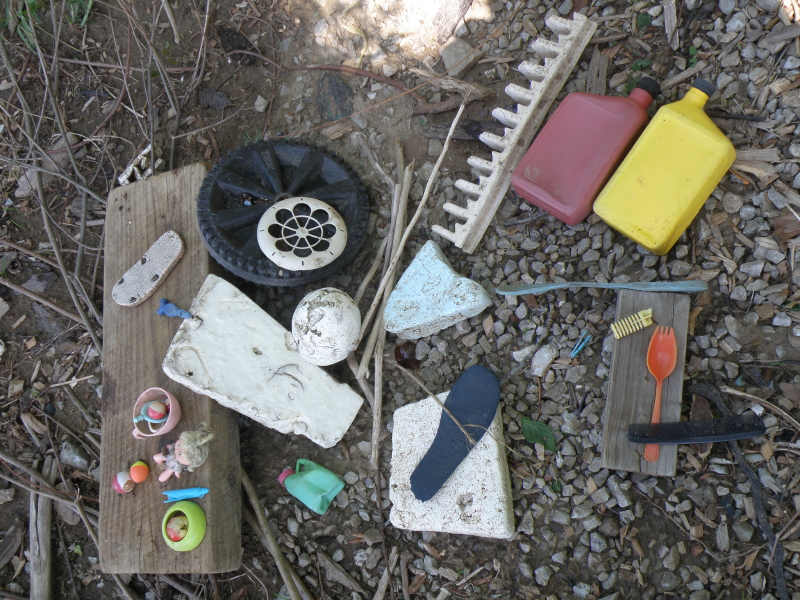
I grab a few rounded pieces from the collection and decide to construct a figure from what I have here and in the bag.  I decide which shapes and forms would make good heads and bodies and set them aside.  Once in a great while, some other creative souls find my larder and make something of their own from this junk.  I like it when people see the opportunity here.

Outdoor studio view, Falls of the Ohio, Jan. 2015

Materials for a figure, Falls of the Ohio, Jan. 2015

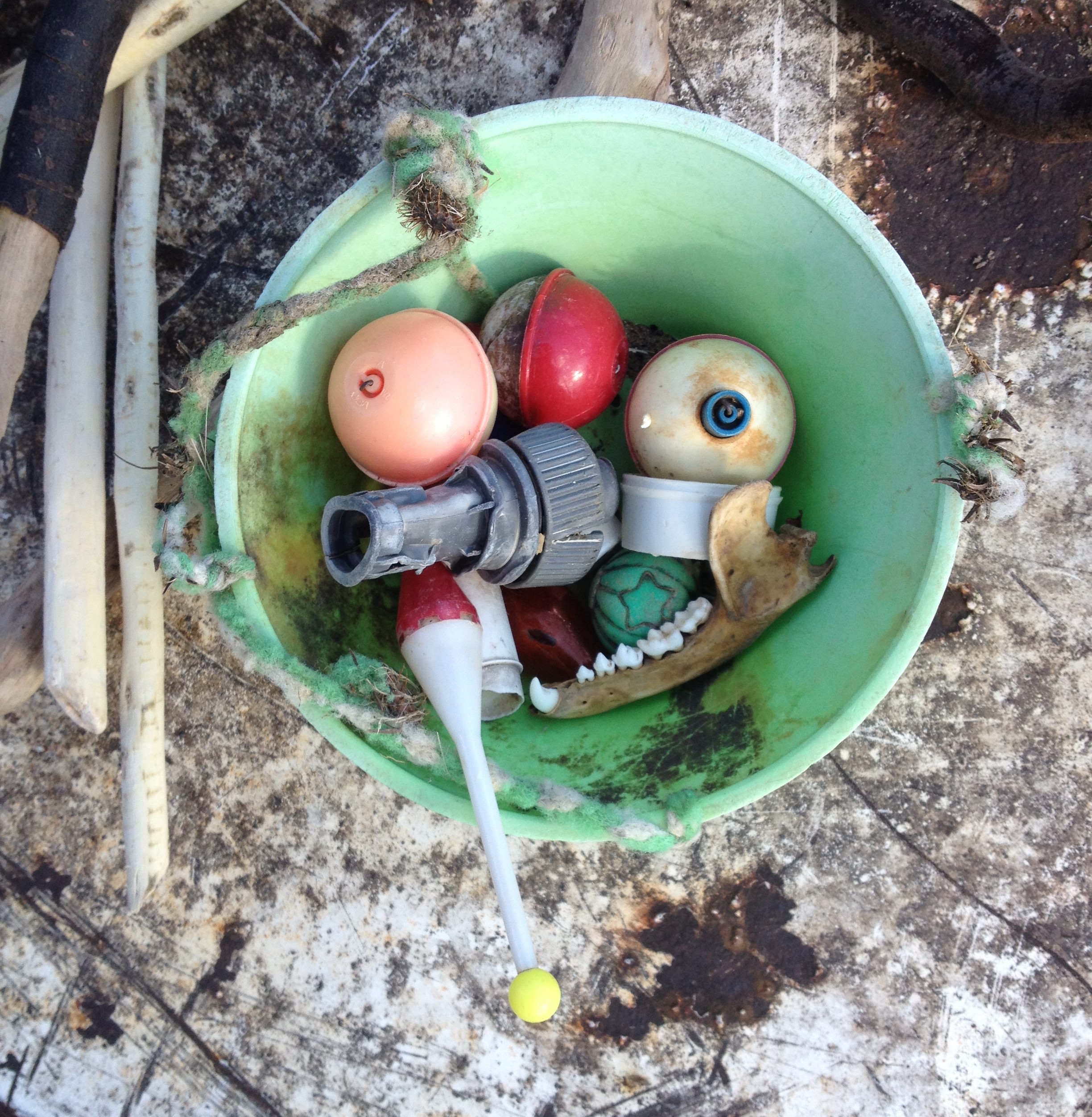
I usually like starting with the head first.  It’s where the most information is focused and my Styro-figures share this with archaic works and folk art.  In the case of this figure, I decided on another shape for the head.  Collected bits of plastic and potential facial elements are placed into a found plastic bowl.  I will decide the features of today’s figure from what I’ve gathered today.  Here’s a sequence showing the progression of how the head evolved including what already looks like a found face in the bowl.

Plastic bowl with potential "facial features", Falls of the Ohio, Jan. 2015

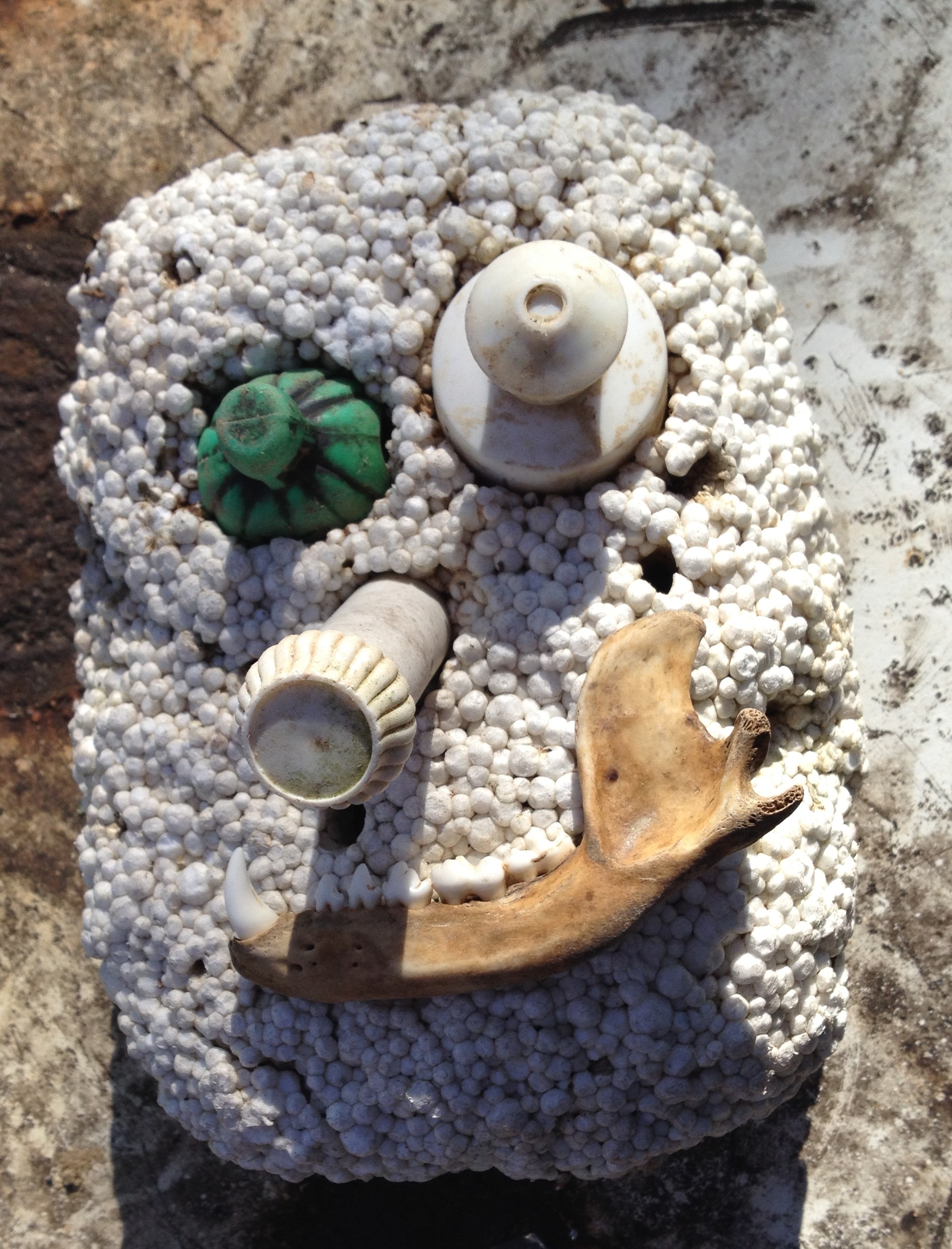
January Styro-figure head in progress, Falls of the Ohio, Jan. 2015

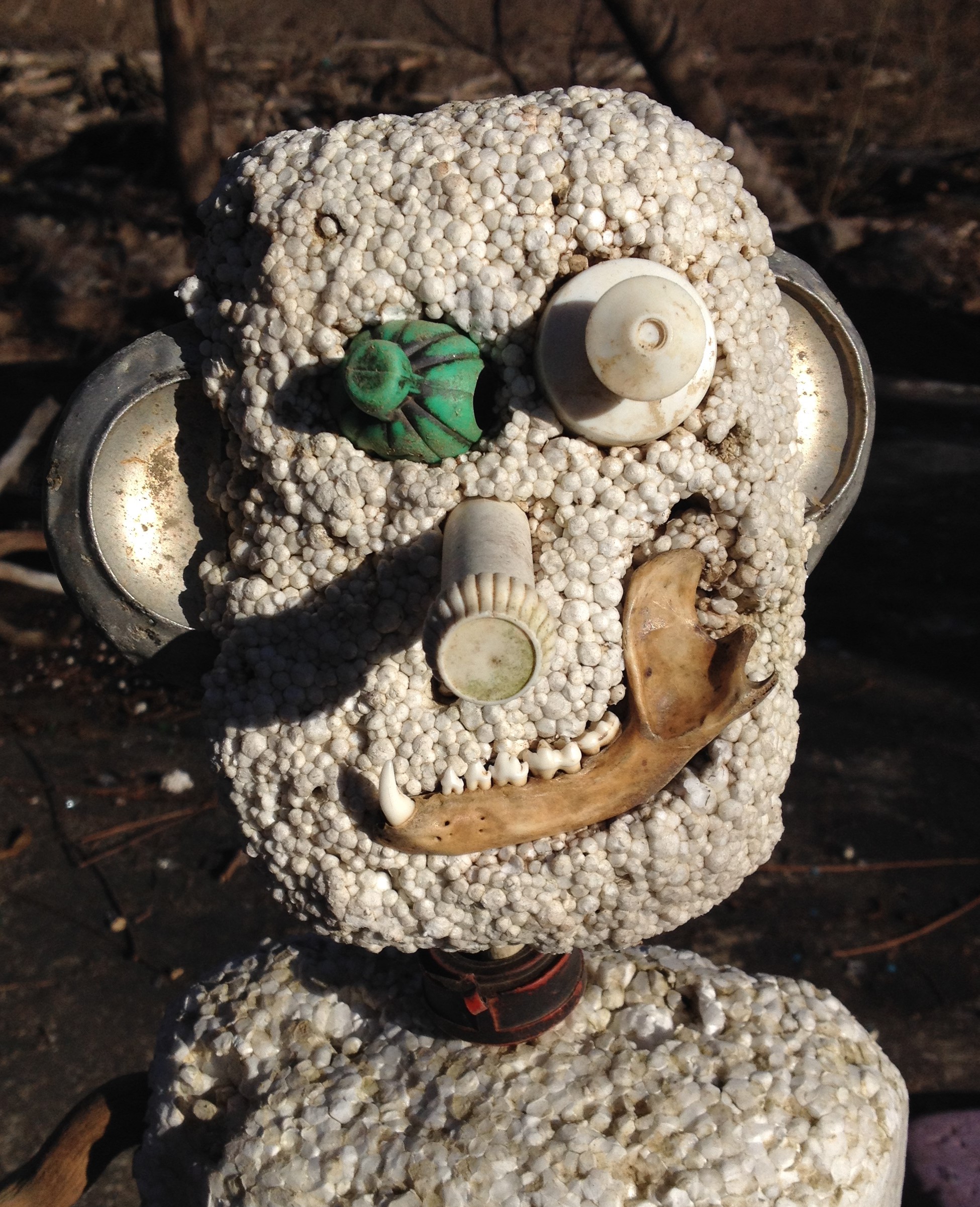
Finished head, Falls of the Ohio, Jan. 2015

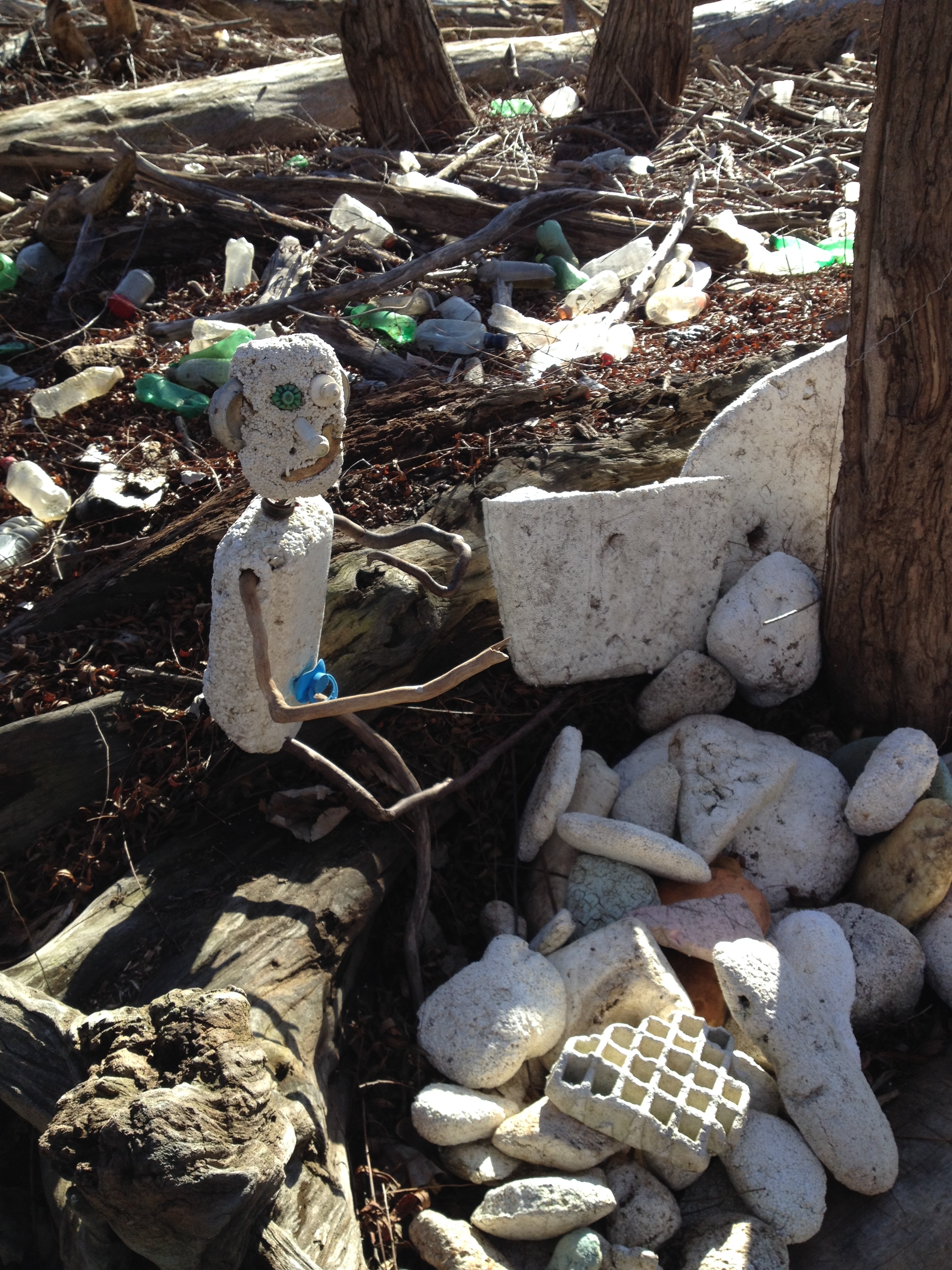
The found mandible has a new home on this piece.  I split the bottom from an aluminum can to make the ears which does give this figure a monkey-like quality to it.  The eyes are a white, plastic bottle cap and the green, plastic bead from a child’s toy.  I found two expressive sticks for arms and set the figure up as though it were sitting down with crossed legs.  Here are images of this piece finished on site.

First Man of January, Falls of the Ohio, Jan. 2015

Figure at my outdoor art site, Falls of the Ohio, Jan. 2015

I had the best time today.  There is still lots of winter before us, but this weekend’s respite helped connect me to the river for the first time this year. I will be curious to see if we even have one decent snow fall this season?  Whatever happens during 2015, I will take it all in stride. The year is already off to a positive start!  I think I will leave it at that and sign off until next time from the Falls of the Ohio.

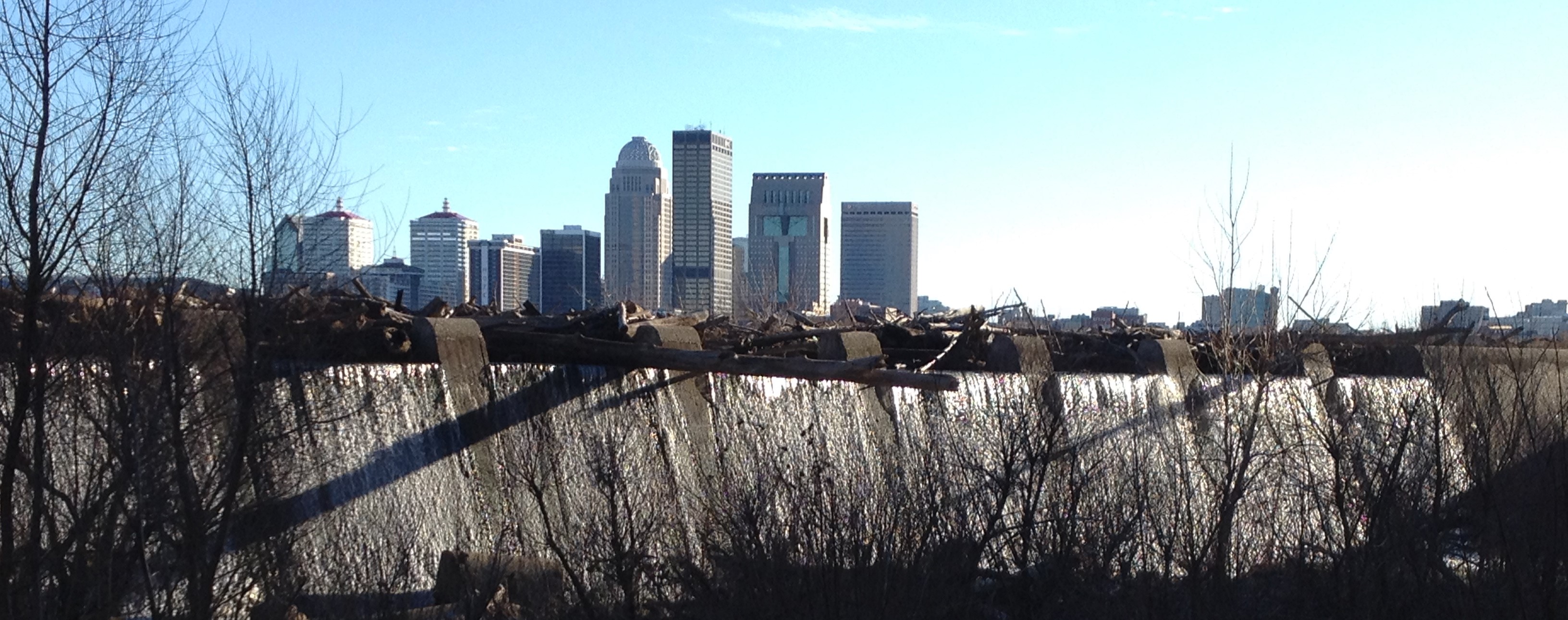
Skyline of Louisville from the Falls of the Ohio, Jan. 2015


Read Full Post »

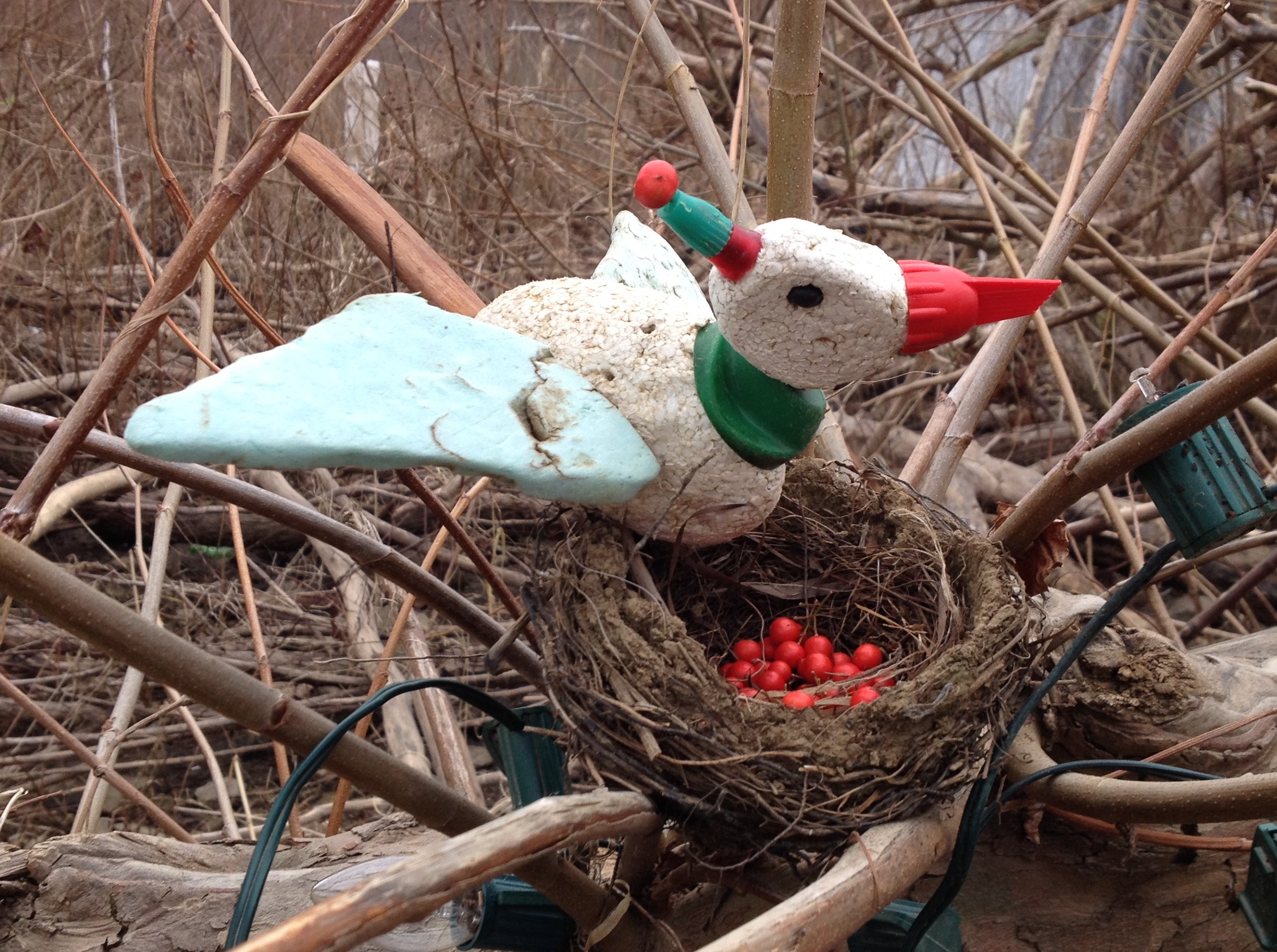
Christmas Bird at the Falls of the Ohio, Dec. 2014

In the eastern section of the Falls of the Ohio State Park I came across a remarkable bird.  As far as I know, this is the first documented sighting of the so-called Christmas Bird (Xmasii noelensis) in our area.  The bird’s red crest, green collar, and azure-colored wings are diagnostic as is the bicolor beak.  I was down at the river on a rather foggy morning when I noticed the bird flashing its wings in mockingbird fashion which is a distant relative of this species.

The Christmas Bird, Louisville in the background, Dec. 2014

I was looking for interesting pieces of driftwood and odd items washed up by the Ohio River when I came across this bird.  This is a long distance migrant and one that hails from as far north as the Arctic Circle.  The Christmas Bird earns its name in a couple of ways.  Of course, its complimentary plumage is rather seasonably inspired and it does seem to migrate to the lower 48 states around the time of the holidays.  Where the bird will appear is rather unpredictable, however, it is a welcome sight in most any location.  Here I have photographed the bird “flashing” its wings against its body while perched upon a driftwood log.  The park is in Southern Indiana and the skyline of Louisville, Kentucky can be seen across the Ohio River.  After taking this shot, the bird flew off.

Display of the Christmas Bird, Falls of the Ohio, Dec. 2014

I said to myself…”Well, that’s that”.  I fully did not expect to see this rare bird again, but I received a “gift” of a rather unexpected nature.  Underneath the old iron railroad bridge, not too far away from my initial sighting, I came across this “decorated” nest and recognized its significance.  This is a display from the Christmas Bird.  Using an abandoned mud-lined nest of an American Robin, (Turdus migratorius), the Christmas Bird has created an assemblage involving red berries and the remains of a string of old Christmas lights that washed into the park with the other river-bourn detritus.  From this evidence, I suspected the bird had “claimed” this area.  If I in turn displayed patience…I might get another opportunity to photograph this unusual species.

Christmas Bird with its display, Falls of the Ohio, Dec. 2014

I waited about an hour and the Christmas Bird did appear to my great joy!  It arrived at the nest with a red berry in its beak which it added to its growing collection.  It is believed that this bird is attracted to the color red.  Usually, berries from the holly tree are used, but in this instance I recognized them as the fruit of the Nandina plant.  The bird probably discovered them growing in a private garden in nearby Jeffersonville, Indiana.  It is suspected by ornithologists that the southerly migration of the Christmas Bird, which brings it to warmer climates, may trigger this unusual nest-like and courting behavior.  The Christmas Bird is known for its ability to tolerate extreme cold and it takes a great drop in temperature to stimulate it to migrate.

Close up of the Christmas Bird with red berry, Falls of the Ohio, Dec. 2014

Christmas Bird with display, Falls of the Ohio, Dec. 2014

I was able to observe this bird making about ten trips back and forth between the nest and its berry source.  If the bird was aware of my presence…it did not appear to be overly alarmed.  Once in a while, the bird with crest erected, would cock its head back and forth trying to differentiate my form among the willow branches.  I held my breath and tried to remain still and as unthreatening as possible.

The Christmas Bird with its seanonable display, Falls of the Ohio, Dec. 2014

The weather grew damp and cold and the sun looked like it was not going to appear from beneath its blanket of clouds.  I made the decision that I had enough images and it was time to leave this bird in peace and go home.  On the ride home, I felt I had been given this great gift, the gift of nature which remains priceless and timeless!  For me, nothing packaged in a box and wrapped with a bow can equal this living blessing.  To all who have followed my adventures by the river this year…I offer my sincerest good wishes during this season of holidays!  I hope that at least once in your lifetimes, you will be visited by the Christmas Bird bringing red berries for your nest.

Christmas Bird with red berry, Falls of the Ohio, Dec. 2014

Read Full Post »

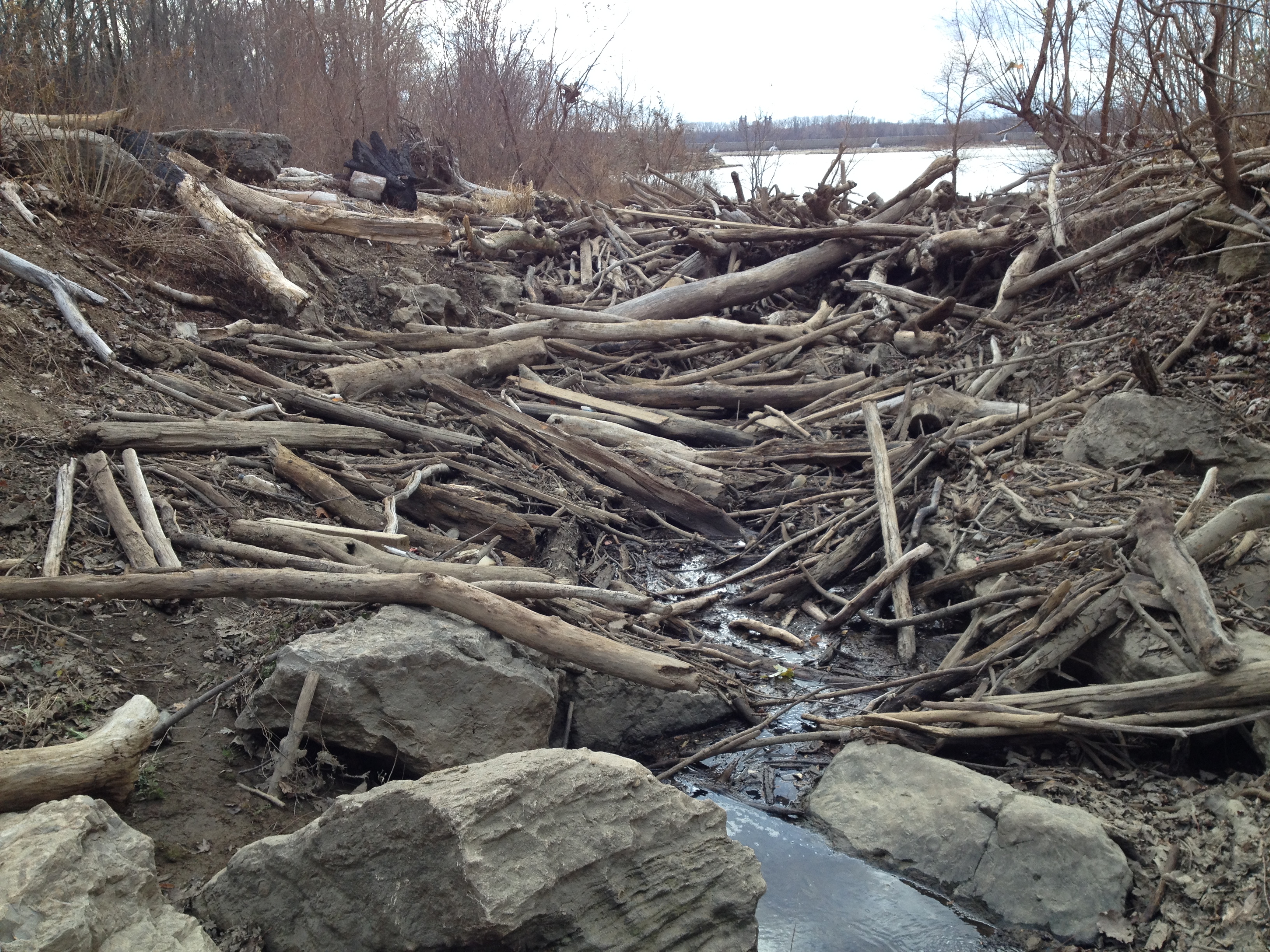
piled up driftwood, Falls of the Ohio, Dec. 2014

The following is my latest adventure from the Falls of the Ohio State Park.  It’s official now, the month of November was among our top ten coldest Novembers ever recorded.  This continues a see-saw trend where one month might set a record for heat (like October did) only to bounce back down to the other extreme.  It’s too early to tell about December, but on this recent visit it was cool and overcast.  We have since had several days of rain causing the river to swell.  Today’s story begins at the westernmost point on the Woodland Loop Trail.  This path is bordered by what folks around here refer to as a “creek”, but in actuality is a channel cut into the riverbank by storm water overflow released from the town of Clarksville.  I wish it were a creek and perhaps long ago, may have been one.  During periods of flooding and high water, driftwood and logs back up into this area and are stranded once the water level recedes.  The picture above is a recent illustration of this.

beaver tracks, Falls of the Ohio, Dec. 2014

I was exploring this water-cut channel and noticed that there were lots of beaver signs present.  In addition to their tracks left in the mud, I found plenty of chewed willow branches.  I added some of the nicer sticks to my collecting bag.  It made me think about how much the appearance of the black willow trees around here are shaped by the beaver’s “pruning” methods.  I don’t know why this didn’t occur to me before…perhaps it was just too obvious.  Actually, I think it has something to do with the beaver population rebounding over the last few years.  In certain local places, they have become “pests”.  Their damning of local drainage canals has necessitated their capture and removal to other more remote areas.

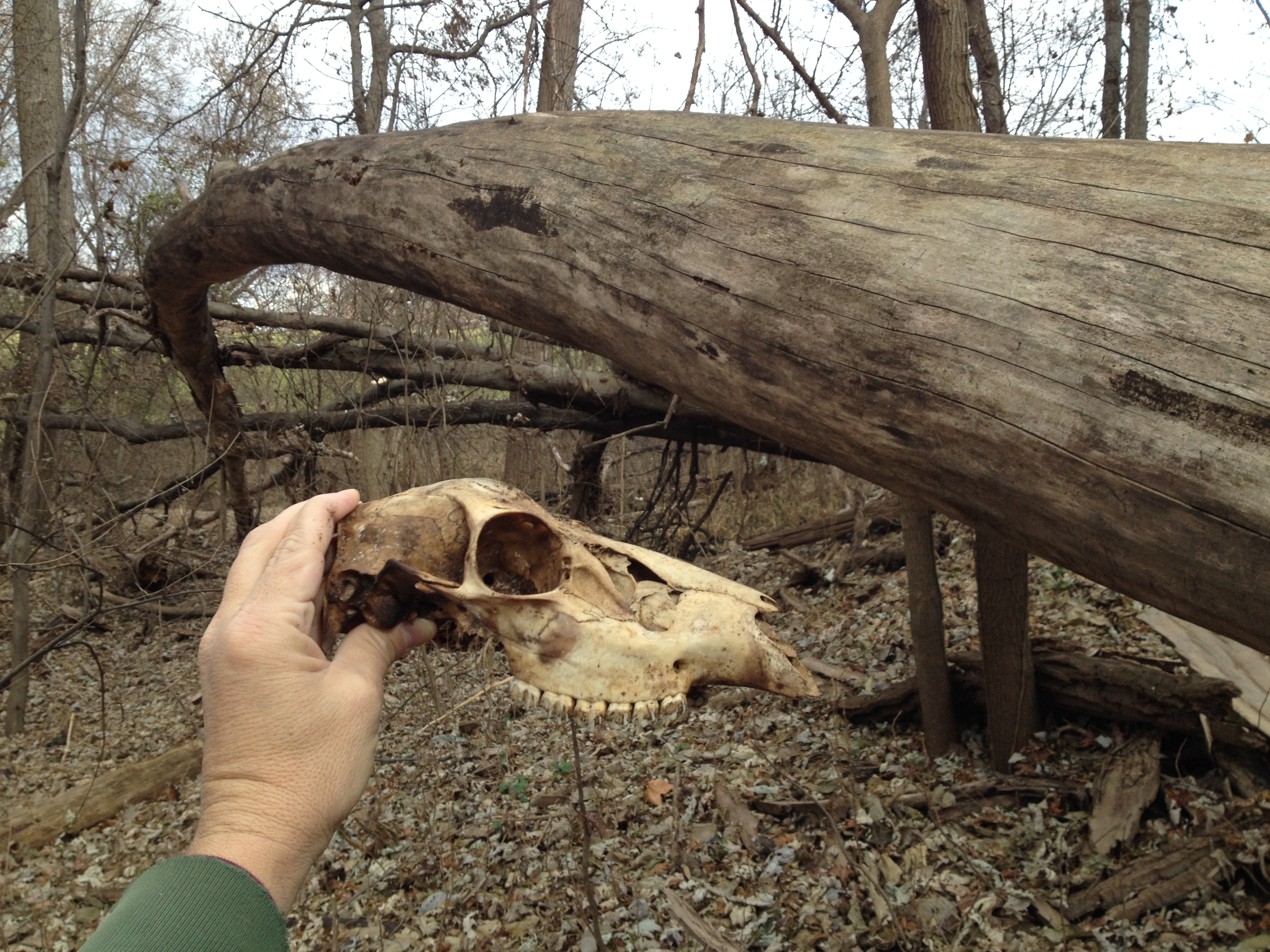
found deer skull, Falls of the Ohio, Dec. 2014

Exploring a bend on the Woodland Loop Trail, I found this deer skull laying upside down on the fallen leaves.  It was kind of hard to see, but something in the old brain said to look more closely and I did.  After taking a few photographs, I laid it upon the trunk of a large fallen tree for others to discover.  Like the beaver, it appears the deer are becoming more numerous as well.  After years of finding just their tracks and the occasional bone, this season I was able to spot a doe and her fawn in the park during broad daylight.

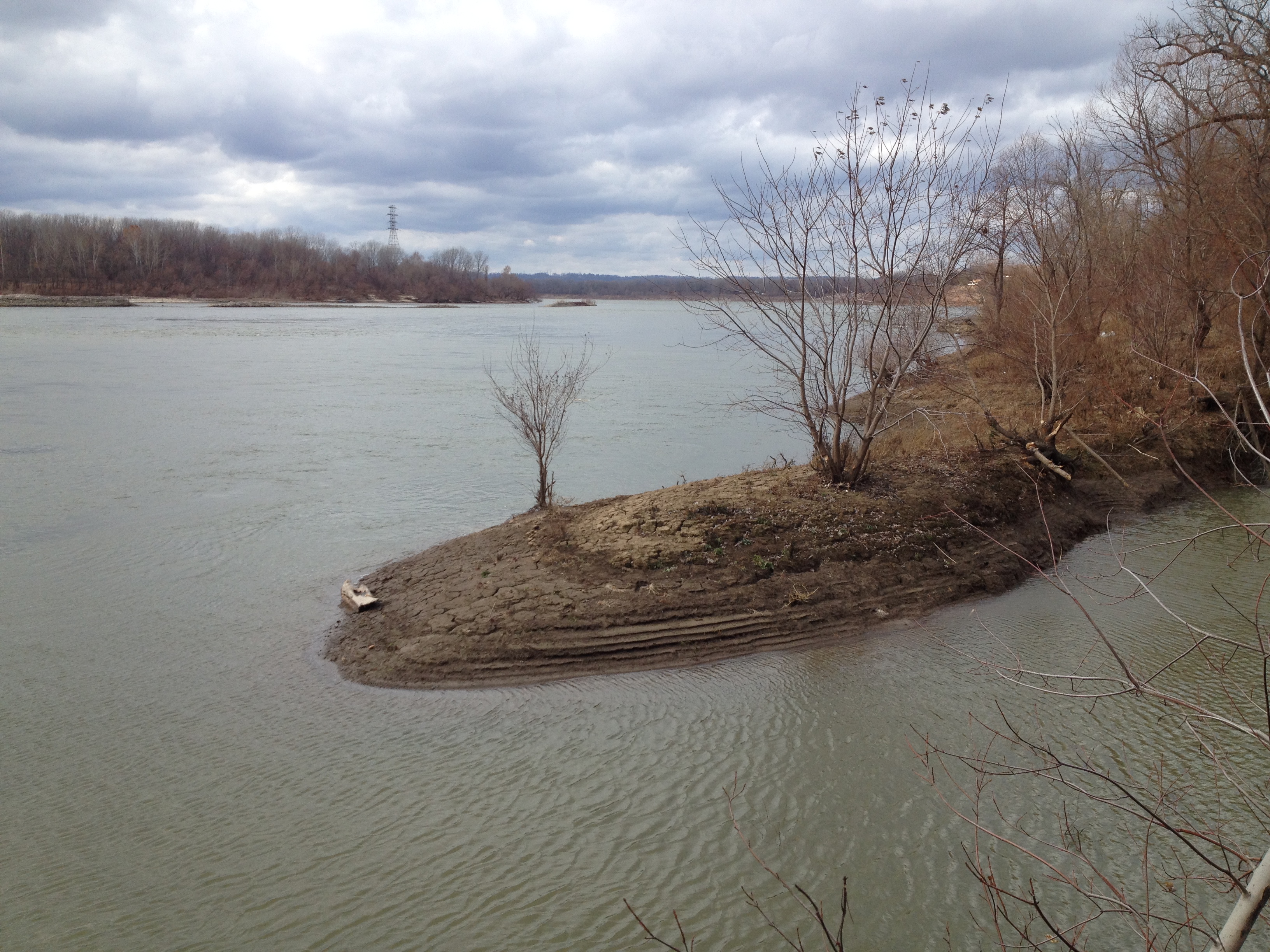
storm sewer overflow peninsula, Falls of the Ohio, Dec. 2014

I walked to the top of the riverbank to get a better look at the peninsula that has been created at the mouth of the “creek” from the storm sewer’s overflow.  Over the years, I have witnessed stringers of sauger and catfish being caught here by the local fishermen.  I like how the rising and falling of the river has terraced the mud into a series of graduated steps.  I was relaxed and zoning out on the view when I noticed something white that had surfaced and was entering the “creek”.  I quickly took a photo and here it is.

white dorsal fin in the Ohio River, Falls of the Ohio, Dec. 2014

I scrambled down the riverbank to get a better view and got my clothes severely muddy in the process.  In my head I’m telling myself that for all the world this looks like a shark’s dorsal fin…but is this possible?  I remember hearing that there are a few shark species (notably bull sharks) that are capable of swimming up rivers and able to tolerate being in fresh water for extended periods of time.  Still, we are a long way from the ocean which also includes navigating a large section of the Mississippi River before entering into the Ohio River… just to reach this spot.  I observed the fin submerging as it disappeared from view.  Hustling, I reached the general location where I thought the fin was heading and was “blown away” by this sight!

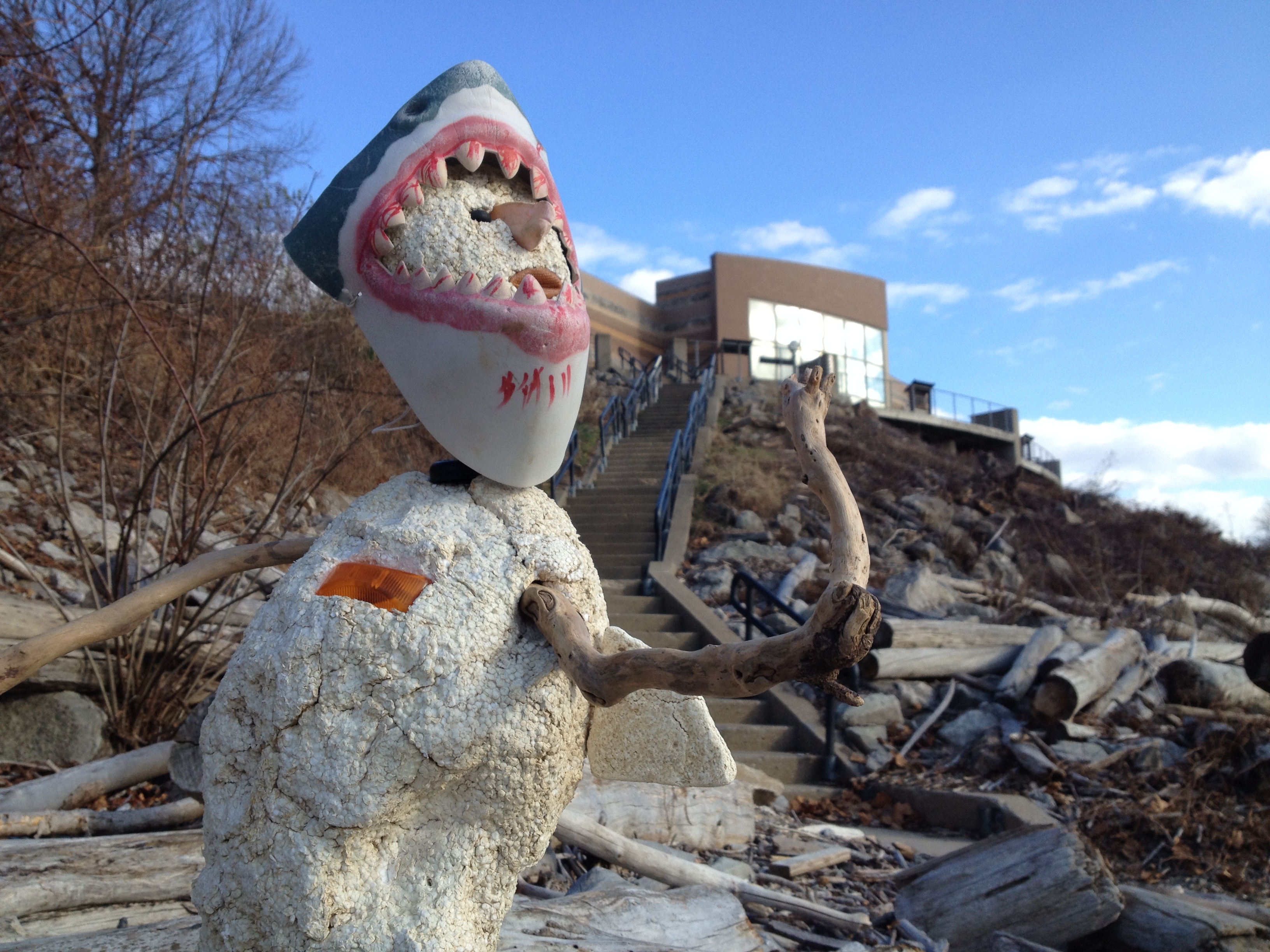
The Shark Shepard emerges from the river, Falls of the Ohio, Dec. 2014

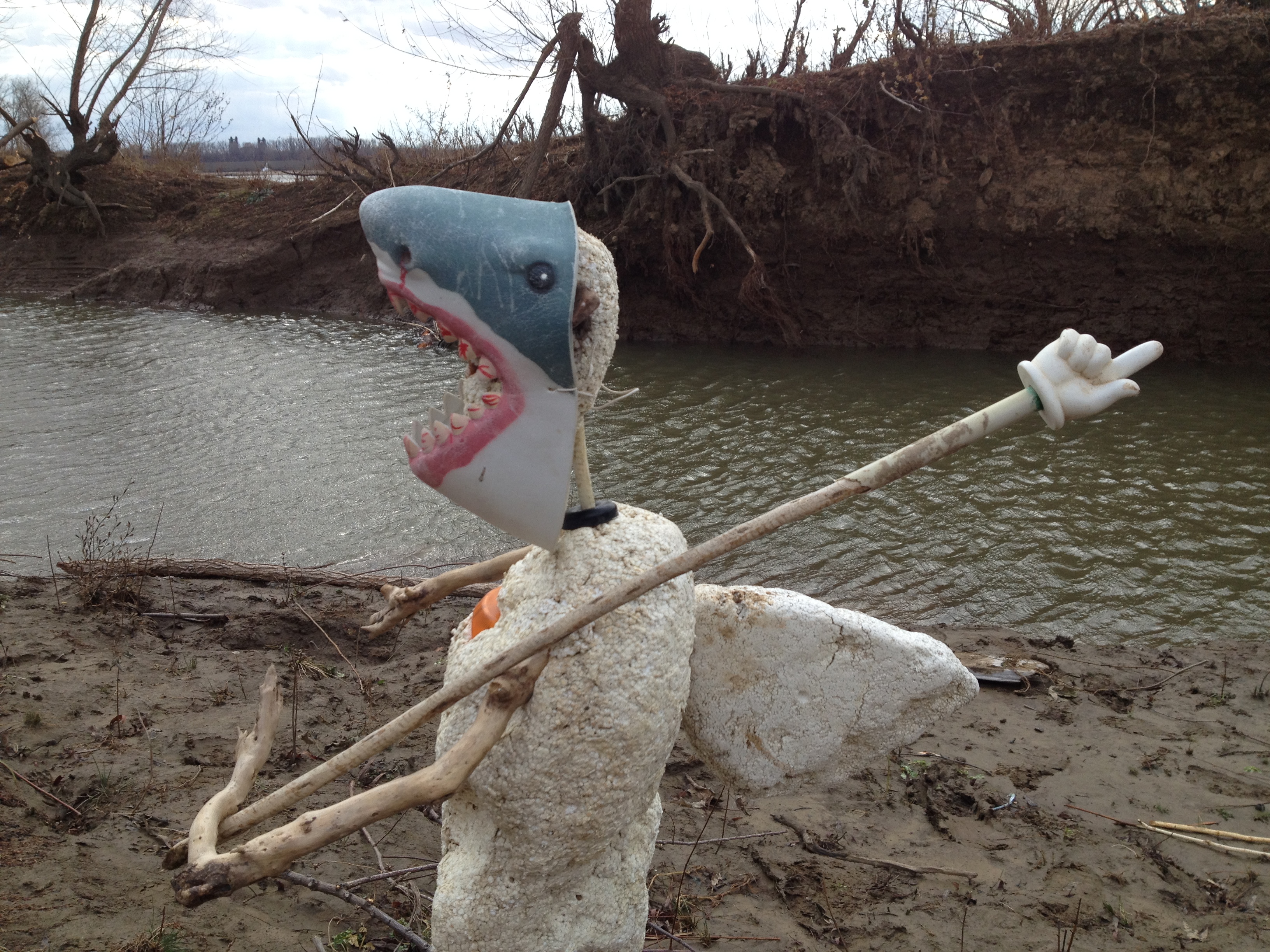
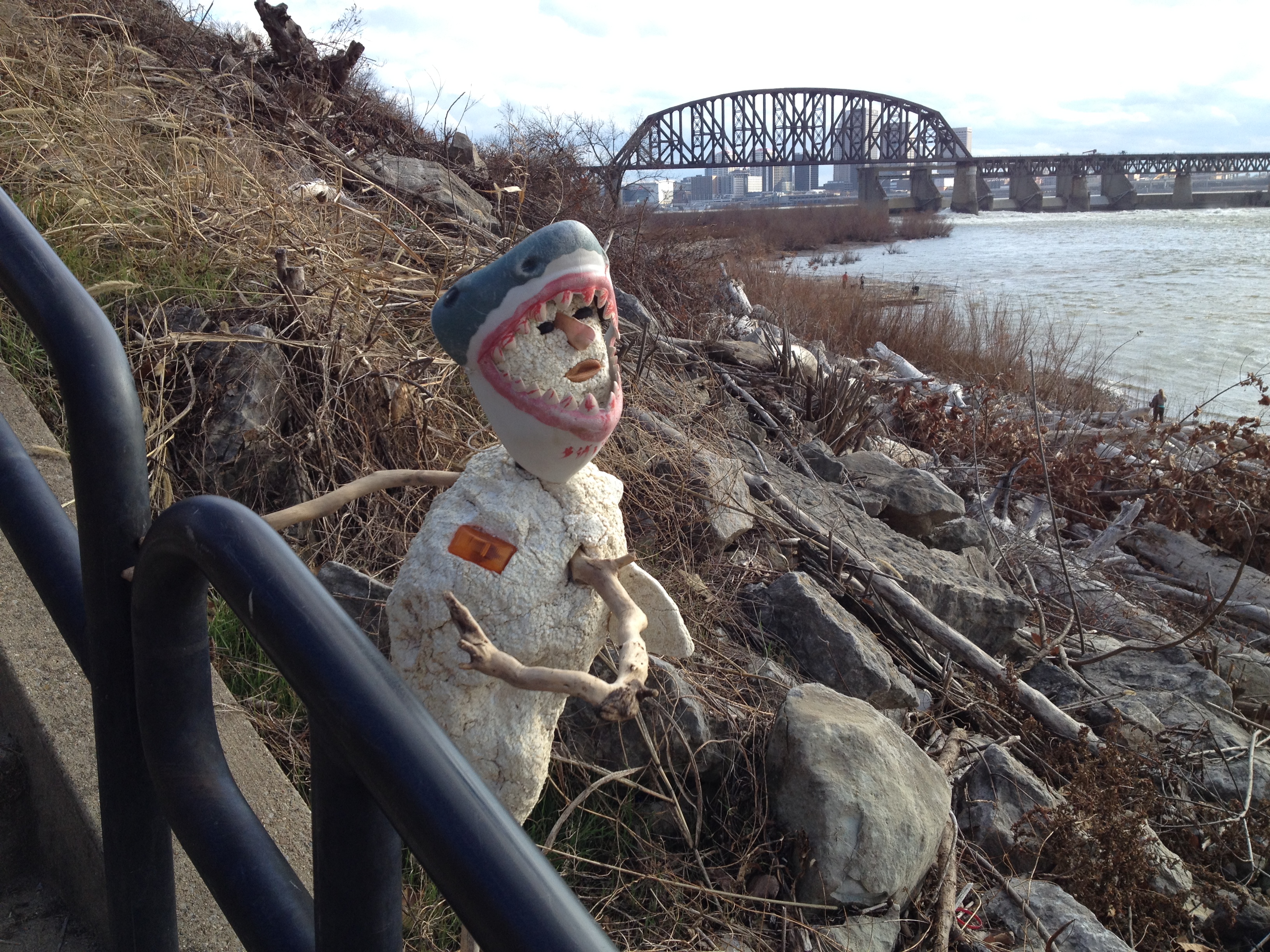
Emerging from the muddy water was this white figure sporting an improbable headdress or mask?  The figure was carrying a staff and appeared to have fins on its body similar to a shark.  I let this fellow come fully out of the water before my curiosity overwhelmed me and I went in for a closer look.

Shark Shepard, side view, Falls of the Ohio, Dec. 2014

This strange being did not seem to be afraid of me and regarded me through his dark eyes.  His face was framed by what looked like the jaws, teeth, and the head of a shark.  My attention kept returning to the fearsome mask it was wearing which I surmised might be a part of some breathing apparatus?  A yellow light on its chest would occasionally blink signaling some other unfamiliar technology was present.  The staff the figure was holding was terminated by a hand pointing a finger which reinforced the stranger’s mysterious presence.

The Shark Shepard on the riverbank, Falls of the Ohio, Dec. 2014

Using its staff, I watched as the figure drew the outlines of several sharks in the soft mud and then pointed to one of his eyes.  He followed this by making a sweeping movement with his arm that seemed to encompass the river and its surrounding landscape.  It took me a moment, but I think it asked me if I had seen any sharks in the area?  Reflexively, I replied by shaking my head “no” which the figure seemed to understand by dropping his head and shoulders in a disconsolate manner?  That’s when I had this mental flash that this guy was a shepherd, a shark shepherd and he was looking for his lost flock?  From here on out, I will refer to him as the Shark Shepherd.  He next stuck his staff into the mud and walked away from it.  I decided to tag along to see if I could learn anything else about my new silent friend.

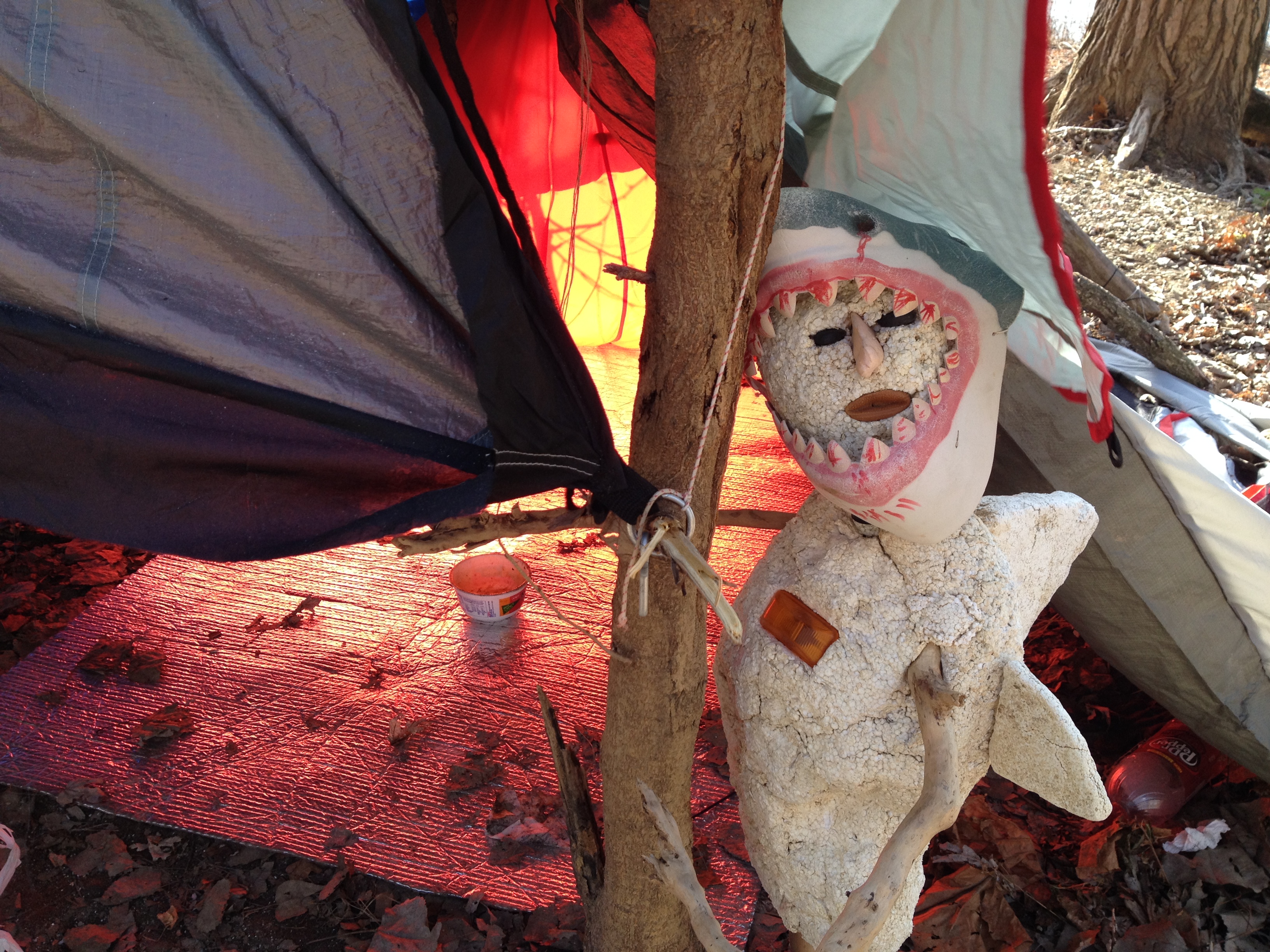
Shark Shepard by improvised tent, Falls of the Ohio, Dec. 2014

The Shark Shepherd seemed to have a curiosity about our world.  I observed as he approached an improvised tent that someone had set up among the trees.  It’s owner(s), however, were not around, but it didn’t seem abandoned in my eyes.  Probably made by fishermen and there seemed to be several trying their luck along the riverbank on this windy day.  I too have a curiosity about the world and after my encounter with the Shark Shepherd ended…I rushed home to try to figure out what he was doing here so far from the sea?  Using the miracle of the internet, I learned a few alarming facts about shark disappearances worldwide.

The Shark Shepherd by fossil rocks, Falls of the Ohio, Dec. 2014

On average, between 20 million to 73 million sharks a year are taken out of marine ecosystems across the planet.  Most of the statistics mentioned the higher number…regardless, that’s too many sharks.  Sharks are “harvested” for their fins, cartilage, and teeth.  The boom in popularity for shark fin soup has led to an insidious practice where millions of sharks are harvested and often indiscriminately by using thousands of hooks set on miles of trailing “longlines”.  Sharks are a valuable bycatch.  The captured sharks (which are often caught alive) have their fins cut off and are frequently thrown back into the seas to die in agony.  It’s a lucrative business because this was once a delicacy and status symbol reserved for the wealthy back in the day when sharks were harder and more challenging to catch. Now it is within the reach of more people.  Through industrialized commercial fishing, millions of mostly Asian consumers can have a bowl of shark fin soup on special occasions.  Interestingly, the soup itself needs to be flavored with beef or chicken stock because the fins themselves are a textural element and contribute no flavor of their own.  Of course, a bowl of soup is not the only challenge sharks face.  Commercial sports fishing, pollution, reef destruction, and overfishing of the shark’s prey base play their part as well.

The Shark Shepherd at the Falls of the Ohio State Park, Dec. 2014

In the United States, large sharks have disappeared from the Gulf of Mexico.  I think this is the reason the Shark Shepherd was this far inland.  Along our Atlantic Coast, it has been reported that eleven of the largest shark species have essentially vanished.  This has important repercussions for the overall marine environment.  You can’t remove this many apex predators from an ecosystem and expect it to function normally.  There are cascading effects.  A recent study attributes the decline in our East Coast scallop industry is due to the loss of sharks that normally would keep cownosed rays and sting rays who eat scallops in check.

Shark Shepherd by the Falls of the Ohio Interpretive Center, Dec. 2014

I followed the Shark Shepherd as he explored the area around the newly closed Interpretive Center.  There were people around and they did exhibit interest in my friend, but were generally respectful for what was going on.  A few folks asked if they could take pictures of the Shark Shepherd and he obliged them.  During my internet research, I did find it fascinating that there are places like American Samoa, Hawaii, Guam, and the island nation of Palau where sharks are protected.  Interestingly, these are all places in the Pacific Ocean where people regard the shark as a culturally and spiritually significant animal.  These Polynesian cultures understand that their very identities are connected with sharks.  The same, however, can’t be said for the rest of the world who regard sharks as nuisances and or threats.  Better to view something with reverence than through fear.

The Shark Shepherd surveys the Falls of the Ohio State Park, Dec. 2014

The Shark Shepherd climbed the staircase to gain a better vantage point overlooking the river.  I watched him scan the waters, but only an occasional fishing boat presented itself.  If he was looking for sharks, well, there probably hasn’t been any here for about 400 million years when this area was a Devonian Age coral reef.  I could feel the poignancy of the Shark Shepherd’s search as it failed to bear fruit.  After a short while, we reversed our course and retraced our steps.  The Shark Shepherd gathered his staff and walked back into the creek where after acknowledging me with one last look back…disappeared into the Ohio River.  Although I realized that I would not see him again, I couldn’t help but hope that he and his sharks wouldn’t disappear forever from the oceans of the world.

The Shark Shepherd, Falls of the Ohio, Dec. 2014

Read Full Post »

Map detail of the Falls of the Ohio State Park

Most of the work that I have created at the Falls of the Ohio State Park was made between the two “P’s” on the above map detail.  I lifted this image from a recent brochure about the Ohio River Greenway.  I’m just noticing that the word “park” has an “e” at the end…what’s with that?  Is this a variation of Ye Old Park(e) or a simple misspelling?  Anyway, the green line that separates the dark blue river from the blonde fossil beds is the area I walk.  Most of my river finds and the pieces I make from them occur in this area.  The thicker black line is the old iron railroad bridge that I have  featured so often throughout this blog.  It’s been a while since I posted anything new here.  In fact, since I started the old riverblog, this is the longest I have gone without posting something.  I have had a series of misfortunes that have dented my mojo with the biggest being losing my day job.  I’m not one that easily compartmentalizes my life and occasionally things spill over and affect other areas.  Among the other changes included having to purchase a new computer.  It’s taken a while to get used to doing things in a different way.  I’m still in the process of transferring images and data from the old machine to the new one.  I have too many images that need parking in a “cloud” somewhere.  I debate with myself whether or not I absolutely need all of these pictures?  I do harbor the ambition to produce a book or two about my stories and collections, but I’m sure I have enough material already.  This blog after all, has over 3,ooo images that I have already published.  What it doesn’t have are the first five years or so of this project that are recorded on 4″ x 6″ color prints that were developed at the local drugstore.

At the water's edge, Falls of the Ohio, 2014

Although I haven’t posted much recently, I am still going to the river.  It’s been an unusual year out here and for much of this spring the river has been high.  Summer is now upon us and with that comes the high heat and humidity.  This adventure happened in early June after the willow trees had fully leafed out.  I believe this is also my first post using just images recorded with my cell phone.  I now have a new Nikon my brother gave me as a birthday present.  He is an avid nature photographer living in Florida and had a spare digital SLR he could part with.  I can’t wait to try out the new camera at the river and I hope to do this soon.

Old willow tree at the Falls of the Ohio, 2014

willow tree detail, 2014

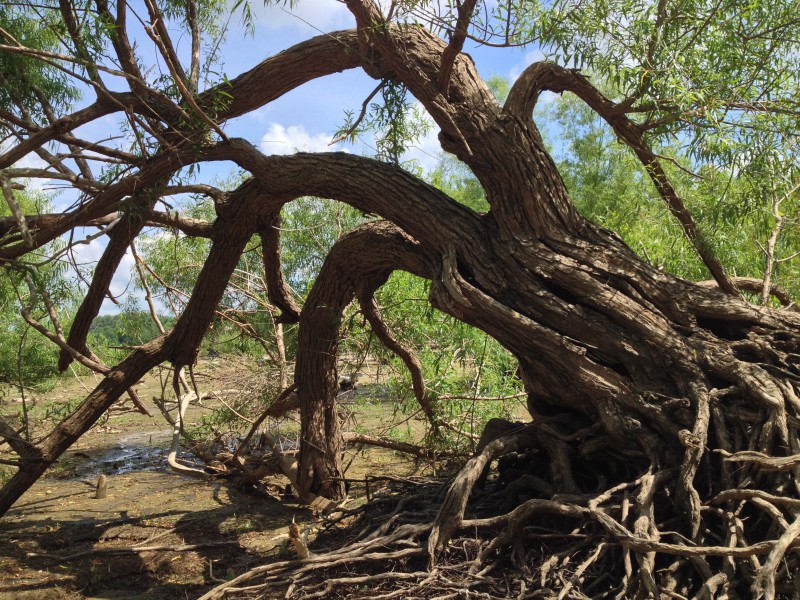
I have really fallen in love with this old willow tree.  Last year, I photographed my “La Belle Riviere” piece using this tree as my model.  This tree is a survivor.  It’s managed to go through many floods and while it is severely bent over and its roots are exposed…it keeps on living and adding character to this landscape.  I have noticed that the center of its trunk is starting to hollow out a bit.  I wonder how long this willow has held this ground?  I was musing about these things when I noticed movement in a nearby stand of mixed maple and willow trees.  I picked up my collecting bag and walking stick and quietly moved over to investigate.  I was quite unprepared for what I was about to discover!  Here are a few of the first images I made of my new find.

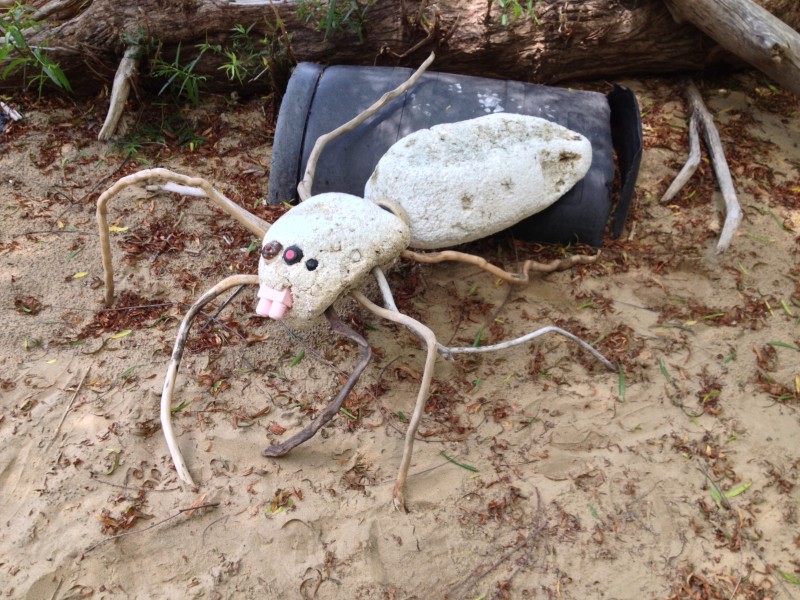
Great Wolf Spider, Falls of the Ohio, June 2014

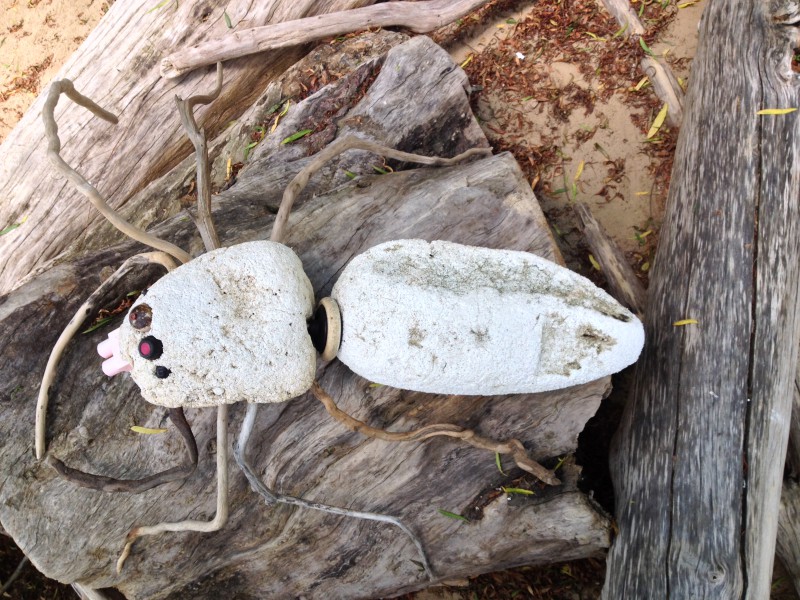
Great Wolf Spider, Falls of the Ohio, June 2014

It was another giant spider!  I recalled that it was about this time last year that I encountered the Giant Driftwood Spider which is a completely different animal from the spider I was looking at now.  It’s body was a bit over two feet long and a mottled white in color.  This seems to be another example of what I have come to coin as the “Falls of the Ohio Godzilla Effect”.  Over the years, this particular park has regularly produced freaks of nature.  The most striking of which are the giant insects (and now spiders) that pop up on occasion.  My theory as to why this happens here has everything to do with contemporary pollution and a degraded environment.  For some reason, arthropods in particular are sensitive to these ecological changes which can result in gigantism in these organisms.

Great Wolf Spider, Falls of the Ohio, June 2014

Great Wolf Spider on a stump, Falls of the Ohio, June 2014

I decided to call this the Great Wolf Spider, (Lycosa styreni).  Looking around, I could find no trace of a web and decided that this was a ground hunting species like other members of the family of wolf spiders, Lycosidae.  I imagined that this impressive spider subsisted upon the small mammals that it could capture within the confines of this park.  That would include many rodents including squirrels, rats, groundhogs, and perhaps the occasional beaver.  I also imagine that stray cats and dogs would be on the menu too.  This spider has large pink-colored fangs that gave it a somewhat bucktoothed appearance.  As long I kept my distance and did not make any threatening moves…the spider tolerated me.  I also noticed that this amazing creature also has unusual eyes.

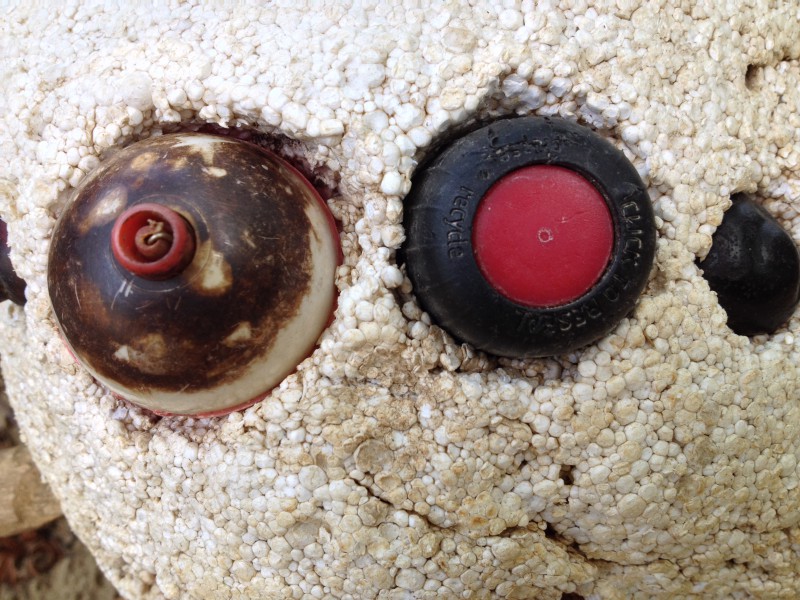
Detail of Great Wolf Spider eyes, June 2014

From what I could discern…this spider sported four eyes total and all in a row.  It had two large and rather mismatched eyes.  One eye possessed a large red iris that leant a diabolical aspect to it.  On either side of these “great eyes” were two smaller, black vestigial eyes.  I wonder if the smaller eyes are used to detect peripheral motion?  It was disconcerting in the least to be the object of attention from these unblinking eyes.  I approached this spider with caution.  Although I was fearful once the spider moved…I, however, was never in any actual danger since the spider never took any aggressive actions toward me.  I was of course satisfied to keep my distance just in case!

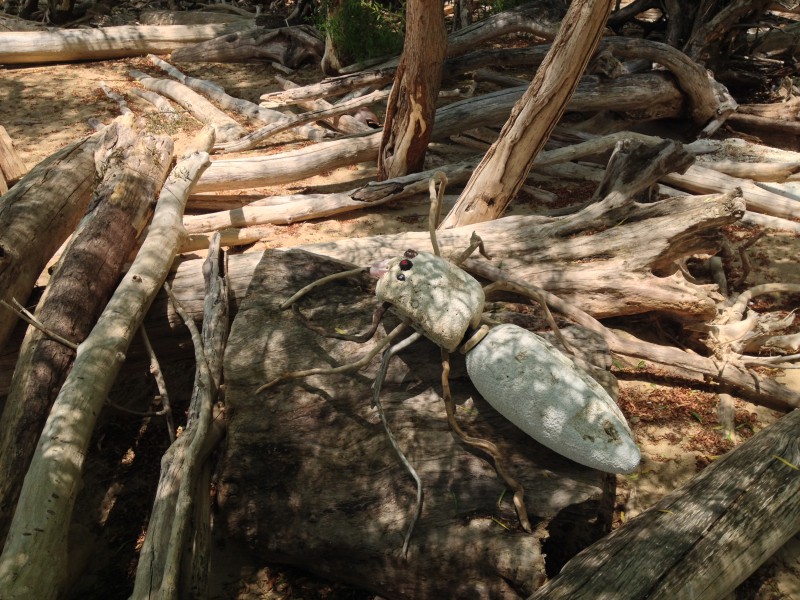
Great Wolf Spider waiting in ambush, Falls of the Ohio, June 2014

The Great Wolf Spider seen from behind, June 2014

My last images of this impressive arachnid show it blending into its surrounding environment.  The sun light filtering through the tree canopy produced a dappled light and dark pattern that helped camouflage the spider as it lay in wait of its next meal.  The only bit of movement that could betray it was the slight, subtle twitching produced by its driftwood-like legs.  It was at this moment that I decided to back off and head home.  I don’t know if this spider is a one of a kind creature or whether there are other examples of this species that could populate this park?  I’m inclined to believe that I was observing a single individual.  The question is…how long will it be before our continued abuse of the environment produces monsters we may regret?  Until the next adventure…

At the river's edge, Falls of the Ohio, June 2014


Read Full Post »

Louisville seen from the Falls of the Ohio, early May 2014

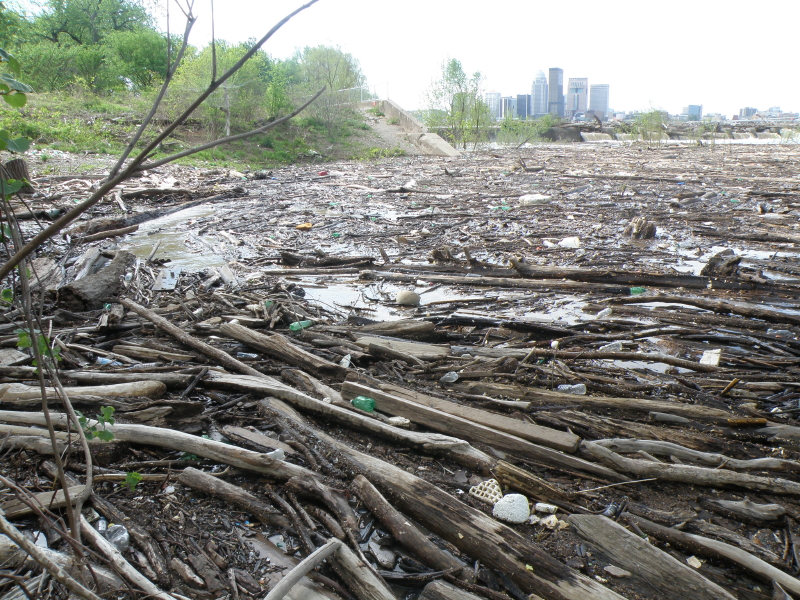
We have seen a lot of water flowing over the dam at the Falls of the Ohio this season.  The month of May has been punctuated by intense storms and ample sunshine.  Rainfall across the Ohio River Valley has been plentiful.  On this particular excursion, the river was high and many of the places that I like to sit and work were inaccessible.

wood and debris in the Ohio River, May 3, 2014


There was plenty of wood and trash in the soupy brown water and despite the beautiful sunshine, I was thinking that I might need to go home early today.  Instead, I decided to do a little exploring along the margins of the high water and see how far I might be able to go.

high water at the Falls of the Ohio, May 3, 2014

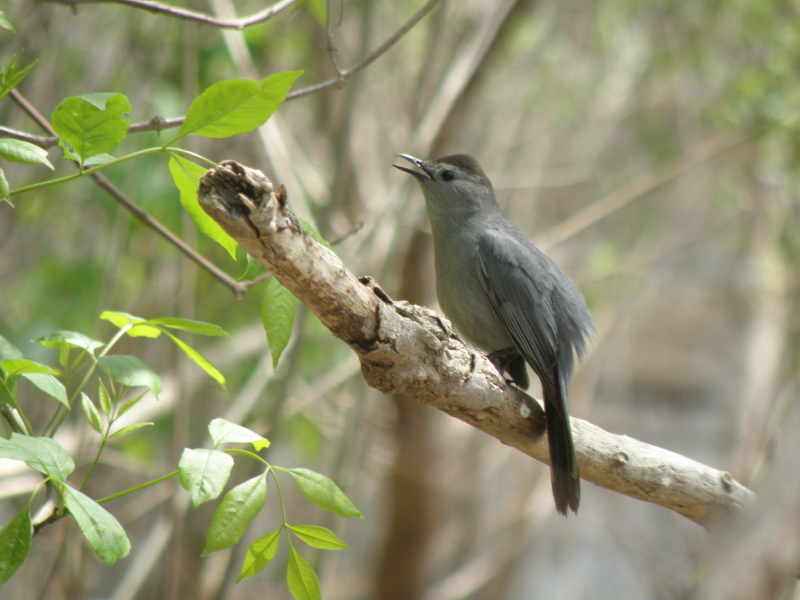
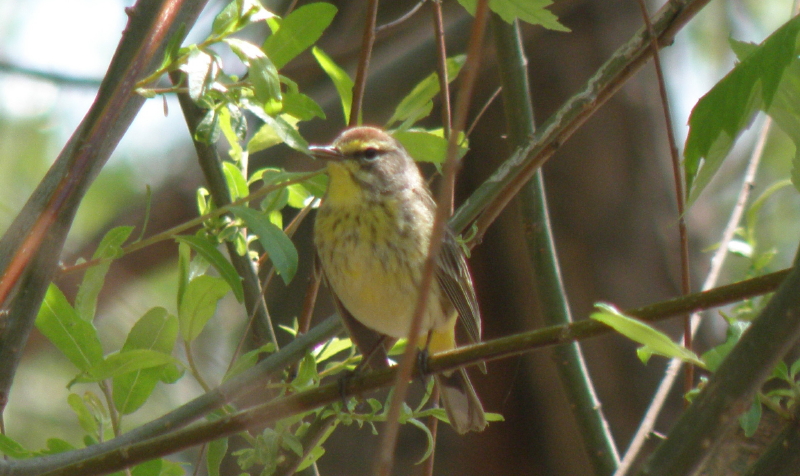
Skirting the margins of the high water, I was able to walk over logs and driftwood and reach small pockets of higher land that remained dry.  After initially feeling that my day in the park would be a loss…I started to feel excited again!  In part, this was due to the abundant bird life I was seeing and hearing.  This particular area has always been good for me and finding birds.  There is enough shelter here under the cottonwood trees and willows that provide relief from the wind and is close enough to the water.  Among the species I was encountering included this colorful grouping of birds: Baltimore Orioles, Northern Cardinals, Indigo Buntings, Palm Warblers, Gray Catbirds, American Goldfinches, and a tiny Blue-gray Gnatcatcher.  Here’s an image I captured of a Gray Catbird singing.

Gray Catbird singing, Falls of the Ohio, May 3, 2014

These birds are very territorial and the males chase one another out of their areas when interlopers trespass.  Catbirds have a wide variety of sounds they make including a “mewing” call that reminds people of cats.  Usually, I hear catbirds before I see them.  Thus far, this has also been a good year to observe some warbler species.  Warblers are my favorite group of birds to see because they are diverse, beautiful, transient (they are famous for their long migrations) and challenging to photograph.  Here’s a picture of a Palm Warbler that I recorded on this day.

Palm Warbler, Falls of the Ohio, May 3, 2014

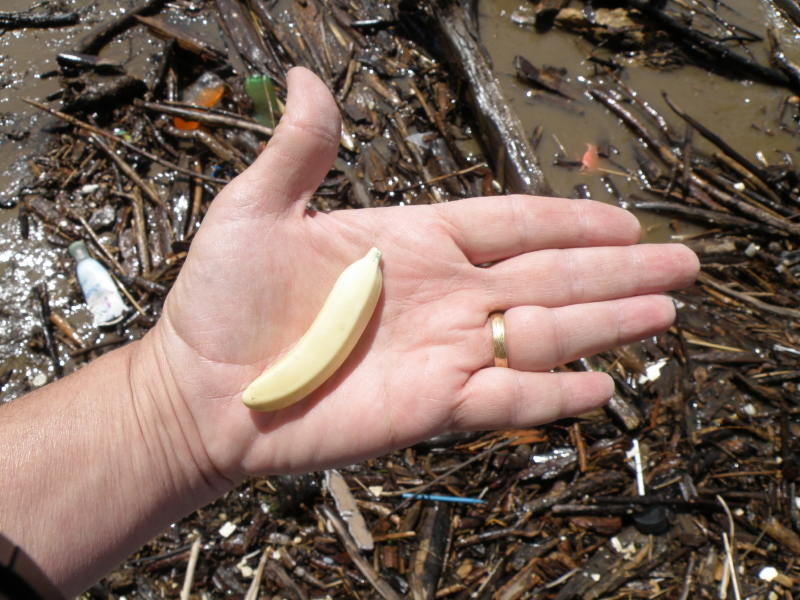
This guy hung around for a while.  The guidebooks say that this warbler species summers in the northern bog lands and really has nothing to do with palm trees. That was an unfortunate bit of naming.   The Falls of the Ohio are just one stop among many that this bird will make and I was glad to see him.  In addition to birds, I was also finding plastic junk and other bits and pieces including a miniature plastic banana…I’m sure you want to see that?

miniature plastic banana, Falls of the Ohio, May 3, 2014

This banana (my second of the year) will enter my Fake Fruits and Vegetables Collection which now numbers hundreds of pieces found in this park.  Here are other found objects, some of which I will use to create a new figure.

Found objects, Falls of the Ohio, May 3, 2014

And…here is the figure I constructed on this day.  He’s pretty outlandish looking and another in a long line of pieces that reflect how I feel about our species’ absurd handling of the environment.  For the moment, he remains unnamed, but if one comes to you…please share!

Unnamed figure, found objects from the Falls of the Ohio, May 3, 2014

Styro-figure with white plastic bleach bottles, Falls of the Ohio, May 3, 2014

He’s made mostly from insulating foam, plastic, and driftwood and sports one jaundiced eye and what appears to be a unique, pink moustache.  The area I was working in had so many plastic bottles lying around that my latest Styro-figure decided to put some of the colorful ones to use.  Every year, the park does its best to keep this special place clean and orderly.  Unfortunately, most of the trash I use and show originates elsewhere…mostly along the Ohio River flowing north of here and is carried to this down river location during flooding and high water.

small, plastic container, Falls of the Ohio, May 3, 2014

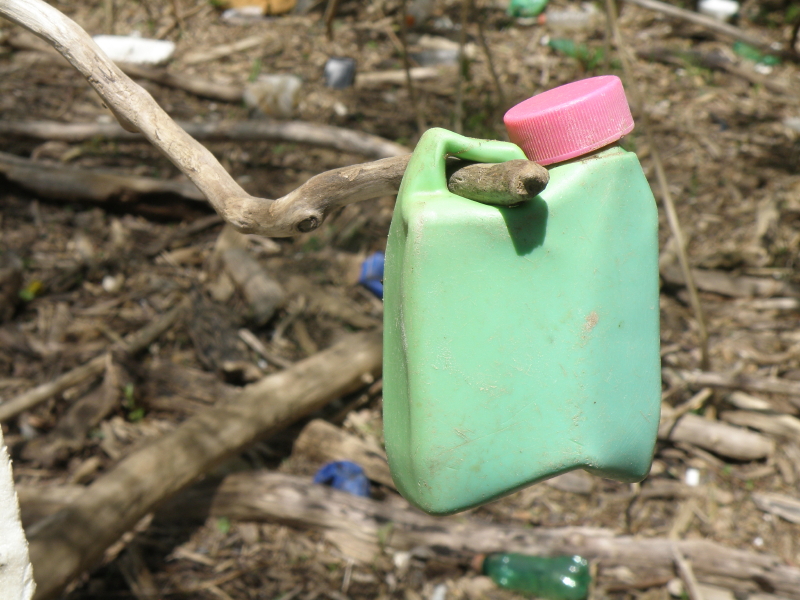
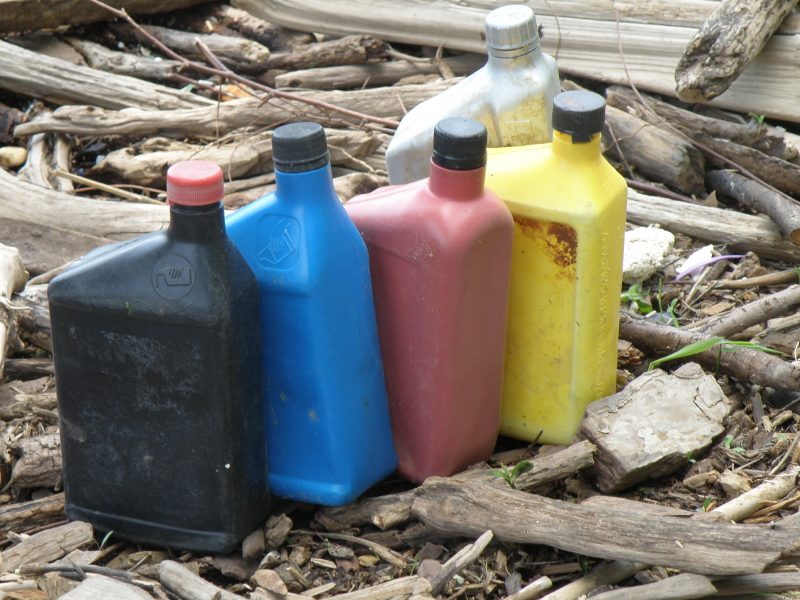
various colorful plastic oil containers, Falls of the Ohio, May 2014

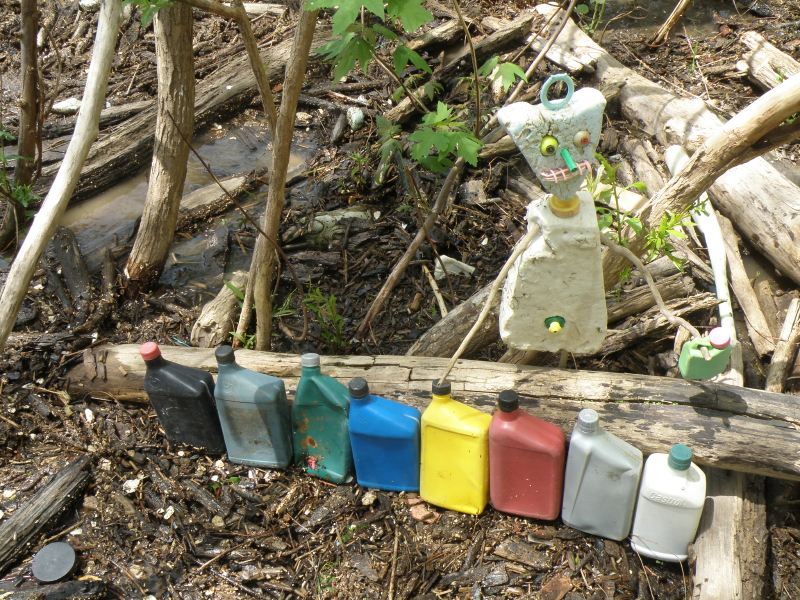
Looking around the immediate area I was able to locate various colorful plastic oil containers and my Styro-figure decided to line them up for a photo opportunity.  Here’s the results.

Styro-figure with plastic oil container color spectrum, Falls of the Ohio, May 3, 2014


It’s an oily color spectrum of sorts.  The Styro-figure seemed happy with it and for this day…left it at that.  I have used this similar idea for other plastic found objects discovered in the park.

Styro-figure under the railroad bridge, Falls of the Ohio, May 3, 2014

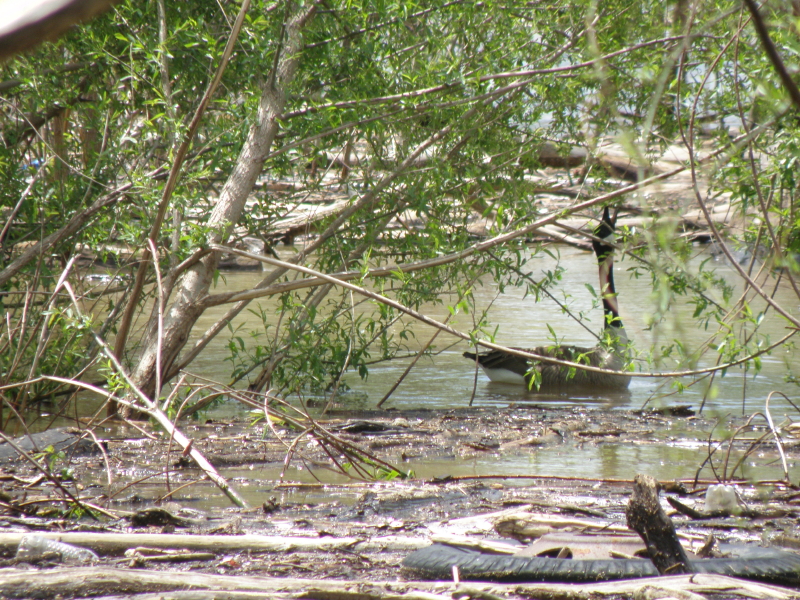
Soon it was time to go home.  The day turned out to be a more creative and productive day than I originally thought it would be.  I gathered up my collecting bag, camera, and walking stick and made the very short walk up to the parking lot.  Looking back, I spied a Canada Goose taking advantage of the high water to feed from bushes it normally could not reach.  This seemed as good an image as any to end this post with.  Thanks as always for tagging along on another day at the Falls of the Ohio State Park.

Feeding Canada Goose, Falls of the Ohio, May 3, 2014


Read Full Post »

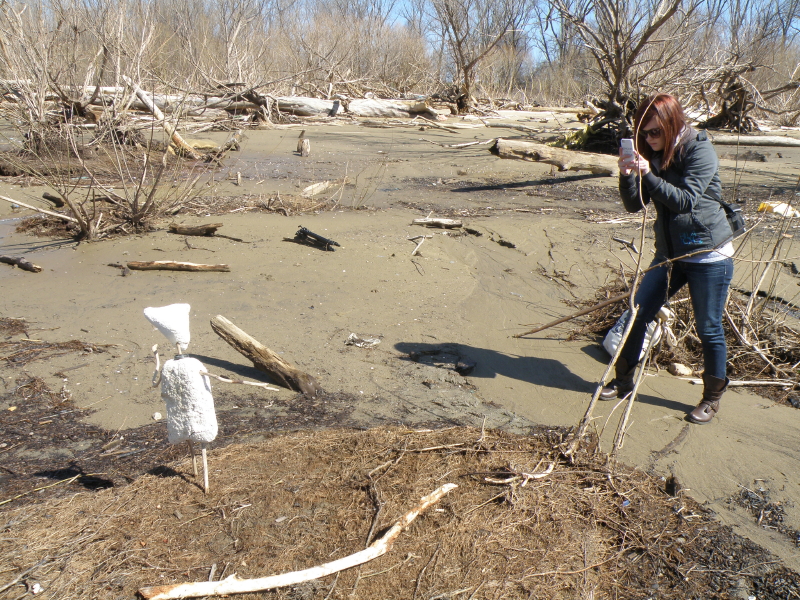
Taylor with Styro-sculpture, late March 2014

Taylor’s Artist at Exit 0 Video Link

Here’s a short video interview conducted by Taylor Ferguson on my Artist at Exit 0 project at the Falls of the Ohio State Park.  Taylor is a journalism student at the Indiana University Southeast in New Albany, Indiana and was nice enough to be interested in filming my process.  Our late March day at the river was a bit windy which the microphone picked up beautifully, however, it washed out the rest of the audio.  What you hear me saying is a bit of stream of conscious narrative which was edited into the video at a later date.  I previously published a post entitled “Touring with Taylor” that has some of my images and words made about the experience.

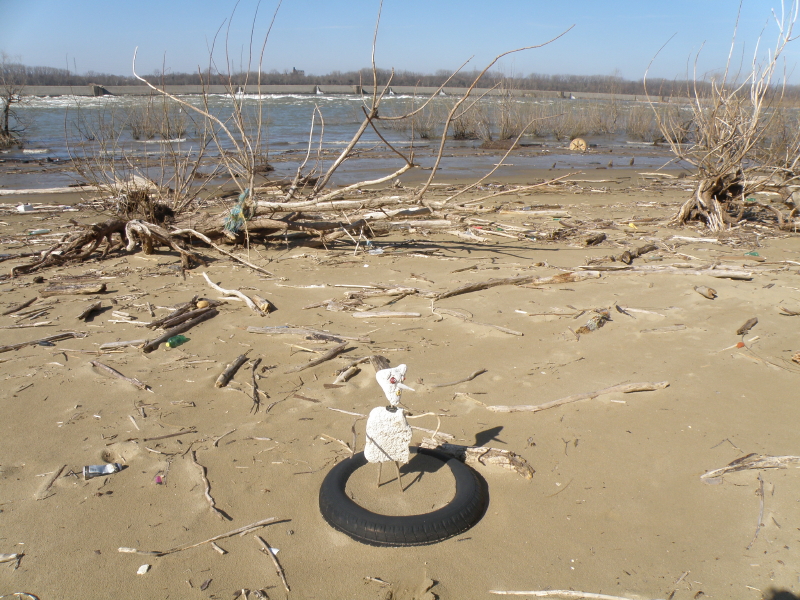
Mr. Mosquito Nose standing in a tire, late March 2014, Falls of the Ohio

Read Full Post »

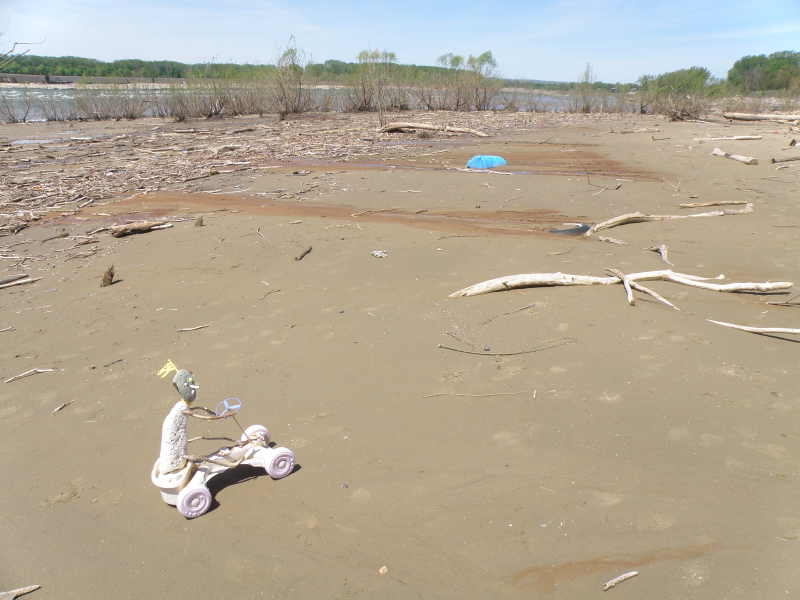
The Sand Rover, May 2014, Falls of the Ohio


A gorgeous morning at the Falls of the Ohio and the urge to explore is strong.  Our current spring pattern is holding.  We will have a few days of steady rain resulting in localized flooding which is then followed by the river rising as all that water seeks the lowest level and here we are after all at the bottom of the Ohio River Valley!  The latest reports on the potential effects of climate change for our area have been predicting this.  In the years to come, we can expect more fierce storms with heavier than usual rainfall causing periodic flooding.  Actually, that’s just one prediction among many.  There is also the specter of hotter summers and invasive, non-native species among other scenarios.  We will each do what we feel compelled to do to cope with it all.  For now the sky is mostly clear and the river has retreated and it’s time to break out the old sand rover and see what there is to see and find what there is to find on the banks of the Ohio River.

Sand Rover, Falls of the Ohio, May 2014

We don’t need to travel very far to stumble upon unusual objects and startling sights.  The flotsam and jetsam that can’t evade the stronger currents and navigate that hard left turn westward towards the Mississippi River get deposited in the park.  Something flesh-colored has been spotted lying on the surface of the sand and our intrepid driver moves in closer for a better look.

Headless Barbie knock off doll, May 2014

Upon inspection it turns out to be a headless, knock-off copy of a Barbie-style doll.  It’s made from cheap, hollow plastic instead of the more rubberized material that the better Barbies are made from. Thus far, this has been a good year for finding dolls at the Falls of the Ohio.  I seem to find one or two new ones each time I come out here.  Of the common objects that I routinely find…all these dolls still strike me as being especially odd and sad.  Taking a picture, it’s back aboard the sand rover and on to our next stop.

Detail of Sand Rover driver, May 2014

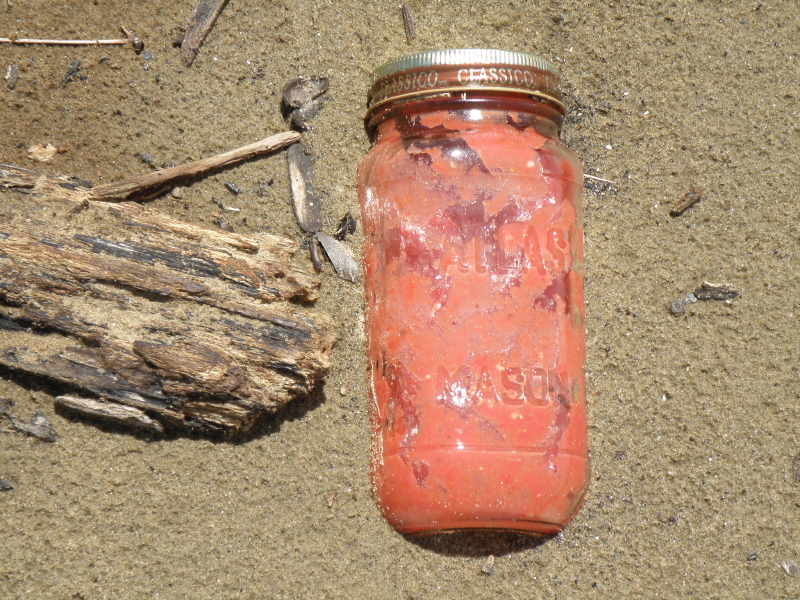
We don’t need to travel very far for our next discovery.  With the sun up, there is a strong glare emanating from something shiny half buried in the sand.  Pulling up to the object, our driver is  startled and bemused to find a glass jar of spaghetti sauce!

Partially buried jar of spaghetti sauce, Falls of the Ohio, May 2014

Would you believe me if I told you this is not the first jar of pasta sauce found out here?  Because it is relatively easy to prepare…I’m assuming that spaghetti is among the more popular dishes among folks who like to recreate around the river?  Over the years, I have also found jars of pickles, condiments, soup, and one very large, memorable jar of bologna.

sand rover, May 2014, Falls of the Ohio

The sand rover crosses over the sand easily, but it’s a different story near the edge of the river where sticky, thick mud cakes the ground.  As the sun dries the water out of the fine silty mud, deep cracks appear and widen with the heat.

Sand Rover and mud, May 2014, Falls of the Ohio

The driver decides that caution is the proper way to navigate around this mud.  This surface can be deceptive and it’s easy to step ankle to shin deep in this sticky quagmire.  You could lose a shoe in this stuff and I’m speaking from experience!  Once your shoes are coated with this mud…it’s hard to get them clean again.  You can tell where I live by my front porch…it’s the house with the muddy shoes lined up in a row.

Sand Rover at the Falls of the Ohio, May 2014

Carefully maneuvering around the pitfalls, the sand rover is once again safely on the shifting, but surprisingly secure sand.  There are other river treasures within view worthy of investigation.

baseball losing its cover, May 2014

A water destroyed baseball lies nearby.  This is more of an old-style ball because its core is still made with string wrapped tightly around a hard rubber core.  The covers, however, are not leather and so this isn’t an official baseball of any sort.  Just a little further down the beach is another toy that was immersed in the former liquid sand and now lies trapped in a fine granular matrix.

toy truck half buried in sand, Falls of the Ohio, May 2014

Once upon a time, this may have been a remotely controlled vehicle?  The style of this truck looks like military vehicles I have seen.  Having explored the sand, it’s time to cruise by the driftwood.

sand rover, Falls of the Ohio, May 2014

Having initially spotted something lying on the driftwood, the driver decided that he would check out the mystery object more thoroughly upon his trip home.  The closer the driver approached the stranger the object became.  In fact, he felt it was looking right back at him.  Parking the sand rover nearby, the driver climbed upon the driftwood to get a better look and this is what he found.

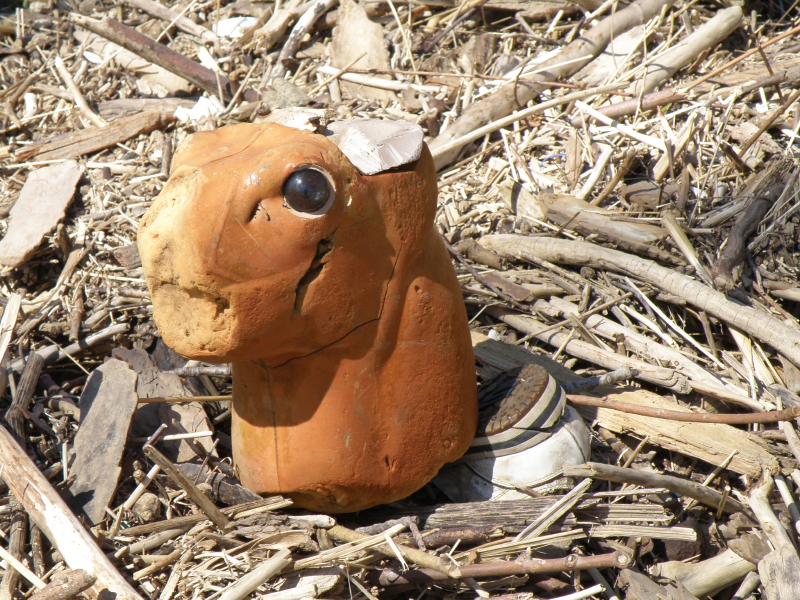
partial, artificial deer head, May 2014

It was heavily weathered, but there was enough present to suggest that this was the hard foam head of a deer.  The driver thought that this was perhaps part of a taxidermy trophy or maybe the head of a figurative archery target?  The object’s single dark eye was piercing and made the driver uncomfortable.  Satisfied for now, the driver climbed back aboard the sand rover and headed towards home.

head of the sand rover driver, May 2014

Well, there you have it, another interesting day at the river.  The driver was glad he came since each excursion promised new sights and mysteries to solve.  Already the next trip was being anticipated and all that was now required was for nature to cooperate.  It’s still spring and we shall see how it goes at the Falls of the Ohio this year.

Arching willow at the Falls of the Ohio, May 2014

Read Full Post »

Canada Geese, Falls of the Ohio, April 2014

It’s springtime at the Falls of the Ohio and life is less shy about revealing itself.  Wasn’t too long ago that finding even the most common bird could be a challenge due to the harshness and length of our winter.  Now the spring migrants are winging their way northward and even the indigenous species are easier to locate.  This is the time of year when the pair bonds are strongest.  The resident Canada Goose population appears to have overwintered in fine fashion and it won’t be too long before the first goslings are in the water.  As you may have ascertained, this post will be about one of my favorite Falls subjects…birds.

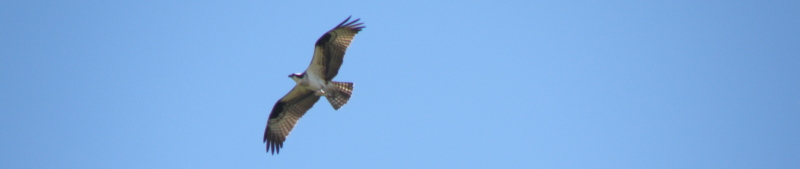
osprey, Falls of the Ohio, April 2014osprey, Falls of the Ohio, April 2014osprey, Falls of the Ohio, April 2014osprey, Falls of the Ohio, 2014

This is a composite image of three different Osprey that were simultaneously circling my position at the river recently.  The trio were flying in ever-widening circles and taking advantage of the wind currents and thermals.  It’s a thrilling site to observe these fish hawks diving into the water and being rewarded for their efforts with a freshly caught fish in their talons.  I’ve heard about, but not yet seen, the Bald Eagle nest that is just west of the Falls area.  On occasion, I have seen eagles, but considering how near they are to this area I would have thought that sightings would be more common.  I’ve recently seen other birds of prey including Peregrine Falcons, Cooper’s Hawks, and our next featured bird, the Black Vulture is beginning to return to the Falls of the Ohio in numbers.

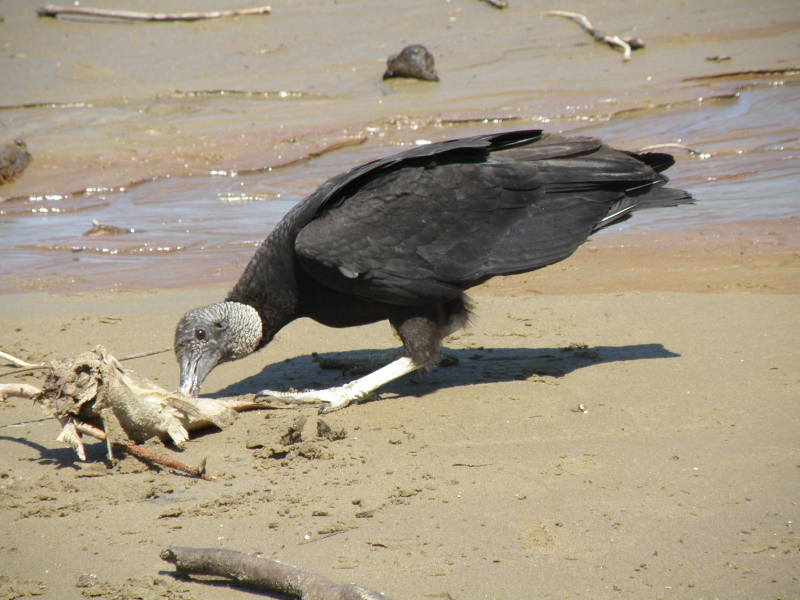
Black Vulture and dead fish, Falls of the Ohio, April 2014

Black Vulture, Falls of the Ohio, April 2014

Black Vulture feeding on a dead fish, Falls of the Ohio, April 2014

To my eye, it appears that the Black Vulture population has been increasing while our other vulture…the Turkey Vulture presents itself less frequently.  The Black Vultures are more gregarious and aggressive which probably keeps the Turkey Vulture from showing its featherless, naked, red-head more?  Recently, I came across this individual Black Vulture feeding upon a dead fish.  It let me get quite close, but there was also a minimum distance that it would tolerate me.  Whenever I would get closer to its comfort zone, the vulture would grab the fish with its sharp beak and drag it to where that minimum distance was re-established before it resumed feeding.  We did this dance for a few minutes before the vulture decided it had enough and flew away.  My next bird is one that I have never observed in the park before.  Some of my most memorable sightings have come from species seen just once and maybe for a few seconds at that.  Hardcore birders (they wear black leather jackets with chains hanging off them) are familiar with this phenomenon.  Friends have asked me why I don’t indulge my avian passion in a more organized fashion, but frankly I don’t like the sense of competition that can exist in some of these groups and clubs.  I appreciate that birds are fellow life forms that are inhabiting the same time and space with me and are more than feathered abstractions to cross off on some list.  If you pay attention, birds can tell you much about the state of nature and this planet.

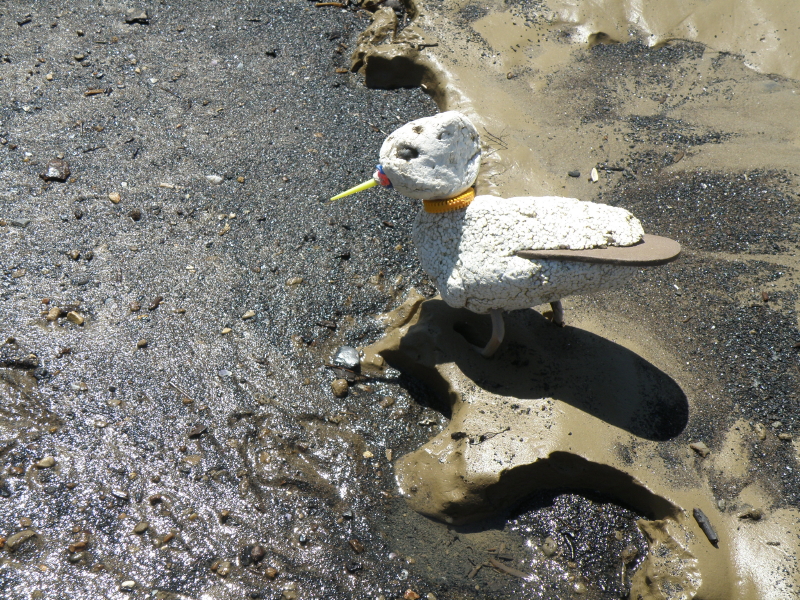
Orange-collared Piper, Falls of the Ohio, April 2014

Orange-collared Piper, Falls of the Ohio, April 2014


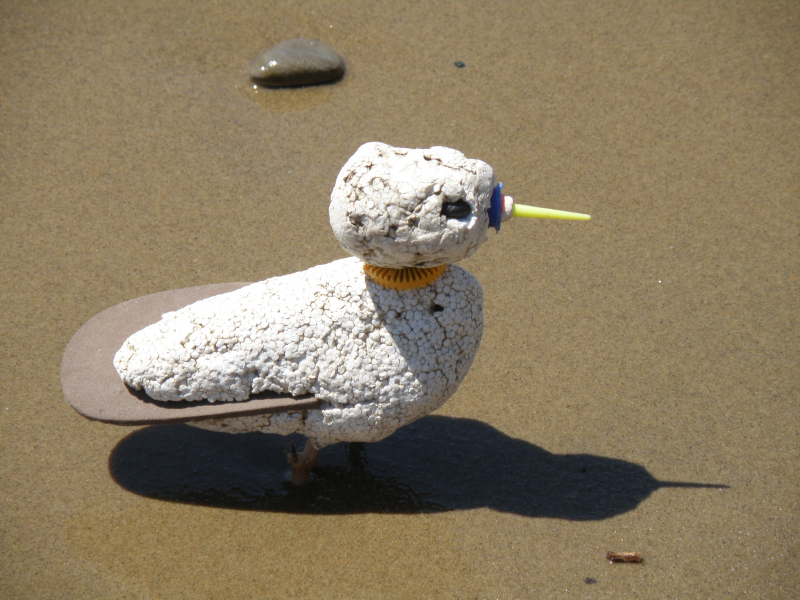
The new bird I recently came across is the Orange-collared Piper.  It’s a shorebird that undertakes  a tremendous journey starting at the tip of South America and it won’t stop moving northwards until it reaches its breeding grounds in the Arctic Circle.  Landing at the Falls, it is a little more than half way to where it needs to be.  This piper is a rather small bird and easily overlooked in this particular environment.  Its white body and head look remarkably like the polystyrene that litters these shores.

Orange-collared Piper at the Falls of the Ohio, April 2014

Orange-collared Piper, April 2014

The bird is so named because it sports an orange ring around its neck.  Other field marks include diminutive size, brown wings, and a sharp yellow bill it uses to probe sand and mud for the tiny invertebrates it eats.  Also true to its name, this bird makes a high-pitched “piping” call it uses while it feeds.  To he honest, I did not hear this call with this particular individual.

Orange-collared Piper at the Falls of the Ohio, April 2014

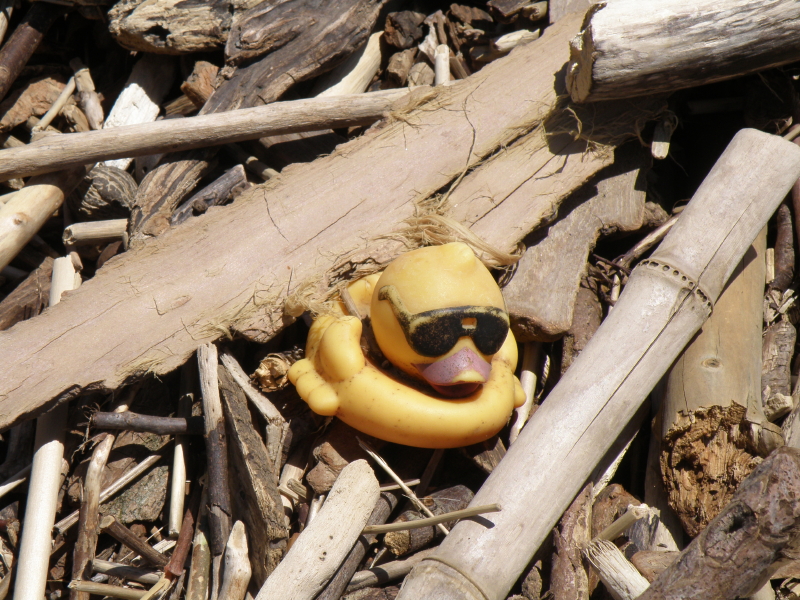
Both the male and female Orange-collared Piper look about the same.  At its breeding grounds, the pair incubates about five or six tiny, black speckled eggs in a rather shallow gravel depression.  No fancy nest for this bird…it lays its eggs directly on the ground where  cryptic coloration helps protect them from the numerous Arctic predators.  This bird is considered threatened due in large measure to habitat loss and other environmental degradation.  Its amazingly long migration probably also puts this bird at risk since so many things can go wrong on such a long trip.  I watched this particular individual for about forty minutes or so.  It moved among the driftwood in very careful fashion stopping here and there to probe the sand with its sharp yellow bill.  When the bird decided to move on…there was a flash of wings too quick to see and it was gone.  I hope that it reaches its destination and resurfaces at this park again.  I have one final “bird” that I recorded the same day I saw the Orange-collared Piper.  Perhaps you will recognize this one?  It’s most distinctive field mark is the sunglasses it wears while floating on the river.  Happy birding!!rubber duck with sunglasses, April 2014

Read Full Post »

« Newer Posts - Older Posts »