November 17, 2013 by artistatexit0
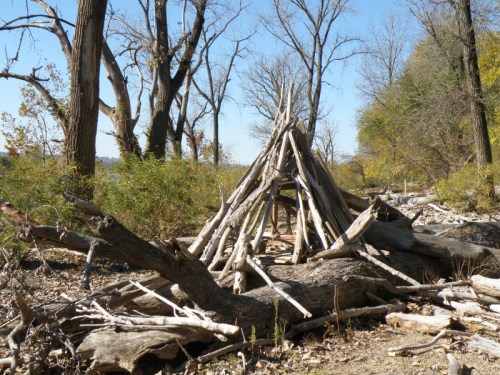
Moving past the Woodland Trail Loop, I’m in the western section of the Falls of the Ohio State Park. It’s been more than a month since I last visited this area. One of my favorite trees is here and although I’ve already missed the prime leaf color moment…I’m hoping some autumn splendor remains. Along my walk I come across a driftwood structure that has been stacked teepee-style by other park visitors. I see this kind of expression regularly and there must be a kinship between this activity and piling and stacking rock upon rock. It’s satisfying to do and when you step back from your work…it’s obvious you left an impermanent mark in the landscape that says you were there. The tree I seek is just a short walk away and in no time at all I arrive on the scene.

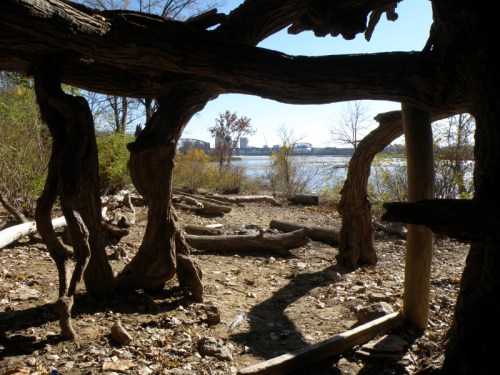
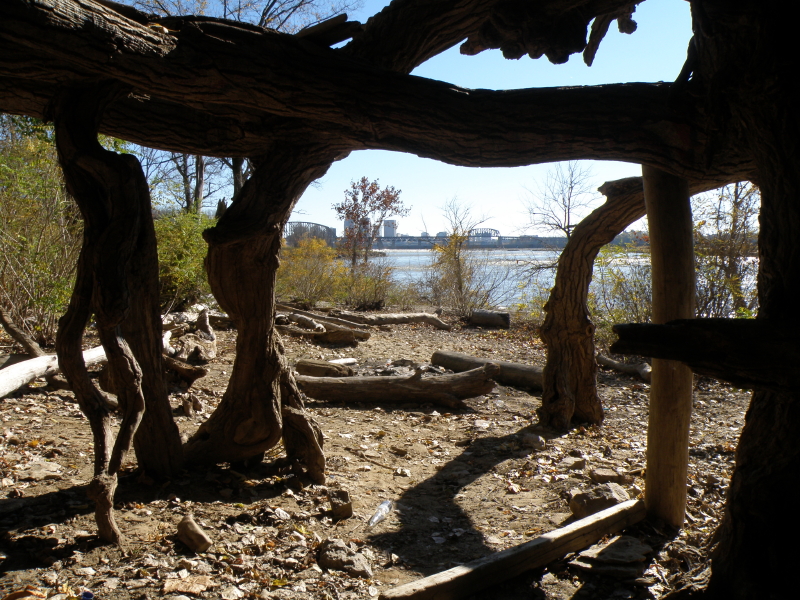
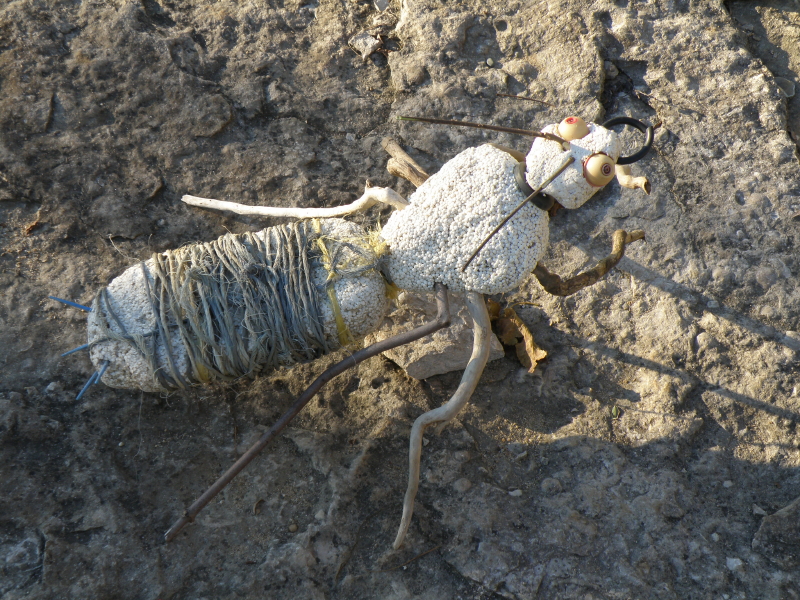
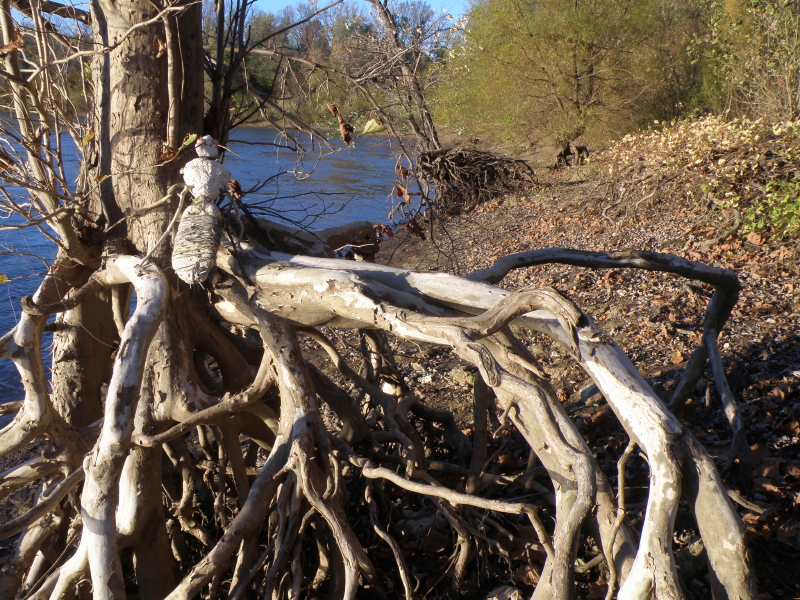
This old Cottonwood tree with its raised roots looms large in my imagination and is my personal favorite tree out here. I’m sure I’m not the only one who feels this way because there is usually plenty of evidence laying around in the form of empty beer bottles, spent camp fires, and yes…the odd bits of furniture people drag to furnish the room that exists underneath the tree. I’ll wager for some…this is known as the party tree. I was elated to see that most of the junk (old tarps and a red couch) have been removed by some other purists. The Cottonwood tree had already dropped most of its leaves, but there were still a few hanging on. After resting a moment under the tree and admiring the distant view of Louisville across the Ohio River…I decide to turn for home. I was in the process of walking away when I noticed something moving along the fossil rocks. I froze to see if I could get a better look at the creature that was walking towards me. Naturally, my camera is at the ready!

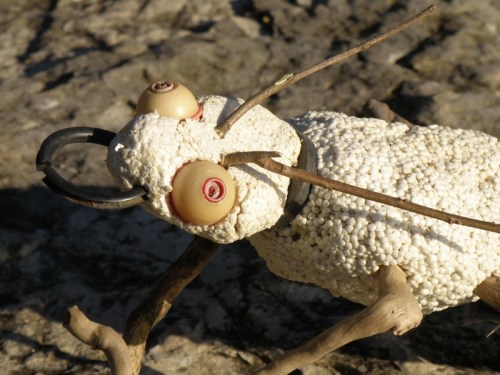
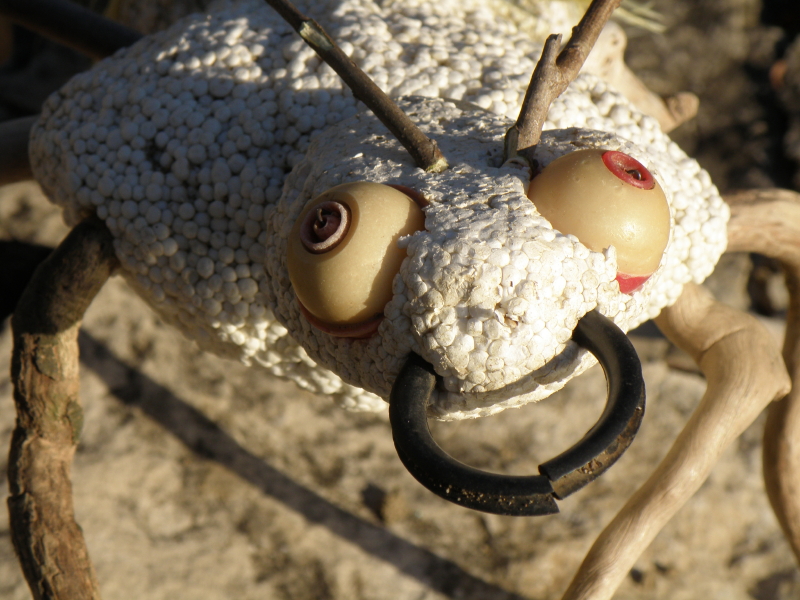
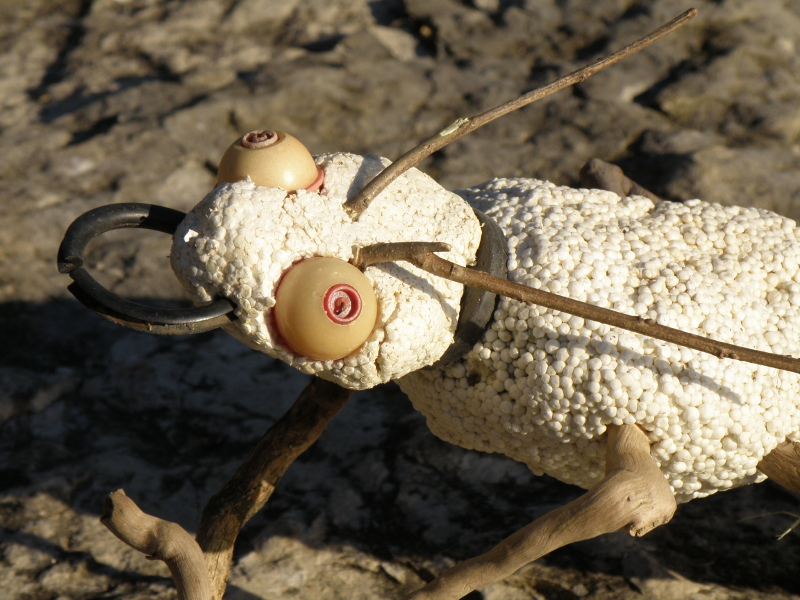
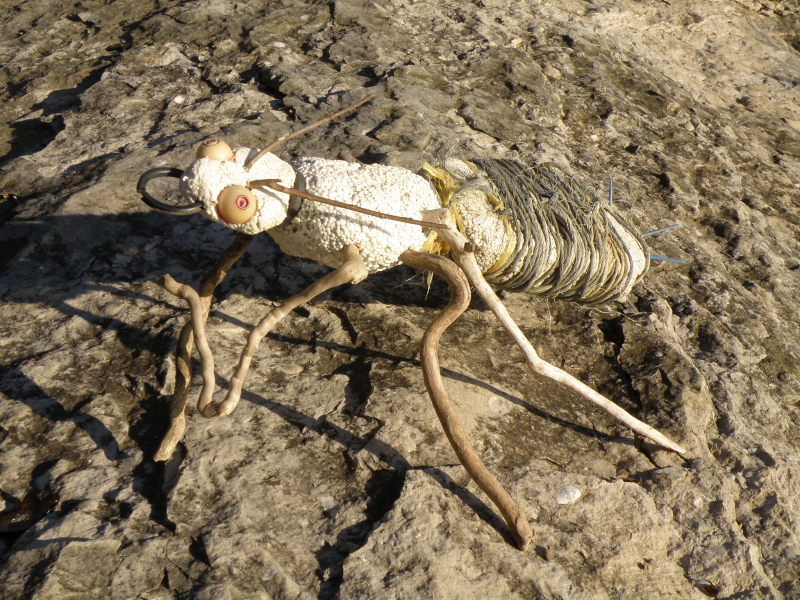
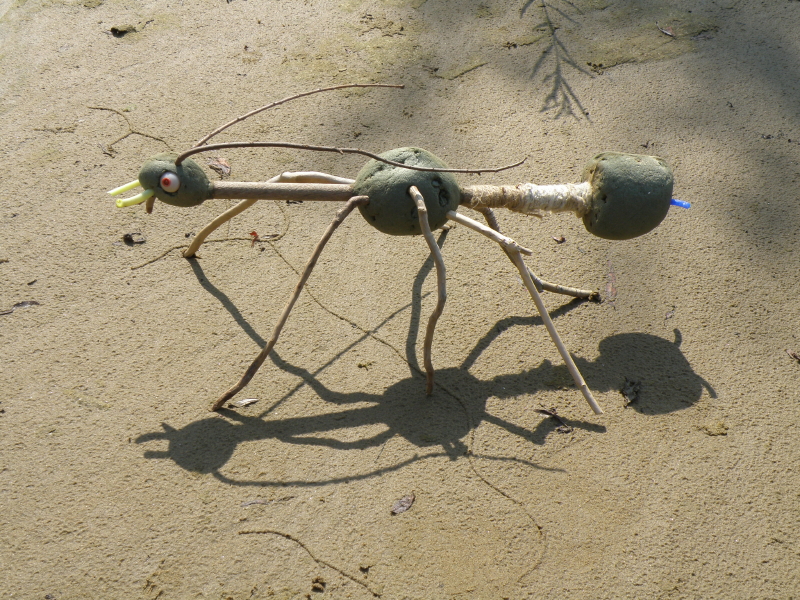
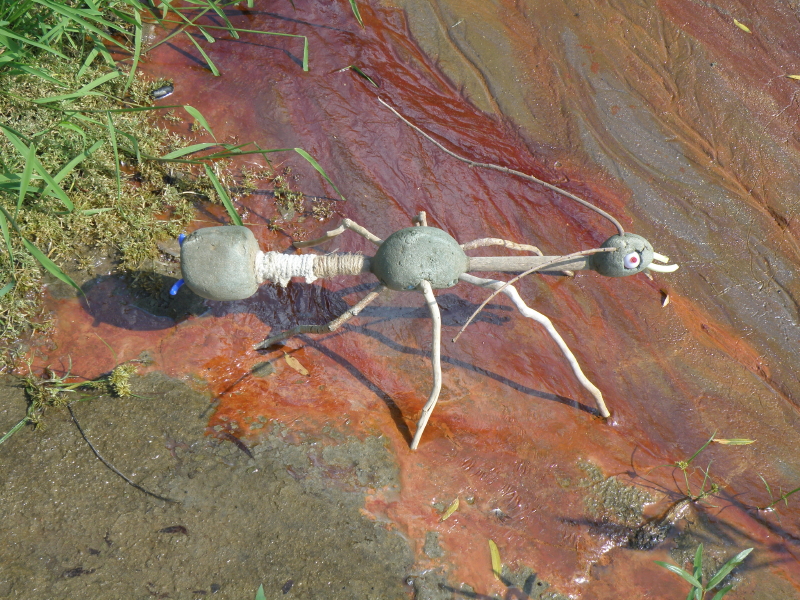
Regular visitors to the Riverblog know that the Falls of the Ohio State Park is home to several out-sized insect species that have uniquely evolved here. All the different species are critically endangered and not to be harmed in any way. I was quick to identify this as the Golden Hour Ground Beetle. It was so named because it usually makes it first appearance of the day when the sun is about to set. Otherwise, it is nocturnal in its habits.

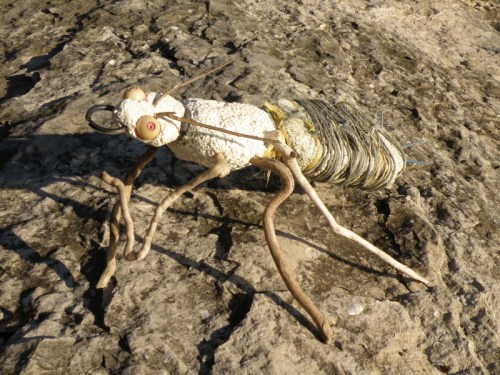
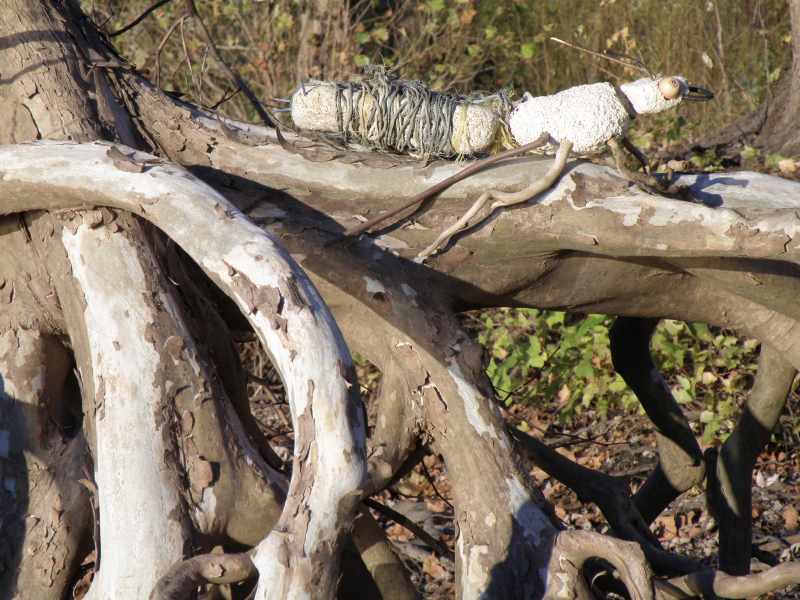
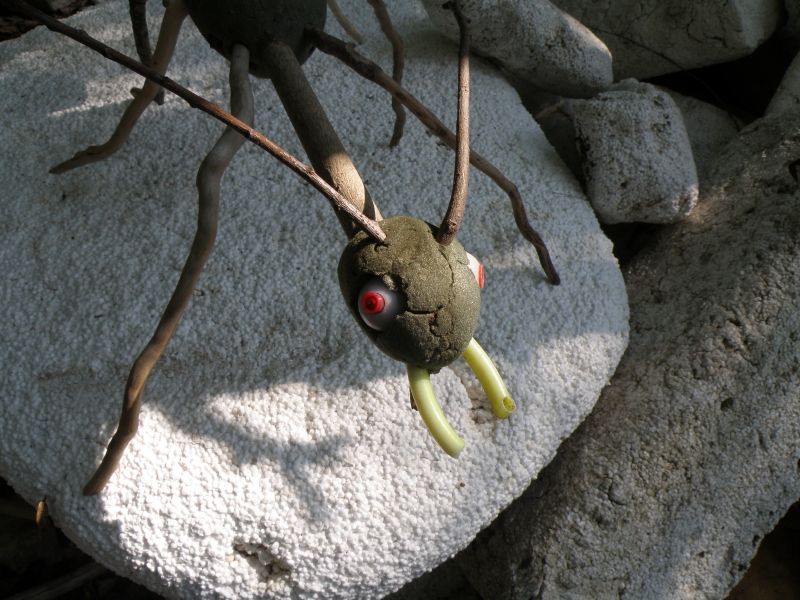
The Golden Hour Ground Beetle does not fly. It relies upon stealth and six strong legs to scramble across any surface. In form, it is not unlike the much smaller tiger beetles that also make the park their home. Unlike the smaller beetles, the Golden Hour Ground Beetle is a scavenger and not a hunter. I suspect this specimen was at the Cottonwood tree because it has learned to find scraps of discarded camping food here. This beetle has fairly large eyes that can gather the most meager light in the darkest of settings. It’s abdomen is banded with a coarse hair that insulates this insect during cold nights. As long as I didn’t make any rash movements, this giant bug was tolerating my presence.
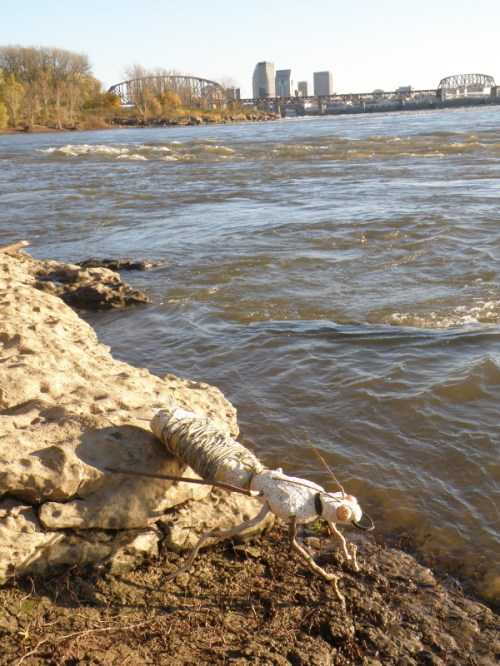
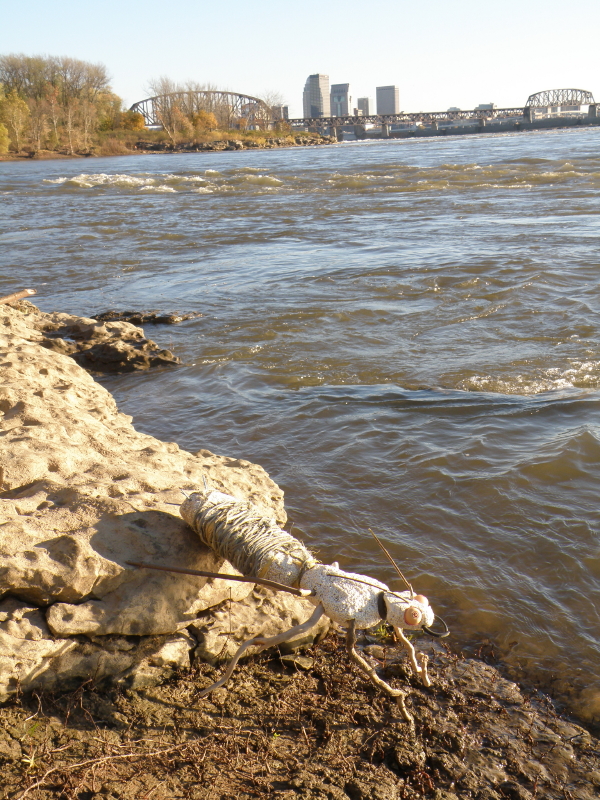
I observed my new “friend” moving to the water’s edge to obtain a drink. I wondered if it had the ability to swim in its survival tool kit? I watched the insect as it searched all around the fossil rock shelves that were created by the river dissolving the old limestone away.
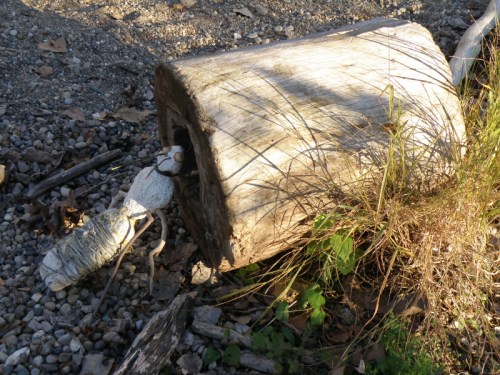
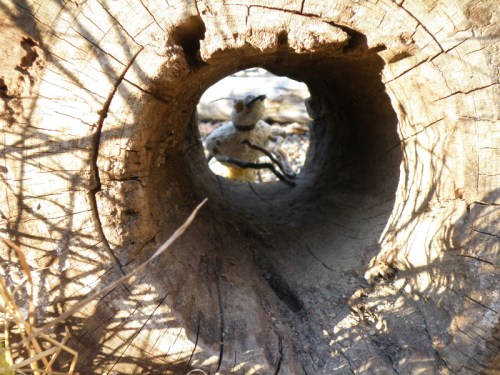
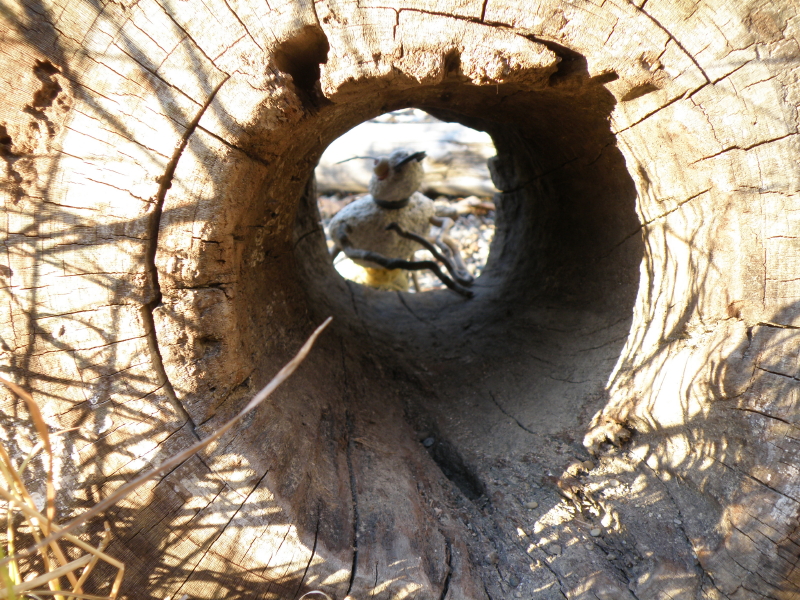
I came across a second giant beetle almost immediately after crossing the small creek that separates the western and eastern sections of the park. Male and females are virtually identical. There are gaps in our knowledge about their life cycle. This specimen was in the process of checking out a short, hollow log. I’m presuming that it was either seeking food or shelter? I think poking my camera through the end of the log spooked this one a little. It ran away, but didn’t go far. I kept my movements to a minimum and after a while it seemed to relax again.
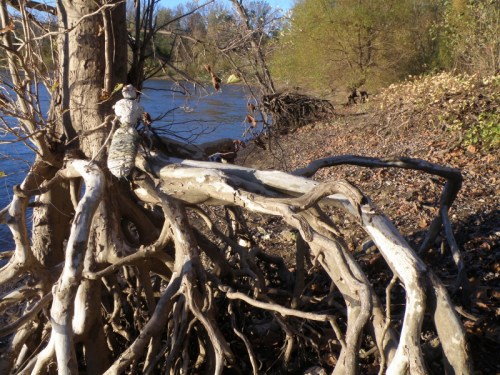
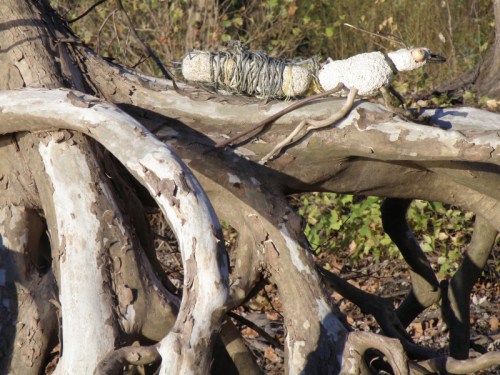
I observed this 14 inch or 35.5 centimeter beetle relaxing on the exposed roots of a Sycamore tree. As the golden hour approached, the beetle stopped seemingly acknowledging this magic moment when everything is bathed in a warm golden light. I did the same watching the sun set before finding my vehicle in the parking lot of the Interpretive Center. To everybody in the wider world…have a great week.
Posted in Absurd, animal art works, Art, art and environment, creativity, ecosytem, environmental art, Falls of the Ohio, nature photography, public art, recycled art, sculpture, Styrofoam | Tagged Art, art and the environment, artist at exit 0, cottonwood tree, ecostory, Falls of the Ohio, found materials, ground beetle, insects, nature, nature story, odd insects, photography, recycled materials, Styrofoam, the golden hour, upscaled art | 9 Comments »
November 9, 2013 by artistatexit0
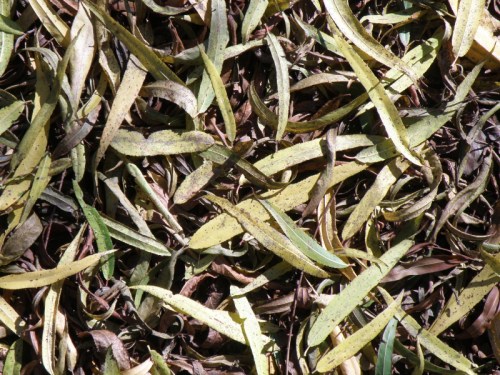
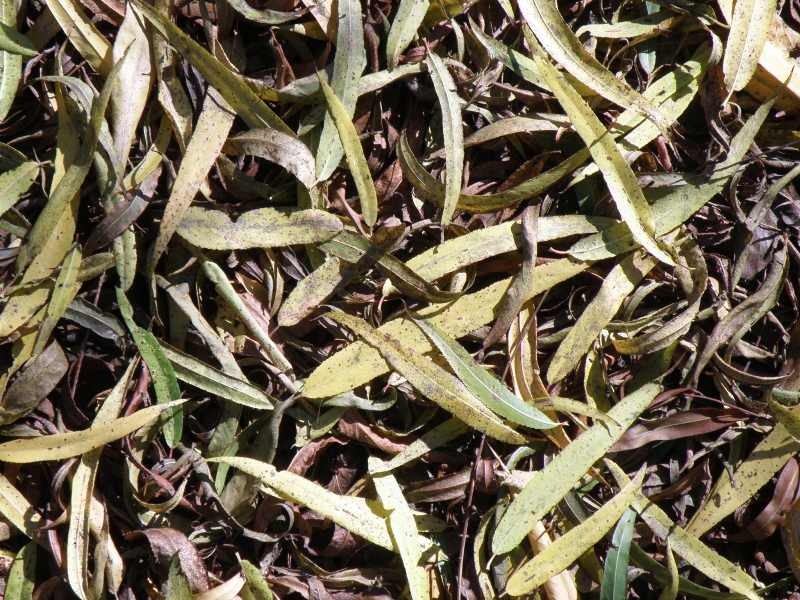
A gorgeous fall day with light that was almost impossibly bright. It’s autumn at the Falls of the Ohio State Park. Small groups of migrating birds including various warblers, titmice, and kinglets are moving through the willow tops. Around each stand of willow trees, the ground is covered by yellowing leaves that have been recently dropped. There is a fresh, spicy, vegetative fragrance in the air as the more recently shed leaves give up their essence before curling up and turning brown. Although I have been to the Falls numerous times lately… it’s been a few months since I last visited my old outdoor atelier in the woods. Today seems as good a time to check out how my site has fared in my absence.
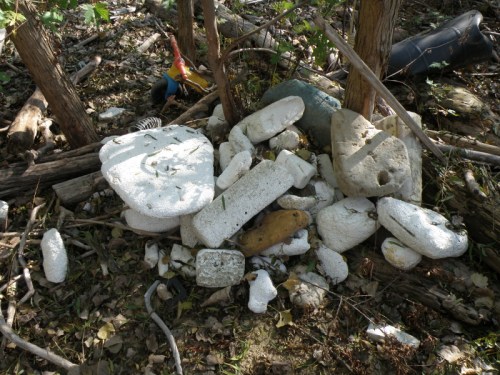
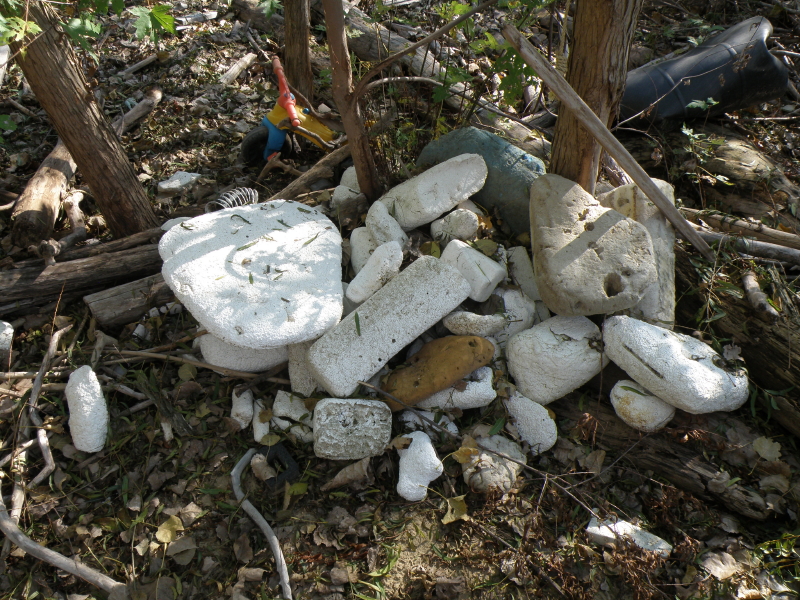
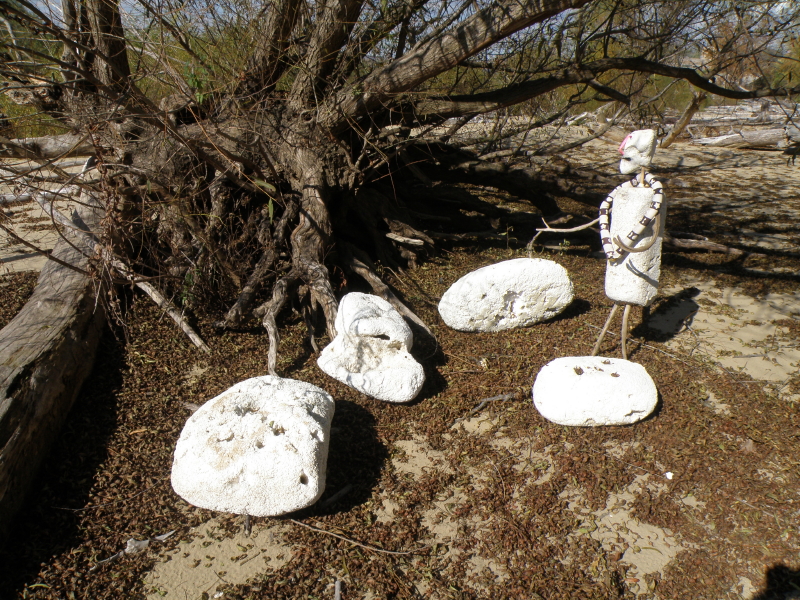
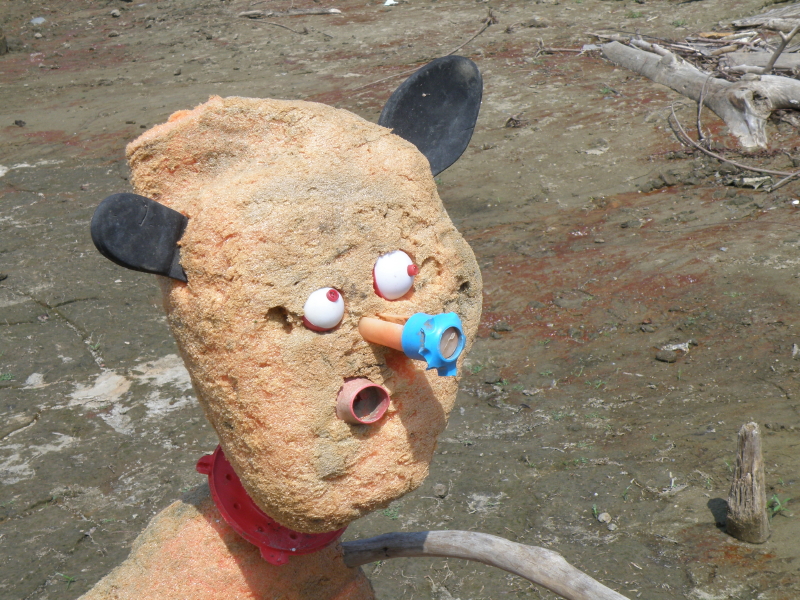
The wooden structure that once surrounded my cached materials remains collapsed. Some of the larger pieces of Styrofoam I had gathered from the river have been moved nearby. Stuff has been scattered around, but that is also part of the ongoing history and fate of this material. I may refer to this junk as “mine”, but I don’t feel a true sense of ownership. While this material remains out here…it belongs to all of us. We created, used, and then disposed of it, often carelessly. I don’t have a lot of time to spend out here on this particular day and so I got busy making “something” from this largess. I select a few chunks of polystyrene that will become my latest figure and before long I attract an audience of one.
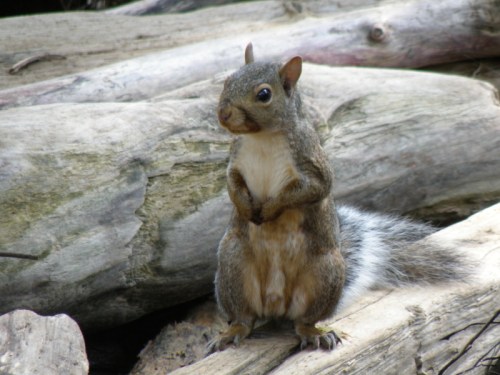
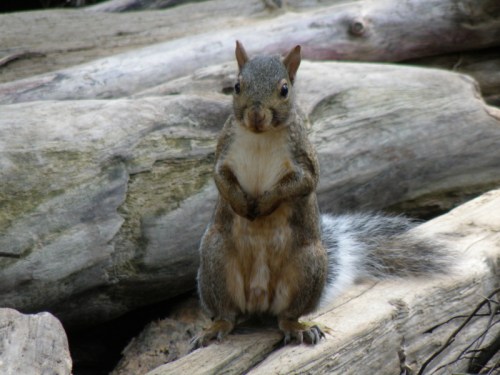
This Gray Squirrel seemed very intent upon my activities. Perhaps he thought there might be food involved? I have to say that I was really amused by this little animal checking me out. He watched me for a minute or two and then headed deeper into the trees.
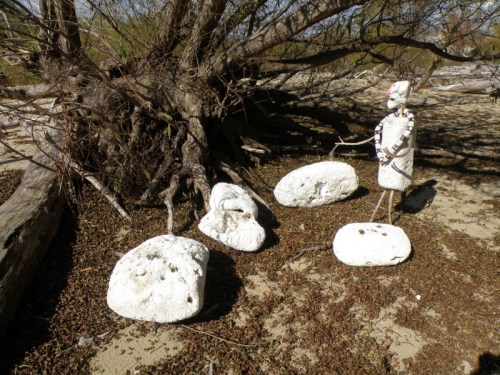
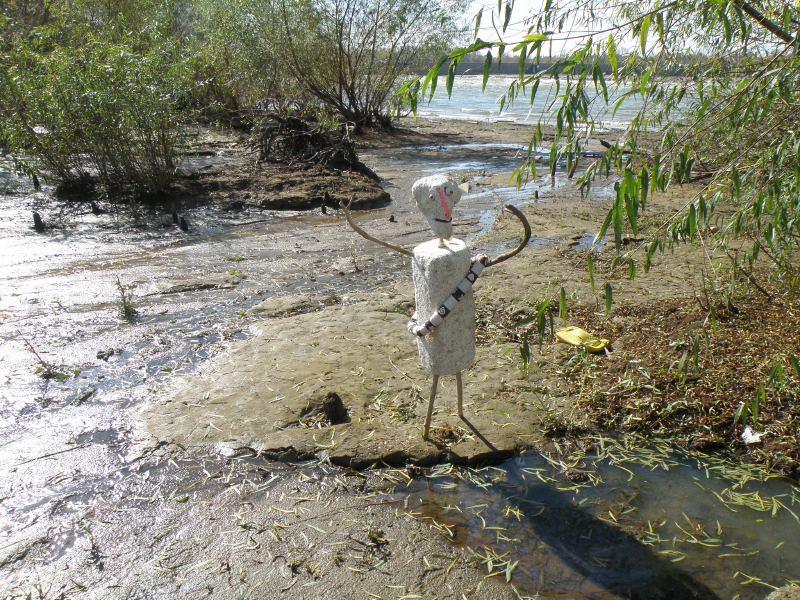
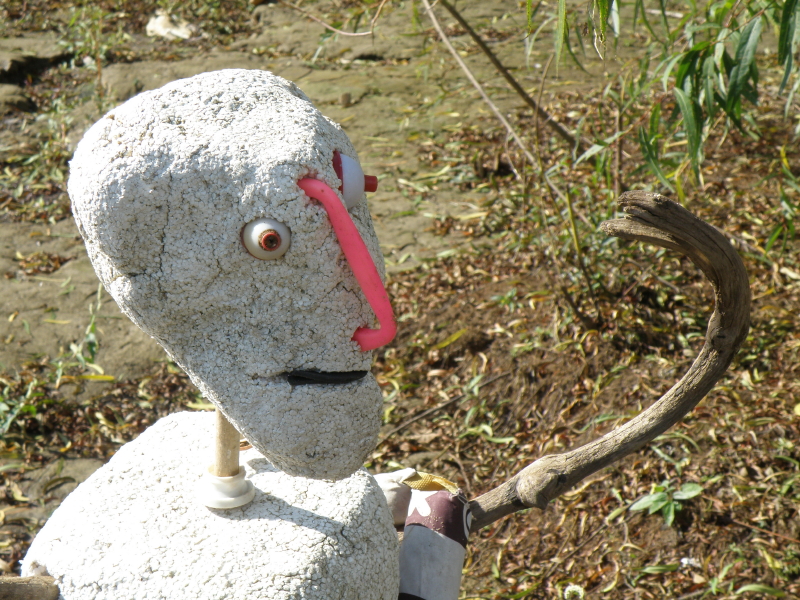
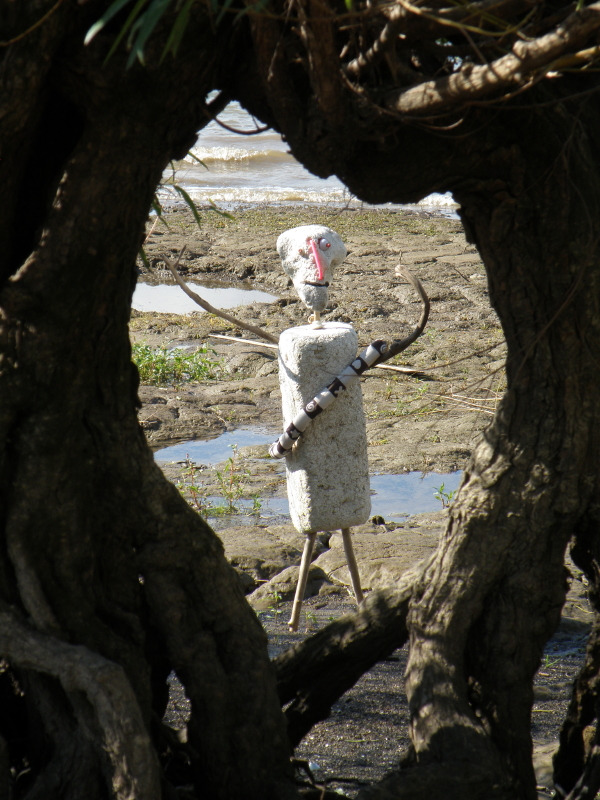
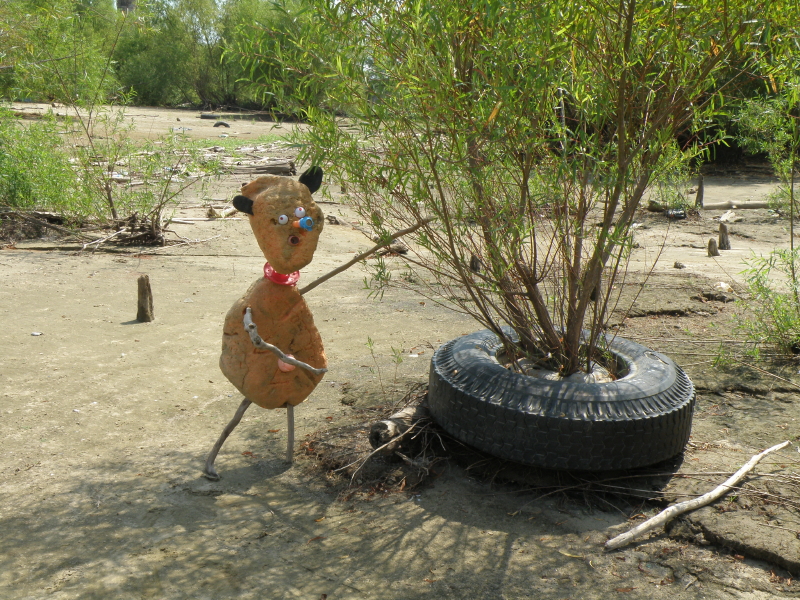
The figure I created was not very complex. It’s head was rather skull-like and so I added a found black and white swimming noodle and a pink nose that was the plastic handle to something to give it more “levity”. One of the first places I posed my latest was by the larger remains of former projects that were moved away from the other Styrofoam pieces I had assembled. It doesn’t appear that whomever moved this stuff…did anything else with it.

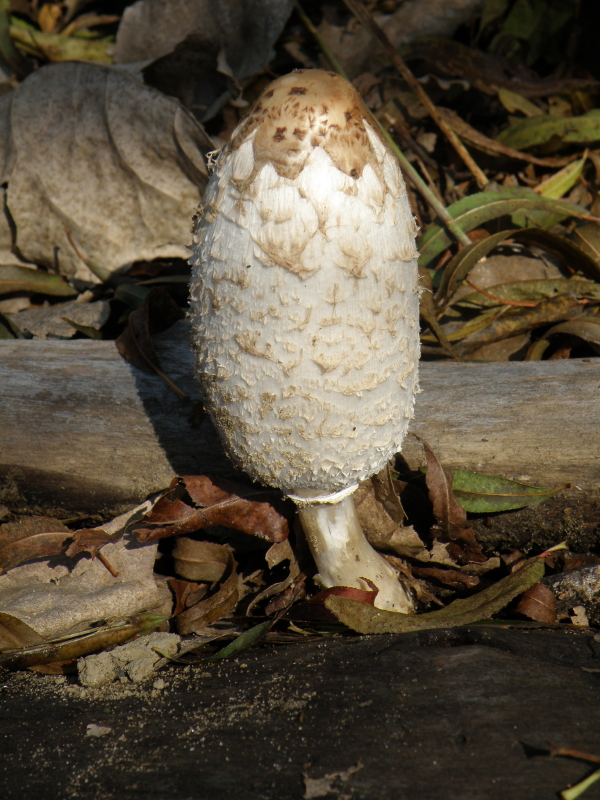
Coming across a late season mushroom, its whiteness and material consistency reminds me of the polystyrene I salvage to make art with. Both the mushroom and Styrofoam are made from extracted, spent life. The difference is the mushroom is alive and one day will also return to the earth to nourish other life. The Styrofoam on the other hand, is a dead material and probably won’t decompose easily for quite a long period of time. To move away from thoughts about decay and such…I move into the light and to be near the water.
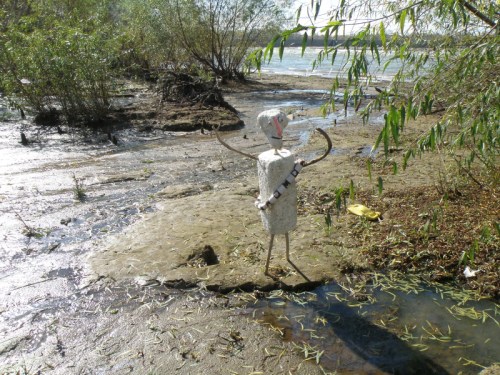

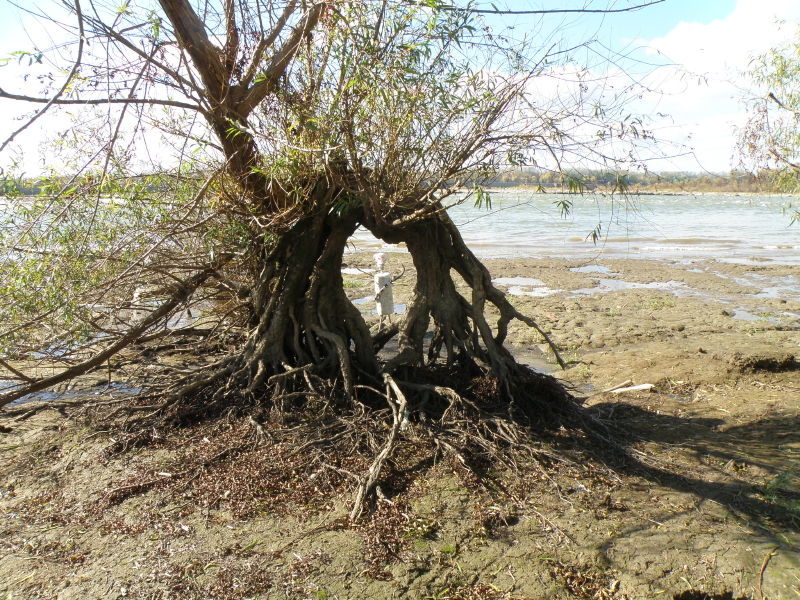
It doesn’t take long before I find just the right location that will represent this figure and day to me in photographs. I rediscover an especially picturesque willow tree whose trunk and roots have been sculpted by time and the river to form a portal or window. This is where I decided to photograph and leave this figure.
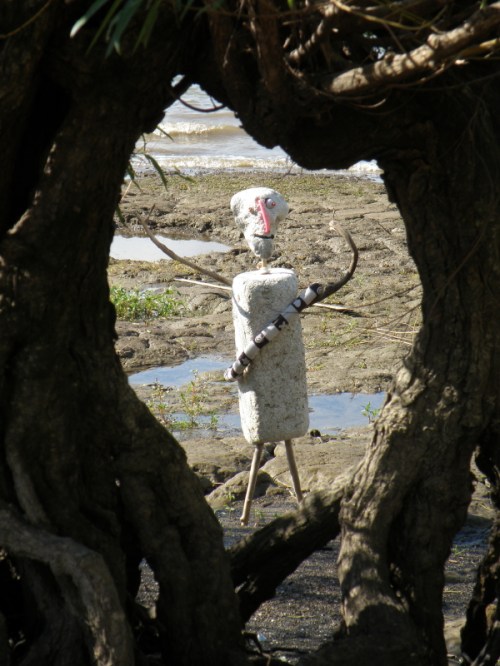
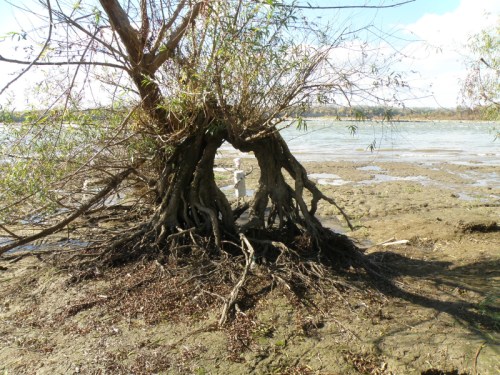
Because the ground was muddy and soft…it was also easy to stand my figure upright. My attention wandered back and forth between the possibilities this novel view afforded. I imagined the figure looking back at me through the portal and other shifting points of view. Here’s how the figure looked set up on the other side where I once originally stood.
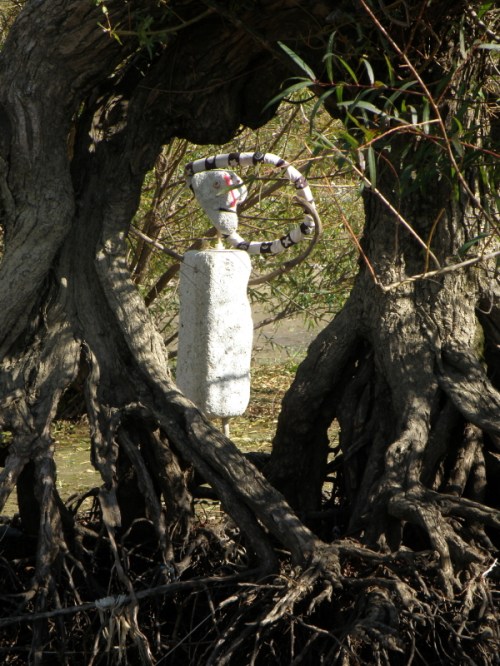
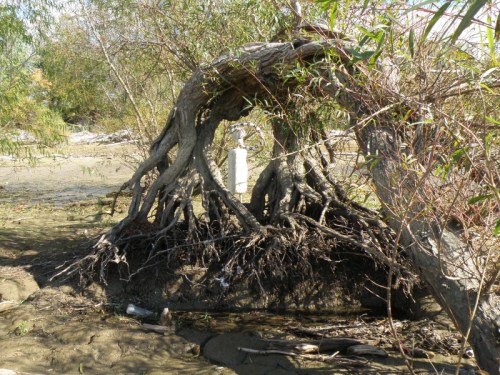
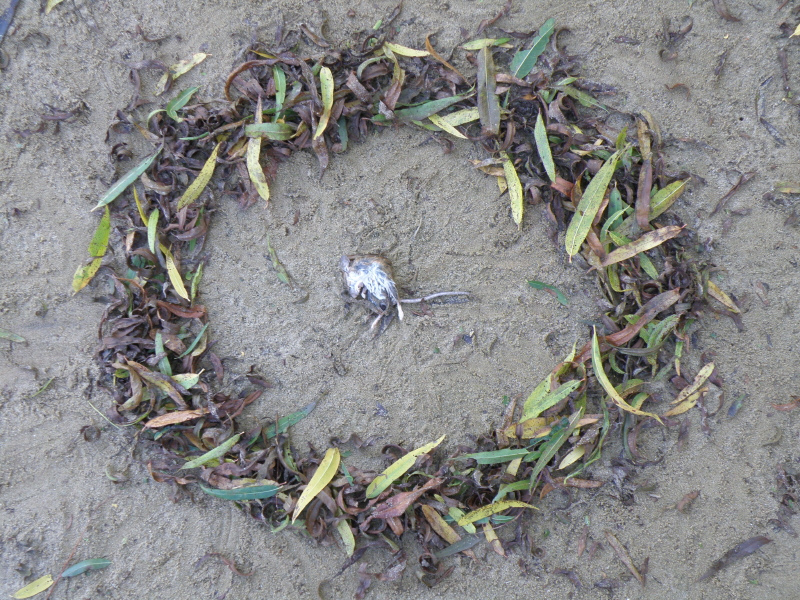
The day was getting late and it was time for me to move on. On the walk back I came across a recently deceased mouse in the willow leaves. Something about this season brings out the melancholy in me. All life, no matter how small, strikes me as being worthy of note. Using my fingers, I raked the willow leaves away from the mouse’s body and created this parting image. See you next time from the Falls of the Ohio.
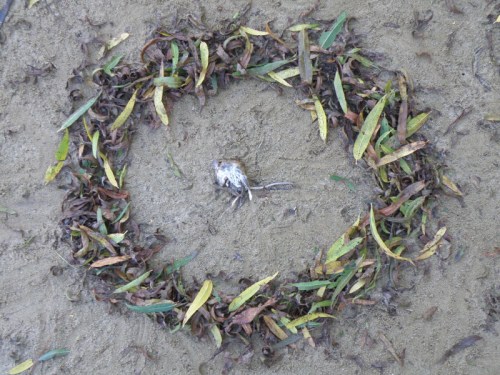
Posted in Absurd, animals, Art, art and environment, creativity, environmental art, Falls of the Ohio, nature, nature photography, public art, recycled art, sculpture, Styrofoam | Tagged Art, artistatexit0, autumn, dead mouse, ecostory, environmental art, Falls of the Ohio, found art materials, melancholy, nature, nature story, outdoor art studio, photography, public art, sense of place, Styrofoam, willow leaves, willow tree | 14 Comments »
October 31, 2013 by artistatexit0
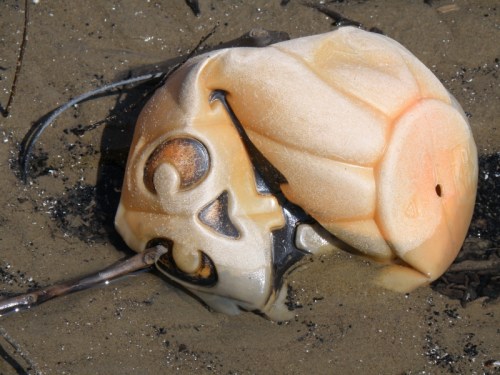
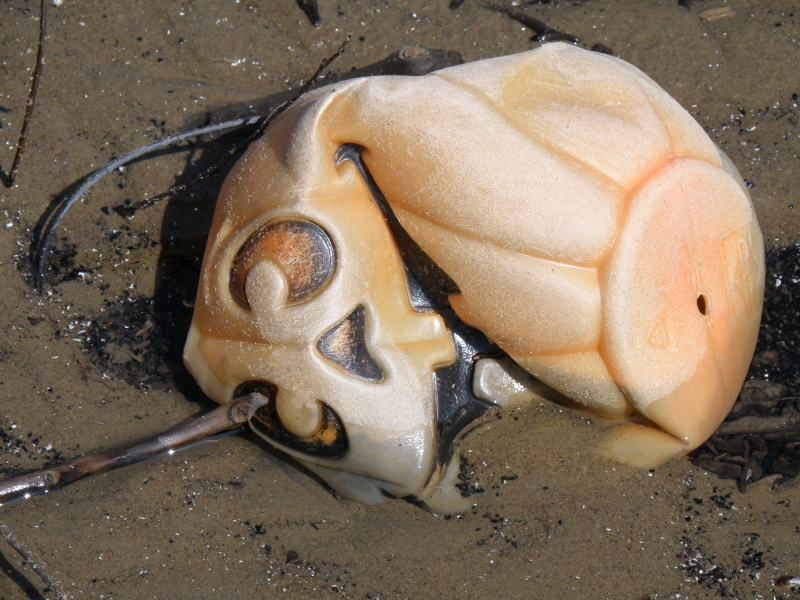
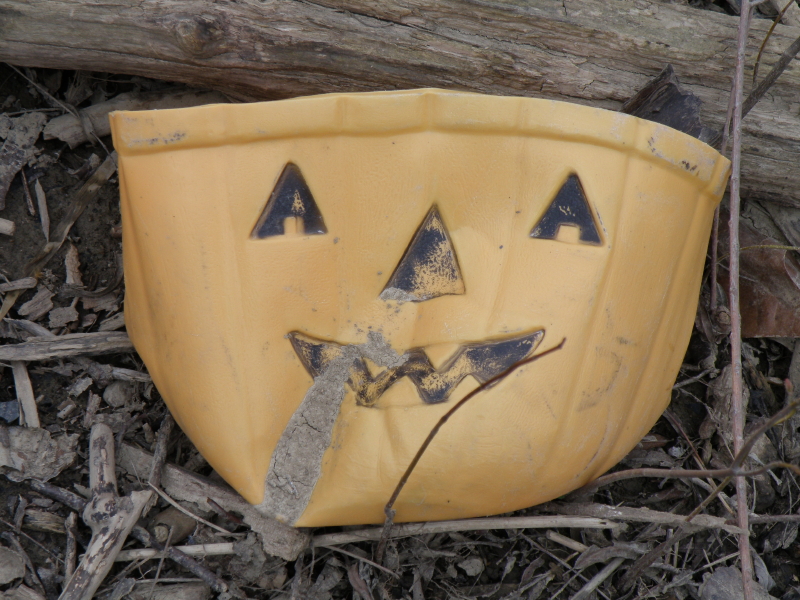
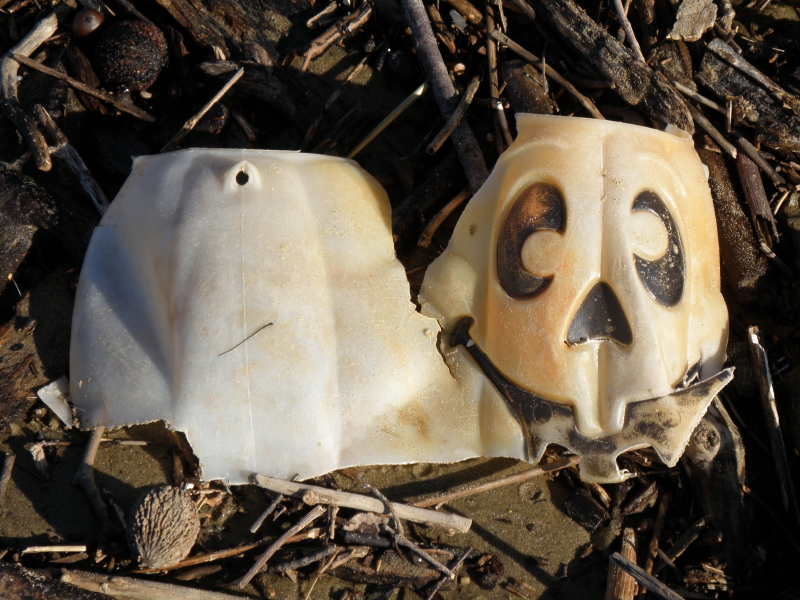
For a few hours more it’s Halloween in Kentuckiana. With a tornado watch in the air and rain for certain, it’s not boding very well for the actual observance. Sorry about that kids. It does seem to me that the actual going door to door and collecting candy is not the same prized occasion it used to be. It seems these days (and here’s where I start sounding old) every holiday has candy and it’s not as special as it used to be. Halloween is becoming more of an indoor activity with parties replacing the ceremonial wearing out of the shoe leather. Still there are decorations and costumes to carry on the tradition. While making my rounds at the Falls of the Ohio State Park…I keep my camera and collecting bag ready for any Halloween related or other spooky items. Among the more common Halloween finds are these plastic jack-o-lanterns. The bigger ones are used for actual candy collecting and the smaller pieces are novelties for the table. Here are a couple more the river has washed up.
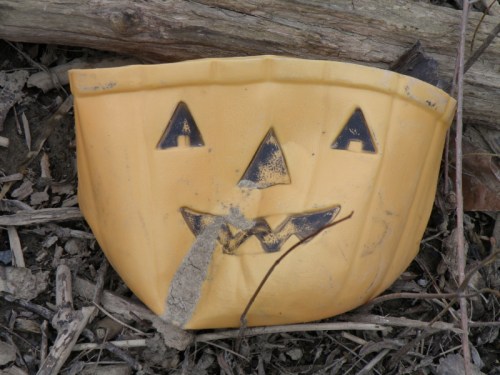
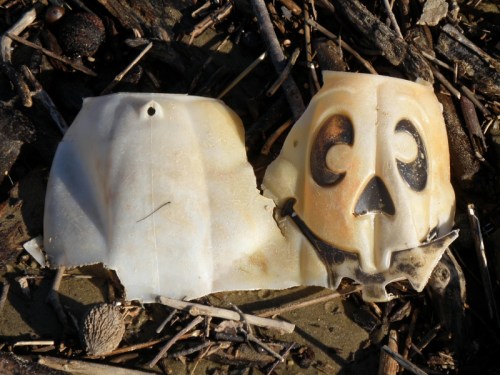
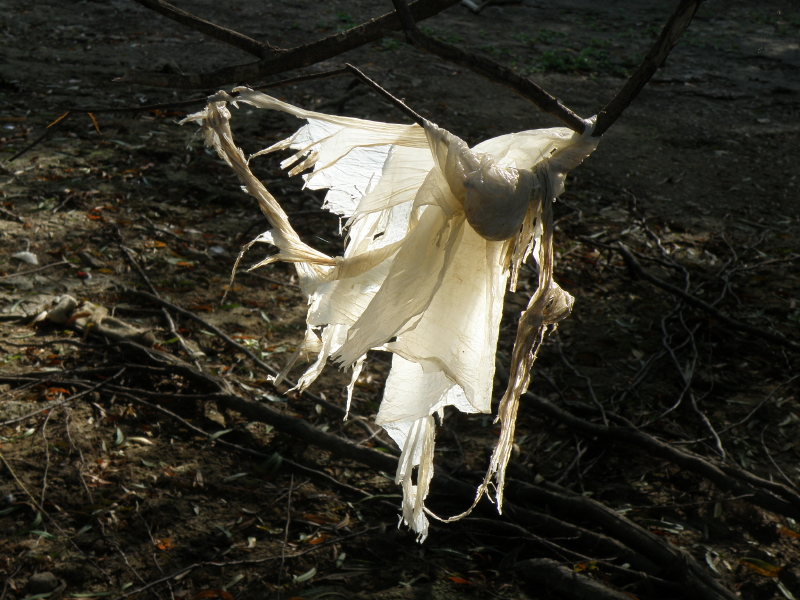
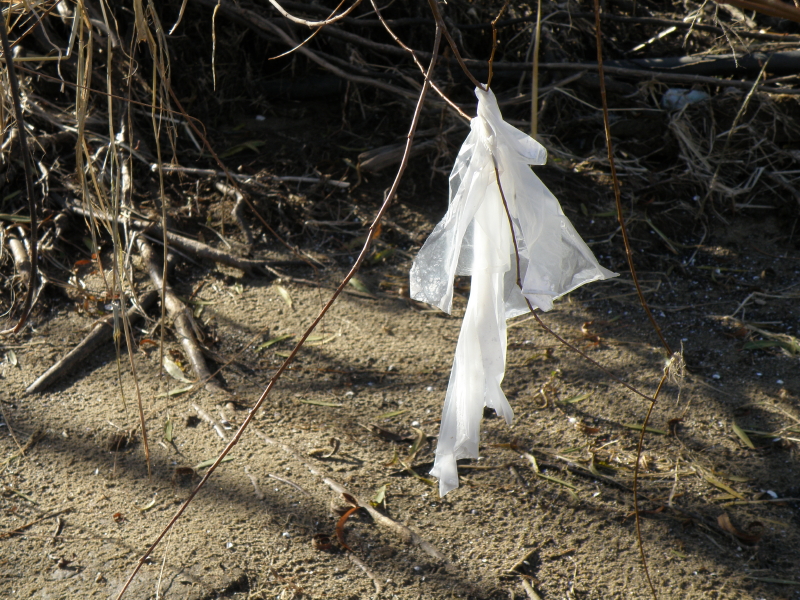
Of course, all these novelties are made from discarded plastic which may turn out to be the scariest thing of all. Walking near the river’s edge, I will often be startled by sights of a spectral nature. The ghosts of objects and functions past hang mournfully from the branches of the willow trees. Observe these two ghostly images…if you dare.
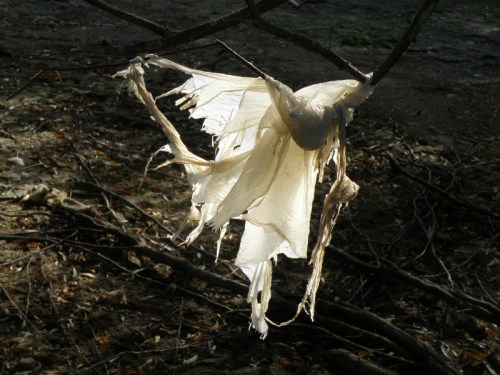
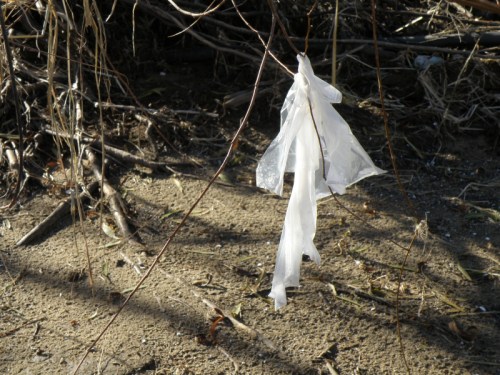
During one recent high water moment along the river’s edge…I spotted what appeared to be “something” hanging upside down from a tree branch. It was animated, black, and hairy and after snapping a quick photo…I got out of there. In the back of my mind the words “cat demon” formed. I didn’t want to hang around and find out more. The hairs on arms were standing straight up! Judge for yourself.

Today we had a Halloween party at the art program that I manage. Needing a costume I had to do some quick overnight thinking and making…which often produces interesting results. How many times has having a deadline served you well? Looking at the river junk I have saved at my house…I created this head-gear? or weird sculptural hat to fill the bill. Here’s my “costume” photographed against a black cloth that makes it look like an art object. Imagine wearing this on top of your head!

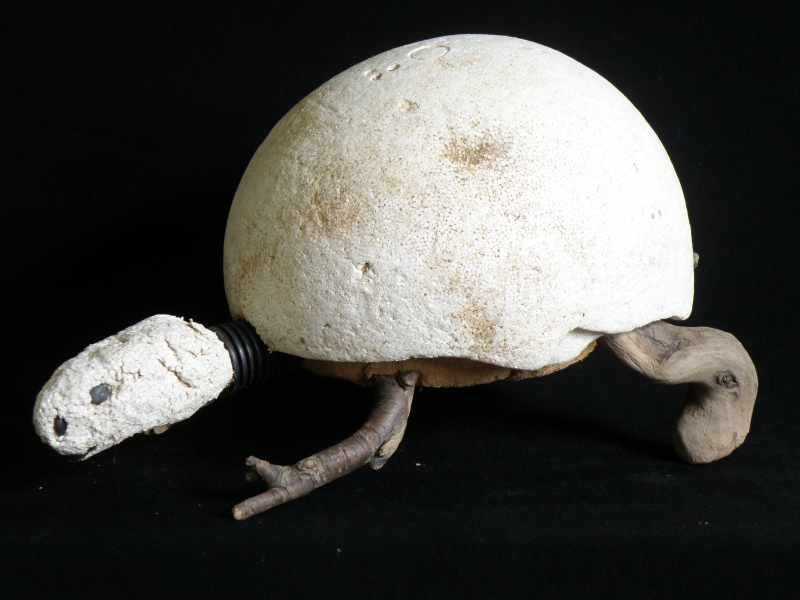
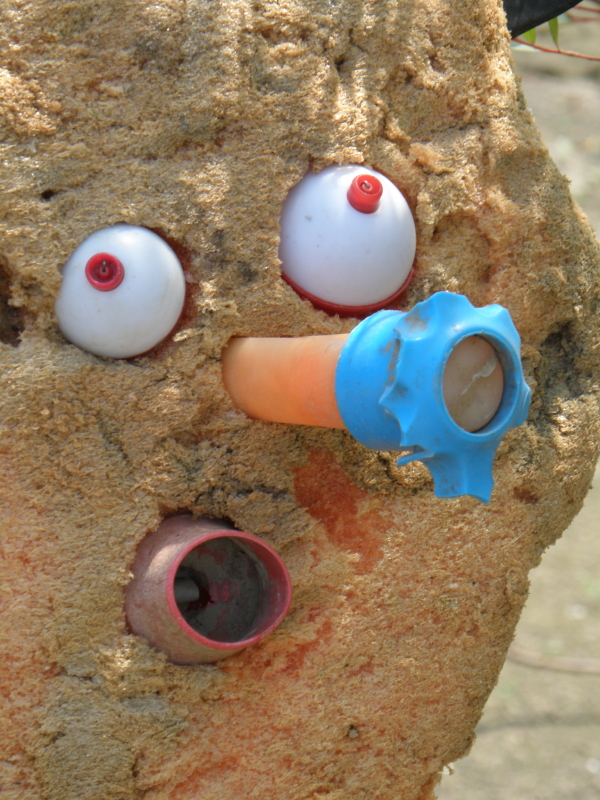
The foundation is the Styrofoam shell of an old bicycle helmet. The effigy head is actually recycled from an old, now destroyed sculpture I made and left on site at the river. After the rest of the body fell apart…I wandered bye and salvaged the head since it was still in good shape. I had no idea what I would do with this head…until this opportunity presented itself. The eyes are plastic bottle caps from old dish washing detergent bottles. The red mouth is more waste plastic as is the yellow hand on top. The arms, nose, and ears are wood bits. The neck (which you can’t see very well in this image) is a polystyrene mushroom. The bungy cord which forms a chin strap, is the only element that did not come from the river. I have a beaver-chewed willow stick running through the head and into the base. A little glue holds it all together. If one can “prize” finding discarded Styrofoam…then I confess to liking the shells from old bicycle helmets. I have used several over the years to make various turtle and tortoises. Here’s an example that became the basis for my Cottonwood Turtle story from a few years back.
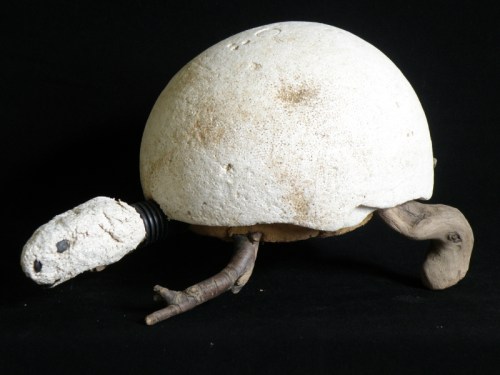
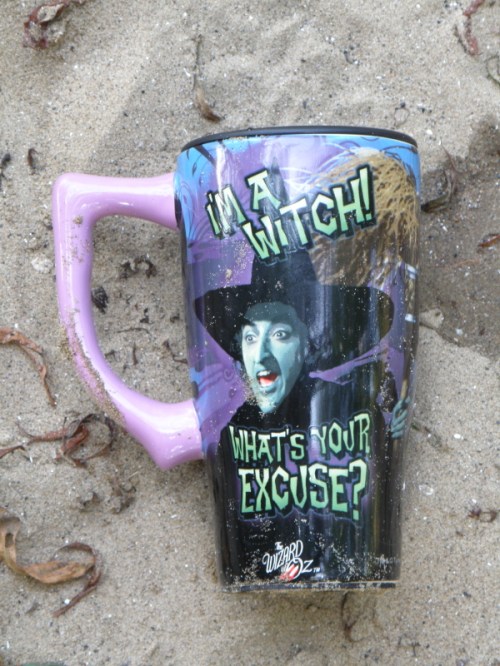
Well, it’s time to call it a day. Just a few intrepid souls in costumes made it to the door on this dismal night. They were well rewarded with chocolate and bubble gum. To close, here’s one final image from the river…what would Halloween be without witches and here’s one of the best. Trick or Treat from the Falls of the Ohio.
Posted in Absurd, art and environment, creativity, Falls of the Ohio, Green, recycled art, sculpture, Styrofoam | Tagged Art, artist at exit 0, creativity, Falls of the Ohio, found materials and objects, Halloween, photography, plastic, plastic jack-o-lantern, recycled art, river junk, strange hat, Styrofoam, unusual head gear, witch cup | 12 Comments »
October 23, 2013 by artistatexit0
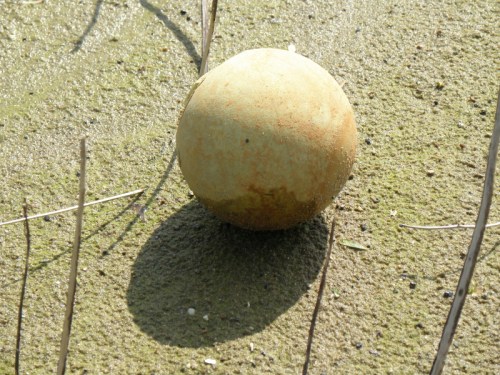
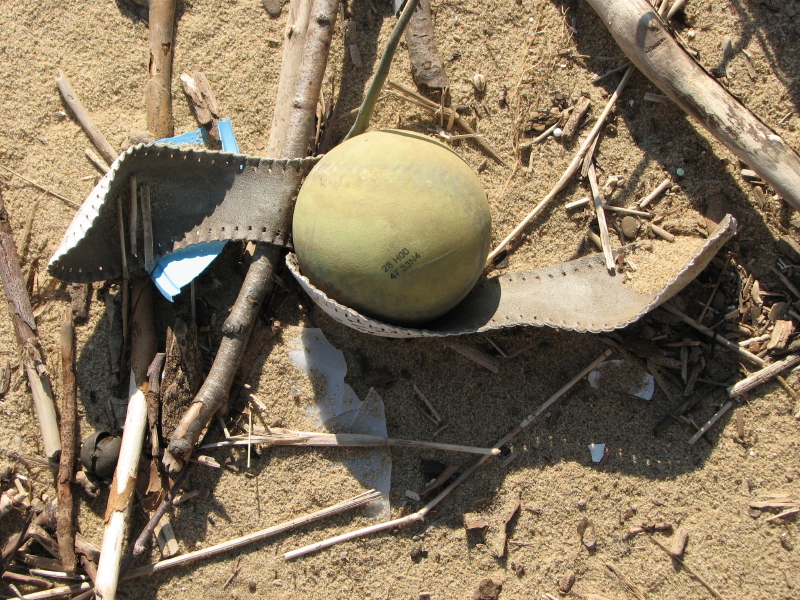
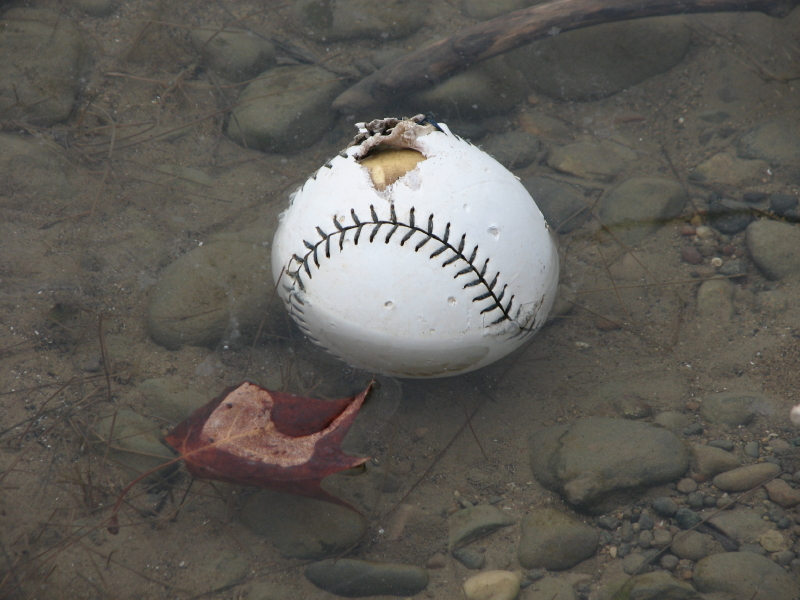
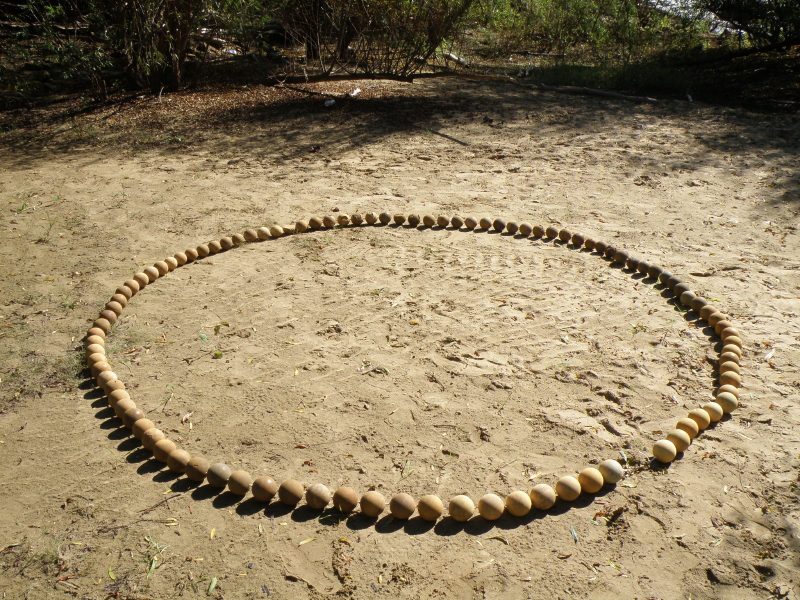
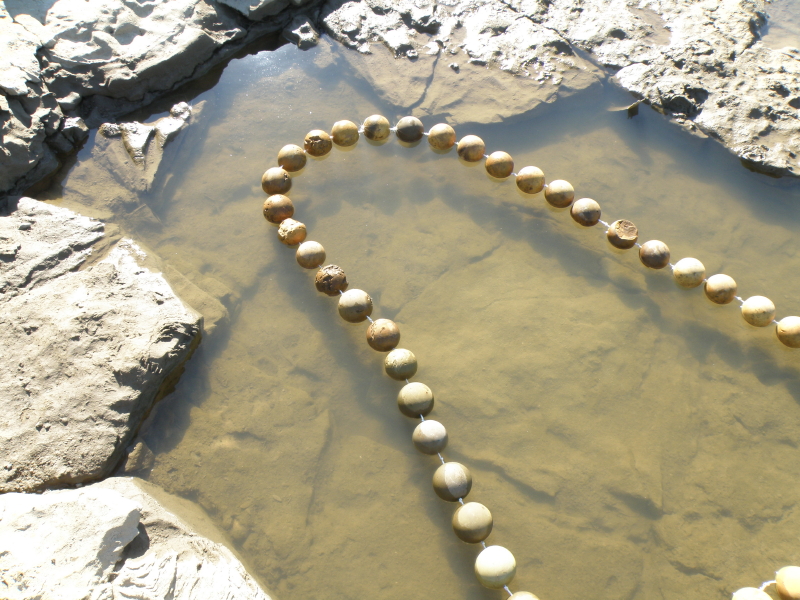
It started with one. I had been picking them up for years…odd, yellow ocher orbs that the river marooned in various sections of the Falls of the Ohio State Park. Initially, I was intrigued by them because I knew they had to be something, but what? Early on I formed this association in my mind that these balls were giant pearls and they were gifts to me from the beautiful river. Made from a lightweight yet solid, hard foam, these balls weathered in very individualistic ways. Many of them had acquired a nice patina from their river journey perhaps floating long distances for many years. For a while, each time I would go on one of my excursions to the Falls of the Ohio, the river made sure that I would stumble upon one or more of these balls. Into the collecting bag they would go. Eventually, I found out what kind of balls they are and in case you haven’t guessed yet…here are a couple more images that will reveal what they originally looked like. I’ll start with one of these balls in the process of transforming, followed by one that is more intact.

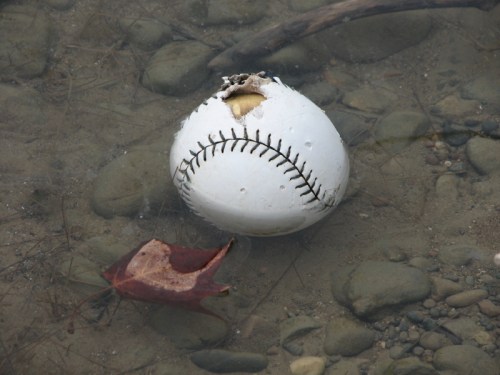
My river pearls are the cores of contemporary softballs. How did all these softballs end up in the river? When I was a kid, a softball had a hard rubber ball in the interior which was surrounded by what seemed like miles of string wrapped tightly around the rubber ball. A two piece leather cover was then sewn over this “string ball” which completed the softball and was now ready to be played with. For those who might be unfamiliar with softball…it’s a game similar to baseball, but the ball is about twice as large as a standard baseball. I collected these softball cores for years, but especially during the early phase of my Artist at Exit 0 Project. After each river trip I would dutifully fill up boxes in my home’s basement with my found balls and then forget about them. Over time, I started picking up lots of different objects and using them in various ways as materials for my sculptures or as offbeat collections of odd items I was creating. I guess I always knew that I would return to these balls and make something interesting with them someday. That day arrived last week.
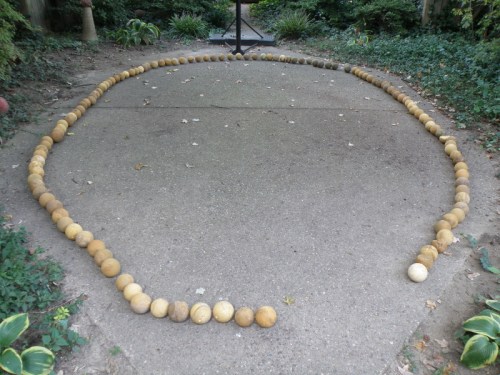
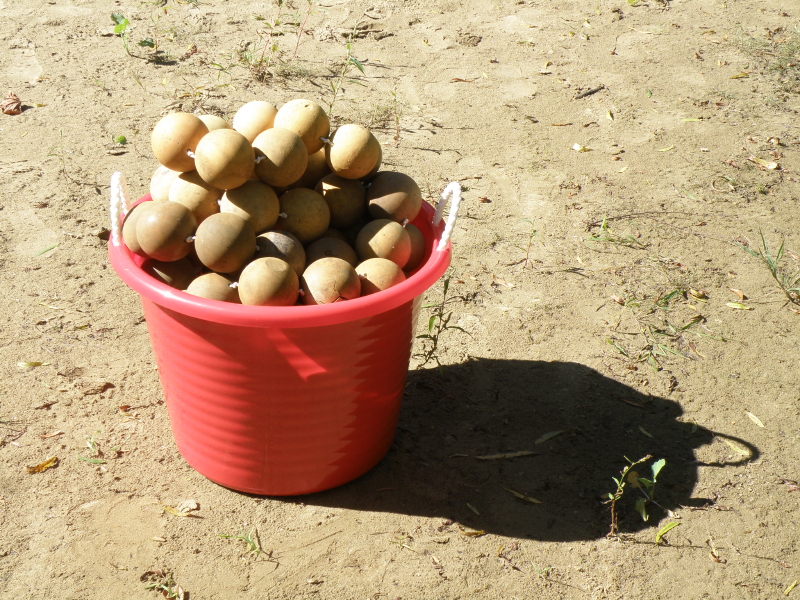
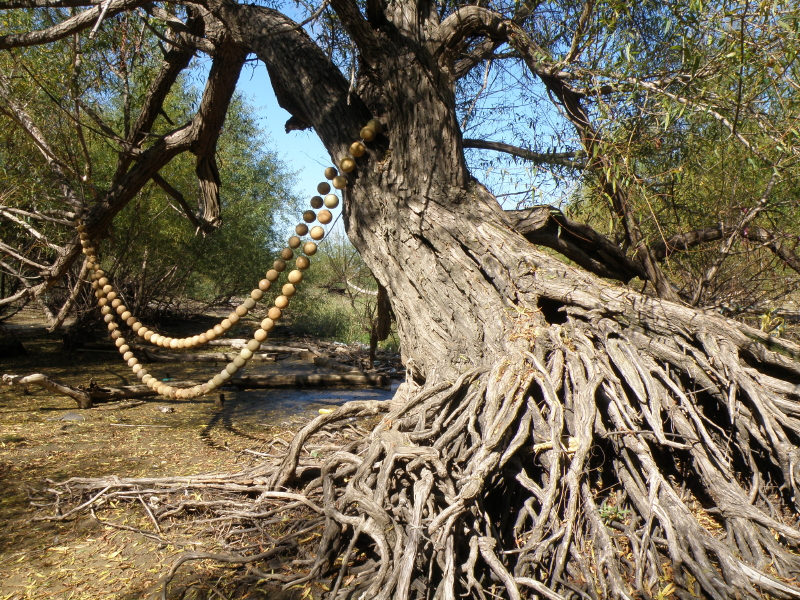
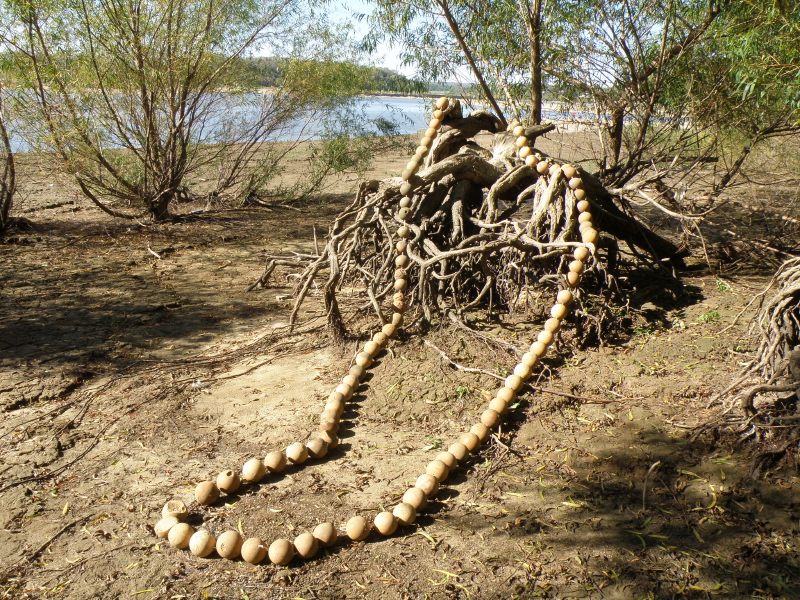
I had no idea how many of these balls I had collected or passed up over the years? This recent photo taken in my Louisville backyard shows about 110 out of the 160 balls I did save. I decided to act on my river pearls idea by making an impractically large pearl necklace. I carried all the balls I had to my friend Tom’s sculpture studio and used his drill press to drill a hole through each ball. That was a bit more of a technical challenge than I had first conceptualized. Most of these spheres are not perfectly round. In fact their imperfections (which I really like as evidence of wear by the river and elements) made each drilling a unique experience. Eventually, I got the job done and laid out many of the balls on the concrete pad in my backyard. Just as I was beginning to thread and knot braided nylon cord through the balls…the sky let loose a monstrous rain storm. By day’s end, nearly seven inches or 17.5 centimeters of rain fell and flooded parts of my backyard and basement! It was like being visited by the river in an interesting way. I had initially “graded” each ball by condition and color to form transitions in this giant strand, but the water and now mud from my backyard changed the color of each ball. I decided to make my first piece one hundred balls long. There is a knot tied with the cord that keeps each ball from touching. At my local hardware store I found a brass hook that I could use for a clasp to close my giant necklace. All that was left to do was to return to the river…to the place that I found all of these balls and inspiration and find a way to give thanks for these many gifts.

Loading the necklace into a large red plastic tub I carried my artwork down to the Ohio River. One hundred balls became surprisingly heavy and I was concerned about twisting an ankle or tweaking my knee as I walked over the driftwood. I came to a sunny place under the railroad bridge and laid the necklace out upon the sand for the first time.
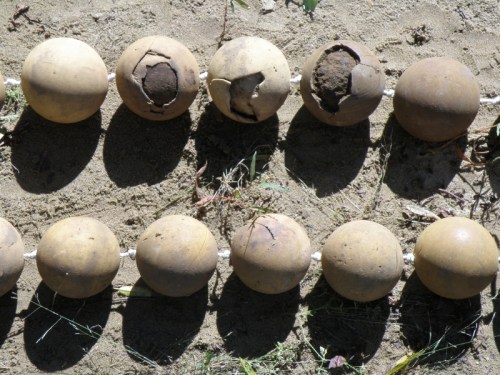
Here’s a look as some of the weathering that occurred with a few of the balls. And here is one of the first images of the necklace joined together.

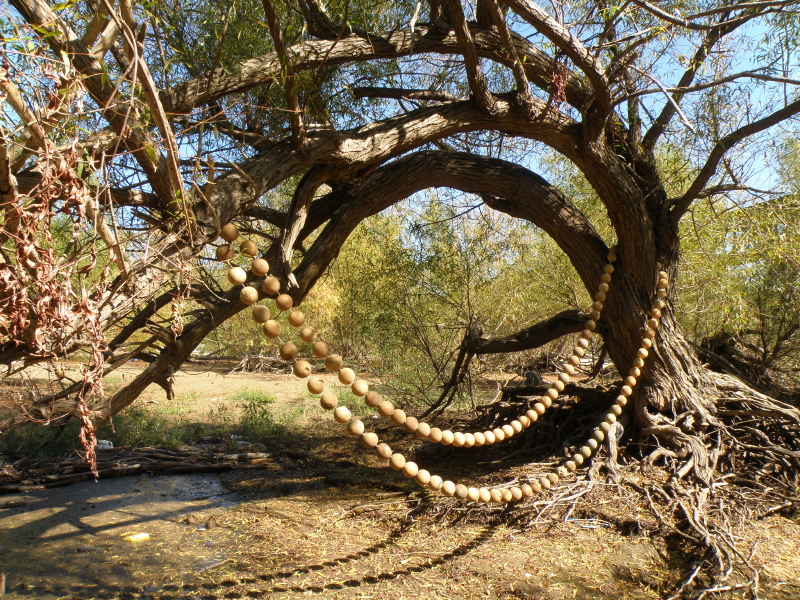
This was okay for a trial run, but I had other images in mind. I have always loved the willow trees in the park and I chose one of my favorite ones to “wear” my river pearl necklace. Yes, it’s a hopelessly romantic gesture, but I felt like “celebrating” this tree in a special way. Here are a few more images.

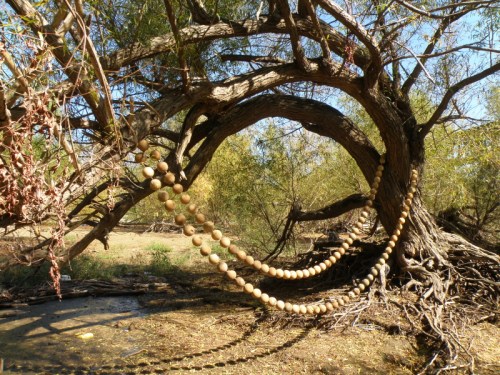
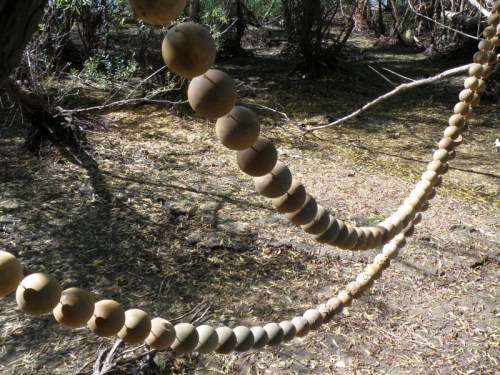
Moving closer to the river, I stopped by an old willow that was barely alive. I draped my necklace over its old exposed roots and created a few more images.

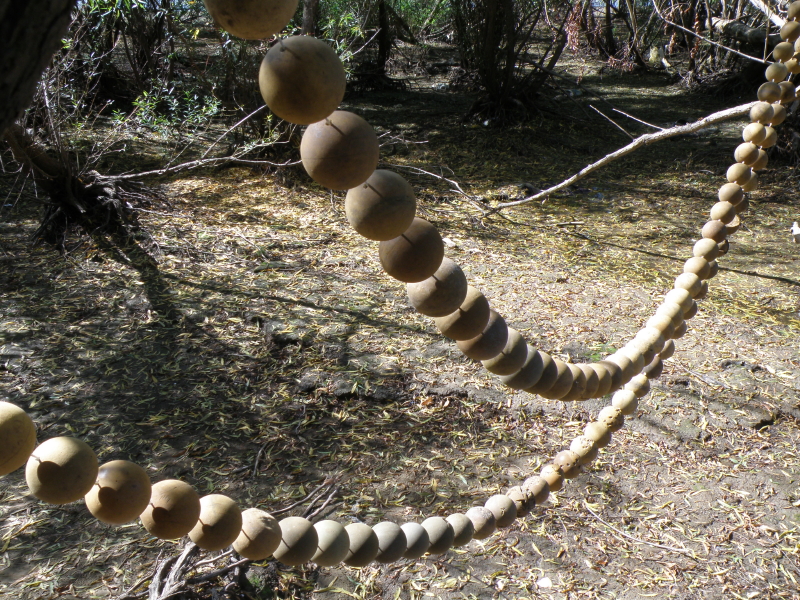
Once in a while, a park visitor would walk by and look in my direction and continue on as though I was engaged in a most ordinary activity! If I had stumbled across this scene…I think curiosity would compel me to say something. Next is another detail from my eccentric strand of pearls.

With the river within sight, I lifted my bucket of balls and headed towards the fossil rocks. It was a sunny, but windy day and my next idea was to put the necklace into the water.
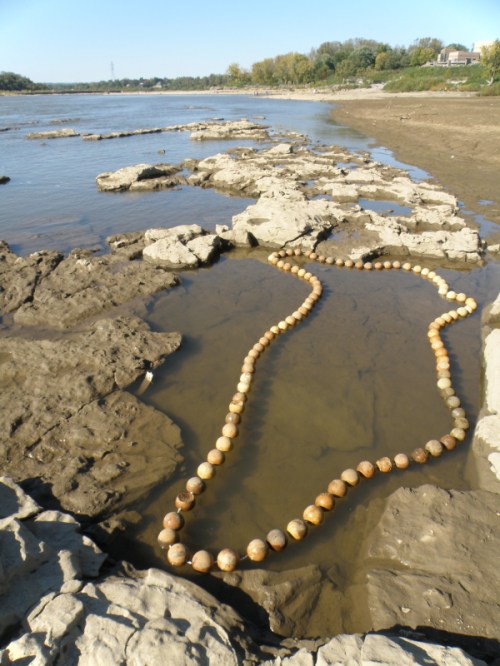
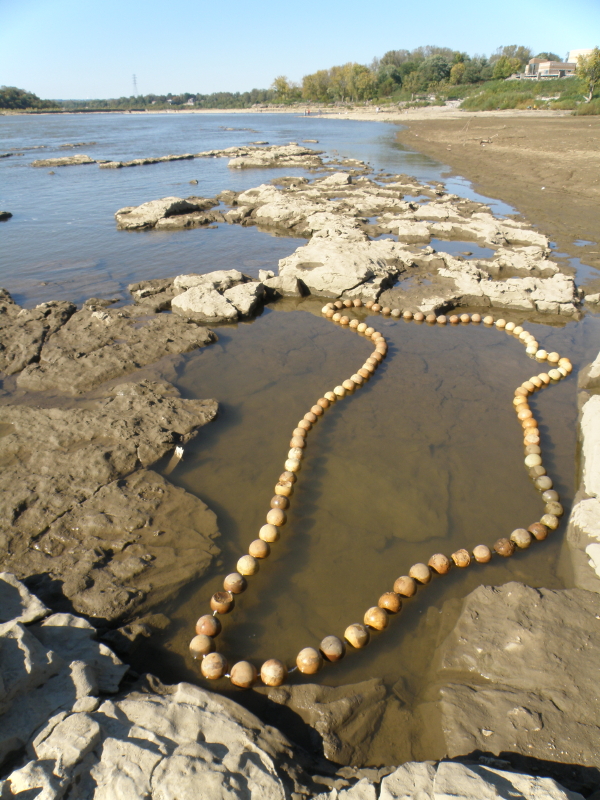
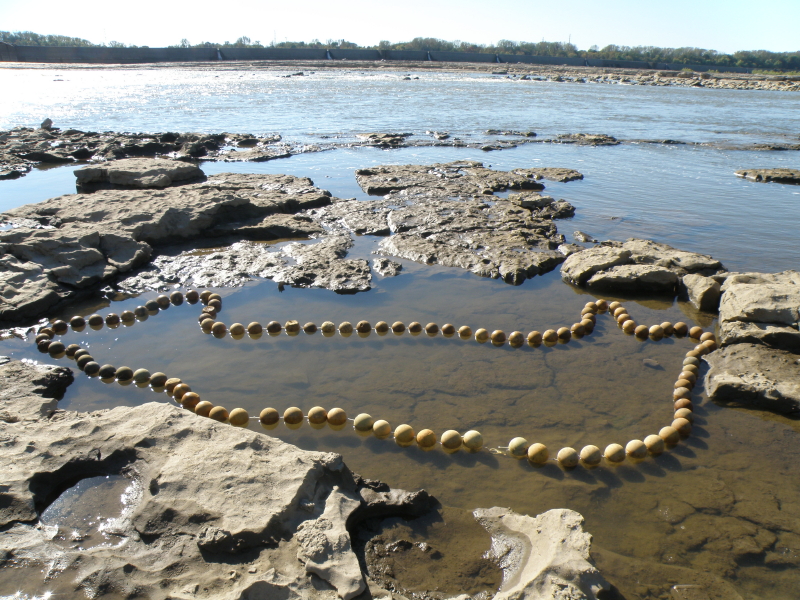
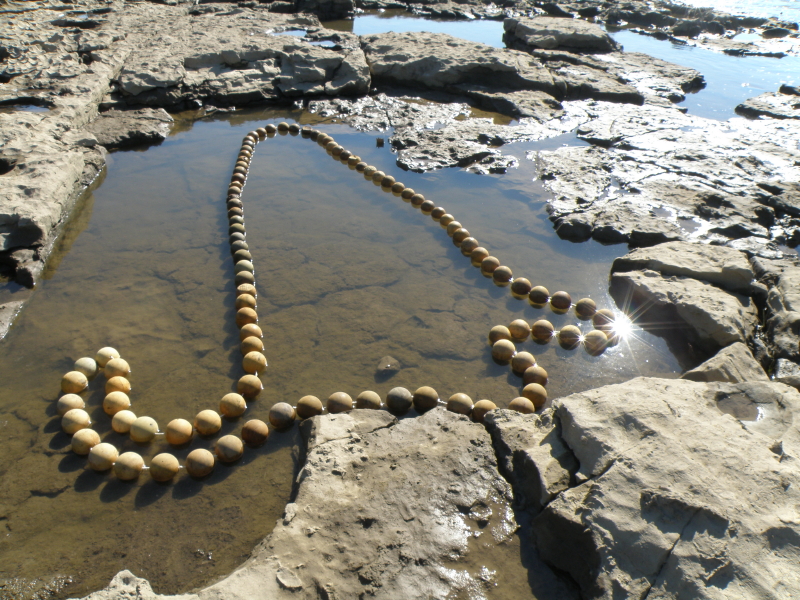
I found a pool of water surrounded by Devonian inspired limestone that would prevent my necklace from being carried away by the current’s flow. Still, the wind kept changing the configuration and blowing the balls against the rocks.

I used a beaver-chewed willow stick I found on the bank to guide my necklace into shape between photos. The necklace which I now had named “La Belle Riviere” was the name originally given by French missionaries upon encountering the Ohio River for the first time.
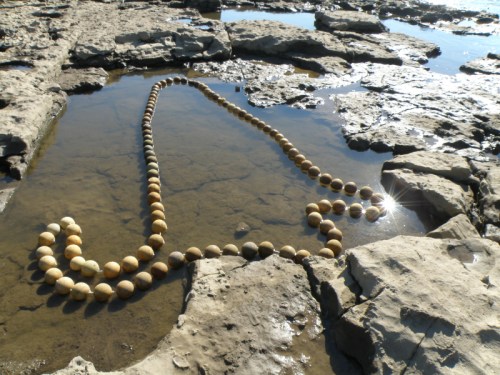
It seems appropriate that the river which played a large part in bringing these balls to this shore…would continue to influence how this piece would be perceived.

I enjoyed how the gourd-colored balls harmonized with the surrounding riverine landscape. I felt some sense of accomplishment in creating this piece and being able to return it to the Falls environment to create this site specific work. It was also a fitting ten-year anniversary artwork since “La Belle Riviere” began with that first found ball a decade a go. I will see how well it holds its own in a gallery environment since I want to include this piece in a two person show I’m participating in this January. After these river photos…I loaded the necklace back into its container and began the slow walk back to my car. While making this work, I did have one admirer that found the work irresistible and I will end this post with its image. So long…from the Falls of the Ohio.
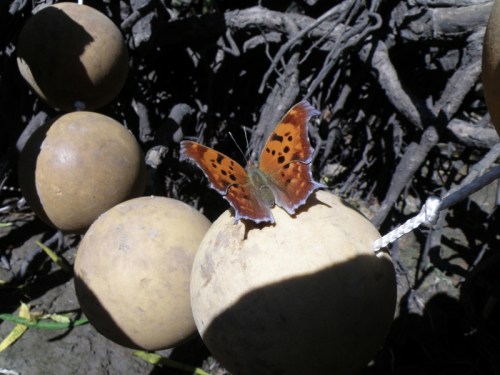
Posted in Absurd, Art, art and environment, collections, creativity, environmental art, Falls of the Ohio, Ohio River, public art, recycled art | Tagged Art, artist at exit 0, Falls of the Ohio, fossil rocks, found materials, giant necklace, La Belle Riviere, nature, photography, recycled art, repurposed art, sense of place, site specific artwork, softball core, willow trees | 30 Comments »
October 14, 2013 by artistatexit0
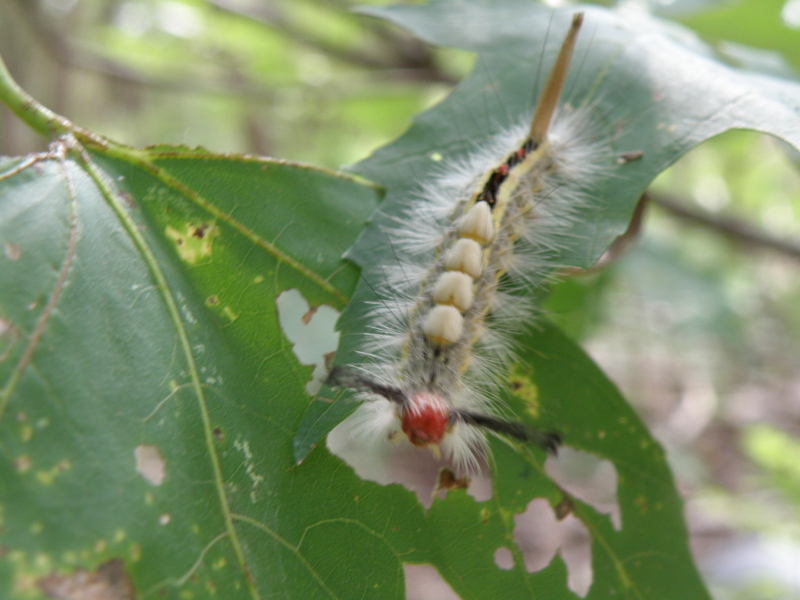
 Red-faced and bizarrely hairy, the unique caterpillar of the Tussock moth was munching its way through a maple leaf. Everything about its appearance says I’m not tasty and leave me alone. It’s now October and it won’t be much longer before the first frost and freezes arrive and with it the colder temperatures which will quiet insect life at the Falls of the Ohio until next year. The caterpillar inspired me to post a few other entomological images taken in the park. I confess that I have always liked insects as examples of how diverse life can be. I’m amazed at the incredible variety and forms that our six-legged friends can assume. Here’s another really weird caterpillar that I found at the Falls that I just haven’t been able to identify through any of my field guides. Does anybody out there in blog land recognize this?
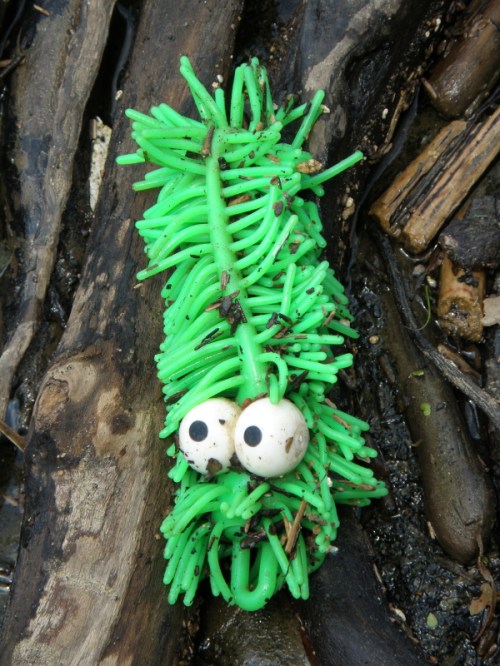
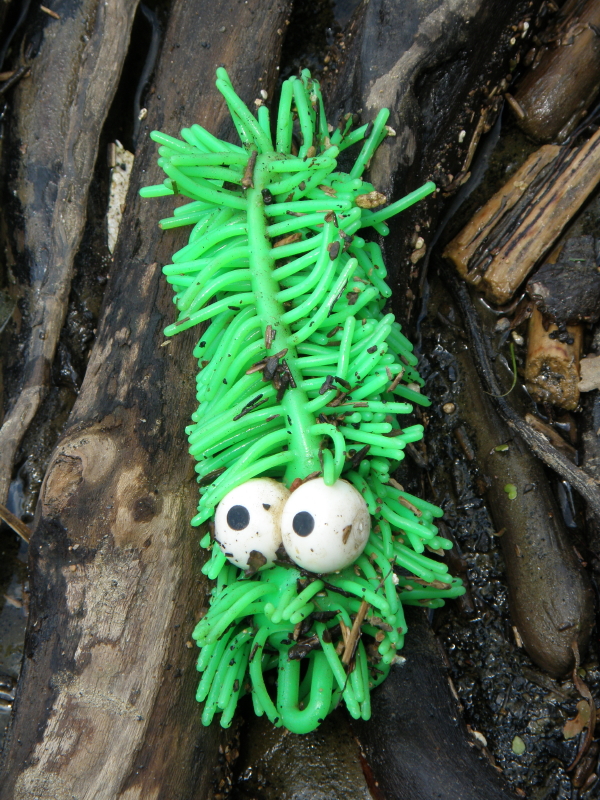
This fluorescent green caterpillar has dramatic eye spots on its posterior that would incite a predator to strike there first. Its anterior is located on the opposite end and I would have fallen for this trick too, but noticed that it was walking backwards. I wondered once it completed its metamorphosis…would the adult be a moth or butterfly? Maybe some day I will stumble upon and collect a large cocoon I don’t recognize and I’ll take it home and watch a miracle as it emerges from its silken home.
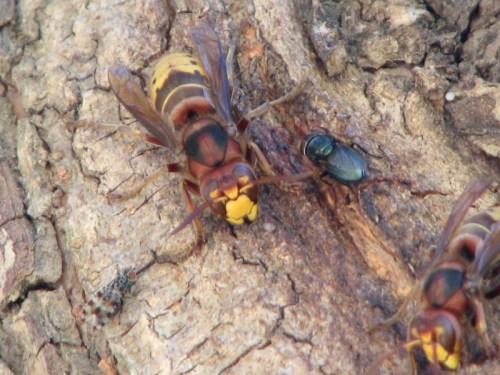
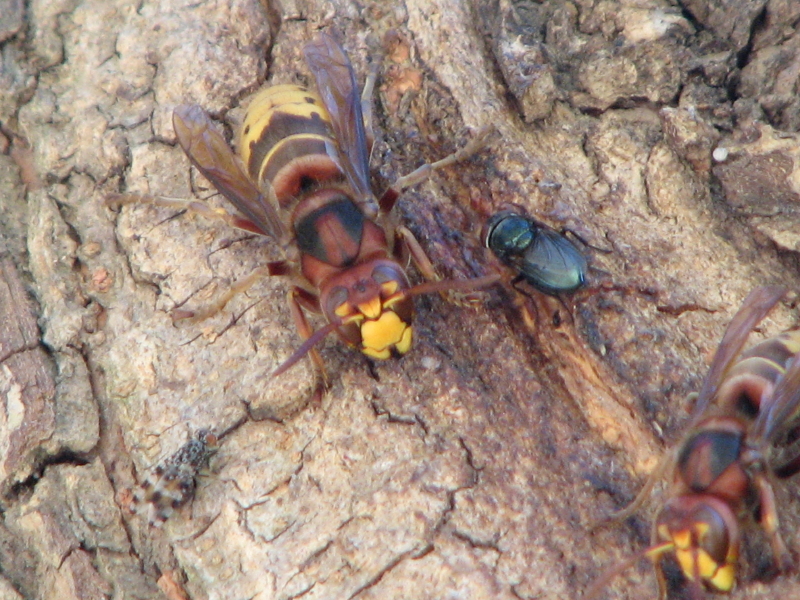
During this time of year, certain willow trees at the Falls are exuding sap which draws a variety of insect life including various flies, hornets, and butterflies to these sweet “licks”. Whether the flowing sap is due to disease or injury is unknown to me? The large bullet-like hornets are so preoccupied with sipping the sap that they ignore me. To test this, I’ve carefully touched them with my finger while they were feeding and they remained docile. I was walking through the tall grass when I noticed a large flying insect land on the bush next to me. Despite its wonderful camouflage I was able to locate our next insect after a short search.
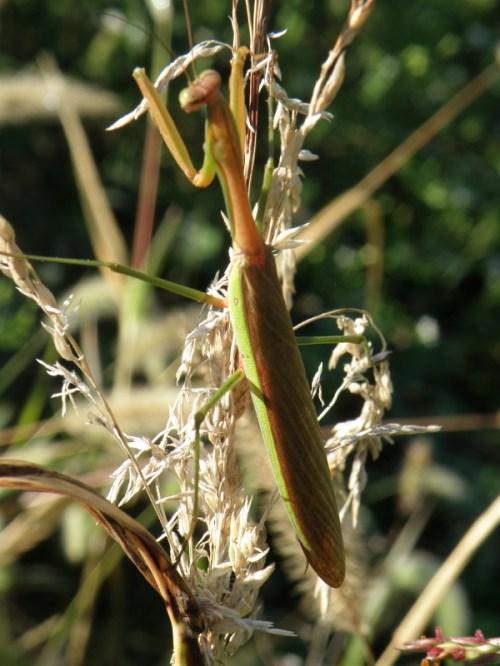
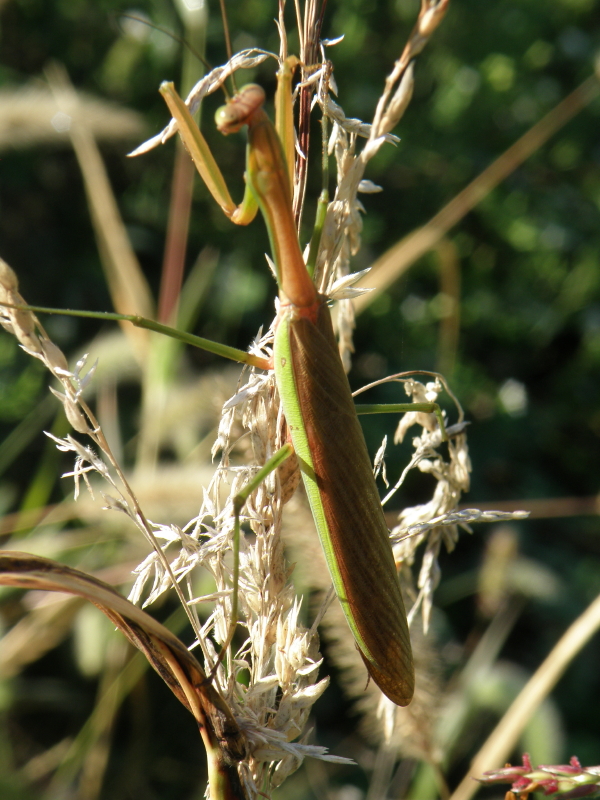
This is the Chinese Mantid which I read was introduced into this country in 1896. It is the largest praying mantis you are likely to come across in the United States and this specimen was about four inches or ten centimeters long. I’ve seen them grow larger, but not in this park. In fact, this is only the second mantid I’ve seen out here. There are several native species, but they are smaller and more obscure. And now, it’s time to reveal my most spectacular discovery which is a near but harmless relative of the praying mantis. Here is a picture of its head.
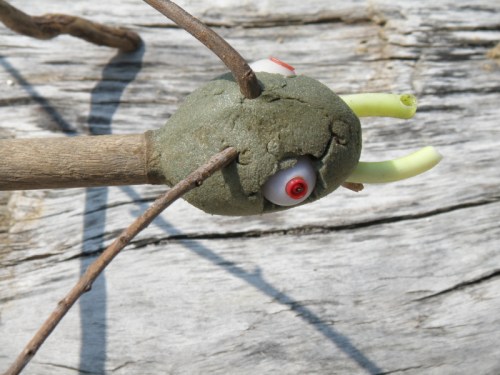
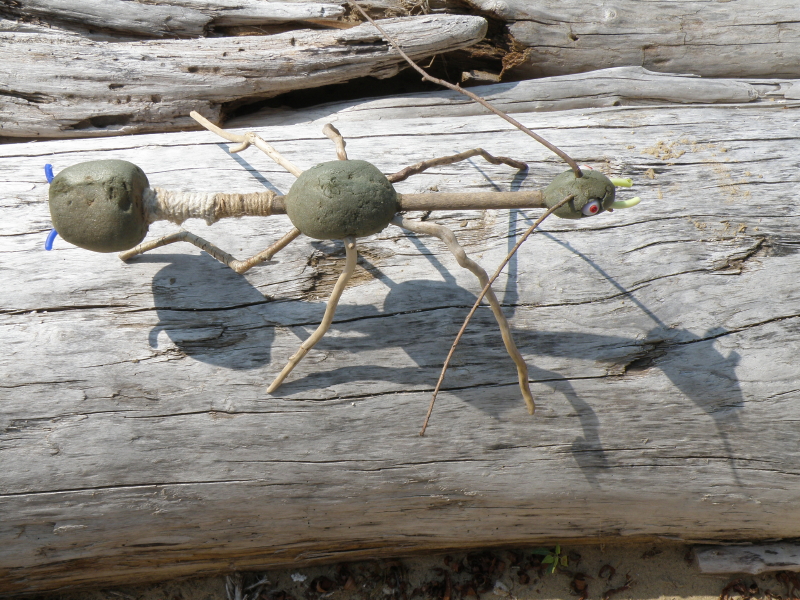
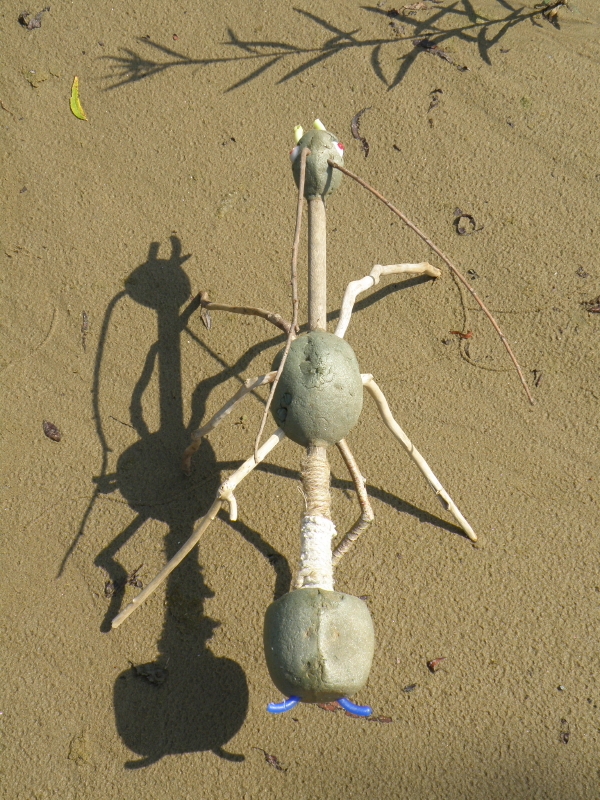
And now, for the rest of its body which is about two feet long or roughly sixty centimeters. I came upon this unique life form casually walking across the driftwood on its way to somewhere else.

Although as insects go this is a giant…it is also an extremely fragile creature. It is a member of the walking stick family. It relies on slow movements and its cryptic forms to merge with its surroundings. The Falls Phasmid is strictly a vegetarian and eats the foliage from a variety of different trees.
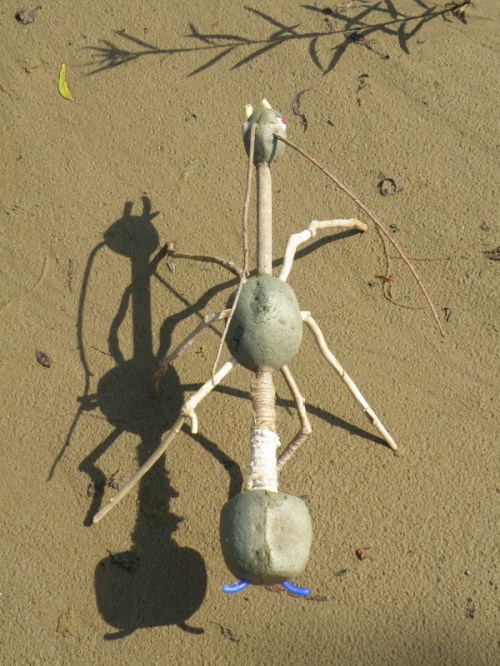
I came across this specimen in broad daylight. I had always heard that they were nocturnal and chose to restrict their movements during the day to avoid detection. Walking stick insects are among the largest insects we have. This species is additionally strange in that its head, thorax, and abdomen are so clearly differentiated. Some scientists have gone so far as to suggest a bit of mimicry at work here. On the surface it does seem to possess a superficial resemblance to a giant ant which might be enough to dissuade predators from attacking it.
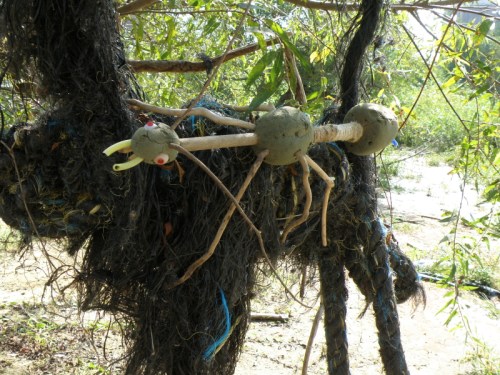
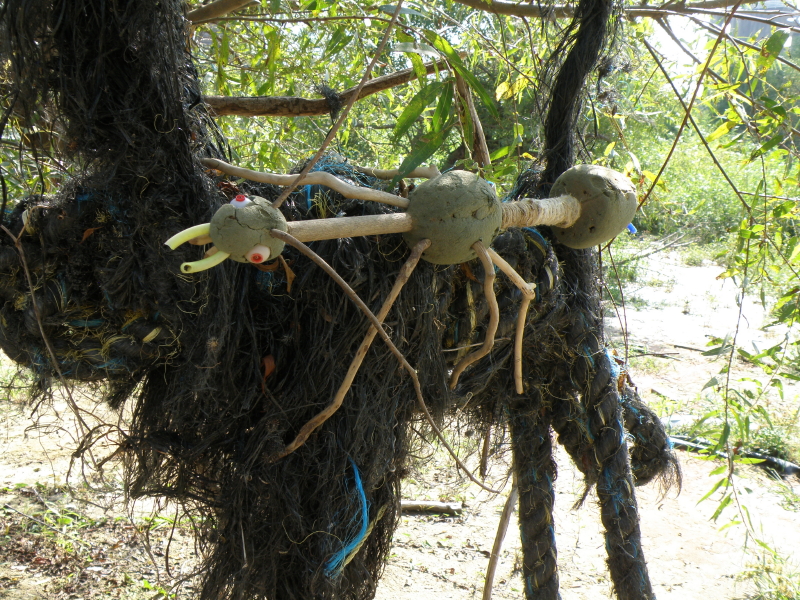
I did observe this particular Phasmid making return trips to a particular willow tree where it clung to a nest-like structure that was hanging down from a branch. The meaning of this structure was not immediately apparent. Perhaps the Falls Phasmid uses this form to help it overwinter? Keeping a respectful distance away, I did see the stick insect walking slowly over the riverbank, but I couldn’t tell if it was searching for something in particular and I did not witness it feeding.
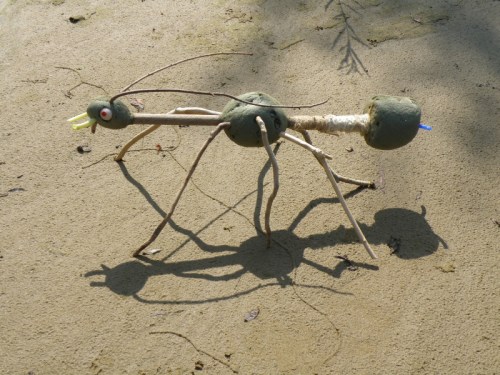
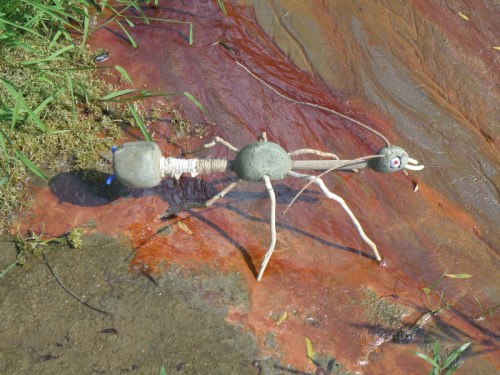
Originally, the Falls Phasmid may have had the ability to fly. Other walking stick insects from around the world have vestigial wings that suggest a different past. Our specimen lacks even the most superficial suggestion of wings which hints at an ancient lineage. Perhaps all stick insects evolved here first and spread around the world much later?

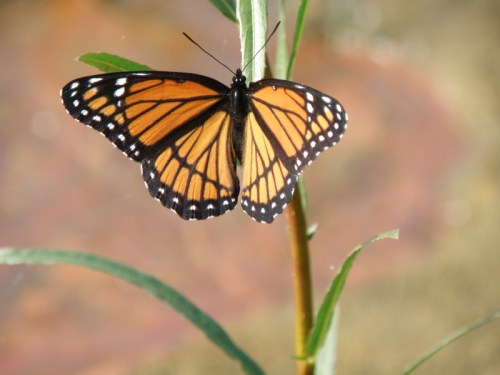
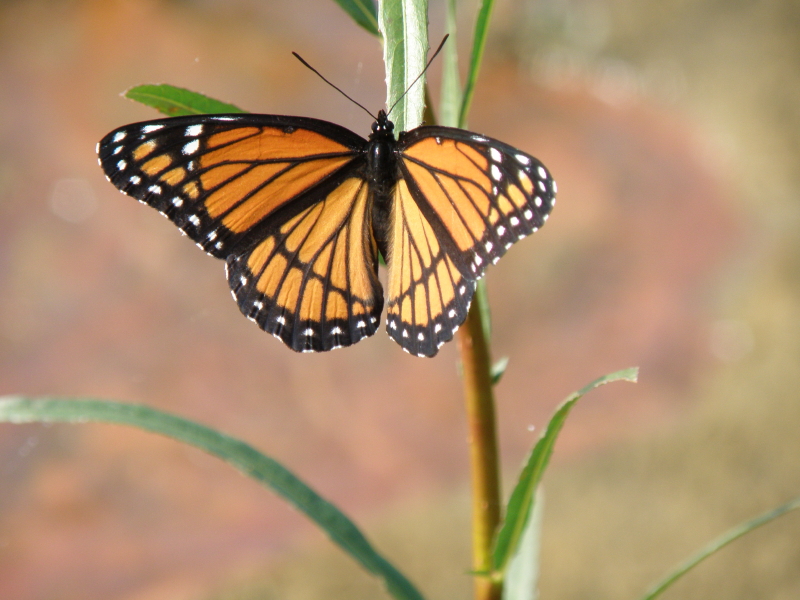
I watched the Falls Phasmid for a while and took a bunch of photographs of it before leaving the park. I’m curious about that tree that it likes to hang out on and so will check it the next time I’m here. On my way out of the park, I also came around this wonderful Viceroy butterfly and thought that this would make a fitting image to end this post. When I think of the butterflies that inhabit the park…this is the species that comes to mind first for me.
Posted in Absurd, animal art works, animals, Art, art and environment, creativity, ecosytem, environmental art, Falls of the Ohio, Originality, recycled art, sculpture | Tagged absurd story, Art, artist at exit 0, bugs, Falls of the Ohio, found materials, giant stick insect, insects, nature, nature photography, nature story, Phasmids, photography, recycled art, sense of place, site specific art | 10 Comments »
October 8, 2013 by artistatexit0
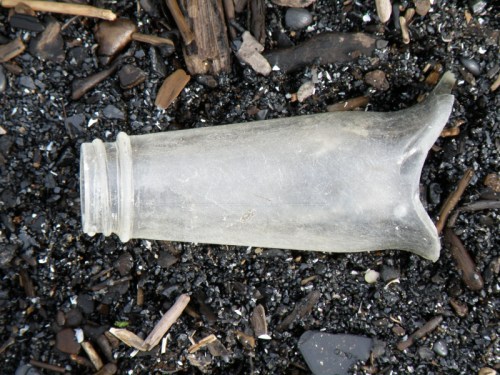
I wish I could remember the exact written passage where the image of a bottleneck captured my imagination. Back tracking through my books has not revealed the exact source, however, I do remember that the context came from biology and more specifically the history of life. Of the five great extinction cycles, the one that closed out the Permian period (roughly 245 million years a go) was the most brutal and efficient. All those trilobites that had been so successful for so long hit the wall. At this time the super continent Pangaea existed. Millions of years of continental drift and the resulting global climate change are the leading hypothetical causes for this extinction. Regardless, the effect was that the majority of life’s diversity as it existed then and which filled up that particular metaphoric bottle…did not make it through the bottleneck. Fortunately, some life did survive, but it would take subsequent millions of years for life to evolve and radiate out to regain its former glory.

We like to think that we stand atop life as its ultimate achievement. We frequently miss the bigger picture of which we are small part and are even oblivious to the effects we have on everything else around us. The bottleneck effect has been adapted by other systems to illustrate that which is a hindrance or impediment to progress. The basic idea, however, remains the same. Whatever is in the bottle is going to get squeezed on its way out that is if the contents do in fact make it out. In my own blog, I don’t mention U.S. politics much, but lately it is in the news and it’s troublesome. Our seeming inability to govern ourselves…to in effect allow small selfish groups to manufacture bottlenecks strikes me as self-defeating and doesn’t bode well for the future.
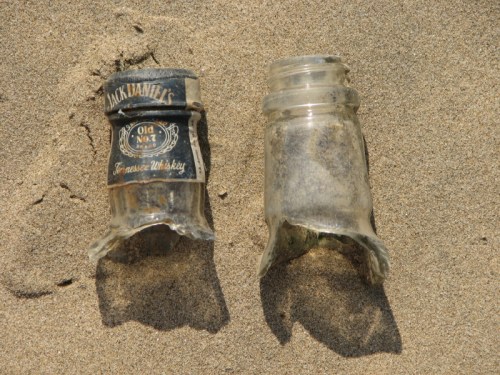
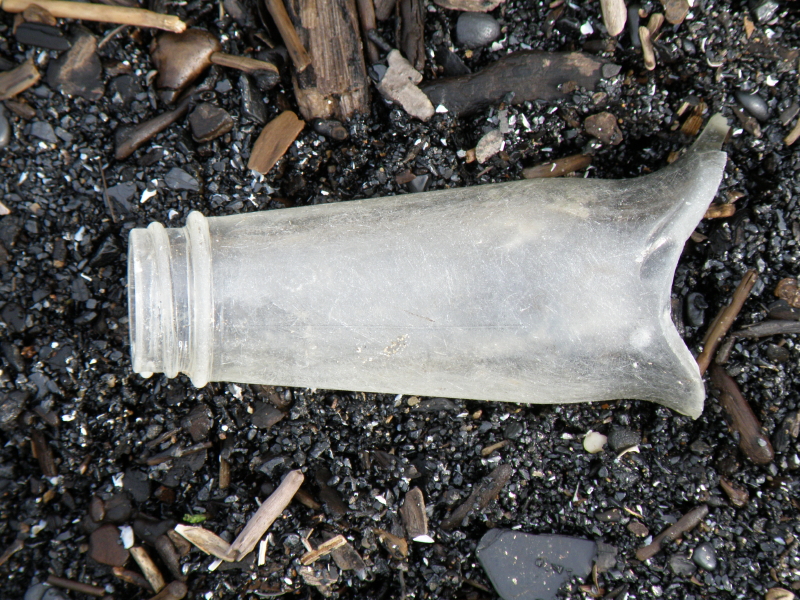
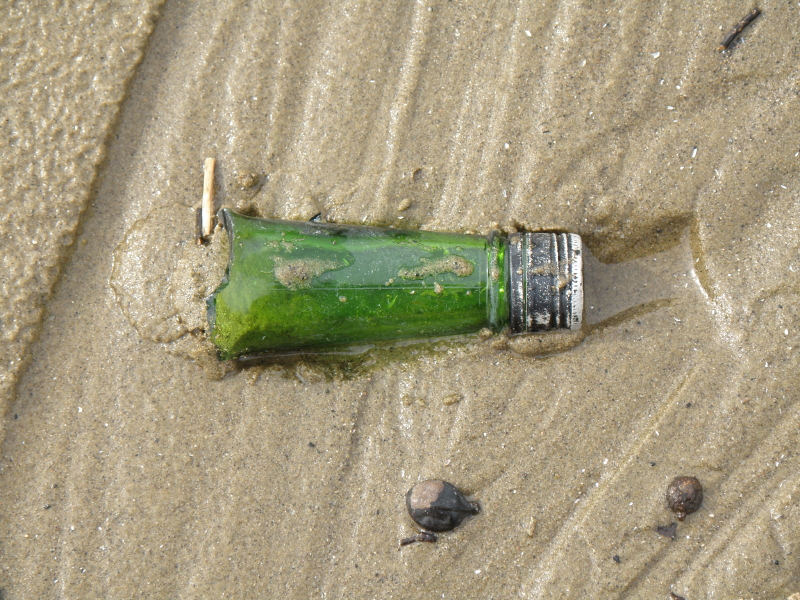
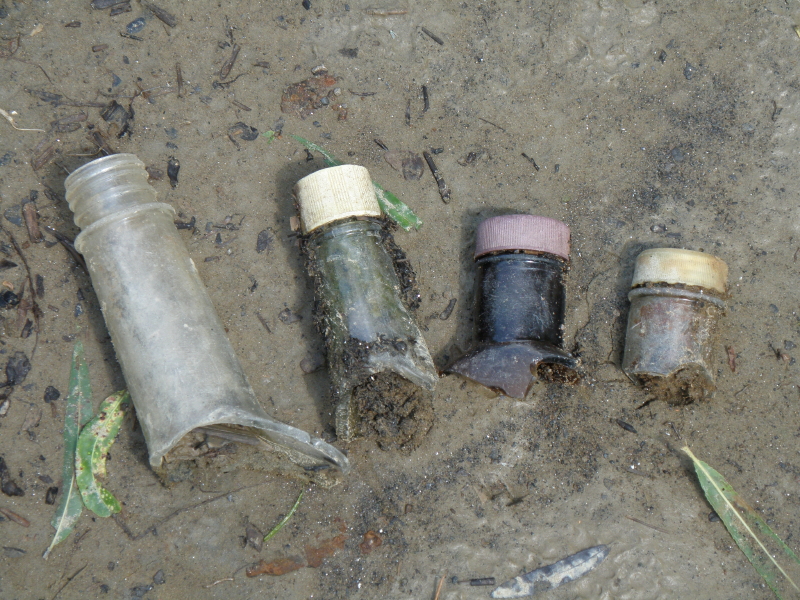
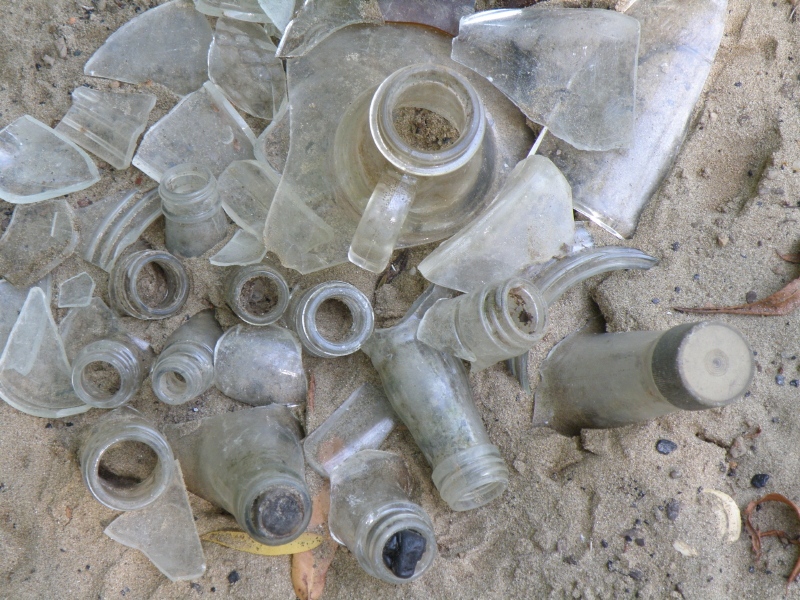
At the Falls of the Ohio State Park, I literally find bottlenecks all the time. Unlike their plastic counterpoint, the glass ones don’t break down as much. There must be something about the material strength of glass that is increased when it is forced into a tube that makes it extra resilient. Over time, their sharp edges do get worn down and their surfaces become frosted through tumbling in the sand. Personally, I find glass to be a far more attractive material than plastic. I’ve come to look at our artifacts in much the same way I might regard a fossil as examples of objects that have been touched by and affected by life.
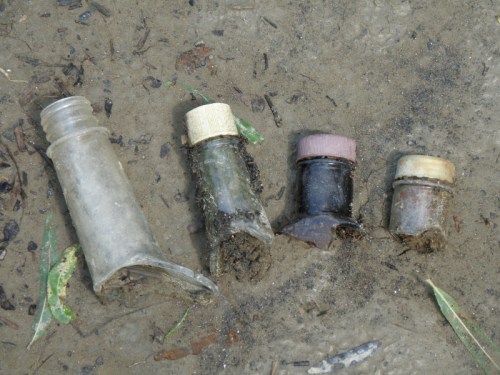
There’s something about the process of “finding” that is compelling if not compulsive for me. I try to stay watchful for opportunities, particularly if I come across an image or material that I can apply through my art. The process of collecting, examining, and comparing is also personally meditative and relaxing. I started photographing bottlenecks years a go with no goal in mind. Just more documented stuff among all the other stuff along the riverbank that I come across each time I visit the park. Looking over my photographs, forgotten images of bottlenecks would catch my eye again.
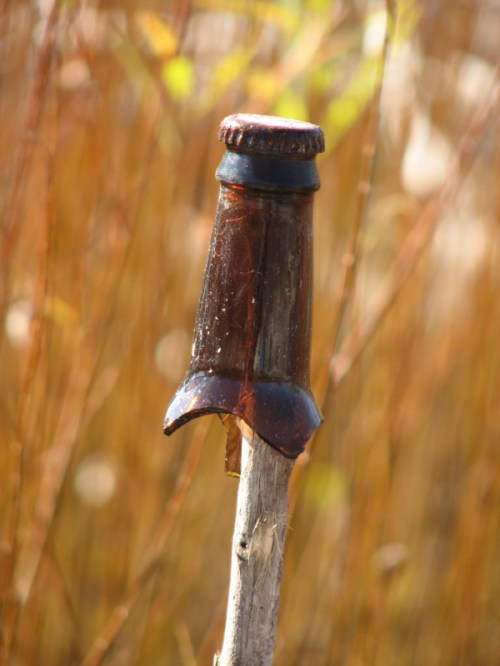

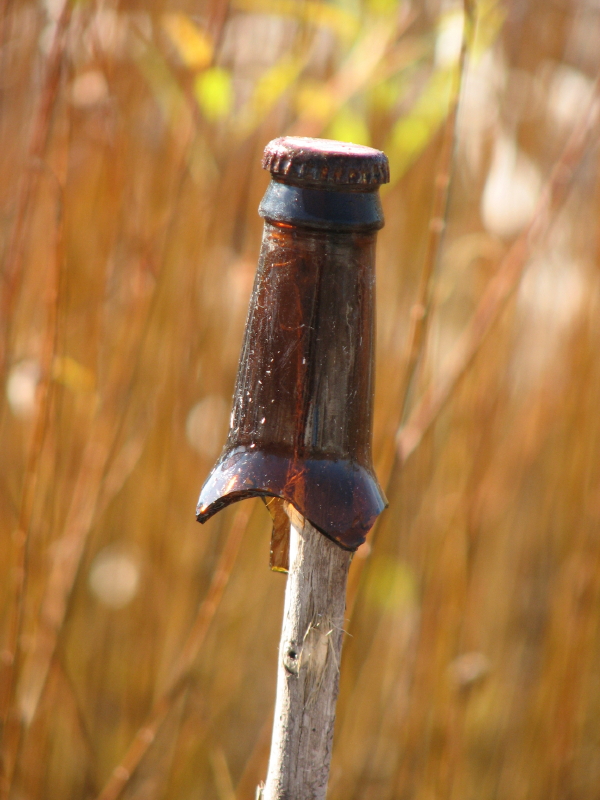
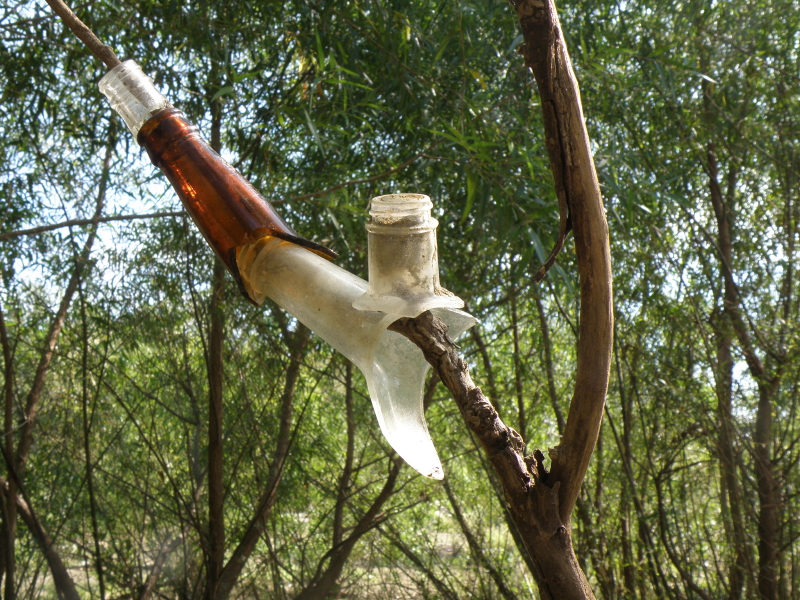
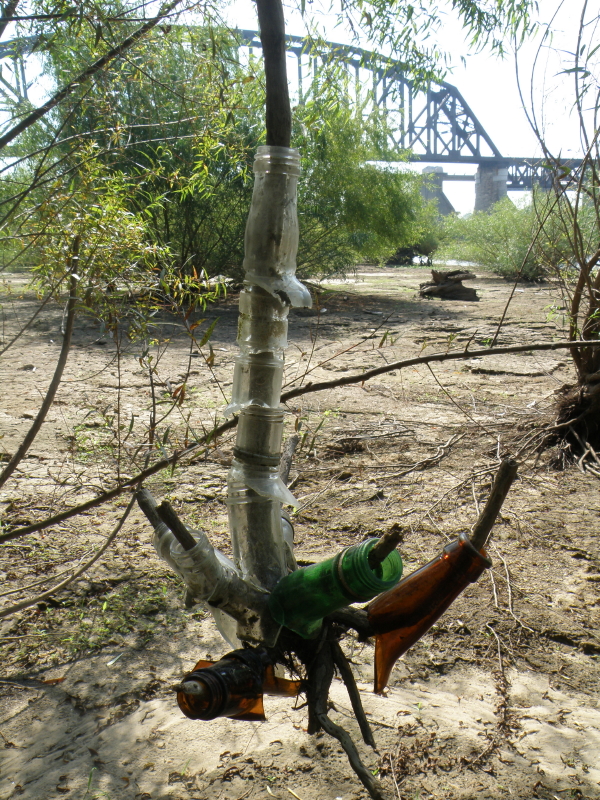
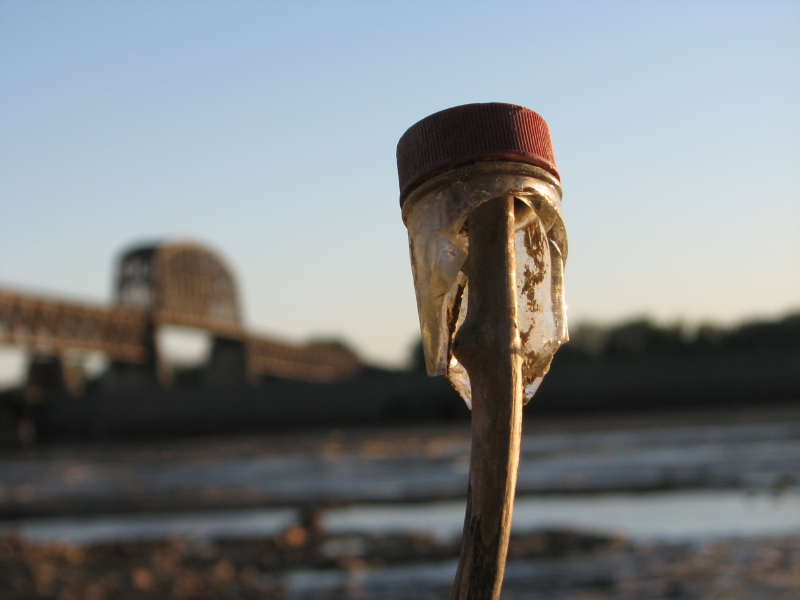
Other than take contextual images, I guess the next thing I did with bottlenecks was to stick them on the ends of branches and sticks. This allows the light to play through the glass revealing its jewel-like attractiveness. It might also cause someone else to notice that there is a lot of smashed glass in the park. Granted, the river floats a lot of bottles in here from upriver, but there is also a lot of drinking that goes on here via the local folks. Why pack your empties out when you can just throw them on the ground? One bottleneck on a branch led to more…in fact the whole arc of these now bottleneck projects has trended in the “more” direction.
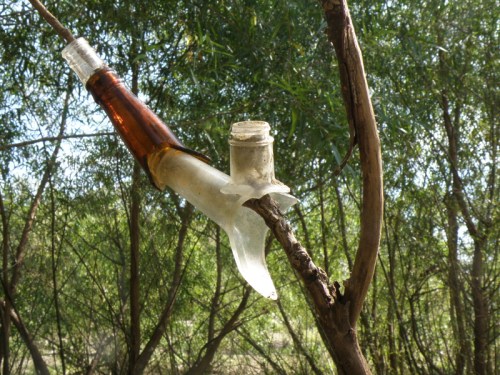
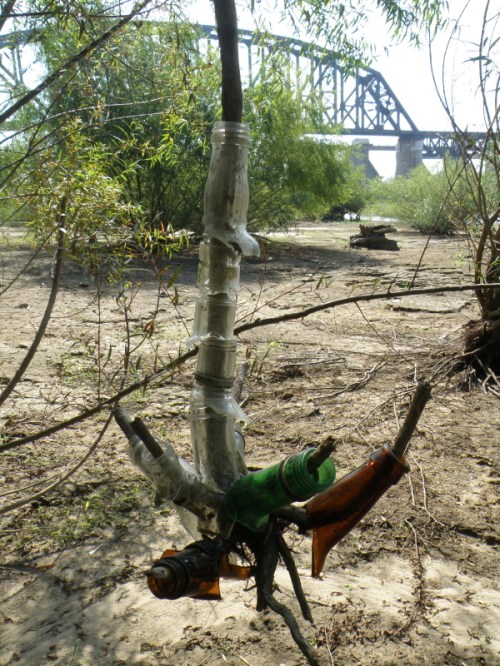
I guess this last image is a bottleneck candelabra? I find many of the bottlenecks I’ve used near stands of willow trees by the water’s edge. I suppose bottles that float in are snagged in the tree’s exposed root system eventually breaking through contact with floating logs and leaving the shards in place? People also throw bottles against the trees which has the same effect. Rarely, do I need to walk very far to find enough glass to create a small project and image.

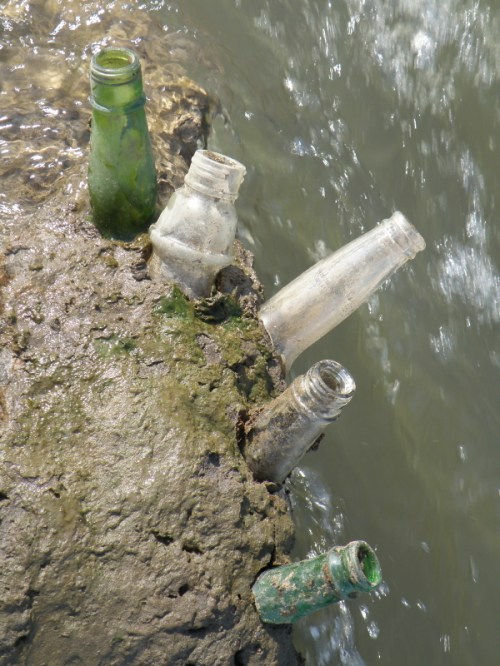
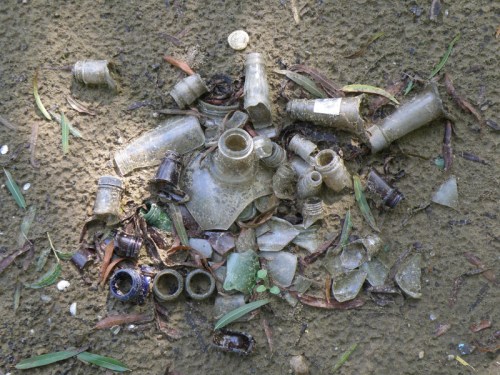
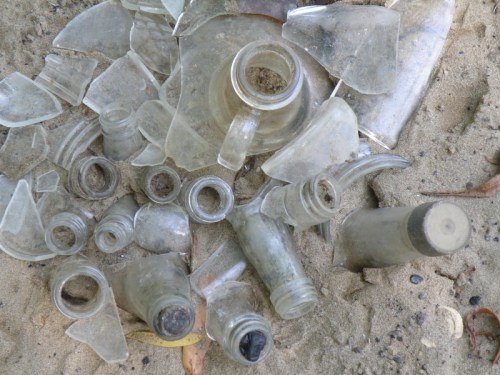
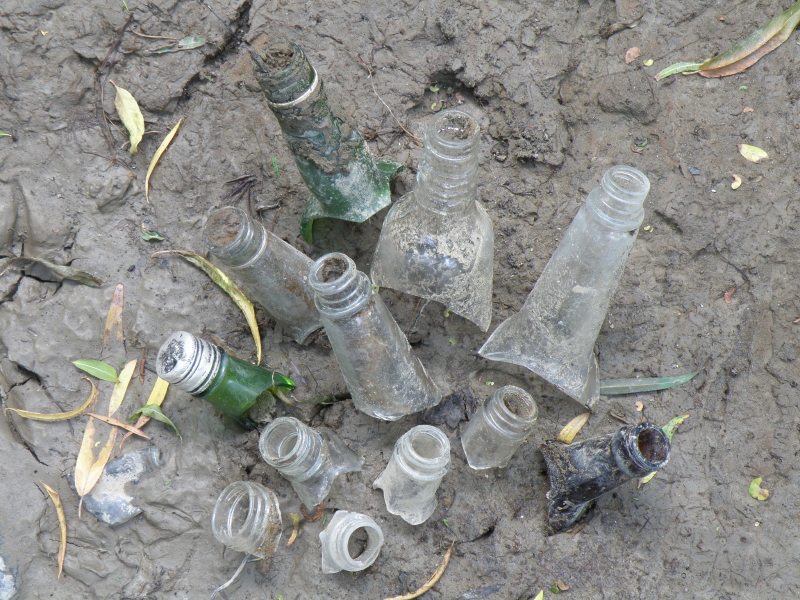
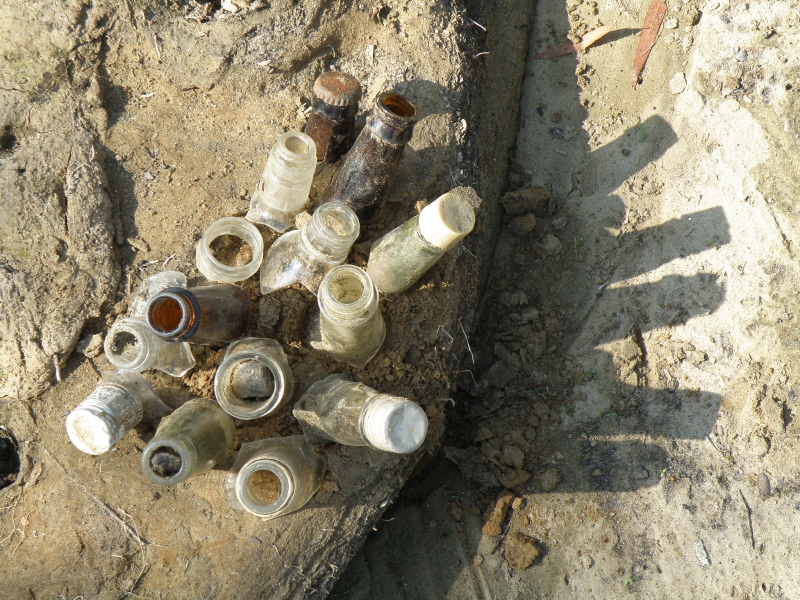
Here’s one project made from bottlenecks collected around one particular willow tree. I liked the way they looked collectively stuck in the mud and their tubular arrangement reminded me of fossil corals which also references the Falls of the Ohio. Here’s a few other similar site specific groupings of bottlenecks.

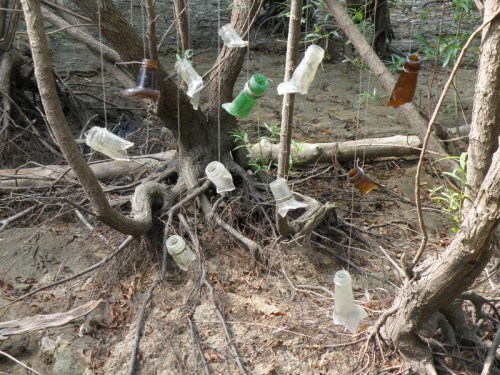
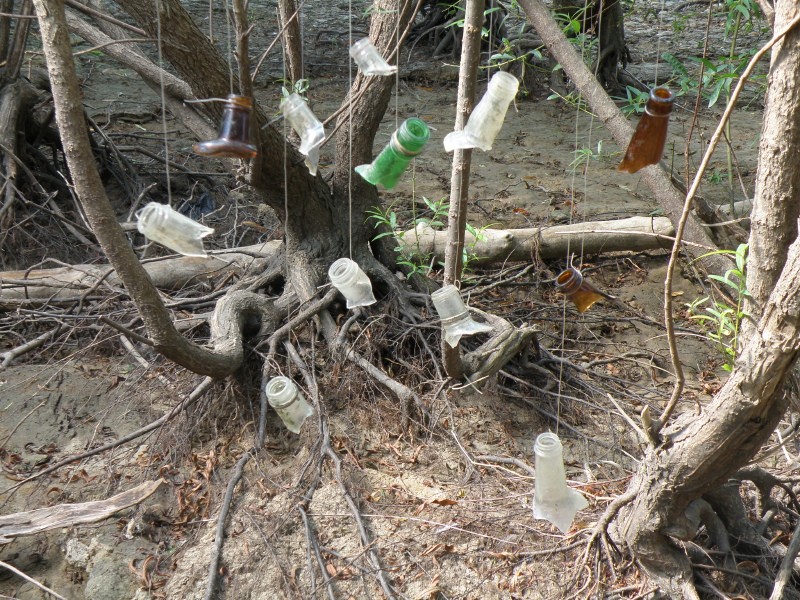
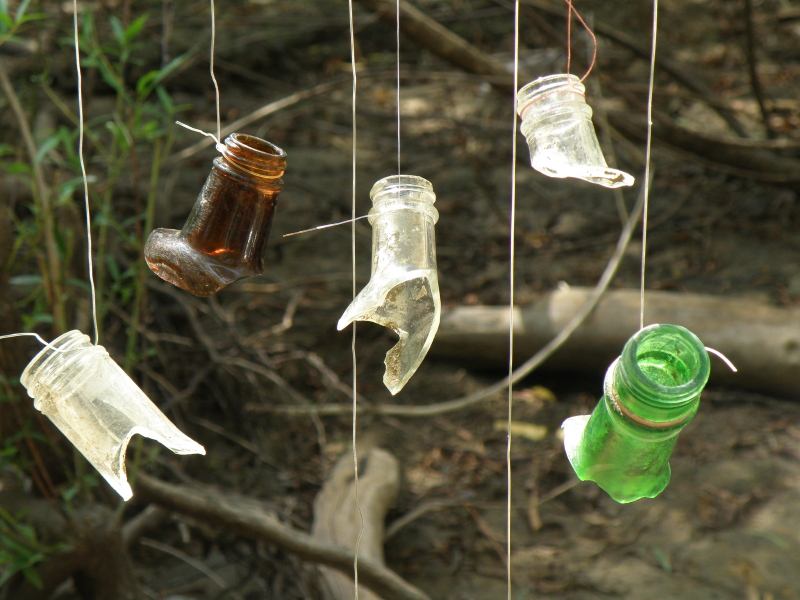
The next couple of images are from my last bottleneck piece. In addition to lots of waste glass…I also find discarded fishing line, often in the same places. I brought these two materials together for this ephemeral work. Recently, I was talking with a good friend of mine and we were remarking about how much of our lives seem mediated by and require reading various kinds of screens. This last glass project may have something to do with that because the bottlenecks are arranged in a flat, parallel screen hanging from a horizontally growing willow branch. I wonder if anyone else ever saw this and what they may have thought about it?
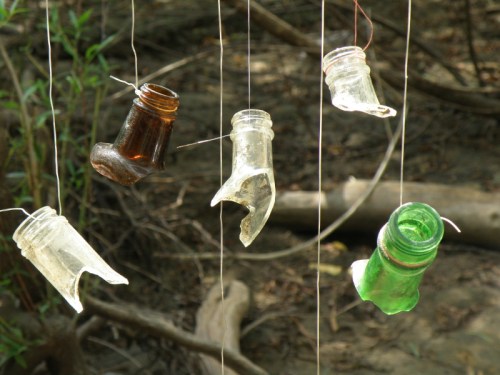
Well there you have it! I suppose these bottleneck projects will now crop up on occasion like my found coal pieces do as intimate site specific expressions. For now, it’s enough to present them as images without trying too hard to extract every bit of meaning from them. Bottlenecks in the broader sense are challenges. May we always remain open to meeting them. So long from the Falls of the Ohio.
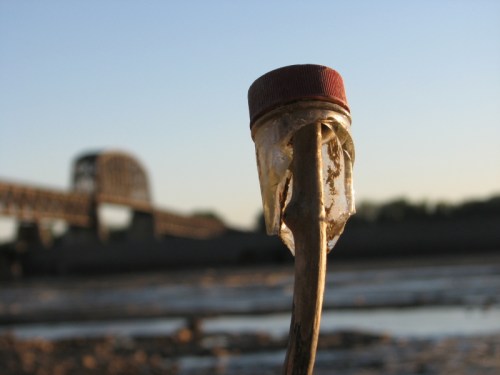
Posted in Absurd, art and environment, collections, creativity, environmental art, Originality, public art, recycled art, sculpture | Tagged Art, art and the environment, artist at exit 0, bottleneck, bottleneck effect, environmental art, ephemeral art, extinction cycles, Falls of the Ohio, found objects, glass, nature, Permian period, photography, recycled art, site specific art | 13 Comments »
September 29, 2013 by artistatexit0
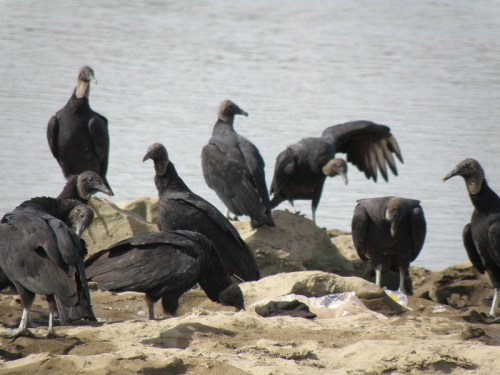
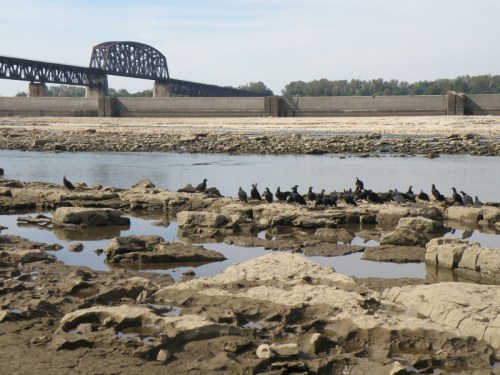
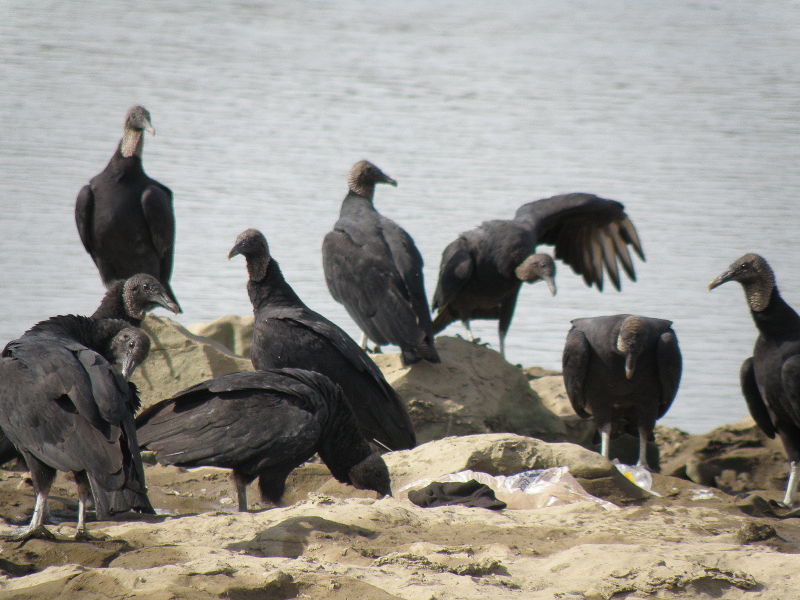
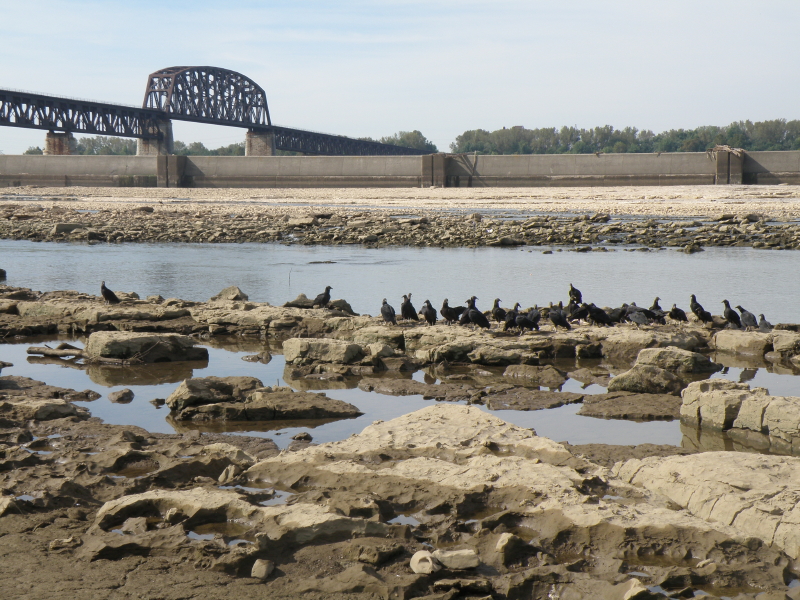
The resident flock of Black Vultures were taking advantage of the fossil beds now exposed on the Kentucky side of the Falls of the Ohio. The wier dams were temporarily closed and with it the flow of water. With the river level reduced much of the sculpted limestone normally underwater is briefly seen again. Fishermen have been accessing new fishing spots along the freshly revealed fossil beds which turns out to be a boon for the vultures. Not only do they get to feast on fish left by the anglers, but they also enjoy any other trash including left over fishing bait. Early autumn is a transitional season among the park’s bird life as residents gear up for over-wintering or prepare for the southerly migration. Birds from the northern latitudes particularly Canada and the Arctic Circle pass through our area on their epic journeys to Central and South America.
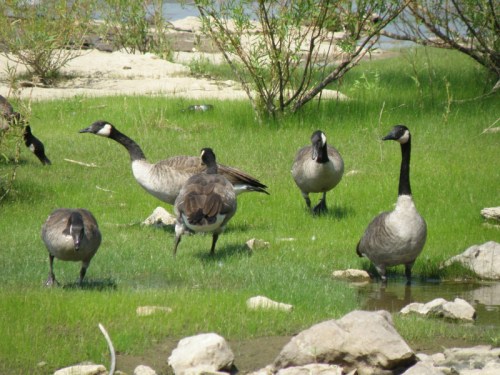
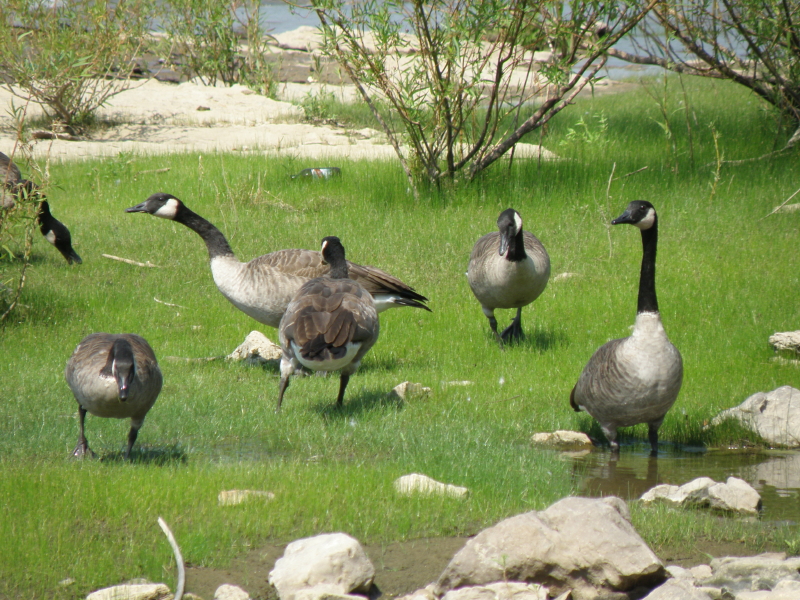
The vultures will fly away, but many of our Canada Geese will brave it out. We seem to have at least two distinct flocks of Canada Geese sharing the area around the fossil beds. It’s amazing how intolerant each group is of the other. There is competition for the best food sites and each group frequently bump into one another with much squabbling. That’s what makes the next image interesting to me.
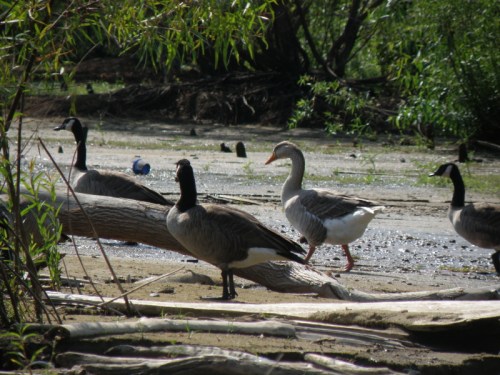
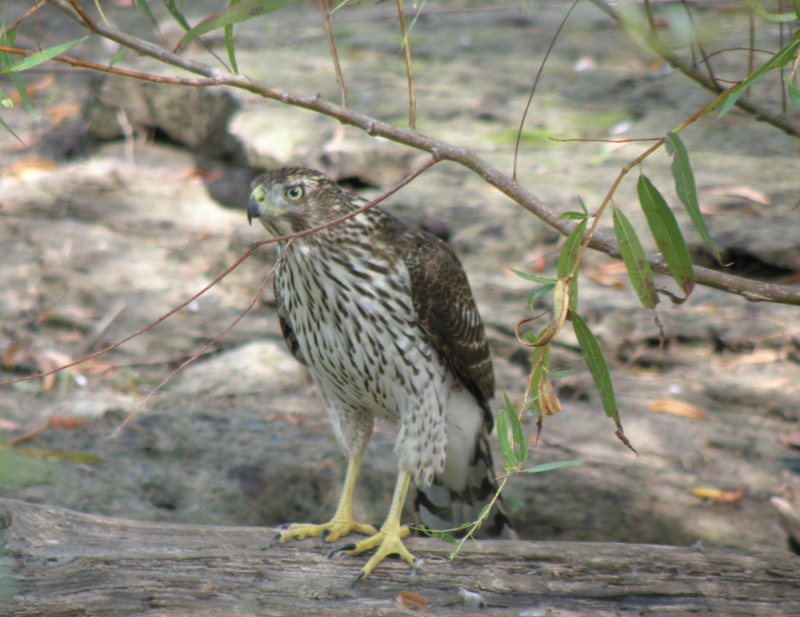
Canada Geese can have limits on how much mingling occurs between their own species, but in this case, are willing to accept a true outsider. This domestic goose seemed integrated into its adoptive flock. It swam with its wild cousins and accompanied them to a favorite feeding location and was never bothered by the other geese. Recently, I came across a young Cooper’s Hawk and I was surprised when it did not immediately fly away after I bumbled across it. There was a good reason why it didn’t leave.
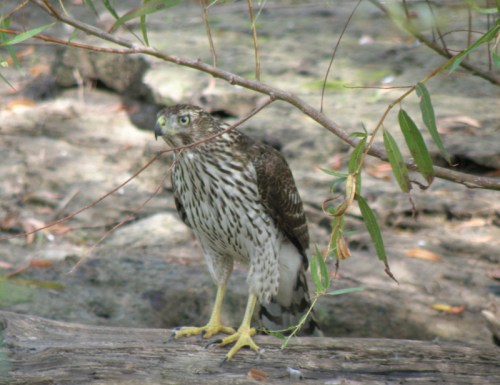
The hawk sized me up and then jumped down off the log it was standing on to retrieve something it had dropped.
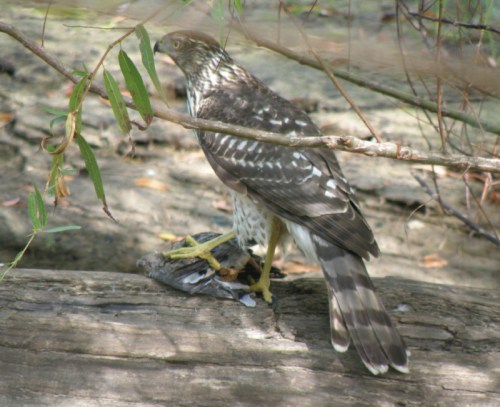
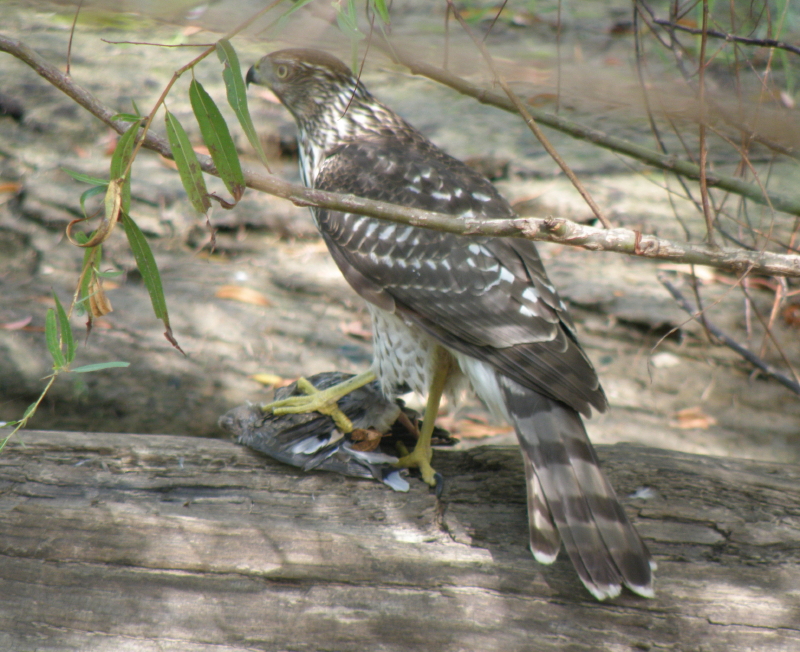
The hawk had what appeared to be a freshly killed Mourning Dove. After securing its prey with its talons, the hawk seemingly jumped into the sky and vanished within moments. I thought I saw it disappearing into the tree tops of a stand of willow trees within walking distance. I did investigate the area, but never saw the bird again. I love it when I get to observe behaviors. Life has a job to do and can’t wait around posing for pictures. Here’s a different kind of behavior being demonstrated by an American Robin.

I love this image which I captured earlier in the summer. This American Robin is focused on taking a bath. Its head is under the shallow water and droplets and beads of water are splashed over its body. Our resident American Robin population is doing well and seem to be increasing at the Falls of the Ohio. Some of the robins will hang out over our gray winter, while others will seek warmer climes. My last adventure to the Falls resulted in images of a bird that I had never recorded previously in the park.

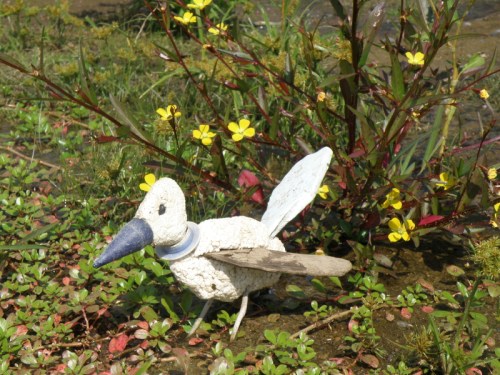
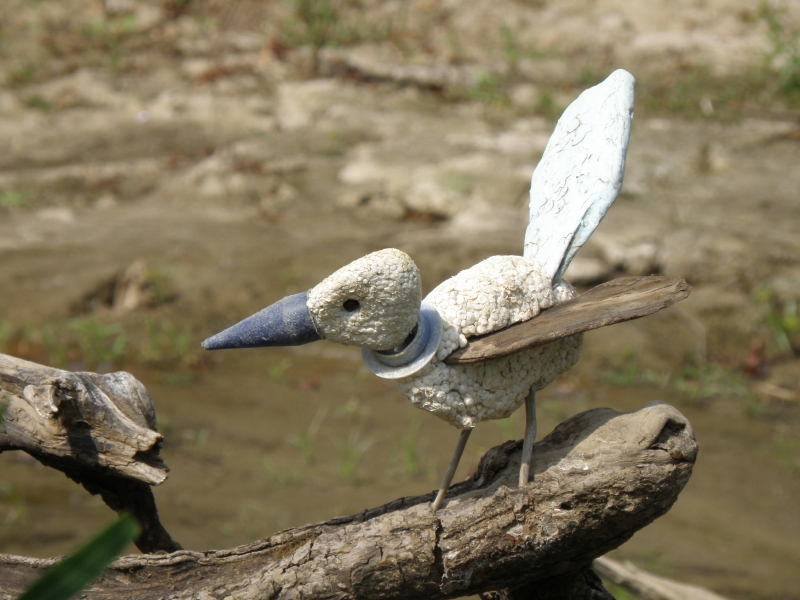
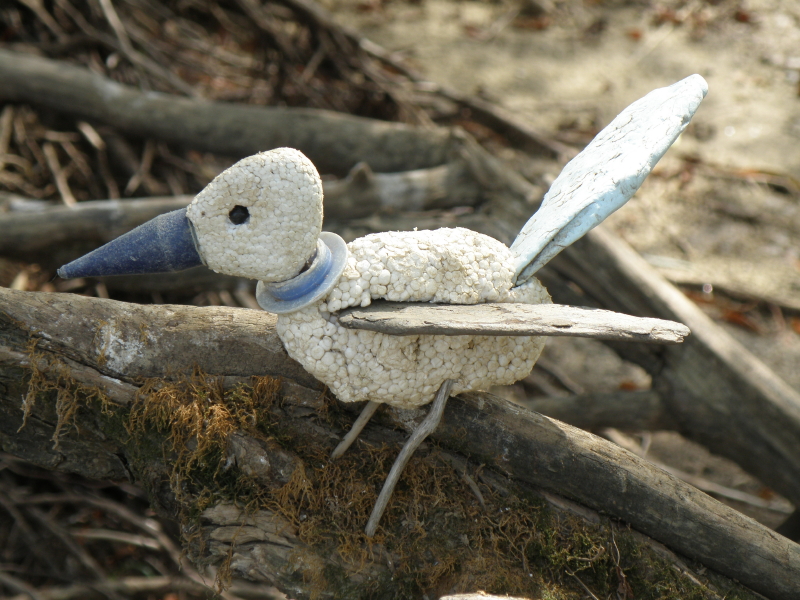
The Gross Blue Beak is strictly passing through and in fact, this is the first recorded instance of this bird appearing in the park. Good thing I have all this photographic proof that the bird was here because the resident birders are a skeptical lot. Reputations and lifetime bird lists are at stake and there is a great burden of proof to produce irrefutable documentation. This bird has traveled thousands of miles from the edge of the Arctic Circle in Canada and is bound for the Argentine coast.
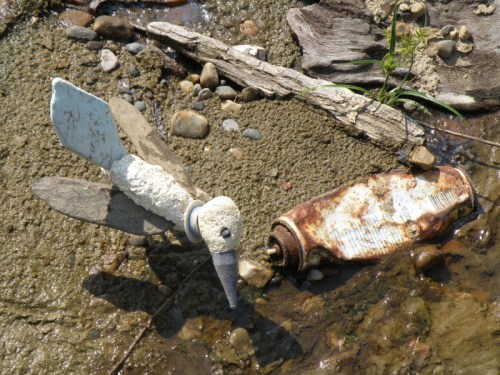
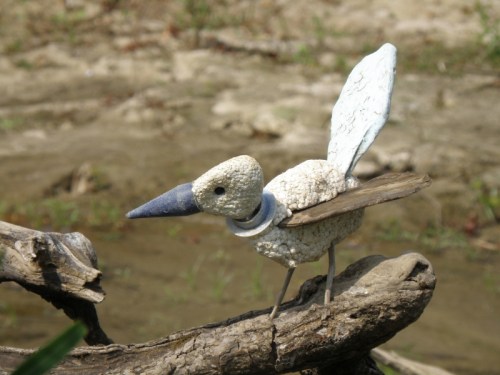
The Gross Blue Beak receives its name not because it has disgusting habits that require an out-sized bill. Rather the “Gross” idea comes from the German word for “large” . The Ohio River Valley was settled by many immigrant groups and the Germans were among the most prominent. This bird’s beak is a heavy-duty tool it uses to crack open nuts, crush mollusks (particularly snails), and jack hammer soft decaying logs in pursuit of beetle grubs. All three of these food sources are found at the Falls of the Ohio.
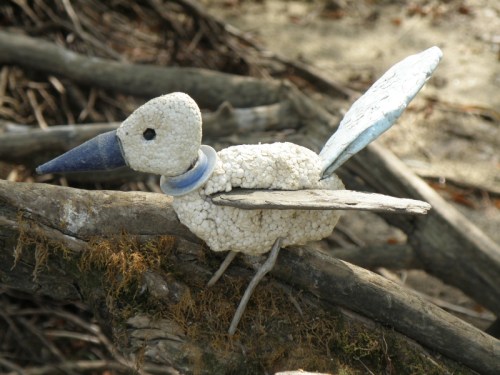
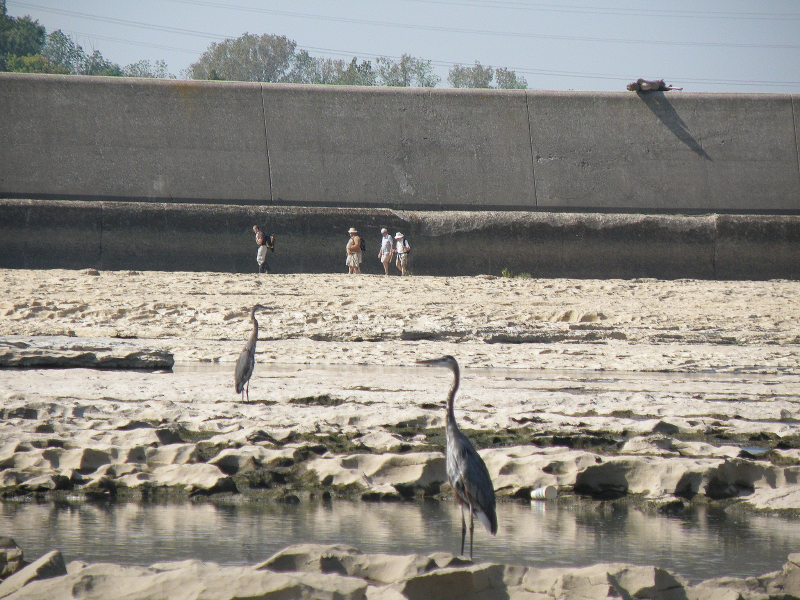
I was able to get quite close to the Gross Blue Beak to snap off these images. I’ve noticed before that many northern migrants of various species will allow me to approach more closely than the local birds that are around people more. Perhaps that’s the key? For the moment, the region around the Arctic Circle has seen less of our influence than other places in North America. To close, I have one other bird image, but it is noteworthy because of the people in the far distance. Recently, I received a question about the back wall that is a part of the system in place to produce a stable pool of river water for commercial barge traffic. I’ve heard that the Ohio River carries more tonnage of goods along it’s 800 plus miles than the Rhine River does in Europe. The back wall of this dam is quite high up and the actual river level is perhaps a meter or so below the top of the wall. Beyond the Great Blue Herons, the small band of hikers provides some sense of scale on how the river would be over their heads! When you are walking the now exposed fossil beds…it’s a sobering thought!

Posted in Absurd, animal art works, animals, Art, art and environment, birds and birding, creativity, environmental art, Falls of the Ohio, nature photography, Ohio River, recycled art | Tagged Art, artist at exit 0, bird migration, birding, birds, black vultures, Canada geese, Cooper's Hawk, Falls of the Ohio, found objects, nature photography, nature story, Ohio River, photography, recycled materials, upscaled art | 8 Comments »
September 23, 2013 by artistatexit0
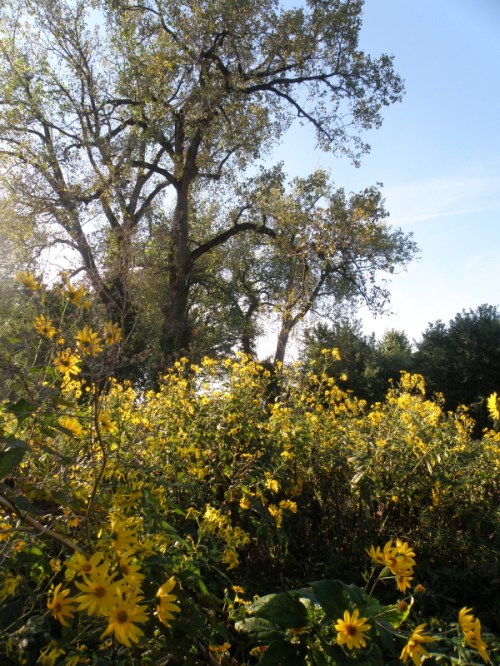
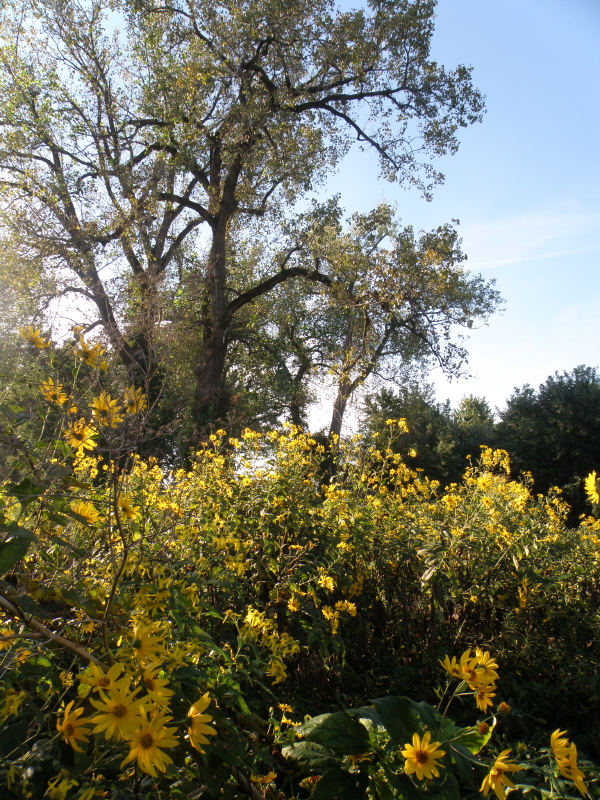
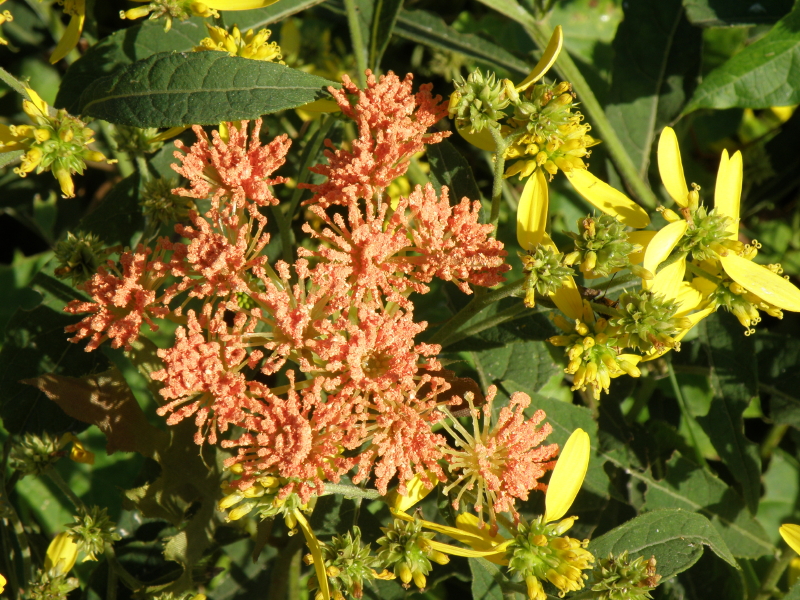
This post is the last of this year’s summer posts and documents a walk I made at the Falls of the Ohio State Park one week before autumn officially began. As you can see by the pictures…it was a very beautiful day filled with all kinds of discoveries. There was a profusion of yellow-flowering plants of various species including goldenrod and sunflowers. Here is a detail, I think from the Woodland Sunflower? I wish I was as confident about plants as I am in identifying animals. When I break out my flower books, I realize it would aid identification greatly to have an example on hand. Collecting plants is not allowed within the park limits…so I try to take photos that might be of use in discerning the various closely related species. Besides, I don’t think pressing these plants flat would even work? I ask myself, what leaf shape does it have? Are the leaves serrated, smooth, or hairy and how many rays do the flower heads have and other such questions of concern to the botanist.

I suppose I’m more of an imaginative botanist at heart who also appreciates the beauty and variety the many flowers add to the temporal landscape. I do, however, stumble upon plants that I wonder if anyone else is noticing? I’ve posted about these anomalies before and as the seasons change, the parade of these “unnatural plants” and “faux flowers” continues. Consider these fresh blooms.
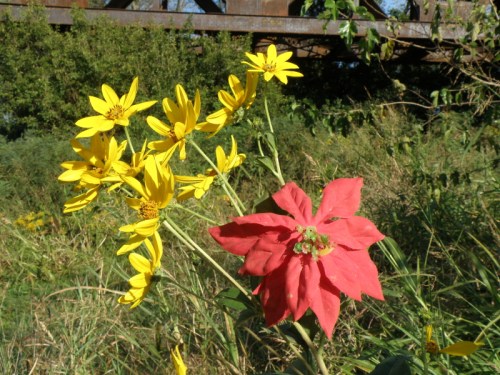
I call this one the “Surprising Poinsettia” because it comes shockingly red and completely unexpected. Its sepals are rather fabric-like and its stem is grafted upon this sunflower by some unknown means. The next plant is more subtle.
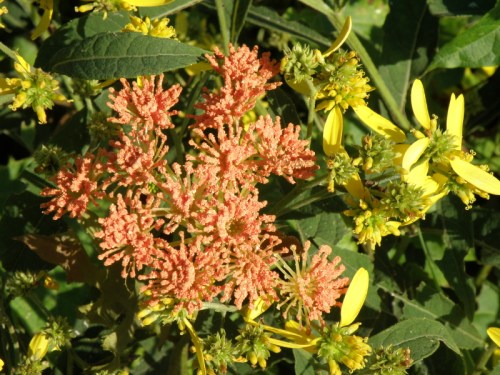
This is “Orangey-tickseed” and at first blush, one might be tempted to pass over it. I had to do a double-take on this one, however, my instincts told me something was not quite right here. Indeed the orange-colored flowers are not at all like the yellow plant it is cohabiting with. Again, the texture is very much like plastic. One final plant before moving on to other interesting discoveries.
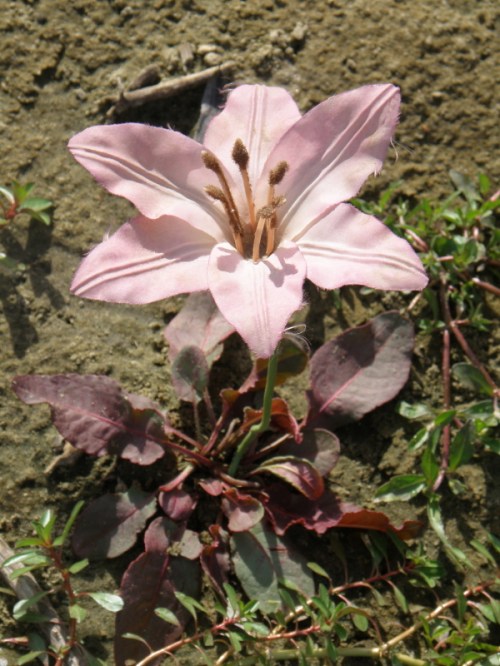
I found this beautiful flower growing near the river in the sand and I have designated it the “Pink Sand Lily” because I’m not sure what else to call it? It is for the most part, a low growing plant and the “flower” appears at the terminal end of a wiry green stalk about four inches tall or so. The flower petals are composed of a string-like fiber while the stamens are hard and have pseudo-pollen on them. These unusual plants were not my only discoveries on this fine day. I nearly always find some doll or doll part that the river has washed into here and today was no exception. I spotted a form in the wood chips and bark bits and went in for a closer look. Dusting off the form revealed this doll body.
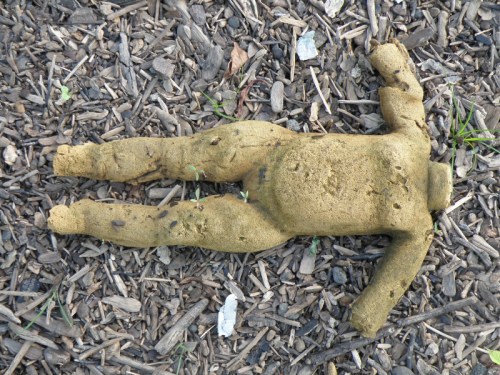
This was quite unlike any other doll “body” I’ve found before at the river. The material was obviously made from a foam-like material, but it had the flexibility of rubber. Nearby, I also discovered an unusual serpent.
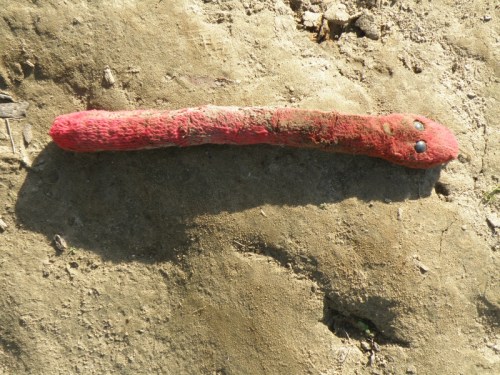
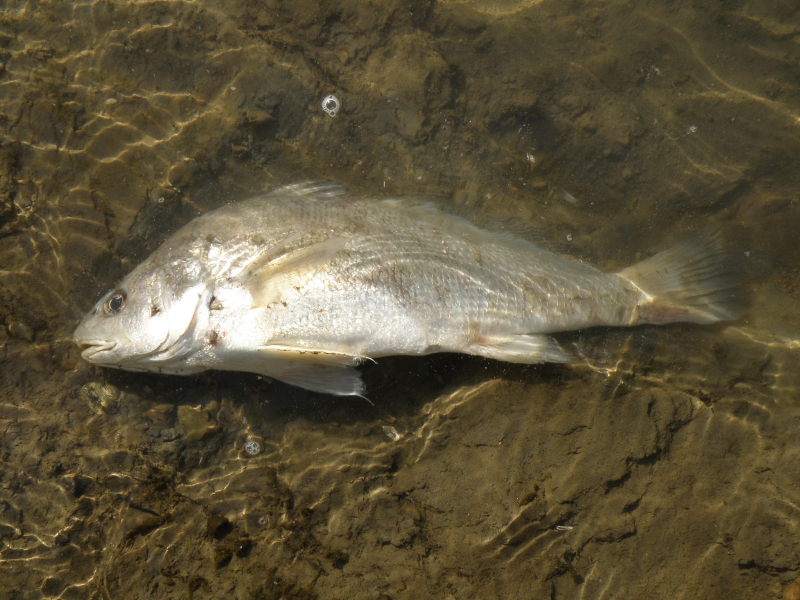
Approximately a foot long, this red plush snake had large black eyes and had just a bit of its tongue sticking out. This is the first of one of these objects that I have come across . The river was flowing nearby and I walked over to the edge of the riverbank. The water level has finally leveled off to more of its seasonal pool and the fossil banks on the Kentucky side were exposed for the first time this year. Looking along the water’s edge, I came across this Freshwater Drum that an angler caught and released. Unfortunately, for the fish…it did not survive being captured. Here is its final portrait.

The Freshwater Drum (Aplodinotus grunniens) is a widespread fish and common in the Ohio River. It has several molar-like teeth in its mouth that it uses to crush and eat snails and small clams. The drum is not considered a desirable food species around here. Here’s another fish I found on this walk that is also inedible.
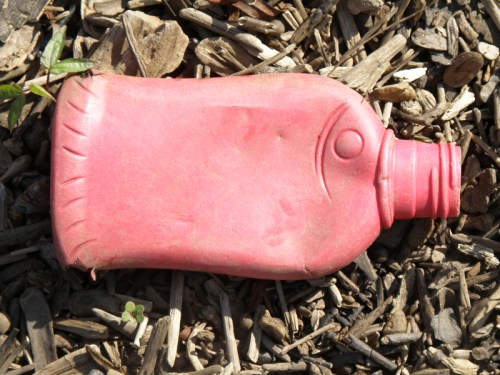
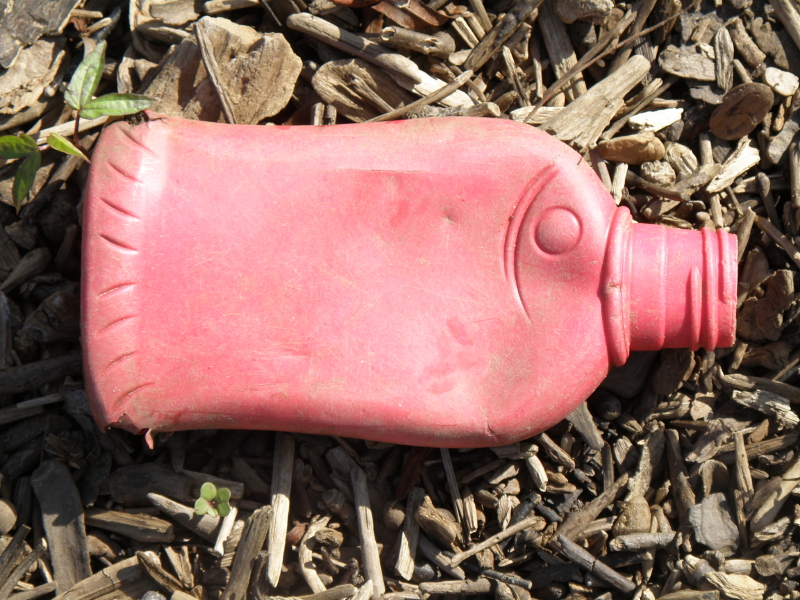
The second “fish” I came across was this plastic bottle. I’m guessing that the bottle may have contained shampoo for children? Regardless, I was struck by the level of abstraction occurring here. The tail is minimally represented and the gills are indicated by two lines near the eyes, but there is enough here to suggest a fish. My next find is mid way between the drum and the plastic bottle being closer to the latter than the former. Here are two views of it.
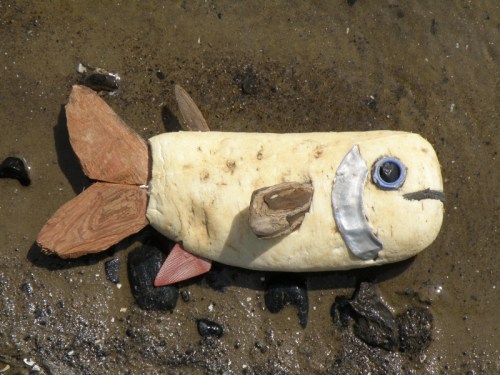
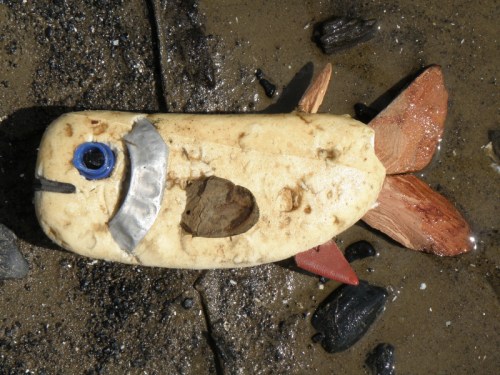
This is a Silvergill which is closely related to the Iron Gill (which I have posted about previously). Differences between the two species include size (this fish is smaller) and some of the fins are not the same shape or in the same position. The Silvergill is much more rarely encountered than its larger cousin. It is found in water of average to poor quality and often associated with coal and coal dust. It is omnivorous and eats aquatic insect larvae and algae which it grazes off of rocks. I’m assuming that it washed up here a victim (like the Freshwater Drum) of an angler looking to catch something more worthwhile. I took a few photos and then moved on. The fossil beds were beckoning and I could see the resident flock of Black Vultures congregating on the rocks. No doubt they had discovered a fish or two on their own. Until next time from the Falls of the Ohio.
Posted in Absurd, animal art works, animals, art and environment, creativity, ecosytem, environmental art, Falls of the Ohio, fresh water, nature, nature photography, public art, recycled art, unusual collection | Tagged Art, artist at exit 0, creativity, ecological art, environmental art, Falls of the Ohio, fish, flowers, fossil beds, found objects, found toys, lucky finds, nature, photography, sense of place | 11 Comments »
September 14, 2013 by artistatexit0
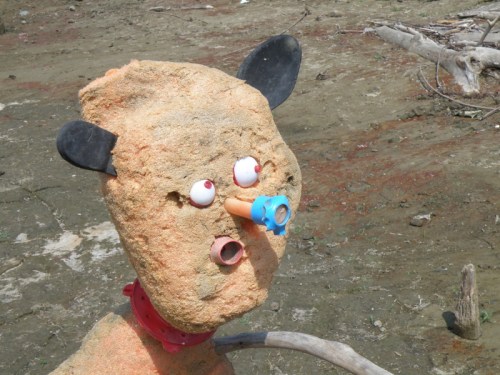
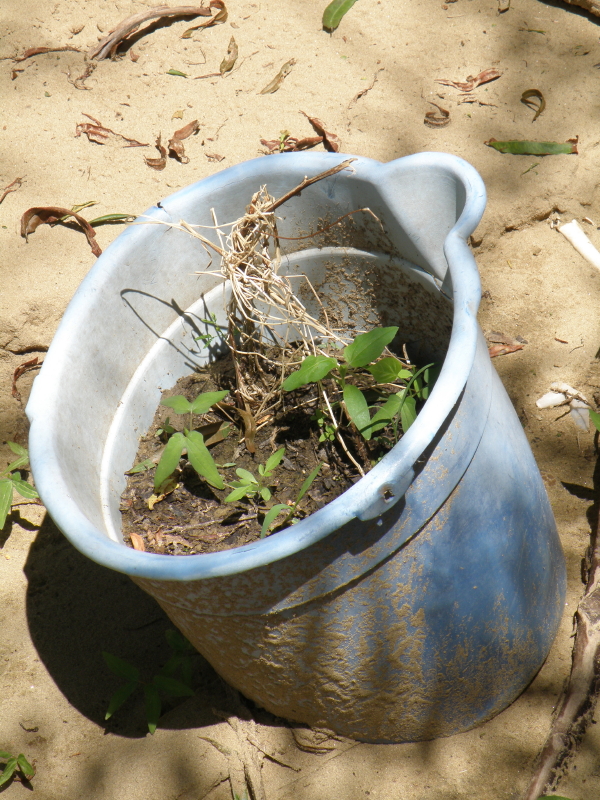
The Orangeman was really excited to see me and asked me breathlessly, “Where have you been lately?” I filled him in about my busy life and work and then turned the table by asking my friend what all the hubbub was about? He knows that if I could I would spend most of my time down by the river and probably go completely native and become a river rat in the process. He also knows that if there is something not to be missed down by the Falls of the Ohio…that I would do my best not to miss it! The Orangeman explained that he had several things he wanted to show me beginning with a monumental discovery he came across in a discarded plastic five gallon bucket. This would be Exhibit A.
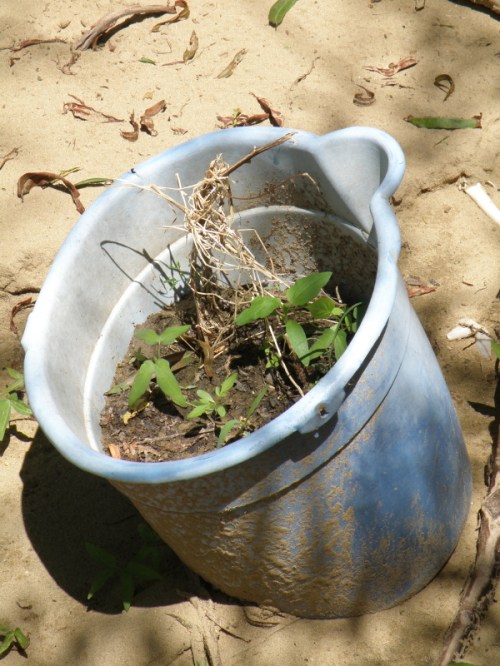
The slightly sun-faded blue bucket or pail was sitting on an angle in the sand…just as the river had left it. River mud and dirt more than filled the bucket up passed the midway point. Orangeman walked me over to the bucket and said “Peek inside and tell me what you see.” I did as he asked and more than a little perplexed I replied…”Well, I see a few small plants and vines growing in the dirt.” Orangeman groaned…”That part is obvious, however, the deeper meaning lies in how resilient life is and even within the confines of a plastic bucket…life wants to grow and express itself.” I had to admit that the Orangeman was making an interesting point here. At home, I keep flowers and plants in flower pots and other containers made for the purpose and get pleasure from seeing them thrive and be beautiful. What I hadn’t considered was the idea that any container also acts as a barrier. Life wants to join with life and be a part of the interconnected whole. The roots of these bucket plants were only going to be able to spread so far. Still, as the Orangeman explained…”The will to live and grow is strong even if there are limitations present. There was more to see and the Orangeman walked me over to Exhibit B.
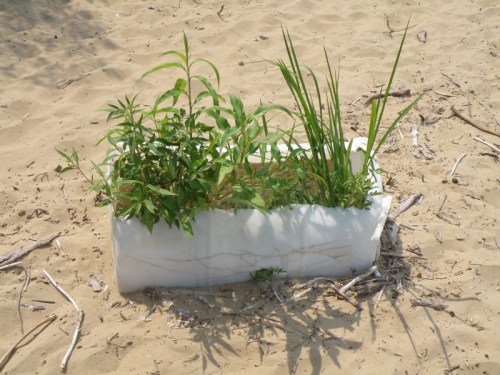
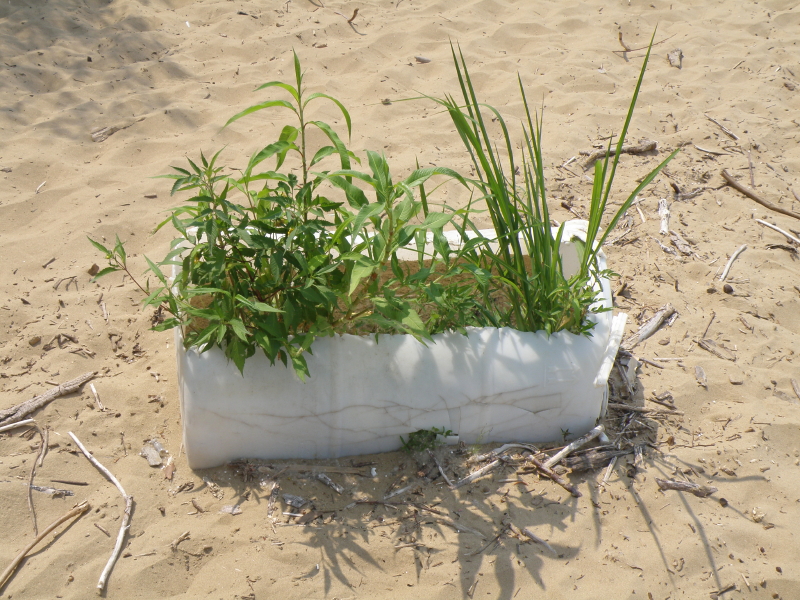
I must admit that I was impressed by the second example that my friend the Orangeman showed me. In a shattered plastic drum, various grasses and so-called weeds were sprouting through a large hole in the top of the container. Years ago, dirt and sand filled the barrel through the actions of river water and wind rendering it too heavy to pick up and move. Different plant seeds found their way into the barrel and discovering this small niche…set out to colonize and thrive as best they could. Perhaps these grasses will find enough of what they need to move through their life cycle and produce seed for another generation? Or perhaps they won’t due to all kinds of other variables, but the point remains that life will take that chance.
I hadn’t seen the Orangeman in such a didactic mood before and I was impressed with his earnestness. Previously, he had struck me as a happy-go-lucky guy and not especially bothered by all the serious stuff in the world. I certainly was seeing a different side of my friend that I hadn’t seen before. We walked and talked together and before long reached the last sight he wanted me to see. We might as well designate this as Exhibit C of the day.

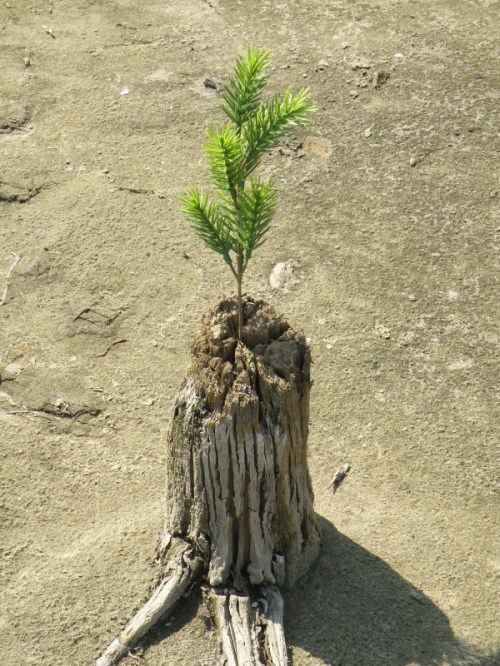
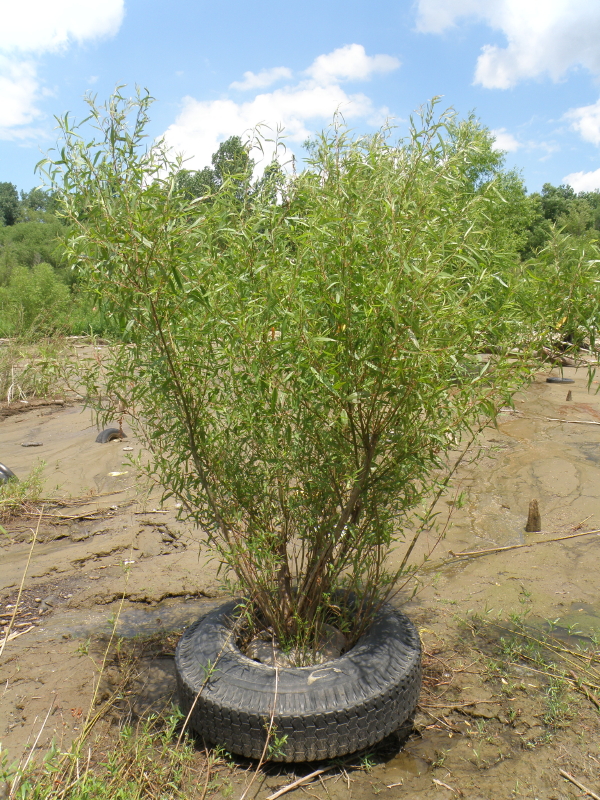
The Orangeman stopped next to an old discarded tire and with a flourish of his arms and hands and said, “Here it is!” The “it” part was a small willow tree that was growing through the center of the tire. I didn’t tell my friend this but, I already knew about this particular tree and another one I had discovered very similar to it in the western section of the Falls of the Ohio State Park. I had even photographed this very tree on several occasions. This is how it looked in late spring.
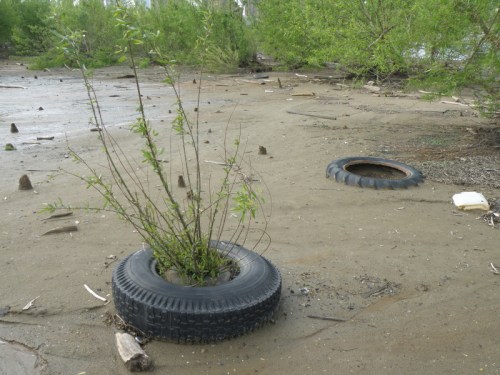
We had a relatively cool spring and it seemed to my eye that the plants at the Falls got off to a slow start. The willow-in-the-tire took its time ‘leafing out”, but eventually it did. Now I must say that a tree growing through the middle of a tire is a remarkable thing, however, there is more to admire about this particular tree. The Orangeman invited me to make a closer inspection.
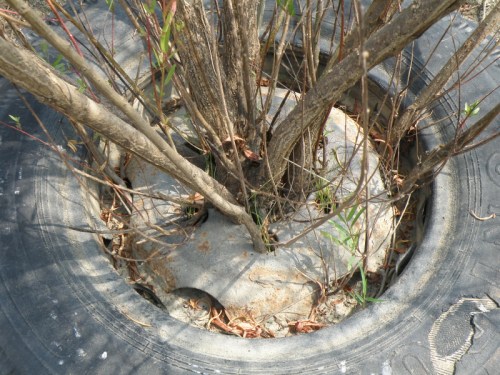
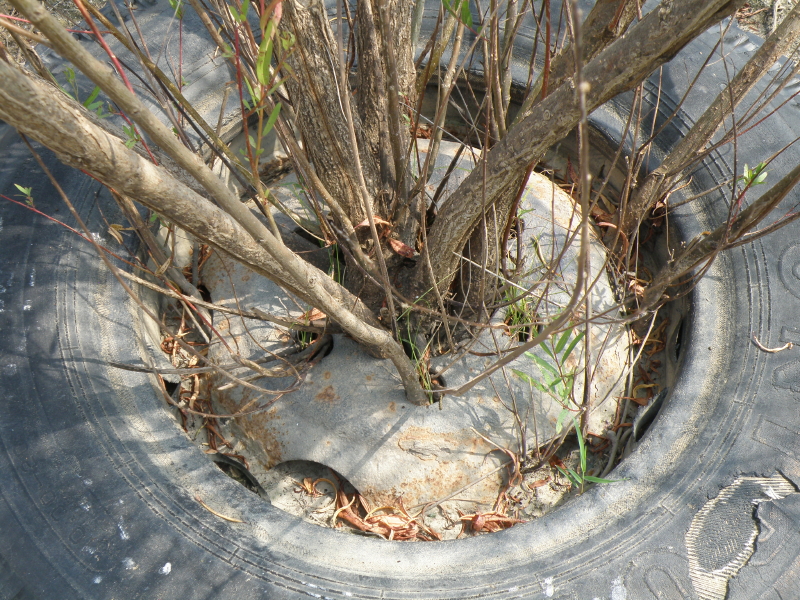
Amazingly, this willow tree was growing through the holes in the metal wheel that were still in the tire! The tiny, wispy seeds from a willow tree must have passed through one of the holes and taken root in the mud and soil beneath the tire. Hungry and thirsty for light, the various branches moved through the holes. I told the Orangeman that this was indeed an amazing example of life making do in very unpromising circumstances.
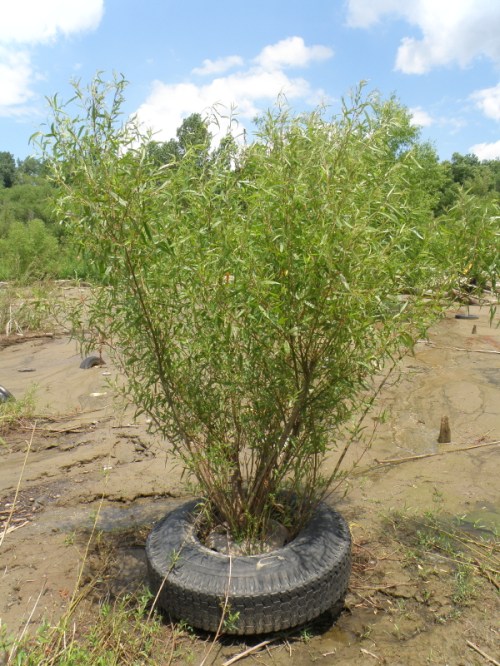
I’m going to monitor this tree with the Orangeman’s help because I’m curious to see if it can continue to thrive and grow. Will it eventually lift the tire into the air like some perverse hula-hoop as the trunk thickens and becomes more pronounced? Or, will the holes in the metal prove too restrictive and choke the life out these branches? Or, will something else out of the blue change the situation? The river usually gets the last word and flooding could easily send a flotilla of battering logs the willow tree’s way. The Orangeman and I parted company, but not before I thanked him for his time. Indeed, he had given me much to mull over. The idea that life is very resilient and will find a way to endure was comforting to me…especially as the physical world continues to change around us.
Posted in Absurd, Art, art and environment, ecosytem, environmental art, nature, nature photography | Tagged Art, art and the environment, artist at exit 0, ecostory, Falls of the Ohio, flotsam and jetsam, found material art, life, nature, nature story, photography, recycled art, repurposed art, willow tree | 12 Comments »
September 9, 2013 by artistatexit0
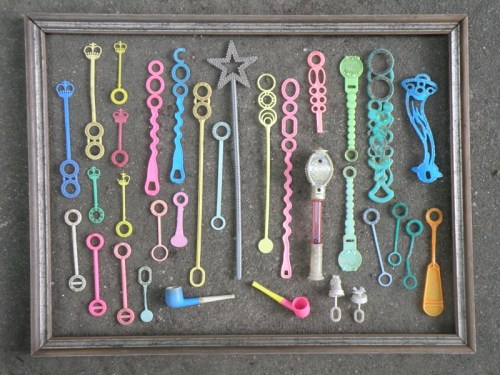
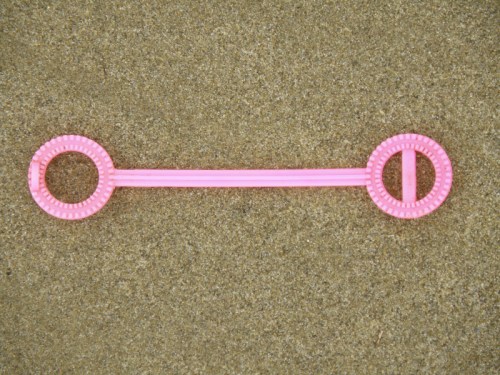
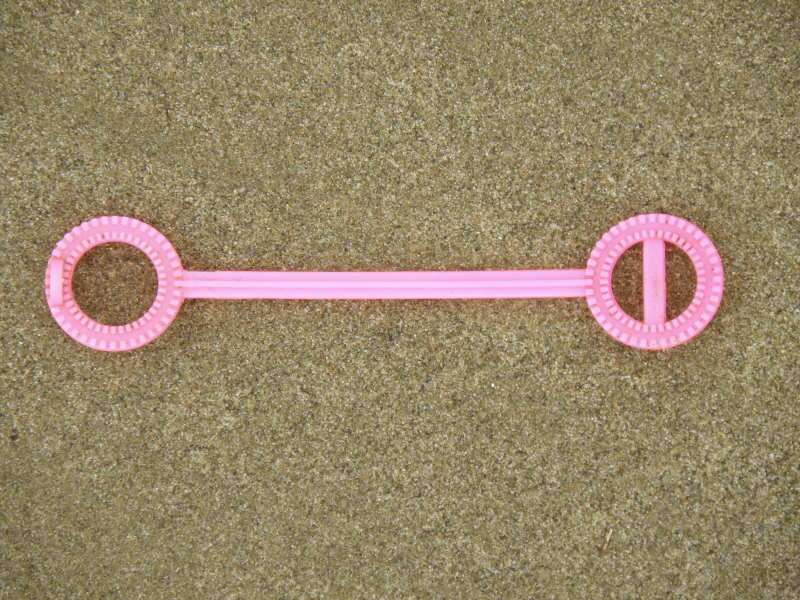
Consolidating some of my river finds revealed this fun collection of soap-bubble wands all found within the Falls of the Ohio State Park. This is many years worth of walking the riverbank and sampling choice bits of plastic and other displaced objects. All the bubble wands I’ve found thus far are made of plastic. Most of these wands were sold inside plastic bottles filled with prepared soap-bubble solution.
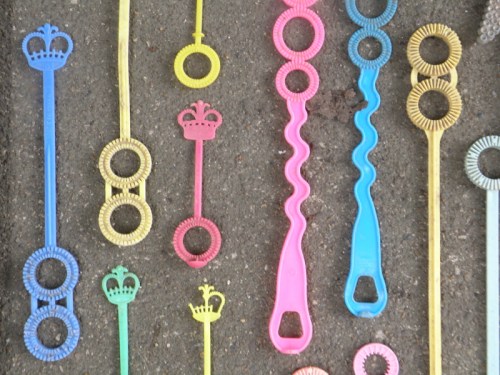
Simply dip the wand into the soap bottle. Remove the wand allowing a film to form over the loop. Then gently blow air through the soap film and bubbles should result. With this found wand lot however, the bubbles probably wouldn’t be very big or long-lasting. The soap-bubble wands you can fashion at home with common materials (along with creating your own bubble mix) can produce spectacular results. These wands were more than likely lost by kids playing near the river. I’m frequently amazed by the variety of design solutions intended for such a throw away item. I mean who holds on to these wands to reuse once the bottle is empty? I did find some novelty items in the mix. Check these examples out.
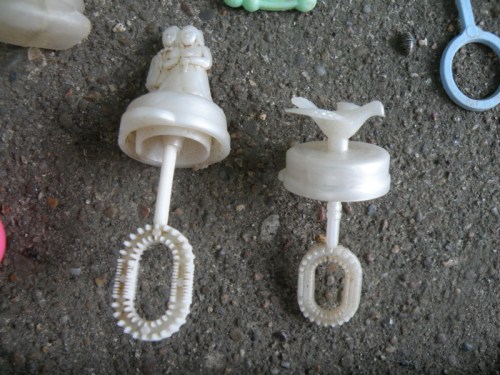
Here are two mini soap-bubble nuptial wands. These are usually in tiny plastic bottles left on the guests’ tables. Blowing bubbles on the newlyweds frequently substitutes for the traditional rice throwing send off.
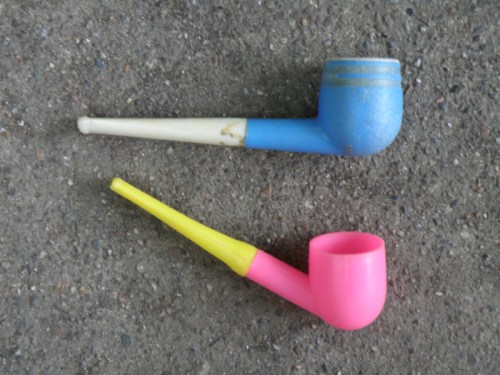
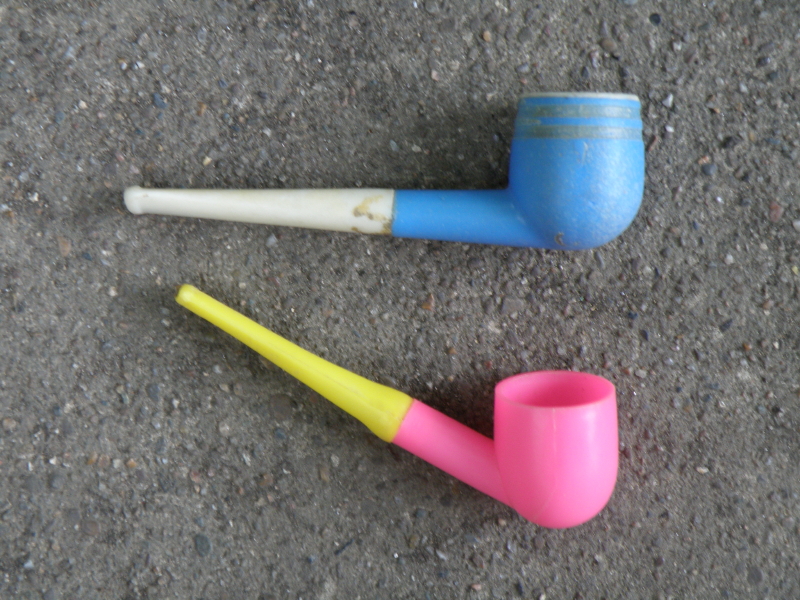
I also found these two soap-bubble pipes. Personally, I’ve never had much luck making bubbles with pipes.
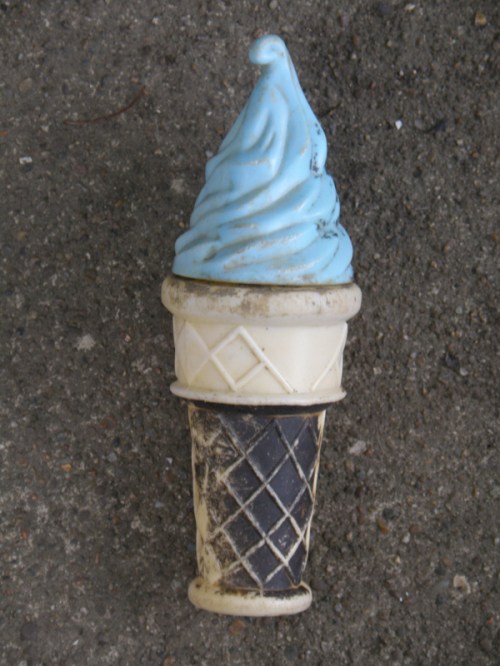
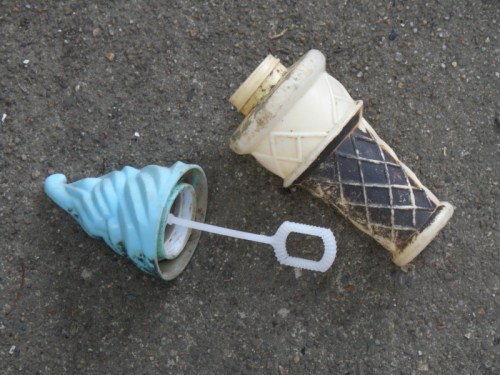
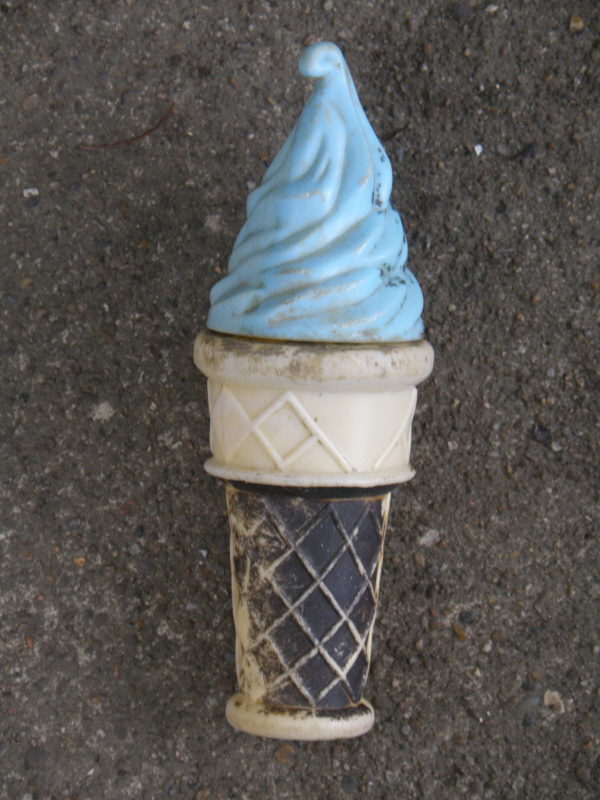
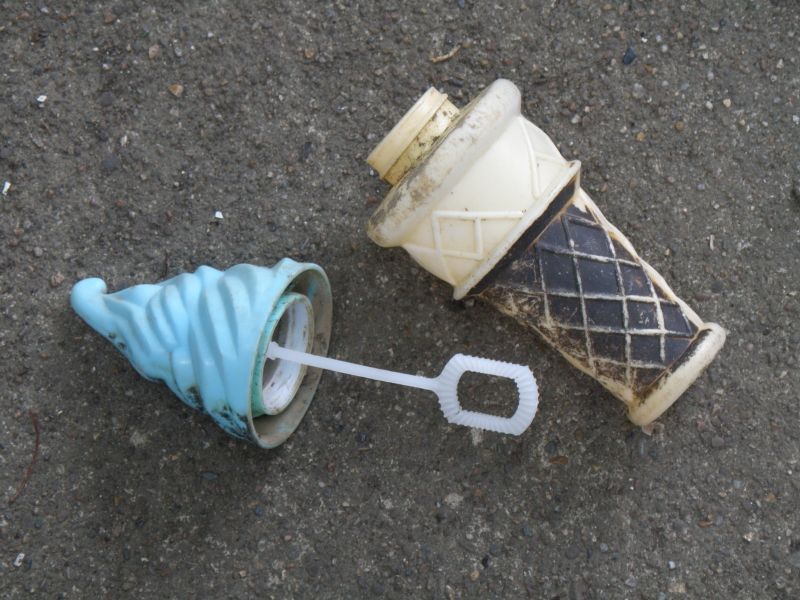
This novelty didn’t look good in the frame, but it is one of the nicer soap bottle with wand items I’ve found. This fake ice cream cone also has that black river patina suggesting it was out floating around for years before I came across it on these fable Falls shores.
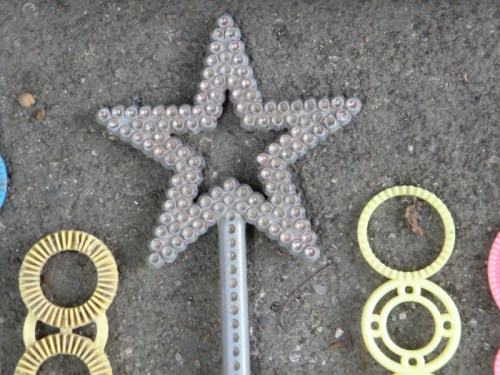
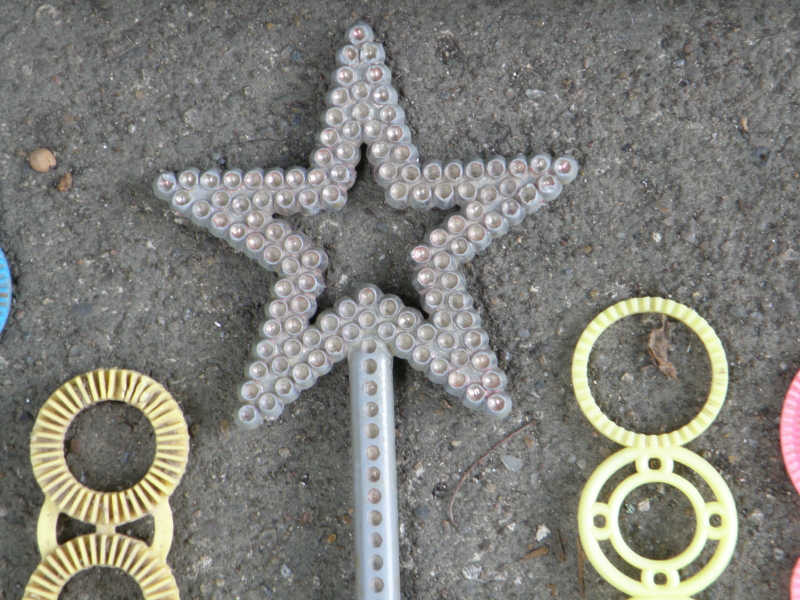
I have a couple of wands that aren’t soap-bubble wands, but since they are wands nevertheless…I keep them in the collection. The Star Wand is more than likely from a princess costume or magician’s outfit. The other wand is perhaps more of a plastic scepter. Originally, the handle lit up with a colored light. Again, more disposable plastic items. I’ll keep walking the riverbank a little while longer and I’ll bet I find a few more of these objects to add to the river collection.
Posted in Absurd, Art, art and environment, creativity, environmental art, recycled art, unusual collection | Tagged Art, artist at exit 0, blowing bubbles, Falls of the Ohio, found objects, novelty items, plastic, river junk, Soap Bubble Wands, unusual collection | 11 Comments »
« Newer Posts - Older Posts »

































 Artist at Exit 0 Riverblog