Feeds:
Posts
Comments

Archive for the ‘Ohio River’ Category

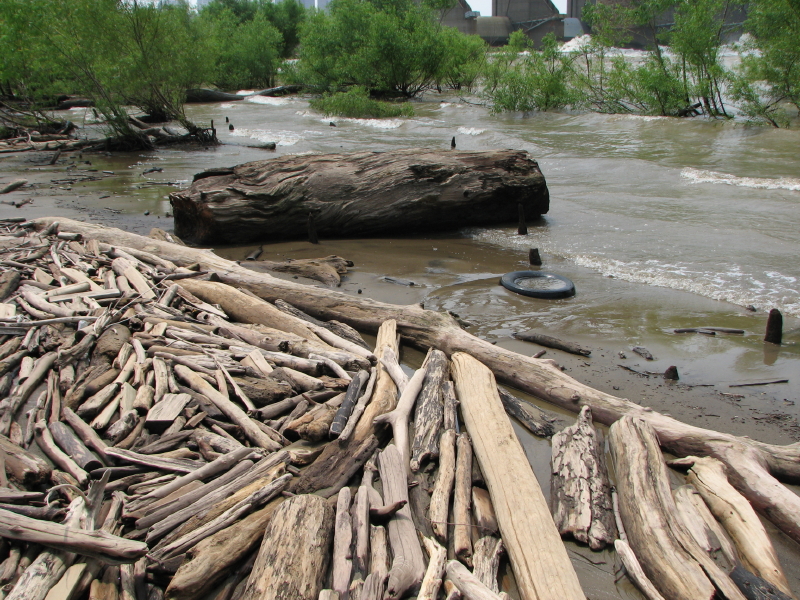
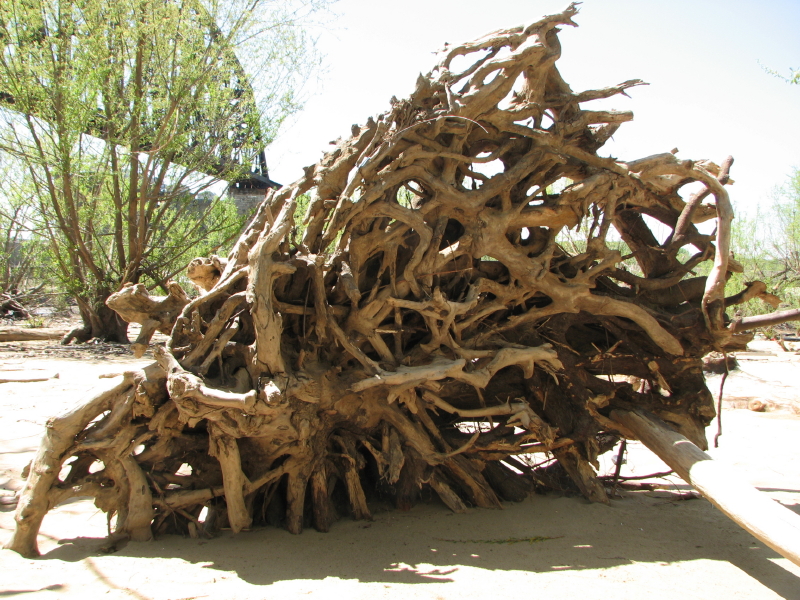
One last driftwood post before hopefully moving on to the current conditions at the Falls of the Ohio.  As my knee heals, I have been sifting through my own digital photographs.  Sitting at home, I have been spared the relentless heat that has defined our summer.  Artist at Exit 0, however, does miss bearing witness to life along the river and can’t wait to get back!  I thought I would end this driftwood series by looking at wood that is more organically expressive.  As mentioned in a previous post, the river processes a tree by removing its branches into increasingly smaller segments.  With all the broken down wood present at the Falls of the Ohio State Park, it can be a challenge to find a piece that implies movement.  Here are a few larger examples that I find to be especially sculptural.
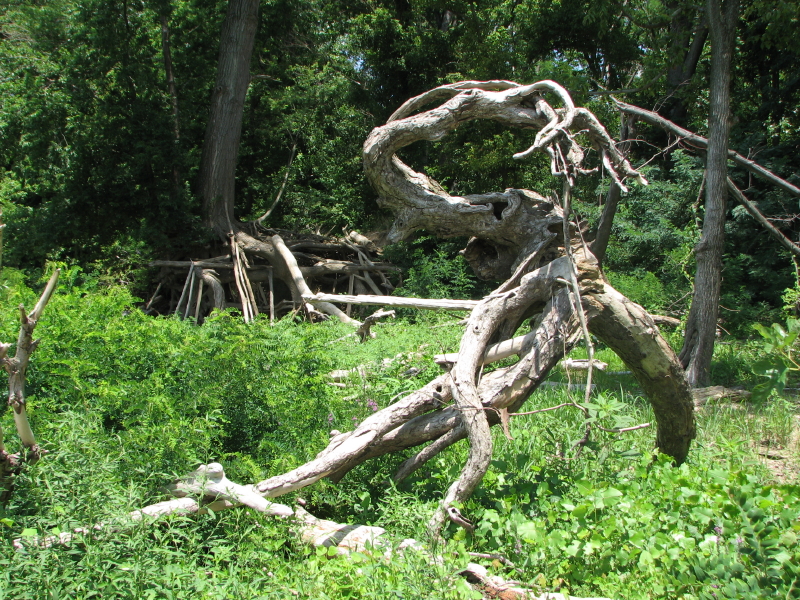
I come across many unique pieces of wood in the park that feel as satisfying to me as many abstract sculptures made by man.  Walking around a  particularly nice piece of driftwood, I am rewarded with different viewpoints that remind me that the object I am regarding share a common space.  Here’s a different image of the same dramatic driftwood log and the experience in perception changes as you move around the wood.  I notice not only the arc of branches and roots, but the spaces between forms as well.
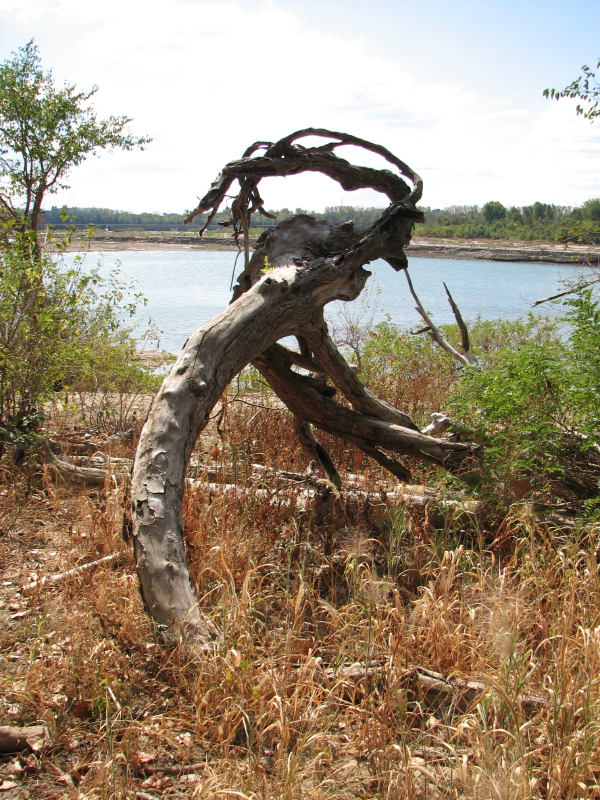
Here’s another nice piece that I came across this year and it also has many nice sculptural qualities.  I love the “S” curve snake-like motion implied in this driftwood.

When I see a piece of wood this twisted and convoluted I’m reminded that nature is the true sculptor here.  Doing the shaping are water, wind, and the life force of the tree itself whose innate “intention” is to live.
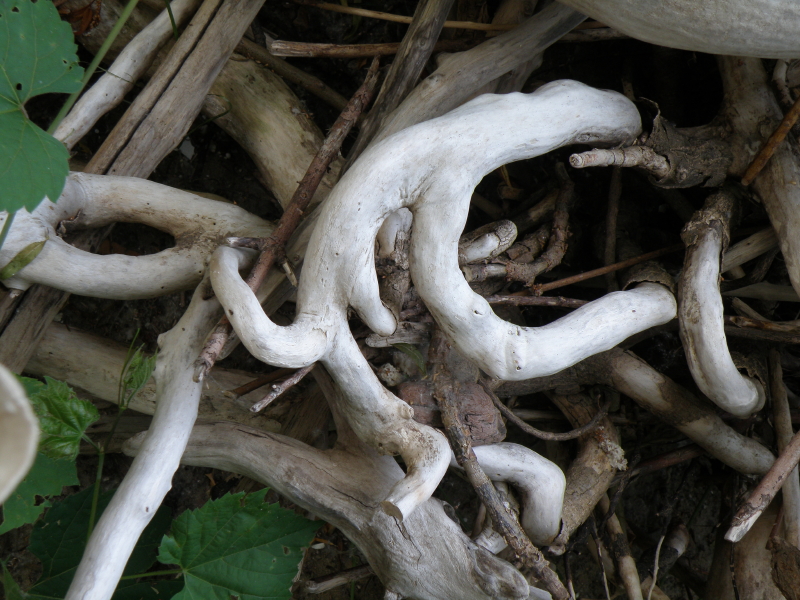
It’s hard for me to imagine that works of art were considered ” superior” to the “corruptness” of nature.  Fortunately, the philosophy of aesthetics is ever-changing, but still could use additional tweaking from what strictly enhances the experiences of our lives to embracing a better appreciation of life in all its forms.  Even when we use ourselves as the egotistical measure of all things we should be starting to understand by now that the quality of our very lives and that of our descendants depends upon the overall quality of the natural environment.
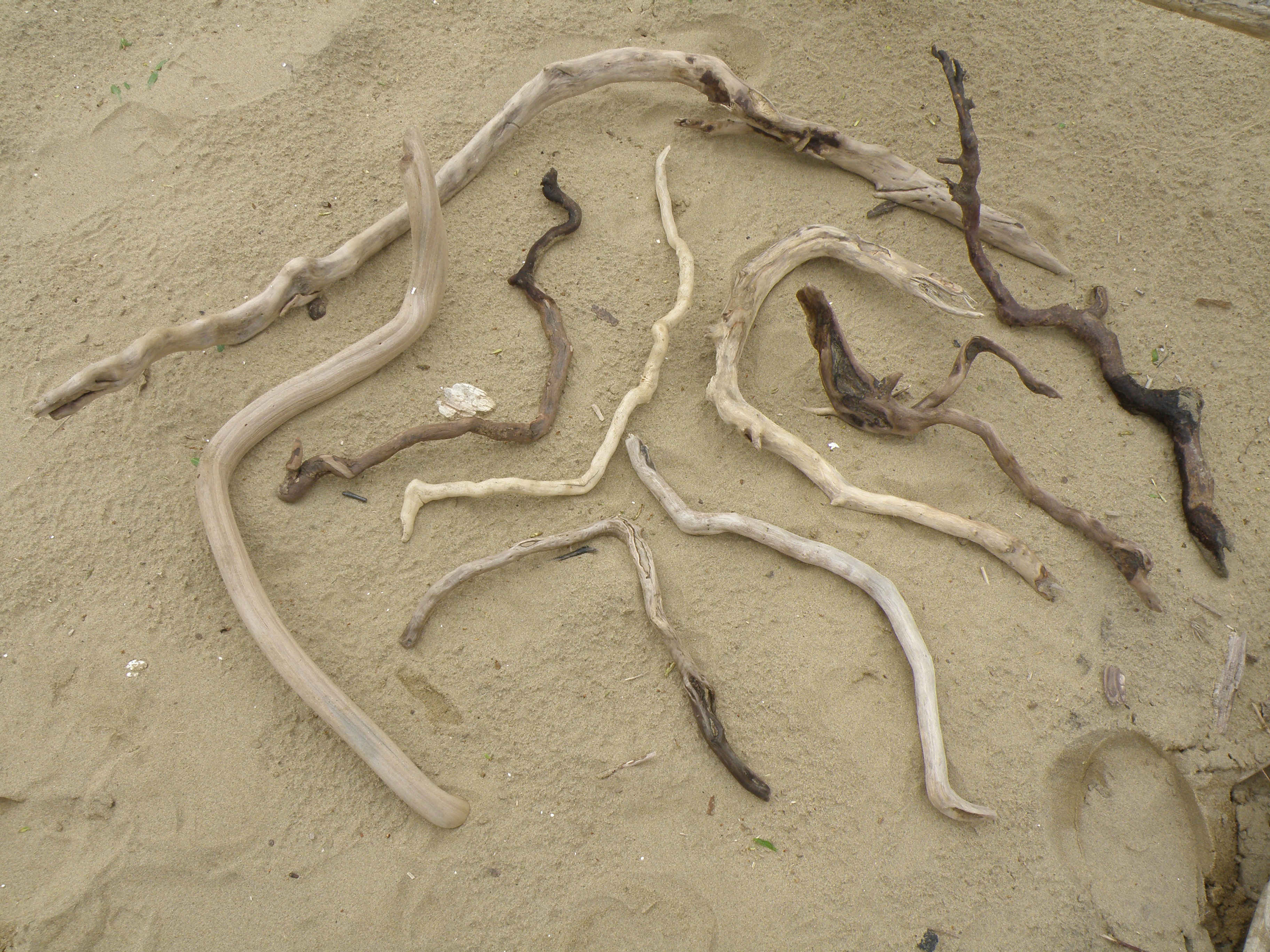
When I’m at the river I try to be as present in the moment as much as I can, however, my mind does day-dream a lot about the relationships between art, man, and nature.  I believe as my friend Ellen Dissanayake has eloquently expressed through her well-researched books that art has survival value otherwise our species would not have spent thousands of years involved in this activity.  My reaction is to try to use my creativity in this special place using the materials I find on hand to try to further this conversation along.  The sculptures I make to tell my little stories are combinations of natural and artificial materials.  The river-eroded Styrofoam I use for my figurative work is usually so static in form that to enliven it requires finding rootlets and branches that the river hasn’t fully removed all sense of gesture and movement.  These pieces become the arms and legs of my characters that help imply animation.  The picture above shows roots I collected while walking over the driftwood that the river did not completely break apart.
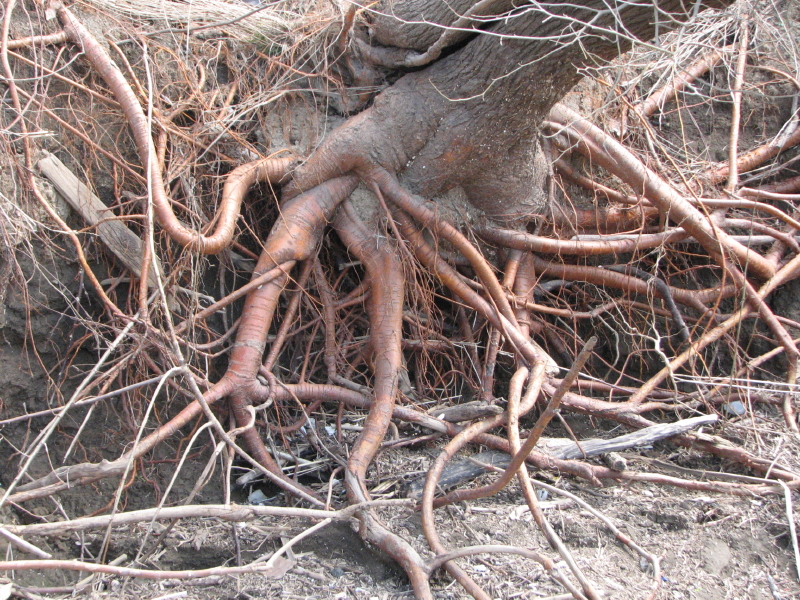
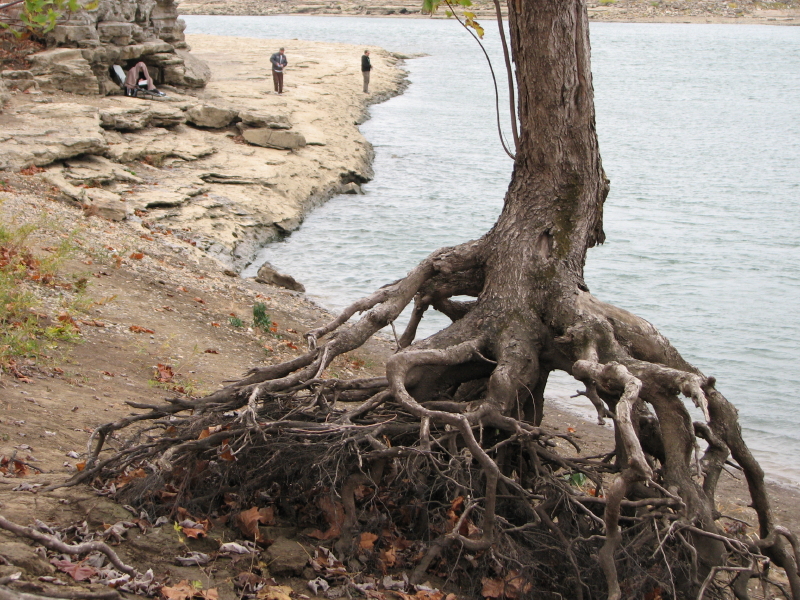
It’s interesting how often trees enter the picture.  One nice touch in the opening ceremony of the recently completed London Olympics was the large tree image that brought nature into the festivities.  Key to the life of a tree are the roots that help bring water and nutrients to its tissues.  By growing and burrowing through the soil the root system helps buttress the tree and holds the soil together.  This is especially important on a riverbank.  Since driftwood is essentially deadwood…I didn’t want to wrap up this post on such a dismal note.  At the Falls of the Ohio live many tenacious trees and here are images of a few of them that have weathered many a storm, flood, and the activities of man.
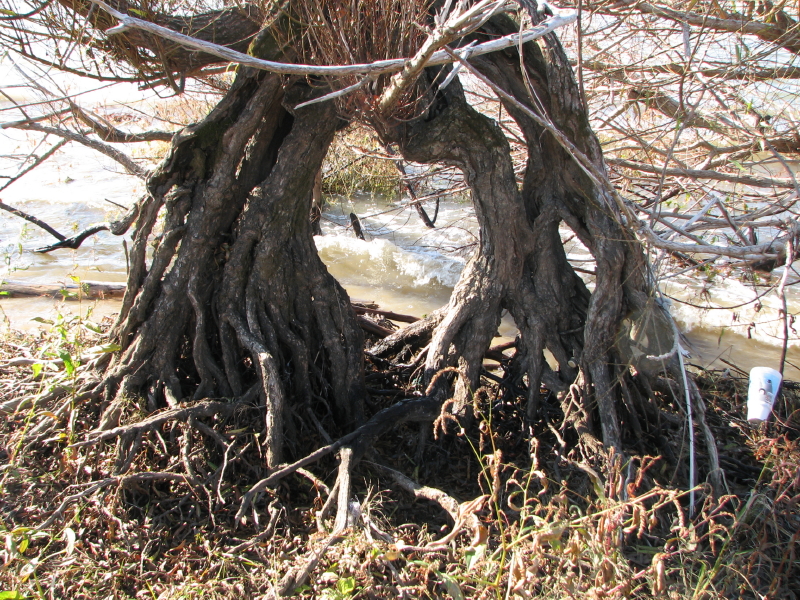
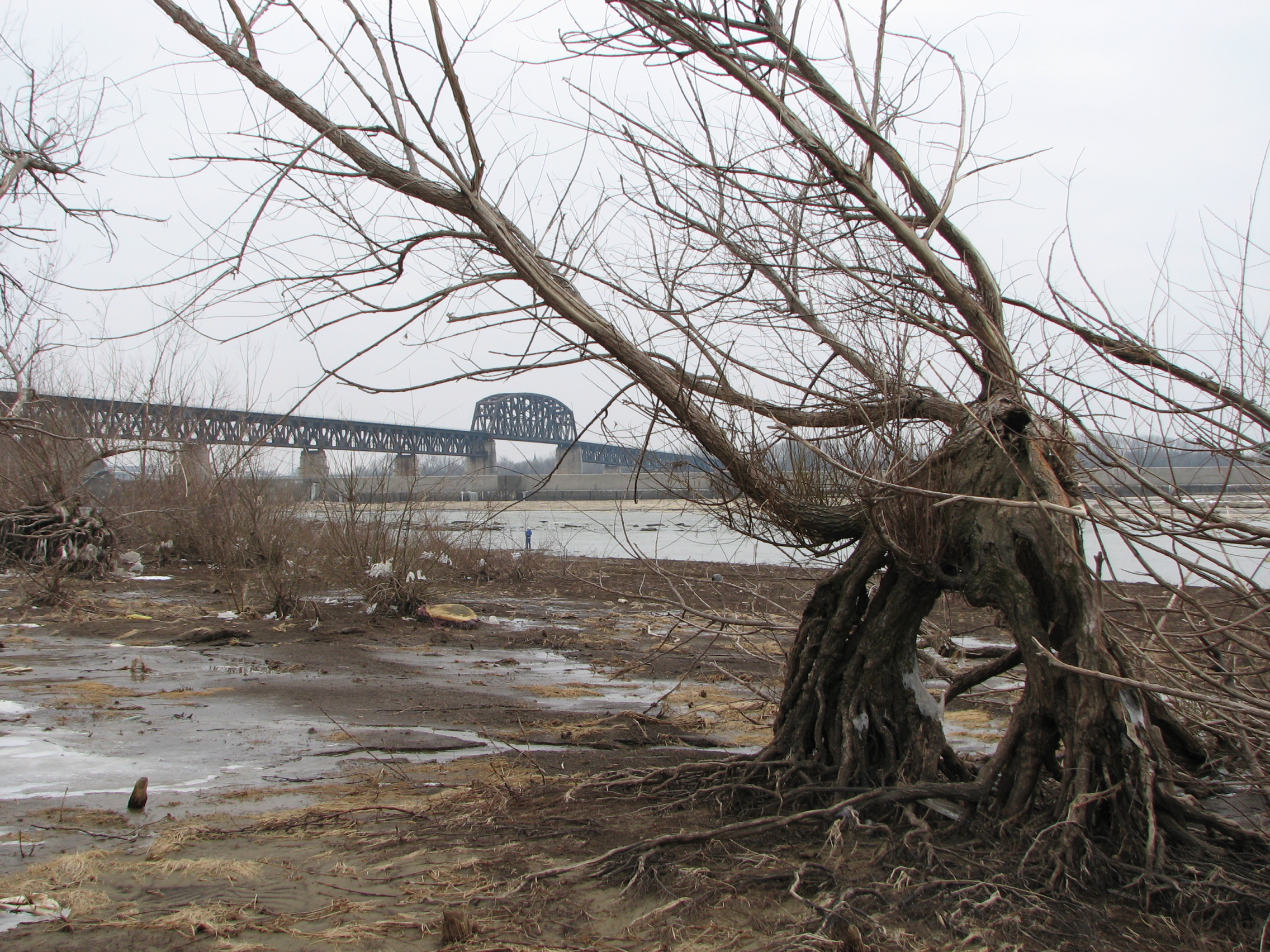
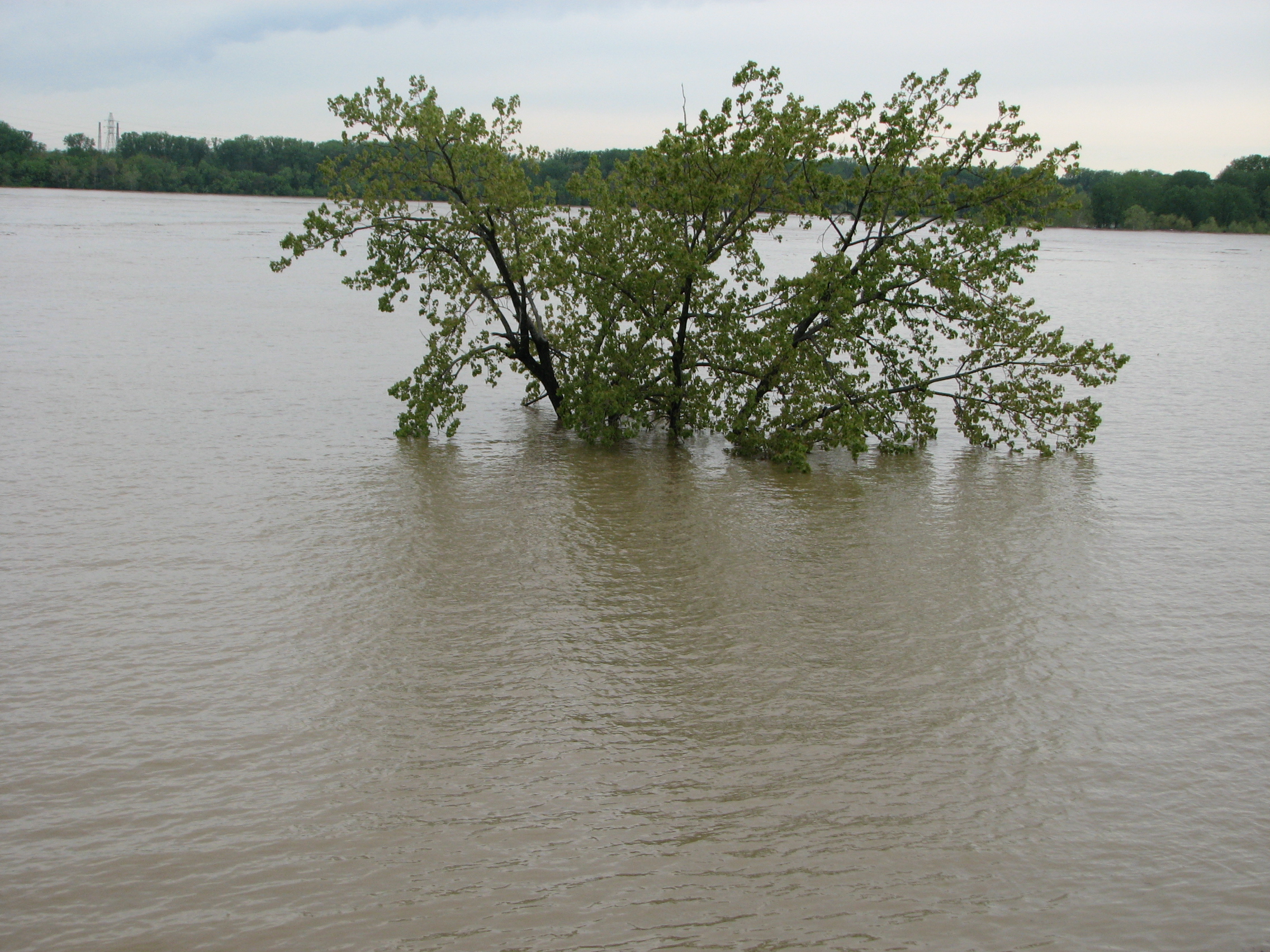
Before the idea of climate change and global warming there was already enough change occurring through the busyness of our species.  I remember looking at satellite imagery of the Amazon region a few years a go and being able to see the tell-tale grid system of logging roads and farms supplanting the jungle.  Deforestation is continuing at an even greater rate now.  Our trees need our love and we need the free services they provide.  Now for one last look at another resilient tree at the Falls of the Ohio.
Read Full Post »

Welcome to my second look at wood as expressed at the Falls of the Ohio.  The first post concentrated more on the river and water as an agent of change moving material through the landscape.  This post looks more closely at the driftwood that gets stranded in this southern Indiana park.  I once curated an exhibition at the Louisville Visual Art Association entitled “River Sticks” where all the artworks were made from locally procured driftwood.  The majority of these works of art utilized raw, natural sources, but there is also wood in the mix of a slightly different character.

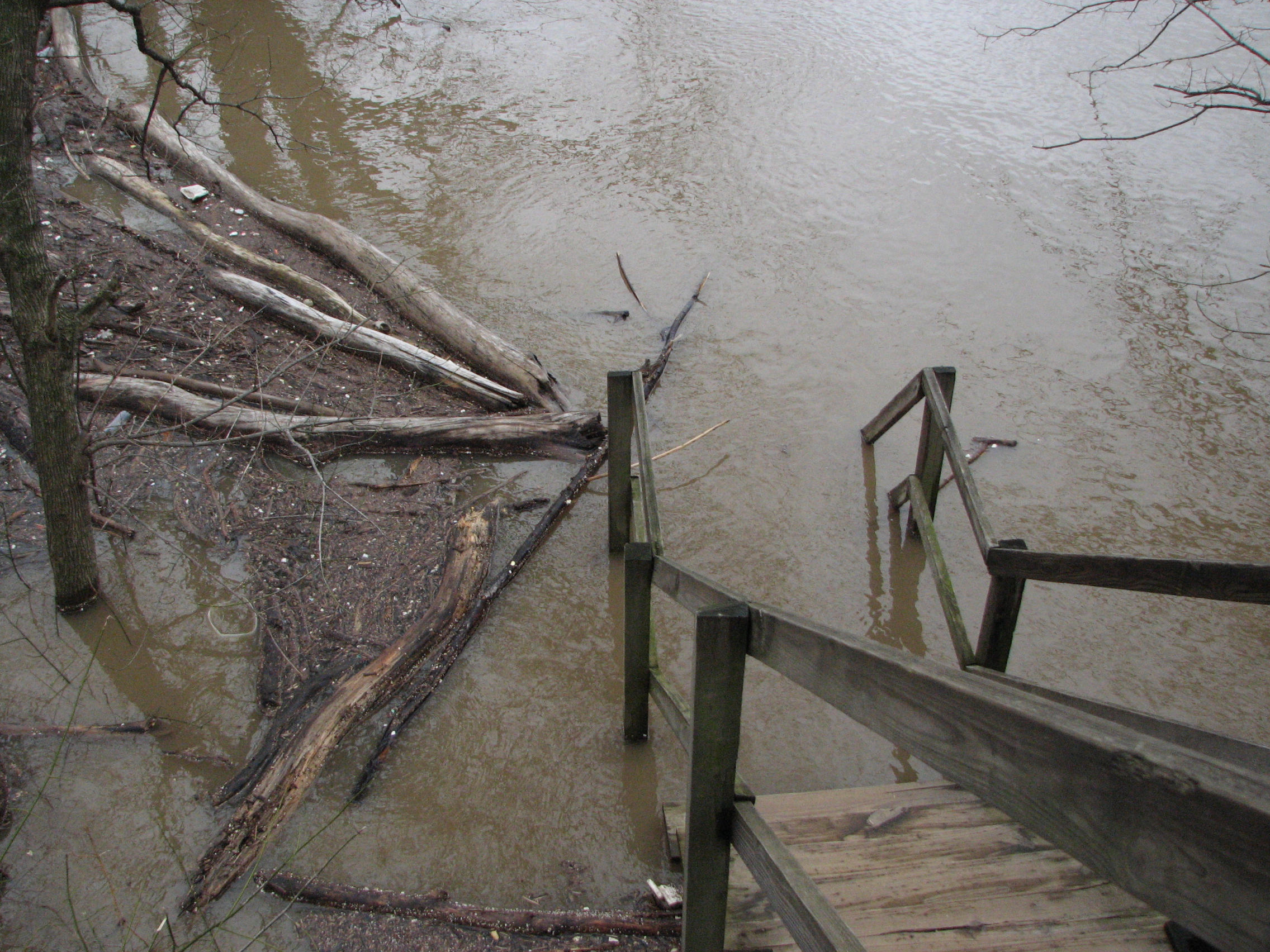
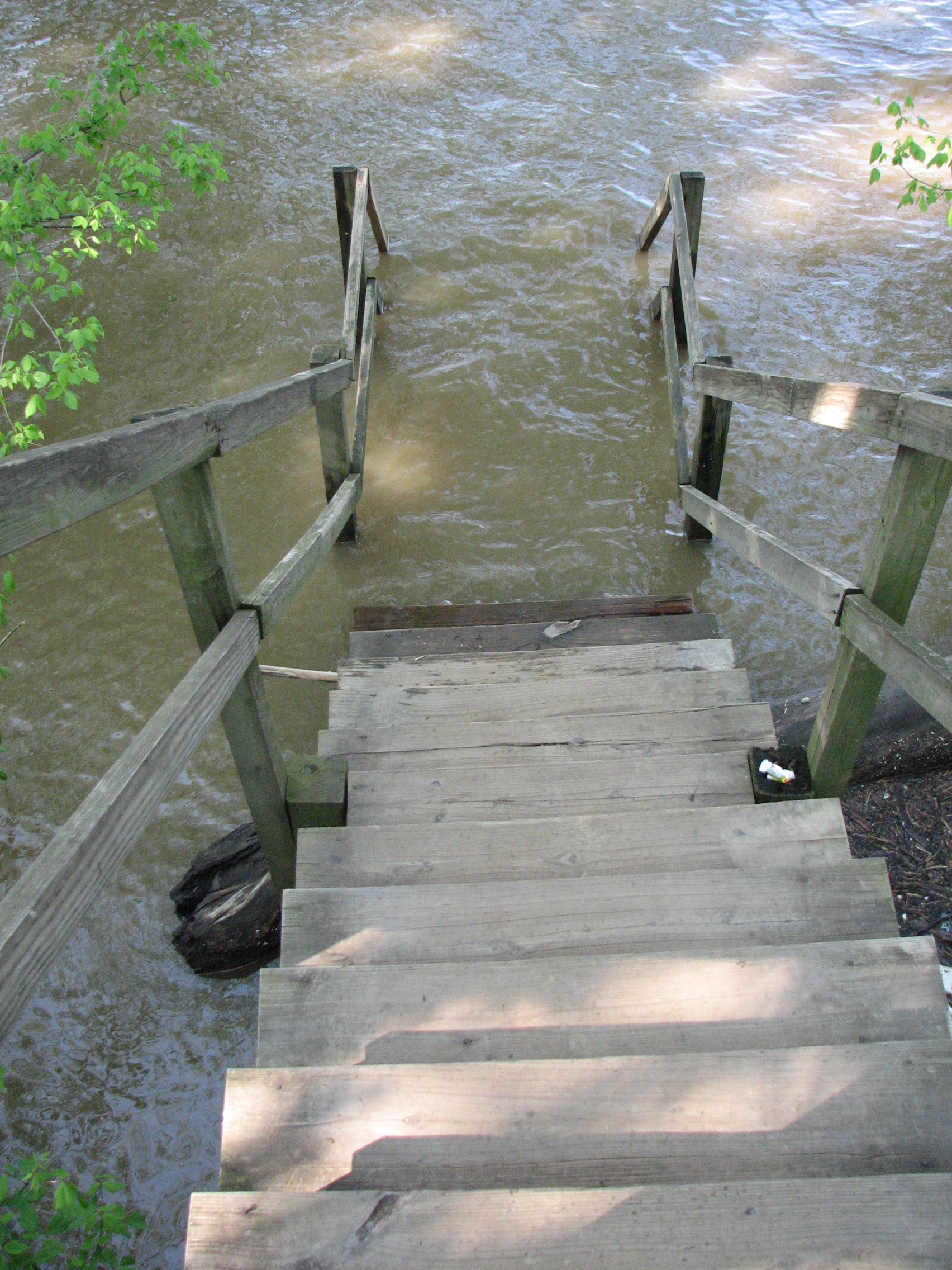
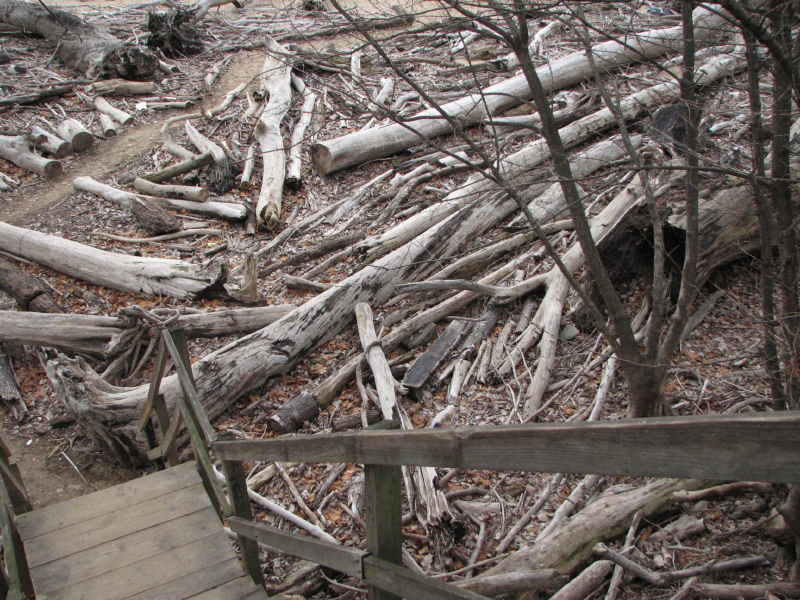
There is a wooden staircase placed here by the Department of Natural Resources (which maintains this state park) that is a popular access way onto the riverbank and fossil rocks.  It is not unusual during bouts of flooding to see part of this staircase submerged by the Ohio River.  During those moments, all you can do is look from a distance or visit the Interpretive Center.

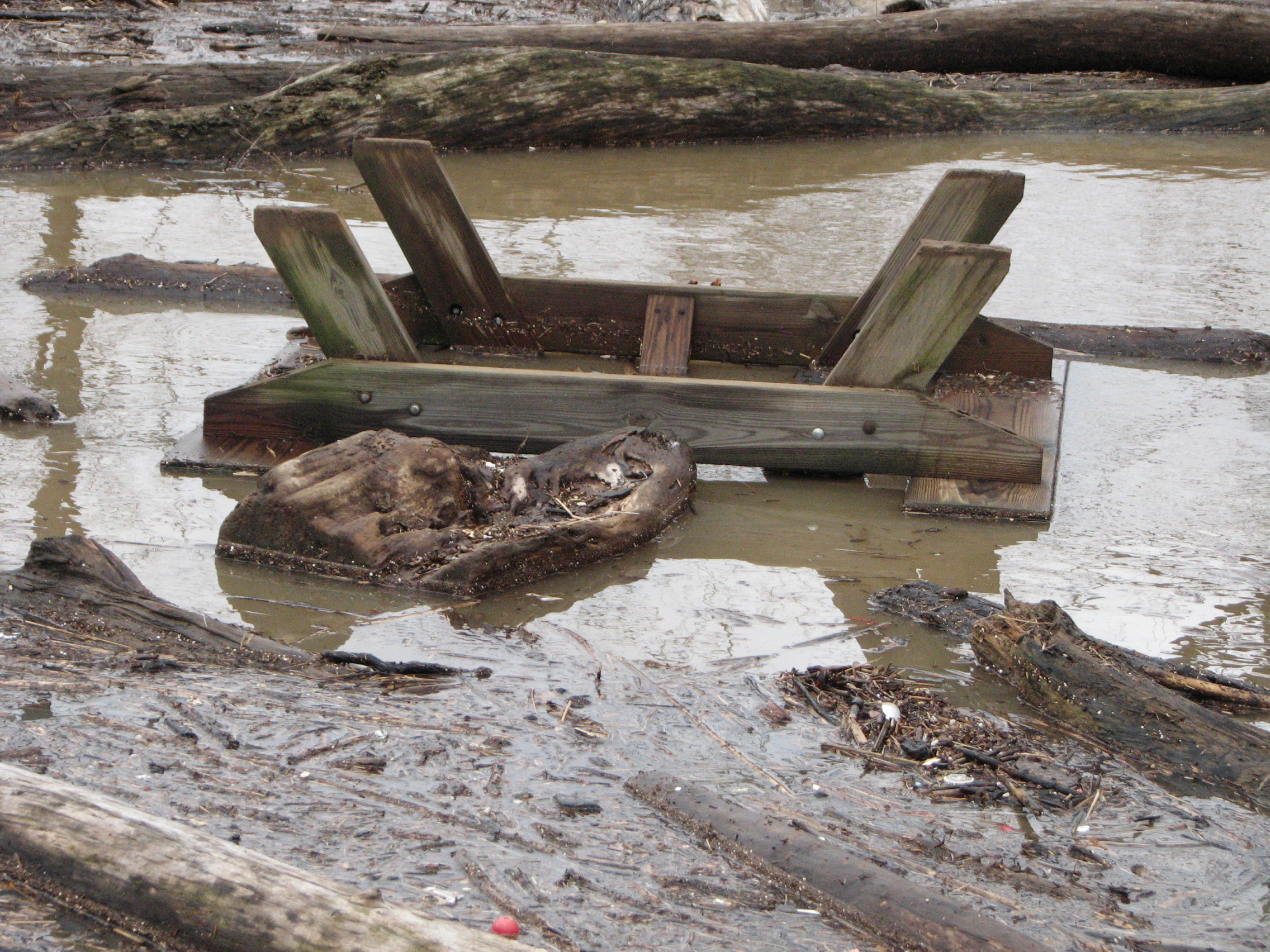
Over time this staircase has needed frequent repairs as it gets battered by floating logs and tree trunks.  Only after the water has drained away can you walk among the driftwood and see what else made from wood has been left high and dry.

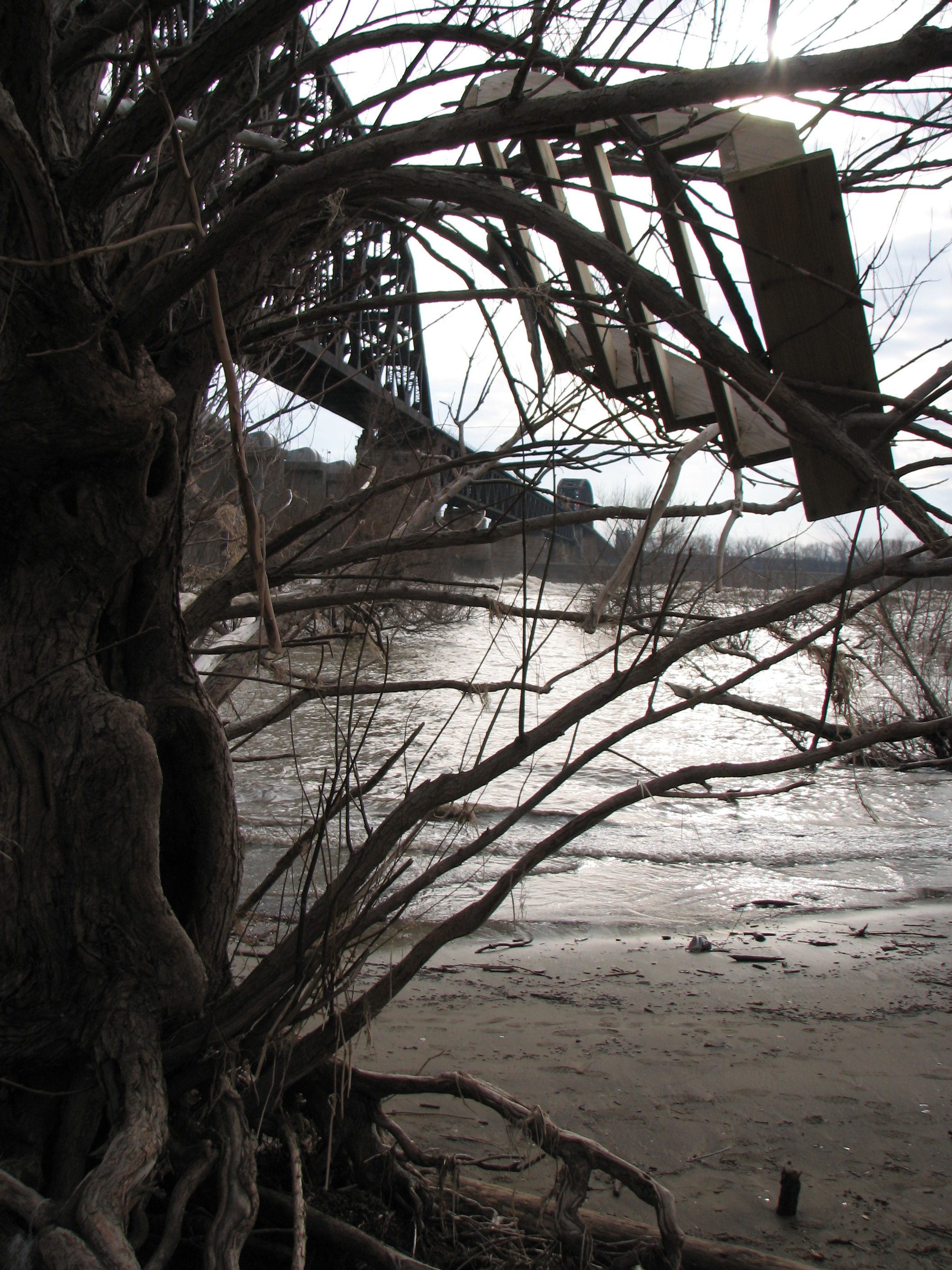
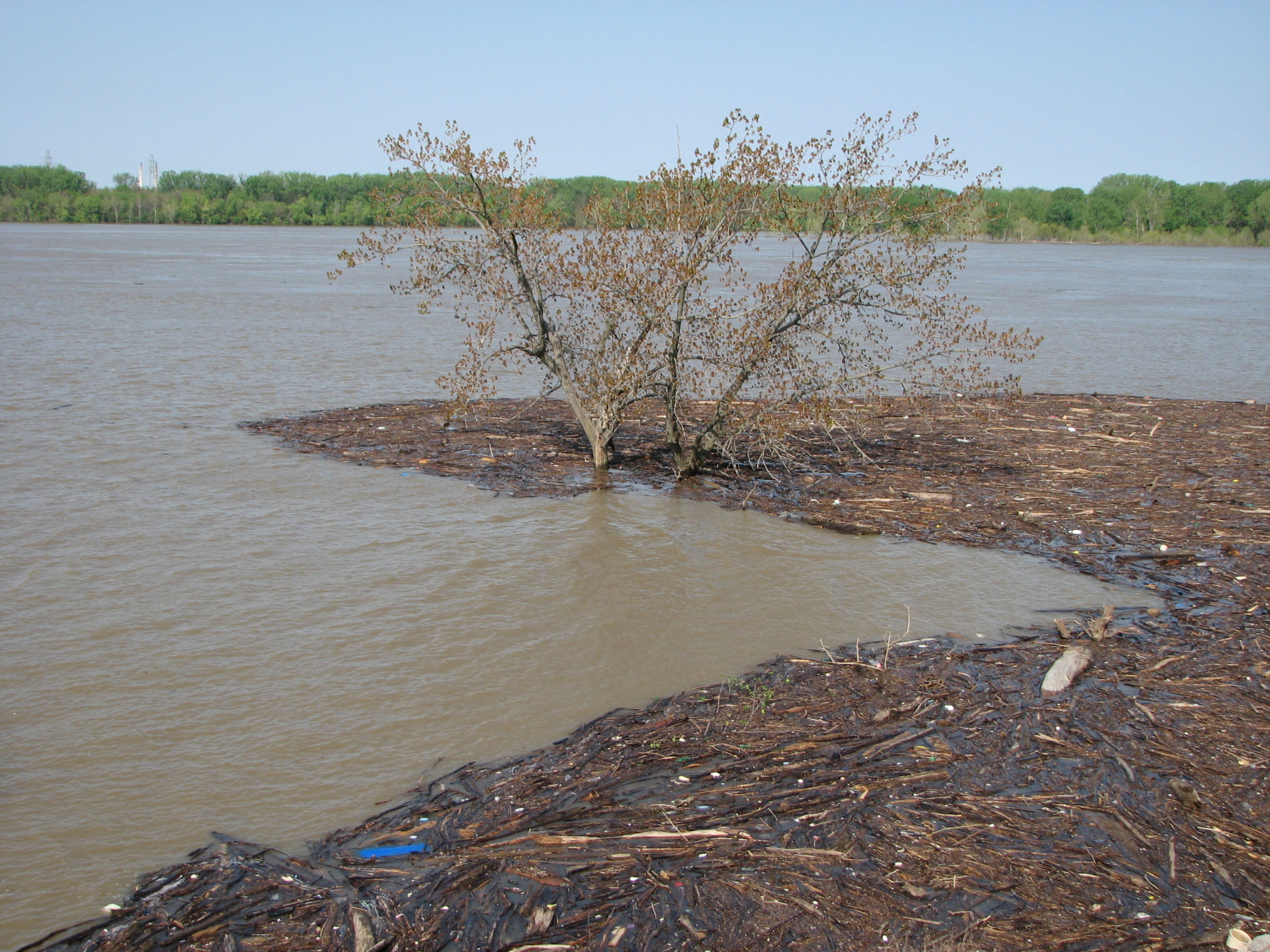
Here’s a dramatic shot of a different staircase that has floated down the river and has been snagged by a willow tree.  Objects stranded in trees bear witness to how high the river rose.

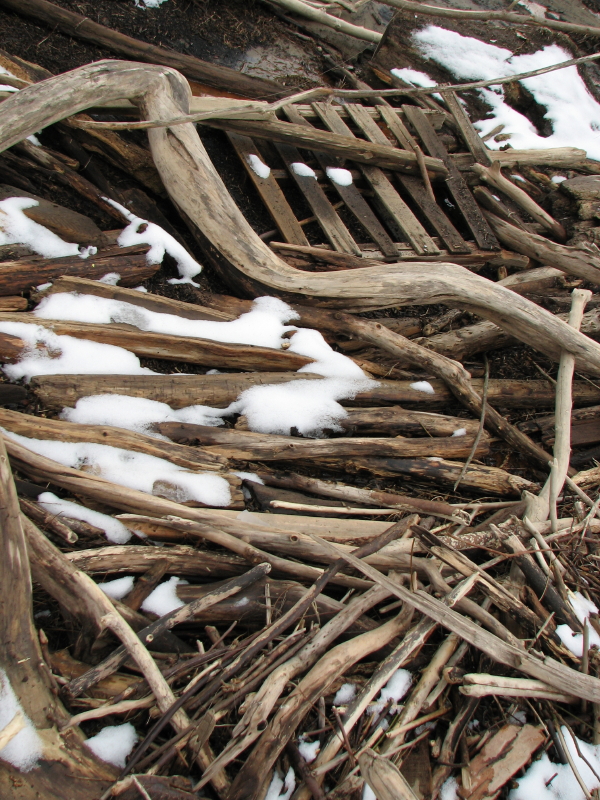
I frequently find wooden pallets and they get snagged in the trees too.  This one is a little different in that it appears the tree is growing through and around this artificial form. Over time, the pallet will fall apart. Perhaps wood is wood, but one can’t help noticing how much milled and processed wood is a part of the mix.  Here are a few other images showing this contrast between natural and man-shaped wood.

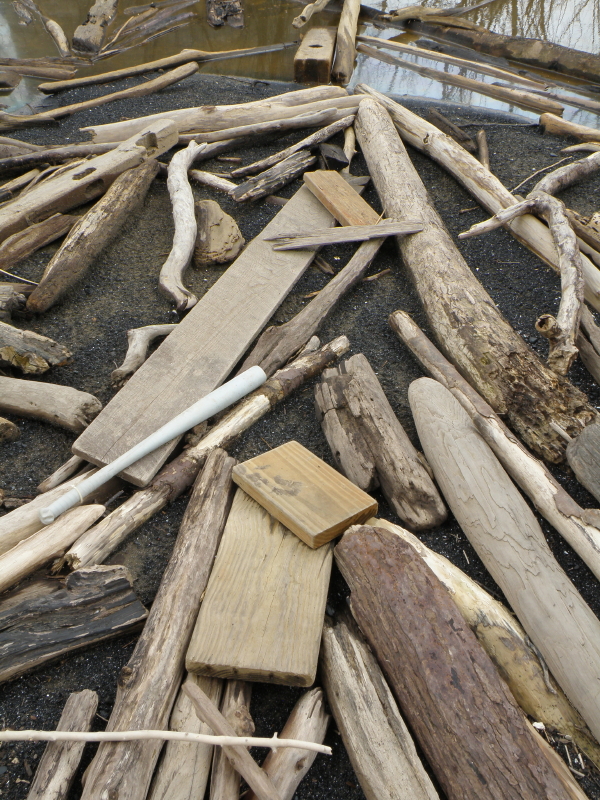
Sometimes it seems like there are enough planed boards at the Falls to build a small house. Fishermen and visitors use these planks to span muddy areas and puddles to keep their shoes clean and dry.  All this wood is a disposable resource?  I’ve seen visitors taking lumber out and I’ve done the same.  I like using river-worn cut boards as bases for the Styrofoam sculptures I choose to keep.  To me, even the smallest board tells a story of our relationship to trees and nature.  I tell myself that someday I’ll make some rustic piece of furniture from this wood.  The same processes that break a tree down in the river…do a similar “service” to disposed of wooden furniture.

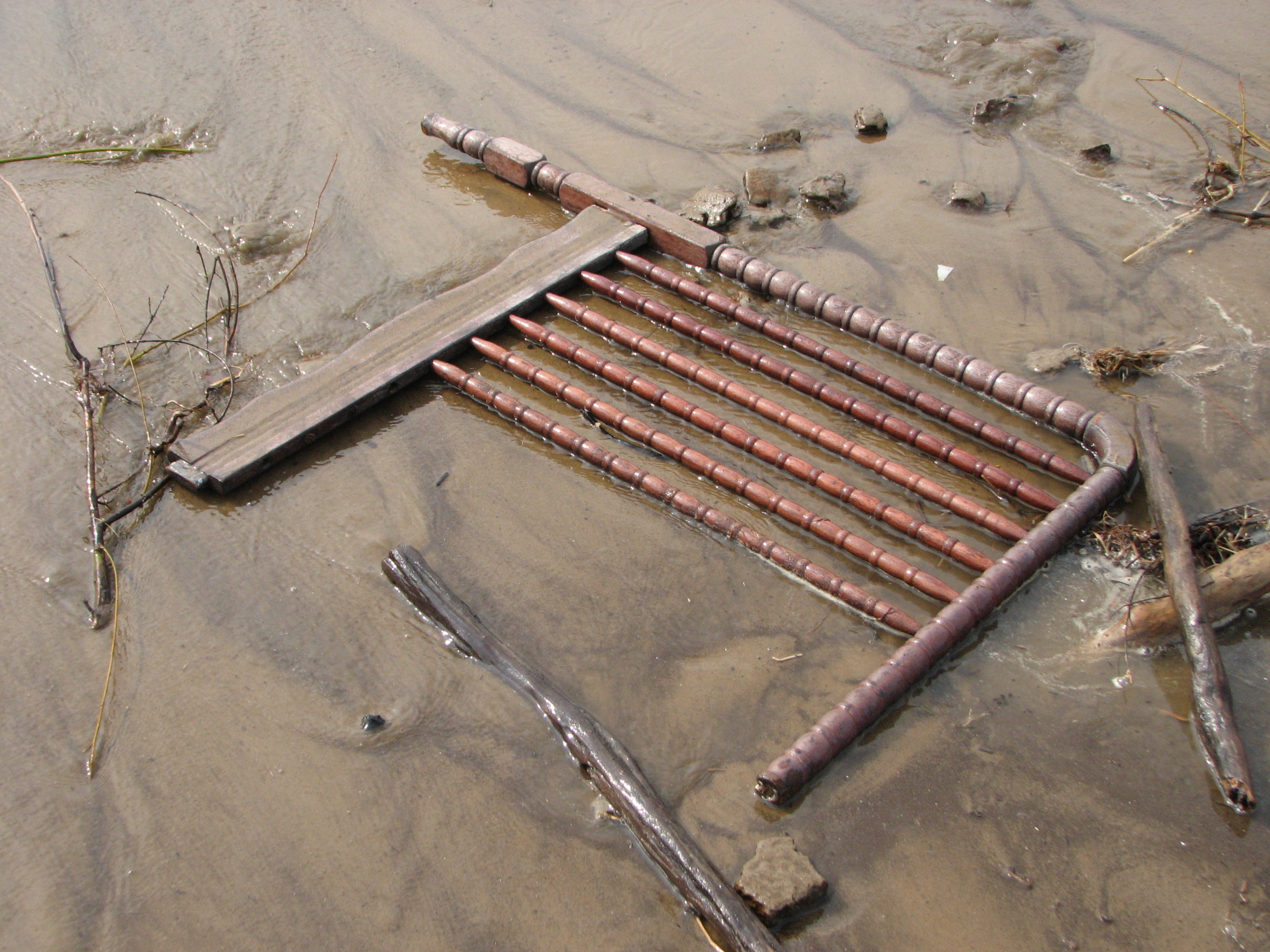
Here’s a piece of a child’s crib or bed that I found at the river’s edge.

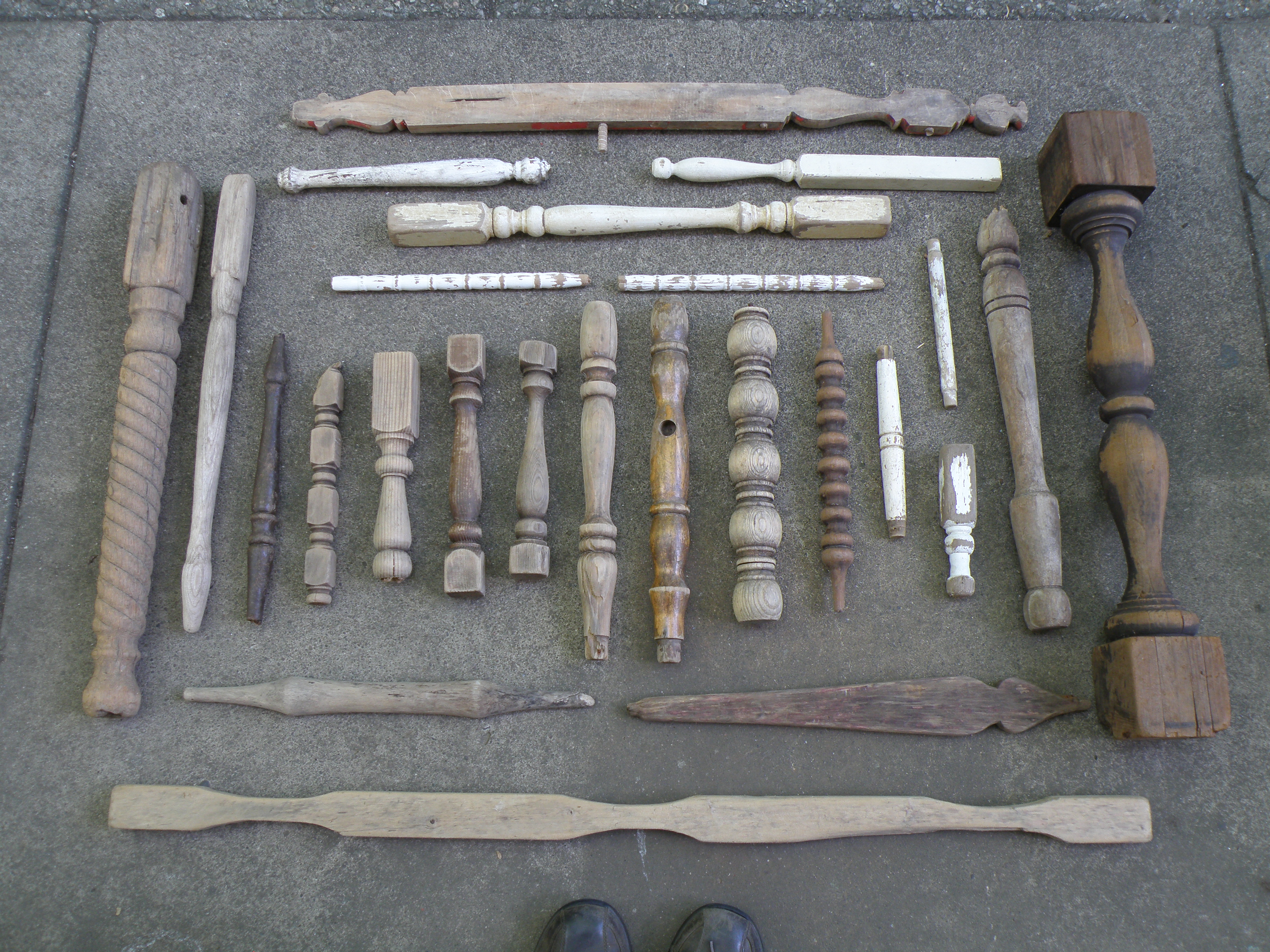
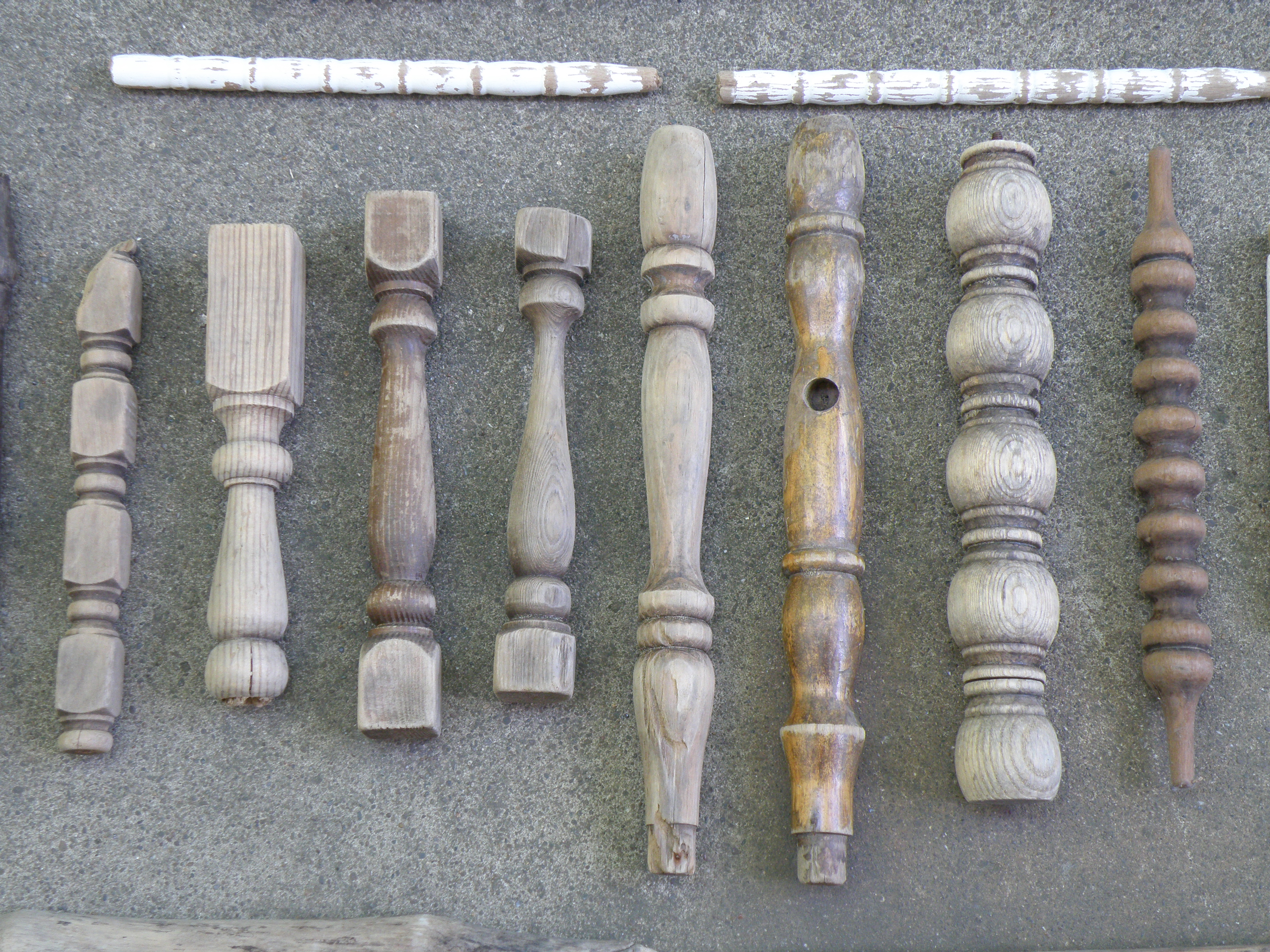
This is one of many table legs and turned pieces I’ve come across.  Sometimes I pick them up and take them home.  I’ve used them on rare occasions in my art, but I have also given many pieces to artist friends to see what they could make of them.  I suppose I could make an homage to  Louise Nevelson’s sculptures, but would prefer to create something more personal.  Nevertheless, I have picked up a few wooden artifacts from the river and here’s how they look collectively.

I left the toes of my shoes sneaking a peak for scale!  Here’s some of the hand-turned and machine-made table legs, chair staves, and spindles I’ve saved.  These artifacts do break down over time and eventually revert back to nature.  Now for a detail.

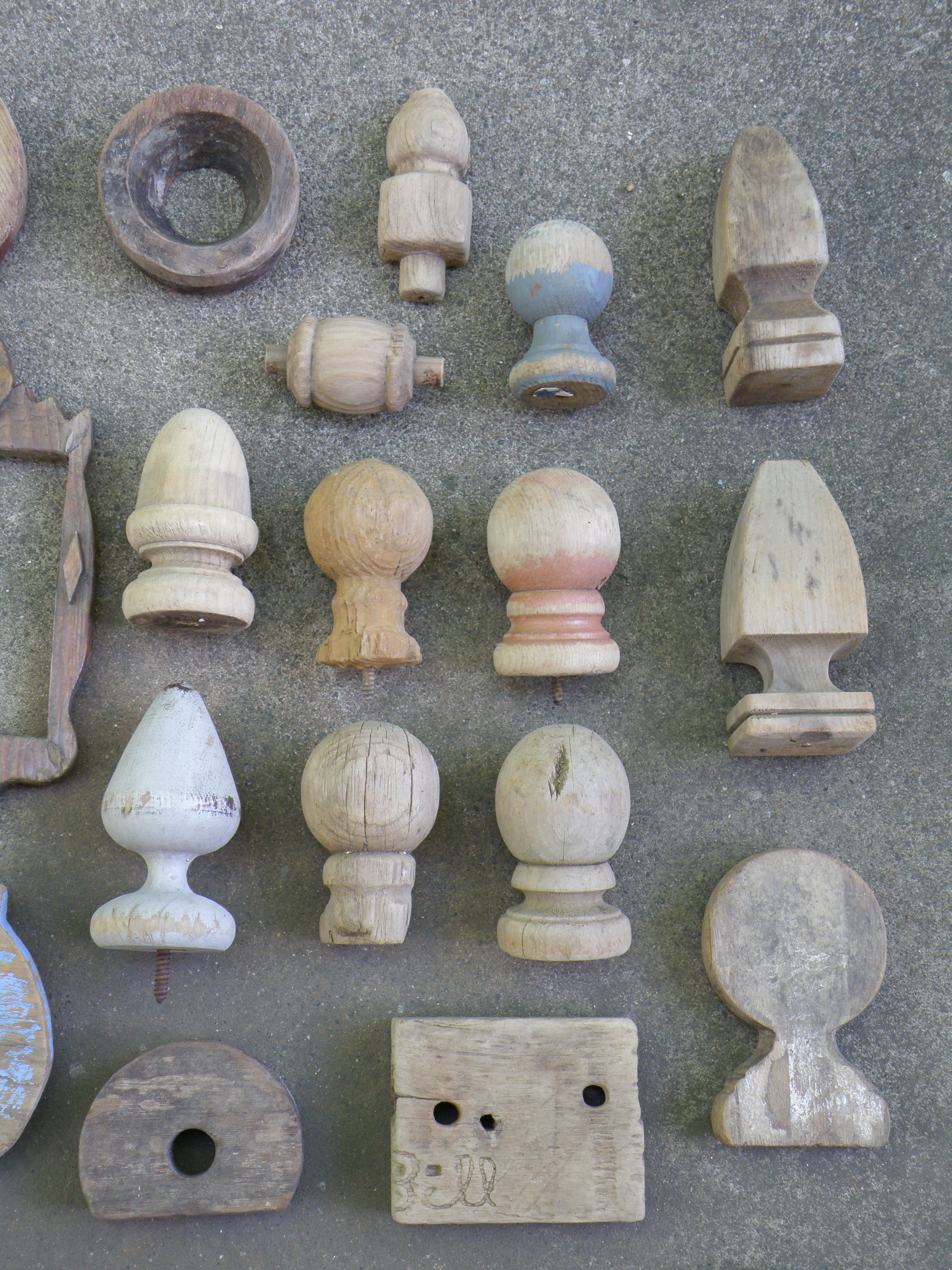
Here’s a slightly different collection of wooden artifacts I’ve saved over the years.  Some things I recognize and others require pondering to figure them out.

The objects on the right are mostly finials from fence posts.  The circular objects with the holes in them…I’m not sure how those were originally used?  Could they be part of a float system for barge ropes or are they wooden wheels for toys…could they be lids for some kinds of containers?  In this grouping I have also included a small rustic picture frame I found as well as a whittled stick I could tell someone cut and scored and is perhaps the most minimal artifact in my altered wood collection.  I find many board fragments, but I kept one small piece because someone named “Bill” tried routing his name in the wood and drilled a few holes that became bigger as the wood softened and aged from exposure to water.  This piece of wood exhibits several ways we leave our mark on nature.

I also have a sign collection that can be seen in my Pages section.  Most all of them are also made from wood and were once part of this unusual driftwood mix that came from the Ohio River.  I’m thinking of putting my found “Bill” board in that collection because it too is a sign of the times as we lose our ability and desire to write in cursive.  Very few schools in my area even bother to teach this skill anymore.

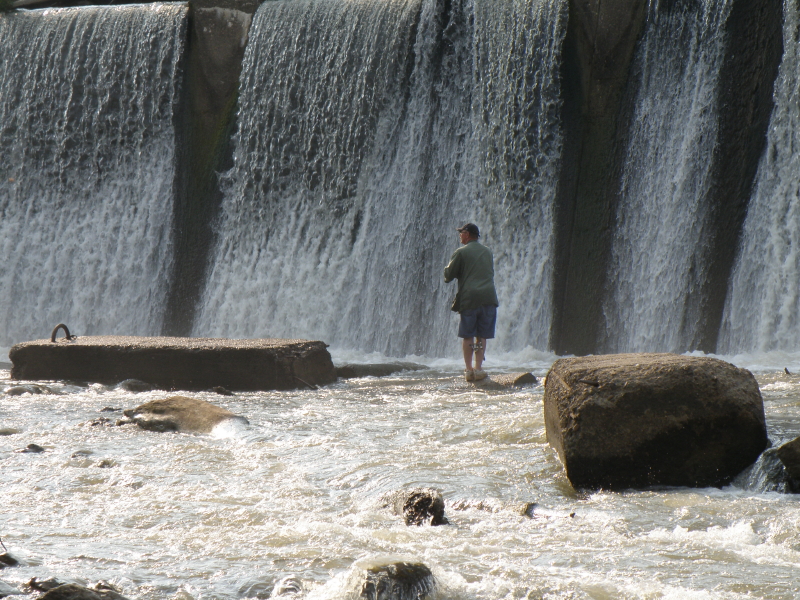
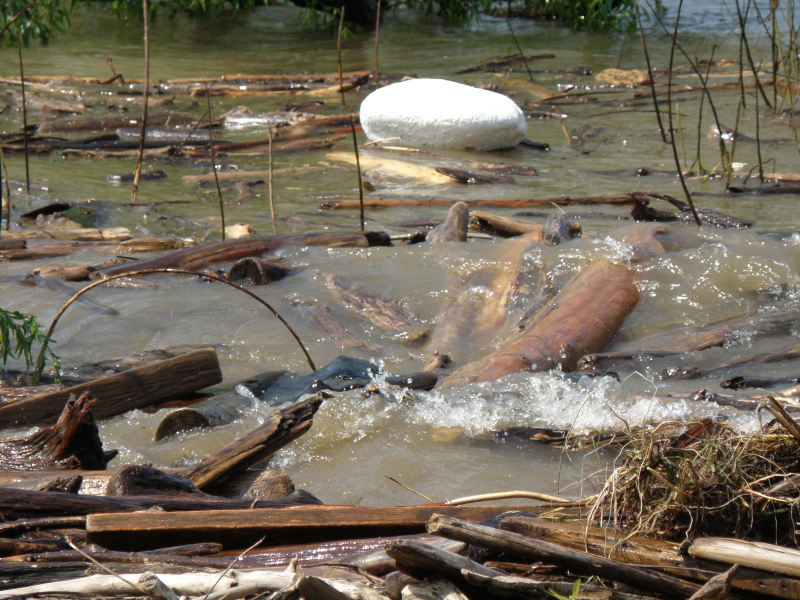
Not all the driftwood in the river consists of logs, branches, and roots.  Much of my riverblog bears witness to the extent our handiwork pervades the larger environment.  What I see happening in my part of the world I assume is transitioning  simultaneously across the surface of the planet.  We have added our own distinctiveness to the overall material aggregate which challenges our now quaint notions of what is “purely natural”.  I was right when I mentioned in an earlier post that the month of July would find a way to be memorable.  It’s official now, July was our hottest month ever in what is shaping up to be our hottest year ever.  Much of our country is experiencing an intense drought and so I end with a picture of what it looks like when there is too much water.

Read Full Post »

I have been doing some armchair beach combing while my knee recovers and I have selected images to help tell the story of wood at the Falls of the Ohio.  Since this wood was also once alive, it is also the story of trees along the Ohio Valley. When I went through my last three year’s worth of images…I found enough material for a few “wooden posts”.  Hence, this is Part I of what may prove to be a couple of stories.  The Falls of the Ohio is well-known for its driftwood deposits and many people (and some animals when I come to think about it) like to take advantage of this resource.  I have met many a person in pursuit of a select piece of wood.  What folks do with this wood is as variable as the person.  Some people like to use driftwood to enhance garden displays, some are inspired to make art from the found wood, and others may choose to burn this wood during cold winter nights.  I’ve seen Pileated Woodpeckers make short work of decayed tree trunks in their pursuit of carpenter ants and beetle larvae.   And once I found a Mallard duck’s nest inside a hollow log.  I’ve seen many beautiful fungi helping to convert this wood to humus. Driftwood is plentiful in the park and what usually happens is the Ohio River during its high water moods moves the old wood out and lays down a fresh layer that originates up-stream from us.  Sometimes I wonder if the wood I’m seeing is also part of the riverbank eroding in the northeast? These days, riverine ecosystems are under so many pressures. Since the Falls environment is continually being rearranged by nature, no two years are exactly the same and the riverbank is ever-changing.  It is interesting to me to think about these very images as digital driftwood that flows from the rivulet of data coming from my computer and tumbled into the ocean of info that is the internet.

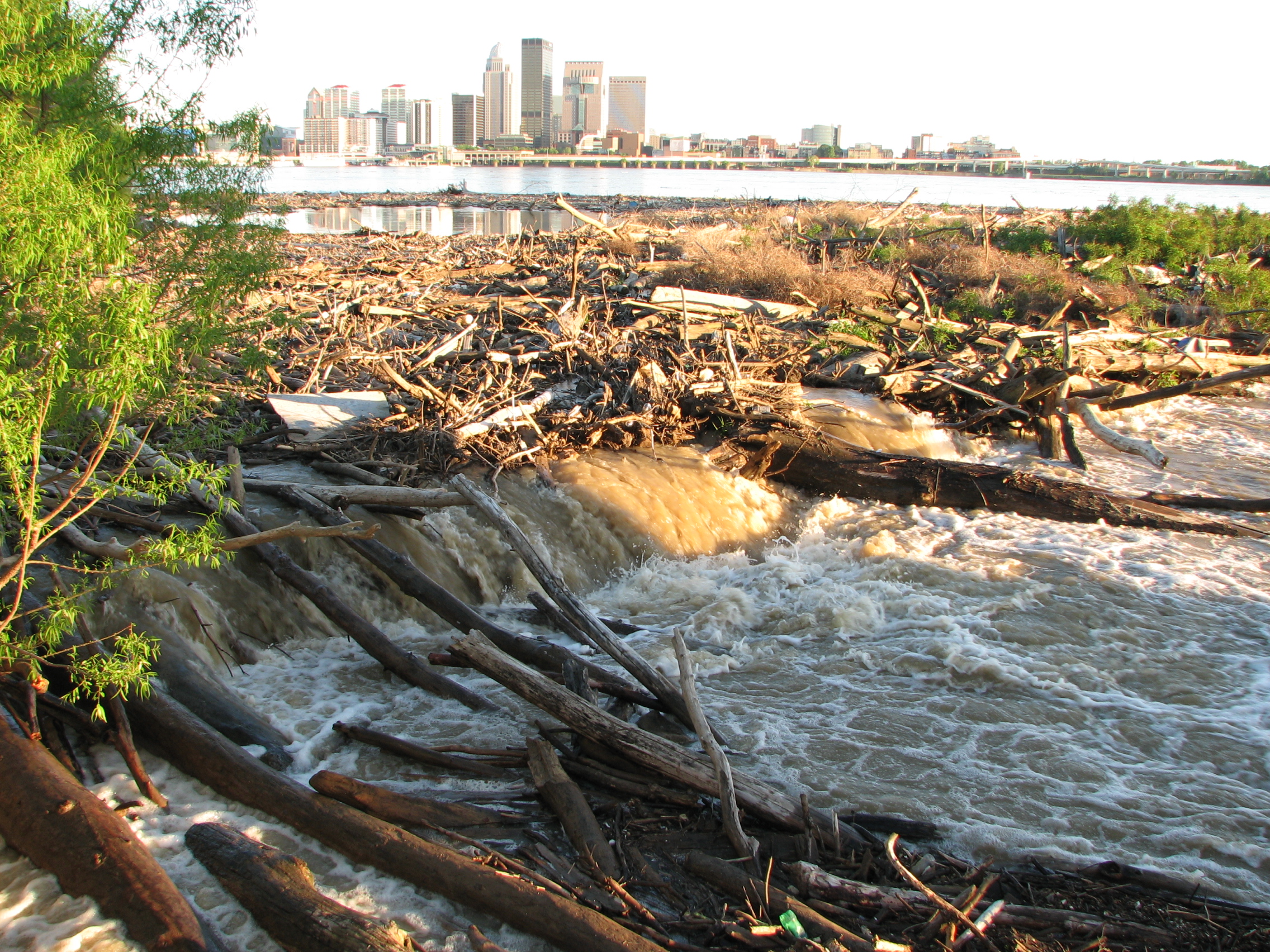
A prolonged rainy system upriver from us or a sudden flash flood caused by short, but intense rain storms causes the Ohio River to rise quickly.  “New” wood flows over the top of the dam and soon mixes with wood already in the park.

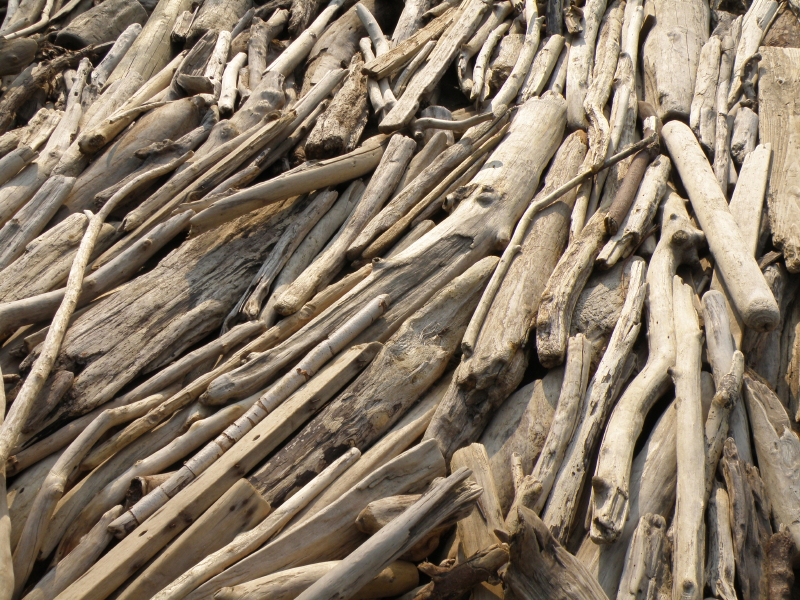
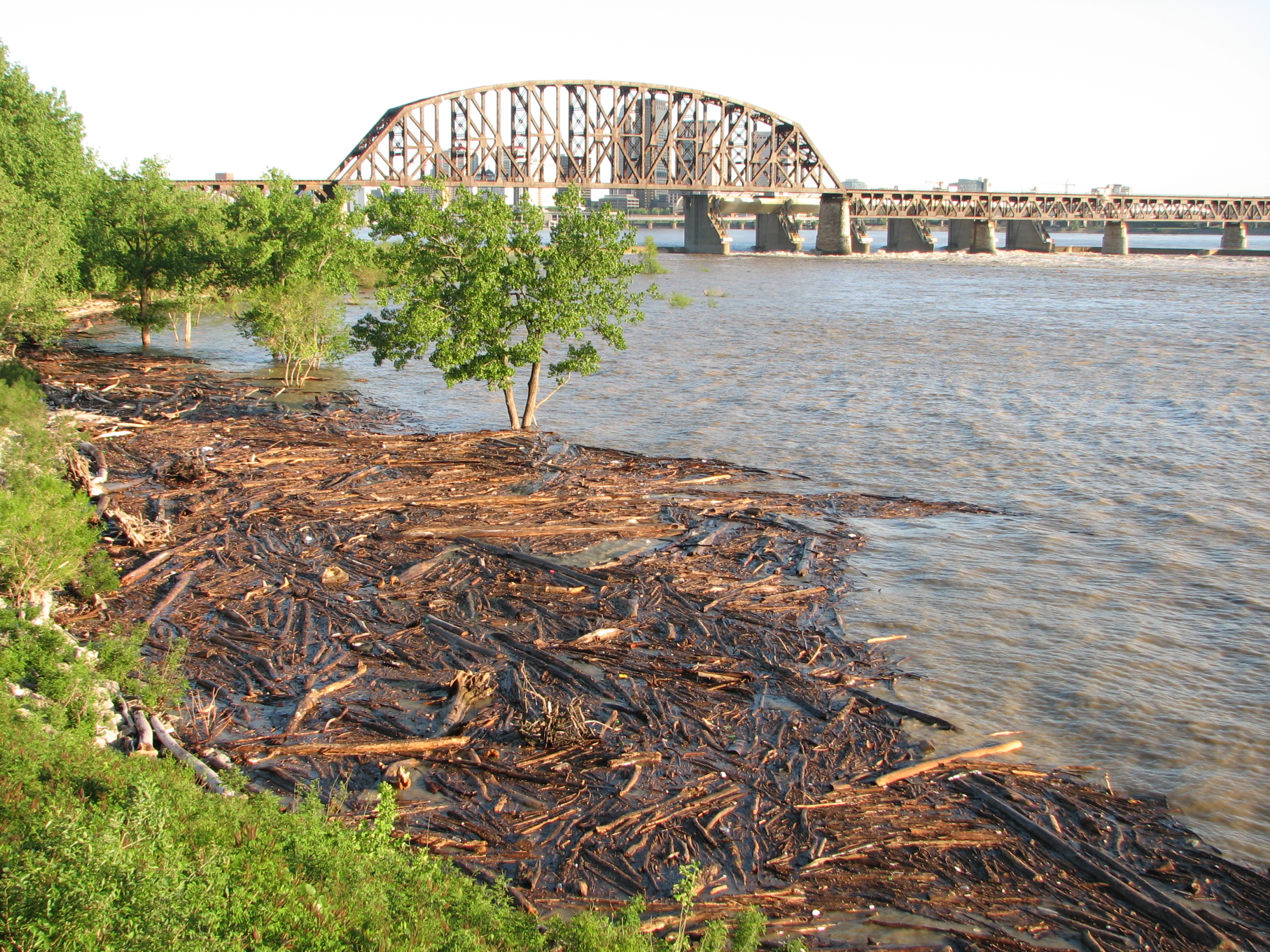
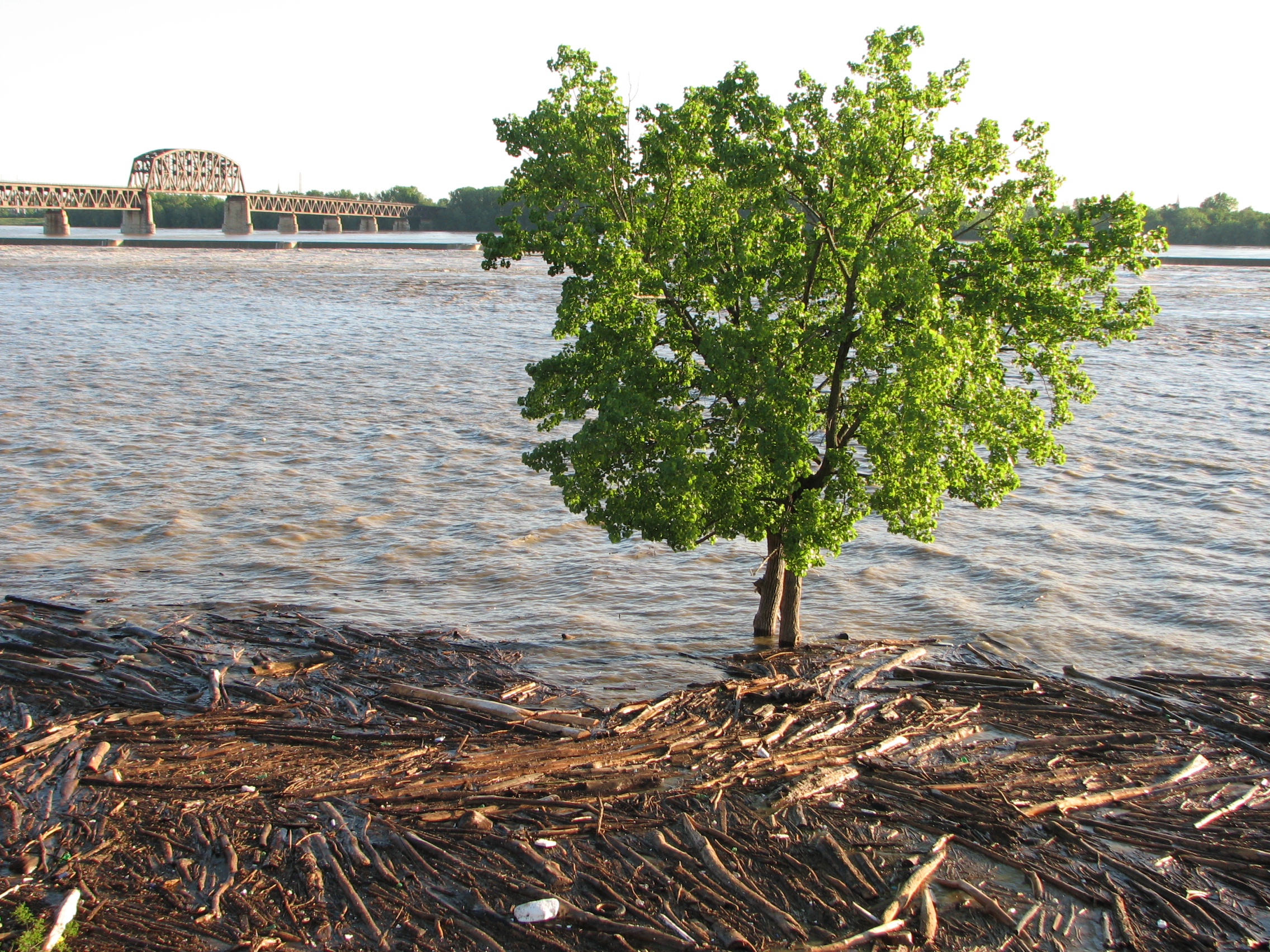
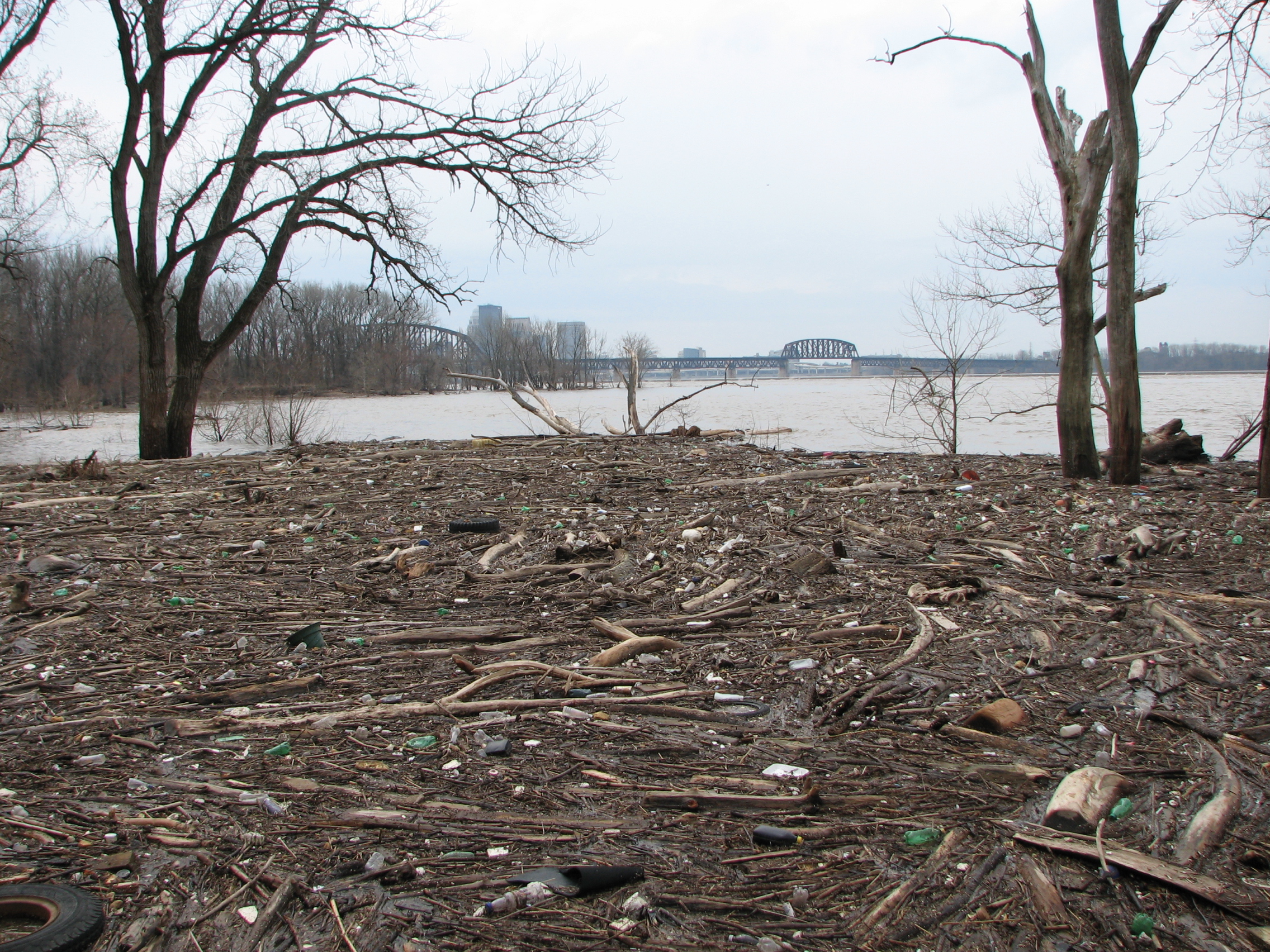
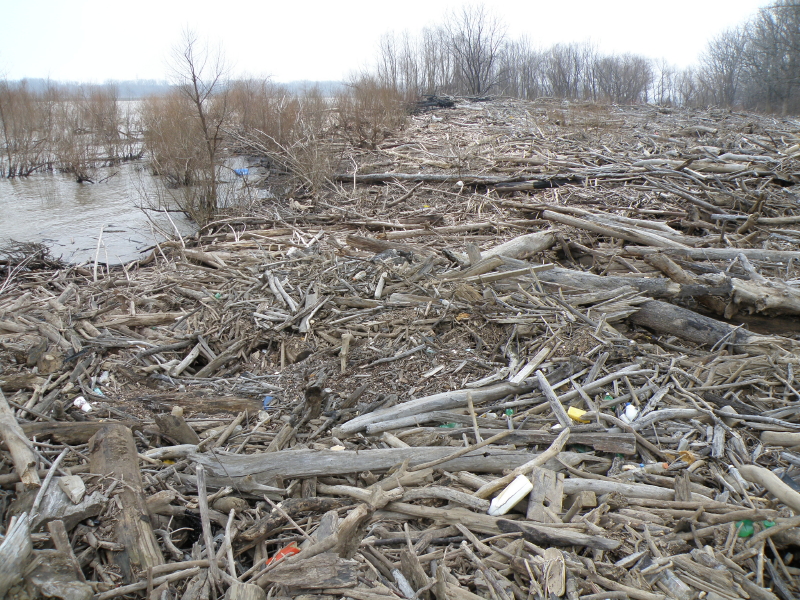
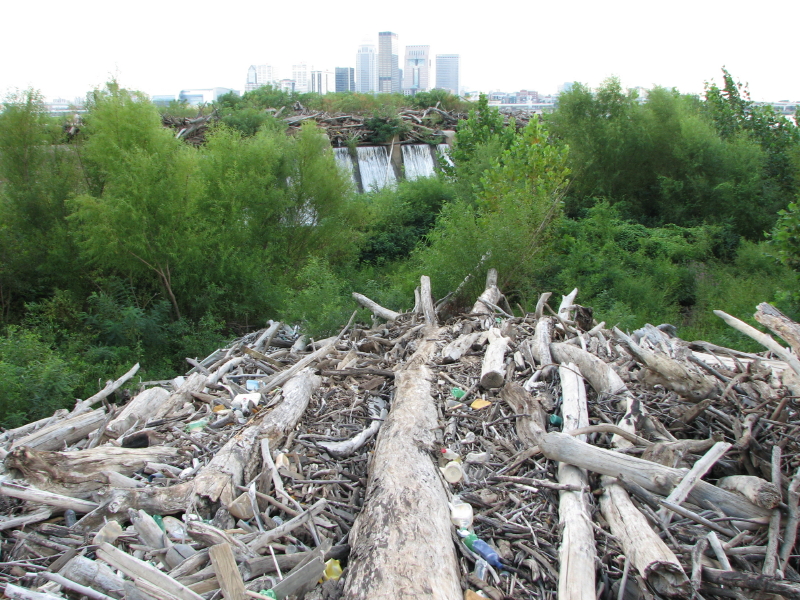
Prevailing winds and river currents push the driftwood which can form large rafts and mats against the Indiana side of the Ohio River.  If you notice, there aren’t many trees here with intact branches.  The river breaks each tree down and keeps subdividing it into ever smaller and straighter pieces.  The wood chips in the water are the remains of tree bark that have been ground off by continually rolling against the other tree trunks in the waves.  Of course, there is other detritus much of it man-made also in the water. Eventually the water recedes and strands the wood in interesting formations that are a part of a new and rearranged environment.  Here are a few images made while the river retreats.

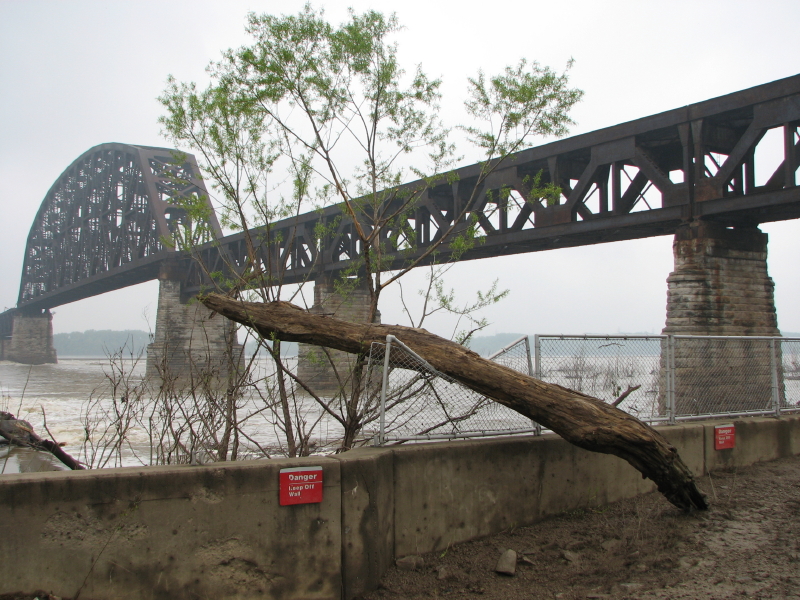
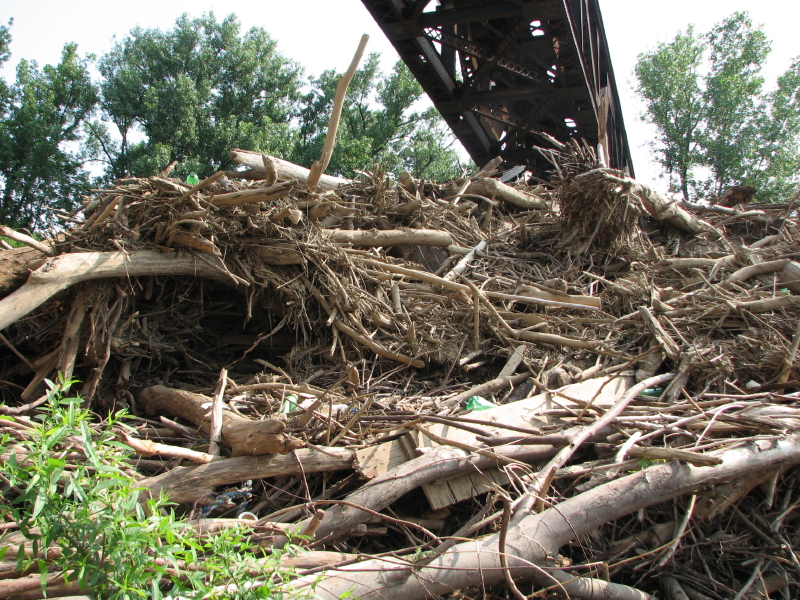
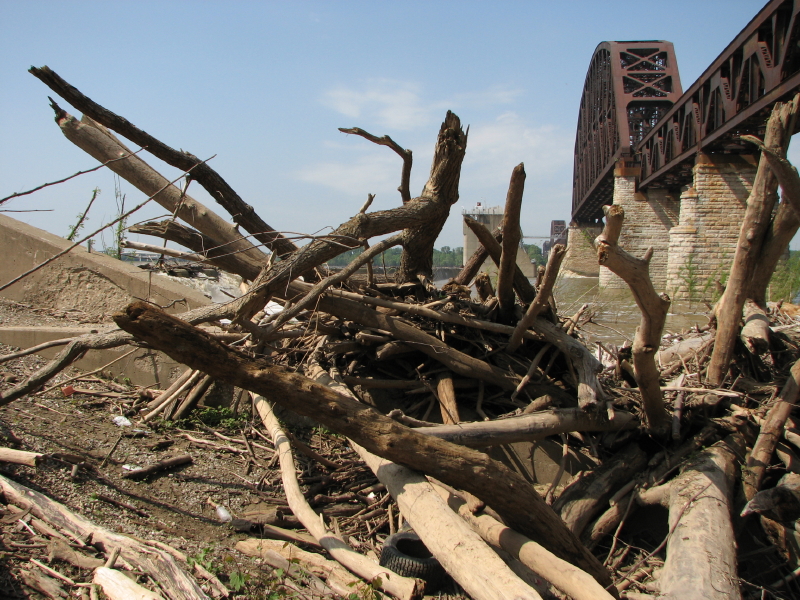
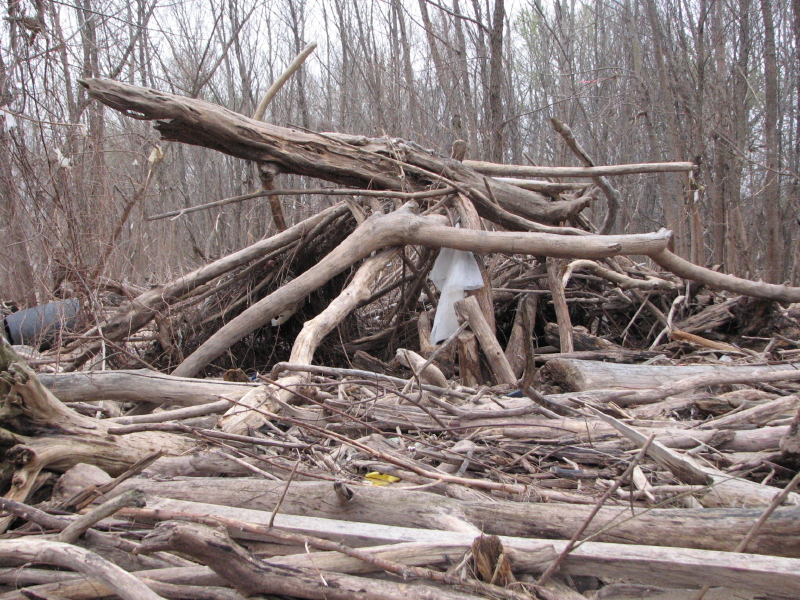
Not all the driftwood gets corralled by long logs that organize the smaller ones into neat parallel rows that fill in beach space like pieces to a puzzle.  It’s fascinating to get a sense of the water by how the wood was laid down.  Sometimes there is just so much material that immense mounds are formed by the interlocking wood.  Exploring these mounds can be tricky because the wood is still settling and caution is recommended.  At the moment, there is a sizable amount of driftwood under the railroad bridge which is also closest to the dam.  Here are a few images of all these logs after the water has drained away.

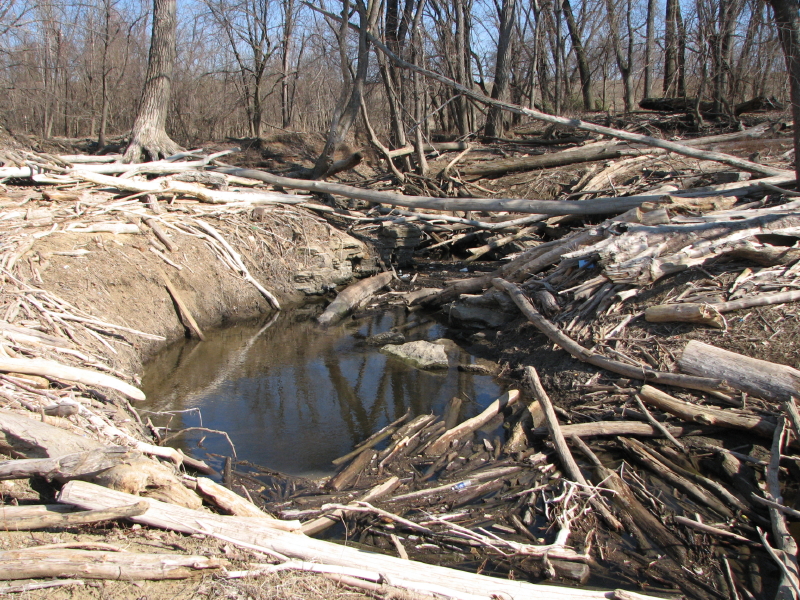
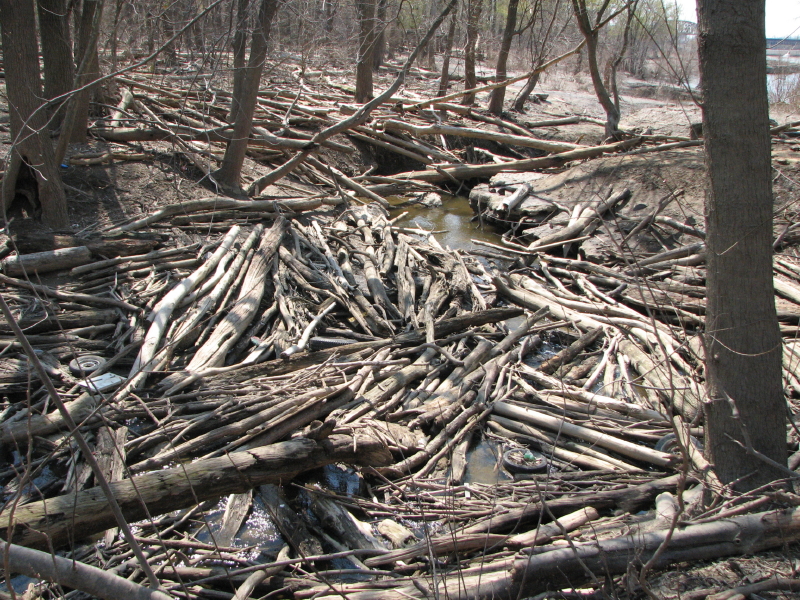
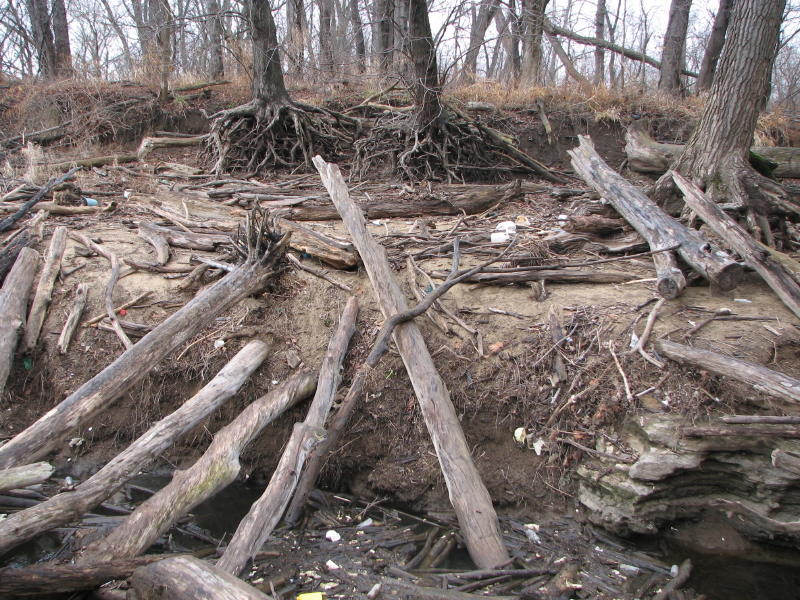
The small creek that flows into the Ohio River gets backed up with logs during high water.  When the water recedes and deposits the wood, it covers the contours of the creek’s banks.  Here are a few more recent images.

In the above image you can see how the trees that line this bank are beginning to be exposed by the river.  I believe there is just so much additional water and energy in play now because of climate change that the days of gentle rains will be fewer and farther between one another.  In our area, many residents have noticed that our storms seem to be fiercer and becoming more event worthy.  The main beneficiary of this are the television weather forecasters who love to hype the weather anyway.  I believe I will end here for now, but will continue later because there is more to say about this driftwood.  To close, I will end with another large and sculptural mound of driftwood.  Have a great week and month everybody!!

Read Full Post »

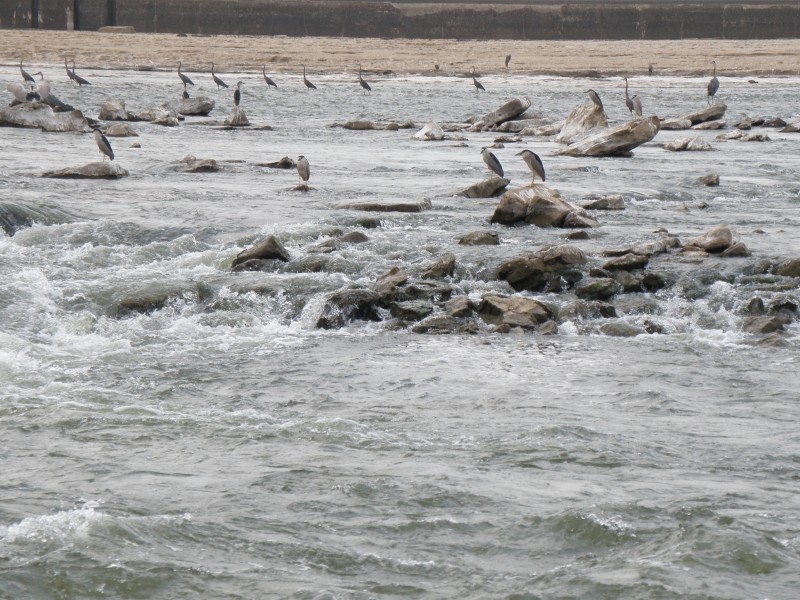
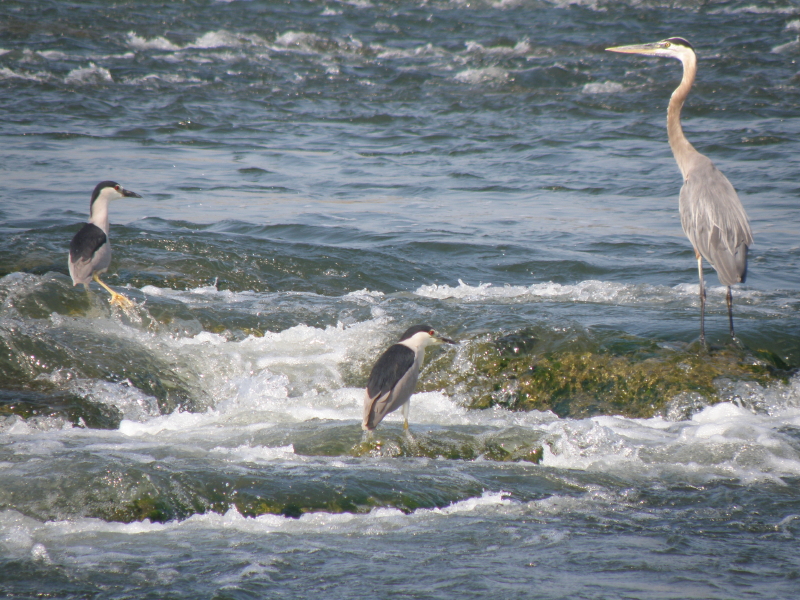
The heat is on at the Falls of the Ohio.  It is looking like this will be a summer to remember.  In the Louisville area, we have already set all time record highs for the month of June.  Yesterday, it was 105 degrees here or around 40 degrees Celsius in the rest of the world.  Coupled with the heat is a lack of rain.  So, when it’s this miserable outside…who in their right mind would be walking around under this crazy sun?  That would be me!  I’m here at the river’s edge and imagining that I’m one of the dozens of herons I can see fishing from their spots by the fossil rocks.  I take my shoes off and cool my feet in the river.  This provides some respite.  It occurs to me that perhaps these herons aren’t fishing after all, but have discovered that they can beat the heat by wading in the water?

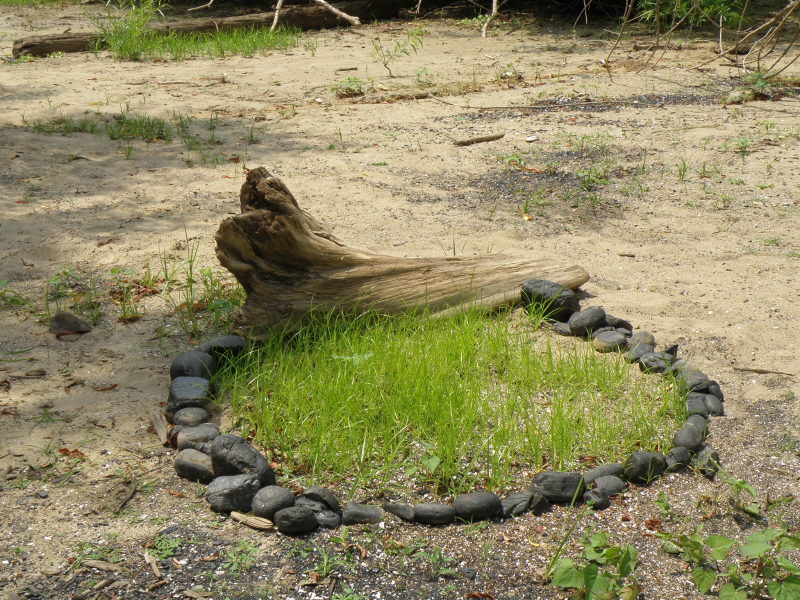
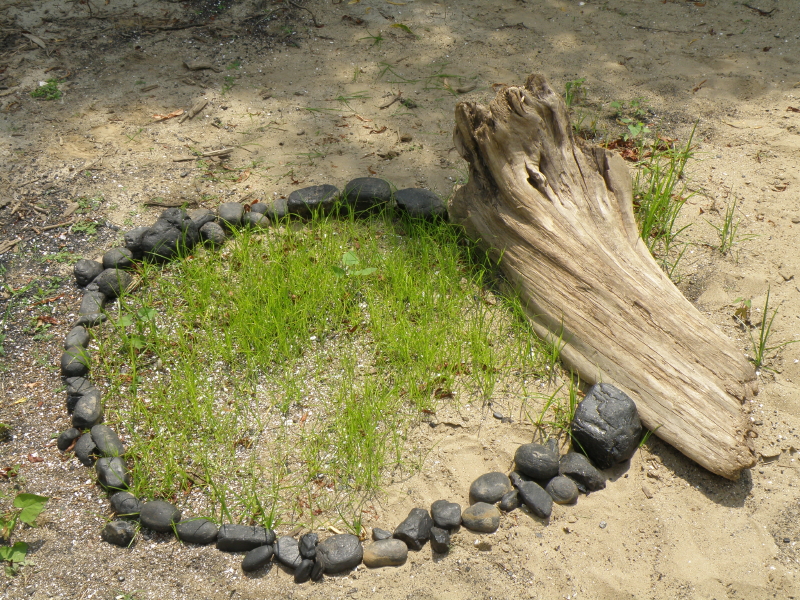
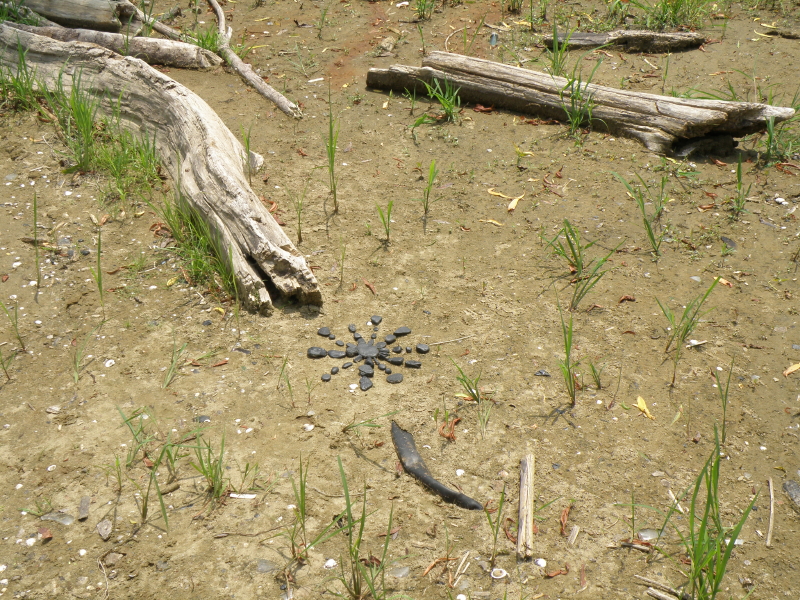
All the coal flake designs from the last post are gone.  In places, I can see how someone has dragged their foot deliberately across the patterns to erase them.  Why a person would feel compelled to do this is beyond me?  I’m nearly numb to the idea by now.  I am actually more surprised when any of my projects manages to survive for any time at all.  I have the images and that will have to do.  I do have this other coal project going out here.  It really isn’t any thing special.  Just coal defining the perimeter around a patch of grass I noticed growing next to a piece of driftwood.  I imagine that the wood provides some measure of protection from the wind or catches more dew and that is why this very small area of grass is growing.  The coal ring is meant to call attention to this.  So far, it has managed to survive being stepped upon, but if it doesn’t rain soon…I’m afraid my small patch of grass is a goner.

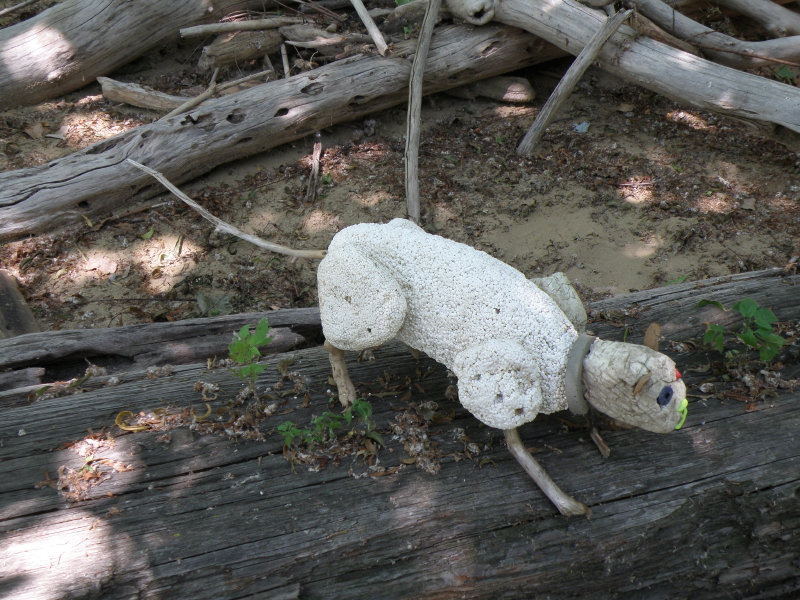
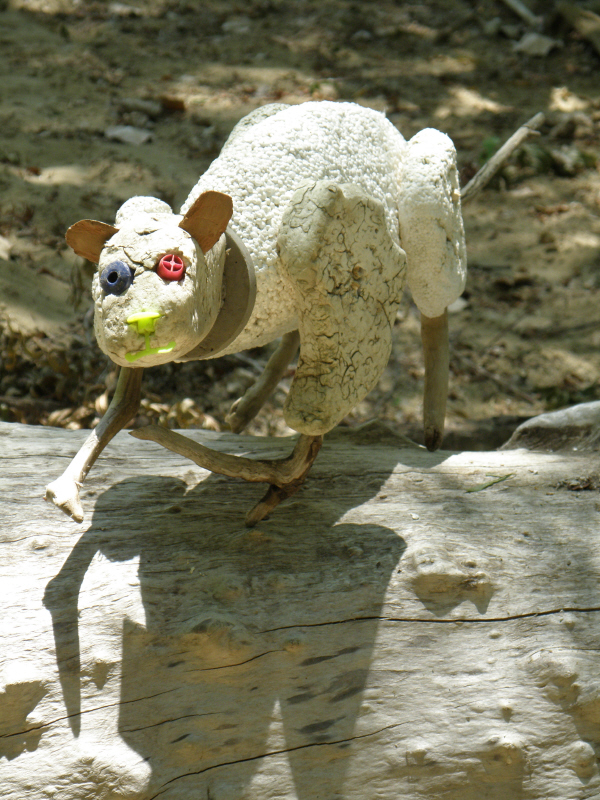
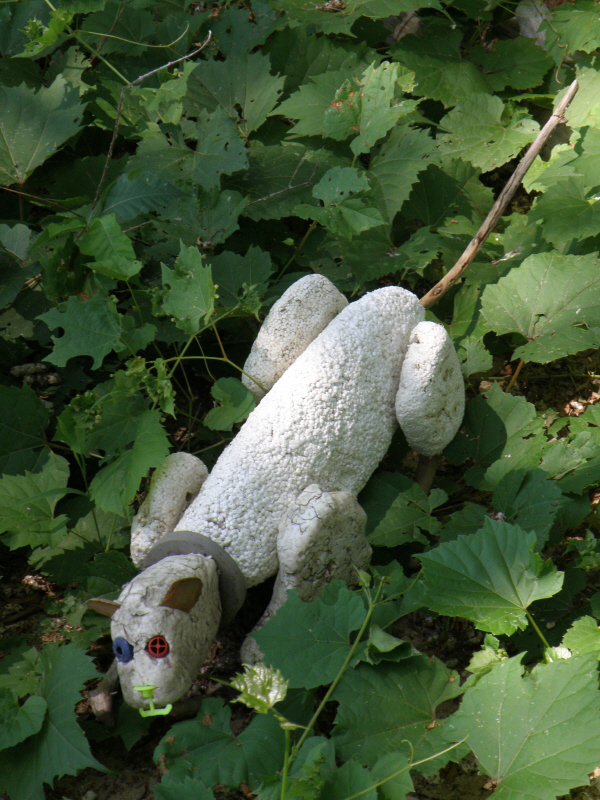
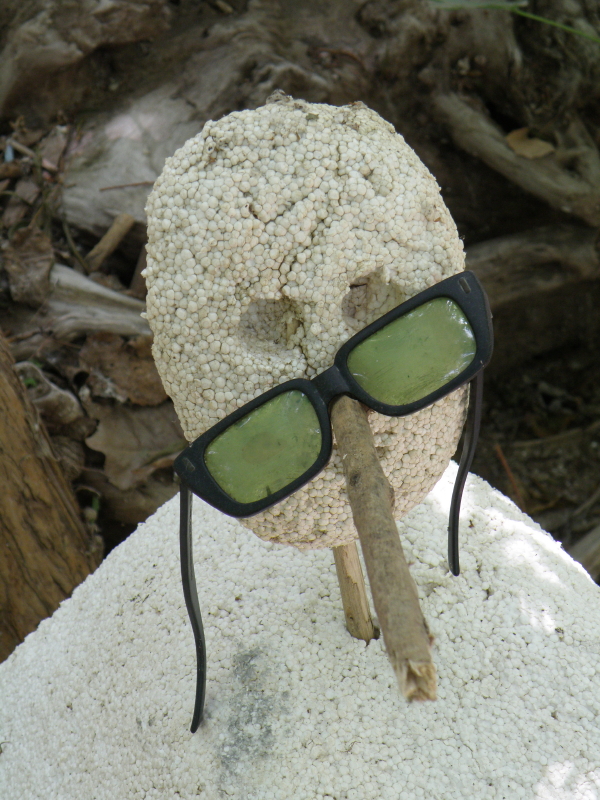
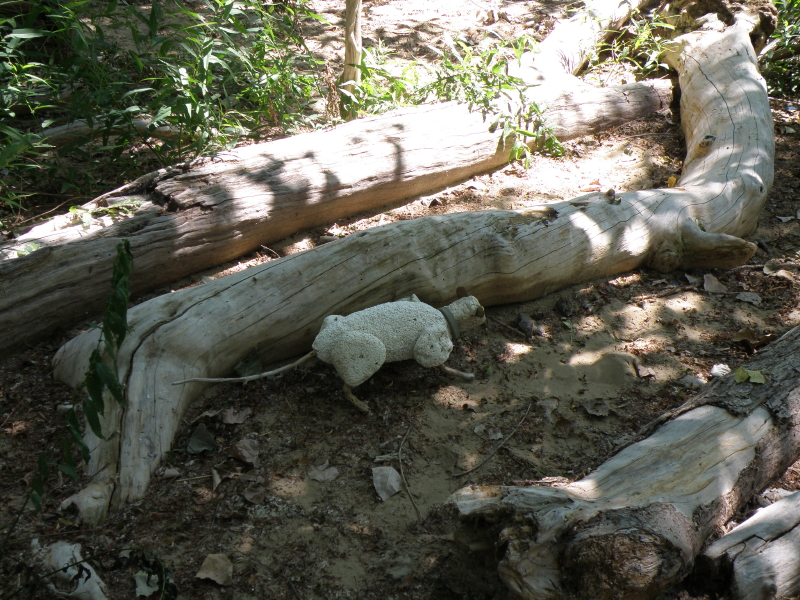
After cooking in the sun for a bit, I returned to my Styro-studio under the shade of the willow trees.  There is a trade-off.  Although I’m not under the direct scrutiny of the sun, I do however, become a tempting meal for mosquitoes and biting flies.  Looking around, I can see that I have had visitors because the Styro-figure I had stashed here has been destroyed and someone has attempted to create another figure from its remains.  An old pair of sun glasses I had previously found was just barely hanging on to the new figure’s eye-less head.  I do like it when people play along and imagine other possibilities.  I was looking through  my  larder of polystyrene chunks and wondering what to make next when I spotted some movement in the near distance.  Grabbing my camera I carefully stalked behind the trees and caught another member of the Falls’ distinctive fauna unawares.  Here is my informal portfolio of the River Cat.

Hiding behind a log I saw the River Cat hunting.  Among its habits…it is an ambush predator that conceals itself along the trails used by its prey which includes other small mammals and birds.

Once it was a common small predator found throughout the Midwest of the continent, but was persecuted and destroyed because it unfortunately developed a taste for chickens and other small livestock.  It was poisoned and trapped and extirpated from the majority of its former range.  Small remnant populations have clung on enjoying the protection they have found in state and national parks.

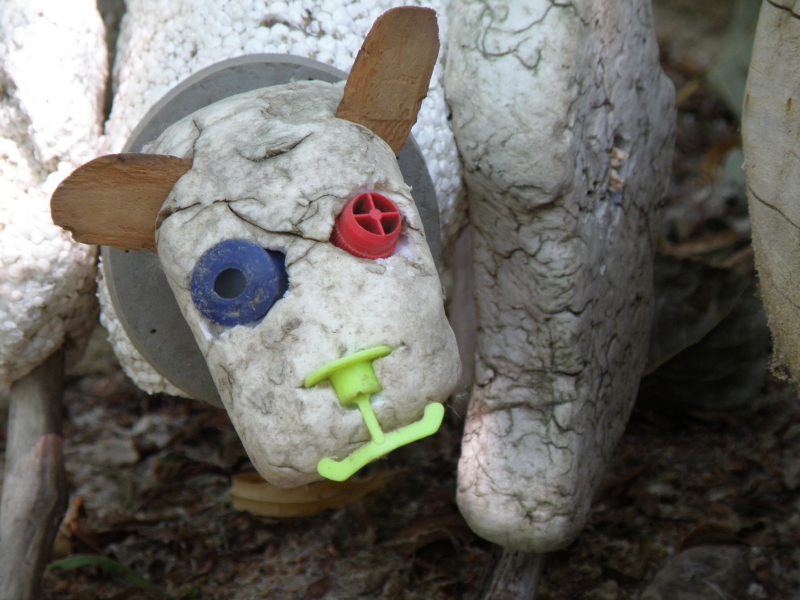
I watched this River Cat for several minutes before it discovered me!  It wasn’t  sure what I was and it jumped up onto a large log for a better look.  At this point, I wasn’t sure what it was going to do…but I kept on taking pictures.  Here is a close up of its head which illustrates one peculiarity about this beast.

River Cats have mismatched eyes.  There is an old pioneer wives’ tale that the secret to this cat’s hunting success lies in locking its gaze with that of its prey’s.  In effect, it momentarily hypnotizes its quarry before coming in to make the kill.  Whether or not there is any paralyzing effect at all has never been formally proven.

Once this unusual cat discovered that I was neither food nor threat it moved on.  I tagged behind at a respectful distance.  I followed it near the river before it gave me the slip.  Knowing that it was probably hungry, the thought crossed my mind that it might try to ambush one of the wading birds I saw earlier.  Picking up my collecting bag and walking stick I headed back down to the river.  Unfortunately, my luck didn’t hold out and I wasn’t treated to a real life moment where hunter meets prey.  I never saw the River Cat again, but I do have a few photos to prove it was here.

Read Full Post »

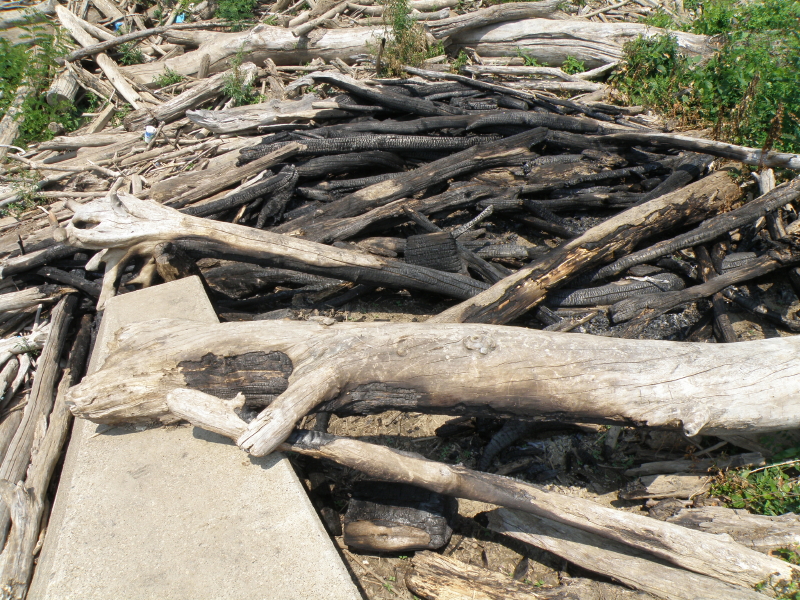
I’m getting out here a little later than I was aiming for and now the summer heat is awake too.  I’ll take my precautions and take it easy under the shade of the willow trees.  There’s been another fire on the margins of this immense driftwood pile.  My guess is a hot cigarette butt flicked casually away landed on tinder and poof!  The wind probably did not encourage the flames this time.  It looks like it either went out on its own or firefighters were successful in quickly containing it.  This area under the railroad bridge still smells a little smokey.

In many ways this post is an extension of the last one…minus the ropes.  I guess I’m guilty of multitasking out here.  I often have more than one project going on at a time.  For example, I have a series of coal related investigations I have been doing that provide some relief from the Styrofoam.  Some of these  projects might make it into a coal-themed art show I’m participating in at the end of the year.  It will be interesting to see what the other artists come up with.  Last year we traveled together to see and talk with people whose lives were touched by their contact with coal.  Of course the issue of mountaintop removal was in the fore front.  Although I’m interested in the many controversies that cling to coal…I’ve also enjoyed working with it as a potential art material.  The coal that washes up at the Falls of the Ohio comes from the commercial barge traffic floating small mountains of crushed coal to the various hydroelectric plants along a channelized Ohio River.  Apparently, the river’s  current is strong enough to move these stones along and shape them.  And like Styrofoam, coal can be tumbled smooth and round in the process before it reaches me at the Falls of the Ohio.  I have found pieces as round as a chickens’ eggs and as flat as coins.
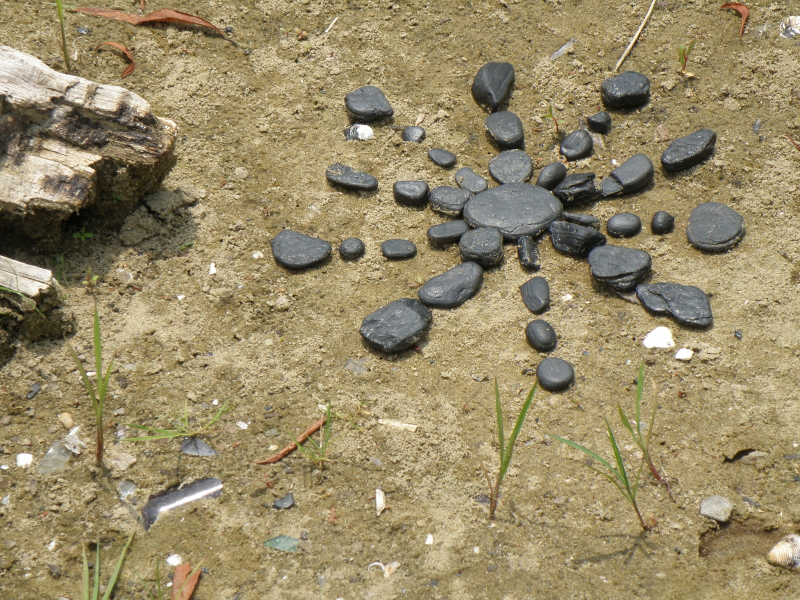
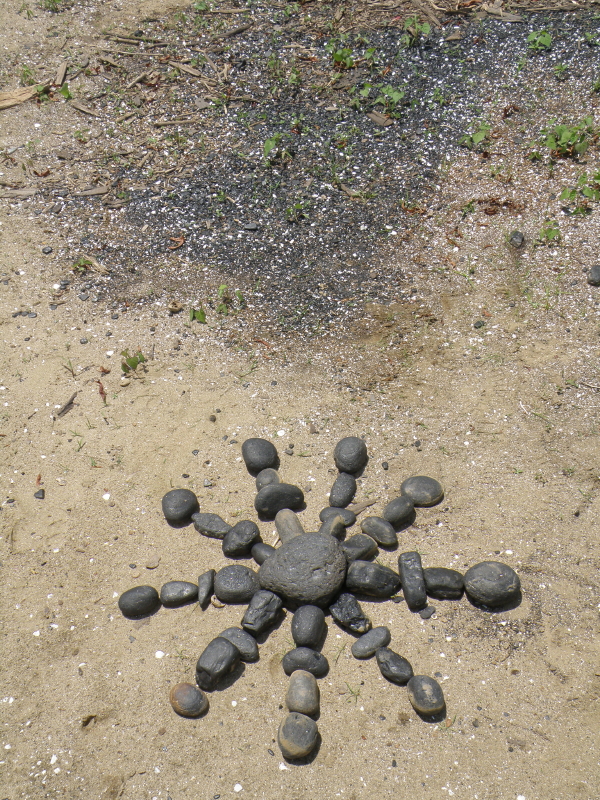
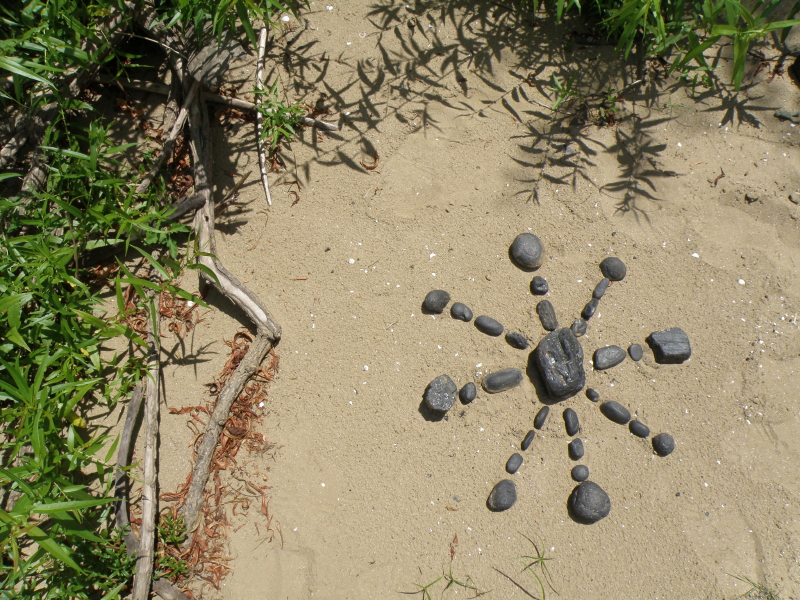
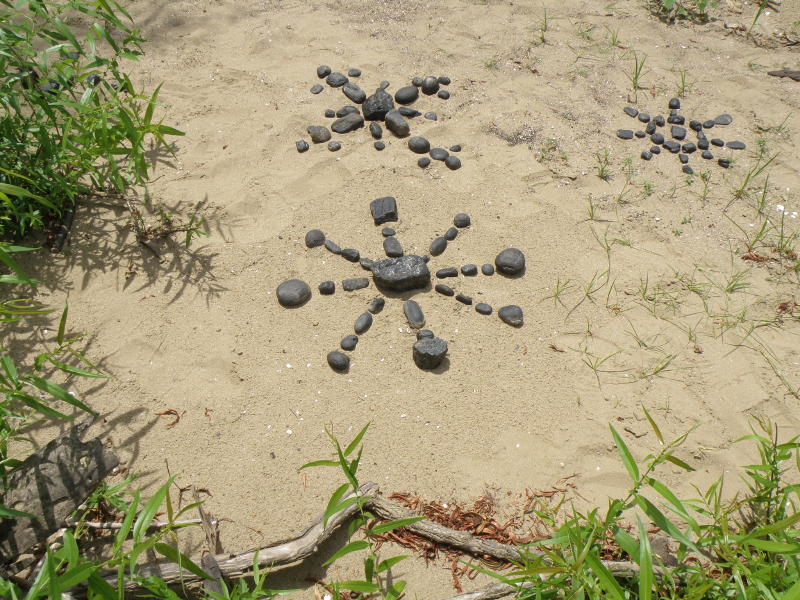
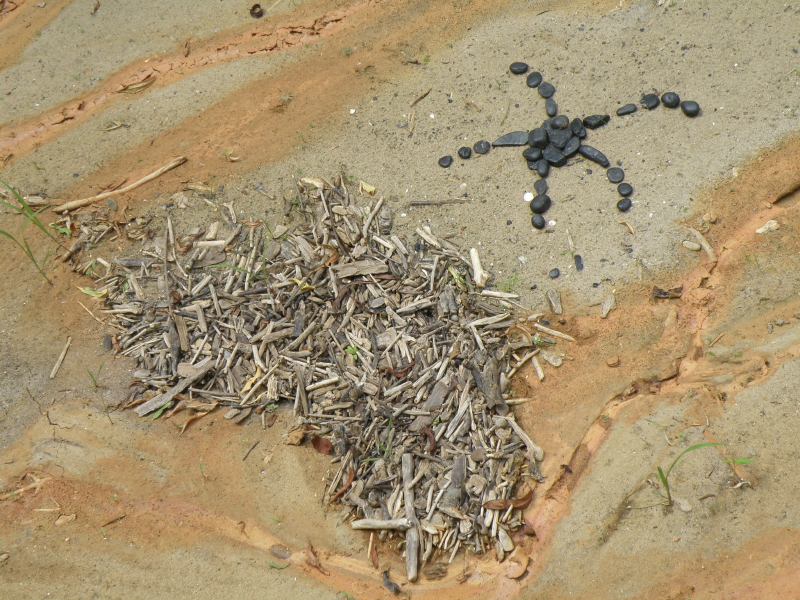
I’ve been collecting the coal I come across and looking for areas by the river that have more deposited on the sand.  First, I started with a few star shapes, but a remembered conversation I had with a friend created a different connection that I drew inspiration from.  My friend lived as a child in a small town in Pennsylvania associated with the steel industry.  He recalled that in winter, the whiteness of fresh snow would soon become gray and black due to air borne coal ash and particulates.  It was everywhere and got into everything.  That’s when I hit upon the idea of making snow flake-like designs from coal and photographing them.  Here are a few more from this series.

I’ve been placing these near well-worn paths that fishermen take to the water’s edge.  They call into attention and work with the small areas they occupy and provide visual interest.  I like that they have this public participatory aspect to them. Here are a few more sample images of the coal flakes before they “melted” back into the sand.

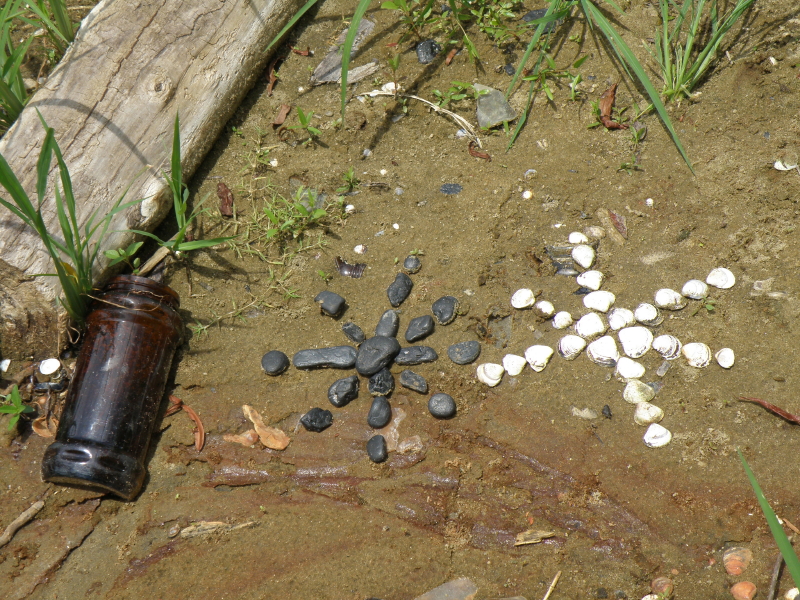
The white flecks in the sand are bits and pieces of ground-up mussel shells.  They mostly come from one foreign species that can out compete the local clams and deal with the present conditions.  Also mixed into this sandy matrix are pieces of river polished glass and small bits of plastic.  Here’s another project involving coal and Asiatic clam shells and a found coffee creamer jar.

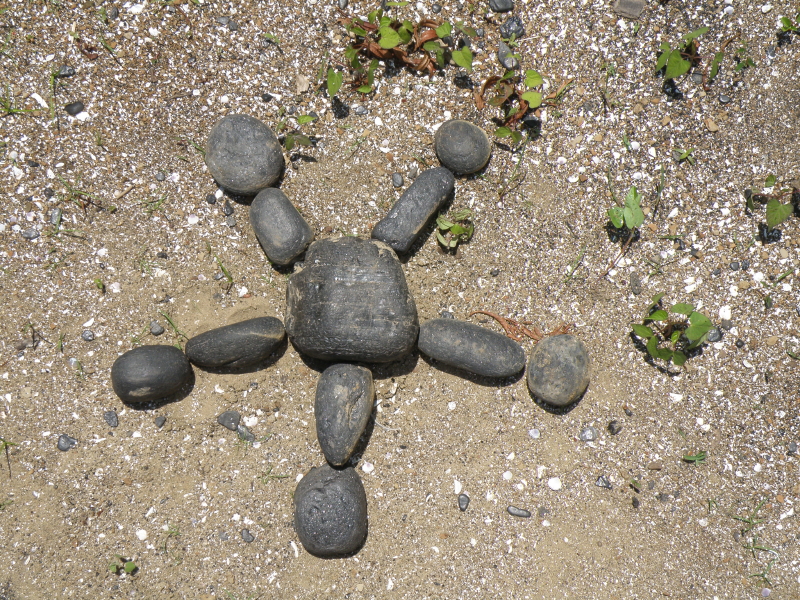
I’ll conclude with two star images that were made along with the coal flakes.  The first one looks a bit like a starfish fossil…

…and this last is just simply a star!  It’s getting too hot to hang out and so I pack up and leave after a few hours fun.  That shower is going to feel good today. Have a great week everybody!

Read Full Post »

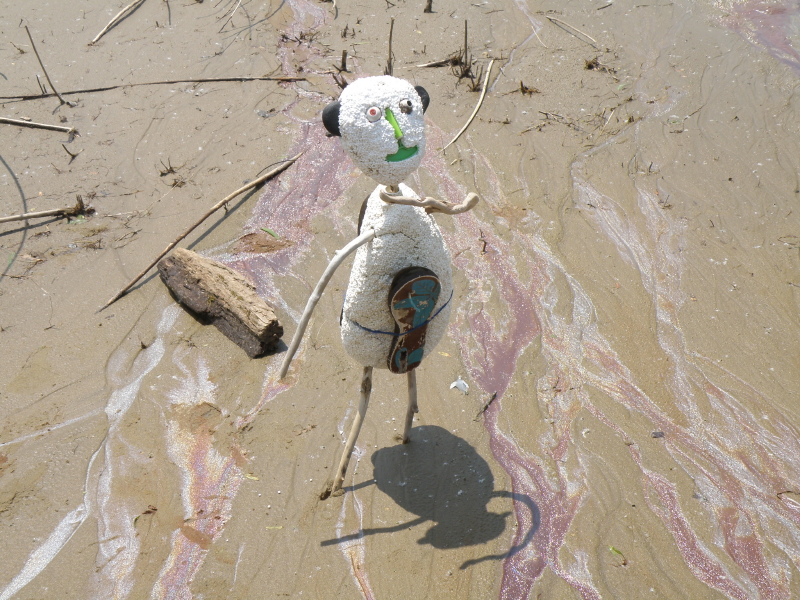
The heat and the relentless light of the sun makes it official.  It’s summer at the Falls of the Ohio.  Now I need to plan my forays a bit more carefully if I want to get the most from each trip out here.  Earlier in the day is better.  You miss most of the heat, there are fewer people (except for the die-hard fishermen) and the chances are better you might see some wildlife…especially birds.  Luckily, if you don’t make it out here early enough…the trees are all in full leaf and the shade provides needed relief.  I wonder what kind of summer is boding for this year?  So far we have had the warmest spring ever being nearly a full seven degrees above normal temperatures.  Yikes!!  No doubt, summer will find a way to be memorable.  Anyway, when I’m out here I try to take some precautions in the form of drinking water and sun block.  Once my mind engages on something…I tend to forget my body.  This post is about another “personality” that I ran into on this day and the following is his story.
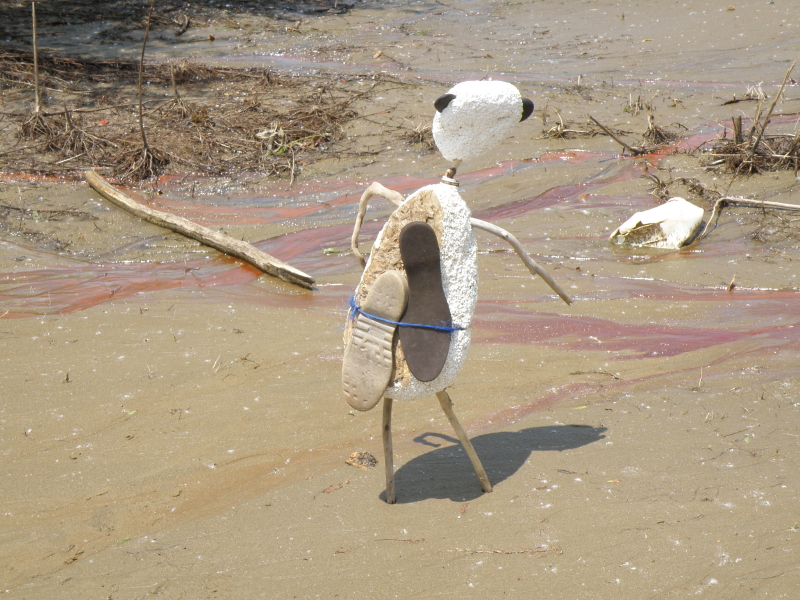
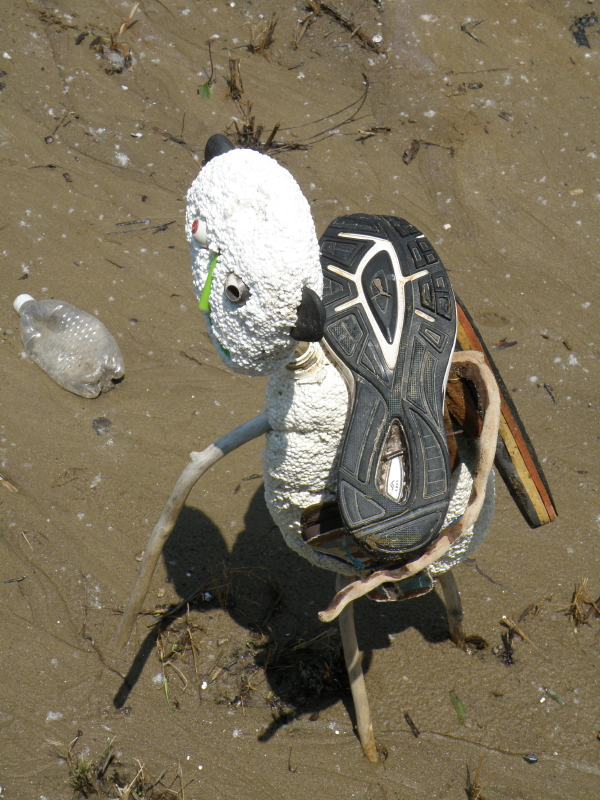
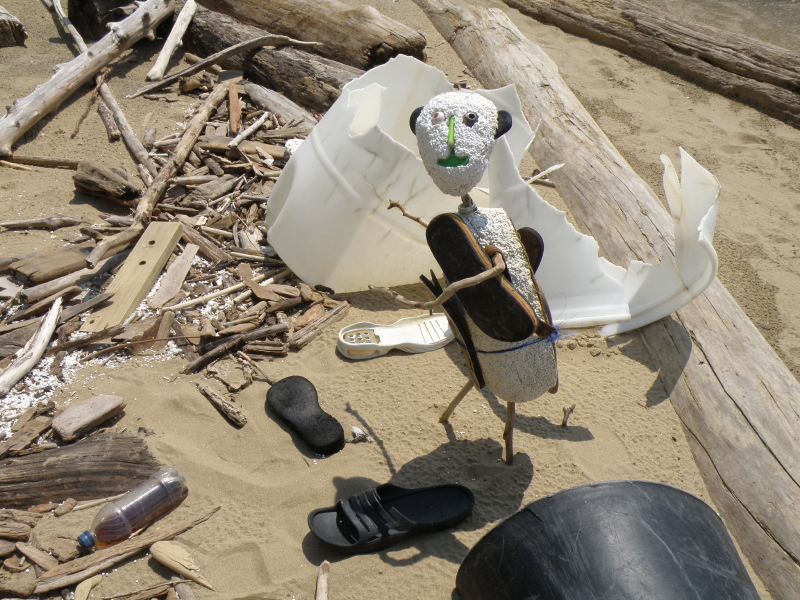
I came across this fellow several times during this day.  The usual protocol when encountering a stranger is maybe a quick nod of the head and each party then goes their own way.  I would have been happy to stick with this, but I kept bumping into this guy seemingly everywhere I walked.  One very curious thing about him (or her and how do you tell?) was that “he” was picking up old shoe soles and sticking them under his belt.  Here’s another view showing this.

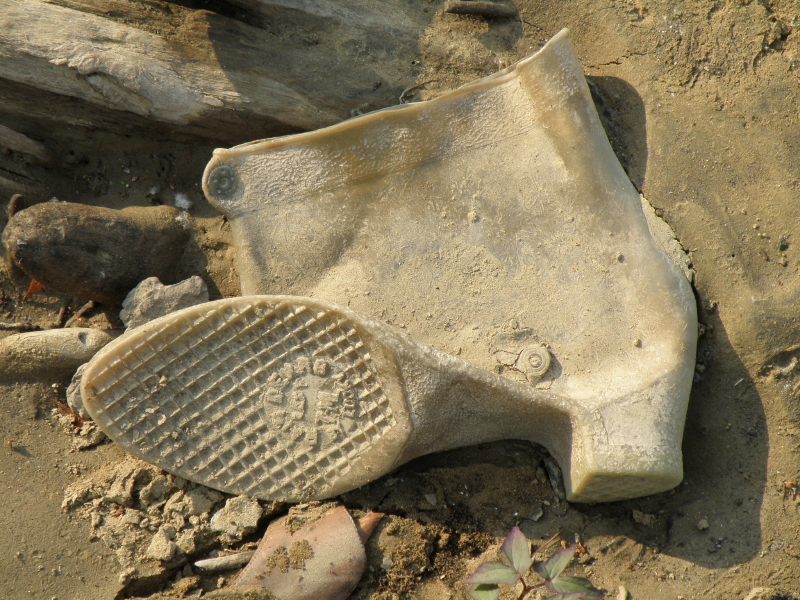
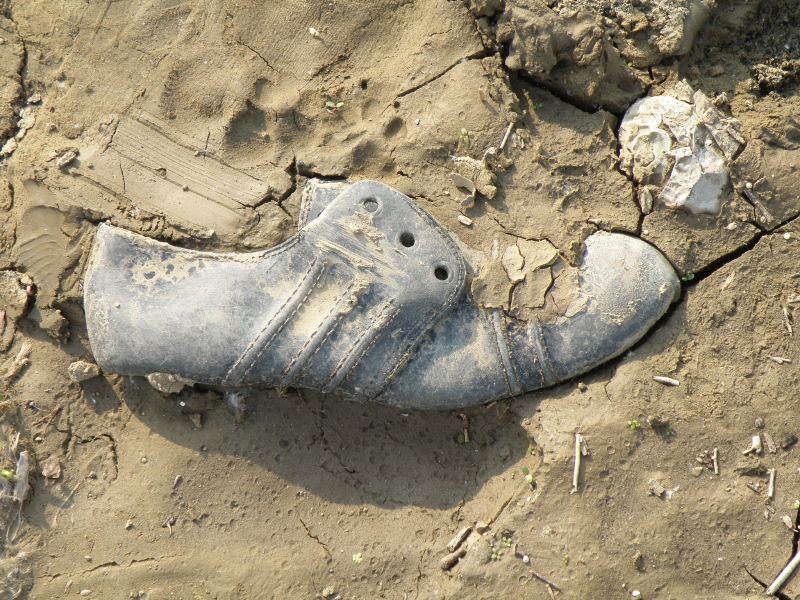
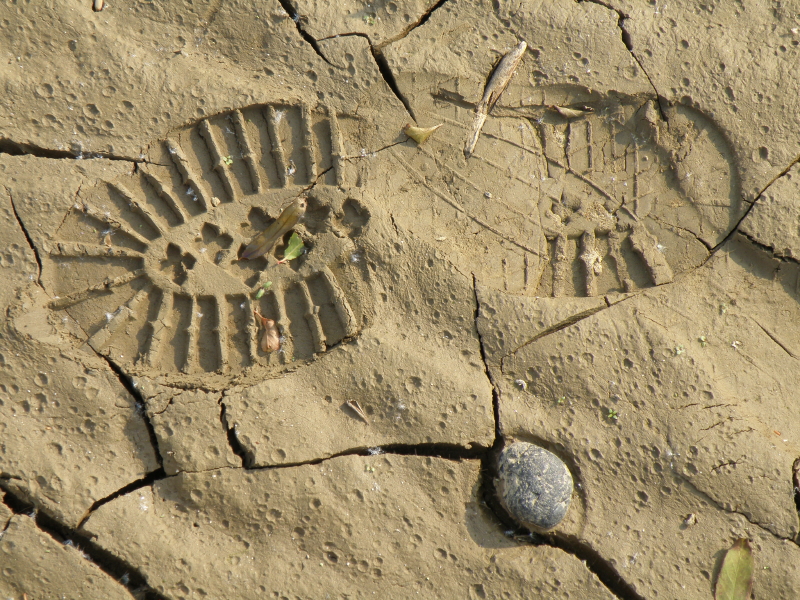
Truthfully, I was at a loss to explain this to myself and the best I could come up with for this strange behavior was that this guy forgot his collecting bag and had some type of project that required shoe soles?  I’ve already noticed that a lot of wayward shoes wind up here courtesy of the Ohio River.  If you don’t believe me, check out my special collections area under “The Shoes You Lose” and you will doubt no more!  I haven’t added images to either collection in a while, nevertheless the lost shoes keep on coming.  Just for kicks, here are a couple additional shoes I saw on this trip that piqued my camera’s interest.

Here’s another shoe found near the previous one.  See what I mean?  I could go on and on about the shoes alone.

After my first encounter with this odd character I ran into him near a willow tree by the river’s edge and he was doing the same activity as before.

This time I abandoned my typical reserve and engaged the guy in conversation.  I think I said something like,…”Hey mister, I can’t help noticing that you are collecting shoes and shoe soles and although I know it is none of my business…what are you going to do with the footwear?”  I further added, ” I see you have tucked a few more soles into your belt since I saw you earlier.”   The Sole Man (my mental designation for him) smiled easily from his green mouth and put me at ease.  I had nothing to fear from him.  We walked together for a while and he told me what his angle is and why he does what he does.  Spotting another lost sole in the sand, my new friend bent over and lifted it up.

Upon picking the sole up, the “Sole Man” flung it over his shoulder and said follow me.

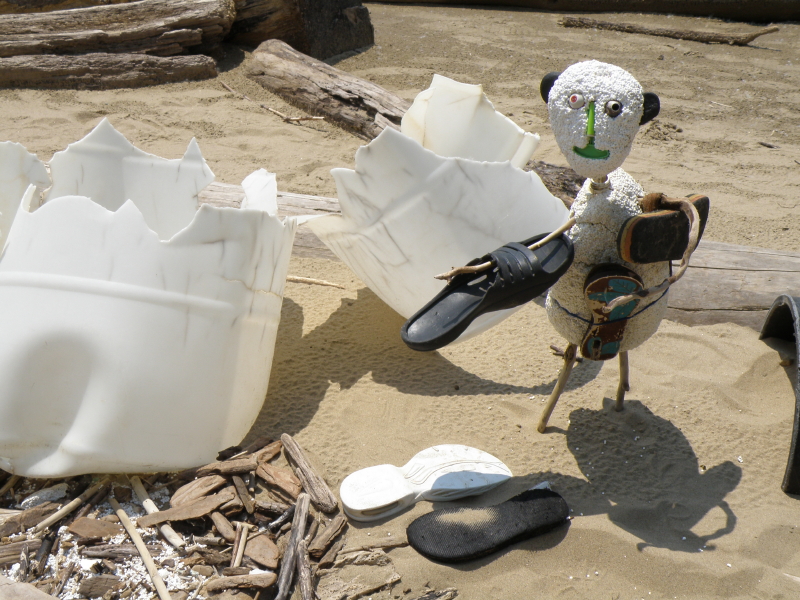
We didn’t need to walk far.  The Sole Man had a spot in mind where he told me he was going to deposit his shoes.  In the full light of the sun he selected an area marked by two shattered plastic drums, driftwood, plastic junk, and the tell-tale white beads from Styrofoam that had been deposited here by the Ohio River.

One by one my new acquaintance dropped his shoe soles in his selected spot.

He told me that he does this as a form of meditation.  Seeing all the junk from our material culture wash up here at the Falls of the Ohio has bothered him for years.  He couldn’t understand why anybody would do this to the Earth?  Fixating on all the debris was just making him madder and angrier which has  its own consequences.  He carried these shoe soles here because he wanted it to be visible so that others might see and reflect as he had.

He hit upon the idea that collecting and carrying these soles might provide him some peace of mind or insight into his fellow beings?  Each sole was a record of a lived life with their scuff marks and pressure points compressed into the very sole itself.  The sole was a record of an individual’s life experience and no two souls were bound to be alike. The old adage about not knowing a person until you walked in their shoes hit home like never before.  I asked him was it working…making him less angry?  He said that it did.  His negative feelings were replaced with something akin to empathy for he understood that he was not much different from the former owners of these shoes.  It made him feel less “high and mighty” and more of an equal stakeholder for the many conversations to come.  After a few more photographs, I bid my new friend good luck.  Leaving him, I placed one foot in front of the other and headed for home on this hot day.

Read Full Post »

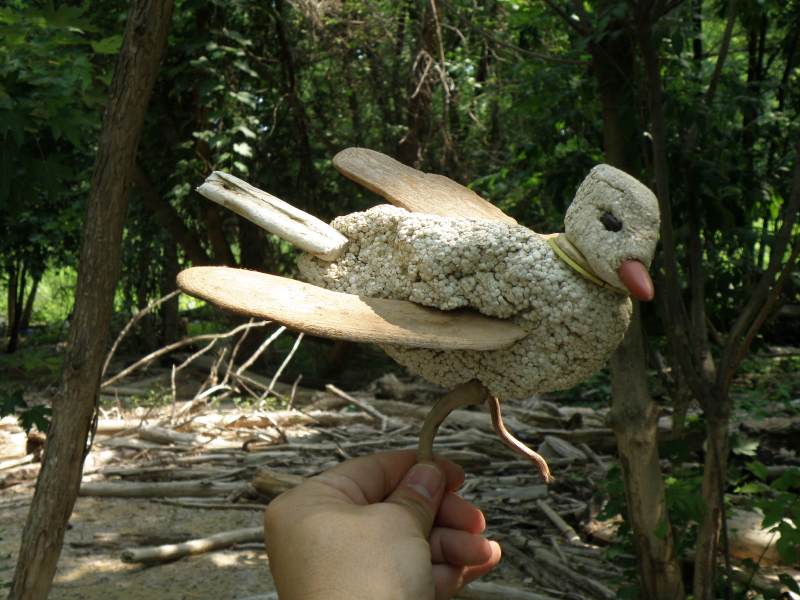
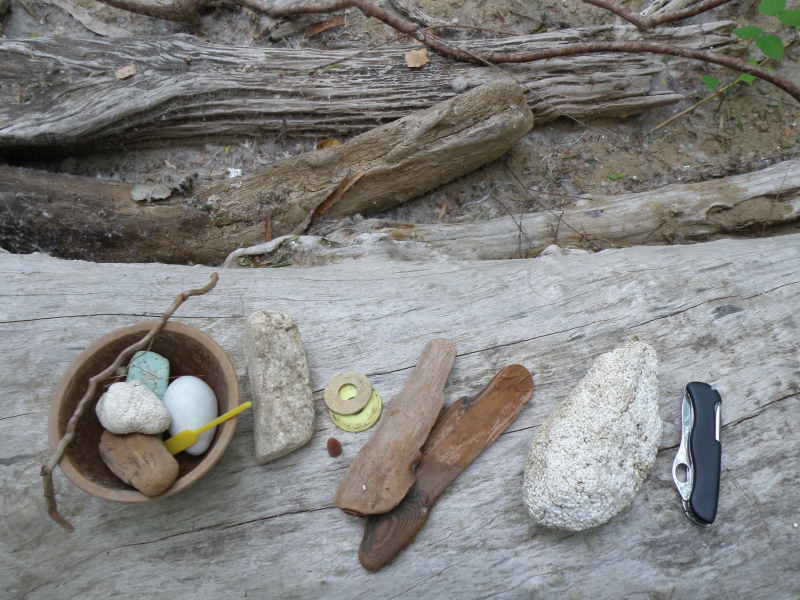
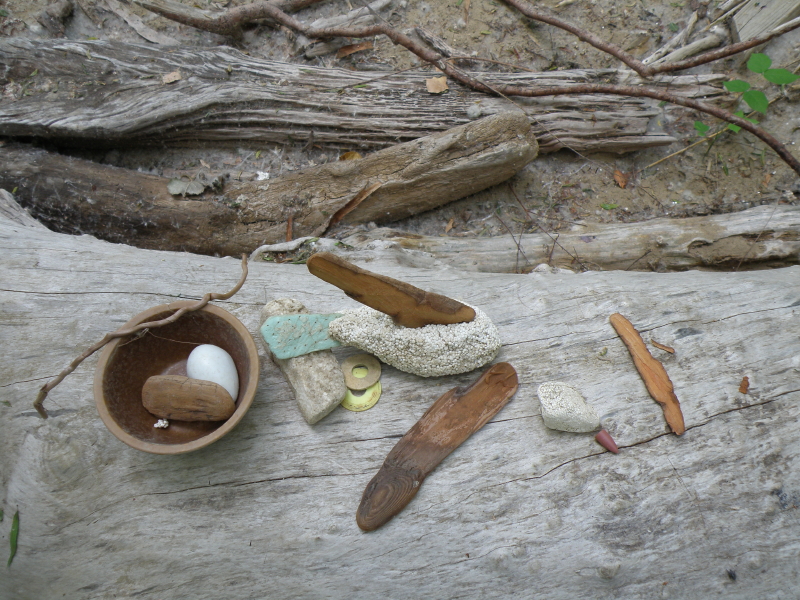
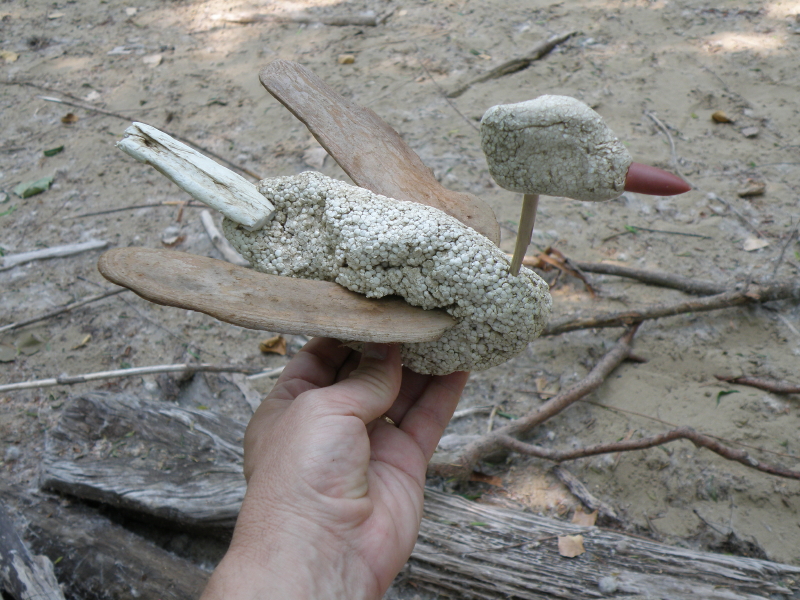
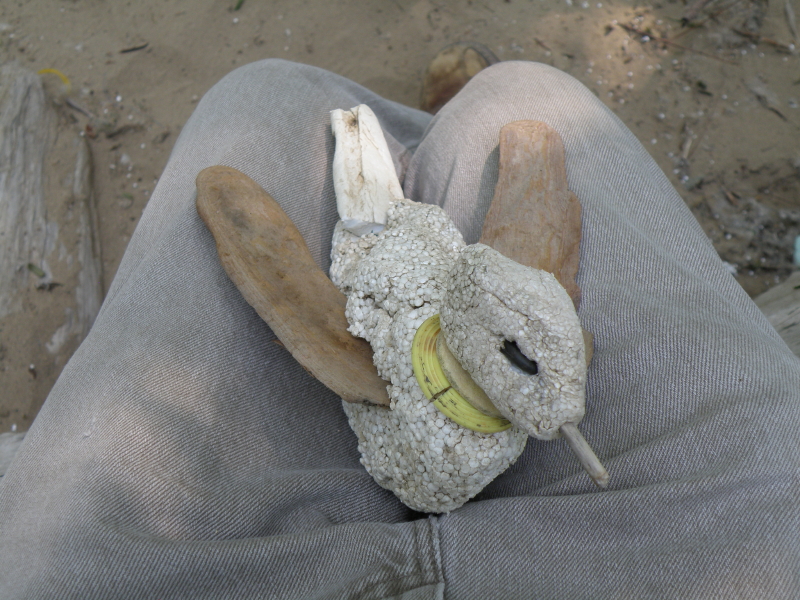
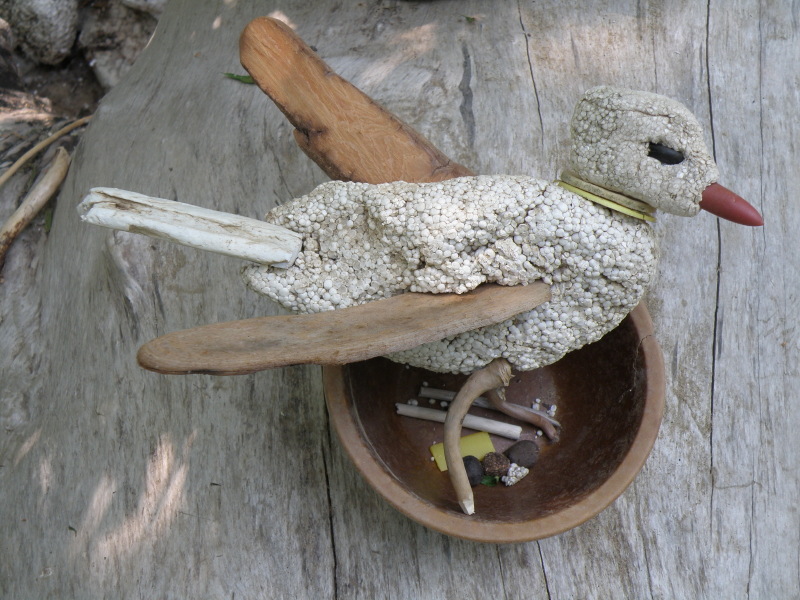
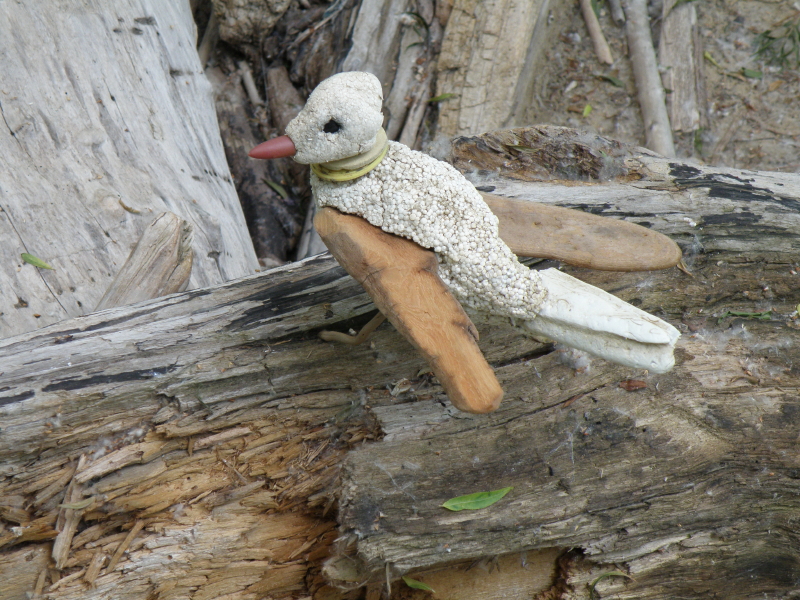
I enjoy processes and since I had additional images relating to my last post…I thought I would throw them in for fun.  I also harbor this very idealistic idea that everyone is born creative…it’s just that most people don’t view themselves in this way which I believe is at the heart of our environmental dysfunction and a great shame.  Somehow we have replaced creating with consuming. The following images hopefully show that you can create magic out of nothing.  There isn’t anything technical happening here.  If you can do Mr. Potato Head than you have the basic idea behind creating this bird.  The materials are not manipulated greatly.  I like nature to form the shapes I use. The only carving involved is in cutting slots into the body to hold the wings.  I did shave away one wing to make it thinner. I did poke holes in the head for the eyes.  I shortened the willow roots for the legs and the beak is held in place with a wooden peg just as the head attaches with its own little stick which also helps the head to swivel. Now I know this sounds a bit flip, but the hard part is seeing the possibility behind something that’s intrinsically worthless and imagining what else this could be?  Looking at the following series of images at home, I’m struck by the altar quality of the log I have spread out my materials on at my temporary outdoor studio.  I do feel that being an artist is a reverential activity.  I like to think my “art” is somehow in the service of life.  I believe you will recognize most of the components of this bird, but they include Styrofoam, wood bark, dried willow rootlets, the plastic nose cone of a small bottle rocket, plastic and foam “gaskets”, and charcoal for the eyes.  All materials were found on site at the river.  I found the little bowl that morning and it’s great to hold the little pieces I use.  I’m not a great photographer in the classic sense in that I don’t concern myself greatly with exposures and settings.  My camera is set on automatic.  I do, however, try to create an interesting image or composition that “says” something to me about that day and this place.  Give it a try…it’s fun to do!

Read Full Post »

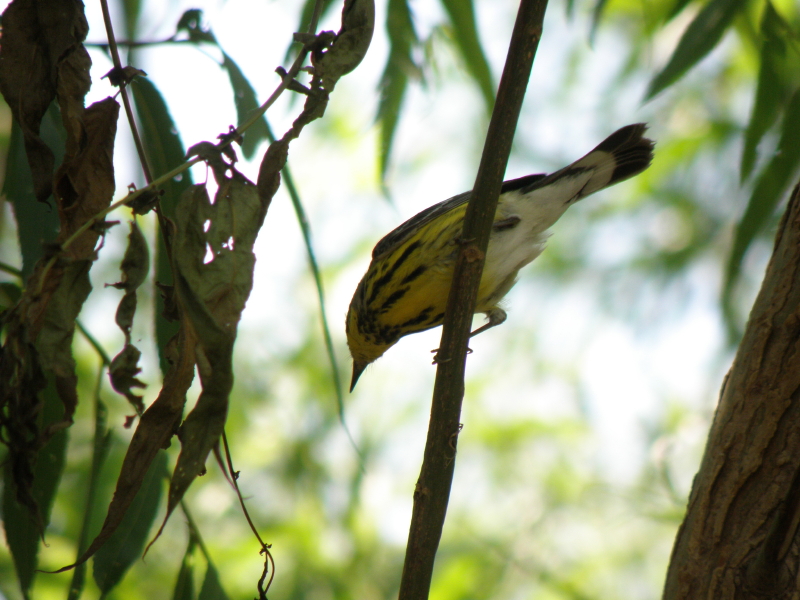
Since my last visit to the Falls of the Ohio State Park the willow fuzz has peaked.  Cottony drifts have gathered in places that offer some protection from even the slightest breeze.  The way the light shines on this gossamer surface is magical!  Before venturing into today’s avian adventure…a personal blogging milestone announcement as this is officially post number 300!  I hear the champagne corks popping already.  I had little in the way of expectations when I started this Riverblog, but I have been happy with this medium for describing my project.  In the beginning, I wasn’t sure if blogging would hold my interest, but it has.  I have also enjoyed the wide community that is out there and I thank everyone that has stopped by or left a comment.  As regular visitors know…I’m a big bird watching fan and I enjoy the many challenges that this hobby presents me.  A once in a lifetime experience can begin with a quick flash of the wings that may last just seconds.  It causes me to be acutely present in the moment.  Venturing down to the river I see the resident flock of Black Vultures has returned for another season.  I photographed this wary pair looking for dead fish or anything else edible.

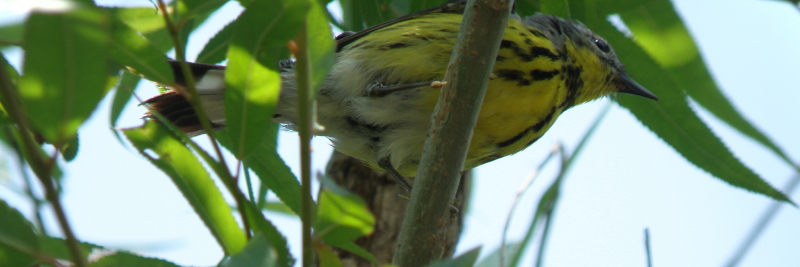
The foreground in this image is willow fluff covering the sand.  I find the two vulture species that hang out at the Falls to be really interesting birds and I have posted on them many times before.  There are more furtive species out here as well and I had the good luck to stumble upon a small mixed flock of warbler species.  Among this group were several Magnolia Warblers and I have a few images of them.  I love their coloring with their black streaks on their bright yellow breasts.  Magnolia Warbler is a misnomer since they don’t seem to favor that tree in my experience.  I found these warblers to be very tolerant of my presence and I was able to follow them as they moved from one willow tree to another in their search for small insects.

Warblers are tiny always on the go creatures and their many species are a highlight of the spring migration.  Many of the warbler species I see are passing through our area to points mostly north of here.  I came across another seldom seen bird that I hope you will enjoy.  It’s called the Brown-winged Robin and it too is traveling through the heartland.  I have a series of this bird too beginning with a specimen I found wading through the willow fuzz.  Is this pre-nesting behavior?

Here are a few more shots of this rare bird in the environment at the Falls of the Ohio.  The brown wings are diagnostic as is the bright red beak.

There are many more bird species both real and imagined that I look forward to presenting in future posts!  I hope to continue to share with you the great variety of life that I find in this relatively small place as it reveals itself to me.  One other announcement for folks in my immediate area.  I will be presenting my project at the Pecha Kucha event at the Bernheim Arboretum and Research Forest in Clermont, Kentucky the evening of June 5.  This will be an outdoor event and coincides with the transit of Venus occurring on that night.  Essentially, this slide show presentation form I believe began in architectural circles and speakers have 20 slides at 20 seconds a piece to present a topic.  It goes by fast so you need to be pithy which can be a challenge! If you are interested in more information just click on my Bernheim Arboretum and Research Forest link in my blogroll.  I hope to see some of you out there and thanks again to all who have checked out the Artist at Exit 0 Riverblog over the years!  Now for more willow fuzz!

Read Full Post »

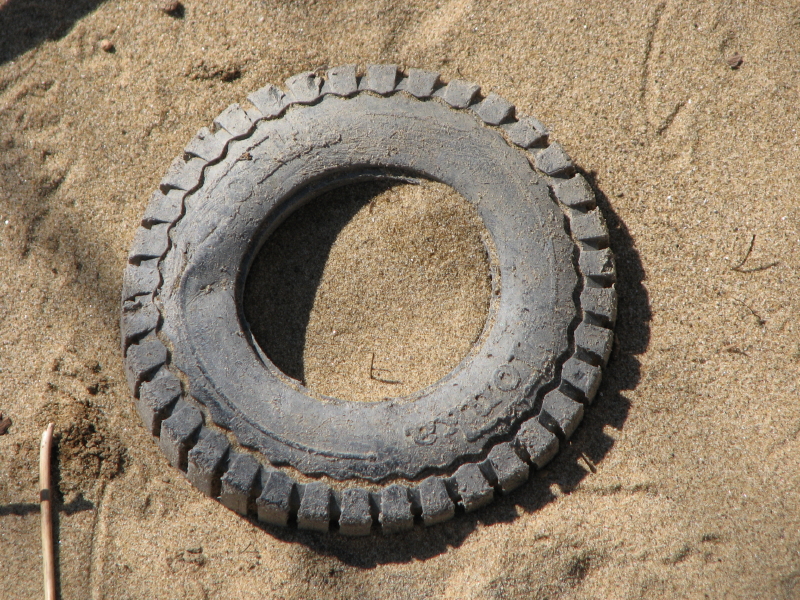
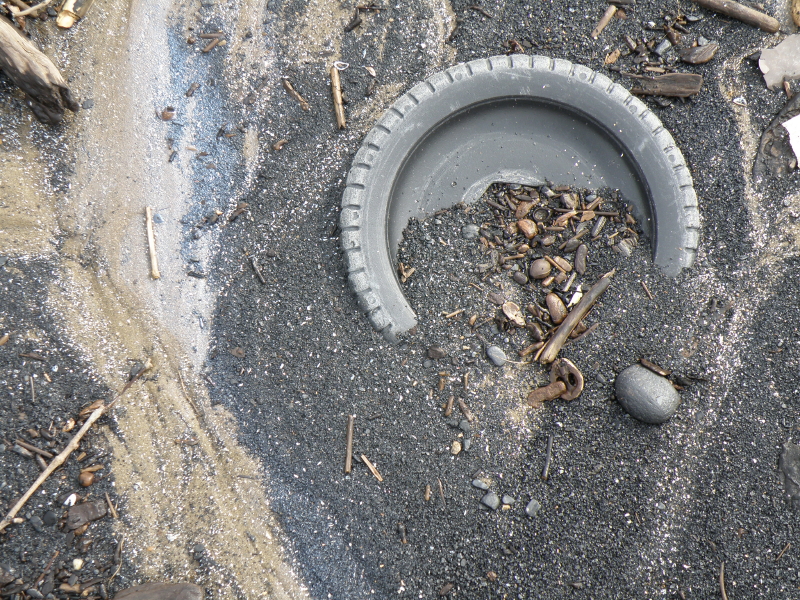
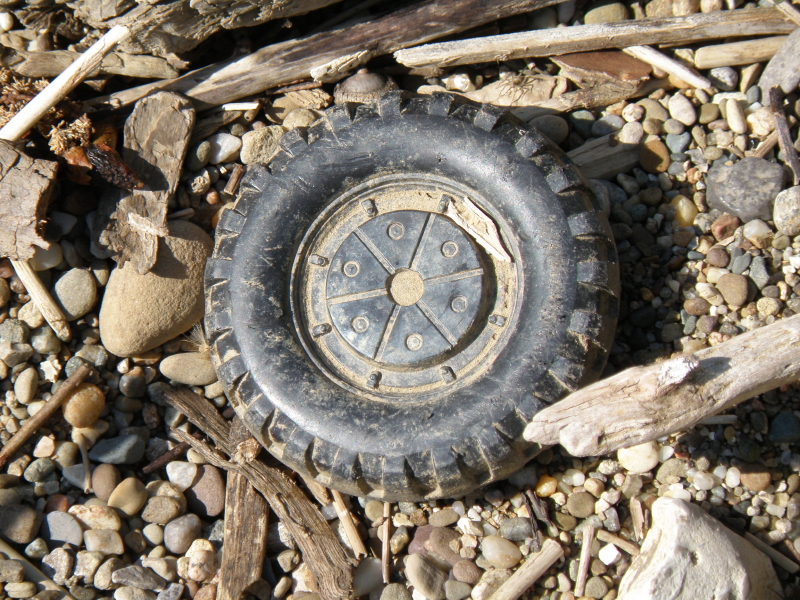
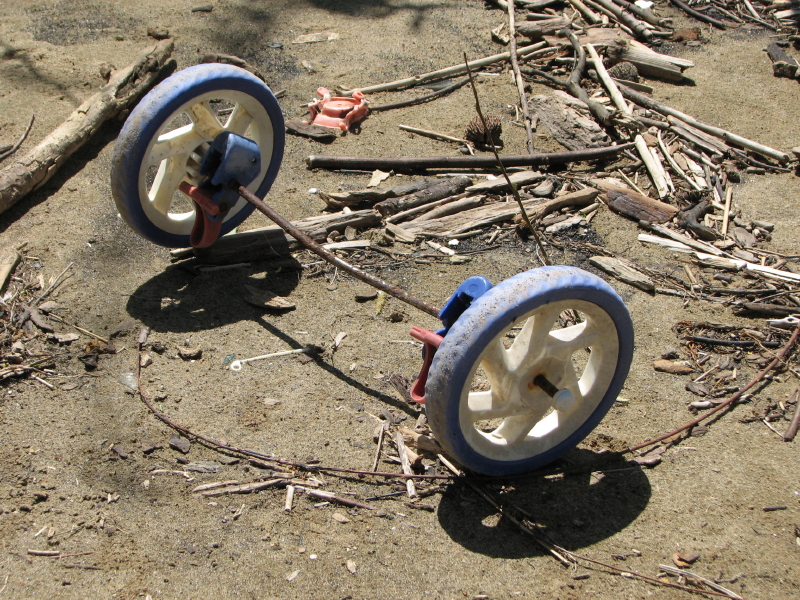
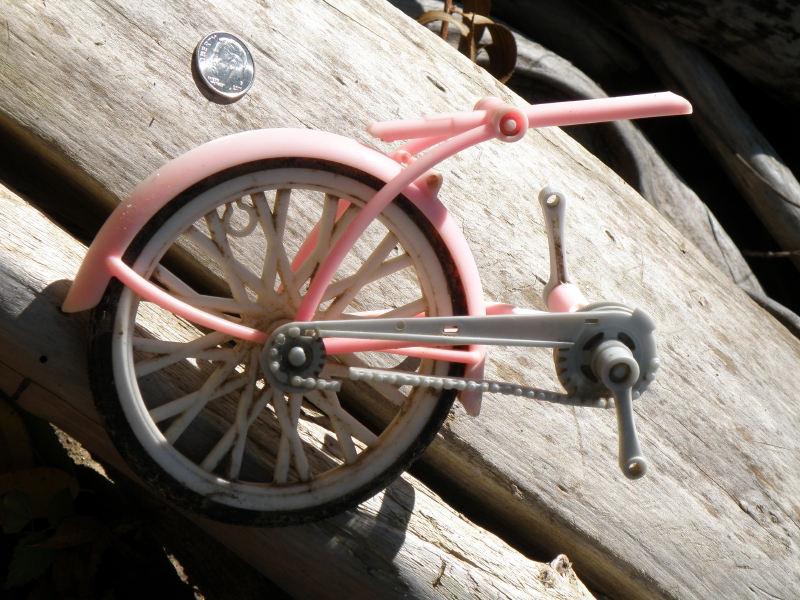
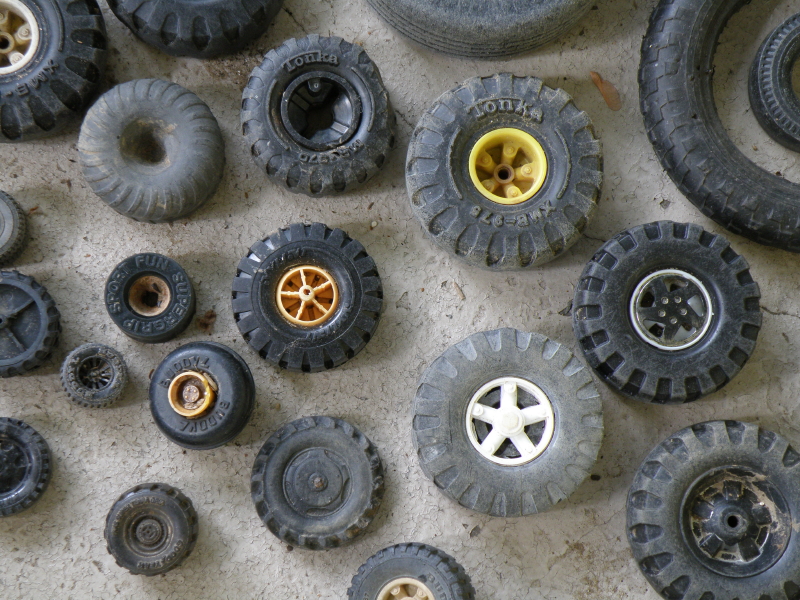
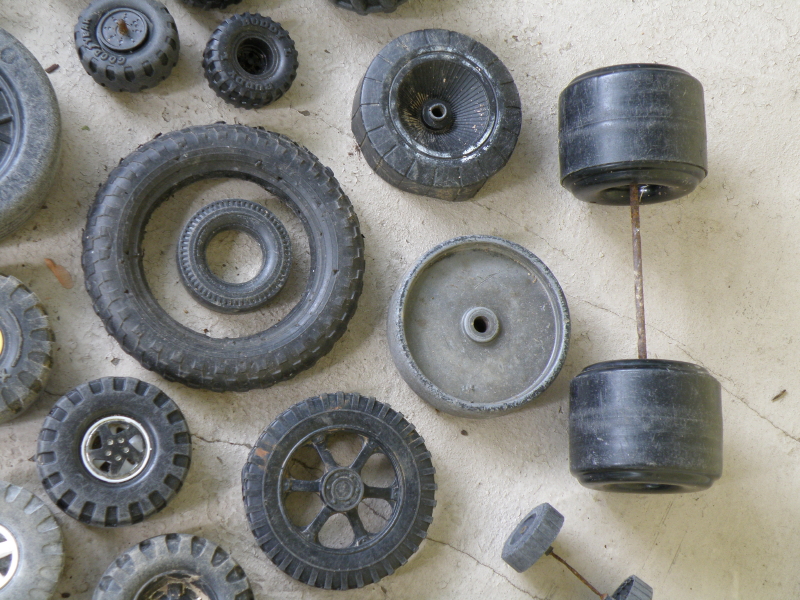
Frequent visitors to the old Riverblog may have noticed my penchant for posting images of wheels and tires that I find at the Falls of the Ohio.  Far too many automotive tires find their way into the river and many of them wash up here where they comprise omnipresent elements on the shoreline.  In addition to being more physical junk…they have also insinuated themselves into my imagination much as Styrofoam has.

When I see a wheel…I see an abstract portrait of our kind.  Through the cleverness of our minds we have invented such a simple device for first harnessing the power of nature to eventually “mastering” it.  It doesn’t surprise me to read that many experts consider the wheel to be our most important mechanical invention.  If you dispute this think beyond the ox cart and potter’s wheels…try imagining our world without gears, cogs, time pieces, jet engines, and the hard drive of your computer and more.

From what I’ve been able to find out, the wheel has been around for about five thousand years.  The oldest depictions come from Mesopotamia, but other cultures seem to have “simultaneously” invented the wheel too.  A lot depended upon domesticating draft animals to provide the power necessary to move a load.  In the New World…the ancient Olmecs knew of the wheel and used it on pull toys, but since they lacked draft animals their use of this invention was limited.  In more recent times, Industrialization and the harnessing of other energy sources has greatly and forever expanded the role that wheels play in our lives.  We have come a long way since the Neolithic.
Apart from objects, wheels also have other rich associations.  In many cultural contexts…wheels are also potent spiritual metaphors.  The Yin and Yang symbol can be thought of as a wheel.  The flag of India features a wheel which represents Dharma or the law.

The cyclical nature of things has me thinking about the changing of the seasons.  Spring is giving way to summer and it looks like our Memorial Day weekend is shaping up to be a beastly hot one.  Time is flying by.  Although I’m not a fan of auto racing, the annual tradition of the Indianapolis 500 is also set for this weekend.  I couldn’t help noticing that one of the symbols associated with this race track is a tire with wings!

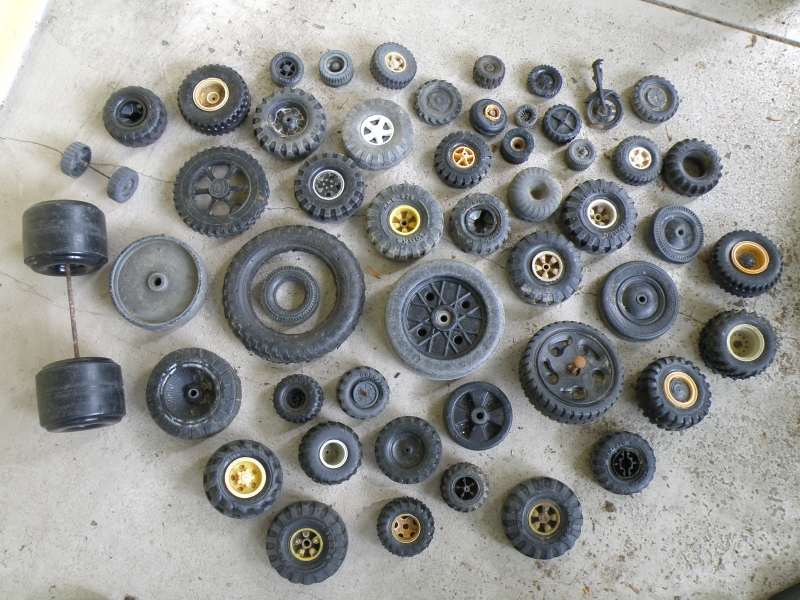
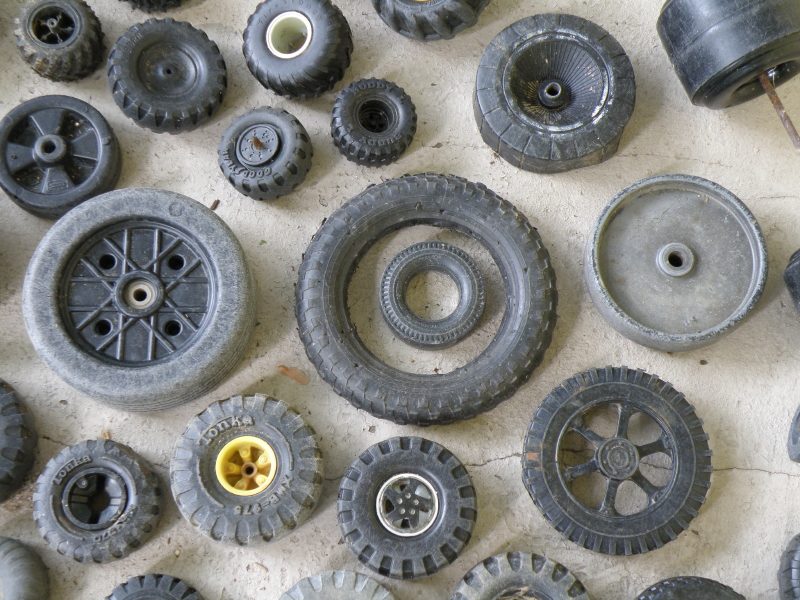
When I go to the river, I bring a canvas collecting bag to store my finds.  I have more than one bag which I usually store on the front porch of my house to await later sorting.  As I have mentioned before…I have a very patient wife who with usual good humor, puts up with my obsessions!  It is this cycle of sorting through the junk that is the inspiration for this post and I had three full bags that had among other objects, toy wheels that have caught my eye.  I knew I had been picking them up of late, but hadn’t realized the collection I had formed until I laid them out.  With the exception of the odd skateboard wheel…my collection comes from toy trucks and vehicles where the heaviest load they have borne has come from the imaginations of children.  I like how they look visually and apart from that…I’m not sure what I will eventually do with them all!  Perhaps I will make some other metaphorical vehicle some day?


Read Full Post »

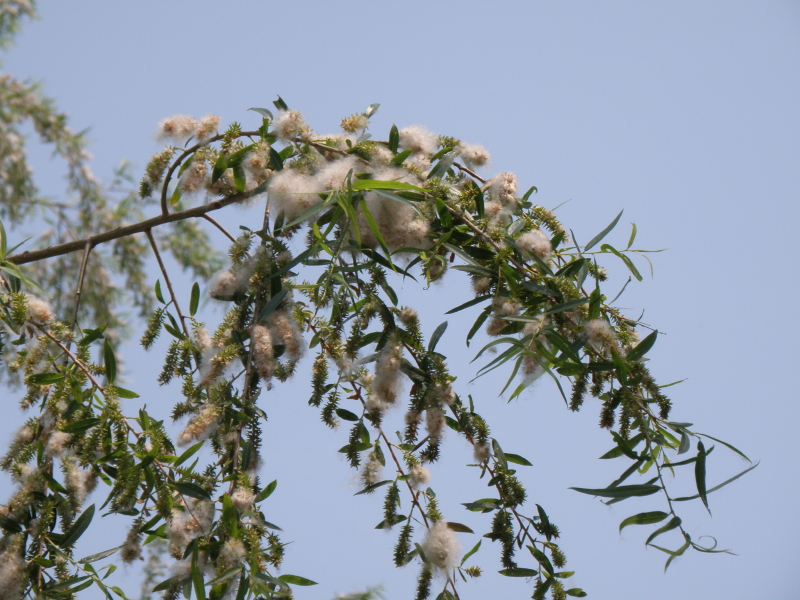
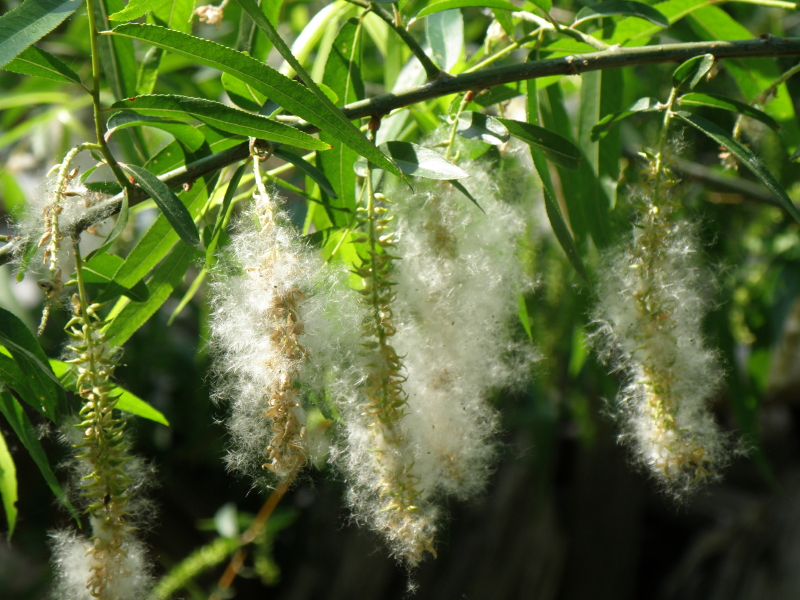
I’m back at the Falls of the Ohio and I can always count on finding different conditions or something new in the air…literally.  On this trip the willow trees were sending out their white fluffy seeds from their catkins.  In the low-lying areas in the sand or against some other barrier, the fluff accumulates into drifts like delicate dry snow.  Today the air is filled with this material as the willows express themselves.  I got used to seeing ghostly spots cross my vision.  Here is an image of where the fluff comes from.

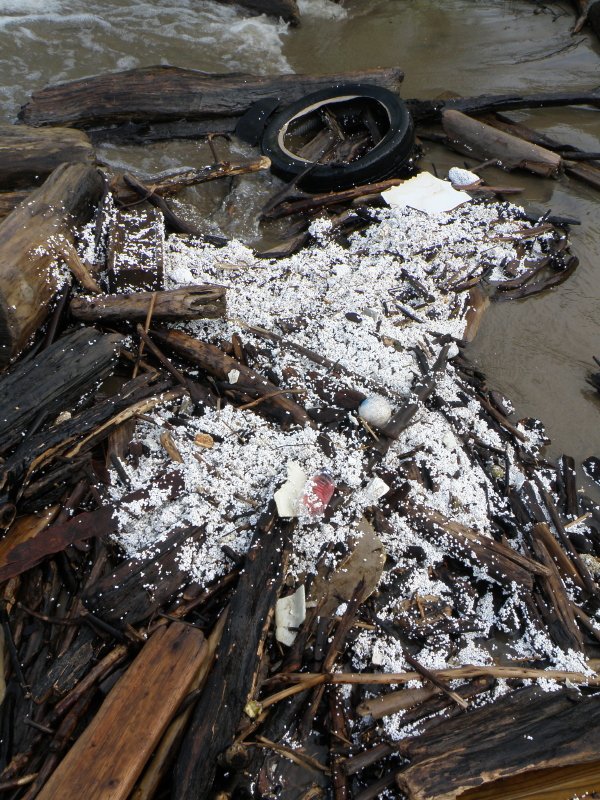
At the river’s edge, more white stuff could be found washing ashore.  Unfortunately, this material is not as environmentally friendly as the willow’s product.  In several places I encountered thousands of tiny, soft, white, beads and I instantly recognized the source.

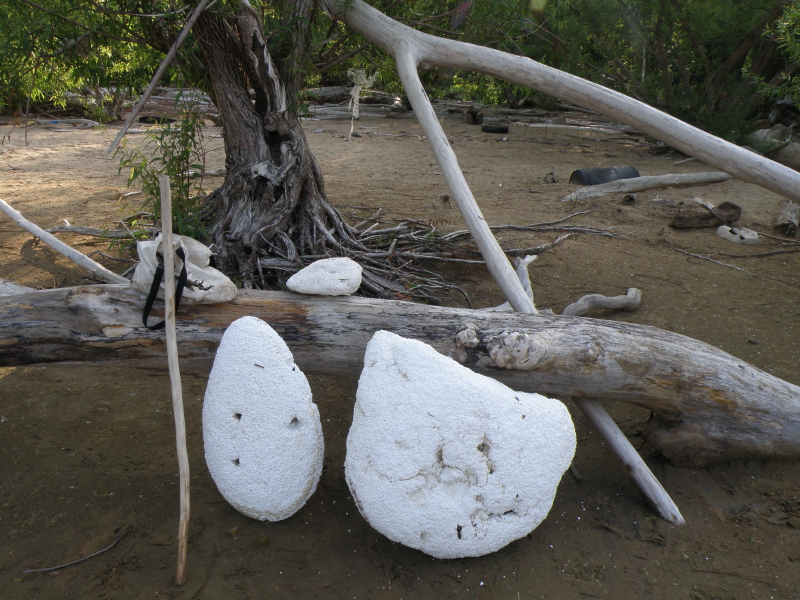
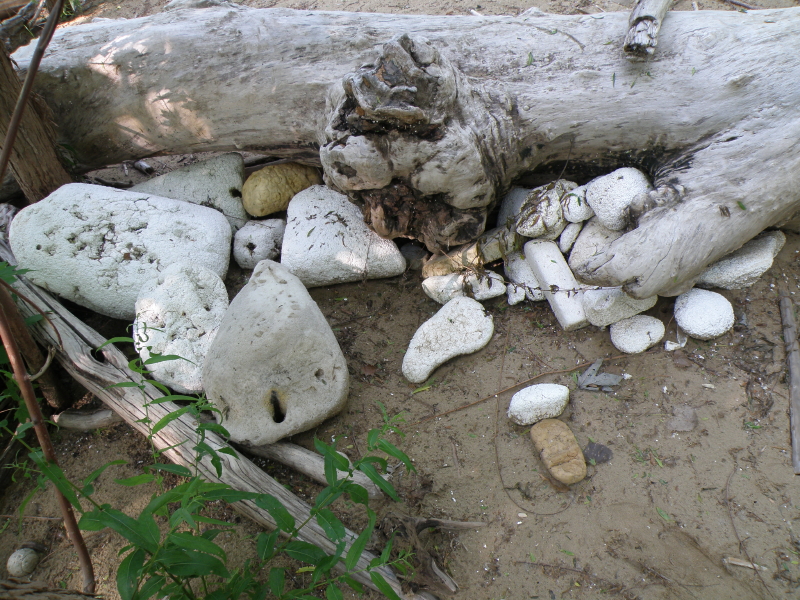
The white object on the right is a river-turned chunk of polystyrene.  Waves pounding the Styrofoam into the teeth of water born logs and the grinding of the Styrofoam into the sand at the river’s edge “sculpts” this material for me.  These mostly biomorphic forms are so hard-won by nature…that I feel a collaborative responsibility to not alter or impose my will upon them so much.  By shaping this material into organic shapes I “feel” the environment is curiously attempting to “humanize” the polystyrene by removing its rough edges.  Besides, I don’t want to free anymore of these white beads into the world if I can help it.  Here is another place I encountered where the freed polystyrene beads have run a muck.

And now, here are a few of the Styrofoam chunks I found this day followed by an image of where I store them until I can make use of them.

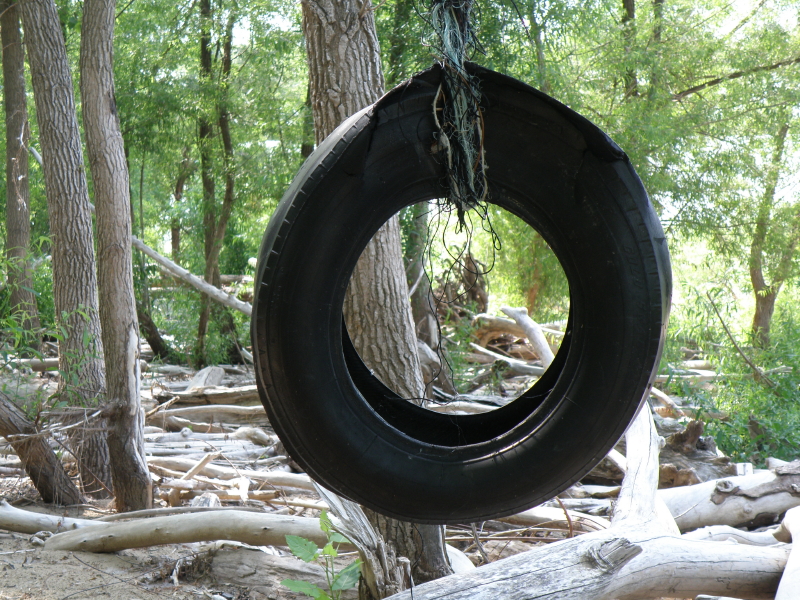
In the earliest days of my project, I can recall trying to fill up bags of this stuff for “proper” disposal.  It made me feel good that I was doing something environmentally friendly in the process.  Unfortunately, there is just too much Styrofoam in the world and places that I had picked up just became littered again with the next bout of high water and flooding.  That’s when it occurred to me that I could try to use this as an art making material.  If I could make something compelling enough…others might want to try to exercise their own creativity or help me out by taking the artwork home.  To some degree, I have been successful at this, but there simply is more garbage than people who care about what happens to it. At this point (soon to be nine years later) I’ve found that my own sense of aesthetics has changed greatly.  I’m from the old school that appreciates the narrative of art as it has developed with its various cultures, museums and landmark masterpieces.  Now, I feel that if we can’t develop (and soon) a more real sense of what is life-enhancing (namely the condition of the environment)…those other traditions won’t matter much.  Of course, there are other aspects of the formal art world that irk me as well and to see Edvard Munch’s fourth version of his “Scream” painting set a new world record into the millions of dollars makes me want to scream too.  Money is also a precious resource that should be used for better purposes.  Anyway, diatribe aside, here is my latest “mess-terpiece” for your delectation.  It continues the story from a recent post .  Enter the tire swing.
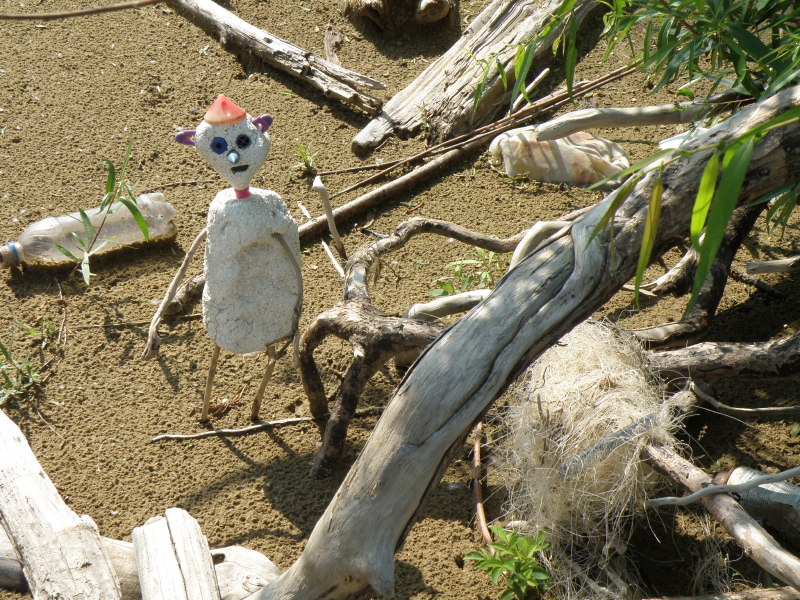
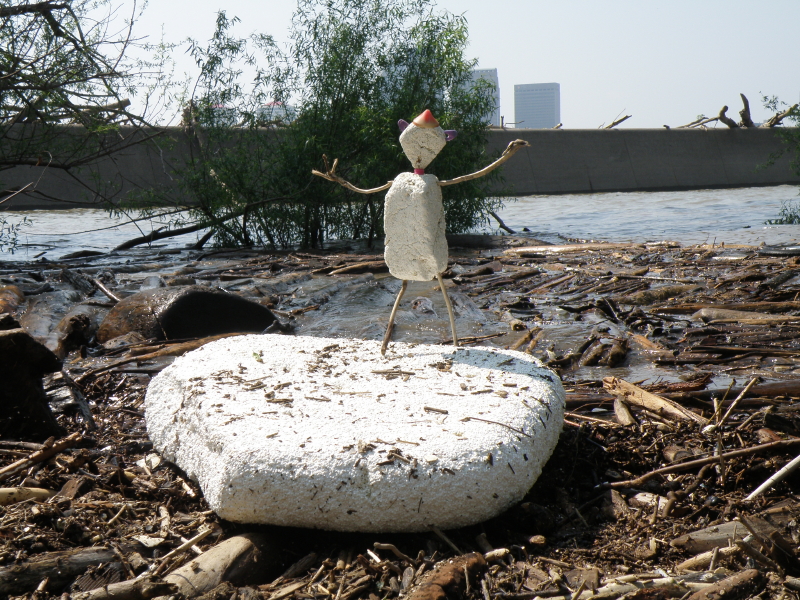
My little red-capped Styrofigure investigated the tree fort created near my outdoor atelier.  He visited his much larger relative who amazingly enough was still standing although his nose had fallen off!  It doesn’t look like the people who created this fort have returned recently.  Here is a photo from the family album.

After the visit, my newest figure did a little exploration of his own.  He came across a perplexing sight that made him scratch his head.

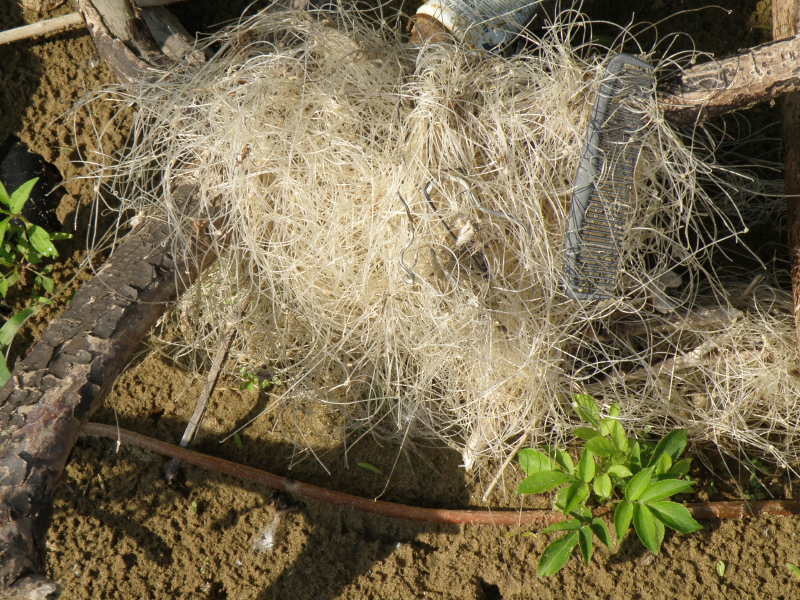
In a tangle of white fishing line was this image of futility.  How in the world, did this ball of monofilament snag a comb?  This seems the ultimate in entanglement.

Venturing to the water’s edge, my little Styrofigure found another large section of Styrofoam that was now beached.  For me, it was all becoming too much of this stuff on this day and my figure expresses this with a gesture of its arms.  “Why do we need even more of this material…is there nothing better for the intended purpose?”

Meanwhile…back in the river, the story continues.

Read Full Post »

« Newer Posts - Older Posts »