Feeds:
Posts
Comments

Archive for the ‘Ohio River’ Category

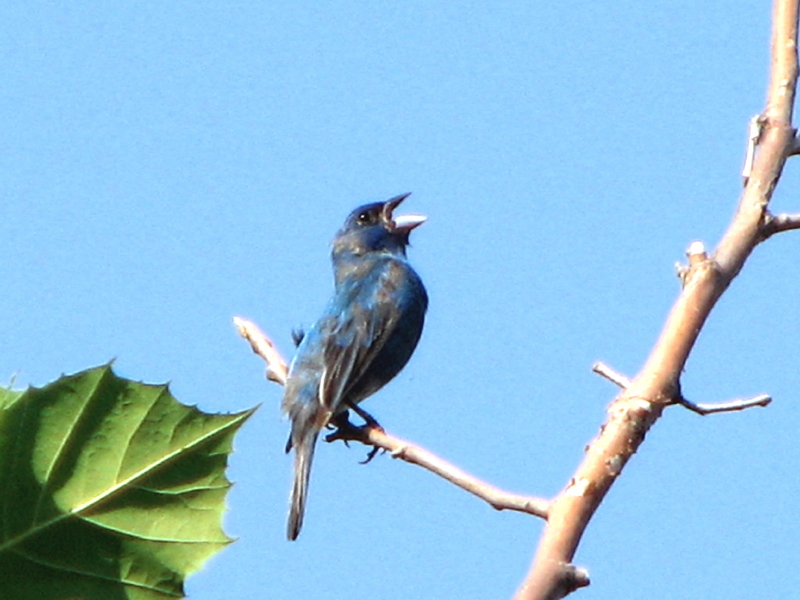
It’s been a hot, hot summer at the Falls of the Ohio.  For me, the best time to be out here is as early in the morning as possible.  One advantage in doing this is you are more likely to see birds and other wildlife.  I found this Indigo Bunting singing away from the topmost branch of this tree.  For as open and publicly trampled as this park is…witnessing such small and intimate moments where man and nature freely mix keeps me coming back for more.
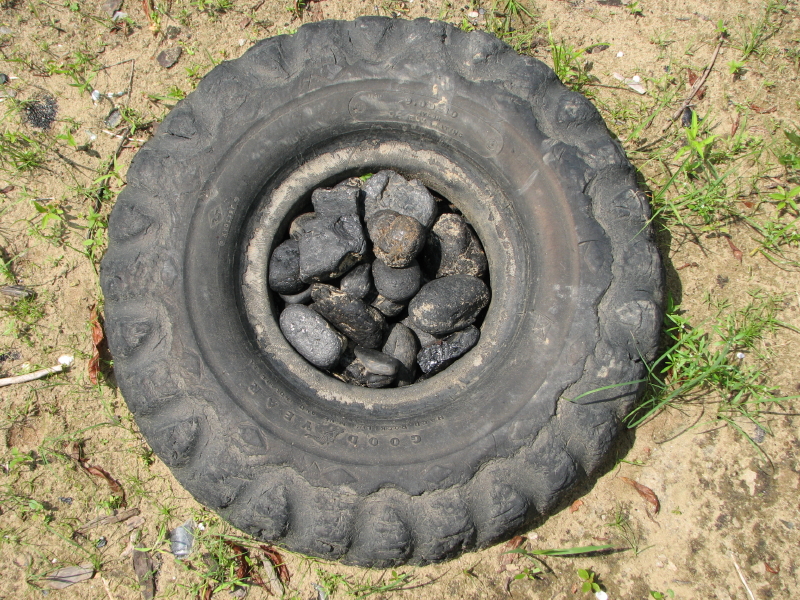
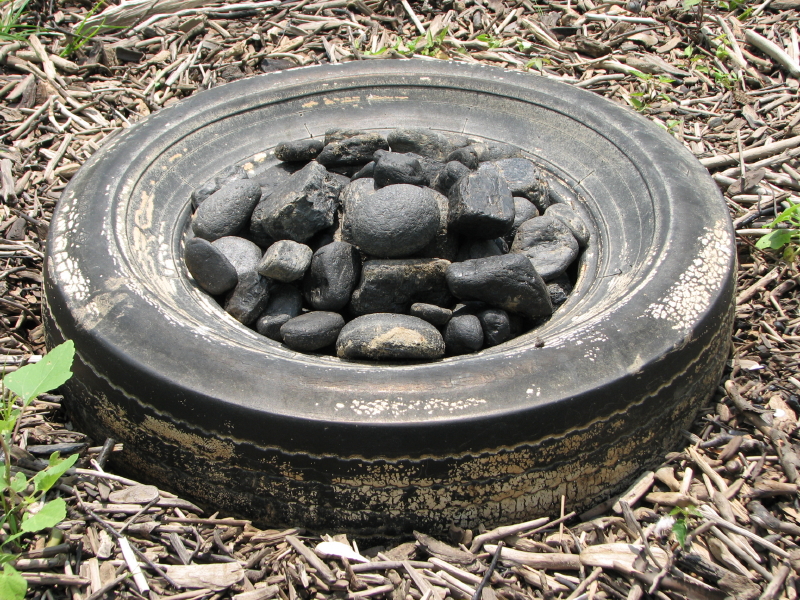
This adventure occurred during my last visit to the park and early in the month.  As it turned out, it was a memorable visit.  I’ll go ahead and tell you that I twisted my right ankle which isn’t big news or a particularly rare occurrence.  But this time, I was sure it was broken and I limped out of the park with the aid of my trusty walking stick.  I was walking along in the sand and my ankle just collapsed.  That’s all it took.  All my early sports injuries have left me with a weak ankle.  The x-rays didn’t reveal a fracture, but I was surprised by the bone spurs and bone deterioration.  As I write this three weeks later, I’m still limping along but without the aid of crutches so I guess I’m on the mend.  Returning to that day and before the sprain,  I revisited the sand sunken tire from previous posts and replaced the coal that was removed from it and then moved on.
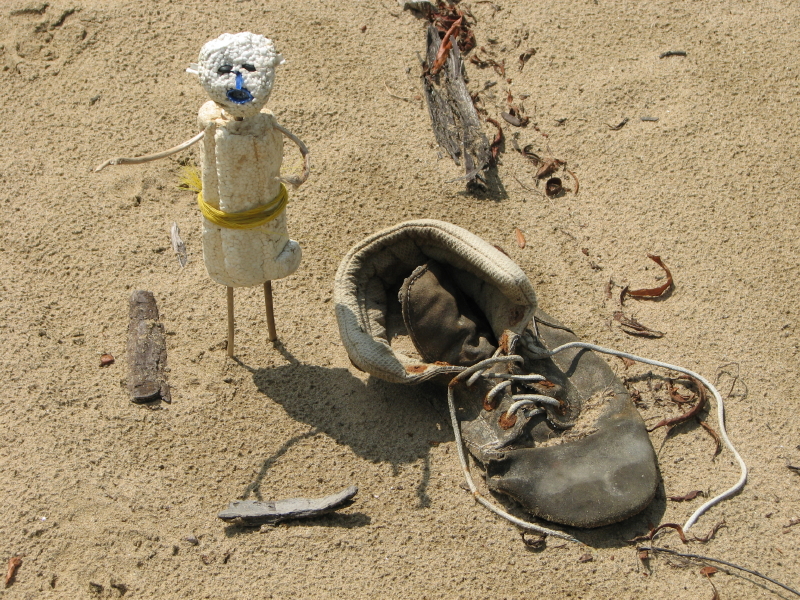
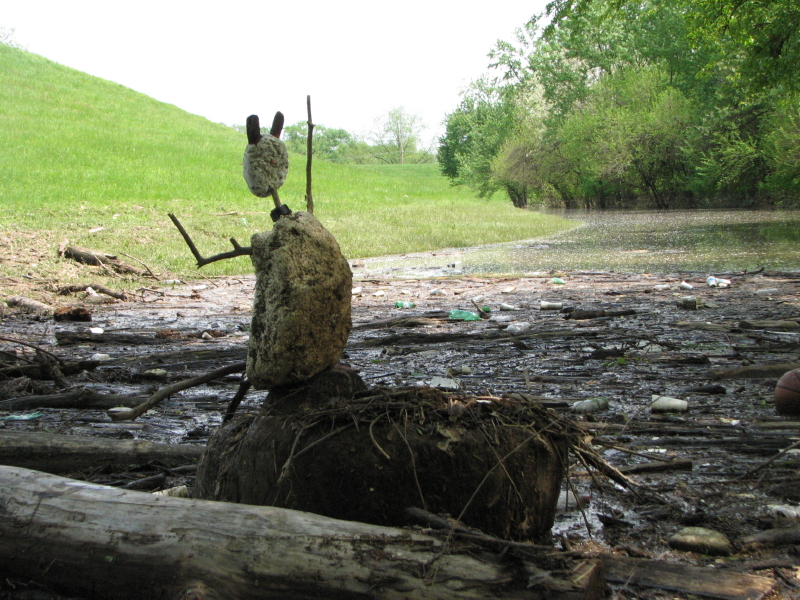
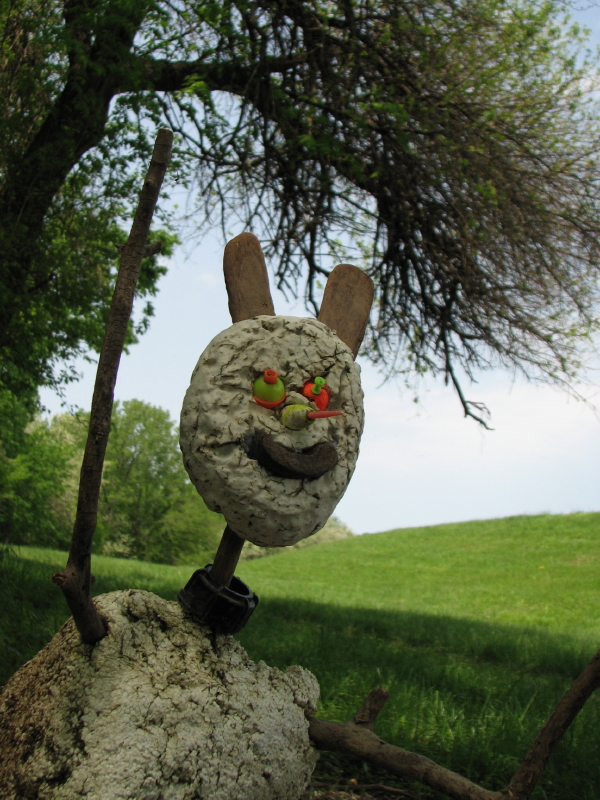
I created a little friend to keep me company and to help me with the day’s projects.  He’s made with Styrofoam, sticks, plastic, and a little bit of coal for his eyes.  I have used the coal that washes up here for as long as I have been doing this particular body of work which is approaching eight years now.  As a material, its relevance has always been appreciated by me.  Like the corals and brachiopods that have left their traces in the limestone at the Falls…these black rocks also speak of ancient life, but coal has a different and contemporary purpose that is won at great cost.  Walking along the eastern section of the park, I explored and gathered the coal I found interspersed among the sand and driftwood.  My little helper tagged along and soon we filled the hole in a second found tire.
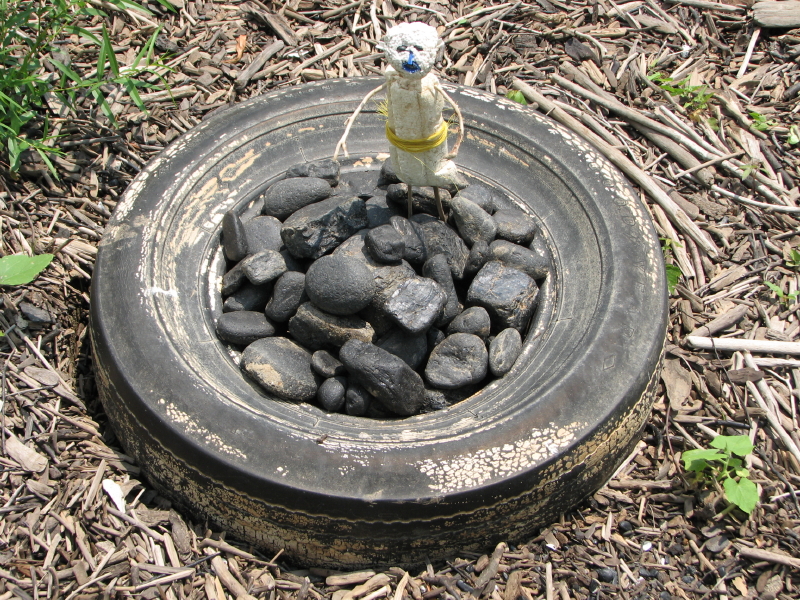
I noticed after I selected this tire that it had once been painted white.  I have seen this before where people of thrift have used cast off tires for garden planters.  On this one, most of the paint has worn off and the river has given this tire a unique patina.  For the Little Man and myself, this would just be the beginning of our play with the found coal out here.
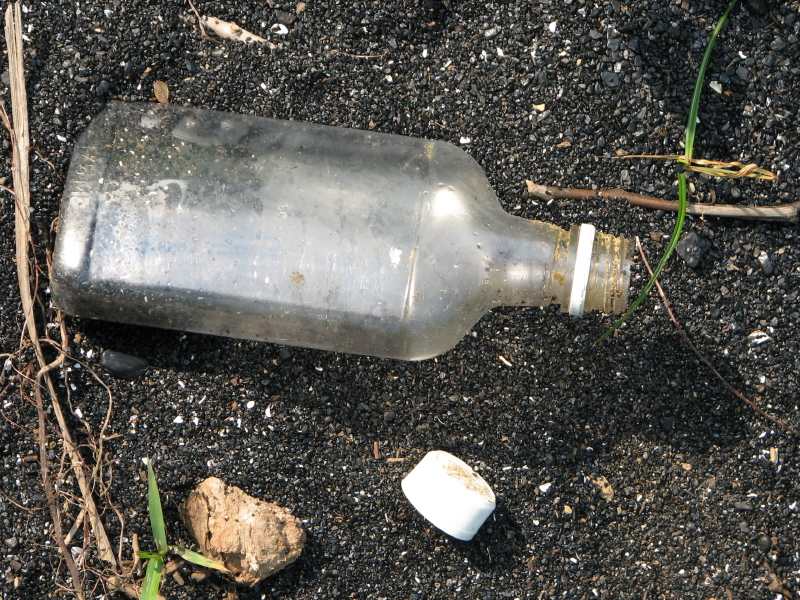
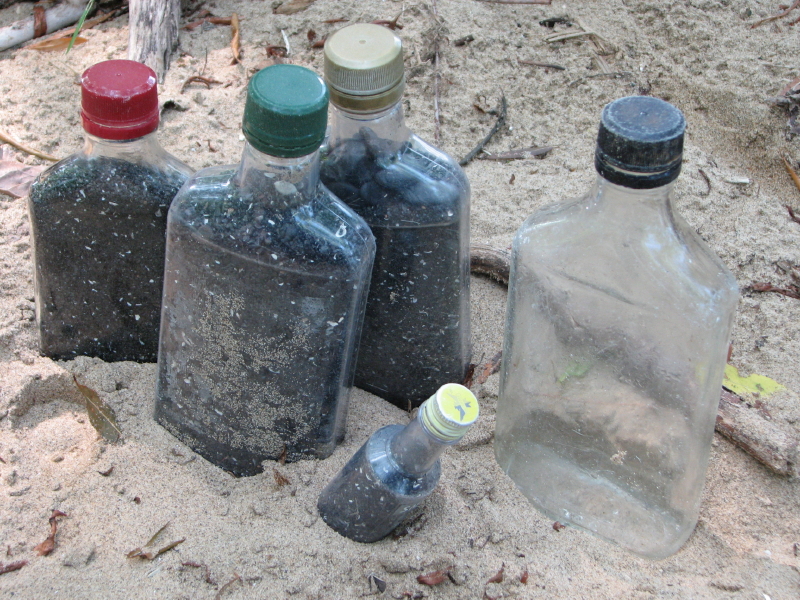
Among the other found objects I scavenge along the beach are empty pint bottles made from glass and plastic.  I like them when I find them with their labels soaked off by the river and their bottle caps in place.  A little more than a year a go I shared a river adventure with video artist Julia Oldham and we marked the day by putting notes and colorful fishing floats in other empty bottles.  I sometimes think of those bottles and wonder if anyone has ever found one of our notes?  In all my years here, I have never found a note in a bottle and by now I have looked at thousands of bottles.  Some of my friends at Living Lands and Waters report finding notes in bottles all the time and I’m guessing that this happens more along the Mississippi River than it does the Ohio River?  For me, finding a note in a bottle will happen when it’s supposed to…I just hope that it’s written content will be interesting!
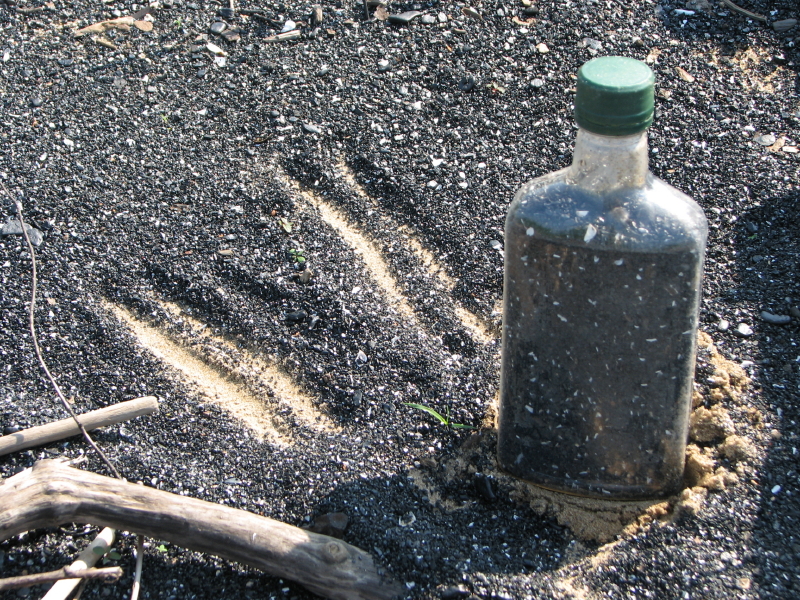
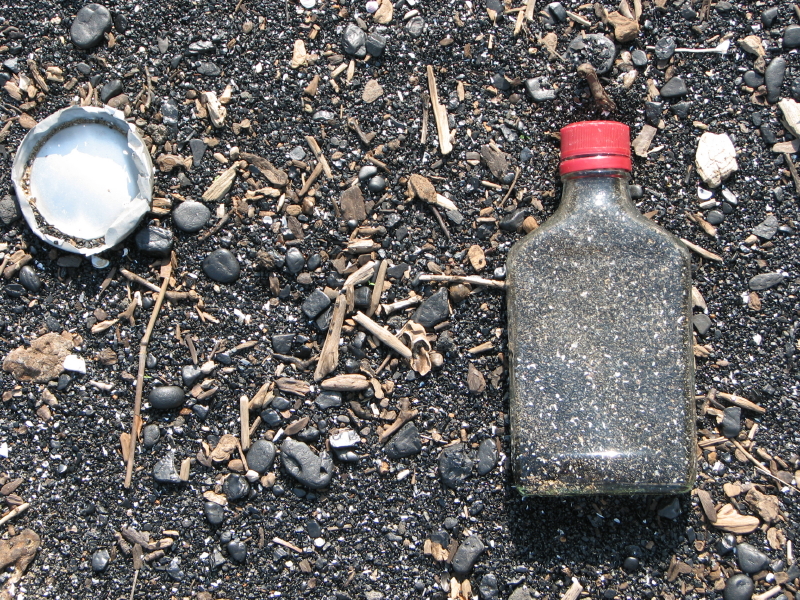
You have just seen a few of the bottles I have filled with coal.  The white flecks you see mixed into the coal are bits and pieces of mostly zebra mussel shells which is another unwanted element in this river.  Filling these bottles with coal is meditative for me.  Usually, there is still a little bit of whiskey or alcohol in the bottom of these bottles that scents the coal inside its container.  Coal is such a complex subject in our region that it is enough to drive one to drink.  On one side it is a common and available form of energy, but the costs to the land, people, and larger environment are extreme.  Having visited the coal fields in eastern Kentucky, it is certainly plain that the people whose land and mountains have been mined out from under them haven’t benefited to the extent that you would think since poverty and despair are far too common.
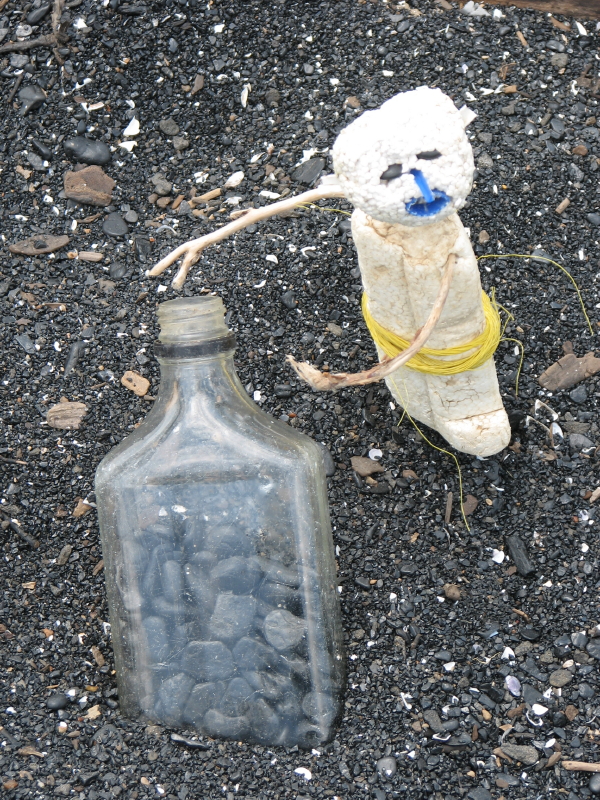
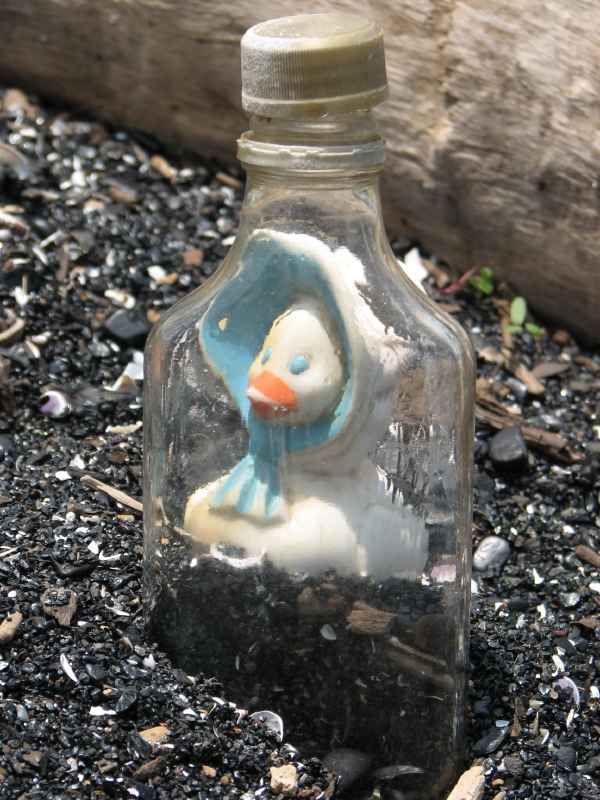
I’m going to continue to explore coal as a material and social issue with the help of some new friends.  I have been invited by a group of mostly younger Kentucky artists to participate in an exhibition to be held sometime in the near future.  A blog has been set up called Project Reclamation and if you would like to follow along…just click on the link on my Blog Roll on the right column. I will keep you posted.  To close, here is one other bottle or carbon storage image I photographed with a found rubber duck behind the transparent bottle.  I look forward to going back out to the Falls of the Ohio as soon as my ankle fully heals.
Read Full Post »

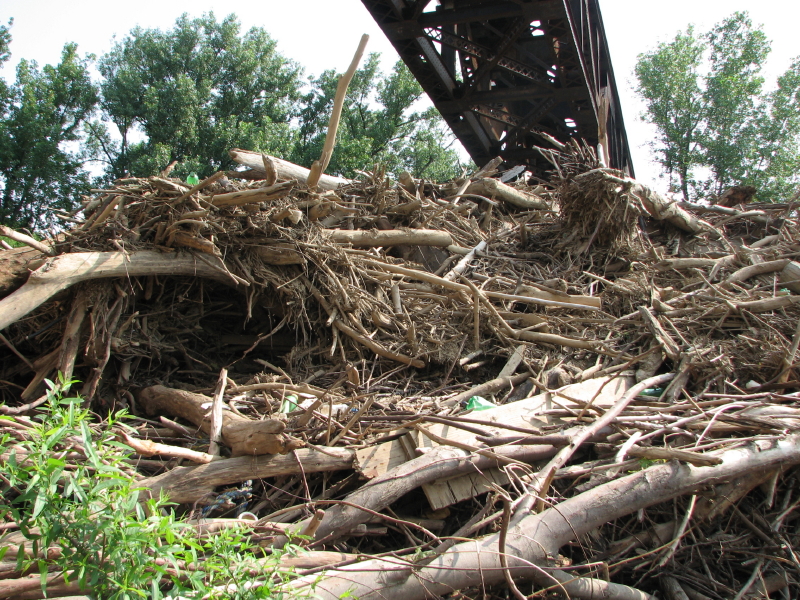
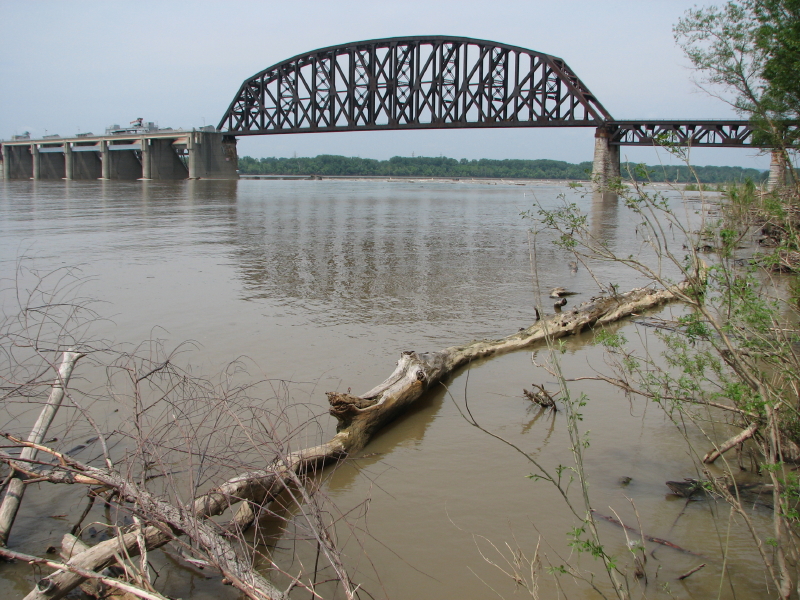
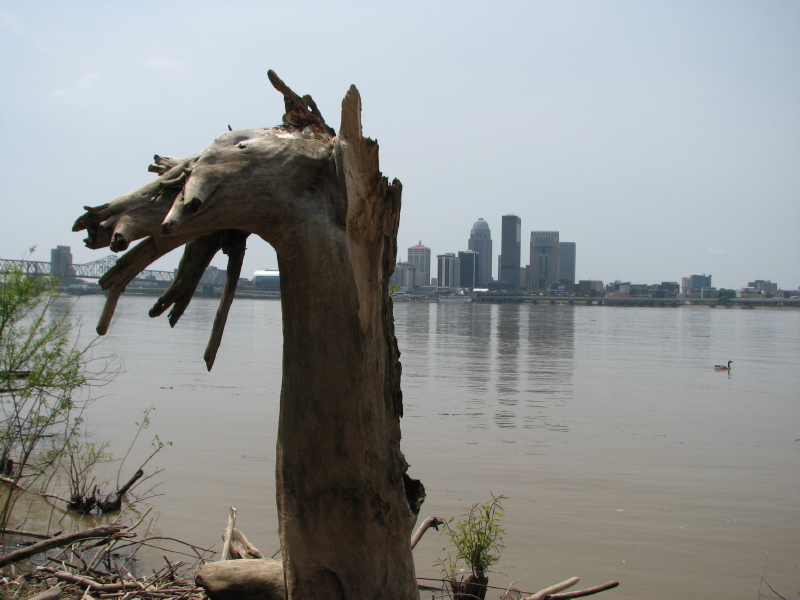
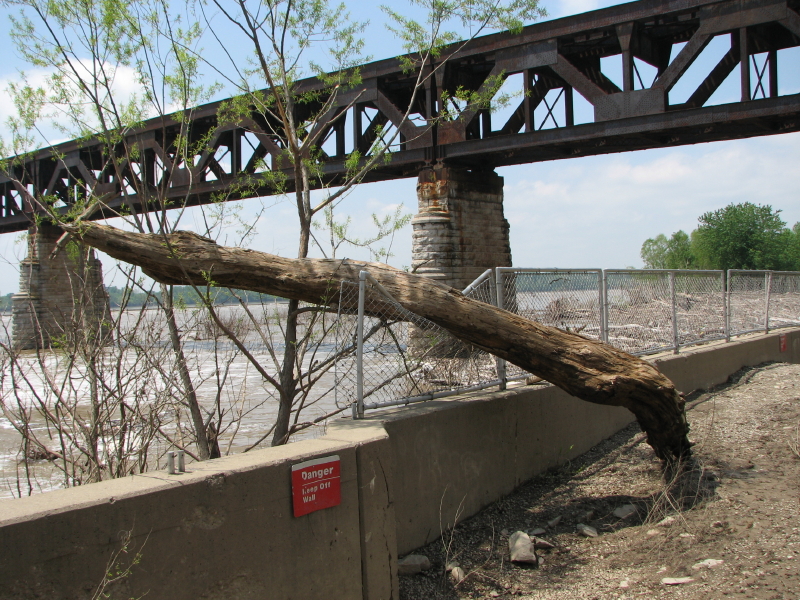
The huge mound of recently deposited driftwood under the railroad bridge is both an obstacle and a magnet.  It’s not easy to walk over and it helps to have a good walking stick to help maintain your balance.  The rewards for persevering are a nice elevated view of the Louisville skyline and the potential for finding interesting junk intermingled with the wood.

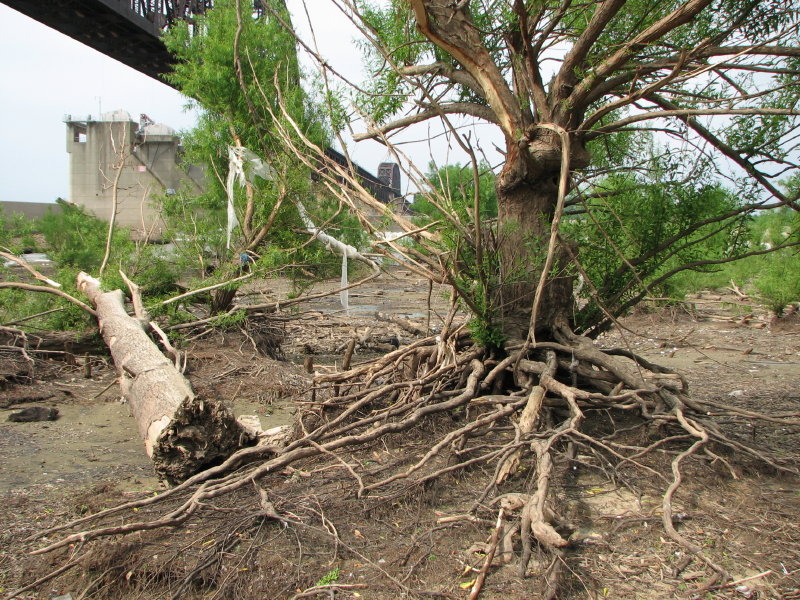
Once you move over or around this mound you enter the margins of the willow forest and you can see what the full force of the river can do to a landscape.  These black willows are tenacious and their roots hold on.  Here’s another image of a remarkable willow tree and its root mass.  This one wears a trophy from the flood like a victory pennant.

From all the cars in the parking lot, I’m guessing the fishing must be pretty good today.  I stepped by some earlier evidence in the form of this longnose gar skull.  I think this one was caught by rod and reel.  But, I have seen the remains of hundreds of these fish before stranded and killed by a retreating river.  Longnose gars are routinely in the 3 to 4 feet range in length.  The jaws are lined with small needle-like teeth for catching and holding on to smaller fish.  The gar is a surface fish and floats in on its quarry like a piece of driftwood very stealthily before surprising it with a quick flash of the jaws.

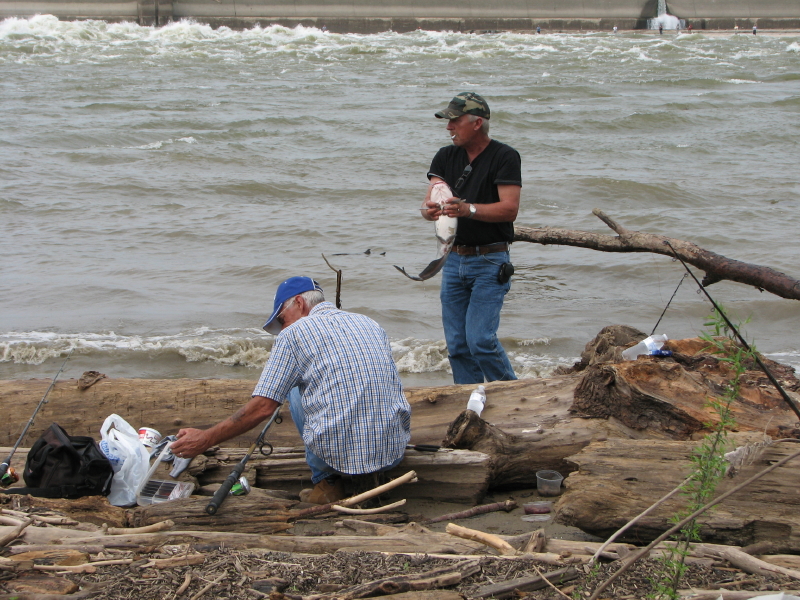
Moving to the river, I decided to watch what the fishermen were doing and catching.  In about twenty minutes, I watched two large catfish being landed.  Here are two guys that have this down.  Using multiple poles, they cast both worms and cut shad into the swiftly moving waters.  Snags and lost tackle are common since this part of the river is also full of rocks and boulders.

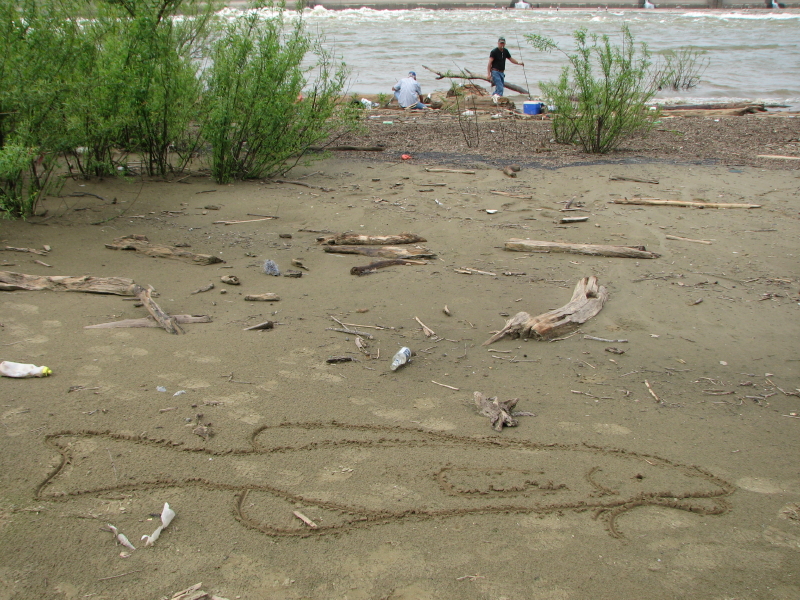
I was inspired by the scene and left them this contour drawing in the sand before moving on.

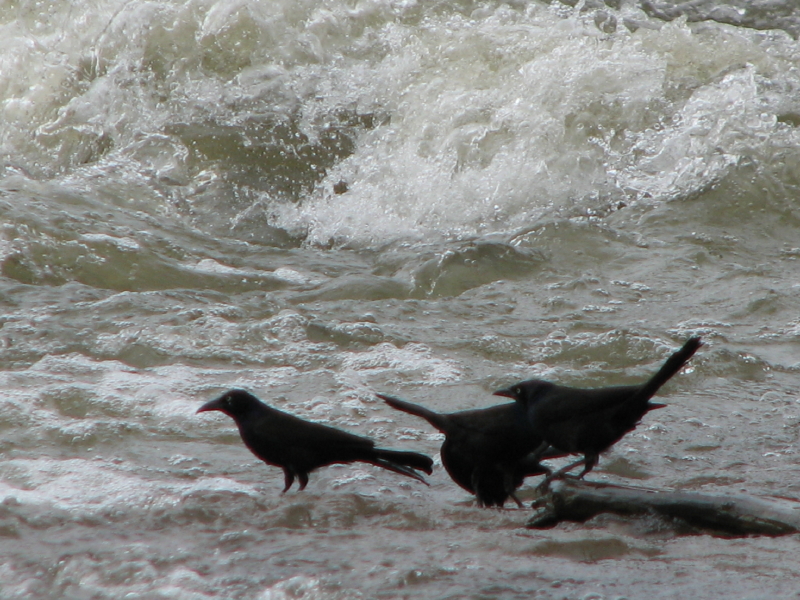
Earlier I had seen a flock of grackles by the water flowing under the bridge.  They were catching some food item here that I wasn’t able to figure out what it was…perhaps dead minnows?

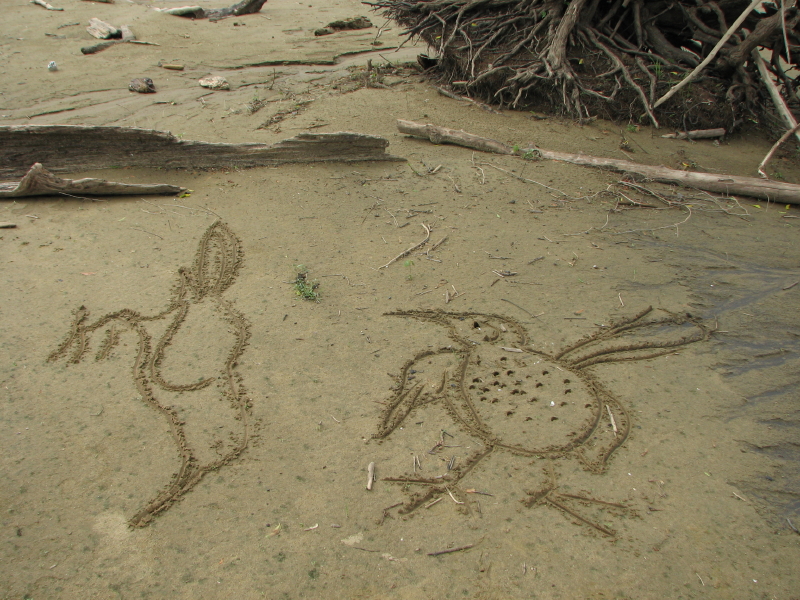
The grackles were working the river just like the fishermen were.  I left them a drawing in the sand as well made with the tip of my walking stick.  The sand today is moist and firm which holds a fine line better than usual.

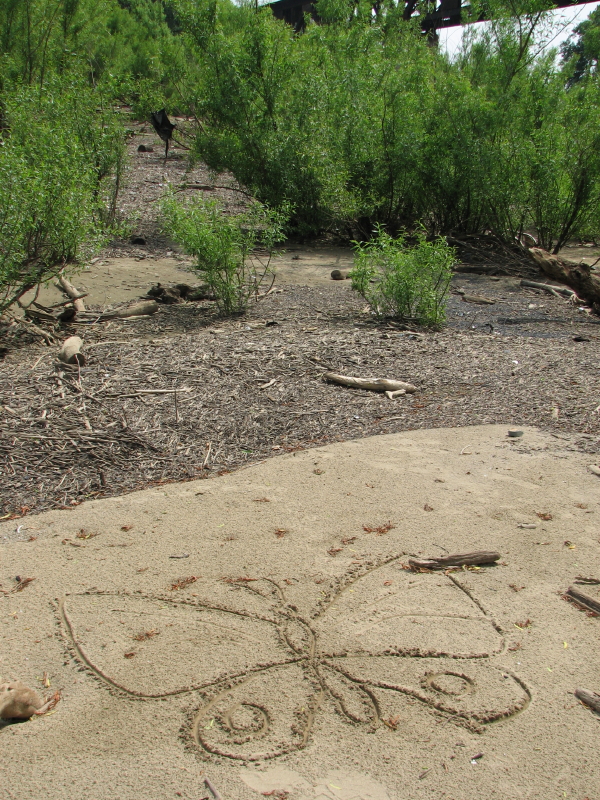
Of course, while I’m walking along I’m filling my collecting bag with the odds and ends that make up the rest of this riverblog.  Some of it is just stuff that I will attempt to make art with and the rest are souvenirs of our material culture.  Once the bag was full, I turned and headed up the bank to get under some trees and out of the sun.  I then made this sand butterfly to mark the spot where I turned for the willows.

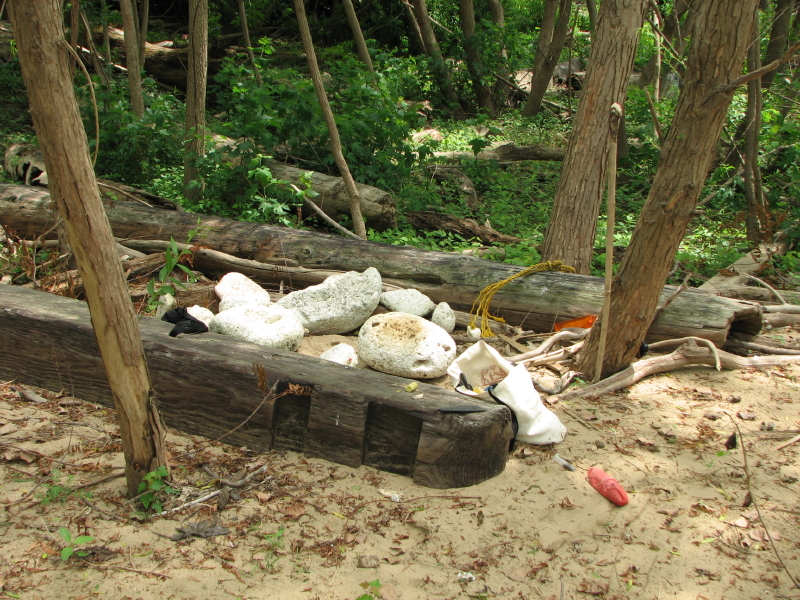
I have set up a new outdoor studio near the margins of the driftwood mound.  Instead of a plank to sit on, I’m using this large wooden bridge or railroad tie.  I haven’t found the large sections of Styrofoam that mark last season, but what I can find I’ve gathered at this spot.  I did make a figure on this day which extended this adventure, but I will wait until next time before unveiling it to you.  Thanks for tagging along…you have been good company!

Read Full Post »

Squirt guns and water pistols are among the many toys that the Ohio River washes ashore at the Falls of the Ohio State Park.  To see more of this collection…click on the Squirt Gun Collection in my Pages section to the right.  Thanks artistatexit0.

Read Full Post »

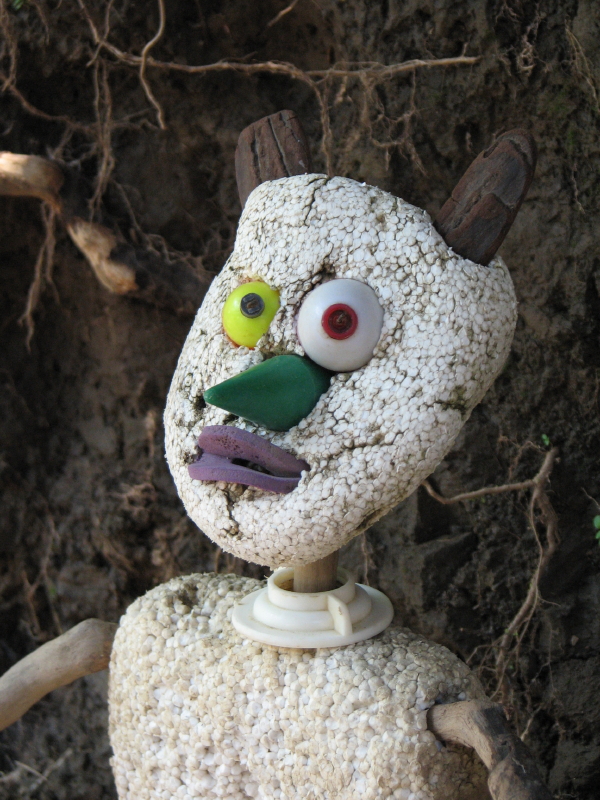
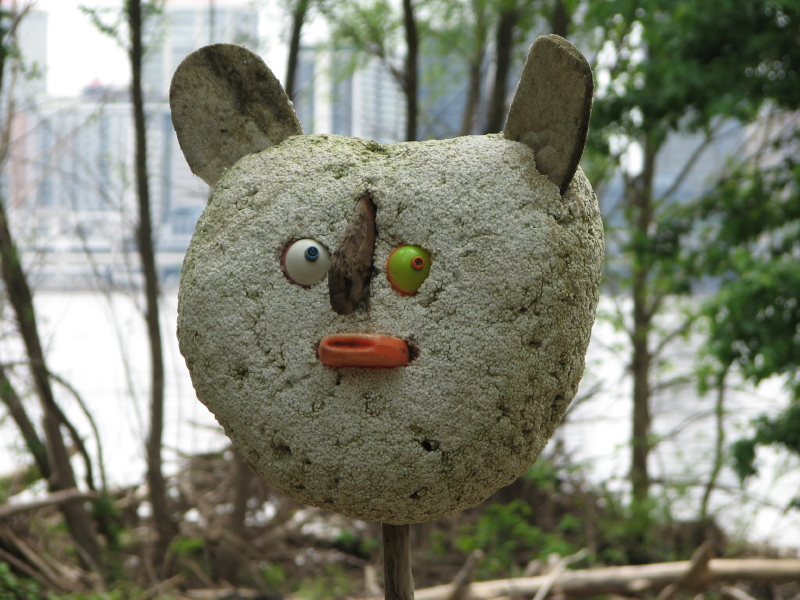
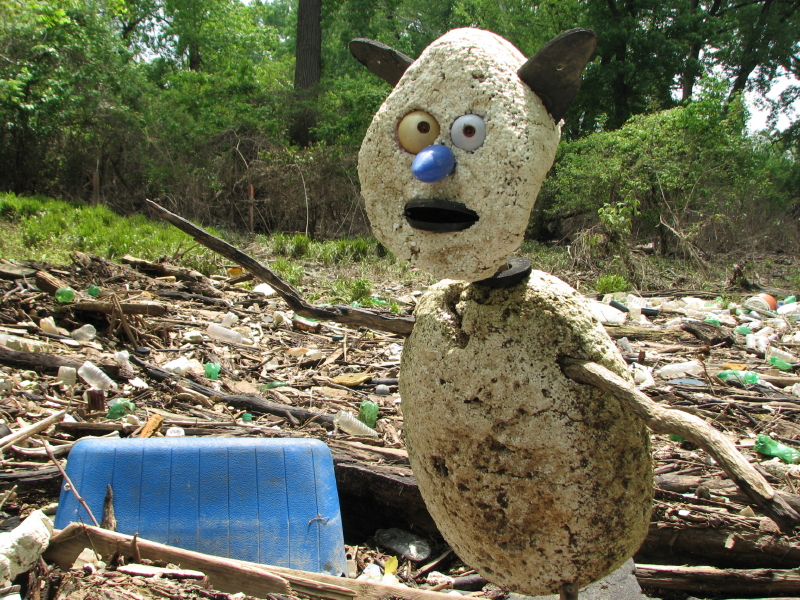
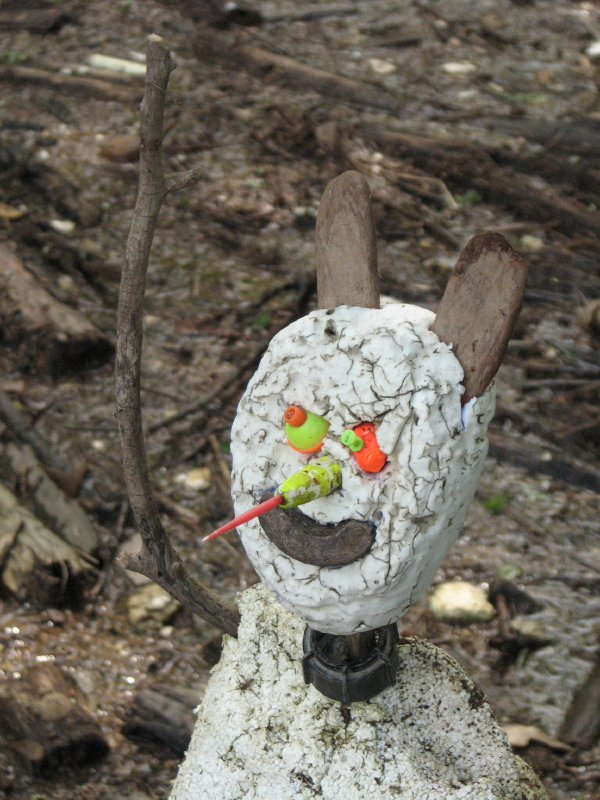
In my hands was the head of a small Styrofoam figure I made at the Falls of the Ohio State Park.  I found all the parts while walking along the northern shore of the river.  The eyes are fishing bobbers and the nose is the plastic cone from a moderate-sized bottle rocket.  I can’t remember what I used to make the purple lips!  I was on my way to see one of my favorite trees and wondered how it was doing after this year’s flooding?

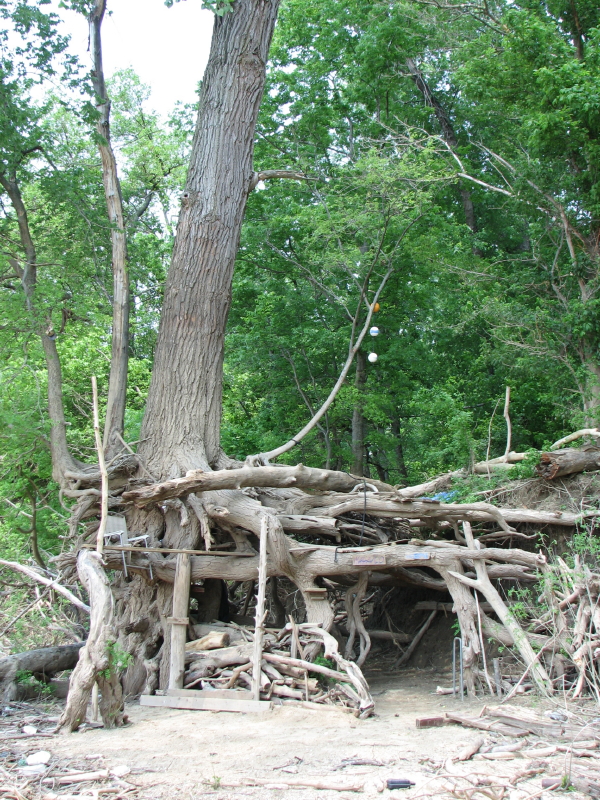
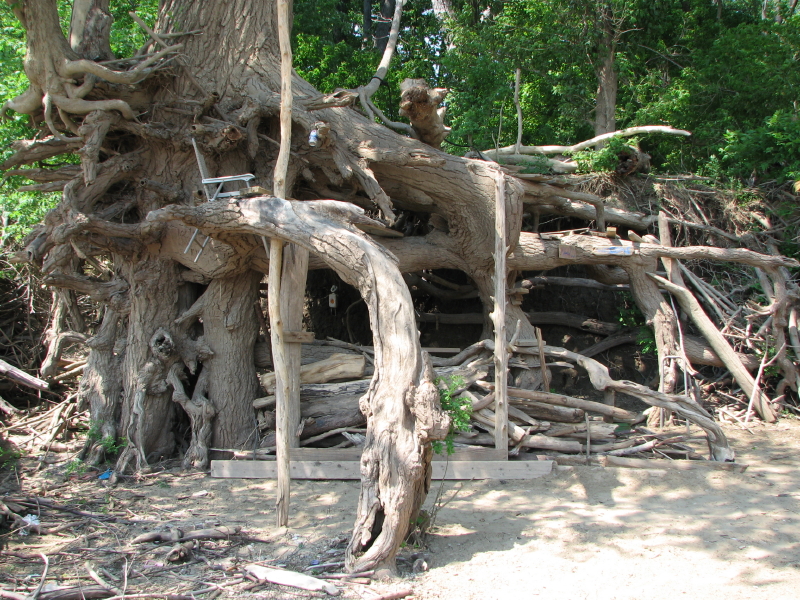
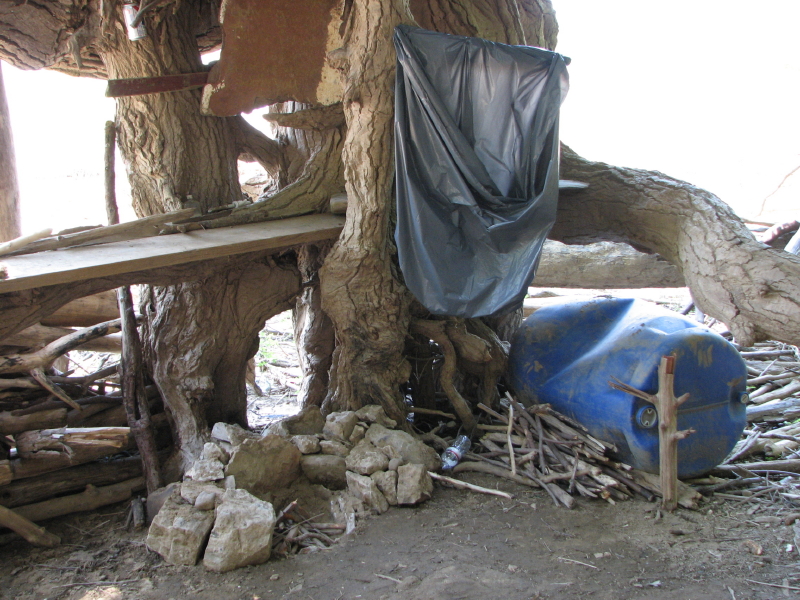
The great tree with its amazing roots had survived in fine shape.  Approaching I could see that recent visitors had added new amenities to enhance the natural room existing under the trunk of this tree.  Long a go the river washed away the river bank, but the tree’s roots held fast and kept growing.  Here’s a side view.

I ran into Steve the Arrowhead Man earlier in the week and he told me that teenagers had discovered this tree and turned it into a party hangout.  Nailed to the tree was a hand-drawn sign that read “Mahalo”.  Driftwood had been collected and neatly stacked near an improvised kitchen area that had counter space, a stone-lined fire pit, and a plastic trash bag to carry garbage out.

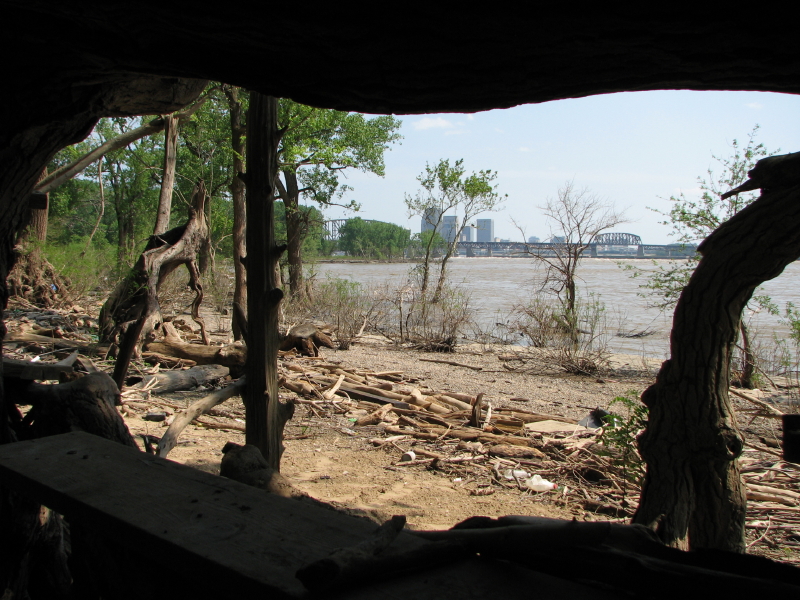
I like the counter-top plank that also helps frame this view out the window.  The skyline of Louisville can be seen on the farthest shore.

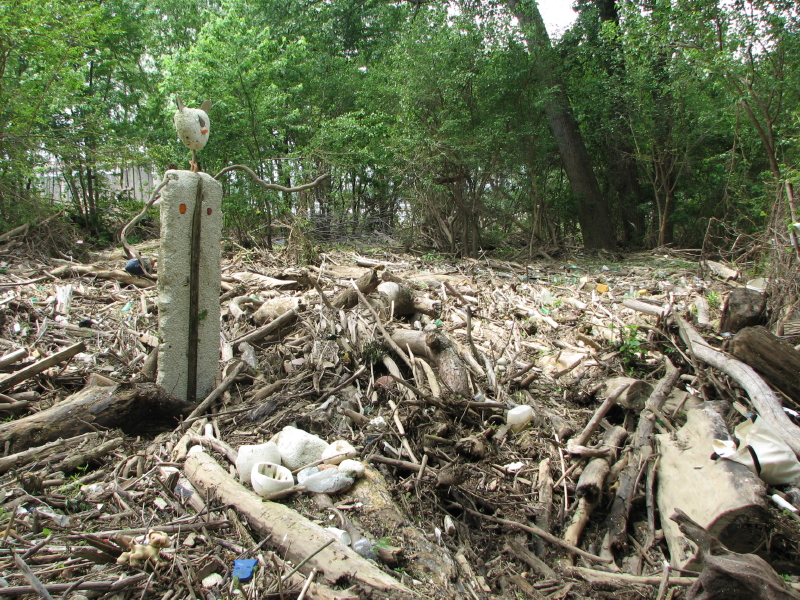
Sitting in the Mahalo Tree was more about fantasy than reality.  The fire pit was located too close to the tree!  Still I admired the sense of play and creativity and decided to leave the figure I was making now named “Mahalo Man” as a present for the next visitor to the tree house.  I finished my figure with materials I found around the tree.  Here’s a portrait of my latest creation.

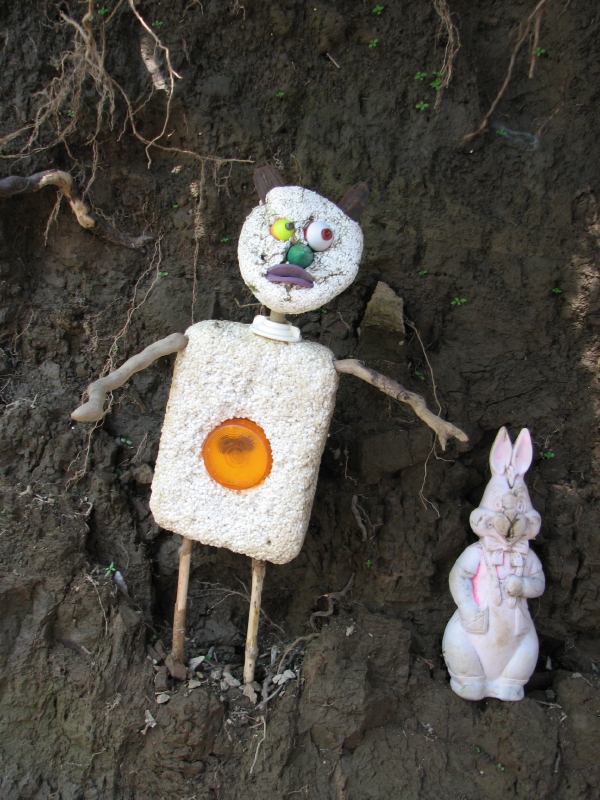
First, I moved Mahalo Man by the sign nailed into the tree…but I didn’t like it.  So, I reached into the old collecting bag and pulled out a plastic bunny rabbit I had found on the walk out here.  The rabbit had a coin slot in the back of its head.  I finally left Mahalo Man under the earth and rootlets beneath this great tree.  Here is another view of this figure with his rabbit companion.


The rabbit figure lent a certain Alice in Wonderland quality to the ambiance surrounding the Mahalo Tree.  I hope to check back here sometime during the summer and see what other changes have been made by man and nature.  I  will close with a final rabbit picture next to the hole in the bank our friend now calls home.

Read Full Post »

Just left or east of the railroad bridge at the Falls of the Ohio is where this adventure occurred.  The river was still high but dropping.  I was enjoying working in a section of the park that I don’t normally hang out at, but have discovered is both full of wildlife and potential art materials.  Evidence of our recent flooding was everywhere and I was exploring what there was to see and find.
While I was exploring this area I could hear Beatles’ music quite clearly drifting over the water.  It was the annual Abbey Road on the River Festival at the Waterfront Park in Louisville.  I guess the goal of each tribute band is to sound as closely to the original Fab Four as possible because I couldn’t detect much variation from one group’s rendition of a familiar song to another’s.  I did, however, notice that the Belle of Louisville’s steamboat calliope was in direct competition with the bands.  Like last year’s festival…snatches of 19th century tunes intermingled with pop hits from the 1960’s.  Baby, baby…Do dah day.

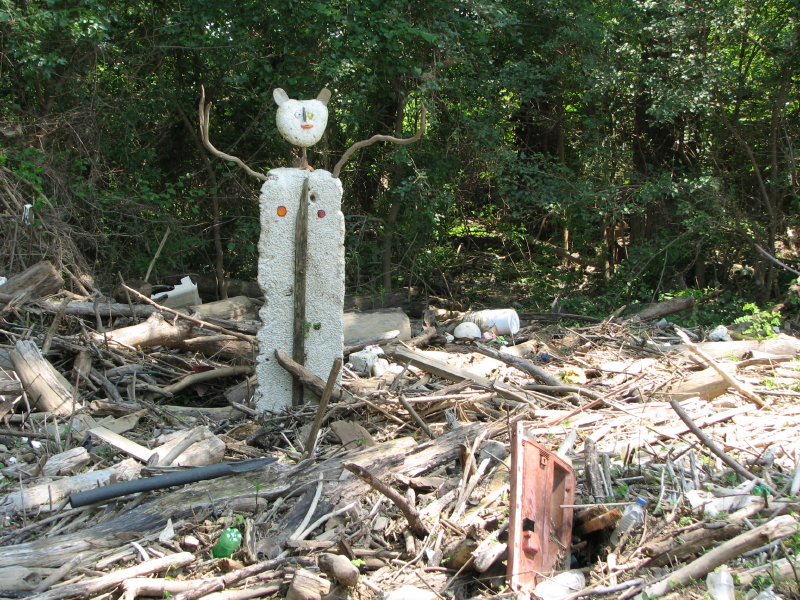
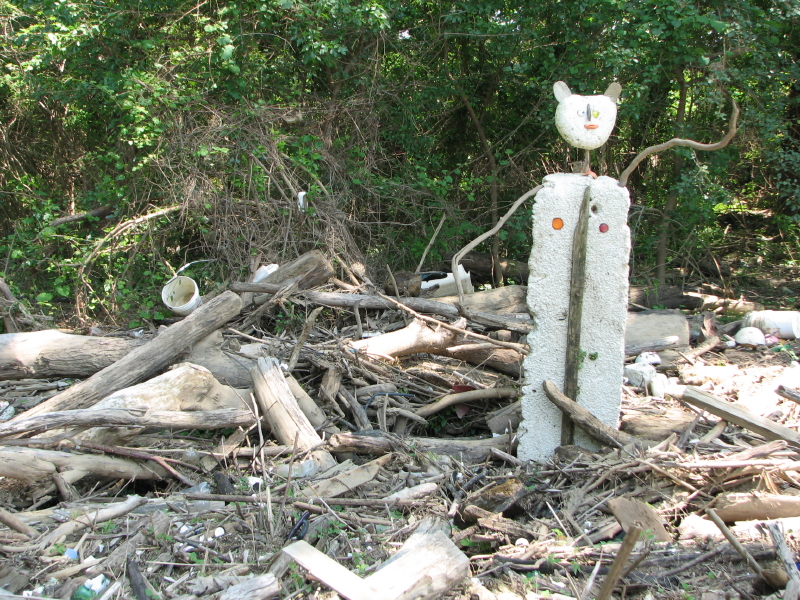
I was in this section of the park because I was searching for larger sections of Styrofoam.  This last bout of flooding pretty well wiped the slate clean as far as the materials that I had collected last year.  There is no shortage of smaller chunks throughout the park, but the larger pieces that are remnants of floating docks were in shorter supply.  I did find this piece that still had wood attached to both sides and set it upright, stelae-style.  Here’s what it looked like right after I assembled it.

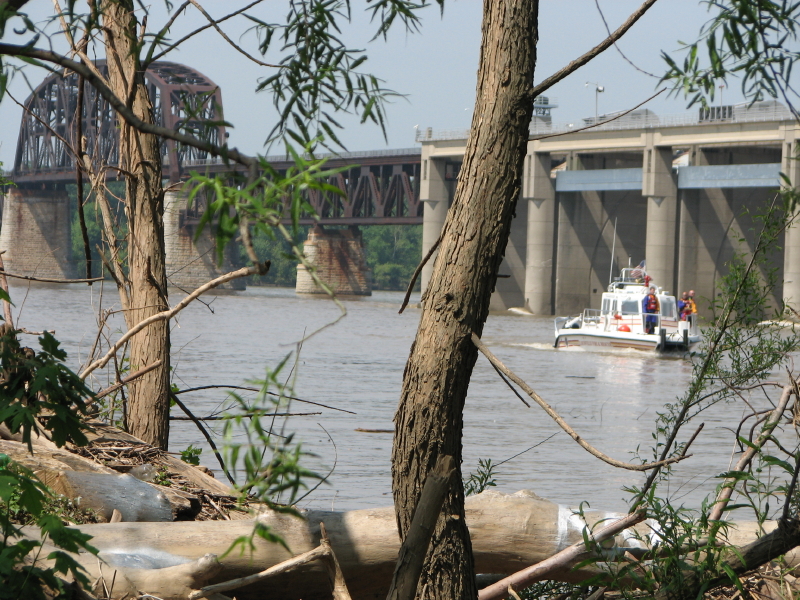
I had the turtle piece going too while this six-foot figure was under construction.  I also happily observed Northern Orioles chasing one another through the Cottonwood Trees.  I taught myself how to imitate the oriole’s song and on occasion can lure a curious bird closer by whistling to it.  I’m still trying to get a primo photograph of one of these birds, but they do tend to stay in the tops of the trees.  Out on the river, I observed a boat going back and forth along my side of the river and I’m speculating that they are looking for some poor lost soul that the river may have claimed?

I left my Styro-sentinal in place, but returned a couple of days later to discover it had fallen over.  This time I moved him to a different place facing the river and changed its arm positions a bit.  Originally, he held one of those soft nerf-type footballs.  I haven’t been back since and he may or may not be still guarding this section of the river bank.

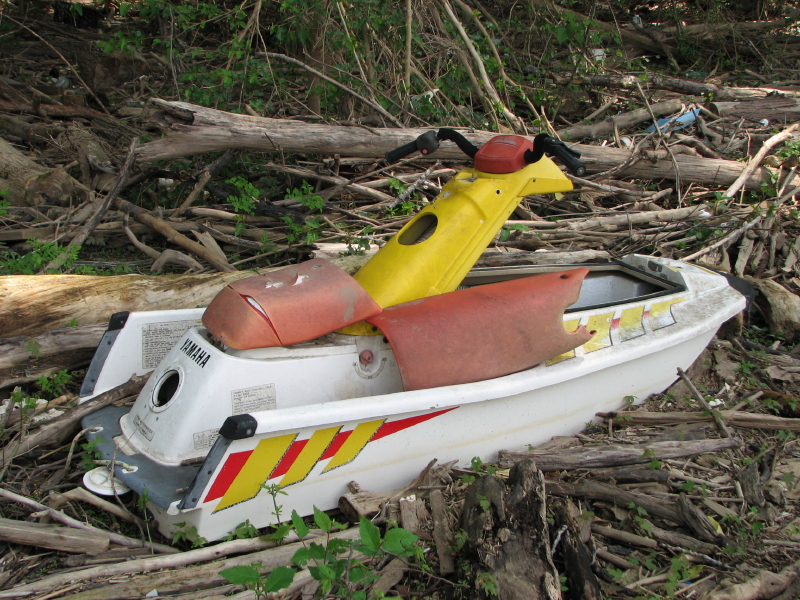
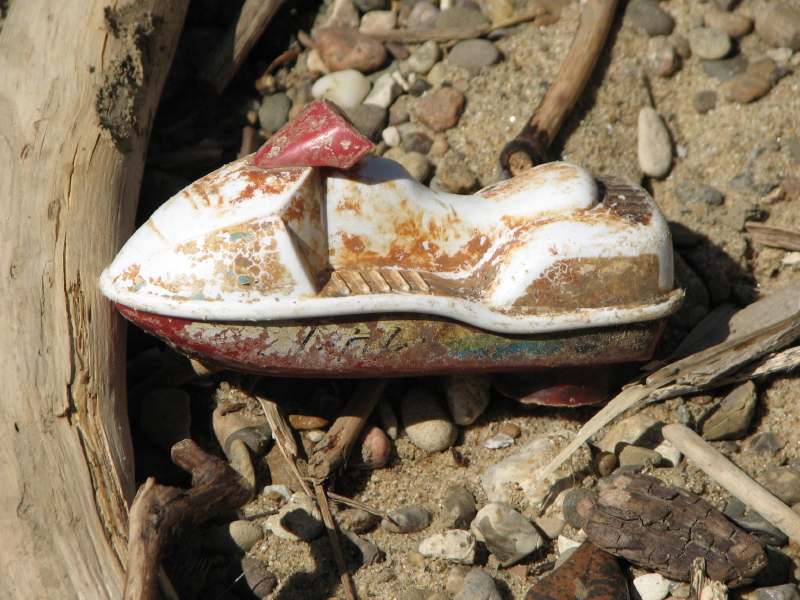
Among the items I “found” out here include this ruined Jet-ski.  Which…

…bookends nicely with the miniature version of it I found in the western section of the park also courtesy of the Ohio River and its recent flooding.

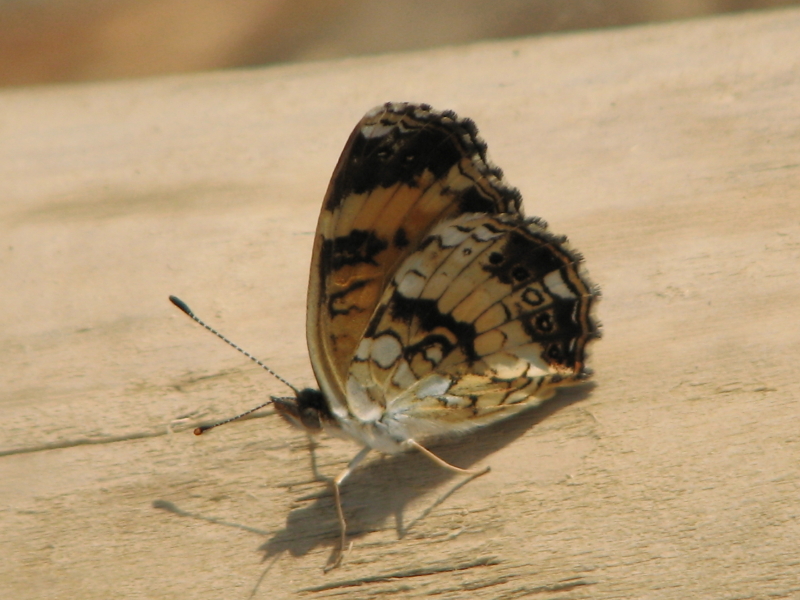
Butterflies and other insects are becoming more prevalent as the season progresses.  I saw what I thought was a familiar butterfly, but wasn’t totally convinced it was the species I thought I knew…so I photographed it and researched it a bit in the comfort of my home.  Here is my first image which shows two of these “different” butterflies.
Here’s a single, resting individual with its wings spread open.  This butterfly shows more black than the Pearly Crecents that are common out here. 

I cross referenced my butterfly guides at home and was glad that I was able to take a picture of this butterfly’s ventral surface because it helps to identify it.  I was leaning towards the Eastern or Harris Checkerspot but decided that this is the Streamside or Silvery Checkerspot (Chlosyne nycteis ). Here is the view that was most helpful.

I’m looking forward to seeing many other butterfly species out here this year.  I will try to keep a checklist of what I see just as I do for the many bird species that visit or call the Falls of the Ohio State Park home.  On my way out of the woods, I “felt” something looking at me and after checking around…discoverd these eyes following me which is as good a way to end this post as any!


Read Full Post »

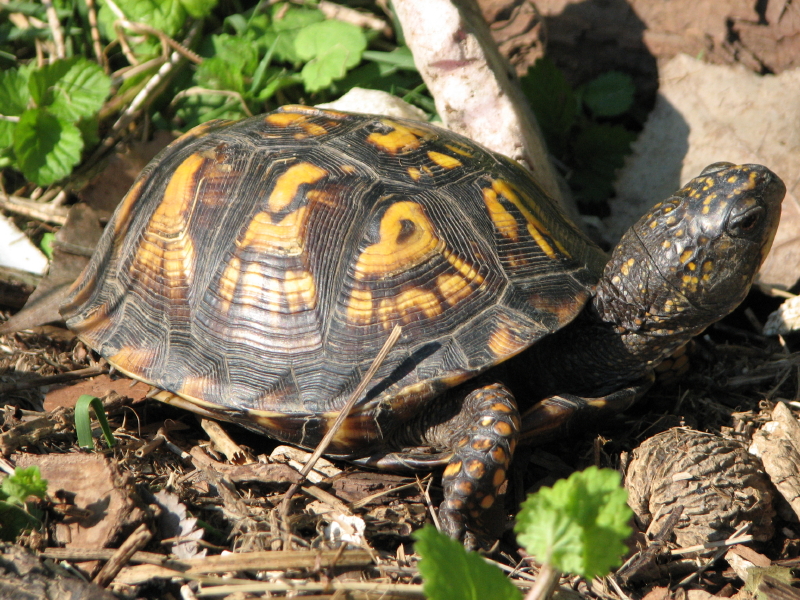
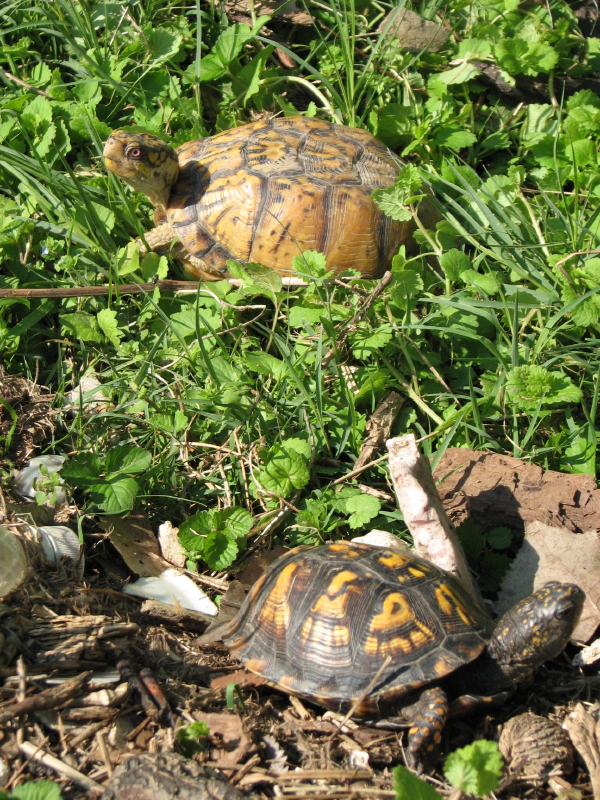
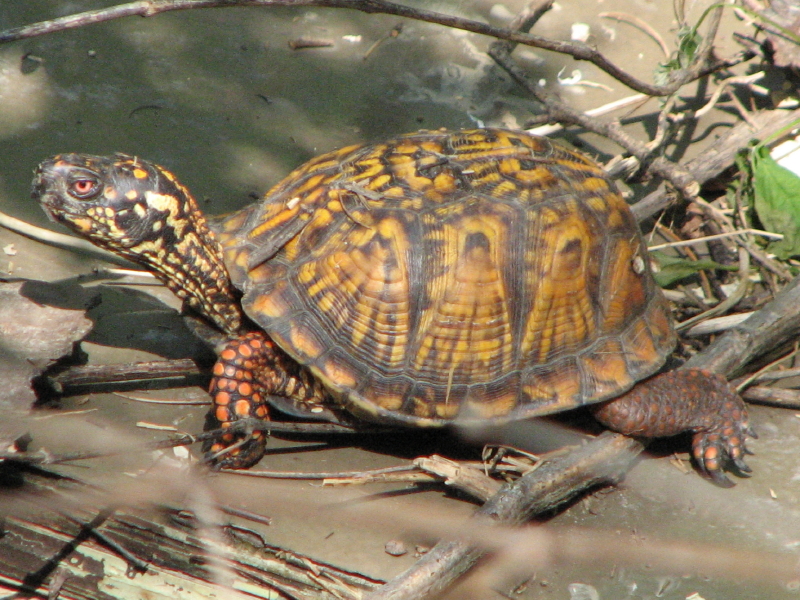
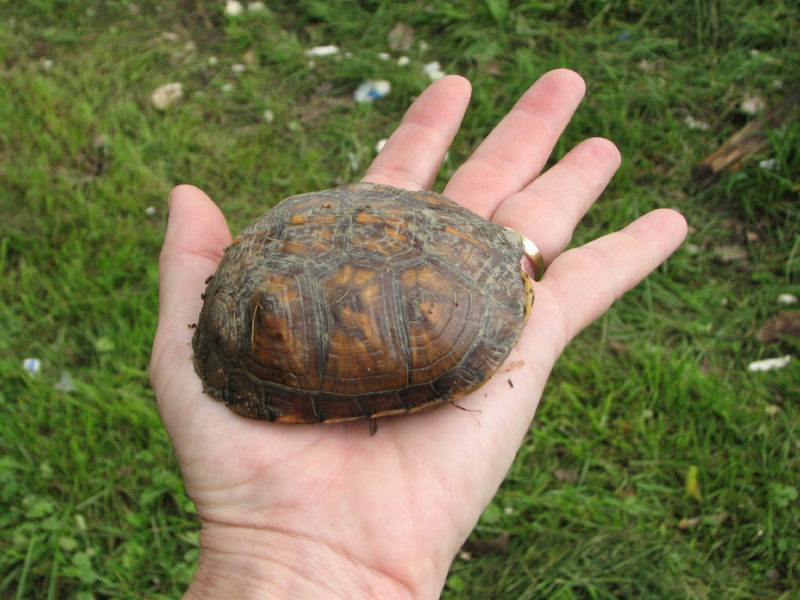
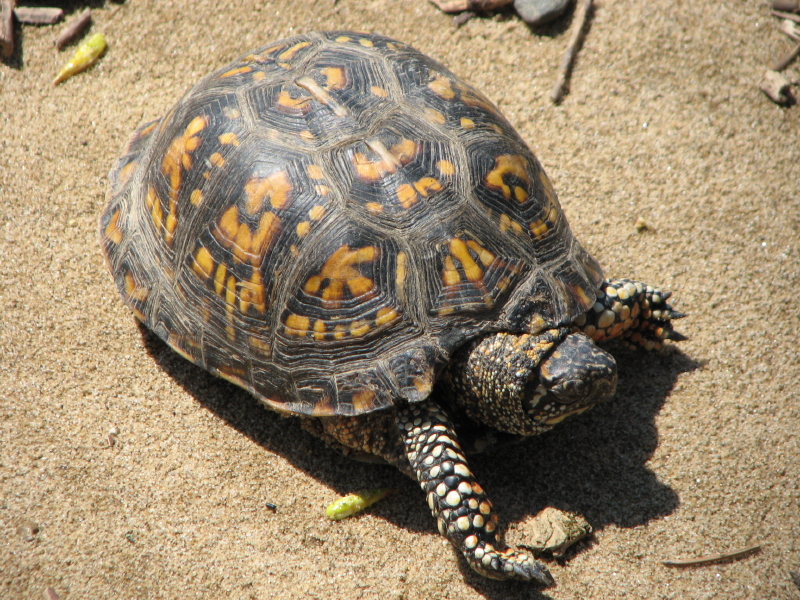
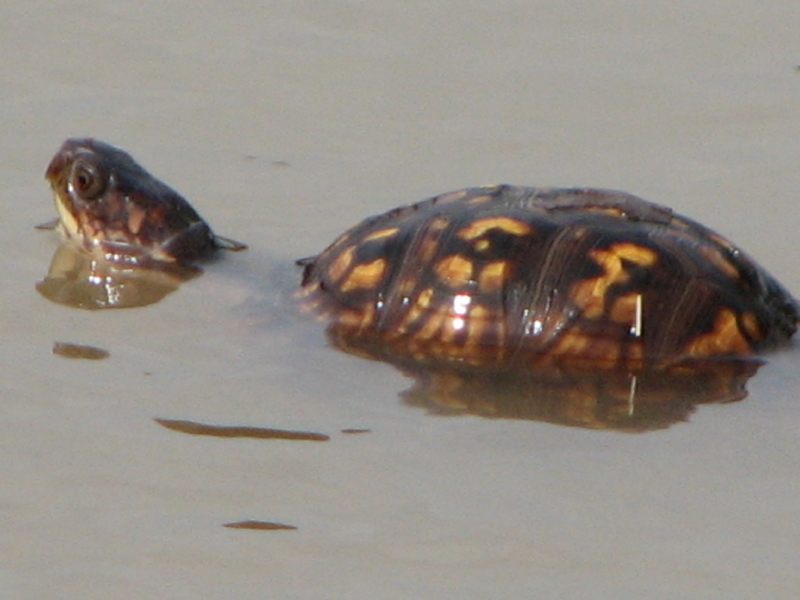
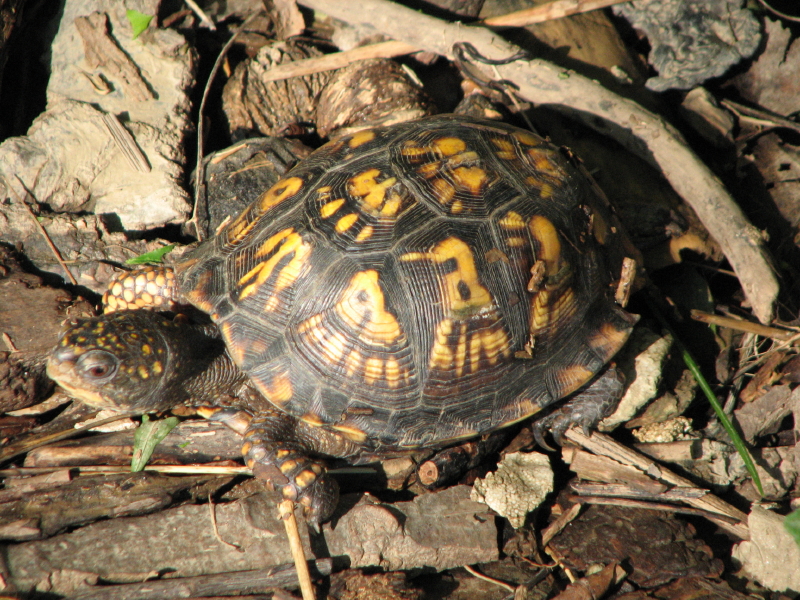
With the record rains and high water at the Falls of the Ohio State Park, 2011 has already become a memorable year.  Of all the wildlife I have observed this Spring, the sightings of so many Eastern Box Turtles (Terrapene carolina carolina) has added to the mystique of this year.  My history with this engaging turtle in this park is slim.  During the eight previous years I’ve come across live specimens only twice.  On two other occasions I’ve found the intact carapaces of deceased turtles, one of which had a pellet-sized hole in its shell.  Their relative scarcity reinforced the idea that although this is a widespread turtle in our country, it was becoming less common for many reasons including habitat loss, road kills, and wild animals collected for the pet trade.  What I’m about to present is a portfolio of eight individual box turtles that I have seen and photographed over the last two months.  No doubt the flooding helped concentrate them in ever shrinking territories and this is why I came to find them.  I tried to be careful in handling and left them where they were found.  The first turtle I came across was in the western section of the park and here are two images of it.

This one was found after the first flood.  It has really interesting and colorful beading on its neck.

The Box Turtle #2 was found swimming to higher ground during the height of the second flood in May and in the eastern section of the park.

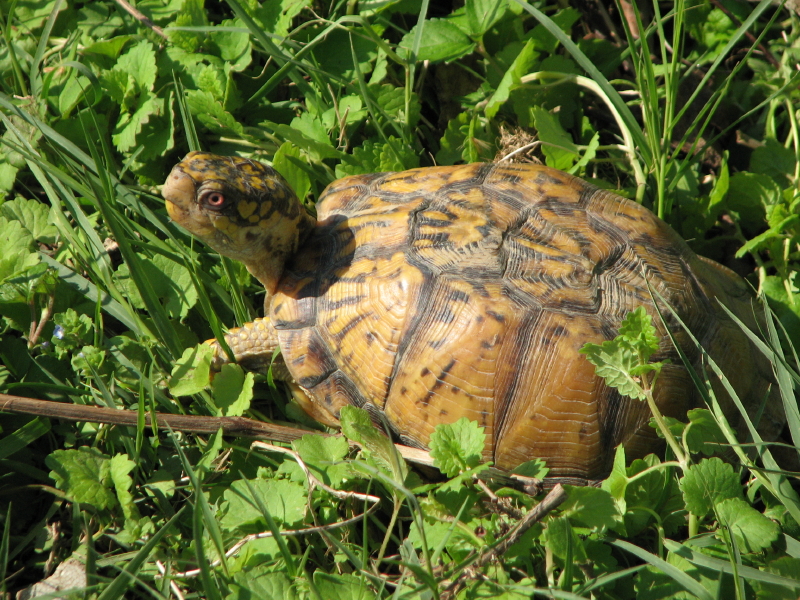
Box Turtle #3, I found twice in the same day in the eastern section of the park.  Here is what it looked like. Note that the second scute bears what looks like a lower case letter “a” on its shell.

And now for the opposite side of turtle #3…

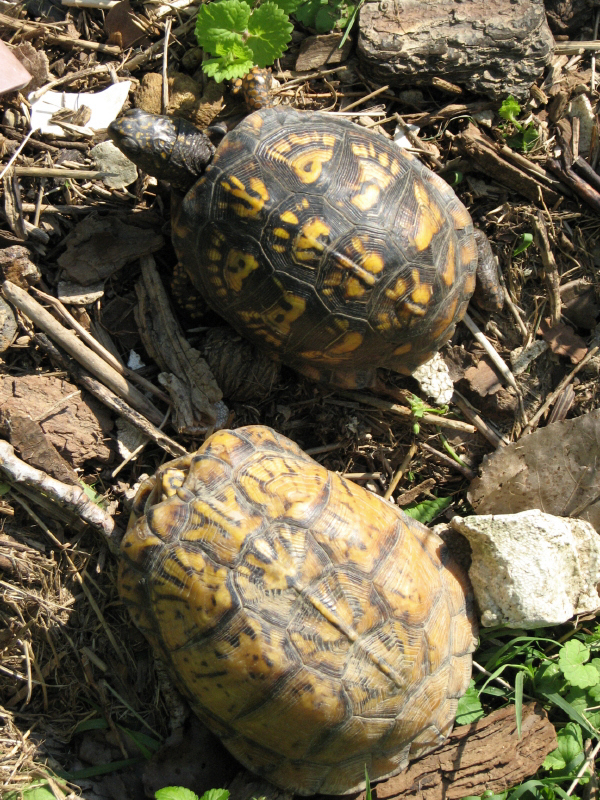
Here’s the same turtle the second time around and this time he has found a friend!

At first I thought this was a male and female turtle, but I didn’t check anything but eye color which in this case was on the red side indicating the chance they were both male.  When I came across them, they were certainly aware of each other.  The larger of the two box turtles may have been the older specimen based on how worn its shell was.  I’ve heard that counting the growth rings on these turtles is not a reliable way to determine their ages.  My field guides indicated that this is a long-lived turtle with individuals easily living to 40 to 50 years and in rare cases possibly a 100 years old.  Here are three images with Box Turtle #4.

Box Turtle #5 …I only have one image of it mostly retracted in its shell.  This one is also from the eastern section of the park. 

Box Turtle #6 is very colorful and was found near the Interpretive Center during the height of the flood.  Although it’s hard to tell…it’s standing on the remains of a refrigerator that floated in with the Ohio River.

The next two turtles are the smallest ones I’ve found thus far and each was found in the eastern section of the Falls of the Ohio State Park.  This is Box Turtle #7.

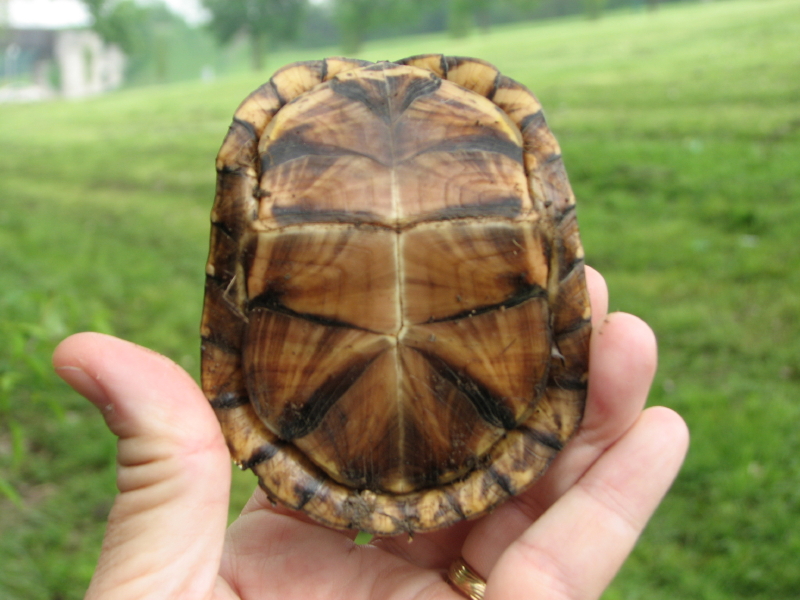
Here’s the underside of the same turtle showing the plastron and the hinge that allows the box turtle to completely hide inside its shell.

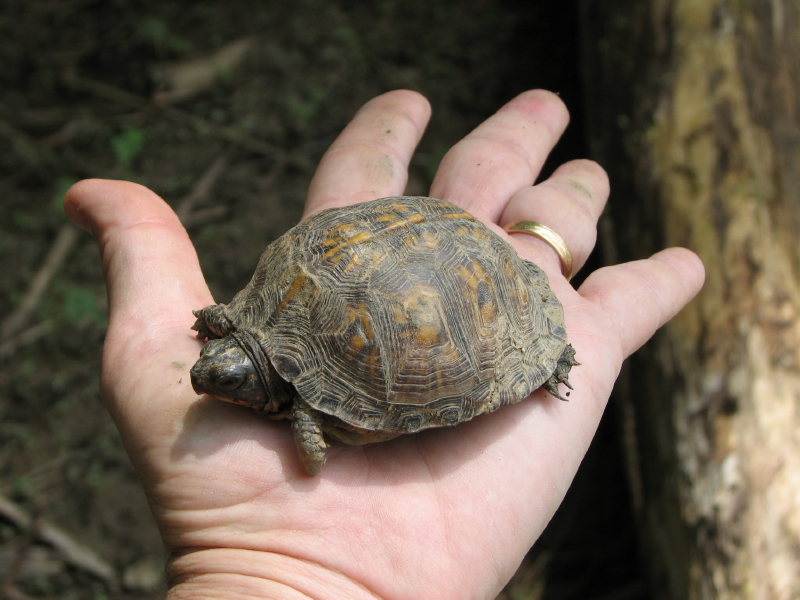
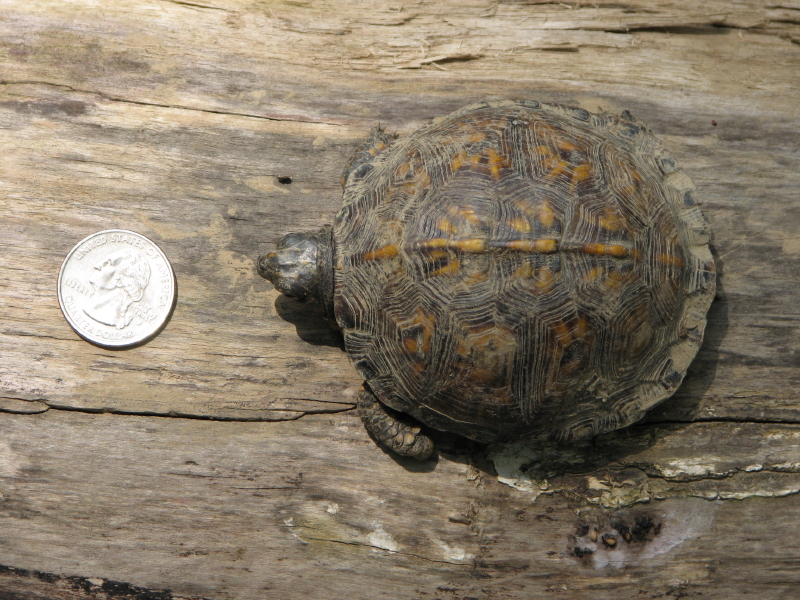
To close, I have three images of Box Turtle #8 and its the smallest yet.  One other thing I noticed about this little guy was that it was missing part of its left front foot which had healed from whatever injured it.

Another image to help provide scale using a quarter for a guide.

Of all the info I learned about box turtles, the fact that most surprised me is that if left alone they can live their entire lives in a relatively restricted area the size of a football field. They become so habituated to this territory that if they are moved from their familiar surroundings they can become dislocated and fail to thrive.  This is a good reason not to take these turtles out of the wild. I placed #8 on the ground wishing it well.  It pleased me knowing that there were at least this many box turtles in this small park.  I wonder how many others I will come across before year’s end?

Read Full Post »

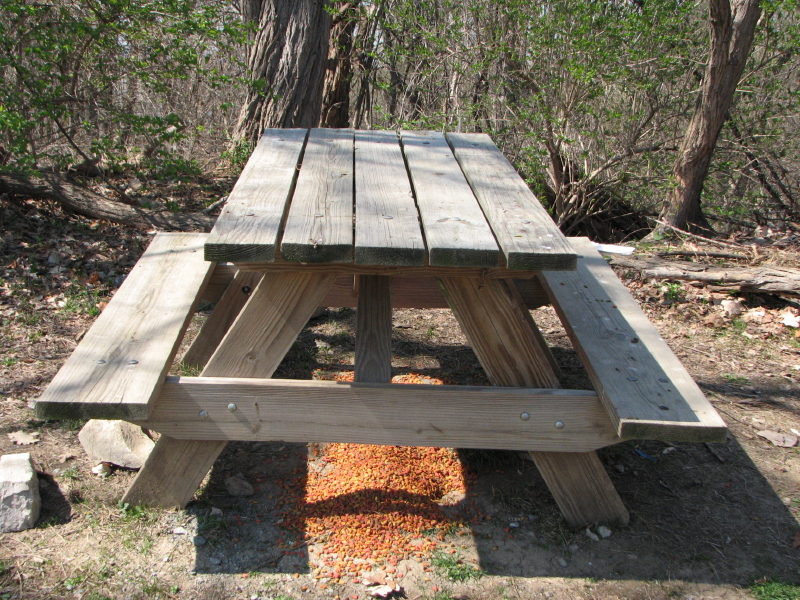
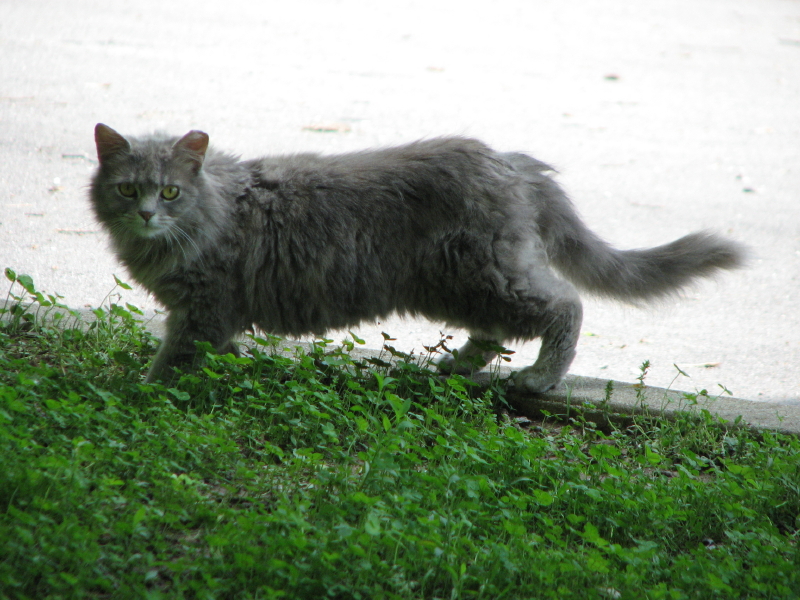
Regular visitors to the riverblog know that I comment on everything that doesn’t belong in this environment which takes in more than man-made debris.  Invasive species, non-native species, and domesticated animals turned loose are changing the ecosystem too.  Recently, I posted about the growing feral cat problem I’ve been observing in the park.  Kind hearted people have been trying to take care of them by dumping dry cat food around the picnic tables near the Interpretive Center.  As a reminder, here is another photograph illustrating this.

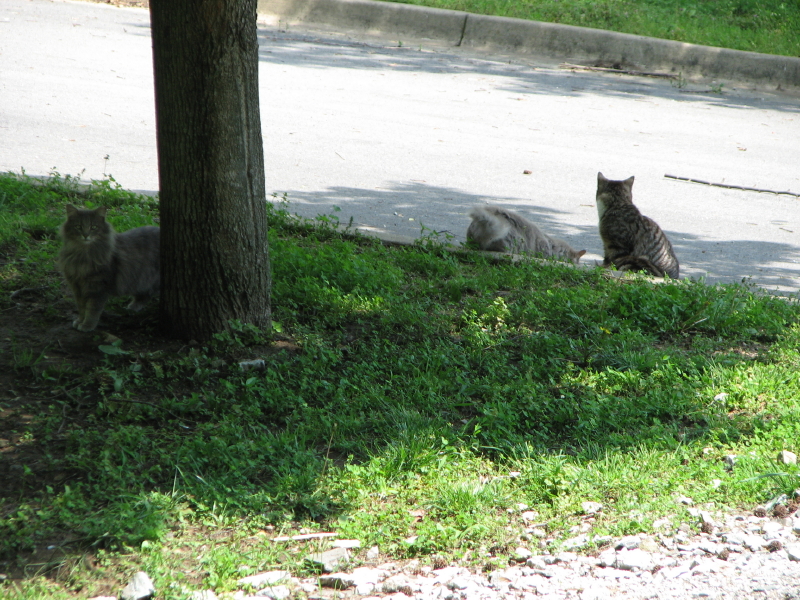
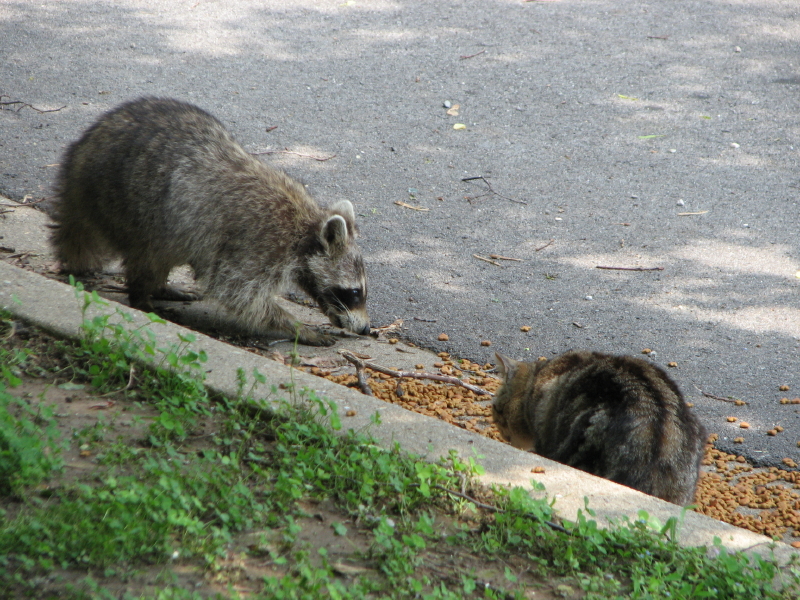
Sometimes I see what seems to me to be a ridiculous amounts of food spread out in this area.  Returning from a hike in the park’s western section, I stopped to watch three cats that were eating dry cat food that had been spread along the curb of the parking lot. 

From the corner of my eye I saw something moving in the brush and thought it might be a fourth cat joining in the feast…but it wasn’t.

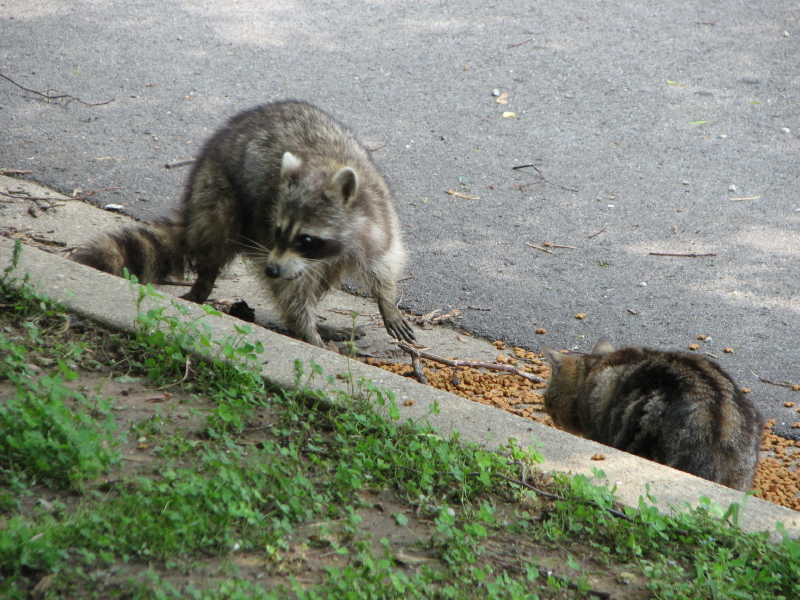
It was a raccoon and only the second one I’ve seen in broad daylight out here.  Usually, these animals are more reclusive than this and prefer to operate under the cover of darkness, but here was this adult raccoon making a bee-line for the cat food.

I don’t view this as a good thing for all species concerned here.  Granted, the high river was probably cutting off some of the territory that the raccoon would forage over and this animal was hungry.  Wild animals that become habituated to man usually don’t fare well.  And in this case, there is a real danger that if this raccoon had rabies…it could transmit it to the cats who regularly come in contact with people.  By being out in broad daylight near an area populated by people, this raccoon was already displaying atypical behavior.

To my eye, the cats seemed less wary than the raccoon who is supposed to be a wild animal.  This scene was broken up when visitors with a dog on a leash came too close and the cats and coon ran into the woods.  I’m confidant that whomever is dumping cat food out here is not thinking about unintended consequences…but they should.  I’m not against cats, but I don’t think we should encourage them to live near wild life.  Recently, I found two objects left behind by the flooding that illustrate our affection for felines and I’ll end this post with them.  Until next time.


Read Full Post »

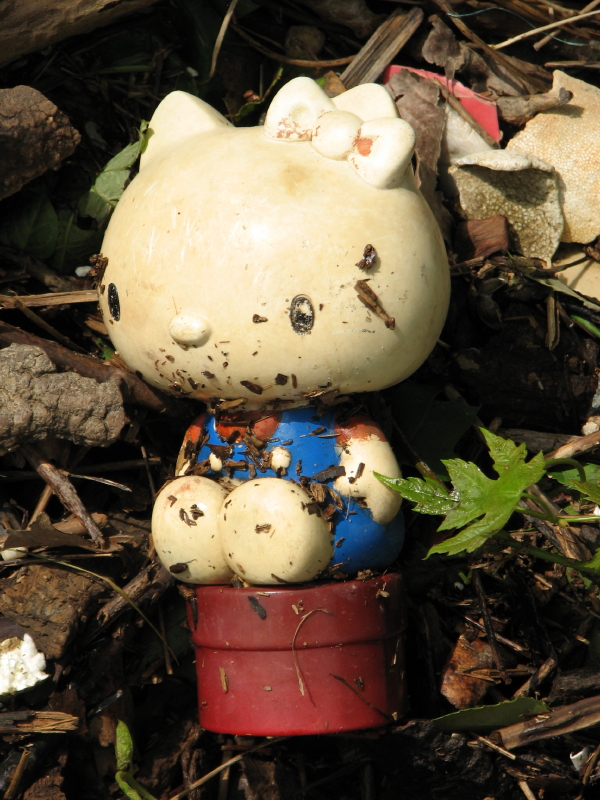
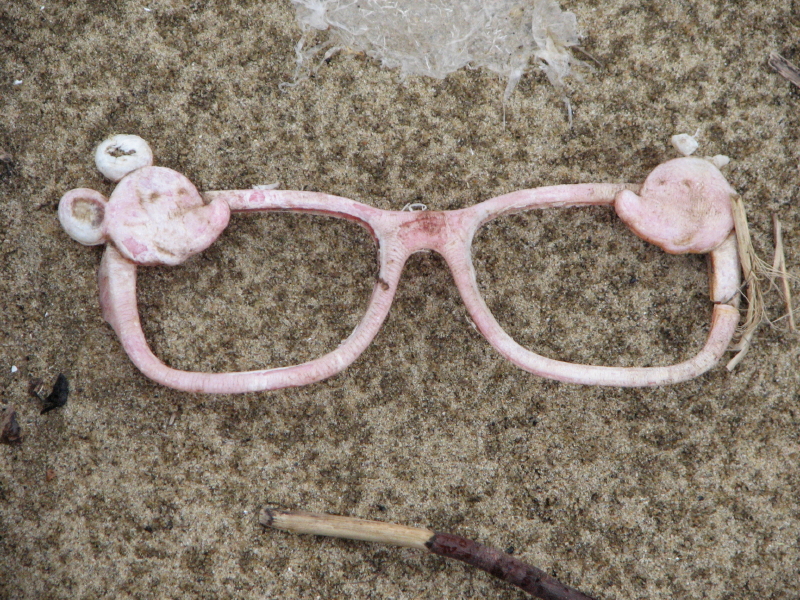
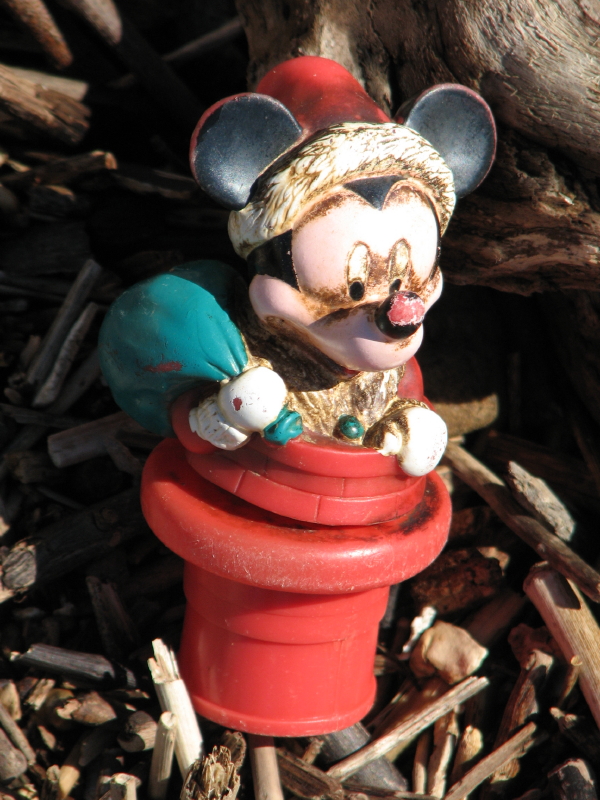
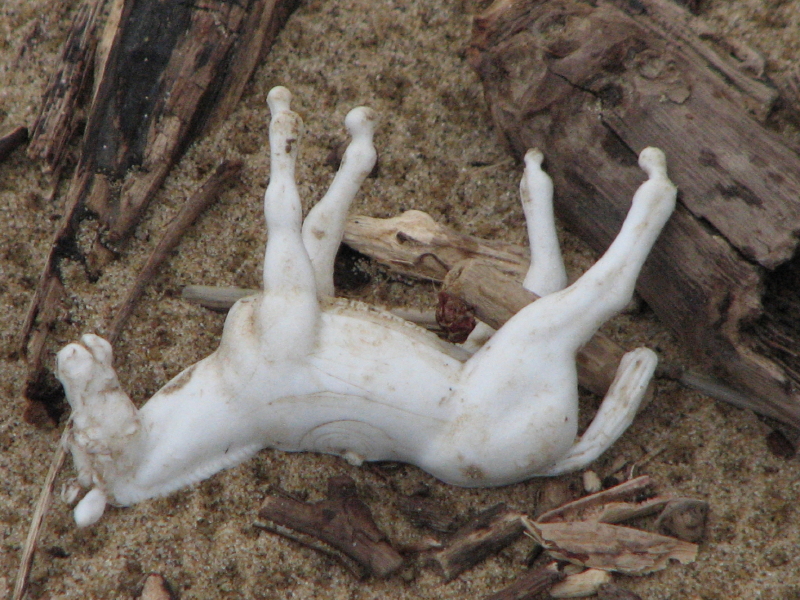
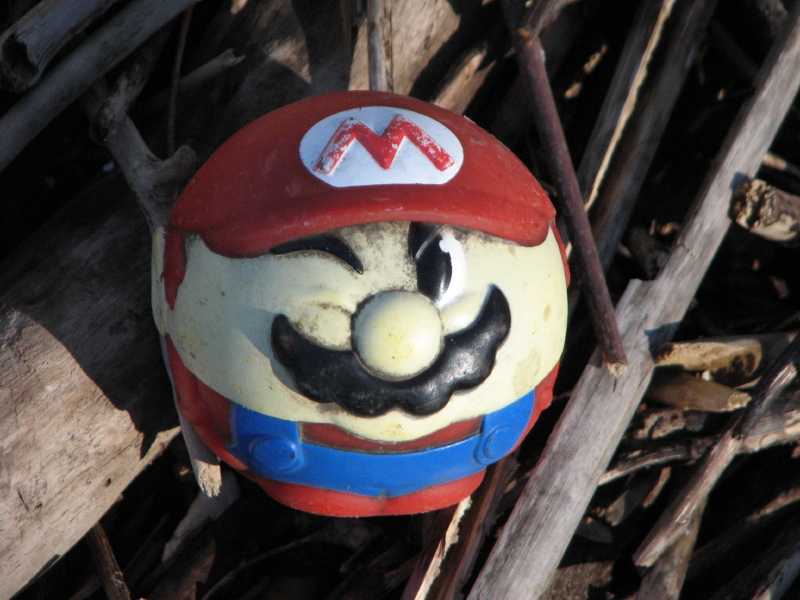
Okay, by now you know that we have had our share of floods, etc…at the Falls of the Ohio.  The Ohio River has gone up and down a couple of times over the past two months.  This post is devoted to toy finds that I have made during the moments I could access the riverbank and surrounding environs.  I think one of the biggest reasons I love visiting this place is that I always find something interesting left behind by the river.  This activity keeps me from spending money at the flea markets and antique malls and yet satisfies my need for visual stimulation.  I came up with my post’s title by looking at what I found recently.  Weirdly, this time I found three Mickey Mouse related objects and searching my brain…I don’t think I have even found one previous one before?  It all started with the first image in this post and …

…then I found these broken glasses.  A week or so after that find came this.

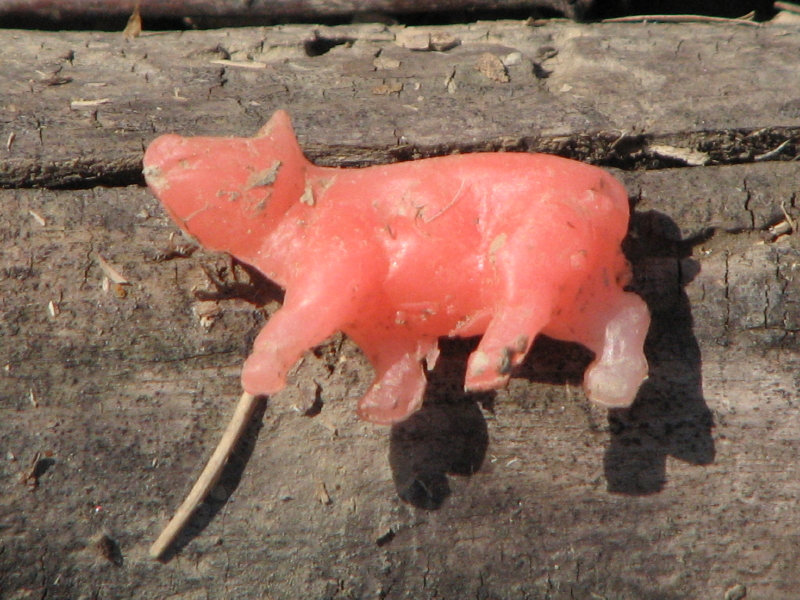
I think this was some kind of self-inking stamp.  And now for the piggies and they come in graduating sizes.  Let’s start with the smallest.

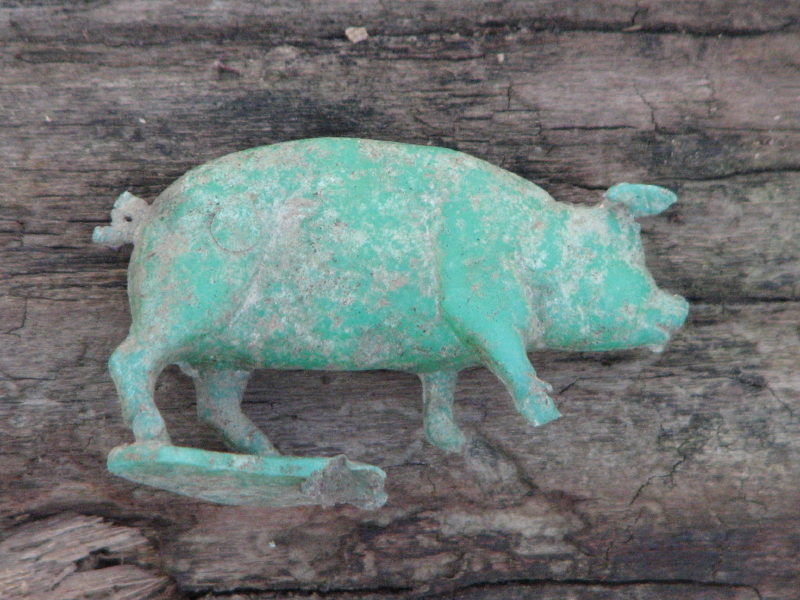
This pig is next in line.

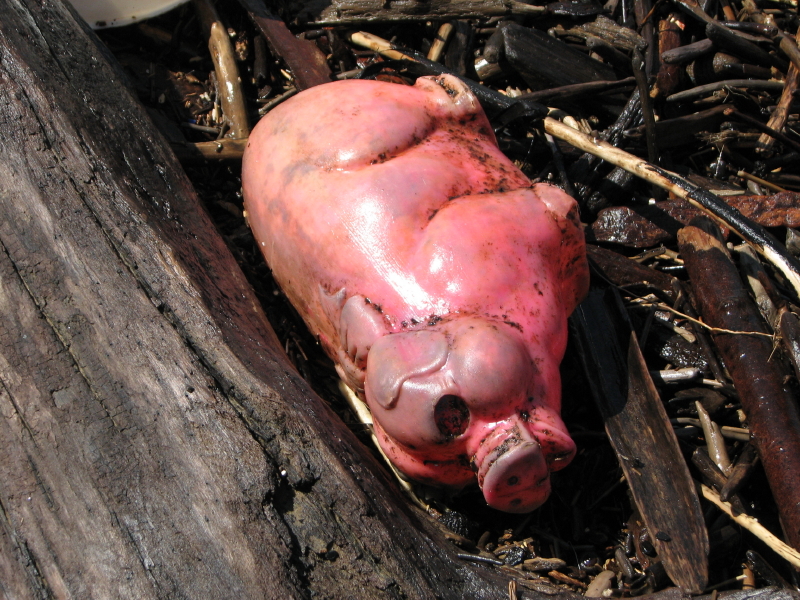
Now this was a bit of a disturbing find bobbing in the waves and it’s considerably larger in size than the previous pigs.  I’m not sure what kind of toy this used to be…but here it is.

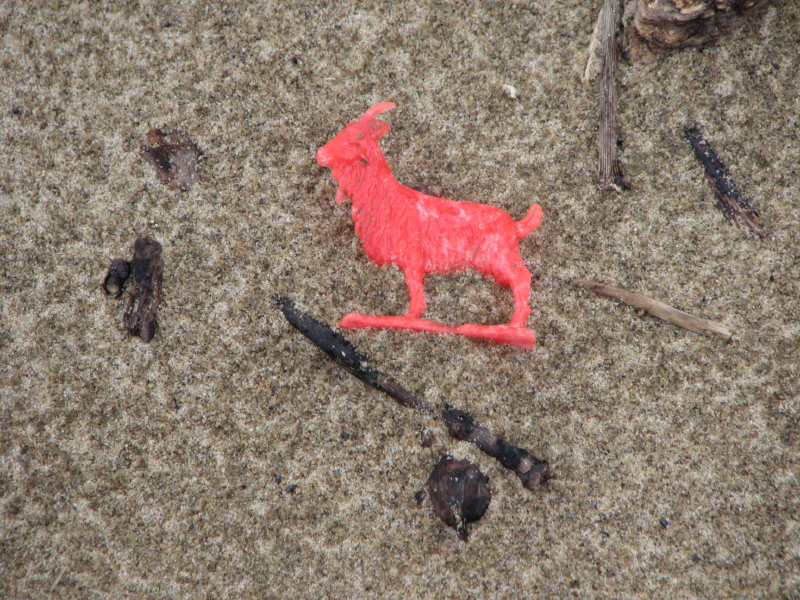
I have found other plastic farm animals and here’s the latest selections.

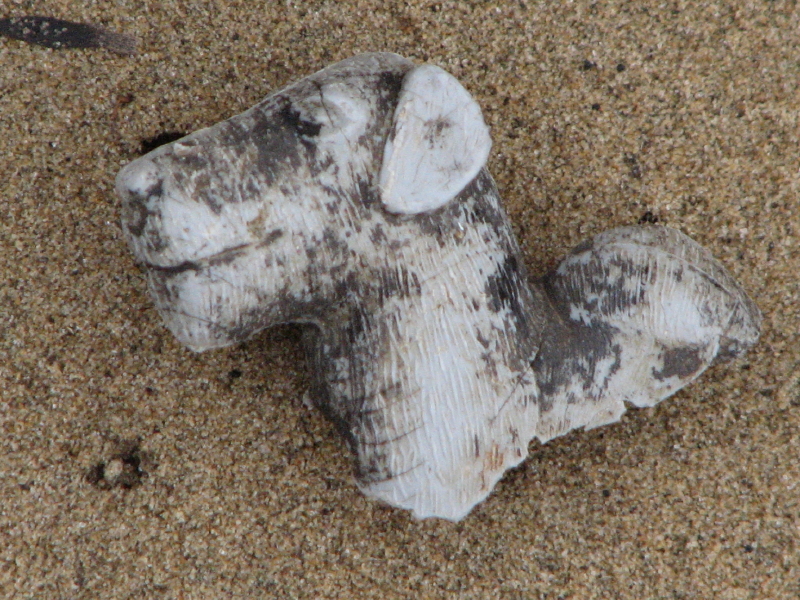
I’m surprised I found this because it’s a small, neutrally colored fragment.

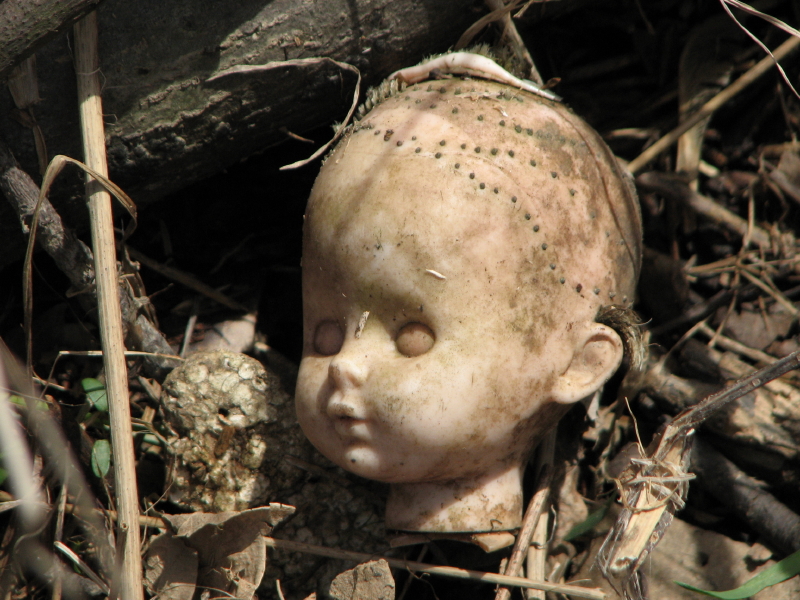
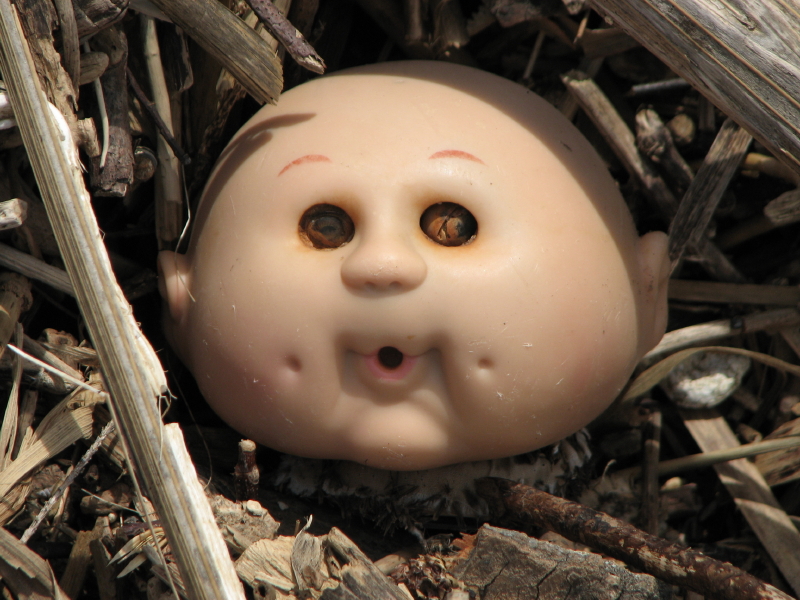
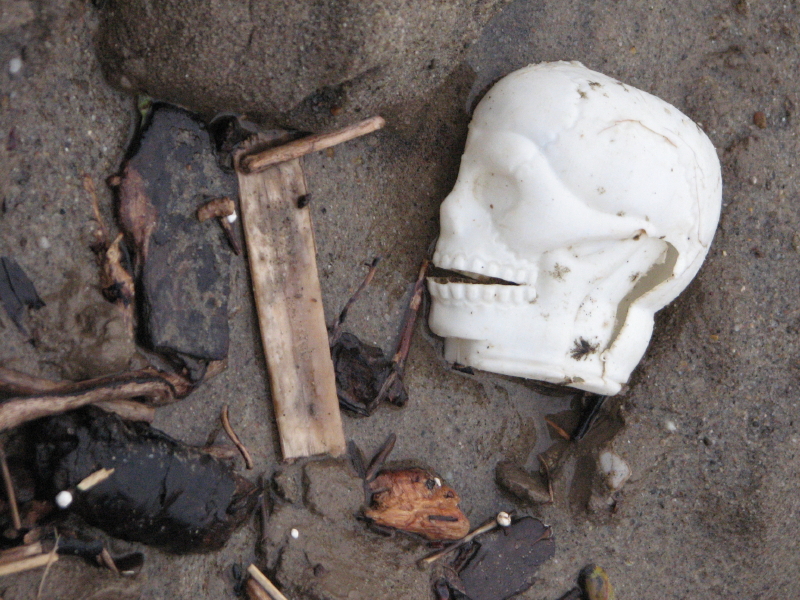
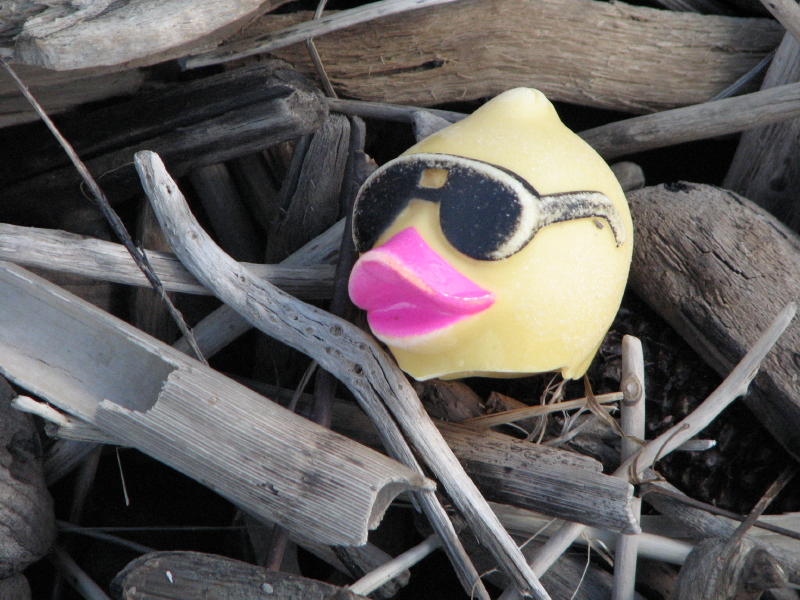
I also find a lot of different kinds of heads.  Perhaps the most common are doll heads.  These are the most recent.

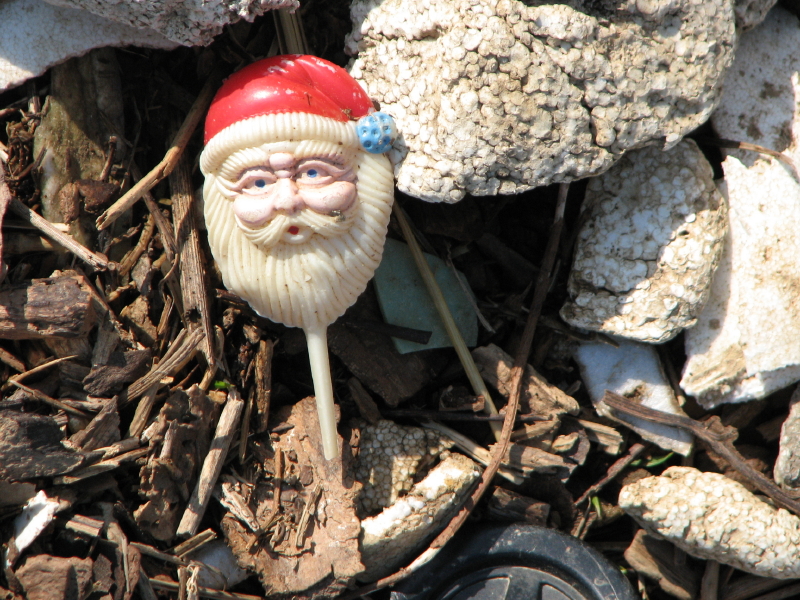
I even found a couple different types of Santa Claus heads.

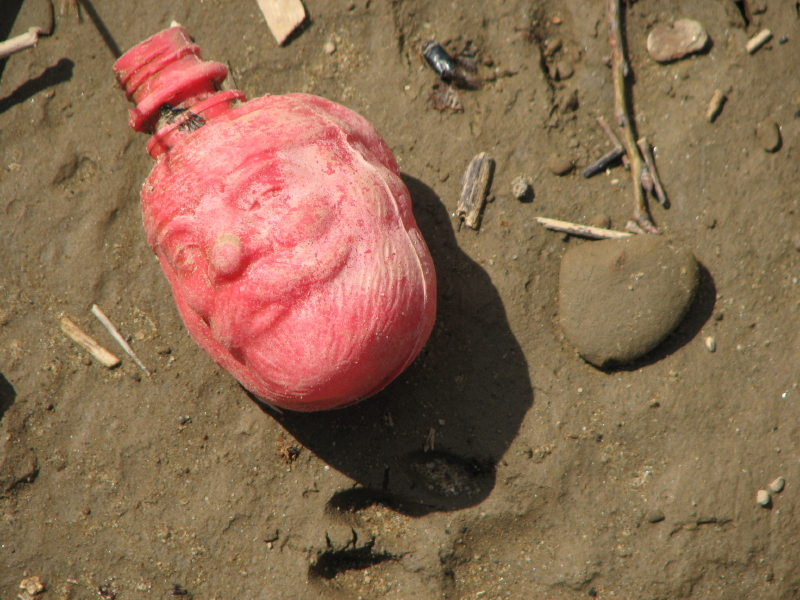
Although he’s no Santa…this guy does have a beard.

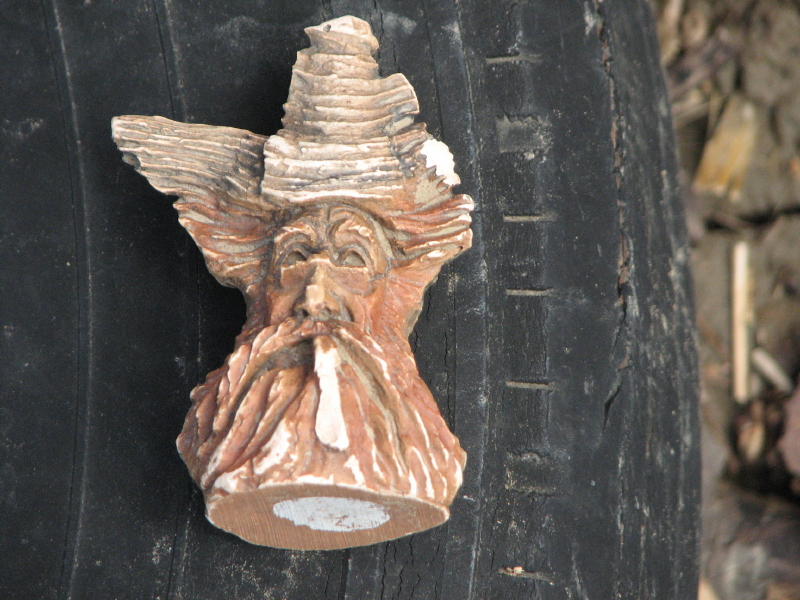
Even more heads!!!

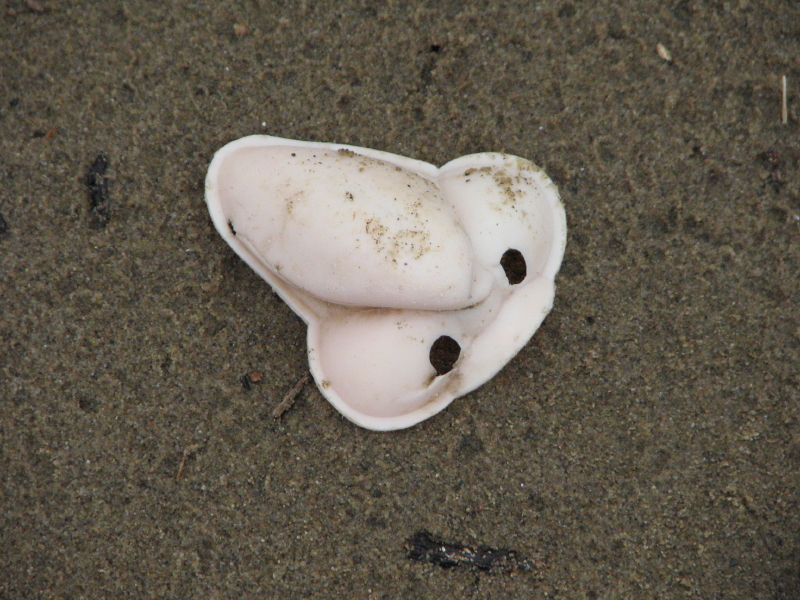
I think this is some googly-eyed clam or something?

This find was different.  It’s the first fake nose I’ve found out here and reminds me of Woody Allen’s early comedy entitled “Sleeper”.

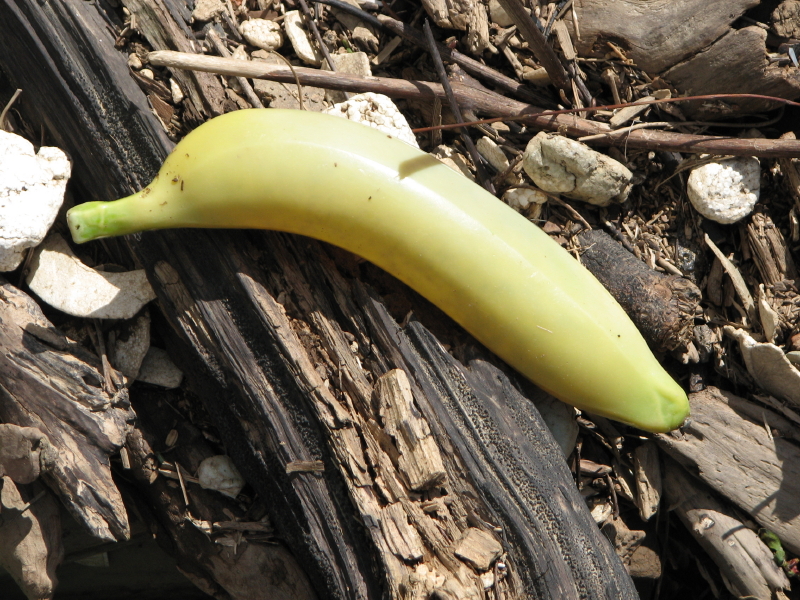
I have an “impressive” fake food collection going and here’s my latest goodies.  In my last post I showed one fake banana…and here’s the other.

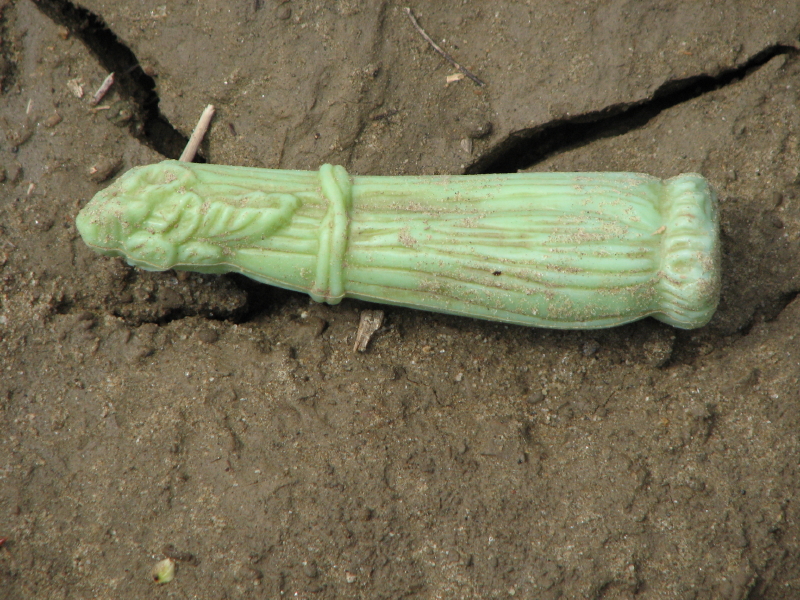
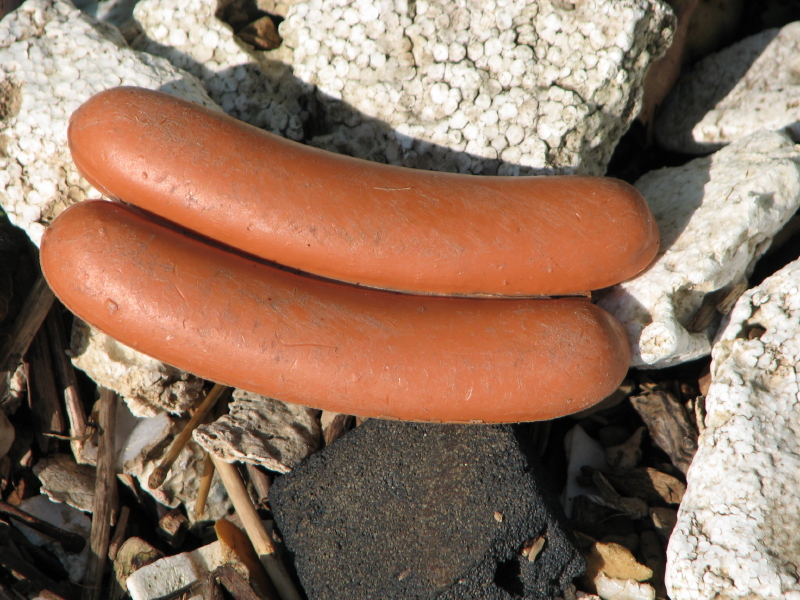
A bunch of celery followed by conjoined plastic hot dogs.

There is just so much of this stuff out here…now for some other random finds.  I especially like this Flintstone toy and wonder if it’s old?

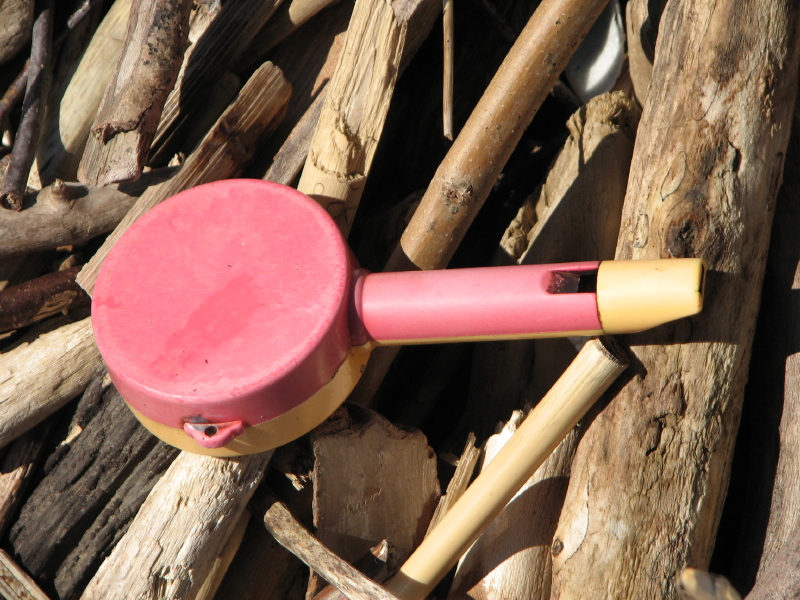
A whistle shaped like a banjo?

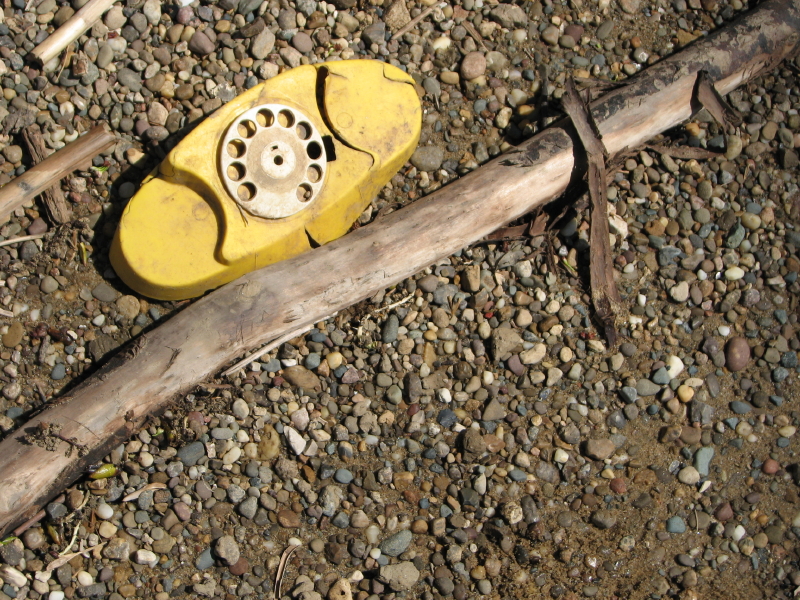
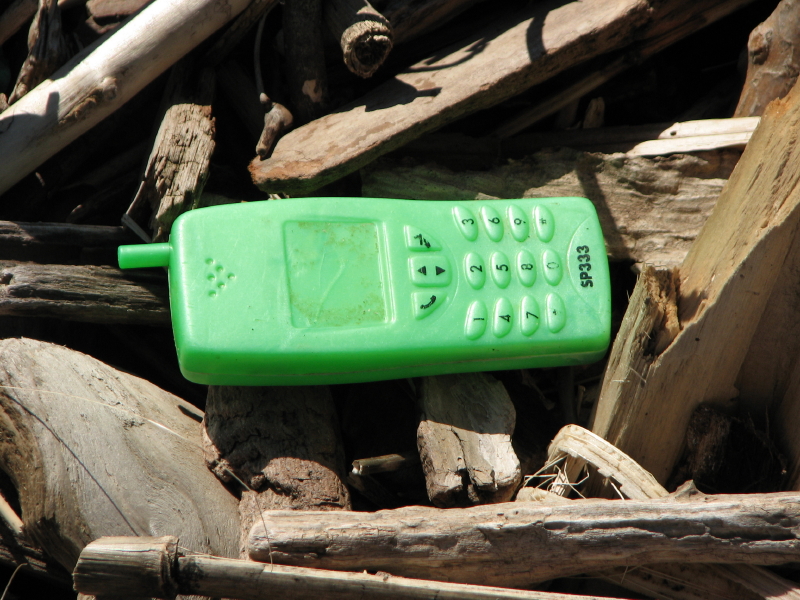
Telephone number one.

Telephone number two…proof of evolution?

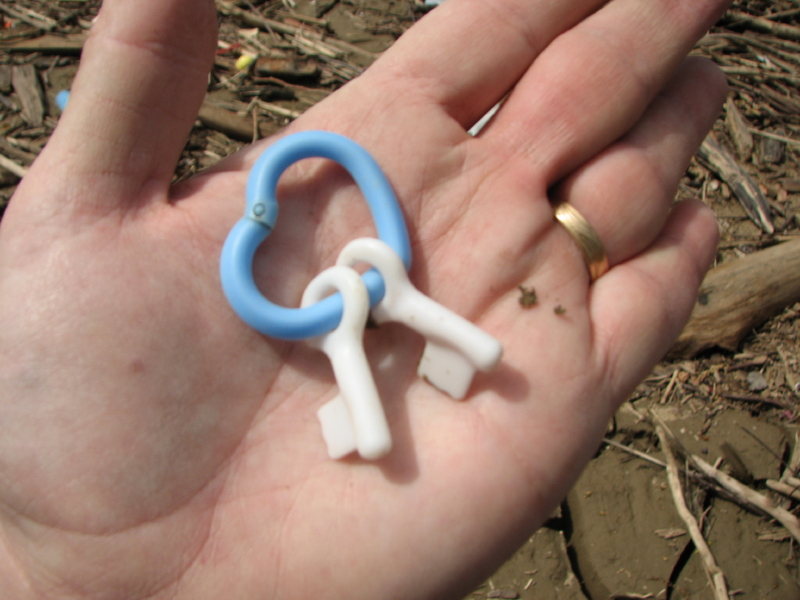
I could go on for a while, but realize this is a lot to take in and so I’ll close with the keys to my heart.  Take care everybody!

Read Full Post »

The Ohio River has receded by the Falls of the Ohio.  For many weeks the river was loath to relinquish the territory it had recently flooded.  I ventured down the river bank and explored the more eastern section of the park.  The following post is some thoughts and images made during this expedition into a very moist and muddy area filled with debris and wildlife.

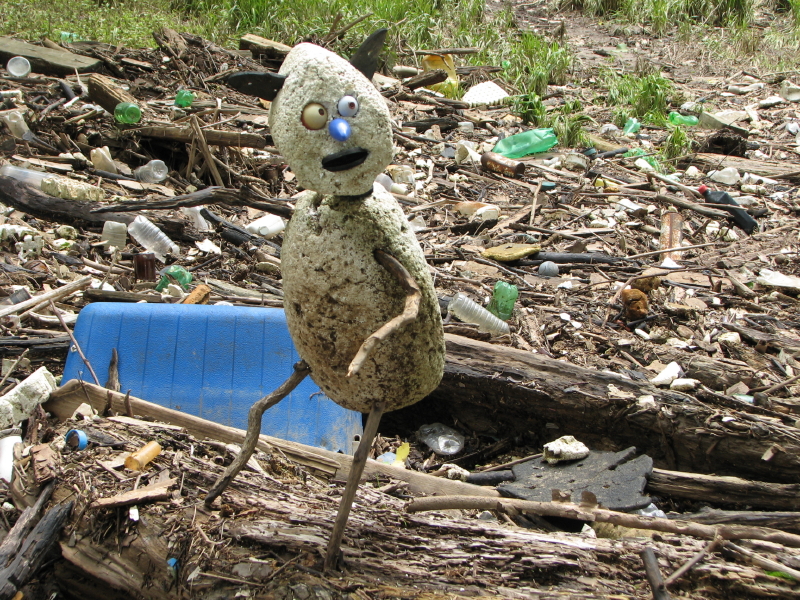
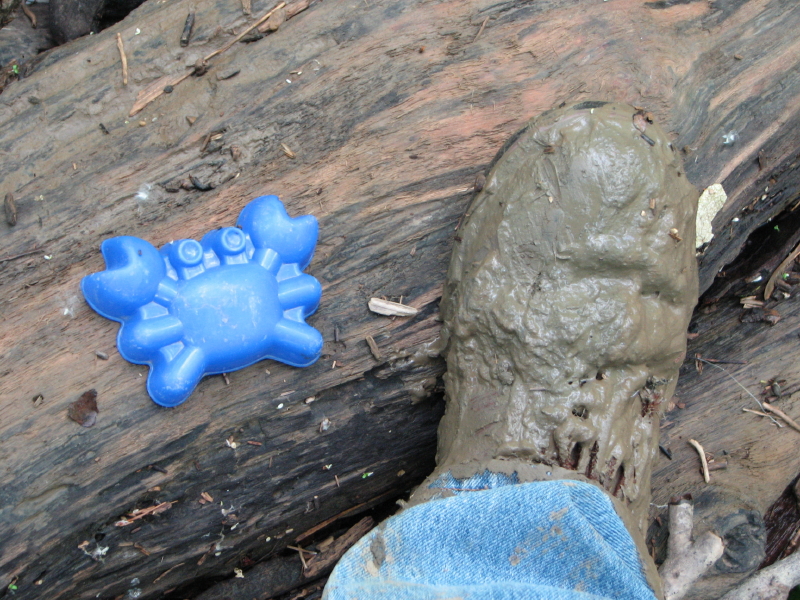
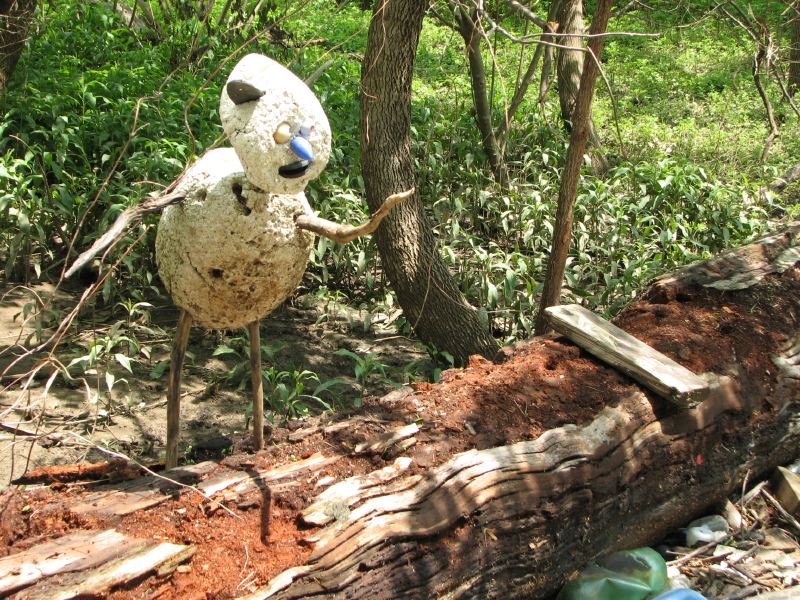
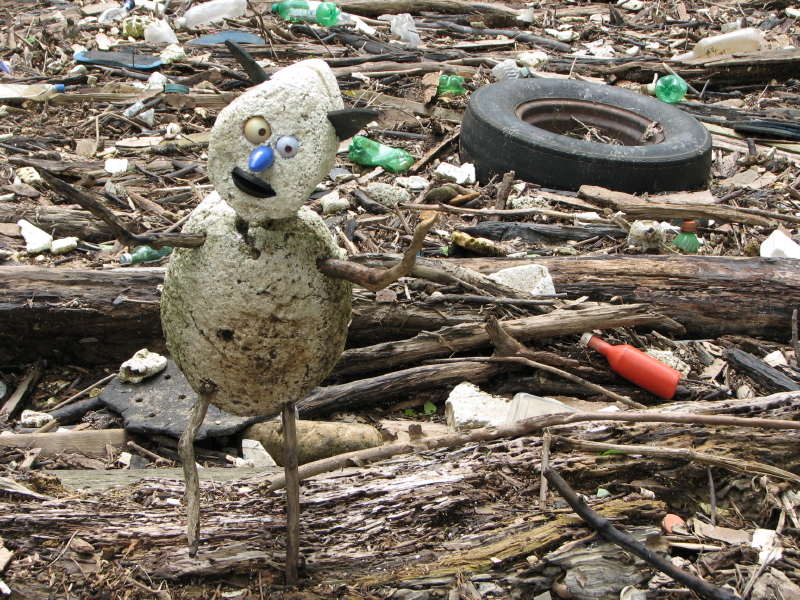
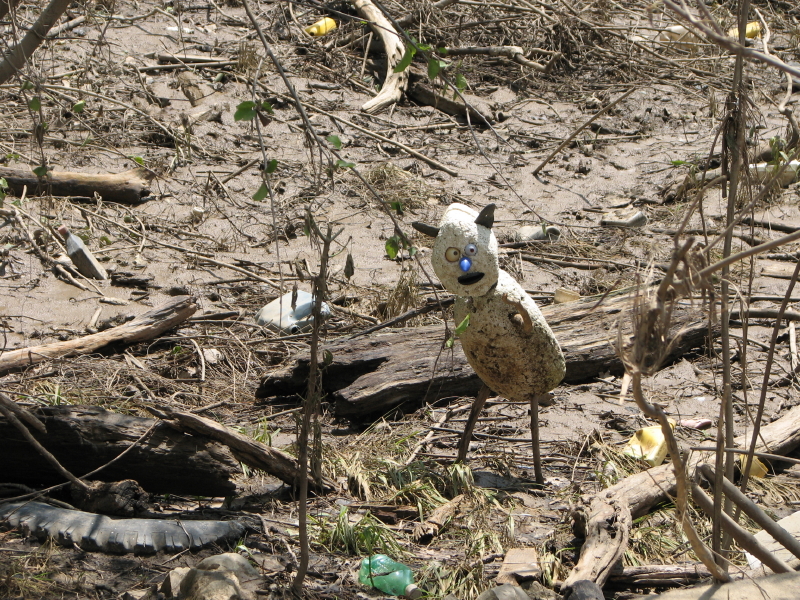
While exploring the park it is not unusual to run into others who are curious to see what the river has left behind.  Sometimes just a nod of recognition and some small gesture to reassure that one poses no threat is made and each party then attends to their own business.  And then sometimes a more sustained conversation occurs where information of mutual interest is exchanged.  Such was the case on this trip where I ran into this fellow of short stature with a bulbous blue nose who had been investigating the same stretch of river as me.  We tagged along with one another for a short time before family duties called me home.  I believe our initial conversation had something to do with the muddiness of the area.  In places, things looked safe and dry enough to stand on…and then the mud below would reach up and grab you by the ankles.  Sometimes small, blue crabs would pop out of their holes to check out whether the trapped parties would be good to eat.

In my case, I am simply too big for them and once the crabs realized this they scuttled away.  Getting back to “Mr. Blue Nose”,  (funny how we didn’t think to ask each other’s name?), we were both astonished by the debris left behind by the retreating river.  After witnessing several other high water incidents over time…this is fairly representative of the stuff we found.

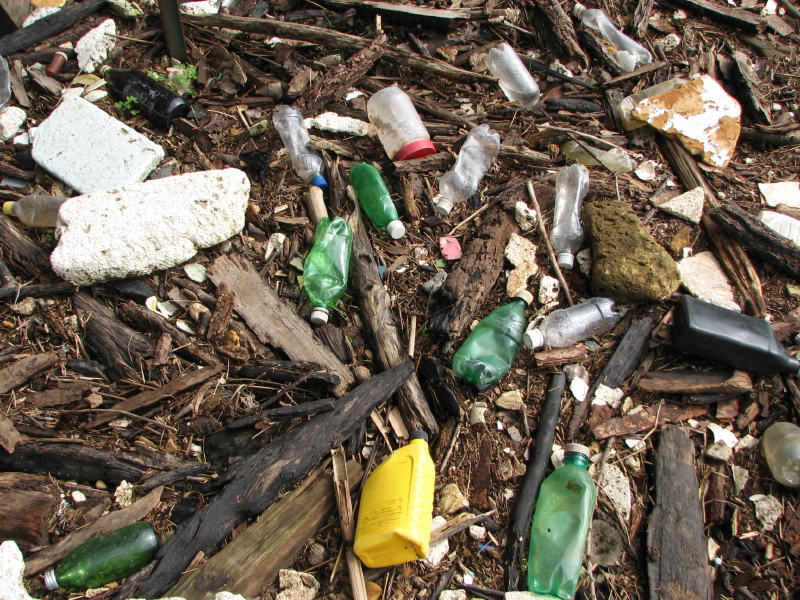
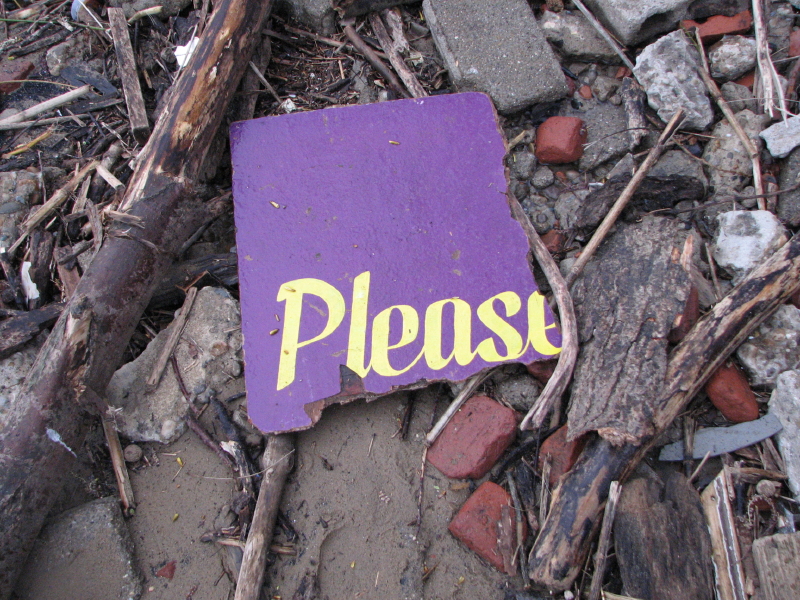
As you can see it’s mostly plastic containers, polystyrene (aka Styrofoam), and lots of shredded bark and wood chips.  Every once in a while, something more interesting would turn up.  While exploring, Mr. Blue Nose and I found two sign fragments and I kept these for my Found Painting and Sign Collection.  Here are the two precious finds.  The first one is kind of self-explanatory.  I like to muse that this is one way the universe communicates to me by leaving these things in my path for me to ponder.

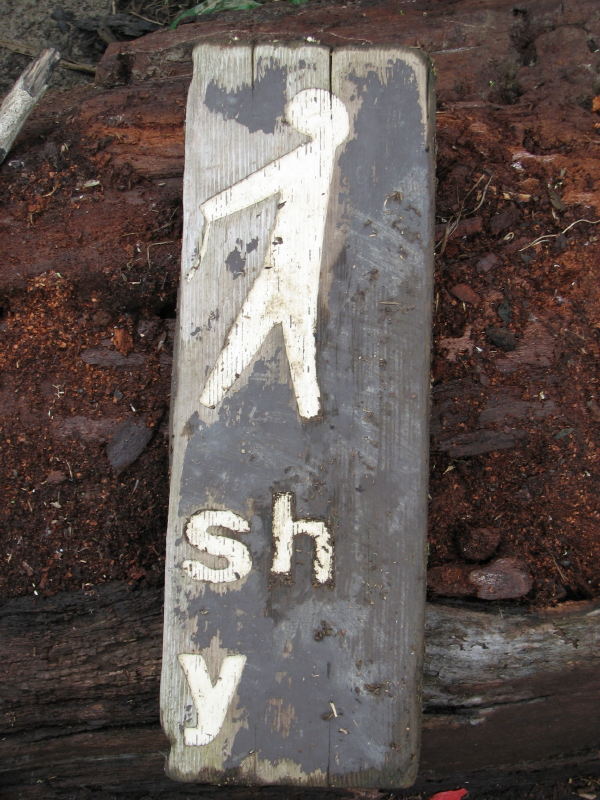
I’m not sure what it is asking…Please don’t litter or Please, only you can prevent forest fires, whatever its actual message, this is at least a polite sign.  The other one is more reclusive, in fact it is “shy”.  Here’s a picture of this enigmatic sign.

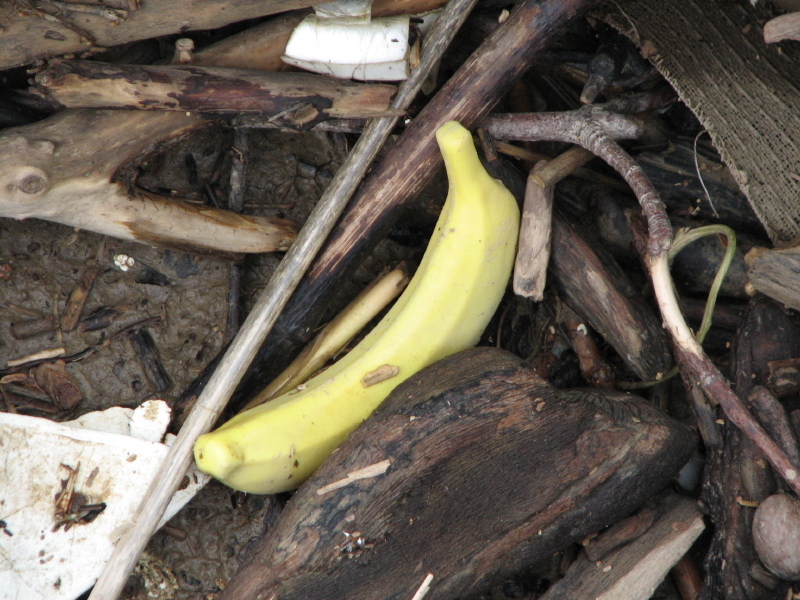
I like the hand-routed and painted “sign” for a person.  I think this fragment may originally have asked dog owners to leash their pets…but its shy and won’t tell me for certain.  Other found treasures included my second banana of the season…naturally it went into the old collecting bag to later join the other artificial produce I have found out here over time.

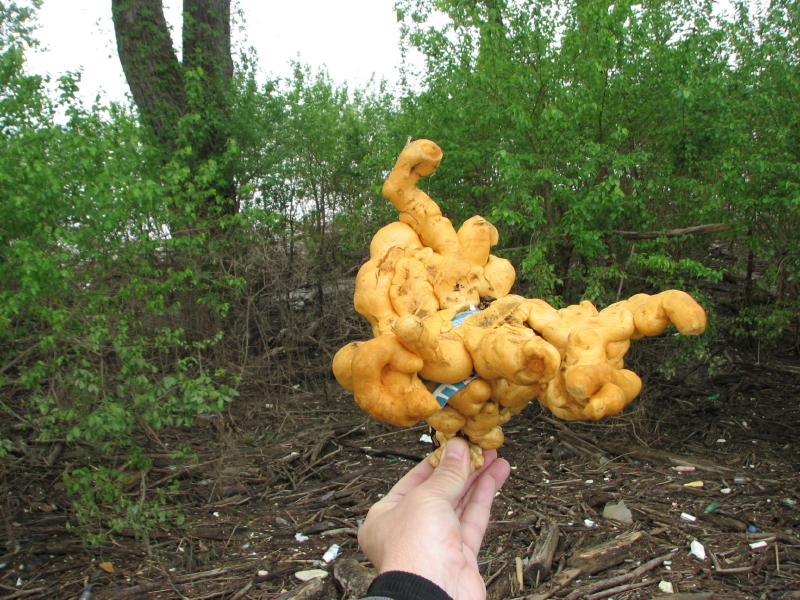
I also find other kinds of foam out here.  Here’s an interesting found sculpture made from polyurethane.  I have come across busted aerosol cans of this stuff where the foam has expanded out resembling entrails.
Mr. Blue Nose called my attention to a log that something had torn into and he wondered what could do this kind of damage.  Chunks of bark and soft decayed wood were scattered all around. 

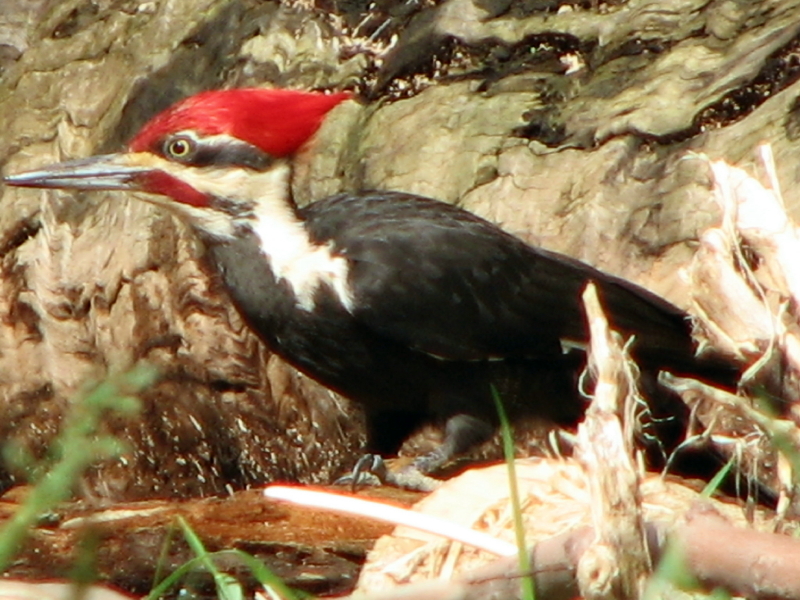
I was happy to inform my new friend that this looked like the work made by a Pileated Woodpecker and I showed him images of this great bird I had taken just a few hours earlier.

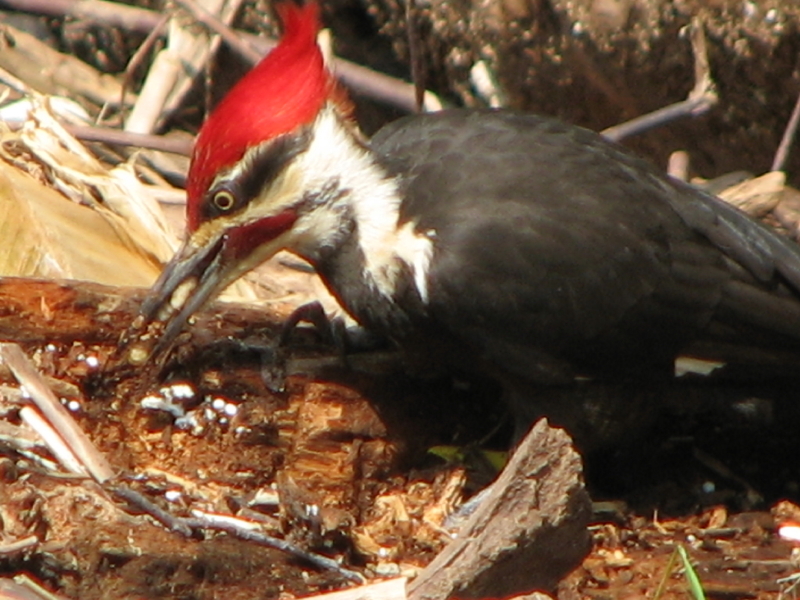
Since no one can verify that the Ivory-billed Woodpecker is still alive along some wild river in Arkansas…the Pileated Woodpecker has the distinction of being our biggest living woodpecker.  For years, I have observed a pair of these crow-sized birds in the park.  This one is the male and can be identified by his red mustache.  The female lacks this and has more black on its head.

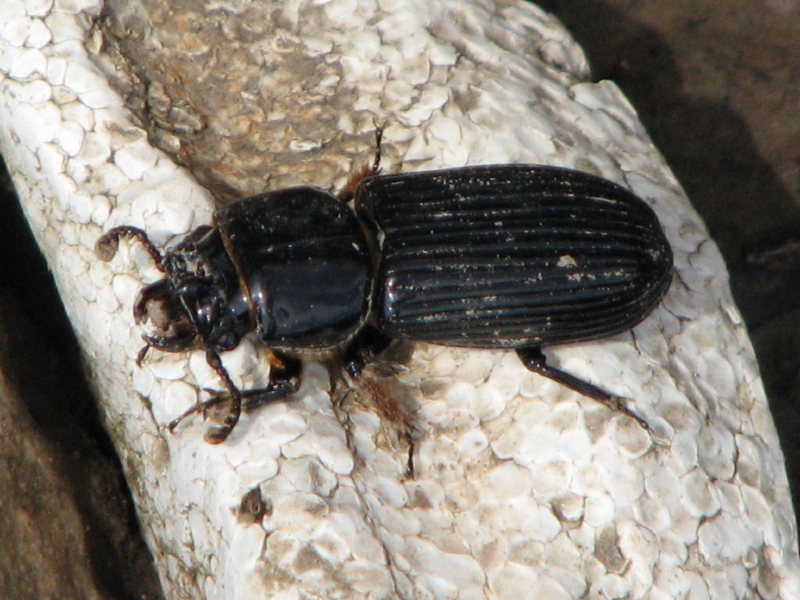
The Pileated Woodpecker has a large bill that goes through wood in a hurry.  Carpenter ants and beetle larvae can be found in these decaying logs and make up the main diet of this magnificent bird.  If you look closely at the photo above you can see a nice grub about to be swallowed.  This bird was so intent on looking for food that I was able to get closer than usual to it.  A couple of weeks a go, I found a Bessbug beetle which is a nice sized insect that uses decaying wood in its life-cycle.  This beetle is also known as the Patent-leather Beetle.  Here’s an adult I found sunning itself on a piece of Styrofoam.  These beetles can get nearly two inches long or about  five centimeters.  I wonder if our country will ever adopt the metric system?  Anyway, these beetle grubs make nice woodpecker snacks.
Thanks to my new companion we were able to make one other nice bird sighting on this day.  Mr. Blue Nose alerted me to some commotion happening in a nearby stand of trees. 

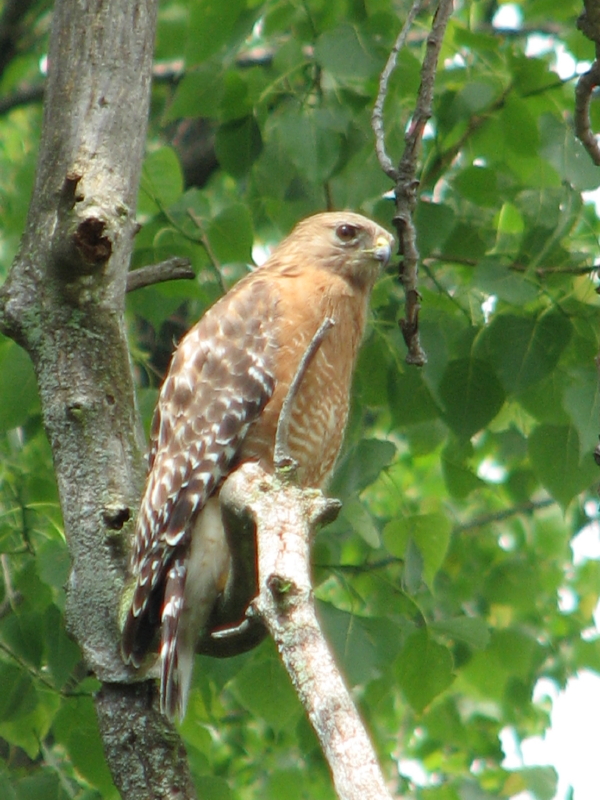
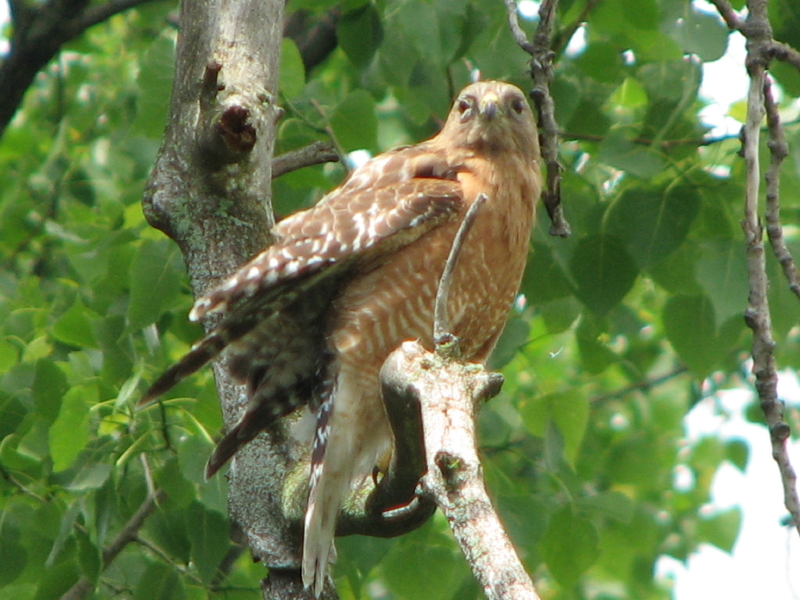
My friend said that he saw several blackbirds (grackles) chasing a larger bird from tree to tree.  I have observed this behavior before when birds of prey are present.  I gathered my camera up and went to see if I could find out what was the object of all this attention.  It turned out to be this beautiful Red-shouldered Hawk.  Here are a couple of pictures of it before the smaller birds drove it out of the area.

I always feel lucky when I see such beautiful birds in the park.  Before flying away, I saw this bird’s mate arriving and the two flew away together.  Soon it was time for me to fly away too and I left my companion on the river bank.

We parted near the railroad bridge and perhaps we will see one another again?  My last image is from an overlook area popular with visitors who want a better view of the tainter gates.  I have taken many pictures here over the years, but this one is different.  To give you an idea of how high the river was…this log was deposited on the fence by the retreating river!  Or, I hope so…I would hate to think it jumped up here!  So long for now!!

Read Full Post »

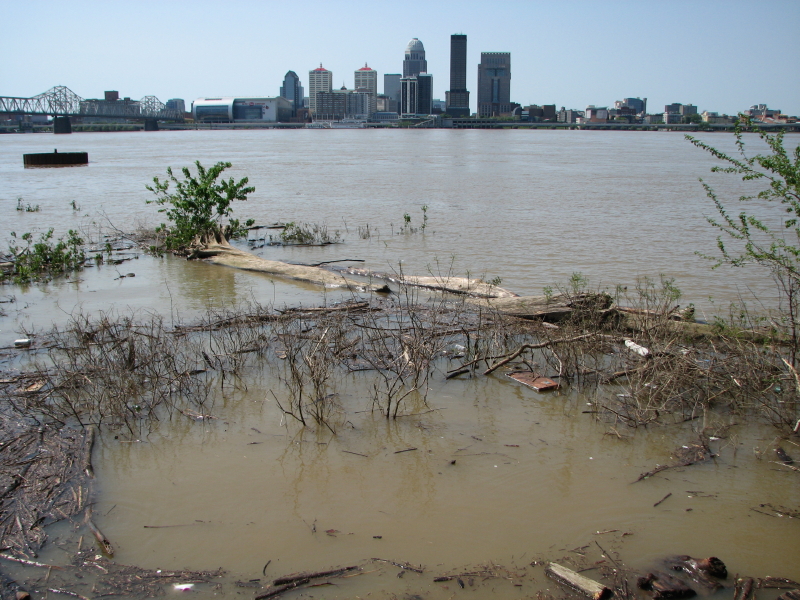
As usual I’m a bit behind in my river reports.  I calculate I could write at least several more posts about the flooding we have experienced with the Ohio River at the Falls of the Ohio.  As I write, the river is still high, but all the attention has shifted to the Mississippi River which is experiencing an epic flood.  I’m sure some of the same water molecules that flowed past our location are contributing to the woes down along the Mississippi.  For those unfamiliar with our geography, the Ohio River flows directly into the Mississippi River in far western Kentucky.  The confluence of these two great rivers is an awesome sight.

Here at Louisville, the water has been receding and the amount of water-borne junk this flood has brought hasn’t fully hit home yet.  There are signs, however, everywhere I look that this will be a great challenge for any river loving clean-up crew.  I will try to do my part, but even if I were to try to be out here every waking hour…I wouldn’t  begin to scratch the surface.

Gas is over $4.15 cents a gallon for regular unleaded here.  I listened to the great oil company executives trying to explain to Congress today why they need a sweetheart deal from the American taxpayers when they already receive every tax break in the books and are suffering with their record, obscene profits.  When discussion turns to what can be done to reduce the amount of crude oil used the usual answer has something to do with increased engine efficiency resulting in more miles to the gallon.  Looking at the high water line I see another solution that doesn’t get as much play.  Why don’t we try to cut as much plastic out of our way of life as possible?  There would be more oil available for fuel and you wouldn’t have all these various compounds despoiling our water ways from the smallest streams to the largest ocean.  You can throw Styrofoam in this mix too since it is has petroleum pedigree as well.  We could just change the packaging we use and I bet that would make a huge difference.

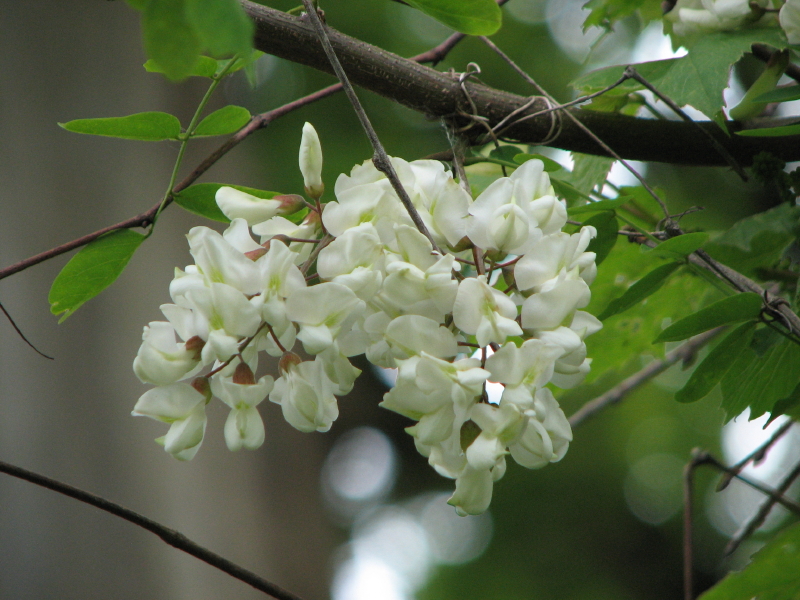
You can look at the whole Riverblog as one long rant against pollution, but there is also more out here that is sweet and worth noting and enjoying.  I decided to walk along the Woodland Loop Trail and the air was fragrant with the perfume from what we call Honey Locust trees.  Some of these trees also sport large spines growing on the bark.  Their pea-like white flowers have the most wonderful scent.  Here is what a flower cluster looks like.

Along the trail, you can hear a variety of bird species singing.  Vireos, woodland warblers, orioles, chickadees, indigo buntings, various thrushes fill the air with their acoustic signatures.  The birds are here to feast on the many cutworms that plague the forest canopy.  There are also other larvae present…here is a small nest of tent caterpillars that will soon become moths.  Very few birds like these hairy caterpillars, but two that do ( the Yellow-billed cuckoo and the Blue and gray gnatcatcher) can be found in the forest now.

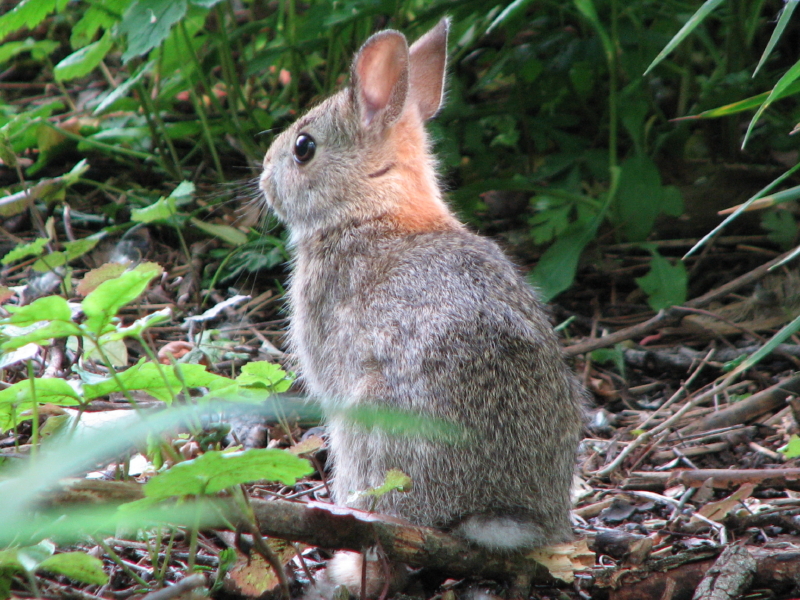
Ah, I also spot my namesake hopping along the trail!  This is a young Cottontail and he better be careful out here because there are so many predators both native and domesticated that would love to catch him!

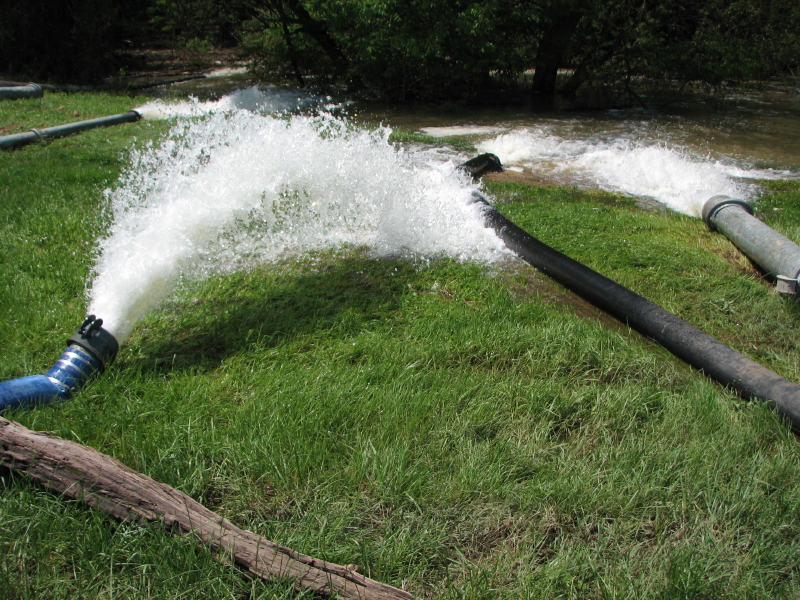
Walking westward along the trail, you can’t help but notice the large grassy berm that flanks your right side.  It is additional flood control put in place after the disastrous 1937 flood which was our high water event on the Ohio River.  Up a head, I can see a network of large hoses with water gushing out and I decided to investigate.

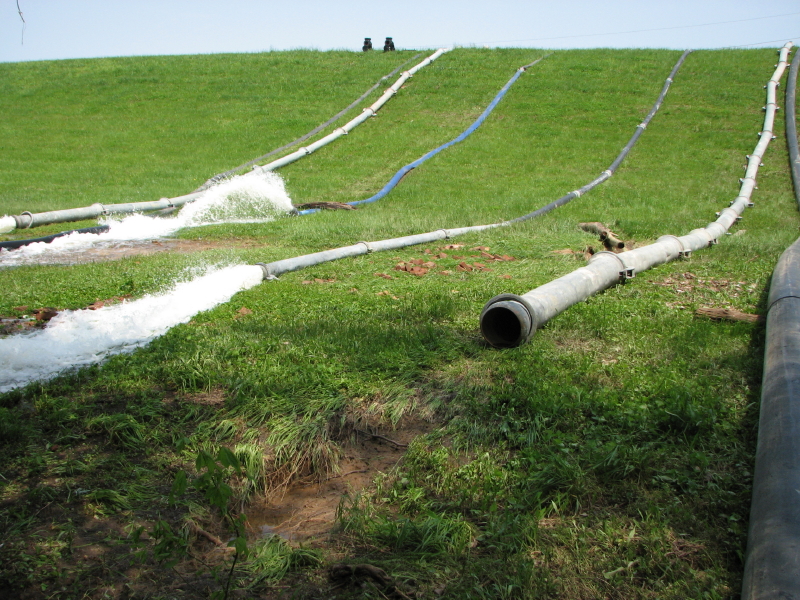
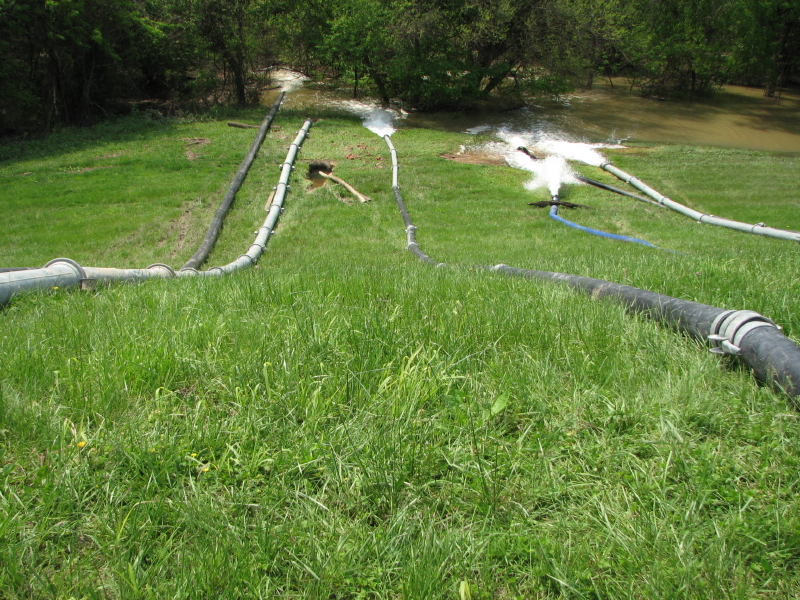
I can see these large hoses coming down the berm and I wanted to see what’s on the other side of this earthen flood wall.  Here are a series of pictures of what I saw.  First looking up hill…

…now the view looking down towards the river.  What are these hoses for?

I came across a sign at the crest of this large hill that explains it.

On the other side of the berm is the small town of Clarksville, Indiana.  Rain water has pooled up in the lower lying sections of the city and are being pumped out and over the top where the water then flows into the park eventually finding release into the river.

It’s strange how I rarely think about the town that occupies the other side of this large grass and earthen mound.  The Ohio River is really at its front door all the time.  The little bit of woods I like spending time in is just a narrow sliver of ecosystem that exists between Clarksville and the river.

Well, that’s the story for now.  I have much more to present about the dominant environmental event of our Spring.  Already the temperatures are rising and I can feel the transition to Summer won’t be long in coming.  Thanks for hanging with me…until next time…the Rabbit Man.

Read Full Post »

« Newer Posts - Older Posts »