Feeds:
Posts
Comments

Archive for the ‘Originality’ Category

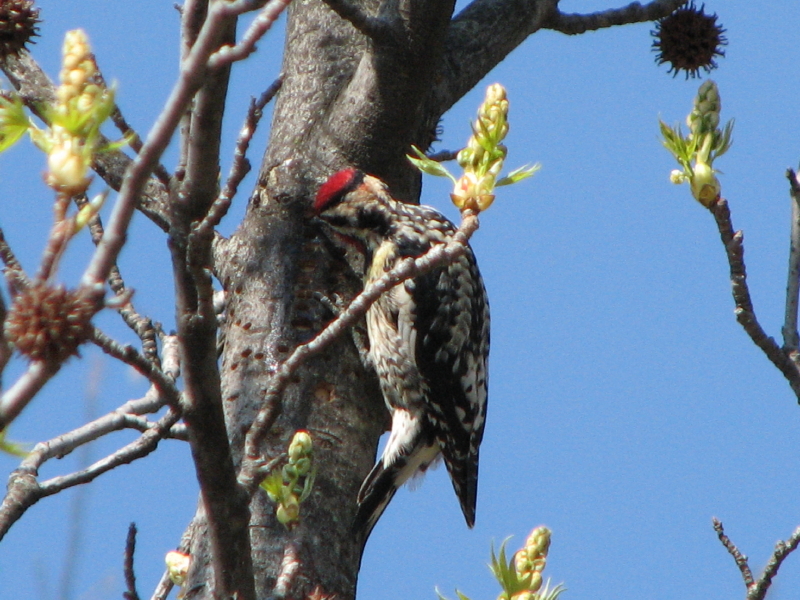
For me, the Yellow-bellied Sapsucker is a signal that Spring is underway.  I believe I have seen this very same bird in the same Sweet Gum tree for several years now.  Before the tree fully leafs out, he drills neat rows of holes in the tree bark which fill with the tree’s sap.  Visiting often, he then licks up the sugary mixture.  I have seen other bird species utilizing the work of this woodpecker including other woodpecker species, warblers and chickadees.  Before the insects and new seeds appear, the Yellow-bellied Sapsucker has accessed another food supply which he defends from all the other birds. 

Throwing his head back, this male Song Sparrow is expressing the feeling of the season.  Song Sparrows are year-round residents and have fully taken advantage of all the niches available at the Falls of the Ohio.  This year White-throated Sparrows have been more abundant than I recall from past years.  Every year is different from the previous ones and you never know what to expect next.  This year is off to a very wet start.
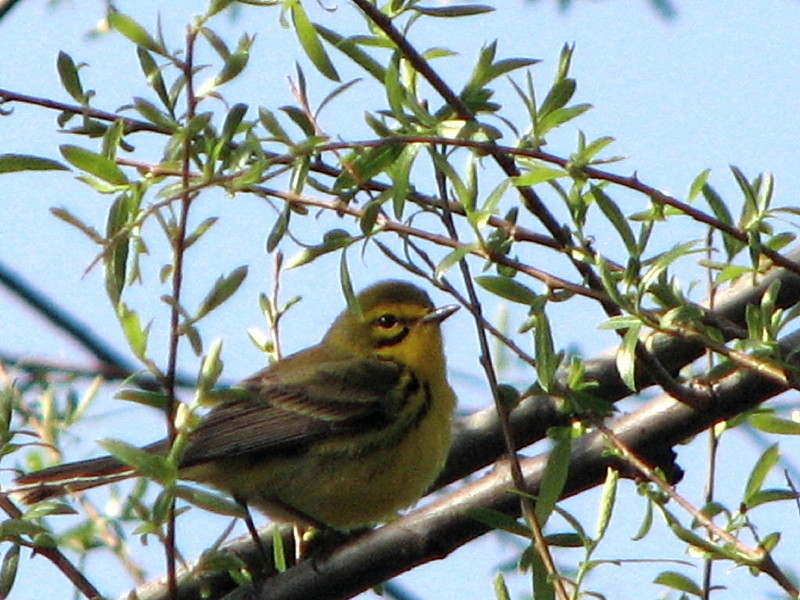
This is a male Prairie Warbler I came across recently.  I have “pished” this species closer to my camera’s lens by making little squeaky sounds that the bird found curious enough to follow.  I am hopeful of seeing other warblers before the Spring migration ends.  So far, I have seen Yellow-rumped Warblers, Common Yellowthroats, and a brilliant male Prothonotary Warbler attracted by the flooded bottomland trees.  There are thirty-five different warbler species on the Falls checklist and I have had the privilege of seeing most of them over the years.
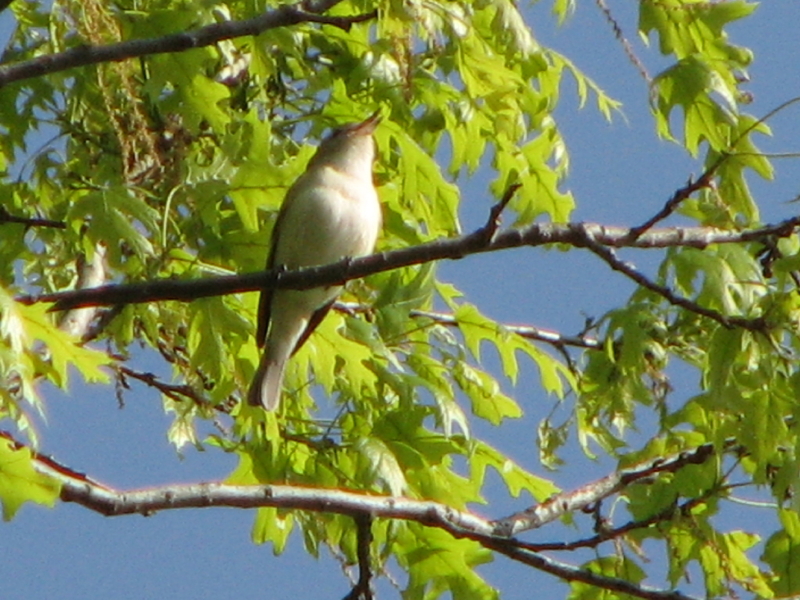
The Warbling Vireo is another bird that is more often heard than seen.  It’s such a tiny bird and it has the habit of staying in the tops of tall trees.  I found this one on the exposed section of an oak branch.  If it weren’t distracted by trying to attract a mate it would be in almost constant movement in search of the small caterpillars and insects that it eats.
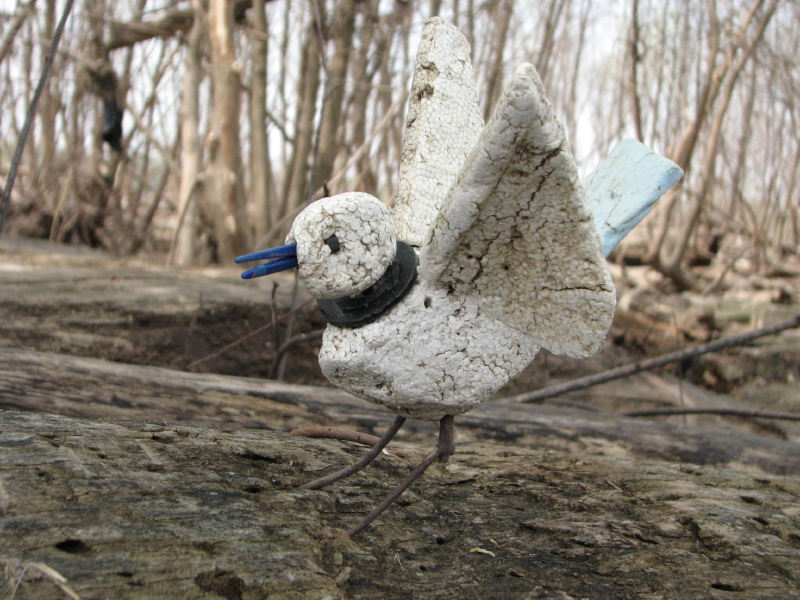
A new bird to add to the old life list is the Blue-tailed Robin.  It’s an infrequent visitor to these parts and so when one is sighted it becomes an event.  You can’t see this in the photo, but there are ten other birdwatchers with cameras and binoculars trained on this fellow as it dances and practices its courtship dance.  Everybody was extra quiet so that this bird wouldn’t spook and fly away.  Here are more images.
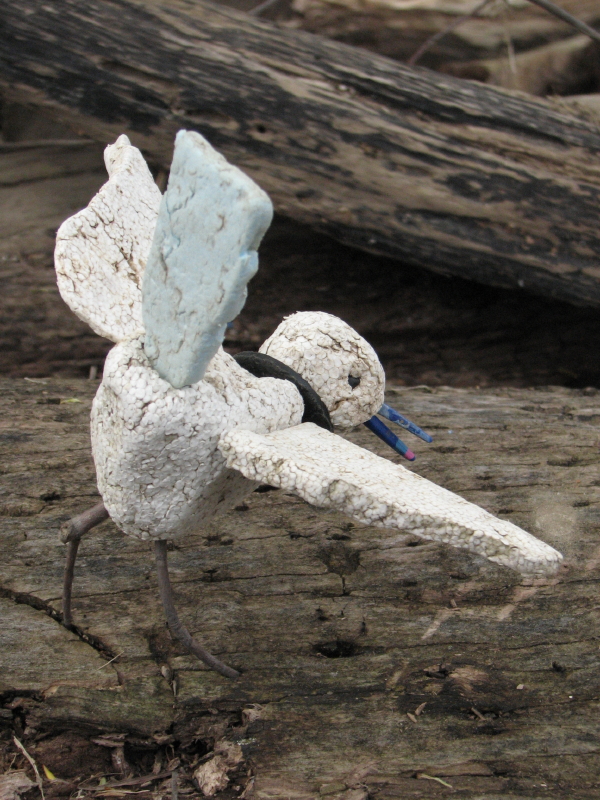
The Blue-tailed Robin male does an elaborate dance on a fallen log where it sings and flaps its wings in different positions all the while it struts its stuff.  The real test will happen further north in central Canada where its ability to display and attract a mate will mean the difference between passing on its genetic distinctiveness or not.  No wonder this bird can’t afford the opportunity not to practice!
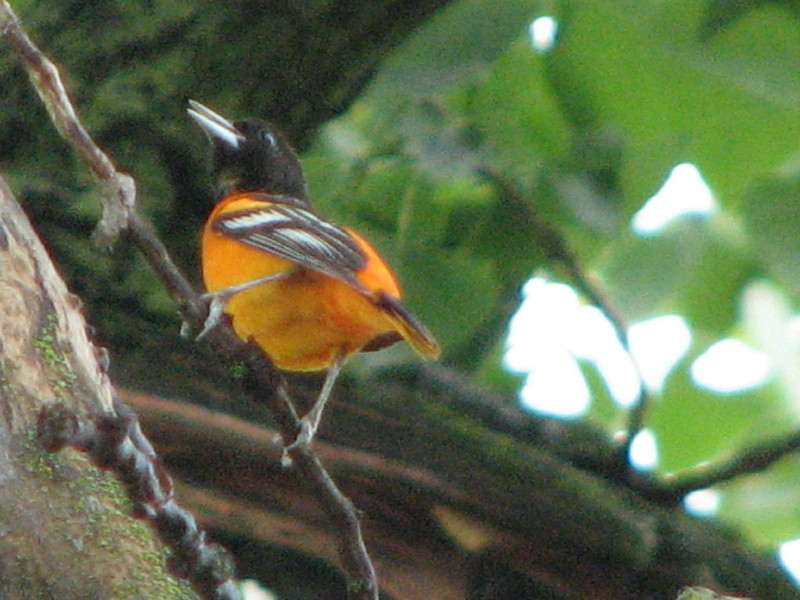
Singing very high up in a Cottonwood tree, this male Northern Oriole is also singing loudly in its territory.  So far, it’s looking and sounding like a good year for this species!  Nearly everywhere I hiked in the park I either sighted or heard Northern Orioles.  The orange color is so distinctive and it contrasts so well against the green of the surrounding leaves.  There is so much moisture in the air that my camera records this as a slightly foggy picture.  I hope for better images of orioles and the other great birds here.
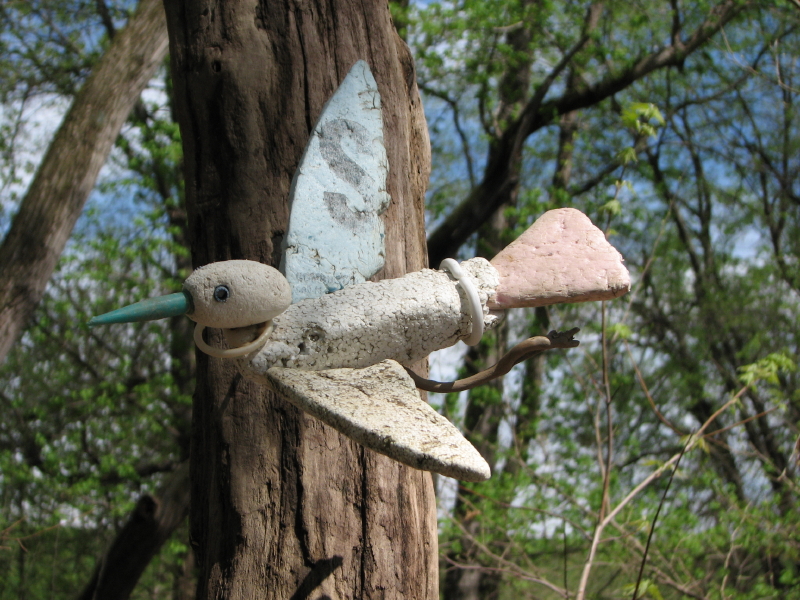
Another rarely recorded migrant is the Dragonfly Tern.  I found one coursing along the river bank and was able to squeeze off a couple decent pictures.  Like the name implies, it specializes in capturing dragonflies which requires the ability to maneuver at high-speed.  It has swept back wings that give it the acceleration it needs in tight corners.  Here’s another picture of it buzzing over a fallen log near my position.
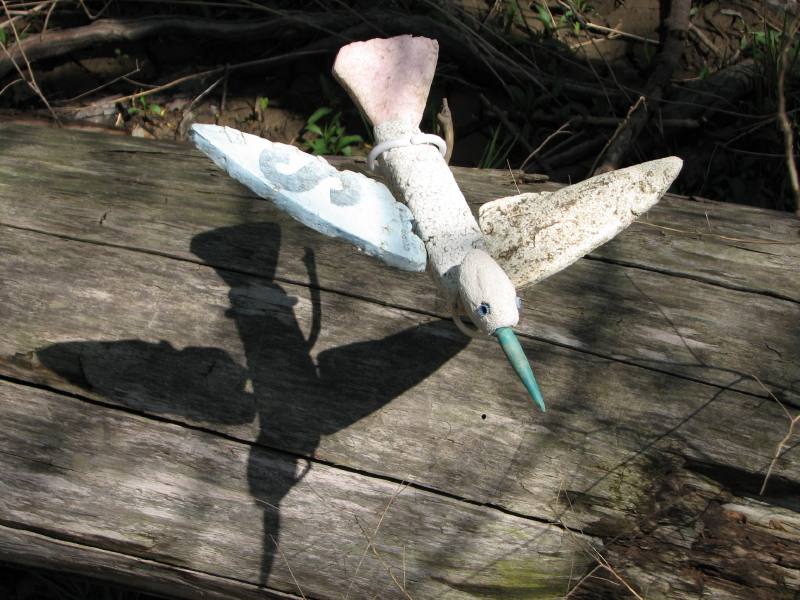
This bird soon will be off to the Great Lakes region where it also breeds.  It barely scratches together a depression in the sand and gravel that it considers a nest.  There are usually two eggs laid that are heavily speckled like the small pebbles that surround it.  It winters in South America and travels thousands of miles each year.

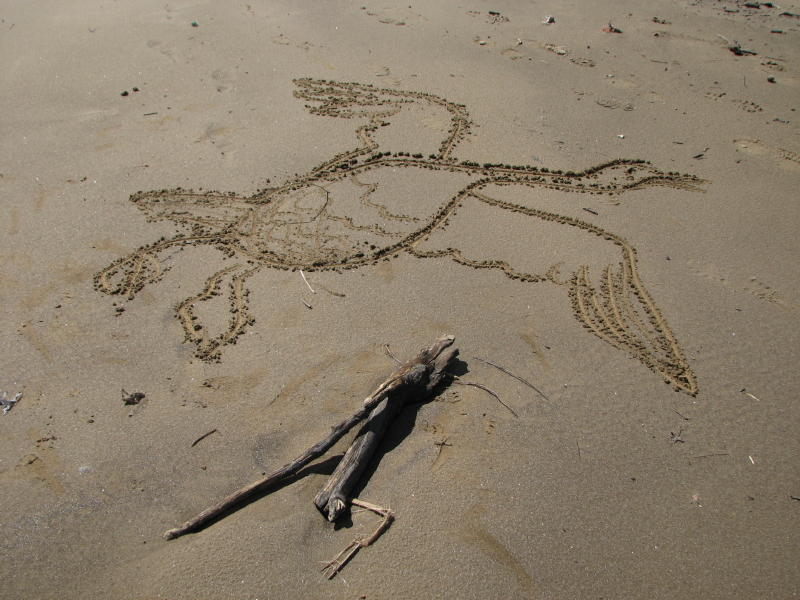
On my way home from the park, I chanced to see this Red-tailed Hawk on top of a utility pole and recorded its image.  It is one of our more common hawks, but since I haven’t featured it in the Riverblog before, I thought I would include it in this post.  As the year progresses, I hope to feature other birds that stop at the Falls of the Ohio. For me, the difference between a successful trip and a really successful adventure sometimes hinges on seeing one nice bird!  In closing here are two Canada Geese.  One is real…
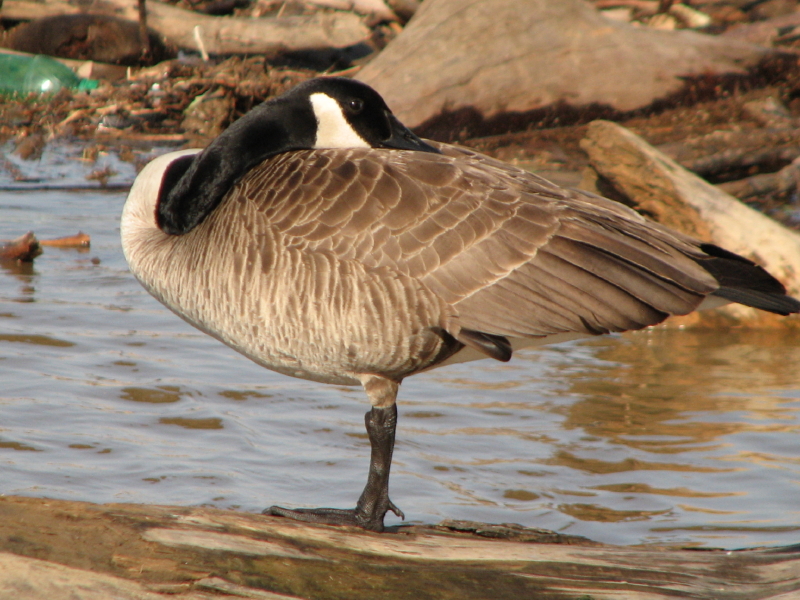
…the other is just a tracing in the sand I made.  Happy birding !!
Read Full Post »

It’s a wonderful spring day on the debris heap.  On the old bridge several diesel trains have been carrying their vital shipments back and forth across the Ohio River.  These trains are also a noisy element here when they are crossing.  Among the other sounds you can count on hearing are the aircraft about to land at the local airport and the sound of the river flowing under the gates.

The flooding we experienced a few short weeks a go has left a lot of debris deposited at the Falls.  During the height of the water, the area I’m exploring today was a watery gyre of spinning driftwood, junk, and plastic jugs and bottles.  It’s dry now and in the eastern section of the park under the railroad bridge.  You can’t miss it because in places it must be 12 to 15 feet tall.  It’s all interwoven logs and debris and it can be very treacherous walking here.  You always must be careful where you place your foot and weight because it might just be an air pocket covered in paper and leaves that can cause you to fall into a hole.  It would be no fun walking out of here with an injury.  I usually have a long walking stick with me to help me maintain my balance walking over the backs of logs.

If you are careful, you can explore this wooden mound safely.  It presents several interesting vantage points for photography.

Naturally, I’m also on the look out for interesting objects that have come to rest here.  My collecting sack soon fills with mostly plastic artifacts.

This wooden mound has waves of its own.  It has peaks and valleys and you can sense how the water moved from the artifacts that were swept along and how and where they came to rest.  The lightest stuff like plastic bottles are good indicators of how far the margins extend and where drainage occurred.

After exploring the area and collecting materials, I soon had another temporary studio going.  This time I’m not finding any huge sections and chunks of Styrofoam around.  There are, however, lots of smaller pieces absolutely everywhere.  I gathered these pieces up and soon I was making a figure to take advantage of this riverscape configuration at the Falls of the Ohio.

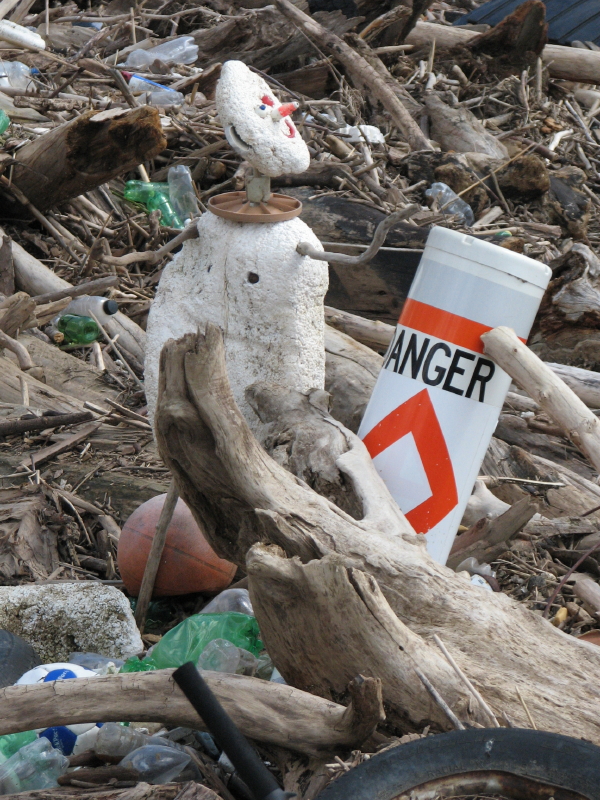
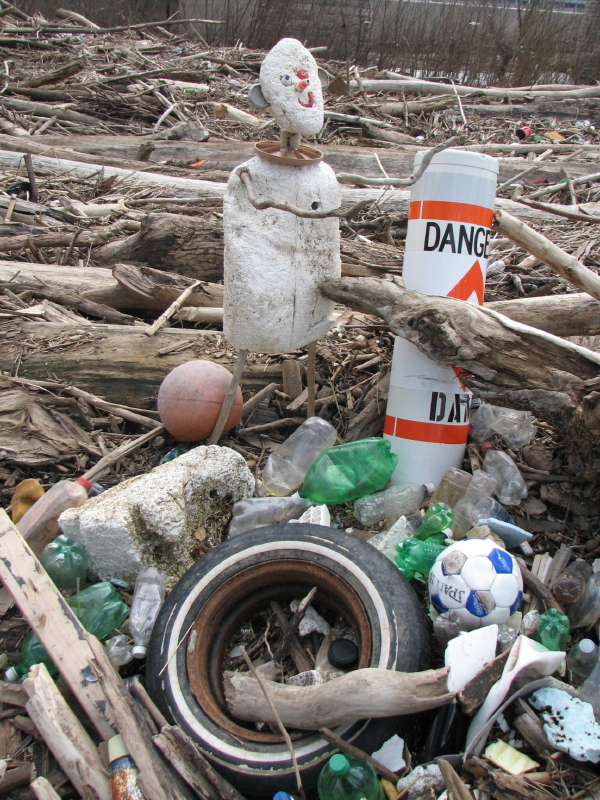
I found a spot with a good view of the city and made this guy.  His name comes from the spot where I left him.  I can feel that my face has received more sun than unusual and since I didn’t bring any sun block…decide that it’s time to go back home.

The place is marked by a “Danger” buoy that drifted in with all the other debris.

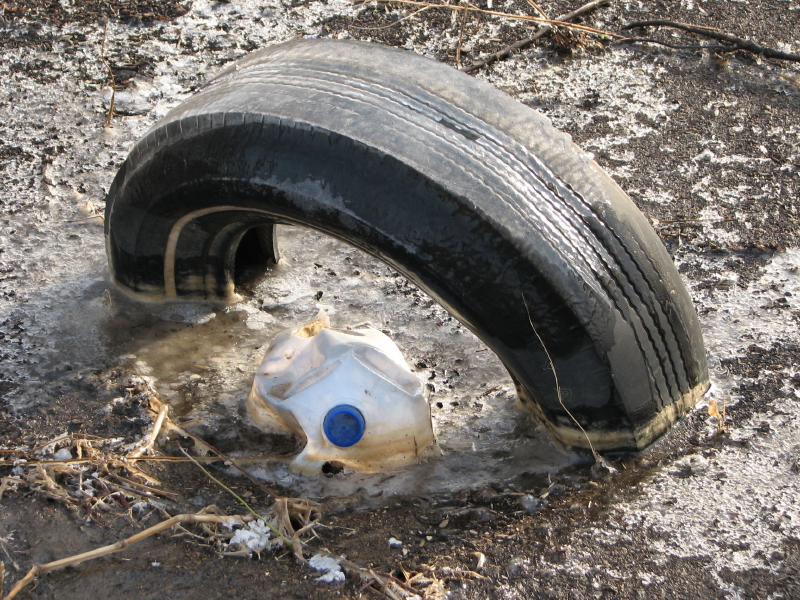
Around “Danger” are all kinds of other junk mixed among the driftwood.  Tires are ubiquitous as are all the plastic containers and playground balls.  Among the natural materials are wood (limb and lumber), nuts, dried reeds, and lots of shredded tree bark.

I’ve been busy cataloguing with photographs all the small items I found and collected from the Falls over the years.  I have posts to come of that material. I also have several other figures and adventures to relate to you.  With this project you have no choice, but to work with the river and I have been trying to play catch up where and when I can.  The next expedition takes place in the western section of the park.  There I will attempt to capture images of an unusual animal rumored to have been seen there recently.  Wish me luck!

Read Full Post »

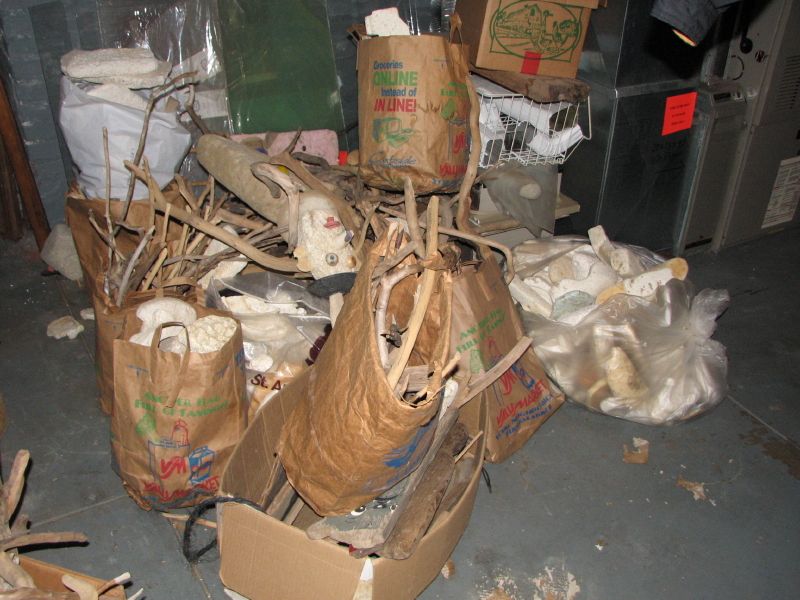
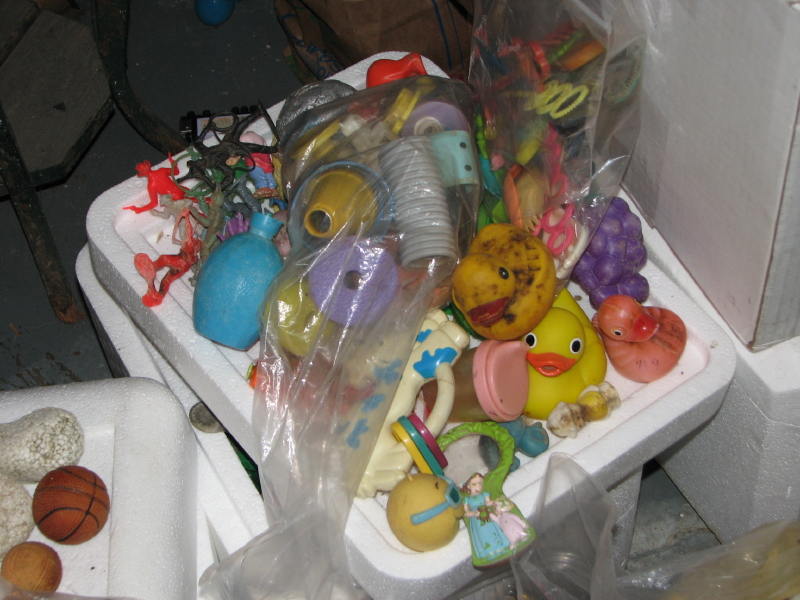
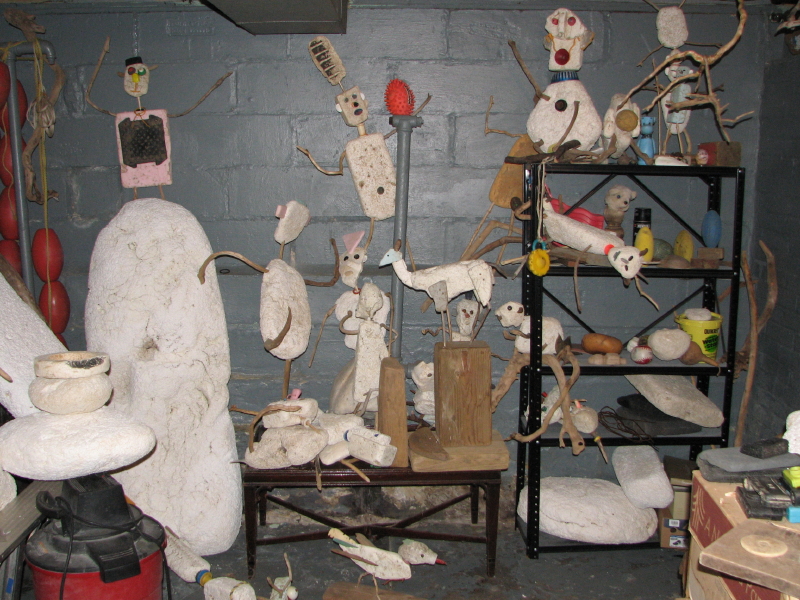
I debated with myself about going down this road in this post and decided it would be okay.  I did solicit opinions from fellow artist friends on the topic of obsessive compulsions and hoarding in an attempt to come up with a self-diagnosis.  Opinions varied.  Since photographs do a good job of describing things… I will start with images from the basement of my house and my dilemma (and subject of this post) will become clearer.

I have been doing my Falls of the Ohio project since 2003.  During this time, I have made many sculptures from the materials I found deposited in the park by the Ohio River.  Most of those materials and sculptures were left on site, but not all.  I do have a desire to remove the trash I find from this environment even if I realize I can’t get it all.  The result is that I have brought a lot of it home with the notion of using it in my art, sometime in the near future.

I “maintain” a small studio space in my basement where I store materials with the aim of making something from them.  One issue I have is that I see “potential” in so many things and I’m reluctant to give up on materials that could become art.  I am plagued by seeing all the possibilities which on occasion out strips my ability to realize all this “potential”.  Part of this is economic in nature.  I have never ever had any money and as many of you know, art materials can be very costly.  With this Falls project, I have spent the bare minimum since what I’ve been picking up is free.

These are my “rainy day” materials from which I’ve made many birthday gifts, Christmas presents, and donations for not for profit fund-raising events.  Over the years all this material culture has built up and it’s getting hard to move around my basement!  So, I ask myself…am I a hoarder?
I have to admit looking at this image…things look bad!  It’s nearly the classic picture of the hoarder house that has paths of stacked newspapers and magazines with little paths running through the spaces.  I assure you that the rest of my house is quite normal…for the most part.  We have what seems like thousands of books and I have more art hanging around than the “average” home.  The men of my family have always been drawn to collecting things (coins, medals, old photographs, etc…), but I think I came down with a more serious case than most.  I will say the books are in their cases and the art is hung on the walls with some care.  I try to take care of the objects I seriously collect, but not with the art materials and their as yet unrealized potentials.

There has never been a time that I wasn’t making something.  That sense of thrift and trying to recycle and reuse I see as being virtues of my creative process.  Years a go,  I once found employment as a picture framer and I was disturbed by all the waste in that profession.  I couldn’t see throwing away perfectly good picture frames because they were old.  And, all those scraps of 100% cotton rag matboard…are too hard-won to be thrown in the dumpster with impunity.  So, naturally much of these materials also found their way into the basement.  In my defense, I will tell you that this stuff does eventually get used.  For many years, I supplied all the neighborhood kids with all the free matboard they could draw and paint upon.  Because the matboard in particular was quality material, there are many childhood drawings and artworks that might actually survive to say something about the ephemeral experiences of being children.  Although I have vivid recollections of the art I made as a kid…nothing from my childhood survives and that does bother me a bit.  I have saved most of my sons’ childhood art.  Perhaps that’s another sign of a hoarder!

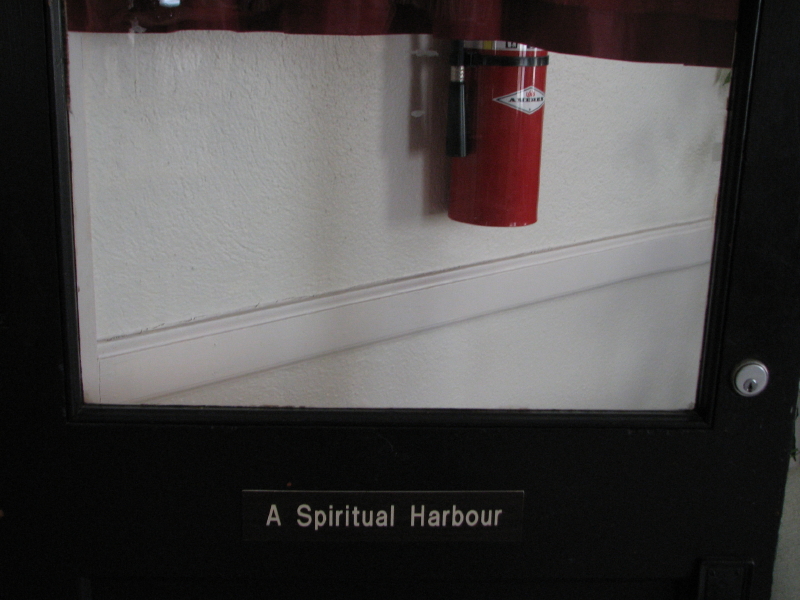
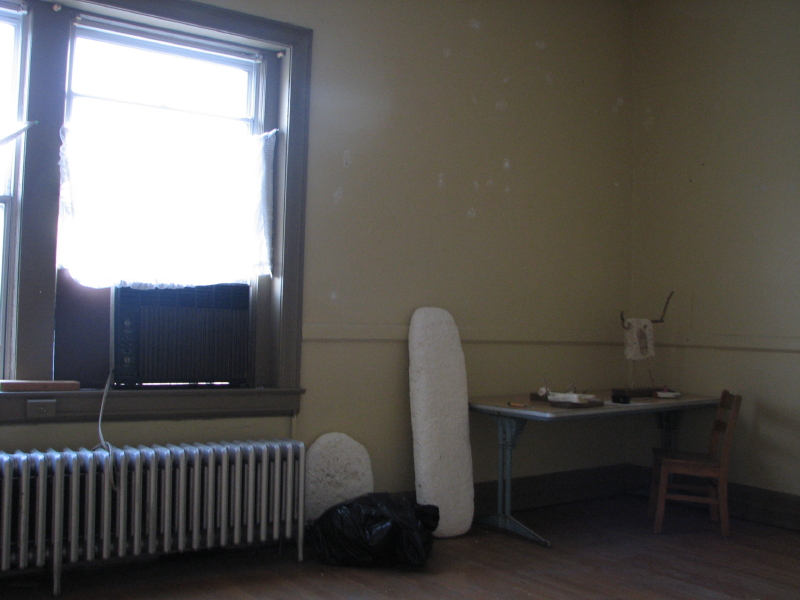
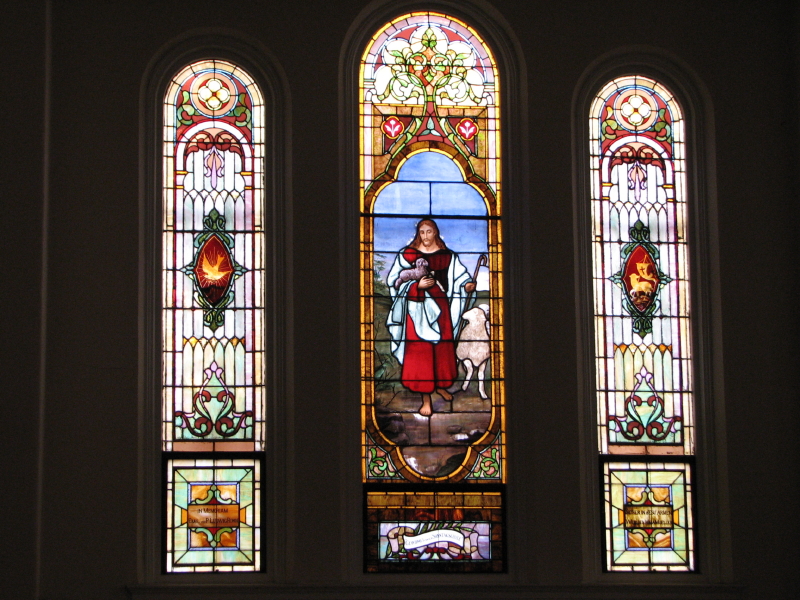
So, what am I going to do with all this “river treasure”?  I have resolved to use it this year and get it out of the basement!  I have a few upcoming exhibition opportunities and may pursue more.  To help with this goal, I have rented an additional studio space in a local church where several other artists keep spaces.  The enigmatic image I began this post with is from that church and it’s from a small library/study area used by the congregation.  Here is a partial view of my new studio room in this church with the beginnings of me moving materials out of my basement.

The church (whose name I will keep private) dates from the turn of the 20th century.  The current congregation is small and aging and I wonder how long it will remain a viable church?  To help bring in income, the vacant spaces are rented out.  I’m sharing my space with two good friends of mine both of whom are primarily painters.

Although I do think of myself as a spiritual person, I wouldn’t describe myself as being traditionally religious.  My sacrament is my creativity.  I do, however, find the idea of redemption interesting.  With my project, I am trying to redeem these poor materials I find by our river and maybe point to something that is within all of us…a univeral creativity that I feel is the hope for our planet. 

Read Full Post »

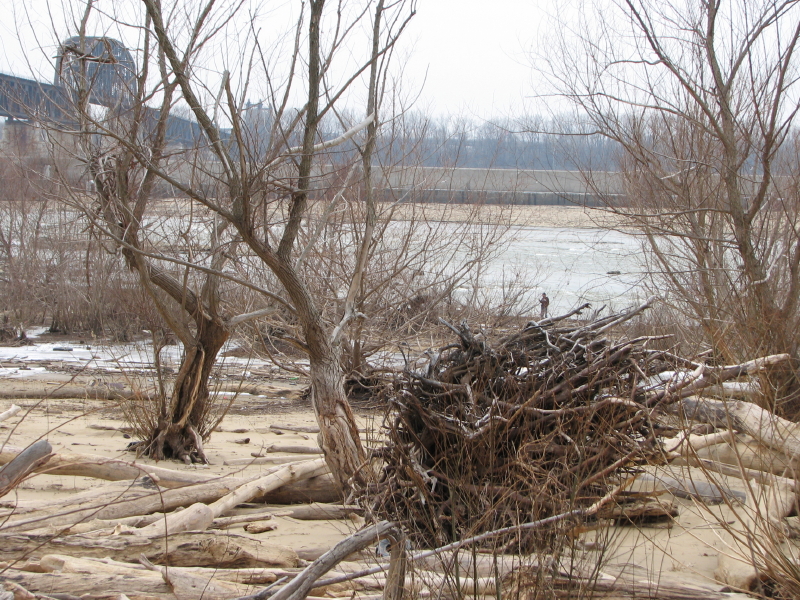
It’s the Falls of the Ohio and it’s nearly midwinter.  The quality of the light feels like it’s coming from banks and banks of incandescent tubes in the sky.  It doesn’t even feel like light, but more like a heavy presence more  akin to fog than photons.

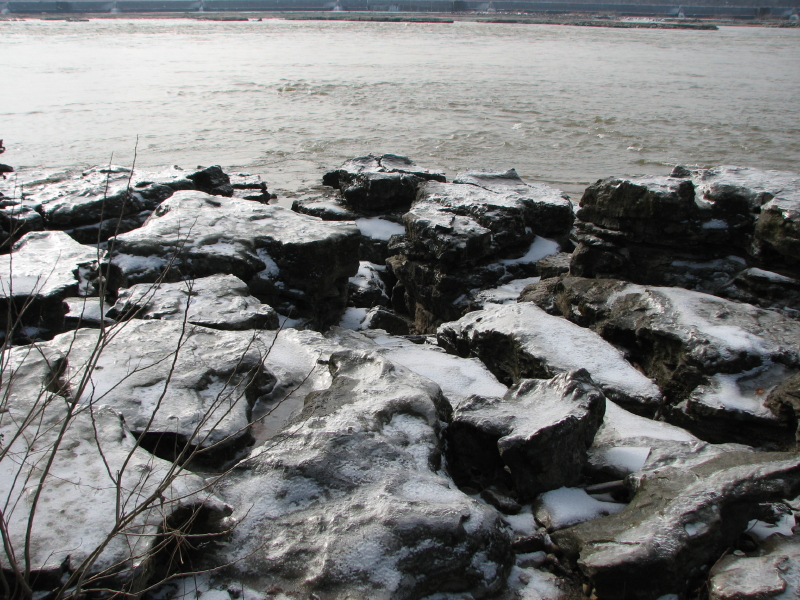
There are fewer people out today.  The last of the last snow lingers on in the cool places and tomorrow it will probably be gone.  I’m trudging along the river and getting muddy.  I use the stick I brought along to test its sticky depth and tap the thickness of what ice I encounter.

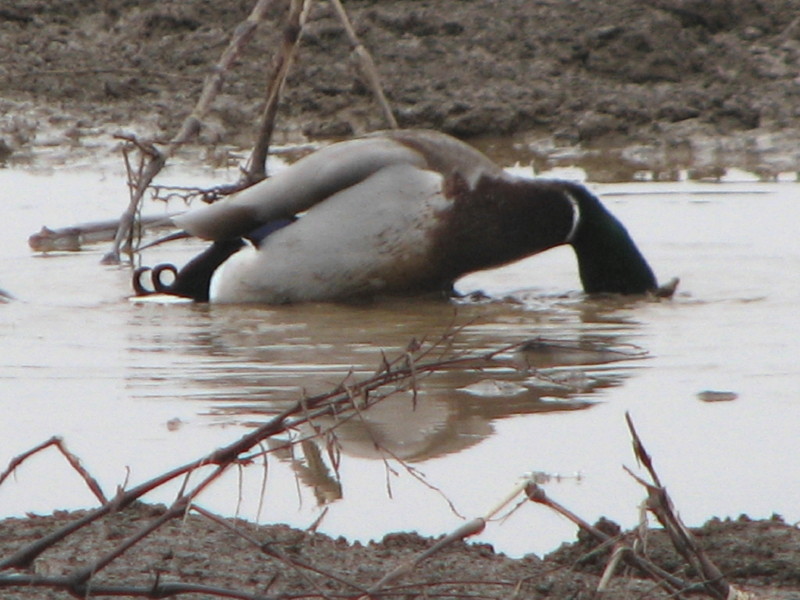
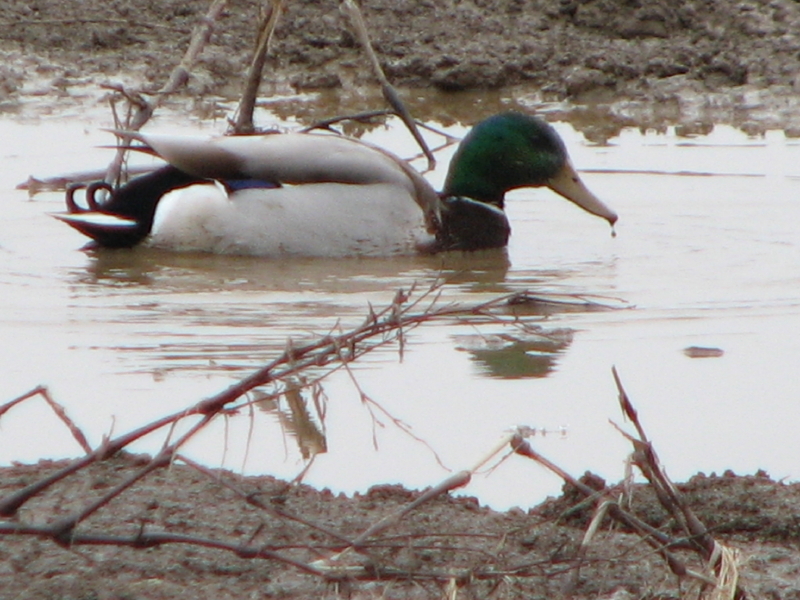
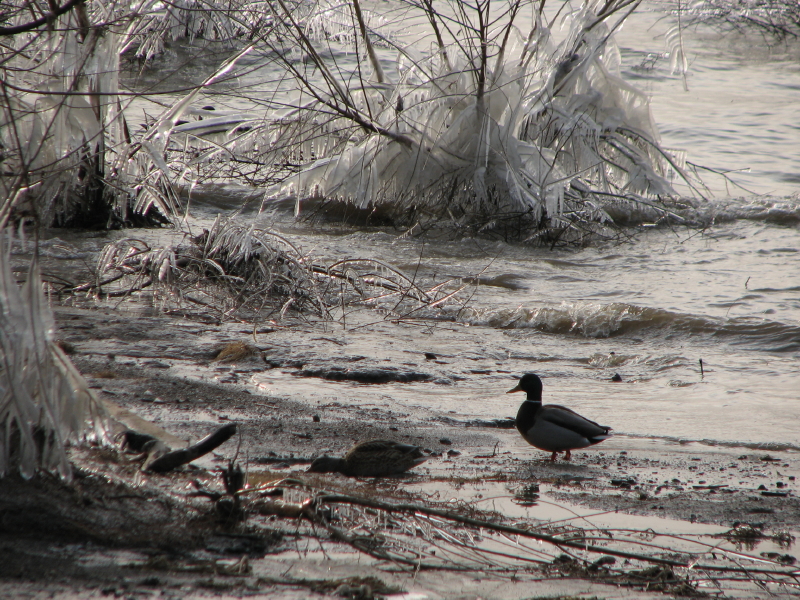
Close to shore dozens of mallard ducks are dabbling in the muck.  I wonder what they are finding to eat?  Whatever it is it seems to be worth the energy expense to go after it.  The normally iridescent colors on the drakes are now subdued and await the splendor of the sunlight to reveal their gaudiness.  Watching the ducks I slip and slide in the less secure places along the riverbank.  My wife is not going to like seeing these shoes!  Once in a while, I find a good spot to rest and scrape mud off the bottoms with the edges of a stick.

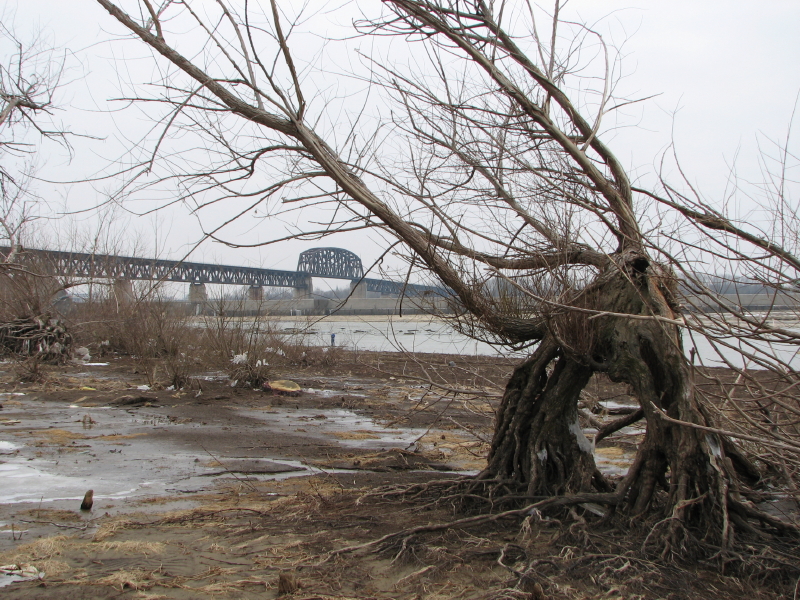
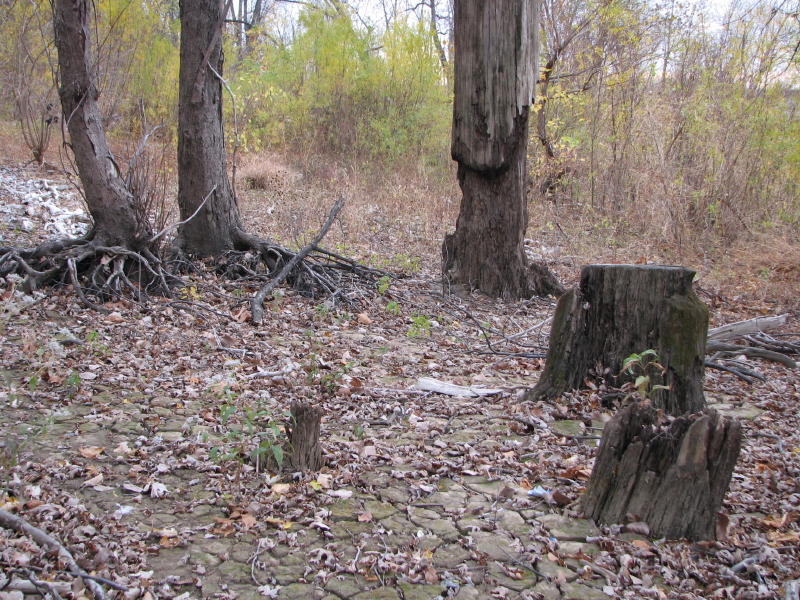
I walk by familiar spots along the way to my open air studio.  I like checking out the uprooted trees and appreciate their exposed root masses like the fine subterranean sculpture they seem to me.  Seeing a tree like this is an odd sensation because you know the roots that supported and nourished this tree claimed a space in the earth that was hidden from view.  I often think of these conceptualized spaces.  There is a complete lack of greenery that lays the structural aspects of the park open for inspection.  Sometimes the driftwood feels like the bones of the river.

The sculpture group I’ve come to call the “The Choir” is still standing.  I’ve enjoyed seeing what happens to these guys.  Visitors are still playing with them and I notice small changes here and there.  As the eyes, ears, noses, and mouths fall off, the character of each personage changes.  The starkness and artificiality of my material choices contrasts with all the wood that surrounds them.  When I work in my spot, “The Choir” watches my back.  I like this recent photo of my studio spot.

The wood tells its own story.  All the sticks that wiggle, twist, and reveal character are grouped together and await their potential to be realized in just the right sculpture.  This site looks like it could be ancient.  I remember photos seen in a book about Andeevo in Russia where entire winter structures were made from the remains of mammoth skeletons covered in prepared hides.  That was life 15,000 years a go.  I can picture my site covered by a tarp and maybe I’ll try that this year if the river allows it and the opportunity presents itself.

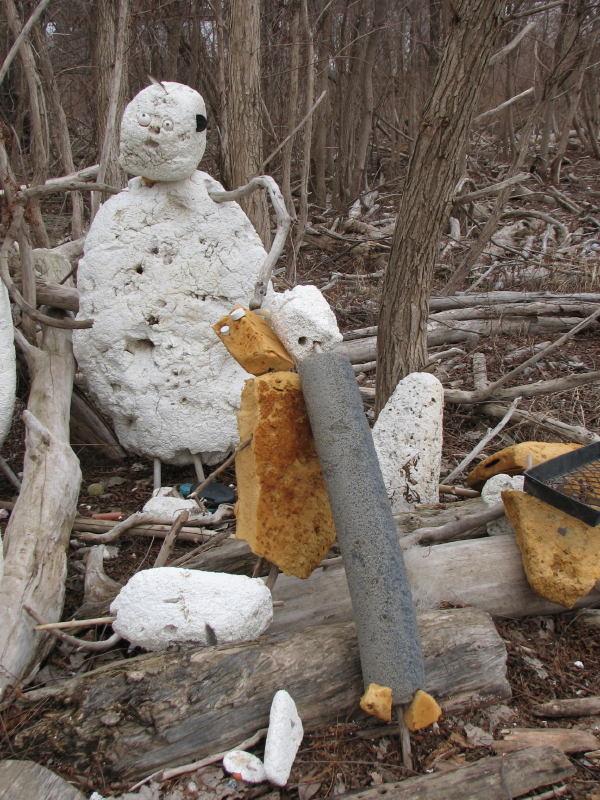
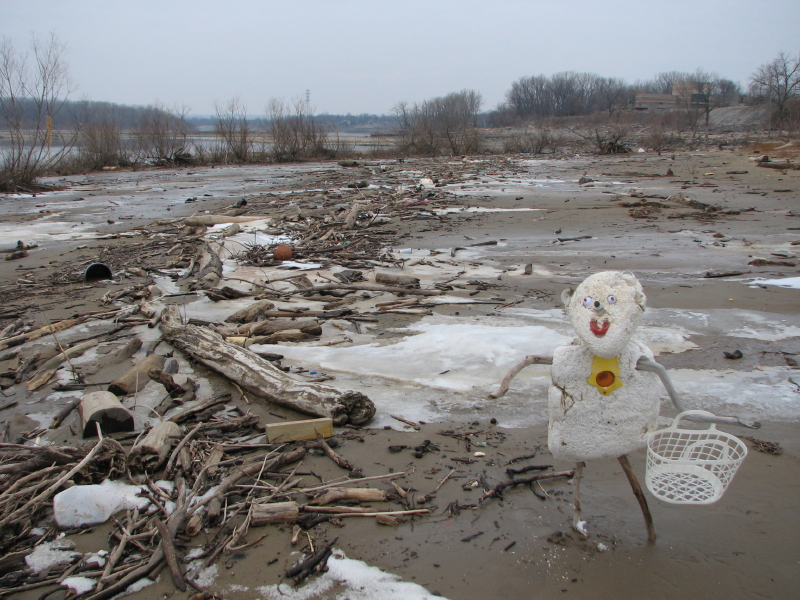
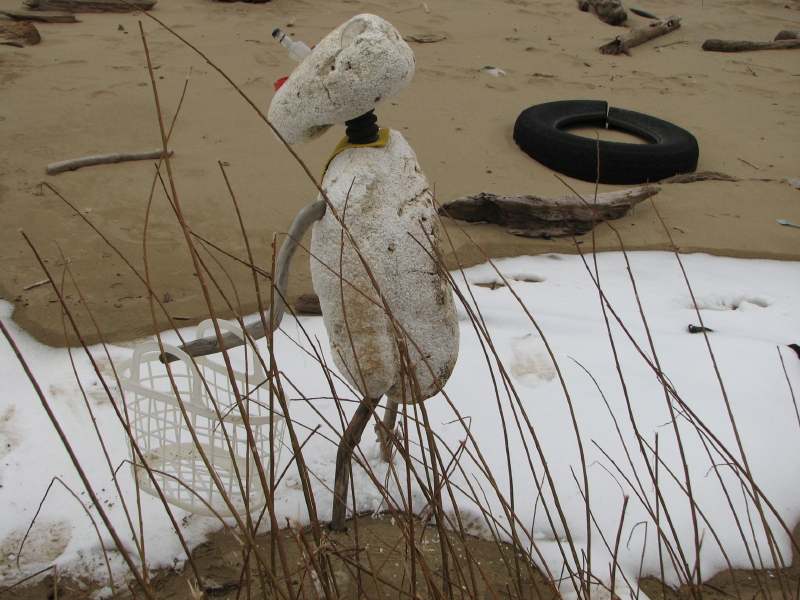
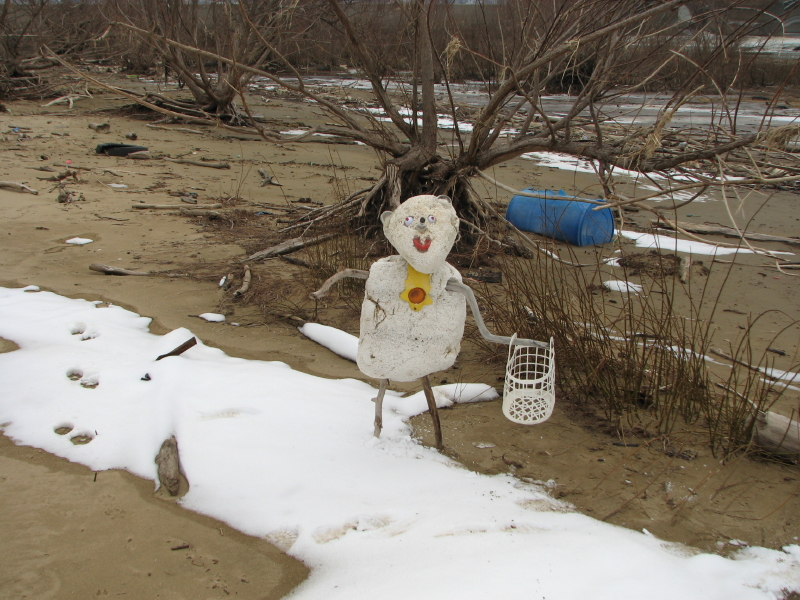
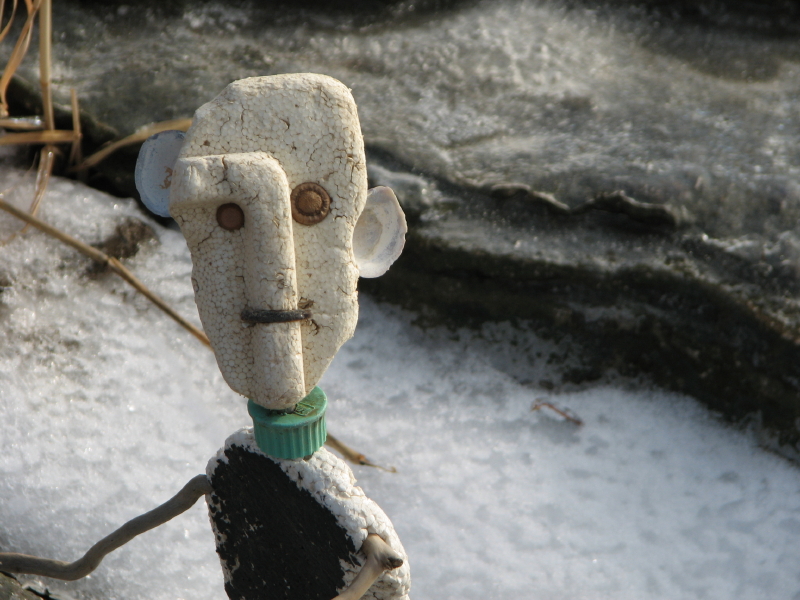
Meet “Skippy” who is named after the glass I used for one of his ears which came from the bottom of a peanut butter jar.  I found it in the sand. The raised letters told me the brand name.  “Skippy” is also made from Styrofoam found along the way, plastic fishing bobbers, rubber, a plastic mouth guard, and various woods.  The “Choir” is visible behind the studio site.

I don’t have a good story to go along with this figure.  I did kind of imagine that Skippy was checking out the river line and looking for fresh and unusual flotsam and jetsam.

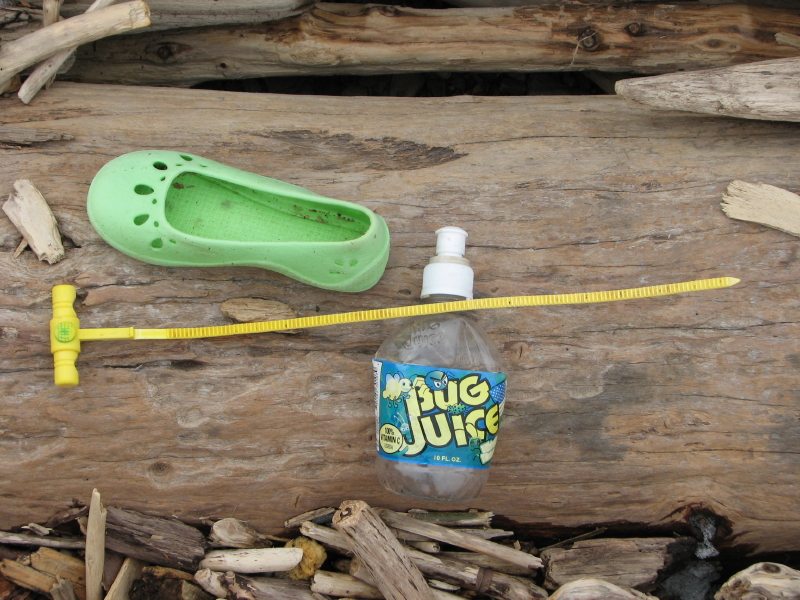
Cold, wet, and muddy Skippy entertains himself by looking for colorful or unusual artifacts such as these found on this trip.  The joy in finding is its own reward.

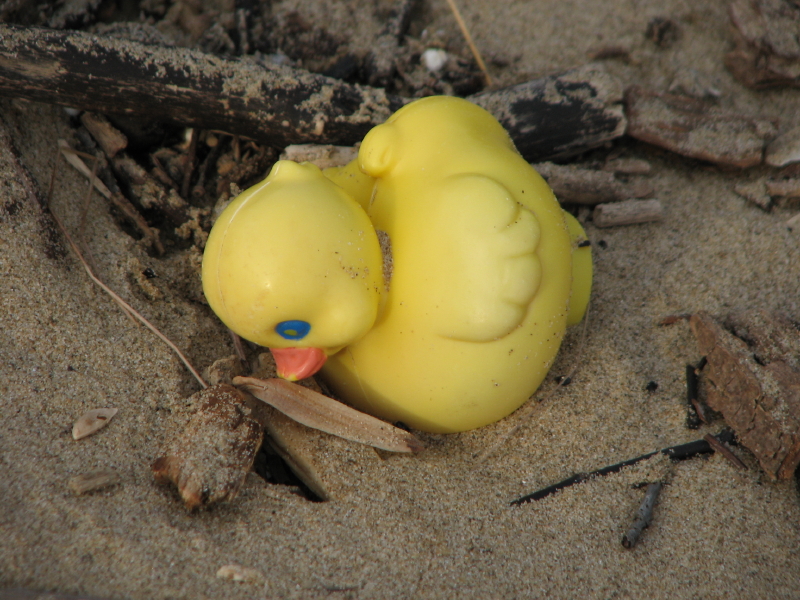
So many lost toys almost all of the time.  Each time I come out here I find some plastic representation of life.  I usually take a picture of the object as found and then it goes into my collecting bag.  I like that relationship between images and objects…although the years worth of objects is starting to take up serious space.

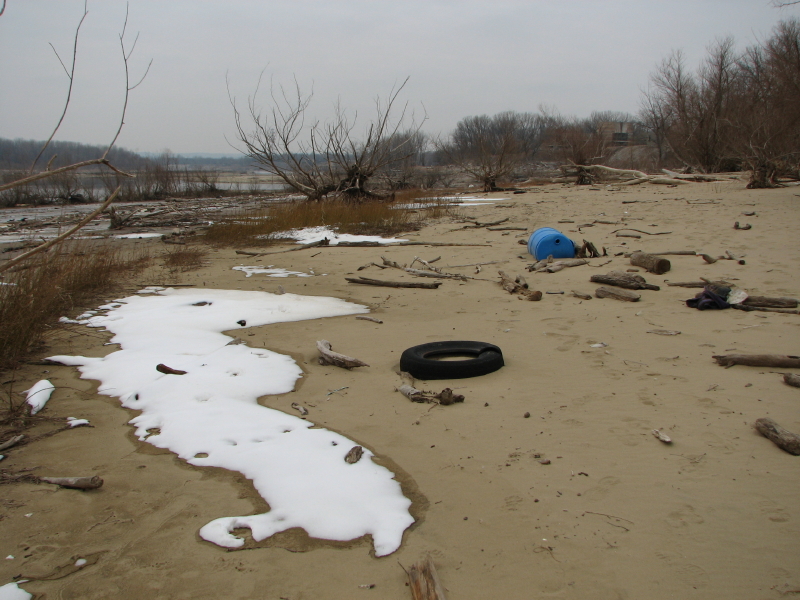
This is where I last saw Skippy.  He was standing by the snow with a willow tree framing the view behind his head.  The bright blue of a plastic drum adding a note of wondrous color in an otherwise drab riverscape.  We have a way to go before Spring and everyone I know is already sick of winter.  I’m going to try to stay positive and look for the beauty in the common place.  I wonder what the groundhog’s shadow will say?

Read Full Post »

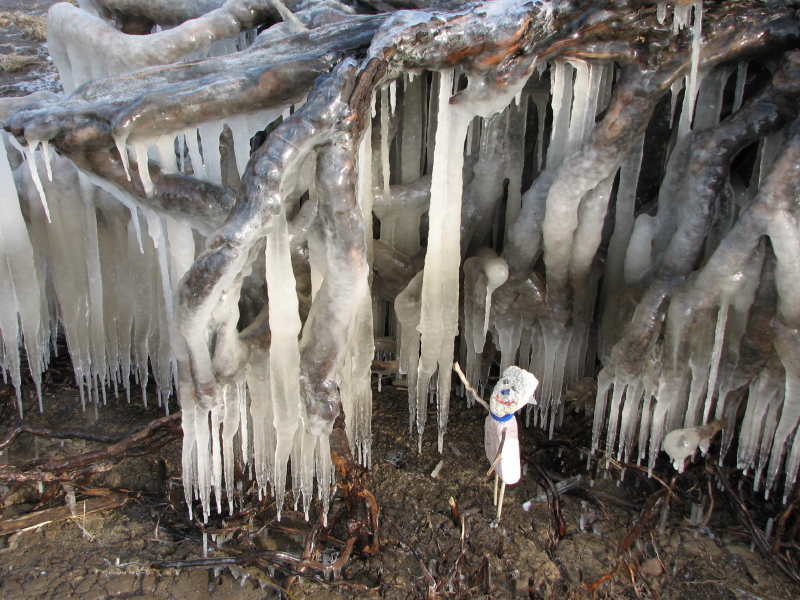
Come along on this vicarious adventure to the Falls of the Ohio.  The seasons and river help make this a dynamic environment.  I stole a couple of hours during a very cold day to visit the park and was rewarded with a riverscape transformed by ice!

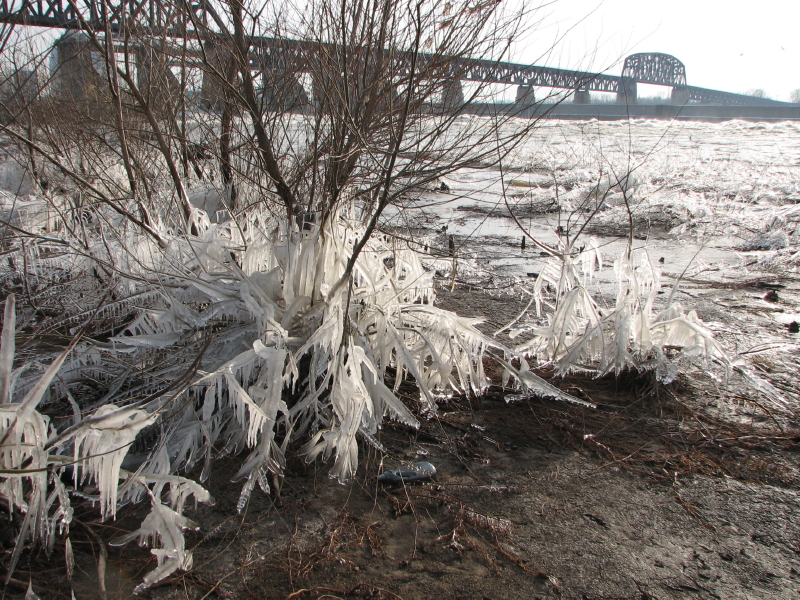
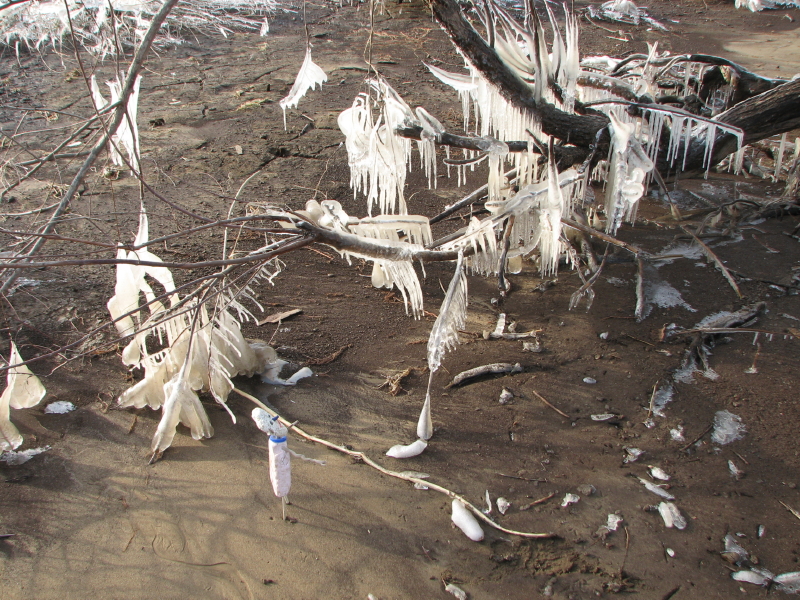
Right at the river’s edge was where I found the ice.  The driftwood, logs, and living willows looked as though clear glass had encased their forms.  I love being a witness to all the transformations that happen in this relatively small place.  It literally can change before your eyes.  Ice at the Falls is always a magical event and one that doesn’t last very long.

Ever wonder what it takes for ice like this to form?  The conditions need to be just right.  First it takes a river where the water is warmer than the air around it.  The river appears to steam and fog can form.  The warmer water vapors come in contact with the colder trees and rocks, condenses, and turns to ice as the temperatures fall below freezing.  You also need one other element and that’s an engineer or architect to direct the action.

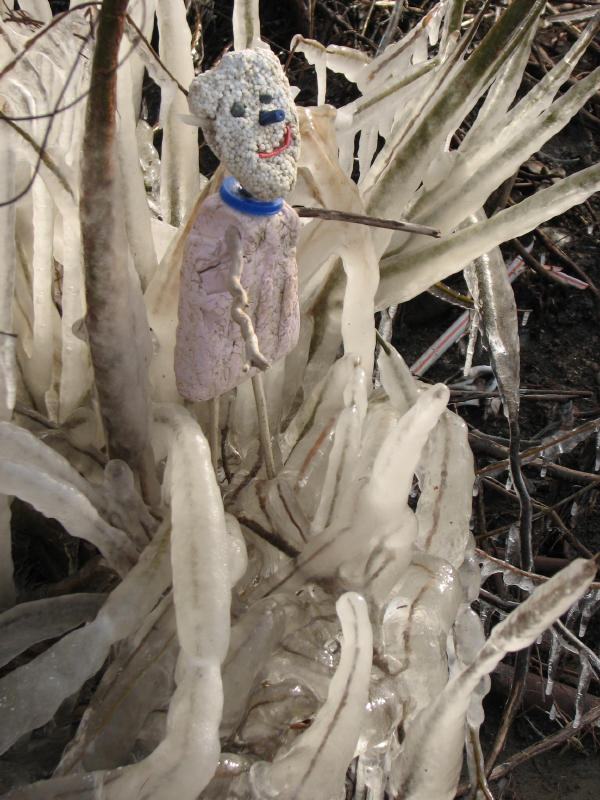
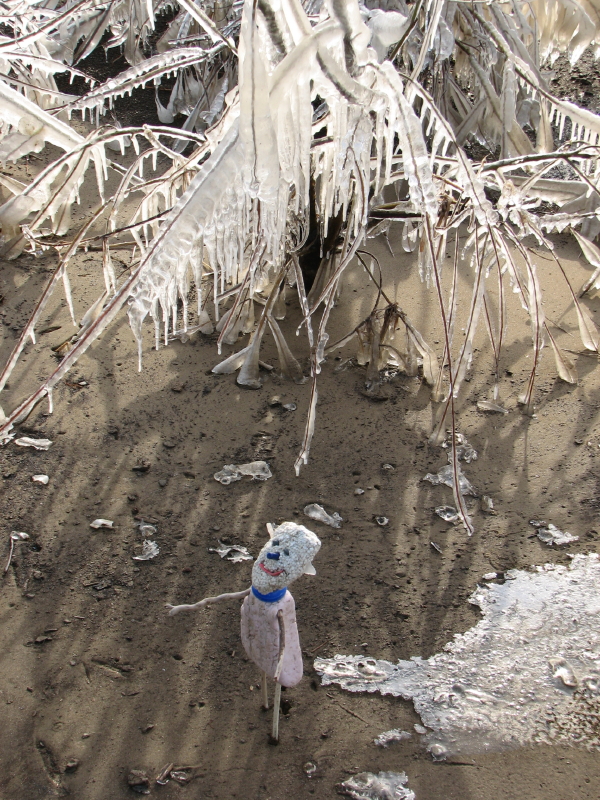
If you look closely you can see the architect of this scene in the center of this low growing willow tree.  Here he is seen from a different angle.

The little fellow I was observing was a true artist and had such mastery over his materials.  All he had to do was simply point and wave his arms around and an ice fog would cover the trees and other structures within reach of the river.  In this way he painted the Falls in ice…take a look.  Here he is again doing his thing along the riverbank.

Judging from the slightly mischievous smile, he seems to be enjoying his creations.  I followed along and recorded him in action.  He never slowed down and moved from tree to tree in a methodical way.

The architect made ice that varied in appearance.  Some trees he thickly covered and others he decorated with frozen sausages and jellyfish hanging from the slenderest of branches.

I watched the architect will the ice into place according to an intention and plan known only to him.  I suppose if one were to study this…there  probably are some mathematical equations that can explain all this?

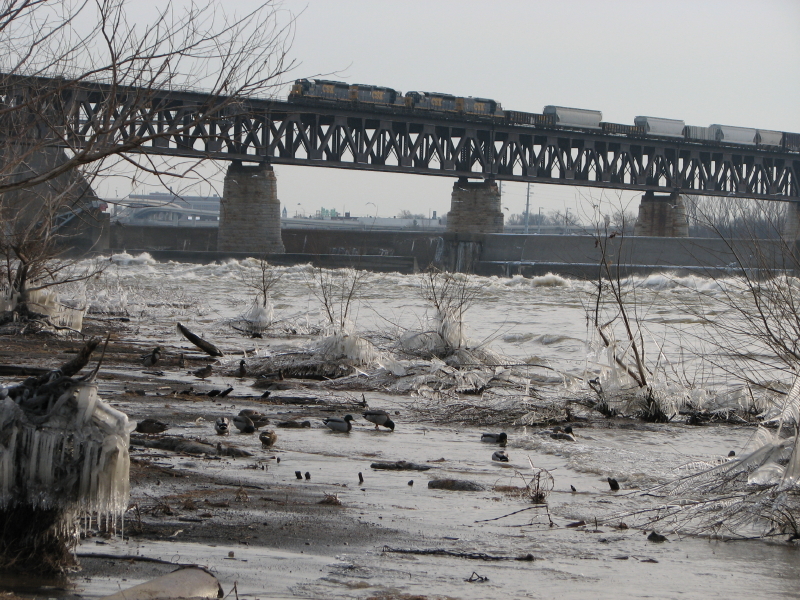
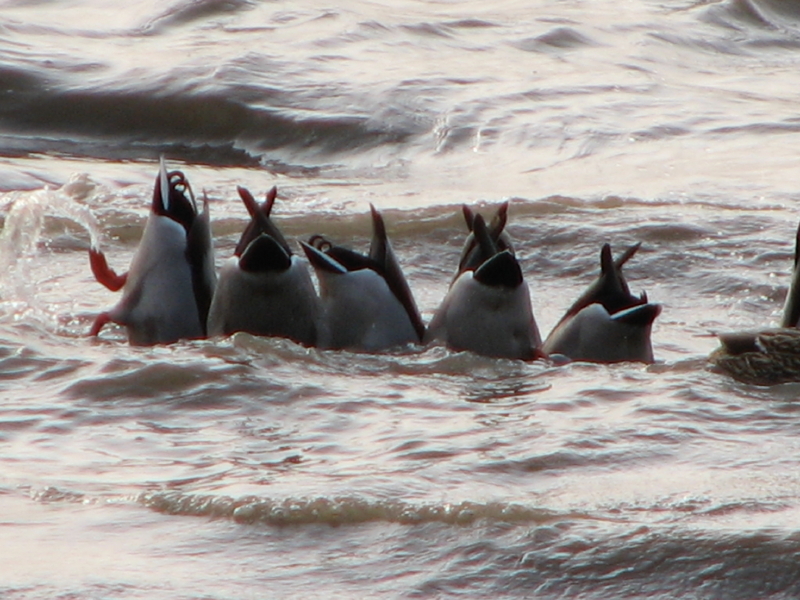
But when it’s this pretty and magical…who cares what the numbers are doing?  It’s nature exhaling and gathering itself before the next big breath restores and awakens the land.  As I left the architect to finish doing his work.  I walked alone admiring what he had left behind.  To end, here are three images my camera recorded along the river.  The last one in particular was lucky…and ducky!

Bottoms up everyone, till next time!

Read Full Post »


Another year’s worth of fresh water has passed under our bridges.  It’s been an eventful year in many ways and to recap things sounds like more energy than I currently have to expend on something at this moment. I guess I can’t party like I used to!  So, here I am limping my way across the finish line with Post number 223.

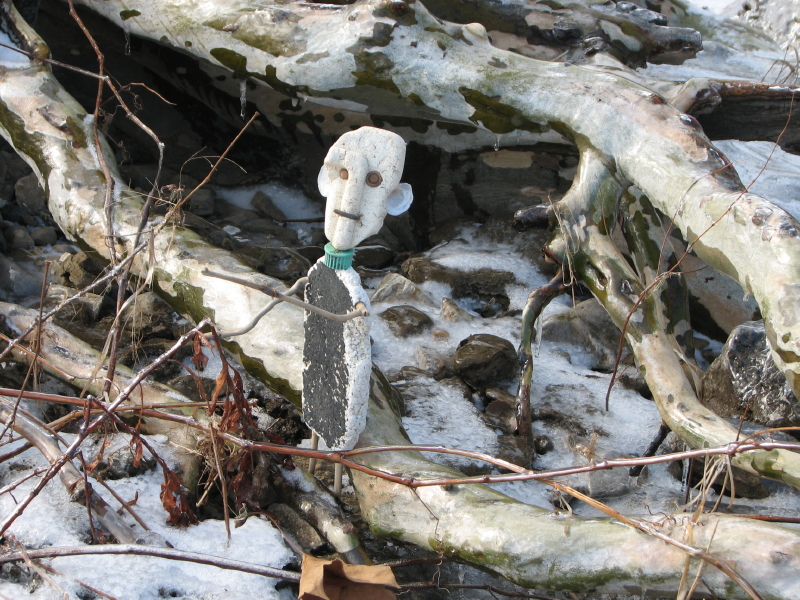
I love the way ice changes the riverscape at the Falls.  Over the years, I have been a lucky witness to some interesting ice formations.  On this last trip, however, the ice present seemed to cover surfaces in a glassy coating.  I decided to take a walk along the river side of the Woodland Trail.  It was cold, but the wind was calm which helped things a lot.  I made this figure that I named “Acorn Eyes” from stuff out of my collecting bag and objects that I found along the way.  The snow and ice formed a lighter background that actually helped objects to stand out more clearly.

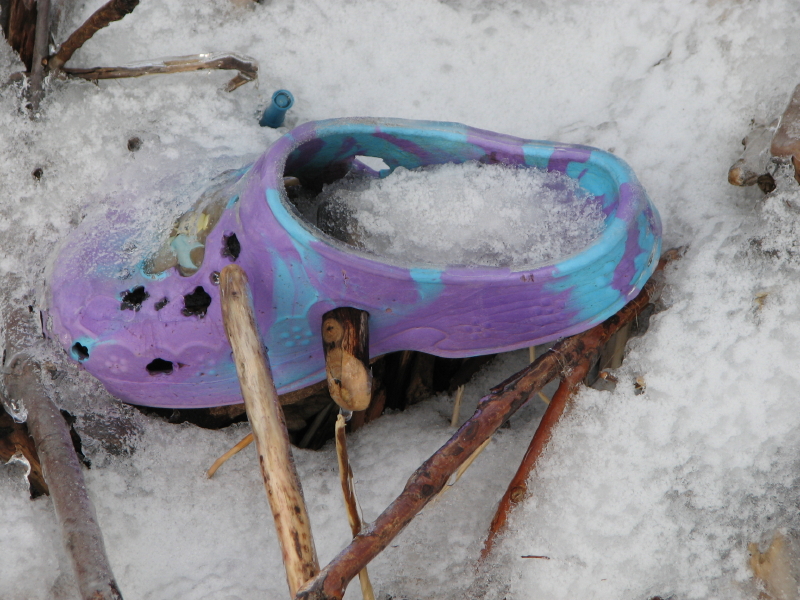
Here’s a colorful shoe followed by a child’s playground ball I came across. 

One natural object that caught my eye was this ice-covered milkweed pod.  This plant is very important in the life cycle of the Monarch butterfly.

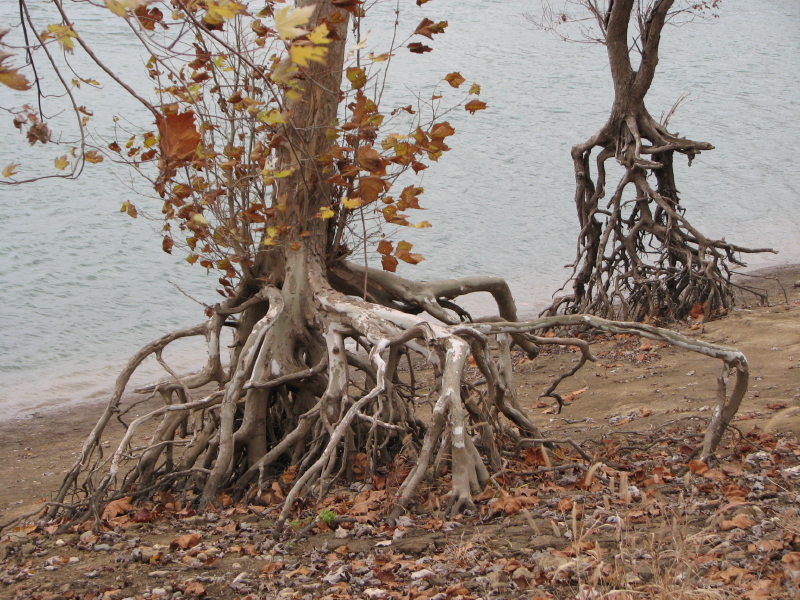
By the sycamore trees I found a spot I like that has these wonderful exposed roots.  You could still see the mottled greens and whites of the tree bark through the thin coating of ice that covered them.  I decided to take a few pictures here with my newest Styrofoam figure.

With as much pressure as is regularly put upon this landscape, I marvel that there are any trees here at all.  The river is a powerful force washing away most everything that stands before it.  Subtler still, but also very effective is the role ice plays in breaking apart the fossil rock.  Water seeps into the smallest cracks and as the temperature drops below freezing, the water expands into ice, further wedging apart the gaps.  In this way rock is split and broken down. 

Walking along the trees that border the river, you can see the remains of logs that were washed into here during previous floods and eventually became stranded.  As they decay, they release their nutrients back into the environment.  I like looking for the patterns formed by the various layers deposited. 

I am also looking forward to whatever the new year brings.  May it be a positive and peaceful one for all.  I know the river will keep life interesting for me…and I hope I can do likewise for you through this blog.  See you next year!

Read Full Post »


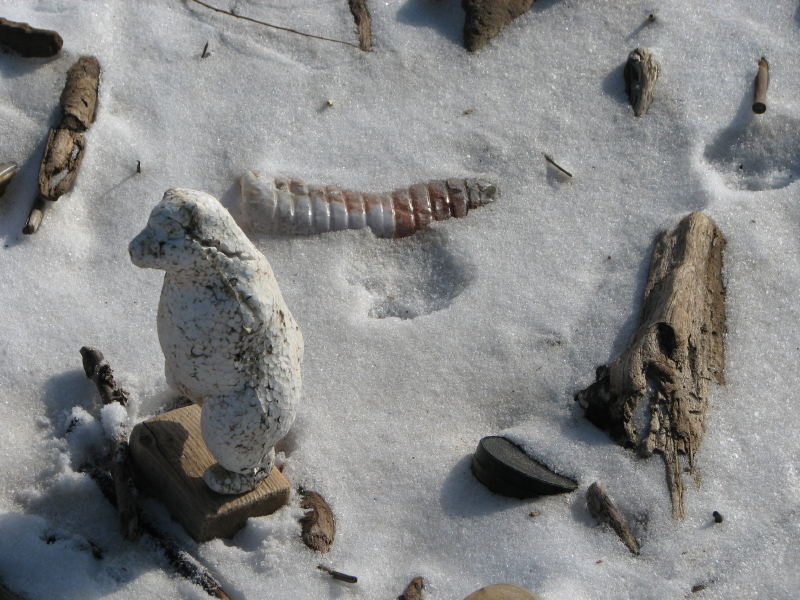
We awoke to a white Christmas in Louisville.  Just enough snow to cover the lawns and trees.  By now all my Falls of the Ohio holiday cards have been sent out.  Usually, I have several designs going at once.  This year, I made cards featuring snowmen, a dog I made from river delivered Styrofoam, as well as one featuring a Styrofoam polar bear with one leg I found out here amazingly enough!  Sometimes the cards are funny and sometimes they riff on some aspect of the holidays we could live without.

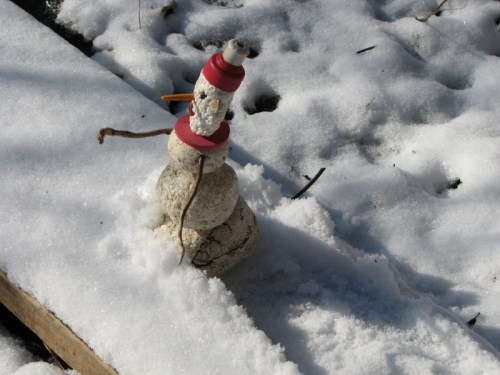
Both of the snowmen I made were created using parts of old Christmas ornaments I have found out here.  Usually, the perfectly round Styrofoam balls I find were originally fabric covered baubles meant for the tree.  This first snowman also features a bottle cap hat which gives you some sense for its scale.  The nose on this one is actually a miniature carrot I also discovered in the sand and kept for just such a purpose as this!  I waited for the snow to arrive which it did this year just in time.

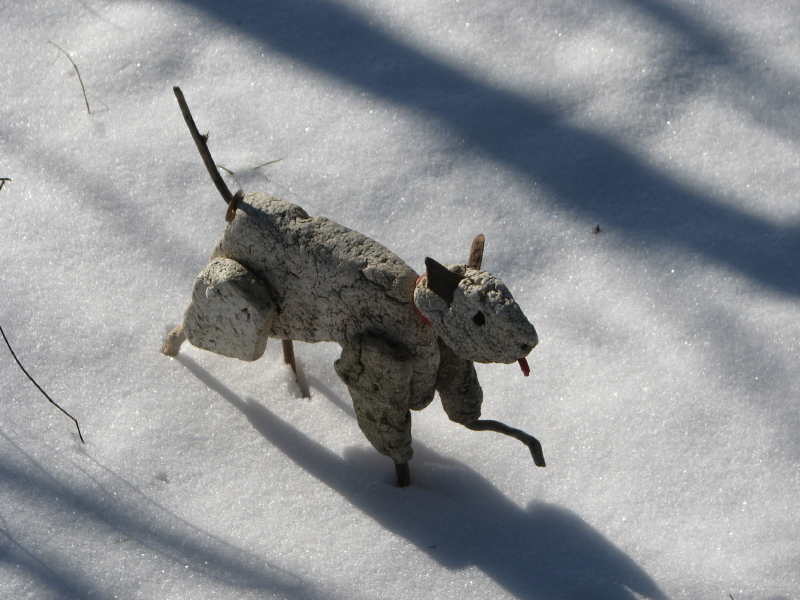
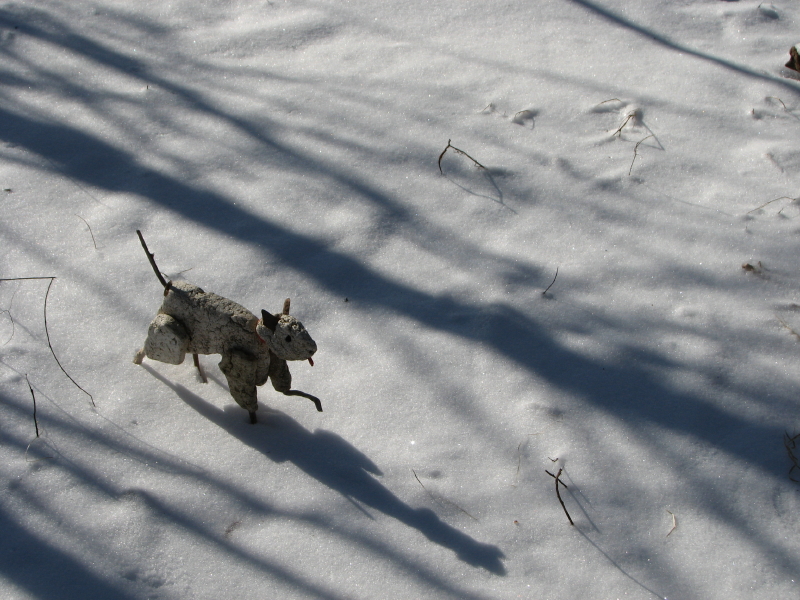
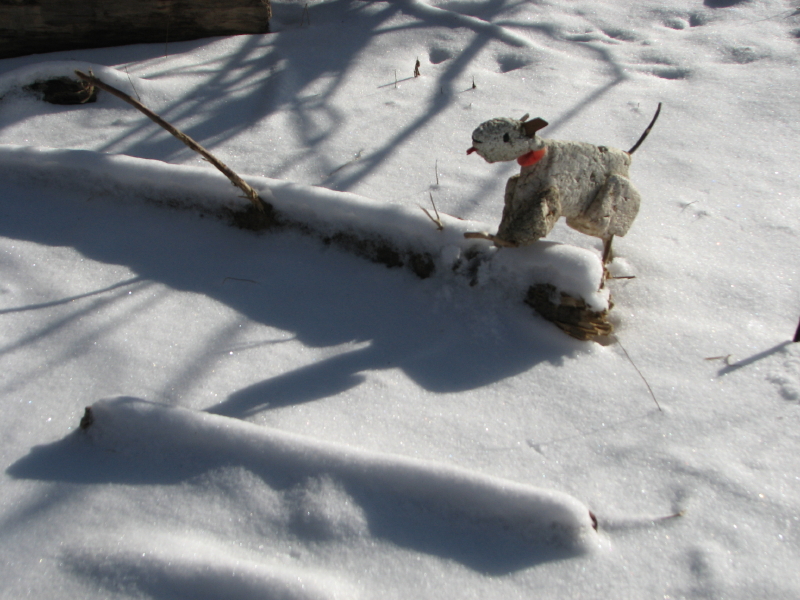
The little dog came from a previous post that most everybody missed and so I don’t feel as badly about recycling one of my former projects.  In this case, I thought the dog came out particularly well and deserved another chance to shine.  It’s made from Styrofoam and sticks, plastic, and tiny bits of coal thrown in to create eyes and a nose!  He’s so light that he doesn’t leave tracks in the snow!

I featured another image of this dog in my last post on the spoor of a particularly large bird which was a fun juxtaposition to work with.  In this overall group of photos, the object’s shadow plays a role as a design element.  As I recall, this was a very cold day with wind which caused some issues with the camera’s batteries.  I had little time to snap these before the camera turned itself off.  Among the other bits of polystyrene I was carrying on me was a “bear effigy” that I found out here this year.  I posed it in a few places along the way and here are some of the images.

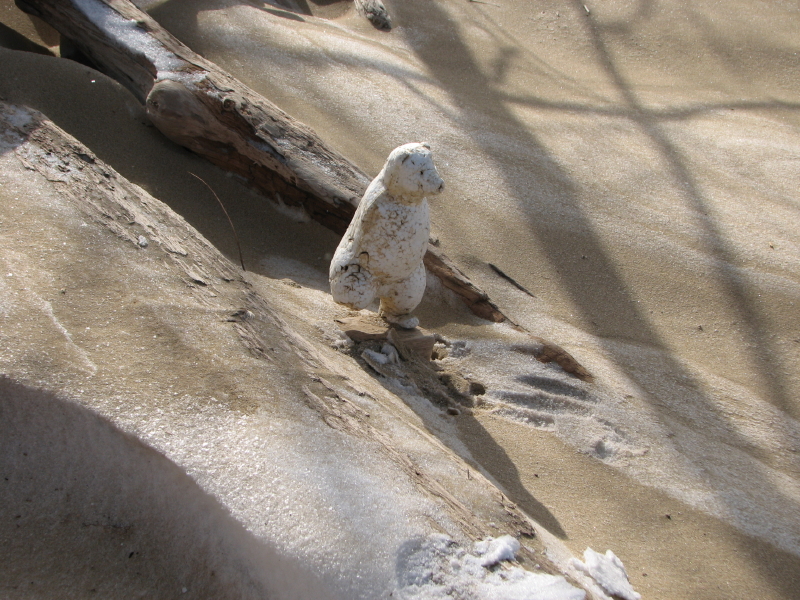
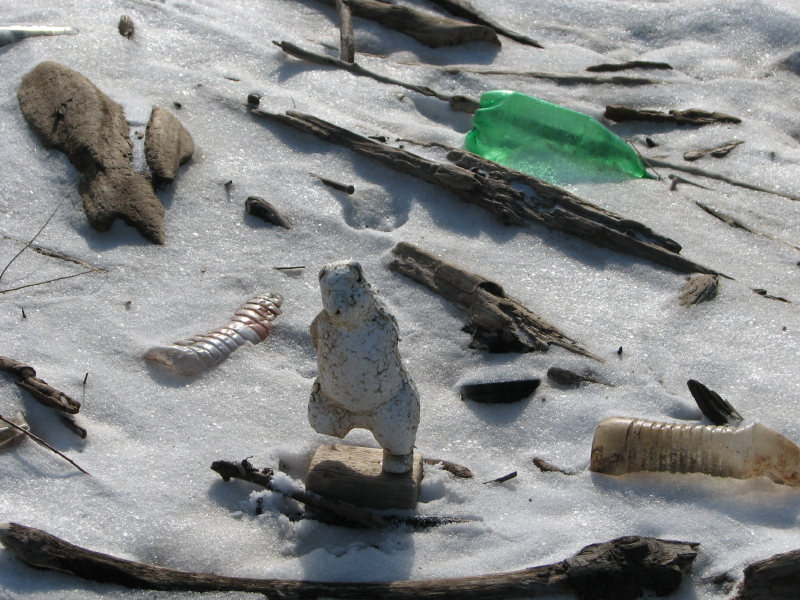
Emerging from its hibernation, the one-legged Styro-Polar Bear encounters a rapidly changing landscape.  What was historically all ice and snow is now a melting landfill.

I mounted the Styro-bear on a small piece of wood I found out here so it could stand up.  I found it in damaged condition missing one of its legs.  I have no idea what this was originally intended to represent, but it reads bear-like to me.  The bear is such a resonant image going back to the beginnings of art and ironically I find one that says something about the here and now and our relationship with nature.  Much has changed.

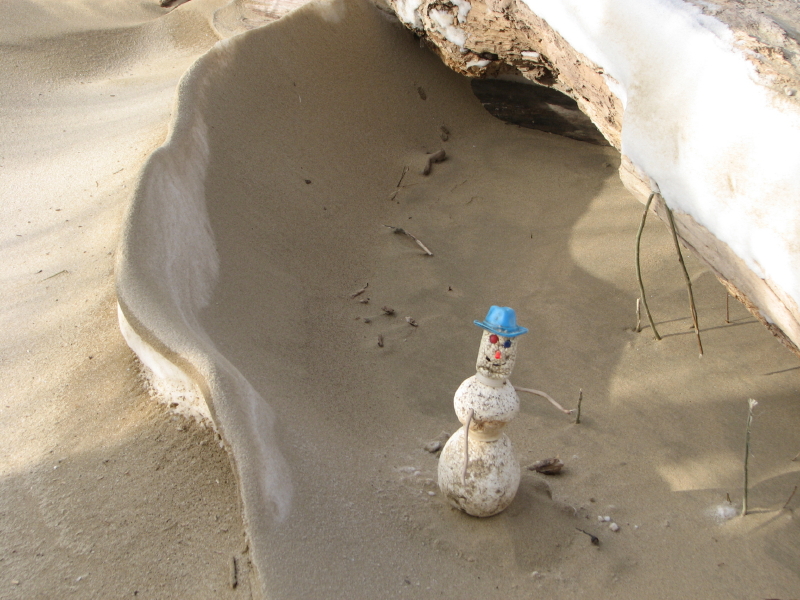
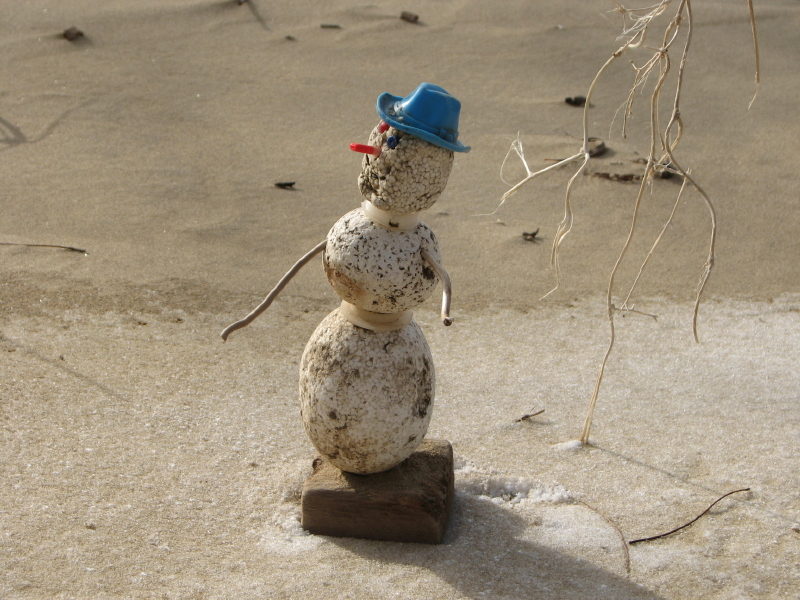
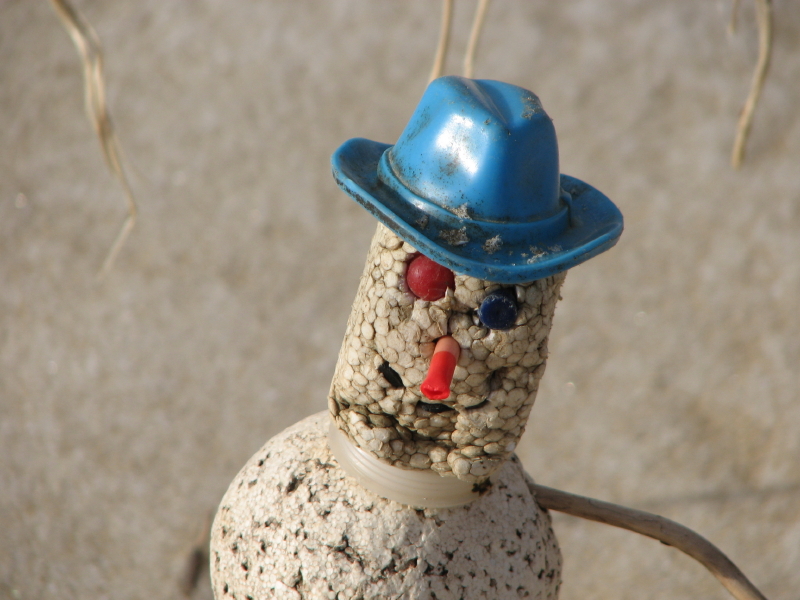
 One final snowman before closing and this one wears a blue hat!  I made this guy as a window decoration for a display at work, but couldn’t resist adding his portrait to the winter series.  Although he was made with Falls materials…he’s strictly a visitor.

Happy Holidays, Winter Solstice, etc… to everyone out there.  My best to all in the coming year!

Read Full Post »

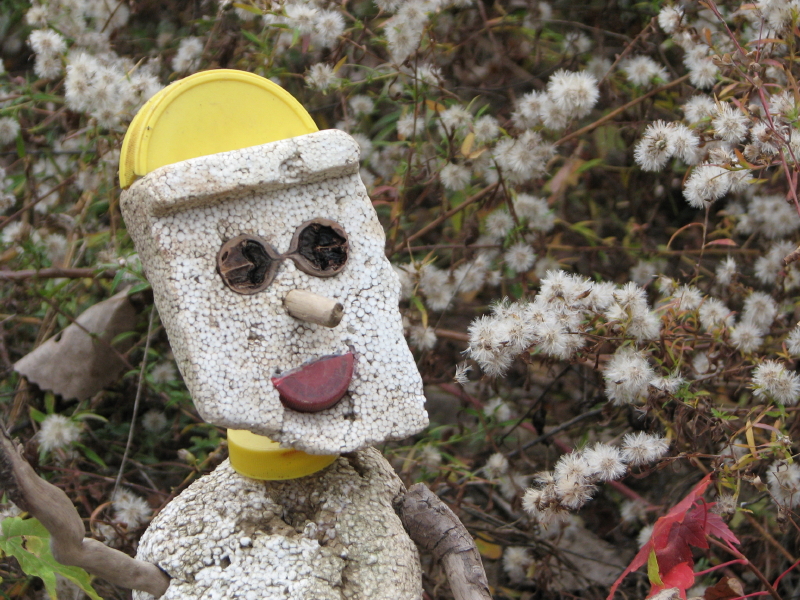
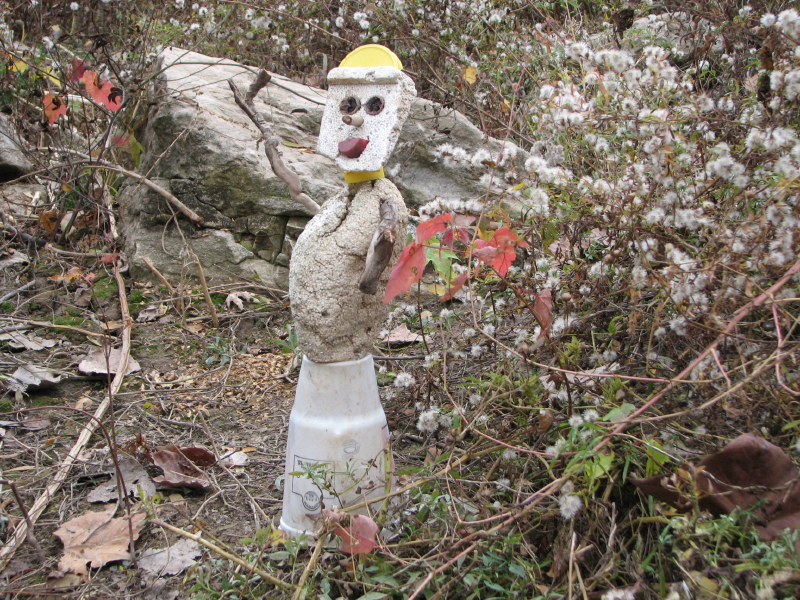
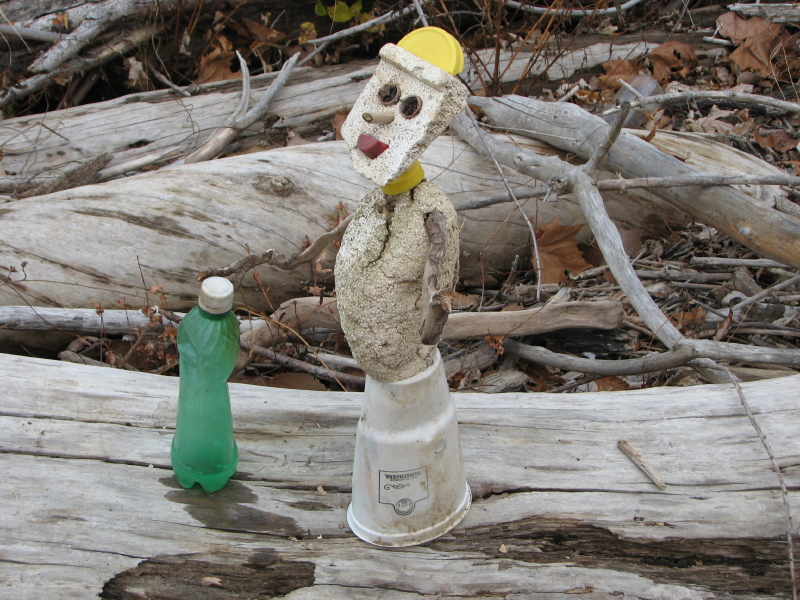
Because the work a day world had me preoccupied, it’s nice to be able to return to the river.  This interaction with the Falls occurred about a week a go, but it also takes me back to the early days of this project.  To stir the imagination I would challenge myself to only use materials found within the circle of a chosen tree.  The results were often incongruous, but it was fun to do.  The following polystyrene figure was made in a similar way where I allowed myself only materials available in a small area.

I found just enough Styrofoam for a head and body.  Splitting a nut in half became the solution for the eyes.  Bits and pieces of brightly colored plastic further called attention to the head.

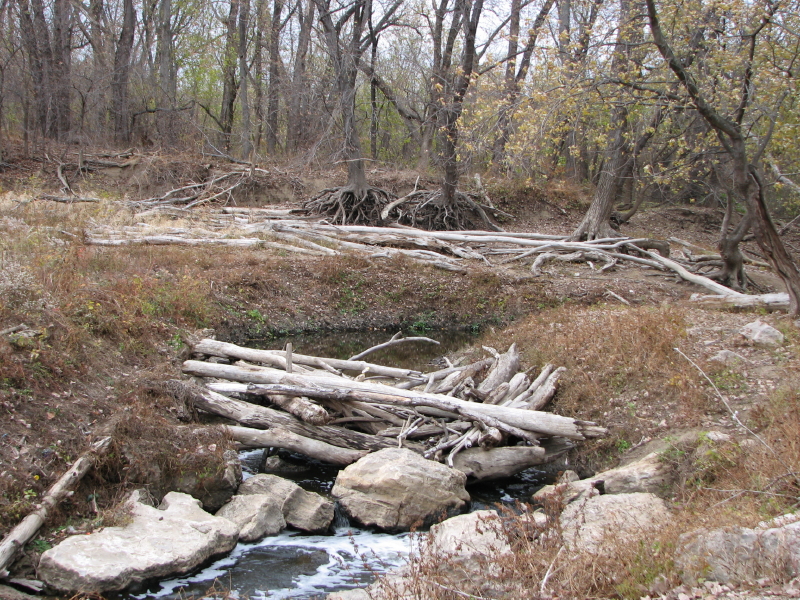
The first heavy frost is near now.  The flowers have bloomed and the seeds are going on their own journey.  Migrating sandhill cranes have crossed overhead. I’m by this small “creek” that’s more of storm sewer overflow for the nearby village. 

There’s always water flowing …even when it’s not raining at all.  People like to fish here especially when the river is high and catfish are close to shore.  When we do get high water, this spot catches many of the logs that drift in here and become stranded.  I like to walk on top of this bridge when I’m crossing over from one section of the park to the other.

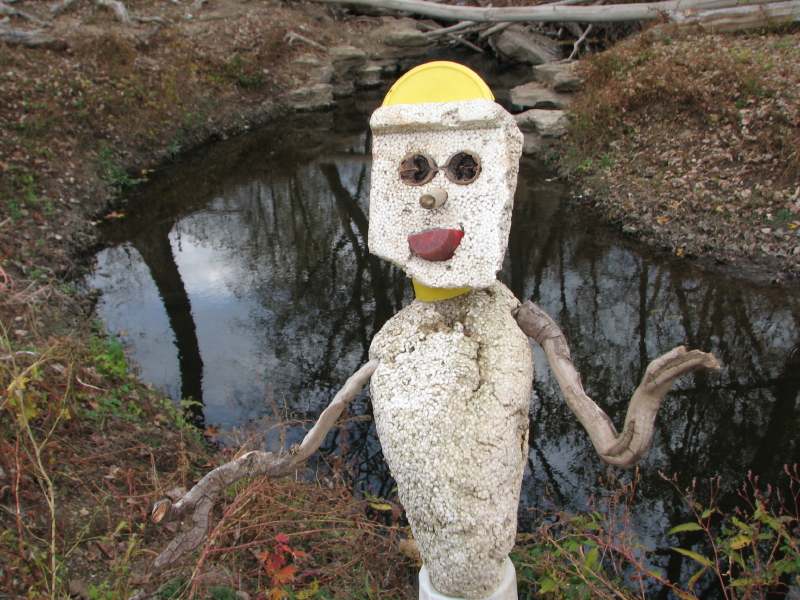
I moved the small figure I had made to the creek and snapped this portrait.  On the riverbank I can find recently chewed willow saplings and I know there is a beaver currently around.  Evidence of past beaver encounters mark some of the dead trees near the creek’s mouth.

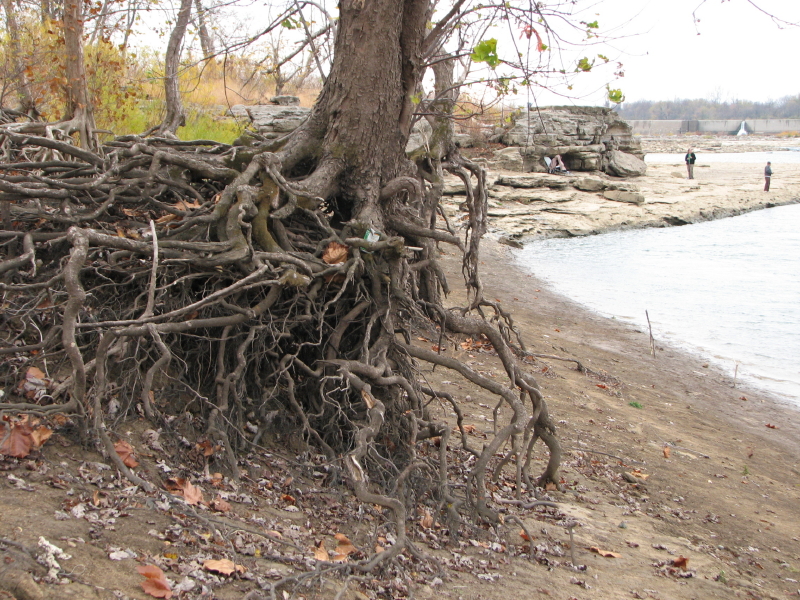
Also in this vicinity are some of my favorite trees.  There are particular sycamore and willow trees that have exposed root systems.  These trees appear to be uprooting themselves and moving on which they do very slowly and deliberately!

The river has retreated from here for now.  This is also a favored place for fishermen.  The nearby fossil cliffs make a convenient place to cast a line or build a fire.  The underlying limestone sends currents flowing in multiple and treacherous directions.  The water here is usually well oxygenated and so it attracts fish.

I left this figure by the side of the path and walked to my vehicle.  This day began sunny but quickly turned overcast and gray as it wore on.  To close, here is another view of a tree with a great platform of roots showing by the nearby fossil cliffs.

Read Full Post »

There’s drama walking through the autumn landscape.  The colors and forms are beautiful and so much change is occurring so suddenly that it holds your interest and makes even the unobservant aware of the fleeting nature of life.  The season is also a reminder of unrealized ambitions and unmet goals.  Whatever urgent dreams you may harbor, better happen sooner than later because time waits for no one.  Recently, I caught up with a friend at the Falls of the Ohio who I don’t see often enough and he told me this interesting story he witnessed about a buddy of his.  The following images are as they impressed themselves upon my imagination as the tale was told.

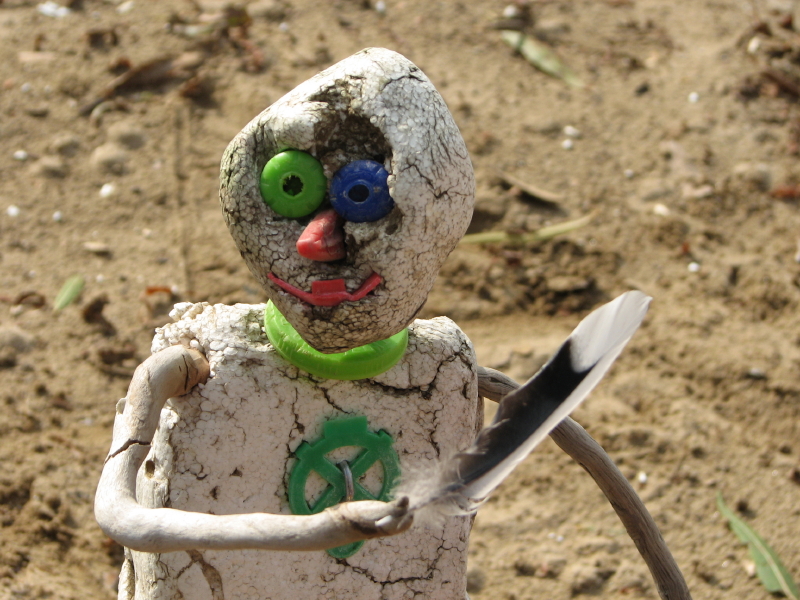
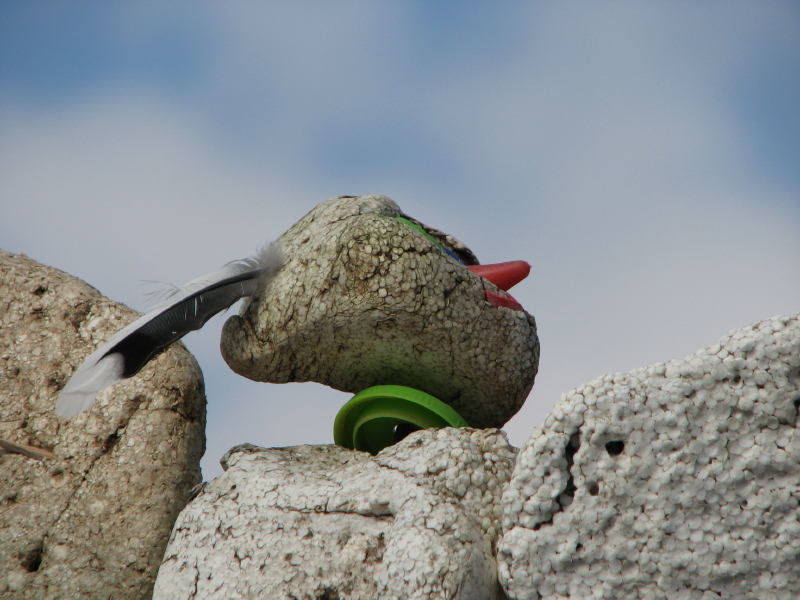
Here’s the short version of the story.  One day this guy is visiting the Falls of the Ohio and he finds a feather in the sand.

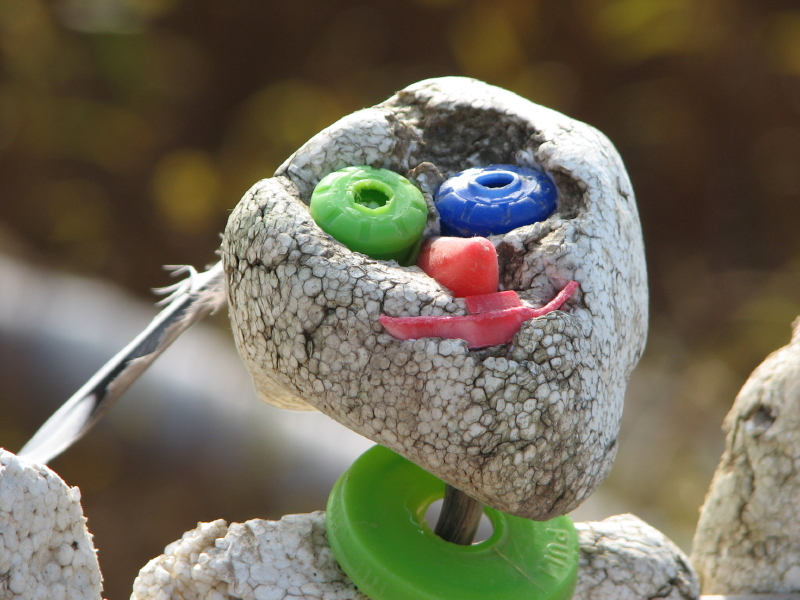
As feathers go, it wasn’t anything special in its own right.  However, it did trigger this notion in the brain of this fellow who found it and it served as a catalyst for this story.

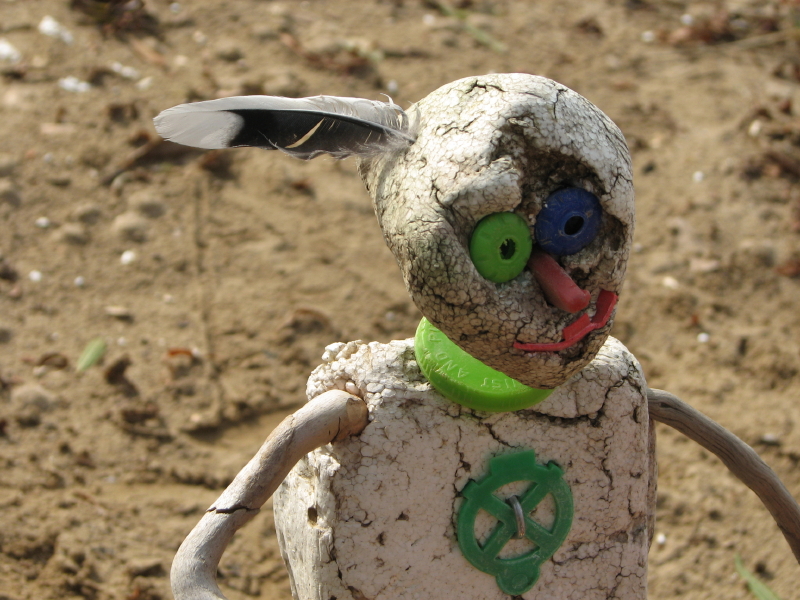
Apparently, this man (let’s call him the Aviator) had a secret desire to learn how to fly, but heard through others that this was an impossibility.  He decided not to take the conventional wisdom at face value and determined to find out for himself.  He tied the feather into his hair and began the process of learning how he might accomplish his goal.

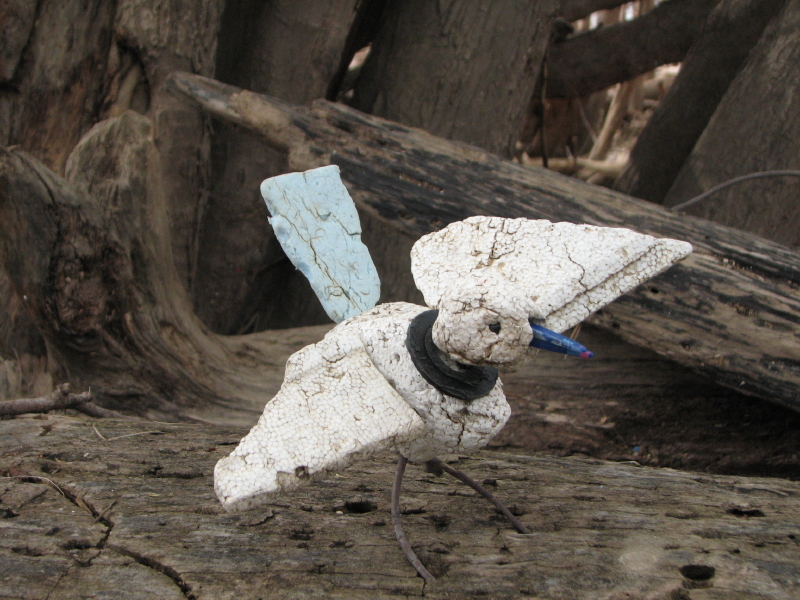
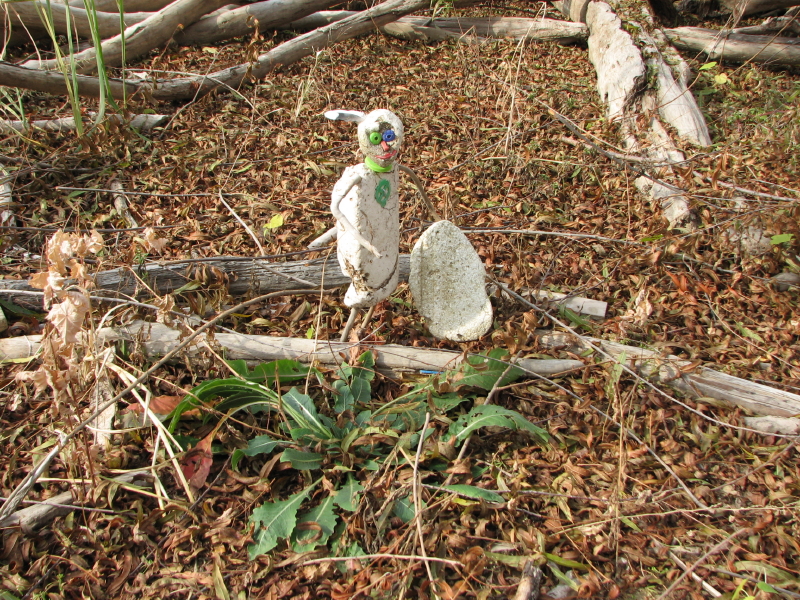
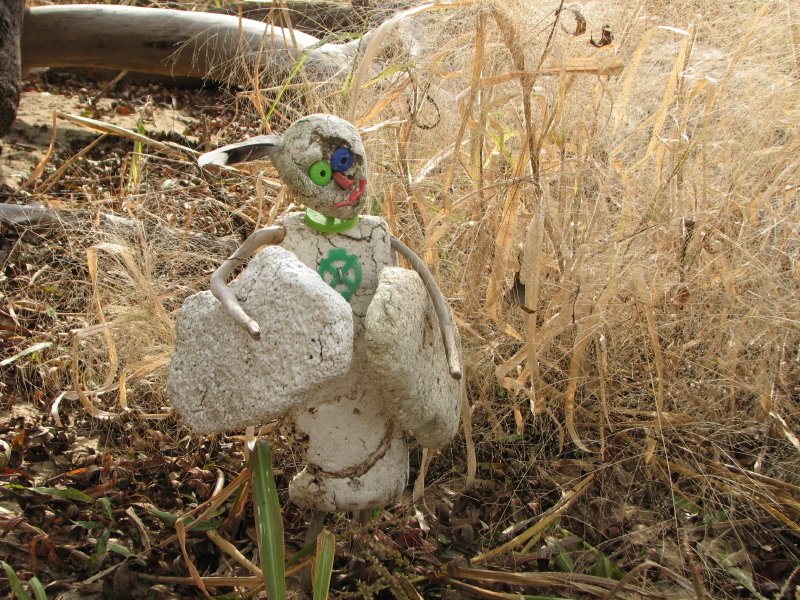
Having watched birds all his life, the Aviator knew that he needed wings, but what could he use to fabricate them?  On his travels around the river he frequently came across this odd material that was light and surprisingly strong.  Could it be used to make wings?  The Aviator began to gather this material from the woods around him.

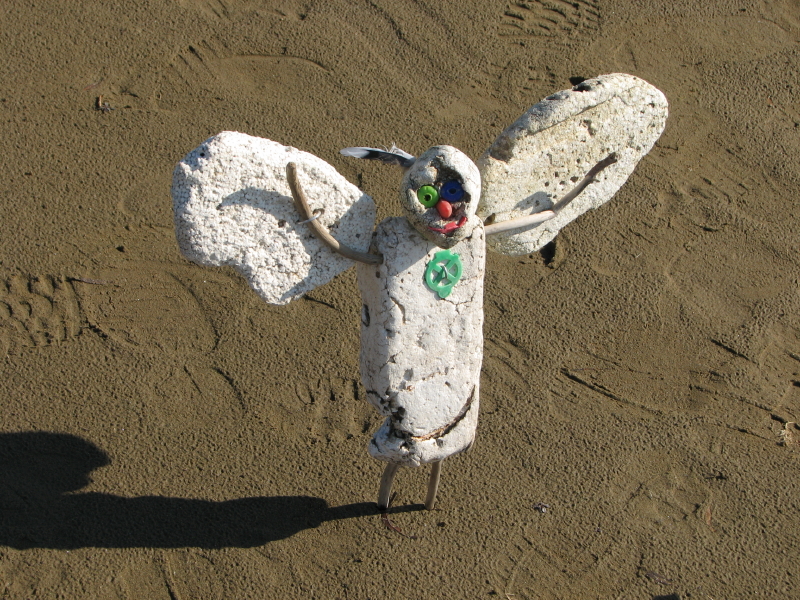
Soon he had what he thought would make a nice matched pair of wings.  He created straps and sleeves that would allow him to attach the wings to his arms and this gave him a sense of having a power that he never had before.  Through practice, and trial and error, the Aviator taught himself the fundamentals of gliding and how to remain safe when things didn’t quite work out.  He sustained many bumps and bruises, but also gained mastery.  After running up and down the riverbank and letting the wind lift him just off the sand…the Aviator felt confident enough to try his first sustained flight. 

The Aviator needed a place where the winds were a little stronger than he found at the riverbank.

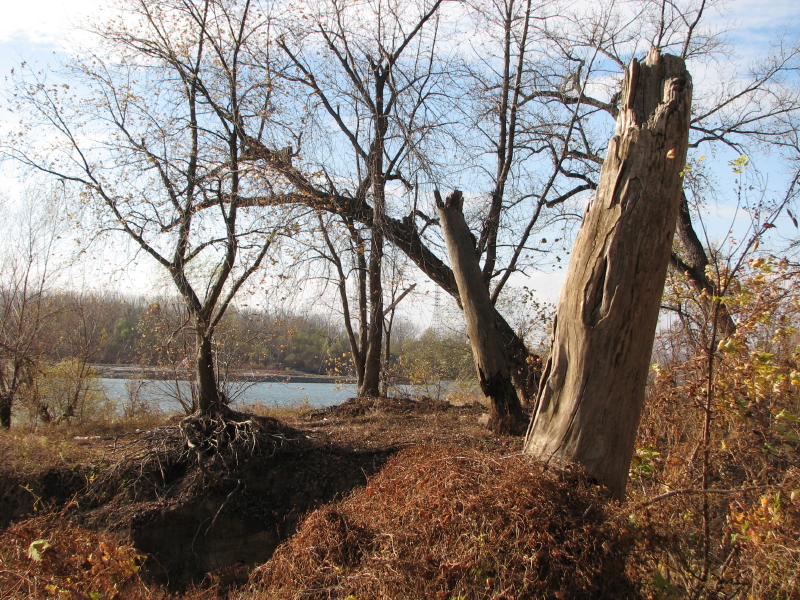
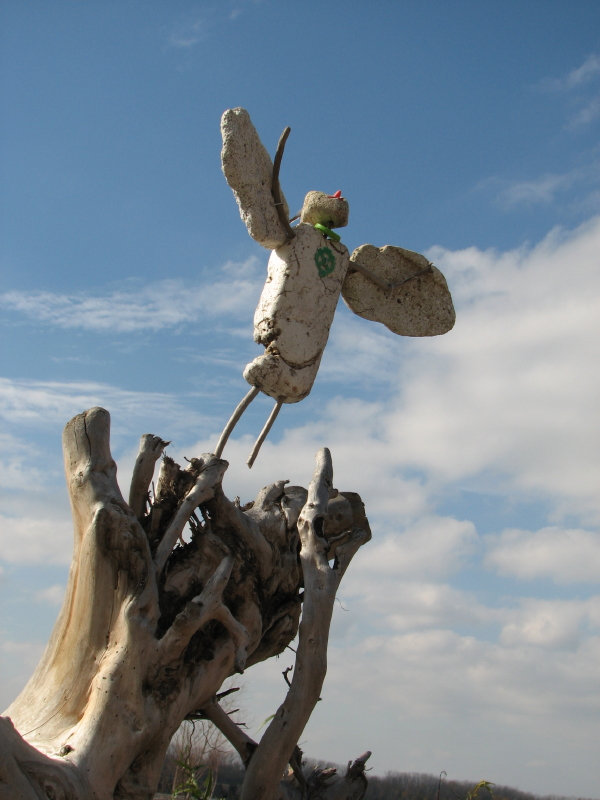
In the distance, the Aviator spotted the remains of a great tree.  It was from this spot that he would try his first flight.  He folded up his wings, adjusted his feather, and climbed up the enormous tree stump.

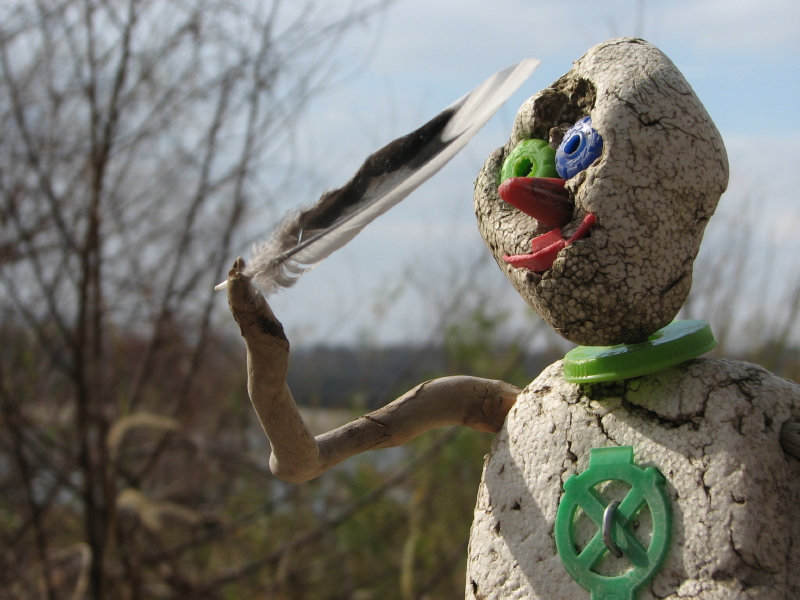
Reaching the top, the Aviator spread his wings and could feel the force of the wind upon them.  He grew more than a little fearful.  In his mind, he heard all the people who told him it was impossible to fly.  Breathing deeply, he pushed those voices into the wind where they dissipated.

For a moment, he closed his eyes and said a little prayer.  He let the memory in his muscles take over.

When a particularly strong gust of wind came up…the Aviator allowed it to fill his wings and he could feel himself lifting off the stump!  For the briefest of moments, the Aviator became aware that his decision-making process was too slow.  He would need to trust his instincts to fully learn how to fly and he let go.

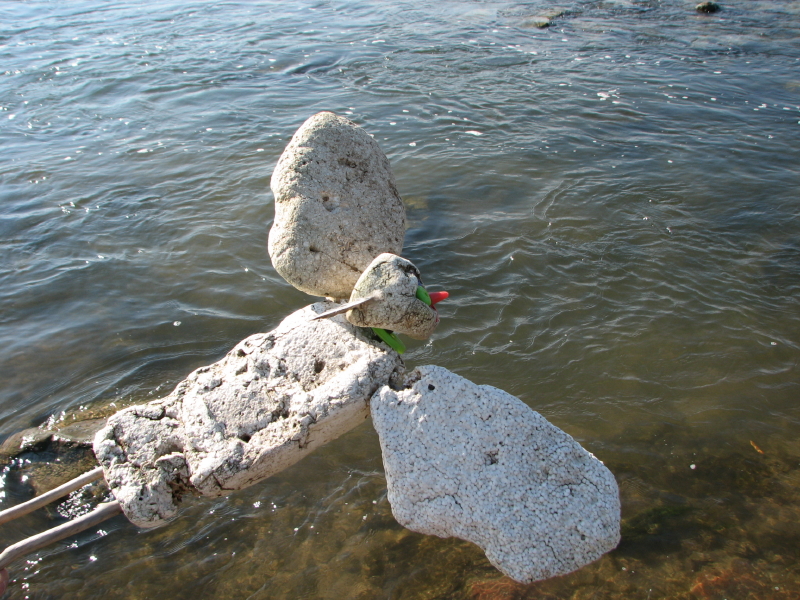
The wind carried the Aviator up and over the river and he levelled out his flight.  He tested his maneuverability by banking from right to left.  He also practiced rising and descending.  When he felt confident that he had the right amount of control, he glided further and further away from his starting point.

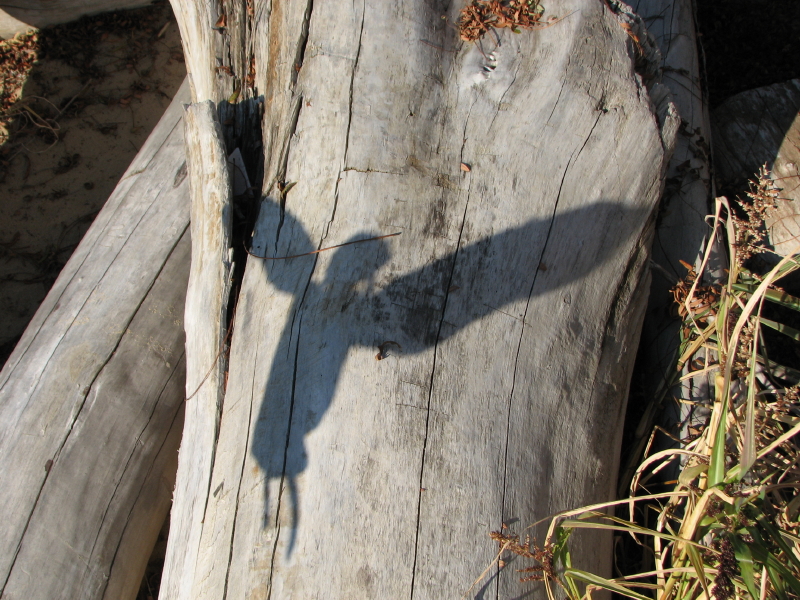
It must have been a great thrill to be able to move around in a completely new way!  What surprises and delights to see your shadow projected upon the world below you.  To move with the freedom of a bird…hasn’t this been one of man’s most cherished dreams?  What a feeling of accomplishment the Aviator must have felt. 

I asked my friends whatever became of the Aviator?  He said he wasn’t sure since it had been awhile since anyone had talked with him.  His memory was already becoming the stuff of legends.  There are those who believe he fell into the river.  Others in town think that he is on an around the world trip.  And, there are folks who feel that it isn’t out of the realm of possibility that he was transformed by his experiences into a bird. If I have to choose…I like the last option best and every once in a while, I spot a bird that reminds me of the Aviator’s story.

POSTSCRIPT:  In 2003, among the anniversaries that form part of the backdrop for my Falls projects included the 200th anniversary of the Lewis and Clark Expedition and the 100th anniversary of the Wright Brothers first sustained flight at Kitty Hawk.  At the time, I remember wondering why we weren’t making a bigger deal about this flying achievement than we were?  Yes, there was a commemorative stamp and a few other smaller observances, but nothing of international attention that I recall.  Being able to fly has been on our collective imaginations since before the story of Icarus and Daedalus and is repeated throughout the world’s cultures. We even have flying dreams in our sleep.  And so, when we finally achieved flight, and eventually went to the moon and back…it struck me that we weren’t making a big enough deal about this?  It isn’t everyday that we achieve what was first conceived in our grandest imaginations.  I thought it deserved more recognition than it got.  What do you think?

Read Full Post »

Today there is a leafy smell in the air at the Falls of the Ohio.  Already, most of the leaves are on the ground and every gust of wind takes a few more away from the branches.  I often think about John James Audubon walking these grounds two hundred years a go looking for birds to draw.  Many of his earliest avian subjects were captured on paper here.  Audubon’s time at the Falls gave him training as both an artist and naturalist that would serve him well later in his career.  In my own eccentric way, I’m creating an alternative ornithology that parallels the genuine one.  Here is the day’s birding adventure.

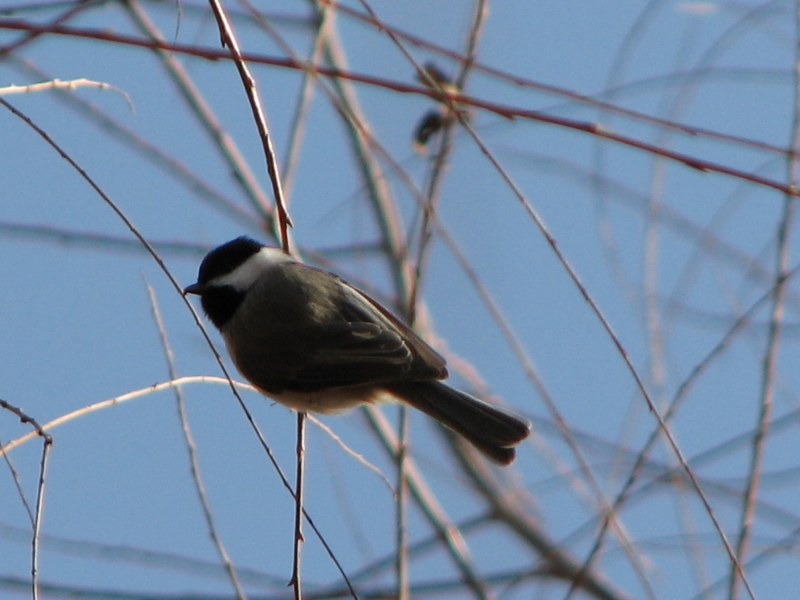
I usually hear the Carolina Chickadees before I see them.  They are to my mind comical birds because they seem to get into every position possible in their quest for food.  They will examine from every angle whatever it is that is the object of their attention.  Most of the time I see this bird in pairs which makes me wonder if the males and females stay together year round?  I will have to read up on that.  As far as I can tell, there isn’t a good way to tell the sexes apart in this species.  You can walk in the woods and not see or hear anything …and then suddenly it seems the birds find you!  I’ve noticed that different species will flock together as they travel through the woods.  Here’s a sampling of what I saw along with the Chickadees today.

Migrating southward from their boreal homes in the north, Golden-crowned Kinglets mix freely with other species.  They are tiny, ever on the go birds, and it is difficult to photograph them.  The kinglet in the above picture is a male identified by his orangey crest.  The female’s crest is pale yellow.  This is another bird I hear before seeing with their “dee, dee, deee” call notes.  It’s common to see woodpeckers and their allies joining into this group.  Here’s a female Downy Woodpecker plying its trade among the tree bark.  The male has a red dash on the back of his head.

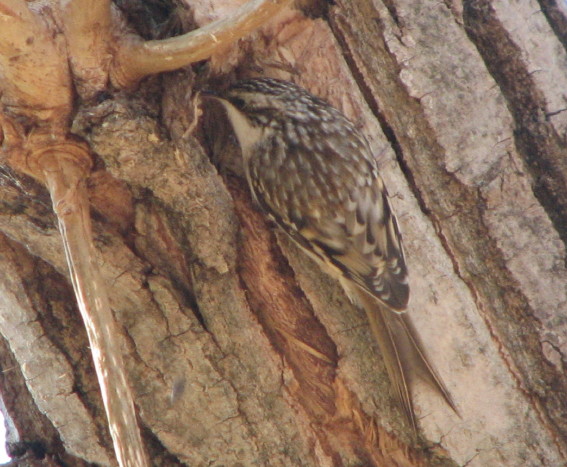
 Woodpeckers have adapted very stiff tail feathers that they use to brace themselves as they hammer away on the wood.  You can see the same thing on a bird that is so cryptically colored that it is easy to miss.  I saw several Brown Creepers flying with the Chickadees and Tufted Titmice today.  This was the better of the Brown Creeper images and you can see how easily it would be to overlook this bird.  Notice its stiff, v-shaped tail feathers that it uses to brace itself as it probes the wood.

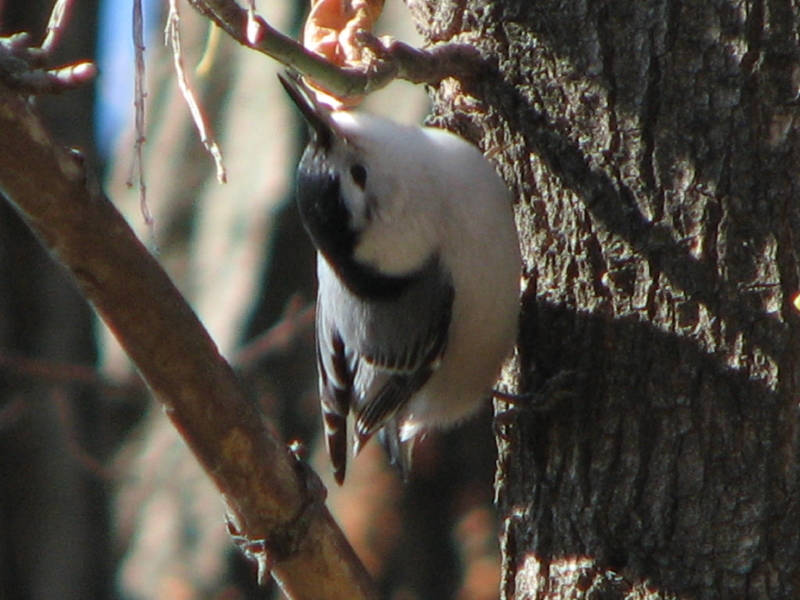
Looking just like wood bark, the Brown Creeper will fly to the base of a tree and work its way up.  It is looking for small insects that are hiding in the crevices of the bark.  These bird are also very small.  It’s also common to see this bird also traveling in the company of migrating nuthatches.  Such was the case on this day, here is a White-breasted Nuthatch that was on an adjacent tree to the creeper.

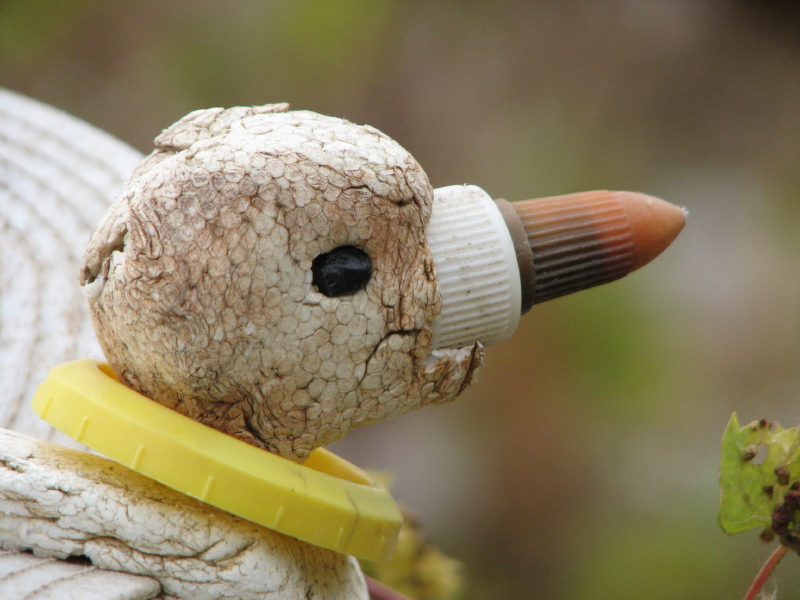
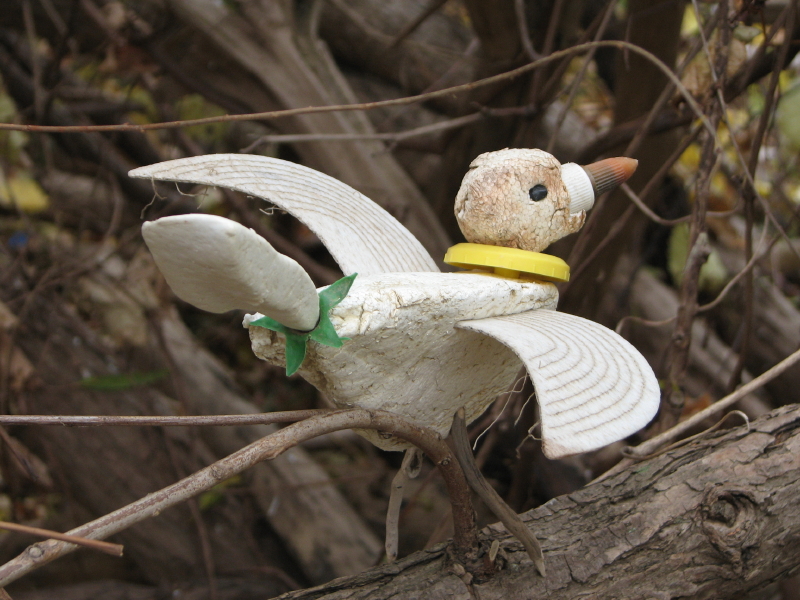
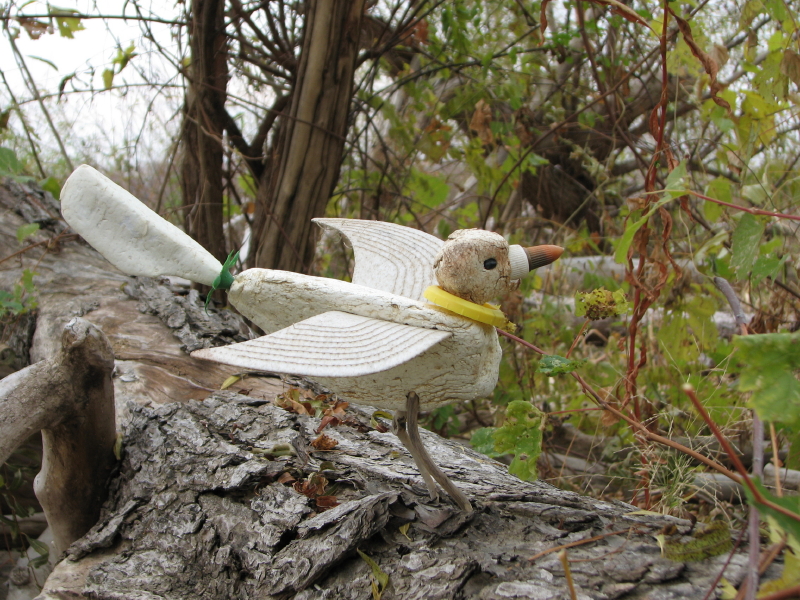
Aptly named, this nuthatch has a snowy-white breast feathers.  It likes to explore the tree’s surface in a head down position and has this nasal sounding call note that it frequently gives as it hunts for food.  Of course, I have saved one specialty for you that is very rarely glimpsed at any time of the year.  Patient birding rewarded me with this sighting of the Thick-billed Thrasher that was also traveling with these other birds.

From this detail, it is easy to see why this bird is called the Thick-billed Thrasher.  It is a seed eater and specializes in pine nuts.

Males and females of this species are also difficult to tell apart.  I spotted this bird resting among the willow branches in the eastern section of the park.  I noticed others of its kind exploring the leaf litter for whatever food supplements its main diet.

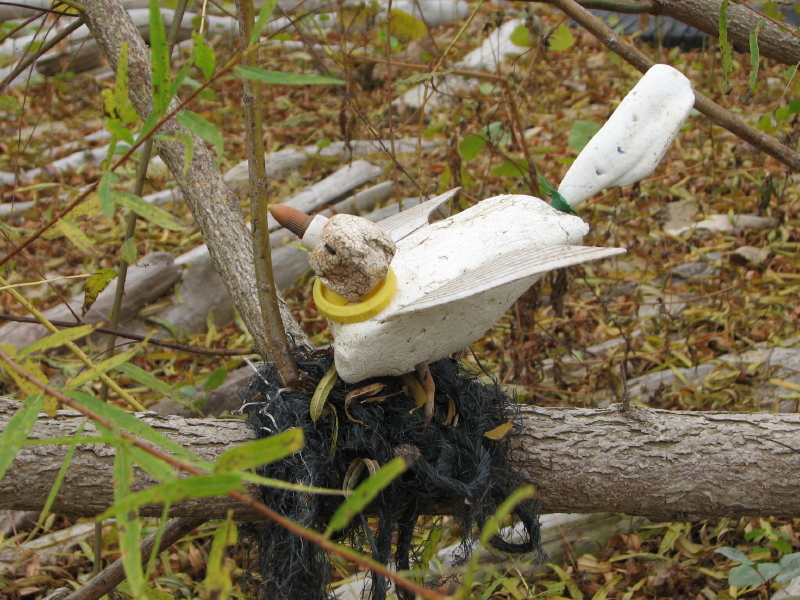
A final look at the this thrasher doing something a bit unusual.  This bird has discovered some barge cable wound around a branch and it seems to have stimulated a nesting response.  It sat on this rope for a few minutes before moving off with the rest of the traveling birds.  The Thick-billed Thrasher’s ultimate destination are the pine forests of the southern United States.

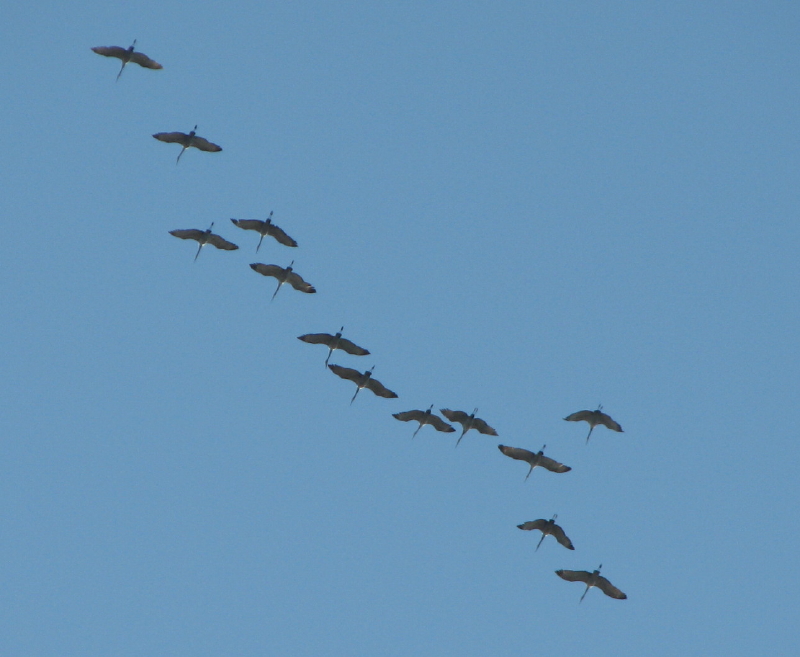
On my way back to my car, I made one other special bird sighting.  I also heard these birds before I saw them and immediately looked up into the sky.  Flying high above me in wavy, v-shaped formations, flocks of Sandhill Cranes were winging their way south.  For me, this is another sign of the season and I always associate the coming of very cold weather with seeing these cranes.  I wonder if Audubon felt similarly?

Read Full Post »

« Newer Posts - Older Posts »