Feeds:
Posts
Comments

Archive for the ‘nature’ Category

Under the Big Tree, Nov. 2012

I have heard stories about this land and river that are supposed to be very old and have been handed down for generations.  Folks back then told each other stories and that’s how things became remembered.  Back then, it also wasn’t unusual to find a young one that knew their family’s history by heart and able to recite the names of all the known ancestors going back as far as people could  remember.  People in the old days must have been very smart and had better senses of memory than we do today.  Before writing and such, I wonder if people back in the old days held jobs as living books and sources of information? But I digress… which brings me to yesterday when I encountered the most unexpected sight at the Falls of the Ohio!  I first learned about this mystery as a little guy while listening to stories over a camp fire with my recent ancestors.  It’s about these special trees that are rumored to live around here that have the ability to uproot themselves and move around.  I didn’t believe it either and chalked it up as being another fun story like the Prince Madoc legend, but then I saw these rare trees with my own eyes!  And, because these days we have cameras…I took a few snapshots of them so that you can see them too.  Check this out.
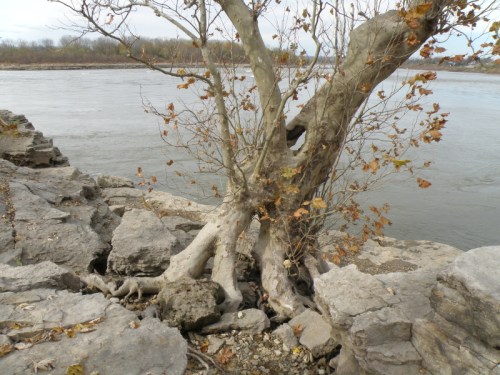
Sycamore tree, roots and rocks, Nov. 2012

The old stories mention that the boundary between the earth and the water has always been a difficult place to live.  It’s an extreme back and forth existence living at the margins of too much or too little.  There’s not much nutrition coming out of these fabled rocks, but then again the limestone at least gives you something to hold on to.  Water has a way of insinuating itself around every nook and cranny and is always testing allegiances.  Around here, some of the trees have learned that they can improve their lot in life by pulling up roots and going elsewhere.  You see, some trees have long memories and they know when it’s time for that great once in a thousand years flood or some other cyclical disaster to come back around.  Or epic memories are shocked and encoded into the rock and soil and trees are just better at reading and interpreting what it could mean?I’m guessing that some of the trees around the Falls of the Ohio like to be prepared or are skittish or both and have begun the very gradual process of being somewhere else.
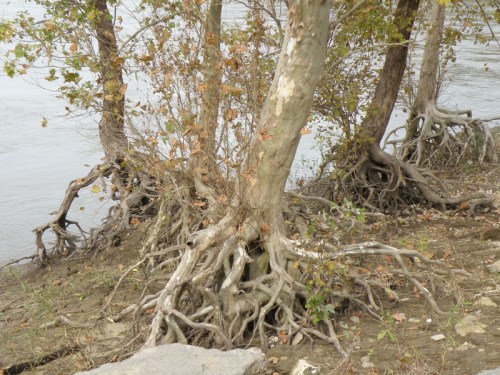
uprooting trees at the Falls of the Ohio, Nov. 2012

I came across this small mobile grove not far away from the first tree I showed you.  This is an incredible response by these trees to the rise and fall of the river.    The river dissolves  the silt, sand, and mud away from the riverbank and exposes the tree’s rootlet toes which are always growing. Water currents and the rocking back and forth of the wind further helps loosen roots from soil.  These trees are vibrating and creeping along with most of their roots on the surface with just enough tendrils into the earth to hold on to dear life.  Good thing too or else one day you could find yourself swept away.  I have seen it happen before as in this recent example by the creek.  This tree fell into the water and will never right itself or hold the riverbank up as it formerly did and one day it will be swept away by the river to somewhere unintended.
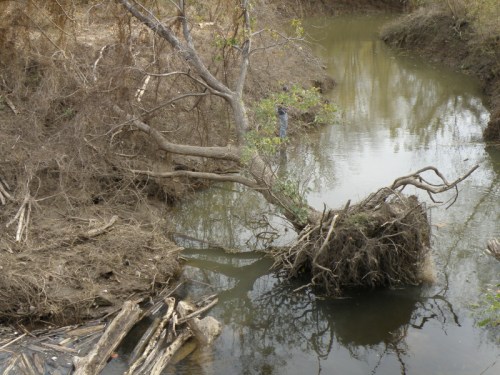
Tree that recently fell off of the riverbank, Falls of the Ohio, Nov. 2012

So much water is a mixed blessing.  Just enough and the trees can move a little more than usual.  Too much water and they run the risk of losing control. This mixed lot of trees seems to be moving westward.  Park officials have reported that there seems to be more of a sense of urgency on the trees’ part and they have picked up the pace over the last few years.  I wonder how they know when and where to stop and should I be worried?  Do the walking trees signify a bad omen for the future and is some environmental disaster looming ahead of us?
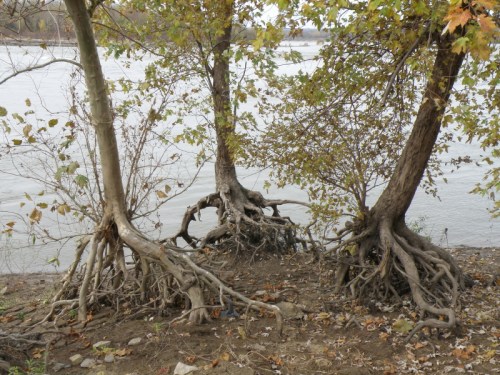
uprooted tree trio at the Falls of the Ohio, Nov. 2012

Of course life travels at its own speed.  Our tree friends here cannot out run this year’s spent leaves gathering around their feet, but they have patience.  They don’t have the same concept of time as we do. An inch or centimeter or two here and there and progress will be made even if it takes many seasons.  Moving in ultra slow motion, they will either get to their intended destinations or not.  Come to think about it…trees don’t have the same concept of speed either!
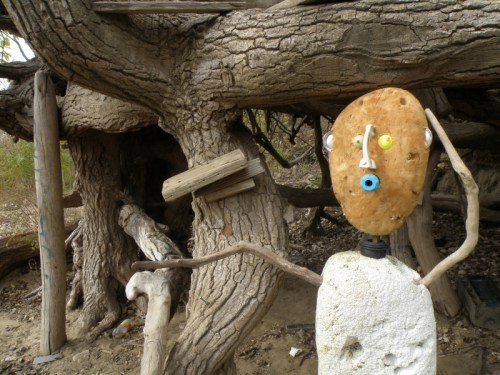
Tall figure under the Great Tree, Nov. 2012

Trees have their own internal logic and physics that they respond to.  My tall friend here is a case in point.  He’s an old cottonwood tree and long a go he too was a walking tree.  You can tell from looking at these fantastic roots that buttress the tree from the river and elements.  For some reason known only to the tree…he decided to stay here and put down his roots.
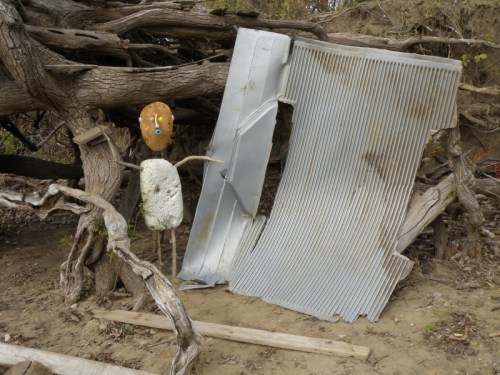
Figure with big sheet of plastic, Nov. 2012

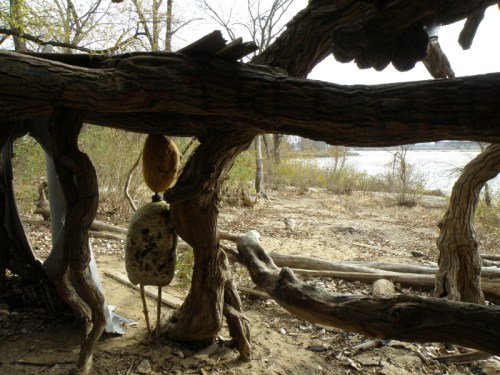
Over time the cottonwood thrived.  Its roots held the riverbank in place and kept it from sliding into the river.  With this particular tree, a small, sheltering space grew directly under the tree’s tall trunk.  Visitors would bring discarded boards and other river finds ( like this large sheet of corrugated and molded plastic) to make forts and tree houses.  This one site has seen plenty of play and fantasy over the many years and has always been recognized as a special tree.
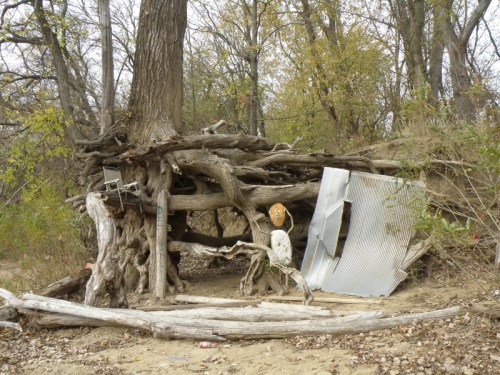
Figure by large cottonwood tree, Nov. 2012

This just occurred to me.  What if the moving trees are just a matter of perception and they really are trying to stay in one place?  What if it’s the rest of the world that is moving so quickly and constantly like one big blur and the trees are holding life in place?  The walking trees have remained where they have germinated and everything else around them has quickly shifted. Because we are so near to it we don’t recognize the movement.  Could time also be as fluid as water seeking out the nooks and crannies and testing allegiances too?  All this head-scratching stuff is making me dizzy on such a fine day by the river.

Great Cottonwood tree at the Falls of the Ohio, Nov. 2012

Unbeknownst to the brown-headed philosopher under the cottonwood, but changes to our area are forthcoming.  This year was the warmest year ever recorded.  The environmental chess board has been set and the game is on.  Pieces are moving and strategies are evolving and somewhere on the Ohio River another pawn is moving into place a little nearer to the cottonwood tree.
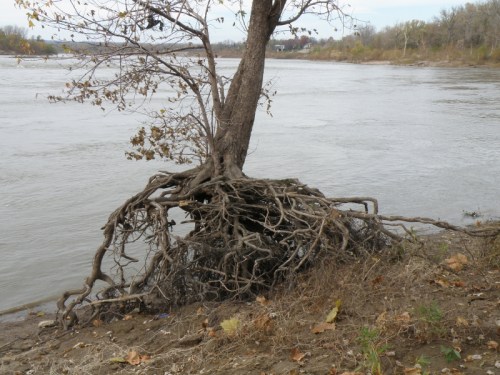
Tree with exposed roots, Falls of the Ohio, Nov. 2012

Read Full Post »

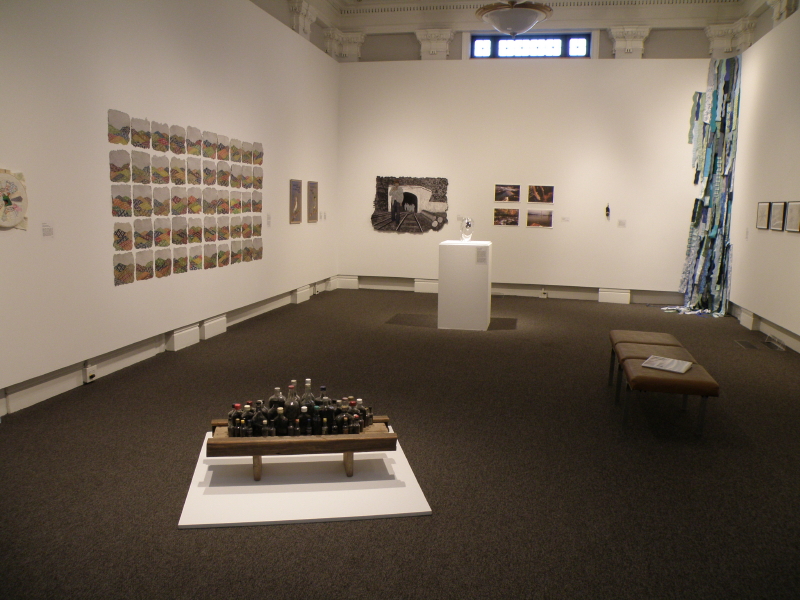
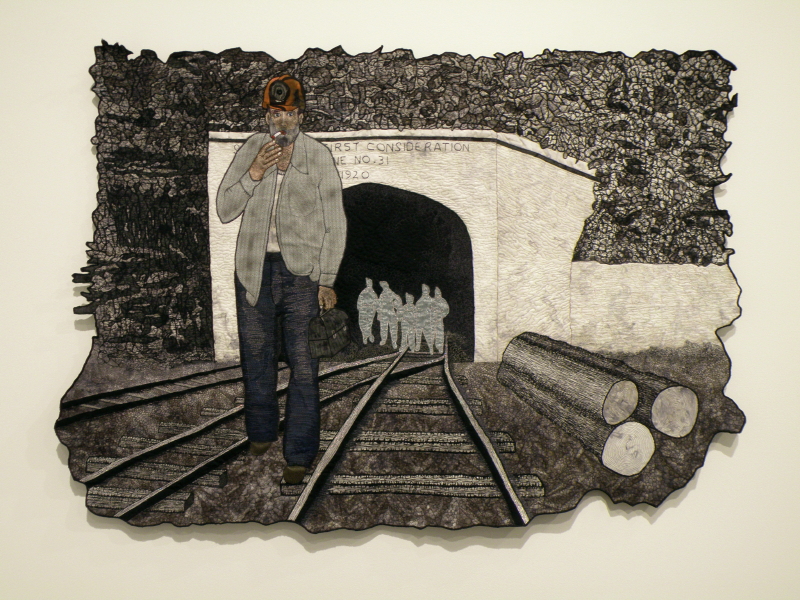
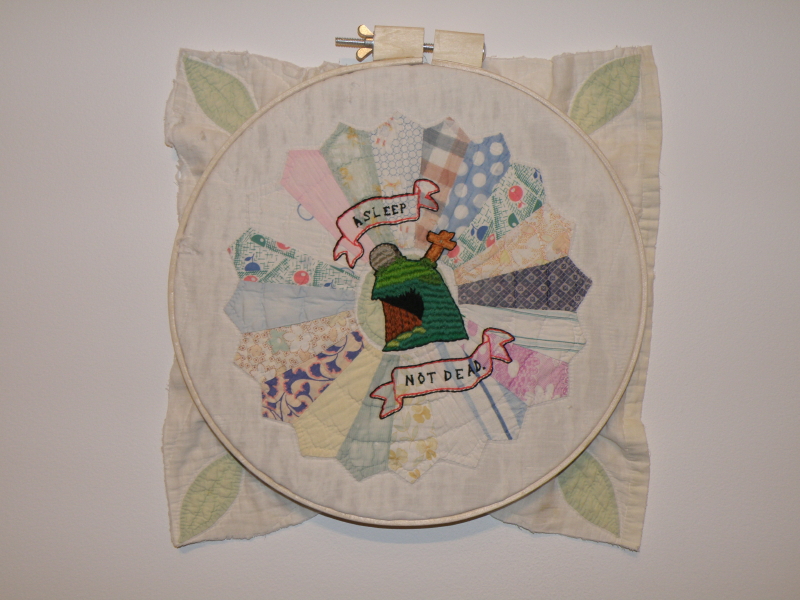
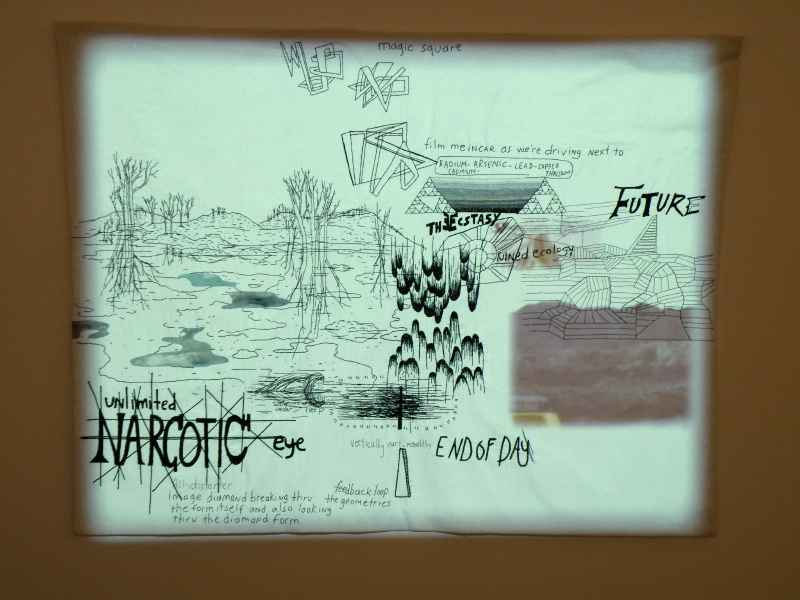
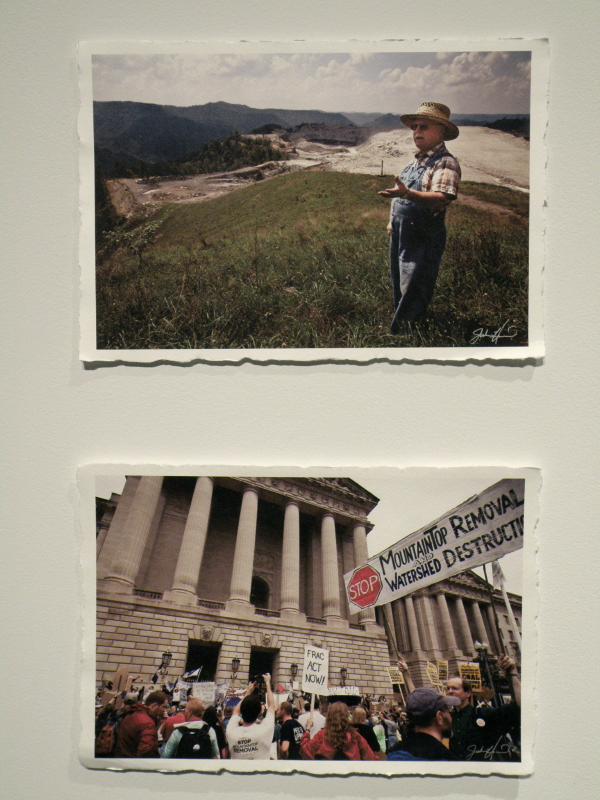
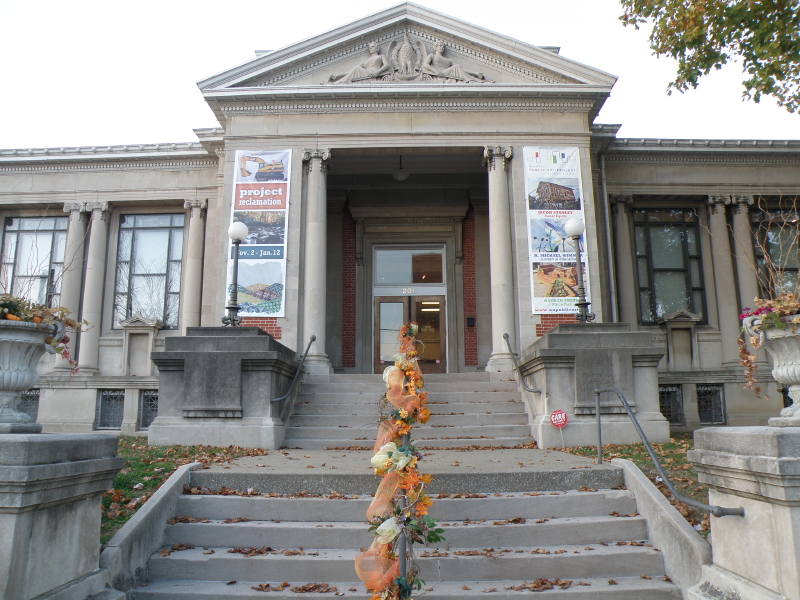
I have had a few folks ask about the Project Reclamation exhibit I’m participating in and I thought this post would be a good place to feature this.  The exhibit opened a couple of weeks a go on November 2, 2012 and will run through January 12, 2013.  About a year and a half have passed since curator and artist Mary Margaret Sparks asked me to participate in this invitational exhibit.  There are thirteen artists represented in this group show with a nice cross-section of projects in various media addressing the complex topic of coal its use and extraction.  The Carnegie Center for Art and History located across the Ohio River from Louisville in nearby New Albany, Indiana has done a fine job of installing and interpreting the works and has planned many activities that the public can engage in to learn more about the controversial topic of coal mining through the practice of Mountaintop Removal or MTR.  This is a highly destructive way to extract coal from southern Appalachia’s mountains which also endangers  some of the greatest biodiversity in our part of the world in pursuit of cheap and reliable energy.  To further spur the artists along, the not for profit organization Kentuckians For the Commonwealth invited the participants to Whitesburg in Letcher County, Kentucky to tour Appalshop and watch a few coal-themed documentaries.  A guided tour into coal country provided additional impressions of the mountains and the folks who call this place home.

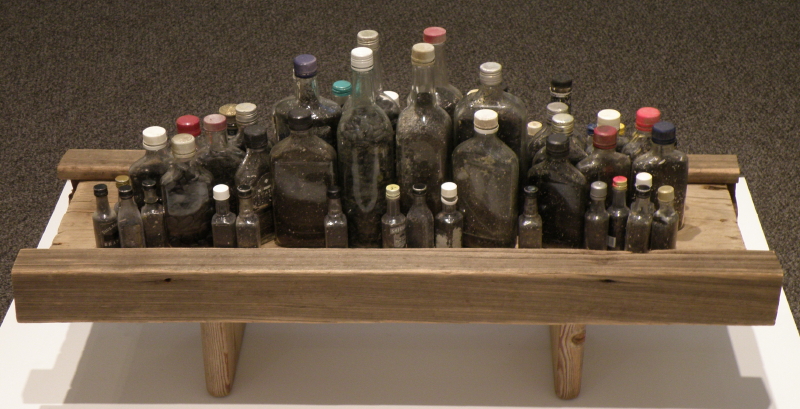
All of the participating artists had some prior interest either working with coal as a social issue or material substance before accepting the invitation to show.  There is a unity in the belief that the more we degrade the environment, the more we change ourselves and not for the best. For me, my entry came through the related issue of clean fresh water  which is also our number one vanishing resource.  I frequently find river-altered coal at the Falls of the Ohio State Park.  Combining this coal gravel with discarded and river found booze bottles gave me an opportunity to work with ideas about consumption and addiction.  The result was my “Mountaintop Mini-bar” sculpture, but I also have six photographs from my “Coal Flake Series” on view as well. My impression of our guided trip to coal country reinforced what I’ve previously seen and experienced.  It seems to me that the people who were sacrificing their land and culture were not receiving much in the way of compensation for our quest for coal.  Regrettably, this is an old tale seen time after time across the globe.  People might think that this is something that only happens in distant poor countries, but we have our own share of material poverty in our own backyard.

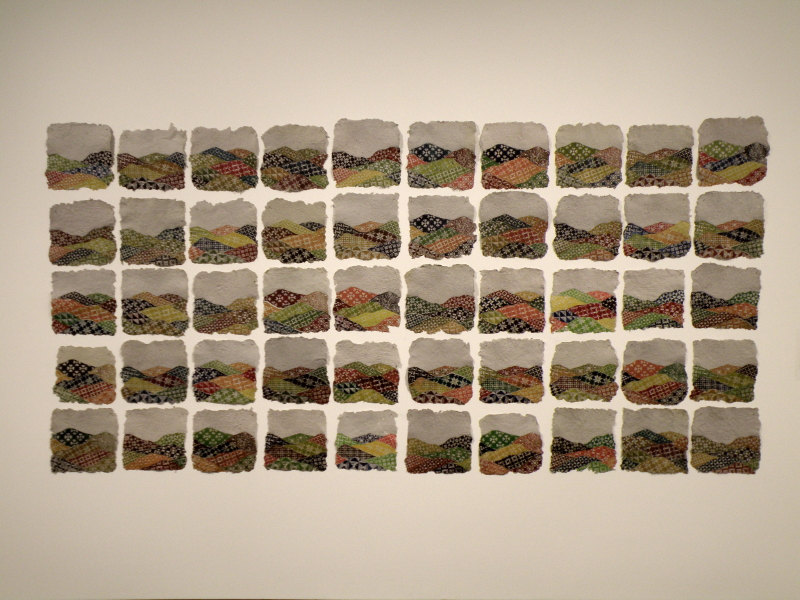
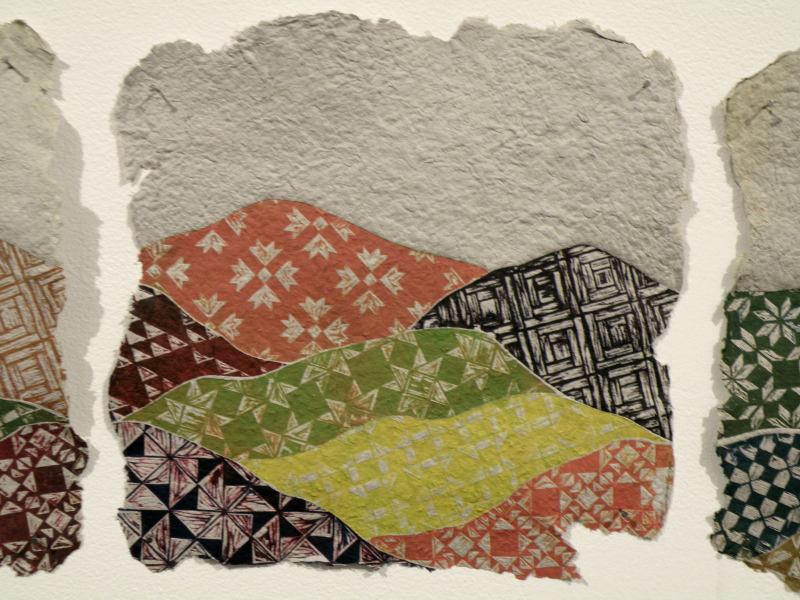
Most of the participating artists took considered approaches that referenced and respected the uniquely rich culture of coal country.  Several artists worked with traditional fiber and or needle and thread to produce their statements.  Julie Yoder created a large wall installation, “Appalachian Patchwork”,  assembled with woodcuts on handmade paper.  Patchwork quilting is an important Appalachian art form and Yoder’s piece represents the landscape and local culture as being a composite of unique designs that have come together over time to form a whole.  Mountaintop removal has a way of fragmenting this landscape and disrupting the continuity that life here depends upon for survival.

Other artists utilizing fabric, needle, and thread include Jo Ann Grimes with her sympathetic portrayals of miners.  Joel Darland and his marvelous hand-embroidered quilt squares.  Rachel Brewer’s two embroideries of song birds on dirty furnace filters.  Mary Margaret Sparks’ imposing “Lest We Forget” hand-embroidered and sewn re-purposed fabric waterfall that is a memorial to lost mountain streams and creeks that were damaged by coal mining.  Also in this group is a fascinating video entitled “Harriman” which is the work of Denise Burge and incorporates video, fabric, and thread.  Burge’s video is a statement made in the aftermath of a disaster.  A broken coal slurry dam in Tennessee had poisoned the surrounding watershed and imperiled the health of a community living in the area.  Burge’s video documents some of the clean-up involved and how protective the coal industry is in guarding its own image.

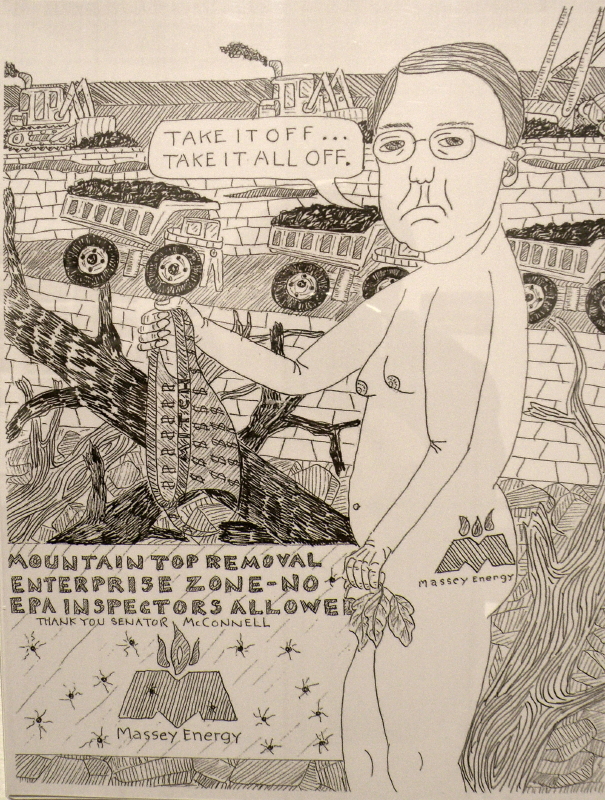
Photographs by Joshua Howard contrast the natural beauty of coal country with the grim realities of the industry.  A more overt political statement comes from Wayne Ferguson who sees Kentucky’s senior senator as being in cahoots with the industry that helps bankroll his re-election campaigns.  Ferguson’s drawings chart the corrupting influences of money and power at the expense of the land and the best interests of the people.

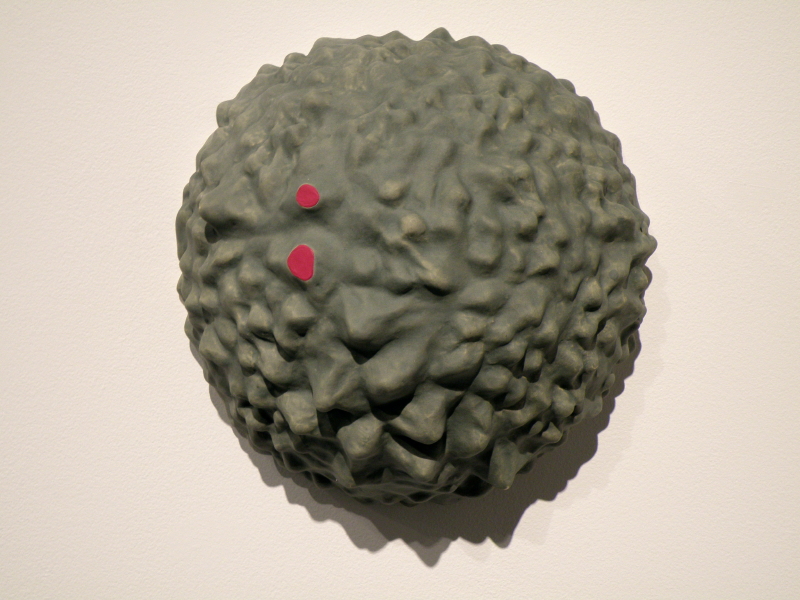
The sense that mountaintop removal is a great calamity for nature at large comes through the works of two artists.  Ceramic sculptor Alex Adams’ piece entitled “Wounded” suggests that MTR mining disrupts the very living tissue of the mountain range. He does this by representing two mountains that have had their peaks literally removed revealing  raw, open wounds.

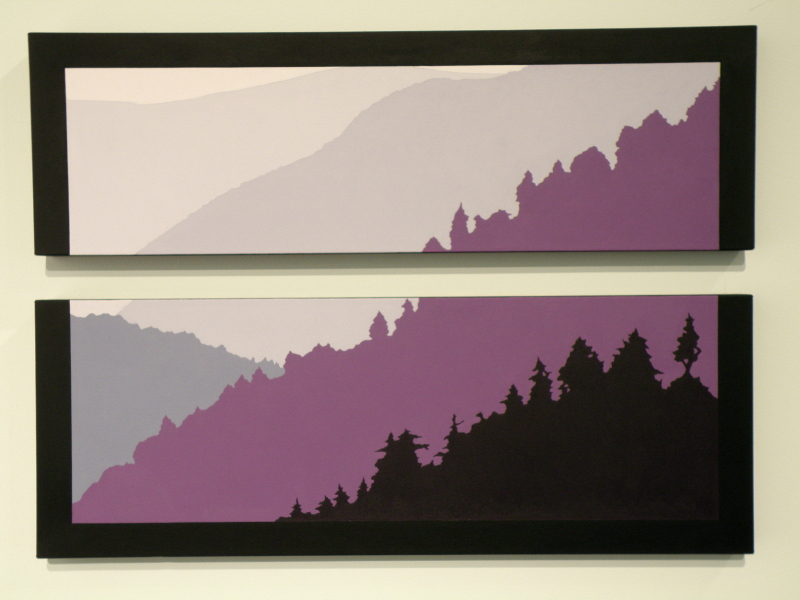
Painter Michael Koerner’s approach is equally reductive and he comes to a similar conclusion about the fate of the mountains.  His diptych entitled “After the Canaries Left the Coal Mines, the Mountains Began to Leave Appalachia” is an argument reduced to its essential points.  For example, in Koerner’s landscape, the painting is physically divided into two parts suggesting man’s indifference towards nature.  The bare slopes past the forested mountains are a warning of what could occur with unchecked mountain top removal.

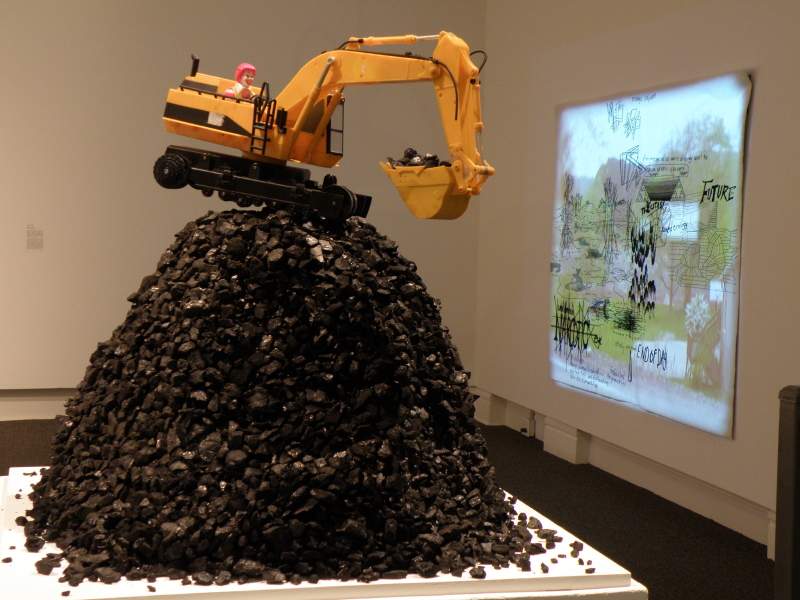
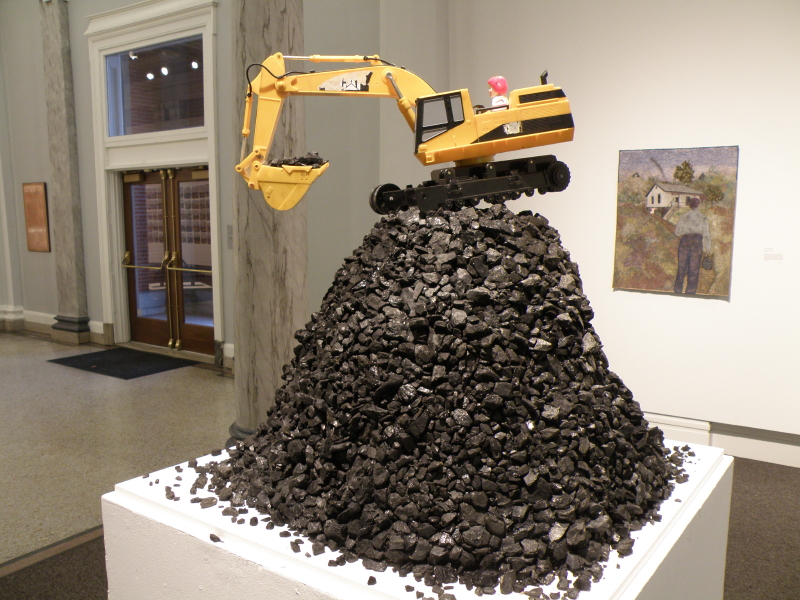
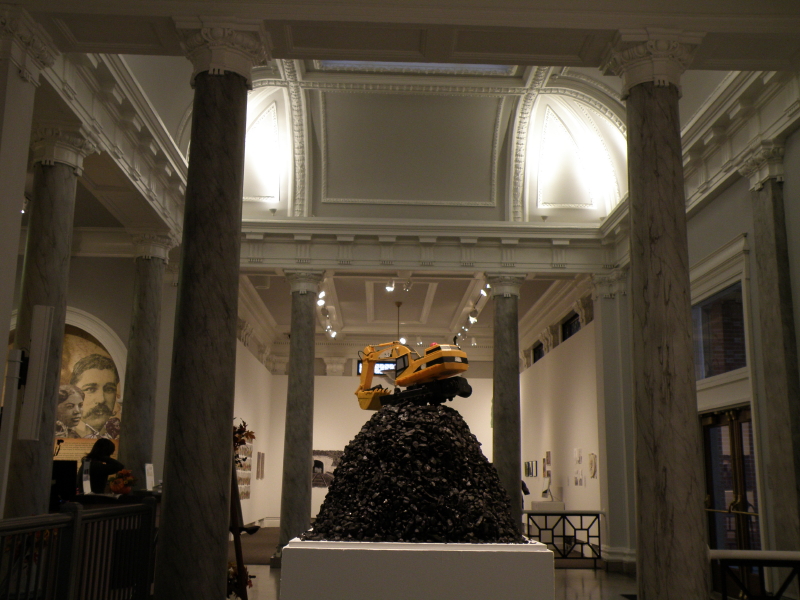
One last artist before closing.  Aron Conaway’s work lies at the heart of our culture of consumption.  His work entitled “Billions and Billions Served” features a Ronald McDonald clown driving a toy front loader on top of a large pile of coal.  In his work, Conaway makes it obvious that we are all implicated in the big issues of our day.  The demand for coal exists because we demand the energy to stay warm in the winter and cool in the summer time heat.  If we don’t like the side effects of coal mining, perhaps we should speed up our search for alternative energy sources, find ways to curtail our addiction to electricity or both?  The demand for cheap coal and energy is what drives the supply.

The Carnegie Center for Art and History has a nice program of upcoming events that expands the breath of this exhibition.  I have already participated in one gallery talk that drew an interested crowd.  Film screenings, art making opportunities, and a panel discussion on mountaintop removal and renewable energy sources will also be held during Project Reclamation’s run.  There is the hope that this show will travel which will be an added bonus.  Thanks to Mary Margaret Sparks, Karen Gillenwater, and the staff at the Carnegie Center for their hard work.  I hope you have enjoyed this glimpse into an exhibition from our area.  My next post will be from the Falls of the Ohio!

Read Full Post »

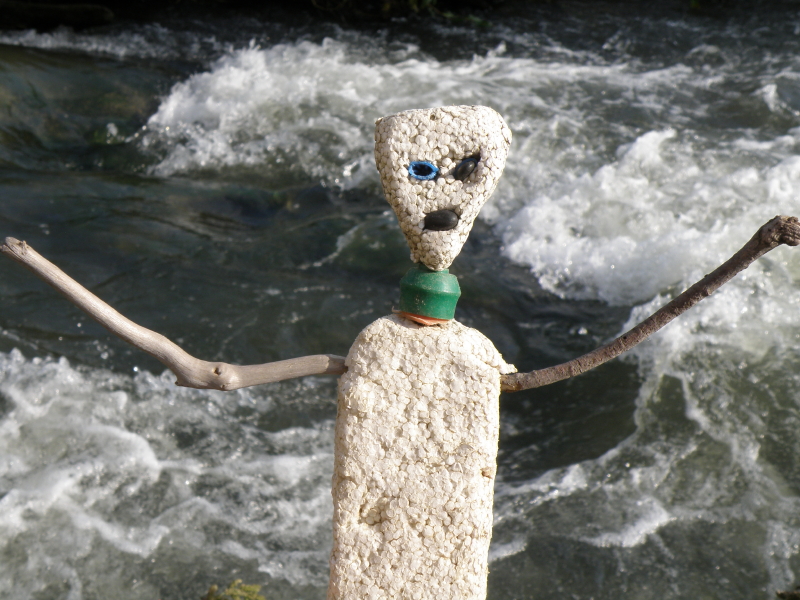
My beloved…I still live!  I hope my repair to my communication transmitter has been successful and that you and our fellow Styrosians so far away across the universe will receive this message and know that I still exist.  While exploring a little known solar system my ship was damaged in a collision with undetected fragments of space debris in orbit surrounding a smallish, blue-green planet.  This planet is the third nearest to its star. This solar system is comprised of eight other planets of varying dimensions and densities.  Damage to my guidance system made controlling my craft difficult and I entered the atmosphere of this planet like a meteor across the sky.  Fortunately, I arrived without attracting attention and I was able to affect a safe landing.  My craft, however, will need much maintenance. Hopefully, the coordinates of my position reached you before I entered this planet’s dense gaseous atmosphere? Here is an image of my vehicle which I call home and its contents are a dear reminder of the world from which I originated.  So often I have thought of you and wondered if we will ever see each other again?

I have so much to tell my fellow Styrosians that I hardly know where to begin.  Duty compels me to start with a report concerning my original mission.  I have crashed on a beautiful planet where the majority of its surface is covered by that most precious combination of hydrogen and oxygen.  I am so excited to have found water in abundance!  I have detected water in all three of its known states including gas, liquid, and yes…I have even seen ice!  It was the chemical signature for water that compelled me to take a closer look when the accident occurred.

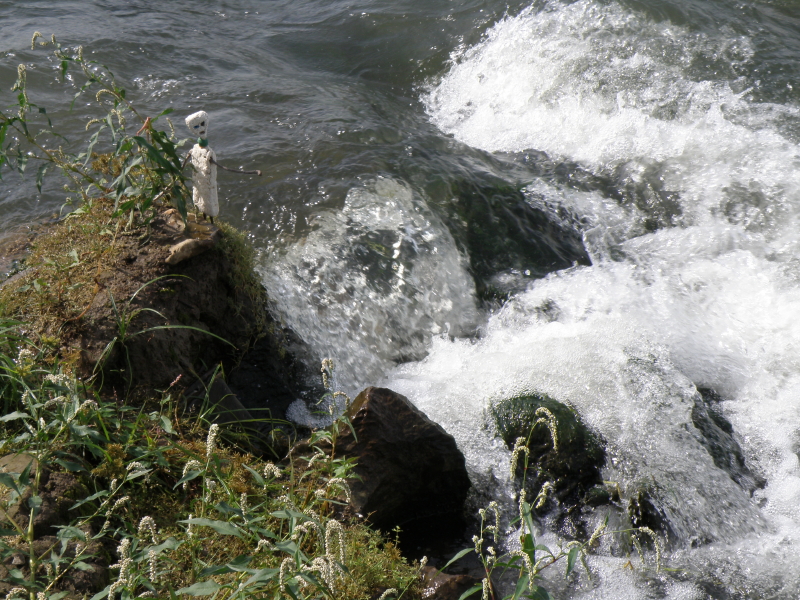
Most of the water I have been able to analyze locally is of the fresh variety which contains many other chemical additions some of which are naturally occurring.  I have, however, been able to learn that the vast majority of the water on this planet is heavily influenced by the compounded interactions of sodium and chlorine.  I have not only discovered water…but water in different flavors!  After surviving the shock of my sudden and unexpected arrival, I couldn’t wait to explore this new environment which offers such a stark contrast to our own dry home world.  There is so much water here that it actually falls from the sky!  Please excuse me while I transmit additional self images made while engaging in water joy!  They at least offer further visual evidence of the importance of my unexpected discovery.

How I wish you were here so we could experience this together.  I have been able to further confirm that our hypothesis about the connection between water and life is correct!  The abundance of water is equaled by the sheer amount and variety of life forms that inhabit this world.  Where there is water I have found life even in the precious fluid itself! There are sessile, terrestrial life forms that process sunlight through green, cellular solar panels.  They anchor themselves and obtain moisture through a system of filaments interwoven into its supporting substrate. And there are also many animate life forms that move through space and have evolved into hierarchies where every environmental niche is occupied by a specialized life form.  Interestingly, there are even species that dominate and consume other life forms. Our scientists will have much to study in this new world! I would like to expand on one of those species which seems to occupy a very prominent position on this planet.  It is an interesting life form and is bilaterally symmetrical like us and appears to be sentient to a degree.  Monitoring their communication patterns I have been able to translate and understand something of its language and culture.  I have heard self references to being a” bipedal humanoid”, but I’m not certain if I fully understand what is meant by that.  This animal while claiming intelligence and rationality is actually characterized by numerous contradictions.  The most observable of these traits is a predisposition towards delusion and self-deception.  It does much harm under the guise of doing good. This animal (which I believe as some members of its own kind acknowledge have evolved from what are known as “primates”) is constantly engaging in selfish behaviors that are having a deleterious effect on this planet.  Ironically, they are harming not only the other life forms here, but ultimately themselves as well.

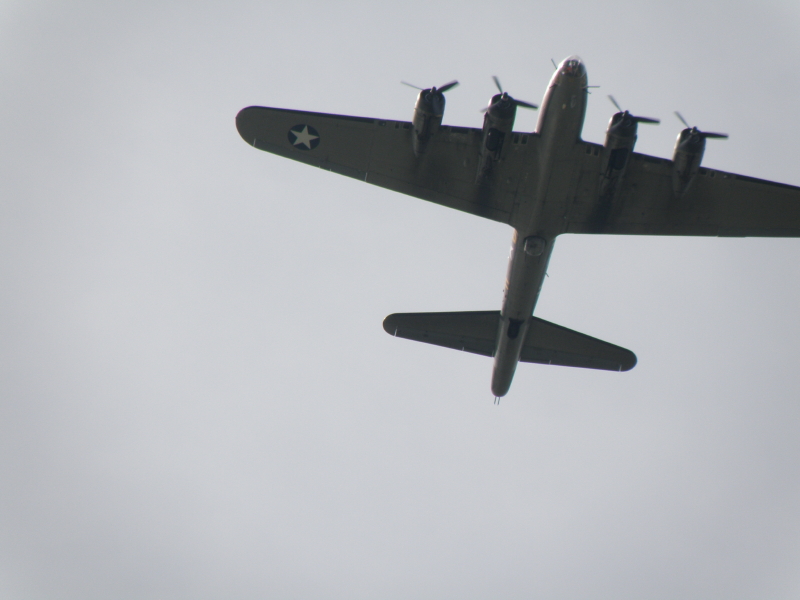
Recently, I was exploring a water channel when I saw a shape flying towards me from some distance away.  It appears to be an antique flying craft bristling with armaments.  The dominant species here is addicted to using hydrocarbons extracted from the ground which are then  further refined to produce fuel and energy.  I quickly captured this image over my head and placed it in the catalog I am compiling for future reference.  I have observed other technologically superior war-like aircraft in the vicinity before, but this one was unusual.  These so-called “bipedal humanoids” are constantly engaged in warfare somewhere on their planet.  This is one of their most primitive characteristics.  Monitoring their telecommunications I have ascertained that violence is an integral part of their conflict resolution process.  The “bipedal humanoids” are capable of rationalizing and justifying any act they commit. When they are not fighting among themselves…they are consuming or damaging resources often with other primitive machines that require hydrocarbons to function.  For instance, observe this case that I recently experienced and documented.

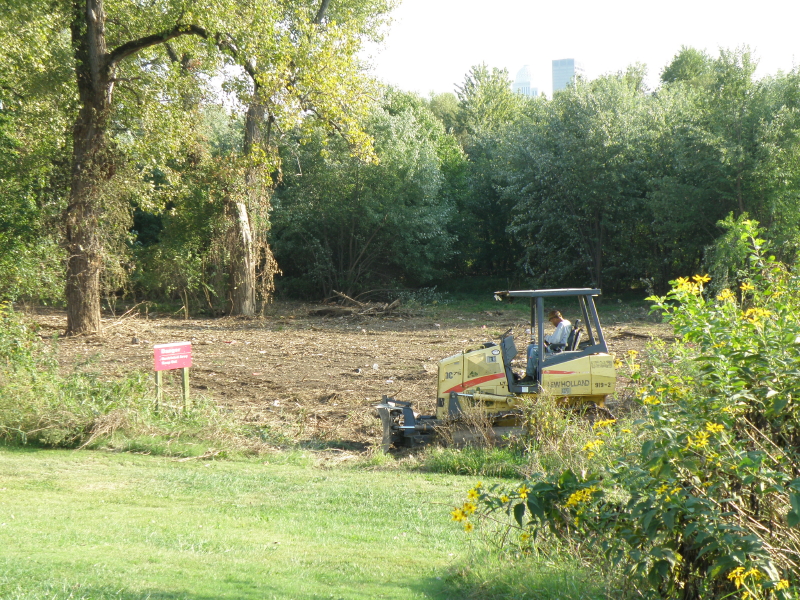
In a nearby field that was once occupied by photosensitive sessile life forms, I observed a humanoid operating a large machine.  This machine did violence to all that was alive in this area.  The remains of many different kinds of sessile life forms were stacked into random piles, but what is the purpose of this activity?

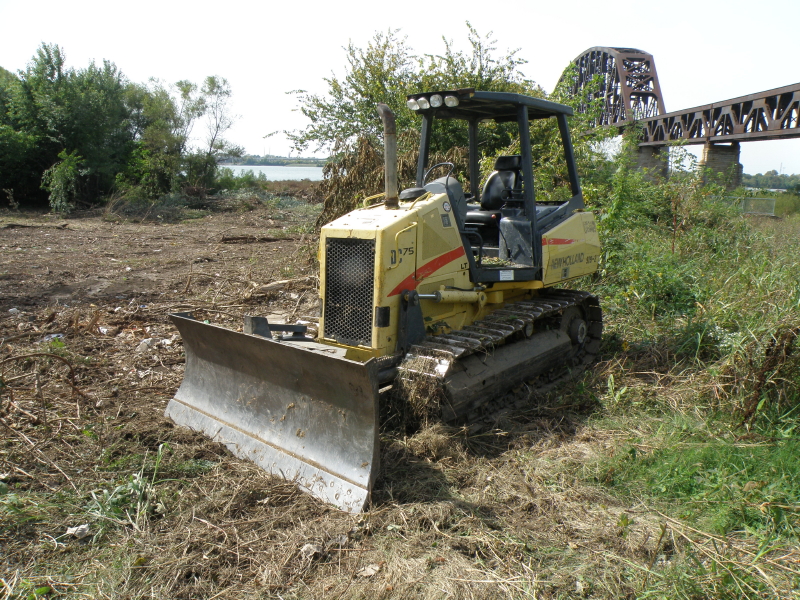
This area was once home to a large variety of life forms and now they have been displaced.  I have observed this before and very recently.  The “bipedal humanoids” created an area that they call the Ohio River Greenway and ironically they removed many of the larger photosensitive life forms to accommodate easy access to the river for their other hydrocarbon burning vehicles.  This seemed strange for many reasons, but perhaps our biopsychologists can figure that one out!  I was able to get a closer picture of the large machine that was utilized to sterilize this particular area and it is frightening to stand next to.  I waited for its operator to leave the area before doing my reconnaissance.

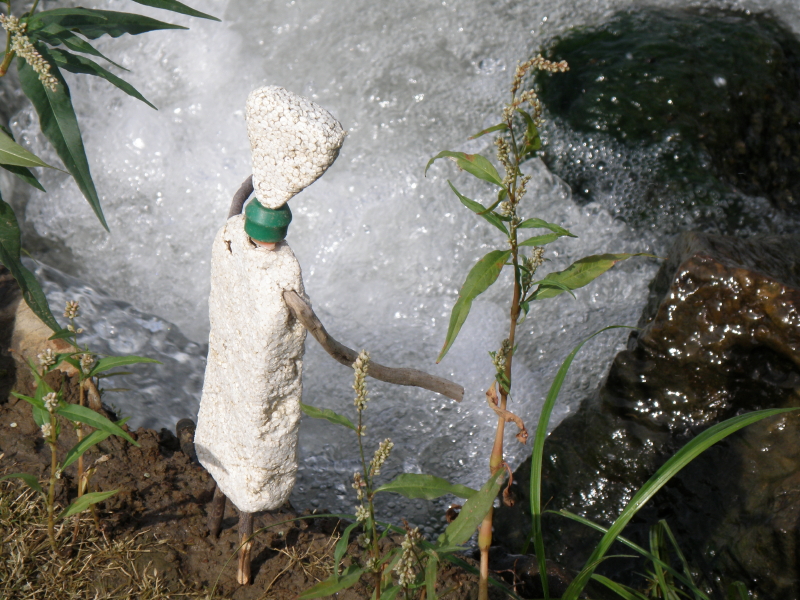
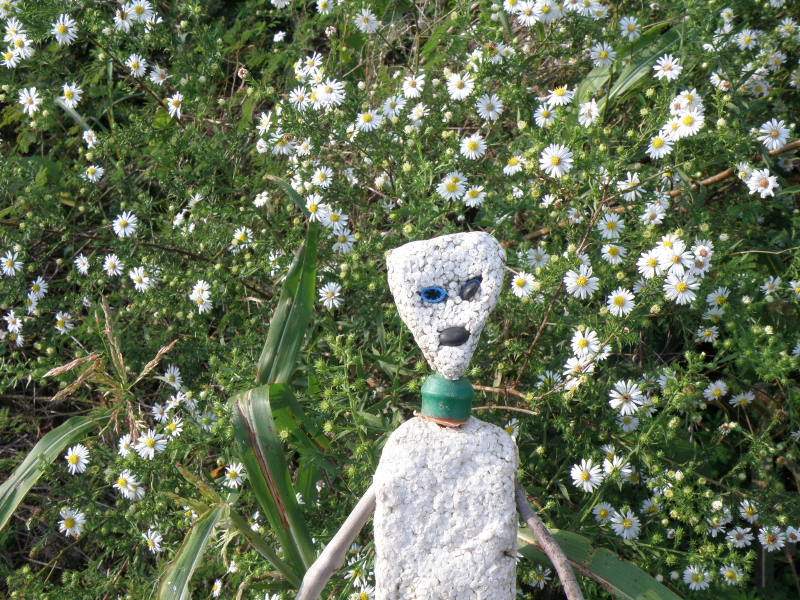
Alas my beloved, it is time for me to regenerate back at my space craft.  I will leave you for now, but I promise more from this fascinating planet.  In my next transmission I will show you more images of the life forms I have observed and maybe something of the history of life on this planet.  For now, accept this self-image made next to the many sessile life forms that lend this land beauty and interest.

Read Full Post »

Summer has transitioned to fall.  Everyone has noticed that the days don’t seem to be as long as they were a mere month ago.  This is all the more reason to get out into nature.  Perhaps you have felt that subconscious pull tugging you out the door? The sun is not as insanely hot and the light is intense and clean.  There is just the barest yellowing along the margins of the river’s cottonwood leaves.  More colors will follow.  Right now there is an urgent purposefulness to the world as life prepares to overwinter.  The flowering grasses are alive with flying insects gathering pollen and nectar.  Spider predators are behind every leaf.  After absorbing some of this energy…I headed up to my spot under the willow trees and wondered about making something interesting from my river cache.  I was so happy and absorbed to be back at my outdoor studio that for a moment I lost track of the fact that something was now moving on the left side of my peripheral vision.  Thinking it might be an animal, I carefully brought my camera up to take some quick pictures and this was what I captured.

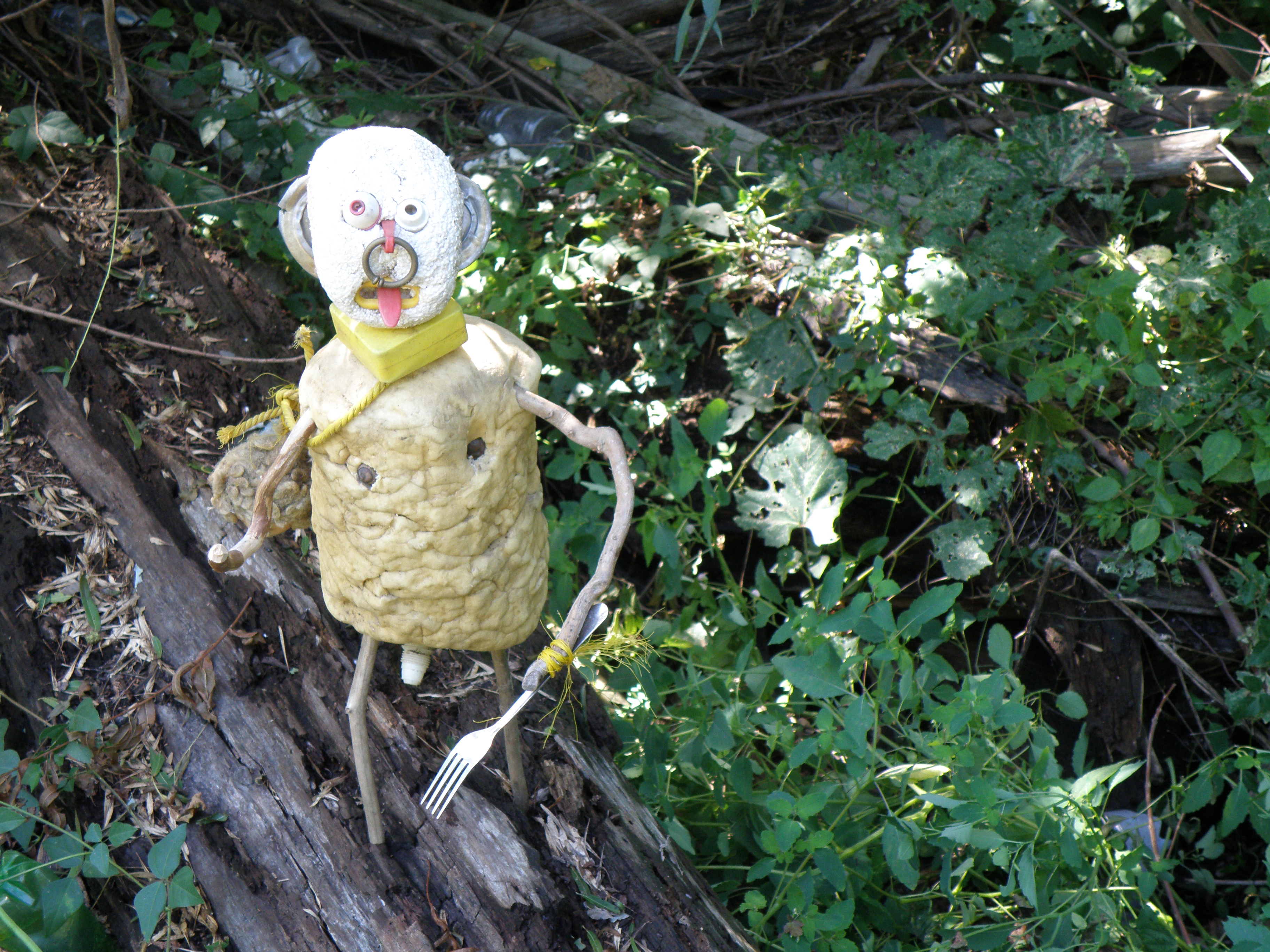
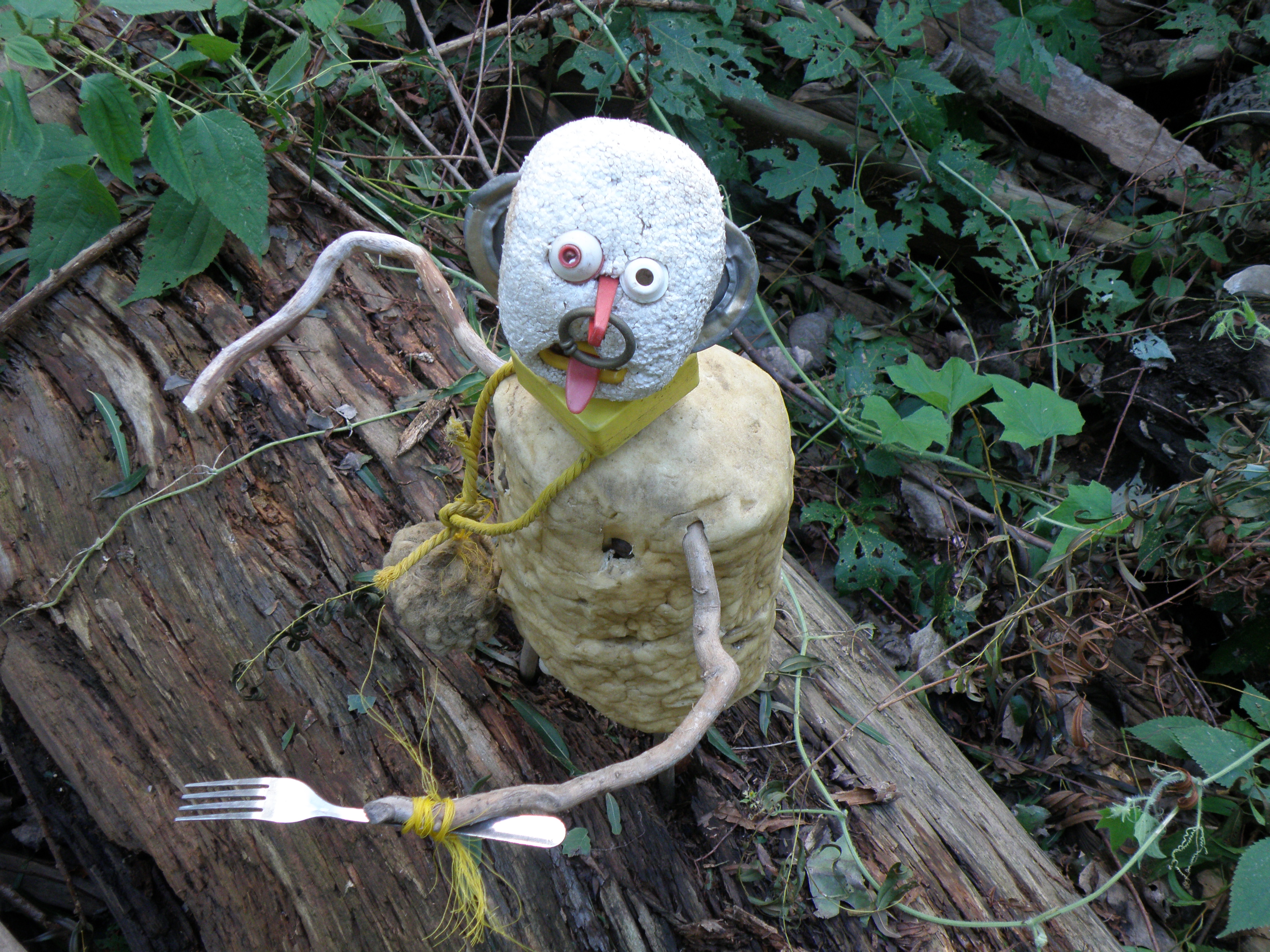
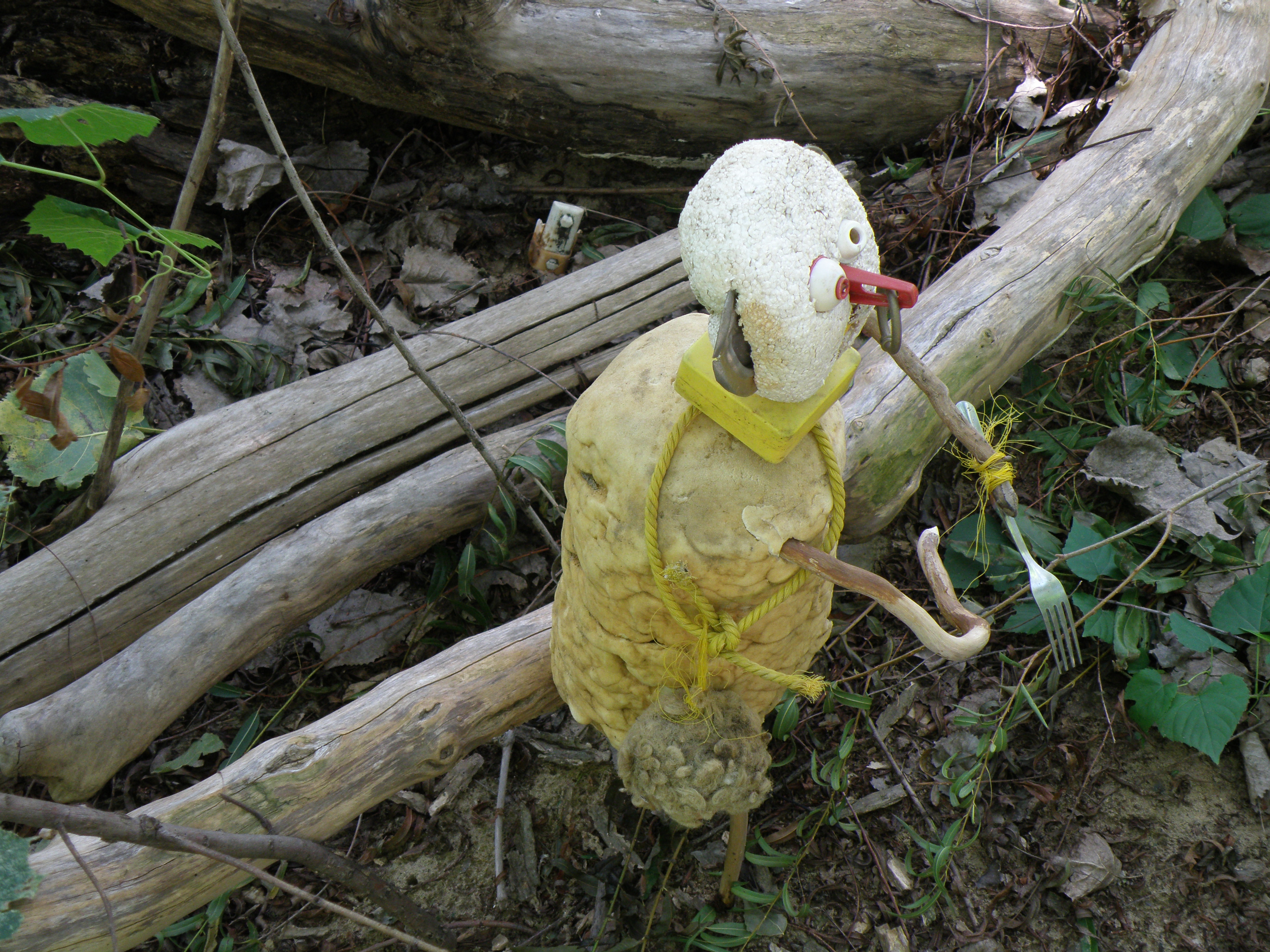
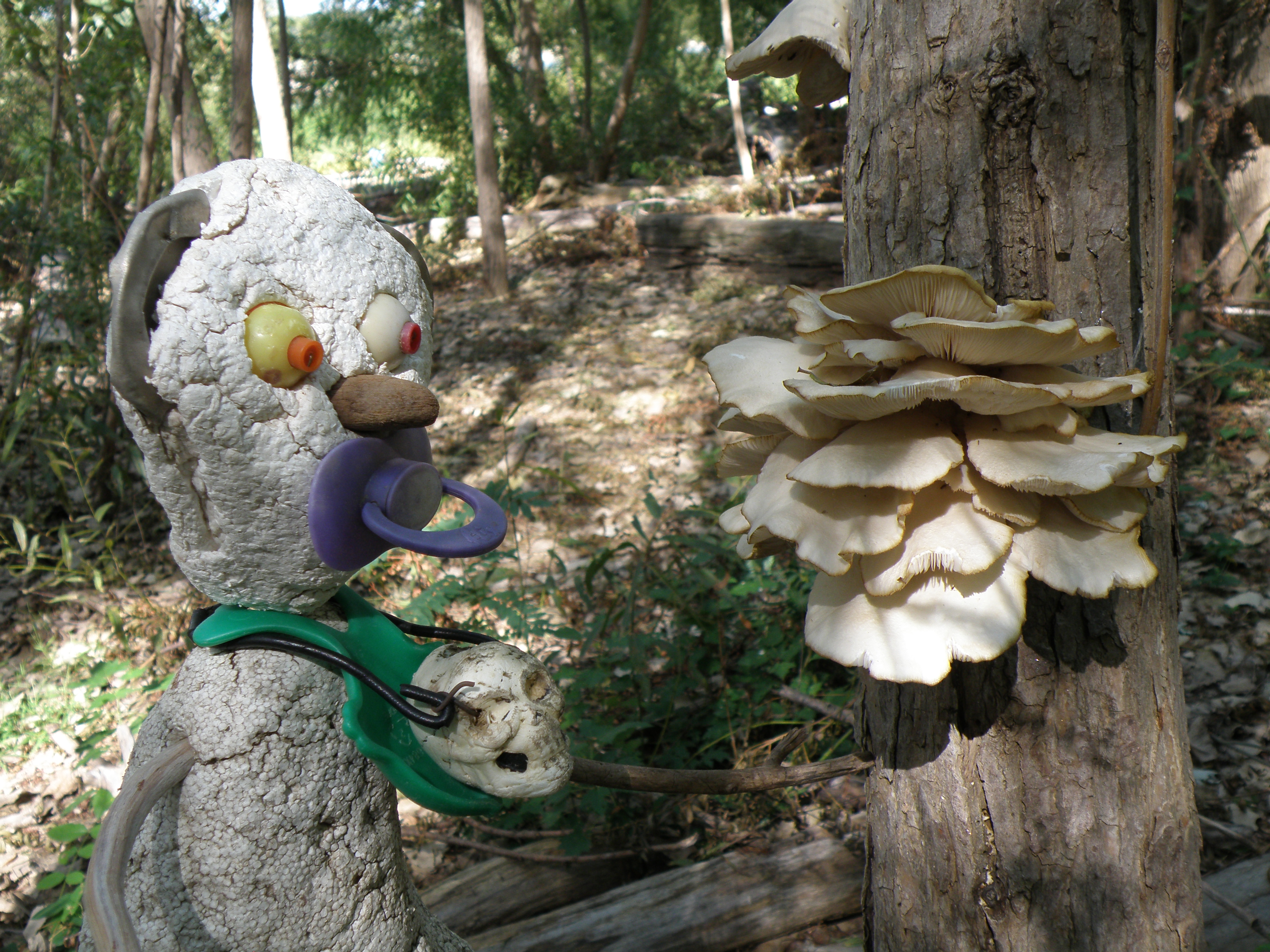
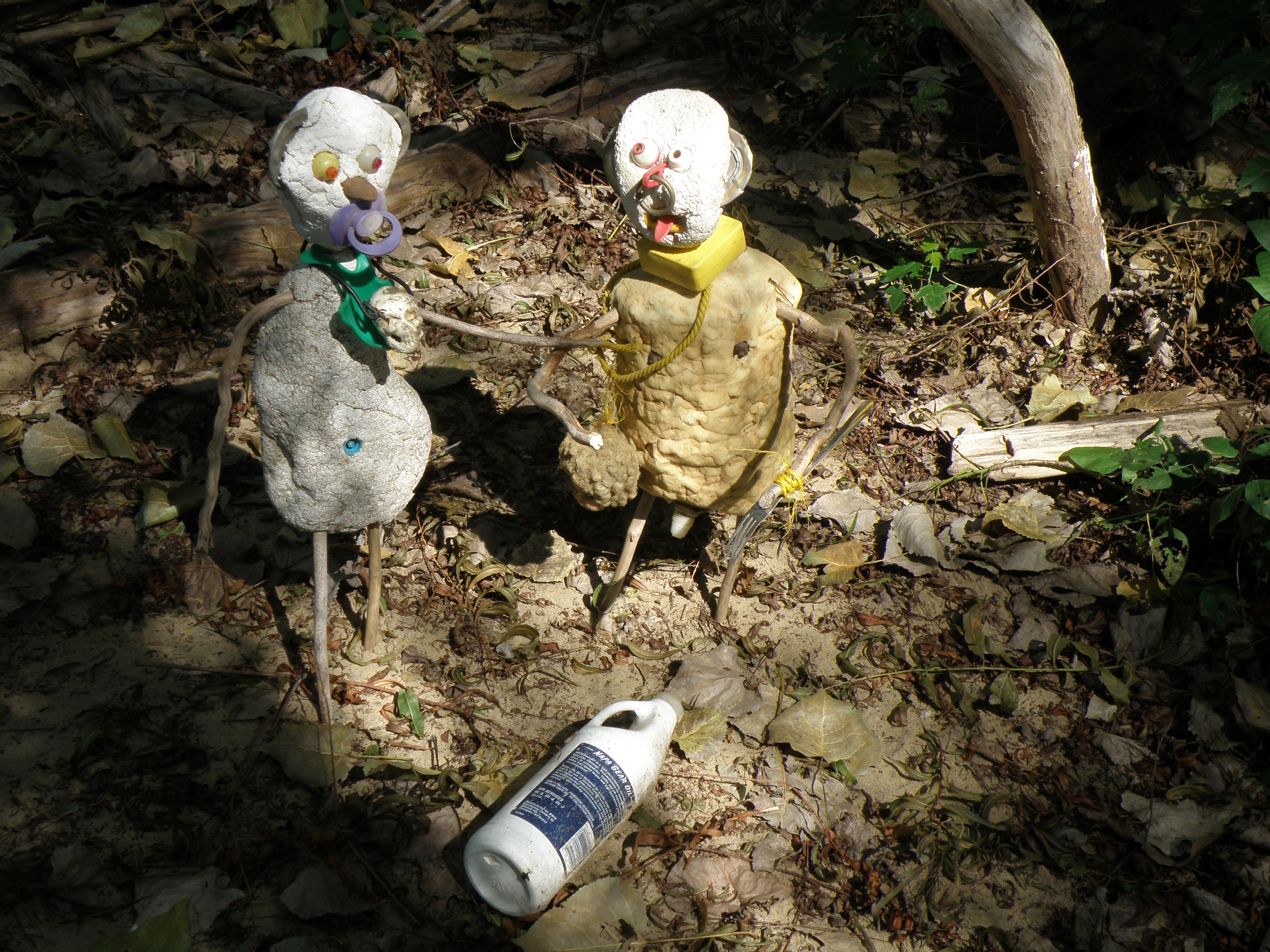
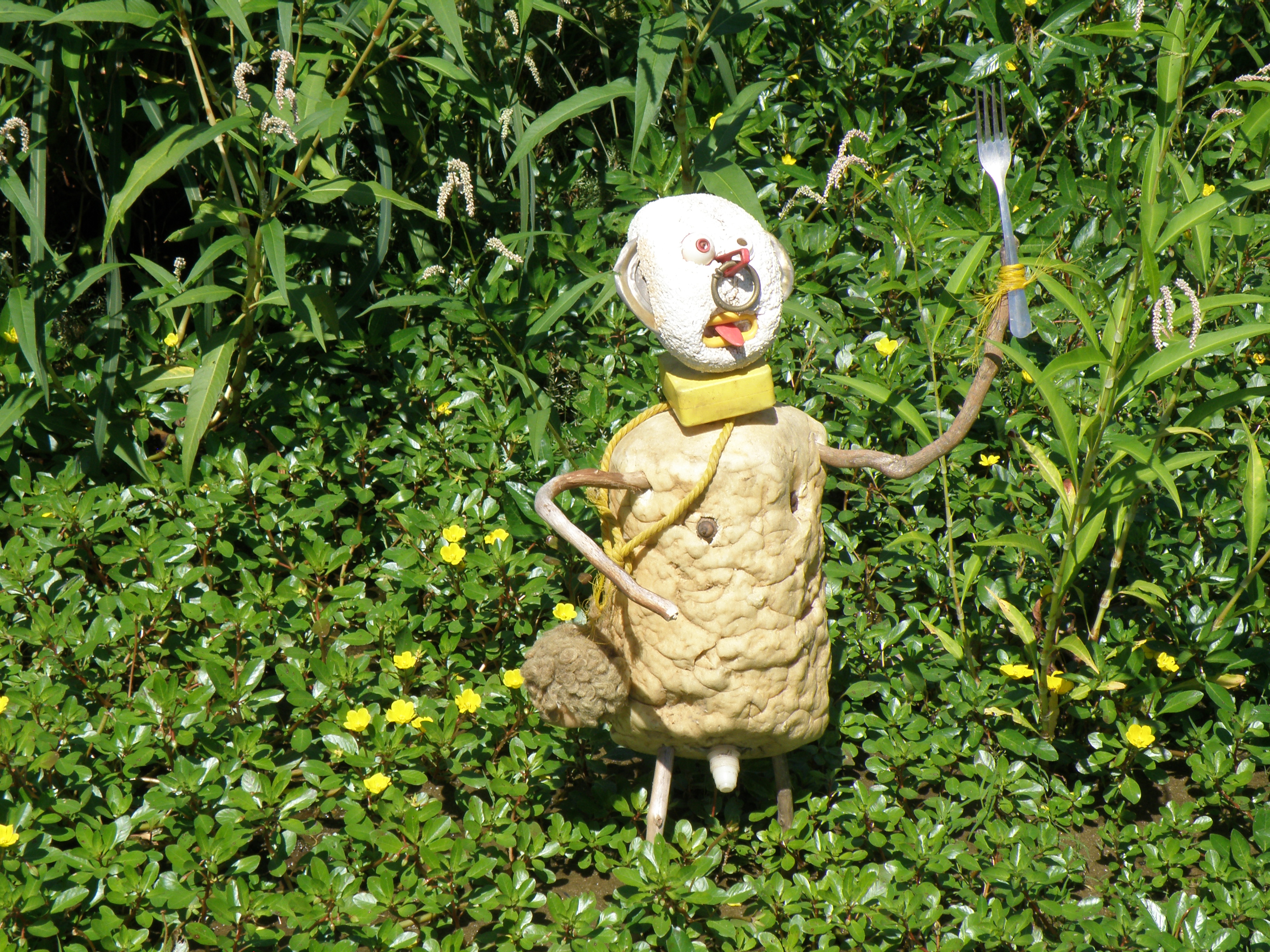
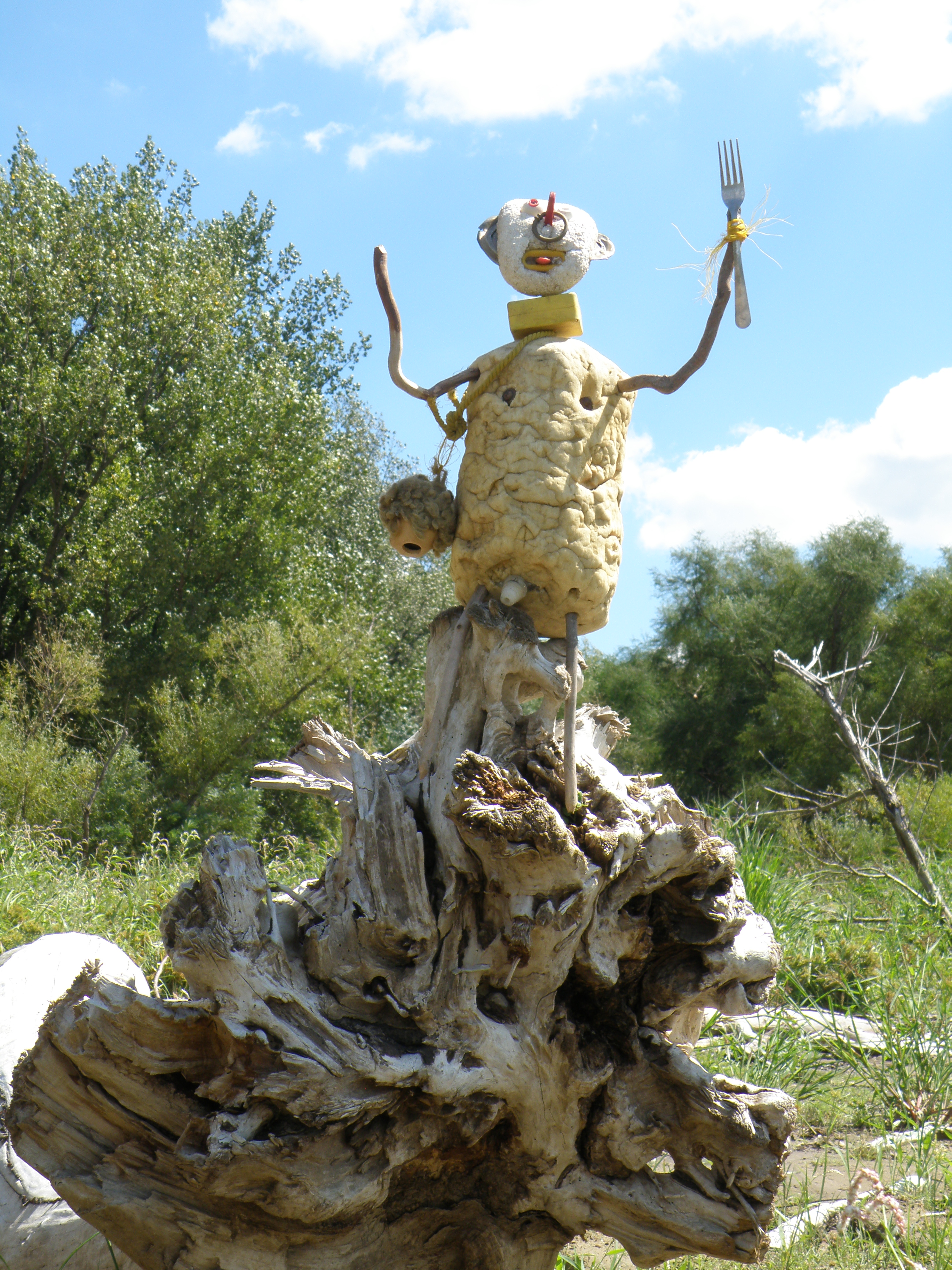
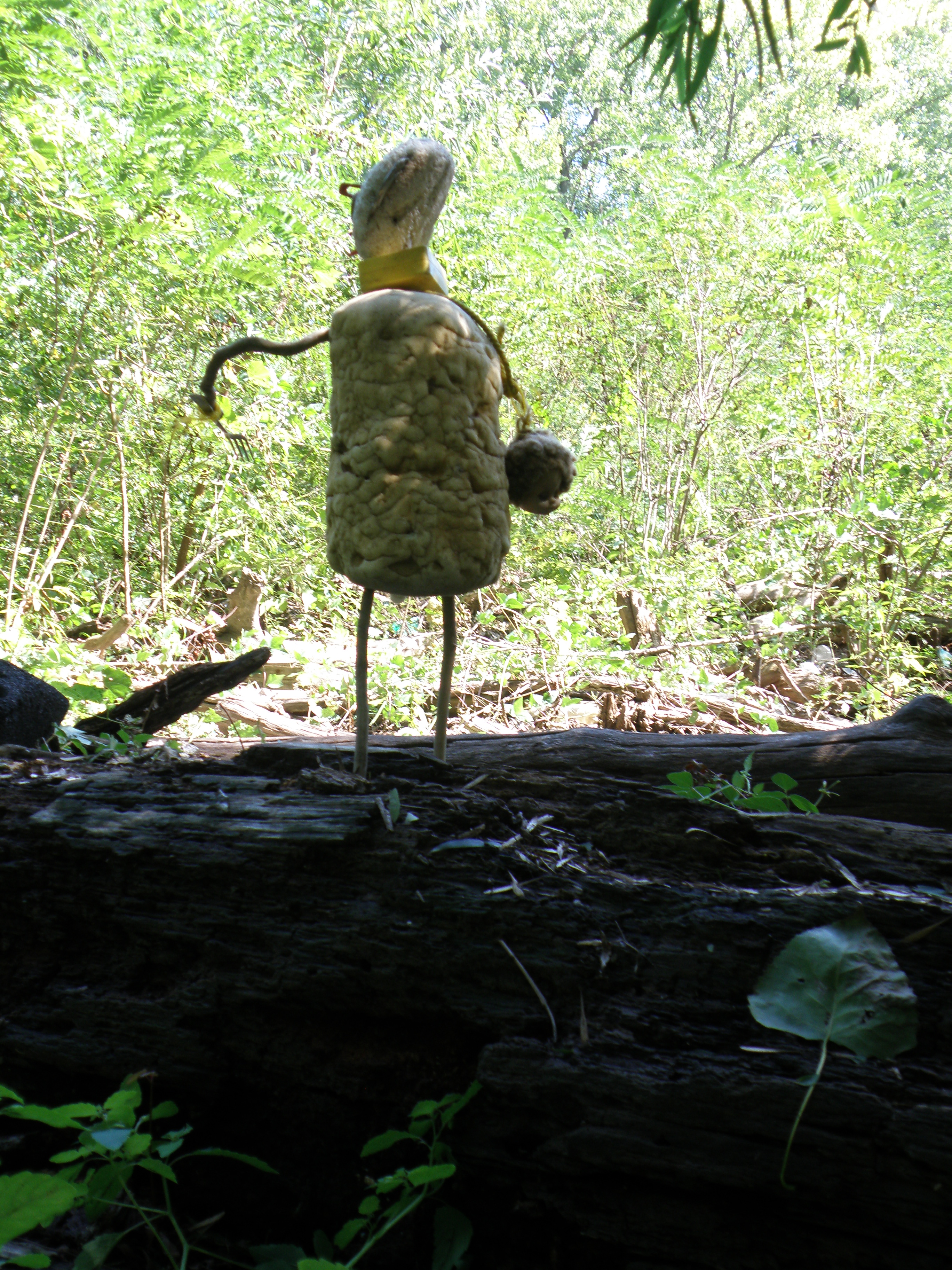
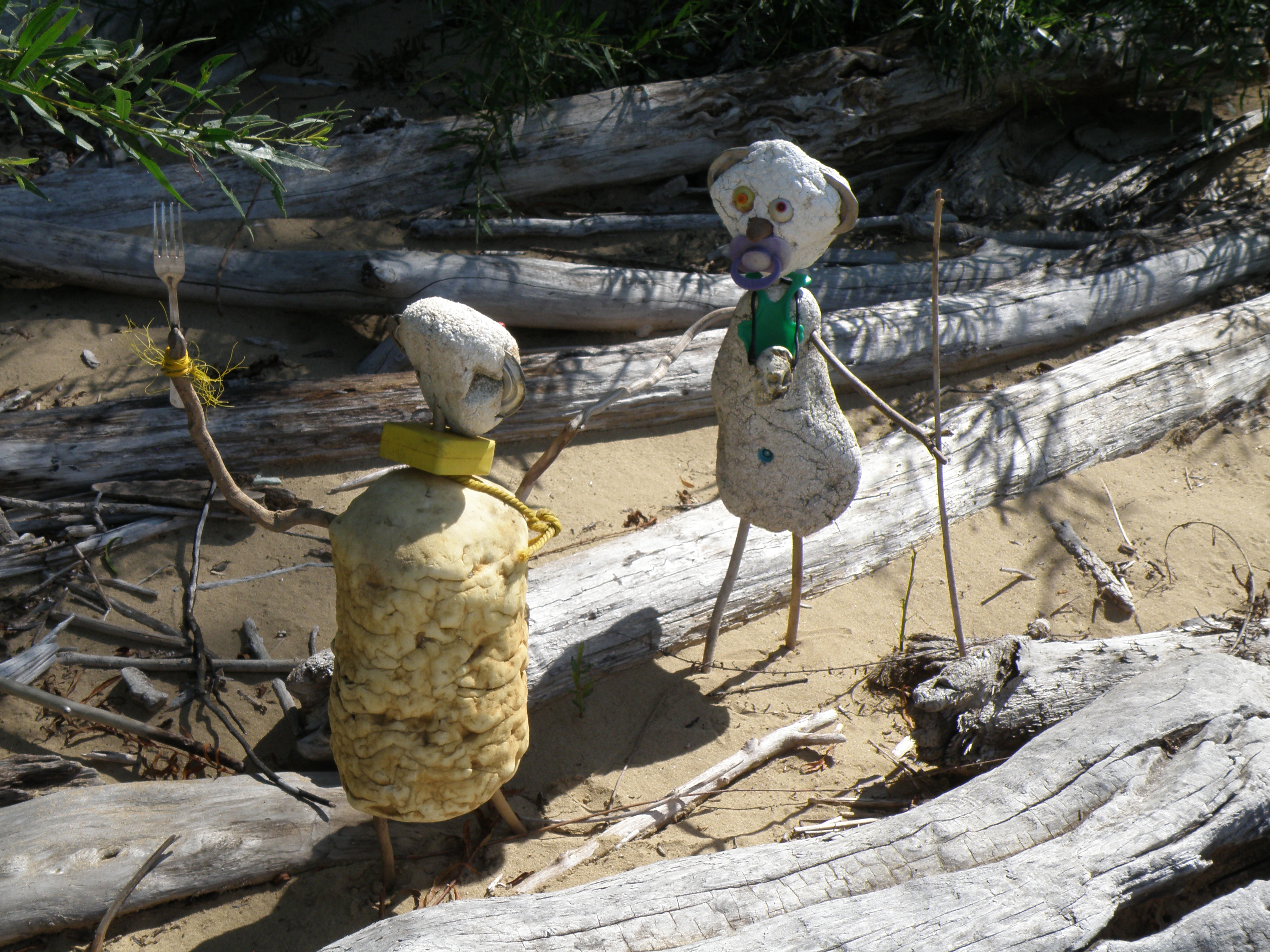
In quick succession, I had two images in my camera before I realized what I was photographing!  Appearing out of a myth was a member of the Pang tribe!  The Pang live in the most remote places in the world’s woods and consider themselves the first people.  It’s not advisable to try to find them because they don’t want to be found and it may in fact be dangerous to do so.  They only appear when they want to be seen.  The land they call home is full of poisonous serpents, insects, and diseases plus the rainy season is relentless.  There are no overland roads and very few trails.  Getting around means braving an unpredictable river.  Oh, and then there is the reputation the Pang have for being headhunters.  The little guy in front of me was reminding me of that by showing me the trophy he carries on a belt everywhere he goes.  I think my camera’s flash startled him!  By holding the captured head aloft, this tribesman was telling me he was experienced in this field!  His nose ring meant that he feared no pain.

The stainless steel fork he brandishes likely means he has had contact with our culture before.  The Pang, otherwise do not work metals.  What is known is that they are a hunting and gathering culture and nature supplies everything they need. The posturing and elaborate facial gestures on display before me continued until he seemed satisfied that I was harmless and perhaps even a bit slow on the uptake?  The Pang have developed a language where one can gauge how a person feels by looking and reading their facial expressions.  Most of the time, an open mouth with prominent tongue exposed is a sign for disgust or disapproval although there are exceptions for most rules.  Using the time-honored hand signal for follow me my new friend beckoned and I walked behind him anticipating adventure and mystery.

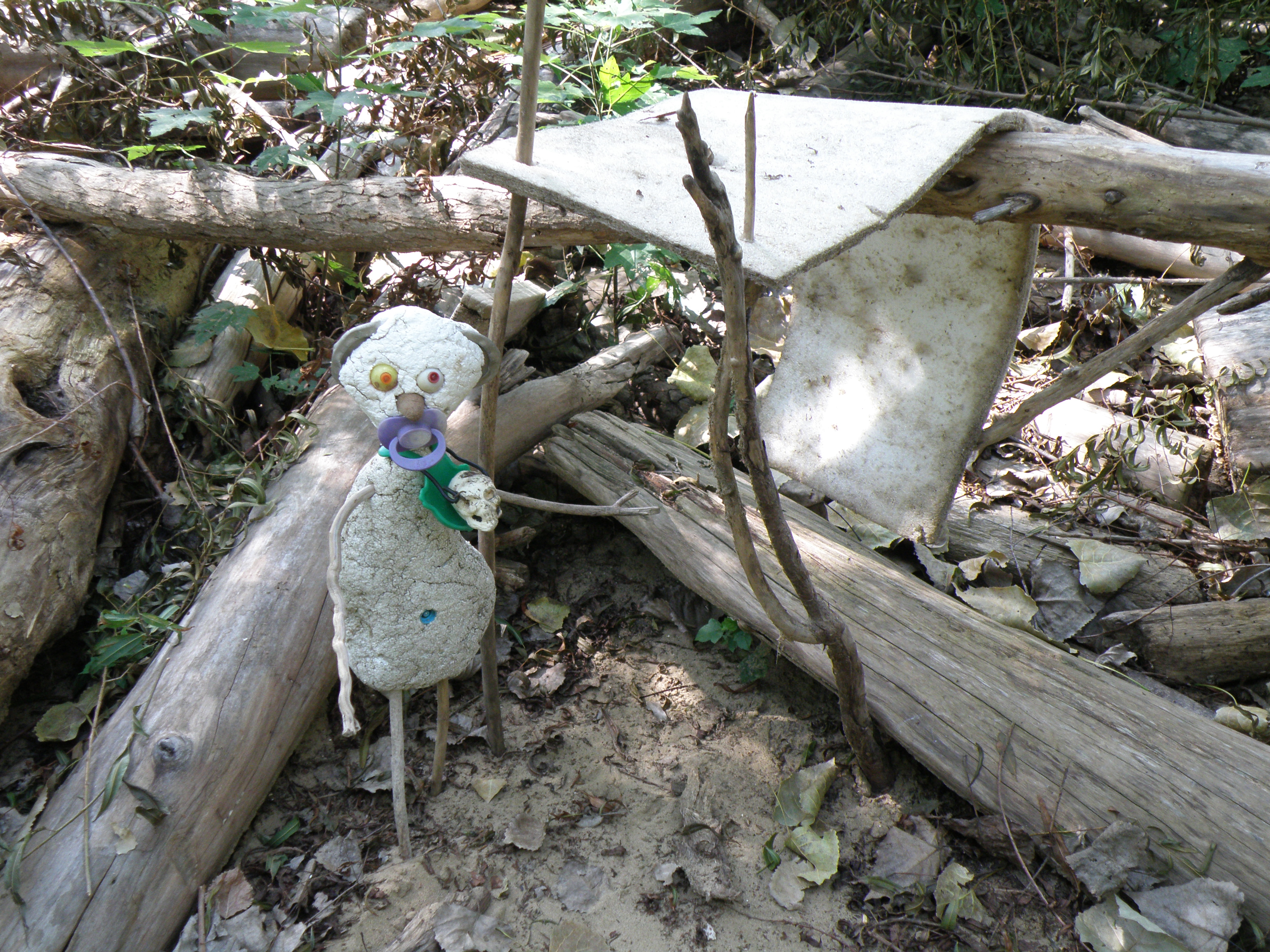
Along our walk the tribesman would point out where my culture had  dumped garbage into the Pang’s territory.  From the look on his face,  I could again register disapproval.  I tried to learn his name and give him mine, but we had trouble communicating by words. Aside from the occasional bit of plastic and paper, the forest walk was also full of beautiful birds and butterflies and late season wildflowers.  Eventually, we entered a small clearing and there set up for our relaxation and respite was an intimate canopy tended by another member of the first people.

A sheet of recycled plastic foam packaging and a couple of wooden posts made up this shelter.  I saw that the Pang were trying to reuse some of the trash they found. Sitting down, food and water is shared and I’m amazed at my new friends ability to live off the land.  A kicked over decaying log full of large, succulent beetle larvae provides the main course.  I, however, developed a taste for bracket fungi and my new hostess showed me what to look for.  I can’t help noticing that she is wearing a small skull object around her neck.  Later I learned that the Pang don’t remove heads from just anybody or without cause.  Head collection is the highest form of respect accorded to friend and foe alike.  I, however, was never in any danger simply because I hadn’t earned any respectability yet in the estimation of the Pang.  Or so another friend told me later.

After a short rest, my hosts were in a mood for a walk and I tagged along.  I could tell that there were things they wanted me to see.  Of course, they showed me just about every piece of litter we came across on the trail.  It seemed important to them that I not miss this.

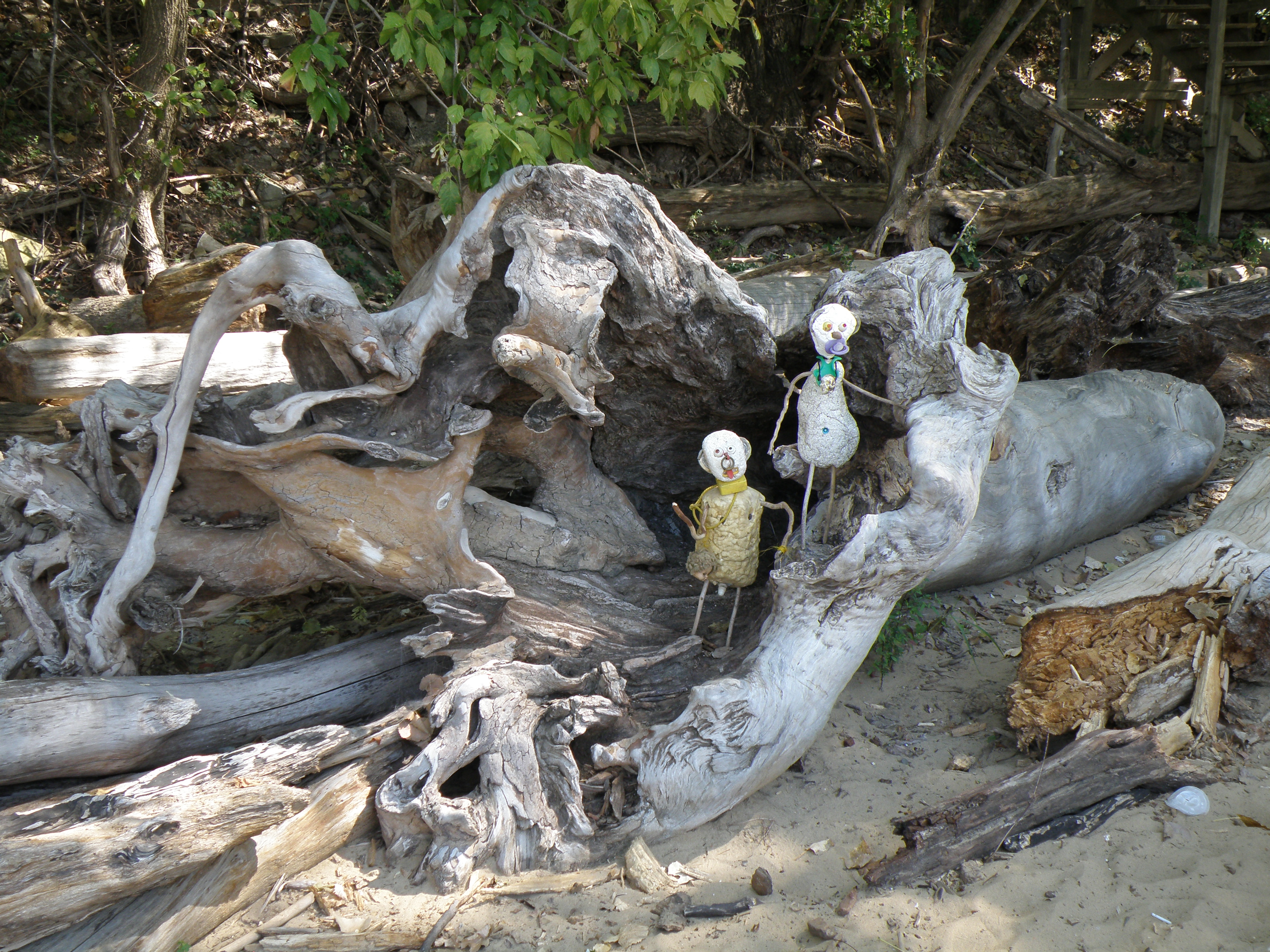
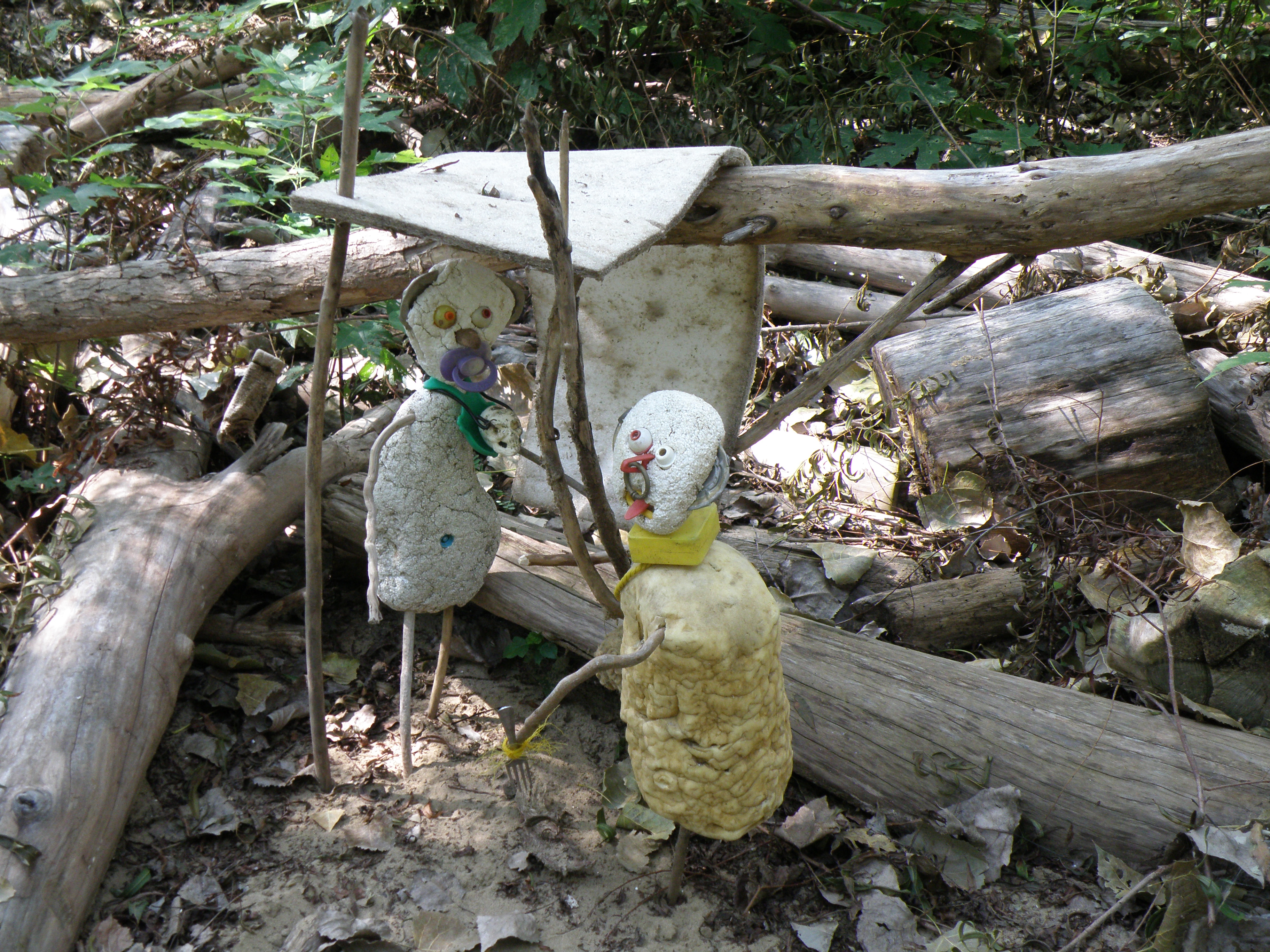
Fortunately, I was shown a lot more that was good than not.  I could see why the Pang were so attached to their land.  It provides them everything including much of what makes up their identity.  We visited an immense hollow log that the river dropped off during some old flood and I took this portrait of the odd couple.

We walked back out into the bright sunlight and hiked near the river.  After having been in a mostly leafy environment, it felt nice to have fresh air against my face.  You could tell by the expressions on the Pang people’s faces how much they enjoyed being free and in a natural state.

Before long we came to a place where driftwood had collected on the beach.  It was nearer to the forest and another trail.  After a protracted goodbye, my friends went their separate ways.  I could tell that our adventure together was coming to an end.

I got the sense that something else needed to happen to make the day complete.  I turned with the man with a fork back down to the riverbank.  As we walked he slowly started chanting and stopped every once in a while by some landmark for added emphasis.  He did this when we came to a bright, marshy area.  My friend’s arms rose into the air along with his song.

After the marsh, my companion climbed a long log that had washed up on the shore during a flood many years before.  He climbed as far up the root mass as he could and lifted his voice and fork to the heavens.  I wish I knew what he was saying…but whatever comprised his song I could tell it was reverential.

Since this culture doesn’t show itself without some purpose in mind.  I hoped that  I hadn’t missed it.  Looking back upon the day, I enjoyed the camaraderie of my new friends, we relaxed together and shared a meal.  Later we went for a walk where I was showed both what the Pang liked and disliked in the landscape.  Now the day was ending in a prayerful song.  Seemingly to underscore another point, my headhunting friend drew a line in the mud.  In essence, he communicated that my side of the line was mine and if I couldn’t respect his side of the line…we would be unwelcome.  He quickly grimaced with his tongue sticking out on that last point.  Staying on my side of the line, I wished him well in my tongue and with a short wave  watched him melt into the forest where he belonged.

Read Full Post »

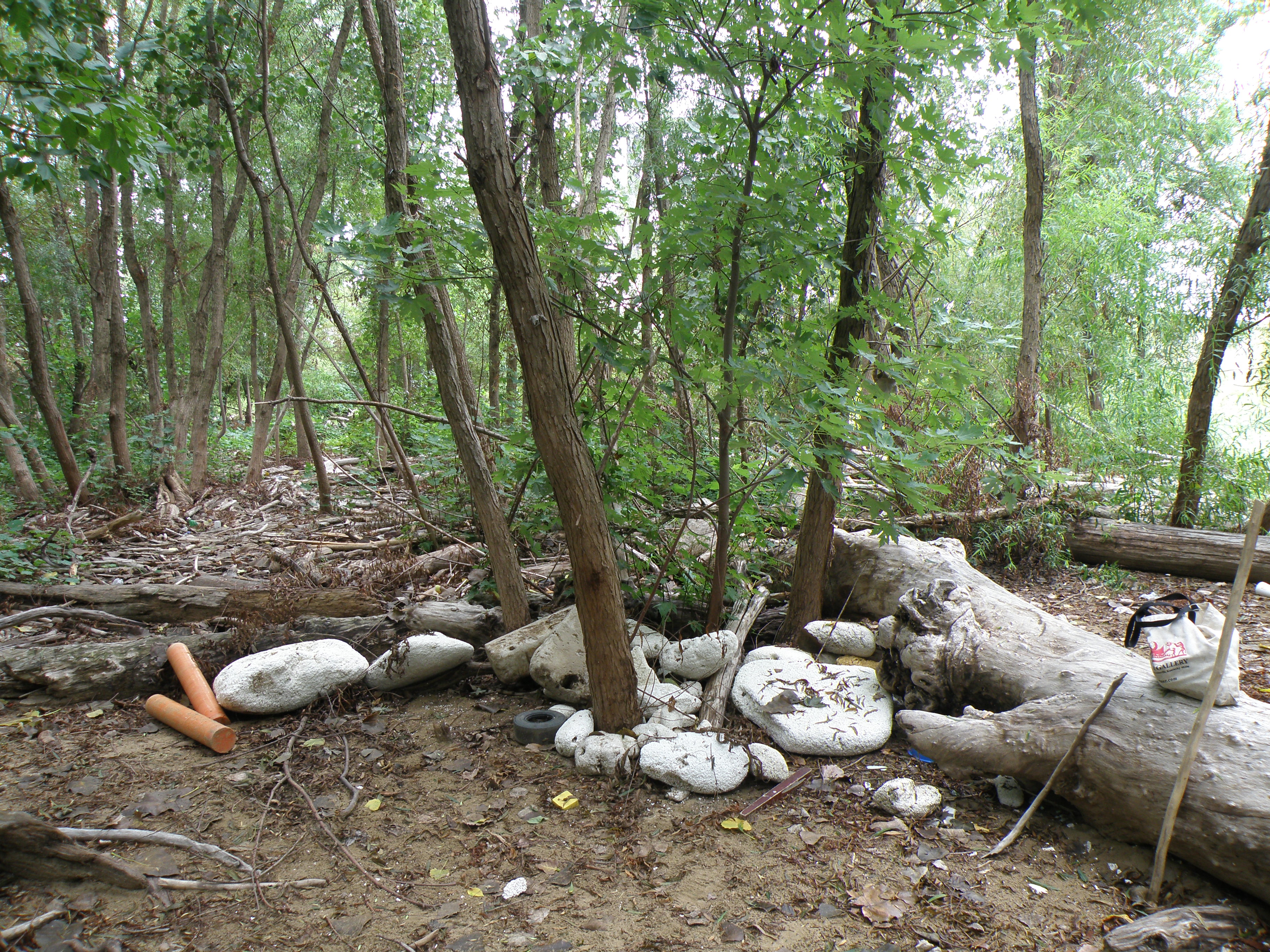
This was my Labor Day adventure which spanned two days of hanging out by the Ohio River.  The remnants of Hurricane Isaac came through and gave us some much-needed rain.  I was excited to return to my old studio spot and didn’t mind exploring and working through the drizzle.  My clothes got soaked and muddy, but as long as I was able to keep my camera dry…I felt okay and had fun.  It has been two months since I last laid eyes on my Styro-cache.  Most of these polystyrene chucks were collected in the spring.  I had heard that there were a few scheduled river clean-ups, but they obviously didn’t find my spot.  It wouldn’t have hurt my feelings in the least if all this white trash had disappeared.  The more public areas did look better, but I have a feeling that as long as people are around…there will be litter at the Falls of the Ohio.

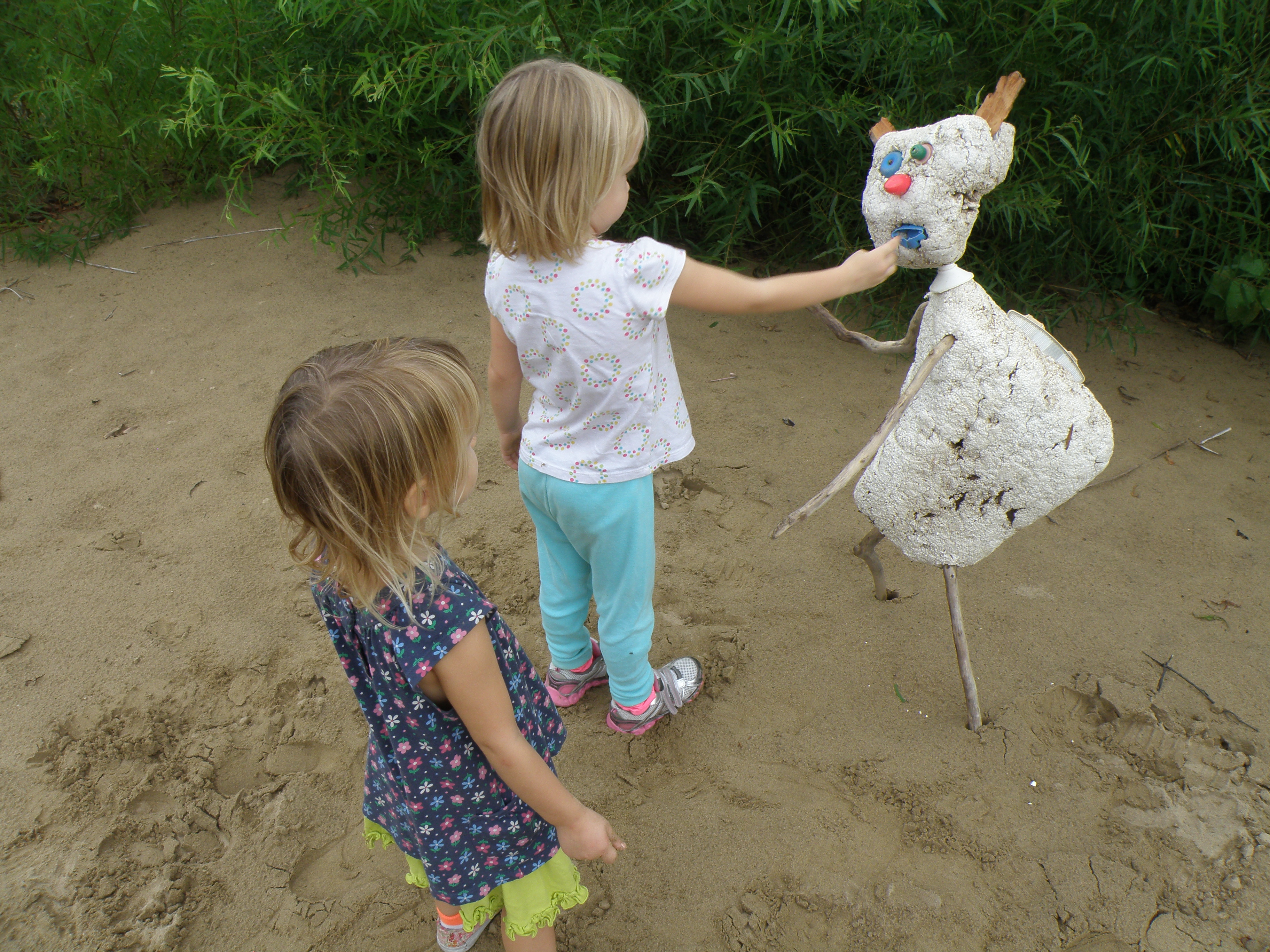
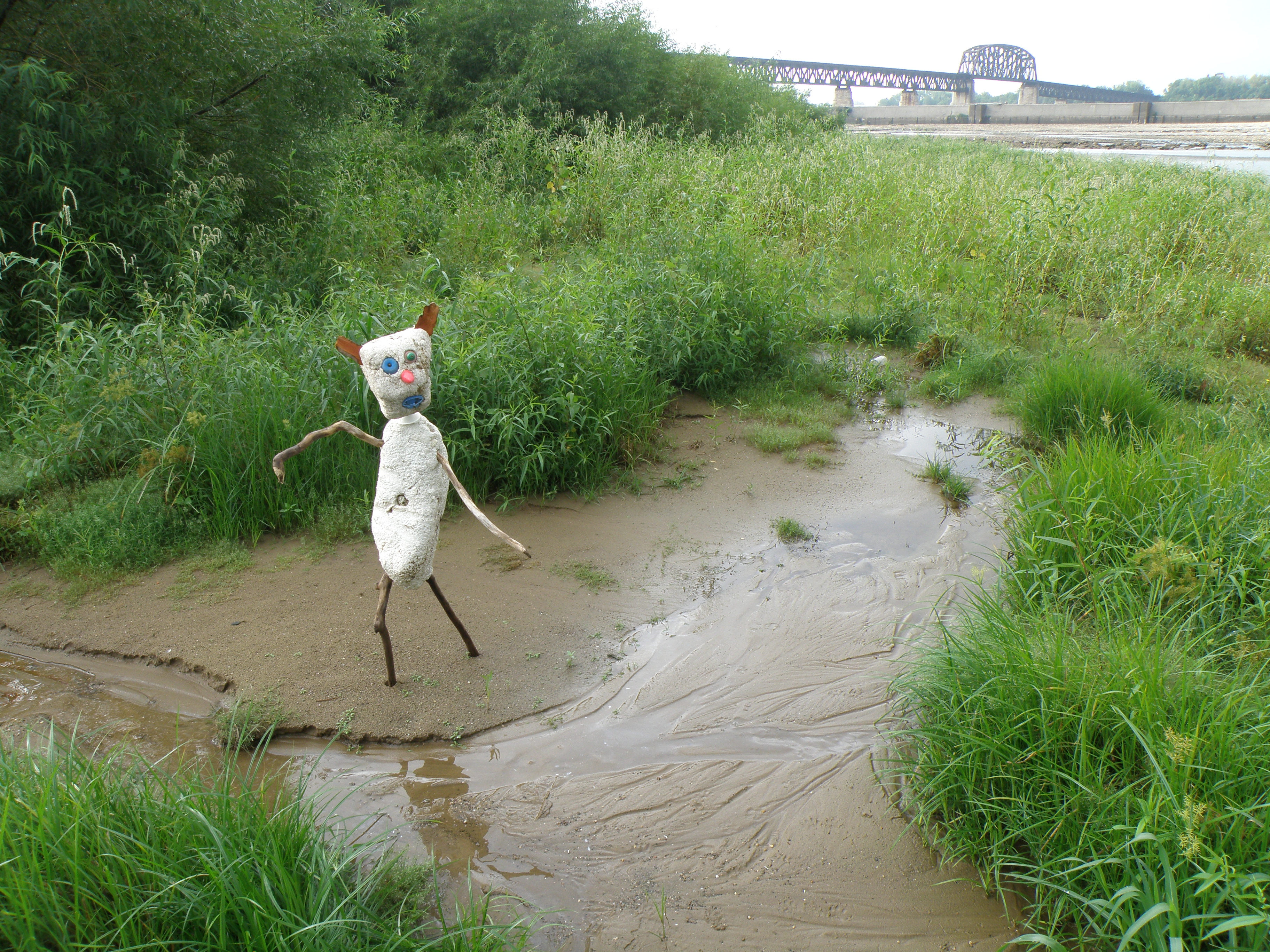
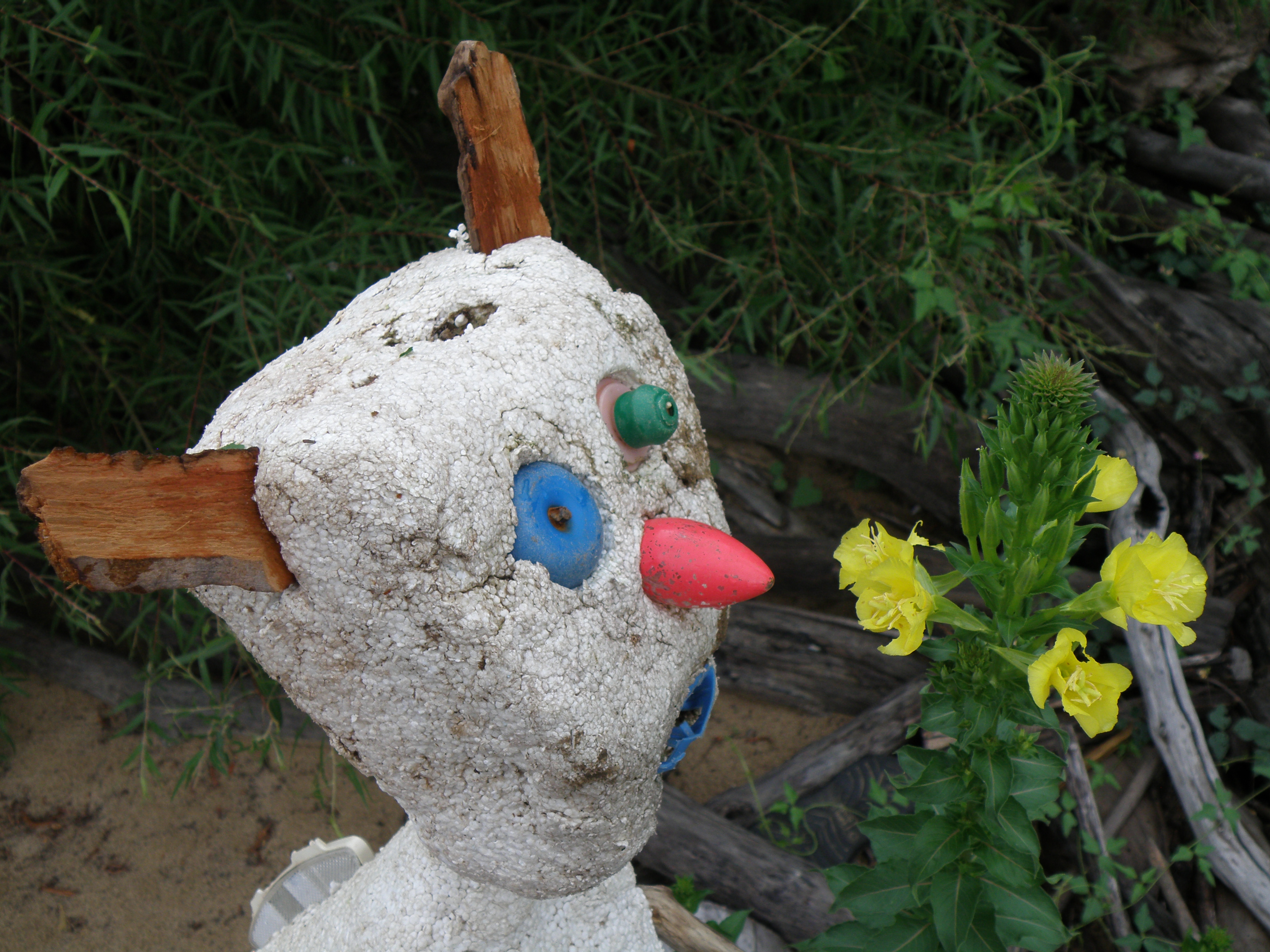
Because I was dodging little rain showers, I quickly created a figure and moved him out into the river landscape.  A nice family who said they were familiar with some of my other Falls projects happened upon me.  Their daughters India and Esmay were interested in “Mr. Rednose”, so named because his nose is a burnt out light bulb from a string of Christmas lights.  I asked permission from the parents to take the girls’ picture before posting something.  Esmay seemed the most interested and kept sticking her finger into “Mr. Rednose’s” mouth.  It’s cool when people I meet out here get what I do and appreciate my small call for creativity.  I have a real concern for what kind of world our children will inherit.  My own sons are now 11 and 16 years old and I remember when they were much smaller and followed me to the river to make a few memories of our own.

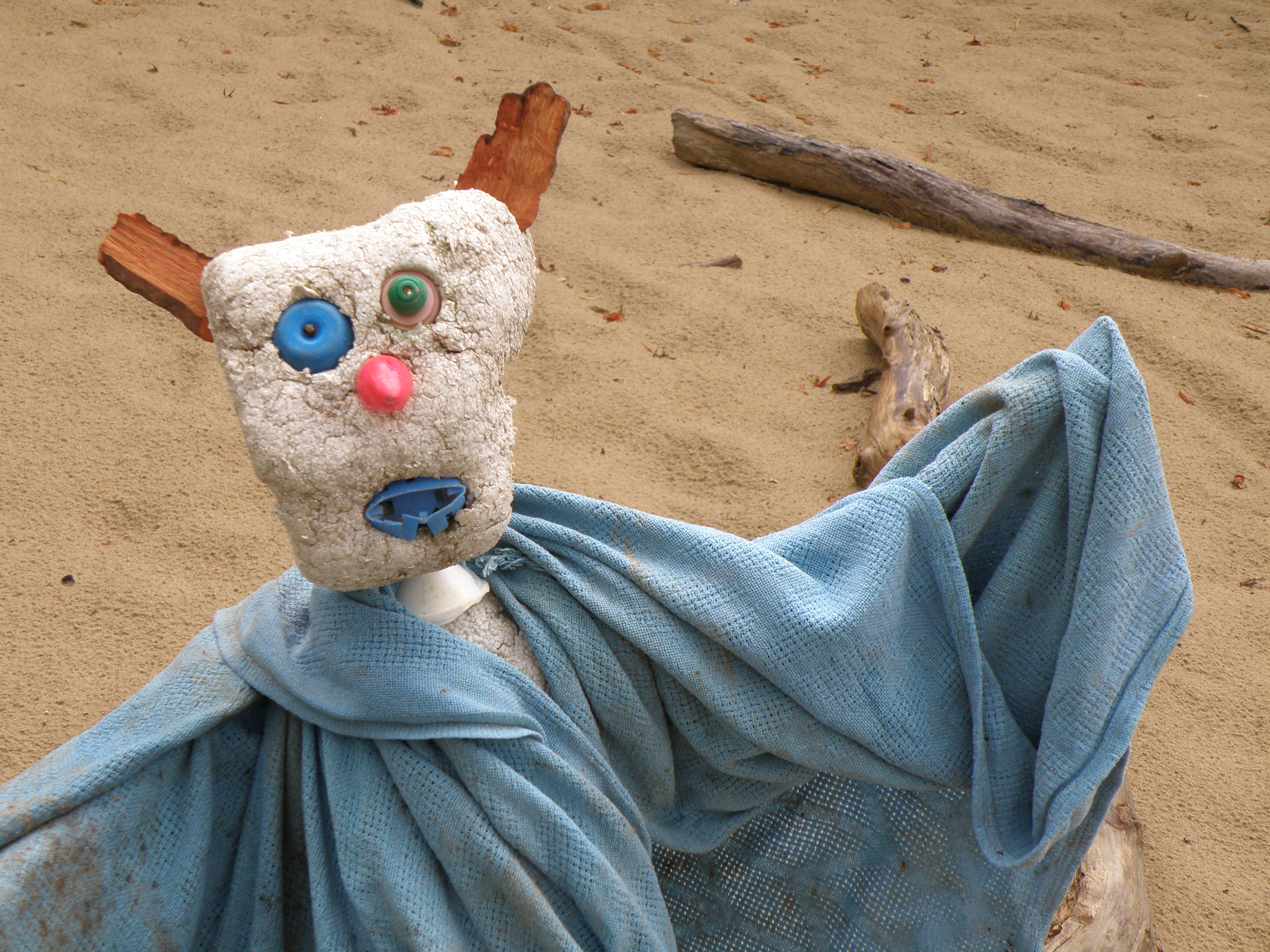
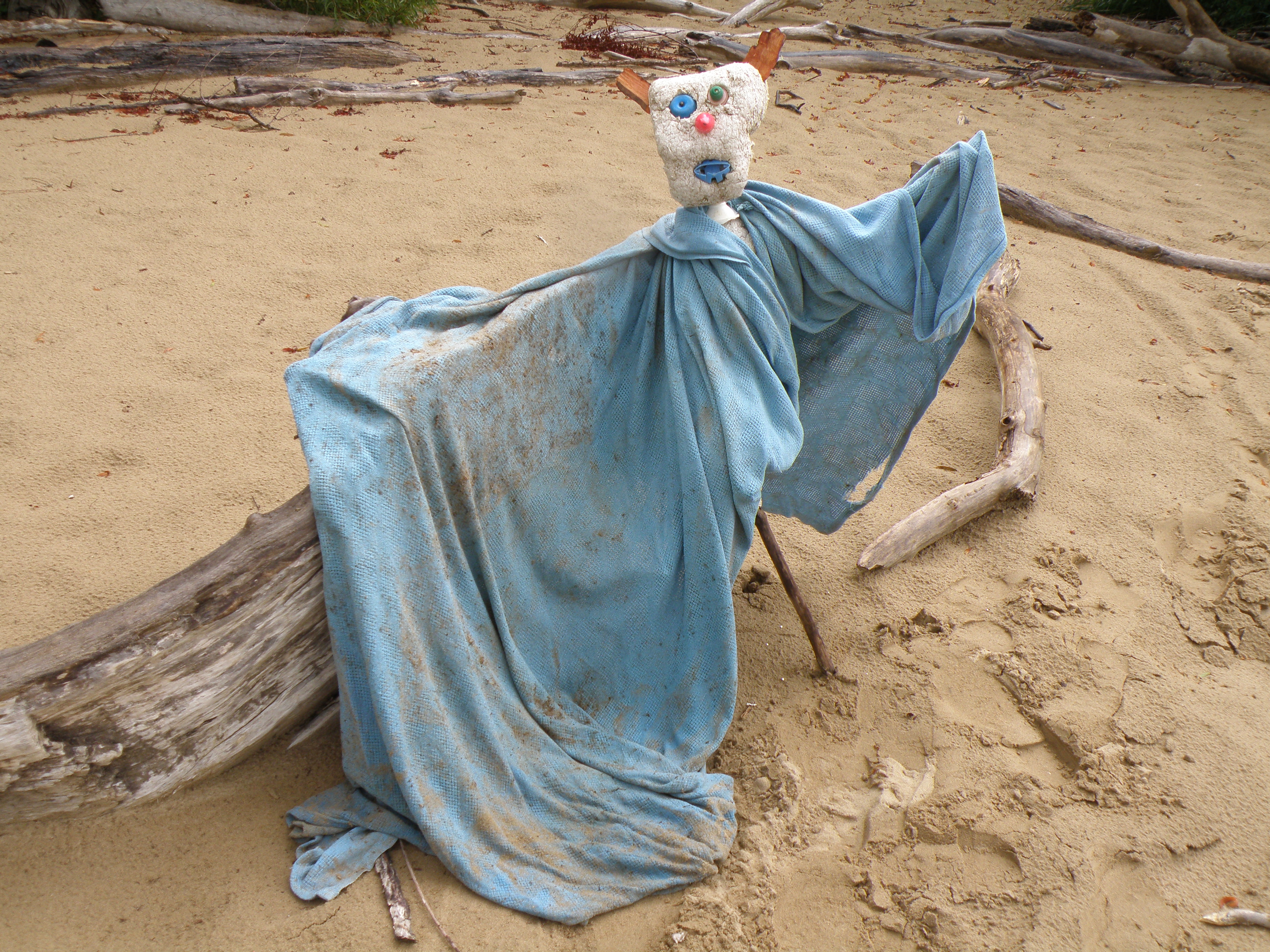
“To exist or not to exist…that is a choice.”  Perhaps meeting little kids inspired me to play dress up with this figure.  But I also kept finding props I could do this with.  This blue blanket was just draped over a log and I wondered why someone would leave this here?  Over the years, I have come across small camps that homeless people would just leave their stuff behind as though they planned to return.  It was eerie when they didn’t.  By the river, I came across yet another potential prop.

A fisherman had left behind as trash this polystyrene minnow bucket and “Mr. Rednose”picked it up.  Since it was beginning to rain more regularly it seemed appropriate to try to use this bucket for a hat and here is what that looked like.

It was about this time that I decided to call it a day.  The rain was coming down more heavily and consistently.  I hid the figure in high, wet  grass where it was waiting for me the following morning.

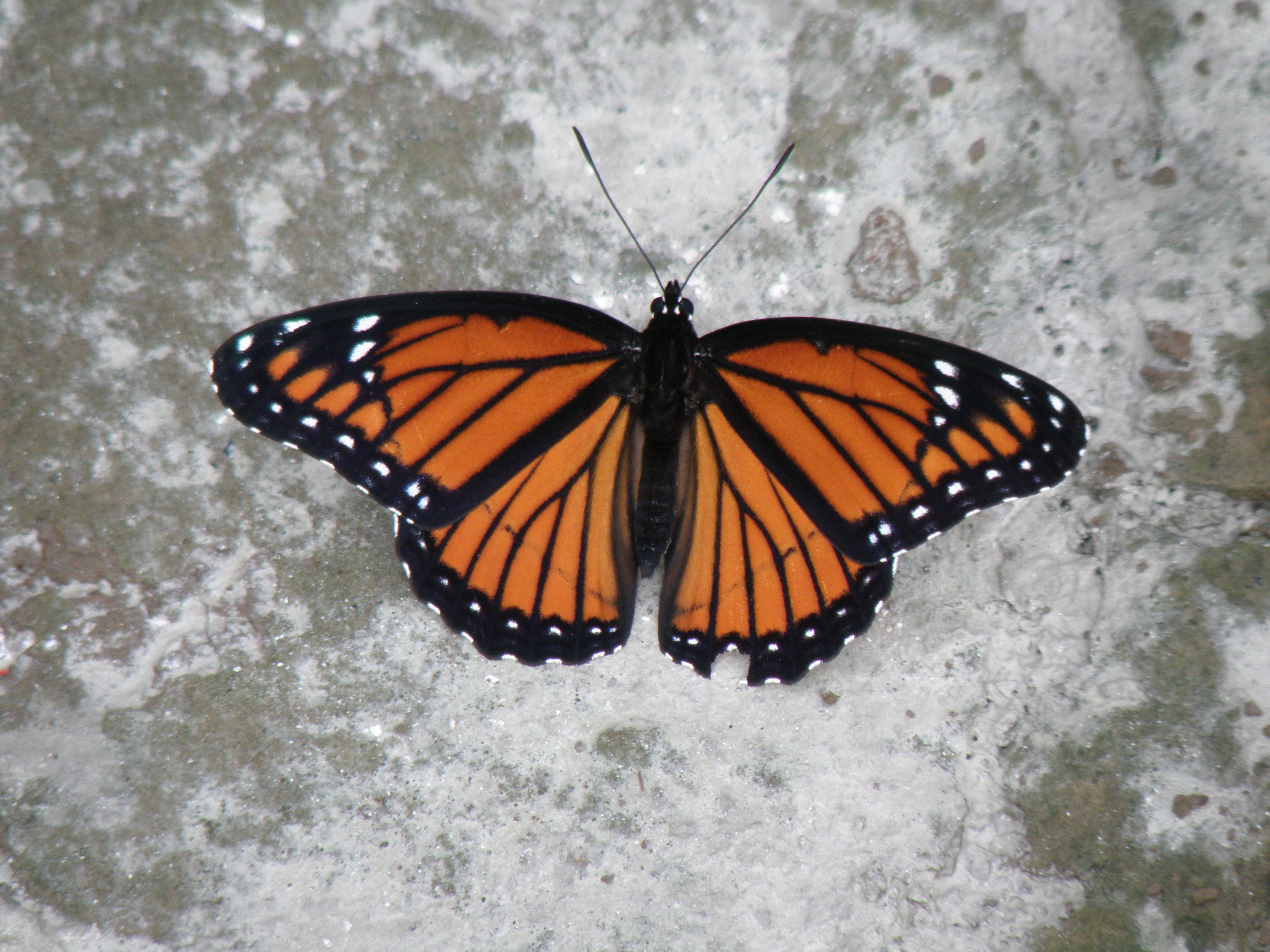
My second day out here was more about discovering nature.  No sooner had I rescued my figure than I had one of my most thrilling bird sightings.  This time it was an actual bird and not something I created myself!  Walking through the wet grasses I unintentionally flushed a bird into flight that I recognized immediately.  It was a Black Rail (Laterallus jamaicensis).  It’s a small blackish bird with a short bill.  It has white speckles on its flanks and a very diagnostic rusty-colored nape.  Rails are the smallest member of a group of wading birds that include herons and egrets.  The literature says that they are very secretive and seldom encountered.  You are more likely to hear one at night along the eastern salt marshes, but there are a few that live in the Midwest.  There are over 260 bird species listed in the official Falls of the Ohio checklist, but the Black Rail is not one of them.  This is a second time I have spotted a bird not officially recorded in the park.  I tried to let the park and our local bird club know about my sighting and I hope somebody else was able to see it?   The flushed rail flew to a nearby willow tree and with camera in hand I tried to get a picture.  Unfortunately, I was not successful.  I will, however, look for it again in the same place the next time I come out here.  The Black Rail was not the only interesting creature out in the park today.  Newly minted butterflies were flitting about and I counted several species including the Viceroy which mimics the Monarch butterfly.

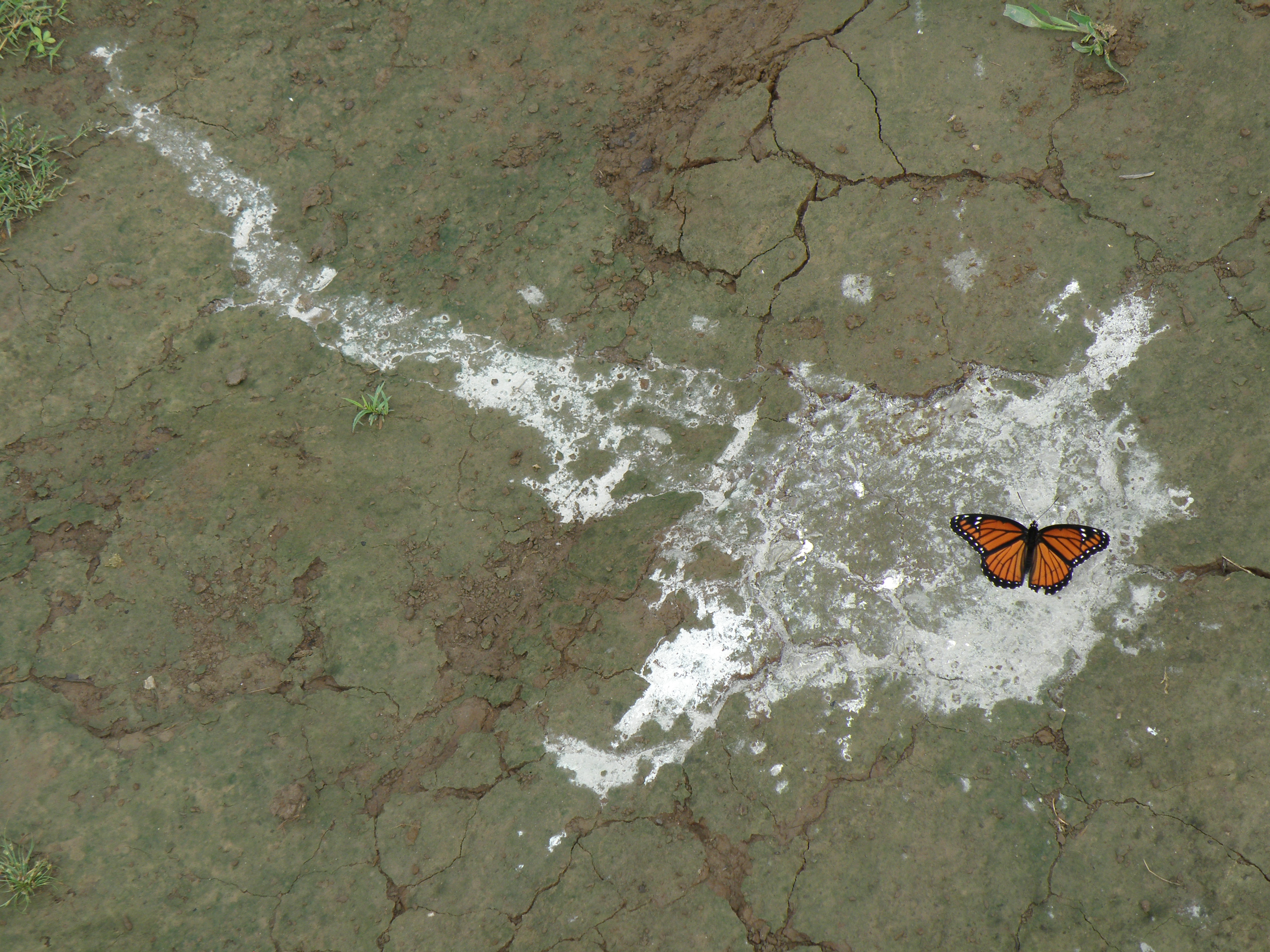
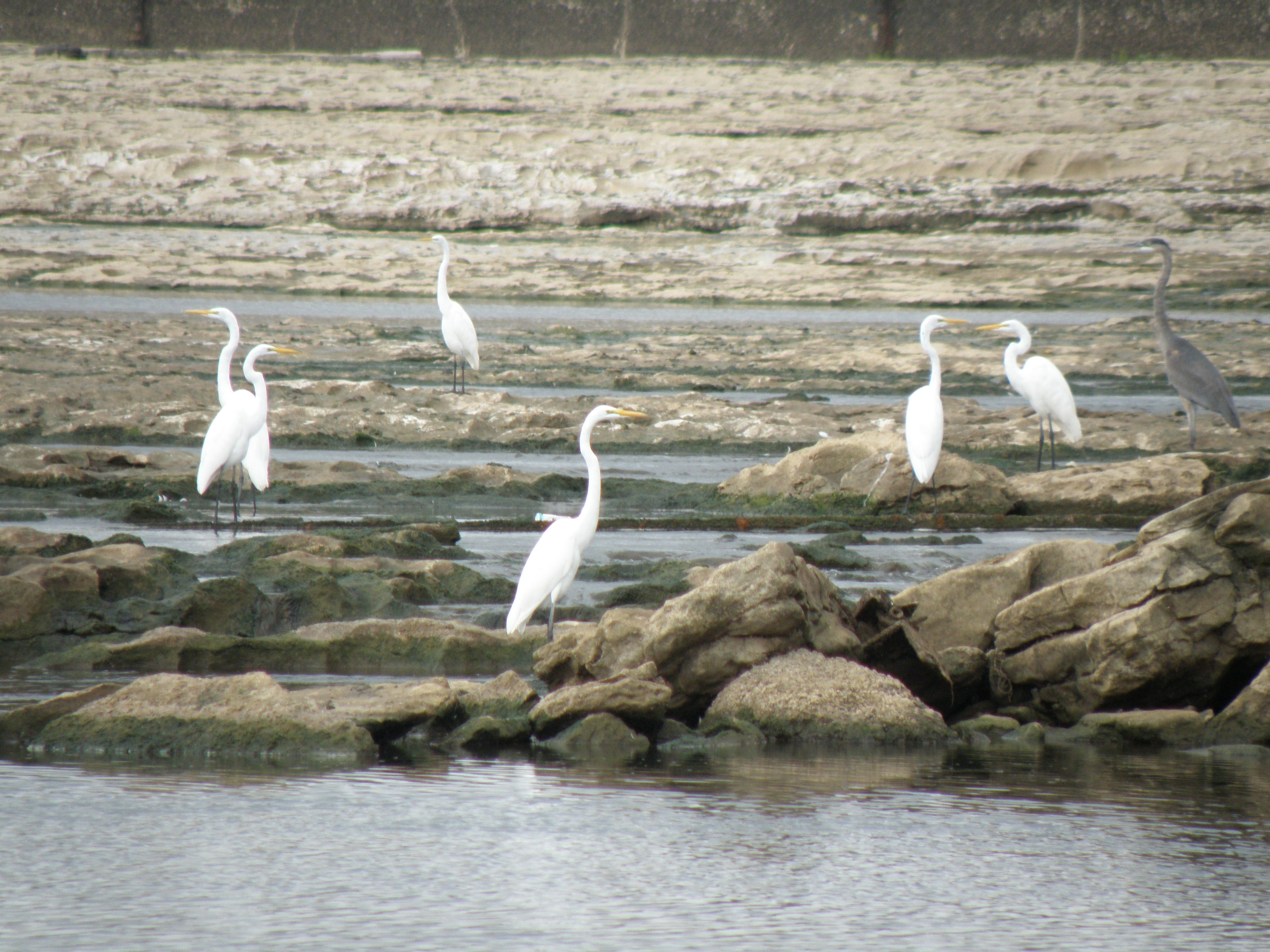
This Viceroy was taking advantage of the minerals present in a fairly large bird dropping!  Out of the fossil beds, Great Blue Herons were outnumbered by the slightly smaller and all-white Great Egrets.  Soon the egrets will be moving off to warmer climes, but the Great Blue Herons are year round residents.


Moving away from the river and back towards the willows, I stopped to admire several flowers including members of the Evening Primrose family.  “Mr. Rednose” enjoyed the slight fragrance emanating from this tall flower.


I finished this adventure where it began.  I moved my figure to the place he first took form and where he now stands guard over my Styro-larder.  He might still be there welcoming visitors…or not.  I look forward to returning the following weekend to experience all the surprises both great and small that this environment presents to me.


Read Full Post »

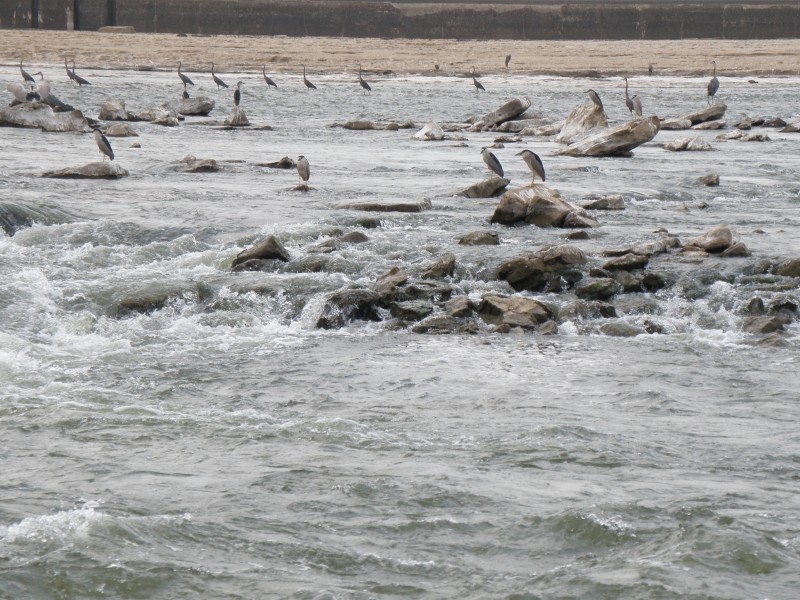
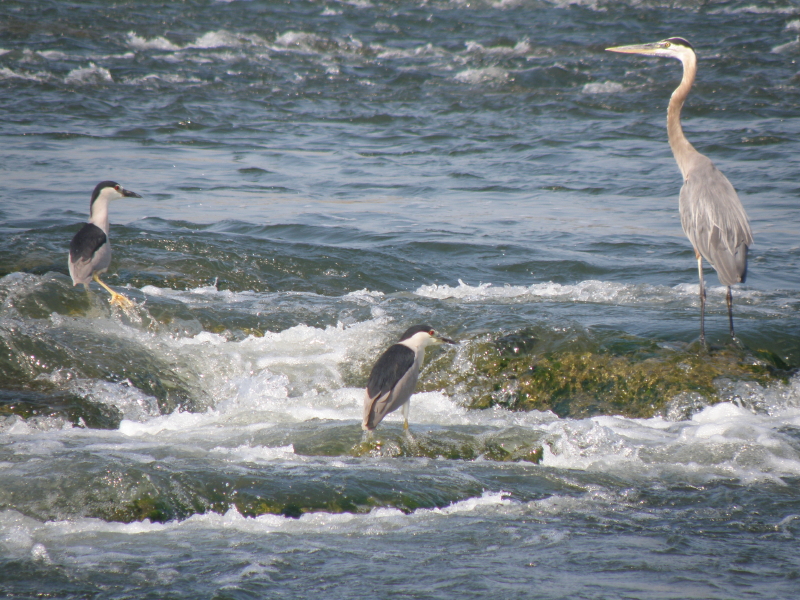
The heat is on at the Falls of the Ohio.  It is looking like this will be a summer to remember.  In the Louisville area, we have already set all time record highs for the month of June.  Yesterday, it was 105 degrees here or around 40 degrees Celsius in the rest of the world.  Coupled with the heat is a lack of rain.  So, when it’s this miserable outside…who in their right mind would be walking around under this crazy sun?  That would be me!  I’m here at the river’s edge and imagining that I’m one of the dozens of herons I can see fishing from their spots by the fossil rocks.  I take my shoes off and cool my feet in the river.  This provides some respite.  It occurs to me that perhaps these herons aren’t fishing after all, but have discovered that they can beat the heat by wading in the water?

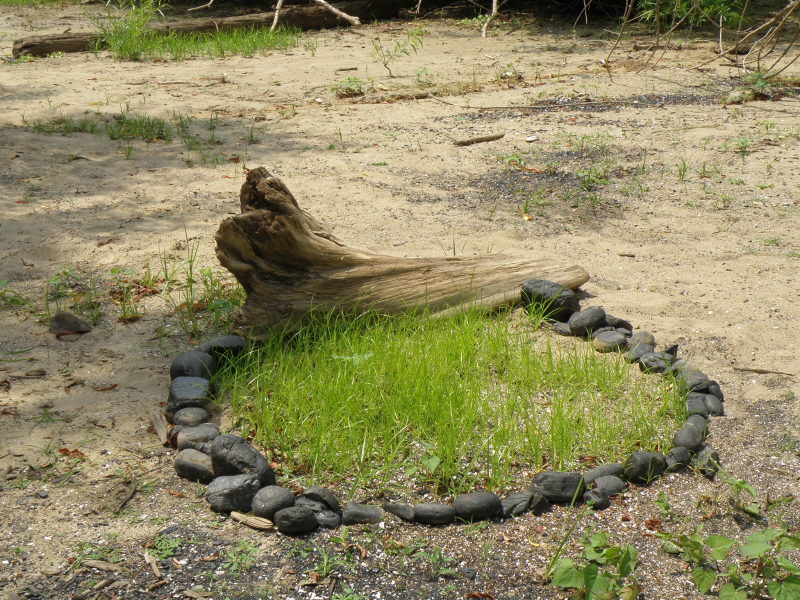
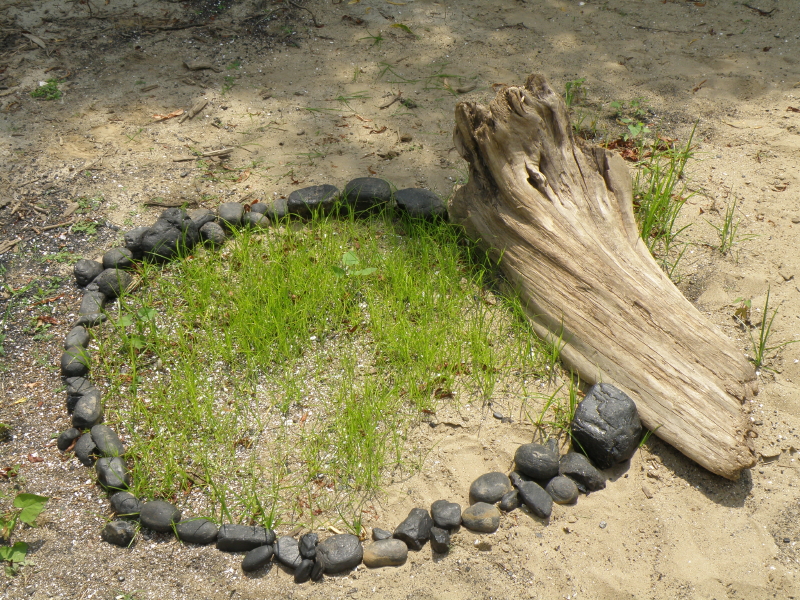
All the coal flake designs from the last post are gone.  In places, I can see how someone has dragged their foot deliberately across the patterns to erase them.  Why a person would feel compelled to do this is beyond me?  I’m nearly numb to the idea by now.  I am actually more surprised when any of my projects manages to survive for any time at all.  I have the images and that will have to do.  I do have this other coal project going out here.  It really isn’t any thing special.  Just coal defining the perimeter around a patch of grass I noticed growing next to a piece of driftwood.  I imagine that the wood provides some measure of protection from the wind or catches more dew and that is why this very small area of grass is growing.  The coal ring is meant to call attention to this.  So far, it has managed to survive being stepped upon, but if it doesn’t rain soon…I’m afraid my small patch of grass is a goner.

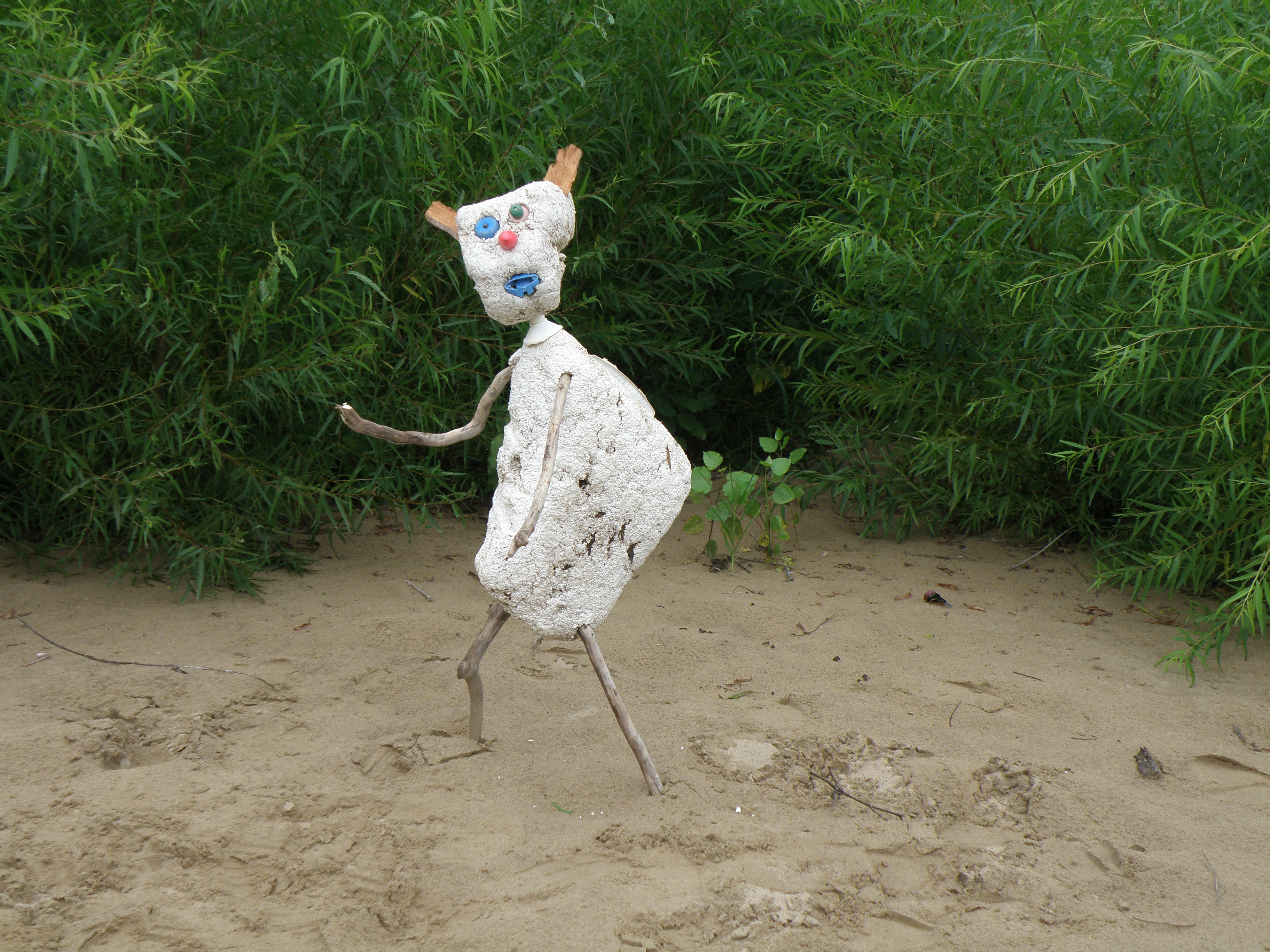
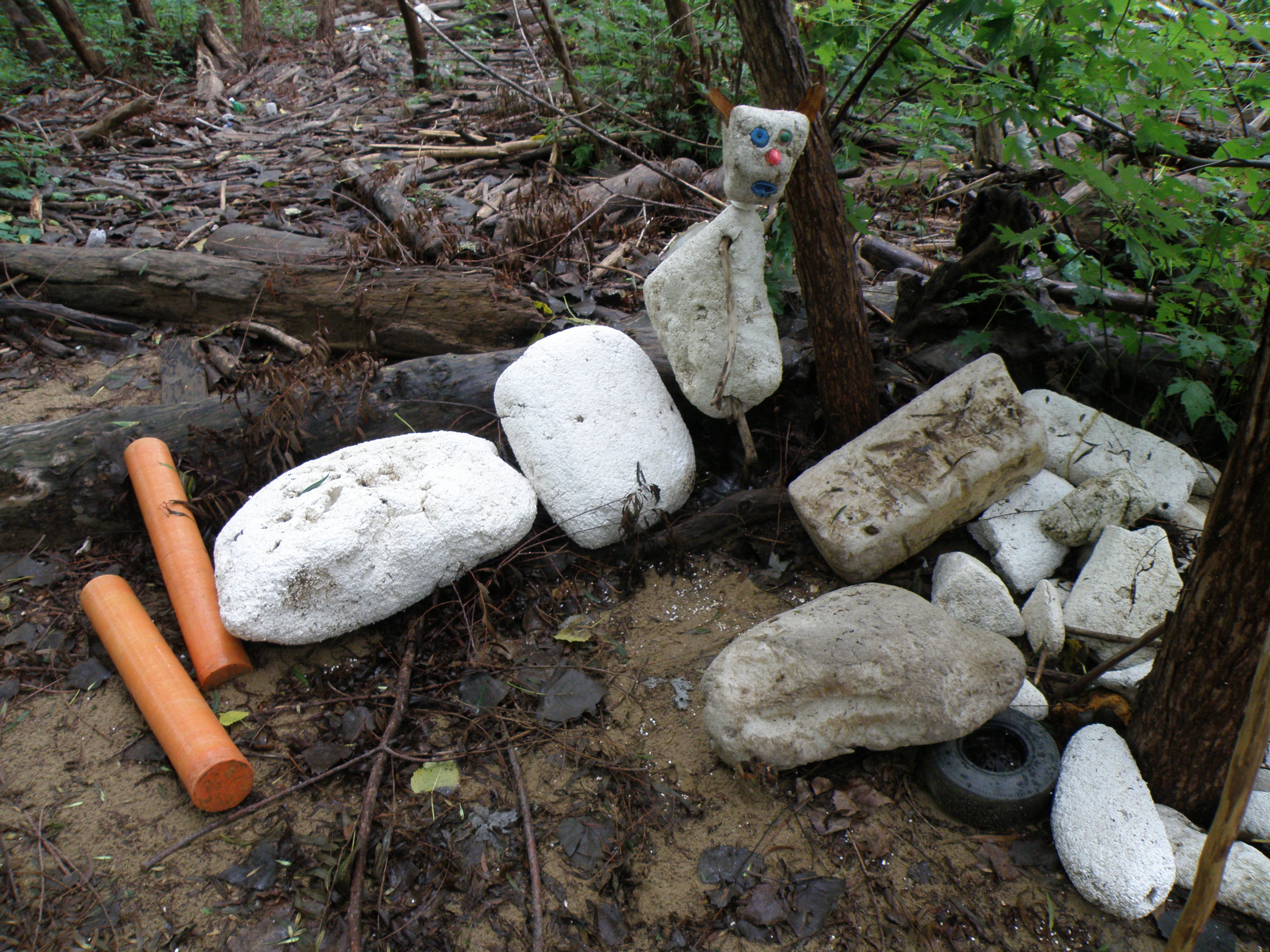
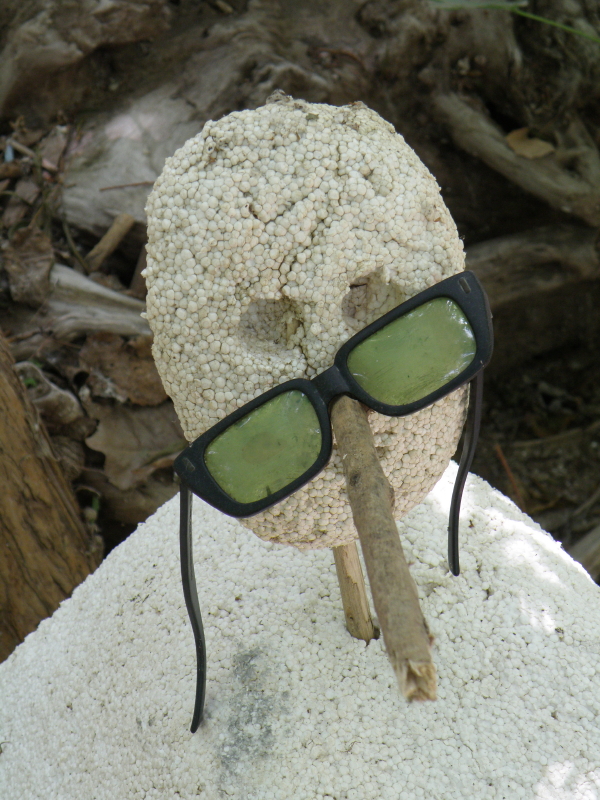
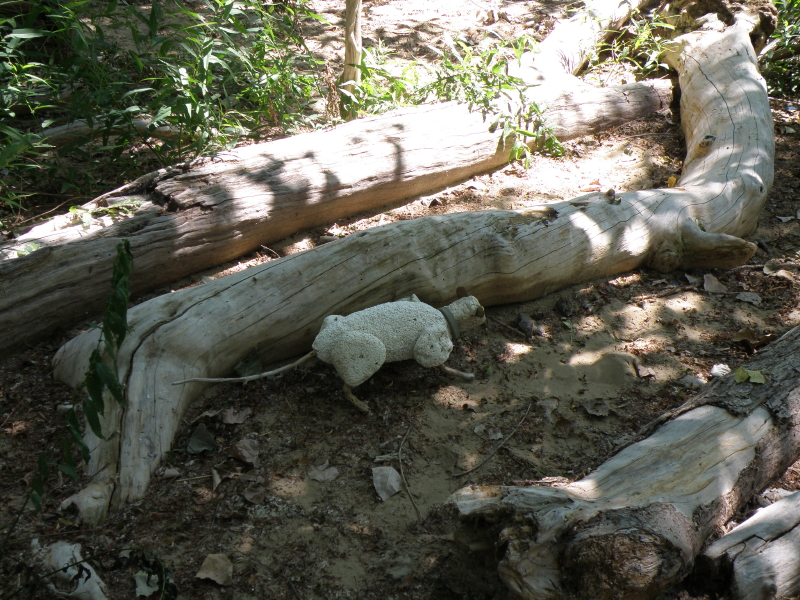
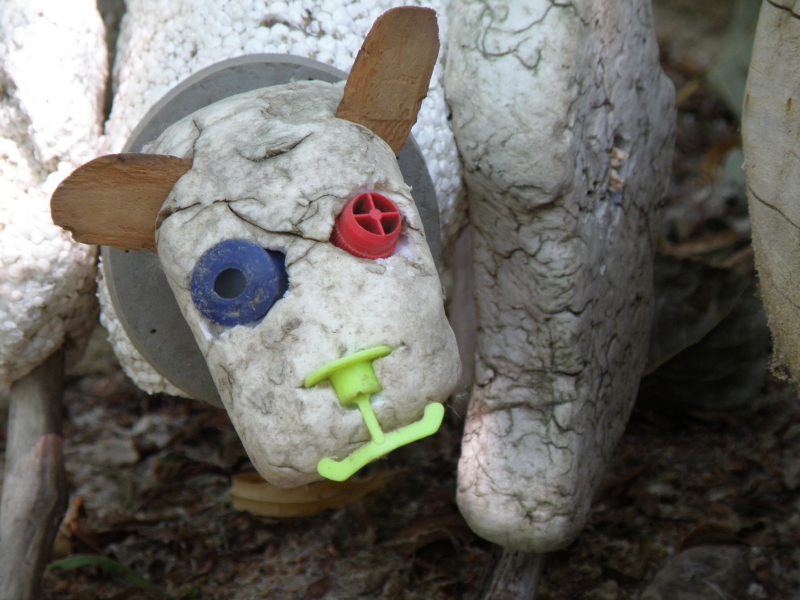
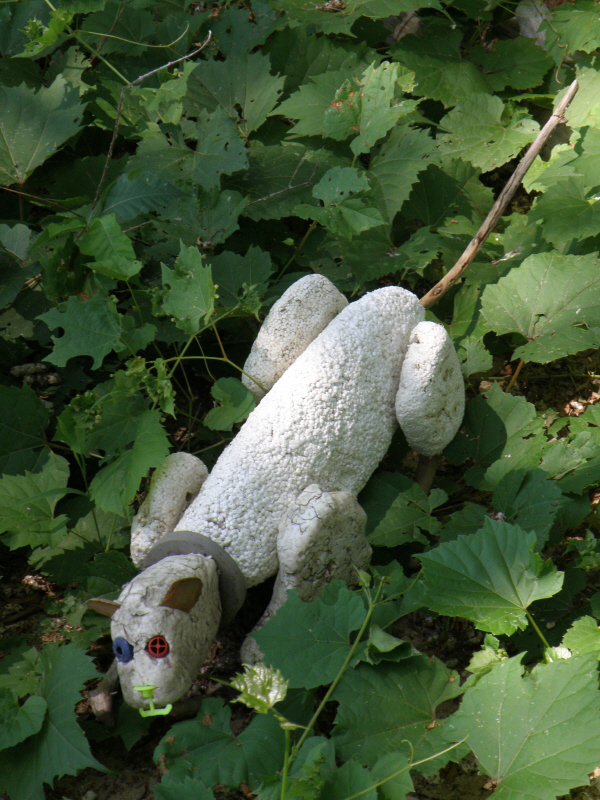
After cooking in the sun for a bit, I returned to my Styro-studio under the shade of the willow trees.  There is a trade-off.  Although I’m not under the direct scrutiny of the sun, I do however, become a tempting meal for mosquitoes and biting flies.  Looking around, I can see that I have had visitors because the Styro-figure I had stashed here has been destroyed and someone has attempted to create another figure from its remains.  An old pair of sun glasses I had previously found was just barely hanging on to the new figure’s eye-less head.  I do like it when people play along and imagine other possibilities.  I was looking through  my  larder of polystyrene chunks and wondering what to make next when I spotted some movement in the near distance.  Grabbing my camera I carefully stalked behind the trees and caught another member of the Falls’ distinctive fauna unawares.  Here is my informal portfolio of the River Cat.

Hiding behind a log I saw the River Cat hunting.  Among its habits…it is an ambush predator that conceals itself along the trails used by its prey which includes other small mammals and birds.

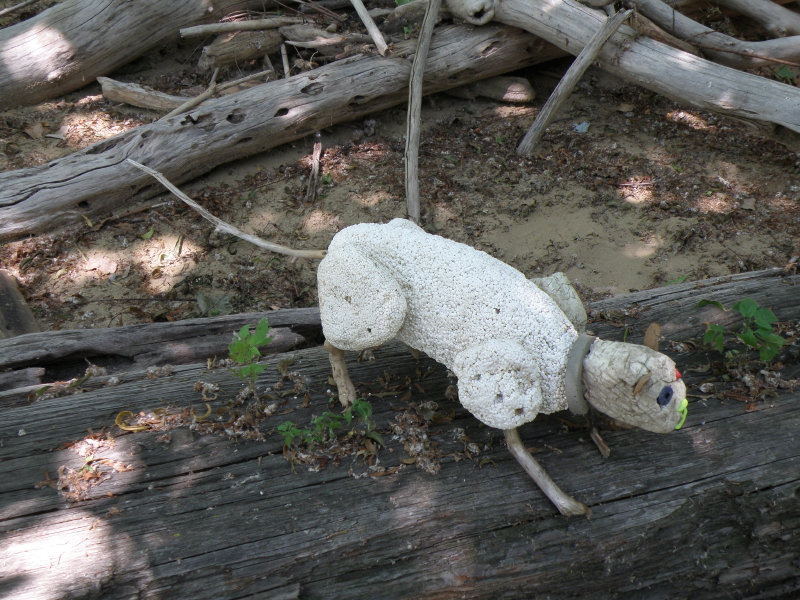
Once it was a common small predator found throughout the Midwest of the continent, but was persecuted and destroyed because it unfortunately developed a taste for chickens and other small livestock.  It was poisoned and trapped and extirpated from the majority of its former range.  Small remnant populations have clung on enjoying the protection they have found in state and national parks.

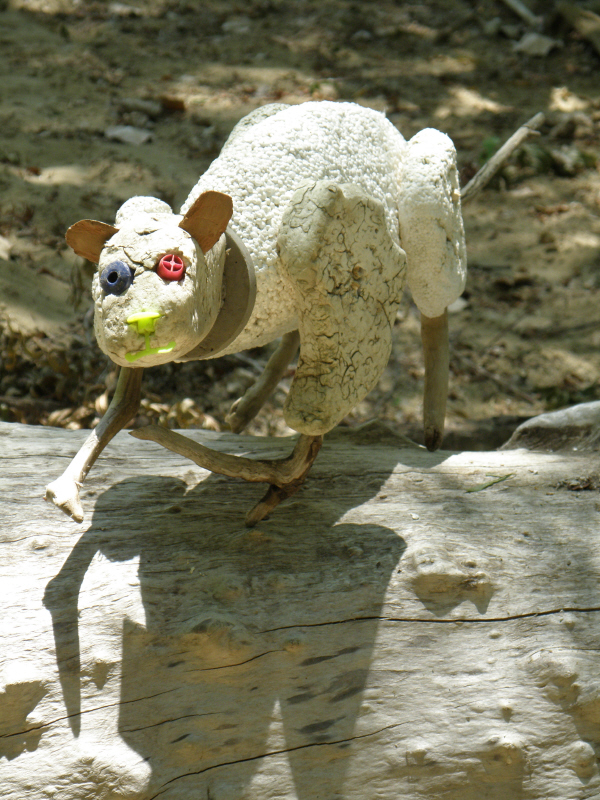
I watched this River Cat for several minutes before it discovered me!  It wasn’t  sure what I was and it jumped up onto a large log for a better look.  At this point, I wasn’t sure what it was going to do…but I kept on taking pictures.  Here is a close up of its head which illustrates one peculiarity about this beast.

River Cats have mismatched eyes.  There is an old pioneer wives’ tale that the secret to this cat’s hunting success lies in locking its gaze with that of its prey’s.  In effect, it momentarily hypnotizes its quarry before coming in to make the kill.  Whether or not there is any paralyzing effect at all has never been formally proven.

Once this unusual cat discovered that I was neither food nor threat it moved on.  I tagged behind at a respectful distance.  I followed it near the river before it gave me the slip.  Knowing that it was probably hungry, the thought crossed my mind that it might try to ambush one of the wading birds I saw earlier.  Picking up my collecting bag and walking stick I headed back down to the river.  Unfortunately, my luck didn’t hold out and I wasn’t treated to a real life moment where hunter meets prey.  I never saw the River Cat again, but I do have a few photos to prove it was here.

Read Full Post »

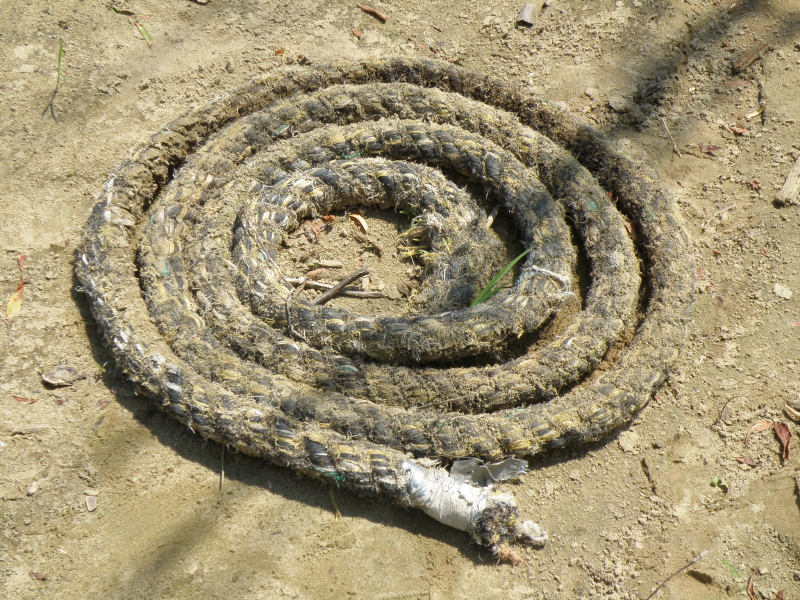
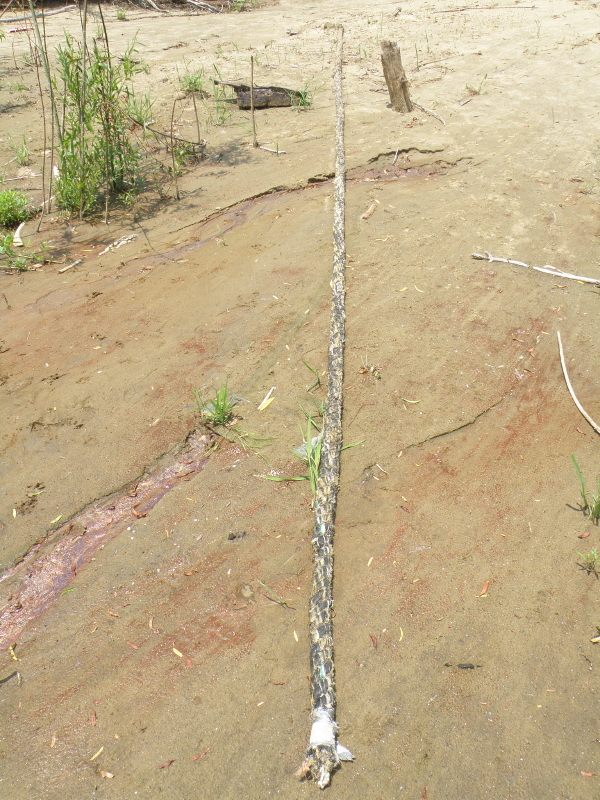
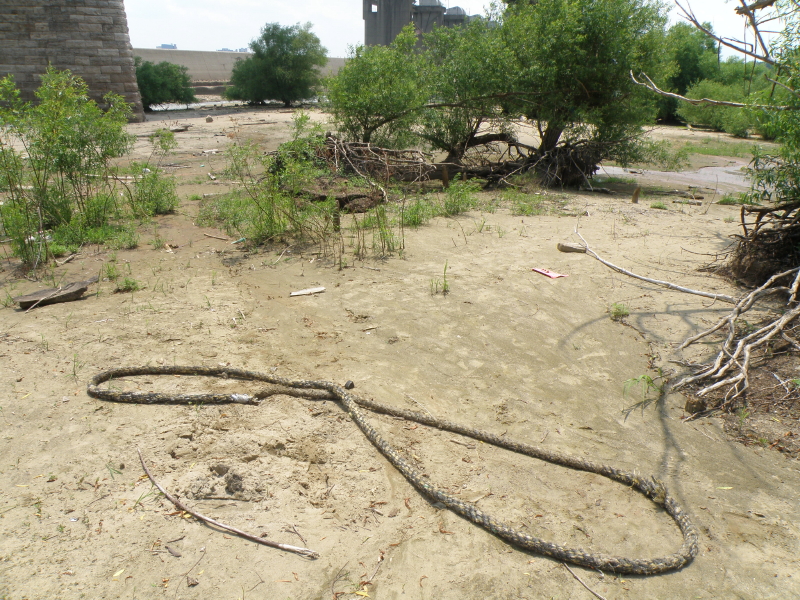
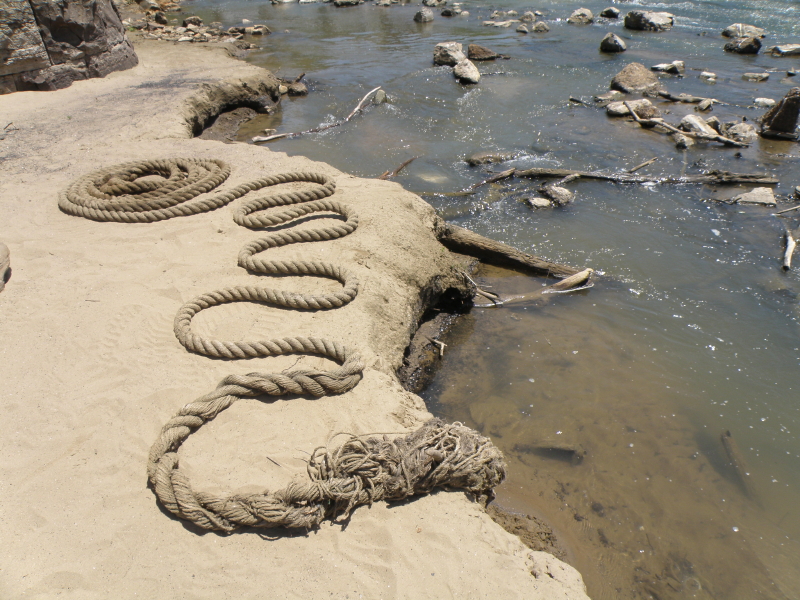
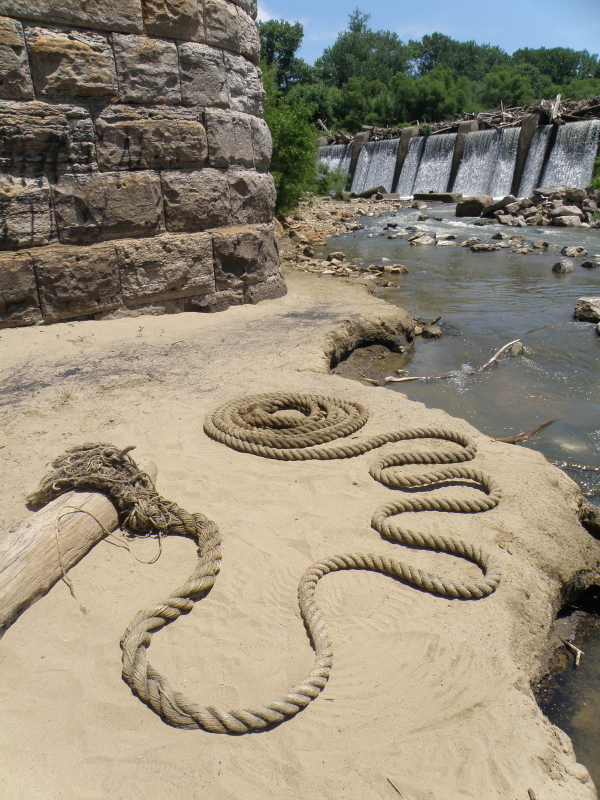
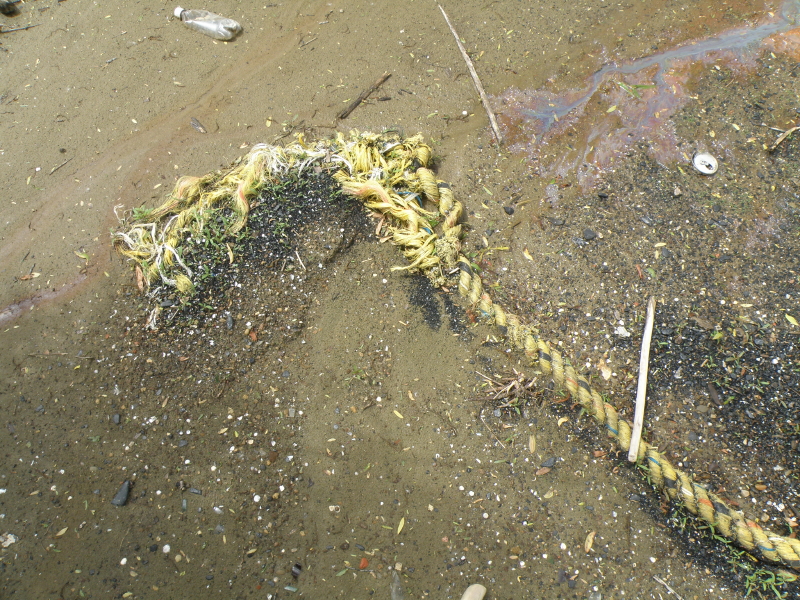
Greetings from a very hot and humid Falls of the Ohio State Park.  The Ohio River is receding into its summer pool and more of the riverbank has been exposed.  Of late, I’ve been running into more rope fragments from commercial barge traffic (or it seems this way).  I don’t  rule out the possibility that my desire to work with these objects in this setting has brought them into my universe and attention.  See the recent post I did about “Play on Earth Day” which also features a rope project.  I’m enjoying what can be done with them to create images.  Here’s two rope investigations I did the other day.

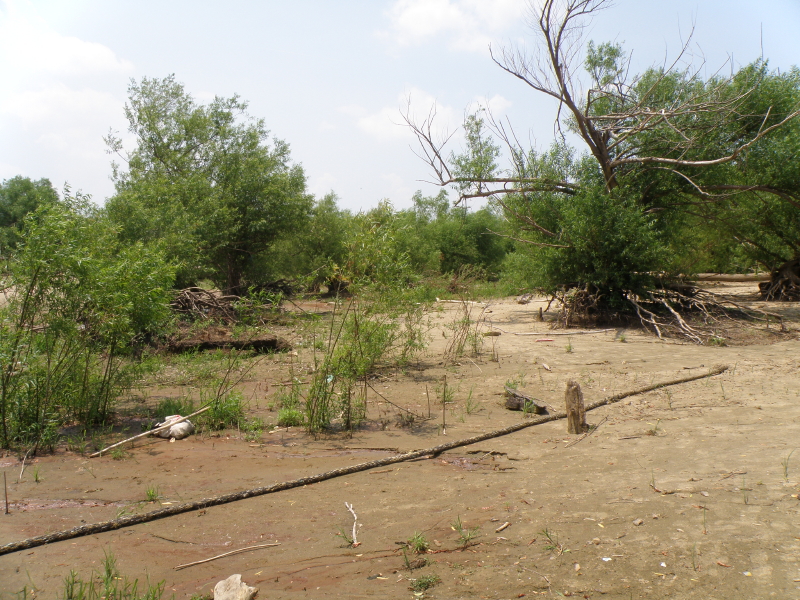
As ropes go…this isn’t the thickest or heaviest rope I’ve found out here.  What is interesting is that most of this rope is still buried under the sand.  There is a point where it enters the ground and remains hidden and fixed to this position.  I started out just coiling the rope…I love working with spirals.  The exposed end of this cable is covered with duct tape.  Next, I pulled the rope straight to see how long it was and to see how it activated the area it was found in.

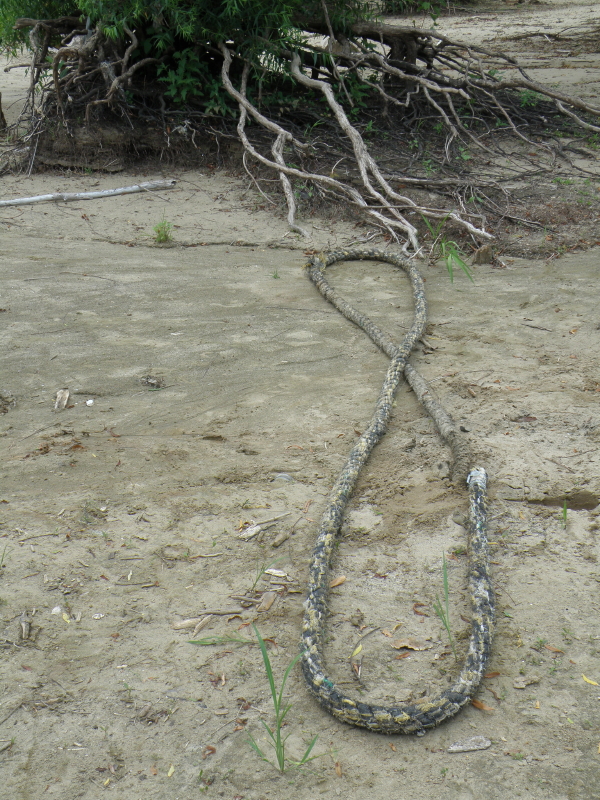
The terminal end of this rope is buried under the sand.  I used that point to move and pivot the rope to create these other images.  Here are two side views of the straight rope and the scene it underscores.

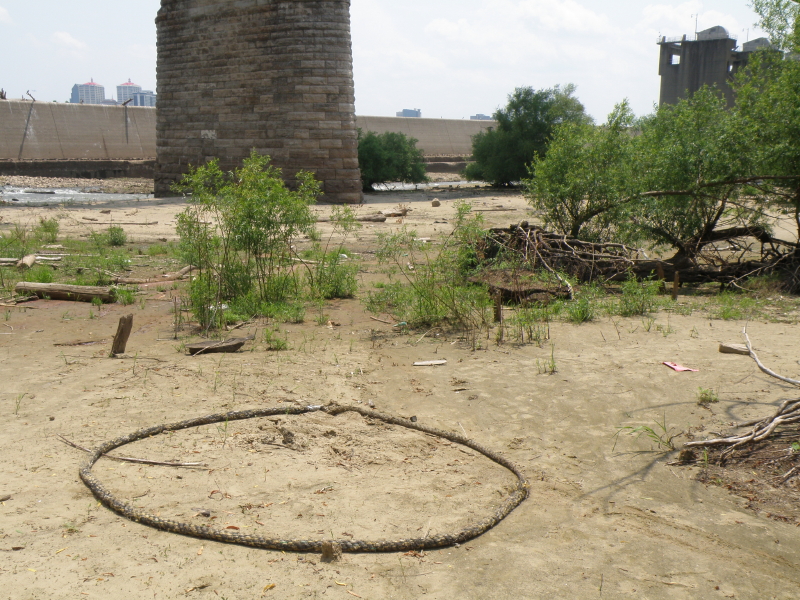
Next I tried creating a circle by joining the ends together.  The rope was stiff and not easy to shape.

This image makes it appear to be more of an ellipse, but I did my best to try to form as neat a circle as I could.  The area I’m working in is in the eastern section of the park right under the railroad bridge.  The last photo I made using this rope is more of a figure eight and loosely reminds me of a chromosome.

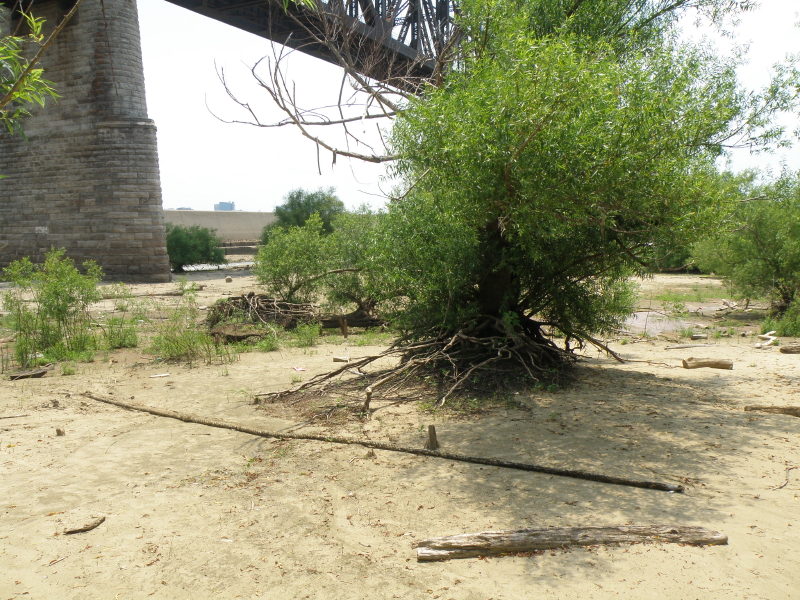
Now for the same rope shape involving the roots of a nearby willow tree.
I came across a second rope on this sweltering day.  My clothes were literally sticking to me.  It occurred to me that I left my water bottle in my car which on this day was not a good move.  I needed to take frequent breaks under the shade of the willow trees to keep from overheating.
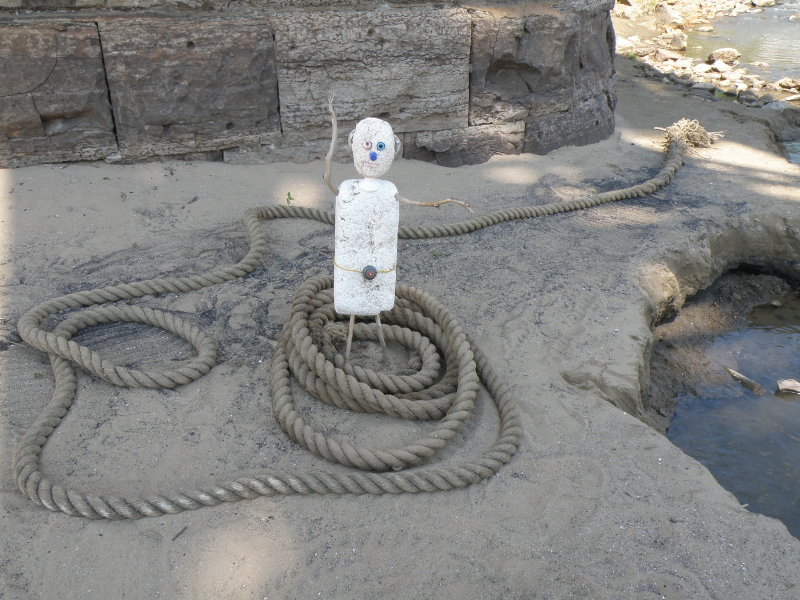
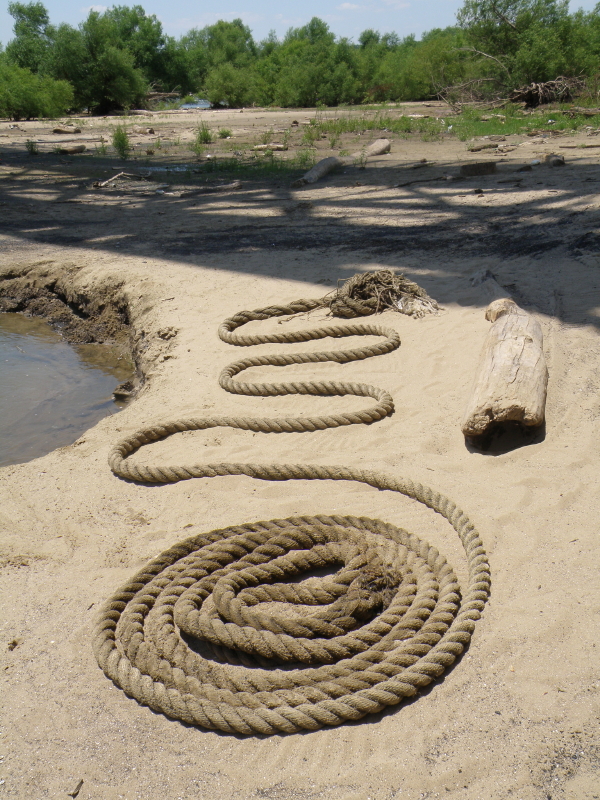
This second rope fragment is much thicker than the previous example.  It also appears to be made of a natural material.  Someone else found this rope in some other part of the park and carried it to this location under the bridge where it was abandoned.  I returned a couple of days later and this rope was gone.  I wonder what other project it was destined for? Anyway, here are a few of the images I made with this interesting object.
Next I placed the unraveling end into the river to link it with the riverbank.

Last view with the unraveling end draped over a log.  This is the position I left the rope in before departing for home.  I very nearly took this rope home with me, but it was too big and heavy and the heat of the day took its toll on me.  At the time, I told myself that if this rope was still here the next time I returned that I would collect this object for later use.  Nebulously, I had this idea in my head for another installation project.  Just what I need…more junk!

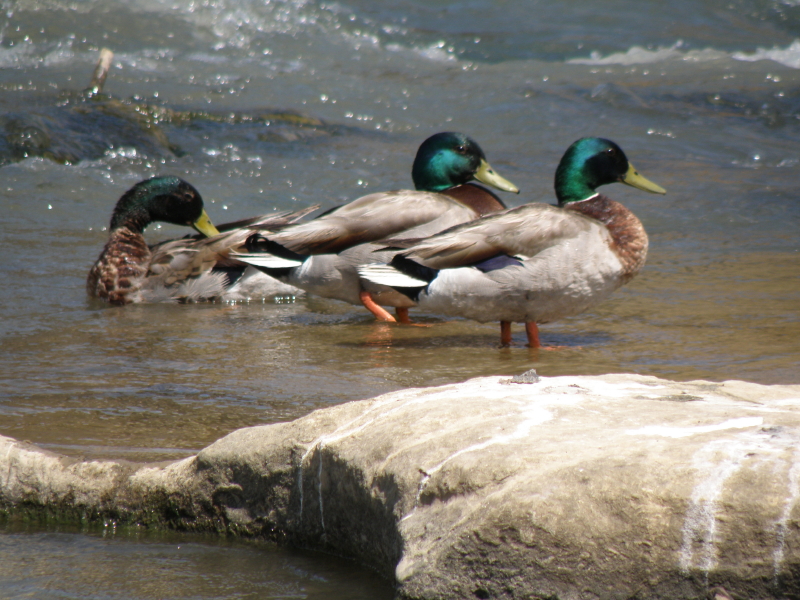
After playing with this rope, my curiosity was satisfied for the day.  I’m sure I will find other ropes and cables out here as time goes by. I found myself being very envious of this trio of male Mallard ducks!  They seem to have the right idea and so I will end this post with them.  Stay cool everybody!

Read Full Post »

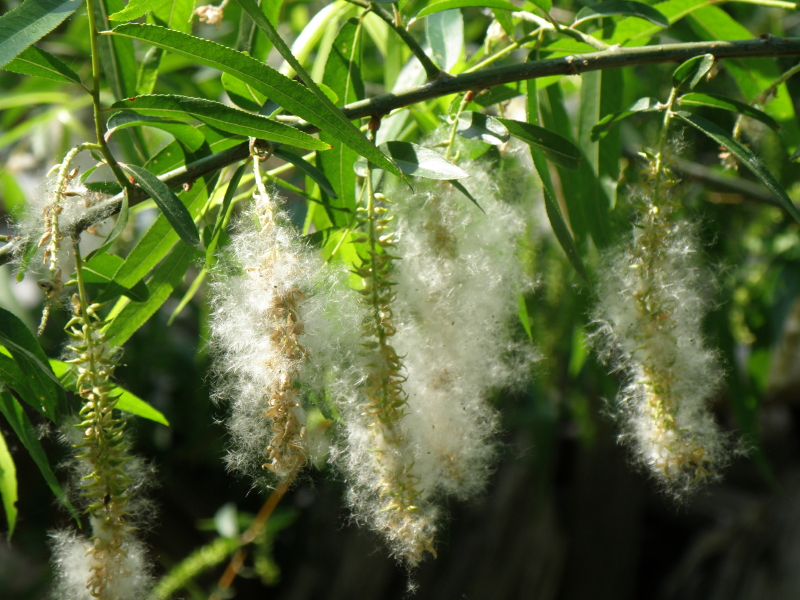
I’m back at the Falls of the Ohio and I can always count on finding different conditions or something new in the air…literally.  On this trip the willow trees were sending out their white fluffy seeds from their catkins.  In the low-lying areas in the sand or against some other barrier, the fluff accumulates into drifts like delicate dry snow.  Today the air is filled with this material as the willows express themselves.  I got used to seeing ghostly spots cross my vision.  Here is an image of where the fluff comes from.

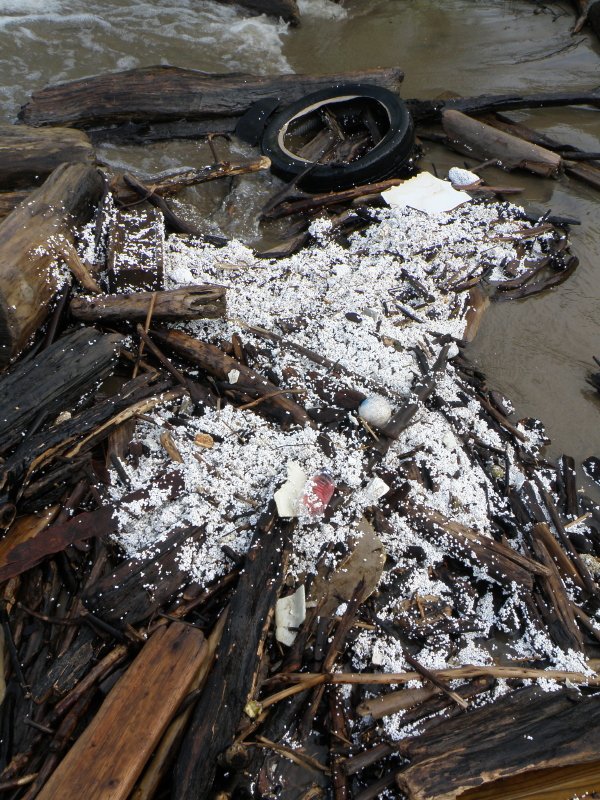
At the river’s edge, more white stuff could be found washing ashore.  Unfortunately, this material is not as environmentally friendly as the willow’s product.  In several places I encountered thousands of tiny, soft, white, beads and I instantly recognized the source.

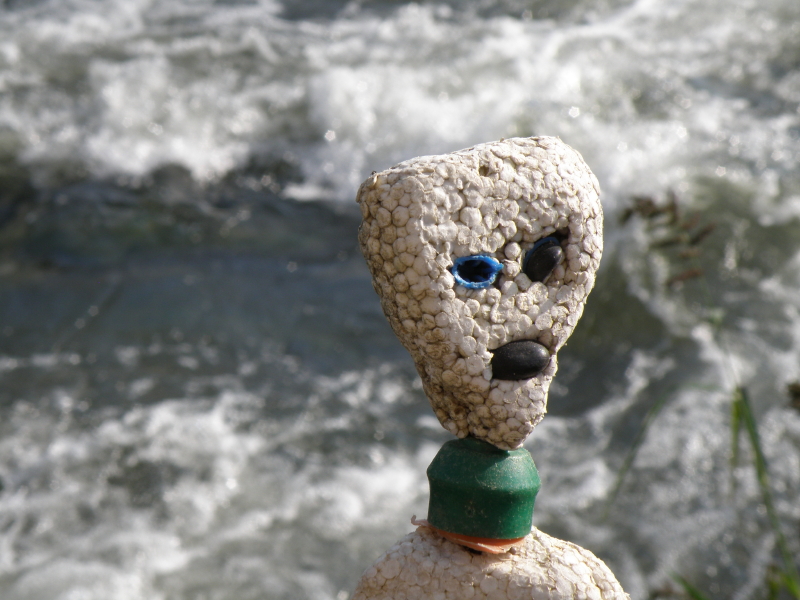
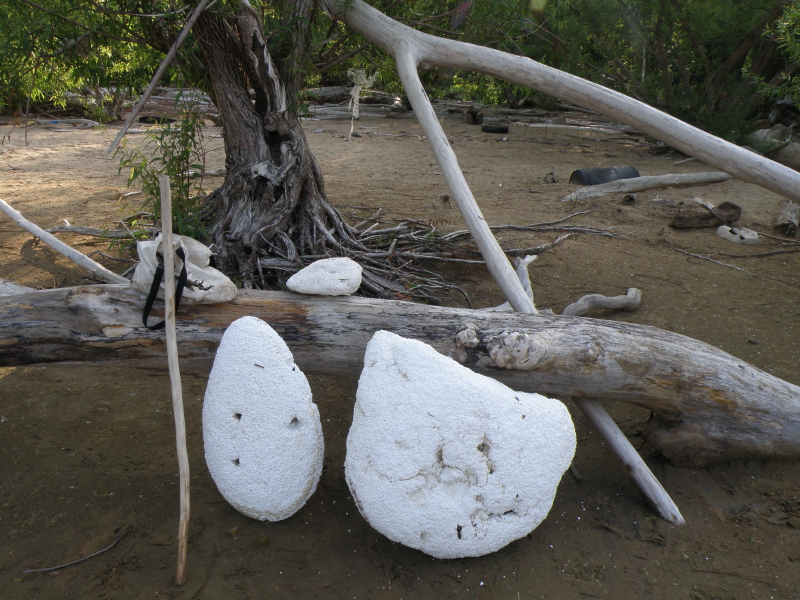
The white object on the right is a river-turned chunk of polystyrene.  Waves pounding the Styrofoam into the teeth of water born logs and the grinding of the Styrofoam into the sand at the river’s edge “sculpts” this material for me.  These mostly biomorphic forms are so hard-won by nature…that I feel a collaborative responsibility to not alter or impose my will upon them so much.  By shaping this material into organic shapes I “feel” the environment is curiously attempting to “humanize” the polystyrene by removing its rough edges.  Besides, I don’t want to free anymore of these white beads into the world if I can help it.  Here is another place I encountered where the freed polystyrene beads have run a muck.

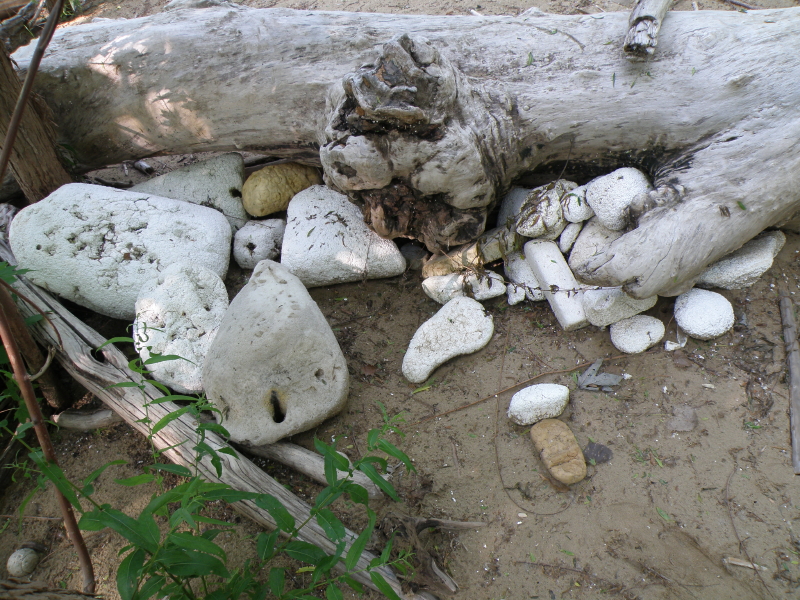
And now, here are a few of the Styrofoam chunks I found this day followed by an image of where I store them until I can make use of them.

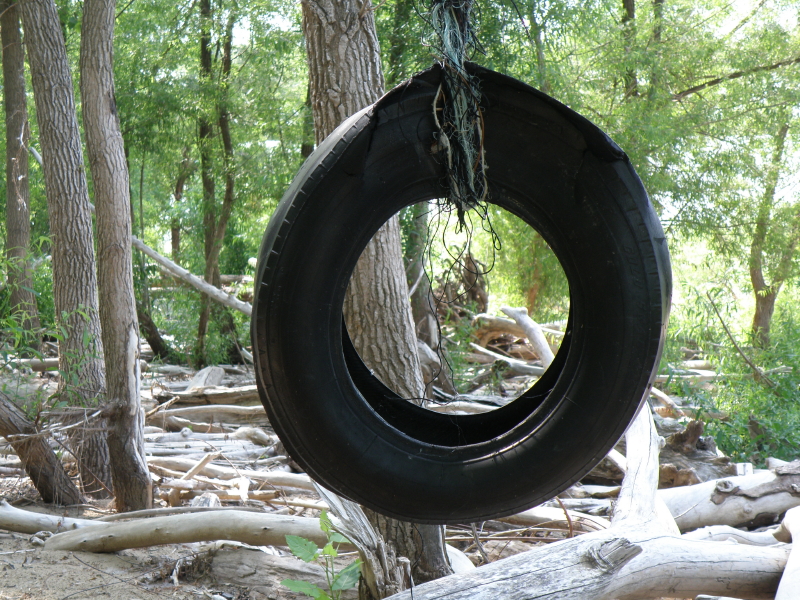
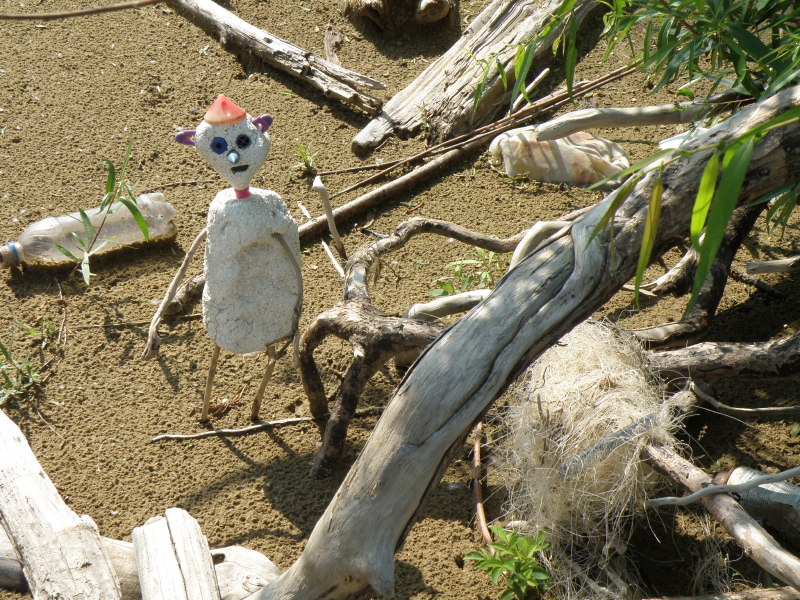
In the earliest days of my project, I can recall trying to fill up bags of this stuff for “proper” disposal.  It made me feel good that I was doing something environmentally friendly in the process.  Unfortunately, there is just too much Styrofoam in the world and places that I had picked up just became littered again with the next bout of high water and flooding.  That’s when it occurred to me that I could try to use this as an art making material.  If I could make something compelling enough…others might want to try to exercise their own creativity or help me out by taking the artwork home.  To some degree, I have been successful at this, but there simply is more garbage than people who care about what happens to it. At this point (soon to be nine years later) I’ve found that my own sense of aesthetics has changed greatly.  I’m from the old school that appreciates the narrative of art as it has developed with its various cultures, museums and landmark masterpieces.  Now, I feel that if we can’t develop (and soon) a more real sense of what is life-enhancing (namely the condition of the environment)…those other traditions won’t matter much.  Of course, there are other aspects of the formal art world that irk me as well and to see Edvard Munch’s fourth version of his “Scream” painting set a new world record into the millions of dollars makes me want to scream too.  Money is also a precious resource that should be used for better purposes.  Anyway, diatribe aside, here is my latest “mess-terpiece” for your delectation.  It continues the story from a recent post .  Enter the tire swing.

My little red-capped Styrofigure investigated the tree fort created near my outdoor atelier.  He visited his much larger relative who amazingly enough was still standing although his nose had fallen off!  It doesn’t look like the people who created this fort have returned recently.  Here is a photo from the family album.

After the visit, my newest figure did a little exploration of his own.  He came across a perplexing sight that made him scratch his head.

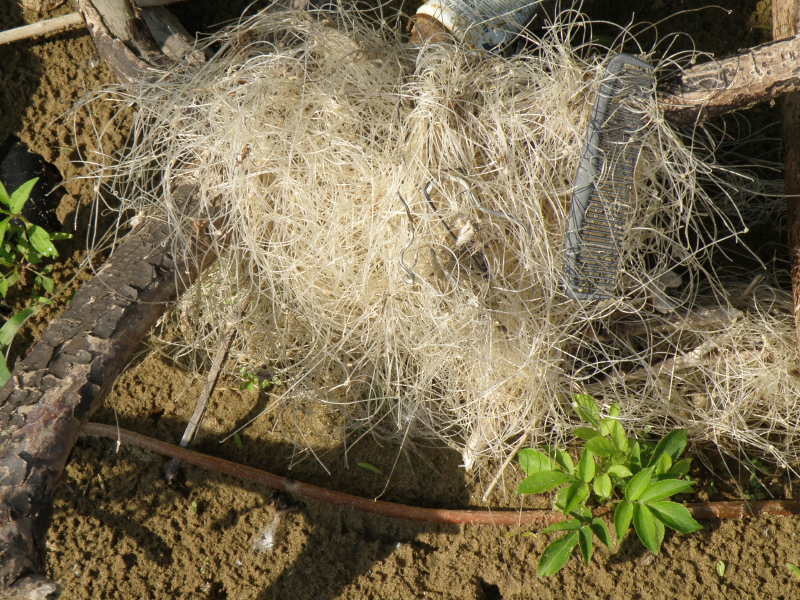
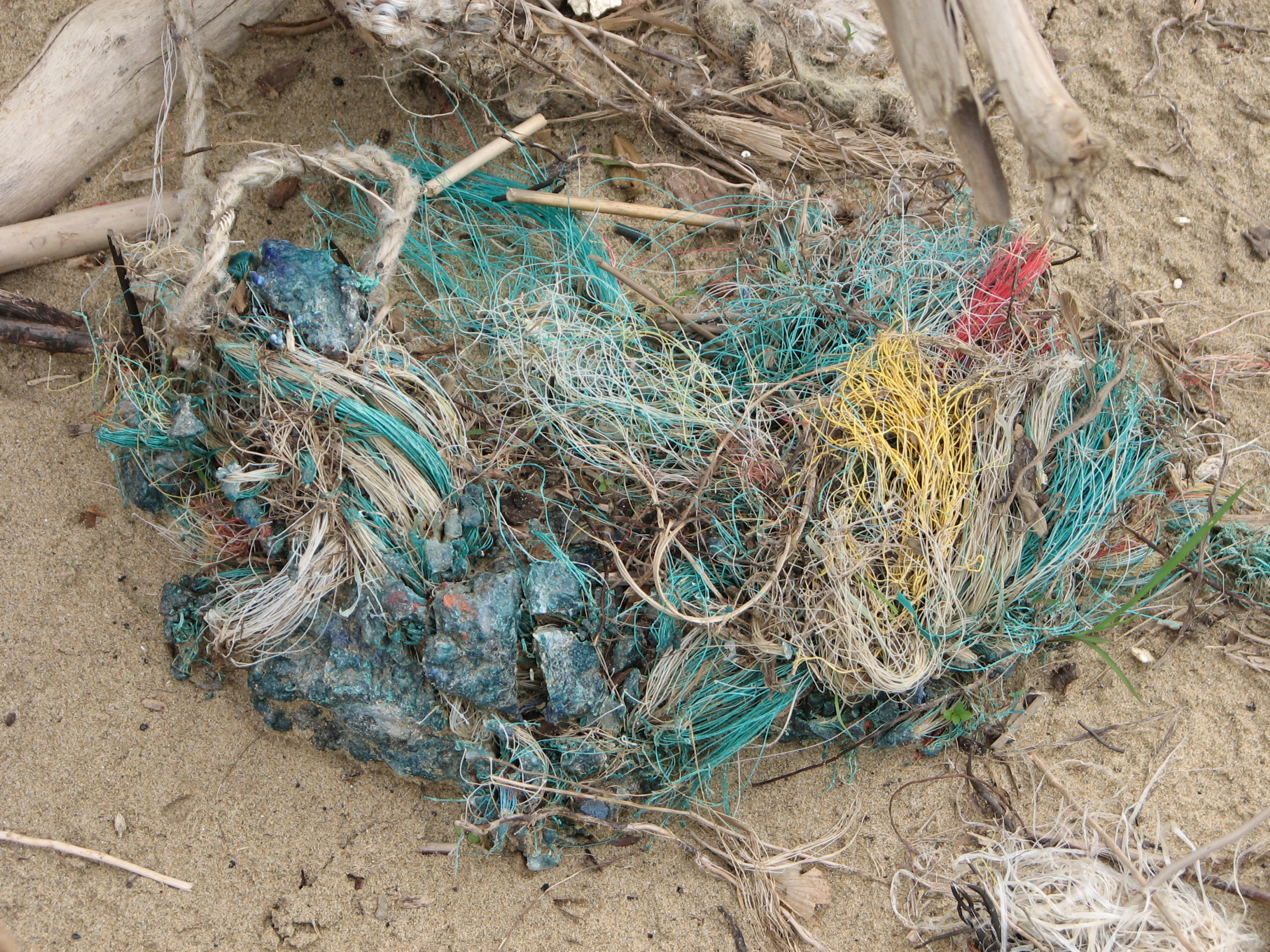
In a tangle of white fishing line was this image of futility.  How in the world, did this ball of monofilament snag a comb?  This seems the ultimate in entanglement.

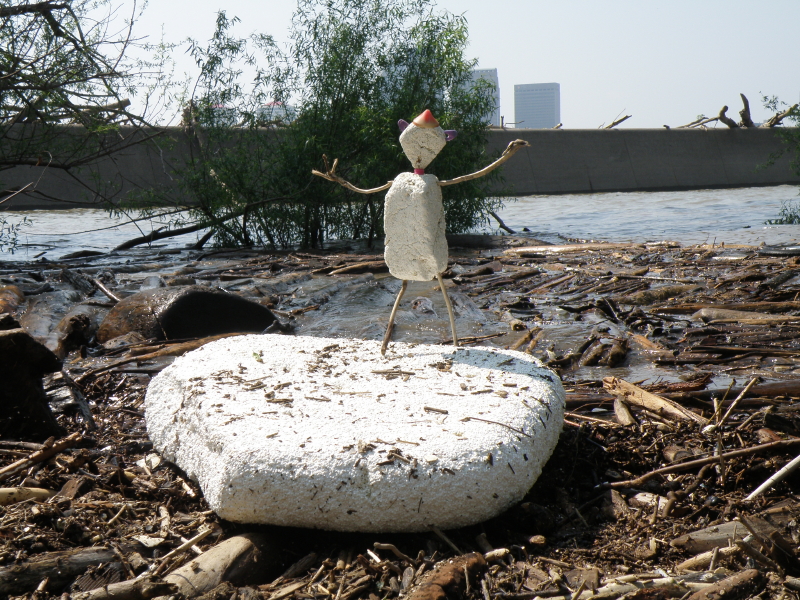
Venturing to the water’s edge, my little Styrofigure found another large section of Styrofoam that was now beached.  For me, it was all becoming too much of this stuff on this day and my figure expresses this with a gesture of its arms.  “Why do we need even more of this material…is there nothing better for the intended purpose?”

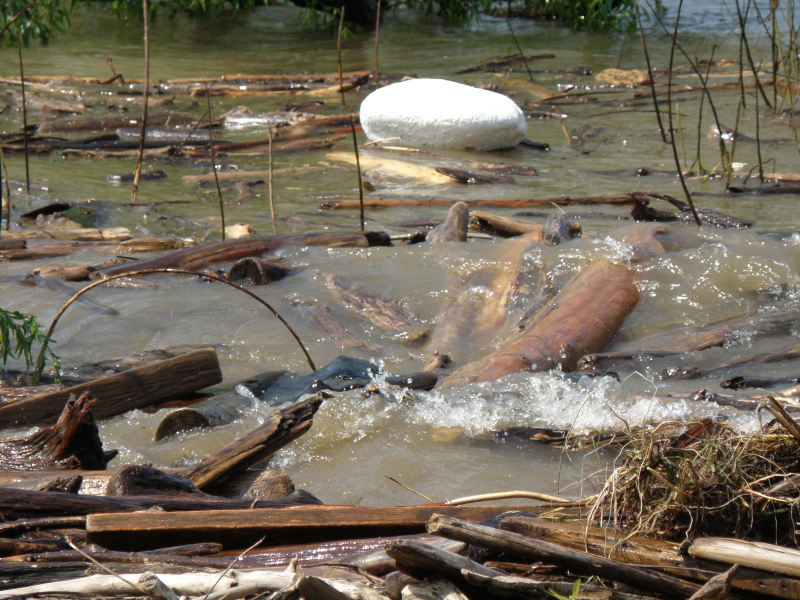
Meanwhile…back in the river, the story continues.

Read Full Post »

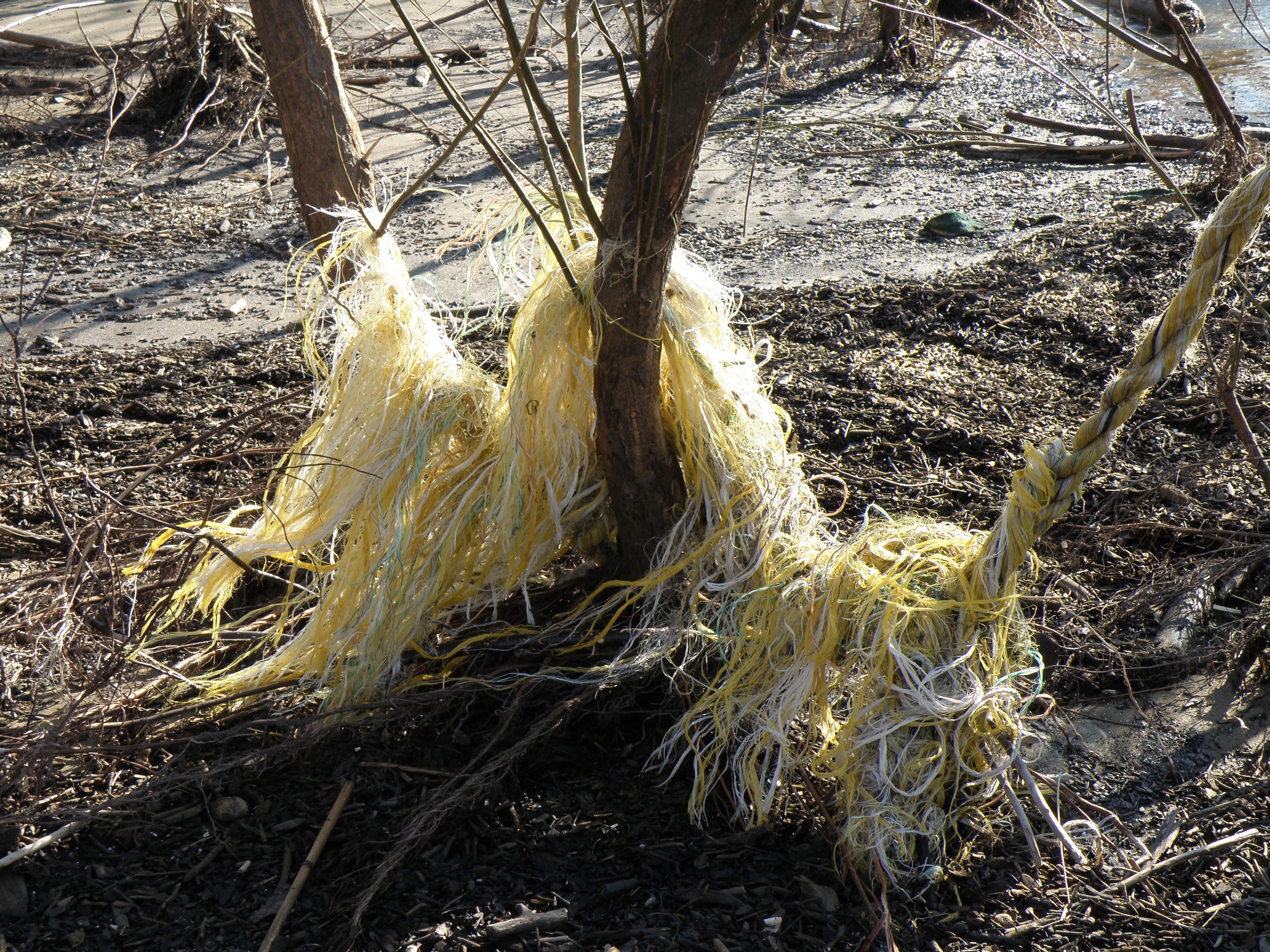
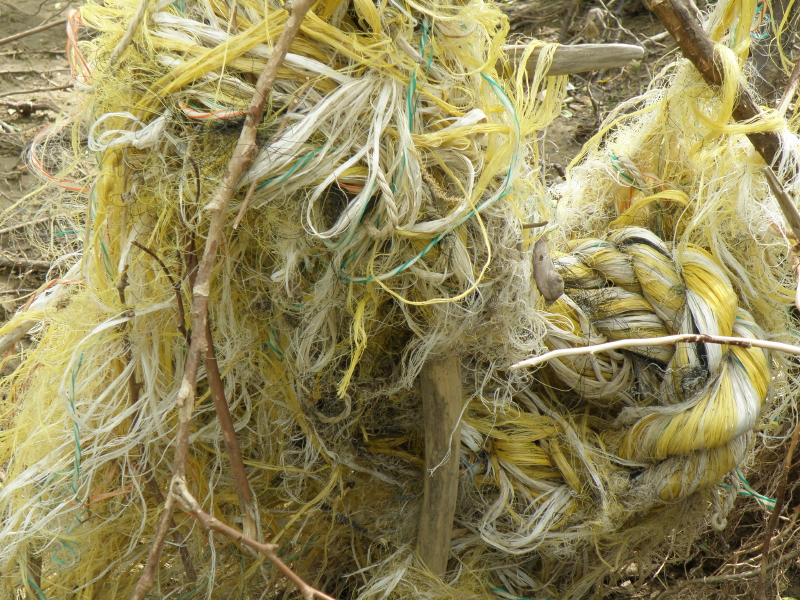
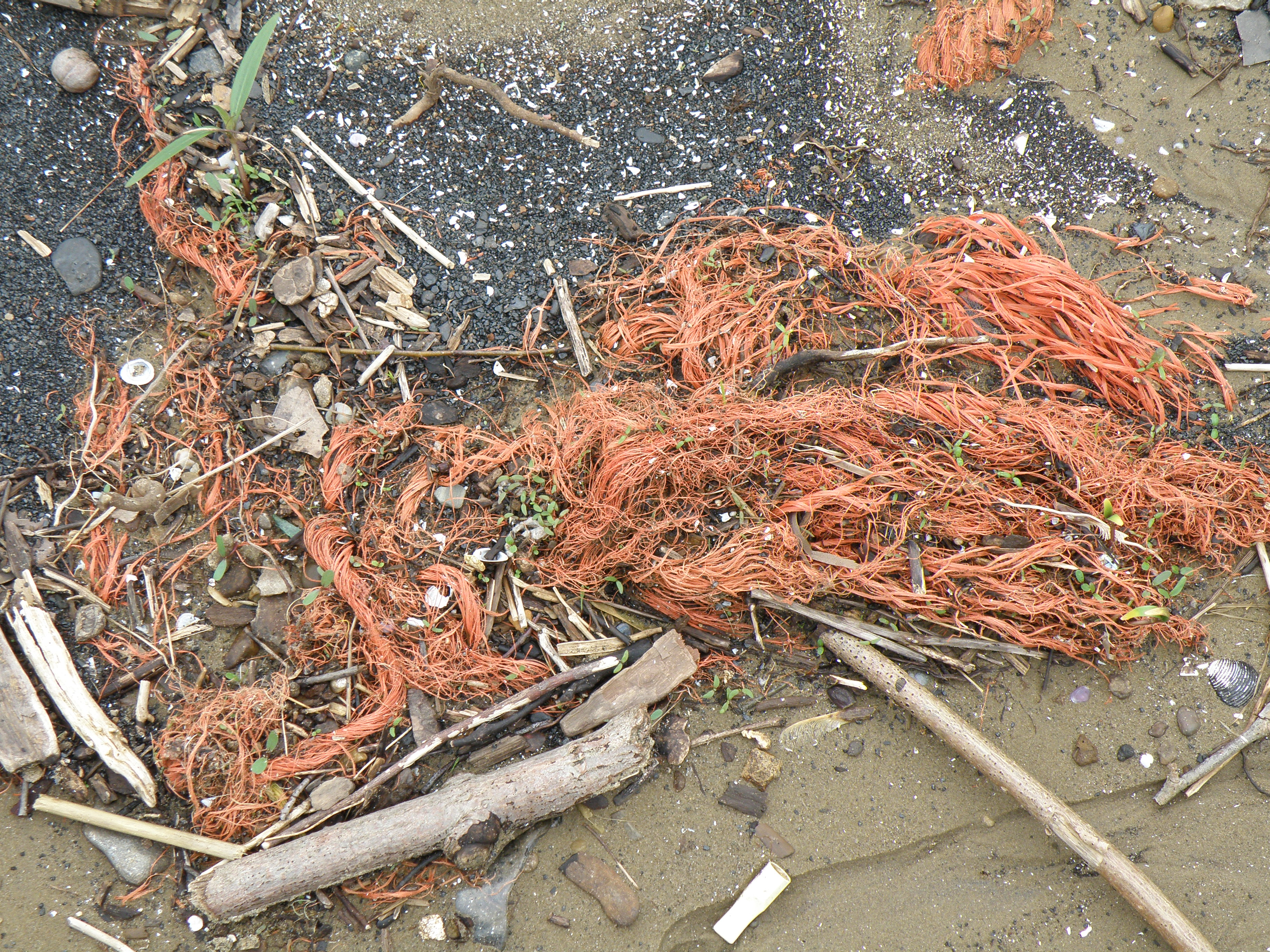
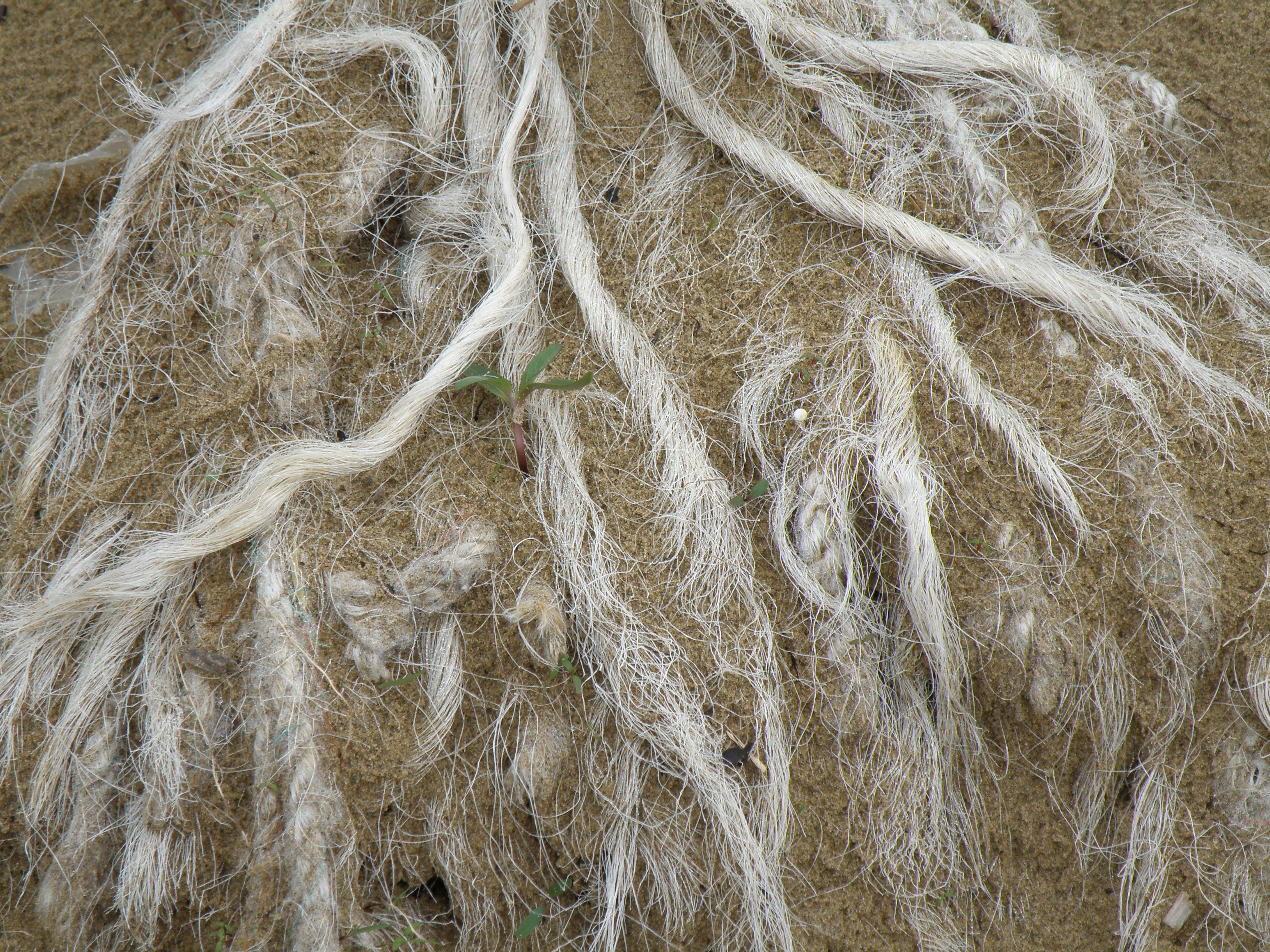
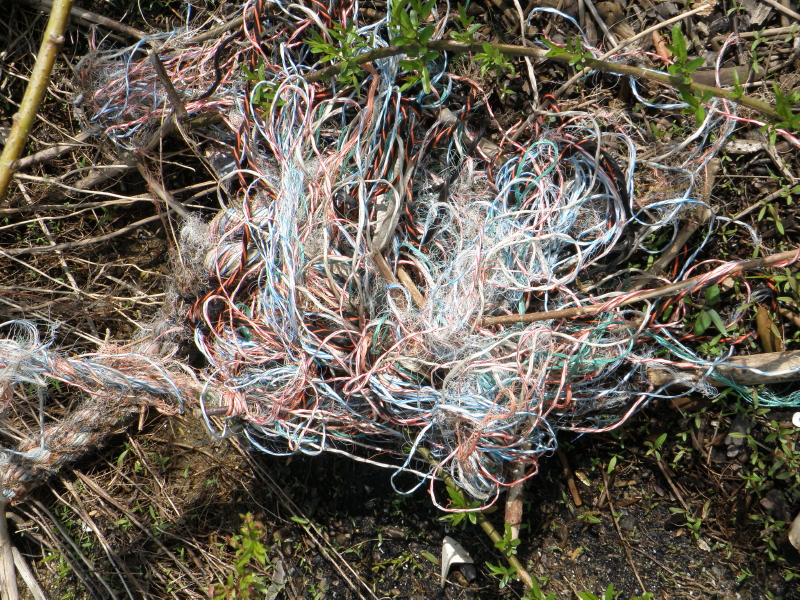
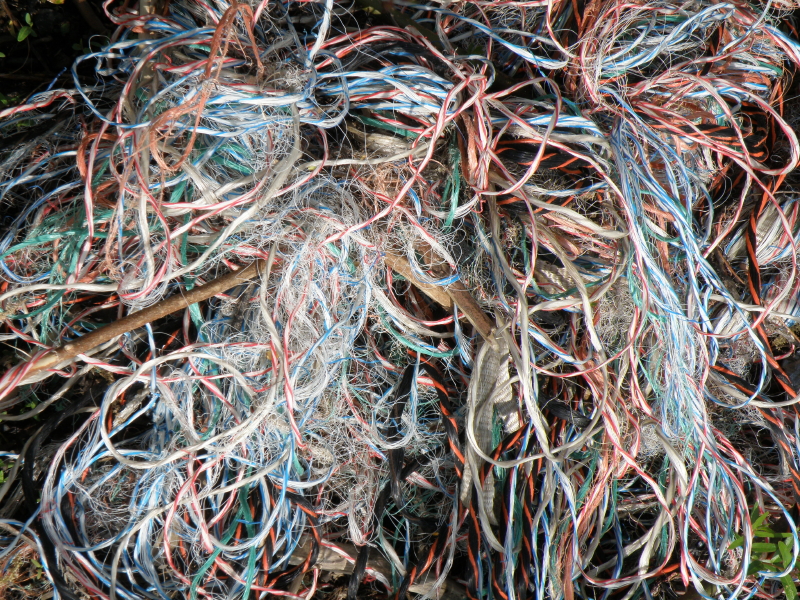
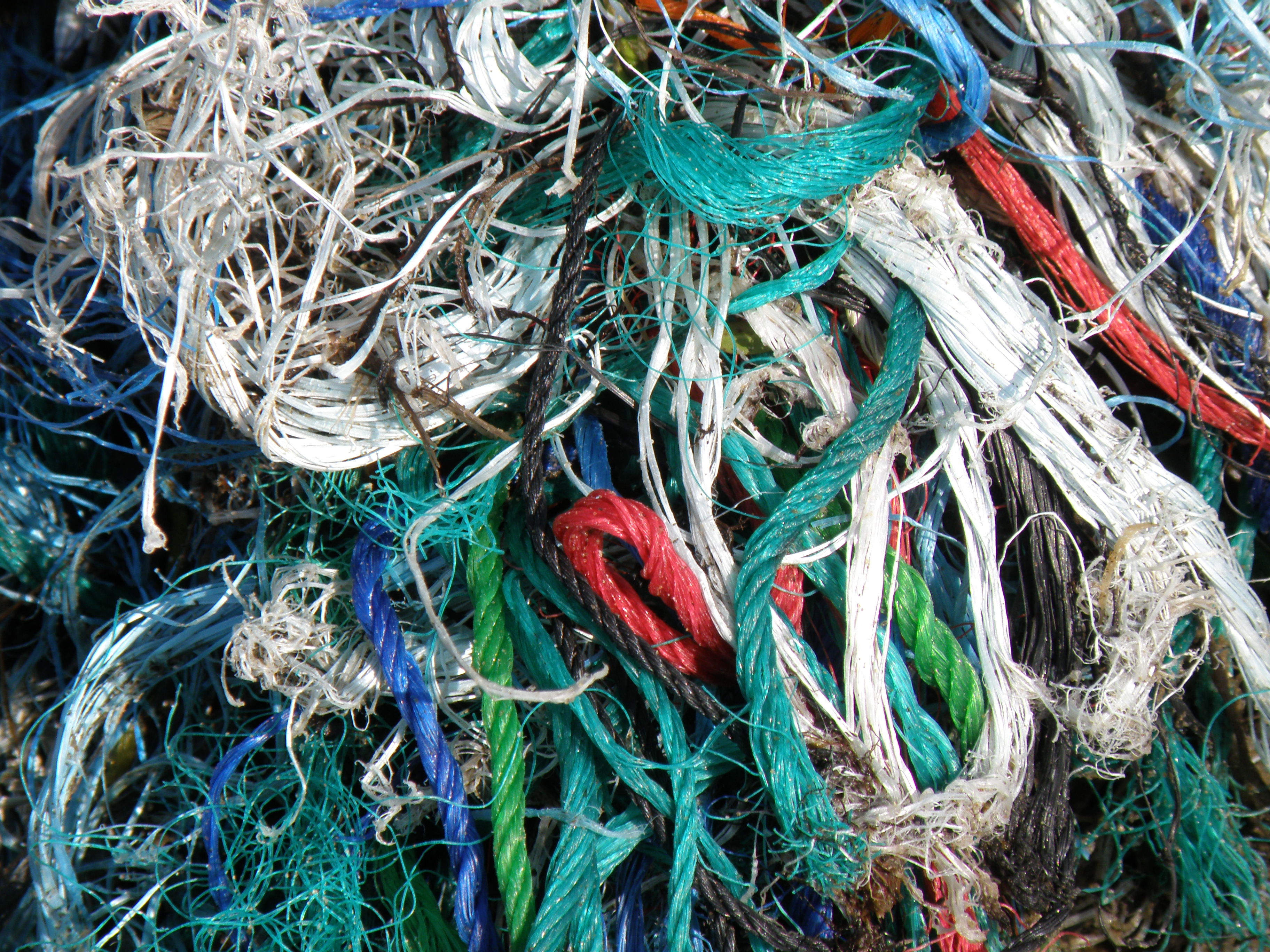
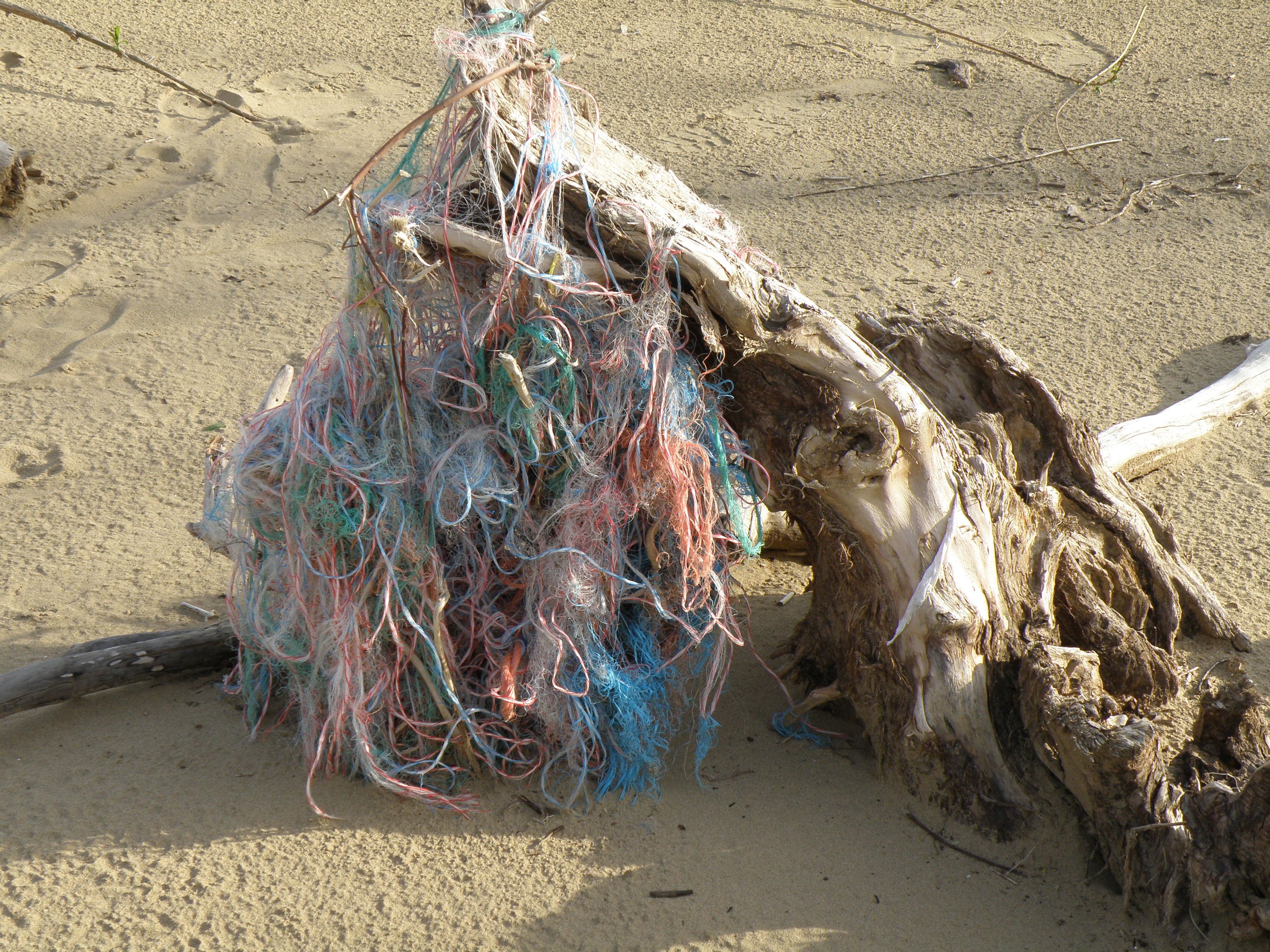
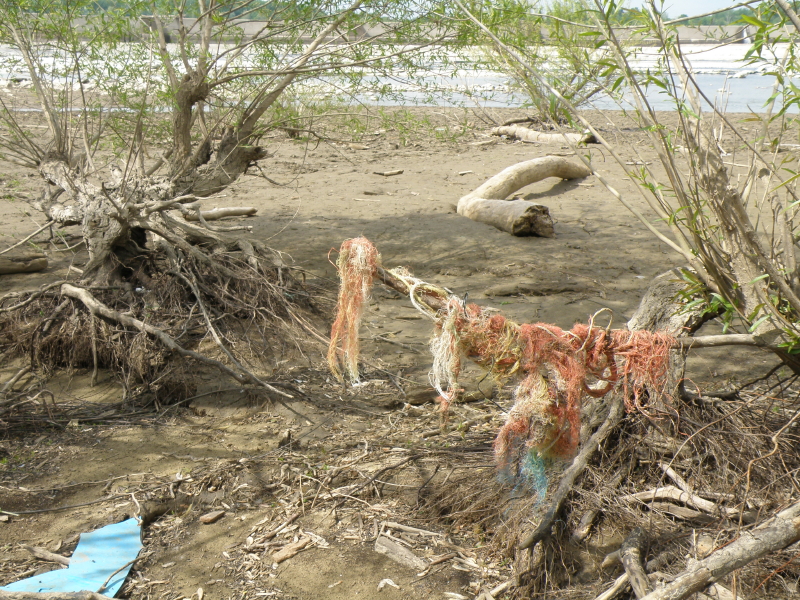
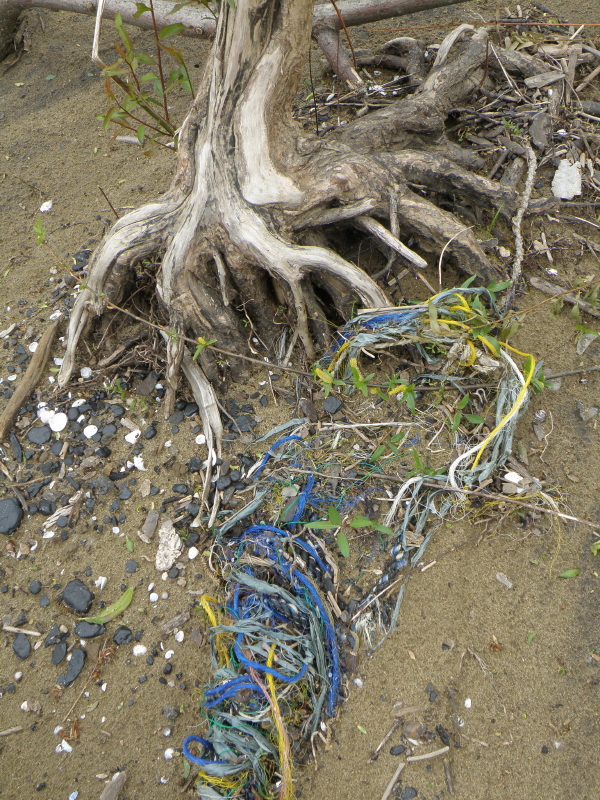
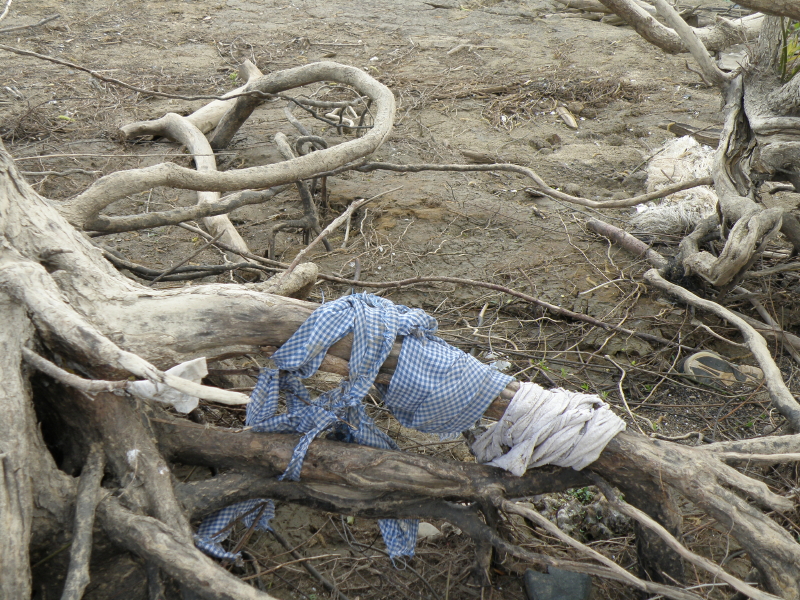
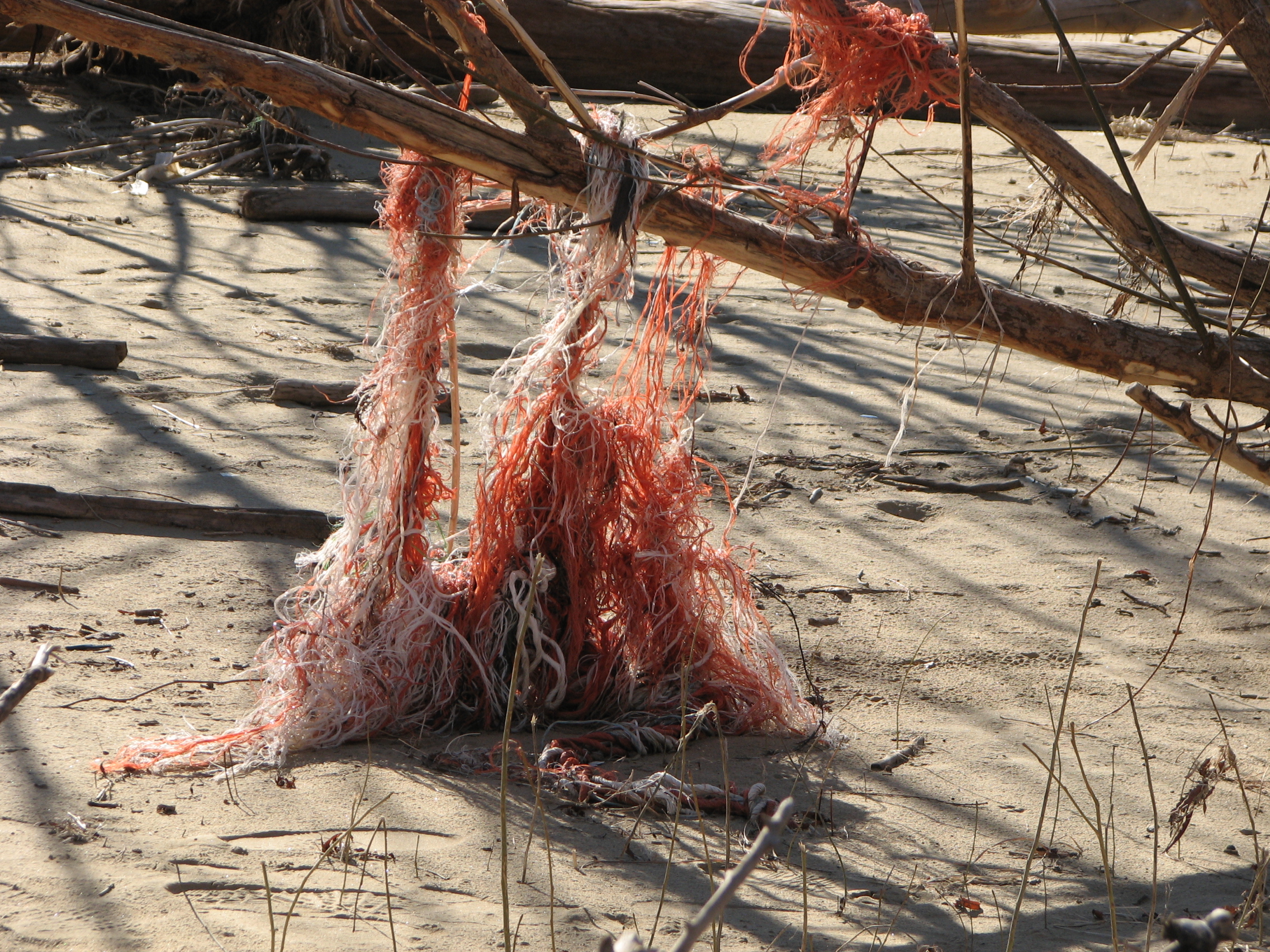
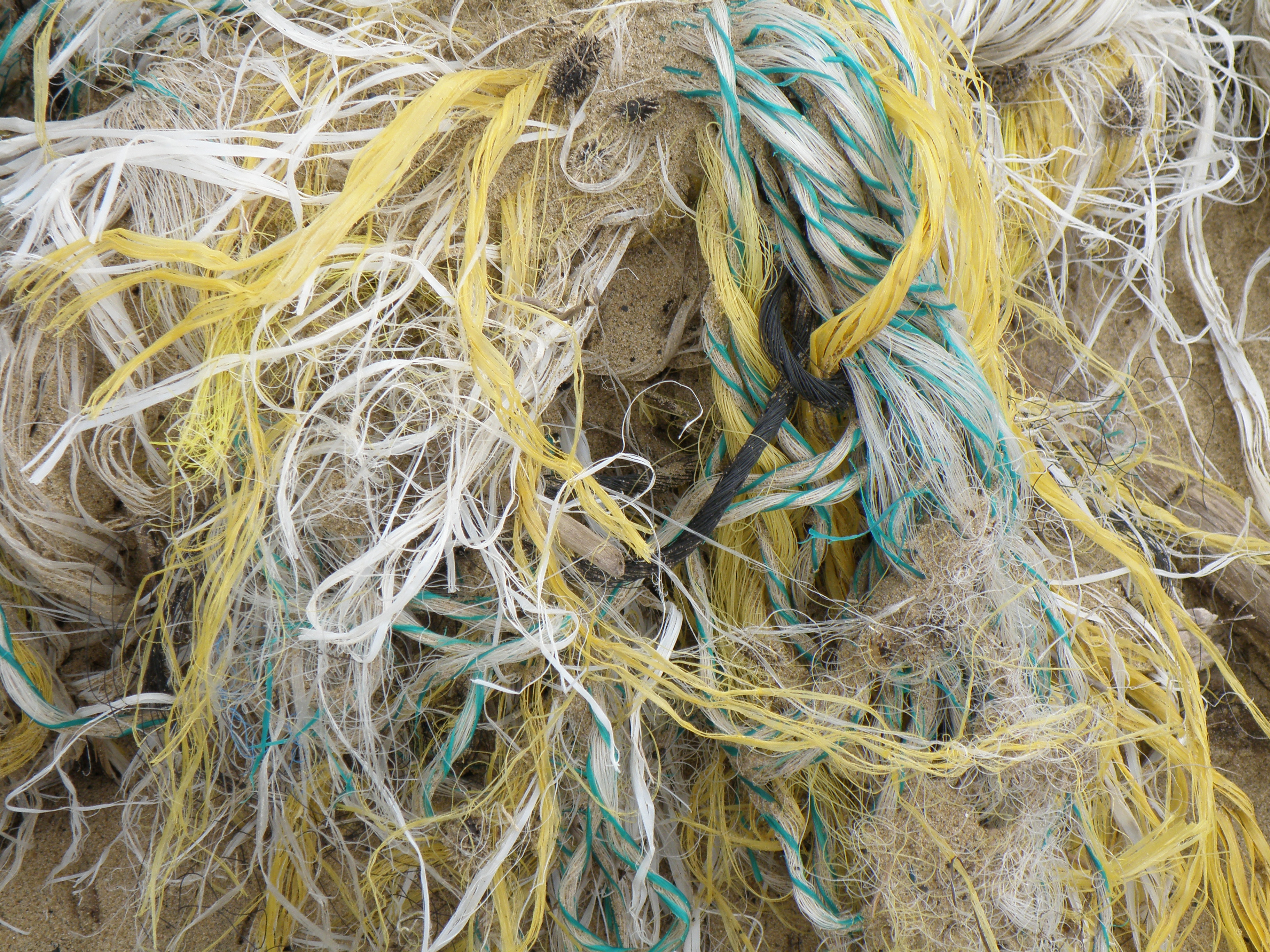
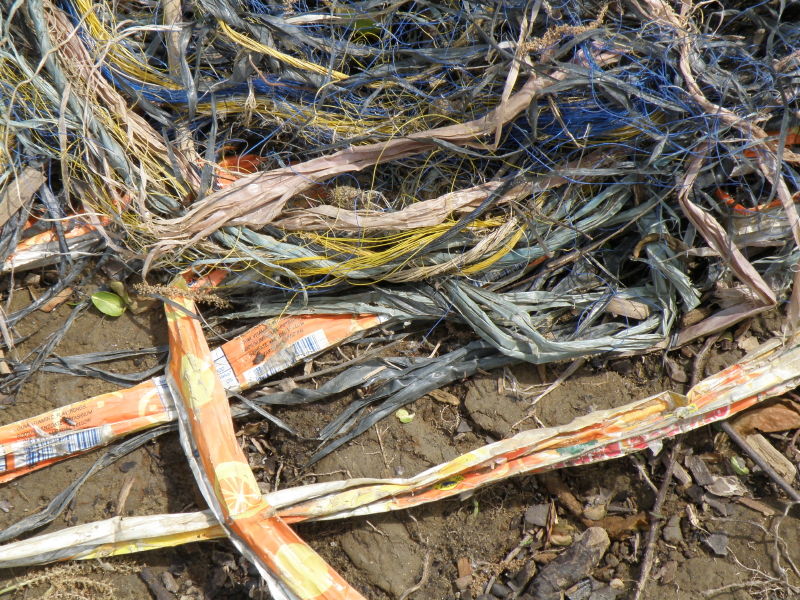
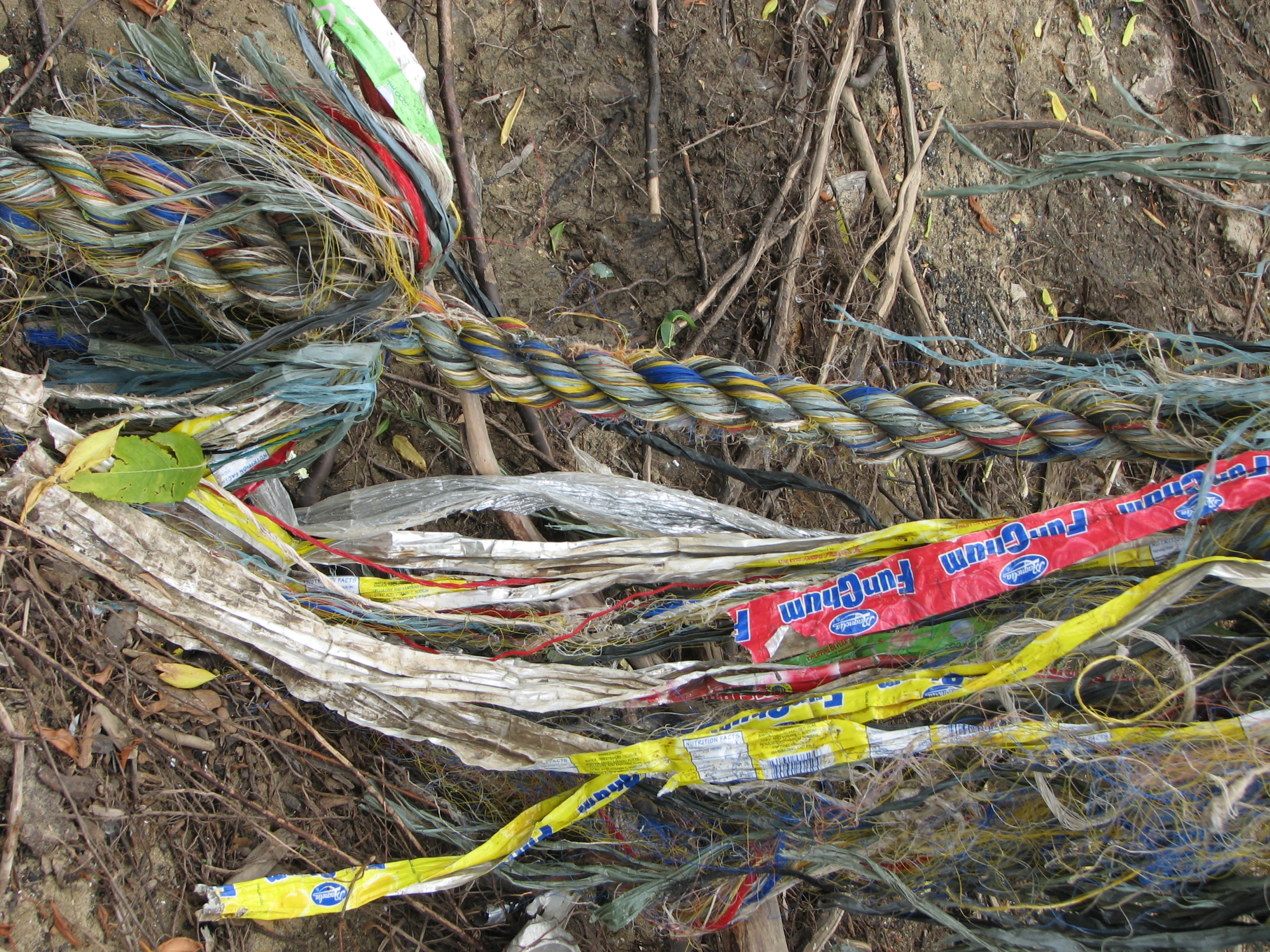
Previously,  I mentioned how interested I had become by the frayed barge cables I was finding tangled up with the willow trees at the Falls of the Ohio.  I really liked watching the process of change as these big synthetic ropes broke down through river power and dissolved back into nature as artificial raw materials.  I have also used these ropes to broach the subject of quantum mechanics (something I profess to really know very little about except that I like the idea of the universe being composed of nearly invisible vibrating strings ).  It’s also about all the interconnectedness of the world and the literal fibers that hold it all together. At the Falls of the Ohio, our material culture engages the natural physical materials and forces of the planet in a way that can be photographed.  Here is a portfolio of some of my favorite rope and string images.

Read Full Post »

Dear readers…I have so much to post and have fallen a couple of weeks behind.  The work a day world has been extra busy (and rewarding) of late.  Still, I have made time to go to the river and “do my thing” to maintain my peace of mind.  It’s time now to post my images and tell a story.  The following post occurred two weeks a go when the river was high and I decided to spend the day in the western section of the Falls of the Ohio State Park.  At this point, I was fairly certain that the materials I found and cached at my outdoor studio in the eastern section were either gone or the river was about to take them.  I ventured forward-looking for “fresh” materials and opportunities.

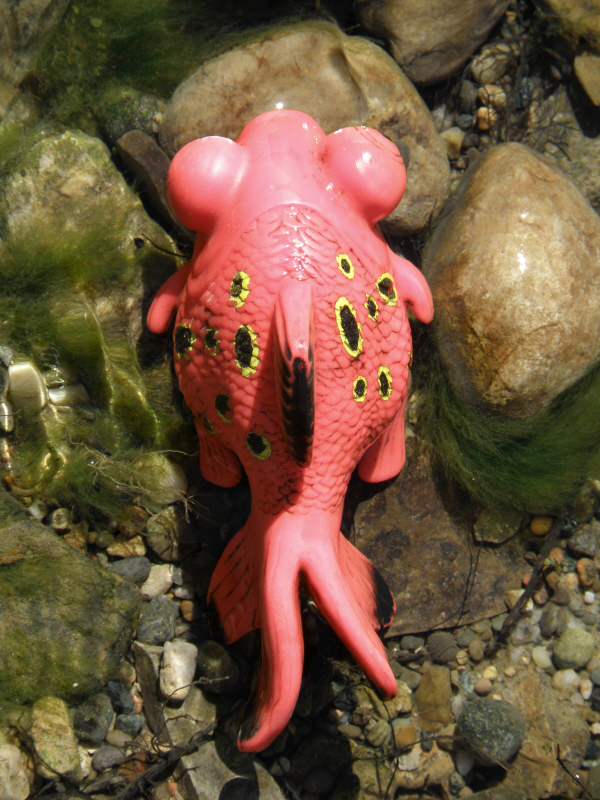
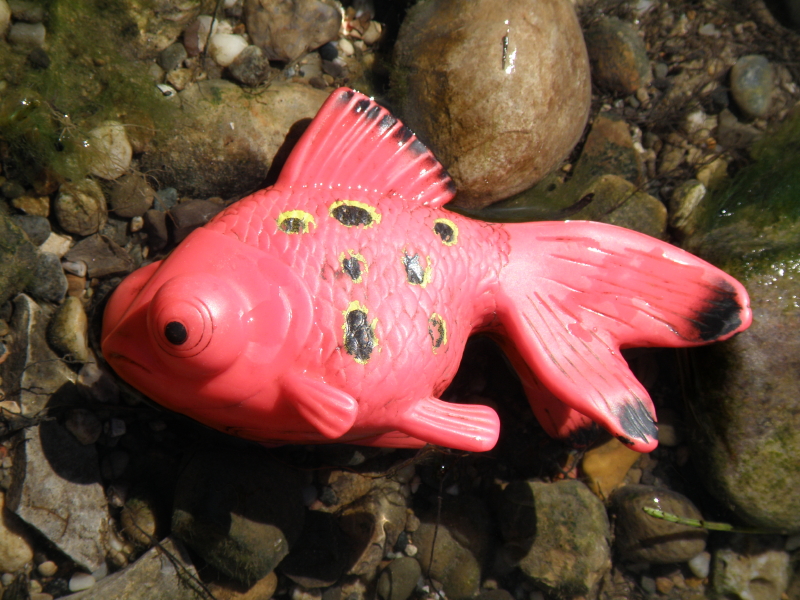
My walk took me past the marvelous tree that the local kids (among others) like to use as a hang out.  I can imagine many potential childhood memories centered around this tree for the folks who grew up with it.  On this day everything was quiet and in fact I didn’t see anybody out here at all.  That bodes really well if you want to see wildlife.  It has been so unseasonably warm…that I wonder how that will affect how spring unfolds this year?  Later we would set several records for high temps in the lower 80’s for early March!!! Technically, it’s still winter here…very odd indeed.  I had heard that a pair of bald eagles were attempting to set up a nest in the far western section of the park and I was hoping to see at least signs of the birds.  I wasn’t lucky on this day with the eagles, but I did come across a few other interesting wildlife objects courtesy of the Ohio River.  For example, here’s the first goldfish I’ve found out here.

This fish stood out against the river pebbles like a red beacon.  I could have found it with one eye closed! We have other invasive carp species out in the river now, but this was a new one.  An actual goldfish probably wouldn’t stand much of a chance against the river’s natural predators.  The non-native carp that have entered the river system eat constantly and grow really fast and large.  It will be a great challenge to rid the river of them. I picked up the neon goldfish and dropped it into my collecting bag.  Here’s what I came across next in the way of wildlife.

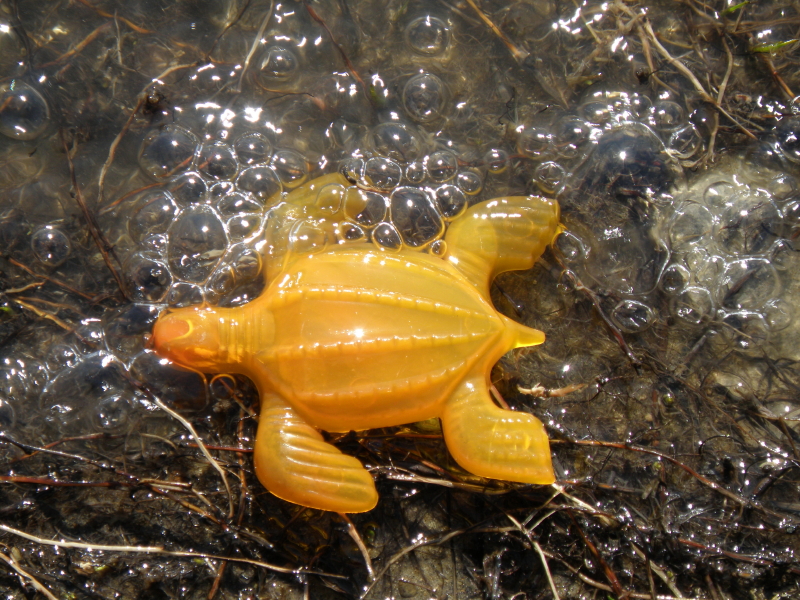
Swimming at the river’s edge I stumbled upon this golden sea turtle.  It was playing among the bubbles and rootlets.  Again, here was an image that was unnaturally beautiful…like the current weather.  The pattern we have been experiencing is that the river will rise and then fall in quick succession as the Army Corps of Engineers regulates the water level for commerce and flood control.  Walking even further west I came across this “elephant’s graveyard” of plastic and my heart sank.  You can pick this stuff up all day long and it seems the next day gives you a fresh supply. Sometimes it feels like you are rolling that proverbial rock uphill only to have it roll back down.  What’s happening up river from us?

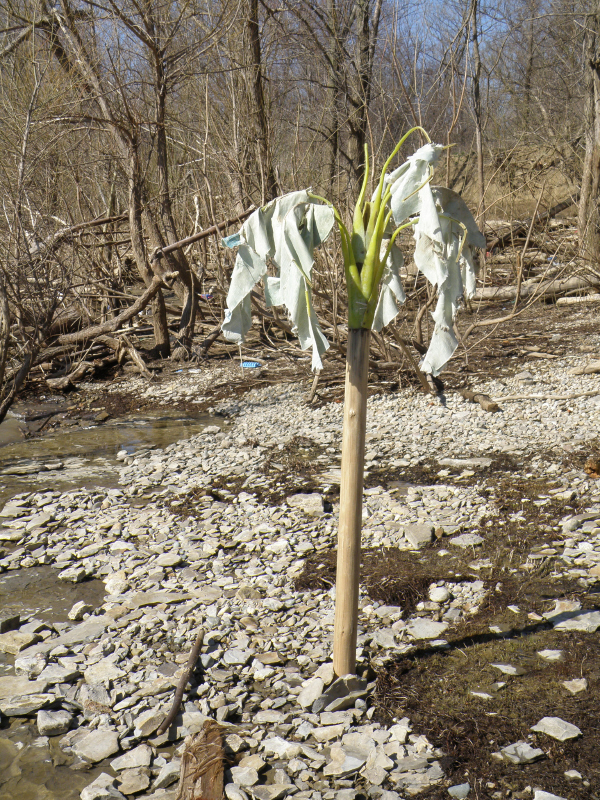
As you can see…it’s not a pretty picture.  Mostly plastic containers like old milk jugs and laundry detergent packaging.  As this plastic weathers and breaks down from UV light, the pieces keep getting smaller and smaller without ever completely disappearing.  The next stop could be the Gulf of Mexico. I found one other notable object and set it up among the still bare branches awaiting the new leaves of the year.  This is also the first time I have come across one of these things.

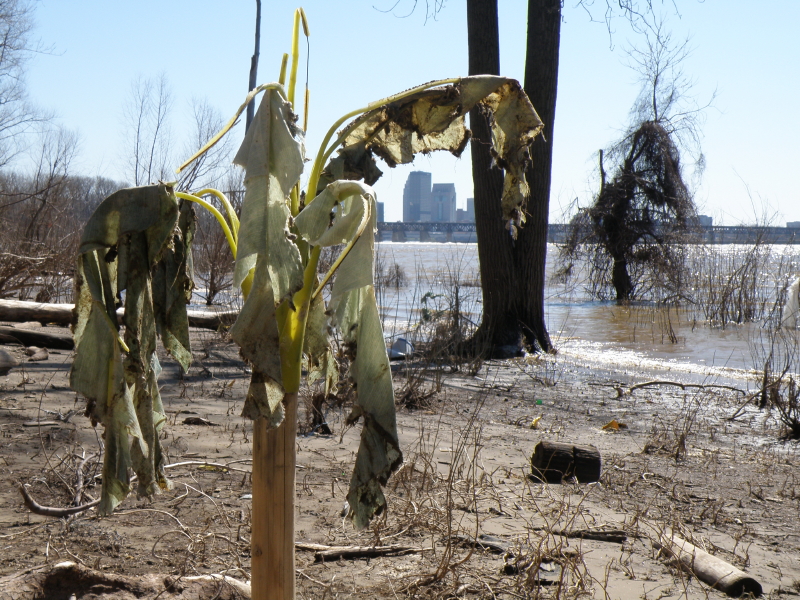
It’s either an artificial palm or banana tree?  As the day continued to warm I wondered to myself about how plants might be reacting to climate change?  Are the warmer weather plants moving northwards and what else will this change? While I was musing on this I received an answer in a most unlikely form.  My “banana palm” was visited by an unusual bird.

Here’s another first! Leave it to the only Banana Palm Mockingbird to find the only banana tree around here.  I watched transfixed as the bird explored the tree and the surrounding area.  A bird of this species is more likely to be seen in Central America than mid America.  I don’t know much more about it.  I saw it investigate the river’s edge for food and here are a couple more images to prove it was here.

Here’s the mockingbird with Louisville’s skyline visible on the opposite shore.

The mockingbird didn’t hang out for very long and soon it was time for me to head back.  I’m going to be off for the next couple of days and will attempt to post more of my adventures…if the call of the river doesn’t get me first!  Have a great weekend everybody!


Read Full Post »

« Newer Posts - Older Posts »