Feeds:
Posts
Comments

Archive for the ‘nature’ Category

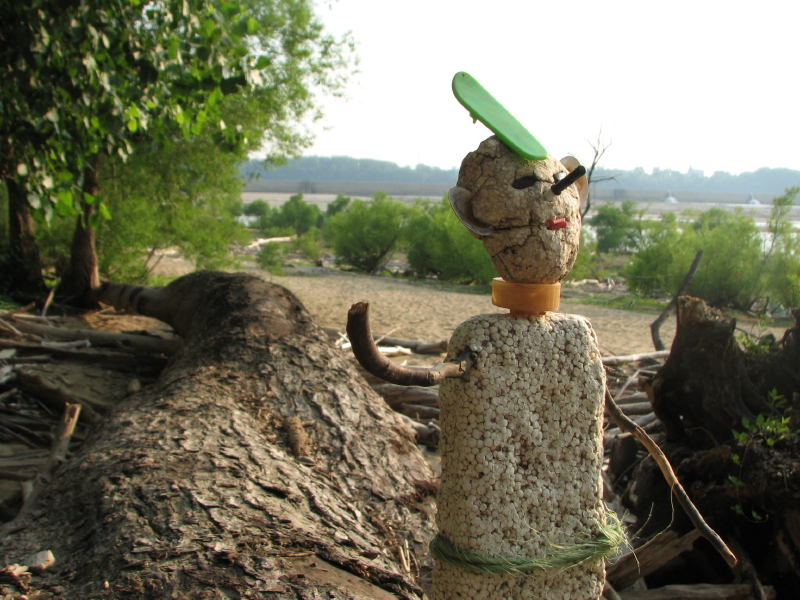
The other night after supper I had an hour or so to visit the river before the sun set.  So, I escaped to the river and my favorite park to check out the quality of the light as it slowly sets below the horizon.  During this time of year, the days are longer.  In short order, I was able to make this little figure from Styrofoam found on site.  What looks to be a green feather on this guy’s head is actually a miniature plastic skateboard missing its tiny wheels.  I used found coal for his eyes and his ears are small clam shells.  I tied some string around his waist for a belt.

Although it rained lightly a couple of days a go, things are looking a bit stagnant and dry in places.  The weatherman on the television gave some earlier hints that strong storms were a possibility for our area.  We shall wait and see.  For now, a quick stroll is in order before the rain comes or at least until the sun sets for another day.  Wandering near the river, I hear the calls of Killdeer plovers who are so good at sounding the alarm whenever danger is present…in this case, it’s me.  I managed this one quick photo of a bird hiding in an isolated patch of  grass.  The bright red eye-ring is visible making its eyes appear larger.
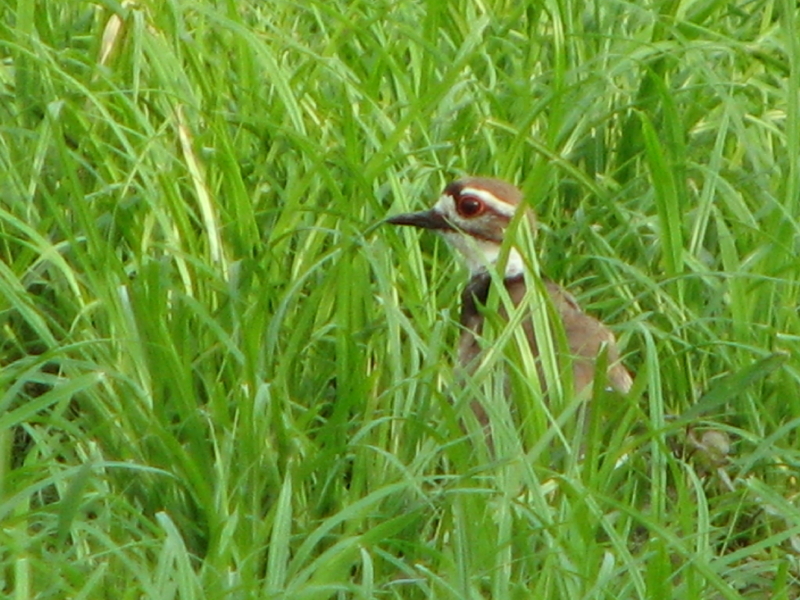
I noticed that whenever one of the resident vultures flew over, this bird would duck down in the grass.  Although the vultures don’t pose any danger, the Killdeer instinctively hide from what might be a bird of prey intent on eating it.  I have seen an American Kestrel make a meal of one of these large plovers before way out on the fossil beds on the Kentucky side.

There is a drying out occurring and all the small pools of water are evaporating.  In the process, they become more and more stagnant and I bet there’s a wealth of life in a single drop of this water.  I move the figure closer to the river’s edge to see what we can find.
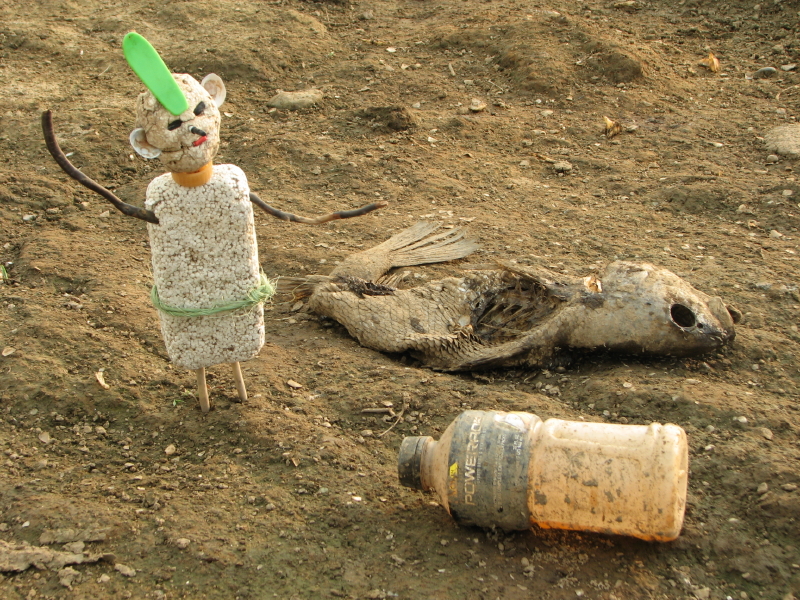
The fishermen have had their moments.  Left on the bank are the remains of dead fish and the trash the anglers didn’t want to deal with packing back to their vehicles.  Of course, the vultures love all the fish and make short work of them.  What the birds miss…the flies find.
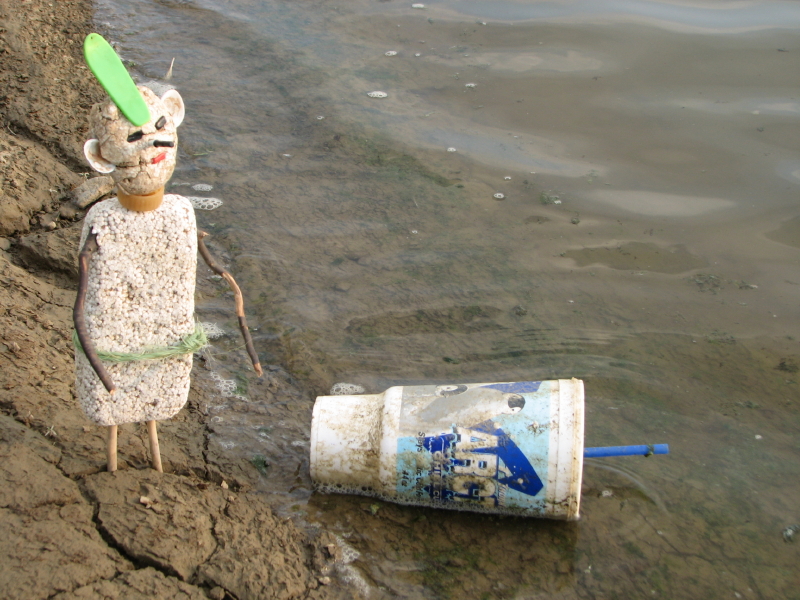
I do get a bit upset by the litter left behind by the fishermen.  I wouldn’t consider them sportsmen because they seem to have little regard for this resource.  I wish the people in charge of patrolling the park would come down here more often than they do.  I’m sure they would find many people out here fishing without a license.  I think some official presence visiting occasionally would be a good reminder to keep this place cleaner.
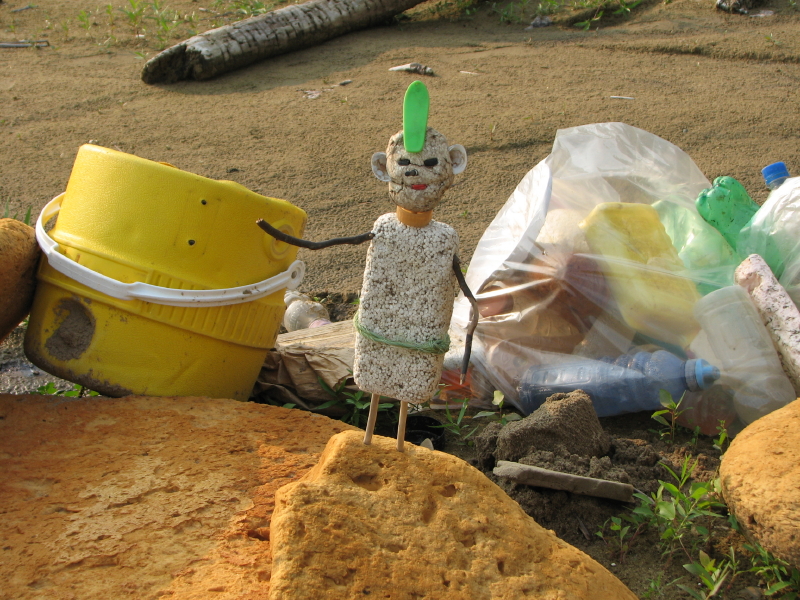
There are still isolated piles of previously collected river debris waiting for the trip to the landfill.  I hope at some point in the near future that this junk gets picked up for good.  For the moment, it represents a job half completed.  At this point in my visit, I perceive  that the quality of the light is different and a breeze is kicking up.  From the west I can see that the weatherman has a good shot of being right about his forecast.  A storm is on its way and I gather my stuff for the return trip home.  I hope the storm is a good one because this place could use a little freshening up.
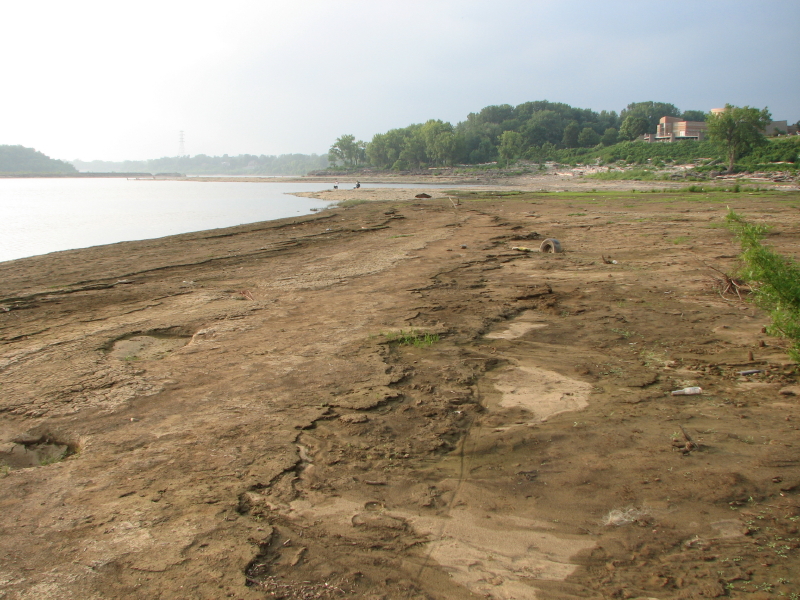
Read Full Post »

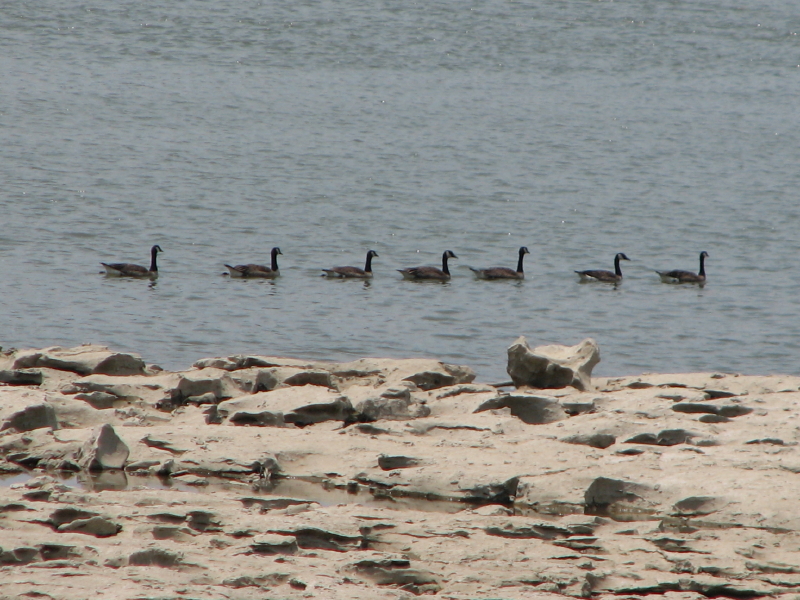
The river is falling, but is not yet in summer pool.  Day by day the extensive Devonian fossil beds are revealed a little at a time.  The limestone surface is scalloped by the actions of the Ohio River and appears to be the landscape from another world…because in fact it is!  Throughout the rocky matrix are the fossilized remains of ancient marine creatures that populated this reef over 375 million years a go.  While my thoughts are lost in deep time, a procession of stately Canada geese glides by which brings me back to the present and my own animal existence.  It is really hot out here today and I brought extra water to drink.  Slowly the first eight geese becomes a large flock as more and more birds reveal themselves that were hiding behind the huge rocks that mark the Kentucky side of the fossil beds.  From my vantage point I count 83 geese which are the most Canada geese I have ever seen here at one time!  In the warmer weather months, the number of bird species here is less than in the spring, but the indigenous birds are entertaining and I enjoy noting aspects of their respective behaviors.  Here are two new birds I haven’t previously featured and I hope you will like them as I do.

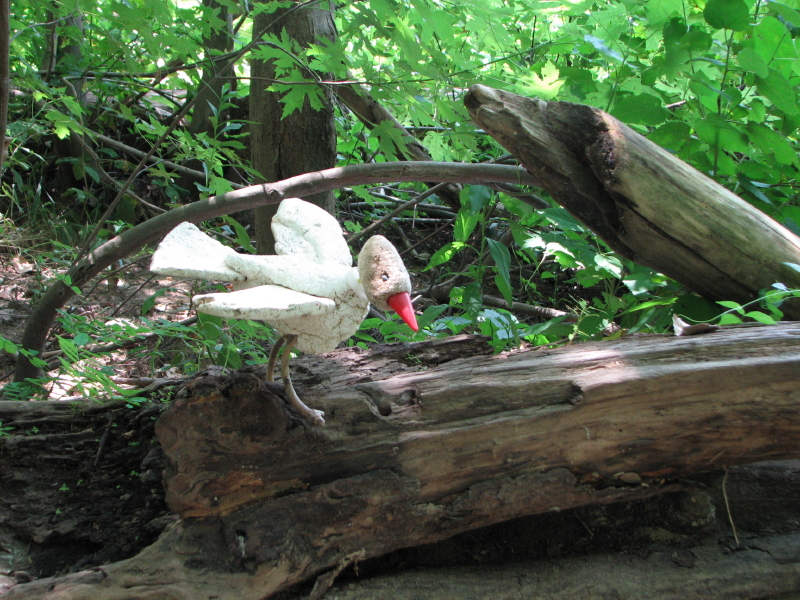
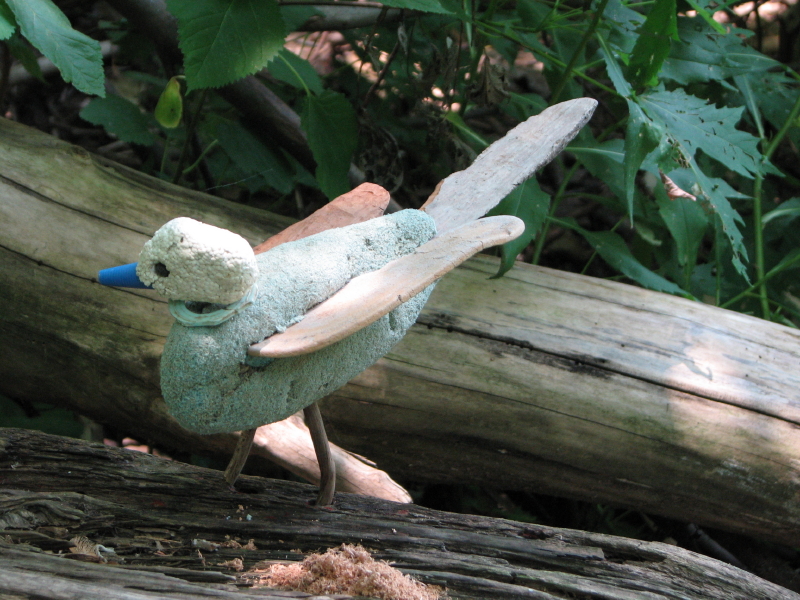
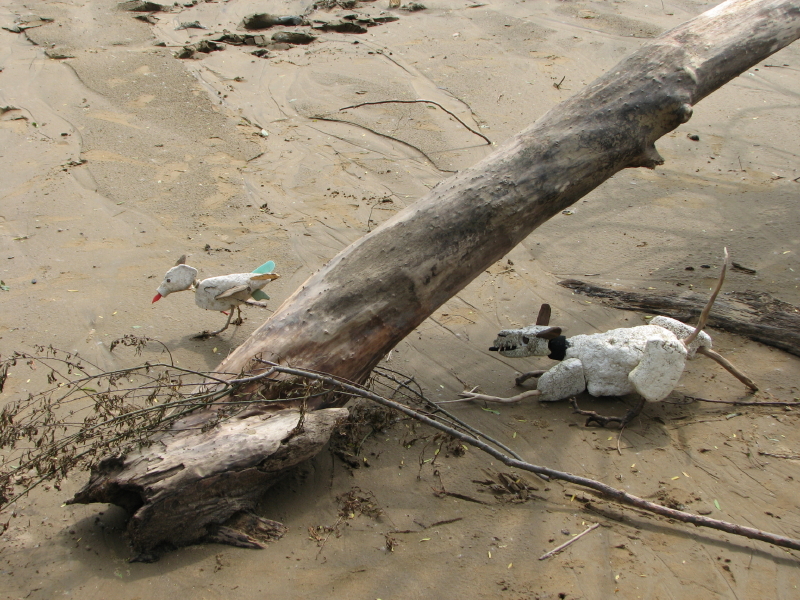
It’s definitely cooler in the deep shade of the woods, but the mosquitoes are more numerous.  I can’t get myself to put poison on my skin to keep them away and so I try not to let them get inside my head.  I suppose that they don’t bother me as much as they do other people.  Maybe I don’t taste as good!  While cooling off by the big trees I came across this unusual species and it’s called more commonly the Bumble Bee Bird.  I think its scientific name is something like “Turdus bombus”, but I could be wrong.  “Turdus” is the genus of thrushes and” bombus” refers to bumble bees.  Seems to make sense.  So, you are probably wondering why this clumsy looking bird is named what it is named and I will show you why.

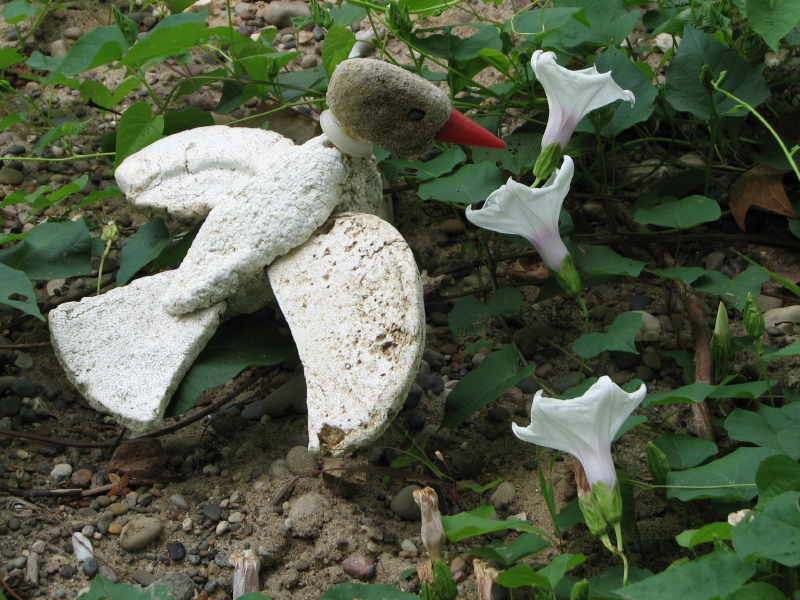
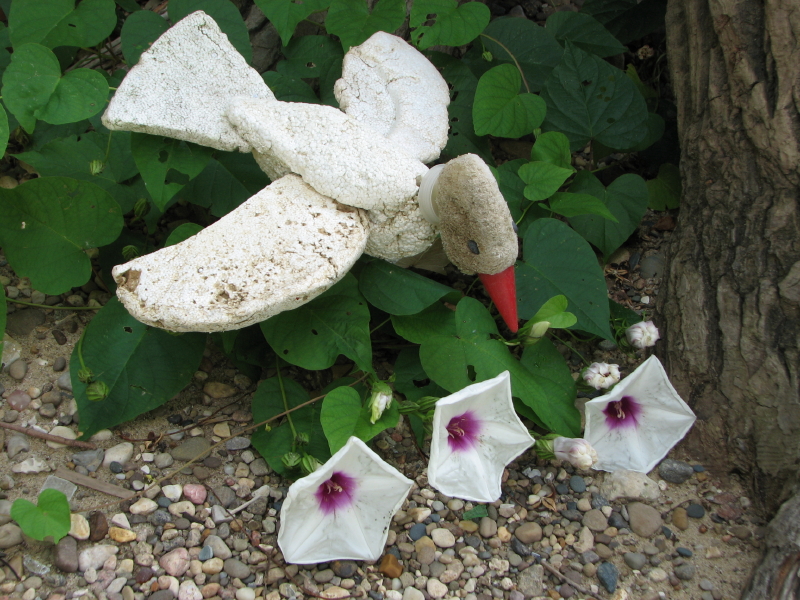
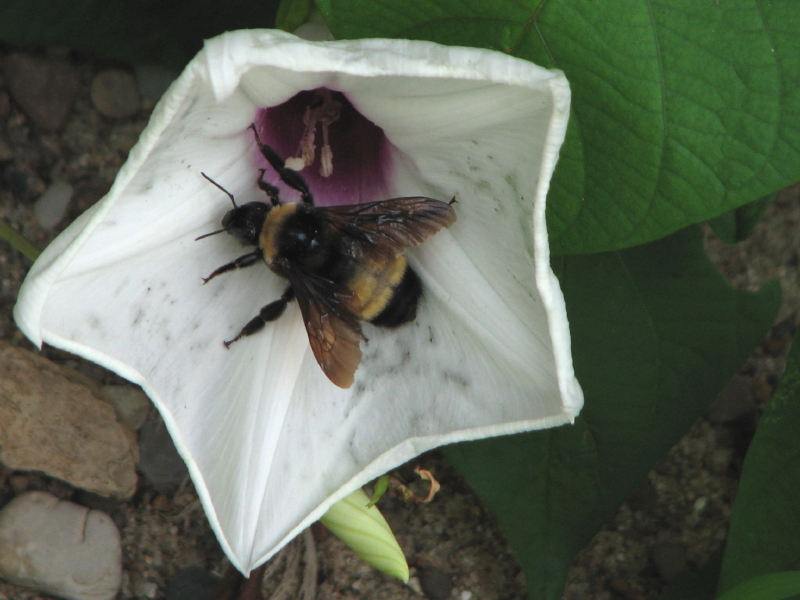
I came across this specimen hanging out at the forest’s edge where many morning glories were present.  These flowers grow close to the soil and sand and in places form thick blooming carpets.  Kind of pretty in an understated way.  Here’s the same bird hopping around some other morning glories, but is he just admiring the flowers or is there some other purpose afoot?

He’s in the deadly serious pursuit of something to eat, but not just any unfortunate creature or seed will do.  This species is aptly named because it has evolved to eat the large bumble bees that pollinate these flowers.

The bird waits for the bee to enter the bloom.  The bee has to get deep into the blossom to reach the sweet nectar it needs.  This is the moment when the bird comes from behind the bee and with its large red bill, seizes the bee crushing it and its nectar-filled abdomen.  The bee had no ability at this point to defend itself.  Stealing the nectar, the bird then tosses the dead bee into the air, catches it, and then swallows it head first.  It’s a doubly good meal and worth the expenditure of energy.

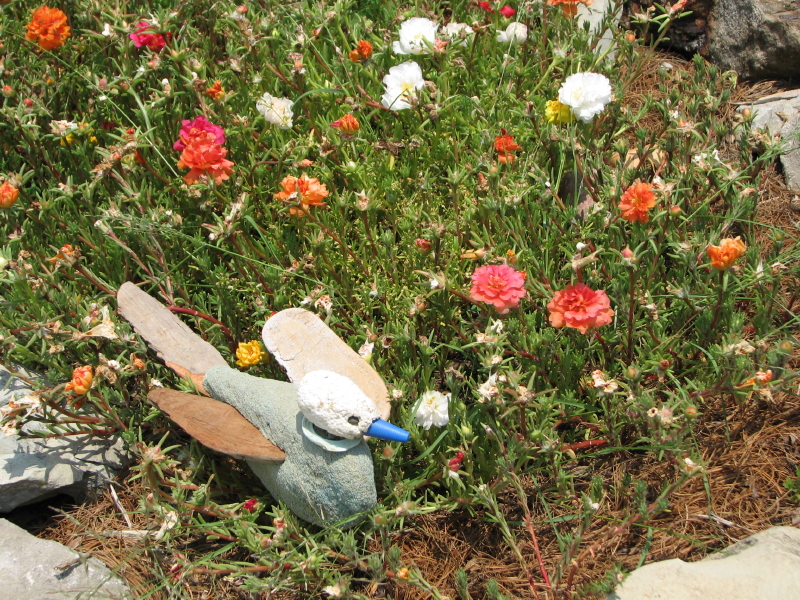
Also found in the cool of the forest is this little bird which is aptly named the Melancholy Dove, scientific name “Columbina melancholia”.  Smallest member of the dove family likely to be found this far north.  It is usually by itself or with a few of its kind and represents the antithesis of a former Falls of the Ohio resident…the now extinct Passenger Pigeon which congregated in immense flocks.  The Melancholy Dove is also recognized by its blue bill and sad expression on its face.  It is not an especially rare bird and I spot this species across the park during the summer season.

I found this bird sitting in a small garden near the Interpretive Center where it seemed unconcerned about the park visitors.  A nearby bird feeder has made this bird especially trusting and I fear that one of the many feral cats in the area will find an easily ambushed snack waiting on the wing.  Contributing to their melancholy name is the soft, plaintive coo…coo-coowee sound it makes during the breeding season.

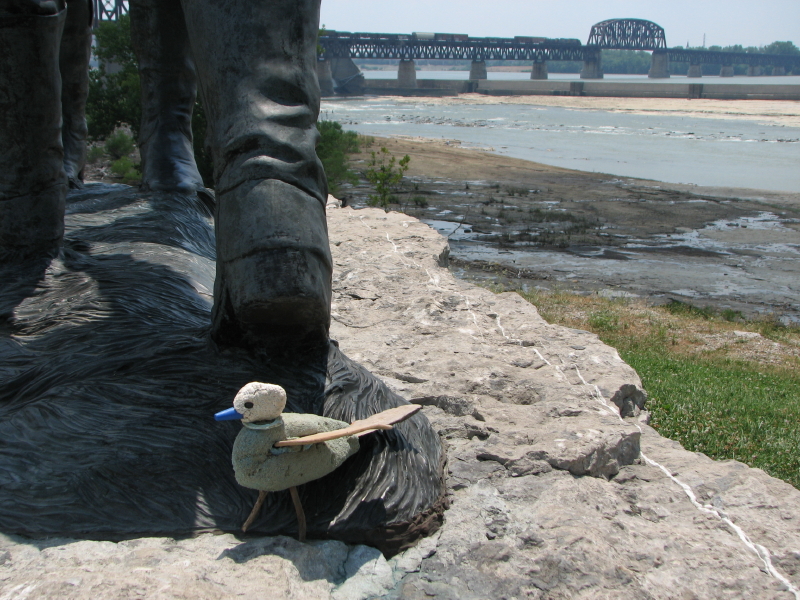
On my way to my vehicle at the end of the day I came across this dove sitting by the Lewis and Clark statue.  It brought back to mind a mental image of a nice pen and ink drawing of this bird that was in one of the personal journals carried by one of the enlisted men that formed the crew of the Corps of Discovery.  I don’t remember the name of the soldier, but he had a fine eye and a sharp quill.  There were a few notes scribbled in the margins commenting that it was too small and not worth the effort to eat!

As summer settles into its now familiar sweltering pattern, I’m looking eagerly to the time when I can cross over the shallow water and explore the Kentucky side of the fossil beds.  There isn’t as much junk to find to make “art” from, but it’s a contemplative landscape for me that has also become something of a seasonal right of passage.  It takes all day to walk across the rocks and I’ll need plenty of water to keep me hydrated, but it is such an interesting place and I look forward to sharing it with you.  Stay cool everybody…the weatherman is calling for some hot ones this week.

Read Full Post »

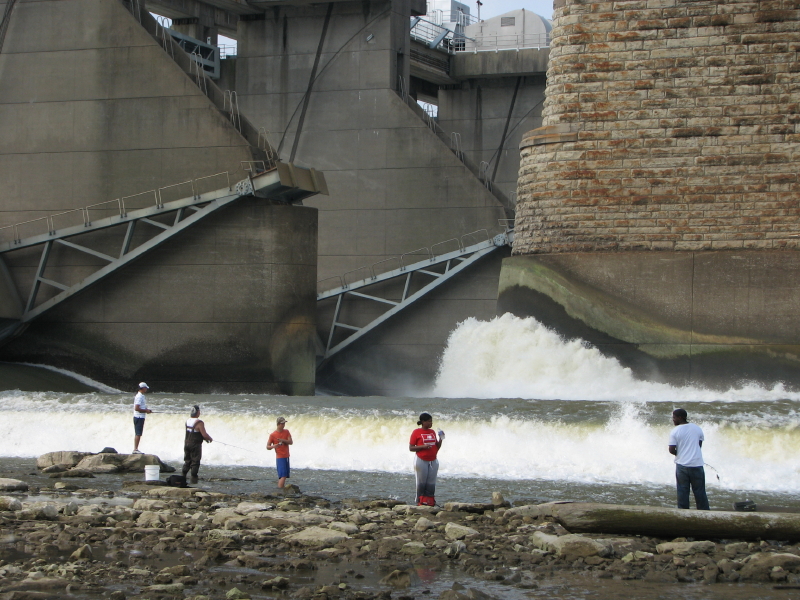
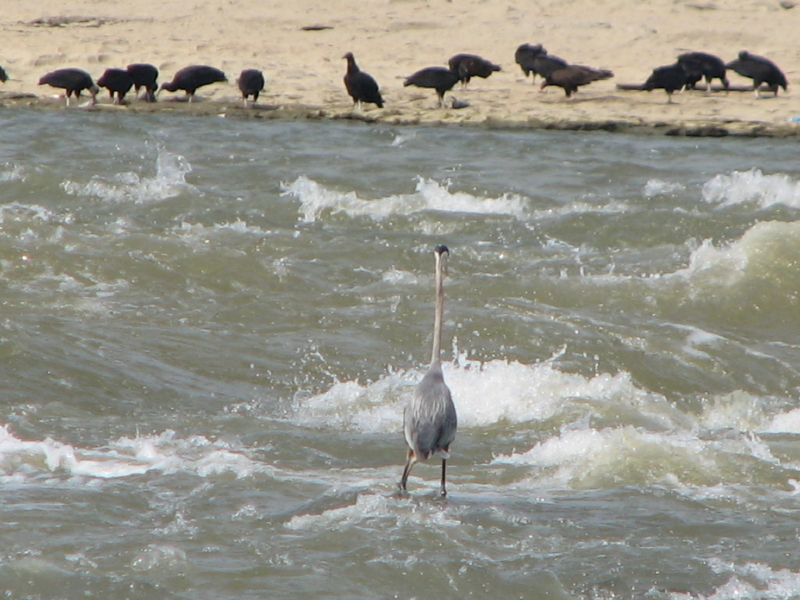
Fishing is an important year round activity at the Falls of the Ohio.  When the right conditions are present (and this is best known by the fish) the fishing can be excellent.  Such was the situation this past weekend.  It was unbelievably hot and humid, but the fish were in the shallows and everything that fishes was out here.  Lining the more accessible banks and from boats, anglers were throwing both natural and artificial lures into the riffles and coming up with some nice stringers of fish.  On the less accessible fossil banks on the Kentucky side of the river and from strategically placed rocks in the flowing water, herons and vultures were waiting.

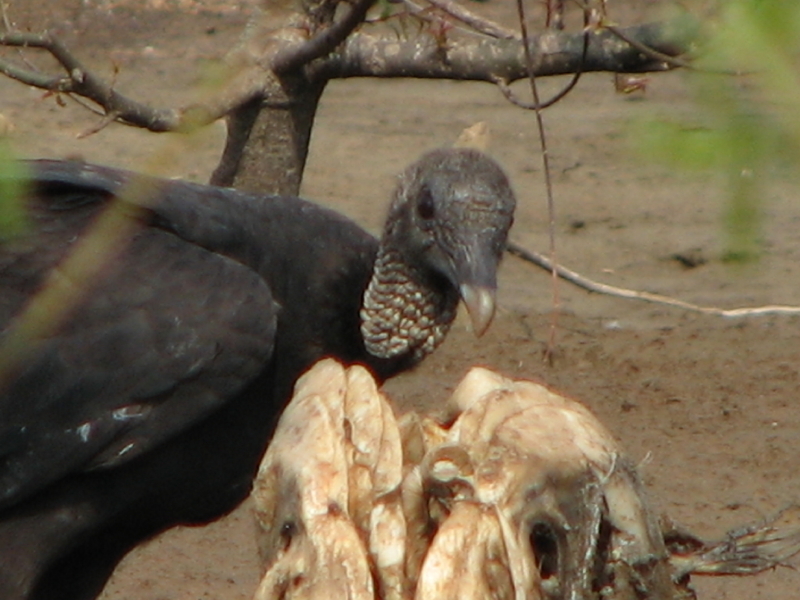
While the herons were actively fishing, the resident colony of Black vultures were doing their part by scavenging on dead fish.  I came across this one bird dining on this fish head from a large carp.  Their sharp beaks have no problem picking out the best morsels.
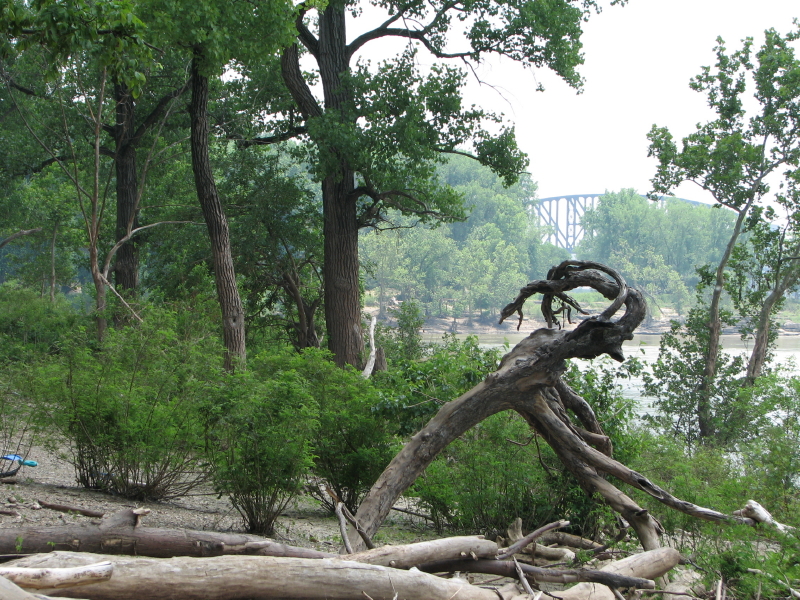
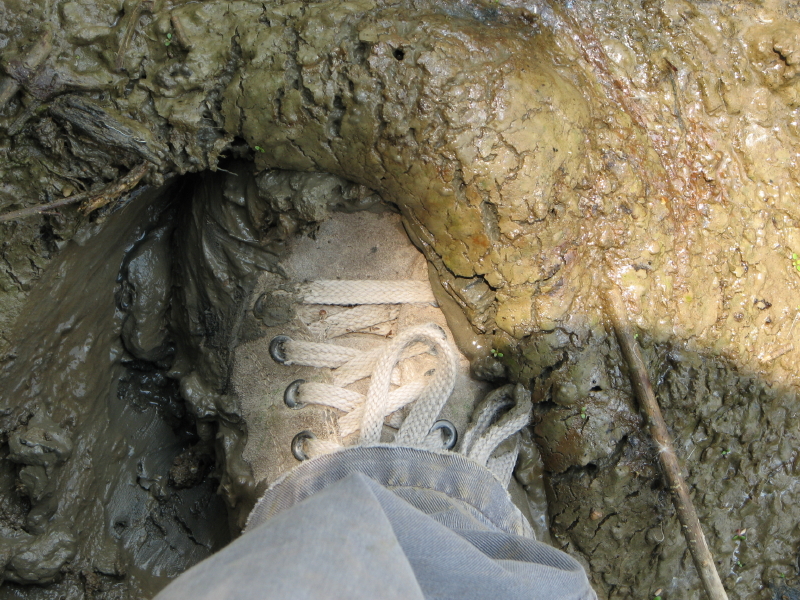
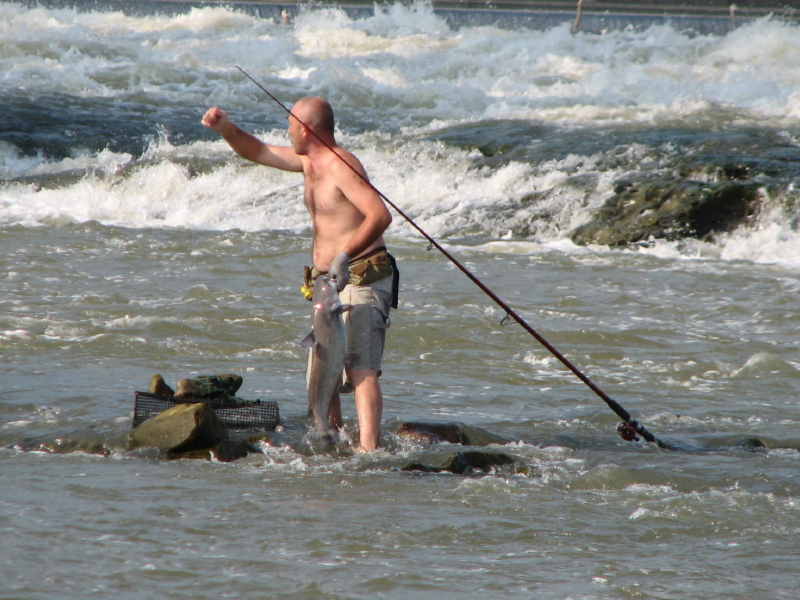
The human fishermen were catching a variety of big river fishes.  I watched one angler land a large Blue catfish that gave him quite a fight.  He placed the big catfish in a wire mesh cage which kept it fresh in the swiftly moving water.  Large rocks stacked on top of the box anchors it in place.

Among the other fish being caught included striped bass hybrids, channel cats, drum and more.  It is still not recommended to eat the larger bottom dwelling fish for fear of toxins in their tissues.  The smaller fish supposedly are alright if you don’t eat too many too frequently.  With the economic conditions as they are, I know there are many people out here augmenting their diets with these fish.  It’s not just about sport anymore.  The top two bass in this photo are about 3 or 4 pounds each.

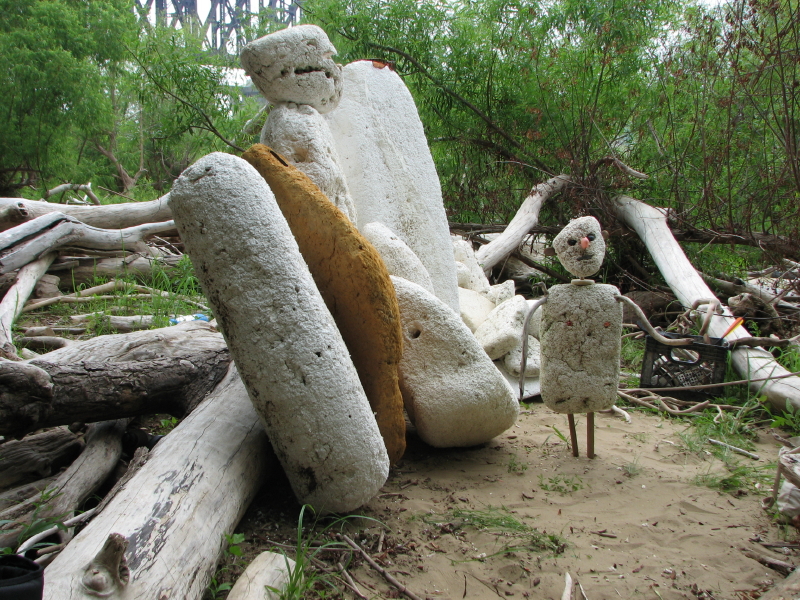
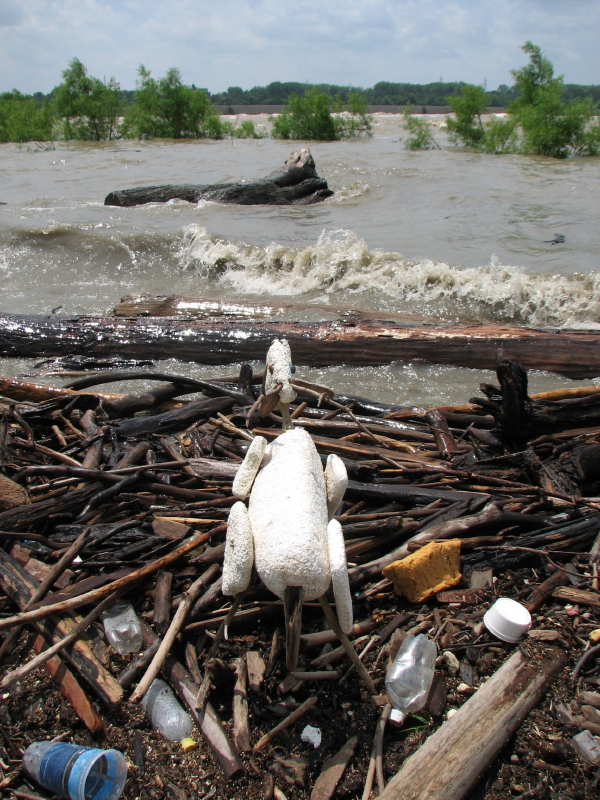
I was doing my own brand of angling but not for fish!  I walked the riverbank and collected as much Styrofoam as I could find and carried it  to my studio spot under the willow trees.  This is what it looked like when I posed it all for a photograph.  Until the next bout of high water, I’m going to try to use as much of this material as I can for my sculptures.

I have some large chunks in here, but the heat prevented me from getting too ambitious with it.  After drinking much of the water I brought with me, I did make one modest figure and moved it around the different contexts presented by the Falls of the Ohio on this very hot and sticky day.

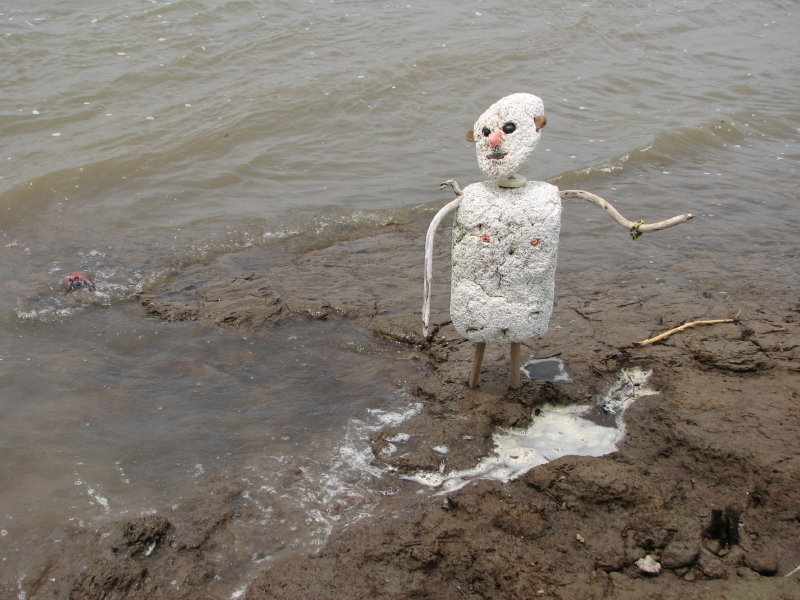
Here’s the nameless figure with the dark eyes standing in what was its nursery.  This guy has walnut eyes and his nose is a plastic strawberry.  I’m guessing that this figure is about 3 1/2 feet tall, but truthfully, I don’t pay much attention to scale out here where everything is as big as life to me.  Most of the time, I prefer you gauge scale by comparing it to what else is  present in the context that you may be able to recognize.  Not knowing also lends some mystery that I find appealing.

First, I posed this figure near the spot where I made it.  I found a plastic flower and placed it in his hand.  This area is cool and shady, but the mosquitoes are also waiting for any passer-by pumping blood through their veins!  I quickly picked this piece up and ventured to the riverbank where the insects aren’t as bad.  The soft mud makes it easier to stand this figure up, but traction out here can be a slippery affair.

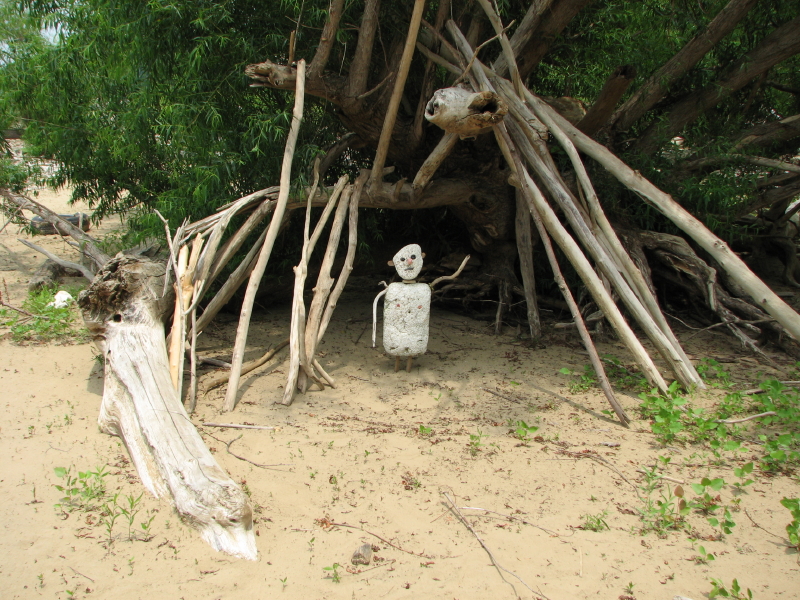
So far, it’s looking like this June will either be the hottest on record or second hottest.  The difference between the two is about a degree.  The final place I photographed my newest figure is by this improvised child’s fort.  This is the kind of activity my two sons enjoy doing out here.  My sculpture looks at home and is enjoying a respite from the oppressive heat.  The shade does look inviting!  I returned “dark eyes” to my outdoor studio, collected my belongings and trudged back to my car.

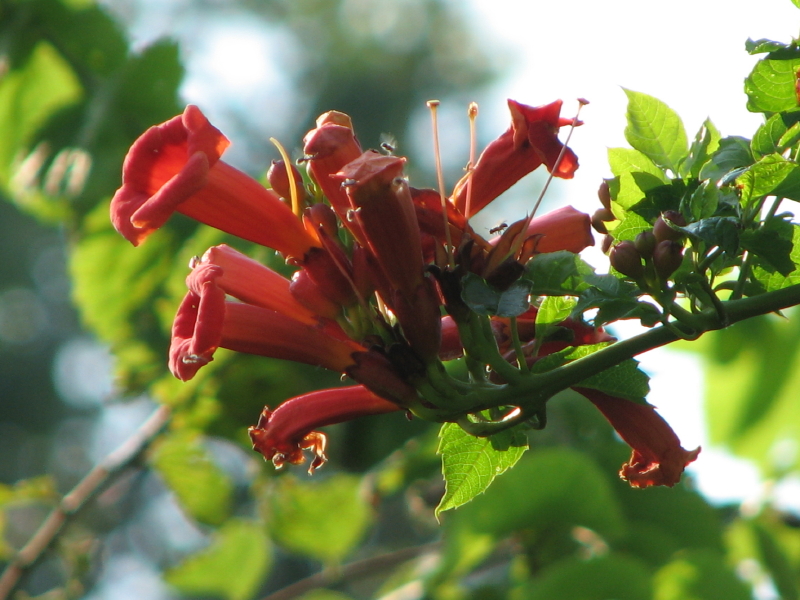
Today’s final image came from this morning’s adventure.  I saw this trumpet creeper vine growing on a tall tree and thought it attractive.  When I got home and downloaded my pictures I could see that many small bees were swarming around the blooms pollinating the plant.  This is what I like about the Falls of the Ohio.  In a relatively small area, you can see so much life going about its business.

Read Full Post »

Reading the old journals from the exploration period…you can hear the authors’ amazement in trying to describe the overwhelming abundance that once existed here.  If you came across a flock of passenger pigeons numbering in the billions and as you watched them cross the sky like rolling smoke until they collectively blotted out the sun’s light how would you record the event?  But it wasn’t just flocks, there were also forests of trees, immense herds of bison and schools of cod and salmon.  In some cases, this was here less than two hundred years a go.  Now this seems remote and out of our living memories.  You don’t miss what you never knew.  Forgetfulness is another type of erosion.

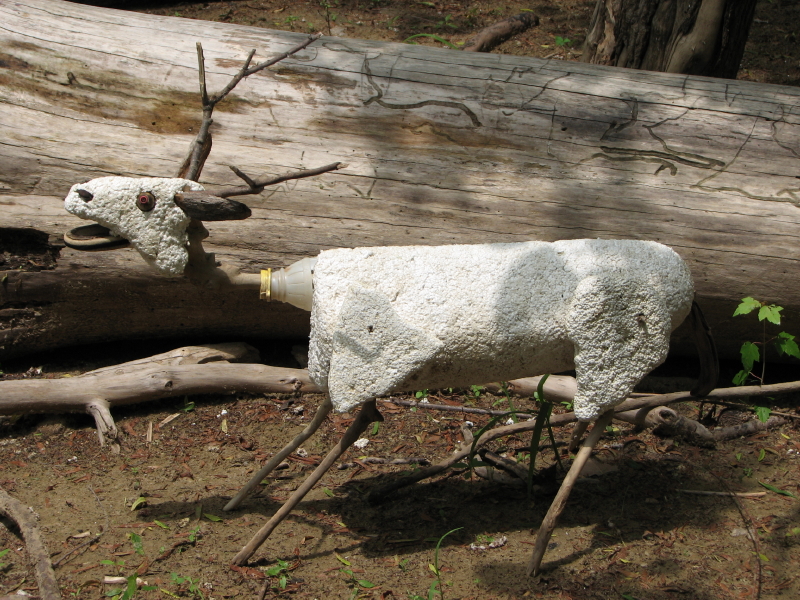
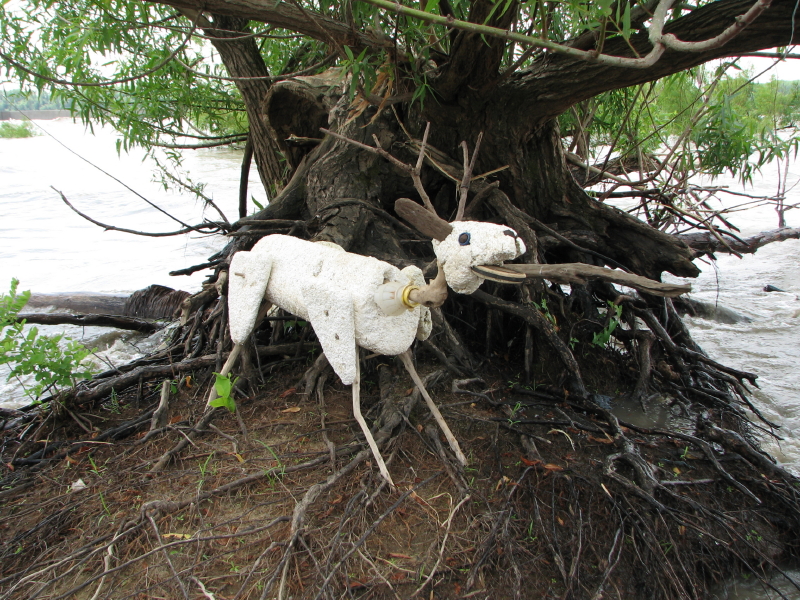
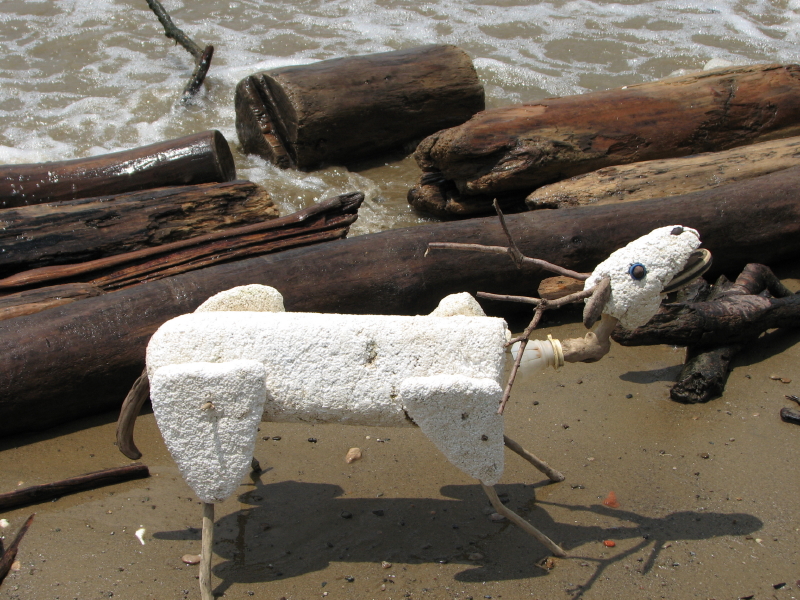
Over the sounds of the river smacking the shoreline, I could discern a few grunts among a high almost “metallic” bugling/whistling in the air.  Or so I imagined as I introduce my latest Styrofoam creation.  In the old days, (which according to my youngest son is anything over nine years a go) the American elk or Wapiti was plentiful in Kentucky and through out the United States.  Several sub-species existed and were classified by geographic region and habitat.  The bulls of this large deer with their immense antlered racks are an impressive sight and are symbolic of nature’s majesty.  Well, mine is not nearly as good…but for the purposes of this post…will do fine!

We are lucky they are still with us today!  As loss of habitat occurred as well as hunting pressures…our elk were driven westward until they were gone east of the Mississippi River.  Eventually, the elk were allowed some federal protections and our herds are rebounding.  Kentucky has led the way in elk conservation by experimentally transplanting a herd to the eastern section of the state where they have thrived!  Their reintroduction has been so successful that a limited hunting season on them has been established.

During the Lewis and Clark trek across the country, elk meat made up a large percentage of the meat consumed.  It remained the meat of choice until the native Americans introduced the explorers to dogs and then that was preferred!  As the country was “settled”, elk continued to disappear from all kinds of pressures.  There was even a brief fad where elk teeth were used for watch fobs!

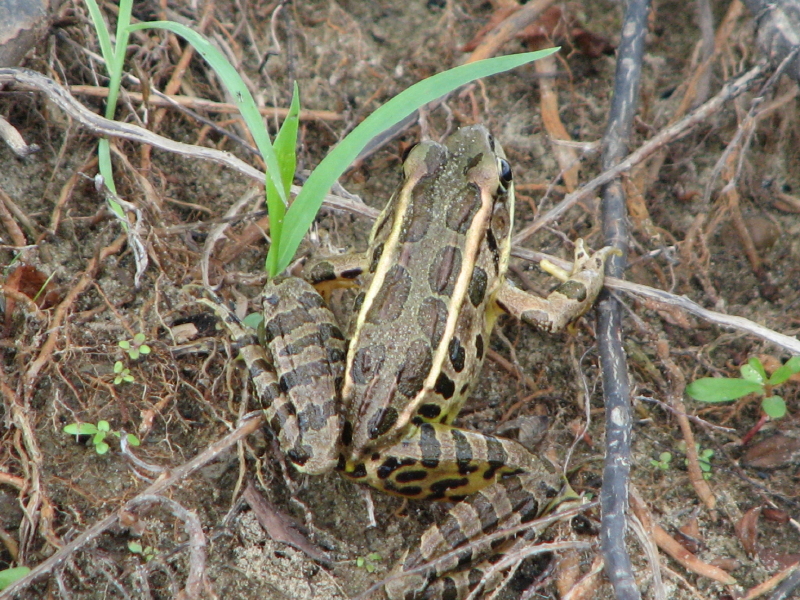
The elk is a member of the megafauna that was once was a large part of the North American ecosystem.  While I’m taking pictures of my sculpture, a smaller member of this ecosystem came hopping by.  To be honest, I don’t see many frogs out here and I’m surprised this Leopard frog isn’t in a more boggy area.  I think many people by now are aware that amphibians aren’t doing as well as they use to for a variety of reasons that range from climate change to exotic fungi.  If a Great Blue Heron spots this guy, then our frog friend will become bird food.  It’s as if life weren’t already difficult enough without adding to it.

The frog is a reminder that even the most humble of species plays its part in the bigger scheme of things.  So often it seems that the smallest players have the out-sized roles that make the biggest differences to the smooth operation of life at large.  My stag is bellowing and issuing a protest and challenge to protect the environment that sustains us all!  There is far too much in the river that doesn’t belong there especially items dependent on crude oil.

Take this stag for instance, it is dependent on crude oil for its existence.  The body, head, and parts of the leg are made from polystyrene.  In this case it is all river-polished Styrofoam.  The lower jaw is the sole of a shoe and also made from petrochemicals.  The eyes and plastic collar are plastic and derived from petroleum extracts.  Only parts of the nose, legs, antlers, and tail are biodegradable.  The Styro-stag is an animal we can afford to lose and it will be interesting watching the river for signs that the exotic materials that comprise it are on the wane.

Read Full Post »

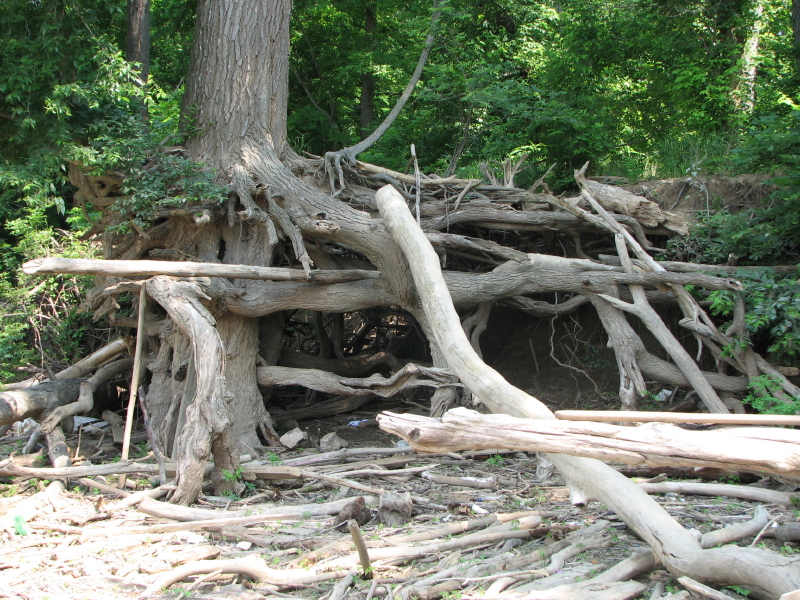
Just a mini adventure this time.  During my last expedition to the Falls of the Ohio, I paid a visit to one of my favorite trees.  I love the root system on this Eastern cottonwood because it forms a “room” you can sit under.  I decided to take some refreshment there and rest awhile.  Scavenging  Styrofoam can be thirsty work on a hot day.  Here’s the cottonwood I’m talking about.  Looking around, I can see I’m not the only person who knows about this tree.  A couple of fire pits are in the vicinity.

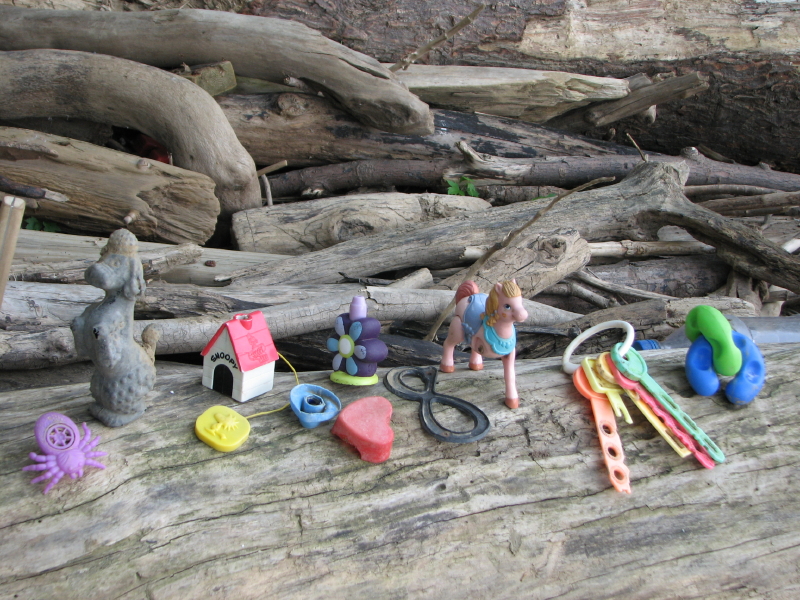
While I was sitting in the shade, my eye was drawn to some definitely non-natural color inside a cavity at the base of this tree.  When I investigated the hole,  I was astonished to find this little treasure trove hidden inside.  I withdrew the contents and set them up on a log for this photograph.  I think you will be as surprised as I was!

A variety of plastic toys including a poodle, Snoopy’s doghouse, various baby items, a numeral “8”, and a horse with three legs were in the hole.  How or why was this stuff here?  When I checked out the area around the larder more carefully I found very small tracks and the picture started to become clearer.  When I saw this little guy…I had my answer!

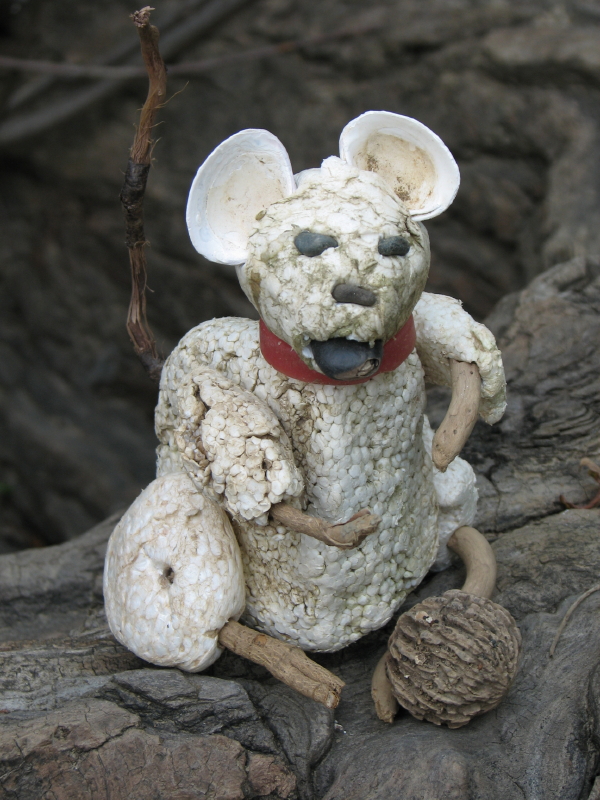
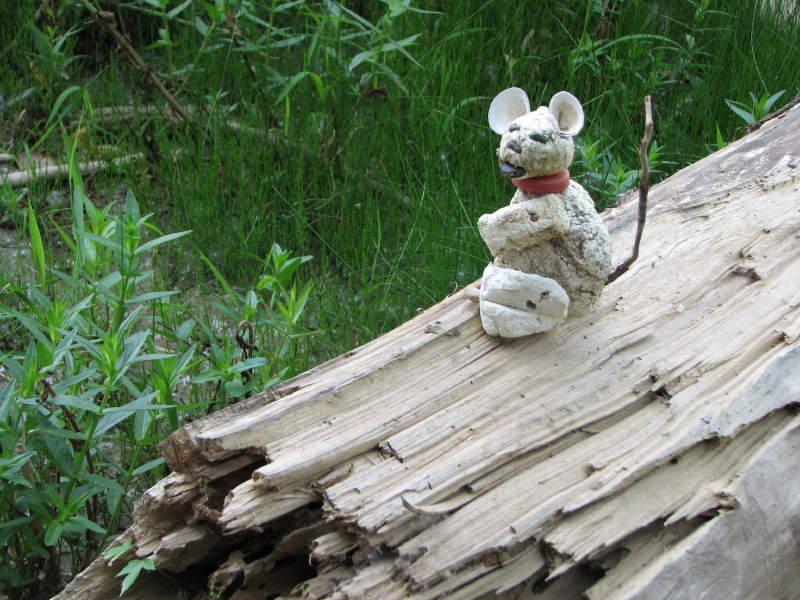
This is Meriwether’s Mouse and he’s named after the famous explorer Meriwether Lewis who was the first to describe this appealing rodent.  This species is known to cache colorful objects and is not above pilfering items from unwary hikers and campers.  In this mouse’s case, he doesn’t need to take anything because the river will provide plenty.  No doubt these toys were found along the riverbank.  I do the same thing myself!

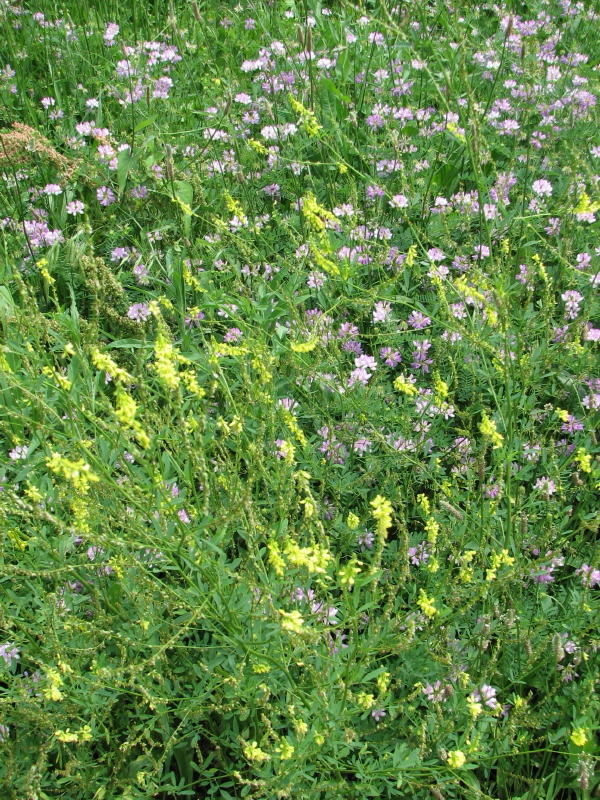
Because there are a formidable number of predators out here, Meriwether’s Mouse is not as common as it once was.  They do possess very acute hearing and this specimen heard me shift my position and off it went!  Recently, I was looking through a copy of Audubon’s Quadrupeds and was amazed at the mostly small varmints that populate the mammalian natural history of our great country.  I guess most animals aren’t going to be as magnificent as a grizzly bear or bison in size.  In fact, most are about the size of our mouse!  I appreciate all the more Audubon’s challenge in making this seem interesting to the average person sitting at home.  Great or small, all animals are glorious to me!  In closing I offer this abstract expressionist, all over composition… rendered in wildflowers.  Thanks!!

Read Full Post »

Before the month of May slid into history, I did a little sliding of my own.  The day after Julia and I visited Nerinx, I did a solo expedition to the western section of the Falls of the Ohio State Park.  Now the sliding part has to do with mud!  In places the earth was high and dry, but in key areas  the mud remained slippery and sticky.  Here’s a picture of what I mean.

It’s creamy and in places you could sink in over your ankles.  To get things over with so I don’t have to obsess about this, well I just find some mud and step into it.  After that there are no worries about remaining clean!  The deed is done.  I have a similar philosophy about the rain.  Once I’m as wet as I can get…I can relax and do my thing as long as I don’t get too cold.  The mud is more treacherous closer to the river’s edge and I decide not to flirt with it too much.  There is afterall, much to see around here.

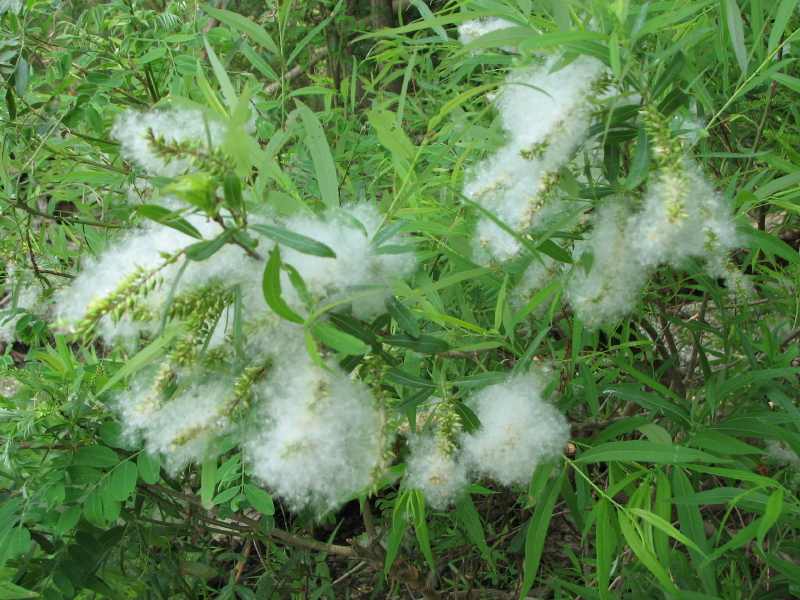
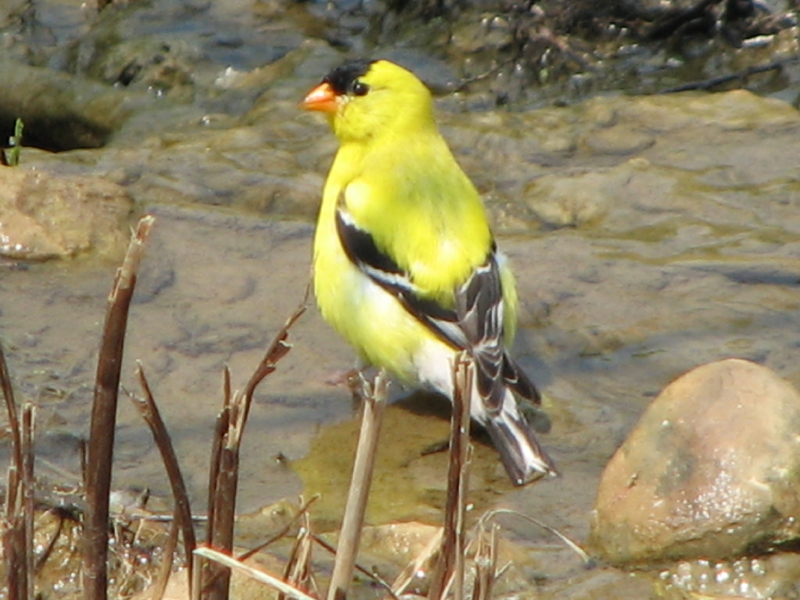
The willows are in maximum fluff production and there are drifts of the stuff on the ground.  When the wind stirs then the willow seeds become air born and are carried away.  With so much fluff, you would think willows would be even more common than they are.  I have to say that so far, I haven’t seen any birds that have made my year.  Last year’s signature bird was the Summer Tanager.  This year hasn’t been the warbler fest that I experienced just two years a go.  Still, I take what I can get and I always love American Goldfinches.  Here’s a male taking a dip in some water.  Small flocks cruise along the trees nearest the river.

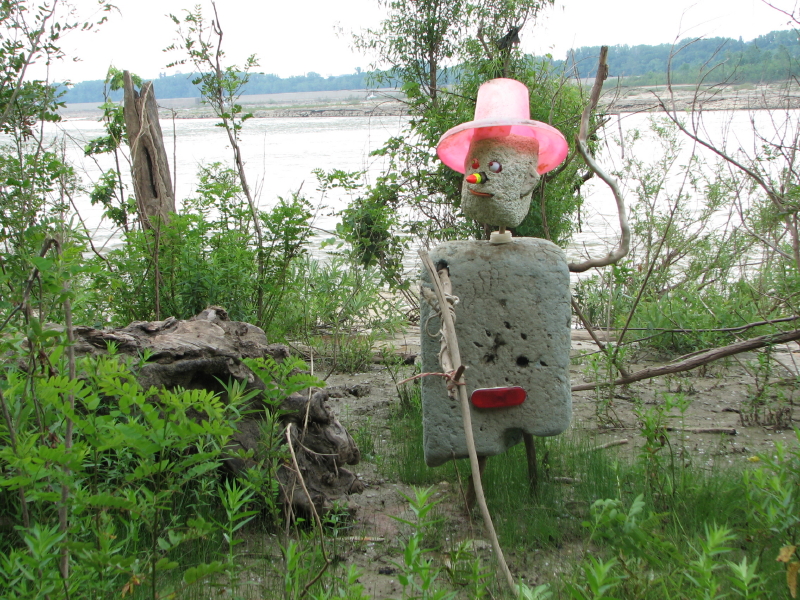
I’m walking west along the river and I came across the only persona that I saw all day.  We eye-balled each other, decided that neither was a threat and so we had a short conversation.  Mostly, it was an opportunity to compare nature notes.  I guess the feature that most stood out about my acquaintance is the bright pink hat she? is wearing.  I said I was looking for birds and junk and “she” said that she was a Lepidopterist.  Oddly, we didn’t introduce ourselves, but she let me take her picture for my blog.  I guess she’s about five feet tall or so and walked with a cane.

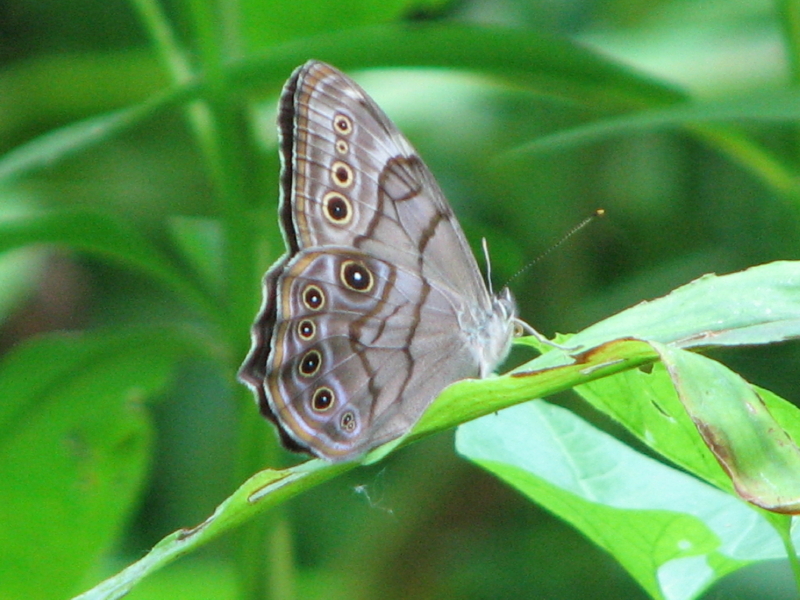
After I asked if she had seen any interesting birds…she hadn’t.  I was asked about what butterflies I had come across.  Fortunately, I also like butterflies and try to take their pictures when both insect and camera cooperate.  I really don’t like these autofocus cameras.  Anyway, I noticed many species out on this day including Commas, Mourning Cloaks, Cabbage Whites and then I showed her images of the two butterflies that I did get decent pictures of and she seemed happy to identify them for me.  Here is the more unusual of the two that I came across at the forest’s edge.

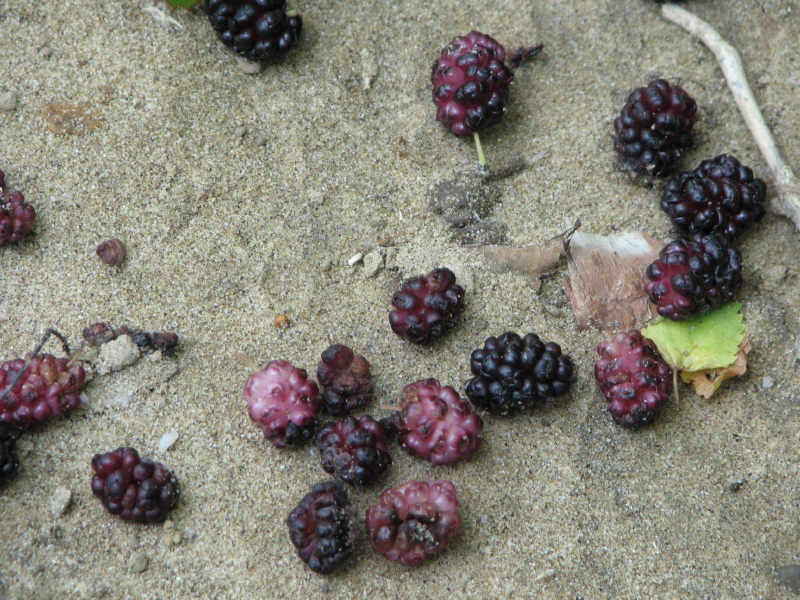
Quickly my new friend identified this as being Enodia anthedon or more commonly, the Northern Pearly Eye.  It is a forest butterfly that does not come to flowers preferring instead the fermenting juices of fruits and tree saps.  I reply that I had noticed that there were many butterflies around the fallen mulberries and on the sides of the willow trees. 

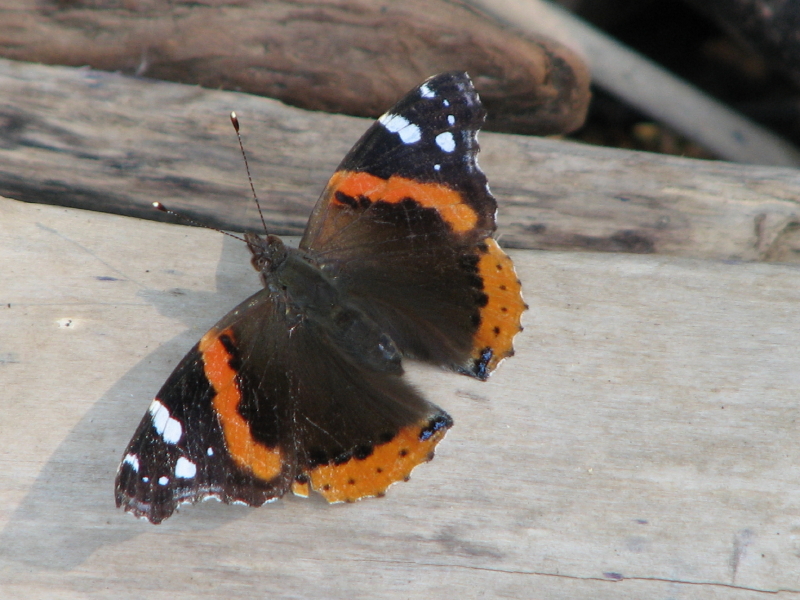
I wonder if science has determined if a butterfly can get drunk off the fermented juice and if this is possible…do they experience hangovers?  I know this does happen with birds like Cedar Waxwings that literally get tipsy.  The second butterfly is one that many people know and it’s the pretty Red Admiral or Vanessa atalanta . Even its scientific name is charming.  This is a people friendly butterfly and will often alight upon a person.  I came across dozens of these today.

With the rising heat the promised threat of a late afternoon thunderstorm began to materialize.  First there was the distant sound of thunder and since I had a hike to still make to reach my car…I said farewell to my butterfly friend whom I hope to see again.  I asked before parting if she collected butterflies and she answered that once she had, but was now over that part of her interest in them.  She no longer needed to possess them and instead grew flowers and plants to attract them.

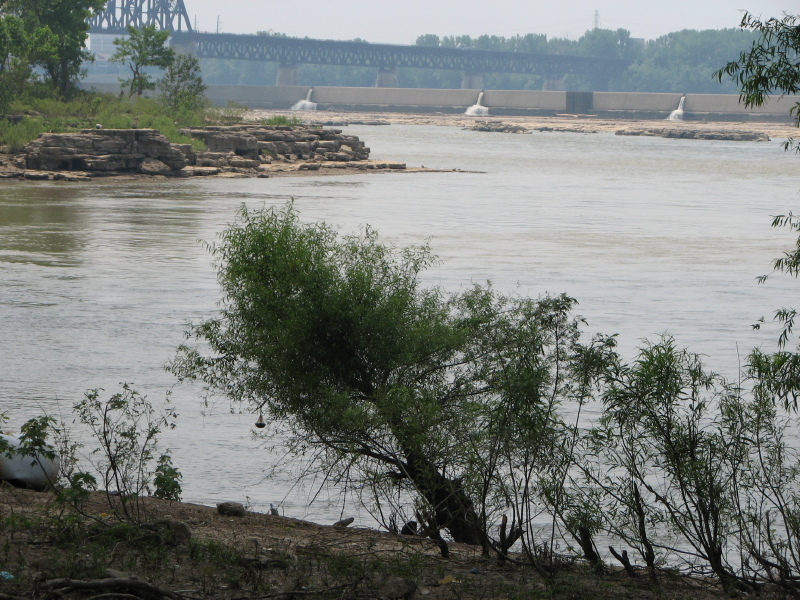
I hope I run into the lady with the pink hat again.  She seemed to share a reverence for the life that is out here in the park.  I would welcome learning more about the butterflies that call this place their home.  One last shot showing willows, the riverbank, fossil cliffs, and the dam in the far distance that keeps the river at bay…most of the time.

Read Full Post »

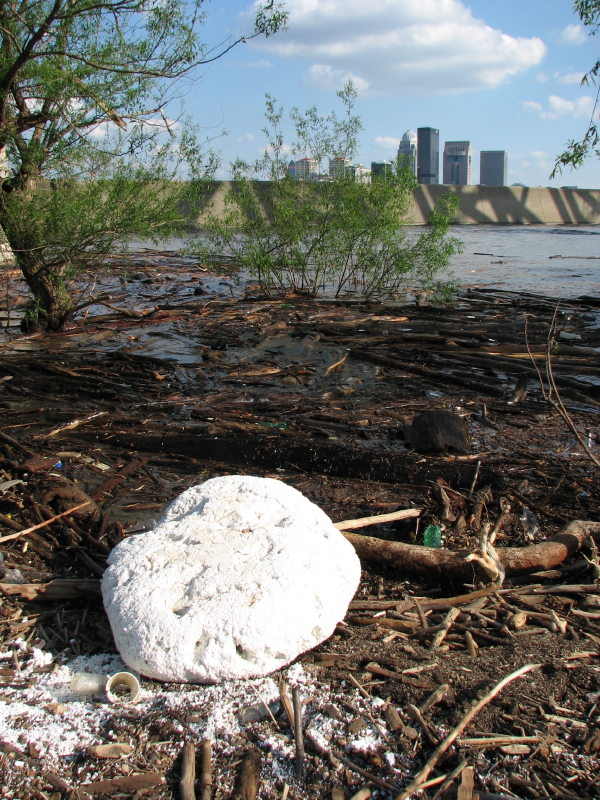
I never have a dull visit to the Falls of the Ohio.  Each time I come out here I can expect an adventure of one type or another.  On this day the river had noticeably receded and this large boulder of Styrofoam that I had been watching for days as it floated out here was finally on the shore.  I tried to move it, but it was so waterlogged and heavy that I gave up…for now.  All around it were Styro-bits that were ground off by abrading against logs and the sandy bottom.

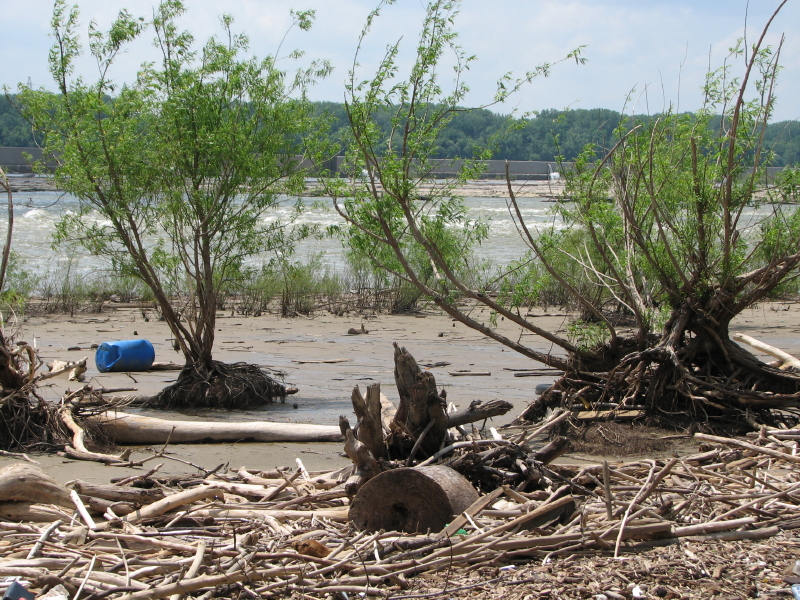
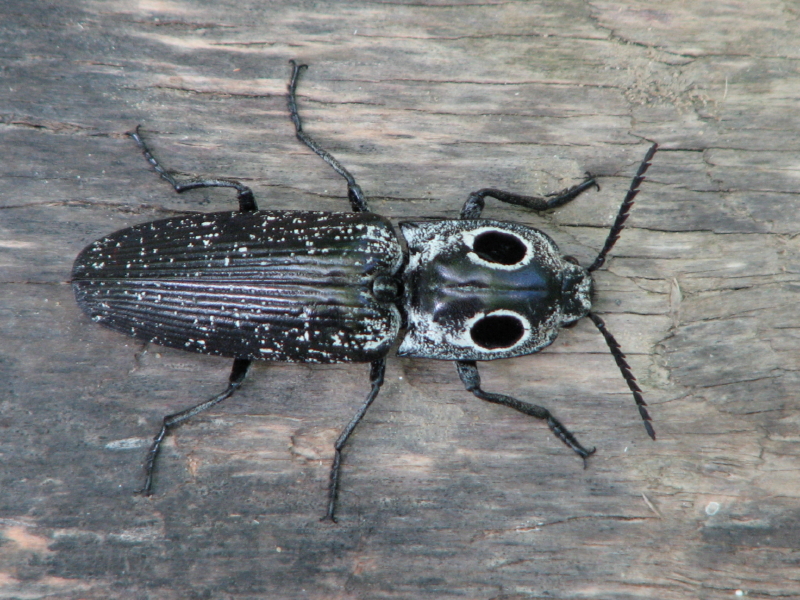
Near my polystyrene giant was this section of the riverbank.  It’s the aftermath of a tug of war we are engaging in with the planet.  In this type of struggle there are no winners.  Recent images from the oil spill in the Gulf of Mexico come to mind which incredibly still flows unabated weeks later.  Since much of the garbage in this photo is derived from petrochemicals, I wonder if this also could qualify as an oil spill?  If I scooped up a handful of sand around here…I would see tiny bits of plastic and the ever-present polystyrene bead.  This stuff is likely to never go away.  But life does try to keep carrying on as it always has.  I also came across this interesting beetle and a smile returned to my face.

I have seen these out here before.  It’s an Eastern Eyed Click Beetle and I think I read somewhere that this is our largest click beetle.  If you placed this beetle on its back, it would flip right side up with an audible “click”.  Hence click beetle.  There are other species, but they are all smaller.  This one is just under two inches (about five centimeters).  It’s coloration is similar to a bird dropping, but it also has these dramatic eyes on its pronotum.  These guys do fly, but most of their lives are spent as larvae living in decayed wood.  I passed by the mulberry tree with its ripening berries and there are birds who just can’t resist this plentiful food source.

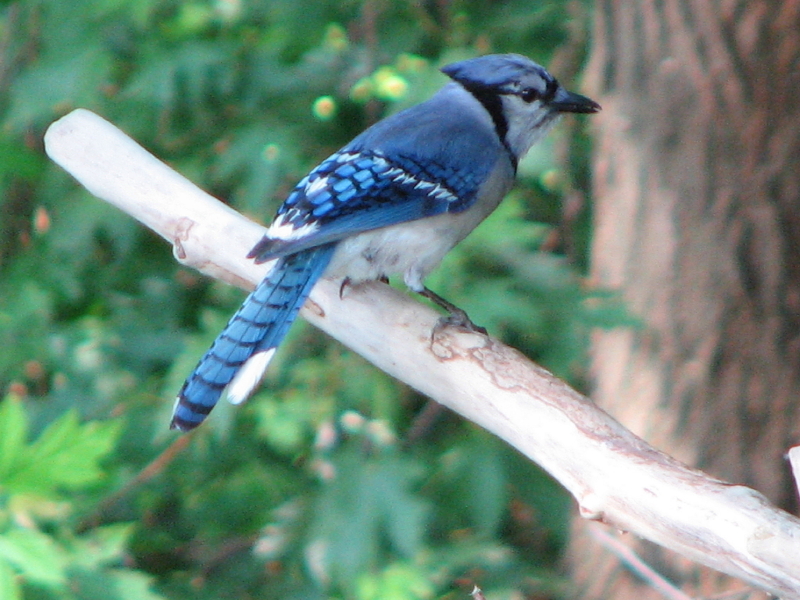
Among the bird species eating fruit from this tree included this Blue Jay…

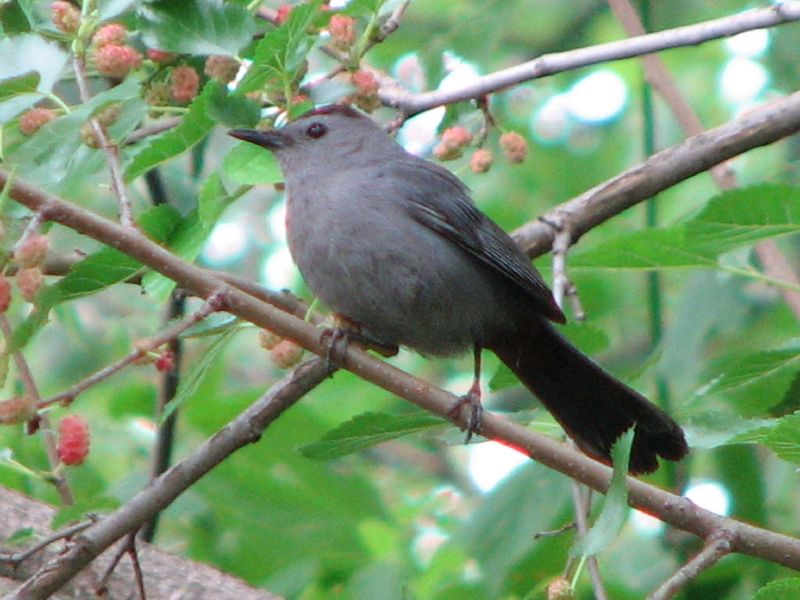
…and this Catbird which does make odd sounds which sometimes sound like the mewing of a cat (hence catbird!).  They can be quite territorial to their own and other species too.

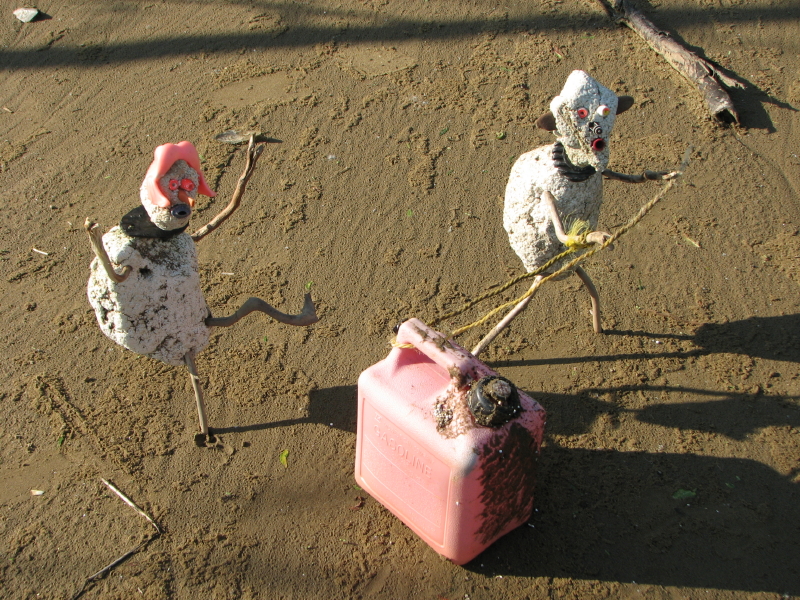
Not too far from this tree, I could hear some squabbling going on and I moved towards the sound.  You can imagine my surprise when I came upon this scene!  I stayed hidden behind a large willow and just observed.

There were these two little figures and one of them was tugging on a rope attached to a plastic gasoline container and his “friend” with the wierd hairdo was jumping up and down on one leg trying to get him to stop!

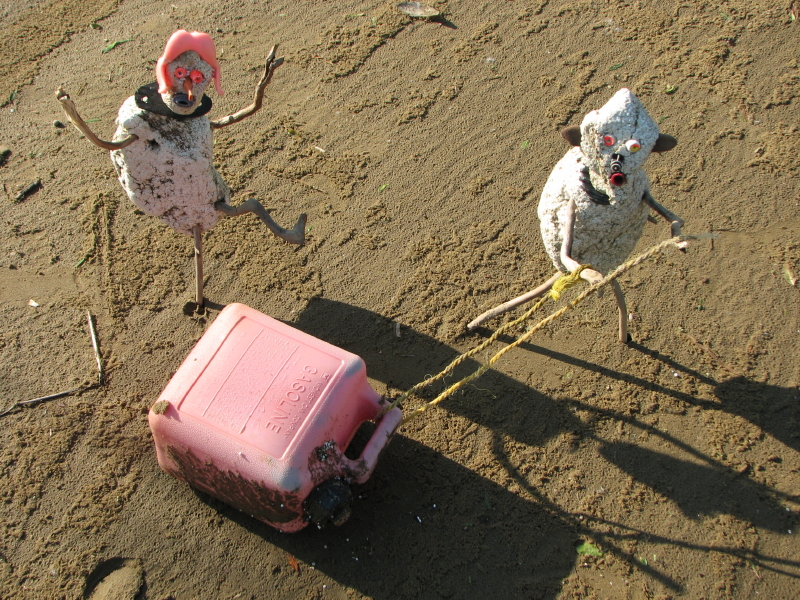
The figure with the rope eventually succeeded in knocking the container over while his friend continued hopping!  What he thought he was going to do with this gas can is a mystery?  He soon grew frustrated with his efforts and a shouting match between the two began.  That deteriorated into another contest where each tried to take the rope from the other.

All this effort must have been exhausting because after a little while they gave up and abandoned the rope and the gas can leaving them lying on the sand.  They reconciled and walked away from here hand in hand. 

Perhaps they realized the futility of their struggle and came to their senses?  Perhaps they recognized that it was better to conserve their energies for more constructive pursuits?  Who knows, but while I pondered these questions I came across another image of futility and I will leave you with that until next time.

Read Full Post »

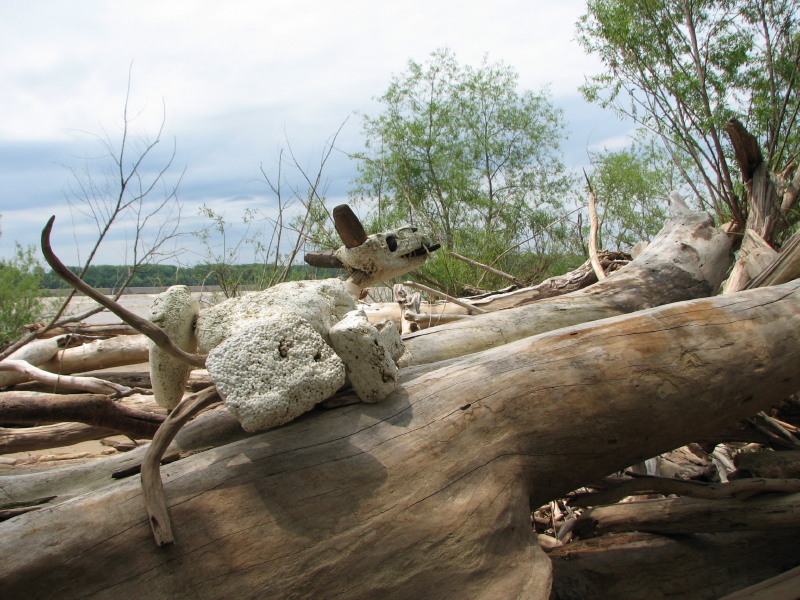
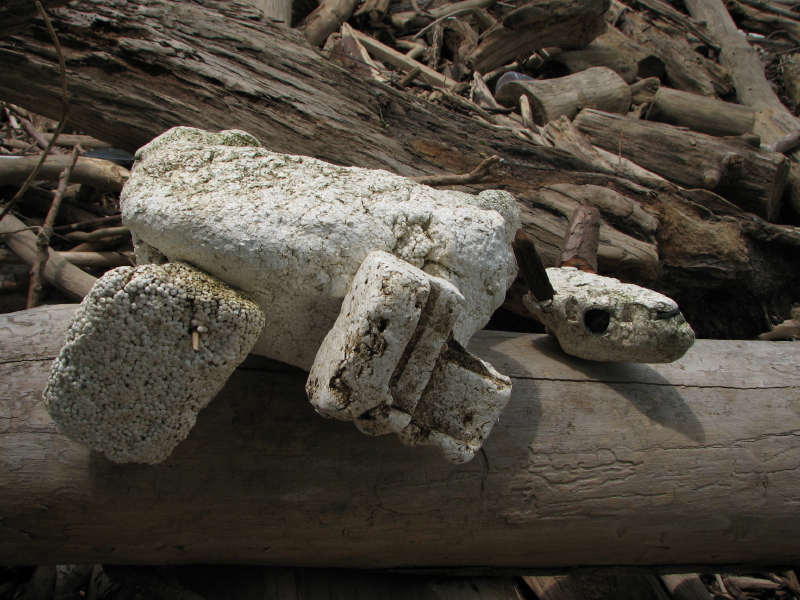
Extraordinary images from a remotely placed camera-trap yield glimpses of a rare mammal.  Long thought to be gone from the Falls of the Ohio, it appears the Feralocitor is recovering parts of its former range.  The Feralocitor is a carnivorous animal about the size of a very large house cat.  Genetically, a Feralocitor’s closest living relative is the Fossa from Madagascar which is that island’s largest and rarest native predator.  Both share a relentless drive to pursue prey and are especially adept at catching birds and small mammals in trees.  Like the Fossa, the Feralocitor has a long tail which it uses to balance itself as it runs and jumps from branch to branch in its arboreal home.  Pictures of the Feralocitor at the Falls of the Ohio came as a shock to the park’s naturalists who remain mute about its existence here although there have been long-standing rumors.

The image above shows what the Feralocitor is especially good at which is stalking its prey.  Noiselessly, this predator can get low to the ground (or log in this case) and approach within striking distance of its formidable claws and teeth.  Once a Feralocitor has a hold of its intended victim, there is no escape.  In addition to stalking, some Feralocitors (especially older or injured individuals) are excellent at hunting by ambush.  The original inhabitants of this land have an almost supernatural reverence for this animal and their name for it roughly translates to “…ghost-spirit of the trees”.  This reverence, however, wasn’t shared by the farmers who settled this area and saw the Feralocitor as another predator who killed and ate their smaller livestock.  It was shot on sight, poisoned, and trapped until it became so scarce that it was rarely seen and believed gone from these parts.  Today, the role of random predator is played by domestic dogs that have gone feral and occasionally run in packs causing fear and damage.  Such dogs exist at the Falls of the Ohio and here are a few images of them.

The feral dogs in this area are a motley crew of mixed breed dogs.  I recently came across two of them while bird watching and I was so intent on looking up, that I didn’t notice that these dogs had walked quite close to me.  In far western Kentucky, I recall an experience of being out in the woods and being surrounded by five wild dogs!  It was a tense moment because dogs in this situation can be dangerous.  I remember yelling at them and throwing rocks in their direction to chase them away.  Once there was a thriving sheep industry in the western part of the state that was decimated by feral dogs.  An old biology professor at Murray State University told me that one.  The dog in this second picture doesn’t seem particularly glad to have run into me and I’m probably interrupting his attempt at a meal from a nearby dumpster.  They seem always hungry and will take nearly anything that crosses their path.  There is a shortage of ground nesting birds in the park because there are just too many predators on the prowl and not enough cover.  World-wide, feral dogs are a resilient and growing problem and rabies is also on the rise.

I decided to camp out in an area where a Feralocitor was last seen.  After several days of nothing, I was rewarded with two separate  images of a hunting Feralocitor.  In this case, the prey animal (the Ohio Valley Rail) is also rare and endangered.  The first hunt I observed was successful, however, the Feralocitor was so efficient and quick at the kill that it was over and gone before I could get obtain another picture.  It waited until the bird’s head was down before launching its fatal attack.

In this second photo, the Feralocitor was unsuccessful when the bird sensed something was wrong and flew away.  By listening to its instincts, this rail lived to experience another day.  It is great seeing an animal that once existed in this area recovering some of its former range.  Similar stories exist from the recent past.  Once black bears were rumored in the eastern section of  Kentucky.  This was proven, they became studied, protected,  and  now there is a limited hunting season on them.  The same could be true of the mountain lion.  Persistent claims that they too are re-entering  their former territories will probably pan out as young lions move eastward pursuing the ever burgeoning deer population.  As for the Feralocitor, time will tell.  It isn’t an animal likely to be prized by hunters.

The last image is of the Feralocitor in progress.  It’s made of found Styrofoam, wood, nuts (for eyes), rubber, and plastic and was constructed on location during a light rain.  The sculpture was held together with sharpened wooden stakes and pins.  With the exception of the Feralocitor and the Ohio Valley Rail, other mentions in this post are factual.

Read Full Post »

Guess what everybody!  An interview I did with one of my favorite blogs was recently published and I’m honored to be placed in the spotlight.  If you get the chance check out the interview and scroll through some of Lynda’s stories.  If you like art, poetry, popular culture and more…than you will find her blog worth the visit!

Here’s the link to the Echostains blog, http://echostains.wordpress.com/

Read Full Post »

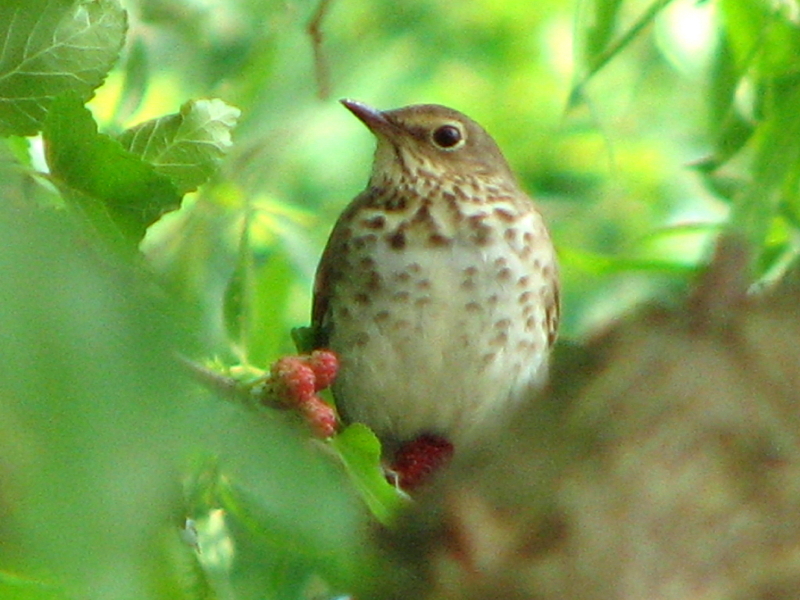
I love this photo!  This Swainson’s Thrush seems so happy sitting on its berries.  At the Falls the migrant birds are around and our trees are flowering or fruiting.  I have been doing my best to come up with some nice bird photos in between other river activities like making art.  Most of the warblers are proving to be tough subjects.  The difference between getting a nice image and nothing is a thousandth of a second.  Warblers are very small and constantly moving.  There is a lot of thrush and catbird activity around the sweet mulberries and squabbles are frequent.

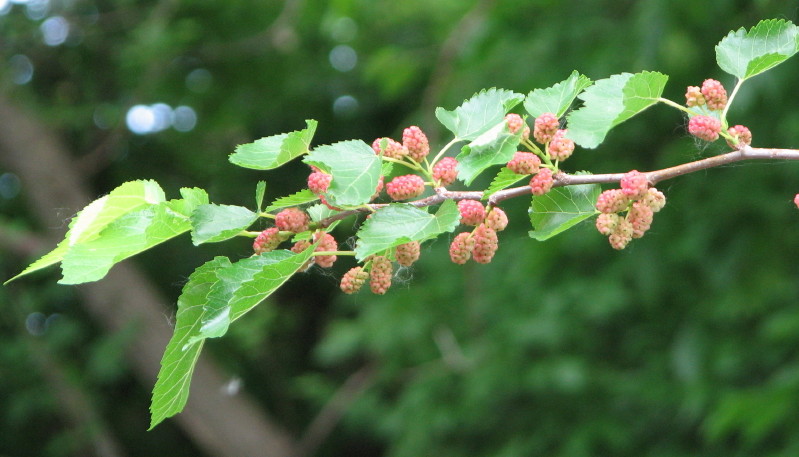
These pink and red mulberries will be ripe when they turn dark and black.  That’s when the wildlife particularly go for them.  This is a prolific tree and seems to be on the rise.

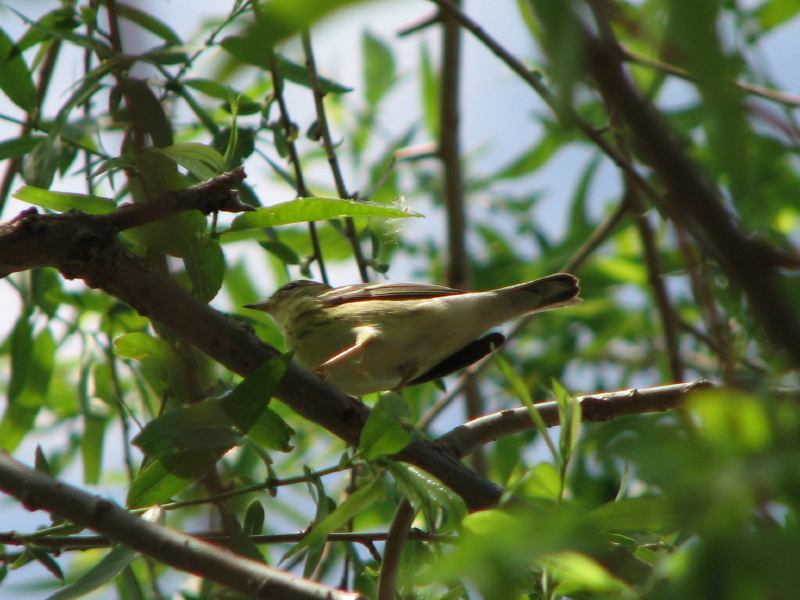
This bird atop a willow tree is a bit of a head scratcher for me.  I like that I was able to get such a relatively clear shot among the foliage, but what species of bird is this?  When I first took the photo, I thought I was photographing one of the seasonal vireos.  However, there is a suggestion of light-colored wing bars and perhaps a slightly streaked breast too which is an unusual combination.  That’s what I like about bird watching…it can be challenging even when you think you have a good image.

Wafting through the air were the tiny, cottony seeds of these black willow trees.  Many of these will land upon the sand and germinate.  Only the fittest can thrive in this tortured soil and manage the periodic flooding that helps define this place.

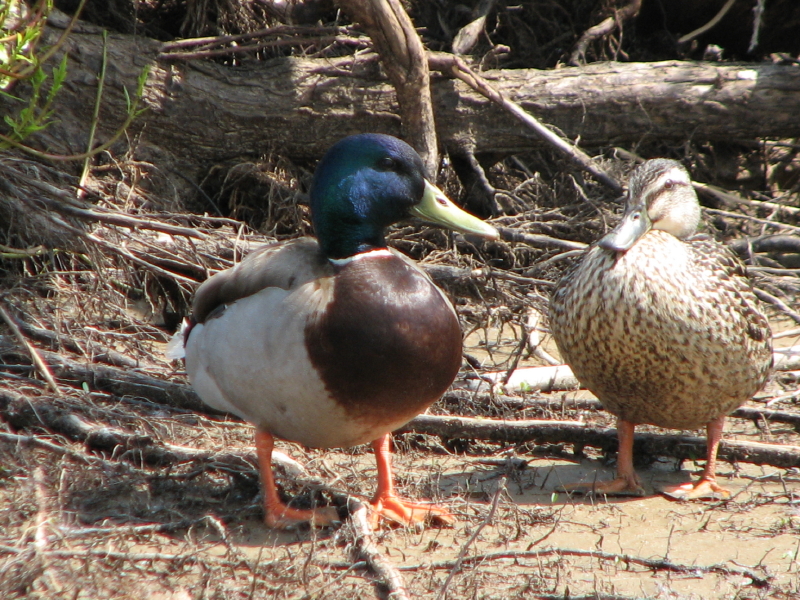
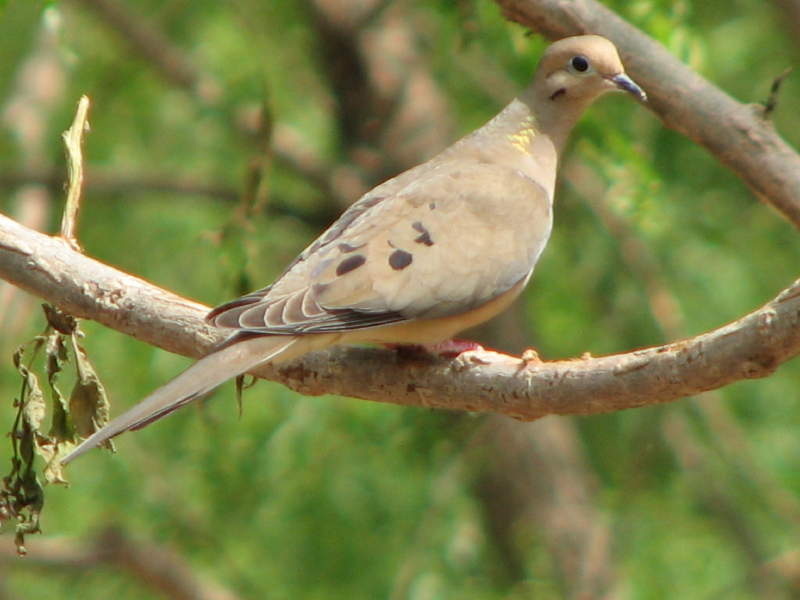
There were birds that I was able to photograph and identify like this pair of Mallard Ducks.  They were away from the river and more than likely have a nest nearby.  This Mourning Dove is showing a little of the iridescence on its neck that comes with the breeding season.  It’s hard to believe now that Audubon’s first drawing of the extinct Passenger Pigeon was made at the Falls of the Ohio.  That is certainly a bird I would have loved to add to my list of living species in the park.

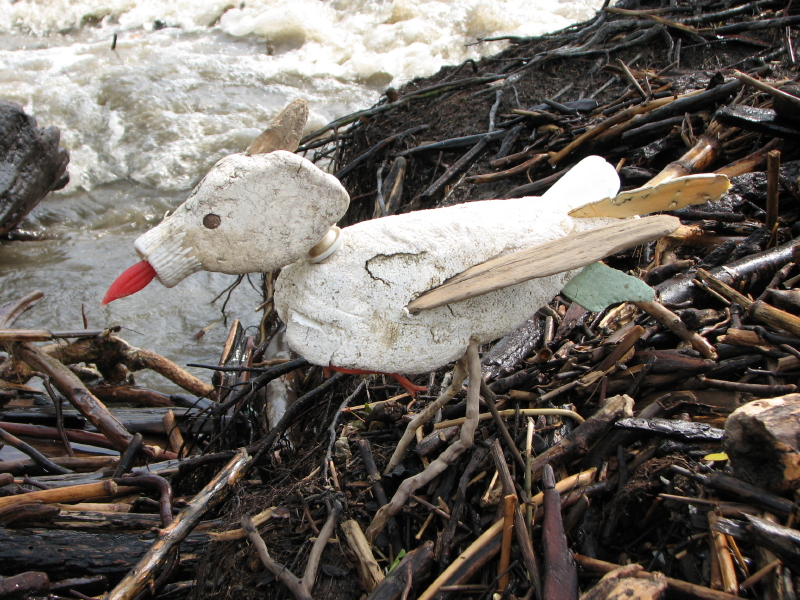
I was able to add a new bird to my list on this trip and it’s an unusual one!  It’s called the Ohio Valley Rail and is usually heard more than it is seen.  It is not typical to run into one during the daylight hours.  So, when I came across this female near the river…I got real excited!

This bird is in transit to the marsh habitats that exist around the lakes in the Upper Peninsula of Michigan.  Since the Ohio Valley Rail is believed to travel at night…it is a mystery why this one isn’t sleeping in a secluded spot.  Originally discovered and named within the river valley by early 19th Century naturalists, it would be many years before it’s true northern haunts would be known to science.  The males are slightly smaller but have more developed plumage which they use to their fullest glory when they leap and dance into the air trying to win the favors of a female.  Successful dancers will pair up producing a clutch of two eggs usually in a nest located on the ground and made from cane leaves.  One last image of this rarely seen oddity with the big head and bright red bill.  Bon voyage!

Read Full Post »

« Newer Posts - Older Posts »