Feeds:
Posts
Comments

Archive for the ‘Louisville, Kentucky’ Category


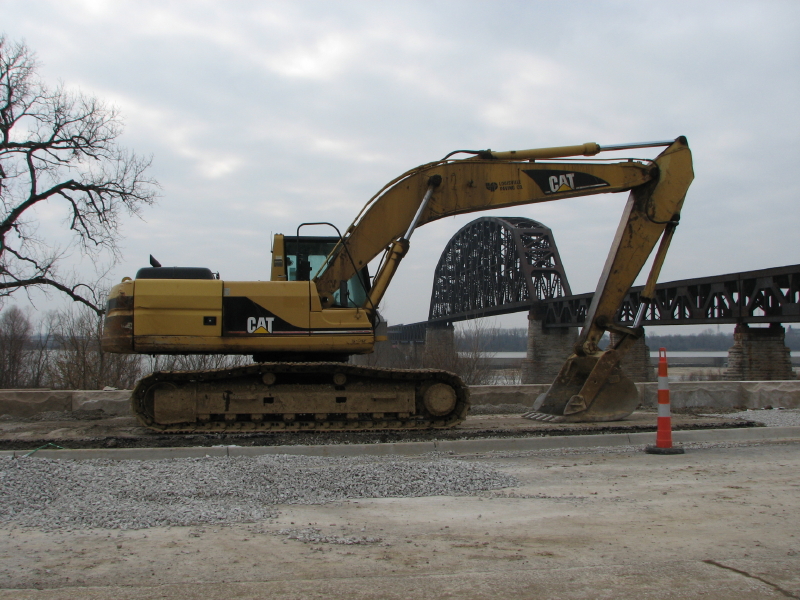
Today is the first day in a week that I haven’t run a fever.  I don’t get sick very often, but when I do…I usually get my money’s worth.  I missed a week of work and probably worried the folks closest to me, but now I’m thankfully on the mend.  Now, there’s a lot of catching up to do and I look forward to reading what my blogging friends have been up to and to share a bit of my world by the river.  The following story and images were part of my last expedition to the Falls of the Ohio and made the day before the microbes laid me low.  To begin, I’ll start with the first image in this post.  There are changes afoot in the park proper.  High on the riverbank, the road and parking areas are being expanded and made more accessible.  I naturally am a bit troubled by this since I don’t think this unique place needs to be “loved” anymore than it already is.  I remember the Falls of the Ohio before its state park designation and the building of the Interpretive Center.  I can’t say that I enjoy this space anymore than I did before the building boom began.  Change, as “they” say is the only constant and at the Falls of the Ohio, the rocks bear witness to over 375 million years worth of changes.  So what’s a few more?
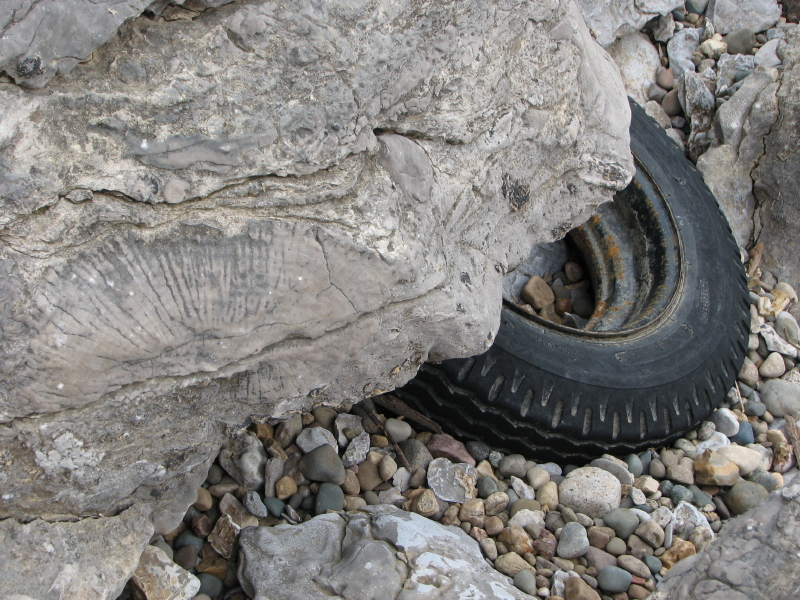
I spent more time scrambling up and down the fossil rocks than I usually do and came across this image.  I noticed that the fossil coral on the rock to the left of the tire bore some resemblance to the tire’s tread and created this reciprocal relationship in my pre-fevered brain.  Beyond shape and pattern, I’m struck by our dependence on ancient life to advance our own contemporary concerns.  The Ohio River buried this tire in this ice age gravel many years a go and here it stays.
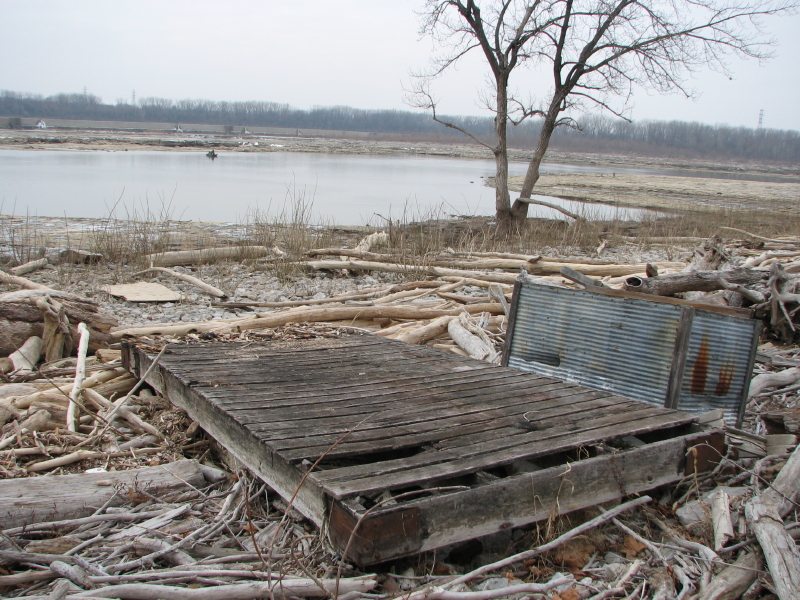
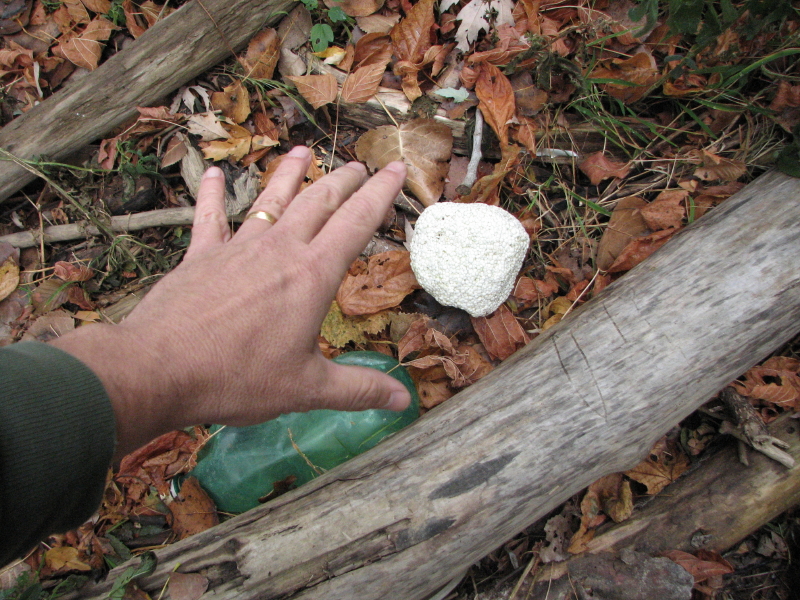
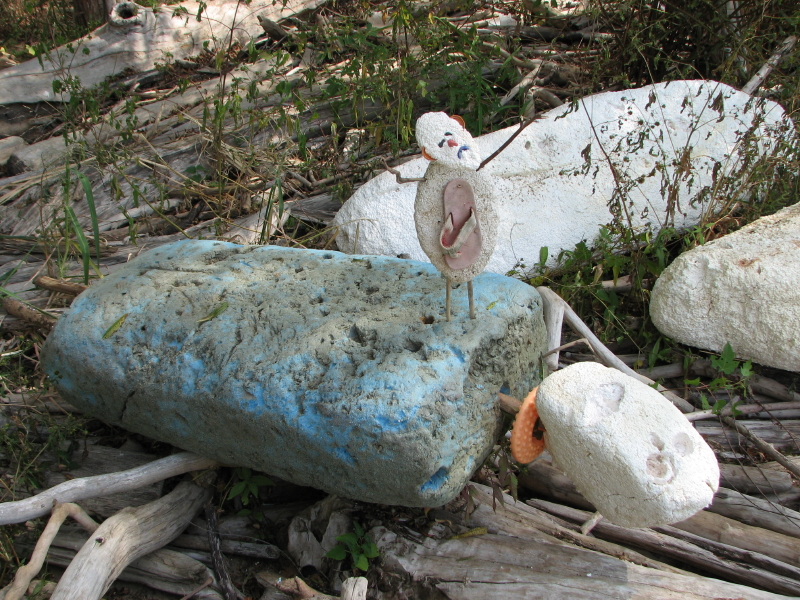
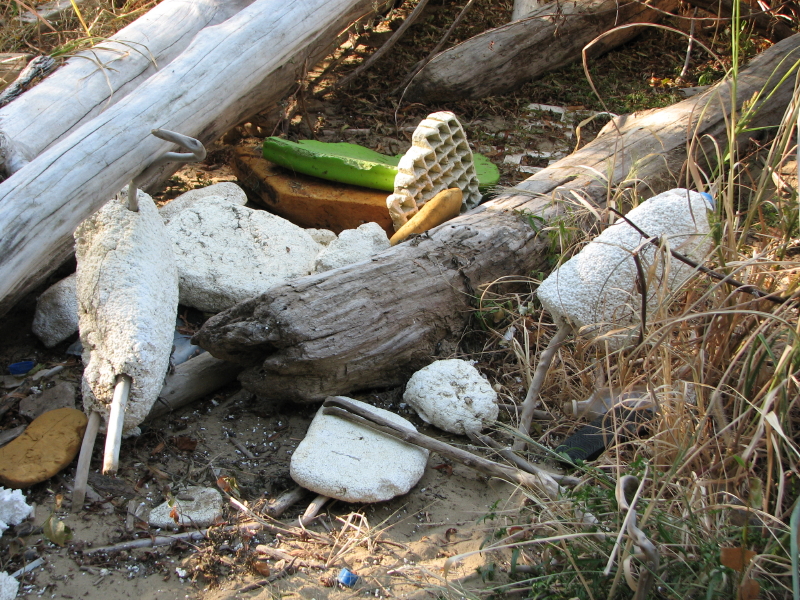
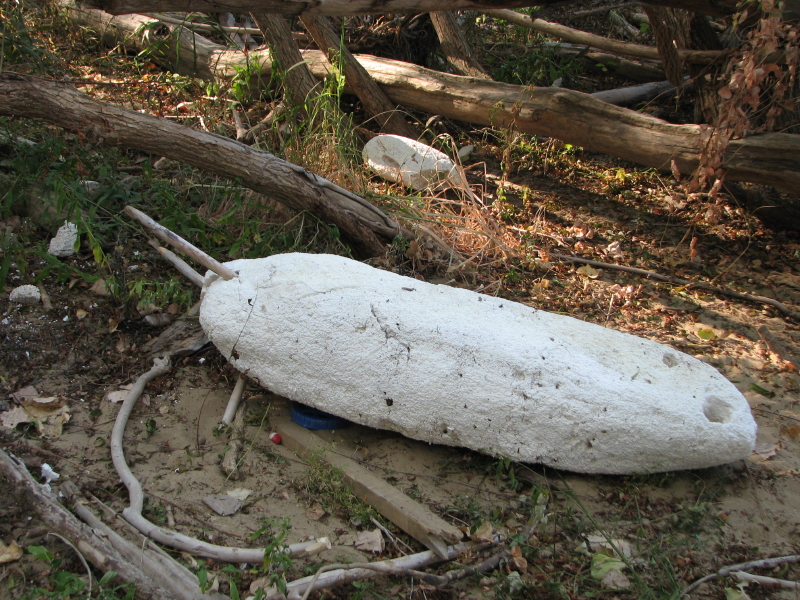
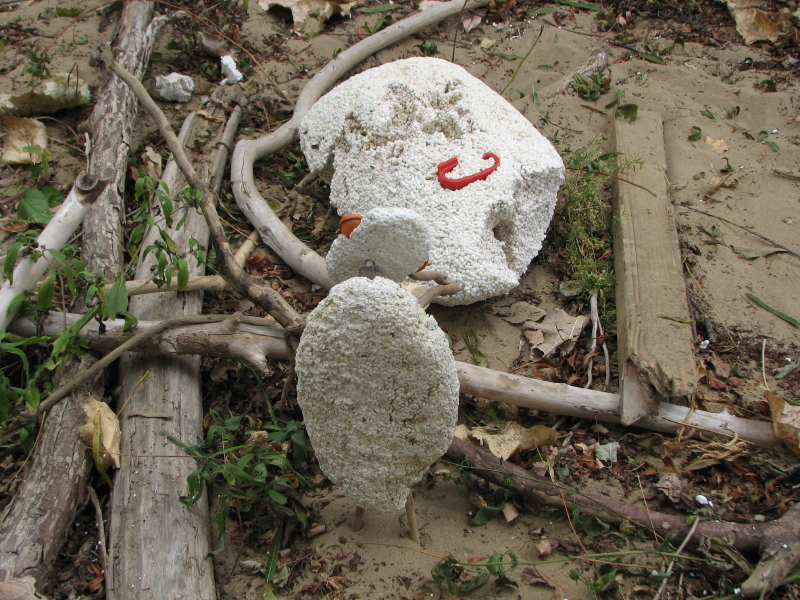
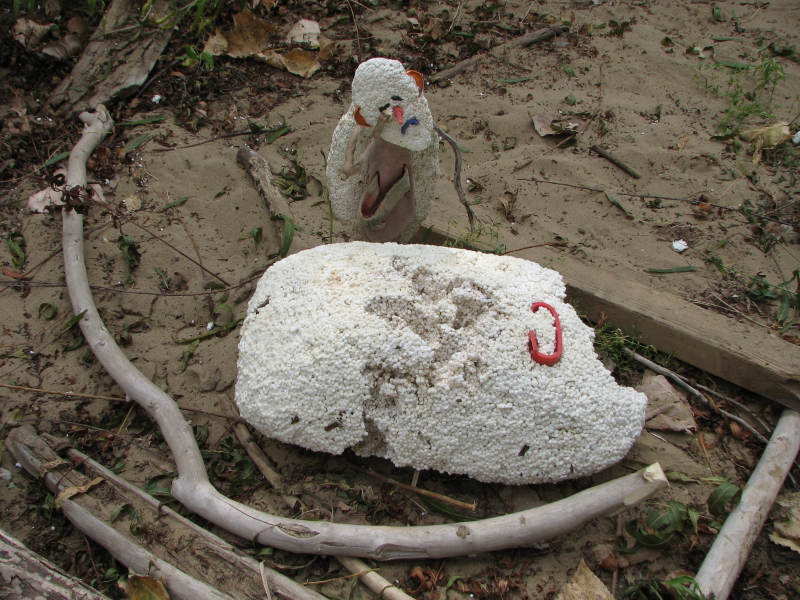
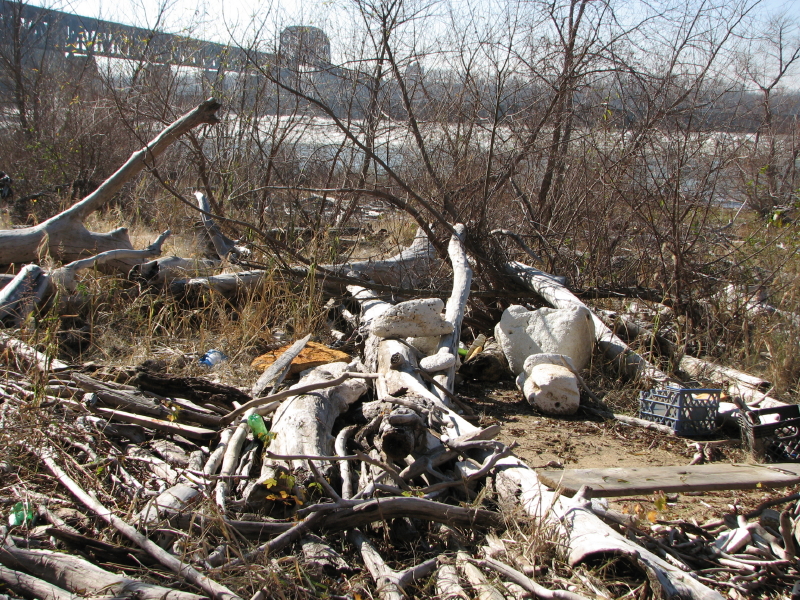
I have passed by this scene for a while now, but for some reason just decided to check it out more closely.  People often ask me where the larger chunks of Styrofoam I use come from and I reply …”I think they are from floating boat docks”.  Now, I actually have proof of this instead of just relying upon conjecture and intuition.  The larger object to the right of the wooden slatted form is separate from it and actually deposited by the river prior to the dock’s arrival. 
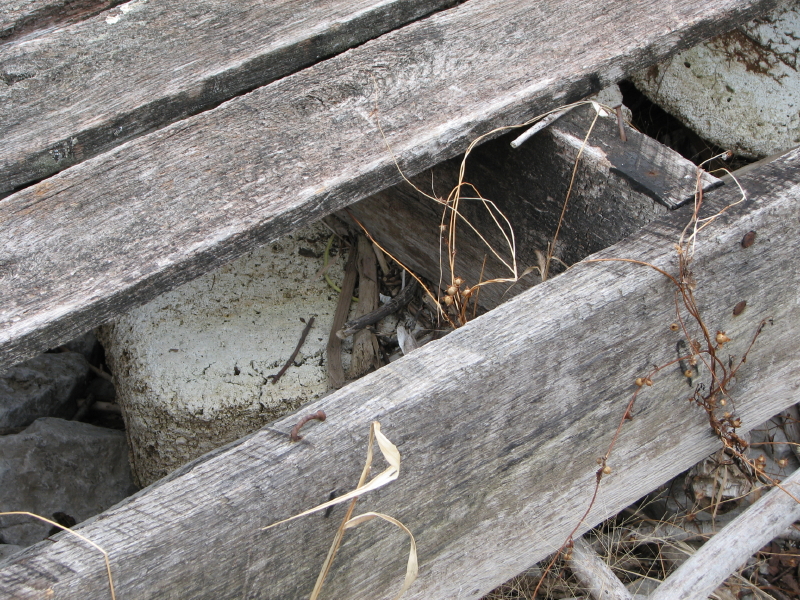
Something unnaturally white seen past the bleaching wood caught my notice and here was my proof.  This boat dock or swimming platform was kept afloat by several monolithic sections of polystyrene.  As the wood decays and breaks apart, the entrapped Styrofoam is released into the river to continue its journey downstream.
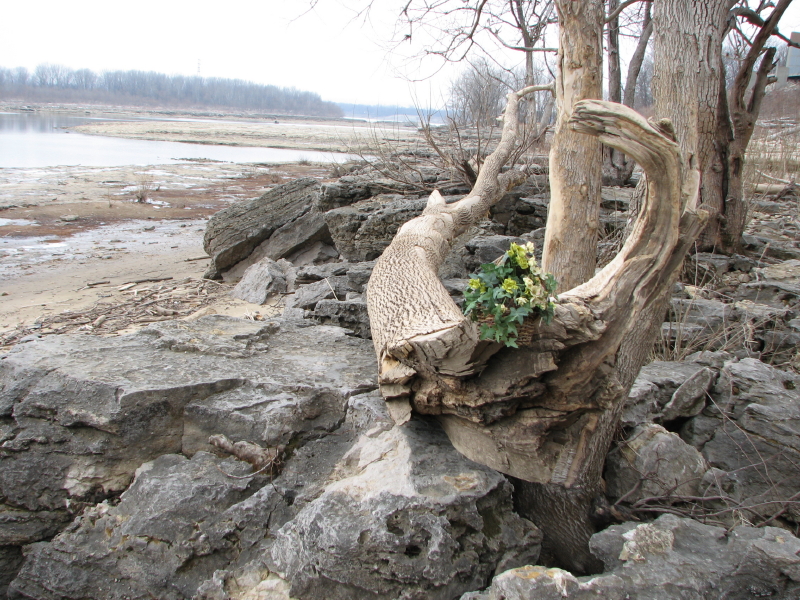
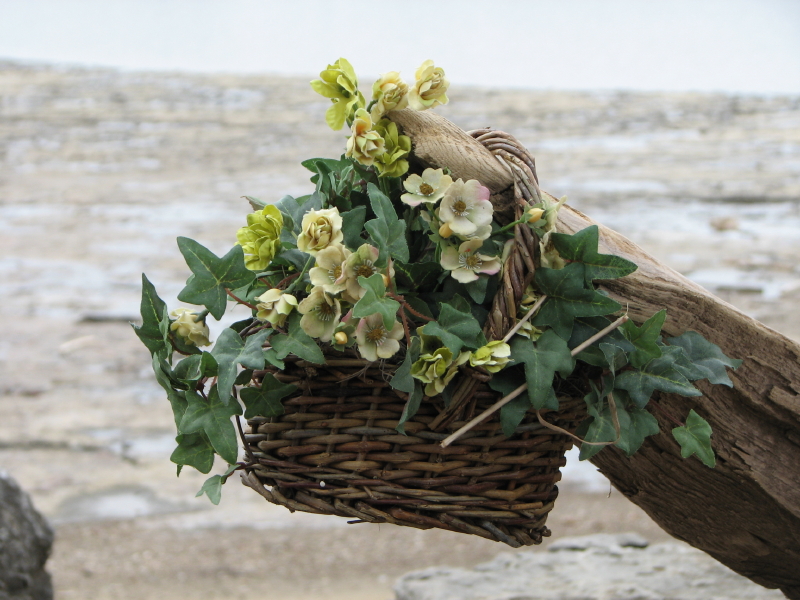
Returning to the rocks, I was poking around when I noticed something verdant.  It’s the middle of winter and there isn’t much of anything green to be found anywhere around here.  Looking more carefully, I see that some other Falls beachcomber has found a basket of artificial flowers and propped them on this large fallen tree trunk.  Here is a different view of that basket.
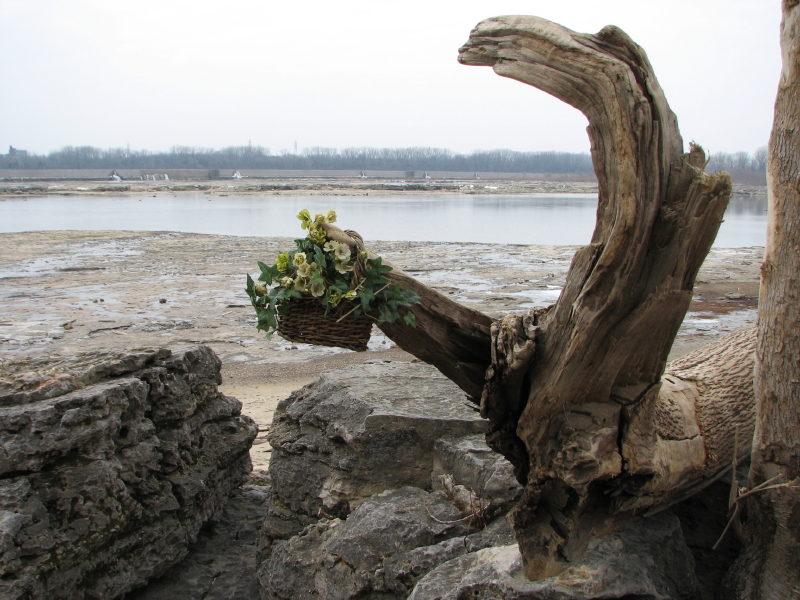
Although I’m no fan of artificial flowers and ivy (my Dutch grandmother actually forbid them in her house) I find I “like” this picture.  Perhaps it’s the illusion of greener times ahead or the considered placement by the basket’s original finder, but it makes me see this place in a way I wasn’t expecting.  On site, I remember thinking that this was put here as a gift.
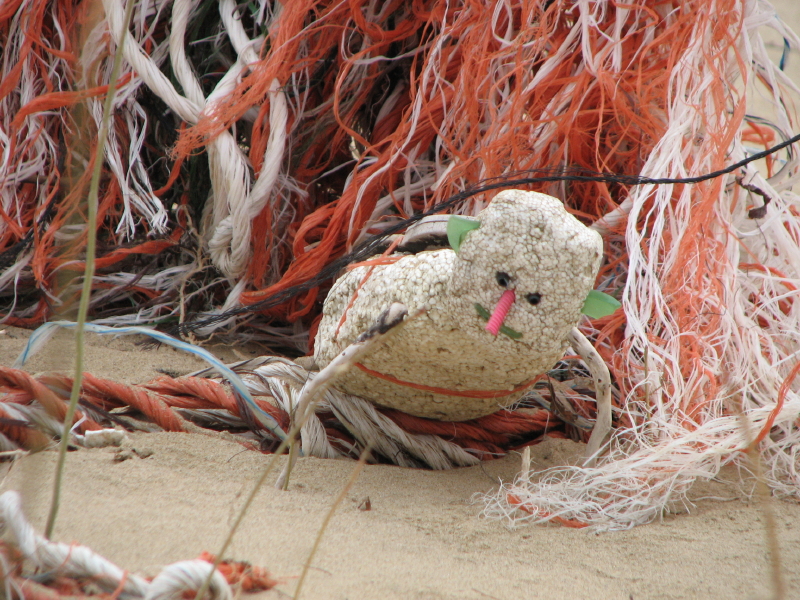
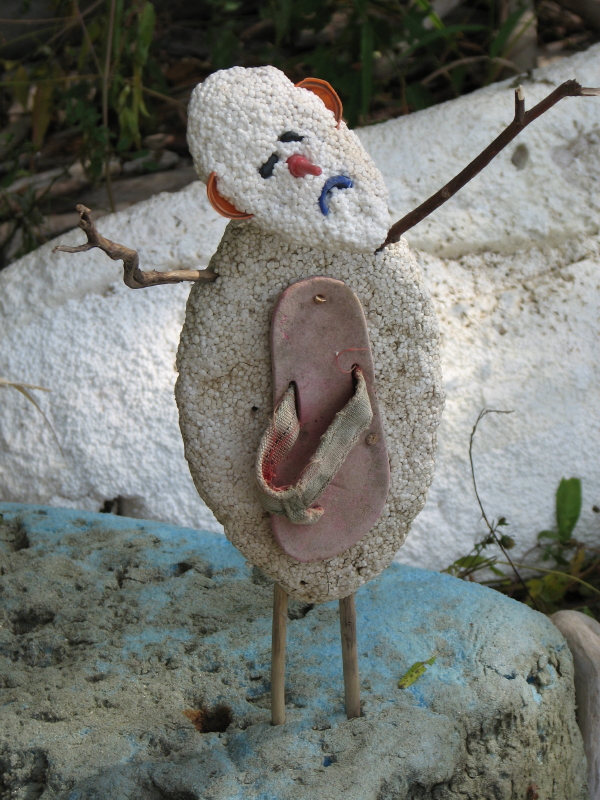
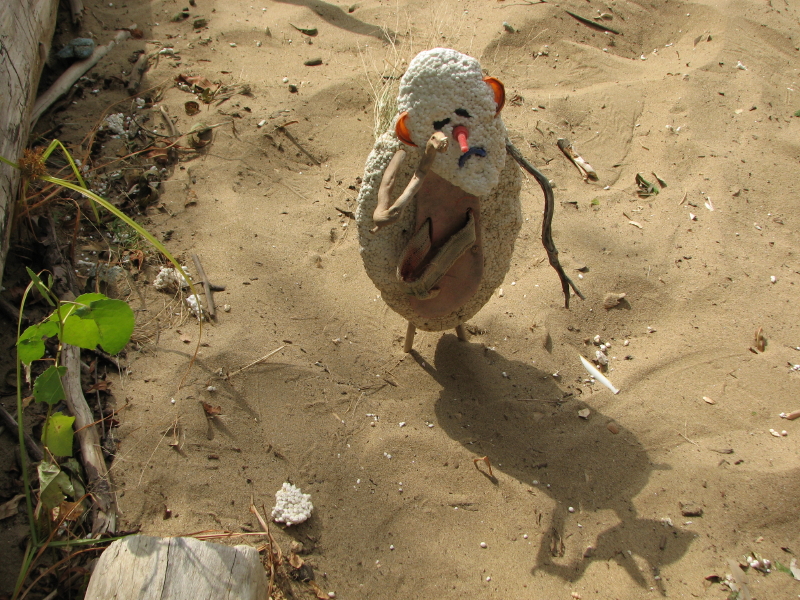
Walking past a recent project I discovered that the small Styrofoam figure I made was still present…but had blown over by the wind.
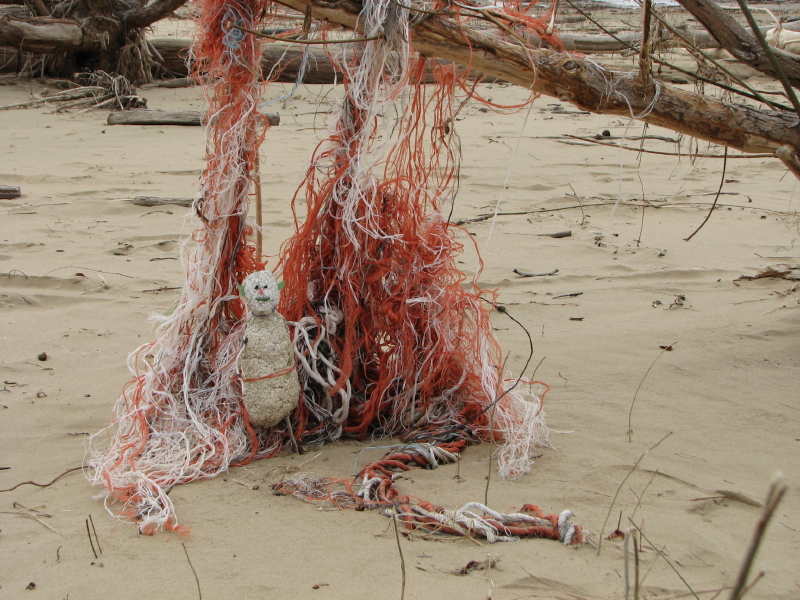
So, I set him right and moved on to my next project.  That will be the subject of my next post barring a relapse of my viral funk.  For now, I’m glad to be gaining my strength back and I’m looking forward to returning to work in all its forms. 
Read Full Post »

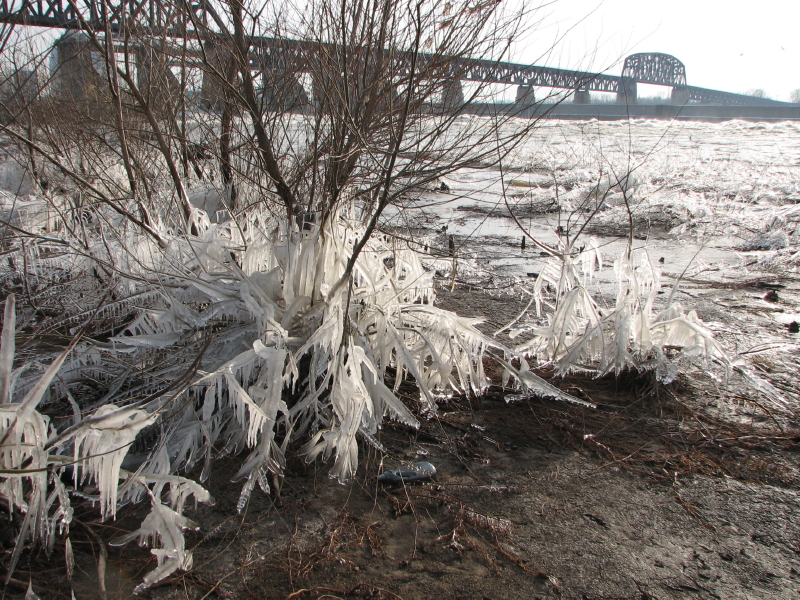
Come along on this vicarious adventure to the Falls of the Ohio.  The seasons and river help make this a dynamic environment.  I stole a couple of hours during a very cold day to visit the park and was rewarded with a riverscape transformed by ice!

Right at the river’s edge was where I found the ice.  The driftwood, logs, and living willows looked as though clear glass had encased their forms.  I love being a witness to all the transformations that happen in this relatively small place.  It literally can change before your eyes.  Ice at the Falls is always a magical event and one that doesn’t last very long.
Ever wonder what it takes for ice like this to form?  The conditions need to be just right.  First it takes a river where the water is warmer than the air around it.  The river appears to steam and fog can form.  The warmer water vapors come in contact with the colder trees and rocks, condenses, and turns to ice as the temperatures fall below freezing.  You also need one other element and that’s an engineer or architect to direct the action.

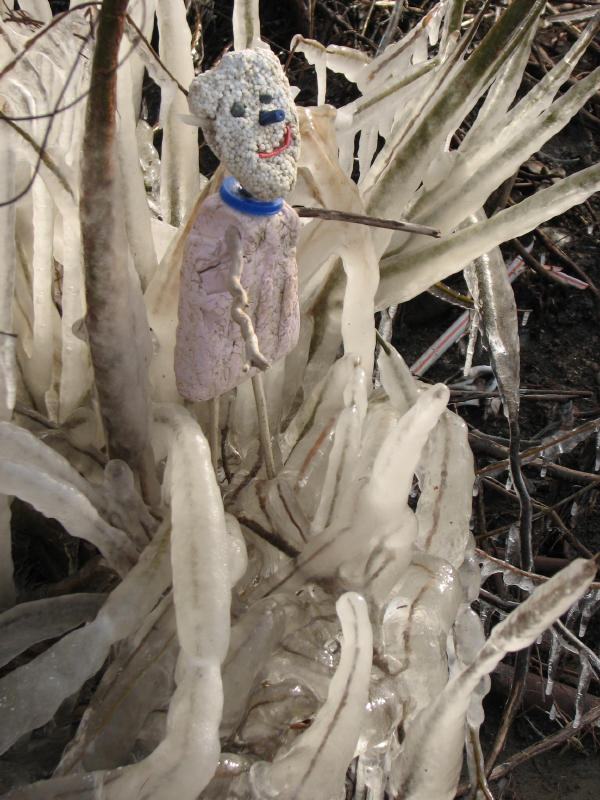
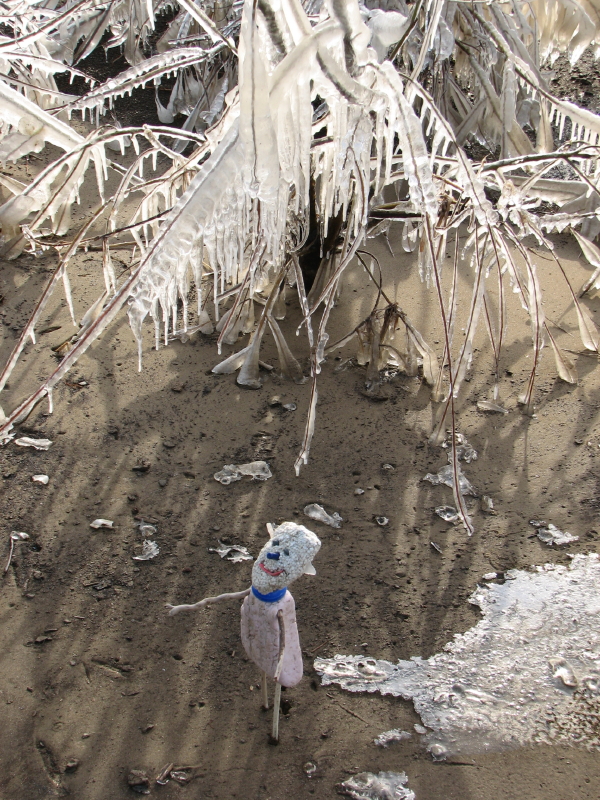
If you look closely you can see the architect of this scene in the center of this low growing willow tree.  Here he is seen from a different angle.

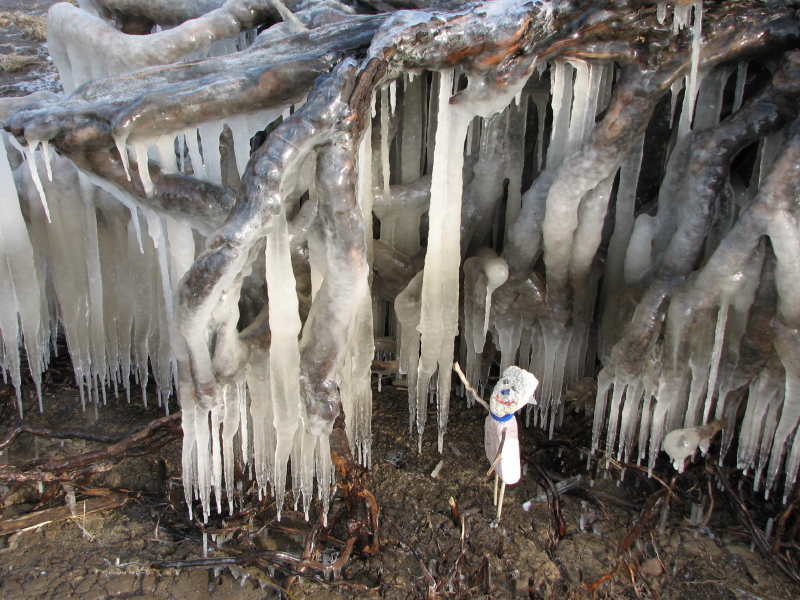
The little fellow I was observing was a true artist and had such mastery over his materials.  All he had to do was simply point and wave his arms around and an ice fog would cover the trees and other structures within reach of the river.  In this way he painted the Falls in ice…take a look.  Here he is again doing his thing along the riverbank.

Judging from the slightly mischievous smile, he seems to be enjoying his creations.  I followed along and recorded him in action.  He never slowed down and moved from tree to tree in a methodical way.

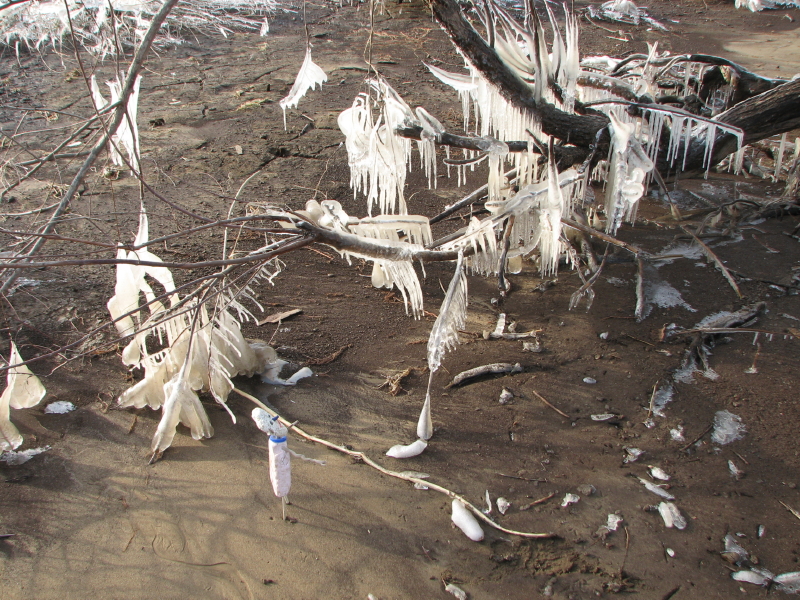
The architect made ice that varied in appearance.  Some trees he thickly covered and others he decorated with frozen sausages and jellyfish hanging from the slenderest of branches.

I watched the architect will the ice into place according to an intention and plan known only to him.  I suppose if one were to study this…there  probably are some mathematical equations that can explain all this?

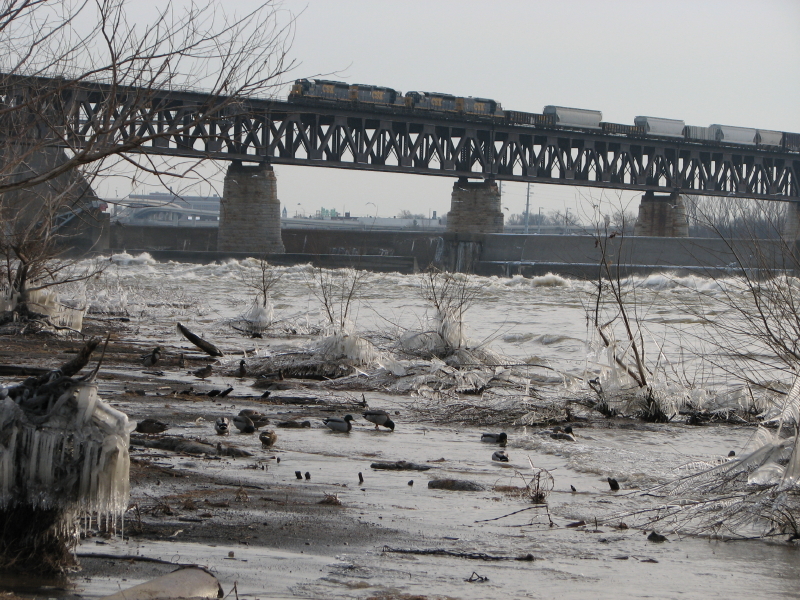
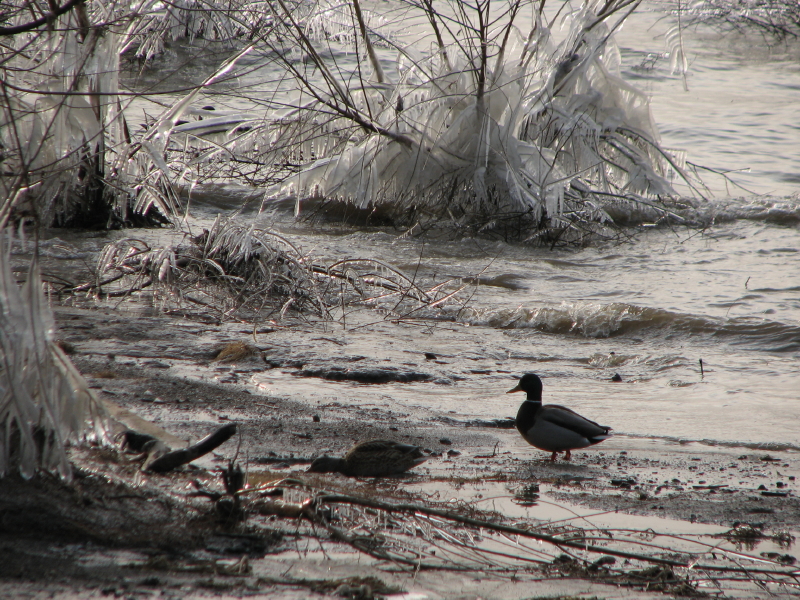
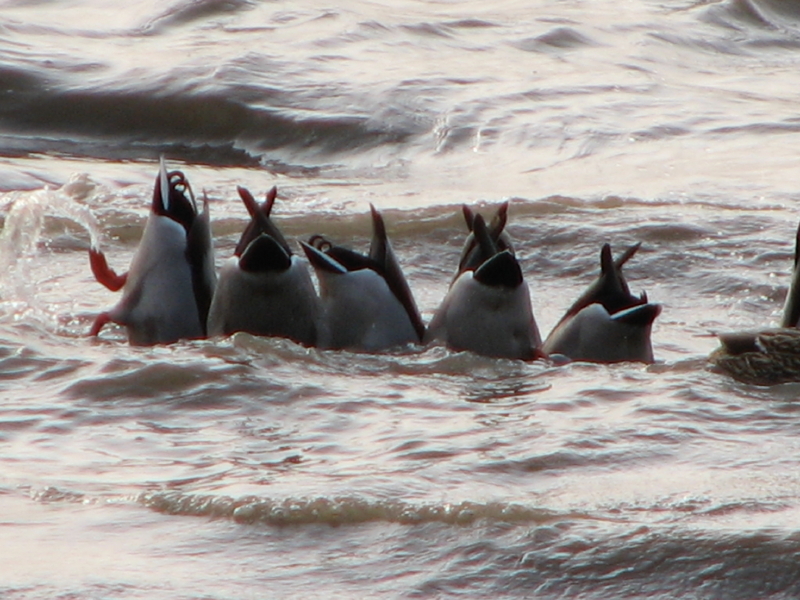
But when it’s this pretty and magical…who cares what the numbers are doing?  It’s nature exhaling and gathering itself before the next big breath restores and awakens the land.  As I left the architect to finish doing his work.  I walked alone admiring what he had left behind.  To end, here are three images my camera recorded along the river.  The last one in particular was lucky…and ducky!

Bottoms up everyone, till next time!

Read Full Post »

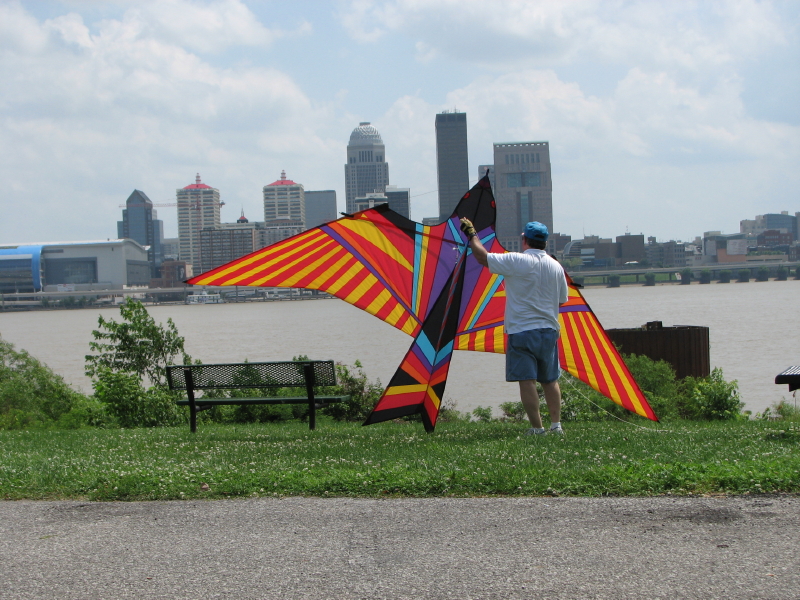
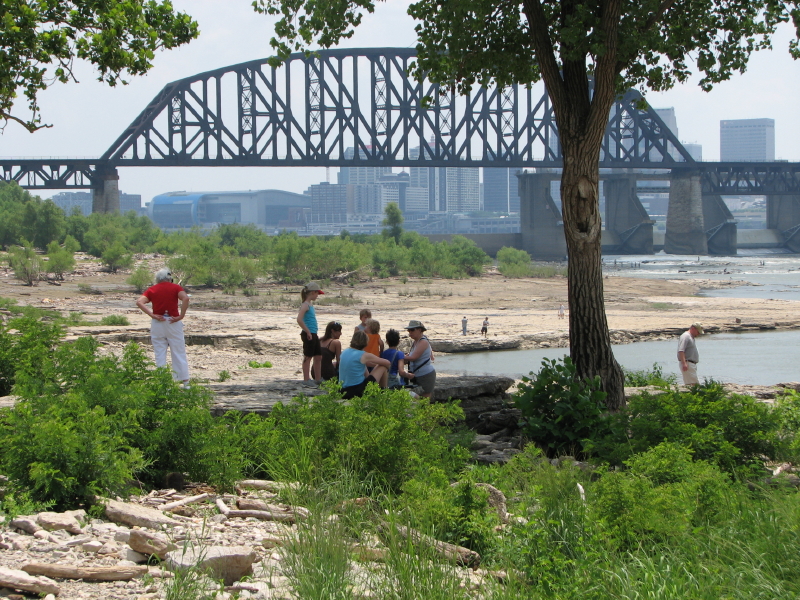
I have been to the Falls of the Ohio this year and made something from the junk I’ve found, but this is not that post.  As 2010 was winding down, I looked at the year’s images to see if there were other stories that could be created from them.  Yes, I found a few, however, what was really needed were more hours in the day.  Before I could get to them…2010 became history.  And so now, I’m doing a little backtracking and enjoying placing myself in a warmer landscape than currently occupies the view out my window.  I had the idea of showing how other people enjoy recreating in this unique place.  To begin, if the conditions are right, you can fly a kite.  I came across this guy many months a go and I don’t think there was enough wind for him to get the lift he needed.  Louisville, Kentucky can be seen across the river.

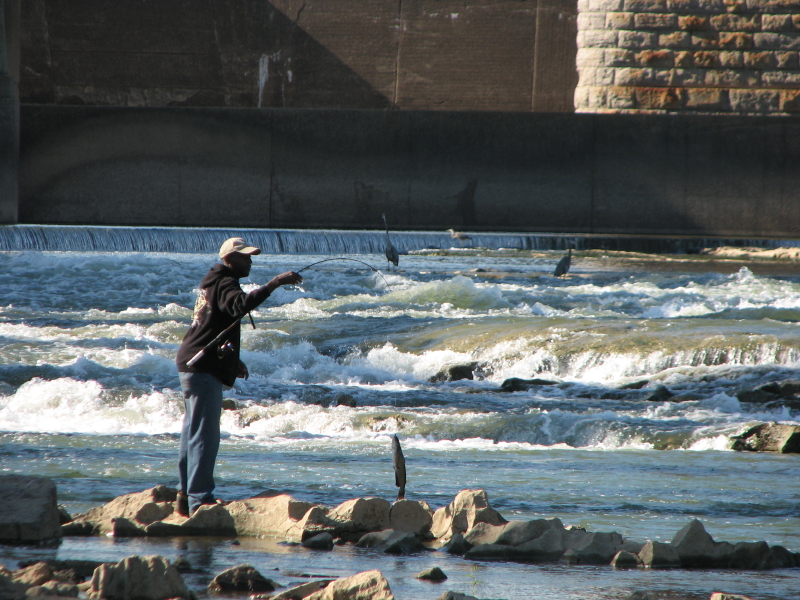
One of the Falls activities I see many people pursuing is fishing.  There are a few gem days during the course of the year when the fishing is just fun and excellent.  That primal aesthetic to catch one’s meal finds contemporary expression in angling.  It can be as sophisticated as you like using only the best gear sold in the catalogs…

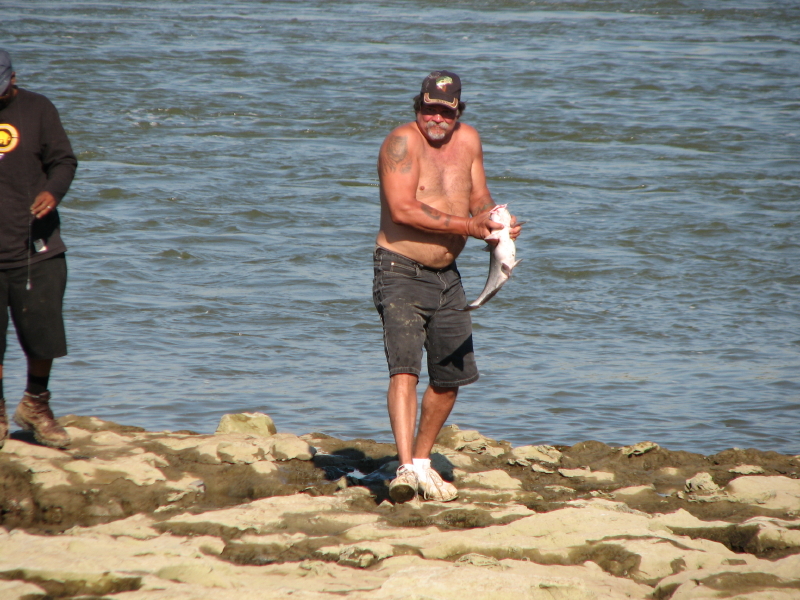
…or it can be a rather simple activity not requiring a lot of fancy fishing equipment.  In fact, you don’t even need a shirt!

I can remember the look of delight on this man’s face when he had the fish in hand.  What worries me is that I’m seeing more and more people taking fish out of here to eat.  Although the river is supposedly getting cleaner, there are still toxins concentrated in the fish’s tissues.  It’s still a good idea not to eat too many too frequently.  And, the bigger the fish, the more likely more toxins will be present in the fish.  Some folks will go to some lengths to reach the fish that others can’t reach.  It certainly helps to have a boat. 

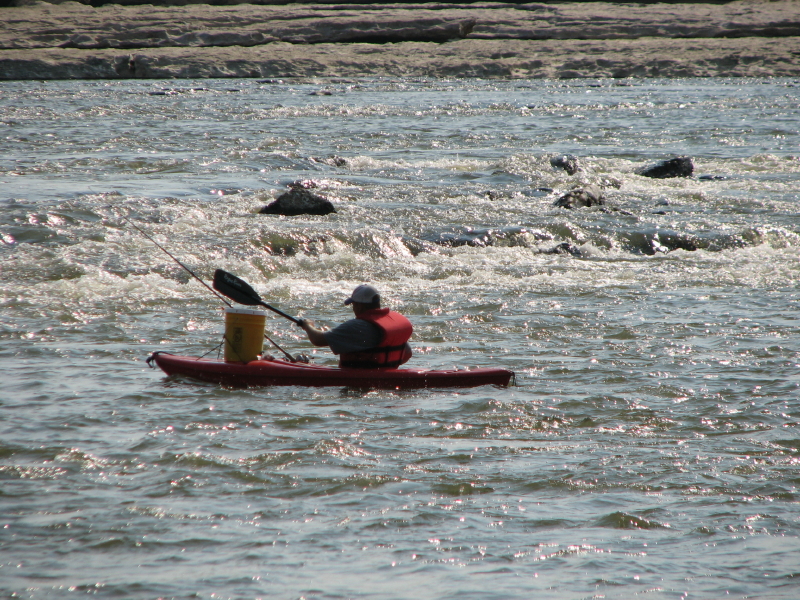
I think this guy looks like he would be more successful at fishing than he actually was.  The river bottom here is extremely rocky and the current swift.  It’s very easy to lose lures and bait netting you a major case of frustration.  Sometimes just the boat is enough!

Paddling kayaks in the rapids created from water being released under the tainter gates is gaining in popularity.  I have to admit there have been many times I’ve thought how handy it would be to have a small boat out here.  I have even thought about taking some of the larger chunks of Styrofoam that I find and making my own makeshift water craft, but then I come to my senses.  I may still do it one day…we’ll see.

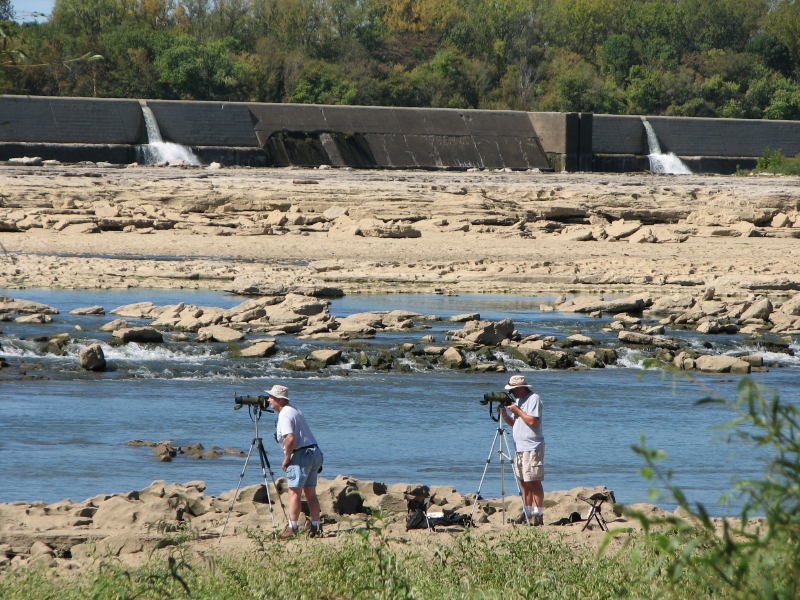
Some folks don’t go much further than the Interpretive Center where they can enjoy the exhibits or listen to one of the volunteers give a talk about nature in the park.  Birdwatching is a popular activity and one I enjoy too.

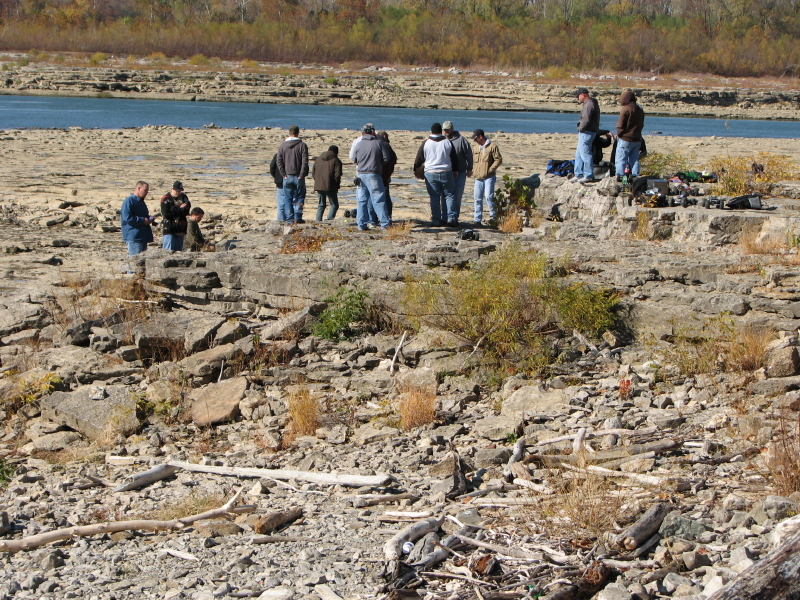
I don’t mean to pick on these guys…but I’ve noticed many birdwatchers feel that they need to look the part too!  Was it the late Wally Cox who crafted the classic nerdy birdwatcher look complete with khakis and pith helmet?  I suppose it’s better than wearing a feather suit!  In 2010, I did see people doing an activity out here that I had never seen before.  First, seeing these guys gathered at this place along the rocks piqued my curiosity and I moved in closer.

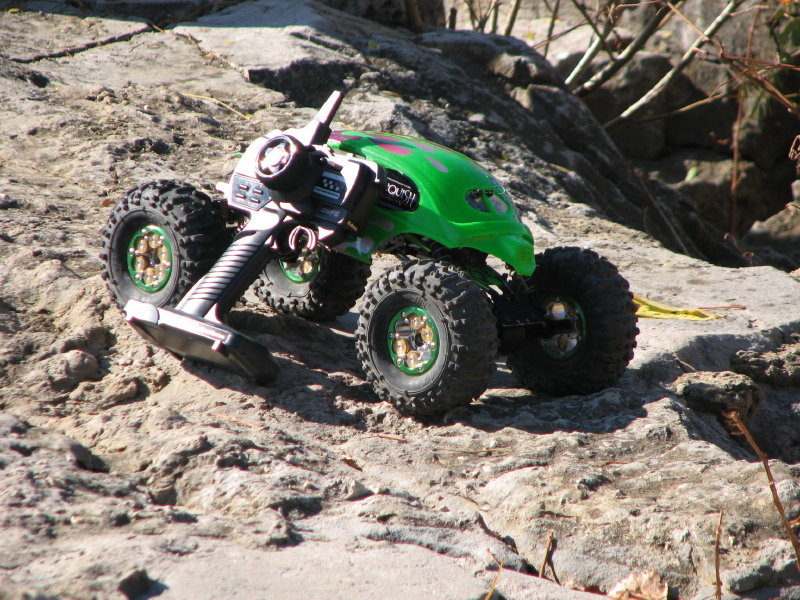
What I found was a competition under way among members of a club who operate remote control cars.  Their cars were designed to roll over rugged terrain and the contest was to see who could best negotiate a course laid out at the Falls and its fossil rocks.  Here’s what the cars looked like.

These cars were amazingly powerful and rugged.  With their outsized tires, many of these cars could crawl up nearly vertical rocks and boulders.  It takes some skill on the part of the operator to navigate around the hazards in the least amount of time.  And then, there are people who see the Falls in more practical and utilitarian terms like this man.

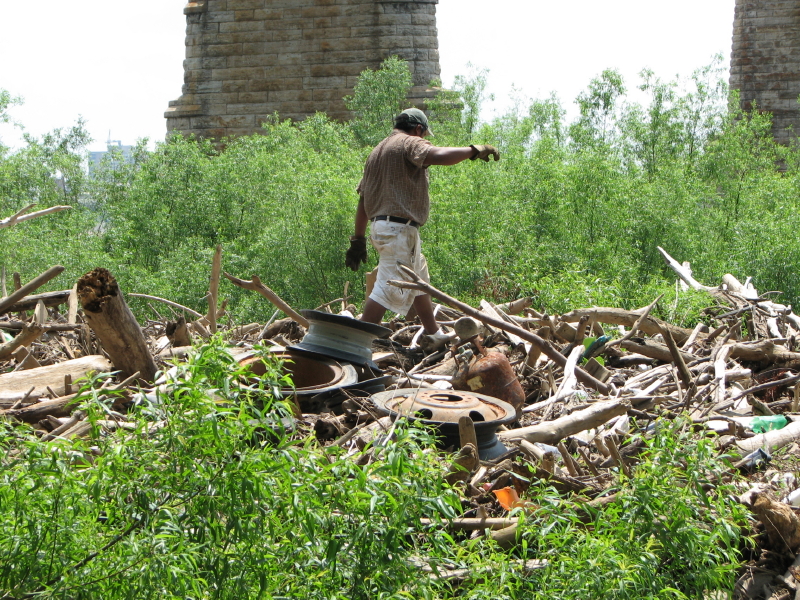
I ran into this fellow on a couple of occasions and each time he was doing the same thing.  He was salvaging the metal wheels from these tires.  He would cut away the rubber and take the metal rims with him to the salvage yard.  He seemed thrilled that there were so many wheels out here.  I also see people collecting driftwood to decorate their gardens and to make arrangements with fake flowers that they could then sell.  One man I spoke with said he received $25.00 an arrangement.  Based on the mental image I formed of his driftwood art, it didn’t sound all that appealing to me.  But I need to not be so judgemental in such matters since as this blog is proof of…beauty and utility are in the eyes of the beholder!  Here’s to another year of river art and adventure at the Falls of the Ohio.

Read Full Post »


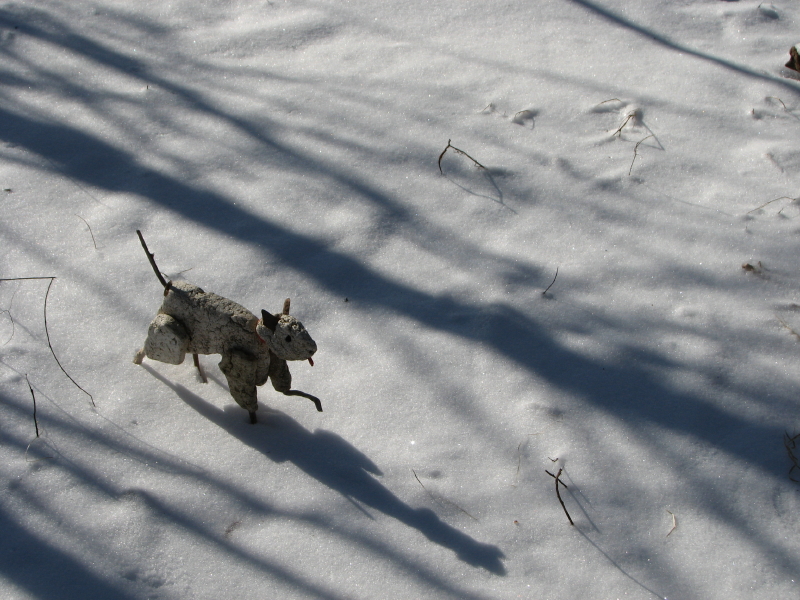
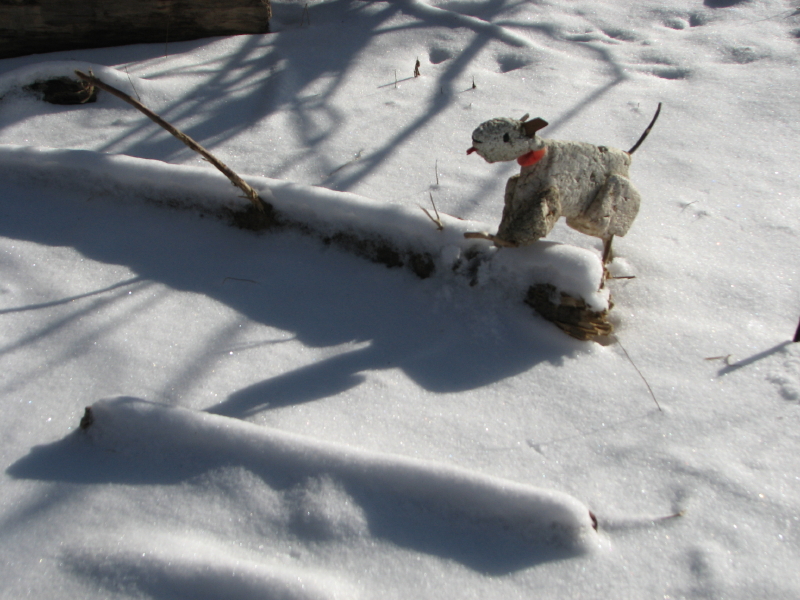
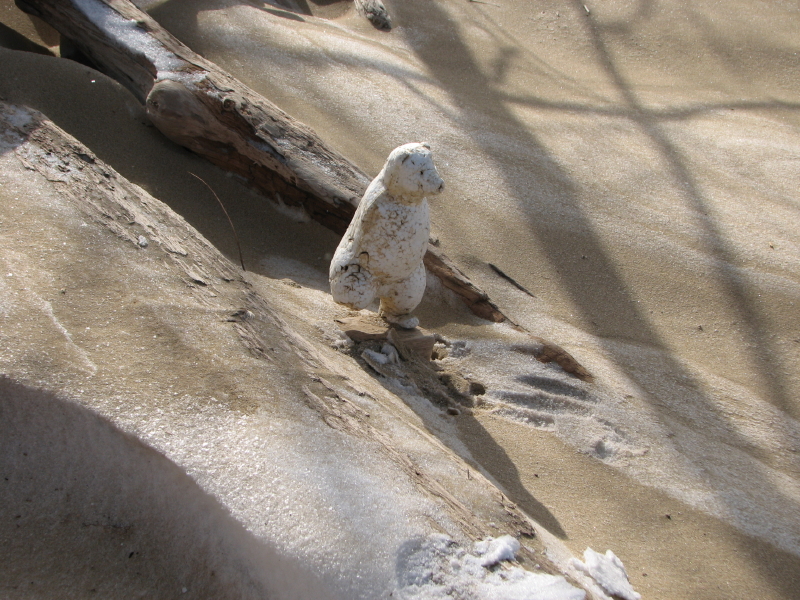
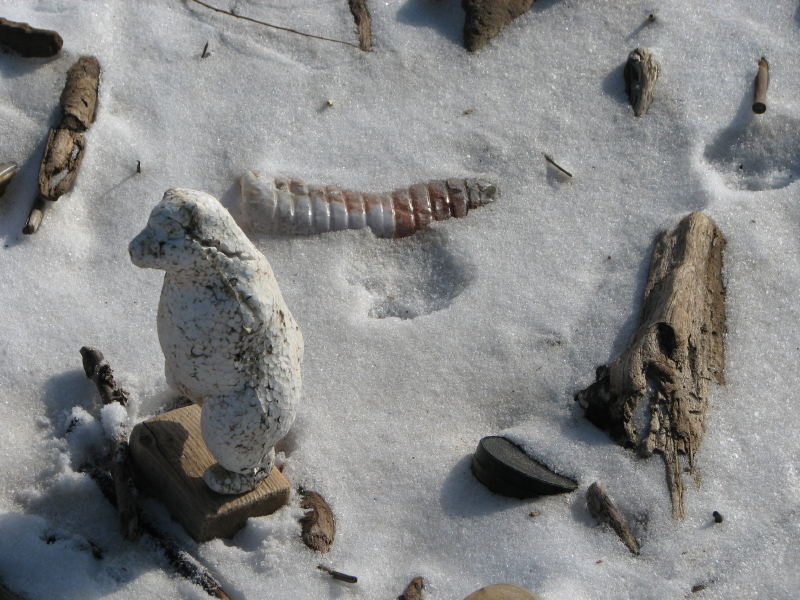
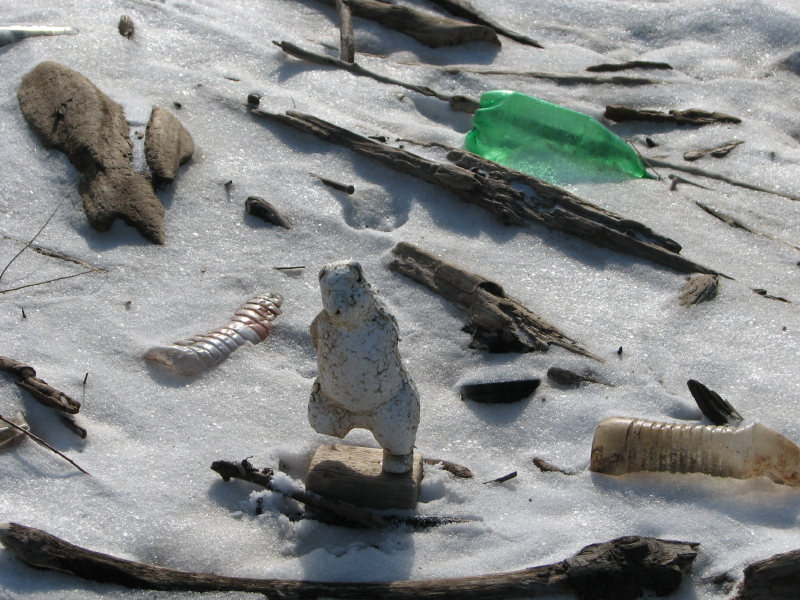
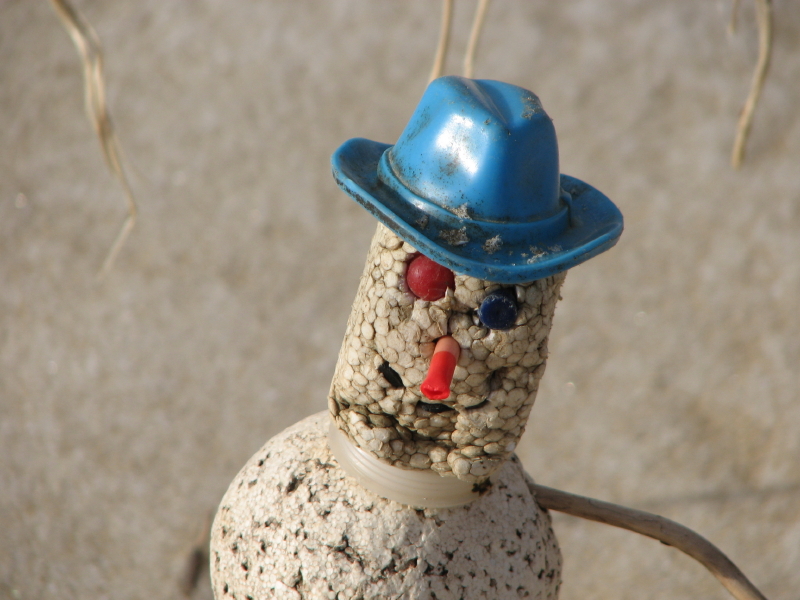
We awoke to a white Christmas in Louisville.  Just enough snow to cover the lawns and trees.  By now all my Falls of the Ohio holiday cards have been sent out.  Usually, I have several designs going at once.  This year, I made cards featuring snowmen, a dog I made from river delivered Styrofoam, as well as one featuring a Styrofoam polar bear with one leg I found out here amazingly enough!  Sometimes the cards are funny and sometimes they riff on some aspect of the holidays we could live without.

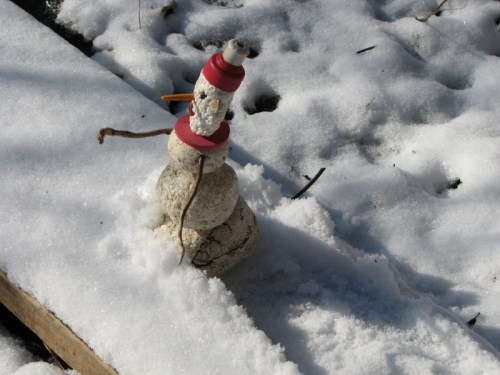
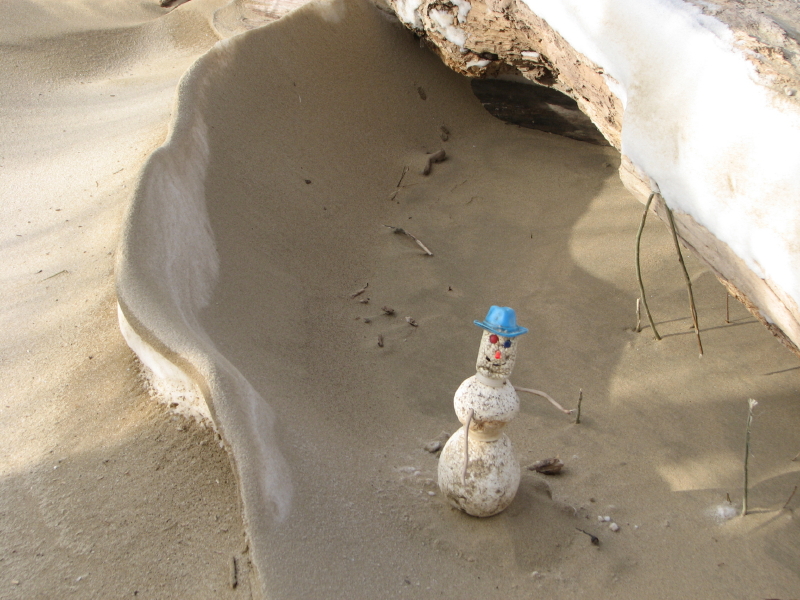
Both of the snowmen I made were created using parts of old Christmas ornaments I have found out here.  Usually, the perfectly round Styrofoam balls I find were originally fabric covered baubles meant for the tree.  This first snowman also features a bottle cap hat which gives you some sense for its scale.  The nose on this one is actually a miniature carrot I also discovered in the sand and kept for just such a purpose as this!  I waited for the snow to arrive which it did this year just in time.

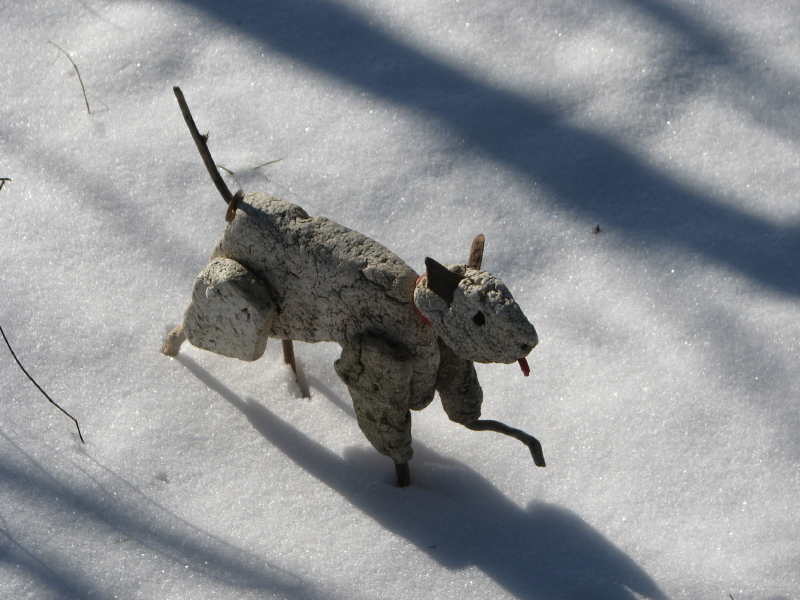
The little dog came from a previous post that most everybody missed and so I don’t feel as badly about recycling one of my former projects.  In this case, I thought the dog came out particularly well and deserved another chance to shine.  It’s made from Styrofoam and sticks, plastic, and tiny bits of coal thrown in to create eyes and a nose!  He’s so light that he doesn’t leave tracks in the snow!

I featured another image of this dog in my last post on the spoor of a particularly large bird which was a fun juxtaposition to work with.  In this overall group of photos, the object’s shadow plays a role as a design element.  As I recall, this was a very cold day with wind which caused some issues with the camera’s batteries.  I had little time to snap these before the camera turned itself off.  Among the other bits of polystyrene I was carrying on me was a “bear effigy” that I found out here this year.  I posed it in a few places along the way and here are some of the images.

Emerging from its hibernation, the one-legged Styro-Polar Bear encounters a rapidly changing landscape.  What was historically all ice and snow is now a melting landfill.

I mounted the Styro-bear on a small piece of wood I found out here so it could stand up.  I found it in damaged condition missing one of its legs.  I have no idea what this was originally intended to represent, but it reads bear-like to me.  The bear is such a resonant image going back to the beginnings of art and ironically I find one that says something about the here and now and our relationship with nature.  Much has changed.

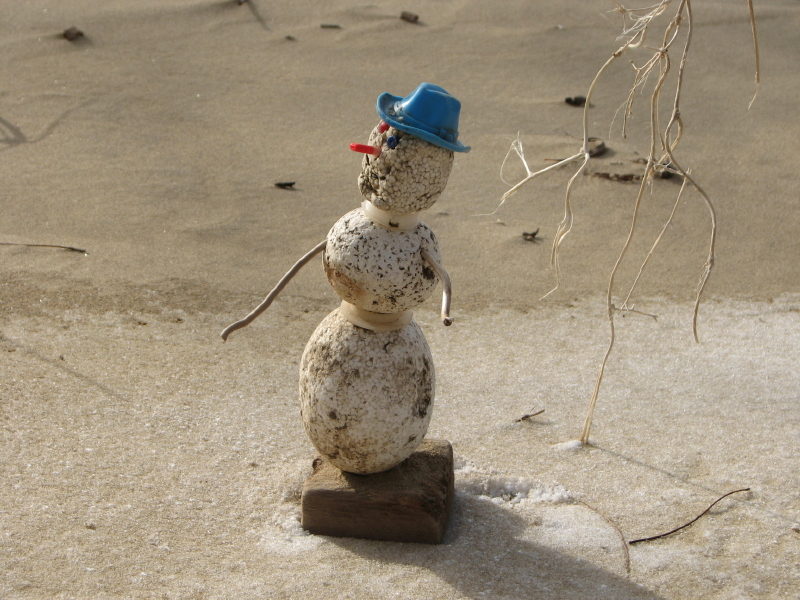
 One final snowman before closing and this one wears a blue hat!  I made this guy as a window decoration for a display at work, but couldn’t resist adding his portrait to the winter series.  Although he was made with Falls materials…he’s strictly a visitor.

Happy Holidays, Winter Solstice, etc… to everyone out there.  My best to all in the coming year!

Read Full Post »

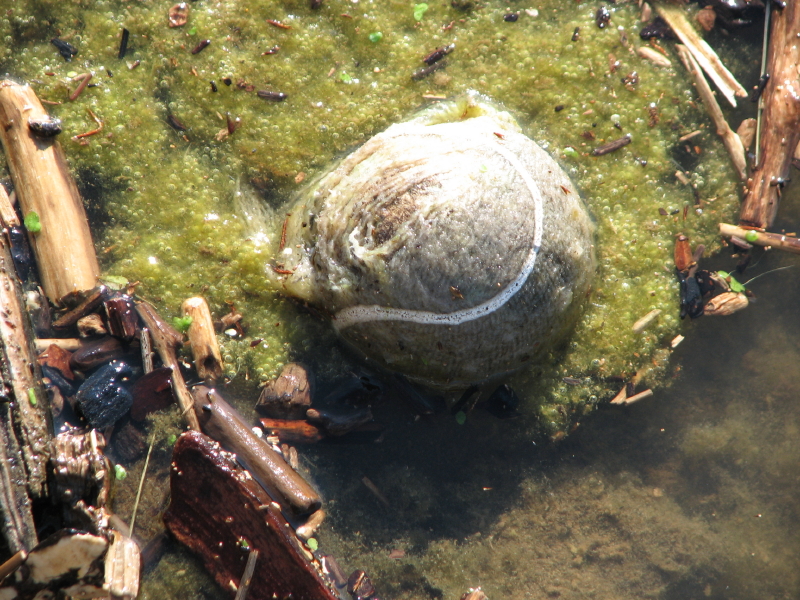
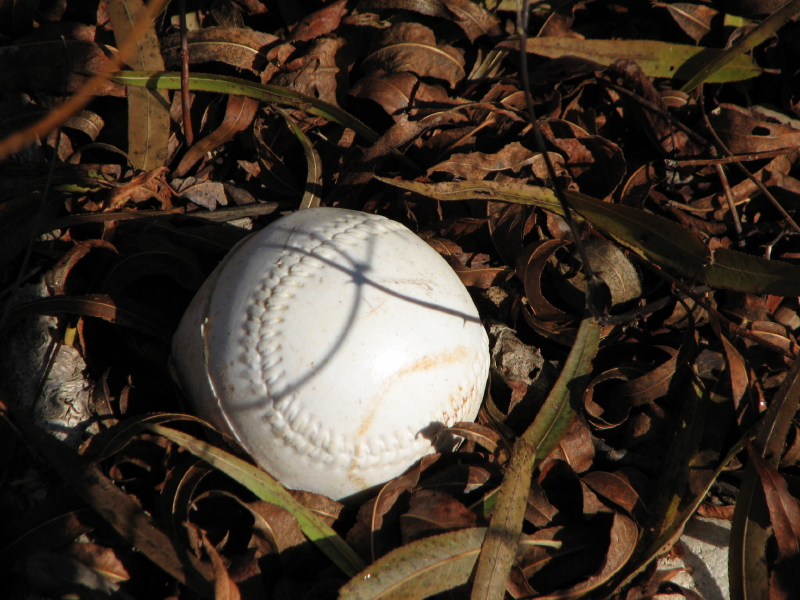
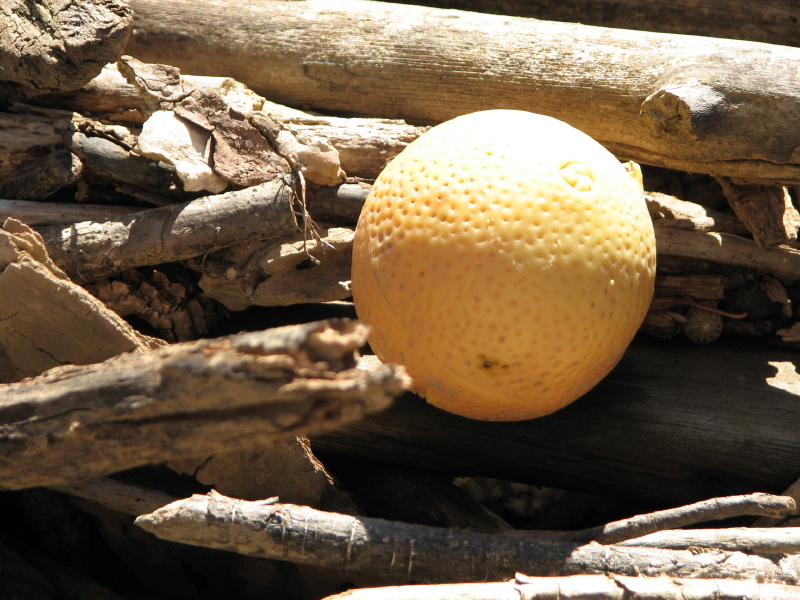
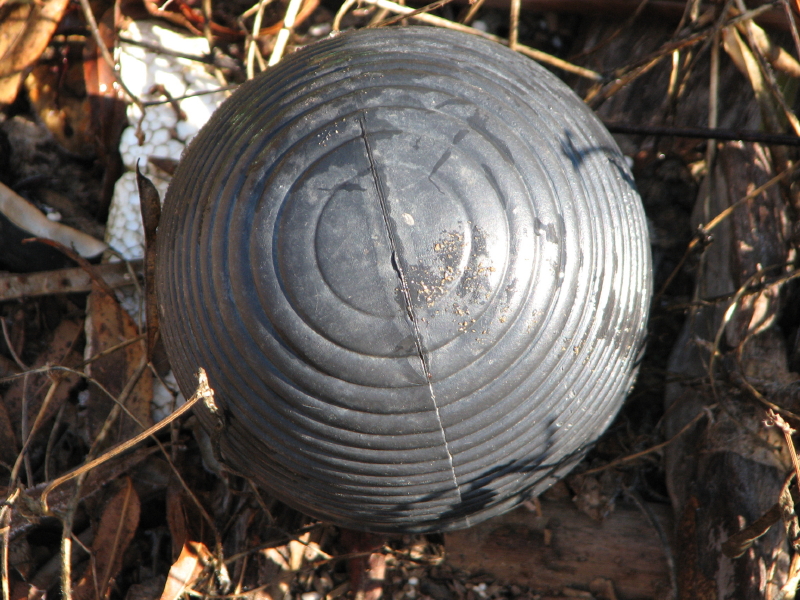
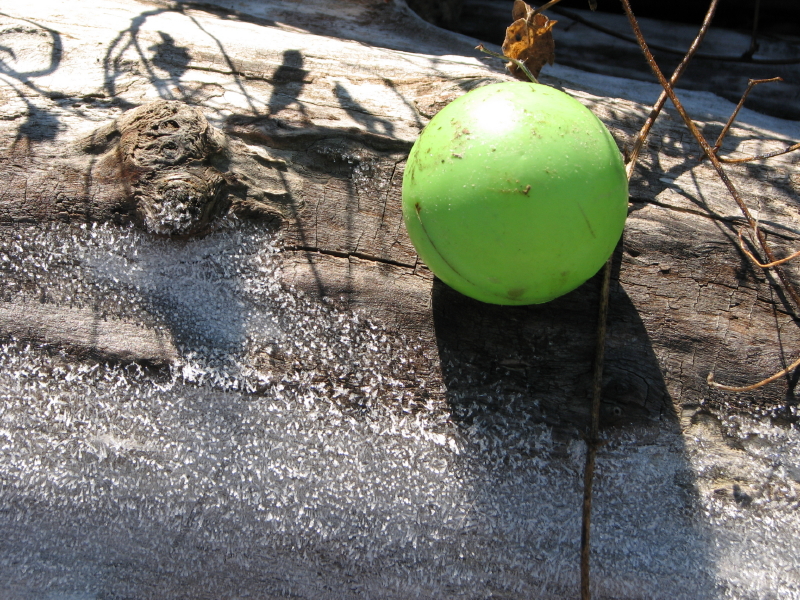
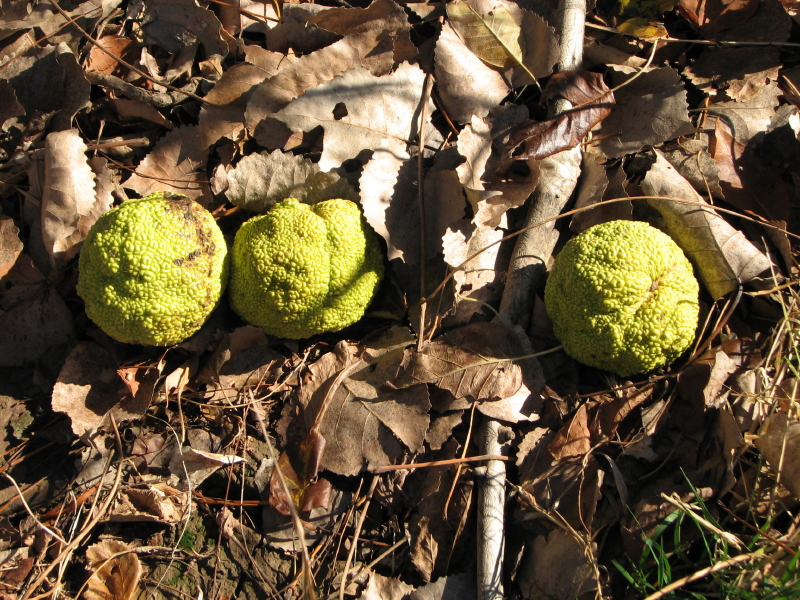
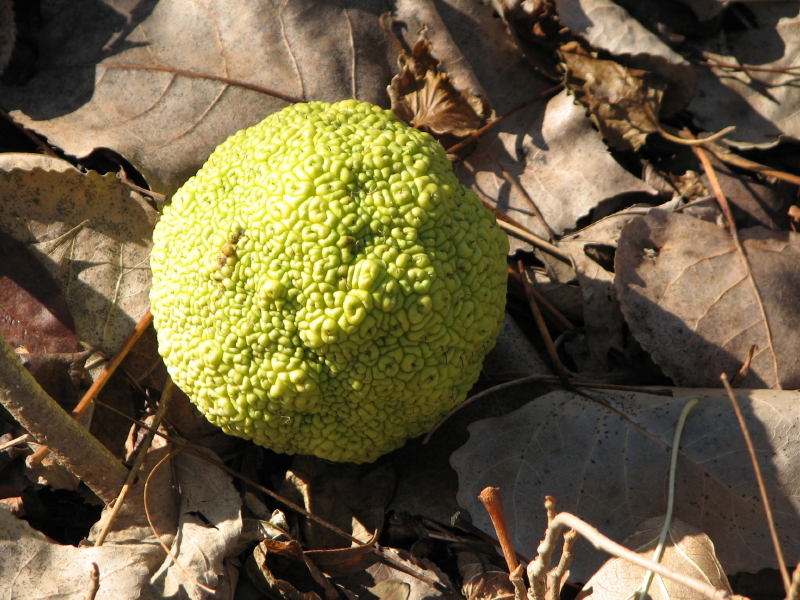
On my last walk at the Falls of the Ohio I came across so many found round objects that I thought a few photos of them might be fun or interesting so what the heck. I’ll start with the first orb I came across which was an  osage orange fruit also called a hedge-apple around here.  It looks somewhat brain-like because of its texture.  There are also a few genuine and fake baseballs in various states of decomposition thrown in for good measure.  I also found another plastic orange…that one will go into the Fake Fruits and Veggies Collection which keeps growing with each trip to the river.  The day began cool and frosty, but warmed up with some sunshine after noon.  Alright now and without further delay, here are the photographs.

Read Full Post »

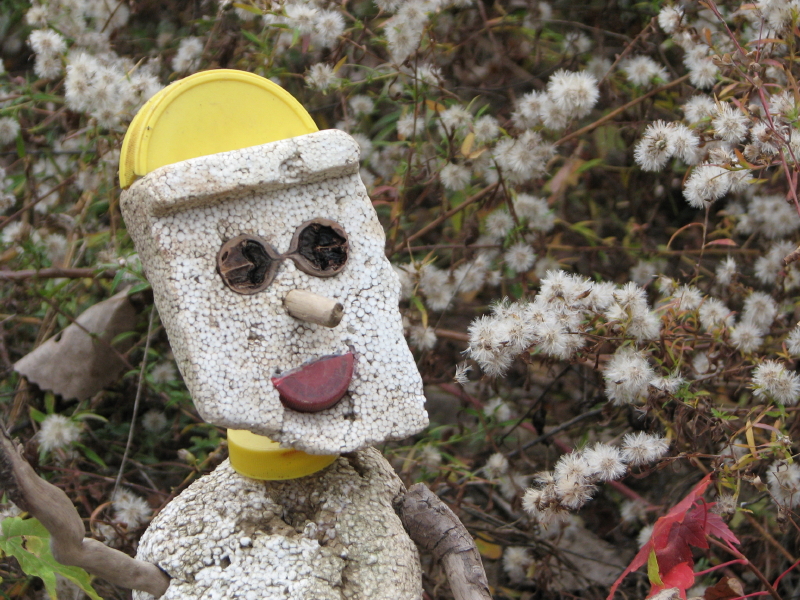
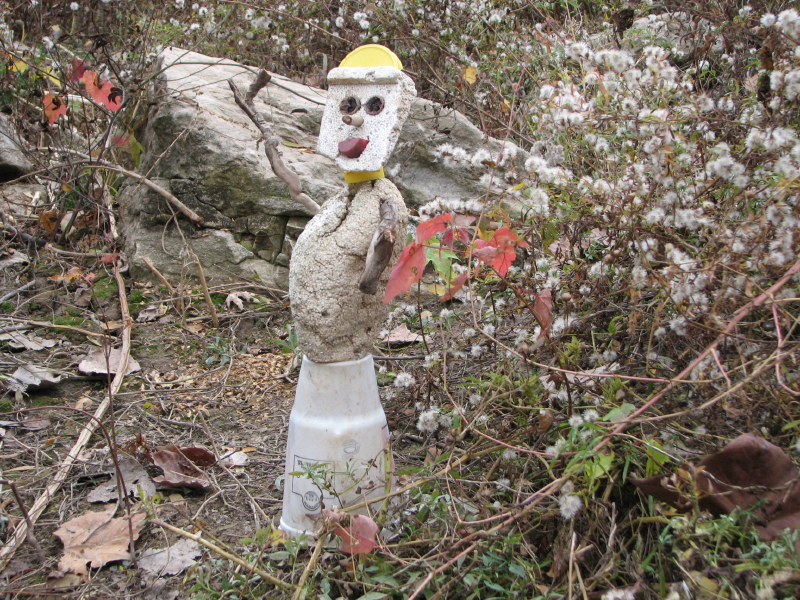
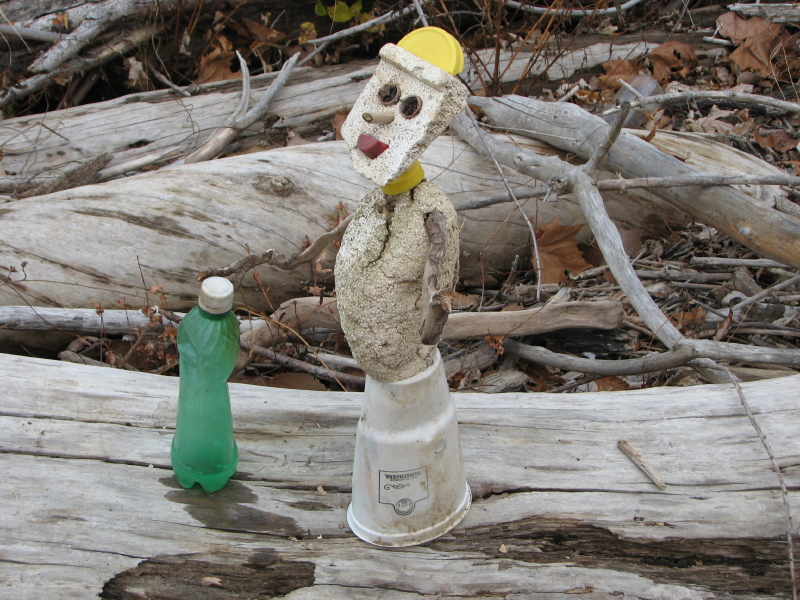
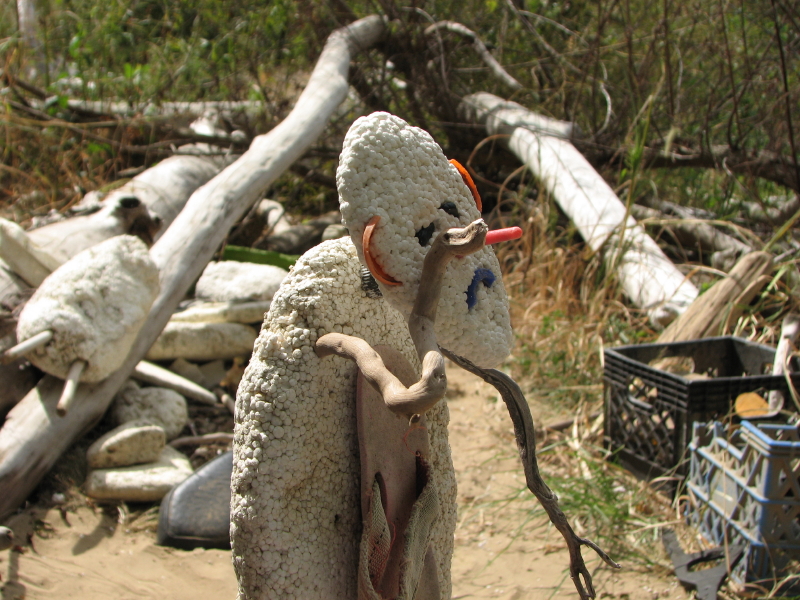
Because the work a day world had me preoccupied, it’s nice to be able to return to the river.  This interaction with the Falls occurred about a week a go, but it also takes me back to the early days of this project.  To stir the imagination I would challenge myself to only use materials found within the circle of a chosen tree.  The results were often incongruous, but it was fun to do.  The following polystyrene figure was made in a similar way where I allowed myself only materials available in a small area.

I found just enough Styrofoam for a head and body.  Splitting a nut in half became the solution for the eyes.  Bits and pieces of brightly colored plastic further called attention to the head.

The first heavy frost is near now.  The flowers have bloomed and the seeds are going on their own journey.  Migrating sandhill cranes have crossed overhead. I’m by this small “creek” that’s more of storm sewer overflow for the nearby village. 

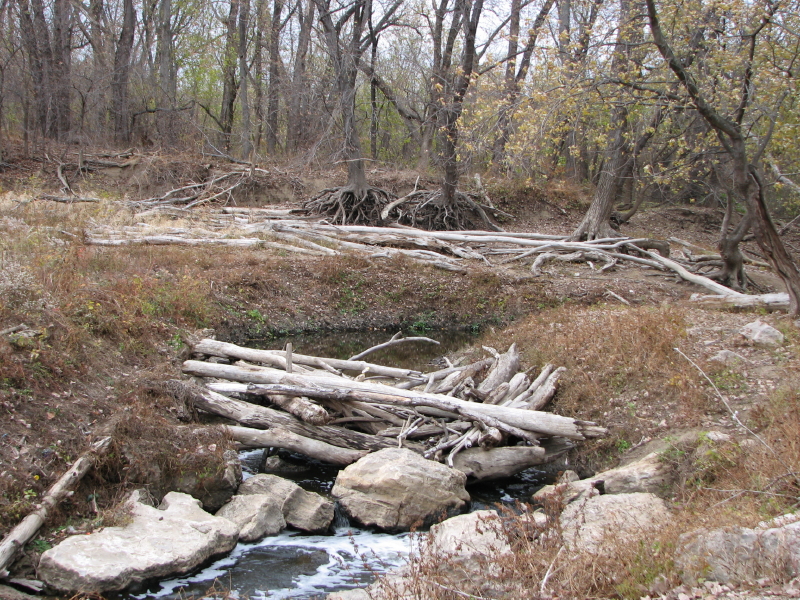
There’s always water flowing …even when it’s not raining at all.  People like to fish here especially when the river is high and catfish are close to shore.  When we do get high water, this spot catches many of the logs that drift in here and become stranded.  I like to walk on top of this bridge when I’m crossing over from one section of the park to the other.

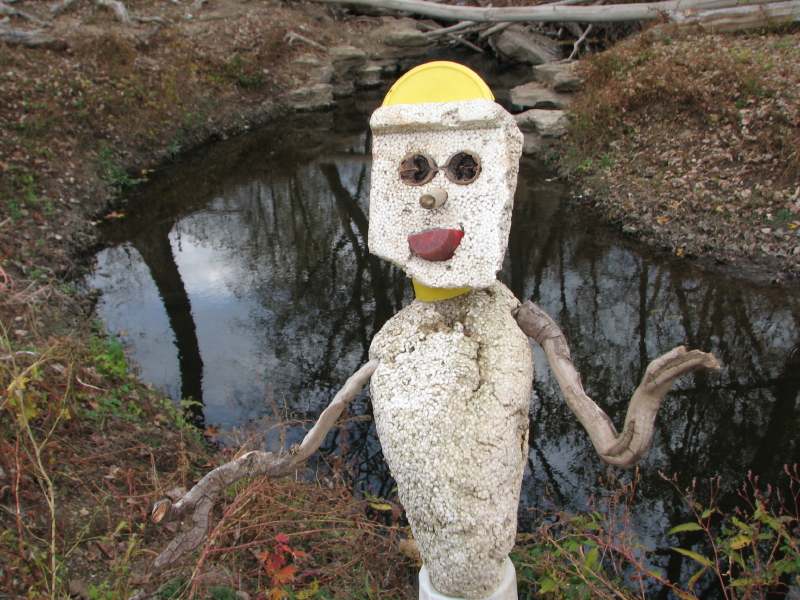
I moved the small figure I had made to the creek and snapped this portrait.  On the riverbank I can find recently chewed willow saplings and I know there is a beaver currently around.  Evidence of past beaver encounters mark some of the dead trees near the creek’s mouth.

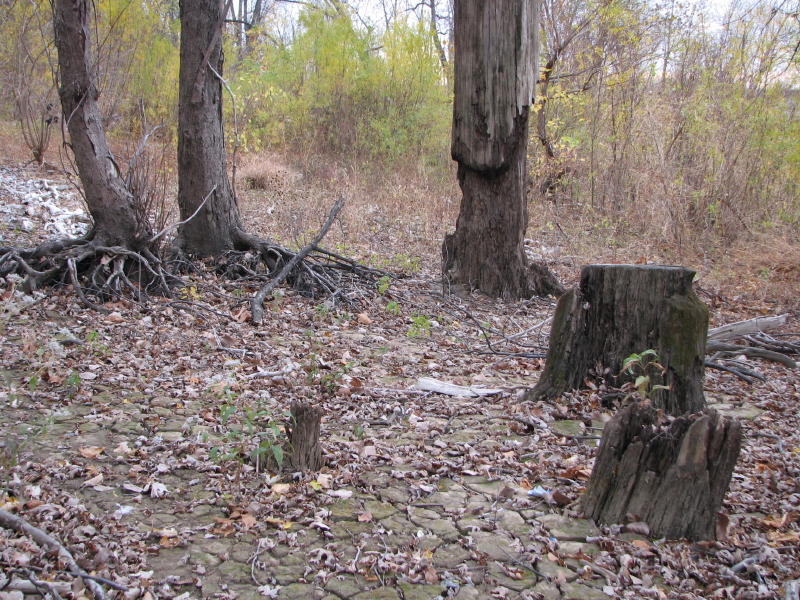
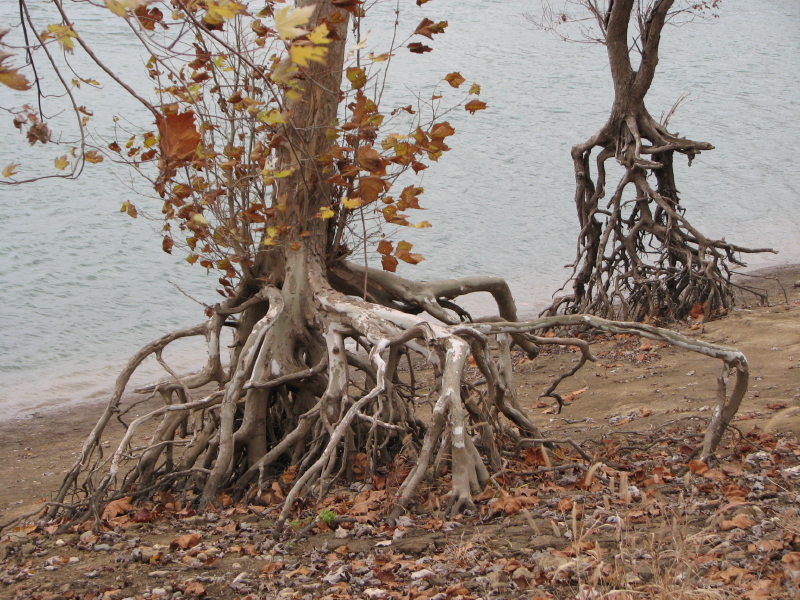
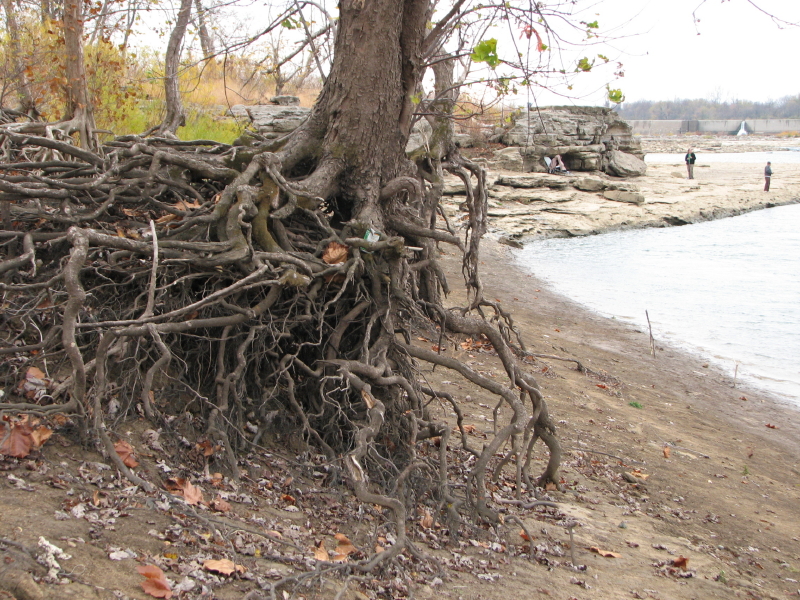
Also in this vicinity are some of my favorite trees.  There are particular sycamore and willow trees that have exposed root systems.  These trees appear to be uprooting themselves and moving on which they do very slowly and deliberately!
The river has retreated from here for now.  This is also a favored place for fishermen.  The nearby fossil cliffs make a convenient place to cast a line or build a fire.  The underlying limestone sends currents flowing in multiple and treacherous directions.  The water here is usually well oxygenated and so it attracts fish.
I left this figure by the side of the path and walked to my vehicle.  This day began sunny but quickly turned overcast and gray as it wore on.  To close, here is another view of a tree with a great platform of roots showing by the nearby fossil cliffs.

Read Full Post »

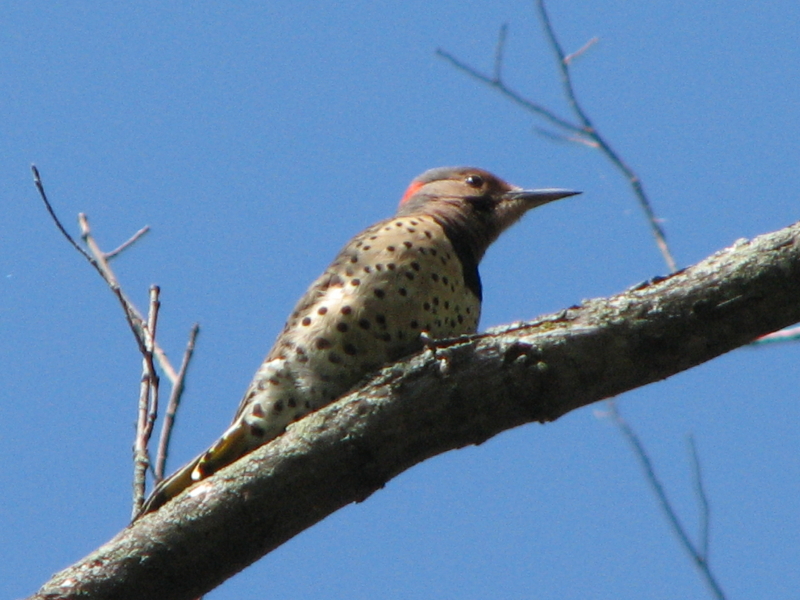
After finding all my sculptures smashed, I decided to give that section of the park a rest.  I will eventually return there and make new pieces from the remains.  Today’s walk is along the western section of the park.  It is an area I have come to appreciate more.  In part, because fewer people venture this way and there are different points of interest.  It’s fall migration time and I’m always on the look out for birds.  The birds that are just passing through are of particular interest, but I also like the species that can be found here year around.  I came across this really noisy Northern Flicker on a branch and snapped its picture.
This is a fairly large woodpecker.  In the old guides, this would have been identified as the “Yellow-shafted” form.  The feathers under the wings and tail are a bright yellow which can be seen as the bird flies.  The black “mustache” extending away from its bill identifies this as being a male.

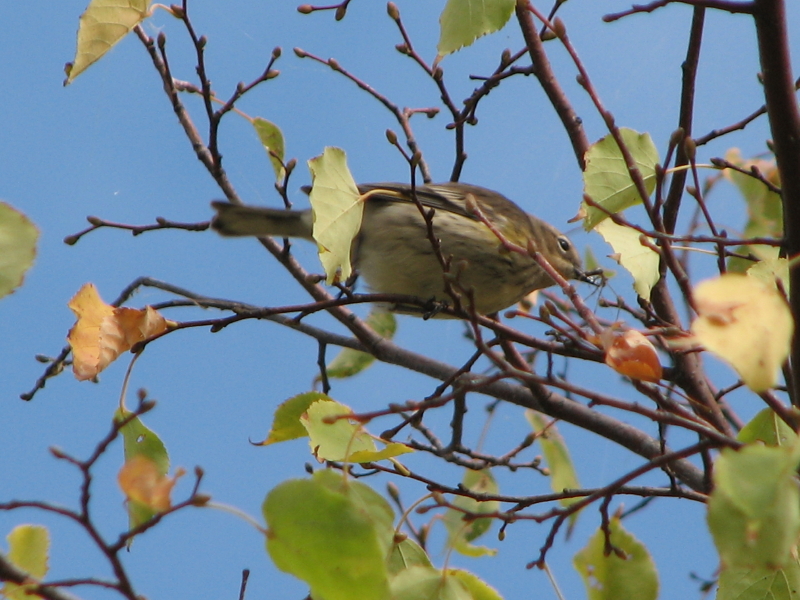
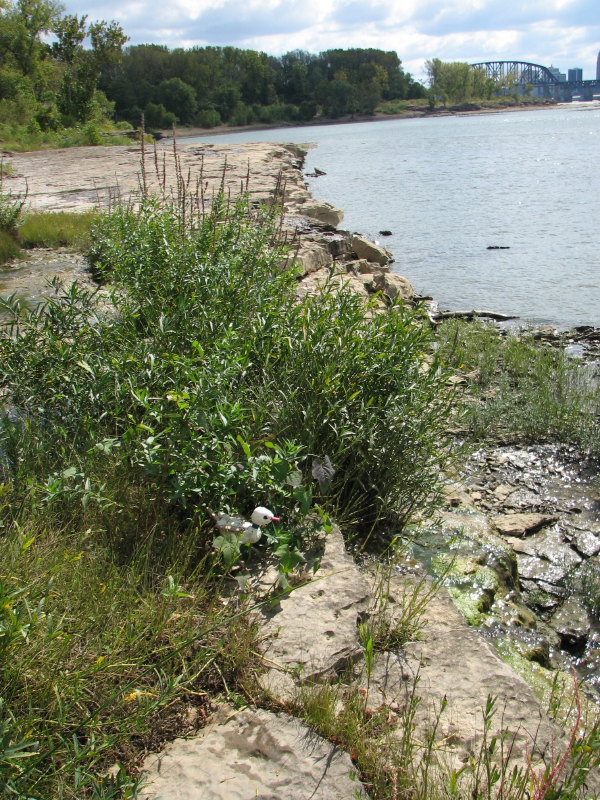
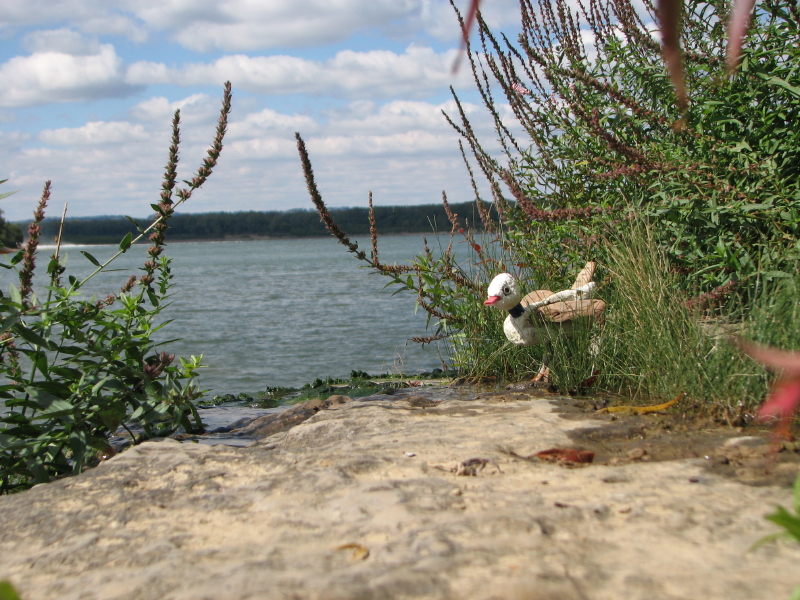
Chasing small insects among the fall leaves is this Yellow-rumped Warbler.  This is the park’s most common warbler and one that hangs around longer than any other of the park’s 35 sighted warbler species.  I have seen most of them, but they are easier to identify in the spring when their plumage is more colorful.  Fall warblers can be a challenge and I’m still learning all their nuances.  I have seen more different warbler species this year because I have tried a little harder to look for them.  Still, when you are out on the land, you just never know what you will cross paths with and that is the subject of this post.  I saw my first Water Chick on this expedition and managed a few decent images that I can share with you.  First, can you spot the Water Chick in this photo?

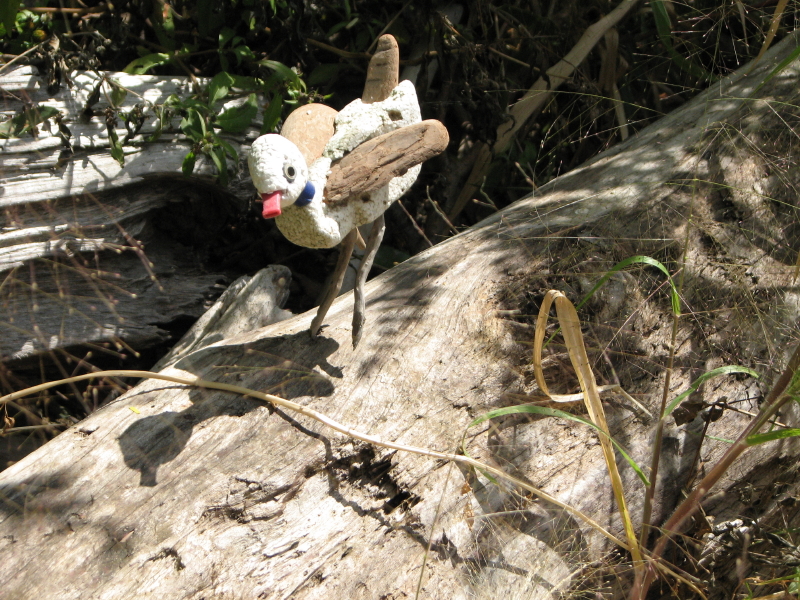
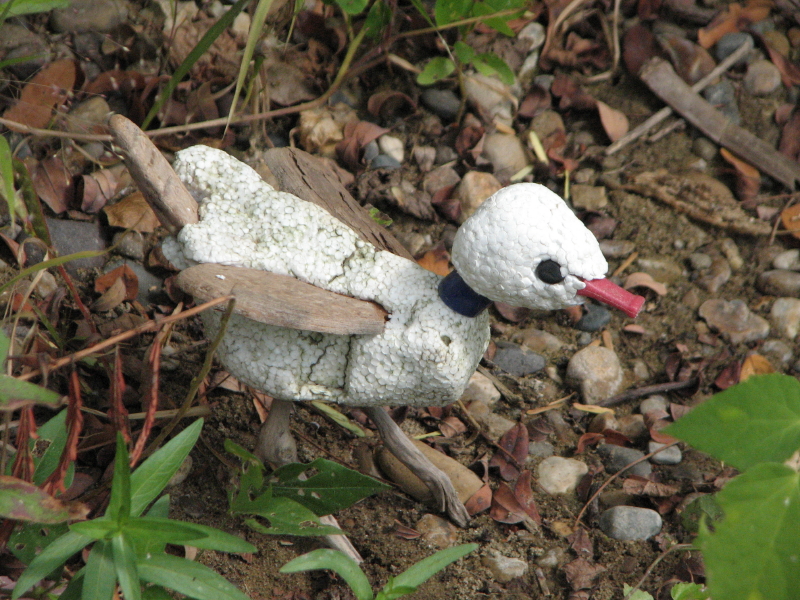
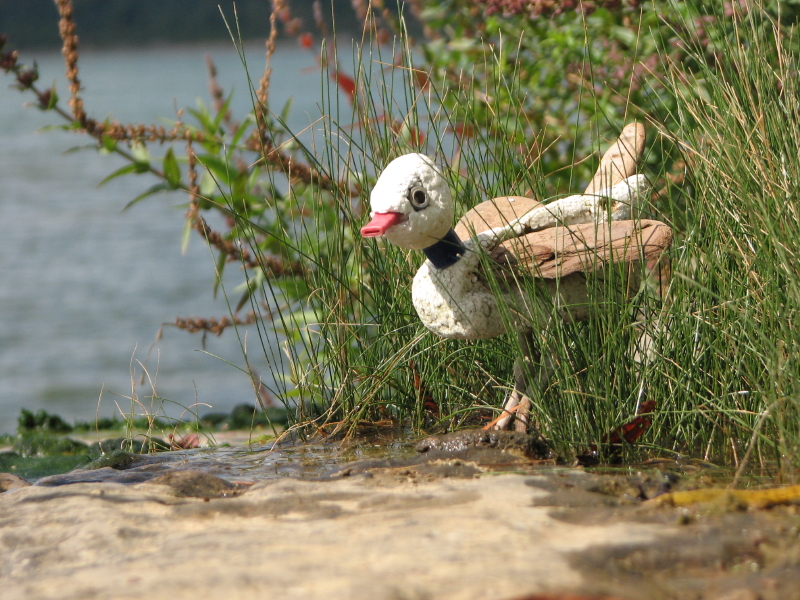
I bet you found this interesting bird?  It’s snow-white in color and has a bright red bill.  It’s only occasionally found in this park and the habitat it prefers matches exactly the kind of landscape you see here.  The Water Chick is usually found near water and also needs dense vegetation to hide and raise its young.  Over the course of a couple of hours I ran into this bird several times and here are a few “portraits” I was able to manage.

The Water Chick is usually found on the ground, but reportedly, is a decent swimmer as well.  Although it can fly it is reluctant to do so.  It much prefers hiding and taking advantage of the local cover where it seeks out small insects and spiders that make up its diet.  I surprised this one investigating a decaying log.  Here’s another image of this bird.

As you might be able to discern…the Water Chick is a small bird and relies on its diminuitive size and secretive habits to go unnoticed.  I believe I heard (not entirely sure though) a low piping sound when this bird noticed me and became alarmed.  It high-tailed it into the loosestrife clumps as quick as can be.  This is precisely the type of ground bird that I worry about being preyed upon by feral cats and in fact, ornithologists report that this species is on the decline for multiple reasons.  While I was birdwatching, I did come across another bird predator.  However, this one is so large that I doubt that it would bother taking a Water Chick.

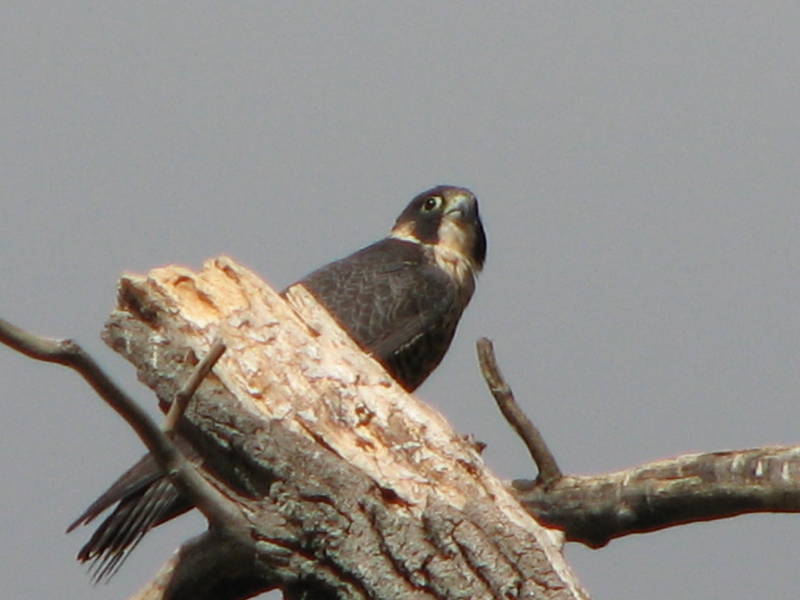
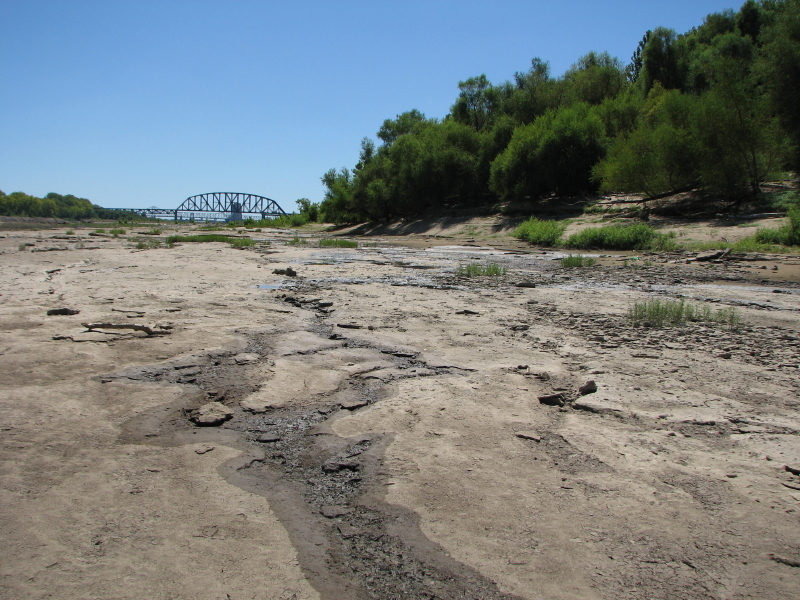
I see Peregrine Falcons on occasion out at the Falls, but this is the first one I could get a picture of…unfortunately part of the tree obscures the bird, but it’s still distinctive enough to identify this large bird of prey.  I have actually seen these falcons more in the city where they nest on the taller buildings in Louisville.  Like other parts of the country, we nearly lost this magnificent bird to DDT poisoning.  Since banning this pesticide they have made a comeback, but we could use more to help keep the pigeon population in check.  I located the Water Chick one more time before heading home.  It was along the fossil beds that rise above the river level which is still down from an acute lack of rain.

I was on my belly laying on the limestone rocks when these photos were taken.  I think it helps give an idea of what it must be like from this bird’s perspective?  After taking these images, I decided that I disturbed this bird enough and backed off.  I hope it forgives my intrusion, but I had never seen one of its kind before…and maybe never will again?  This bird is bound for our Gulf Coast where it spends the winter in the swamps.  Turning for home, I also came across small stands of this rather large flower and thought this a nice way to end this post.

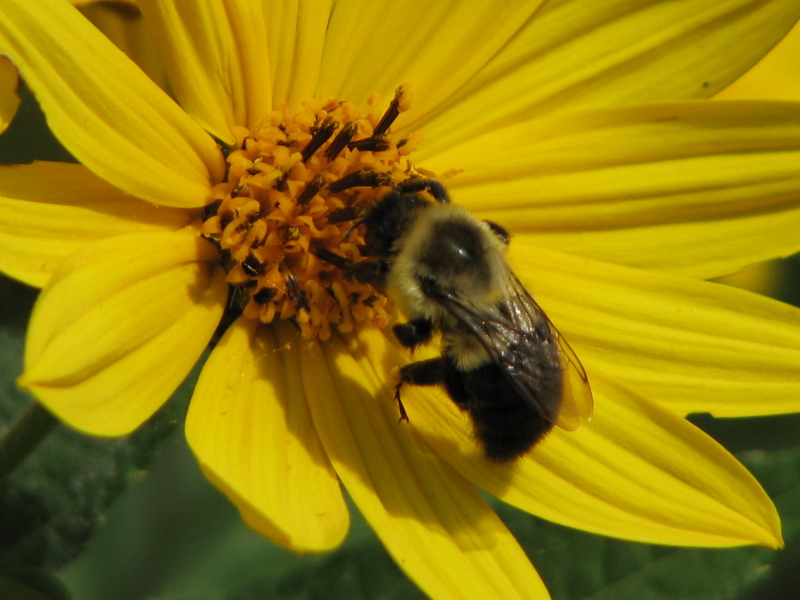
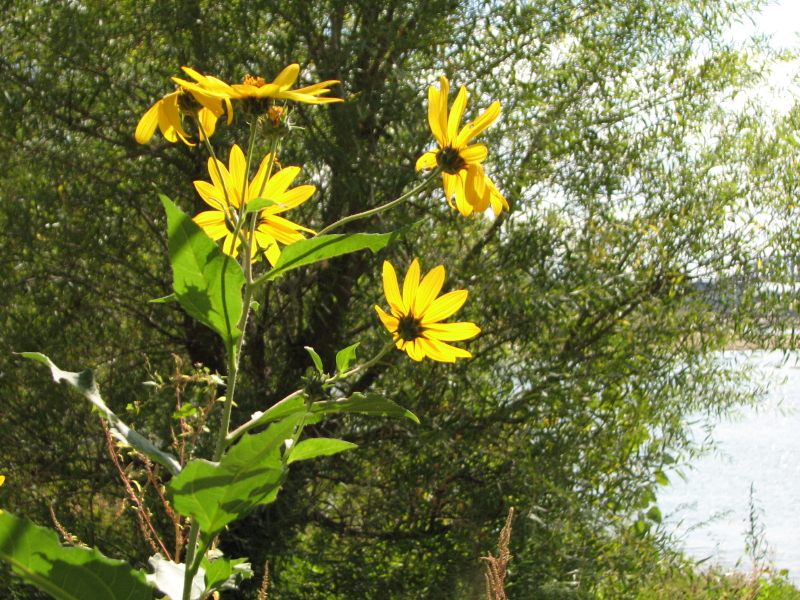
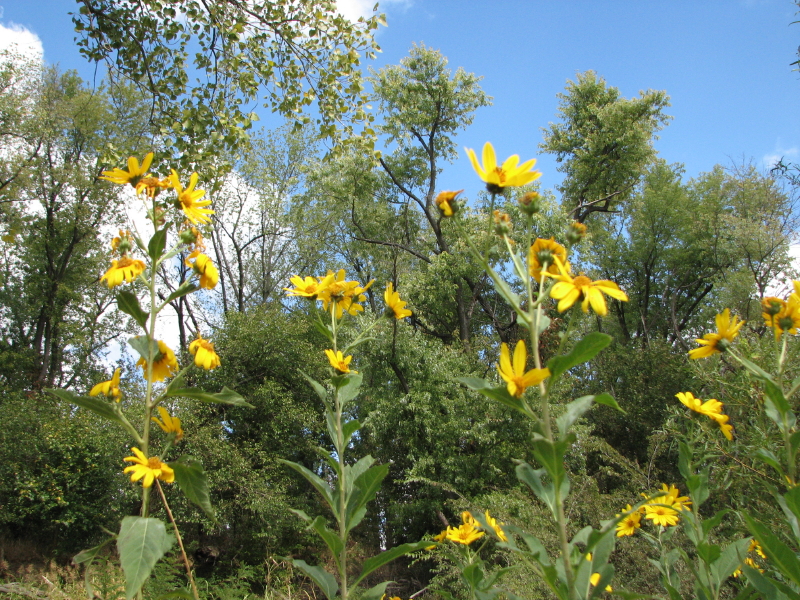
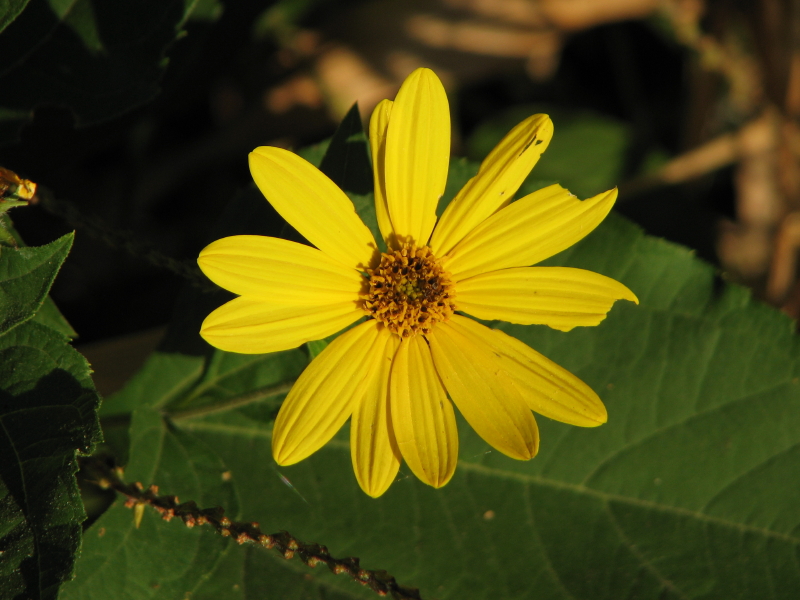
I’m not sure on the identification of this plant? Many in this stand were over six feet tall.  I need to bring a guide with me into the field to help with this.  In the moment, I’m happy for the color this large flower brings which contributes to the beauty of the season.  Thanks for tagging along on another of my walks at the Falls of the Ohio.  See you later!

Read Full Post »

Oh woe is me!  It was starting out to be such a beautiful day.  There was a spicyness to the air that was intoxicating and the willows were alive with birds.  I saw several different warblers and managed a good photo or two!  As I approached what has been my outdoor studio spot for months,  I could tell something was different this time.  A feeling of foreboding began to fill me and my heart sank as I looked around my site.

They were all down and destroyed!  Figures that had been my friends since early summer were lying around my studio smashed and savaged to bits!  The figure I made with Ariana that wore the lacrosse helmet we found together was staring up at me like some ancient Egyptian mummy.  The eye sockets were hollow and I could not find either the helmet or the eyes.  Even the small bird piece that had alighted on this figure’s shoulder was just random bits of broken polystyrene.

Both the Styro-Odysseus figure and the dancing figure that greeted him back from the war were goners now.  It seemed that a particular kind of viciousness was reserved for the heads as they appeared to take the brunt of the attacks.  The violence was not restricted to the “art” and I saw that even the old milk crates I stored found objects in were also now cracked and battered.  There were two other works out here and how did they fare?  What about that Figure with the Long Arm?  Look for yourself.

It’s not an encouraging sight.  All these sculptures had been up here for weeks and many people have had the opportunity to see them and interact with them in positive ways.  Among the other options included taking them home, moving them to another location at the Falls, adding to them in some other creative way, leaving them be until the river eventually found them, etc…  Unhappily, the option exercised was just to smash them with sticks.  One other figure was also out here and unfortunately, she lasted only long enough for one good post until she too was discovered by the vandals.

This is all that remains of Minnie now…fragments of broken Styrofoam.  Minnie was an interesting character and people seemed to relate to her.  More than likely all this carnage is the handiwork of adolescent boys.  I have seen this before…many times over the years.  What is it in the human spirit that finds some strange satisfaction at tearing down what has been built by others?  I don’t understand the pleasure derived from this kind of destruction?  I will admit to feeling down after I encountered all this trauma and I haven’t been back to this site since then.  I did gather up what I could and I intend to make new works if I can lift my spirits up enough to do it.  For now, all that remains are photographs of these sculptures when they existed intact and in the contexts that helped to define them.  Here are a few previously unpublished images.

I know I shouldn’t be too upset since all this stuff is just river-born trash anyway.  I think I keep saying this to myself in part because it’s true and to insulate my feelings for when these black days occur.  These materials had already been abandoned. I can’t take it all home with me and I should just enjoy the ephemeral nature of it all.  Still…

Read Full Post »

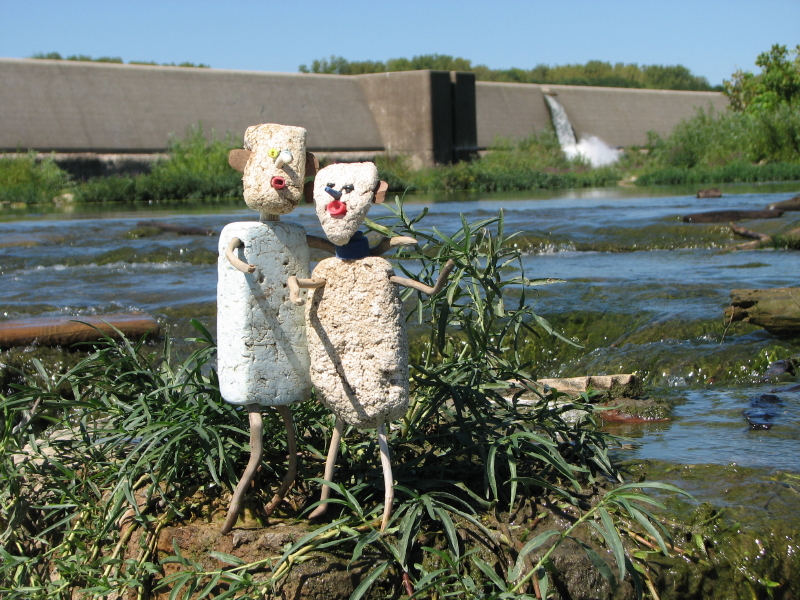
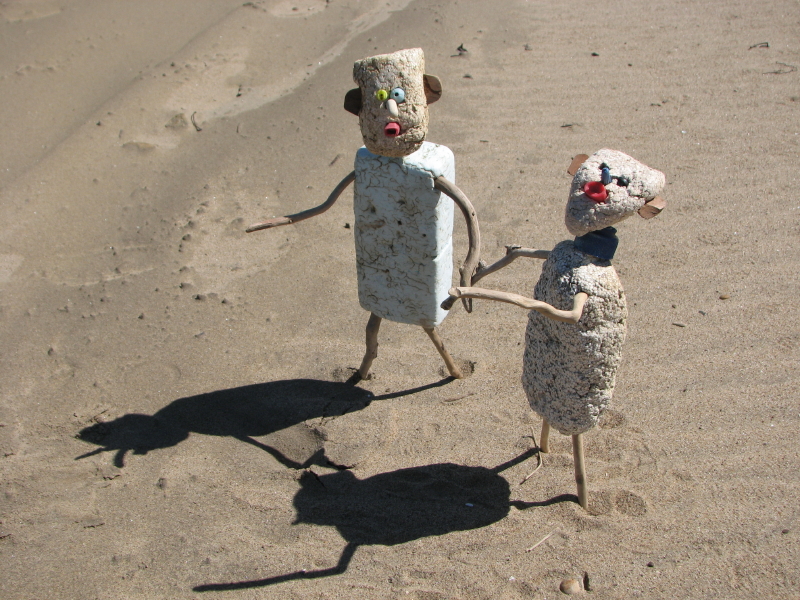
When last we visited our couple they were checking out the cascades out on the fossil beds at the Falls of the Ohio State Park.  In the presence of fresh running water they made their commitment to one another. 

There was still more to see and so they set out over the fossil beds by Goose Island.  With the river level low, the island was looking more like a forested hill.  The couple walked nearer the island taking advantage of every little bit of shade they could find.  It was still late summer and the sun was very hot.  The limestone beneath their feet contained the remains of ancient marine creatures that lived millions of years a go.  Every once in a while, the couple stopped and took pictures of the odd formations preserved in the rocks.  Their friends back home would want to see this.

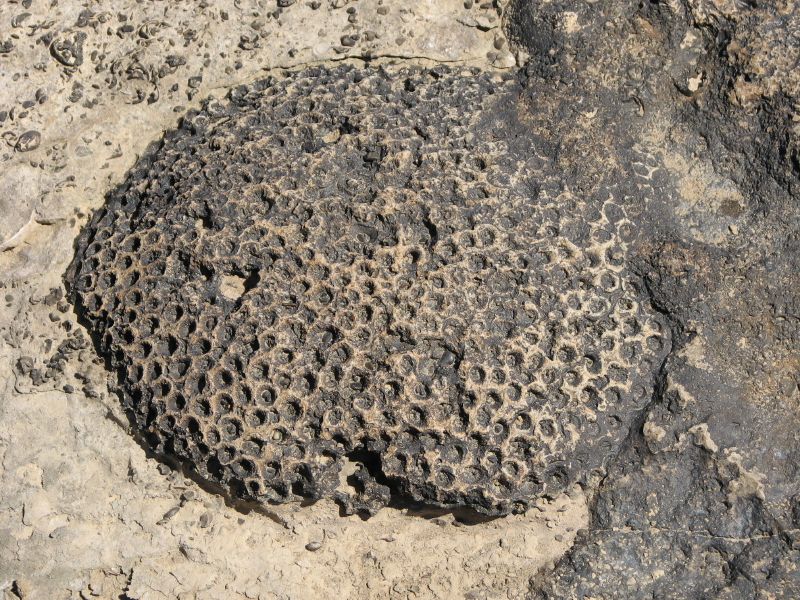
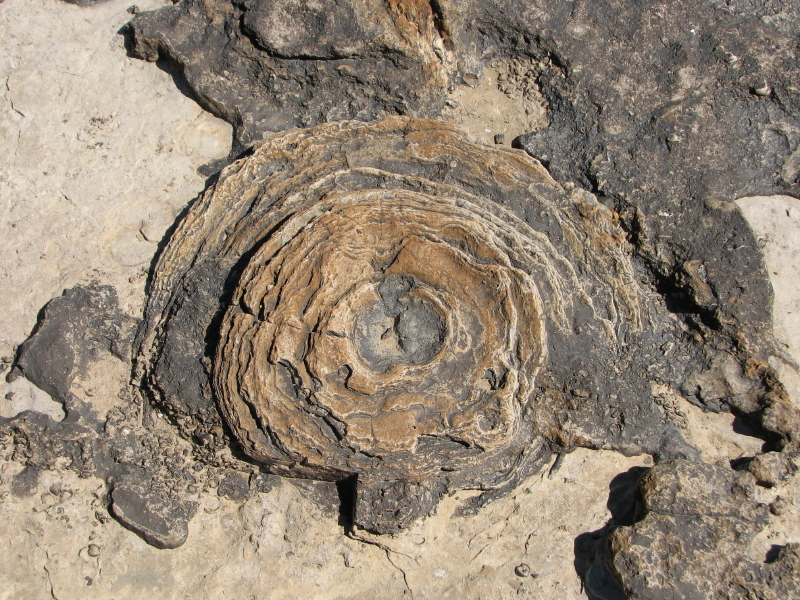
One of the brochures picked up back at the Interpretive Center said that more than 250 species of ancient corals have been identified in the stone out here.  Their mineral homes were perfect for fossilization while the small jelly polyps that were the actual animals disappeared completely.

The brochure continued that more that 600 fossilized marine organisms have been identified out here and that about 2/3rds of them were type specimens.  This means that although some of these fossils have been found in other places in the world…they were first described by science from specimens collected at the Falls of the Ohio.  This is indeed a unique window into the history of life!  The couple felt privileged as though they were visiting some important shrine.

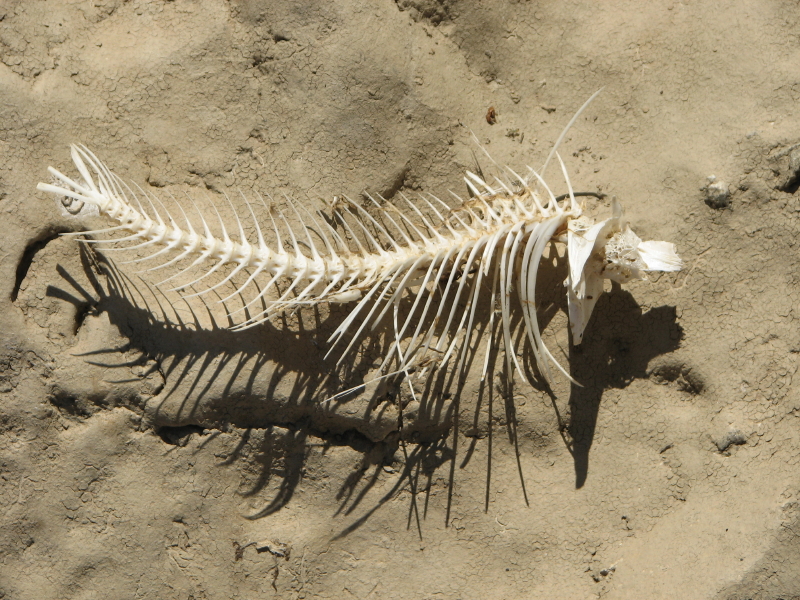
These coral fossils were from the Devonian Age and were more than 370 million years old!  This time is also known as the Age of Fishes because this is when their remains first entered the fossil record.  Although fish fossils are rarely found out here…there are many skeletons and bones of contemporary fish present because of fishermen and the retreating river.  Fish were the first animals to develop backbones and are still with us to this day.  Walking along the couple discovered something more familiar and recent not too far away from them.

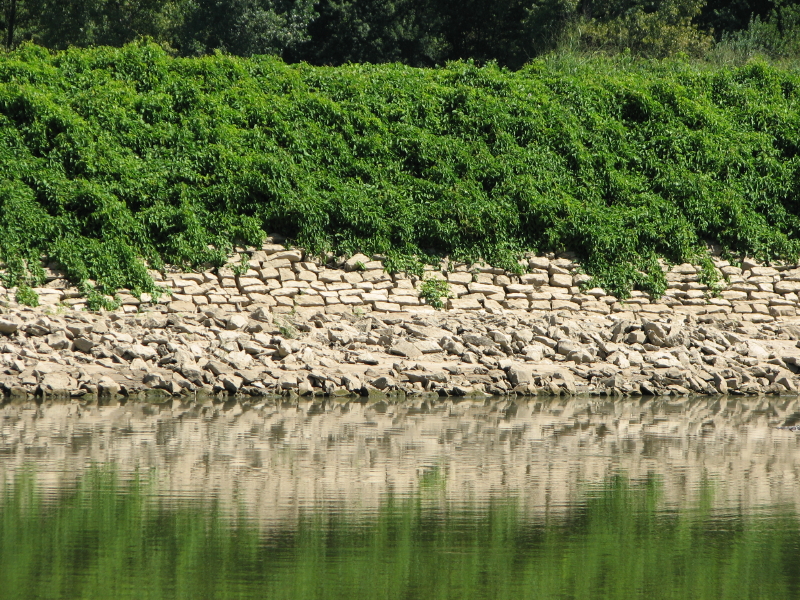
It looked to be the remains of a stone wall set out in the now shallow river.  On the park map, the couple could see that this was the remains of the Goose Island Dike.  This was a 19th century attempt to manage and shape the course of the river.  Although it wasn’t a fossil, the uniformity of the stones and the ivy growing atop was pleasing to their eyes.  After a long walk, the couple neared their ultimate destination and the terrain switched from being rocky to sandy.  Around the bend, the couple could see the Lower Tainter Gates and they knew they could walk no farther.

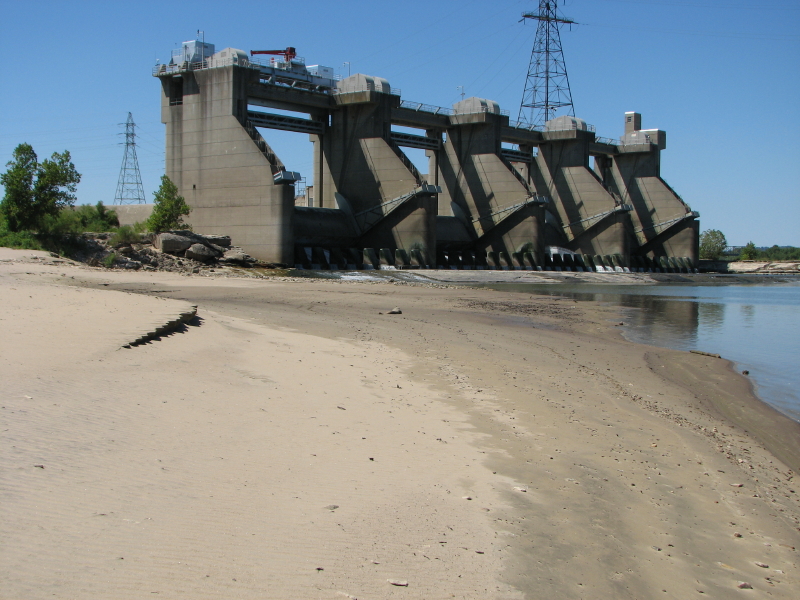
The Lower Tainter Gates are on the western end of the park over the fossil beds on the Kentucky side.  Like many such gates along our nation’s rivers, they were designed to regulate the flow of the water to help commerce and to relieve flooding.  Fishermen both human and not use this area because the water is deeper and better oxygenated.  This is a good place to see the Osprey and Cormorant.  Usually the roar of the water passing through the gate can get loud, but today the river was low and quiet.

Walking up to the immense concrete structure, the couple thought of ancient Egyptian buildings and temples.  The scale and ambition of trying to control the river was all so overwhelming and emotional.  Their reaction to this engineering marvel was impulsive and surprising!

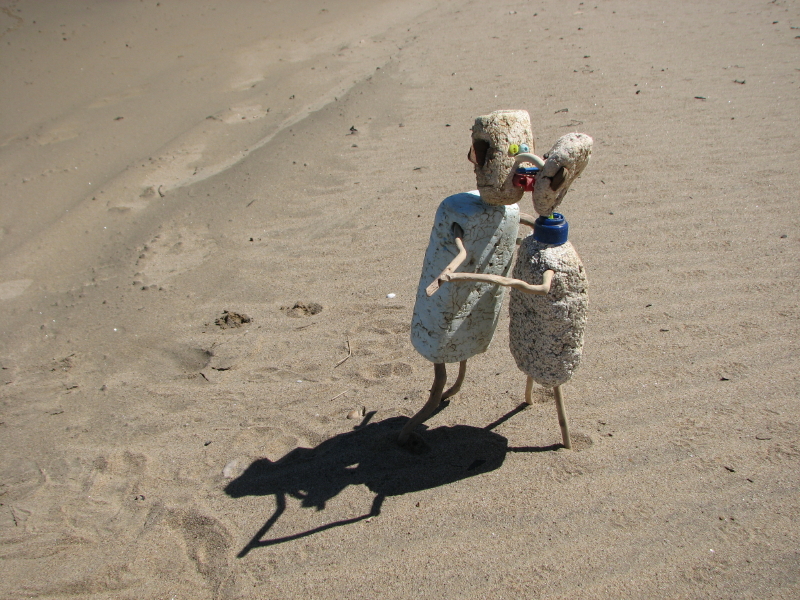
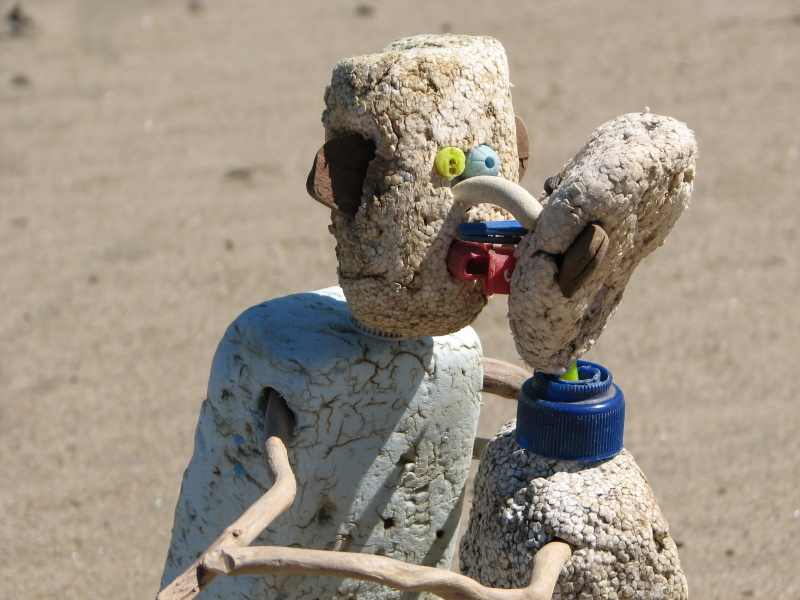
The couple embraced and shared a long kiss.  Later they would remark on how wrapping their minds around deep time and the beauty and continuity of life caused them to appreciate their moment together even more.  Having reached the destination of this day’s hike, the couple turned around and retraced their steps.  They had the rest of their lives ahead of them and in the bigger scheme of things…would just be a kiss or the blink of an eye.

Read Full Post »

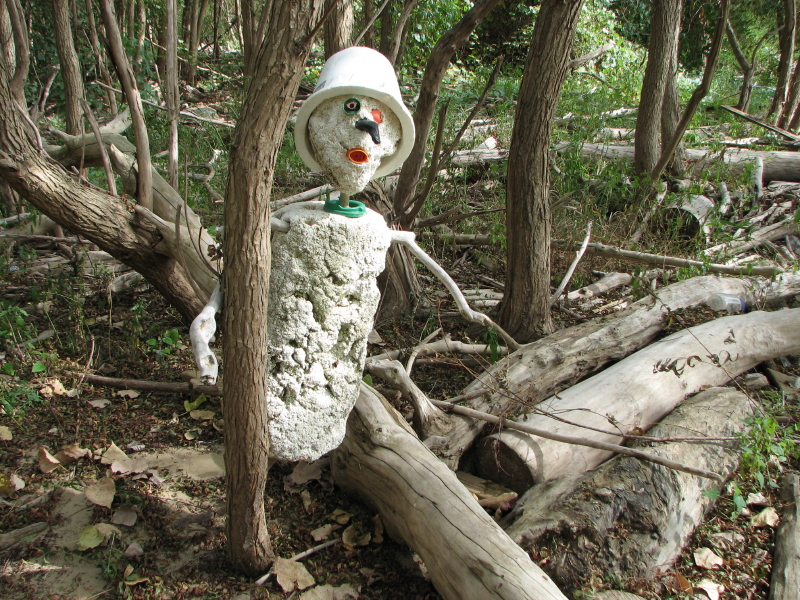
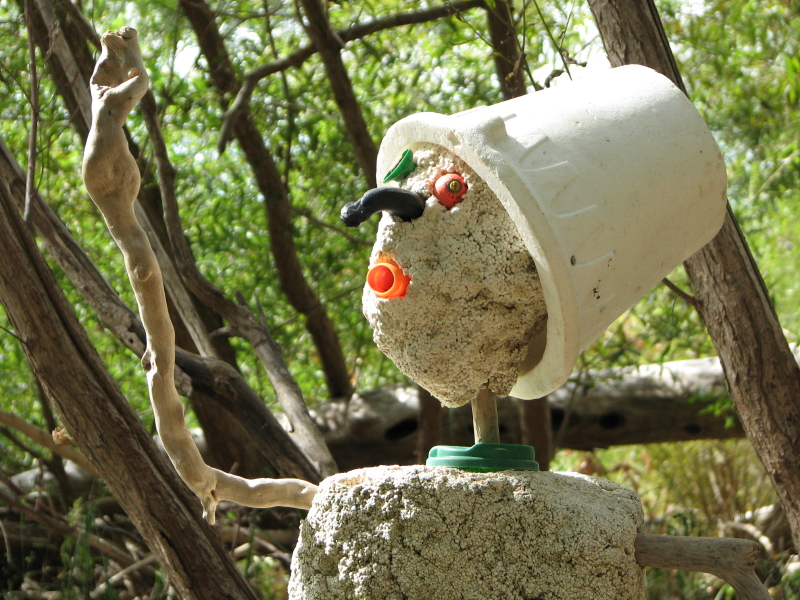
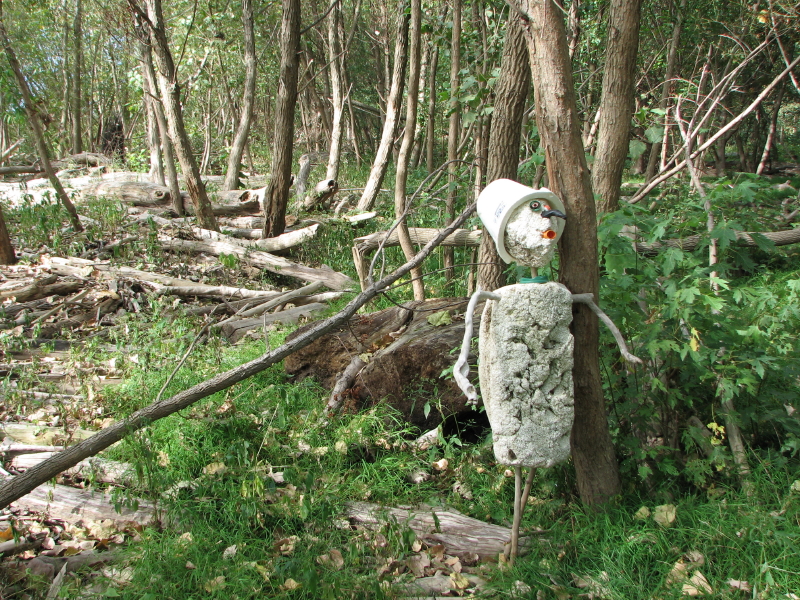
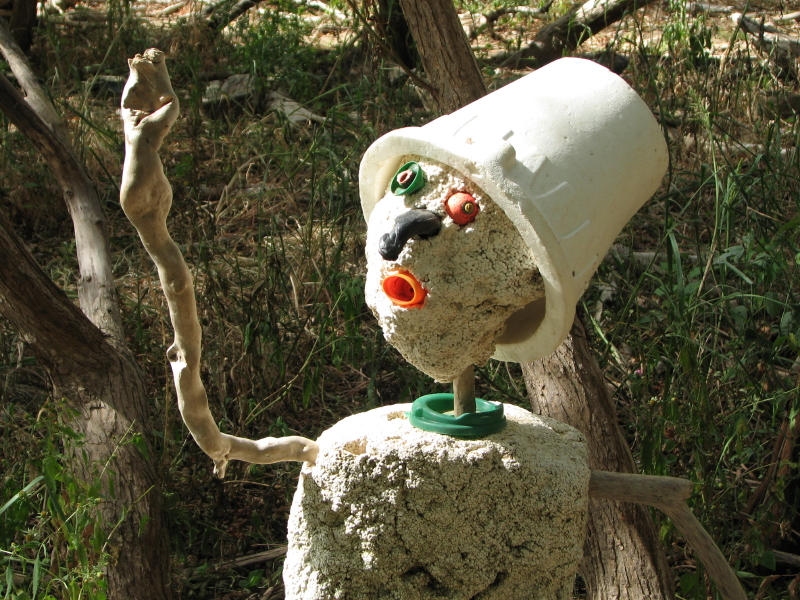
I was walking through the woods on a sun-dappled day looking for migratory birds when I came across a new friend.  We talked for a little while before introducing ourselves.  Both of us remarked on the dry weather we have been having and I said that it’s official now.  September was the driest ever in the commonwealth of Kentucky since records have been kept dating back to 1871.  We have had a spits-worth of rain… that’s it.  Overall, this has been our third driest month ever, beaten only by two Octobers over the course of the past century.  We both wondered if this was an omen for this October?  We certainly hope not.  Having created some common ground, I introduced myself and she said to call her Minnie, Minnie Buckethead.

As it turned out, Minnie is an interesting old lady with a fascination for everything in the woods.  I asked if she had seen any migrating warblers and she had.  American Redstarts, Black and White Warblers, were moving with small groups of other birds including Carolina Chickadees and Tufted Titmice.  I had seen nothing.  I definitely need to get up earlier in the day to catch the bird show.  Perhaps Minnie was taking pity on me and she said that there were a few other things happening in the woods and would I like to see them?  How could I turn down such a nice offer from an old lady?

We walked over to a large willow tree and I saw Minnie crane her neck and squint her eyes from the sun and she scanned the willow bark.  “Here” she said and I checked out what she was pointing at.

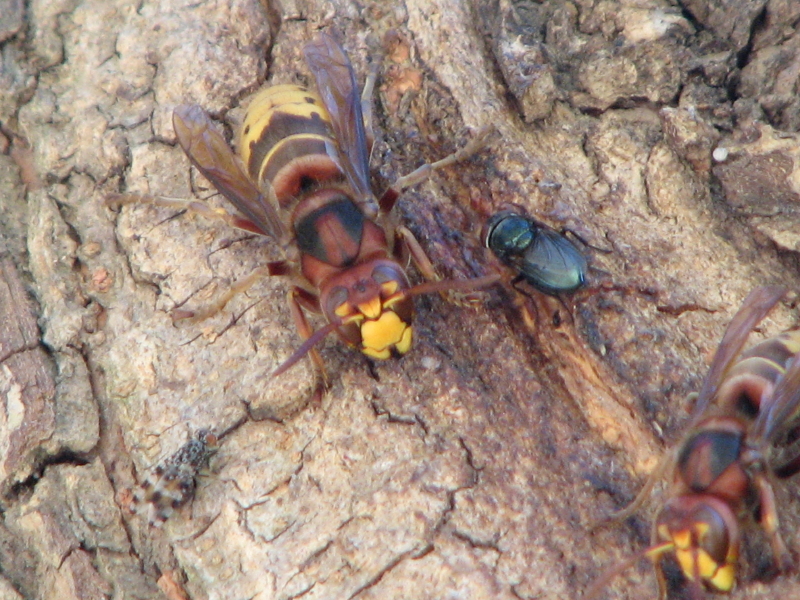
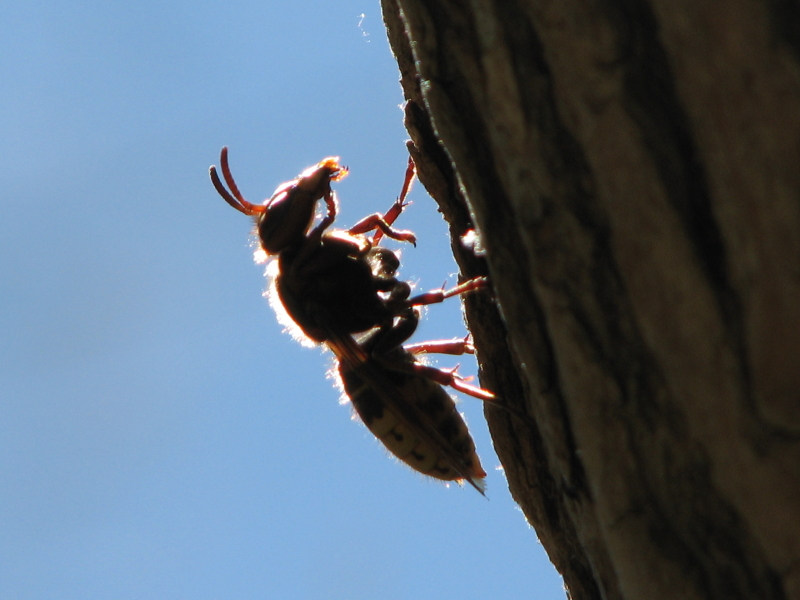
At first I thought it was a bee, but it was larger and more robust and not as big as a bumble bee.  There were others.  Walking around to the shady side I could determine that they are hornets of some kind.  The hornets and other insects were licking whatever was exuding from the willow tree.

“Don’t worry, they won’t get you”, she said.  The hornets were so preoccupied with the sap that they were quite tame.  Walking around the tree gave us this sight.  Three different species of butterflies also taking advantage of the willow bark.  The one in the foreground is the Red Admiral.  Although I hadn’t seen the hornets doing this before, I did say to Minnie that I had observed many butterflies on these willows and wasn’t it nice that so many living creatures could set aside their differences to take advantage of this common resource.  She just smiled.

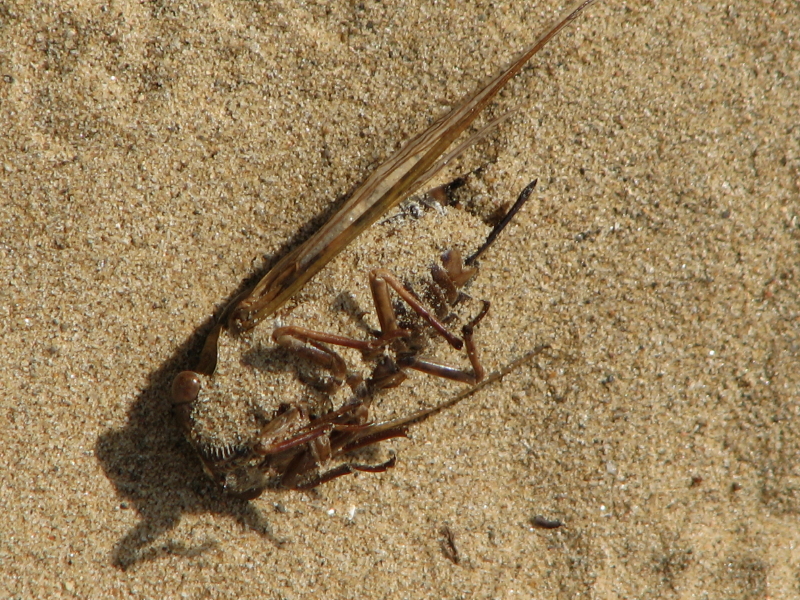
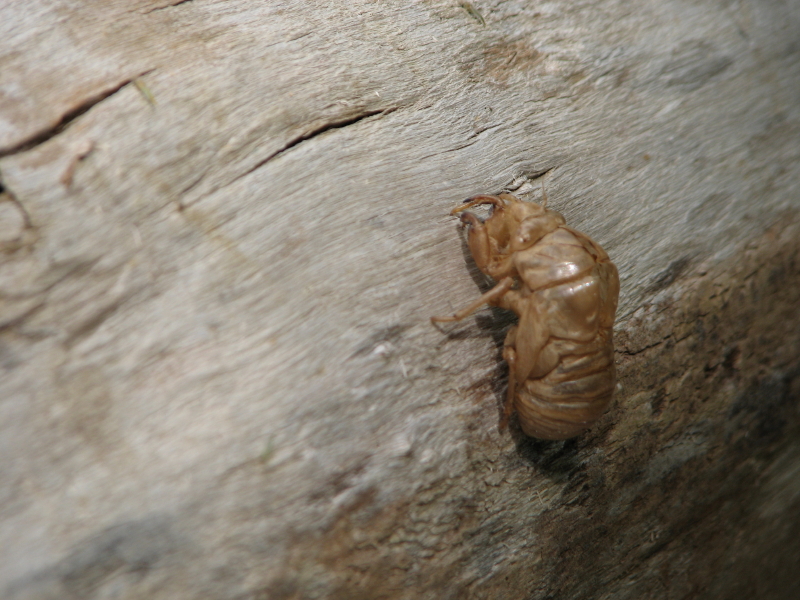
I was appreciative of Minnie showing me the tree and so I tried to impart a little knowledge to her about the local cicadas.  I had come across a dead female in the sand,(identified by the hypodermic needle of an ovipositor she uses to lay her eggs under the thin bark of a tree).  I asked Minnie if she knew anything else about their life cycle and she said she didn’t and so I went on.  I told her that after the egg hatches under the bark, the nymphs drop down and burrow under the ground and attach themselves to the tree’s roots.  With this species, after a couple of years of sucking tree juices, they emerge from the ground and become adults which for cicadas, is a brief moment in time.  They mate, lay eggs, and then die after a glorious two weeks or so.  You find their split skins where they transform as juveniles into adults near where they emerged from the ground.  Here’s a pictures of the dead cicada, the split cicada skin, and a fresh adult.

With any life cycle it’s hard to know exactly where to begin and I suppose that’s the classic which came first question… the egg or the cicada? I’ll leave that to brighter minds than my own for now. 

Minnie listened attentively and then asked me to follow her.  She had something else to show me before we parted company.  We walked away from the willow tree to an area where several large logs were decomposing.  She pointed a thin finger at a yellow patch on one log’s side and I could see it was some type of fungus.  It seemed to be spreading outward as it broke down the tissues inside the tree. 

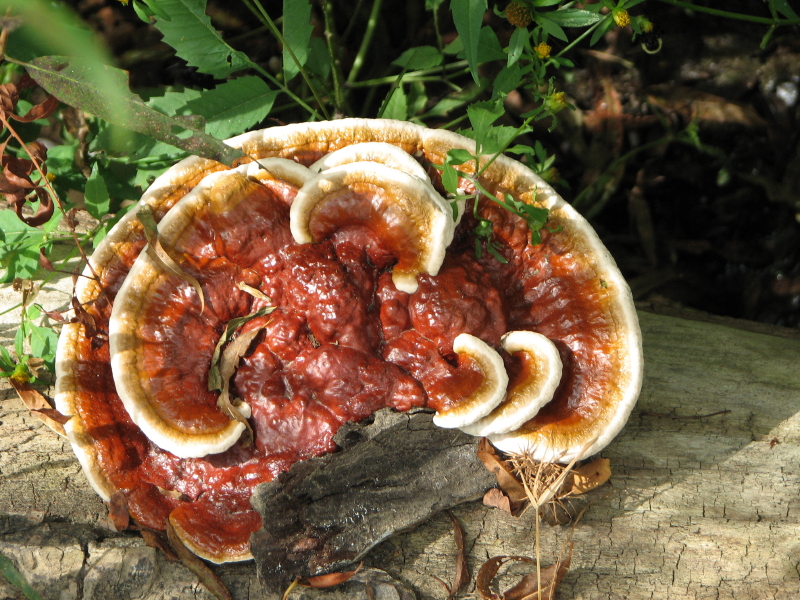
It was both fascinating and oddly repellent. On another nearby log was yet another fungi which I could identify as a fresh bracket or shelf  fungus.  The bright colors also seemed on the lurid side to me.

Minnie talked to me about what a wonderful system that nature has created to break things down after death.  Like these fungi were doing to what were once living trees.  She talked about how life depended on materials being able to decompose in order to release the nutrients that are needed for life to move forward.  This is what it means to live naturally and that we should look at the systems that the planet has in place and to learn from them.  With that, I took my leave and waved good-by to the old lady in the woods.

Read Full Post »

« Newer Posts - Older Posts »