Feeds:
Posts
Comments

Archive for the ‘Green’ Category

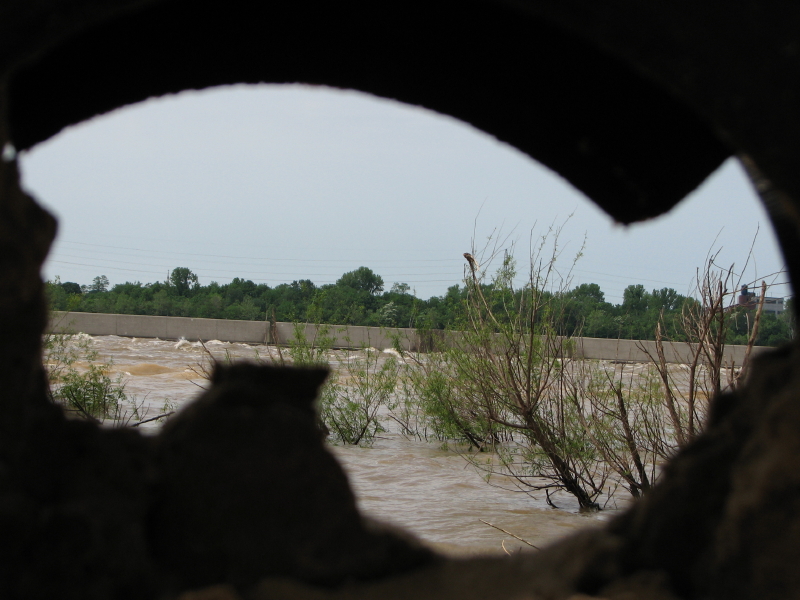
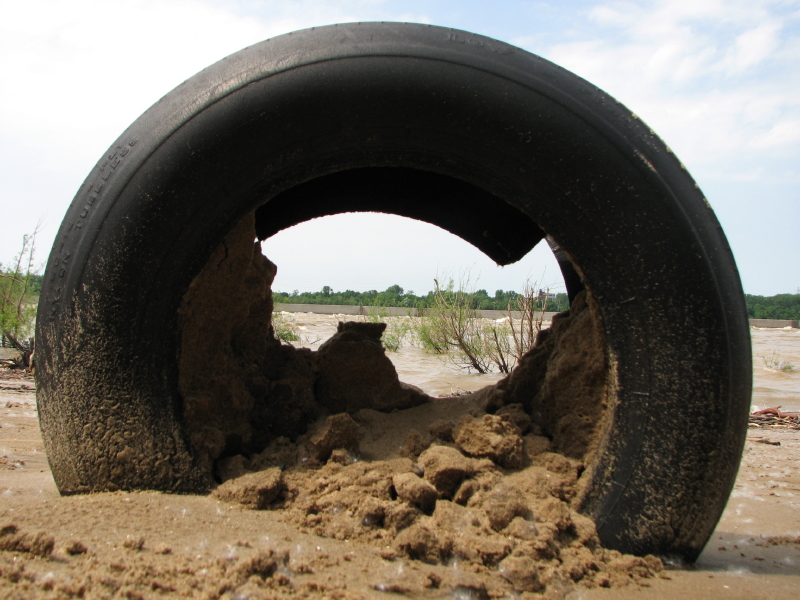
Recently came across this view of the river through a magic portal.  Since it is double-sided, it allows me to look both forward and backwards from a fixed position.  I thought I would use this opportunity to go through some of the many photographs I have taken at the Falls and not previously used on this blog.  Many times I come across scenes that are visually interesting to me, but they don’t fit the post I have going at the time.  Consider this an attempt to cobble something together through a tangled theme.
I’m sitting here thinking whether I have chosen the correct words to entitle today’s post? My immediate thoughts are that this is a more complicated situation than I first considered.  Just thinking about things that are tangled up is ensnaring and hard to tease apart!  When I look at the root ball of a big tree I can see that the roots themselves seem tangled up not only with themselves but with the earth that helps it grow.  There the relationship is more obvious and seems purposeful in its interconnectivity.  The tree roots help stabilize the tree while providing the nutrients it needs from the soil.  The soil in effect is held together by the roots that run through it. 

String enough trees with their root masses holding things together and you have the beginnings of an ecosystem.  The relationship is one of symbiosis.  When I see trees that have been uprooted like this I imagine that the riverbank it once helped to support has been weakened and degraded in some way.  We see a lot of erosion around here and it isn’t just the river’s fault.
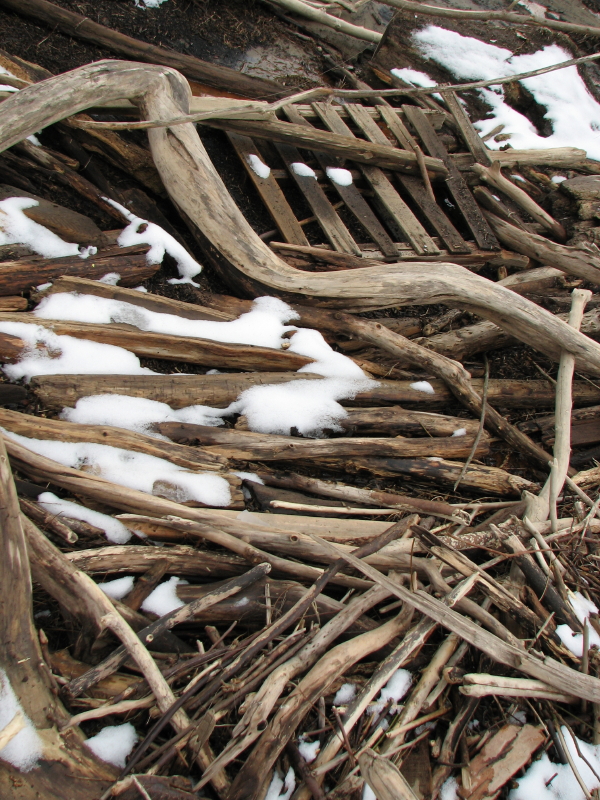
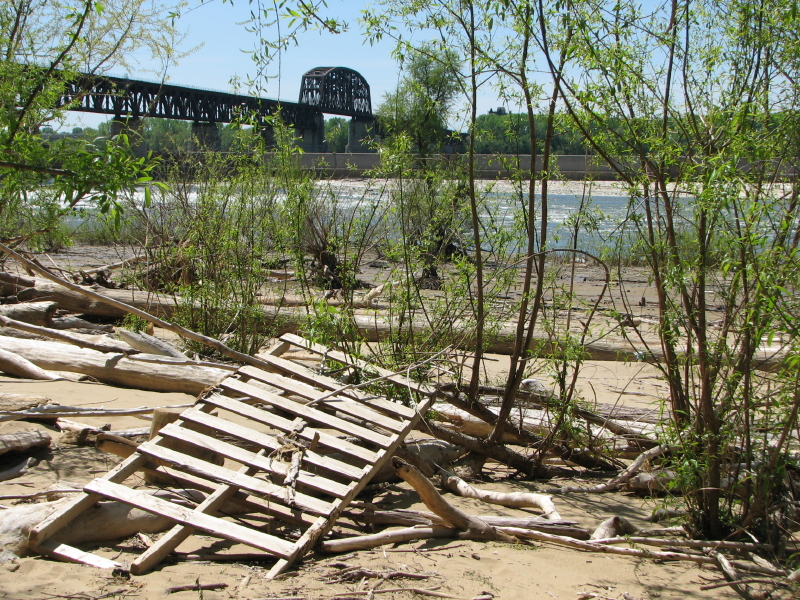
At the Falls, there is a lot of wood that gets deposited by periodic flooding.  That is how it has been since there has been a river here.  What has changed since the days of Lewis and Clark  is how much man-made stuff is now interwoven into the mix.  When it’s something like this old wooden palette, then it isn’t as bad.  Eventually, the palette will break down and be absorbed by nature.  But at the Falls, I also see many things that will not go away easily if at all.

Here’s a barge cable that has been snared by a tree during high water.  These large ropes I’m guessing are made from nylon and are very heavy.  They are used to secure along the shoreline, long strings of barges along the intercoastal waterway.  A lot of coal is moved on these barges and is burned to produce electricity.  On occasion, I find a lot of washed up coal too.  Water is powerful and does its best to reduce these ropes to something that is more manageable.  Interestingly, I have come across several bird nests made almost entirely from these untangled cable fibers.  In their own instinctual way, even the birds are trying to utilize these cables.  Many of the resident willow trees are “decorated” with these snags.

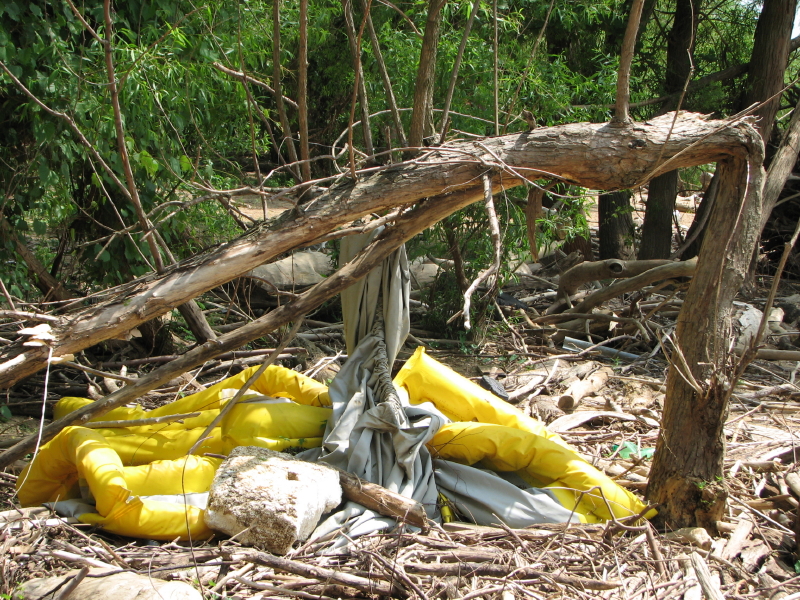
This large black hose washed up here during the last flooding incident.  It’s all tangled up into a much larger driftwood pile.  Even something like this isn’t going to get reabsorbed into the natural system easily.  It’s just tangled up and will lay there until the river moves it again or until one of the periodic river clean-ups where it might eventually get covered up in a landfill somewhere else.  It probably won’t get recycled, so burying it is more a matter of out of sight, out of mind.  This solution takes no inspiration from nature.  Since late winter, I have been watching and photographing this boom that just showed up here in all its yellowness.
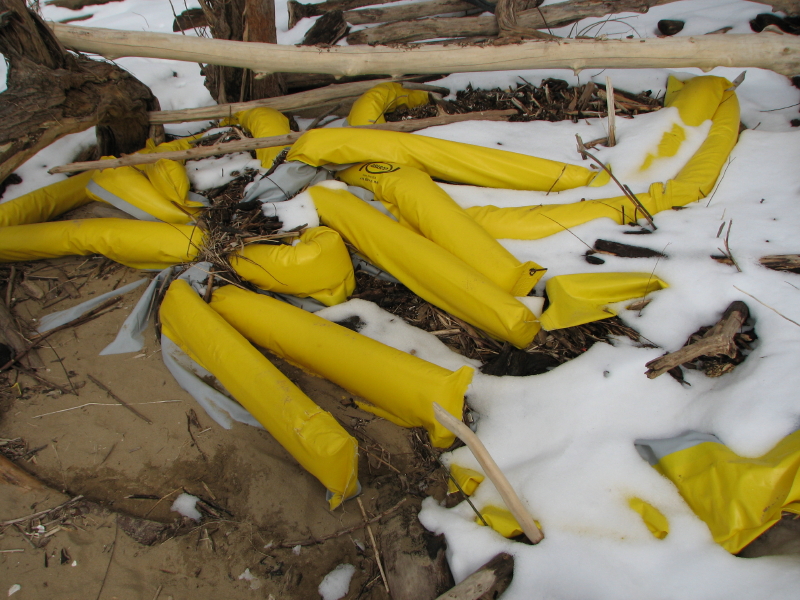
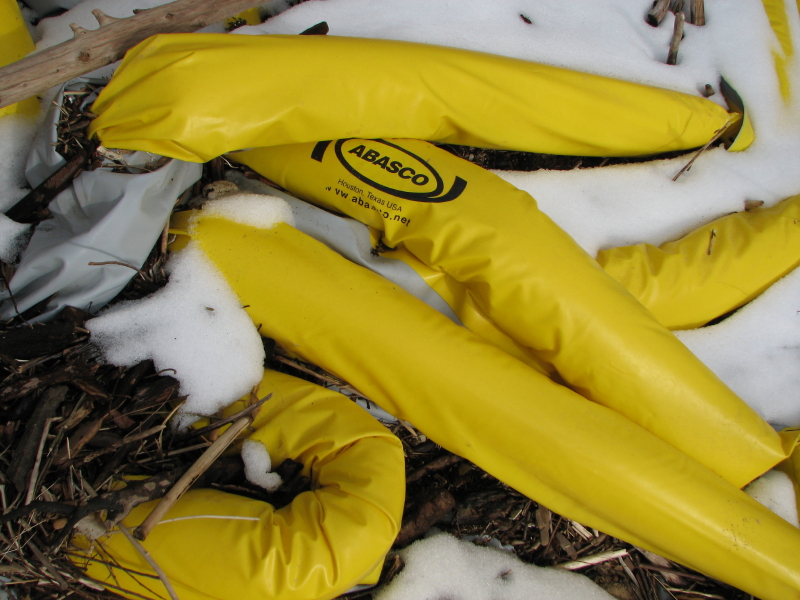
I did look up the company name on this object because I wasn’t entirely sure as to what this is or why it’s here.? I suspected that this is a boom used to contain or protect something from contamination.  Like many people, the immense oil spill in the Gulf of Mexico has been on my mind.  What a colossal failure of imagination this has been all the way around.  I imagine that the company that made this yellow boom and is based in Houston , Texas is probably having a great year.  Here are some recent images.  The longer this boom stays here, the more it seems to catch things around it.
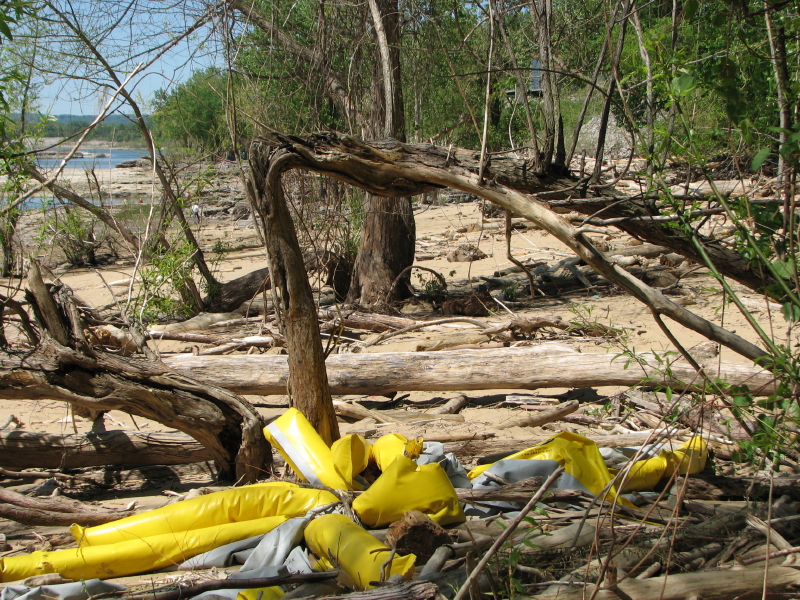
It is ironic that something that is supposed to be a tool to “protect” the river, winds up becoming another discarded piece of junk.  What is one supposed to do with this boom now?  I’m assuming that this was used somewhere along the Ohio River or its tributaries which eventually flows into the Gulf of Mexico.  This boom’s appearance here suggests that the Gulf and the river were already in trouble long before the latest oil spill.
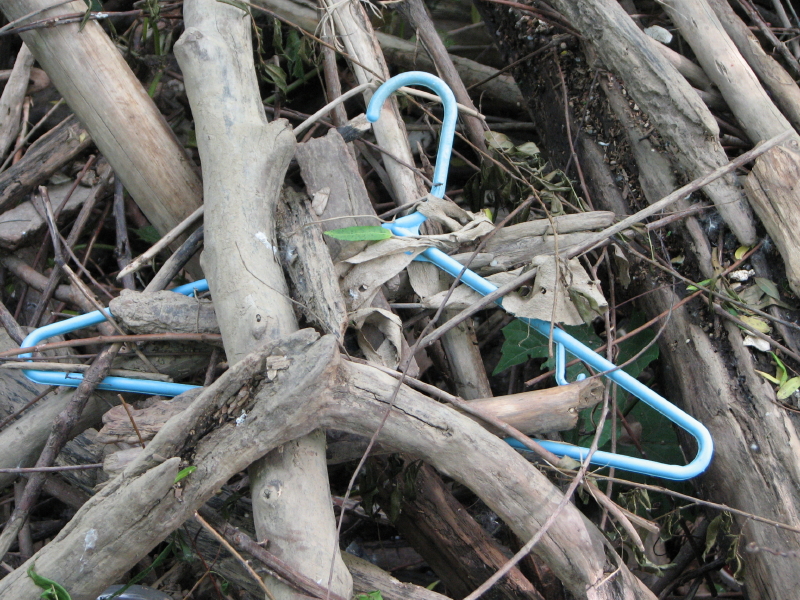
I know many people who feel as I do…that they are tired of feeling hypocritical about our relationship to the natural world.  Trying to untangle good answers to this dilemma while living lifestyles that promote and accept such waste has to be psychologically damaging too?  At the moment, we seem unable to act in our own ultimate best interests and it will probably take some even greater calamity to befall before we are forced to have the courage and imagination to go in another direction. 
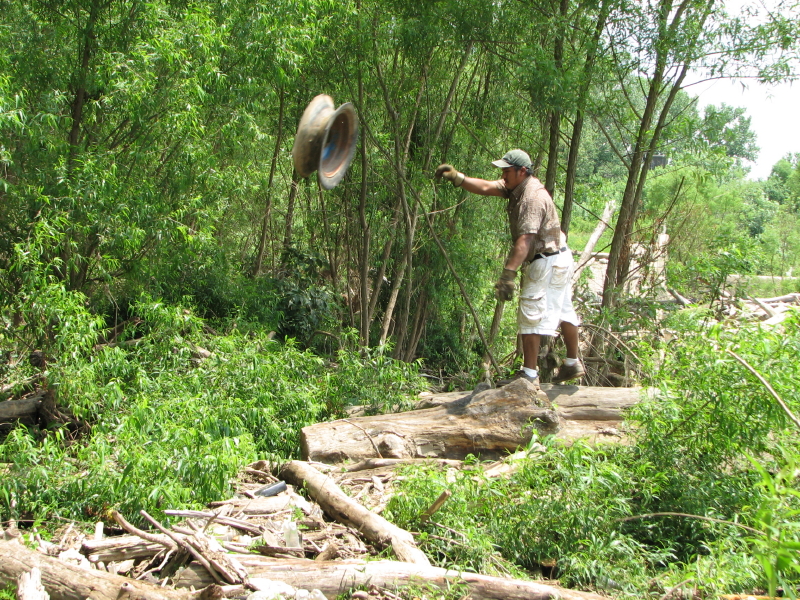
The last couple times I have come to the Falls, I have run into this man.  We have talked a little bit, but there are some language barriers.  Anyway, he’s delighted to have discovered a source of materials he can take to the salvage yard.  I watched him nimbly moving from one log to another yanking out these old metal wheels.  I have a lot of admiration for him and it made me think of how people from less developed countries have much that we can learn about living on this increasingly global scrap heap.

Read Full Post »

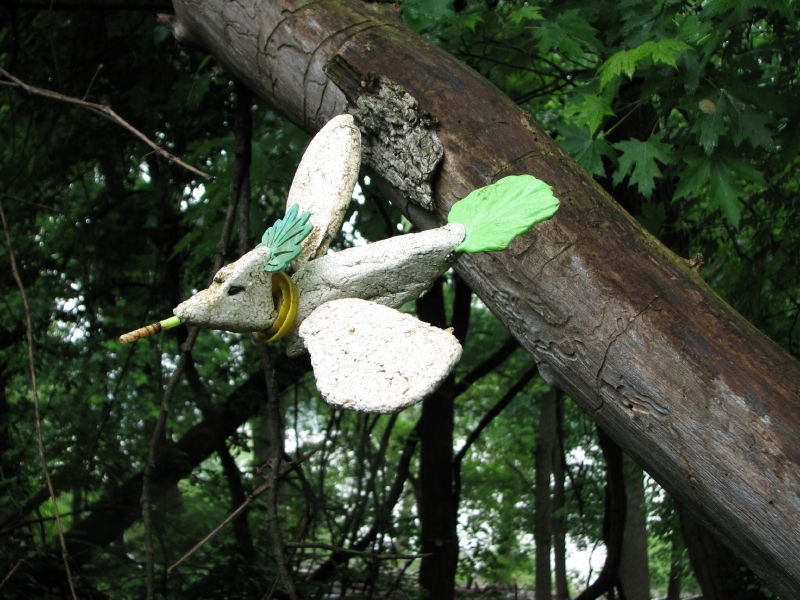
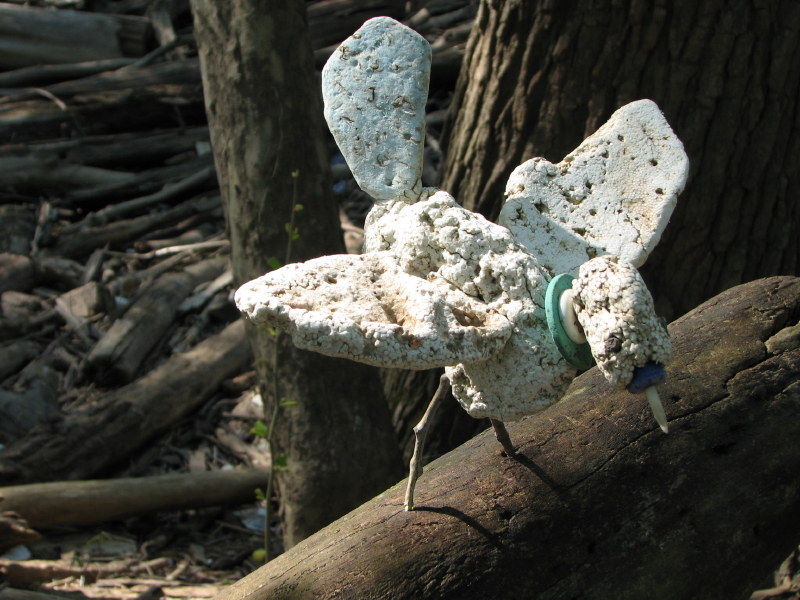
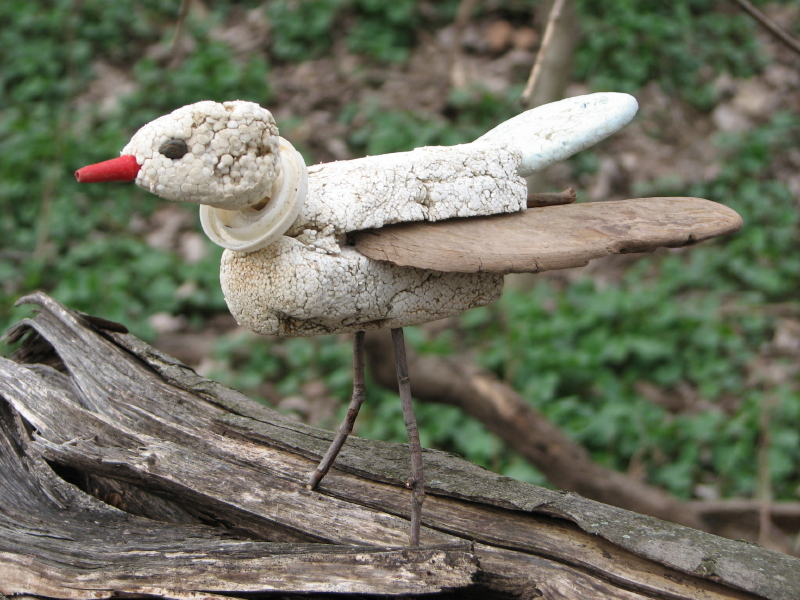
While wandering the Woodland Trail in an area best described as temperate semi-rainforest, I made another unusual bird discovery.  I believe that I have these privileged sightings because of two principal reasons.  The first has to do with frequency.  I am at the Falls of the Ohio as much as I can get away from my other responsibilities and so I have more chances for encounters.  The other has to do with motive.  Being knowledgeable about our avian friends, I simply am out here looking for birds and therefore open to their discovery.  On this particular day I was actually anticipating members of the wood warbler tribe when I came across what must be a first for this park…the rare Cumberland Greencrest!

This is one species missed by both Lesson and Gould in their individual monographs on hummingbirds of which the Cumberland Greencrest is an atypical member.  The Cumberland Greencrest was first discovered on the Guatemalan Highlands in 1910.  It is larger and slower on the wing than the average hummingbird.  It’s flight can best be described as being Swift-like where the individual wing beats alternate between extreme activity and gliding.  In its main haunts, this bird constructs a small nest from lichens and spider webs on a suitable tree branch and a single jelly bean-sized egg is produced.  The adults take both small insects on the wing and feed from the nectar of rare orchids found only in certain protected valleys. 

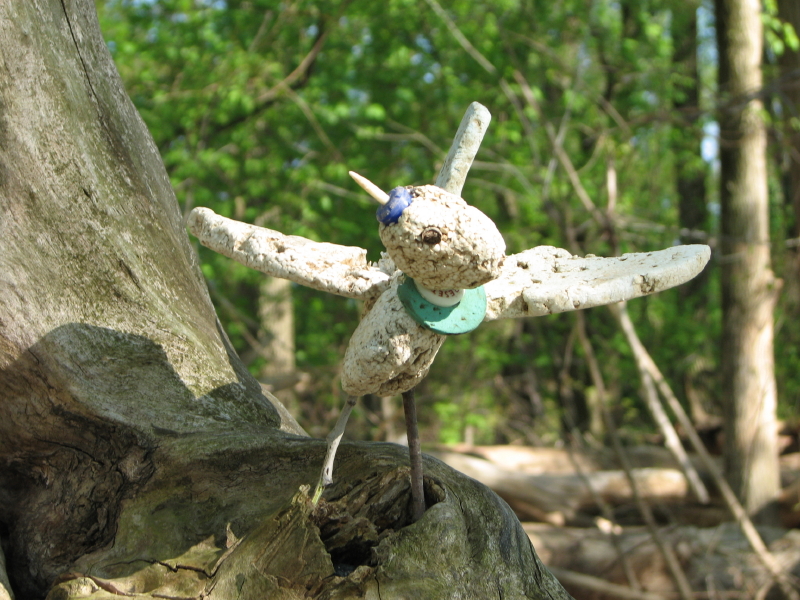
I was exploring the trees lining both banks of Parfume Creek (so named because on certain days, the scents of various laundry detergents are detectable emanating from the water using one’s  open nose) when the Cumberland Greencrest made its appearance.  I immediately recognized I was in the presence of something special and limited my movements so I wouldn’t frighten it away.  As this single individual coursed along the creek bank, I slowly brought my camera up to my eye and recorded these images in quick succession.  I think they show this bird in its glory very well and are worthy of sharing with a larger audience if I say so myself!  But please, don’t just take my word on this…judge for yourself!

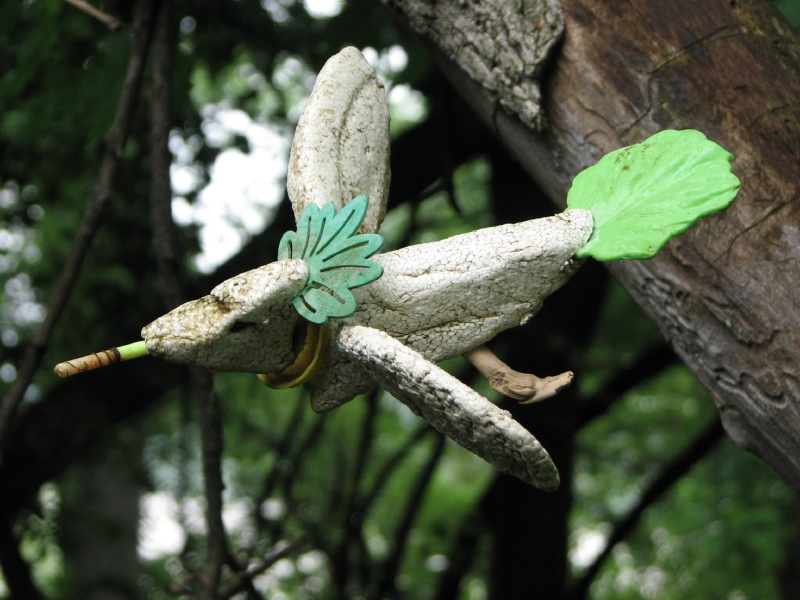
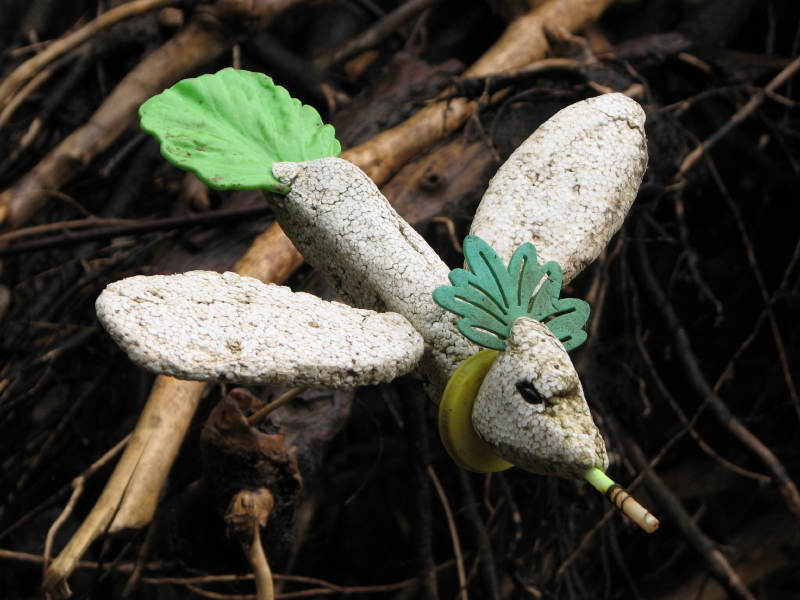
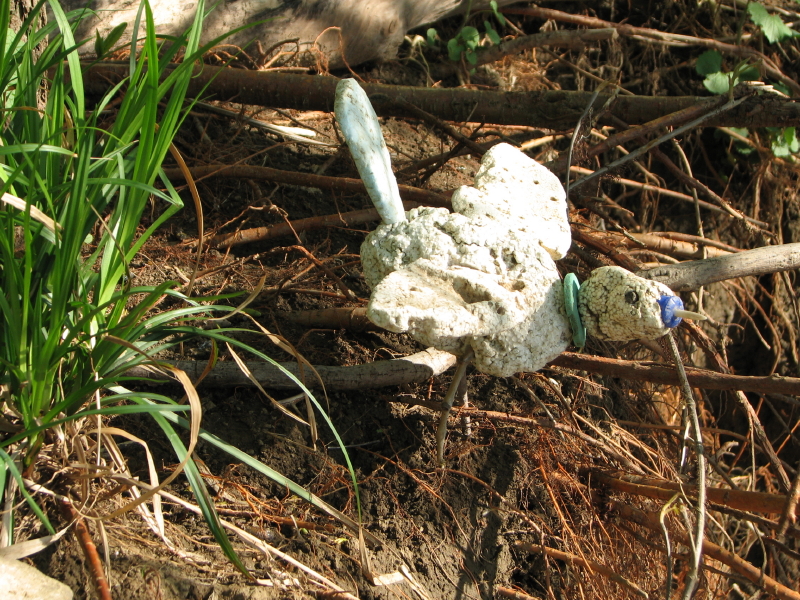
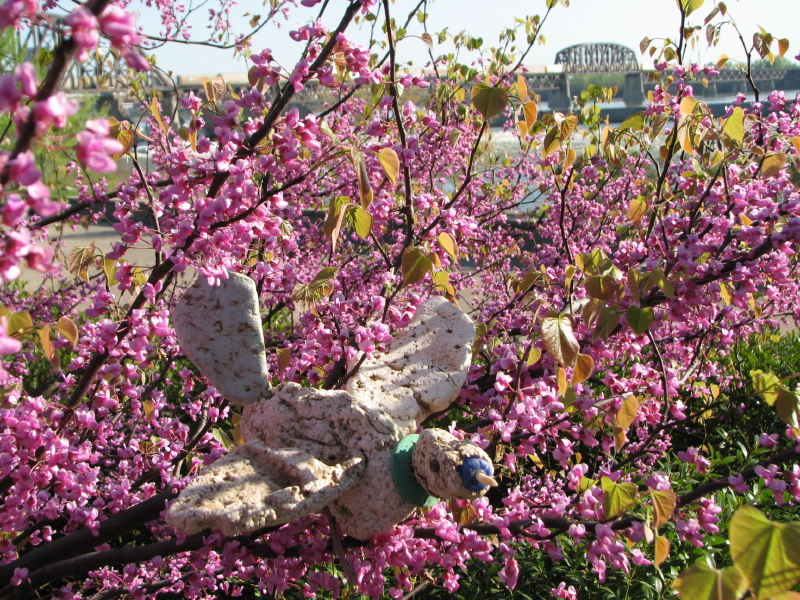
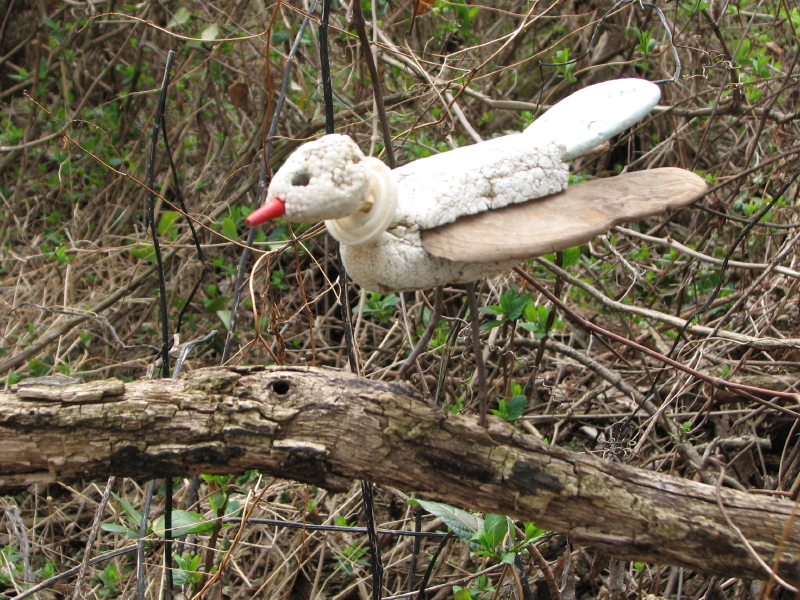
I recorded these images using my high-speed camera as the bird made its passes back and forth along the creek.  In these images one can see why this bird is appropriately named with its lacy green crest atop its head.  The encounter was brief, but memorable!  What was this bird doing in our area to begin with?  The answer may lie in the very powerful thunderstorms that are becoming a staple of the Western Hemisphere.  I speculate that this bird was simple blown way off course as is known to happen with other species of hummingbirds.  I returned to this area the following three days, but never again encountered this specimen.  I did, however, see the duckling of a species of which I am currently unfamiliar and recorded its image among the driftwood and I hereby also present this to you my very dear reader in the hopes it will fuel your curiosity!

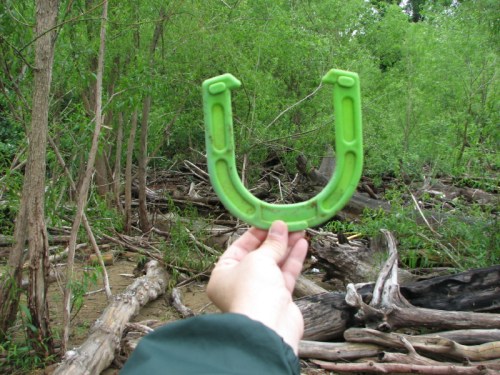
The Cumberland Greencrest was made from materials found entirely within the park and include:  Styrofoam (body and wings), wood (its tiny feet), coal (the eyes), plastic ( the bill which was part of a fishing bobber and the tail which is a plastic lettuce leaf!, the yellow collar is from a soft drink bottle) and lastly the green crest is some foam-like material.  It is held together in places with small, sharpened wood pegs.

Read Full Post »

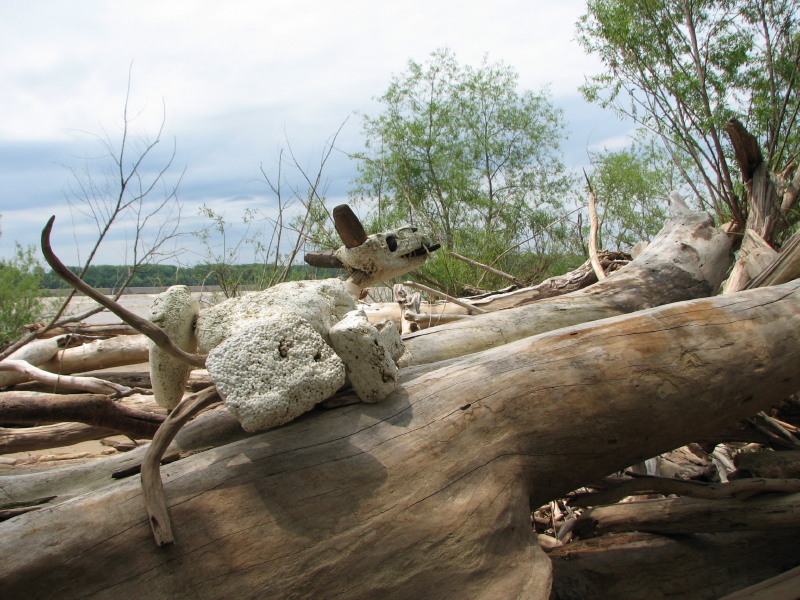
Extraordinary images from a remotely placed camera-trap yield glimpses of a rare mammal.  Long thought to be gone from the Falls of the Ohio, it appears the Feralocitor is recovering parts of its former range.  The Feralocitor is a carnivorous animal about the size of a very large house cat.  Genetically, a Feralocitor’s closest living relative is the Fossa from Madagascar which is that island’s largest and rarest native predator.  Both share a relentless drive to pursue prey and are especially adept at catching birds and small mammals in trees.  Like the Fossa, the Feralocitor has a long tail which it uses to balance itself as it runs and jumps from branch to branch in its arboreal home.  Pictures of the Feralocitor at the Falls of the Ohio came as a shock to the park’s naturalists who remain mute about its existence here although there have been long-standing rumors.

The image above shows what the Feralocitor is especially good at which is stalking its prey.  Noiselessly, this predator can get low to the ground (or log in this case) and approach within striking distance of its formidable claws and teeth.  Once a Feralocitor has a hold of its intended victim, there is no escape.  In addition to stalking, some Feralocitors (especially older or injured individuals) are excellent at hunting by ambush.  The original inhabitants of this land have an almost supernatural reverence for this animal and their name for it roughly translates to “…ghost-spirit of the trees”.  This reverence, however, wasn’t shared by the farmers who settled this area and saw the Feralocitor as another predator who killed and ate their smaller livestock.  It was shot on sight, poisoned, and trapped until it became so scarce that it was rarely seen and believed gone from these parts.  Today, the role of random predator is played by domestic dogs that have gone feral and occasionally run in packs causing fear and damage.  Such dogs exist at the Falls of the Ohio and here are a few images of them.

The feral dogs in this area are a motley crew of mixed breed dogs.  I recently came across two of them while bird watching and I was so intent on looking up, that I didn’t notice that these dogs had walked quite close to me.  In far western Kentucky, I recall an experience of being out in the woods and being surrounded by five wild dogs!  It was a tense moment because dogs in this situation can be dangerous.  I remember yelling at them and throwing rocks in their direction to chase them away.  Once there was a thriving sheep industry in the western part of the state that was decimated by feral dogs.  An old biology professor at Murray State University told me that one.  The dog in this second picture doesn’t seem particularly glad to have run into me and I’m probably interrupting his attempt at a meal from a nearby dumpster.  They seem always hungry and will take nearly anything that crosses their path.  There is a shortage of ground nesting birds in the park because there are just too many predators on the prowl and not enough cover.  World-wide, feral dogs are a resilient and growing problem and rabies is also on the rise.

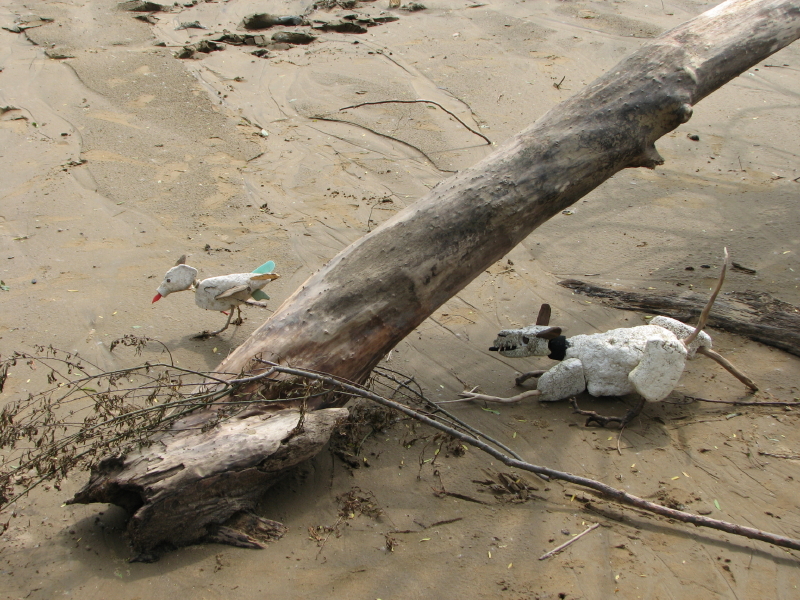
I decided to camp out in an area where a Feralocitor was last seen.  After several days of nothing, I was rewarded with two separate  images of a hunting Feralocitor.  In this case, the prey animal (the Ohio Valley Rail) is also rare and endangered.  The first hunt I observed was successful, however, the Feralocitor was so efficient and quick at the kill that it was over and gone before I could get obtain another picture.  It waited until the bird’s head was down before launching its fatal attack.

In this second photo, the Feralocitor was unsuccessful when the bird sensed something was wrong and flew away.  By listening to its instincts, this rail lived to experience another day.  It is great seeing an animal that once existed in this area recovering some of its former range.  Similar stories exist from the recent past.  Once black bears were rumored in the eastern section of  Kentucky.  This was proven, they became studied, protected,  and  now there is a limited hunting season on them.  The same could be true of the mountain lion.  Persistent claims that they too are re-entering  their former territories will probably pan out as young lions move eastward pursuing the ever burgeoning deer population.  As for the Feralocitor, time will tell.  It isn’t an animal likely to be prized by hunters.

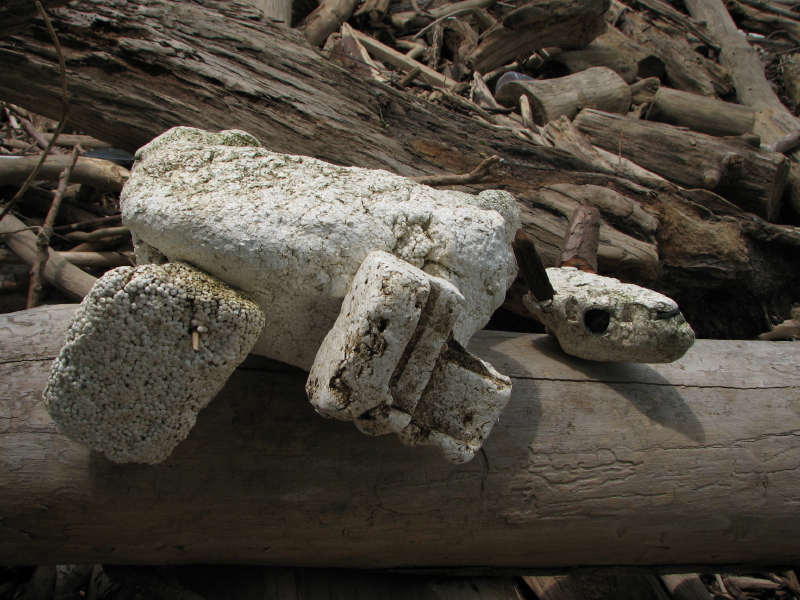
The last image is of the Feralocitor in progress.  It’s made of found Styrofoam, wood, nuts (for eyes), rubber, and plastic and was constructed on location during a light rain.  The sculpture was held together with sharpened wooden stakes and pins.  With the exception of the Feralocitor and the Ohio Valley Rail, other mentions in this post are factual.

Read Full Post »

The Kentucky Derby happened 24 hours a go, but the bigger regional story was all the rain we received.  I’ve said this before in this blog, the gentle spring rains of yesteryear seem like a thing from the past.  Now every storm is charged with energy and abundant water.  In the Louisville area totals for the last two days are 5 to 7 inches ( 12 to 17.75 cms).  In Nashville, TN there is wide spread flooding.  There was one period of a few hours on Saturday that things were just misty.  That was as good as our luck ran this weekend.  I took that opportunity to get my river fix and it was good for my peace of mind!

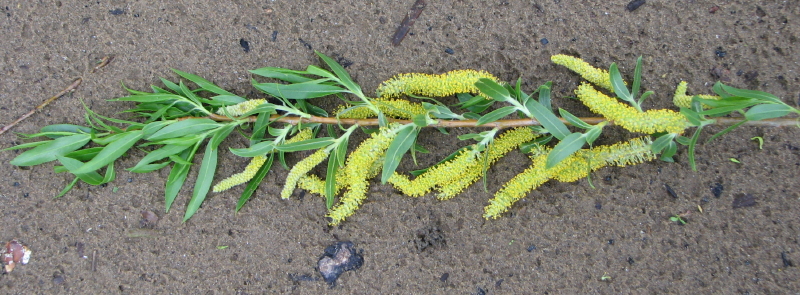
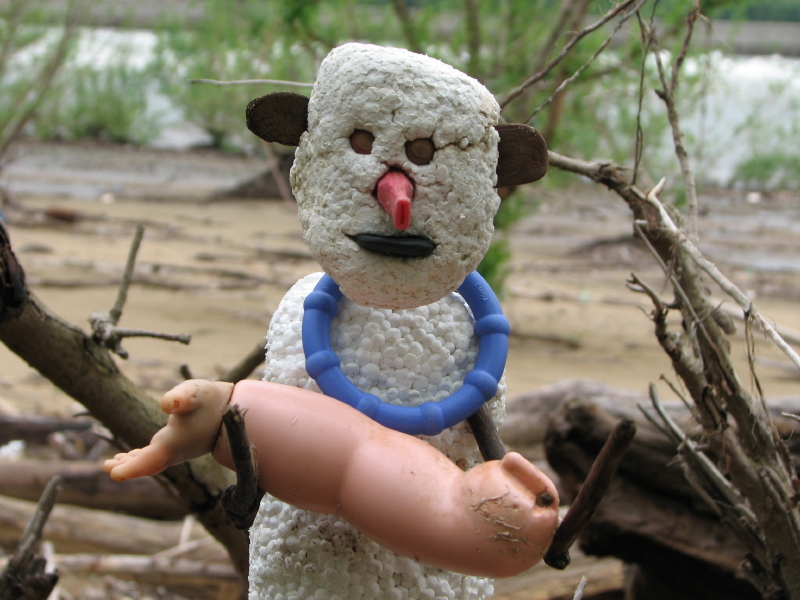
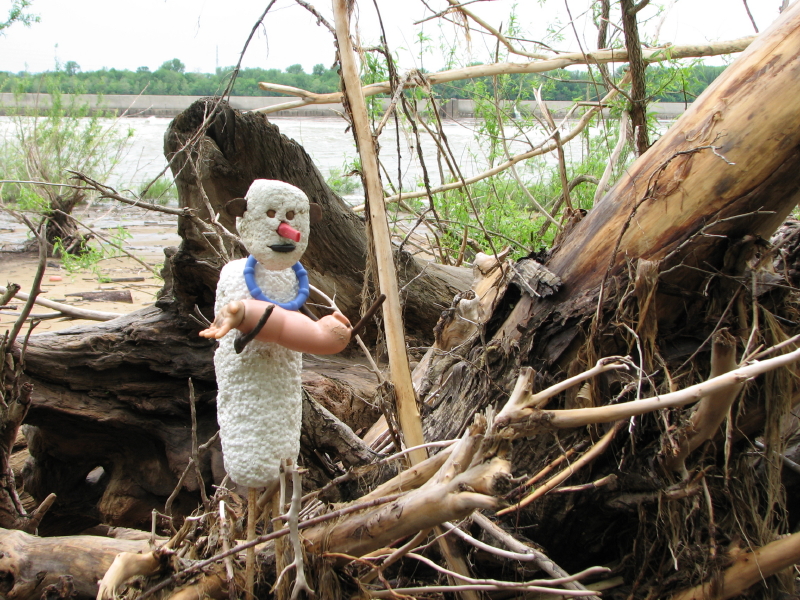
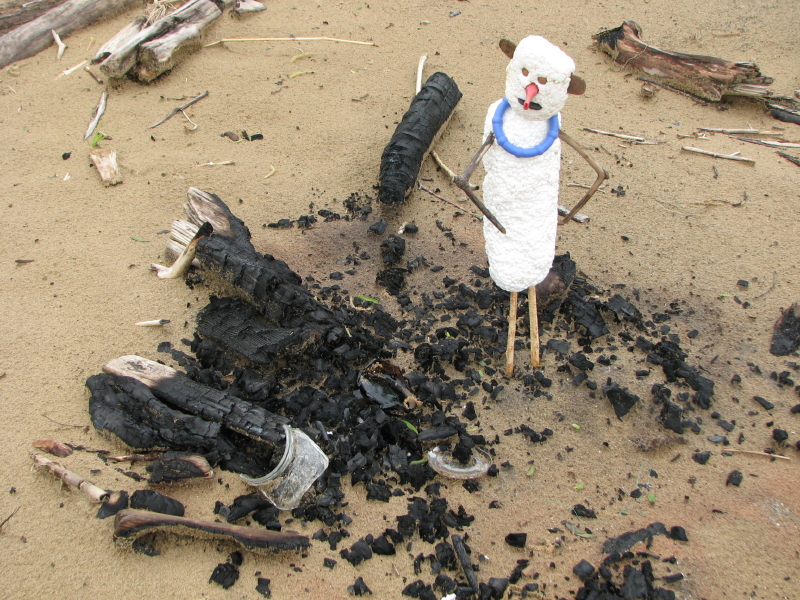
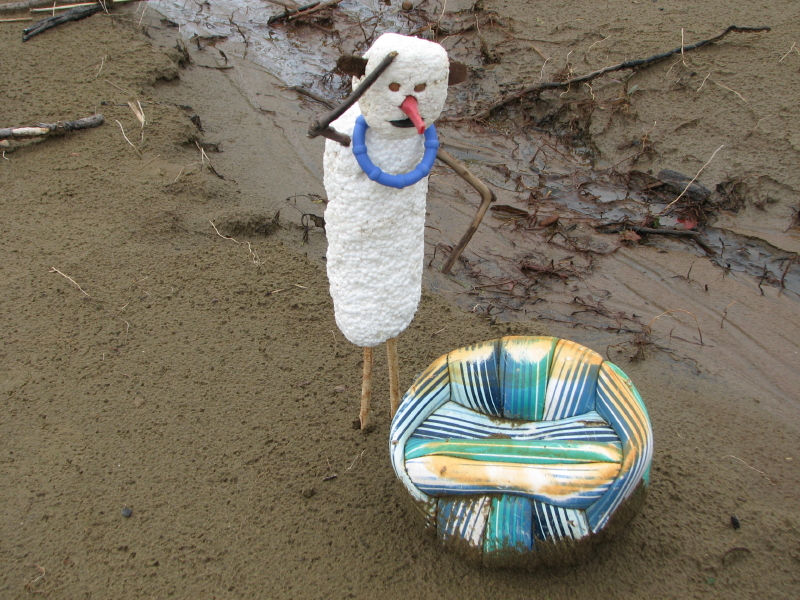
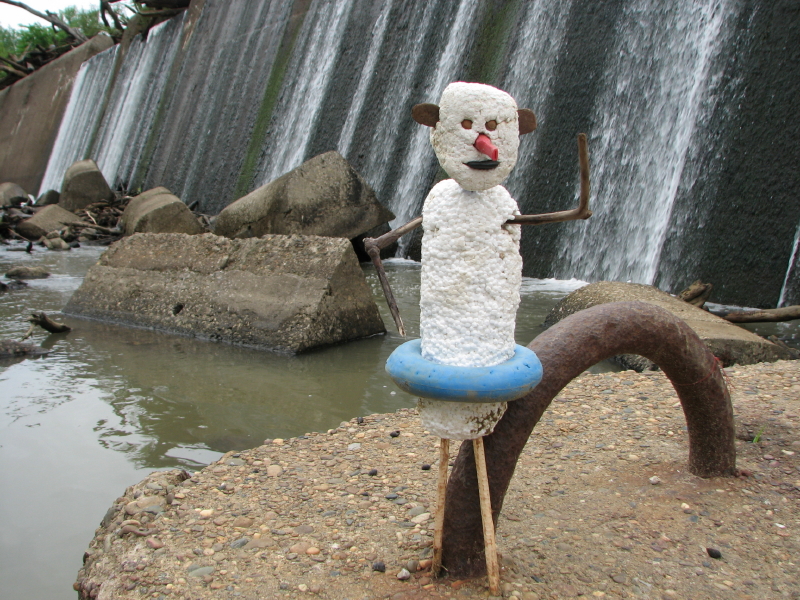
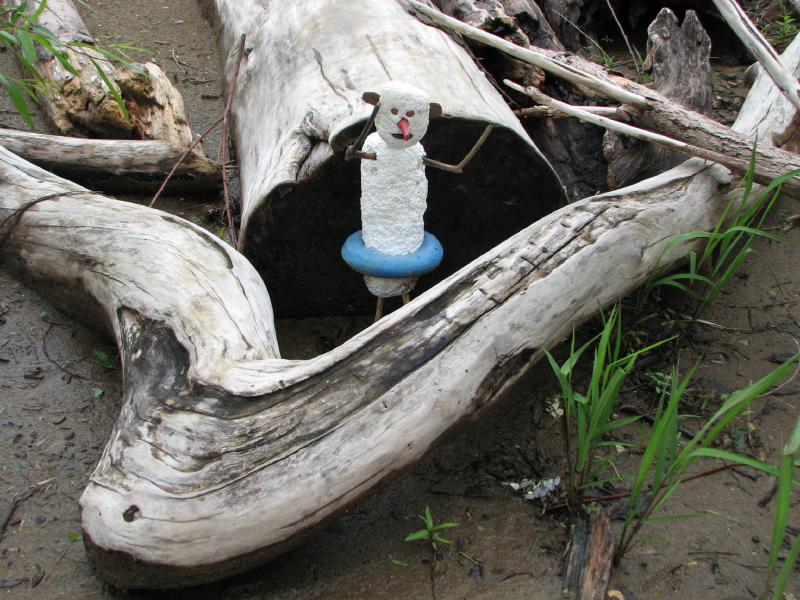
Since I fully expected the rain to just pound me at any moment, I kept my eyes open as I moved along the river.  I had the place nearly to myself which helped make the Falls seem larger.  The willow trees were in bloom and there were even a few nice birds around.  I quickly made a figure from available Styrofoam and sticks and I will now turn the narrative over to him.

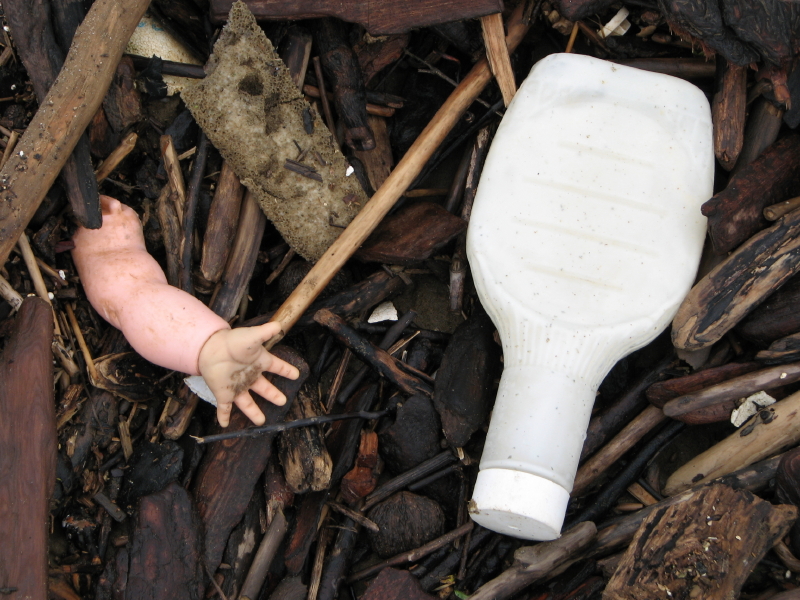
Yeah…we moved as fast as my beaver-chewed willow legs would carry me over the wet and packed sand.  We checked out the various debris fields near the river and took pictures of the things that caught our attention.  We came across a lost arm lying next to a plastic bottle and I wondered who would lose an arm and not miss it?  I picked it up and examined it.

It’s a perfectly good arm, but I don’t want to carry it around and so I left it where it was found.  If I find out later that I have a need for it…I think I can remember where this spot is provided the river doesn’t rise and rearrange things again.  Certainly looks a lot greener now than the last time I dropped by.

Of late, I’ve taken an interest in the remains of old fires and camp sites.  It’s a test of observation and I like to learn what I can from the charcoal and ashes, but this one has been hit hard by the rain and we learn little.

A colorful, but ruined soccer ball lay before us. The leading edge of the river usually has a few balls of one kind or another in the mix.  We stopped for a few snapshots than went our merry way.  There were more things we could see laying on the sand a head of us that looked worth checking out.

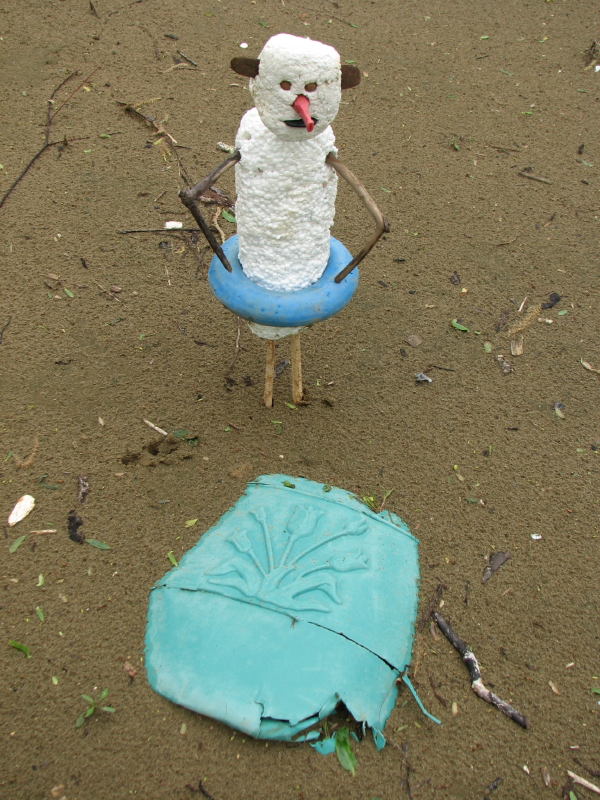
I traded the blue ring around my neck for a larger one I could wear around my waist.  It could be used as a flotation device if necessary!  Walking the shoreline we came across this vignette…a still life of tulips.  It’s a partially buried plastic watering can and the river has revealed this picture for us!

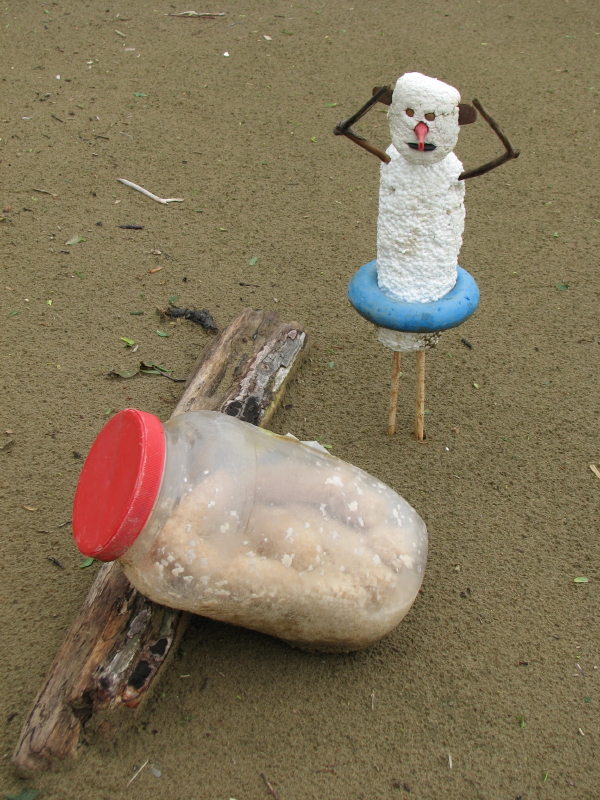
Oh man!  We found that awful jar of baloney again.  Even the river doesn’t want this thing and keeps casting it back upon the shore.  The thought crosses my mind that this might make good catfish bait if I could stomach running a hook through this mystery meat.  I wonder if that giant bug-thing is around?

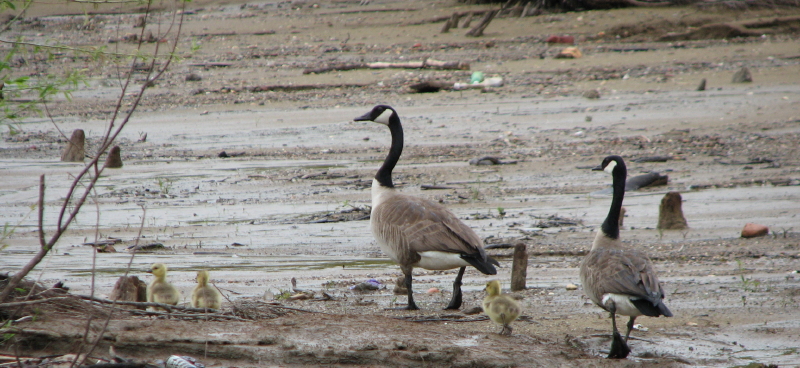
Like I mentioned earlier…we saw a few birds too!  Some of our warmer weather birds have returned.  I thought we had some better pictures, but I guess there was just too much water in the air.  We did come across a pair of Canada Geese with three goslings doing the same thing we were…namely investigating the riverbank.  Their young are very cute!

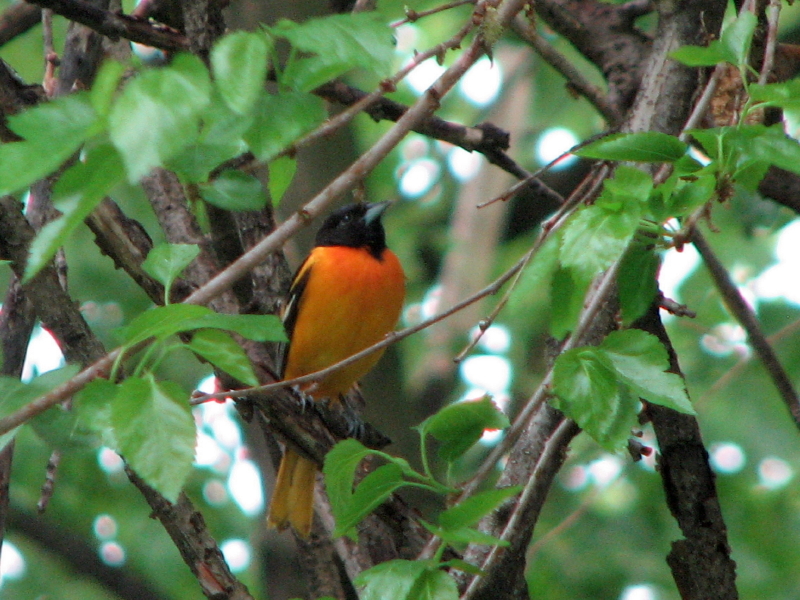
And, we saw three of our favorite bird species!  The Yellow Warblers have returned and we tried like crazy to get a decent shot of this bird singing away, but the images were kind of gray.  Also saw a Spotted Sandpiper (but missing its spots) heading north.  We will see those spots upon its return migration from near the Arctic circle.  Indigo Buntings seem plentiful and we were fortunate to watch Baltimore Orioles chasing one another through the trees.  Here’s a picture of a male oriole who was watching a female among the branches and not intent on us. 

With hope, the Scarlet Tanagers and Rose-breasted Grosbeaks will be passing through soon.  I decided to hang out longer while that artist-guy went home.  I’ll be right here, unless someone else finds me first.

Well, that’s how our Derby Day went.  The rain stayed away long enough for the race to be run and by all reports the festival was an overall success.  I’m glad people had a good time, but I’m getting a little event weary and feeling the need to be more contemplative…and dry!

Read Full Post »

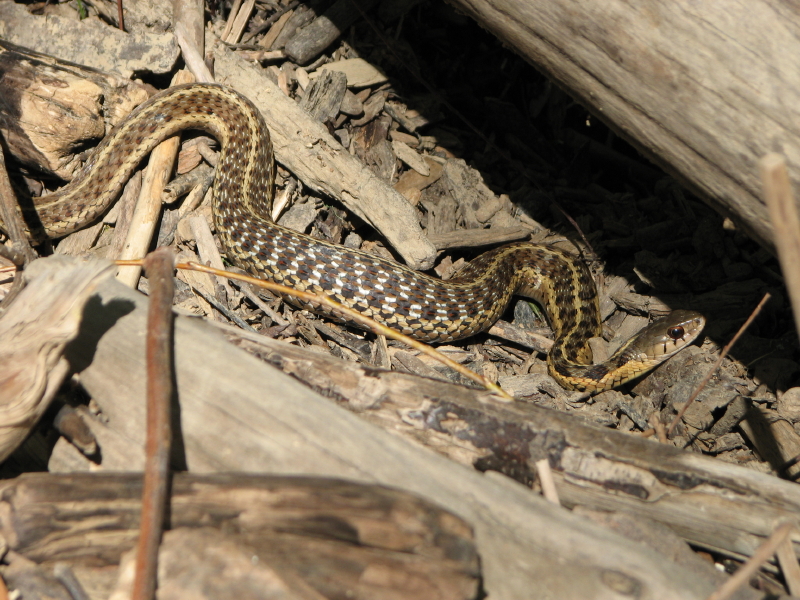
With Thunder over, my good friend Jeff accompanied me to the Falls the very next day.  He was on a mission to find wood for a home improvement project and the Falls has plenty of that.  On our way down to the river we passed a fisherman who warned us that there was a belligerent snake ahead of us that had tried to strike him!  Okay, we are forewarned, but not overly concerned.  Amazingly, we came across this snake.  It had not moved much since the morning was still cool and it was lying in the sun trying to get its metabolism going.  It’s a harmless Eastern Garter Snake and here are pictures of it.  This snake will try to bite, but it’s really very harmless.

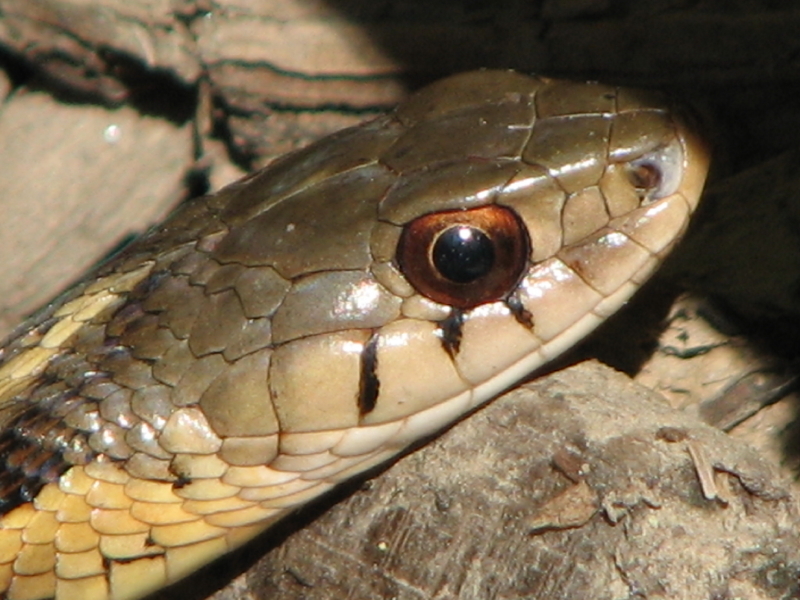
This snake is often found near water, but can’t be classified as a water snake.  I did get a little closer and the snake did nothing.  Here’s a detail of its head.  This guy is about fifteen inches long.  I like its coppery-eyes.

Jeff and I had a good laugh over the fisherman’s over reaction!  At least to his credit, he didn’t try to kill this snake which happens far too much in this world.  Snakes do carry with them that element of surprise, but most of them are really beneficial.  Even if I had come across a poisonous species, I would just respect it and leave it alone.  I made another discovery and I guess I would have to classify this as a signed artwork?

It would have been easy to overlook this, but I turned my head in this direction and there it was.  Someone named “Hollie” took the time to sign and date this piece of wood near this old tire.  I felt this person was calling attention to the poetry in this space in a way similar to the work of Anne and Patrick Poirier.  It’s probably just me reading too much into the situation, but I did find this simple act compelling.

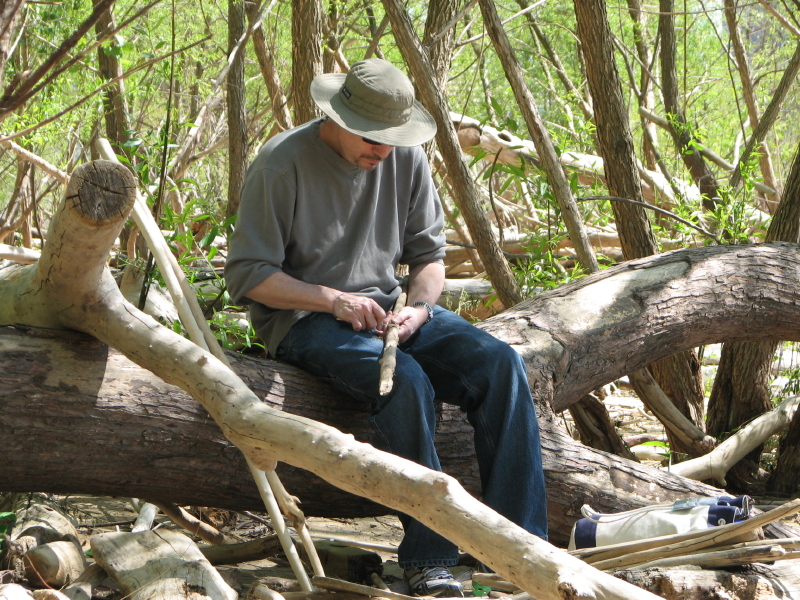
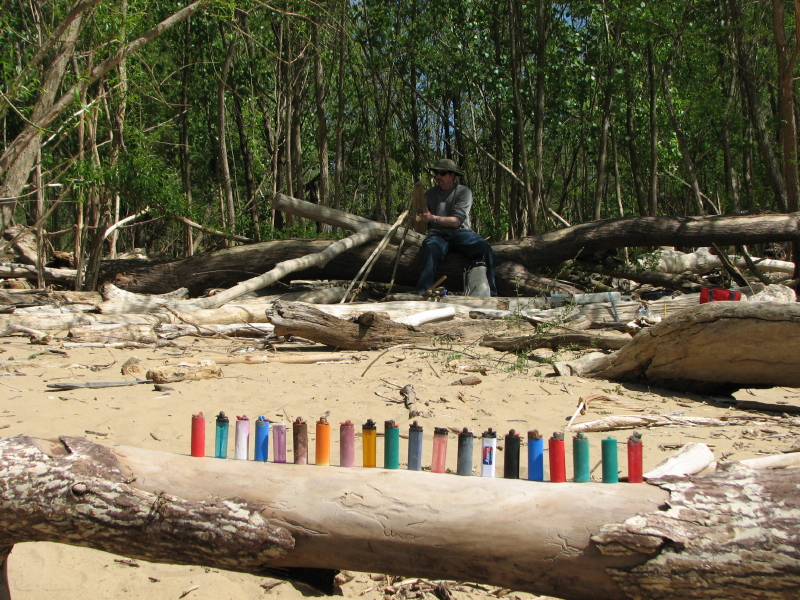
Jeff found the wood he was looking for and several potentially nice walking sticks too.  I found Styrofoam which I also used to make something, but will wait until next time to show you.  Jeff and I have been good friends since our undergraduate art school days at Murray State University.  Jeff is a talented artist in his own right and does drawing and ceramics.  He teaches art to middle school children.  During our hike at the Falls, Jeff was amazed by the number of cast off cigarette lighters he kept finding and started picking them up.  Here’s what he eventually did with them.
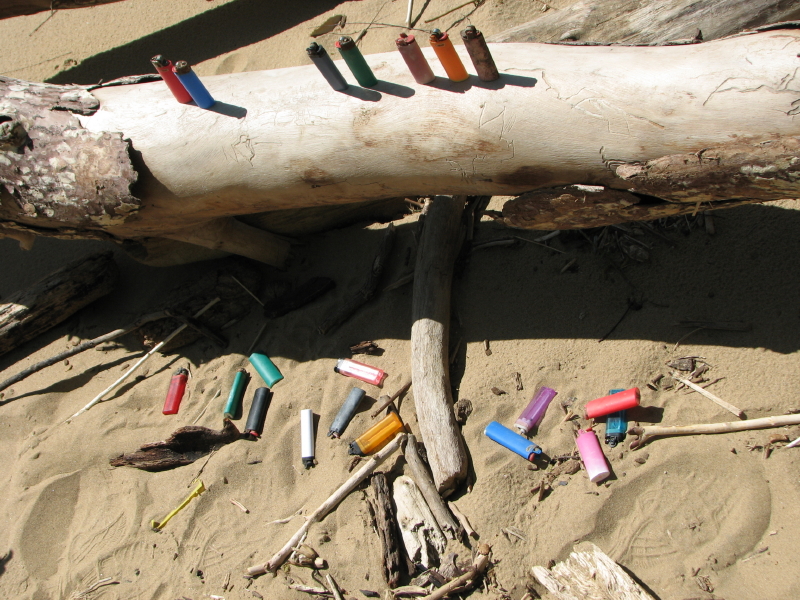
Jeff collected 23 lighters, but only lined up 20 for this photo.  He could have collected a sack full of these lighters if he wanted to.  Here’s the view from the other side showing my friend working on a walking stick.

After the pyrotechnics of the previous evening, this was as laid back and relaxing a day as could be.  We each left the Falls with as much river treasure as we wanted to carry.  I also had a camera full of images that I could use to post on this blog.  Eventually, the wind started to pick up and with the lighter piece in shambles, took that as our cue to go home.

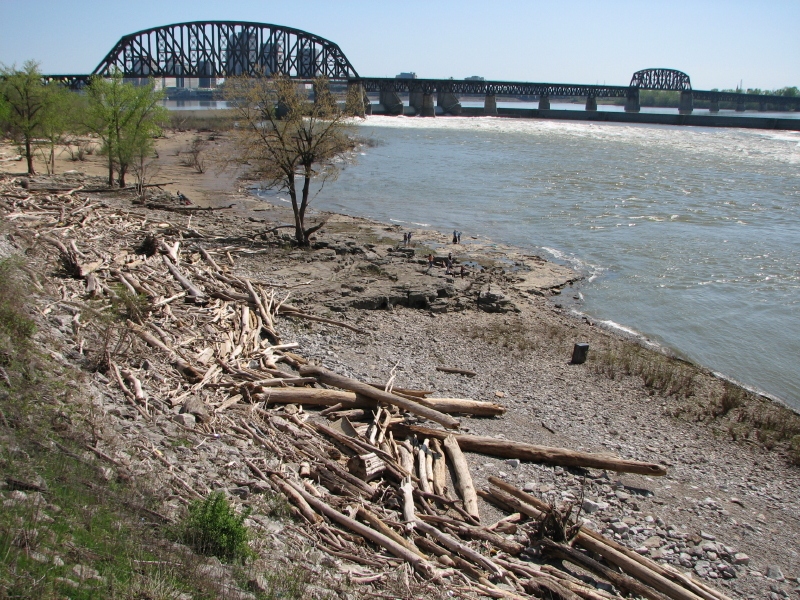
On our way back to the parking lot, we passed by the wall that separates the Ohio River from this stretch of the Falls area.  With the City of Louisville in the background, I photographed these up rooted trees that were deposited here during the last high water incident.  They will stay there until the Ohio River decides to carry them away.

Read Full Post »

After delivering some of my artworks to an exhibit in La Grange,  (more on that in a future post) I stopped by the Falls for a quick look-see.  It was an absolutely gorgeous day and I decided to take a quick walk along the Woodland Trail to see if any of the spring migratory birds were in the area.  I was amazed to see the sizes of some of the trees that washed into the park during the last high water.  From my vantage point, I could see several “nice” pieces of Styrofoam that were also stranded by the retreating river.  I made mental notes to myself to come back to those areas when I had more time.  Images of future sculptures came to mind.

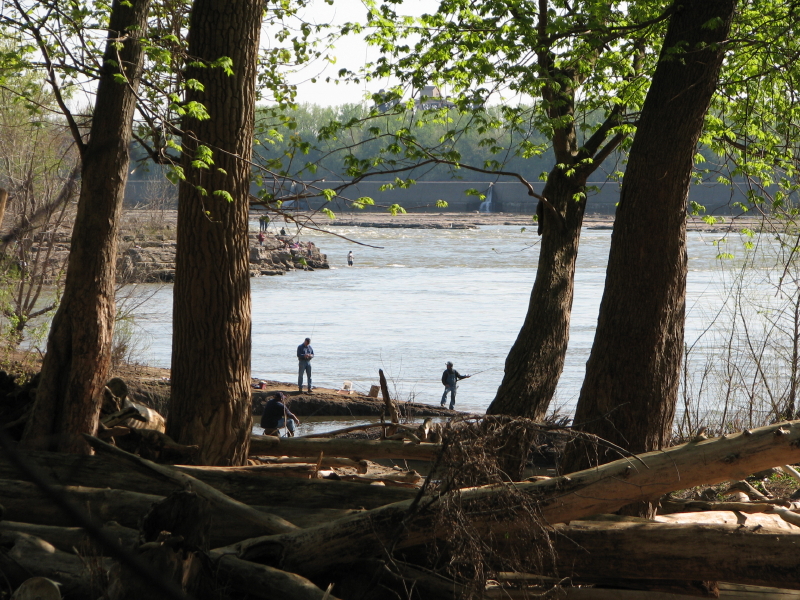
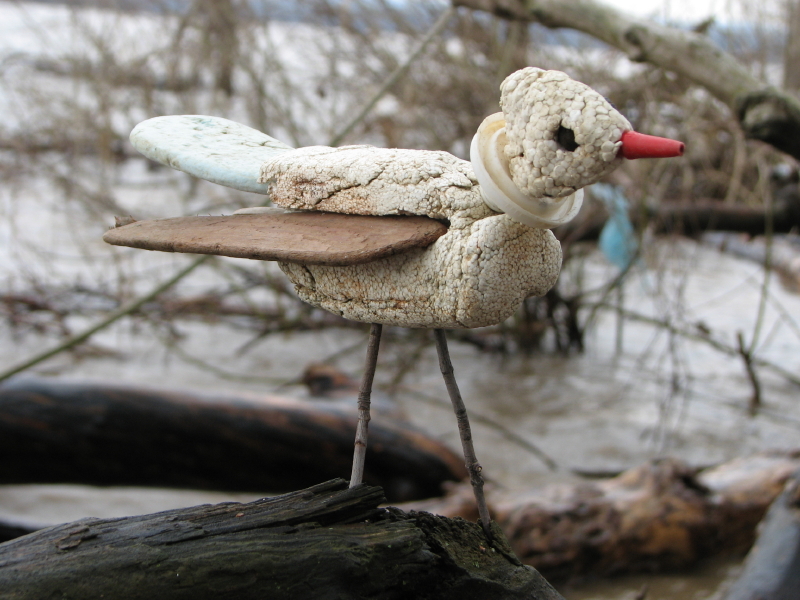
People were taking advantage of the lovely spring day and were ever-present in the park.  I noticed many fishermen lining the banks although I can’t say that I observed anyone catching anything yet.  Walking along the Woodland Trail I did see several species of birds including a Yellow-bellied Sapsucker working a Sweet Gum tree.  To me, this woodpecker is a harbinger of spring.  Bird watching was a little frustrating today because there just were so many people everywhere that the birds were a bit jumpy.  Further down the trail I did see something new I hadn’t recorded before and it has the nickname of “the Redbud Bird” and I would later learn why.  At first appearance, it’s a bird that isn’t especially memorable.  It’s a bit clumsy looking and not a particularly good singer.

The Redbud Bird was working a section of the park bordered by a creek.  This area had many downed trees of significant size that this bird was exploring.  I observed it tilting its head from side to side as though it was carefully listening for something.  I found several more specimens of this species taking advantage of the ecological niches that the park has to offer.

Wherever I saw one of these birds…it would be turning its head from side to side and every once in a while would slowly flap its wings.  The day was a warm one and I wondered if this was a method the bird used to stay cool?

I followed one bird from the woods into the Interpretive Center’s parking lot.  This proved easy to do because this bird is also a fairly weak flyer compared to the other birds I had come across.  It would move ahead of me and seemingly waited for me to catch up.  I felt as though it was leading me someplace.  This bird did this several times until I finally understood how this species received its name.

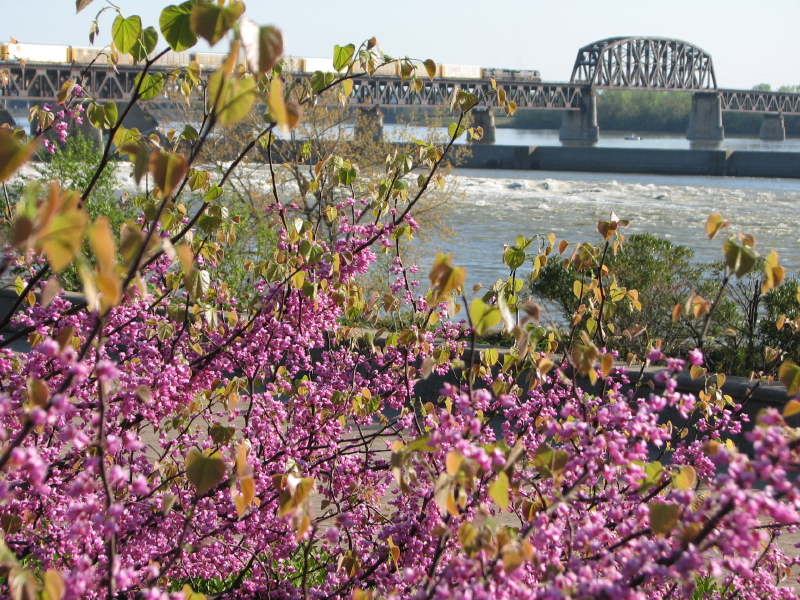
I followed the bird to the front of the Interpretive Center where our bird began to display in a most gloriously blooming Redbud Tree.  This bird times its appearance in our area to the blossoming of this tree.  What this bird lacks in physical charisma it compensates for by immersing itself in the beauty of this tree within site of the river.  After watching it bounce from one blooming limb to another it flew off leaving me with this view.

Read Full Post »

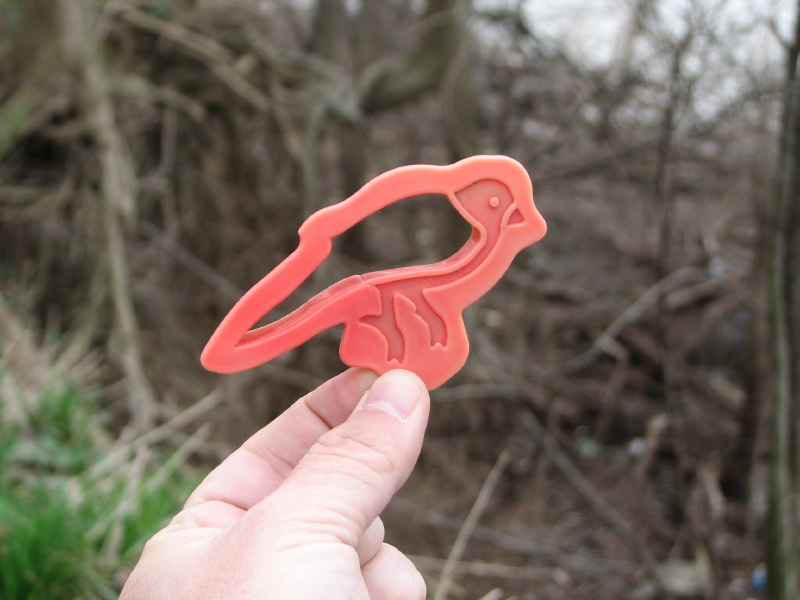
The little red bird perched easily between my forefinger and thumb.  I was walking along the river bank and spotted it among the recently deposited debris…another small gift.  If I had to guess, I would say that the red bird was intended to be child’s clay tool.  It’s like a cookie cutter stencil only smaller.  I was on the look out for birds and my subconscious was on alert.  I think this is partially why the plastic bird appeared to me when it did.  The axiom about chance favoring the prepared mind touches upon this phenomenon.

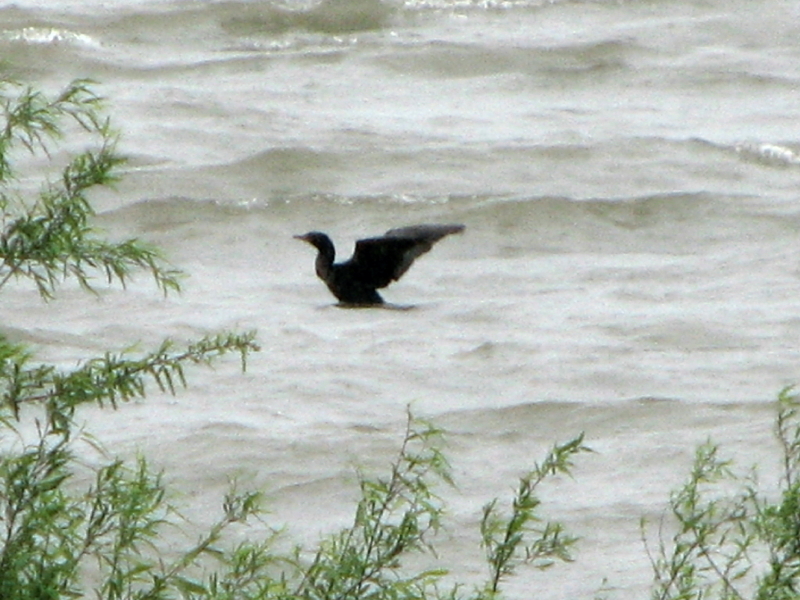
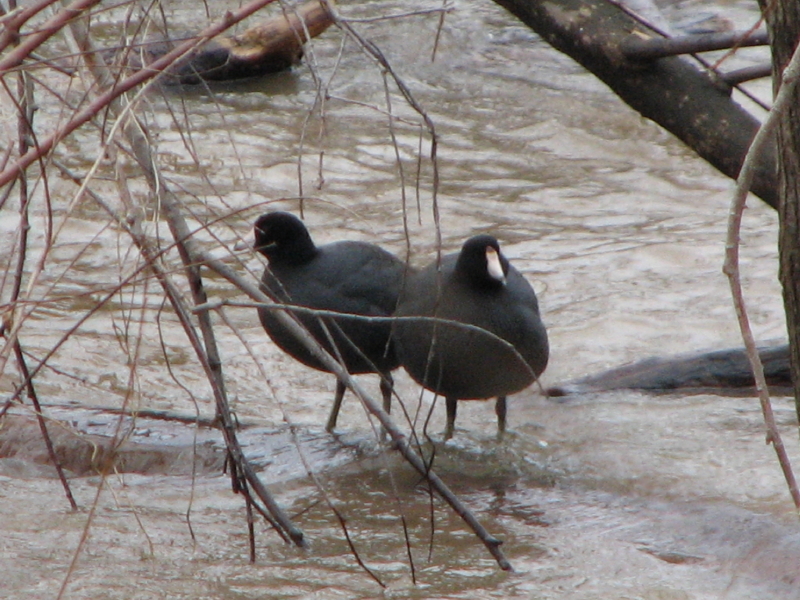
While the river level was still high, I came across this pair of American Coots near the shore.  Logs and chunks of wood were bobbing in the water.  Their dark feathers took on the look of wet wood.  The odd appearance of these coots had to do with them standing on a log that is mostly submerged.  Among the other birds I found near the water were Canada Geese, Mallard Ducks, and high overhead…kingfishers.

Like little twittering machines, a male and two female Belted Kingfishers were chasing each other across the sky.  I watched them for over half an hour and hoped that one of them would perch in a tree near me.  Alas, this was the best image from that moment.  With its low profile, out-sized bill, and crested head, the Belted Kingfisher’s silhouette is distinctive.  Someday, I hope to stumble upon their nest built into the side of the riverbank.  I’ll prepare my mind for that moment and let’s see if chance intervenes!  I did spot an Eastern Phoebe which is an early migrant.  As the warmth and light speeds up the production of tree leaves, we can expect the arrival of the birds we share with Central and South America.  Their timing is exquisite and seems to coincide with the many small cut-worm caterpillars that will chew their way through the foliage of the canopy.

During migration, the Falls becomes home for several different thrush species.  Some of them can be notoriously hard to identify, but not the bird above.  It’s the White Thrush and it utilizes all the available habitats here to put on a little weight before moving northward.  I have seen them patrolling the water line and investigating the densest vegetation in search of food which can include insects, seeds, and berries.

This bird was investigating decaying logs in search of a meal.  Every once in a while, the thrush would “scratch” the rotten wood with a backwards jump that would reveal small grubs and insects just below the wood’s surface.  These morsels were quickly seized by this agile bird.

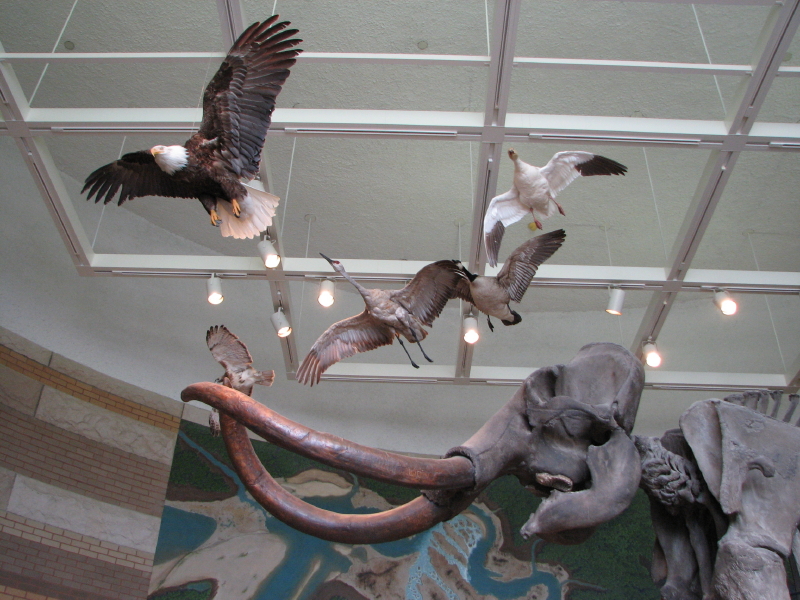
Here’s a third thrush perched upon a vine near the Woodland Trail.  I observed this bird picking off very small midge-like flies and returning to this position.  On my way back home, I stopped at the Interpretive Center to pick up another bird list for the park.  My list is getting a bit tattered from use and I still have about half of the 268 bird species recorded here left to go!  I did spot one bird last year in the park that I’m surprised is omitted from the checklist and it’s the American Turkey.  It would fit easily in the Game and Marsh Birds category.  There are also birds “flying” inside the Interpretive Center and above the mammoth’s head and I’ll end this post with that image.

Read Full Post »

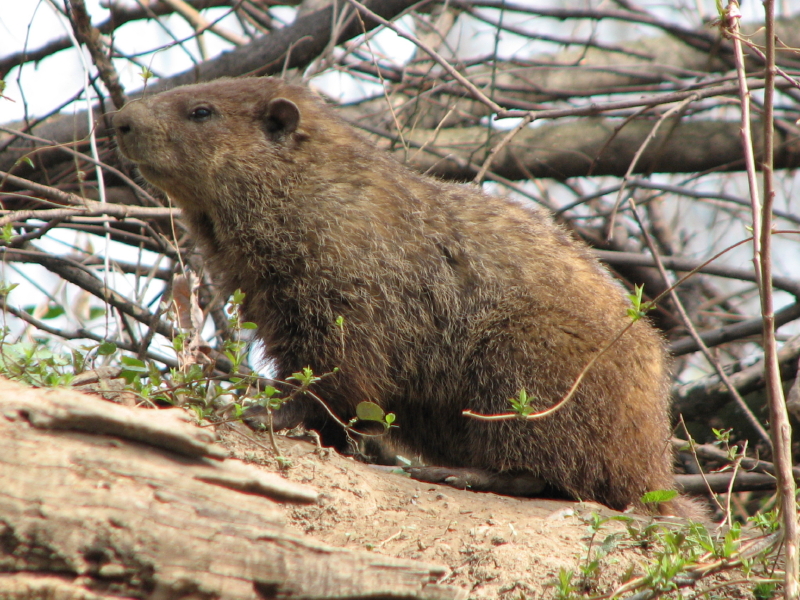
With the river being high, I explored a few wooded trails in the park.  There is still just the barest hint of green coming back to life.  It’s a good time to walk here because the vines haven’t started to kick in yet and turn this place into an obstacle course.  I was following the park’s resident Pilliated Woodpeckers and trying to photograph them when I came across this groundhog.  He was the Buddha of the Groundhogs basking in a shaft of spring light.  His eyes were partially closed, almost blissful appearing.  Then I bumbled into view and we eyed each other for a minute or so and I took these pictures and he took off running for his nearest burrow.

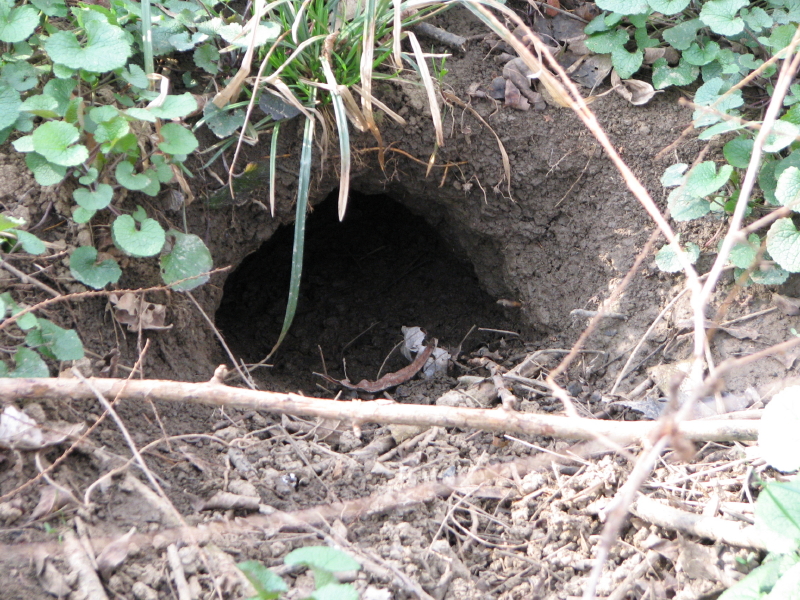
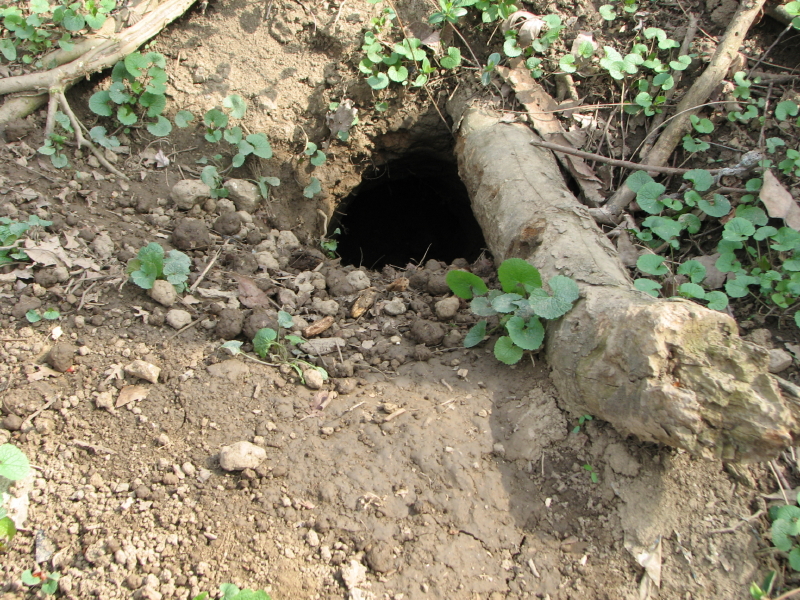
I have accidently stepped into their holes before.  Luckily, I haven’t twisted an ankle or worse because it can be a quick and rude drop down.  It’s become one of the hazards, like nails sticking up from a driftwood board that you avoid stepping on.  It appears to me that the park’s groundhogs are on the increase and so there are that many potential holes to look out for!  Watch out!  There’s another hole!!

Read Full Post »

The river is up and when it crests this weekend…it will be right under flood stage.  I’m fairly sure that this piece I call “Brass Eagle” (after the plastic sign on his head) is gone.  He was guarding my stash of Styrofoam in the Willow Habitat in the eastern section of the park.  This area of the Falls is usually the hardest hit by the rising waters, but when the river recedes…there will be riches in detritus, maybe.  The Ohio River has fooled me before.

In the angle formed by two large logs, I had stashed away materials for future art use.  I’m not averse to recycling my past projects.  As you can see, Brass Eagle is a bit of a head hunter.  Searching through the winter driftwood, I located a few noggins that formerly belonged to previous sculptures.  On rare occasions, I have even come across parts of works that I had made years a go.  Now, these foam chunks are either down river or scattered in different sections of the park where I might find them again.

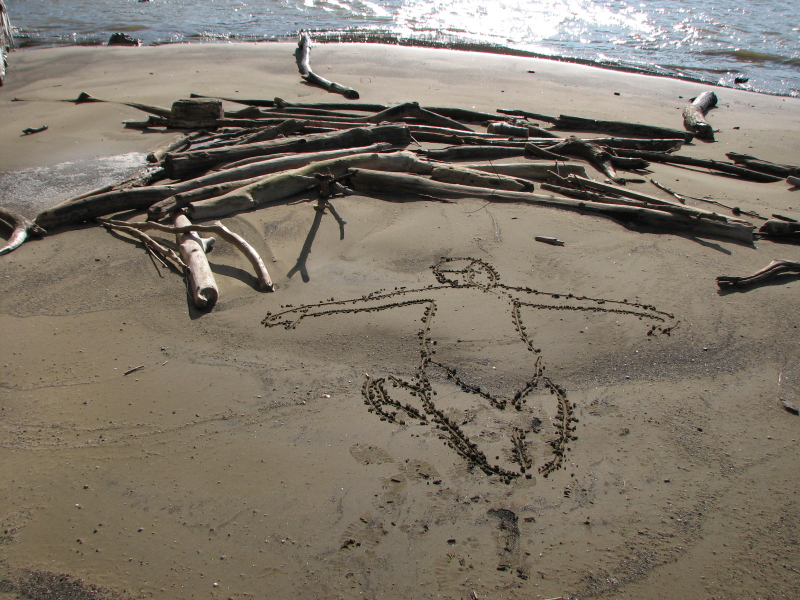
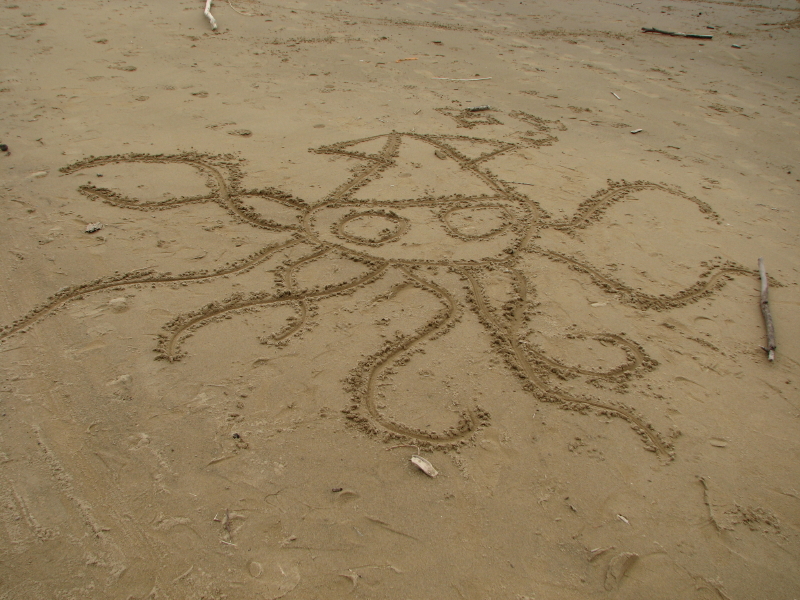
At the moment, there are a number of friends and co-workers who have either recently had or are about to have babies and I drew this picture in the sand for them.  I like how this pregnant figure seems protected by the wood and the light on the water seems hopeful to me.  I did find an anonymous sand drawing that I thought was fun.  This squid reminds me of the sea monsters drawn on the old maps as a symbol of the unknown!

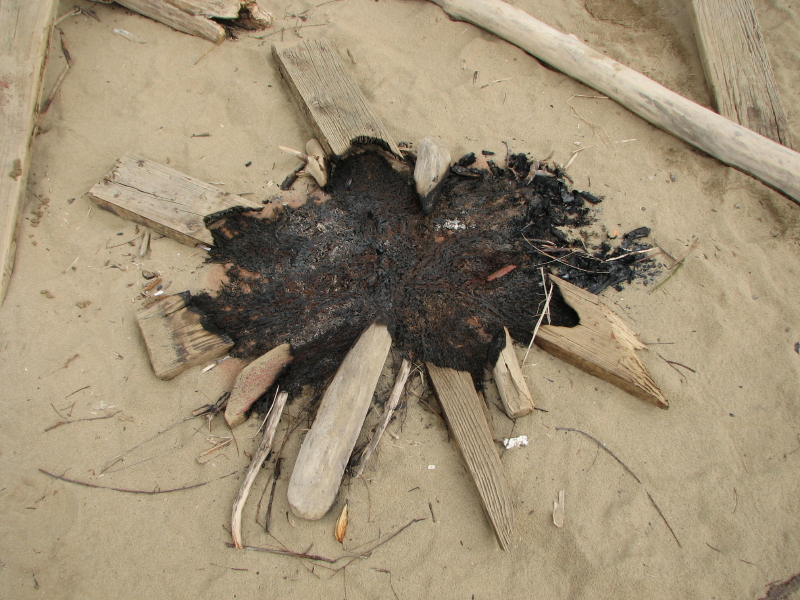
I recently came across the remains of a camp fire that caught my eye and camera.  Doing a little detective work, I’m guessing that this fire was started using some flammable substance as an accelerant.  If you look at the unburned edges of the wood, they are just so crisp and clean.  This fire amazingly stayed in place and didn’t burn all the wood available to it.

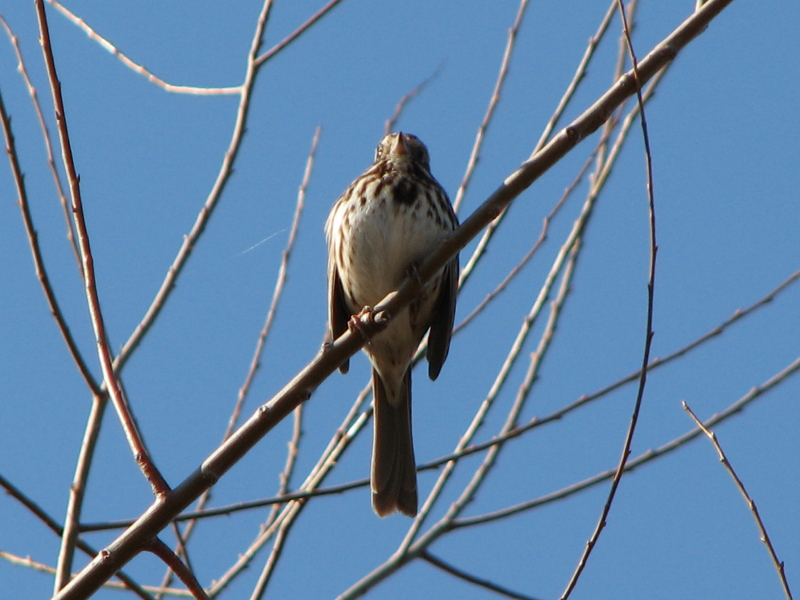
This weekend I will be visiting the Falls and seeing what’s new.  The park is always in a state of perpetual change which attracts me to it.  If the river is too high to work my familiar locations, then there is always birding!  For me, this signals the arrival of spring in the way that crocuses and daffodils do for gardeners.  I even have an individual bird that I look for!  For the last three years, what I believe is the same male, Yellow-bellied Sapsucker has defended a particular Sweet Gum tree at the edge of the Interpretive Center’s parking lot.  I will be looking for him again.  For the moment, I have been enjoying the birds that stayed over the winter…like this Song Sparrow.

Read Full Post »

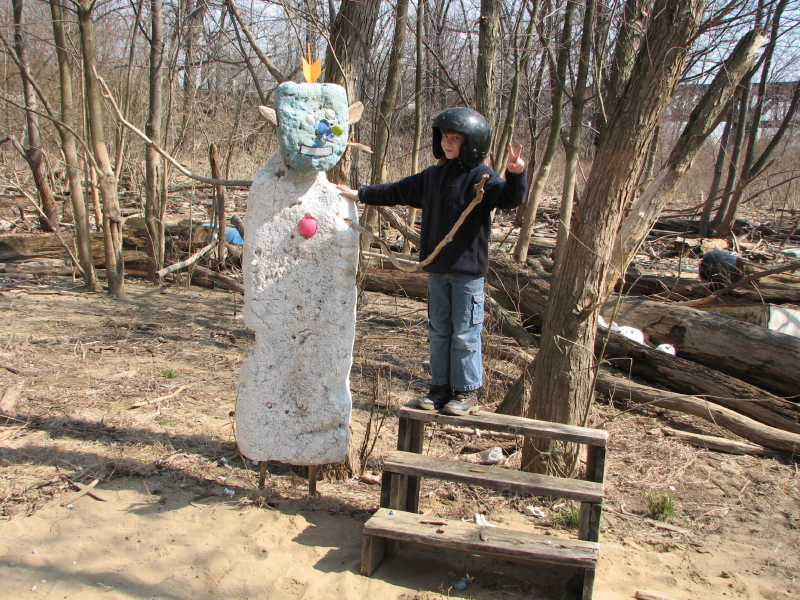
My son Adam surprised me the other day by wanting to accompany me to the Falls.  It turned out to be gorgeous and sunny and we shared this moment together.  In his mind, we each had a distinct role to play.  I was to be the “artist” and he would be the “explorer”.  In reality, those roles frequently overlapped and I think it’s fun and interesting when those distinctions blur anyway. 

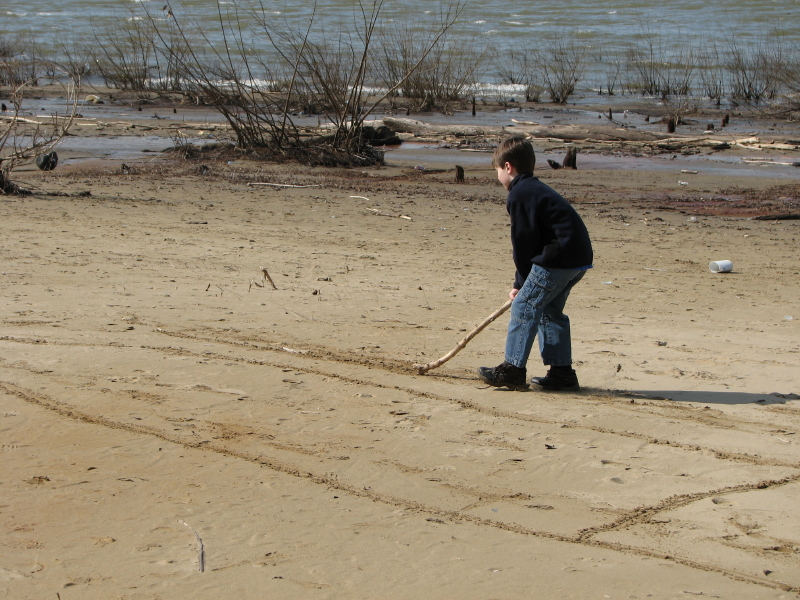
We walked down to the water’s edge to see if anything cool had washed ashore.  Adam got sidetracked when he came up with the idea of writing his name in the sand.  He found a stick that felt good in his hands and set about the business of making his mark on the world.  Judging from how large the final result was, I’m guessing Adam has big ambitions for his life.  Or, as his father, it might just be me projecting my own hopes into gestural lines drawn in the sand.

We found an old motorcycle helmet which Adam immediately claimed.  He did, however, remove the Styrofoam lining and he gave that to me.  I once made a nice turtle using a similar foam lining from a discarded bicycle helmet and he remembered that.  Wearing old jeans (aptly named high waters), Adam allowed the river to wash over his feet and he was surprised by the still frigid water and the stickiness of the mud.

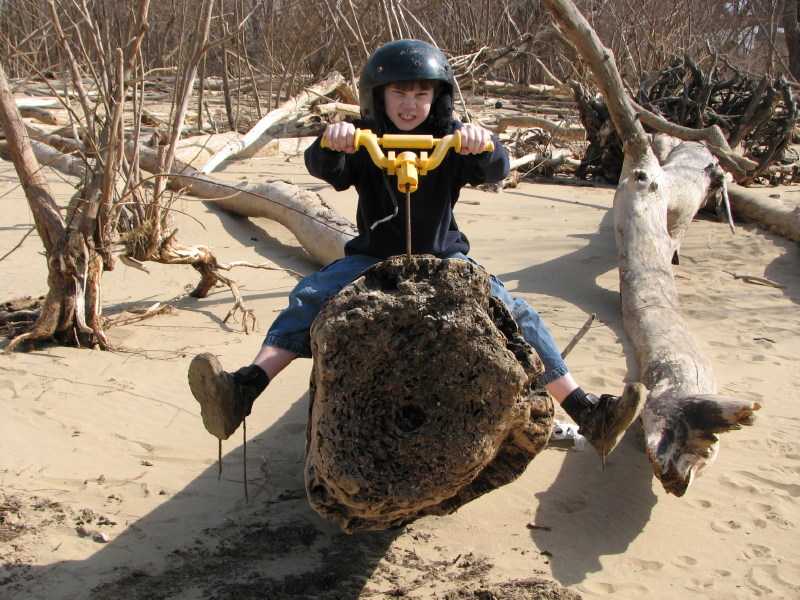
Here’s a picture of Adam the “Log Rider”!  The yellow handlebars are from some riding toy we found in the sand.  This is Adam’s favorite picture from this day and he wanted me to be sure to include this one.

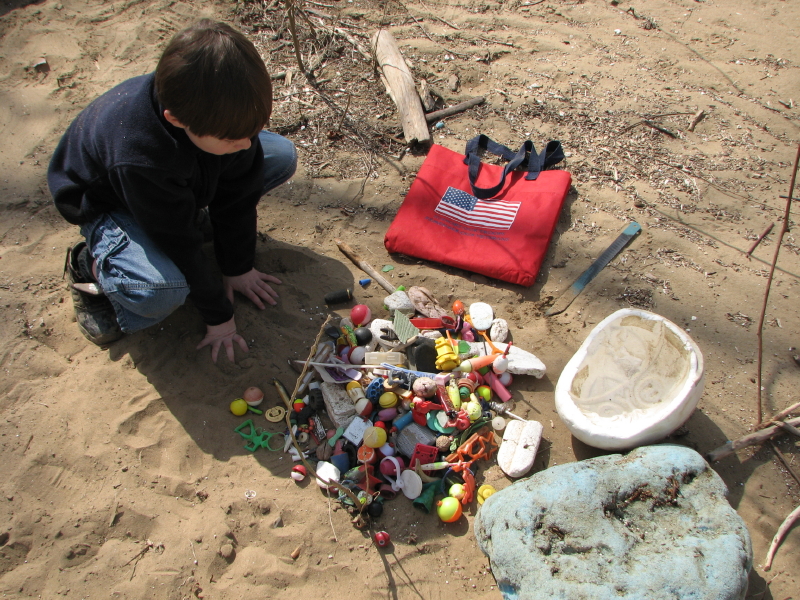
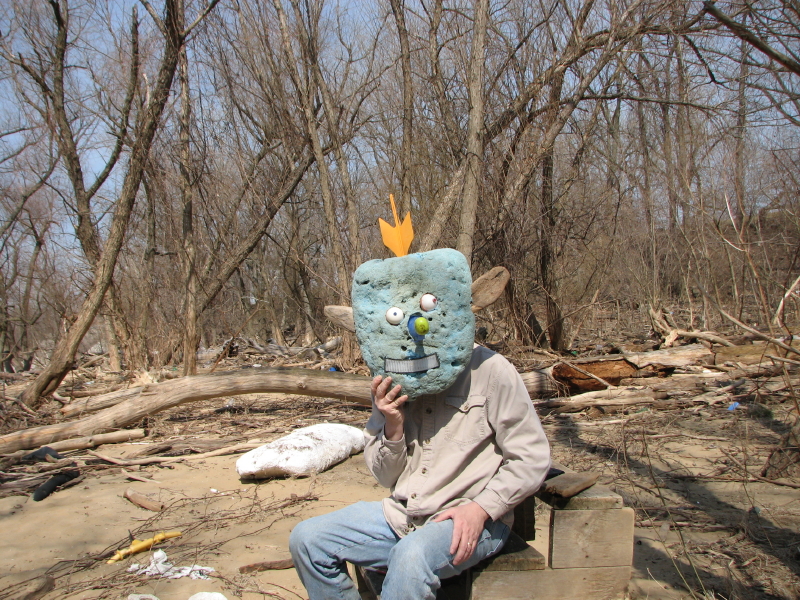
Once we found a good place to rest and eat our chocolate chip cookies, I dumped the contents of this collecting bag onto the sand.  From a previous foray, I had pre-stashed some foam chunks near this spot.  While Adam played, I worked on a large figure to help us mark this day.  I had relocated an especially large piece of Styrofoam that I had previously used to make two other figures.  This would be the first time I have re-re-recycled something.  I asked Adam to take my picture while I worked, and here I am in action.  The wooden stairs I’m sitting on washed up here last year.

Who knew that this artist has such a big head!  The mouth on this one is a reflector from a bicycle wheel.  The nose is the horn from another bicycle I had found months earlier.  The eyes are large fishing floats.  The ears are made from found wood and that yellowish object on top is the plastic part of a lawn dart.  When Adam and I finished assembling the entire figure, I took his picture next to it so it can help you judge scale.  All in all, it was a wonderful day for father and son and we need to do this again soon.  Maybe next time, we can convince older brother to come along too?   Peace!

Read Full Post »

« Newer Posts - Older Posts »