Feeds:
Posts
Comments

Archive for the ‘fresh water’ Category

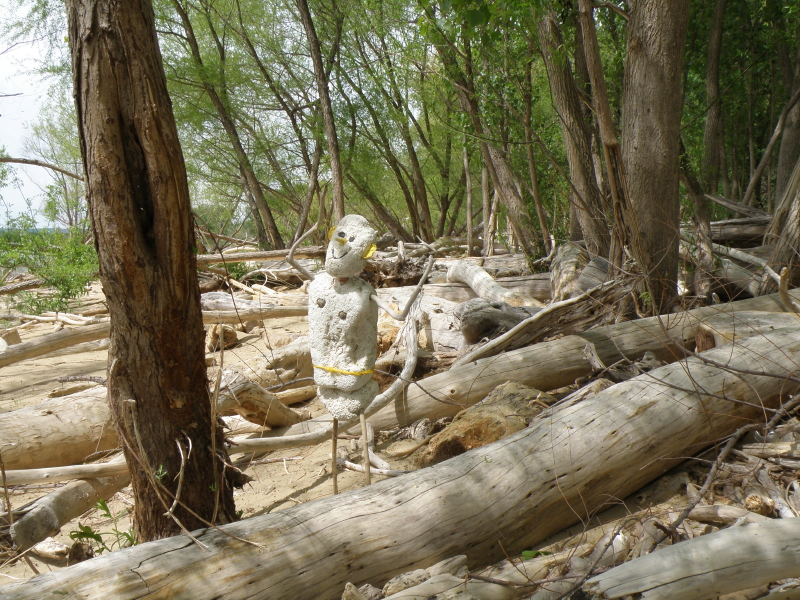
Mr. Mosquito Nose, April 2014

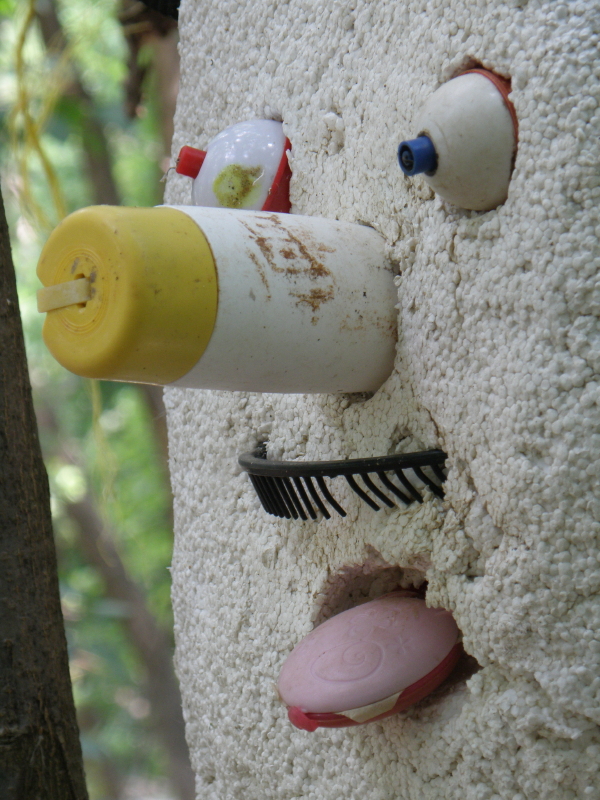
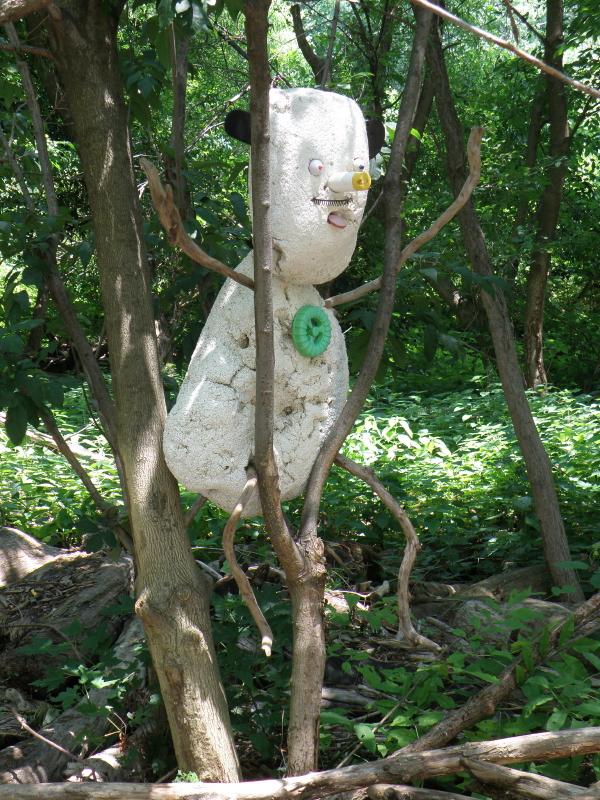
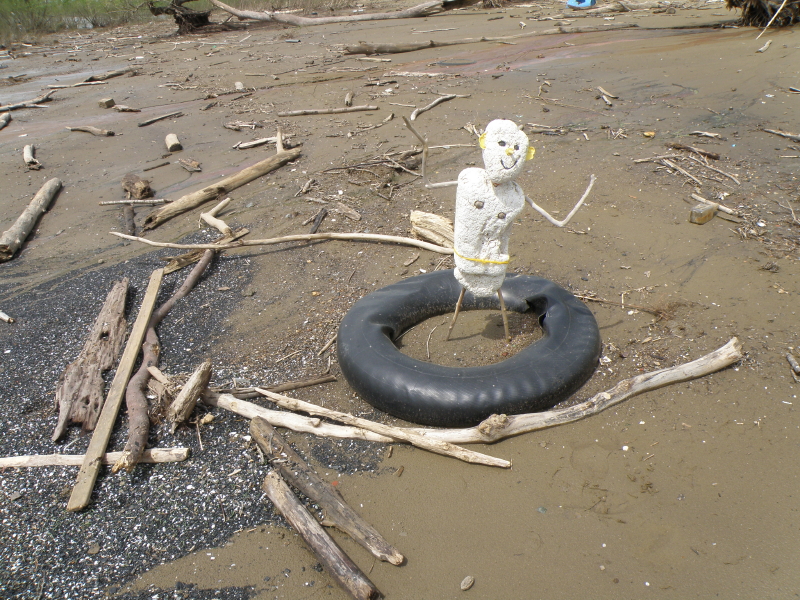
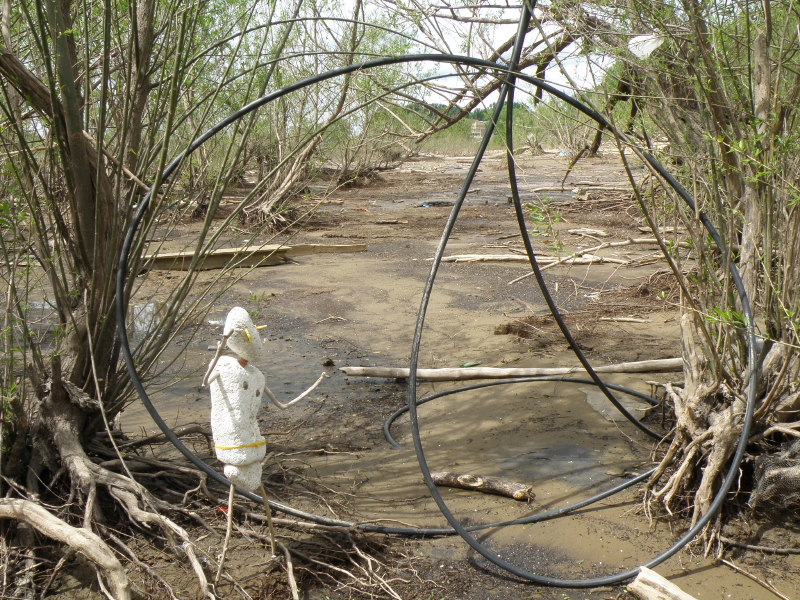
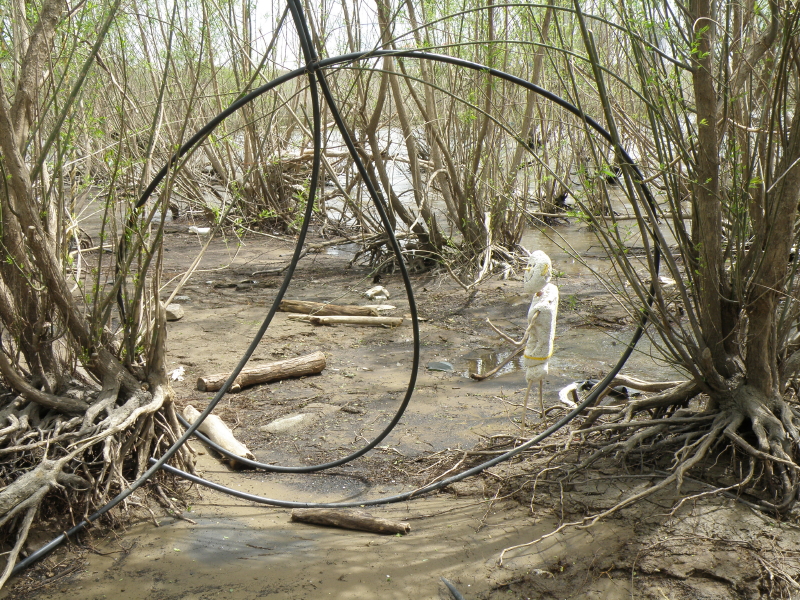
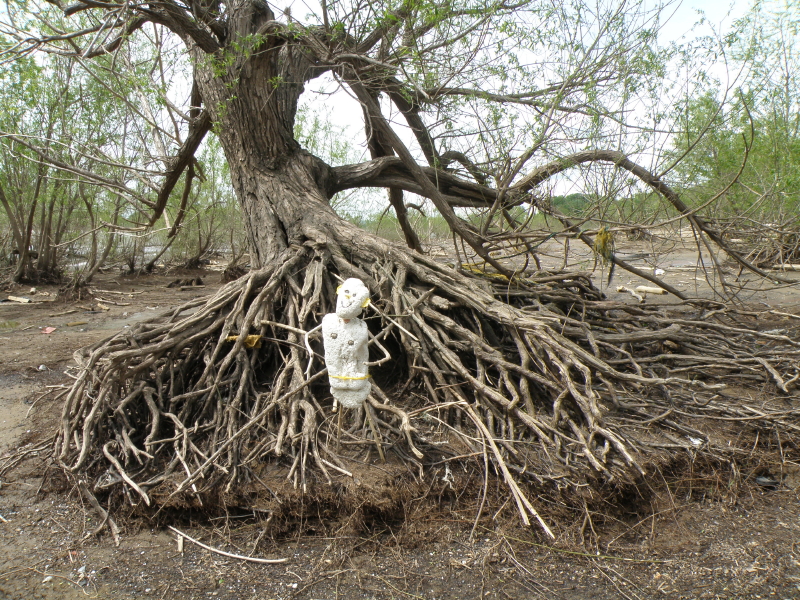
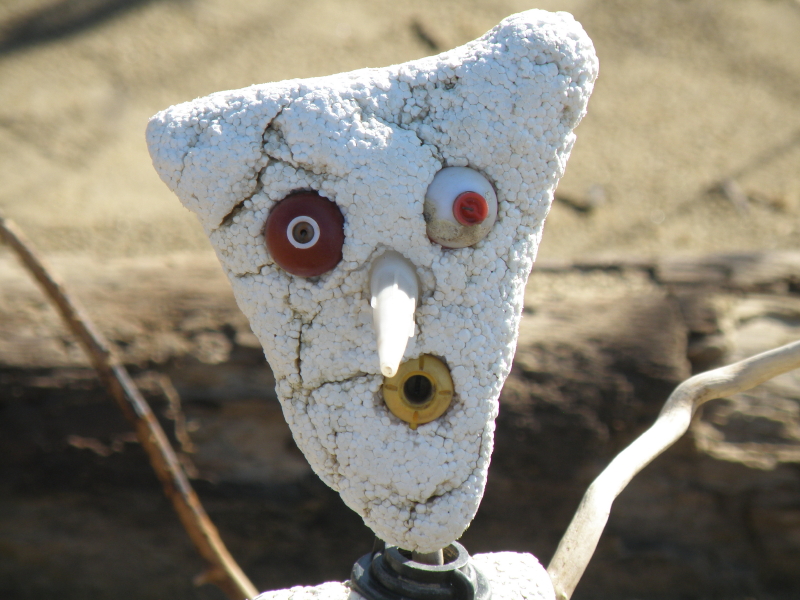
I’ll bet some of you out there might have wondered what’s happened to the old riverblog?  Here it is near April’s end and there is nothing to show for what occurred during this month.  Let me reassure you that the Artist at Exit 0 has been as active as the river has allowed him to be.  Exploring the line between culture and nature is personally important.  Between periodic high water, the exhibit at the Carnegie Center for Art and History, the Kentucky Derby Festival, and life in general…posting stories has needed to take a back seat.  The process, however, is ongoing.  I have been to the river on multiple occasions and observed the transition from winter to spring at the Falls of the Ohio.  Making art remains a priority and I realize that I just feel better if I have the opportunity to make something of my own.  Don’t be surprised if I end this month with a flurry of posts in an attempt to catch up.  Let’s start at the beginning of April and see how far I get.  Here’s a story featuring Mr. Mosquito Nose who had an experience with a young journalism student interested in what the Artist at Exit 0 does on an ordinary trip to the Falls.
Mr. Mosquito Nose at the river's edge, April 2014

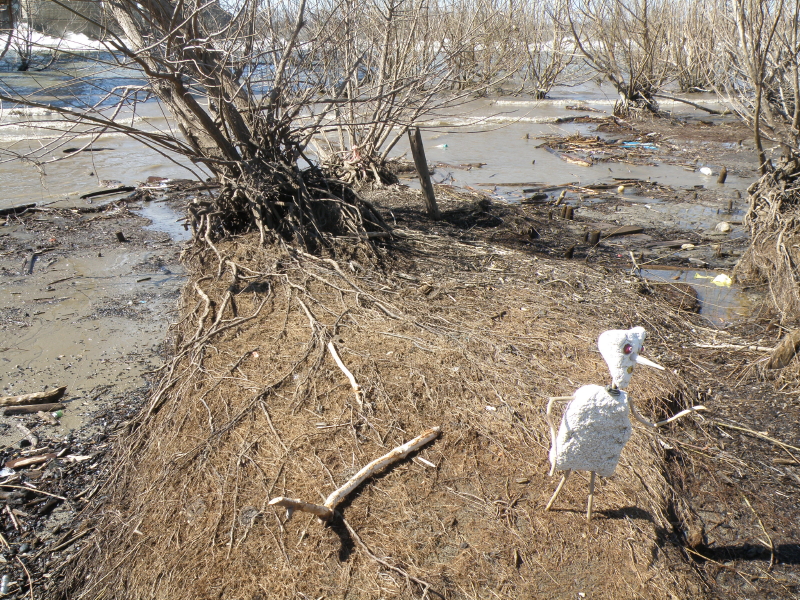
This day began with a rendezvous at the river.  I arrived early and was scouting out the situation.  The Ohio River had just been up and I knew the riverbank was reconfigured with different driftwood and new junk  waiting to be picked up.  I had been contacted previously by Taylor Ferguson who is a journalism student at the nearby Indiana University Southeast in New Albany who requested to tag along with me on one of my Falls of the Ohio adventures.  Taylor has a creative project of her own…to create a short, documentary video and she wanted the Artist at Exit 0 to be the subject.  This was the first time anyone has requested this and so I agreed to do it.  With a cool and sunny day before us we left the still leafless willows and walked out onto the riverbank.

Taylor at the Falls of the Ohio, April 2014

Taylor turned out to be a super friendly and very interested in my projects.  I will admit that it was odd being tethered to a microphone and I felt a little self-conscience talking to myself so openly with a video camera pointing in my direction.  I usually have some dialogue running through my head as I explore this environment, but to hear it in such an audible fashion was different.  I brought Taylor to my U.F.O. (Unidentified Floating Object) art site where I keep my river materials and demonstrated how I went about making an absurd figure from the poor stuff of the world.  With Mr. Mosquito Nose in hand, the three of us left my outdoor studio and explored the environs near the railroad bridge.  Along the way, Taylor would ask me questions about when and why I started this project.  By now, those are familiar questions.  I enjoy looking for what is interesting about each day.  So, now it was time to walk the riverbank with Mr. Mosquito Nose and be present in this moment.

Mr. Mosquito Nose and orange barge cable, April 2014

The lack of footprints in the sand told me that few others had recently passed this way.   As we walked along, I kept an eye out for those little micro-contexts that I could pose this latest Styro-figure in.  After making an object…I’m interested in using it to create an image.  With luck, the images might then be used to tell a story.  Here we have come across an old, frayed barge cable that the river washed into the park.  It seemed a good location to take a few photos.
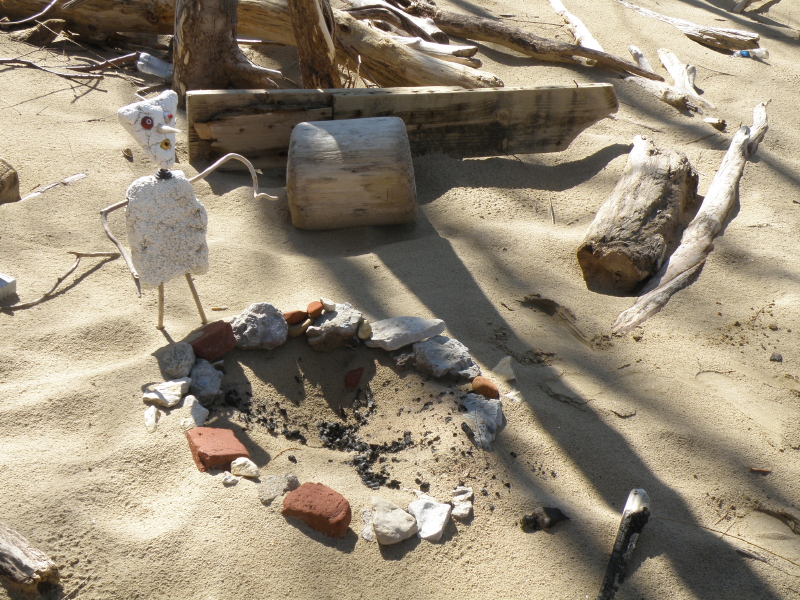
figure next to an old camp fire site, April 2014

Near the cable, we came across the remains of a camp fire.  Brick and rock define a shallow pit that still had some ashes in it.  For a few years now, I have also photographed old camp fire sites with the intention of publishing them here as a collection.  I’m always struck by the elemental nature of this activity and what its importance has meant for our species’ survival.  We set up Mr. Mosquito Nose by the fire pit and now those photos are a part of this record.
Mr. Mosquito Nose and plastic sprayer, April 2014

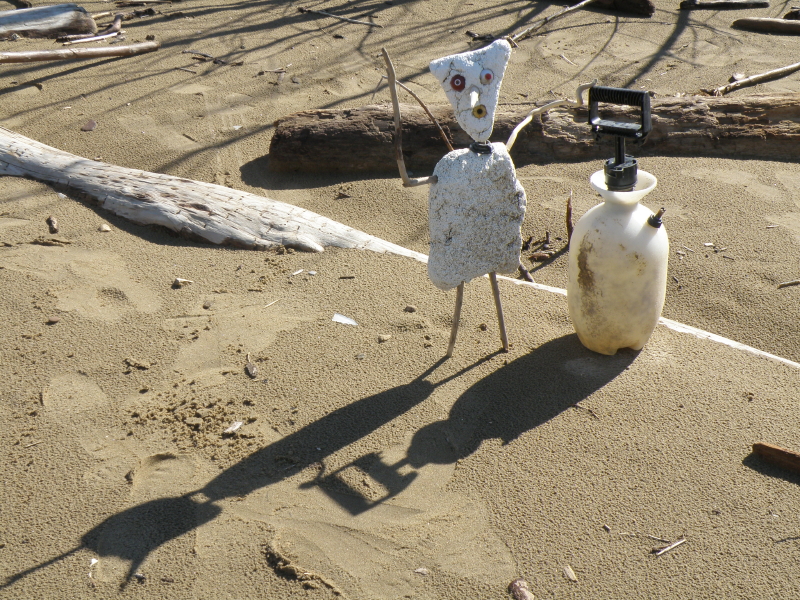
Among the other objects we came across was this old sprayer.  The figure’s arms are raised in warning because this might have potentially been used to spray herbicide or worse.  Caution is required whenever you come across something that could possibly harm you.  Knock on wood, I’ve been doing this project for more than a decade without any physical reactions or incidents from the stuff I’ve encountered out here.  I place a lot of faith in the diluting power of millions of gallons of fresh water.
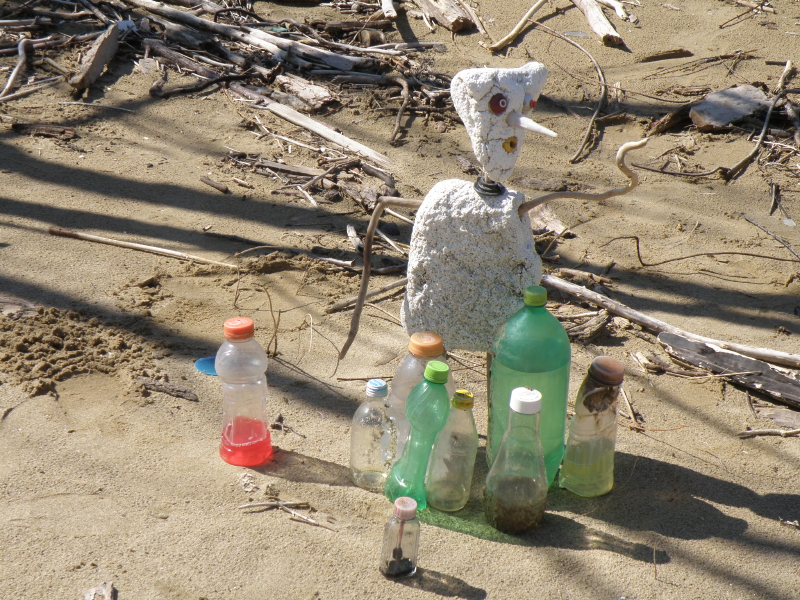
Mr. Mosquito Nose and various bottles, April 2014

Moving on to another location, I collected a few glass and plastic bottles along the way and made this composition.  Some of these containers have mystery contents of their own.
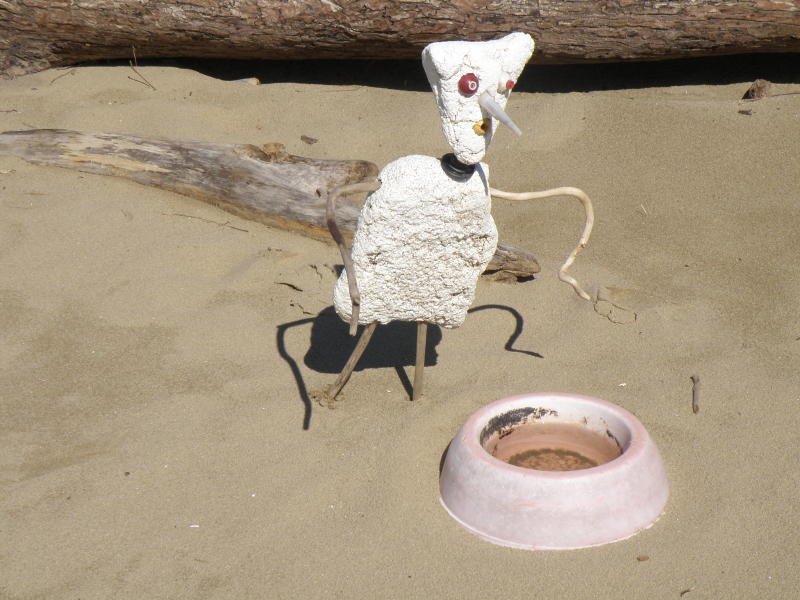
Mr. Mosquito Nose and dog food bowl, April 2014

Later we came across this pet food bowl that was half full with water.  The water in this bowl could have collected here as the river level dropped or been filled up by rainfall?  It is another example of an incongruous object making an appearance at the Falls.Mr. Mosquito Nose, April 2014
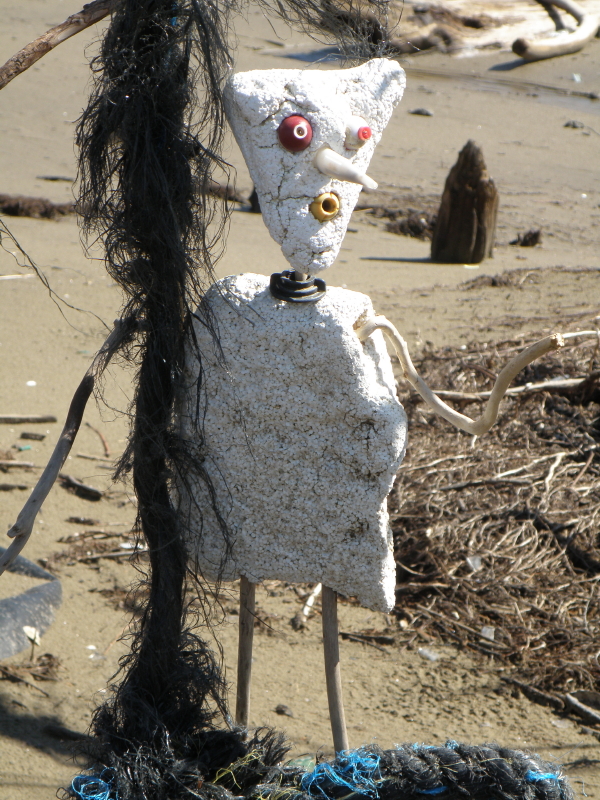
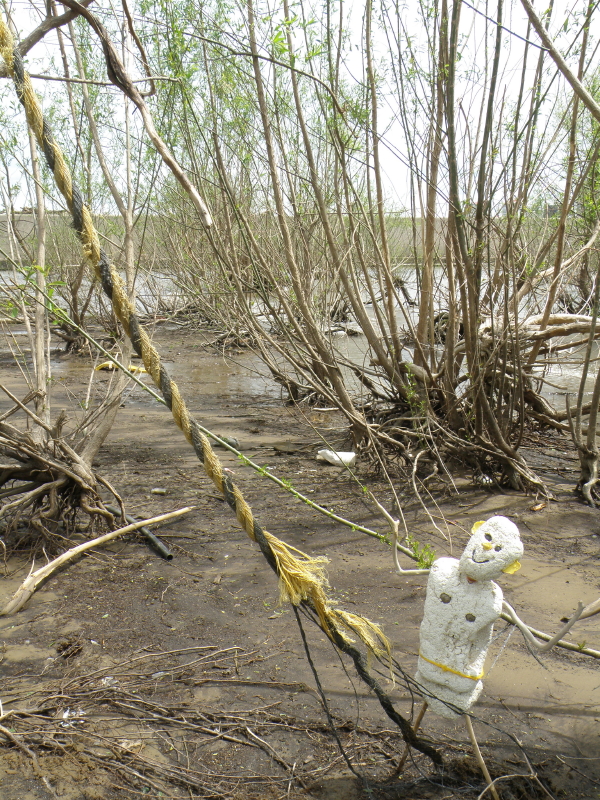
Taylor and I came across another barge cable that had been snagged by a low hanging willow branch and created this final photograph with Mr. Mosquito Nose.  The day was moving along and both of us were needed elsewhere.  About a week later, Taylor called me up to say that most of the audio the microphone picked up had interfering  sounds of wind and water.  This seemed perfect to me because that’s what I usually hear out here as well with the occasional bird call thrown in for good measure.  Taylor had three hours of footage that needed to be edited down to three minutes which sounded like a daunting challenge in its own right without the audio difficulties.  I later caught up with Taylor in Louisville and did a quick voice over recording that I hope will do the trick for her project.  At the time of this writing…I haven’t seen the finished video, but hope it turns out for Taylor and that she gets a good grade for it.  Okay, that’s it for now from the Falls of the Ohio State Park…one last image then I’m calling it a post.
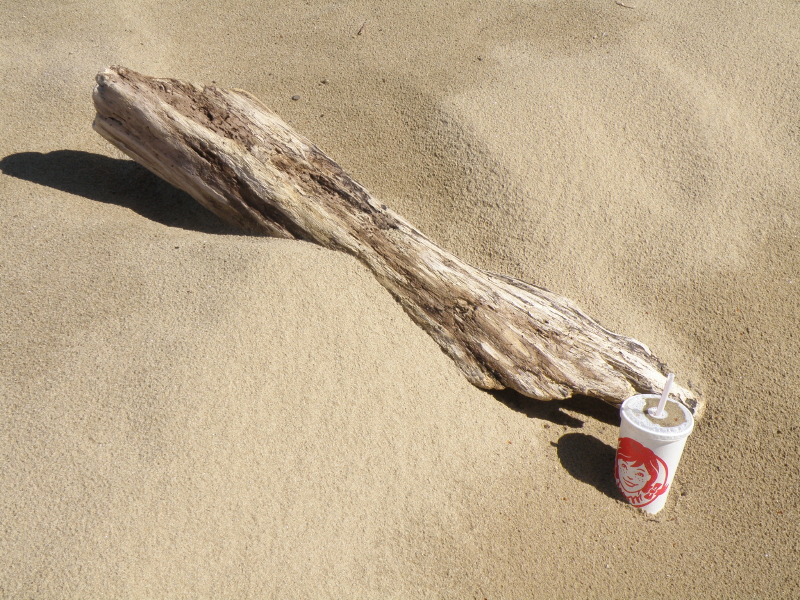
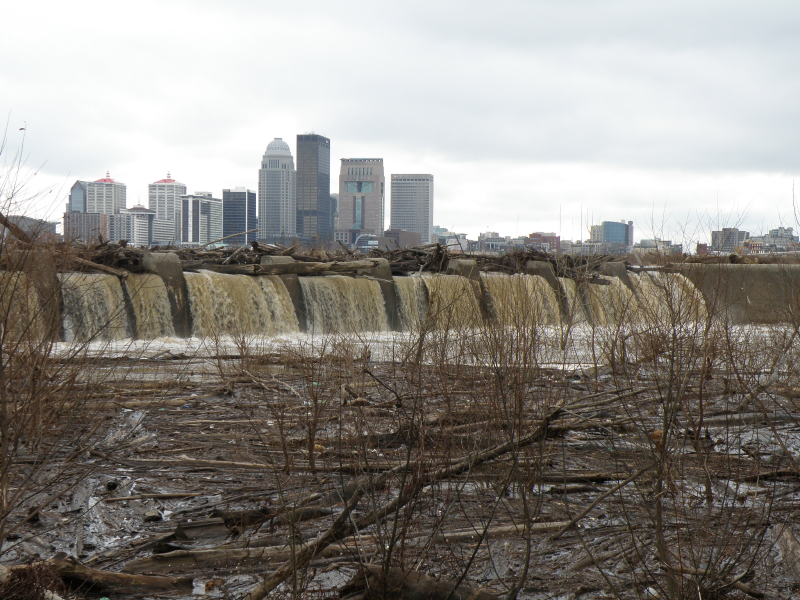
Sand, driftwood, and disposable drink cup, Falls of the Ohio, April 2014


Read Full Post »

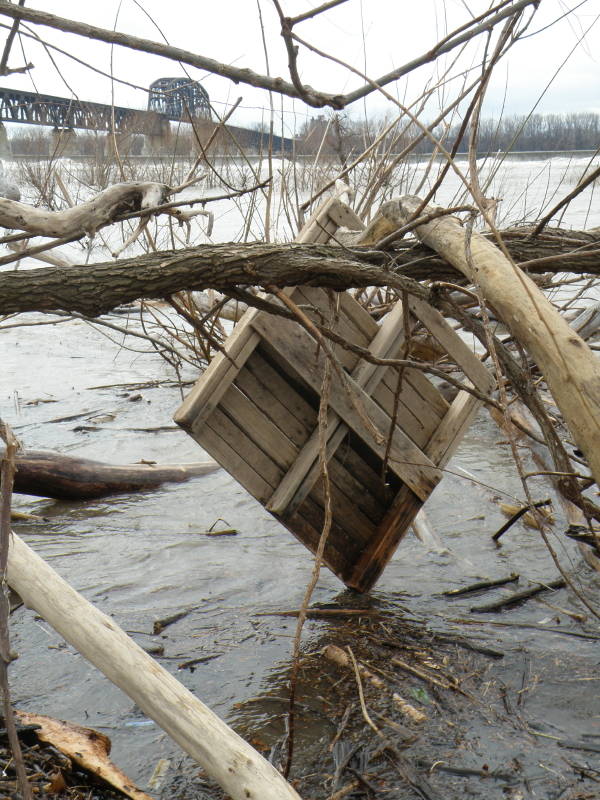
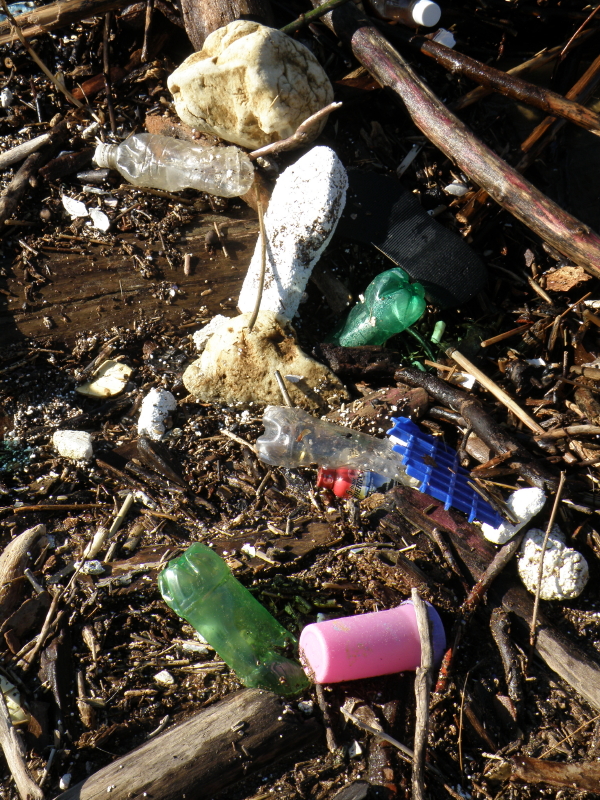
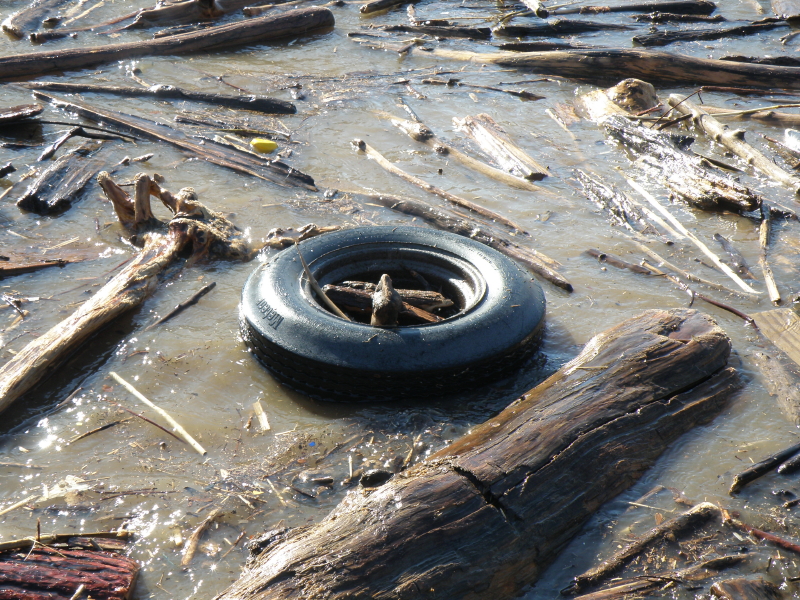
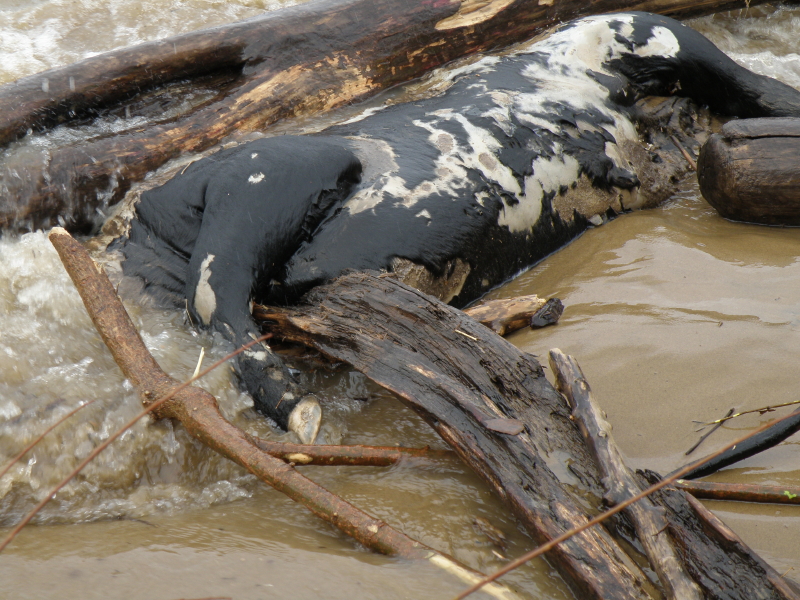
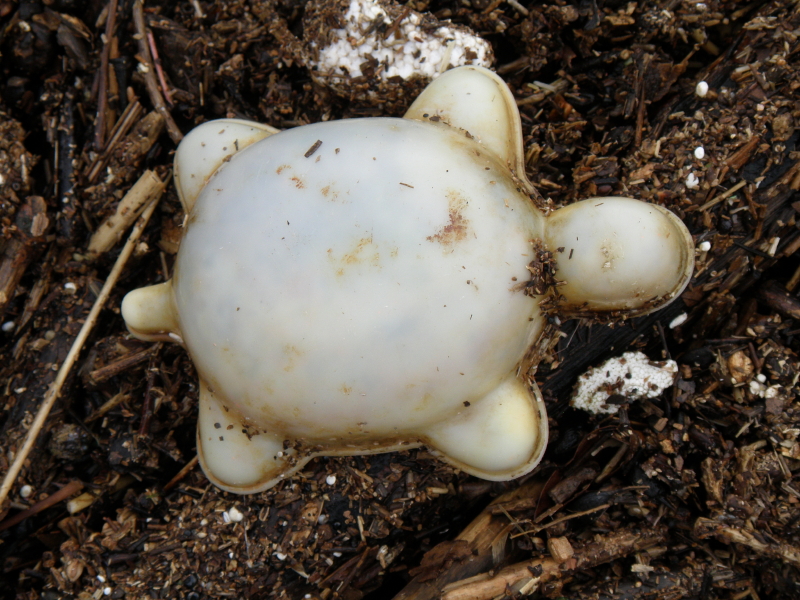
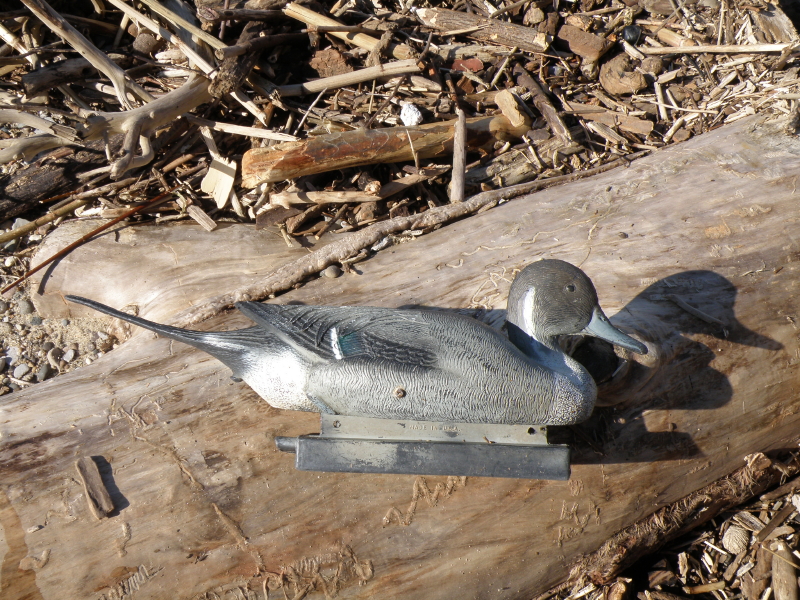
Louisville as seen from the Falls of the Ohio, Jan. 2014 Happy New Year everybody out there in blog land!  I want to thank everyone over the past year who have dropped by to check out the latest from the Artist at Exit 0 at the Falls of the Ohio State Park.  This year is shaping up to be much like the previous one.  Which means both man and nature are predictably unpredictable with a sense of timing not easily plotted.  Since the holidays, the Ohio River has been up and much of the park that I access has been underwater.  That in itself is not news, but the length of time the water has been high has been.  It all points to heavy rains and snows in the northern part of the Ohio River Valley and water flowing downriver.  The forecast at the time of this writing is not encouraging with showers turning to snow today followed by a precipitous drop to sub-zero degree temperatures.  This cold could be historic for us and so far we have received more snow than in recent winters.  I think I will stay indoors today!  Since my last post, I have been to the river twice (including New Years Day itself) to see what there is to see and experience.  Here’s a synopsis so far.wooden pallet in the trees, Falls, Jan. 2014 Between rising and falling waters I have been able to skirt around the edges.  One thing that unfortunately hasn’t changed is the junk in the river.  I’m always interested in what gets stranded in the trees like this wooden pallet that has a corner delicately balanced on the surface of the river.  It’s cold out here and despite being warmly dressed, my eyes and nose water from the bit of wind that is also present. various kinds of debris at the water's edge, Jan. 2014 At the water’s edge is a mix of debris.  Most of it is natural with driftwood, wood bark and bits being the most prominent.  Trees that have surrendered to the river are rolled against other logs by the waves and the grinding (which can be very audible as well) knocks the limbs off with a loud crack and chews the bark away from the trunks.  Intermixed is various man-made and colorful junk that is mostly plastic in composition which also gets masticated by the river.  The above photo is fairly typical with lots of polystyrene fragments which also make up the core of my art materials.  Most artists have positive feelings for their materials, but I have a love /hate relationship with mine.  Let’s move on and see what other sights are along the river in this new year. floating automotive tire at the Falls of the Ohio, Jan. 2014 Floating tires always catch my eye.  Their blackness and circular perfection contrasts sharply with the rest of the objects on the river’s surface.  A short distance away from this wheel I find a dead steer at the water’s edge. dead steer in the Ohio River, Jan. 2014 I debated with myself whether to include this distasteful image in this post, but decided to do it since it represents some of the truth that is in the river.  Pictures of man-made trash are one thing and have an almost benign aura to them by now, but something that was once alive registers in a different way.  The gravity is far heavier.  This poor cow is the largest dead animal I have encountered in the park.  Dead deer and other smaller animals are not too unusual in the river.  No telling how far this unfortunate animal has floated to arrive here?  Rising high waters could once again carry it away.  I take this picture and walk on. plastic turtle sand mold, Jan. 2014 There are other objects that the river has delivered to the park like this plastic turtle sand mold.  Having gone through my river collections recently I discovered that turtles are among the most common subjects for sand molds.  Who knew?  I have found six or seven of them and they are all different like the plastic hamburgers from a recent post of mine.  Here’s something else to add to a growing collection. plastic pintail duck decoy, Jan. 2014 I have a Rubber Duck Collection as well and all found within the park.  Truthfully, none of them are actually made from rubber and are of course composed from plastic.  This is a hunter’s decoy of a pintail duck and would have been cooler had it been made out of wood…alas.  I haven’t seen much of actual bird life in the park except for a few hardy species that are around all year round.  I noticed that the ring-billed gulls that come here for the winter are not present.  I wonder if the cold has them migrating further south this year?  To mark how exceptional this winter has been, our area has seen a rare migration of snowy owls from the far north.  The snowy owl is listed on the official Falls of the Ohio bird checklist as extremely rare and accidental.  For me, this would be a good enough reason to journey here and this just might be the year to see one, but I haven’t heard if any were actually seen in the park?  A short distance away from here, a snowy owl in a weakened condition was rescued by our local raptor rehab folks and is being nursed back to health.

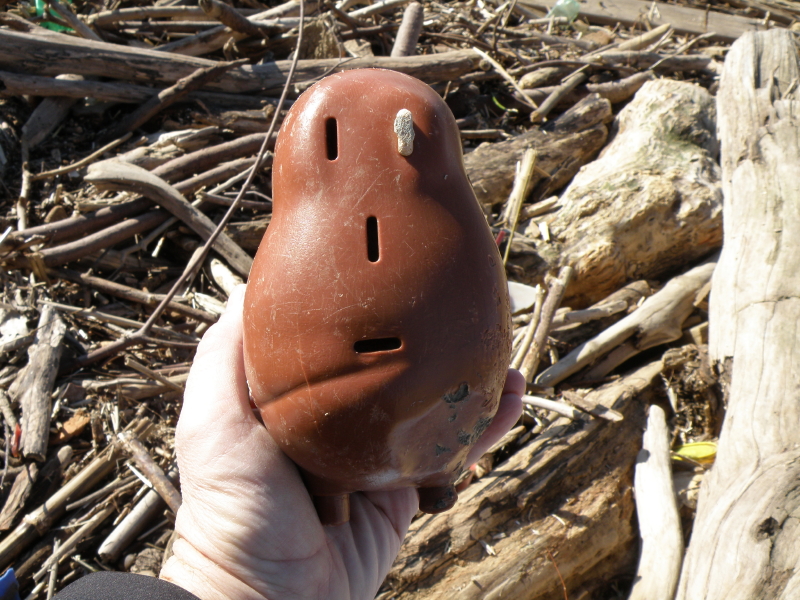
plastic body of "Mr. Potato-head", Jan. 2014

Here’s a test for you.  Do you know what this is?  Time’s up…this is the plastic body of a Mr. Potato Head toy!  I count Mr. Potato Head as one of my artistic influences for my Falls of the Ohio Styrofoam projects and this is the first one of these that I have found out here.  According to Wikipedia, Mr. Potato Head has been in continuous production since 1952 (that’s a lot of plastic) and was the first toy advertised on television.  I can remember as a kid…using actual potatoes to make funny faces and now I use Styrofoam.

My former outdoor studio, now river-swept clean, Jan. 2014

I walked up the riverbank to access my outdoor atelier and discovered that the river has swept over it.  All the materials that I had cached here over the last couple of years have floated away and the large logs that defined my space are rearranged.  I will need to create a new studio if I continue here.  I suspect, however, that the river is far from being done and would wager we will experience more flooding in the near future.  I picked up a few small pieces of Styrofoam and willow sticks and made my first figure of the new year and posed him at the river’s edge as waves lapped the shoreline.

New Year's Day figure at the river's edge, Jan. 2014

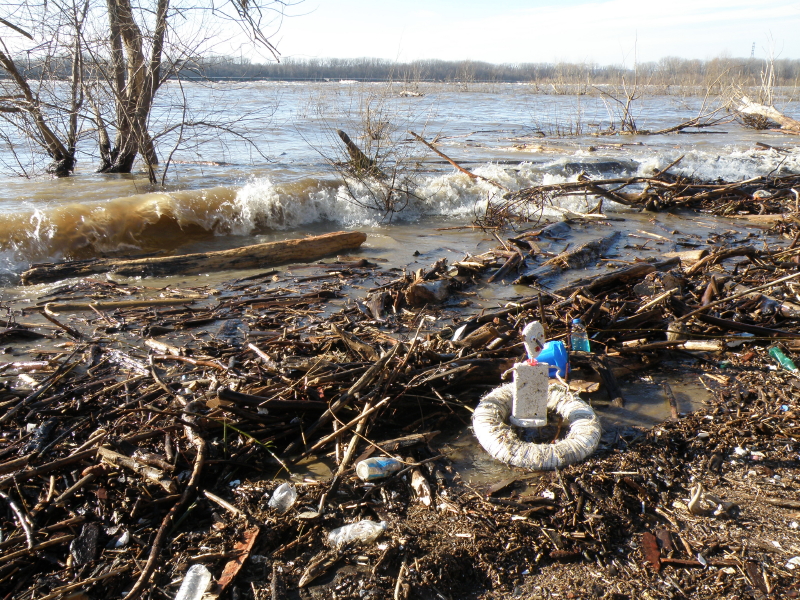
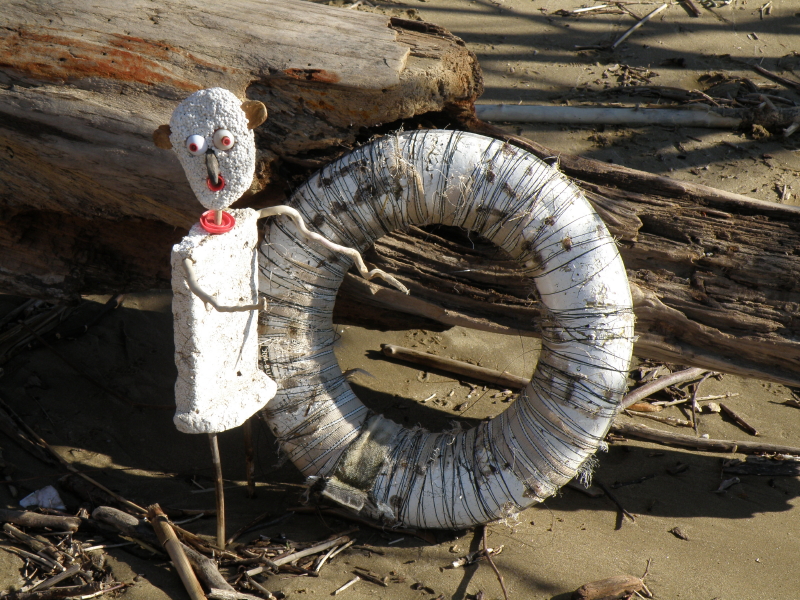
He is not a large figure and the expression on his face is one of amazement.  I first posed him near the river in an old life-preserver that washed up.  In addition to being expedient on a cold day it also seemed symbolic.  For me, it always comes back to the river and its waters.  The quality of our fresh water remains our number one vanishing resource and the river’s course is the journey we all take through life.  I will continue to use my creativity at this one small spot on a large river and publish my results on this riverblog.  Thanks for checking it out every now and then.  As the year progresses, I hope to be like the river by being predictably unpredictable.  May we all have a wonderful 2014!

First figure with life ring of 2014, Falls of the Ohio, Jan. 2014

Read Full Post »

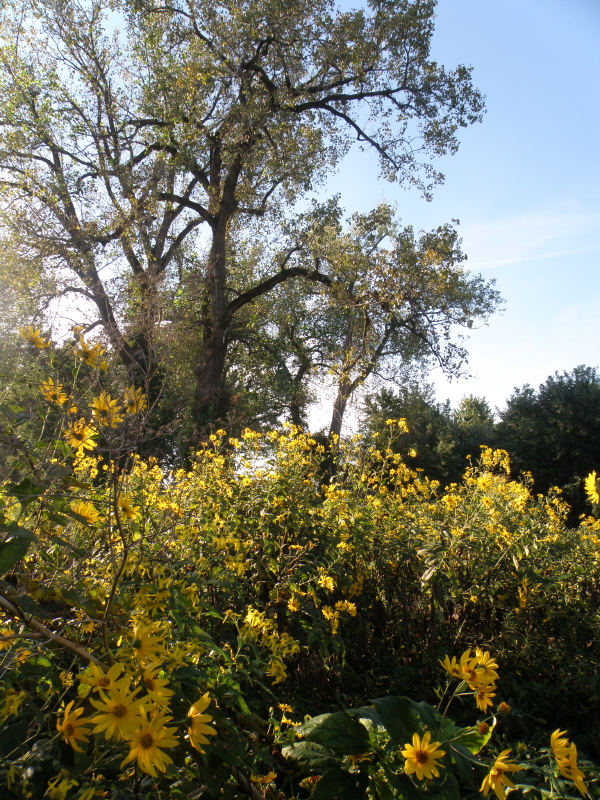
Landscape at the Falls of the Ohio, Sept. 2013

This post is the last of this year’s summer posts and documents a walk I made at the Falls of the Ohio State Park one week before autumn officially began.  As you can see by the pictures…it was a very beautiful day filled with all kinds of discoveries.  There was a profusion of yellow-flowering plants of various species including goldenrod and sunflowers.  Here is a detail, I think from the Woodland Sunflower?  I wish I was as confident about plants as I am in identifying animals.  When I break out my flower books, I realize it would aid identification greatly to have an example on hand.  Collecting plants is not allowed within the park limits…so I try to take photos that might be of use in discerning the various closely related species.  Besides, I don’t think pressing these plants flat would even work?  I ask myself, what leaf shape does it have?  Are the leaves serrated, smooth, or hairy and how many rays do the flower heads have and other such questions of concern to the botanist.

Sunflowers at the Falls, Sept. 2013

I suppose I’m more of an imaginative botanist at heart who also appreciates the beauty and variety the many flowers add to the temporal landscape.  I do, however, stumble upon plants that I wonder if anyone else is noticing?  I’ve posted about these anomalies before and as the seasons change, the parade of these “unnatural plants” and “faux flowers” continues.  Consider these fresh blooms.

The Surprising Poinsettia, Falls of the Ohio, Sept. 2013

I call this one the “Surprising Poinsettia” because it comes shockingly red and completely unexpected.  Its sepals are rather fabric-like and its stem is grafted upon this sunflower by some unknown means.  The next plant is more subtle.

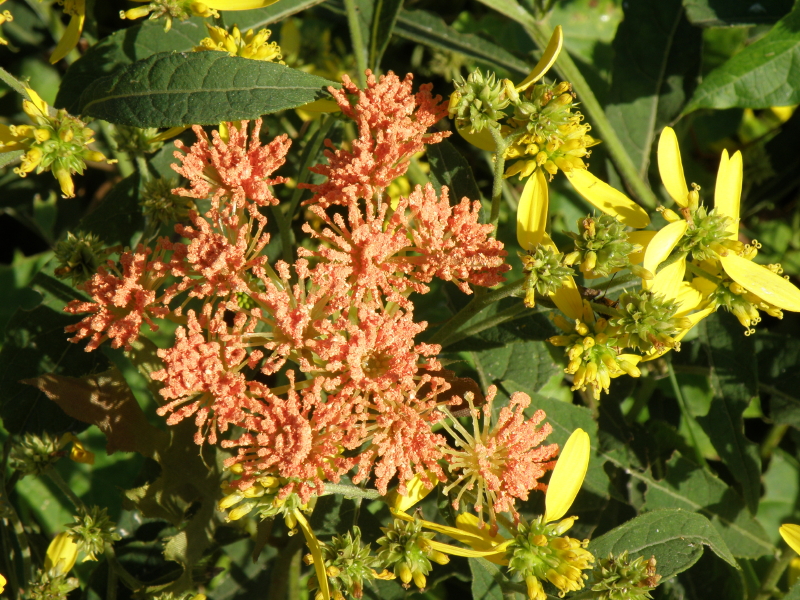
Orangey-tickseed, Sept. 2013

This is “Orangey-tickseed” and at first blush, one might be tempted to pass over it.  I had to do a double-take on this one, however, my instincts told me something was not quite right here.  Indeed the orange-colored flowers are not at all like the yellow plant it is cohabiting with.  Again, the texture is very much like plastic.  One final plant before moving on to other interesting discoveries.

Pink Sand Lily, Falls of the Ohio, Sept. 2013

I found this beautiful flower growing near the river in the sand and I have designated it the “Pink Sand Lily” because I’m not sure what else to call it?  It is for the most part, a low growing plant and the “flower” appears at the terminal end of a wiry green stalk about four inches tall or so.  The flower petals are composed of a string-like fiber while the stamens are hard and have pseudo-pollen on them.  These unusual plants were not my only discoveries on this fine day.  I nearly always find some doll or doll part that the river has washed into here and today was no exception.  I spotted a form in the wood chips and bark bits and went in for a closer look.  Dusting off the form revealed this doll body.

"rubberized" foam doll body, Sept. 2013

This was quite unlike any other doll “body” I’ve found before at the river.  The material was obviously made from a foam-like material, but it had the flexibility of rubber.  Nearby, I also discovered  an unusual serpent.

red, plush toy snake, Sept. 2013

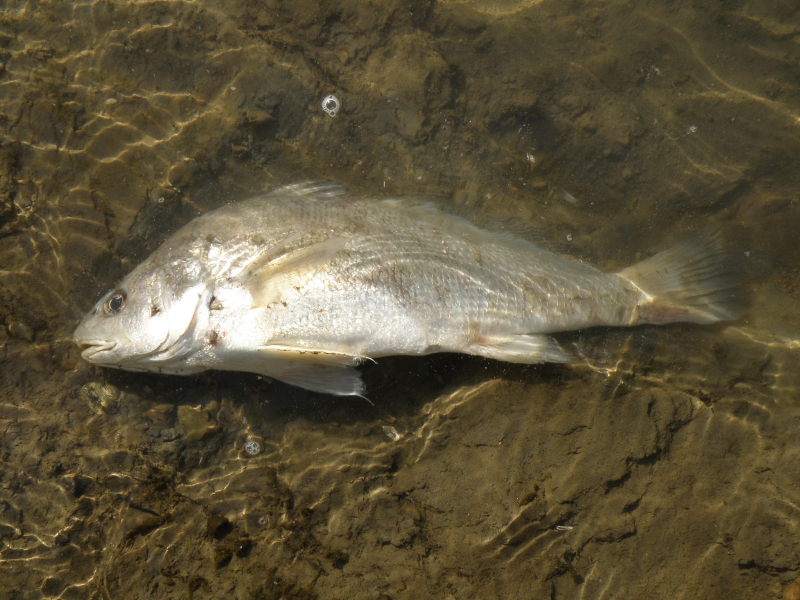
Approximately a foot long, this red plush snake had large black eyes and had just a bit of its tongue sticking out.  This is the first of one of these objects that I have come across .  The river was flowing nearby and I walked over to the edge of the riverbank.  The water level has finally leveled off to more of its seasonal pool and the fossil banks on the Kentucky side were exposed for the first time this year.  Looking along the water’s edge, I came across this Freshwater Drum that an angler caught and released.  Unfortunately, for the fish…it did not survive being captured.  Here is its final portrait.

Freshwater Drum, Falls of the Ohio, Sept. 2013

The Freshwater Drum (Aplodinotus grunniens) is a widespread fish and common in the Ohio River.  It has several molar-like teeth in its mouth that it uses to crush and eat snails and small clams.  The drum is not considered a desirable food species around here.  Here’s another fish I found on this walk that is also inedible.

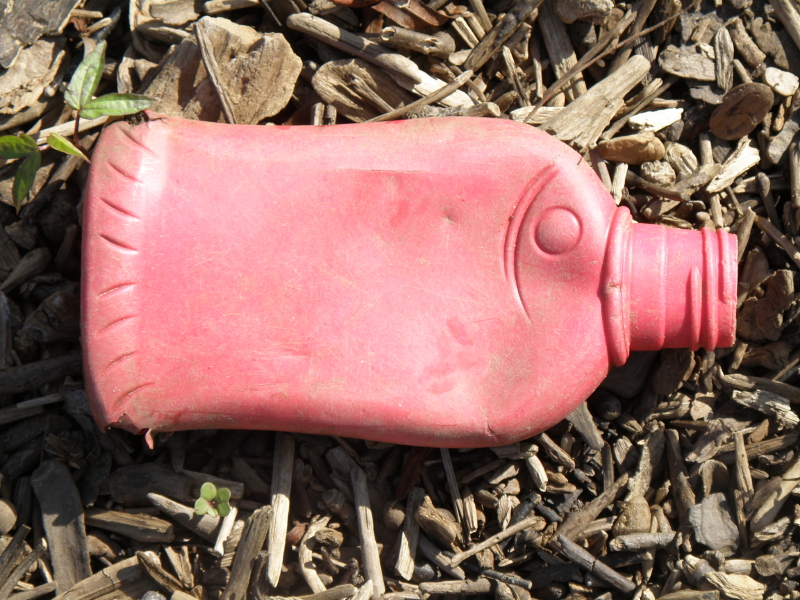
red plastic fish bottle, Falls of the Ohio, Sept. 2013

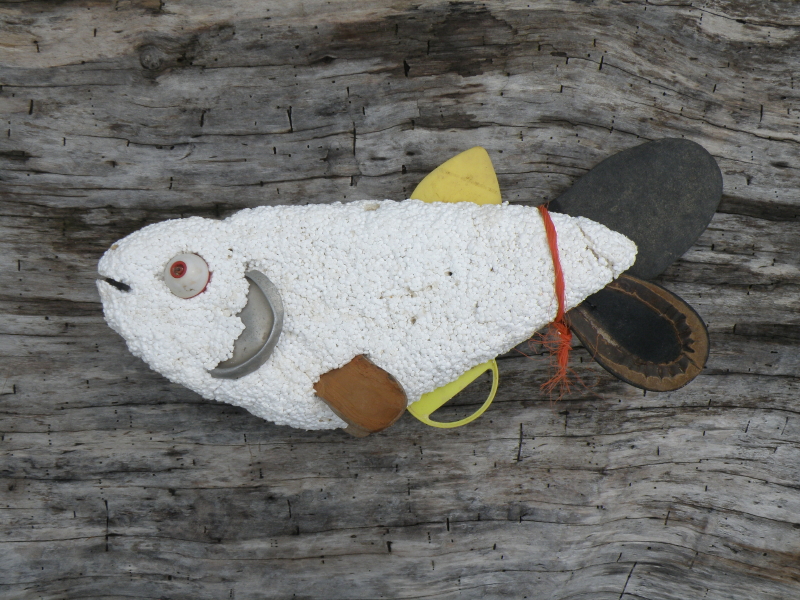
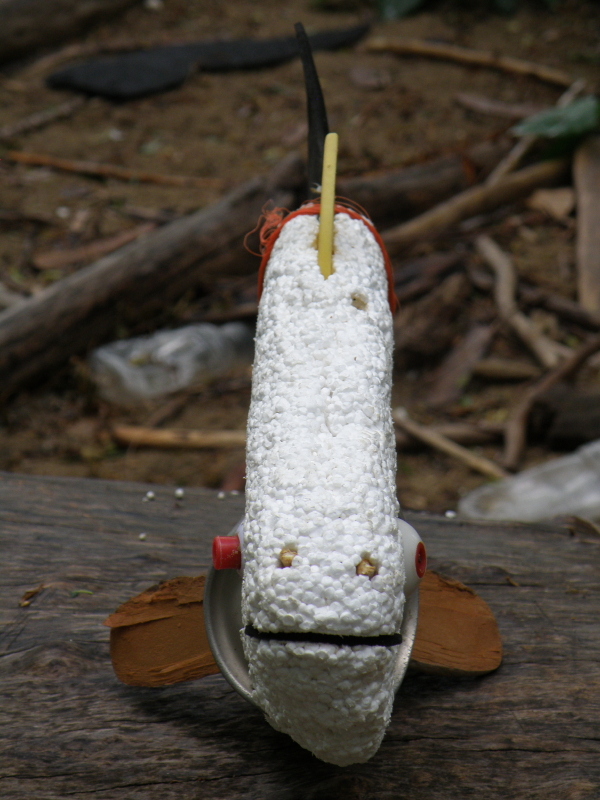
The second “fish” I came across was this plastic bottle.  I’m guessing that the bottle may have contained shampoo for children?  Regardless, I was struck by the level of abstraction occurring here.  The tail is minimally represented and the gills are indicated by two lines near the eyes, but there is enough here to suggest a fish.  My next find is mid way between the drum and the plastic bottle being closer to the latter than the former.  Here are two views of it.

The Silvergill, Falls of the Ohio, Sept. 2013

Silvergill, Sept. 2013, Falls of the Ohio

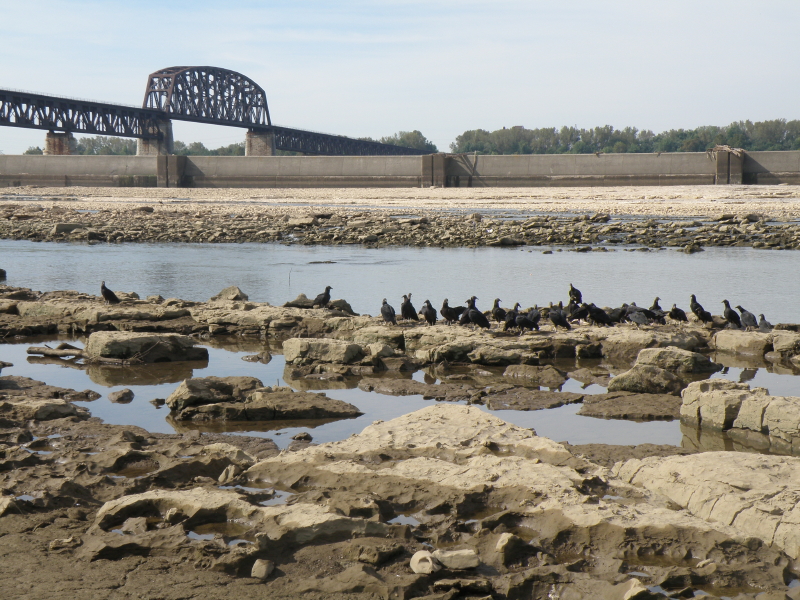
This is a Silvergill which is closely related to the Iron Gill (which I have posted about previously).  Differences between the two species include size (this fish is smaller) and some of the fins are not the same shape or in the same position.  The Silvergill is much more rarely encountered than its larger cousin.  It is found in water of average to poor quality and often associated with coal and coal dust. It is omnivorous and eats aquatic insect larvae and algae which it grazes off of rocks.  I’m assuming that it washed up here a victim (like the Freshwater Drum) of an angler looking to catch something more worthwhile.  I took a few photos and then moved on.  The fossil beds were beckoning and I could see the resident flock of Black Vultures congregating on the rocks.  No doubt they had discovered a fish or two on their own.  Until next time from the Falls of the Ohio.

Fossil beds and Black Vultures at the Falls of the Ohio, Sept. 2013

Read Full Post »

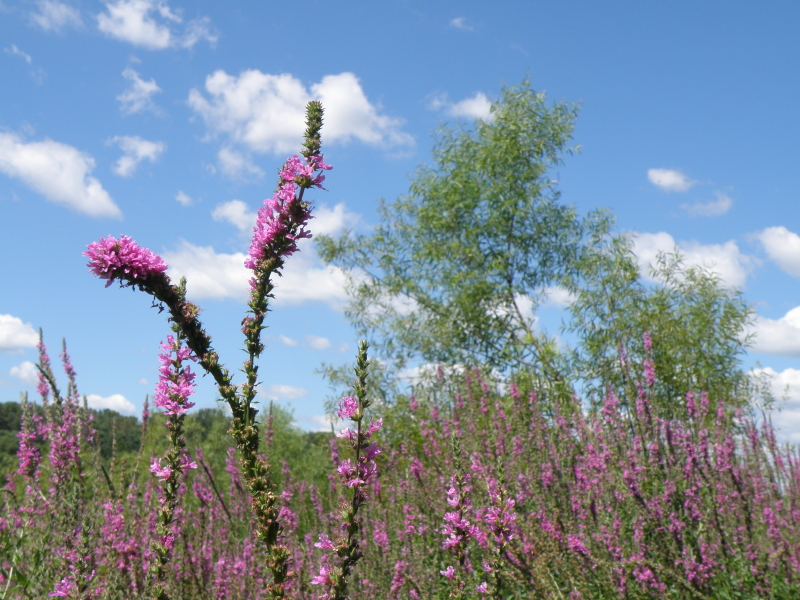
purple loosestrife at the Falls of the Ohio, Aug. 2013

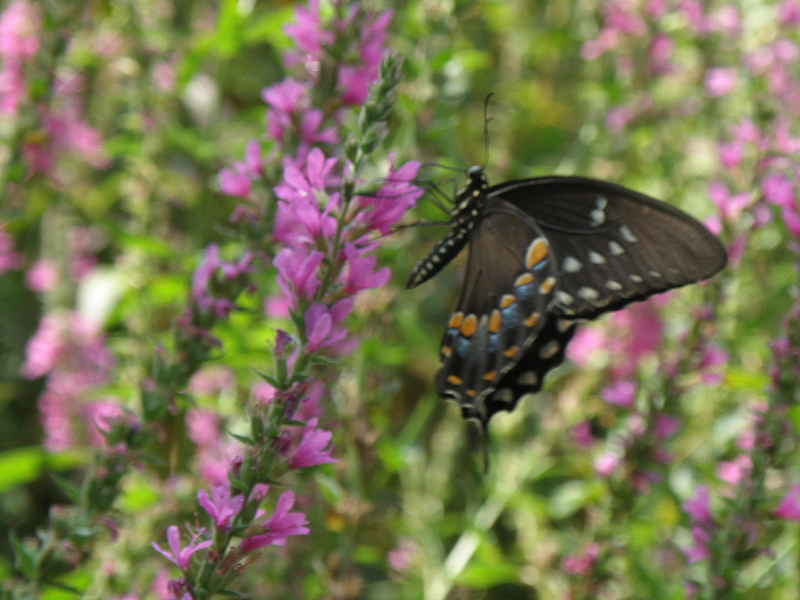
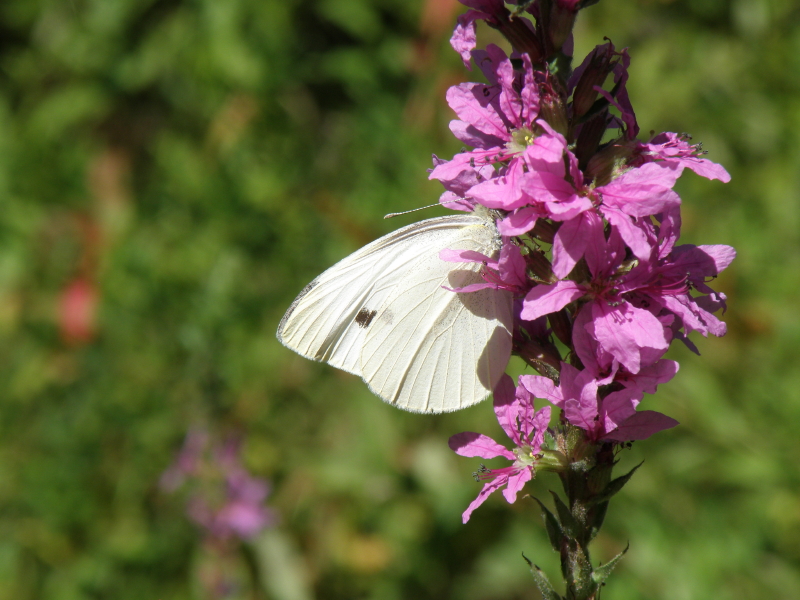
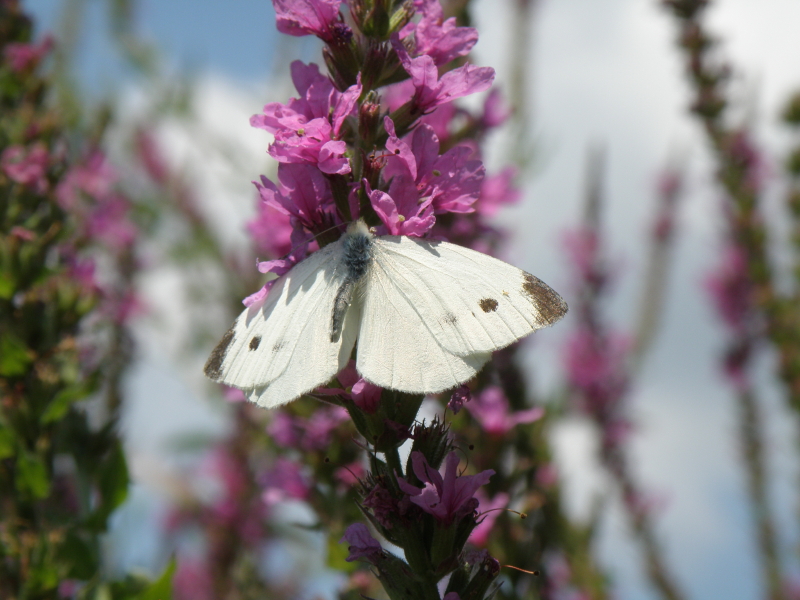
This post includes two recent trips to the Purple Loosestrife (Lythrum salicaria) flowers in the western section of the Falls of the Ohio State Park.  I have made my peace with the fact that the Purple Loosestrife plant is an invasive species at this location. It is really successful at crowding out the other plants that gather in this wetlands area. Originally introduced from Europe, the Purple Loosestrife has spread across the United States.  Eradicating it is very difficult because millions of seeds are produced annually and the loosestrife can grow with just a fragment of root in the ground.  The loosestrife probably doesn’t realize that it has this poor reputation for it provides beauty to the landscape and food for a myriad of insects, particularly butterflies.  Surely, the loosestrife can be forgiven for being itself?  Can the same be said of our kind who after all perpetuated the Purple Loosestrife by planting it to begin with and then allowing it to escape into the larger environment?  The loosestrife arrived here floating down the river.  I can recall when there wasn’t any to be found in the park.

The Butterfly Man, 9/2010

Here’s a flashback from three years a go.  I remember it was my lavender-lipped friend, the Butterfly Guide, who introduced me to this loosestrife stand back in September of 2010.  We had a great time together and I managed a few nice butterfly images on that day.  Ever since the Butterfly Guide showed me the way, I’ve been returning on my own and observing and documenting what happens here.  I heard through the grapevine that my old friend has since passed on and is conducting tours in the great beyond.  He had a knack for revealing beauty to all who wanted to experience it.  Seeing his image again makes me feel nostalgic.

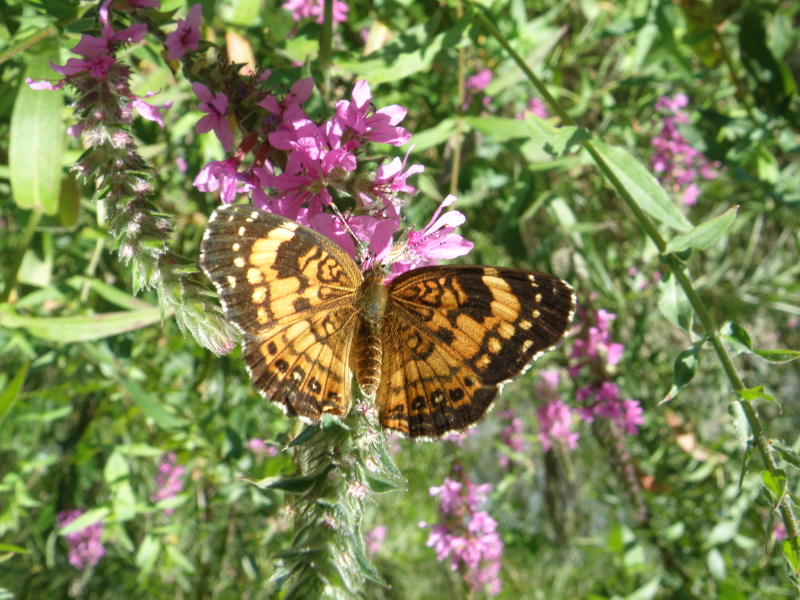
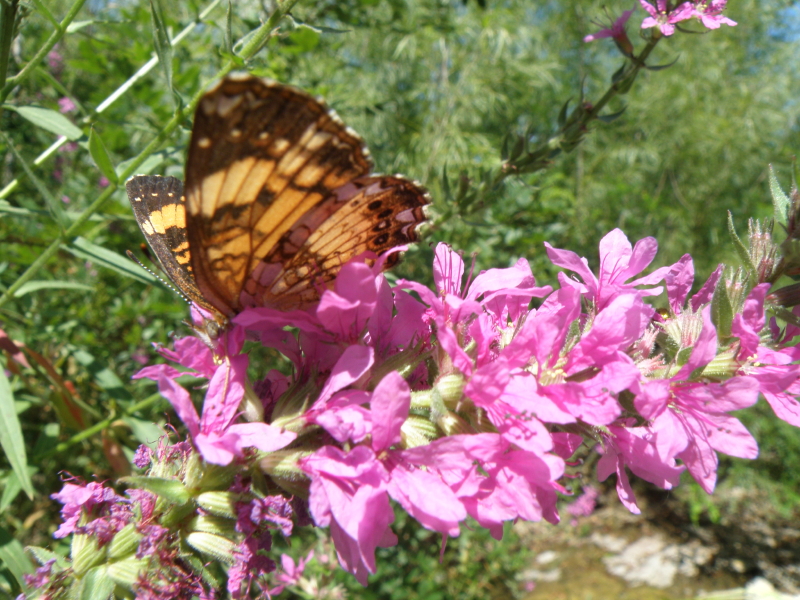
Eastern Checkerspot

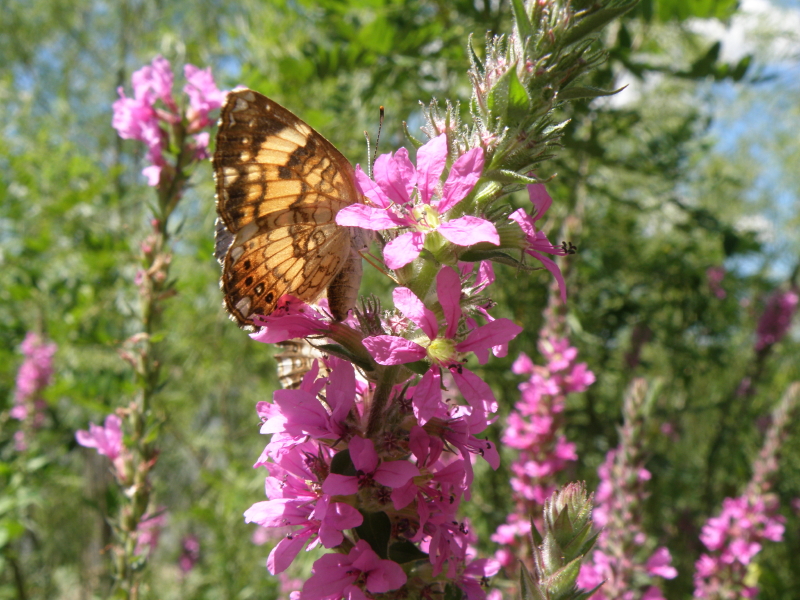
This is an Eastern or Harris’ Checkerspot (Chlosyne harrisii) and was the most numerous butterfly I saw visiting the loosestrife flowers.  They were so intent on sipping nectar that it was easy to approach them as they fed.  Now for a few more checkerspot images.

Eastern Checkerspot feeding, Aug. 2013

Eastern Checkerspot, Falls of the Ohio, Aug. 2013

Eastern Checkerspot, Aug. 2013, Falls of the Ohio

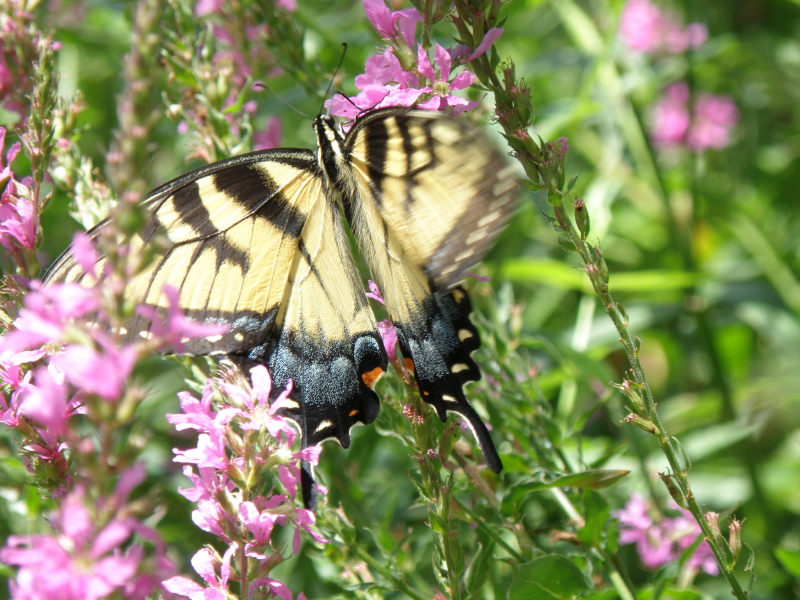
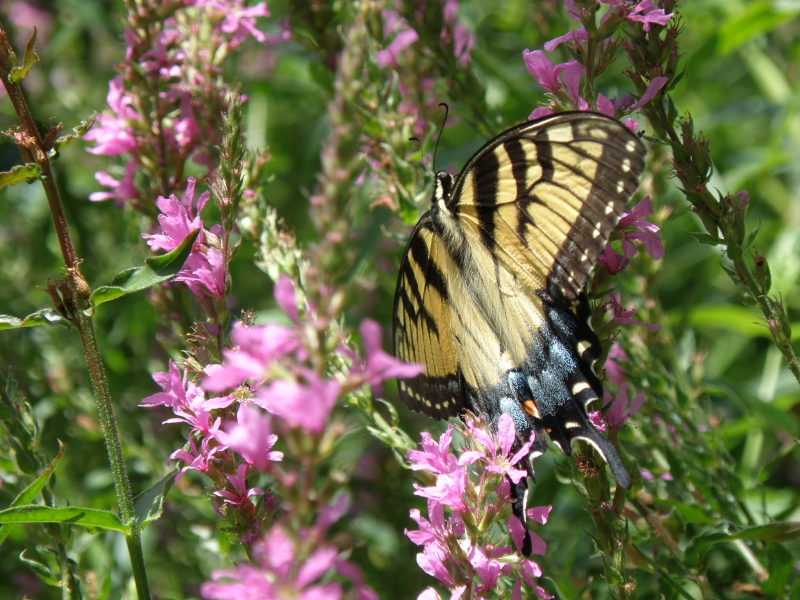
I found myself carefully wading into the flowers to get as close as possible.  Many of the flower bunches were in the six to seven feet tall range and it was humid walking among the plants.  We have been having a mild streak lately with lower than normal temperatures and regular precipitation.  Residents in our locality have had few reasons to complain about the heat.  The checkerspots are not the only butterflies out here.  Various swallowtail butterflies also enjoy these flowers.  Here are images of an Eastern Tiger Swallowtail, (Papilio glaucus).

Tiger Swallowtail on purple loosestrife, Falls of the Ohio, Aug. 2013

Tiger Swallowtail on Purple Loosestrife, Falls of the Ohio, Aug. 2013

We are fortunate to have many other species of swallowtails in our area.  Among the others I have associated with the loosestrife flowers include the Pipevine Swallowtail (Battus philenor), the American or Eastern Black Swallowtail (Papilio polyxenes), and the Spicebush Swallowtail (Papilio troilus).  Here’s an image of a Spicebush Swallowtail feeding.

Spicebush Swallowtail on Purple Loosestrife, Aug. 2013

We have several different Skipper species present.  This is the Silver-spotted Skipper (Epargyreus clarus).  The white spot on its hind wing shines like mother-of-pearl when the light hits it just right.

Silver-spotted Skipper on Purple Loosestrife, Falls of the Ohio, Aug. 2013

Another regular visitor is the Cabbage Butterfly (Pieris rapae).

Cabbage Butterfly, Aug. 2013

Cabbage Butterfly caught by a spider, Falls of the Ohio, Aug. 2013

I was struck by the unusual pose this Cabbage Butterfly was in and decided to get closer to check it out.  When it didn’t fly away…I knew something else was going on.  Although you can’t see it in this picture, a small spider has caught this butterfly by its head.  With so many insects feeding on the loosestrife, predators were sure to follow.  Large bumble bees also enjoy these flowers.  They are so heavy that they cause the loosestrife stems to bend upon landing on them.

Bumble Bee on loosestrife flowers, Aug. 2013

Over the years, I have watched the Purple Loosestrife become more common in the western section of the park.  The plant is now well established.  Typically, the loosestrife blooms continuously from July to September, but to my eye, it is looking like the blooms are starting to play out a bit?  Every year is different and some butterflies are more common in one year than another.  Missing from the loosestrife blooms this year are the Buckeyes, Monarchs, and their mimics…the Viceroy Butterflies.  Perhaps they will still make an appearance later on if the loosestrife flowers continue blooming.  I hope you have enjoyed wading through the loosestrife with me?  Next time, I will post something about the exhibition at the Kentucky Museum of Art and Craft that is featuring this blog in their show.  Now time for one final image before closing.Purple Loosestrife at the Falls of the Ohio, Aug. 2013

Read Full Post »

Tree in the western section of the Falls of the Ohio State Park, Aug. 2013

Resolved to stay away from my old atelier under the willow trees for a while, I decided to explore the western section of the Falls of the Ohio State Park.  It was just the most beautiful day and residents of our area have remarked on how unusually nice it’s been of late.  The air today has wonderful clarity and although it’s summer and the sun is shining…we are many degrees below our usual temps.  I feel the western part of the Falls of the Ohio begins once you cross the creek at the end of the Woodland Loop Trail.  This is an area that receives fewer visitors and I’m happy just to wander with nothing on my mind.  As I walk the narrow strip of land that is the riverbank, on my left are sounds from the river and on my right are various bird songs originating under the tree canopy.  I see the formerly high river has deposited driftwood here in new configurations along with the usual plastic junk.  My eyes are open and ready for anything.  I doesn’t take very long before I make the first of several discoveries new to me in and around a patch of Wild Potato-Vines.

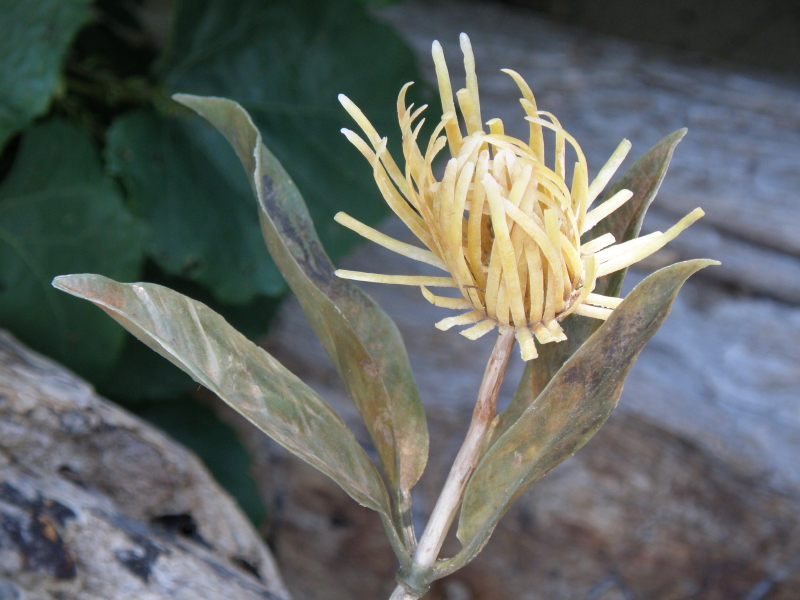
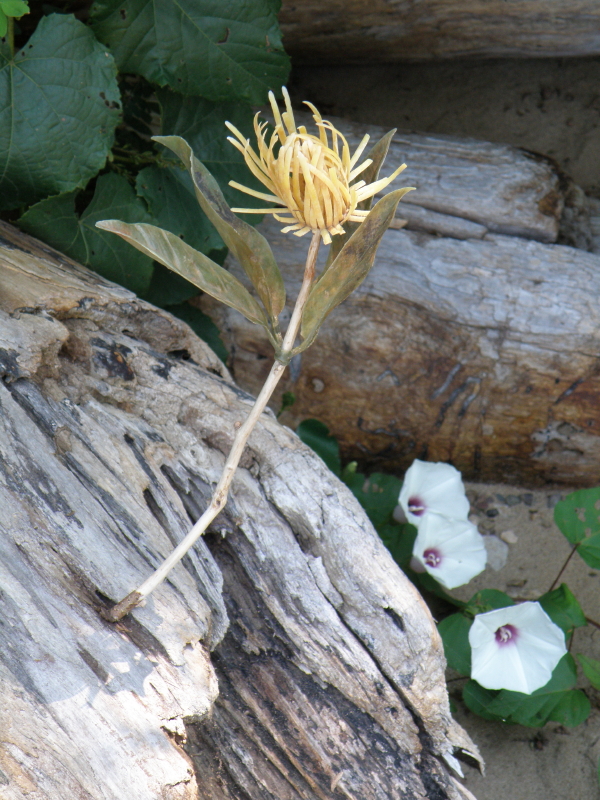
Goldstein's False Mum among Wild Potato Vine flowers, Falls of the Ohio, Aug. 2013

Close up of Goldstein's False Mum, Aug. 2013

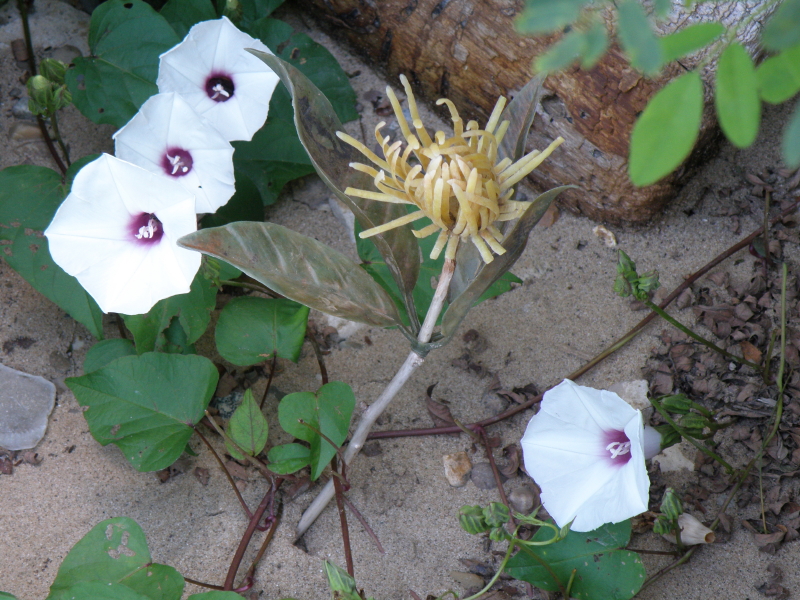
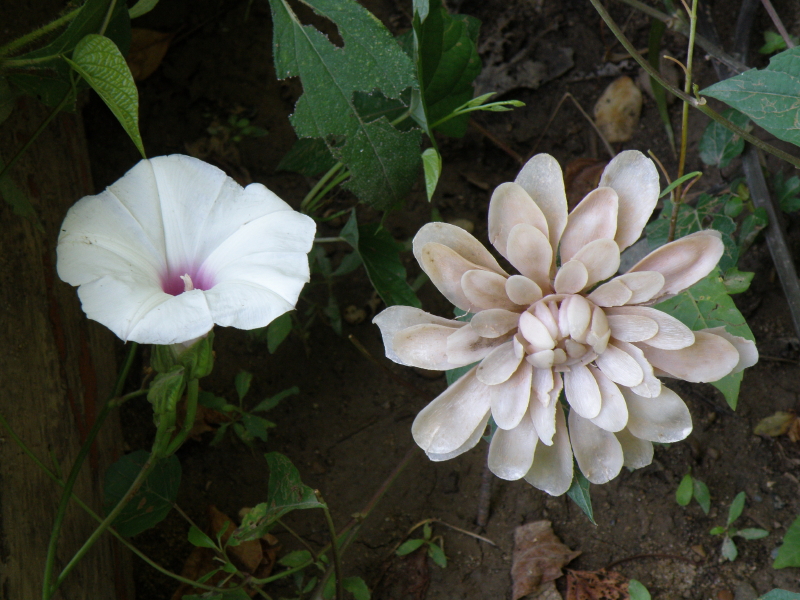
This is Goldstein’s False Mum which is named after the resident naturalist at the Falls of the Ohio State Park.  This is another in a series of very odd flowers while being organic by definition  have little in common with the other plants that grow along side of them.  In general, plastic-like blooms and foliage characterize these botanical rarities.  None of these plants (which form a new order of their own called Artificialia ) are capable of photosynthesis despite the appearance of green leaves.  Goldstein’s False Mum is a summer plant that produces a hard, yellow, frilly blossom that appears on the terminal end of a woody stem.  It prefers sandy, disturbed soils or decaying wood and is usually seen in the company of traditional flowering plants.  It produces no scent and no insects were observed being attentive to the false mum.  Now the Wild Potato-Vine is also an interesting plant.  It is a member of the Morning Glory family and its bloom is primarily white with a purplish maroon throat.  I have seen large bumble bees pollinating this flower.  What sets this plant apart is under the ground.  The Wild Potato-Vine produces a large tuber that had food value for the indigenous people.  Here is a another specimen of Goldstein’s False Mum growing out of a soft, decaying log also in the presence of Wild Potato-Vines.

Goldstein's False Mum and Wild Potato-Vine flowers, Falls of the Ohio, Aug. 2013

Not too far away and also in association with the Wild Potato-Vines is another type of plastic-like plant and here is its portrait.

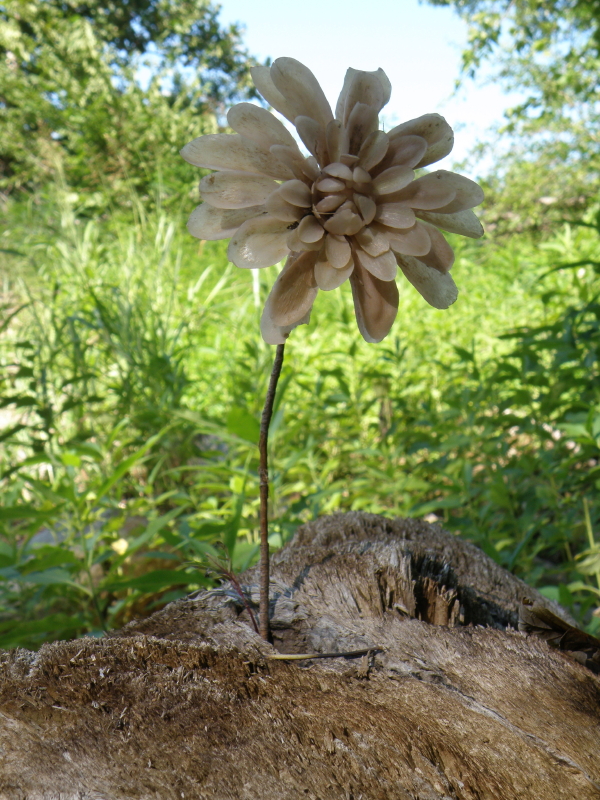
Wild Potato-Vine blossom with Saprophytic Zinnia, Falls of the Ohio, Aug. 2013

The Saprophytic Zinnia, Falls of the Ohio, Aug. 2013

The Log Weed is a saprophytic plant.  Lacking chlorophyll it relies on decaying matter for its sustenance.  The Log Weed is characterized by a corolla of hard plastic-like petals and never has what we would describe as leaves coming off its woody stem.  No one is quite sure how it propagates? Its blossoms appear in mid summer and seem to hang around forever.

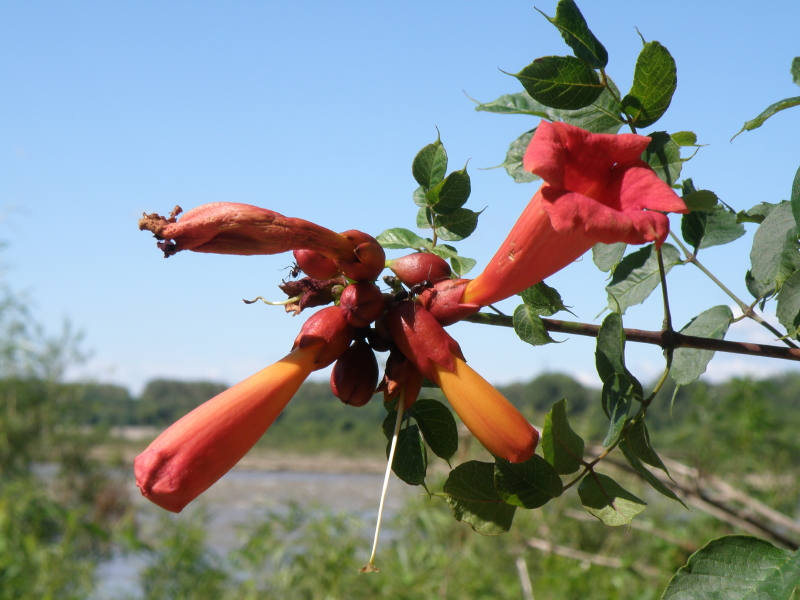
Trumpet Creeper, Falls of the Ohio, Aug. 2013

These are tubular flowers from the Trumpet Creeper vine which is a native and natural sight at the Falls of the Ohio.  This is a climbing, spreading vine and wood ants seem to love them.  If you look closely at the above photo…you can see several ants crawling on the Trumpet Creeper’s attractive blooms.  I was admiring this vine when I noticed that there was something not quite right about it and this is what I discovered.

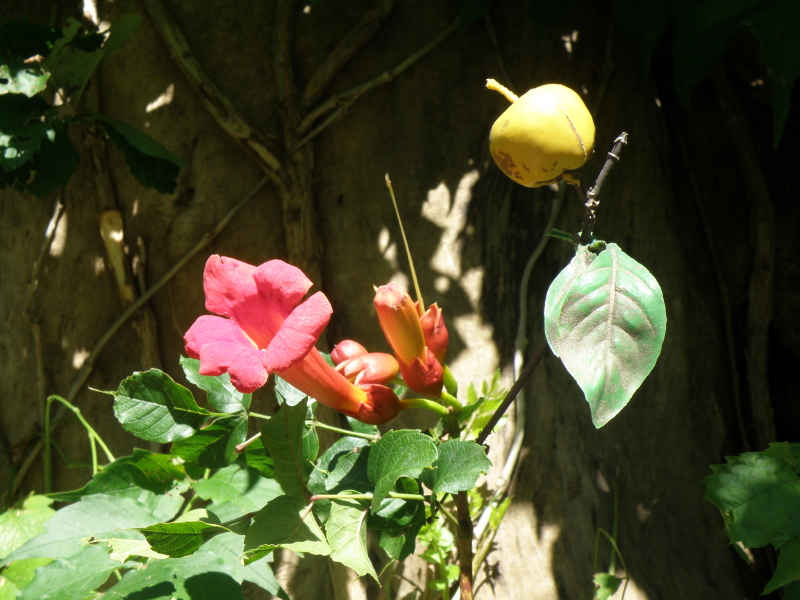
Unknown fruit on Trumpet Creeper, Aug. 2013

Notice the yellow orb to the upper right of the Trumpet Creeper blossoms? Thus far, the yellow fruit with its accompanying leaf remain unclassified.  It is, however, grafted to the woody stem of the vine.  Amazingly, it even has a false stem to deceive.  Could it be parasitic?  One hypothesis why this plant with the odd fruit appears with Trumpet Creeper might be the protection it receives from the vine’s wood ants?  The fruit and leaf are also very polymer-like and may indeed be plastic.  More and more we are learning how ubiquitous plastic is in the environment.  I heard a report about the Great Lakes the other day saying that there is a considerable amount of micro plastic in these large bodies of fresh water.  Upon examination, much of this plastic takes the form of tiny balls that are blended into deodorants and toothpaste to make the product flow more evenly.  These beads are so small that they pass through the finest screens at the waste water treatment plants and into the lakes.  I think Nature is metabolizing this plastic and recombining the hydrocarbons in novel ways, but that is just my theory.

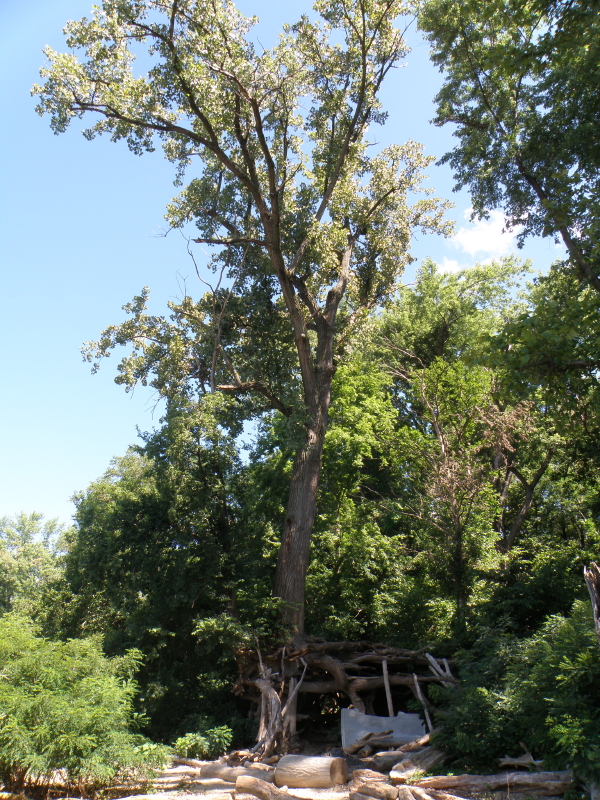
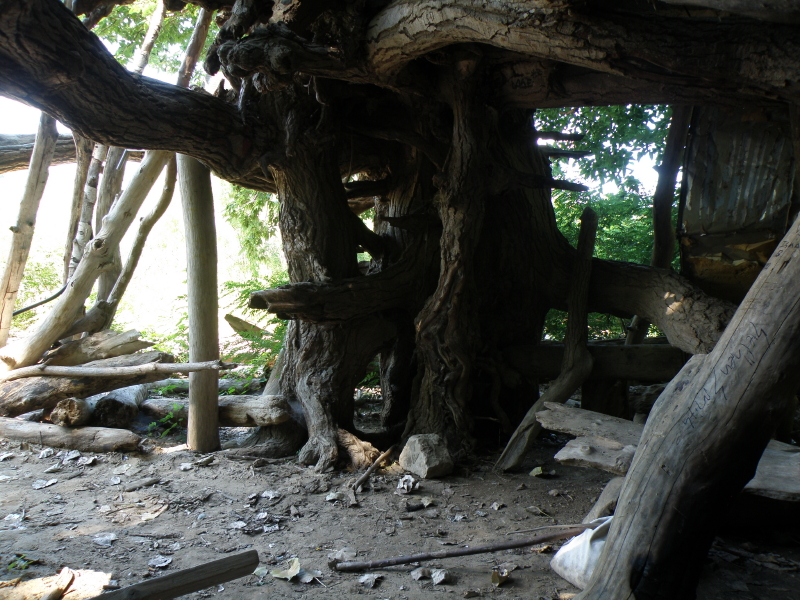
Cottonwood tree fort, Falls of the Ohio, Aug. 2013

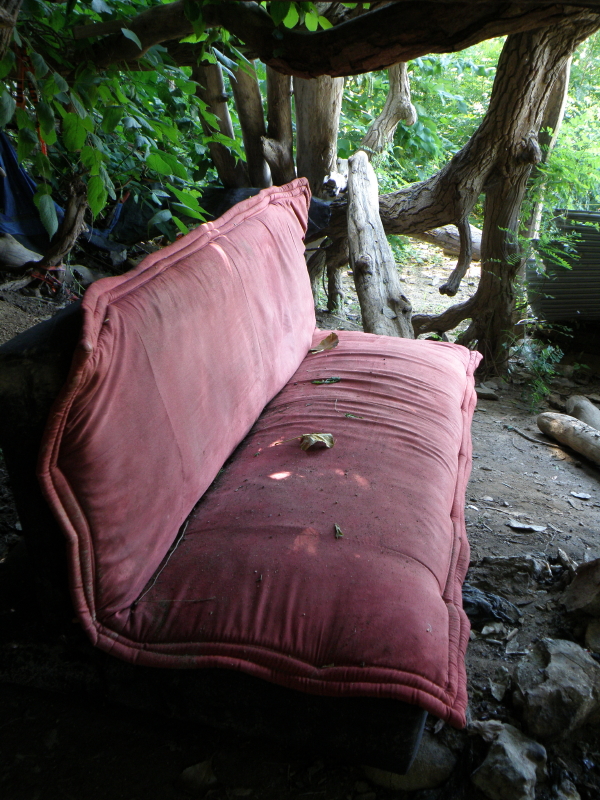
I paid my favorite cottonwood tree a visit and it’s been a while since I took shelter under its large, exposed roots.  People, especially the locals, like hanging out here and I witnessed much less trash since my last visit which is a good thing.  One big “improvement” has been made with the addition of a red, upholstered couch and I took a moment to rest here before moving on.

red couch under the cottonwood tree, Aug. 2013

The couch is very comfortable and I’m amazed that people actually dragged this piece of furniture down here.  Eventually, it will be reclaimed by the river.  Here’s another view from under the tree.

space under the cottonwood tree, Aug. 2013

For those who prefer their comforts a bit more on the rustic side…there is another bench for seating and it’s made from a slab of wood balanced on short logs.

under the cottonwood tree, Aug. 2013

I rested, had a snack and drank some water before moving on.  I’ve designated my intended destination as “Loosestrife Land” for the abundance of these non-native flowers that have taken over moist areas in the western section of the park.  I’m going there seeking something else which will be the subject of my next post.  I’ll catch up with you soon but for now…so long and happy trails to you.
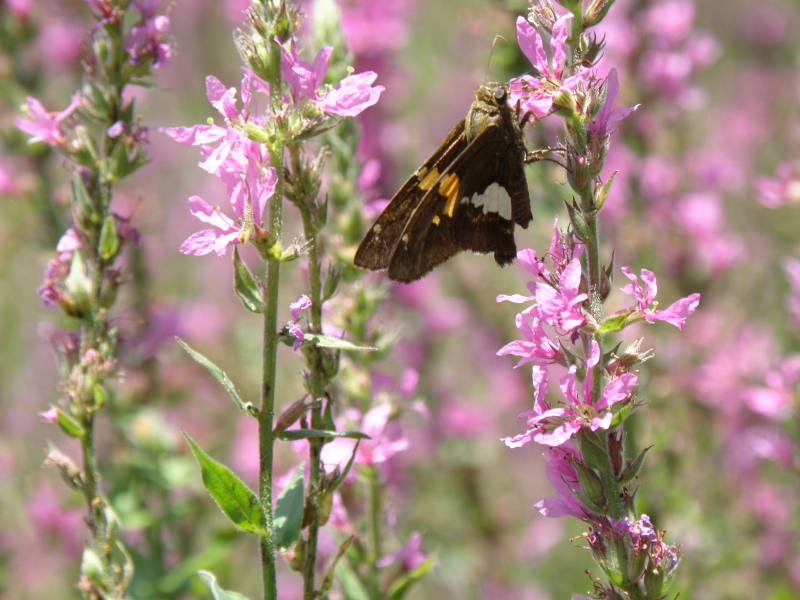
Purple Loosestrife flowers in bloom, Falls of the Ohio, Aug. 2013

Read Full Post »

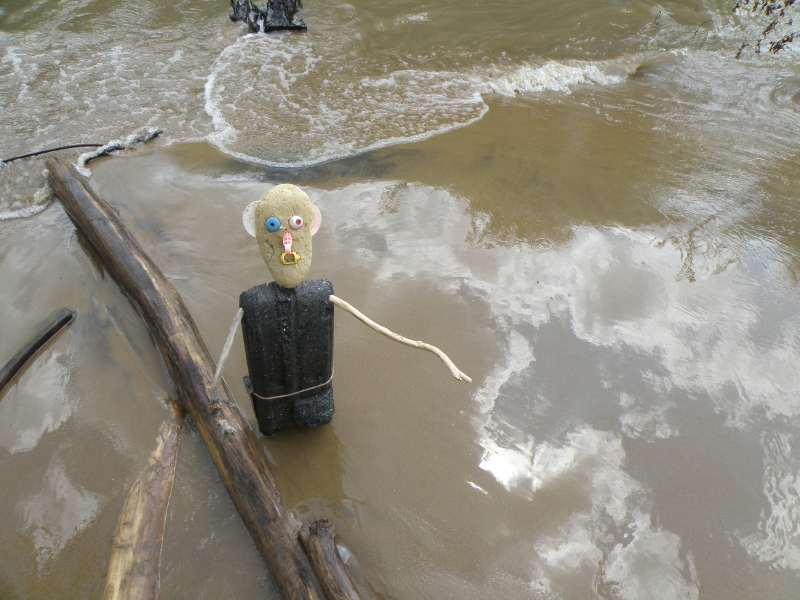
Falls black styrofigure, July 2013

With the sun spotlighting this little patch of sand…my newest Styro-figure proudly stood upright.  He’s the first persona created in the reconfigured studio.  I found a rare piece of “black Styrofoam” on today’s walk.  It’s part of what passes for car bumpers these days.  This material has a rubberized compound mixed throughout the foam which makes it harder to cut or pierce.

Leaving home, July 2013

After making new friends it’s time to venture out into the world.  The leafy green complete with bird song is complimented by the creaky willows that sway with the occasional breeze.  There is another sound, however, that your feet are hearing and you walk in the direction of its source.

Black Styro-figure by the river, July 2013

The mighty Ohio River has been running muddy for more that a week now.  Although it’s hot and humid today, thus far, this summer has been wetter and cooler than average.  As a result of all the rain, the river has been higher than usual.  What I like about the Falls of the Ohio is that in such a relatively intimate space the park can take on all kinds of different looks depending on the weather and season.  Small waves break upon the heightened shoreline and there is a family nearby fishing and playing by the river.

Family fishing for catfish, Falls of the Ohio, July 2013

Seeing that they were having some luck catching fish, I gestured if it was all right to take their pictures.  The family didn’t speak English and I’m guessing that they are recent immigrants from Southeast Asia?  Regardless, both adults and children were having a ball in the river.  I wondered if they came from someplace like this since they seemed so comfortable and natural by the water? After receiving the okay signal I recorded these images of people interacting with the river.

little boy, Falls of the Ohio, July 2013

This little guy was cute and really determined that I should take his picture in what I’m assuming is a martial arts pose?  I obliged him several times and this was my personal favorite snapshot of the group.  Looking through my riverblog…I’m struck by how often children appear and interact with my artistic process.  First, my own two sons would accompany me and now it’s the kids in the park on any given day.

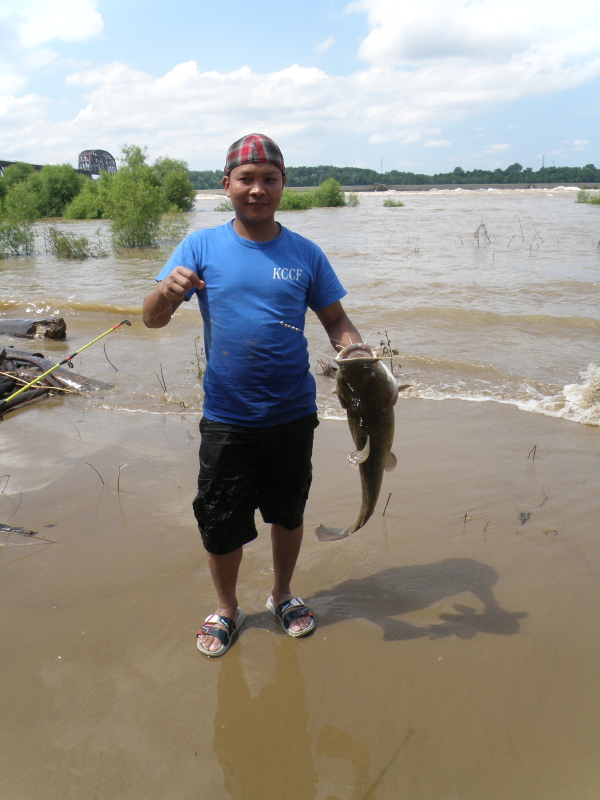
Man with Flathead Catfish, Falls of the Ohio, July 2013

Flathead catfish, Falls of the Ohio, July 2013

I watched this fish being landed and it’s a decent sized Flathead catfish, (Pylodictus olivaris).  This fish probably weighed in the ten to twelve pound range, but this catfish can get as large as a hundred pounds.  It is a fish of big rivers.  A very simple rig was used to catch this fish.  Four slipshot lead weights were clamped onto the line about eight inches away from the hook.  A single nightcrawler worm was used for bait which was cast about 25 yards from the riverbank.  The fishermen would wade in about knee-high to waist deep to increase casting length.  I was amazed that with the current and all the potential underwater obstructions that their lines didn’t get snagged more often than they did.

Catfish stringer, Falls of the Ohio, July 2013

This was the stringer of catfish they were working on.  In addition to the Flatheads…another big river fish the Blue catfish (Ictalurus furcatus) was also being caught.

catfish stringer, Falls of the Ohio, July 2013

The Blue catfish is a slatey-gray color and has a forked tail.  The two fish on the lower right in the above image are blues.  The flatheads are more of a mottled olive color and have very different fins.  Both are omnivorous and will eat most anything that they can catch.

Man and catfish, Falls of the Ohio, July 2013

All the fish on the stringer will be used to feed this family.  It is still not recommended that people eat the larger fish (especially bottom dwelling species) from the Ohio River. The river is much cleaner than it used to be, however, toxins do build up in the fat tissues of the fish that live the longest and grow to be big.  Every once in a while, making a meal of some of the smaller fish should be okay.  Because I was needed elsewhere today…I let my day at the river draw to an end.  Good thing too…because if you stand too long in the same spot at the water’s edge…you chance sinking down too far!  See you soon.

Styro-figure in black, waist deep in wet sand, July 2013

Read Full Post »

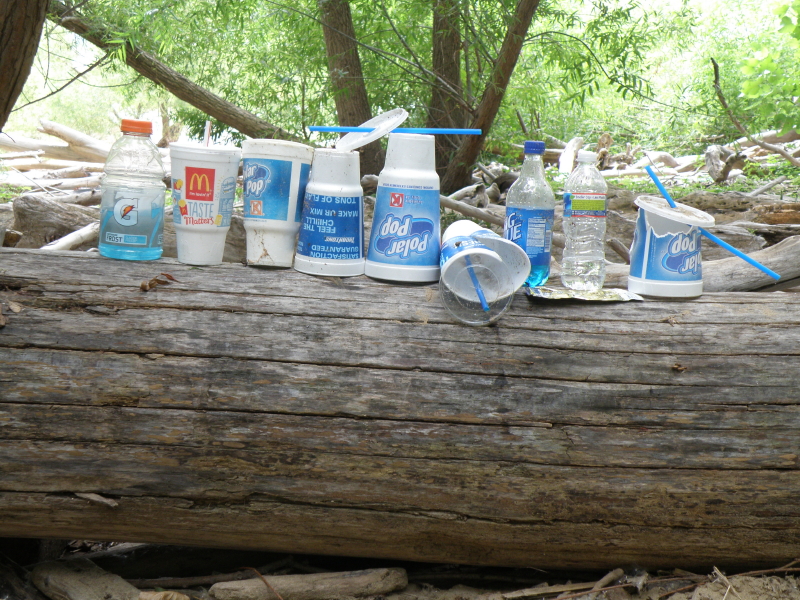
soft drink waste, Falls of the Ohio, July 2013

When last we visited the Falls of the Ohio the river was rising.  Several days of intense rainfall throughout the Ohio Valley are now flowing by and coloring the water a muddy ocher. My outdoor site where I make my polystyrene figures and store materials is being usurped by twin forces.  It’s difficult gauging the intentions of this visitor or visitors, however, I also continue finding their waste soft drink cups and bottles.  What’s with the blue drinks?  I guess the color blue is also your symbol for cool refreshment.  If I am to continuing working here, I will need to change the driftwood structure erected over my site.  I was  secretly hoping that the river would solve this dilemma for me.  If the water rose high enough, it would move the largest beached logs which would effect everything near them.  That didn’t happen.  The river fell short of my spot and a visible line demarcating brown wet wood from bleached, silver-gray wood marks the high waterline.

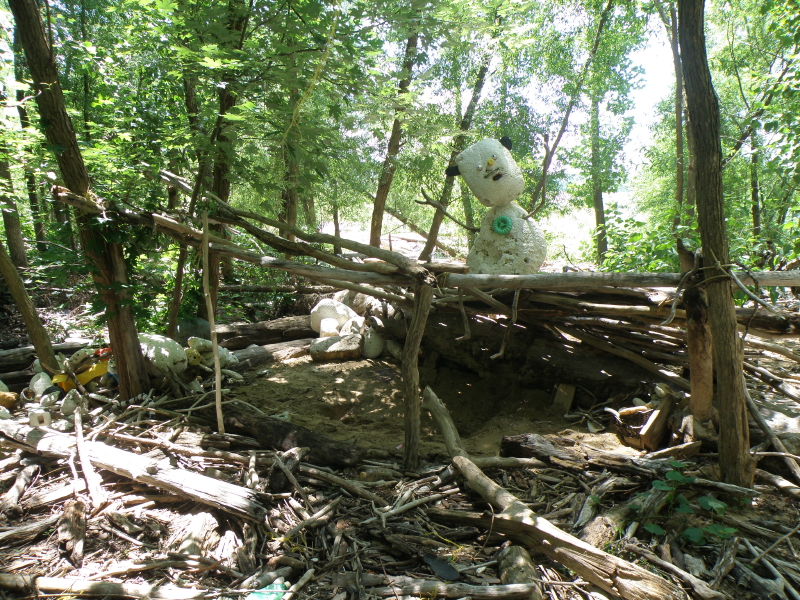
My site with evolving structure, Falls of the Ohio, July 2013

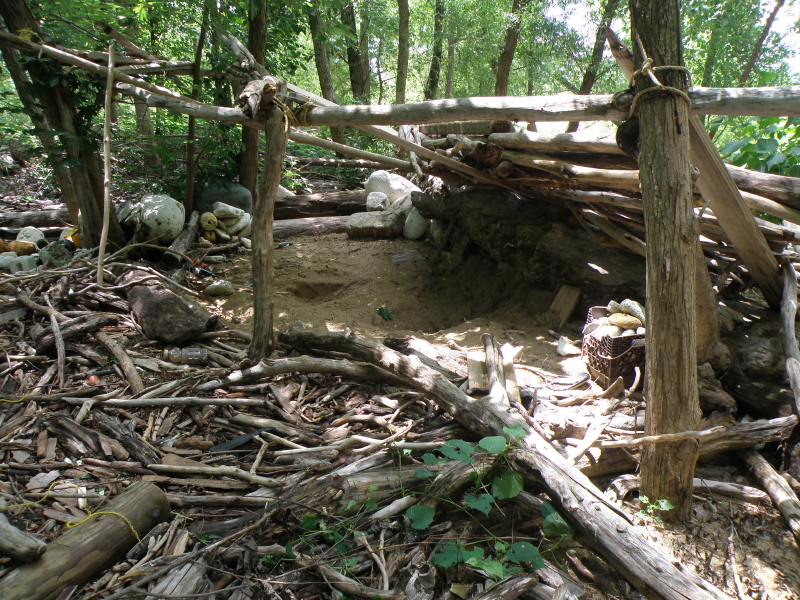
The structure the visitors are building is enclosing the space.  As it is, it’s difficult now to stand on the center sand, especially since a growing pit is developing.  My collected river materials continue to be strewn about.  I initially liked that someone else was seeing the potential of this site and adding their distinctiveness to the mix.  Now I’m seeing less intent here and and I’m going to make the next move and see what happens?  First, I will need to find and repair the large Styro-figure I left here sitting on the roof.  He’s a participant/witness to all the proceeding events.

My mustachioed Styro-friend, Falls of the Ohio, July 2013

Again he looks like he was cast aside.  I find everything except his mouth and replace it with some other river plastic I picked up.  I reattach his arms and legs and he’s as good as new again.  Well almost, the excitement with the visitors and the unpredictable nature of the river have dinged his persona.  He never said much before and he says even less now.  How unfortunate.  I park him in a nearby try to keep him safe.

Figure in a tree, July 2013

I’ve seen this before and call it “Styro-shock” or “polystyrene demensia”.  Imagine willing your body into a stasis where you have no awareness at all and you will begin to know what it means to be Styrofoam.  He might come out of it on his own…who knows?  I turned my attention back to the wooden structure to see what I could do to affect the space in a positive way.  I’m not interested in getting into some escalating contest of wills with someone.  While I figured out what to do…my silent friend continued to sit tight.

Changing the wooden structure, July 2013

I stripped off the wood to expose the frame.  Next, I flipped a few of the cross braces over which opened the center of the space back up.  I created a small doorway by cutting away some excess wood with my saw on my Swiss Army knife.  That has come in handy more than once.

remodeled driftwood structure on site, July 2013

Using the wood already collected, I made a small lean-to for a shelter and a wall of upright sticks to enclose the space on one end and create more visual interest.  The maple tree on site separates one area from another.  There’s plenty more that can be done, but I decide to stop here and see if anything happens while I’m away.  The site now does a better job of corralling any wayward Styrofoam and has further called attention to the studio site as a performance space.  As the day progressed which was sunny and cooler than usual…the sun shone just right to highlight the interior of my studio under the willows and filled it with energy.
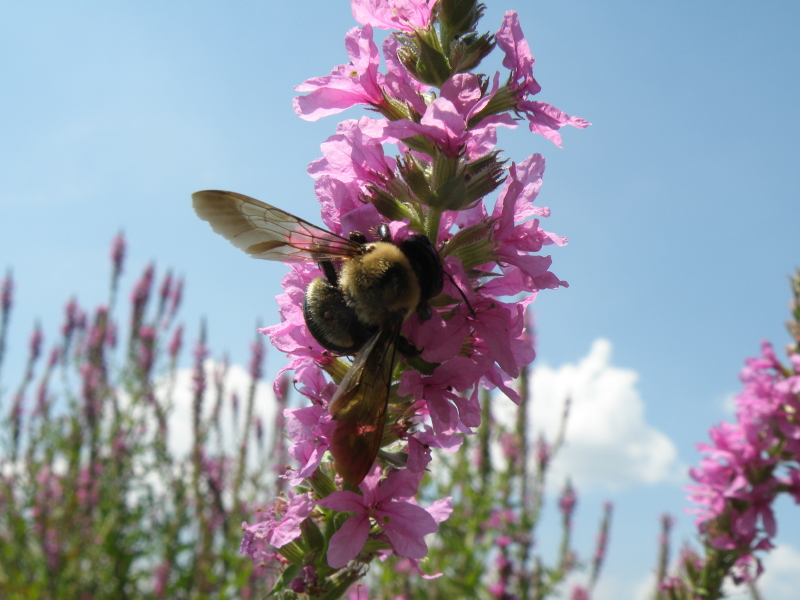
remodeled studio with sun shining in. July 2013

It was a long and busy day by the muddy river.  I have lots of other interesting pictures to show you, but they are worthy of separate posts which will happen soon.  For now, I’ll end with a backward glance of my studio under the willows as I walked towards home.

View departing the willow studio, July 2013

Read Full Post »

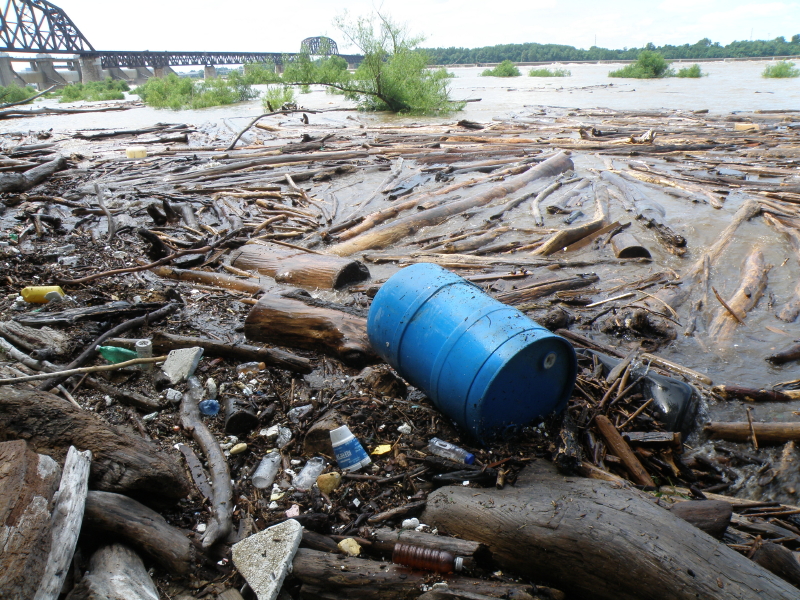
Rising Ohio River at the Falls of the Ohio, July 2013

High water at the Falls of the Ohio, July 2013

We have had (along with the eastern half of the country) a lot of rain recently.  When it has precipitated, it hasn’t been gentle rains, but rather torrential, monsoon-like downpours.  Consequently, everything is saturated and the Ohio River has quickly risen to engulf the riverbanks that are normally wide and clear this time of year.  I took a chance between rain showers to see if I could access my site for a few hours.  Maneuvering through the underbrush I was able to investigate the river’s edge that was slowly but surely creeping inland.  As a gauge to how high the river has risen, in the above photos…you should be able to walk out to those willow trees that are now in the middle of the river.  I watched columns of ants marching for higher ground.  The river’s edge attracts animals, particularly birds, that are hunting insects being driven by the advancing water.  I’m here doing a similar thing…except I’m looking for interesting junk that has floated in with the driftwood.  I always find something and here are a few recent images of this river treasure.

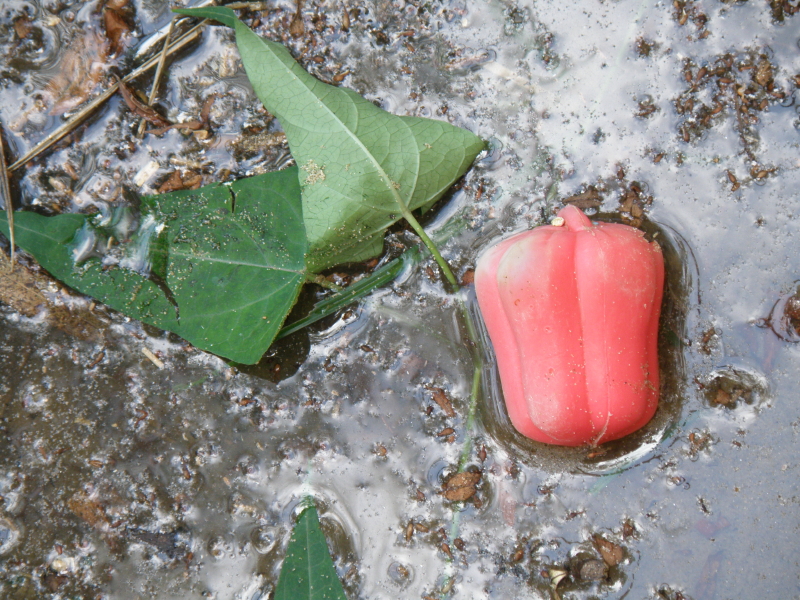
small, red plastic, bell pepper, July 2013

This is a plastic bell pepper to add to my ever growing collection of faux food.  This collection has grown considerably since I last photographed it in its entirety.  I’ve added several fast food items and I now can boast owning  several plastic hamburgers and hotdogs to accompany the fruits and vegetables.

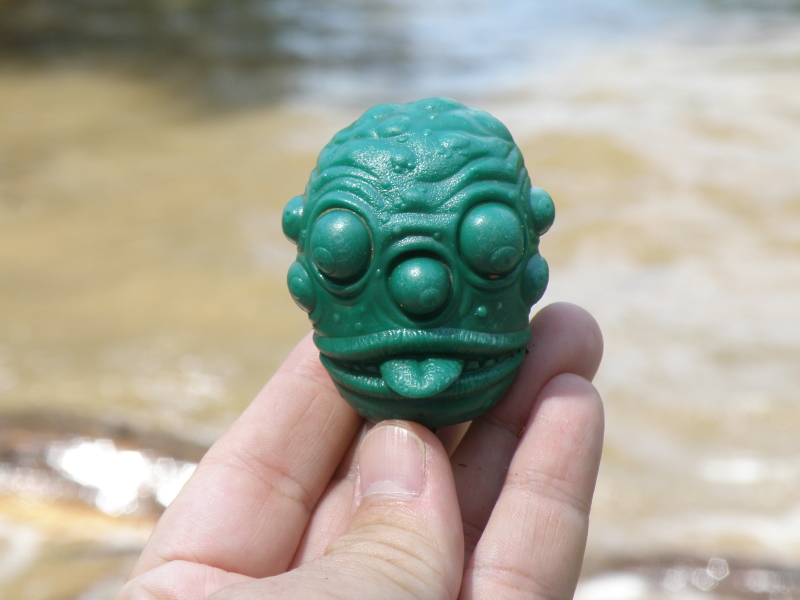
green toy character head sticking out its tongue, July 2013

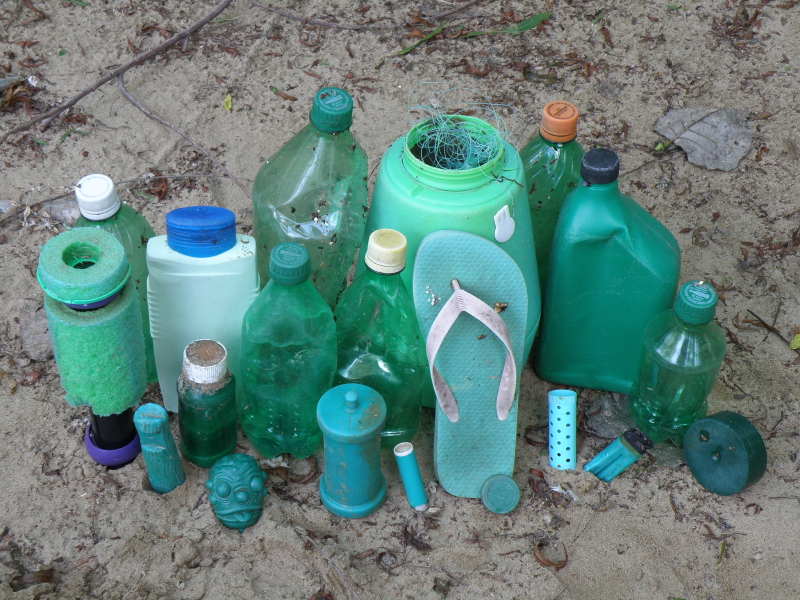
I don’t recognize this character’s head, but I responded to the tongue sticking out!  It was this discovery that caused me to go on a tangent.  I decided that in the relatively restricted area I was investigating that I was going to collect all the different green plastic items the river was delivering to me.  This is what I came up with.

green plastic junk, July 2013

I was amazed at the collection I was able to put together in less than an hour’s time.  Each item is unique…even the green plastic bottles which are different sizes, designs, and have different colored bottle caps.  Among my other finds include green discarded fishing line, a green “Lincoln log”, a lost lip balm cylinder, a hair curler, a circular green plastic “smokeless” tobacco “tin”, a flip flop, etc…

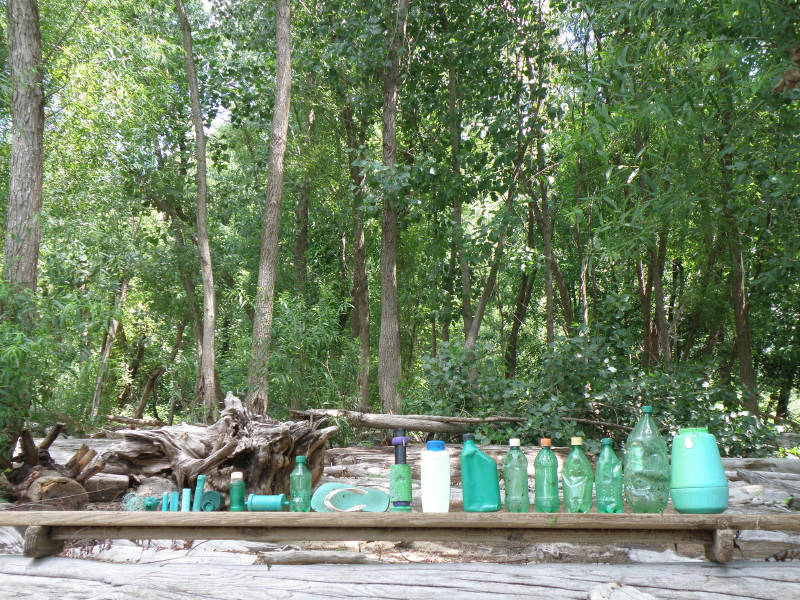
"Homage to Green", July 2013

I then took my 21 green artificial objects and arranged them in a line on an interesting wooden object I found that looked very alter-like.  This is a very different expression of what it is to be “green” and the plants behind these objects concur.  It was now time to visit my site and see if anything had happened there and perhaps to make something new.

expanded structure at my site, July 2013

I had that “oh no” feeling upon arriving.  There were several changes since my last visit.  Whomever is building this structure appears to be trying to construct a roof over my spot.  Most of the materials that I have gathered over the months were just thrown out and around the site.  There is no way for me to work here now in its present configuration.  I wonder if the rain prevented the “work” from being completed?  And then it dawned on me…where is the figure I left here?  I found him a short distance away.

big Styrofoam figure face down, July 2013

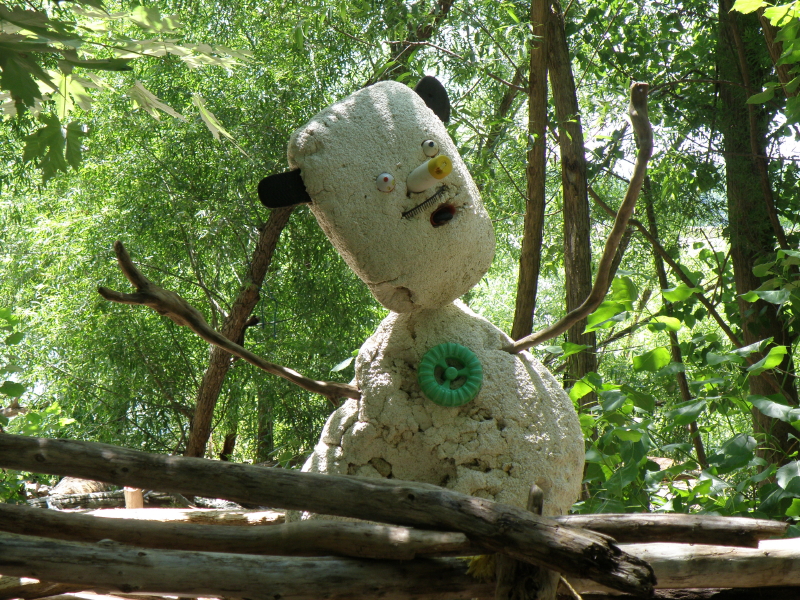
This is how I found him disarticulated and face down.  It appears that he was just lifted up and thrown aside.  I knew if I was to learn what had happened that I would need to reconstruct him.  It took me a bit of time to find his various parts, but I ultimately was successful and set him up on the “roof” in a sitting position.

Large Styro-figure head, July 2013

Large seated Styro-figure, July 2013

I said…”Dude, what happened here and to you?”  My friend was quite excitable in retelling the tale.  He said a couple of people came by a day or so after I was last here and just started ransacking the place.  The last thing he remembers was flying through the air and then blackness.  He at least confirmed my suspicions that more than one person was involved.  Here is the evidence I used to draw that conclusion.

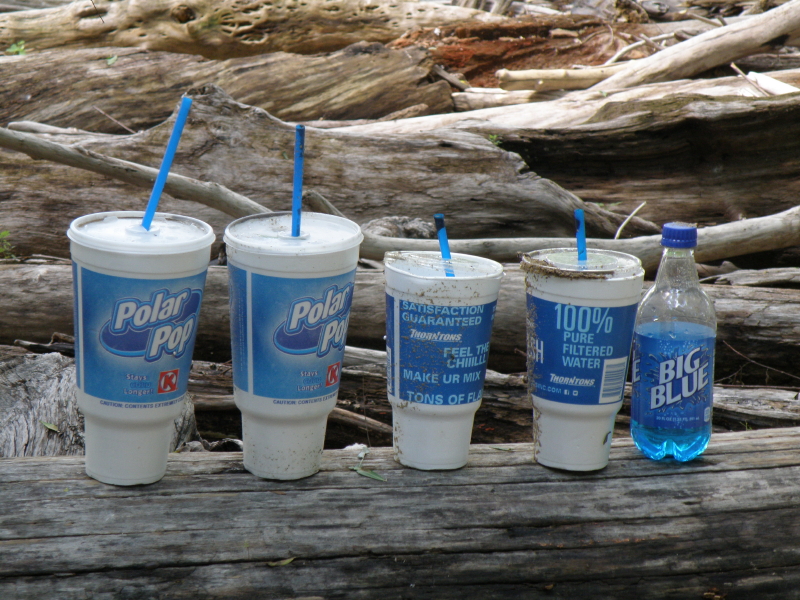
giant polystyrene drink cups and bottle, July 2013

The last time I was here I noted a giant polystyrene cup lying in the sand just outside my space.  Upon returning, I picked up these additional cups and the blue bottle that were casually thrown on the ground and photographed them on a nearby log.   I’m deducing that these people live in the area since they sell these mega drinks at a nearby gas station.  Now as much as I’m torqued about being evicted from my spot…finding these added cups here makes me mad!  There is already enough junk in the river without bringing more and leaving it here!  It seems the height of disrespect and irresponsibility and my remade figure concurred.

Excited Styro-figure with arms spread wide, July 2013

My friend was growing excited with the thought of his recent tormentors returning to the scene of the crime.  He asked me what I was going to do about this and I have to admit it’s a dilemma for me.  Generally, I appreciate it when people interact with my art, however, there is little evidence that there are respectful spirits at play here.  I decided that if the river kept rising (and at this point it was about twenty meters away) that matters would become moot.  The water would rearrange the context here and I would simply begin again.  If, however, the river doesn’t reclaim this spot…I promised my figure that I would reassert my will.  I might do a little engineering of my own and see how I might modify the structure to suit my needs.  If you were me…what would you do?  I told my mustachioed figure to sit tight and that I would return the following weekend if the river would allow it.  To be continued…?

My figure at my site, July 2013

The rising Ohio River, July 2013

Read Full Post »

Fishermen, Falls of the Ohio, June 1, 2013

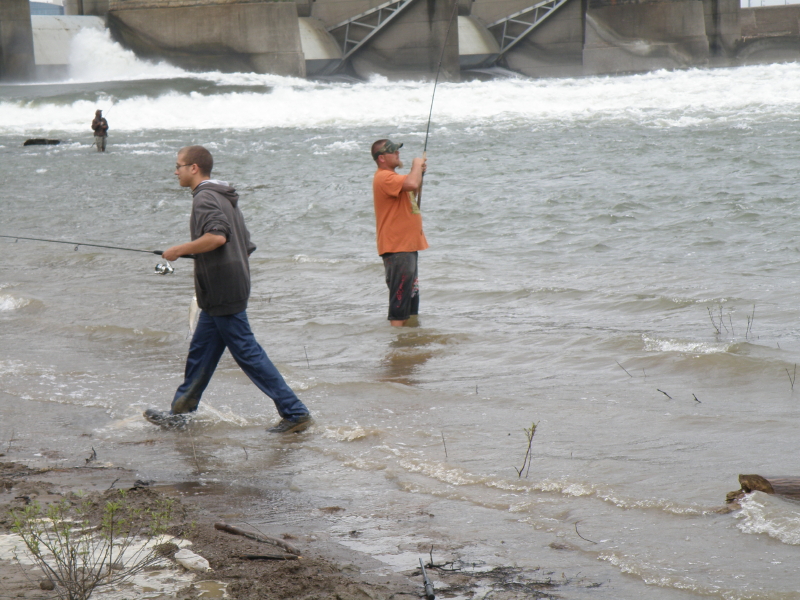
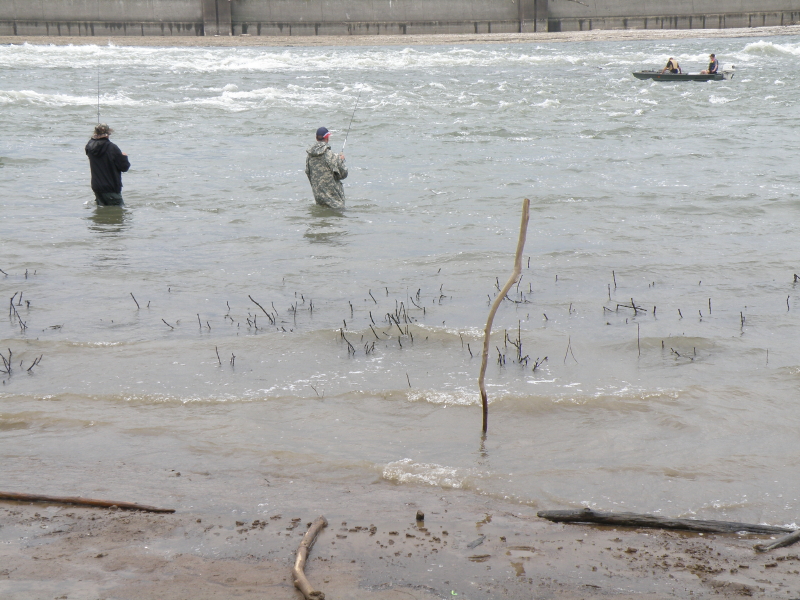
It’s the beginning of June at the Falls of the Ohio.  I arrived at the river to find a dozen or so fishermen that were up on this cool, grey morning before me.  There are both people and boats in and on the water.  Many fishermen are knee to thigh high in the river balancing themselves on the shallow, but rocky bottom.

Fishermen at the Falls, June 2013

The river attracts all kinds of fishermen.  I see people who have lots of fancy, expensive tackle and for the most part they are using light gear for smaller, sporty, quarry.  And then there are the guys that seem more local and blue-collar.  No fancy gear here that the anglers might prefer.  Rather this is a big pole, five gallon bucket, come as you are affair.  Word has probably been passed down the line that the “shad” are running and it’s a good time to catch a mess of fish.

Skipjack herring at the Falls of the Ohio, June 2013

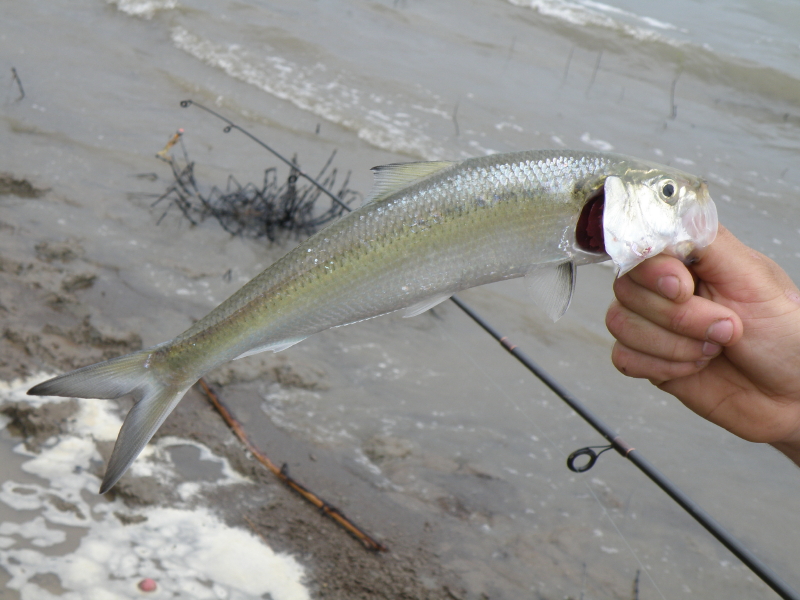
This is the fish of the day…the Skipjack Herring, (Alosa chrysochloris).  This fish was first described by the naturalist Rafinesque in the early part of the 19th century.  It’s an abundant and beautiful fish found in all of Kentucky’s major rivers and up into the Mississippi River too.  The Skipjack is anadromous which means it migrates up rivers from the sea to breed.  During the right time of year large schools of Skipjacks are congregating under the dams and waiting for the chance to move forward.  The Skipjack gets its name from jumping out of the water like a skimming stone in pursuit of the smaller fishes it eats.  At the Falls, the fishermen are catching Skipjacks to use as bait.  The fish is cut into quarters and set upon large treble hooks in the hopes of catching big catfish.  One fisherman told me he witnessed a 30 pound catfish being caught with this method the previous night.  I recently read that these waters were also once home to the Ohio Shad (Alosa ohiensis) which were first described from specimens caught in the Ohio River at Louisville in the late 19th century.  This fish is so rare now that it is on occasion listed as being extinct.  The Ohio Shad was probably not common to begin with.

dead fish, June 2013

Along the water’s edge the smell of dead fish demarcates the air where water and land meet.  The riverbank is littered with the unlucky who through lost scales and exposed bone are returning to the world from which they came.  There was one unfamiliar fish that I came across and I did a series of photos of it.  Here are several views I made of this new fish.

Yellow-fin Carp with skipjack, June 2013

Fish studies, June 2013

There isn’t anything in the literature about this fish and so I’m going to designate it the Yellow-fin Carp for obvious reasons.  In life, it probably was in the 3 to 5 pound range and I’m surprised it didn’t get cut up for bait as well? It has the tell-tale large eyes that suggest it is a deeper water fish.  It was probably caught by mistake, released, died, and washed up here with the other unfortunates.  Here’s a couple of images made along the riverbank.

Yellow-fin Carp in hand, June 2013

Yellow-fin Carp in hand 2, June 2013

Since this is something you don’t run across out here very often, I thought I would post a few more images that provide a more formal portrait.

Yellow-fin Carp, facing right, June 2013

Yellow-fin Carp, facing left, June 2013

And now for a head-on view of this interesting fish.

head-on view of Yellow-fin Carp, June 2013

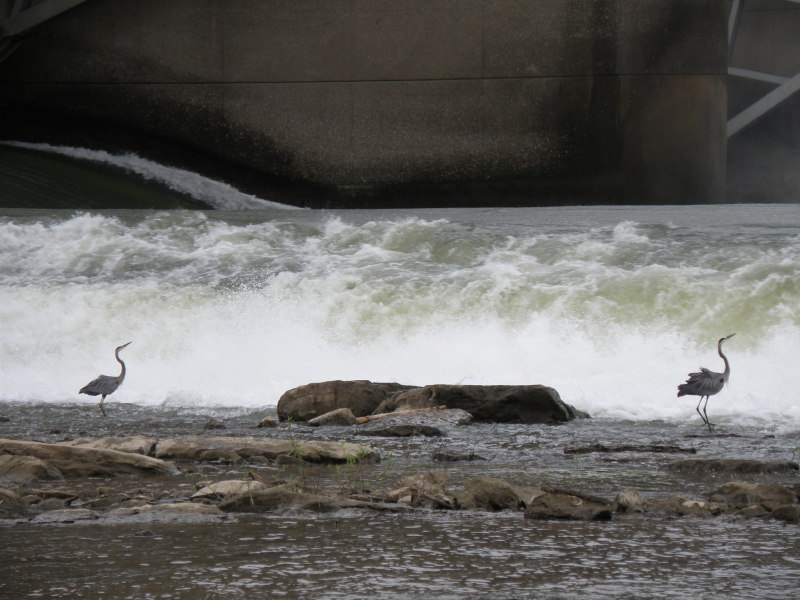
People were not the only animals out here after the Skipjacks.  Several bird species including Ospreys, Double-crested Cormorants, Black-crowned Night Herons, and Great Blue Herons were taking their share.  Here is a heron couple that are set up by the tainter gates in the eastern section of the park.   Between catching fish they mirrored each other in a few courtship moves.

Great Blue Herons by the tainter gates at the Falls of the Ohio, June 2013


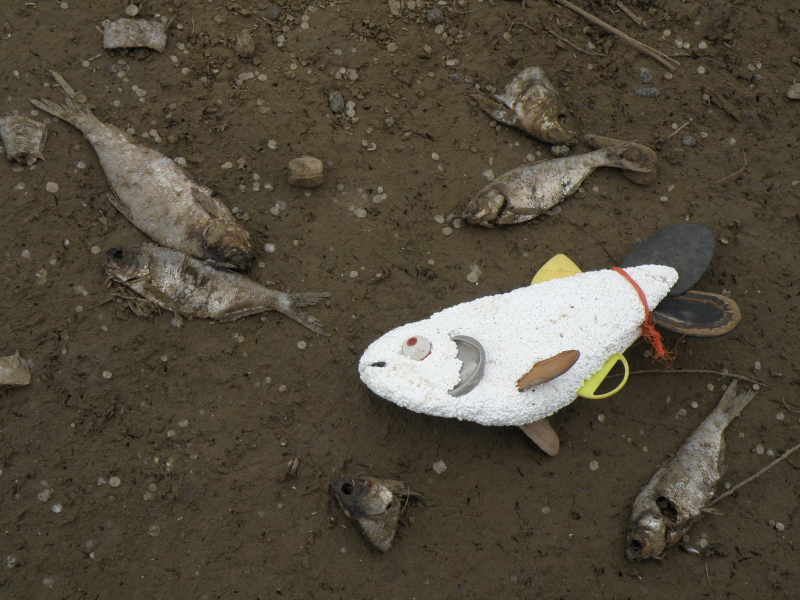
The fossil limestones at the Falls of the Ohio are famous for the diversity of Devonian Age life forms that are preserved within the rocks.  Ironically, the Devonian Age is also known as the age of fishes because they first appear in the fossil record over 350 million years a go.  At the Falls, however, fish are poorly represented in this rock record.  I imagined that if they had preserved as well as other creatures…their remains might look something like this.

dead fish at the Falls, June 2013

Read Full Post »

Into the light, May 2013

Styrofigure in early May, 2013

Stepping away from the place where it was constructed revealed a whole new world for the Polystyrene Person to explore.  The sun was shining and birds were singing and the Falls of the Ohio were once again turning green with emerging tree leaves.  Driftwood was everywhere along the river and there were plenty of micro-environments to experience.

Polystyrene Person dancing in inner tube, May 2013

Being made of trash caused the Polystyrene Person to be less judgmental of the discarded man-made items it came across.  An old inner tube became a tiny arena perfect for dancing.

figure with plastic cable in the trees, May 2013

alternate view of figure with plastic cable in the trees, May 2013

A tough plastic cable captured by the willow branches during the last bit of flooding became another object of interest.  The Polystyrene Person admired the graceful  arcs and how the cable defined this bit of space.  The white figure played with the cable by walking around and stepping through the loops.  There was still more stuff snagged in other trees.
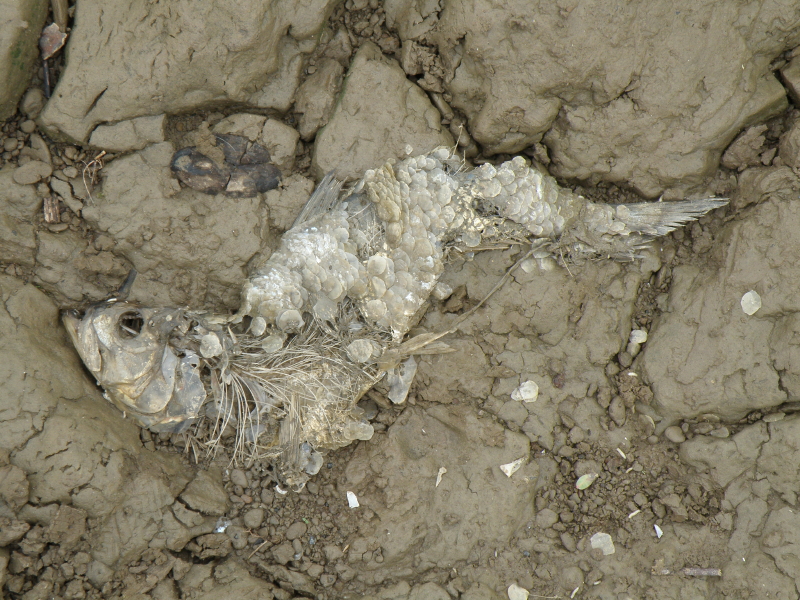
barge cable and figure, May 2013

Discovering a fraying barge cable tangled in the willow branches and dragging on the ground gave the new figure an odd mental image.  What if this was how the sky was tethered to the earth?  What would happen if this cable broke?  Would the blue sky with its flimsy clouds just drift off into space?  Remembering that this was simply a rope caught in a tree brought the smile back to the figure’s face.

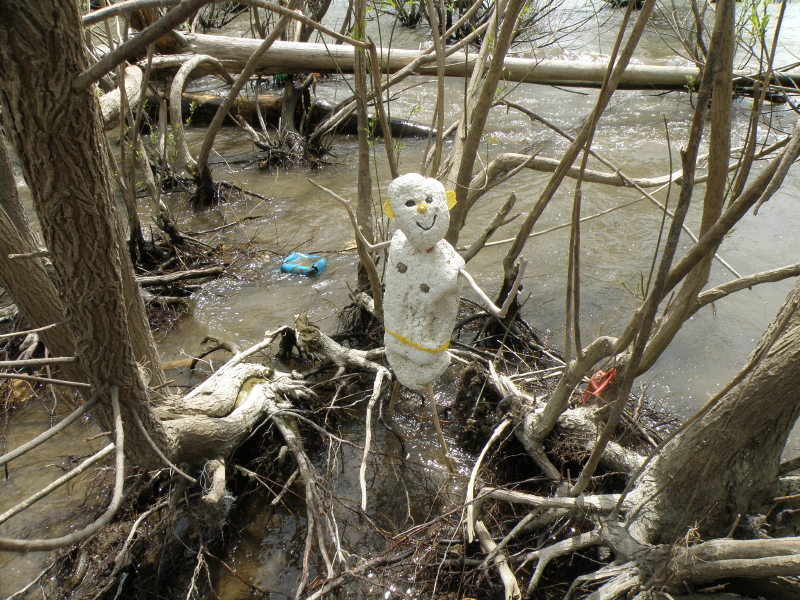
Polystyrene Person among willow roots, May 2013

Standing among the roots of a fantastic willow tree, the Polystyrene Person marveled at how the tree maintained its grip on the earth.  Beneath the larger roots was a dense mat of very fine rootlets that held the soil together.

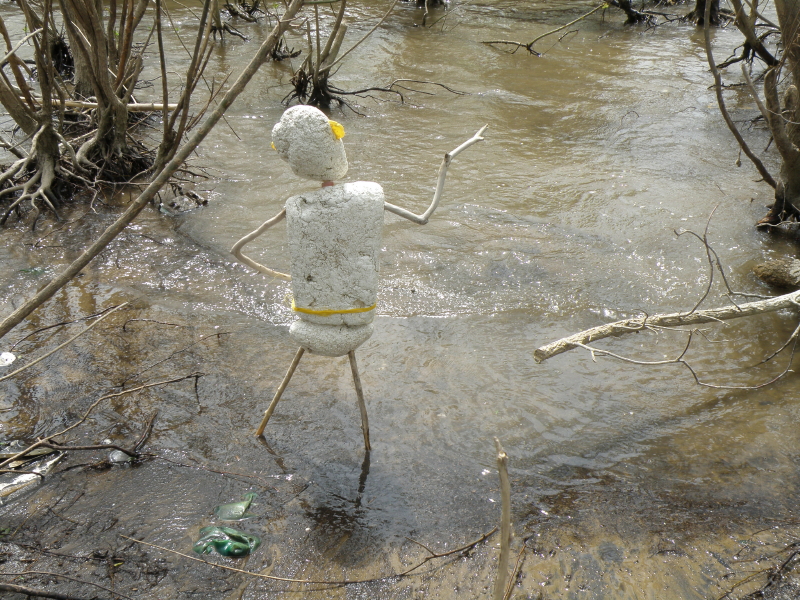
Polystyrene figure standing in water, May 2013

figure among water and willow roots, May 2013

The figure moved to the river’s edge and couldn’t wait to experience water.  It was such an entirely different sensation than standing on solid ground.  Cold water splashed up onto the Polystyrene Person’s face and being wet wasn’t the most pleasant feeling.  The literal tug of the river caused the figure to scramble up on the roots of a nearby willow to keep from being drawn further into the liquid.  Instinctively, the figure realized that it would be lost if the river was allowed to have too tight a grip.  Pulling the Polystyrene Person  back upon the shore, I explained it was time for me to go home.  I offered two choices to my creation.  It could stay at the river and face an uncertain but potentially exciting future where it more than likely would be destroyed by either nature or the hand of man.  Or, it could go home with me and see a different part of the world.  Perhaps because the river was a little scary, the Polystyrene Person opted to go home with me.

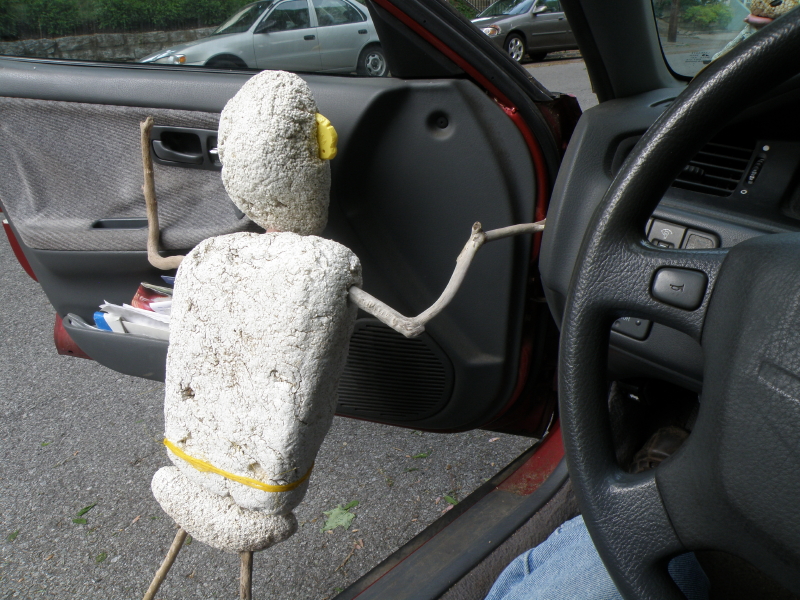
The Polystyrene Person opening my car door, May 2013

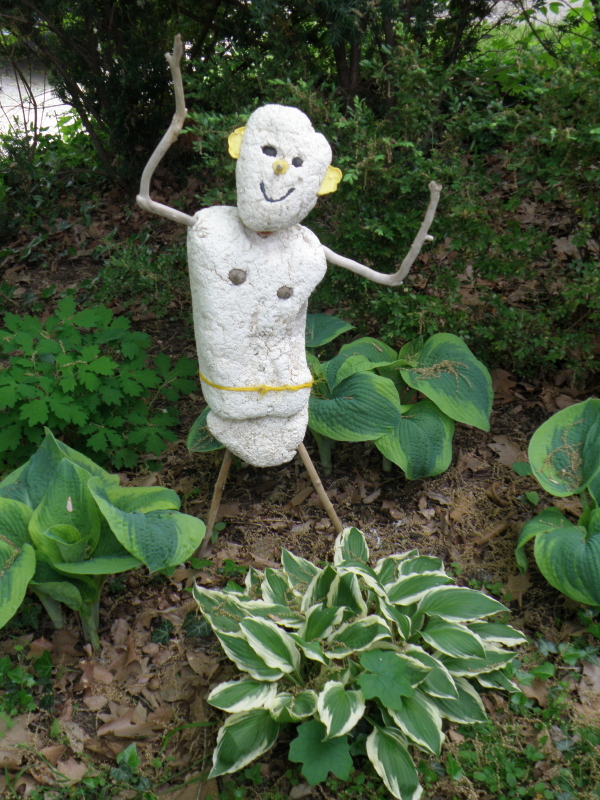
Because my hands were full…the figure opened my car door for me.  It’s really a very polite and innocent being.  During the short ride from the river to my house…I asked the Polystyrene Person what it would like to do?  The figure replied that it would like to continue to be out in nature and so I found the perfect place in my yard for it.  Happily, my latest creation takes pride in watching over my spring plants as they reveal themselves during the new season.
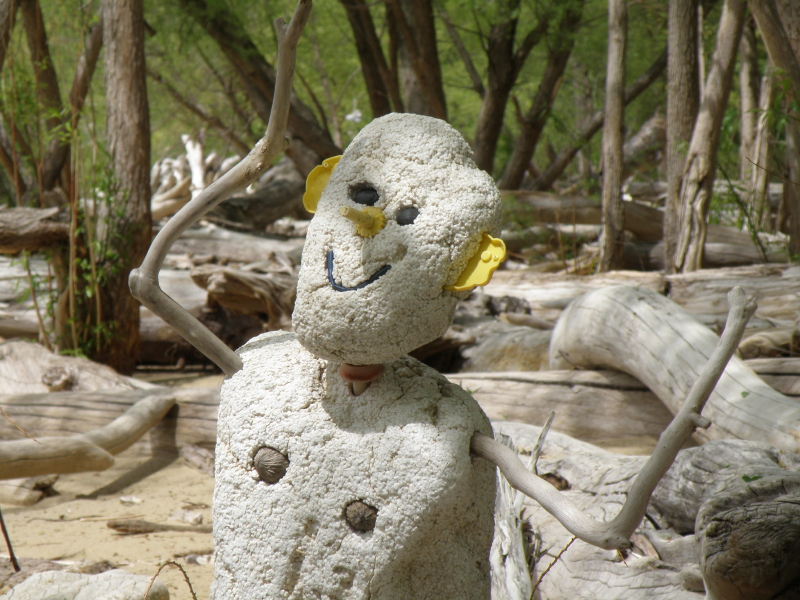
Polystyrene Person among the Hostas, May 2013

Read Full Post »

« Newer Posts - Older Posts »