Feeds:
Posts
Comments

Archive for the ‘environmental art’ Category

Canada Geese, Falls of the Ohio, April 2014

It’s springtime at the Falls of the Ohio and life is less shy about revealing itself.  Wasn’t too long ago that finding even the most common bird could be a challenge due to the harshness and length of our winter.  Now the spring migrants are winging their way northward and even the indigenous species are easier to locate.  This is the time of year when the pair bonds are strongest.  The resident Canada Goose population appears to have overwintered in fine fashion and it won’t be too long before the first goslings are in the water.  As you may have ascertained, this post will be about one of my favorite Falls subjects…birds.

osprey, Falls of the Ohio, April 2014osprey, Falls of the Ohio, April 2014osprey, Falls of the Ohio, April 2014osprey, Falls of the Ohio, 2014

This is a composite image of three different Osprey that were simultaneously circling my position at the river recently.  The trio were flying in ever-widening circles and taking advantage of the wind currents and thermals.  It’s a thrilling site to observe these fish hawks diving into the water and being rewarded for their efforts with a freshly caught fish in their talons.  I’ve heard about, but not yet seen, the Bald Eagle nest that is just west of the Falls area.  On occasion, I have seen eagles, but considering how near they are to this area I would have thought that sightings would be more common.  I’ve recently seen other birds of prey including Peregrine Falcons, Cooper’s Hawks, and our next featured bird, the Black Vulture is beginning to return to the Falls of the Ohio in numbers.

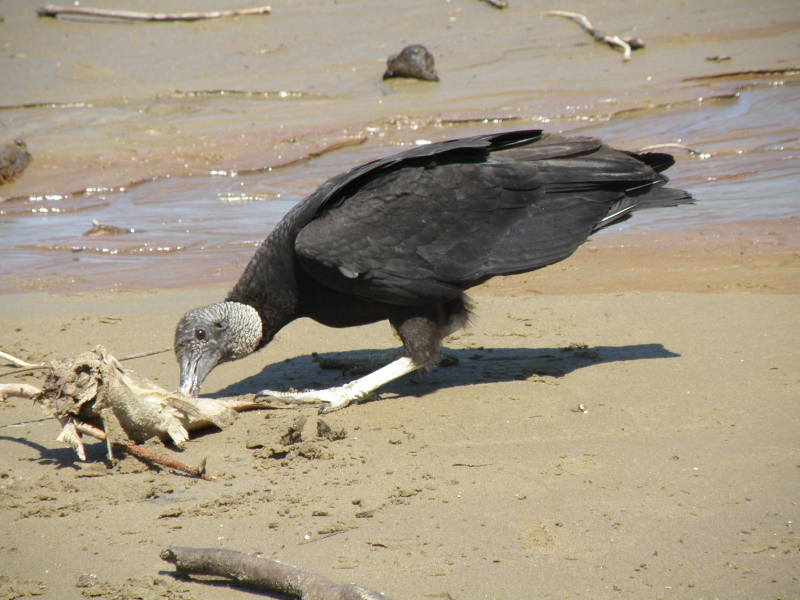
Black Vulture and dead fish, Falls of the Ohio, April 2014

Black Vulture, Falls of the Ohio, April 2014

Black Vulture feeding on a dead fish, Falls of the Ohio, April 2014

To my eye, it appears that the Black Vulture population has been increasing while our other vulture…the Turkey Vulture presents itself less frequently.  The Black Vultures are more gregarious and aggressive which probably keeps the Turkey Vulture from showing its featherless, naked, red-head more?  Recently, I came across this individual Black Vulture feeding upon a dead fish.  It let me get quite close, but there was also a minimum distance that it would tolerate me.  Whenever I would get closer to its comfort zone, the vulture would grab the fish with its sharp beak and drag it to where that minimum distance was re-established before it resumed feeding.  We did this dance for a few minutes before the vulture decided it had enough and flew away.  My next bird is one that I have never observed in the park before.  Some of my most memorable sightings have come from species seen just once and maybe for a few seconds at that.  Hardcore birders (they wear black leather jackets with chains hanging off them) are familiar with this phenomenon.  Friends have asked me why I don’t indulge my avian passion in a more organized fashion, but frankly I don’t like the sense of competition that can exist in some of these groups and clubs.  I appreciate that birds are fellow life forms that are inhabiting the same time and space with me and are more than feathered abstractions to cross off on some list.  If you pay attention, birds can tell you much about the state of nature and this planet.

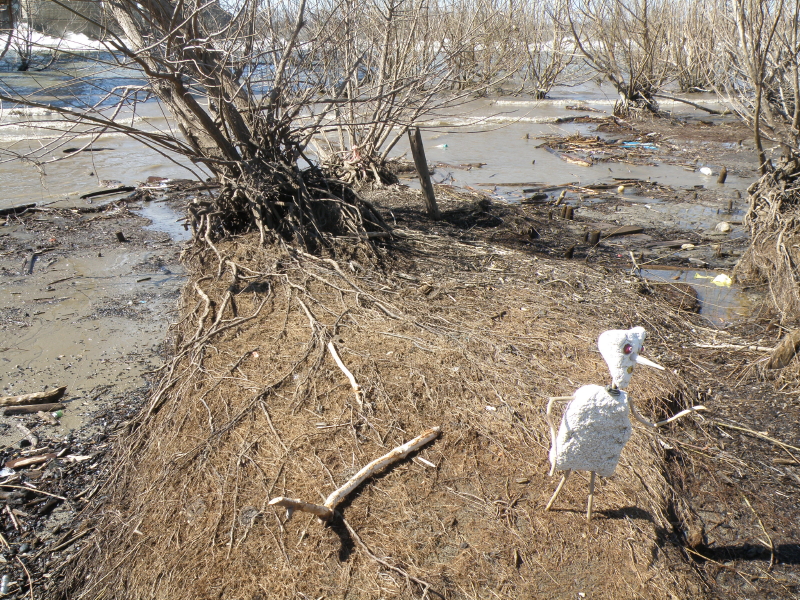
Orange-collared Piper, Falls of the Ohio, April 2014

Orange-collared Piper, Falls of the Ohio, April 2014


The new bird I recently came across is the Orange-collared Piper.  It’s a shorebird that undertakes  a tremendous journey starting at the tip of South America and it won’t stop moving northwards until it reaches its breeding grounds in the Arctic Circle.  Landing at the Falls, it is a little more than half way to where it needs to be.  This piper is a rather small bird and easily overlooked in this particular environment.  Its white body and head look remarkably like the polystyrene that litters these shores.
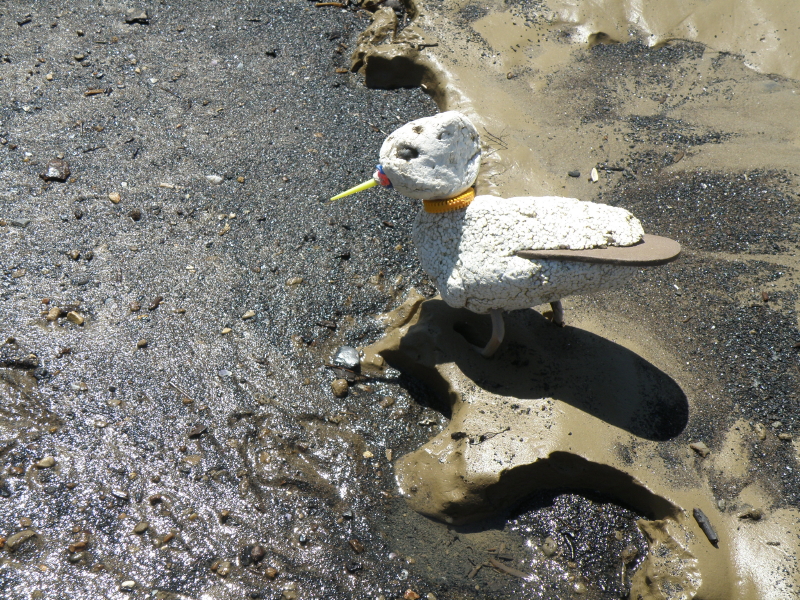
Orange-collared Piper at the Falls of the Ohio, April 2014

Orange-collared Piper, April 2014

The bird is so named because it sports an orange ring around its neck.  Other field marks include diminutive size, brown wings, and a sharp yellow bill it uses to probe sand and mud for the tiny invertebrates it eats.  Also true to its name, this bird makes a high-pitched “piping” call it uses while it feeds.  To he honest, I did not hear this call with this particular individual.
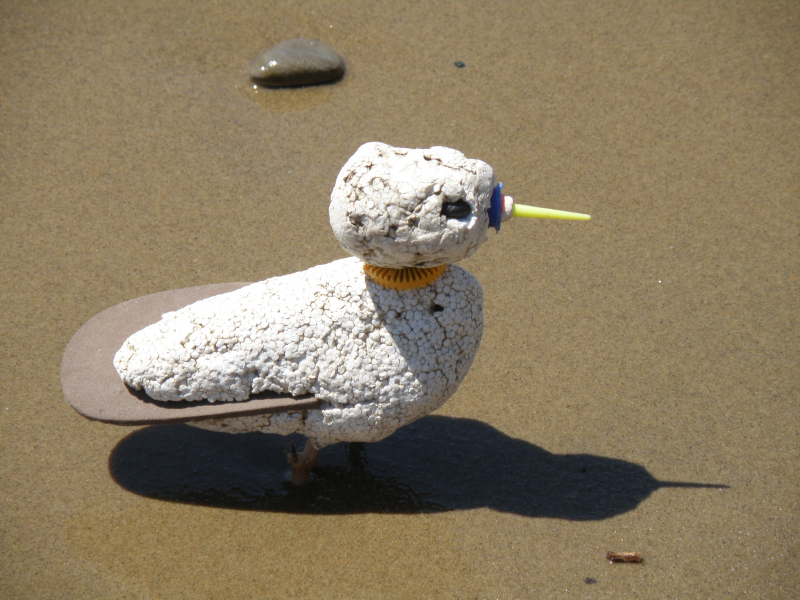
Orange-collared Piper at the Falls of the Ohio, April 2014

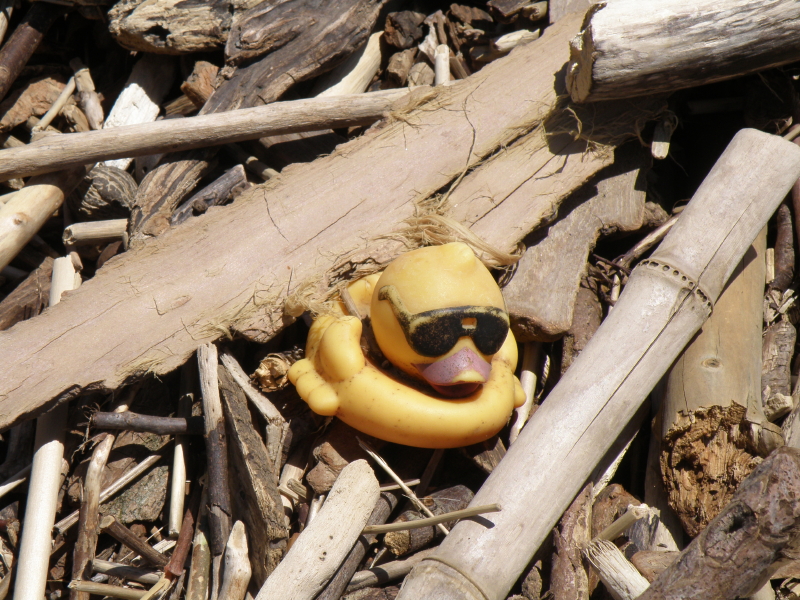
Both the male and female Orange-collared Piper look about the same.  At its breeding grounds, the pair incubates about five or six tiny, black speckled eggs in a rather shallow gravel depression.  No fancy nest for this bird…it lays its eggs directly on the ground where  cryptic coloration helps protect them from the numerous Arctic predators.  This bird is considered threatened due in large measure to habitat loss and other environmental degradation.  Its amazingly long migration probably also puts this bird at risk since so many things can go wrong on such a long trip.  I watched this particular individual for about forty minutes or so.  It moved among the driftwood in very careful fashion stopping here and there to probe the sand with its sharp yellow bill.  When the bird decided to move on…there was a flash of wings too quick to see and it was gone.  I hope that it reaches its destination and resurfaces at this park again.  I have one final “bird” that I recorded the same day I saw the Orange-collared Piper.  Perhaps you will recognize this one?  It’s most distinctive field mark is the sunglasses it wears while floating on the river.  Happy birding!!rubber duck with sunglasses, April 2014
Read Full Post »

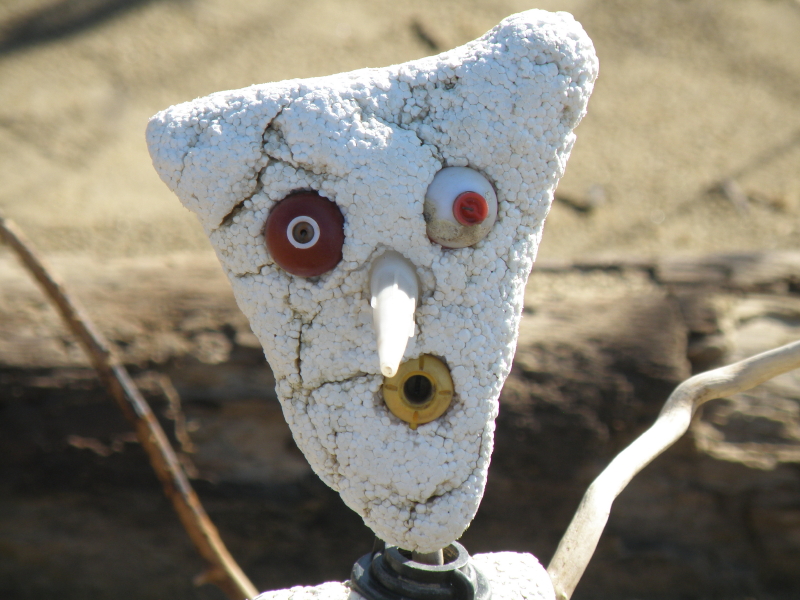
Mr. Mosquito Nose, April 2014

I’ll bet some of you out there might have wondered what’s happened to the old riverblog?  Here it is near April’s end and there is nothing to show for what occurred during this month.  Let me reassure you that the Artist at Exit 0 has been as active as the river has allowed him to be.  Exploring the line between culture and nature is personally important.  Between periodic high water, the exhibit at the Carnegie Center for Art and History, the Kentucky Derby Festival, and life in general…posting stories has needed to take a back seat.  The process, however, is ongoing.  I have been to the river on multiple occasions and observed the transition from winter to spring at the Falls of the Ohio.  Making art remains a priority and I realize that I just feel better if I have the opportunity to make something of my own.  Don’t be surprised if I end this month with a flurry of posts in an attempt to catch up.  Let’s start at the beginning of April and see how far I get.  Here’s a story featuring Mr. Mosquito Nose who had an experience with a young journalism student interested in what the Artist at Exit 0 does on an ordinary trip to the Falls.

Mr. Mosquito Nose at the river's edge, April 2014

This day began with a rendezvous at the river.  I arrived early and was scouting out the situation.  The Ohio River had just been up and I knew the riverbank was reconfigured with different driftwood and new junk  waiting to be picked up.  I had been contacted previously by Taylor Ferguson who is a journalism student at the nearby Indiana University Southeast in New Albany who requested to tag along with me on one of my Falls of the Ohio adventures.  Taylor has a creative project of her own…to create a short, documentary video and she wanted the Artist at Exit 0 to be the subject.  This was the first time anyone has requested this and so I agreed to do it.  With a cool and sunny day before us we left the still leafless willows and walked out onto the riverbank.

Taylor at the Falls of the Ohio, April 2014

Taylor turned out to be a super friendly and very interested in my projects.  I will admit that it was odd being tethered to a microphone and I felt a little self-conscience talking to myself so openly with a video camera pointing in my direction.  I usually have some dialogue running through my head as I explore this environment, but to hear it in such an audible fashion was different.  I brought Taylor to my U.F.O. (Unidentified Floating Object) art site where I keep my river materials and demonstrated how I went about making an absurd figure from the poor stuff of the world.  With Mr. Mosquito Nose in hand, the three of us left my outdoor studio and explored the environs near the railroad bridge.  Along the way, Taylor would ask me questions about when and why I started this project.  By now, those are familiar questions.  I enjoy looking for what is interesting about each day.  So, now it was time to walk the riverbank with Mr. Mosquito Nose and be present in this moment.

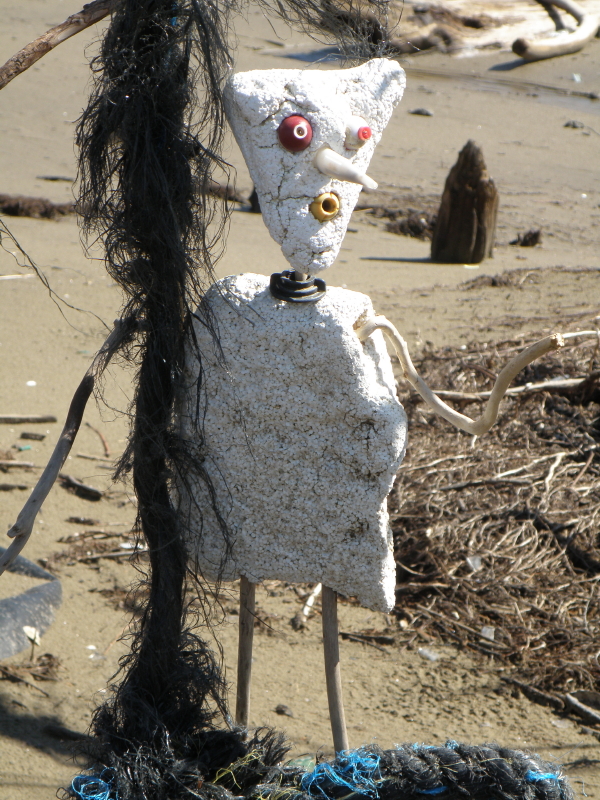
Mr. Mosquito Nose and orange barge cable, April 2014

The lack of footprints in the sand told me that few others had recently passed this way.   As we walked along, I kept an eye out for those little micro-contexts that I could pose this latest Styro-figure in.  After making an object…I’m interested in using it to create an image.  With luck, the images might then be used to tell a story.  Here we have come across an old, frayed barge cable that the river washed into the park.  It seemed a good location to take a few photos.

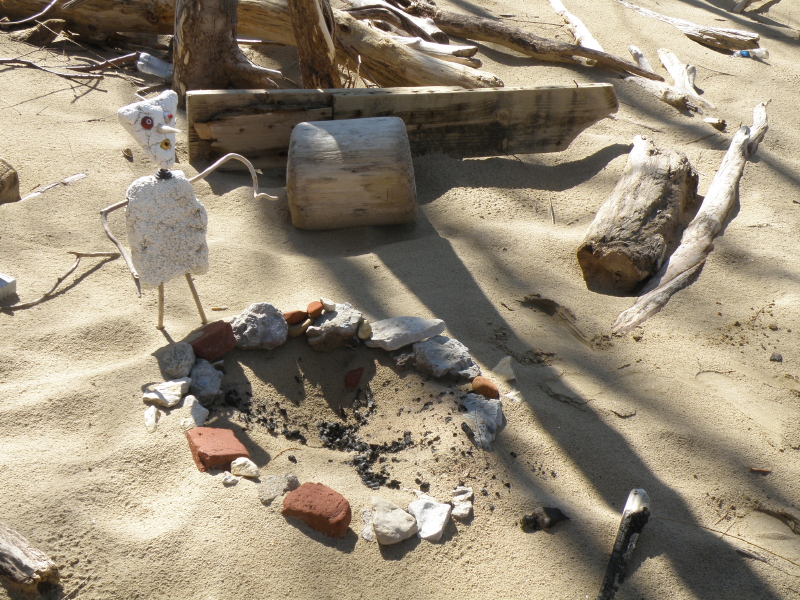
figure next to an old camp fire site, April 2014

Near the cable, we came across the remains of a camp fire.  Brick and rock define a shallow pit that still had some ashes in it.  For a few years now, I have also photographed old camp fire sites with the intention of publishing them here as a collection.  I’m always struck by the elemental nature of this activity and what its importance has meant for our species’ survival.  We set up Mr. Mosquito Nose by the fire pit and now those photos are a part of this record.

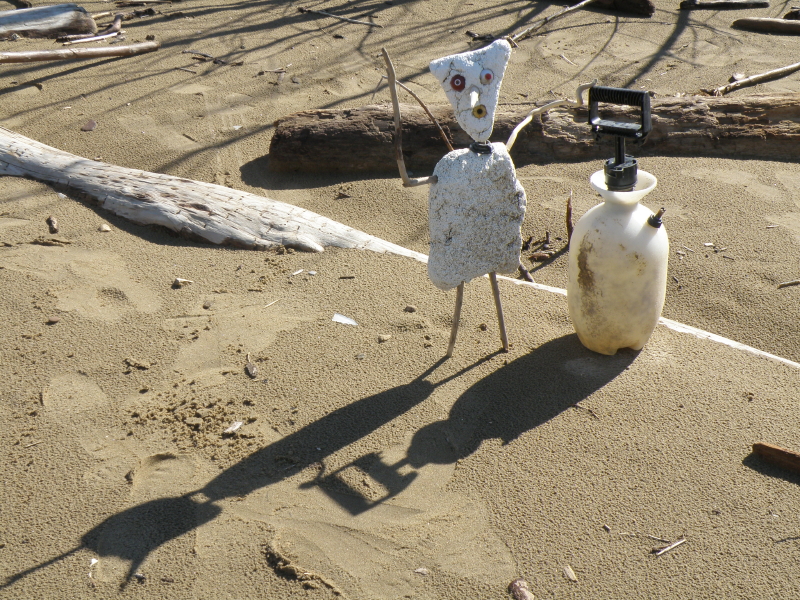
Mr. Mosquito Nose and plastic sprayer, April 2014

Among the other objects we came across was this old sprayer.  The figure’s arms are raised in warning because this might have potentially been used to spray herbicide or worse.  Caution is required whenever you come across something that could possibly harm you.  Knock on wood, I’ve been doing this project for more than a decade without any physical reactions or incidents from the stuff I’ve encountered out here.  I place a lot of faith in the diluting power of millions of gallons of fresh water.

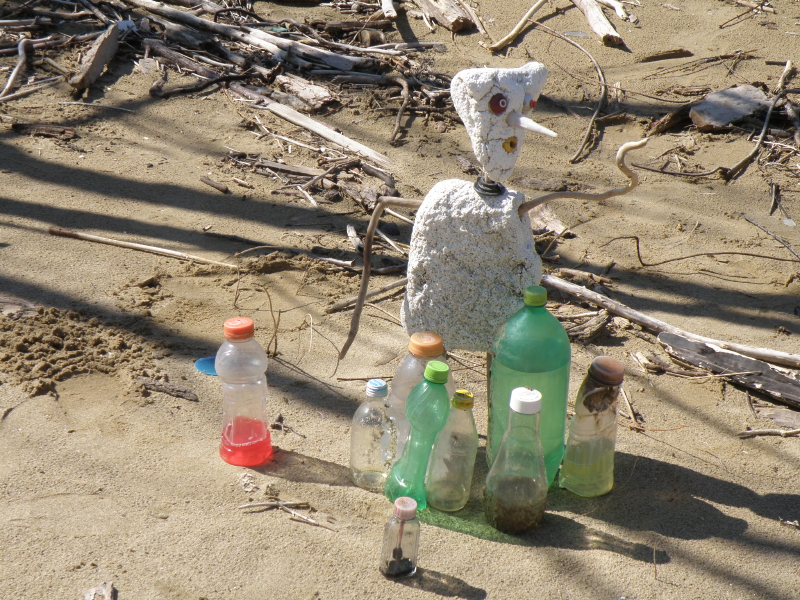
Mr. Mosquito Nose and various bottles, April 2014

Moving on to another location, I collected a few glass and plastic bottles along the way and made this composition.  Some of these containers have mystery contents of their own.

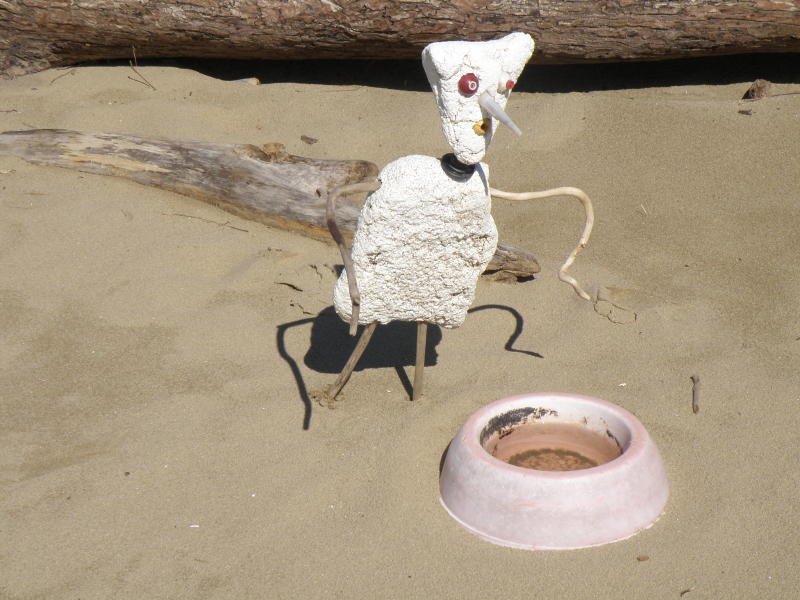
Mr. Mosquito Nose and dog food bowl, April 2014

Later we came across this pet food bowl that was half full with water.  The water in this bowl could have collected here as the river level dropped or been filled up by rainfall?  It is another example of an incongruous object making an appearance at the Falls.Mr. Mosquito Nose, April 2014

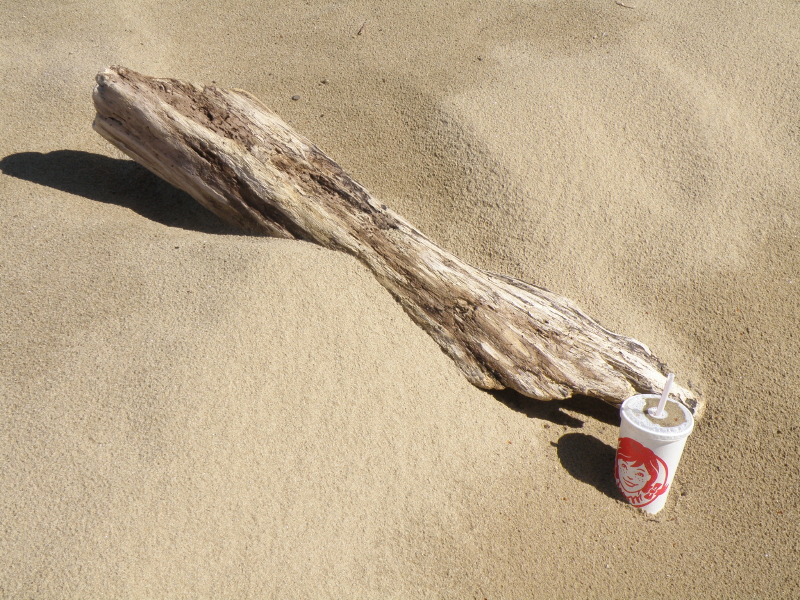
Taylor and I came across another barge cable that had been snagged by a low hanging willow branch and created this final photograph with Mr. Mosquito Nose.  The day was moving along and both of us were needed elsewhere.  About a week later, Taylor called me up to say that most of the audio the microphone picked up had interfering  sounds of wind and water.  This seemed perfect to me because that’s what I usually hear out here as well with the occasional bird call thrown in for good measure.  Taylor had three hours of footage that needed to be edited down to three minutes which sounded like a daunting challenge in its own right without the audio difficulties.  I later caught up with Taylor in Louisville and did a quick voice over recording that I hope will do the trick for her project.  At the time of this writing…I haven’t seen the finished video, but hope it turns out for Taylor and that she gets a good grade for it.  Okay, that’s it for now from the Falls of the Ohio State Park…one last image then I’m calling it a post.

Sand, driftwood, and disposable drink cup, Falls of the Ohio, April 2014


Read Full Post »

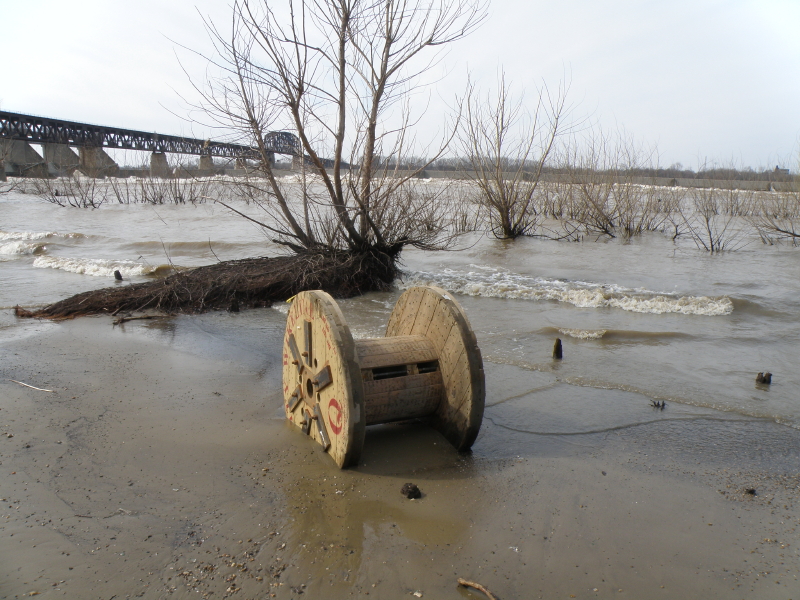
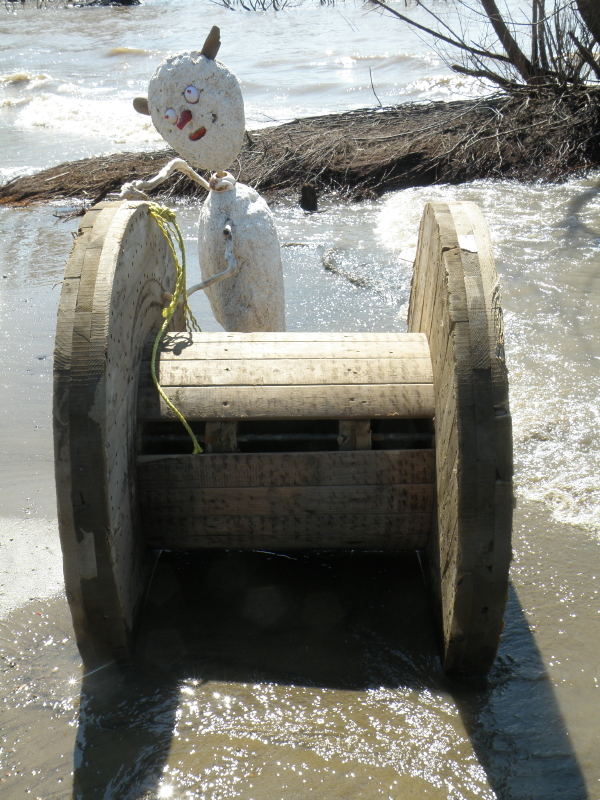
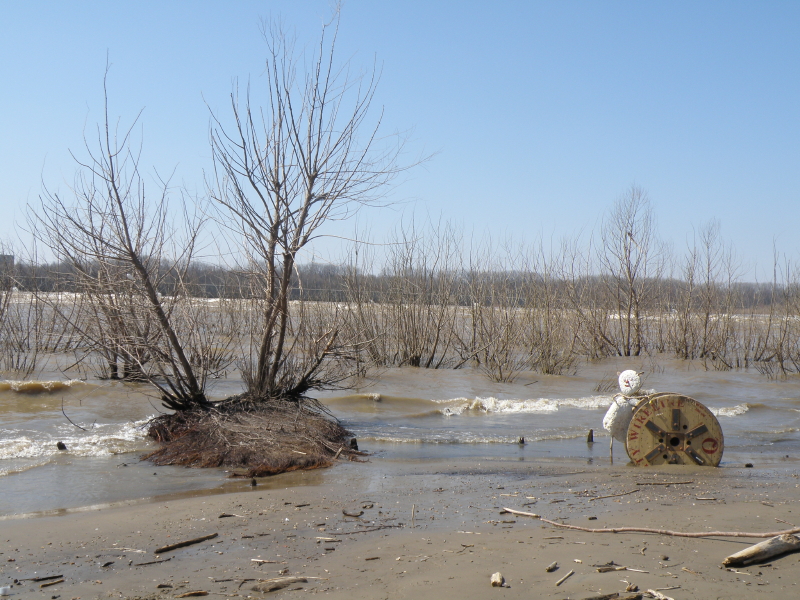
wooden cable spool and willow tree, Falls of the Ohio, March 22, 2014

It’s a sunny Saturday and warm for this time of year.  One of those days I can’t wait to get to the river.  Spring is still slow in developing, but it can’t be much longer now.  I spent a good part of the day just filling up my canvas collecting bag with all types of odds and ends both man-made and natural that have washed up on these fabled shores.  I’m finding so much stuff that for practical reasons I decide to see if I can find a spot up the bank and under the willows that might make a good location for a temporary outdoor art studio.  I can offload some of my larder for future use while continuing to walk the edge of the river.  I’m enjoying the sunshine and taking deep breaths of the fresh air.

U.F.O. studio...Unidentified Floating Object studio, March 2014

U.F.O. studio, Falls of the Ohio, March 2014

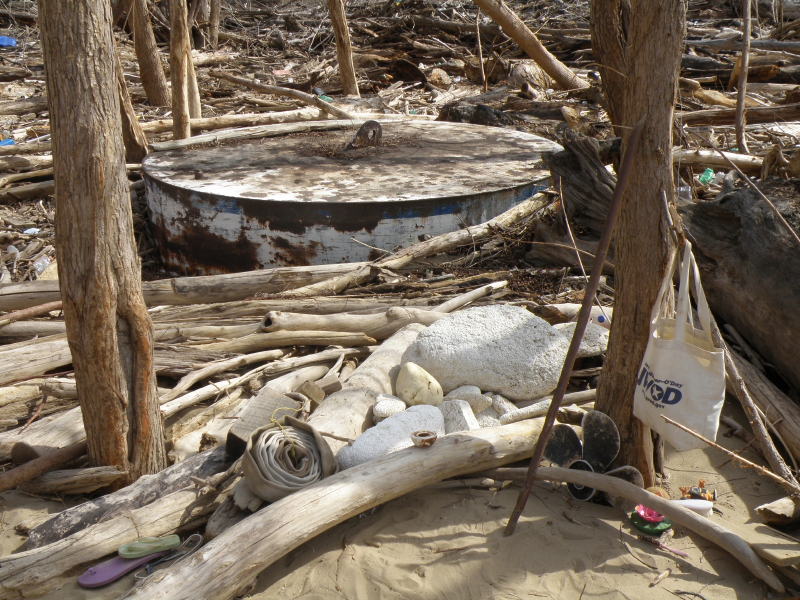
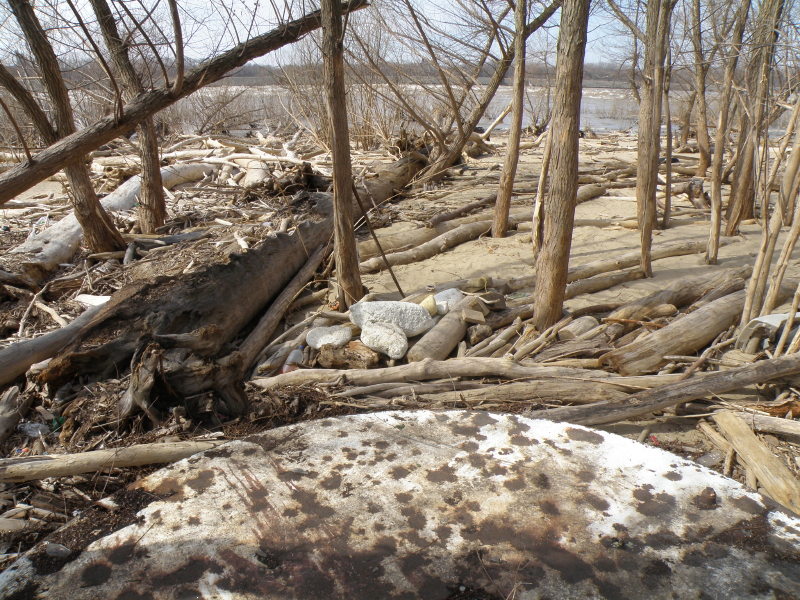
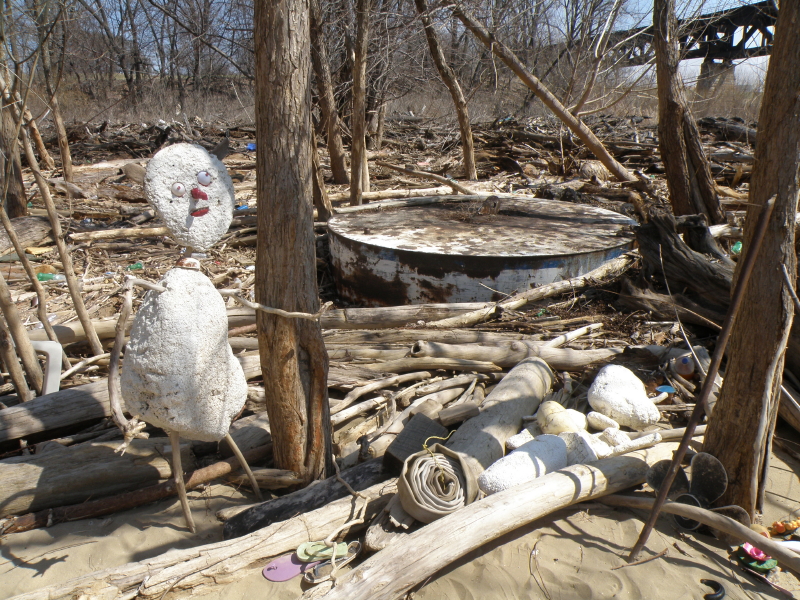
I chose a spot bordered by a large log that keeps most of the driftwood at bay and what I call the U.F.O. or Unidentified Floating Object which is circular metal platform that was once painted white with blue trim.  It’s starting to show some rust now.  This large object washed over the dam during a high water moment three or four years a go.  Since then it’s changed positions with the rising and falling river levels and was once completely buried under driftwood.  The U.F.O. is a platform that normally would be anchored out on  the river.  Barges and other water craft can tie on to it if necessary.  Some how this one got loose and relocated to the park.  When I first discovered it here I also imagined that it was a giant bathtub plug that helped keep the water in the river.   I was lucky that I had the same outdoor studio for many years before this winter’s high water rearranged the landscape again and floated all my collected materials away.  I spent a few hours walking the river collecting Styrofoam and sticks and can’t wait to make something new.

Mega Spool figure in progress, March 2014

Completed figure at the U.F.O. studio, March 2014

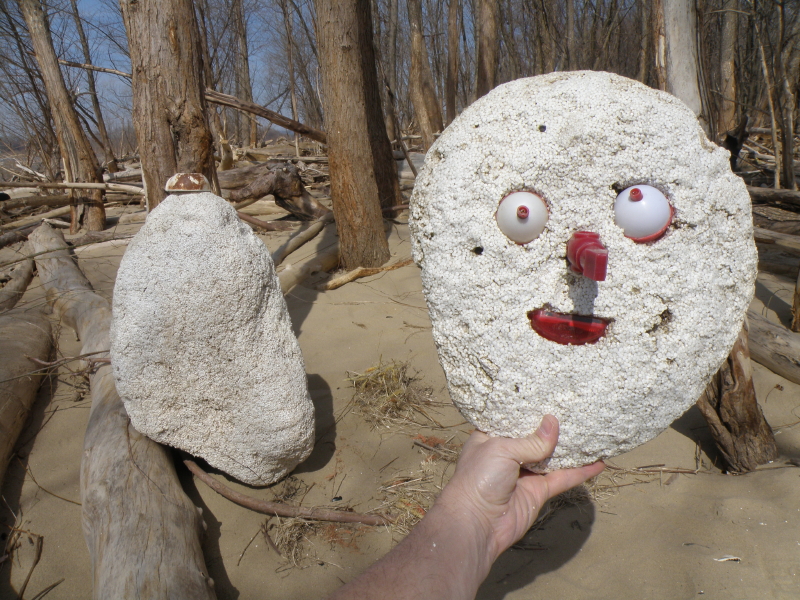
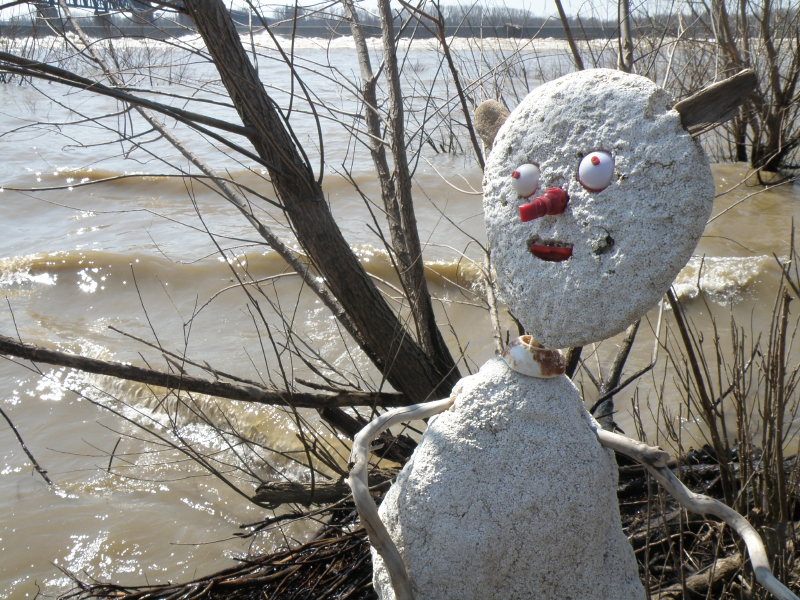
The first figure I make here is from the largest chunks of polystyrene I had found on this excursion.  I used two fishing floats (one larger than the other for expressive effect) for the eyes.  The nose is a plastic piece from a fooseball table.  The mouth is a red reflector.  My figure has ears, arms, and legs that are pieces of driftwood.  The figure has a benevolent feeling to it and I can’t wait to photograph it by the river.  I did run into a young sculptor attending the Kentucky School of Art who was collecting driftwood for her own project.  Her name is Jenn and she approached me asking if I was the person with the show at the Carnegie Center for Art and History?  She and her classmates had seen the exhibition.  Jenn is building an installation at the school and promised to let me know when she completed it.  It will be fun to see art made by someone else from materials collected within the park.

Large Styro-figure on a tiny willow island, March 2014

Styro-figure on tiny willow island, Falls of the Ohio, March 2014

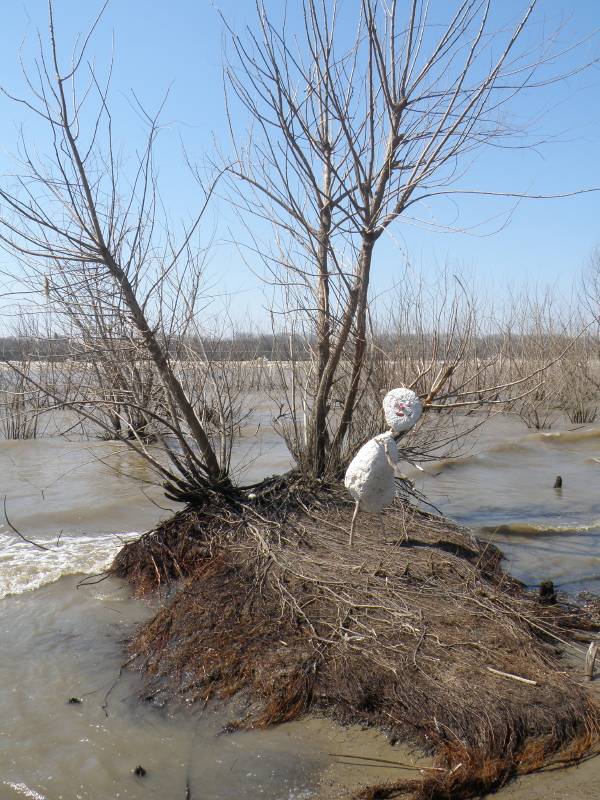
When I first meet the river, I spend a little time looking around and scouting out potential locations to create the photographs that will represent this day in my project.  I decide that I like this tiny “willow island” which consists of clay and sand bound together by the living roots of this tree.  Waves and water wash all around it and at times it does look like an island.  As the river recedes to its normal pool, this tree will be high and dry at last.  It’s amazing what it takes to keep this tree in place with such a dynamic river always testing its resolve to survive.  During the highest river levels, this tree would be completely submerged underwater.  Many of the willows along this stretch of the river bear scars and wounds from large logs battering them, breaking branches, and grinding bark away.  I pose the figure on the root mass and move to the next shot which isn’t too far away.

Styro-figure and large, wooden cable spool, March 2014

Styro-figure and wireline spool, Falls of the Ohio, March 2014

Near tiny willow island is a large wooden “spool” for wire line or cable.  I’m amazed by this object’s heavy-duty construction.  This spool floated into here and is now partially sunk into the sand.  Small waves lap the shoreline and you can also see black coal dust swirling around the water’s edge.  Later when I see my pictures I’m struck by how similar this spool is to the circular platform that now forms part of my latest outdoor studio.  This new area to cache my materials is very visible and hence ultra public, however, if we have heavy spring rains…it’s very possible that all this will be washed away and rearranged again.  I often wonder what might go through people’s minds when they stumble upon my outdoor atelier?  It’s an odd archeological site of Styrofoam boulders, small piles of plastic toys, and a tangle of found roots and driftwood.  All the stuff you need to make an absurd figure!  I left my latest Styro-creation next to the spool.  I will go a head and tell you…I returned a week later and all I could find of him was his body and legs.  There must be headhunters out here?  I searched the area, but found no further trace of my figure.  As with most of my Falls projects, they continue to “exist” as images.  The exhibition that Michael Wimmer and I are participating in at the Carnegie Center of Art and History is entering its last week.  I’m so appreciative of the positive response I’ve received for my work.  The show will end with a tea and cookies closing.  If you are in the area, please stop by.
Final shot from the big spool and tiny willow island, March 2014, Falls of the Ohio

Read Full Post »

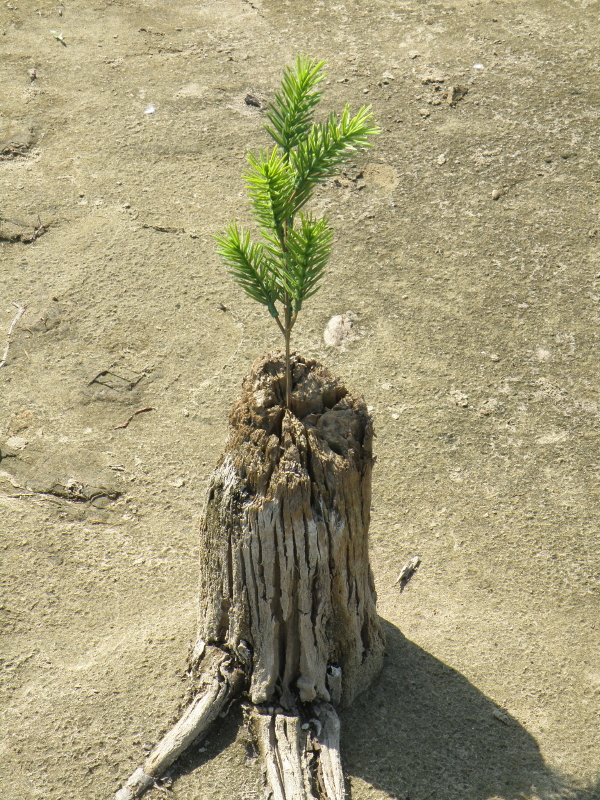
plastic pine growing out of a stump, Sept. 2013I consider this a great honor that fellow blogger Isaac Yuen focused one of his posts around my art projects from the past year and the tales I’ve created around them. For several years now, I have enjoyed Isaac’s award winning blog Ecostories. He has made me a believer in the power of the spoken and written word to convey universal truths particularly when they speak about our evolving relationship with nature. Stories are important and everyone has a story to tell. Isaac has a great way of taking on complex narratives and making them understandable. I encourage you to check out his thoughtful, positive, and beautifully written blog.

Read Full Post »

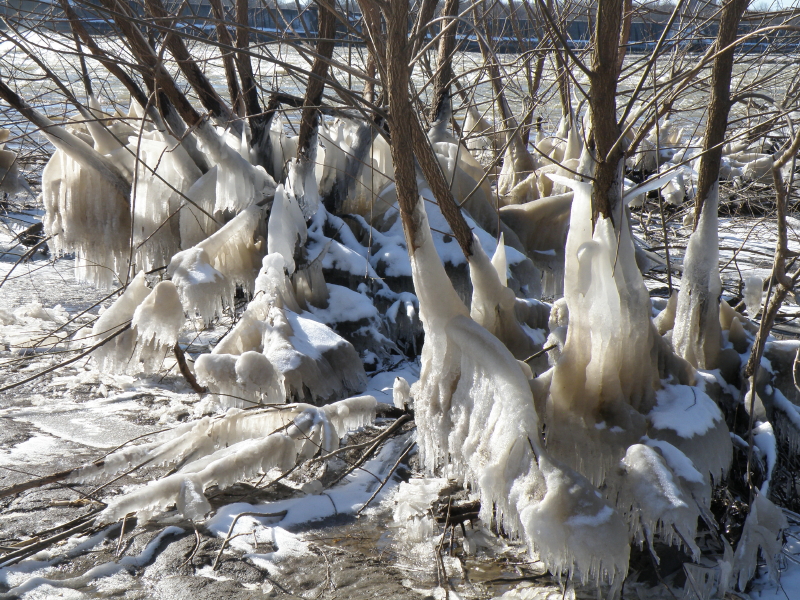
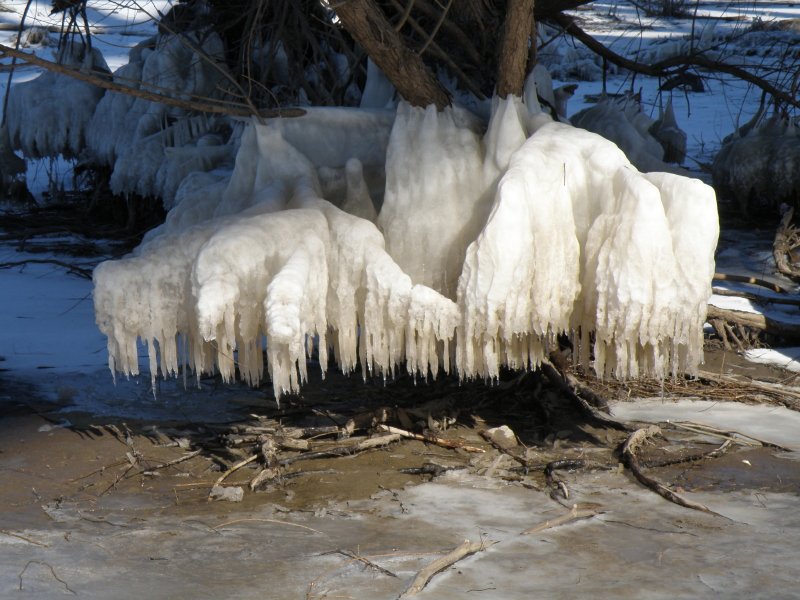
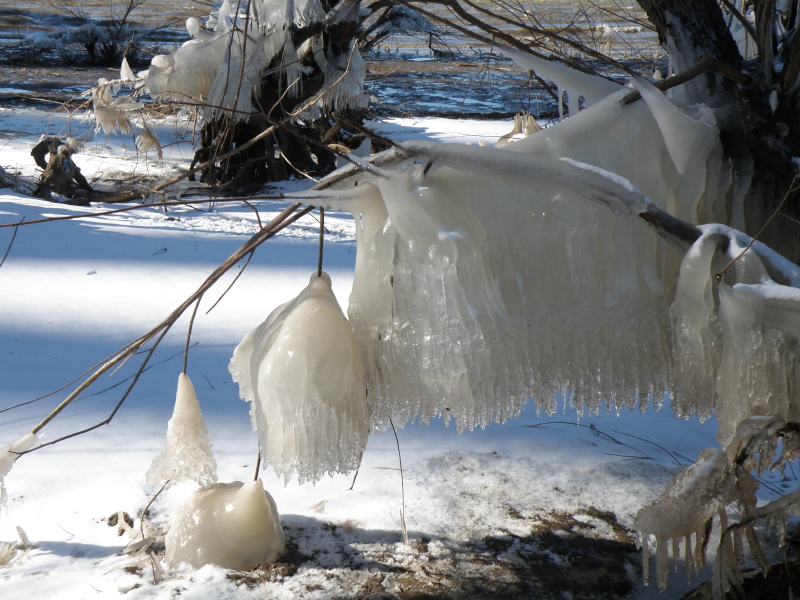
willow trees and ice, Jan. 2014

Polar vortex…that’s the new buzz words for us this winter.  The Kentuckiana area has tasted this Arctic gift twice so far and we haven’t had a winter this cold in many years.  It manifests with the temperature bottoming out around 0 degrees Fahrenheit…colder still with the wind chill.  Snow and ice also accompany this blast of icy weather.  Once under the spell of the polar vortex…all one can do is ride it out.  It’s going to be bone-chilling cold for several days in a row.  Even if you know it’s going to happen, you really don’t feel prepared for it.  People tape plastic over their windows to trap heat and foil wind.  Shoppers rush out to purchase bread and milk.  Folks let the faucets drip throughout the day and night to prevent freezing and bursting water pipes.  Still, the plumbers are busy.  Extra layers of clothes are needed however,  you still feel cold around the edges.  If there is a weakness in a machine…the extreme cold will find it and this happened to my trusty rivermobile.  School may be out, but otherwise it’s pretty much business as usual.

ice formations, Falls of the Ohio State Park, Jan. 2014

The part about “business as usual” also strikes me as being a bit sad.  I am of the opinion that the reason the Earth has winter is to slow everything down and that’s vitally necessary.  It’s meant to be reflective and allows a moment for a deep breath before moving on again.  We all have more than enough pushing us to accomplish tasks at increasing breakneck speed.  The polar vortex challenges us to slow down if we can.

Ice formations, Falls of the Ohio, Jan. 2014

Ice formations on willow trees, Falls of the Ohio, Jan. 2014

In an effort to foster personal wonder for the world, I made it out to the Falls of the Ohio on a day that wouldn’t risk frost bite.  Over the years, I have prized coming out here on cold winter days especially if it meant seeing different ice formations.   There are ice ribbons, sausage-shaped icicles, frozen homemade candles, and just plain ice blobs on display.  I love the variety of forms and the play of light through the magic of solid water.  The most interesting ice formations are near the water’s edge where the willow trees catch the rising steam off of the river.  The water is warmer than the surrounding air temperatures and this “fog” helps coat the roots and branches with glassy layers of ice.  I thought I had the place all to myself when I was joined in this frigid landscape by a new friend.

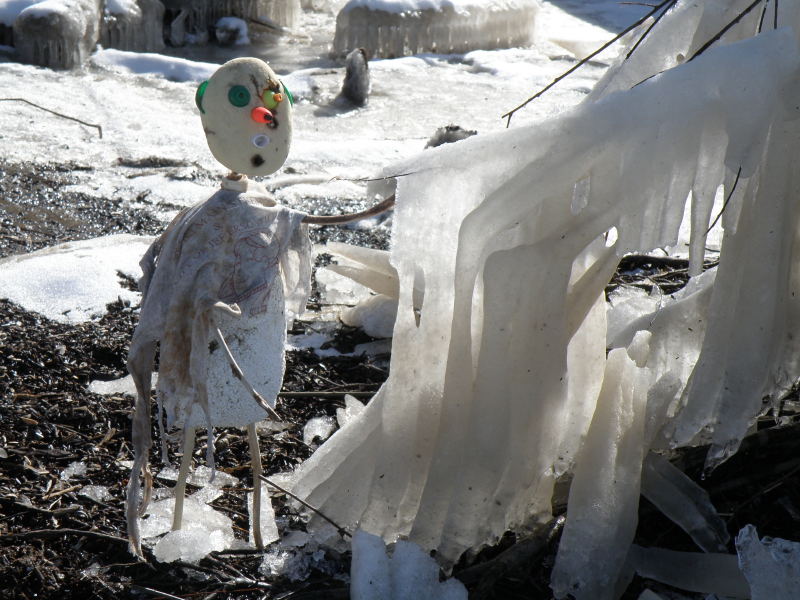
The Ice Tourist, Falls, Jan. 2014

The Ice Tourist following my tracks, Jan. 2014

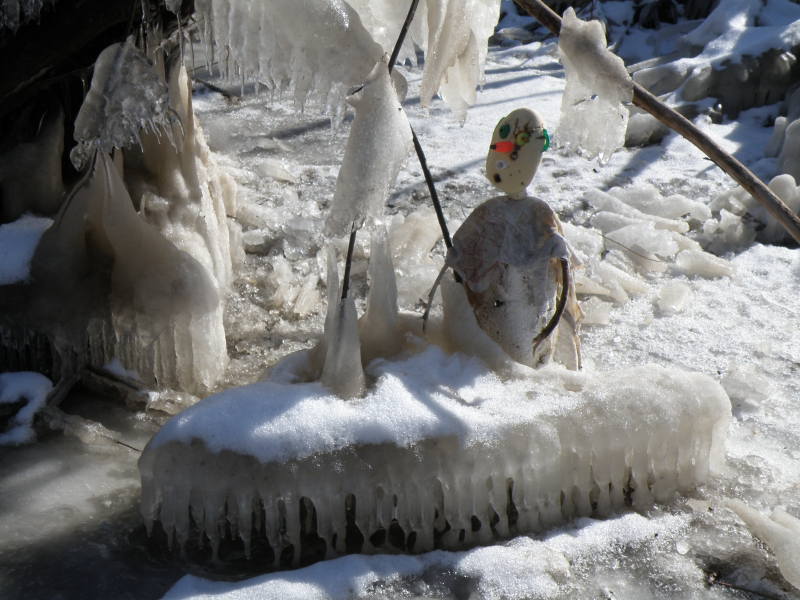
He described himself as being a fellow “ice tourist” and so that’s how I remember him.  He said he was curious about the ice, but also wary of stepping through thin ice and feeling the burn of extremely cold water.  I’ve had this experience before and so I could relate.  The Ice Tourist told me he had followed my tracks into the ice field and so far I had kept him out of danger.  We spent about an hour together before parting.  Here are some more pictures of him posed next to the ice formations we encountered.

The Ice Tourist, Falls, Jan. 2014

The Ice Tourist among icy willow, Jan. 2014

Ice Tourist and ice formation, Jan. 2014

The Ice Tourist had to check out everything as closely as possible.  He would climb upon the willow branches and roots to get the best view.  As it turns out, he was a local guy who like me, likes to hang out near the river whenever he can.  He was wearing a very thin and worn out t-shirt that said something about the town of Jeffersonville on it.  That’s the next town over from the Falls of the Ohio State Park.  I mentioned something about the poor condition of his garment and how it didn’t look substantial enough to keep him warm.  His response was that feeling warm was as much a mental state of mind and he was far too engaged by this novel environment to feel the cold.

The Ice Tourist, Falls of the Ohio, Jan. 2014

The sun was rising.  The day was warming and the ice was beginning to drip and lose its strength.  Today’s show was at an end.  The image of a hot cup of coffee or cocoa was starting to have great appeal to me and so I said my farewell to the Ice Tourist.  Perhaps we will run into one another again at the river…we shall see?  Leaving my new friend behind, I walked the riverbank  and could see that the Ring-billed gulls that had been absent during the polar vortex were once again in residence in the park.  I wonder if the groundhogs will see their shadows tomorrow?

Ring-bill gulls and mallard ducks, Jan. 2014

Read Full Post »

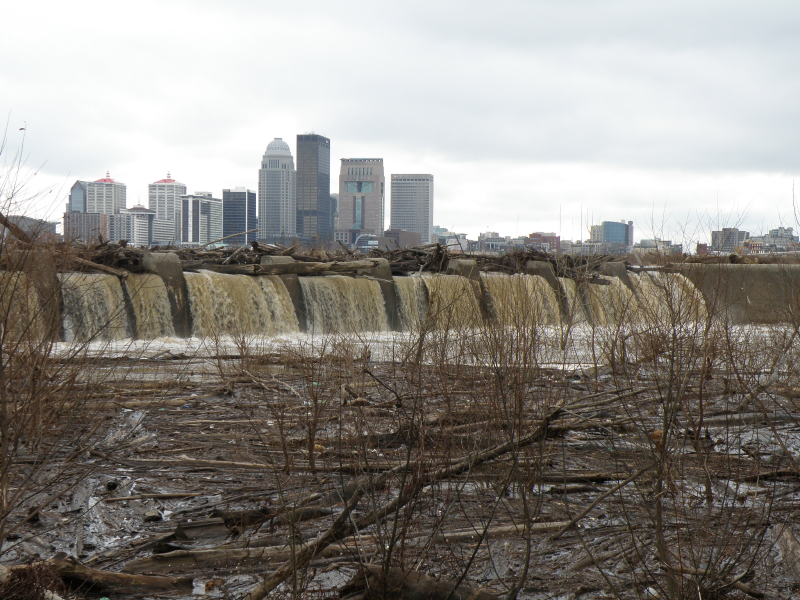
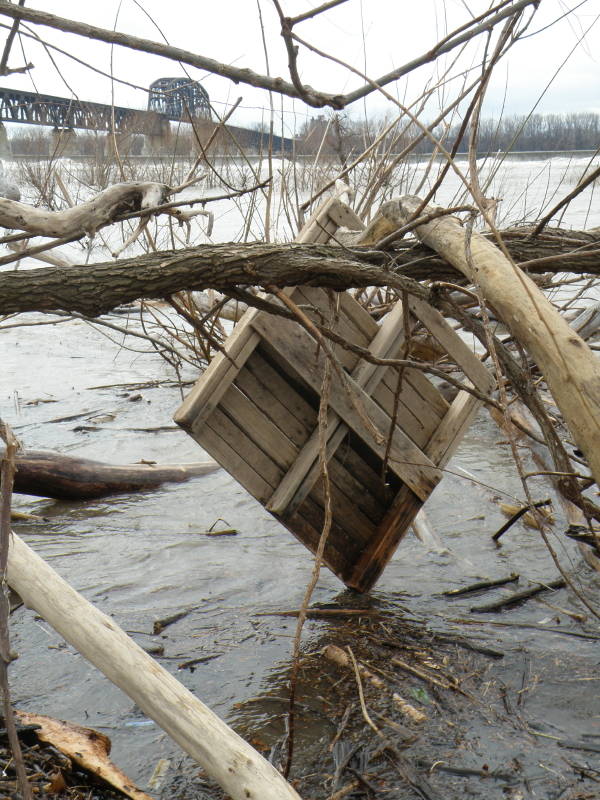
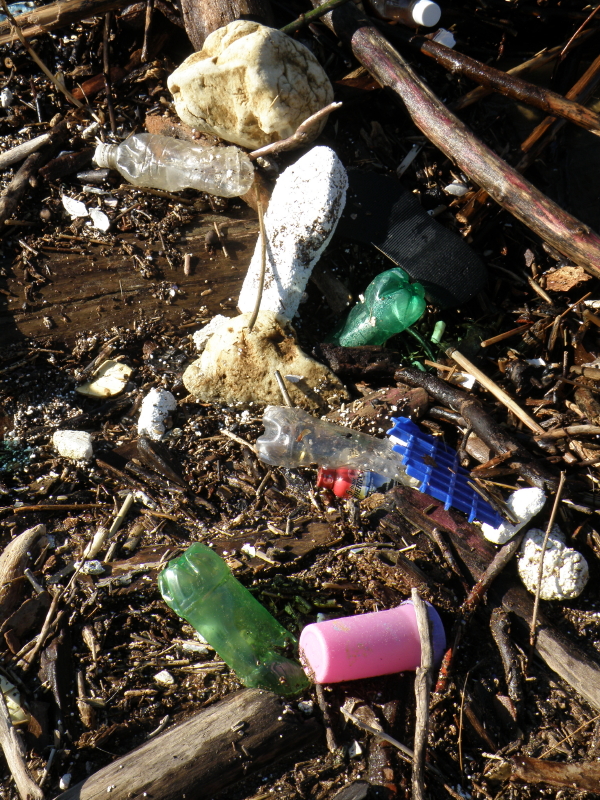
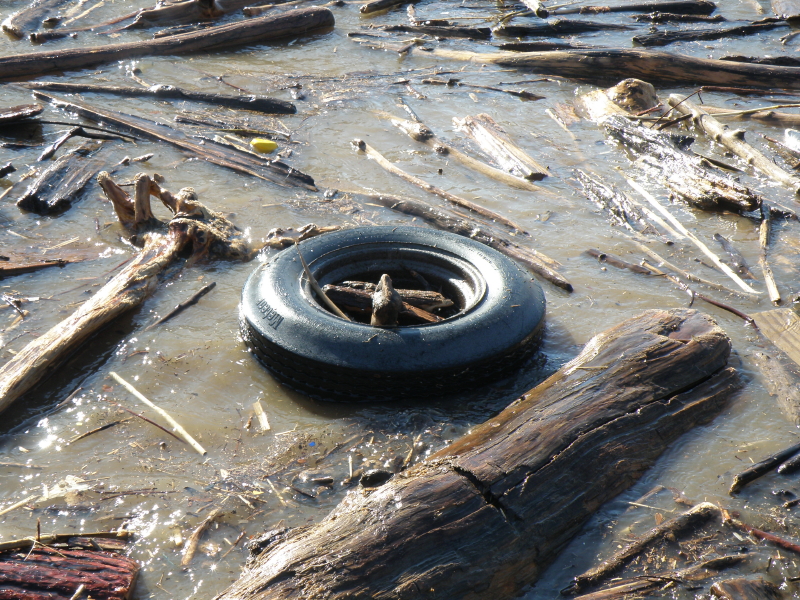
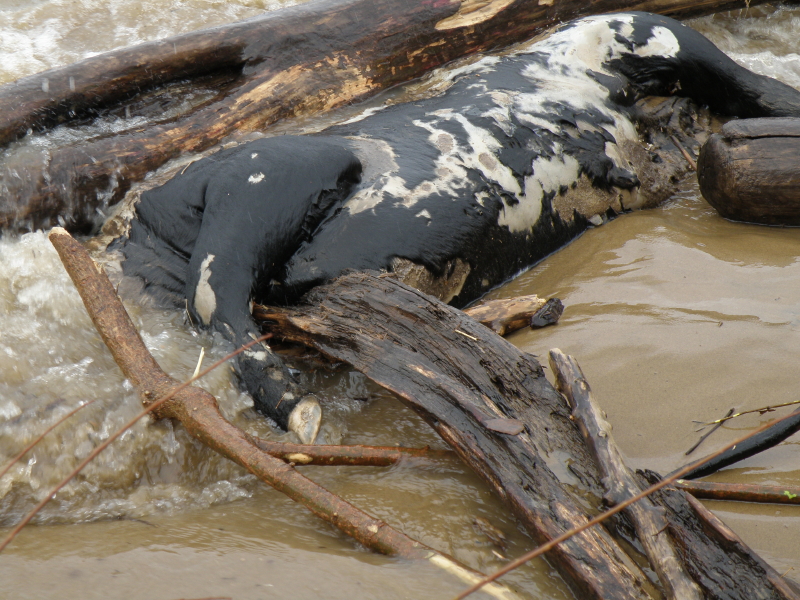
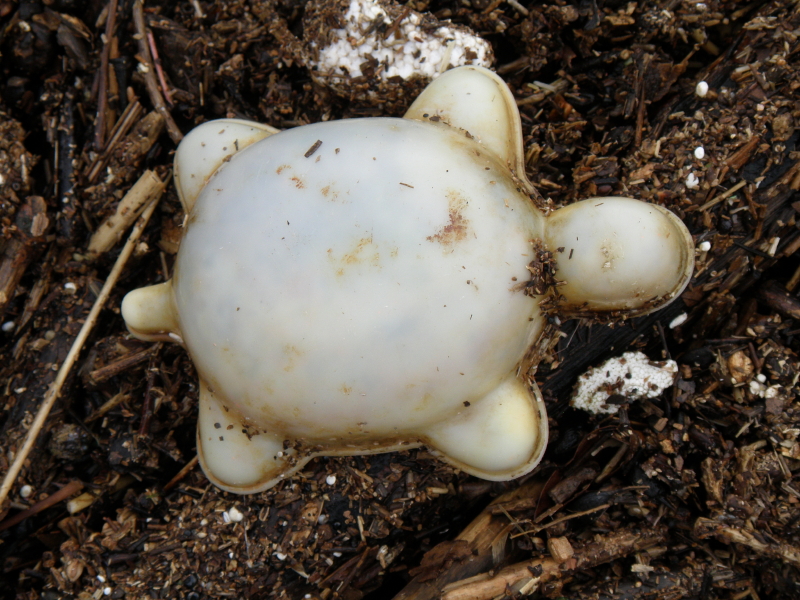
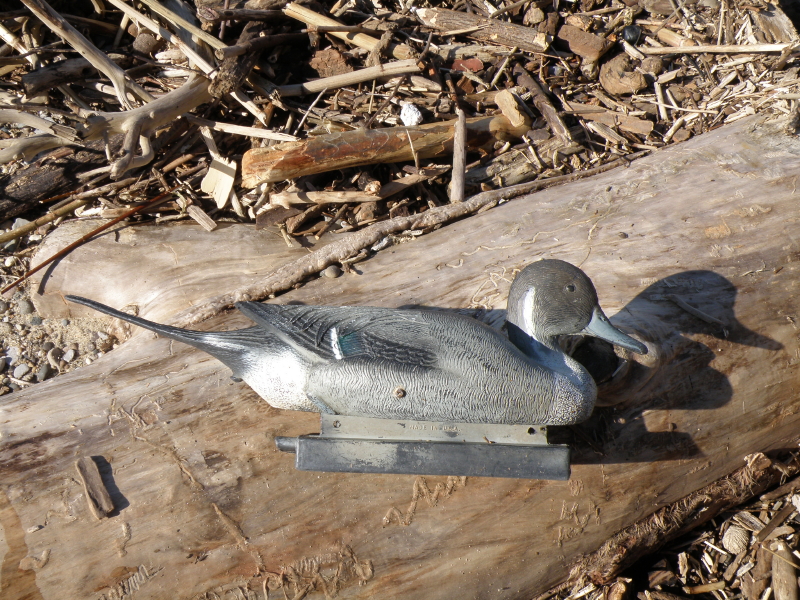
Louisville as seen from the Falls of the Ohio, Jan. 2014 Happy New Year everybody out there in blog land!  I want to thank everyone over the past year who have dropped by to check out the latest from the Artist at Exit 0 at the Falls of the Ohio State Park.  This year is shaping up to be much like the previous one.  Which means both man and nature are predictably unpredictable with a sense of timing not easily plotted.  Since the holidays, the Ohio River has been up and much of the park that I access has been underwater.  That in itself is not news, but the length of time the water has been high has been.  It all points to heavy rains and snows in the northern part of the Ohio River Valley and water flowing downriver.  The forecast at the time of this writing is not encouraging with showers turning to snow today followed by a precipitous drop to sub-zero degree temperatures.  This cold could be historic for us and so far we have received more snow than in recent winters.  I think I will stay indoors today!  Since my last post, I have been to the river twice (including New Years Day itself) to see what there is to see and experience.  Here’s a synopsis so far.wooden pallet in the trees, Falls, Jan. 2014 Between rising and falling waters I have been able to skirt around the edges.  One thing that unfortunately hasn’t changed is the junk in the river.  I’m always interested in what gets stranded in the trees like this wooden pallet that has a corner delicately balanced on the surface of the river.  It’s cold out here and despite being warmly dressed, my eyes and nose water from the bit of wind that is also present. various kinds of debris at the water's edge, Jan. 2014 At the water’s edge is a mix of debris.  Most of it is natural with driftwood, wood bark and bits being the most prominent.  Trees that have surrendered to the river are rolled against other logs by the waves and the grinding (which can be very audible as well) knocks the limbs off with a loud crack and chews the bark away from the trunks.  Intermixed is various man-made and colorful junk that is mostly plastic in composition which also gets masticated by the river.  The above photo is fairly typical with lots of polystyrene fragments which also make up the core of my art materials.  Most artists have positive feelings for their materials, but I have a love /hate relationship with mine.  Let’s move on and see what other sights are along the river in this new year. floating automotive tire at the Falls of the Ohio, Jan. 2014 Floating tires always catch my eye.  Their blackness and circular perfection contrasts sharply with the rest of the objects on the river’s surface.  A short distance away from this wheel I find a dead steer at the water’s edge. dead steer in the Ohio River, Jan. 2014 I debated with myself whether to include this distasteful image in this post, but decided to do it since it represents some of the truth that is in the river.  Pictures of man-made trash are one thing and have an almost benign aura to them by now, but something that was once alive registers in a different way.  The gravity is far heavier.  This poor cow is the largest dead animal I have encountered in the park.  Dead deer and other smaller animals are not too unusual in the river.  No telling how far this unfortunate animal has floated to arrive here?  Rising high waters could once again carry it away.  I take this picture and walk on. plastic turtle sand mold, Jan. 2014 There are other objects that the river has delivered to the park like this plastic turtle sand mold.  Having gone through my river collections recently I discovered that turtles are among the most common subjects for sand molds.  Who knew?  I have found six or seven of them and they are all different like the plastic hamburgers from a recent post of mine.  Here’s something else to add to a growing collection. plastic pintail duck decoy, Jan. 2014 I have a Rubber Duck Collection as well and all found within the park.  Truthfully, none of them are actually made from rubber and are of course composed from plastic.  This is a hunter’s decoy of a pintail duck and would have been cooler had it been made out of wood…alas.  I haven’t seen much of actual bird life in the park except for a few hardy species that are around all year round.  I noticed that the ring-billed gulls that come here for the winter are not present.  I wonder if the cold has them migrating further south this year?  To mark how exceptional this winter has been, our area has seen a rare migration of snowy owls from the far north.  The snowy owl is listed on the official Falls of the Ohio bird checklist as extremely rare and accidental.  For me, this would be a good enough reason to journey here and this just might be the year to see one, but I haven’t heard if any were actually seen in the park?  A short distance away from here, a snowy owl in a weakened condition was rescued by our local raptor rehab folks and is being nursed back to health.

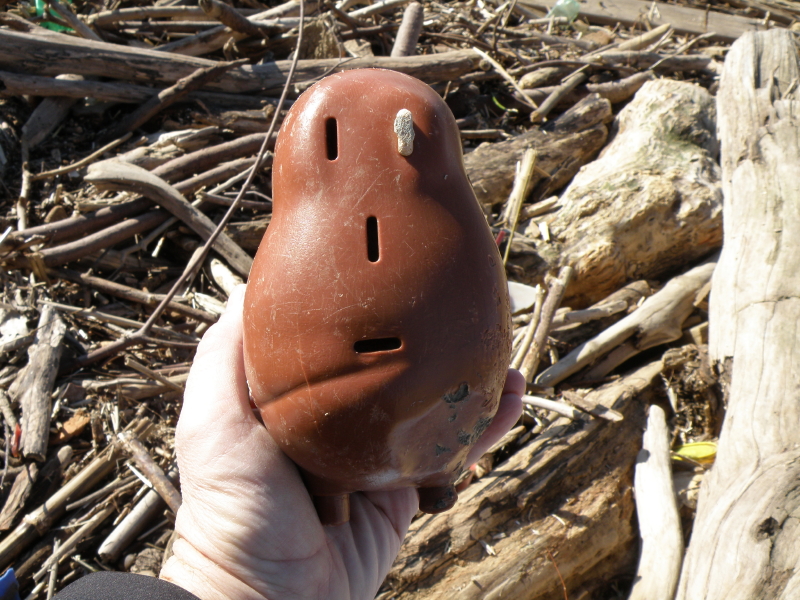
plastic body of "Mr. Potato-head", Jan. 2014

Here’s a test for you.  Do you know what this is?  Time’s up…this is the plastic body of a Mr. Potato Head toy!  I count Mr. Potato Head as one of my artistic influences for my Falls of the Ohio Styrofoam projects and this is the first one of these that I have found out here.  According to Wikipedia, Mr. Potato Head has been in continuous production since 1952 (that’s a lot of plastic) and was the first toy advertised on television.  I can remember as a kid…using actual potatoes to make funny faces and now I use Styrofoam.

My former outdoor studio, now river-swept clean, Jan. 2014

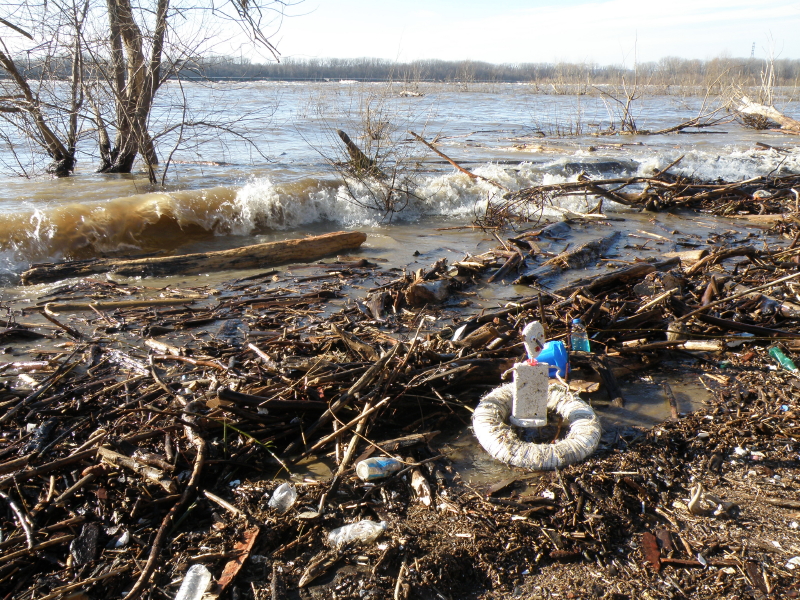
I walked up the riverbank to access my outdoor atelier and discovered that the river has swept over it.  All the materials that I had cached here over the last couple of years have floated away and the large logs that defined my space are rearranged.  I will need to create a new studio if I continue here.  I suspect, however, that the river is far from being done and would wager we will experience more flooding in the near future.  I picked up a few small pieces of Styrofoam and willow sticks and made my first figure of the new year and posed him at the river’s edge as waves lapped the shoreline.

New Year's Day figure at the river's edge, Jan. 2014

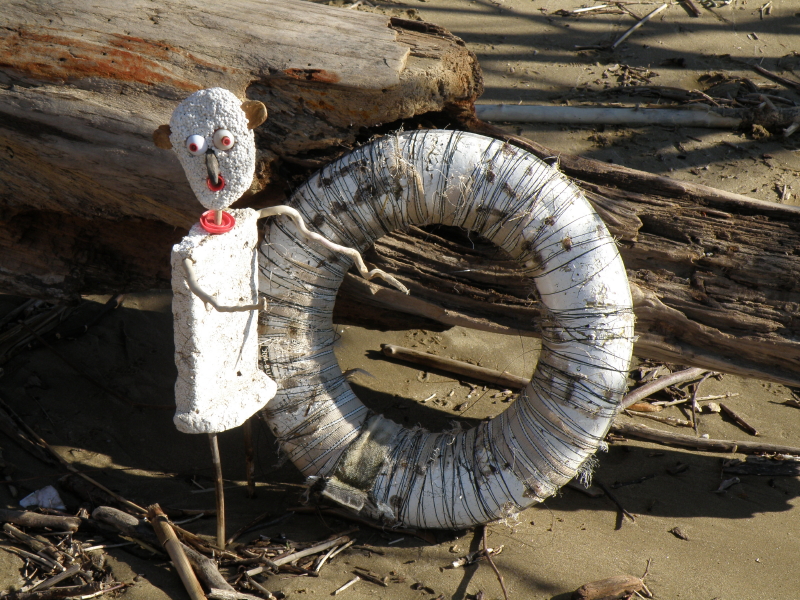
He is not a large figure and the expression on his face is one of amazement.  I first posed him near the river in an old life-preserver that washed up.  In addition to being expedient on a cold day it also seemed symbolic.  For me, it always comes back to the river and its waters.  The quality of our fresh water remains our number one vanishing resource and the river’s course is the journey we all take through life.  I will continue to use my creativity at this one small spot on a large river and publish my results on this riverblog.  Thanks for checking it out every now and then.  As the year progresses, I hope to be like the river by being predictably unpredictable.  May we all have a wonderful 2014!

First figure with life ring of 2014, Falls of the Ohio, Jan. 2014

Read Full Post »

Stacked wood, Falls of the Ohio State Park, Nov. 2013

Moving past the Woodland Trail Loop, I’m in the western section of the Falls of the Ohio State Park.  It’s been more than a month since I last visited this area.  One of my favorite trees is here and although I’ve already missed the prime leaf color moment…I’m hoping some autumn splendor remains.  Along my walk I come across a driftwood structure that has been stacked teepee-style by other park visitors.  I see this kind of expression regularly and there must be a kinship between this activity and piling and stacking rock upon rock.  It’s satisfying to do and when you step back from your work…it’s obvious you left an impermanent mark in the landscape that says you were there.  The tree I seek is just a short walk away and in no time at all I arrive on the scene.

Cottonwood tree, late autumn, Nov. 2013

Under the Cottonwood tree, Nov. 2013

This old Cottonwood tree with its raised roots looms large in my imagination and is my personal favorite tree out here.  I’m sure I’m not the only one who feels this way because there is usually plenty of evidence laying around in the form of empty beer bottles, spent camp fires, and yes…the odd bits of furniture people drag to furnish the room that exists underneath the tree.  I’ll wager for some…this is known as the party tree.  I was elated to see that most of the junk (old tarps and a red couch) have been removed by some other purists.  The Cottonwood tree had already dropped most of its leaves, but there were still a few hanging on.  After resting a moment under the tree and admiring the distant view of Louisville across the Ohio River…I decide to turn for home.  I was in the process of walking away when I noticed something moving along the fossil rocks.  I froze to see if I could get a better look at the creature that was walking towards me.  Naturally, my camera is at the ready!

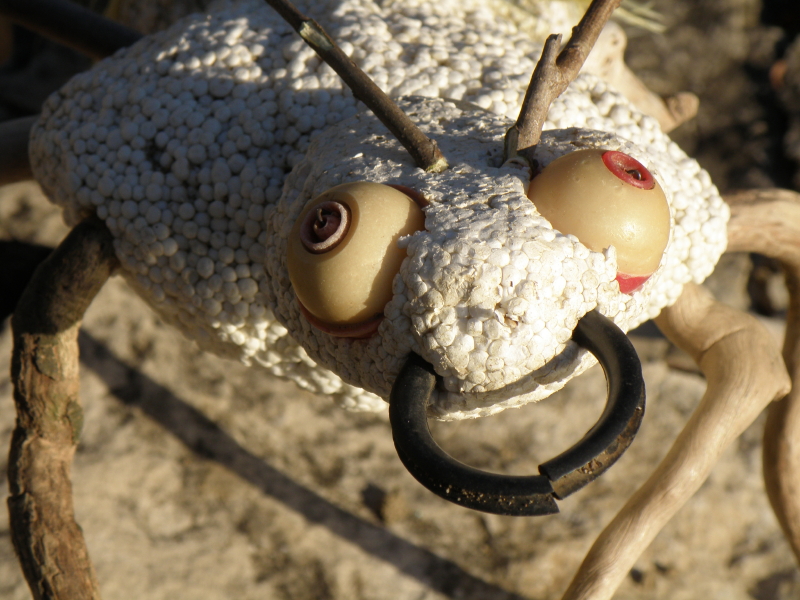
Golden Hour Ground Beetle, detail of head, Nov. 2013

detail of head from Golden Hour Ground Beetle, Falls of the Ohio, Nov. 2013

Regular visitors to the Riverblog know that the Falls of the Ohio State Park is home to several out-sized insect species that have uniquely evolved here.  All the different species are critically endangered and not to be harmed in any way.  I was quick to identify this as the Golden Hour Ground Beetle.  It was so named because it usually makes it first appearance of the day when the sun is about to set.  Otherwise, it is nocturnal in its habits.

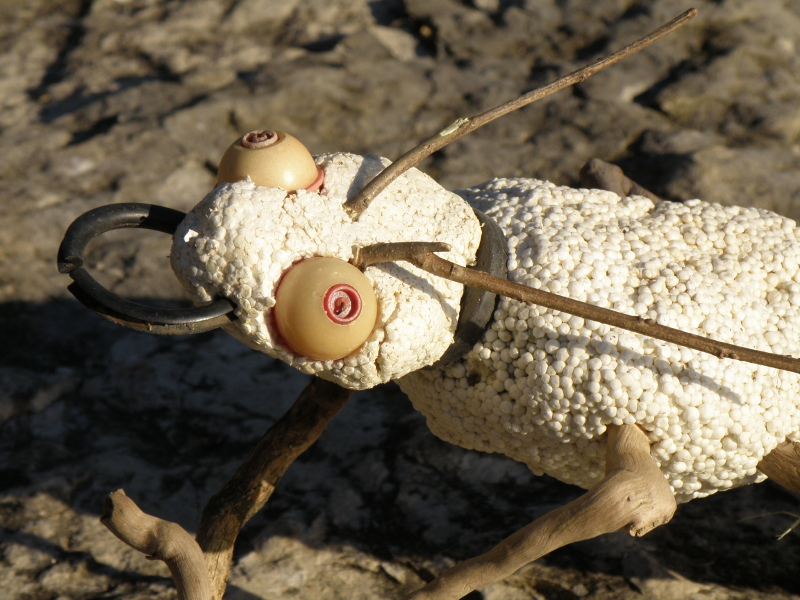
Golden Hour Ground Beetle, Falls of the Ohio, Nov. 2013

Golden Hour Ground Beetle, Falls of the Ohio, Nov. 2013

The Golden Hour Ground Beetle does not fly.  It relies upon stealth and six strong legs to scramble across any surface.  In form, it is not unlike the much smaller tiger beetles that also make the park their home.  Unlike the smaller beetles, the Golden Hour Ground Beetle is a scavenger and not a hunter.  I suspect this specimen was at the Cottonwood tree because it has learned to find scraps of discarded camping food here.  This beetle has fairly large eyes that can gather the most meager light in the darkest of settings.  It’s abdomen is banded with a coarse hair that insulates this insect during cold nights.  As long as I didn’t make any rash movements, this giant bug was tolerating my presence.

Golden Hour Ground Beetle drinking water?, Nov. 2013

I observed my new “friend” moving to the water’s edge to obtain a drink.  I wondered if it had the ability to swim in its survival tool kit?  I watched the insect as it searched all around the fossil rock shelves that were created by the river dissolving the old limestone away.

Golden Hour Ground Beetle exploring a hollow log, Nov. 2013

View of the beetle through the hollow log, Nov. 2013

I came across a second giant beetle almost immediately after crossing the small creek that separates the western and eastern sections of the park.  Male and females are virtually identical.  There are gaps in our knowledge about their life cycle.  This specimen was in the process of checking out a short, hollow log.  I’m presuming that it was either seeking food or shelter?  I think poking my camera through the end of the log spooked this one a little.  It ran away, but didn’t go far.  I kept my movements to a minimum and after a while it seemed to relax again.

Golden Hour Ground Beetle relaxing on Sycamore tree roots, Nov. 2013

Beetle laying flat on a sycamore root, Nov. 2013

I observed this 14 inch or 35.5 centimeter beetle relaxing on the exposed roots of a Sycamore tree.  As the golden hour approached, the beetle stopped seemingly acknowledging this magic moment when everything is bathed in a warm golden light.  I did the same watching the sun set before finding my vehicle in the parking lot of the Interpretive Center.  To everybody in the wider world…have a great week.

The Golden Hour at the Falls of the Ohio State Park, Nov. 2013

Read Full Post »

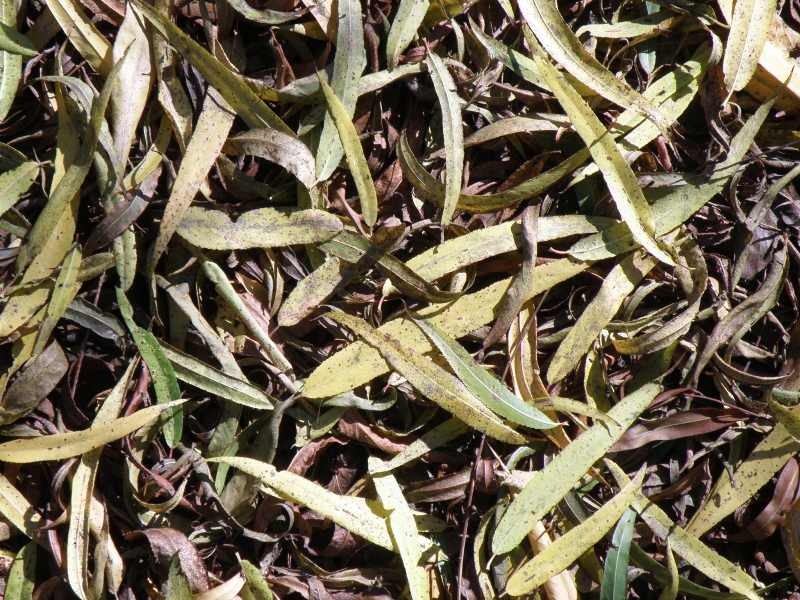
fallen willow leaves, Nov. 2013

A gorgeous fall day with light that was almost impossibly bright.  It’s autumn at the Falls of the Ohio State Park.  Small groups of migrating birds including various warblers, titmice, and kinglets are moving through the willow tops.  Around each stand of willow trees, the ground is covered by yellowing leaves that have been recently dropped.  There is a fresh, spicy, vegetative fragrance in the air as the more recently shed leaves give up their essence before curling up and turning brown.  Although I have been to the Falls numerous times lately… it’s been a few months since I last visited my old outdoor atelier in the woods.  Today seems as good a time to check out how my site has fared in my absence.

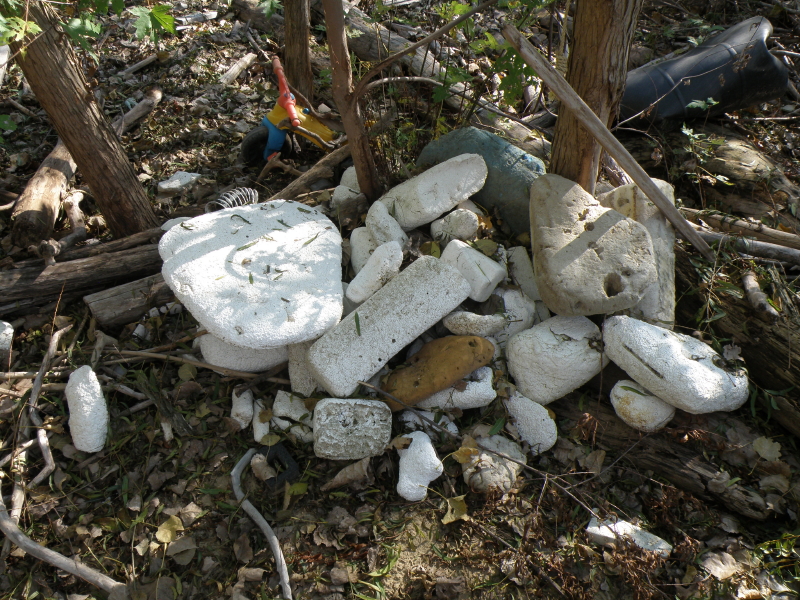
Styrofoam on site, Falls, Nov. 2013

The wooden structure that once surrounded my cached materials remains collapsed.  Some of the larger pieces of Styrofoam I had gathered from the river have been moved nearby.  Stuff has been scattered around, but that is also part of the ongoing history and fate of this material.  I may refer to this junk as “mine”, but I don’t feel a true sense of ownership.  While this material remains out here…it belongs to all of us.  We created, used, and then disposed of it, often carelessly.  I don’t have a lot of time to spend out here on this particular day and so I got busy making “something” from this largess.  I select a few chunks of polystyrene that will become my latest figure and before long I attract an audience of one.

Gray squirrel watching me, Nov. 2013

Gray squirrel watching, Nov. 2013

This Gray Squirrel seemed very intent upon my activities.  Perhaps he thought there might be food involved?  I have to say that I was really amused by this little animal checking me out.  He watched me for a minute or two and then headed deeper into the trees.

Styro-figure with large foam sections, Nov. 2013

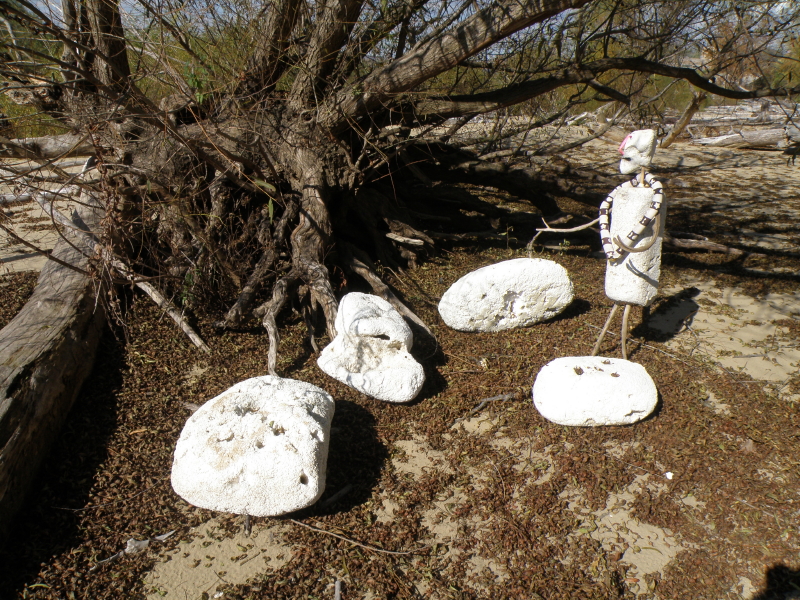
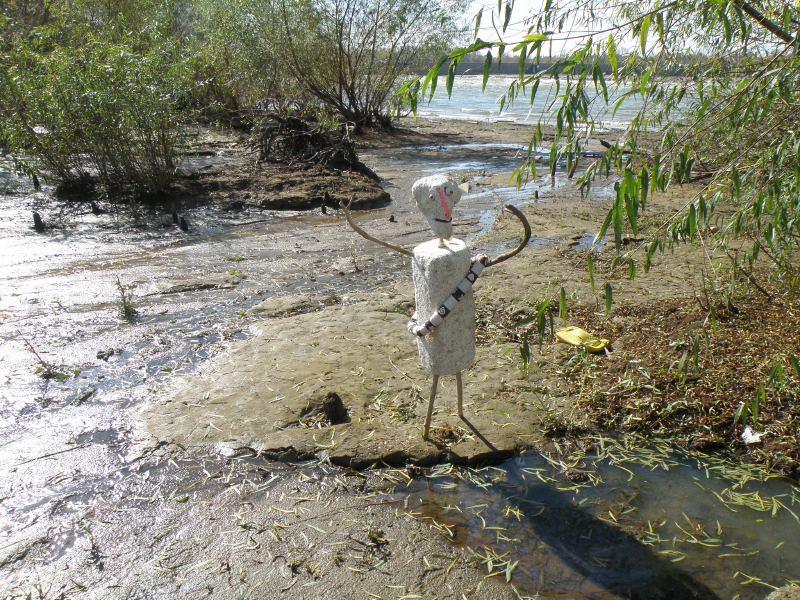
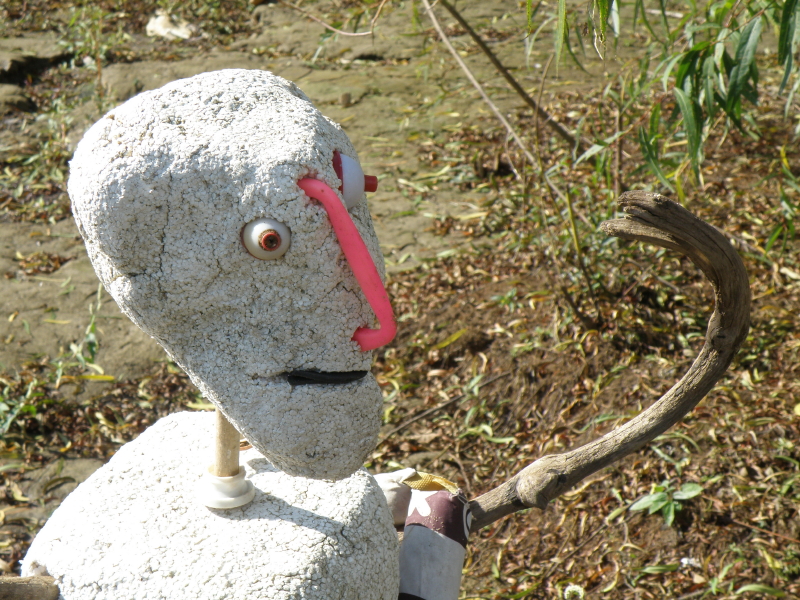
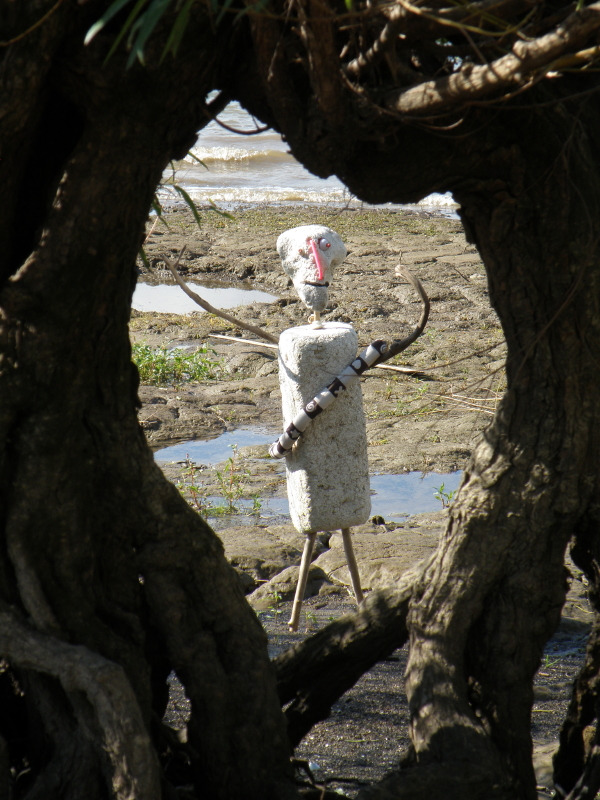
The figure I created was not very complex.  It’s head was rather skull-like and so I added a found black and white swimming noodle and a pink nose that was the plastic handle to something to give it more “levity”.  One of the first places I posed my latest was by the larger remains of former projects that were moved away from the other Styrofoam pieces I had assembled.  It doesn’t appear that whomever moved this stuff…did anything else with it.

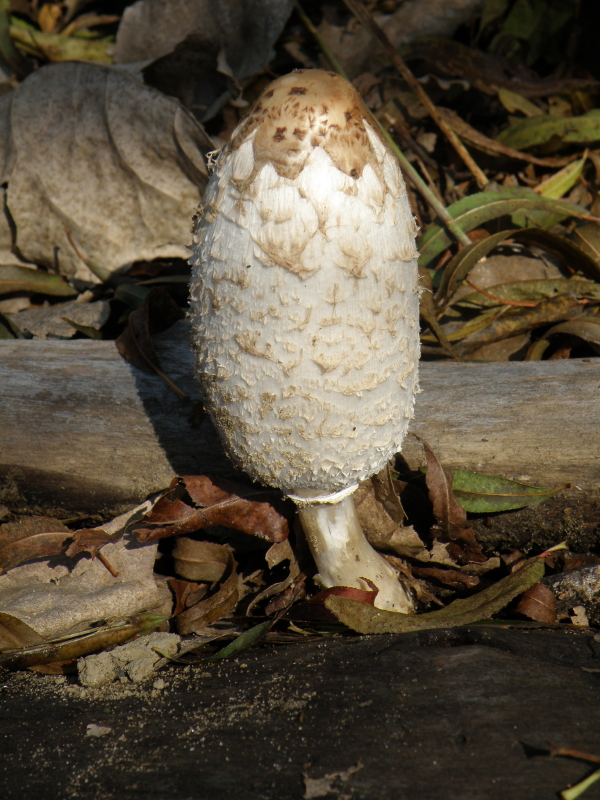
Fall mushroom, Falls of the Ohio, early November 2013

Coming across a late season mushroom, its whiteness and material consistency reminds me of the polystyrene I salvage to make art with.  Both the mushroom and Styrofoam are made from extracted, spent life.  The difference is the mushroom is alive and one day will also return to the earth to nourish other life.  The Styrofoam on the other hand, is a dead material and probably won’t decompose easily for quite a long period of time.  To move away from thoughts about decay and such…I move into the light and to be near the water.

Styro-figure with black and white swim noodle, early Nov. 2013

Head of Styro-figure, Nov. 2013

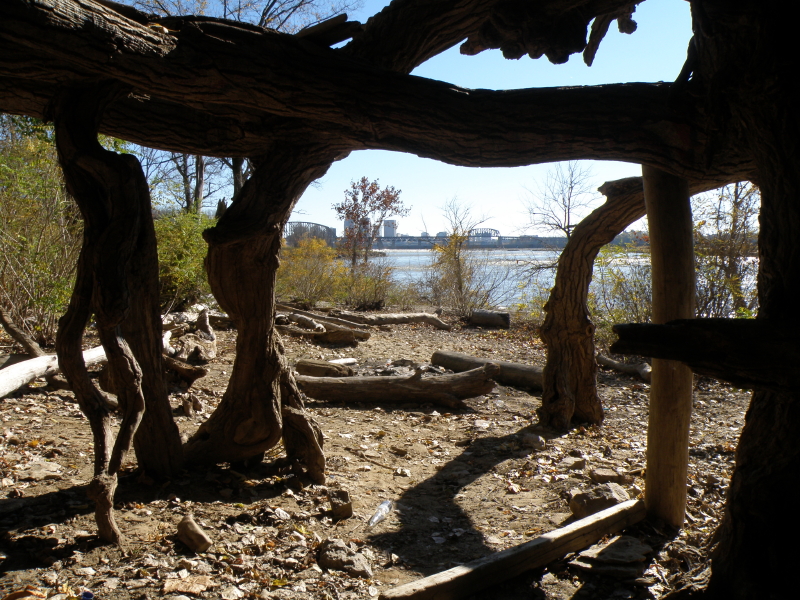
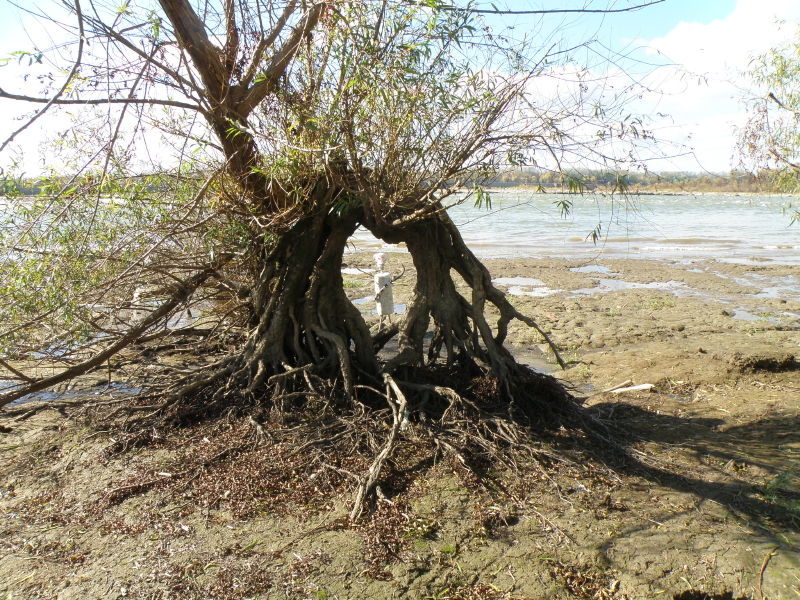
It doesn’t take long before I find just the right location that will represent this figure and day to me in photographs.  I rediscover an especially picturesque willow tree whose trunk and roots have been sculpted by time and the river to form a portal or window.  This is where I decided to photograph and leave this figure.

Figure seen through the willow portal, Nov. 2013

Through the willow portal, Falls of the Ohio, Nov. 2013

Because the ground was muddy and soft…it was also easy to stand my figure upright.  My attention wandered back and forth between the possibilities this novel view afforded.  I imagined the figure looking back at me through the portal and other shifting points of view.  Here’s how the figure looked set up on the other side where I once originally stood.

On the other side of the willow portal, Nov. 2013

On the opposite side of the willow portal, Falls of the Ohio, Nov. 2013

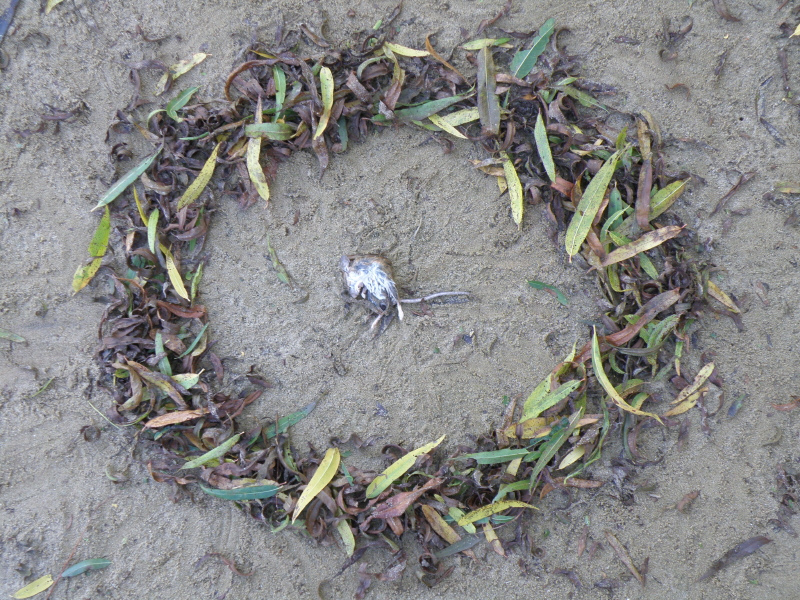
The day was getting late and it was time for me to move on.  On the walk back I came across a recently deceased mouse in the willow leaves.  Something about this season brings out the melancholy in me.  All life, no matter how small, strikes me as being worthy of note.  Using my fingers, I raked the willow leaves away from the mouse’s body and created this parting image.  See you next time from the Falls of the Ohio.

Mouse/willow wreath, 2013

Read Full Post »

Softball core river pearl from the Falls of the Ohio

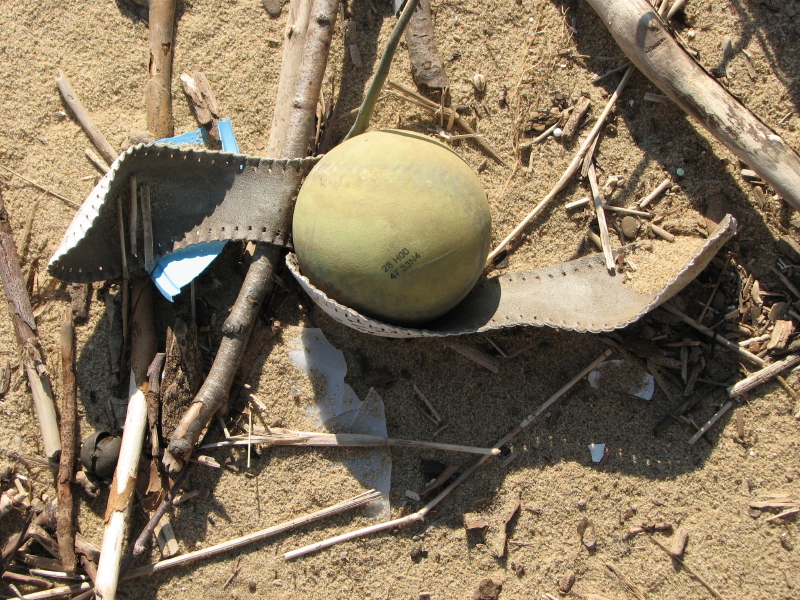
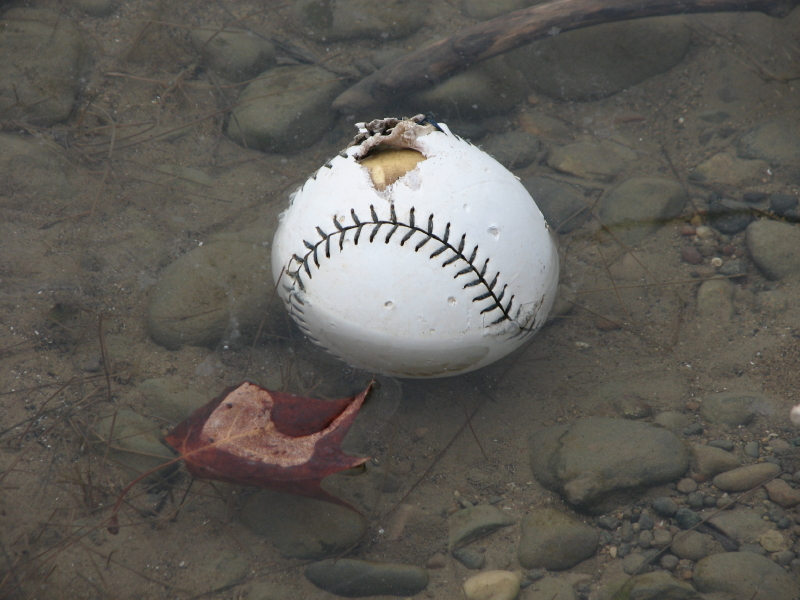
It started with one.  I had been picking them up for years…odd, yellow ocher orbs that the river marooned in various sections of the Falls of the Ohio State Park.  Initially, I was intrigued by them because I knew they had to be something, but what?  Early on I formed this association in my mind that these balls were giant pearls and they were gifts to me from the beautiful river.  Made from a lightweight yet solid, hard foam, these balls weathered in very individualistic ways.  Many of them had acquired a nice patina from their river journey perhaps floating long distances for many years.  For a while, each time I would go on one of my excursions to the Falls of the Ohio, the river made sure that I would stumble upon one or more of these balls.  Into the collecting bag they would go.  Eventually, I found out what kind of balls they are and in case you haven’t guessed yet…here are a couple more images that will reveal what they originally looked like.  I’ll start with one of these balls in the process of transforming, followed by one that is more intact.

softball with covering coming off, Falls of the Ohio

softball in the river

My river pearls are the cores of contemporary softballs.  How did all these softballs end up in the river?  When I was a kid, a softball had a hard rubber ball in the interior which was surrounded by what seemed like miles of string wrapped tightly around the rubber ball.  A two piece leather cover was then sewn over this “string ball” which completed the softball and was now ready to be played with.  For those who might be unfamiliar with softball…it’s a game similar to baseball, but the ball is about twice as large as a standard baseball.  I collected these softball cores for years, but especially during the early phase of my Artist at Exit 0 Project.  After each river trip I would dutifully fill up boxes in my home’s basement with my found balls and then forget about them.  Over time, I started picking up lots of different objects and using them in various ways as materials for my sculptures or as offbeat collections of odd items I was creating.  I guess I always knew that I would return to these balls and make something interesting with them someday.  That day arrived last week.

softball cores in my backyard, Oct. 2013

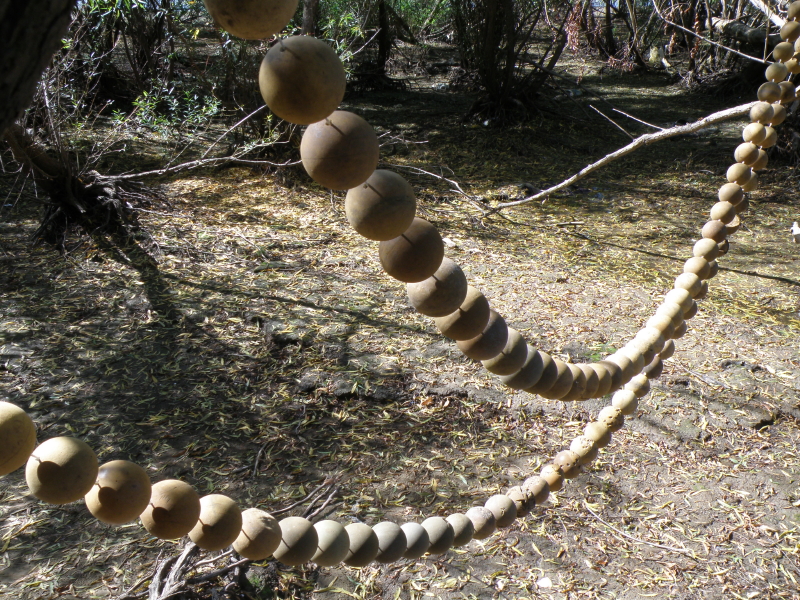
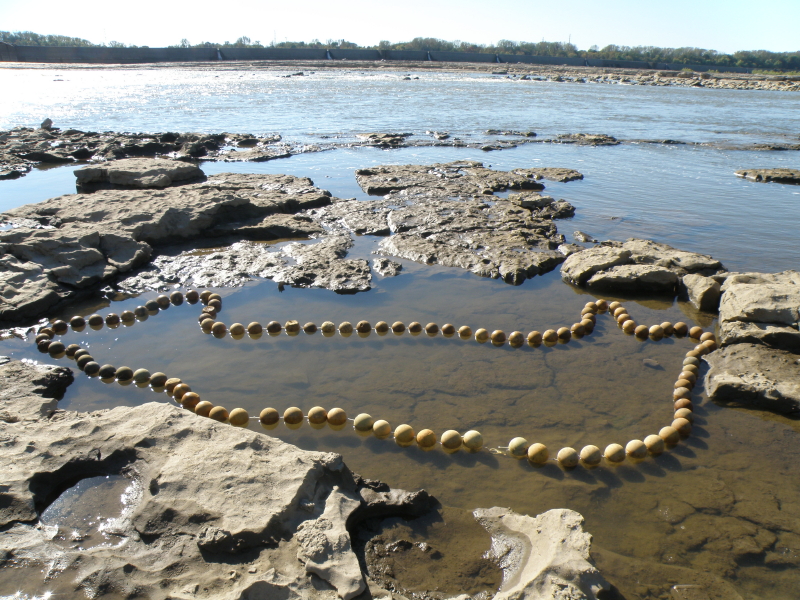
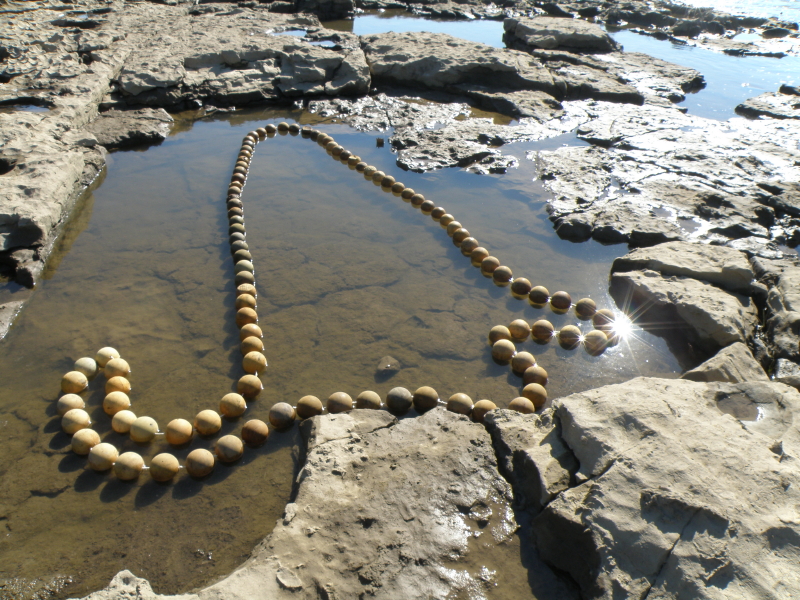
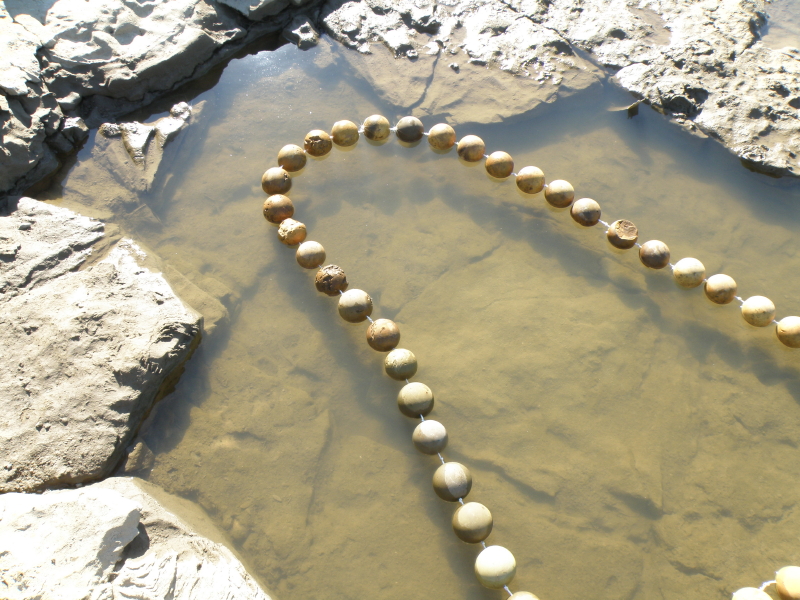
I had no idea how many of these balls I had collected or passed up over the years?  This recent photo taken in my Louisville backyard shows about 110 out of the 160 balls I did save.  I decided to act on my river pearls idea by making an impractically large pearl necklace.  I carried all the balls I had to my friend Tom’s sculpture studio and used his drill press to drill a hole through each ball.  That was a bit more of a technical challenge than I had first conceptualized.  Most of these spheres are not perfectly round. In fact their imperfections (which I really like as evidence of wear by the river and elements) made each drilling a unique experience.  Eventually, I got the job done and laid out many of the balls on the concrete pad in my backyard.  Just as I was beginning to thread and knot braided nylon cord through the balls…the sky let loose a monstrous rain storm.  By day’s end, nearly seven inches or 17.5 centimeters of rain fell and flooded parts of my backyard and basement!  It was like being visited by the river in an interesting way.  I had initially “graded” each ball by condition and color to form transitions in this giant strand, but the water and now mud from my backyard changed the color of each ball.  I decided to make my first piece one hundred balls long.  There is a knot tied with the cord that keeps each ball from touching.  At my local hardware store I found a brass hook that I could use for a clasp to close my giant necklace.  All that was left to do was to return to the river…to the place that I found all of these balls and inspiration and find a way to give thanks for these many gifts.

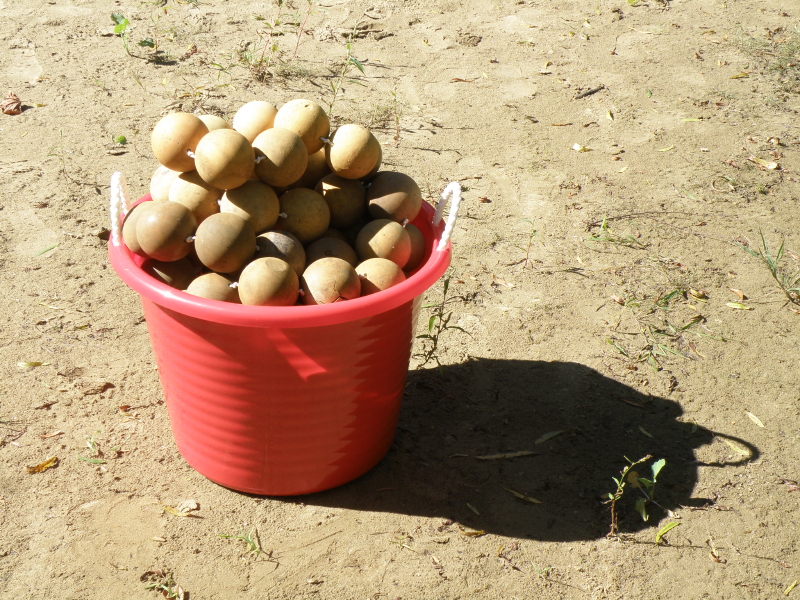
river pearl necklace in plastic bucket, Oct. 2013

Loading the necklace into a large red plastic tub I carried my artwork down to the Ohio River.  One hundred balls became surprisingly heavy and I was concerned about twisting an ankle or tweaking my knee as I walked over the driftwood.  I came to a sunny place under the railroad bridge and laid the necklace out upon the sand for the first time.

weathered softball cores, Oct. 2013

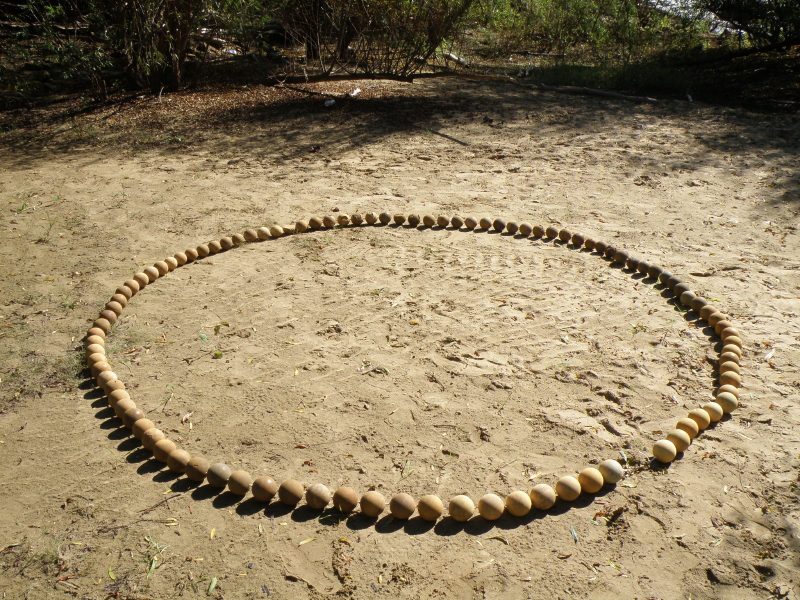
Here’s a look as some of the weathering that occurred with a few of the balls.  And here is one of the first images of the necklace joined together.

one hundred ball necklace in the sand, Falls of the Ohio, Oct. 2013

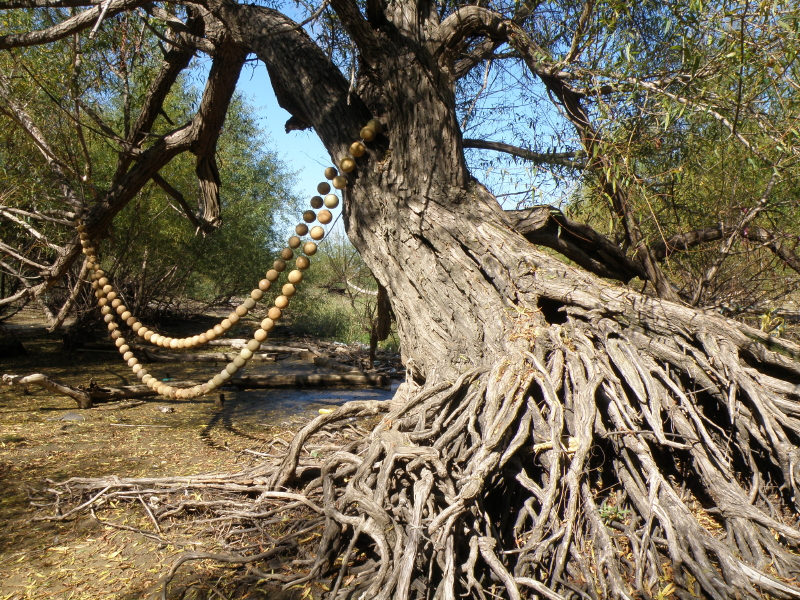
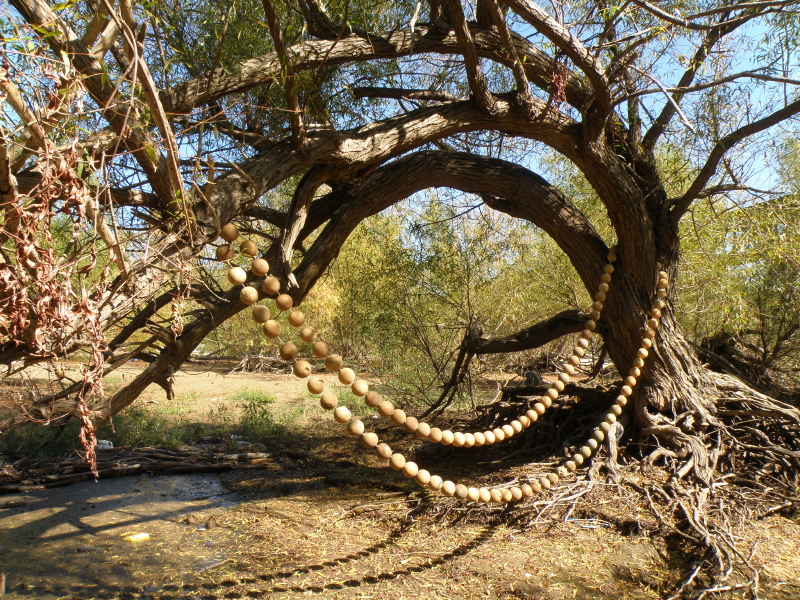
This was okay for a trial run, but I had other images in mind.  I have always loved the willow trees in the park and I chose one of my favorite ones to “wear” my river pearl necklace.  Yes, it’s a hopelessly romantic gesture, but I felt like “celebrating” this tree in a special way.  Here are a few more images.

amazing willow tree wearing my river pearl necklace, October 2013

detail of willow tree necklace, Oct. 2013

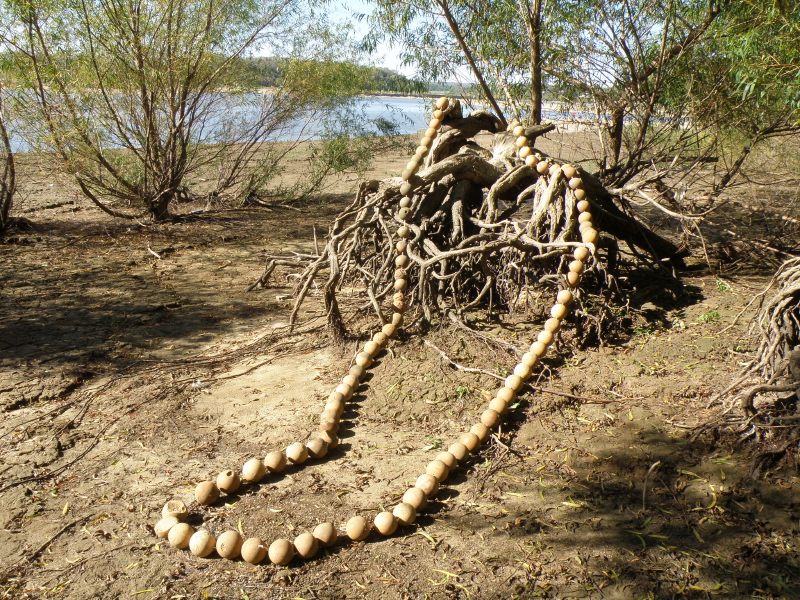
Moving closer to the river, I stopped by an old willow that was barely alive.  I draped my necklace over its old exposed roots and created a few more images.

Old willow roots and necklace, Oct. 2013

Once in a while, a park visitor would walk by and look in my direction and continue on as though I was engaged in a most ordinary activity!  If I had stumbled across this scene…I think curiosity would compel me to say something.  Next is another detail from my eccentric strand of pearls.

detail, slightly elevated river pearl necklace, Oct. 2013

With the river within sight, I lifted my bucket of balls and headed towards the fossil rocks.  It was a sunny, but windy day and my next idea was to put the necklace into the water.

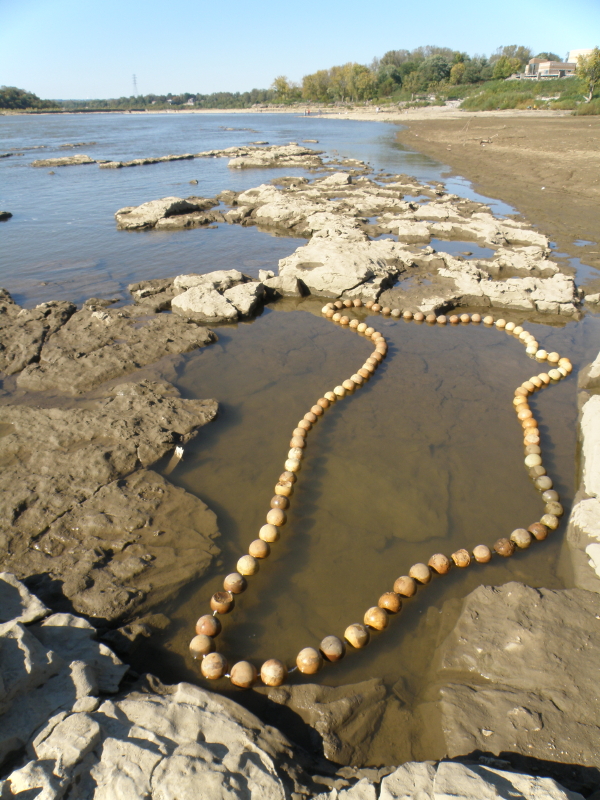
I found a pool of water surrounded by Devonian inspired limestone that would prevent my necklace from being carried away by the current’s flow.  Still, the wind kept changing the configuration and blowing the balls against the rocks.

I used a beaver-chewed willow stick I found on the bank to guide my necklace into shape between photos.  The necklace which I now had named “La Belle Riviere” was the name originally given by French missionaries upon encountering the Ohio River for the first time.

It seems appropriate that the river which played a large part in bringing these balls to this shore…would continue to influence how this piece would be perceived.

I enjoyed how the gourd-colored balls harmonized with the surrounding riverine landscape.  I felt some sense of accomplishment in creating this piece and being able to return it to the Falls environment to create this site specific work.  It was also a fitting ten-year anniversary artwork since “La Belle Riviere” began with that first found ball a decade a go.  I will see how well it holds its own in a gallery environment since I want to include this piece in a two person show I’m participating in this January.  After these river photos…I loaded the necklace back into its container and began the slow walk back to my car.  While making this work, I did have one admirer that found the work irresistible and I will end this post with its image.  So long…from the Falls of the Ohio.

Butterfly with detail of softball core necklace, Oct. 2013

Read Full Post »

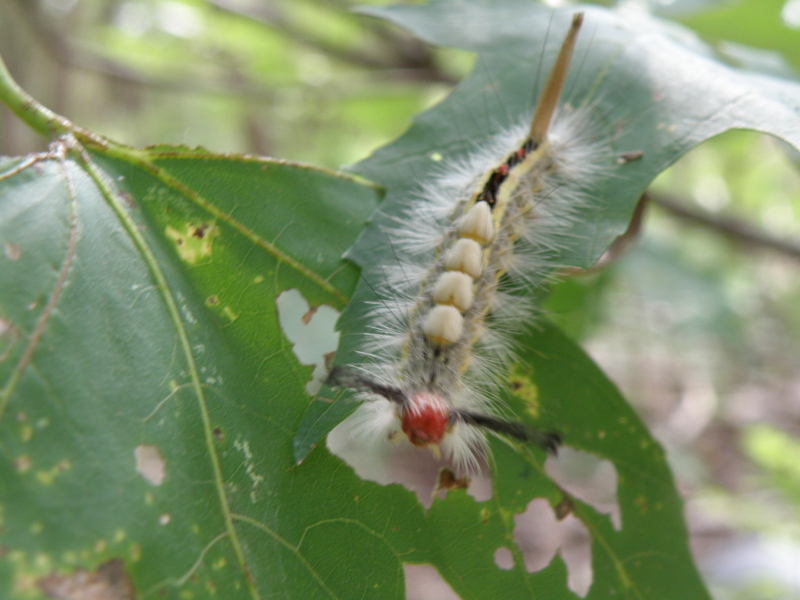
Tussock moth caterpillar, Oct. 2013   Red-faced and bizarrely hairy, the unique caterpillar of the Tussock moth was munching its way through a maple leaf.  Everything about its appearance says I’m not tasty and leave me alone.  It’s now October and it won’t be much longer before the first frost and freezes arrive and with it the colder temperatures which will quiet insect life at the Falls of the Ohio until next year.  The caterpillar inspired me to post a few other entomological images taken in the park.  I confess that I have always liked insects as examples of how diverse life can be.  I’m amazed at the incredible variety and forms that our six-legged friends can assume. Here’s another really weird caterpillar that I found at the Falls that I just haven’t been able to identify through any of my field guides.  Does anybody out there in blog land recognize this?

strange caterpillar from the Falls, late June 2013

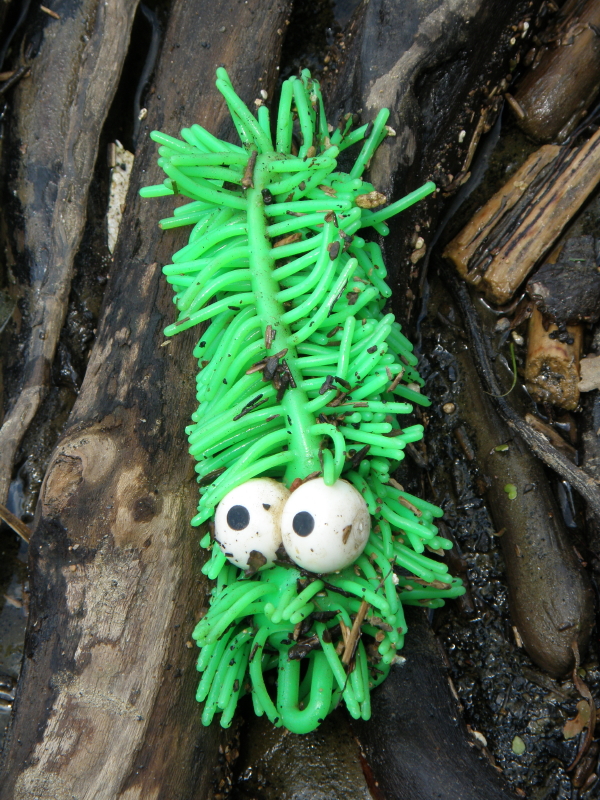
This fluorescent green caterpillar has dramatic eye spots on its posterior that would incite a predator to strike there first.  Its anterior is located on the opposite end and I would have fallen for this trick too, but noticed that it was walking backwards.  I wondered once it completed its metamorphosis…would the adult be a moth or butterfly?  Maybe some day I will stumble upon and collect a large cocoon I don’t recognize and I’ll take it home and watch a miracle as it emerges from its silken home.

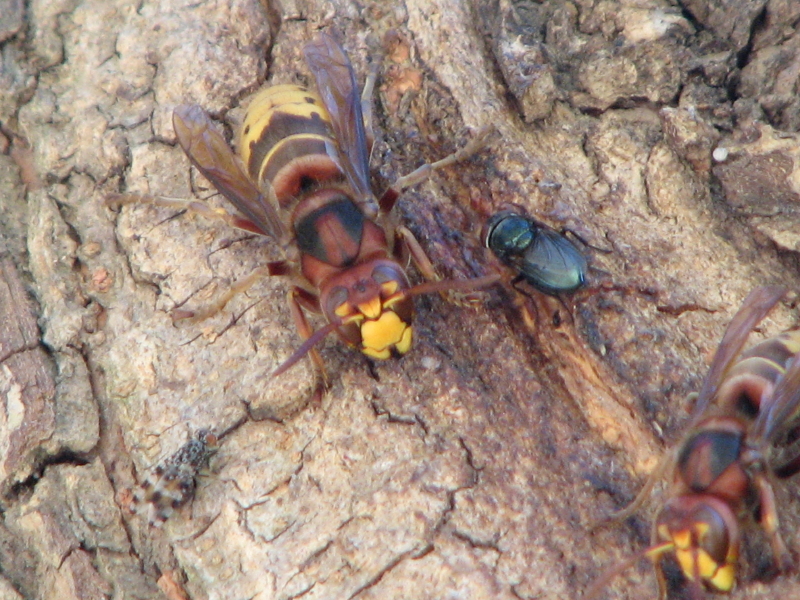
hornets and flies on willow bark, 9/2010

During this time of year, certain willow trees at the Falls are exuding sap which draws a variety of insect life including various flies, hornets, and butterflies to these sweet “licks”.  Whether the flowing sap is due to disease or injury is unknown to me? The large bullet-like hornets are so preoccupied with sipping the sap that they ignore me.  To test this, I’ve carefully touched them with my finger while they were feeding and they remained docile.  I was walking through the tall grass when I noticed a large flying insect land on the bush next to me.  Despite its wonderful camouflage I was able to locate our next insect after a short search.

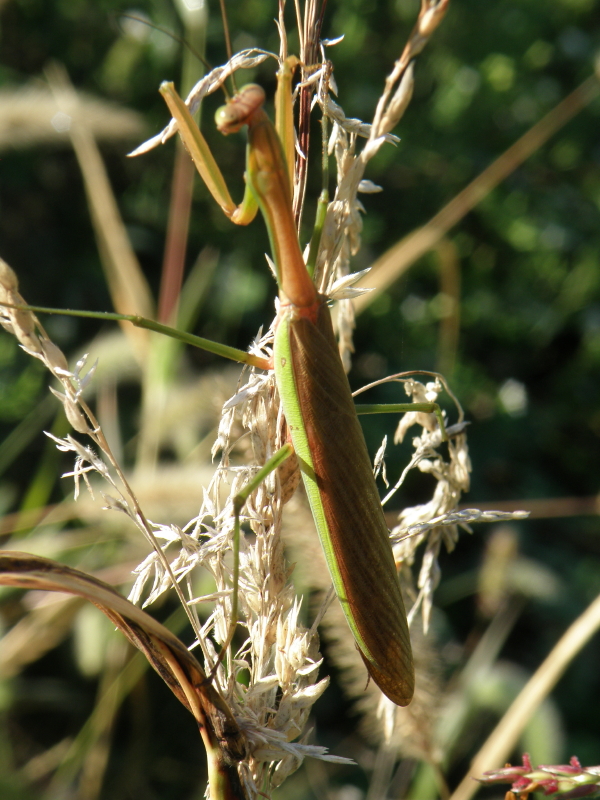
Chinese Mantid, Falls of the Ohio, late Sept. 2013

This is the Chinese Mantid which I read was introduced into this country in 1896.  It is the largest praying mantis you are likely to come across in the United States and this specimen was about four inches or ten centimeters long.  I’ve seen them grow larger, but not in this park.  In fact, this is only the second mantid I’ve seen out here.  There are several native species, but they are smaller and more obscure.   And now, it’s time to reveal my most spectacular discovery which is a near but harmless relative of the praying mantis.  Here is a picture of its head.

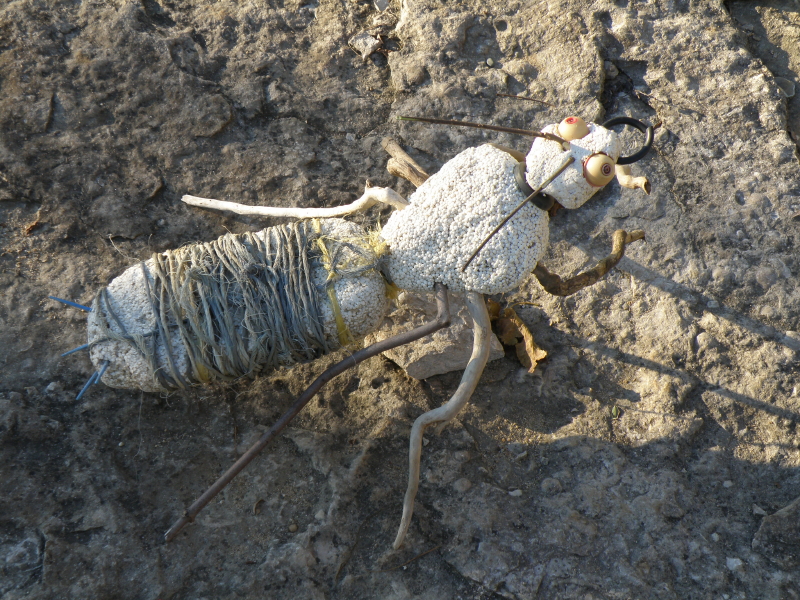
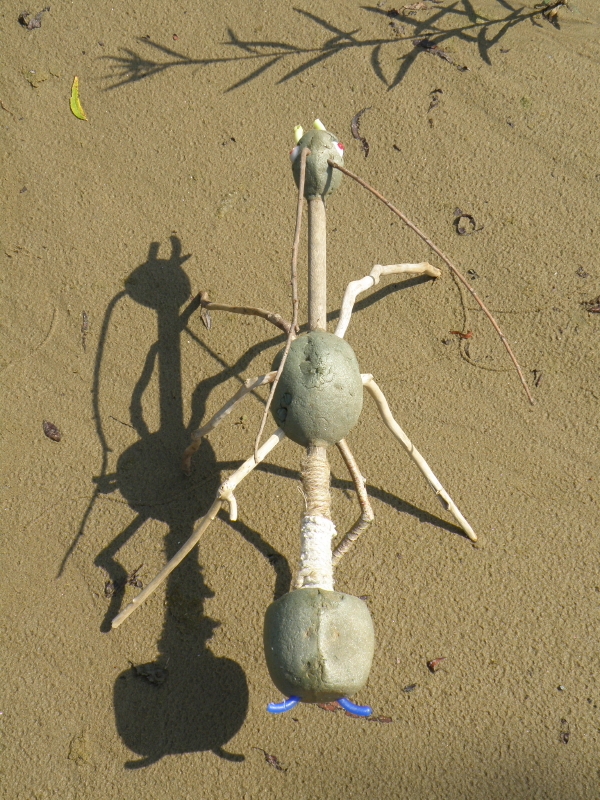
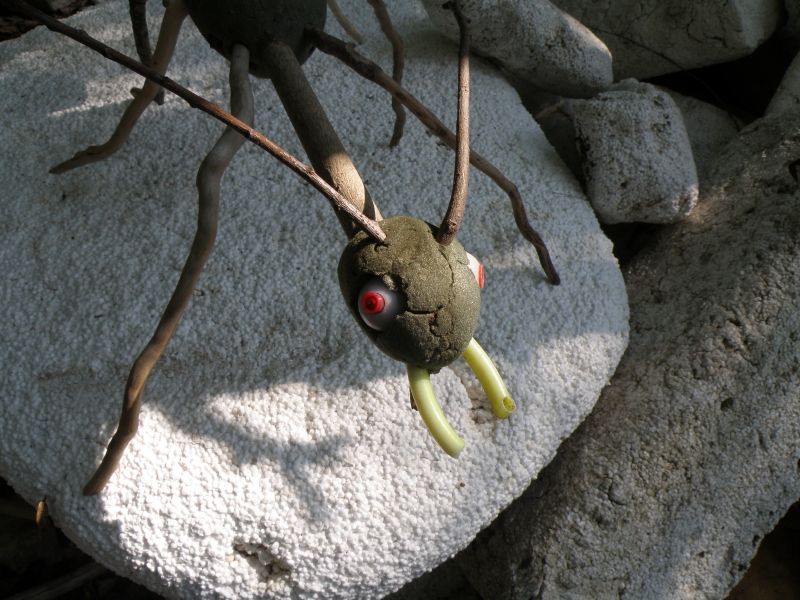
detail, head of the Falls Phasmid Stick Insect, October 2013

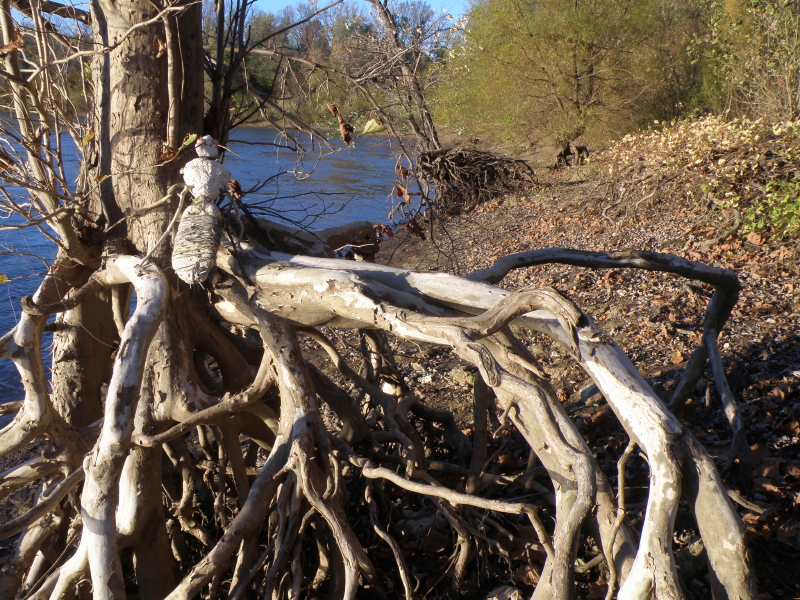
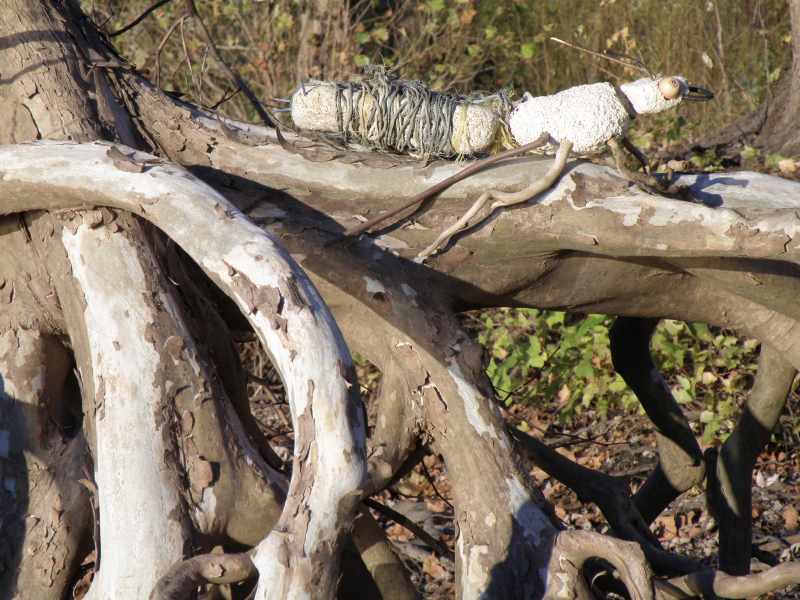
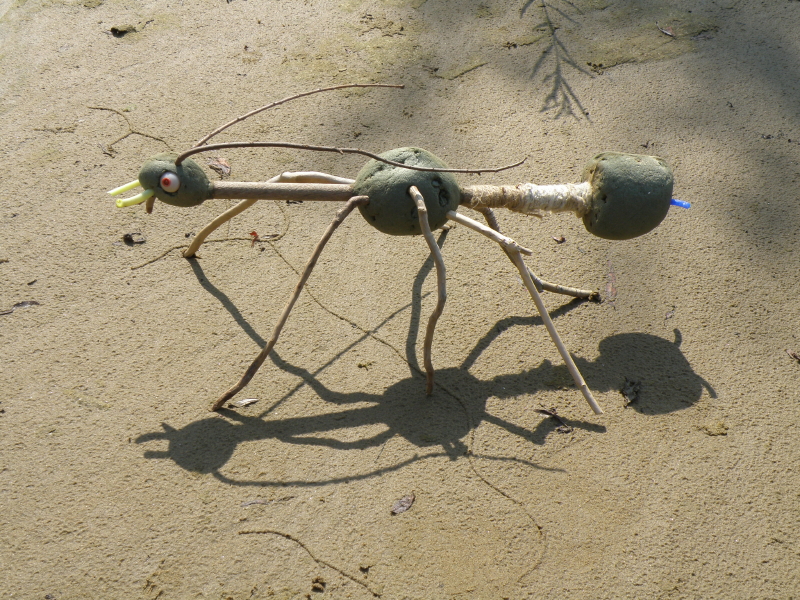
And now, for the rest of its body which is about two feet long or roughly sixty centimeters.  I came upon this unique life form casually walking across the driftwood on its way to somewhere else.

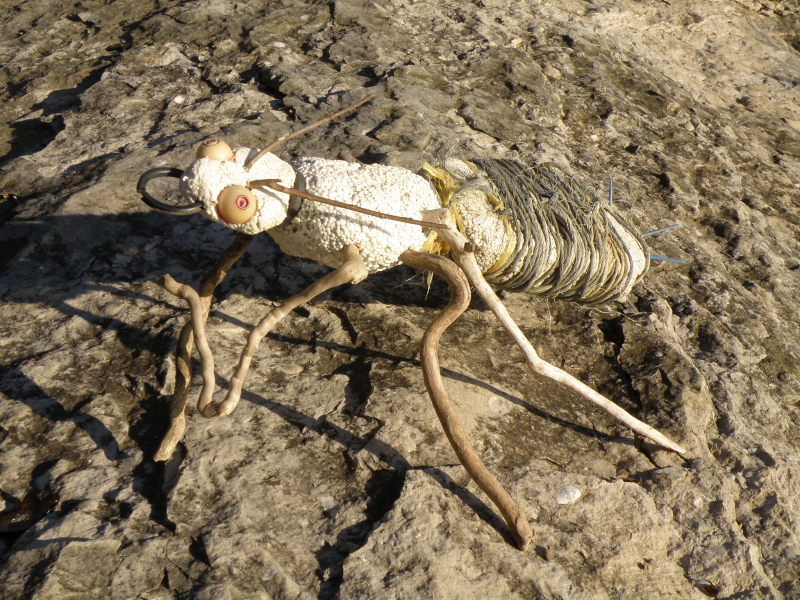
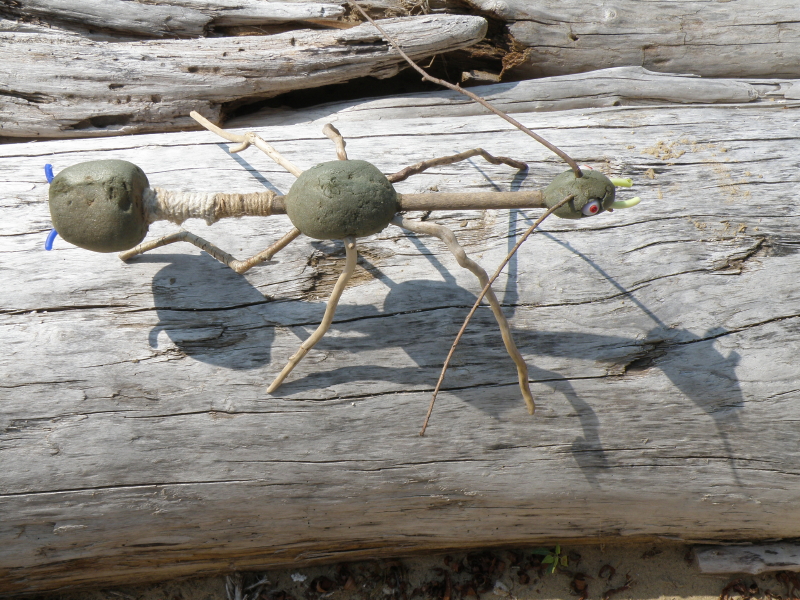
full view of Falls Phasmid, Falls of the Ohio, Oct. 2013

Although as insects go this is a giant…it is also an extremely fragile creature.  It is a member of the walking stick family.  It relies on slow movements and its cryptic forms to merge with its surroundings.  The Falls Phasmid is strictly a vegetarian and eats the foliage from a variety of different trees.

aerial view of Falls Phasmid, Oct. 2013

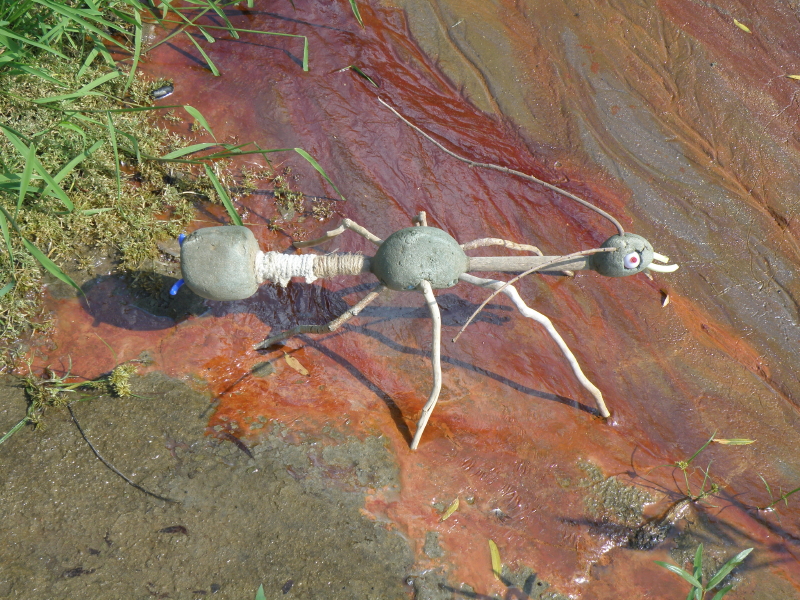
I came across this specimen in broad daylight.  I had always heard that they were nocturnal and chose to restrict their movements during the day to avoid detection.  Walking stick insects are among the largest insects we have.  This species is additionally strange in that its head, thorax, and abdomen are so clearly differentiated.  Some scientists have gone so far as to suggest a bit of mimicry at work here.  On the surface it does seem to possess a superficial resemblance to a giant ant which might be enough to dissuade predators from attacking it.

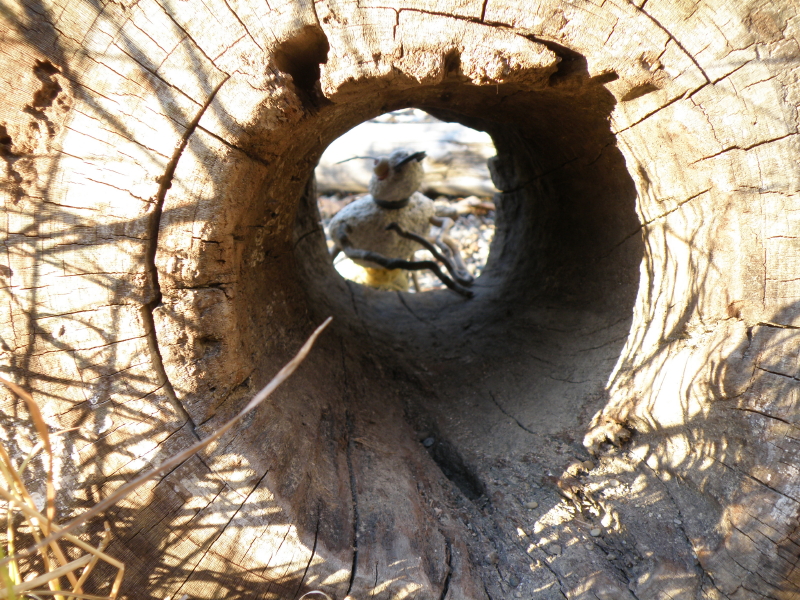
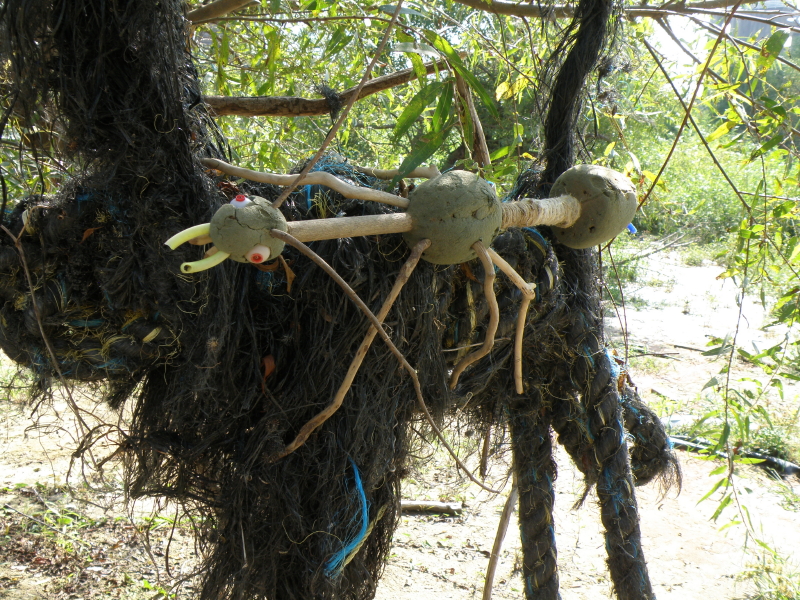
Falls Phasmid hanging in a tree, Oct. 2013

I did observe this particular Phasmid making return trips to a particular willow tree where it clung to a nest-like structure that was hanging down from a branch.  The meaning of this structure was not immediately apparent.  Perhaps the Falls Phasmid uses this form to help it overwinter?  Keeping a respectful distance away, I did see the stick insect walking slowly over the riverbank, but I couldn’t tell if it was searching for something in particular and I did not witness it feeding.

Falls Phasmid Stick Insect, Oct. 2013, facing left

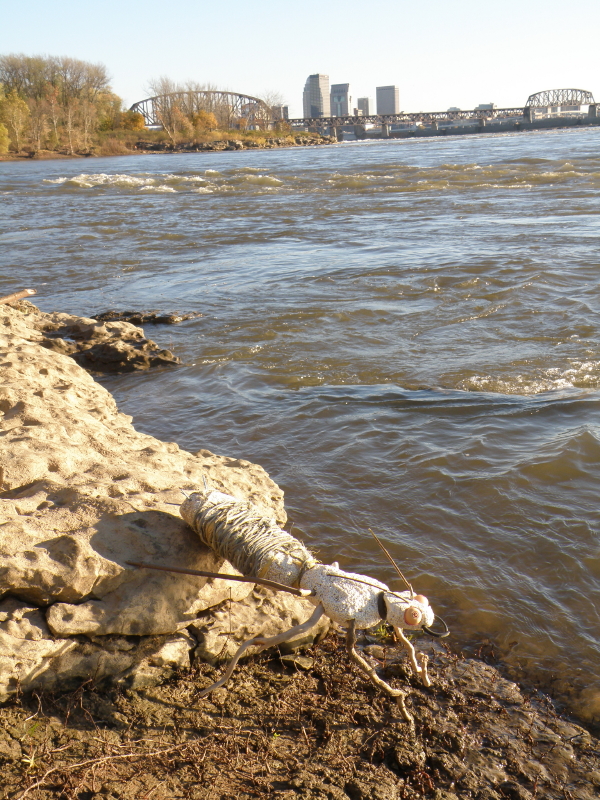
Falls Phasmid in the wetlands area, Oct. 2013

Originally, the Falls Phasmid may have had the ability to fly.  Other walking stick insects from around the world have vestigial wings that suggest a different past.  Our specimen lacks even the most superficial suggestion of wings which hints at an ancient lineage.  Perhaps all stick insects evolved here first and spread around the world much later?

Falls of the Ohio Phasmid Stick Insect, October 2013

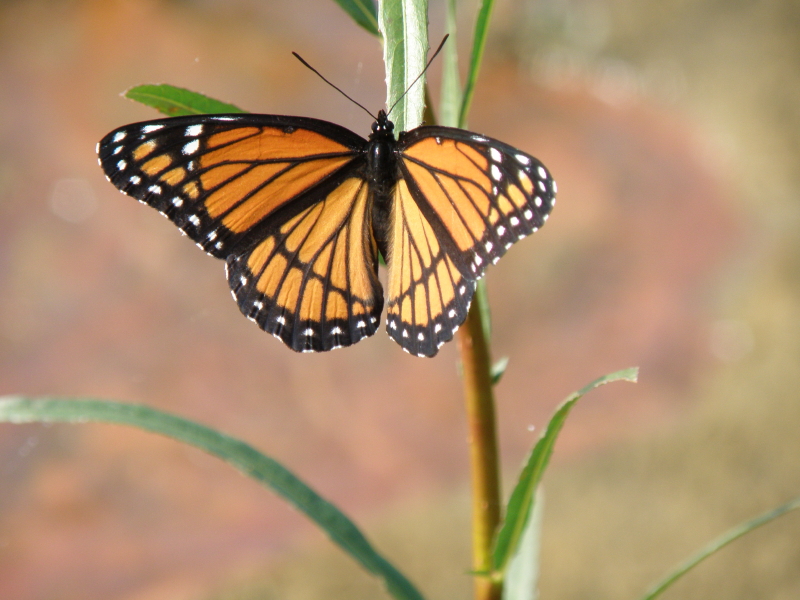
I watched the Falls Phasmid for a while and took a bunch of photographs of it before leaving the park.  I’m curious about that tree that it likes to hang out on and so will check it the next time I’m here.  On my way out of the park, I also came around this wonderful Viceroy butterfly and thought that this would make a fitting image to end this post.  When I think of the butterflies that inhabit the park…this is the species that comes to mind first for me.

Viceroy butterfly, Falls of the Ohio, October 2013

Read Full Post »

« Newer Posts - Older Posts »