Feeds:
Posts
Comments

Archive for the ‘birding’ Category

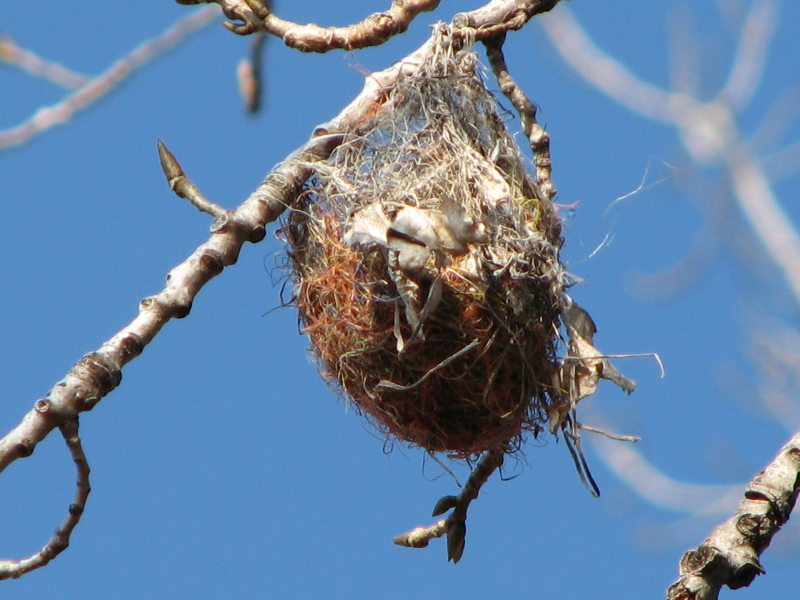
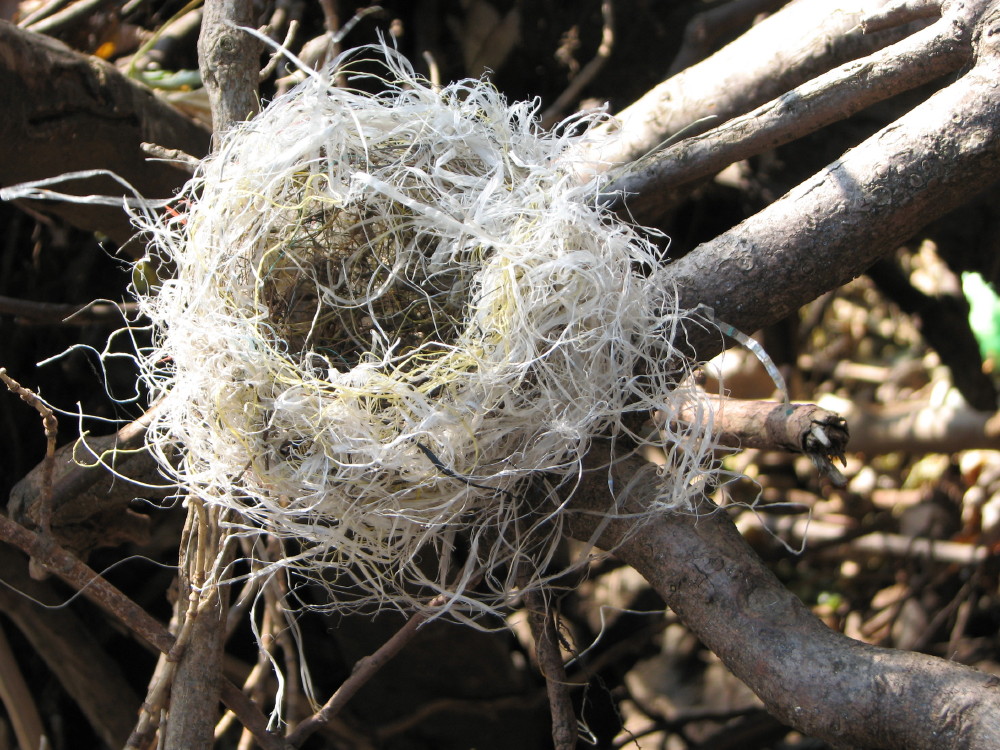
On my last expedition to the Falls, I spotted this oddity about twenty feet off the ground on a terminal branch of a cottonwood tree.  I had a feeling I knew what this is, but clicked-off a couple more close-ups for more information.  The day was very cold, but bright and clear.

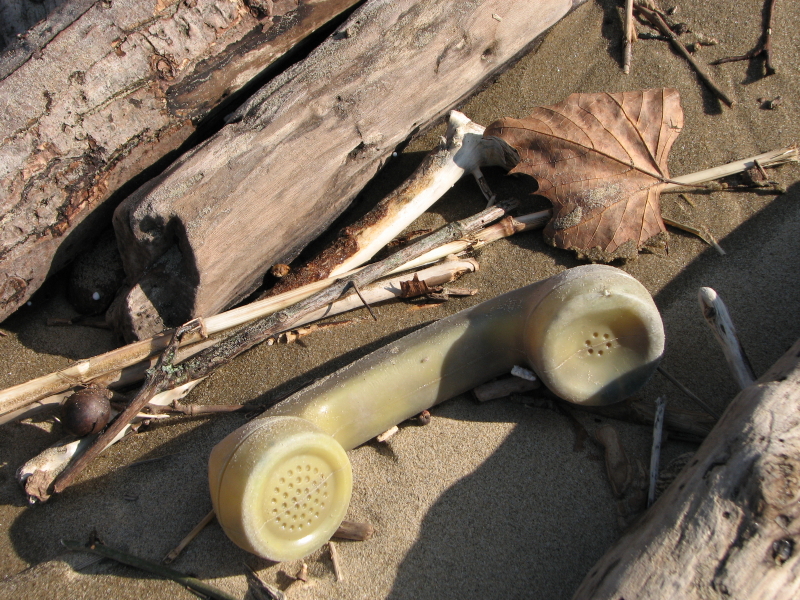
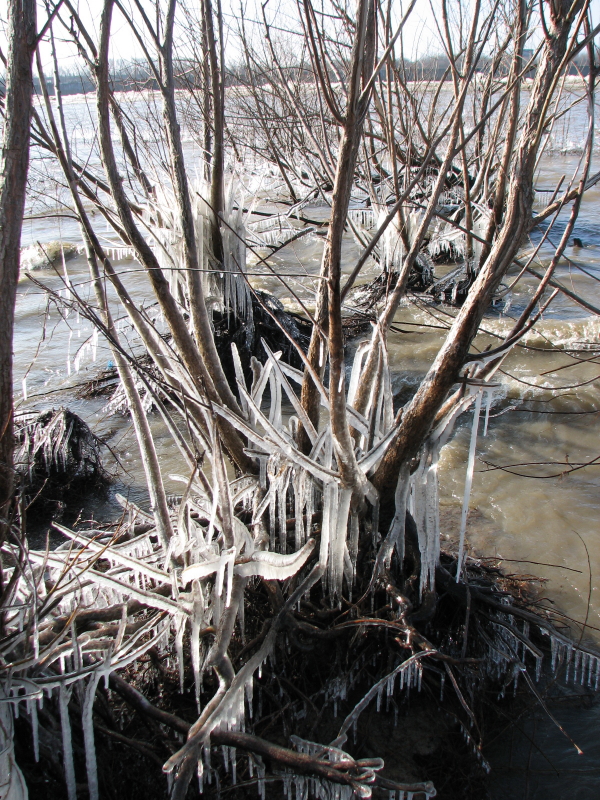
I believe this to be a hanging basket nest from a Northern or Baltimore Oriole.  I had seen one other similar nest years ago at the Falls that incorporated waste fishing line and long-stemmed grass.  This one is different in that it is made mostly from synthetic fibers teased out of a discarded barge cable along with fishing line.  These cables are very large, thick ropes that are used to tie-off and secure the barges used in commercial river traffic.  Here is a recent picture of just such a cable that was lost and wound around willow roots.  This one has blue and yellow fibers instead of orange like the oriole’s nest has.

As these ropes slowly break down, it’s interesting to think of nest-building birds preferring to use this material as opposed to strictly natural ones.  I know of other birds (more in an urban environment) that will use other bits of artificial litter in their nests.  A month or so a go in the western section of the park I came across another synthetic nest created by a different species and featured that in a post about rare birds.  Here is that nest reproduced again along with a close-up of the oriole’s nest.

Since a nest made of these materials will last longer…I’m wondering if the oriole or another bird will attempt to reuse it?  I will have to wait until spring to find that out.

Read Full Post »

At the beginning of the New Year, I was warm and cozy and in no hurry to do anything.  And then, the telephone rang.  Through my hand set I could hear the sound of the river and the wind blowing through the tree limbs.  After dressing, I grabbed one of my collecting bags and my camera and I jumped into my car.  By now, my family knows I’m crazy, I know I’m crazy, and so little is said of the matter of my leaving anymore.  I’m pretty well bundled up since it’s somewhere in the high teens on this first day of 2010.

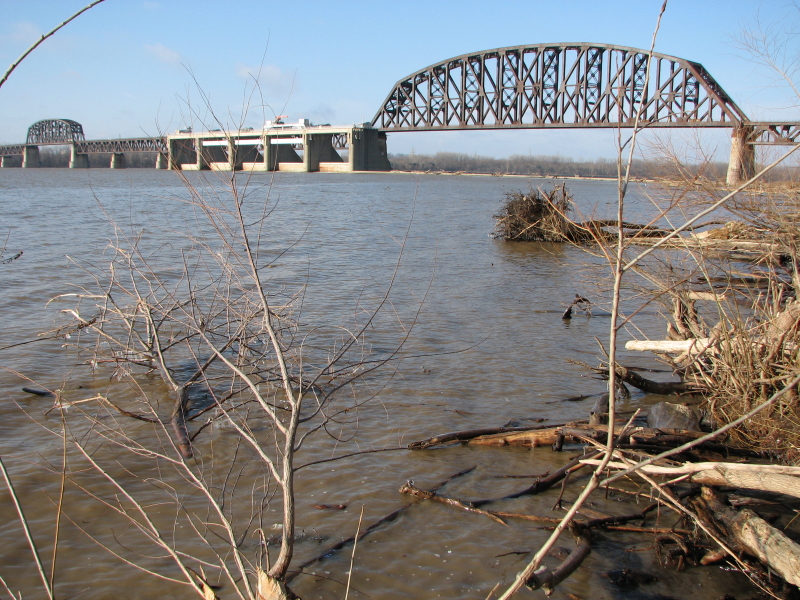
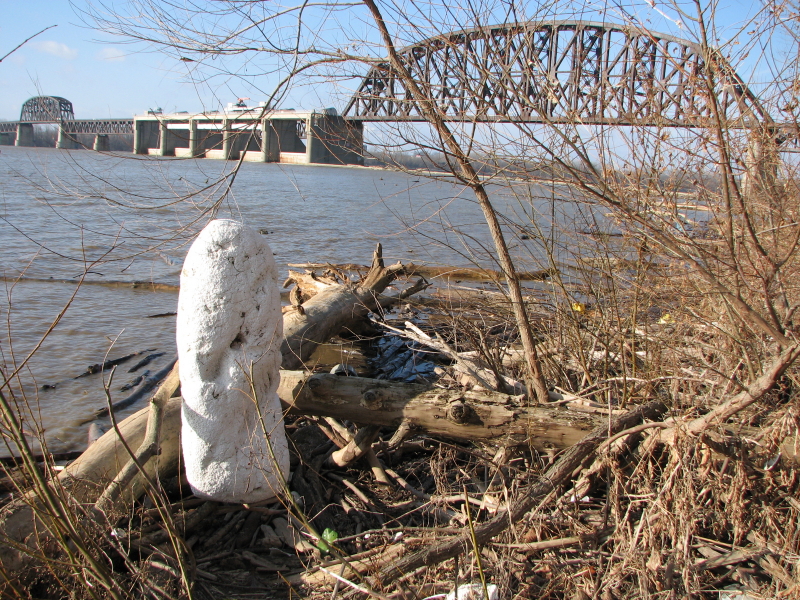
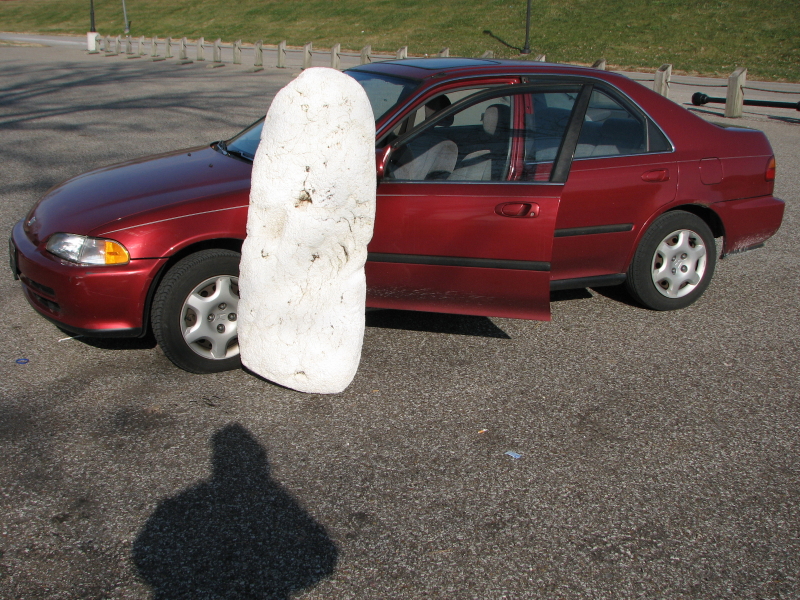
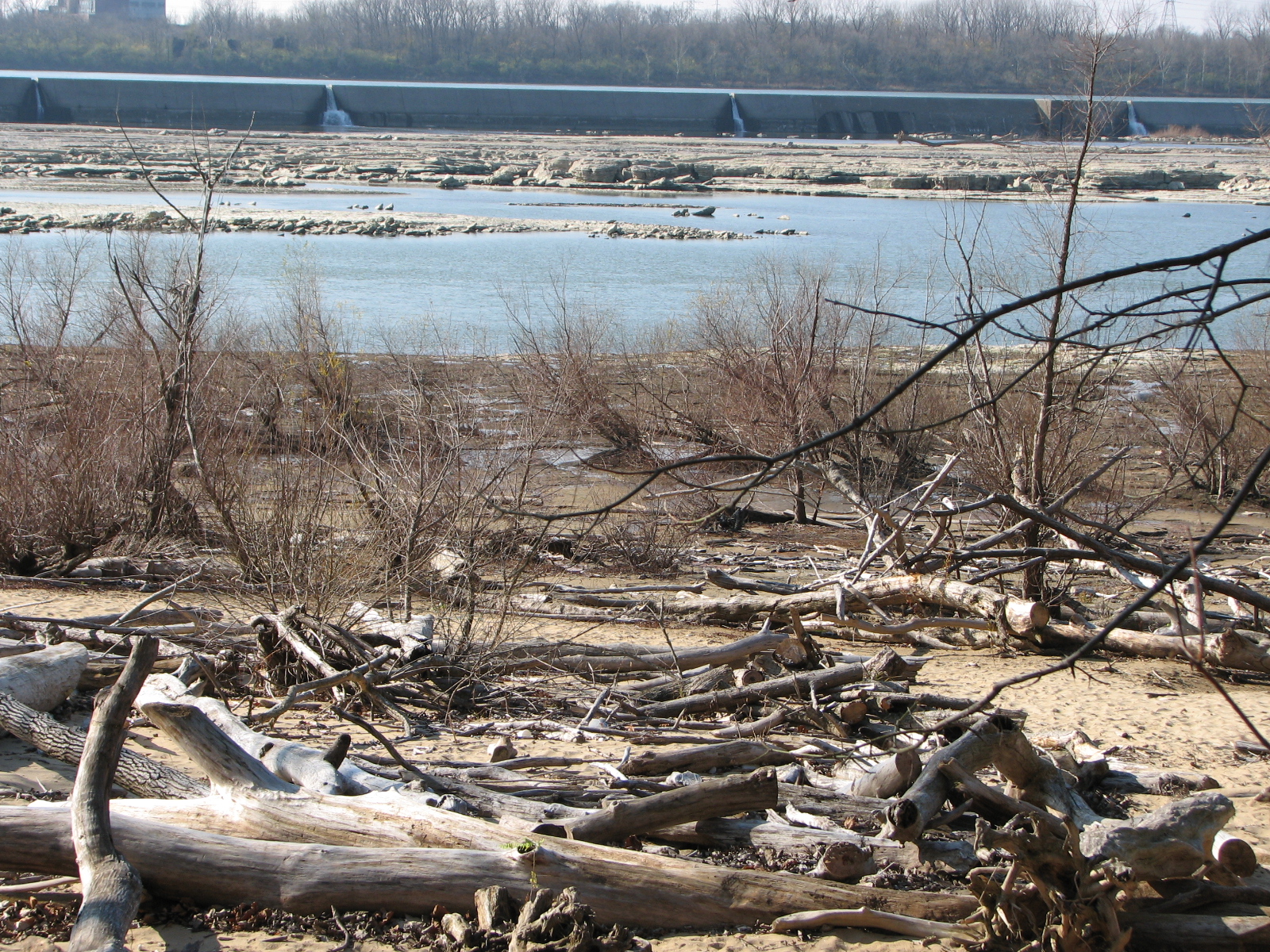
It may be cold, but at least the sun is out and this has an enormous cheering effect on me.  I decided to check out a place that I don’t investigate as often, the riverbank just east of the dam and bridge.  The prevailing winds and currents do push materials along this shoreline, some of which beach here until the next flooding.  Among the many items I found this morning include an especially large and nicely shaped hunk of Styrofoam.  I set it on end and took a photograph of this polystyrene stelae with the river and bridge.  Even I have  a hard time guessing how big this hunk looks in the photograph and so I dragged it back to my car and created this other image!

Well, here’s the crazy part I alluded to earlier.  I decided to take this big piece home and amazingly, it just fit across the back seat of my Honda Civic.  I have other materials cached at home in our incredibly  shrinking basement.  As of now, I don’t have a particular idea for it, but it will come.  After wrestling with the Styrofoam block, I drove to my usual spot to check out the scene from there and to see how older works were faring.

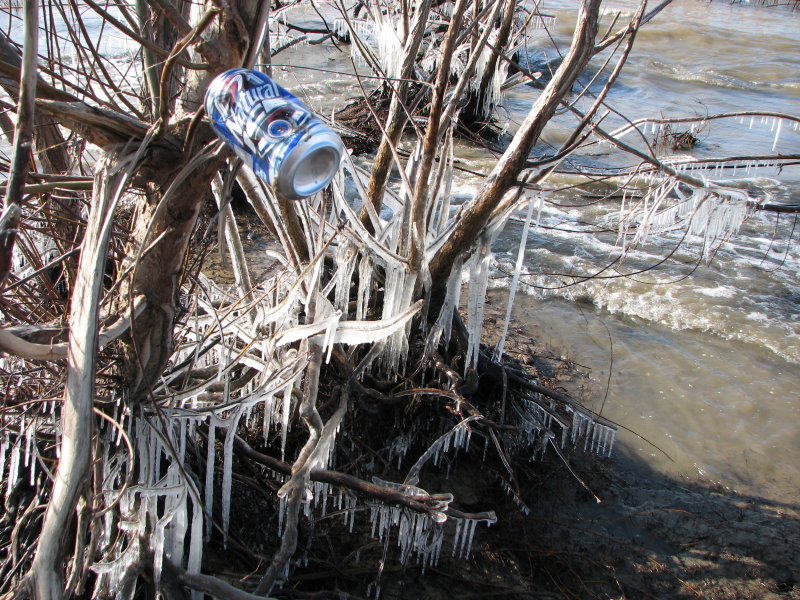
There was a lot more ice just downriver from the dam and coated the willows closest to the water.  There is also more wind and turbulence which I can feel on the exposed areas on my face.  It’s not quite “Elmer Fudd” hat weather, but very close.  I reserve that unflattering head-gear for temps below zero.  The television weather prophets are saying my area will be chilling in the twenties for highs the rest of the week.  With hope, this will be the coldest it gets this year.  Last year’s winter, with the great exception of the infamous ice storm, was a comparatively easy and warm one.

I looked up two old friends and they were still hanging in there.  Lorraine had slumped over, but it was easy to prop her back up to join her beau, Pot Belly in standing guard over my spot under the willows.  I wandered around and very few birds were to be seen or expected.  I did run into a small grouping of drabbly-plumed American Goldfinches and stray Song Sparrows and Mallard ducks.  Oh, I did photograph a rare hummingbird and came across another interesting nest, however, in the interest of future posts…I will withhold those for now, but check back later this week.  I did come across one other image I recorded that is a bit more ironic than unusual and is not intended to be an endorsement of this product.  I like my beer with a lot more body, and flavor, etc… Happy New Year everybody!

Read Full Post »

The river is low and clear and fisherman have been testing their luck at the Falls of the Ohio.  It’s one of those situations where even if the fish aren’t biting, it’s still wonderful to be out in nature.  Sightseers have been moving along the riverbank and on this occasion I have come across other sculptures that while they aren’t mine…may have been inspired by what I do out here? 

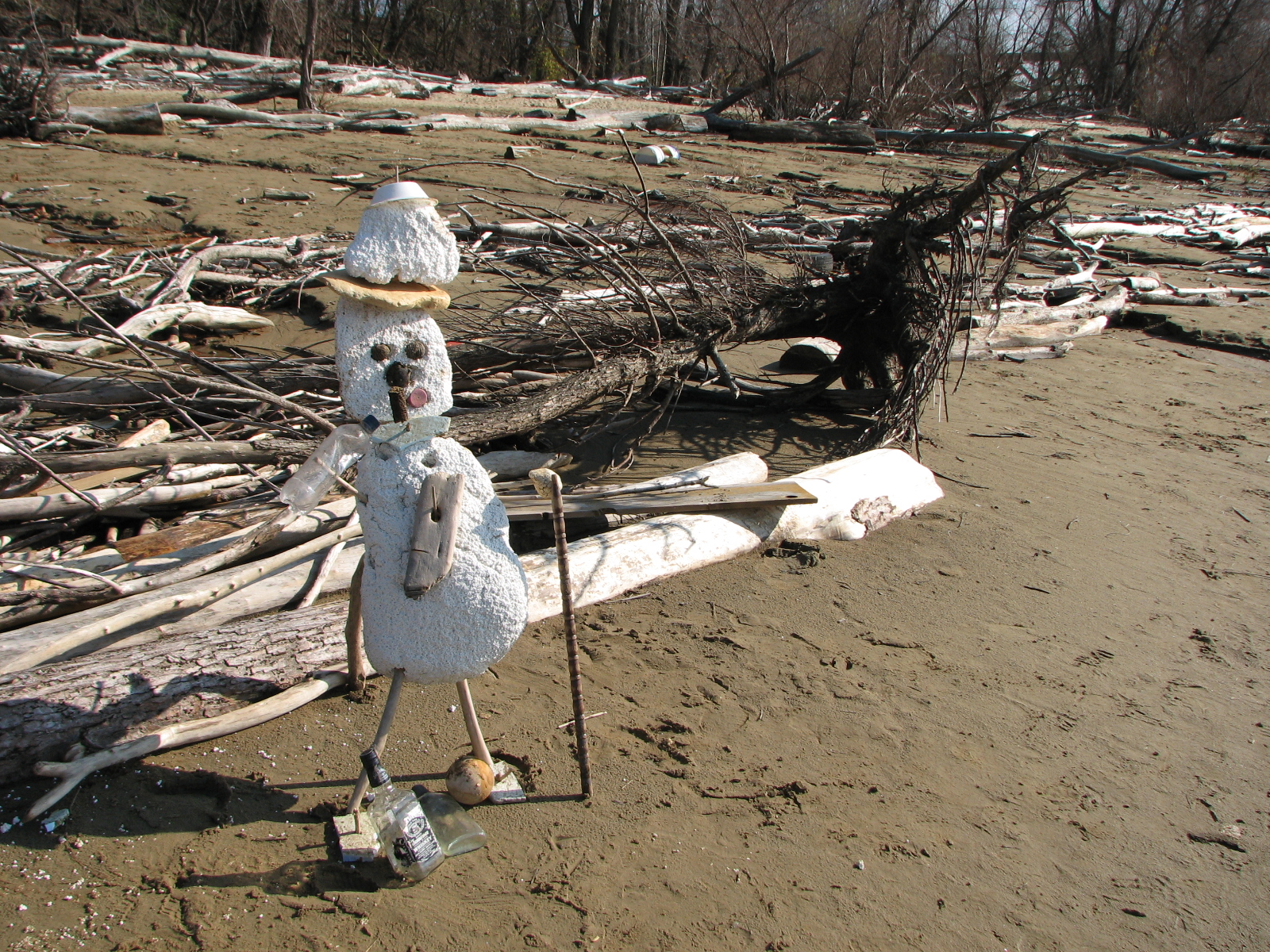
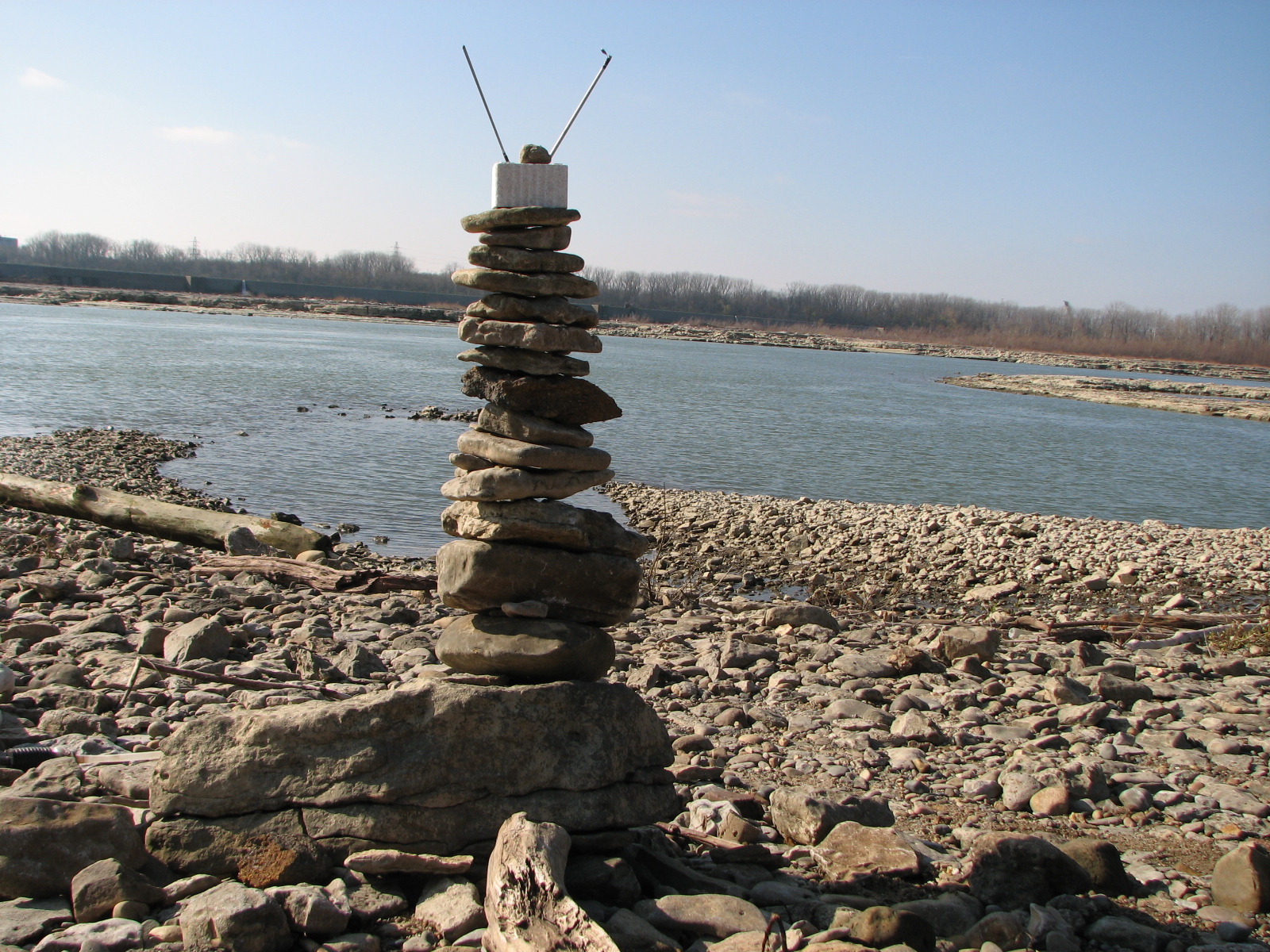
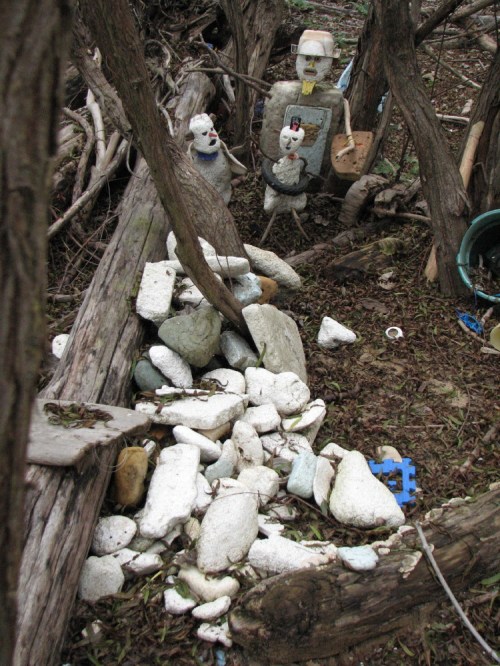
Visitors have “recycled” one of my old pieces and made this work that I call “Jack Daniels” based on the empty whiskey bottle stuck in the sand by its feet!  It’s a decidedly tipsy work and seems to sport what I think may be an improvised ice pack on its head.  The turned-wood cane steadies the piece and provides much-needed support.  Perhaps the same person or persons did this other sculpture near “Jack”?  It may be either a robot constructed from stacked rocks or maybe an image of a small television with antennae balanced on stacked rocks?  It doesn’t really matter.  I responded to the sight and added it to my collection of images of “Other People’s Art Made at the Falls”.  Over the years, I have also collected pictures of what other folks have made and left with materials indigenous to this area.  Actually, I’m surprised that I don’t come across more of the stacked rock works since that seems like such a universal human thing to do.

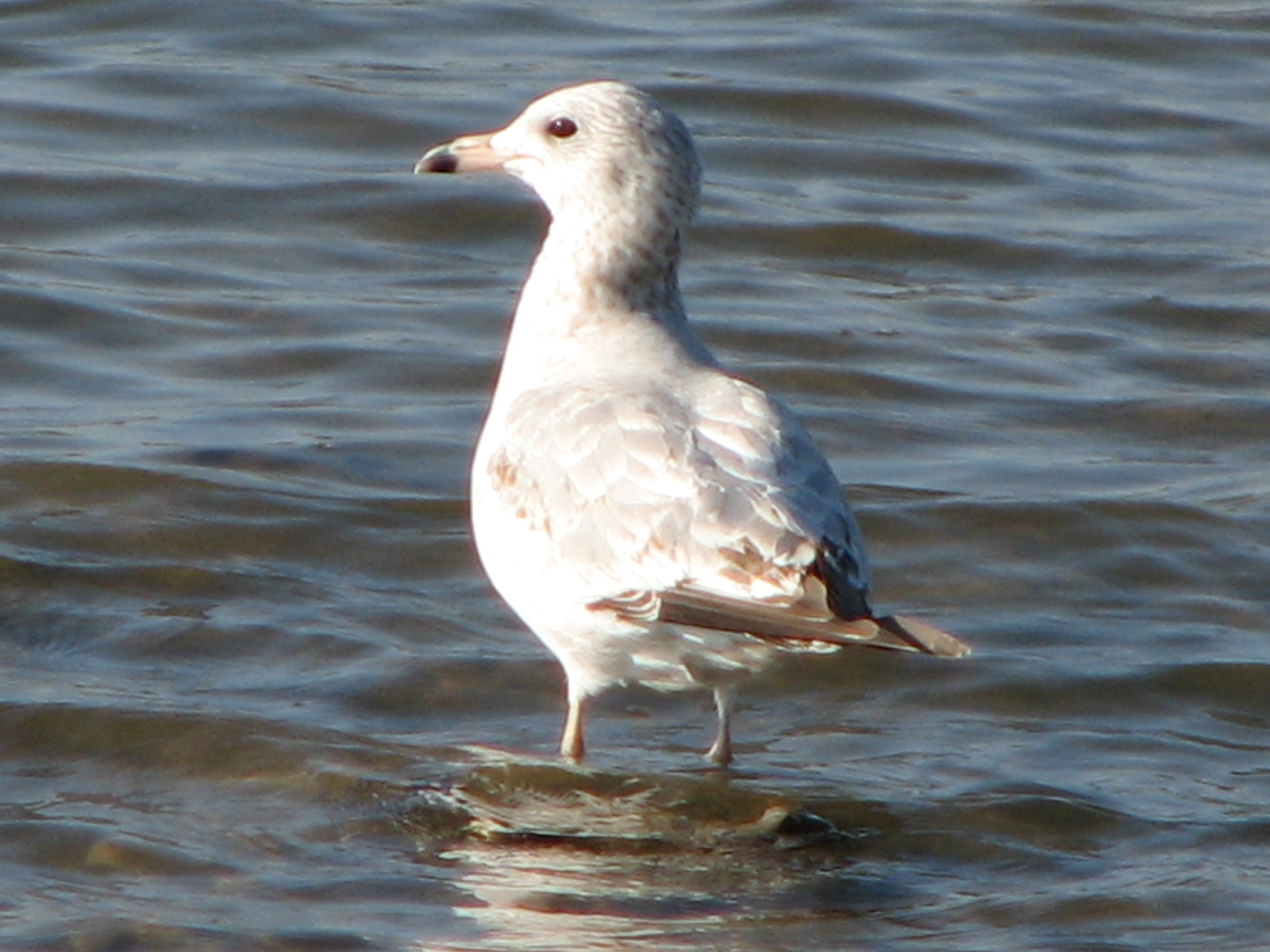
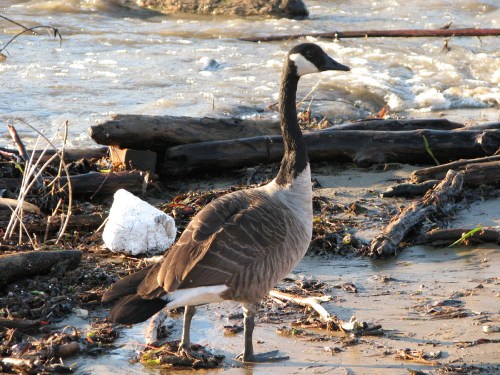
Appearing with more regularity are the Ring-billed Gulls that move into our area once the weather begins to cool.  I observed a large flock with their distinctive white dot on black wing tips flying above me in a slowly circling ball.  Maybe they were getting their bearings on their way to other areas? Anyway, a few stray birds peeled away from the drifting flock and remained in the immediate area.  I photographed this juvenile Ring-billed Gull standing in shallow water near a small Styro-fisherman I had constructed.

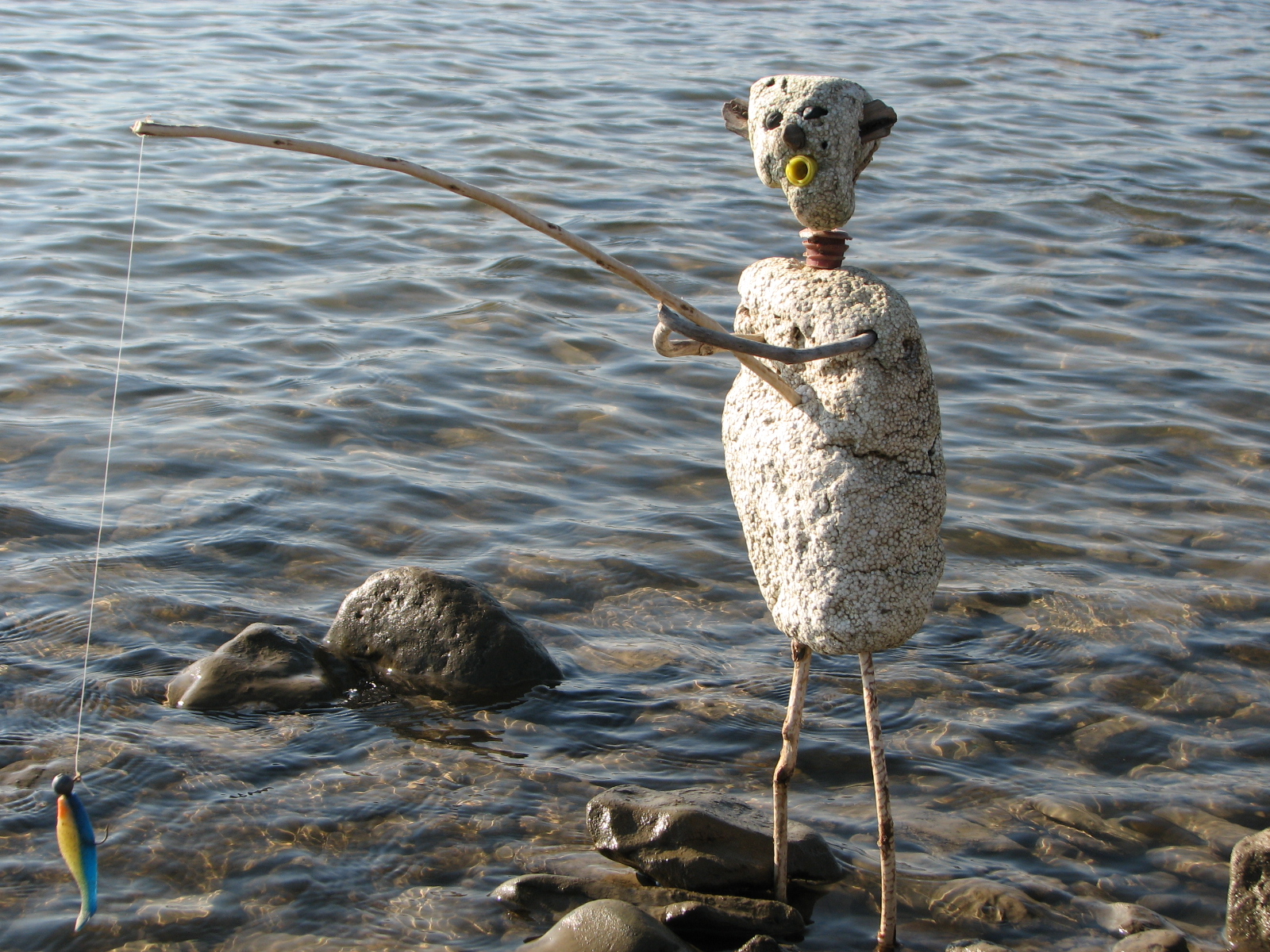
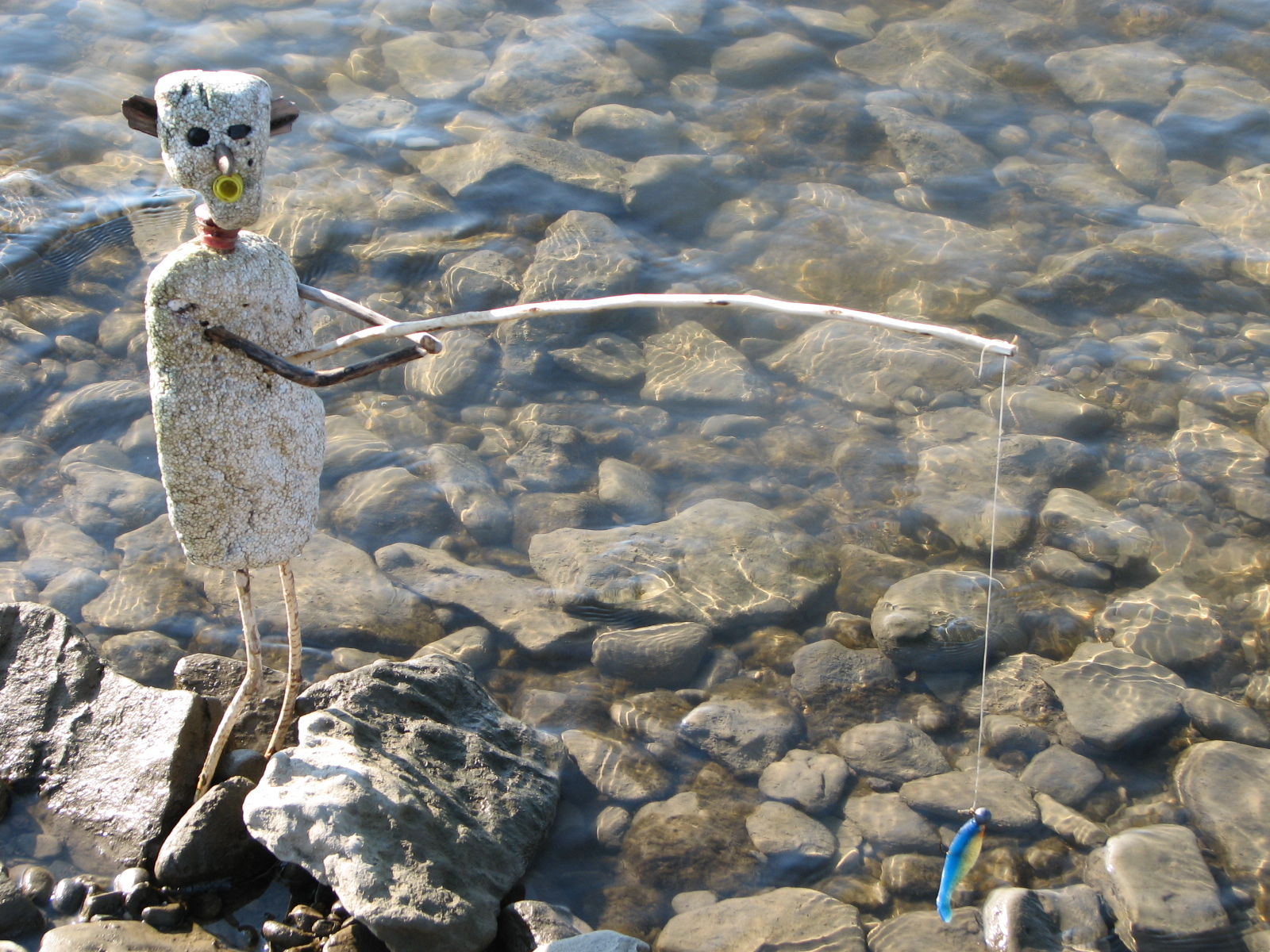
When I come out here, I try to make something from the debris I come across.  I usually always feel better about life in general when I’m engaged in creating an artwork.  Here’s the fisherman figure I made on this day.  He is standing on beaver-chewed willow legs as is the pole he holds.

Although I have made many fishing figures over the years, this one was inspired by that day’s finds.  Walking the riverbank, I assembled a small collection of soft-bodied jigs lost by real fisherman.  The river works them loose from wherever they are snagged and beaches them lead-head and all.  The curving tails are intended to flutter through the water once they are reeled in.  It’s an effective movement that fish find hard to resist.

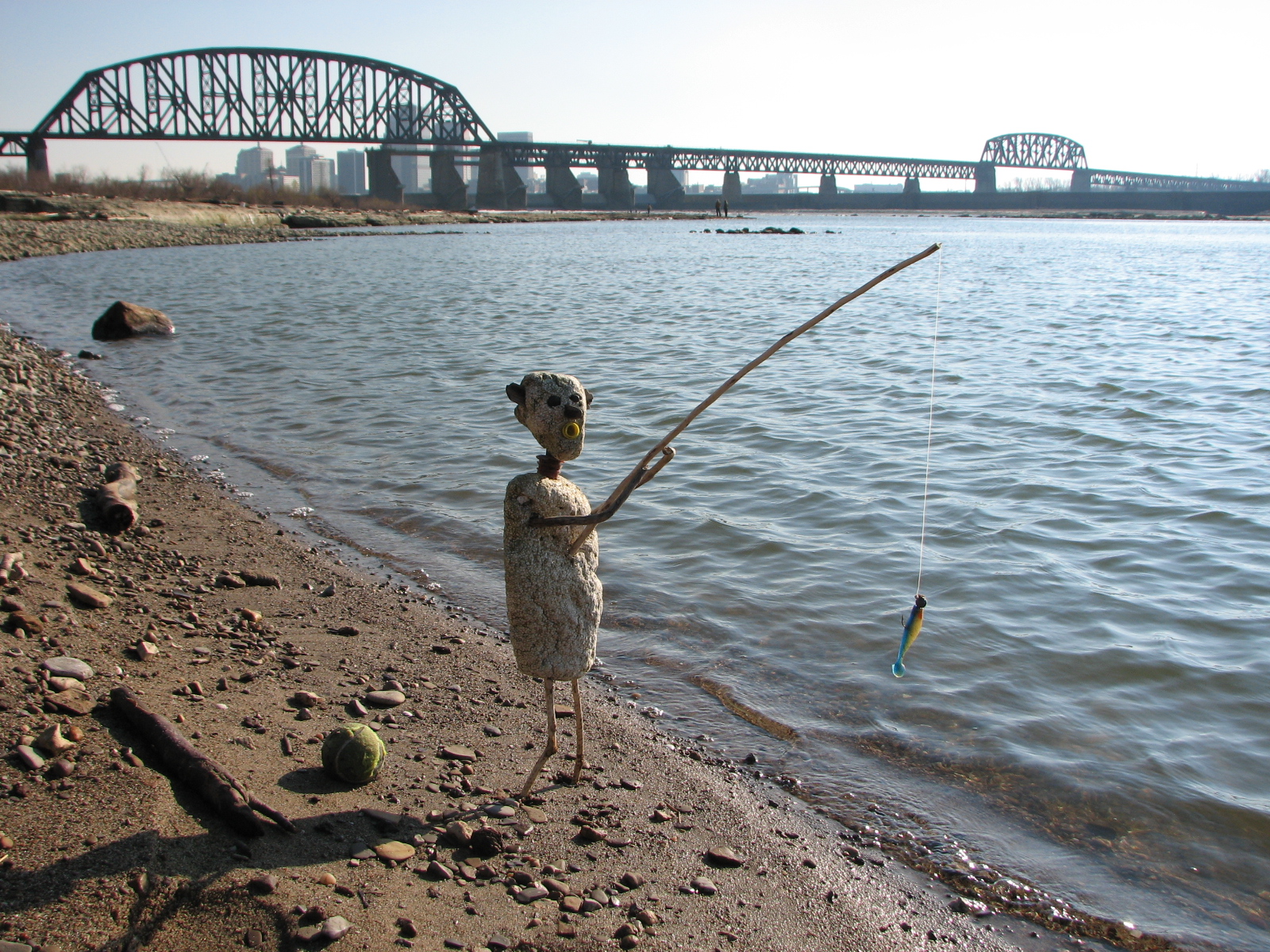
I selected the one that looks like a blue minnow and because it also had a nice length of monofilament attached to it… added it to my work.  I carried the piece along the shoreline and photographed it by the water.  I drew a few quizzical looks and even a laugh or two from real fishermen!

Here’s another image that shows the figure in the context of the larger landscape.  The old railroad bridge in the background has become such a presence in so many of my photographs.  Until next time…

Read Full Post »

west section of the Falls, 11/09

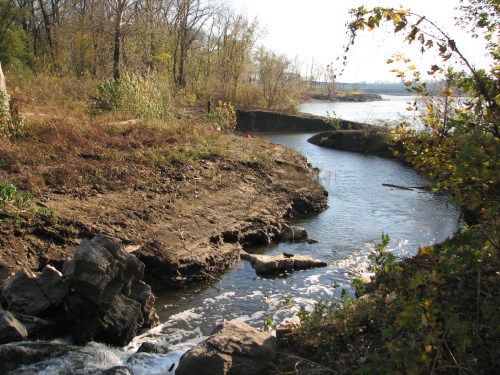
Because the climate has been so spectacular of late, it’s been possible and desireable to hang out in the park to make and see what one can.  This is another bird post, but one that specializes in what’s possible here in the fall.  Some of these species are found no where else…and for good reason.  I start with a shot of the typical terrain one encounters at this time of year.  What is a bird without some context?  Naturally, the river predominates as the distinct landscape feature with mixed hardwoods flanking the shoreline.  I’ll start first with an American Coot.  Not a particularly rare bird, but one I always enjoy seeing at the river.  I came across this lone individual and snapped this quick image for luck.  The true rarities are ahead.
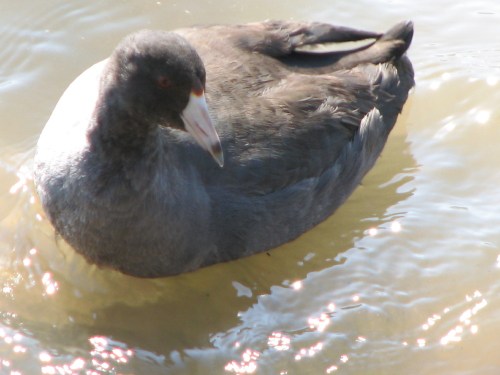
American Coot, 11/09

In the western section of the park a couple of late nesting birds can be found among the exposed roots of the great trees.  This is the home of the Styro-Grackle and the Fleur-de-lis Dovelette.  The next two images are of the grackle.  I stumbled upon a male with its great yellow bill displaying with the remains of a baby’s pacifier.  In this species, males vie for the attention of females by choosing objects they believe the females will like.  The Styro-Grackle is a large, and noisey bird, but wary to the extreme.
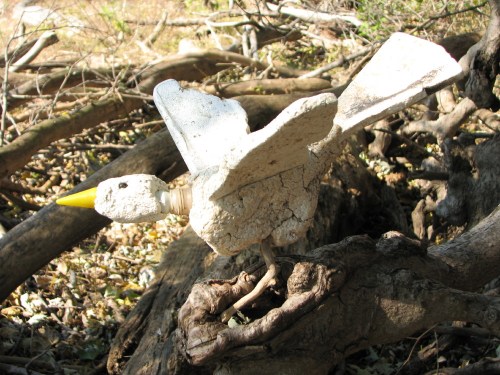
Styro-Grackle display, 11/09

Here’s a close-up image of its head, bill, and pacifier it found by the river.
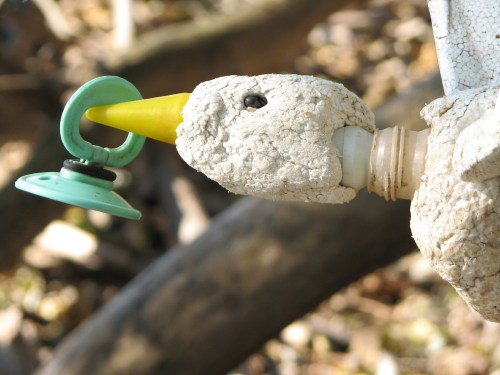
Styro-Grackle head with pacifier, 11/09

Often found in association with the grackles are the gentle Fleur-de-Lis Dovelettes.  The female specimen I came across was sitting on a fresh nest.  No eggs were observed within it.  The dovelette is not particularly fussy about what materials it uses to construct its bowl-like nest.  This one was made from shredded plastic with hardly a trace of natural fibers interwoven into its structure.  First, a picture of the bird itself in its woody habitat.

Fleur-di-lis Dovelette, 11/09

The bird derives its common name from the unusual crest upon its head.  It is rumored that this was the inspiration for the symbol used by the City of Louisville on its flag, official letterhead, etc…  More than likely though, it’s just a coincidence.  Like many dove species, this one has tiny feet.  Here’s a good look at the unusual nest constructed in the fork of a tree root.
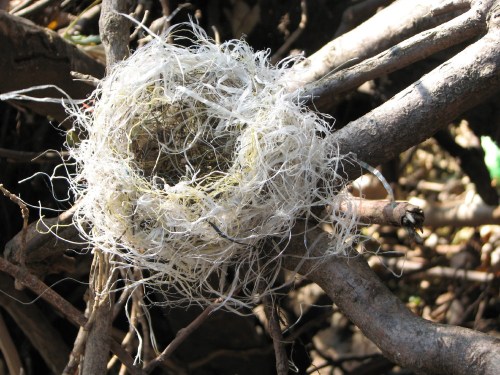
Plastic fiber nest, 11/09

And here is the bird and nest joined together.  I didn’t linger because I didn’t want to disturb the dovelette anymore than I had to.  If the conditions are right, she will lay three to four light green eggs.  The dovelette will have to stand guard against raccoons, but otherwise her young have a good chance of reaching maturity.  Wild prairie grass seeds make up much of its diet.
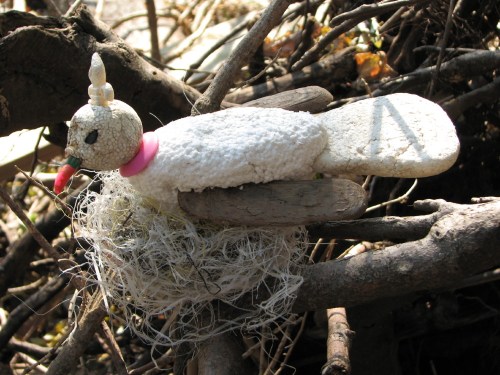
Fleur-di-lis Dovelette on nest, 11/09

Cane Run Creek, 11/09

Near the middle of the park, Cane Run Creek flows into the Ohio River.  It’s a spot that’s favored by fisherman and birds alike.  Large rocks and trees deposited by flooding line its banks.  Because of the vagaries of the larger river, the creek’s appearance is highly variable.  It was in this area that I came across a rare and unusual shorebird that I would like to share with you.  Here are two images of the Jet Piper.  It is so named because it evolved a distinct crest that is believed to stabilize it during its speedy flight.  One sees a similar structure on the tail of modern aircraft.  The Jet Piper never stays in one place for long.  It probes the mud along the creek bank in search of worms and other invertebrates.  Recent studies have shown that this piper will on rare occasions, take nectar from hummingbird feeders.  Here are two views.
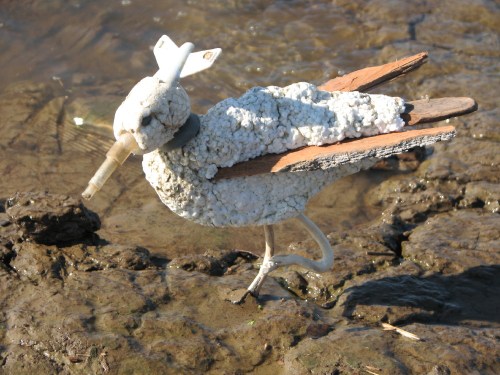
the Jet Piper, 11/09

Jet Piper, 11/09

The last specialty I came across is one of the sweetest singers in the park.  In fact, that’s how I located the Styro-wood Wren first…by its optimistic, cheery song.  I was sitting in my usual spot under the willows when I heard it nearby.  I took a position along a path I thought it might take and with success, recorded these images of this rare endemic bird.
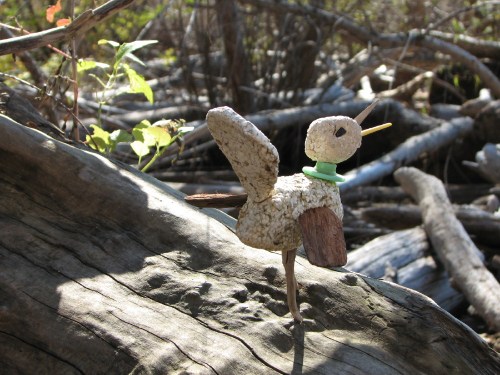
Styro-wood Wren, 11/09

On a sunny morning, the Styro-wood Wren was making its rounds in the underbrush.  Its singing has more to do with staking its feeding territory than it does with finding a mate.  That will change once Spring arrives at the Falls once again.  Among the interlopers that the wood wren is trying to discourage are other members of the family Troglodytidae.  Sharing its range at various times are Carolina Wrens, House Wrens, and the tiny Winter Wrens.  That’s a lot of competition to try and discourage.  This particular bird was in rare form and seemed to pose for my camera.
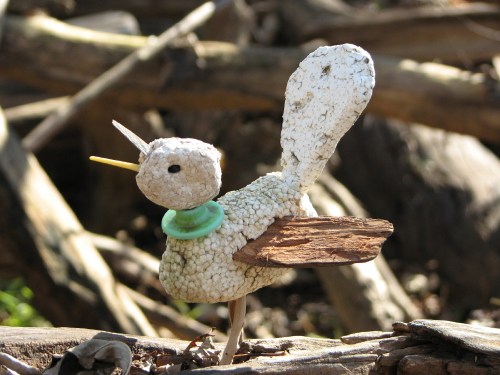
Styro-wood Wren singing, 11/09

It spread its fan-tail and with a shudder of its brown- wings burst into song.  The small feathers along its neck make an attractive collar.
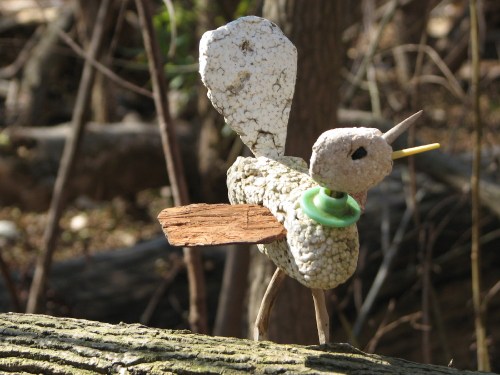
Styro-wood Wren, 11/09

CODA:

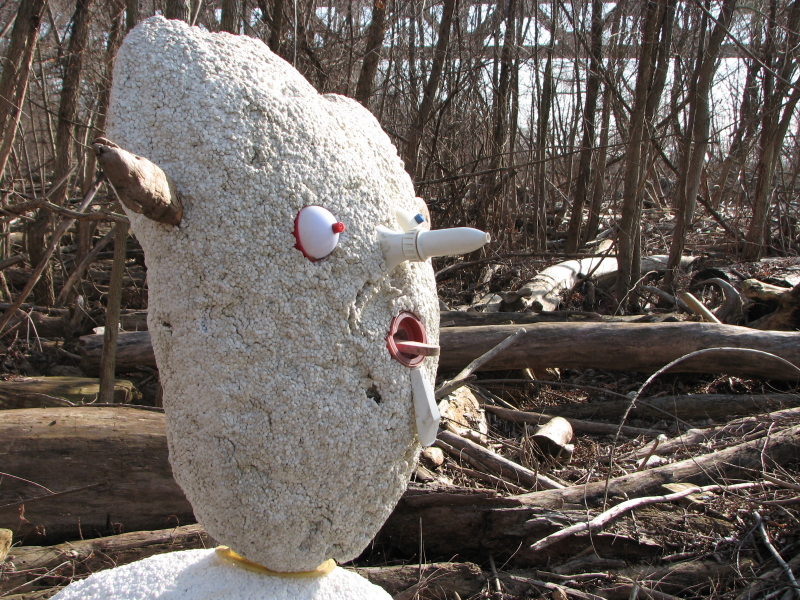
I made these birds from materials I found in the park.  All the plastic and Styrofoam elements were once in the Ohio River where they interact with the natural ecosystem.  Among the other materials used include:  tree bark (for wings), coal (for eyes), and rootlets and twigs (for the legs).  I make these artworks to call attention to the condition of the land and water, to draw attention to the unique qualities of this place, to celebrate creativity, and because I love birds!  All the photos are mine and shot on location at the Falls of the Ohio State Park.

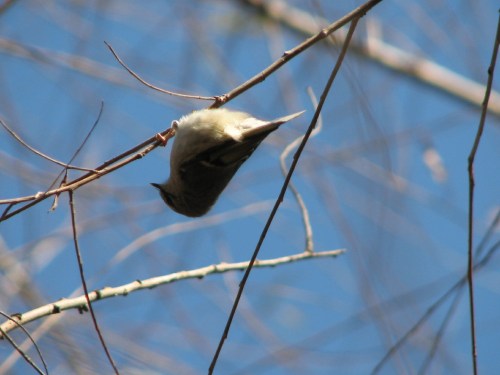
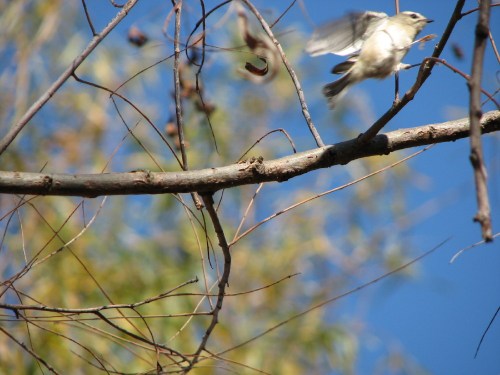
While I was making my faux birds, the real articles were busy in the tree tops above my studio.  Among my favorites to watch are the Golden-crowned Kinglets.  These tiny birds are ever in motion and hard to photograph!  Here are a few more real bird pictures.
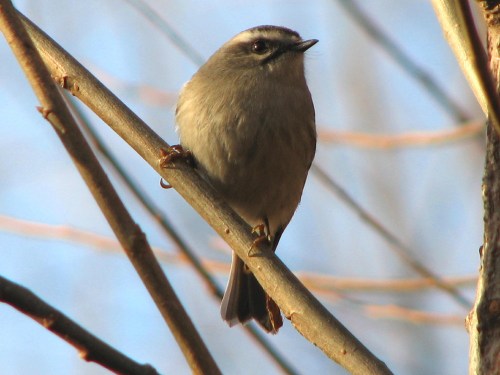
Golden-crowned Kinglet

upside down Golden-crowned Kinglet, 11/09

Golden-crowned Kinglet in action, 11/09

Lastly, the nest featured with the Fleur-de-lis Dovelette is in fact a genuine bird nest.  I found it in the branches of a downed tree.  I have no idea which species created it.  I have seen within the park, the nest of a Northern Oriole that used cast-off fishing monofilament in its construction.  I do, however, think I located a source for the plastic fibers.  Near the discovered nest, a large barge rope was slowly unraveling and its threads look identical to the ones in the nest I came across.
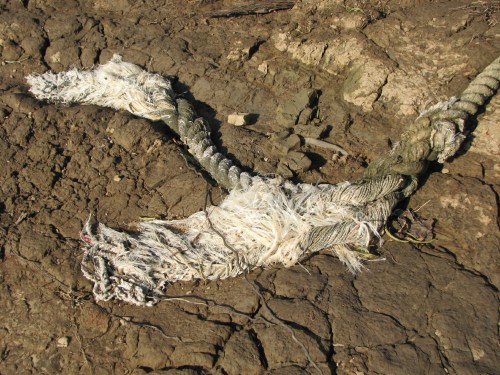
frayed barge rope or cable, 11/09

Read Full Post »

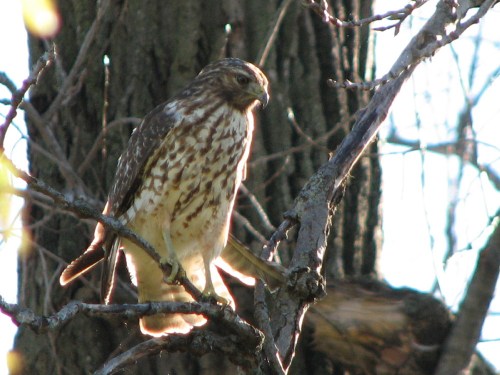
Cooper's Hawk, immature, 11/09

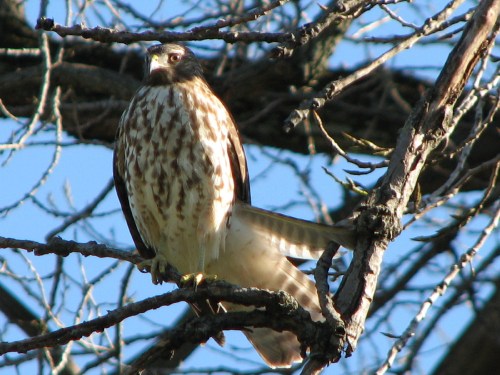
Cooper's Hawk, 11/09

So often it has been the case that I would see a really special creature shortly after arriving at the Falls.  I surprised this juvenile Cooper’s Hawk resting in a Cottonwood tree and it let me approach quite close before flying onto the railroad bridge.  As this bird matures, the brown streaks on its breast will take on a reddish hue and the feathers on its back will become more gray.  Even the eye color will turn red over time.  They are fearsome and effective hunters and routinely take the pigeons that roost along our bridges.  This bird has caught one of its tail feathers on the branch it is resting on giving it a somewhat awkward look indicative of its youth.

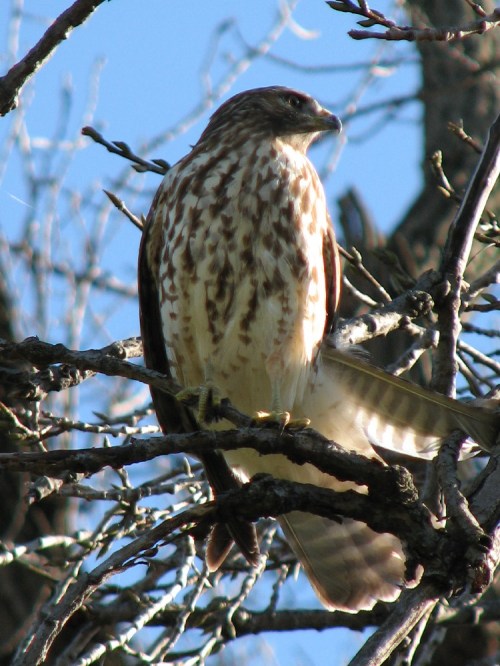
Cooper's Hawk, immature, 11/09

Here’s a larger image of this bird. I have photographed other Cooper’s Hawks over the years including one that was devouring a garter snake.  I have seen several juvenile birds here, so there must be at least one nesting pair that call this park home.  On the day I snapped this hawk I also came across a Canada Goose that was walking the shoreline.  It paid no attention to the Styrofoam gathering on the beach.  Wish I could do the same!

Canada Goose and Styrofoam, 11/09

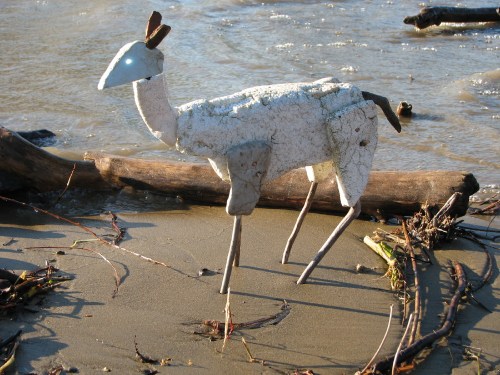
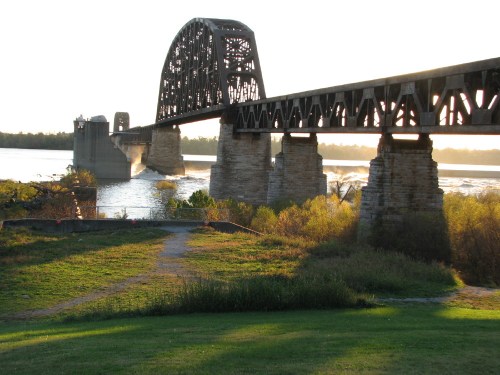
Several large chunks of Styrofoam washed ashore this time.  I struggled to get these larger pieces up higher on the beach.  If they are still there when I next visit, I will make something with them.  I will end this time with a couple other images from this day.  Here’s another Little Deer image that shows its glowing eye a bit better.  And, last but not least, here is a nice picture of the railroad bridge just before sun down.  This is the one that the hawk flew onto after I spotted it.

Little Deer, 11/09

Railroad bridge at the Falls, 11/09


Read Full Post »

Great Blue Heron in flight, 10/09

After last week’s excitement in the form of an exhibition and talk, life is returning to a slower pace.  Autumn is in full swing now.  When the sun is shining there are still enough leaves with great color left on the trees to make things seem magical.  On the other hand, after days of rain and overhanging clouds…it’s easy to get a case of the grays.  Following are a few images from last weekend.  I did come across an unexpected bird that is new to my Falls of the Ohio checklist.  I was able to watch a pair of Prothonotary Warblers for a few minutes and managed a couple of really  blurry images with my camera.  The park’s official checklist lists them as being only occasional for the spring season.  So, I’m feeling lucky to have seen them unexpectedly.

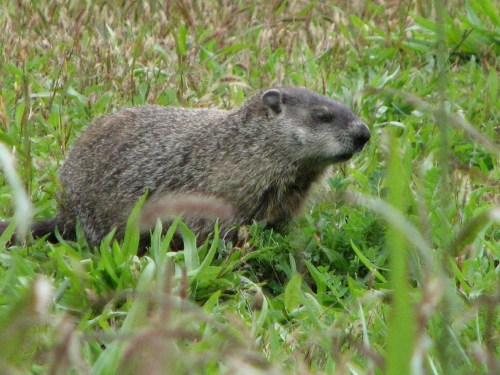
young groundhog, 10/09

The park’s woodchuck’s are busy putting on weight for the hibernation to come.  It seems this has been a decent year for them.  I’ve seen many and stepped into more than one unseen burrow entrance. It’s been a good year watching animals in general.  The mink sighting earlier in the year was a highlight.  It’s only a matter of time before I surprise a deer in the park.  Signs of them are starting to show up everywhere.

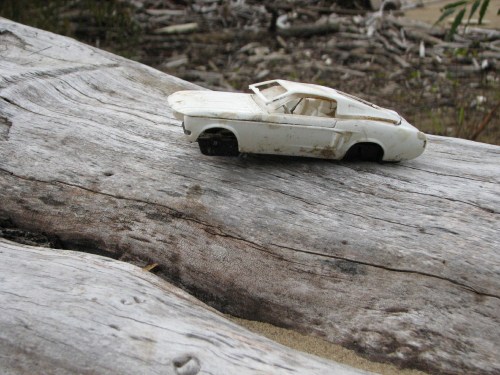
plastic model car, 10/09

I’m still finding unusual plastic stuff all the time.  Despite walking familiar routes through the park, I keep coming across items deposited here by past floods.  Here’s a plastic model Mustang car.  It was lying snug next to a log.  I have other images of shoes and plastic gasoline containers as well that I’ll use to eventually update those image collections on this blog.  With many of the willow trees losing their leaves, my secret studio spot is easier to find than ever.  Here’s what it looks like currently.  Prince Madoc is keeping a good watch over things!  According to the extended forecast, tomorrow is supposed to be the one sunny day of the week.  I’ve promised myself an extended outing at the Falls.  Whatever I make or document will be my posts for the upcoming week.

Studio in mid October, 10/09

Read Full Post »

blue-headed vireo

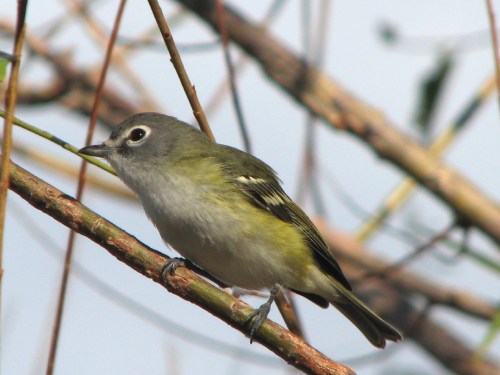
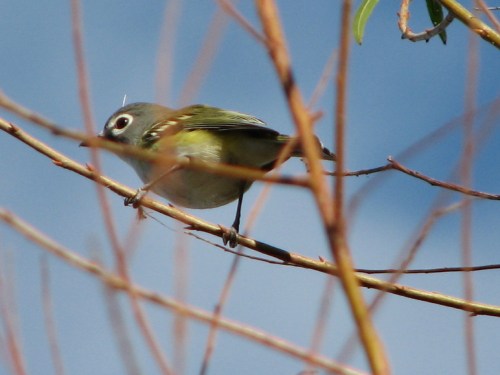
October and the Fall migration is underway.  One bird I look forward to seeing is the Blue-headed Vireo.  I have spotted them the same week in October for two consecutive years now.  I watched a pair working their way around the willow trees and observed one eating a fat, dark moth it caught.  These vireos are less wary and found lower in the trees than the other vireo species recorded here.  The official Falls of the Ohio checklist counts six vireo species.  I’m still looking for the Yellow-throated Vireo, which like the Blue-headed is considered uncommon for the park.  I like the bright white spectacles around this bird’s eyes.  Here’s a different view of this bird.

Blue-headed Vireo, 10/09

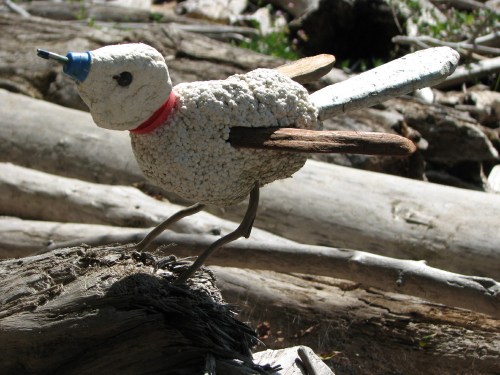
A couple weeks back I made another bird from Styrofoam and just didn’t get the chance to post it till now.  I think it turned out well and I call it a “White Jay”.  It’s about the same size as a Blue Jay.  Materials used to create this sculpture include:  polystyrene foam, sticks, lead (one eye), bark (for the wings) and plastic.  I later attached it to a branch, as in early ornithological prints, and is in the present Galerie Hertz exhibit.  Again, here are a  couple different views of this piece.

White Jay, 10/09

White Jay, 10/09

Read Full Post »

Willow habitat at the Falls, 10/09

The slightest hint of yellow is tinting the willow leaves at the Falls of the Ohio.  Picking my way through the driftwood, my legs brush against the occasional clump of ripening Cocklebur.  This time the bur’s tiny hooks stay fast on the parent plant, but in a few weeks my shoes’  laces will collect all they touch. 

Black-and-white Warbler, 10/09

As far as birds go, I’m in luck today.  Small groups of mixed warbler species are passing by the Falls on their way south.  I saw Magnolia Warblers, American Redstarts, and Black-and-white Warblers moving through the willows.  I watched the Black-and-white Warbler pictured above harvesting drab-colored moths from the fissures in the tree bark.  It seemed that everything happened at once.  The warblers would appear along with Eastern Wood-Peewees, Blue Jays, and a Northern Flicker made the scene.  There would be a brief flurry of activity and then the birds would be gone.  Is there security in the numbers or does the sound and motion confuse the small insects they flush out?  If allowed, I could spend all my time just trying to figure that out.  Here’s a picture of the flicker with his yellow tail.Northern Flicker, 10/09 


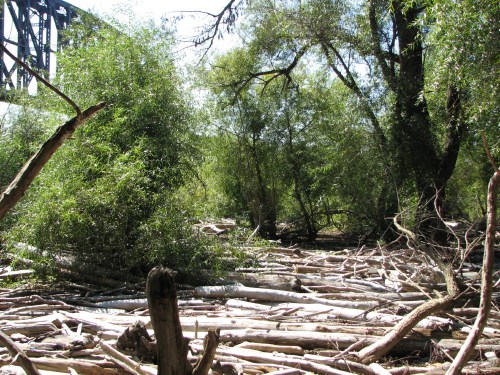
I’ve walked these same driftwood piles for months, but I still find river-polished Styrofoam and odd bits of plastic that I can use for my sculptures.  I have removed a lot of artificial junk from this place and made art out of most of this stuff.  As far as sculptural processes go, I use both additive and subtracted methods.  The additive parts are apparent in the sticks and such I attach to the polystyrene chunks.  The subtractive part is less obvious and is represented in my mind by the unwanted materials that I remove from the natural beauty of the park.  I rarely do any other carving to the foam chunks themselves.  This needs to be something anyone can do and not be some brilliant example of technical hand skill if I want others to try.

Alien Ballet, 10/09

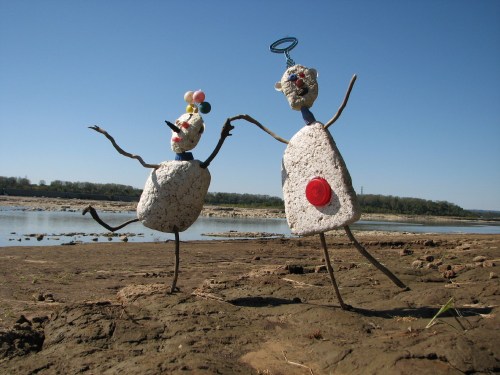
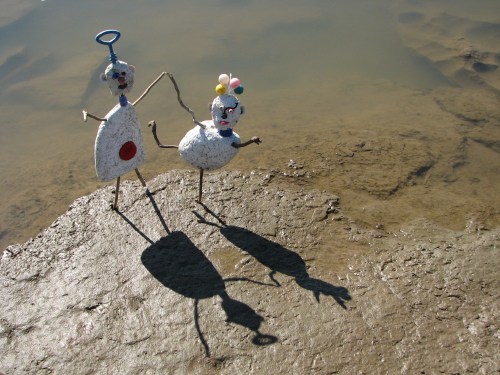
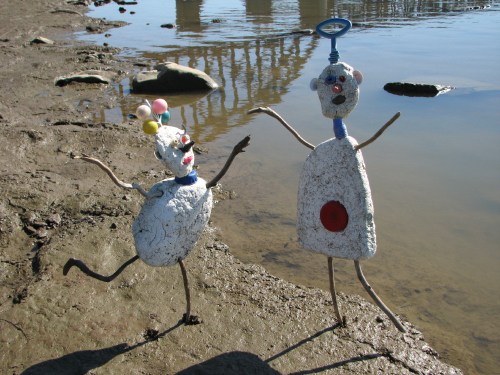
Here’s what I came up with on this early autumn day along the Ohio River.  I call it the Alien Ballet and I amused myself by making it and the digital images that resulted from the experience!  Recently, I read that the estimated number of potential planets that could harbor life just increased greatly because our ability to see into the universe’s deep places keeps getting better.  This is also based on life as we know it and needing just the right conditions (water, distance from the right type of star, etc…) in other words, other Earth-like planets.  It is interesting to speculate that in the vastness of creation, those conditions that result in life may not be as rare as we currently think.

Alien Ballet, 10/09

My aliens have traveled from that other dimension that is my imagination.  They are revelling in their individuality and dancing together with the light and shadow on the edge of three different states of matter.

Alien Ballet, 10/09

There is value in being in the present moment, right here and now.  Despite the chance of there being other similar worlds in the cosmos, I can’t imagine they would be as conducive to life as we live it than right here on Earth.  We need to celebrate this place while we can.

Read Full Post »
Great Egret, 5/07

Where did our Great Egrets go?  I’m asking that question this year because they are a familiar summer time bird at the Falls of the Ohio.  Visitors are usually treated to their presence from May to October or for however the warm weather lasts.  Usually, you can see them along the water’s edge fishing along with Great Blue Herons, Black-crowned Night-Herons, and the occasional Green Heron and Snowy Egrets.  As I have mentioned in previous posts, this hasn’t been the  most typical of years.

Great Egret, 10/08

Although 2009 still has a few months left to go, this year has been among our wettest and our summer was the coolest I can ever recall.  I have lived most of my life in Kentucky and we hit the 90 degree mark only a few times early in the season.  Usually, summers here are hot, humid, and long.  Just about everybody I know has acknowledged that this has been another climatically unusual year, but nobody has been complaining about the cooler than average summer. 

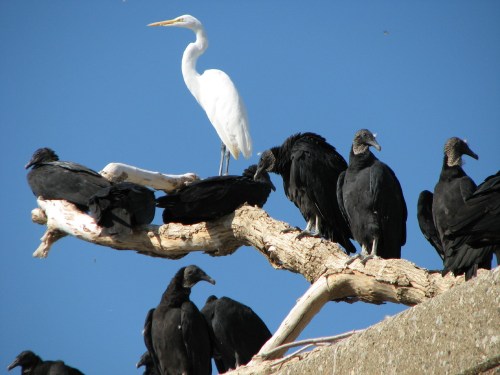
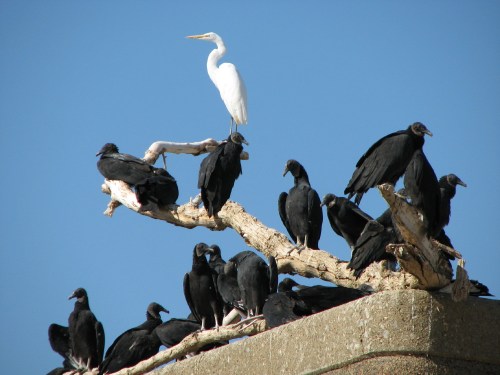
Great Egret with Black Vultures, 10/08

A possible exception could be our Great Egrets.  I have been out at the Falls most of this year and have been trying to pay attention to when birds  arrive and leave our area.  As far as I can tell, the Great Egrets were only around for a week in July.  I recorded seeing them on July 19 and then they were gone.  More rain and cool weather followed their appearance and obviously they went somewhere else, but where? 

Great Egret with roosting Black Vultures, 10/08

The images of the Great Egret and roosting Black Vultures were made at the Falls during October of 2008.  They are among my personal favorite bird pictures that I have taken in the park.  I was walking  near the dam that separates the Ohio River from the fossil beds and came across this scene.  A previous flood had stranded a dead tree on the wall and made a nice resting spot.  I liked the contrast between the stately white egret rising above the fidgety and squabbling vultures.  I had to be extra stealthy in my approach since my camera isn’t equipped with the best telephoto lens.  The Black Vultures seem to be getting more ubiquitous and this year I counted one flock of over fifty birds.  Soon, they too will be migrating to warmer parts down south, perhaps they will be catching up with our Great Egrets?

Read Full Post »
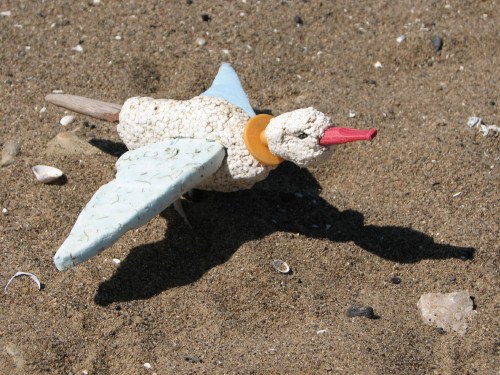
Styro-sandpiper, 9/09

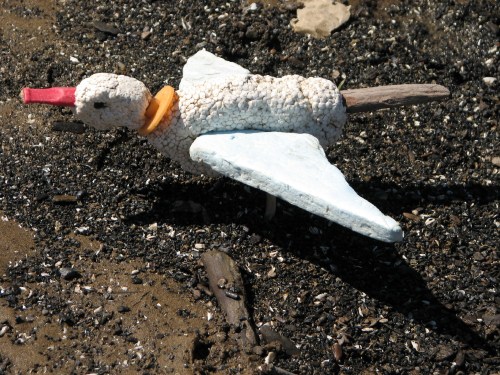
September is the month that the smaller shorebirds begin their migrations through our area towards warmer southern climates.  We see a variety of different species at the Falls of the Ohio.  Here is one impromptu tribute to them made from polystyrene foam.  This one is a Styro-Sandpiper dragging its wing in mock injury.  Among the materials I used to fashion him include:  Styrofoam, blue- insulating foam, river wood, plastic (around the collar and the bill is the tip from a cheap little cigar).  Oh, the eyes are tiny bits of coal.  You are not allowed to collect fossils in the park and I sometimes wonder if this applies to the coal as well?  Anyway, here are some images of genuine shorebirds photographed in the park.

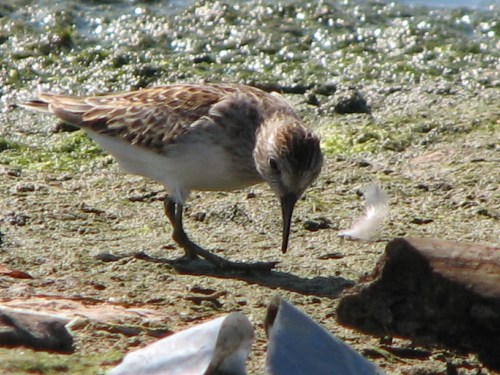
Least Sandpiper, 9/07

Small bands of Least Sandpipers explore the margins along shallow pools of water covering the fossil beds during this time of year.  Their bills probe the algae for the small invertebrates that live in the green mats.  These are our most common sandpipers followed in number by Spotted Sandpipers.  This time of year the Spotted Sandpipers actually have barred flanks and bright white bellies. We will have to wait for spring to see them with their characteristic spots and dots.

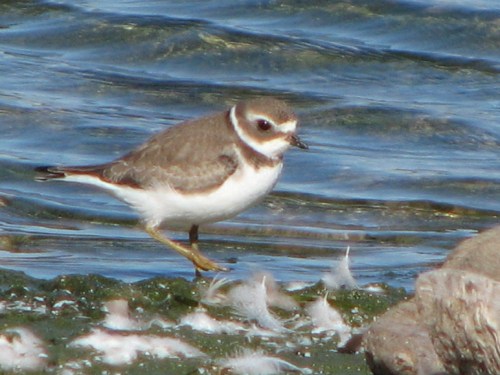
Semipalmated Plover, juvenile, 9/09

Tiny Semipalmated Plovers have traveled from the Arctic tundra and some make a stopover at the Falls.  The autumn birds seem to be mostly juveniles.  Piping Plovers, an endangered species, have been recorded in the park, but I haven’t had the pleasure of seeing one here.  By far, our most common plover is the Killdeer.  It’s hard to walk across the fossil beds this time of year without setting off their alarm calls.

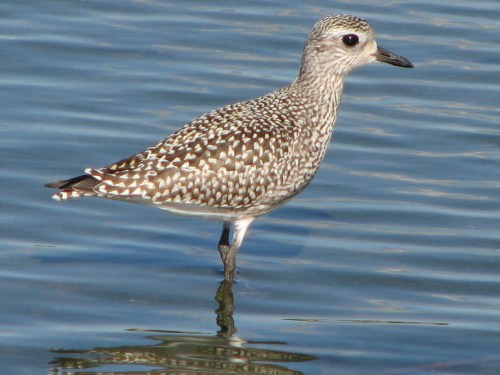
American Golden Plover, juvenile, 9/07

For two years in a row I have come across American Golden-Plover juveniles.  Although they are a bit larger than the smaller “peeps”,  I decided to throw them in too because I like them and they show up this time of year!  I’m amazed that this bird started life on the Arctic tundra and is now traveling to South America. 

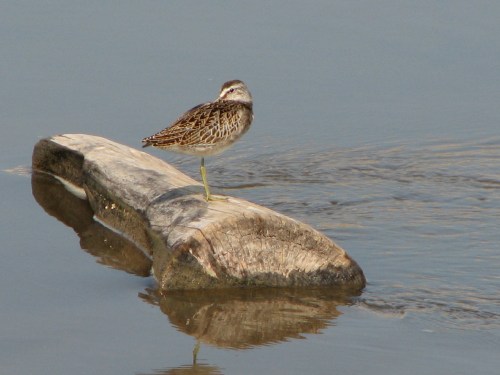
Short-billed Dowitcher, 9/08

Last year I came across this bird dozing on a well placed log and wondered what it was?  Its bill was tucked under the feathers on its back.  As I got closer, you can imagine my surprise when the bill was exposed!  I believe this is a juvenile Short-billed Dowitcher.  Here is another image of this bird.

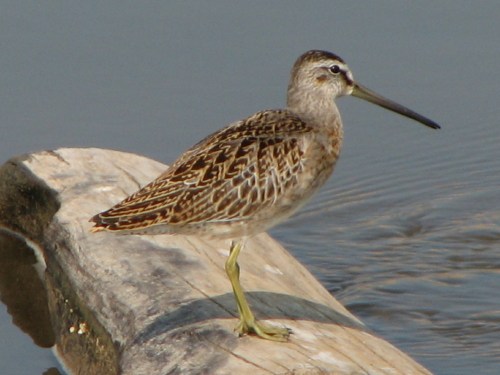
Short-billed Dowitcher, juvenile?, 9/08

I watched this bird for a while and never heard it utter a sound.  Referencing my bird guides, the literature says that the best way to differentiate it from the Long-billed Dowitcher is by its call. The length of its bill is of little help.  Both bird species have been recorded in the park.  The Short-billed is listed as rare and more than likely encountered in the summer.  This bird was photographed last year on the first of September.  The Long-billed is seen occasionally in the fall.  After checking out several bird guides, there was something in its coloration and markings that said Short-billed Dowitcher for me.  Perhaps some one out there with more experience can hazard a guess?  Either way, it was a tremendous treat to come across it!  I’ll end this post with another view of my Styro-Sandpiper posed in the sand and coal.

Styro-sandpiper, 9/09

Read Full Post »
« Newer Posts - Older Posts »