Feeds:
Posts
Comments

Archive for the ‘animal art works’ Category

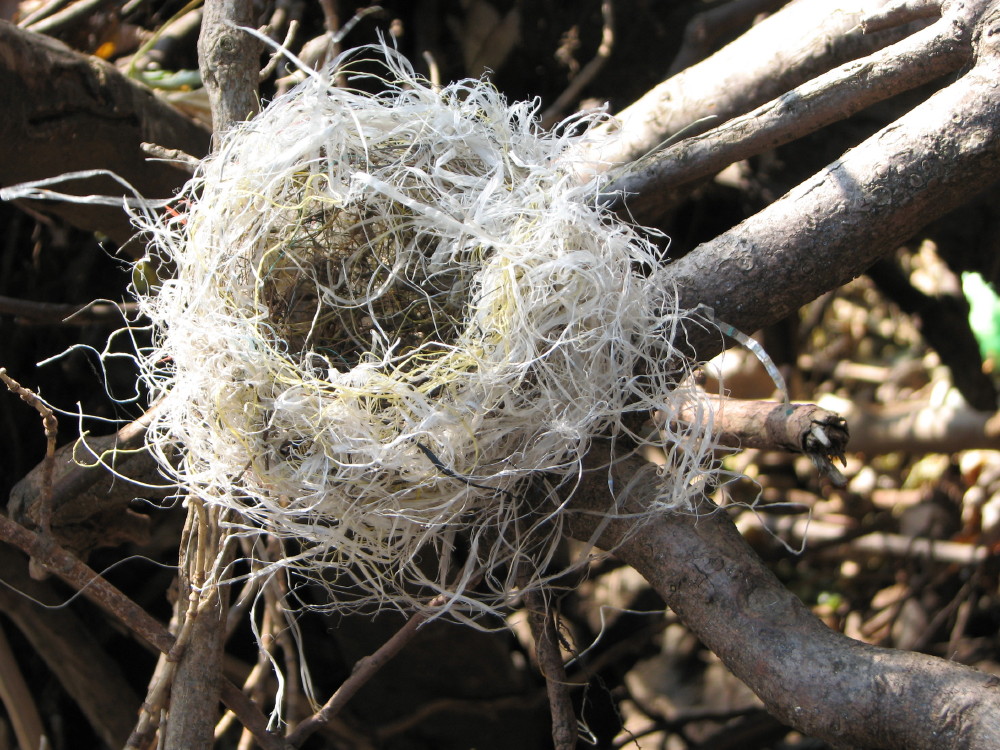
On my last expedition to the Falls, I spotted this oddity about twenty feet off the ground on a terminal branch of a cottonwood tree.  I had a feeling I knew what this is, but clicked-off a couple more close-ups for more information.  The day was very cold, but bright and clear.

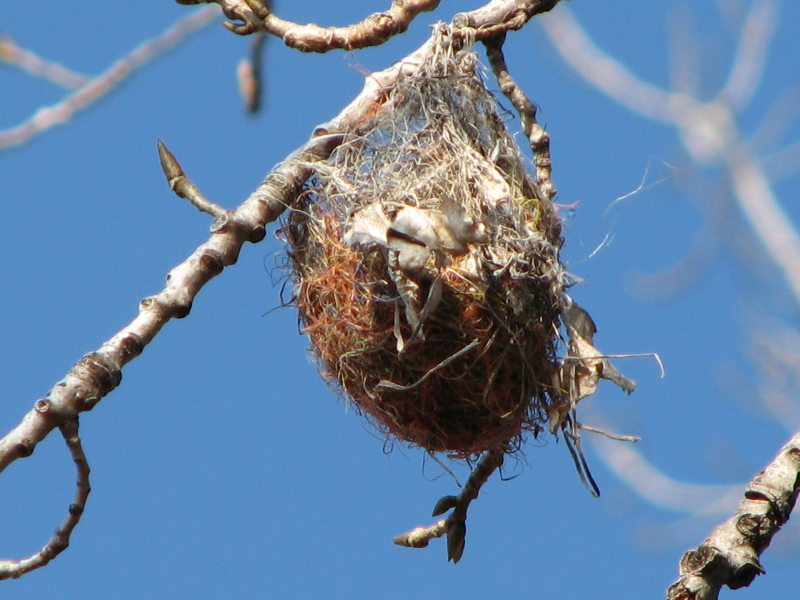
I believe this to be a hanging basket nest from a Northern or Baltimore Oriole.  I had seen one other similar nest years ago at the Falls that incorporated waste fishing line and long-stemmed grass.  This one is different in that it is made mostly from synthetic fibers teased out of a discarded barge cable along with fishing line.  These cables are very large, thick ropes that are used to tie-off and secure the barges used in commercial river traffic.  Here is a recent picture of just such a cable that was lost and wound around willow roots.  This one has blue and yellow fibers instead of orange like the oriole’s nest has.

As these ropes slowly break down, it’s interesting to think of nest-building birds preferring to use this material as opposed to strictly natural ones.  I know of other birds (more in an urban environment) that will use other bits of artificial litter in their nests.  A month or so a go in the western section of the park I came across another synthetic nest created by a different species and featured that in a post about rare birds.  Here is that nest reproduced again along with a close-up of the oriole’s nest.

Since a nest made of these materials will last longer…I’m wondering if the oriole or another bird will attempt to reuse it?  I will have to wait until spring to find that out.

Read Full Post »


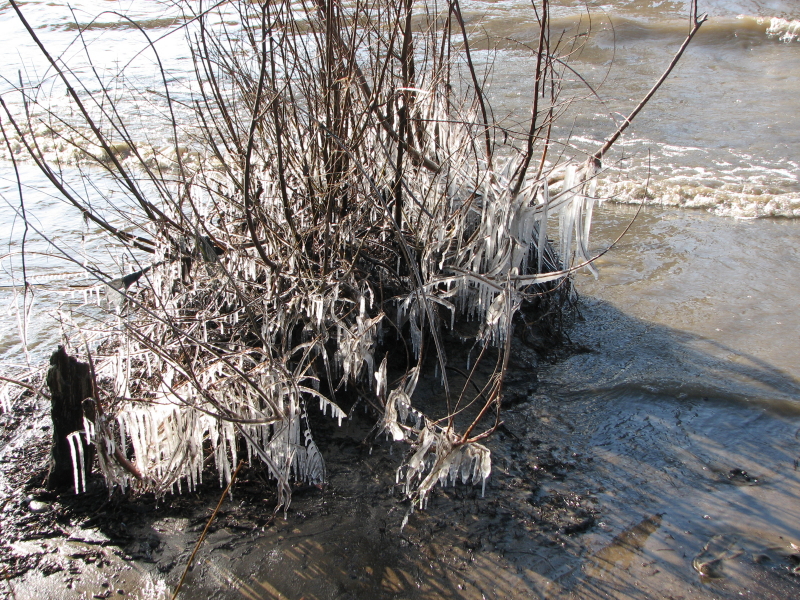
When the coldest of the cold air drops down from the frozen north, spreads over Canada, and then plunges down upon the U.S.A., then sights rarely seen may be glimpsed at the Falls of the Ohio.  Riding the cold wave, small groups of Arctic Hummingbirds move south to feed upon the Ice Blossoms.

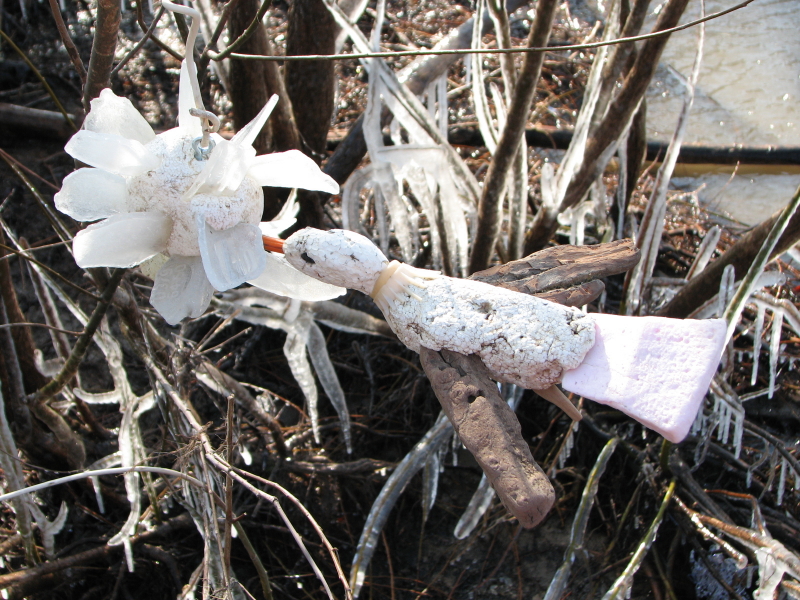
Styro-Trochilae polystyrenus or the Arctic hummingbird is among nature’s most extraordinary and poorly studied birds.  Much of that has to do with the forbidding place that this creature calls home.  There is speculation that this hummingbird must be able to regulate its body temperature in the manner of other Trochilidae in order to live in such a cold environment.  Perhaps, its rarity is due to remaining hidden during its torpid state which might define most of its existence?  Hummingbird metabolism has always been amazing, but for this species to go from nearly zero heartbeats to a thousand a minute when active defies credulity!

I came across this beauty and through high-speed photography was able to steal these images of this bird with its bright orange bill feeding.  It is thought that the Ice Blossoms refract the energy of the sun and transmits that into a form of “solar nectar”.  The bird would need an energy source as unique as it is to exist!  The conditions at the Falls were just right this past weekend to bring out both the bird and its blossom.

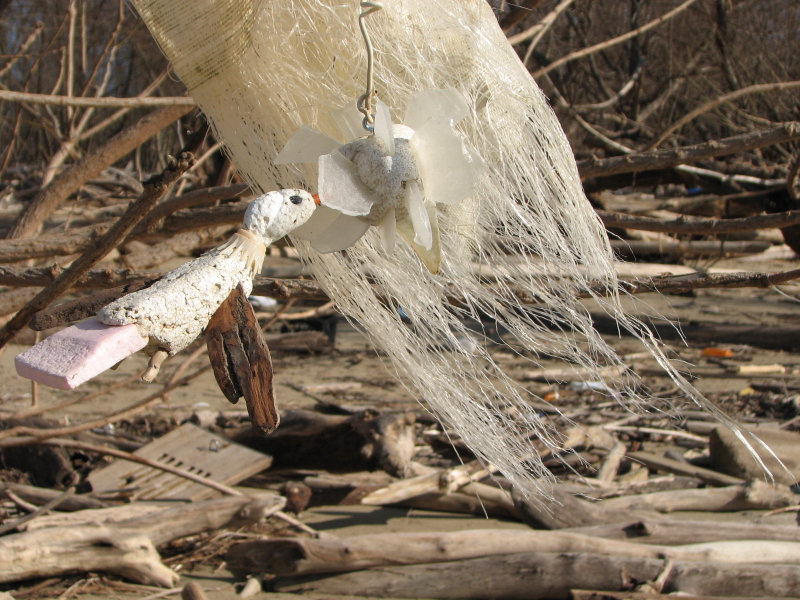
There is very little more I can add to the known literature on this ornithological wonder. This species is larger than the more familiar Ruby-throated Hummingbirds, but didn’t seem to beat its wings as rapidly.  I did observe it flying backwards.   It seemed like I watched this bird for a long time, but in reality,  it was probably a couple minutes or so.  I can say that being in the moment made time stand still.  I wonder as the climate changes particularly in the Arctic, whether this hummingbird will share the same fate as other animals that have evolved in such a specialized place?  With hope, the Arctic Hummingbird will prove to have some resilience.  One last image of this bird feeding from a blossom near a piece of fiberglass that was caught in the branches of a tree.

Epilogue:  The Arctic Hummingbird was made from materials found on site at the Falls of the Ohio State Park.  The materials include:  Styrofoam, plastic, wood bark, coal, its beak is a combo of hypodermic needle cover and the tine from an old comb.  The Ice Blossom is Styrofoam,  river-polished glass, and wire.   All images by the author and shot at the Falls of the Ohio.

Read Full Post »

It’s a sad but true fact that people abandon their pets at the Falls of the Ohio.  I have come across many stray dogs and cats in my wanderings around the park.  Of course, it’s hard to excuse this behavior when there are organizations that will care for and find new homes for unwanted animals. 

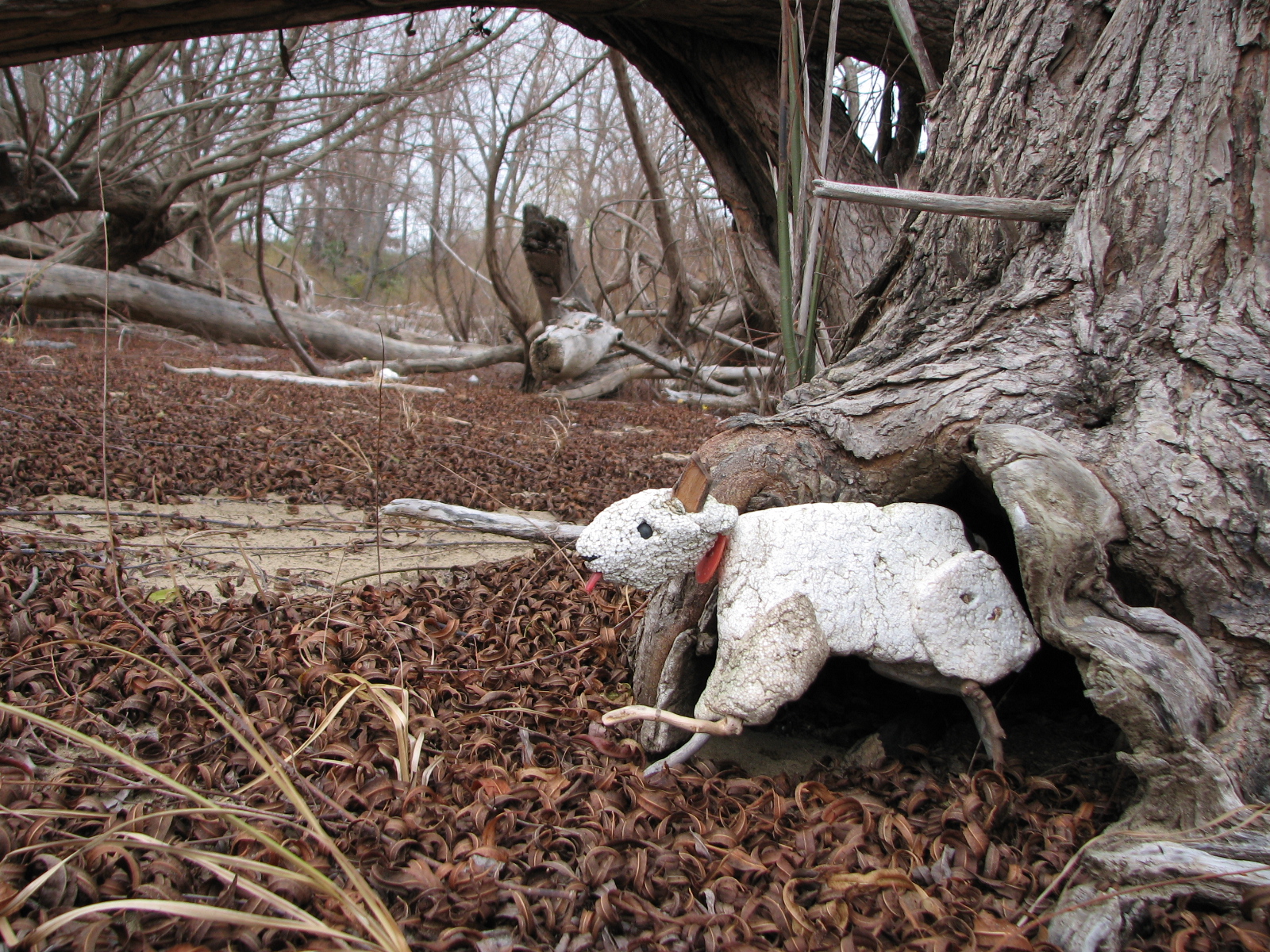
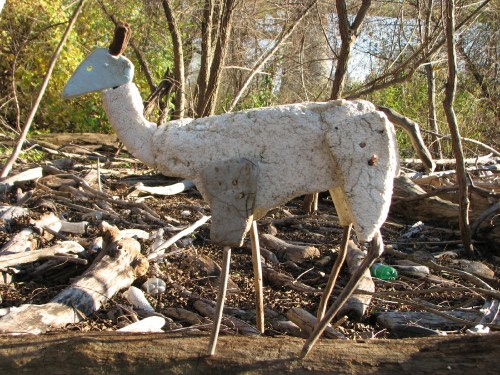
This is a story about a recent encounter I had with a most peculiar “dog”.  I came to call him “Rat-Dog” because of its diminutive size.  I was walking among the willows on a day that felt so much like winter.  I even heard the calls of Sandhill Cranes migrating, but the clouds were low and I couldn’t spot them.  As I was walking past a certain willow with a cavity at its base…this little white animal came running towards me.  For about an hour the little dog tagged along with me and I photographed it in various places of interest.  Rat-Dog would not let me touch it, but it was nevertheless playful.  Following are several images of this remarkable animal.

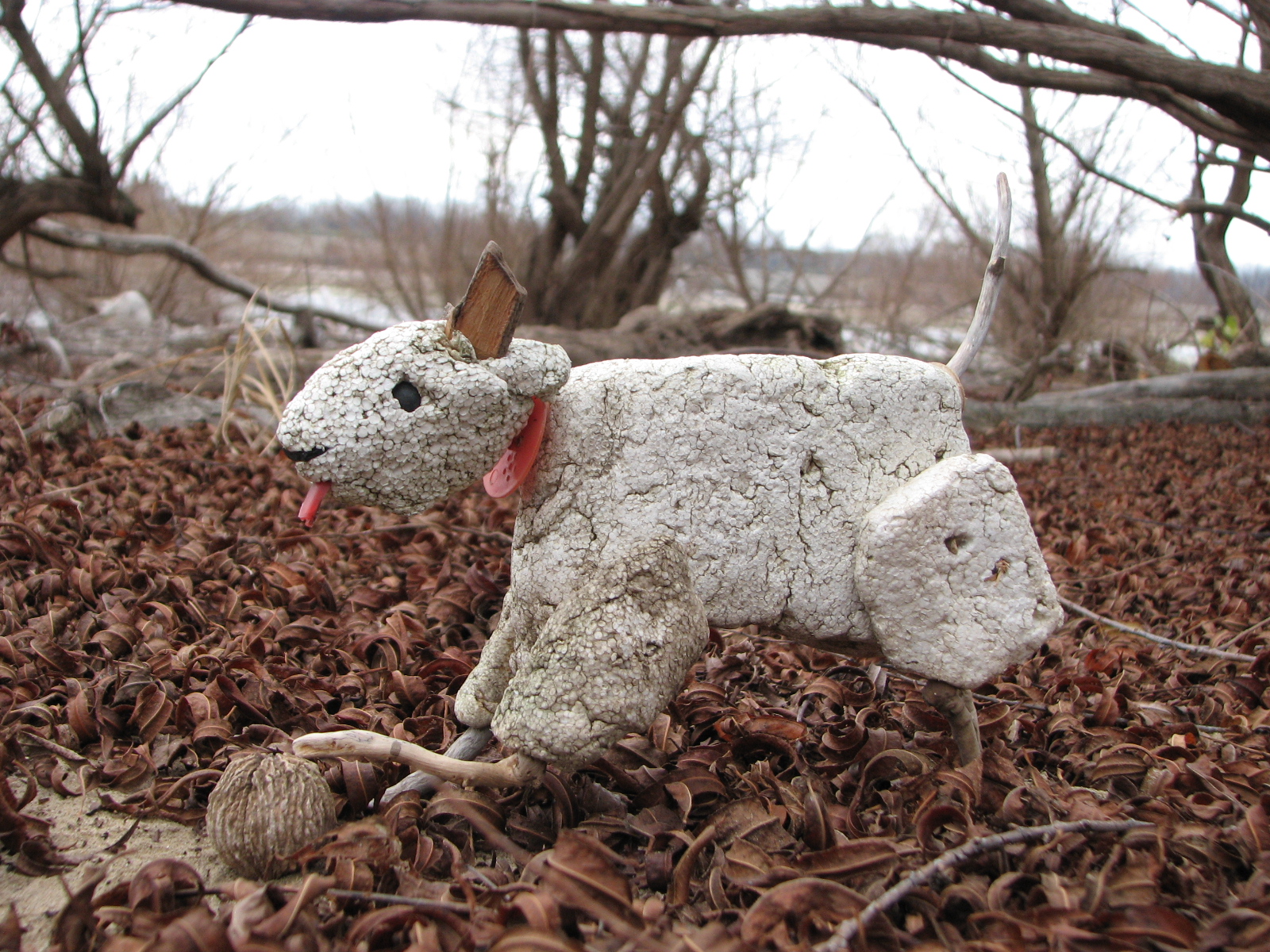
He seemed to like to play fetch.  I gathered a few walnuts and pitched them into the brown, curling leaves and Rat-Dog was very good at finding them.  I wondered how long he had been out here and what was it eating?  I surmised that like other strays, it probably ate garbage and handouts from fishermen.  I regretted that I had nothing to feed it.  Usually, I have something to snack on, but on this day, I hadn’t planned to stay long.

Along the sandy trail, we came to a patch of yellow Horse Nettle fruits.  I photographed these plants months a go when they sported lovely purple and yellow flowers.  I have since learned that these fruits are very poisonous.  They look like little tomatoes.  Rat-Dog fortunately did not eat any.  He seemed content to just run between the clumps of plants.

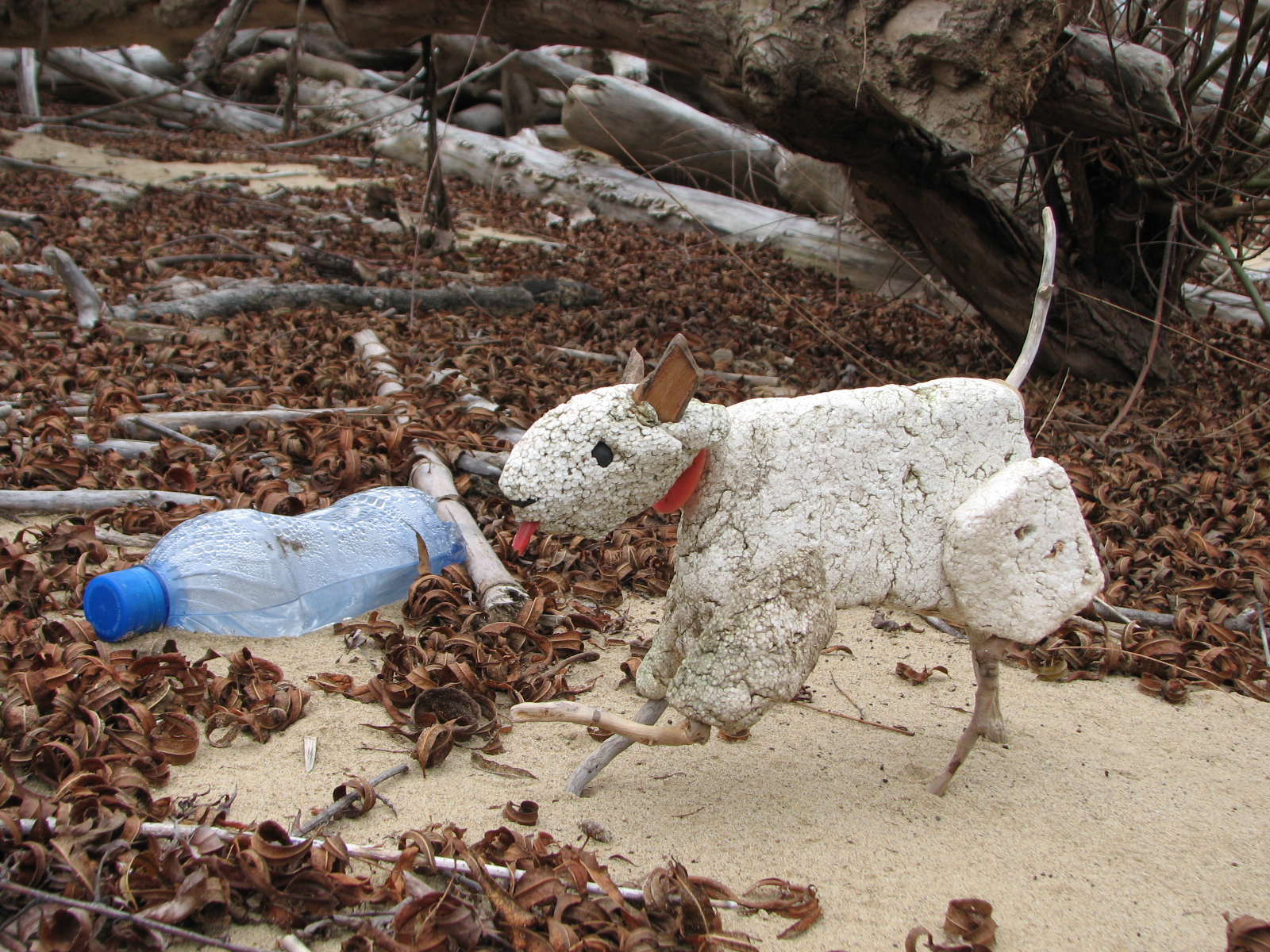
As another good indicator of scale, I shot this image of Rat-Dog by a plastic bottle.  It was at this moment that the little animal heard some distant sound and ran as fast as it could towards it.  I thought to myself that perhaps this was the dog’s owner who feeling twinges of guilt, came back for it.  Maybe he wasn’t abandoned to begin with and had become lost during an earlier visit?  Either way, I hope he finds his way home.

Rat-Dog was made from bits of found Styrofoam, coal, sticks, and pieces of plastic.  The collar around his neck is the top from a disposable salt shaker.  The dog is held together with little sharpened pegs.  He was created and photographed at the Falls of the Ohio State Park.  The part about pets being abandoned here…is sadly true.

Read Full Post »

west section of the Falls, 11/09

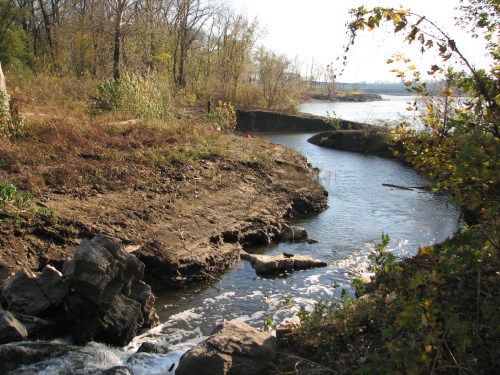
Because the climate has been so spectacular of late, it’s been possible and desireable to hang out in the park to make and see what one can.  This is another bird post, but one that specializes in what’s possible here in the fall.  Some of these species are found no where else…and for good reason.  I start with a shot of the typical terrain one encounters at this time of year.  What is a bird without some context?  Naturally, the river predominates as the distinct landscape feature with mixed hardwoods flanking the shoreline.  I’ll start first with an American Coot.  Not a particularly rare bird, but one I always enjoy seeing at the river.  I came across this lone individual and snapped this quick image for luck.  The true rarities are ahead.
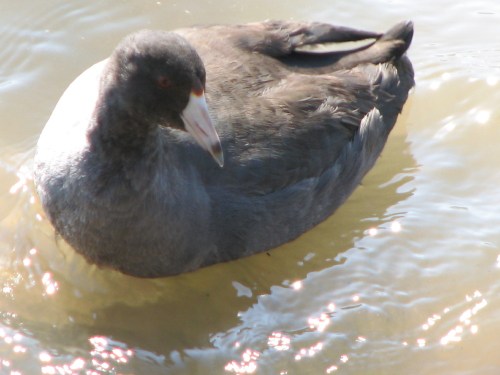
American Coot, 11/09

In the western section of the park a couple of late nesting birds can be found among the exposed roots of the great trees.  This is the home of the Styro-Grackle and the Fleur-de-lis Dovelette.  The next two images are of the grackle.  I stumbled upon a male with its great yellow bill displaying with the remains of a baby’s pacifier.  In this species, males vie for the attention of females by choosing objects they believe the females will like.  The Styro-Grackle is a large, and noisey bird, but wary to the extreme.
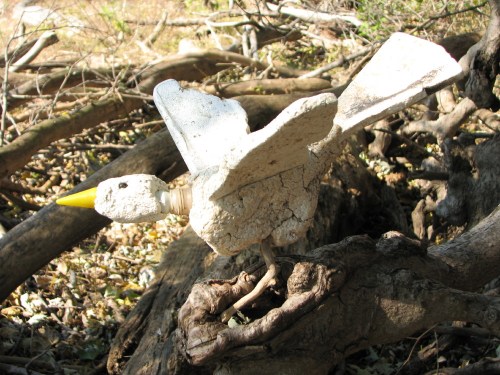
Styro-Grackle display, 11/09

Here’s a close-up image of its head, bill, and pacifier it found by the river.
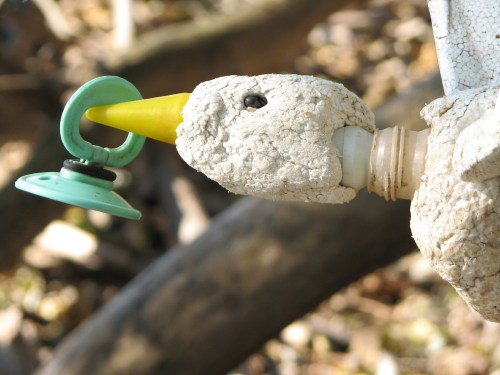
Styro-Grackle head with pacifier, 11/09

Often found in association with the grackles are the gentle Fleur-de-Lis Dovelettes.  The female specimen I came across was sitting on a fresh nest.  No eggs were observed within it.  The dovelette is not particularly fussy about what materials it uses to construct its bowl-like nest.  This one was made from shredded plastic with hardly a trace of natural fibers interwoven into its structure.  First, a picture of the bird itself in its woody habitat.

Fleur-di-lis Dovelette, 11/09

The bird derives its common name from the unusual crest upon its head.  It is rumored that this was the inspiration for the symbol used by the City of Louisville on its flag, official letterhead, etc…  More than likely though, it’s just a coincidence.  Like many dove species, this one has tiny feet.  Here’s a good look at the unusual nest constructed in the fork of a tree root.
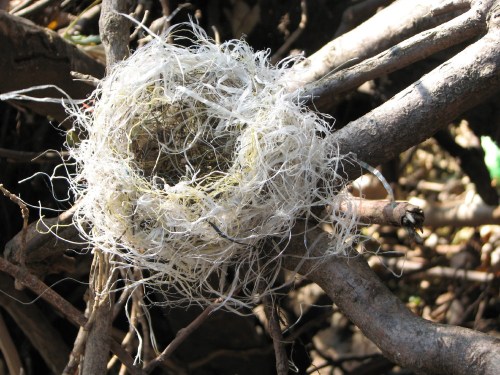
Plastic fiber nest, 11/09

And here is the bird and nest joined together.  I didn’t linger because I didn’t want to disturb the dovelette anymore than I had to.  If the conditions are right, she will lay three to four light green eggs.  The dovelette will have to stand guard against raccoons, but otherwise her young have a good chance of reaching maturity.  Wild prairie grass seeds make up much of its diet.
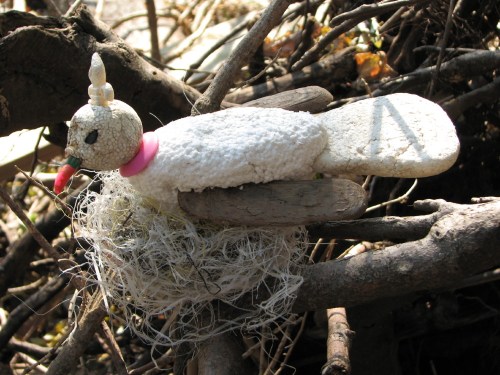
Fleur-di-lis Dovelette on nest, 11/09

Cane Run Creek, 11/09

Near the middle of the park, Cane Run Creek flows into the Ohio River.  It’s a spot that’s favored by fisherman and birds alike.  Large rocks and trees deposited by flooding line its banks.  Because of the vagaries of the larger river, the creek’s appearance is highly variable.  It was in this area that I came across a rare and unusual shorebird that I would like to share with you.  Here are two images of the Jet Piper.  It is so named because it evolved a distinct crest that is believed to stabilize it during its speedy flight.  One sees a similar structure on the tail of modern aircraft.  The Jet Piper never stays in one place for long.  It probes the mud along the creek bank in search of worms and other invertebrates.  Recent studies have shown that this piper will on rare occasions, take nectar from hummingbird feeders.  Here are two views.
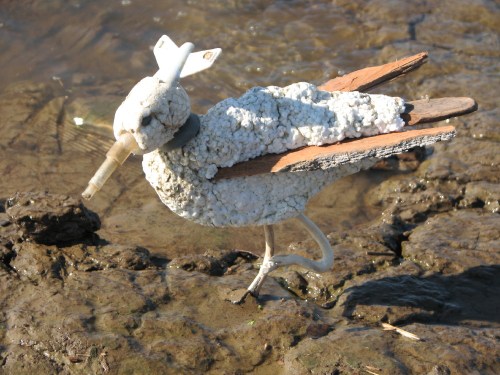
the Jet Piper, 11/09

Jet Piper, 11/09

The last specialty I came across is one of the sweetest singers in the park.  In fact, that’s how I located the Styro-wood Wren first…by its optimistic, cheery song.  I was sitting in my usual spot under the willows when I heard it nearby.  I took a position along a path I thought it might take and with success, recorded these images of this rare endemic bird.
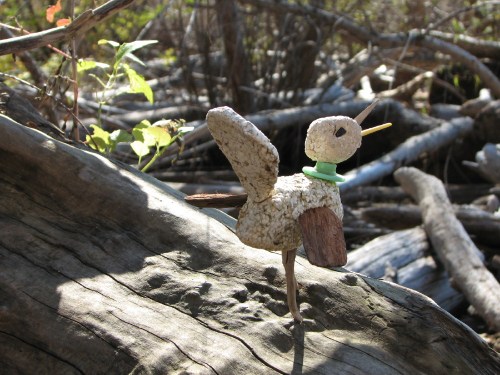
Styro-wood Wren, 11/09

On a sunny morning, the Styro-wood Wren was making its rounds in the underbrush.  Its singing has more to do with staking its feeding territory than it does with finding a mate.  That will change once Spring arrives at the Falls once again.  Among the interlopers that the wood wren is trying to discourage are other members of the family Troglodytidae.  Sharing its range at various times are Carolina Wrens, House Wrens, and the tiny Winter Wrens.  That’s a lot of competition to try and discourage.  This particular bird was in rare form and seemed to pose for my camera.
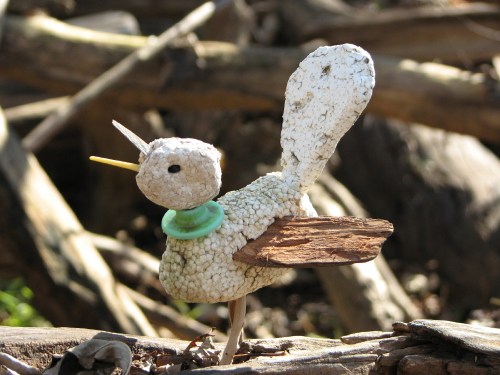
Styro-wood Wren singing, 11/09

It spread its fan-tail and with a shudder of its brown- wings burst into song.  The small feathers along its neck make an attractive collar.
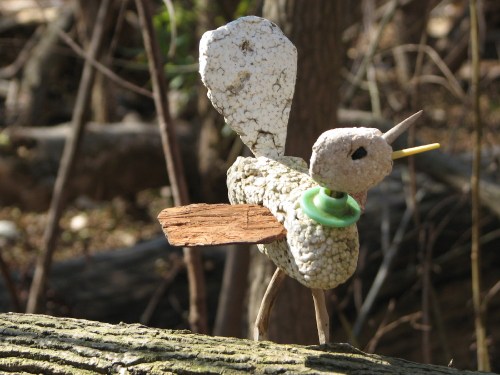
Styro-wood Wren, 11/09

CODA:

I made these birds from materials I found in the park.  All the plastic and Styrofoam elements were once in the Ohio River where they interact with the natural ecosystem.  Among the other materials used include:  tree bark (for wings), coal (for eyes), and rootlets and twigs (for the legs).  I make these artworks to call attention to the condition of the land and water, to draw attention to the unique qualities of this place, to celebrate creativity, and because I love birds!  All the photos are mine and shot on location at the Falls of the Ohio State Park.

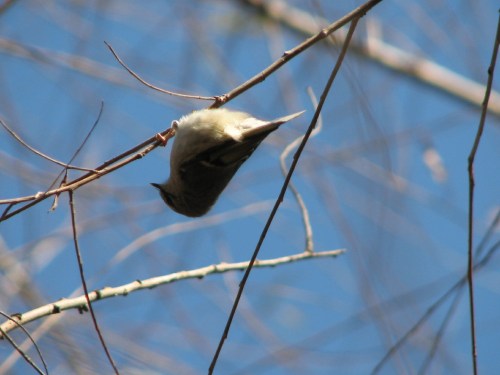
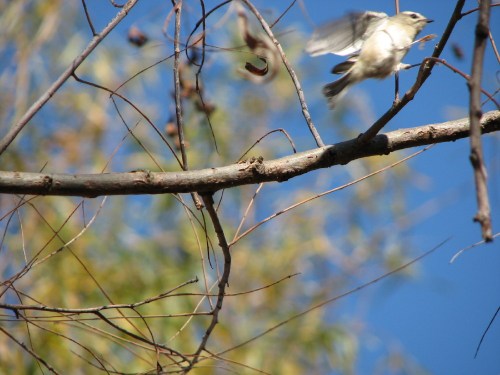
While I was making my faux birds, the real articles were busy in the tree tops above my studio.  Among my favorites to watch are the Golden-crowned Kinglets.  These tiny birds are ever in motion and hard to photograph!  Here are a few more real bird pictures.
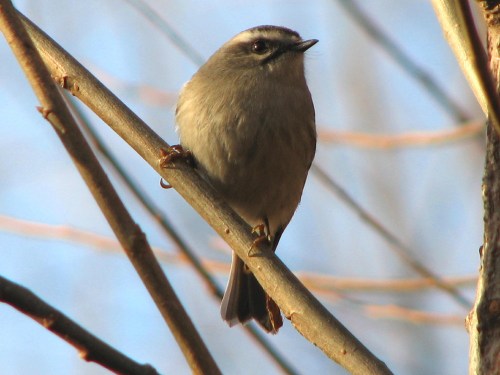
Golden-crowned Kinglet

upside down Golden-crowned Kinglet, 11/09

Golden-crowned Kinglet in action, 11/09

Lastly, the nest featured with the Fleur-de-lis Dovelette is in fact a genuine bird nest.  I found it in the branches of a downed tree.  I have no idea which species created it.  I have seen within the park, the nest of a Northern Oriole that used cast-off fishing monofilament in its construction.  I do, however, think I located a source for the plastic fibers.  Near the discovered nest, a large barge rope was slowly unraveling and its threads look identical to the ones in the nest I came across.
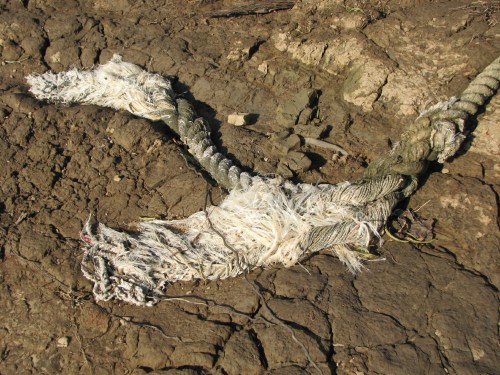
frayed barge rope or cable, 11/09

Read Full Post »

Cooper's Hawk, immature, 11/09

Cooper's Hawk, 11/09

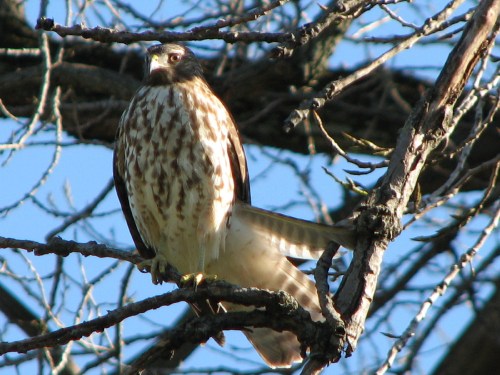
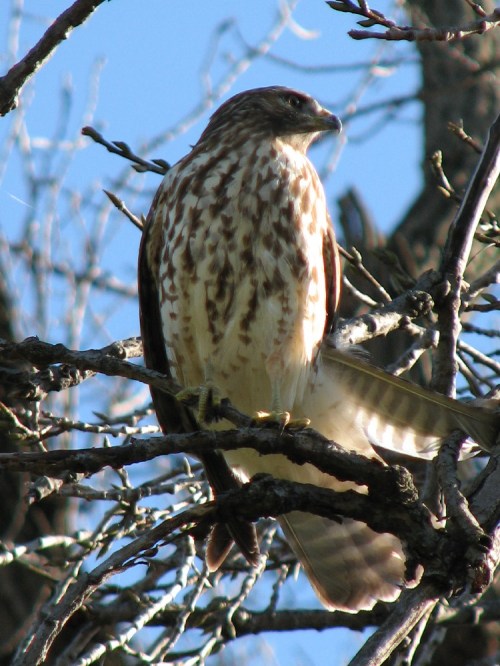
So often it has been the case that I would see a really special creature shortly after arriving at the Falls.  I surprised this juvenile Cooper’s Hawk resting in a Cottonwood tree and it let me approach quite close before flying onto the railroad bridge.  As this bird matures, the brown streaks on its breast will take on a reddish hue and the feathers on its back will become more gray.  Even the eye color will turn red over time.  They are fearsome and effective hunters and routinely take the pigeons that roost along our bridges.  This bird has caught one of its tail feathers on the branch it is resting on giving it a somewhat awkward look indicative of its youth.

Cooper's Hawk, immature, 11/09

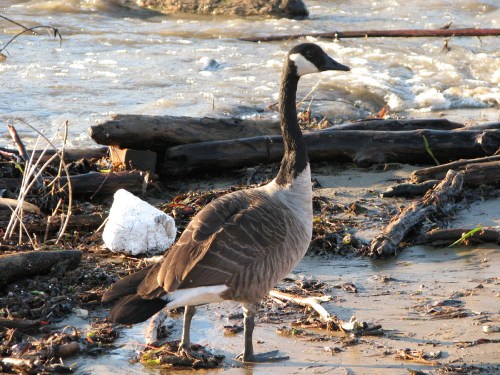
Here’s a larger image of this bird. I have photographed other Cooper’s Hawks over the years including one that was devouring a garter snake.  I have seen several juvenile birds here, so there must be at least one nesting pair that call this park home.  On the day I snapped this hawk I also came across a Canada Goose that was walking the shoreline.  It paid no attention to the Styrofoam gathering on the beach.  Wish I could do the same!

Canada Goose and Styrofoam, 11/09

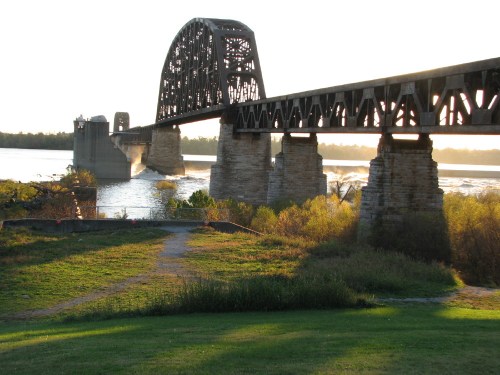
Several large chunks of Styrofoam washed ashore this time.  I struggled to get these larger pieces up higher on the beach.  If they are still there when I next visit, I will make something with them.  I will end this time with a couple other images from this day.  Here’s another Little Deer image that shows its glowing eye a bit better.  And, last but not least, here is a nice picture of the railroad bridge just before sun down.  This is the one that the hawk flew onto after I spotted it.

Little Deer, 11/09

Railroad bridge at the Falls, 11/09


Read Full Post »

Ohio River at the Falls, 11/09

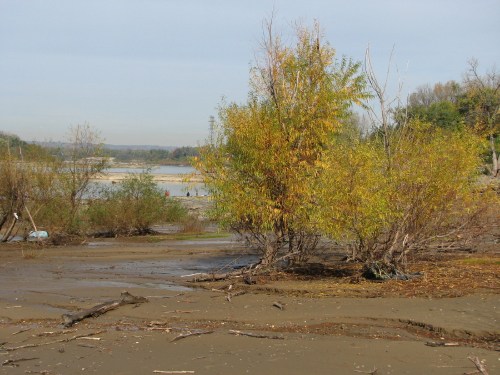
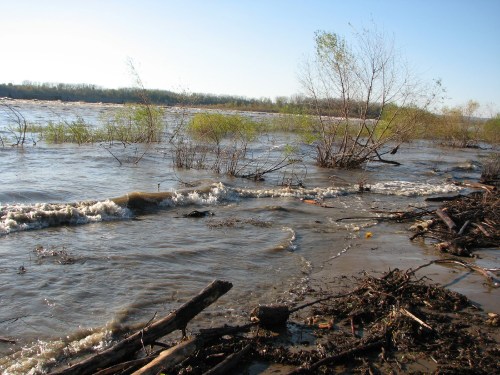
In the week since I last visited the Falls of the Ohio, we had enough rain for the Ohio River to rise once again.  The willow trees nearest to the bank were a few feet underwater.  I found the remains of Watchful Willie from a couple of posts ago as well as “fresh” polystyrene scattered all along the shoreline.  I only had a few hours to work this day, so I tried to make the best of it.  Feeling the sunshine again was alone worth the trip, but I saw and made enough stuff to allow me several posts for the week.  Here is my latest Styrofoam creation made spontaneously as the sun was setting.

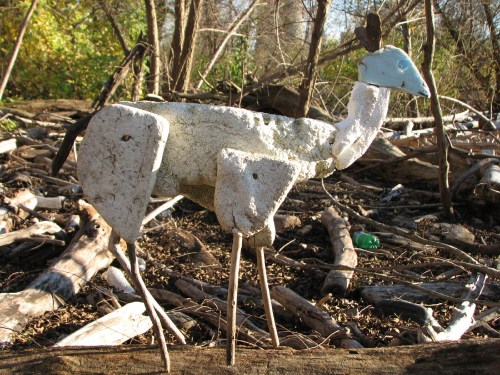
Little Deer, facing left, 11/09Little Deer, facing right, 11/09

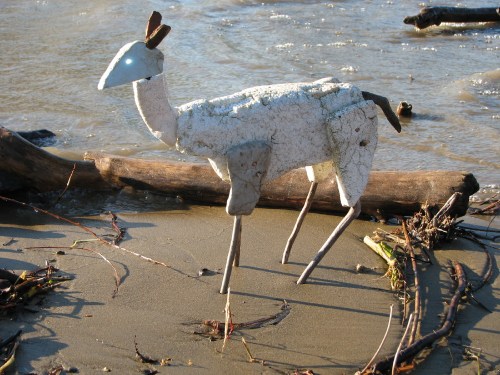
Rummaging around my studio cache of materials under the willow trees I improvised this Little Deer.  It turned out more naturalistic than I anticipated.  Its head is a triangular-shaped piece of thin insulation foam, while the rest of its body is more found Styrofoam.  As is my habit, I have not tried to carve or shape the foam the river has given me.  It’s more about being choosy about what forms I use to begin with.  The work is held together with sharpened pegs.  I did, however, shorten the sticks I used for the legs with my pocket knife.  I attempted to create “eyes” by piercing the blue foam with a small wooden pin, but it left the hole you see and I liked it and left it as is.  The ears are made of pine bark and the tail is another piece of wood.  What’s different this time is that I didn’t try to incorporate another plastic element into the piece.

Little Deer on riverbank, 11/09

Little Deer, 11/09

I walked west along the Indiana side of the river stopping every once in a while to record an image in situ with Little Deer.  The way the light plays with the “eye-hole” causes it to glow and gives it another spark of life.  It made me recall the Henry Moore retrospective I saw at the Guggenheim Museum in New York years ago.  How Moore was able to use a hole as a form in his sculptures remains amazing.  The waves coming ashore threaten to sweep the deer away, but I placed it just out of reach.  Still, the sense that the work is vulnerable comes through the photographs.

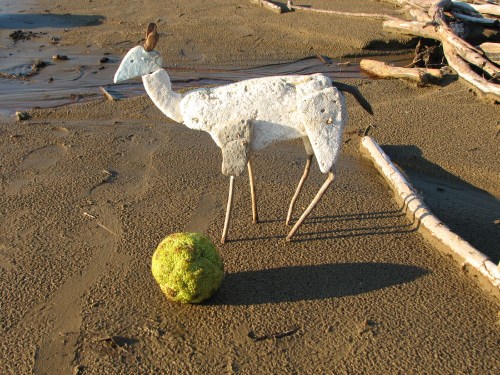
Little Deer with Osage Orange, 11/09

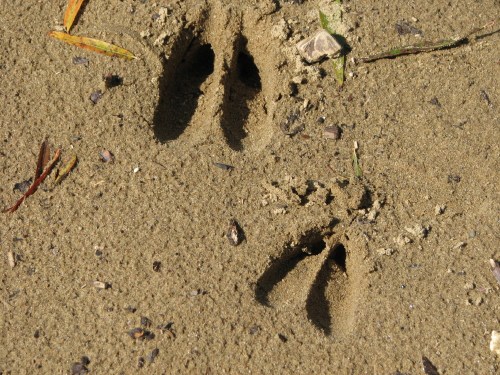
One last image with the Little Deer.  This time I set it down next to the fruit of an Osage Orange tree to give it some sense of scale.  Some folks know these as “hedge apples”.  Since today is my sister Pat’s birthday, I would like to dedicate this piece to her.  I hope you had a nice day!  The parting image is something I’m beginning to see with more regularity now.

deer tracks in the sand, 10/09


Read Full Post »

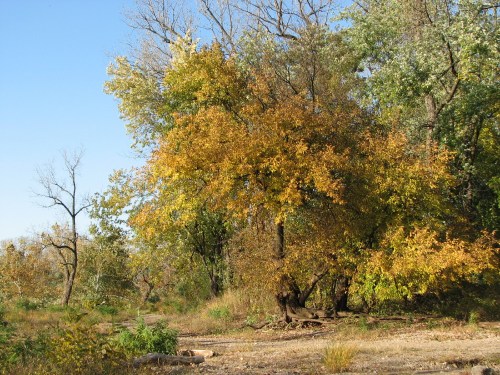
Late October color, 10/09

When the trees at the Falls of the Ohio reach peak color, birders keep an eye open for avian rarities.  The Uncommon Bluebill may or more likely may not appear in the park.  Usually birders have to settle for glossy pictures of this bird in fancy magazines devoted to all things…birds.  Those images are usually taken in the bluebill’s northern haunts during the breeding season when the birds are a bit more distracted as they go through their courtship gyrations.  This post is about a personal stroke of luck as I had a once in a lifetime opportunity to record the Uncommon Bluebill at the Falls of the Ohio.

the Uncommon Bluebill, 10/09

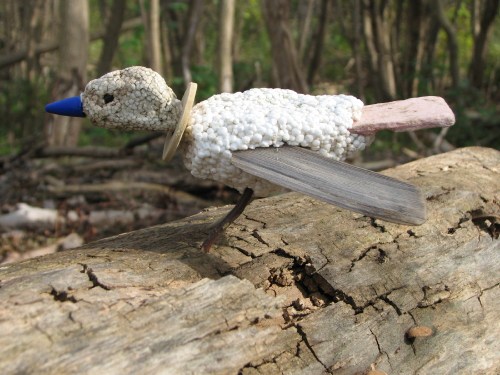
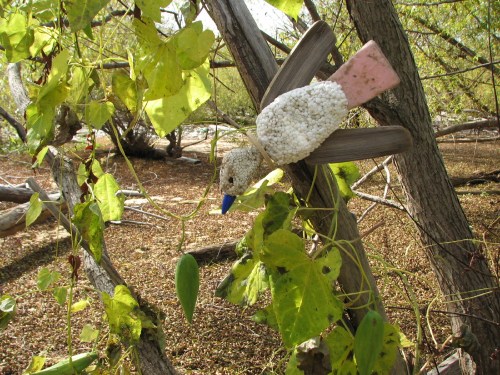
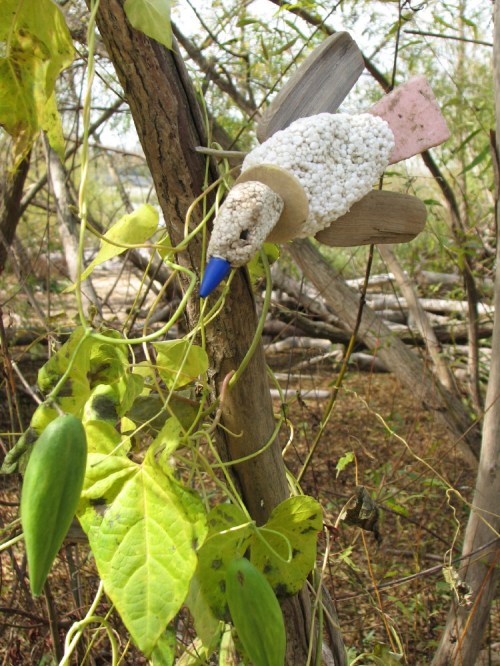
And here it is!  As advertised, this bird does possess a distinctly blue beak.  It’s a little larger than the average wood warbler and has some of the same foraging behaviors.  Other distinct features for identification purposes include a white body and pink tail.  This bird is equally at home on the ground or in the top most branches of a tree.  I do confess that I wasn’t looking for this bird for that would be an excercise in frustration.  In a way, it has to find you and you have to be prepared to receive it when it appears.  That is why I bring my camera with me whenever I’m here.

Uncommon Bluebill with Milkweed, 10/09

I recall that a few Golden-crowned Kinglets proceeded the bluebill.  I was watching the kinglets and their hovering, mid-air investigations of the undersides of leaves when from the corner of my eye I noticed a bird that was distinctly not a kinglet.  The Uncommon Bluebill moved easily from a branch to the trunk of a tree ready to pounce on the insects it discovered.  Some of my best shots of this single bird were in association with a Milkweed vine that held its attention for a while.  It was so intent in its pursuit that it did not notice me observing it from behind a large willow.

Uncommon Bluebill and Milkweed, 10/09

I held my breath and hoped the digitally- produced mechanical camera noise would not frighten it away.  The bird hung around for a minute and no longer.  After that, it was gone.  I walked silently over the dropped willow leaves and back to my car.  I had just seen a creature so rare that it was essentially a ghost.  What could possibly top that as an experience today?

Autumn willows by the river, 10/09

Read Full Post »

Trick or Treater at Galerie Hertz, 10/09

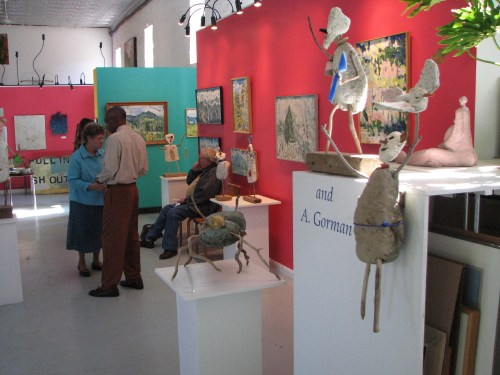
After the Bluegrass Bioneers talk, I had works open in a group show at Galerie Hertz in Louisville.  The exhibit dates are October 18 through November 14.  Many of the fifteen sculptures on display were featured first in this blog.  It’s a night and day difference seeing them in a gallery context as opposed to their original settings at the Falls of the Ohio.

Rain Deer, 10/09

This space on South Preston Street is the latest incarnation of Galerie Hertz.  Billy Hertz and his partner Tom Schnepf are rightly credited for their work in revitalizing and rehabilitating old buildings and distressed neighborhoods.  Much of what exists as an art scene in Louisville, especially on Market Street, owes this unique pair a debt of thanks.  Whether lightning can be bottled yet again remains to be seen.  In addition to serving as a gallery, this large, high-ceilinged space is also home to the couple and serves as Billy’s painting studio as well.  Tom is a marvelous gardener and it has been fun to watch black top and concrete being transformed into a living space for plants.

Galerie Hertz, 10/09

Paintings by M. Van Pelt and W. Goodman line the gallery’s walls.  The opening was relaxed and informal and it was nice visiting with old friends.

Read Full Post »
blue-headed vireo

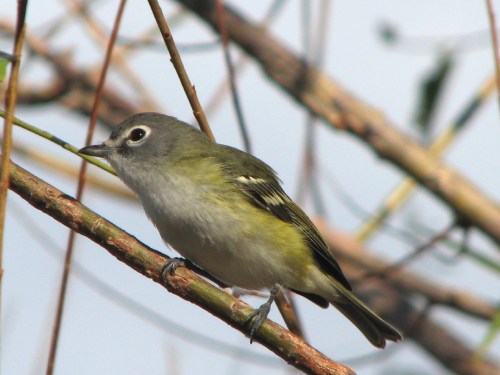
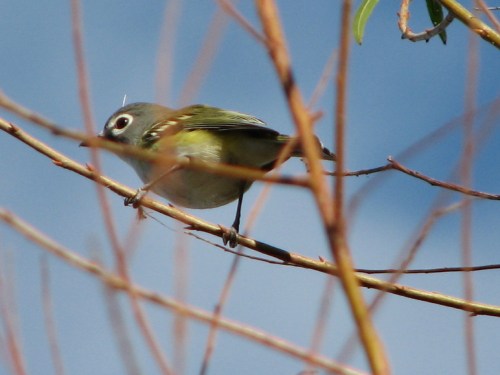
October and the Fall migration is underway.  One bird I look forward to seeing is the Blue-headed Vireo.  I have spotted them the same week in October for two consecutive years now.  I watched a pair working their way around the willow trees and observed one eating a fat, dark moth it caught.  These vireos are less wary and found lower in the trees than the other vireo species recorded here.  The official Falls of the Ohio checklist counts six vireo species.  I’m still looking for the Yellow-throated Vireo, which like the Blue-headed is considered uncommon for the park.  I like the bright white spectacles around this bird’s eyes.  Here’s a different view of this bird.

Blue-headed Vireo, 10/09

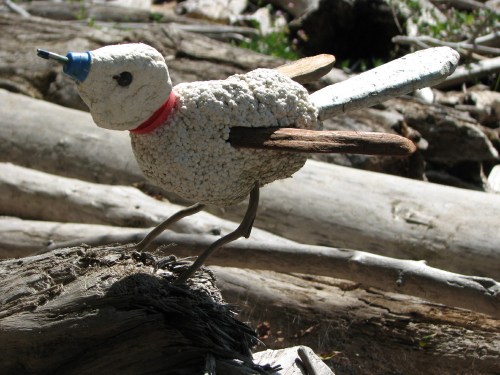
A couple weeks back I made another bird from Styrofoam and just didn’t get the chance to post it till now.  I think it turned out well and I call it a “White Jay”.  It’s about the same size as a Blue Jay.  Materials used to create this sculpture include:  polystyrene foam, sticks, lead (one eye), bark (for the wings) and plastic.  I later attached it to a branch, as in early ornithological prints, and is in the present Galerie Hertz exhibit.  Again, here are a  couple different views of this piece.

White Jay, 10/09

White Jay, 10/09

Read Full Post »
under the willows, 10/09

Under the willows the trap has been set.  With mask on and gun drawn the Trick or Treater isn’t waiting for the end of the month.  Halloween is now.  Soon a victim will appear and it will be “your candy or your life”!  Sugar can do that to a fella…even one made from Styrofoam.

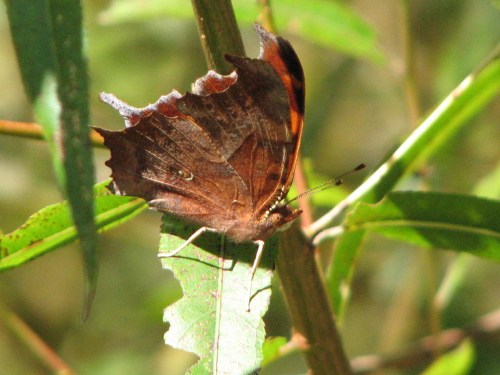
Question Mark butterfly, 10/09

Waiting requires patience and so the Trick or Treater stays hidden.  Insects are plentiful today.  Fresh Question Mark butterflies flit through the zone demarcated by shade and sunshine. Can you see the small question mark sign on the hind wing that gives this butterfly its name?  Small tiger beetles chase each other across the sand and a hundred small grasshoppers are making lace from the wild grapevines.  Sooner or later, someone is sure to come by and then the trap will be sprung.

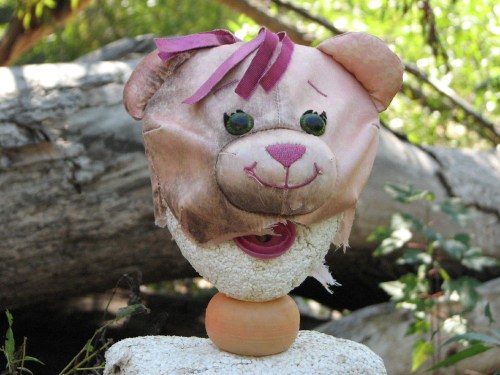
mask of the Trick or Treater, 10/09

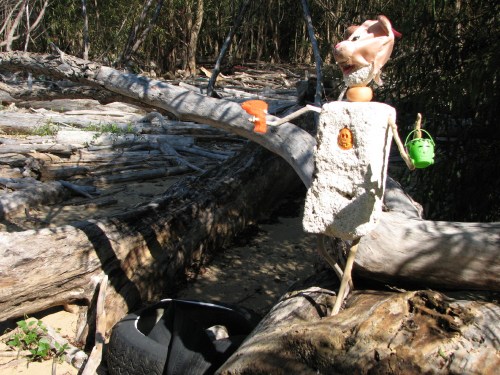
Today is warmer than it has been for a few weeks.  The bear mask starts to get hot and with that a change in tactics is required.  Rising from his hiding place, the Trick or Treater begins to stalk the margins along the willow habitat.  Do you hear voices or is it just imagination playing tricks?  Carefully, he follows a line of driftwood towards the sound in the woods.

Trick or Treater, 10/09

Trick or Treater, 10/09

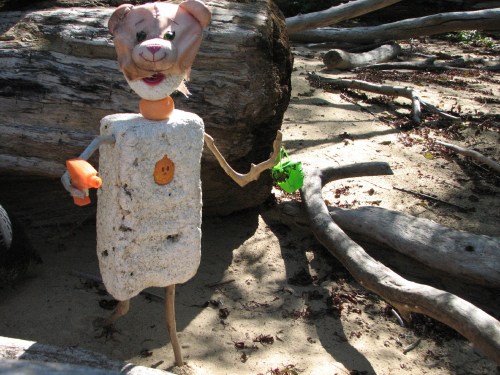
The ambush is set and everything is ready.  The trusty squirt gun is armed and the Frankenstein-head candy bucket is eager to find fulfillment.  The prey has been spotted next to a pile of Styrofoam and sticks that look vaguely familiar.  Inching closer, the Trick or Treater is aided by the noise his potential victims are making and the crunch of sticks and leaves is unheeded until total surprise is achieved!

the Trick or Treater's surprise, 10/09

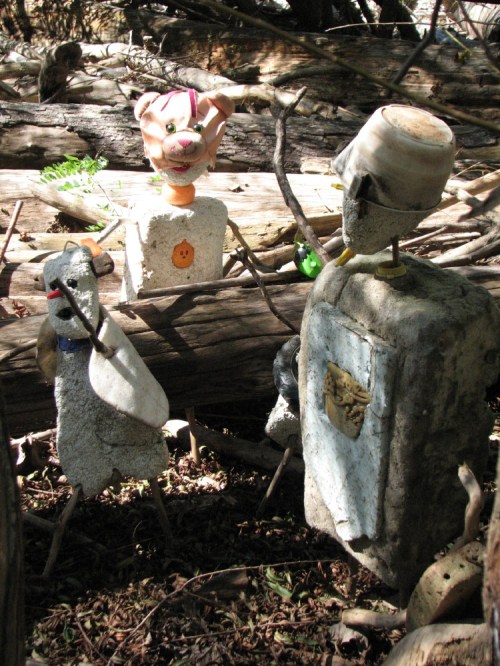
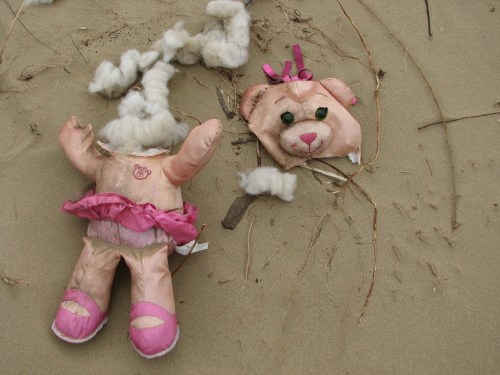
The idea for this figure came from a destroyed teddy bear I found at the Falls last March.  Either some child or dog came across it first and knocked the stuffing out of it.  The bear was still damp having been carried by the river to the spot where it was discovered. The empty bear’s head would make a perfect mask and I waited until now to put it together.  There is a face I made with acorn eyes and pink plastic mouth under the  disguise.  Every now and then, I find Halloween related items and I decided to put a few together to create this figure.  I’ll probably use it for a decoration this year where it will greet fellow tricksters in their quest for candy.

destroyed pink teddy bear, 3/09

Read Full Post »
« Newer Posts - Older Posts »