Feeds:
Posts
Comments

Archive for the ‘animal art works’ Category

Reading the old journals from the exploration period…you can hear the authors’ amazement in trying to describe the overwhelming abundance that once existed here.  If you came across a flock of passenger pigeons numbering in the billions and as you watched them cross the sky like rolling smoke until they collectively blotted out the sun’s light how would you record the event?  But it wasn’t just flocks, there were also forests of trees, immense herds of bison and schools of cod and salmon.  In some cases, this was here less than two hundred years a go.  Now this seems remote and out of our living memories.  You don’t miss what you never knew.  Forgetfulness is another type of erosion.
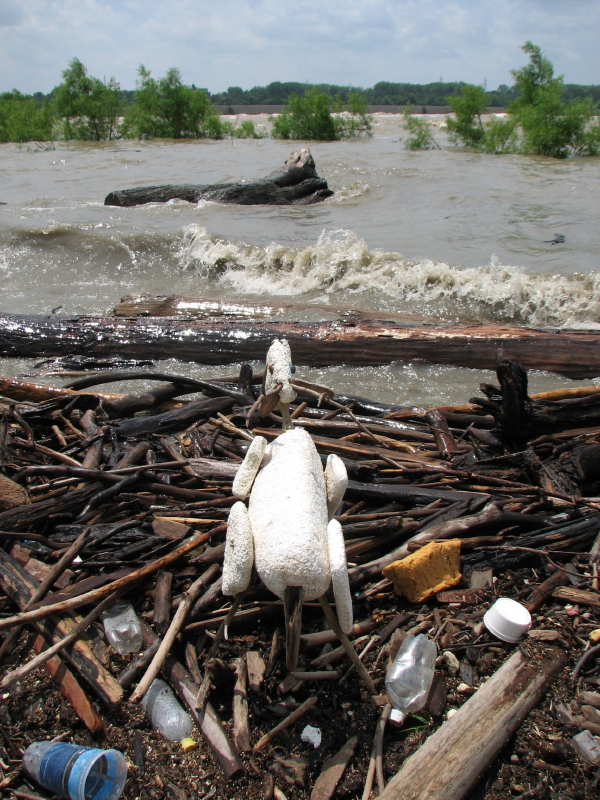
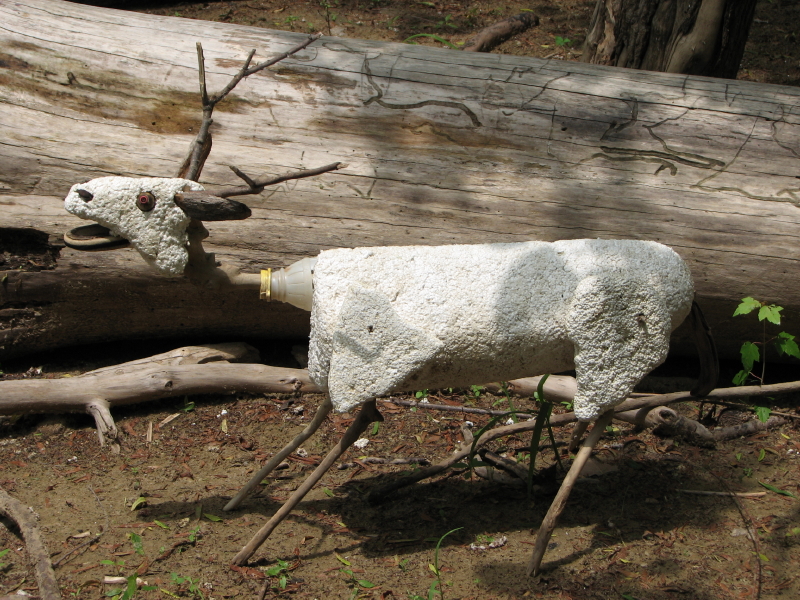
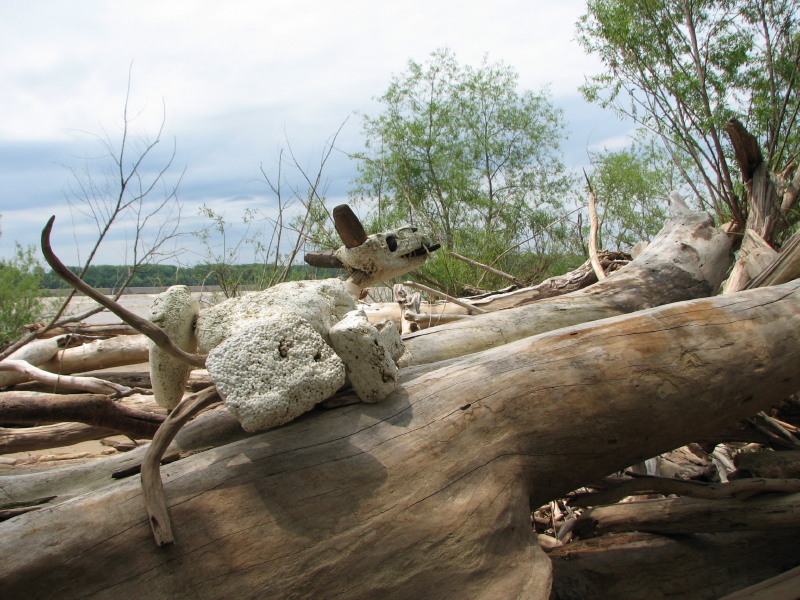
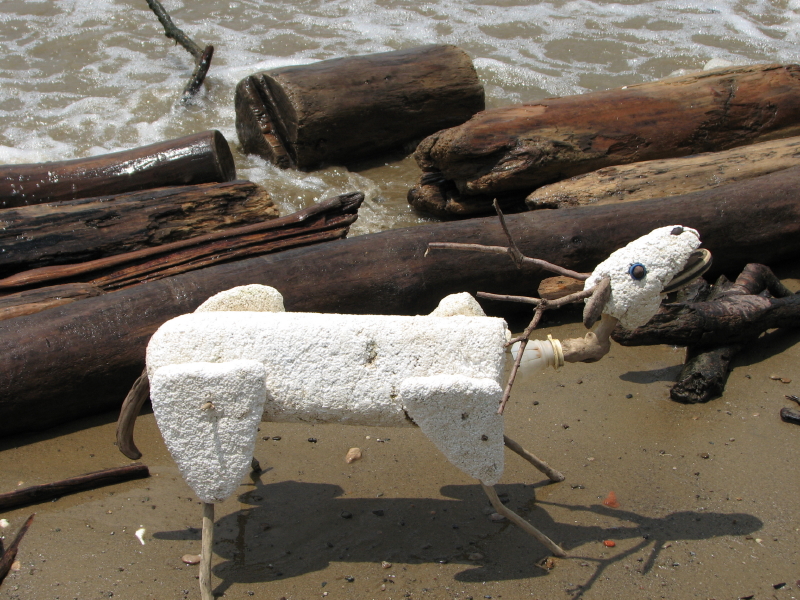
Over the sounds of the river smacking the shoreline, I could discern a few grunts among a high almost “metallic” bugling/whistling in the air.  Or so I imagined as I introduce my latest Styrofoam creation.  In the old days, (which according to my youngest son is anything over nine years a go) the American elk or Wapiti was plentiful in Kentucky and through out the United States.  Several sub-species existed and were classified by geographic region and habitat.  The bulls of this large deer with their immense antlered racks are an impressive sight and are symbolic of nature’s majesty.  Well, mine is not nearly as good…but for the purposes of this post…will do fine!

We are lucky they are still with us today!  As loss of habitat occurred as well as hunting pressures…our elk were driven westward until they were gone east of the Mississippi River.  Eventually, the elk were allowed some federal protections and our herds are rebounding.  Kentucky has led the way in elk conservation by experimentally transplanting a herd to the eastern section of the state where they have thrived!  Their reintroduction has been so successful that a limited hunting season on them has been established.
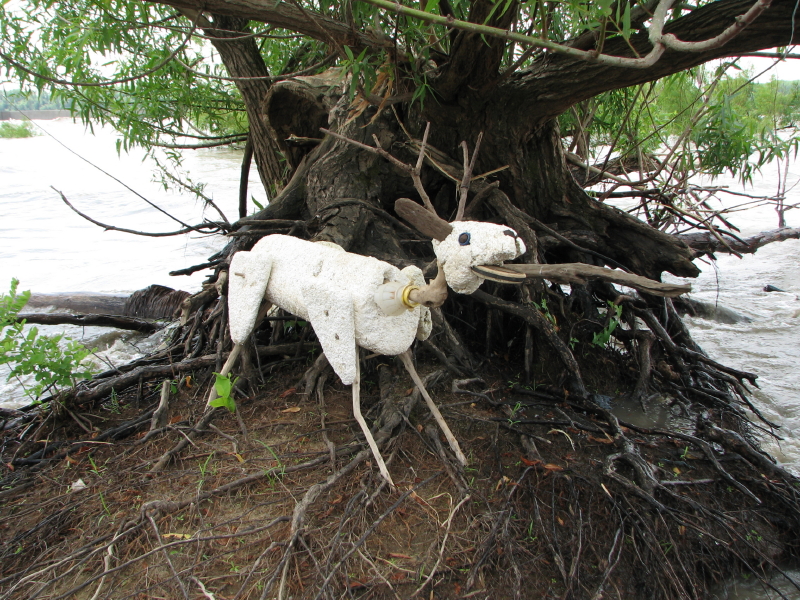
During the Lewis and Clark trek across the country, elk meat made up a large percentage of the meat consumed.  It remained the meat of choice until the native Americans introduced the explorers to dogs and then that was preferred!  As the country was “settled”, elk continued to disappear from all kinds of pressures.  There was even a brief fad where elk teeth were used for watch fobs!
The elk is a member of the megafauna that was once was a large part of the North American ecosystem.  While I’m taking pictures of my sculpture, a smaller member of this ecosystem came hopping by.  To be honest, I don’t see many frogs out here and I’m surprised this Leopard frog isn’t in a more boggy area.  I think many people by now are aware that amphibians aren’t doing as well as they use to for a variety of reasons that range from climate change to exotic fungi.  If a Great Blue Heron spots this guy, then our frog friend will become bird food.  It’s as if life weren’t already difficult enough without adding to it.
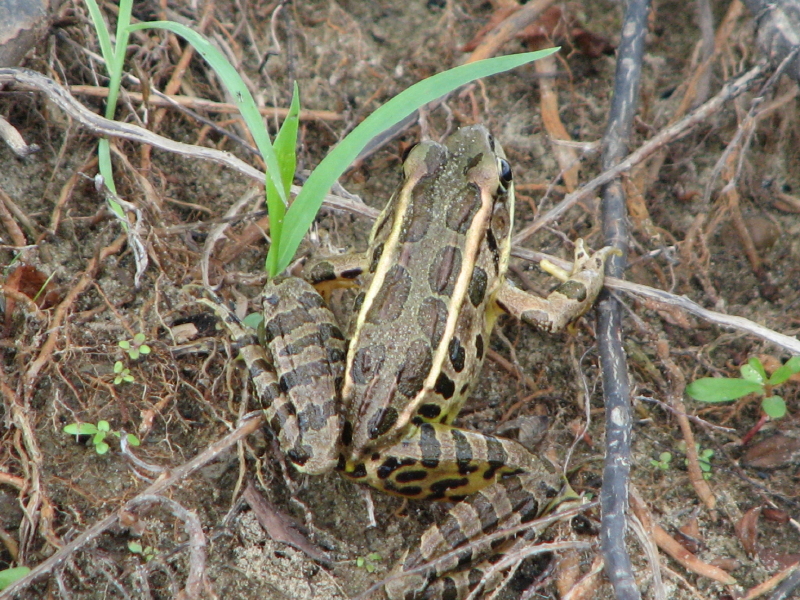
The frog is a reminder that even the most humble of species plays its part in the bigger scheme of things.  So often it seems that the smallest players have the out-sized roles that make the biggest differences to the smooth operation of life at large.  My stag is bellowing and issuing a protest and challenge to protect the environment that sustains us all!  There is far too much in the river that doesn’t belong there especially items dependent on crude oil.

Take this stag for instance, it is dependent on crude oil for its existence.  The body, head, and parts of the leg are made from polystyrene.  In this case it is all river-polished Styrofoam.  The lower jaw is the sole of a shoe and also made from petrochemicals.  The eyes and plastic collar are plastic and derived from petroleum extracts.  Only parts of the nose, legs, antlers, and tail are biodegradable.  The Styro-stag is an animal we can afford to lose and it will be interesting watching the river for signs that the exotic materials that comprise it are on the wane.
Read Full Post »

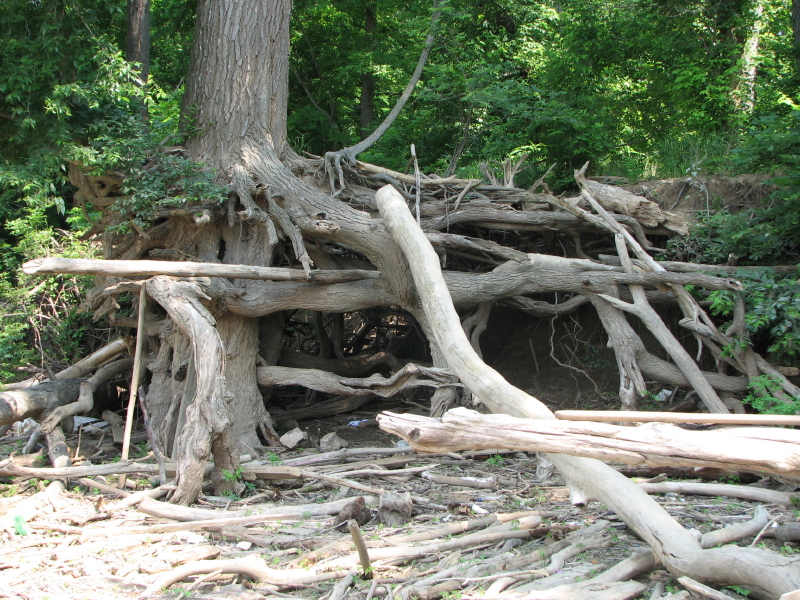
Just a mini adventure this time.  During my last expedition to the Falls of the Ohio, I paid a visit to one of my favorite trees.  I love the root system on this Eastern cottonwood because it forms a “room” you can sit under.  I decided to take some refreshment there and rest awhile.  Scavenging  Styrofoam can be thirsty work on a hot day.  Here’s the cottonwood I’m talking about.  Looking around, I can see I’m not the only person who knows about this tree.  A couple of fire pits are in the vicinity.

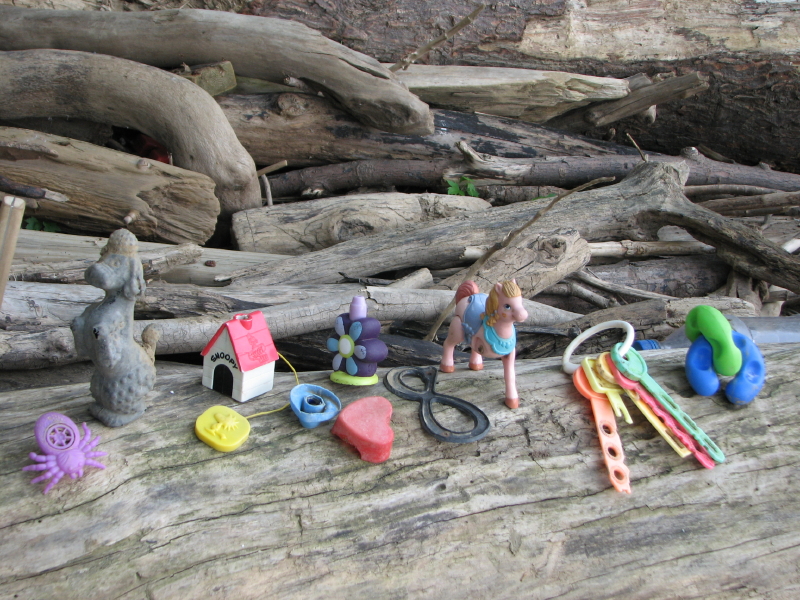
While I was sitting in the shade, my eye was drawn to some definitely non-natural color inside a cavity at the base of this tree.  When I investigated the hole,  I was astonished to find this little treasure trove hidden inside.  I withdrew the contents and set them up on a log for this photograph.  I think you will be as surprised as I was!

A variety of plastic toys including a poodle, Snoopy’s doghouse, various baby items, a numeral “8”, and a horse with three legs were in the hole.  How or why was this stuff here?  When I checked out the area around the larder more carefully I found very small tracks and the picture started to become clearer.  When I saw this little guy…I had my answer!

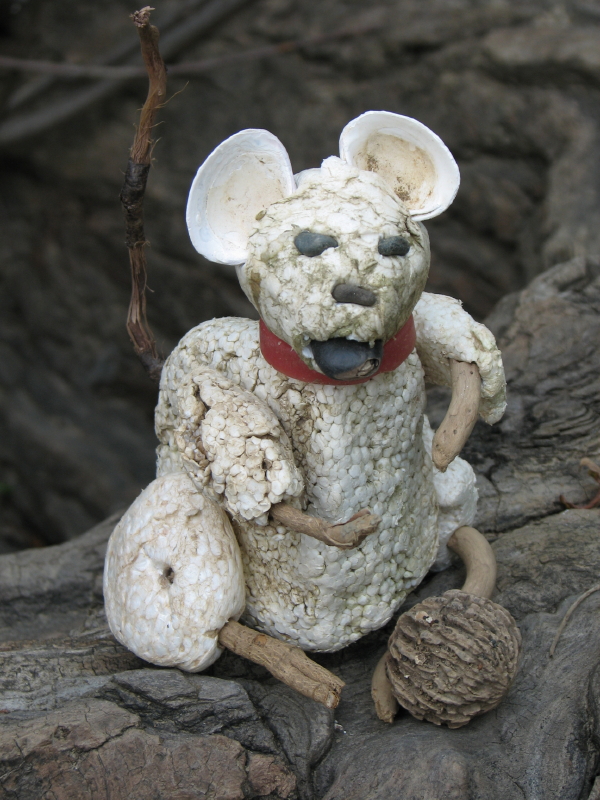
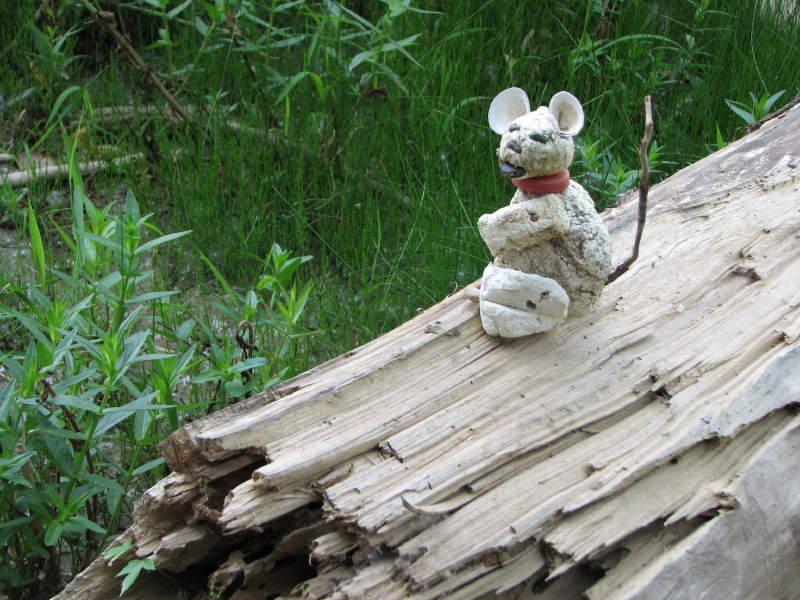
This is Meriwether’s Mouse and he’s named after the famous explorer Meriwether Lewis who was the first to describe this appealing rodent.  This species is known to cache colorful objects and is not above pilfering items from unwary hikers and campers.  In this mouse’s case, he doesn’t need to take anything because the river will provide plenty.  No doubt these toys were found along the riverbank.  I do the same thing myself!

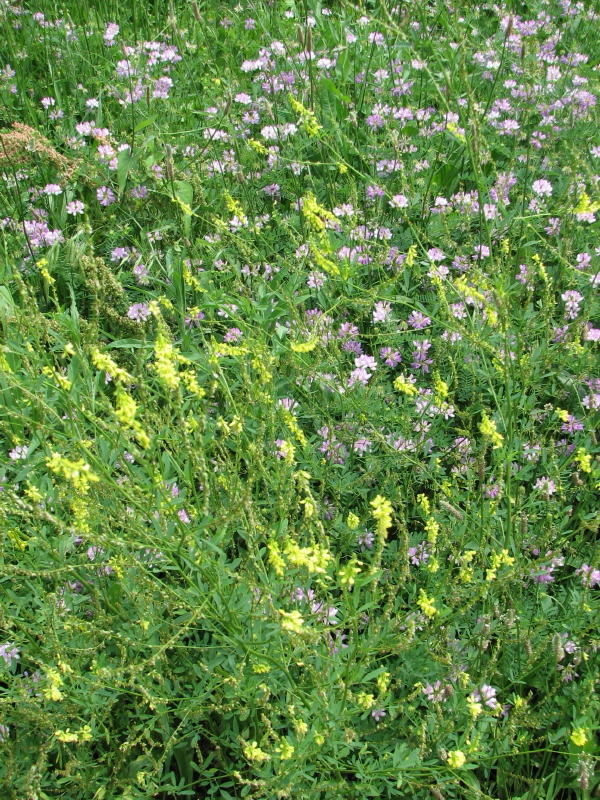
Because there are a formidable number of predators out here, Meriwether’s Mouse is not as common as it once was.  They do possess very acute hearing and this specimen heard me shift my position and off it went!  Recently, I was looking through a copy of Audubon’s Quadrupeds and was amazed at the mostly small varmints that populate the mammalian natural history of our great country.  I guess most animals aren’t going to be as magnificent as a grizzly bear or bison in size.  In fact, most are about the size of our mouse!  I appreciate all the more Audubon’s challenge in making this seem interesting to the average person sitting at home.  Great or small, all animals are glorious to me!  In closing I offer this abstract expressionist, all over composition… rendered in wildflowers.  Thanks!!

Read Full Post »

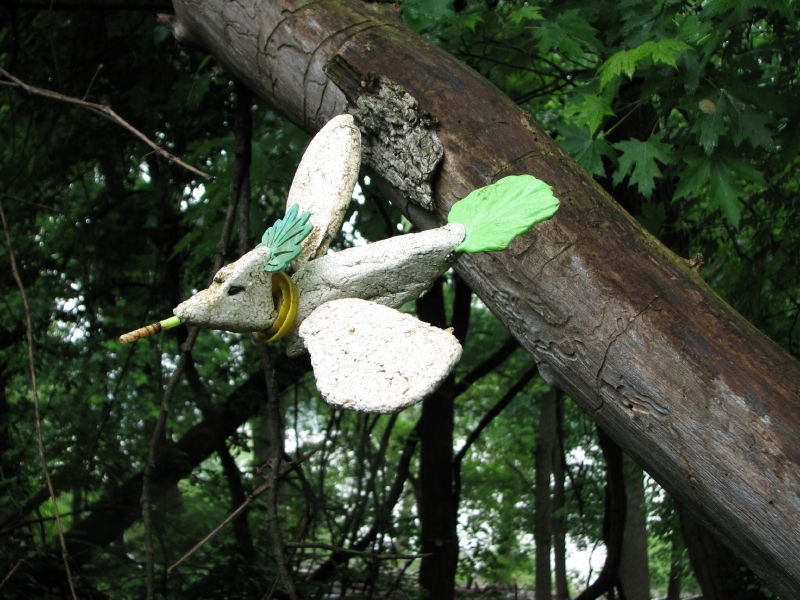
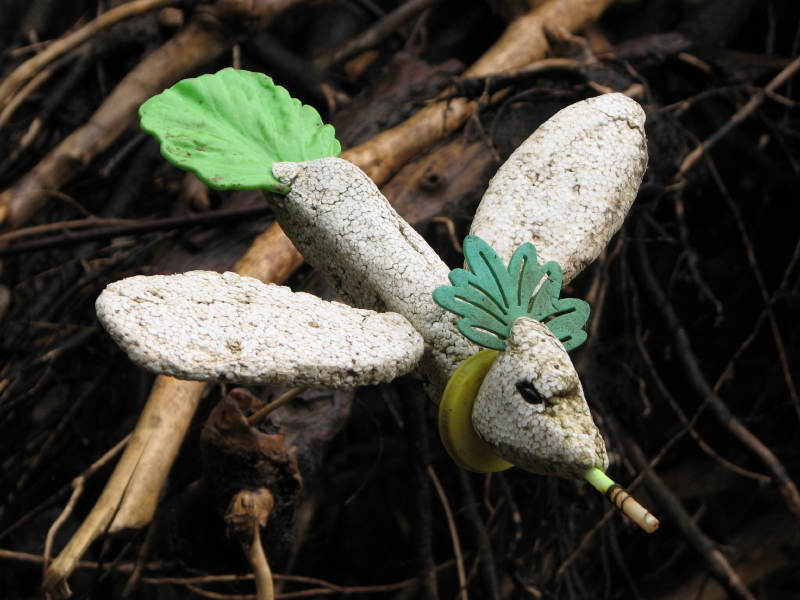
While wandering the Woodland Trail in an area best described as temperate semi-rainforest, I made another unusual bird discovery.  I believe that I have these privileged sightings because of two principal reasons.  The first has to do with frequency.  I am at the Falls of the Ohio as much as I can get away from my other responsibilities and so I have more chances for encounters.  The other has to do with motive.  Being knowledgeable about our avian friends, I simply am out here looking for birds and therefore open to their discovery.  On this particular day I was actually anticipating members of the wood warbler tribe when I came across what must be a first for this park…the rare Cumberland Greencrest!

This is one species missed by both Lesson and Gould in their individual monographs on hummingbirds of which the Cumberland Greencrest is an atypical member.  The Cumberland Greencrest was first discovered on the Guatemalan Highlands in 1910.  It is larger and slower on the wing than the average hummingbird.  It’s flight can best be described as being Swift-like where the individual wing beats alternate between extreme activity and gliding.  In its main haunts, this bird constructs a small nest from lichens and spider webs on a suitable tree branch and a single jelly bean-sized egg is produced.  The adults take both small insects on the wing and feed from the nectar of rare orchids found only in certain protected valleys. 

I was exploring the trees lining both banks of Parfume Creek (so named because on certain days, the scents of various laundry detergents are detectable emanating from the water using one’s  open nose) when the Cumberland Greencrest made its appearance.  I immediately recognized I was in the presence of something special and limited my movements so I wouldn’t frighten it away.  As this single individual coursed along the creek bank, I slowly brought my camera up to my eye and recorded these images in quick succession.  I think they show this bird in its glory very well and are worthy of sharing with a larger audience if I say so myself!  But please, don’t just take my word on this…judge for yourself!

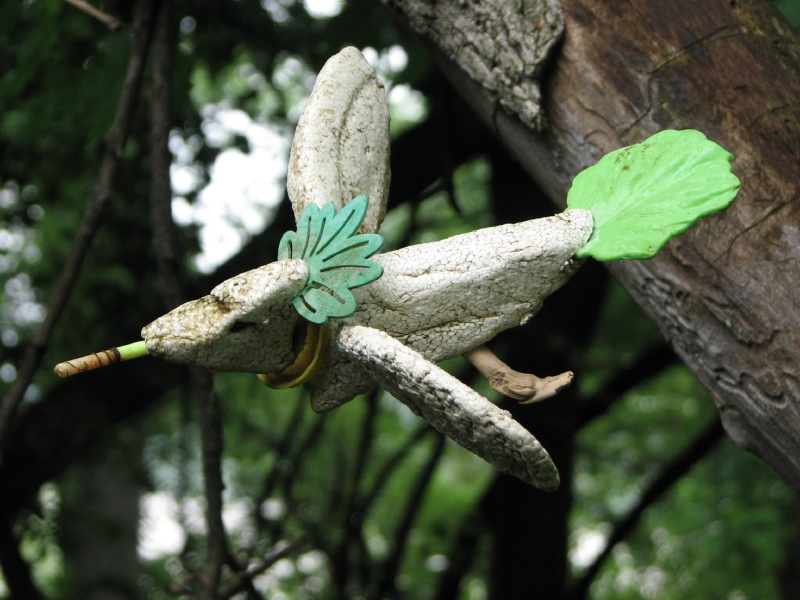
I recorded these images using my high-speed camera as the bird made its passes back and forth along the creek.  In these images one can see why this bird is appropriately named with its lacy green crest atop its head.  The encounter was brief, but memorable!  What was this bird doing in our area to begin with?  The answer may lie in the very powerful thunderstorms that are becoming a staple of the Western Hemisphere.  I speculate that this bird was simple blown way off course as is known to happen with other species of hummingbirds.  I returned to this area the following three days, but never again encountered this specimen.  I did, however, see the duckling of a species of which I am currently unfamiliar and recorded its image among the driftwood and I hereby also present this to you my very dear reader in the hopes it will fuel your curiosity!

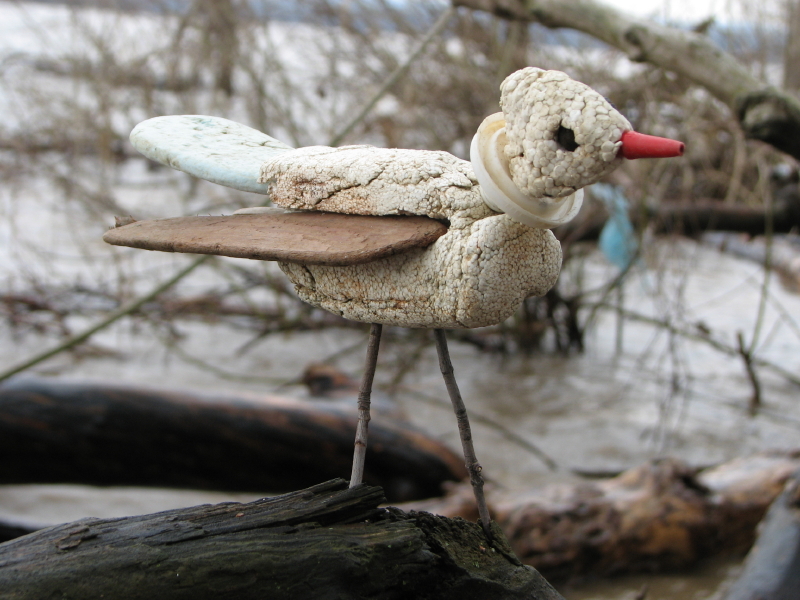
The Cumberland Greencrest was made from materials found entirely within the park and include:  Styrofoam (body and wings), wood (its tiny feet), coal (the eyes), plastic ( the bill which was part of a fishing bobber and the tail which is a plastic lettuce leaf!, the yellow collar is from a soft drink bottle) and lastly the green crest is some foam-like material.  It is held together in places with small, sharpened wood pegs.

Read Full Post »

Extraordinary images from a remotely placed camera-trap yield glimpses of a rare mammal.  Long thought to be gone from the Falls of the Ohio, it appears the Feralocitor is recovering parts of its former range.  The Feralocitor is a carnivorous animal about the size of a very large house cat.  Genetically, a Feralocitor’s closest living relative is the Fossa from Madagascar which is that island’s largest and rarest native predator.  Both share a relentless drive to pursue prey and are especially adept at catching birds and small mammals in trees.  Like the Fossa, the Feralocitor has a long tail which it uses to balance itself as it runs and jumps from branch to branch in its arboreal home.  Pictures of the Feralocitor at the Falls of the Ohio came as a shock to the park’s naturalists who remain mute about its existence here although there have been long-standing rumors.

The image above shows what the Feralocitor is especially good at which is stalking its prey.  Noiselessly, this predator can get low to the ground (or log in this case) and approach within striking distance of its formidable claws and teeth.  Once a Feralocitor has a hold of its intended victim, there is no escape.  In addition to stalking, some Feralocitors (especially older or injured individuals) are excellent at hunting by ambush.  The original inhabitants of this land have an almost supernatural reverence for this animal and their name for it roughly translates to “…ghost-spirit of the trees”.  This reverence, however, wasn’t shared by the farmers who settled this area and saw the Feralocitor as another predator who killed and ate their smaller livestock.  It was shot on sight, poisoned, and trapped until it became so scarce that it was rarely seen and believed gone from these parts.  Today, the role of random predator is played by domestic dogs that have gone feral and occasionally run in packs causing fear and damage.  Such dogs exist at the Falls of the Ohio and here are a few images of them.

The feral dogs in this area are a motley crew of mixed breed dogs.  I recently came across two of them while bird watching and I was so intent on looking up, that I didn’t notice that these dogs had walked quite close to me.  In far western Kentucky, I recall an experience of being out in the woods and being surrounded by five wild dogs!  It was a tense moment because dogs in this situation can be dangerous.  I remember yelling at them and throwing rocks in their direction to chase them away.  Once there was a thriving sheep industry in the western part of the state that was decimated by feral dogs.  An old biology professor at Murray State University told me that one.  The dog in this second picture doesn’t seem particularly glad to have run into me and I’m probably interrupting his attempt at a meal from a nearby dumpster.  They seem always hungry and will take nearly anything that crosses their path.  There is a shortage of ground nesting birds in the park because there are just too many predators on the prowl and not enough cover.  World-wide, feral dogs are a resilient and growing problem and rabies is also on the rise.
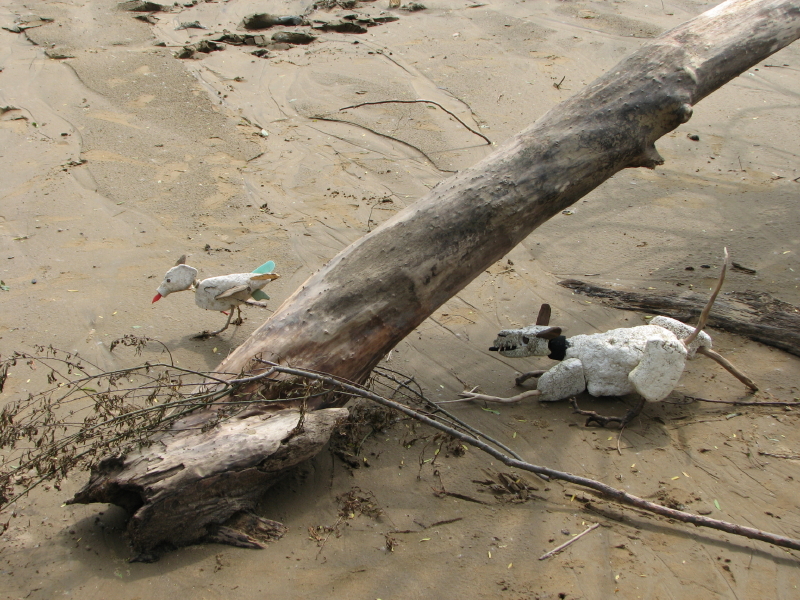
I decided to camp out in an area where a Feralocitor was last seen.  After several days of nothing, I was rewarded with two separate  images of a hunting Feralocitor.  In this case, the prey animal (the Ohio Valley Rail) is also rare and endangered.  The first hunt I observed was successful, however, the Feralocitor was so efficient and quick at the kill that it was over and gone before I could get obtain another picture.  It waited until the bird’s head was down before launching its fatal attack.
In this second photo, the Feralocitor was unsuccessful when the bird sensed something was wrong and flew away.  By listening to its instincts, this rail lived to experience another day.  It is great seeing an animal that once existed in this area recovering some of its former range.  Similar stories exist from the recent past.  Once black bears were rumored in the eastern section of  Kentucky.  This was proven, they became studied, protected,  and  now there is a limited hunting season on them.  The same could be true of the mountain lion.  Persistent claims that they too are re-entering  their former territories will probably pan out as young lions move eastward pursuing the ever burgeoning deer population.  As for the Feralocitor, time will tell.  It isn’t an animal likely to be prized by hunters.

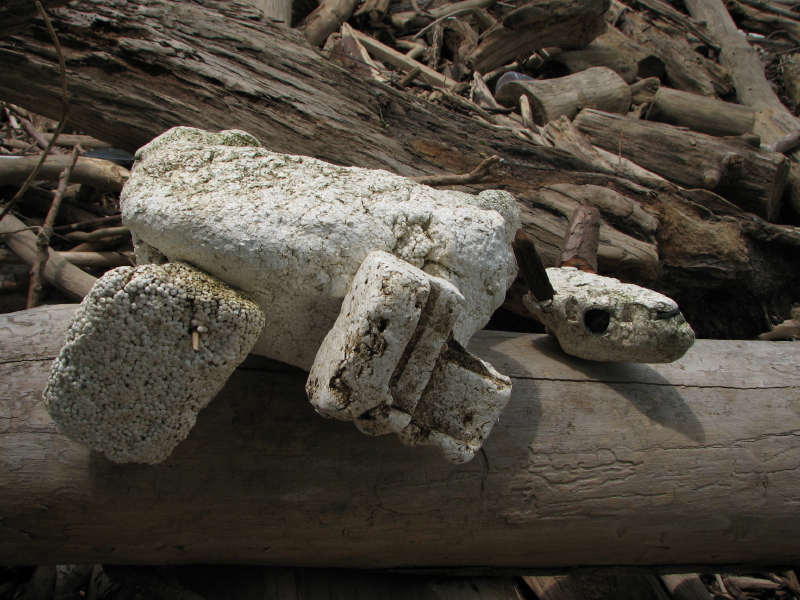
The last image is of the Feralocitor in progress.  It’s made of found Styrofoam, wood, nuts (for eyes), rubber, and plastic and was constructed on location during a light rain.  The sculpture was held together with sharpened wooden stakes and pins.  With the exception of the Feralocitor and the Ohio Valley Rail, other mentions in this post are factual.

Read Full Post »

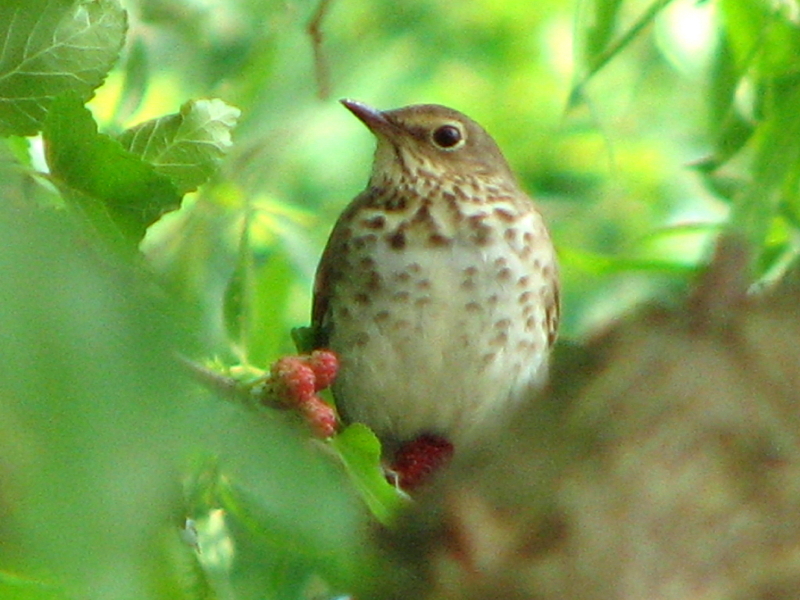
I love this photo!  This Swainson’s Thrush seems so happy sitting on its berries.  At the Falls the migrant birds are around and our trees are flowering or fruiting.  I have been doing my best to come up with some nice bird photos in between other river activities like making art.  Most of the warblers are proving to be tough subjects.  The difference between getting a nice image and nothing is a thousandth of a second.  Warblers are very small and constantly moving.  There is a lot of thrush and catbird activity around the sweet mulberries and squabbles are frequent.

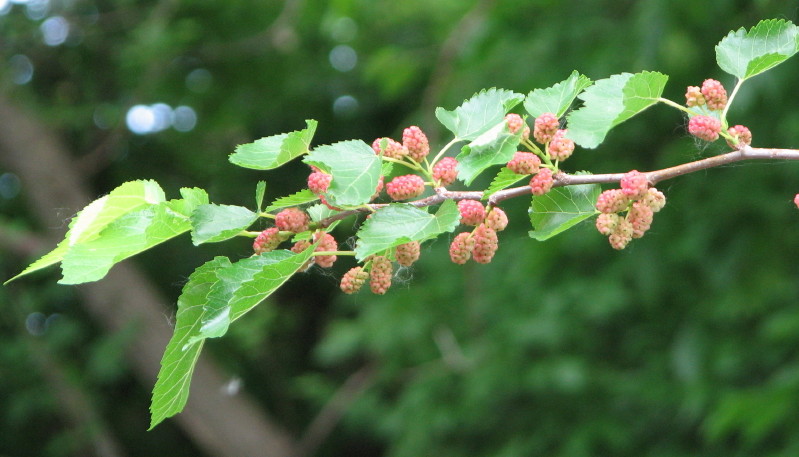
These pink and red mulberries will be ripe when they turn dark and black.  That’s when the wildlife particularly go for them.  This is a prolific tree and seems to be on the rise.

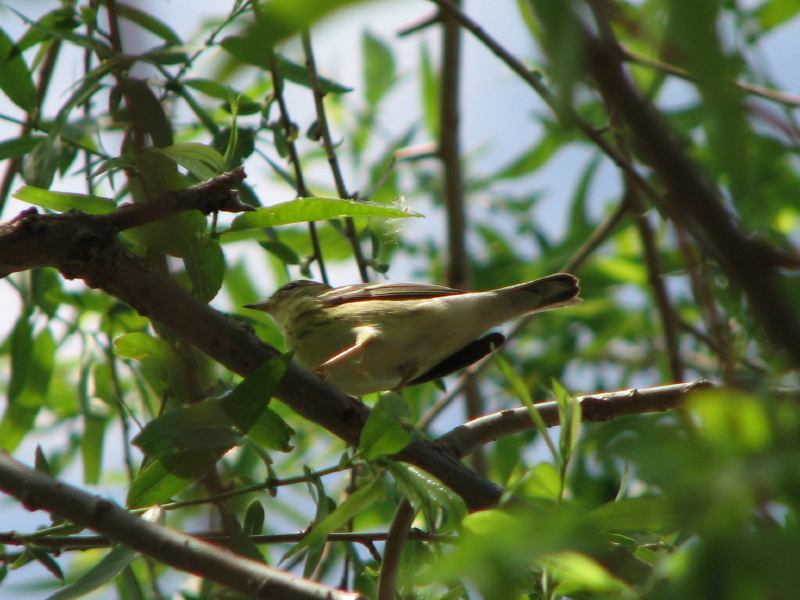
This bird atop a willow tree is a bit of a head scratcher for me.  I like that I was able to get such a relatively clear shot among the foliage, but what species of bird is this?  When I first took the photo, I thought I was photographing one of the seasonal vireos.  However, there is a suggestion of light-colored wing bars and perhaps a slightly streaked breast too which is an unusual combination.  That’s what I like about bird watching…it can be challenging even when you think you have a good image.

Wafting through the air were the tiny, cottony seeds of these black willow trees.  Many of these will land upon the sand and germinate.  Only the fittest can thrive in this tortured soil and manage the periodic flooding that helps define this place.

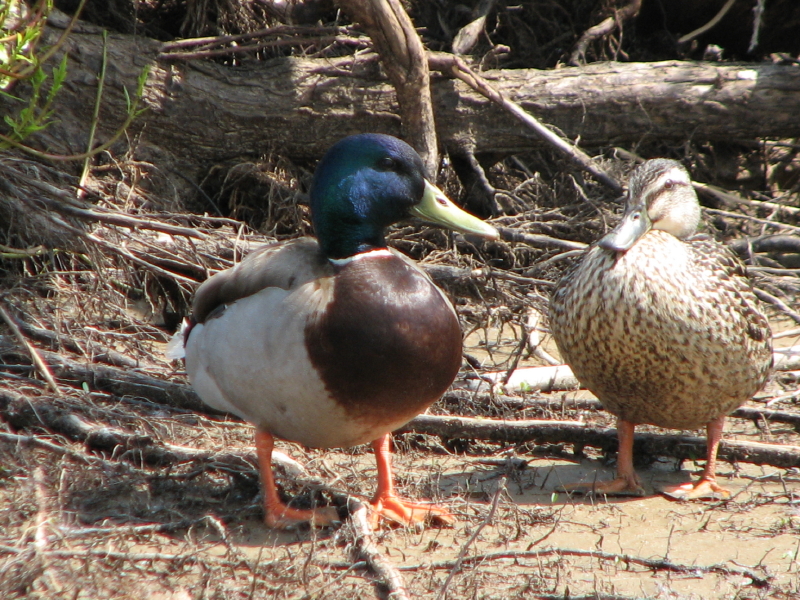
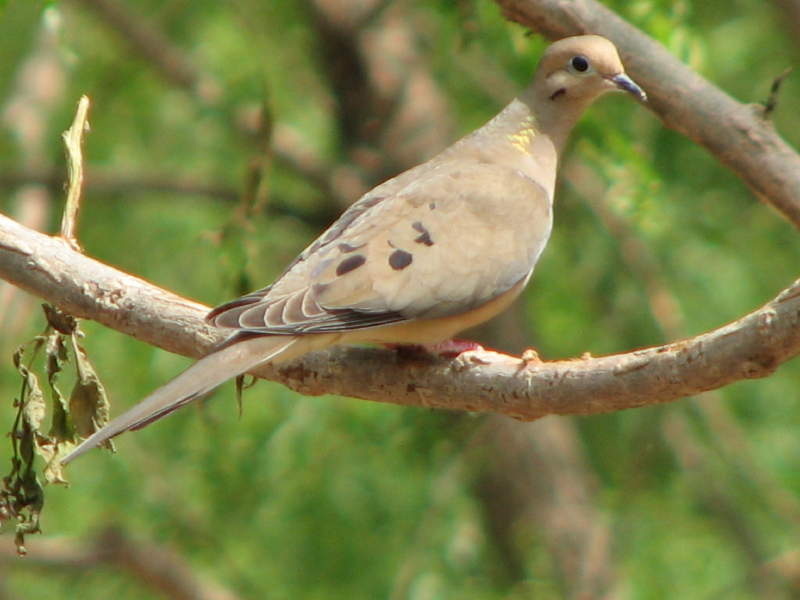
There were birds that I was able to photograph and identify like this pair of Mallard Ducks.  They were away from the river and more than likely have a nest nearby.  This Mourning Dove is showing a little of the iridescence on its neck that comes with the breeding season.  It’s hard to believe now that Audubon’s first drawing of the extinct Passenger Pigeon was made at the Falls of the Ohio.  That is certainly a bird I would have loved to add to my list of living species in the park.

I was able to add a new bird to my list on this trip and it’s an unusual one!  It’s called the Ohio Valley Rail and is usually heard more than it is seen.  It is not typical to run into one during the daylight hours.  So, when I came across this female near the river…I got real excited!

This bird is in transit to the marsh habitats that exist around the lakes in the Upper Peninsula of Michigan.  Since the Ohio Valley Rail is believed to travel at night…it is a mystery why this one isn’t sleeping in a secluded spot.  Originally discovered and named within the river valley by early 19th Century naturalists, it would be many years before it’s true northern haunts would be known to science.  The males are slightly smaller but have more developed plumage which they use to their fullest glory when they leap and dance into the air trying to win the favors of a female.  Successful dancers will pair up producing a clutch of two eggs usually in a nest located on the ground and made from cane leaves.  One last image of this rarely seen oddity with the big head and bright red bill.  Bon voyage!

Read Full Post »

Dodging snakes and collecting washed up cigarette lighters with my friend Jeff was not the only action we had on this excursion to the Falls of the Ohio.  By now, I should not be surprised by what turns up at this remarkable location…because it happens with such regularity.  For me, the thrill of discovery has become addictive and interwoven into my creative process.  Recalling events, I believe it was my friend Jeff who stumbled upon this revolting artifact and so I will begin this story here.

It’s a very large jar of bologna.  The contents have more than settled, in fact they have decayed to the point of becoming cream of bologna.  I know, this is completely disgusting, but bear with me for the real point of the story follows this discovery.  It was a short distance from this jar that we encountered another remarkable member of the Genus Polystyrenus.

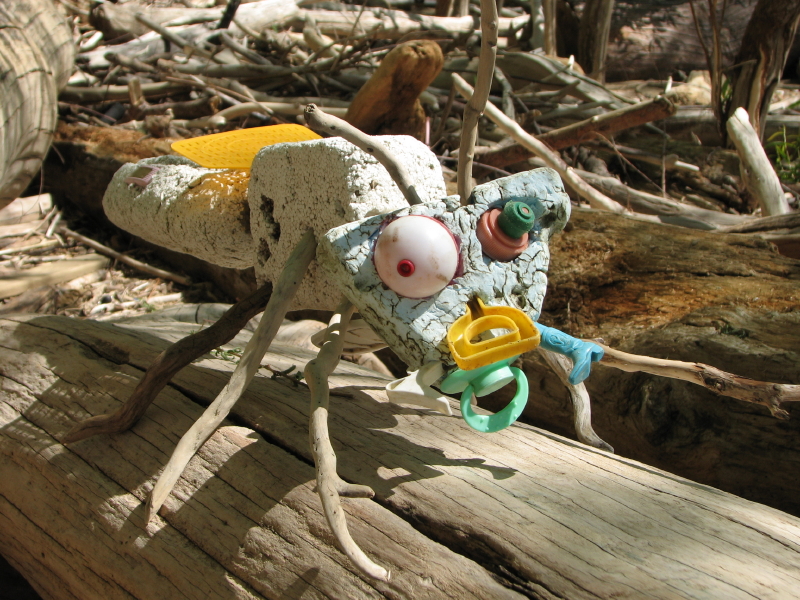
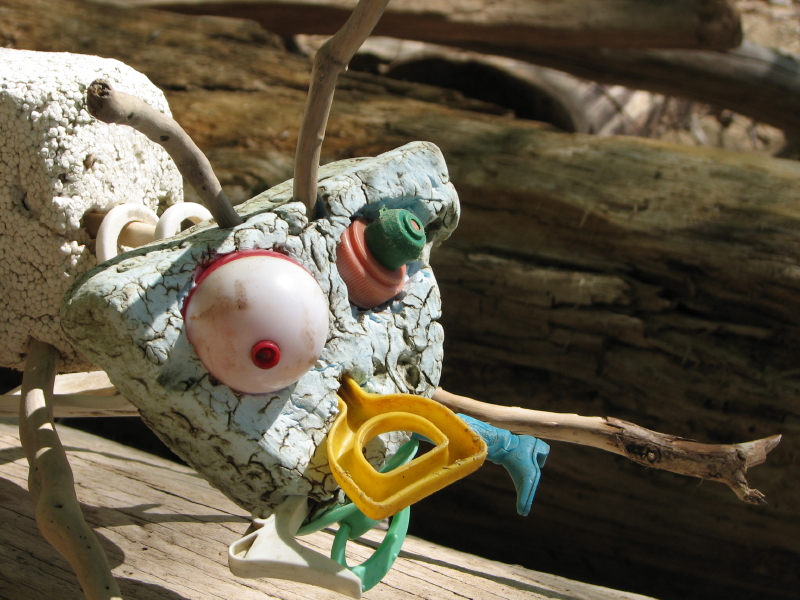
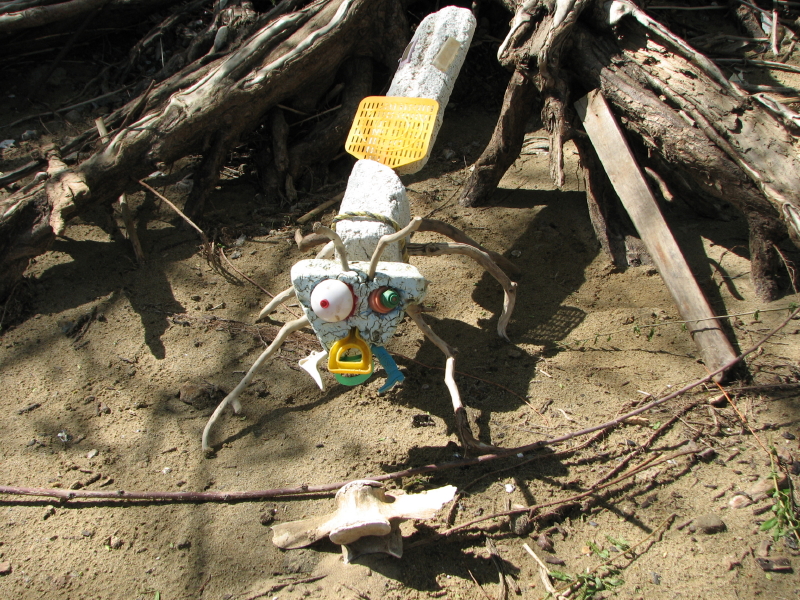
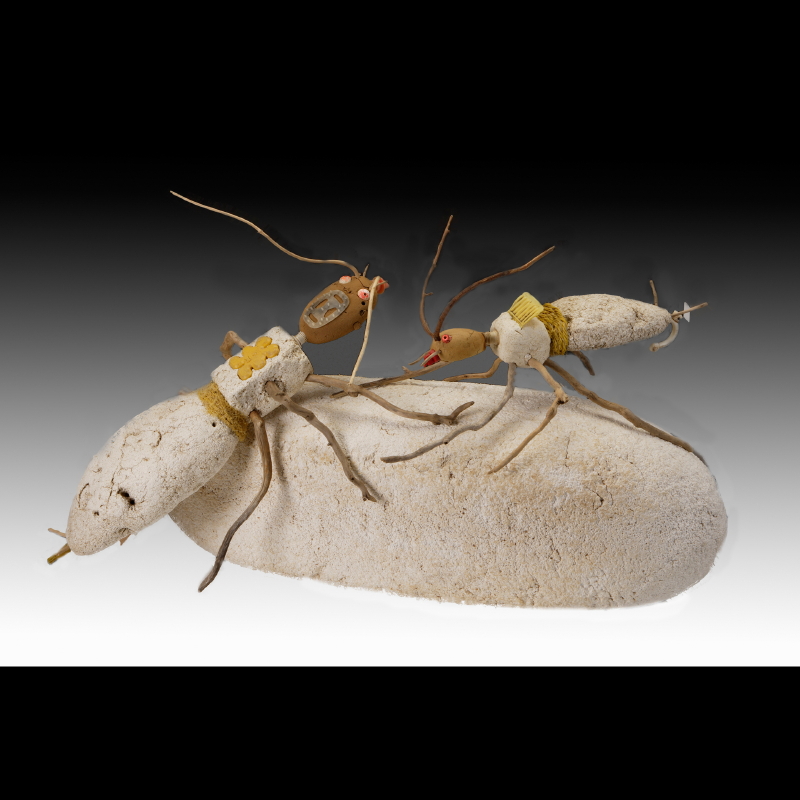
Hidden just out of sight among the debris line was this very large and aggressive looking insect.  I estimate that this impressive creature was about two feet long.  It would be an under estimation to say that both Jeff and I were taken aback (how we both avoided voiding our bladders upon our persons, I will never know).  After what seemed a very long length of time, the amateur naturalist in me took over and I began taking photographs and making observations.  Here’s a detail of its head and impressive jaws.  It’s small antennae were wiggling back and forth.

Looking at the mandibles, I’m guessing that this creature had adapted to eating meat or carrion, both of which are found at the Falls.  It emitted a sickly sweet odor.  I think our large bug friend had discovered the bologna jar before we did and we may have interrupted its meal?  Because this ant-wasp, (seems to have characteristics of both) did not defend its bologna bode well for Jeff and I.  In fact, we did learn that despite its fearsome appearance our bug friend was retiring and unaggressive.  I decided to tag along and learn what I could about this amazing one of a kind animal.

From a short distance away, I was able to observe some behaviors that I recorded with my camera.  I believe that my assumption about it’s being a scavenger is on target.  I watched our insect “friend” actively investigating an old bone it had come across.  The bone was rolled around in its jaws as though our bug was tasting it?  Finding no meat, it simply dropped the bone.  I also noted that this creature has vestigial wings that have atrophied to a yellow flap found attached to the rear of its thorax and ironically has the appearance of a fly swatter.  Perhaps its large size makes flight an impossibility and the wings have shrunk to the present size?

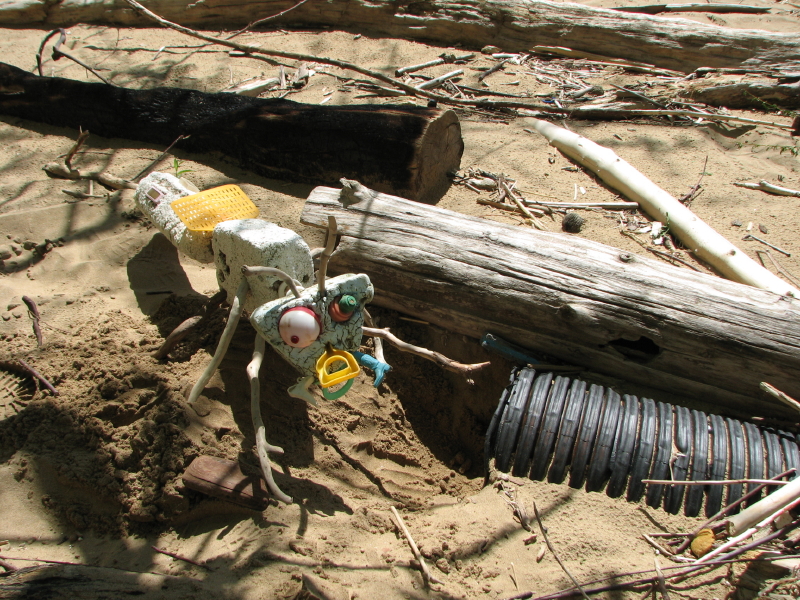
Near the tree line, and keeping a respectful distance away, I observed Polystyrenus investigating a large plastic pipe mostly buried in the sand.  It did attempt to dig away the sand blocking the entrance to the pipe, but soon abandoned this effort.  I don’t want to assume too much, but I was intuiting at the time that it was looking for a burrow in which to hide, etc…  I did make a discreet effort to determine its gender, but was unsuccessful.  Here’s my last picture of it.

Amazingly, our bug was making short work from what was once a large barge cable that was originally as thick as a stout man’s forearm.  It’s jaws easily shredded the nylon strands.  Why it was doing this…will require more research.  Shortly after this image was taken, the sound of loud, boorish people coming down the riverbank spooked our insect and it took off with surprising speed over the sandy surface of the Falls.  Perhaps it understood that Jeff and I posed no threat, but it couldn’t be certain of the strangers?  During the short amount of time I was studying this creature I also noted that it didn’t have claws to speak of and didn’t possess a stinger.  Perhaps I will encounter this insect or other large insect species again because this is not the only time I have come across similar giants.  Take a look at these specimens for which the genus Polystyrenus was originally named. 

This has been classified as Polystyrenus ichthyphagia, based in part on this remarkable photograph of it feeding on a non-native, dead fish.  I made this discovery several years a go…in fact, it is with some regret that I collected (euphemism for killed) this specimen and one other that turned out to be a male and female.  This was done of course in the name of science.  The one feeding on the fish is the female.  Note the flute-like ovipositor and vestigial wings which made a raspy sound.  The mouth parts on P. icthyphagia have adapted for sucking.  Why these large insects have appeared at the Falls is inconclusive.  But I believe this is evolution at work.  The more we change our environment, the more we affect not only ourselves but all the other creatures that call this place home.  It can’t help to release tons of fireworks chemicals into the atmosphere and what we do with the water in general is a crime.  I will leave my soap box for the moment.  I suppose the reason that these giant insects have evaded previous detection is that they so strongly imitate garbage and detritus that they can elude most people’s notice.  Here’s a photograph of the dried and preserved male and female P. ichthyphagia with its egg case.  There is some sexual dimorphism with the male being considerably smaller than the female.  These specimens are in separate collections now.  The name Polystyrenus was chosen because the exoskeletons of these amazing insects so strongly resembles polystyrene, also generically known as Styrofoam.  The largest bug here is over three feet long.

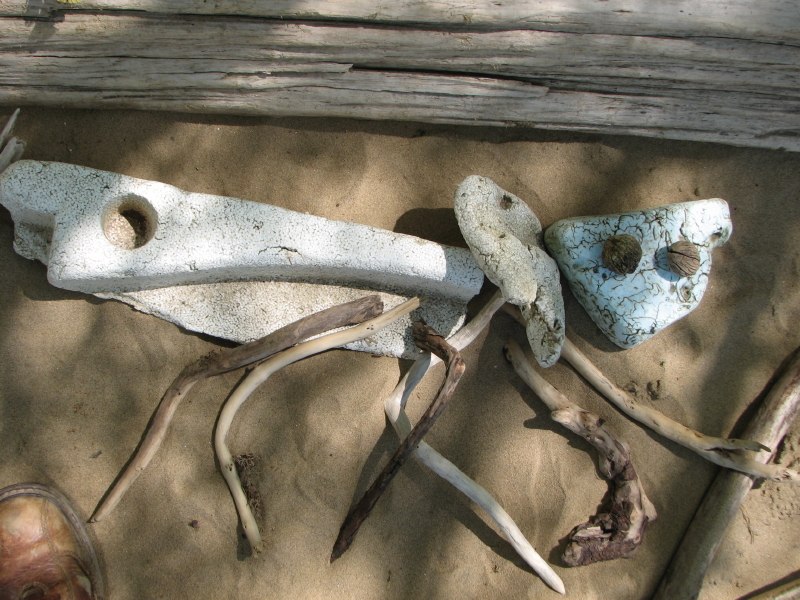
As a kid, I fell in love with one particular story that appeared in an old Natural Geographic entitled “Giant Insects of the Amazon”.  Its author, Paul Zahl must have had the best job in the world to be able to travel to exotic places to study rare and unusual animals.  I suppose, I’m doing something similar, but I’m not traveling far from home and making my own giants.  Here’s the last picture of how I began the latest Polystyrenus receiving inspiration from the materials I find on location.  Although I didn’t use all the stuff here…it provided a template of sorts. 

I dedicate this post to Julia Oldham, bug lover and current artist in residence at Bernheim Arboretum and Research Forest in nearby Clermont, Kentucky.

Read Full Post »

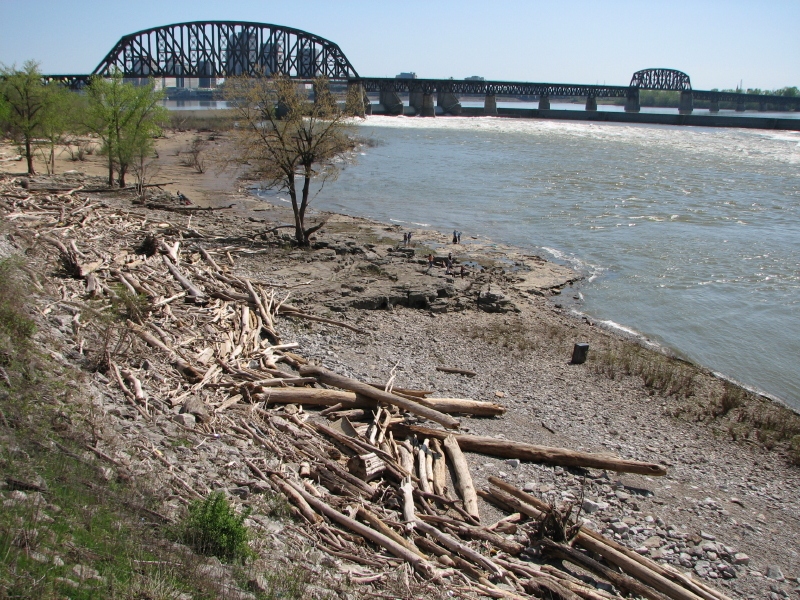
After delivering some of my artworks to an exhibit in La Grange,  (more on that in a future post) I stopped by the Falls for a quick look-see.  It was an absolutely gorgeous day and I decided to take a quick walk along the Woodland Trail to see if any of the spring migratory birds were in the area.  I was amazed to see the sizes of some of the trees that washed into the park during the last high water.  From my vantage point, I could see several “nice” pieces of Styrofoam that were also stranded by the retreating river.  I made mental notes to myself to come back to those areas when I had more time.  Images of future sculptures came to mind.

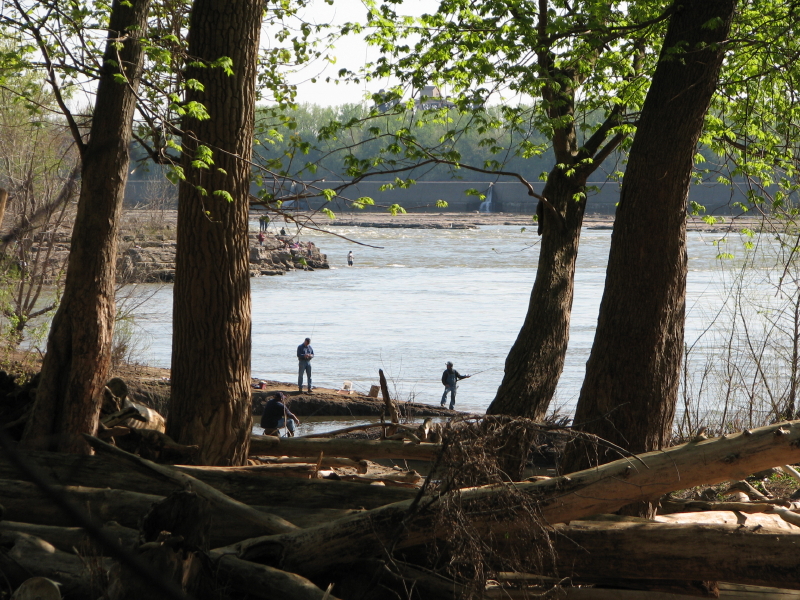
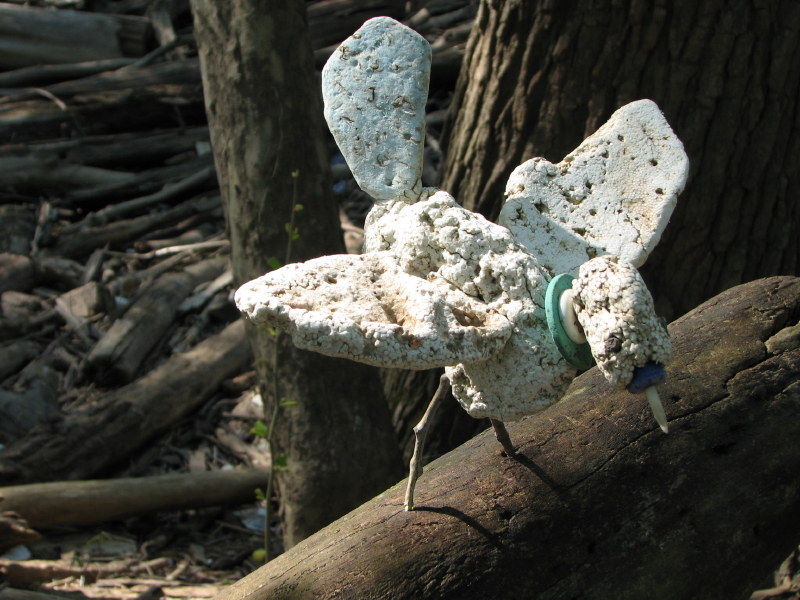
People were taking advantage of the lovely spring day and were ever-present in the park.  I noticed many fishermen lining the banks although I can’t say that I observed anyone catching anything yet.  Walking along the Woodland Trail I did see several species of birds including a Yellow-bellied Sapsucker working a Sweet Gum tree.  To me, this woodpecker is a harbinger of spring.  Bird watching was a little frustrating today because there just were so many people everywhere that the birds were a bit jumpy.  Further down the trail I did see something new I hadn’t recorded before and it has the nickname of “the Redbud Bird” and I would later learn why.  At first appearance, it’s a bird that isn’t especially memorable.  It’s a bit clumsy looking and not a particularly good singer.

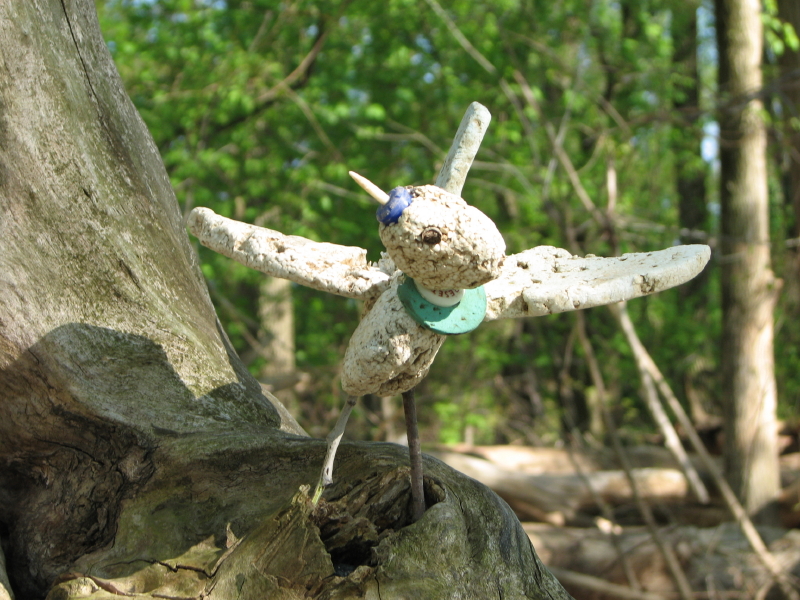
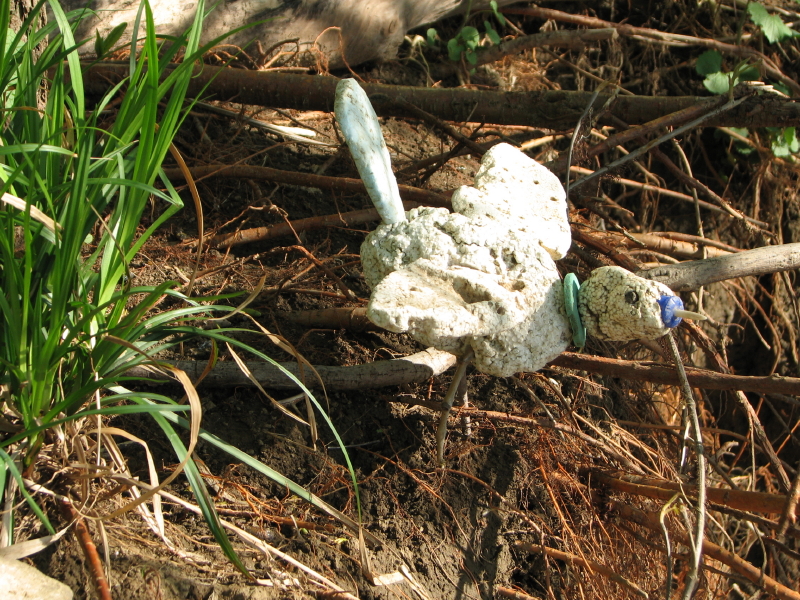
The Redbud Bird was working a section of the park bordered by a creek.  This area had many downed trees of significant size that this bird was exploring.  I observed it tilting its head from side to side as though it was carefully listening for something.  I found several more specimens of this species taking advantage of the ecological niches that the park has to offer.

Wherever I saw one of these birds…it would be turning its head from side to side and every once in a while would slowly flap its wings.  The day was a warm one and I wondered if this was a method the bird used to stay cool?

I followed one bird from the woods into the Interpretive Center’s parking lot.  This proved easy to do because this bird is also a fairly weak flyer compared to the other birds I had come across.  It would move ahead of me and seemingly waited for me to catch up.  I felt as though it was leading me someplace.  This bird did this several times until I finally understood how this species received its name.

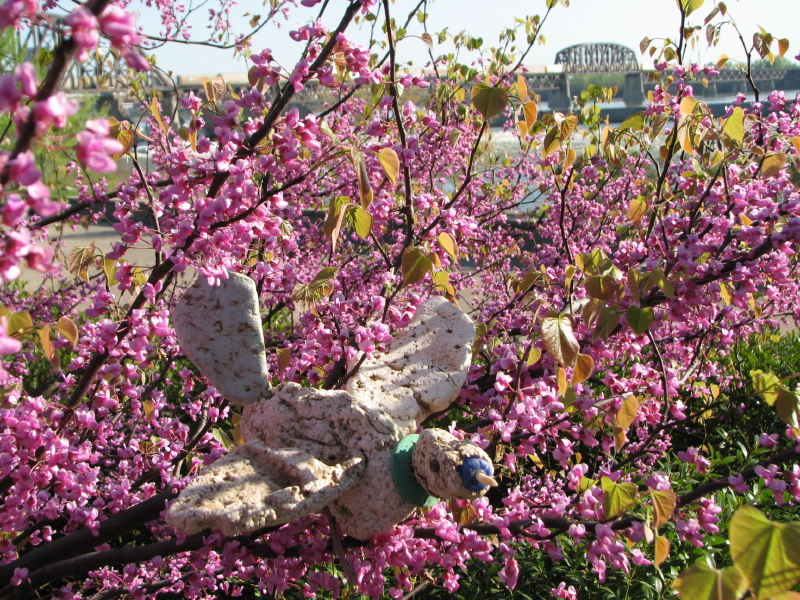
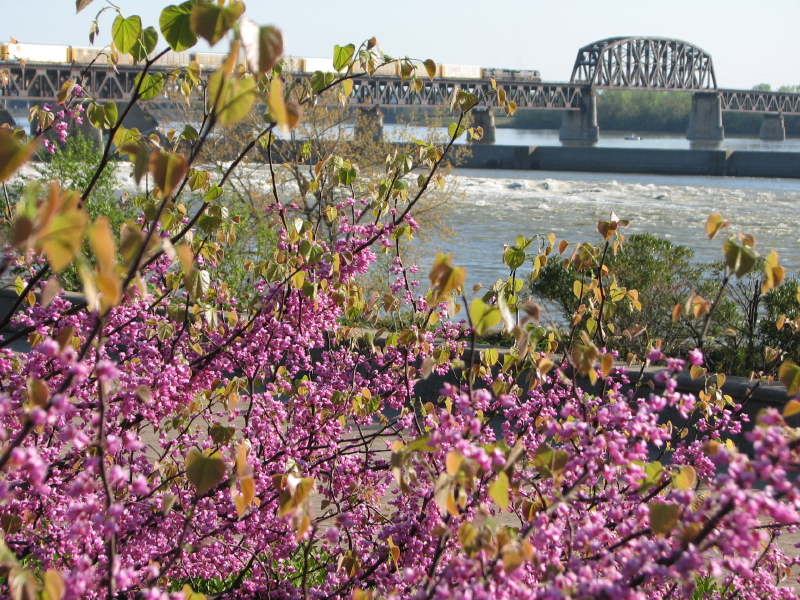
I followed the bird to the front of the Interpretive Center where our bird began to display in a most gloriously blooming Redbud Tree.  This bird times its appearance in our area to the blossoming of this tree.  What this bird lacks in physical charisma it compensates for by immersing itself in the beauty of this tree within site of the river.  After watching it bounce from one blooming limb to another it flew off leaving me with this view.

Read Full Post »

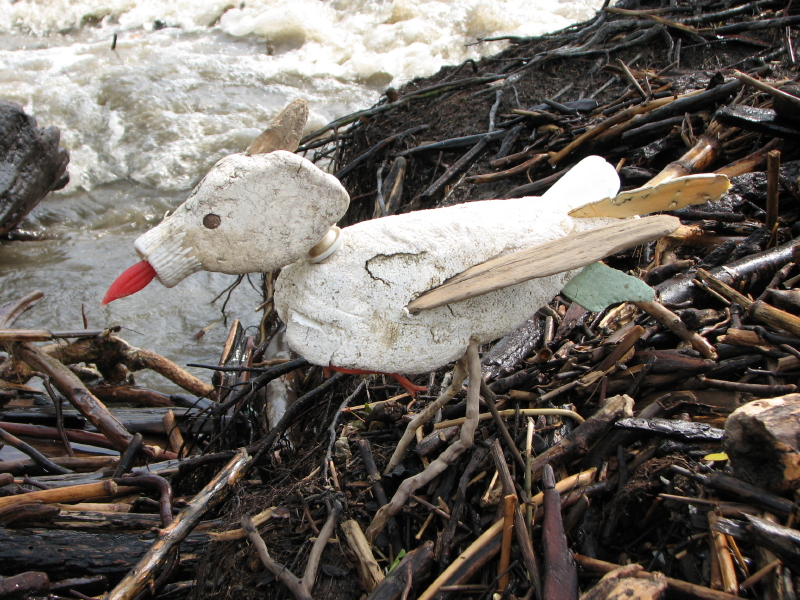
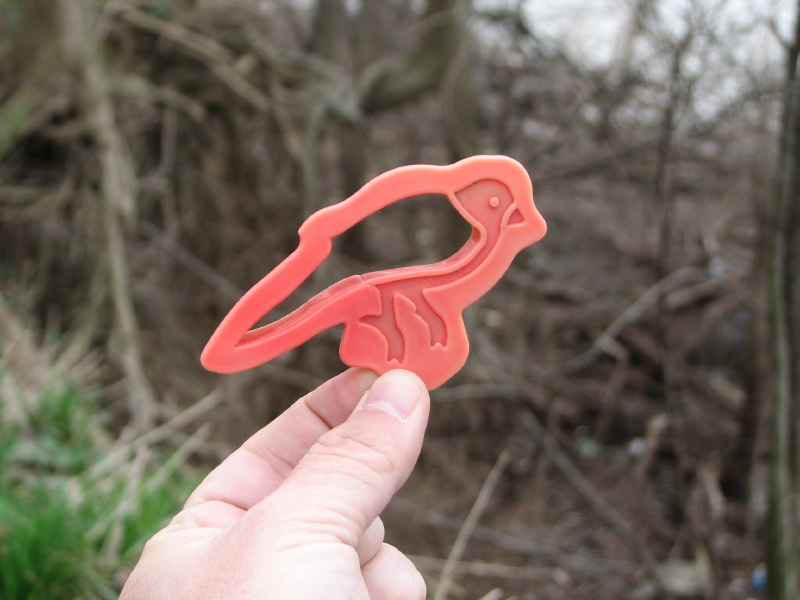
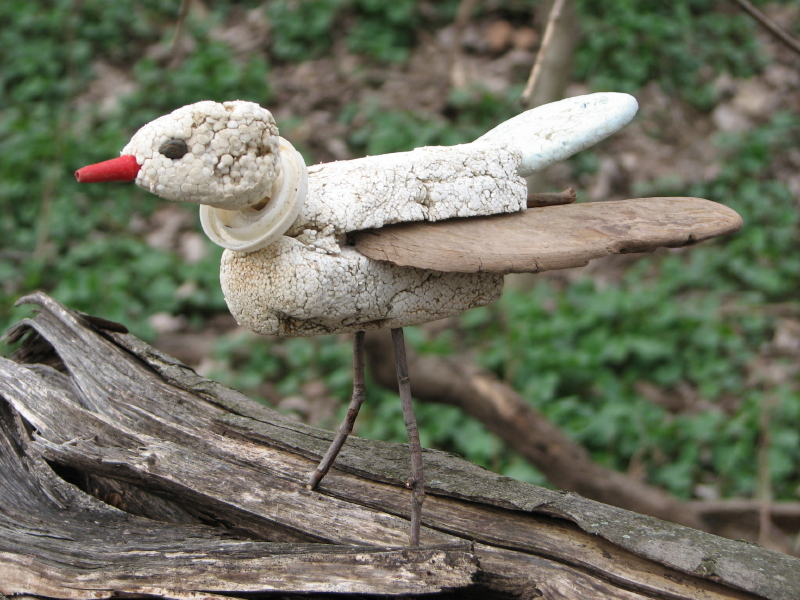
The little red bird perched easily between my forefinger and thumb.  I was walking along the river bank and spotted it among the recently deposited debris…another small gift.  If I had to guess, I would say that the red bird was intended to be child’s clay tool.  It’s like a cookie cutter stencil only smaller.  I was on the look out for birds and my subconscious was on alert.  I think this is partially why the plastic bird appeared to me when it did.  The axiom about chance favoring the prepared mind touches upon this phenomenon.

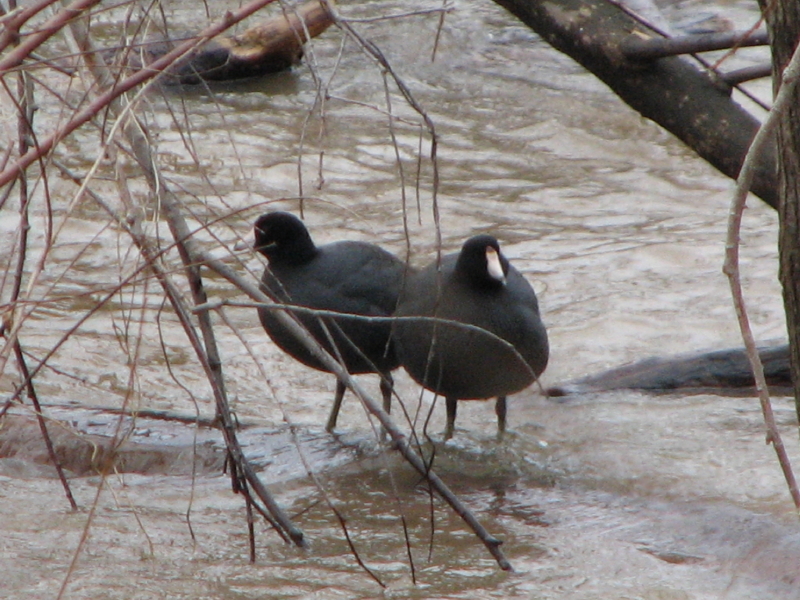
While the river level was still high, I came across this pair of American Coots near the shore.  Logs and chunks of wood were bobbing in the water.  Their dark feathers took on the look of wet wood.  The odd appearance of these coots had to do with them standing on a log that is mostly submerged.  Among the other birds I found near the water were Canada Geese, Mallard Ducks, and high overhead…kingfishers.

Like little twittering machines, a male and two female Belted Kingfishers were chasing each other across the sky.  I watched them for over half an hour and hoped that one of them would perch in a tree near me.  Alas, this was the best image from that moment.  With its low profile, out-sized bill, and crested head, the Belted Kingfisher’s silhouette is distinctive.  Someday, I hope to stumble upon their nest built into the side of the riverbank.  I’ll prepare my mind for that moment and let’s see if chance intervenes!  I did spot an Eastern Phoebe which is an early migrant.  As the warmth and light speeds up the production of tree leaves, we can expect the arrival of the birds we share with Central and South America.  Their timing is exquisite and seems to coincide with the many small cut-worm caterpillars that will chew their way through the foliage of the canopy.

During migration, the Falls becomes home for several different thrush species.  Some of them can be notoriously hard to identify, but not the bird above.  It’s the White Thrush and it utilizes all the available habitats here to put on a little weight before moving northward.  I have seen them patrolling the water line and investigating the densest vegetation in search of food which can include insects, seeds, and berries.

This bird was investigating decaying logs in search of a meal.  Every once in a while, the thrush would “scratch” the rotten wood with a backwards jump that would reveal small grubs and insects just below the wood’s surface.  These morsels were quickly seized by this agile bird.

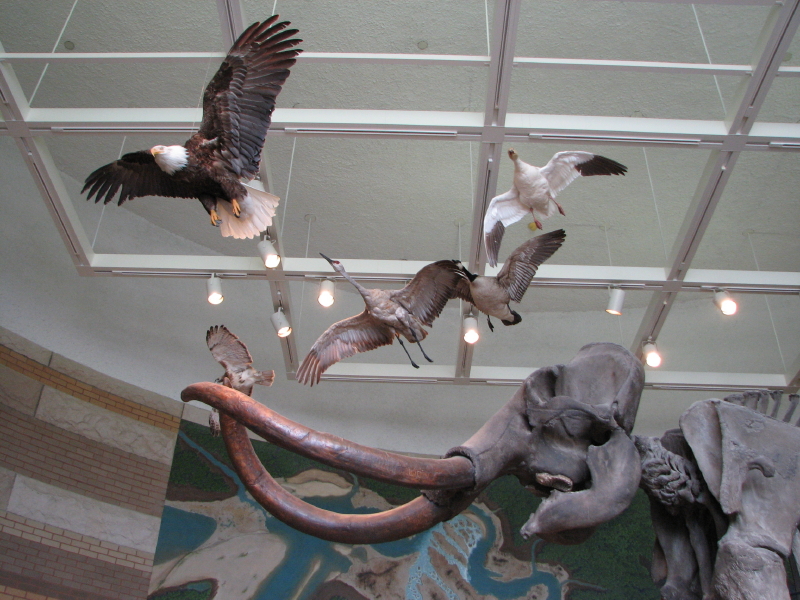
Here’s a third thrush perched upon a vine near the Woodland Trail.  I observed this bird picking off very small midge-like flies and returning to this position.  On my way back home, I stopped at the Interpretive Center to pick up another bird list for the park.  My list is getting a bit tattered from use and I still have about half of the 268 bird species recorded here left to go!  I did spot one bird last year in the park that I’m surprised is omitted from the checklist and it’s the American Turkey.  It would fit easily in the Game and Marsh Birds category.  There are also birds “flying” inside the Interpretive Center and above the mammoth’s head and I’ll end this post with that image.

Read Full Post »

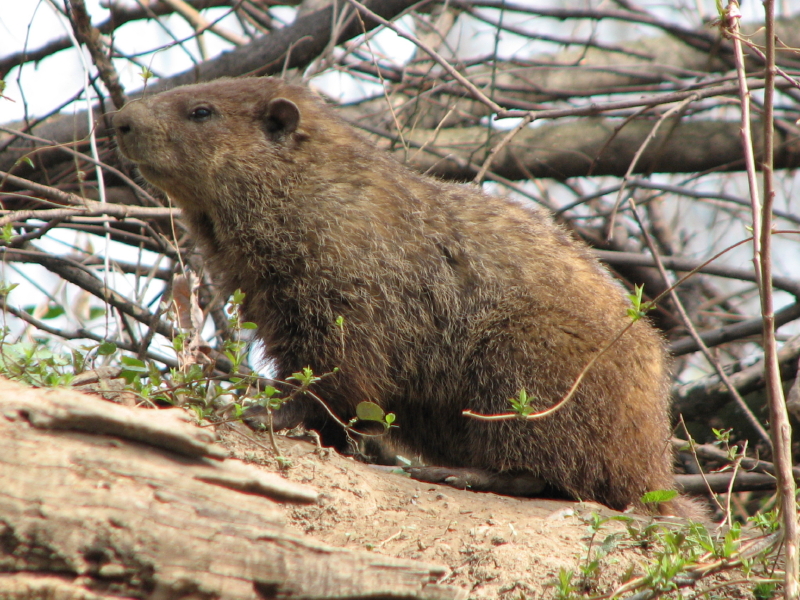
With the river being high, I explored a few wooded trails in the park.  There is still just the barest hint of green coming back to life.  It’s a good time to walk here because the vines haven’t started to kick in yet and turn this place into an obstacle course.  I was following the park’s resident Pilliated Woodpeckers and trying to photograph them when I came across this groundhog.  He was the Buddha of the Groundhogs basking in a shaft of spring light.  His eyes were partially closed, almost blissful appearing.  Then I bumbled into view and we eyed each other for a minute or so and I took these pictures and he took off running for his nearest burrow.

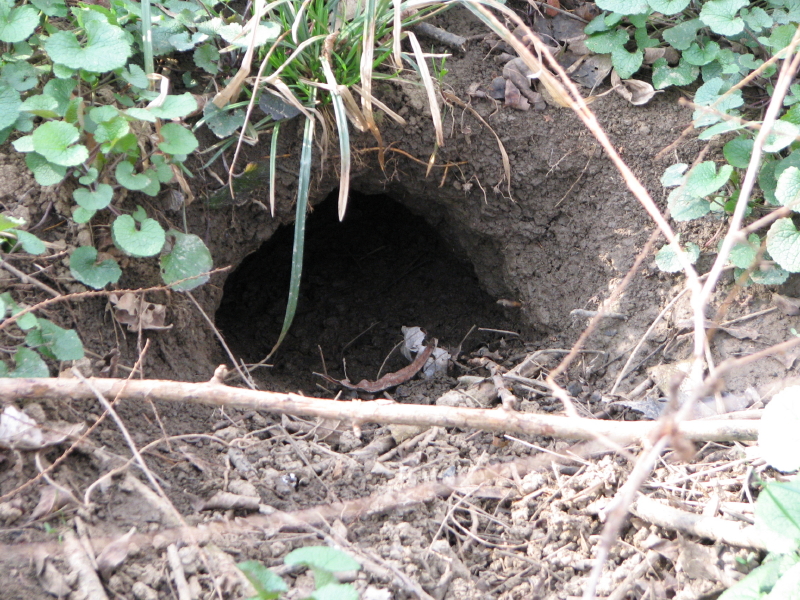
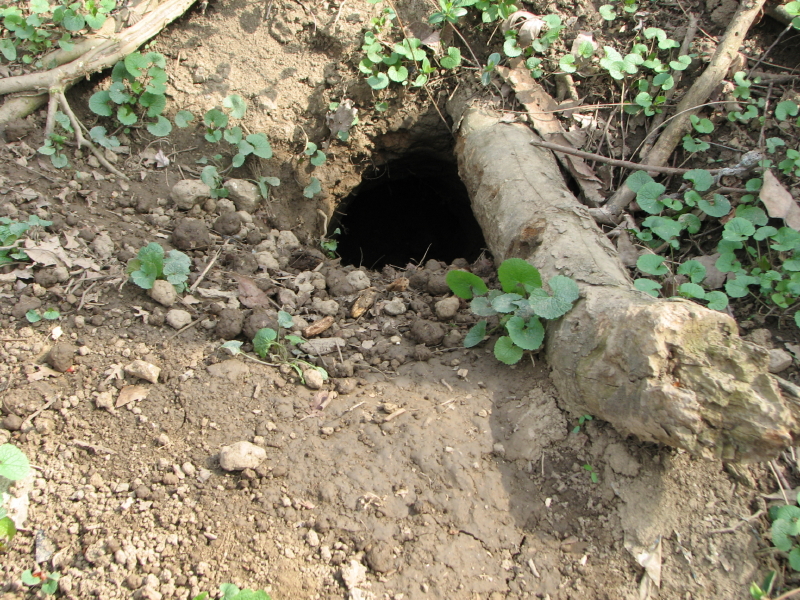
I have accidently stepped into their holes before.  Luckily, I haven’t twisted an ankle or worse because it can be a quick and rude drop down.  It’s become one of the hazards, like nails sticking up from a driftwood board that you avoid stepping on.  It appears to me that the park’s groundhogs are on the increase and so there are that many potential holes to look out for!  Watch out!  There’s another hole!!

Read Full Post »

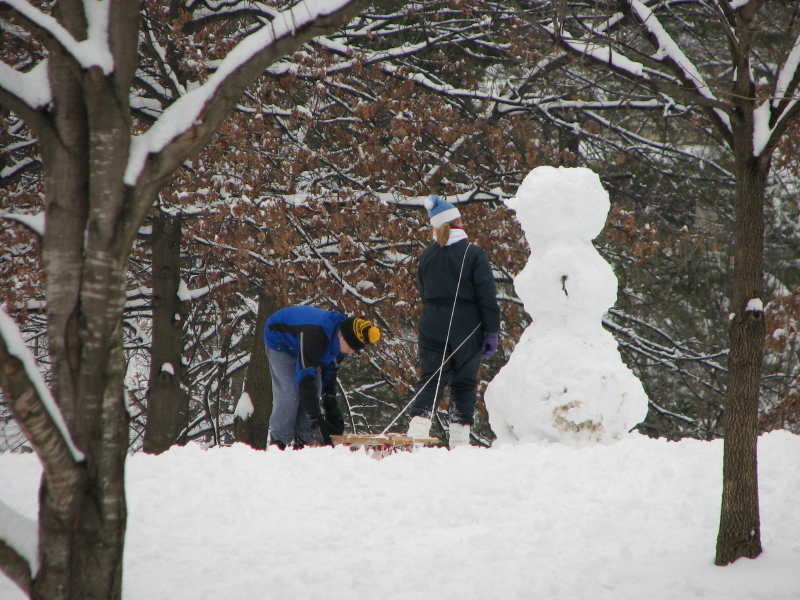
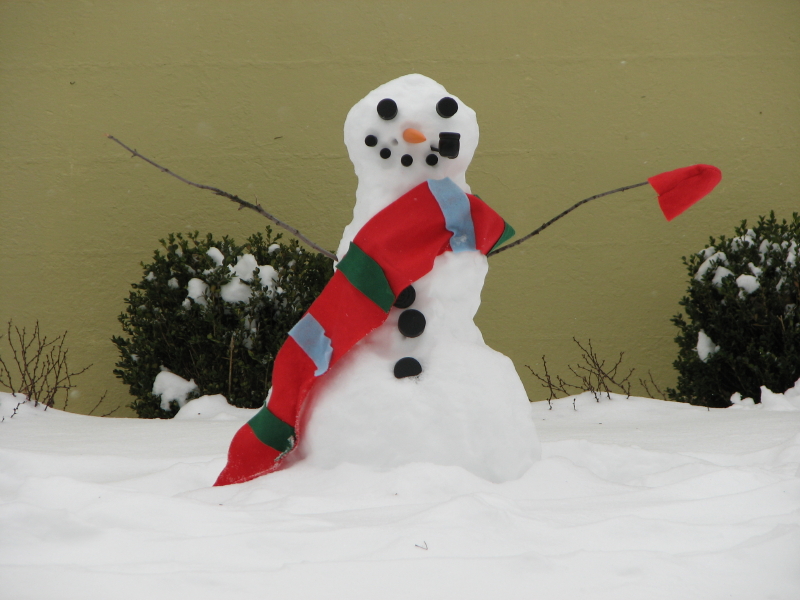
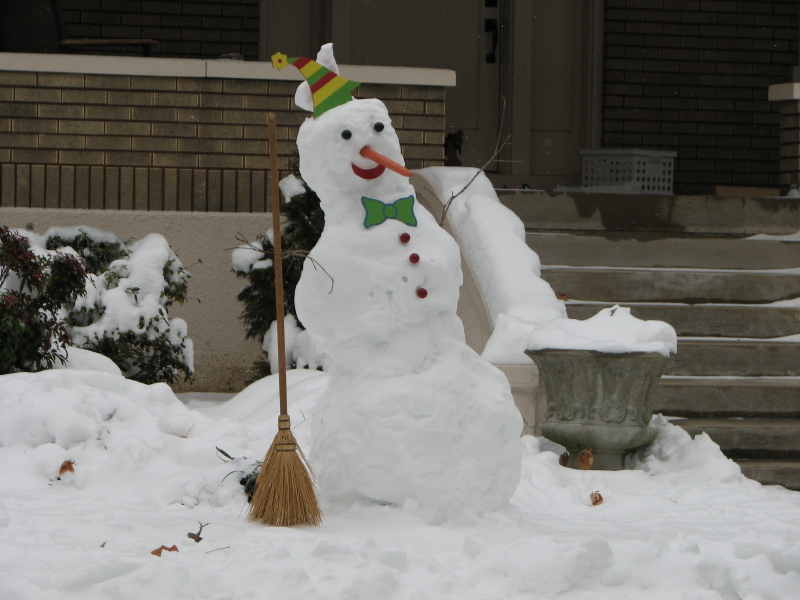
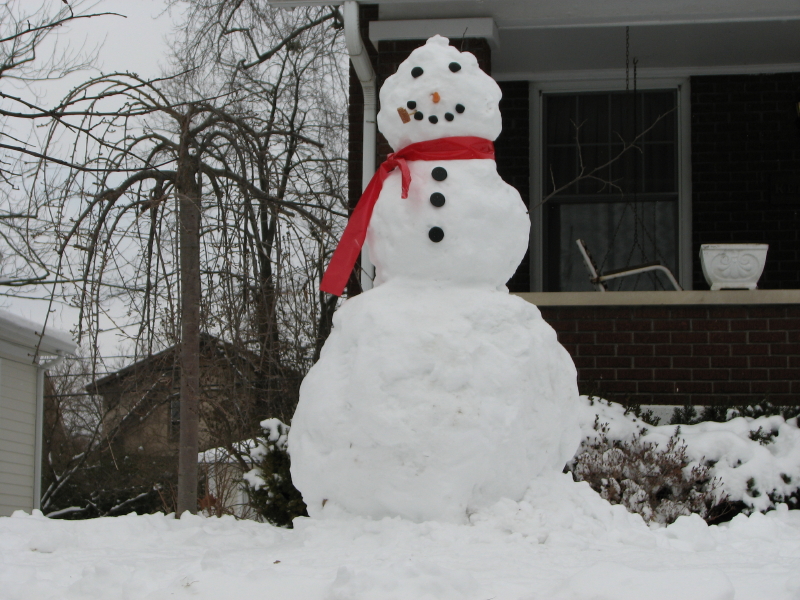
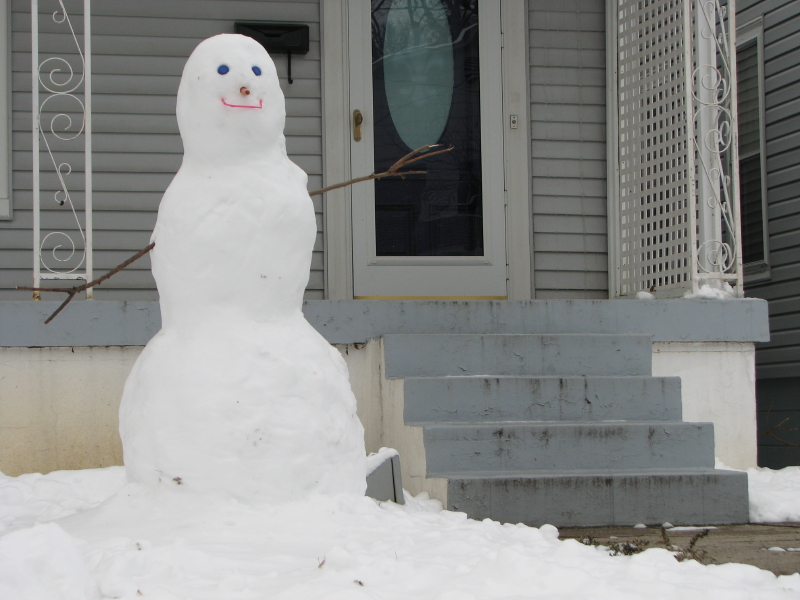
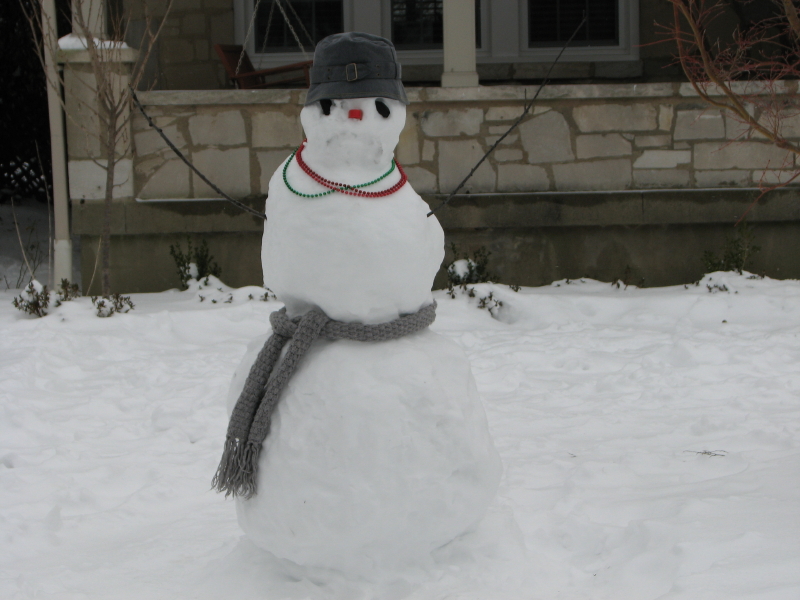
The six or so inches of snow that quieted Louisville over the past two days inspired a spontaneous celebration of a traditional form.  The conditions were just right for an impromptu snowman festival!  Nearly everywhere I travelled through the city I found these ephemeral sculptures gracing both public and private spaces.  Before it became too late in the game, I grabbed my camera and recorded a few images which I’m presenting here.  I went through Tyler Park, the Douglas Loop neighborhood, the Highlands, and the Shelby Park area and in a matter of a couple hours and found some interesting creations.  I had so much success in a relatively short amount of time and distance, that the possibility of hundreds of snowmen existing scattered throughout the city gave me an extra reason to smile!

For those of you who have followed my riverblog, this may seem like a departure, but it really isn’t.  I count the making of snowmen, scarecrows, and other seasonal folk art figures among the influences for my polystyrene art.  I’m working with that same impulse towards figurative expression that people acknowledge when they make a snowman.  Can this be art?  I certainly believe so.  A friend of mine once wrote that art was turning the ordinary into the extraordinary.  When you mix intention with a user-friendly material like snow, than the creation of art is within most people’s grasp.  Eventually, when these things melt, the water that comprises them will at some point reach the river.  Considering how much snow has fallen over the Ohio River Valley, I would expect to see high water around here.

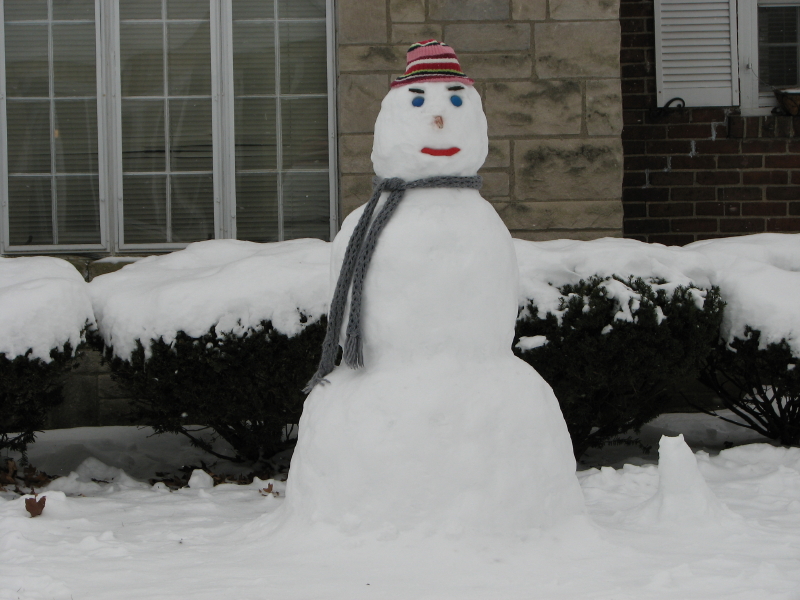
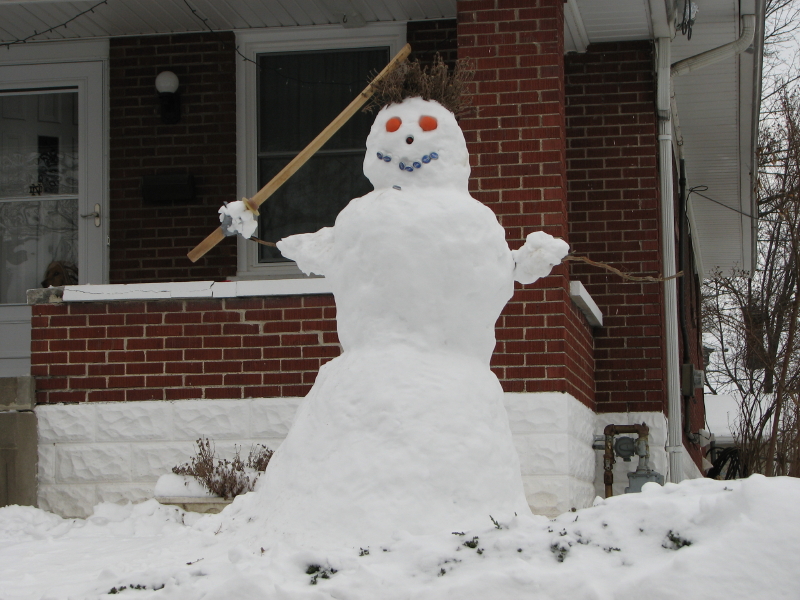
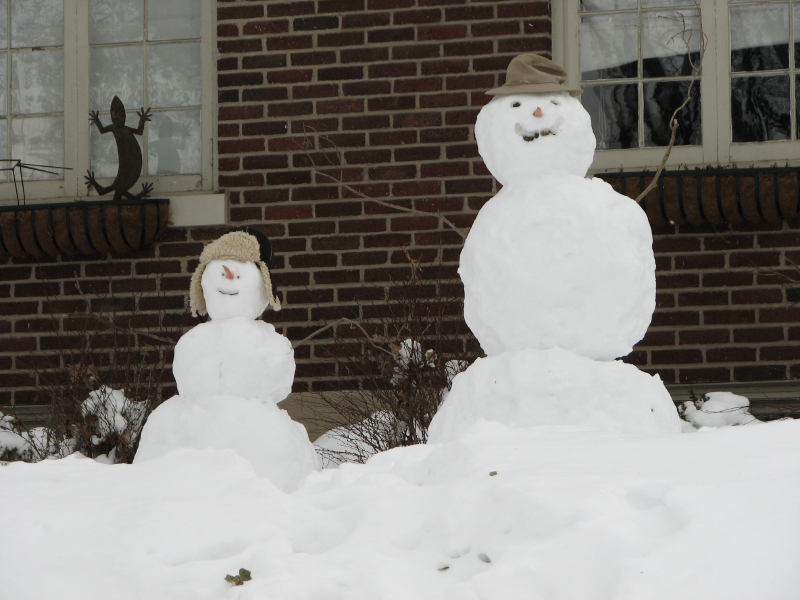
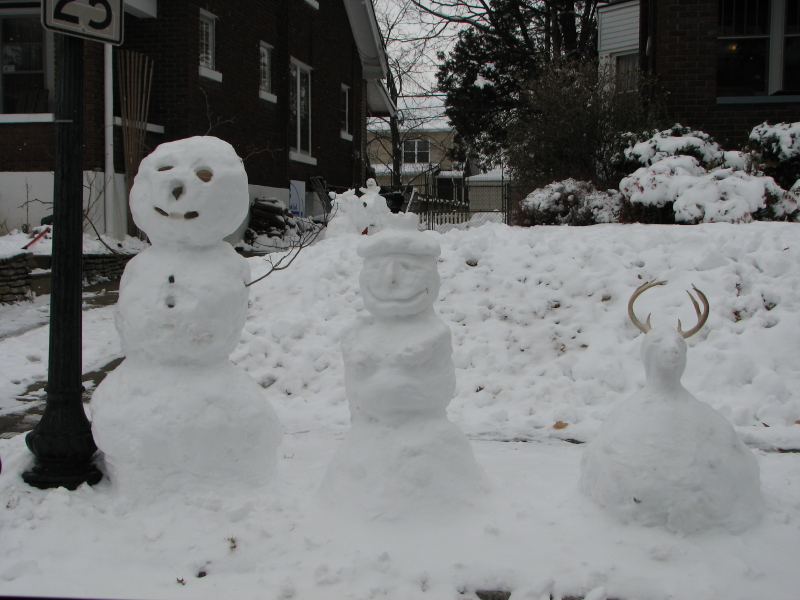
The basic idea for a snowman hasn’t changed much.  Take three snowballs and stack them in graduated size from largest to smallest and use whatever is on hand to form features and accessorize.  The use of a carrot for a nose has become a beloved standard.  It’s been interesting to see how closely people have adhered to the snowman ideal and where variation or invention has occurred.  Most of what I’ve seen over the last couple of days has been fairly traditional, but there were a few nice surprises to keep things lively.  I came across a few snow creations that demonstrated both imagination, teamwork, and skill.  Here are a few more single figures.

I imagine children and family at work on these beloved sculptures.  It’s no accident that so many of these snowmen are close to the front door of the house.  In this way, they are very site specific. They are meant to be seen and commented upon.  Most of these snowmen, if they have arms, are rather feeble.  For practical reasons, it is just too difficult to make an arm out of snow unless it is a part of the main body.  I had to laugh at the one sporting what appears to be a wooden samurai sword!  When you pair two or more snowmen together then you create another dynamic.  Take a look.

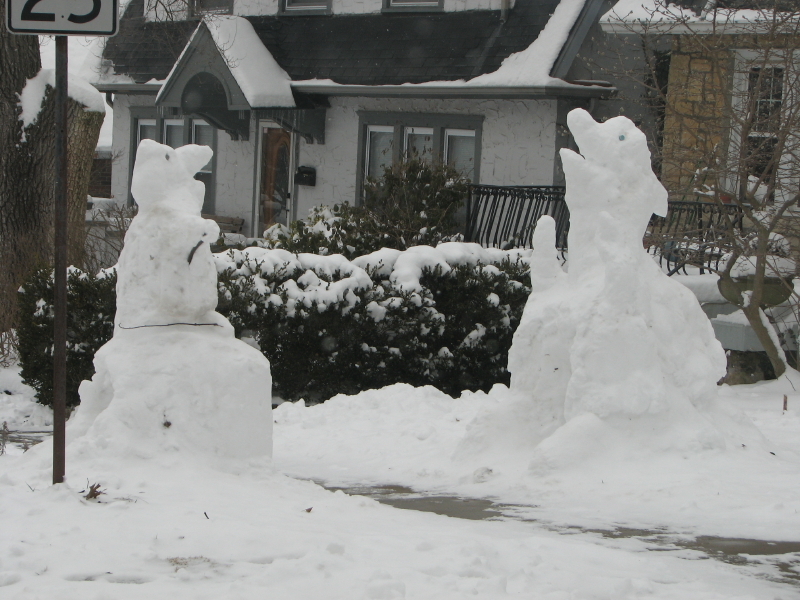
The snow figures above I thought were very successful in a “Miro-esque” sort of way.  The work on the right looks like a dog sitting up and begging.  These are fairly large works and whoever made them must be an old-hand at snow sculpture because both works also have holes in them as expressive elements.  Check out this trio of works.  The use of deer antlers on the smallest sculpture is an unusual touch.

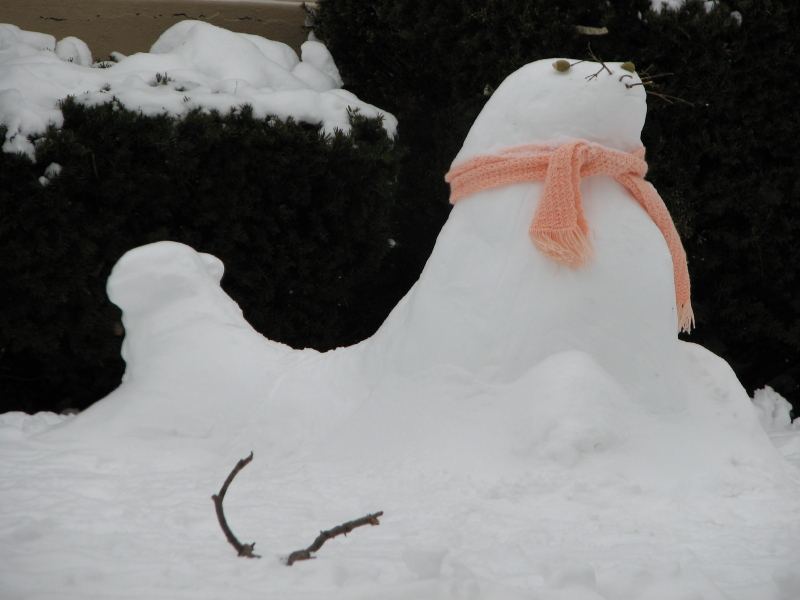
And now for a few more animal snow sculptures…how about this seal! It’s very effective and simple.  The colorful scarf leads the eye right to the details that form the face.  I like the way twigs are used to suggest whiskers.

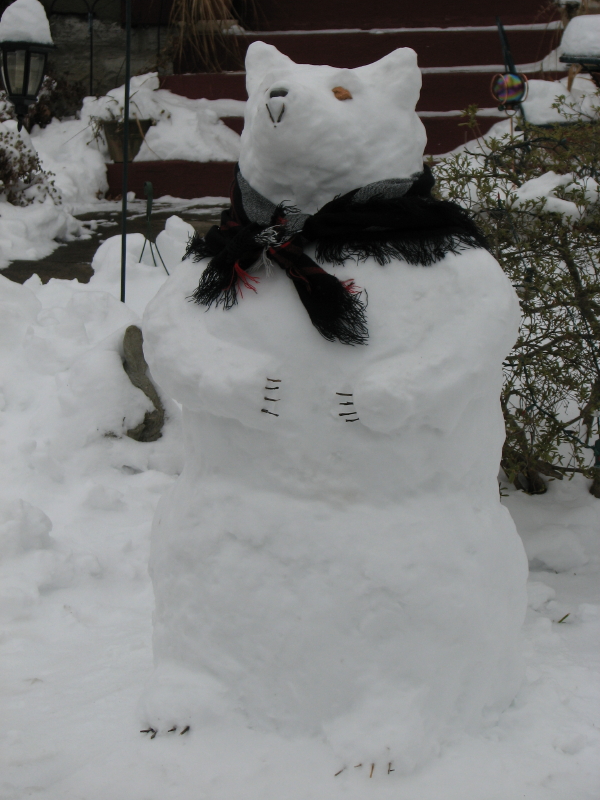
This bear sculpture by Tyler Park is one of my favorites.  I walked by it at night and there were also Christmas lights behind it!  Again, the use of twigs provides just the right amount of detail in the form of claws on the paws.  I think the eyes might be walnuts?  In this piece, the snow arms work.

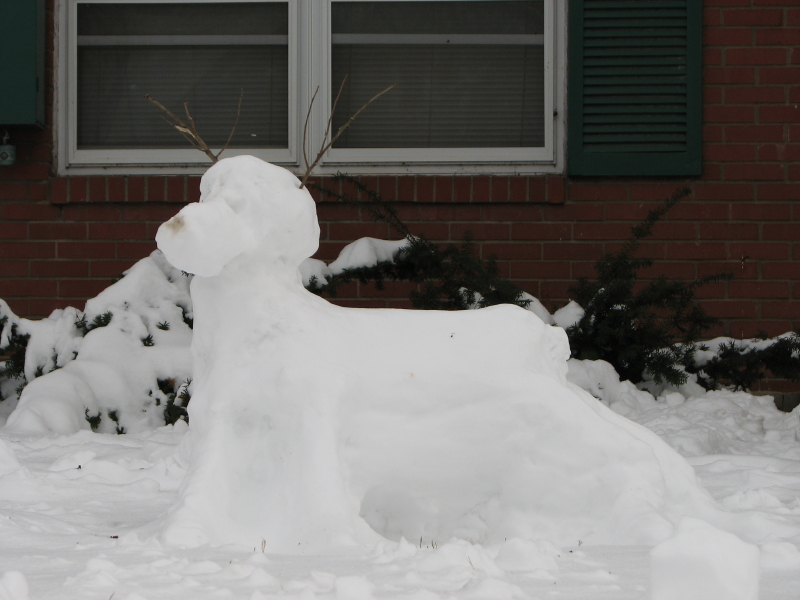
Resting sphinx-like in front of an apartment building is what I presume is a reindeer or stag.  If it weren’t for the small branches suggesting antlers, I would have guessed this is a dog.  The lack of any other materials makes me believe this is the unplanned work of a child.  It has a smudge for a nose.

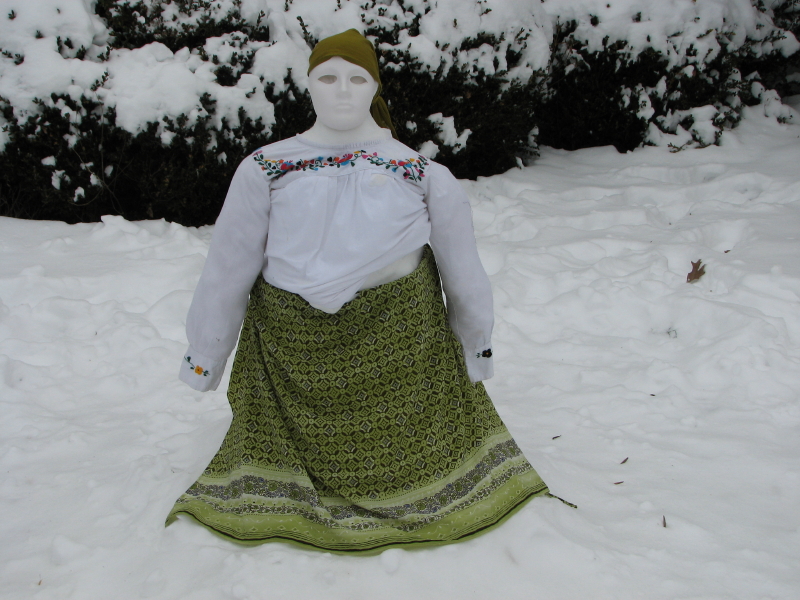
Perhaps the oddest piece I encountered was this modest sized figure.  What set it apart aside from the more extensive use of clothing, is the mask covering the face.  I did a double take on this one because the white mask didn’t fully register until I was right next to it.

I like that there is a time limit to a snowman’s existence.  For as long as the weather remains cold, and people leave it alone, then the work will be around to bring a little joy to all who see it.  For many adults, it is a pleasant reminder of childhood winters with its promise of missed school days.  Around here, the temperatures are dropping into the single digits overnight and there is more snow on the way.  For the time being, the city’s snowmen are safe and in good company.

Read Full Post »

« Newer Posts - Older Posts »